
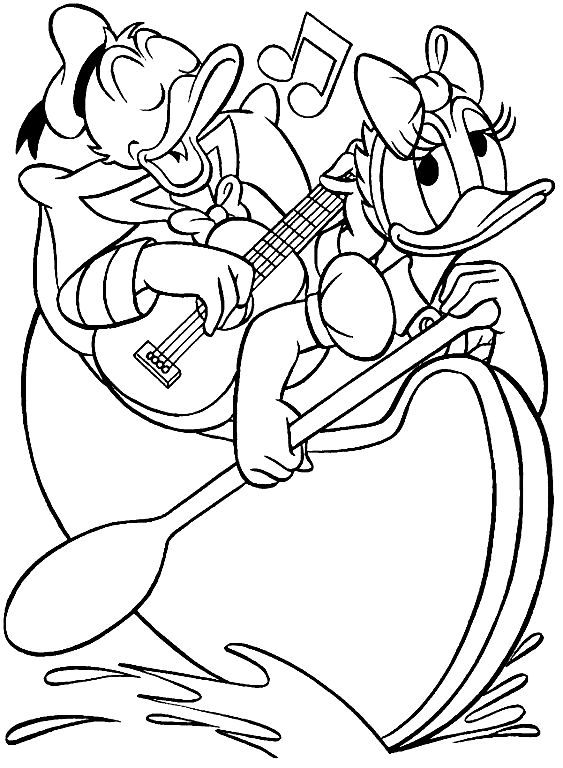
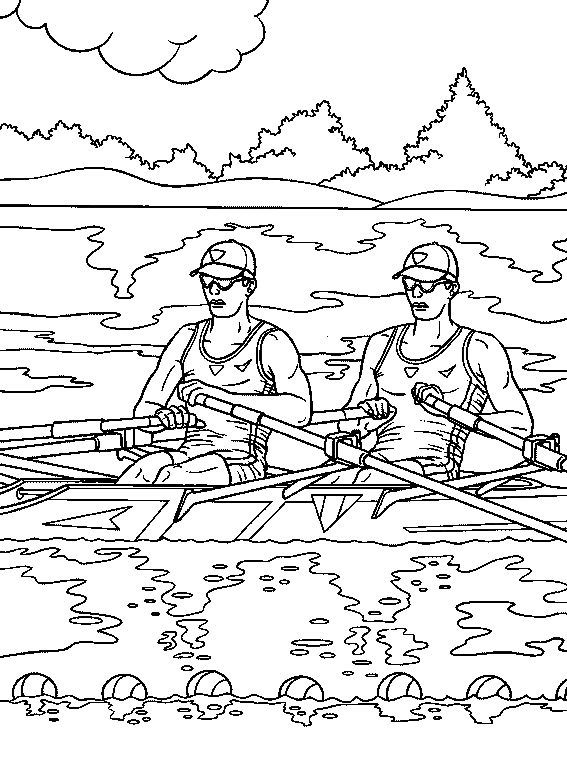
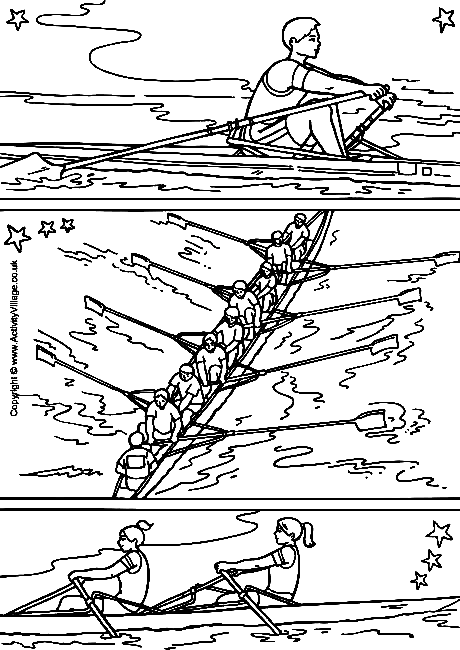
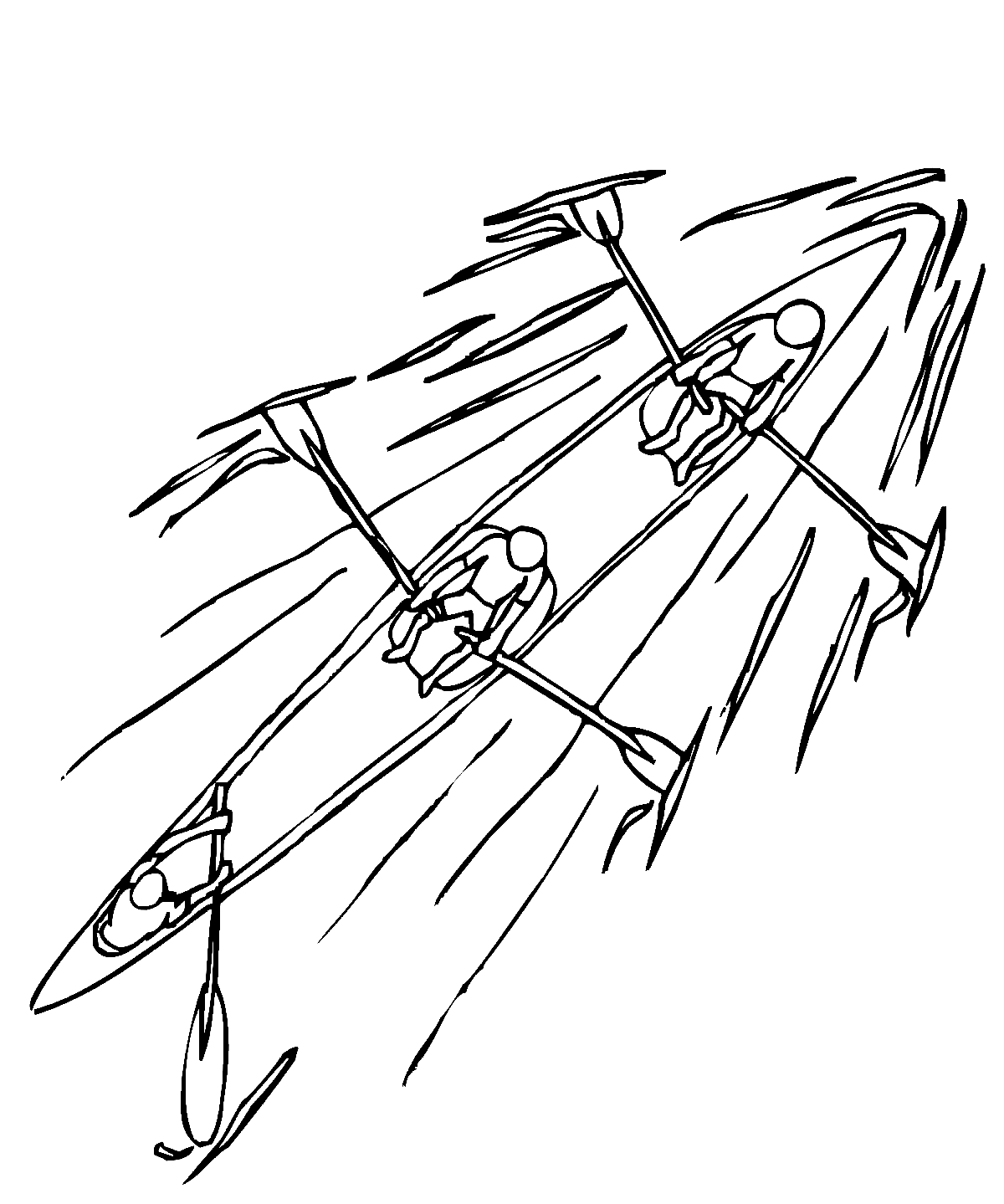
Free Rowing Coloring Pages: 16 printable PDF designs from the water, featuring crew teams pulling in sync, a man, a girl, and a little girl rowing solo, boys in a team boat, a Rio 2016 Olympic race, a cartoon rower, Donald and Daisy Duck sharing a boat, and a canoe with its oar. No page costs anything.
Organizers put rowing on the 1896 Athens program, but rough seas forced the races to be canceled, so the sport made its Olympic debut in Paris in 1900. Women’s rowing joined the program at Montreal in 1976. The sport’s governing body, now called World Rowing, was founded in 1892 and is the oldest international sports federation in the Olympic movement. Rowers sit facing the back of the boat and push with their legs, while the coxswain faces forward to steer and call the rhythm. One of the sport’s oldest rivalries, the Oxford and Cambridge Boat Race, was first held in England in 1829.
Simple solo rowers suit young kids. Team boats and the Olympic race give older athletes more to color.
What’s Inside This Collection
Crew teams, solo rowers, Olympic and sport scenes, cartoons and crossovers, and boats and printables fill out the 16 designs.
Crew Teams
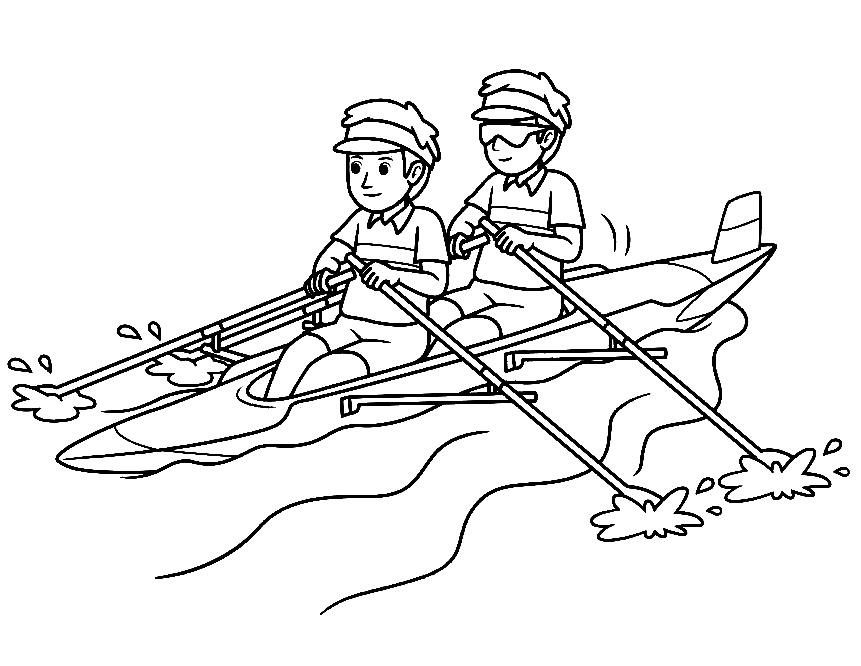
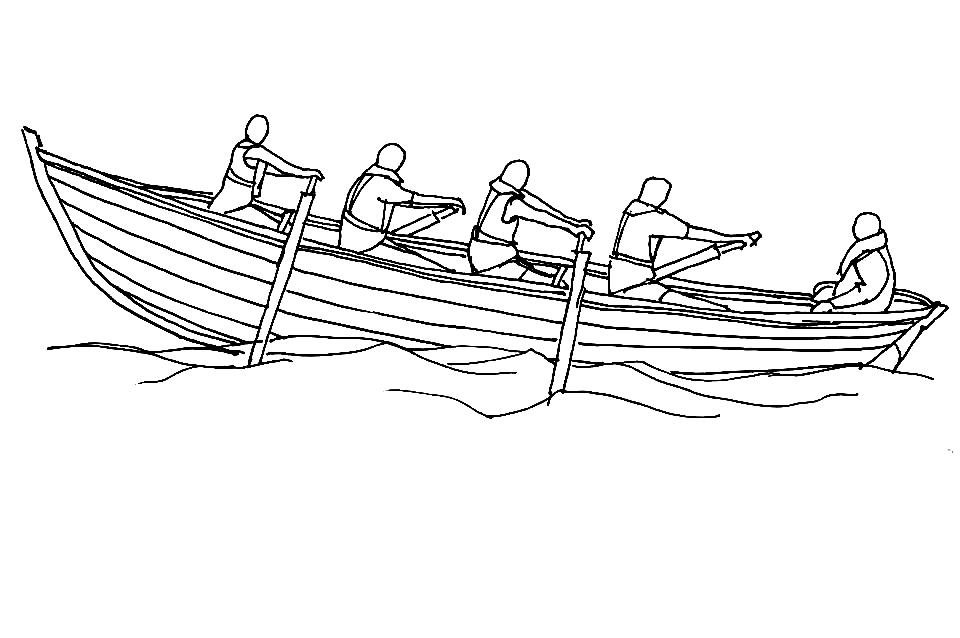
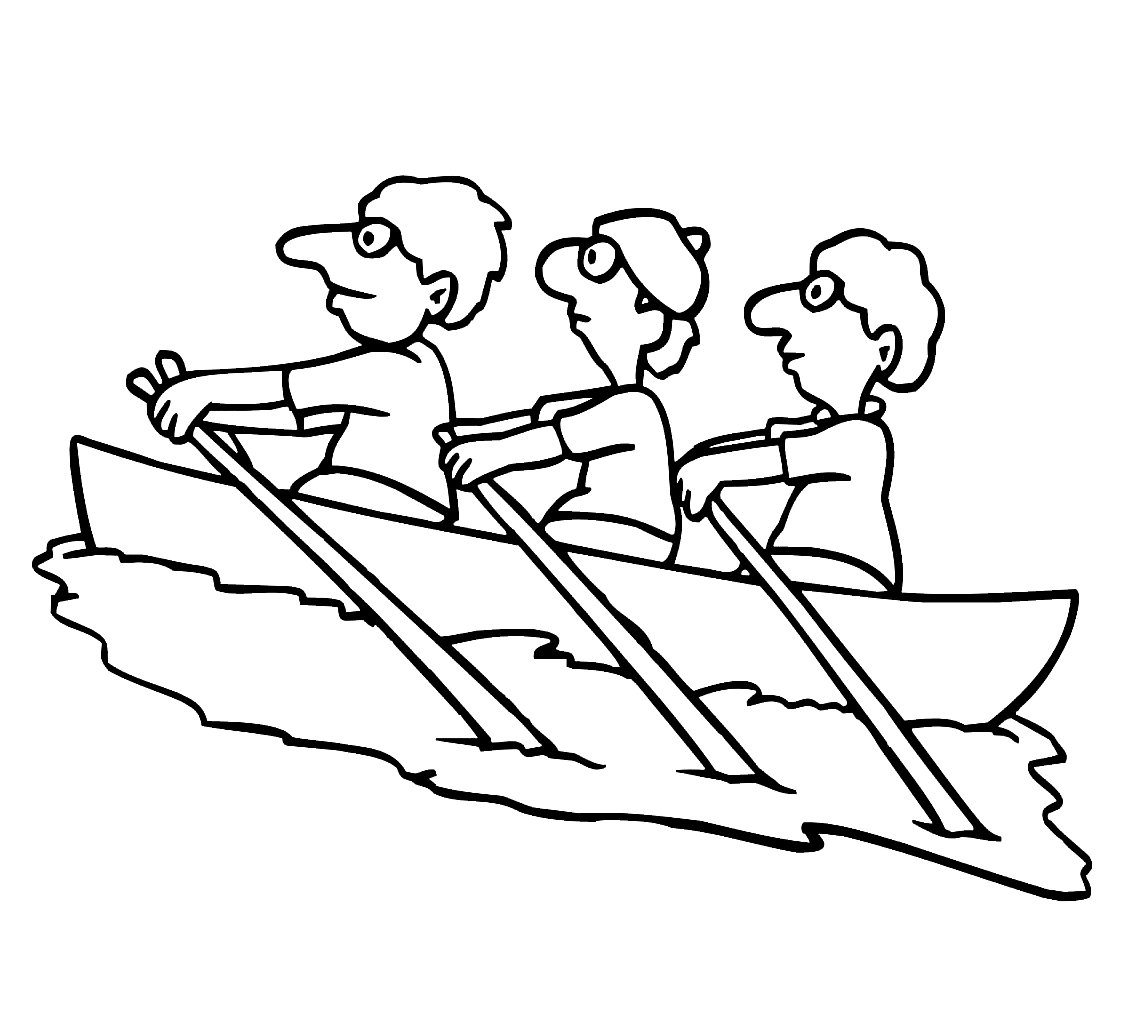
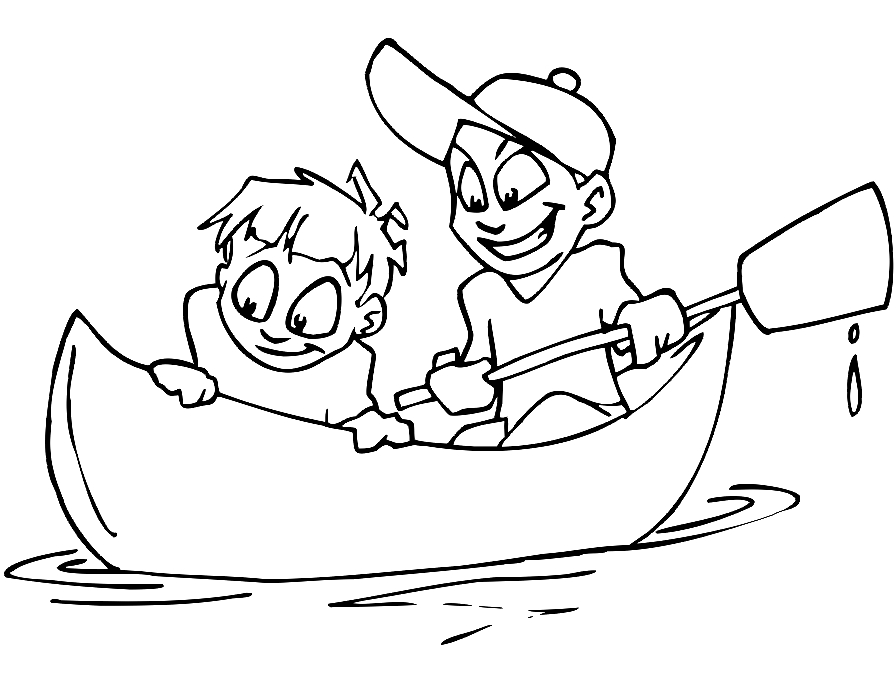
Four pages show rowing teams, men in a racing boat, and boys pulling together. Color the long racing shell a glossy Cobalt with White oar blades striped in Crimson.
Solo Rowers
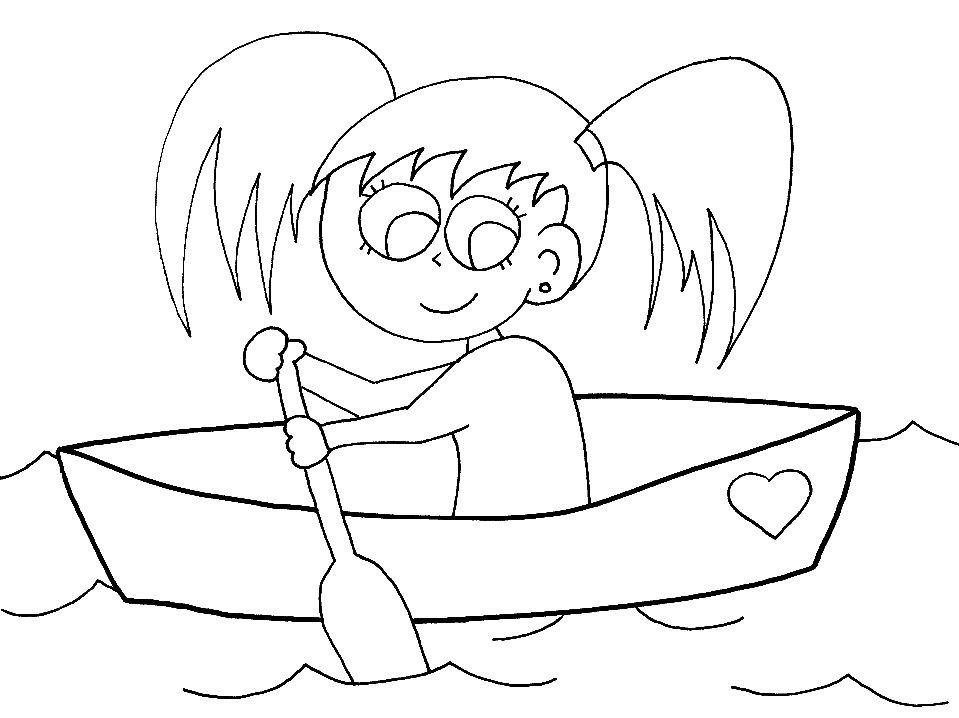
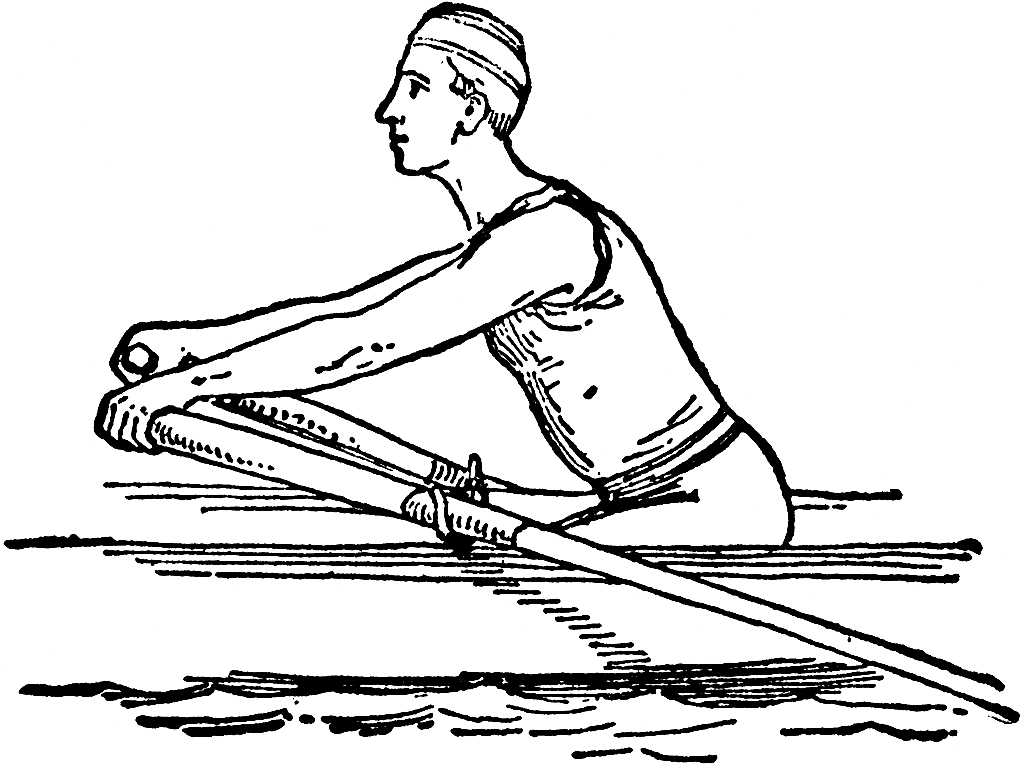
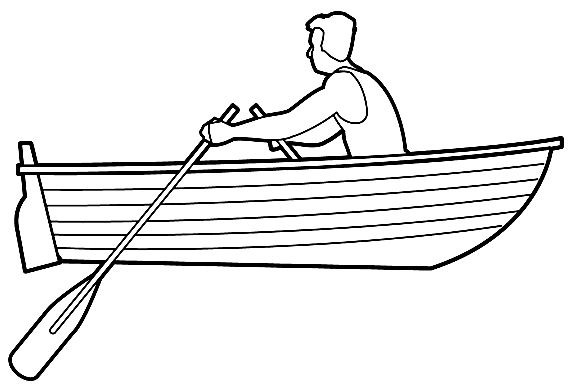
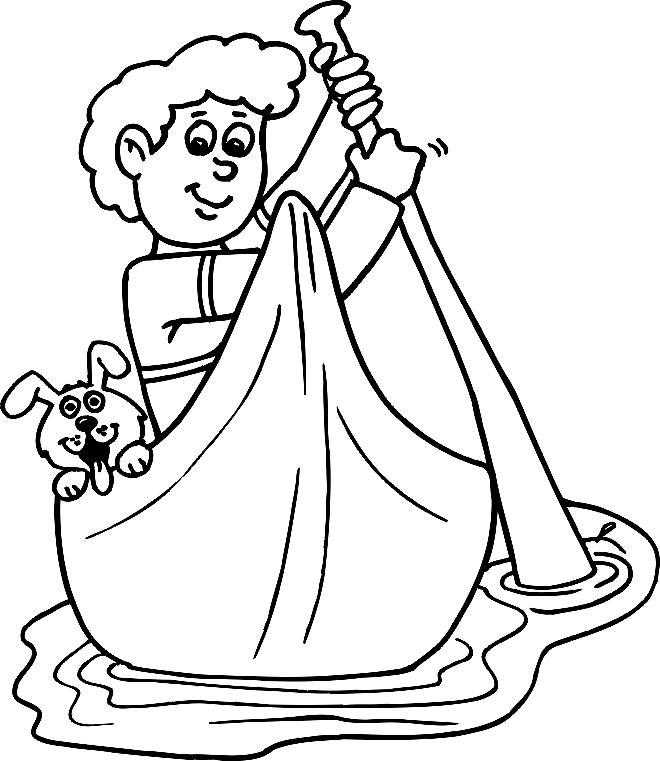
Three sheets feature a man, a girl, and a little girl rowing on their own. Dress each rower in a sleek Navy unisuit and color the water a calm Teal.
Olympic and Sport Scenes
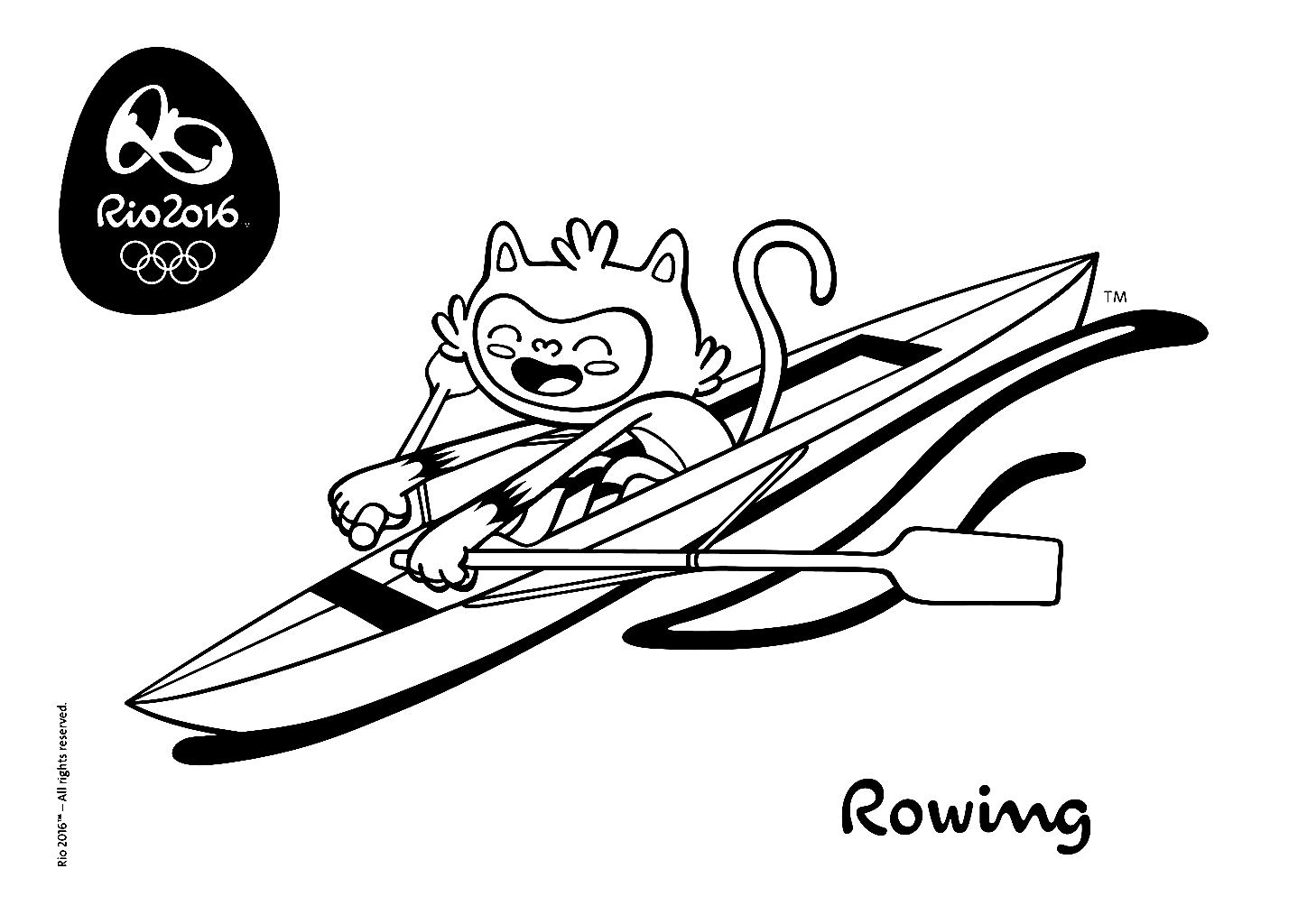
Two designs show a rowing sports scene and a Rio 2016 Olympic race. Add a Sunflower Yellow and Kelly Green finish line to echo the colors of Brazil.
Cartoons and Crossovers
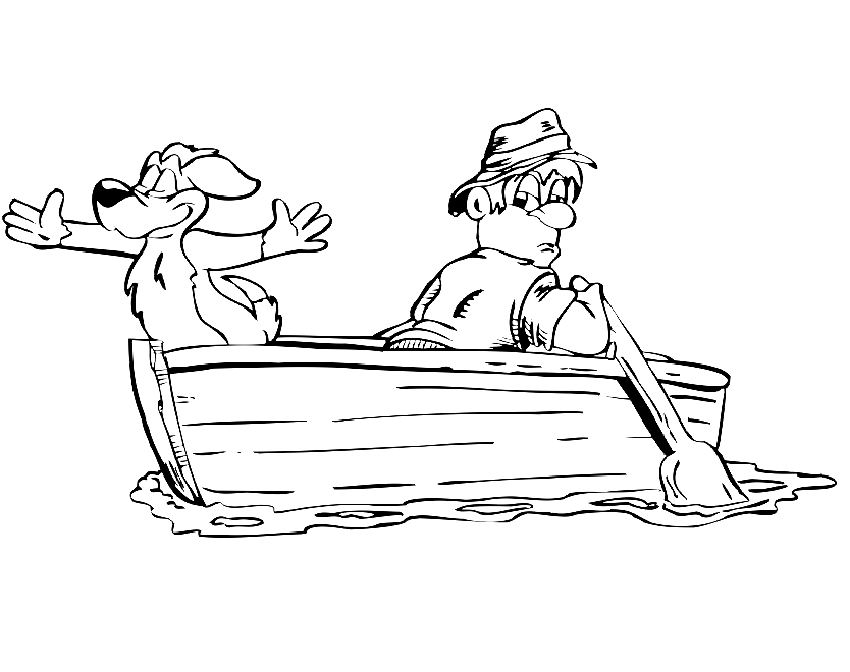
Two pages include a cartoon rower and Donald and Daisy Duck rowing together. Keep Donald in his Sailor Blue shirt and Daisy in a Lavender bow.
Boats and Printables
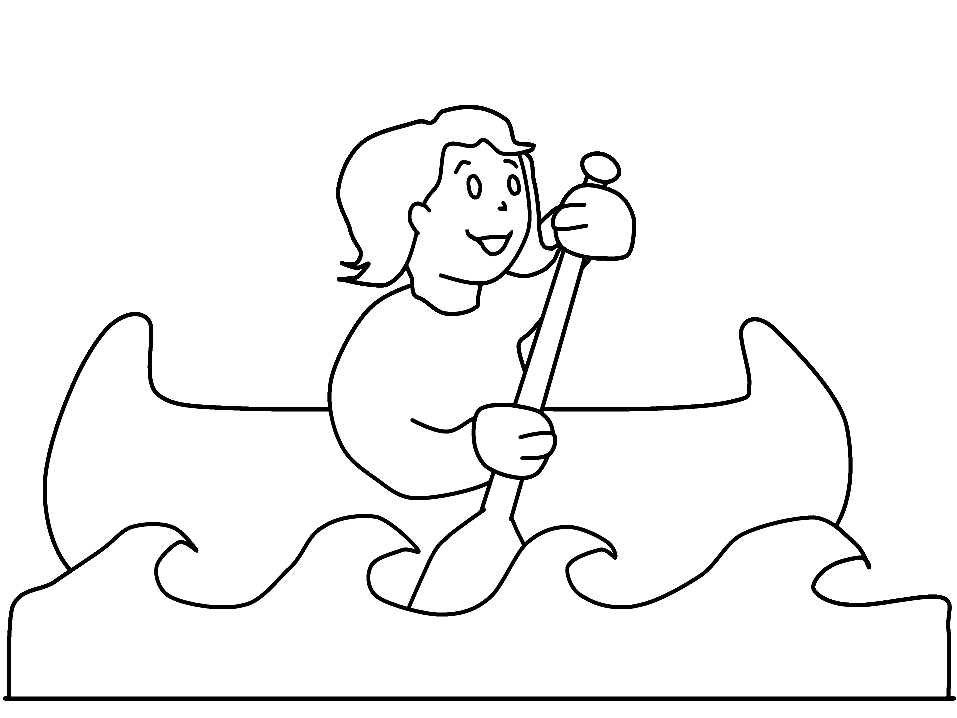
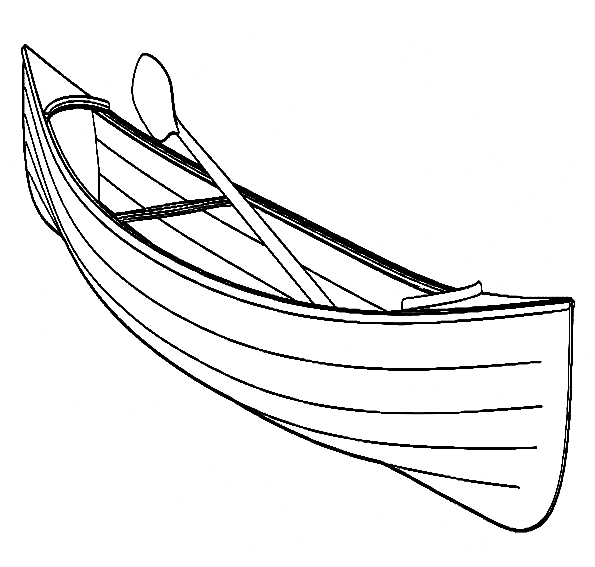
Five sheets offer a canoe with an oar and four general rowing printables. Shade the canoe a warm Cedar Brown with darker wood grain lines.
What Rowing Coloring Pages Do
Explaining teamwork in a single boat. In a crew boat, every rower must pull at the same moment, or the boat slows and rocks. Coloring a team scene opens a conversation about timing, listening, and working as one. Parents and coaches can ask kids to count out a rhythm together, like a coxswain calling strokes, which shows how cooperation helps everyone move faster.
Learning how rowing works. Rowers face backward and drive the boat with their legs, not just their arms. Coloring a solo rower lets children study the seat, the oars, and the long blades. Families can compare rowing with canoeing, where paddlers face forward and use paddles without oarlocks, using the canoe page as an easy example.
Practicing long lines and steady strokes. Rowing pages feature long boats, straight oars, and rippling water, which call for smooth, even coloring. That steady movement strengthens hand and wrist control, and oar-straight strokes are just the kind of controlled marks that the American Academy of Pediatrics preschool milestones tie to early handwriting.
Finding a calm rhythm. Rowing is famous for its smooth, repeated stroke, and coloring can feel similarly rhythmic. In one experiment, psychologists Curry and Kasser split rattled students between plaid outlines and blank-page drawing; the Art Therapy Journal published their 2005 results, which showed the outline colorers settling faster. Gentle waves and repeating oar strokes make these pages especially soothing.
How to Color Rowing Pages Well
- Racing shell: Fill the hull with one bold shade and run a slim bare-paper line down its gunwale. Sleek colors make the shell look fast.
- Oar blades: Paint blades in two colors with stripes or a split design. Many clubs use their colors to show their team.
- Water ripples: Use light Blue with curved, darker lines behind the boat. Ripples show the boat moving forward.
- Unisuits: Dress rowers in matching uniforms in team colors. Matching suits make a crew look united.
- Wood canoe: Color the canoe Brown with darker lines for wood grain. Grain lines give a realistic wooden look.
- Sky and shore: Add a soft sky and Green trees along the bank. A simple shoreline makes the scene feel complete.
5 Creative Craft Ideas With Rowing Coloring Pages
1. Paper Racing Shell
Color a crew boat, cut it out, and attach paper oars with brads so they can move. Kids can practice rowing motions.
2. Regatta Banner
Color several rowing pages and peg each sheet onto a club-colored ribbon. The banner suits a school sports day or a regatta tent.
3. Oar Bookmark
Color an oar blade in team colors, trim the oar shape into a long strip, and seal it with clear packing tape. It makes a sporty bookmark.
4. River Diorama
Color a solo rower and place it on a blue paper river inside a shoebox. Add paper trees along the banks.
5. Rowing vs. Canoe Chart
Color the canoe and a rowing boat, and glue them side by side. Write how each is powered and steered.
Frequently Asked Questions
What are Rowing coloring pages?
They are 16 free sheets featuring crew teams, solo rowers, an Olympic race, cartoon rowers, Donald and Daisy Duck, and a canoe. Use the PDF version on paper or the online colorer on a tablet.
When did rowing join the Olympics?
Rowing was planned for the 1896 Athens Games, but was canceled because of bad weather. It made its Olympic debut in Paris in 1900.
Why do rowers face backward?
Rowers face the back of the boat so they can push hard with their legs and pull the oars toward their bodies. The coxswain faces forward to steer.
What is the difference between sweep rowing and sculling?
In sweep rowing, each rower holds one oar with both hands. In sculling, each rower holds two oars, one in each hand.
What does a coxswain do?
The coxswain steers the boat, calls out commands, and keeps the crew in rhythm. Coxswains sit at one end of the boat and do not row.
What is the Boat Race?
The Boat Race is a rowing race between Oxford and Cambridge universities on the River Thames. It was first held in 1829.
What age are Rowing coloring pages for?
Kids between about 4 and 12 are the core group, plus teen rowers and their families. Solo rowers suit younger kids, while team boats fit older athletes.
Is canoeing the same as rowing?
No, canoeists face forward and use paddles, while rowers face backward and use oars attached to the boat. Both sports are part of the Olympics.
Start Coloring
Choose a crew team, a solo rower, or Donald and Daisy’s boat, then save the PDF or tint the water on screen, no account needed. Young rowers can post their finished crews on Facebook or Pinterest.