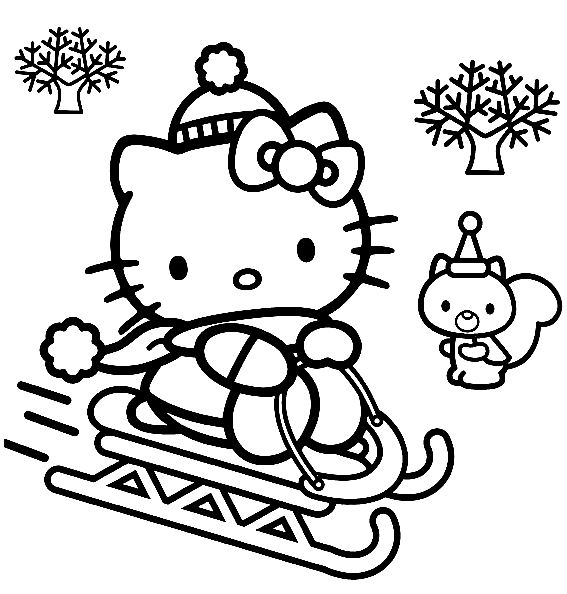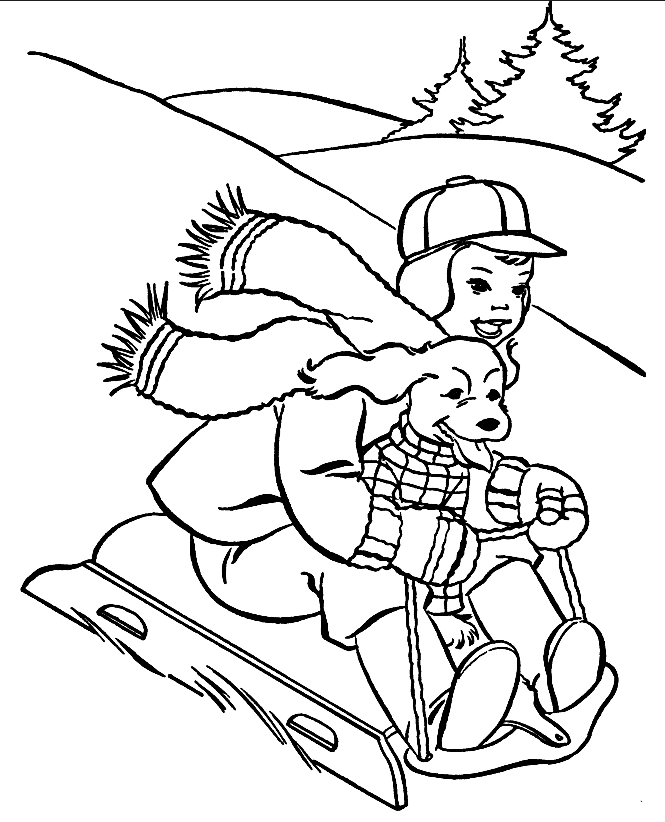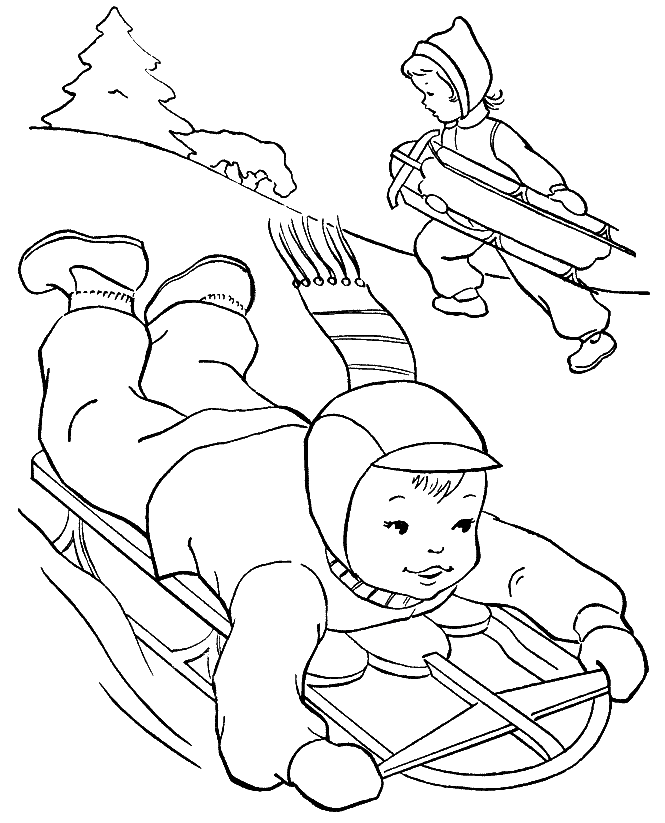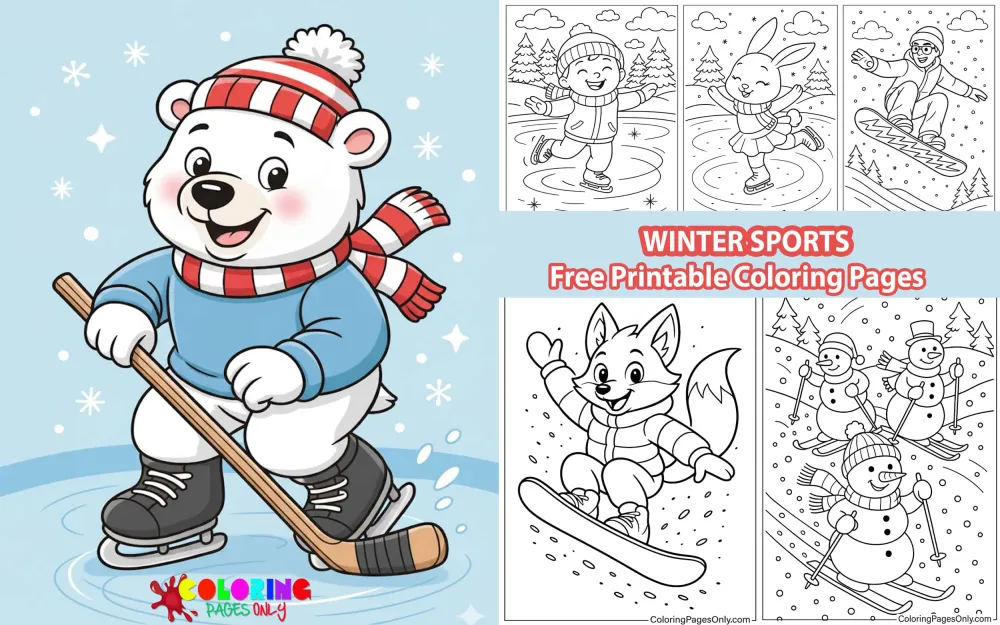
Winter Sports Coloring Pages at ColoringPagesOnly.com brings together 50+ free printable pages covering the full world of snow and ice athletics – from the most familiar family winter activities to the elite competitive sports of the Winter Olympics. The collection spans alpine skiing, snowboarding, ice skating, ice hockey, bobsled, luge, ski jumping, sledding, snowball fights, snowman building, and ice fishing, with dedicated character crossover tiles featuring Mickey Mouse, Goofy, Tom and Jerry, Doraemon, Hello Kitty, Miffy, Super Mario, Dora the Explorer, and Lisa Frank in snowy settings. The full Sports collection is available through our Sports Coloring Pages hub.

Every page is completely free – download as PDF to print or color online in your browser. No sign-up, no cost.

About Winter Sports

Winter sports are athletic activities that are performed on snow or ice, typically practiced during the cold weather months in regions with sufficient snowfall, or year-round in indoor ice rinks and artificial snow facilities. The category encompasses a vast range of disciplines – from the serene (ice fishing, casual cross-country skiing) to the technically demanding (figure skating, slalom racing) to the extreme (ski jumping, halfpipe snowboarding).

The organized history of competitive winter sports began in Scandinavia, where skiing was both a practical means of winter transportation and a source of local competitive events for centuries. Norwegian soldiers competed in downhill and cross-country skiing events in the 18th and 19th centuries. The first Winter Olympics were held in Chamonix, France, in 1924, featuring 16 events across 9 disciplines. From that beginning, the Winter Games expanded steadily – the 2022 Beijing Winter Olympics featured 109 events across 15 disciplines, contested by athletes from 91 countries.
The Winter Olympics have introduced many of its sports to global audiences who would not otherwise have access to snow or ice. Alpine skiing, figure skating, speed skating, ice hockey, ski jumping, biathlon, curling, skeleton, luge, and bobsled each have dedicated Olympic histories that transformed them from regional traditions into globally followed sports. Snowboarding was added to the Winter Olympics program in 1998 at Nagano and has since become one of the most-watched disciplines, with the halfpipe and slopestyle events producing some of the Games’ most spectacular athletic performances.

Winter sports hold a particular place in childhood imagination precisely because of their seasonal specificity and the transformative quality of snow and ice as environments. The first experience of skiing, the careful balance of learning to ice skate, the collaborative chaos of a snowball fight – these are formative outdoor experiences that coloring pages extend creatively through the months when actual participation may not be possible.

What’s in This Collection

Alpine Skiing

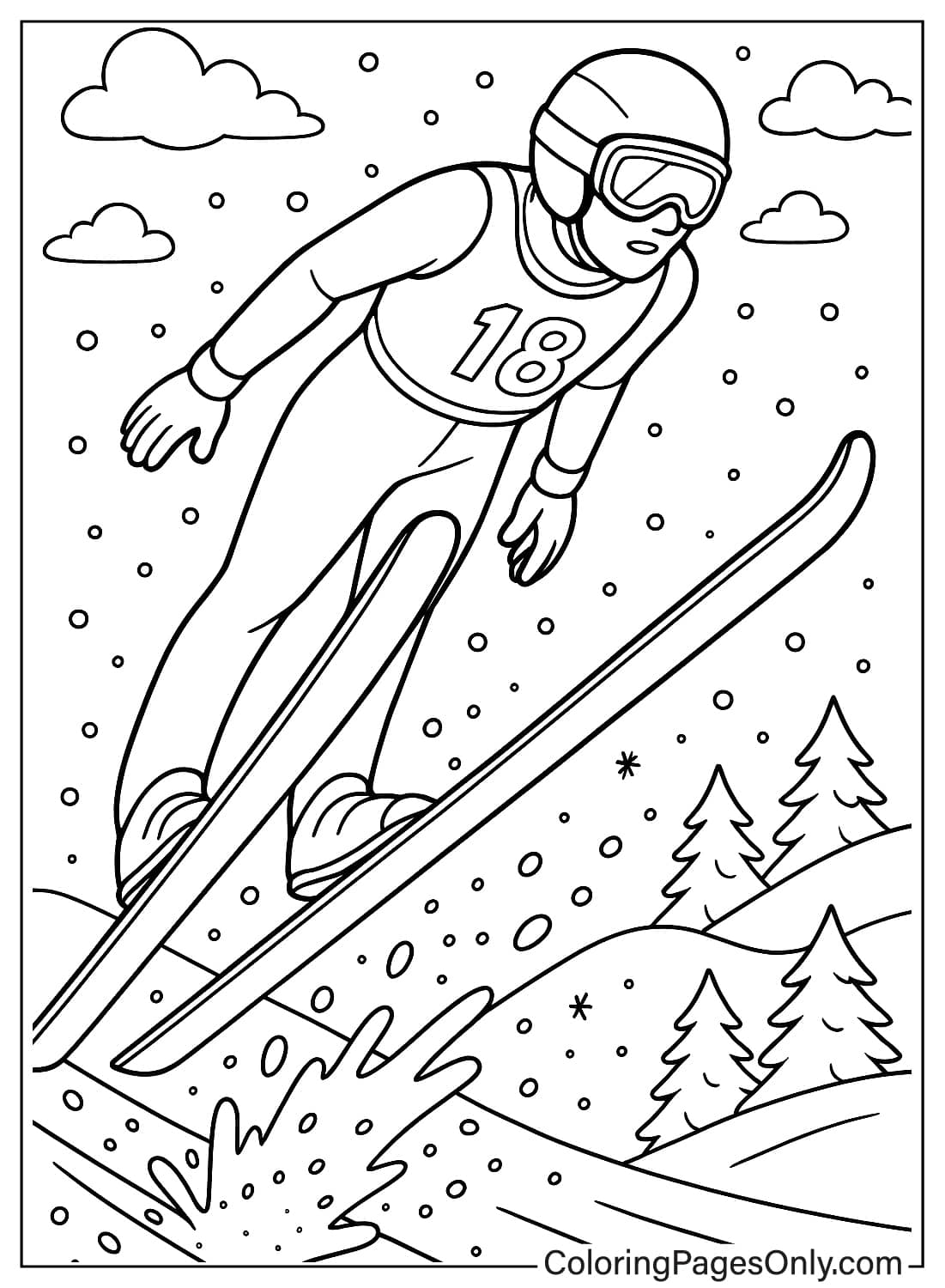
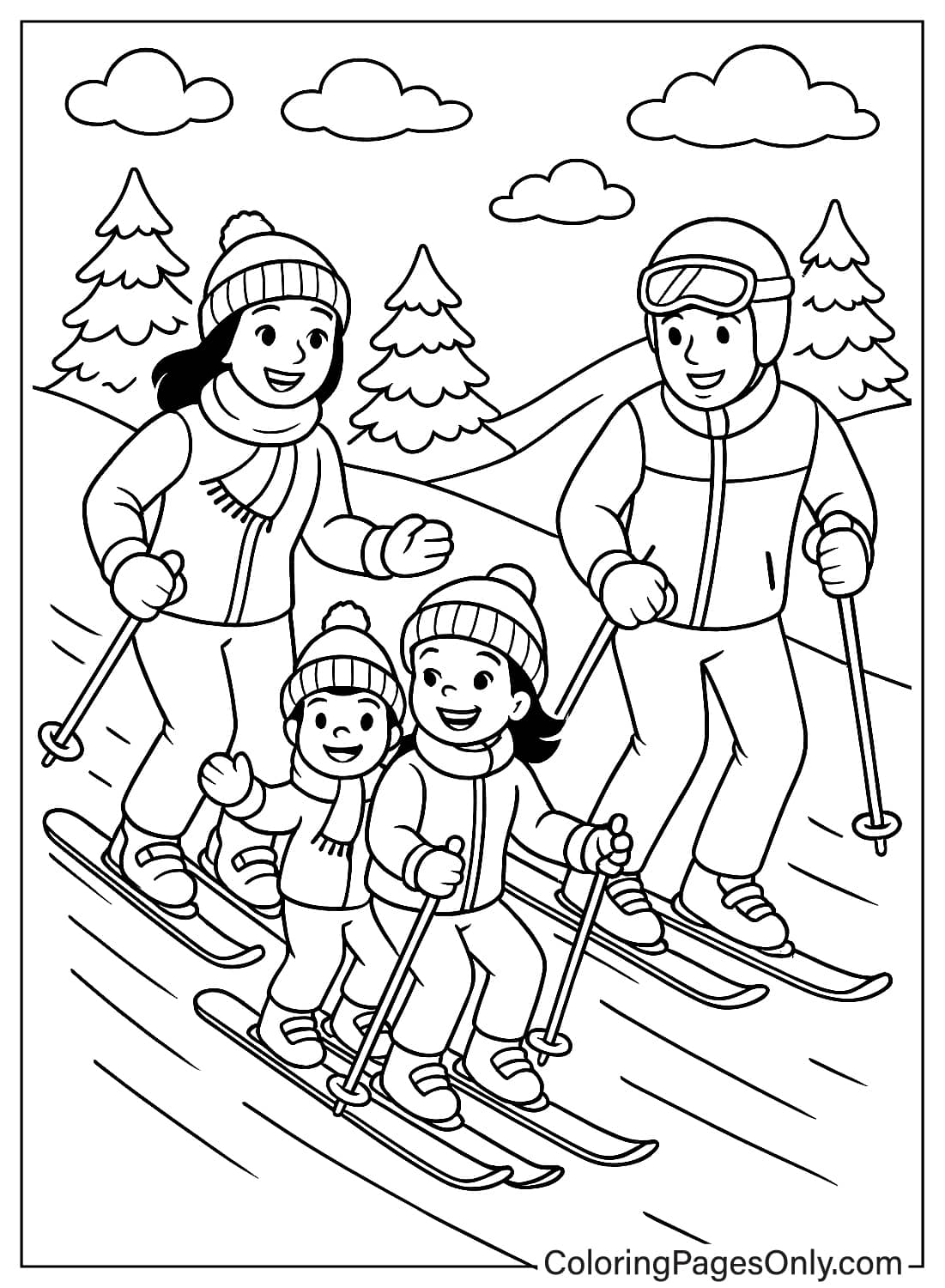
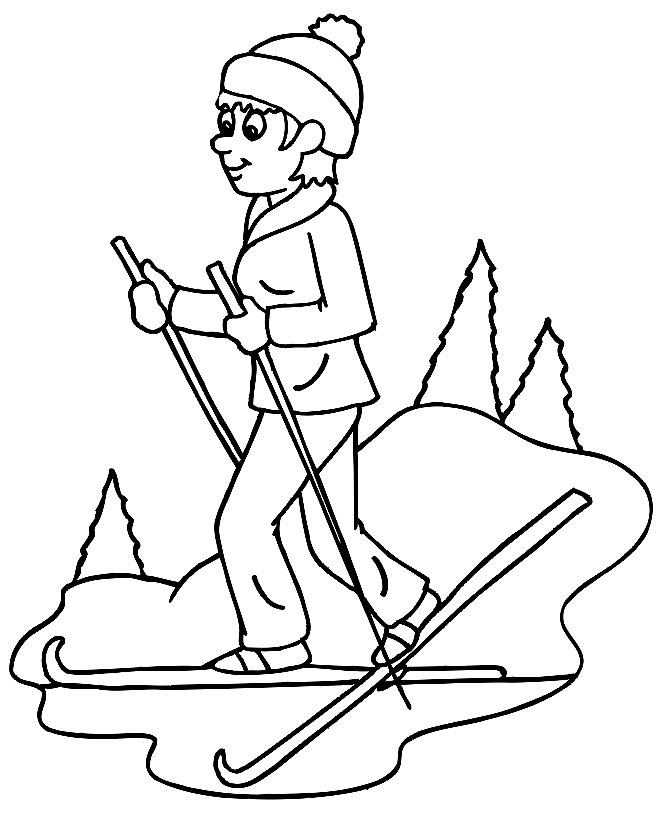
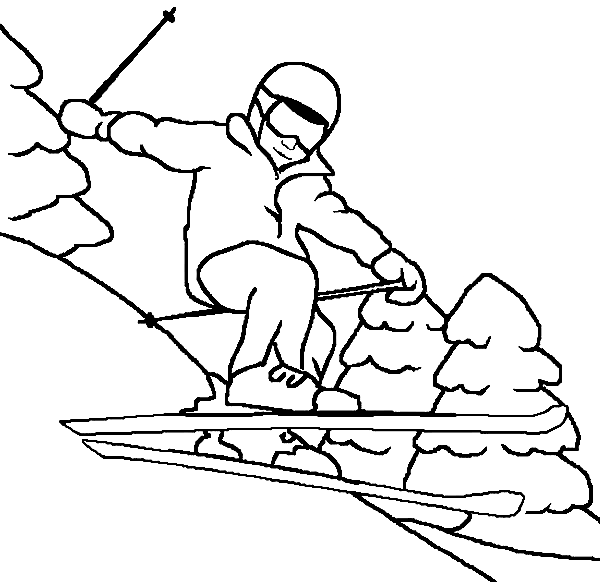
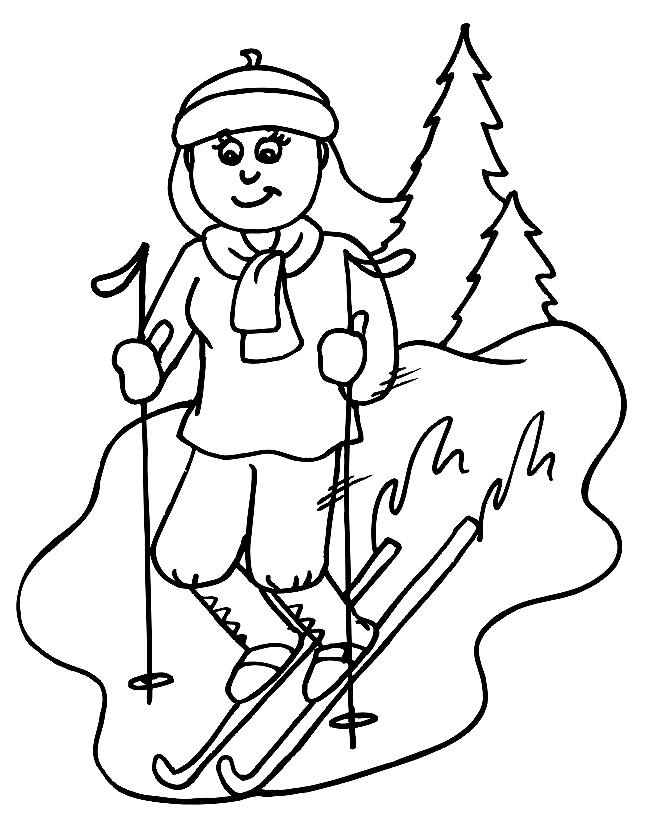
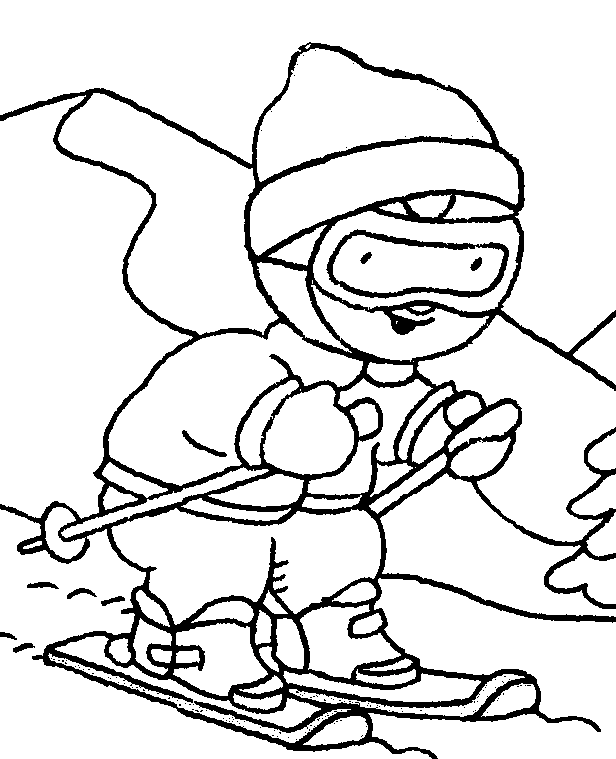
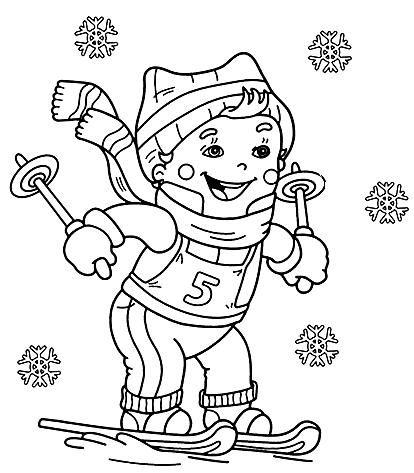
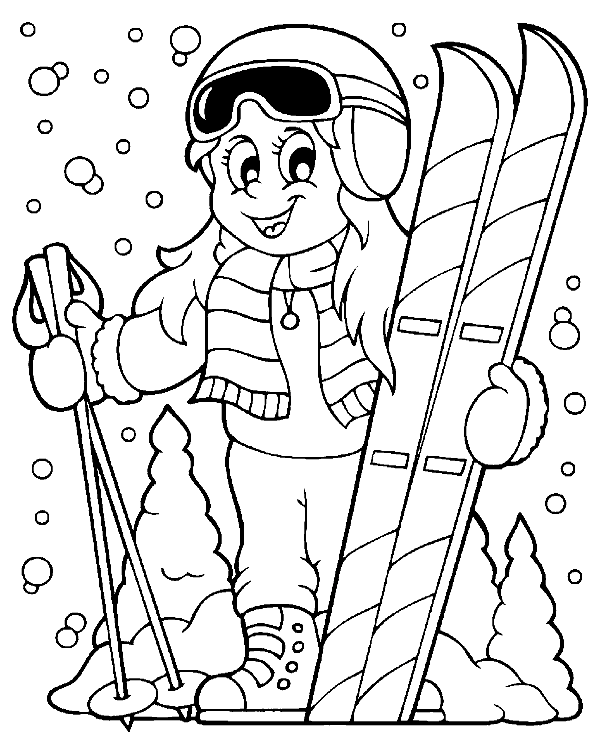
The largest single sport cluster in the collection covers downhill and alpine skiing across multiple compositions and perspectives. The ski tiles range from casual recreational portrayals – Family Skiing (parents and children skiing together on a slope), Kid Skier, Girl Skiing Downhill, Woman Skier, Kids Sledding Downhill – to more competitive imagery, including Ski Jumper (an athlete mid-flight in competition) and Climbing And Skiing In The Winter.

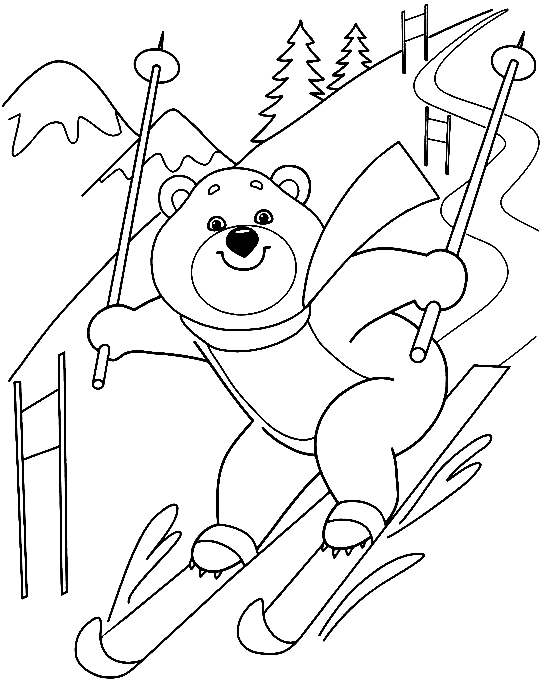
Alpine skiing divides into several disciplines in competition: downhill (the fastest event, with speeds exceeding 130 km/h), slalom (tight turns around closely spaced gates), giant slalom (wider turns at higher speeds), super-G (between downhill and giant slalom in speed and gate spacing), and combined (one downhill run and one slalom run). The coloring tiles depict recreational skiing rather than competitive race-course skiing, making them accessible to children who ski casually with family rather than only those who compete.

Coloring skiers: The ski outfit is the most expressive color element in any skiing tile – ski jackets and pants come in the full spectrum of vivid colors, with bright reds, blues, yellows, and greens most commonly associated with ski resort aesthetics. Ski goggles typically have vivid lens colors (orange, yellow, or mirrored) contrasting with the goggle frame and helmet. Skis themselves are vivid and often multicolored with sponsor graphics.

Snowboarding

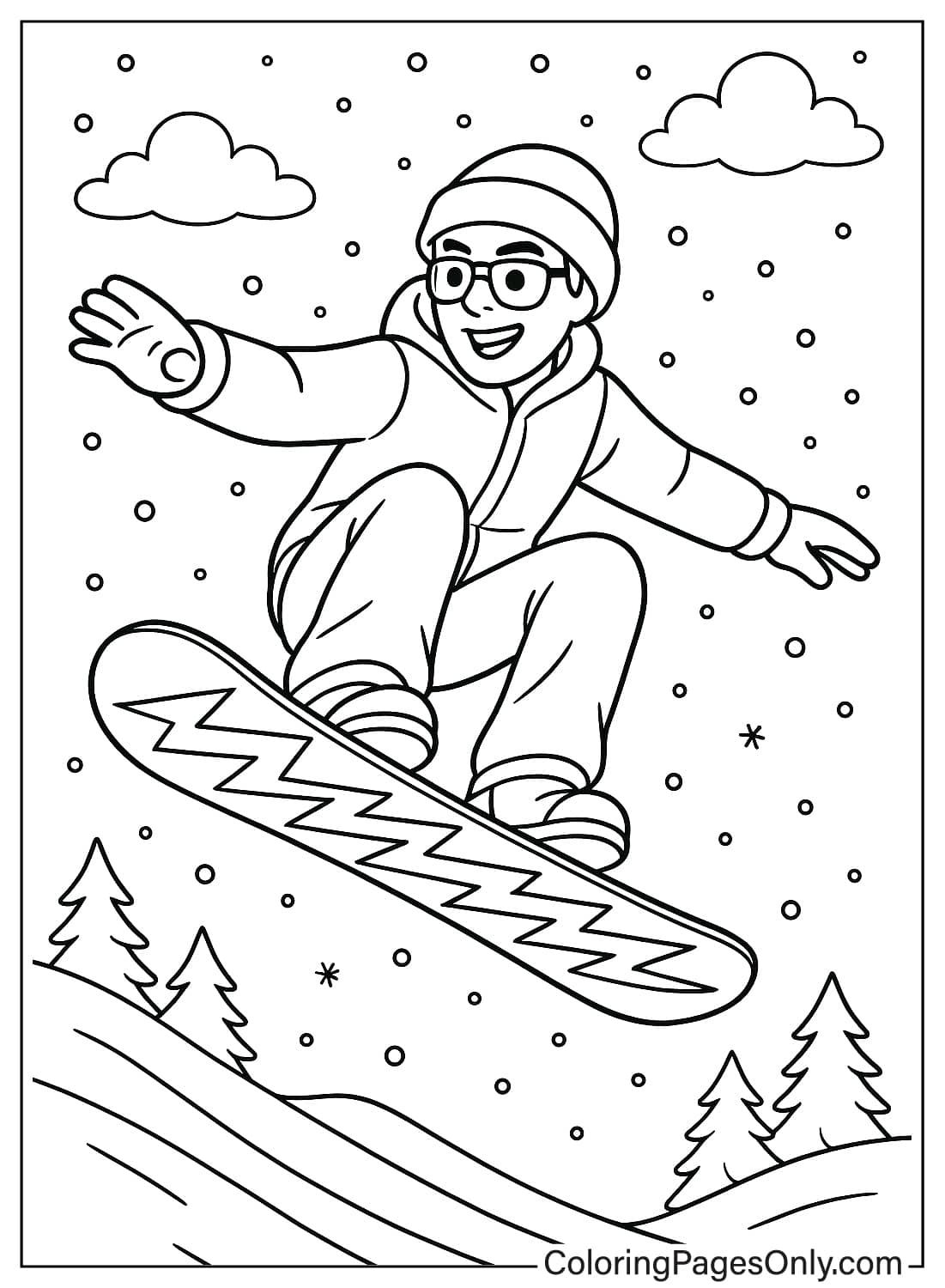
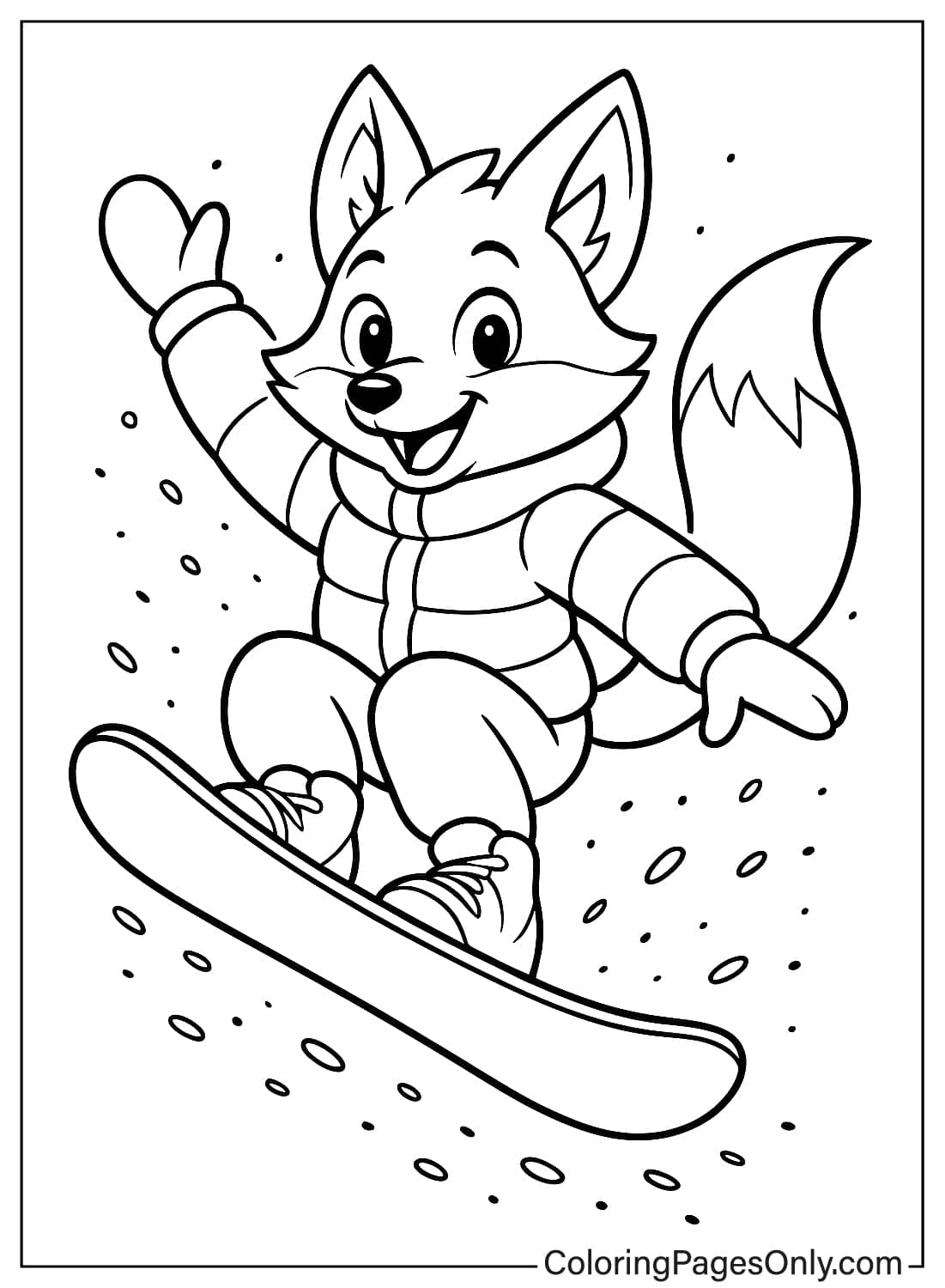
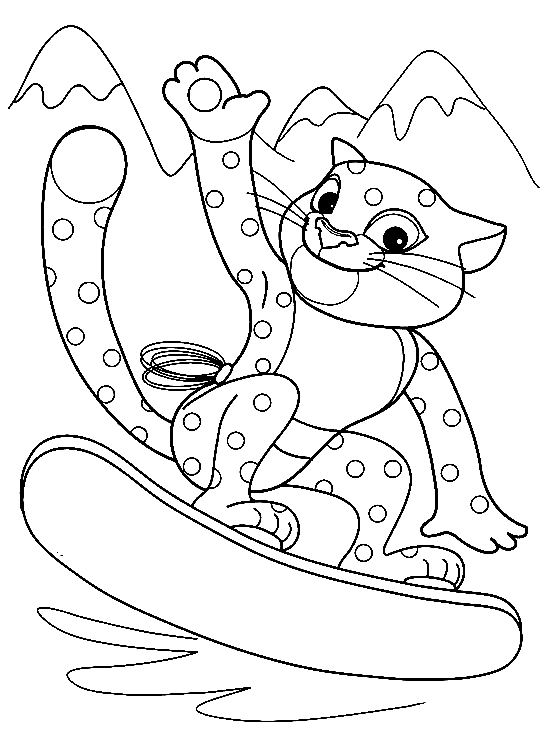
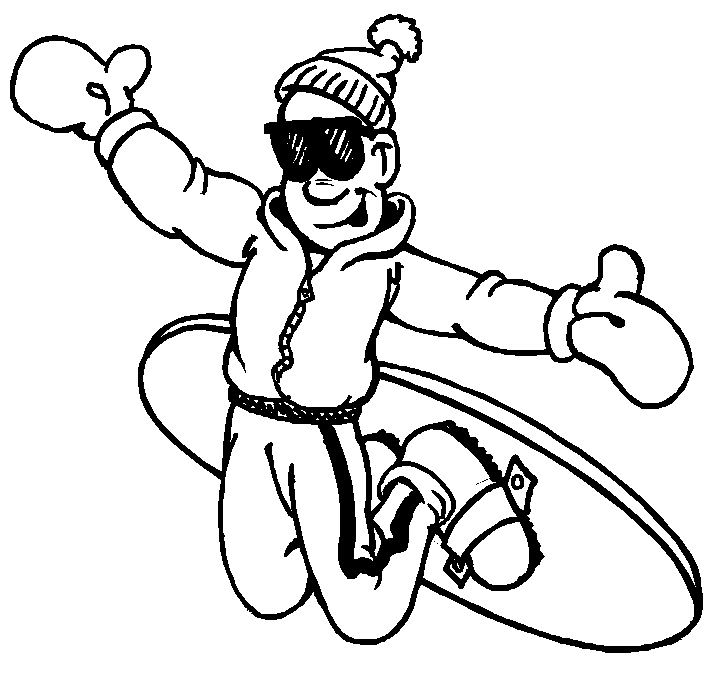
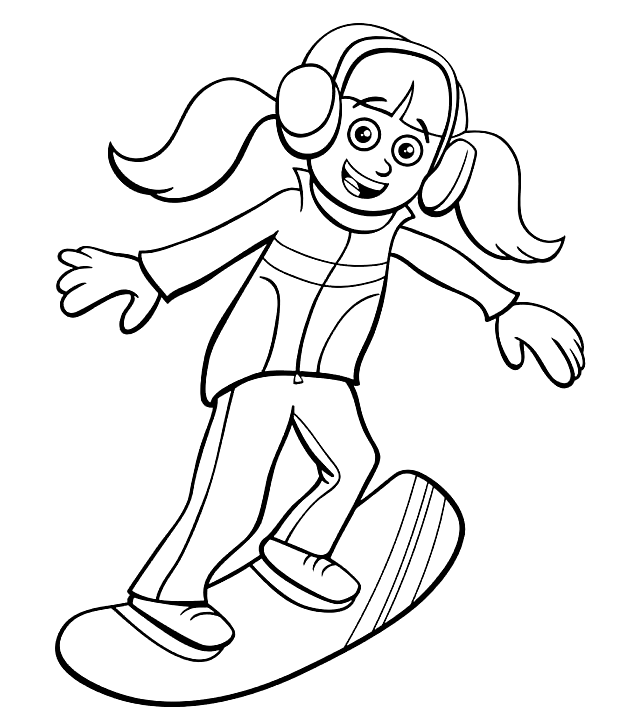
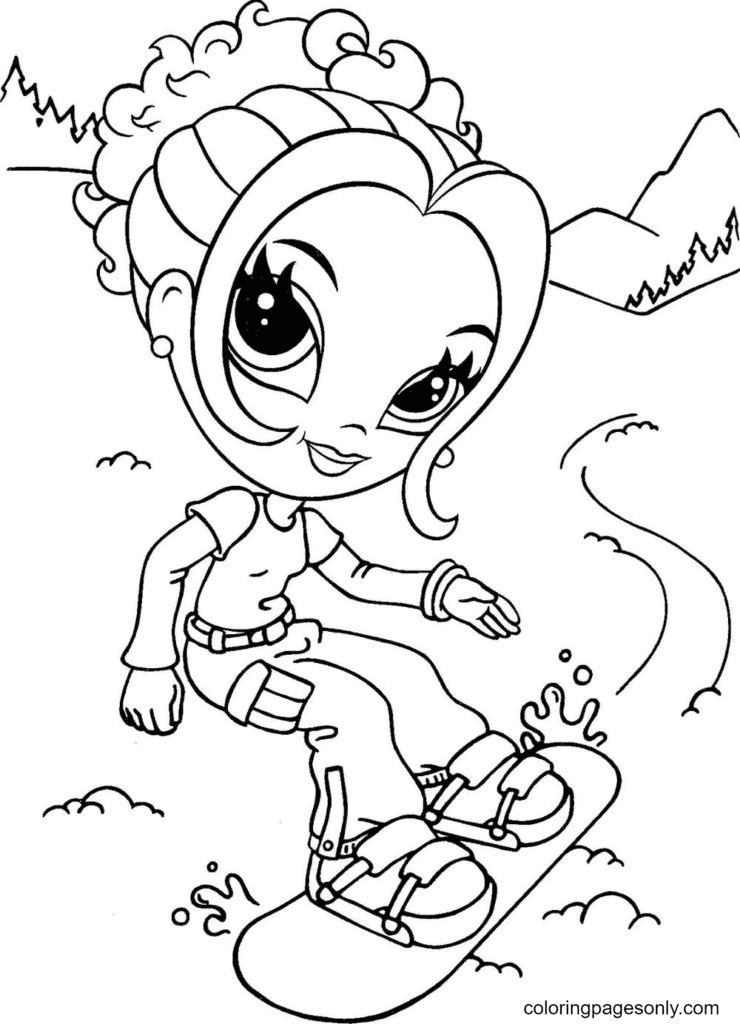
Snowboarding tiles cover the sport across both recreational and extreme contexts. Snowboarding, Snowboarding Trick, Girl Snowboarding, Kid Snowboarding Jump, Cute Fox Snowboarding, Lisa Frank Snowboarding, and Snowboarding Cat depict riders on single-plank boards descending slopes, performing jumps, and executing aerial tricks.

Snowboarding was developed in the United States in the 1960s–1970s, initially through improvised designs by inventors including Sherman Poppen (the “Snurfer,” 1965) and Jake Burton Carpenter, whose Burton Snowboards company became the sport’s defining manufacturer. The sport was initially banned from many ski resorts before its Olympic inclusion brought institutional acceptance. Today, snowboarding is practiced by millions worldwide across disciplines, including halfpipe, slopestyle, big air, parallel giant slalom, and backcountry riding.

Coloring snowboarders: Snowboard culture developed its own fashion aesthetic distinct from alpine skiing – baggier clothing, streetwear-influenced outfits, bold graphics on the board base design. The board itself typically displays vivid, graphic, often abstract art across its topsheet. The boots are softer and more boot-like than ski boots, and the bindings are visible on the board’s surface.

Ice Skating

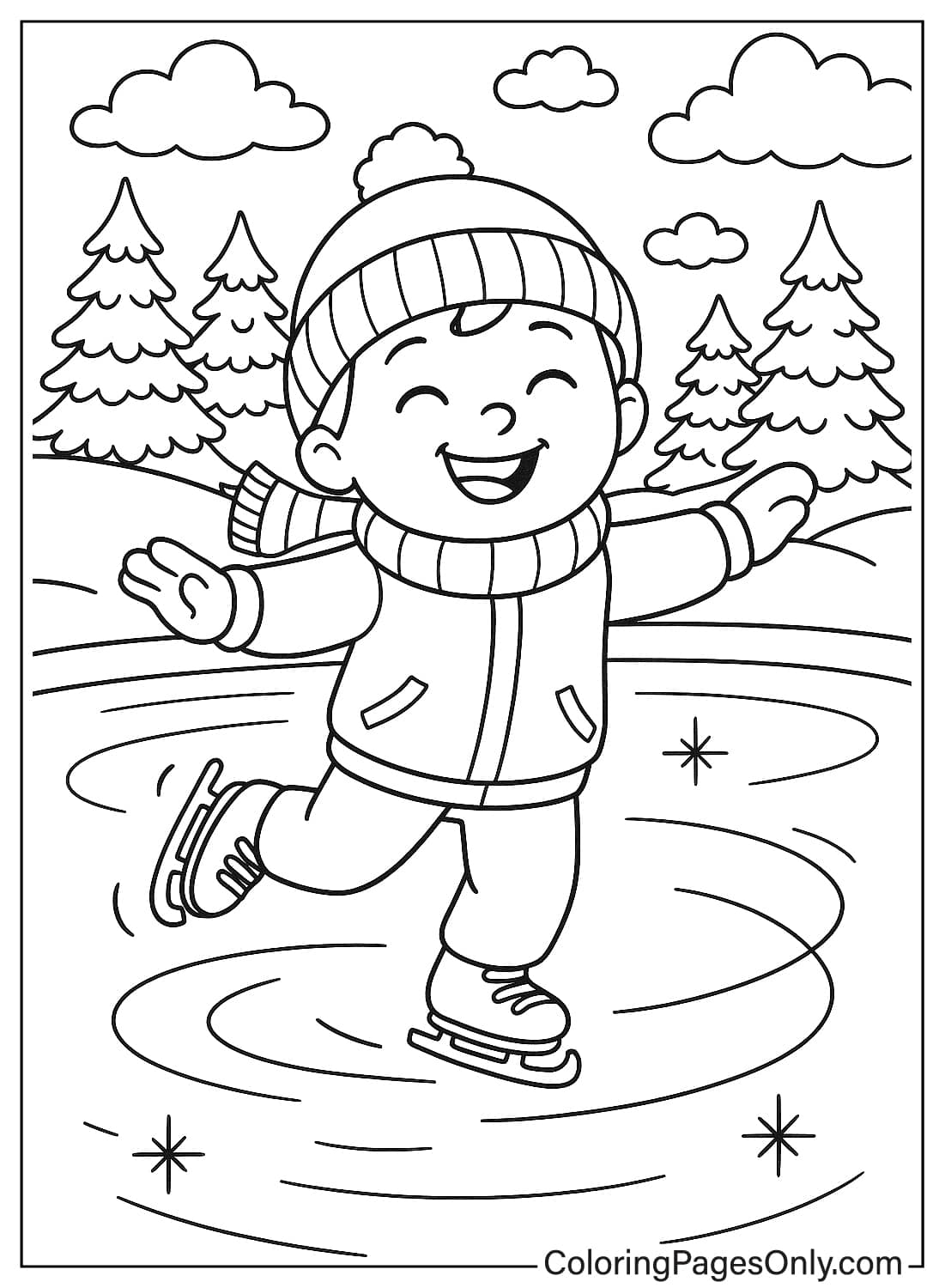
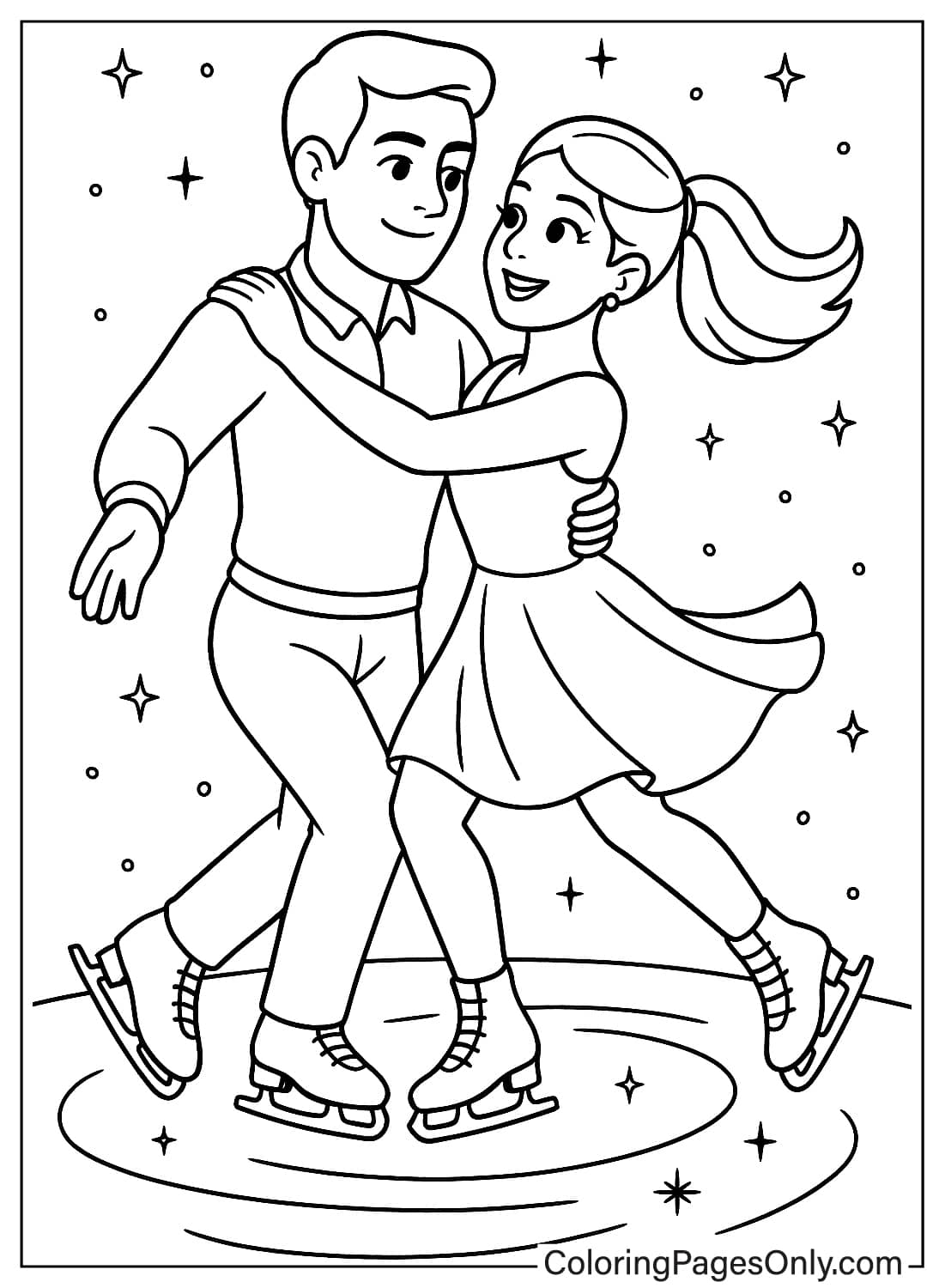
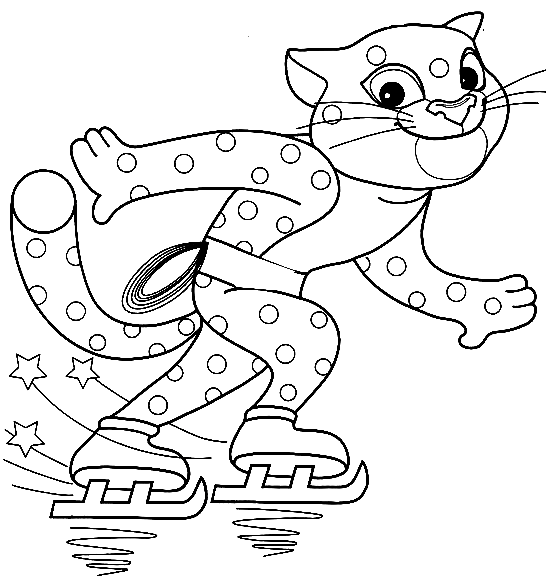
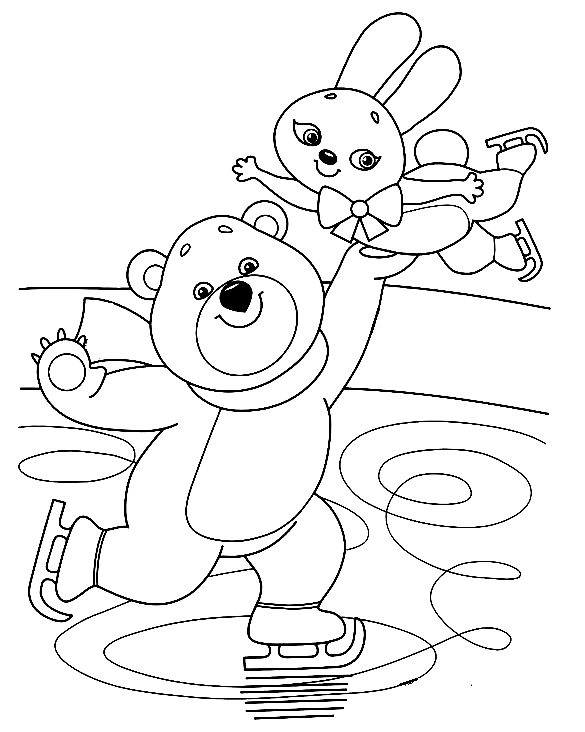
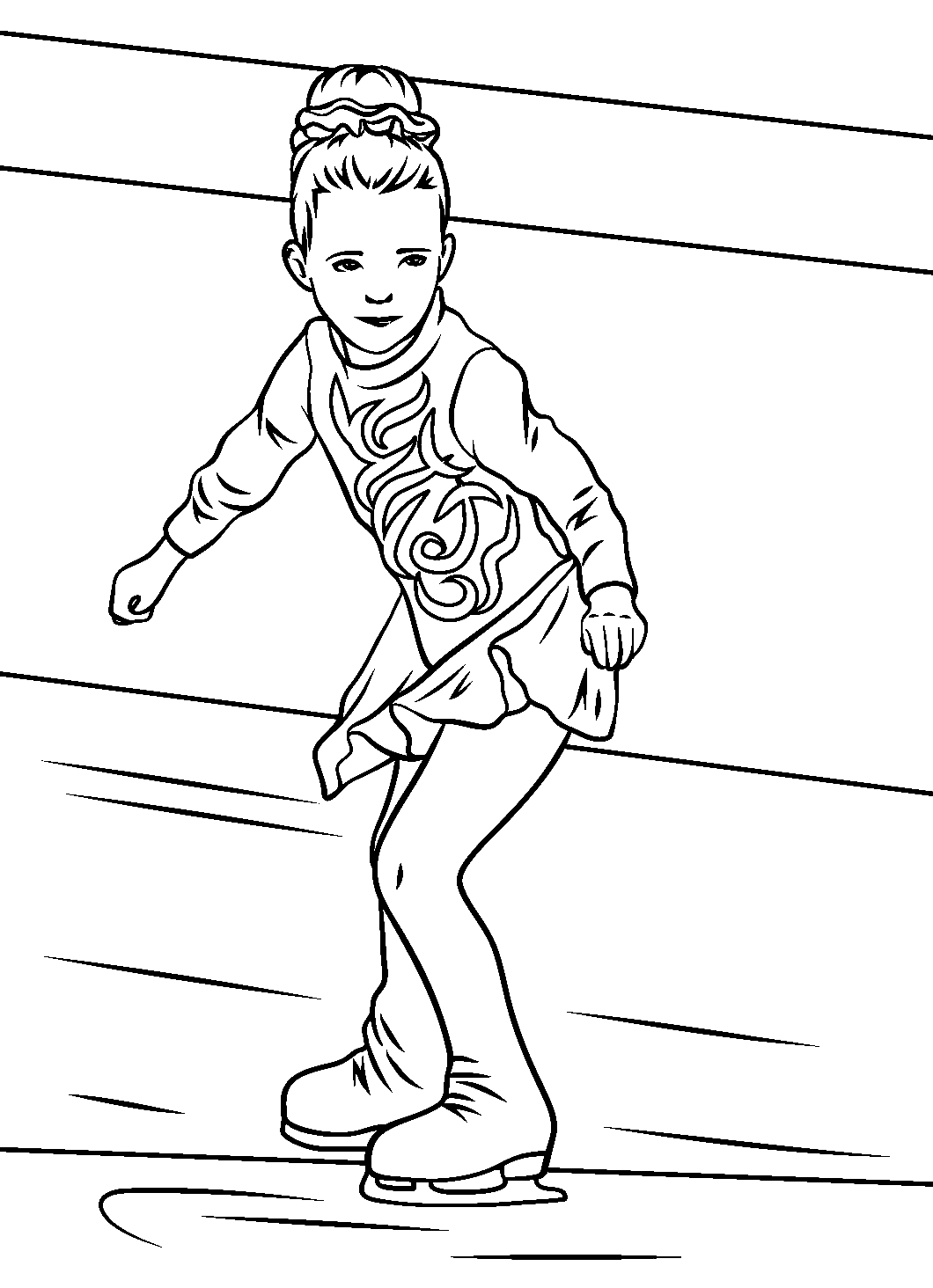
The collection’s ice skating tiles span figure skating, recreational skating, and speed skating aesthetics. Figure Skating Couple (a pairs figure skating composition), Ice Skating Girl, Girl Ice Skater, Happy Boy Ice Skating, Ice Skating Bear, Adorable Bunny Ice Skating, and Mickey Ice Skating cover the sport across human, animal, and character subjects.

Figure skating is one of the Winter Olympics’ most-watched sports and one of the oldest in the Games’ history – it was contested at the 1908 Summer Olympics before the Winter Games existed. The sport combines athletic jumps (axel, lutz, flip, loop, salchow, toe loop – named for their inventors or technique characteristics), spins, step sequences, and artistic presentation. The pairs tiles reflect competitive pairs skating, in which partners perform elements simultaneously and in unison, including lifts, throw jumps, and side-by-side spins.

Coloring figure skaters: The female skater’s dress is the most visually expressive element in figure skating tiles – competition dresses use vivid, jewel-toned colors with rhinestone embellishment. The ice surface itself uses pale blue-gray – not white, but a slightly blue-tinted cold gray that conveys the glossy, reflective quality of groomed ice. Ice blade traces left by skate movements can be suggested by fine light-gray arcing lines on the ice surface.

Ice Hockey

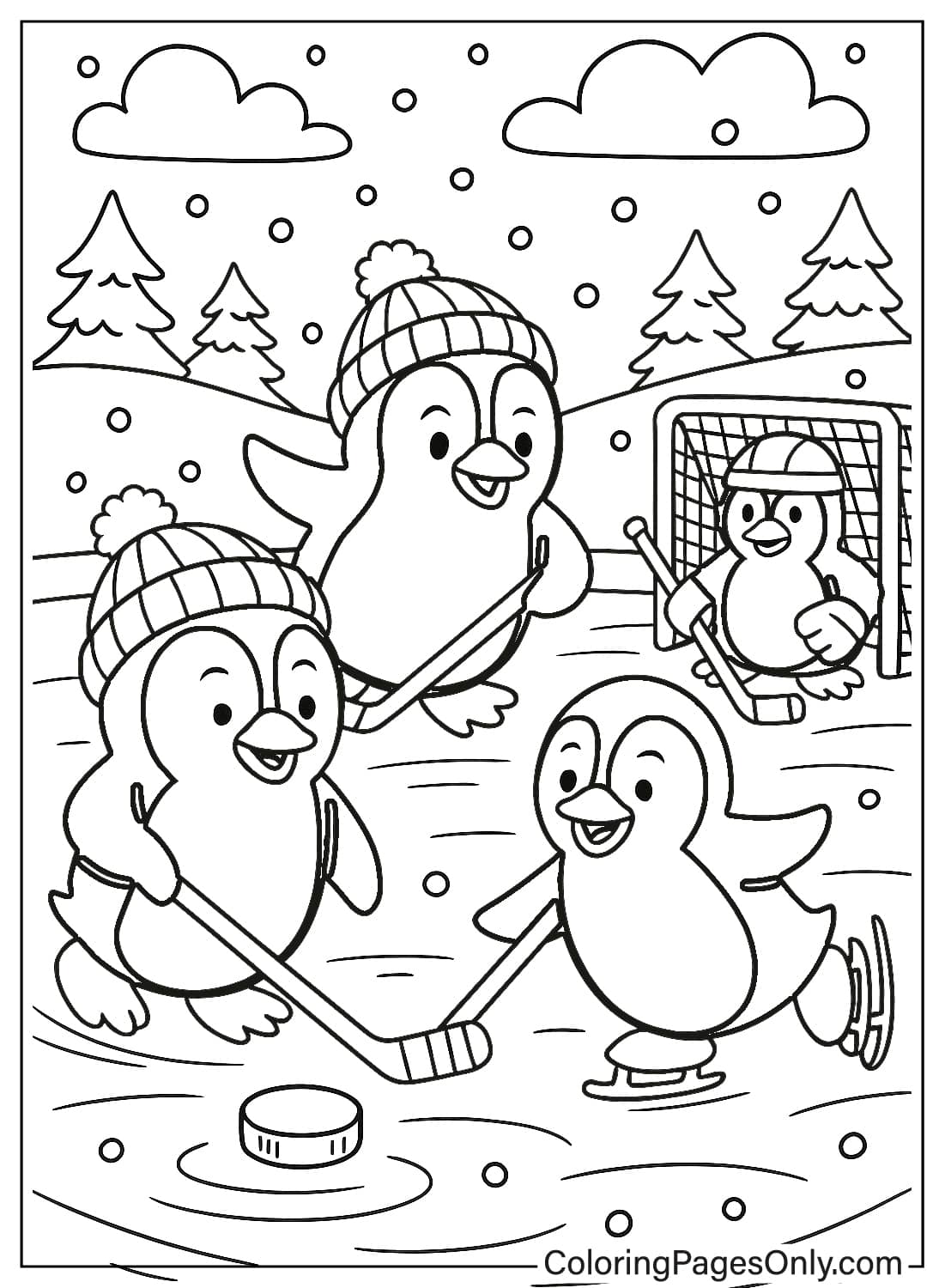
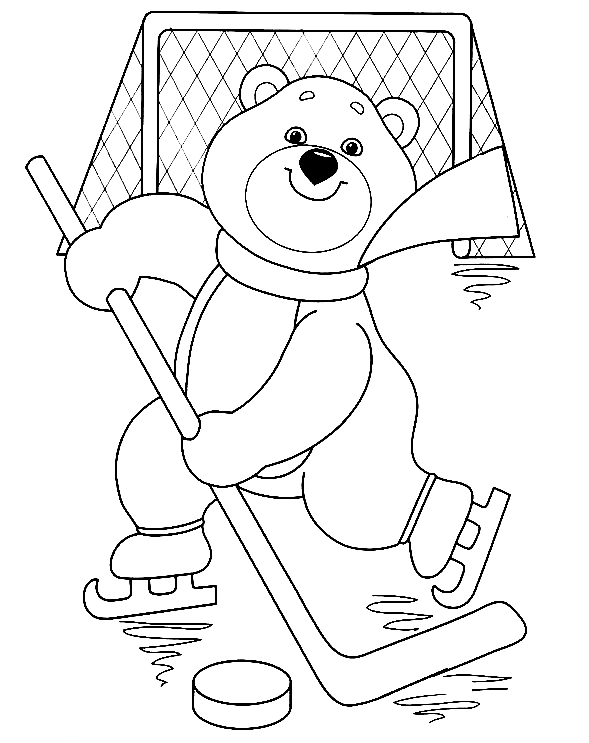
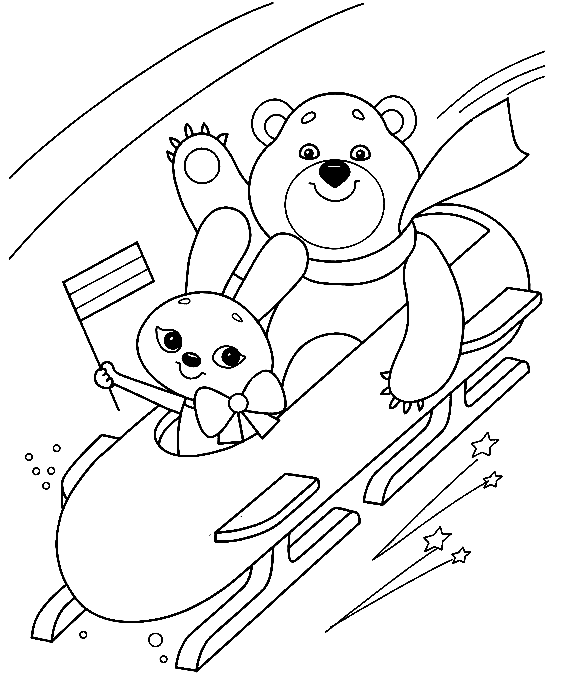
Ice hockey tiles cover both competitive and cartoon-character contexts. Bear Playing Hockey, Cute Polar Bear Ice Hockey, Cute Penguins Playing Ice Hockey, and Bobsleigh with Bear and Bunny all depict animal characters in hockey or winter sport settings.

Ice hockey is played between two teams of six players (five skaters and one goaltender) on an ice rink, with the objective of shooting a hard rubber puck into the opponent’s goal using hockey sticks. It is the fastest team sport played on a surface, with players reaching speeds of over 40 km/h on skates. The NHL (National Hockey League) is the premier professional ice hockey league, contested primarily in North America.

Coloring hockey players: The hockey player’s full equipment – helmet with face cage, padded shoulders and arms, gloves, shin pads, and skates – makes the sport’s athletic figures the most visually complex in the collection. The stick is typically dark gray-black with a contrasting tape job on the blade. The puck is solid black rubber, 3 inches in diameter. Ice rink boards are typically white or light blue-gray with team logos and sponsor graphics.

Bobsled and Luge

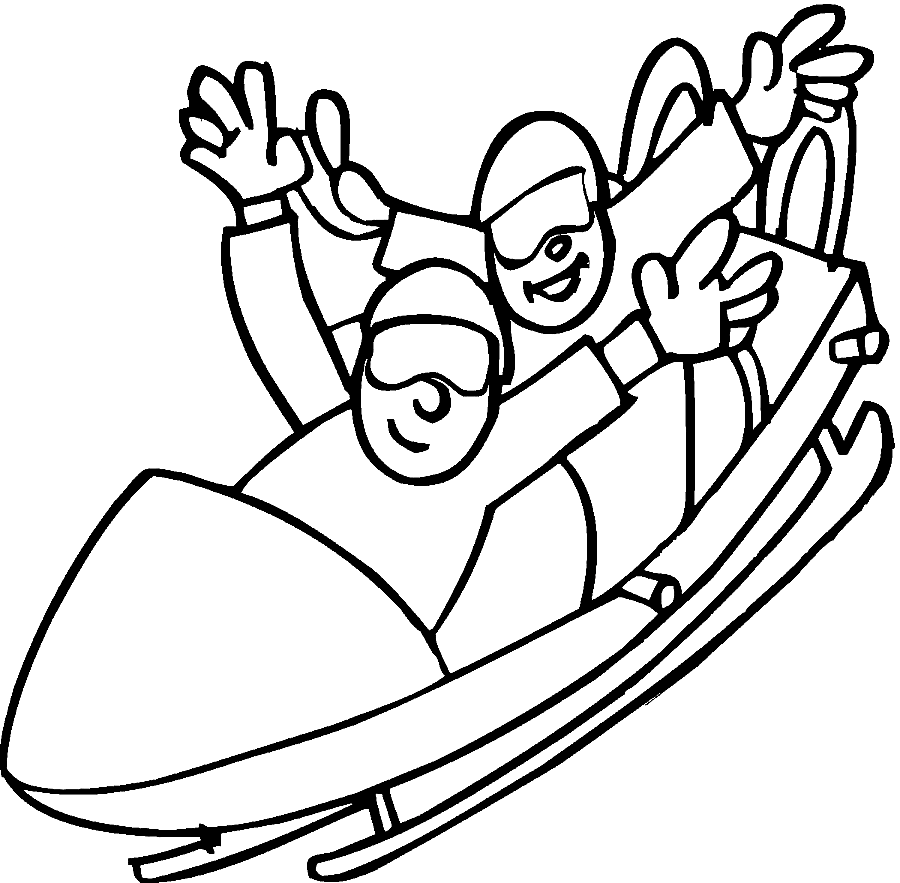
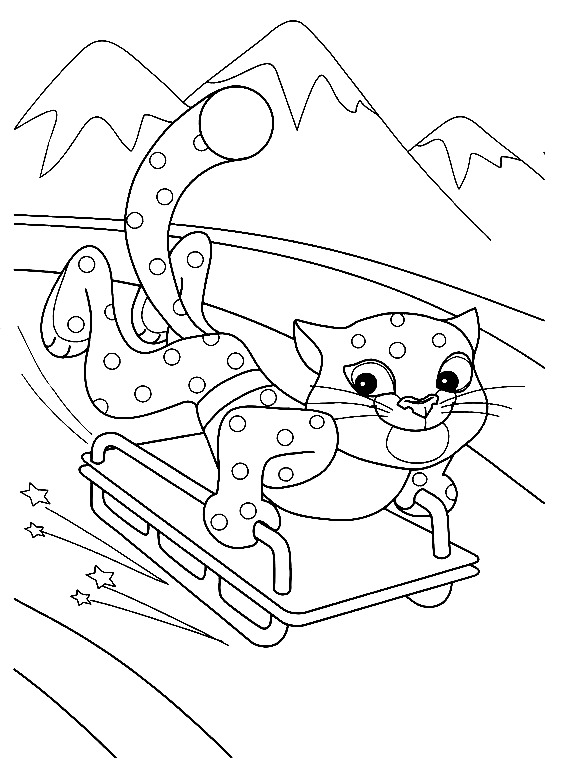
Two-Man Bobsled and Luge Cat cover the sliding sports – the gravity-powered ice track events that are among the Winter Olympics’ most technically demanding and fastest disciplines. Bobsled crews of two or four athletes pilot a steerable sled down a banked ice track, reaching speeds of up to 150 km/h. The luge is a smaller sled on which a single athlete or pair lies face-up, steering with subtle leg pressure and shoulder movements through the same type of iced track.

Coloring bobsleds: Bobsled shells use national team colors painted on a fiberglass shell – vivid solid colors with country name and flag markings. The crew wears aerodynamic full-body suits in national team colors, with helmets that integrate eye shields.

Sledding and Snow Play

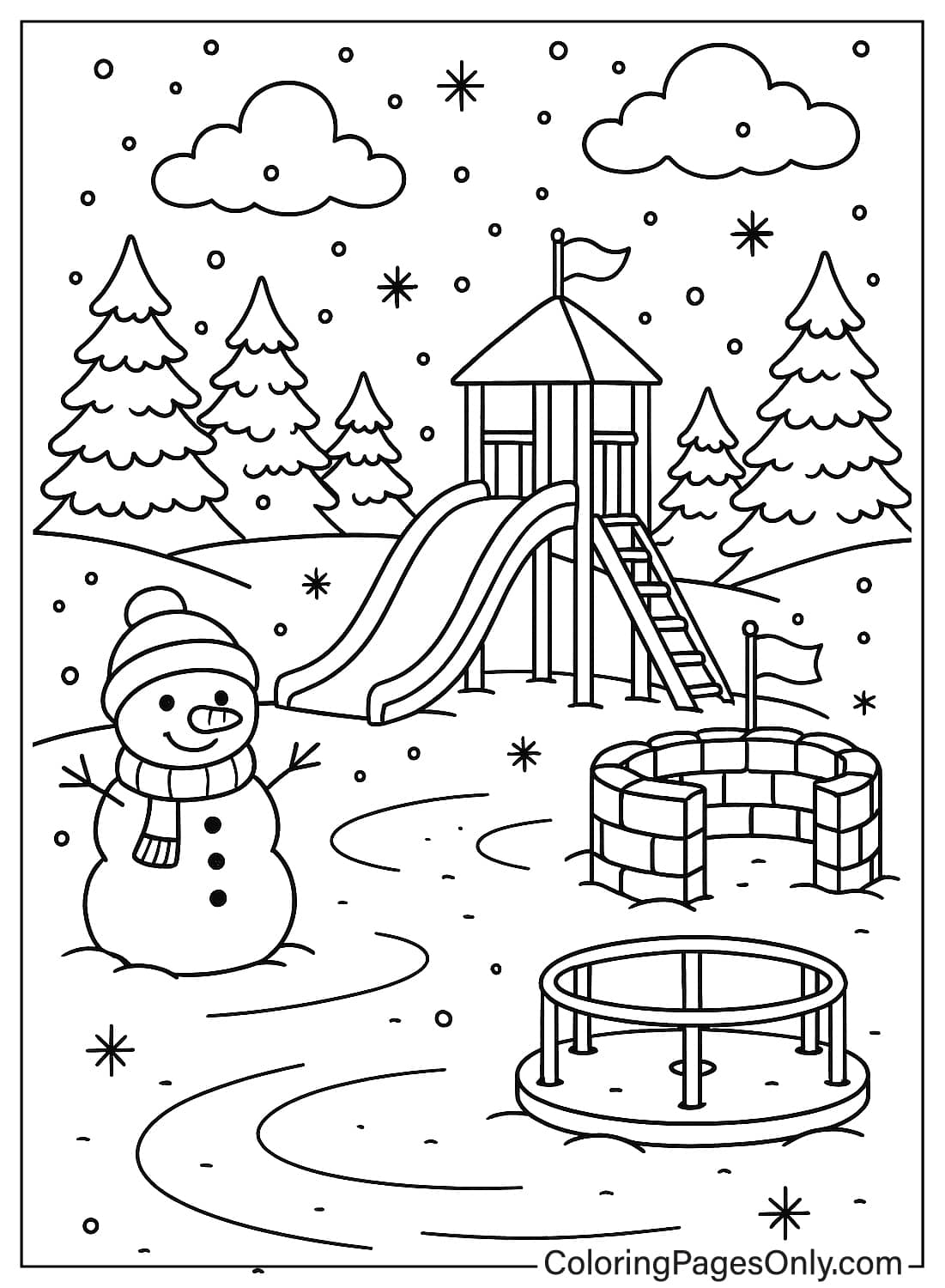
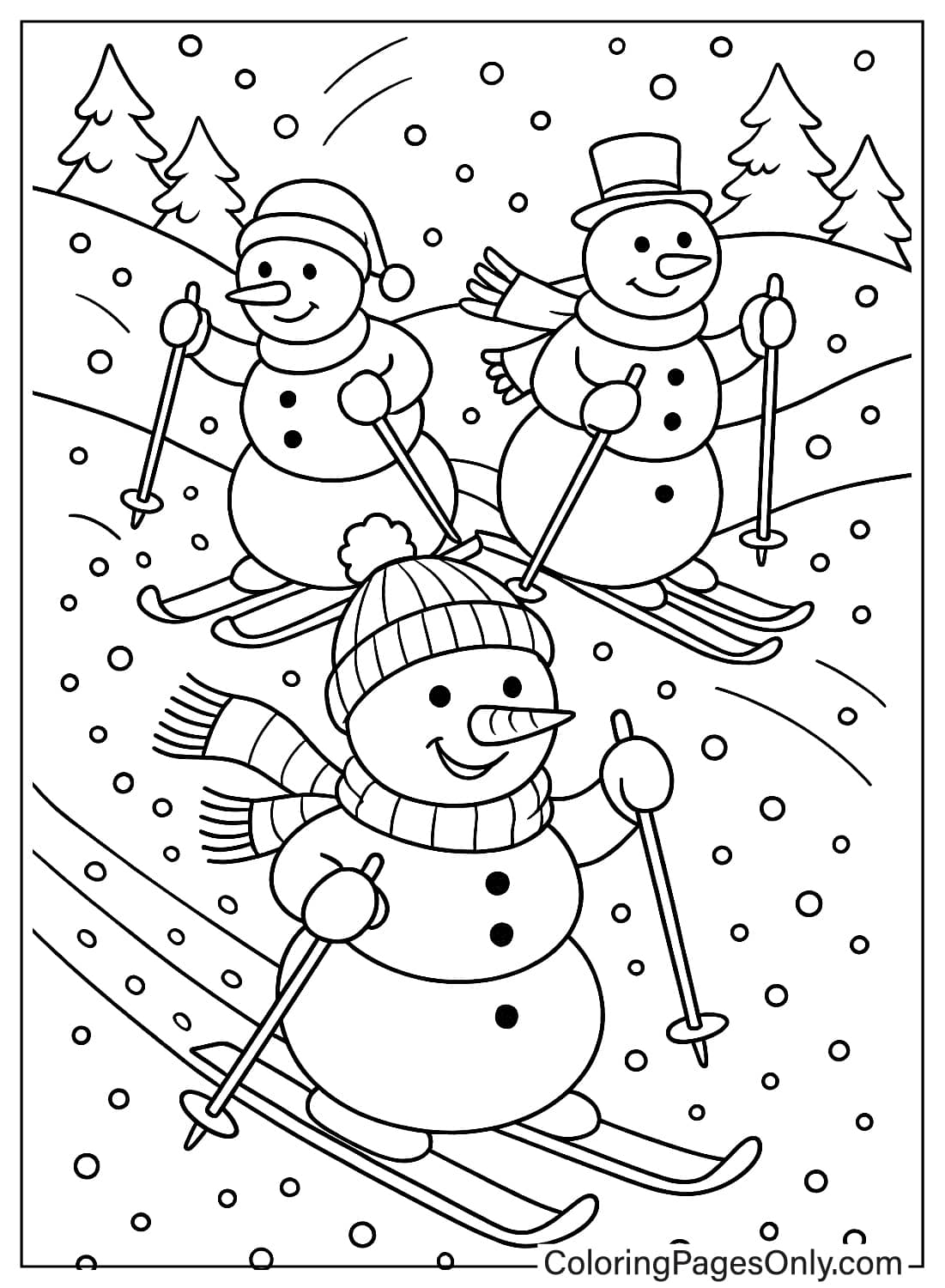
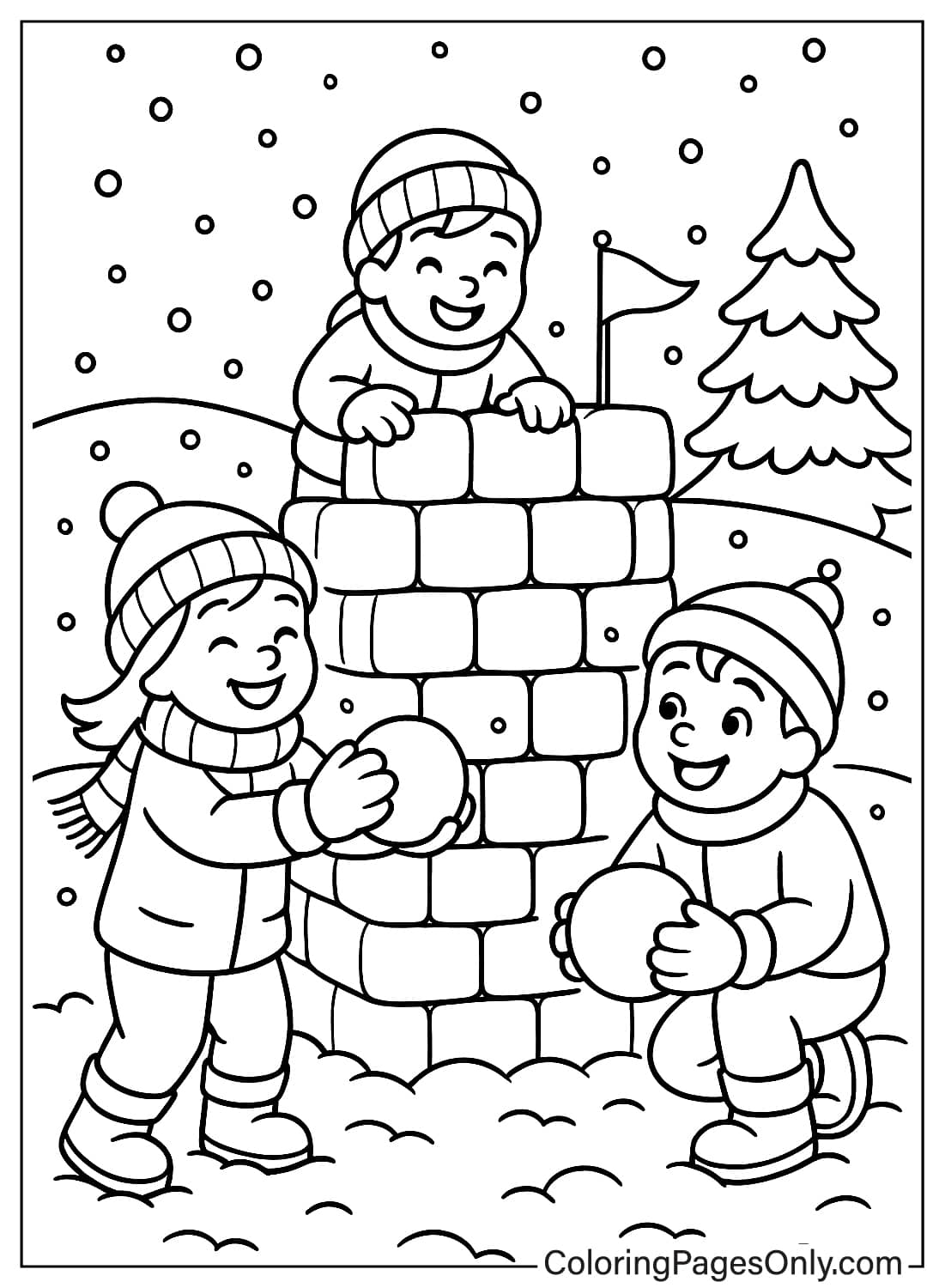
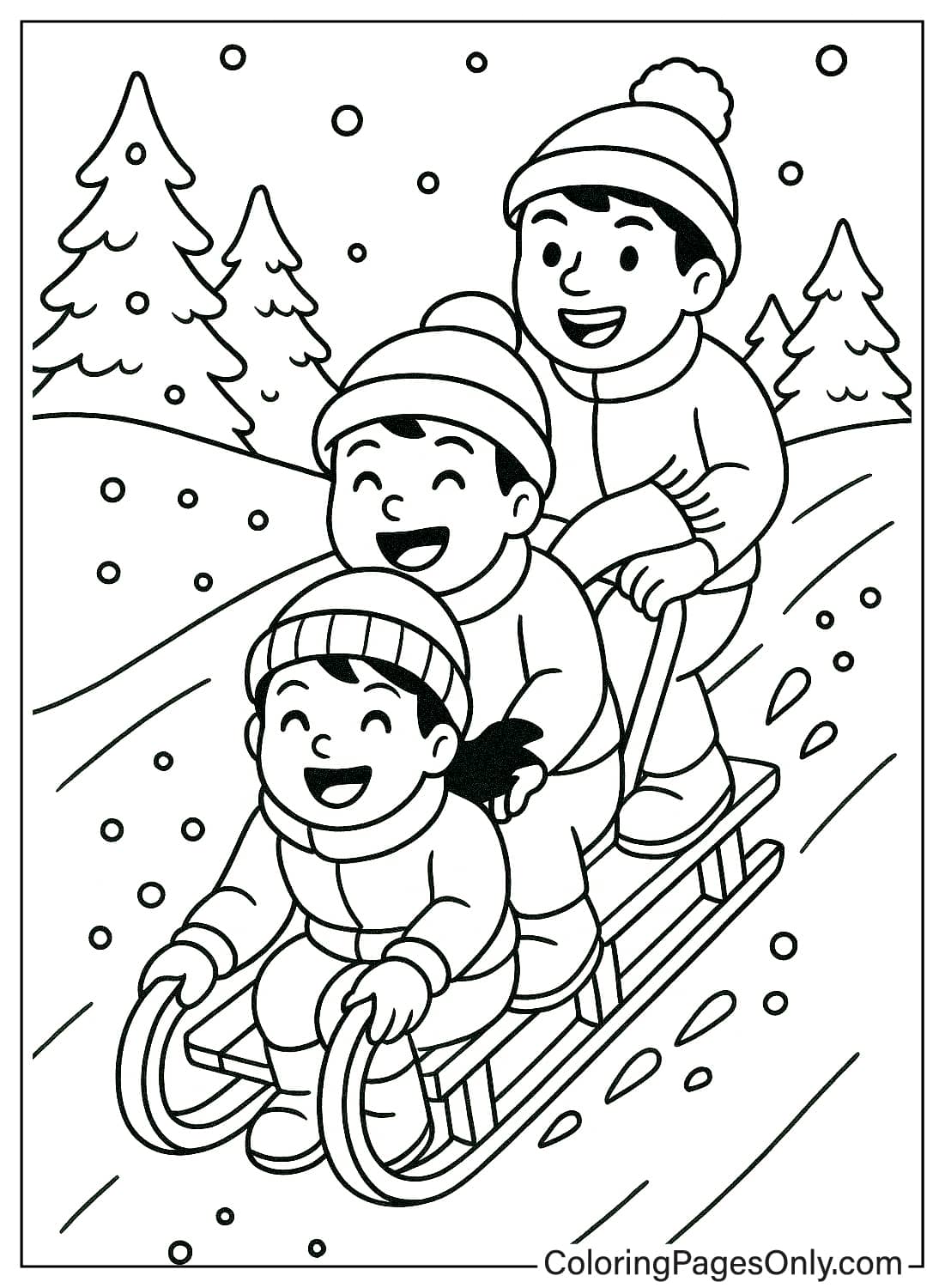
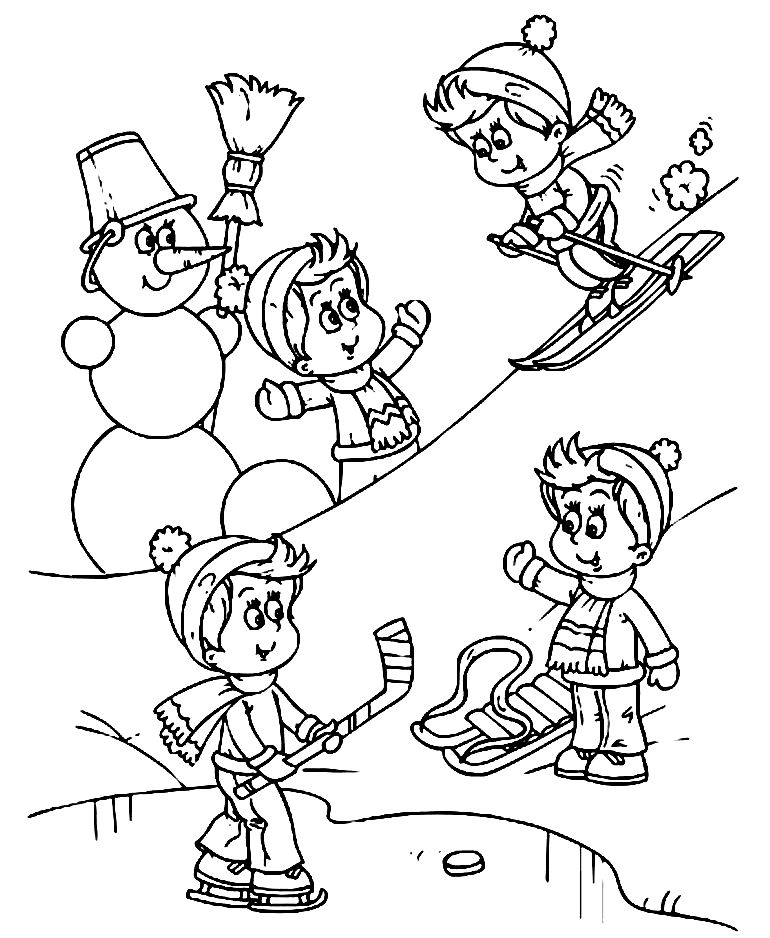
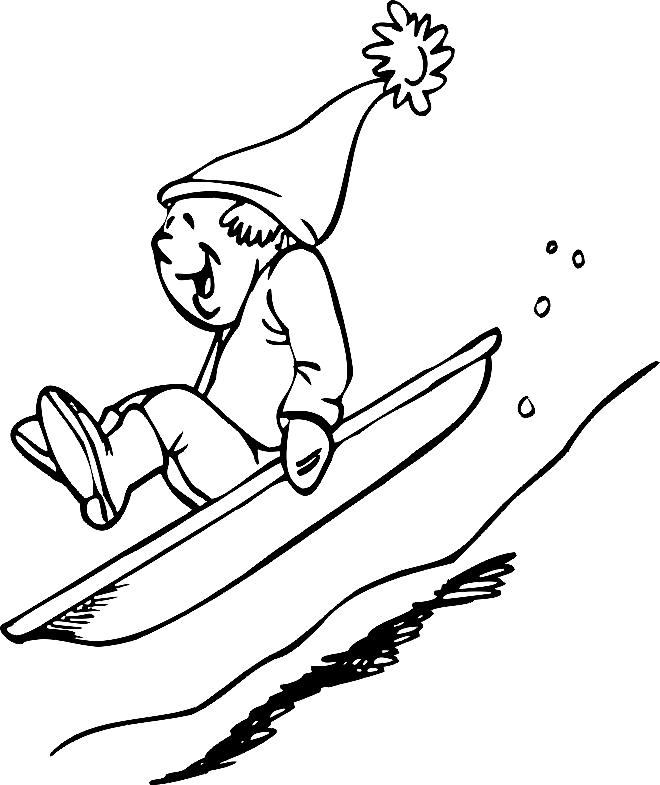
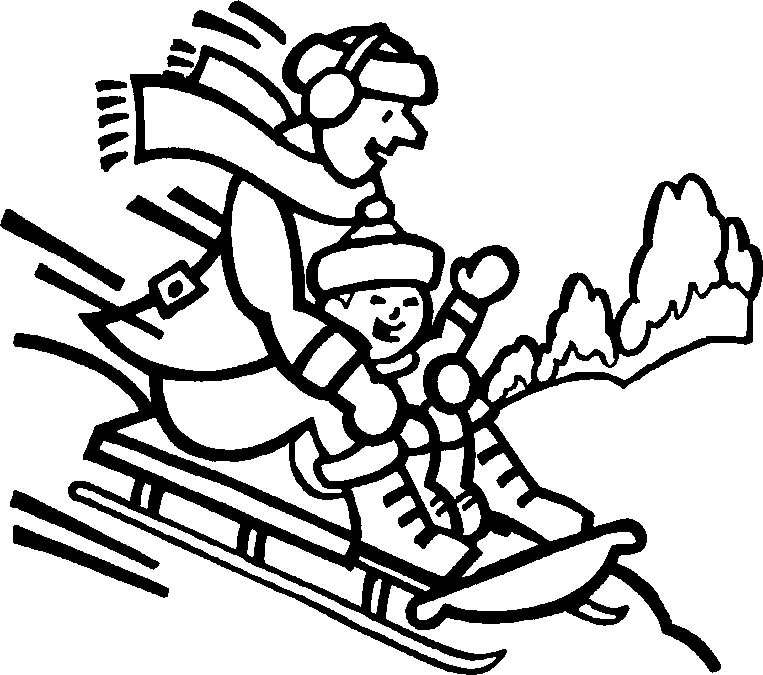
The collection’s most family-oriented cluster – Kids Sledding Downhill, Boy Sledding Under Snow Tunnel, Reindeer Sledding, Snowmen Skiing, Kids Snowball Fight, Snowman Winter Playground, and Kids Winter Obstacle Course Race – covers the universal childhood winter experiences accessible without specialized equipment or training.

Sledding on a hill with any available sled or toboggan, building snowmen and snow forts, staging snowball fights – these activities require nothing more than snow, warm clothing, and enthusiasm. Their inclusion alongside competitive and technical winter sports makes the collection genuinely all-inclusive, with pages that will resonate as much with a child who has never been near a ski slope as with one who competes on one.

Ski Jumping

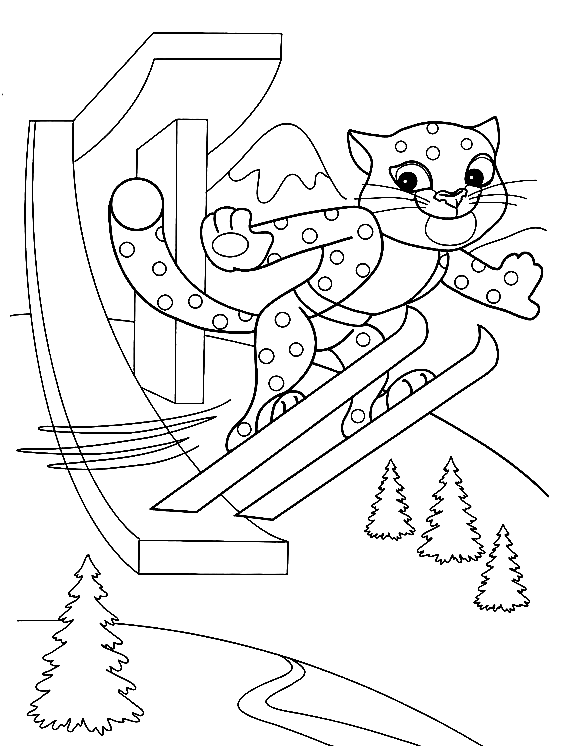
The Ski Jumper tile depicts one of winter sports’ most dramatic competitive events – an athlete launching off a ramp at speeds of approximately 90 km/h and flying through the air for distances of over 130 meters, maintaining a precise aerodynamic body position (forward-lean, with skis in a V-formation developed in the late 1980s by Swedish ski jumper Jan Boklöv). Ski jumping competitions judge both distance and style.

Coloring ski jumpers: The in-flight position – arms back, skis spread in a wide V angle, body nearly horizontal to the skis – is the most kinetically dramatic pose in the entire coloring collection. The mountain and sky background should use a deep perspective with the jump ramp visible below and the landing slope in the distance, giving a sense of the extraordinary height achieved at the peak of the jump.

Ice Fishing

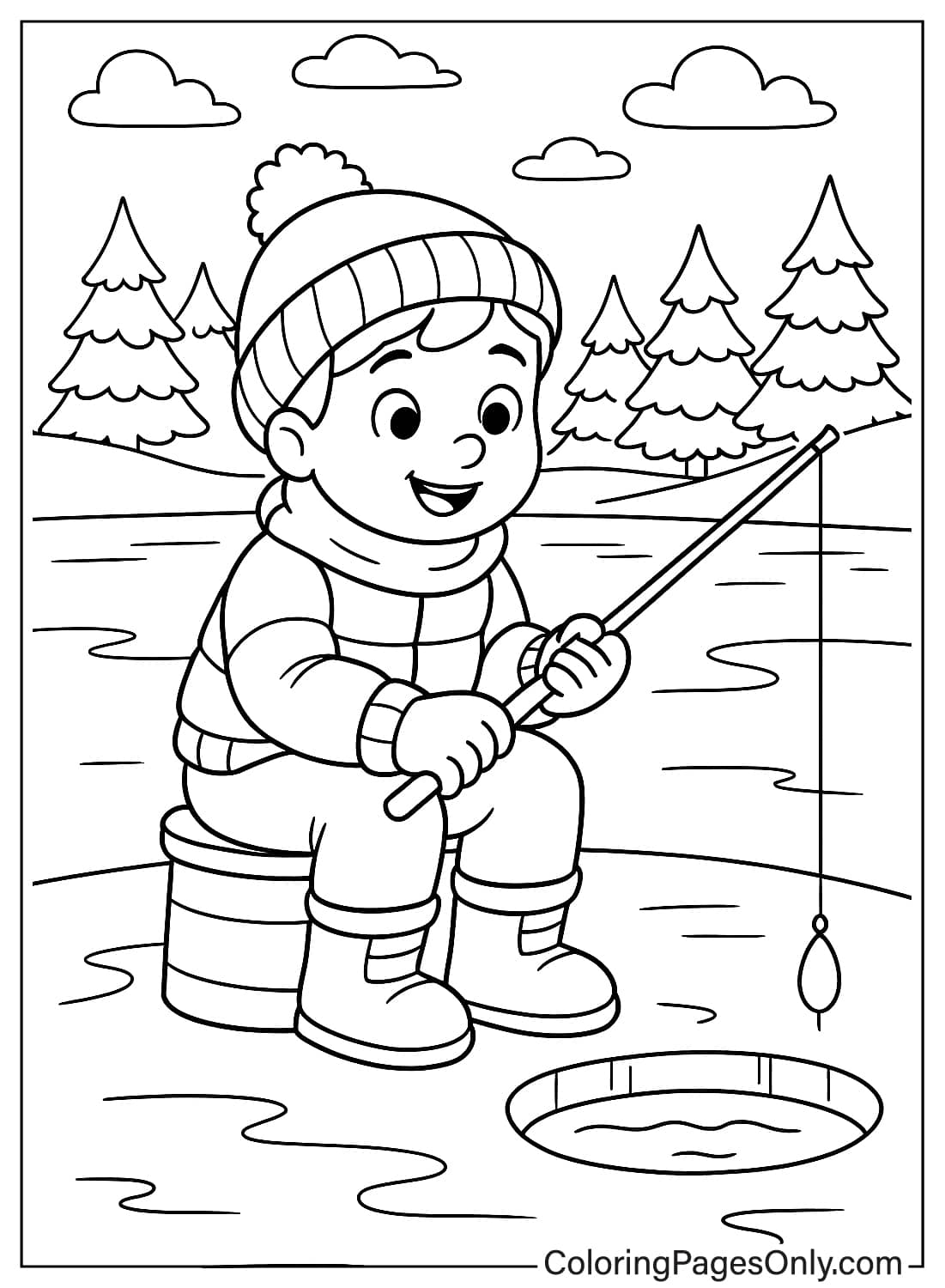
Boy Ice Fishing is the collection’s quietest, most contemplative tile – a child sitting on a bucket on a frozen lake, fishing rod extended through a hole cut in the ice. Ice fishing is practiced in northern regions wherever lakes freeze sufficiently – popular in Minnesota, Michigan, Wisconsin, Canada, Finland, Norway, and Russia, where heated fishing shelters called “ice shanties” or “fish houses” are dragged out onto frozen lakes for multi-day fishing sessions.

Character Crossover Tiles

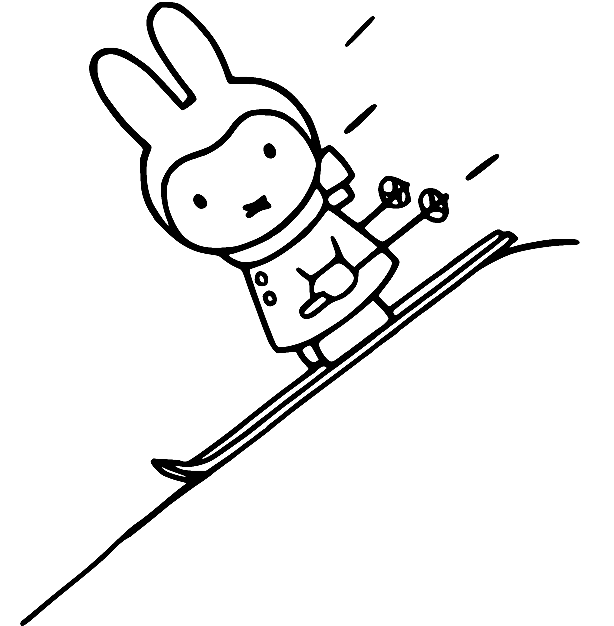
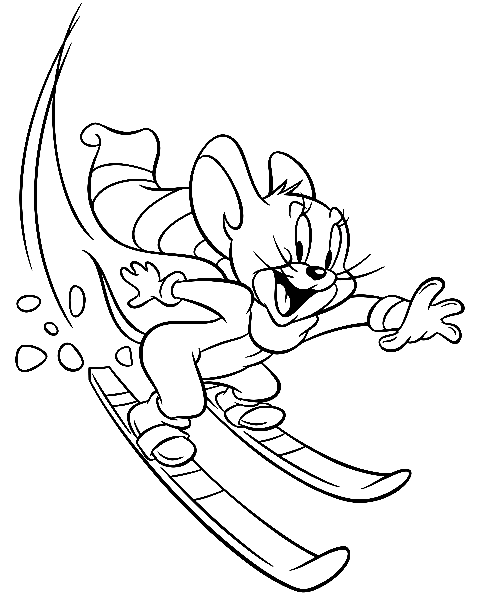
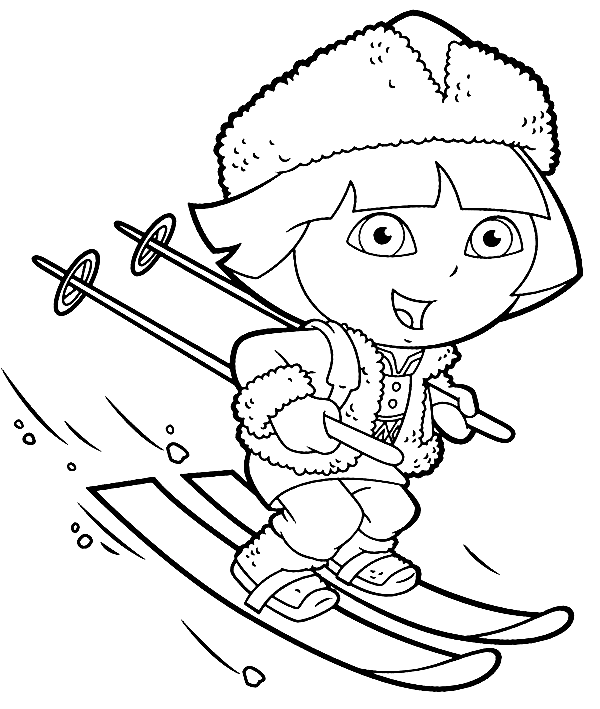
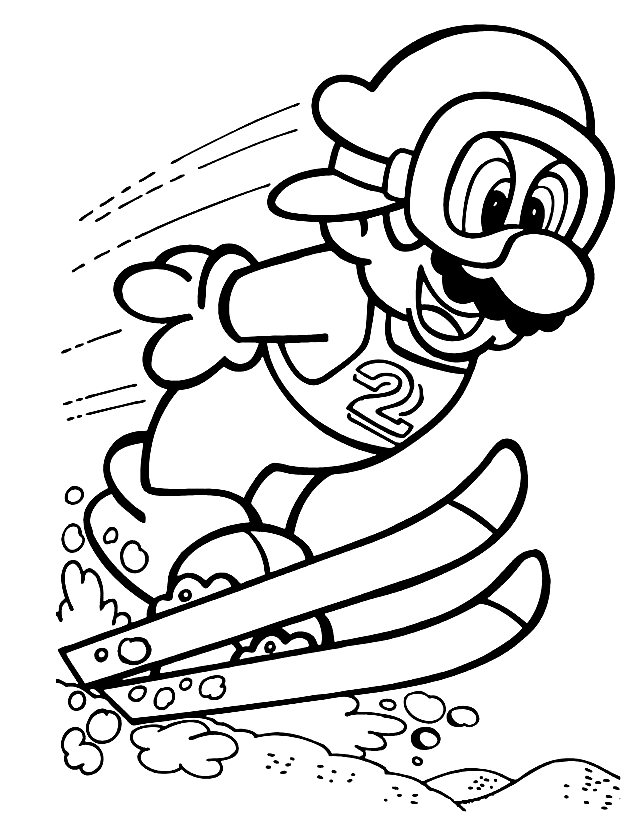
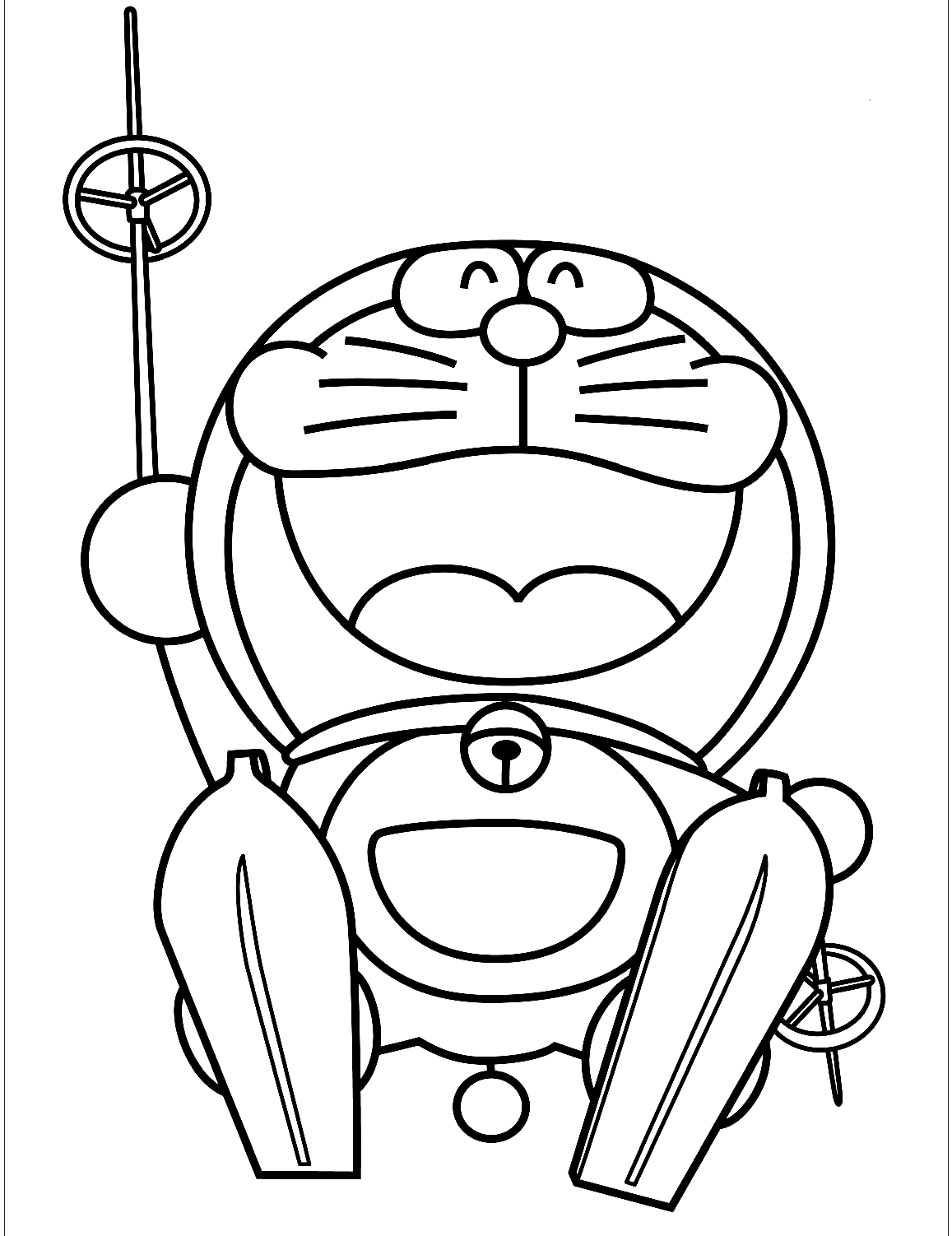
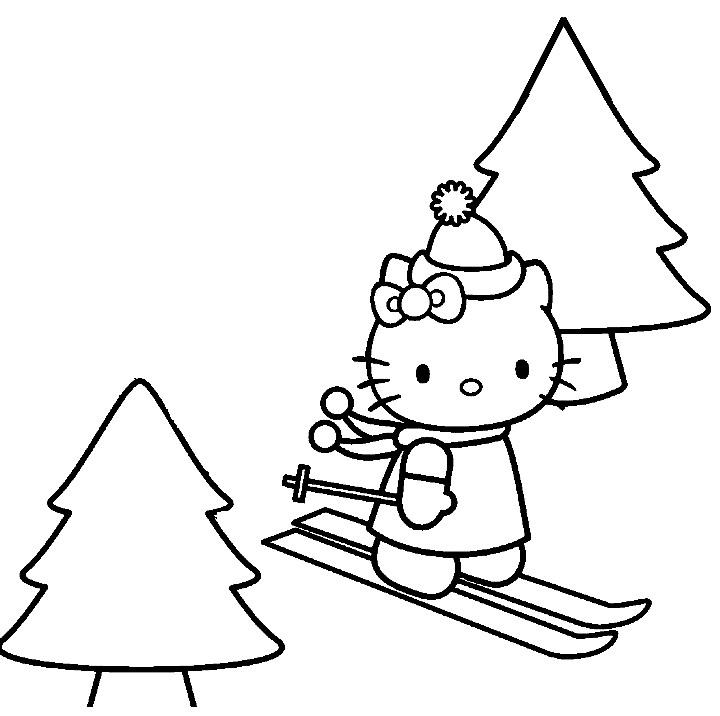
The collection’s most instantly recognizable tiles bring beloved animated characters into winter sport contexts. Mickey Mouse appears in both skiing (Mickey Skiing) and ice skating (Mickey Ice Skating) contexts – in his canonical red shorts, white gloves, and yellow shoes, now bundled against winter cold. Goofy Play Skiing brings Disney’s lovably accident-prone character onto the slopes – a natural comedy pairing. Tom Skiing and Jerry Skiing from Tom and Jerry place the cat-and-mouse rivals on separate skis. Dora Skiing features Nickelodeon’s explorer in a slope setting. Super Mario Skiing brings Nintendo’s plumber to the snow in his familiar red and blue. Hello Kitty Skiing and Hello Kitty Skiing in Christmas give Sanrio’s most iconic character two winter outings. Doraemon Skiing places the beloved Japanese robotic cat on the mountain. Miffy Skiing brings Dick Bruna’s simple Dutch rabbit character to the snow. Lisa Frank Snowboarding applies the vivid rainbow-palette brand’s aesthetic to the board sport.

Coloring Guide: The Winter Sports Palette

Snow – The Collection’s Dominant Color

Snow is the most important environmental element across the entire collection and the most technically interesting to render. Real snow is not white – it reflects the light it receives, which means it appears blue-tinged in shade, warm cream-yellow in sunlight, pink-orange at dawn and dusk, and blue-purple in shadow cast by trees or mountains.

For standard daytime snowy scenes, use very pale blue-gray for the snow in shadow areas and near-white with a barely perceptible warm cream bias for the snow in direct light. Never leave large snow areas as plain paper white – even the faintest cool blue-gray wash in shadow zones and the subtlest warm tint on sunlit surfaces give the snow a dimensional, believable quality.

Snowflakes on clothing (scarves, jackets, mittens) suit true white against darker clothing colors. Fresh snow on the ground uses slightly warmer white than shadow snow. Old or compacted snow on a ski slope shows ski track marks as slightly deeper blue-gray grooves.

Winter Clothing

The most expressive coloring opportunity in any winter sports tile is the athlete’s outfit. Ski jackets and snowboard gear follow no single color convention – vivid, high-visibility colors (safety orange, vivid red, electric blue, bright yellow) are common on the slopes for both visibility and aesthetic reasons. Children’s winter clothing tends toward the warmest, most vivid available colors: a bright red jacket, a vivid blue hat, a yellow scarf.

Scarves and hats deserve particular attention as the most colorful and most personalized elements of cold-weather clothing. A striped scarf uses alternating bands of different colors – the classic children’s scarf aesthetic uses 3-4 vivid colors in wide stripes. Knit patterns (the visible stitch texture) can be suggested in colored pencil work by applying colors in slightly irregular, slightly textured strokes rather than perfectly smooth flat application.

Ice Surfaces

Ice in rinks and on frozen ponds uses a pale, cool blue-gray – not as warm as snow white, but clearly lighter than standard gray. The reflection quality of ice – its glossy, mirror-like surface – can be suggested by leaving narrow strips of near-paper-white as highlight lines across the ice surface, as if reflecting overhead lighting.

FAQs

What are the Winter Olympic sports? The Winter Olympics feature 15 disciplines, including alpine skiing, cross-country skiing, biathlon, ski jumping, freestyle skiing, snowboarding, ice skating (speed skating, figure skating, short track speed skating), ice hockey, curling, bobsled, luge, and skeleton. The 2022 Beijing Winter Olympics featured 109 events.

When did snowboarding become an Olympic sport? Snowboarding was added to the Winter Olympics program at the 1998 Nagano Games, with giant slalom and halfpipe events for men and women. The discipline has since expanded to include parallel giant slalom, slopestyle, big air, and snowboard cross.

What is the fastest Winter Olympic sport? Downhill skiing is the fastest ski discipline, with competitors regularly exceeding 130 km/h (80 mph) on race courses. Luge and bobsled reach similar speeds – up to 150 km/h on the most challenging tracks.

What is the difference between luge and skeleton? Both are solo sliding sports on the same type of iced track, but luge athletes lie face-up on their sled and travel feet-first, while skeleton athletes lie face-down on their sled and travel head-first. Both sports use gravity-powered sleds without brakes, steered through the track’s curves by body movements.

At what age can children start skiing or snowboarding? Children can begin skiing lessons as young as age 3-4 with appropriate instruction and equipment. Most ski schools offer programs for children starting at age 4-5 for both skiing and snowboarding. Snowboarding is sometimes considered slightly harder to learn initially due to the different balance mechanics, but most children adapt quickly.

What is figure skating’s most difficult jump? The axel is considered the most difficult standard figure skating jump because it is the only jump taken from a forward edge – meaning the skater faces forward at takeoff. A triple axel requires 3.5 revolutions in the air. A quadruple axel (4.5 revolutions) was first completed in competition by Ilia Malinin of the United States in 2022.

What equipment do I need to start ice skating? Beginner ice skating requires only ice skates fitted properly to the foot and appropriate winter clothing. Many indoor ice rinks rent skates. Protective gear – helmet, wrist guards, knee pads – is strongly recommended for children learning to skate. Falls are a normal part of the learning process; protective gear makes them less consequential.

All 50+ Winter Sports Coloring Pages are free – download as PDF or color online. Share your finished pages on Facebook and Pinterest.

These related coloring collections will help you explore the wonderful world of colors. Let’s choose, be creative, and show us your great pictures!


Jennifer Thoa – Writer and Content Creator

Hi there! I’m Jennifer Thoa, a writer and content creator at Coloringpagesonly.com. With a love for storytelling and a passion for creativity, I’m here to inspire and share exciting ideas that bring color and joy to your world. Let’s dive into a fun and imaginative adventure together!