Tomato Coloring Pages
 By:
Jennifer Thoa - Content Editor & Designer
Updated:
By:
Jennifer Thoa - Content Editor & Designer
Updated:
Free Tomato Coloring Pages: 52 printable PDF designs featuring realistic tomatoes, growing plants and vines, cartoon tomato characters, and kitchen and food scenes. Each page can be downloaded as a PDF to print or colored online in the browser.
The tomato has a stranger history than most kitchen staples. It originated in the Andes region of South America, likely in what is now Peru and Ecuador, and was domesticated further north by the Aztecs in Mesoamerica, who called it tomatl. Spanish explorers carried tomato seeds back to Europe in the early 1500s, where the fruit met a cold reception. Because it belonged to the nightshade family alongside plants like belladonna, many Europeans believed it was poisonous, and it was grown mainly as a garden ornamental for close to two hundred years before it became a regular food. The tomato even reached the United States Supreme Court. In the 1893 case Nix v. Hedden, the justices ruled that tomatoes count as vegetables for tariff purposes, even though botanically they are a fruit.
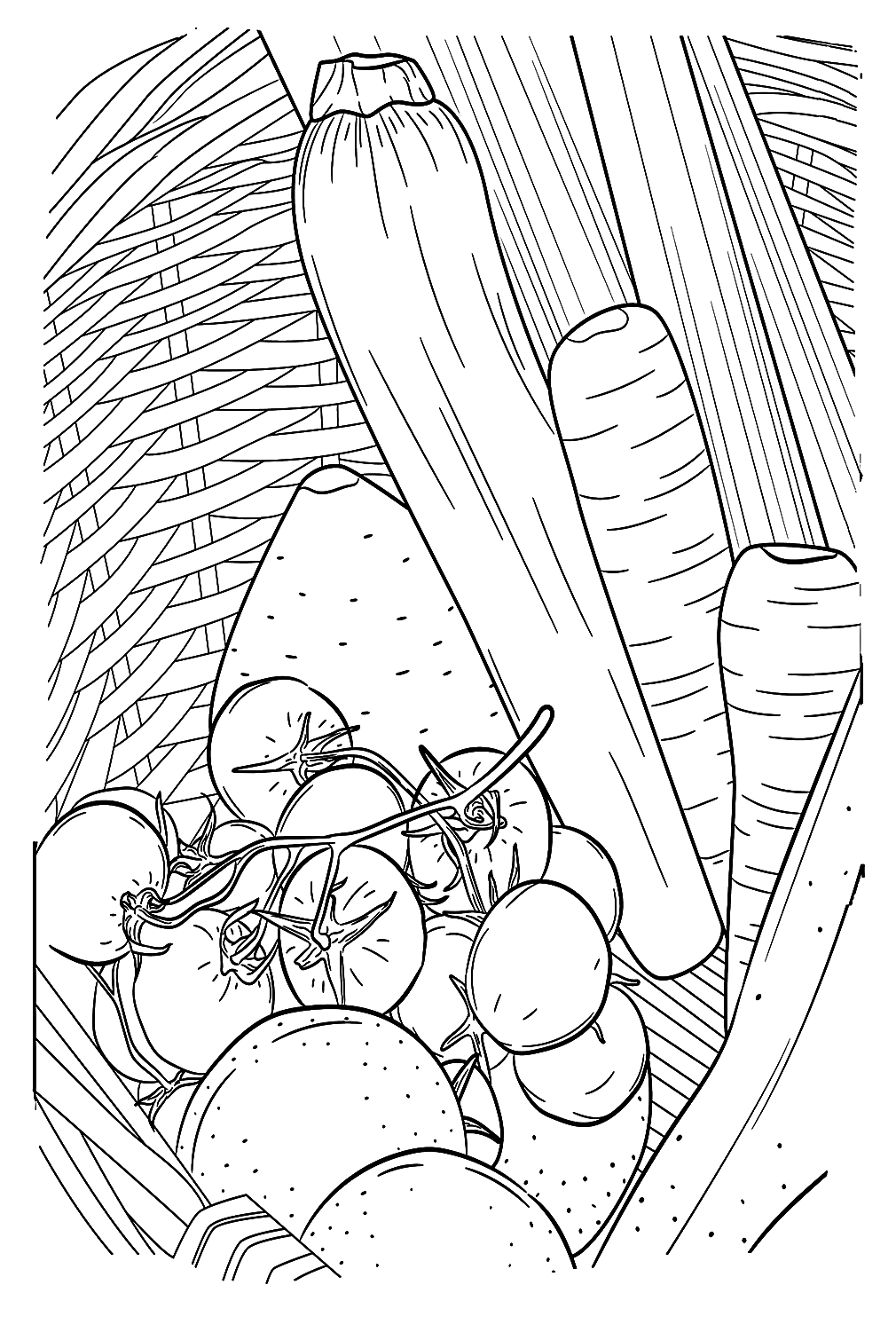
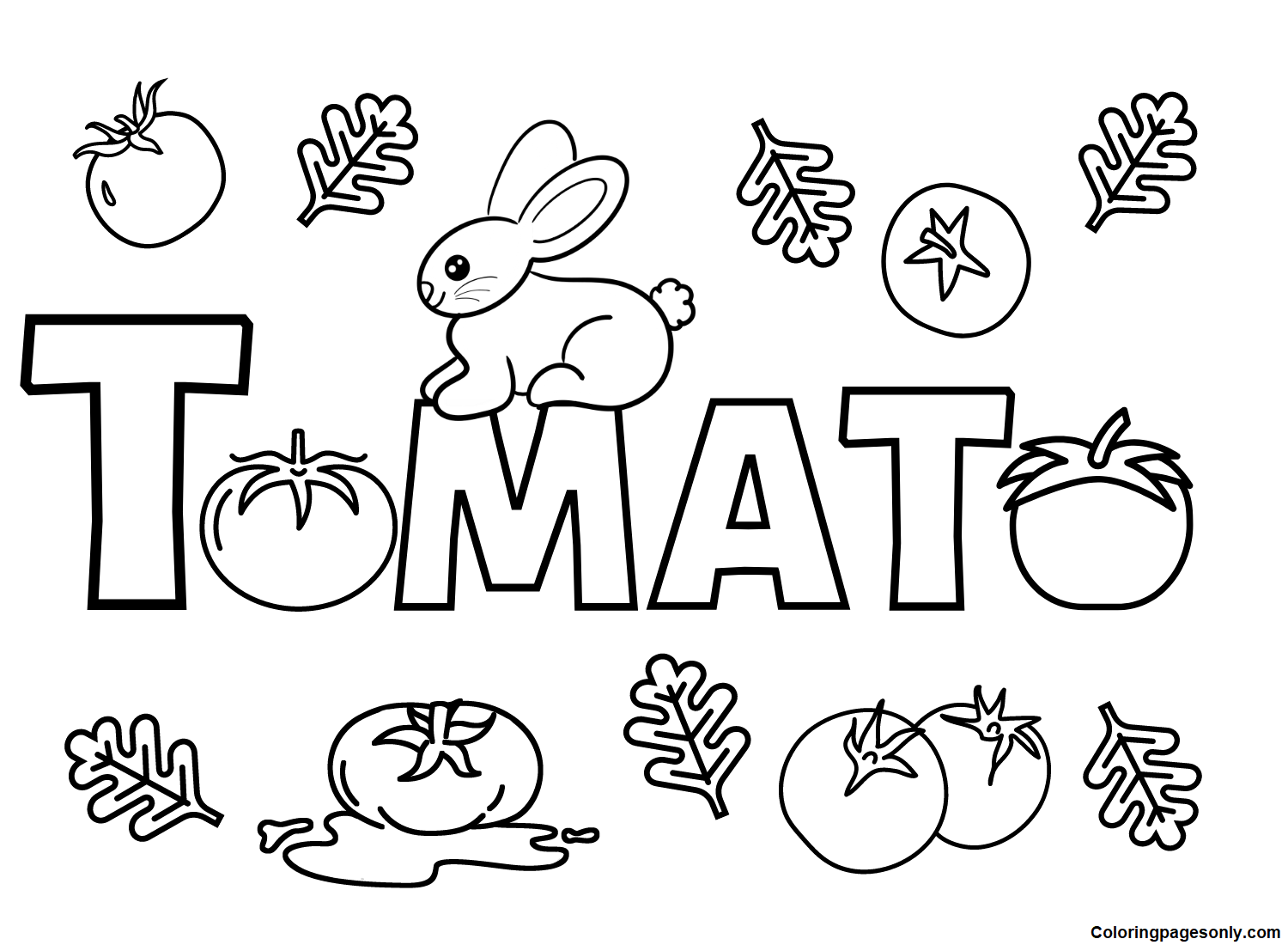
This collection reflects that dual identity across 52 pages: realistic garden tomatoes, growing plants on the vine, playful cartoon characters with faces, and sliced tomatoes in sandwiches and kitchen scenes. The bright red-to-green color range is the throughline. Nearly every page rewards close attention to how ripe or unripe a tomato is meant to look.




What Is Inside This Collection
The 52 pages are broken into four groups based on how the tomato is drawn and where it appears.
Classic Whole Tomatoes
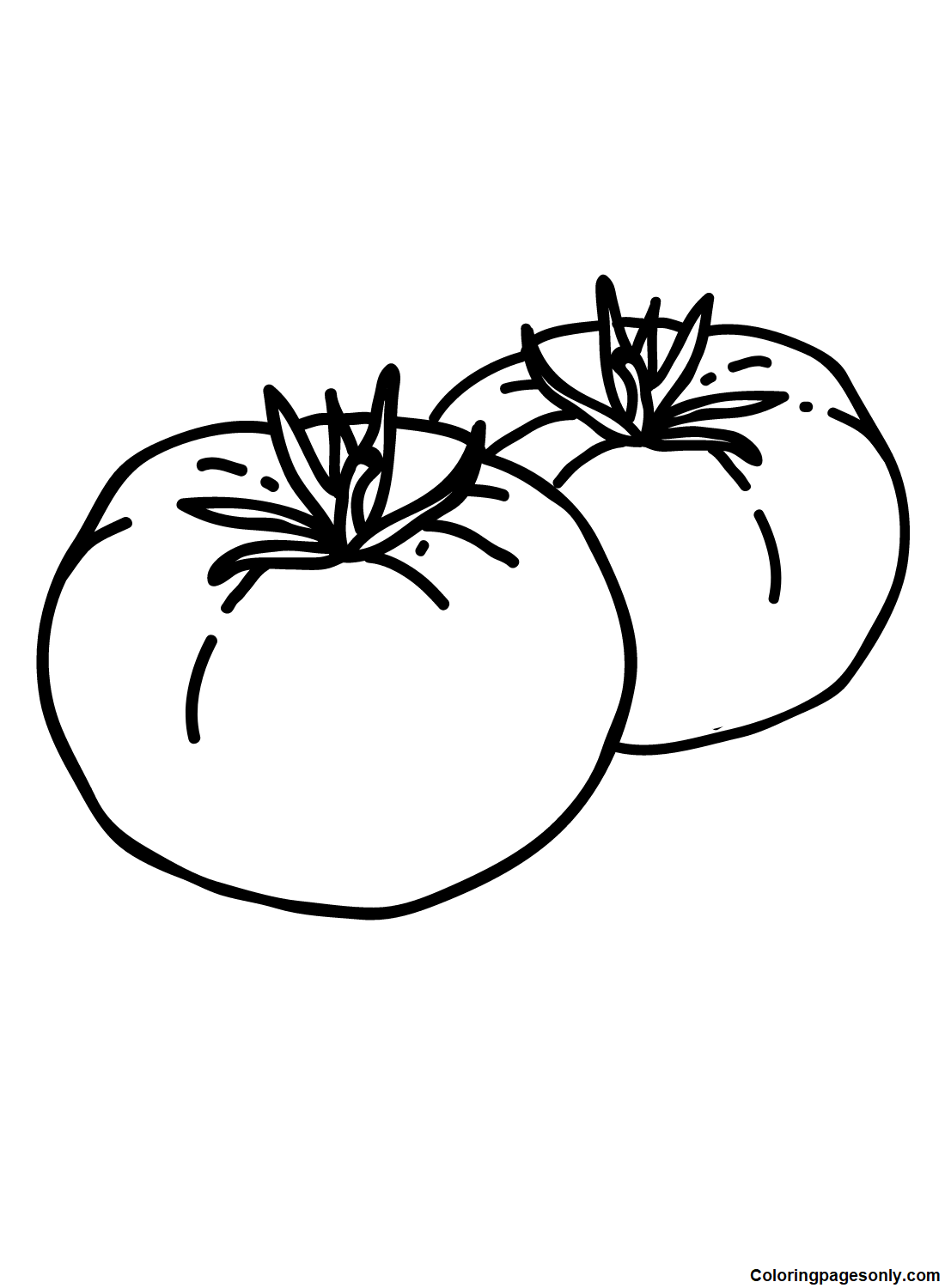
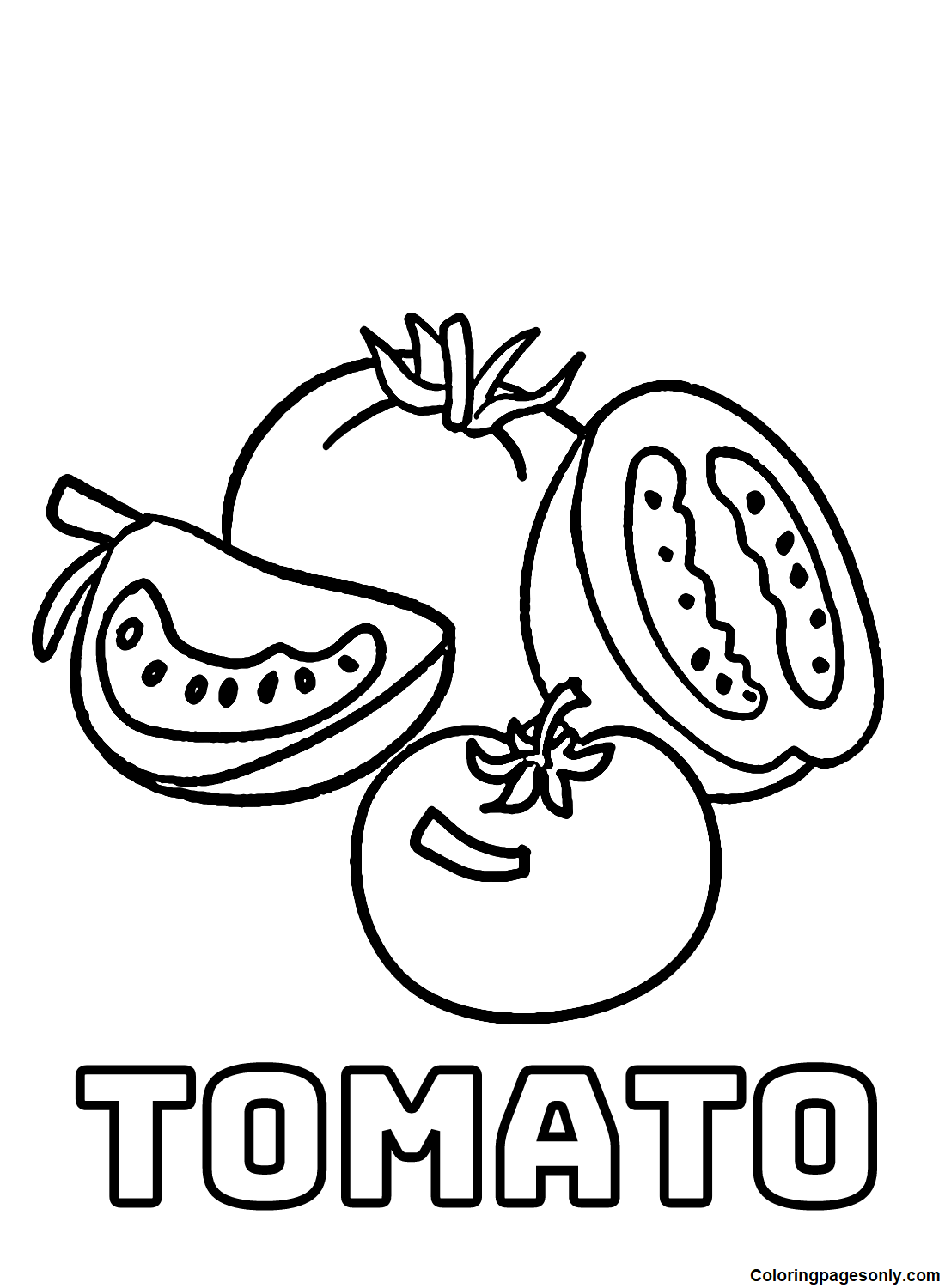
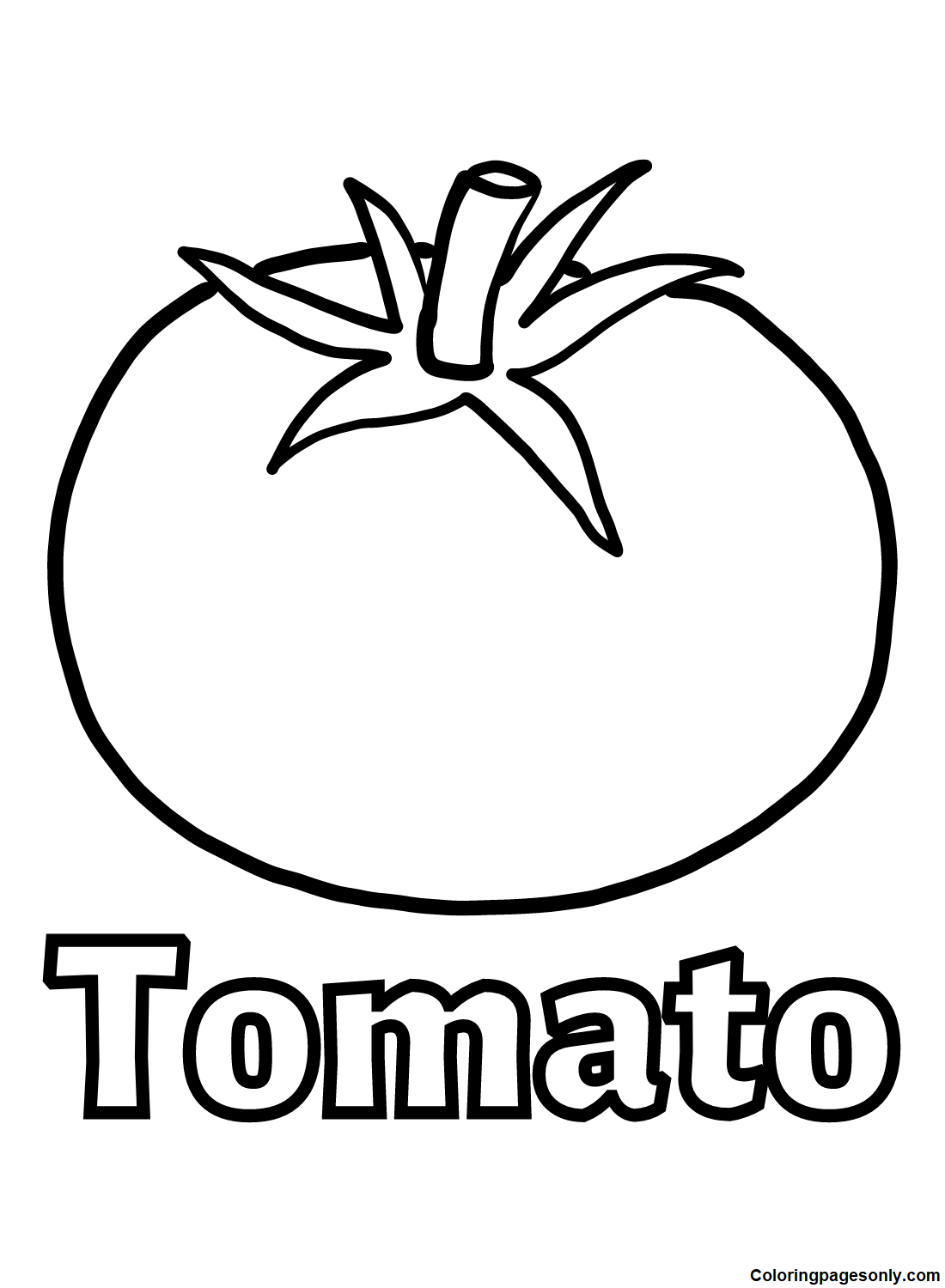
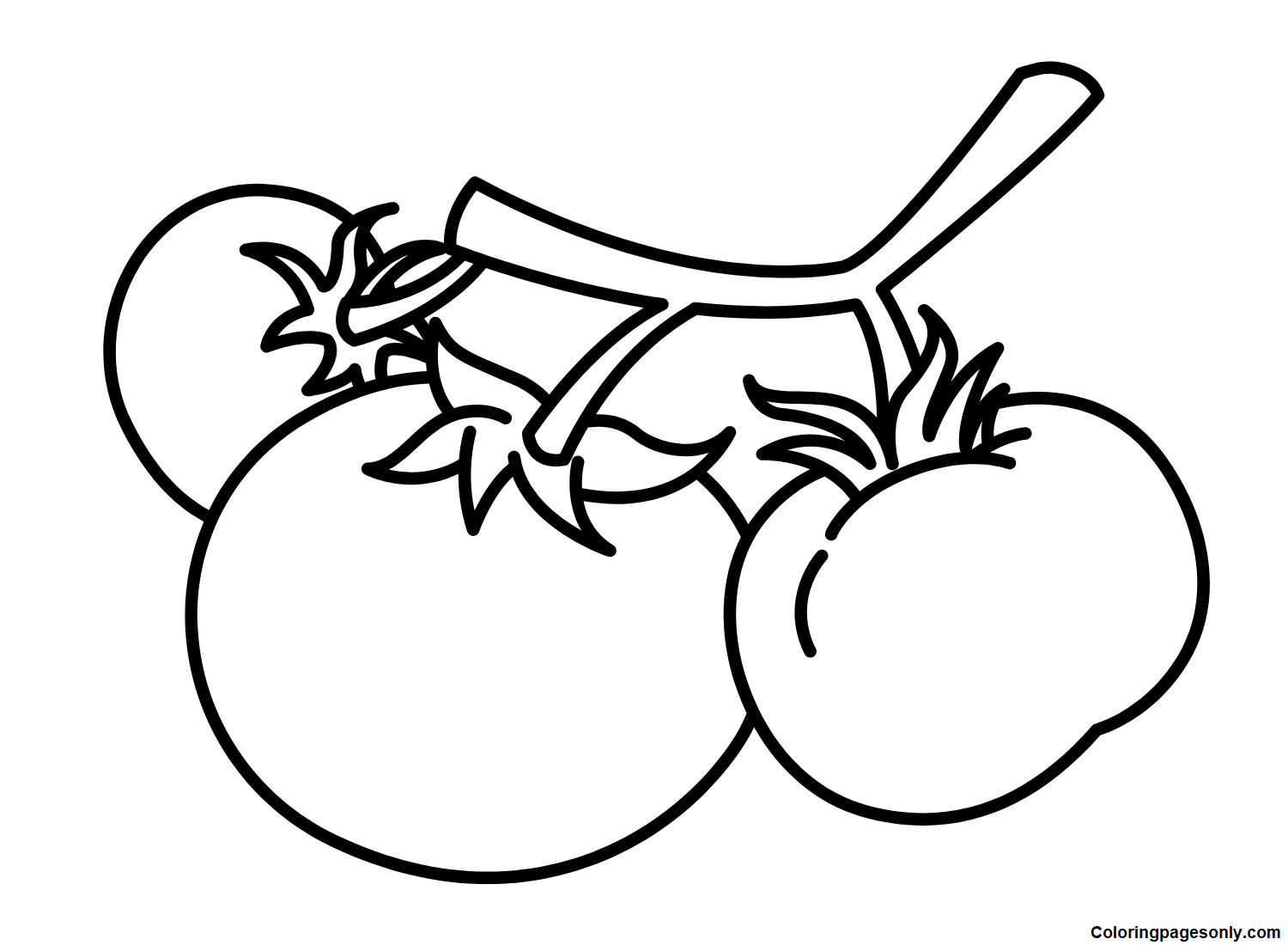
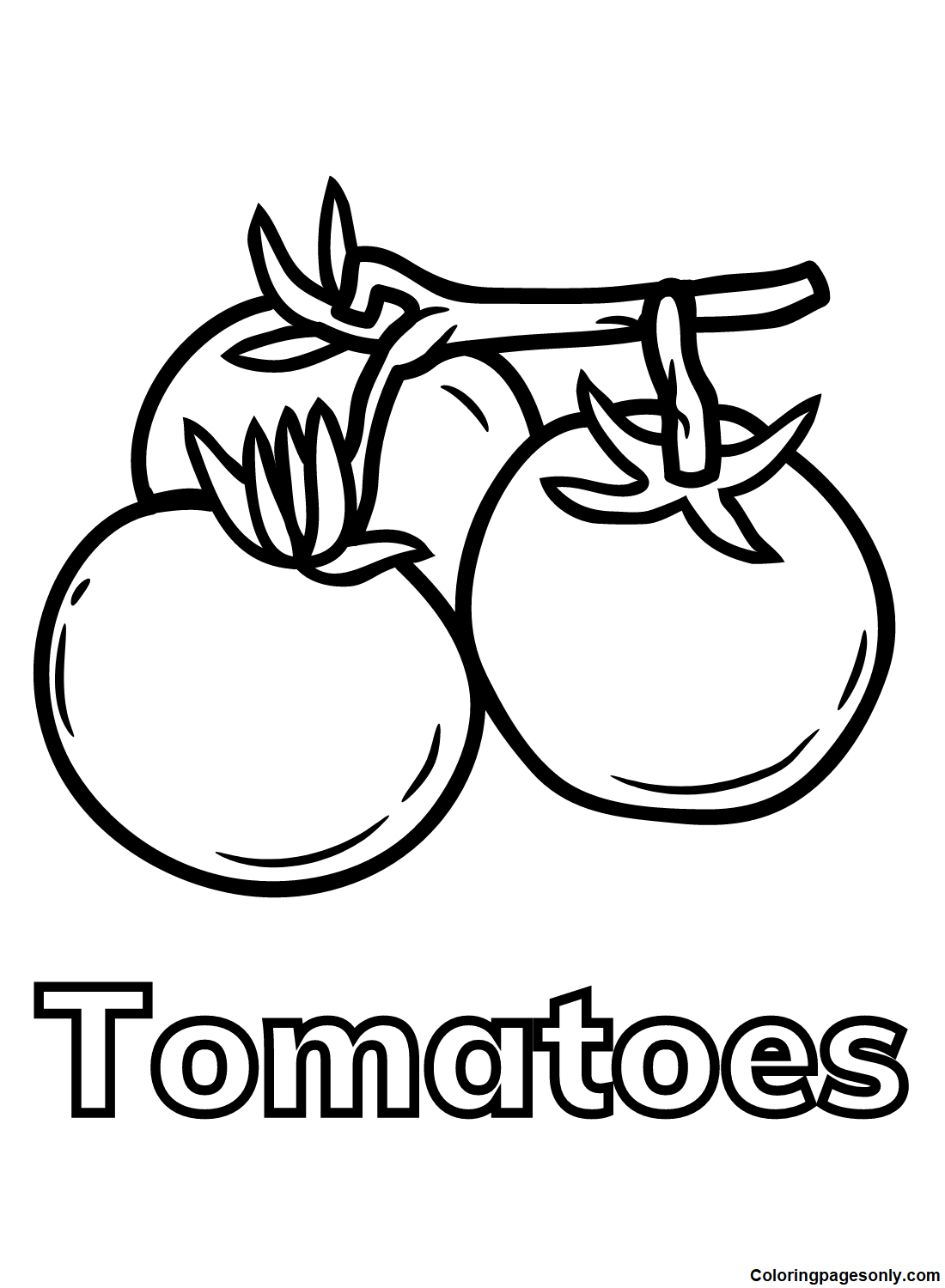
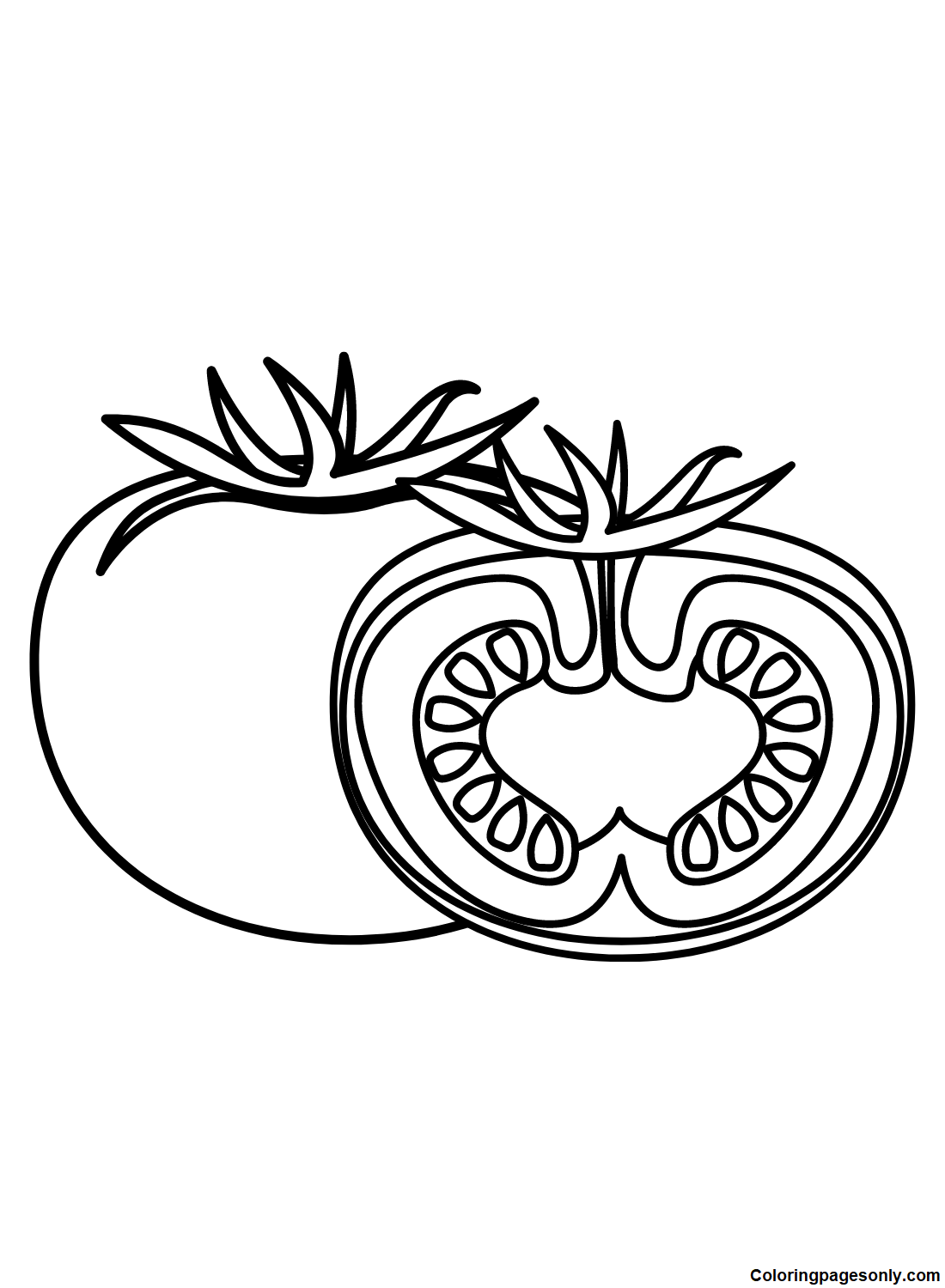
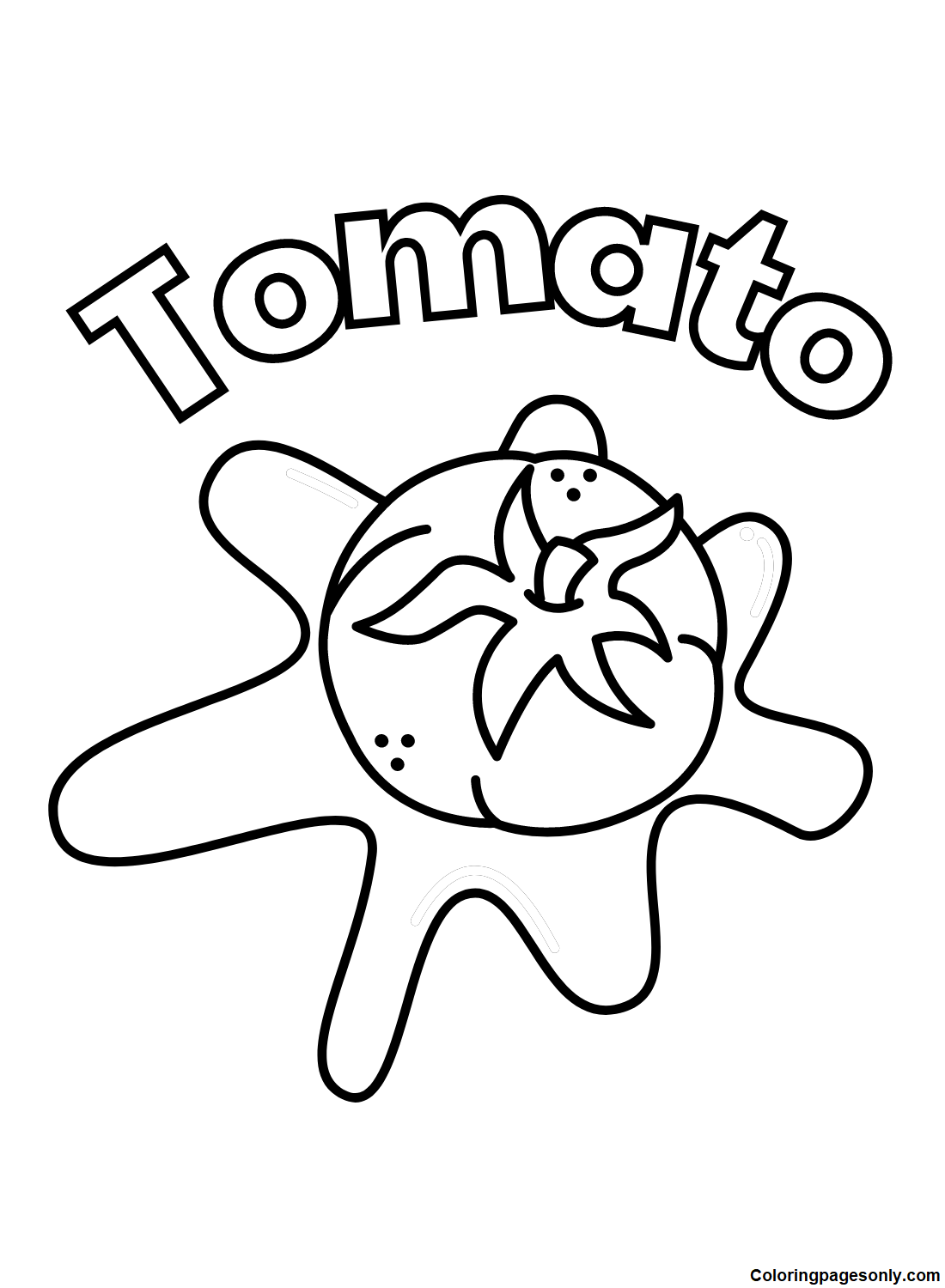
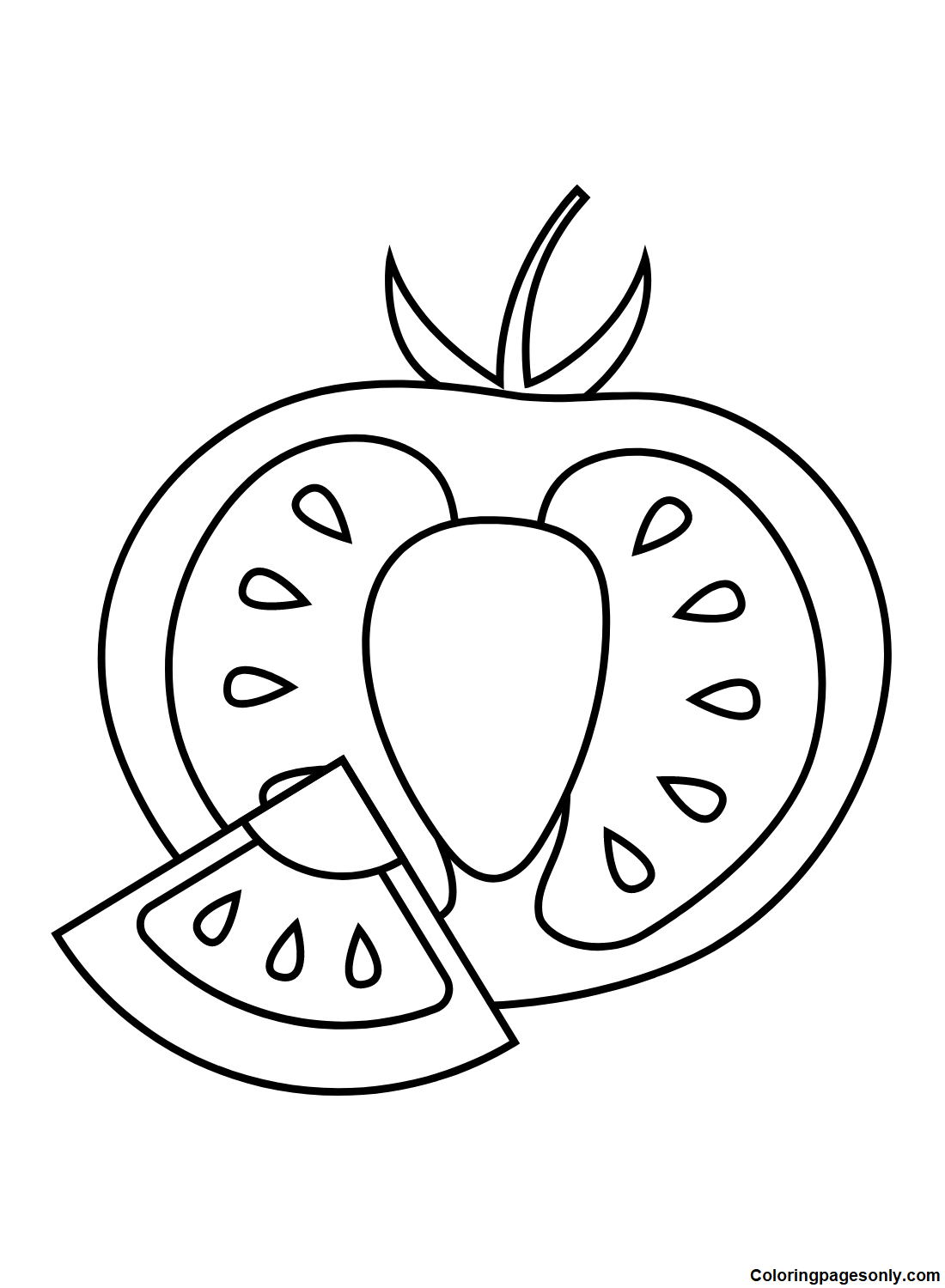
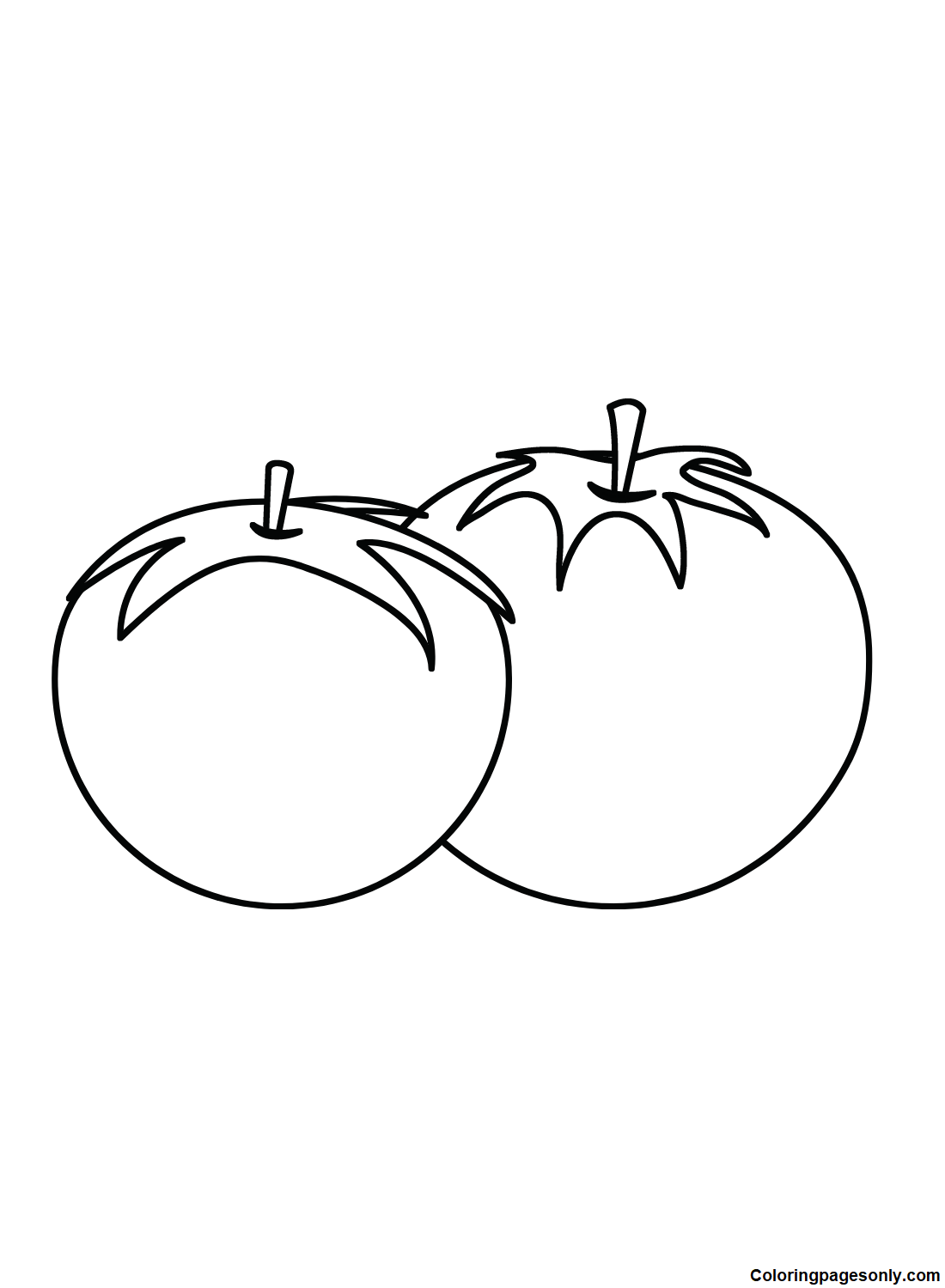
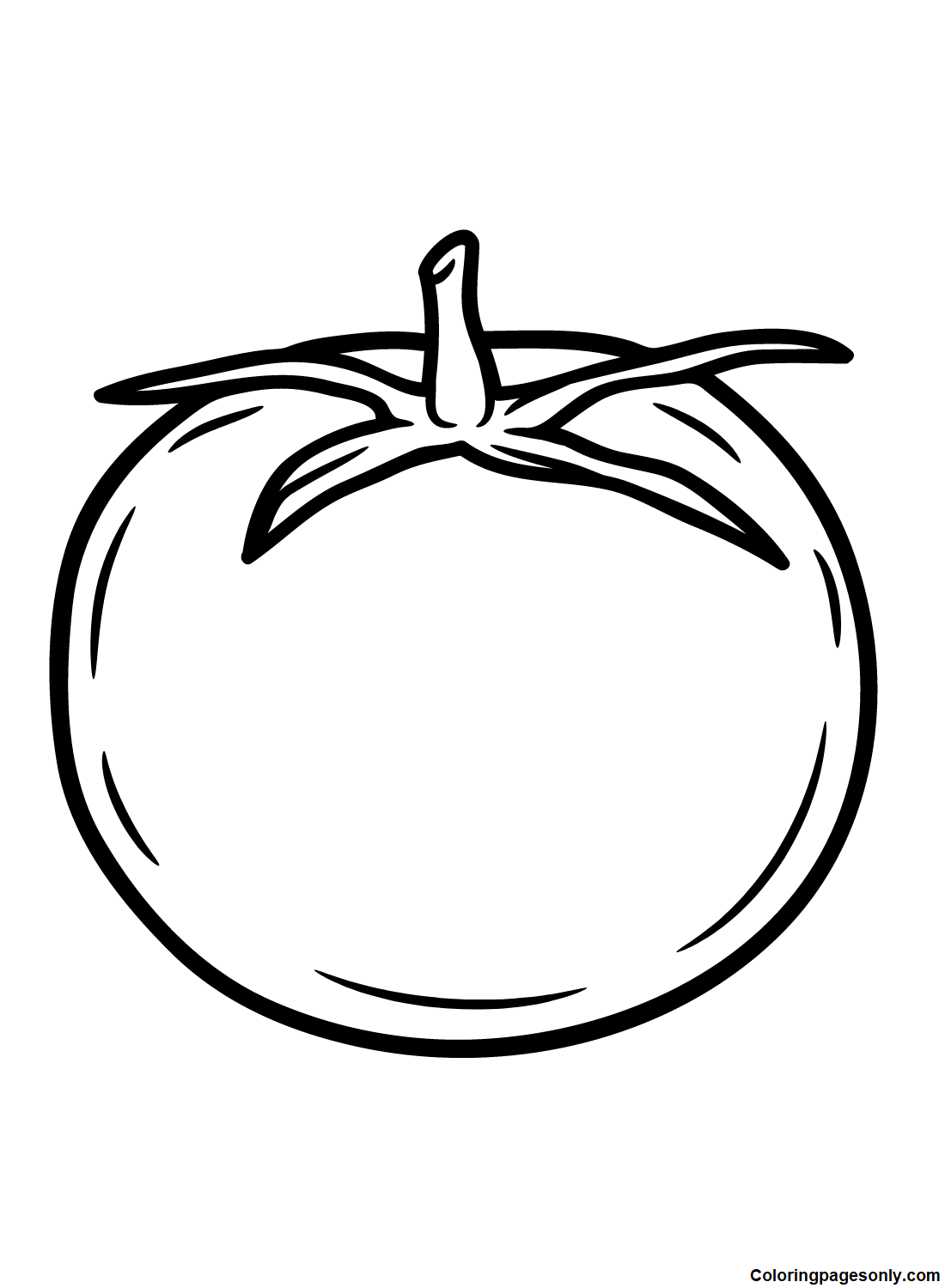
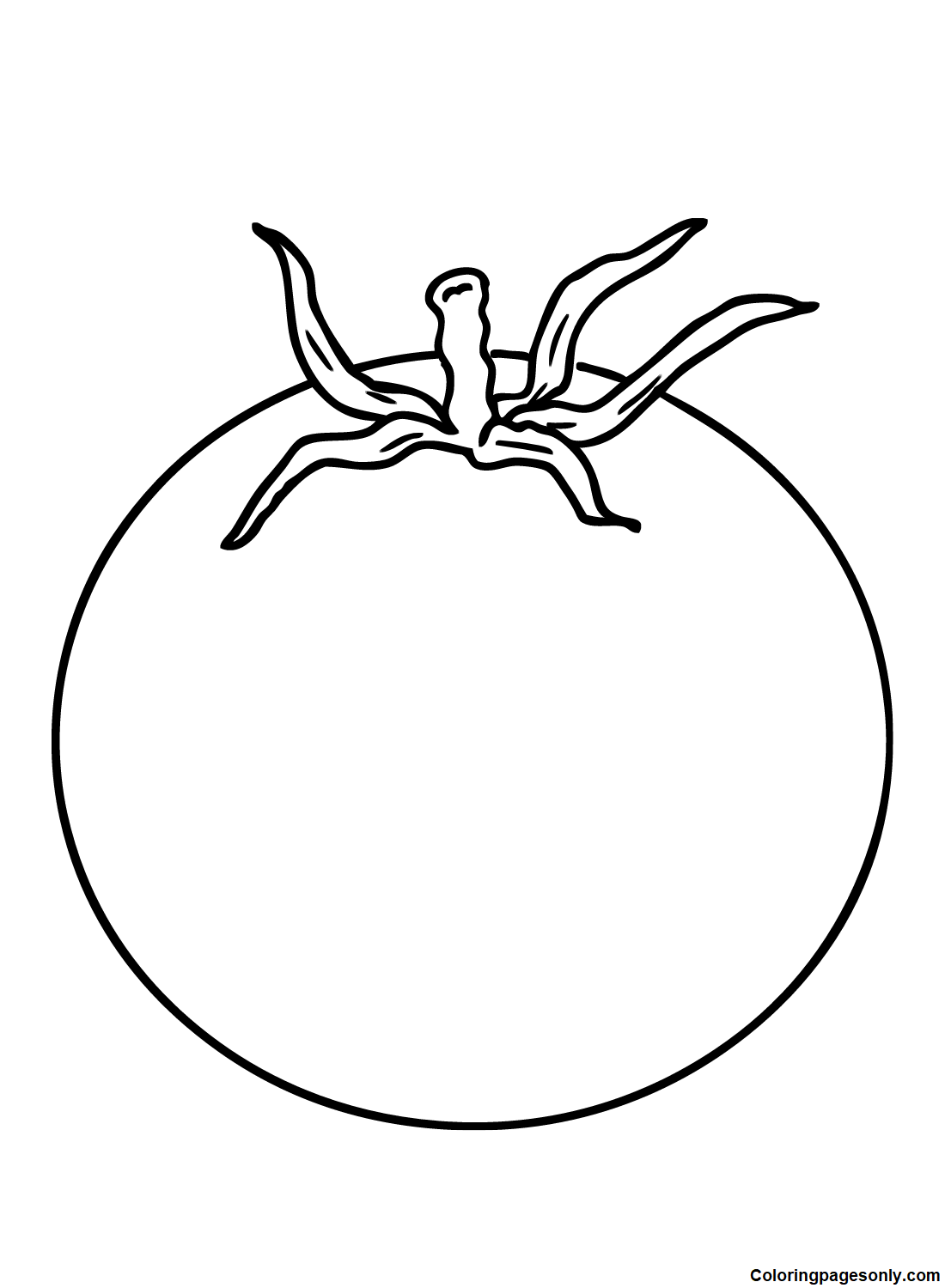
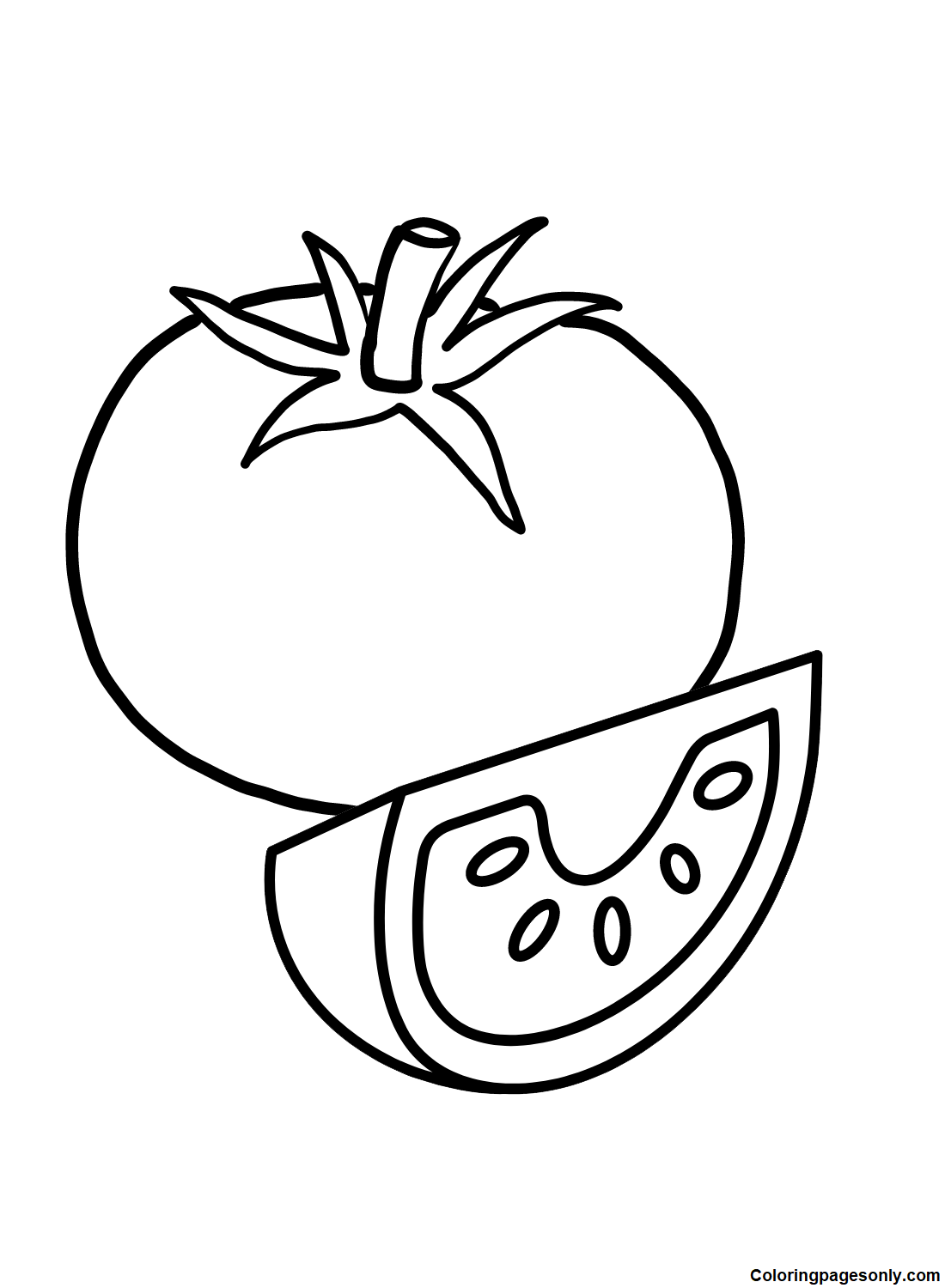
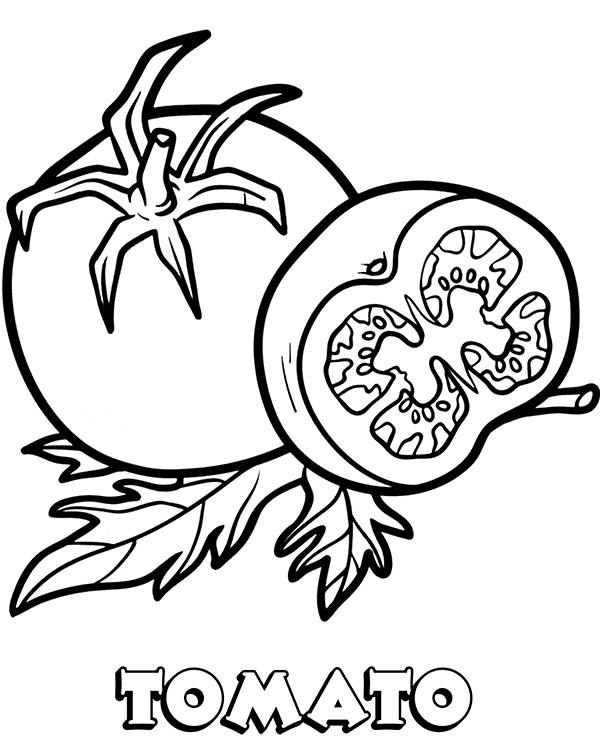
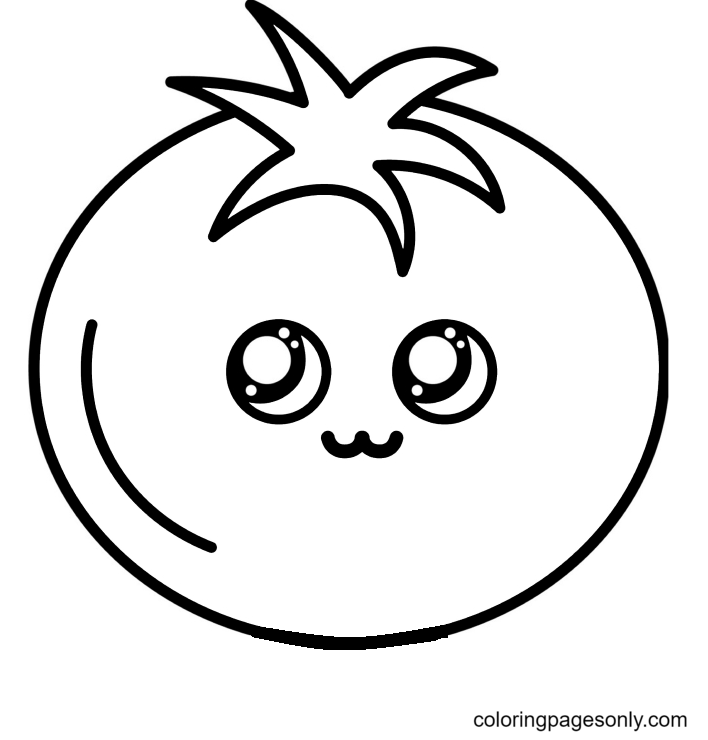
Twenty-eight pages show realistic single or grouped tomatoes, plain or paired with a quarter-cut slice, without a face or costume. Color suggestion: build up several thin layers of red rather than one flat coat, since real tomatoes rarely have a single uniform shade across the whole surface.
Tomato Plants and Vines
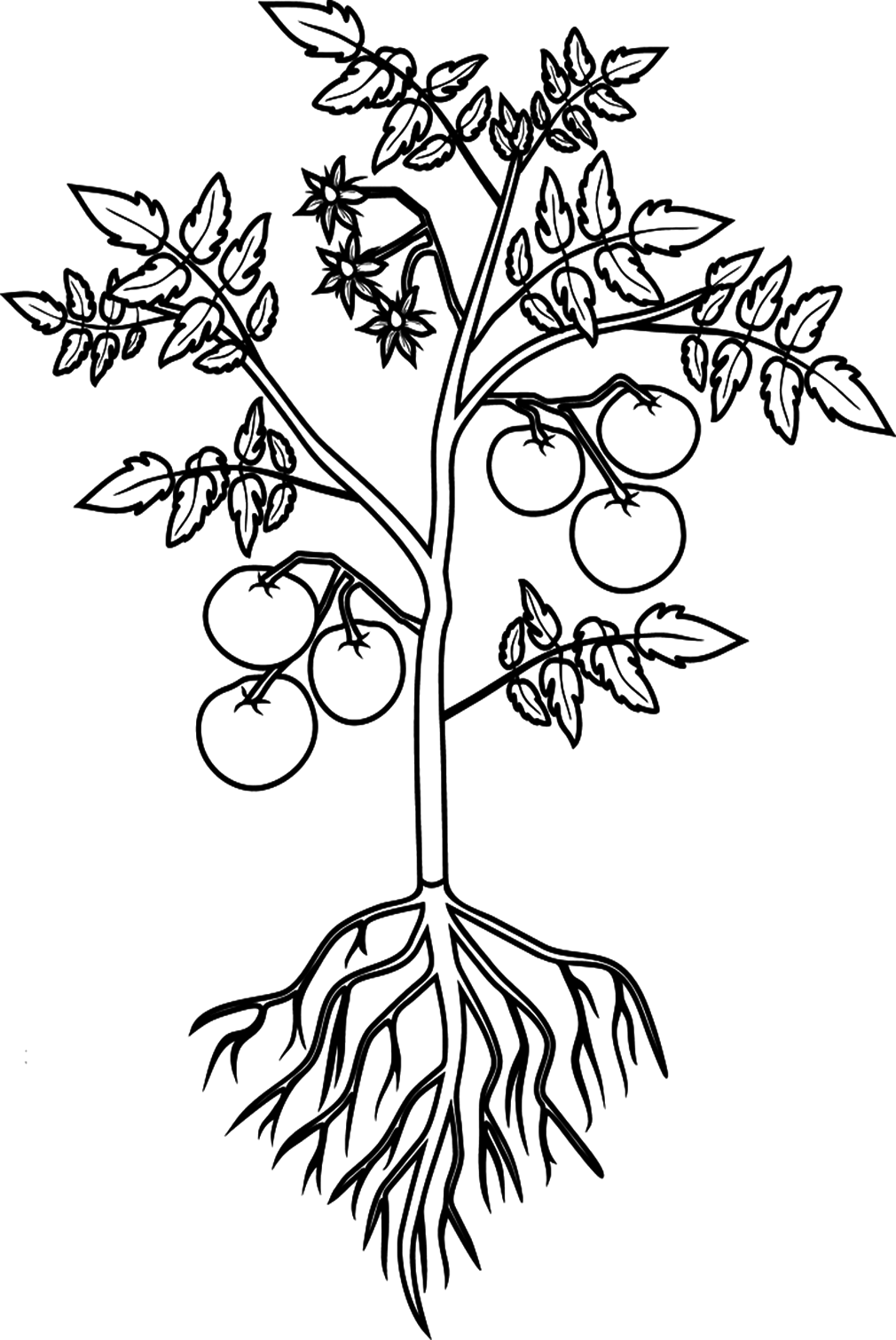
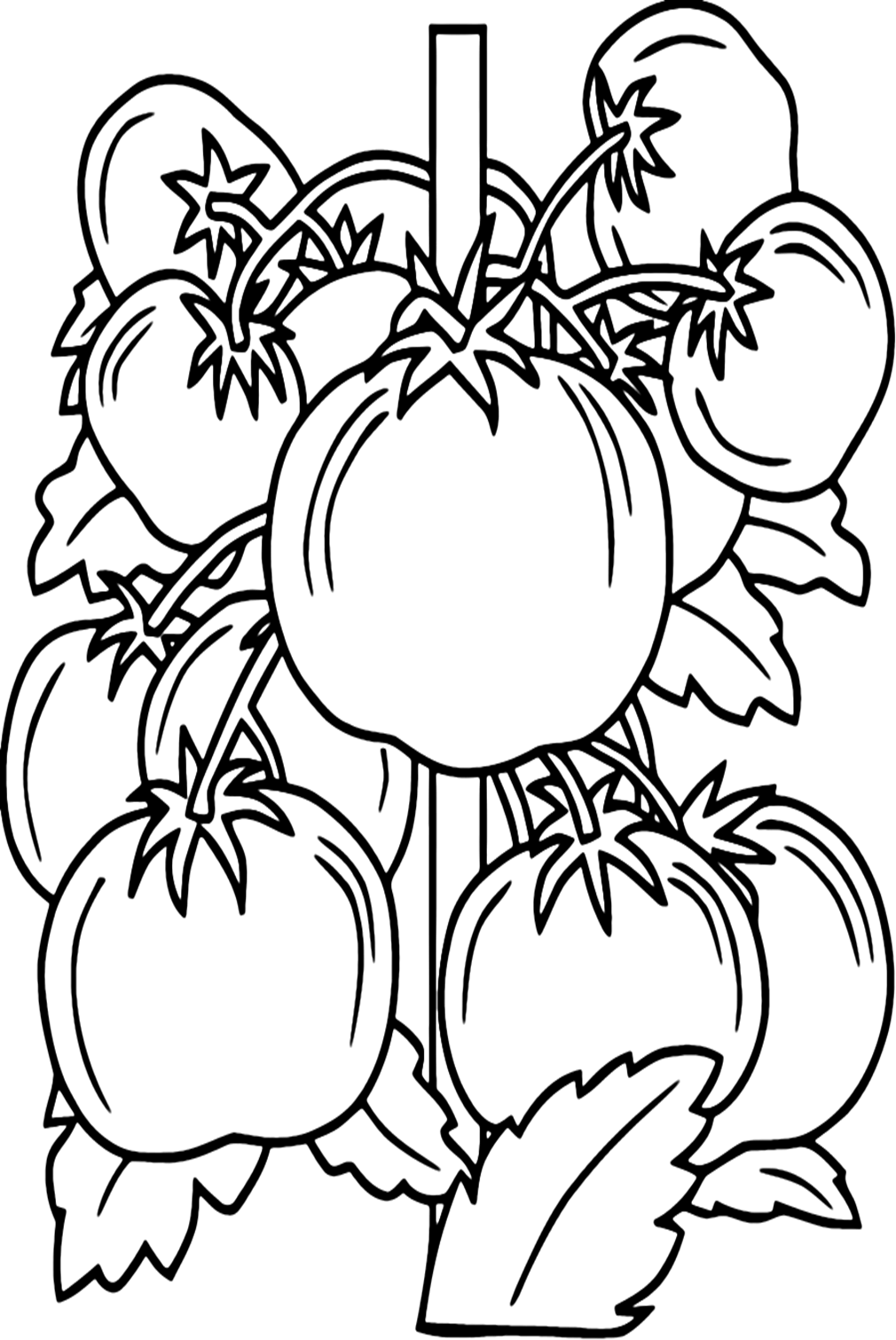
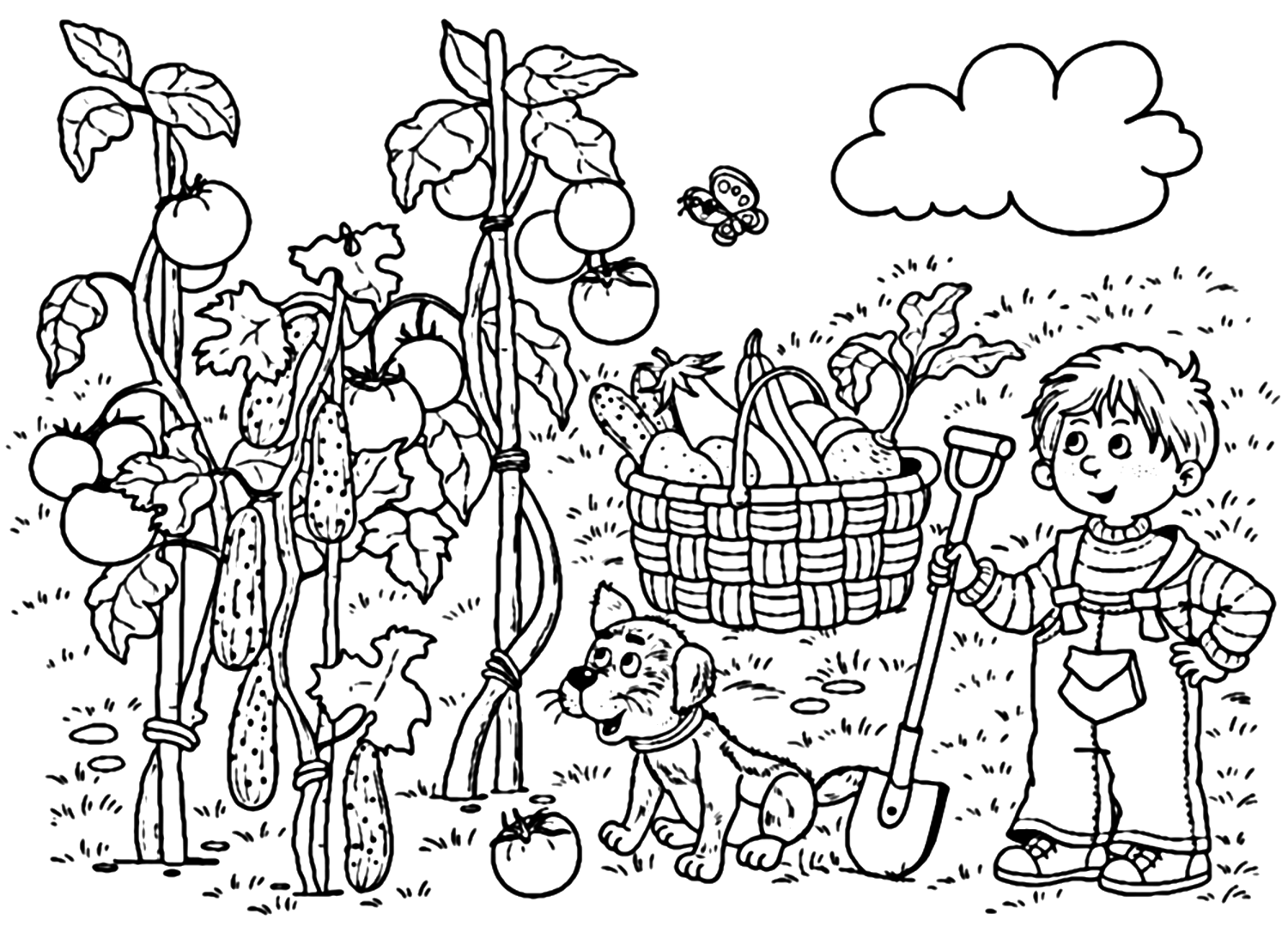
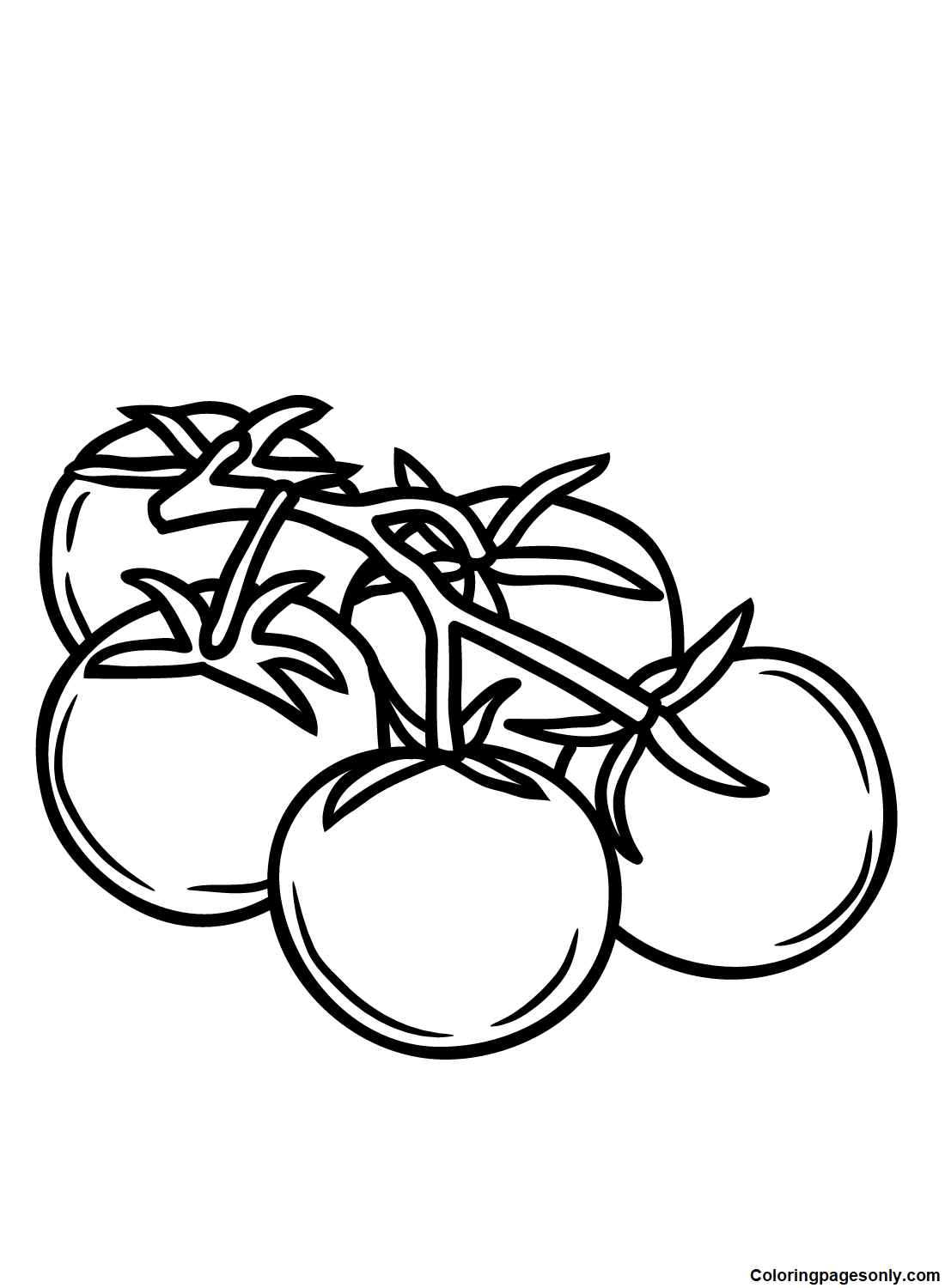
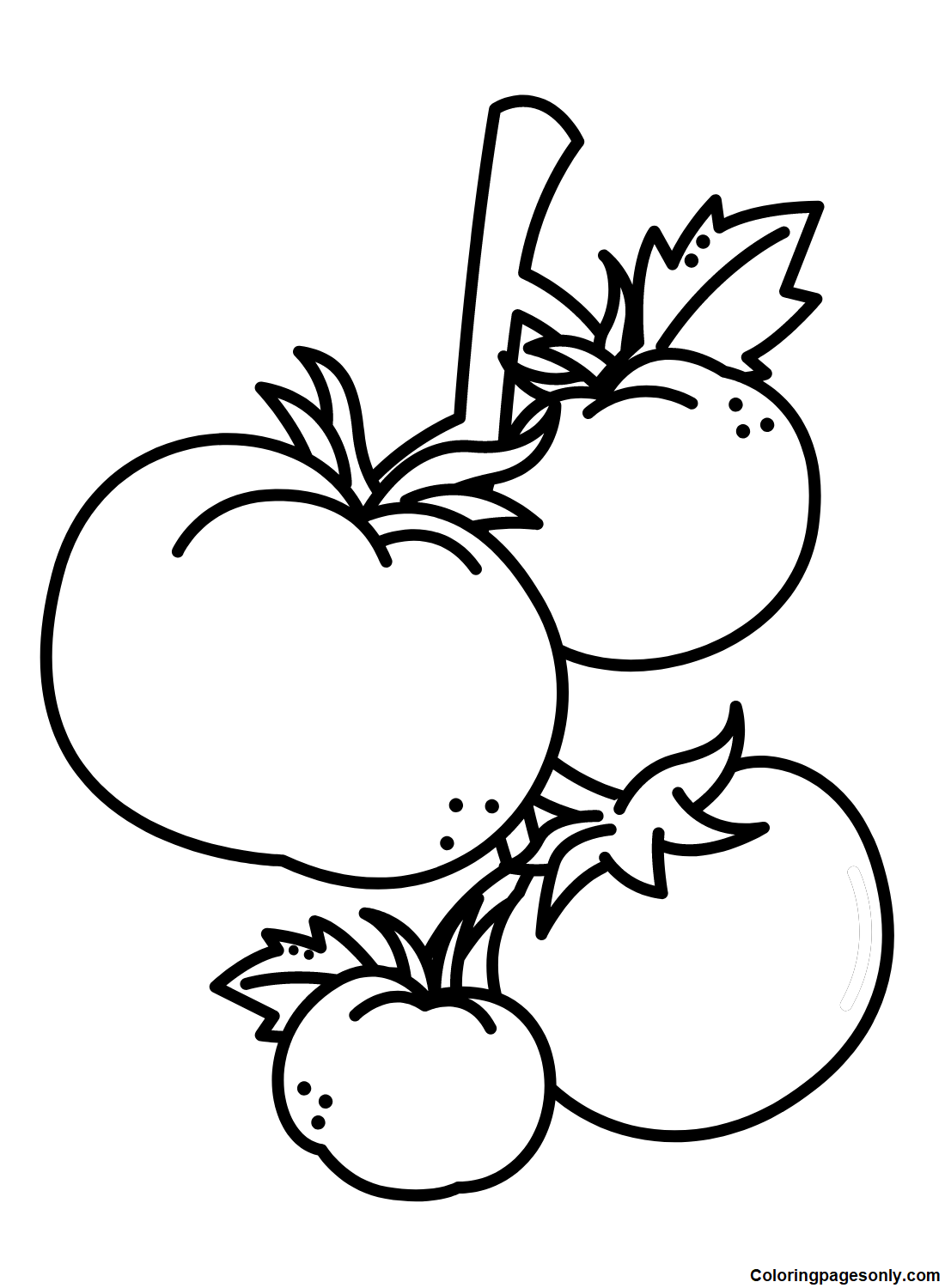
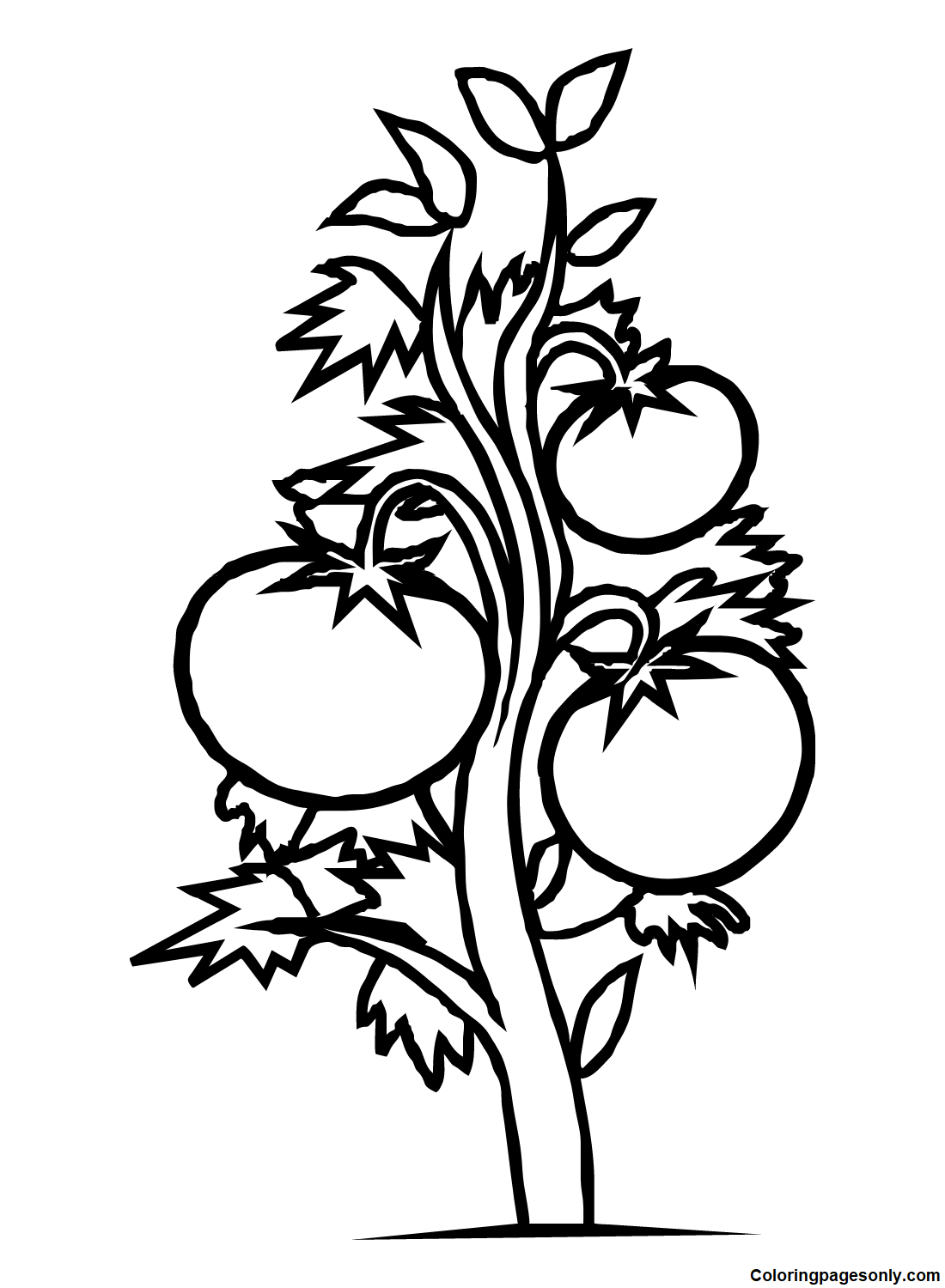
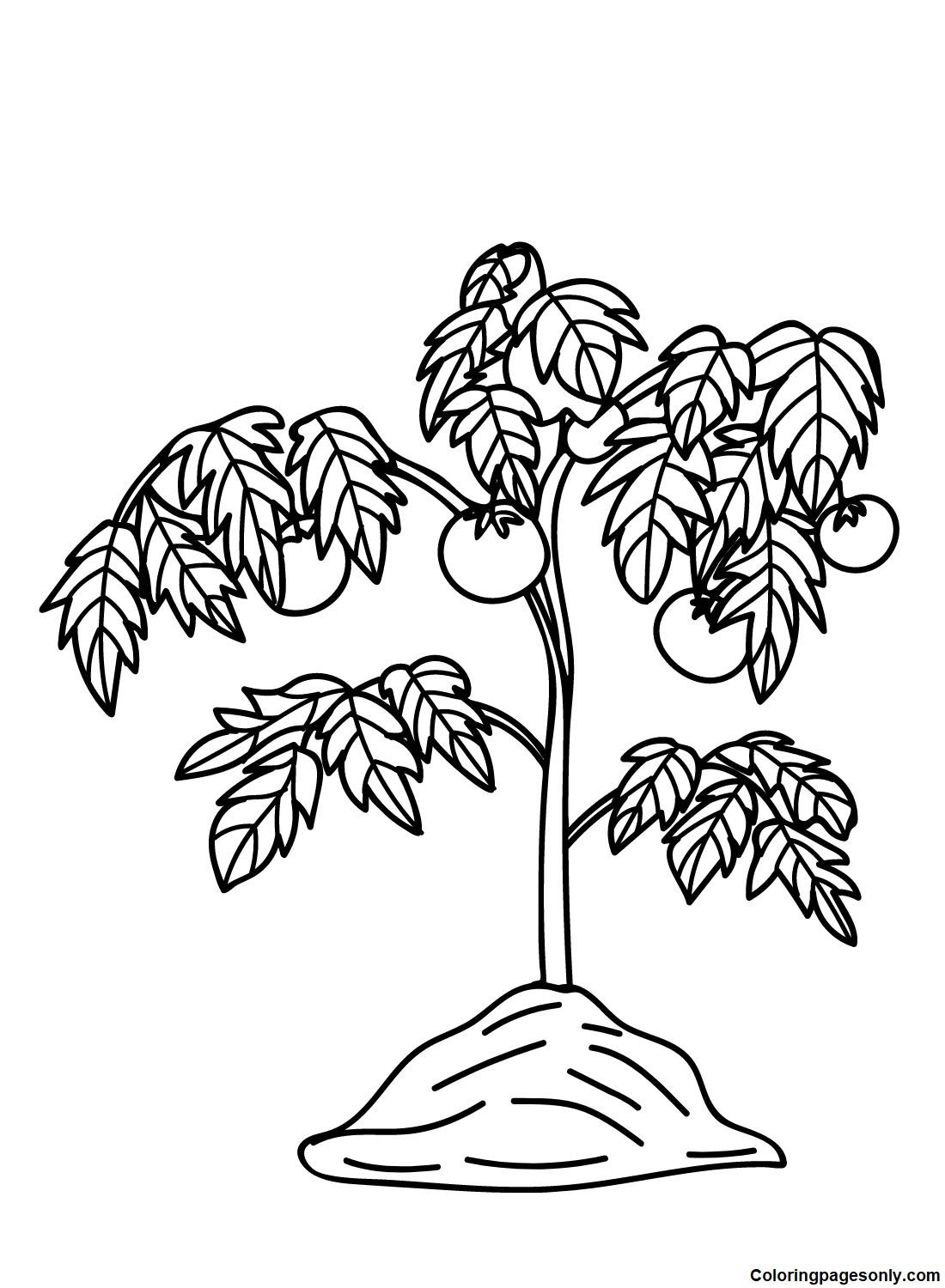
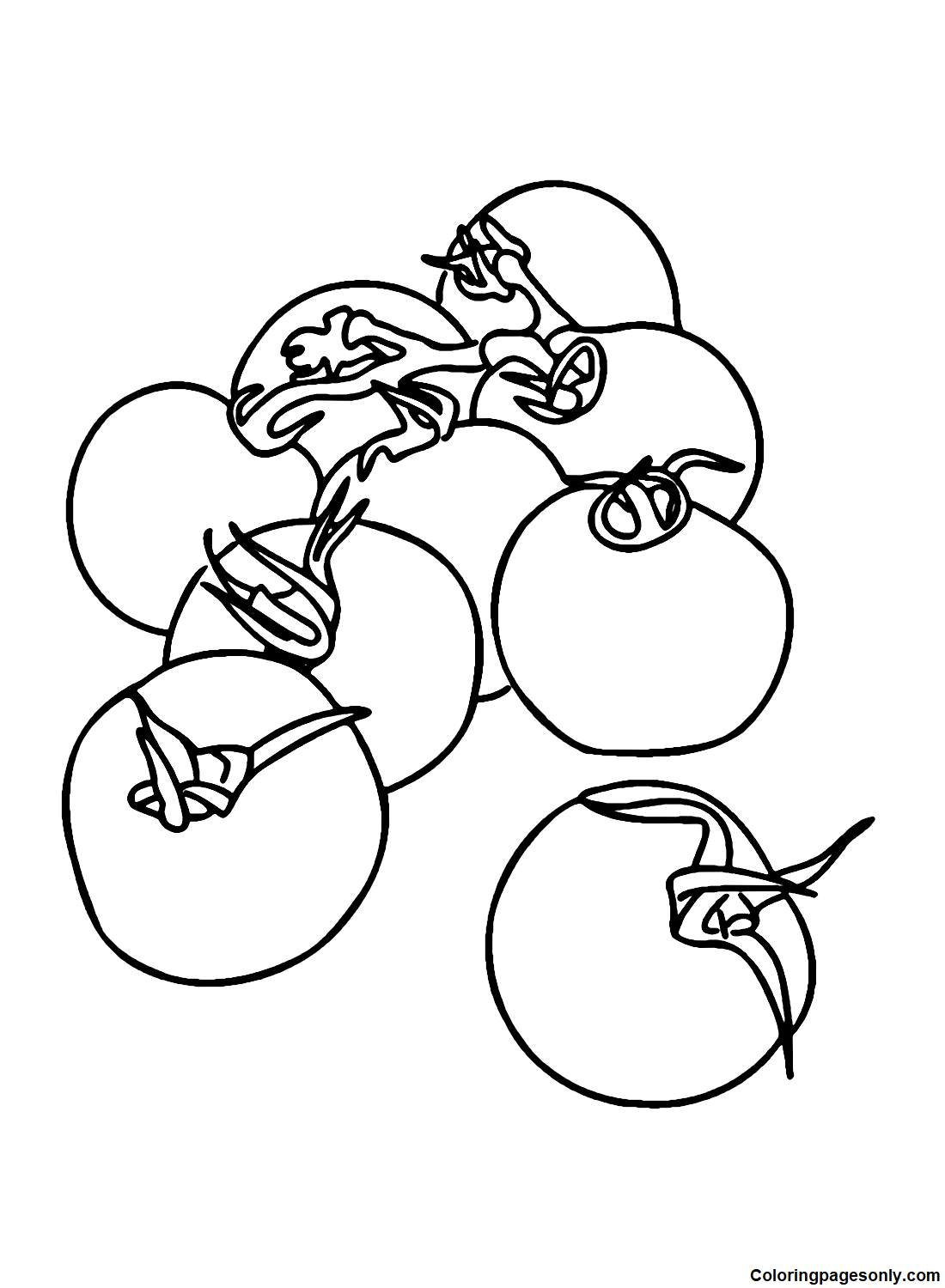
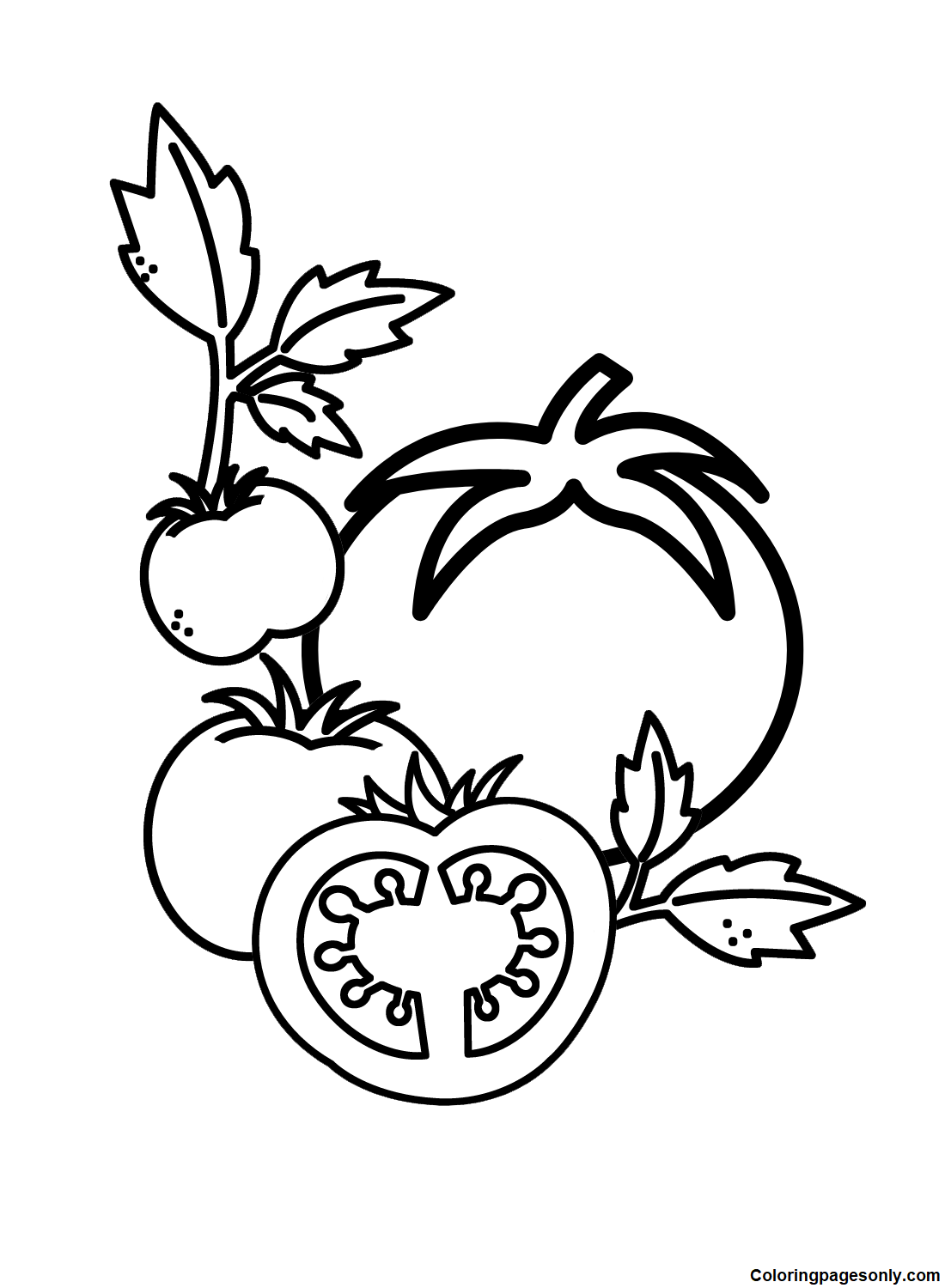
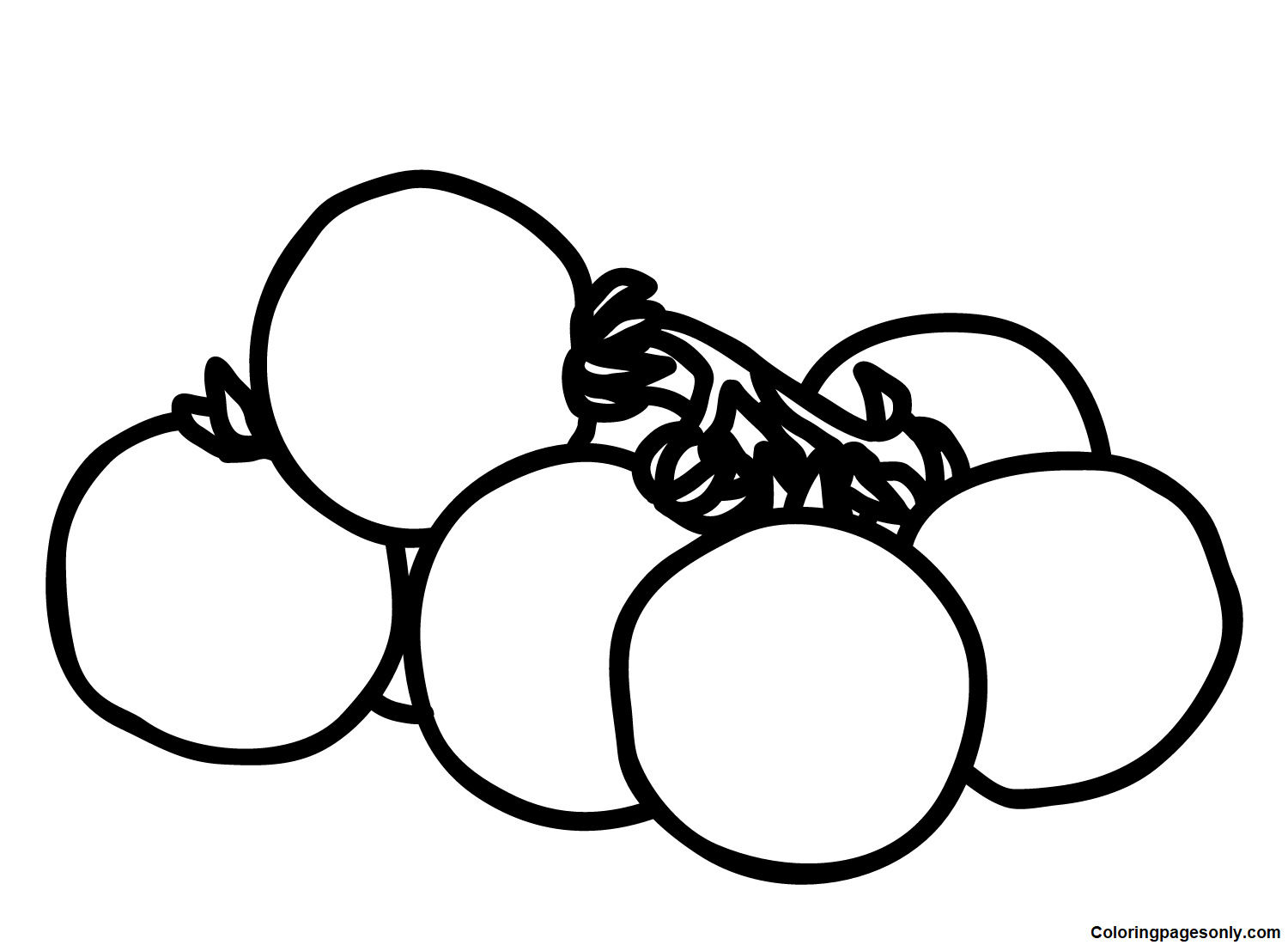
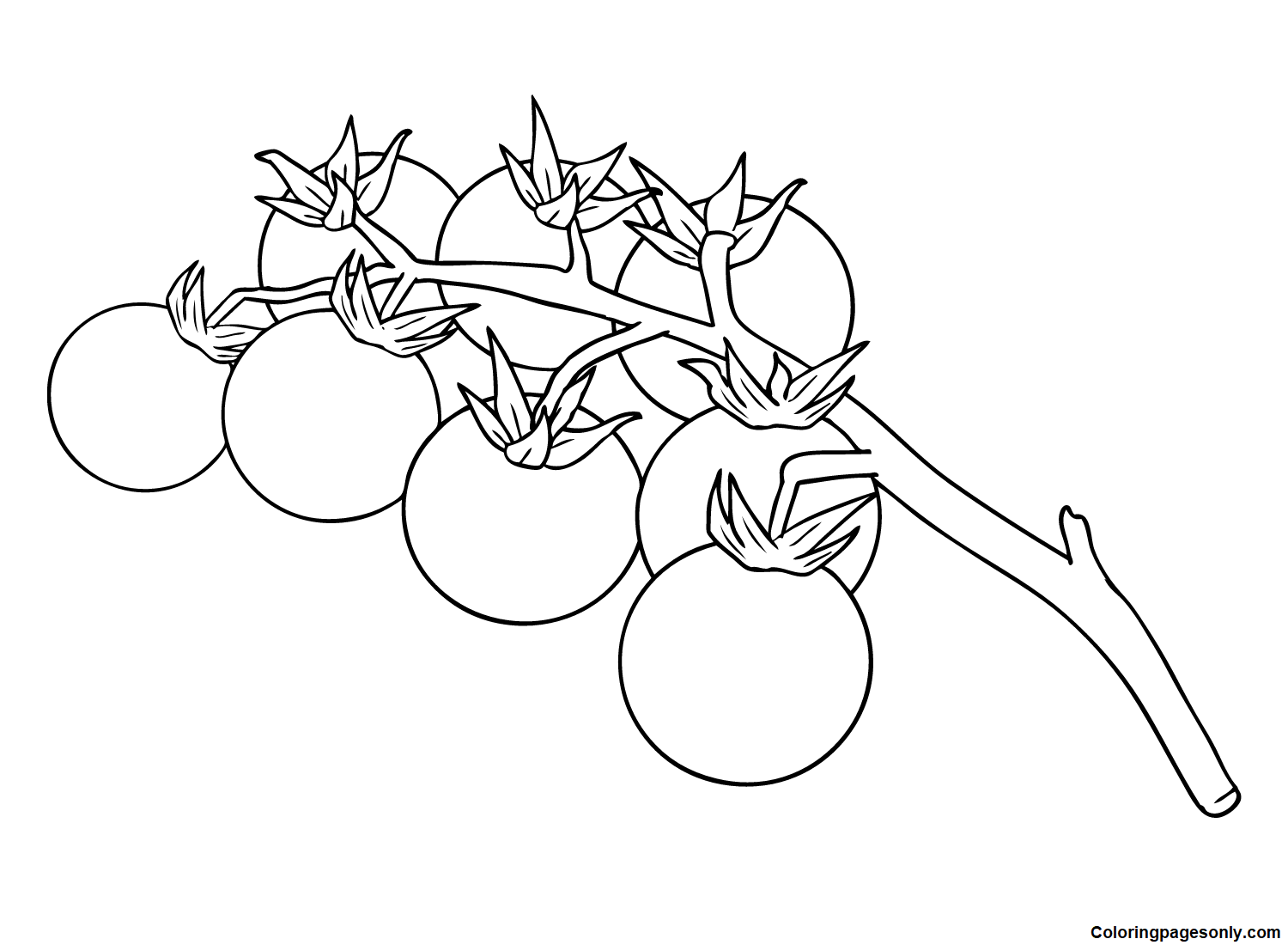
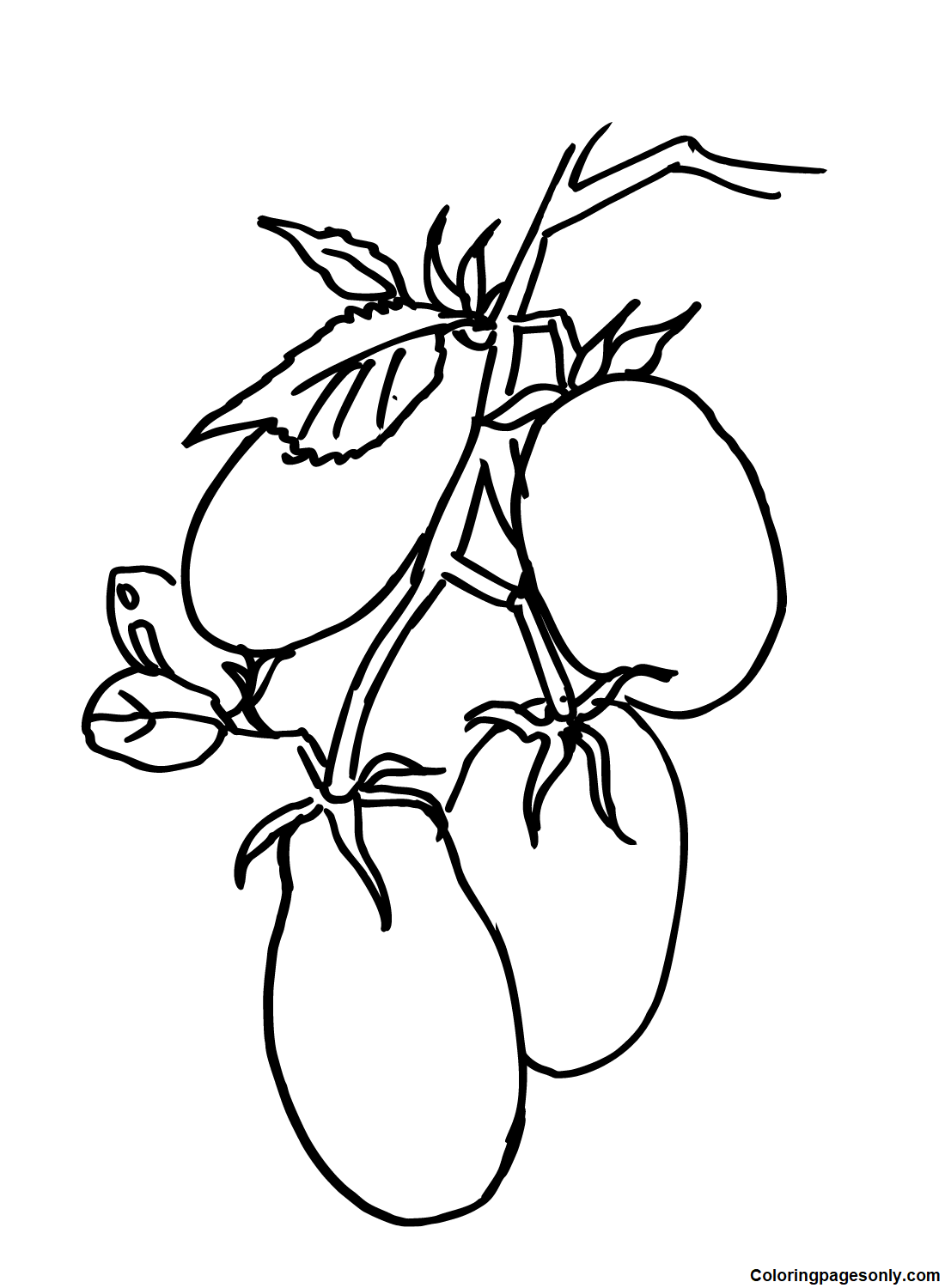
Four pages show the tomato still growing, attached to a leafy vine or plant stem rather than being picked and isolated. Color suggestion: keep the vine and leaves in a slightly yellow-leaning green so the red fruit stands out clearly against the foliage.
Cartoon and Character Tomatoes
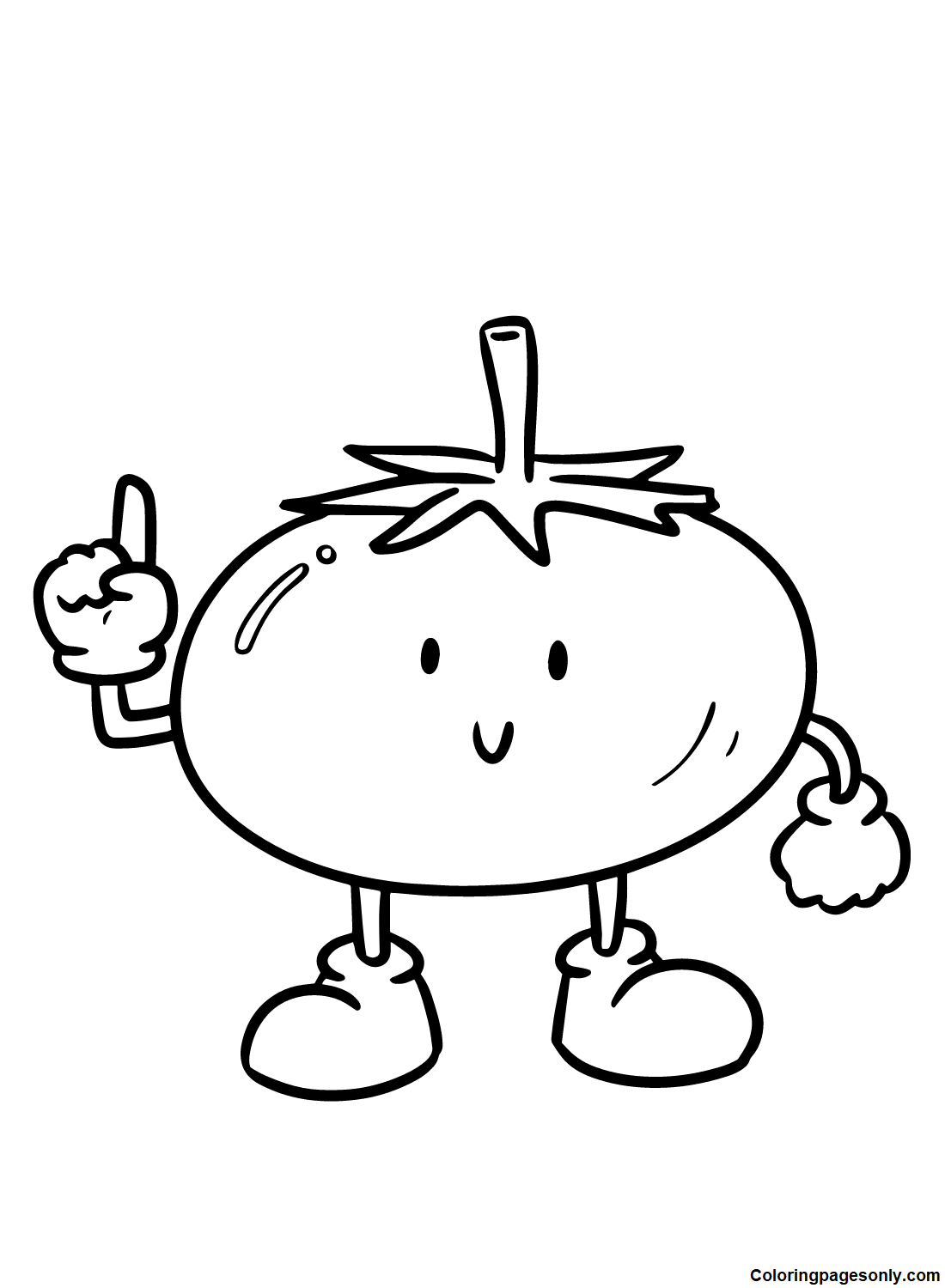
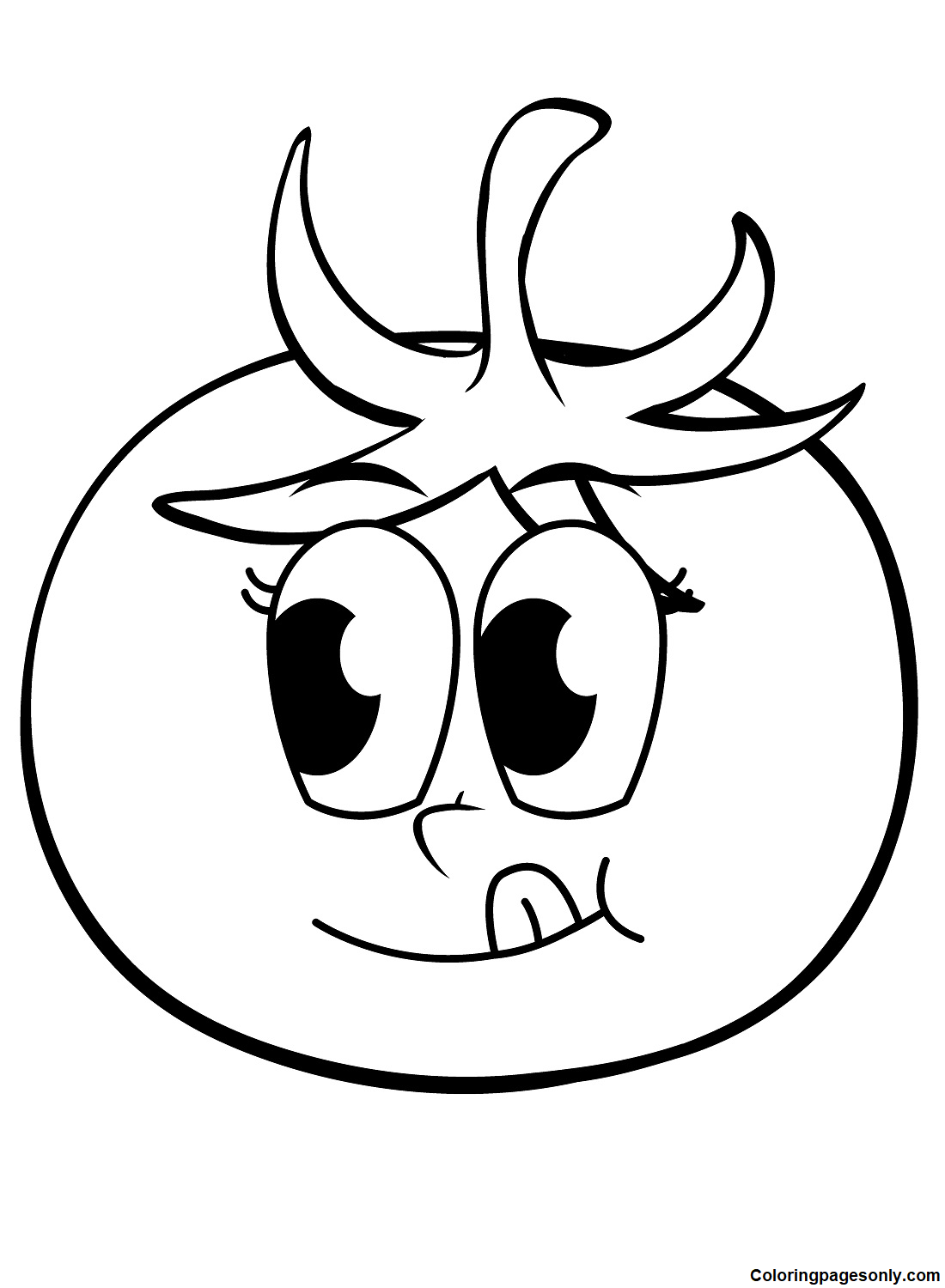
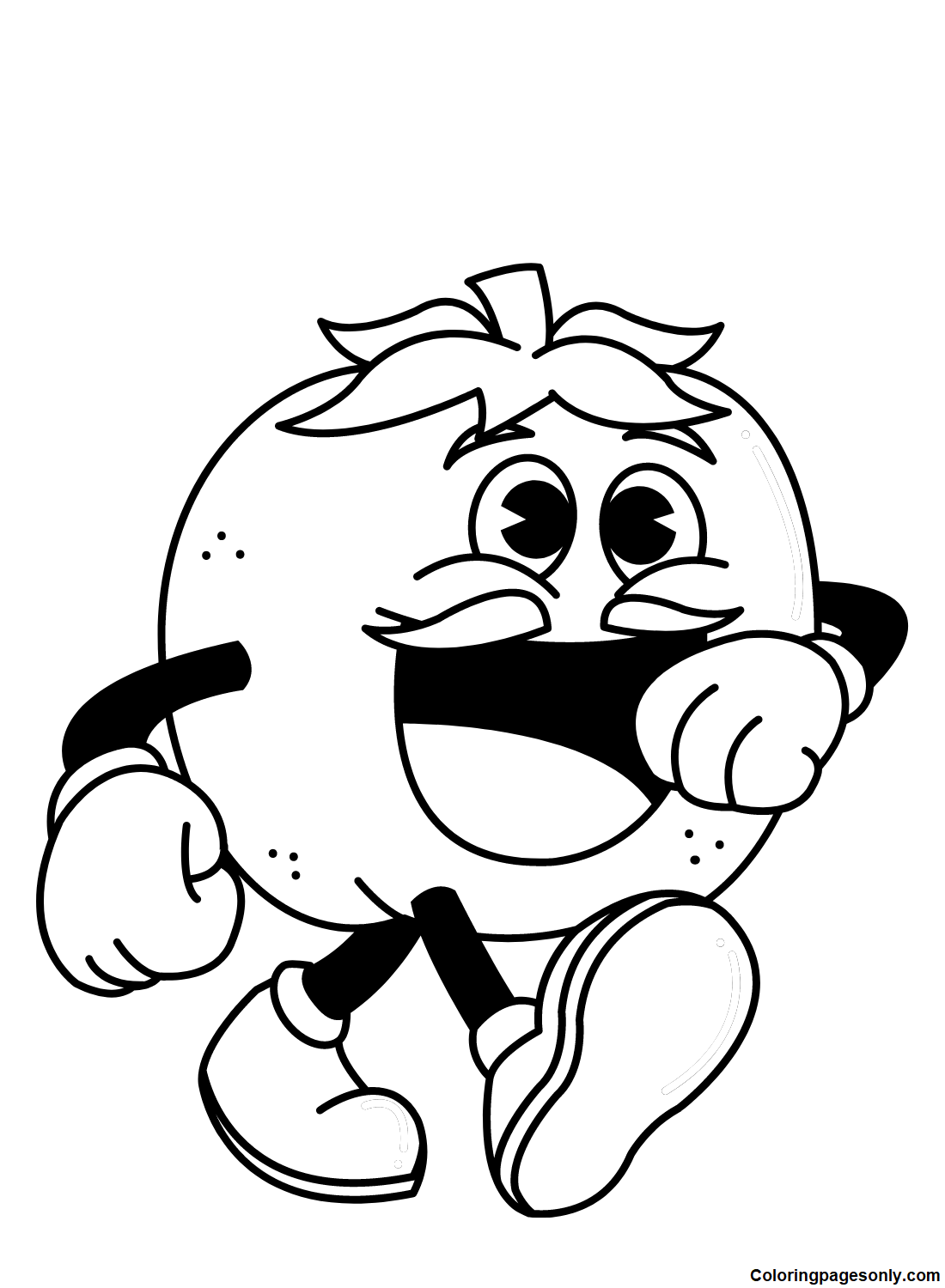
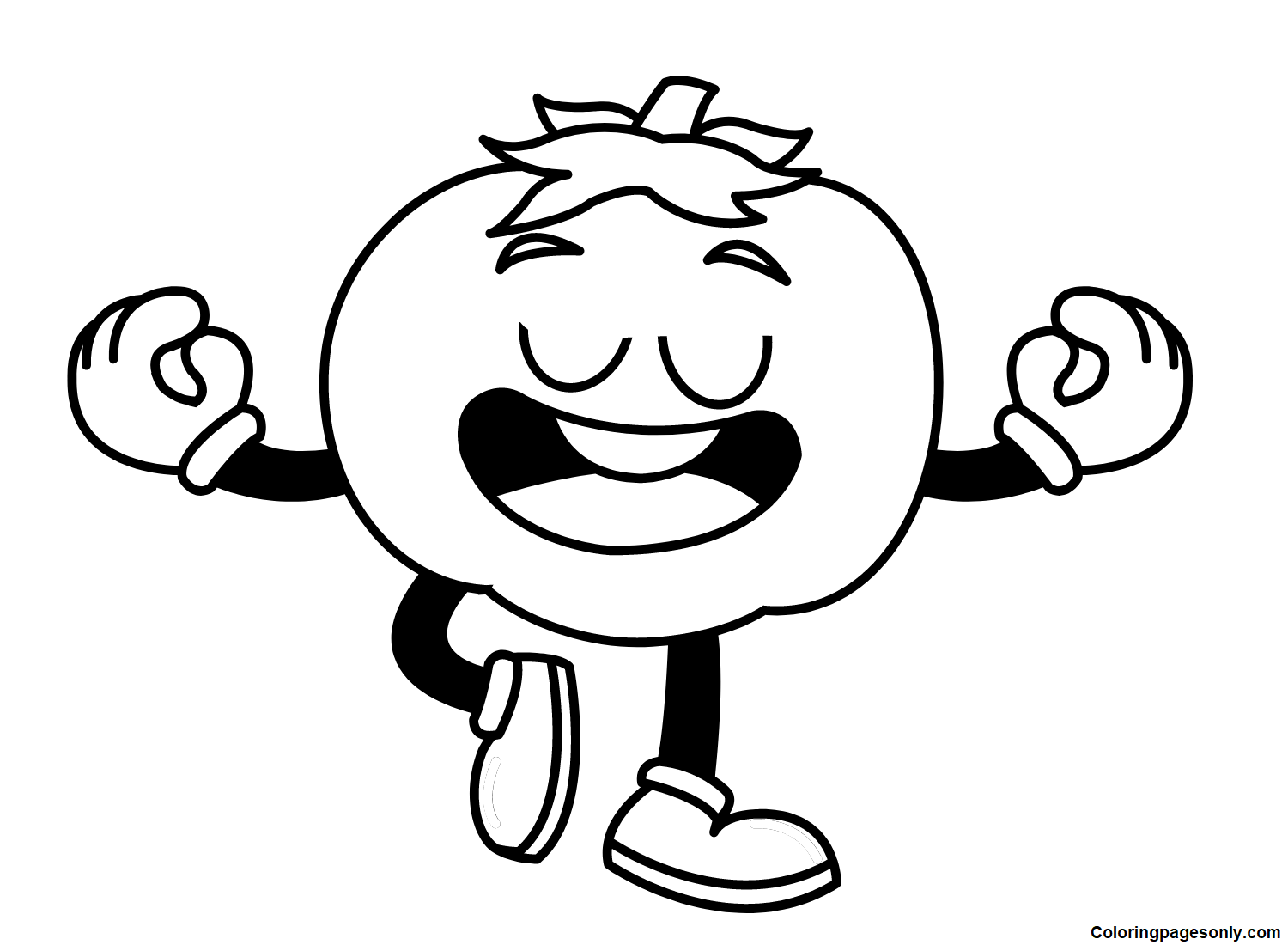
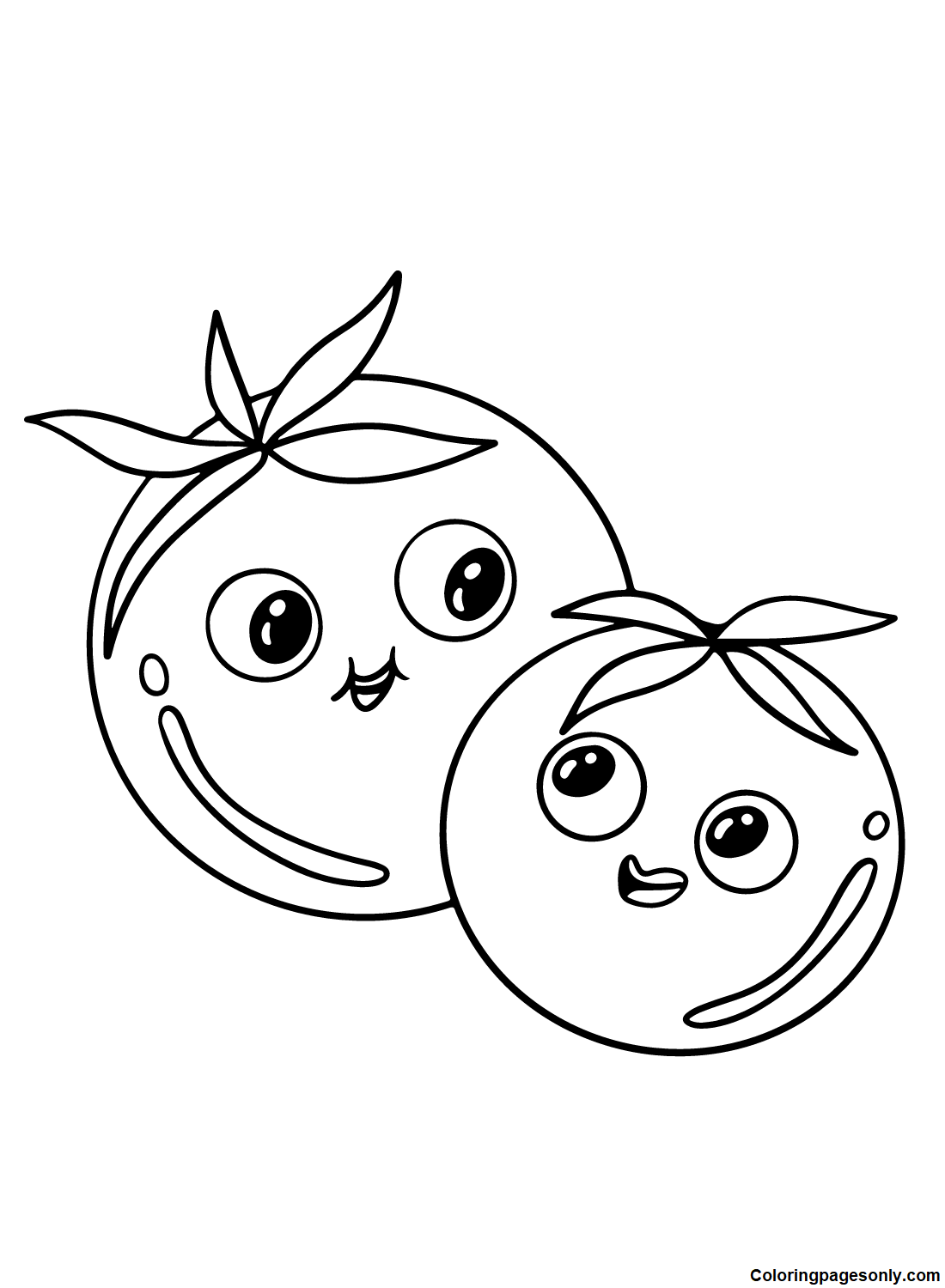
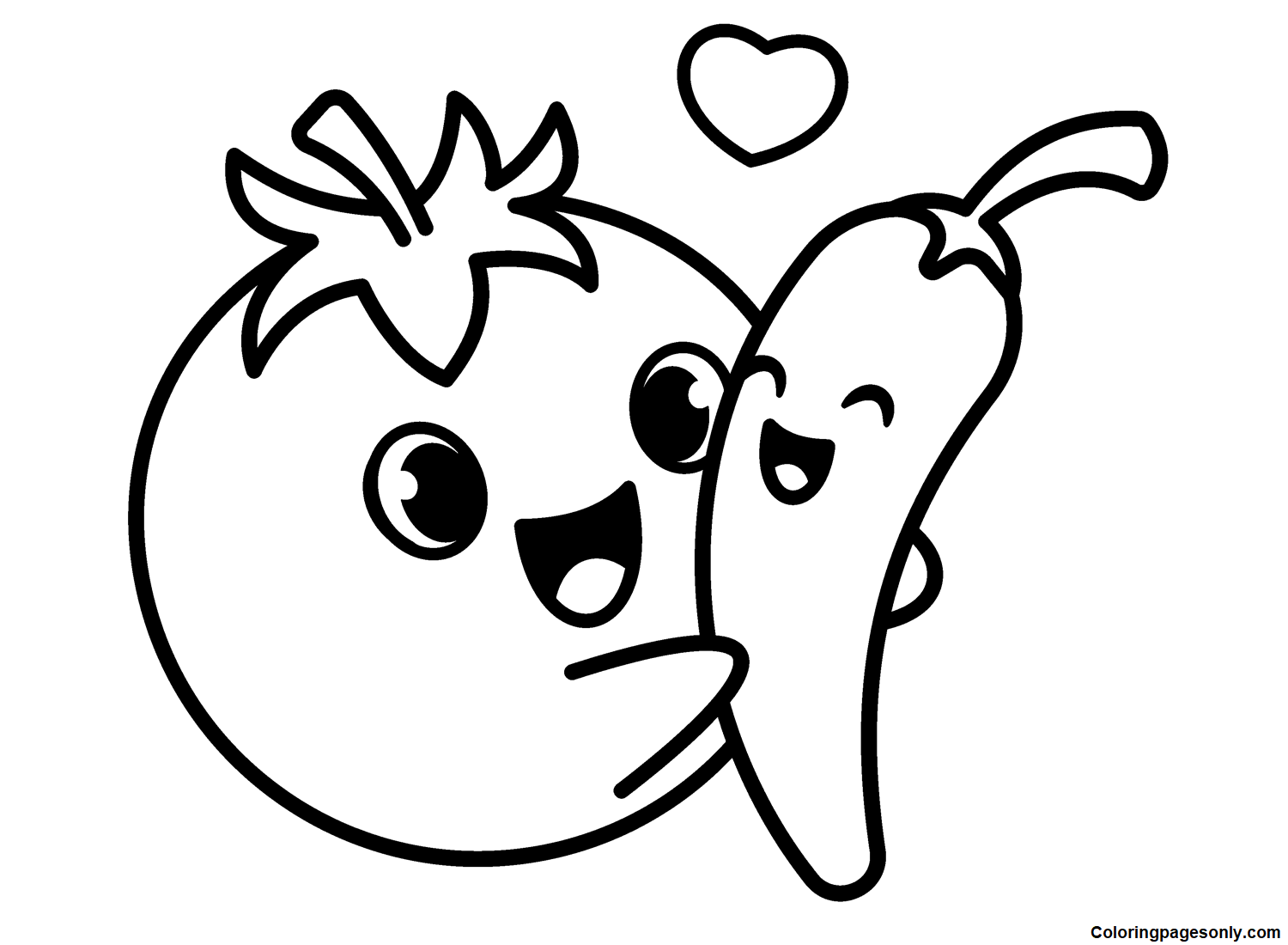
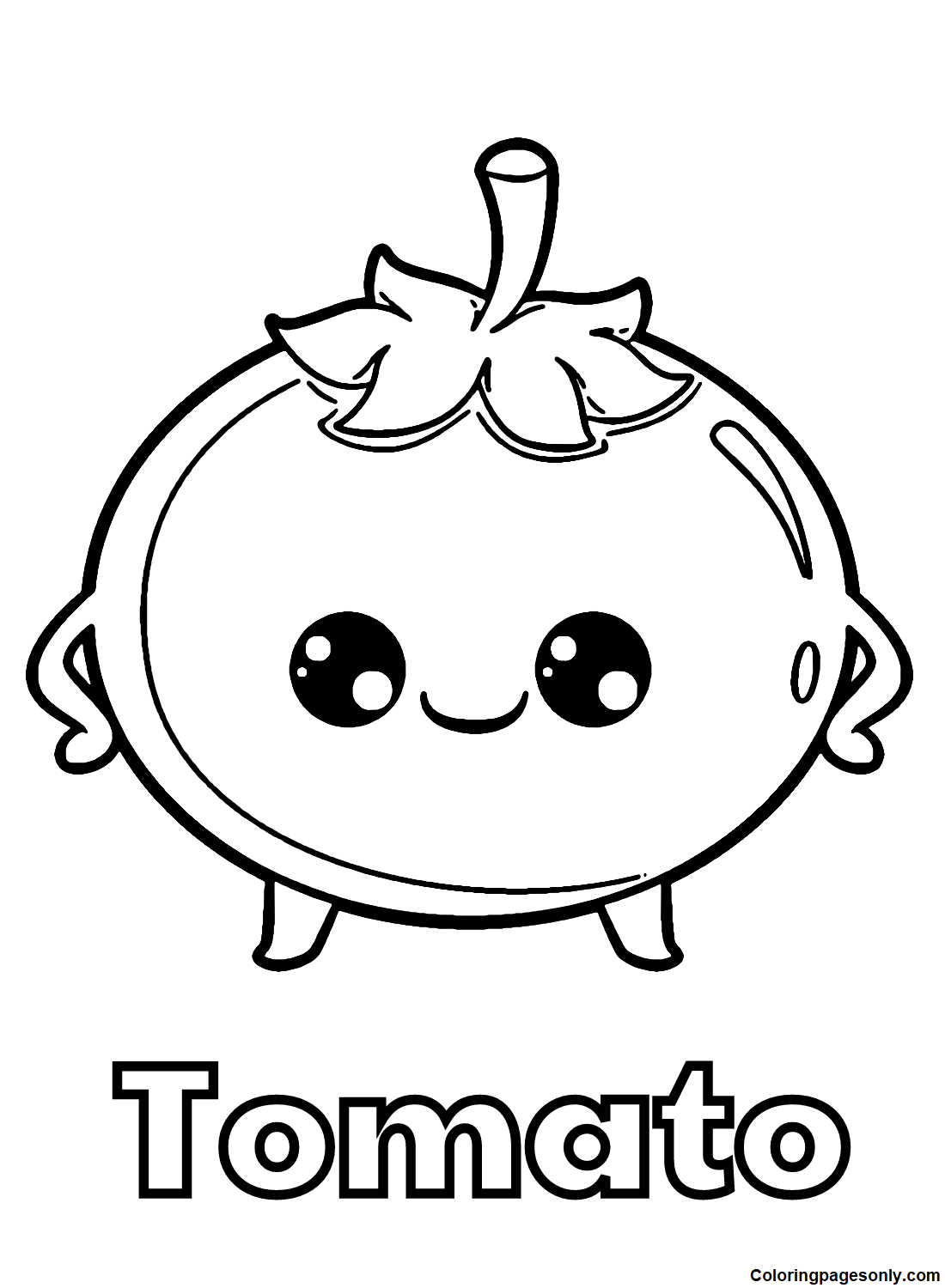
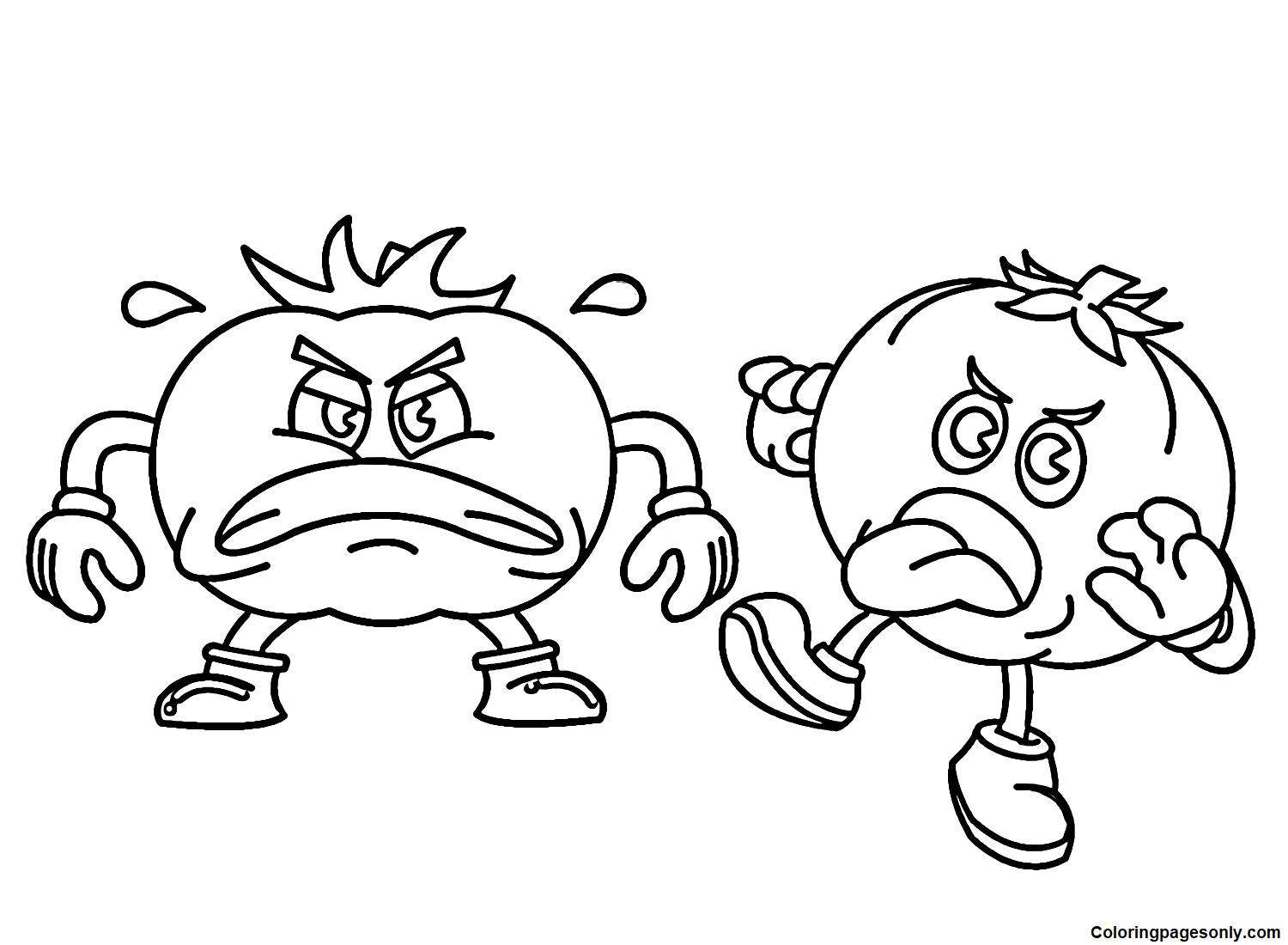
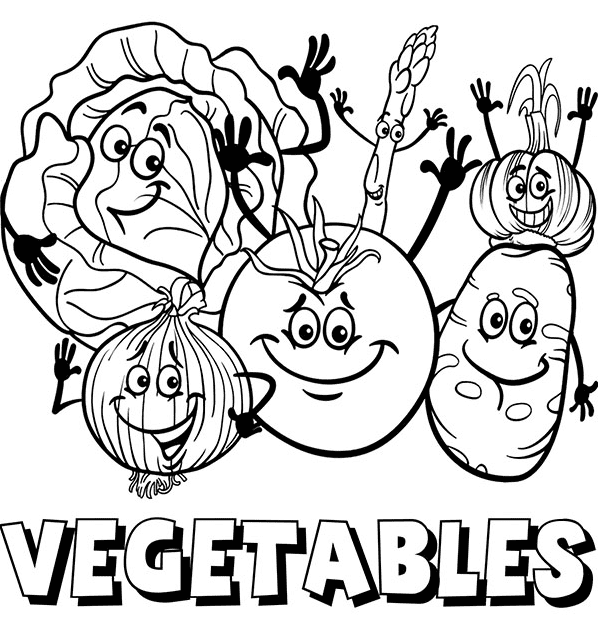
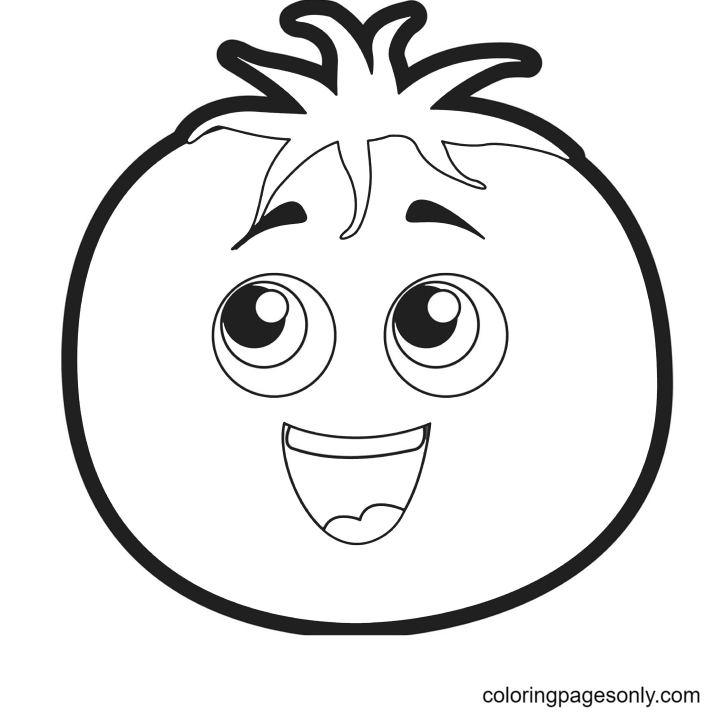
Thirteen pages give the tomato a face and personality, from a shocked expression to a happy smile to a costumed character hugging a chili pepper. Color suggestion: a rosier, slightly pink-leaning red works well on these friendlier designs, in contrast with the deeper red used on the realistic pages.
Tomato Slices and Kitchen Scenes
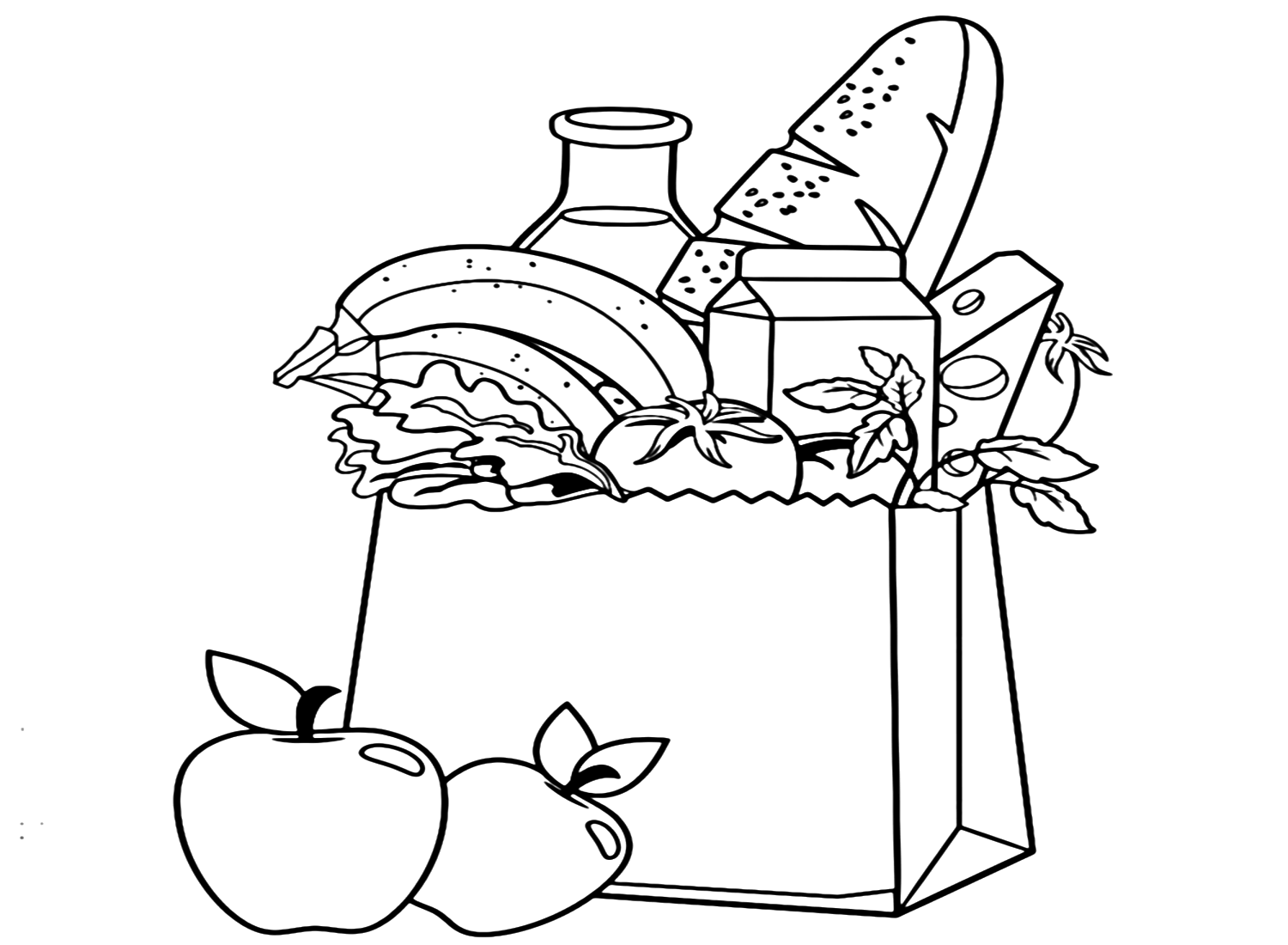
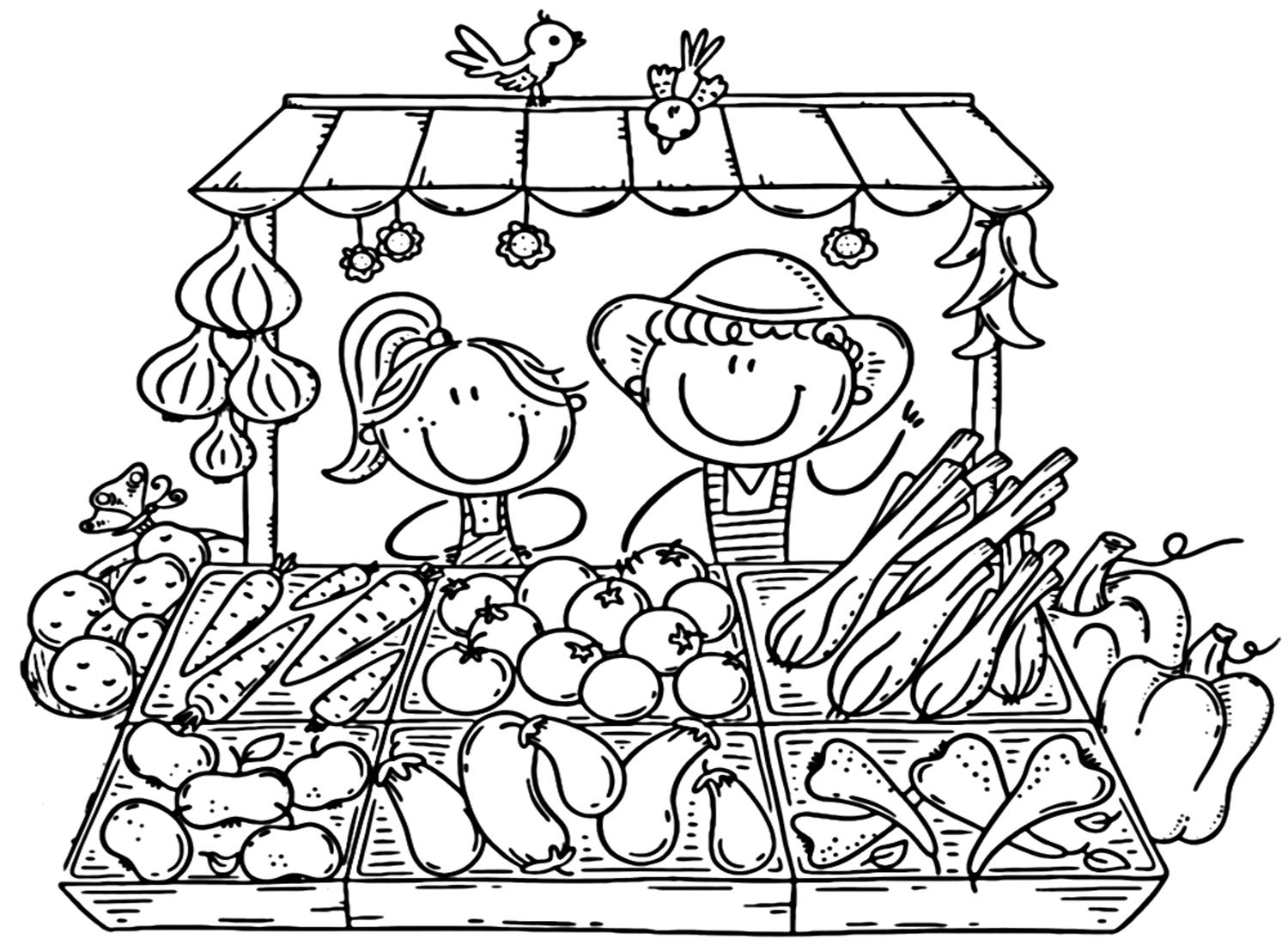
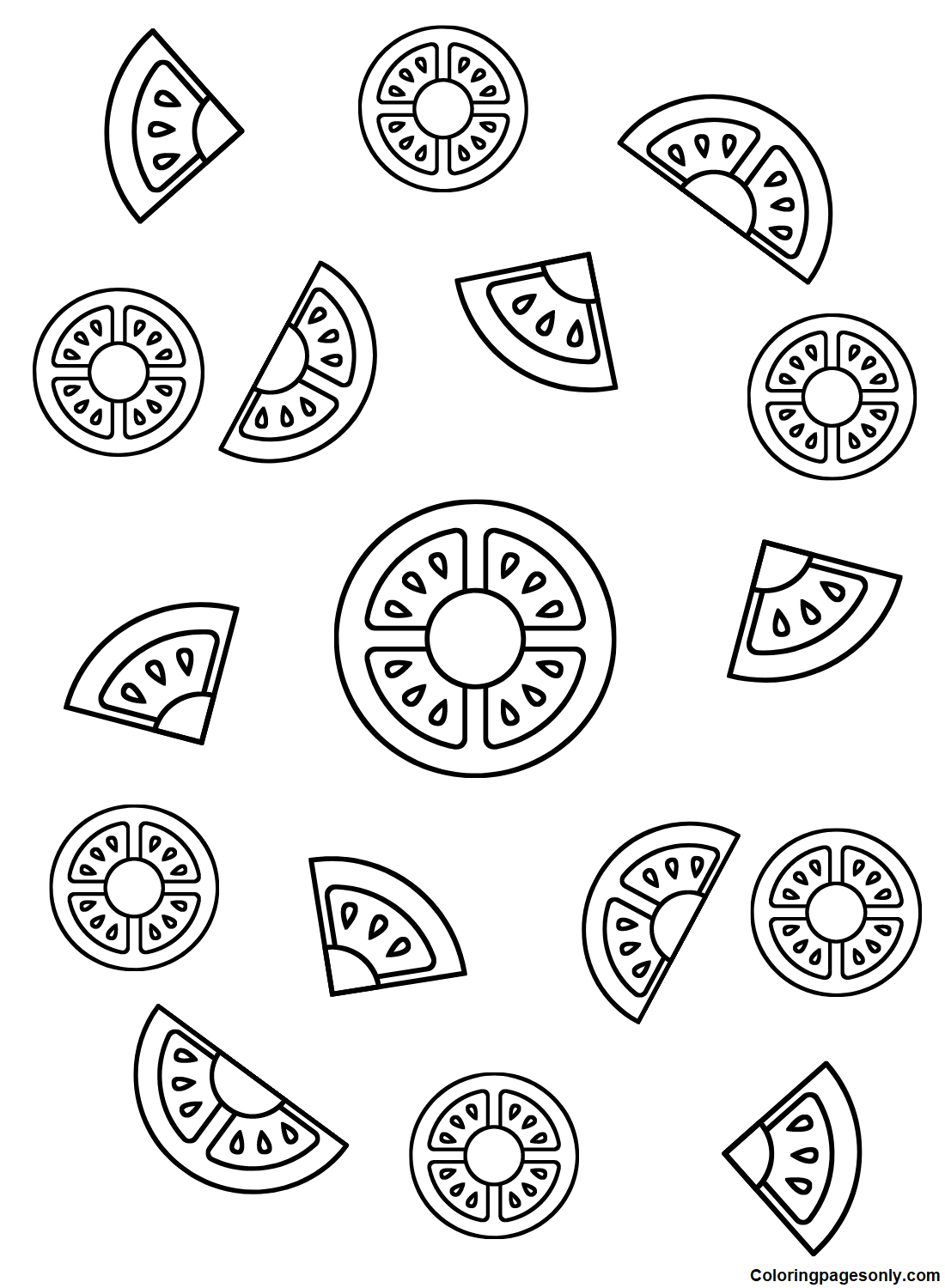
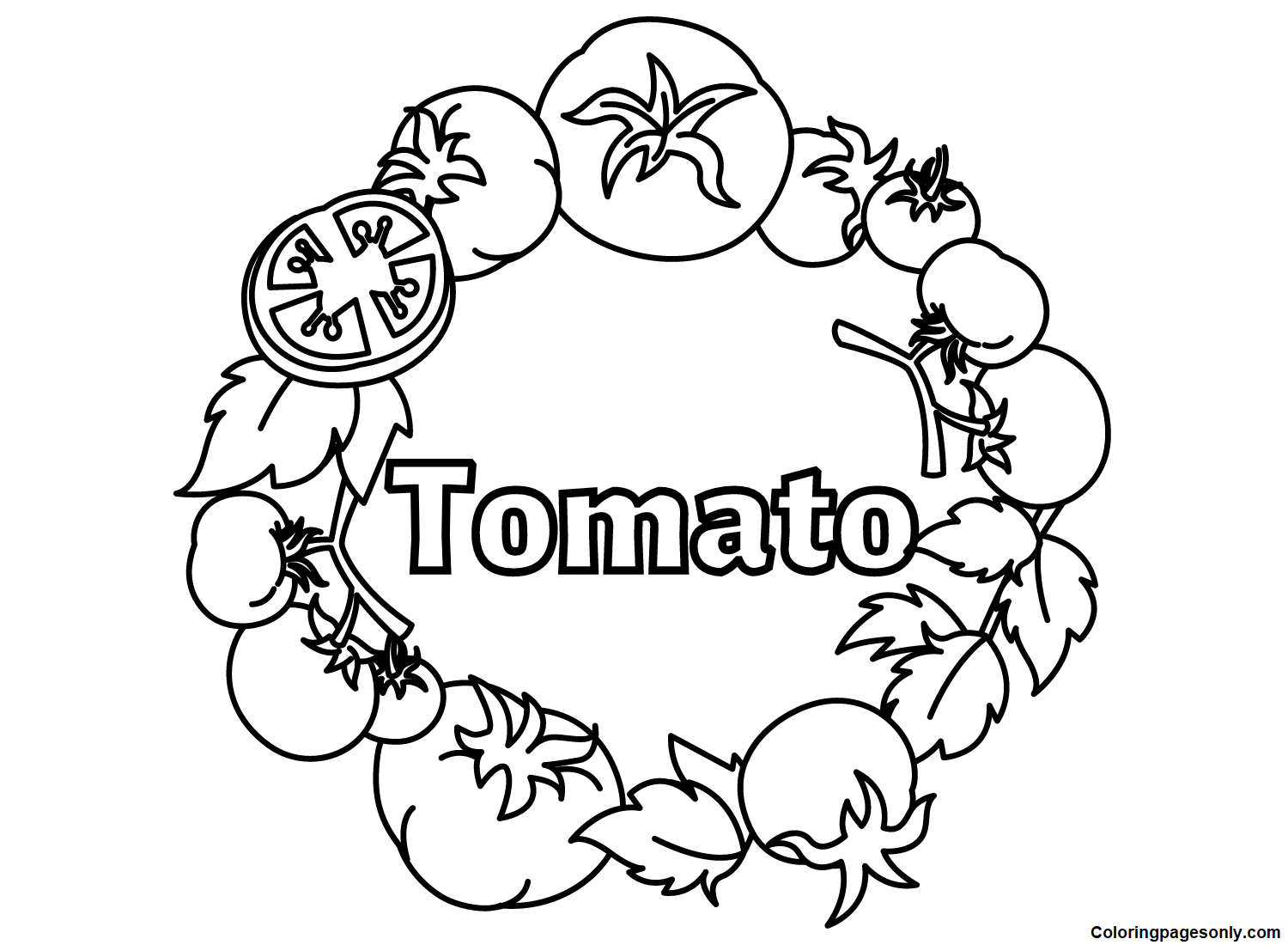
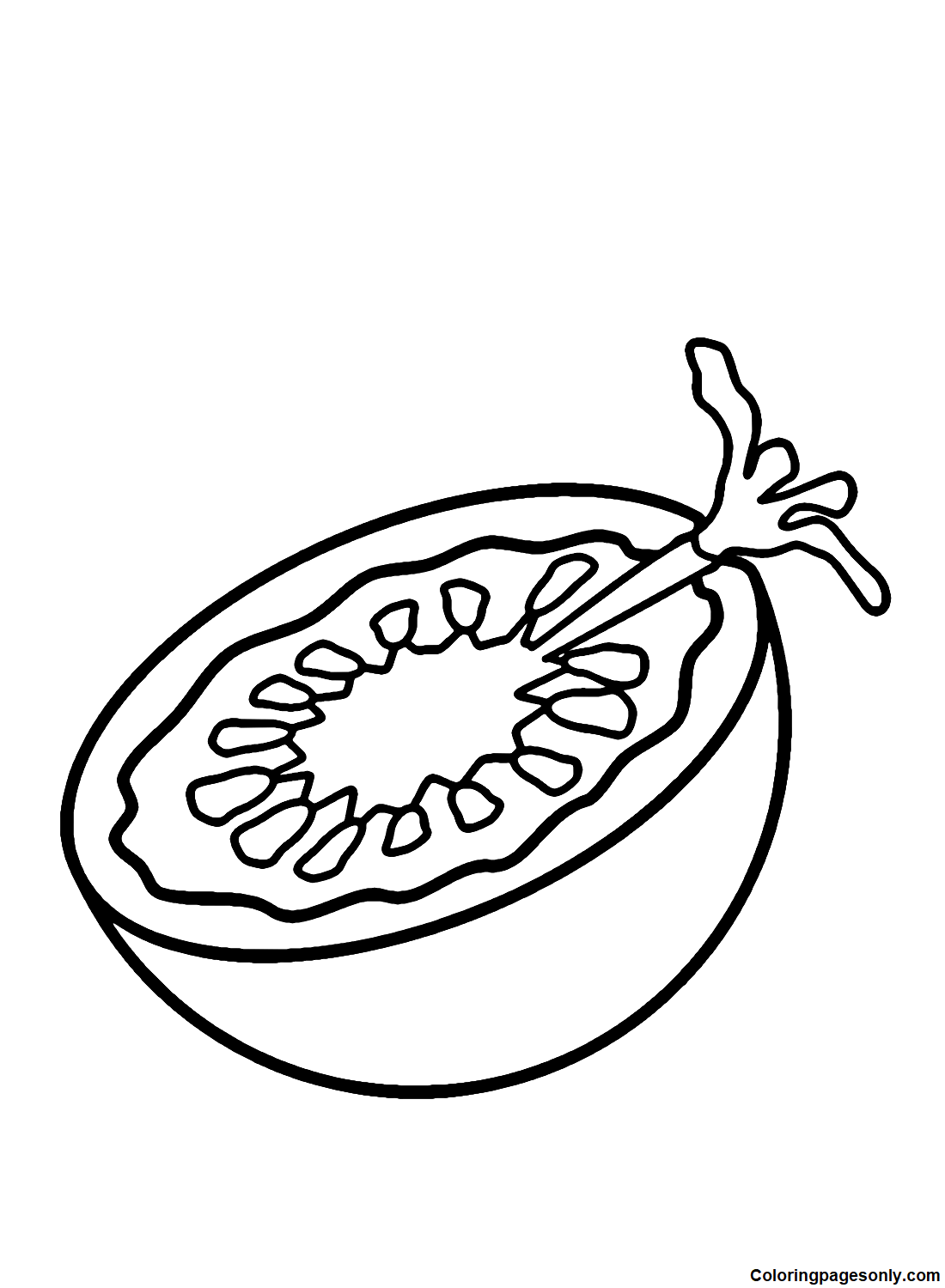
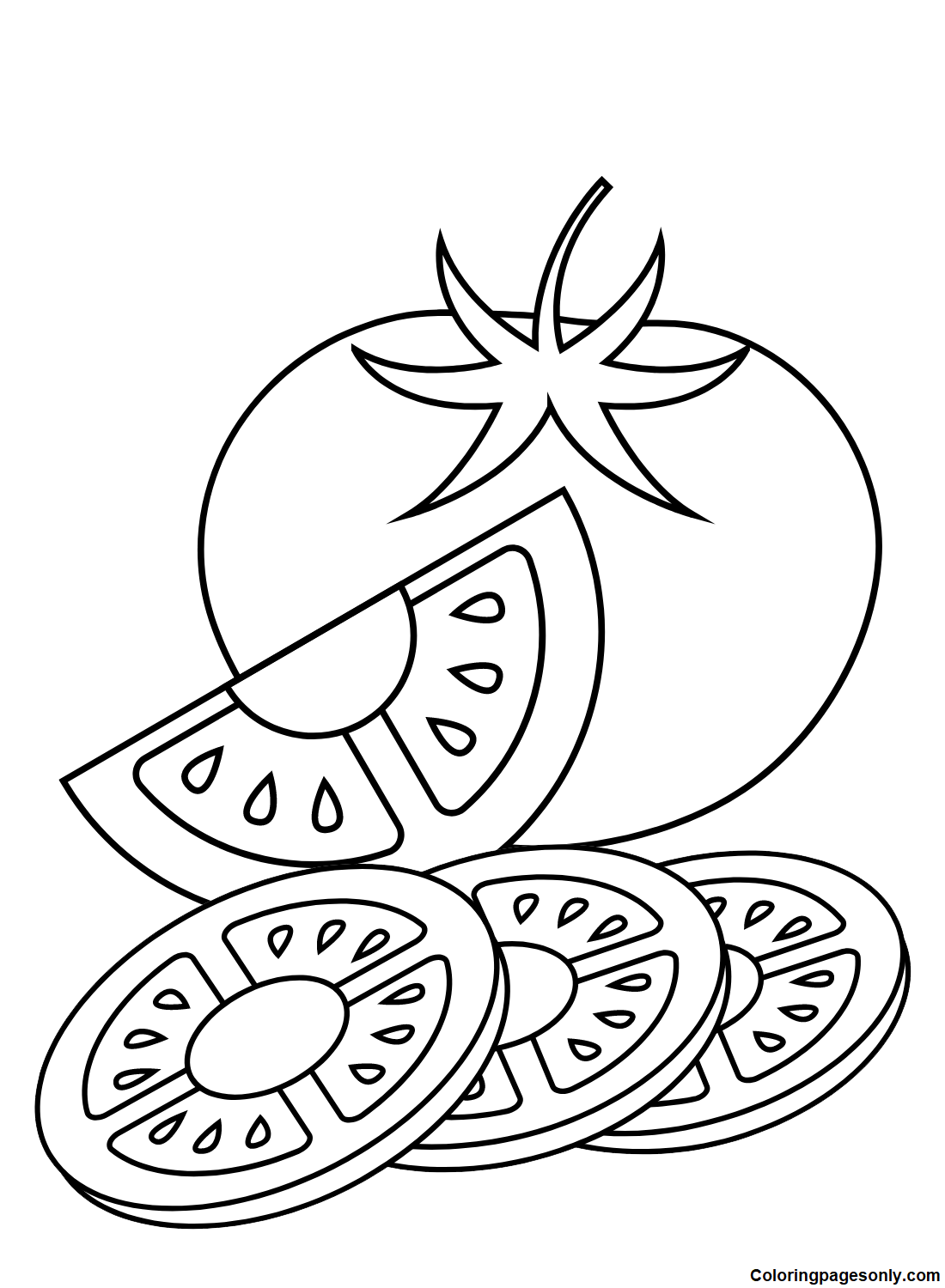
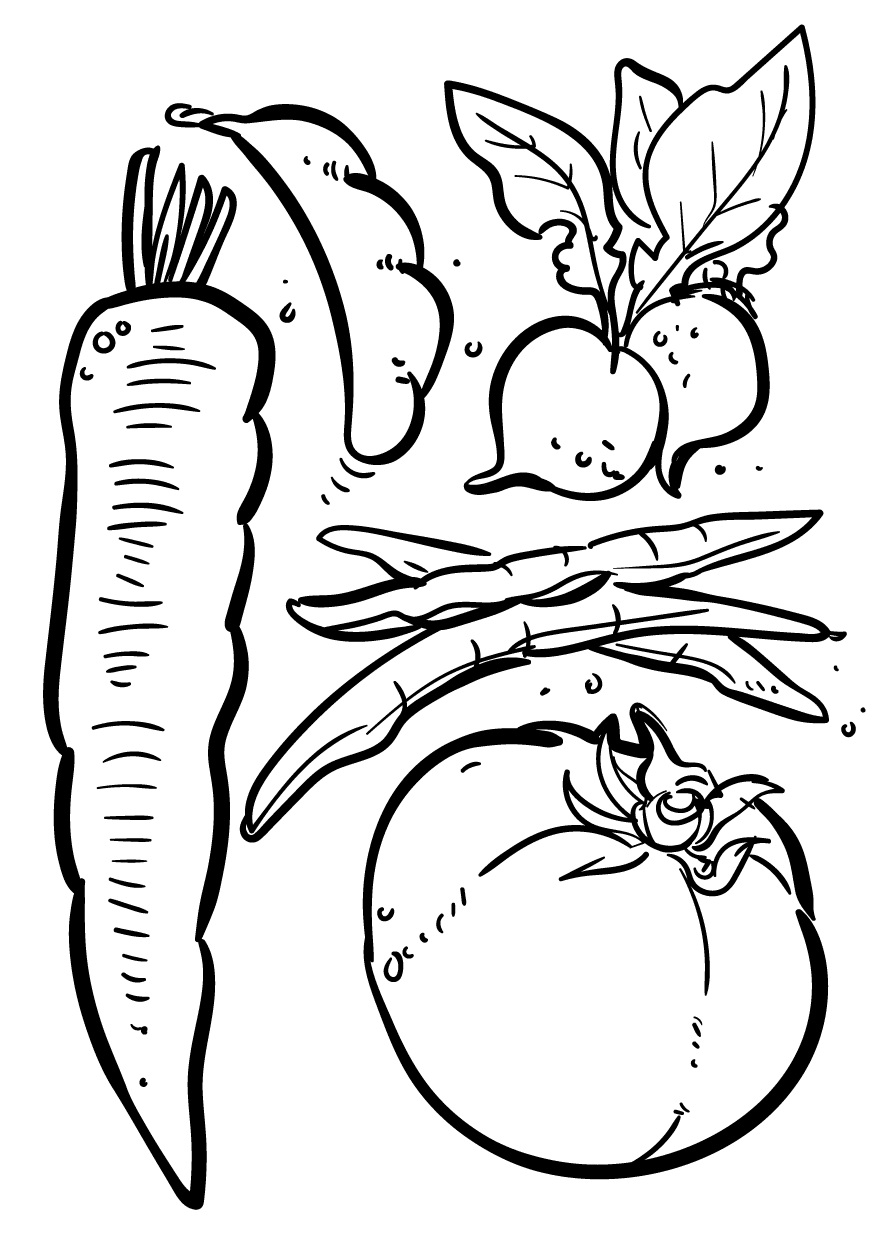
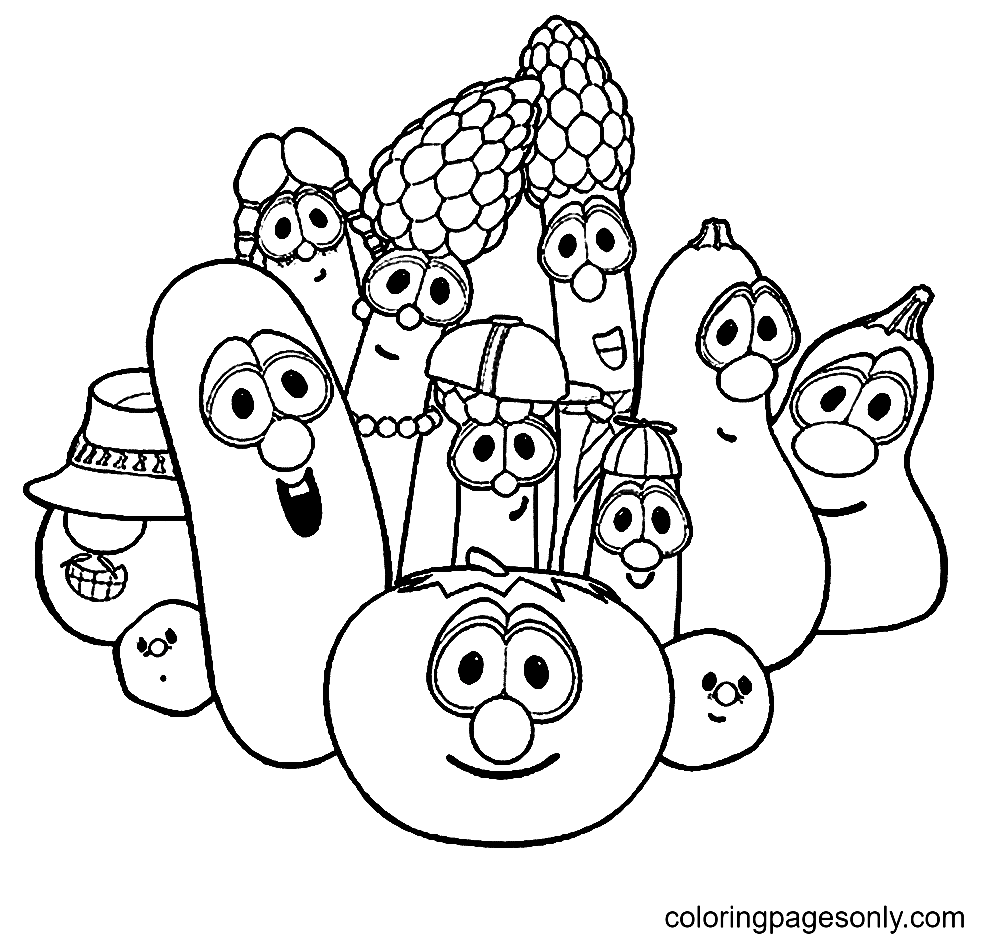
Seven pages move into the kitchen, showing tomato slices, a quarter-cut tomato, a sandwich, and mixed vegetable scenes. Color suggestion: the interior flesh and seed pockets of a cut tomato are lighter and more orange-toned than the skin, which is a detail worth calling out separately from the outer red.
What Tomato Coloring Pages Do
Color gradation practice. The American Academy of Pediatrics identifies fine motor skill development and color recognition as core benefits of structured coloring for children ages 2 through 7. Because this set includes both deep red ripe tomatoes and pale green unripe ones, kids get practice recognizing that a single object can appear in more than one color depending on its stage, not just memorizing “tomato equals red.”
A visual bridge from plant to plate. The plant and vine pages show where a tomato comes from before the kitchen pages show what happens to it afterward. Coloring both in the same sitting gives young children a concrete, sequential picture of a food’s path from garden to table, which is harder to convey with the fruit alone.
Lower-pressure focus time. Research published in the Art Therapy Journal in 2005 found that structured coloring sessions were associated with a measurable drop in reported anxiety. A single, familiar, low-detail subject like a tomato gives that same steady focus without the visual complexity of a character page packed with small details.
An easy entry point for reluctant colorers. Because most of the pages in this set use simple, rounded shapes, they work well for children who find more detailed subjects overwhelming. The cartoon character pages then offer a next step up in complexity once a child is comfortable with the plain tomato shape.
How to Color Tomato Pages Well
- Ripe red tomatoes: Base the skin in Crayola Scarlet, then layer thin strokes of Crayola Red Orange near the top where light would naturally catch the curve.
- Unripe green tomatoes: Use Crayola Fern for the body, since a true unripe tomato leans yellow-green rather than the darker green used on leaves and vines.
- Vines and leaves: Color the foliage in Crayola Forest Green, with a touch of Crayola Yellow Green on younger leaves near the top of the vine.
- Stems and calyx: Use Crayola Asparagus for the small star-shaped cap where the tomato meets the vine, since it is usually a different, more muted green than the leaves.
- Sliced interiors: Color the seed pockets and flesh of cut tomatoes in Crayola Melon or Salmon, since the inside is noticeably lighter and more orange than the outer skin.
- Cherry tomatoes: Push the red slightly darker with Crayola Mahogany in the shadowed areas, since smaller tomatoes often read as more deeply colored than large ones.
5 Creative Craft Ideas With Tomato Coloring Pages
1. Growing Vine Display
Color several of the plant and vine pages and arrange them in a row from smallest to largest, creating a simple visual timeline of a tomato plant growing and ripening on a windowsill or bulletin board.
2. Ripeness Sorting Game
Color a mix of red ripe and green unripe tomato pages, cut around each one, and sort them into two piles by color. This turns the coloring session into a quick color-recognition game that works well for preschool-age children.
3. Tomato Character Stick Puppet
Color one of the cartoon tomato characters, cut around the outline, and glue it to a craft stick or a strip of cardstock to make a simple puppet for retelling a short story about a garden.
4. Kitchen Placemat
Color one of the tomato slices or sandwich pages, glue it to a larger sheet of cardstock, and use it as a placemat for snack time, giving a coloring project a second life as something practical.
5. Recipe Card Illustration
Color the sandwich or kitchen scene page and glue it to the top of an index card, then write out a simple tomato-based recipe or favorite sandwich combination underneath as a keepsake recipe card.
Frequently Asked Questions
What are tomato coloring pages?
Free printable designs of tomatoes in realistic, plant, cartoon, and kitchen styles. This collection has 52 pages available as PDF downloads or online coloring, with no account required.
Is a tomato a fruit or a vegetable?
Botanically, a tomato is a fruit because it develops from a flower and contains seeds. In 1893, the US Supreme Court ruled it counts as a vegetable for tariff purposes, which is why both answers are commonly heard.
Where do tomatoes originally come from?
Tomatoes originated in the Andes region of South America and were later domesticated by the Aztecs in Mesoamerica, who called the fruit tomatl before Spanish explorers brought it to Europe.
Why were tomatoes once thought to be poisonous?
Tomatoes belong to the nightshade plant family, which includes some genuinely toxic species. That association, combined with unfamiliarity, led many Europeans to distrust tomatoes as food for close to two centuries.
What color should a ripe tomato page be?
A true ripe tomato is closer to scarlet than a plain primary red, often with slightly darker shading near the shadowed underside and a lighter highlight near the top.
Are tomato coloring pages good for teaching kids about vegetables?
Yes. The mix of plants, whole fruit, and sliced kitchen pages gives children a visual sense of where a common food comes from and what it looks like at each stage, without requiring a real garden.
What age group are these pages best suited for?
The plain, whole tomato and plant pages suit children as young as three. The cartoon characters and kitchen scenes with more detailed work are better suited for children five and up.
Can these pages be used for a classroom garden or nutrition unit?
Yes. The plant and vine pages pair naturally with a lesson on how vegetables grow, and the kitchen scene pages connect that growing process to a food kids already recognize from meals.
Start Coloring
Download any page by clicking the design. No account, email, or payment is required. Pages print directly from the browser at full resolution or open in the online coloring tool for screen use. Share finished pages on Facebook or Pinterest using the share buttons at the top of each design page.