
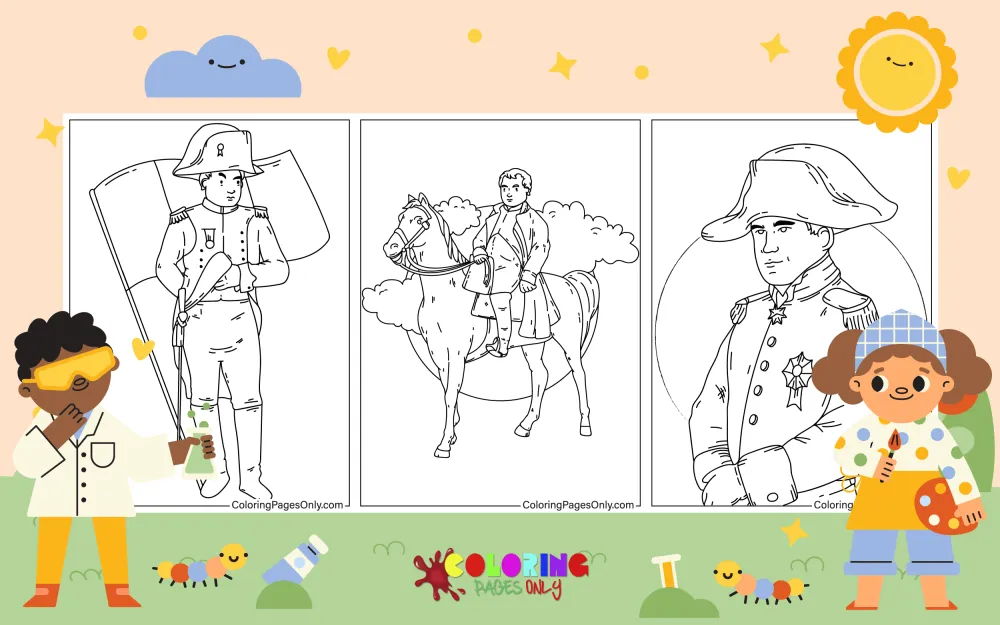
Free Napoleon Bonaparte Coloring Pages: 18 printable PDF portrait designs of the French military leader and emperor. Each page can be downloaded as a PDF to print or colored online in the browser, with no account required.
Napoleon Bonaparte was born in 1769 on the island of Corsica, rose through the ranks during the French Revolution, and crowned himself Emperor of France in 1804. His lasting legal reform, the Napoleonic Code, still shapes civil law in many countries today, while his military campaigns reshaped the map of Europe. After a failed invasion of Russia in 1812 and defeat at the Battle of Waterloo in 1815, he was exiled to the remote island of Saint Helena, where he died in 1821 at age 51.
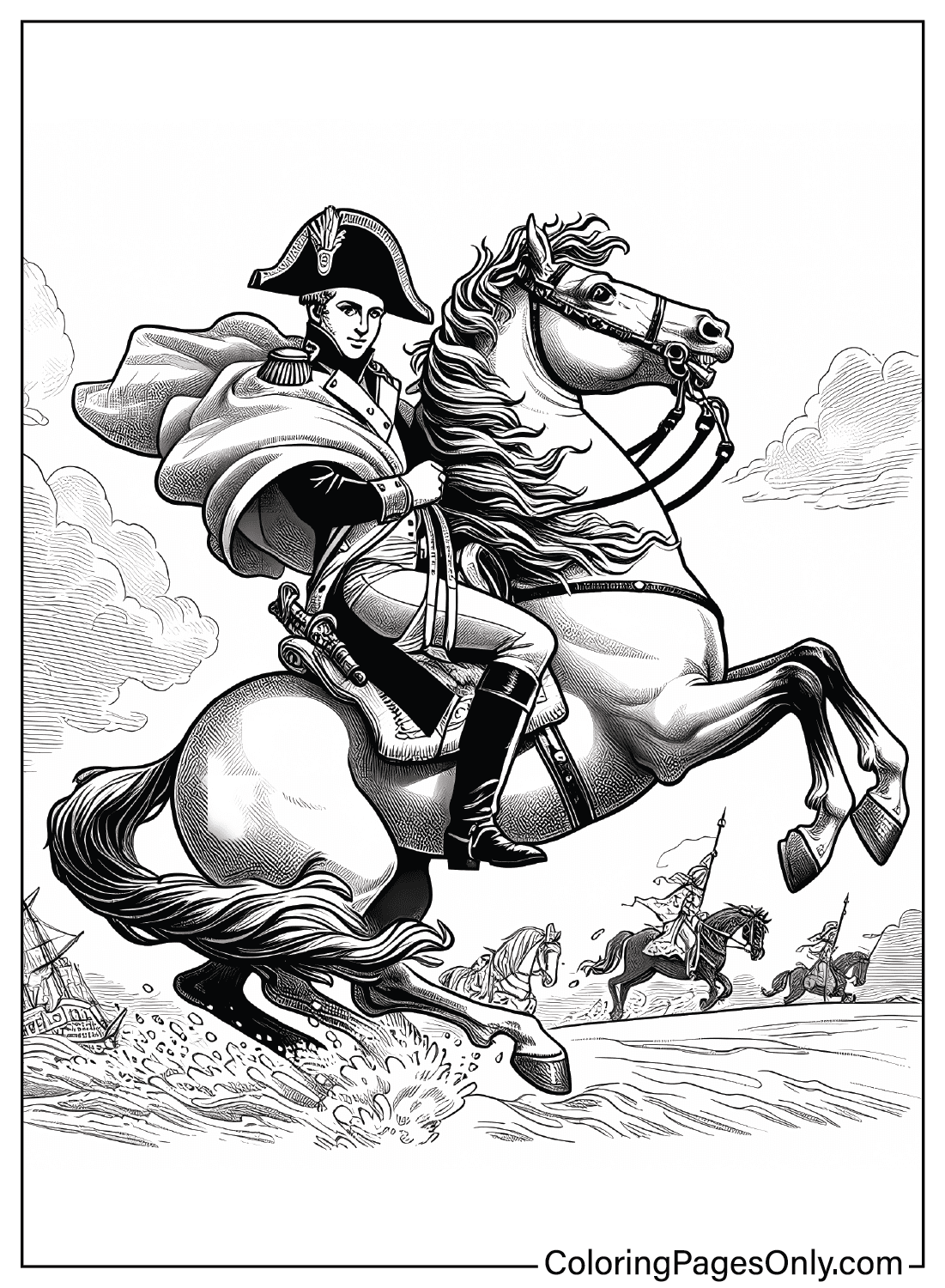
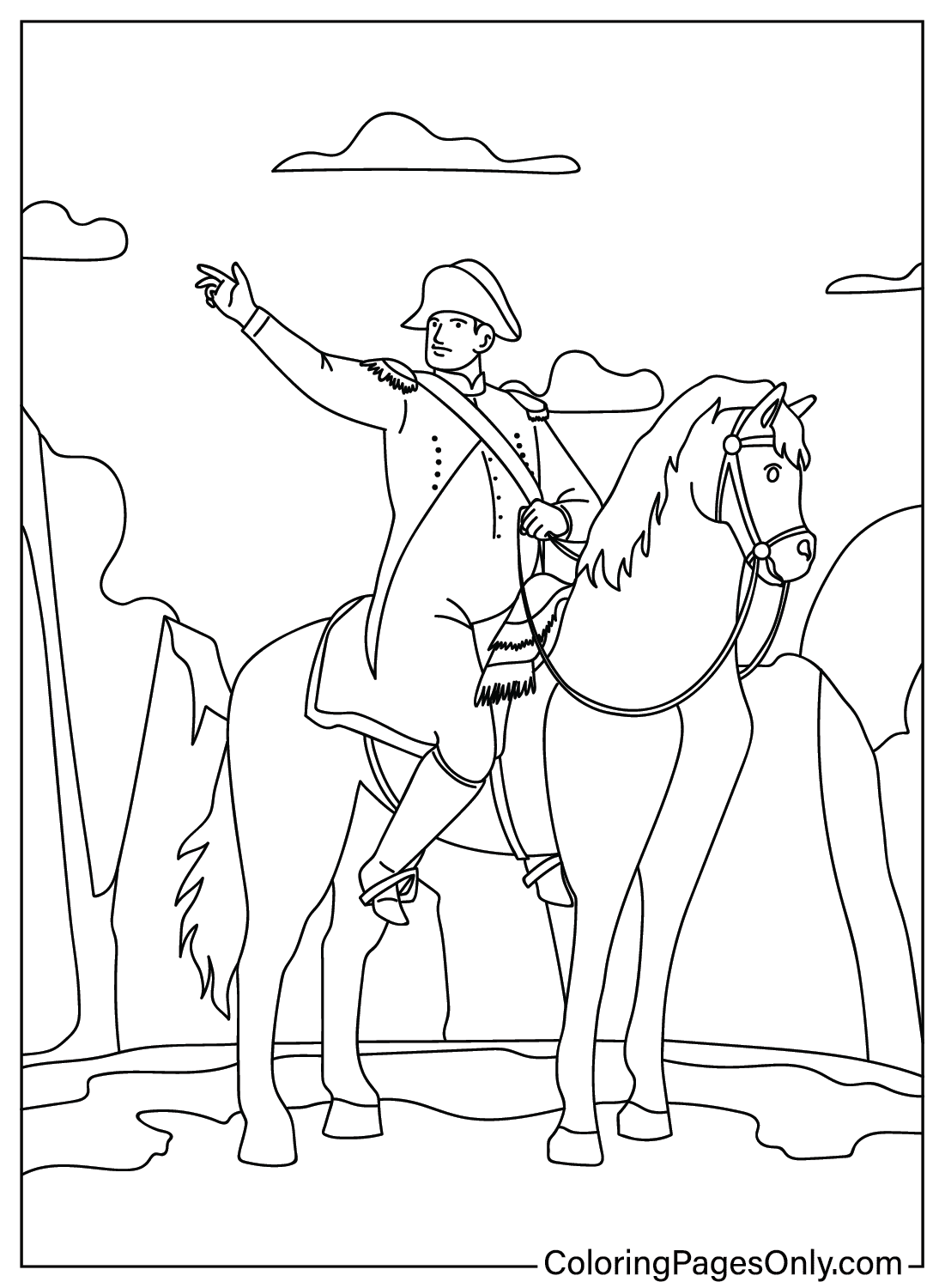
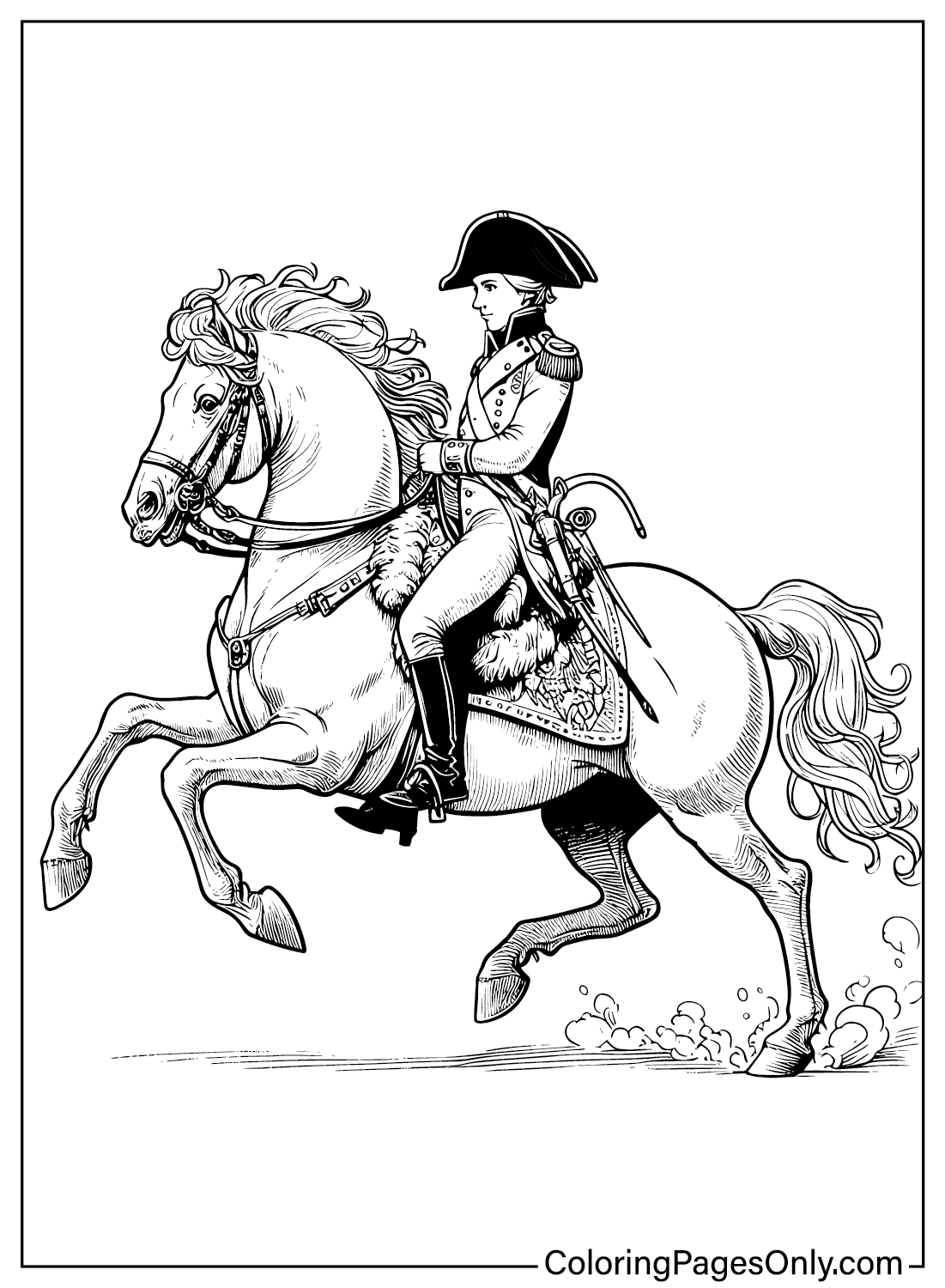
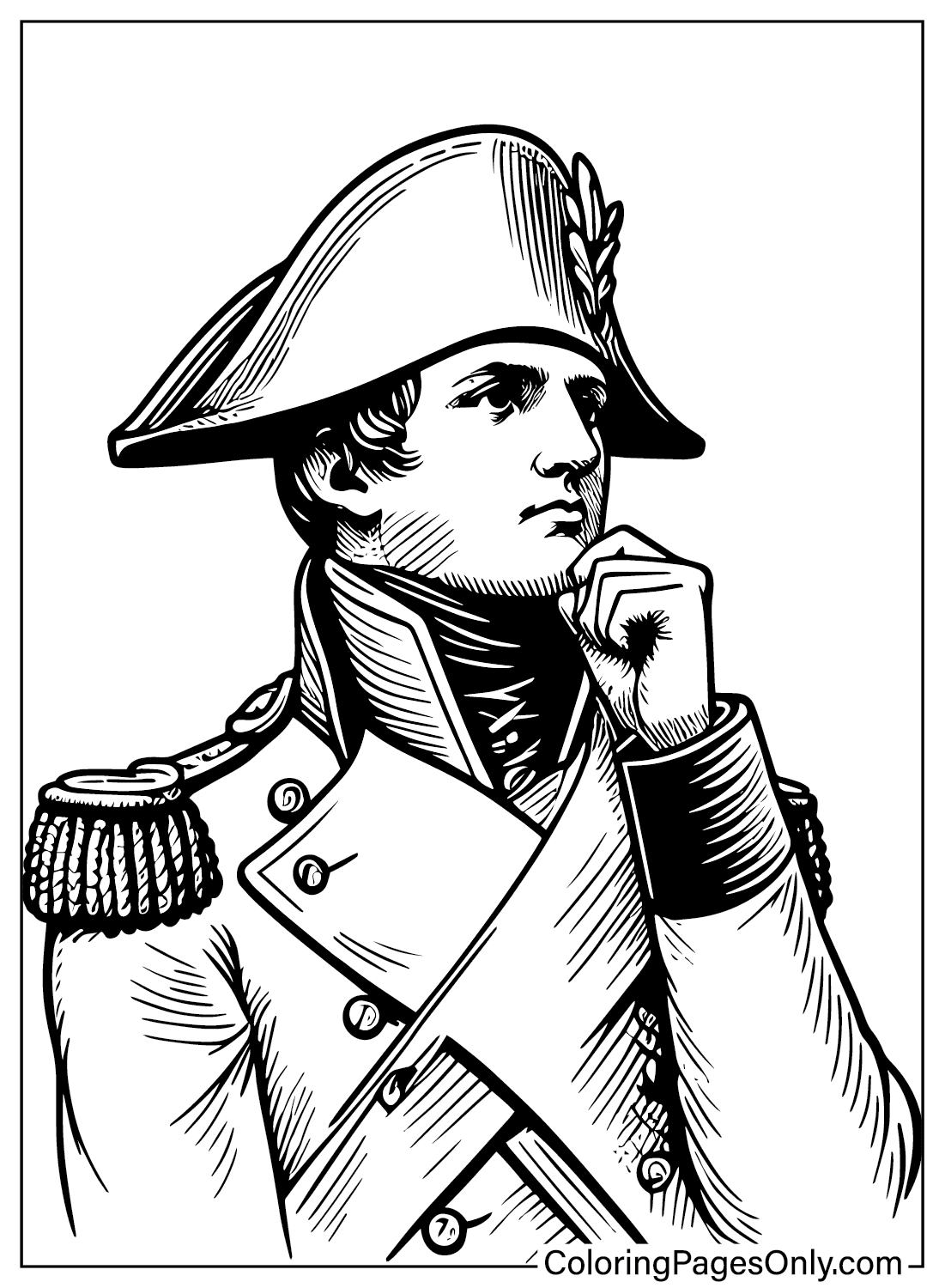
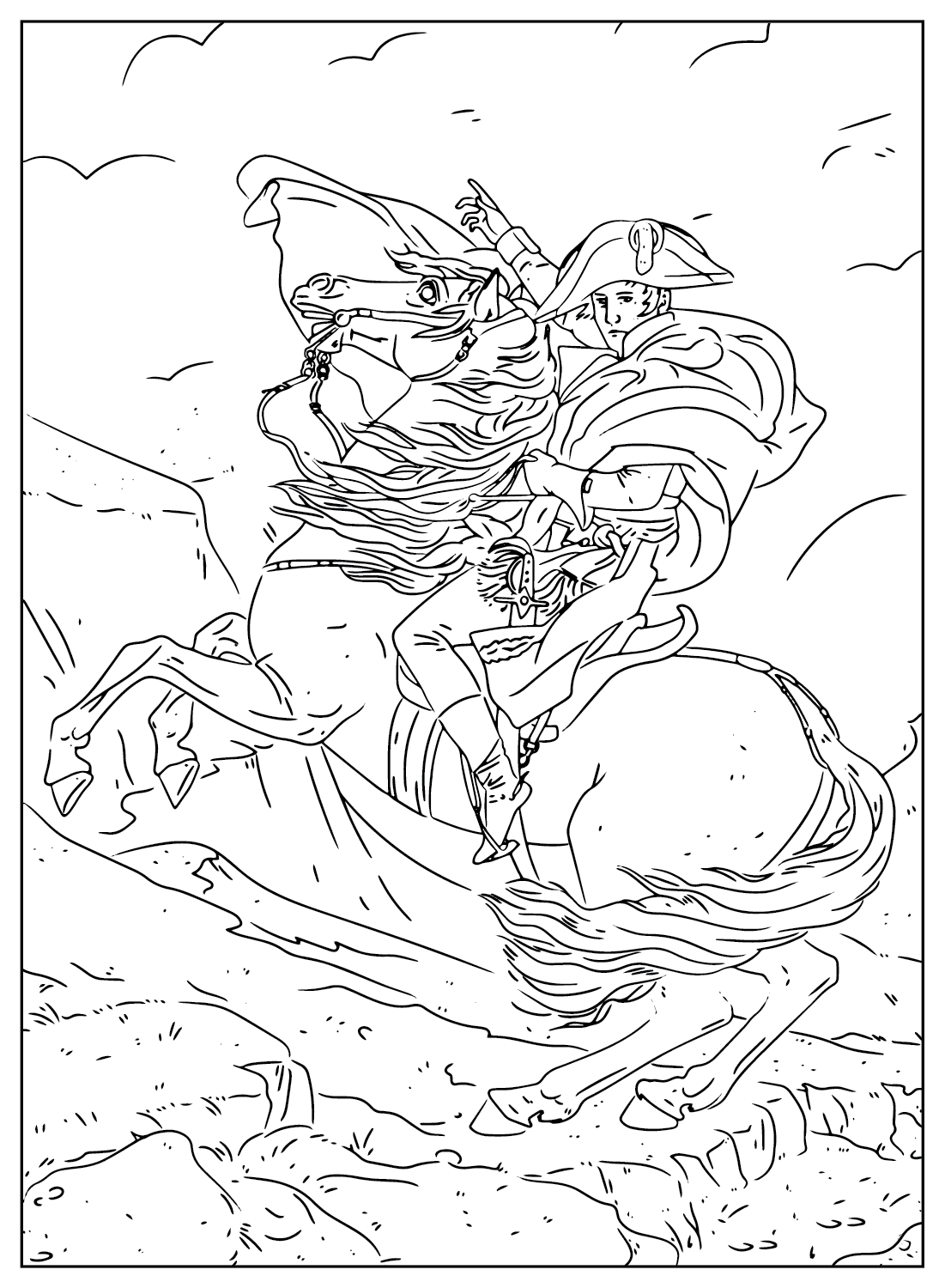
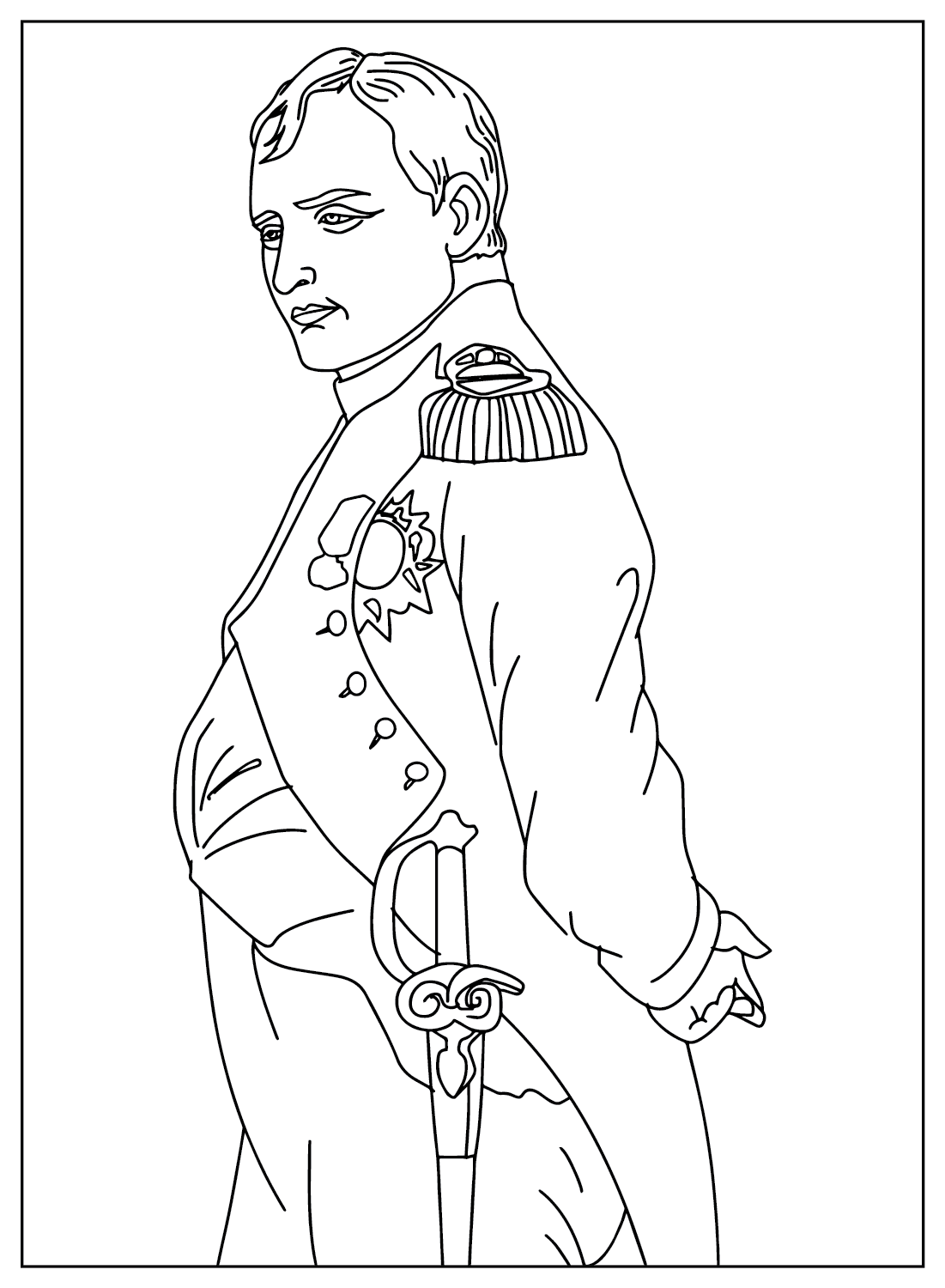
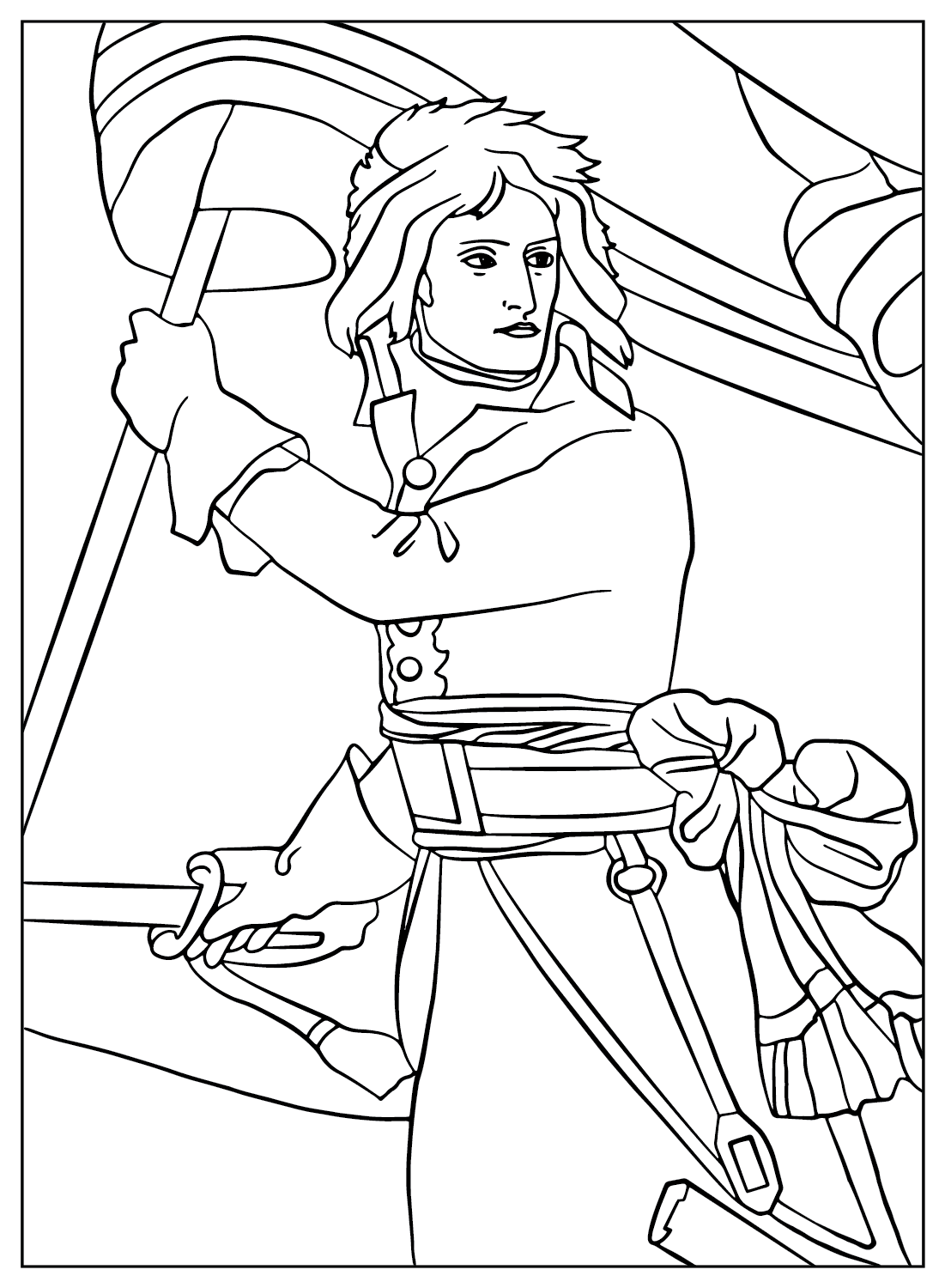
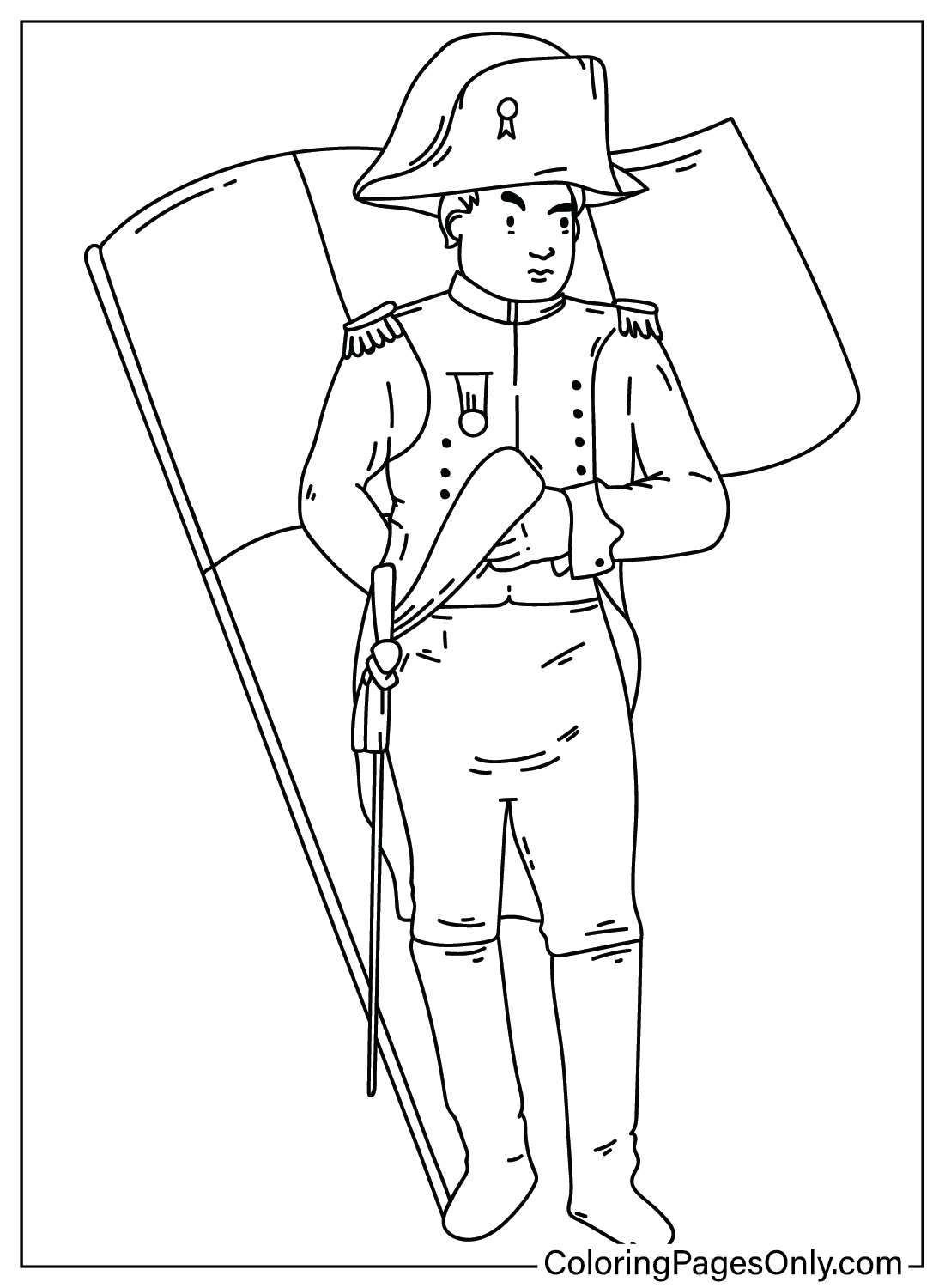
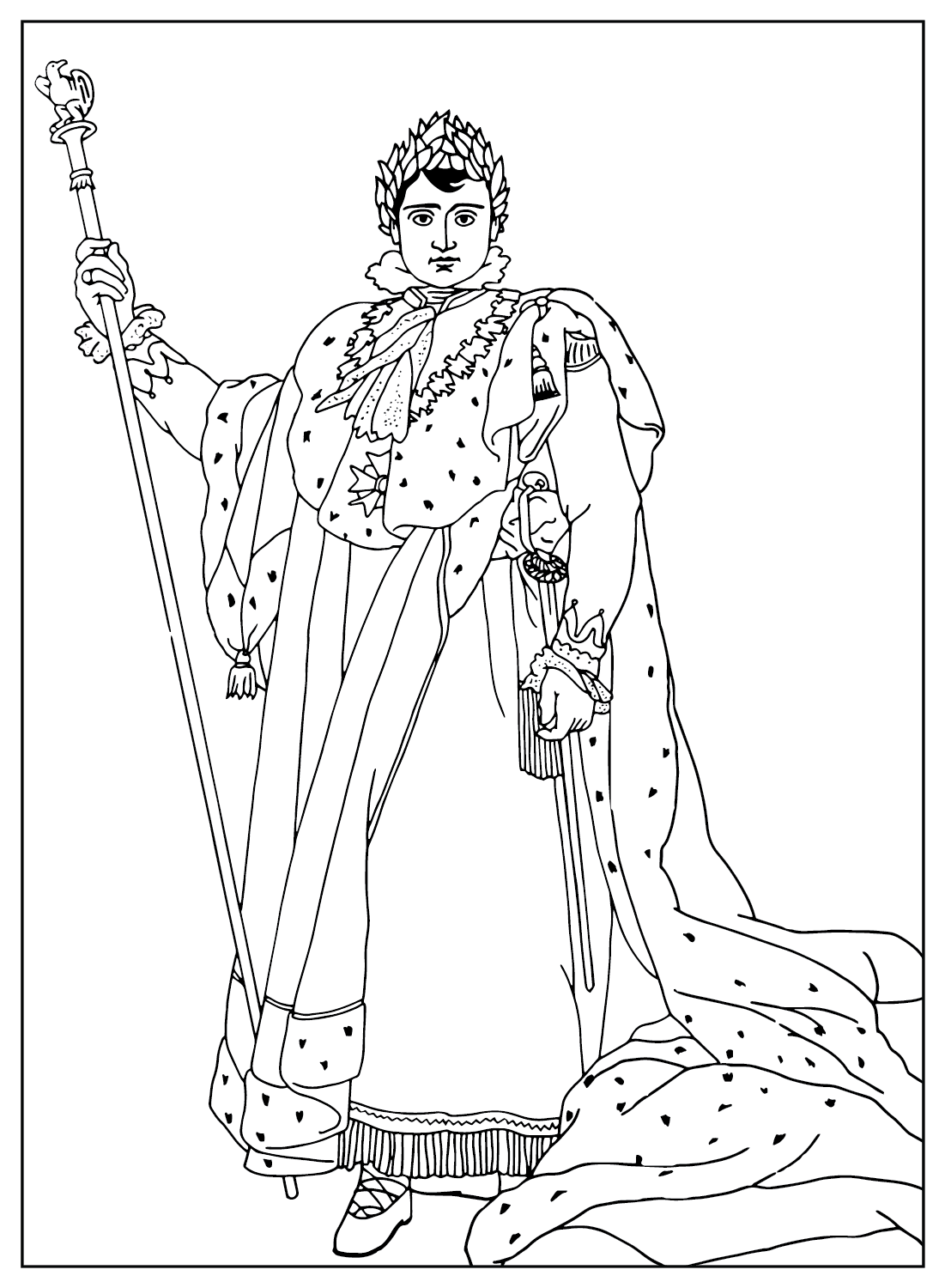
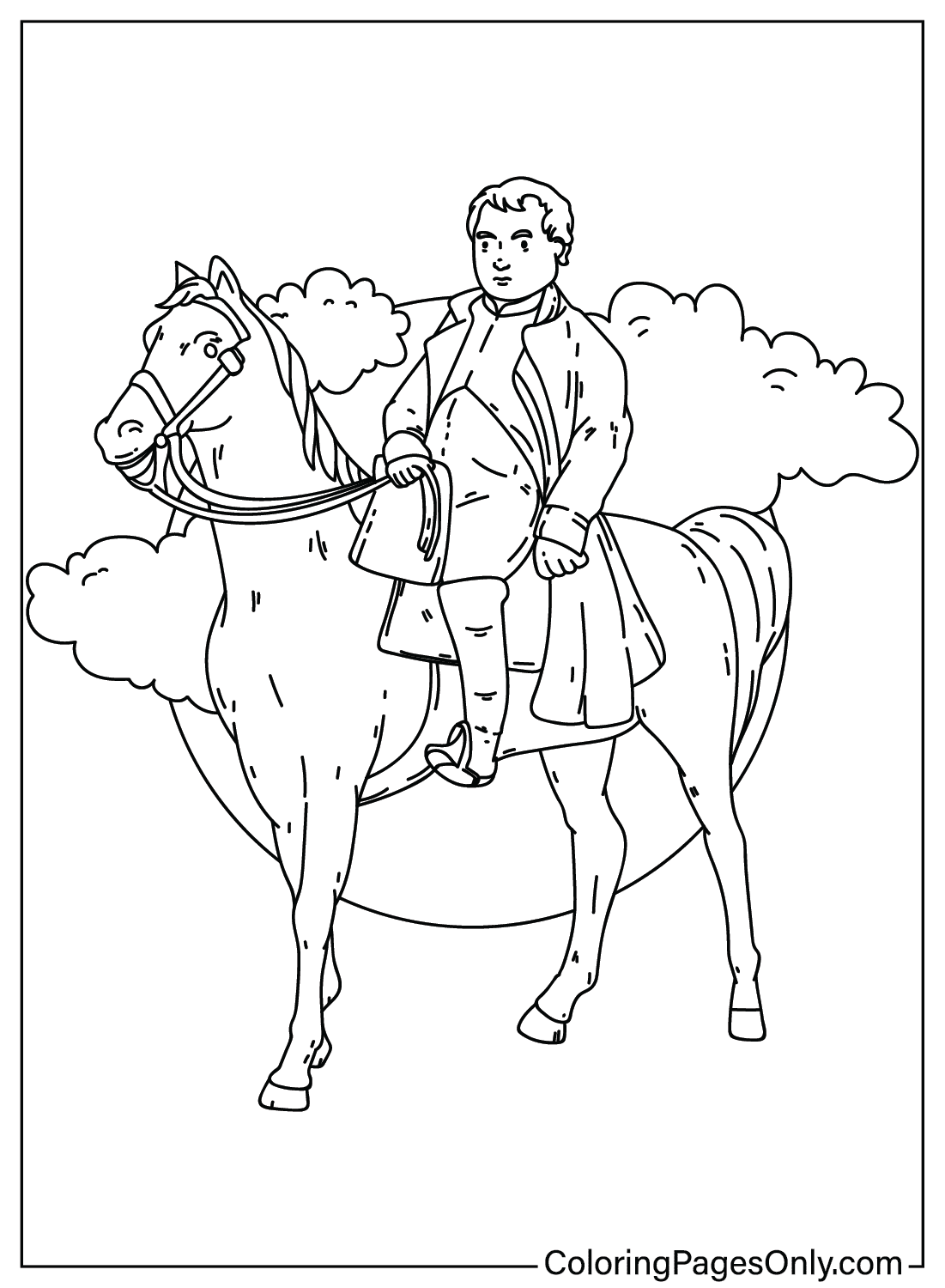
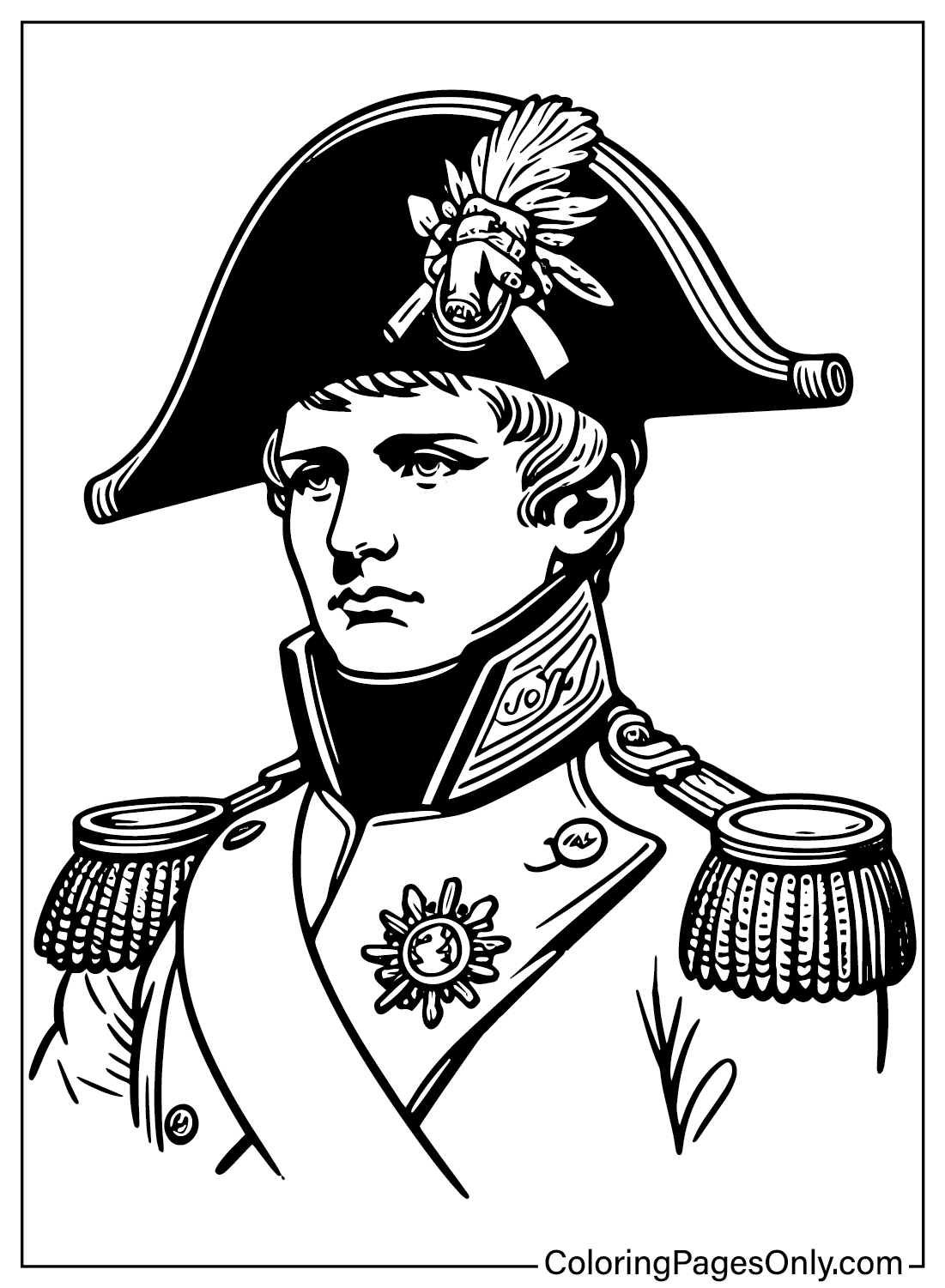
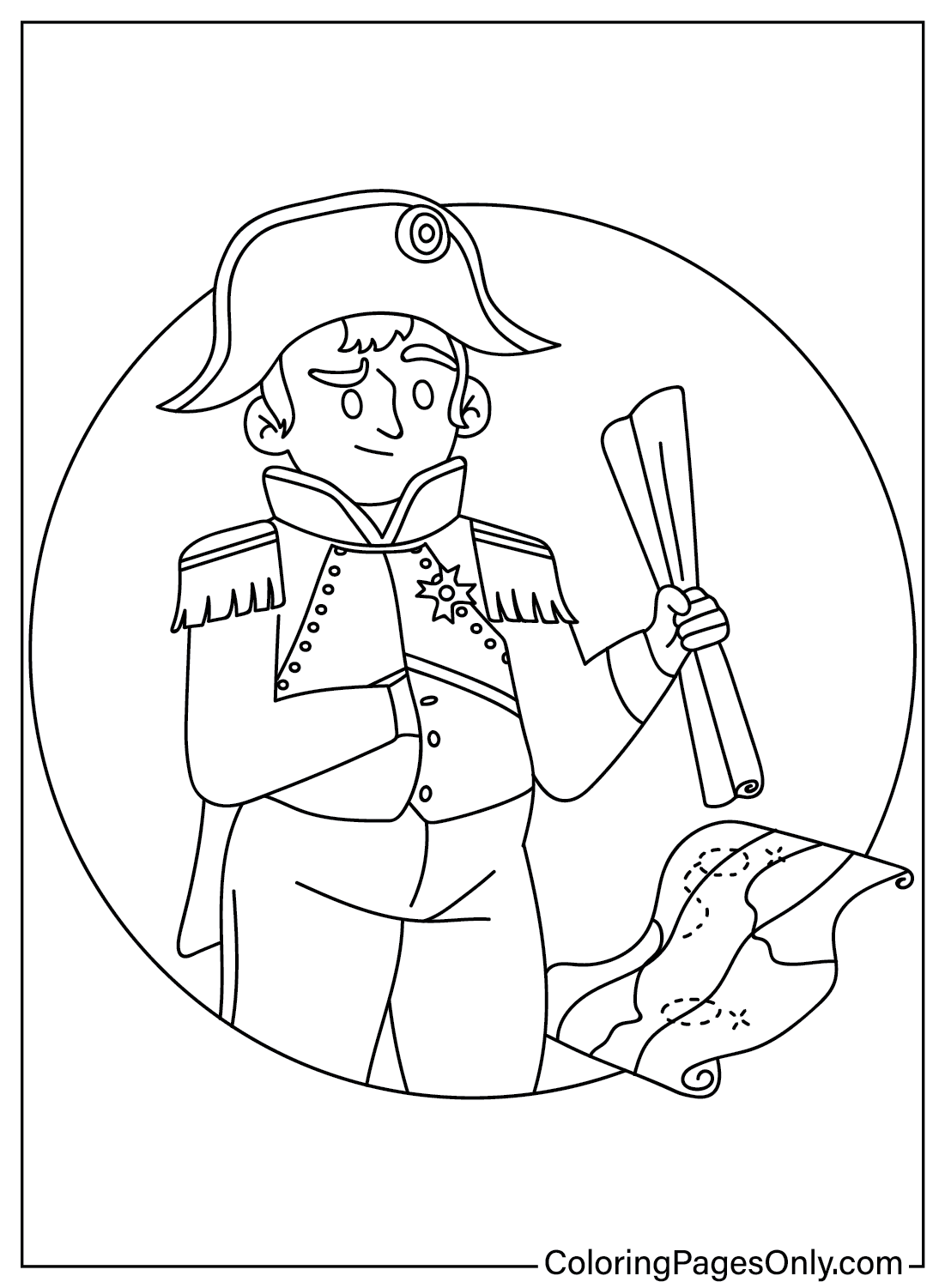
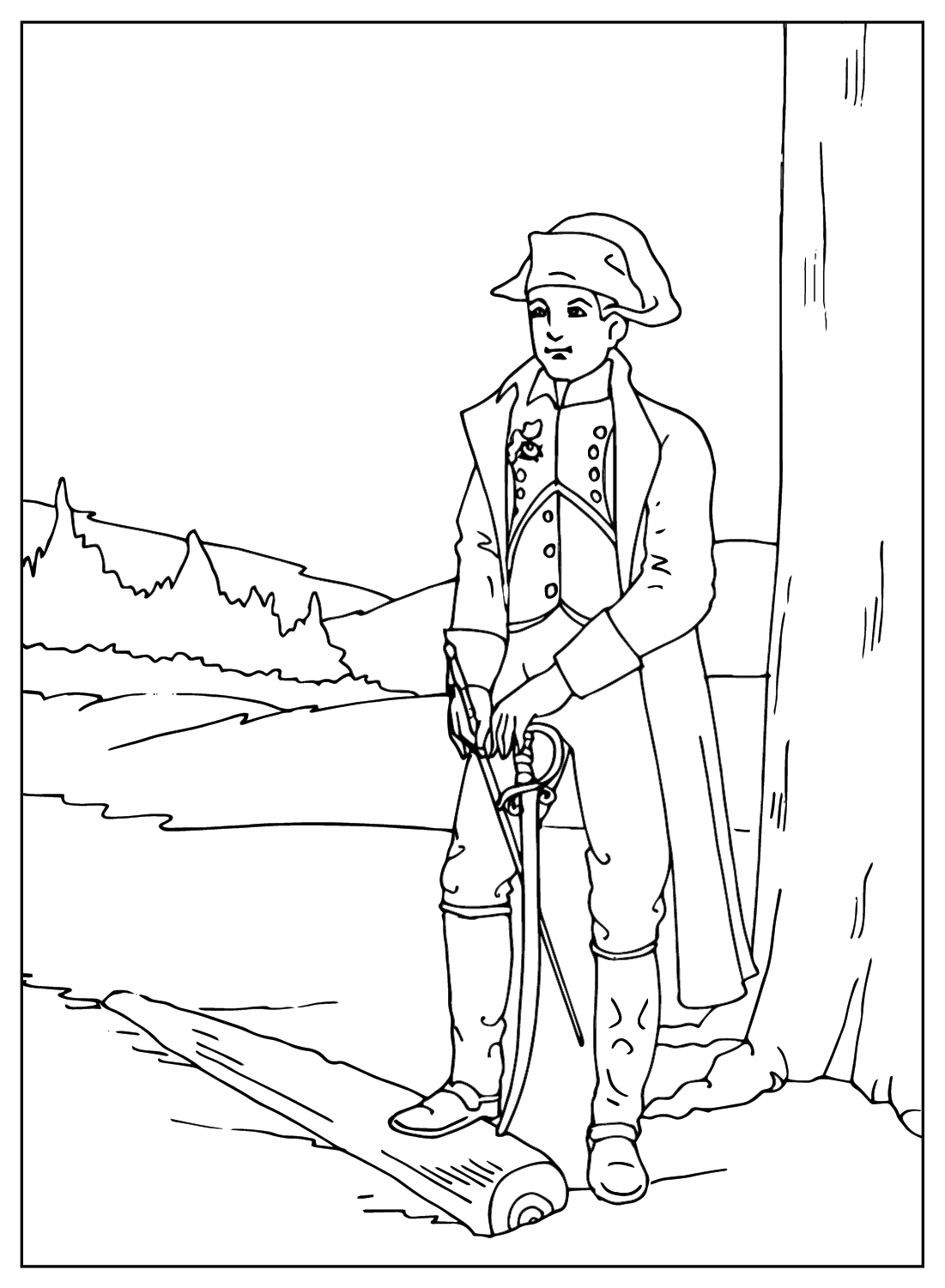
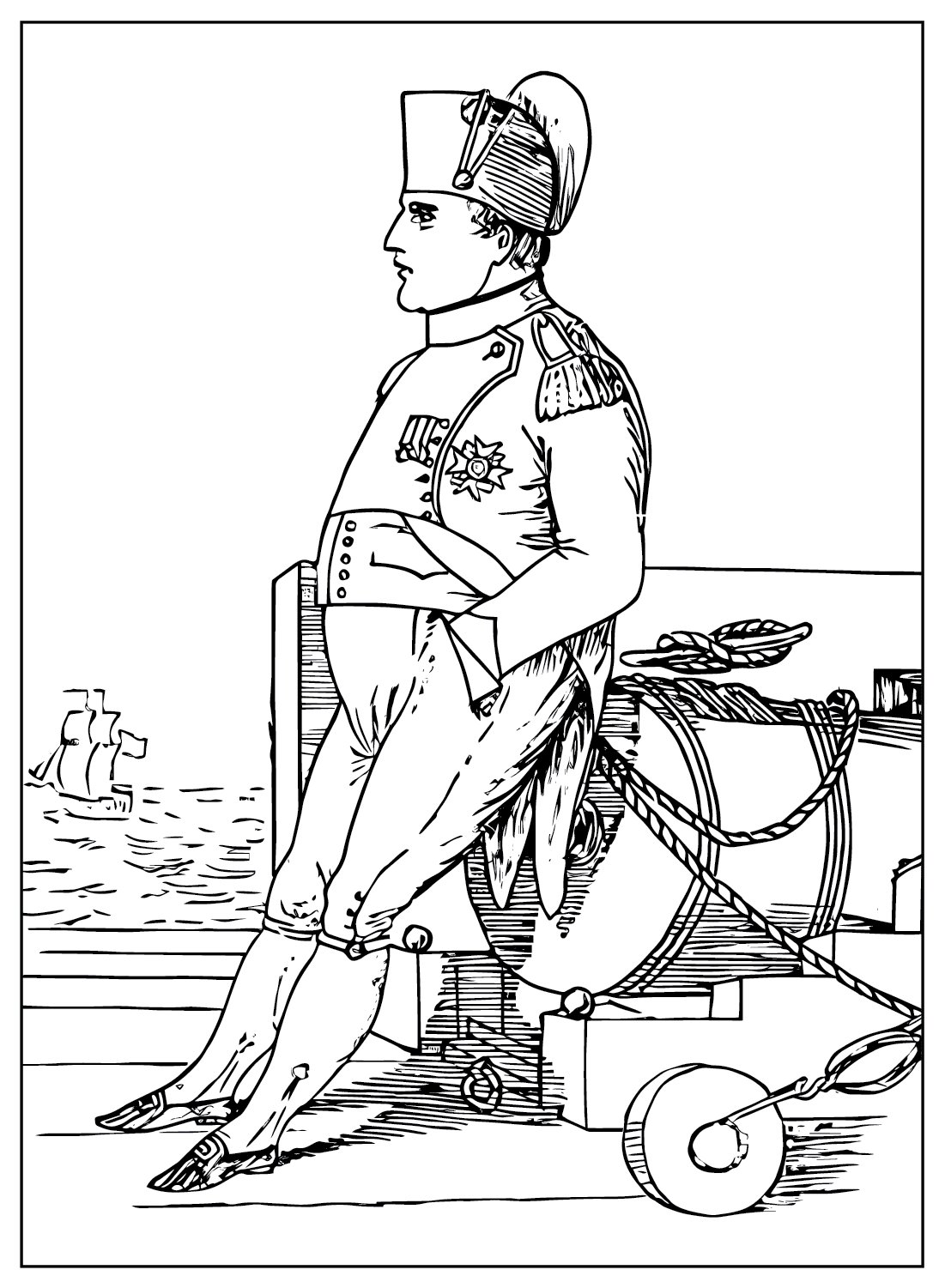
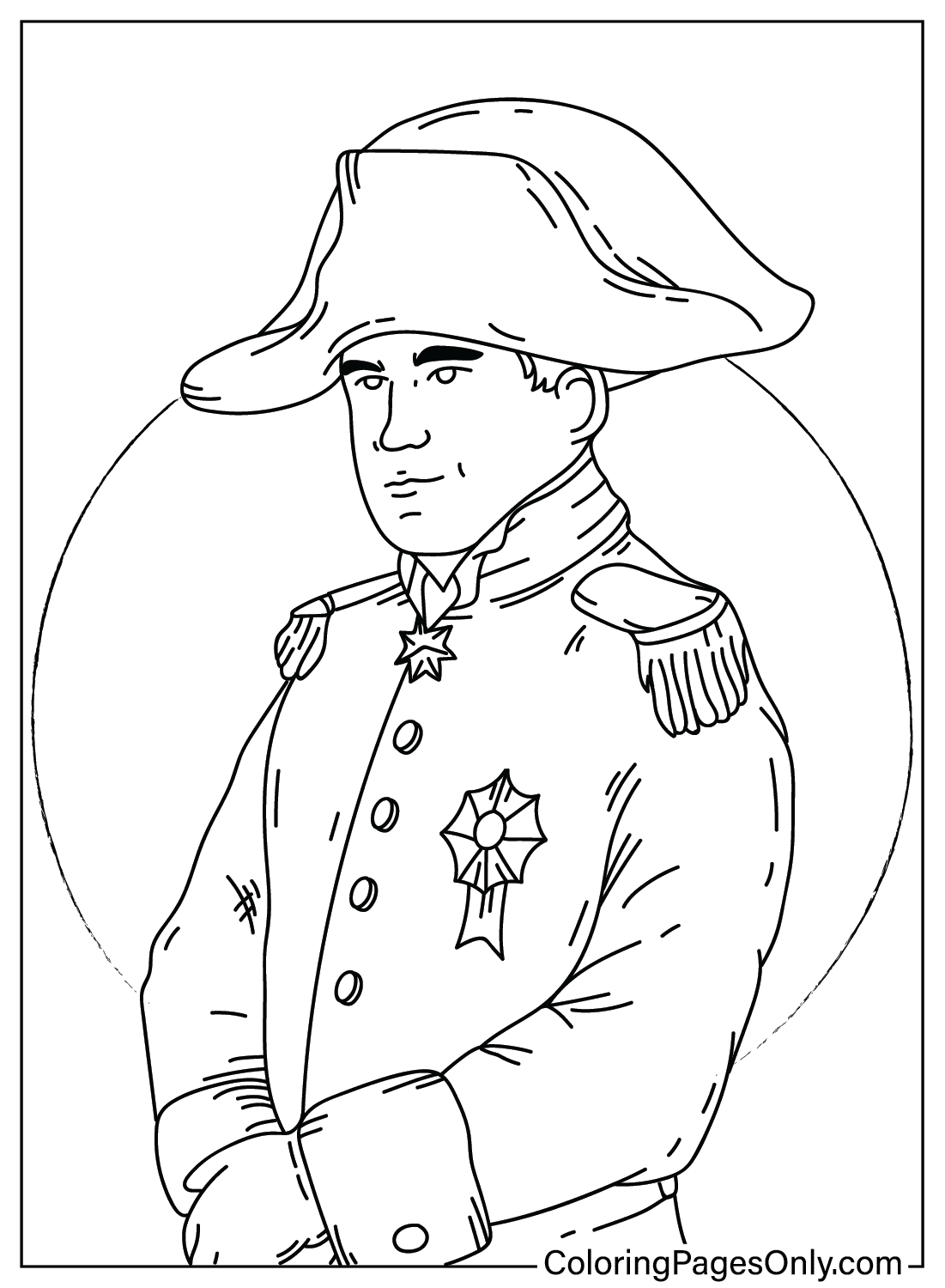
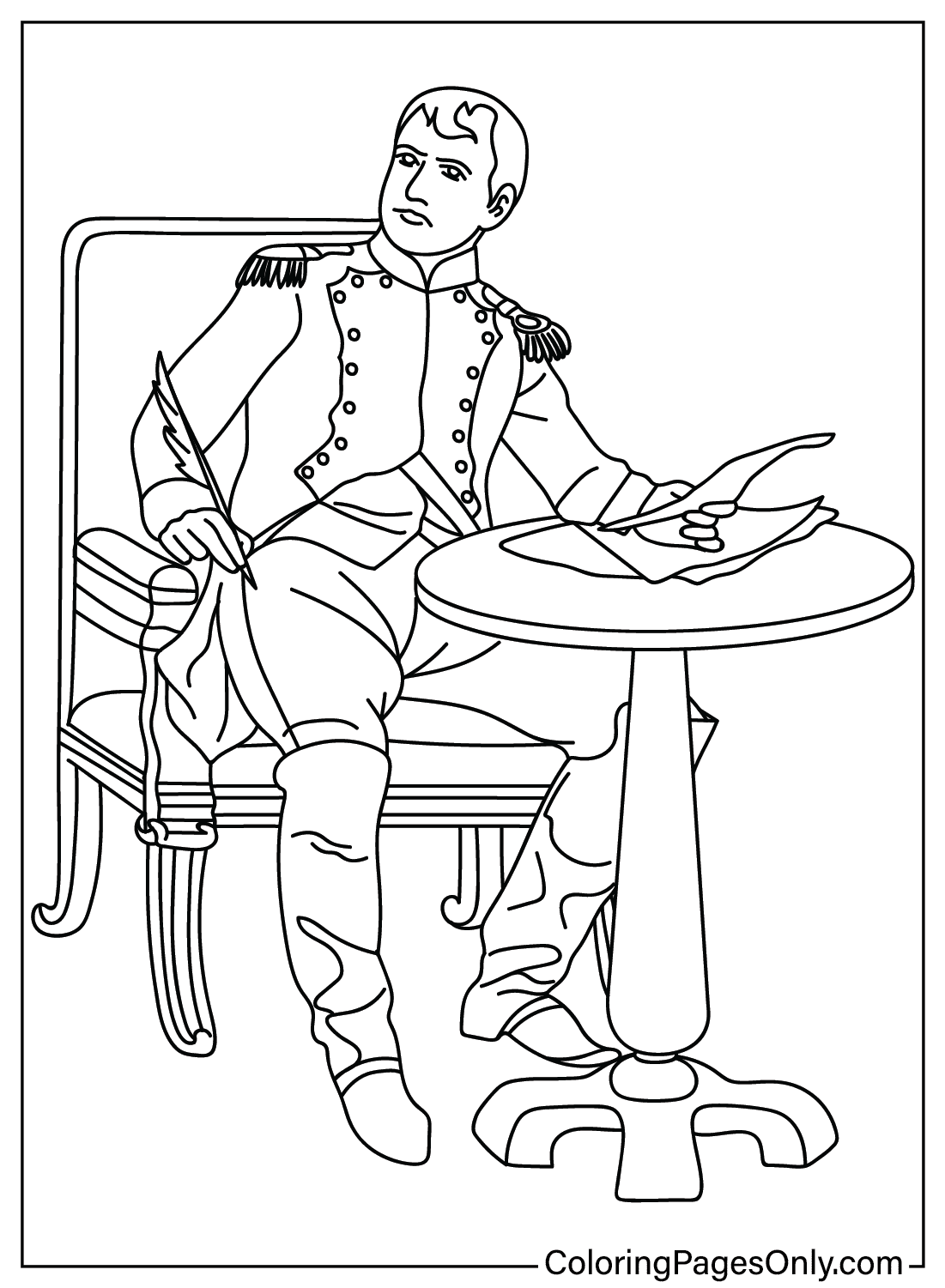
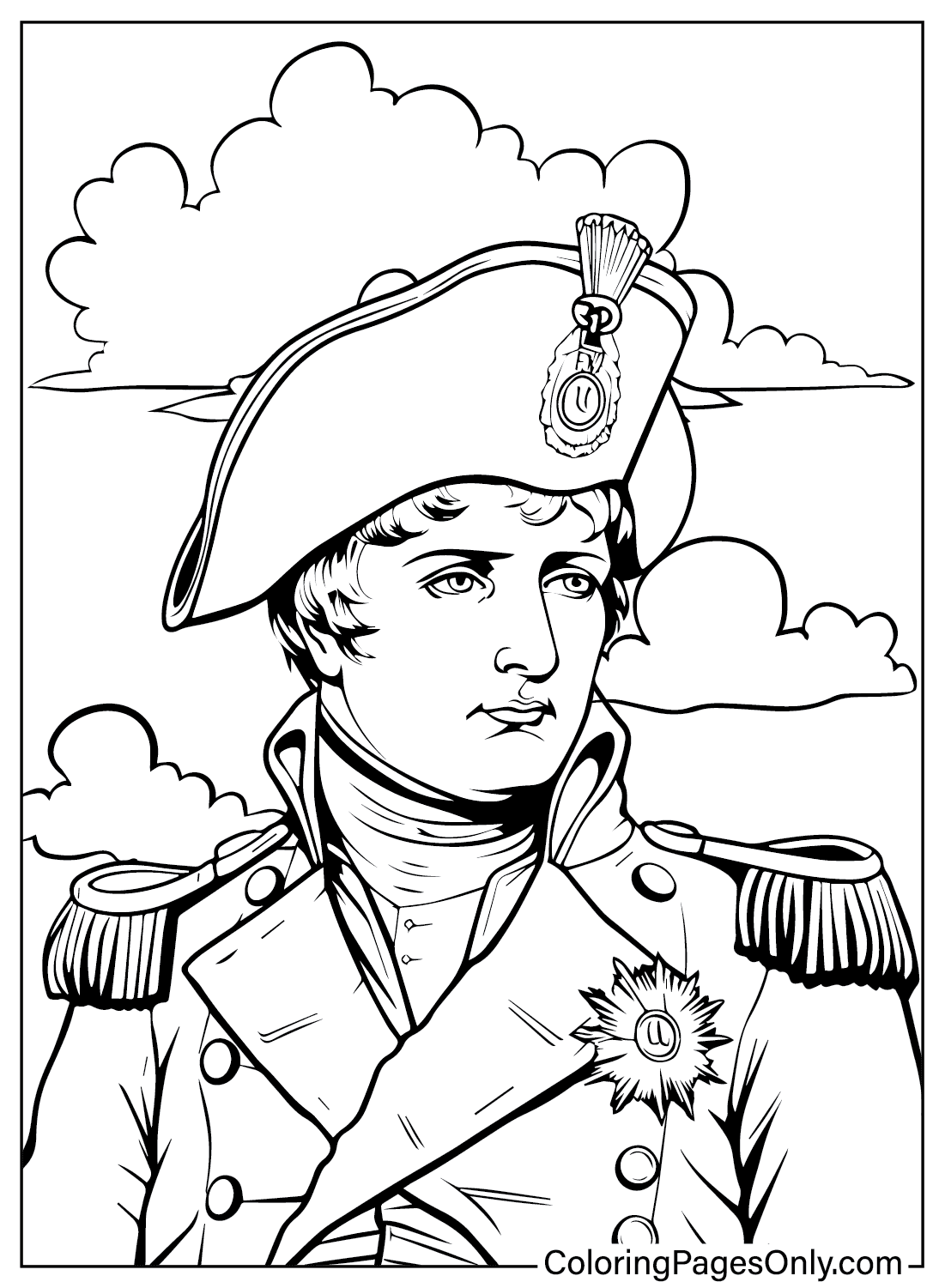
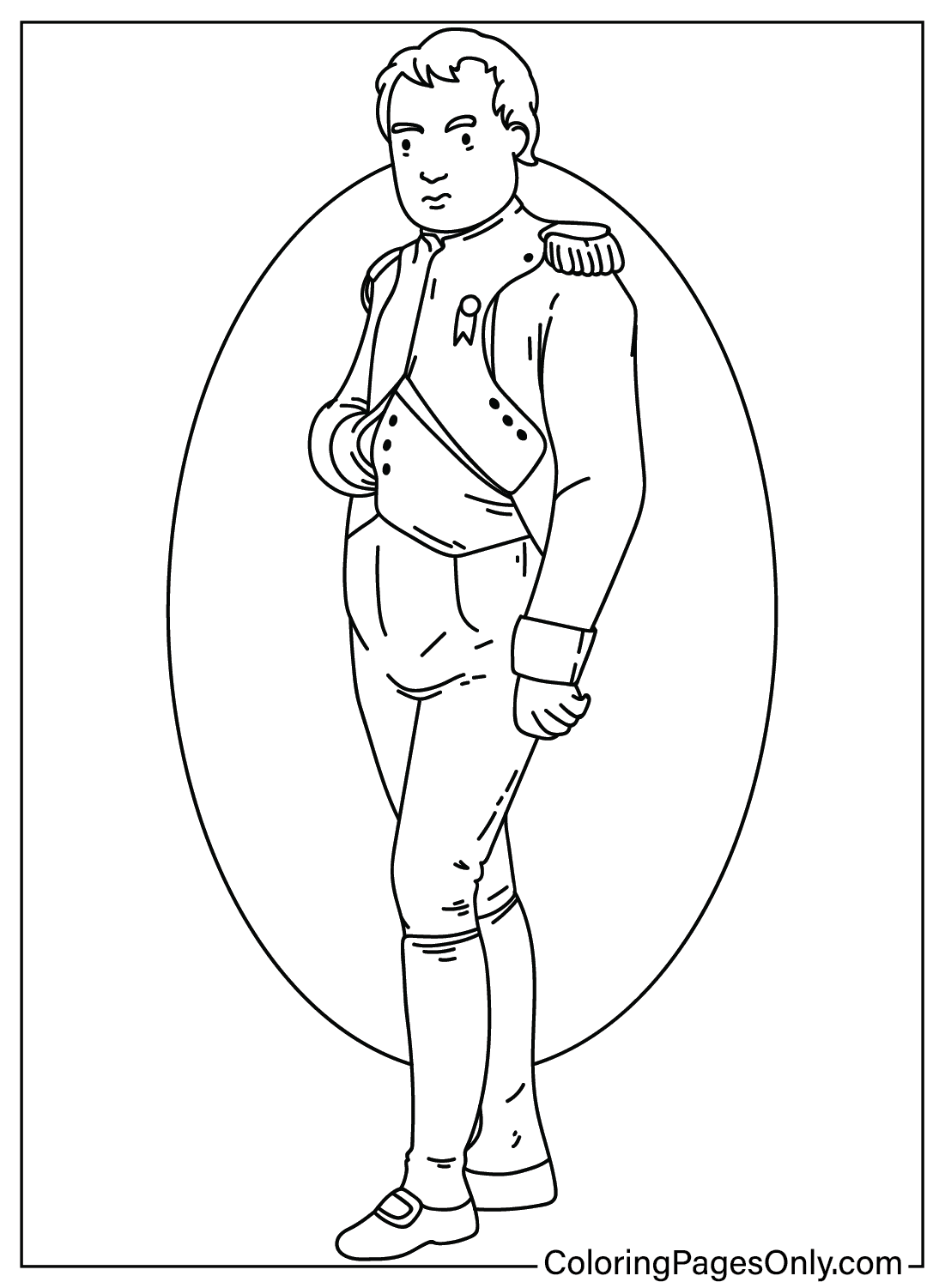
The 18 pages in this set are almost entirely portrait designs of Napoleon in his classic uniform and bicorne hat, with the collection’s main variation coming from line detail and complexity level rather than different scenes.
What Is Inside This Collection
Unlike collections built around several distinct scenes, this set stays close to one consistent subject: a portrait of Napoleon himself.
General Portrait Designs
The majority of the pages show Napoleon in his familiar military uniform and bicorne hat, varying mainly in line weight and level of detail rather than pose or setting. These suit a consistent palette across the set, Navy Blue or Black for the coat, Gold for buttons and trim, and White for the shirt collar and cuffs.
Age-Specific Complexity Levels
Two pages are built specifically around difficulty level: a simplified design with bold, easy-to-follow lines for younger colorists, and a more intricate version with finer detail suited to teens and adults who want a longer, more absorbing project.
What Napoleon Bonaparte Coloring Pages Do
Fine motor development through uniform detail. The American Academy of Pediatrics identifies fine motor skill development as a core benefit of structured coloring for children ages 2 through 7, and the buttons, epaulets, and bicorne hat on a Napoleon portrait give that practice a specific, structured shape to work through, different from a plain outfit with no rank or decoration detail.
A real legal legacy behind the uniform. The Napoleonic Code, introduced in 1804, established principles like equality before the law and protection of property rights, and versions of it still influence civil law systems in numerous countries today. Coloring a page of the man behind that code connects to a documented, lasting piece of legal history rather than a purely decorative historical figure.
Calm, repetitive shading through medals and trim. A 2005 study in the Art Therapy Journal documented measurable reductions in anxiety following structured coloring sessions, and the repeated gold buttons, braid, and trim across a detailed military uniform call for the same slow, section-by-section attention the study associated with that calming effect.
A figure whose history includes both real reform and real harm. Napoleon’s rule brought lasting legal and administrative reforms. Still, it also included the 1802 reinstatement of slavery in French colonies that had abolished it during the Revolution, along with wars that reshaped Europe at great human cost. Coloring these pages works well alongside an honest conversation about a historical figure whose legacy includes both genuine achievement and genuine harm, rather than a simplified, one-sided story.
How to Color These Pages Well
- Uniform coat: Use Navy Blue or Black as the base, since Napoleon’s most recognizable uniform coats came in these two dark tones.
- Trim and buttons: Reserve Gold for buttons, braid, and epaulet detail, since gold trim on a dark coat is one of the uniform’s most distinctive features.
- Bicorne hat: Keep the hat Black, with a small Gold or White cockade detail at the front if the design includes one.
- Shirt and collar: Use White or Cream for the visible shirt collar and cuffs, keeping this area clean and simple against the darker coat.
- Skin tone: Use a neutral, natural tone and avoid heavy shading on the face, since most of these portraits keep the expression simple and direct.
- Detailed adult-level pages: Layer a slightly darker shade into the folds of the coat and along the edges of the hat to add dimension to the more intricate designs.
5 Creative Craft Ideas With Napoleon Bonaparte Coloring Pages
1. Historical Timeline Card
Color a portrait and glue it to an index card, then write one key date from Napoleon’s life underneath, such as his 1804 coronation or his 1815 defeat at Waterloo. Collect several finished cards into a simple homemade timeline.
2. Napoleonic Code Fact Card
Color a portrait and pair it with a short, real fact about the Napoleonic Code, such as its introduction of equality before the law. Use the finished card as a small history reference piece.
3. Uniform Detail Study
Color a detailed portrait slowly, working through the buttons, epaulets, and hat as separate, layered steps. Look up what a real epaulet or cockade represented on a historical military uniform and add a short note alongside the finished page.
4. Bicorne Hat Display Cutout
Cut a simple bicorne hat shape out of black cardstock and mount it on a stand or easel next to a colored portrait, rather than wearing it, as a small paired display piece.
5. Achievements and Controversies Card
Color a portrait and glue it to the center of a folded card, then write one real achievement on one side and one real controversy on the other, such as the Napoleonic Code and the reinstatement of slavery in French colonies. Use the finished card to prompt a short, balanced discussion.
Frequently Asked Questions
What are Napoleon Bonaparte coloring pages?
A free set of 18 printable PDF and online coloring designs featuring portraits of the French military leader and emperor Napoleon Bonaparte. Every page downloads free or opens for online coloring, with no account required.
Who was Napoleon Bonaparte?
Napoleon Bonaparte was a French military leader born in 1769 who rose to power during the French Revolution, crowned himself Emperor of France in 1804, and led military campaigns that reshaped much of Europe before his final defeat in 1815.
What is Napoleon most remembered for accomplishing?
Napoleon is widely remembered for the Napoleonic Code, a legal framework introduced in 1804 that established principles such as equality before the law, and versions of it still influence civil law systems in many countries today.
Why is Napoleon considered a controversial figure?
Alongside his legal and administrative reforms, Napoleon’s rule included the 1802 reinstatement of slavery in French colonies that had abolished it during the Revolution, as well as wars across Europe that came at a high human cost.
How did Napoleon’s rule end?
After a disastrous invasion of Russia in 1812, Napoleon was exiled to the island of Elba in 1814, briefly returned to power in 1815, and was finally defeated at the Battle of Waterloo before being exiled to the remote island of Saint Helena, where he died in 1821.
Are these portraits historically accurate?
The designs reflect Napoleon’s widely recognized appearance, including his bicorne hat and military uniform, though they are simplified line-art illustrations rather than exact historical reproductions.
Are Napoleon Bonaparte coloring pages appropriate for children?
Yes. The simplified design suits younger children, while the more detailed portrait works well for older kids, teens, and adults who want a longer coloring project alongside a deeper history lesson.
Can this collection be used for a classroom lesson on European history?
Yes. The portraits pair well with a lesson on the French Revolution, the Napoleonic Code, or the Napoleonic Wars, and work especially well alongside a discussion of both Napoleon’s reforms and the more difficult parts of his legacy.
Start Coloring
Download any page by clicking the design. No account, email, or payment is required. Pages print directly from the browser at full resolution or open in the online coloring tool for screen use. Share finished pages on Facebook or Pinterest using the share buttons at the top of each design page.