
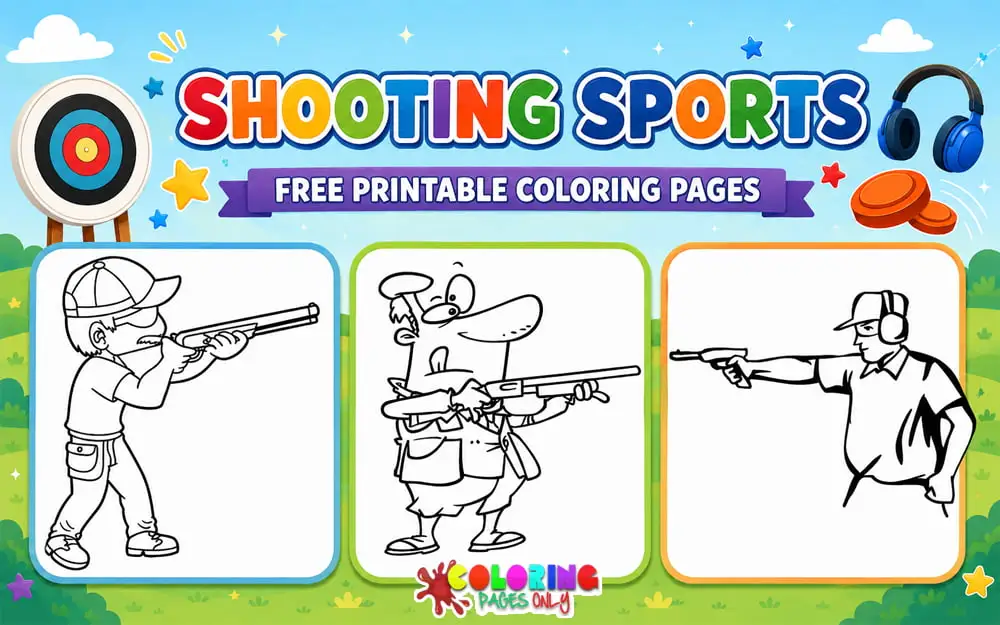
Shooting sports coloring pages: 9+ free printable PDF designs covering rifle, pistol, and shotgun target events, along with an Olympic scene and a couple of lighter, cartoon-style takes. Every page is available as a printable PDF or to color in the browser, with no account required.
Shooting was one of the sports contested at the very first modern Olympics in Athens in 1896, making it one of the longest-running events on the current Olympic program. Today, it covers three main equipment disciplines at the Olympic level: rifle, pistol, and shotgun, each with its own events, targets, and technical demands.
These pages suit kids curious about Olympic sports they may not see every day, families who already follow competitive target shooting, and anyone drawn to a sport built around precision and calm rather than speed.
One coloring detail that belongs only to this set: protective gear is not optional in real competition; it is the defining visual detail. Every competitor wears hearing protection and shooting glasses, and those two pieces of equipment are what separate an accurate shooting sports page from a generic action scene. Getting the ear protection and eyewear right matters more here than any other single detail on the page.

Quick Answer
Shooting sports coloring pages are a free set of 9+ printable PDFs and browser-based coloring sheets covering rifle, pistol, and shotgun target events, an Olympic scene, and lighter cartoon-style takes on the sport.
Best for: children aged 5 and up, families following Olympic sports, and anyone interested in precision and target-based competition
Formats: printable PDF and online coloring
Popular pages: the rifle shooting portrait, the pistol target scene, the shotgun event, and the Olympic shooting page
Creative uses: a safety gear focus study, a target rings study, a three-disciplines reference board, and an Olympic tribute
What’s Inside Shooting Sports Coloring Pages
With 9+ pages built around a single sport, the set is organized by equipment discipline, since rifle, pistol, and shotgun events each have their own real targets and shooting positions.
Rifle Shooting
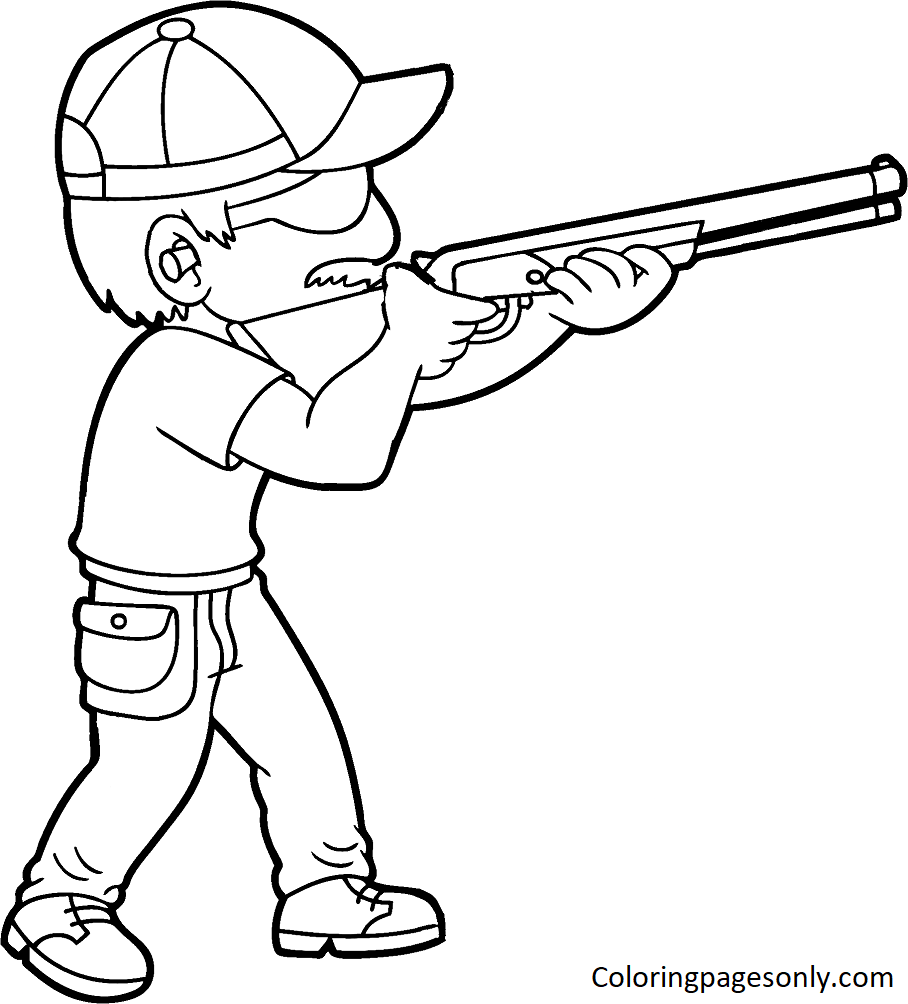
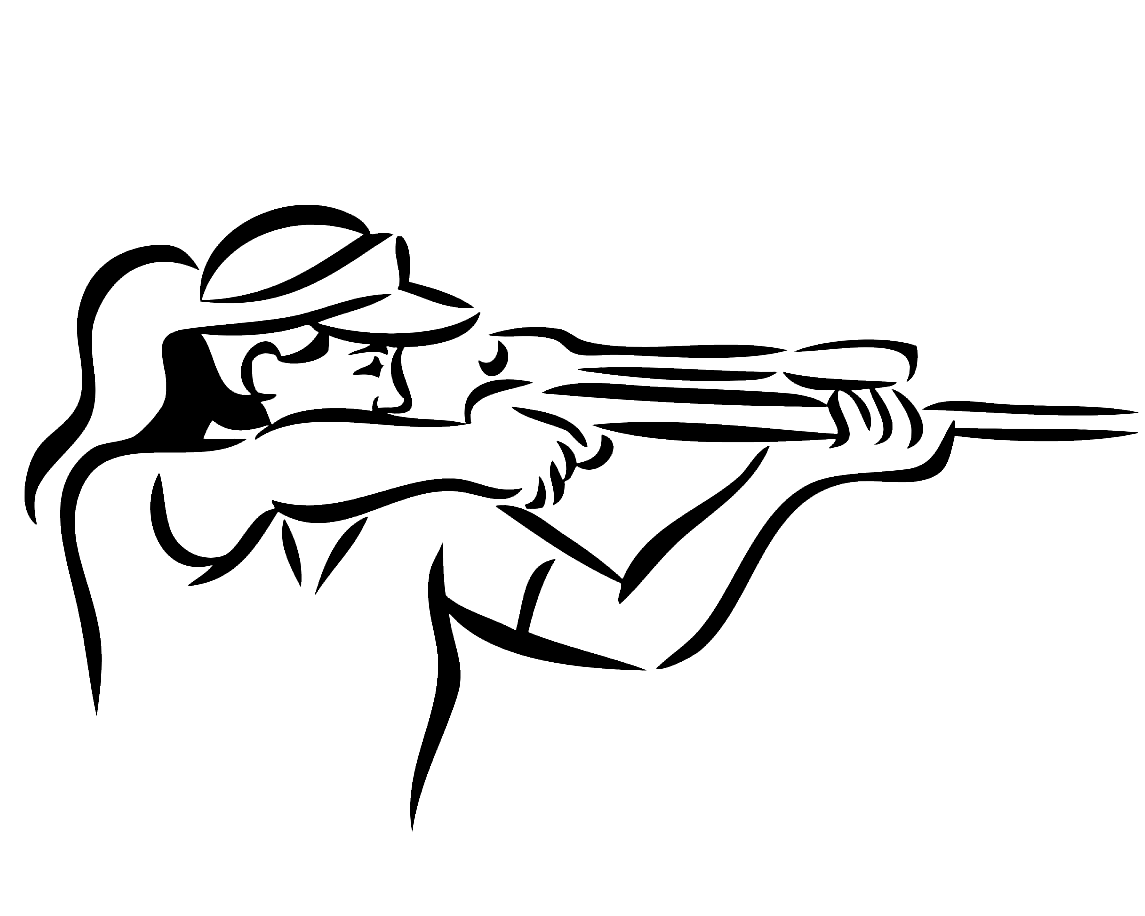
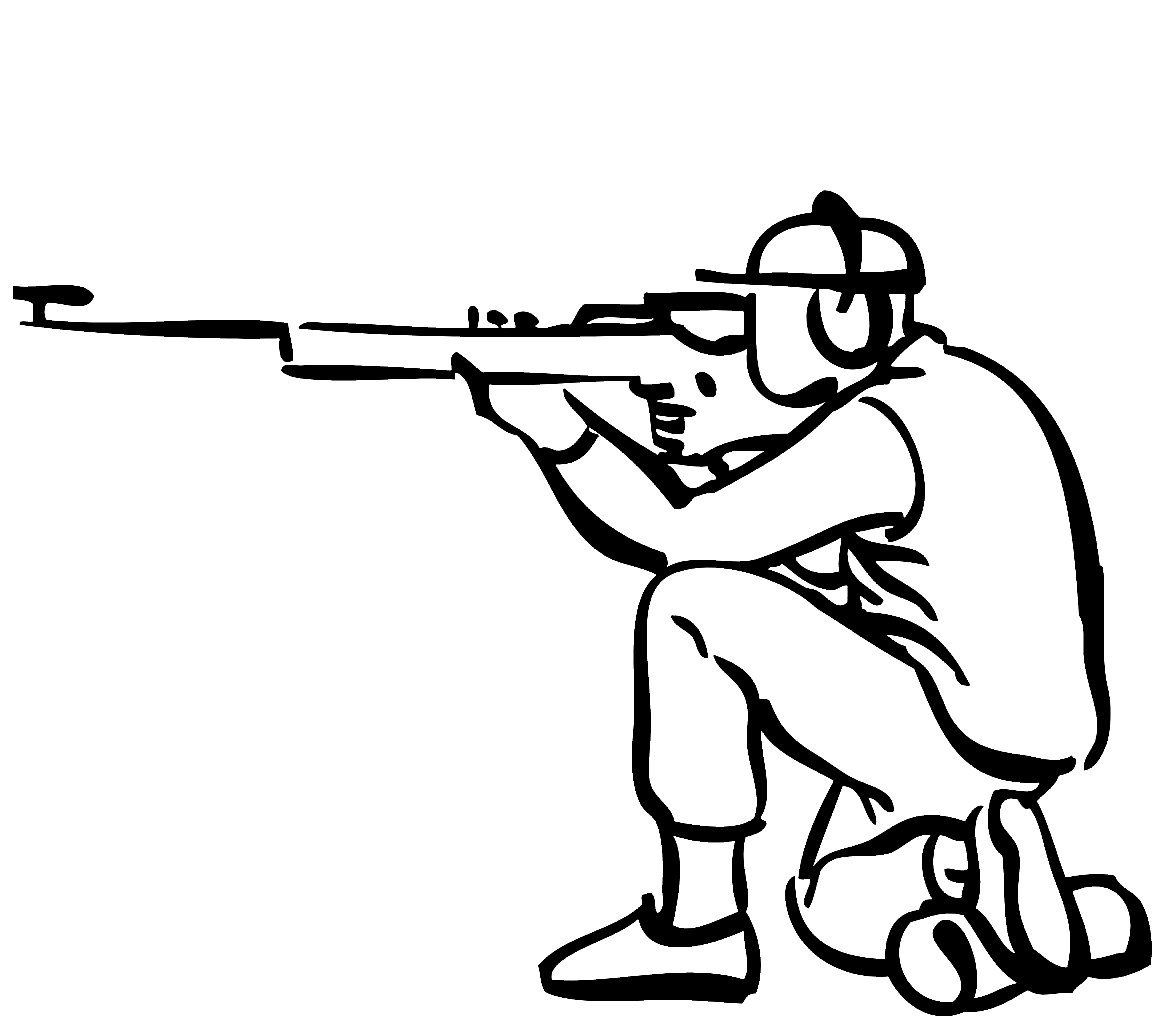
This group covers rifle events specifically: a general rifle shooting portrait and action-style takes on the discipline.
Coloring rifle pages: the shooter’s stance is usually stable and grounded, often kneeling, standing, or prone, and that stability is the visual point of the page. Hearing protection and shooting glasses should be clearly visible, since they are standard, required equipment in real competition.
Pistol Shooting
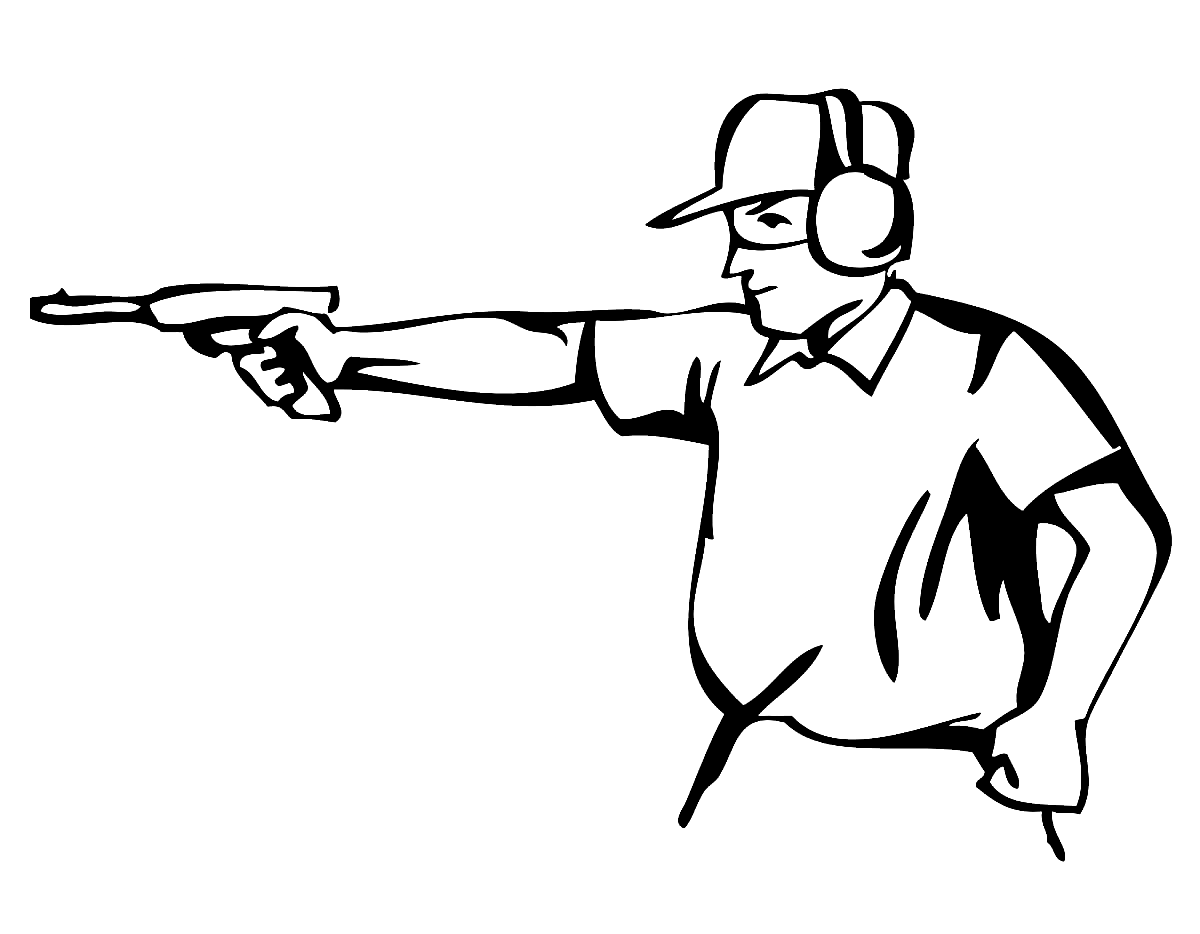
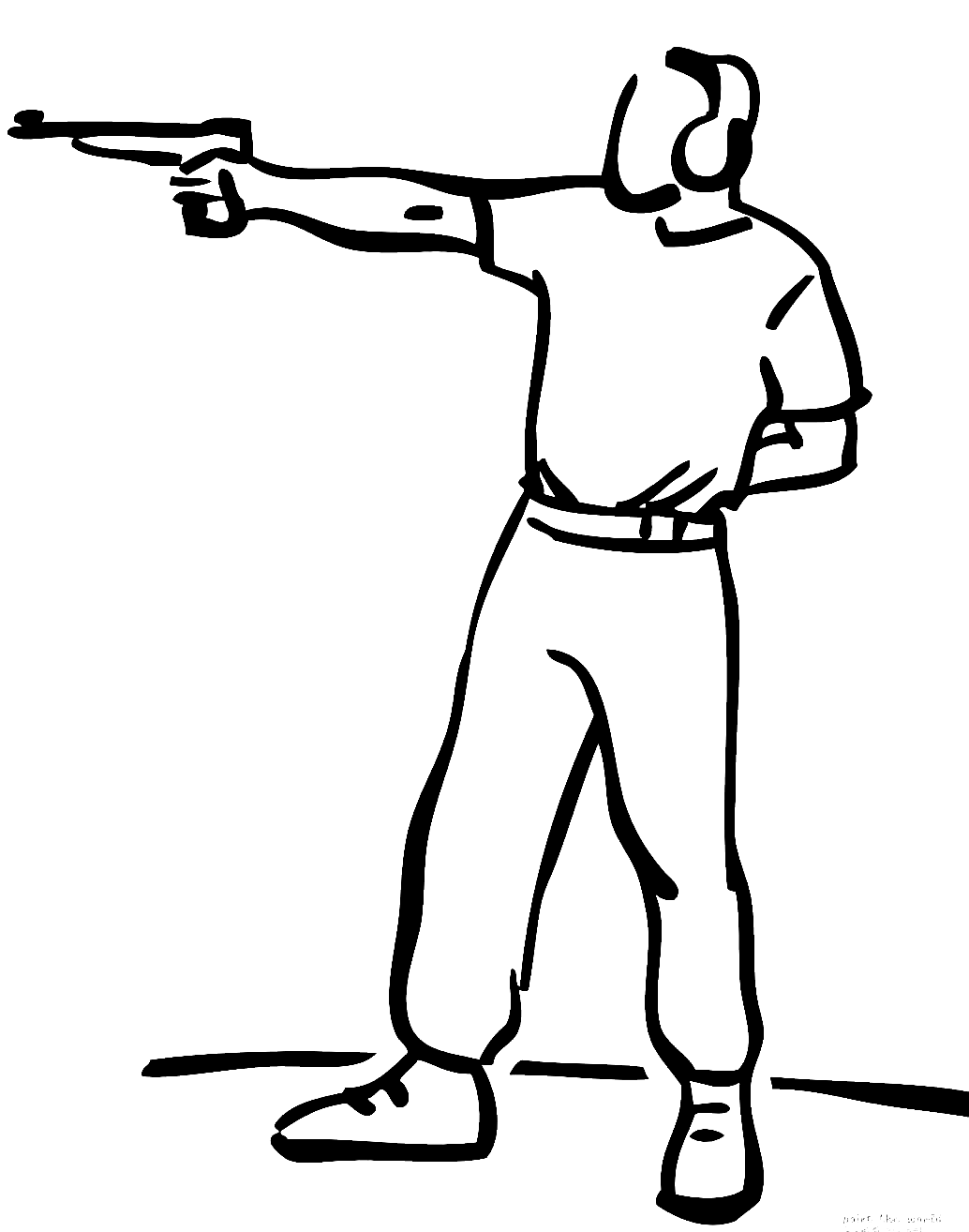
A dedicated group of pages covers pistol events: a general pistol portrait and a page built specifically around target shooting.
Coloring pistol pages: real paper targets are almost always plain black rings on a white background, with no color at all, unlike the colorful gold, red, and blue rings used in archery. Keeping those black rings even, evenly spaced, and centered is the most technical coloring detail on any pistol page.
Shotgun Shooting
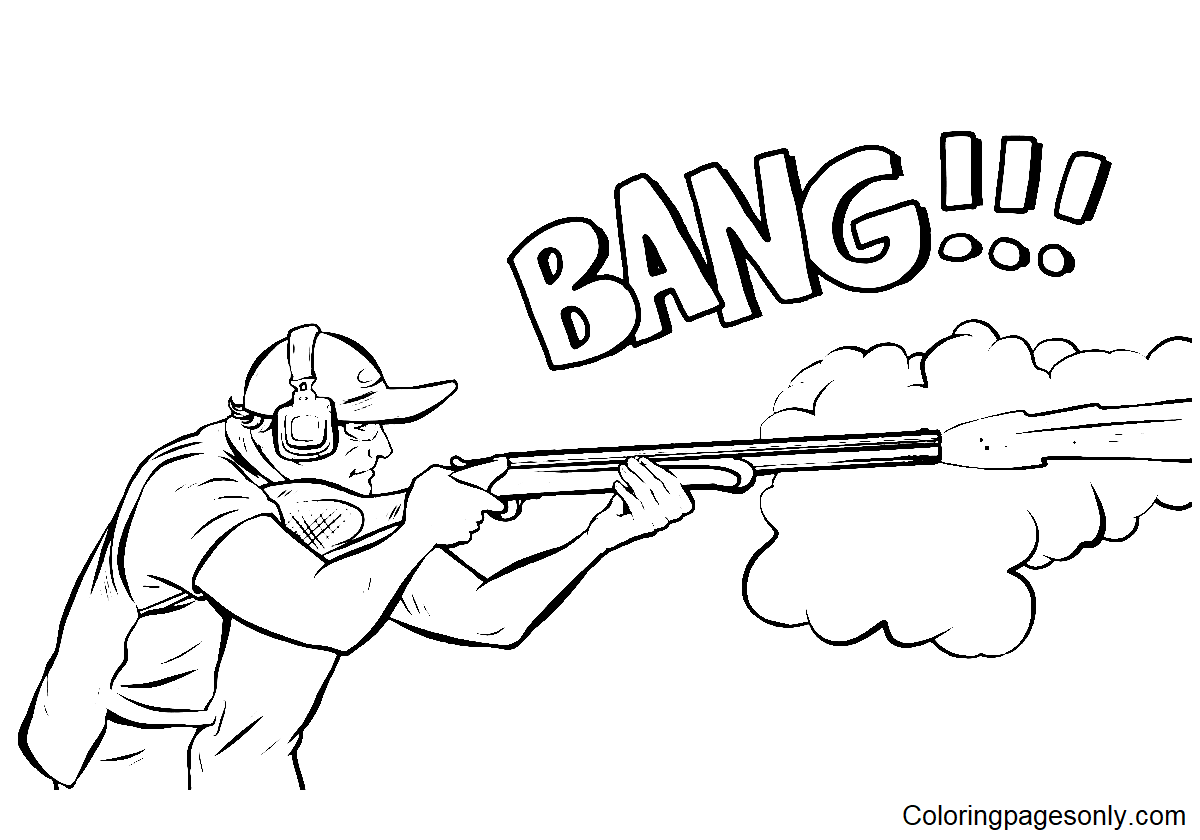
This group covers shotgun events, where competitors shoot at flying clay targets rather than a fixed paper target.
Coloring shotgun pages: the clay target itself is traditionally a bright orange color, chosen for visibility against the sky. That orange target, rather than the firearm, is the detail most worth getting right on these pages.
Olympic and Playful Scenes
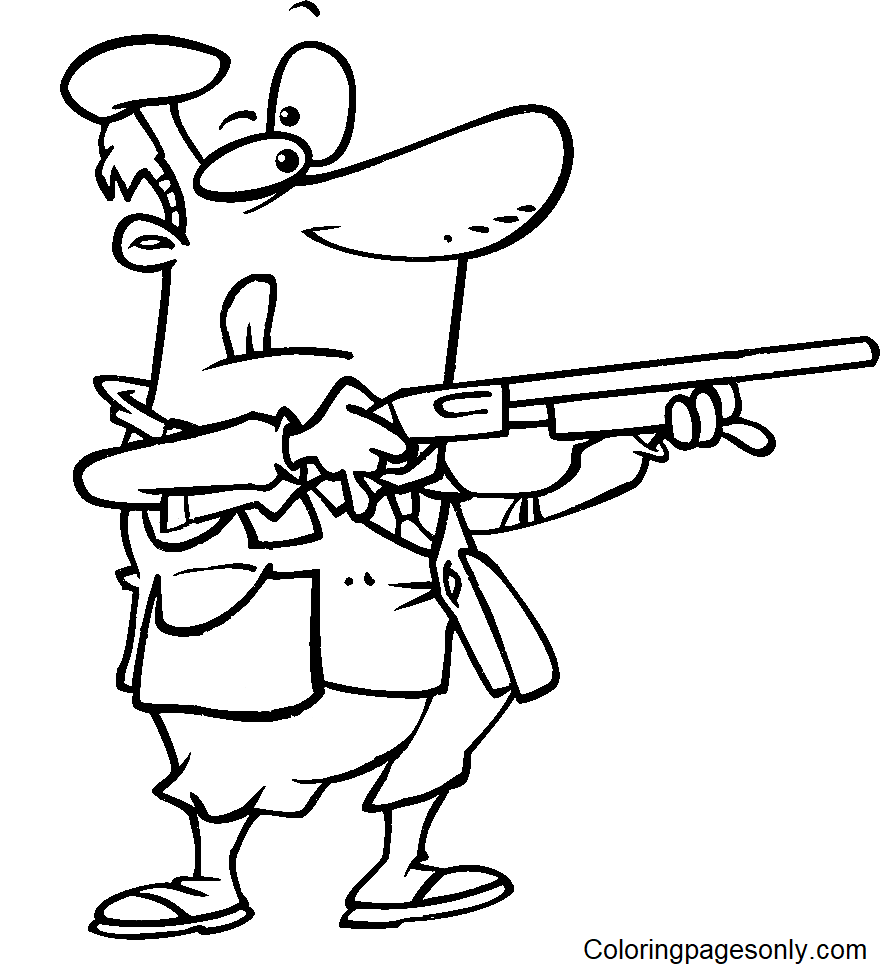
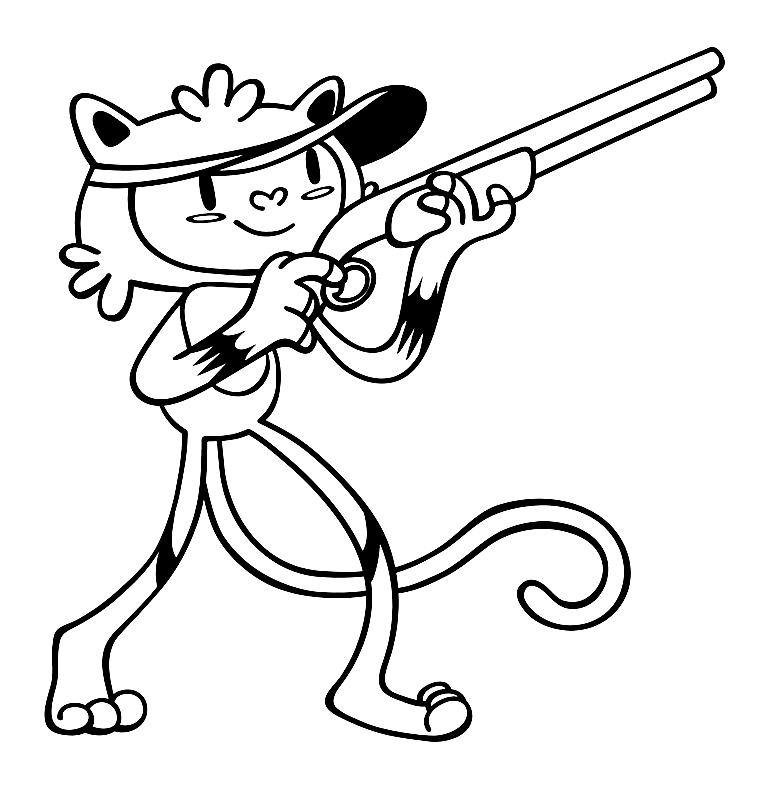
The remaining pages connect the sport directly to the Olympics or take a lighter, more cartoon-style approach.
Coloring Olympic and playful pages: a clean, simple color palette suits the Olympic scene, since the competitive context is the point rather than any one specific event. The cartoon-style pages can use a friendlier, more playful palette than the more grounded rifle, pistol, and shotgun portraits.
What These Pages Do
Shooting’s own history gives this set a genuine anchor: a sport included at the very first modern Olympics in 1896, making it one of the longest continuously contested events on today’s program.
The set also builds a specific kind of fine motor precision. The American Academy of Pediatrics has pointed to structured coloring as a genuine contributor to fine motor development in children roughly between the ages of two and seven. The concentric rings of a real target put that practice to a distinct use: keeping each ring evenly spaced and centered around the same point rewards the same careful, controlled hand movement that a steady real target demands.
There is a quieter benefit tied to the sport’s own character. Competitive shooting is built on sustained stillness and controlled breathing held over several seconds at a time, not a burst of speed, and Art Therapy Practitioners have noted that coloring can build a similar kind of extended, calm focus. Coloring a shooter’s steady stance is, in a small way, practicing the same sustained composure the sport asks of its athletes.
The pages also carry real vocabulary. A child who colors a rifle, pistol, or shotgun event by name, or the safety equipment that goes with each one, is picking up the actual language and structure of the sport alongside the coloring practice itself.
How to Color Shooting Sports Coloring Pages
Always include hearing protection and shooting glasses. These are standard, required safety equipment in real competition, and including them clearly is what makes a page look accurate rather than generic.
Keep paper target rings black and white, never colorful. Real shooting sports targets use plain black rings on a white background, with no color at all. That’s a genuine, useful contrast with archery, where the rings are brightly colored, gold, red, and blue. Evenly spaced rings, rather than a rough approximation, are what make a target page read as accurate.
Give clay targets a bright orange color. Unlike paper targets, the flying clay targets used in shotgun events are traditionally bright orange for visibility against the sky, a detail worth keeping consistent.
Keep the overall palette calm and understated. Competition uniforms in this sport tend toward simple, muted colors rather than bright team branding, which fits the sport’s quiet, focus-driven character.
5 Creative Craft Ideas with Shooting Sports Coloring Pages
Safety Gear Focus
Color a rifle or pistol portrait, giving the hearing protection and shooting glasses the boldest, most careful color choices on the whole page.
A small shift in focus that puts real safety equipment, rather than the sport’s more obvious subject, at the center of the coloring choices. Takes about ten minutes.
Target Rings Study
Color the target design carefully, keeping every ring black or white and evenly spaced, with no color anywhere on the target.
A quiet project that rewards careful attention to a single, precisely repeating pattern. Takes about ten minutes.
Three Disciplines Reference Board
Color one rifle, one pistol, and one shotgun page and arrange them together with the discipline name written underneath each.
A simple, accurate reference to the three real Olympic equipment categories, built entirely from coloring pages. Takes about twenty minutes.
Olympic Shooting Tribute
Color the Olympic-themed page and display it on its own as a small tribute to the sport’s long Olympic history.
A short, focused project connecting directly to a sport included at the very first modern Games. Takes about ten minutes.
Clay Target Motion Study
Color the shotgun page with a bright orange clay target and add a light motion trail behind it to show the target in flight.
A small addition that captures the moving target at the center of shotgun events. Takes about ten minutes.
FAQ About Shooting Sports Coloring Pages
Are these shooting sports coloring pages free, and can I color them online?
Yes. Every page is free, with no account, email, or payment required. Download the PDF to print at home, or open it in the online coloring tool to color on screen.
What age group are these shooting sports coloring pages best suited for?
The Olympic and cartoon-style pages work well for ages 5. The rifle, pistol, and shotgun portraits, with more detail in the stance and equipment, suit slightly older kids who already have some interest in the sport’s Olympic side.
Why do the pages emphasize ear and eye protection so much?
Hearing protection and shooting glasses are required safety equipment in real competition, worn by every athlete regardless of discipline. Including them clearly is what makes a page reflect the sport accurately rather than looking like a generic action scene.
What’s the difference between rifle, pistol, and shotgun shooting sports?
Rifle and pistol events are shot at fixed paper targets with concentric rings, usually from a set distance and stance. Shotgun events instead target flying clay discs rather than a fixed target, which is why the equipment, targets, and shooting positions look different across the three disciplines.
Has shooting always been part of the Olympics?
Yes. Shooting was one of the sports contested at the first modern Olympics in Athens in 1896, making it one of the longest-running events still on the current Olympic program.
Why do the targets look different between the rifle, pistol, and shotgun pages?
Rifle and pistol events use plain black-and-white paper targets, with no color anywhere on them, unlike the brightly colored rings used in archery. Shotgun events use small, fast-moving clay targets that are traditionally bright orange for visibility, which is why the target designs differ so much between disciplines.
Are these pages based on a specific real athlete or brand?
No. The competitors, equipment, and scenes are generic and inspired by the sport broadly, including its real Olympic history and standard safety equipment. Still, they are not licensed by or affiliated with any specific athlete, team, or federation.
Can I use these pages for a shooting sports club, school, or classroom activity?
Yes. Youth shooting sports clubs use these pages to introduce basic vocabulary and the importance of safety equipment, and teachers use the Olympic page as part of broader lessons on the history of the Games.
Start Coloring
Download any page by clicking the design. No account, email, or payment is required. Pages print directly from the browser at full resolution or open in the online coloring tool for screen use. Share finished pages on Facebook or Pinterest using the share buttons at the top of each design page.