Autumn Leaves Coloring Pages
 By:
Jennifer Thoa - Content Editor & Designer
Updated:
By:
Jennifer Thoa - Content Editor & Designer
Updated:
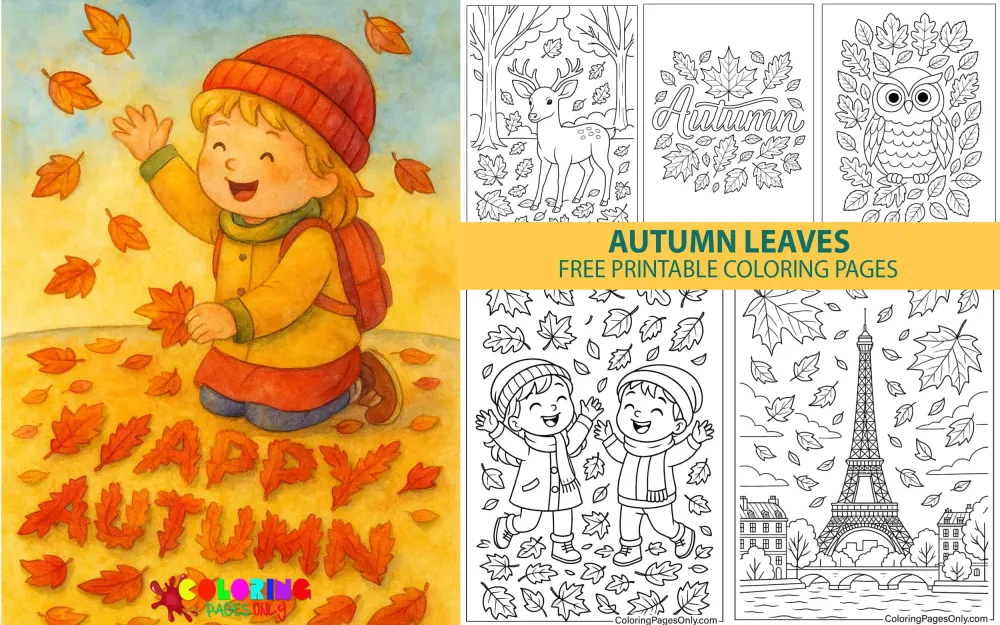
Free autumn leaves coloring pages: 73 printable PDF designs spanning single leaf studies, woodland scenes, and seasonal characters. Every page can be downloaded as a PDF to print or colored online in the browser.
Autumn leaves change color because of two separate processes happening at once. Yellow and orange tones come from carotenoid pigments that are present in the leaf all year, but stay hidden behind the green of chlorophyll during the growing season. As days shorten and temperatures cool, chlorophyll breaks down, and the carotenoids become visible. Red and purple tones work differently: they come from anthocyanin pigments that are not present in summer at all, but are actively produced in autumn when sugar becomes trapped in the leaf and reacts with sunlight, which is why the reddest colors often appear on the sunniest, coolest fall days.
This collection ranges from detailed 2025 additions showing full autumn scenes, characters, and seasonal moments, to a larger set of older single-leaf and leaf-pattern pages.
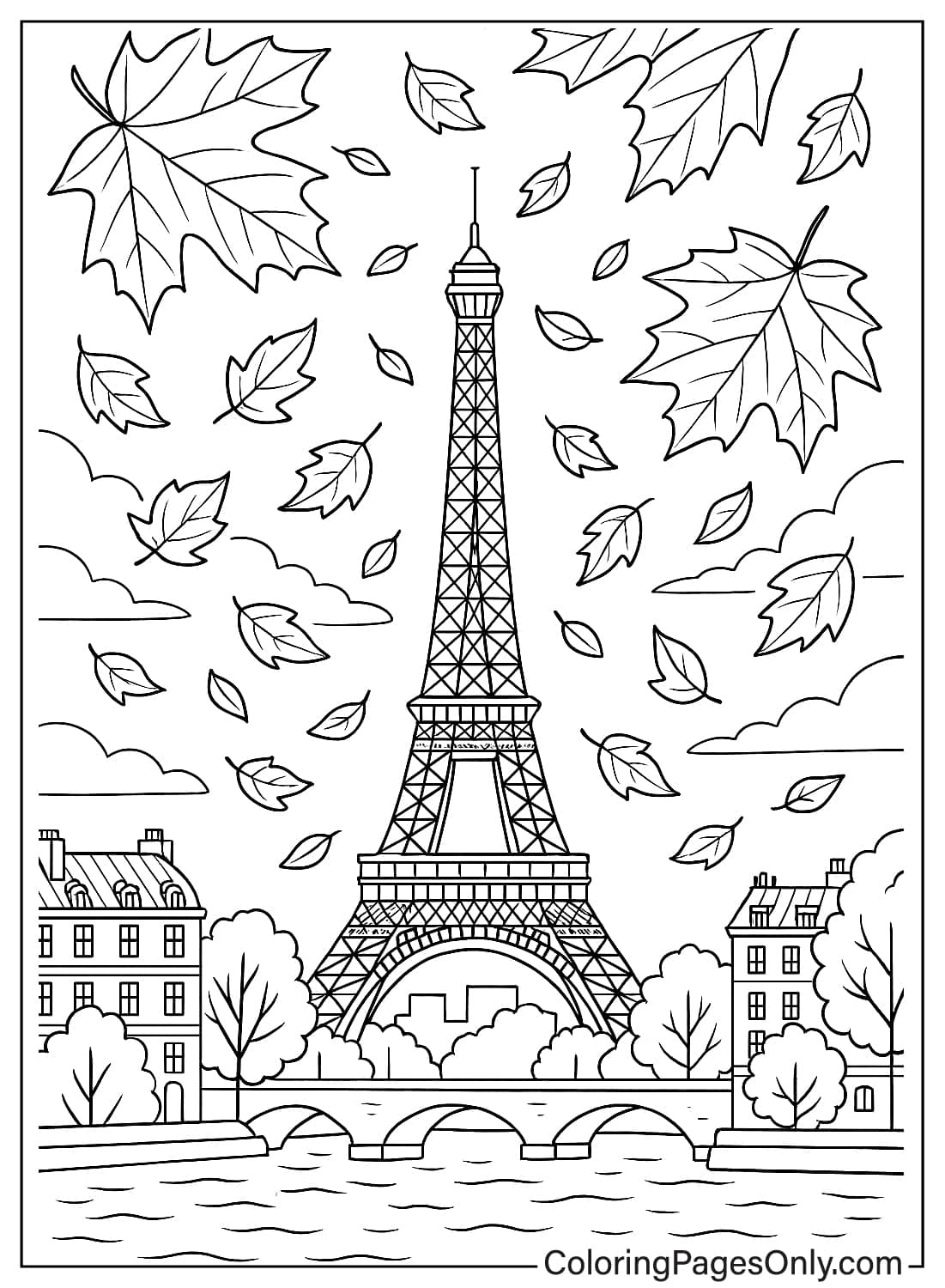
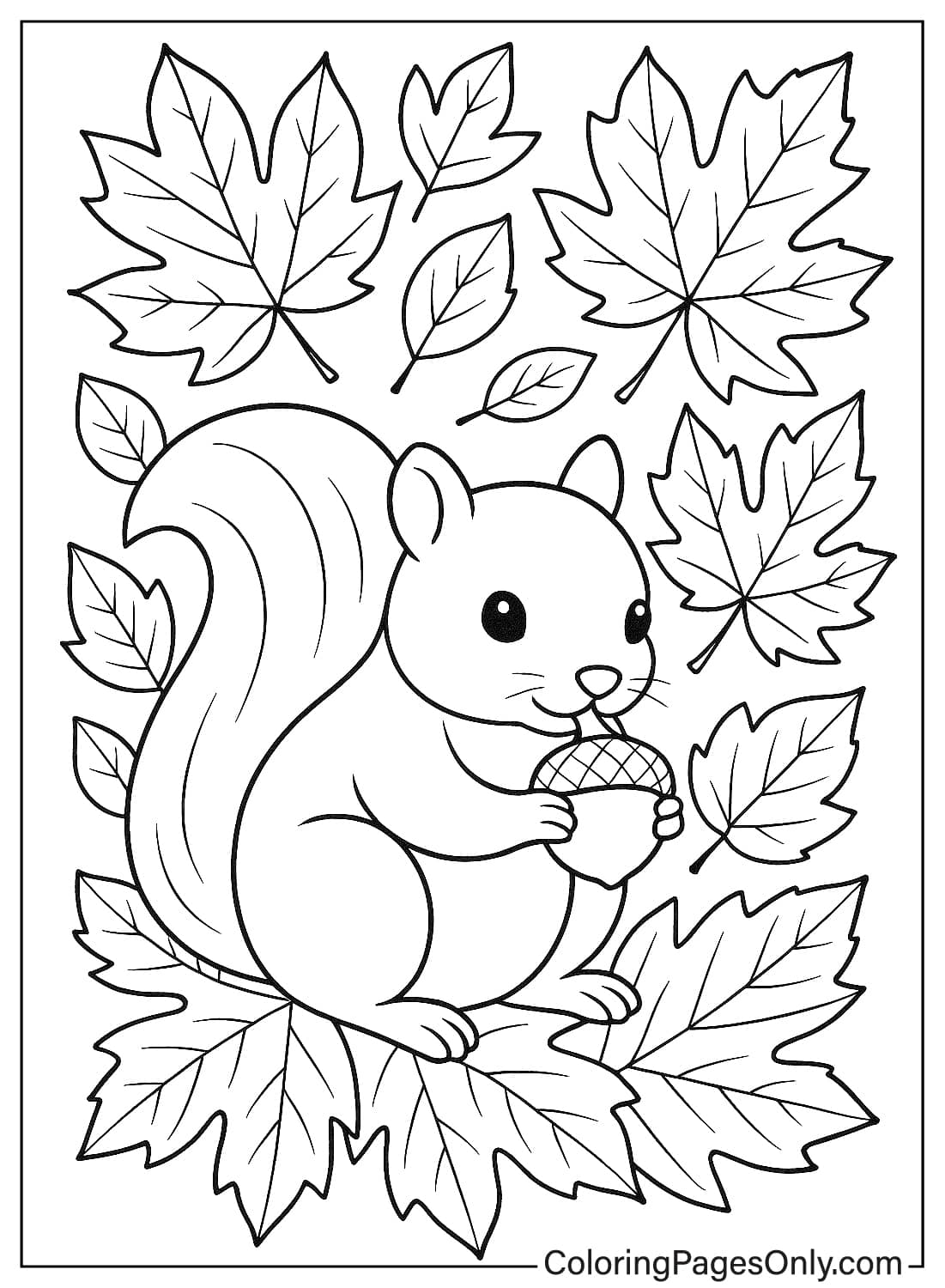
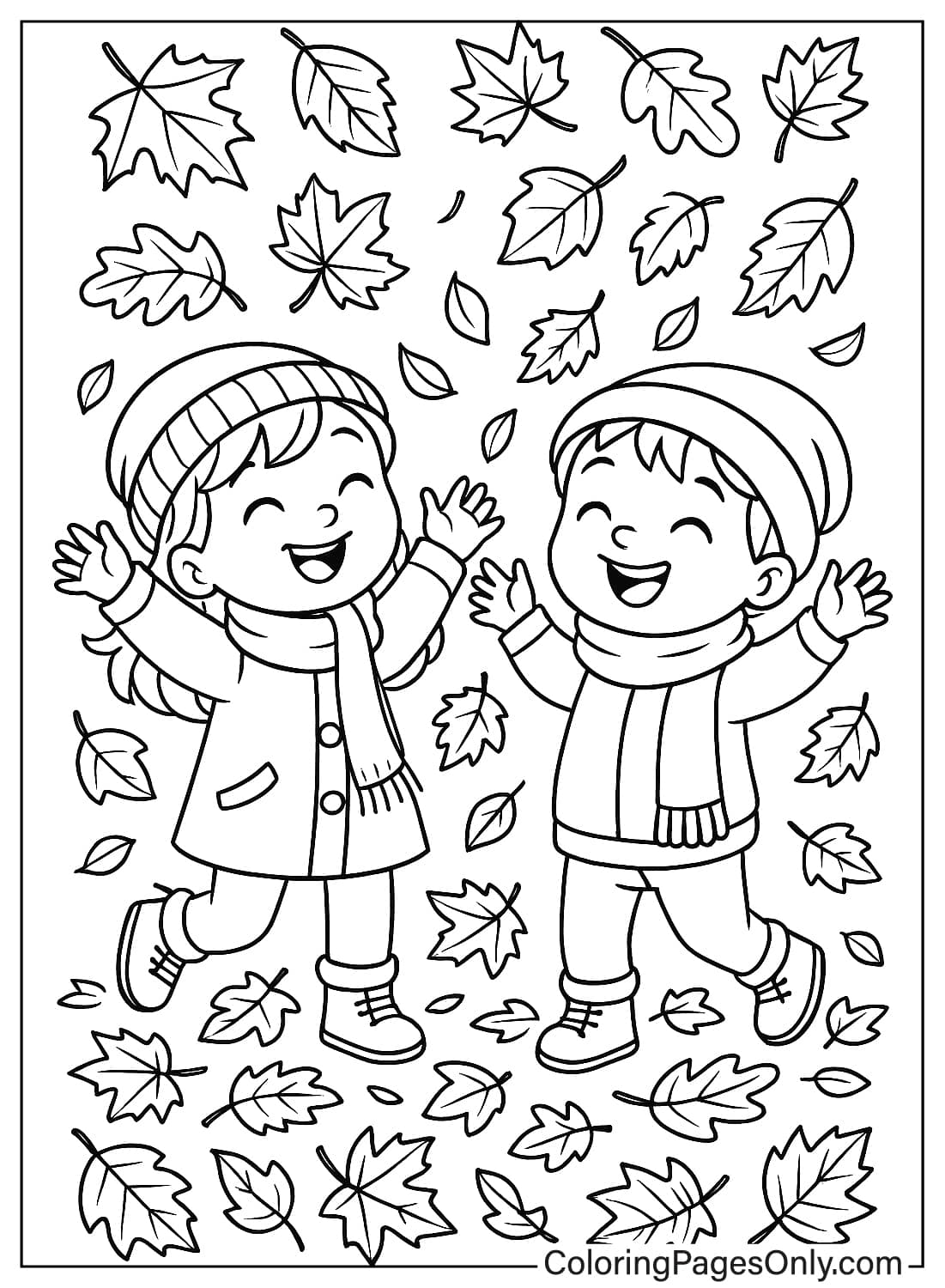



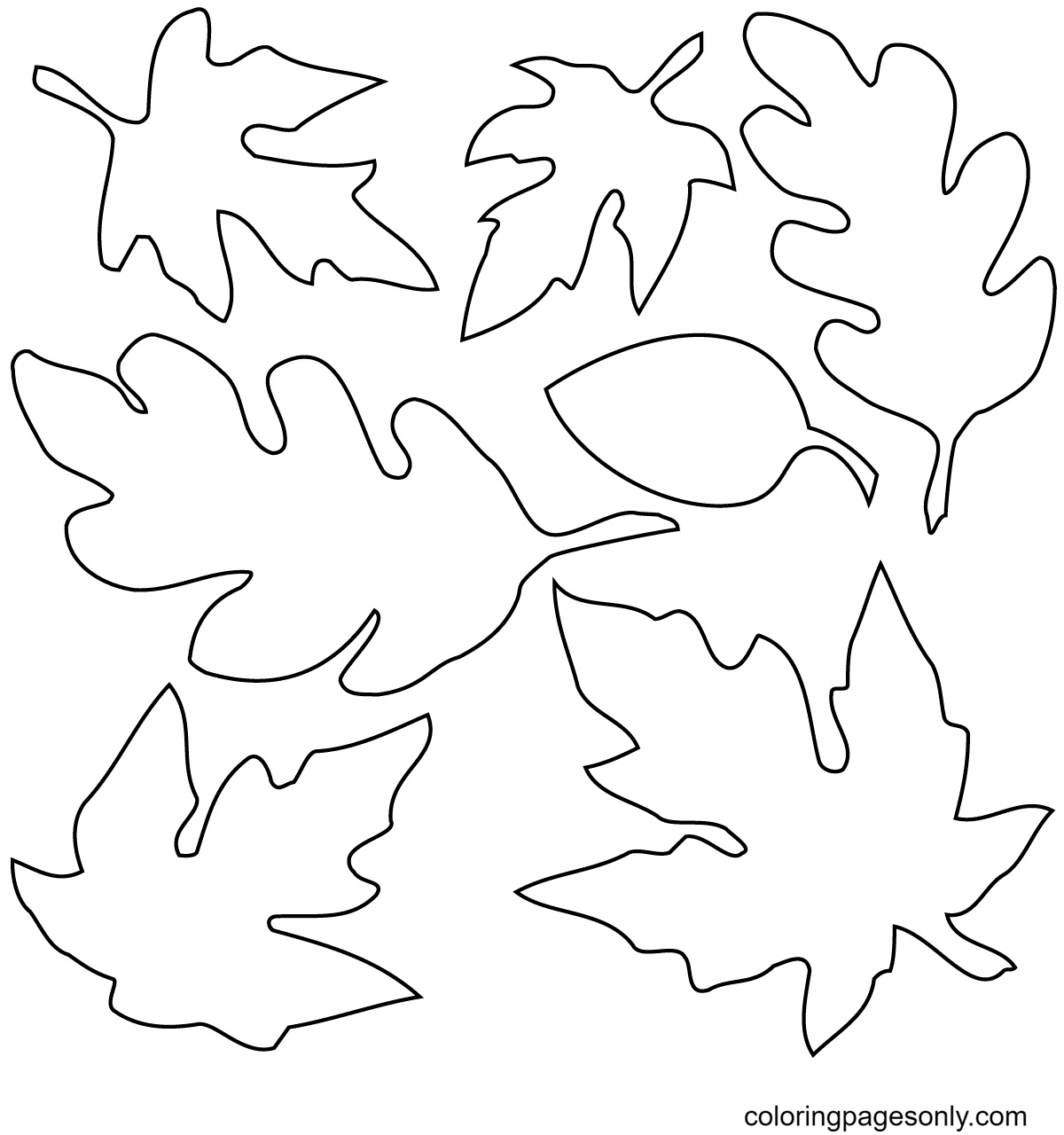
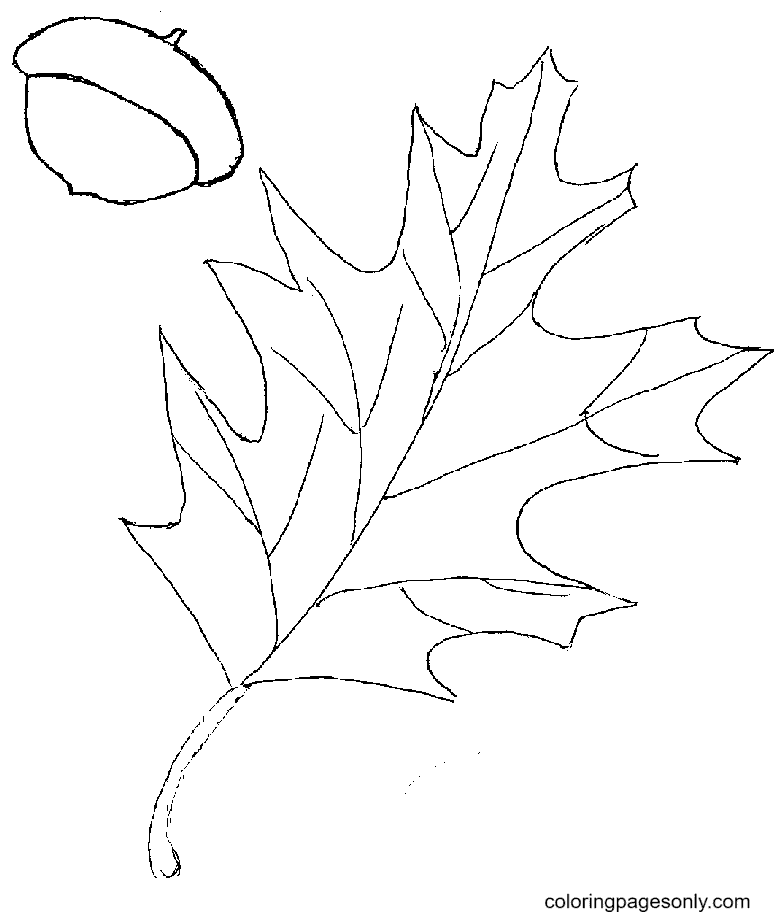
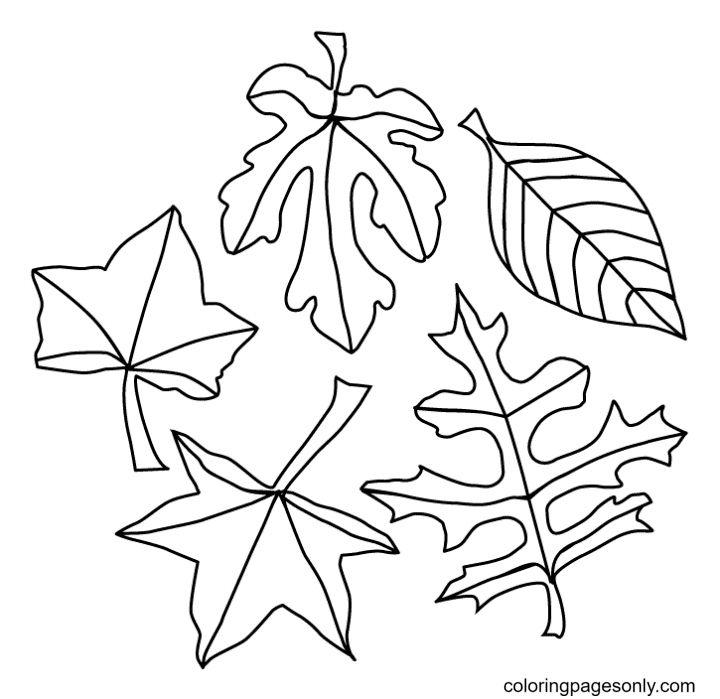
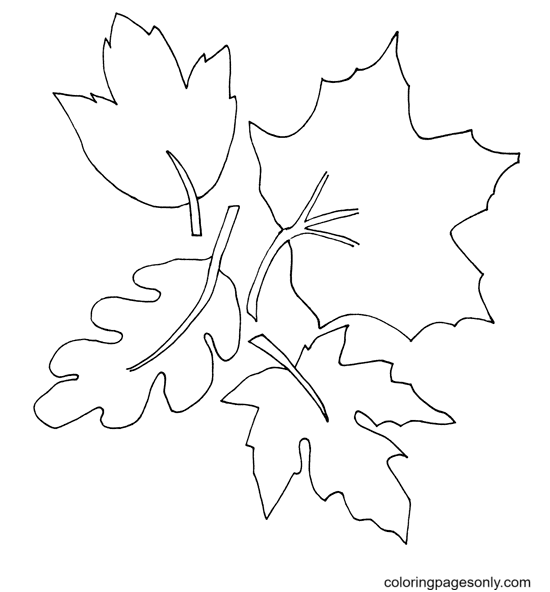

What Is Inside This Collection
The 73 pages are split into four groups: seasonal scenes and characters, people enjoying autumn activities, woodland creatures, and general leaf portraits and patterns.
Seasonal Scenes and Characters
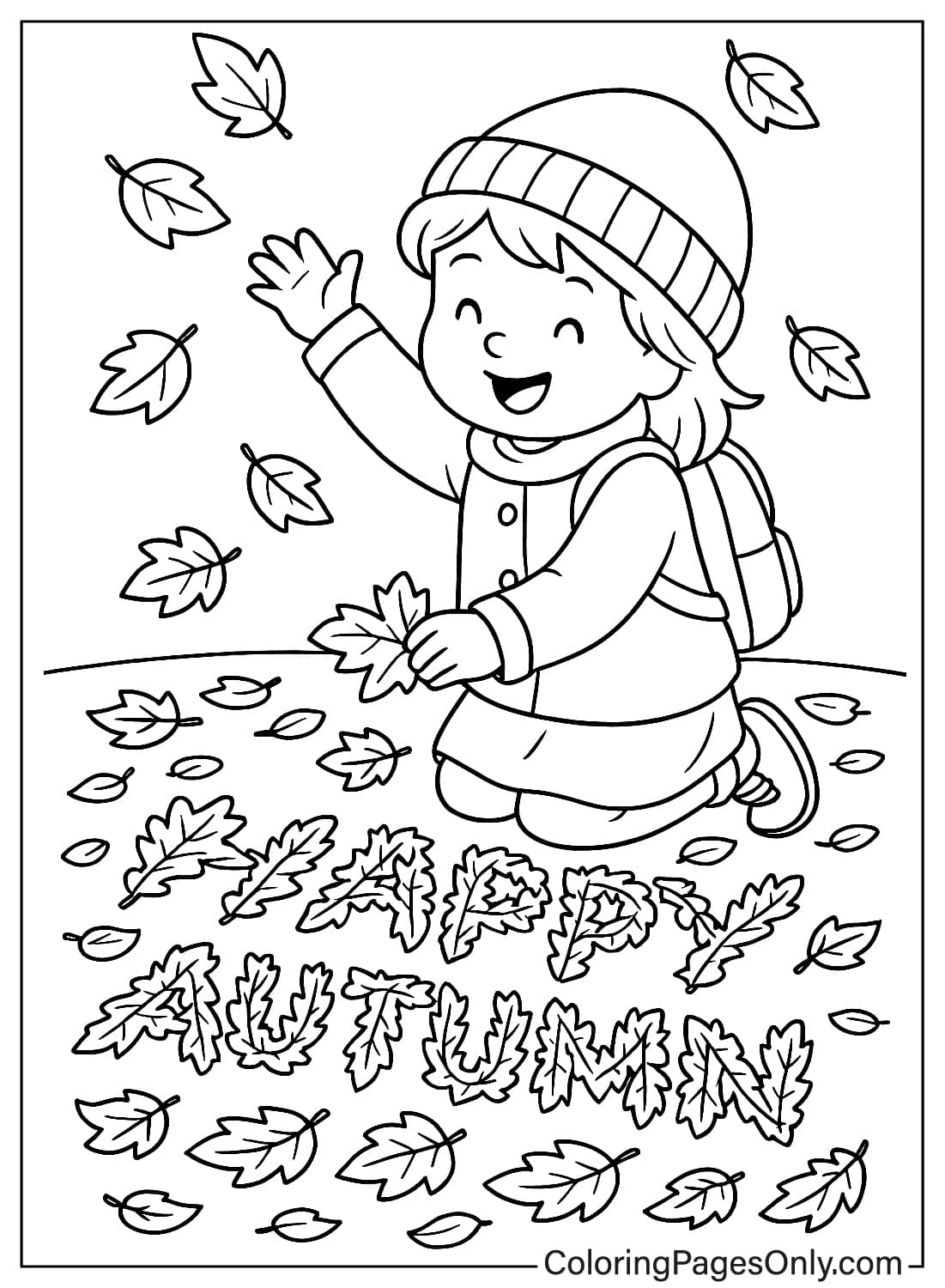
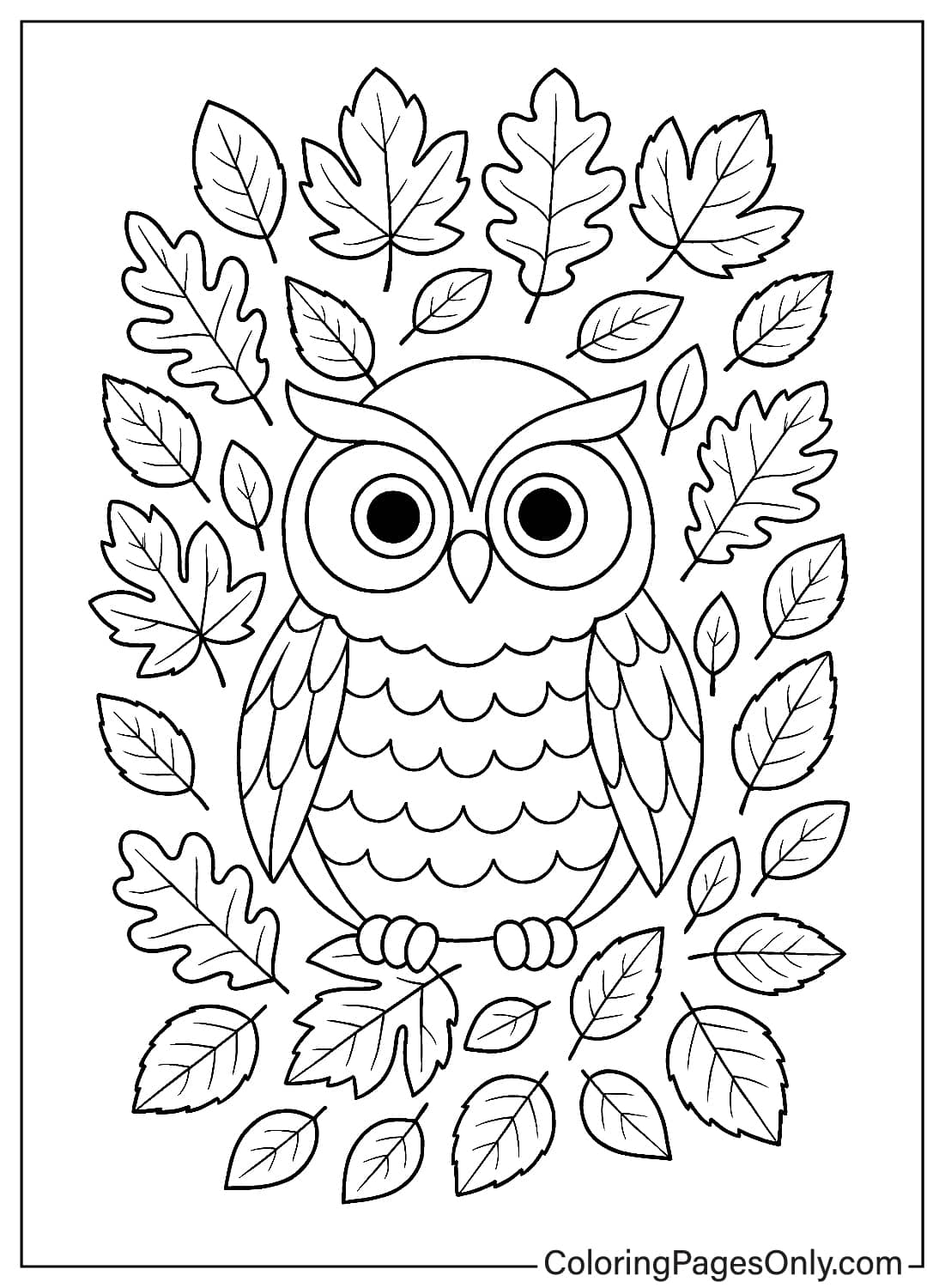
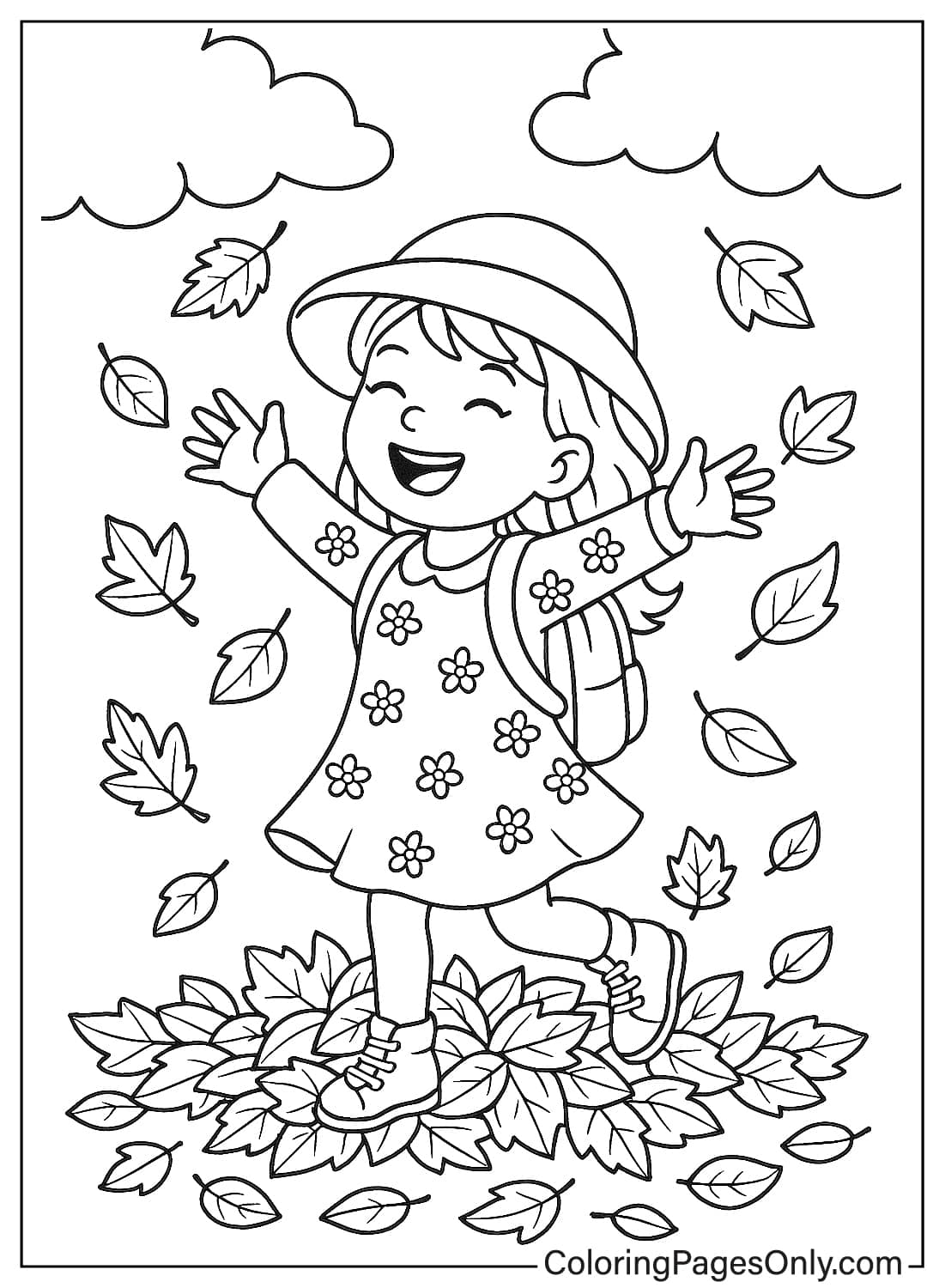
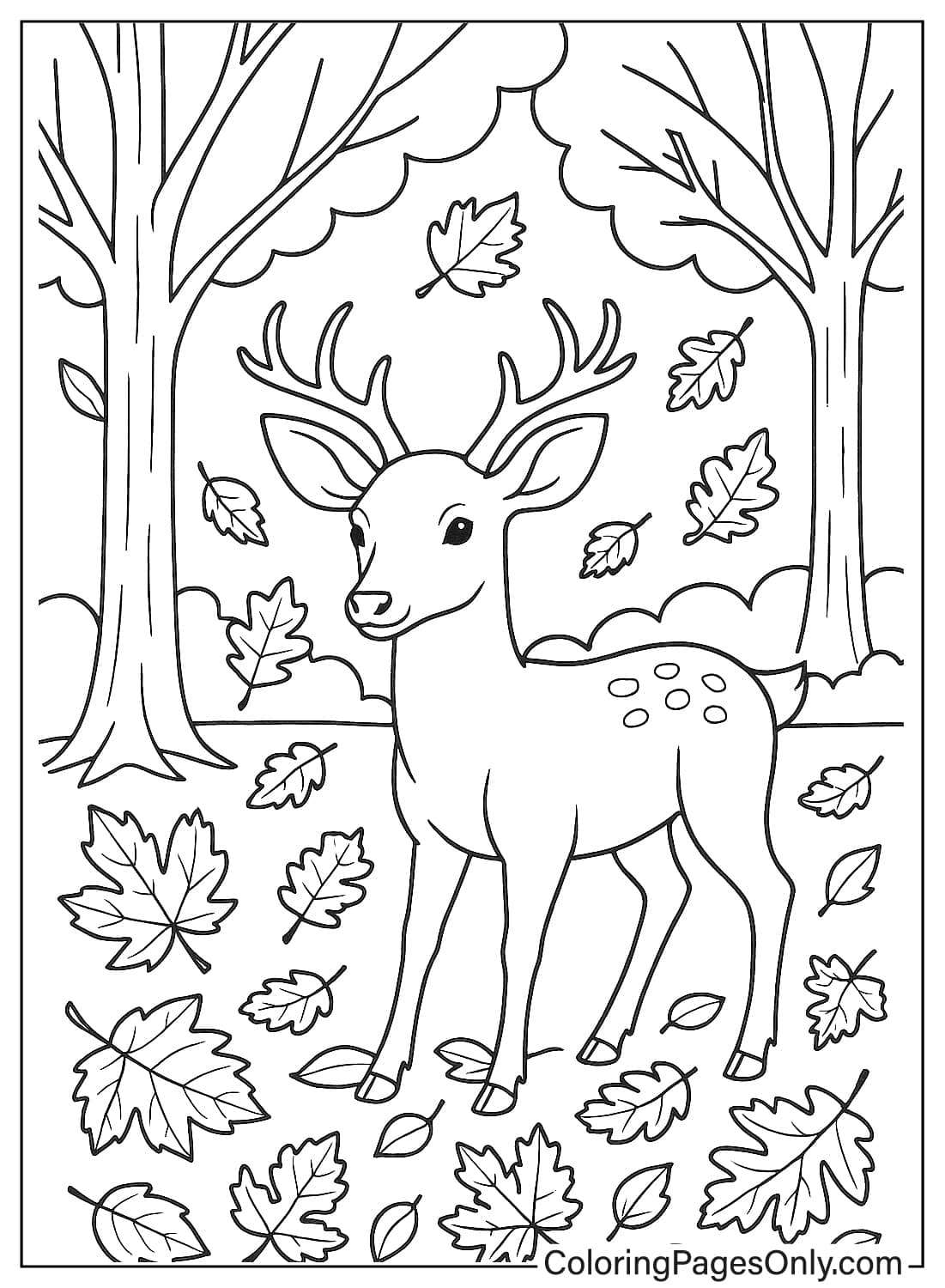
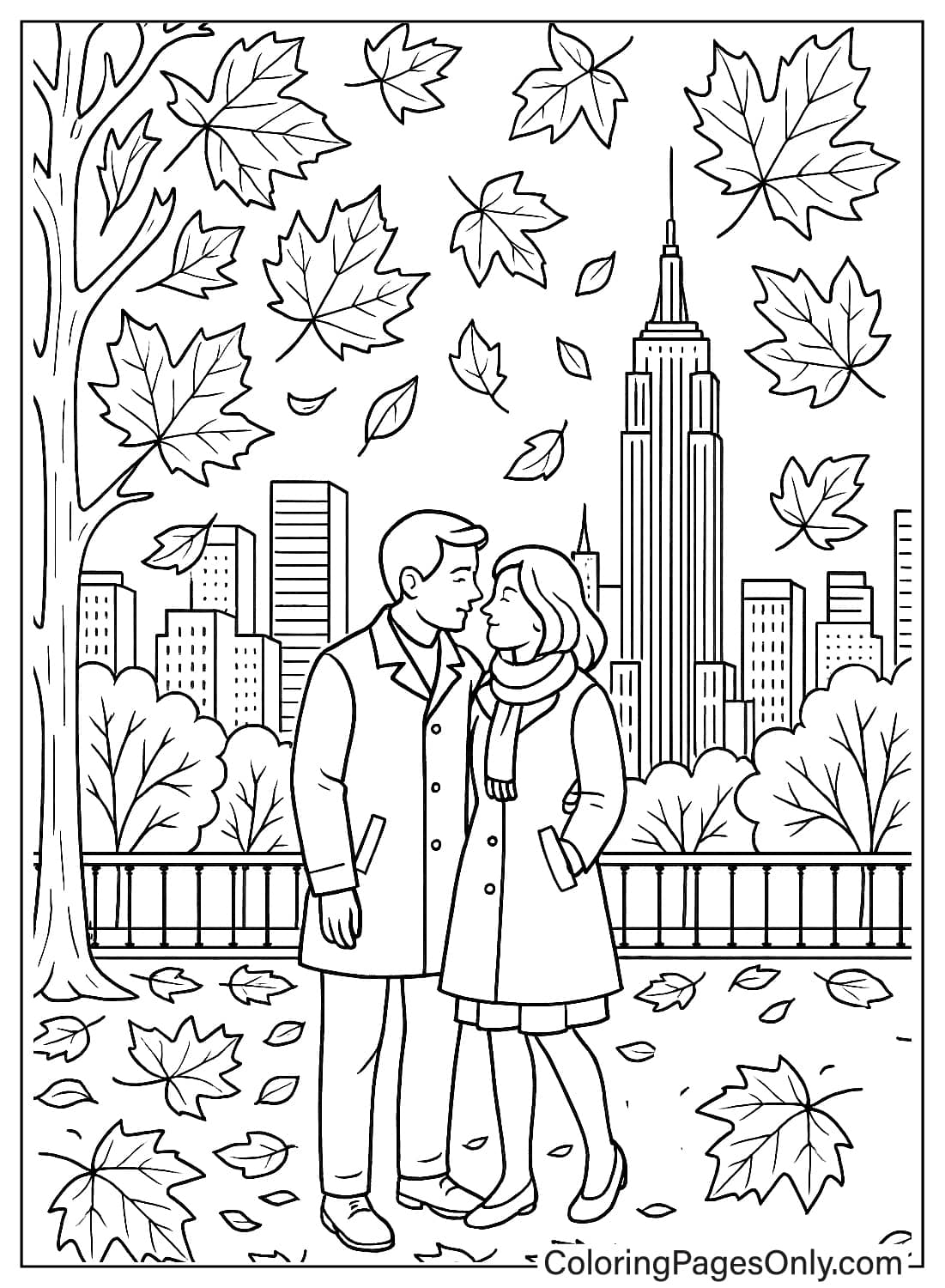
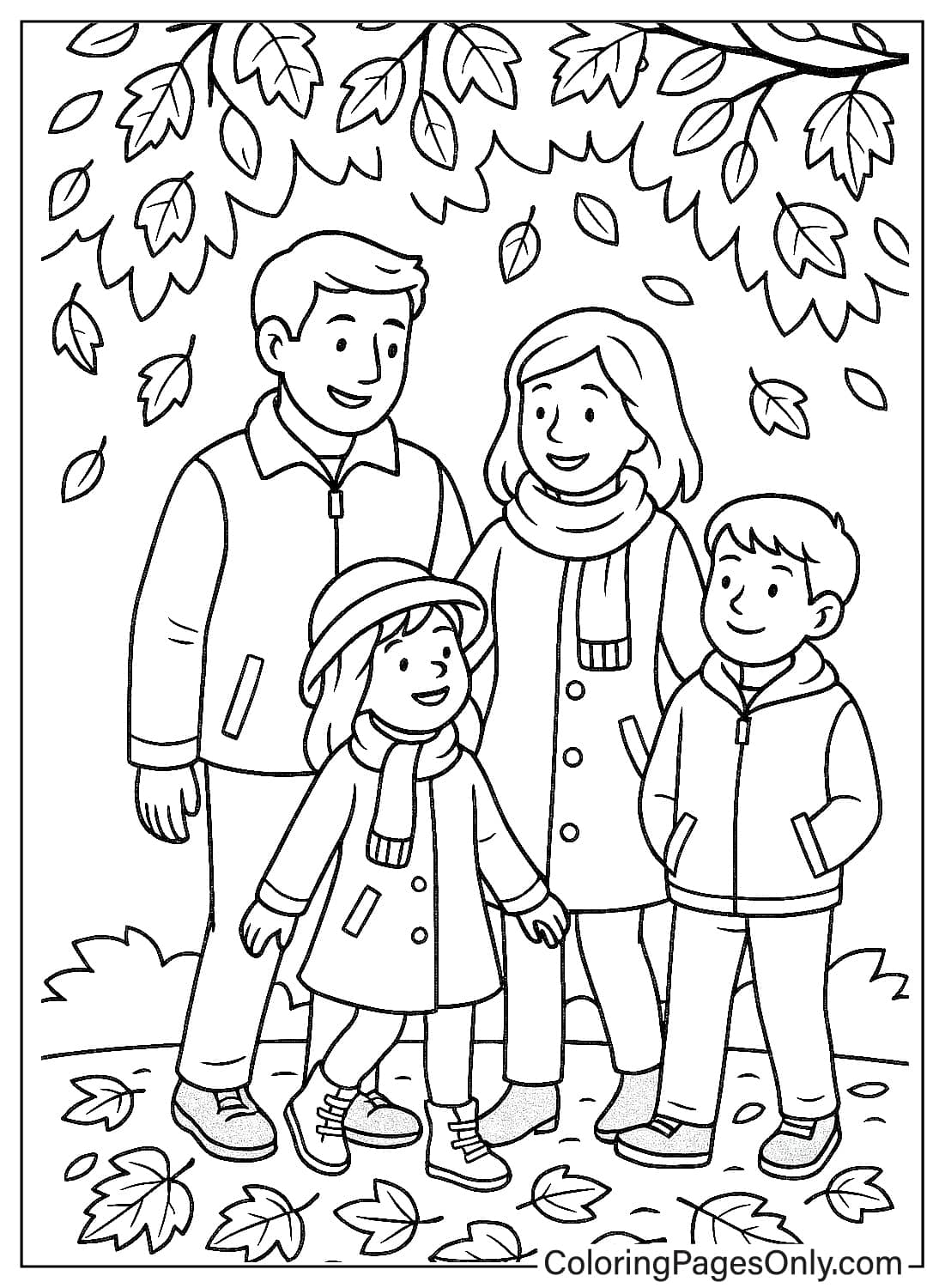
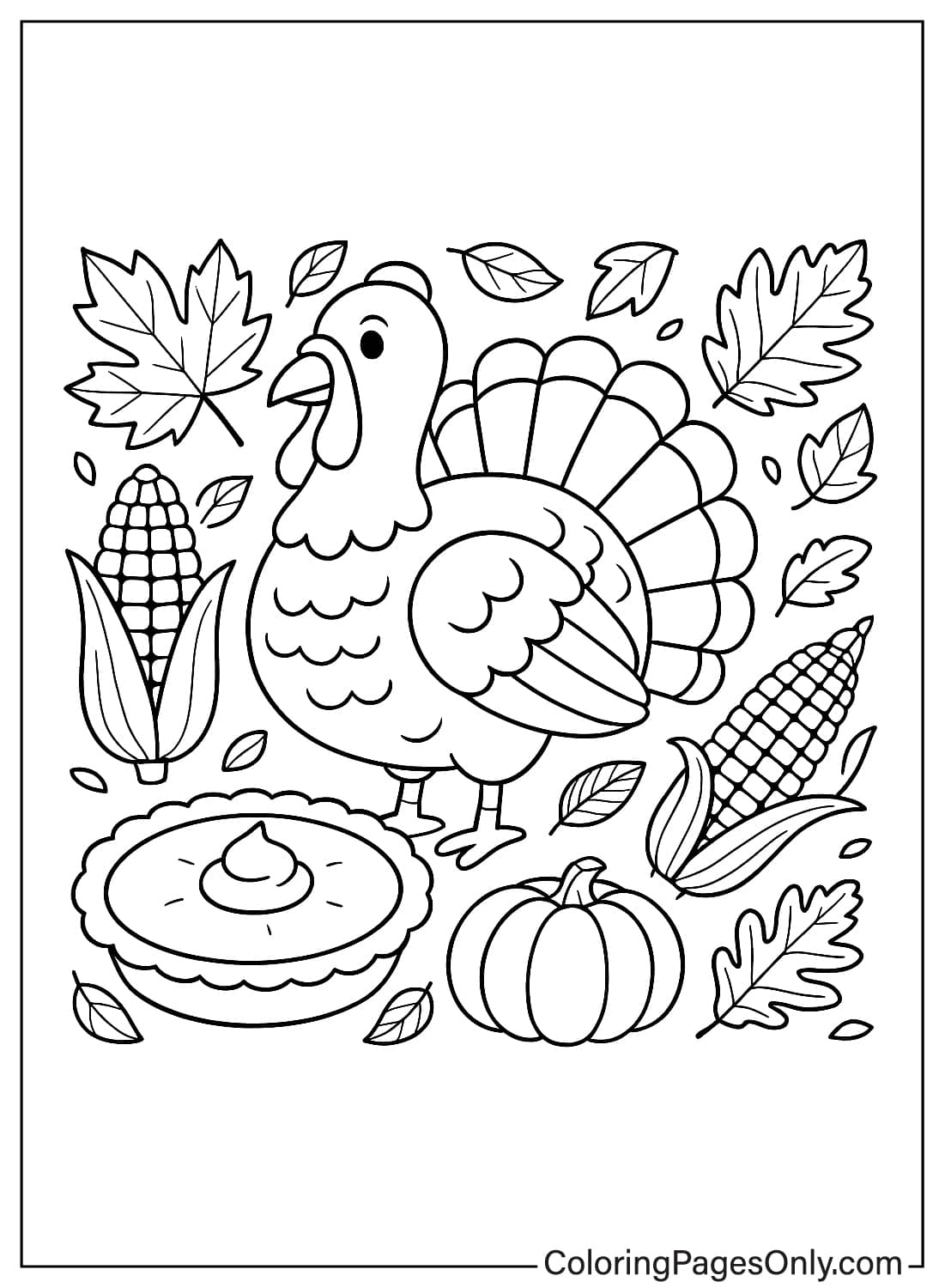
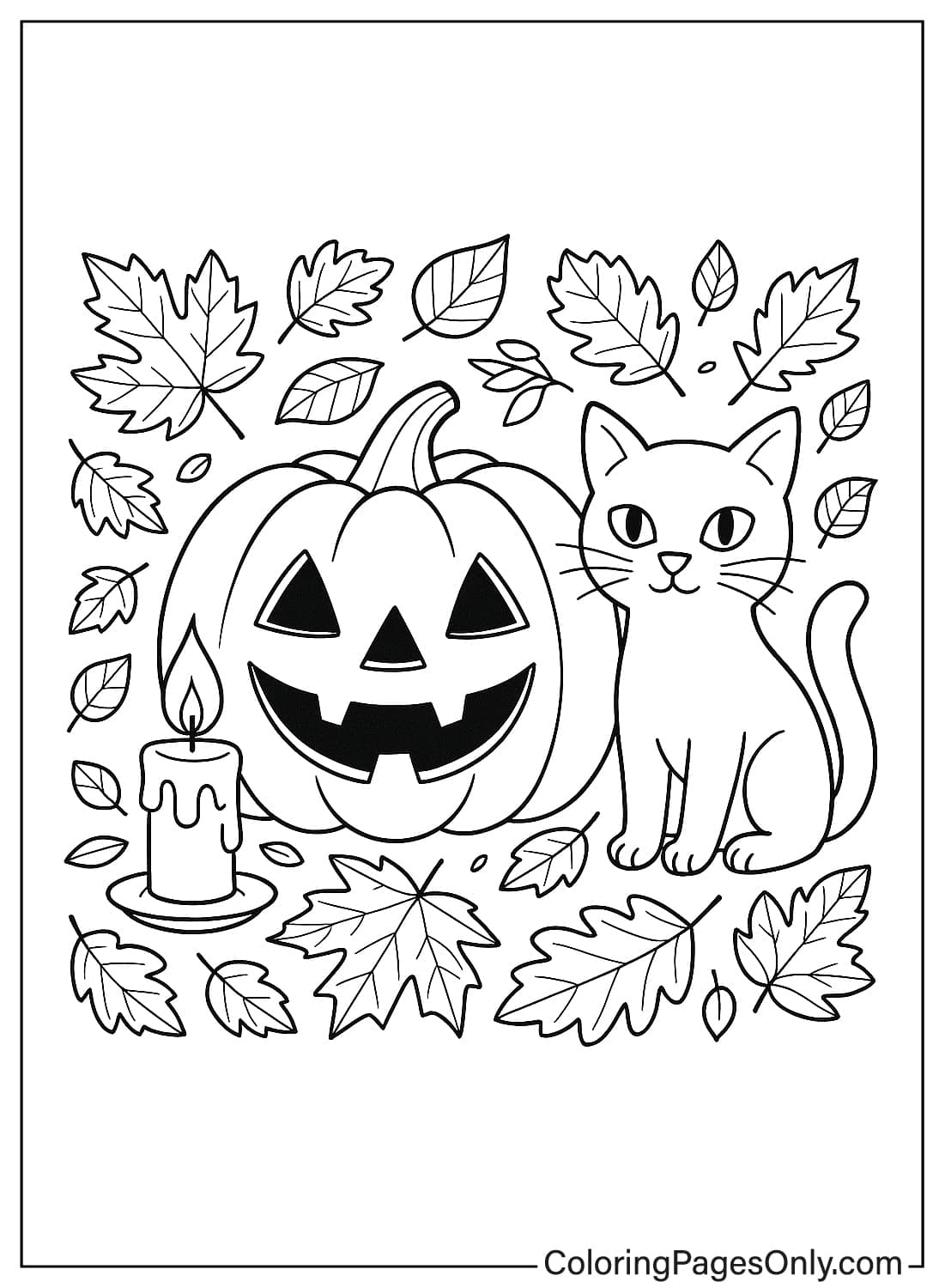
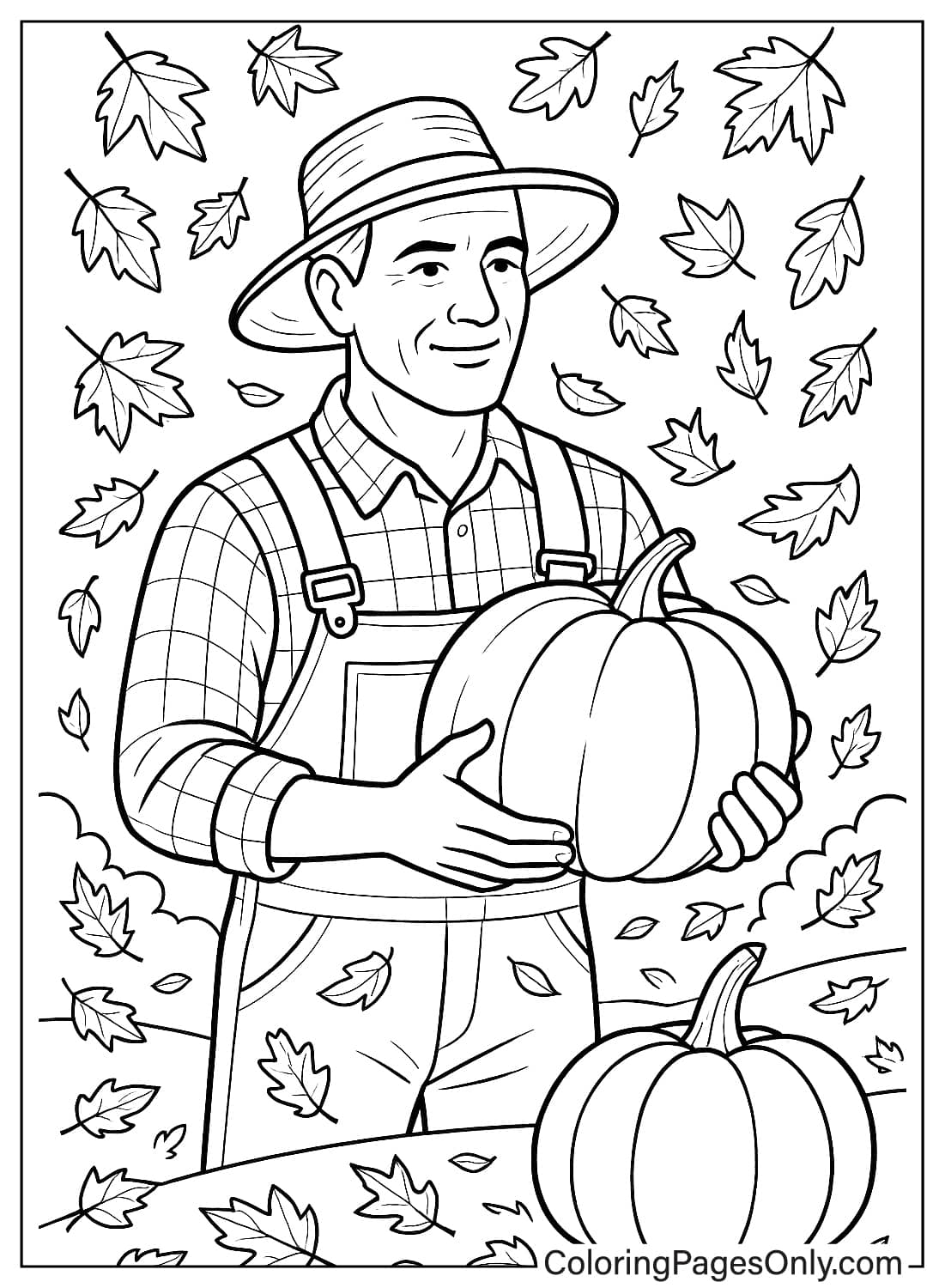
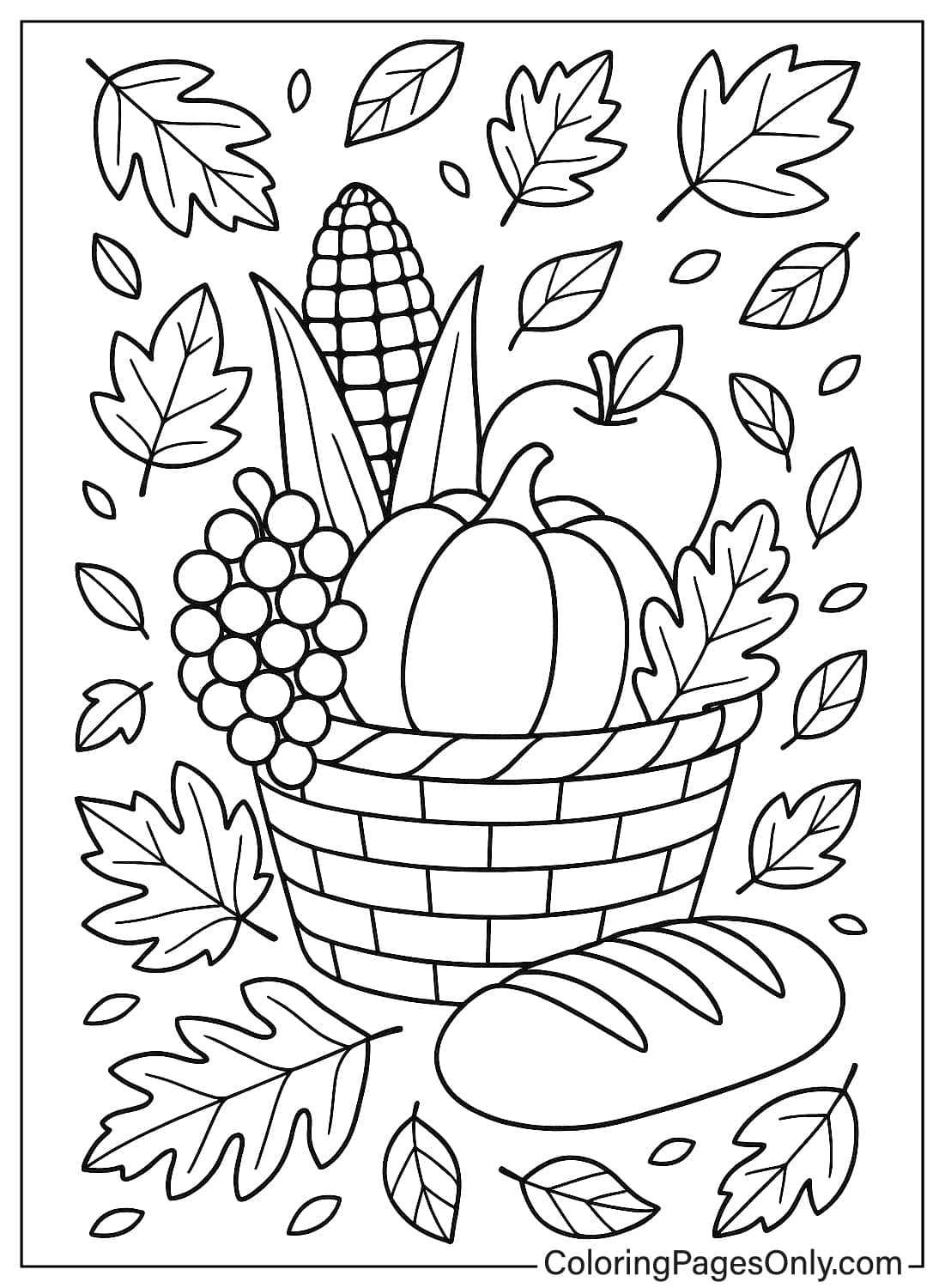
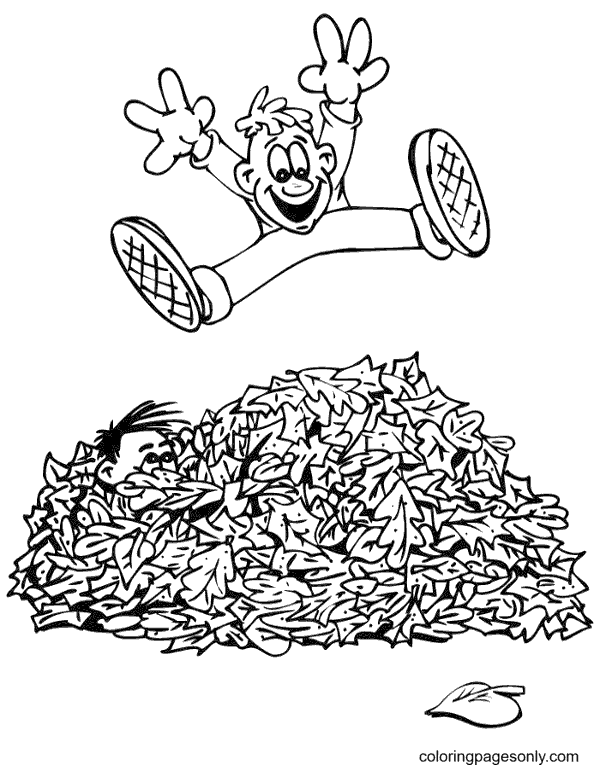
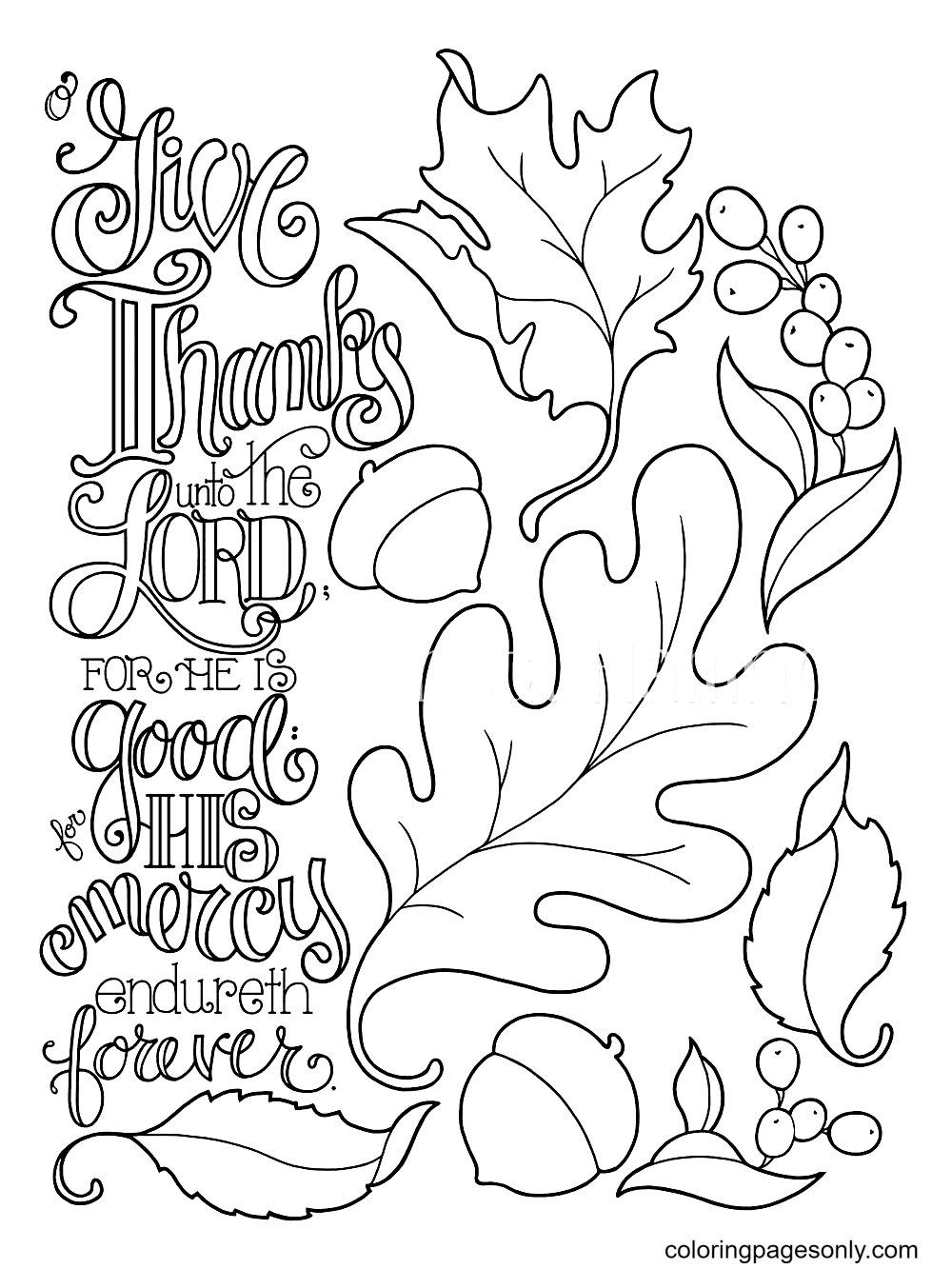
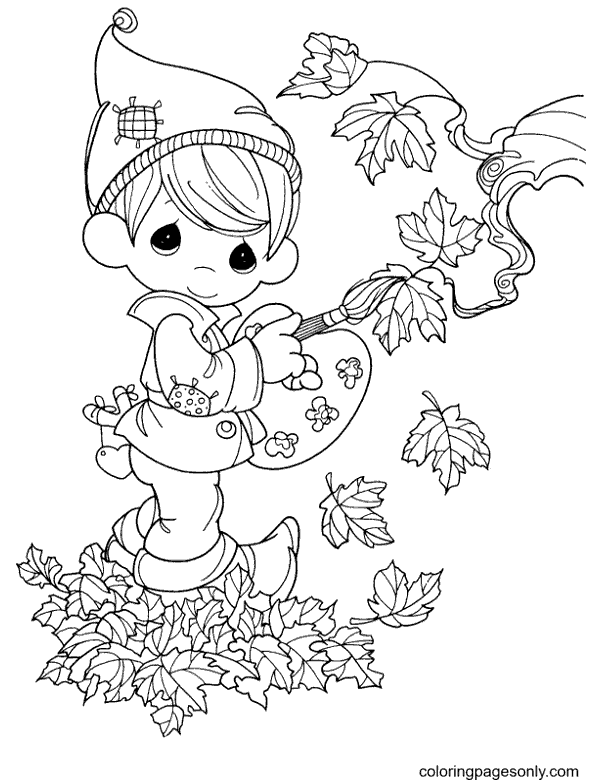
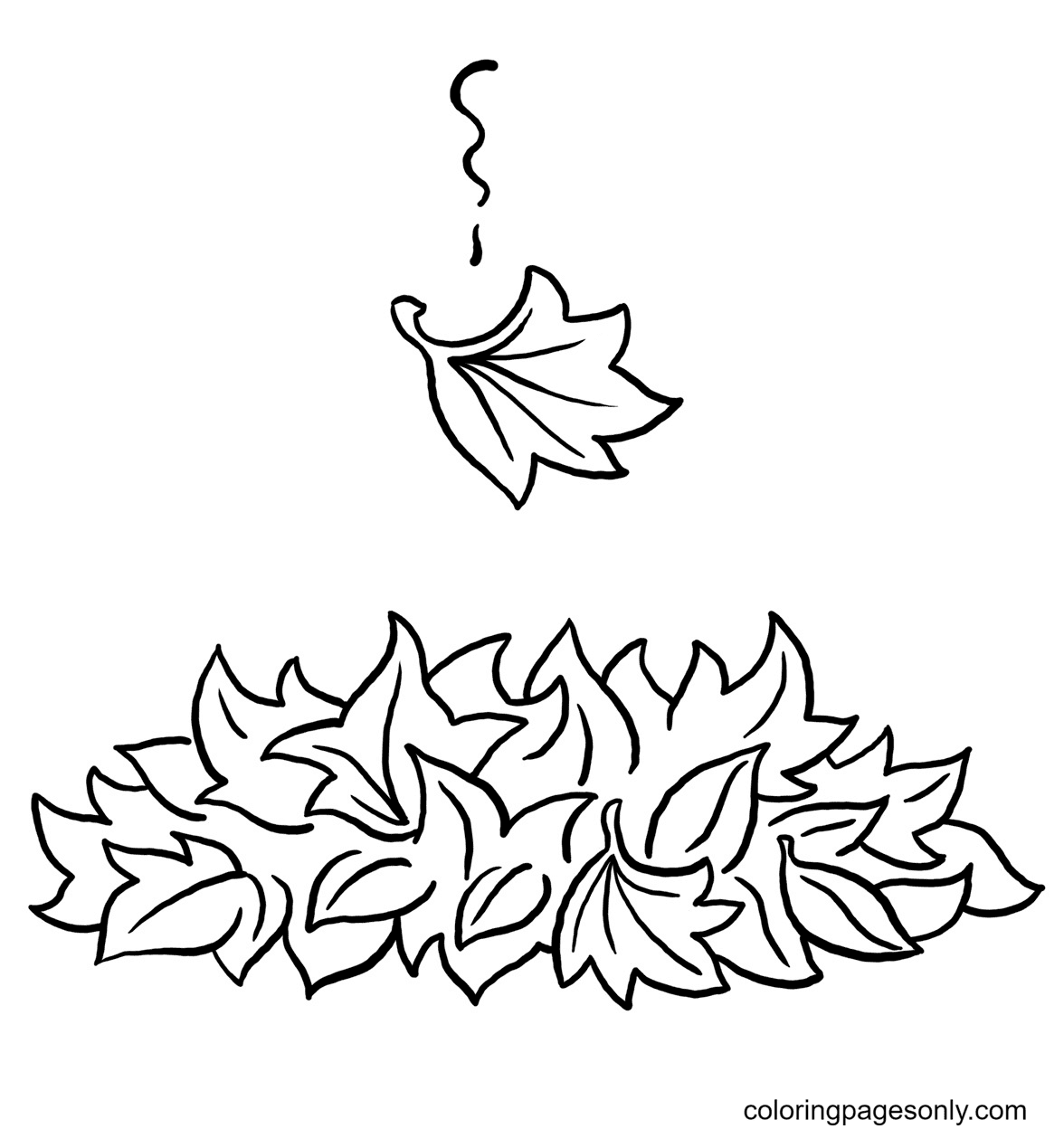
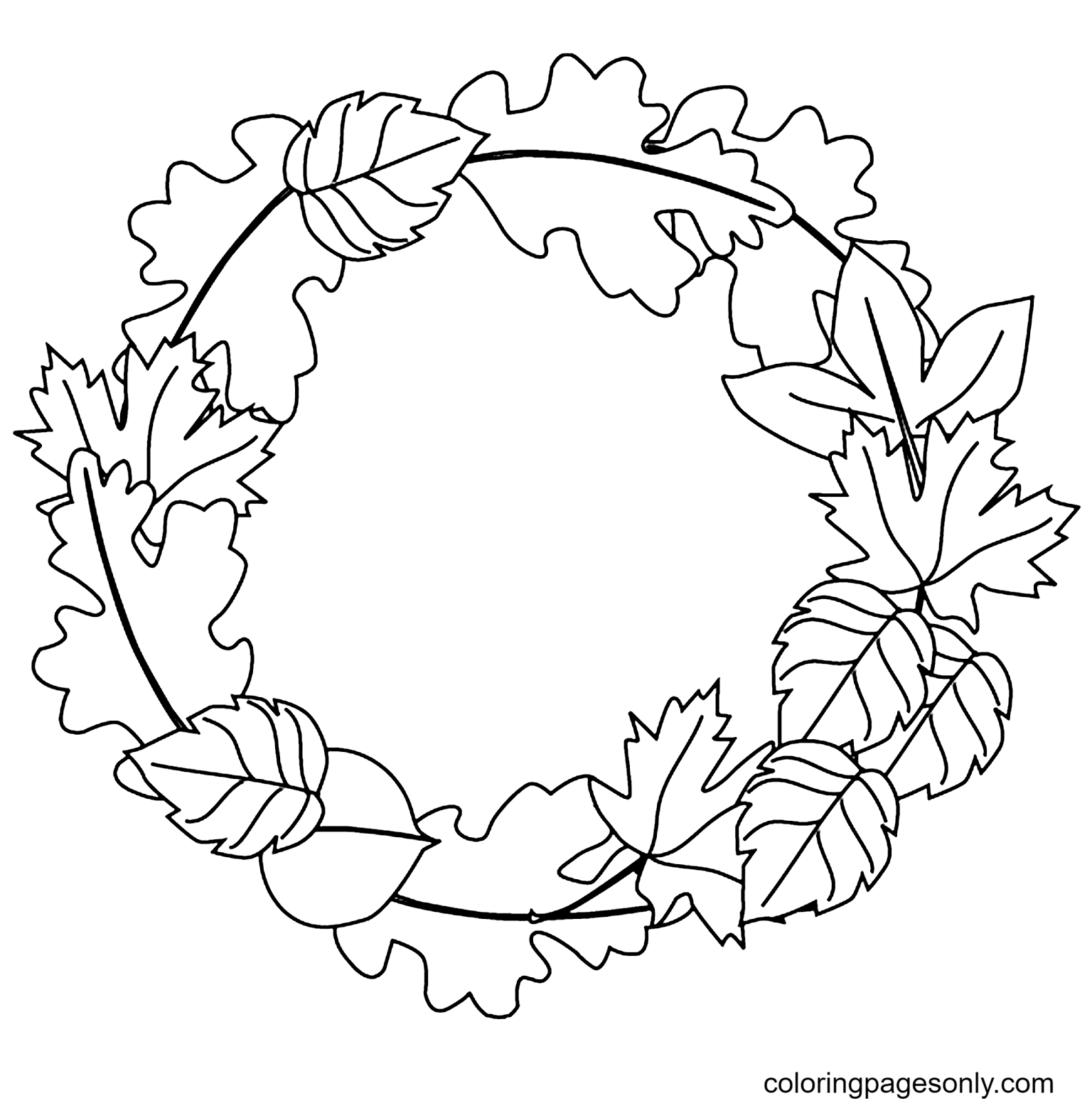
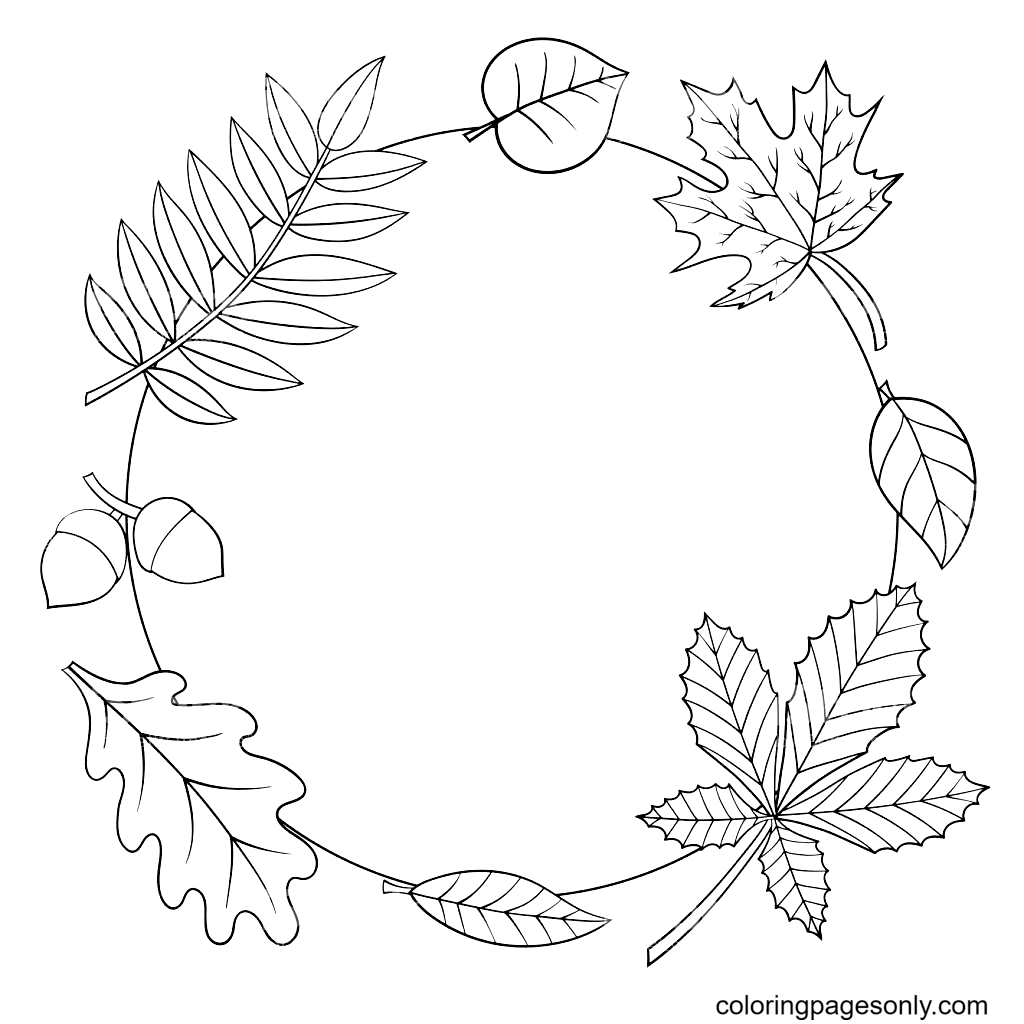
The newest and most detailed group covers a full autumn scene in each page: a girl jumping into a leaf pile, an owl framed by a leaf border, the Eiffel Tower surrounded by falling leaves, a squirrel with an acorn, a deer in the woods, a couple on an autumn date, a leaf mandala, a wreath, a family portrait, a Thanksgiving turkey, a Halloween cat and pumpkin, and a farmer with a harvest pumpkin. These pages have real background detail and a clear subject beyond the leaves themselves, making them the best starting point for anyone who wants a scene to color rather than a single object.
People Enjoying Autumn Activities
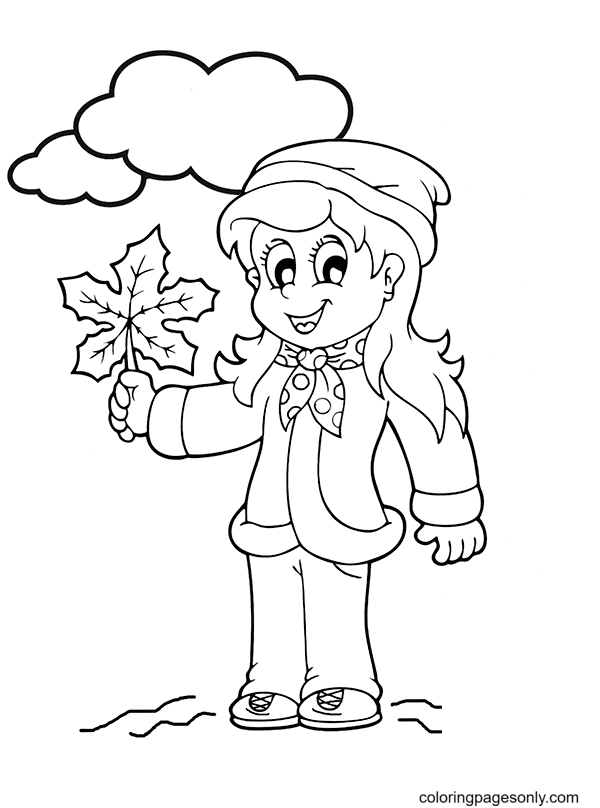
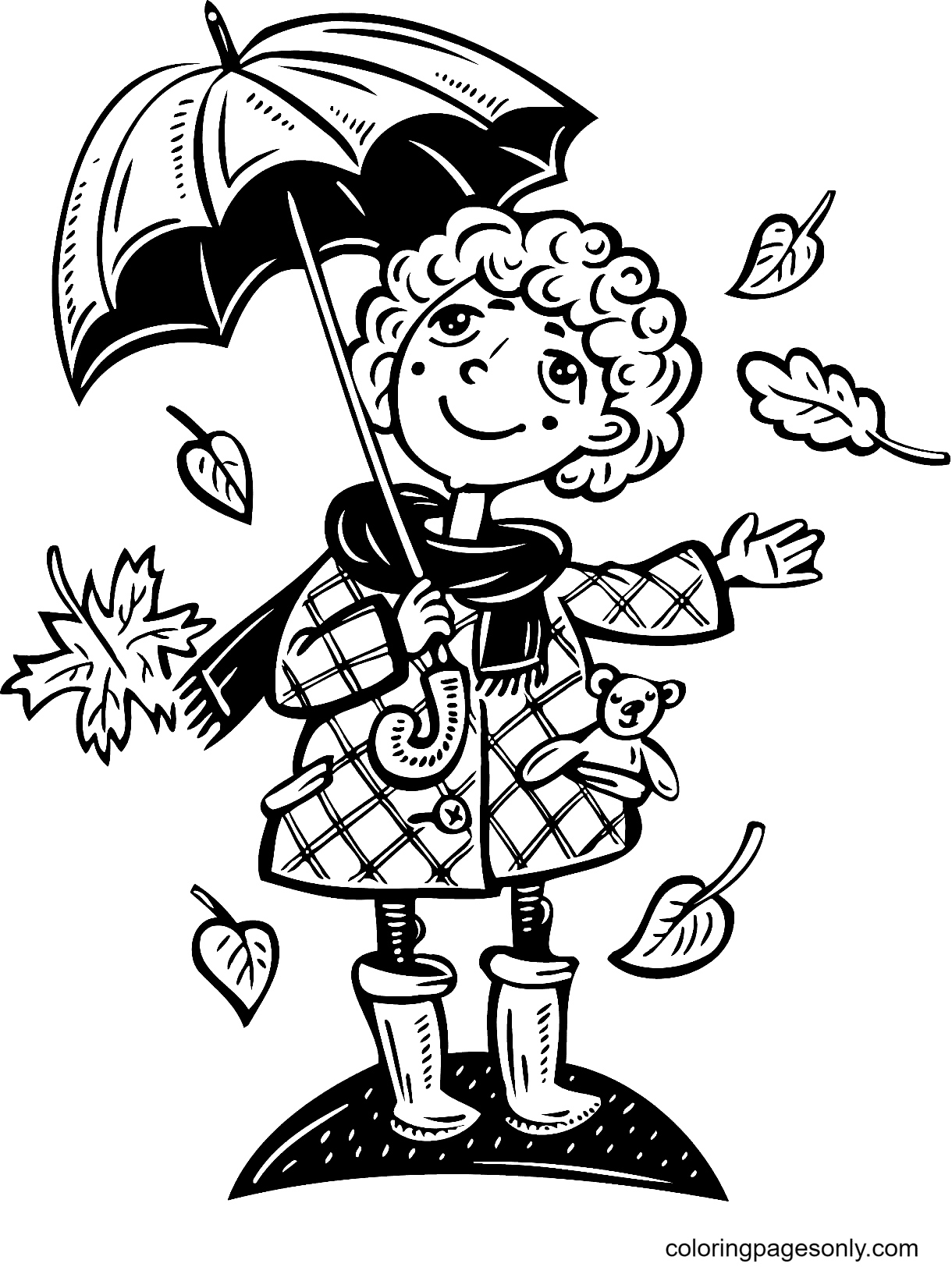
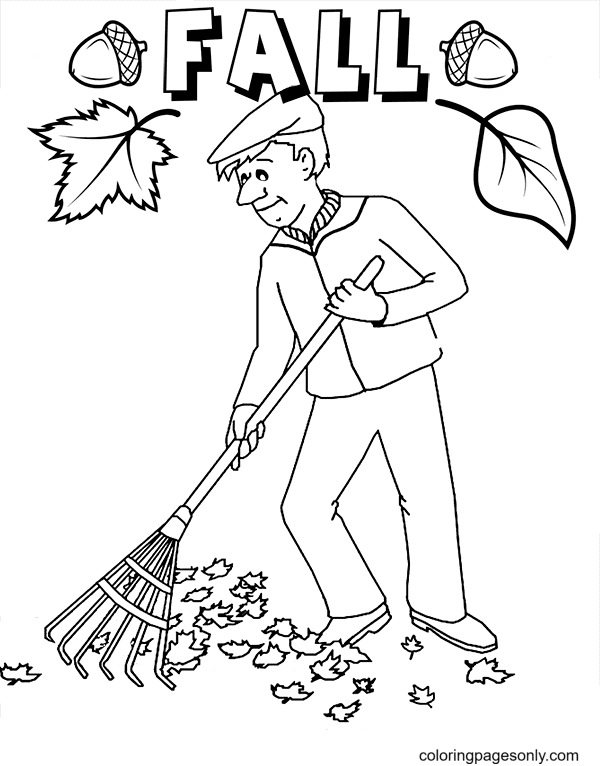
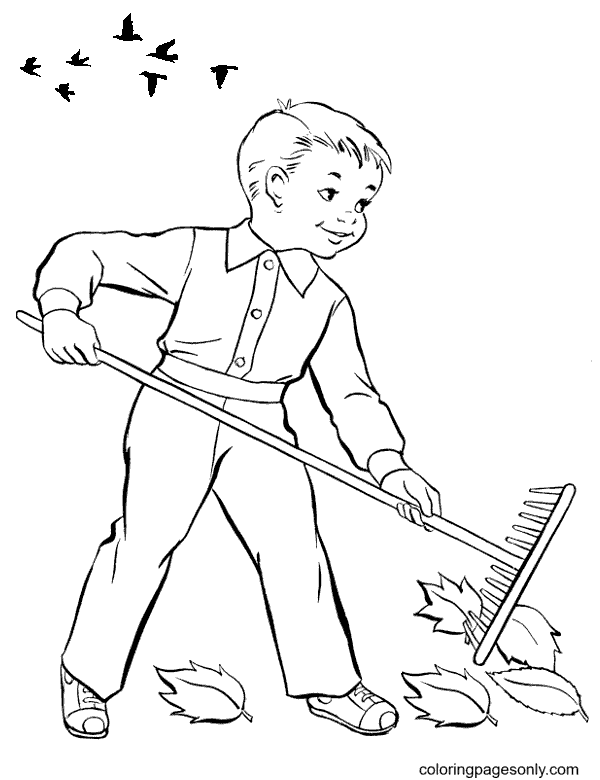
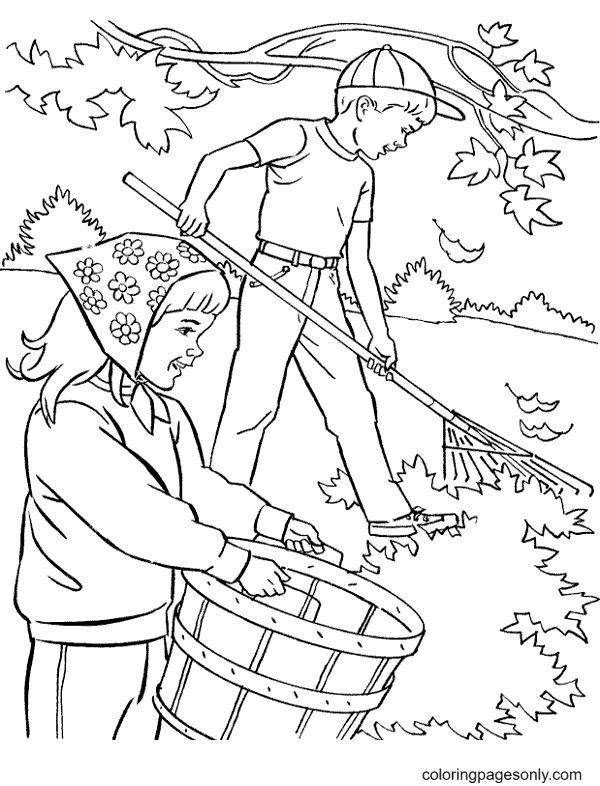
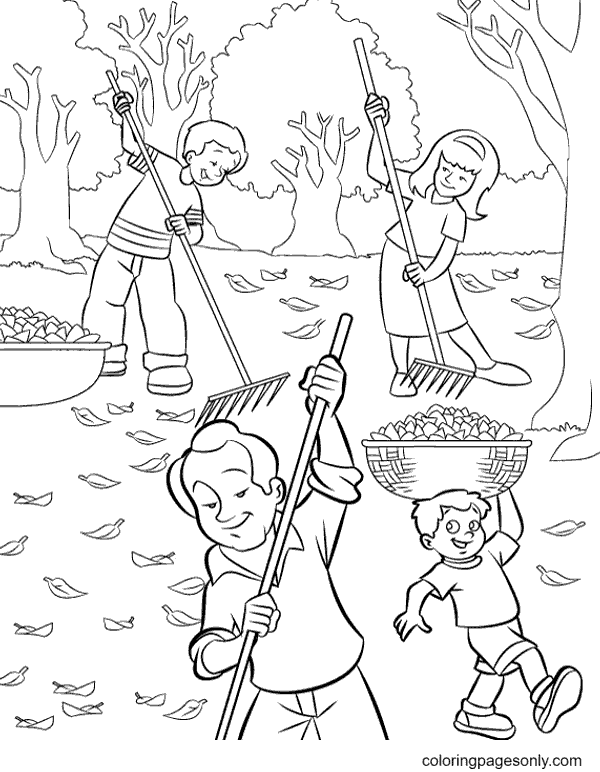
A smaller group shows people, mostly children, taking part in fall activities: raking leaves, sweeping a path, holding an umbrella as leaves fall, or cleaning up a garden or park. These pages work well for a lesson connecting the season to everyday chores and outdoor play, since each one pairs a recognizable autumn task with the leaves that make the season visible in the first place.
Woodland Creatures
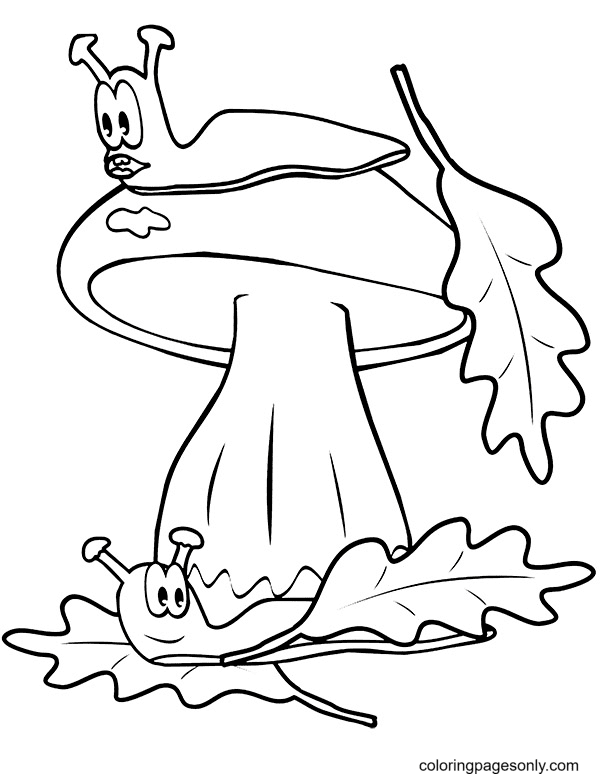
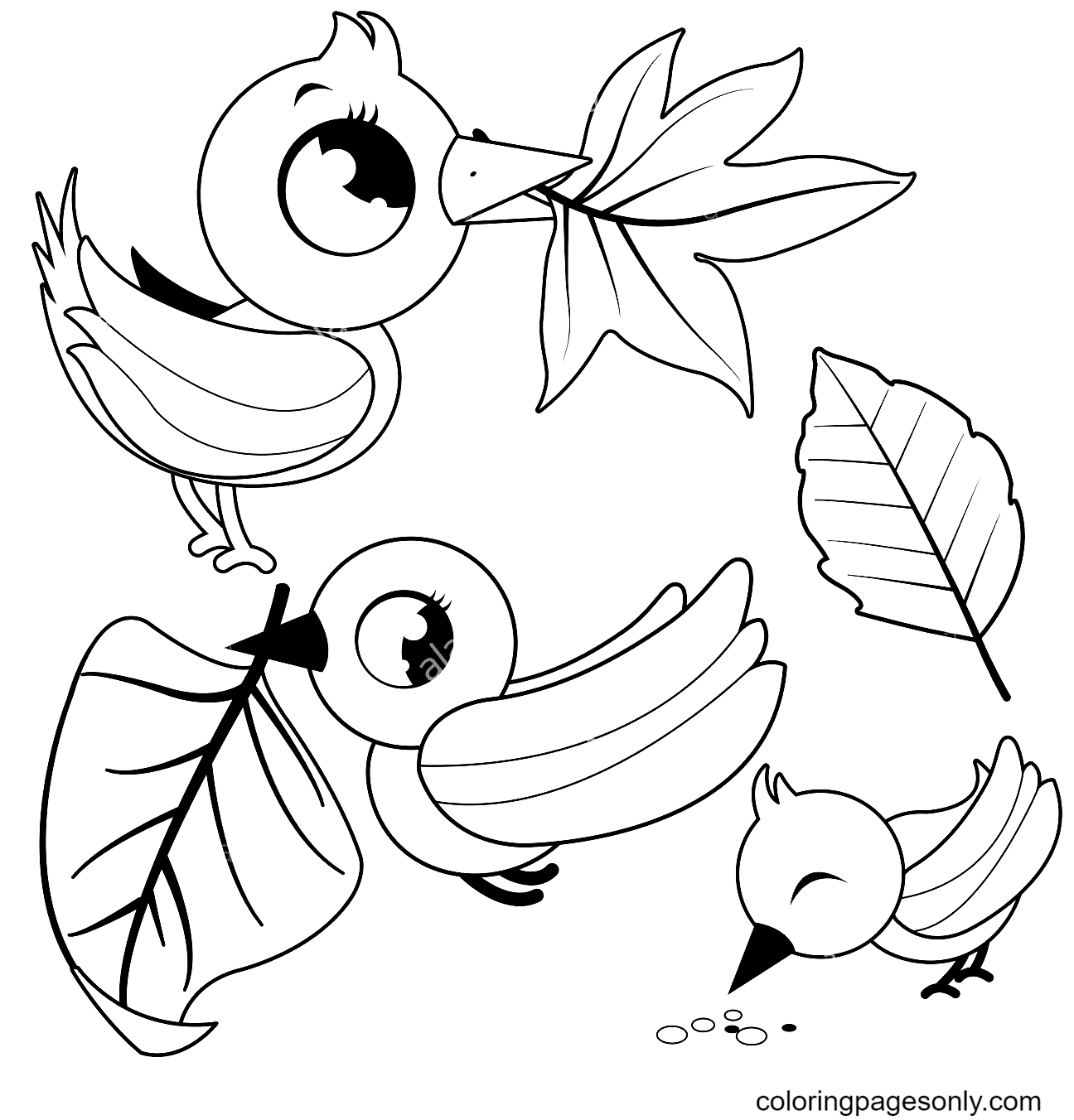
Two pages pair autumn leaves with small woodland animals, birds holding dry leaves, and snails resting near a mushroom, offering a quieter, nature-study alternative to the busier scene pages. These work well slotted between longer coloring sessions as a shorter, lower-detail option.
General Leaf Portraits and Patterns
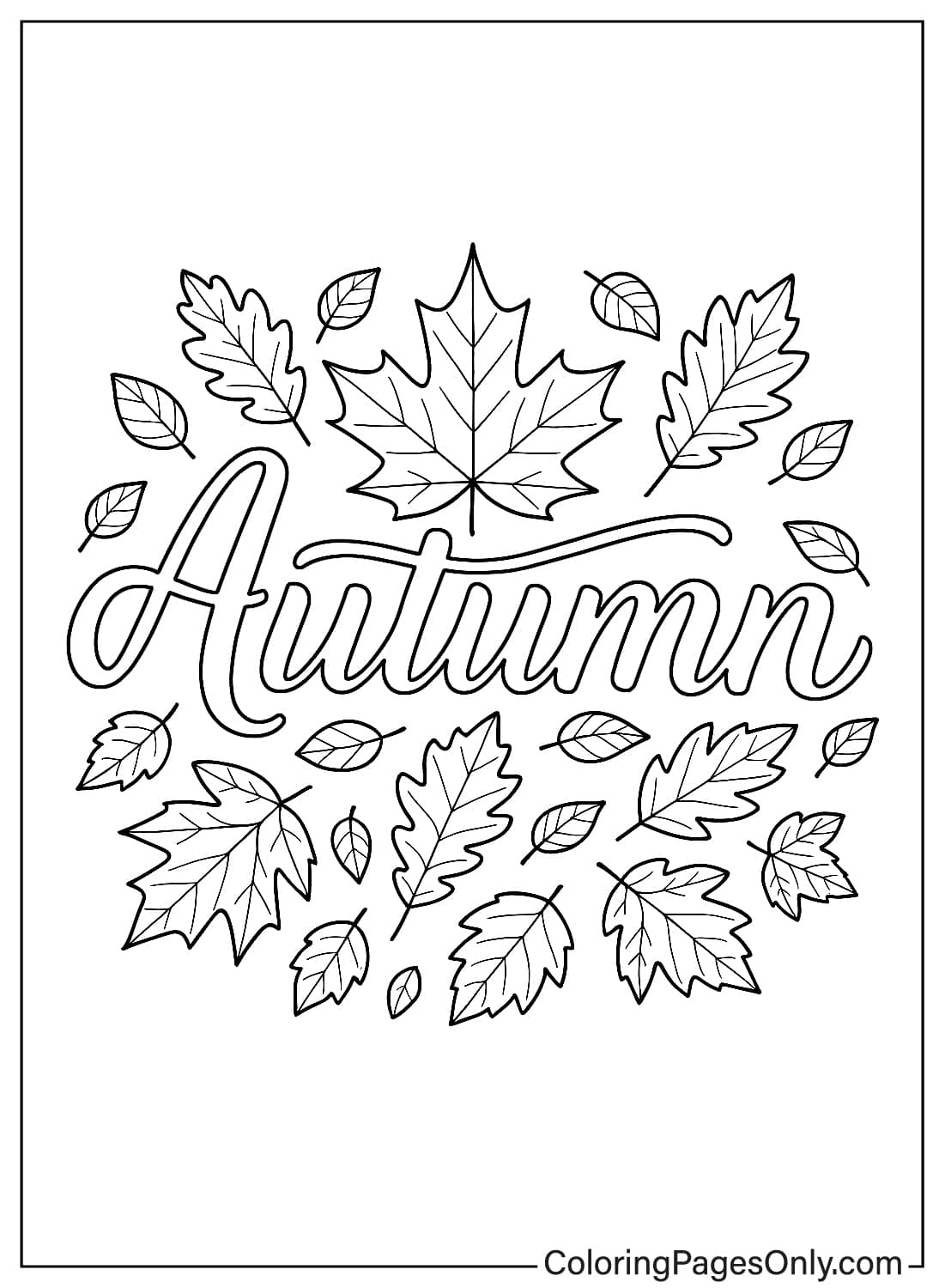
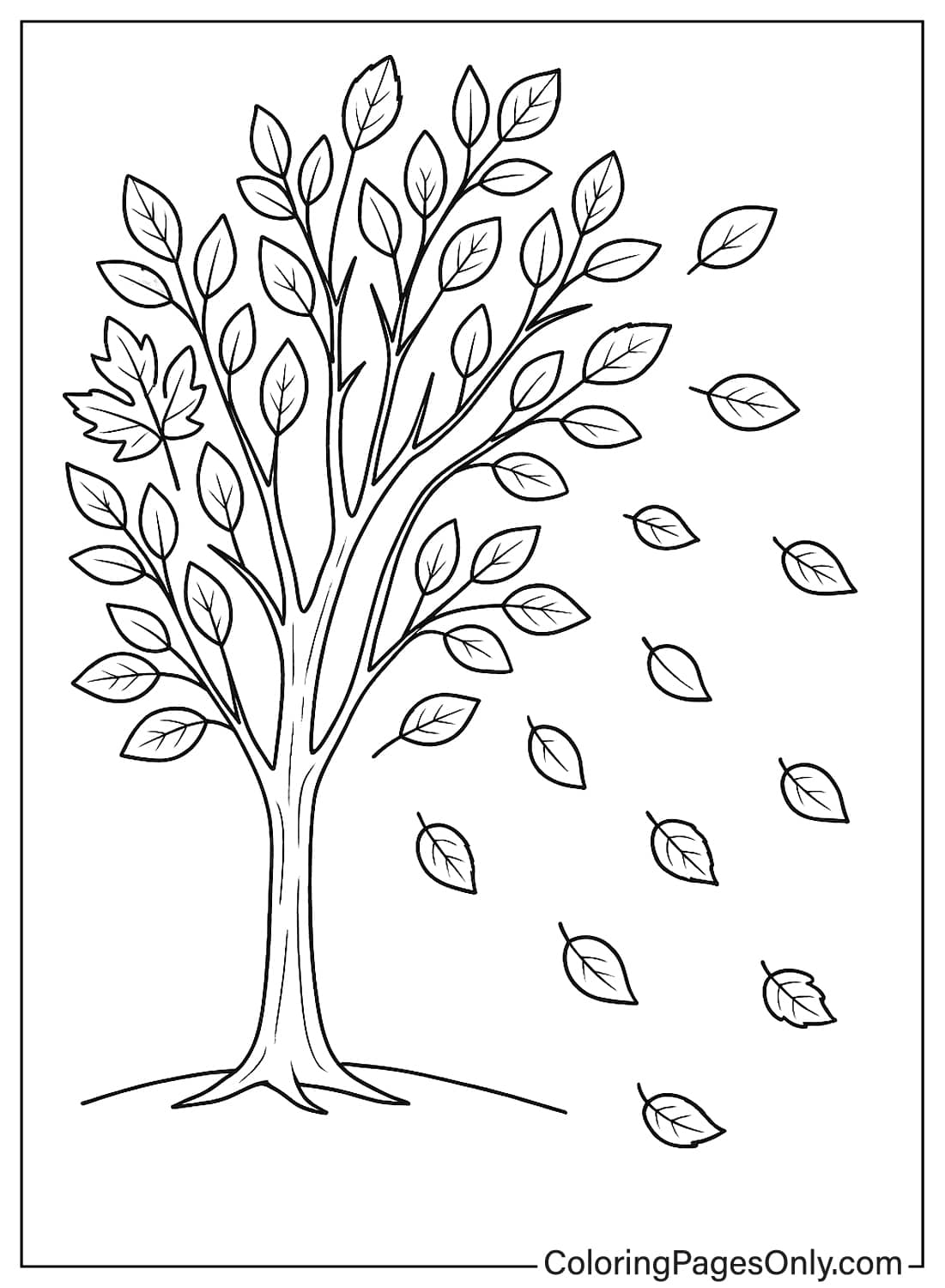
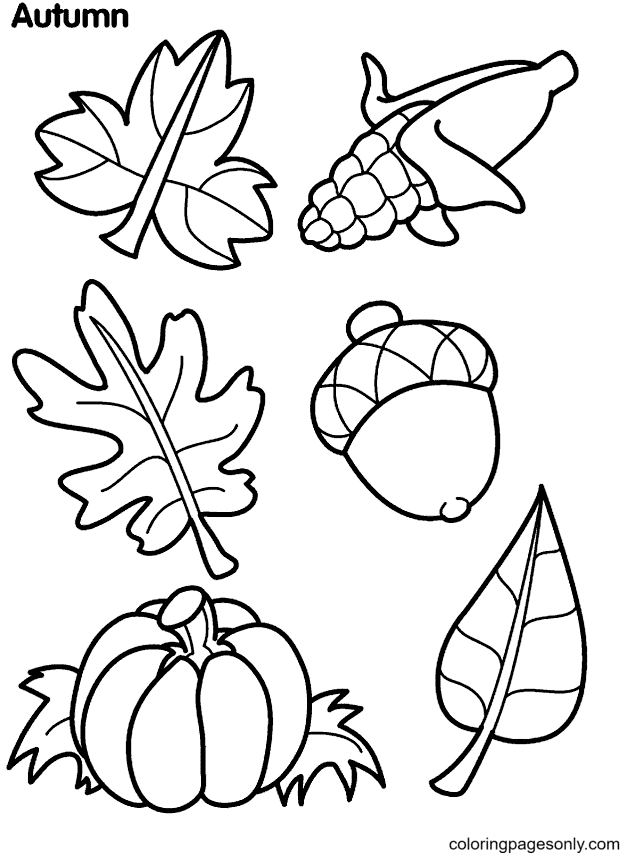
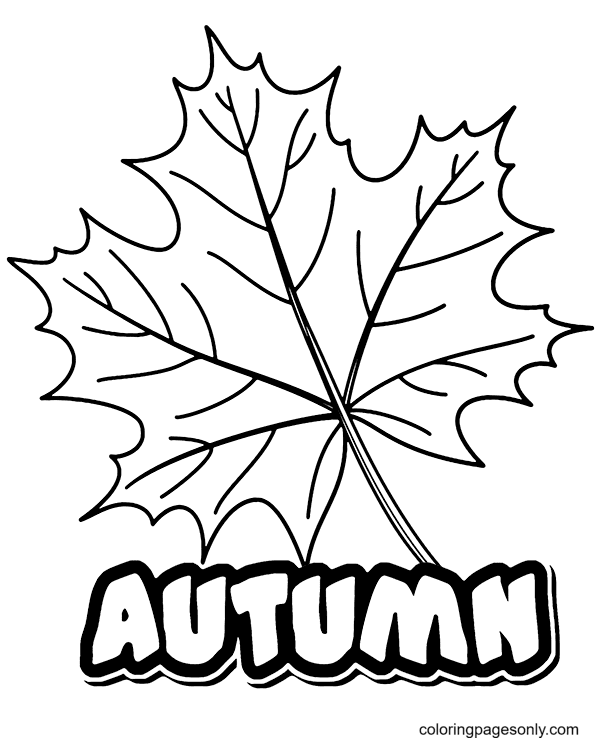
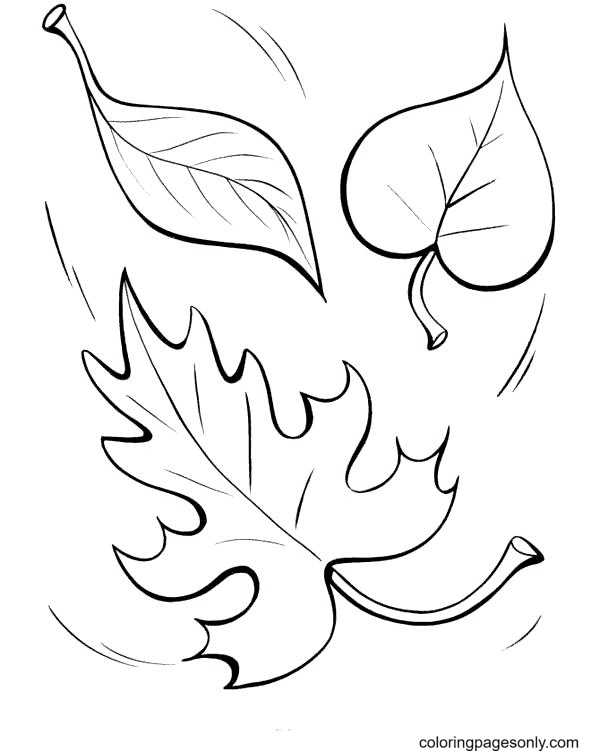
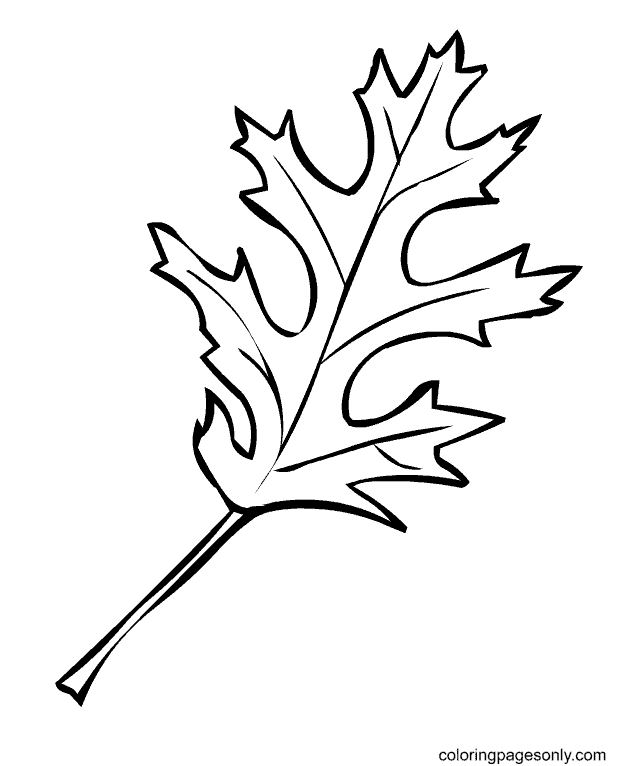
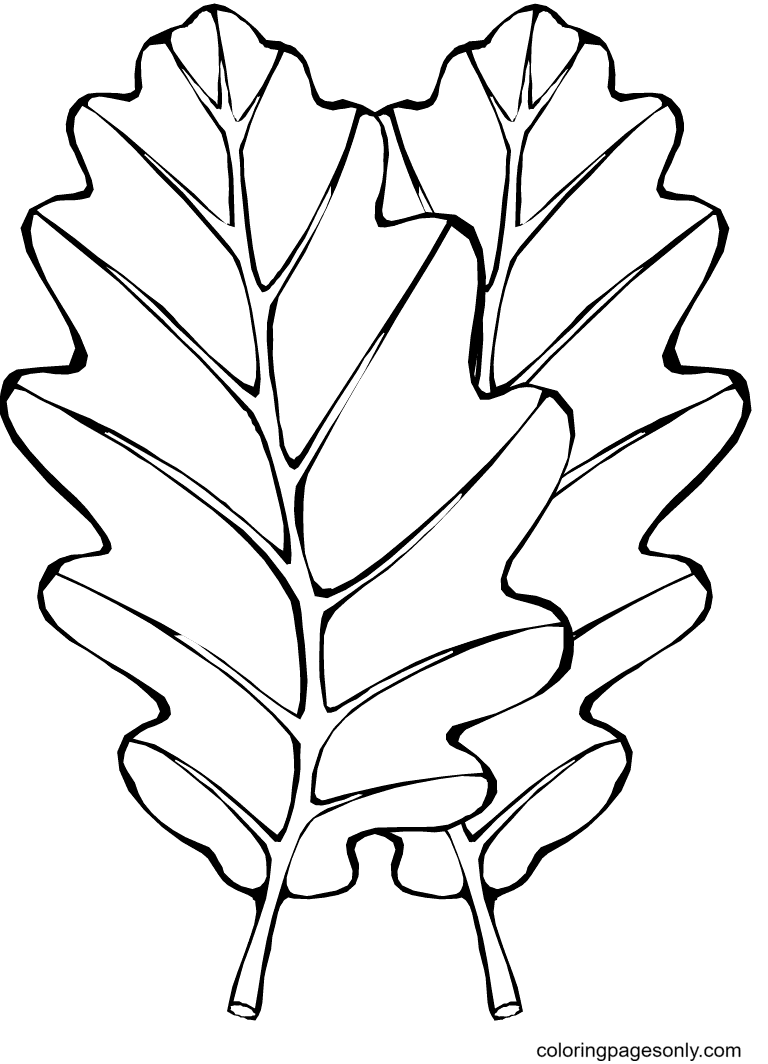
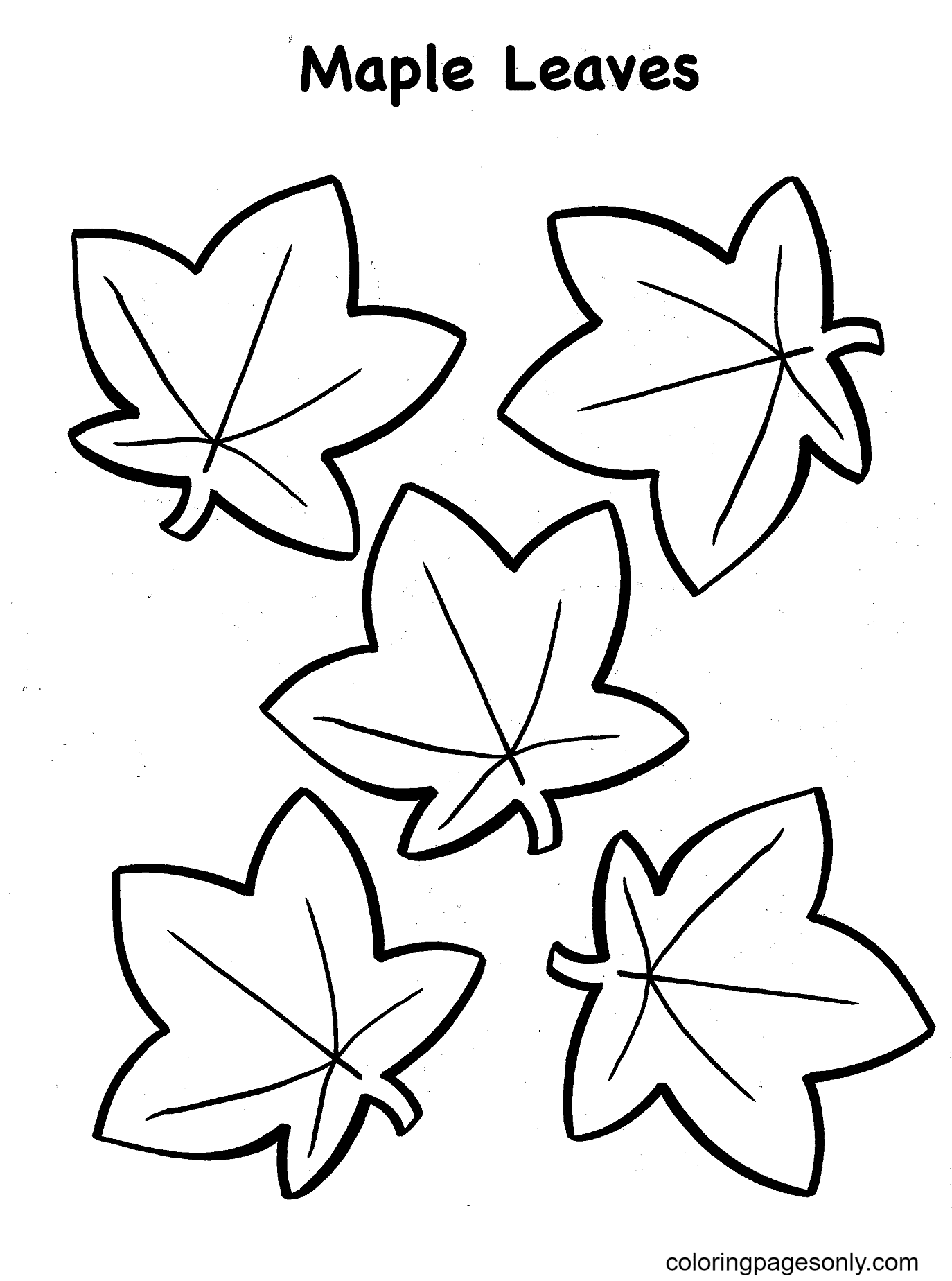
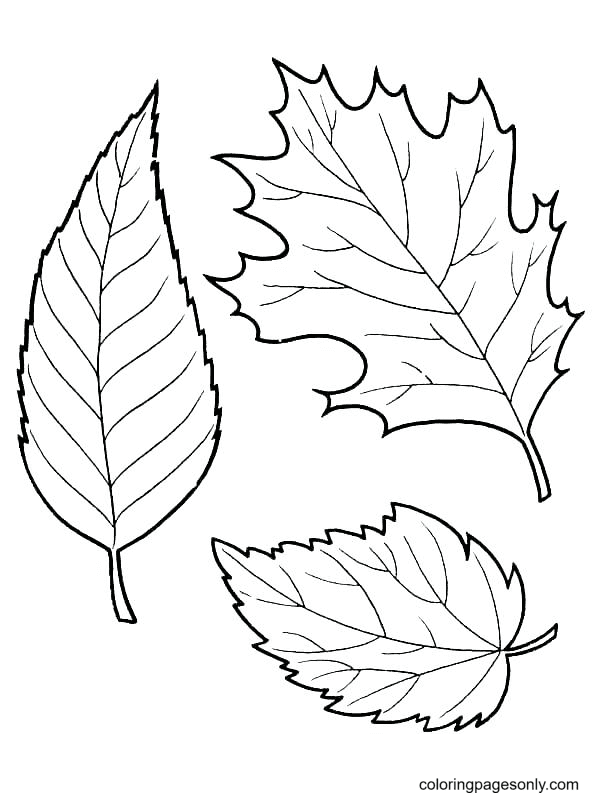
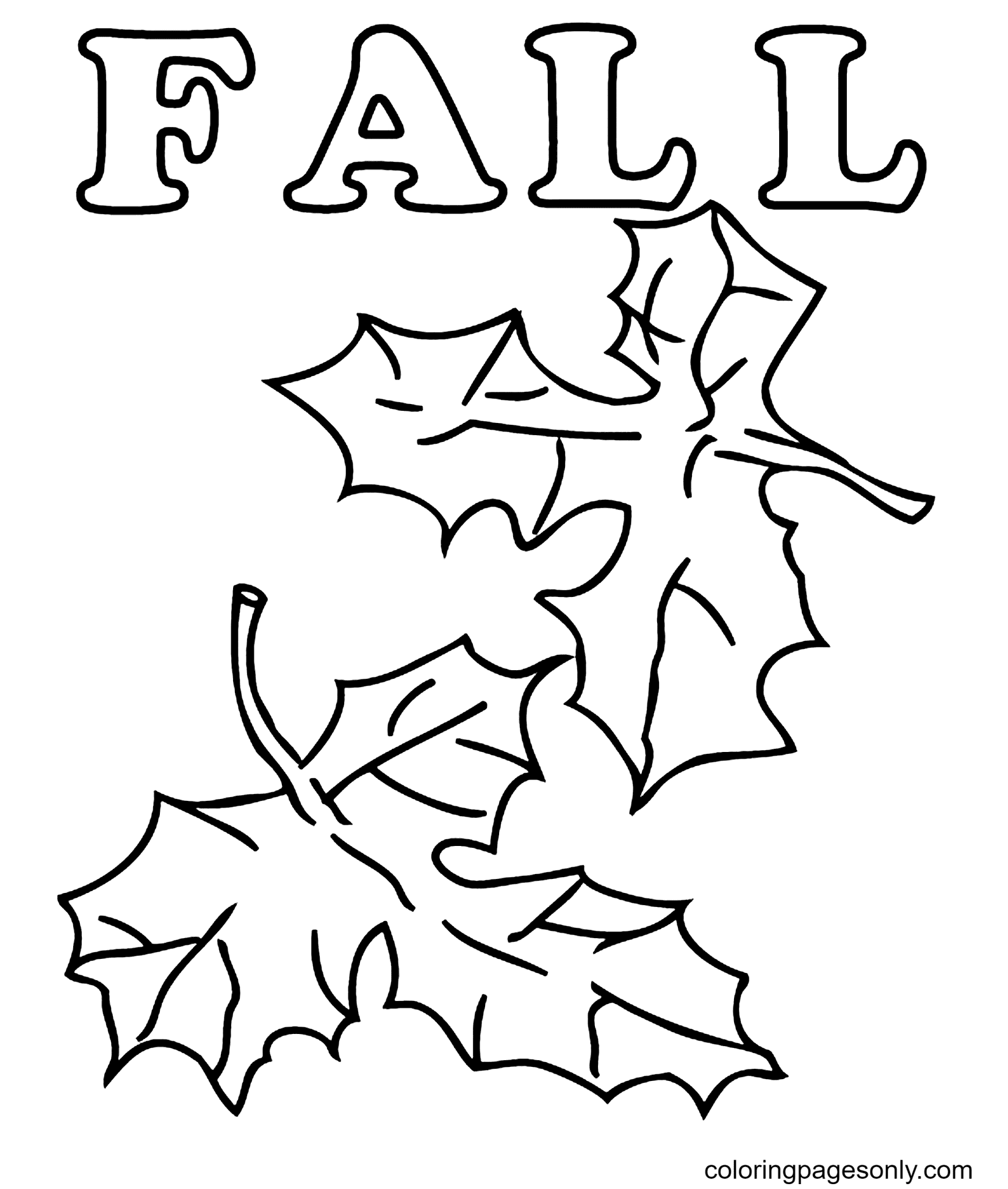
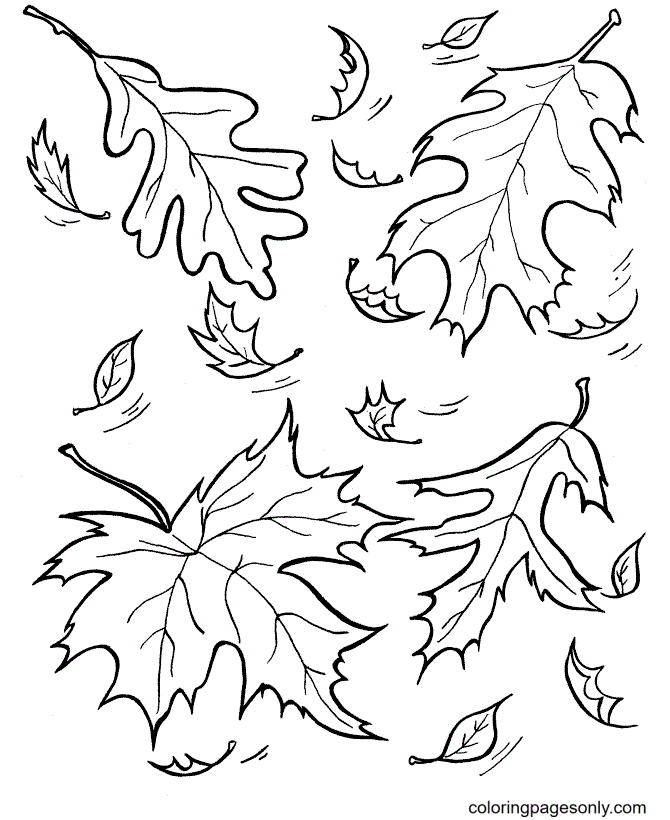
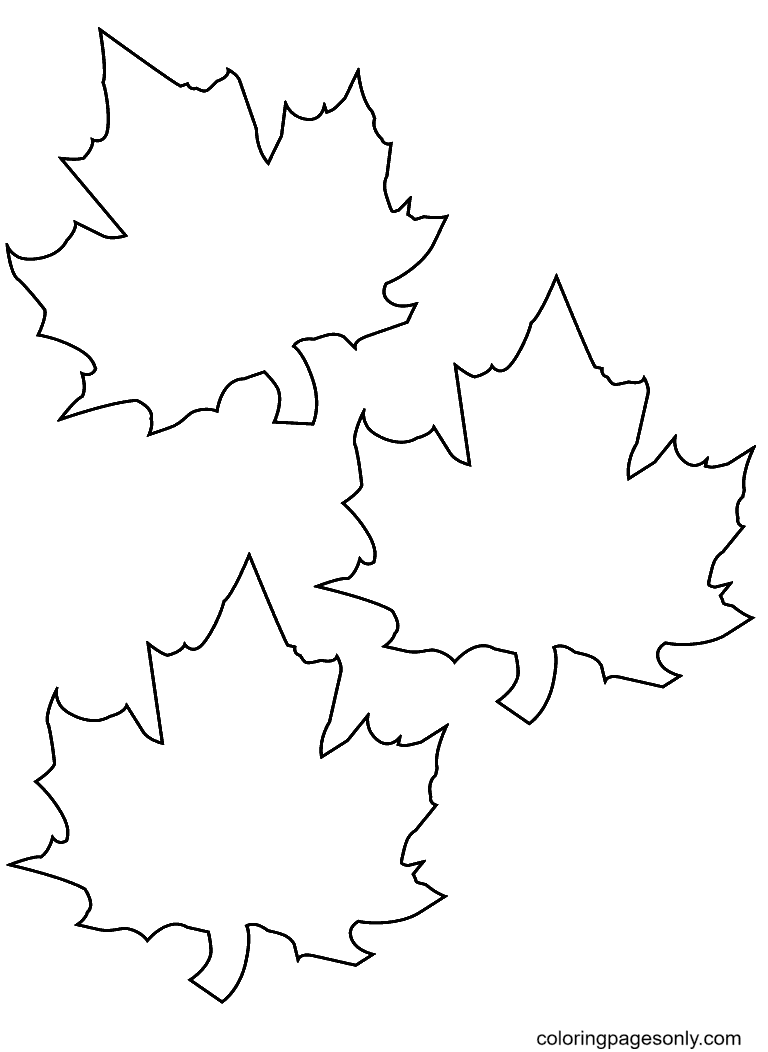
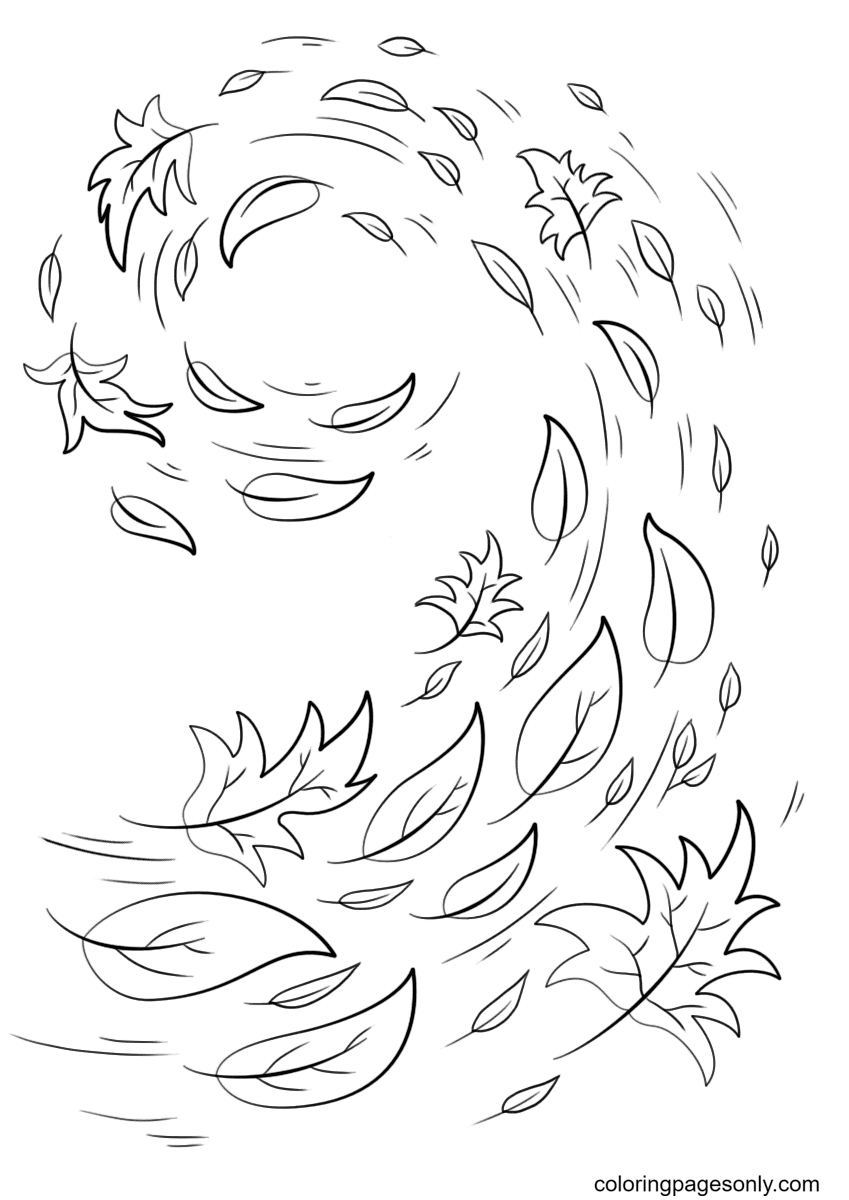
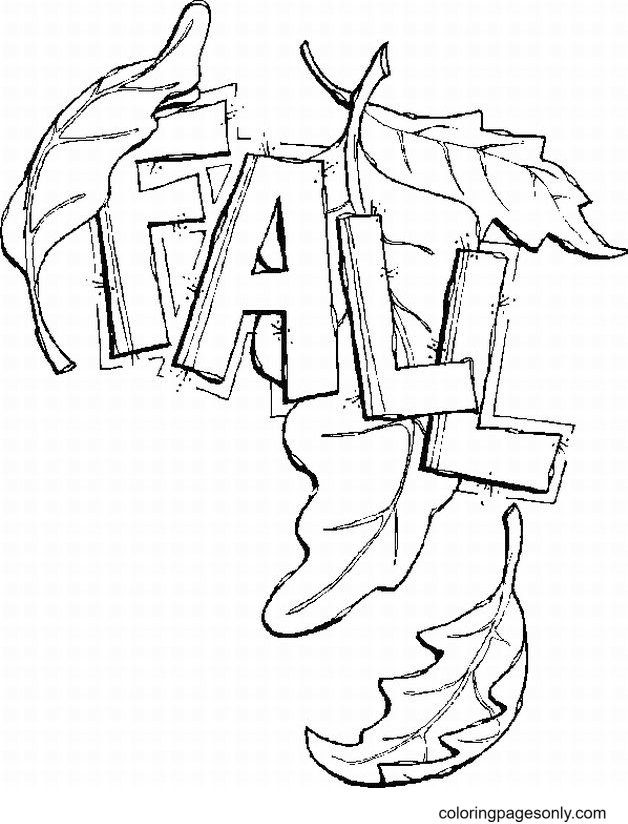
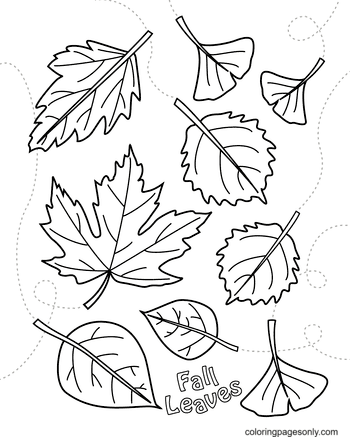
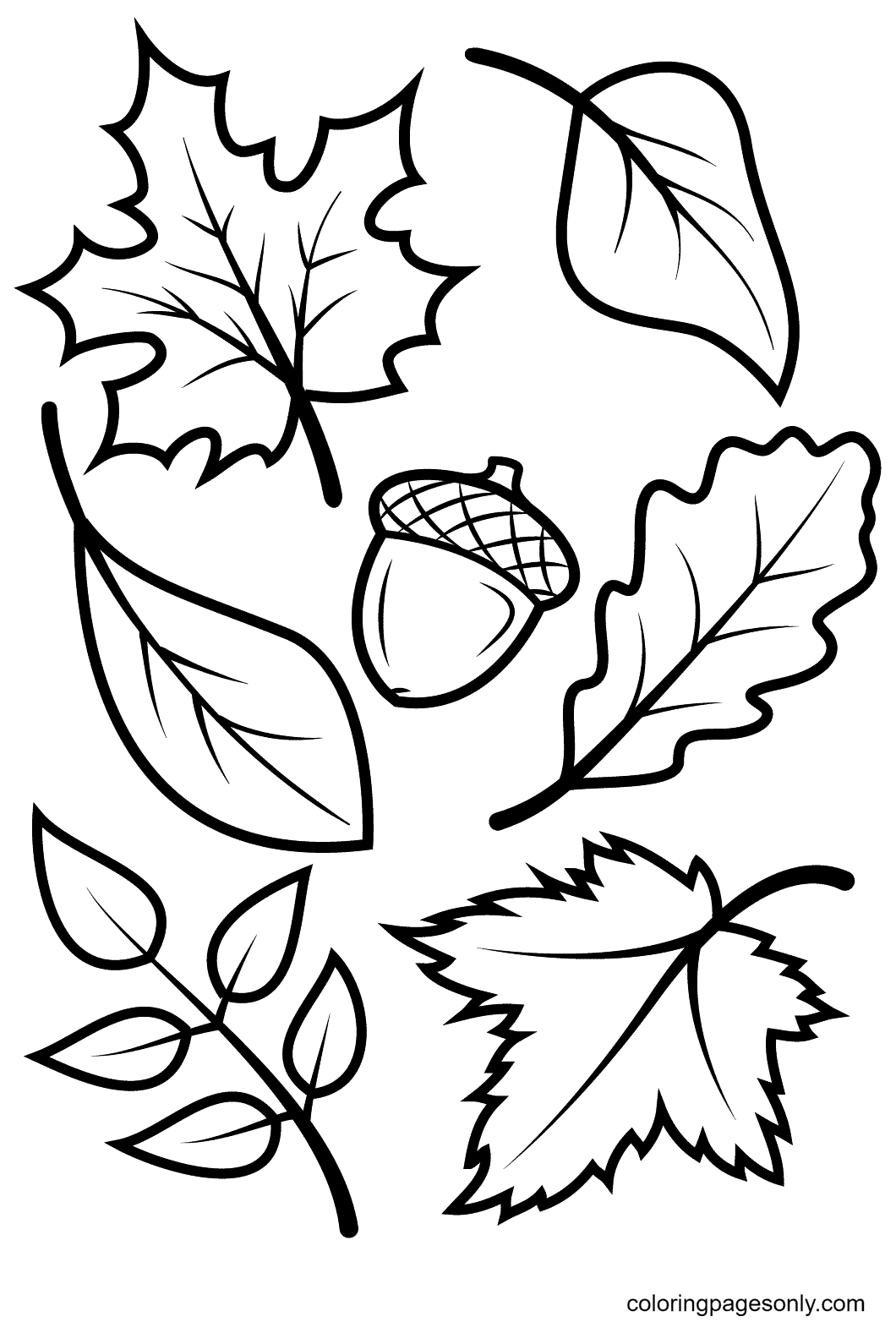
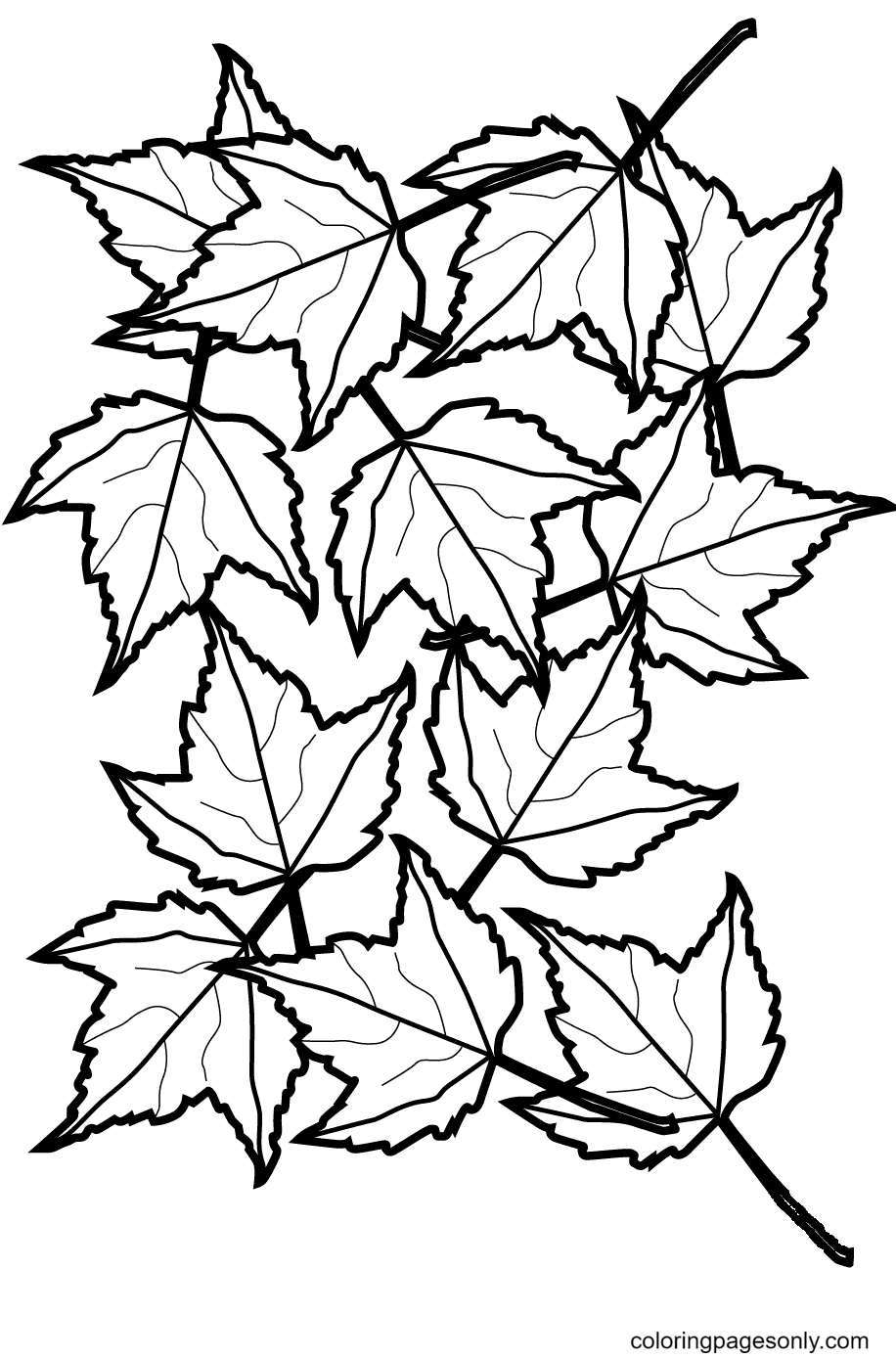
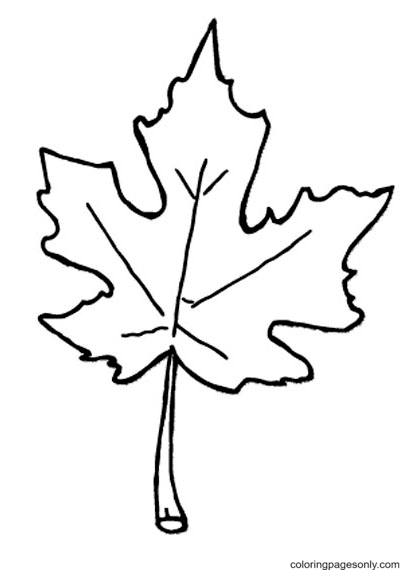
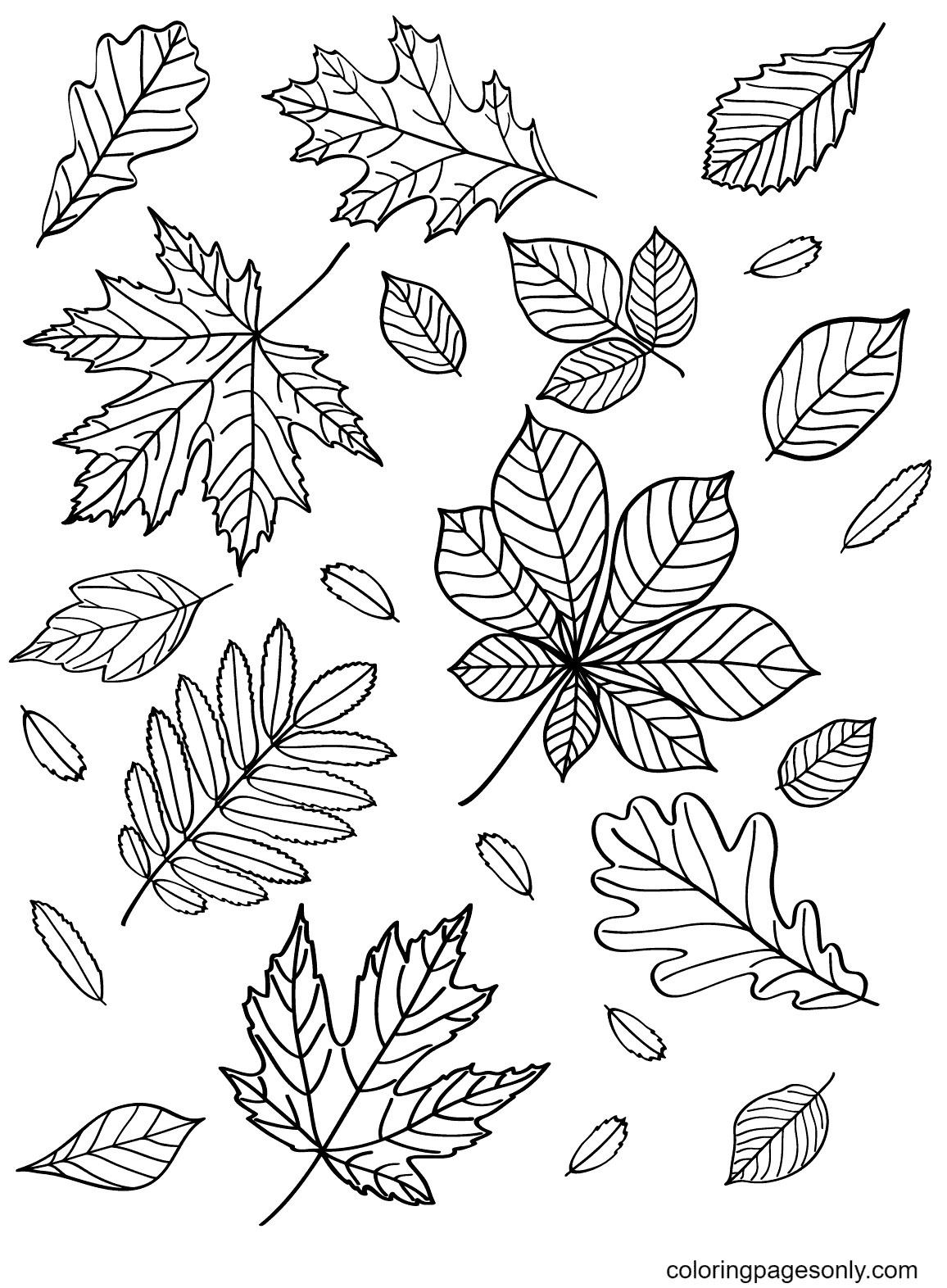
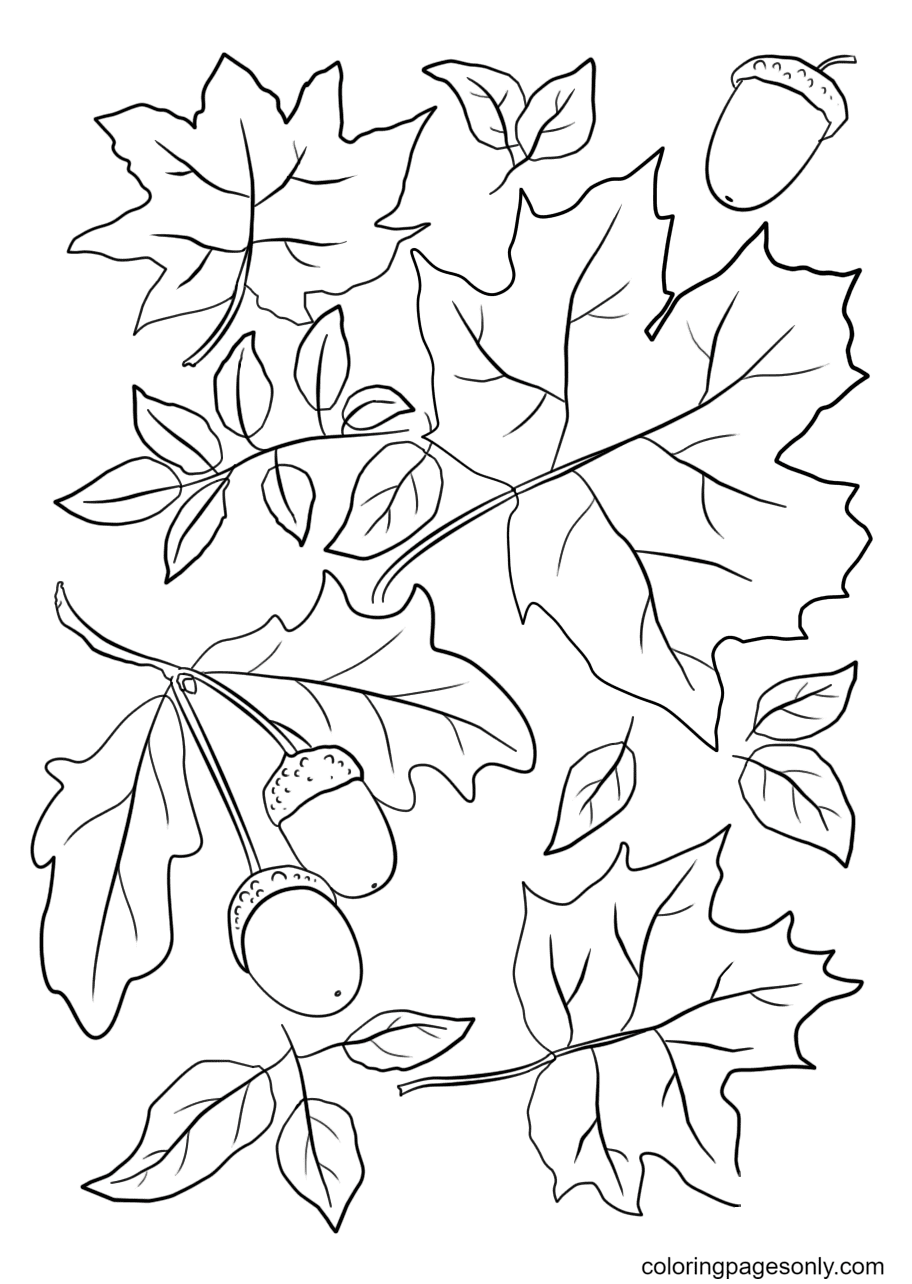
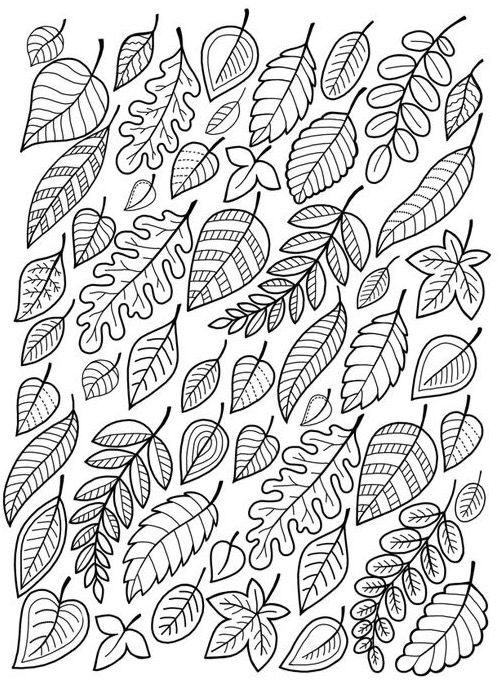
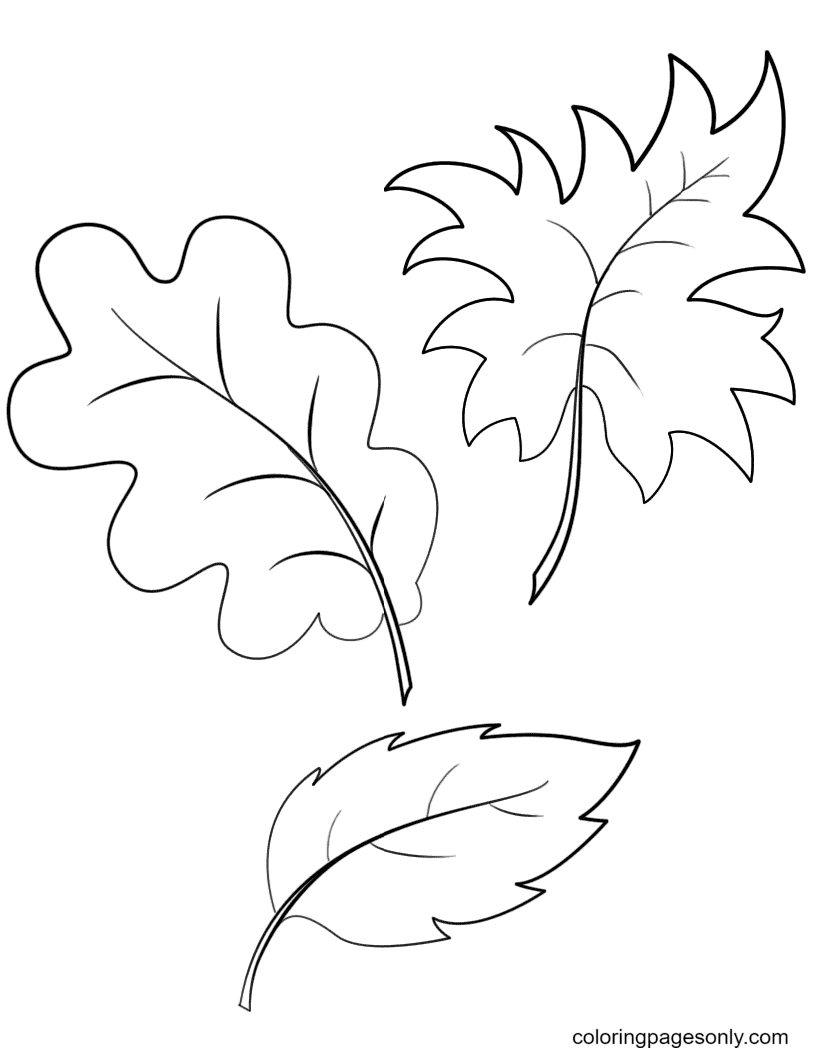
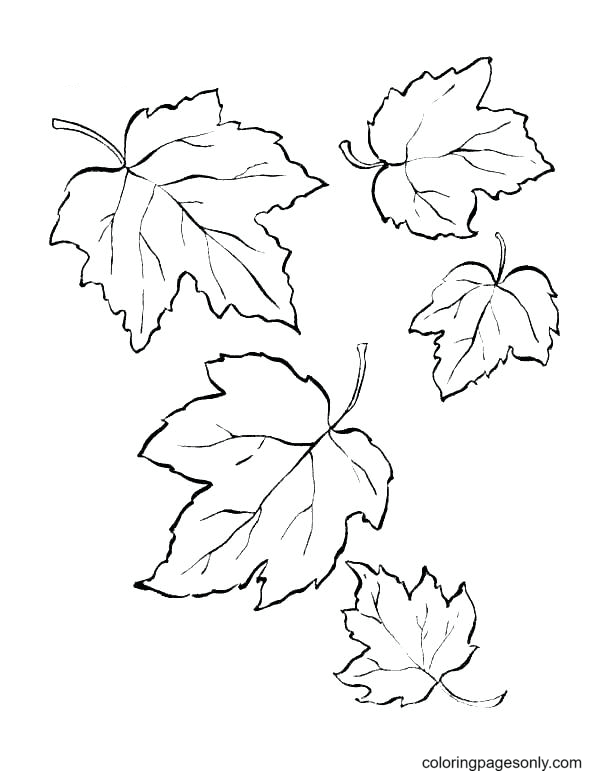
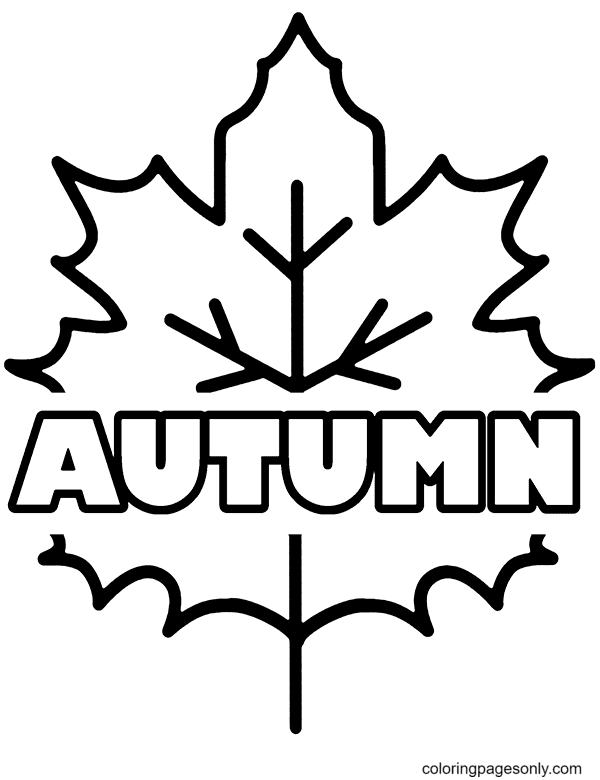
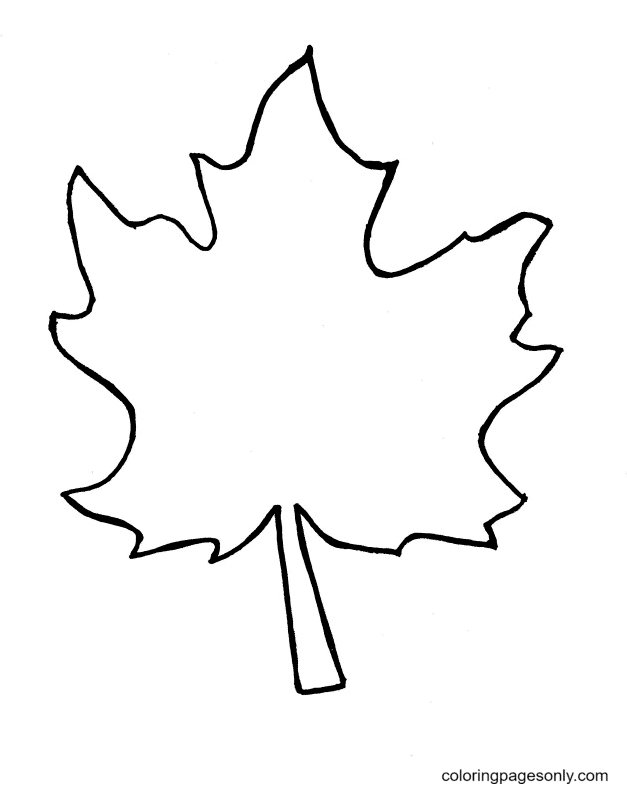
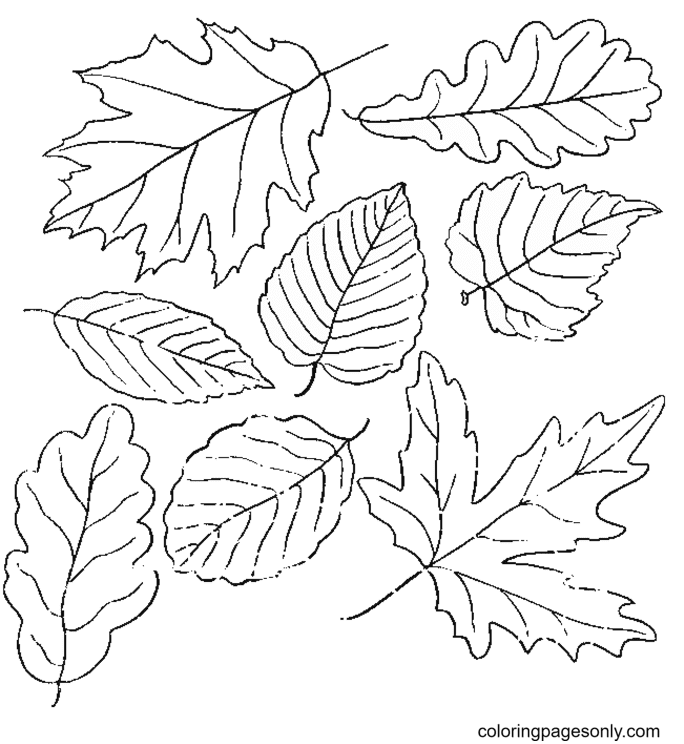
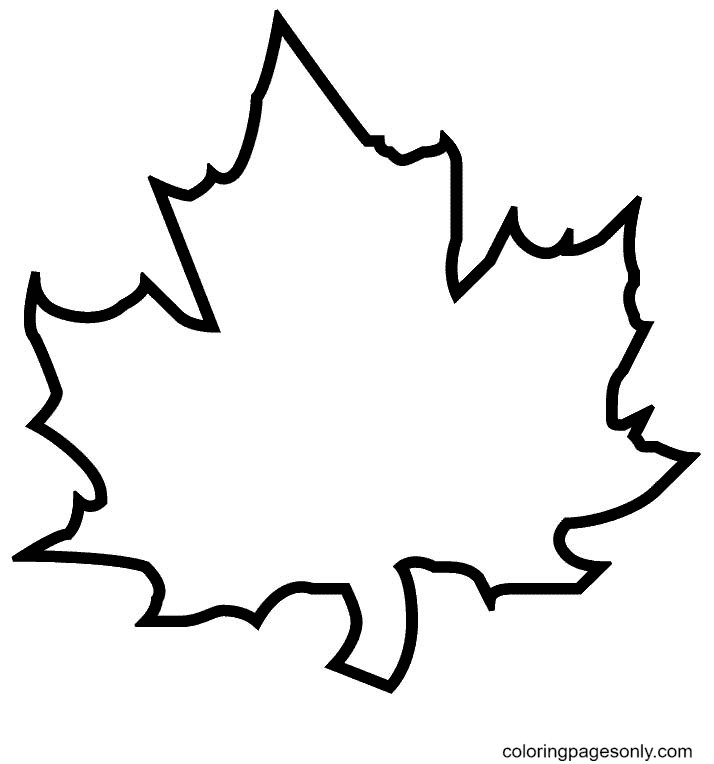
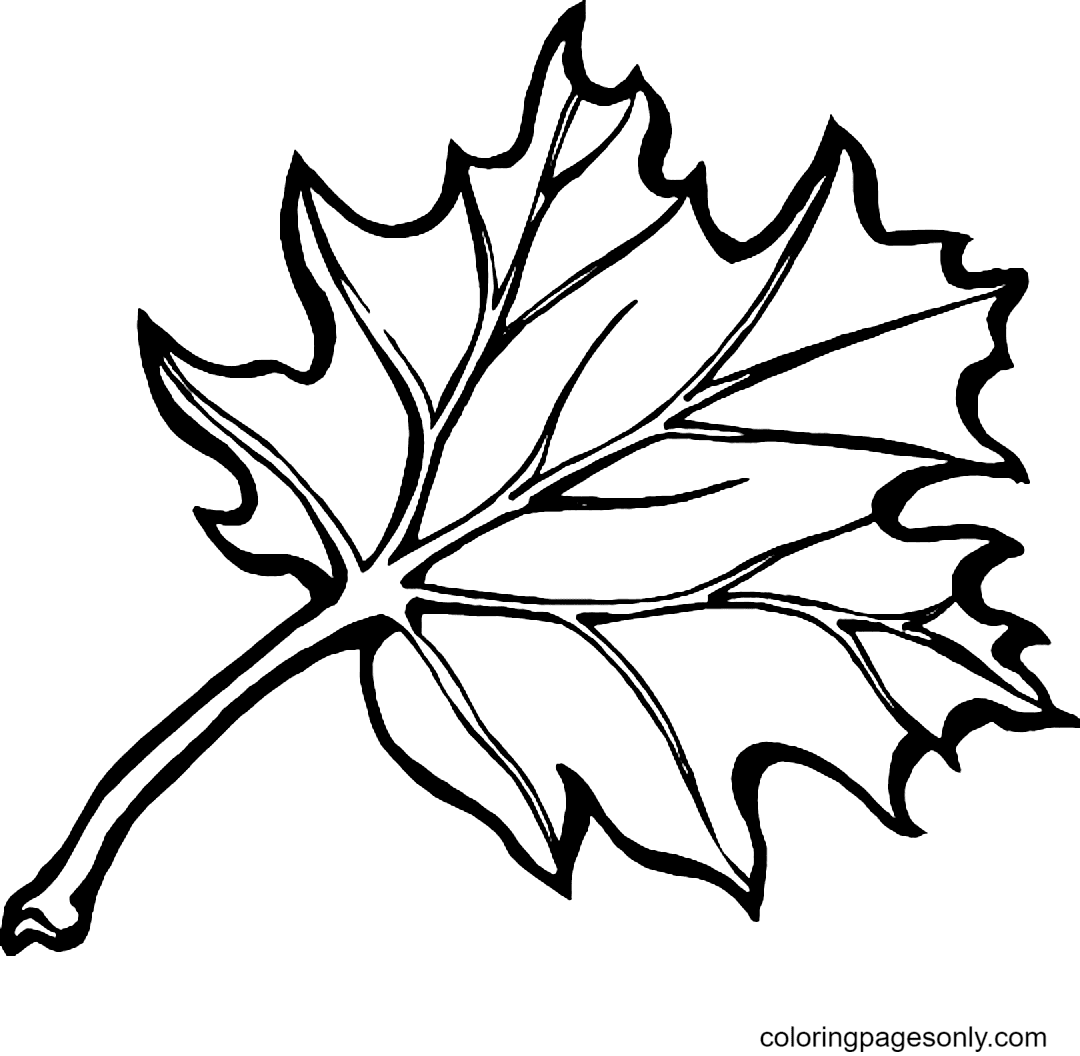
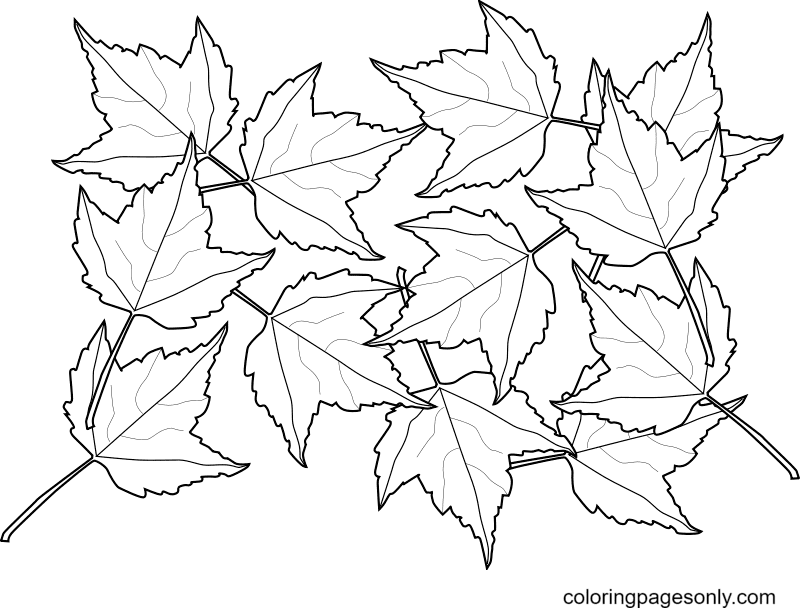
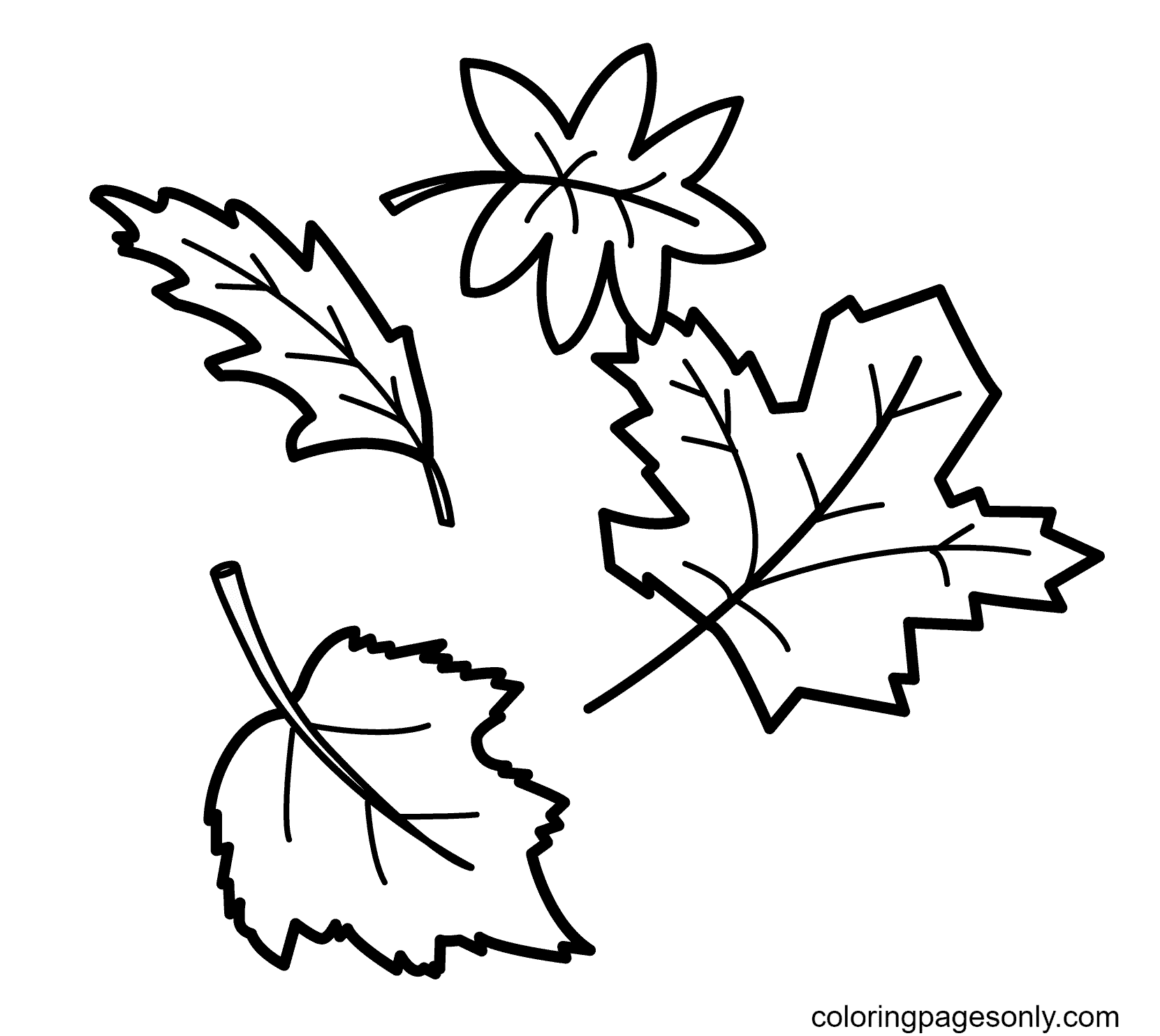
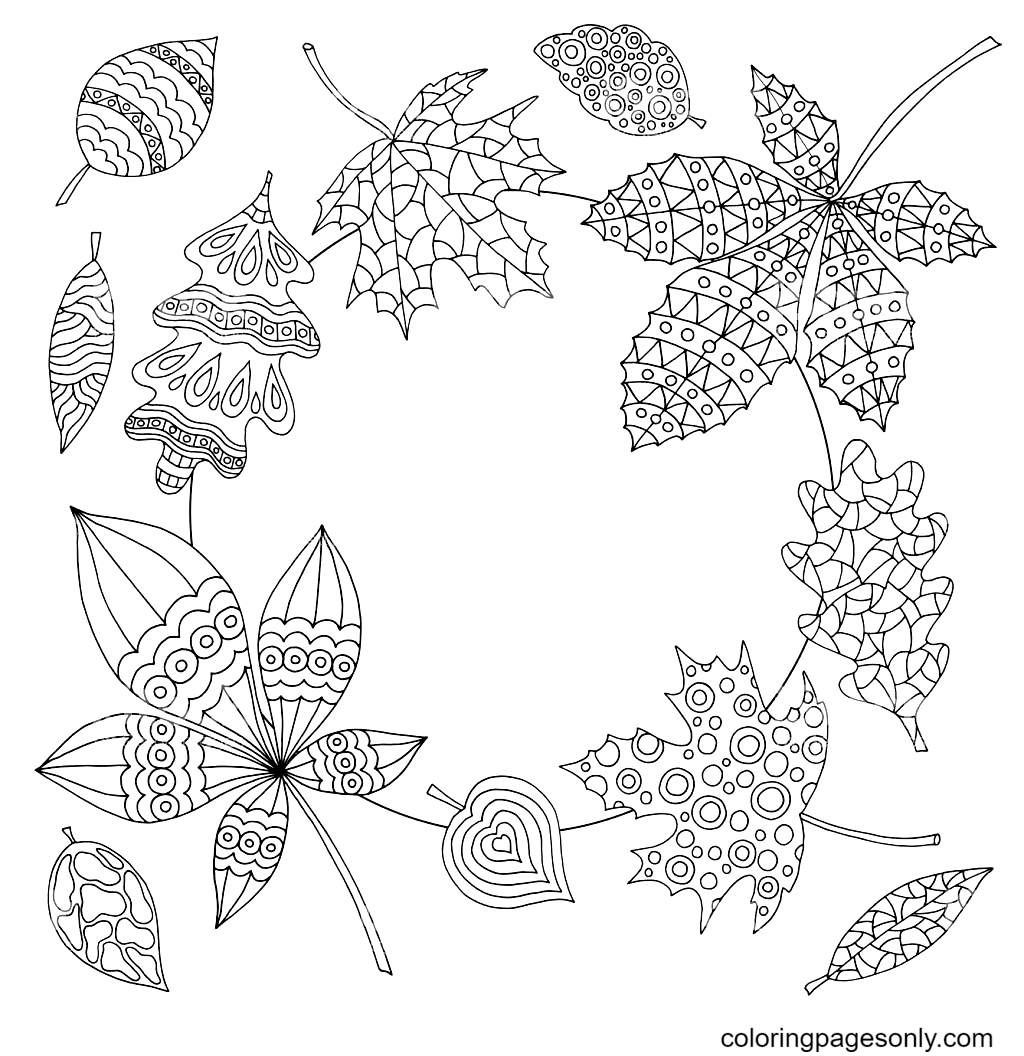
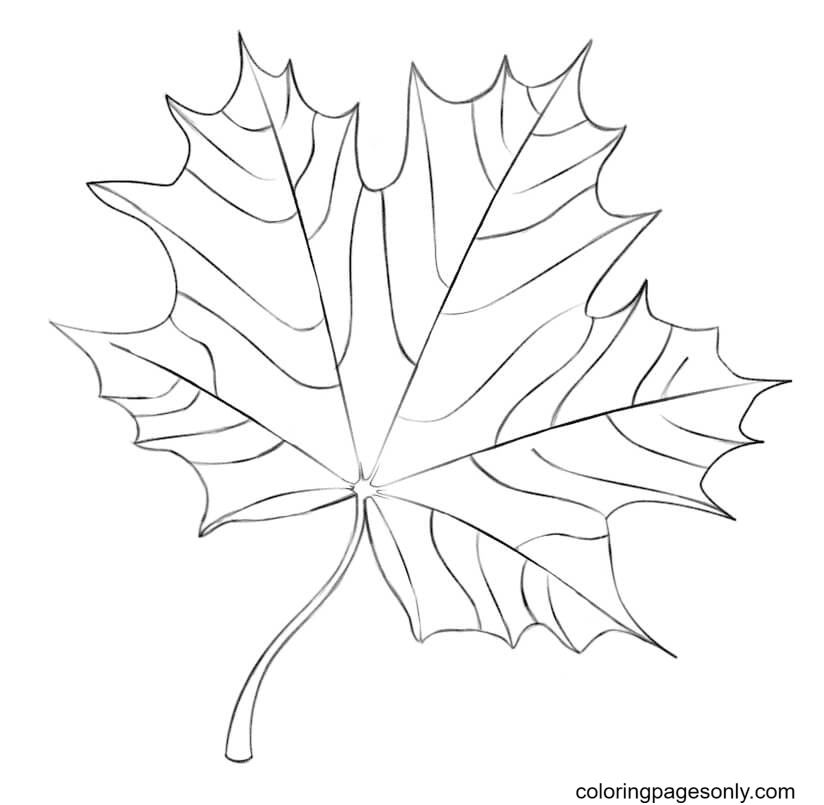
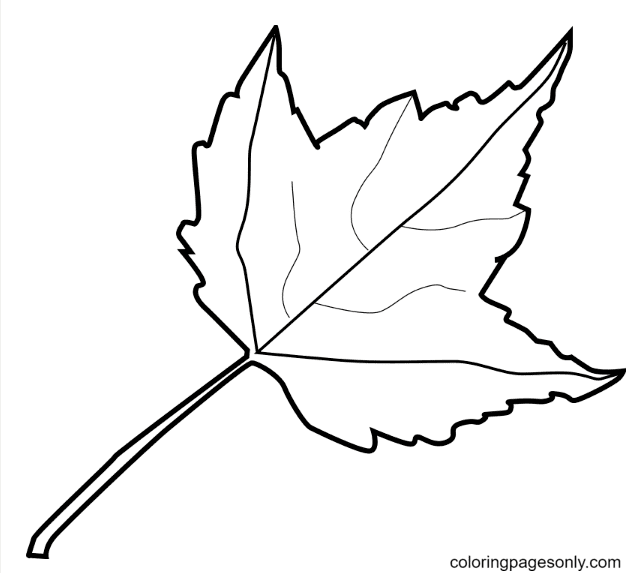
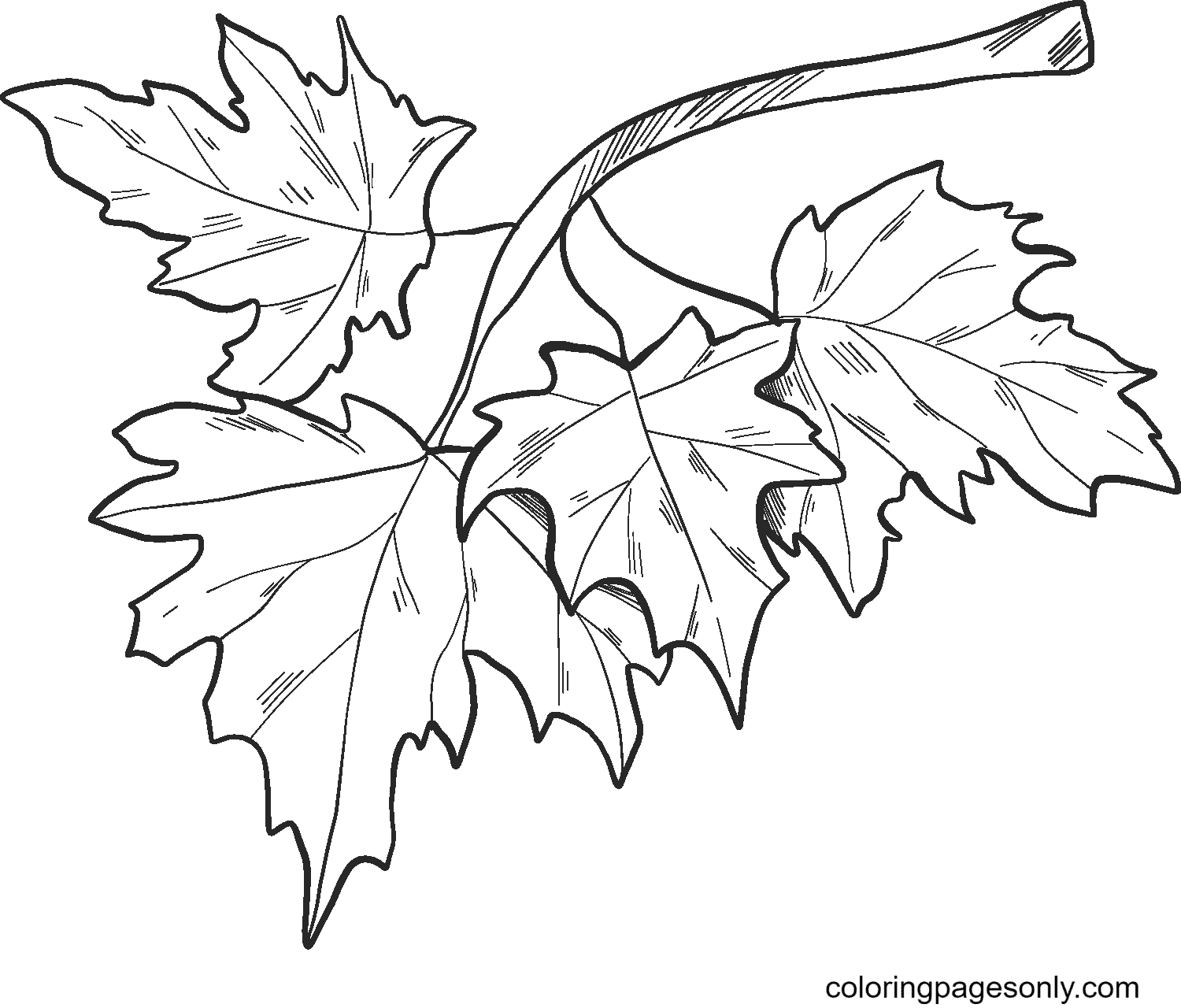
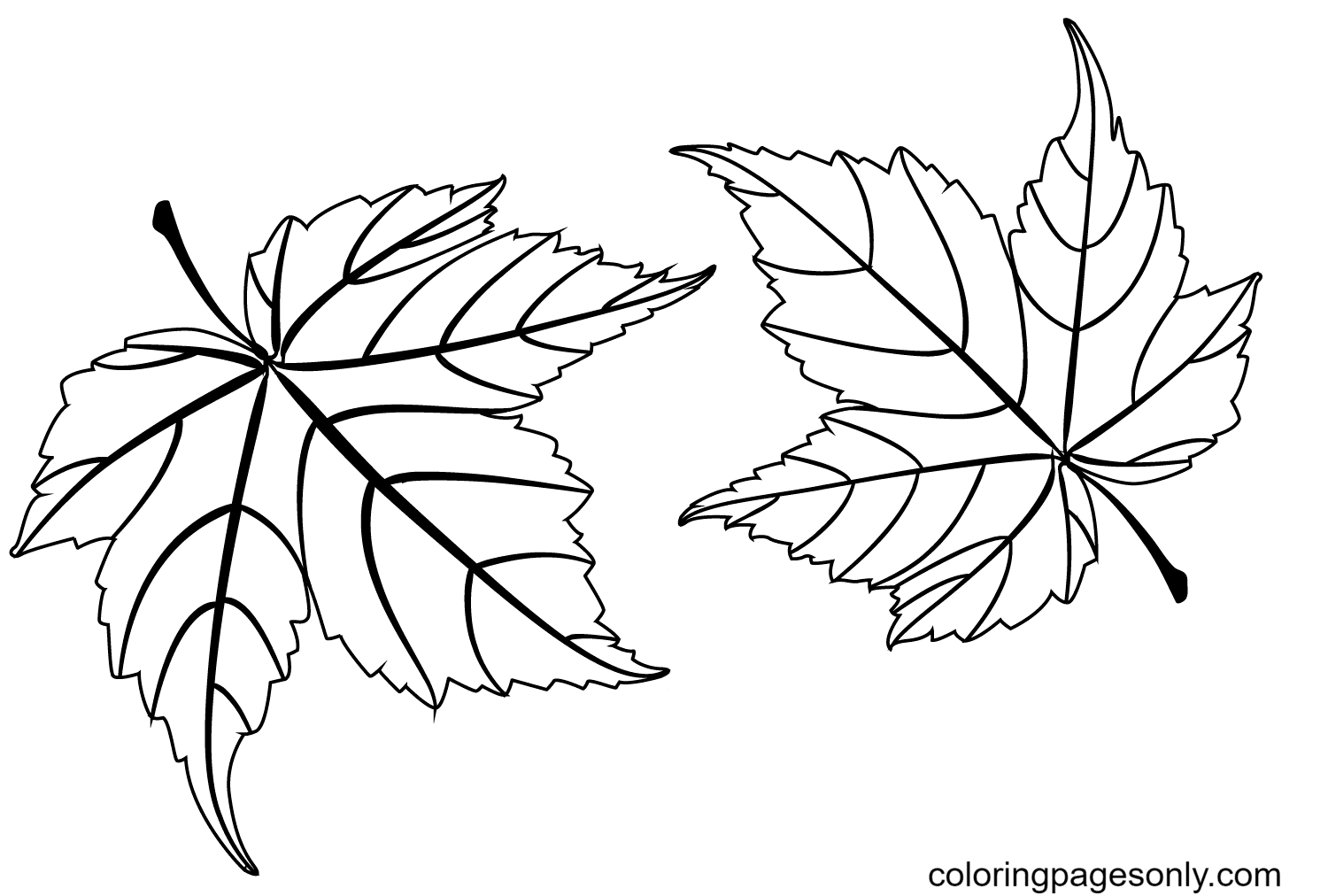
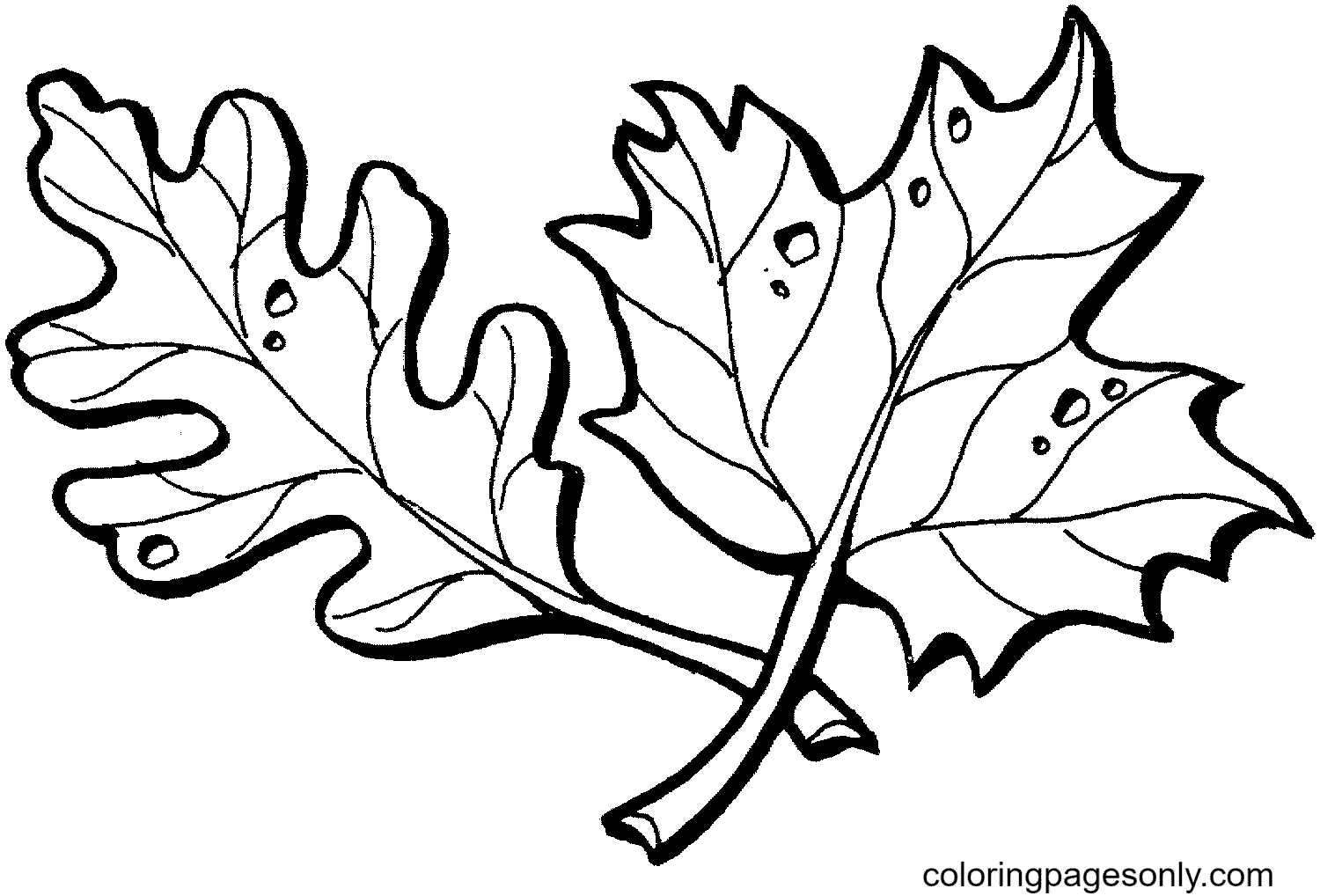
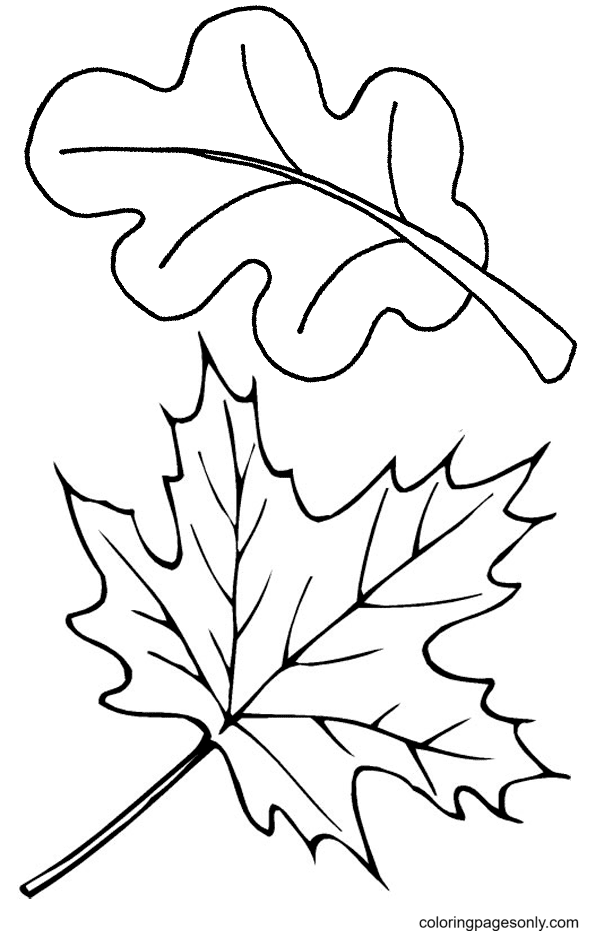
The largest group by far is made up of single-leaf and few-leaf studies, patterns, and frames, with page titles that differ more than the actual designs. Expect a fair amount of repetition across this group, since many pages show the same basic maple or oak leaf shape under a different file name.
What Autumn Leaves Coloring Pages Do
Fine motor development. The American Academy of Pediatrics lists structured coloring among the activities that build fine motor control in children ages 2 through 7, and a leaf’s veined structure gives a child a natural, repeating pattern to trace and fill in with steady, controlled strokes.
Color science literacy. Because real autumn color comes from two different pigment processes, one pigment that was hidden all along and one that is newly made, coloring a leaf page is a natural opening for explaining that not all fall colors work the same way underneath the surface.
Anxiety reduction through focus. A 2005 study in the Art Therapy Journal found that structured coloring sessions produced measurably lower anxiety than unstructured drawing, and the slower, more meditative mood of an autumn scene suits a longer, calmer coloring session particularly well.
Seasonal transition awareness. Pages showing raking, sweeping, and garden cleanup give young children a concrete, activity-based way to notice that autumn is a season of visible change and preparation, not just a color palette.
How to Color Autumn Leaves Pages Well
- Maple leaves: blend Scarlet into Yellow Orange from the leaf’s center outward, since real maple leaves rarely turn one flat color and instead show a gradient across the same leaf.
- Oak leaves: lean toward Burnt Sienna and Brown rather than bright red, since oak leaves typically turn a deeper, duller color than maples.
- Birch or aspen-style leaves: use a clean Yellow or Goldenrod, since these species are known for turning yellow rather than red.
- Leaf piles and ground cover: mix three or four fall colors in small, overlapping shapes rather than one flat color, which reads more like a real pile of mixed leaf types.
- Woodland animals: keep the animal in its natural color first, then treat the surrounding leaves as the secondary color story, so the two elements do not compete for attention.
5 Creative Craft Ideas With Autumn Leaves Coloring Pages
1. Leaf Garland. Color four or five single-leaf pages, cut them out, punch holes, and string them along ribbon or twine for a simple autumn garland.
2. Pressed Leaf Bookmark. Color a small single-leaf page, trim it into a narrow strip, and laminate it or cover it with clear tape for a durable bookmark.
3. Leaf Color Guide. Color a maple, an oak, and a birch-style leaf side by side, and label each with its color story, hidden pigment, or newly made pigment, to reinforce the science behind the colors.
4. Autumn Scene Greeting Card. Color one of the seasonal scene pages, fold a piece of cardstock in half, and glue the design to the front for a fall greeting card.
5. Window Leaf Display. Color several single-leaf pages, cut them out, and tape them to a window so light shines through the colors like real fall foliage.
Frequently Asked Questions
What are autumn leaves coloring pages?
A free set of 73 printable PDFs and online coloring sheets showing single leaves, autumn scenes, and seasonal characters tied to the fall season.
Why do leaves change color in autumn?
Yellow and orange come from carotenoid pigments that are present all year but hidden by green chlorophyll until it breaks down in the fall. In contrast, red and purple come from anthocyanin pigments that are newly produced when sugar becomes trapped in the leaf and reacts with sunlight.
Why do some leaves turn red while others turn yellow?
It depends on the tree species and its pigments: species like maples and oaks commonly produce red anthocyanins, while species like birch and aspen mainly show the yellow carotenoids that were already present in the leaf.
Are there scenes beyond plain leaves in this collection?
Yes, a group of newer pages shows full autumn scenes and characters, including woodland animals, family and couple scenes, and Thanksgiving and Halloween moments.
Are these pages suitable for young children?
Yes. The simpler single-leaf pages suit young children, while the detailed scene pages and patterns work well for older kids and adults.
Can these pages be used for a science lesson?
Yes. Because real leaf color comes from two different pigment processes, these pages pair naturally with a short lesson on why leaves change color in fall.
Are there pages showing people doing fall activities?
Yes, several pages show children and adults raking, sweeping, and cleaning up leaves in a garden or park.
Are these free to download and print?
Yes. Every page is free, with no account, email, or payment required, and can be downloaded as a PDF or colored online in the browser.
Start Coloring
Download any page by clicking the design. No account, email, or payment is required. Pages print directly from the browser at full resolution or open in the online coloring tool for screen use. Share finished pages on Facebook or Pinterest with the share buttons at the top of each design page.