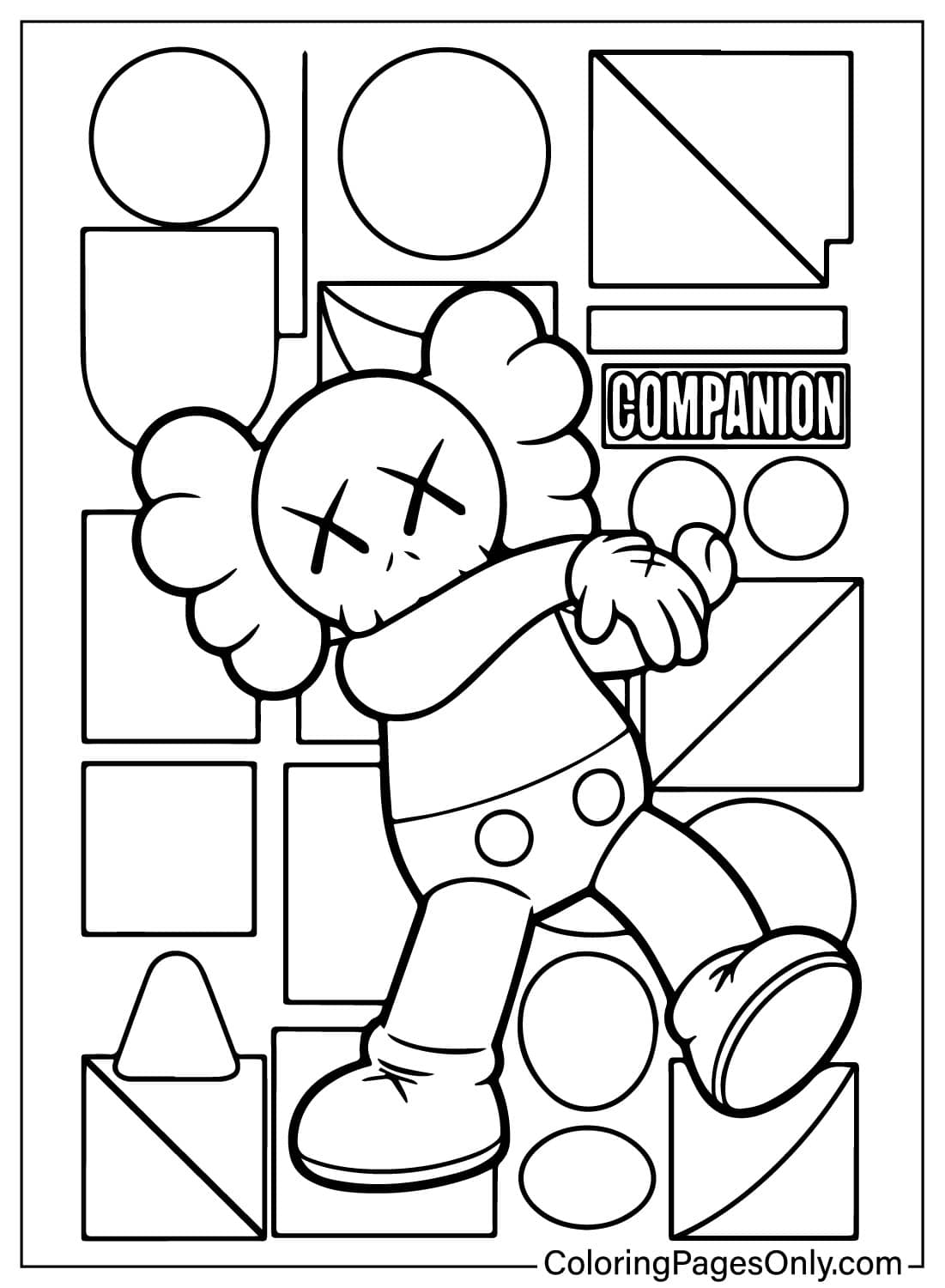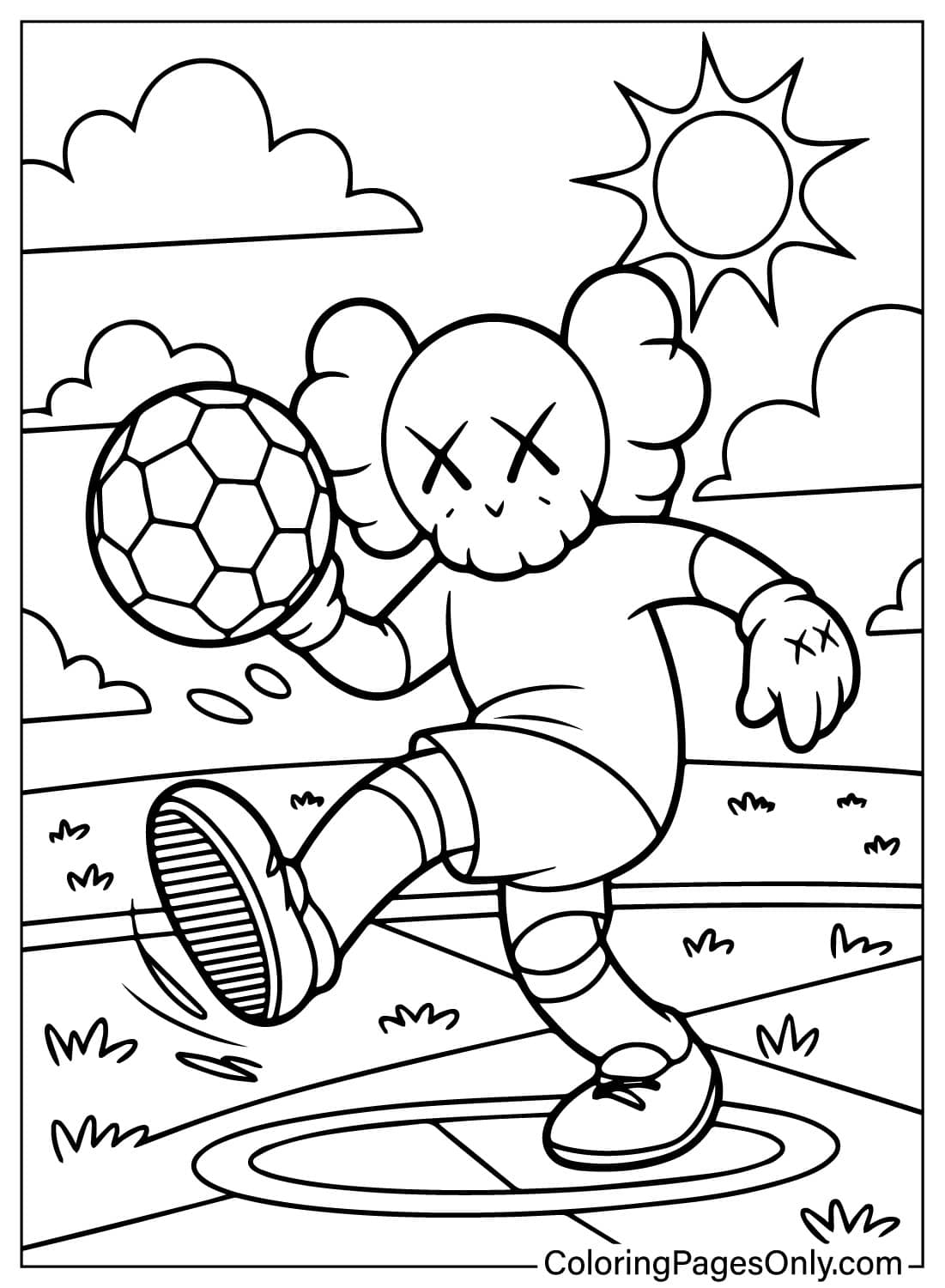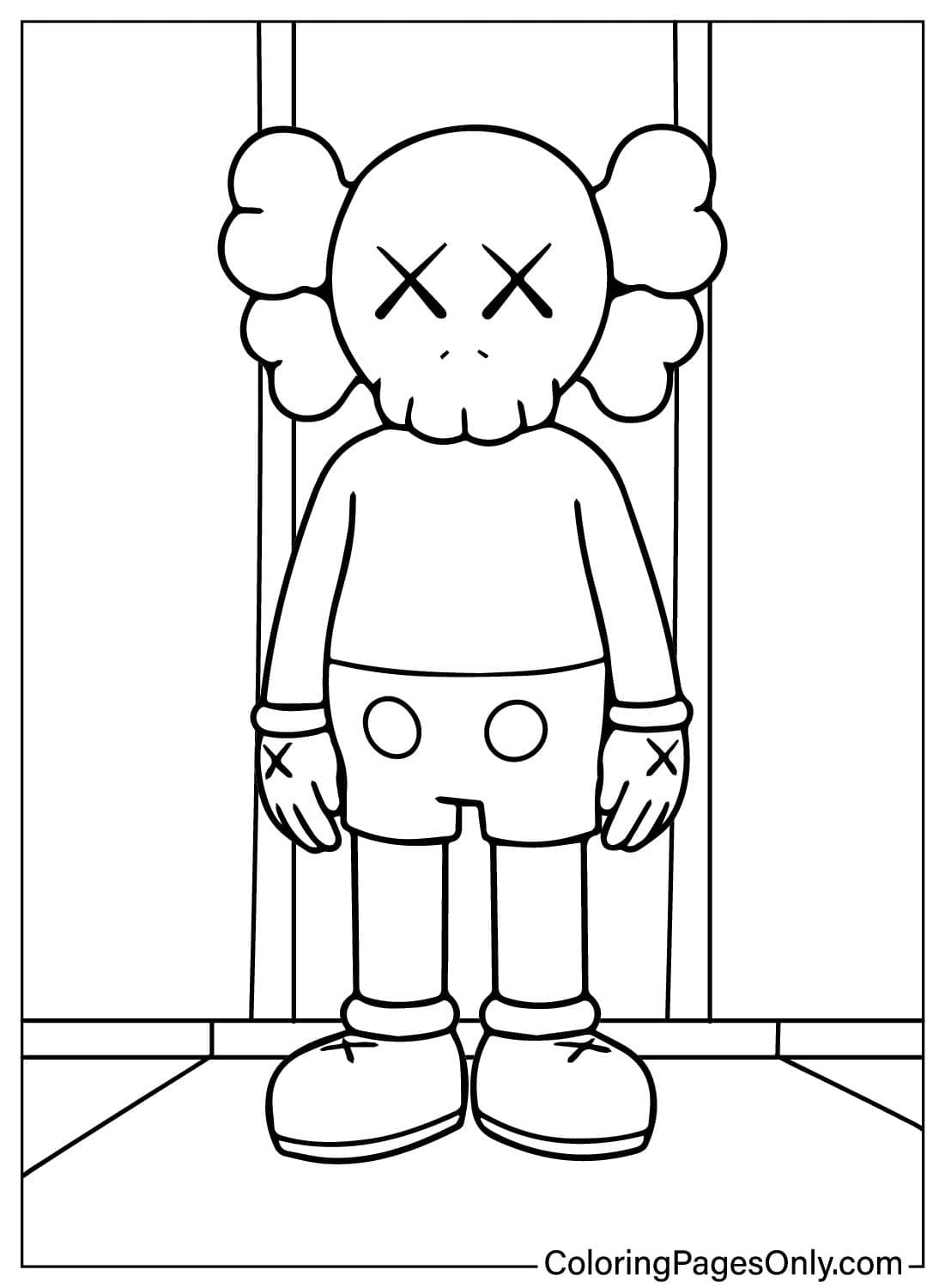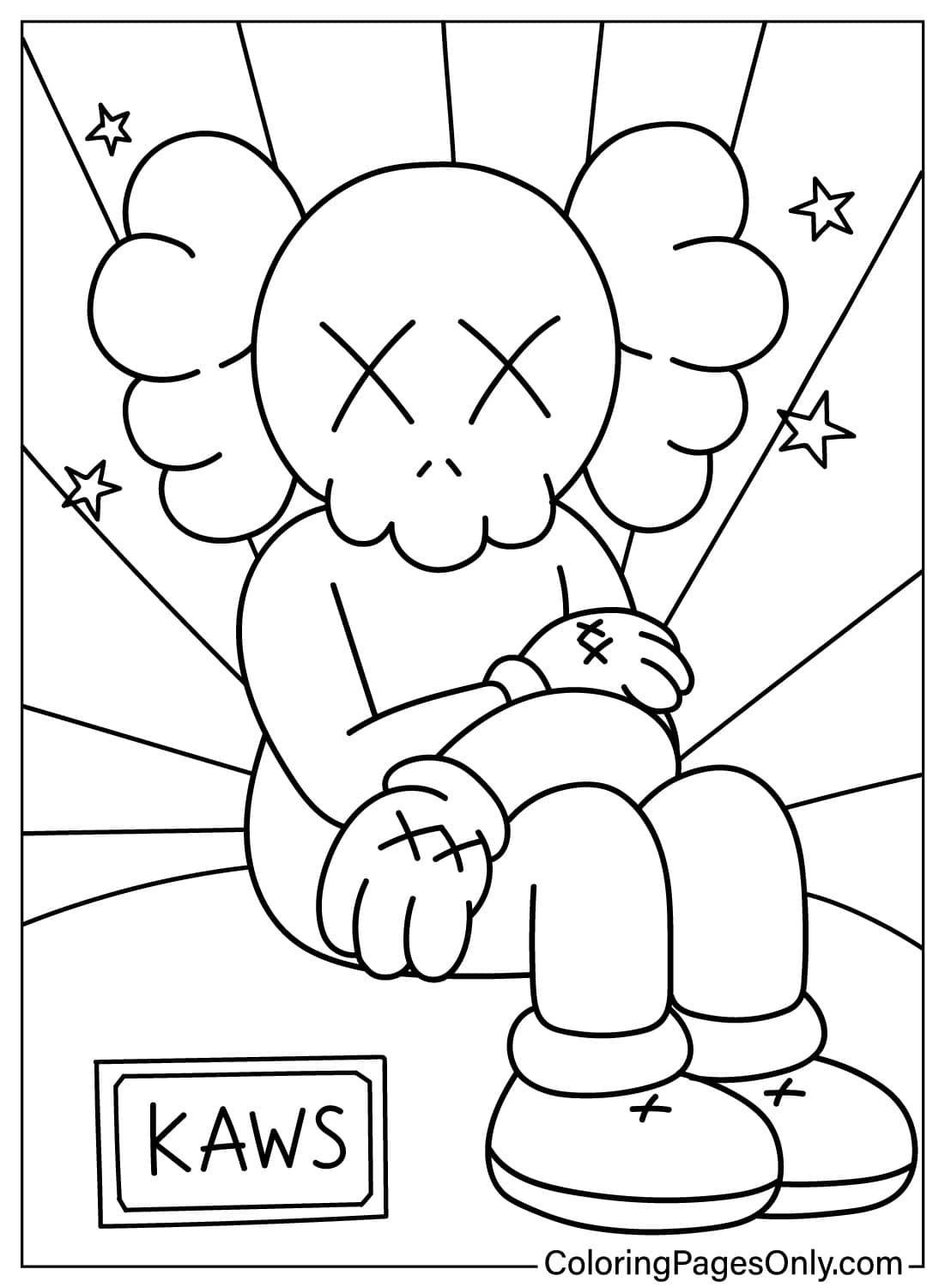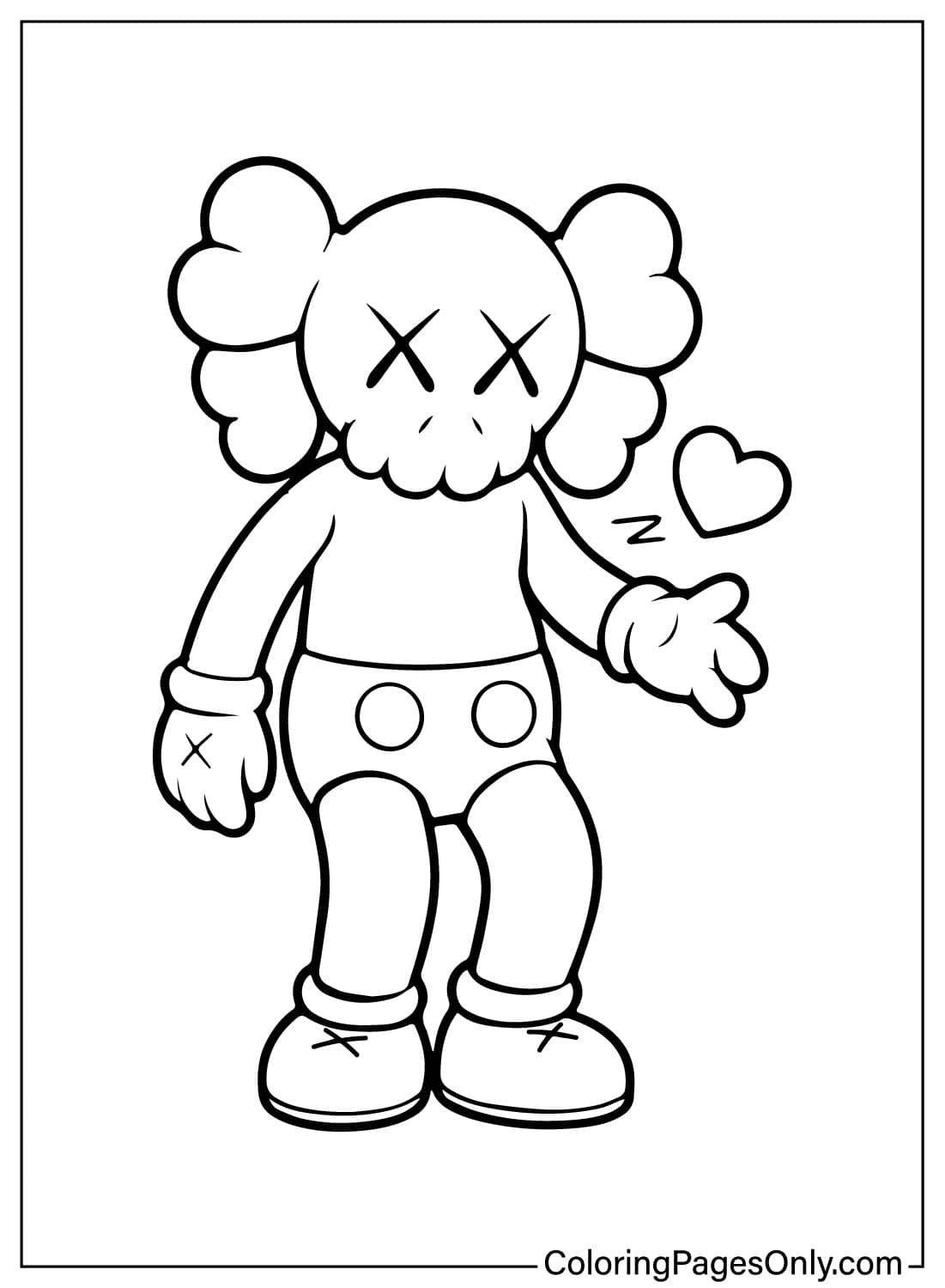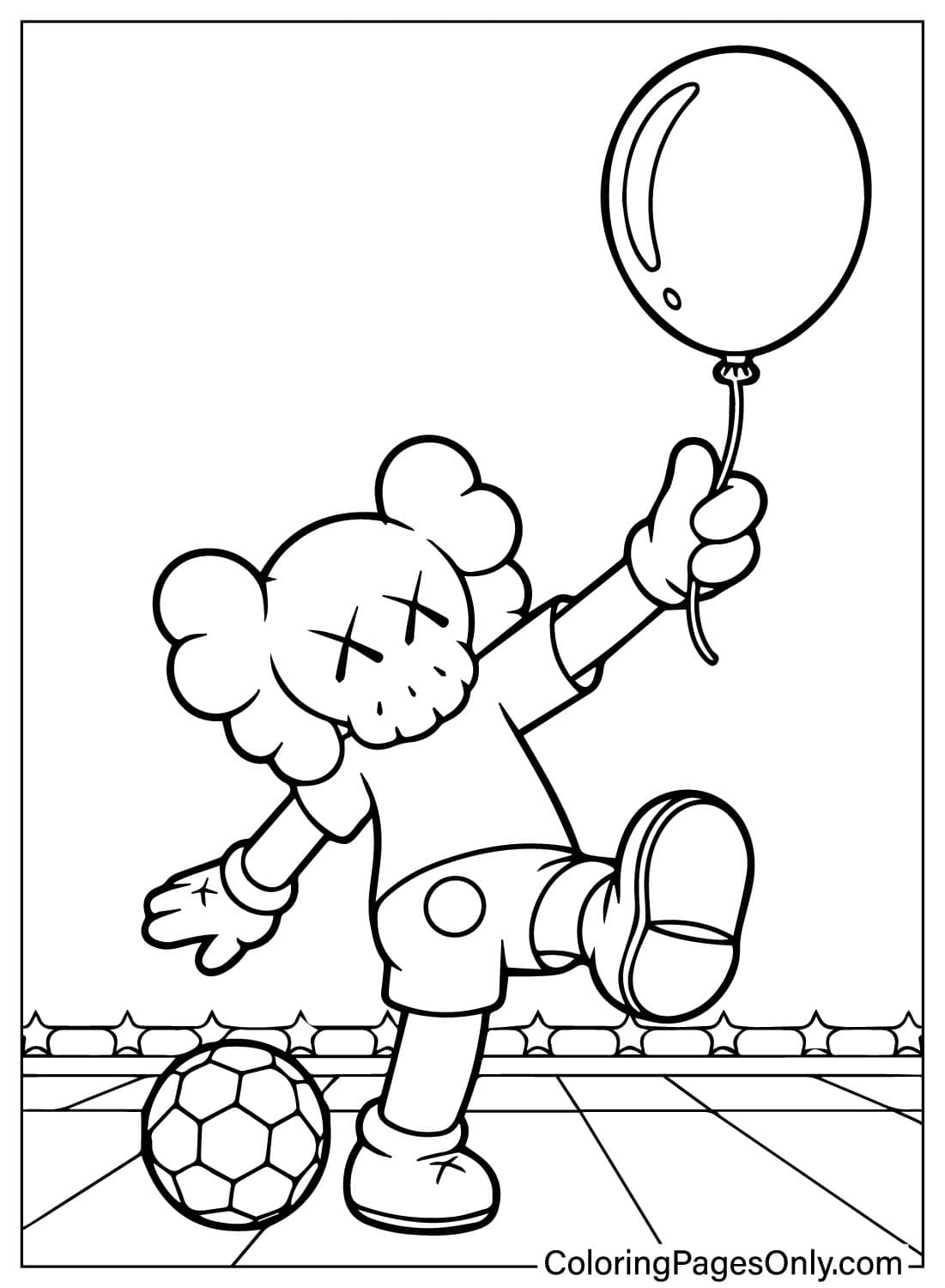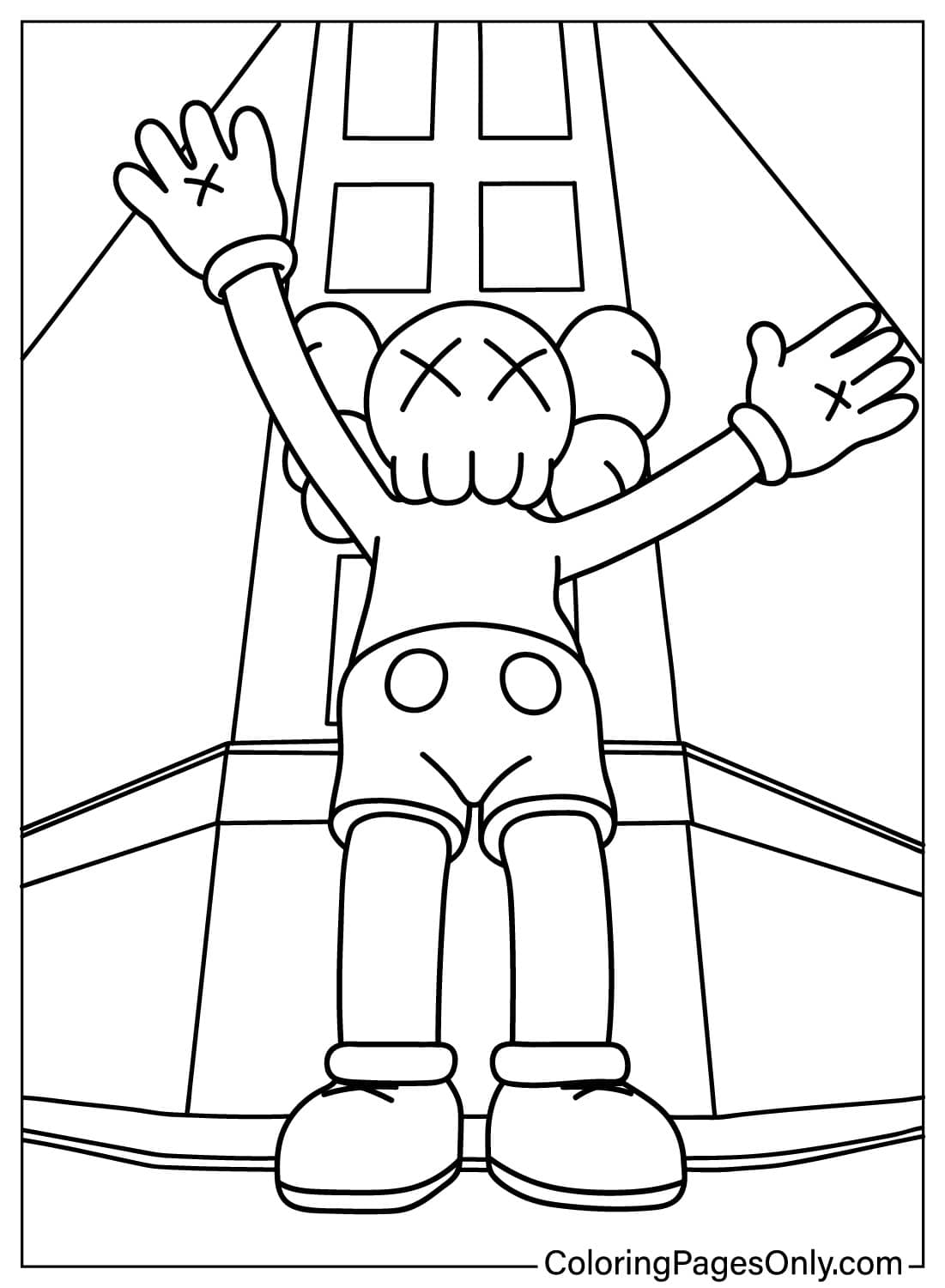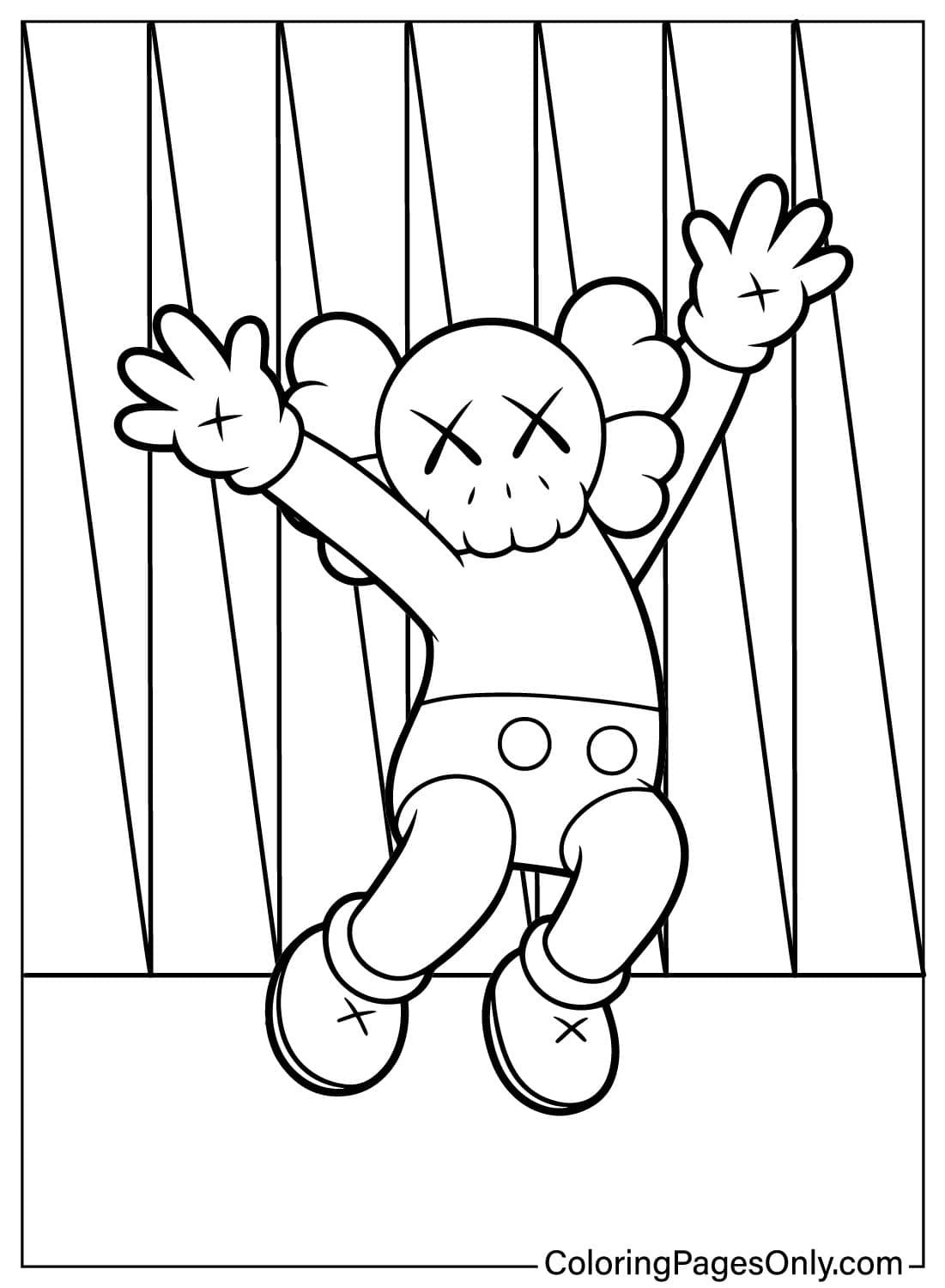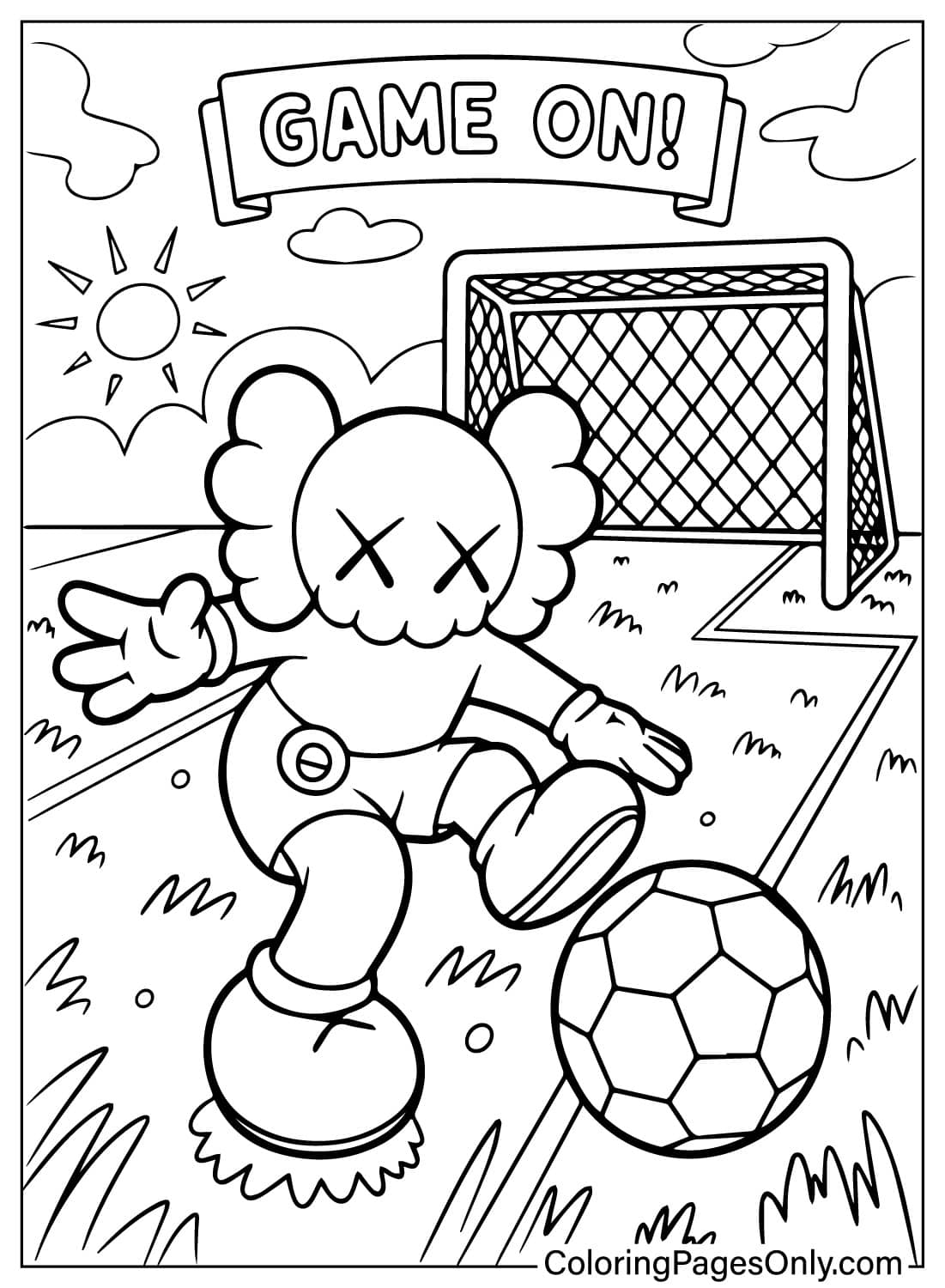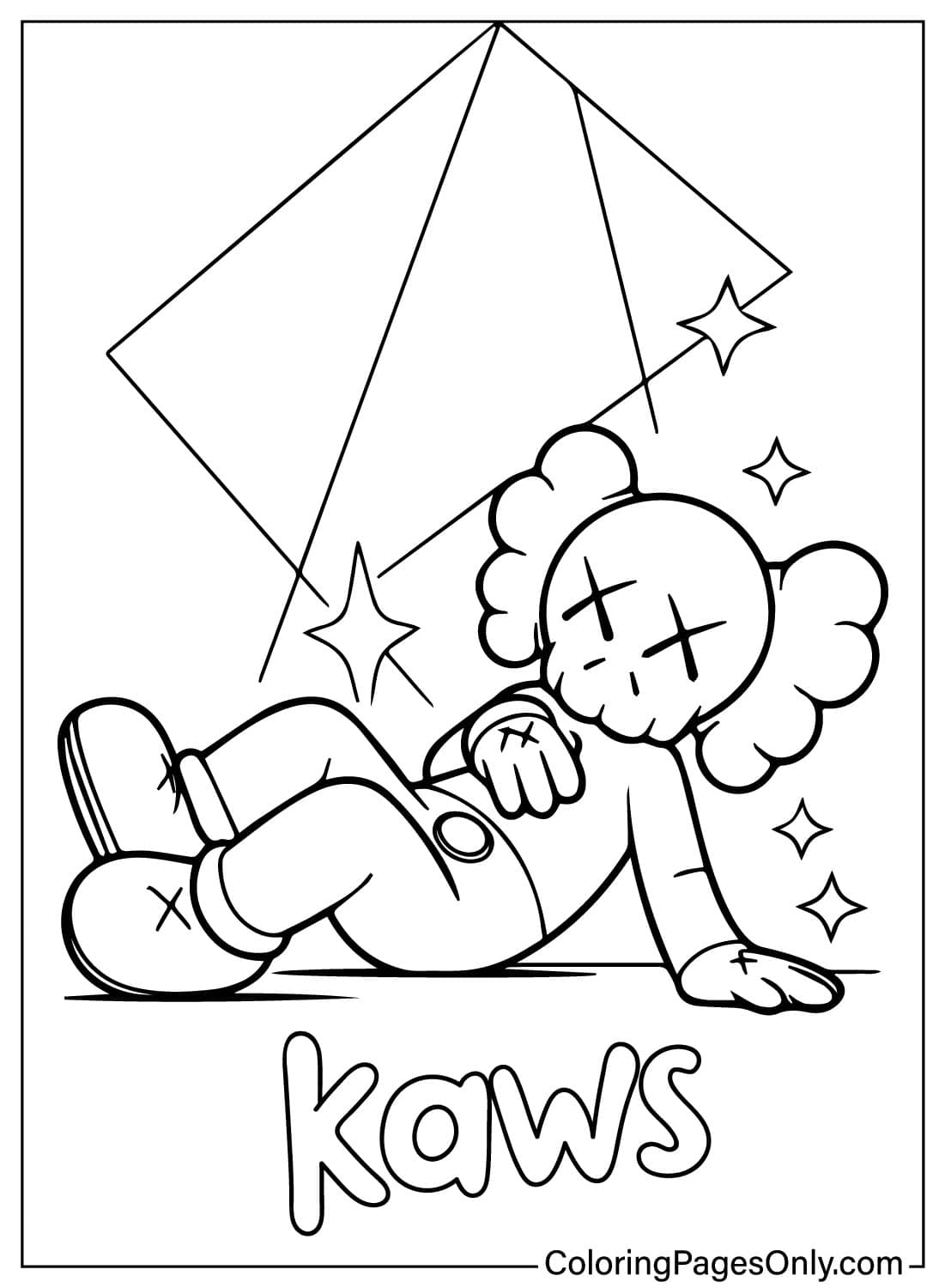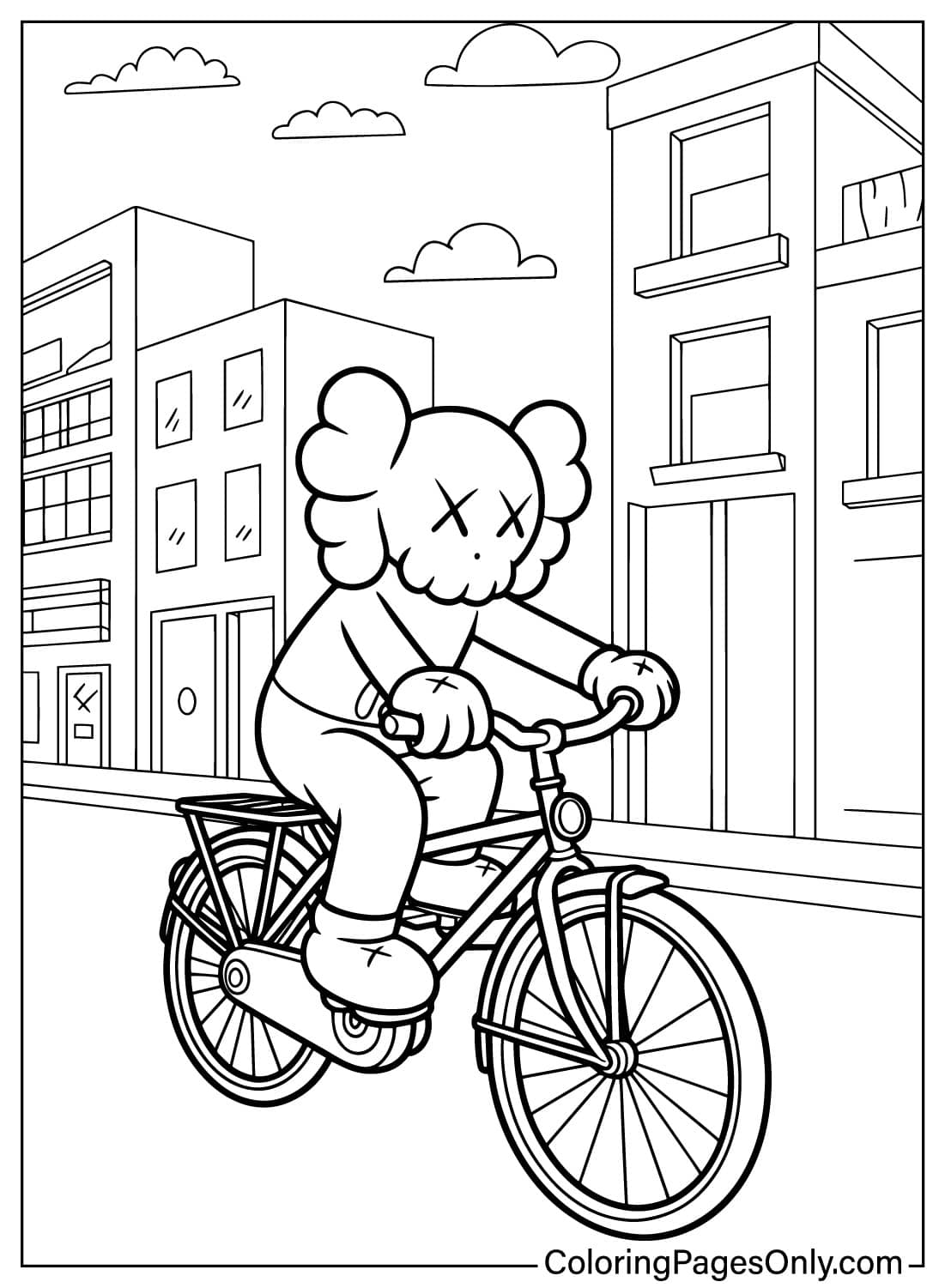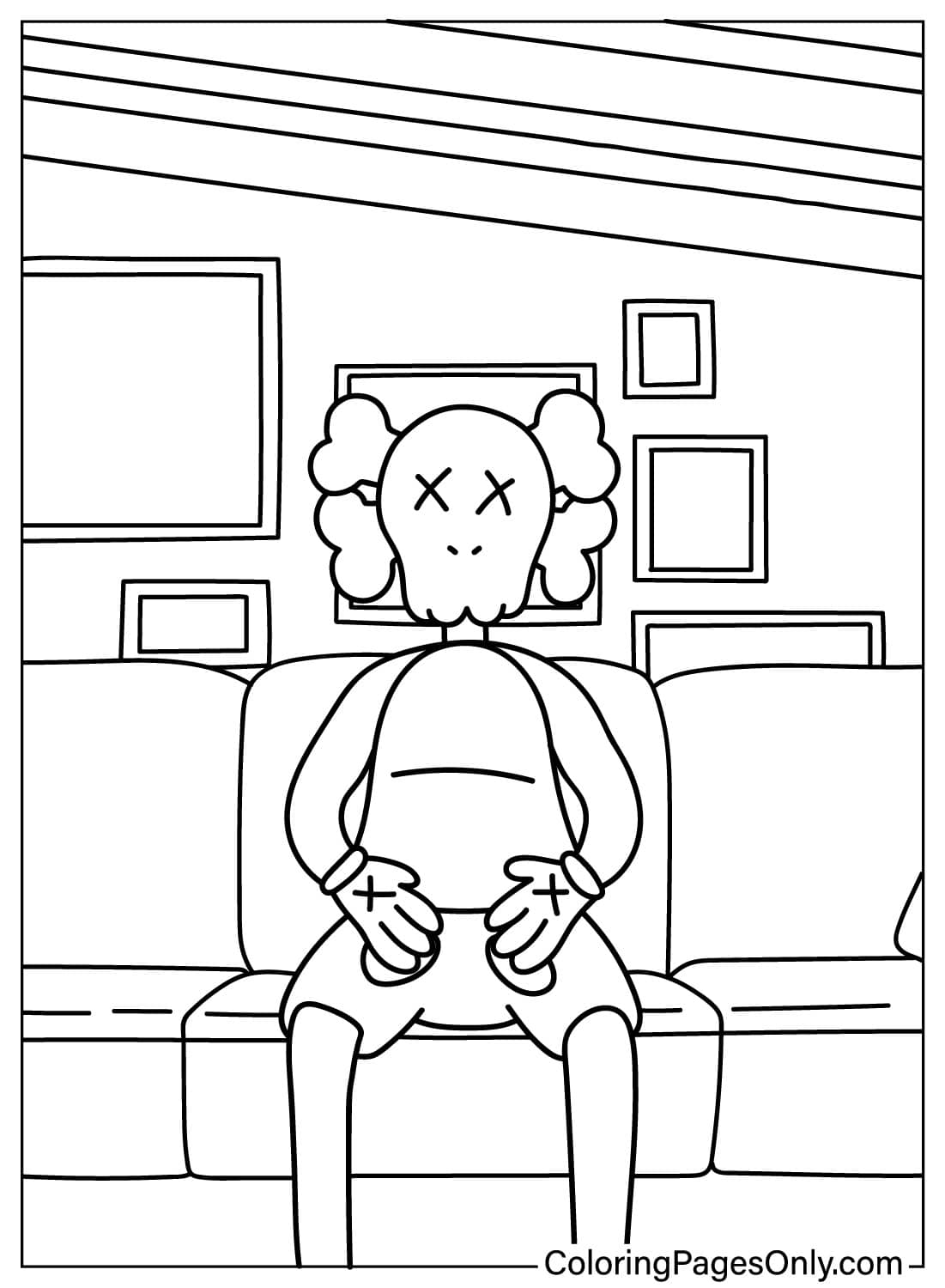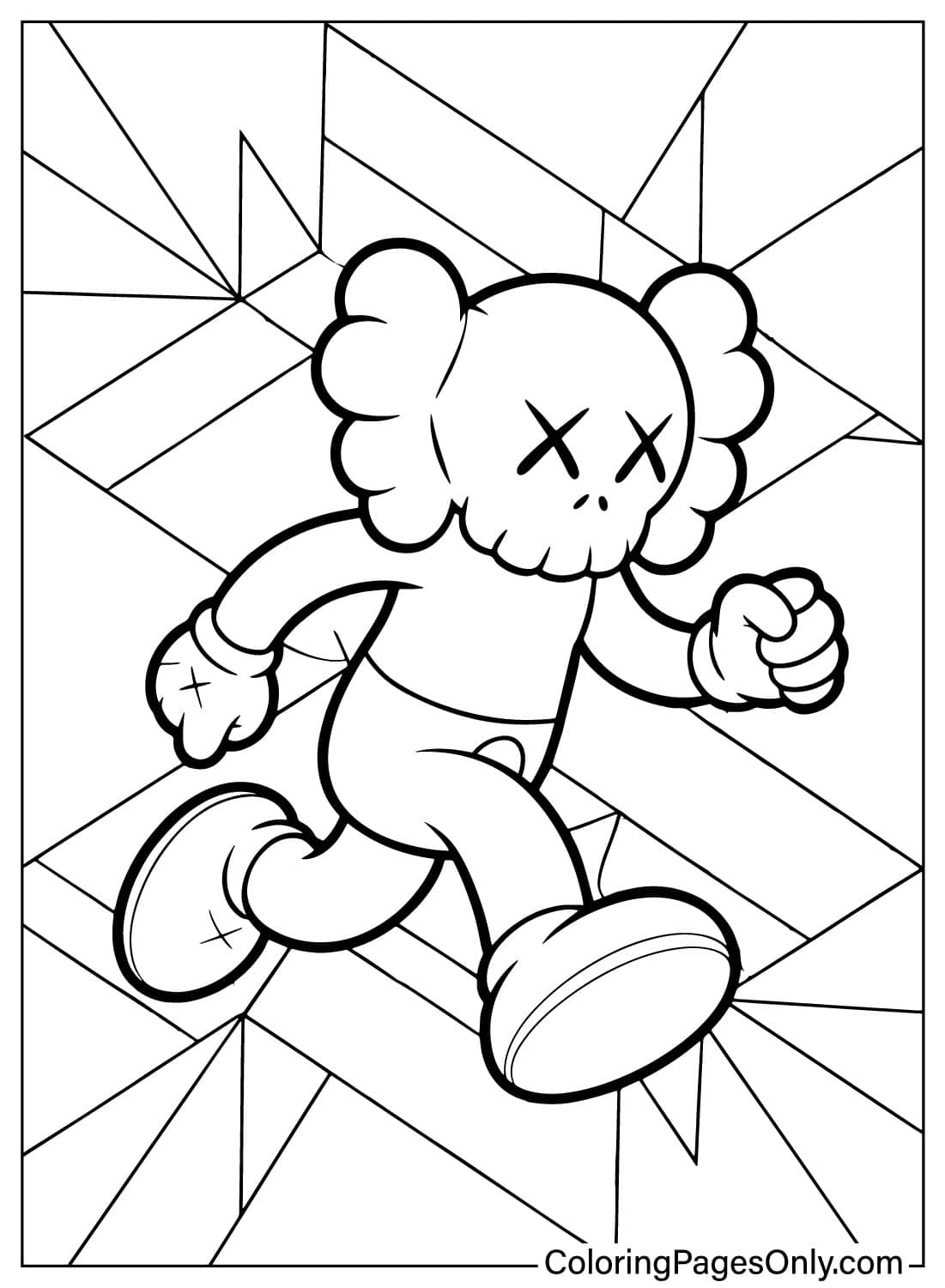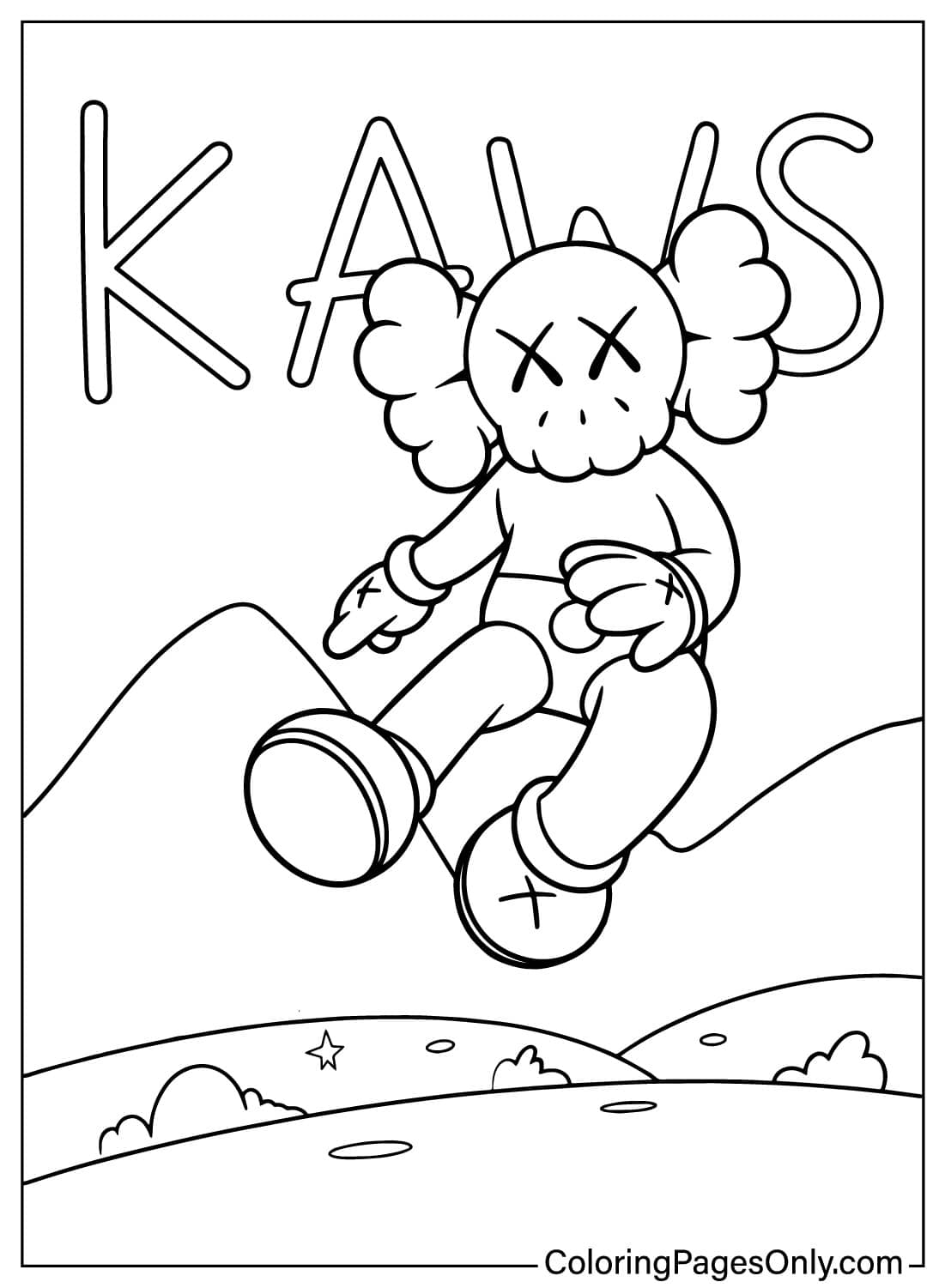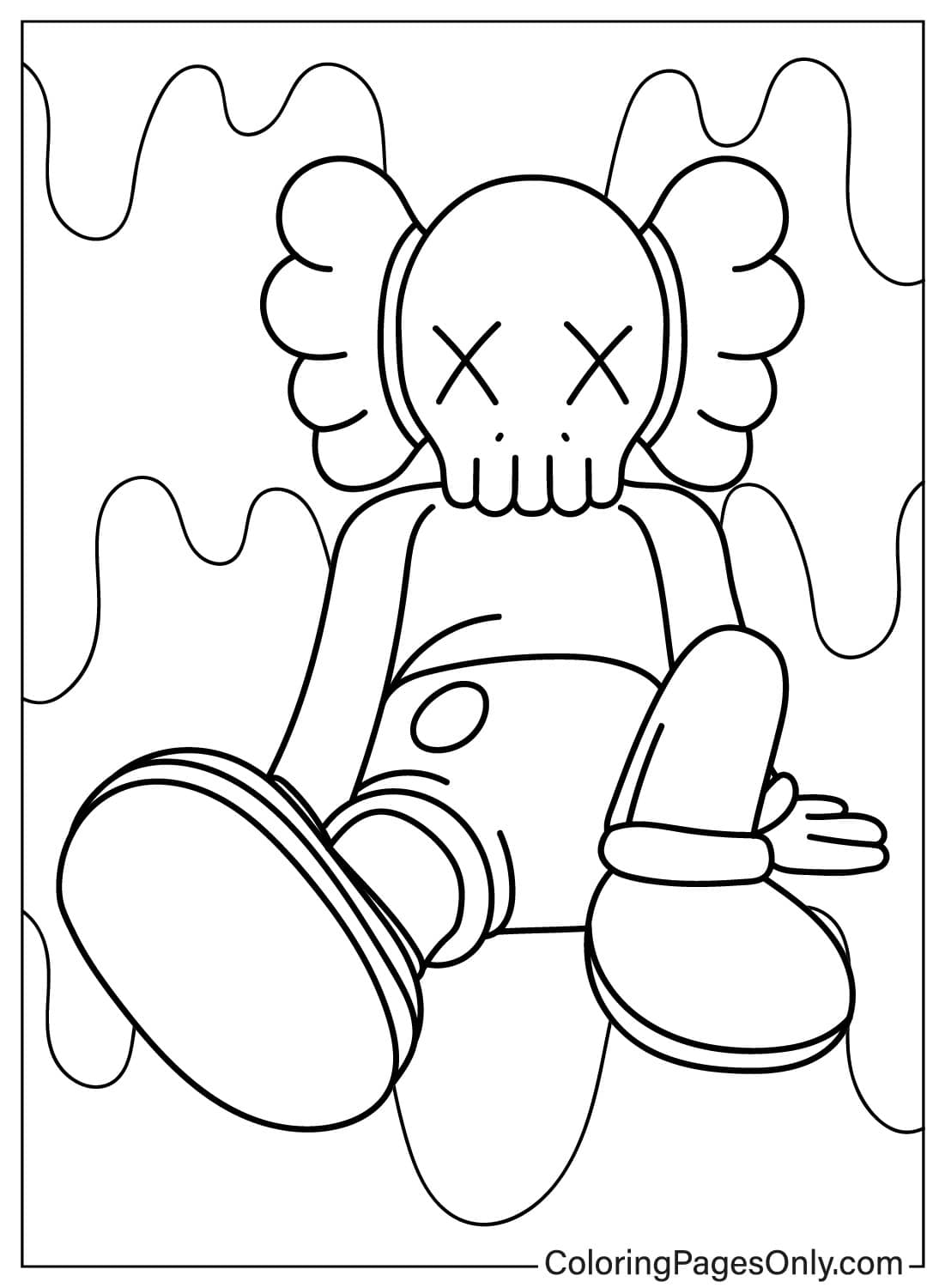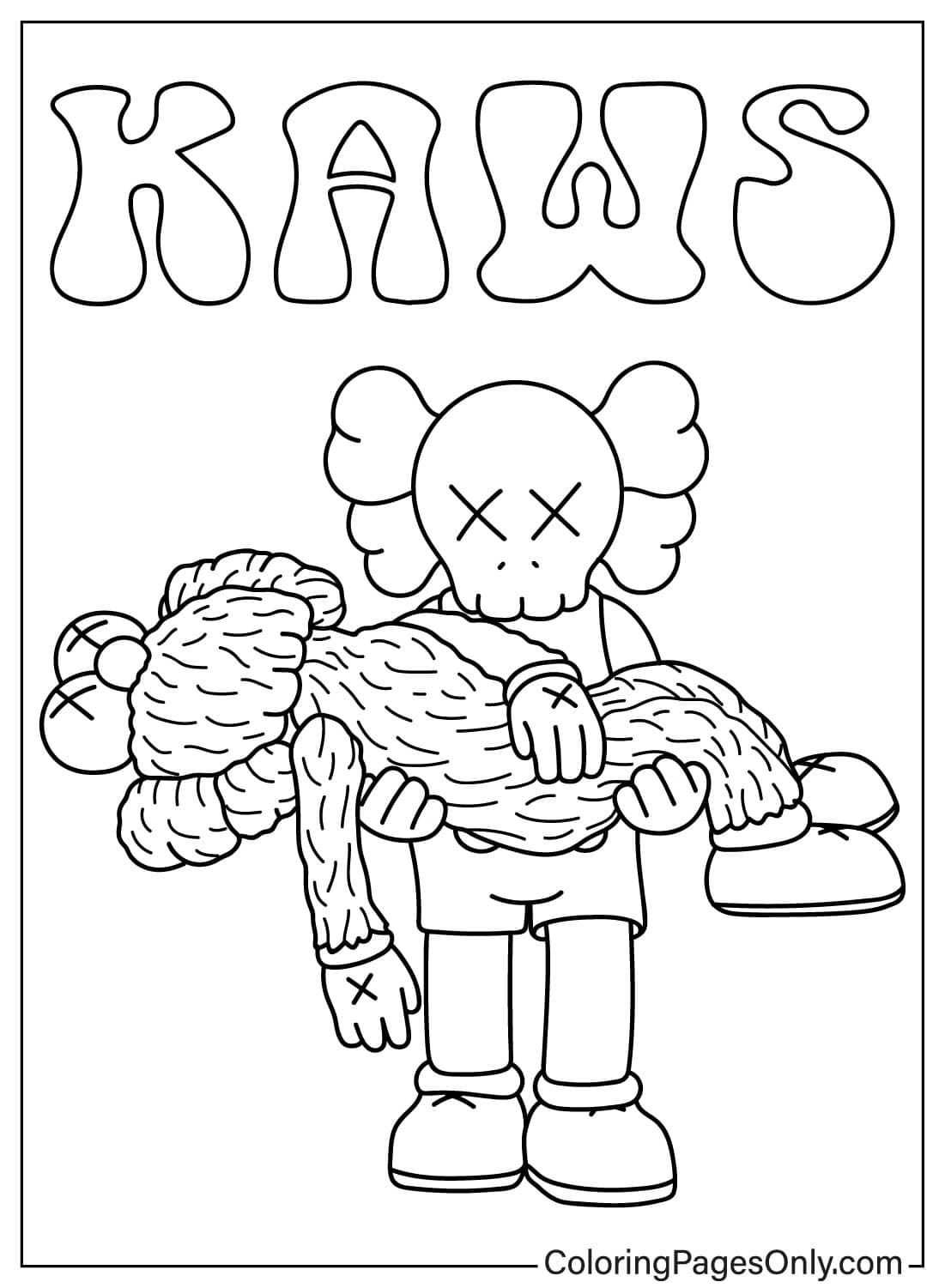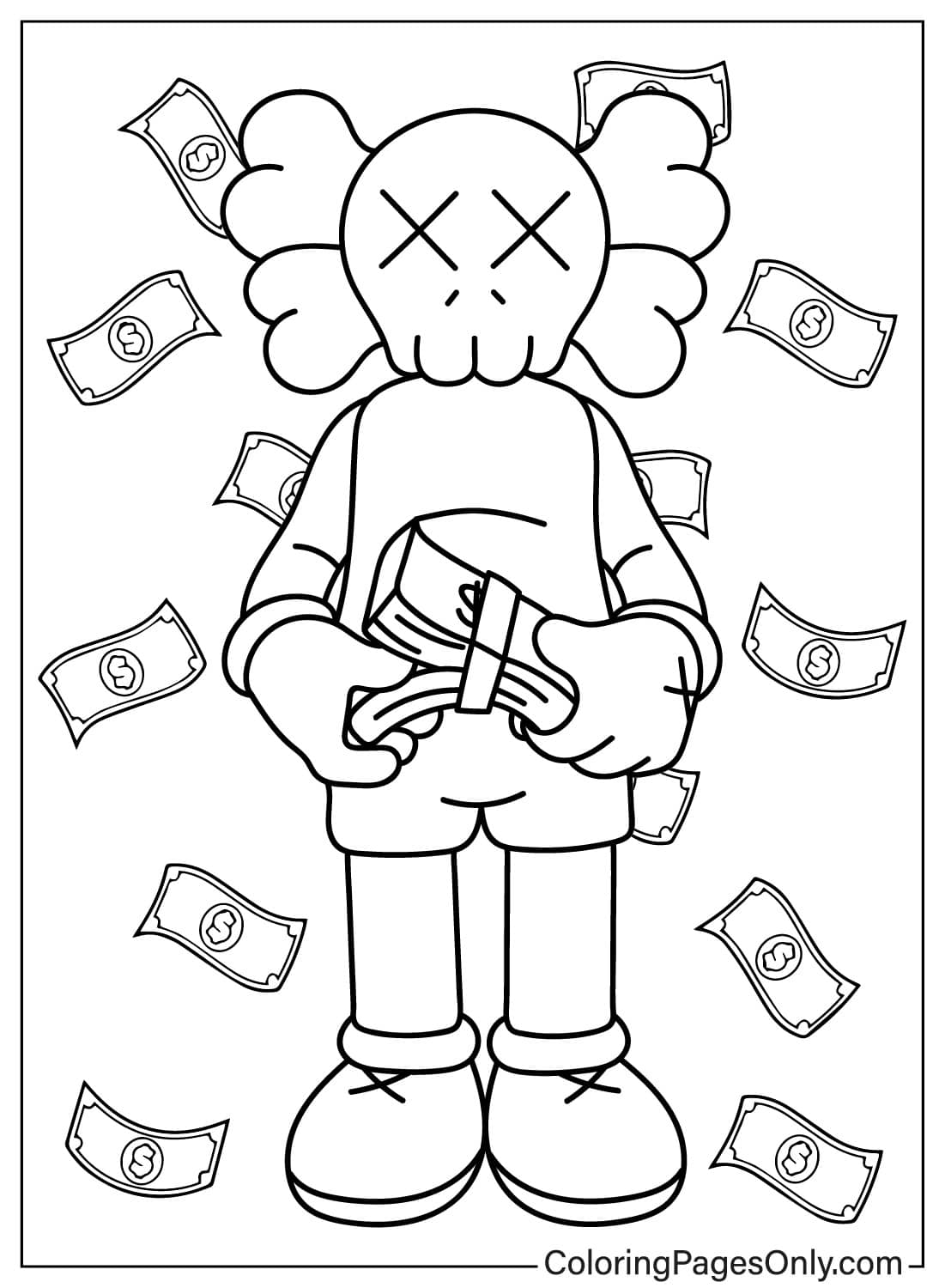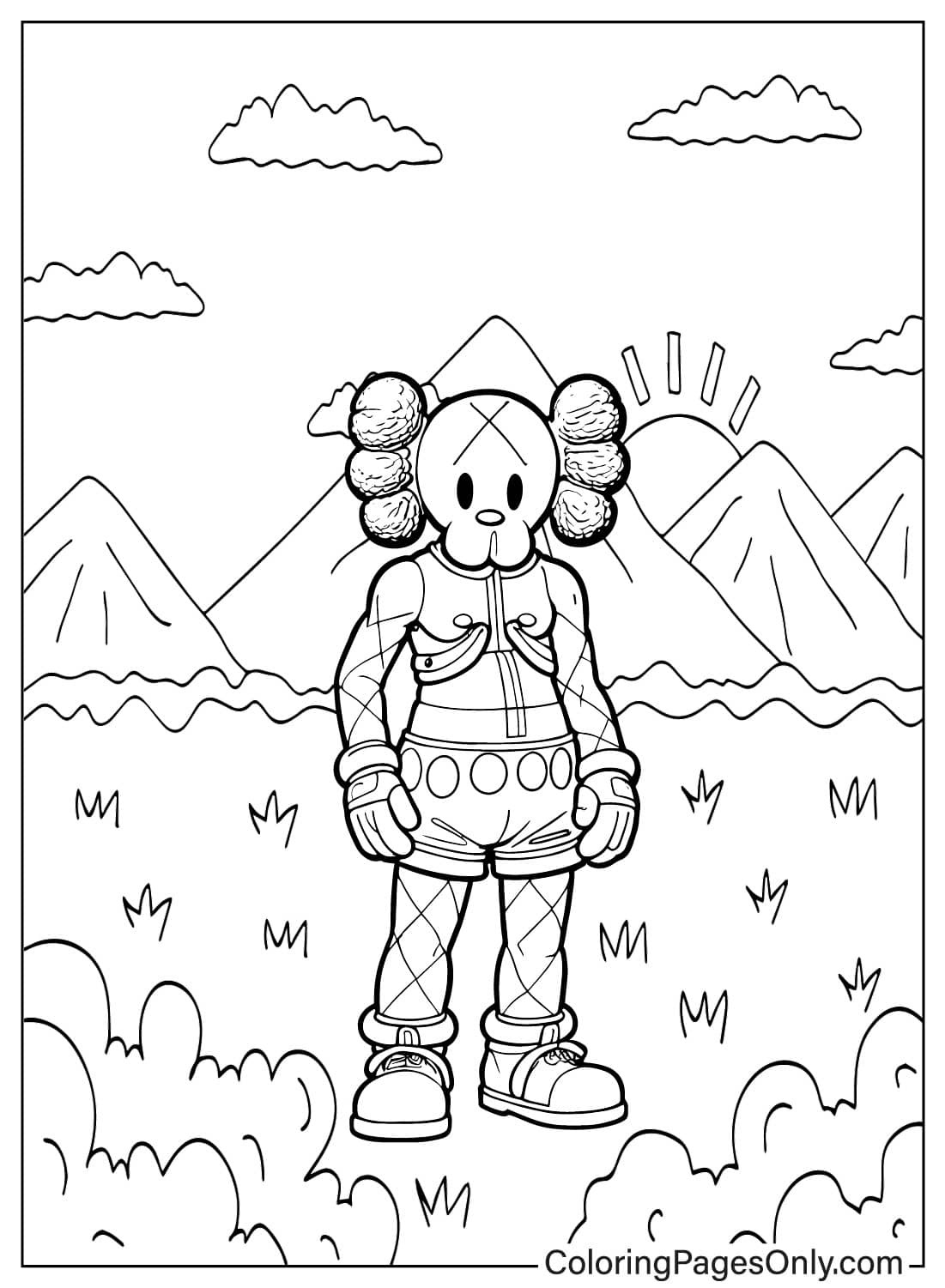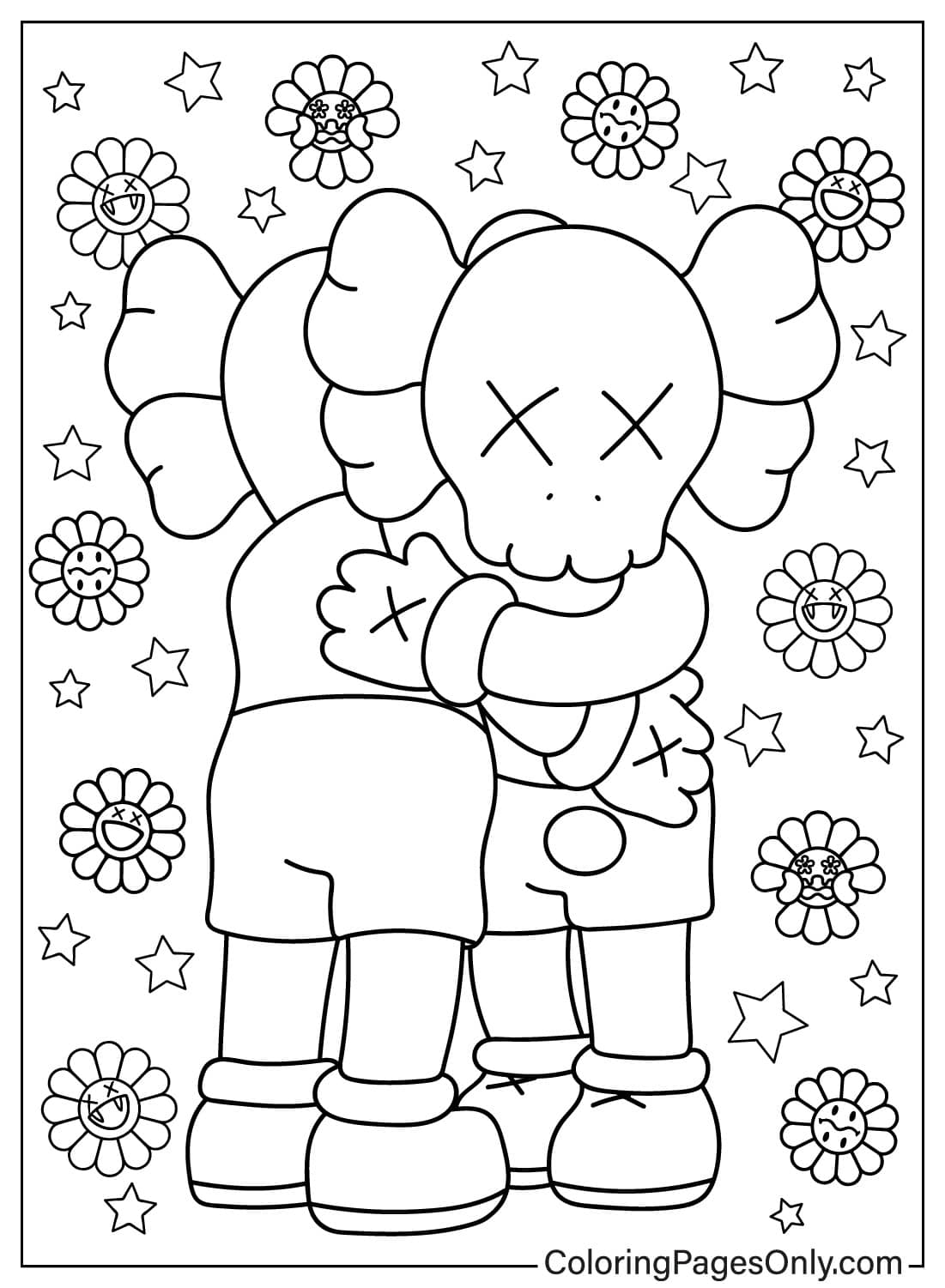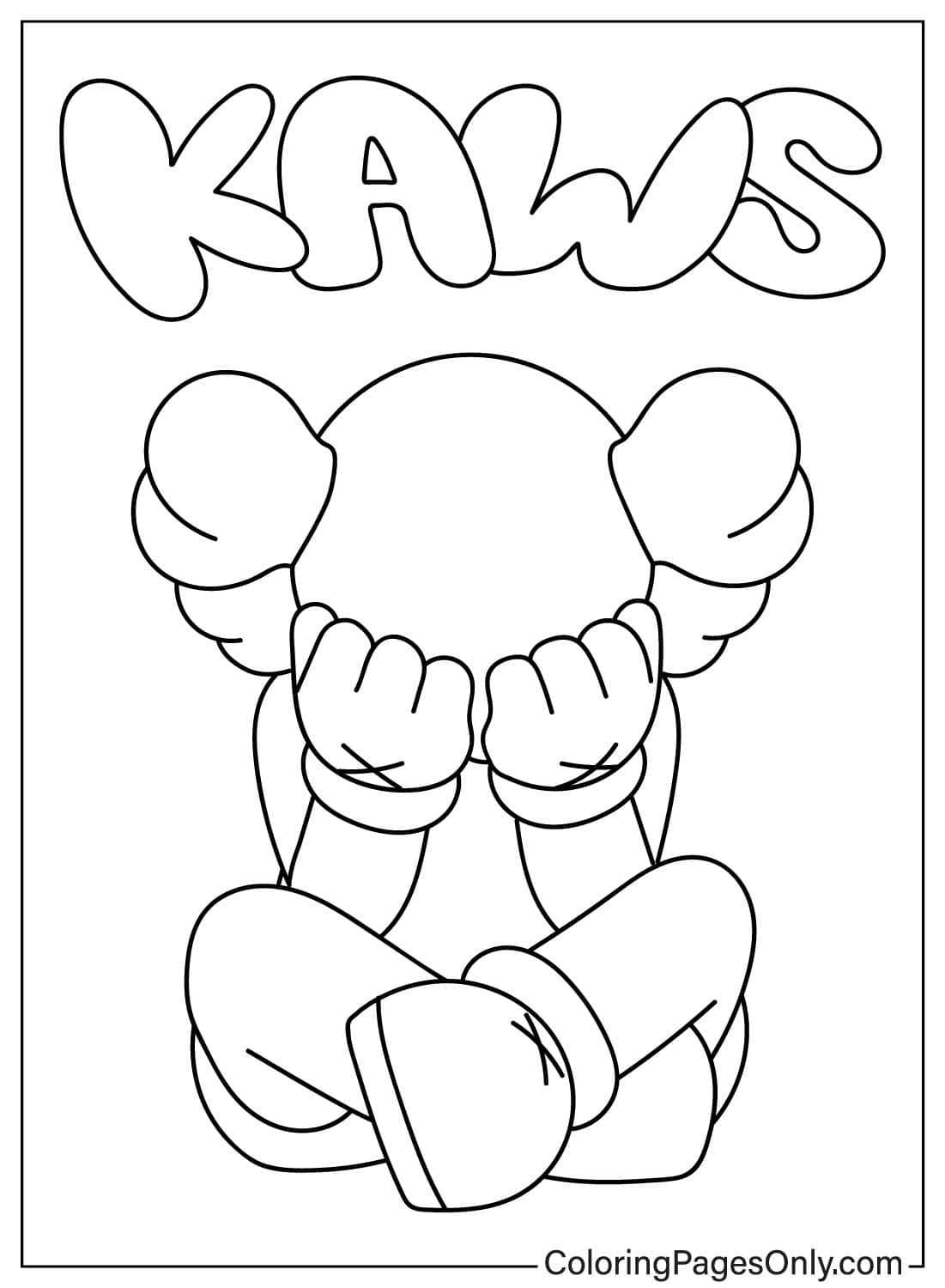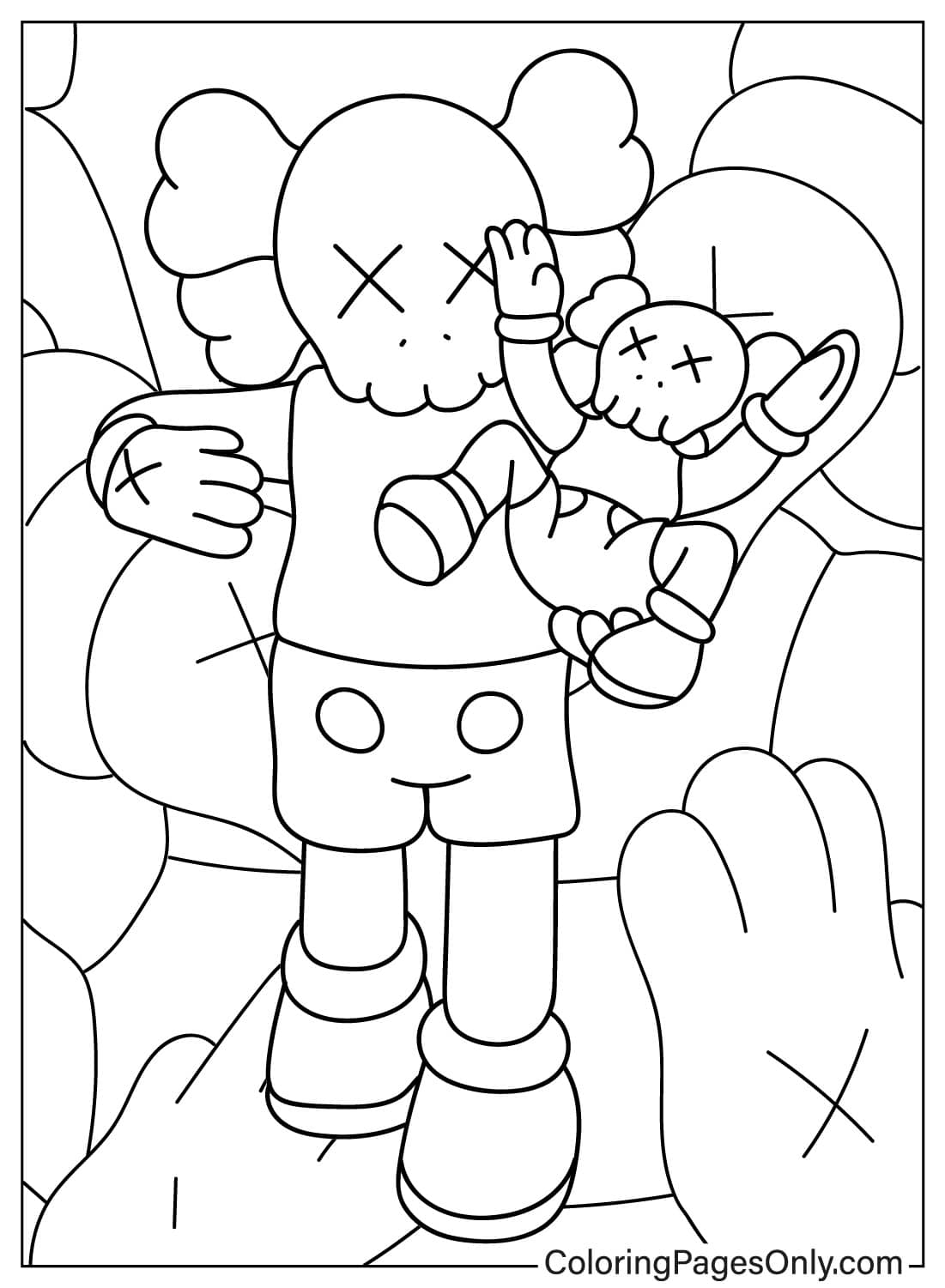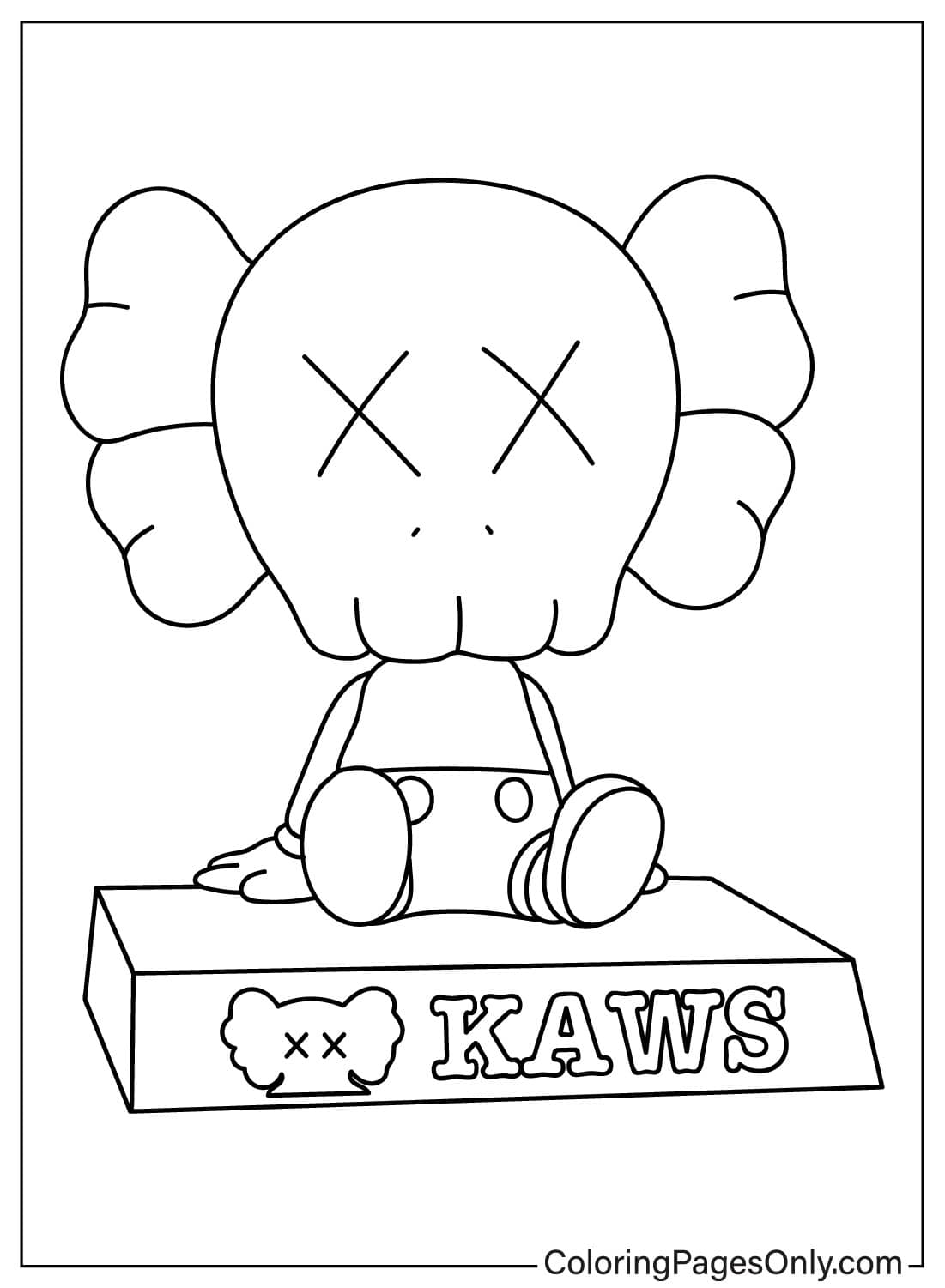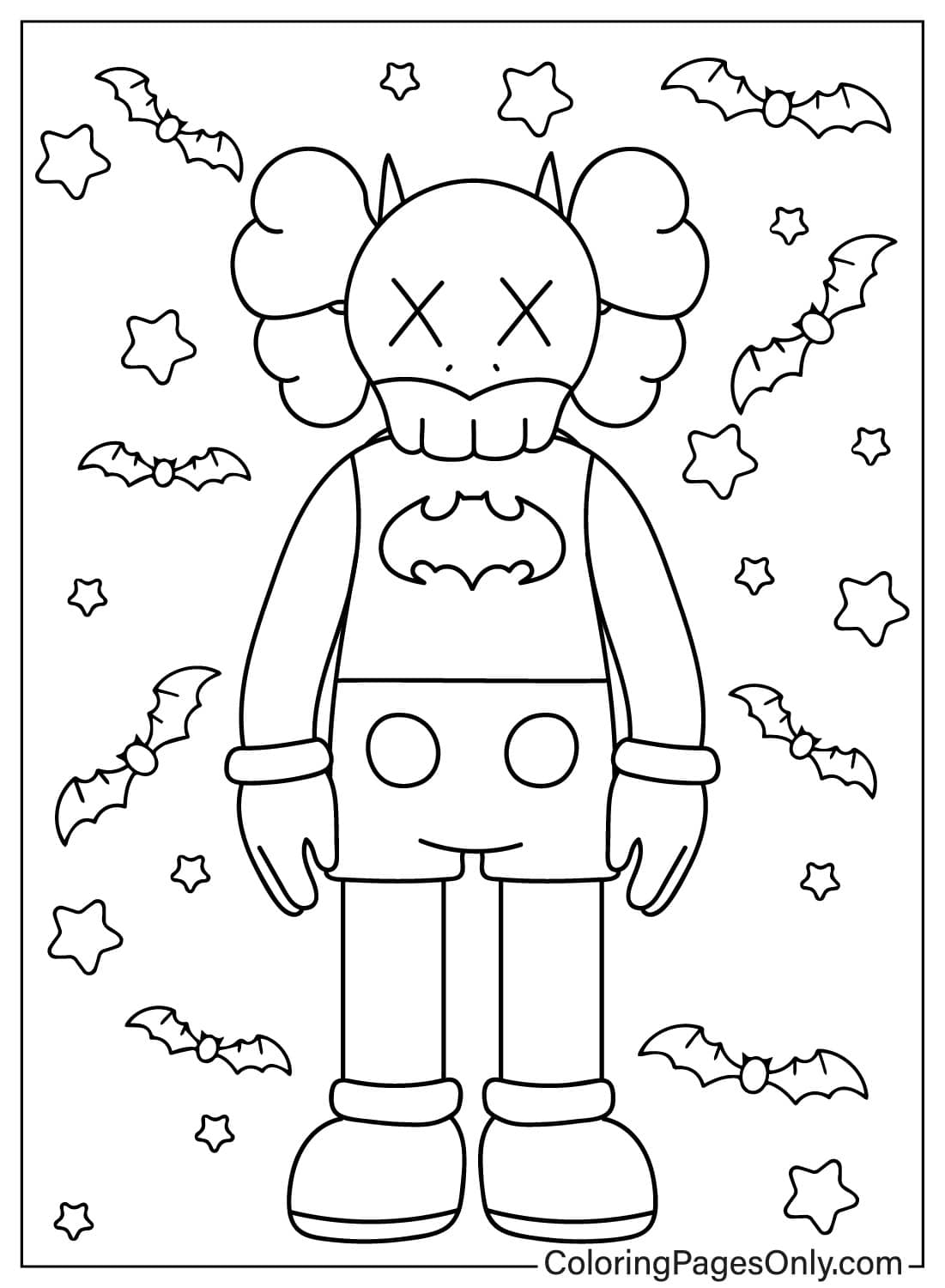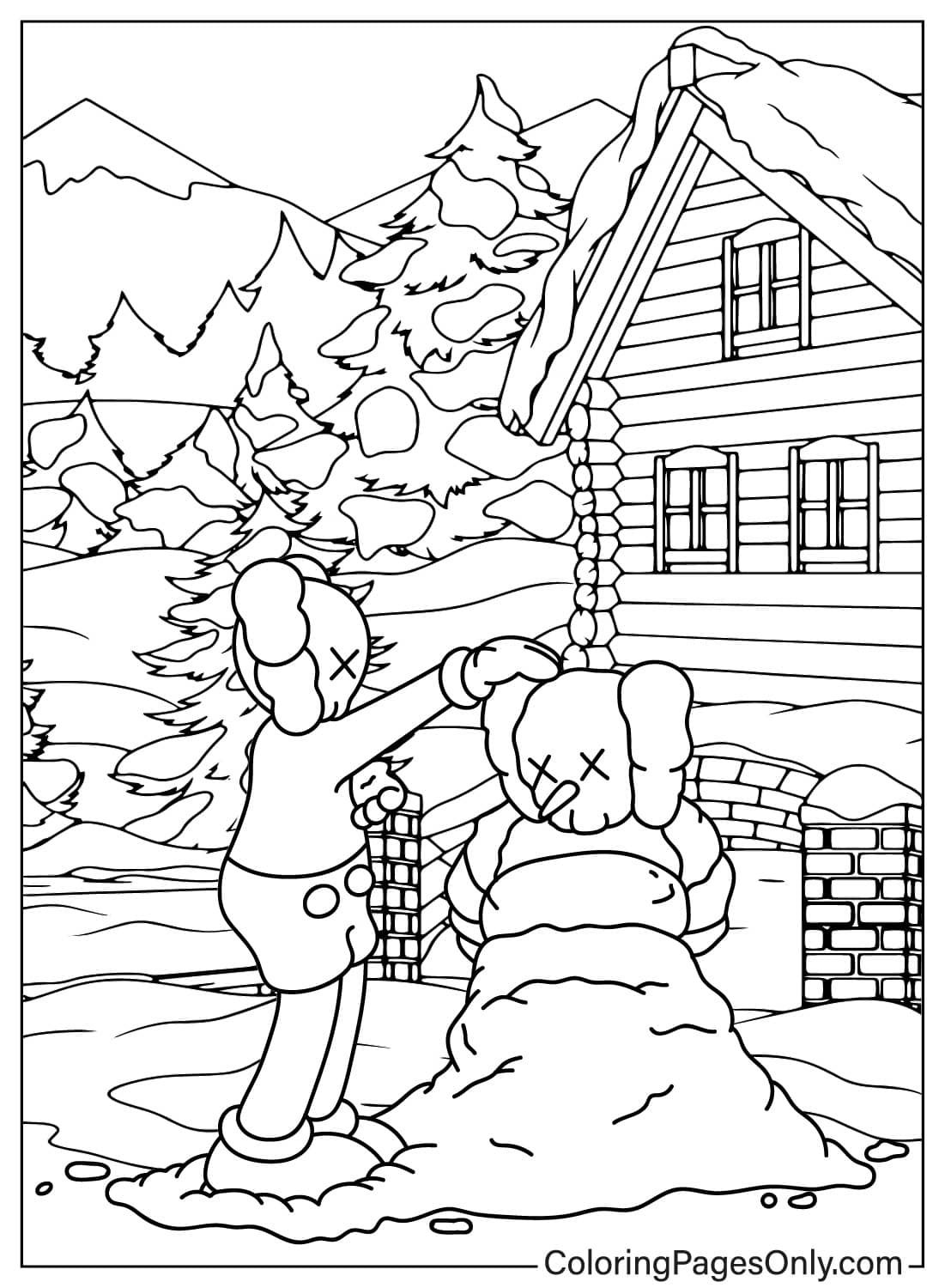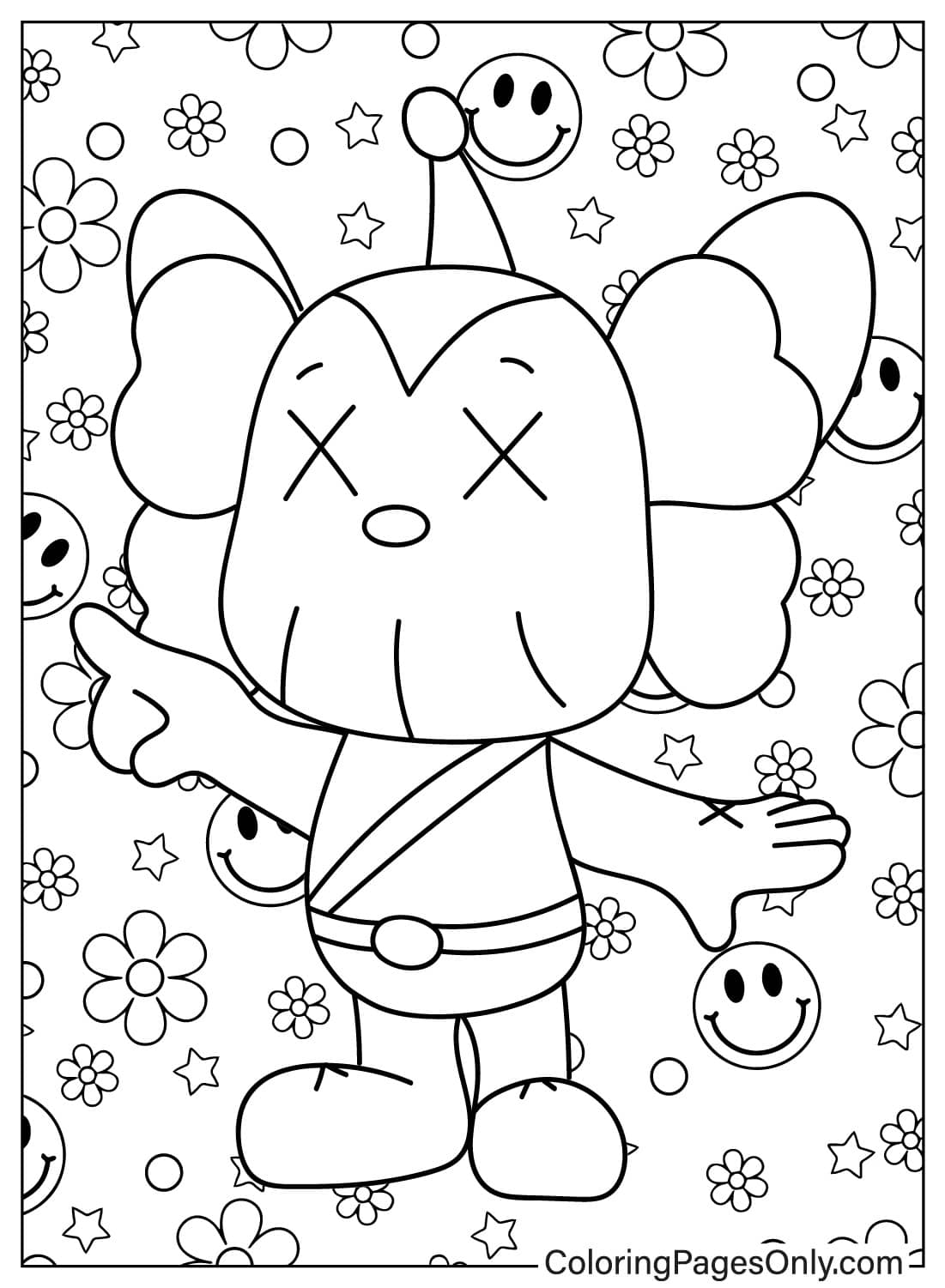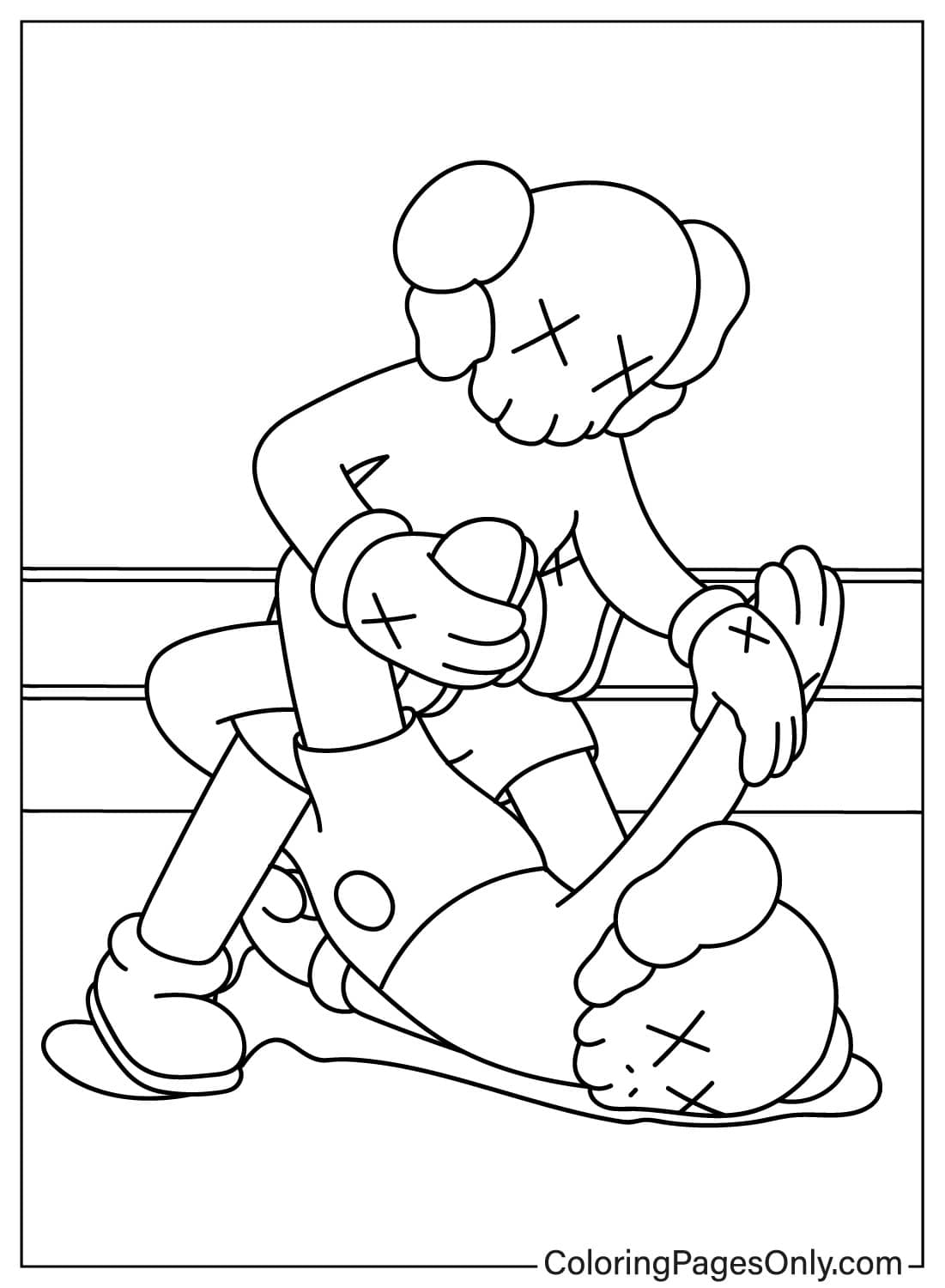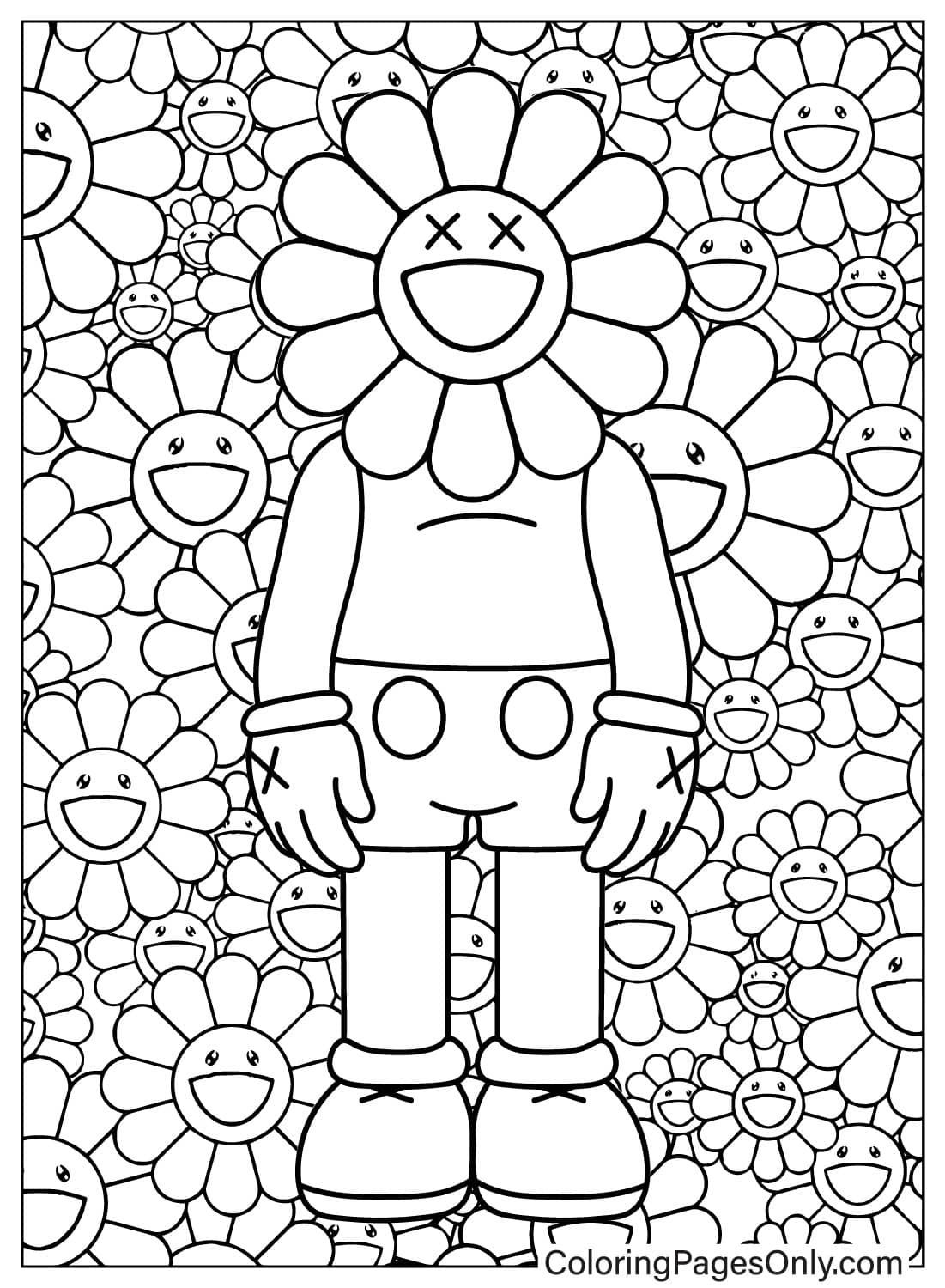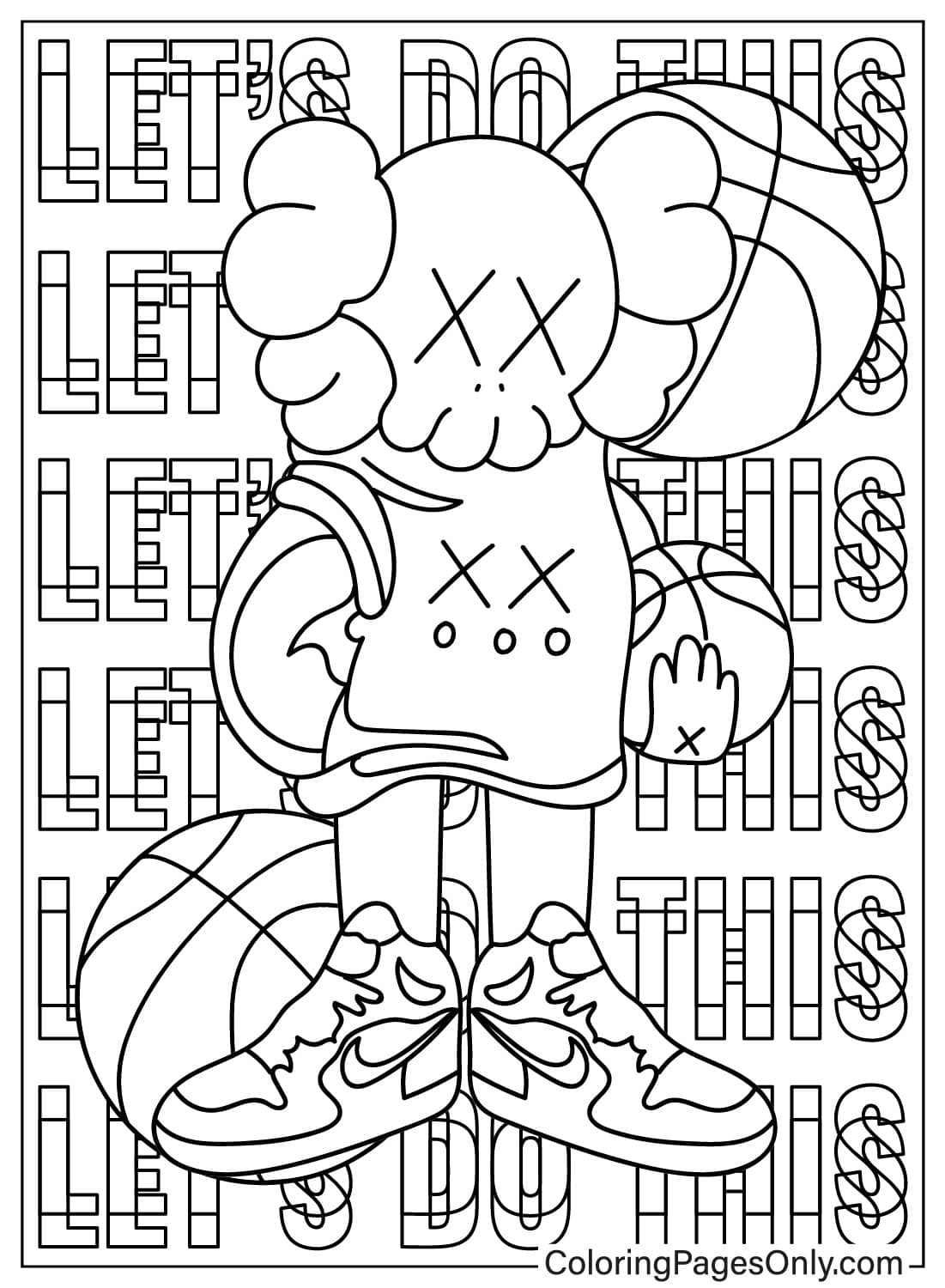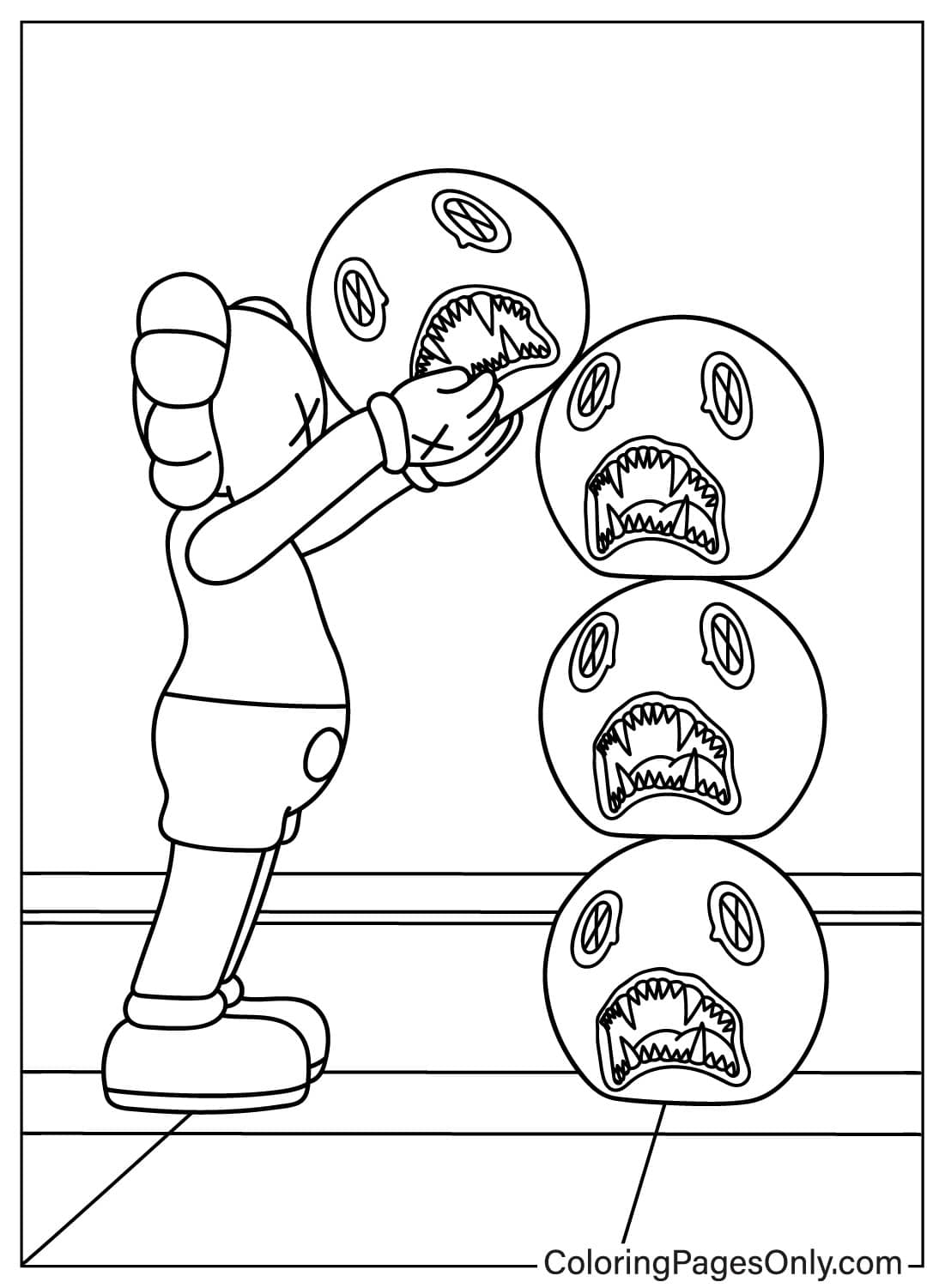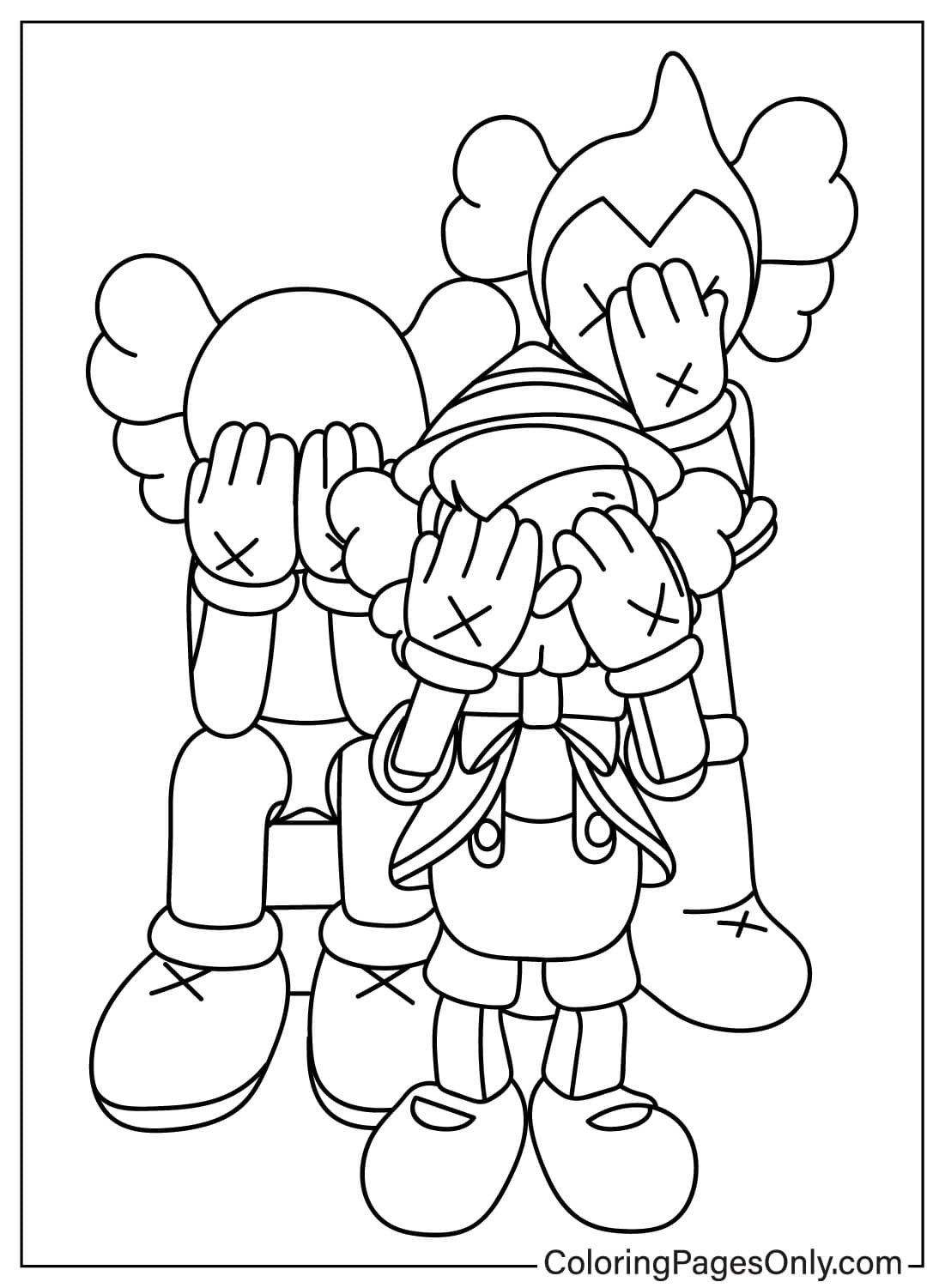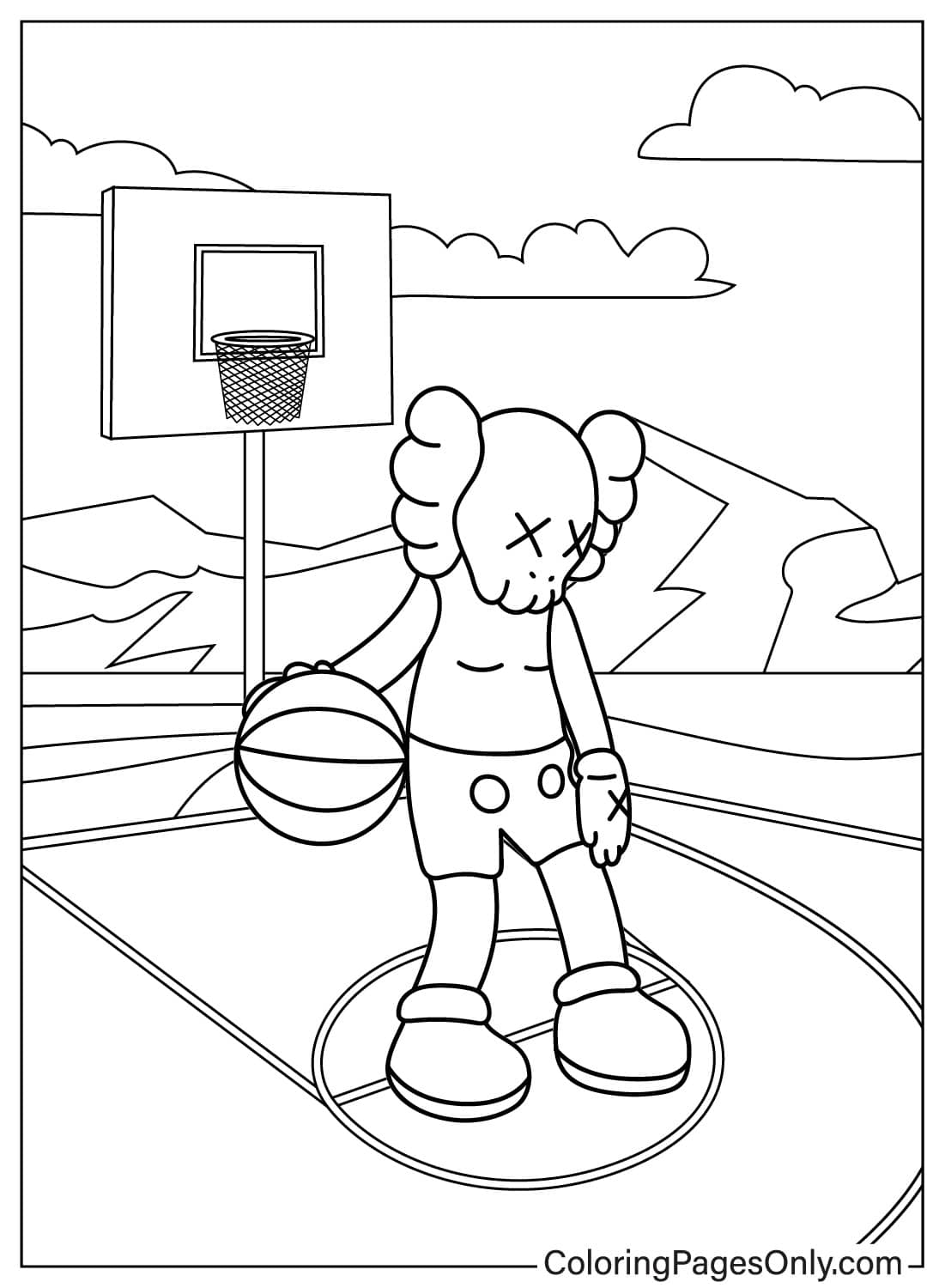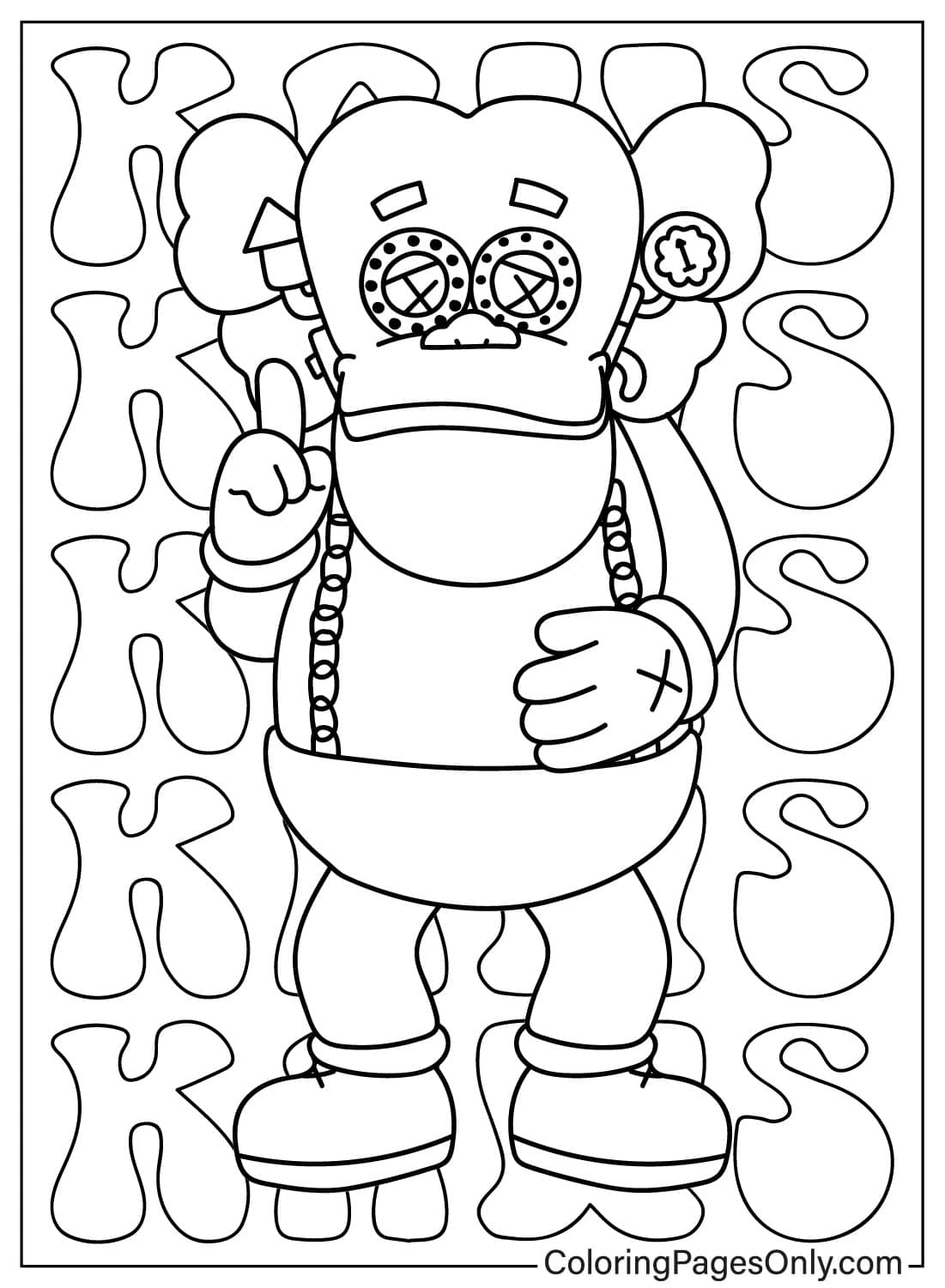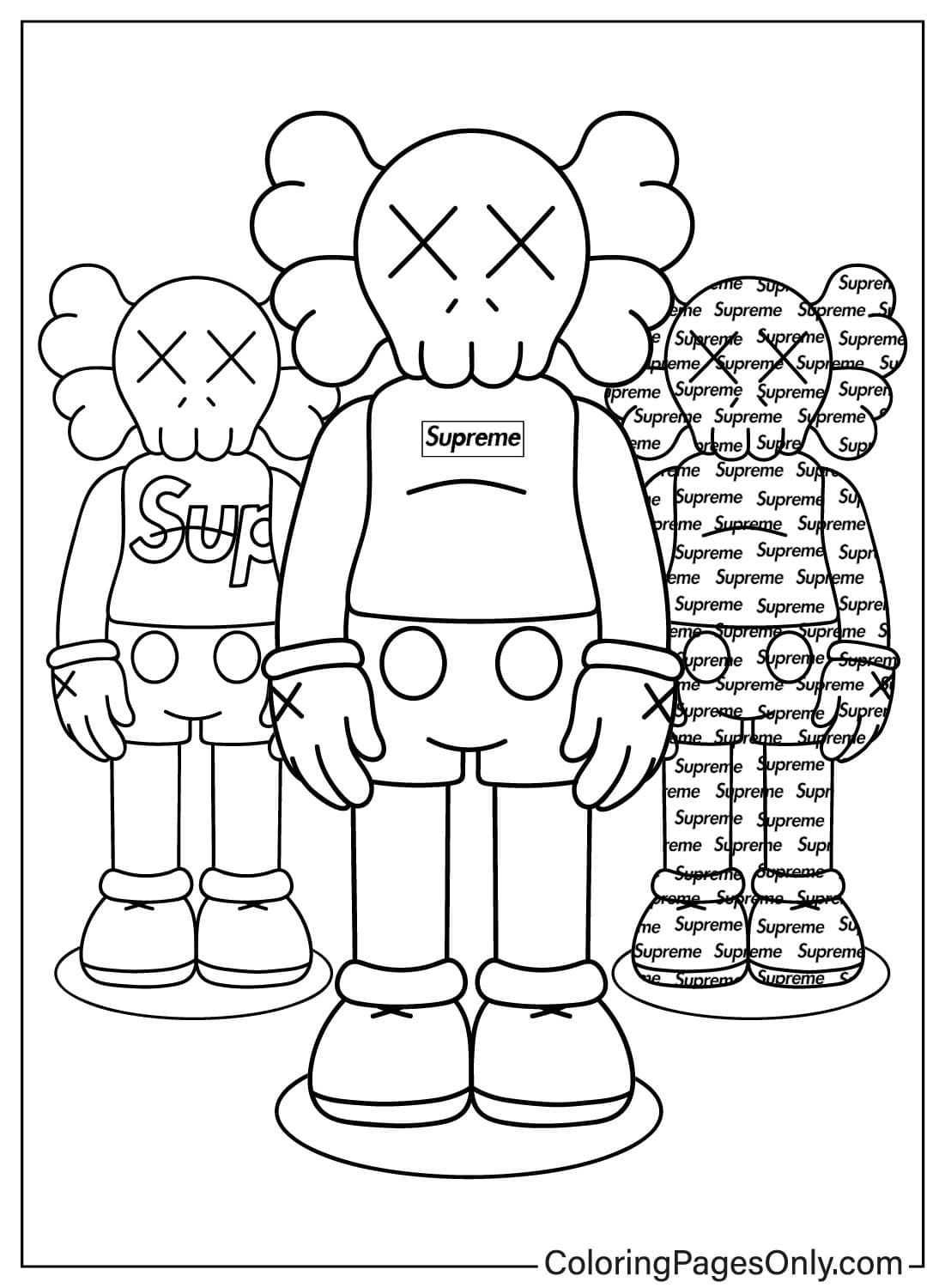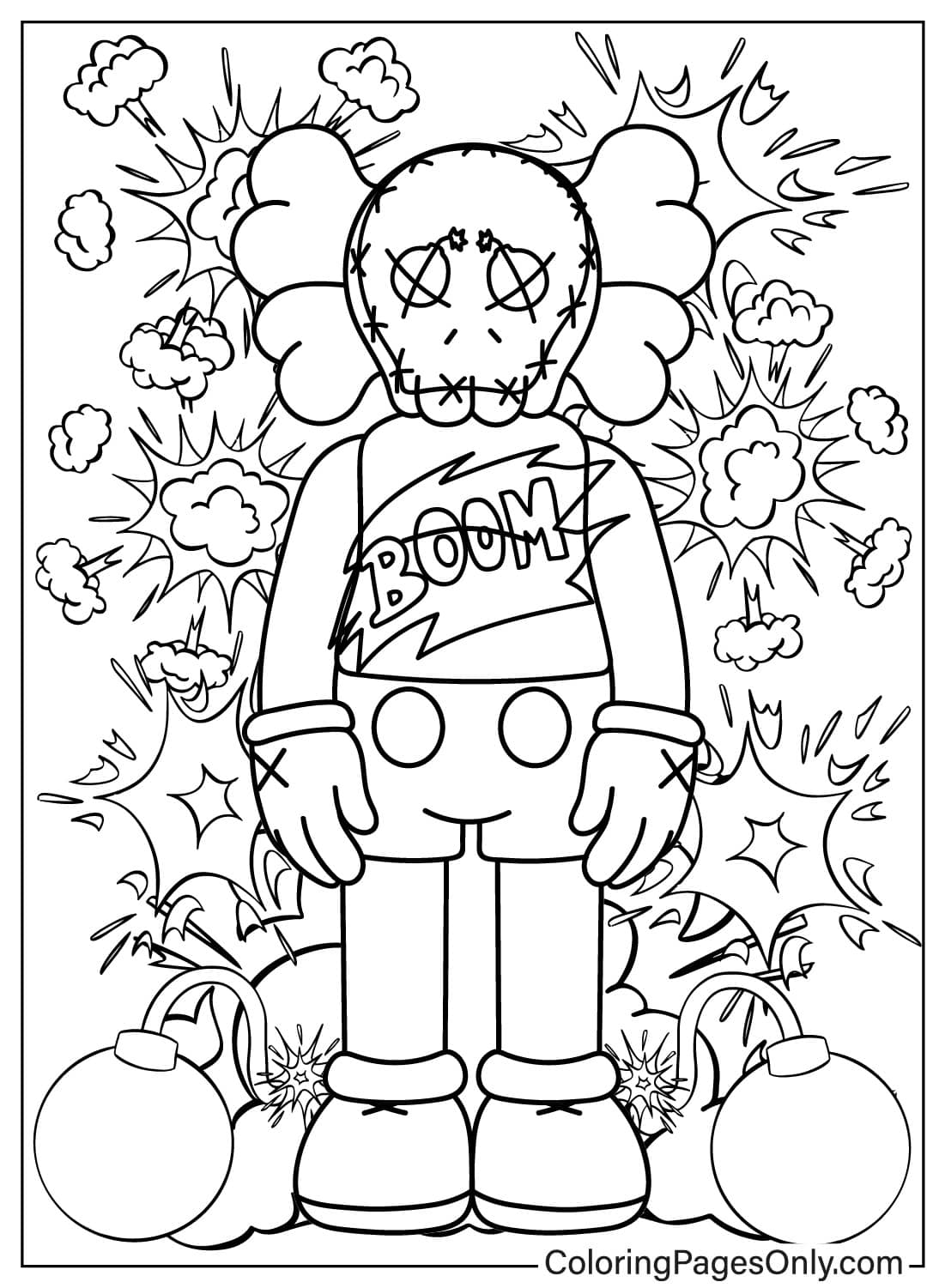
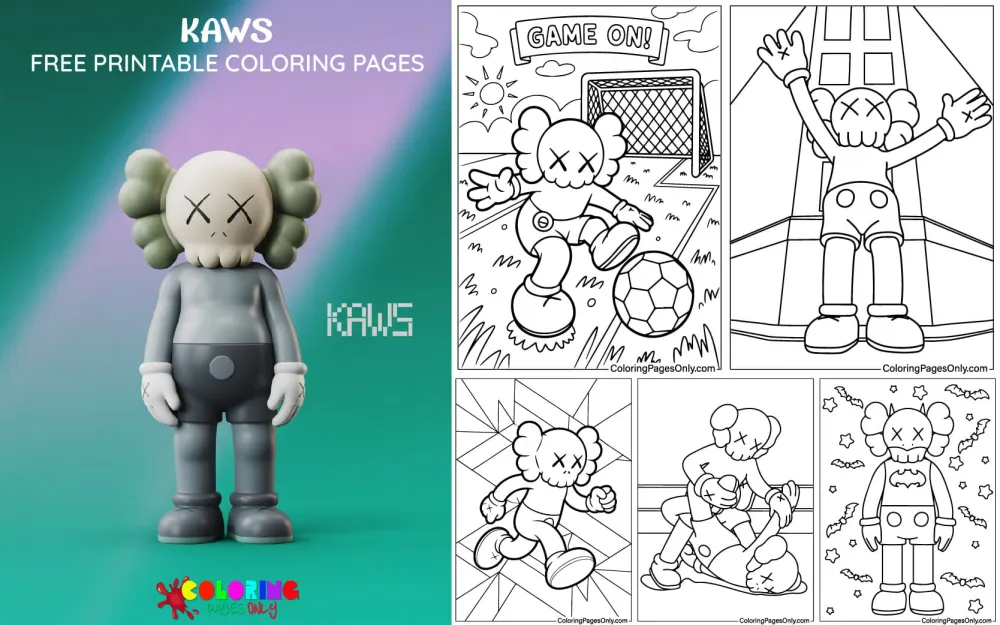
KAWS Coloring Pages at ColoringPagesOnly.com brings together 30+ free pages featuring the iconic characters of Brian Donnelly, the artist known as KAWS – Companion in solo portrait, action, and environmental compositions, scenes with geometric backgrounds and architectural settings, sports and activity poses, relaxed and introspective moments, and the BFF character. Download any page as a free PDF to print, or color online directly in your browser.
KAWS sits at the intersection of street art, designer toys, and contemporary fine art – explore more in that space at Toys and Dolls Coloring Pages and Labubu Coloring Pages, or browse the broader Arts and Culture Coloring Pages collection.
Who Is KAWS?
KAWS is the professional name of Brian Donnelly, an American artist and designer born on November 4, 1974, in Jersey City, New Jersey. The name KAWS has no specific meaning – Donnelly chose the letters because he liked how they looked together visually, as a graffiti tag. He reportedly painted the name on the roof of a building near his high school so he could see it from his classroom window. He chose letters for aesthetic rather than semantic reasons, a decision that became the foundation of a global visual brand: “I just liked the shapes of the K, A, W, S,” he explained. “They always work and function nicely with each other.”
Donnelly attended the School of Visual Arts in New York City, graduating in 1996 with a Bachelor of Fine Arts in illustration. Immediately after graduation, he worked as a freelance animator for Jumbo Pictures, painting backgrounds for animated productions including 101 Dalmatians, Daria, and Doug – three properties produced for or in the Disney ecosystem. This professional background in animation is not incidental to his later work: KAWS spent his days surrounded by the visual language of mass-market cartoon characters, learning the precise techniques by which those characters were rendered, and simultaneously spent his nights in the streets of New York as a graffiti artist.
From the early 1990s, KAWS pursued illegal graffiti across New York’s subway infrastructure, walls, and underpasses. His transformative move – the one that shifted his practice from tagging to something more conceptual – was gaining access to bus shelter advertisements and phone booth display cases using a skeleton key given to him by fellow street artist Barry McGee. With this access, KAWS began altering existing mass-market advertisements: replacing the faces of models and cartoon characters in cosmetic ads, fashion campaigns, and brand imagery with his own characters and visual language, particularly his signature XX eyes. These altered ads, displayed in the same locations and formats as the originals, created a specific tension: they were simultaneously the ad and a critique of the ad, familiar and subtly wrong.
The subverted advertisements became increasingly sought after. KAWS traveled to Paris, London, Berlin, and Tokyo to continue the practice internationally. His presence in Tokyo proved especially important: Japan’s streetwear and designer toy culture, led by figures like Nigo of A Bathing Ape, provided the exact commercial and cultural ecosystem where KAWS’s work could translate from street art into collectible product. In 1999, KAWS partnered with Japanese toy and streetwear brand Bounty Hunter to produce his first vinyl toy – an eight-inch Companion figure, released in an edition of 500. It sold out immediately.
The arc from that first 500-piece edition to his current standing in the fine art world covers approximately twenty-five years and several distinct phases. In April 2019, The KAWS Album – a 2005 painting depicting Simpsons characters in KAWS’s signature style, replacing the composition of the Beatles’ Sgt. Pepper’s Lonely Hearts Club Band album cover – sold at Sotheby’s Hong Kong for approximately US $14.7 million, setting a new auction record for the artist. In 2017, MoMA’s Design Store released a limited supply of KAWS Companion figures at $200 each; the website crashed multiple times from the volume of traffic. In 2021, an 18-foot bronze sculpture featuring Companion and BFF was displayed at Rockefeller Center in New York. KAWS’s work is held in the permanent collections of the Modern Art Museum of Fort Worth, the Brooklyn Museum, the Museum of Contemporary Art San Diego, and the High Museum of Art in Atlanta.
His collaborations span streetwear, luxury fashion, consumer goods, music, and gaming: Nike Air Jordan 4 (2017), Uniqlo’s ongoing Sesame Street and Peanuts lines (from 2016), Dior’s summer 2019 menswear collection, Travis Scott (2021), J-Hope of BTS for his solo album (2022), Epic Games’ Fortnite with the KAWS Skeleton and KAWSPeely outfits (2021–2022), and General Mills’ Monster Cereals (2022). In October 2025, KAWS collaborated with AllRightsReserved to release a limited-edition set of Sesame Street vinyl figures featuring Elmo, Big Bird, and Oscar the Grouch rendered in his signature XX-eyes style.
Art critics have consistently compared KAWS to Jean-Michel Basquiat and Keith Haring – artists whose careers also began on the street and whose work achieved critical and commercial legitimacy through a combination of visual distinctiveness and cultural fluency. Like Haring, he attended the School of Visual Arts. Like Basquiat, he moved between graffiti and the gallery without abandoning either. And like Andy Warhol and Jeff Koons, he systematically exploits the tension between high and low culture, between the museum and the marketplace, as the central subject of his practice rather than a compromise of it.
The KAWS Characters – Who’s Who
Companion
Companion is KAWS’s most famous and most reproduced character, created in 1999 and now the defining image of his entire practice. It began as a direct subversion of Mickey Mouse: Companion shares Mickey’s cartoon gloves, large round shoes, and brass-buttoned shorts but replaces Mickey’s cheerful face with a skull-and-crossbones head and XX eyes – the crossed-out eye motif that KAWS had been placing on advertising imagery throughout the 1990s. The result is a character that is simultaneously deeply familiar and subtly unsettling: the silhouette reads as Mickey instantly, but the face signals something else entirely.
Companion’s most characteristic poses involve hands. KAWS has noted that he was always frustrated by action figures’ stiff, heroic postures: “I always wondered why figures never had these kinds of expressive gestures – they were always proud superheroes standing tall or in other stiff poses.” Companion regularly appears with its hands covering its face – an almost universal human gesture of hiding, shame, grief, or exhaustion. The character kneels, slumps, sits in contemplation, or stands with its head bowed. These are not victory poses. They are the poses of someone having a difficult time with things. KAWS has described this as his goal: to create “an emotional connection that could reflect our times and how I feel.”
Companion has no fixed color. Since its 1999 debut in a limited grey-black vinyl, it has been produced in dozens of colorways: grey, black, brown, pink, blue, orange, military green, fluorescent yellow, and many more. Each new colorway constitutes a new edition, and collectors track which editions exist and in what quantities. The XX eyes and skull-crossbones head are the only constants across all Companion versions.
Companion’s scale has ranged from an eight-inch vinyl toy to a 115-foot-long inflatable floating in Hong Kong’s Victoria Harbor during Art Basel 2019, to a Macy’s Thanksgiving Day Parade balloon in 2012. The same character, same proportions, same XX eyes – just in sizes that span from a desk to a harbor.
BFF
BFF was introduced in 2016 and is KAWS’s most overtly warm and fuzzy character – literally and figuratively. Visually, BFF draws from the Sesame Street character Elmo: fuzzy/shaggy body, round eyes positioned on the top of the head, and a round yellow-orange nose. But BFF retains KAWS’s signature XX eyes and the skull-crossbones head structure, meaning the character carries all the visual markers of softness and approachability while simultaneously being marked with the same signs of loss or corruption that run through the entire KAWS universe.
BFF has appeared most frequently in bright blue – a reference to Elmo’s color being transposed to a cooler tone – but has also been released in many other colorways. The character often appears in compositions with Companion, held or carried, in what reads as a parent-child or protective relationship. The 2021 Rockefeller Center installation showed a giant Companion holding BFF in an embrace – a public sculpture about comfort and need scaled to eighteen feet of bronze.
CHUM
CHUM is KAWS’s Michelin Man riff – a thick, rubbery figure with the rounded, inflated quality of Bibendum, the tire brand mascot. KAWS has cited the Michelin Man as an early inspiration, specifically because it was one of the first brand mascots to have a cartoon-like personality rather than simply being a logo shape. Introduced in 2002, CHUM appears in fewer configurations than Companion but has a distinctive emotional register: the rotund body that should read as cheerful and stable is frequently shown in drooping, slumped, or despairing poses. The contrast between CHUM’s physical fullness and its emotional deflation is one of the most legible examples of KAWS’s central artistic tension.
Accomplice
Accomplice is KAWS’s bunny character – a long, lanky rabbit in a bib, boots, and gloves, with a design that evokes Bugs Bunny filtered through Hello Kitty’s simplified, block-color visual language. Like all KAWS characters, Accomplice has the XX eyes and skull-crossbones structure. The name itself is deliberately ambiguous: an accomplice to what? The character’s affect – simultaneously cute and slightly menacing – leaves the question open.
Bendy
Bendy is KAWS’s oldest original character, appearing on New York phone booths and bus shelter advertisements in the late 1990s before Companion existed. Described as amoeba-like, Bendy is a fluid, elastic shape without the fixed humanoid structure of Companion or BFF – more abstract, more purely graphic, tracing back directly to the graffiti tag origins of KAWS’s visual practice.
The XX Eyes – KAWS’s Core Visual Signature
The crossed-out XX eyes that appear on every KAWS character are the single most important accuracy detail in any KAWS coloring page. They are also the element that most clearly communicates what KAWS’s characters are about.
The XX eyes originated in KAWS’s graffiti work in the 1990s, where he placed them on existing characters in advertisements – over the eyes of models, over the eyes of cartoon characters, over the eyes of brand mascots. In cartoon and comic book visual language, XX eyes traditionally signal death, incapacitation, or being “out of it.” Placed over the faces of advertising characters – figures designed to embody health, happiness, and aspirational appeal – they introduced a different reading: what if these cheerful faces are actually masks? What if the constant appeal to happiness in advertising is itself a form of being knocked out?
When KAWS then created his own characters – Companion, BFF, CHUM, and the others – and gave them the same XX eyes, he built that critical reading directly into the characters’ DNA. They are not simply cute toys. They carry within them a visual argument about consumer culture, emotional performance, and the gap between surfaces and interiors.
For coloring: the XX eyes should be rendered as two clear, crossed lines – an X shape, consistent in weight, placed where the character’s eyes would be. The lines should be clearly visible and proportionally significant – not small marks, but the dominant facial feature. The contrast between the X shape and the soft, rounded form of the rest of the character’s face is the central visual tension of any KAWS portrait page.
Colors – The Multi-Colorway Challenge
Like Labubu, KAWS Companion has no single canonical color. Companion has been released in dozens of official colorways since 1999, and the fan art and coloring page tradition freely extends this further. There is no “correct” color for a KAWS coloring page – the colorway is the creative decision.
However, certain colorways carry cultural and historical weight in the collector community:
Original grey/black (1999): The first Bounty Hunter vinyl was produced in a dark grey-black palette – the color closest to what might be called Companion’s “default.” Coloring a Companion page in charcoal grey with the same grey gloves and shoes, very slightly lighter on the hands to suggest the cartoon glove tradition, produces the most historically grounded version of the character.
Brown (“Dipped” series): KAWS’s “Dipped” series features Companion with one color entirely applied in a darker, monochrome overlay – as if the figure has been dipped in paint, typically dark brown or black. These pages can be interpreted with a two-tone approach: standard colorway for the figure’s body, deep dark brown applied to one arm and hand as if the character has reached into something.
Bright blue: Blue Companion figures are among the most recognized in the collector community, associated with several key releases, including the BFF character and specific Companion editions. Coloring Companion in a clear, medium-to-bright blue with white gloves produces one of the most immediately “KAWS” results after grey.
Pink/rose: Pink Companion editions have appeared in collaboration releases, including Dior’s summer menswear collection. A soft rose-pink body with slightly deeper pink shadows gives the character a fashion-forward quality distinct from the street art grey or the toy-collector blue.
Your own series: The most ambitious approach – and the most aligned with KAWS’s own practice – is inventing a completely new colorway and treating the page as a new edition. Choose a body color, a glove color (typically lighter than the body), a shoe color (typically matching or slightly darker than the body), and decide whether any secondary elements (the skull-crossbones, the eye XX marks, background geometric shapes) will be in a contrasting accent tone. Document your choices as if listing an edition: “Edition: [your name], Colorway: [your palette]. Year: 2026.”
Coloring Tips
The XX eyes are the first and last thing to establish. Before coloring any other element of a KAWS page, establish the XX eyes in a clear, dark tone – typically black or near-black. These marks are the character’s most recognizable feature and should be the dominant element of the face. Establishing them first means every subsequent color decision is made in relation to them, which produces a more unified result.
Flat, graphic color is the correct approach. KAWS’s aesthetic – which emerges directly from his street art background and his animation training – is built on clean, flat color areas with hard edges and consistent outlines. This is not a style that calls for graduated shading, soft blending, or realistic rendering. Each distinct area of the figure (body, gloves, shoes, facial elements) should be filled with a single, consistent tone applied flatly. The graphic quality is the point. Any attempt to add realistic shading or texture pushes the result away from the KAWS aesthetic rather than toward it.
The gloves are always lighter than the body. Across virtually every KAWS Companion colorway, the cartoon gloves are a lighter tone than the main body – in grey editions, they are near-white or pale grey, in brown editions, they are cream, in blue editions, they are lighter blue or white. This convention comes directly from classic cartoon character design (Mickey Mouse, Bugs Bunny) and is what gives the hands visual separation from the arms and body. Maintaining this value relationship – gloves always lighter – is the single most important color relationship in any Companion page.
The skull-crossbones head structure requires attention. On portrait pages, the skull-and-crossbones elements of Companion’s head sit behind or are integrated with the XX eye marks. The bones extending from the head are typically the same tone as the gloves – the lightest element in the composition. The skull dome itself is typically a slightly darker version of the body color. Rendering these elements carefully, with visible value separation from the main body color, makes the head read as designed rather than as a flat blob.
For background geometric pages, the collection includes pages with geometric shapes, starburst backgrounds, architectural elements, and abstract environments. KAWS’s own paintings and prints frequently use bold, flat backgrounds in primary or saturated colors that create strong contrast against the figure. For these pages, choose the background color AFTER establishing the figure’s palette. The background should be the most saturated color in the composition if you want the figure to read as a collector figure in a designed environment (the way KAWS uses his characters in paintings). The background should be the least saturated and most neutral if you want the figure to dominate.
For activity and sports pages (soccer, bicycle, skyscraper, jumping): These compositions have multiple distinct elements – the KAWS figure, the sport or activity prop, and the environmental setting. Color the figure consistently with your chosen colorway. The props (soccer ball, bicycle, balloon) should be colored in their real-world canonical colors – a black-and-white soccer ball, a metallic bicycle, a primary-color balloon – to create contrast with whatever Companion colorway you’ve chosen. The environment (city street, soccer field, architectural background) should be in tones that both complement and ground the composition.
5 Activities
Design your own KAWS edition. Print any Companion portrait or standing page. Before starting, complete the following brief design sheet: (1) Edition name – a one or two word title for your colorway release, in the style of real KAWS edition names (Companion Seeing, KAWS Holiday, BFF Passing Through); (2) Body color; (3) Glove color (must be lighter than body); (4) Shoe color; (5) Accent color for XX eyes and skull elements; (6) Background color. Then, color the page precisely according to your design sheet. When finished, write the edition name and your name at the bottom of the page, as a signed print. This replicates KAWS’s actual edition process – each Companion colorway is a designed creative decision with a specific identity, not a random color choice.
The subverted advertisement project. KAWS built his early reputation by altering existing advertisements – replacing the cheerful faces of brand characters and models with his XX eyes and skull imagery. Print any simple advertisement page from a magazine or printout – something with a smiling face or cheerful mascot. Using a black marker, draw XX marks over the eyes of any figure in the advertisement, and add KAWS’s signature skull-crossbones structure above the head. Consider what happens to the advertisement’s emotional appeal and message when the faces are altered this way. This activity is a direct engagement with the conceptual move that launched KAWS’s entire practice, and it develops an understanding of how visual interventions can shift meaning in mass media imagery.
The colorway collection project. Print the same Companion standing page five times. For each copy, choose a completely different colorway – grey, blue, pink, black, and one invented original. Color each page in its designated palette, keeping all other decisions (glove color ratio, eye marks, background treatment) consistent. Display all five side by side as a series. The exercise demonstrates how the same character form carries radically different emotional registers across different color palettes – the same gesture that reads as melancholy in grey reads as playful in pink, as urban in black, as ethereal in light blue. This is the exact principle KAWS uses to produce hundreds of meaningful Companion editions from a single base form.
The scale study. KAWS’s Companion exists at scales from eight-inch vinyl to 115-foot inflatable. Print the smallest available Companion page and color it. Then draw the same basic Companion silhouette on a very large piece of paper – as big as you can manage – and color that version. Compare the two. What changes in your coloring approach when the figure is small versus large? What level of detail is appropriate at each scale? This exercise engages with one of the central questions of KAWS’s practice: how does the same character function differently when scaled from intimate to monumental? The coloring decisions you make for a pocket-sized figure versus a wall-sized version are genuinely different, in the same way that KAWS’s production decisions differ between a vinyl toy and a public sculpture.
The emotional pose analysis. KAWS’s Companion is notable for its non-heroic poses – kneeling, slumped, hands covering the face, sitting exhausted. Print pages showing Companion in different poses from this collection: standing upright, sitting with stars, relaxing, jumping with arms raised. Color each in the same palette. Then label each page with one human emotion or life situation that the pose communicates – not “happy” or “sad” but something more specific: “just got some bad news,” “finally alone after a long day,” “pretending everything is fine,” “genuinely surprised by something good.” This exercise engages directly with what KAWS said he wanted to create: characters whose poses communicate real human emotional states rather than the stiff heroic poses of conventional action figures. After labeling all pages, consider: which emotions are present, and which are absent? What does it say about KAWS’s vision that none of the poses are triumphant or aggressive?