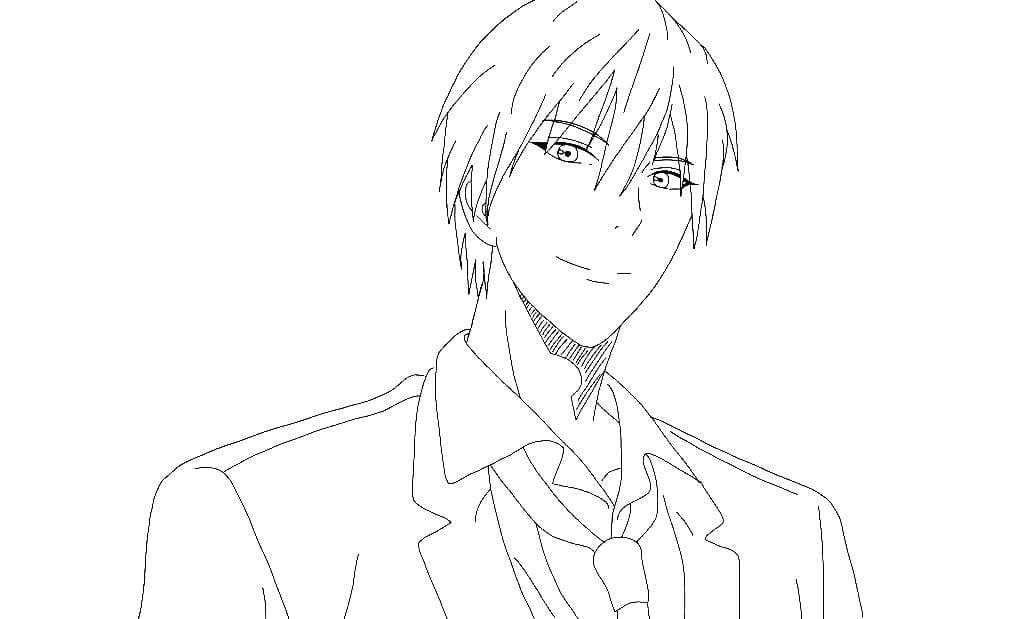
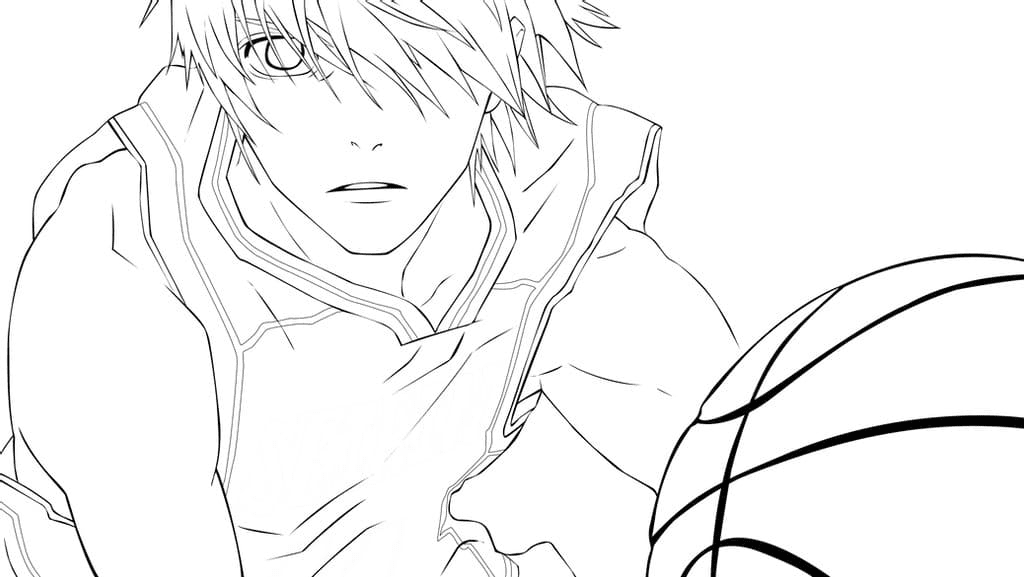
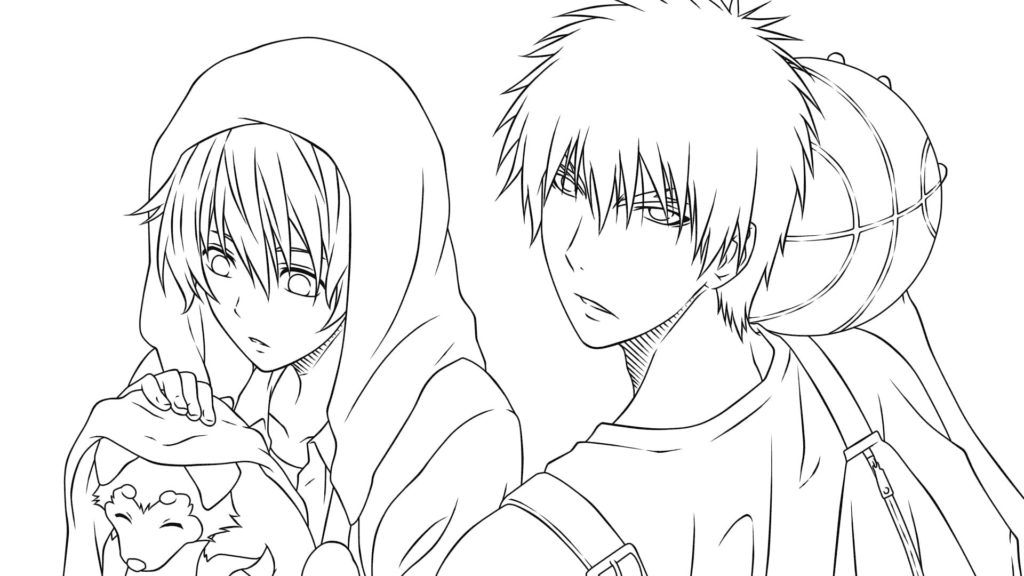
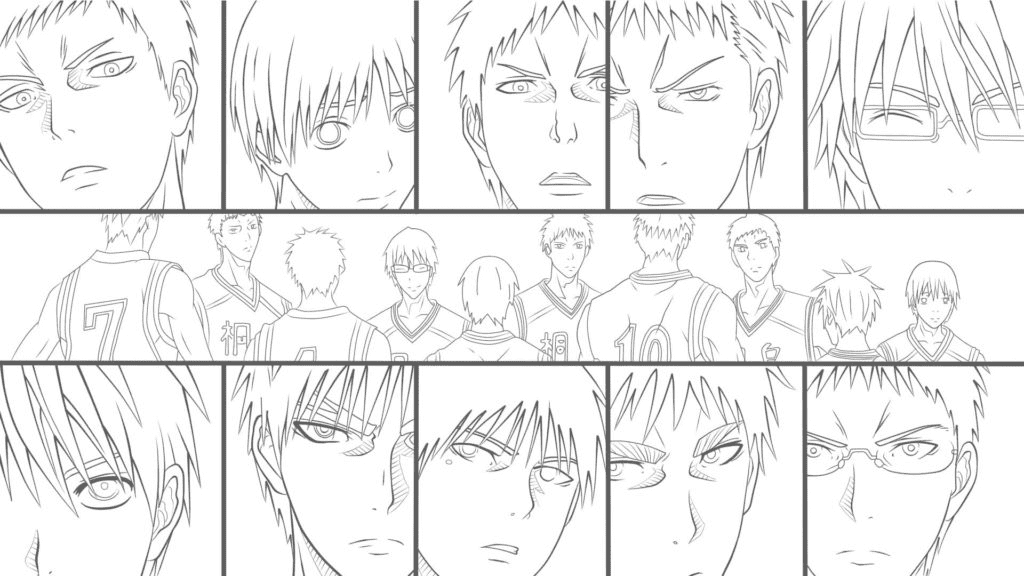
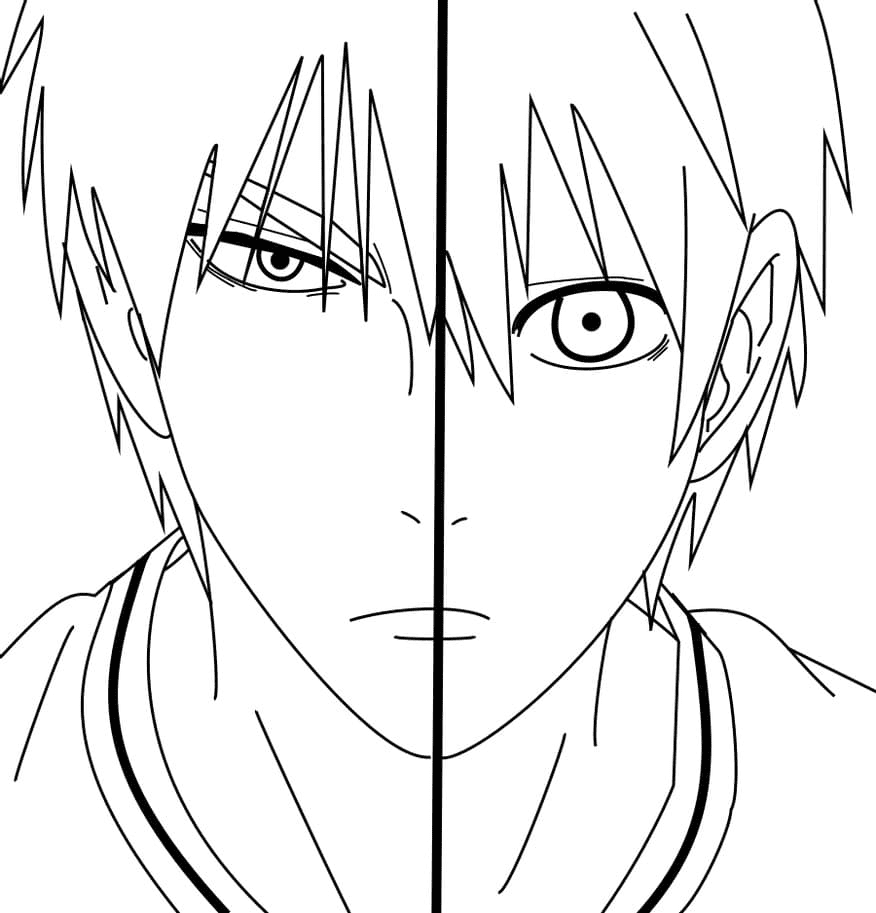
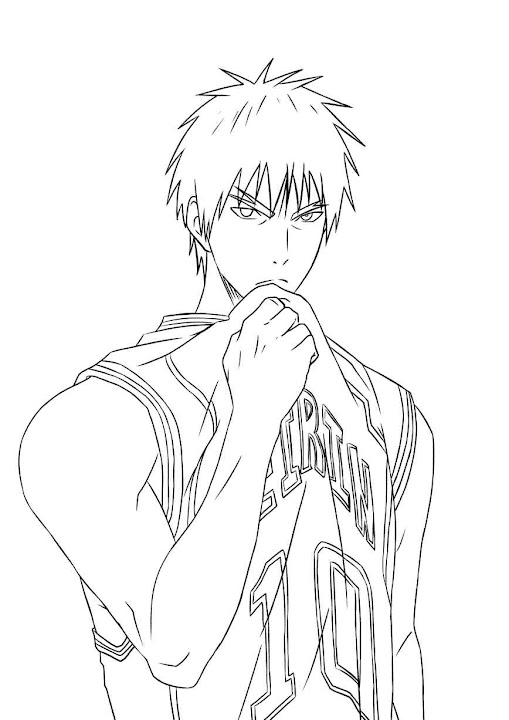
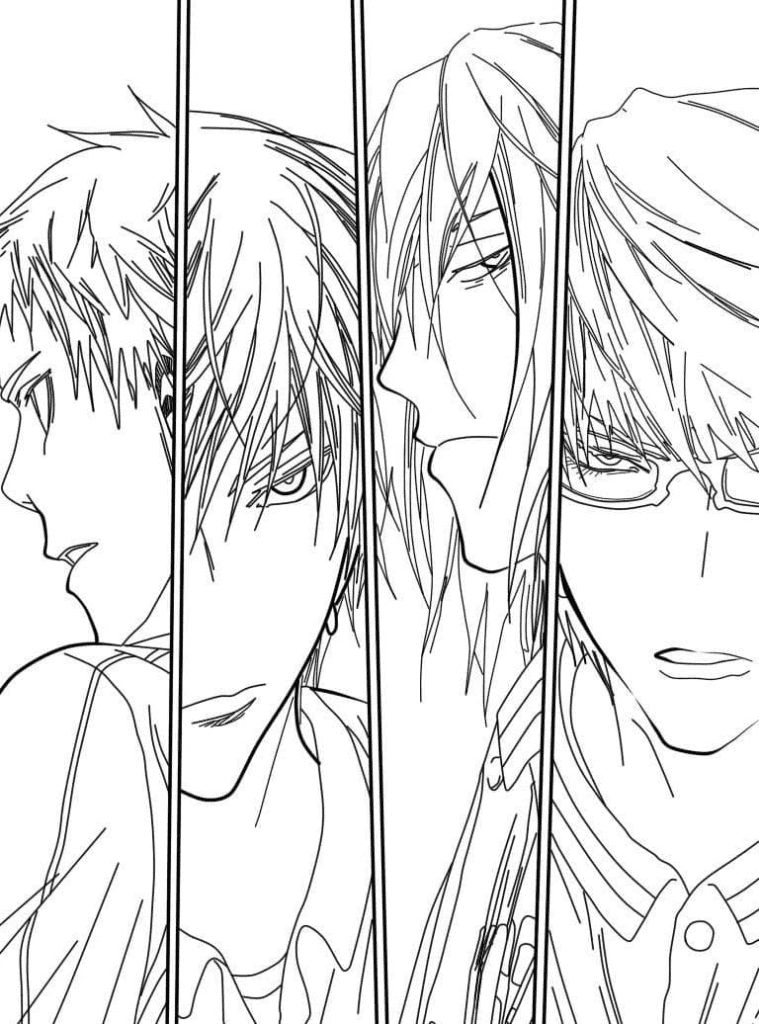
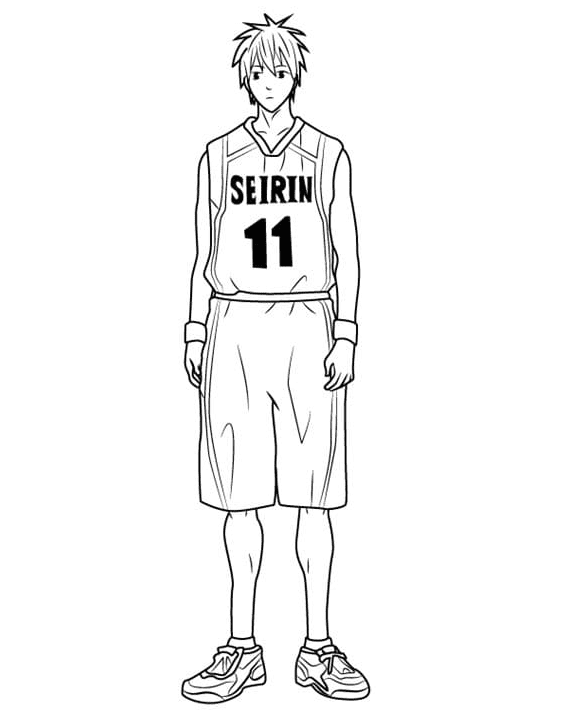
Free Kuroko no Basket coloring pages – 20+ pages featuring Tetsuya Kuroko, Taiga Kagami, the Generation of Miracles, basketball action shots, character portraits, team uniforms, and key moments from the series – free printable PDF and online coloring for basketball anime fans of all ages.

Kuroko no Basket – known in English as Kuroko’s Basketball – is a sports manga written and illustrated by Tadatoshi Fujimaki, serialized in Weekly Shōnen Jump from December 2008 to September 2014 across 30 volumes and 275 chapters. The anime adaptation was produced by Production I.G across three seasons between April 2012 and June 2015, with a theatrical film, Kuroko’s Basketball: Last Game, released in March 2017.

The series is built around a premise that is simultaneously simple and strange: its protagonist is the weakest player on the court. Tetsuya Kuroko was the sixth man – the last member – of Teiko Junior High’s legendary basketball team, a group of five prodigies so dominant they became known as the Generation of Miracles. He is not fast, not strong, not a skilled dribbler, and cannot shoot effectively. What he can do is become invisible. Kuroko has so little natural presence that people in his immediate vicinity forget he is there – opponents do not notice him making passes, do not track him in motion, do not account for him in defensive assignments. In a sport built around visibility and individual brilliance, his irrelevance is his power.

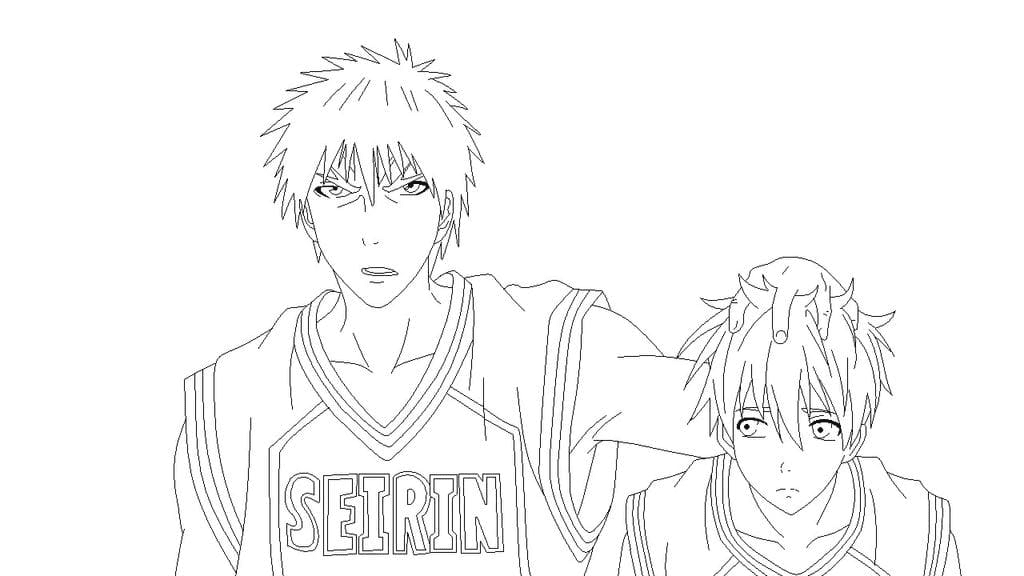
He arrives at Seirin High School and becomes the partner of Taiga Kagami – a physically gifted player raised in the United States who has everything Kuroko does not: height, speed, strength, an explosive vertical leap, and an ambition loud enough to fill a gymnasium. Their dynamic – Kuroko as the shadow who makes his partner’s light shine brighter, Kagami as the light who needs a shadow to be truly complete – is what the series spends its three seasons exploring, one Generation of Miracles opponent at a time.

These 20+ free pages at ColoringPagesOnly.com cover the full Kuroko no Basket cast. All free, PDF or PNG, print or color online.

What’s Inside

Tetsuya Kuroko – The Phantom Sixth Man

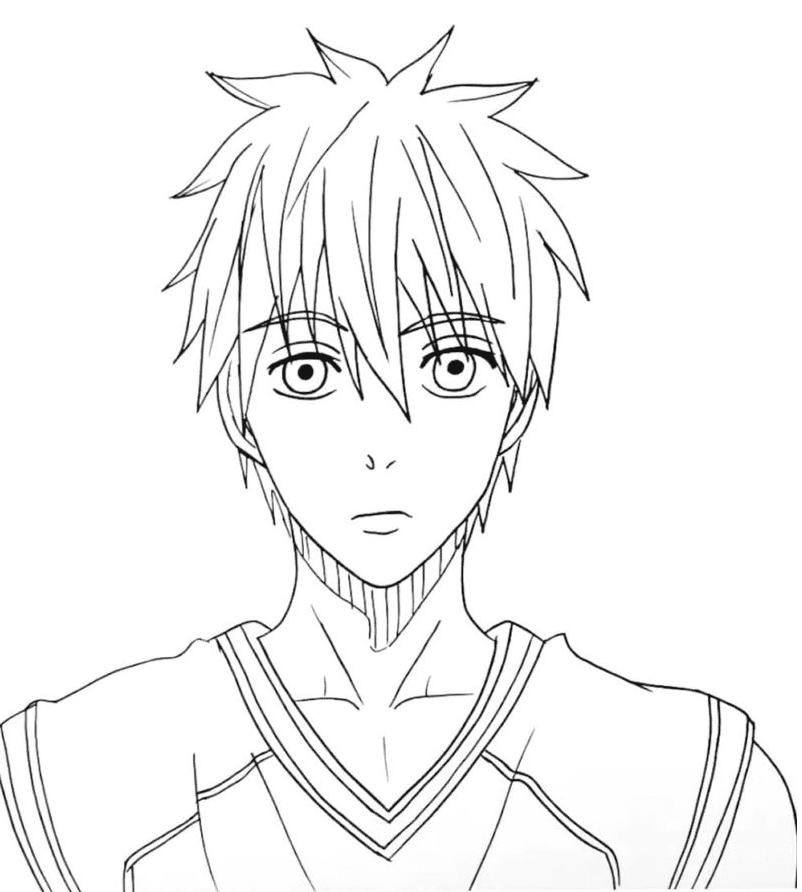
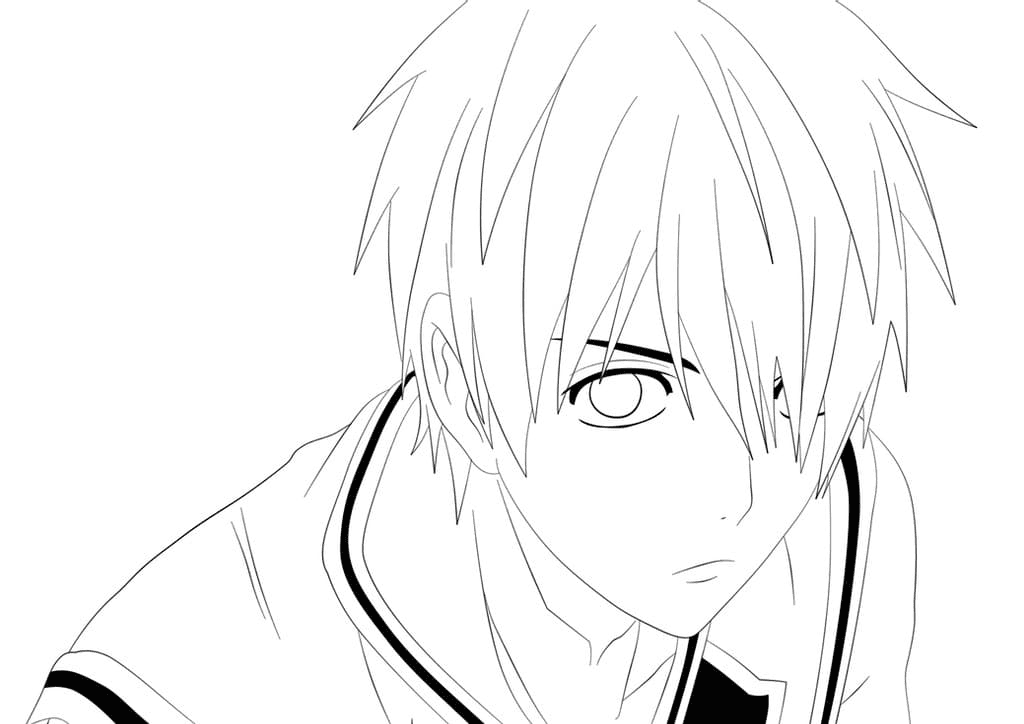
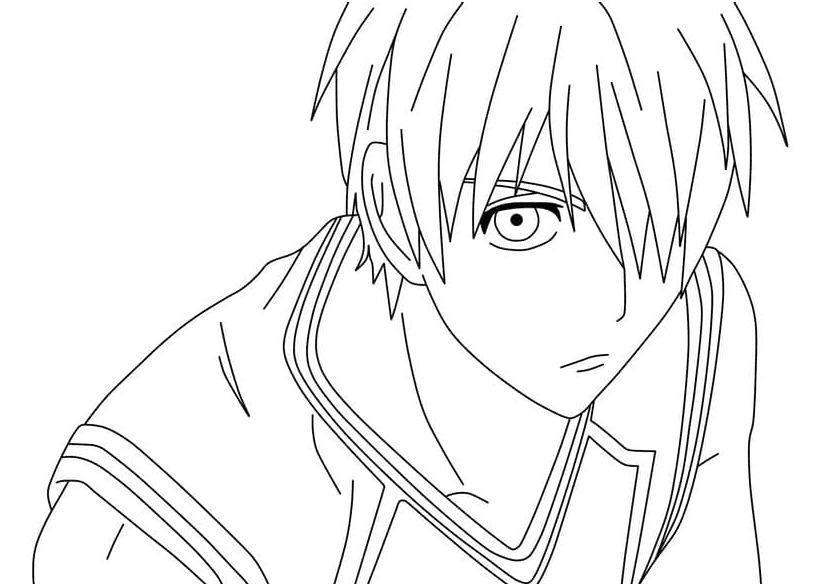
Kuroko’s design is built around his defining quality: he should not be noticed. He is small and slim – shorter than every other Generation of Miracles member and most of the players he encounters – with light blue hair, pale blue eyes, and the characteristic poker face that the series maintains across virtually every situation he encounters. He almost never smiles. He never raises his voice. He delivers observations about basketball and his teammates in the same flat tone he uses for everything else.

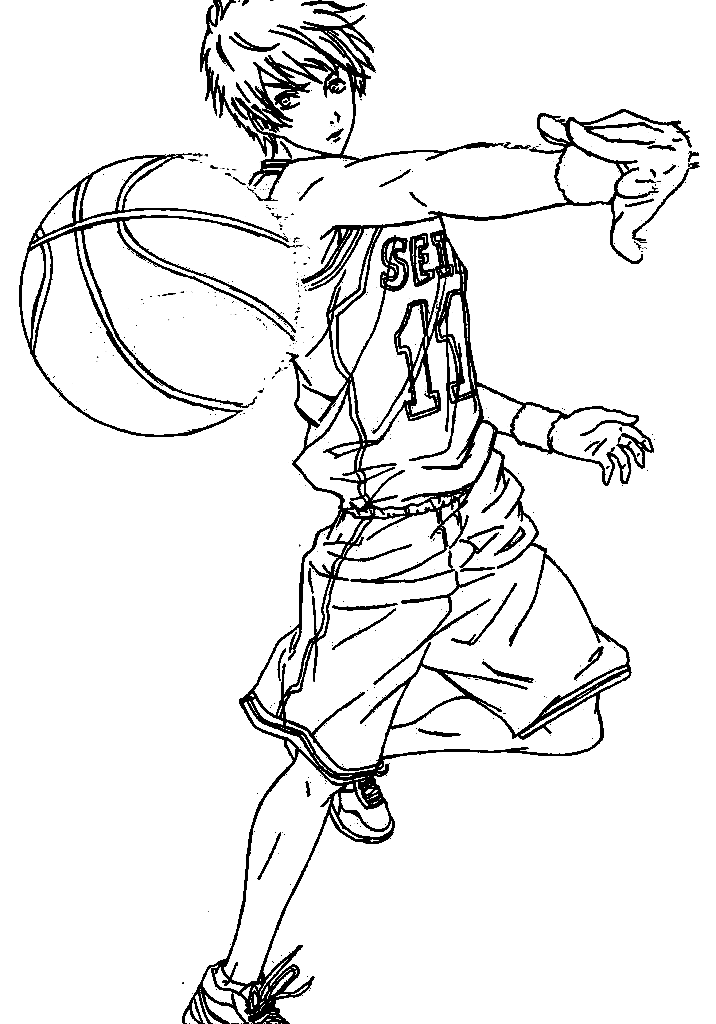
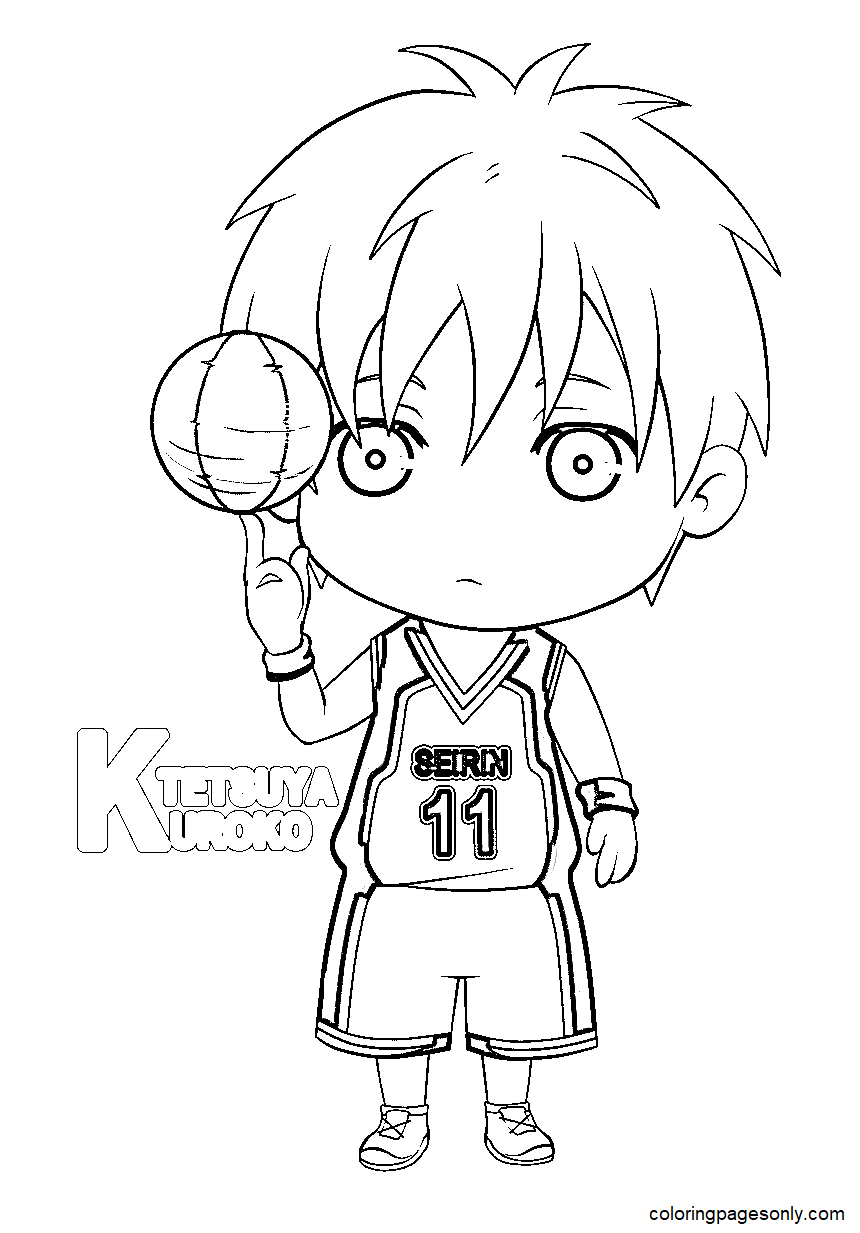
His Seirin jersey is dark blue and red, worn with the number he carries through the series. In many pages, he is shown in the full team uniform – dark jersey, shorts, high socks, basketball shoes – in the posture of someone who has already calculated the next three passes and is waiting for the situation to develop far enough that they become possible.

The pages showing Kuroko in action – the Ignite Pass (his signature chest pass that carries extraordinary force), the Vanishing Drive (a directional change using misdirection that allows him to pass through defenders), the Phantom Shot (his underhanded lob that reaches the basket without the shooter being noticed) – capture the specific visual challenge of illustrating a character whose power is predicated on invisibility. The action pages show him at the moment his ability is most visible: the brief instant of the pass leaving his hands before the defender realizes it has happened.

Coloring Kuroko: His light blue hair is the collection’s most specific color decision – a pale, slightly desaturated sky blue that reads as distinctive without being vivid. It is cooler and lighter than Robin ‘s-egg blue and lighter and more blue-shifted than teal. His eyes are the same pale blue as his hair – a consistent chromatic identity that the series uses to establish him visually. His skin is very pale – he is the palest of the main characters, consistent with his low-presence design. His Seirin jersey is a deep navy blue with red trim – apply the navy at full dark saturation, the red trim cleanly at the collar and sleeve edges.

Taiga Kagami – The Light

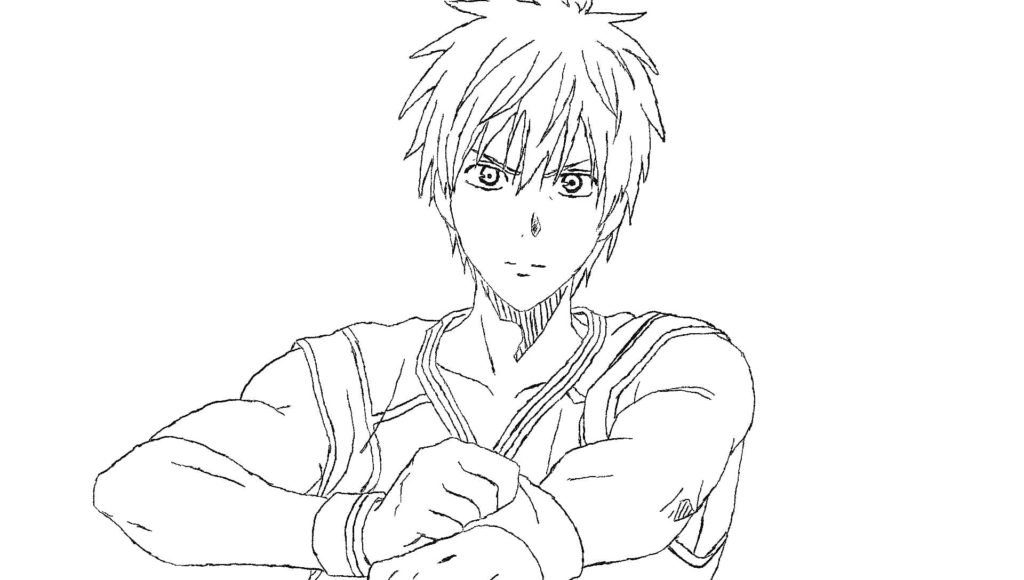
Kagami is everything Kuroko is not in physical terms – tall, broad-shouldered, with wild hair that is dark at the roots and transitions to red at the tips, giving him a two-tone hair that reads as fire in motion. He was raised in the United States, plays with the confidence of someone who has always been the best player available, and enters Seirin as the physical foundation around which Kuroko’s invisible passing game is built.

His special ability – the Zone – is the series’s most dramatic individual power: a state of absolute focus and peak physical performance in which everything external disappears, and the player operates at the outermost edge of their physical capability. When Kagami enters the Zone, his already exceptional athleticism becomes something different – the visual representation in the anime is a shift in his expression and aura that makes it clear something fundamental has changed.

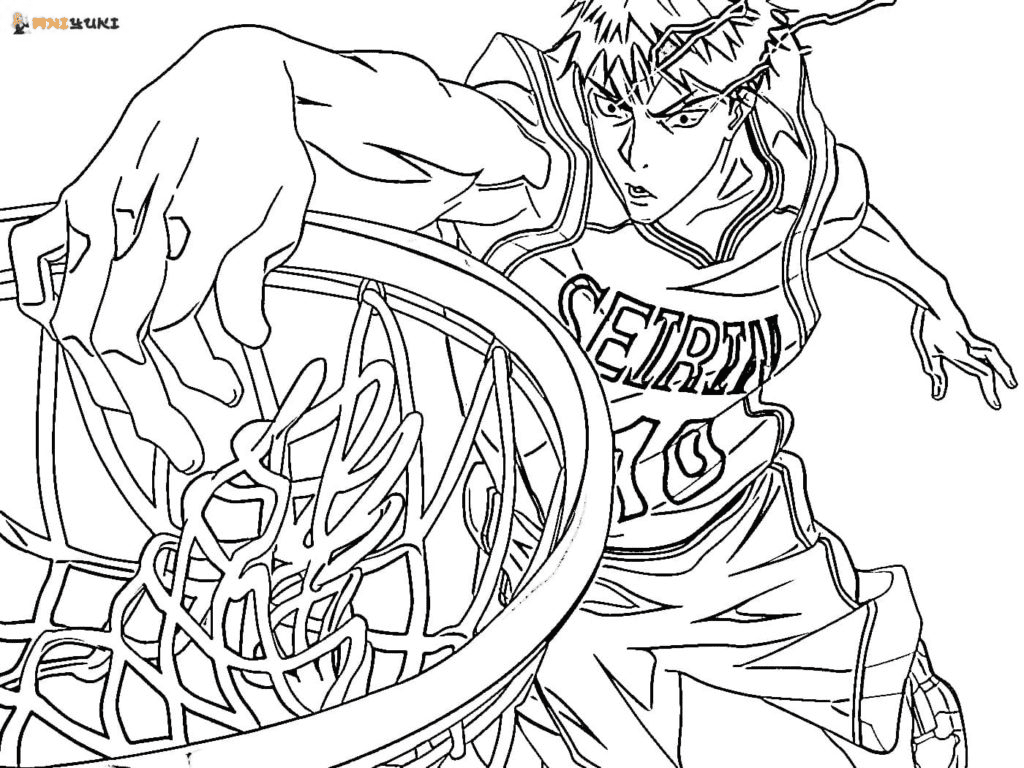
His action pages show the specific quality of his game: the explosive vertical leap, the two-handed jam, the one-on-one isolation where his combination of size and speed produces situations that single defenders cannot handle. His expression in these pages – intense, committed, the opposite of Kuroko’s flat calm – makes the contrast between the two characters visible in every composition they share.

Coloring Kagami: His two-tone hair is the page’s most important detail – dark brown to black at the roots and base, transitioning to a vivid red at the tips. The transition should be gradual rather than a hard boundary – apply the red from the tips upward with decreasing pressure, the dark from the roots downward with similar gradual release, and let the middle zone mix. His Seirin jersey matches Kuroko’s – deep navy with red trim. His skin tone is warmer and darker than Kuroko’s – a medium warm tone consistent with his more physically present, physically vivid character design.

Ryōta Kise – The Perfect Copier

Kise is the Generation of Miracles member at Kaijō High – the team Seirin defeats in the first major tournament arc – and the first opponent who gives Kuroko and Kagami a genuine test. His ability is Perfect Copy: he can reproduce any move he observes, executed with his own physical gifts amplifying whatever he copies. The implication is significant – it means the only moves he cannot reproduce are those performed by someone operating beyond his physical level.

His design is the most conventionally attractive in the series – blond hair, model-level physical appearance (he works as a model outside basketball), and an easy, cheerful personality that the series uses as contrast for the more serious Generation of Miracles members. He was close to Kuroko at Teiko, and their reunion at Kaijō carries the specific emotional weight of former teammates on opposing sides.

Coloring Kise: Blond hair – a warm, medium yellow-gold, not pale and not bright gold, but the specific blond of someone whose hair reads as naturally light. His Kaijō jersey is yellow. His eyes are yellow-gold, matching his hair – the consistent chromatic identity of each Generation of Miracles member applies to Kise’s warm golden palette throughout.

Shintarō Midorima – The Perfect Shooter

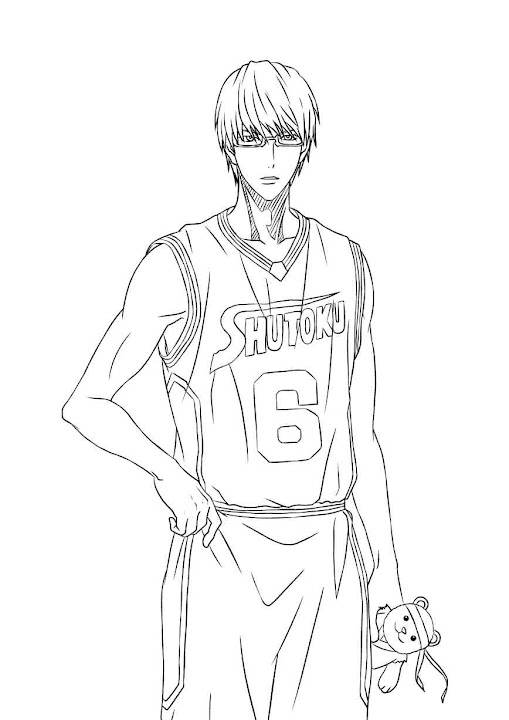
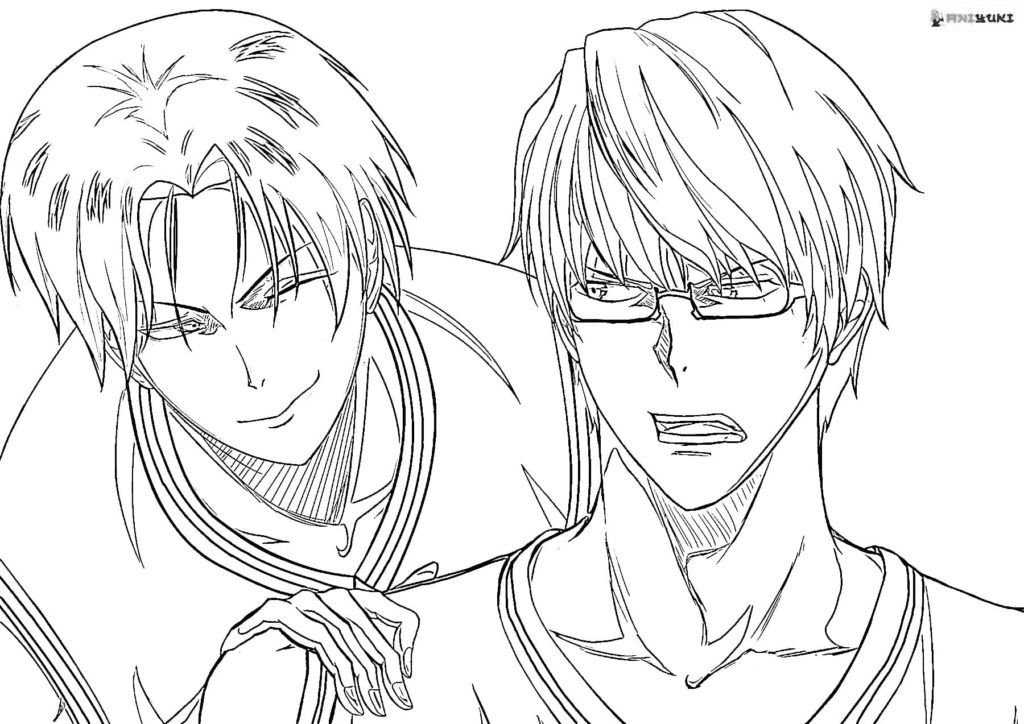
Midorima is at Shūtoku High, wearing glasses, taping his right hand’s fingers, and carrying whatever object his horoscope has indicated is his lucky item for the day. He is the most rigidly disciplined member of the Generation of Miracles – his shooting form is technically perfect, the result of training that has extended his range across the entire court. He can make three-point shots from anywhere, including full-court attempts, at a consistent rate that defies all conventional basketball logic.

His character is the classic tsundere: cold and dismissive in public, showing genuine care for the people around him through actions he refuses to acknowledge as care. His relationship with his Shūtoku partner Kazunari Takao – who drives him to games in a rickshaw while Midorima refuses to acknowledge anything unusual about this arrangement – is the series’ most consistently comedic secondary relationship.

Coloring Midorima: Green hair and green eyes – the most vivid of the Generation of Miracles’ color identities. His hair is a clean medium green, not desaturated, that reads immediately as distinctive. His glasses are thin-framed – render them in a pale grey or dark line rather than a thick opaque frame. His Shūtoku jersey is green. The taped right hand – white athletic tape wrapped around his fingers and knuckle area – is his most specific and recognizable costume detail.

Daiki Aomine – The Unstoppable

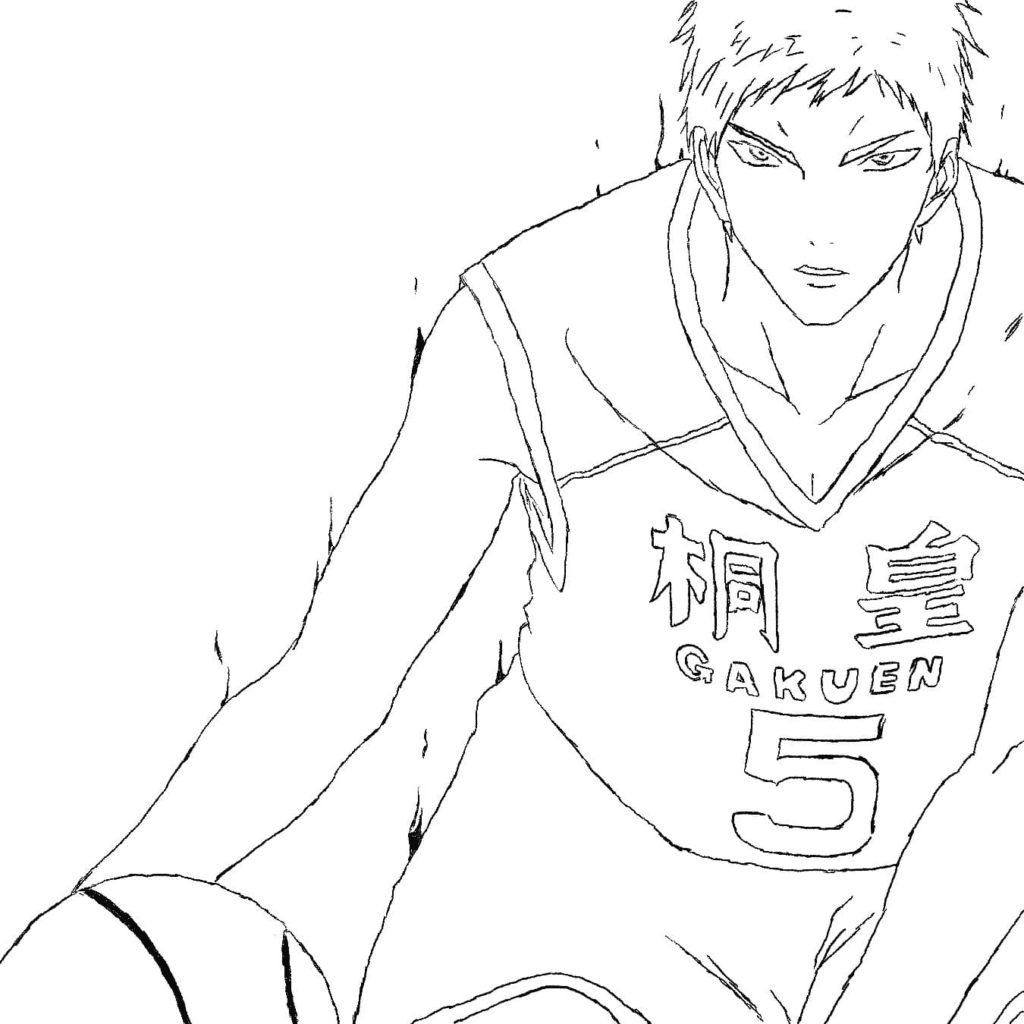
Aomine is at Tōō Academy and is, within the series’ power hierarchy, the strongest player the main characters face. His basketball is built on something that cannot be taught or countered through conventional means: he plays formless basketball, shooting from positions and angles where no one who has studied the game would attempt a shot, with a movement pattern that produces situations defenders have not practiced defending. His famous declaration – “The only one who can beat me is me” – is not arrogance but assessment.

He and Kuroko were close at Teiko – Aomine was Kuroko’s original “light,” the partner whose brilliance Kuroko’s misdirection was designed to amplify. The deterioration of that relationship, as Aomine grew so much stronger than his opponents that basketball stopped meaning anything to him, is the emotional backstory that gives their eventual matchup its weight.

His design is the most physically imposing of the Generation of Miracles: tall, athletic, with dark navy hair and a tan complexion that suggests someone who has spent years training outdoors. His Tōō Academy jersey is navy blue.

Coloring Aomine: Dark navy hair – almost the same color as Seirin’s jersey, but applied to a person’s hair, which gives it a specific visual quality. The darkness should read as navy rather than black – use a very dark blue rather than pure black. His tanned skin is significantly darker and warmer than Kuroko’s or Midorima’s – a medium-dark warm tone.

Atsushi Murasakibara – The Giant

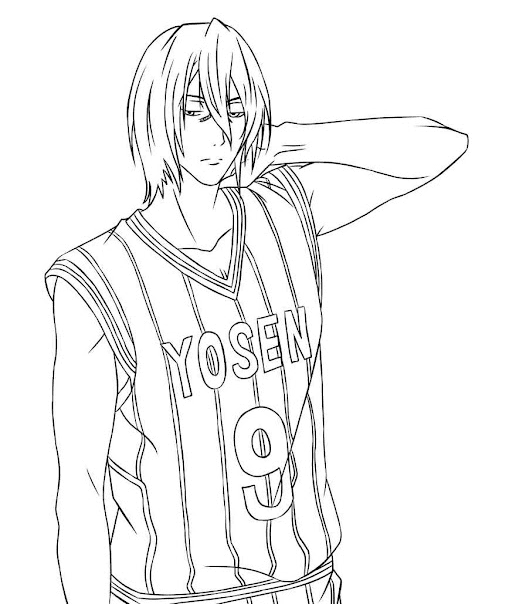
Murasakibara is at Yōsen High and is 208 centimeters tall – listed at six feet ten inches – making him the tallest player in the series by a significant margin. His reach and size make him an almost impassable barrier on defense, and his offensive game, when he chooses to engage it seriously, is similarly overwhelming. The qualifier matters: Murasakibara is lazy. He plays basketball without a genuine interest in the sport, choosing to use his natural gifts because it costs him nothing rather than because he cares about the outcome.

His personality is childlike – he eats snacks on the court, speaks with the casual directness of someone who has never needed to manage his words for social reasons, and treats opponents who attempt to drive on him with the mild irritation of someone dealing with an inconvenience.

His design reflects his scale: long purple hair that falls to his shoulders on a body that towers over every other character in the series. He is frequently shown eating.

Coloring Murasakibara: Long purple hair – a medium-value purple, more vivid than lavender and less dark than violet, falling straight past his neck. His Yōsen jersey is purple to match. His eyes are purple. The consistent color identity across hair, eyes, and team jersey is the clearest in the Generation of Miracles lineup. His height is the most important thing to render correctly in any page that shows him next to other characters – the scale difference between him and any normal-sized player is the visual information that explains everything about how he plays.

Seijūrō Akashi – The Emperor

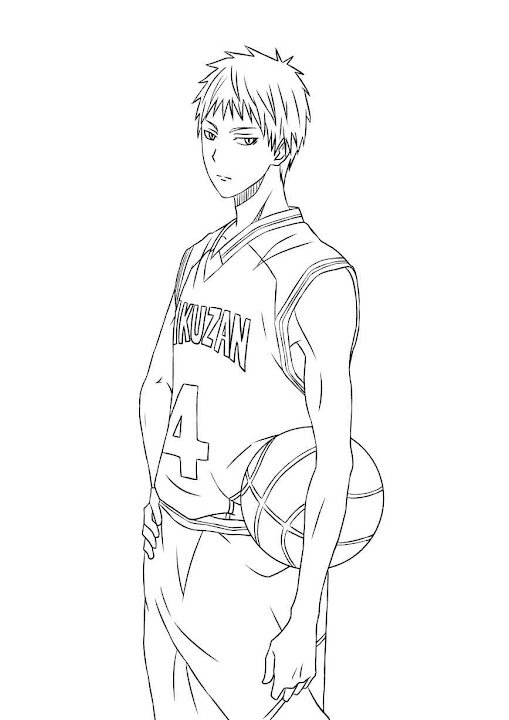
Akashi is the captain of the Generation of Miracles and the final opponent – his Rakuzan team is Seirin’s opponent in the Winter Cup final. His character has two distinct modes: the original Akashi, whose leadership of Teiko was firm but fair, and the Emperor personality that emerged as the team’s dominance became absolute and his competitive need to win at all costs took complete control.

His physical ability – the Emperor Eye, which allows him to read opponents’ movements before they happen, combined with the Ankle Break crossover that consistently trips opponents – is the most individually overwhelming in the series. His design reflects his psychological complexity: red hair and eyes that changed from matching red to heterochromia (one gold, one red) when the Emperor personality took control.

Coloring Akashi: Short red/crimson hair – a vivid, pure red that reads as the most intense color in the Generation of Miracles’ palette. His eyes require specific attention: the heterochromia that marks his Emperor mode means one eye is gold-amber and one is crimson-red. These two eye colors should be clearly distinct from each other. His Rakuzan jersey is dark red/crimson.

What These Pages Do

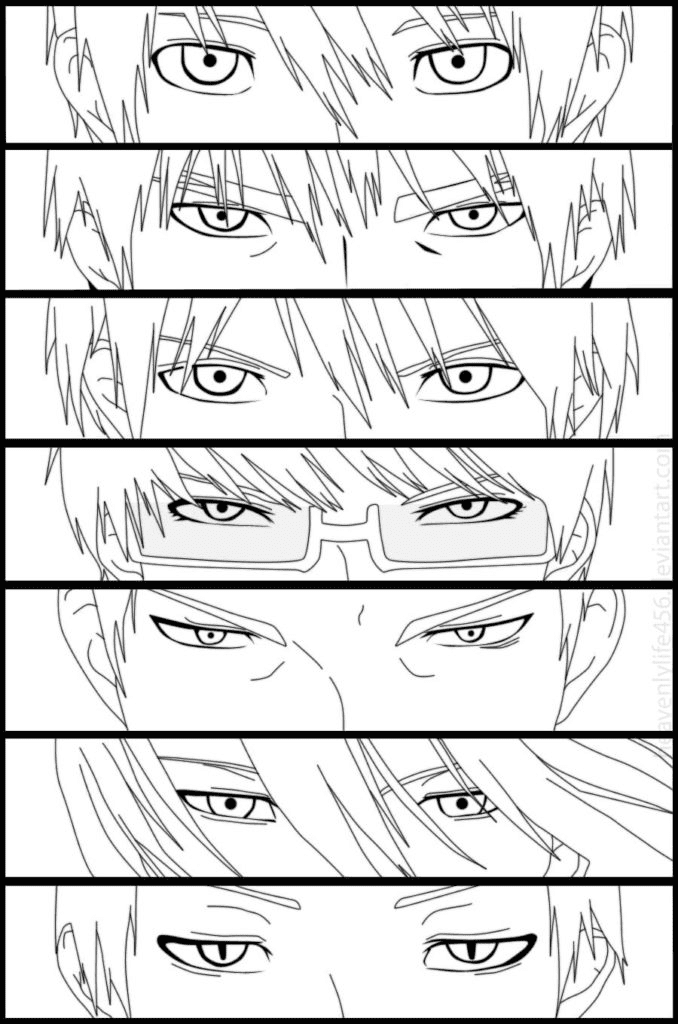
Kuroko no Basket’s color-coded Generation of Miracles is the most systematically designed ensemble in sports anime. Each member’s hair, eyes, and team jersey share a single color – blue for Kuroko, red-black for Kagami, yellow for Kise, green for Midorima, navy for Aomine, purple for Murasakibara, red for Akashi. Coloring through the full cast teaches color identity as a storytelling device – each character is their color before they are their name.

The phantom player concept is one of anime’s most creative ability designs. Kuroko’s power is the absence of power – his usefulness derives from what he lacks rather than what he possesses. This is a genuine narrative innovation that sports anime had not explored before, and the series uses it to generate situations that conventional basketball logic cannot explain. Coloring his pages while understanding this concept – the player who is most effective when he is least noticed – gives the coloring activity a specific intellectual dimension.

Basketball action pages develop an understanding of human movement. A jump shot, a driving layup, a chest pass with maximum force – these are specific body positions that require the colorist to look at the figure carefully enough to understand what the body is doing. The 2005 Art Therapy Journal study on structured coloring and anxiety reduction applies directly here: the sustained, focused attention required to render a basketball action page correctly produces exactly the calm, absorbed state the research identifies as most beneficial.

Fine motor development. The American Academy of Pediatrics identifies fine motor development as a key childhood milestone. The jersey numbers, the finger tape on Midorima’s hand, the glasses frames, the basketball court lines – all provide the motivated, sustained fine motor practice that is most developmentally effective.

How to Color These Pages Well

The Generation of Miracles’ color system requires consistency. Once you have established Kise’s yellow or Midorima’s green, use the same hue across every page featuring that character. The color-identity system only works if the same character reads as the same color in every context. Keep a reference swatch of each character’s hair color before beginning any page.

Basketball court floors are warm wood. Any page showing a basketball court – whether in full background or as a partial element – should render the floor in the warm yellow-orange of hardwood. The floor’s wood grain lines are typically rendered as parallel horizontal lines slightly darker than the base tone. The three-point arc and lane lines are white. Court floors should be noticeably warmer than any character’s skin tone.

Jerseys need fold lines to read as fabric. A flat, colored rectangle reads as a shape, not a jersey. The jersey’s fold lines – at the armhole, down the center of the body, at the hem – indicate where the fabric moves with the body beneath it. Apply the shadow tone in these fold areas: slightly darker than the jersey’s main color, slightly cooler in tone, and at the edges of folds rather than uniformly across a surface.

Midorima’s tape is a critical detail. White athletic tape wrapped around the fingers of his right hand is Midorima’s most specific and character-defining costume detail. Render it as clean white – not cream, not grey, but the white of fresh athletic tape – in the wrapped-around-fingers pattern. In action pages where his shooting hand is visible and prominent, this detail should be rendered precisely.

Akashi’s heterochromia needs clear differentiation. The two eye colors – gold-amber and crimson-red – must read as distinctly different colors. Apply the gold eye first in a warm amber-yellow. Apply the red eye in a vivid, slightly darker crimson. The distinction between gold and red should be immediately clear from normal reading distance. If the two colors merge or read as the same hue, the specific plot significance of the heterochromia is lost.

5 Creative Craft Ideas

Generation of Miracles Color Chart

Print one portrait page for each of the six Generation of Miracles members – Kuroko, Kise, Midorima, Aomine, Murasakibara, Akashi – and one for Kagami. Color each in their canonical color identity: Kuroko in pale blue, Kise in yellow, Midorima in green, Aomine in navy, Murasakibara in purple, Akashi in crimson, Kagami in red-black.

Mount all seven in a row on a backing sheet, with each character’s name and their school below their figure. Add a title: “Generation of Miracles – and the one who surpassed them.” The visual effect of seven character portraits, each in its own distinct color, lined up together, shows the color system on which the series is built as a single, clear display.

The Light and Shadow Diptych

Print the most direct Kuroko portrait page and the most direct Kagami portrait page. Color Kuroko in his pale blue, flat, quiet palette – the visual qualities of someone who is easy to overlook. Color Kagami in vivid red-black, with the most dramatic color contrast available – the visual qualities of someone impossible to miss.

Mount both side by side on a dark backing sheet with a thin white line dividing them. At the top left, above Kuroko: “Shadow.” At the top right, above Kagami: “Light.” Below both: “Neither is complete without the other.” The diptych format makes the series’ central thematic relationship visible as a color relationship.

Finger Tape Technique Reference Card

Print a close-up hand page or any page that clearly shows Midorima’s taped right hand. Color the hand carefully – warm skin tone throughout, clean white tape wrapped around the fingers. Cut the finished image to card dimensions.

On the back of the card or on an attached note, write: “Midorima Shintarō, Shūtoku High, jersey #6. Shooting range: full court. Reason for tape: protection and shot consistency. Lucky item of the day: (write your own).”

The card is both a character reference and a small personal Kuroko no Basket artifact – the kind of object that becomes meaningful to a fan precisely because it was made by hand.

Team Uniform Comparison

Print one page in each team’s uniform from the collection – Seirin (dark blue/red), Kaijō (yellow), Shūtoku (green), Tōō Academy (navy), Yōsen (purple), Rakuzan (dark red). Color each in the correct jersey color. Cut each figure out around the outline.

Mount all six figures standing in a row on a backing sheet, their jersey colors reading as a visual spectrum from yellow through blue through purple and red. Below each, add the school name. The finished display reads as a tournament bracket visual – all six teams whose players the series follows, arranged by color.

Kuroko and Tetsuya #2 Portrait

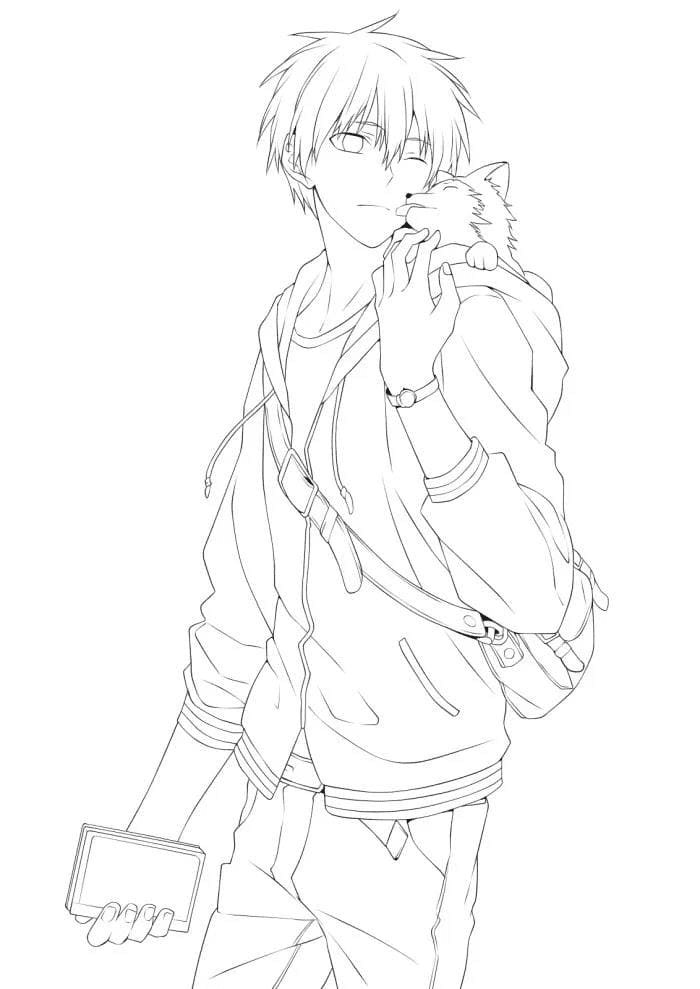
Tetsuya #2 is Kuroko’s dog – a Siberian Husky puppy with pale blue-tinted fur that visually matches Kuroko’s own light blue hair and eyes. Print any page that shows Kuroko and his dog together, or pair a Kuroko portrait with a separate animal page if available.

Color Kuroko in his canonical pale blue. Color the dog in a matching pale blue-grey – not the same vivid blue of Kuroko’s hair but the cooler, slightly greyed blue that reads as dog fur rather than anime hair while still matching the series’ visual logic.

Mount on a backing sheet with a simple caption: “Tetsuya Kuroko, #11, Seirin High. And Tetsuya #2.” The portrait captures the specific gentleness of the character that his basketball scenes do not – the deadpan player who named his dog after himself.

Frequently Asked Questions

What is Kuroko no Basket, and who created it? Kuroko no Basket (黒子のバスケ), known in English as Kuroko’s Basketball, is a sports manga written and illustrated by Tadatoshi Fujimaki. It was serialized in Weekly Shōnen Jump from December 2008 to September 2014, spanning 30 volumes and 275 chapters. The anime adaptation was produced by Production I.G across three seasons from 2012 to 2015, with a theatrical film, Kuroko’s Basketball: Last Game, released in March 2017. The series follows Tetsuya Kuroko, the sixth and weakest member of a legendary middle school basketball team, as he attempts to defeat his former teammates who have dispersed to rival high schools.

Who are the Generation of Miracles? The Generation of Miracles (Kiseki no Sedai) are the six exceptional players who formed the basketball team of Teiko Junior High – the most dominant middle school team in Japan. The six members are Tetsuya Kuroko (the phantom sixth man, pale blue), Ryōta Kise (Kaijō High, blond, Perfect Copy ability), Shintarō Midorima (Shūtoku High, green hair, full-court shooting ability), Daiki Aomine (Tōō Academy, dark navy, formless shooting ability), Atsushi Murasakibara (Yōsen High, purple, 208cm defensive specialist), and Seijūrō Akashi (Rakuzan High, red hair, Emperor Eye ability). Each member is color-coded – their hair, eyes, and team jersey share a single consistent color that establishes their visual identity.

What is Kuroko’s special ability? Kuroko’s special ability is called Misdirection – he has an almost complete lack of presence, meaning people in his immediate vicinity fail to consciously register him. In basketball terms, this means defenders do not notice him making passes, do not track him as he moves, and do not account for him in defensive planning. He exploits this invisibility through precise, forceful passing that delivers the ball to his teammates in situations opponents cannot anticipate. His primary techniques include the Ignite Pass (an extremely fast chest pass that defies conventional expectations of a player of his physical level), the Vanishing Drive (a directional change that uses misdirection to allow him to pass through defenders), and the Phantom Shot (an underhanded lob attempt that reaches the basket without the shooter being noticed).

Who is Taiga Kagami, and what is his relationship to Kuroko? Taiga Kagami is Kuroko’s partner and co-protagonist – a physically gifted, athletically exceptional player who was raised in the United States and arrived at Seirin High with the ambition to become the best basketball player in Japan. The series frames their relationship in the terms Kuroko uses explicitly: Kagami is the Light, Kuroko is the Shadow. Kuroko’s misdirection ability is most powerful when paired with a physically dominant partner who can use the openings it creates – Kagami provides those openings by being a player opponents cannot ignore. Their partnership is the series’s central relationship, developed across three seasons and the theatrical film.

What is the Zone in Kuroko no Basket? The Zone is the series’ term for a state of peak athletic performance and absolute focus that the most talented players can enter in moments of maximum competitive pressure. A player in the Zone operates at the absolute outermost edge of their physical capability, with heightened perception, reaction time, and physical output. In the series’ visual language, Zone states are accompanied by a shift in the character’s expression and an aura effect. Kagami enters the Zone during the series’s most significant matches. Akashi’s ability to operate at this level consistently is part of what makes him the Generation of Miracles’ most formidable member.

What age group are these pages best suited for? The simpler character portrait pages – clean character outlines with minimal background detail – work well from ages seven to nine for fans of the series, developing colored pencil control. The more complex pages – action scenes with dynamic body positions, multiple-character compositions, jersey and equipment detail – are most rewarding for ages ten and up and for adult fans who want a sustained coloring challenge. The Generation of Miracles color-coding system makes the collection particularly engaging for fans who want to build a complete set of all characters, and completing such a set is a project that suits ages ten through adult.

Browse the full collection at ColoringPagesOnly.com. All 20+ pages free, no sign-up, PDF or PNG, print at home or color online.

Tadatoshi Fujimaki built Kuroko no Basket around the least likely premise for a sports anime: the protagonist who cannot play. Kuroko cannot shoot well, cannot dribble well, and cannot physically match any of the opponents the series places him against. What he can do is disappear. What he can do is pass. What he can do is make the person next to him better than they would be without him.

The series spent three seasons asking what it means to be indispensable when you are invisible – to contribute most by being noticed least, to win by making someone else’s winning possible.

The pale blue hair. The flat expression. The Ignite Pass leaves his hands before the defender knows it has gone.

Pick up your light blue. Keep it pale. The phantom is already on the court.

Share your work on Facebook and Pinterest and tag #Coloringpagesonly. We especially want to see the Generation of Miracles color charts and the Light and Shadow diptych projects.

Color the shadow. The light shines brighter for it.

These related coloring collections will help you explore the wonderful world of colors. Let’s choose, be creative, and show us your great pictures!

Charlotte Taylor – Writer

I'm Charlotte Taylor, a former preschool teacher turned content creator at Coloringpagesonly.com. Fueled by my love for children and a deep passion for exploring the world through colors, I’m dedicated to inspiring creativity and spreading a vibrant, positive artistic spirit to all.