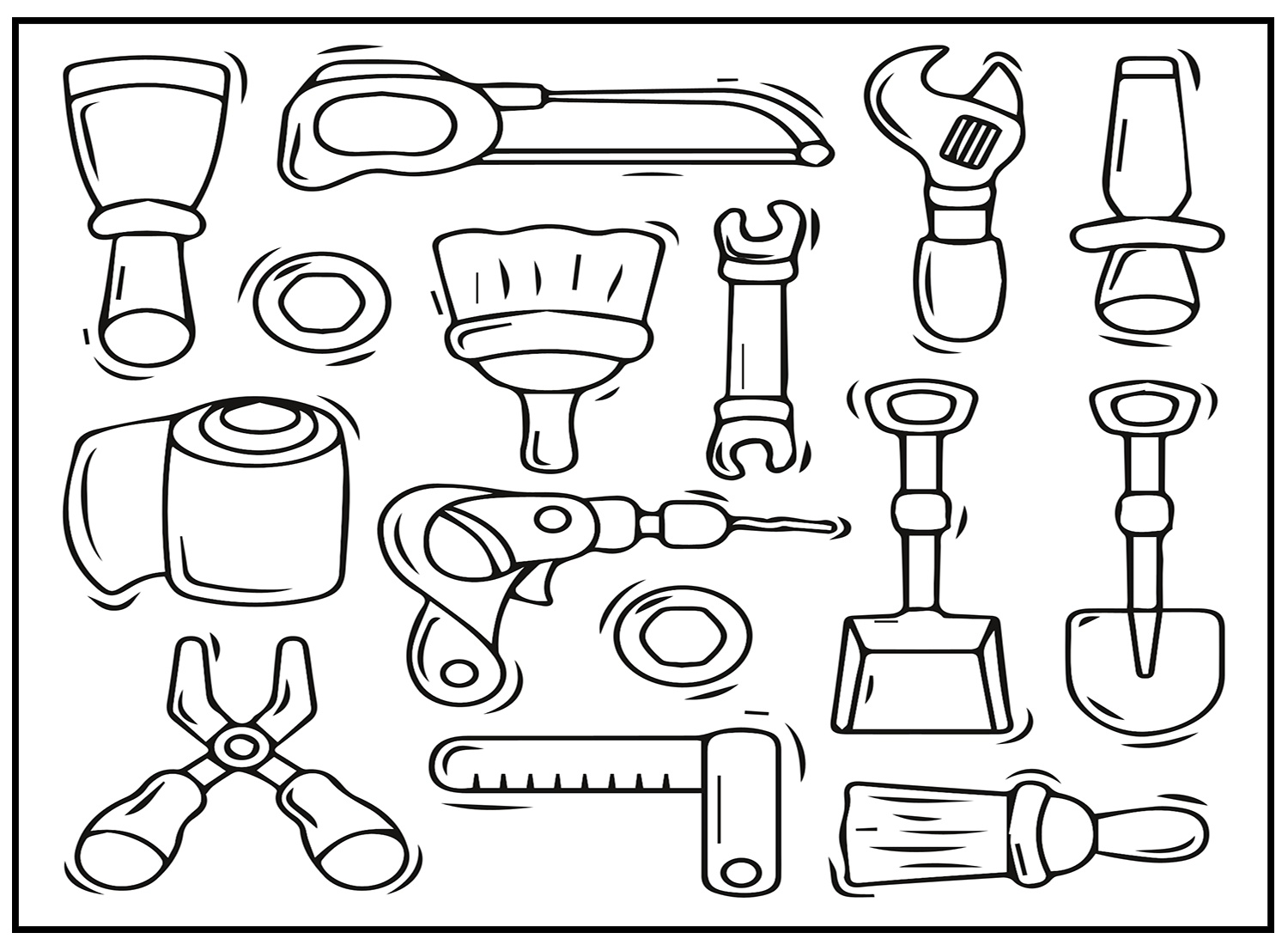
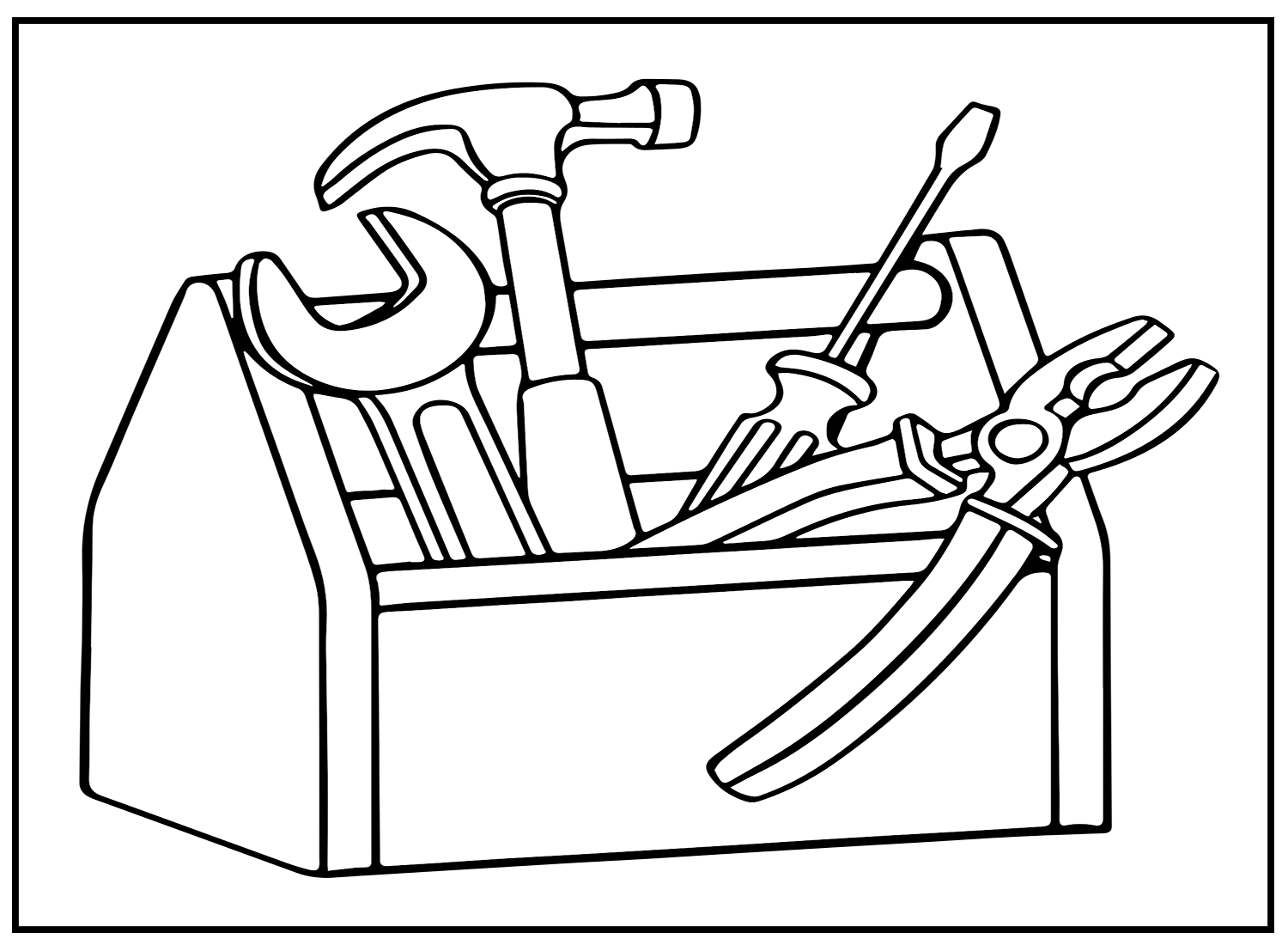
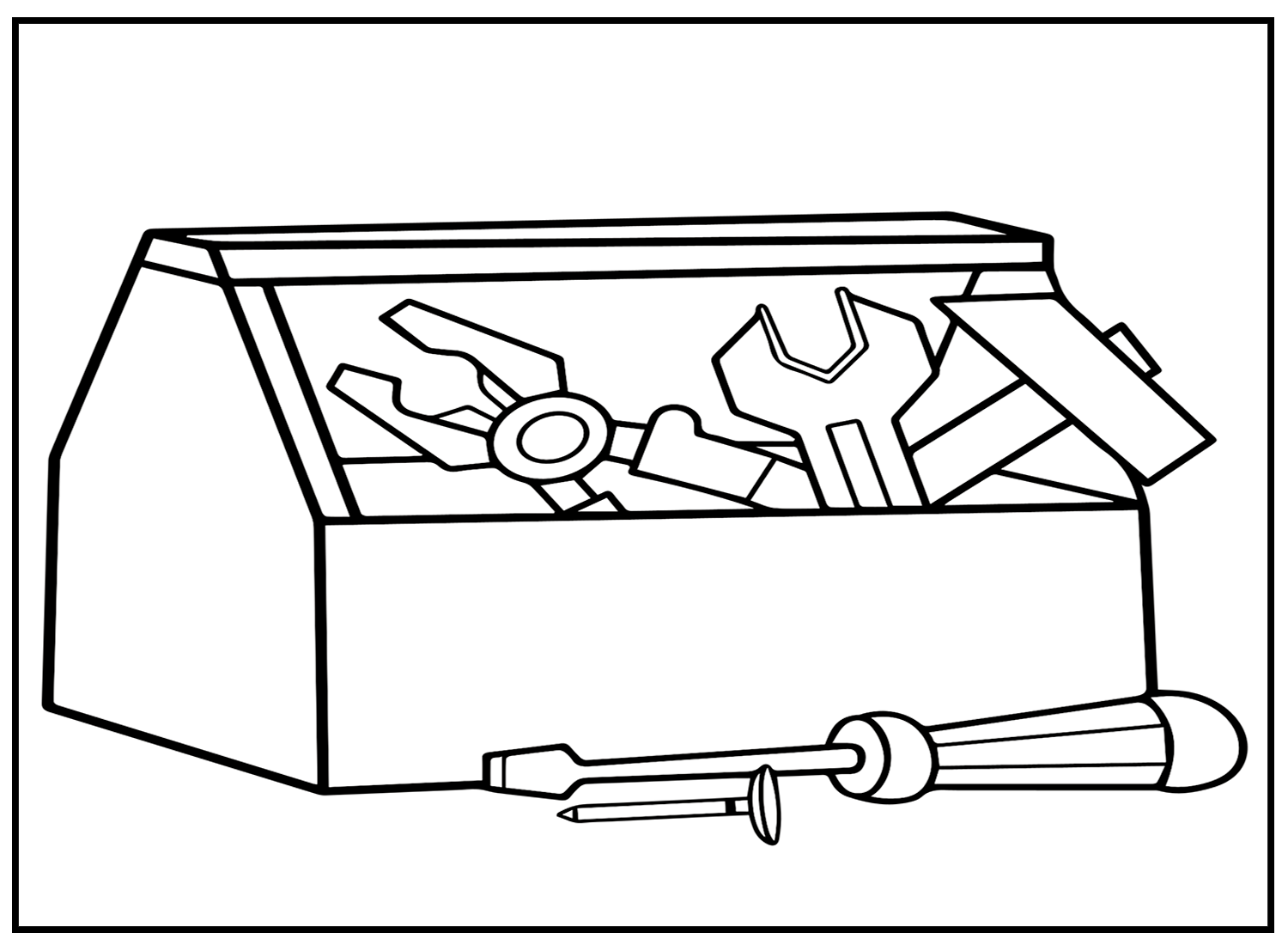
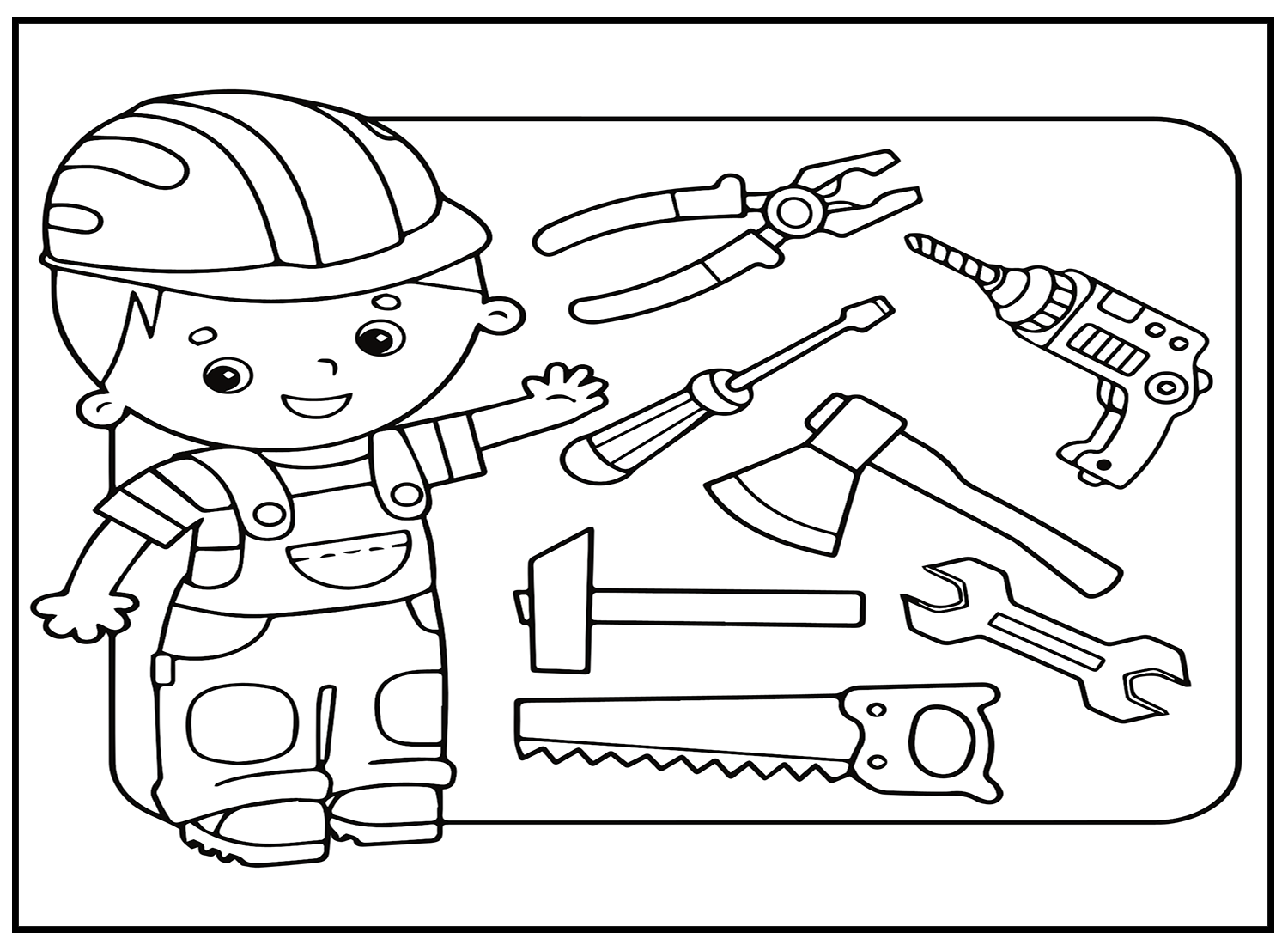
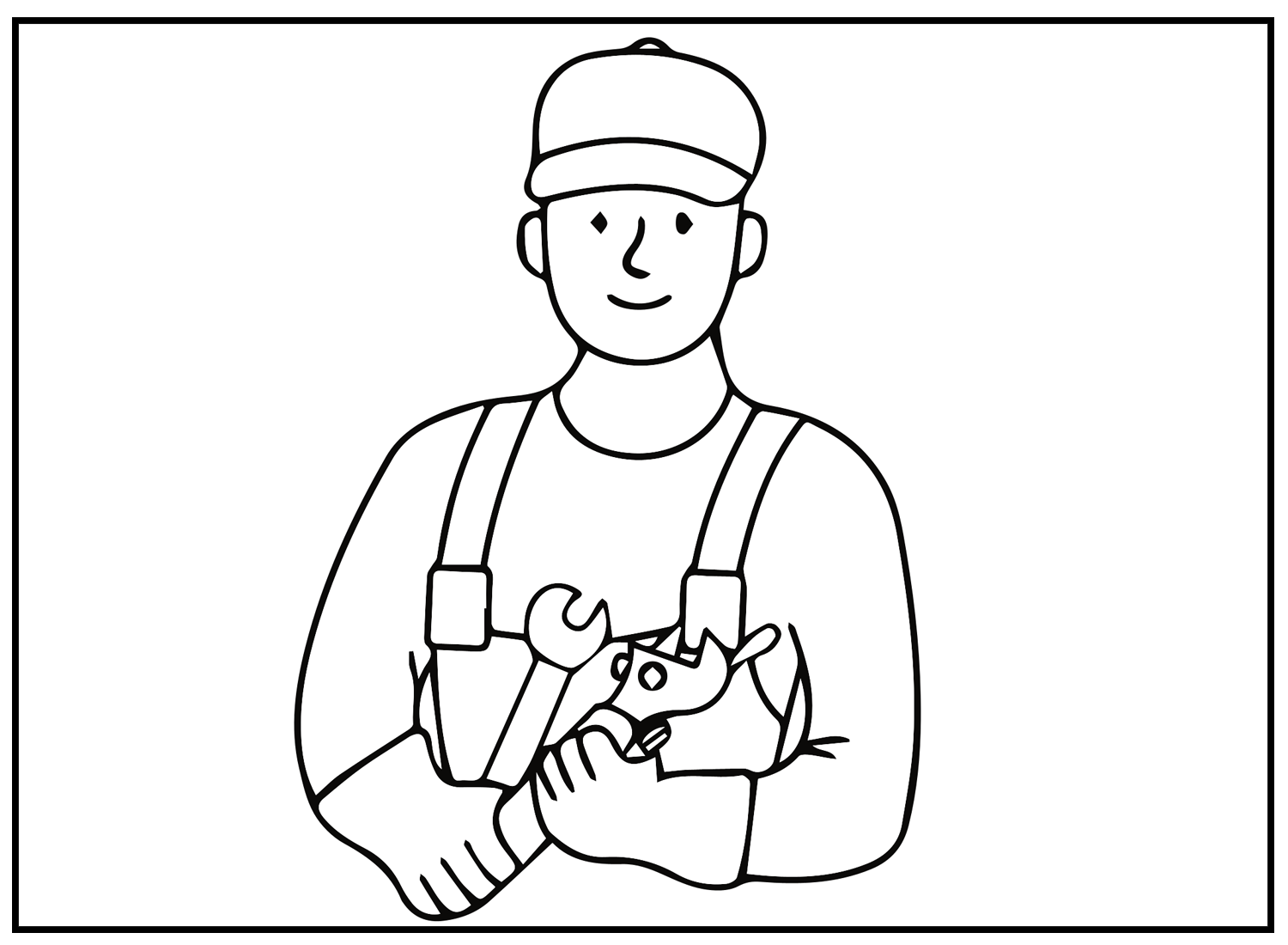
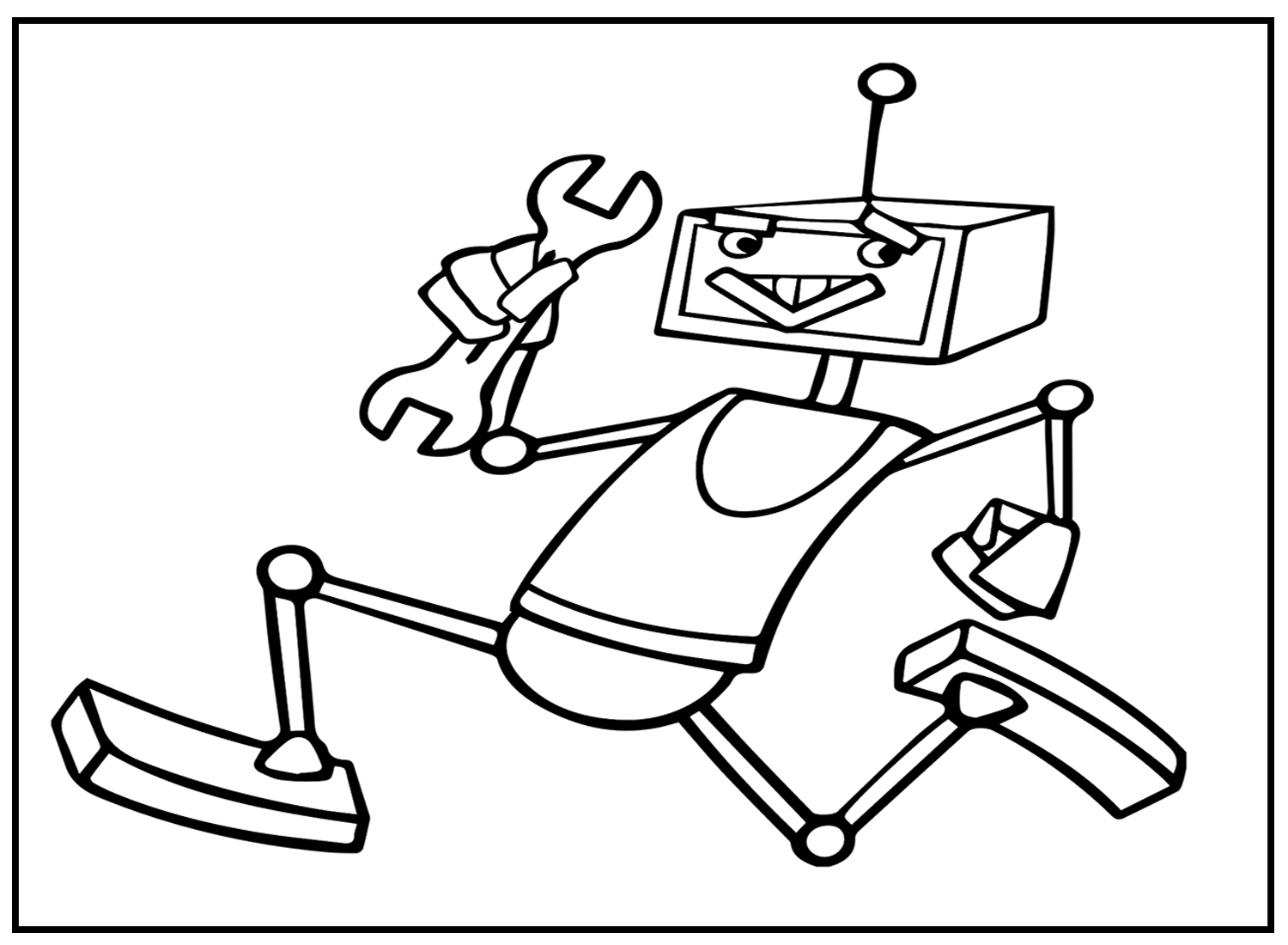
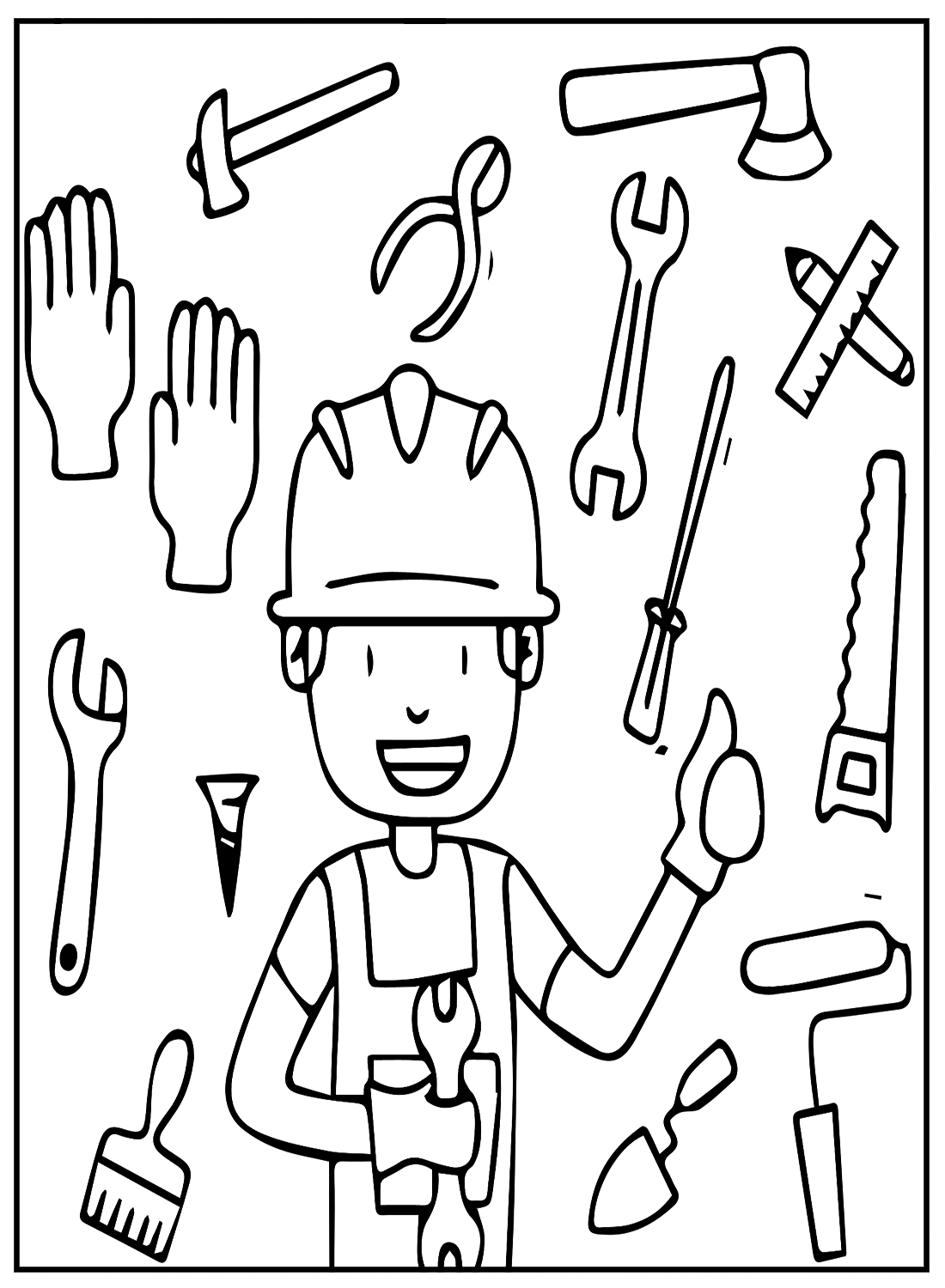
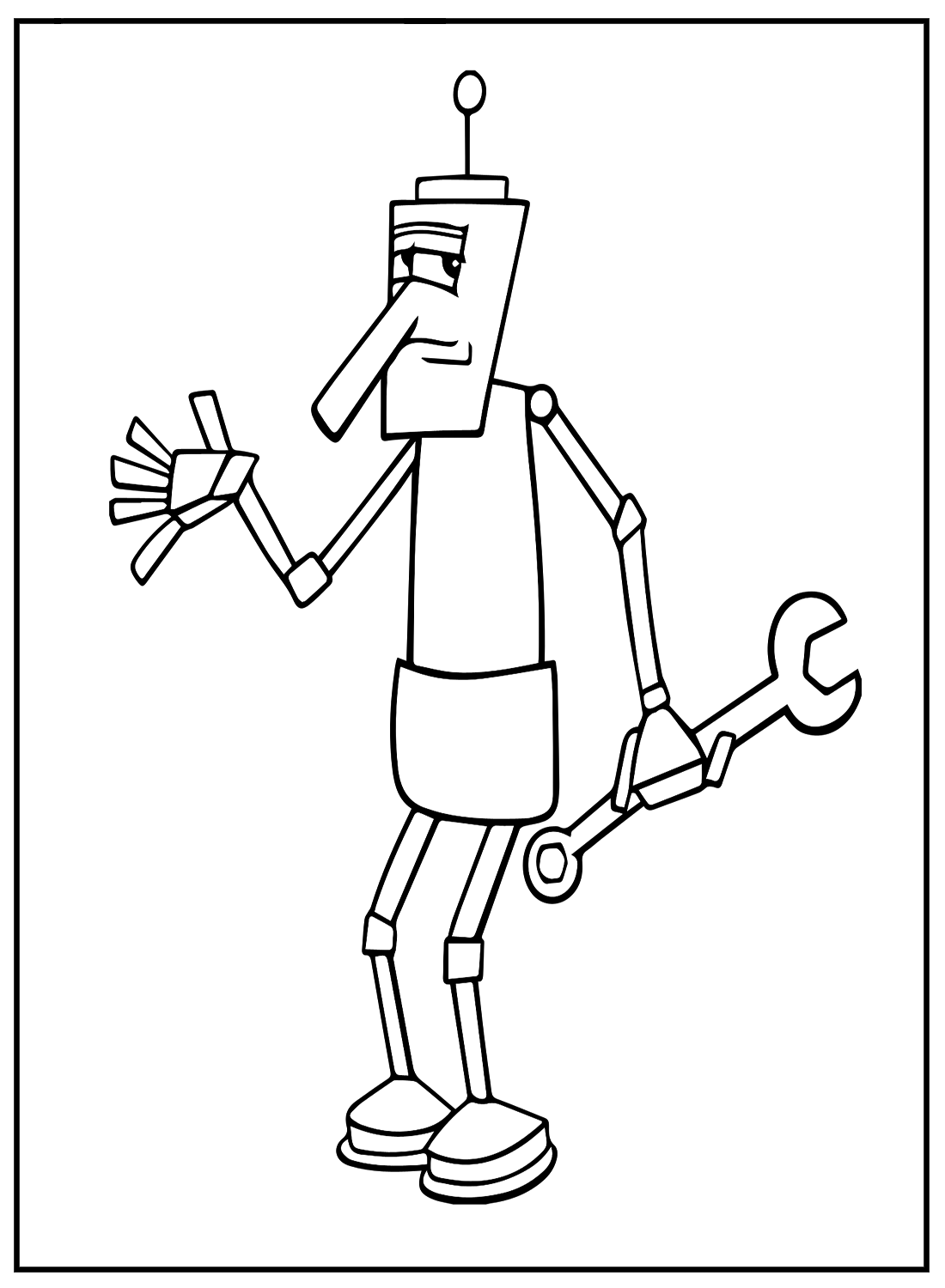
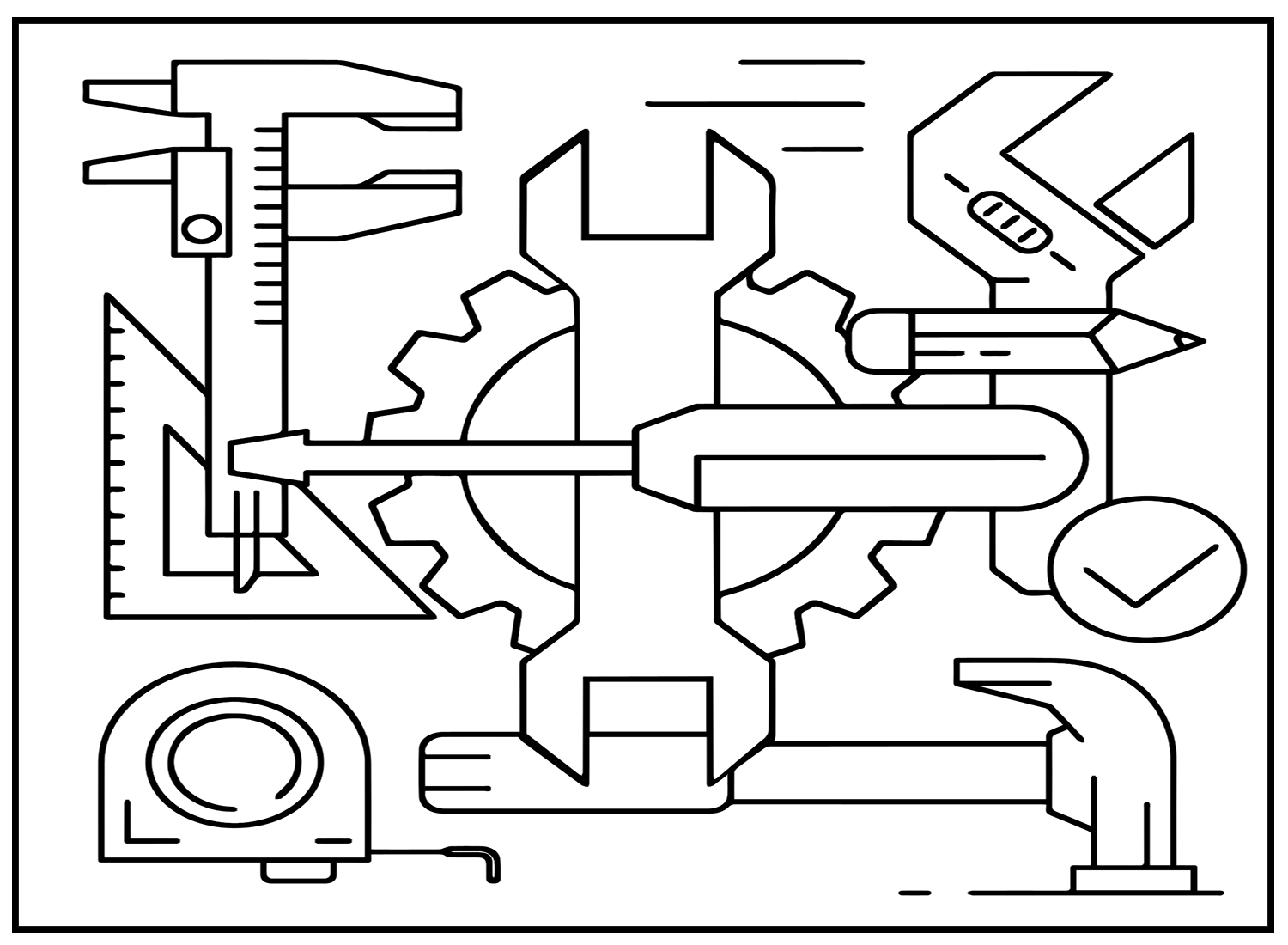
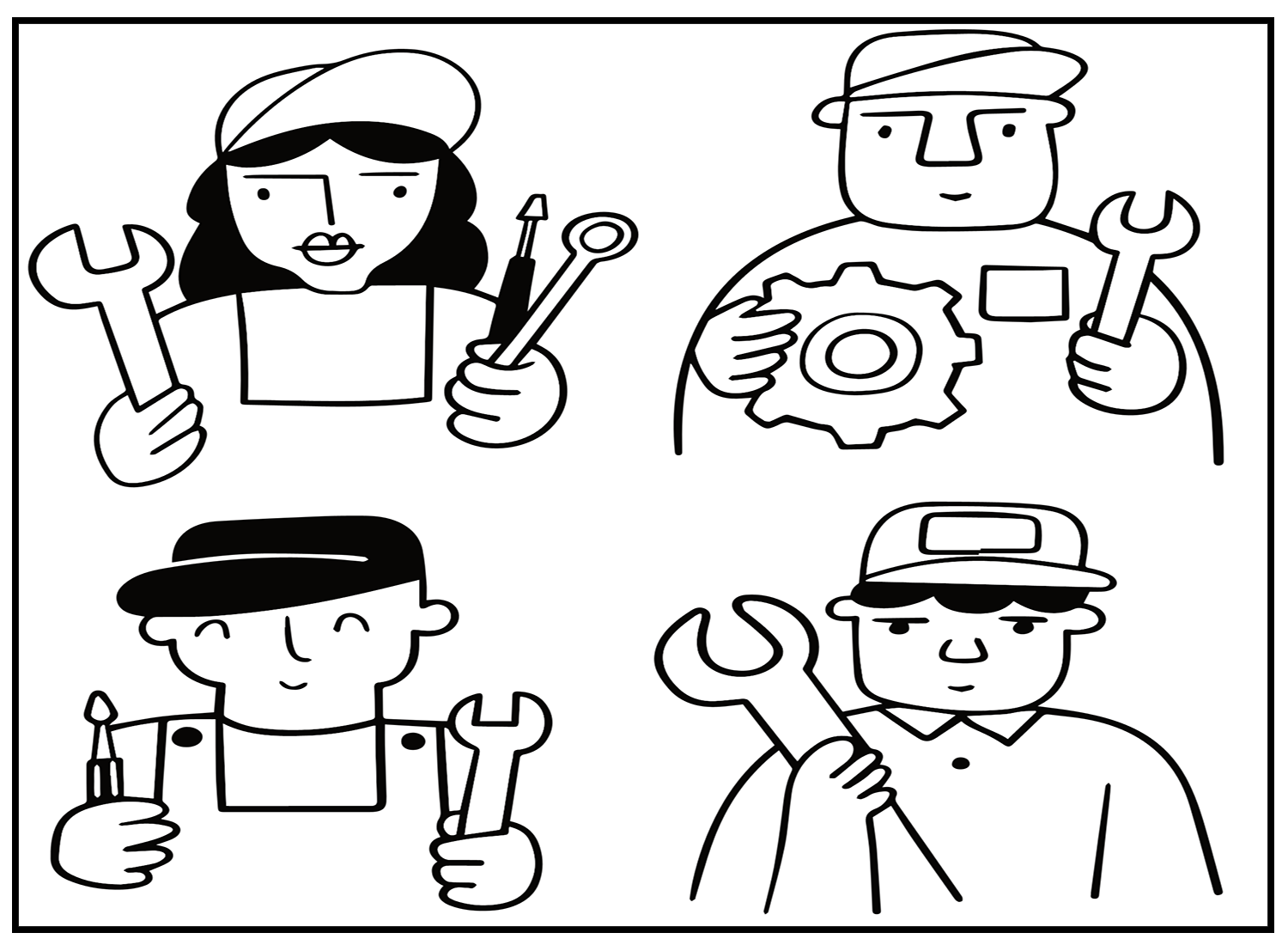
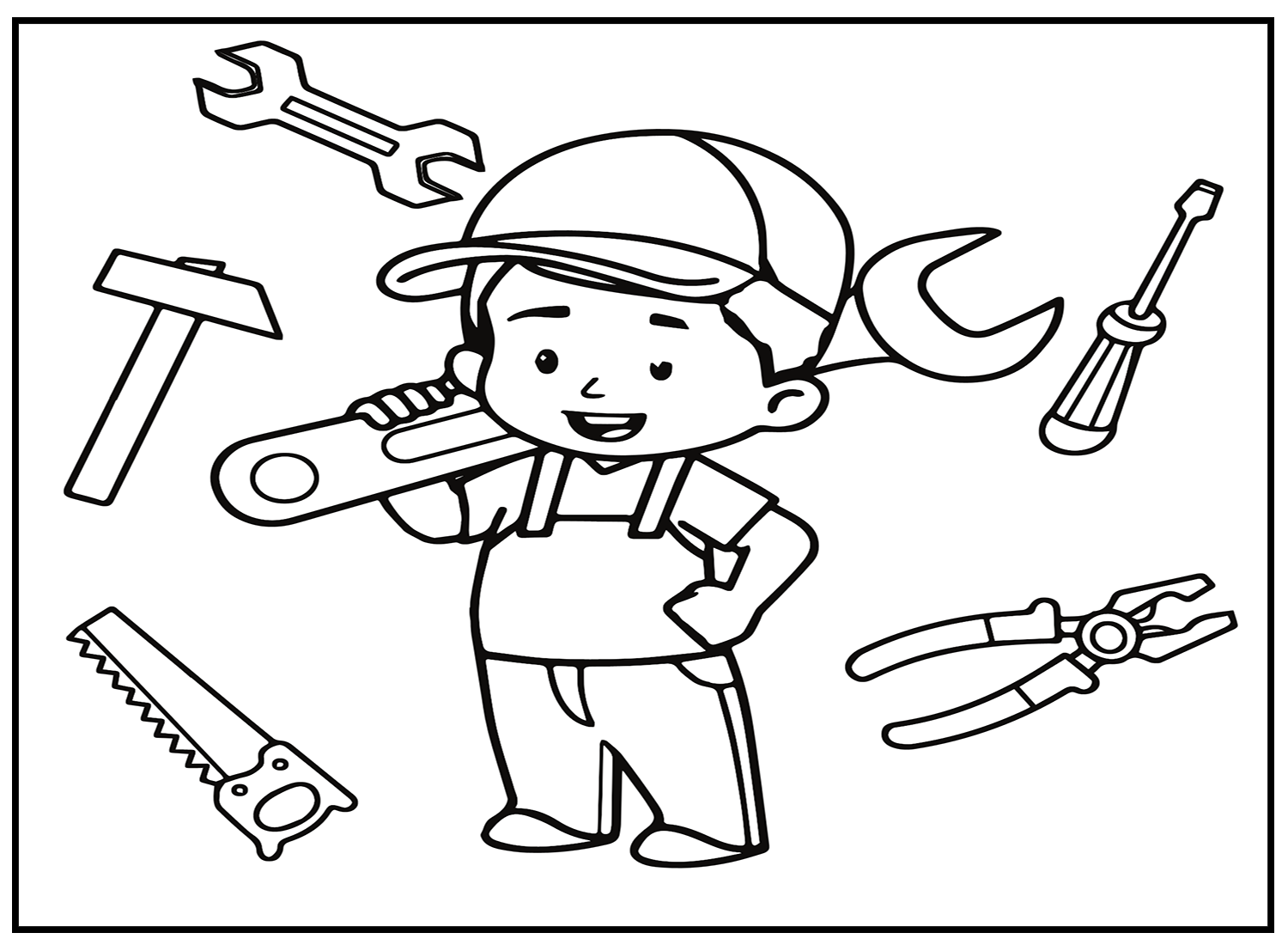
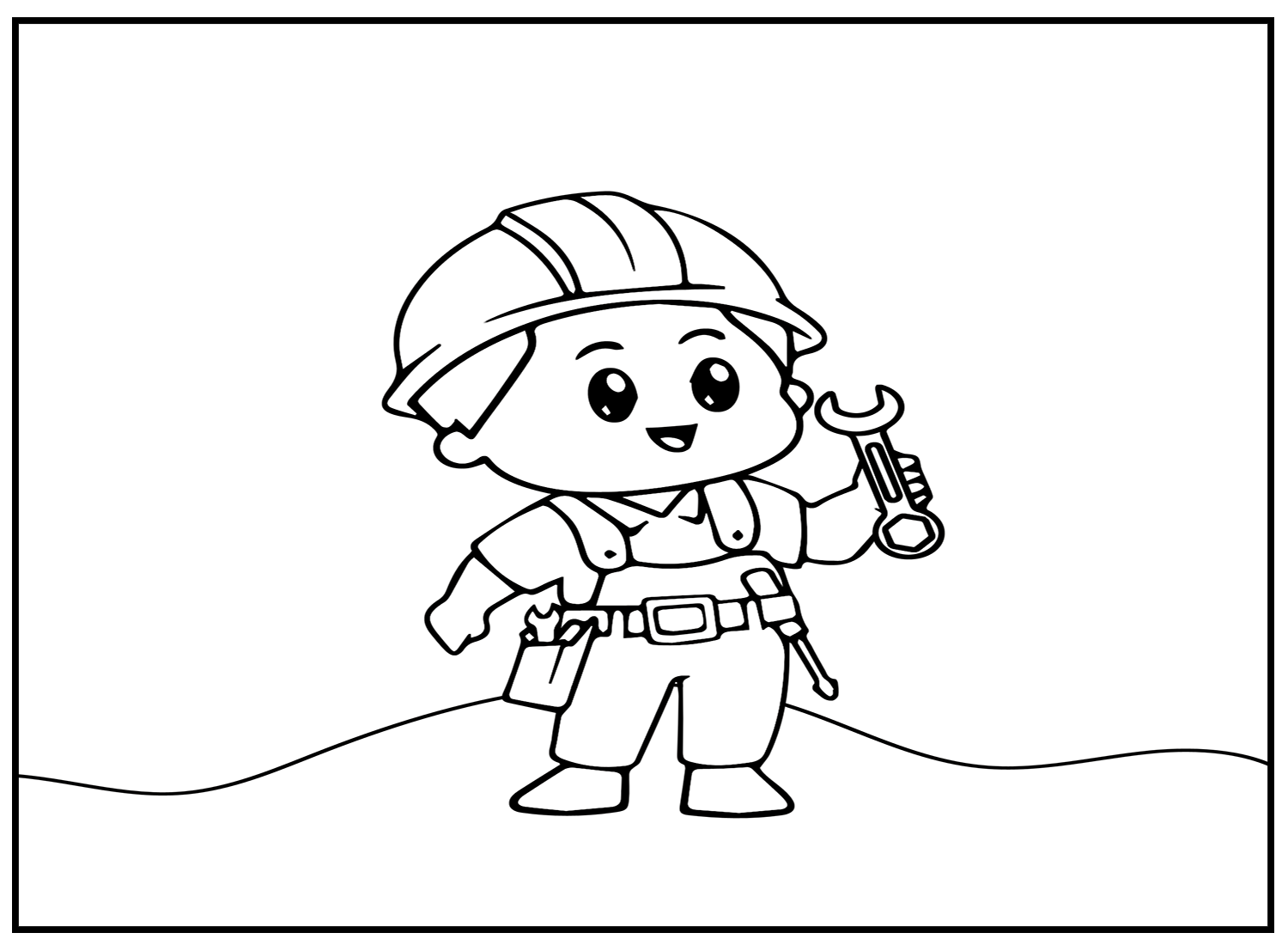
Free wrench coloring pages – 20+ pages featuring adjustable wrenches, open-end wrenches, box-end wrenches, socket wrenches, combination wrenches, Allen hex keys, cartoon and realistic wrench illustrations, wrenches in use, and tool collection scenes – free printable PDF and online coloring for young fans of tools, construction, and the satisfying logic of things that fix other things.

The wrench – in British English, the spanner – is among the most fundamental tools in the human toolkit. Its function is precise and unambiguous: to apply torque to a fastener, turning a bolt or nut to tighten or loosen it. This simplicity of purpose has generated an extraordinary range of specific designs across two centuries of mechanical industry, each addressing a different combination of fastener size, access constraint, and torque requirement.

Before the wrench could exist in any useful form, screw threads had to be standardized. Before the nineteenth century, bolts and the nuts that paired with them were made individually – each bolt matched only its own specific nut, and any wrench that fit one would not fit another. In 1841, British engineer Sir Joseph Whitworth proposed the first national standard for screw threads, making bolts interchangeable across manufacturers for the first time. In 1864, William Sellers proposed the American standard. Once threads were standardized, wrench sizes could be standardized, and the modern wrench industry became possible.

Johan Petter Johansson, a Swedish inventor, patented the adjustable spanner in 1891 – the design that, with minor variations, became the adjustable wrench known worldwide. Daniel Chapman Stillson invented the pipe wrench in 1869. The ratchet socket wrench, which allows continuous turning without lifting and repositioning, followed in the late nineteenth century and transformed mechanical work by reducing the time required to turn fasteners in repetitive operations.

These 20+ free pages at ColoringPagesOnly.com give the full Wrench family its coloring page moment. All free, PDF or PNG, print or color online.

What’s Inside

The Adjustable Wrench – The Versatile One

The adjustable wrench is the wrench most people own first and most likely own only – the single tool that can handle a wide range of fastener sizes by sliding its movable jaw to match. Its design is a masterwork of practical engineering: a fixed jaw integrated into the body, a movable jaw controlled by a worm gear accessible from the side, and a handle long enough to provide the leverage that most household fastening tasks require.

In the United States, it is almost universally called a Crescent wrench – the brand name of the Crescent Tool Company’s adjustable wrench, which became so common that the brand name replaced the generic term in American workshop vocabulary, the same way Kleenex replaced tissue in common usage. The Crescent Tool Company was acquired, and the brand has continued, but the name’s dominance in American workshop language is now older than most living mechanics.

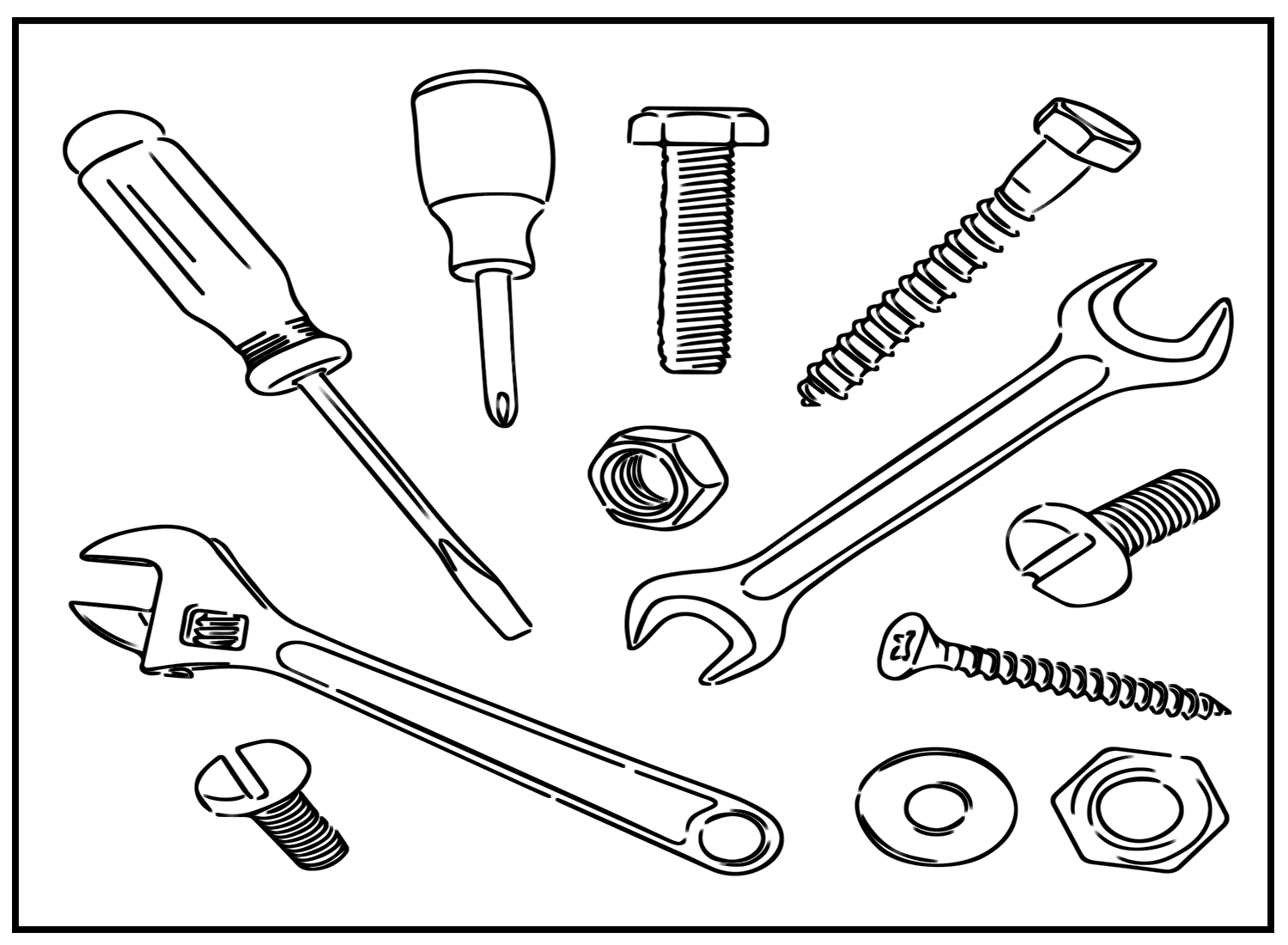
Its visual profile is the most immediately wrench-recognizable of any wrench type: the long flat body, the wide head with its adjustable jaw gap, the worm gear wheel visible at the jaw’s base, and the specific silhouette of a tool designed to be held in one hand and applied to the other.

Coloring the adjustable wrench: Chrome-plated steel is the standard adjustable wrench material, which means the metallic chrome technique applies across the main body and head. The lightest chrome-white on the most directly lit surfaces (the body’s top face, the jaw’s working faces), the main chrome medium-grey across the primary surfaces, and darker grey in the recesses – the underside of the jaw, the inside of the worm gear housing, the shadow beneath the head’s overhang. The worm gear wheel at the jaw base is a small but important detail: render it in the same chrome treatment with the gear’s teeth indicated as a regular series of small rectangular highlights.

The Open-End Wrench

The open-end wrench is the most ancient wrench form – a flat piece of metal with a U-shaped opening at one or both ends, sized precisely to fit the flats of a specific bolt or nut. It is effective in situations where access is limited, and a socket or box-end wrench cannot be placed over the fastener from above. Its limitation is that the U-shape contacts only two of the fastener’s six flats, which reduces the security of the grip and limits the torque that can be applied before the wrench risks slipping.

Open-end wrenches are available in both metric (mm) and SAE (inch) sizes – the two parallel measurement systems that require separate tool sets. A 10mm bolt requires a 10mm wrench; a 3/8-inch bolt requires a 3/8-inch wrench; these are not interchangeable, and the existence of both systems in the world means that a complete workshop maintains parallel tool sets.

Coloring the open-end wrench: Flat body, the U-opening is clearly defined with the two parallel faces that contact the bolt’s flats. The opening’s interior faces should be rendered slightly lighter than the outer body – they catch reflected light from the fastener they are designed to contact. The markings stamped into the body (the size designation, the manufacturer’s name) are the most detailed small elements on an otherwise simple form.

The Box-End Wrench

The box-end wrench’s closed ring fits over the entire hexagonal head of a bolt or nut, contacting all six flats simultaneously – this contact pattern allows more torque to be applied more safely than the open-end’s two-flat contact. The ring can be configured as a six-point (hexagonal) or twelve-point (double hexagon) opening: the six-point applies torque more directly to the flats and is preferred for damaged or rounded fasteners. In contrast, the twelve-point allows the wrench to engage in more head positions (every 30 degrees rather than every 60 degrees) and is more versatile in confined spaces.

Box-end wrenches are often made in the combination wrench form – open-end on one end, box-end on the other, typically both in the same size, which gives the combination wrench its justification as the single most common wrench in most toolboxes.

Coloring the box-end wrench: The ring at the box-end is the page’s most geometrically precise element – a perfect circle with the hexagonal or double-hexagonal interior opening. Render the ring’s outer circle in the standard chrome treatment. The interior opening is slightly darker – the inside of the ring catches less direct light. The specific polygon of the interior opening should be clearly indicated by the line work and honored in the coloring by maintaining a consistent tone across the opening’s interior.

The Socket Wrench and Ratchet

The socket wrench system – a ratchet handle, extension bars, and interchangeable sockets of various sizes – is the professional mechanic’s most efficient fastening tool. The ratchet mechanism allows the handle to turn freely in one direction (the non-driving direction) and engage in the other, meaning the fastener can be continuously driven without lifting and repositioning the wrench between each partial turn. For a mechanic installing fifty identical fasteners, this efficiency compounds across every turn of every fastener into hours saved.

The socket – the removable end that fits over the fastener head – is typically made in 1/4-inch, 3/8-inch, or 1/2-inch drive sizes, referring to the square drive post that connects it to the ratchet handle. Socket sets come in metric and SAE, six-point and twelve-point, shallow and deep configurations.

Coloring the ratchet and socket: The ratchet handle is the most complex form in the collection – a handle with a swiveling head containing the ratchet mechanism, typically chrome-plated metal with a knurled grip section. The socket attached to the drive post is a short cylinder with a hexagonal or 12-point interior opening. Chrome across the handle and socket, with the knurled grip section rendered in a slightly textured, slightly warmer grey to suggest the different surface treatment.

The Allen Wrench (Hex Key)

The Allen wrench – also called a hex key, hexagonal key, or Allen key – is an L-shaped rod of hexagonal cross-section, designed to fit into the socket head of a screw with a hexagonal recess. It is the tool of IKEA furniture assembly for a generation of apartment-dwellers, the tool of bicycle maintenance for cyclists, and the tool of precision machinery for engineers. Its simplicity – no moving parts, no adjustment, just a rod of the correct size and shape – gives it the specific reliability of the most elemental tools.

Named after the Allen Manufacturing Company of Hartford, Connecticut, which popularized hex socket head screws and the corresponding keys in the early twentieth century, the Allen wrench has become one of the most-used tools globally while remaining one of the least glamorous. It arrives as a bonus in furniture boxes and bicycle packaging. It lives in the bottom of toolboxes. It is never exciting and always necessary.

Coloring the Allen wrench set: Allen wrenches are typically made of matte dark steel or chrome steel – either the black oxide finish (dark grey-black, matte) or polished chrome-vanadium steel. The L-shape is the most distinctive visual element. When shown as a folding hex key set (multiple sizes folded into a single unit like a Swiss army knife), the array of different-length hex keys in their storage configuration is the collection’s most graphically complex small-tool image.

Cartoon Wrench Characters

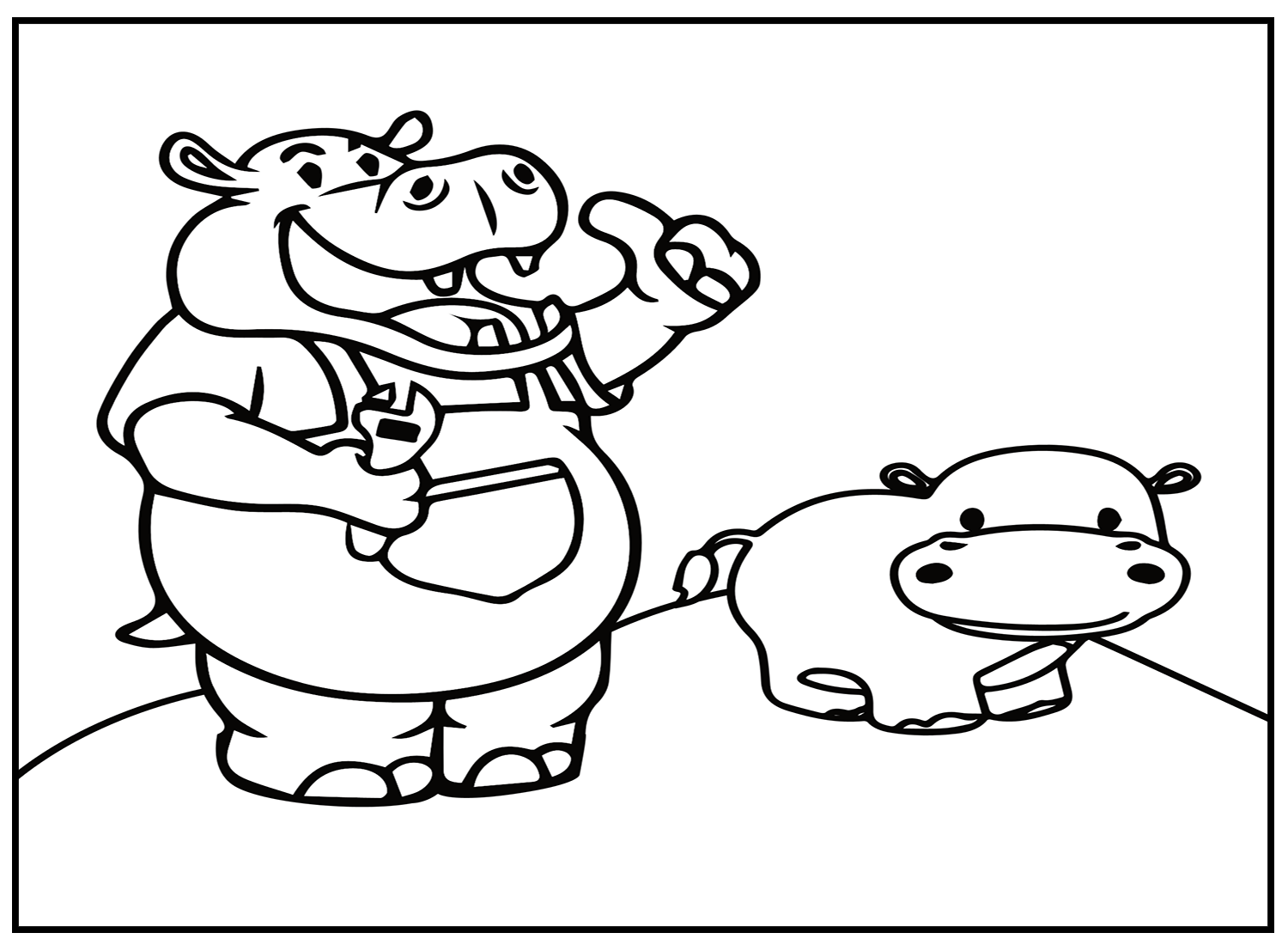
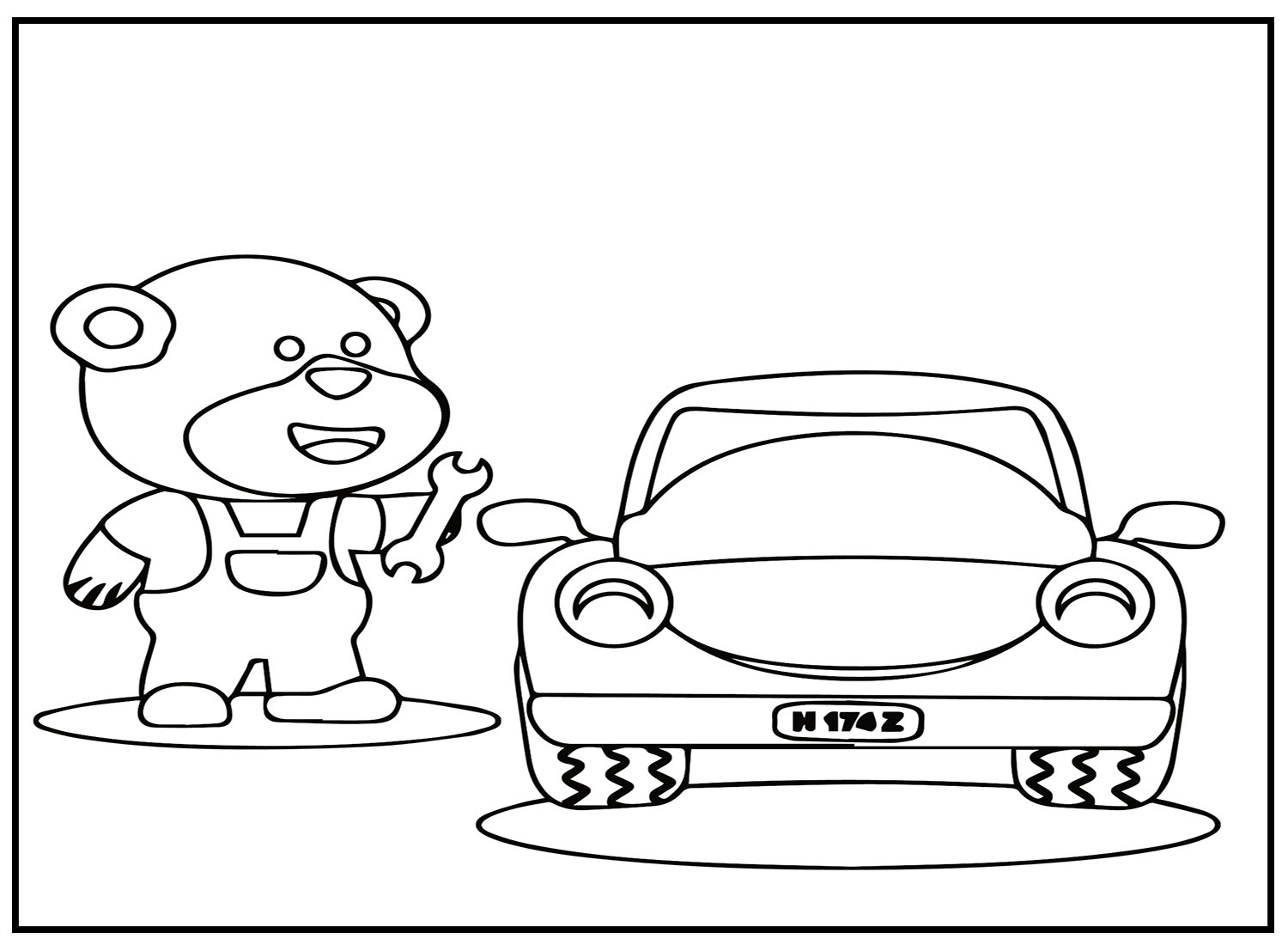
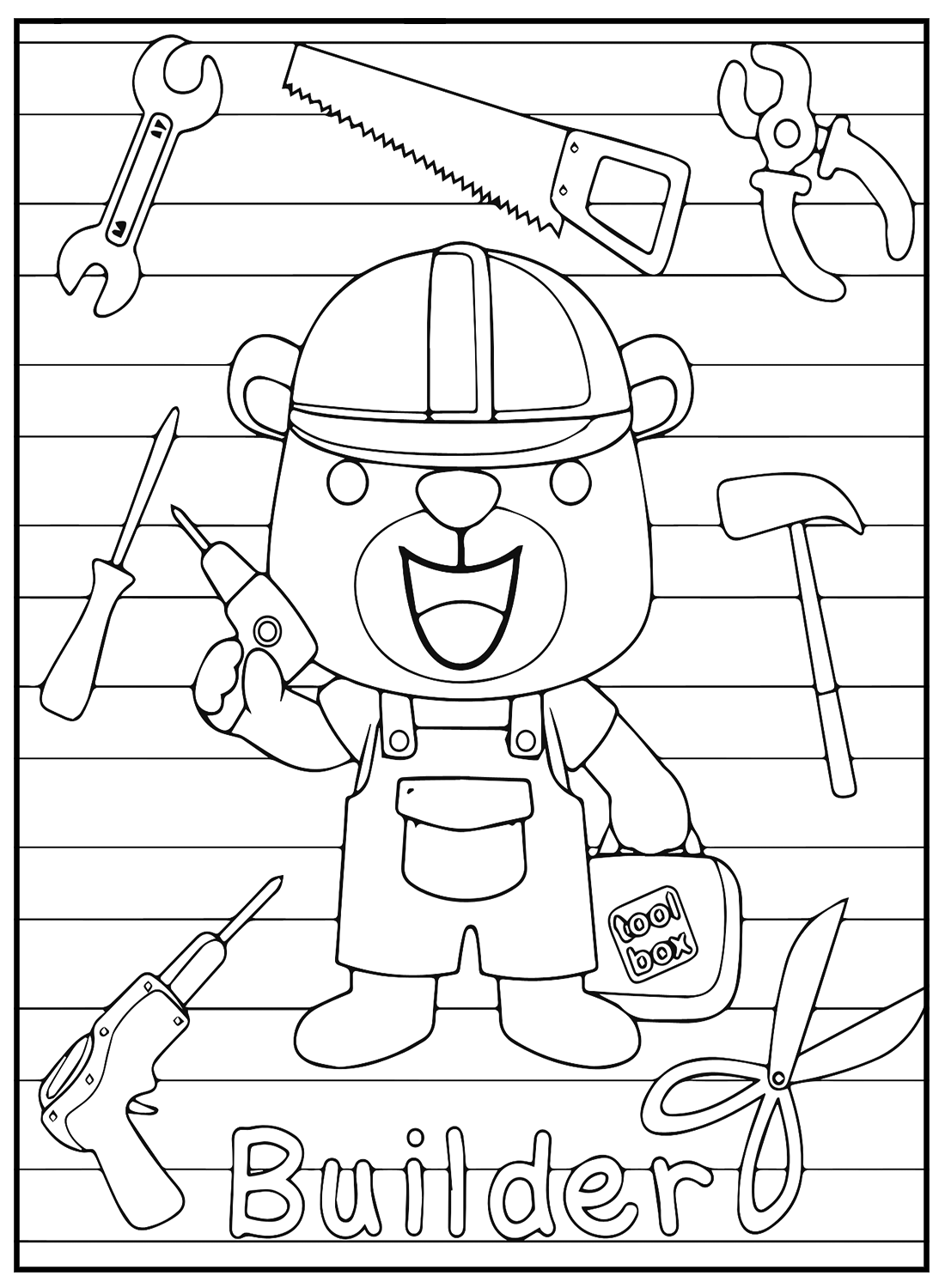
The collection’s most tonally accessible pages show wrenches as animated, personality-endowed characters – the specific visual register of children’s educational media about tools, construction, and the satisfactions of mechanical work. These pages place a face on the wrench, give it expressive eyes and perhaps arms, and present the tool as an entity with enthusiasm for its function.

The cartoon wrench is the most accessible entry point for the youngest colorists – children who may not yet understand what a torque specification means but who recognize a friendly, helpful character when they see one.

Coloring cartoon wrenches: The cartoon wrench’s chrome body receives the same metallic treatment as the realistic version, but the face – wherever the eyes and mouth are placed on the tool’s body – should be rendered with the warmth and expressiveness of a character designed to be loved rather than merely used. Large, round eyes with white highlight dots. A curved smile. Whatever expression communicates the specific helpfulness that tools, in their most anthropomorphized form, are meant to project.

What These Pages Do

The wrench is the tool most associated with the concept of fixing – making broken things work, making loose things tight, making mechanical systems function as intended. For children, the wrench represents the adult world of repair and maintenance in its most immediately comprehensible form – a specific tool for a specific job, applied by a person who knows how things work. Coloring wrench pages introduces this concept through direct visual engagement.

The different wrench types teach functional design thinking. Each wrench type exists because a specific combination of access constraint and torque requirement made the existing options insufficient. The open-end wrench addresses the problem of limited access. The box-end addresses the problem of slippage under high torque. The adjustable wrench addresses the problem of fastener-size variety. Understanding why different tools look different develops the most fundamental design thinking skill: the recognition that form follows function.

Wrenches are among the most common real-world objects children encounter in adult-context settings. A parent’s garage, a mechanic’s shop, a school maintenance visit – wrenches are present in most contexts where mechanical maintenance occurs, which is most homes. Coloring pages that show these tools in accurate detail develop the visual vocabulary for objects the child already encounters without yet having names for.

Fine motor development. The American Academy of Pediatrics identifies fine motor skill development as a key childhood milestone throughout early childhood. The wrench’s mechanical detail – the worm gear wheel, the socket’s 12-point opening, the ratchet’s serrated edge, the Allen set’s multiple folded keys – provides motivated, sustained fine motor practice. The 2005 Art Therapy Journal study on structured coloring and anxiety reduction applies throughout this collection.

How to Color These Pages Well

Chrome metal is the collection’s dominant material and requires three distinct tones. Most wrenches are made of chrome-plated or chrome-vanadium steel – a highly reflective metallic surface. Three tones are required to render chrome credibly on paper: a very light grey-white (or warm near-white) on the most directly lit surfaces, a medium cool grey across the main body surfaces, and a darker grey in the shadow areas and recesses. The transitions between these zones should be relatively sharp rather than gradual – chrome reflects in distinct zones rather than as a smooth gradient.

The highlight is what makes Chrome read as Chrome. On any highly polished metal surface, there is typically a very bright highlight – a strip or point of near-white that reads as the direct reflection of the light source. On a wrench body, this highlight usually runs along the edge or ridge that faces most directly toward the overhead light. Apply this near-white highlight carefully, in a thin line along the body’s peak edge. Without this highlight, the chrome reads as flat grey. With it, it reads as reflective metal.

Black oxide wrenches need warm dark grey, not pure black. Some professional-grade wrenches use a black oxide finish rather than chrome – a dark grey-black matte surface that reduces glare and provides some corrosion resistance. These should be rendered in a dark warm grey (not pure black, not cool grey) – dark enough to read as a dark tool, warm enough to suggest the specific quality of the black oxide finish. A very subtle highlight along the edges is appropriate; more subtle than chrome but still present.

Size markings on wrench pages are the most precise small detail. Professional wrenches have their size stamped or etched into the body – “10mm,” “3/8,” etc. These markings are small, recessed into the metal, and in pages that show them clearly enough to color, they should be rendered in a slightly darker tone than the surrounding chrome – the recessed marking catches less light than the flat body surface.

The worm gear on adjustable wrenches is a circular pattern. The adjustable wrench’s jaw-control mechanism is a worm gear – a small cylindrical gear with a helical thread that meshes with gear teeth on the movable jaw. When visible in the page’s line drawing, this should be rendered as a small circle with regular marks around its perimeter (the gear’s knurled surface) in a slightly warmer, slightly darker chrome tone than the surrounding body.

5 Creative Craft Ideas

My Tool Collection Display

Print pages representing a complete basic toolkit: the adjustable wrench, an open-end wrench, a screwdriver (from the site’s other collections), and a hammer. Color all in their appropriate material treatments – chrome for the wrenches, chrome with rubber grip for the screwdriver, metallic head with wooden handle for the hammer.

Mount all on a backing sheet arranged as if hanging on a pegboard – the classic workshop wall organization. Draw simple pegboard hooks beneath each tool in pencil. Add a title: “My Workshop – Essential Tools.” Below each tool, add the tool name and one line about what it does: “Adjustable Wrench – Turns nuts and bolts of any size.”

The finished display is a personal tool identification reference made by coloring.

Size Comparison – The Wrench Family

Print five wrench pages showing different sizes of the same wrench type – or five different types of wrenches. Color all in identical chrome treatment. Cut all out around their outlines.

Arrange them in size order on a backing sheet – smallest to largest, or from most compact (Allen key) to largest (pipe wrench). Add a size or type label below each. The visual comparison of sizes in a row communicates the systematic variety of a professional tool set more directly than any description.

How a Wrench Works – Step-by-Step Card

Print a simple open-end wrench page and color it in standard chrome. Mount on the left side of a backing sheet.

On the right side, draw a simple three-panel sequence: Panel 1: a nut with the wrench placed on it. Panel 2: the wrench turning (show with a curved arrow). Panel 3: the nut tightened or loosened. Add labels: “1. Place on nut.” “2. Turn.” “3. Done.”

The finished card combines a completed coloring with a simple mechanical explanation – the wrench’s function made visible as a three-step process.

The Mechanic’s Toolbox

Draw or print a simple toolbox outline – a rectangular box with a tray across the top. Color the toolbox in a vivid color (red is the classic workshop toolbox color, from Snap-on, Mac Tools, etc.).

Print and color multiple wrench pages. Cut each wrench out carefully. Arrange the colored wrenches across the toolbox tray area – some standing upright in the tray, some laid flat in the body of the box.

Mount the entire scene on a backing sheet. Add: “A mechanic’s toolbox holds everything needed to fix anything.” The finished craft is a three-dimensional, suggesting a tool organization scene built from multiple coloring pages.

Cartoon Wrench Personality Cards

Print four copies of the simplest cartoon wrench page in the collection. Color each differently – one classic chrome, one red (many artisans use red for high-visibility tools), one yellow (high-visibility workshop yellow), one blue (industrial blue).

Add a face expression to each that is slightly different from the printed expression – wider eyes on one, a bigger smile on another. Below each, write a personality description: “Chrome Wrench – Professional and precise.” “Red Wrench – Fast and enthusiastic.” “Yellow Wrench – Always visible, always helpful.” “Blue Wrench – Cool under pressure.”

The finished set is a personality card series for the same tool in four variations.

Frequently Asked Questions

What is a wrench, and what is it used for? A wrench is a hand tool designed to apply torque – rotational force – to fasteners such as nuts, bolts, and pipe fittings, in order to tighten or loosen them. It works by gripping the flats of a hexagonal or square fastener head and using a handle to convert the user’s hand force into the rotational force needed to turn the fastener. Wrenches are among the most essential tools in mechanical work, home maintenance, automotive repair, plumbing, and construction. The different types of wrenches – open-end, box-end, adjustable, socket, and torque – each address specific situations defined by the fastener’s size, the available access, and the required torque.

What is the difference between a wrench and a spanner? Wrench and spanner refer to the same category of tool – the difference is regional English usage. In American English, the standard term is “wrench.” In British English, Australian English, and many Commonwealth countries, the same tool is called a “spanner.” The two words are fully synonymous; “throw a spanner in the works” (a British idiom meaning to disrupt or sabotage something) becomes “throw a wrench into the works” in American usage. Some American usage distinguishes “spanner” as specifically a type of hook-shaped spanner used for ring nuts. Still, in most international contexts, wrench and spanner describe the same family of torque-applying tools.

Who invented the adjustable wrench? The adjustable wrench in its modern form is most directly attributed to Johan Petter Johansson, a Swedish inventor who patented the adjustable spanner in 1891. Johansson’s design used a worm gear to move a sliding jaw, allowing one tool to fit multiple fastener sizes – the same basic mechanism used in adjustable wrenches today. The “Crescent wrench” name that dominates American usage comes from the Crescent Tool Company, which produced and marketed adjustable wrenches extensively in the United States in the early twentieth century.

What are the main types of wrenches? The main wrench types include the open-end wrench (a U-shaped opening that contacts two flats of a fastener), the box-end or ring wrench (a closed ring that contacts all six flats), the combination wrench (open-end on one end, box-end on the other, same size), the adjustable wrench (movable jaw for variable sizes), the socket wrench or ratchet (a ratcheting handle with interchangeable sockets for efficient repetitive fastening), the torque wrench (set to a specific torque value to prevent overtightening), the Allen wrench or hex key (an L-shaped rod for hexagonal socket screws), and the pipe wrench (with serrated jaws for gripping round pipe). Each type exists because specific work conditions – access constraints, fastener types, torque requirements – made the other types insufficient for that situation.

What materials are wrenches made from? Professional wrenches are most commonly made from chrome-vanadium steel (Cr-V) or chrome-molybdenum steel (Cr-Mo), both alloy steels that provide high strength, resistance to wear, and the ability to hold a precise size under the stress of torque application. Chrome-vanadium is the standard for most combination, open-end, and box-end wrenches. Chrome-molybdenum is preferred for impact sockets and heavy-duty applications. Most wrenches receive a chrome plating over the steel body – this chrome plating is primarily for corrosion resistance and appearance rather than for structural strength. Some professional-grade wrenches use a black oxide finish instead of chrome, producing a dark grey matte surface that reduces reflective glare in working conditions.

Why does a torque wrench matter? A torque wrench matters because many critical fastening applications require a specific amount of tightening – not just “tight” but a precisely measured degree of tightness. Engine head bolts, wheel lug nuts, suspension components, and other safety-critical fasteners are specified by their manufacturers to be tightened to a specific torque value, measured in foot-pounds (ft-lbs) or Newton-meters (Nm). Tightening less than the specification can cause the fastener to loosen during use. Tightening more can stretch, crack, or shear the fastener, damage the threaded hole, or warp the component being fastened. A torque wrench is set to a specific value and clicks, beeps, or otherwise signals when that exact torque has been reached.

What age group are these pages best suited for? The simplest cartoon wrench pages – animated, character-style wrenches with faces and large, simple forms – are appropriate and engaging from ages three and four, particularly for children with family members in trades that use wrenches regularly. Simple,e realistic wrench silhouettes work well for children aged five and six, for children developing an interest in tools and how things work. The detailed, realistic wrench pages – showing multiple wrench types with their mechanical specifics, size markings, and material treatments – are most rewarding for ages seven and up, and for adults and older children who want a meditative, technically precise coloring project.

Browse the full collection at ColoringPagesOnly.com. All 20+ pages free, no sign-up, PDF or PNG, print or color online.

Johan Petter Johansson patented the adjustable spanner in 1891. One movable jaw, controlled by a worm gear accessible from the side. Fits any fastener within its range. The Crescent Tool Company made it American. The adjustable wrench became the first tool most people buy.

It is a simple object: it applies rotational force to a nut or bolt. The form follows the function with no excess. The jaw gap is exactly the fastener width. The handle length exactly provides the required leverage.

The chrome is bright because the steel is polished. The highlight runs along the top edge of the body because that is where the light lands.

Pick up your lightest grey-white. Put it on the ridge. The tool is already there in the outline – the coloring just gives it its material.

Share your work on Facebook and Pinterest and tag #Coloringpagesonly. We especially want to see the mechanic’s toolbox projects and the cartoon wrench personality card sets.

Color the wrench. Know the function. Fix the thing.

These related coloring collections will help you explore the wonderful world of colors. Let’s choose, be creative, and show us your great pictures!

Mantasstonys Allen – Designer

Hello! I'm Mantasstonys Allen, a web designer at Coloringpagesonly.com. My passion is bringing creativity to life through beautiful and user-friendly designs. I'm here to make your experience on our site smooth, fun, and inspiring—so you can focus on what matters most: coloring and unleashing your imagination!