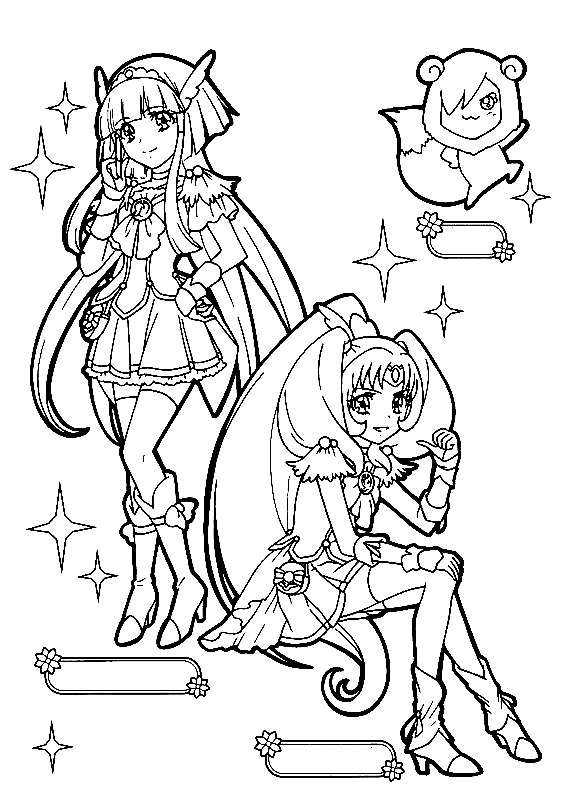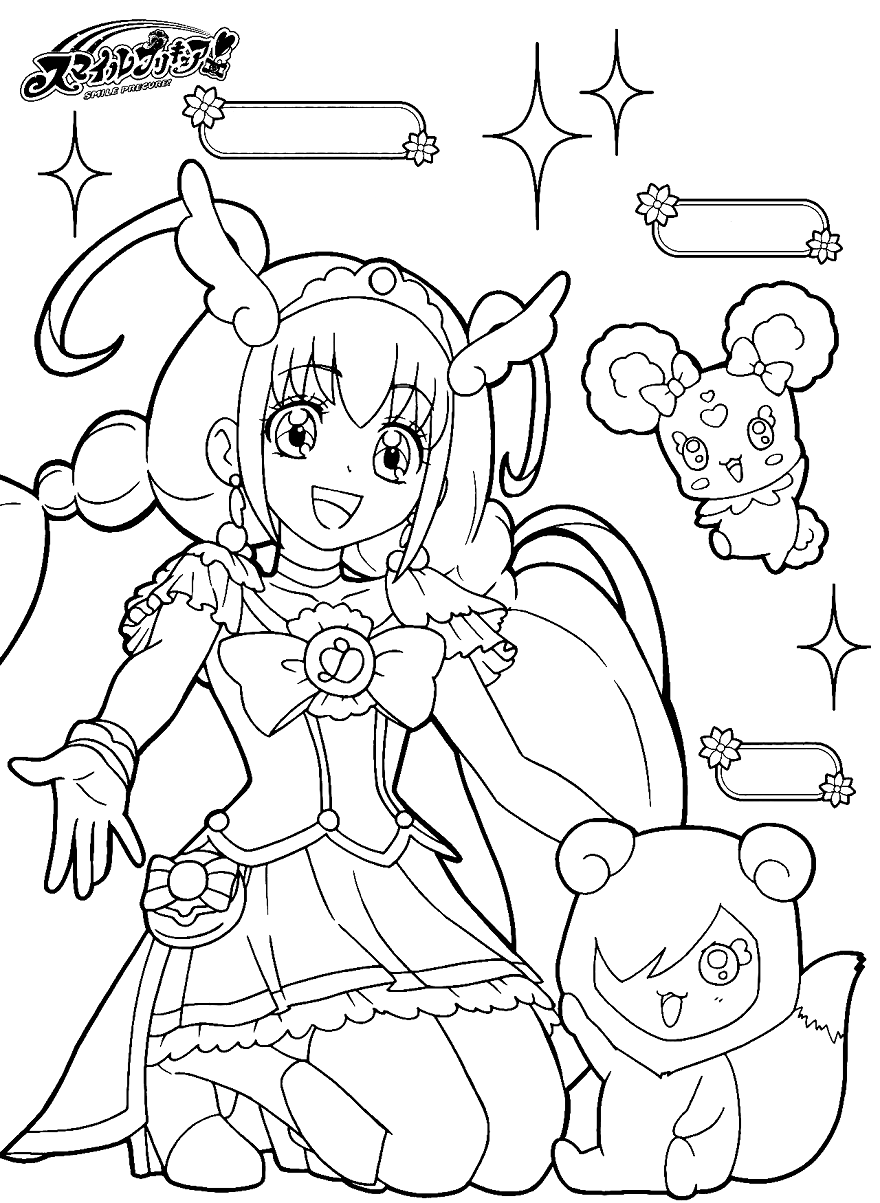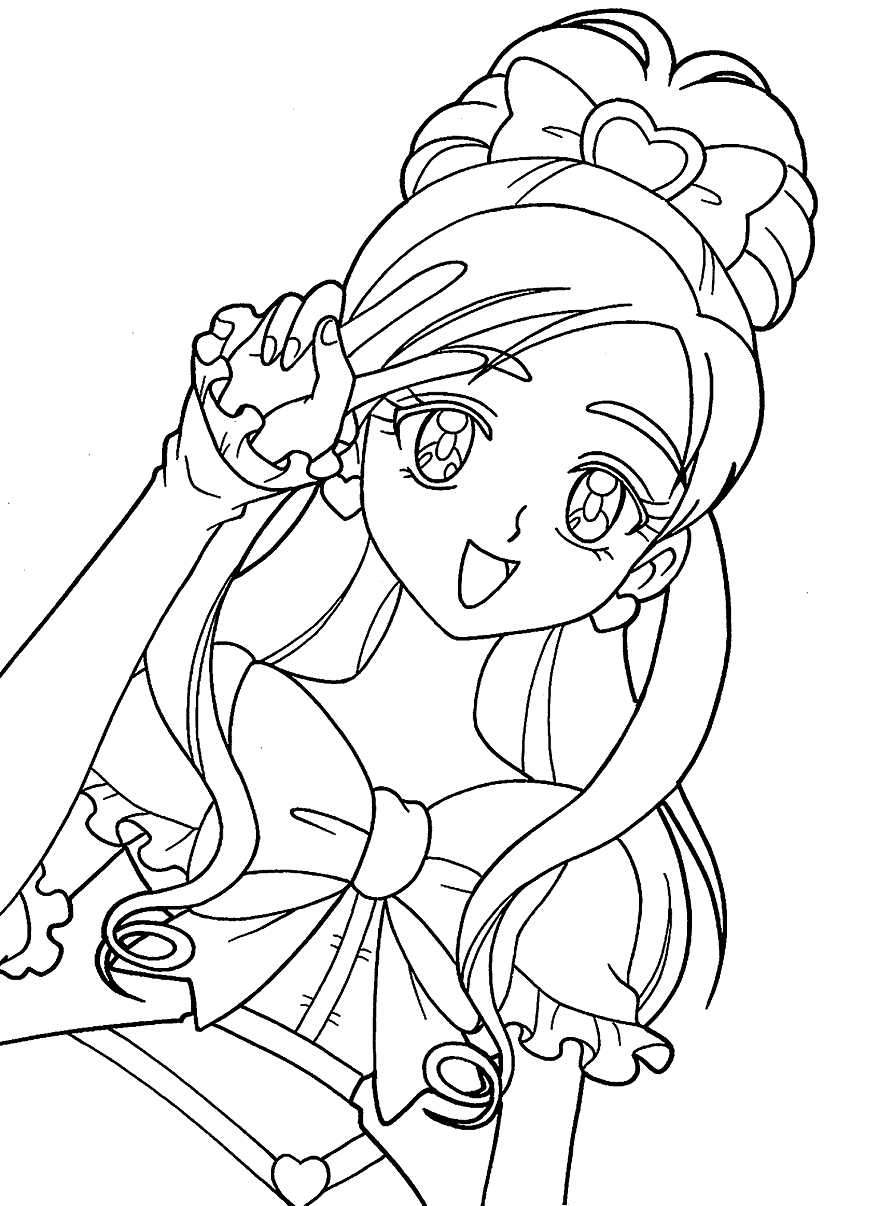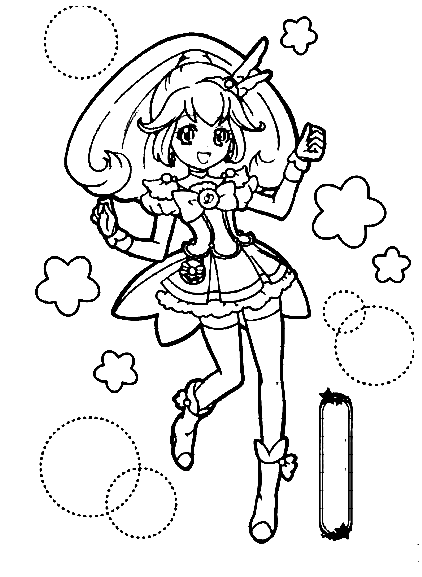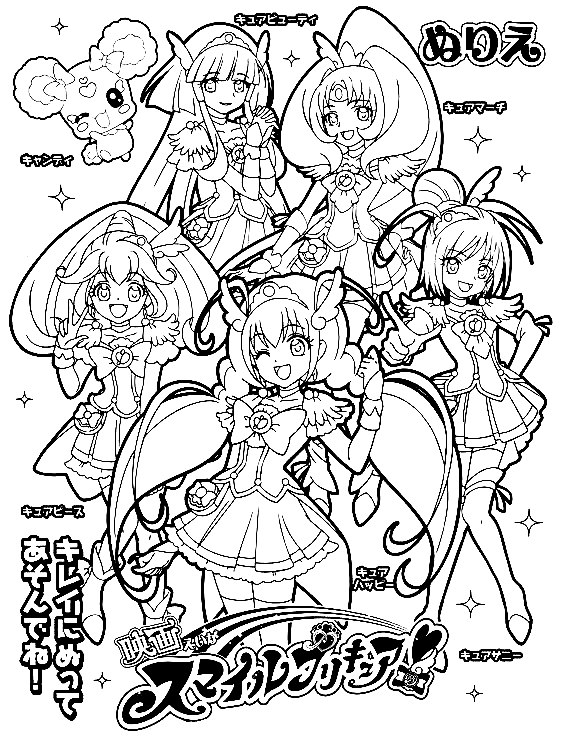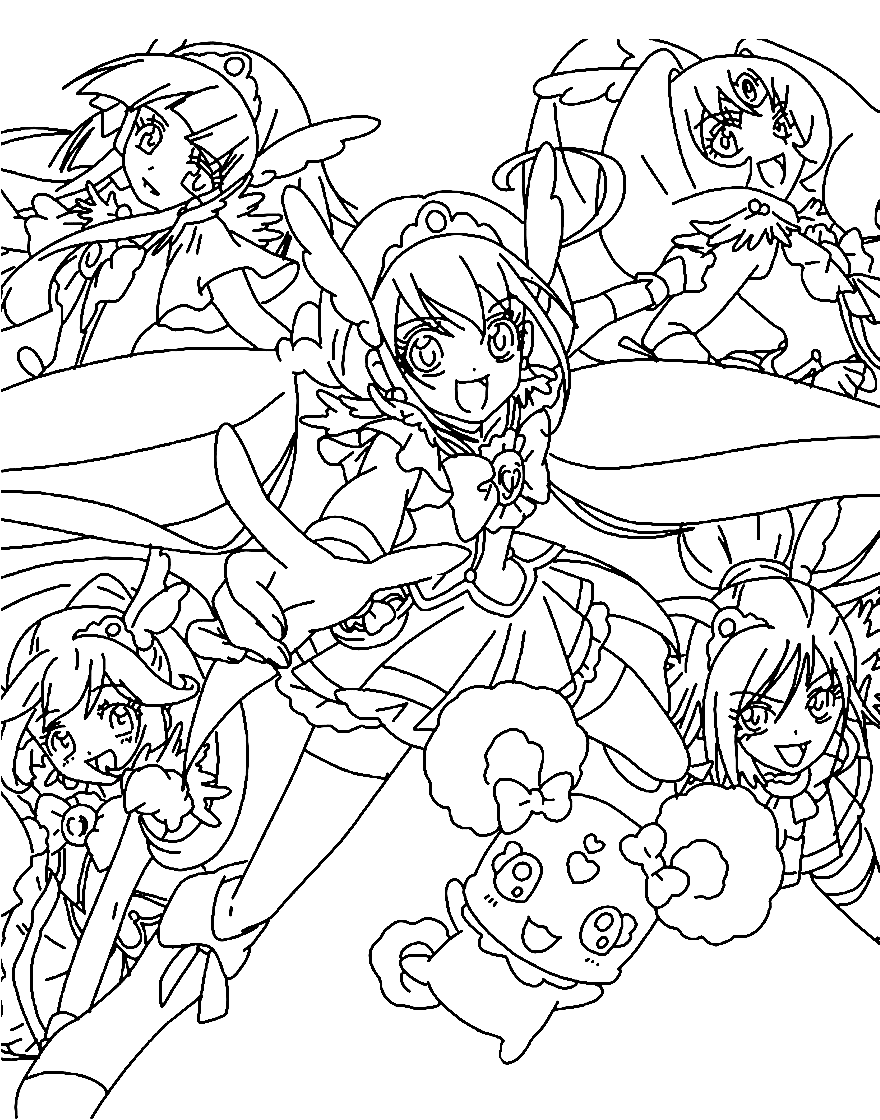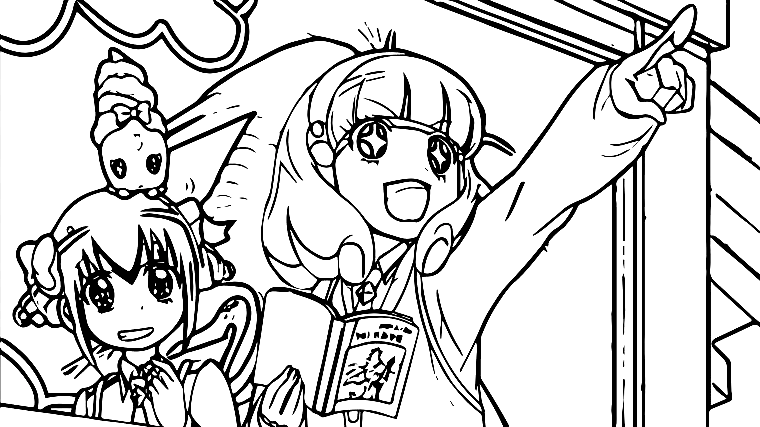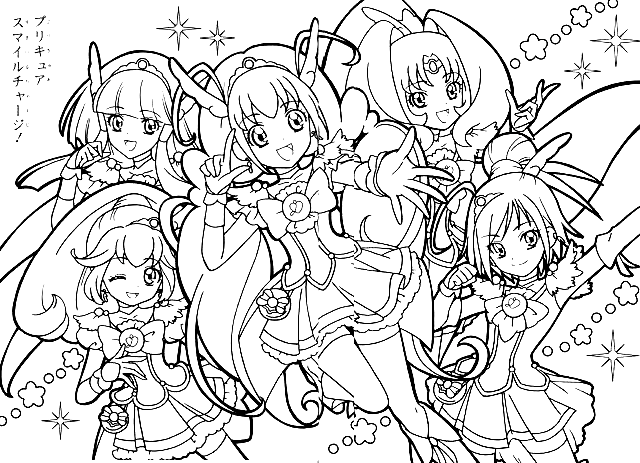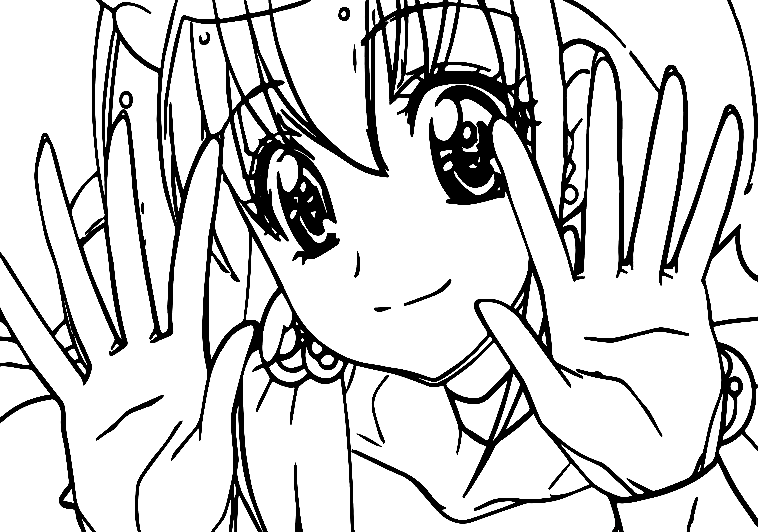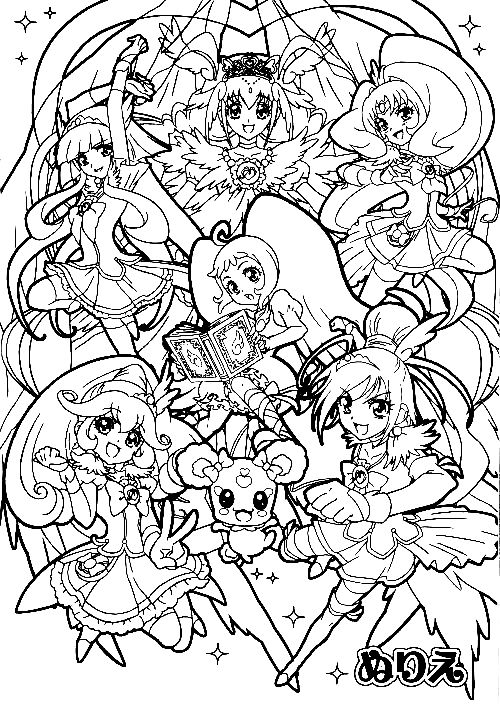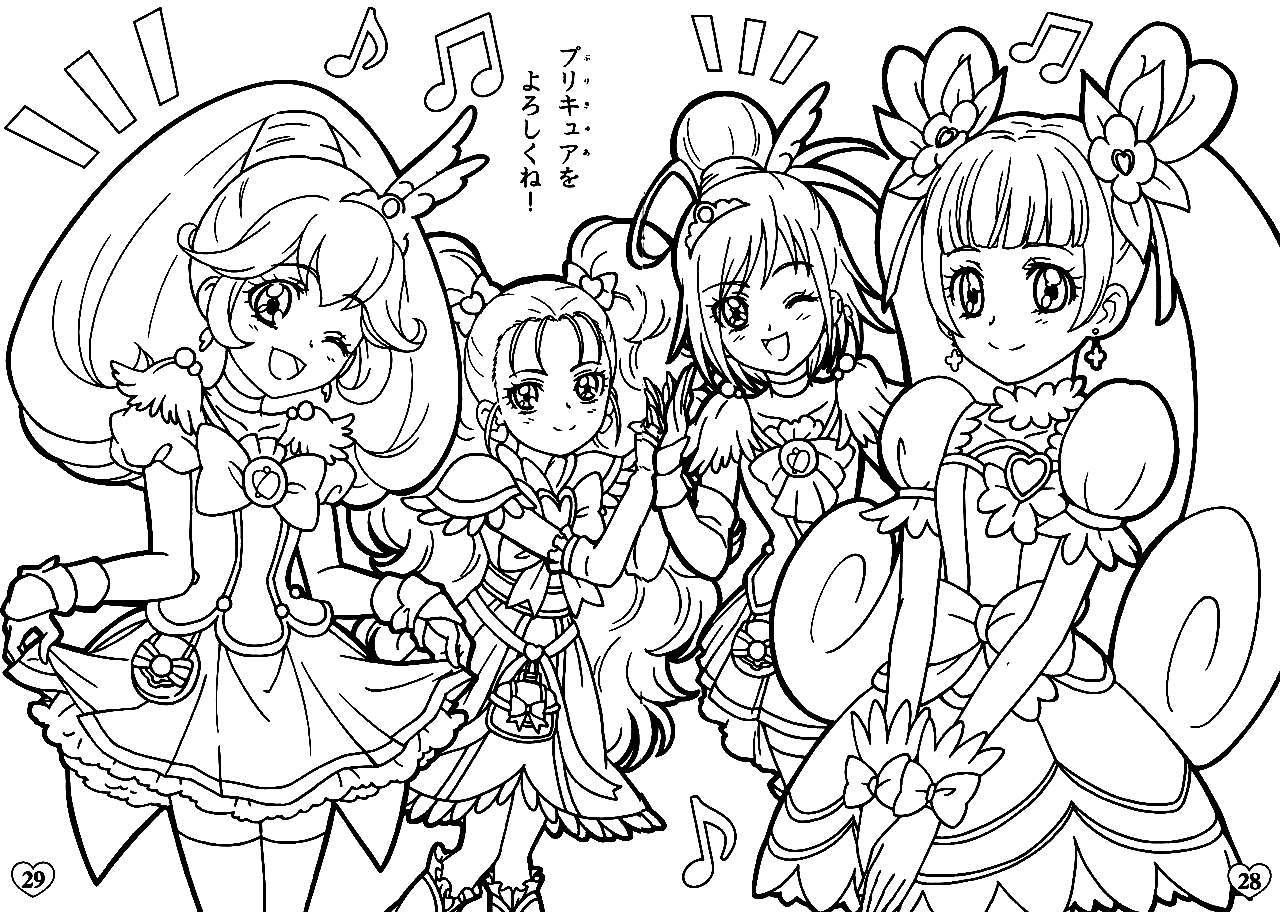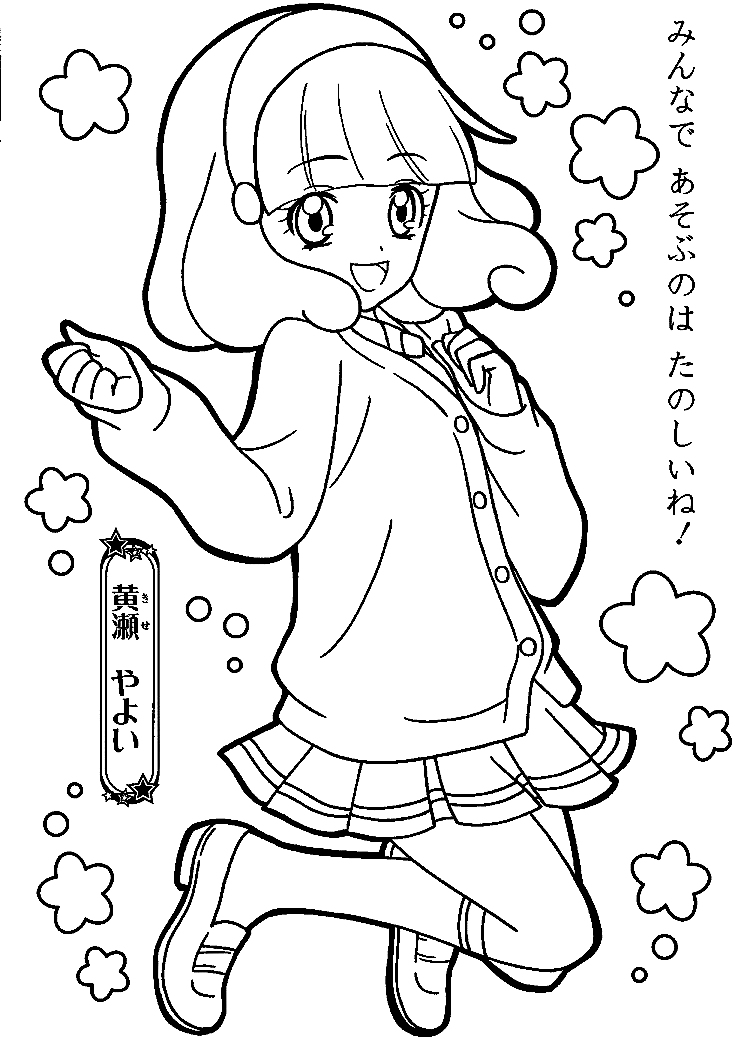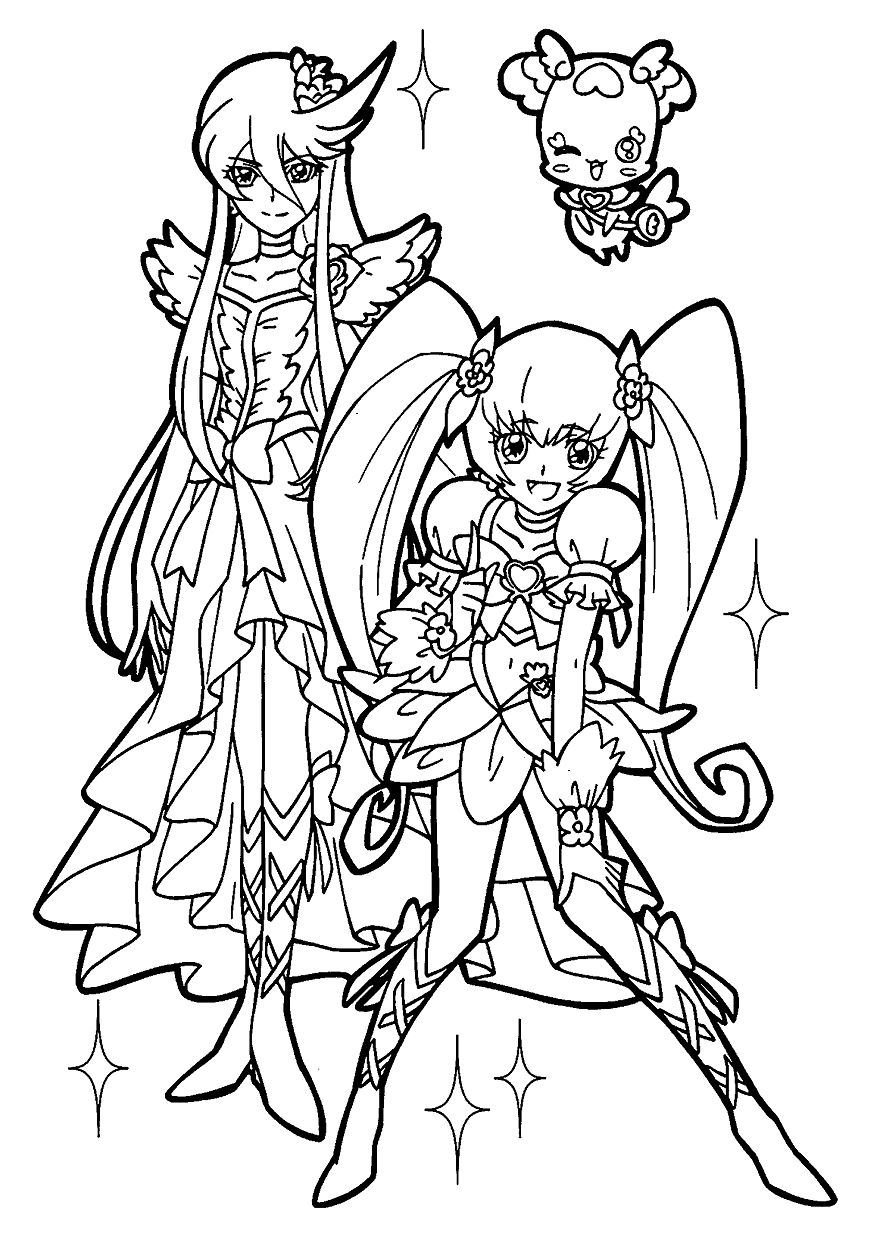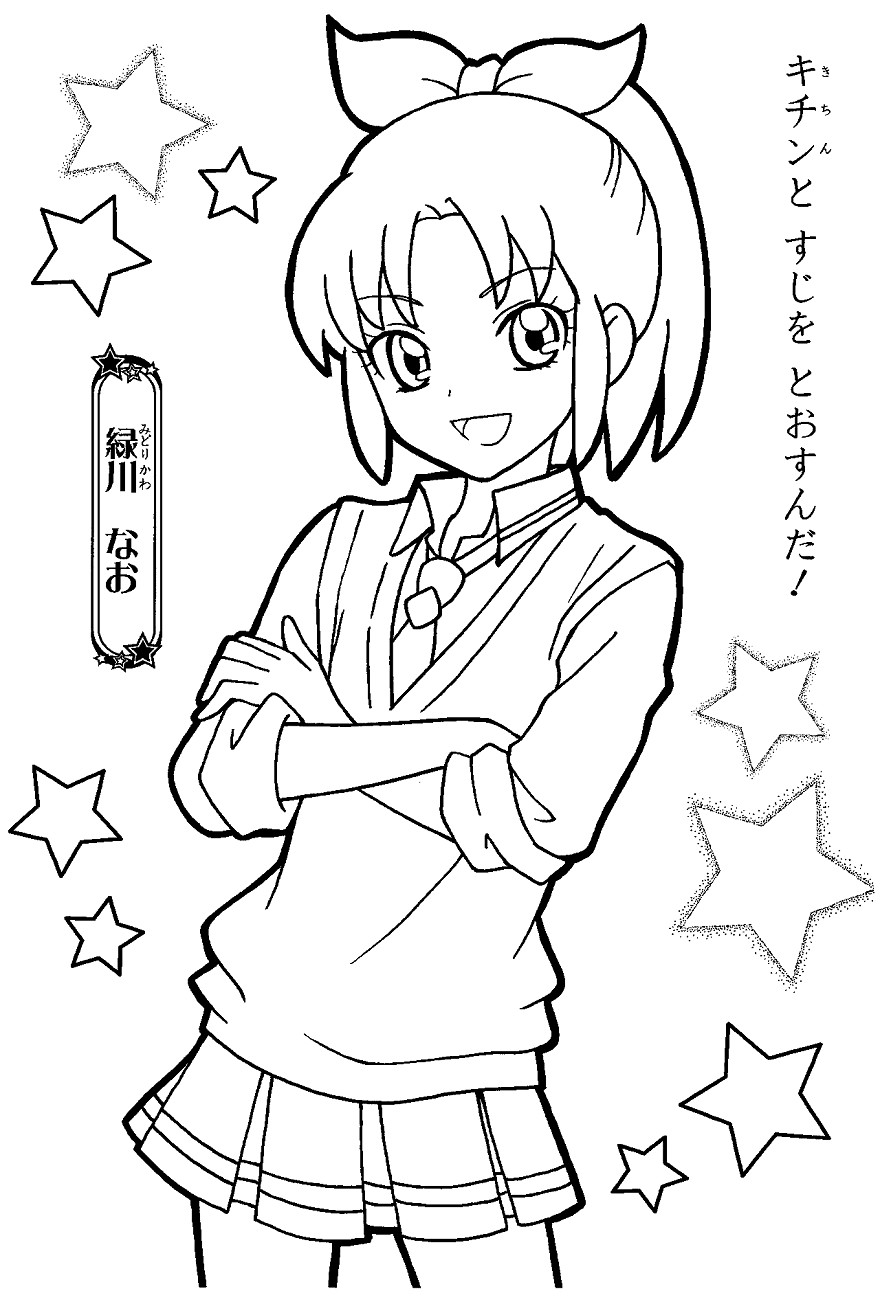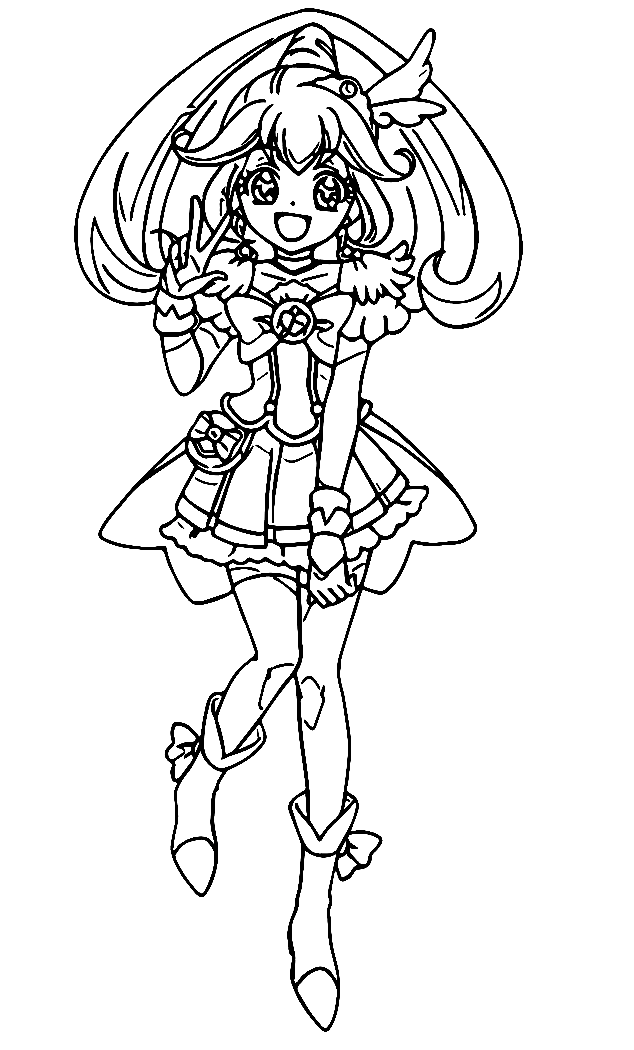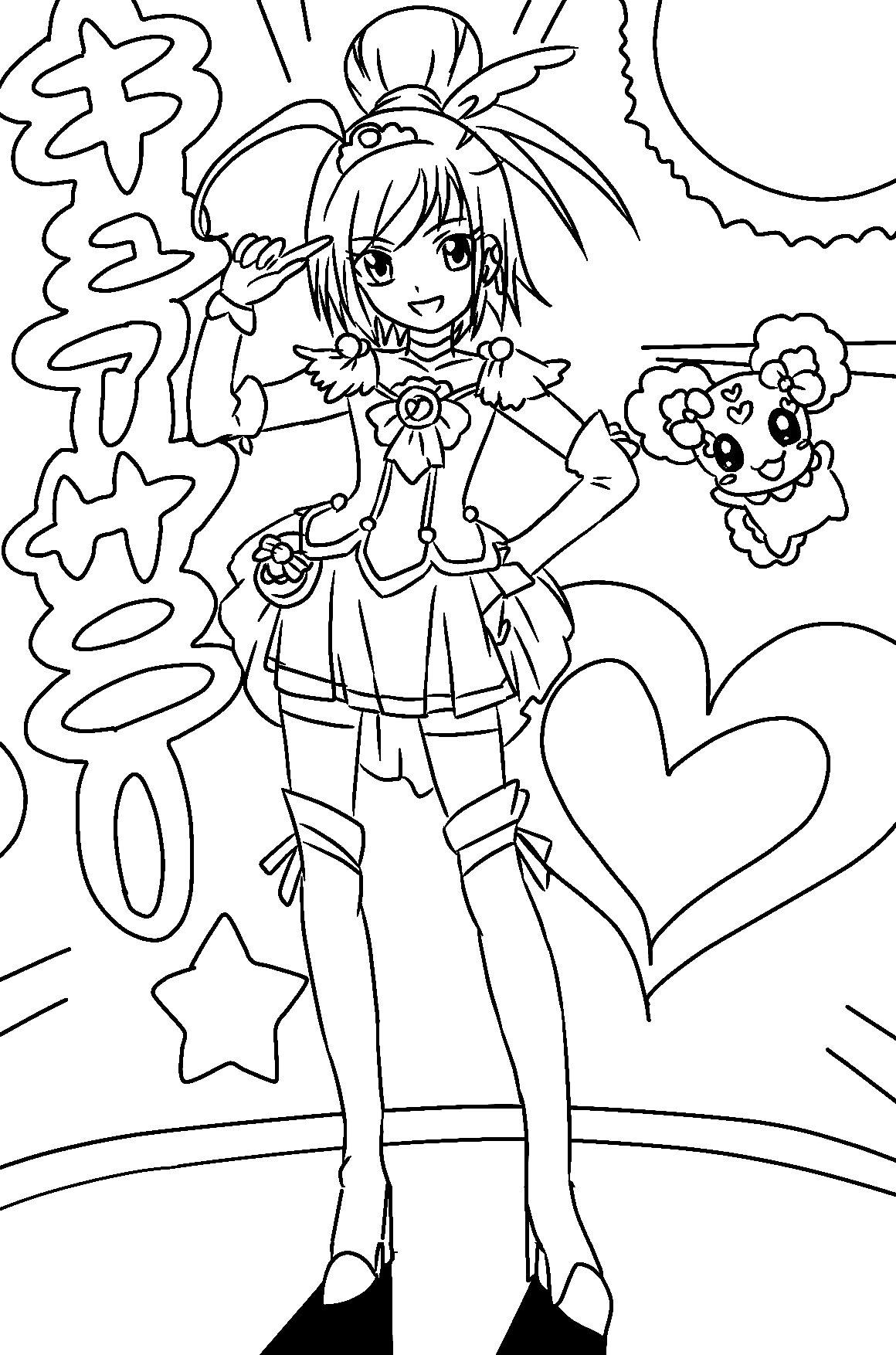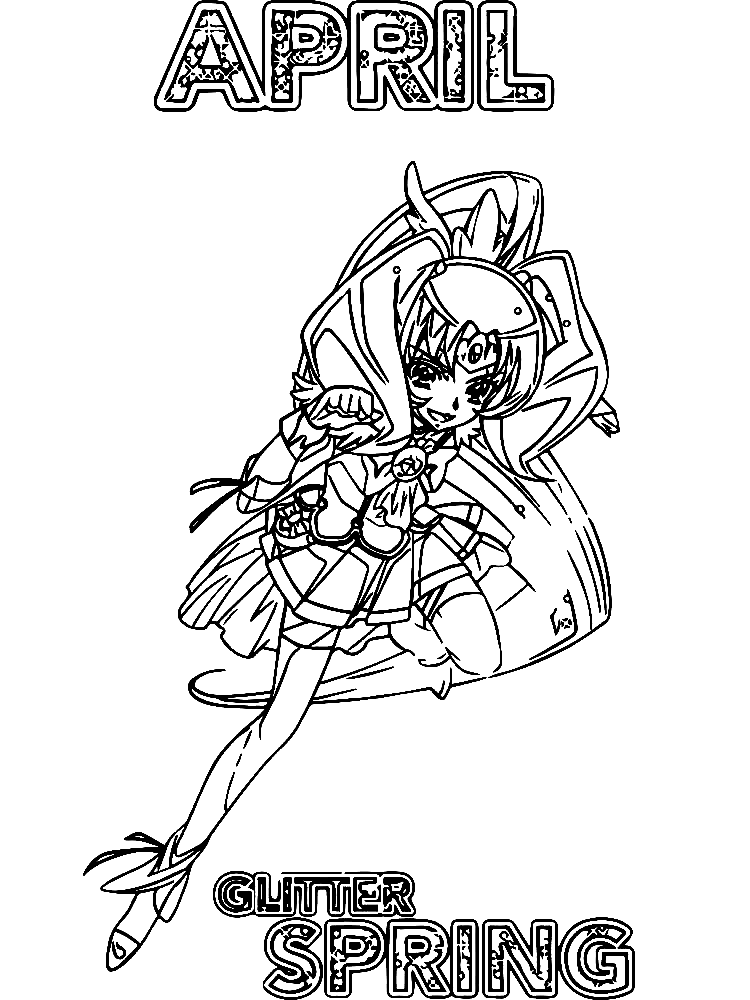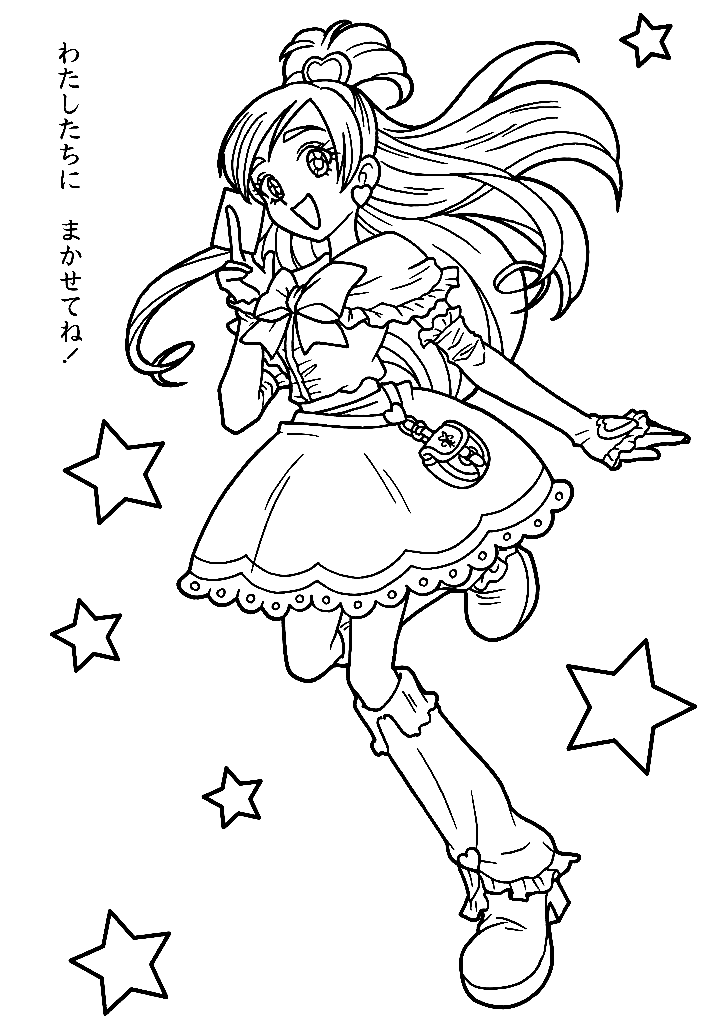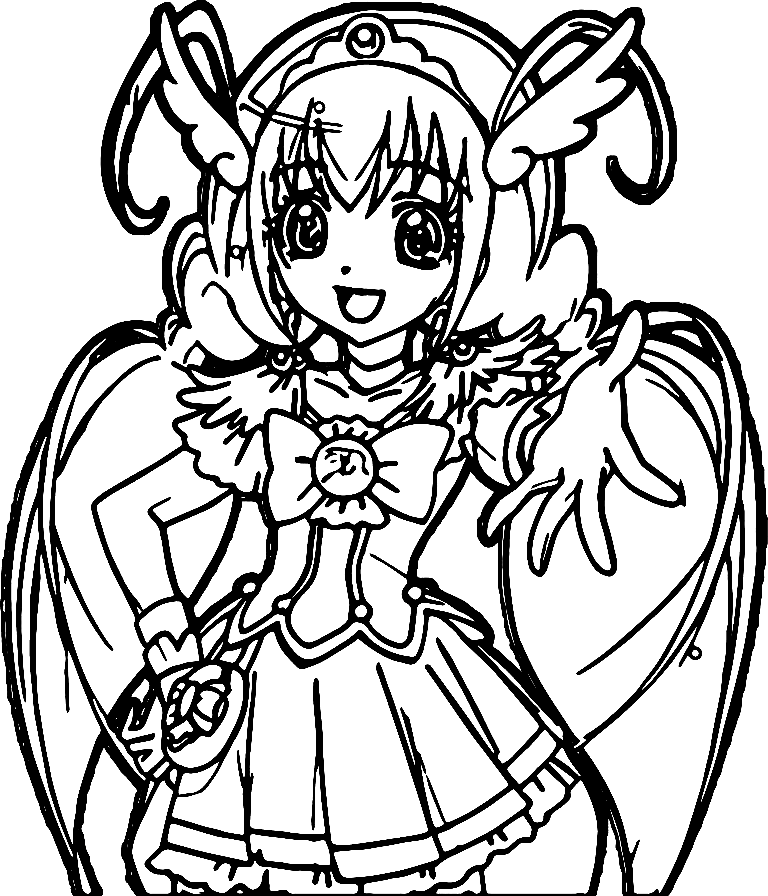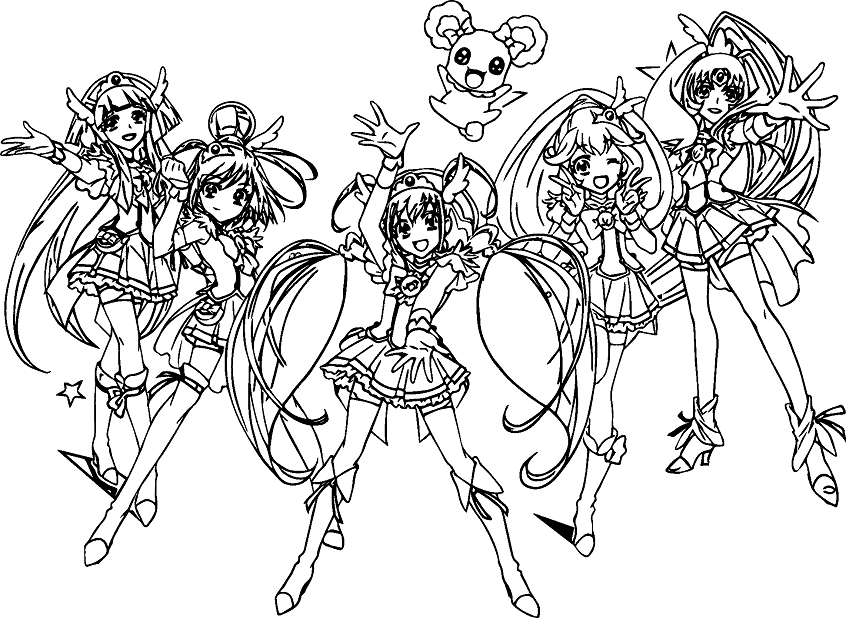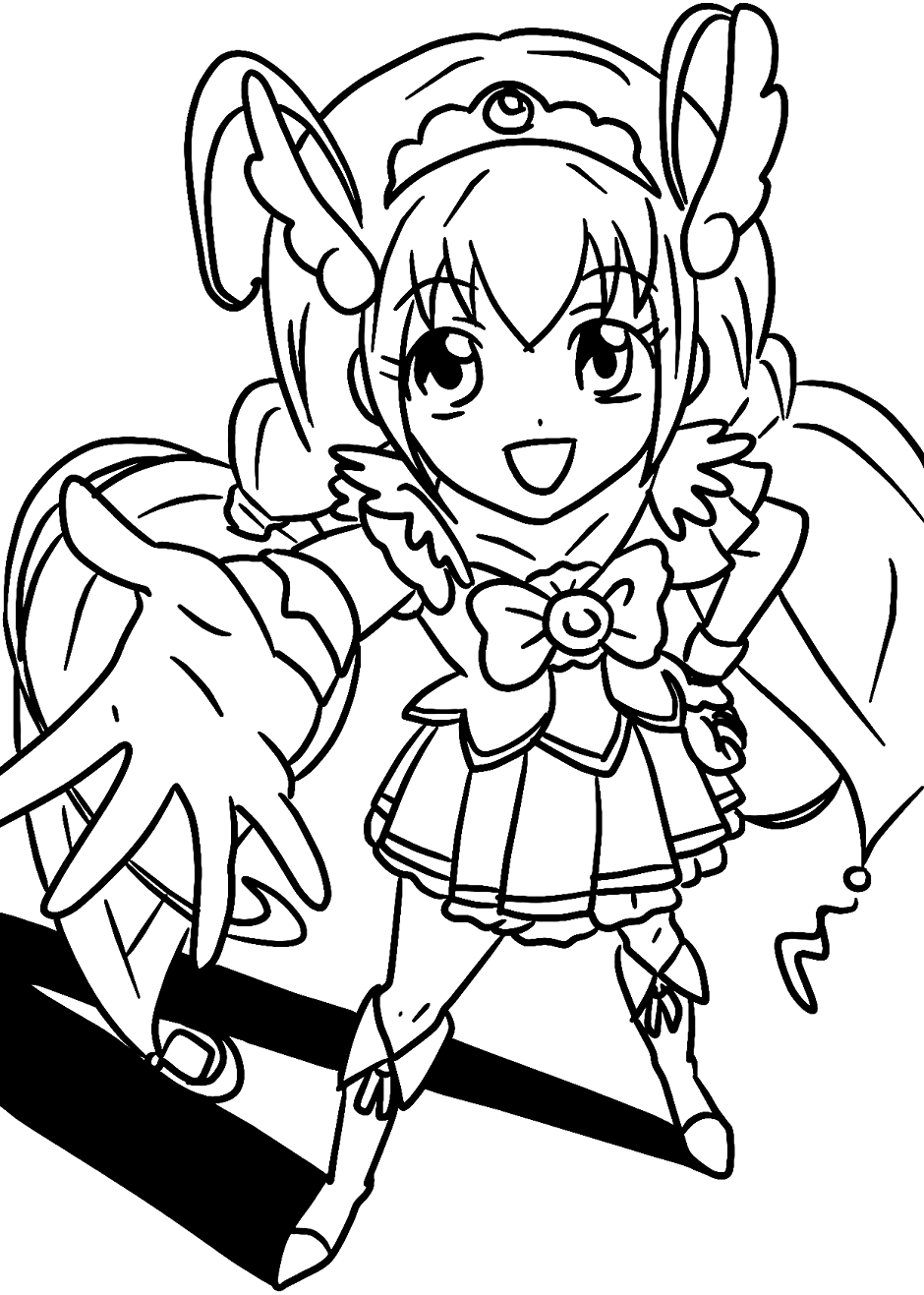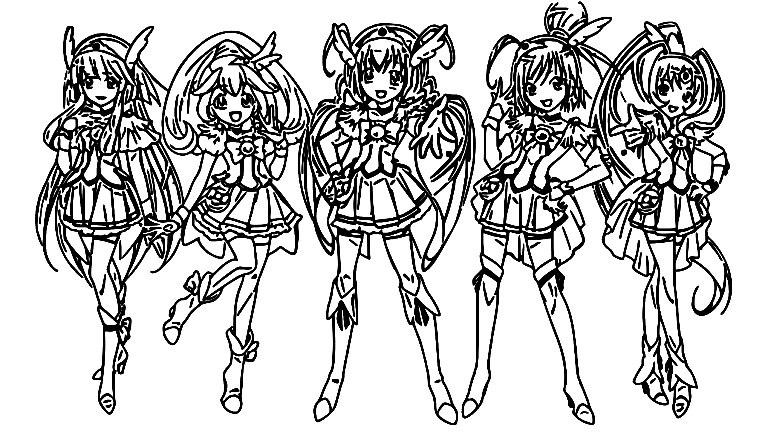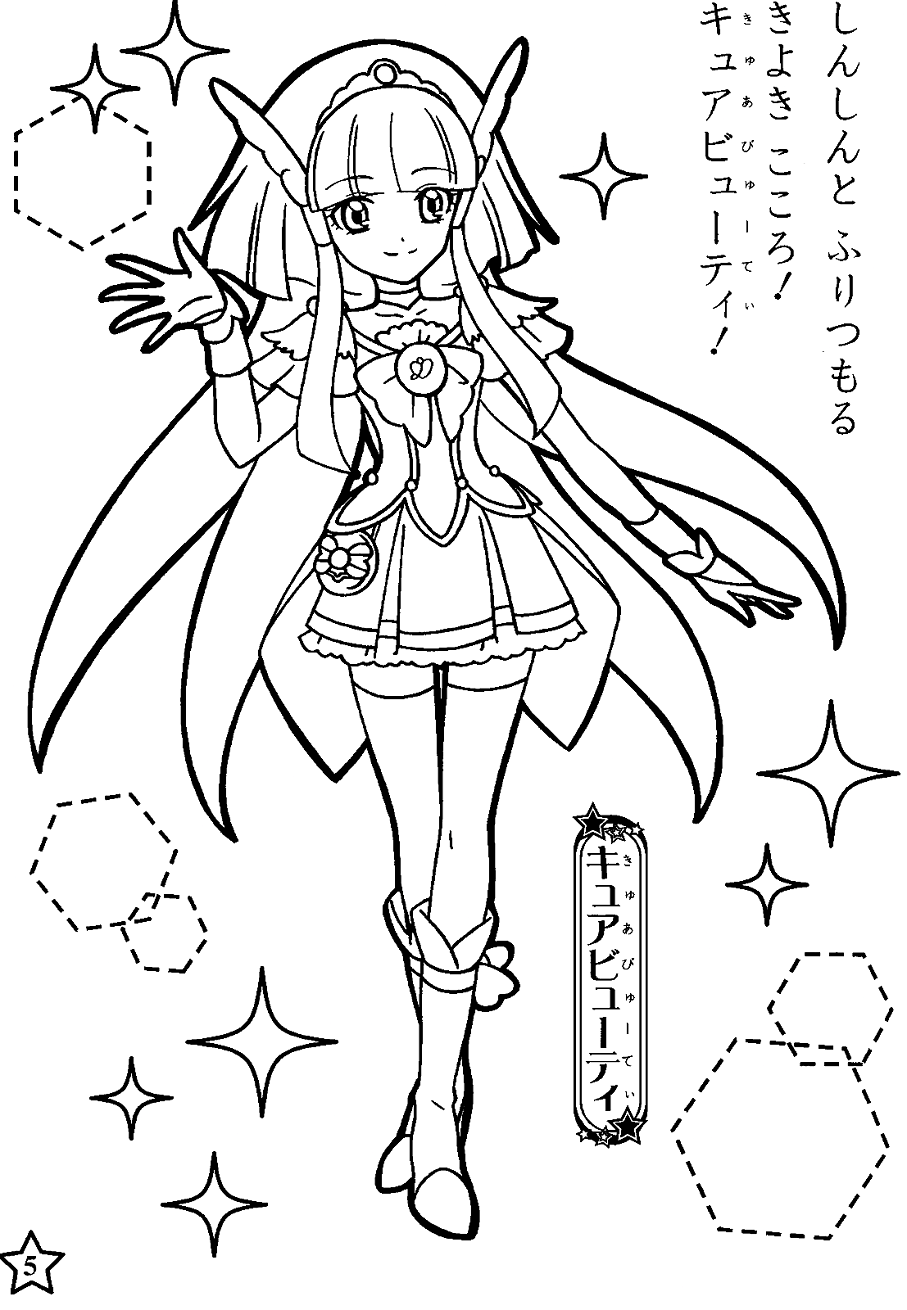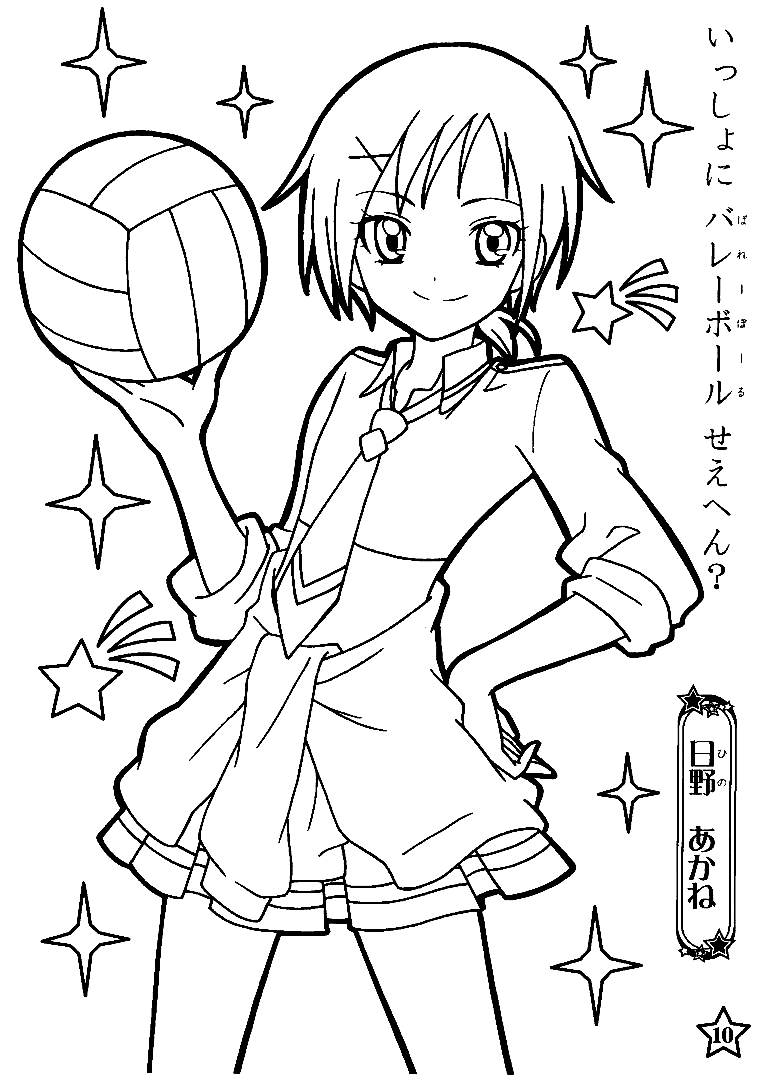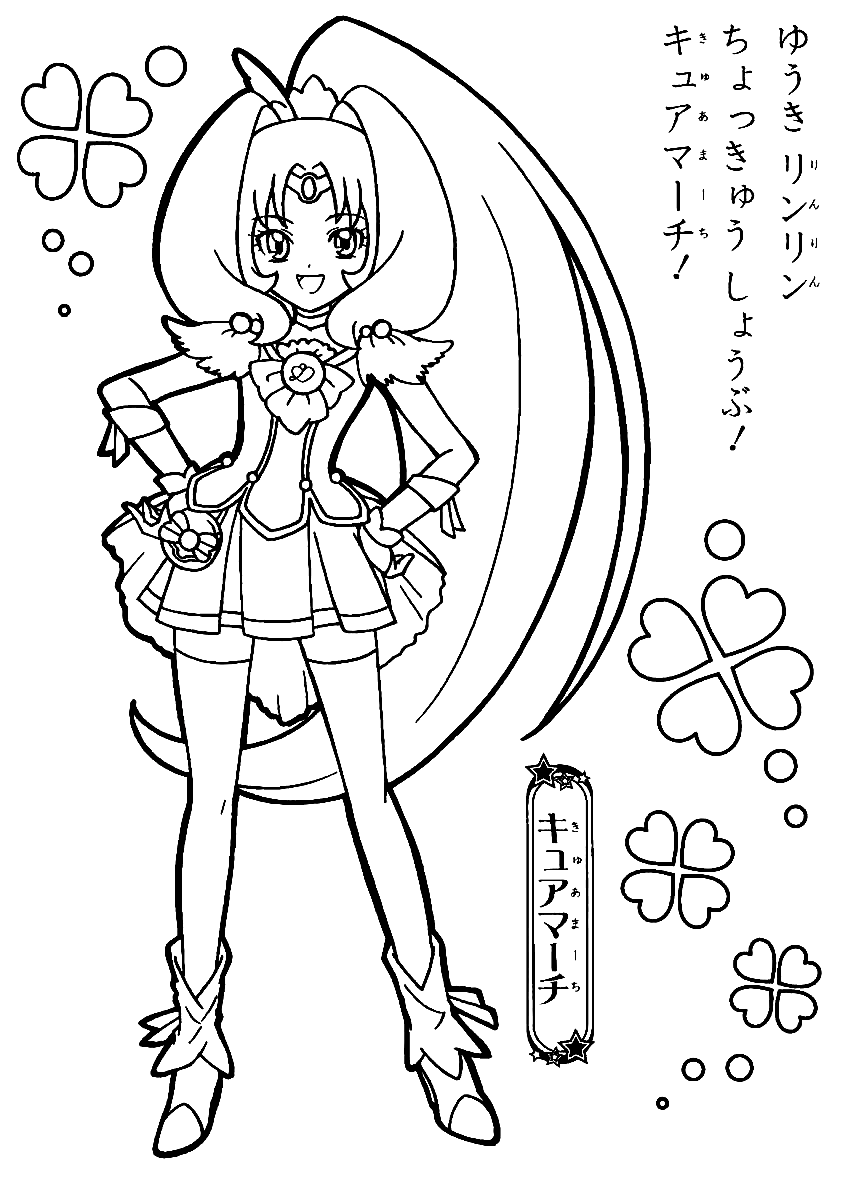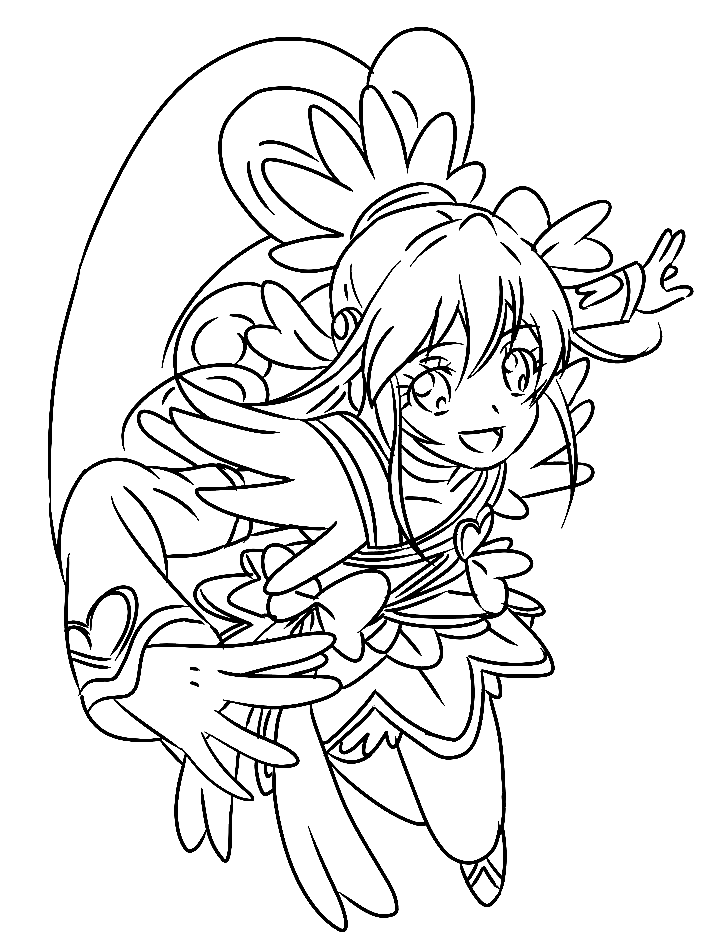
Free Glitter Force coloring pages – 50+ pages featuring Glitter Lucky, Glitter Sunny, Glitter Peace, Glitter Spring, Glitter Breeze, the fairy companion Candy, transformation sequences, action poses, group shots, and character portraits – free printable PDF and online coloring for magical girl fans of all ages.
Glitter Force is the Netflix English-language adaptation of Smile PreCure!, the ninth series in Toei Animation’s long-running Pretty Cure magical girl franchise. The original Japanese series aired on TV Asahi from February 5, 2012, to January 27, 2013. Saban Brands adapted it for Western audiences under the Glitter Force name, released on Netflix on December 18, 2015, with an English voice cast, localized character names, and cultural adjustments designed for the North American market.
The premise is built on fairy tales – specifically on the idea that fairy tales represent the accumulated hope of countless people across history, and that hope itself is worth protecting. Emily, a girl who loves stories and believes in happy endings with uncomplicated sincerity, discovers that a fairy named Candy has arrived from Märchenland – the land where all fairy tales originate – to find legendary warriors powerful enough to protect it from the villains of the Bad End Kingdom. Emily becomes Glitter Lucky. Four friends become Glitter Sunny, Glitter Peace, Glitter Spring, and Glitter Breeze. Together, they are the Glitter Force.
The series’s visual identity is built on maximum saturation, bright color-coded costumes, elaborate transformation sequences, and the specific kind of enthusiastic warmth that characterizes magical girl anime at its most purely optimistic. These pages reflect all of it.
These 50+ free pages at ColoringPagesOnly.com cover the full cast and their moments. All free, PDF or PNG, print or color online.
What’s Inside
Glitter Lucky – Emily
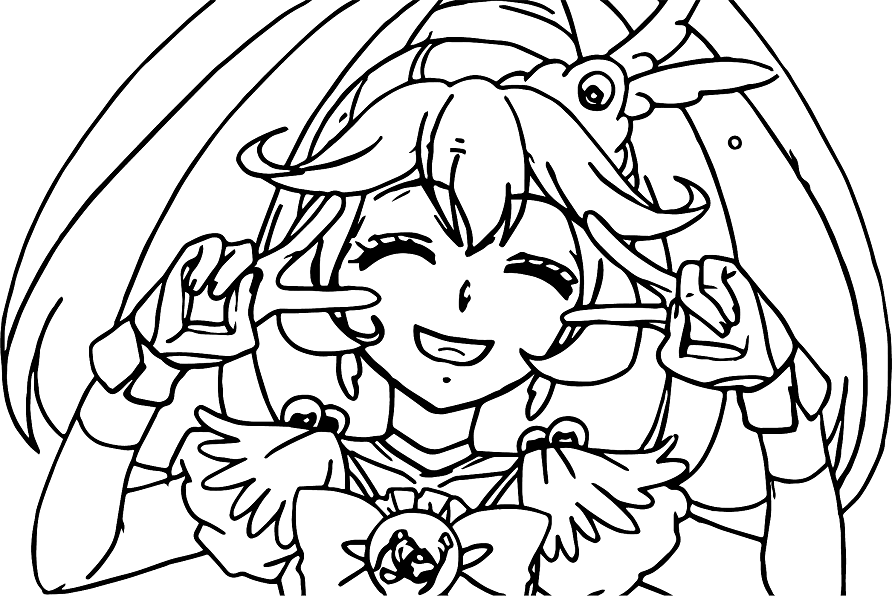
Glitter Lucky is the leader of the Glitter Force – the pink member, the optimist, the girl who believes in happy endings with a conviction so complete that it functions as its own kind of power. Emily is a transfer student who arrives at her new school in Jubiland with the specific energy of someone who has decided that wherever she is will be wonderful. She loves fairy tales. She is clumsy and easily distracted, and genuinely, completely warm in a way that draws people to her before she has done anything in particular to earn it.
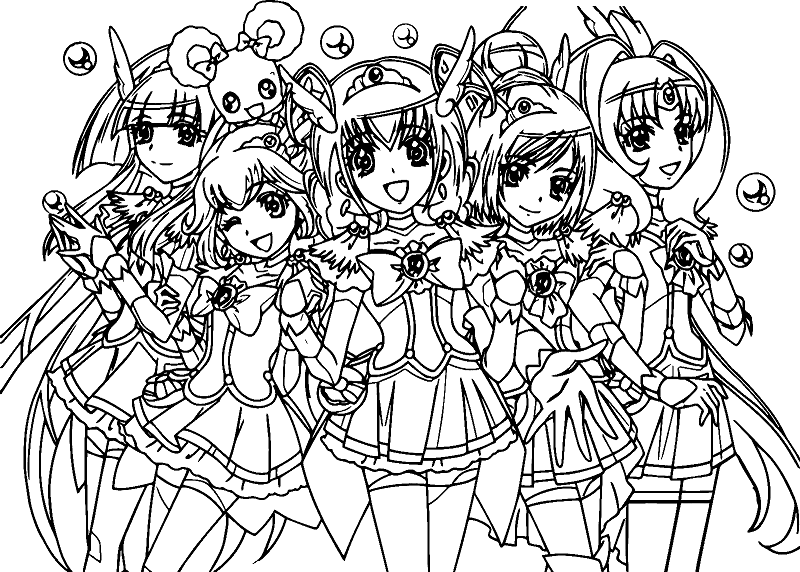
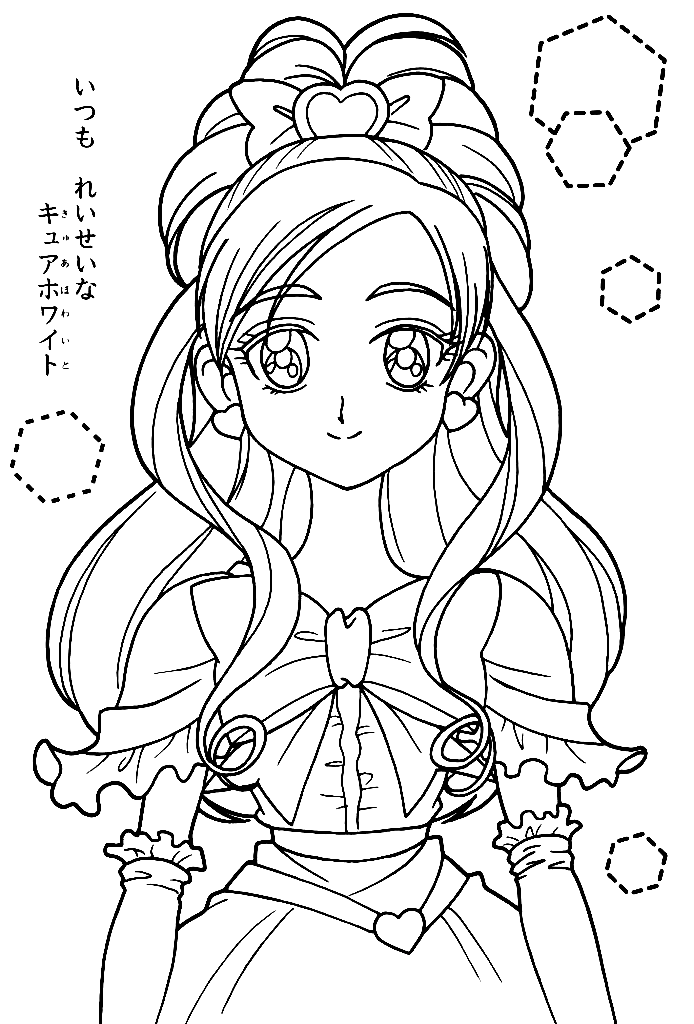
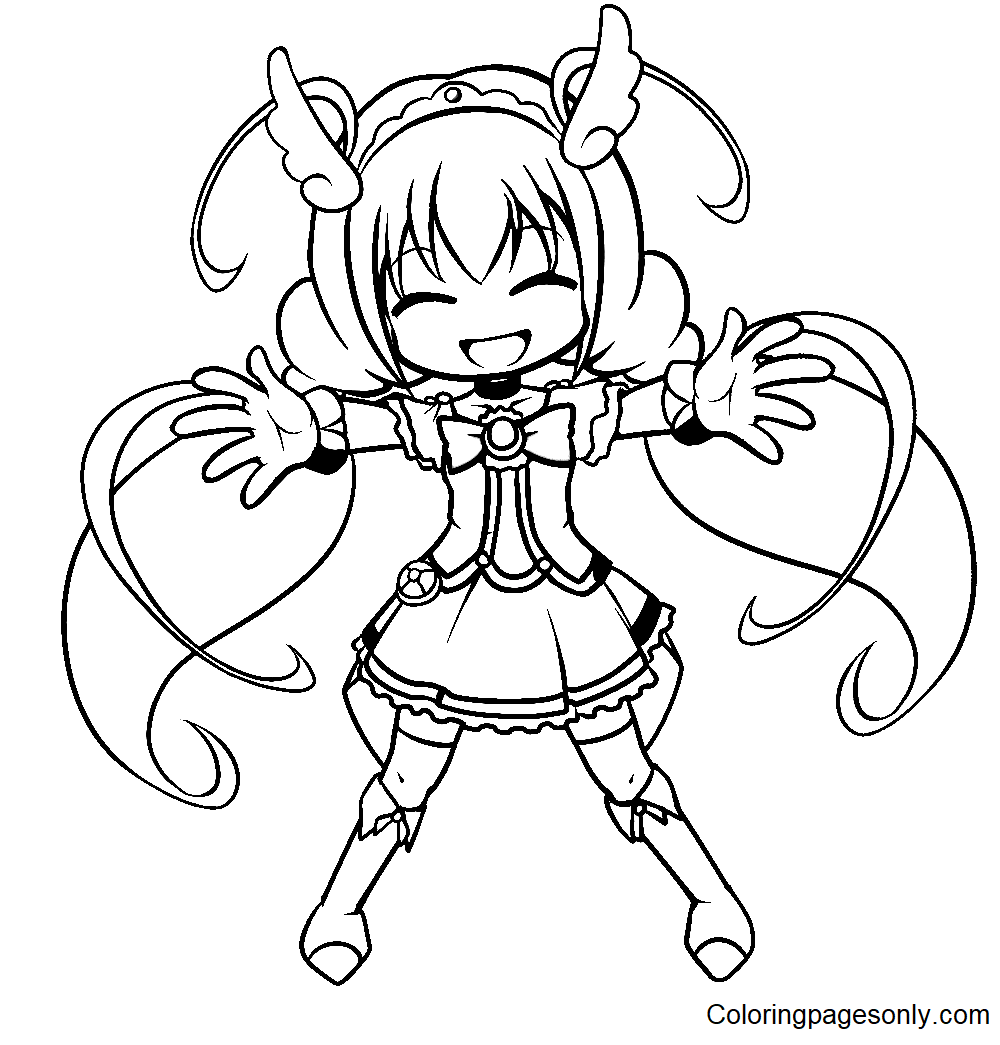
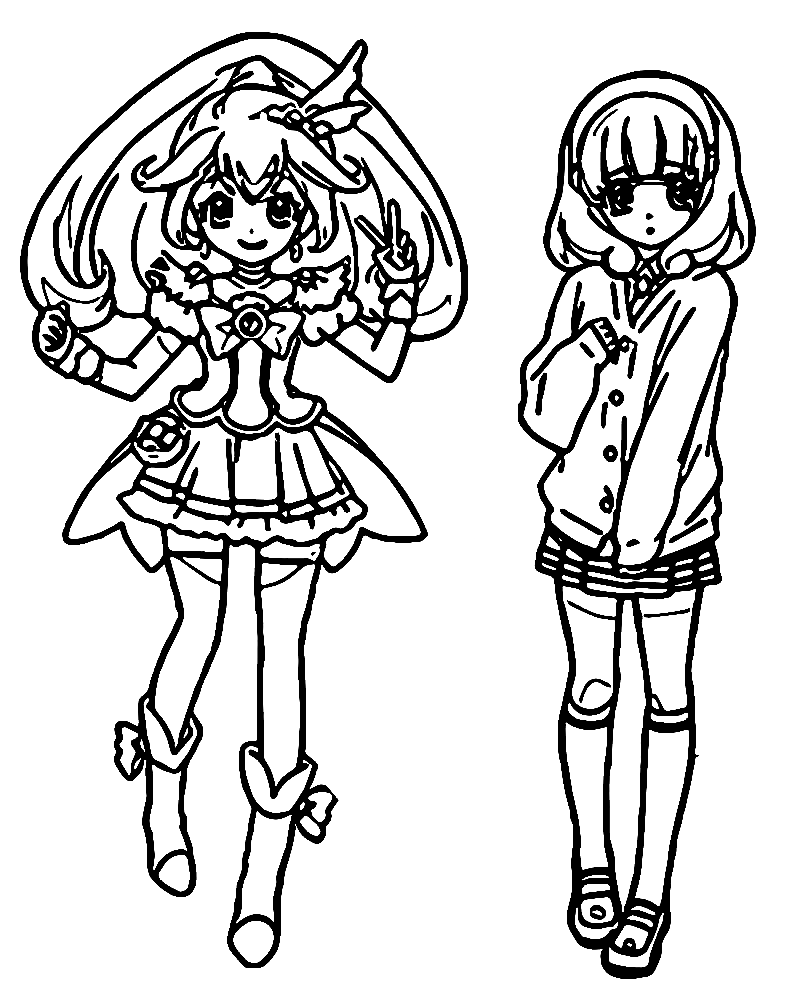
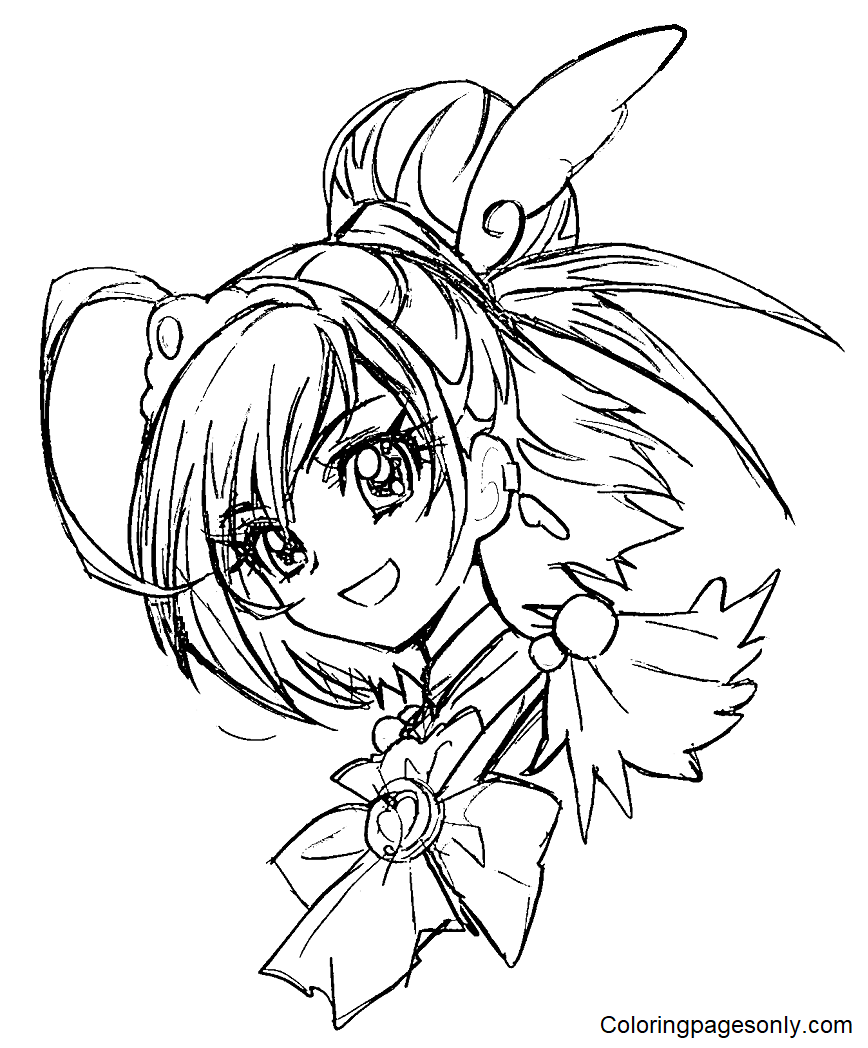
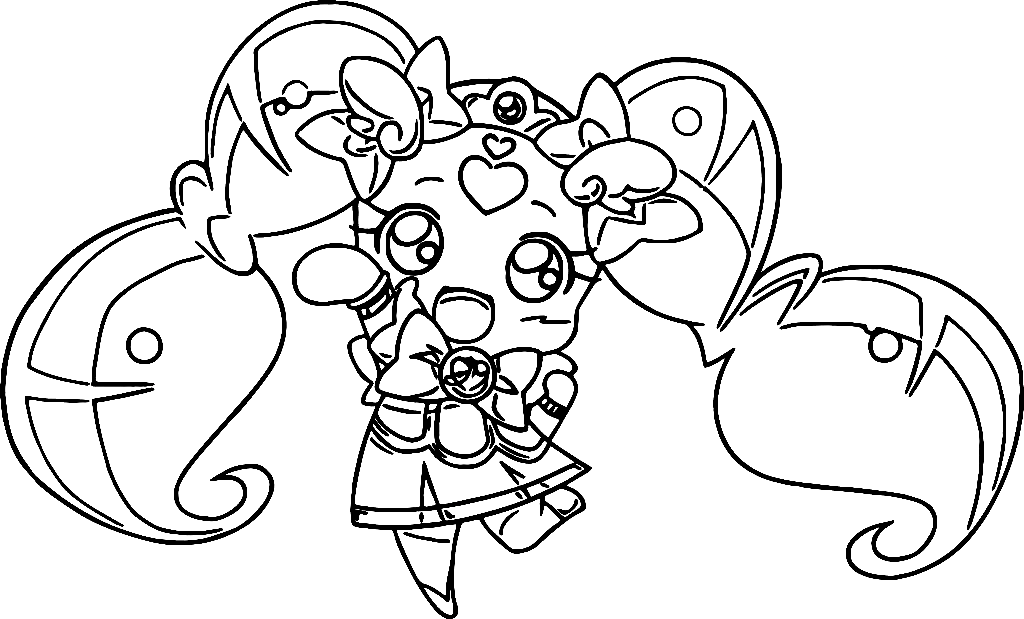
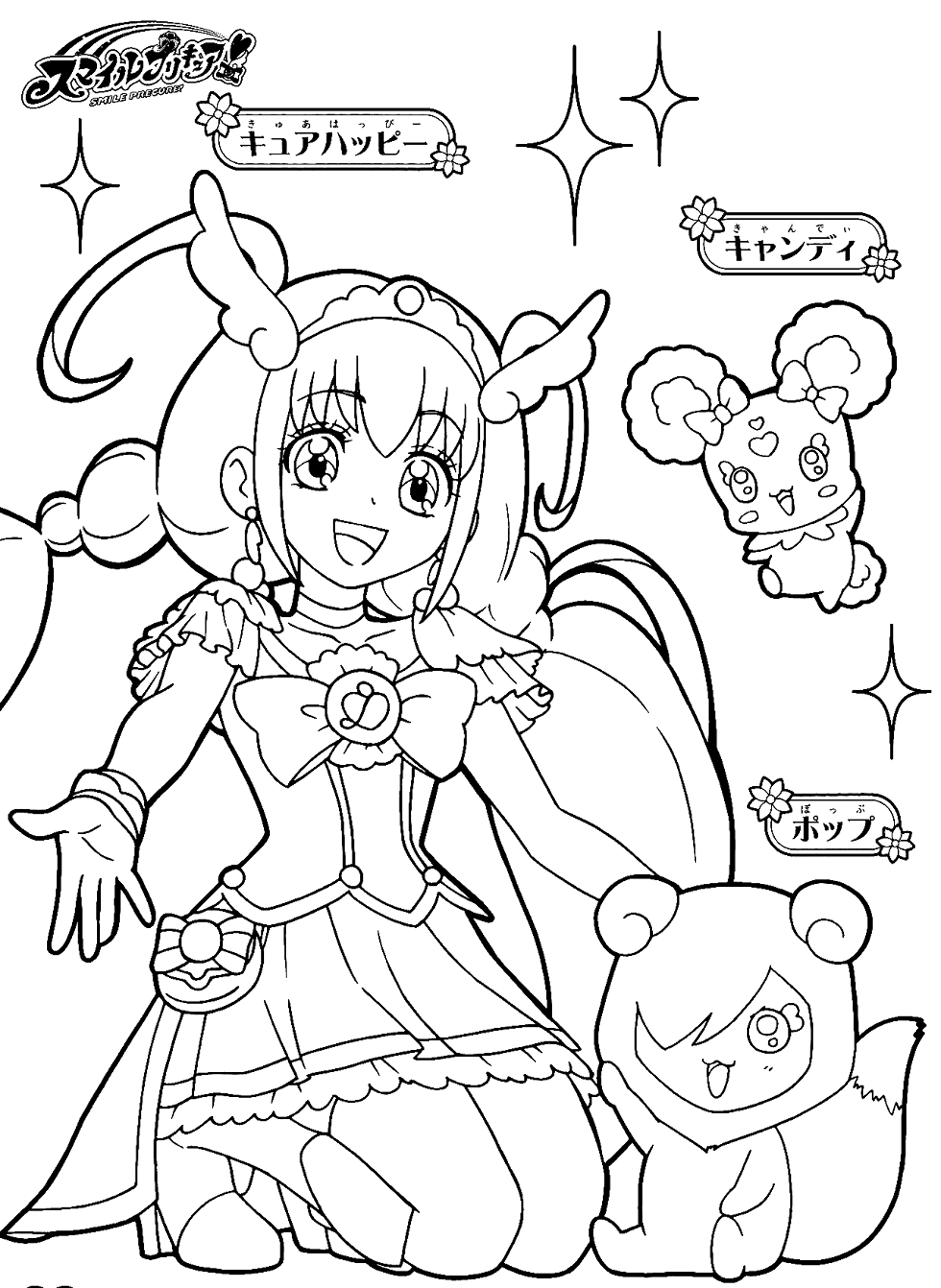
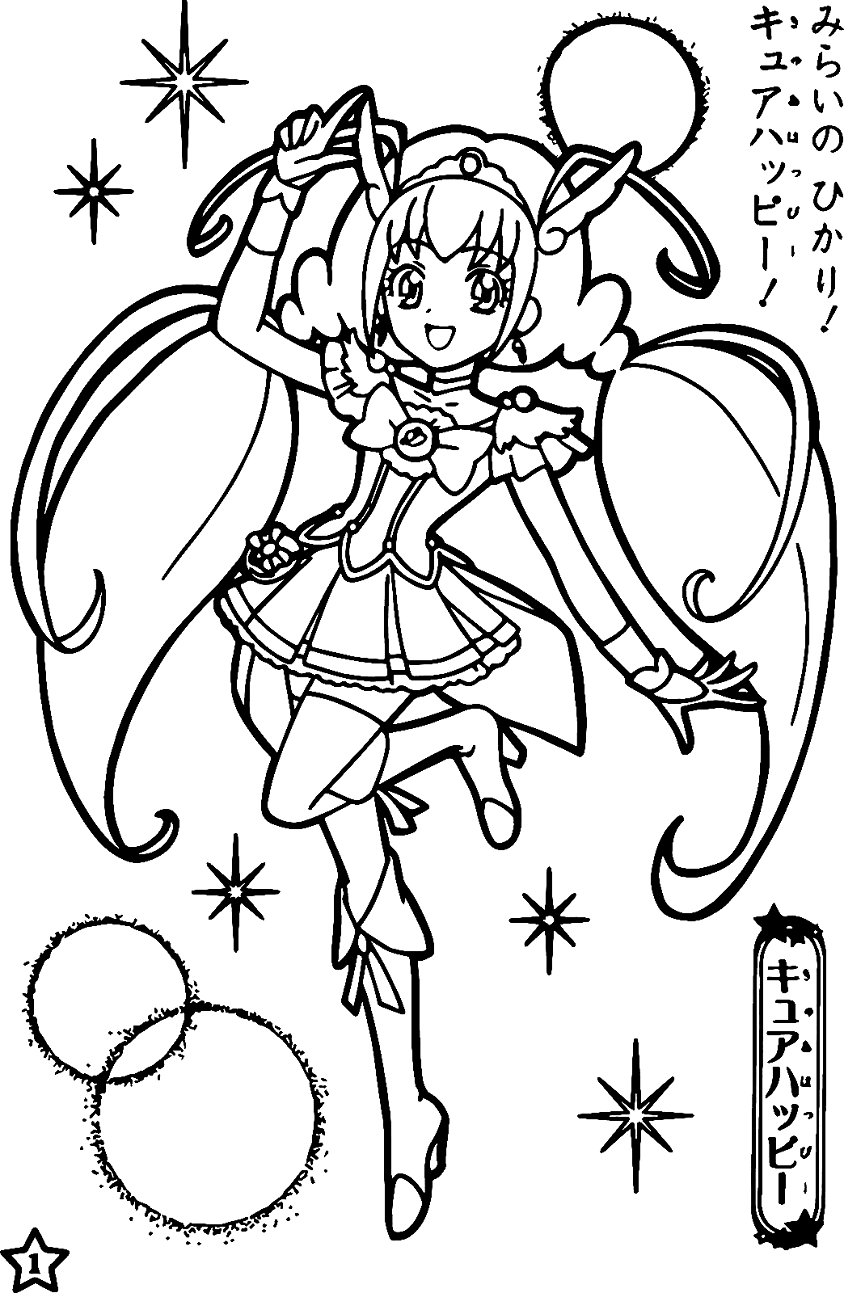
Her transformed appearance: twin pink pigtails that are significantly longer and more elaborate than her civilian hair, a pink and white magical girl costume with a prominent bow at the center chest, pink boots, and the Smile Pact – a compact-style device that is the source of her transformation and her attacks. Her power is themed around happiness and luck.
The Glitter Lucky pages are the collection’s most central – as the leader and pink member, she appears in the largest number of group and action pages in addition to her own portrait pages.
Coloring Glitter Lucky: Her entire palette is built around pink – a warm, vivid, fully saturated pink that is the series’ most immediately recognizable color. Her hair in transformed form is the same pink as her costume, creating a monochromatic effect that reads as deliberate and bold rather than accidental. Her skin is light, her eyes are pink with warm highlights, and her costume details – the white ruffles, the bow accents – should be rendered in crisp white against the pink base to make the detailing visible.
Glitter Sunny – Kelsey
Glitter Sunny is the orange member – physically strong, athletic, direct, and enthusiastically competitive in the most good-natured way. Kelsey loves volleyball and food and her friends with the straightforward energy of someone who has never needed to manage her personality for social reasons. Her element is fire and the sun, which matches her personality exactly: warm, visible, and generating its own energy without requiring anything from outside.
Her transformation gives her an elaborate orange costume with flame-inspired accents, long orange hair in a high ponytail, and orange boots. Her attacks are fire-based, which gives her pages some of the collection’s most dynamic visual elements – flame effects around her figure create natural backgrounds for action poses.
Coloring Glitter Sunny: A warm, orange-red that reads as fire rather than as standard orange. Her palette is the warmest in the group. The flame effects on her attack pages want the full fire treatment: deep red-orange at the base of the flame, transitioning through orange to yellow at the tips. Her hair in transformed form is a vivid orange that should be rendered at full saturation.
Glitter Peace – Lily
Glitter Peace is the yellow member – the artist of the group, shy and easily moved to tears, who transforms into a warrior associated with thunder and lightning. The gap between Lily’s quiet, emotional personality and the dramatic electrical power she commands when transformed is one of the series’ gentler jokes. She loves drawing manga. She cries at things that are beautiful as readily as at things that are sad. She loses consistently at rock-paper-scissors against Glitter Sunny, which is both a running gag and somehow a completely accurate representation of who she is.
Her transformation gives her a yellow costume with star-shaped accents, long yellow hair, and yellow boots. The lightning effects on her attack pages – jagged, electric, bright – are visually dramatic in a way that contrasts with her gentle civilian personality.
Coloring Glitter Peace: Bright, warm yellow – not the pale yellow of a pastel but the fully saturated yellow of a sunflower or a traffic light. Her lightning effects are the most visually interesting element on her action pages: deep violet or dark blue at the edges of the lightning bolt, fading to white at the center of each bolt, with a warm yellow glow surrounding the whole effect.
Glitter Spring – April
Glitter Spring is the green member – the most physically capable fighter in the group, protective in a specific way of someone who has grown up looking after many younger siblings. April is the oldest child in a large family, and this has produced someone who defaults to responsibility, who is alert to when people around her need protection, and who has the physical endurance from years of keeping up with younger children to back that protectiveness with actual capability.
Her transformation gives her a green costume with leaf and wind accents, long green hair in a style that suggests movement, and green boots. Her element is wind, which her attacks reflect – sweeping, circular, covering large areas rather than the precise, targeted attacks of some of her teammates.
Coloring Glitter Spring: A vivid, medium green – not the yellow-green of spring leaves but the fuller, more saturated green of midsummer. Her wind effects use transparent, sweeping visual lines rather than solid color – render them in very light green or pale blue-green, with the lightest application of color pressure to suggest air movement without blocking the view of her figure.
Glitter Breeze – Chloe
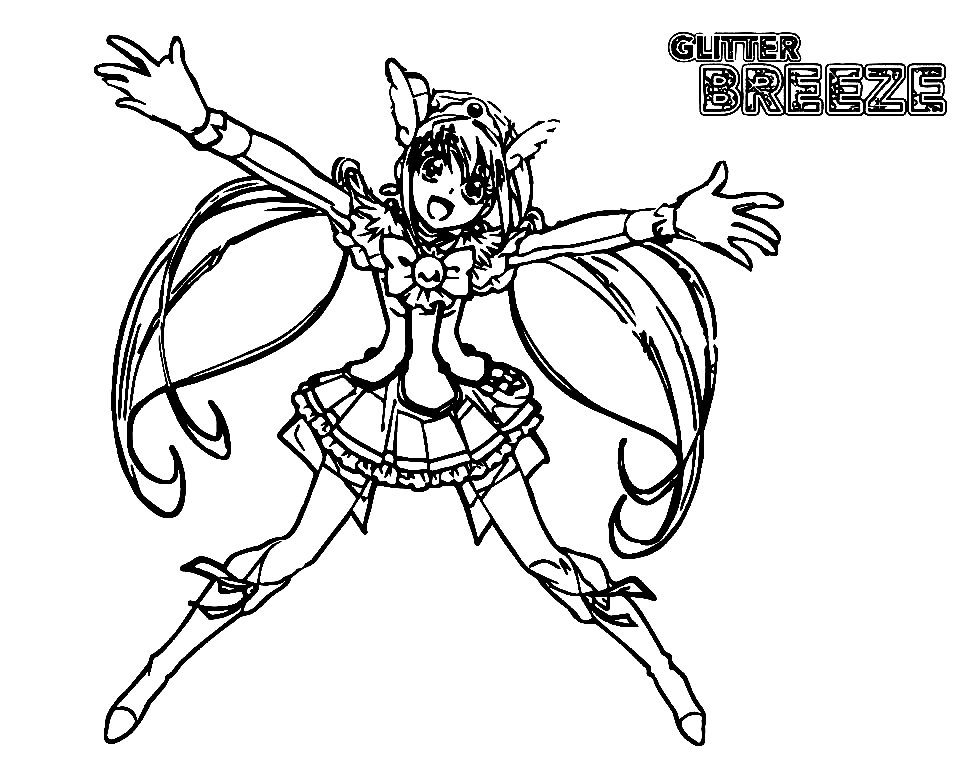
Glitter Breeze is the blue member and the group’s most composed, precise, and academically accomplished member. Chloe is the student council president in civilian life – the person other people go to when they need something organized or decided correctly. She practices archery, which is a detail the series uses deliberately: the patience, precision, and focus required to shoot well are exactly her character’s qualities. Her element is ice, and she is the only member of the group whose power is aligned with her personality as directly as Glitter Sunny’s.
Her transformation gives her the most elaborate costume in the group – white and blue with crystal-ice accents and a more formal silhouette than the other members. Her hair in transformed form is long, straight, and blue-white. Her attacks create ice and snow effects – the most visually complex weather elements in the collection.
Coloring Glitter Breeze: Cool blue and white, significantly cooler in palette than any other member of the group. Her costume is primarily white with blue accents – render the white with a subtle cool blue shadow to give it form without losing the clarity of white. Her ice effects use the full cool color range: pure white for the center of ice formations, pale blue for the mid-range, and deeper blue-violet at the shadow edges. The result should read as cold.
Candy – The Fairy Companion
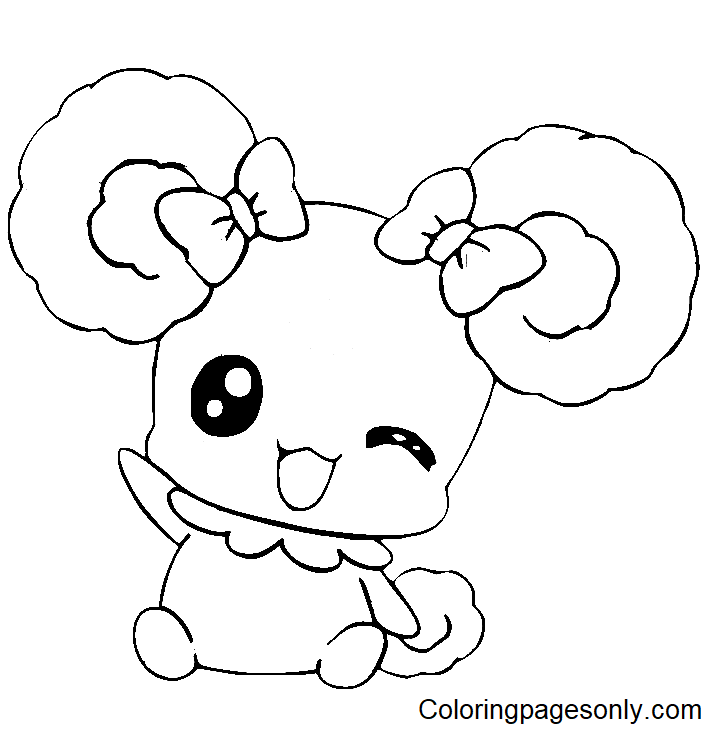
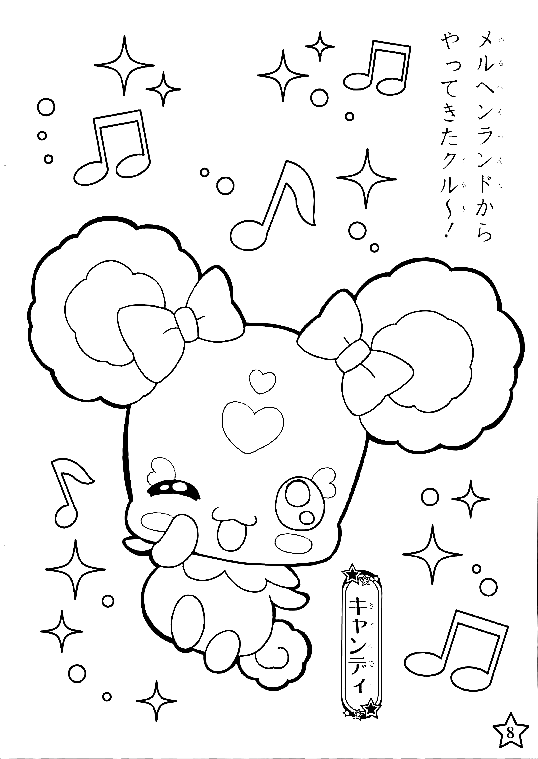
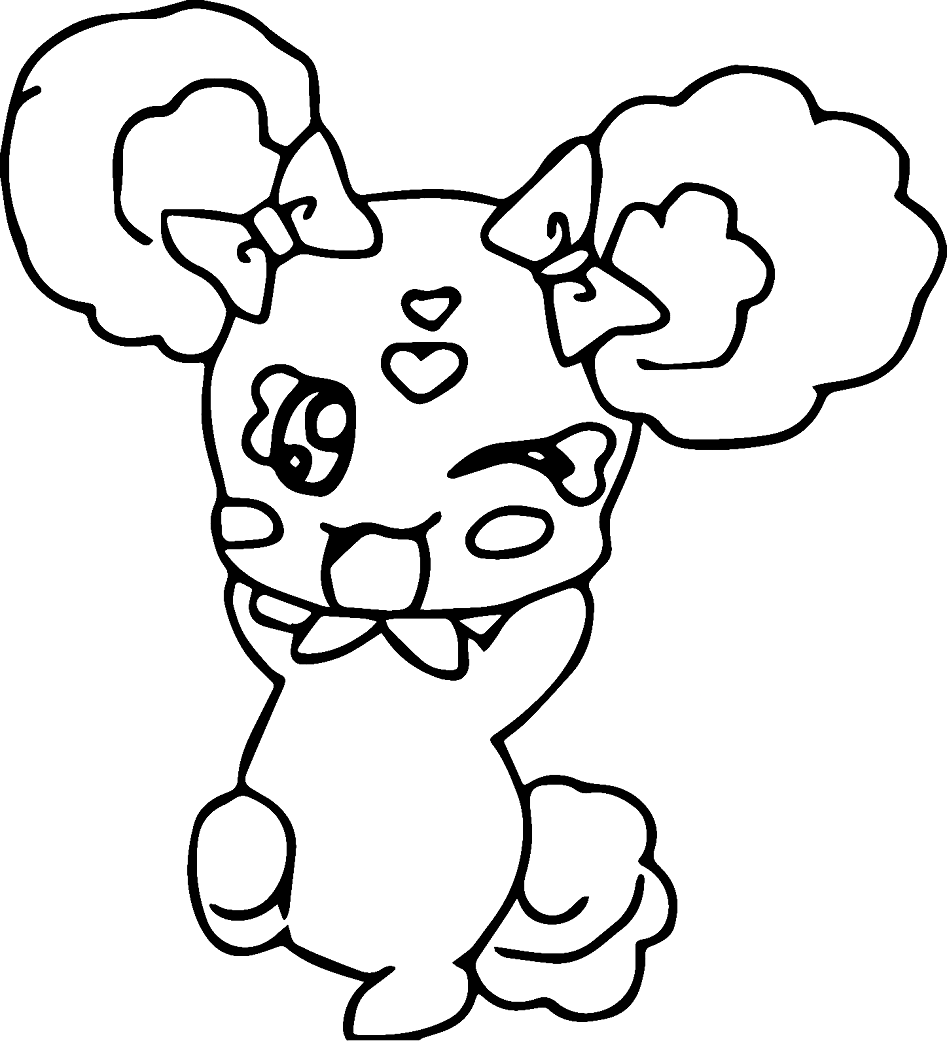
Candy is the fairy from Märchenland who arrives in Jubiland seeking the Glitter Force – a small, round, white creature with large eyes, rabbit-like ears, and a colorful pompom on her head. She is enthusiastic, frequently alarmed by the situations she finds herself in, and completely committed to her mission and to the five girls she has found.
Her design is the collection’s simplest – round body, minimal surface complexity – which makes her pages accessible to very young fans who want to color the series but find the elaborate magical girl costumes challenging. The Candy pages work well as starting points for the youngest members of the audience.
Coloring Candy: Her body is white with very subtle warm cream shadows. Her large eyes are pink. The pompom on her head is typically pink and white, matching the series’ primary color. Her ears are white with pink inner ear color. Keep the color application minimal on her round body – one or two light shadow tones at the very most.
Transformation Sequence Pages
The transformation sequence is one of magical girl anime’s most established conventions – the extended, visually elaborate sequence in which the character changes from their civilian form into their warrior form. Glitter Force’s transformations follow the genre’s conventions with full commitment: sparkle effects, costume elements appearing in sequence, and the character’s pose shifting from their civilian posture to their warrior stance.
The transformation pages are the collection’s most visually complex – they often include both the character figure and the surrounding sparkle-and-color effects that characterize the transformation moment. These pages reward patient, layered coloring, and are the most satisfying to complete from the collection.
Group Pages
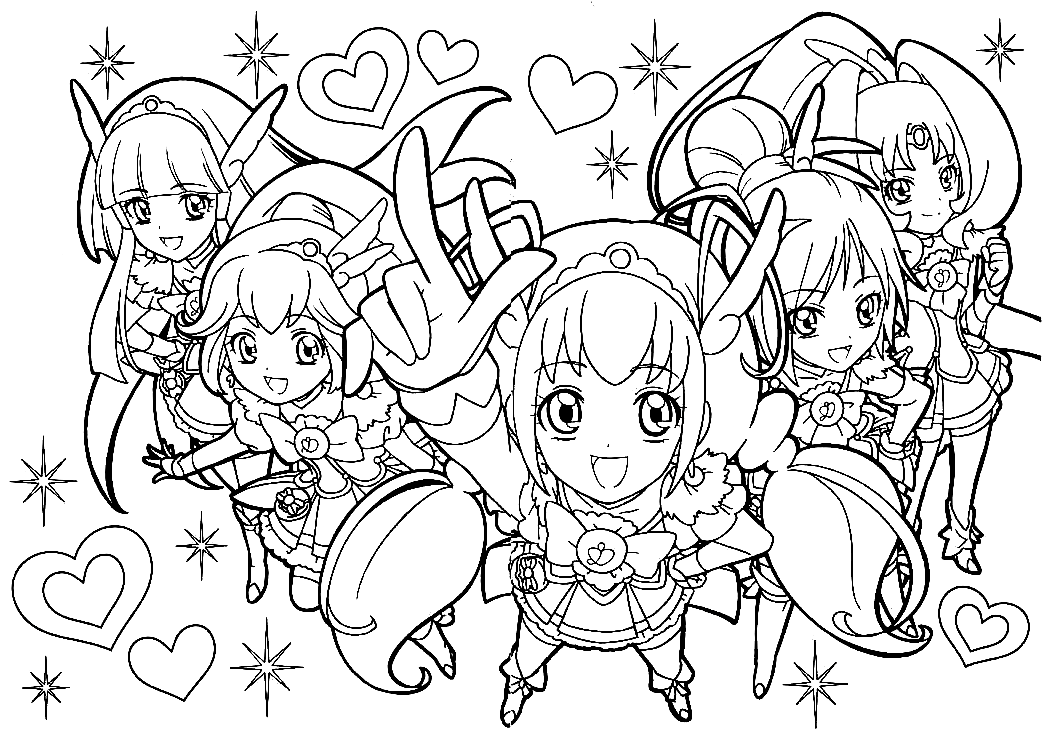
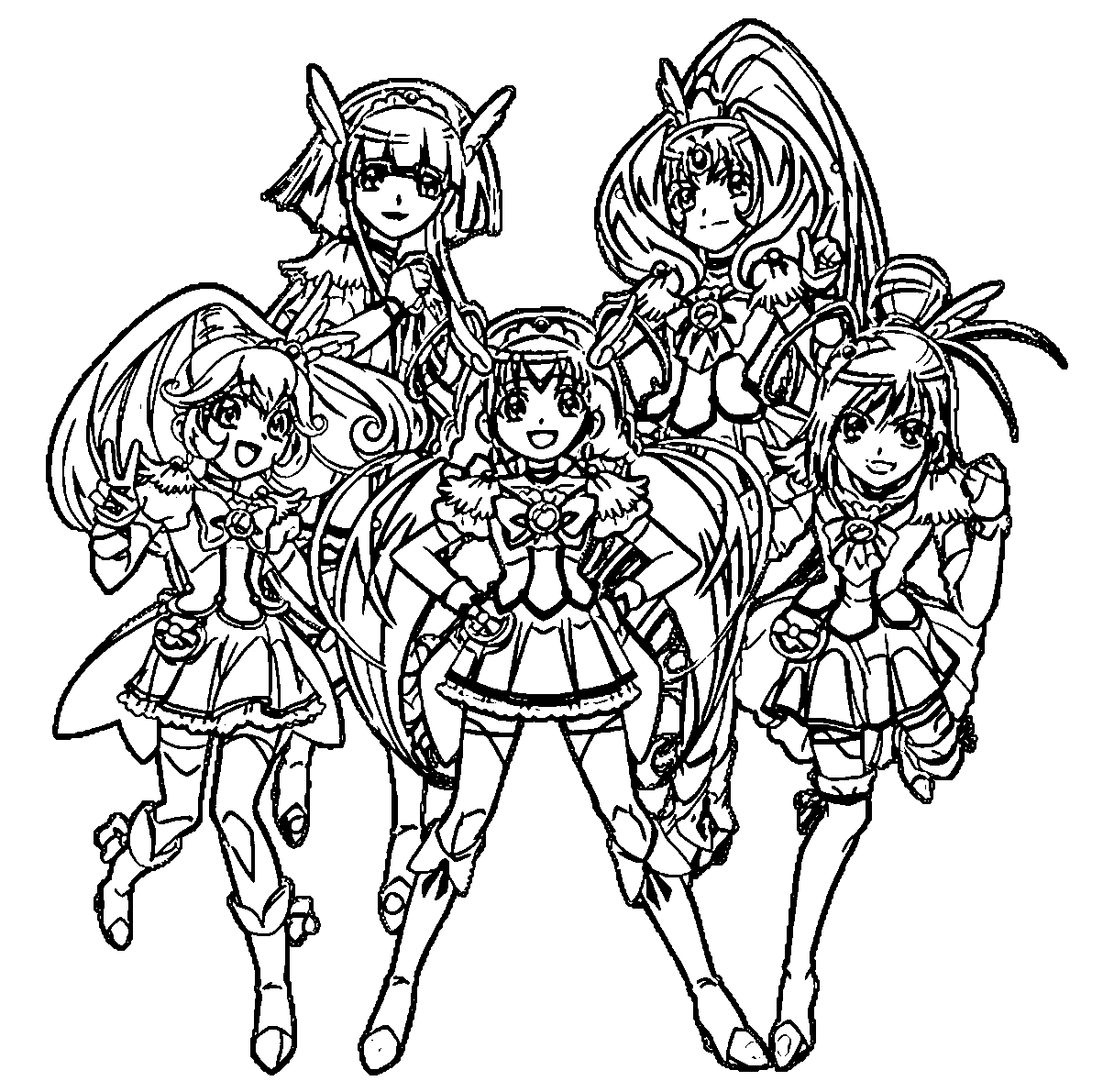
The group pages – all five members together in a single composition – are the collection’s most ambitious in terms of color coordination. Five characters in five distinct colors, each element needing to read clearly and correctly, are arranged in a composition that maintains each character’s visual identity while creating a coherent group image.
Group pages are the final test of color consistency across a collection. If you have colored individual pages for each member and want to attempt the group page, use the same colors you established in the individual pages – don’t reinterpret any character’s palette when working in a group context.
What These Pages Do
Glitter Force’s color-coded cast makes it the ideal introduction to color theory through coloring. Five characters, five distinct colors – pink, orange, yellow, green, blue – placed in specific relationships to each other. The warm members (Lucky, Sunny, Peace) and the cool members (Breeze, and neutral Spring) create a palette that has internal logic. Coloring these pages while paying attention to which colors feel warm and which feel cool develops genuine color intuition.
The transformation pages teach patience and layering. The sparkle effects, costume details, and atmospheric elements of a transformation sequence page cannot be rushed. The 2005 Art Therapy Journal study on structured coloring and anxiety reduction applies directly – the sustained, focused attention required to complete a transformation page produces exactly the calm absorbed state the research identifies. These are among the most effective pages in the collection for the stress-reduction benefit.
The friendship-centered narrative makes these pages emotionally resonant for young fans. Glitter Force is fundamentally a story about five girls becoming the kind of friends who would fight for each other. The group pages and the pages showing two characters together carry this emotional content. Coloring them is engaging with the characters’ relationships as much as with their visual designs.
Fine motor development through costume detail. The Glitter Force costumes – with their ruffles, bows, star accents, ribbons, and boots – provide extensive fine motor challenge. The American Academy of Pediatrics identifies fine motor development as a key childhood milestone. The motivated, careful practice that a young fan brings to getting Glitter Peace’s yellow star accents right is exactly what that development requires.
How to Color These Pages Well
Match color temperature to character personality. Glitter Lucky (pink) and Glitter Sunny (orange) are warm – their palettes should lean warm throughout. Glitter Breeze (blue-white) is cool – her palette should lean cool in every element. Glitter Peace (yellow) sits at the warm-cool boundary. Glitter Spring (green) is neutral. When making shadow color decisions, choose shadows that stay within each character’s temperature family: warm shadows for Lucky and Sunny, cool shadows for Breeze.
Sparkle effects need white at the center. The sparkle and glitter effects that appear throughout Glitter Force’s visual language – around the characters in transformation sequences, in attack poses, in atmospheric backgrounds – all read correctly when the center of each sparkle point is white or near-white, surrounded by a slightly darker halo in the character’s associated color. A sparkle point that is uniformly colored reads as a shape, not as light.
Costume ruffles and bows need shadow to create dimension. The fabric elements of magical girl costumes – ruffles, bow tails, layered skirt elements – are the details that separate a flat coloring from a finished illustration. Apply the base costume color uniformly first. Then add a slightly darker tone in the folds of each ruffle and at the back of each bow, where it would be in shadow. The shadow should be approximately one step darker and slightly cooler than the base color.
Large eyes are the face’s most important element. Glitter Force characters have the large, expressive eyes of magical girl anime – approximately one-third of the face height. The eye structure has multiple elements: the iris (the character’s associated color, fully saturated), the pupil (a dark oval within the iris), the upper lash line (thick, dark, following the eye’s upper curve), the highlight (white or very pale, at the upper portion of the iris), and any secondary sparkle highlights the specific illustration includes. Apply these in order from base outward – iris first, then pupil, then lash line, then highlights last.
Hair in transformed form is a single saturated color. Unlike realistic hair, which has many tones and highlights, magical girl transformed hair reads as a single saturated color with minimal variation. Apply the main hair color at full pressure and saturation across the entire hair mass. Add only the most subtle darkening at the very deepest parts of the hair – where strands overlap or where the hair meets the neck and shoulders. The effect should read as vivid and stylized, not realistic.
5 Creative Craft Ideas
Five-Member Color Study
Print one portrait page for each of the five Glitter Force members. Color each in her canonical colors – Lucky in pink, Sunny in orange, Peace in yellow, Spring in green, Breeze in blue-white – using the same brand and type of coloring tool for all five, keeping the application technique consistent across all pages.
Arrange all five side by side in a single row. The finished display shows the series’ color palette as a complete system – warm to cool across the group, each color distinct and readable, the five characters immediately identifiable by color alone before any other visual detail is checked.
Civilian to Transformed Comparison
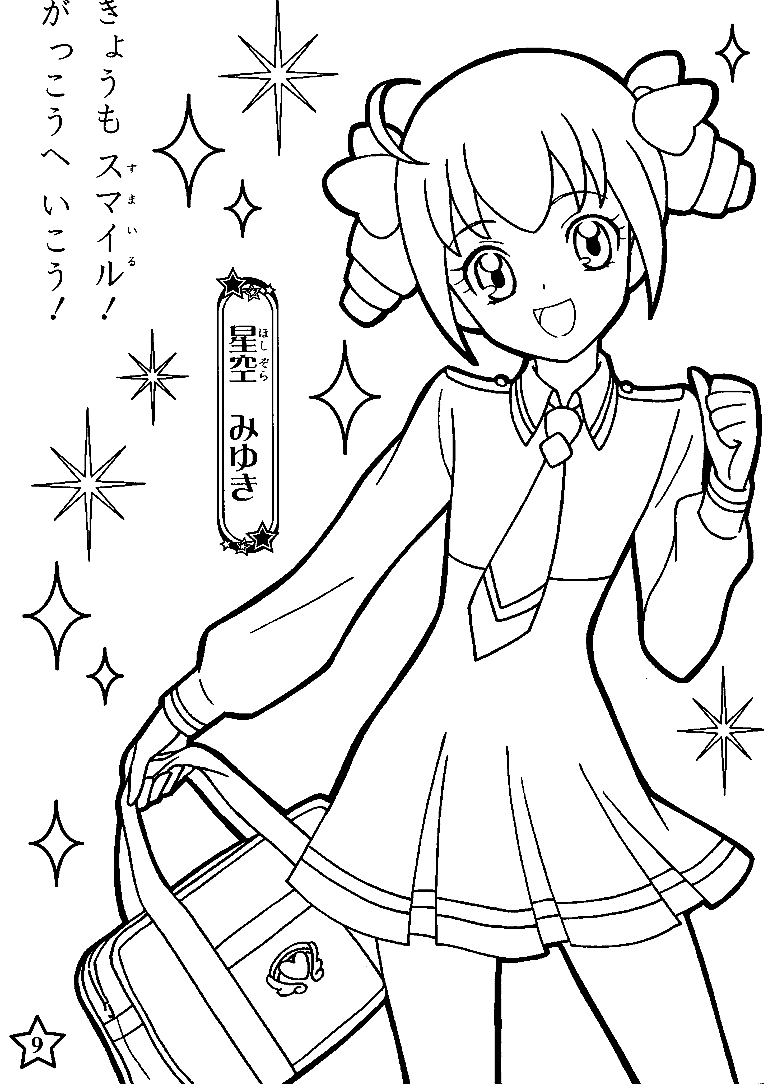
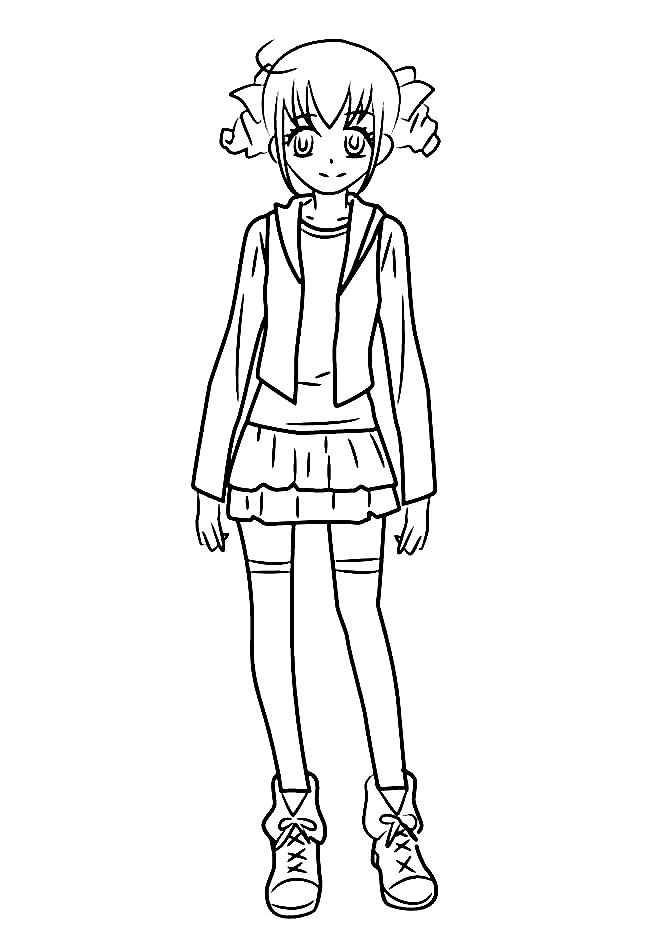
If the collection includes civilian-form versions of any characters alongside their transformed versions, print both for the same character. Color the civilian page in muted, everyday colors – a school uniform’s navy and white, natural hair color. Color the transformed page in the fully saturated magical girl palette.
Mount both side by side: civilian on the left, transformed on the right. The contrast shows the specific visual transformation that magical girl sequences represent – the shift from ordinary to extraordinary, expressed entirely through color change.
Glitter Force Friendship Bracelet Card
Print a simple Candy page and one page featuring two characters together. Color both carefully. Cut the Candy image to a small scale. Mount both on a piece of A5 cardstock folded to a greeting card format.
Inside, write a message using Glitter Force’s friendship language: something specific about what the recipient brings to your shared “team” – what their particular color and element would be if they were a member of the Glitter Force. Give them a Glitter name. The card connects the coloring activity to the series’s central theme of friendship as something actively recognized and named.
Sparkle Effect Practice Sheet
Before attempting the transformation sequence pages, print a simple character page and use it as a practice sheet specifically for sparkle effects. In the margins and any open background areas, practice drawing and coloring sparkle points: a white center dot, surrounded by four small points extending outward in the cardinal directions, surrounded by a halo in the character’s color.
Try multiple sizes – very small individual sparkles, medium clusters, and one large focal sparkle. Practice the halo treatment at different intensities. The finished practice sheet is a genuine skill exercise rather than a complete image, but it builds the specific technique that makes the transformation pages succeed.
Märchenland Map and Card
The Glitter Force’s narrative is organized around fairy tales from Märchenland – the land where all stories originate. On a large piece of paper, create a hand-drawn map of Märchenland with labeled regions corresponding to different fairy tale worlds. In each region, mount one Glitter Force coloring page that connects to that type of story – Glitter Lucky in the “Happy Endings” region, for example.
Decorate the map’s borders with hand-drawn stars and sparkle effects in the five members’ colors. Add the title “Märchenland – Protected by the Glitter Force” at the top. The finished display turns the coloring pages into a piece of world-building – a geography of the fictional place the series protects.
Frequently Asked Questions
What is Glitter Force, and what is it based on? Glitter Force is the English-language Netflix adaptation of Smile PreCure!, the ninth series in Toei Animation’s Pretty Cure magical girl anime franchise. The original Japanese series aired on TV Asahi from February 5, 2012, to January 27, 2013. Saban Brands produced the English adaptation, released on Netflix on December 18, 2015, with English-language voice acting, localized character names, and some cultural adjustments. The adaptation covers 20 of the original series’ 48 episodes and was followed by a second adaptation, Glitter Force Doki Doki, based on the DokiDoki! PreCure series.
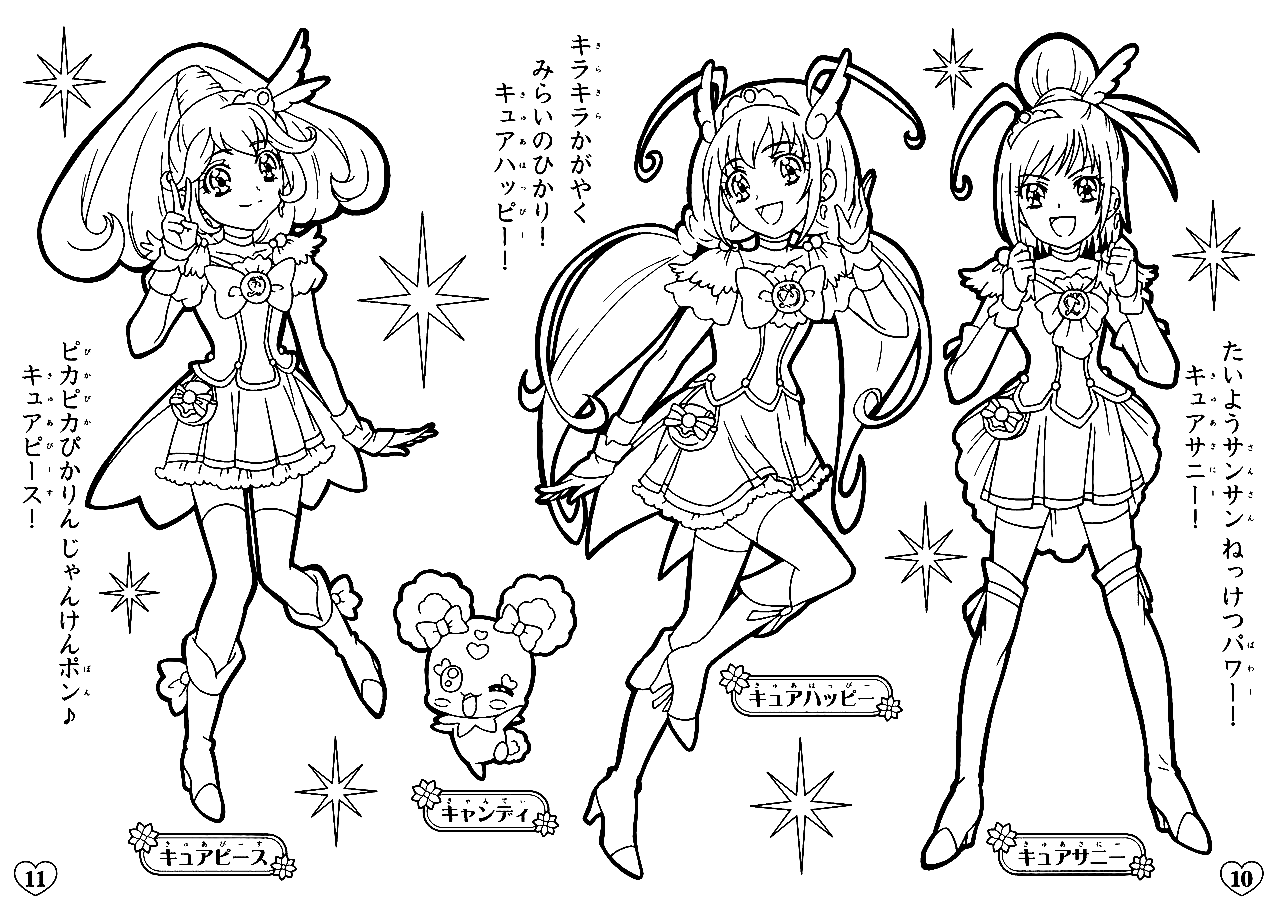
Who are the five Glitter Force members? The five members are Glitter Lucky (Emily), the pink leader whose power is associated with happiness and luck; Glitter Sunny (Kelsey), the orange member whose power is fire and the sun; Glitter Peace (Lily), the yellow member whose power is lightning; Glitter Spring (April), the green member whose power is wind; and Glitter Breeze (Chloe), the blue and white member whose power is ice. Each member has a distinct personality that aligns with her elemental power, and each is color-coded throughout all aspects of her design – costume, hair, accessories, and attacks.
Who is Candy, and what is her role? Candy is a fairy from Märchenland – the land where all fairy tales originate – who travels to Jubiland to find the legendary warriors known as the Glitter Force. She is a small, round, white creature with large pink eyes and a pompom on her head. She serves as the team’s guide and provides the Smile Pact devices that allow the girls to transform. She is accompanied later by her older brother Pop, and her connection to Märchenland gives the series its fairy tale framing narrative.
What is the Pretty Cure franchise that Glitter Force is part of? Pretty Cure (PreCure) is a long-running Japanese magical girl anime franchise produced by Toei Animation, created by Izumi Todo, and broadcast on TV Asahi. The first series, Futari wa Pretty Cure, premiered on February 1, 2004. New series have been produced annually since then, each with a different cast, theme, and story. Smile PreCure! – The basis for Glitter Force was the ninth series in the franchise. The franchise is enormously popular in Japan and has produced extensive merchandise, films, stage shows, and collaborations since its debut.
What is Glitter Force Doki Doki, and how does it relate to the original Glitter Force? Glitter Force Doki Doki is a separate Netflix adaptation, also produced by Saban Brands, based on the DokiDoki! PreCure series (2013). It features a completely different cast of characters from the original Glitter Force and is not a continuation of Emily’s story – it is an independent series in the same adaptation framework. Its characters include Maya (Glitter Heart), Rachel (Glitter Diamond), Clara (Glitter Rosetta), Mackenzie (Glitter Clover), and Natalie (Glitter Ace), with a playing card and hearts theme rather than the fairy tale and color theme of the original series.
What age group are these pages best suited for? The simpler character portrait pages – clean outlines with minimal background detail – work well from ages 4–6, particularly for young fans of the series who recognize and love the characters and want to spend time with them through coloring. The chibi pages are accessible from ages 3–4. The transformation sequence pages – with their complex sparkle effects, multi-element compositions, and detailed costume elements – are most rewarding for ages 7–9 and up. The group pages, which require color consistency across five characters simultaneously, are best approached after the individual character pages have been completed, typically for ages 8 and up.
Do I need to have watched the show to enjoy these coloring pages? No. The pages are enjoyable purely as illustrations – the characters’ designs are visually rich and colorable on their own terms without knowledge of the narrative. The color-coding of the five members makes the collection particularly accessible to colorists who haven’t watched the series: each character’s color is immediately apparent from her design, making it possible to choose and color any page without any background knowledge. For fans of the series, the pages carry additional meaning – each design choice connects to story context – but that context is not required.
Browse the full collection at ColoringPagesOnly.com. All 50+ pages free, no sign-up, PDF or PNG, print at home or color online.
Emily arrived at her new school with the belief that something wonderful was going to happen. She was right, though not in the way she expected – she found Candy, and Candy found the Glitter Force, and five girls discovered that the happy endings they believed in were things they would have to protect themselves.
The pages in this collection are the visual record of that discovery. Pink for Lucky. Orange for Sunny. Yellow for Peace. Green for Spring. Blue and white for Breeze. Five colors, five girls, one Märchenland worth protecting.
Pick up your pink first. The leader’s color always anchors the collection.
Share your work on Facebook and Pinterest and tag #Coloringpagesonly. We especially want to see the five-member color studies and the Märchenland map displays.
Color the sparkle. Protect the happy ending. Let’s go, Glitter Force!
More from our anime and magical girl collections: