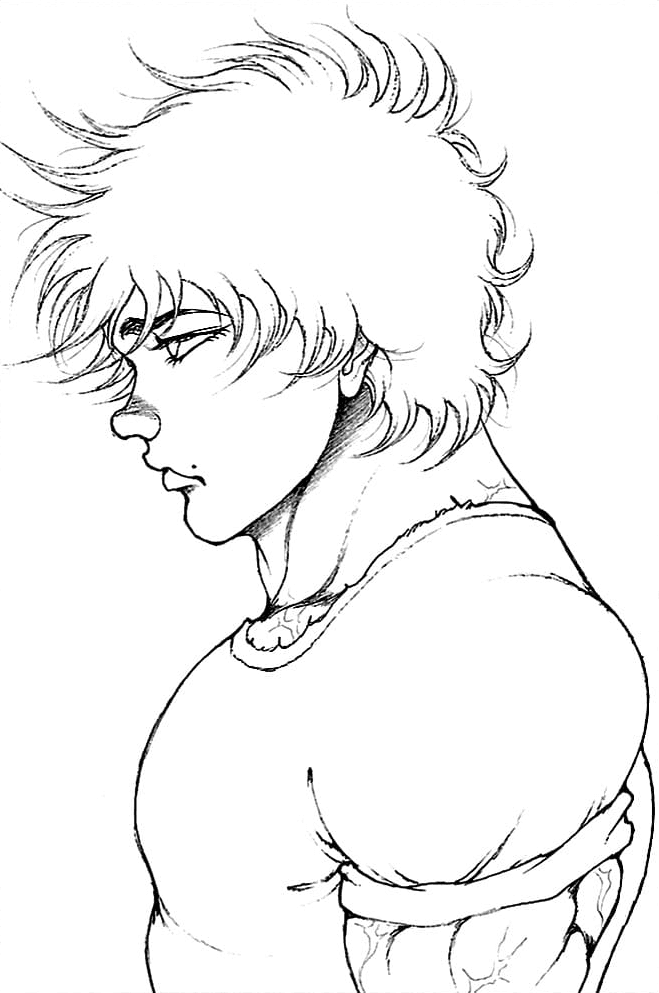
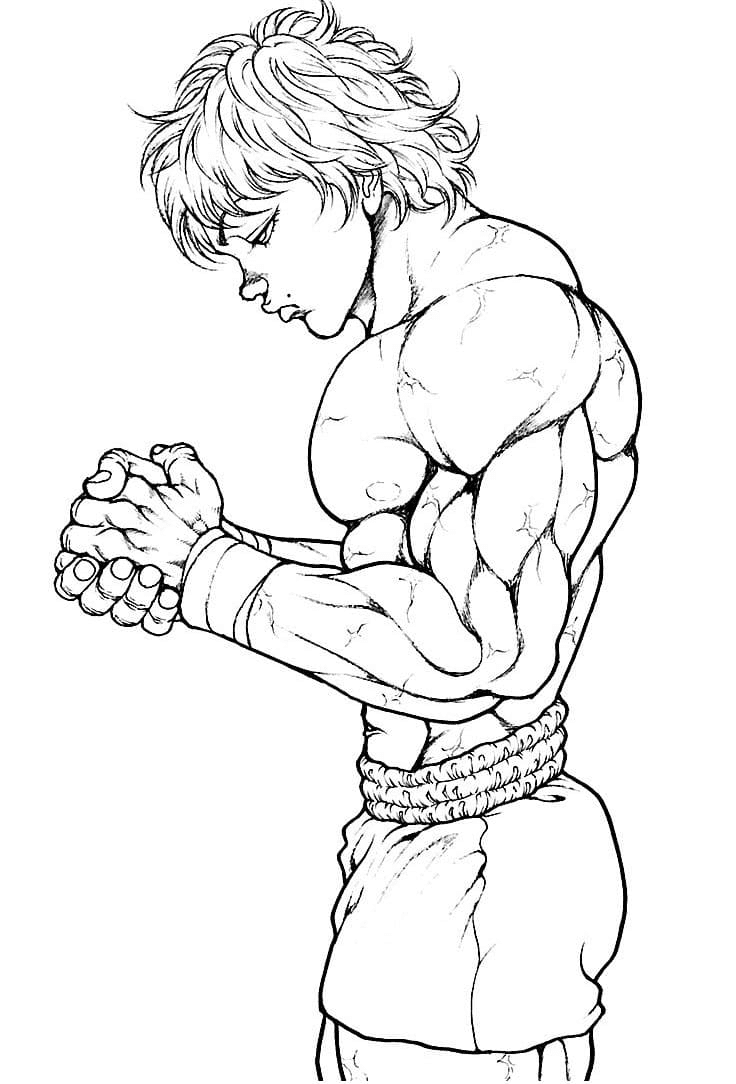
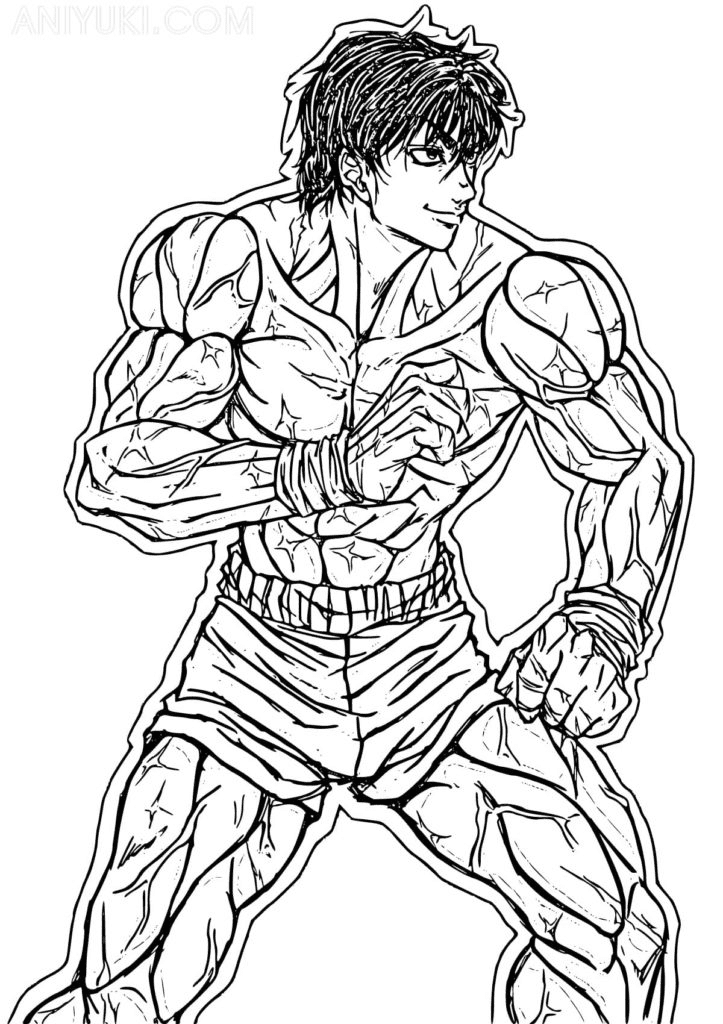
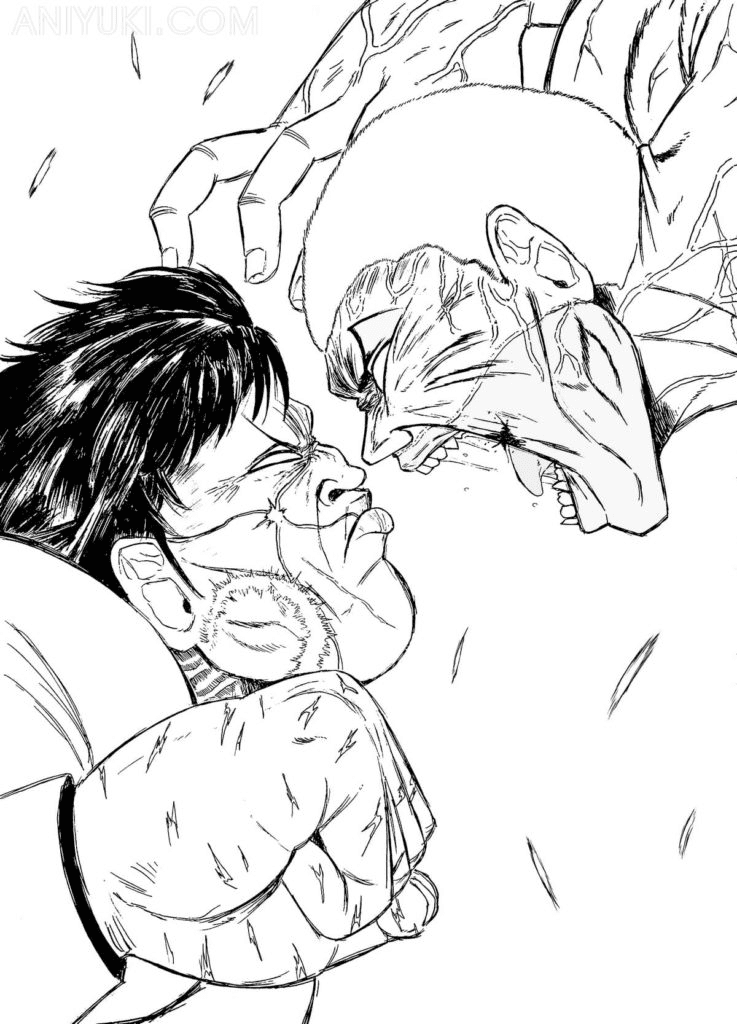
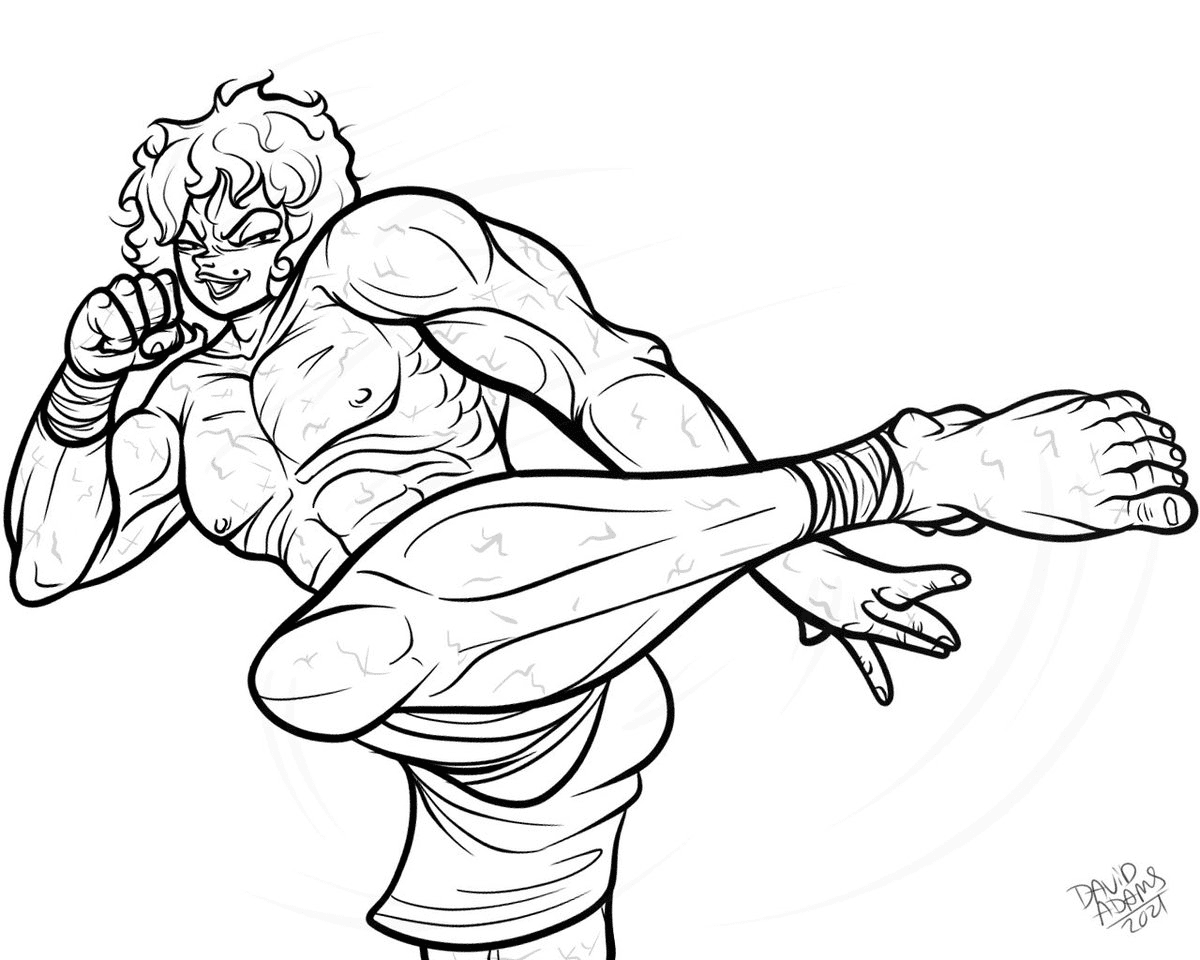
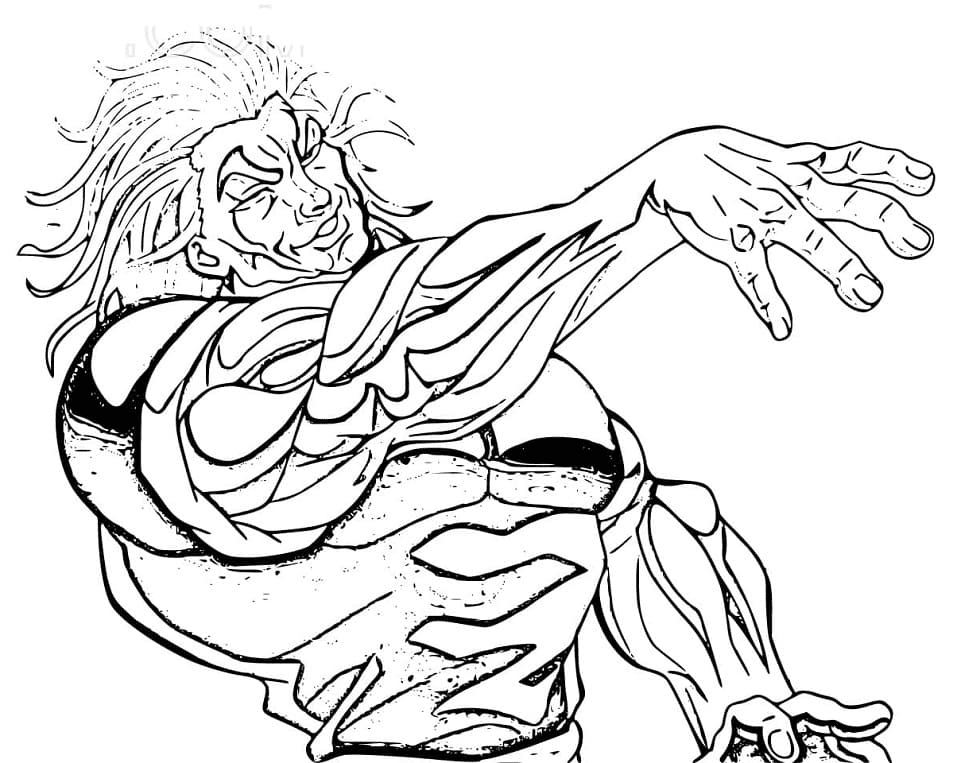
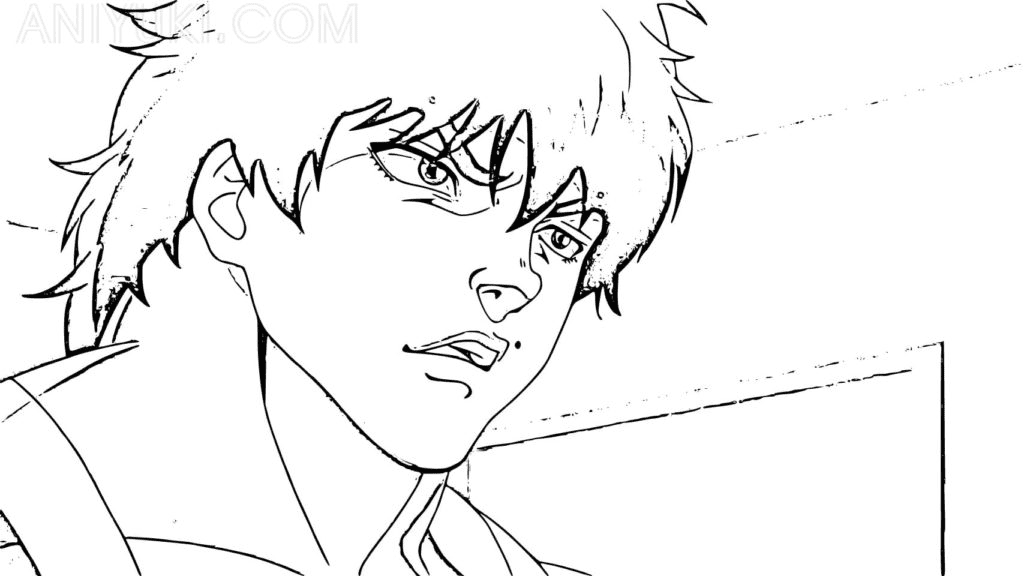
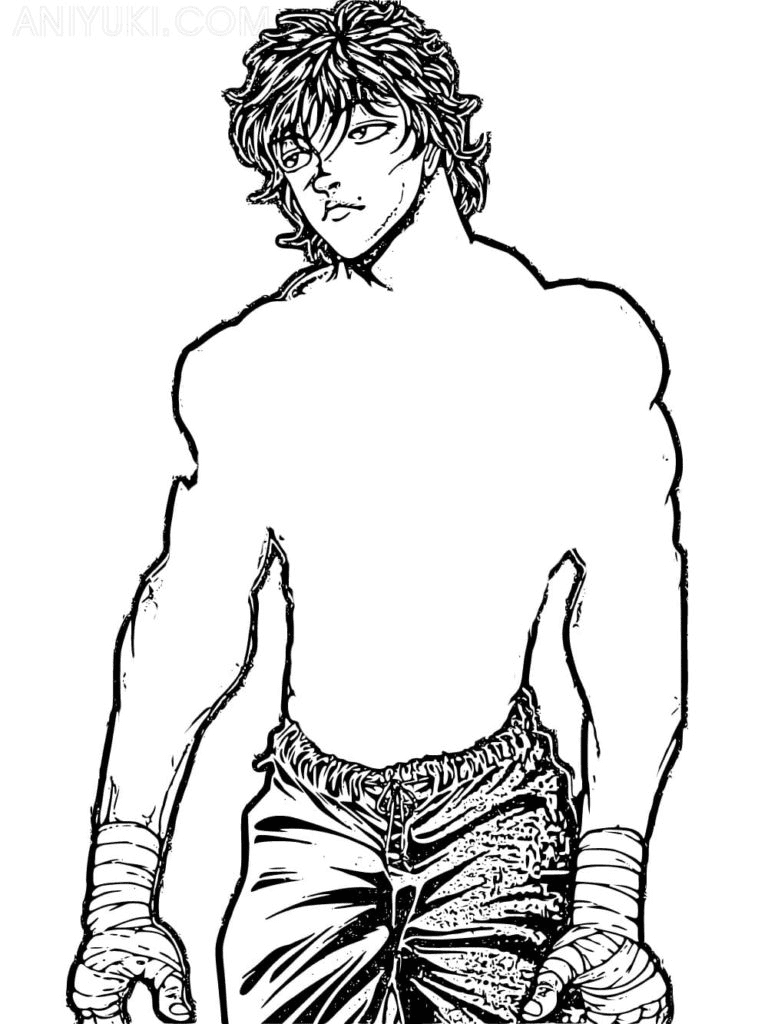
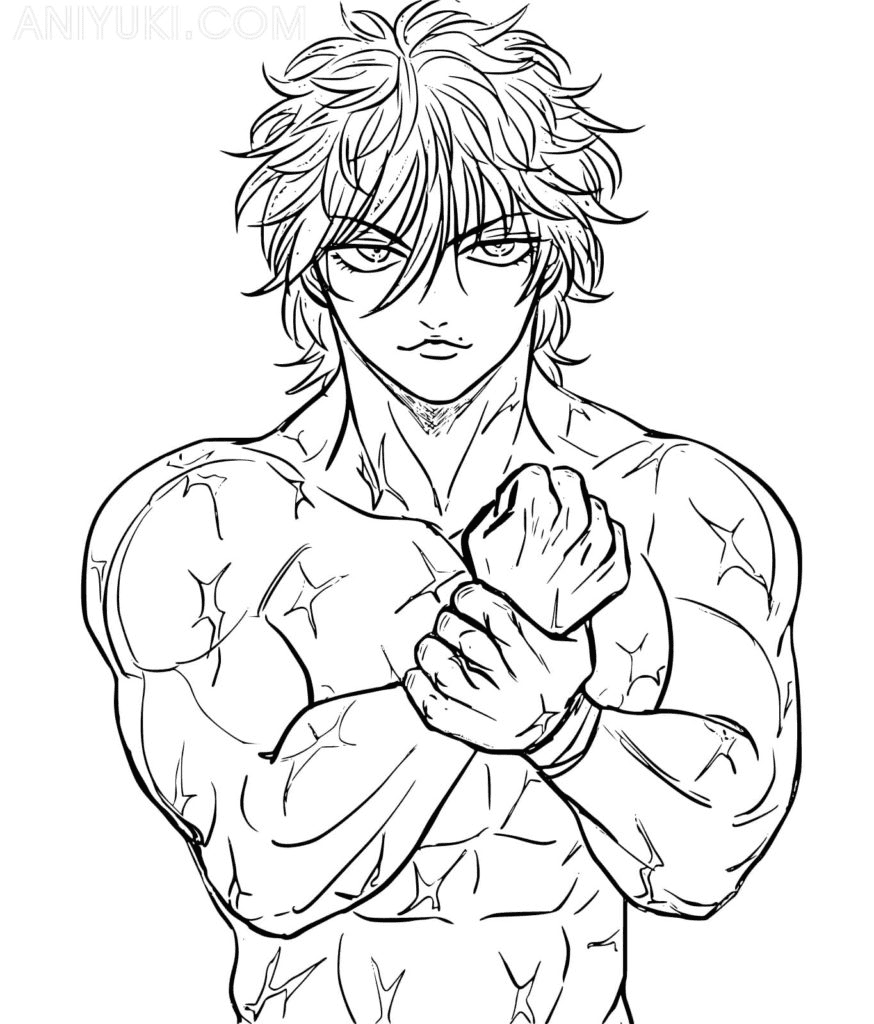
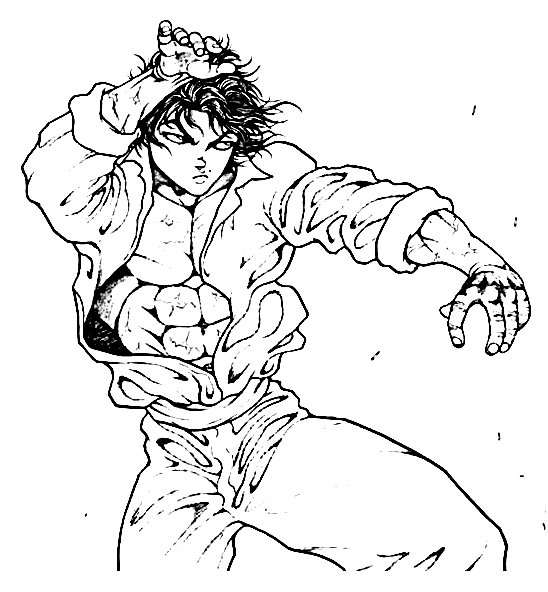
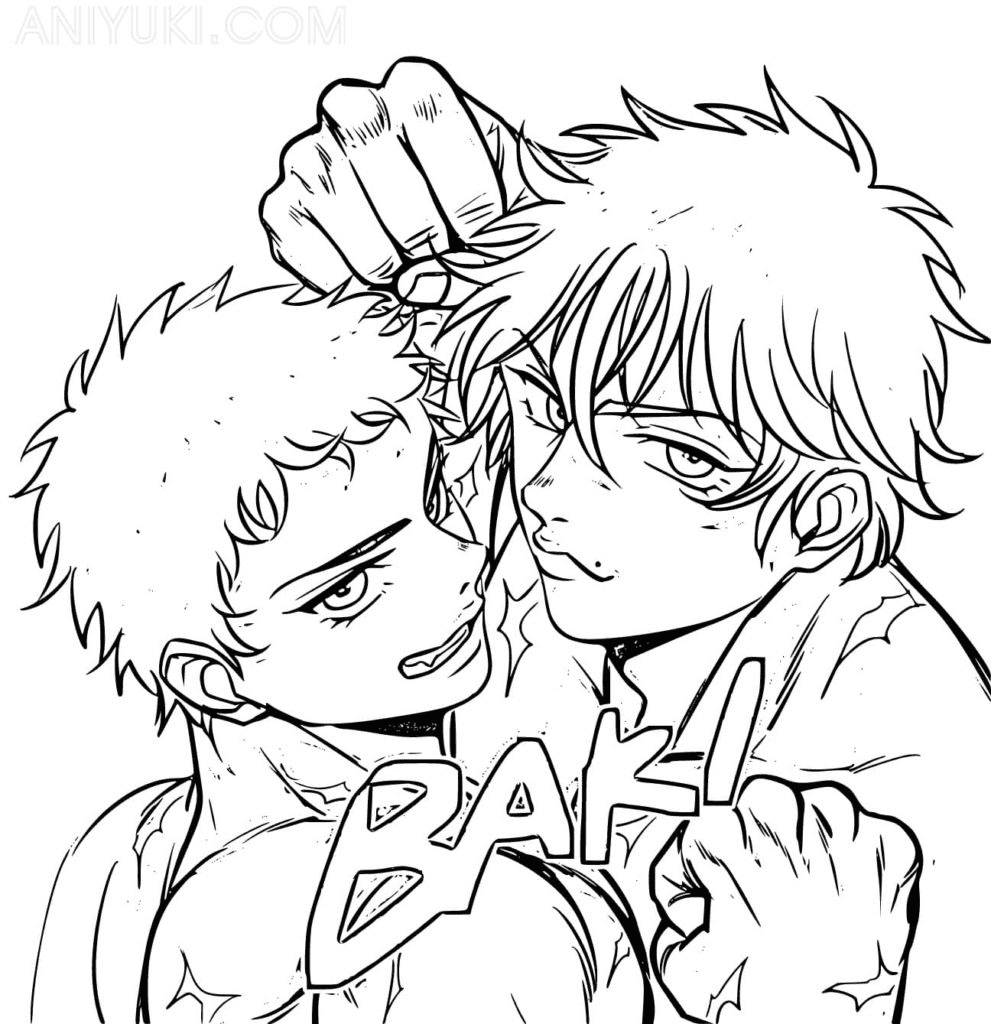
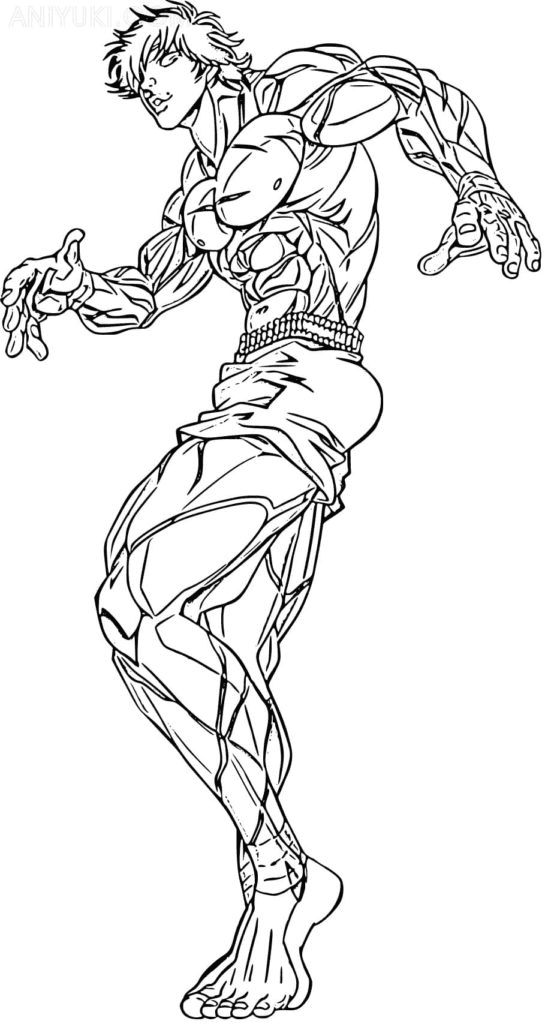
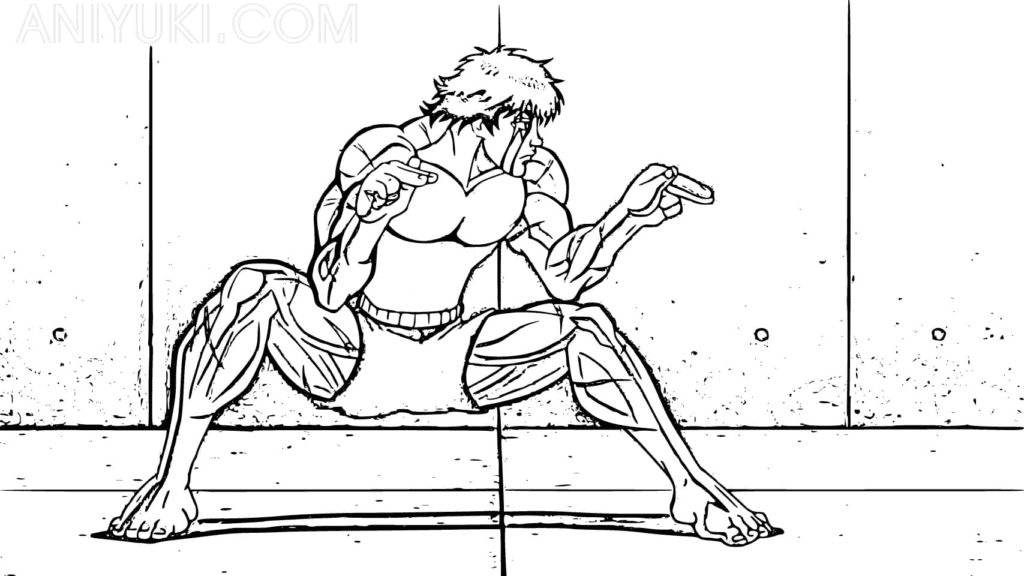
Free Baki Hanma coloring pages – 30+ pages featuring Baki Hanma in combat stances and training poses, Yujiro Hanma – the Ogre – portrait and action pages, Kaoru Hanayama, Retsu Kaioh, Jack Hanma, muscular form detail pages, the iconic Demon Face illustration, and battle scenes from across the franchise – free printable PDF and online coloring for fans of Keisuke Itagaki’s long-running manga series.
Baki is a manga franchise written and illustrated by Keisuke Itagaki, published by Akita Shoten in Weekly Shōnen Champion. The original series, Grappler Baki, began serialization in 1991. The franchise has continued across six distinct series – Grappler Baki (1991-1999), Baki (1999-2005), Hanma Baki (2005-2012), Baki-Dou (2014-2018), a second Baki-Dou (2018-2023), and the current Baki Rahen (2023-present) – making it one of the longest continuously running manga series in Weekly Shōnen Champion‘s history.
Anime adaptations include a 1994 OVA, a 2001 television series by Group TAC, and the Netflix productions that brought the franchise to its widest global audience: Baki (2018-2020, two seasons), Baki Hanma (2021, 2023), and the 2024 crossover special Baki Hanma vs Kengan Ashura. TMS Entertainment produces the Netflix adaptations.
The franchise’s premise is built around a single question asked by its protagonist from the beginning: how does a person become strong enough to defeat someone who is already the strongest creature on Earth? Baki Hanma’s father, Yujiro Hanma, is that creature. The United States government has determined that Yujiro represents a strategic deterrent equivalent in destructive capability to a nuclear weapon. Baki’s goal, from the age of thirteen, is to surpass him. The series documents what that pursuit costs and what it requires.
These 30+ free pages at ColoringPagesOnly.com span the franchise’s core characters. All free, PDF or PNG, print or color online.
What’s Inside
Baki Hanma – The Protagonist
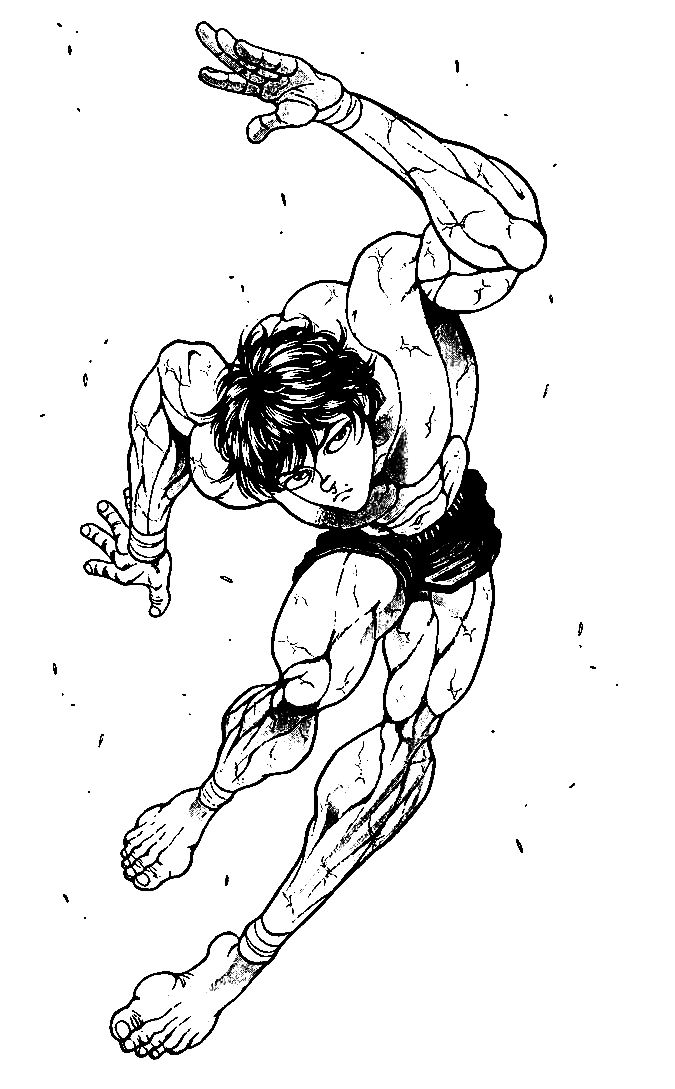
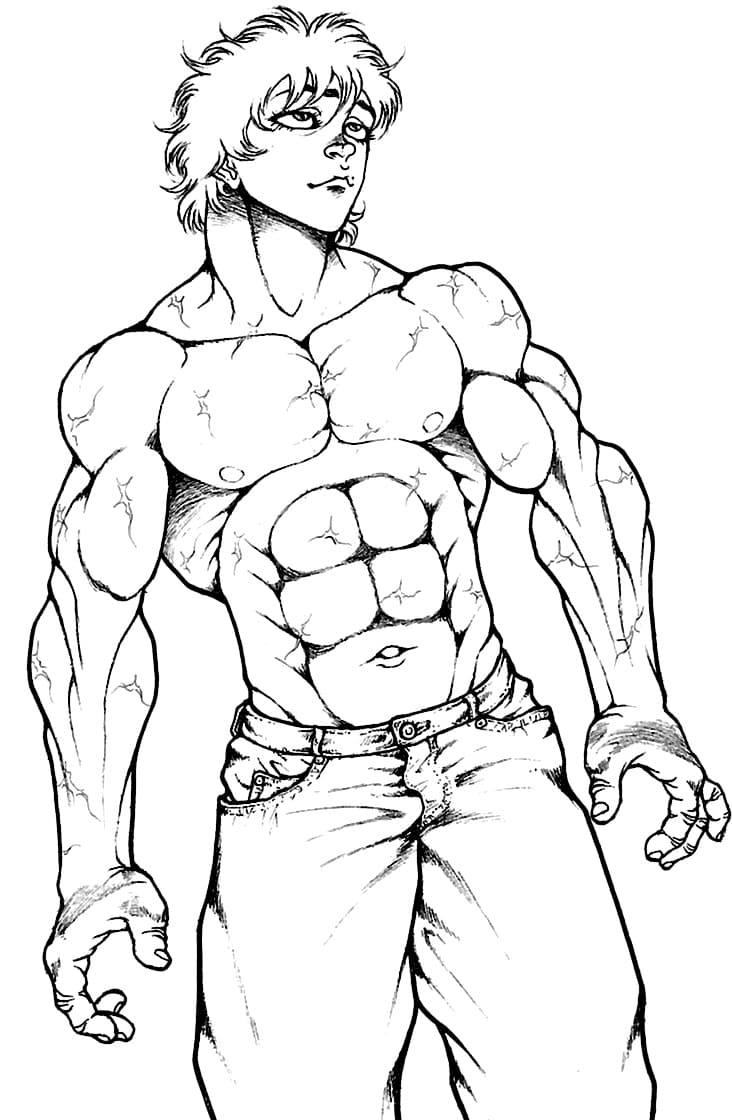
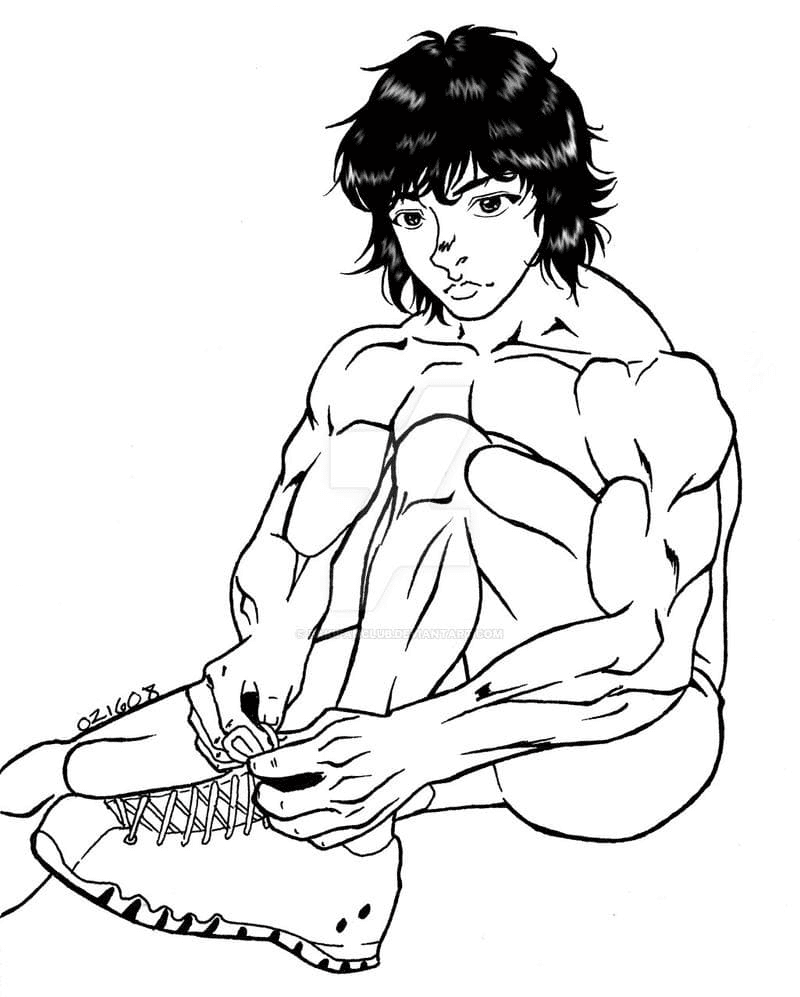
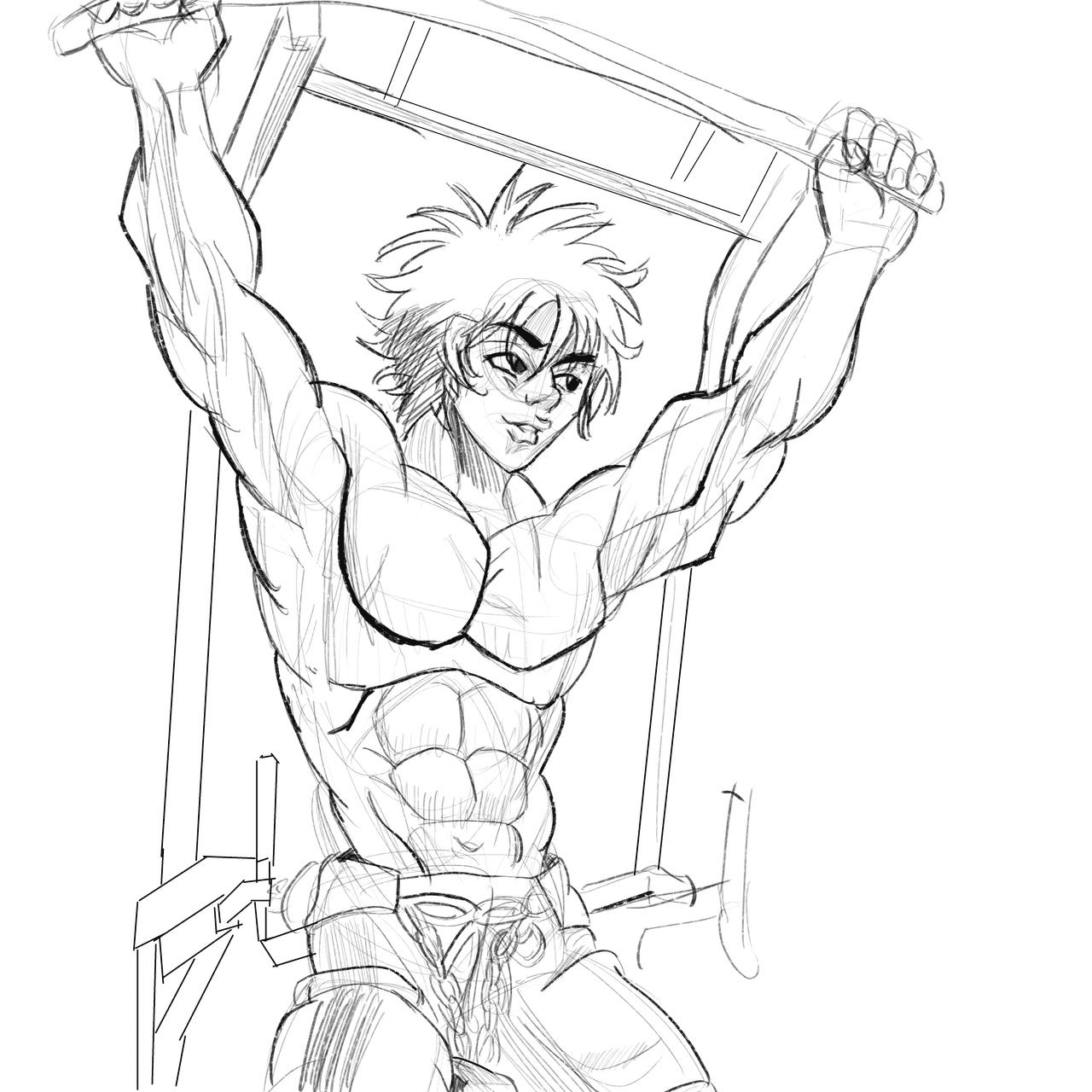
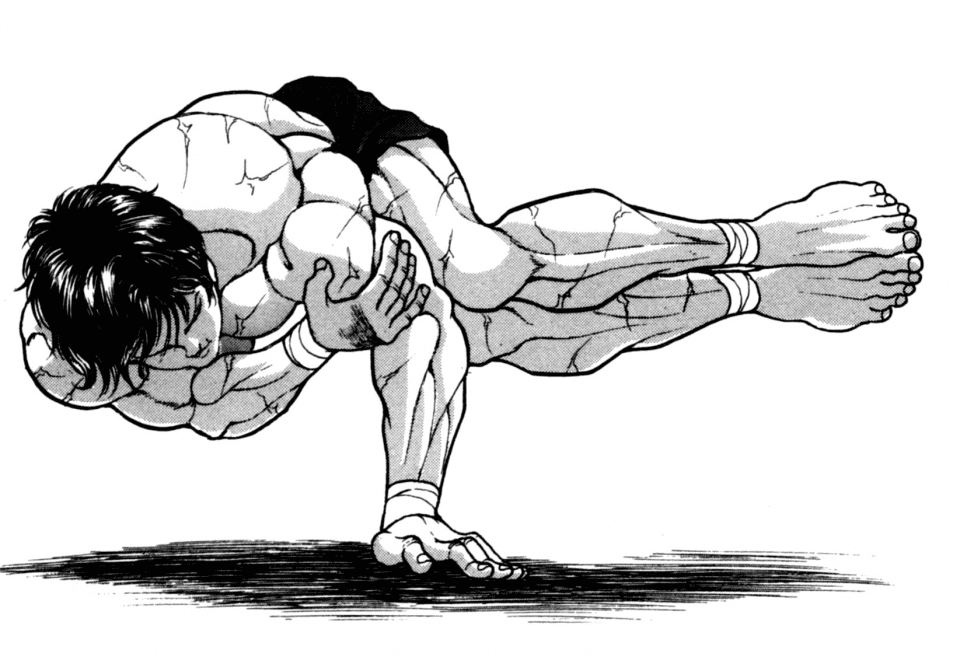
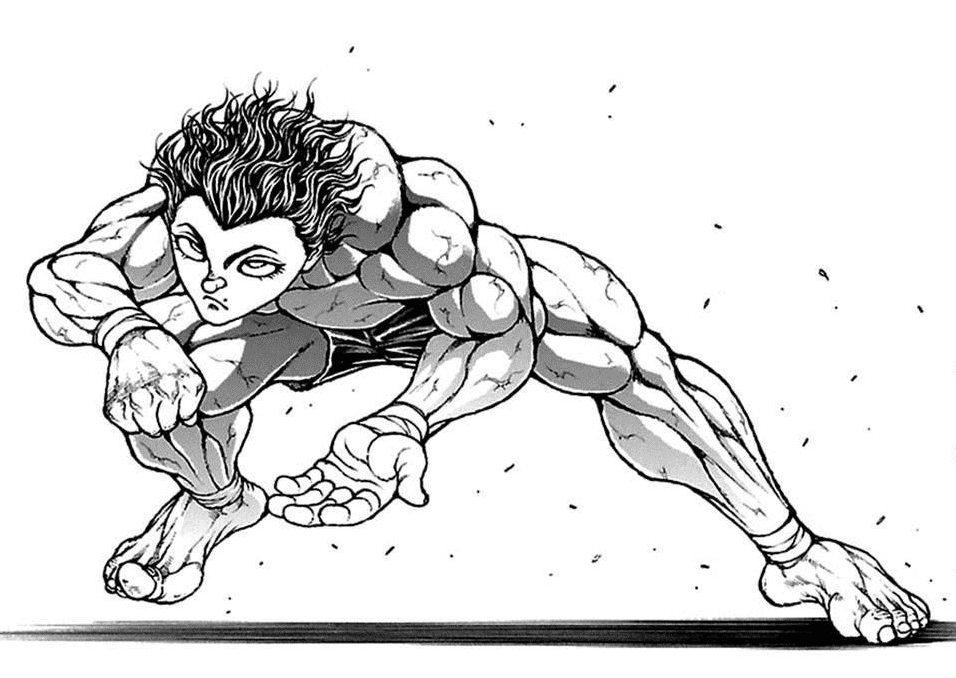
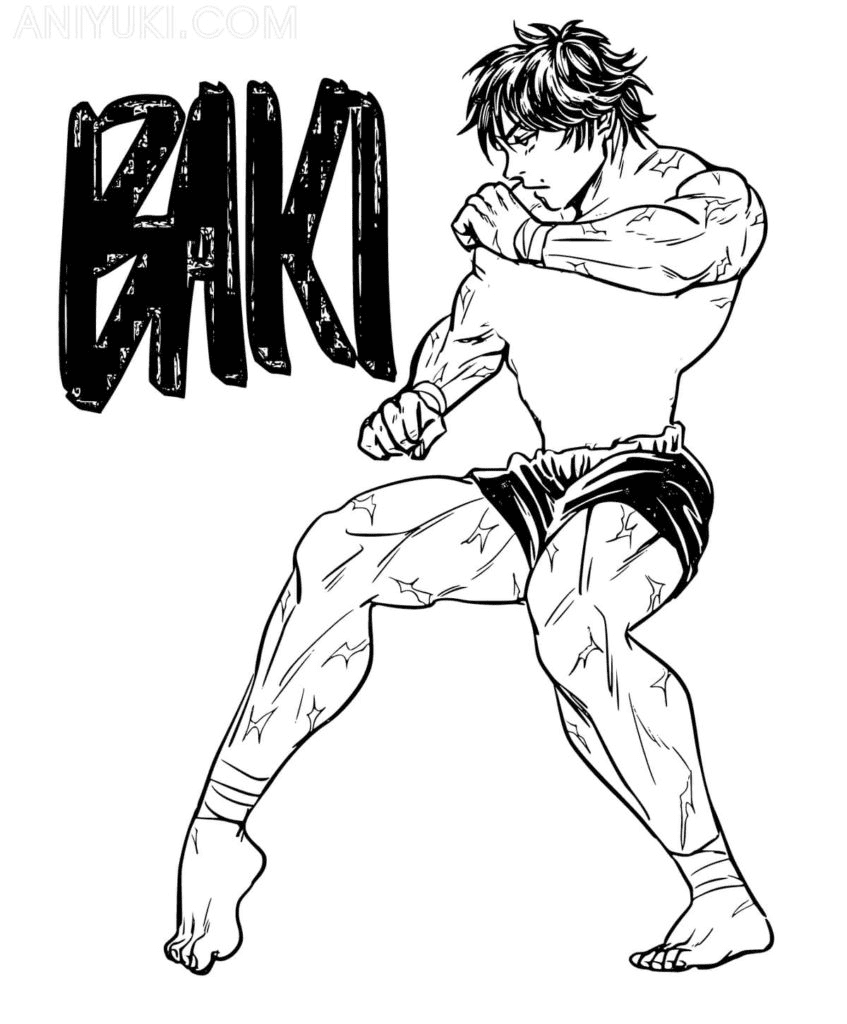
Baki’s design is one of manga’s most studied contrasts – a face that reads as young, even boyish, placed on a body that depicts an extreme of muscular development that has no realistic counterpart. The contrast is intentional and serves the series’ primary argument: the dedication required to achieve the kind of physical capability the franchise depicts is not compatible with the kind of person who looks like they have it. Baki looks approachable. His body communicates something entirely different.
His fighting style has no name because it has no lineage – he has absorbed techniques from karate, judo, wrestling, boxing, kickboxing, capoeira, and numerous other martial traditions and compressed them into a single adaptive approach that he develops in real time against each opponent. His most distinctive training method is shadow boxing – specifically, shadow boxing against the imagined form of his father, which the series depicts as an intensely focused visualization exercise that blurs the line between training and hallucination.
He typically fights shirtless, which is both narratively logical (clothing would restrict movement and be destroyed anyway in the fights the series stages) and visually necessary – the extreme musculature that is the series’ most recognizable visual element is only readable without the obstruction of a shirt. Baki’s clothed pages show him in his characteristic dark tank top or casual clothing during non-combat sequences.
Coloring Baki: His hair is dark – near-black, with the slightly casual, somewhat spiky arrangement of a teenager who trains rather than styles. The most technically demanding coloring decision on any Baki page is the musculature: the individual muscle groups are depicted with extremely great detail, and the three-zone technique – lightest tone on the most directly lit surfaces of each muscle belly, mid-tone across the main muscle surfaces, darkest tone in the deep separations between muscle groups – must be applied consistently across a very complex surface. His skin tone is a warm medium – Mediterranean in quality, tanned from outdoor training.
Yujiro Hanma – The Ogre
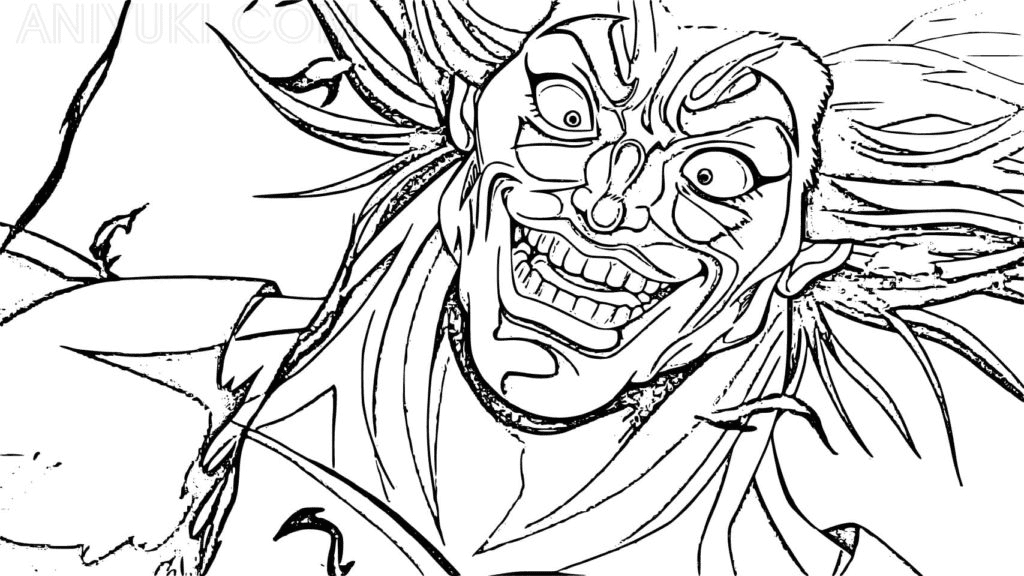
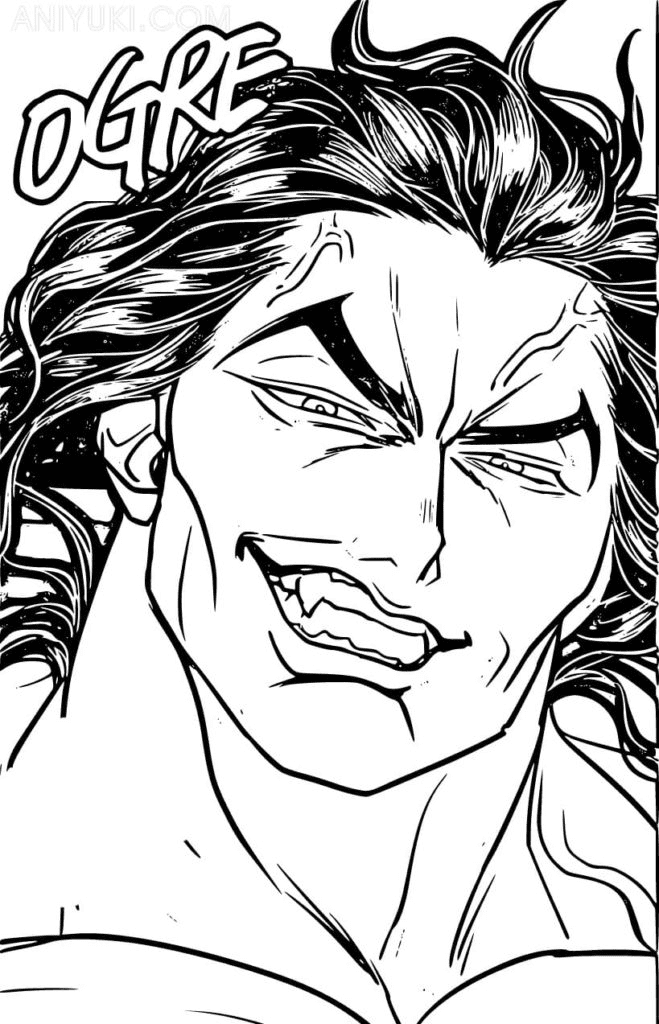
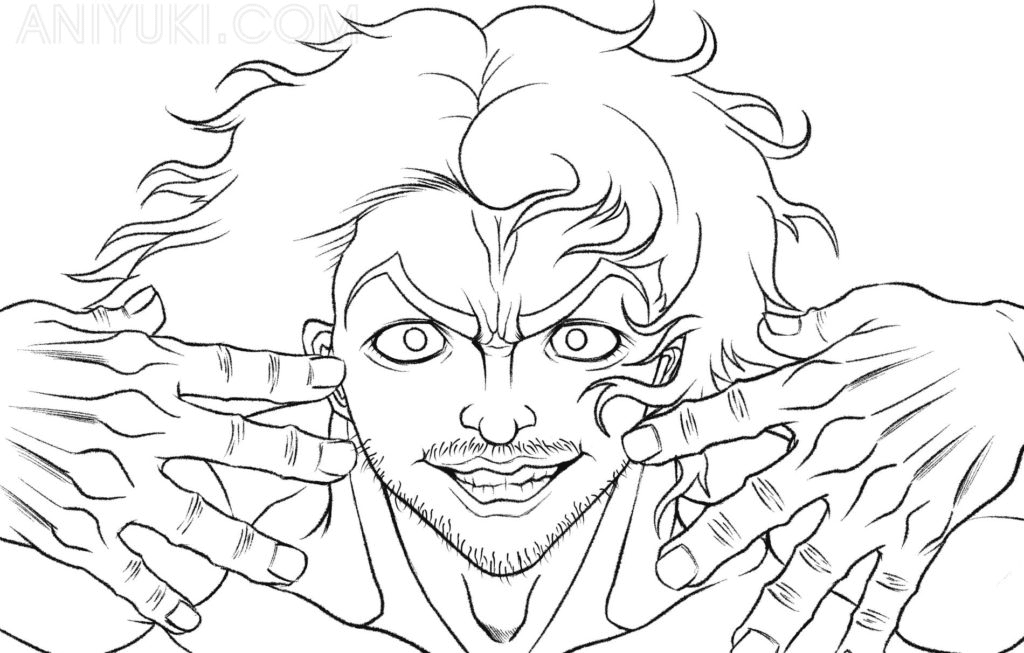
Yujiro Hanma is the franchise’s most compelling design problem: how to visually communicate a character described as the strongest creature on Earth in a medium that communicates through line and form alone. Itagaki’s solution is scale and specific musculature – Yujiro is not simply larger than other characters; he has a different quality of physical presence. His body communicates potential energy at rest. His expressions communicate indifference to outcomes.
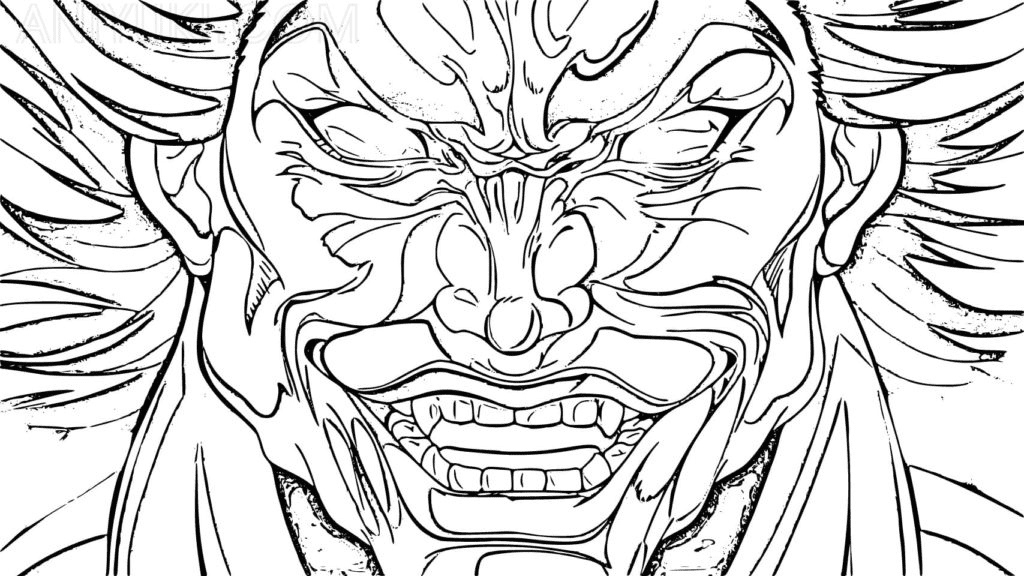
His most recognizable visual element is the Demon Face (鬼の顔) – the shadow formed by the specific arrangement of his back muscles when flexed, which resolves into what appears to be a demonic face looking outward. This is the franchise’s single most reproduced image: the back of Yujiro Hanma, muscles tense, the demon face visible in the shadows between his lats and traps. Baki develops the same capability later in the series, which is itself a visual confirmation of his inheritance from his father.
Yujiro’s face is handsome in the specific way of manga characters whose visual design is required to convey both attractiveness and danger – high cheekbones, strong jaw, the specific confident blankness of someone who has not experienced a threat in so long that the concept has become theoretical.
Coloring Yujiro: His hair is dark, typically styled back from his face. His musculature is the most extreme in the collection – more developed than Baki’s, rendered with even greater shadow depth in the separations between muscle groups. The Demon Face, on pages that show his back flexed, requires careful treatment of the shadow area between his upper back muscles – the darkest shadow concentrated in the specific arrangement that produces the demonic face image. The face’s features should be suggested by the shadow’s shape rather than explicitly drawn in the shadow area.
The Demon Face – The Franchise’s Signature Image
The most reproduced single image in the Baki franchise is the demonic face formed by the shadow patterns of a flexed back – specifically, the shadow arrangement in the dorsal and trapezius muscle groups that resolves, when Yujiro (and later Baki) fully flexes, into what reads unmistakably as a face. This is not anatomically accurate – no human’s back muscles produce this specific shadow pattern – but it is visually precise within the franchise’s logic and immediately recognizable to anyone who has seen more than a few pages of the manga.
Pages that show this effect – typically a back view of Yujiro or Baki in full flex – require the most specific rendering technique in the collection.
Coloring the Demon Face: Apply the base skin tone across the entire back surface. Then apply the shadow tones in the muscle separation areas – the gaps between the trapezius, the latissimus dorsi, the erector spinae, and the surrounding muscle groups. The darkness of the shadow in the specific areas that produce the face effect should be concentrated at maximum darkness. The face “image” emerges from how the shadows fall – it should not be outlined or explicitly drawn. Apply the shadows correctly, and the face appears naturally from the darkness.
Kaoru Hanayama – The Yakuza
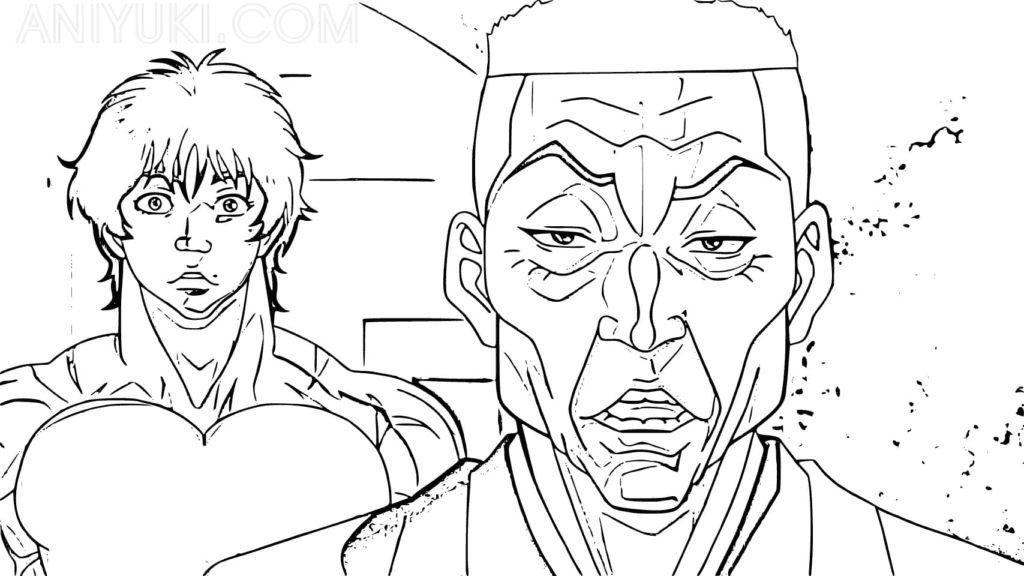
Kaoru Hanayama is among the series’ most visually imposing secondary characters – a yakuza boss whose physical development, while less extreme than Yujiro’s, reads as genuinely massive at human scale. He is one of the few characters whose encounters with Baki are primarily cooperative rather than confrontational through most of the series, and his loyalty to Baki is one of the franchise’s most consistent relationship threads.
His design feature most commonly referenced by fans is his grip strength – his hands are depicted with the specific musculature of someone who has developed crushing force through deliberate training, and his handshake is used throughout the series as a measure of physical capability. Pages showing Hanayama typically emphasize his bulk and his hands specifically.
Coloring Hanayama: His musculature is depicted as very large in overall mass – broader than Baki, heavier in proportion – but with a different quality from Yujiro’s extreme physiology. The three-zone technique applies across his substantial body surfaces. His expression is typically serious – he is not given to theatrical displays – and his face should convey this controlled quality.
Retsu Kaioh – The Chinese Master
Retsu Kaioh is a Chinese martial arts master – an expert in a traditional Chinese martial art that the series presents as one of the most technically refined combat systems in the world – who becomes a significant figure across multiple series arcs. His design is the most visually traditional in the franchise: a shaved head or traditional Chinese-style hair, the specific clothing of a kung fu practitioner, and an overall visual register that is more traditionally martial-arts-aesthetic than the more extreme muscle-mass characters.
He is one of the franchise’s most technically detailed fighters – his combat involves the specific techniques and principles of Chinese martial arts rather than the more improvisational style that characterizes Baki himself.
Coloring Retsu Kaioh: His traditional martial arts clothing – typically depicted in white or off-white with specific trim details – should receive clean, confident application. His shaved head (in the versions where he appears without hair) gives his portrait pages a specific simplicity in the head area that places more visual weight on his expression and body.
Combat and Battle Pages
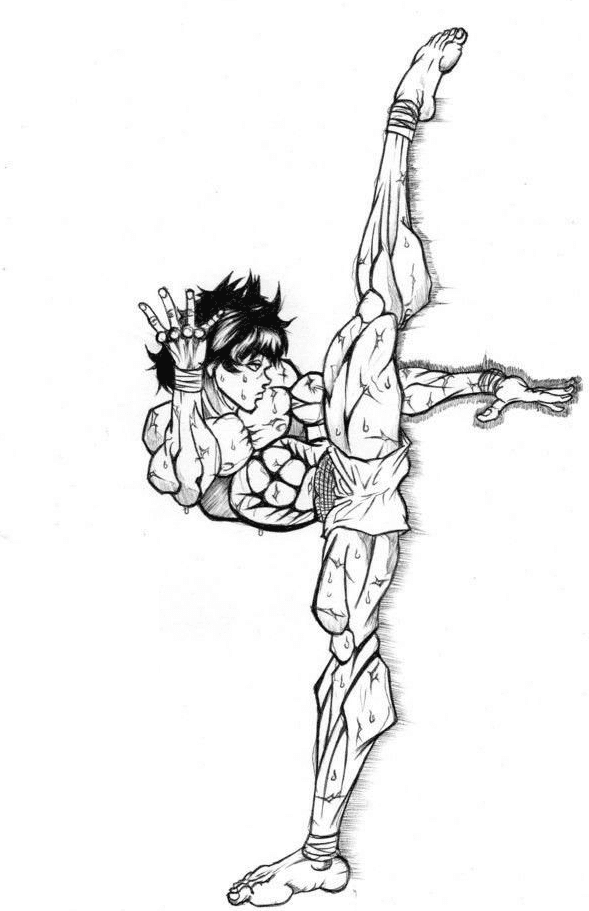
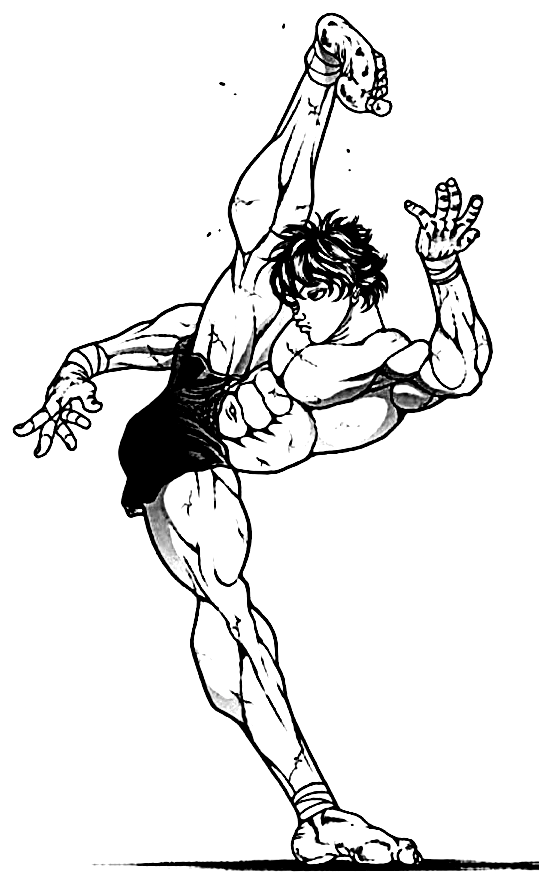
The series’ battle pages – which constitute the majority of the franchise’s content – show characters in the specific body positions of combat: the attack stance, the moment of impact, the specific pose of a technique at its point of execution. These pages capture the franchise’s primary visual energy – the exaggerated speed lines, the impact effects, the specific anatomical positioning of a body in motion at extreme speed.
The battle pages are the collection’s most kinetically complex and require the most planning before any color is applied – the speed lines, impact effects, and the multiple figures in proximity all need to be understood compositionally before color decisions can be made.
What These Pages Do
Baki is the longest continuously running manga franchise in Weekly Shōnen Champion‘s history, dedicated to a single character. Keisuke Itagaki began drawing Baki Hanma in 1991 and has continued doing so across six series and more than three decades. The franchise’s longevity reflects both the commercial success of its formula – combat as the primary narrative engine, with periodic character development between major battles – and the specific dedication of a reader base that has followed Baki’s growth across thirty years of publication.
The franchise’s martial arts knowledge is the most technically detailed in mainstream manga. Itagaki’s research into actual fighting disciplines – real-world martial arts techniques, training methods, the specific physiology of extreme athletic development – is visible throughout the series in the specificity of technique descriptions and the attention to how different fighting styles interact. This is combat as a knowledge domain with its own internal logic rather than as pure power fantasy.
The Demon Face is one of manga’s most discussed single visual innovations. The idea that the arrangement of muscles under a specific level of physical development would produce a recognizable demonic image in shadow is not supported by anatomy, but its visual logic within the franchise is internally consistent and immediately communicates the specific quality of inhuman physical achievement the series is interested in. It is the franchise’s most technically innovative visual solution to the problem of depicting the superlative.
Fine motor development. The American Academy of Pediatrics identifies fine motor skill development as a key childhood milestone throughout early childhood. The musculature detail of Baki pages, the specific shadow work required for the Demon Face, and the combat pose detail all provide sustained fine motor challenge. The 2005 Art Therapy Journal study on structured coloring and anxiety reduction applies throughout, though this collection is specifically for older teen and adult fans of the franchise.
How to Color These Pages Well
Musculature requires the three-zone technique applied at the smallest scale in the collection. The individual muscle groups in a Baki page – bicep, tricep, deltoid, pectoral, abdominal groups, latissimus dorsi – have smaller surface areas than the automotive body panels or Gundam armor that the same technique suits in other collections. Apply the lightest skin tone at the very peak of each muscle belly (the highest, most rounded point of each muscle). Apply the mid-tone skin across the main muscle surfaces. Apply the darkest skin tone in the specific separation lines between adjacent muscle groups – the deep valleys between the pectorals, between each abdominal segment, along the lateral edges of the latissimus dorsi. The precision of the dark lines in the muscle separations is what makes the musculature read as extreme physical development rather than as a generically athletic body.
A warm skin tone gradient is essential across a heavily muscled figure. Baki’s skin tone is a warm, medium tan – the specific tone of someone who has trained outdoors for years. The warm undertone should be present in all three zones: the lightest skin zone should be a warm pale tan, not a cool grey-white; the mid-tone should be a warm medium tan; the darkest shadow should be a warm dark brown rather than a cool grey. Maintaining warmth throughout the gradient prevents the muscled figure from reading as grey or cold.
The Demon Face shadow requires maximum contrast in its specific area. On pages showing the flexed back and the demon face effect, the surrounding body receives normal three-zone musculature treatment. The specific shadow area that produces the demon face – the complex shadow between the upper back muscle groups – should receive the darkest available dark brown, applied at maximum pressure. This maximum-dark area against the properly-lit surrounding muscle surface is what produces the face-in-shadow effect. Do not outline the face elements; apply the dark shadow in the correct anatomical areas, and the face emerges from the placement.
Speed lines in combat pages define the direction of action. Combat pages typically include speed lines – rapid parallel marks that indicate the direction and speed of an attack or movement. These lines should be rendered in a very light grey or left as paper-white against a slightly mid-toned background, so they read as light moving through the composition rather than as marks. The darkest elements of combat pages are the characters’ bodies; the speed lines should be the lightest, ensuring that the action they indicate reads as faster than anything around it.
Impact effects need warm or bright colors against dark surroundings. The specific visual of a strike’s impact – the burst effect at the point of contact – should be rendered in a warm, bright yellow-white at the impact center, graduating outward to orange-yellow and then to the cooler tones of the general background. Impact light is hot; it should read as the warmest, brightest element in the immediate vicinity of the strike.
5 Creative Craft Ideas
Father and Son – The Distance Between Them
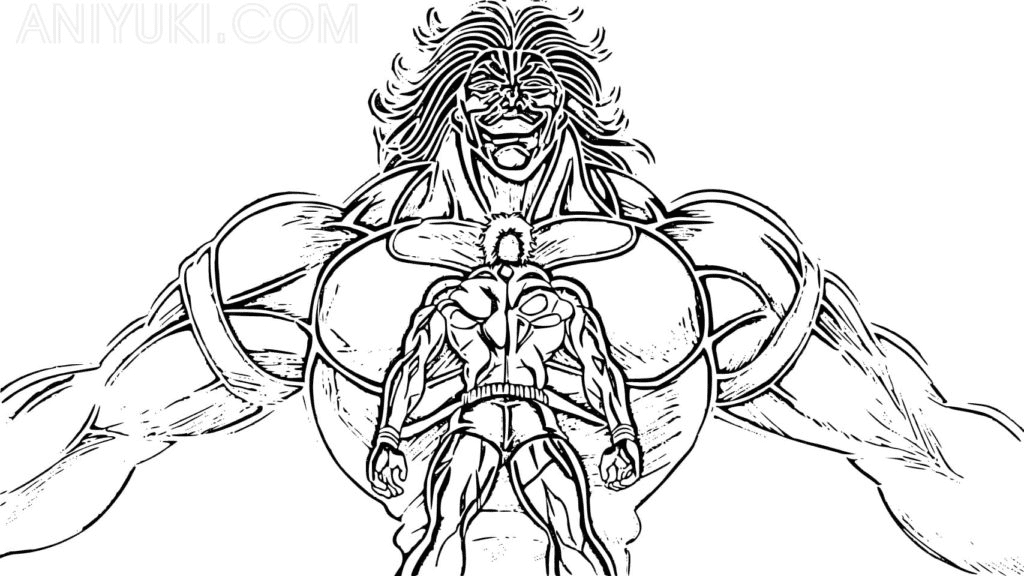
Print the most powerful available Yujiro Hanma page and the most powerful available Baki page. Color both with identical skin tone treatment – the same warm tan base, the same three-zone muscle technique, the same dark brown in the muscle separations. The colors should be identical.
Mount both side by side. The visual difference – Yujiro’s greater size, the more extreme musculature, the different quality of expression – should be readable entirely through the drawing rather than through any color distinction. Add: “The same blood. The same training. The same demon face. Not yet the same result.”
The display makes the series’ central distance visible as a comparison between two identically-colored figures whose differences are entirely in the drawing.
The Demon Face Study
Print the most complete available back-flexed page showing the Demon Face. Color it with maximum attention to the shadow technique – carefully applying the darkest available dark brown in the specific shadow areas that produce the face, while giving the surrounding musculature the standard three-zone treatment.
Mount on a dark backing sheet. Add a title: “鬼の顔 – The Demon Face.” Below: “Not drawn. Shadows in muscle. The body produces what the training earns.”
The finished page is a technical demonstration of the franchise’s most recognized visual device – the face visible only in the shadow of what the body has become.
Martial Arts World Map
The Baki franchise draws its fighter roster from combat traditions around the world – Chinese kung fu (Retsu Kaioh), American boxing (Mohammad Alai Jr.), Brazilian capoeira (various fighters), Japanese karate and judo (multiple characters), American wrestling (Biscuit Oliva), and others. Print one character representing each major combat tradition featured in the pages.
Color all in canonical skin tones. Mount around a hand-drawn world map, with a line connecting each character to the country or region whose combat tradition they come from. The finished display maps the franchise’s intentionally global martial arts roster onto the geography it draws from.
The Three-Decade Fighter – Baki Through the Series
Baki has been drawn by Itagaki since 1991, and his design has evolved significantly – the early Grappler Baki Baki is a teenager with a relatively slender build for the series; the current Baki Rahen Baki is an adult whose physical development has continued across thirty years of publication. Print the most youthful-looking and the most developed-looking Baki pages from the collection.
Color the younger version in the bright, high-contrast style of the original series – vivid skin tones, clean lines. Color the older version with deeper, more complex shadow work in the musculature – more tonal variation, denser shadow in the muscle separations. Mount both side by side: “Baki, 13” on the left, “Baki, adult” on the right. The color treatment difference should reflect the design’s evolution.
Muscle Anatomy Reference
The Baki franchise is famous for the accuracy – and the deliberate inaccuracy – of its anatomical rendering. Select the most detailed torso page in the collection. Color it with maximum attention to the three-zone muscle technique.
Then, on a separate piece of paper, draw a simple diagram labeling the major visible muscle groups: pectoralis major, deltoid, bicep brachii, rectus abdominis, external oblique, and latissimus dorsi. Use arrows pointing from labels to the relevant areas in the coloring.
The finished project is simultaneously a piece of fan art and a crude anatomy reference – the specific muscles that the franchise treats as its primary visual vocabulary, labeled and visible.
Frequently Asked Questions
What is Baki, and who created it? Baki is a manga franchise written and illustrated by Keisuke Itagaki, published by Akita Shoten in Weekly Shōnen Champion. The franchise began with Grappler Baki in 1991 and has continued across six distinct series – Grappler Baki, Baki, Hanma Baki, Baki-Dou, a second Baki-Dou, and the current Baki Rahen (2023-present). Anime adaptations include a 1994 OVA, a 2001 television series, and the Netflix productions Baki (2018-2020), Baki Hanma (2021, 2023), and the 2024 crossover special Baki Hanma vs Kengan Ashura, all produced by TMS Entertainment.
Who is Baki Hanma, and what is his goal? Baki Hanma is the franchise’s protagonist – a fighter who begins the series at age thirteen with a single declared goal: to become strong enough to defeat his father, Yujiro Hanma, who is described throughout the series as the strongest creature on Earth. Yujiro’s capabilities are depicted as beyond any conventional measure of human physical achievement, and the United States government treats him as a strategic deterrent equivalent in destructive potential to a nuclear weapon. Baki’s pursuit of the capability required to challenge him is the narrative engine that drives all six series and their thirty-plus years of publication.
Who is Yujiro Hanma, and what is the Demon Face? Yujiro Hanma is Baki’s father and the franchise’s most powerful character – described consistently as the strongest creature on Earth, a title supported throughout the series by his defeats of fighters, armies, and any opponent placed before him. His most distinctive visual feature is the Demon Face (鬼の顔) – a shadow pattern that forms in the specific arrangement of his back muscles when fully flexed, which resolves into the appearance of a demonic face. This is not anatomically realistic but is visually specific and internally consistent within the franchise’s visual logic. It functions as the franchise’s primary symbol of achieved physical supremacy, and Baki develops the same capability later in the series.
What martial arts appear in the Baki franchise? The Baki franchise draws from a genuinely broad range of real-world combat traditions – Japanese karate (Doppo Orochi’s Shinshinkai karate), Chinese kung fu and wushu (Retsu Kaioh), American boxing (multiple characters referencing historical boxers), Brazilian capoeira, American wrestling and powerlifting (Biscuit Oliva), Russian martial arts (various fighters), and numerous others. The franchise is known for incorporating real-world martial arts knowledge into its fictional combat depictions, including specific technique descriptions and the actual physiological principles that make various techniques effective.
Who are the major characters besides Baki and Yujiro? The franchise’s most significant recurring characters beyond the central father-son conflict include Kaoru Hanayama, a yakuza boss whose physical toughness and grip strength make him one of the series’ most formidable human characters and one of Baki’s most consistent allies; Retsu Kaioh, a Chinese kung fu master who becomes significant across multiple series arcs; Jack Hanma, Baki’s half-brother who uses an extremely aggressive fighting style; Doppo Orochi, the grandmaster of Shinshinkai karate; and Biscuit Oliva, an American enforcer of enormous physical development who works for the US government. Later series introduce historical figures – most notably a DNA-revived clone of Miyamoto Musashi in the fourth series.
What is the Baki franchise’s serialization history? The Baki franchise has been serialized in Weekly Shōnen Champion (Akita Shoten) continuously since 1991, across six distinct series: Grappler Baki (1991-1999, 42 volumes), Baki (1999-2005, 31 volumes), Hanma Baki (2005-2012, 37 volumes), Baki-Dou (2014-2018, 22 volumes), a second Baki-Dou (2018-2023), and the current Baki Rahen (2023-present). The franchise’s more than thirty-year continuous run in the same magazine makes it one of the longest-running manga series associated with a single protagonist in Japanese publishing history.
What age group are these pages most appropriate for? Baki is rated for mature audiences – approximately seventeen and older – due to graphic combat violence, extreme depictions of injury, and adult themes throughout the manga and anime. The Netflix anime adaptations are rated TV-MA. The coloring pages in this collection present the franchise’s character designs and muscular aesthetic without the narrative’s violent content, making them more broadly accessible as coloring activities, but they are most appropriate for teenage and adult fans of the franchise. Parents should be aware that the source material is specifically not designed for children, and the character designs – depicting extreme musculature and combat stances – reflect that adult context.
Browse the full collection at ColoringPagesOnly.com. All 30+ pages free, no sign-up, PDF or PNG, print or color online.
Keisuke Itagaki has been drawing Baki Hanma since 1991. The question he started with – how does a person become strong enough to defeat the strongest creature on Earth – has not yet been fully answered in thirty-plus years of publication. Each series advances the answer. Each series reveals how much further there is to go.
Yujiro has the Demon Face. Baki developed one, too. The shadow in the muscle. The face in the shadow. The body produces what only the training earns.
Pick up your darkest brown. Apply it precisely to the muscle separations. The face emerges from the shadow if the shadows are correct.
Share your work on Facebook and Pinterest and tag #Coloringpagesonly. We especially want to see the Demon Face studies and the father-son distance comparisons.
Color the muscle. Find the shadow. The Demon Face is already there.
More from our anime collections: