House Coloring Pages
House Coloring Pages at ColoringPagesOnly.com brings together 50+ free printable pages covering a broad spectrum of residential architecture and dwelling styles – simple single-story homes for preschool beginners, cozy cottages and little huts, houses with gardens, trees, swimming pools, and rainbows for scene-based pages, seasonal variations including Christmas-decorated houses and winter snow scenes, fantasy and imaginative designs including a mushroom house and candy house, and specialized dwelling types including birdhouses, dog houses, cat houses, and a gingerbread house. The collection also includes family-scene pages depicting people in front of their homes, making it one of the most versatile subject ranges in the home and community category. The full Home and Housework collection is available through our Home and Housework Coloring Pages hub.
Every page is completely free – download as PDF to print or color online in your browser. No sign-up, no cost.
About House Coloring Pages
The house is among the first subjects children learn to draw and color, for a simple reason: home is the most immediate and emotionally familiar environment in a child’s life. The standard house symbol – triangular roof, square walls, rectangular door, square windows – is one of the earliest representational shapes children learn to recognize and produce, making house coloring pages a natural bridge between pure abstract mark-making and representational drawing.
For preschool and kindergarten children (ages 3–6), house coloring pages serve multiple developmental purposes simultaneously. Coloring within the large, clear boundary zones of a simple house outline develops hand-eye coordination and the fine motor control that underlies handwriting. The familiar shape provides children with immediate recognition and an emotional connection, which motivates engagement with the task. The distinct architectural elements – roof, walls, door, windows, and chimney – provide natural color zones that support early color discrimination skills. A simple house with a sun, tree, and flower in the garden introduces compositional thinking: how different elements relate to each other spatially on a page.
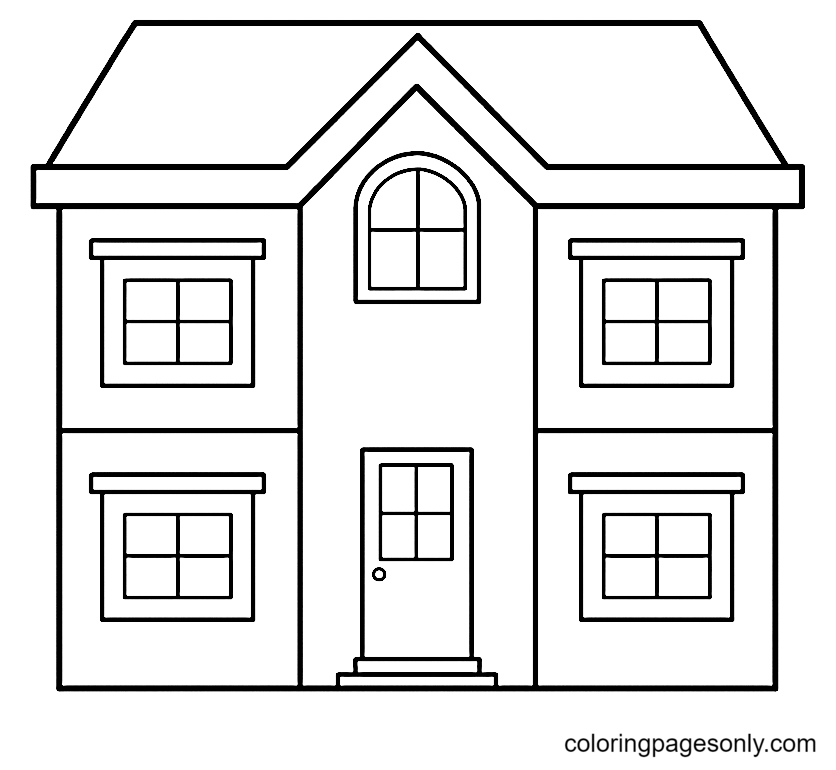
For early elementary children (ages 6–9), more detailed house pages – houses with swimming pools, multi-story facades, decorative elements like window boxes or garden paths – develop patience and precision. Choosing coordinated color schemes for a house’s walls, roof, doors, and window frames introduces basic design principles of color harmony and contrast.
For teachers, house coloring pages integrate naturally into multiple curriculum areas: community helpers units (homes as where community members live), geography and culture discussions (different types of homes across different environments), seasonal learning (the Christmas house, winter house, and summer poolside house tiles all correspond to seasonal units), and language arts prompts (“describe your dream house” as a writing exercise using the coloring page as visual inspiration).
What’s in This Collection
The 50+ pages span several distinct design categories:
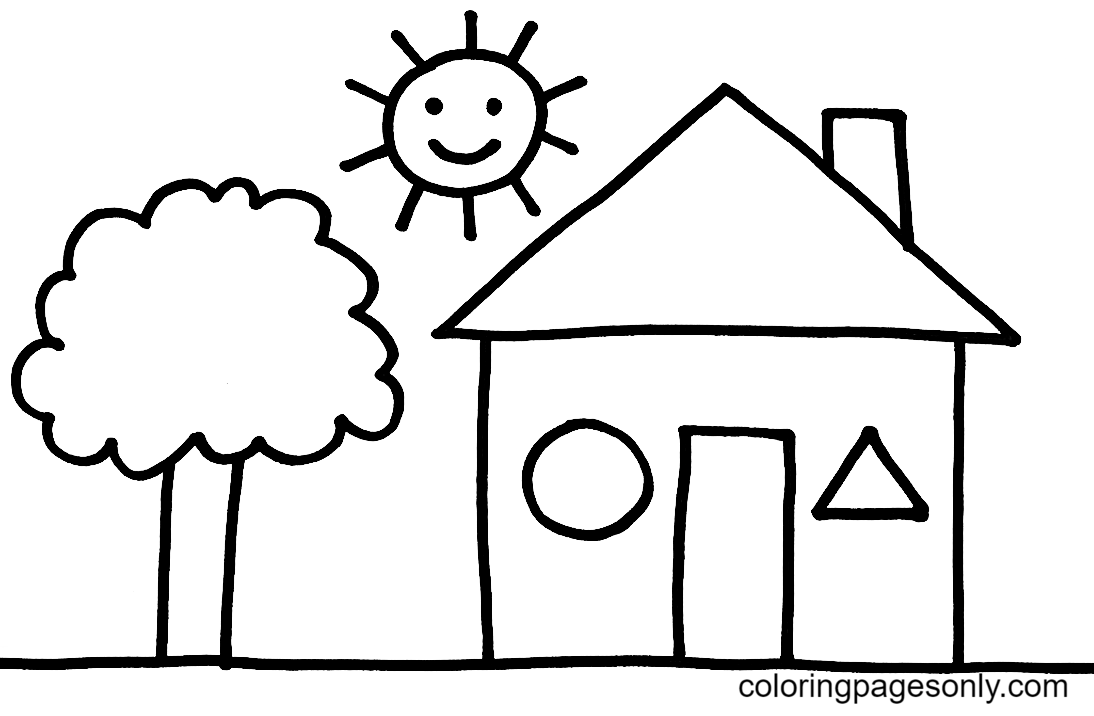
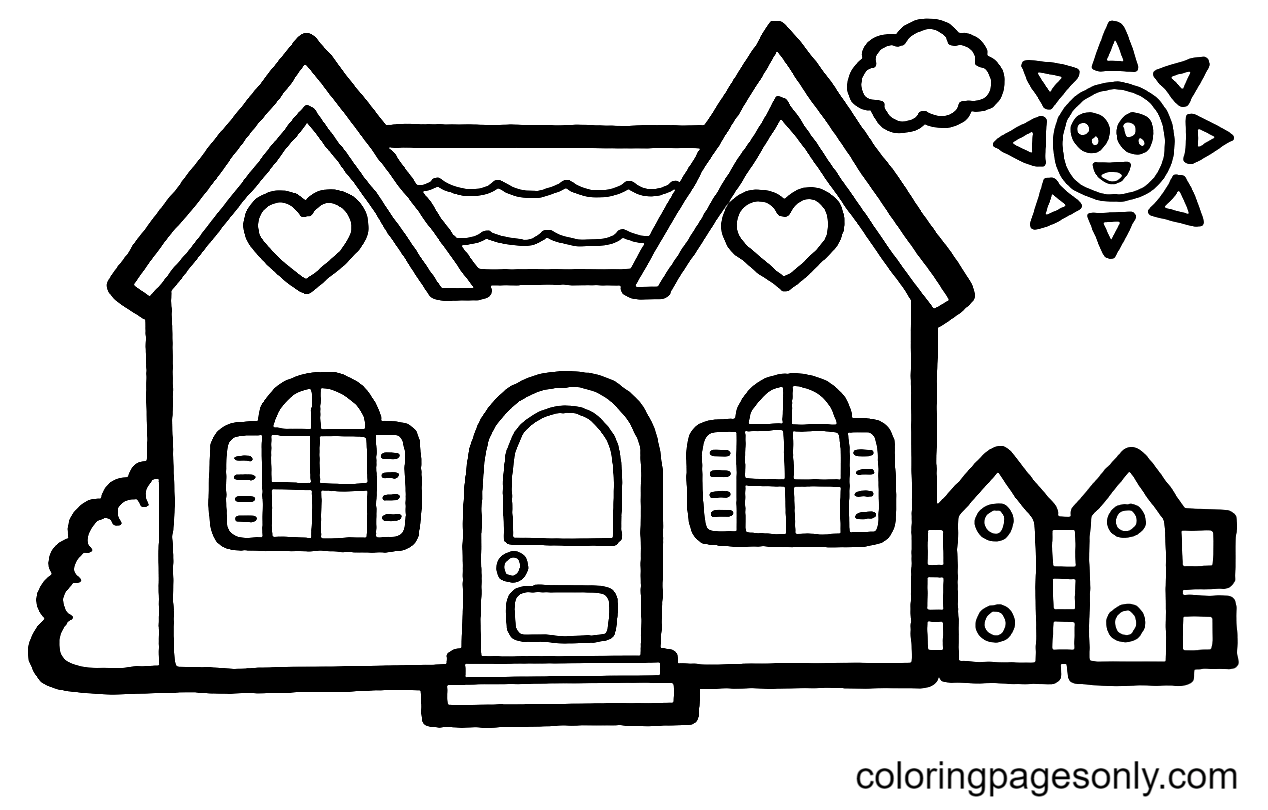
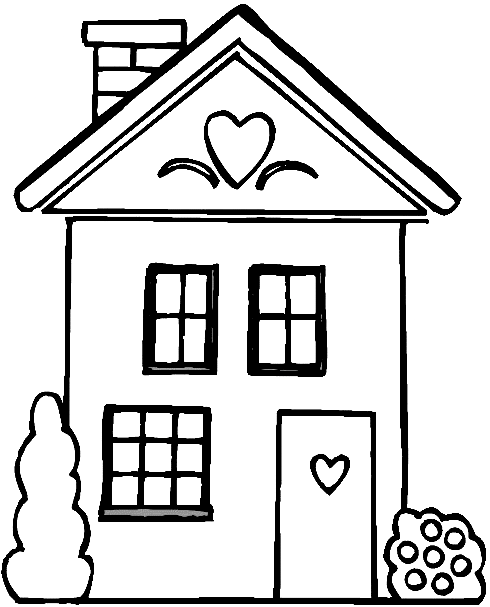
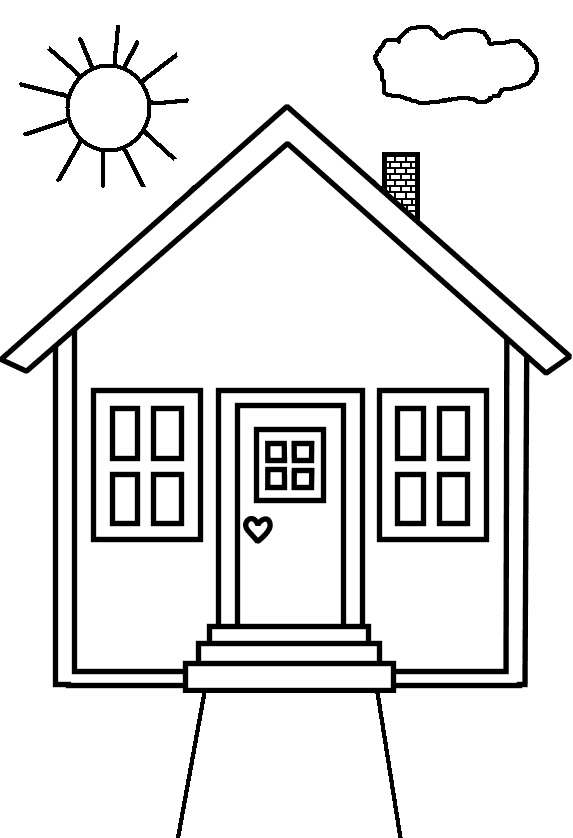
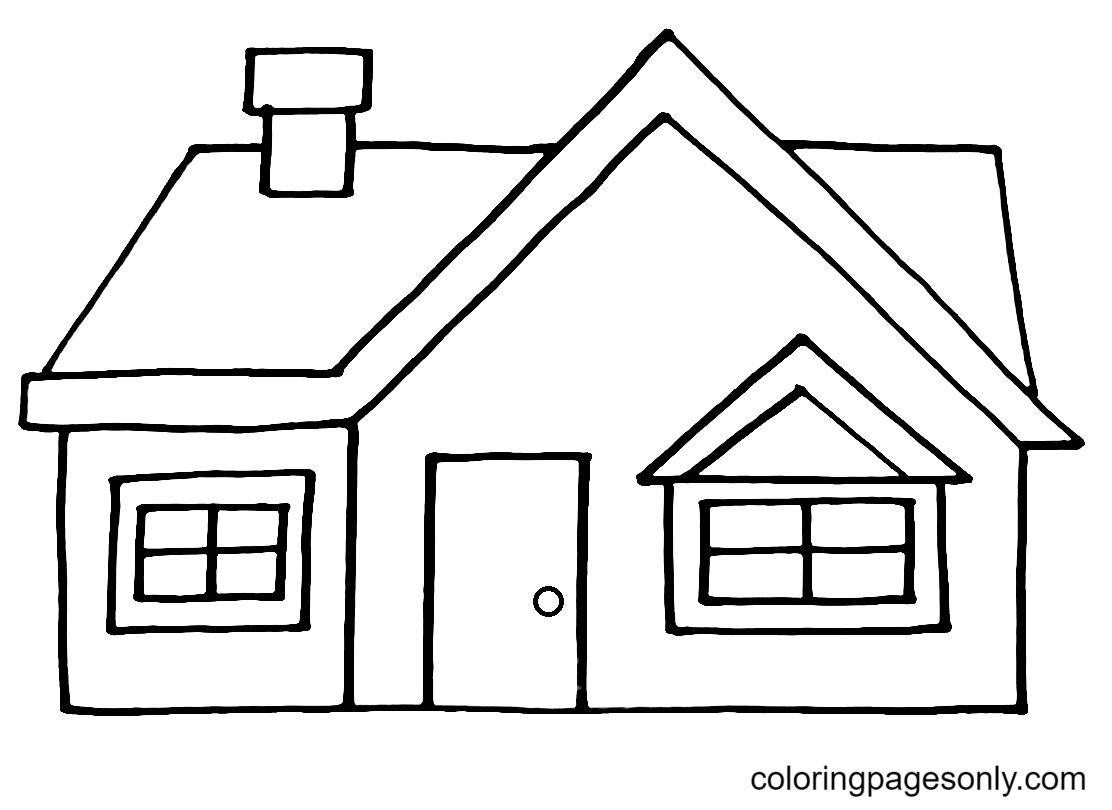
Simple and easy house pages – the Simple House, Simple House for Kids, Simple House for Children, Easy House, Easy House for Kids, House for Kids, House for Preschool, and A House tiles – are the most accessible in the collection. These feature a single house with clear, bold outlines, minimal interior detail, and large, open color zones. They are the best starting point for ages 3–5 or any colorist working with thick crayons or markers rather than fine-tipped tools.
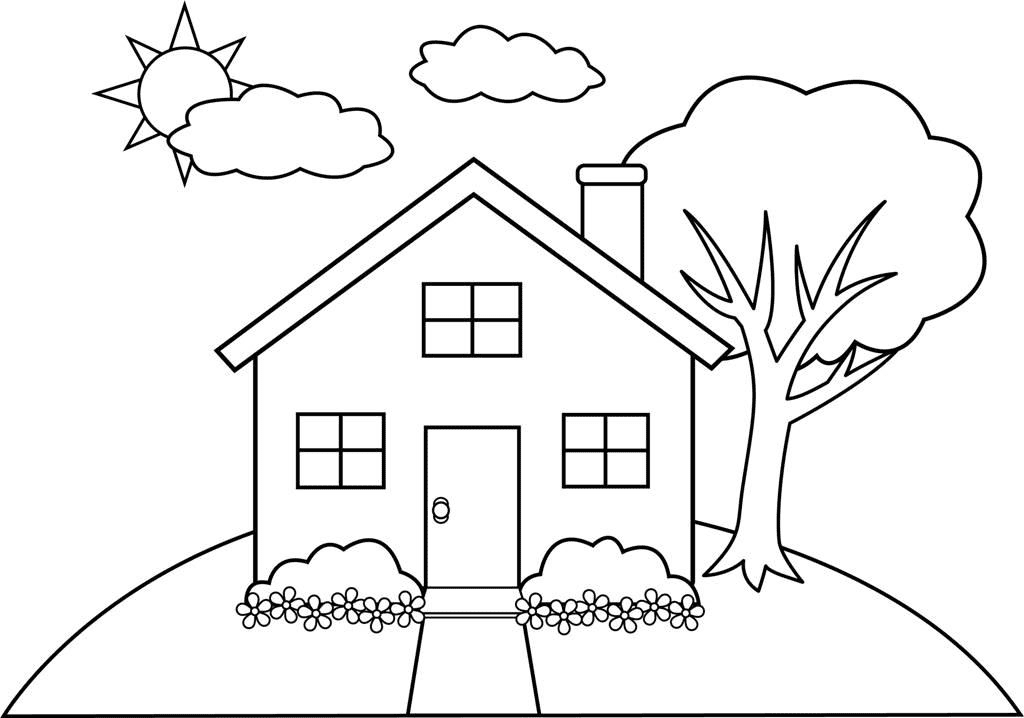
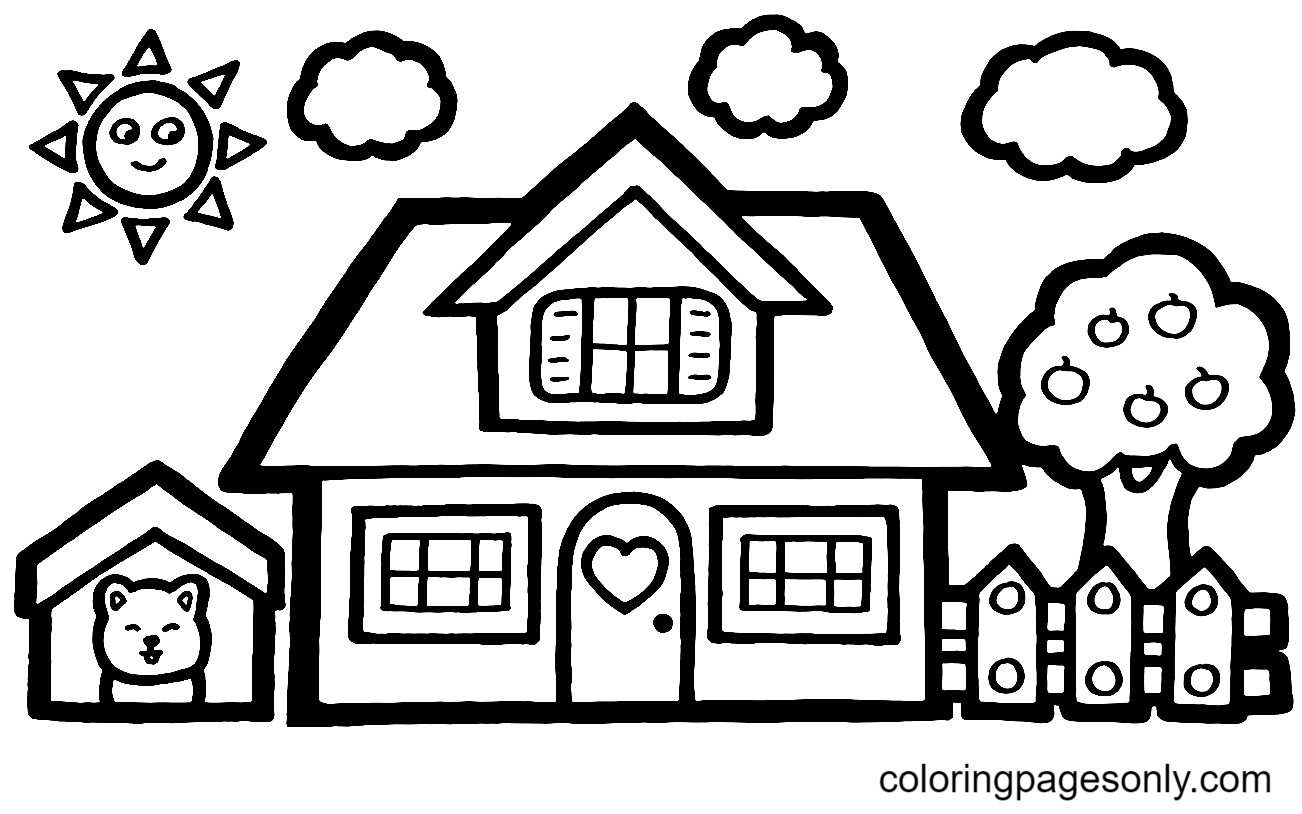
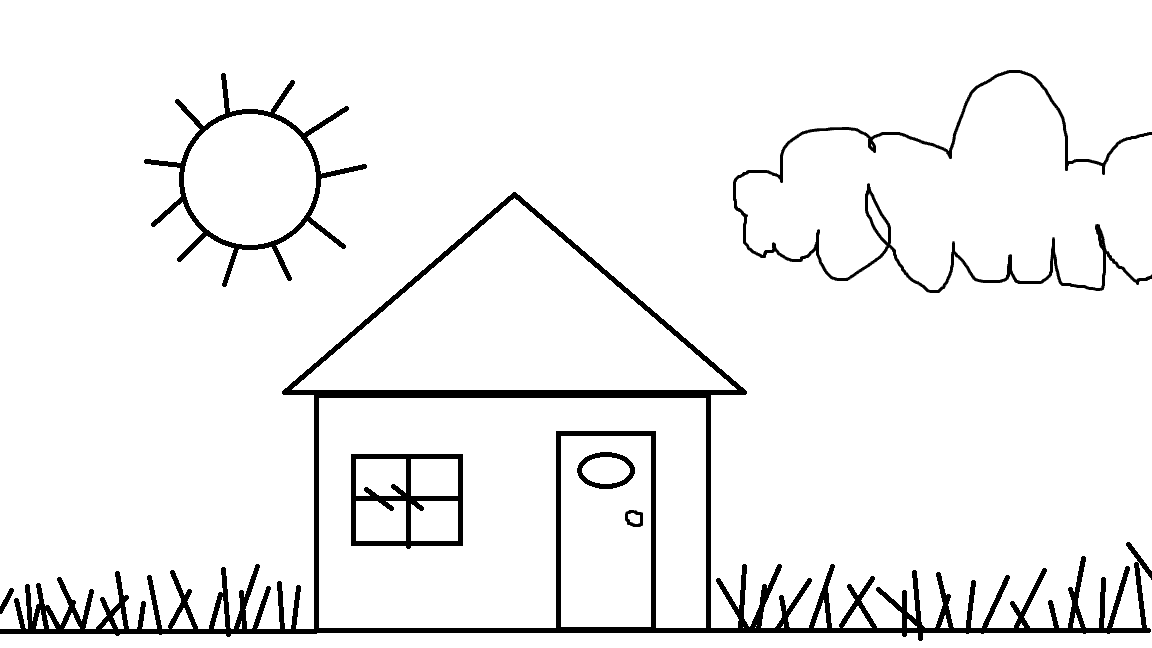
Houses with landscape elements – House with Tree, House with Sun and Tree, House and Sun for Children, House, Cloud, Sun and Flower, House and Rainbow, House with Rainbow – are slightly more complex in that they include sky, ground, and natural element details alongside the house itself. These pages give children more color decision variety: What color is the sky? Should the sun be yellow or orange? What color are the flowers? These questions build color vocabulary and decision-making.
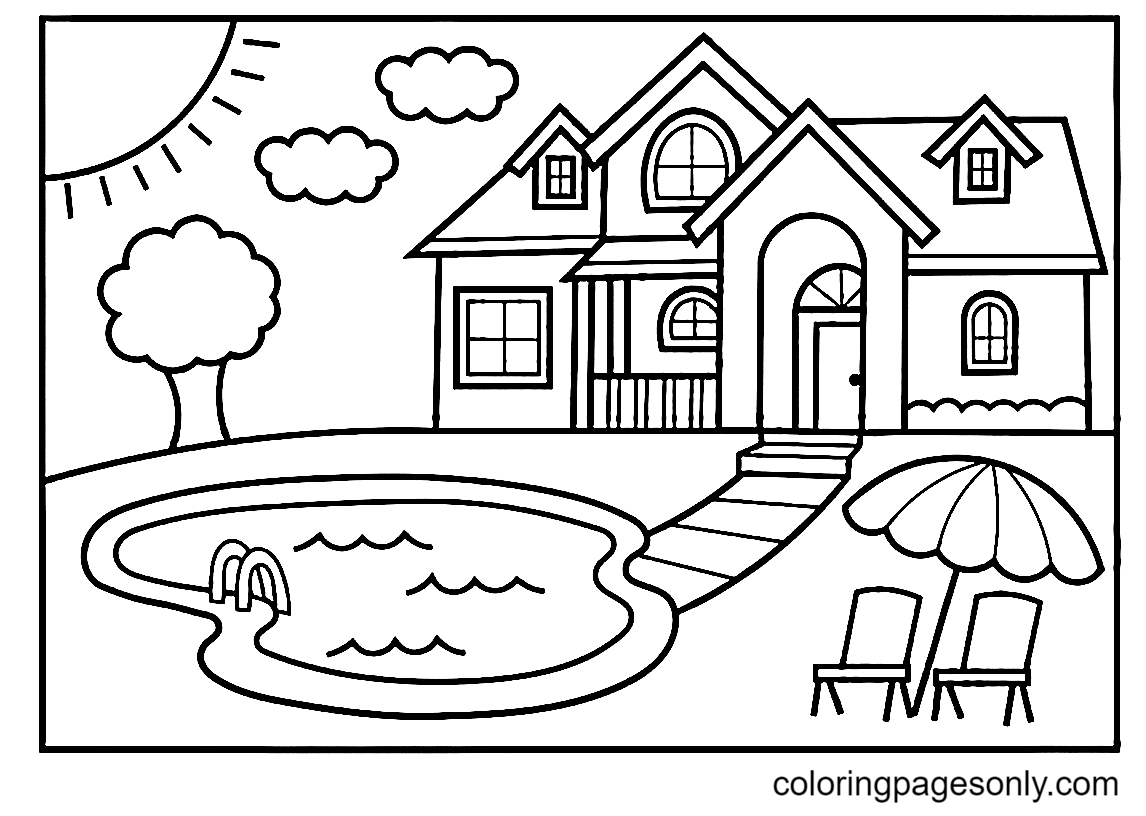
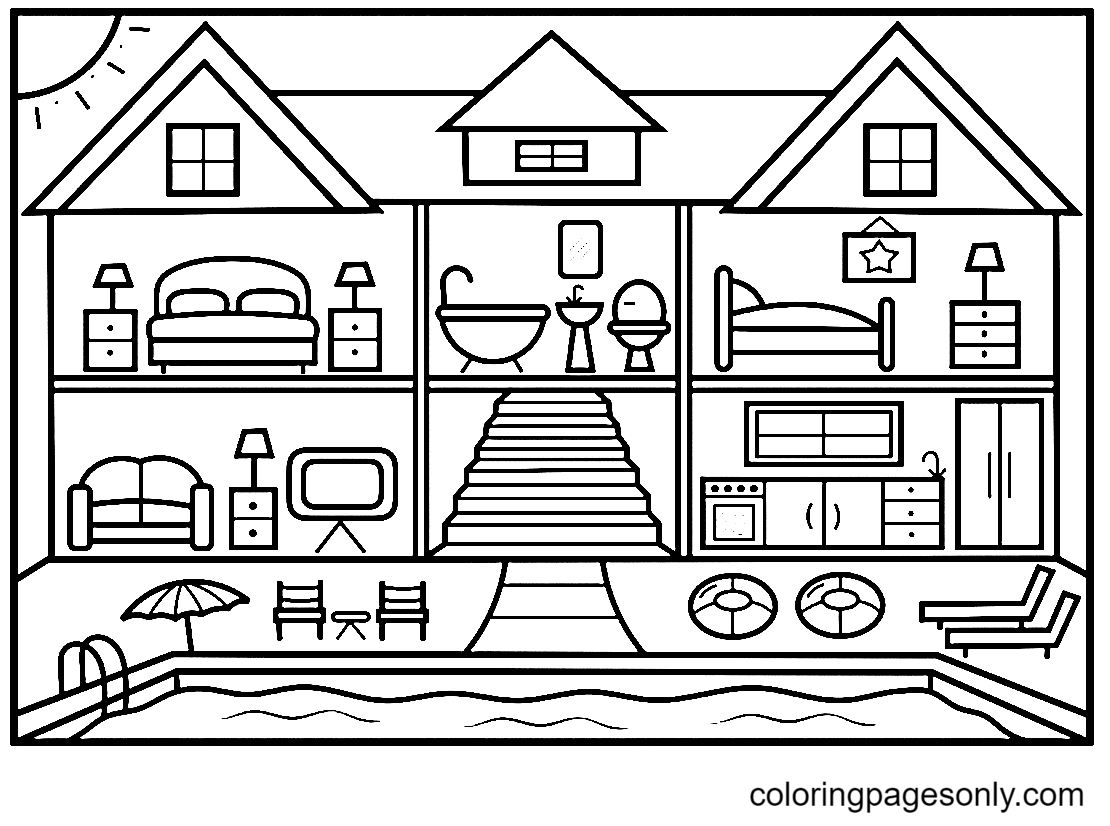
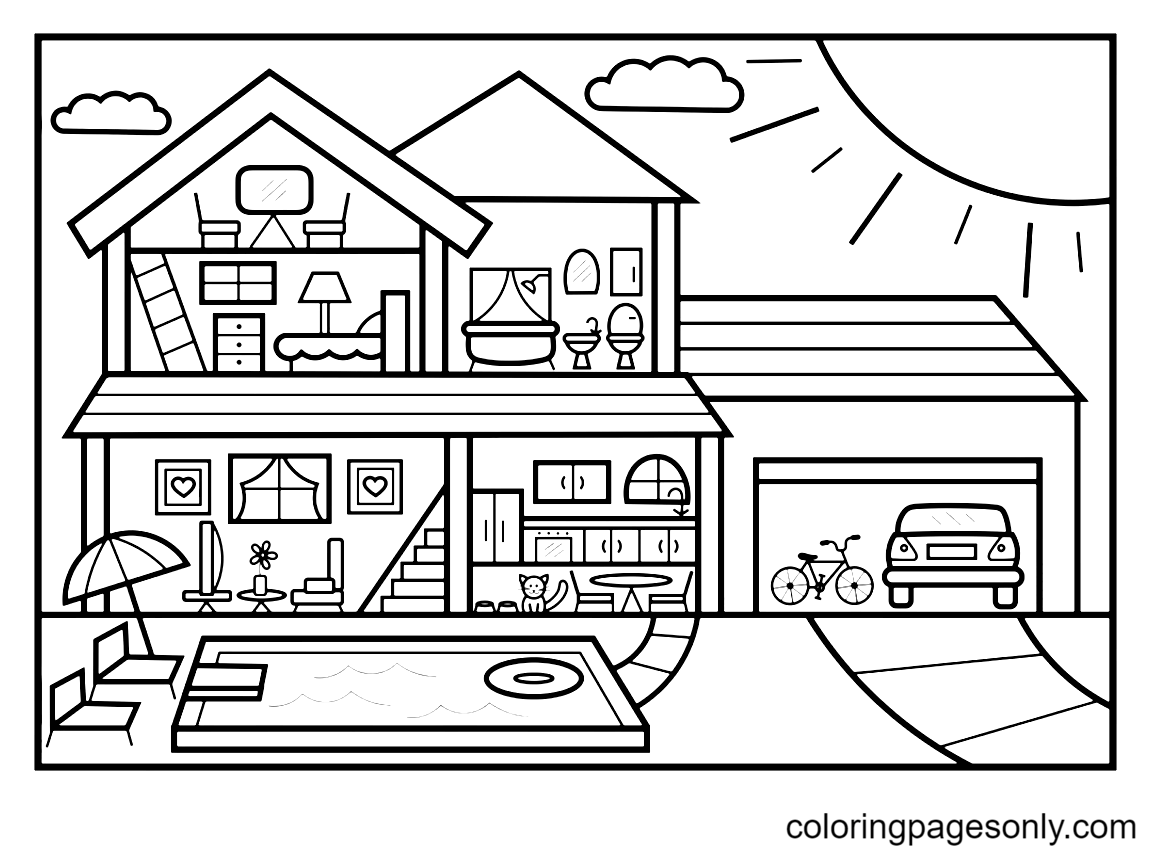
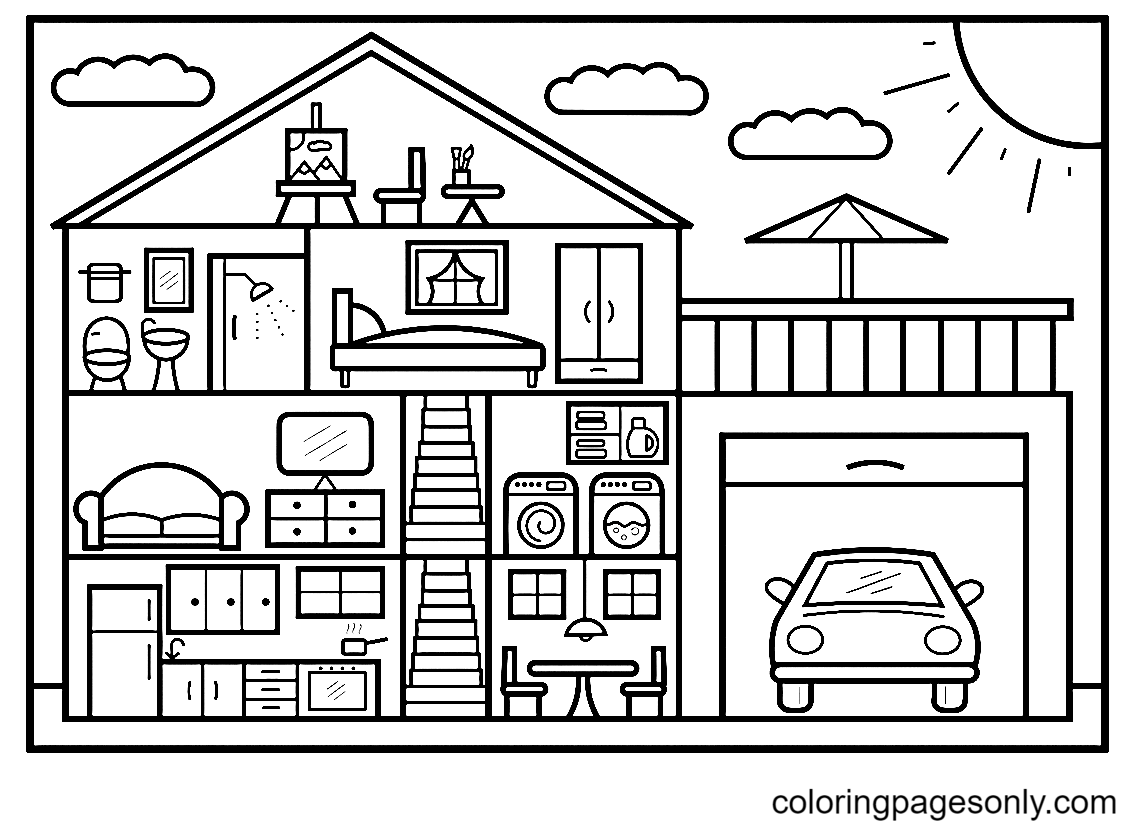
Houses with features – House with Swimming Pool, House with Pool, House with A Swimming Pool, and House with a Pool (four separate pool-adjacent house designs) depict larger, more elaborate residential properties with specific architectural or landscaping features. These are more complex compositions and are suitable for ages 6 and up.
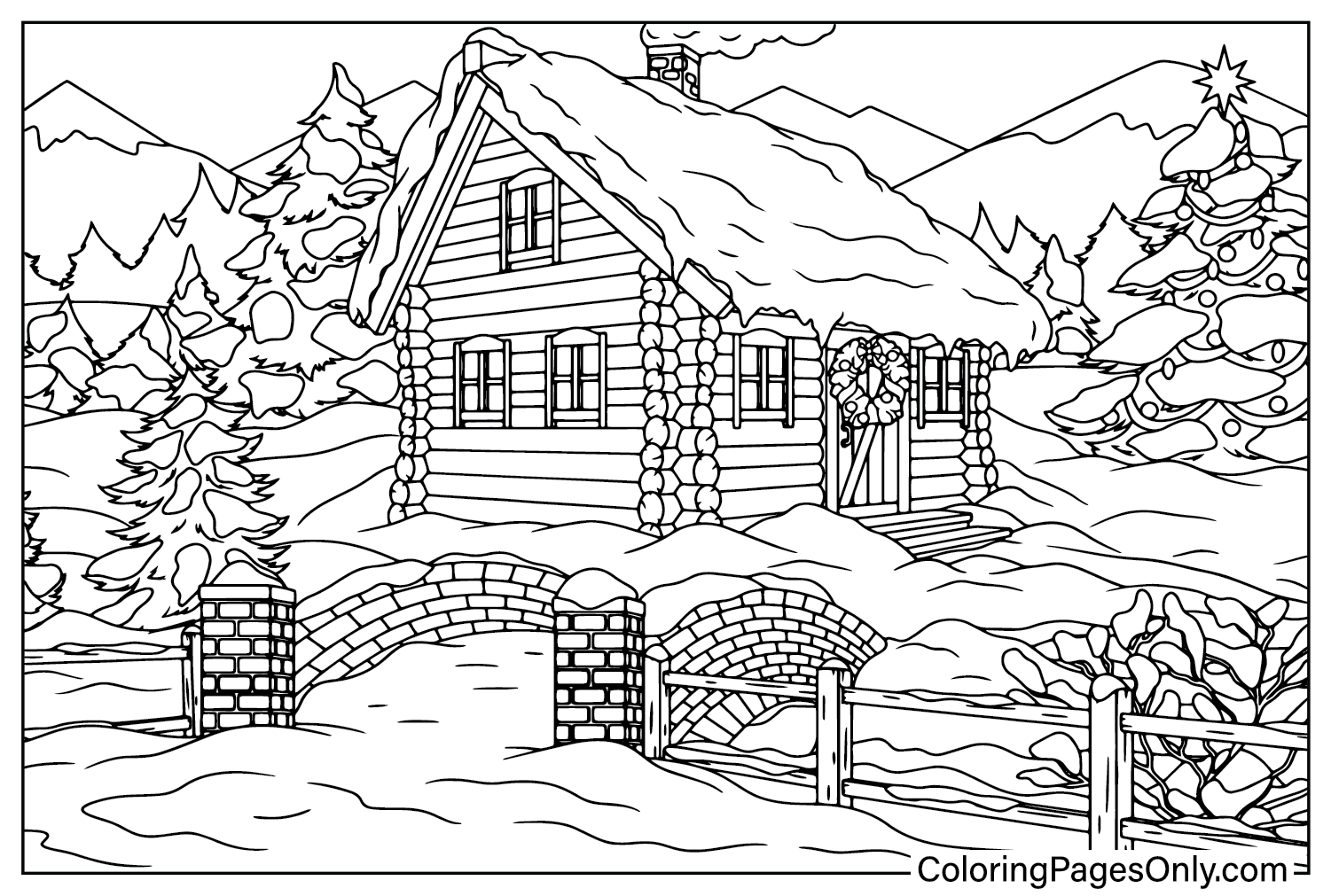
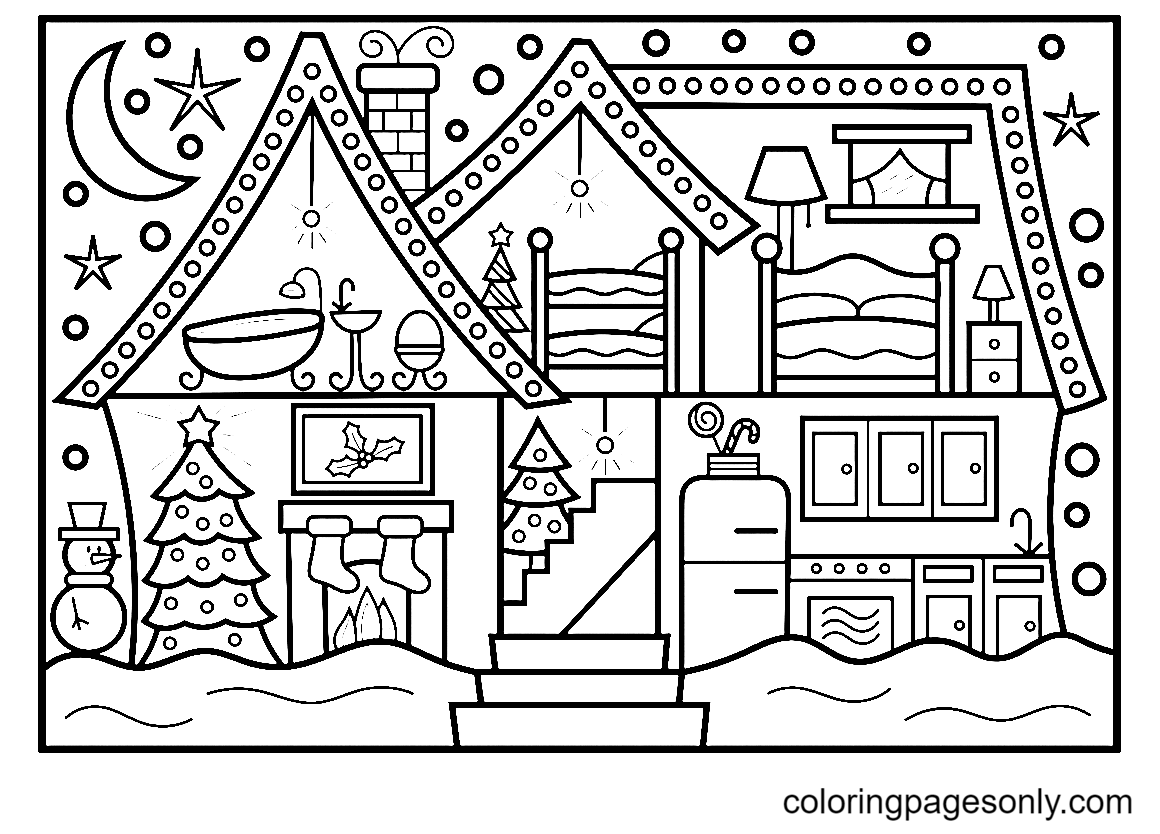
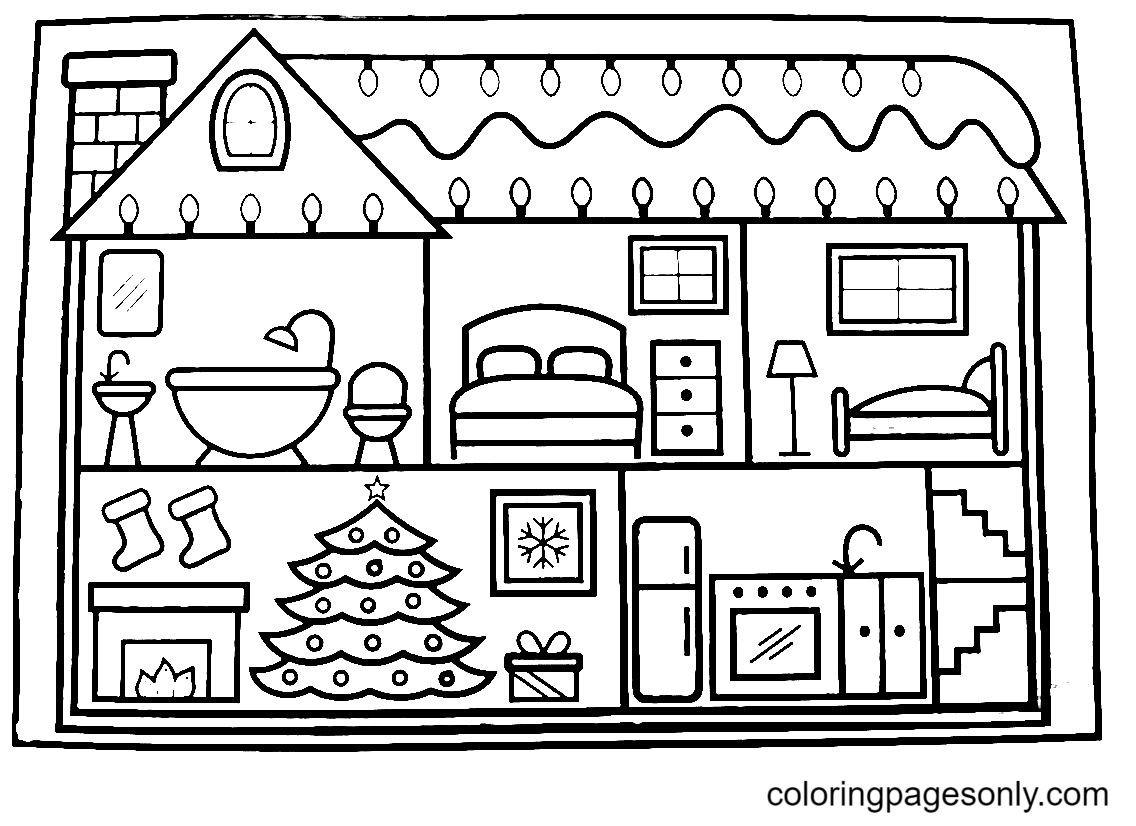
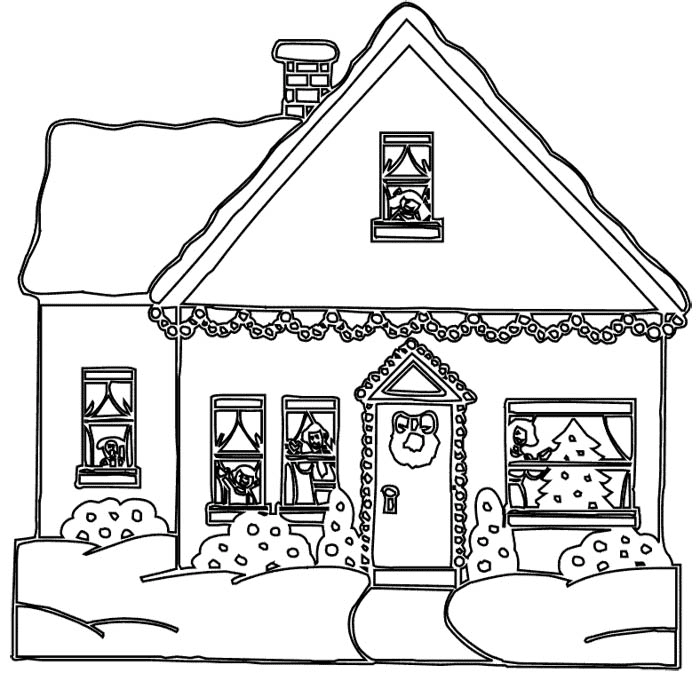
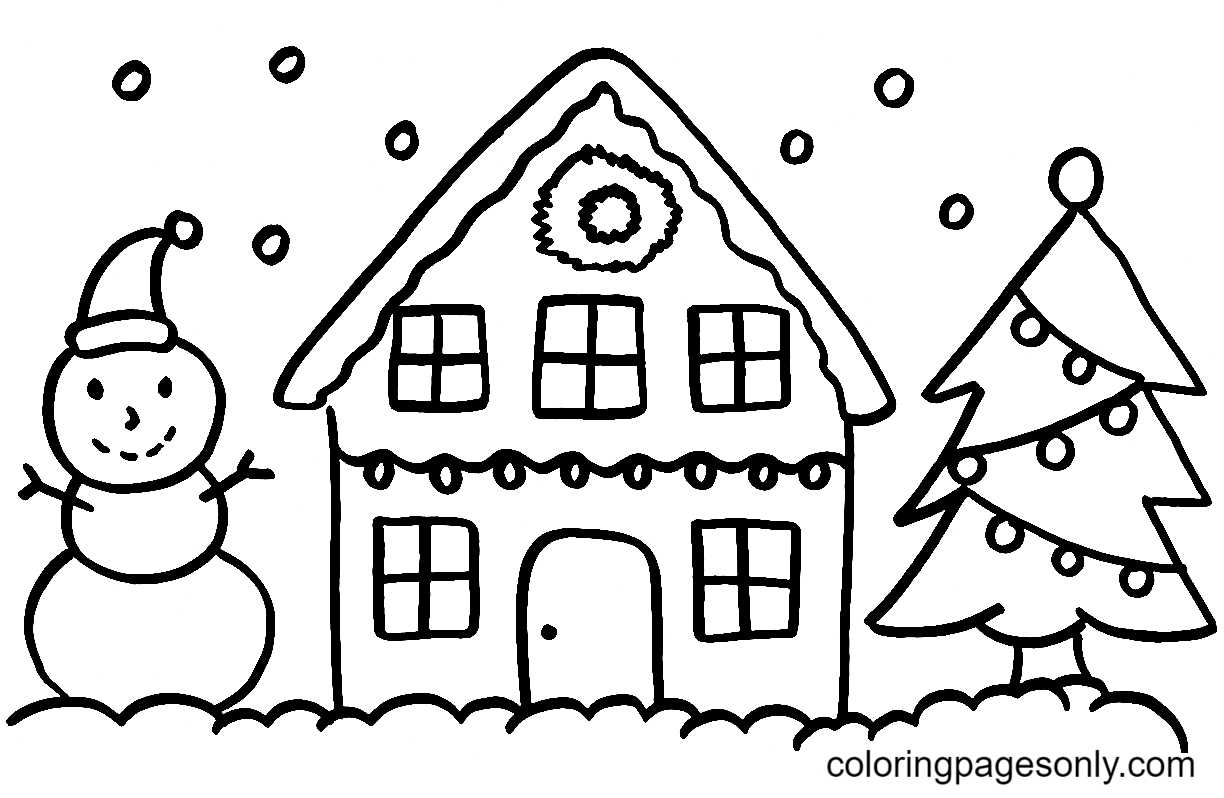
Seasonal house pages – the Christmas cluster (Christmas House, Christmas House for Kids, Christmas House with Decorations, Christmas House with Tree and Snowman) and the winter standalone (House Winter Coloring Page) bring seasonal relevance to the collection. Christmas house pages, in particular, are high-value classroom activity materials in November and December, and the detailed decorations (lights, wreaths, snowmen, Christmas trees) give older children more fine-detail coloring work within the page.
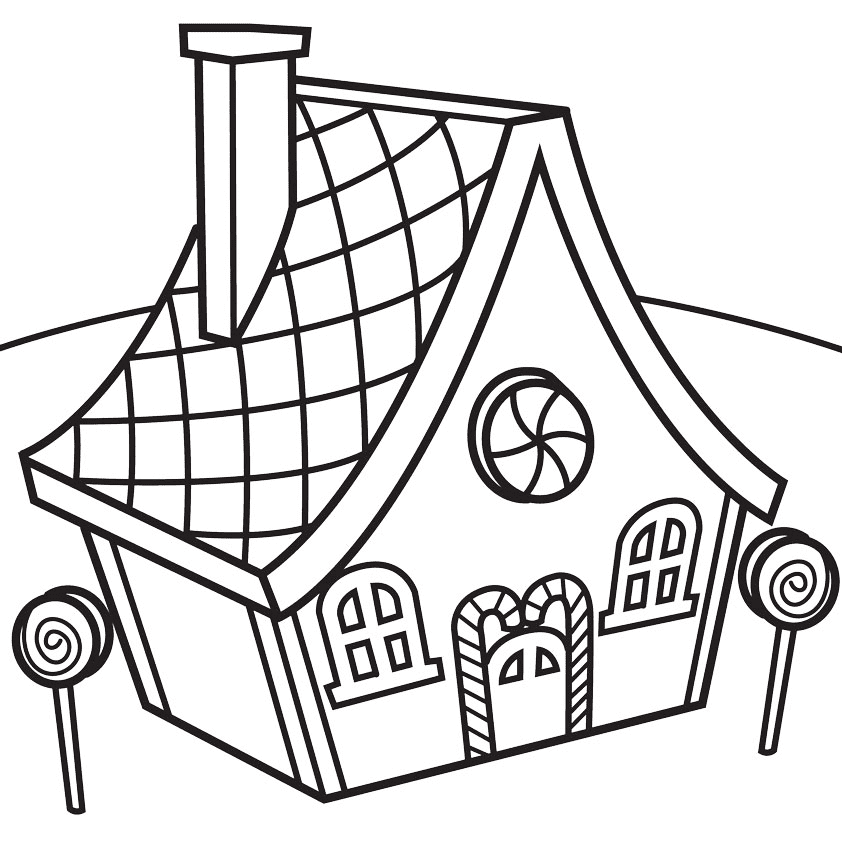
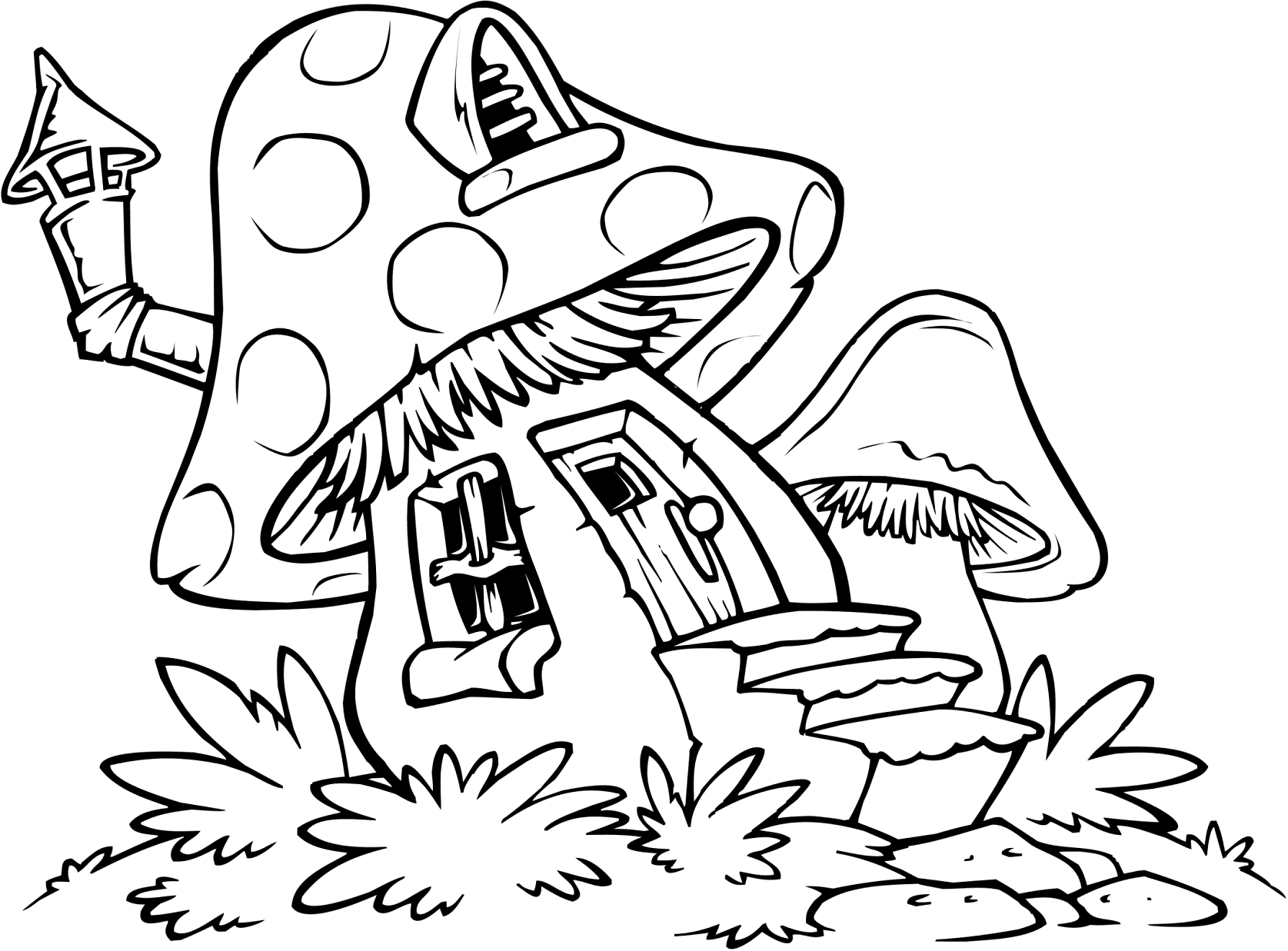
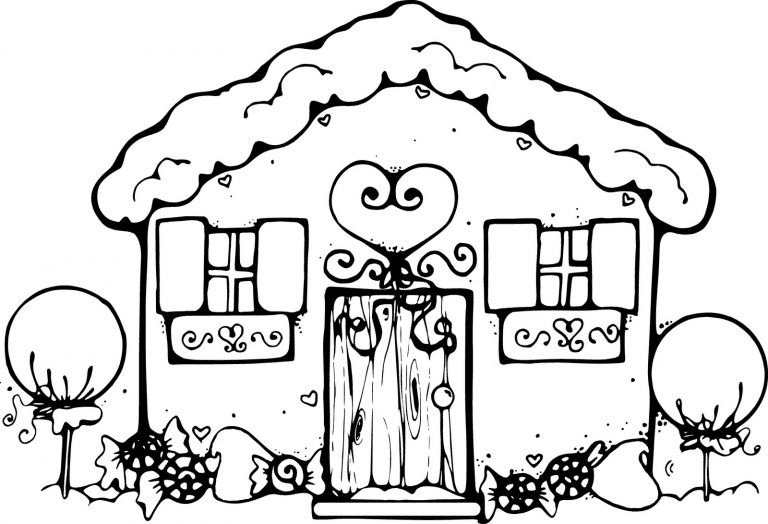
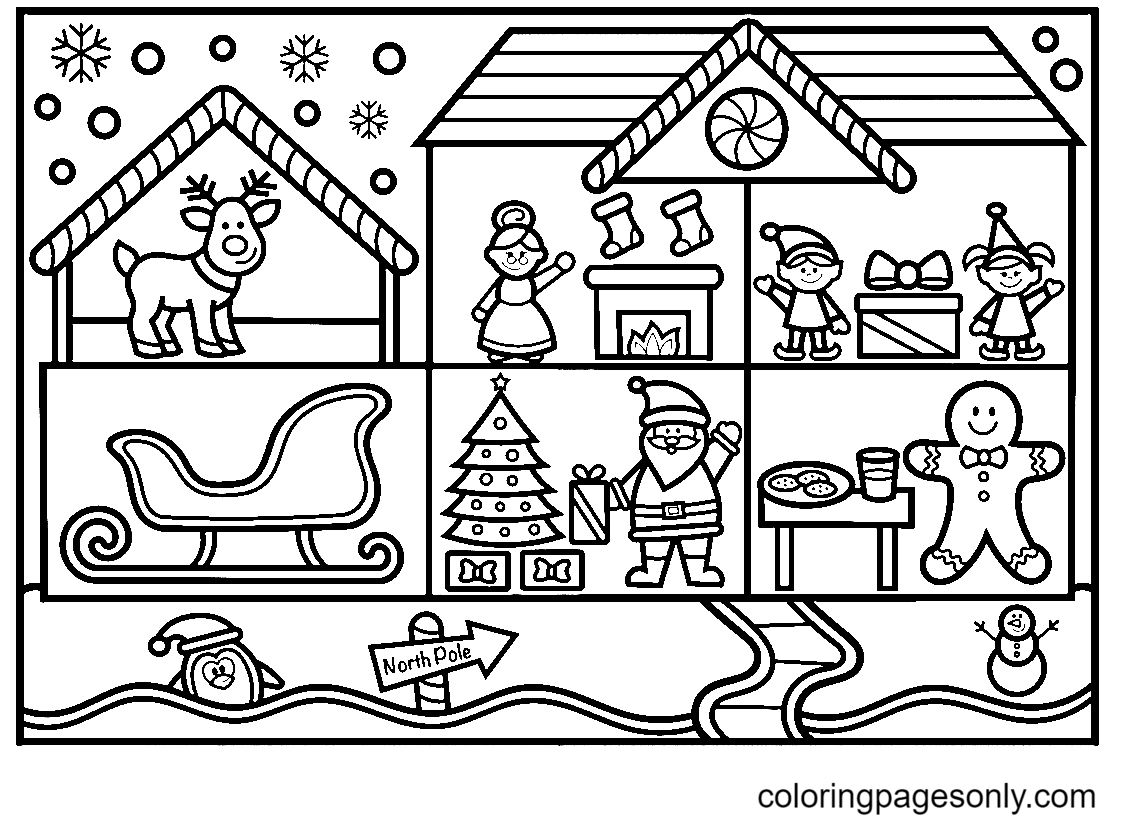
Fantasy and imaginative designs – the Mushroom House, Candy House, Glitter House, and Fun House tiles move away from realistic residential architecture into imaginative dwelling concepts. The Mushroom House – a house built into or styled like a mushroom cap – is the most popular fantasy design in the collection and suits children who enjoy more creative, non-realistic color choices. The Candy House (a gingerbread house-adjacent design with candy and sweet decorations) and Christmas Gingerbread House are particularly suited to December holiday activities.
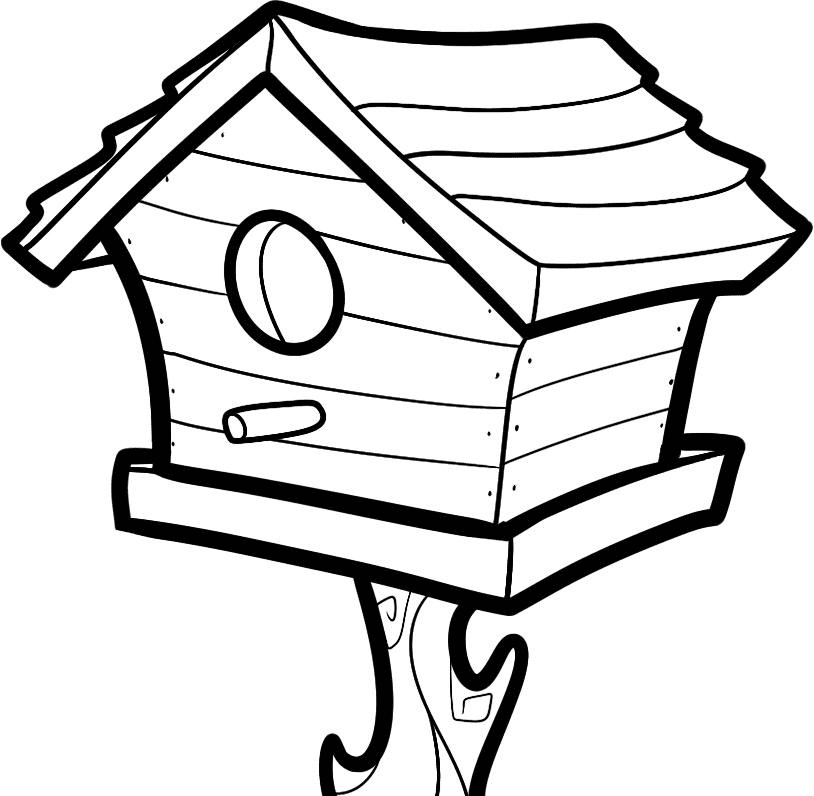
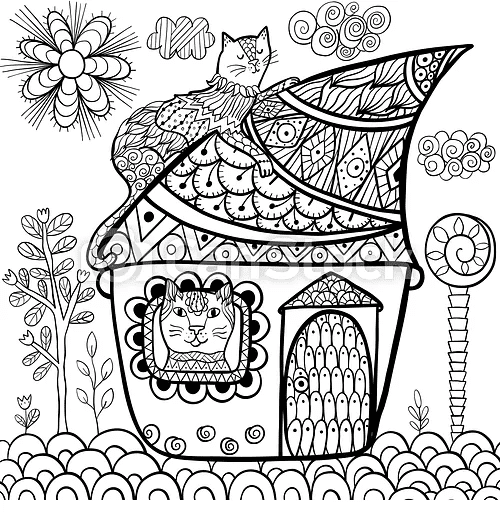
Animal dwelling pages – Bird House, Printable Bird House, Dog House, and Cat House – depict the specialized small structures built for pets and wild birds. These pages often serve as entry points into broader discussions about how different living creatures have different shelter needs, making them useful in kindergarten life science units.
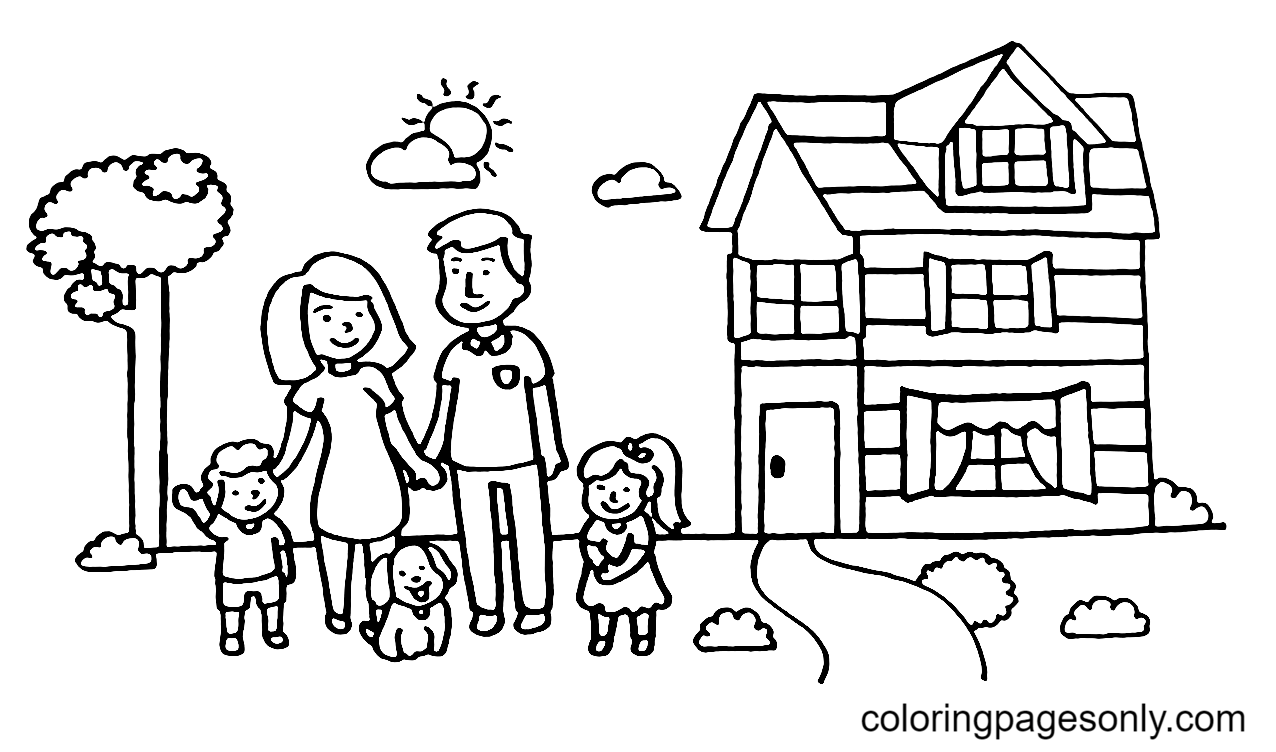
People and family pages – the Happy Family near House tile is the only page in the collection depicting human figures alongside a house, making it distinctive among the predominantly architecture-focused collection. It shows a family of four with a pet dog outside their home.
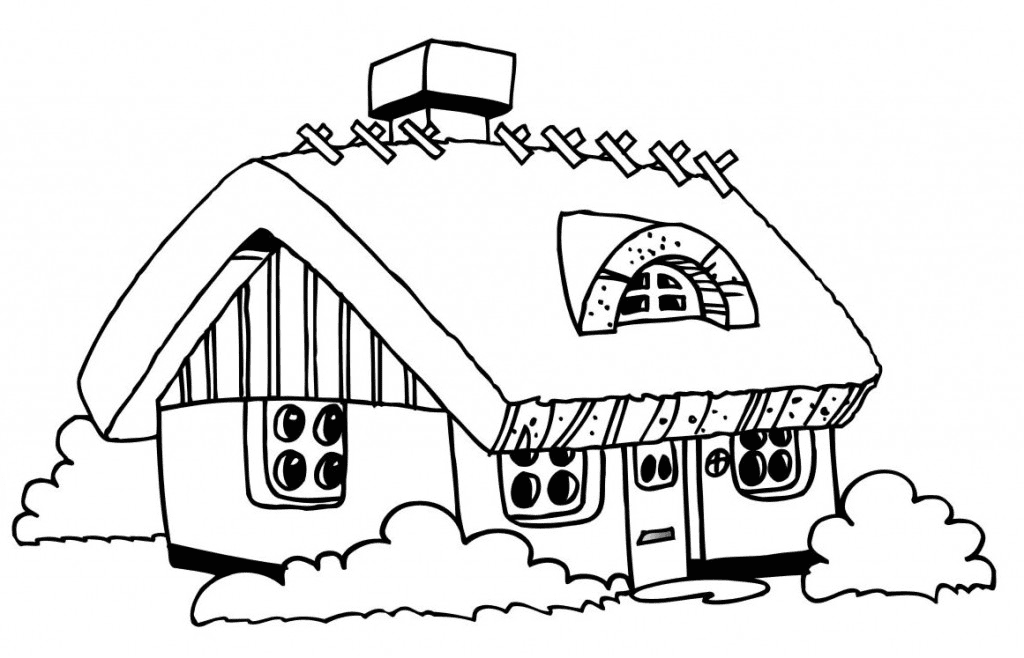
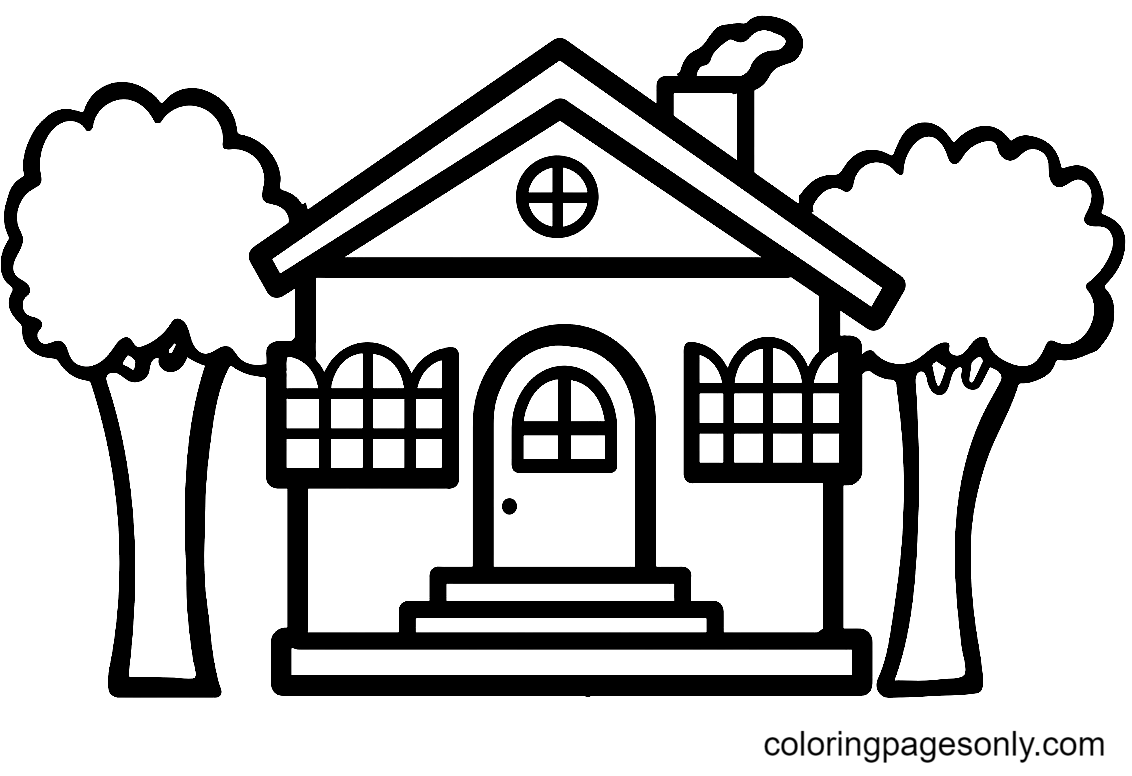
Specialty pages – Little Hut, Little Cottage, Little House, Small House, and Lovely House with Garden – represent the cozy, small-scale residential aesthetic that strongly appeals to children who gravitate toward miniature and small-world play.
Coloring Guide: Getting Houses Right
The roof is typically the strongest color decision in any house coloring page, because it covers the largest visible surface area and sits at the top of the composition where the eye naturally goes first. Traditional roof colors include terracotta/clay red, dark slate gray, warm brown, forest green, and navy blue. A terracotta-red roof against cream or white walls is the most universally recognized “house” color combination. A dark gray or slate roof creates a more dramatic, realistic appearance. A brightly colored roof (vivid blue, green, or even purple) gives the page a more playful, imaginative character.
Walls are typically lighter than the roof, allowing the roof to “read” as a separate plane above. Cream, pale yellow, warm white, light beige, or pale pastel colors for the walls create the most legible house design. Brick walls can be suggested by coloring alternating horizontal bands of warm terracotta red, with thin lines of gray mortar between them – even simple, imprecise brickwork immediately reads as a brick exterior.
Windows are the most important detail element in house pages. In a daylight scene, window glass can be colored a light, slightly warm blue to suggest sky reflection. In a lit interior scene, window glass uses warm yellow or amber to suggest interior lamplight – this is particularly effective in winter and on Christmas house pages, where the visible interior light through windows creates a cozy atmosphere. Window frames should contrast with the wall color – dark brown, black, or white frames against a colored wall all read clearly.
Doors benefit from a color that contrasts with the wall – a classic red door against a white house, a dark blue door against a cream house, or a dark wood-brown door against any wall color. The door is typically the most architecturally distinctive element of a house’s facade and warrants special attention to its color.
Gardens and ground elements – grass, flower beds, garden paths, hedges – use the full range of natural greens for foliage and vivid saturated colors for flowers. The grass should be a different green from the trees: slightly more yellow-green for lawn grass than for tree foliage, which is darker and richer.
Christmas house pages follow a specific color scheme: the house itself typically uses a neutral palette (white, cream, or light gray) to maximize visibility of the Christmas decorations against it. The lights strung along the roofline and windows are best colored in multicolor – alternating red, green, blue, and yellow – rather than a single color, which reads as generic. The Christmas tree (where present) is dark green with multicolored ornaments and a yellow or gold star at the top.
The Mushroom House is the most open-ended page in the collection from a color perspective – there is no “correct” color for the Mushroom House. Red with white spots is the most fairy-tale-traditional mushroom cap, referencing the Amanita muscaria toadstool. But the mushroom cap can also be brown, orange, purple, or any color the colorist chooses. The stem/base of the mushroom house is typically a lighter tan or cream.
The Gingerbread House and Candy House pages use a palette centered on warm food colors – the cookie/gingerbread base is a warm golden-brown, the icing and decoration details are white, and the candy accents (gumdrops, candy canes, lollipops) use vivid saturated colors: red, green, pink, yellow. Keeping the base color warm golden-brown while making the candy details as vivid and varied as possible yields the most successful gingerbread house coloring.
How House Coloring Pages Are Used
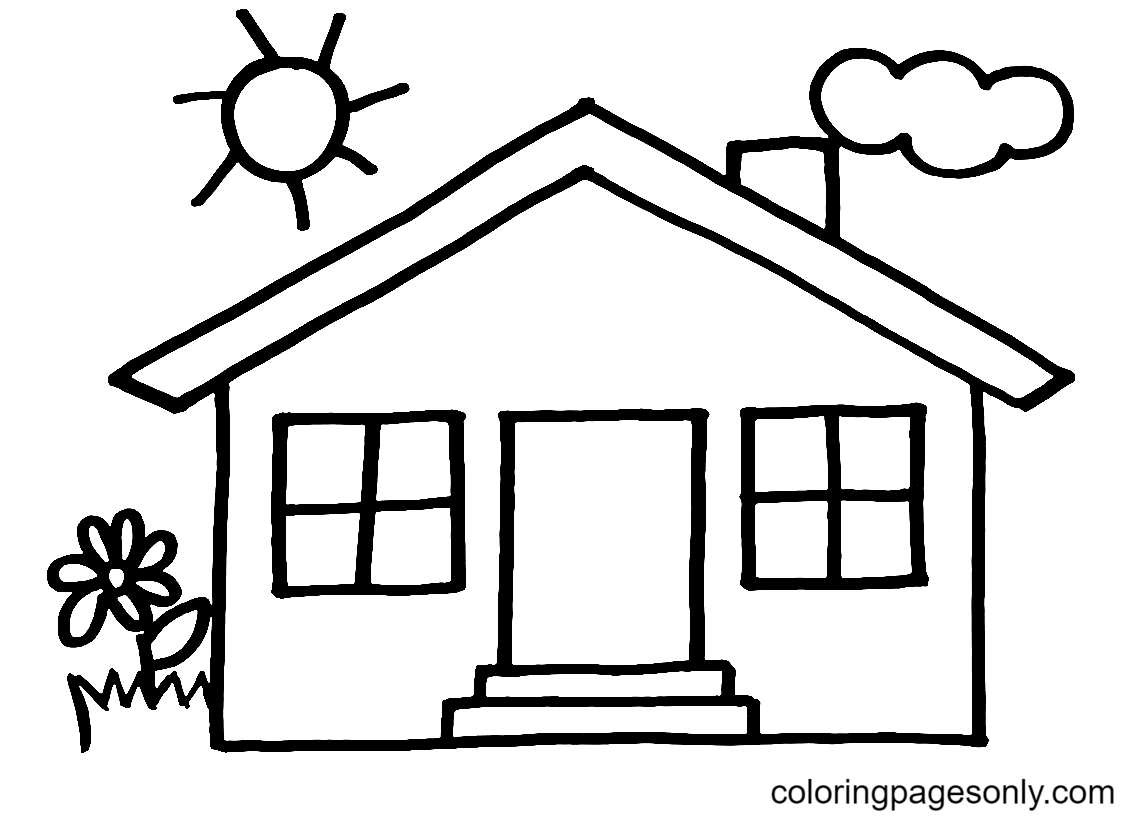
In early childhood education (ages 3–5), House pages are a staple activity in preschool and kindergarten classrooms during community helper units, family theme weeks, and any curriculum segment touching on the concept of home. The simple house with sun, cloud, and flower in the garden gives children a complete scene to color – sky, ground, structure, and nature – that encompasses the key color categories taught at this level: blue sky, yellow/orange sun, white clouds, green grass, and colorful flowers.
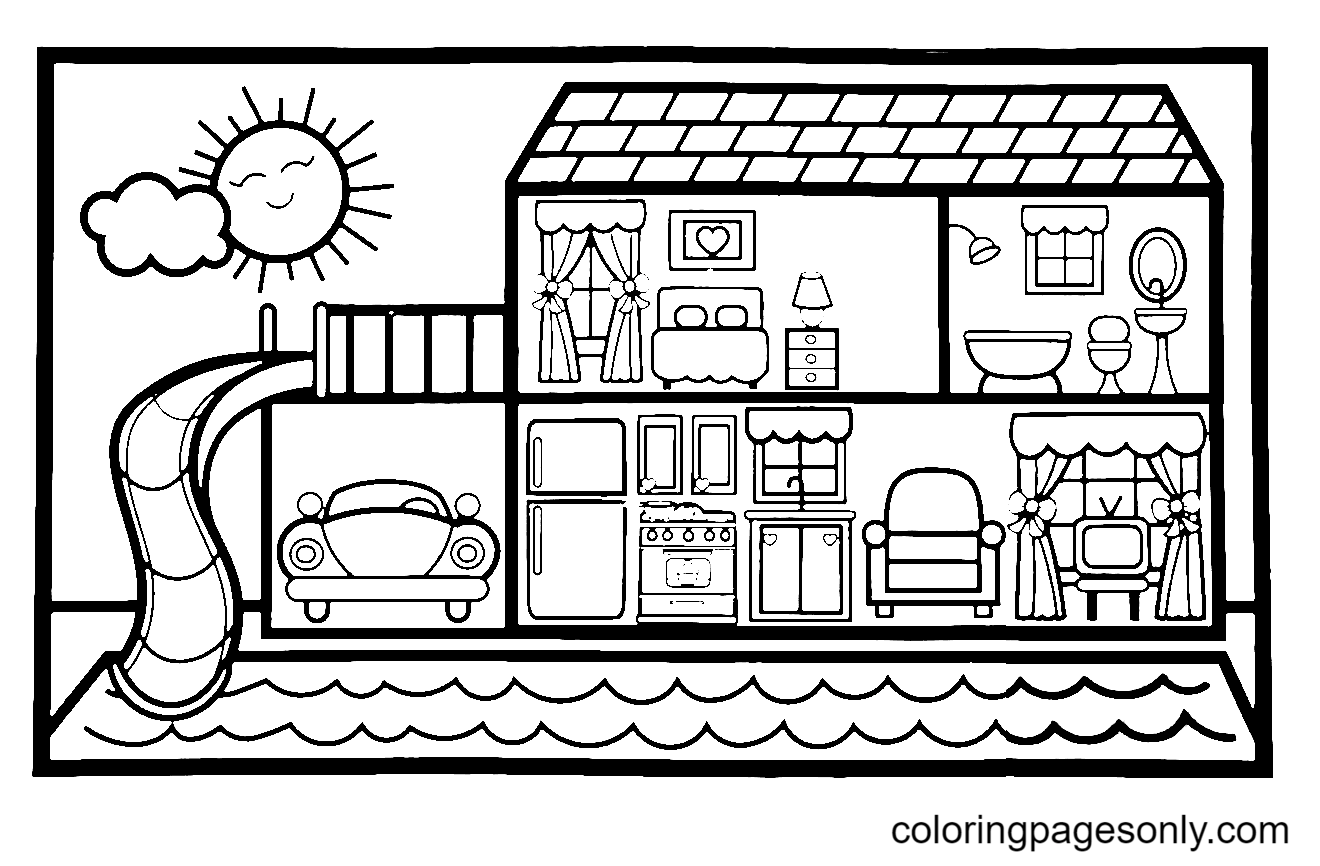
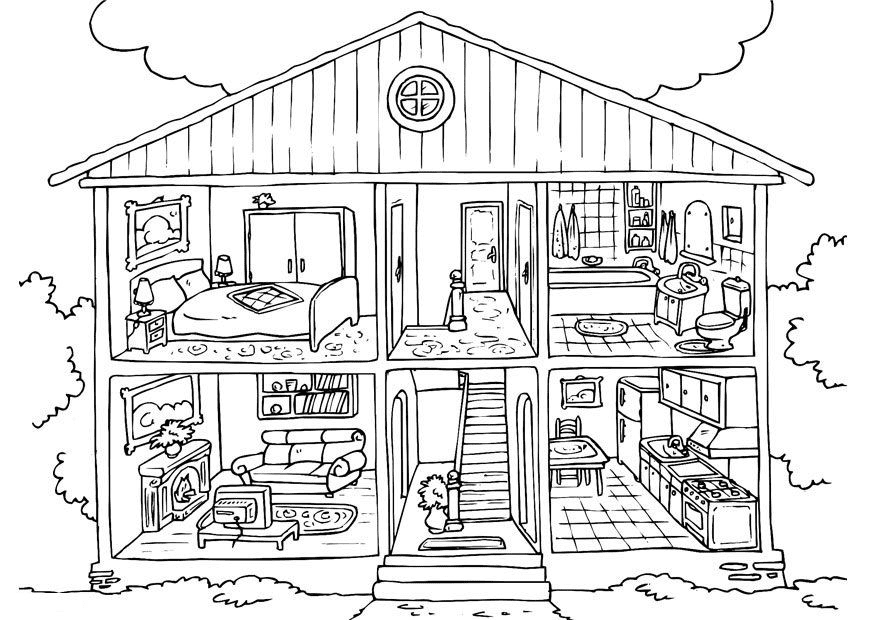
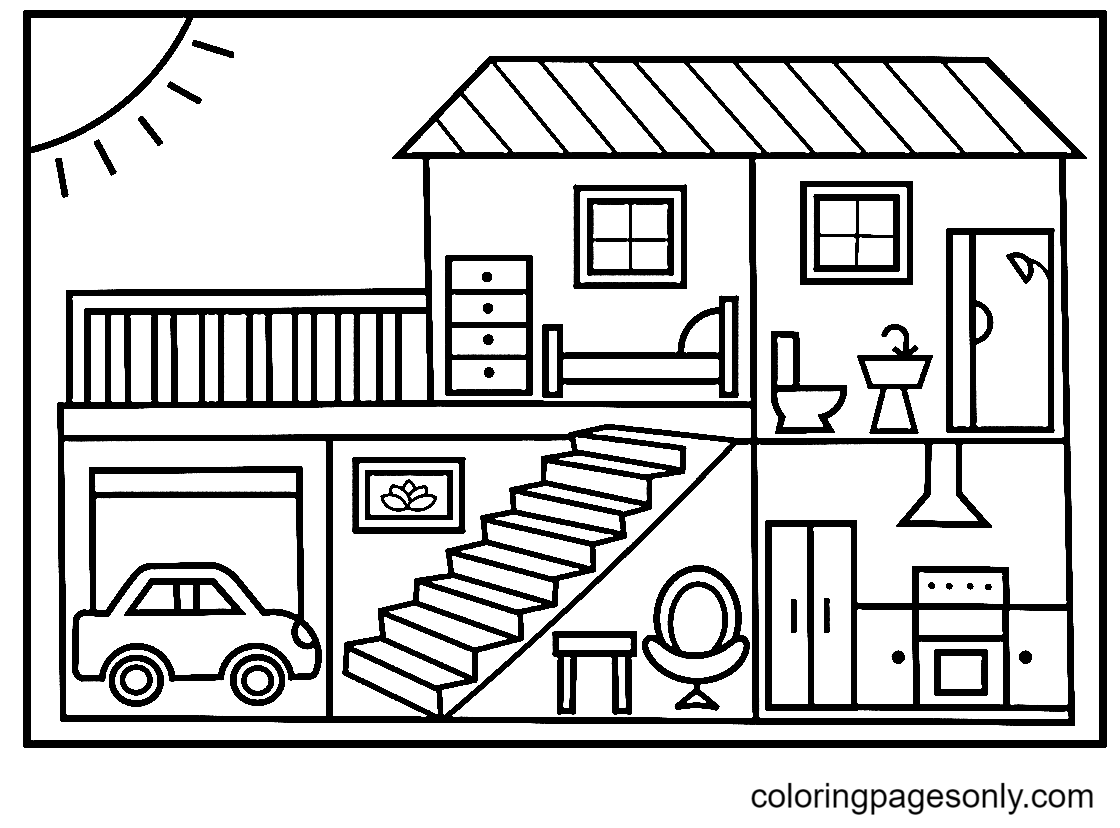
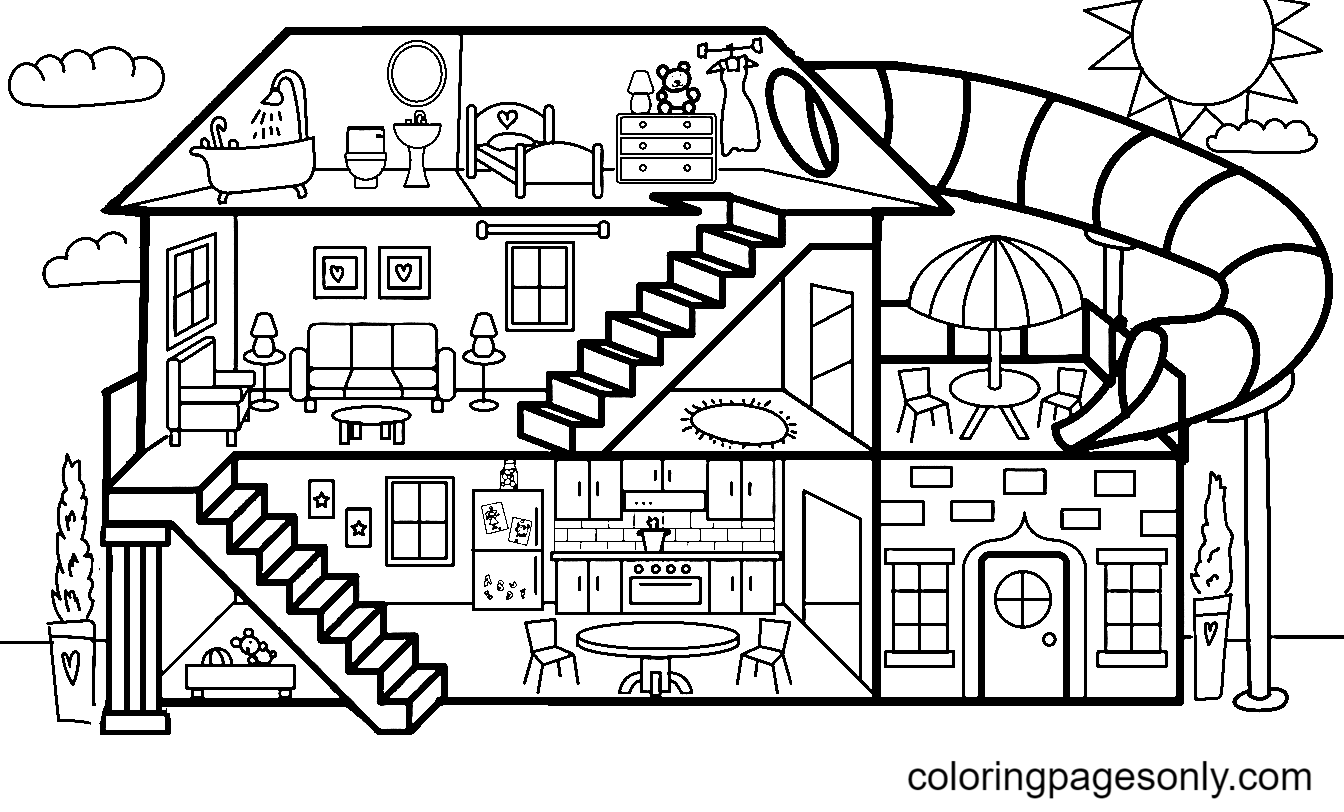
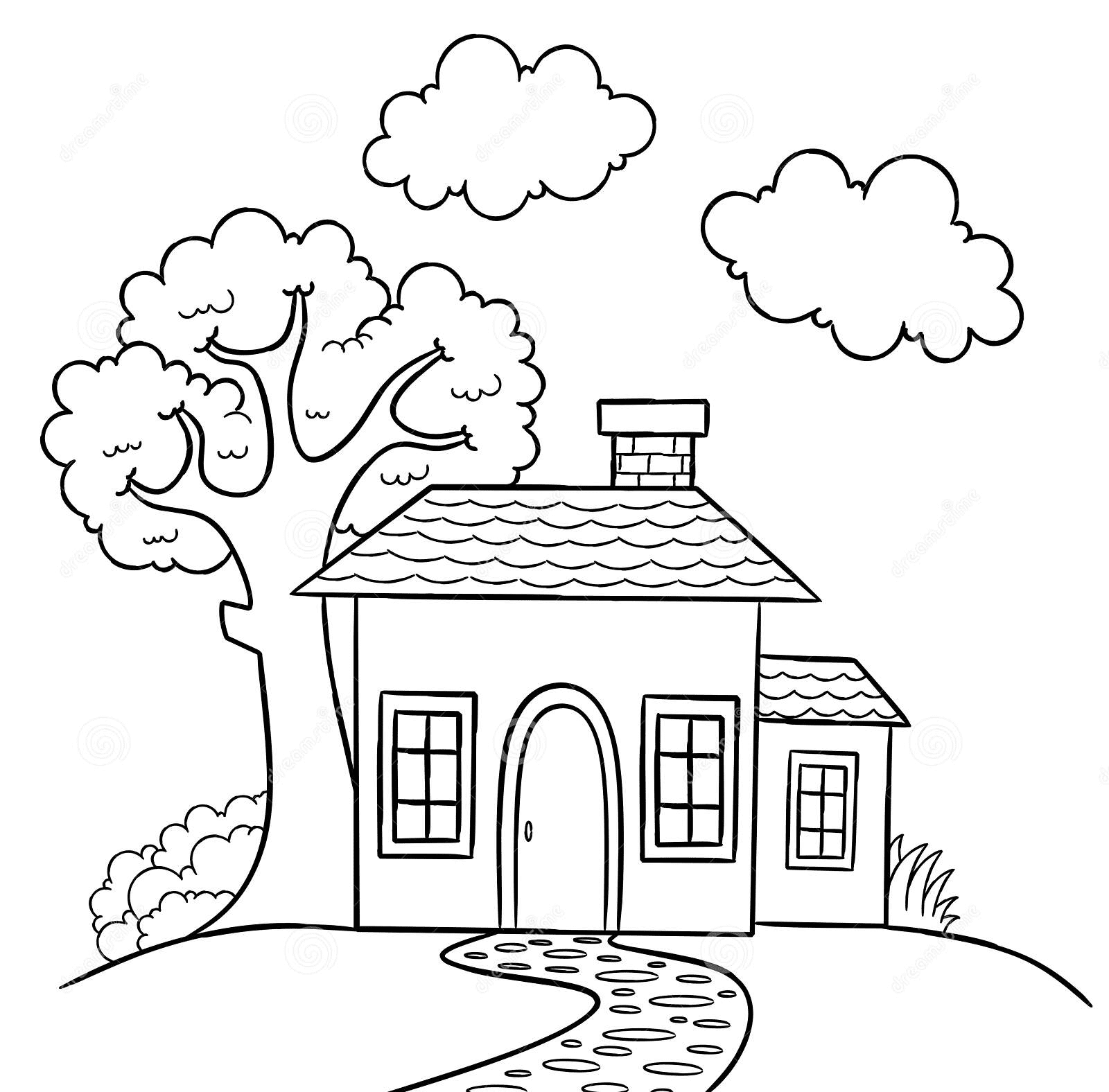
In art education (ages 6–10): House pages with more architectural detail – the multi-story house with pool, the house with garden, the detailed cottage – serve as architectural drawing exercises where children practice applying color to recognize specific building elements (facade, roof, foundation, door, windows) as distinct visual zones with distinct color identities.
For homeschooling families: House pages cross into geography and cultural education when paired with discussion of how different climates and cultures produce different house designs – the Little Hut versus the multi-story house with pool versus the winter house represent three very different living environments and economic contexts that can spark geography conversations with older children.
For birthday party activities: The Christmas Gingerbread House and Candy House pages make effective coloring activities for holiday-themed children’s parties, providing a structured, creative task that fits the celebration’s context.
For adult mindfulness coloring: The more detailed pages – the Lovely House with Garden, the Christmas House with Decorations, and the House with Rainbow scene pages – offer enough interior detail (individual flowers, fence pickets, window pane divisions, decorative elements) to serve as focused adult coloring activities with the same stress-relief properties as more traditionally “adult” coloring formats.
Highlighted Pages
House and Rainbow
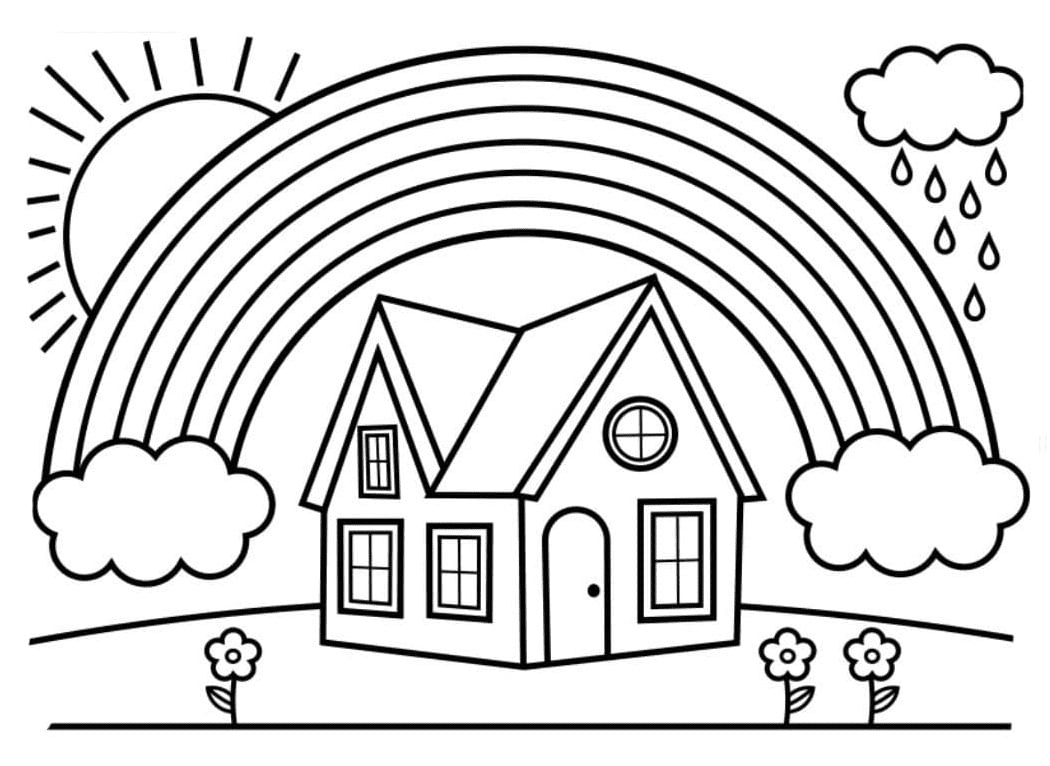
A simple cottage beneath a full rainbow arc with sun and clouds – one of the most cheerful compositions in the collection. The rainbow provides the page’s central coloring challenge and teaching opportunity: the standard rainbow color order from outer to inner arc is red, orange, yellow, green, blue, indigo, and violet. For young children, approximating this sequence with the colors they have available – red, orange, yellow, green, blue, purple – teaches the spectrum sequence in a naturally memorable format.

Rainbow and free house coloring pages
Happy Family near the House
The only people-inclusive page in the collection is a family of four (father, mother, two children) and a dog standing outside their house. This page suits discussions about family, home, and community in early childhood settings. The family figures give children an opportunity to choose skin tones and clothing colors, making it a more personally expressive page than the architecture-only compositions.

Picture of a house to color
House with Pool
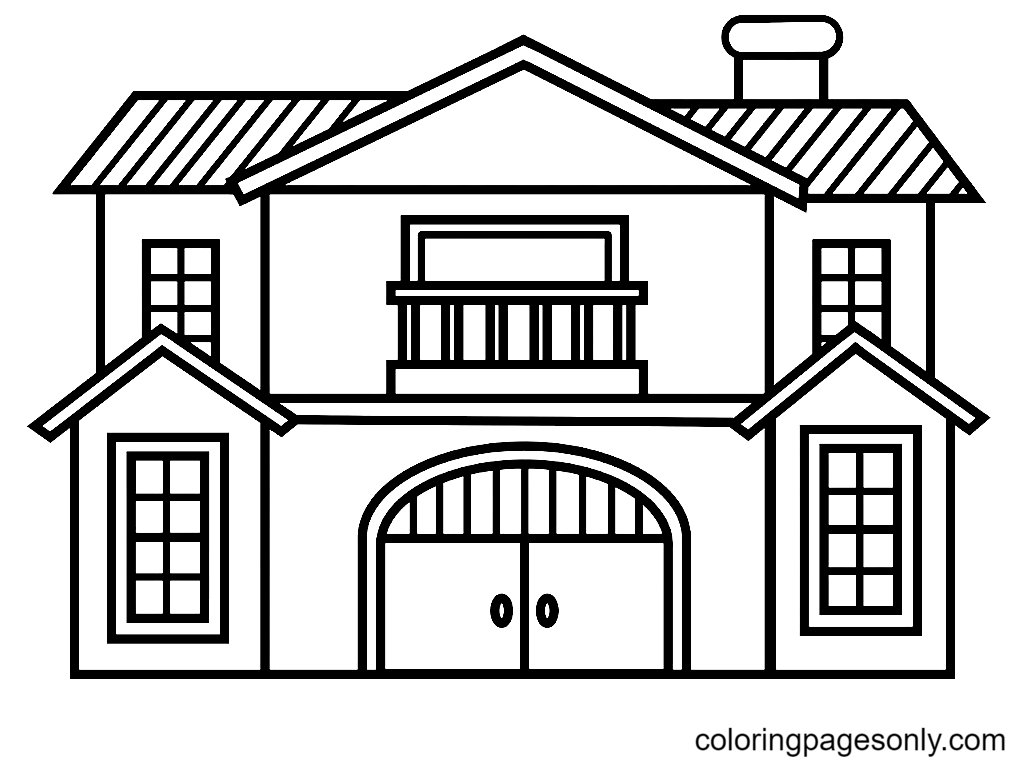
A larger, multi-story residential house with a swimming pool in the front or side yard. The pool element gives this page its most distinctive coloring challenge: the pool water should be a clear, vivid aqua-blue – lighter and more transparent-looking than the sky – suggesting depth and reflection. The surrounding deck or patio area uses warm stone-gray or pale tan.

Houses to color and print
Mushroom House
A cartoon-style dwelling built from or into a large mushroom – the most purely imaginative page in the collection and consistently one of the most popular with children ages 4–8. No single correct color scheme exists; the traditional red-with-white-spots toadstool palette is one option, but green, orange, and purple mushroom caps all work equally well. The small scale of the mushroom house relative to the surrounding grass and flowers creates an implied narrative of a tiny, magical dwelling that many children find irresistible.

Printable picture of Mushroom House
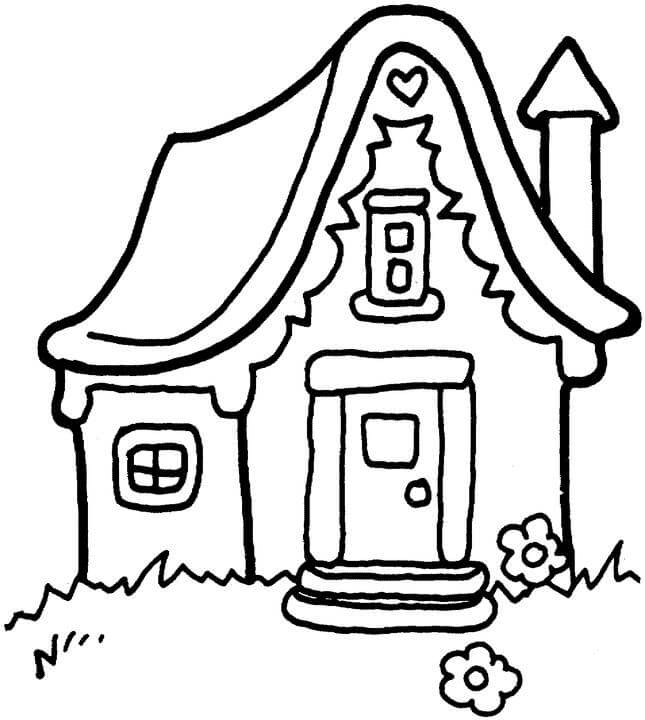
Little House
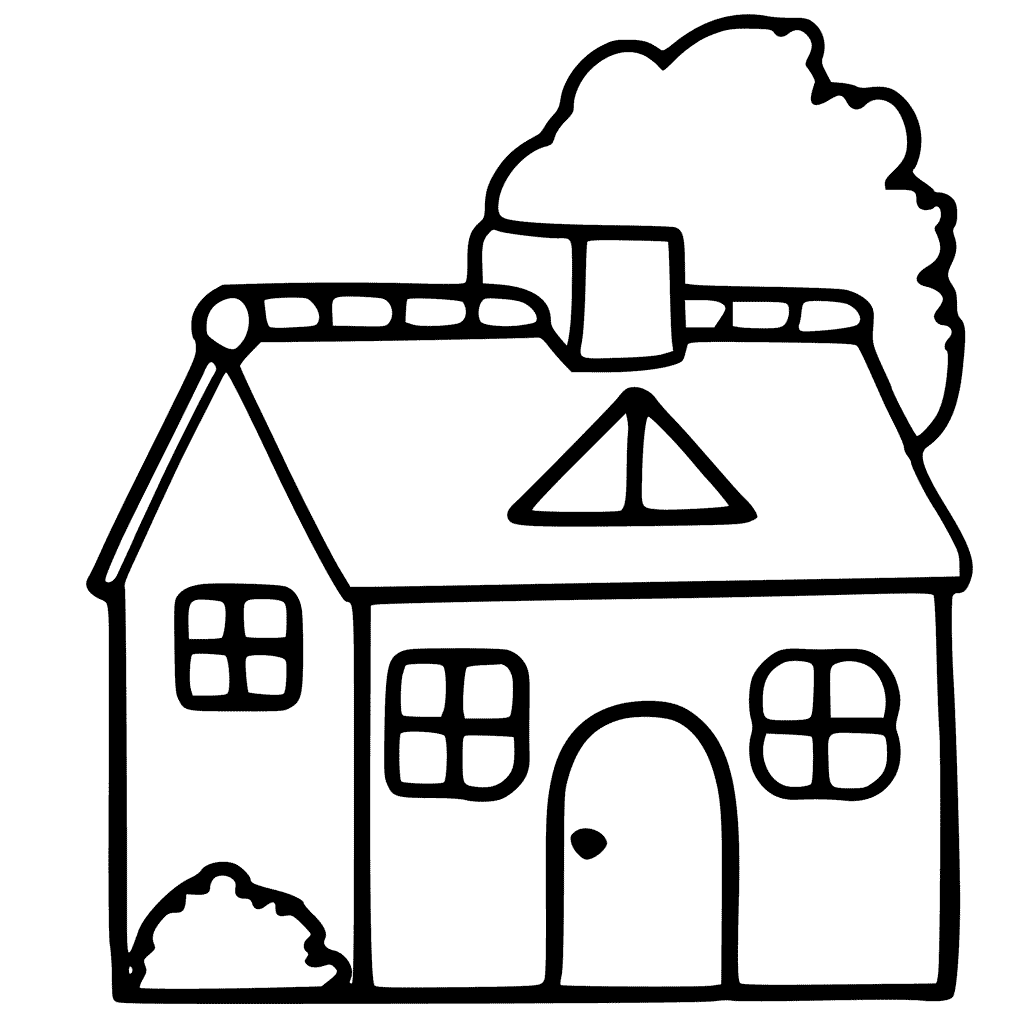
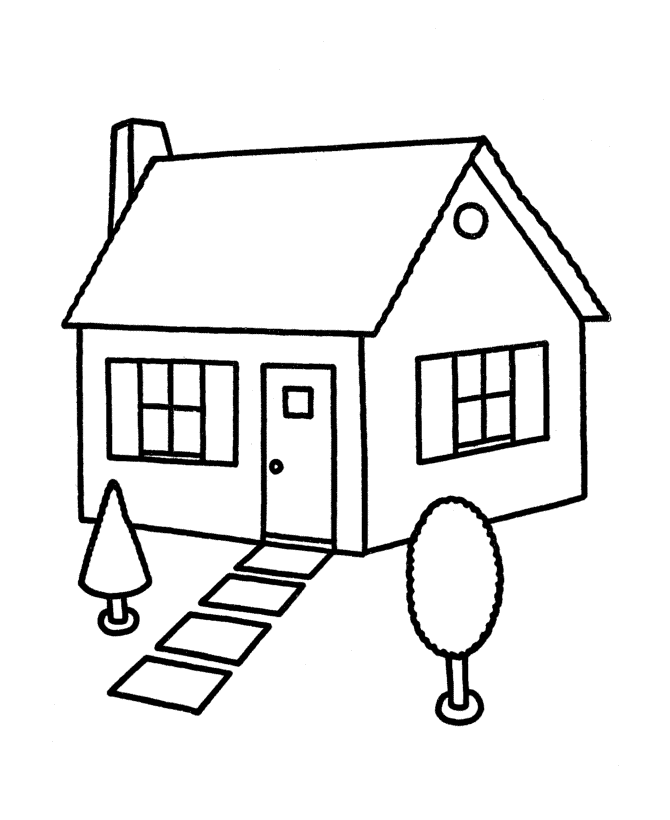
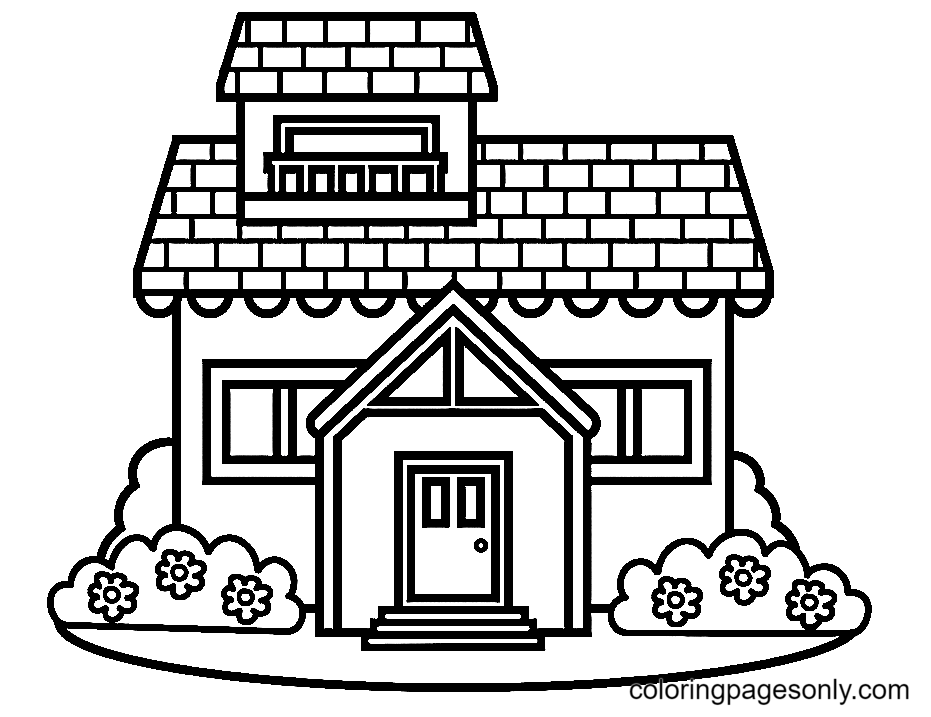
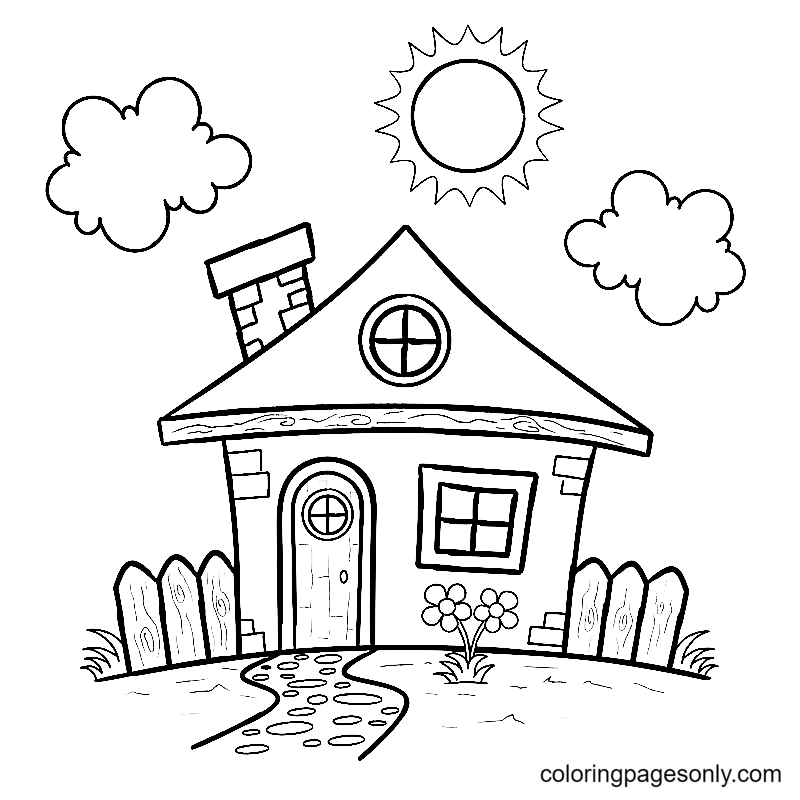
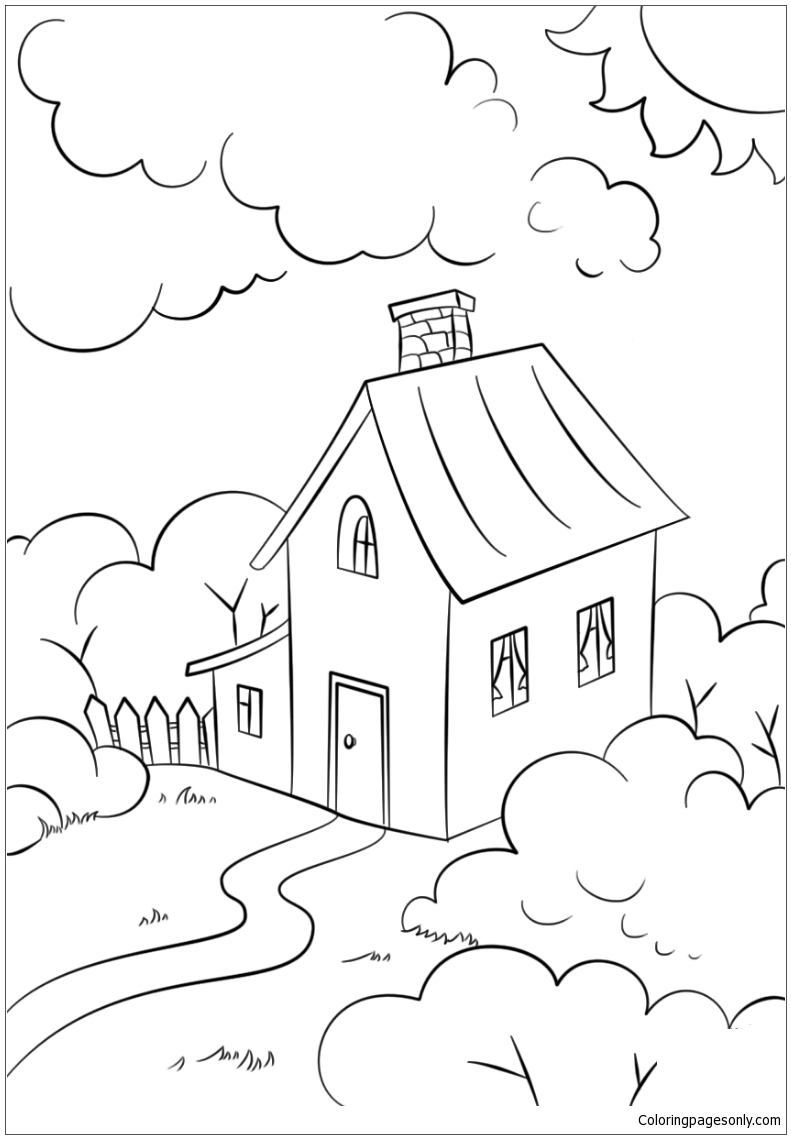
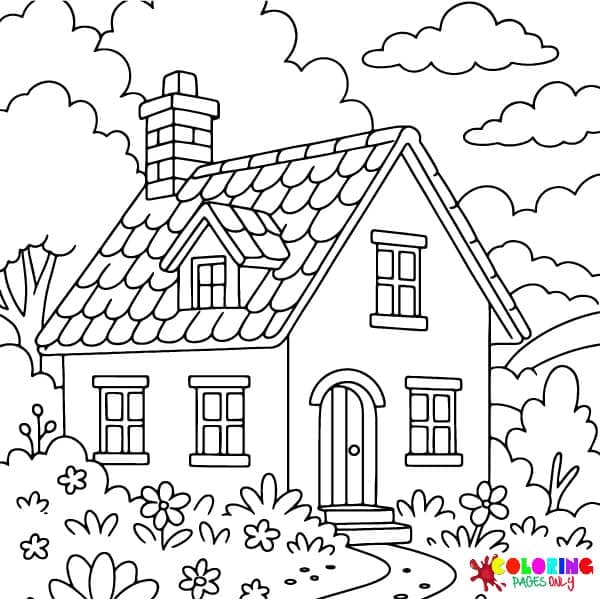
A small, charming cottage with a triangular roof, a long chimney, and a flower garden in front – one of the most classically “house-shaped” pages in the collection. Its simplicity makes it accessible to the youngest colorists, while the chimney and flower bed details give slightly older children additional color decisions beyond the basic roof-wall-door-window combination.

Little House Coloring Page
FAQs
What age range are house coloring pages suitable for? The collection spans simple, bold-outline pages suited for ages 3–5, more detailed architectural and scene-based pages for ages 6–10, and detailed pages for adults. Parents and teachers can select simpler pages (Simple House, Easy House, House for Preschool) for younger children and more complex compositions (House with Swimming Pool, Lovely House with Garden, Christmas House with Decorations) for older children and adults.
What colors should I use for a house roof? Traditional roof colors include terracotta red, dark gray or slate, warm brown, forest green, and navy blue. A terracotta-red roof against cream or white walls is the most recognizable classic combination. Fantasy house pages like the Mushroom House or Candy House have no single correct palette and work with any color scheme the colorist chooses.
Can these pages be used for classroom activities? Yes – house coloring pages integrate naturally into preschool and kindergarten community helper units, geography and culture lessons, family theme weeks, and seasonal holiday activities. The Christmas house cluster is particularly well-suited for December classroom activities.
What is the correct rainbow color order? The standard rainbow color sequence from outer arc to inner arc is red, orange, yellow, green, blue, indigo, and violet. For young children using standard crayon sets, approximating this with red, orange, yellow, green, blue, and purple yields a recognizable rainbow.
Are there seasonal house pages in this collection? Yes – the collection includes Christmas-specific pages (Christmas House, Christmas House with Decorations, Christmas House with Tree and Snowman, Christmas Gingerbread House, Christmas House for Kids), a winter house scene (House Winter Coloring Page), and a gingerbread and candy house page. These seasonal pages are particularly useful for November–December classroom and party activities.
All 50+ House Coloring Pages are free – download as PDF or color online. Share your finished pages on Facebook and Pinterest.