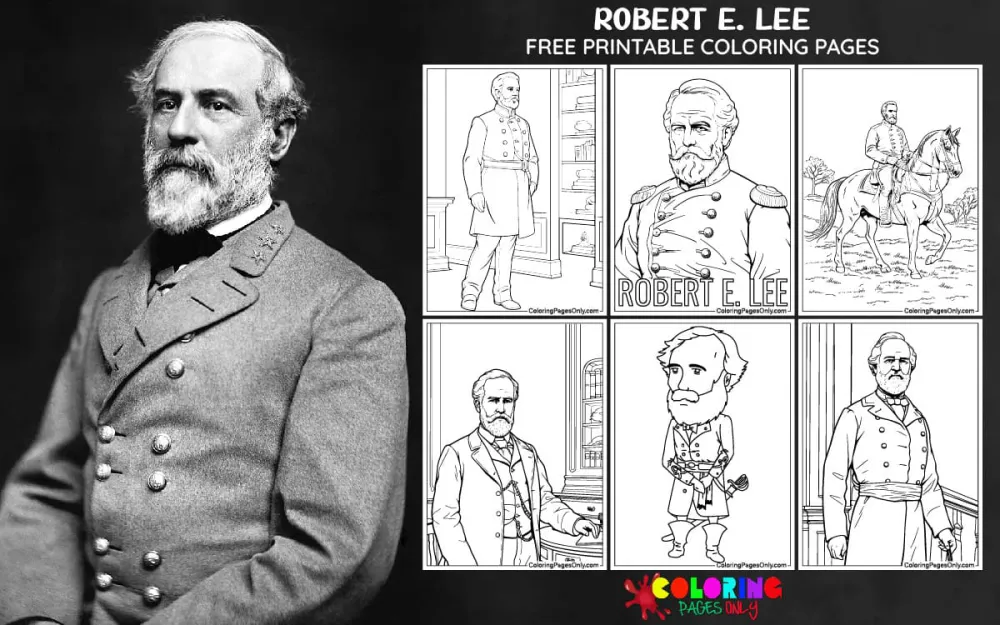
Free Robert E. Lee coloring pages: 20 printable PDF designs of the Confederate general from the American Civil War, mostly formal portrait-style illustrations in uniform. Every page can be downloaded as a PDF to print or colored online in the browser.
Robert E. Lee was born in Virginia in 1807 and spent more than three decades as a United States Army officer, graduating second in his class at West Point in 1829 and later serving as the academy’s superintendent. When Virginia seceded from the Union in April 1861, Lee turned down Abraham Lincoln’s offer to command Union forces, resigned his commission, and joined the Confederacy, the government formed by Southern states that seceded primarily to preserve the institution of slavery. Lee, like his wife’s family, held enslaved people at the time. He commanded the Confederacy’s Army of Northern Virginia from 1862, winning battles at Fredericksburg and Chancellorsville before his invasion of the North was turned back at Gettysburg in 1863. He was named general-in-chief of all Confederate forces in the war’s final months, before surrendering to Union general Ulysses S. Grant at Appomattox Court House on April 9, 1865, an event that effectively ended the Civil War. After the war, Lee served as president of Washington College in Lexington, Virginia, now Washington and Lee University, until he died in 1870.
Lee’s legacy remains actively debated today. Because he commanded an army fighting to preserve slavery, many statues and memorials bearing his name, including a prominent equestrian statue in Richmond, Virginia, have been removed from public spaces in recent years as communities reassess how the Confederacy should be remembered. This collection focuses on portrait-style illustrations suited to a factual history lesson rather than battle scenes or celebratory imagery.
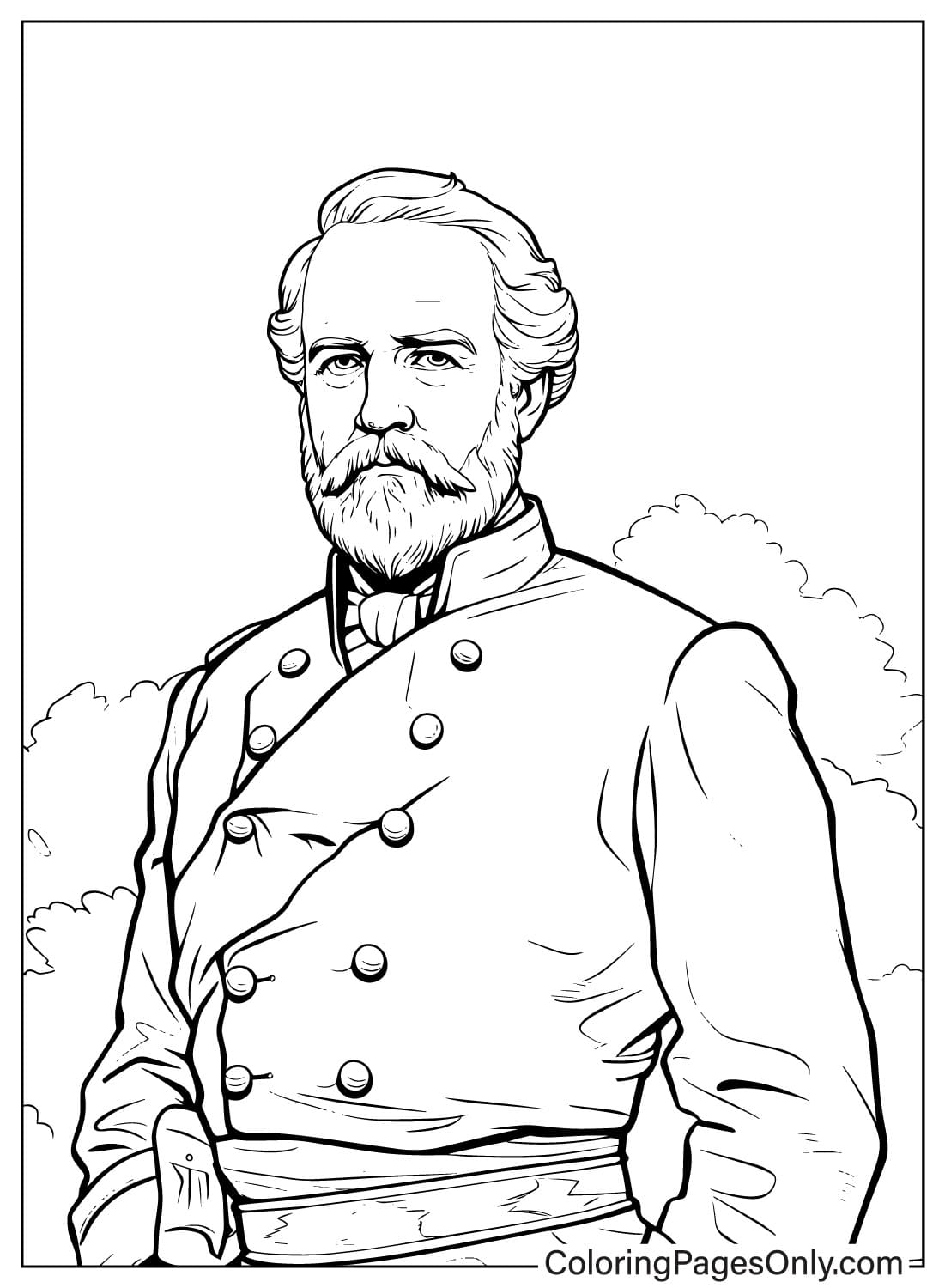
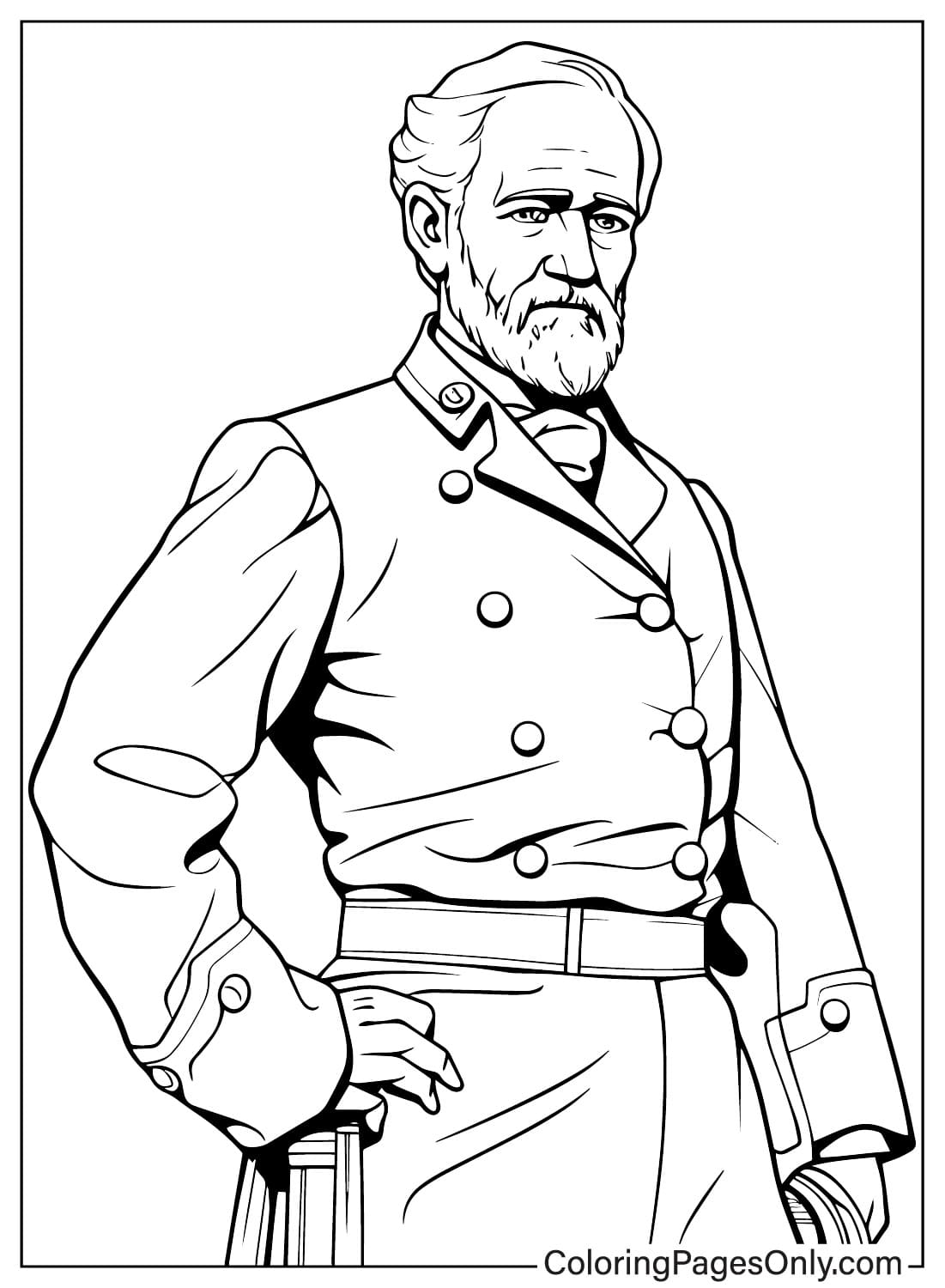
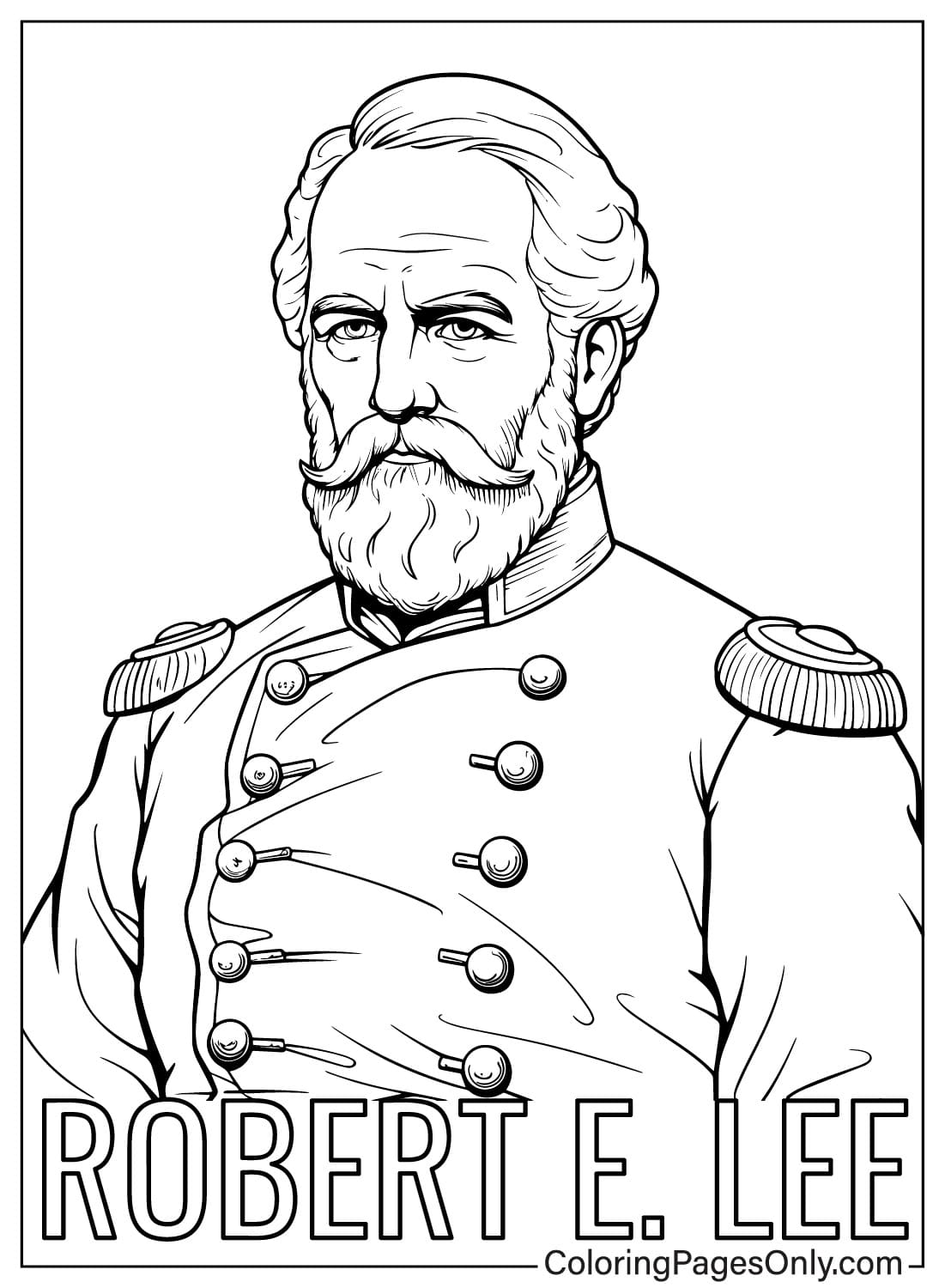
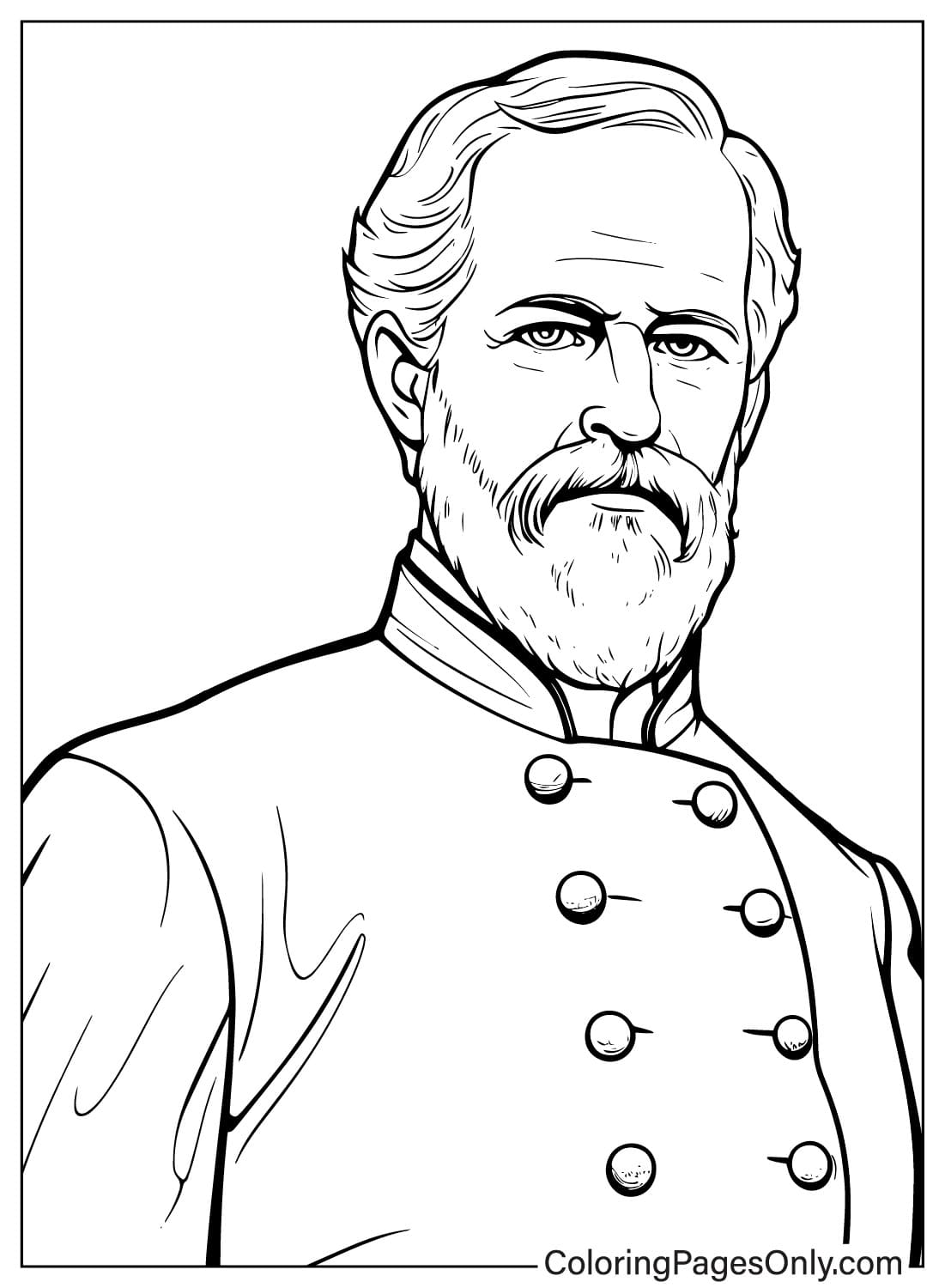
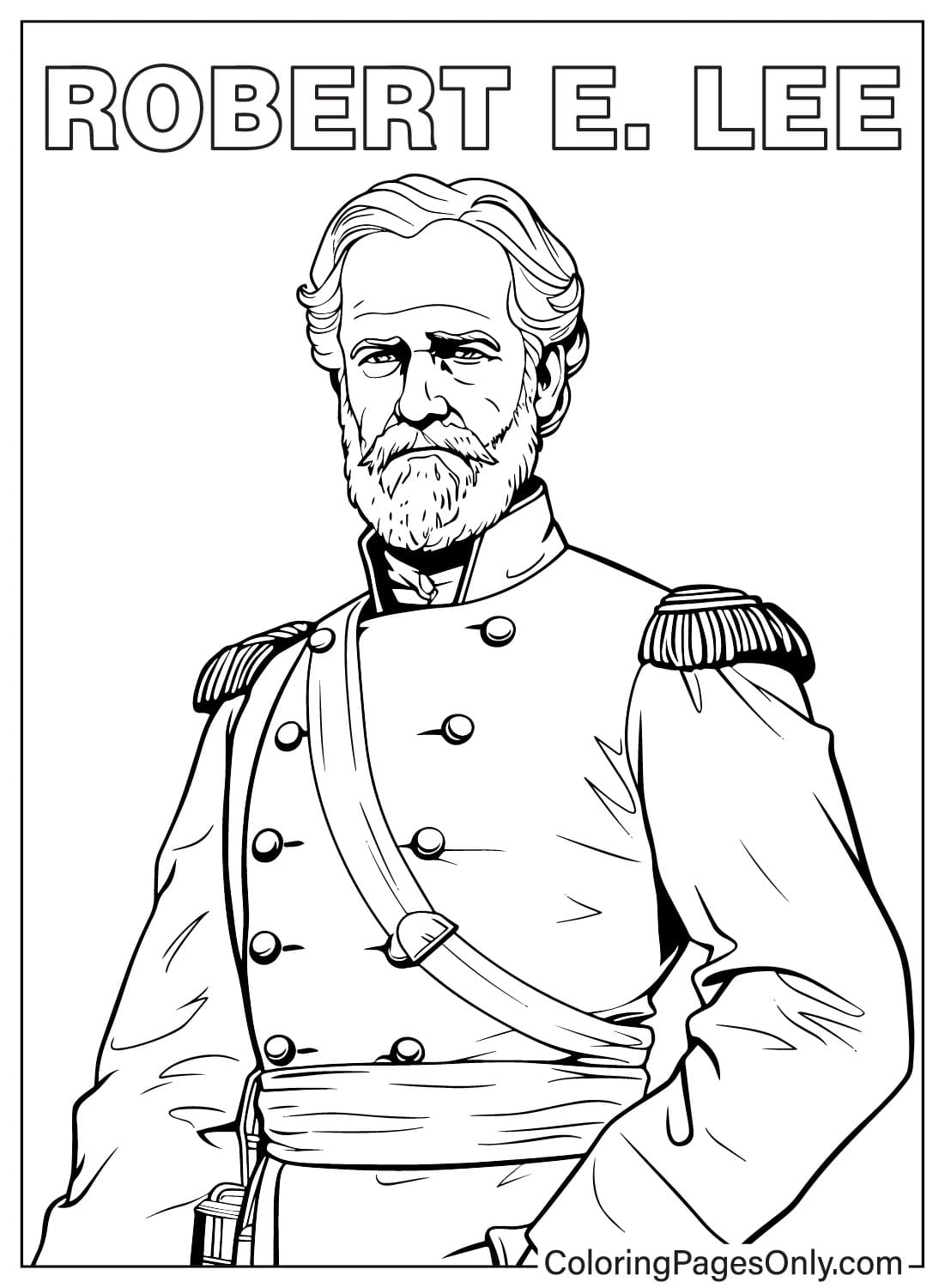
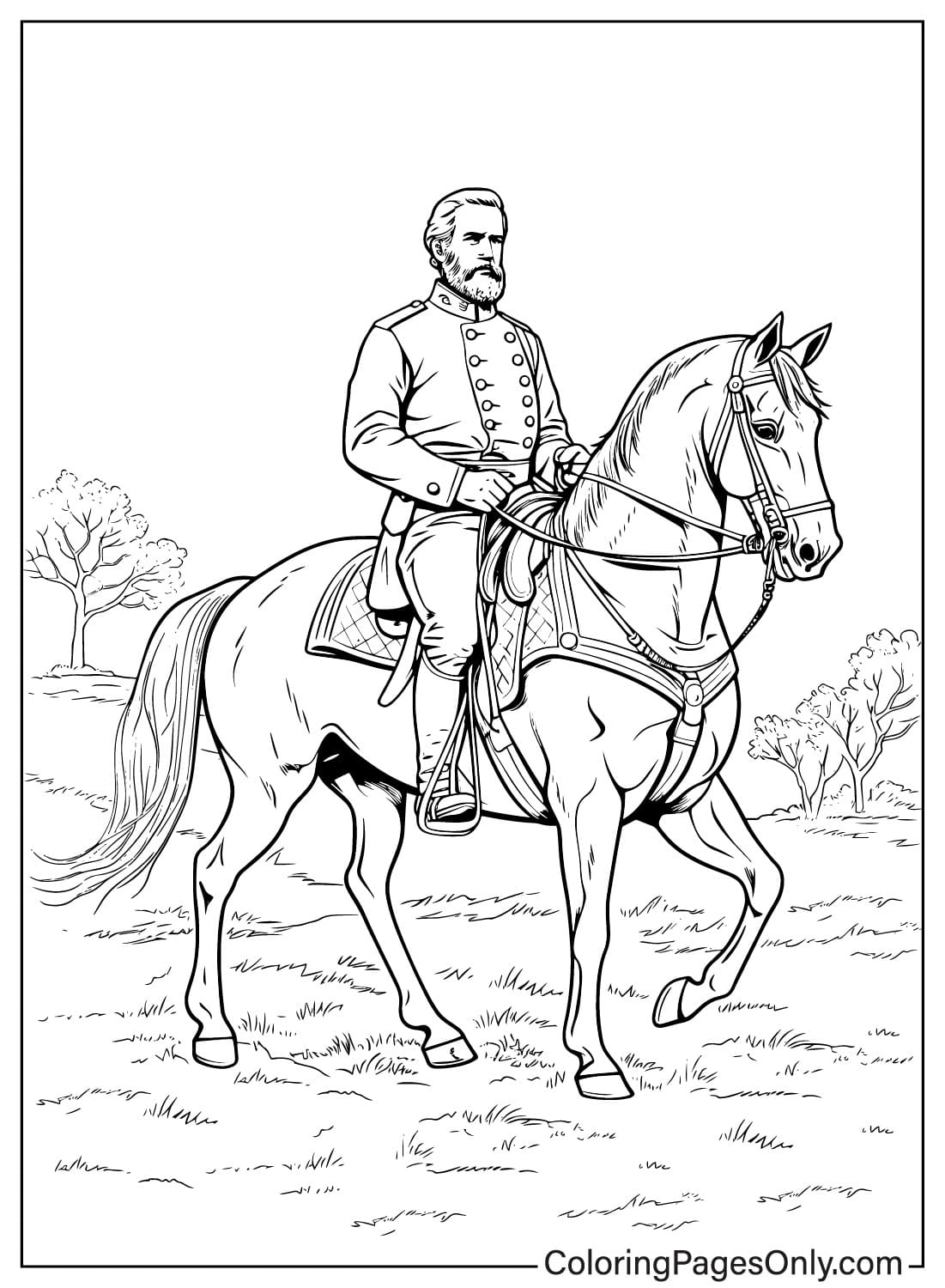
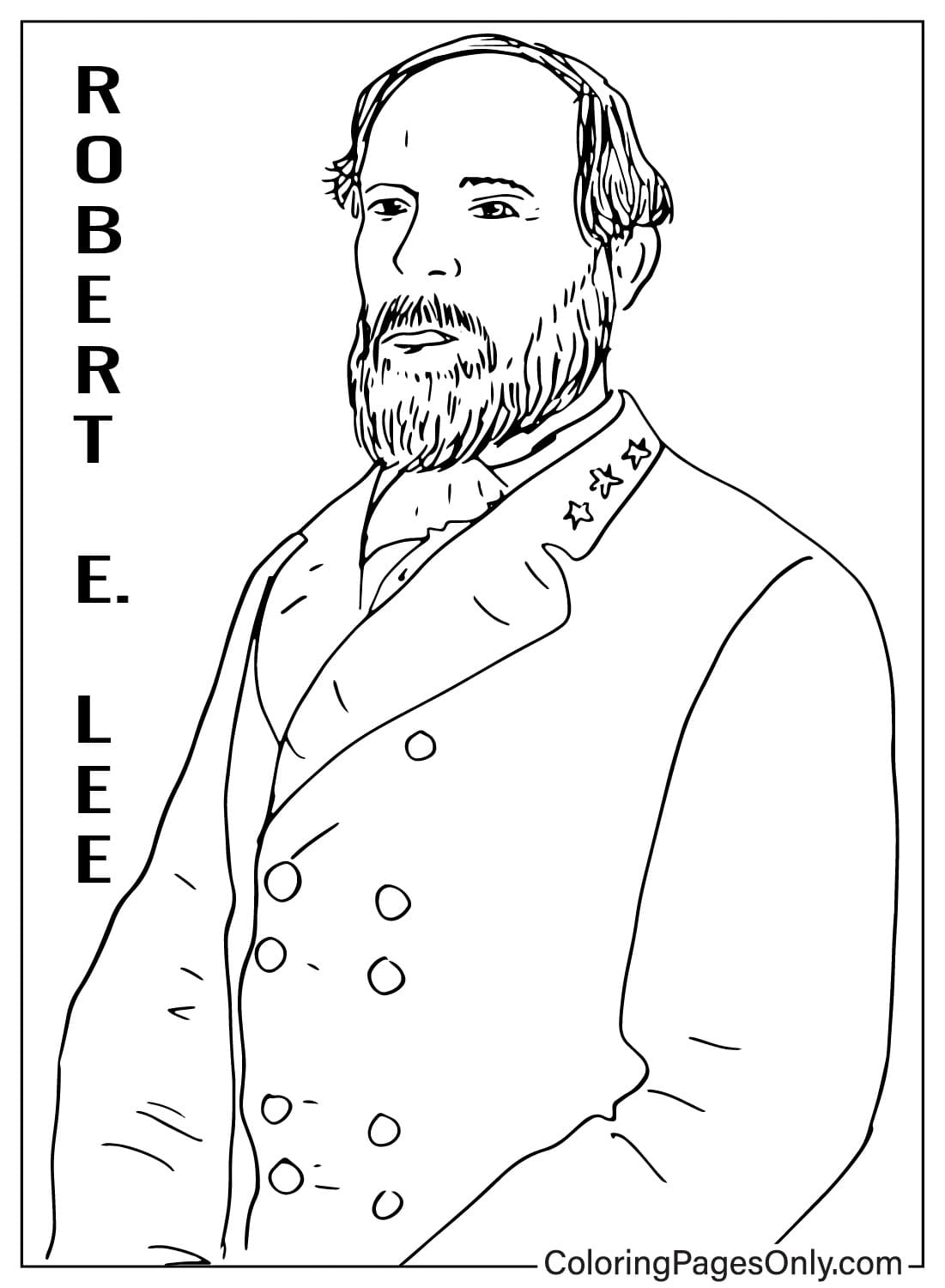
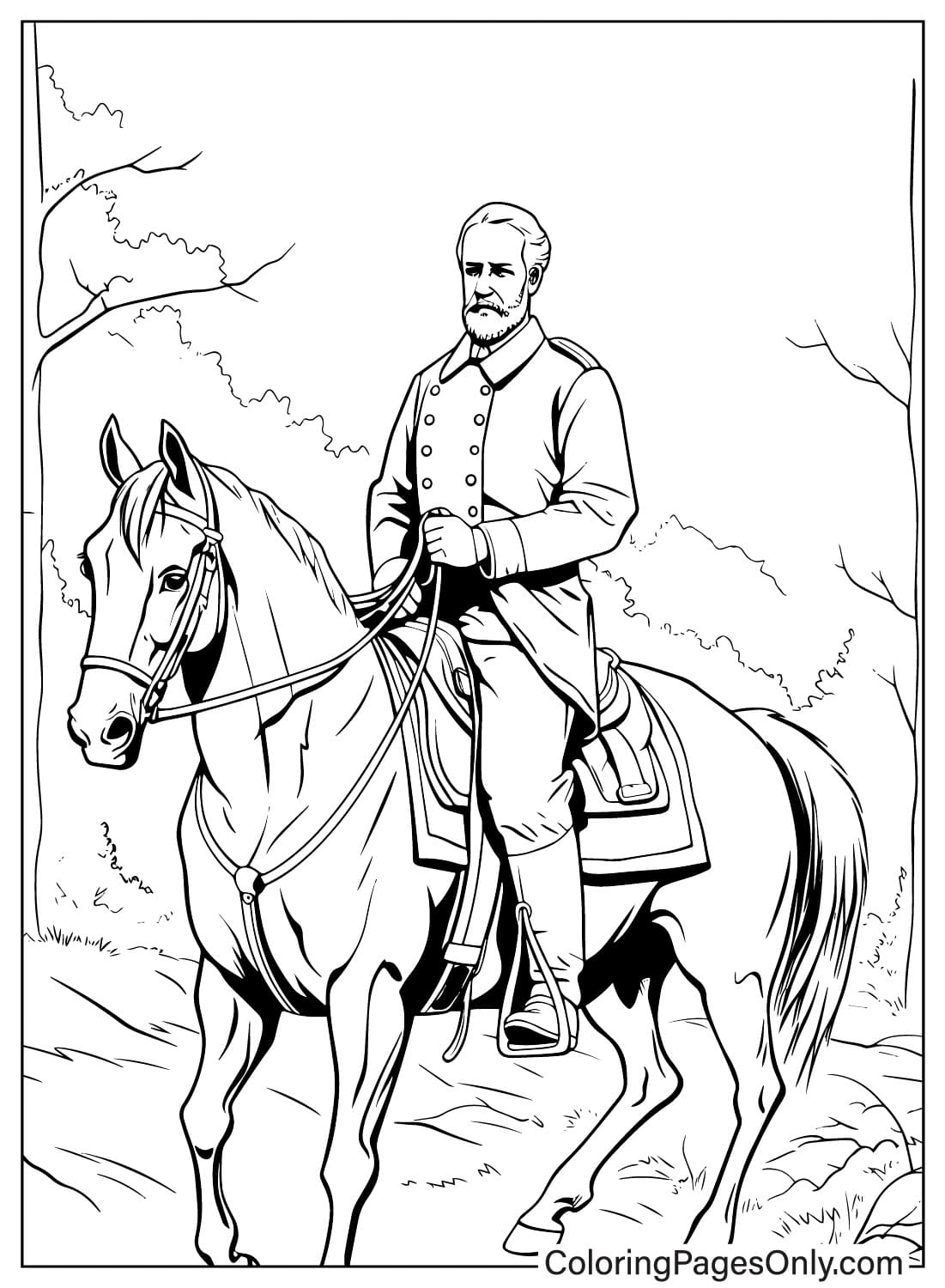
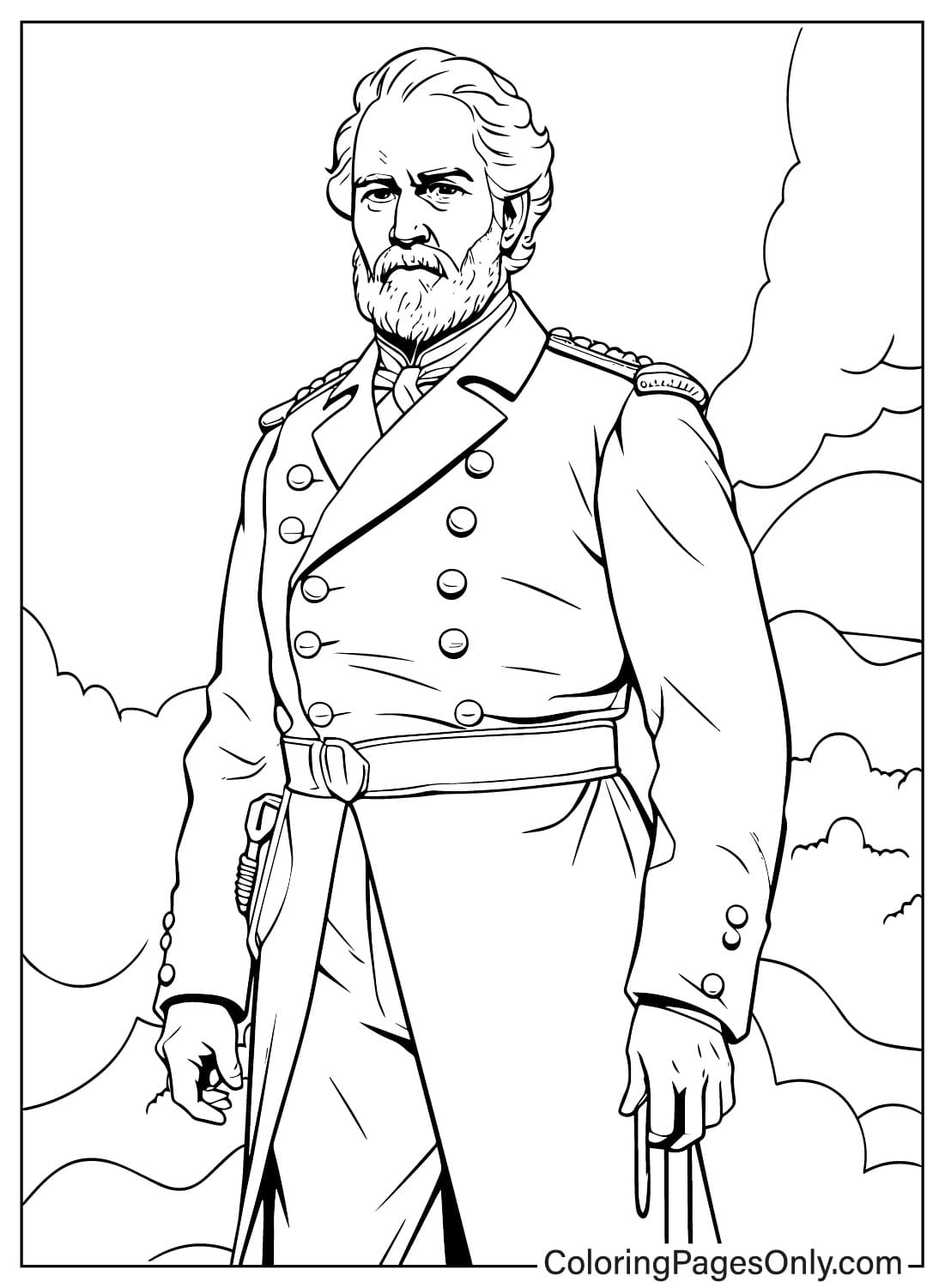
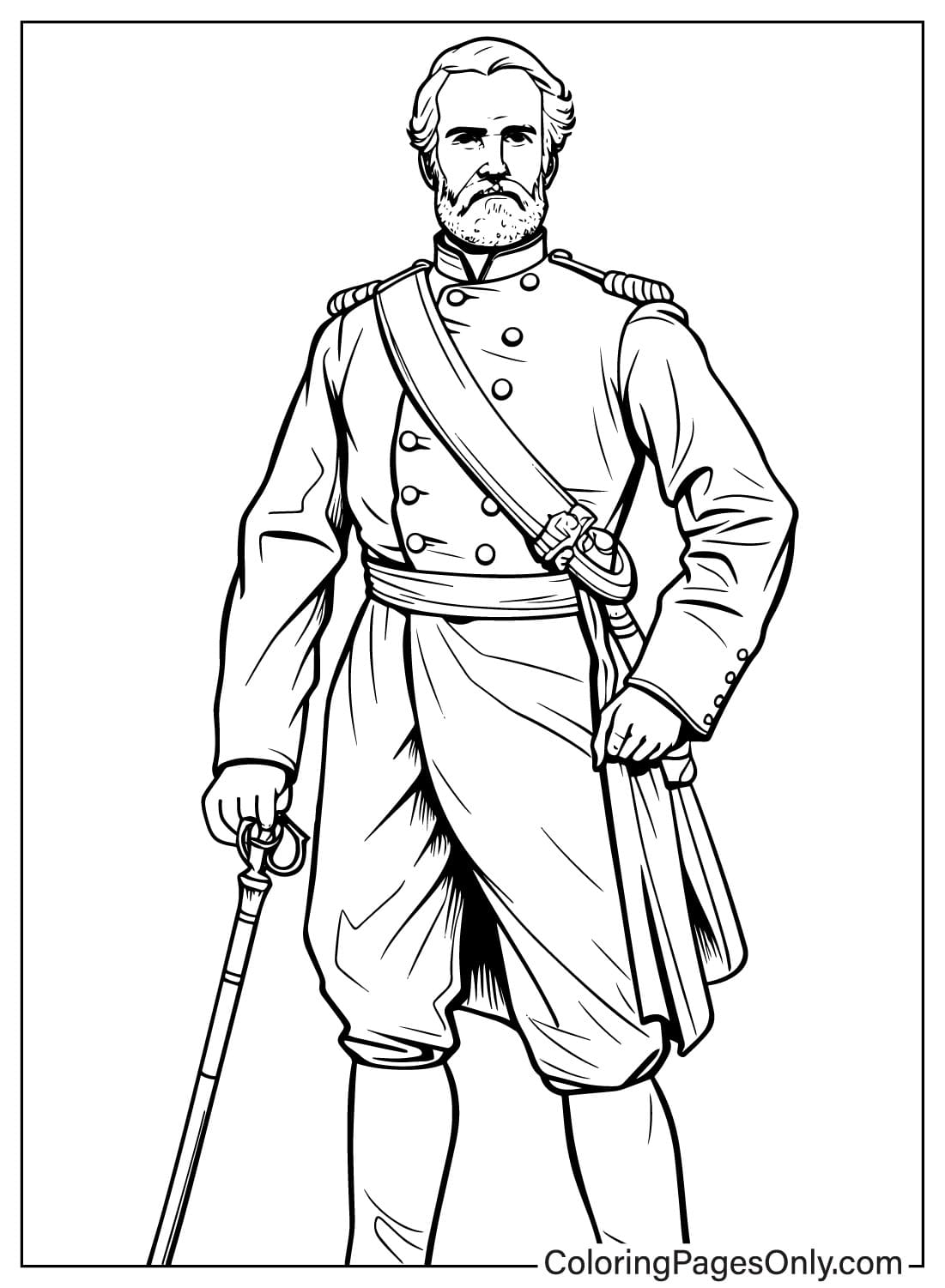
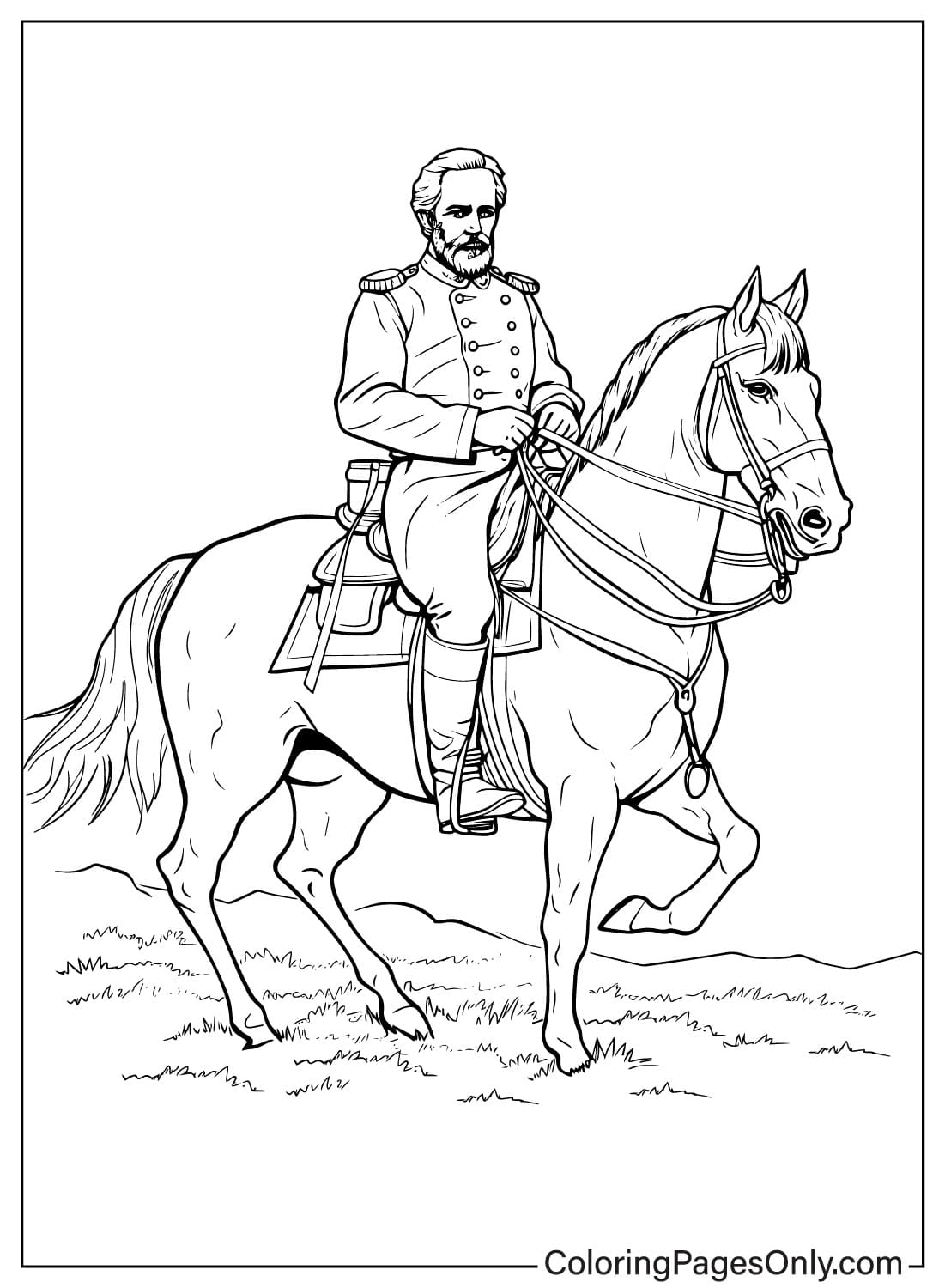
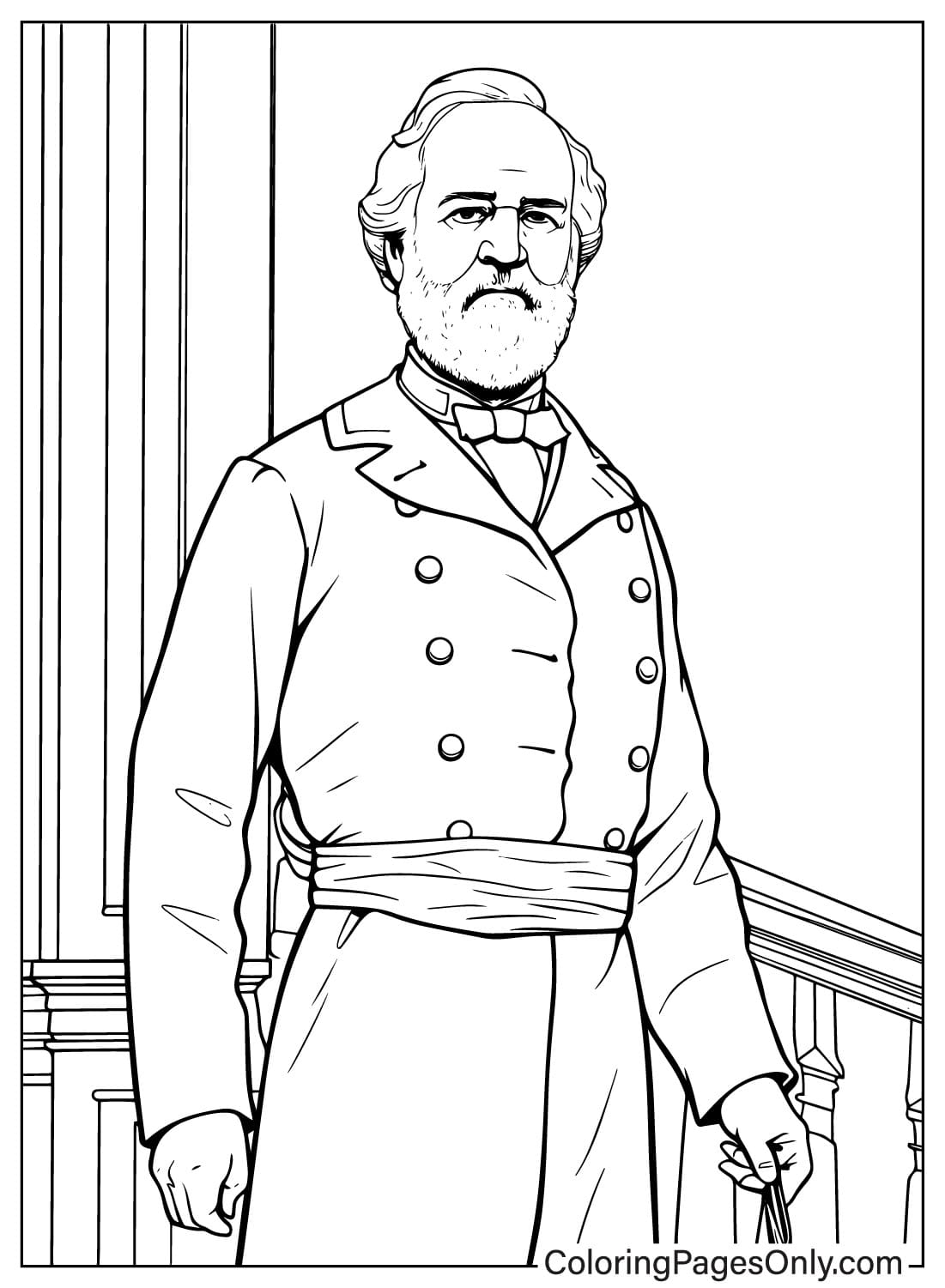
What Is Inside This Collection
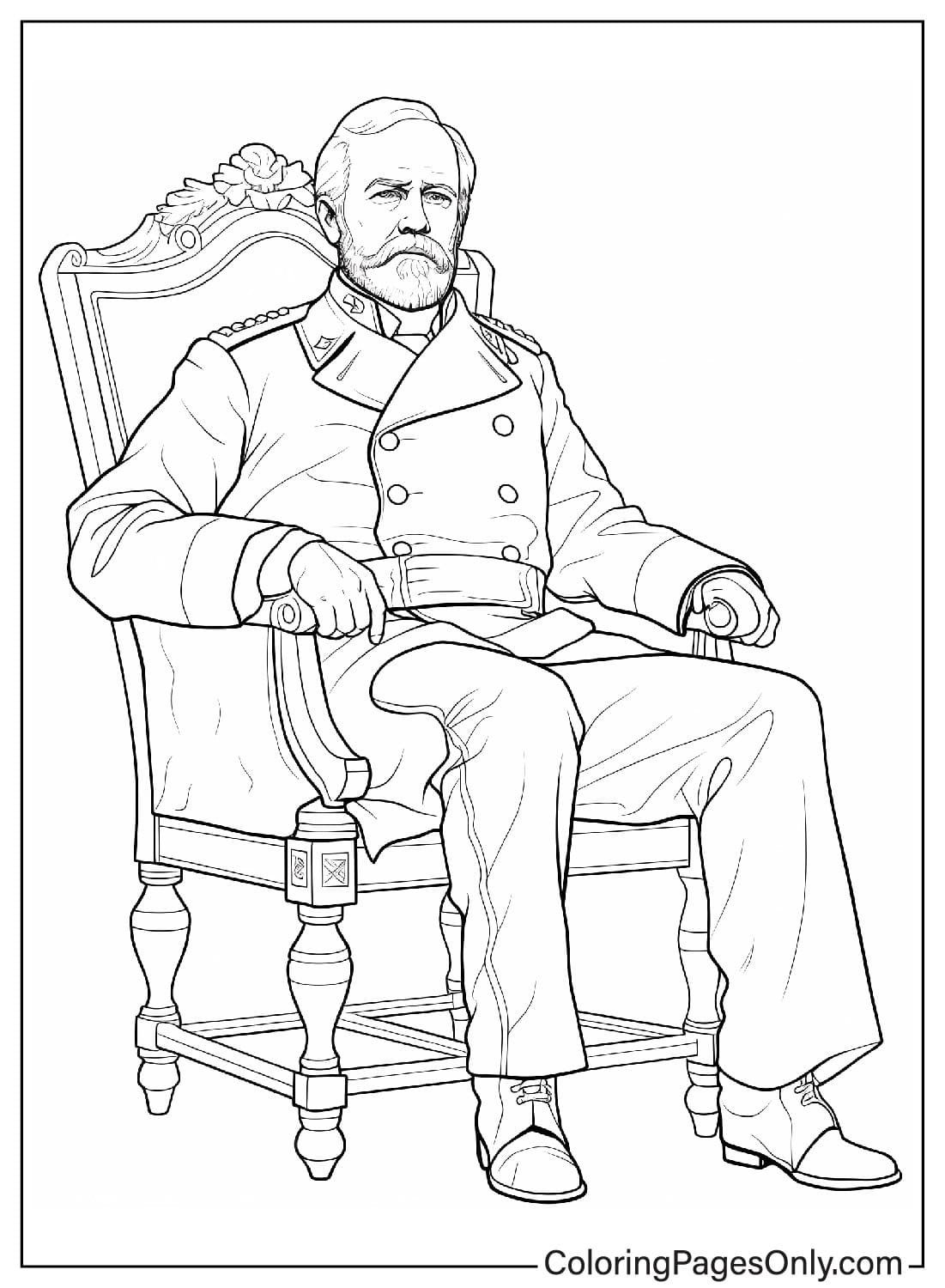
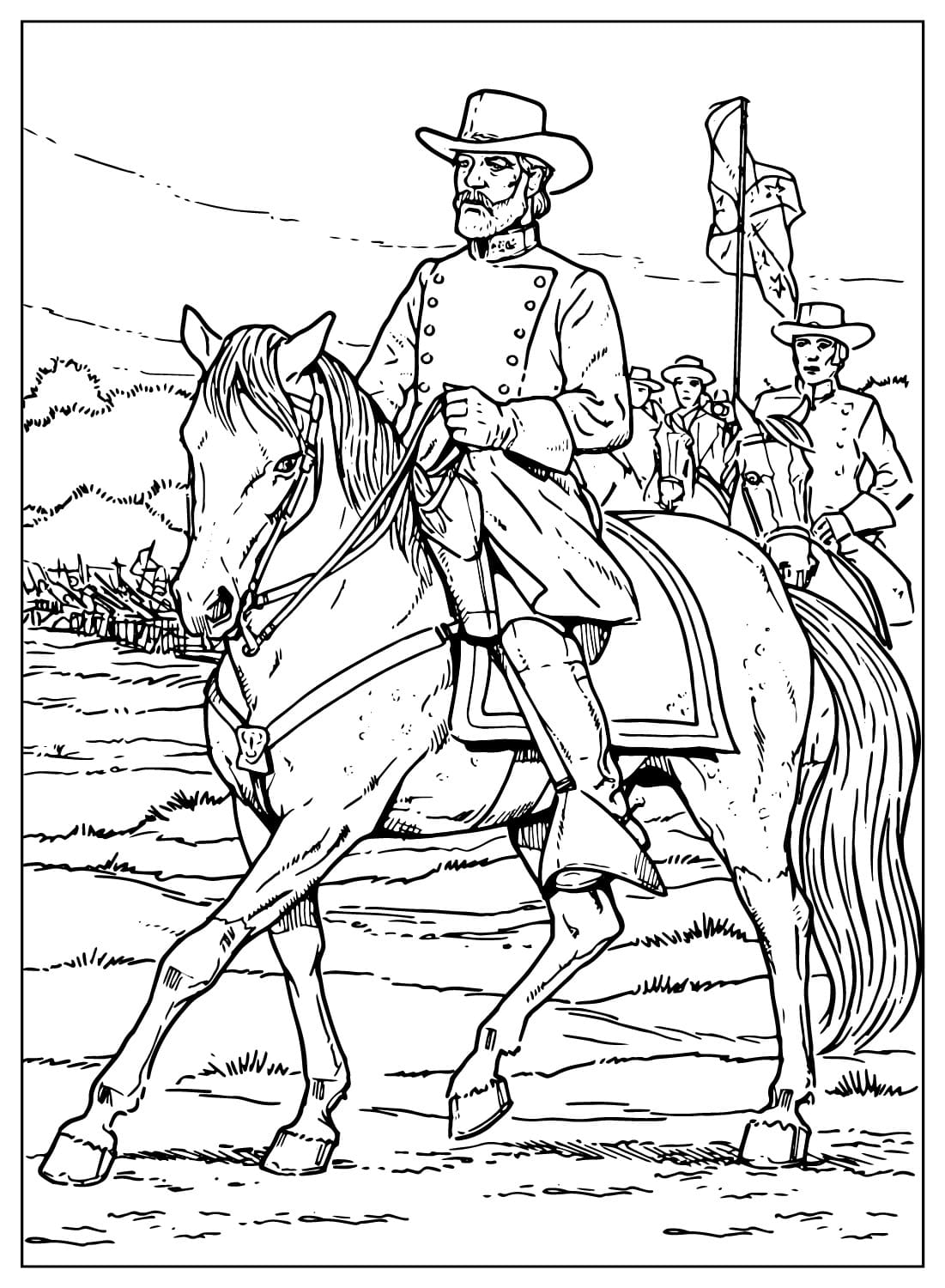
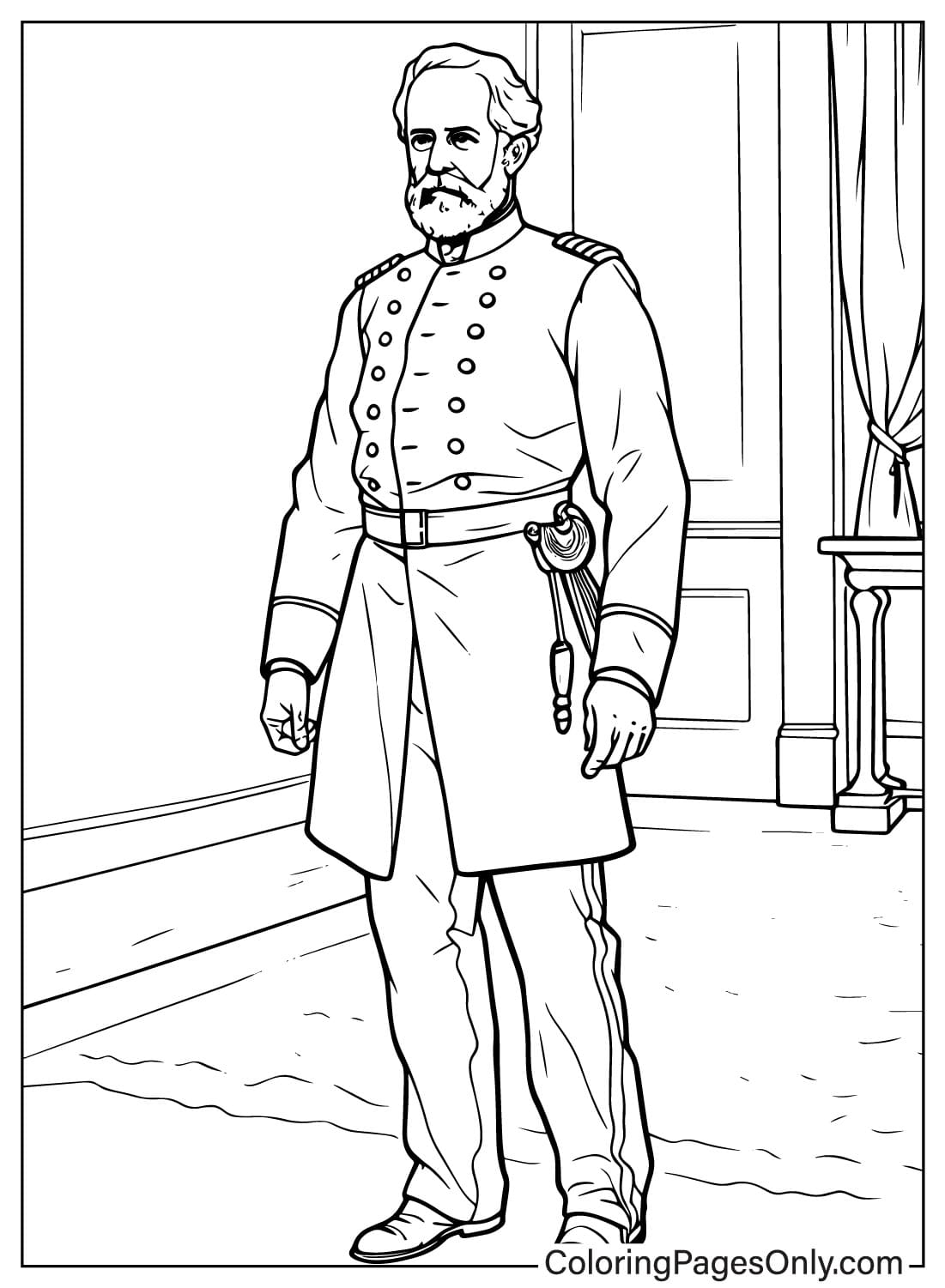
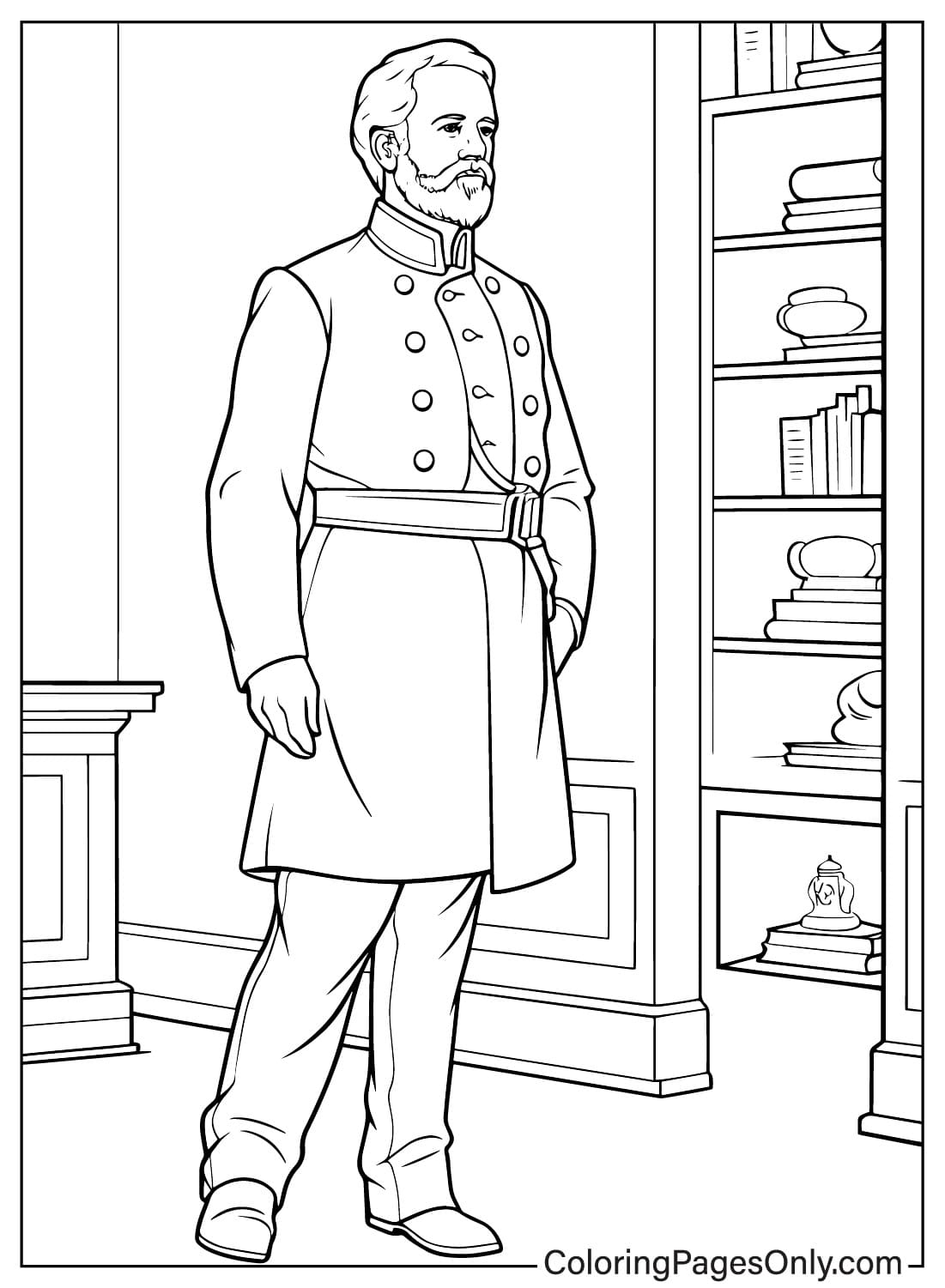
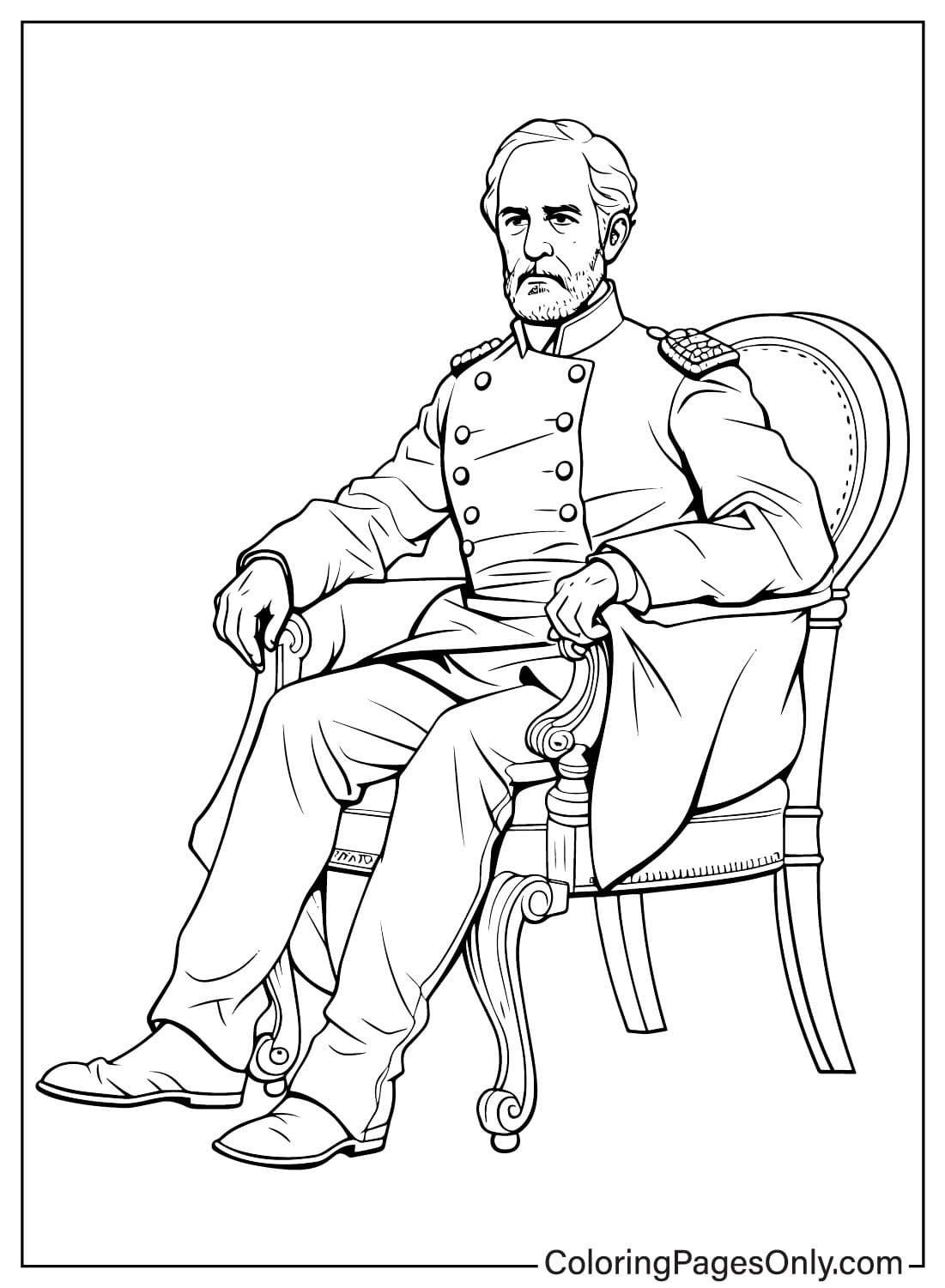
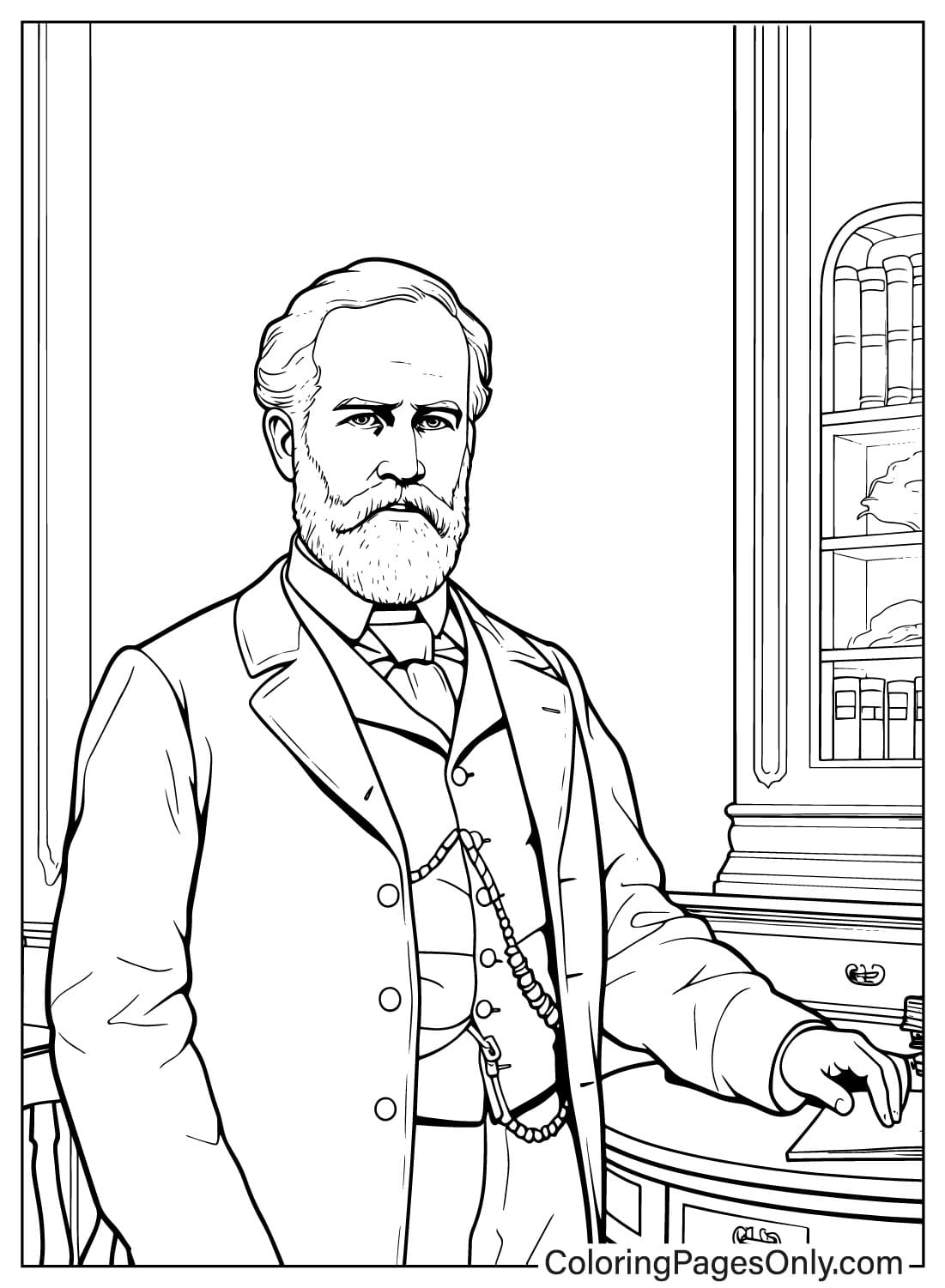
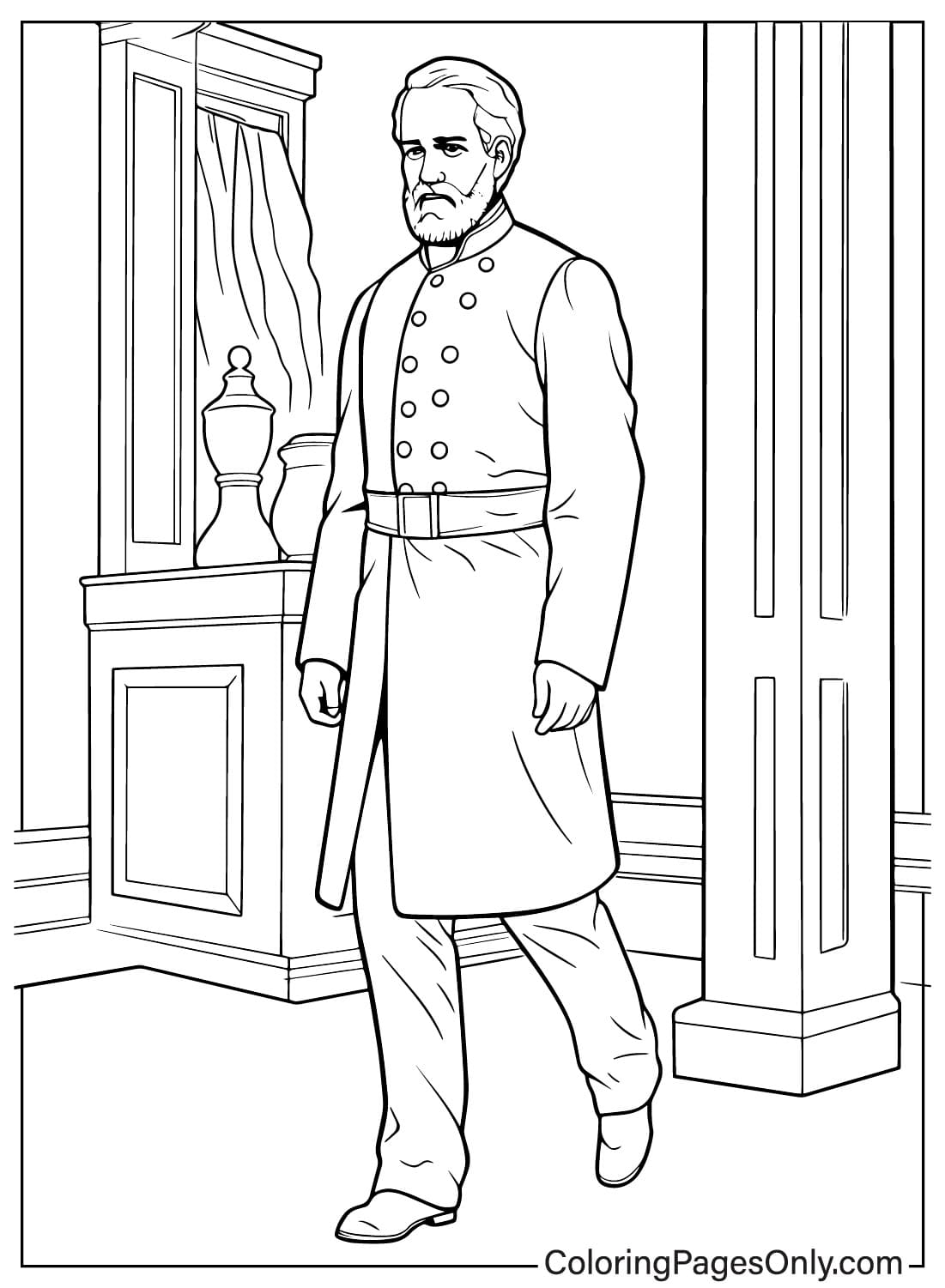
Nearly all 20 pages are formal portrait-style illustrations of Lee in uniform, with page titles differing more than the actual scenes, so expect a consistent single-portrait format across most of the set rather than distinct battle or lifestyle scenes. A small collection like this works best treated as reference material for a single lesson rather than a series to work through over many sessions.
Formal Uniform Portraits
The vast majority of the collection shows Lee from the chest up or at three-quarter length, in a Confederate officer’s uniform. These pages are best suited to a straightforward, historically grounded coloring session, such as part of a classroom lesson on the Civil War, rather than a themed activity. Because the pages repeat a similar composition, they work well as a set for a full class, where each student colors a personal copy of the same reference image rather than searching for a unique scene.
Chibi and Simplified Style
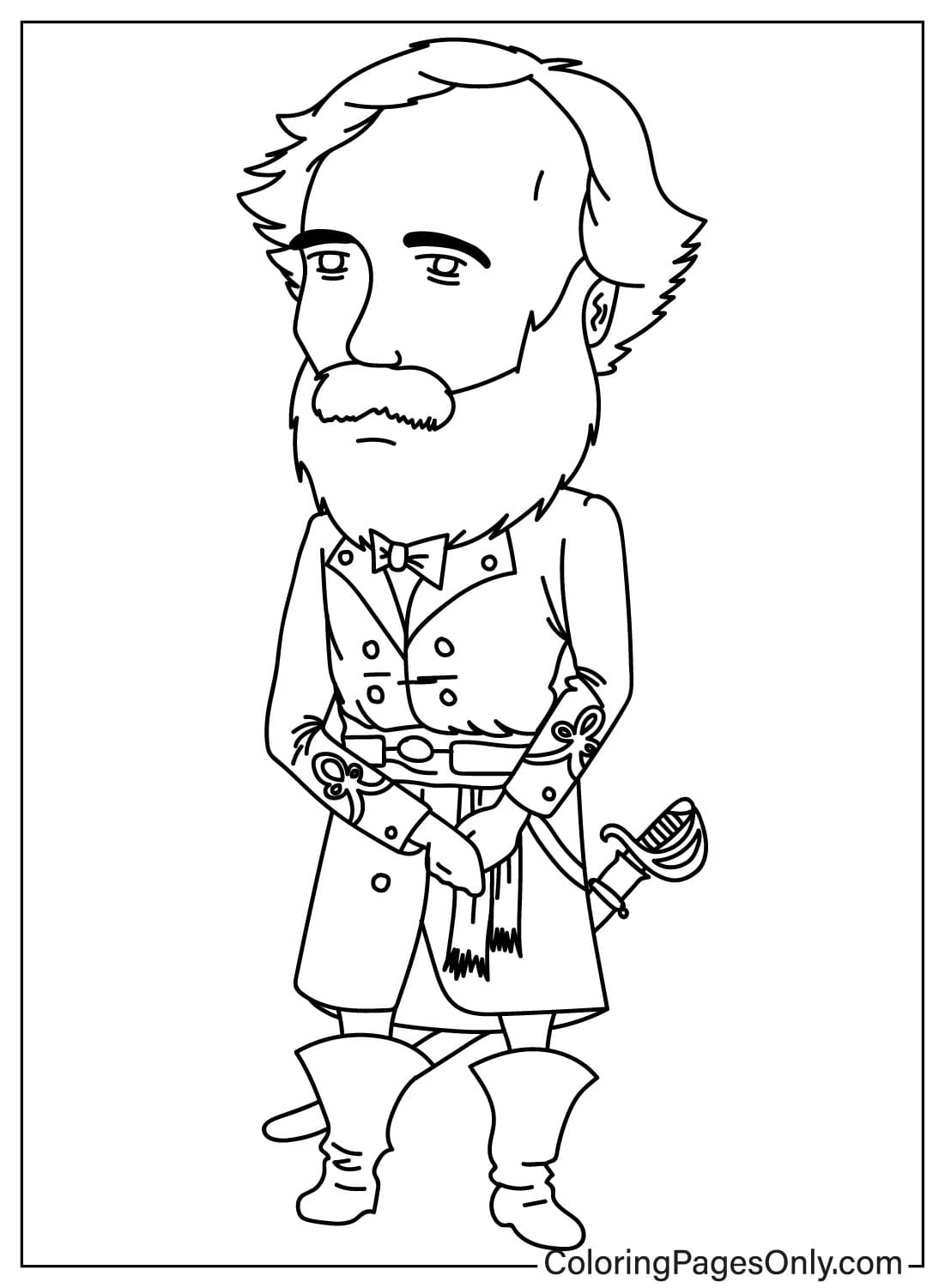
One page breaks from the formal portrait format with a simplified, large-headed chibi-style illustration. This is the most approachable page in the set for younger children who are not ready for the detail level of the standard portraits.
What Robert E. Lee Coloring Pages Do
Fine motor development. The American Academy of Pediatrics identifies structured coloring as a support for fine motor control in children ages 2 through 7, and the uniform details, buttons, collar, and insignia on the standard portrait pages give a child small, defined areas to practice staying inside.
A starting point for a real history conversation. Because Lee’s story cannot be separated from the Confederacy and the institution of slavery it fought to preserve, coloring one of these portraits works best paired with an actual discussion of that context, turning a coloring activity into an entry point for a substantive history lesson rather than a standalone craft.
Anxiety reduction through focus. A 2005 study in the Art Therapy Journal found that structured coloring sessions produced measurably lower anxiety than unstructured drawing, a benefit tied to the coloring process itself rather than the specific historical subject.
Portrait proportion practice. Coloring a repeated human portrait format, face, collar, and shoulders, gives children practice with facial proportion and symmetry that a scene-based or object-based coloring page does not offer in the same way.
How to Color Robert E. Lee Pages Well
- The uniform coat: use a true Gray rather than blue, since Confederate officers wore gray, and add Goldenrod for the shoulder insignia and coat buttons that marked an officer’s rank.
- The sash: if the page shows a waist sash, a deep Scarlet or buff-toned Tan is historically accurate for a Confederate officer’s dress sash.
- Hair and beard: Lee had a full gray-white beard by the later years of the war, so a light Silver or Gray works better than a solid brown or black for portrait pages set in that period.
- Skin tones: use a neutral, natural skin tone rather than an artificially pale or flushed shade, keeping the portrait realistic rather than stylized, except on the one chibi-style page where a softer, simplified palette fits the art style.
5 Educational Craft Ideas With Robert E. Lee Coloring Pages
1. Portrait Standee. Color a portrait page, glue it to cardboard or a cereal box, and cut around the outline to make a standing figure for a classroom history display.
2. Bookmark. Color a small portrait page, trim it into a narrow strip, and laminate it or cover it with clear tape for a durable history-themed bookmark.
3. Civil War Timeline Poster. Color three or four portrait pages, arrange them on a poster board, and label each with a date, Virginia’s secession, key battles, and the surrender at Appomattox, to build a simple visual timeline.
4. History Report Cover. Color a portrait page and use it as the cover for a written report or notebook on the Civil War.
5. Fact Card. Color a portrait page, then write two or three verified facts on the back: birth year, key battles, and the surrender date, to make a simple study or flash card.
Frequently Asked Questions
What are Robert E. Lee coloring pages?
A free set of 20 printable PDFs and online coloring sheets showing formal portraits of Confederate general Robert E. Lee in uniform.
Who was Robert E. Lee?
A career U.S. Army officer who resigned in 1861 to command Confederate forces during the American Civil War, leading the Army of Northern Virginia until his surrender in 1865.
Why did Lee join the Confederacy instead of the Union?
When Virginia seceded in April 1861, Lee turned down command of the Union Army and resigned, saying he could not fight against his home state, then joined the Confederacy instead.
What was the Confederacy fighting to preserve?
The Confederacy was formed by Southern states that seceded from the United States primarily to preserve the institution of slavery.
How did the Civil War end for Lee?
Lee surrendered the Army of Northern Virginia to Union general Ulysses S. Grant at Appomattox Court House on April 9, 1865, effectively ending the Civil War.
What did Lee do after the war?
He became president of Washington College in Lexington, Virginia, now Washington and Lee University, a role he held until he died in 1870.
Why is Lee’s legacy still debated today?
Because he commanded an army fighting to preserve slavery, many statues and memorials bearing his name have been removed from public spaces in recent years as communities reassess how the Confederacy should be remembered.
Are these pages suitable for young children?
The simplified chibi-style page suits younger children, while the formal portrait pages fit older students studying the Civil War as part of a history lesson.
Start Coloring
Download any page by clicking the design. No account, email, or payment is required. Pages print directly from the browser at full resolution or open in the online coloring tool for screen use. Share finished pages on Facebook or Pinterest with the share buttons at the top of each design page.