
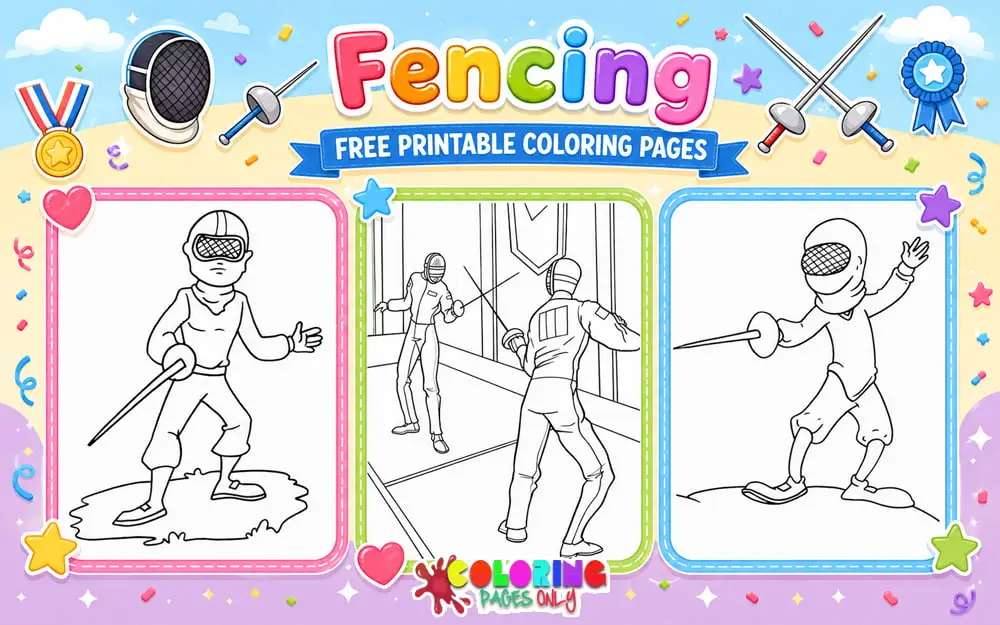
Fencing coloring pages: 20+ free printable PDF designs covering solo fencer portraits, dueling action scenes, Olympic-branded pages, and playful animal and character crossovers. Every page is available as a printable PDF or to color in the browser, with no account required.
Fencing has been part of the Summer Olympics longer than almost any other sport. It was contested at the first modern Games in Athens in 1896, and it remains one of only five sports, alongside athletics, swimming, cycling, and gymnastics, that have appeared at every single Summer Olympics since. Coloring a fencing page connects to a sport with a genuinely uninterrupted competitive history.
These pages suit young fencers just learning the en garde stance, older kids who already know the difference between a foil and a saber, and anyone drawn to the sport’s mix of stillness and speed.
One coloring detail that belongs only to this set: fencing is one of the only sports where white is the default color, not an accent. The jacket, breeches, and mask padding are all traditionally white or off-white, which means the few colored elements on a fencing page, the scoring light, a mask’s trim, a glove, or a national flag, are the only real color decisions a page offers. Getting that restraint right is what makes a fencing page look accurate rather than generic.


Quick Answer
Fencing coloring pages are a free set of 20+ printable PDFs and browser-based coloring sheets covering solo fencer portraits, two-fencer duels, Olympic fencing scenes, and animal and character fencing crossovers.
Best for: children aged 3 and up, young fencers and fencing club members, and fans of Olympic and combat sports
Formats: printable PDF and online coloring
Popular pages: the two-fencer duel, the Olympic fencing portrait, the fencing sword close-up, and the animal fencer crossovers
Creative uses: an Olympic fencing tribute set, a club colors reference board, a duel-themed achievement card, and a mirror-match pair
What’s Inside Fencing Coloring Pages
With 20+ pages built around a single sport, the set is organized by scene type rather than by character, since the subject is almost always a fencer in the same white uniform.
Solo Fencer Portraits and Gear
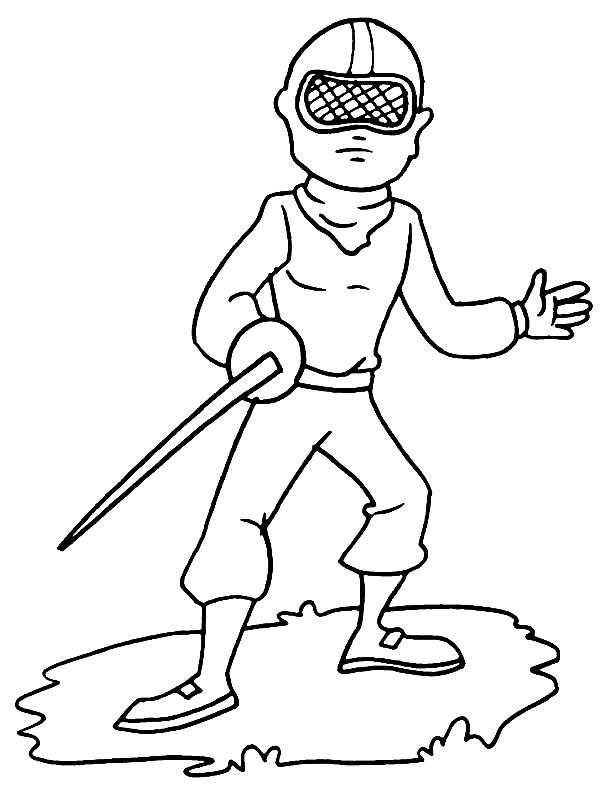
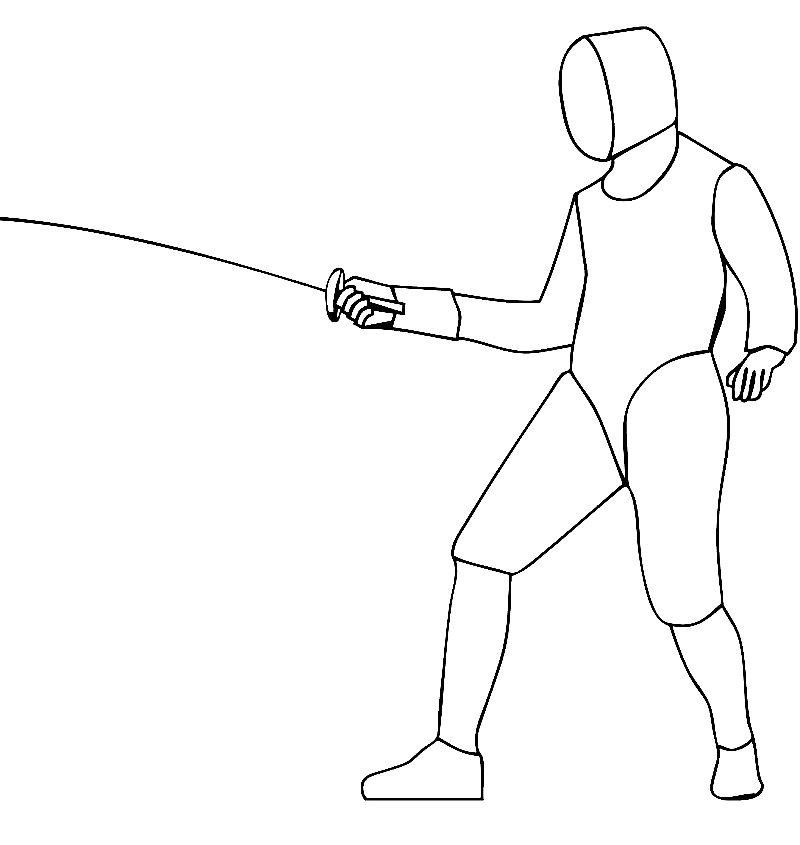
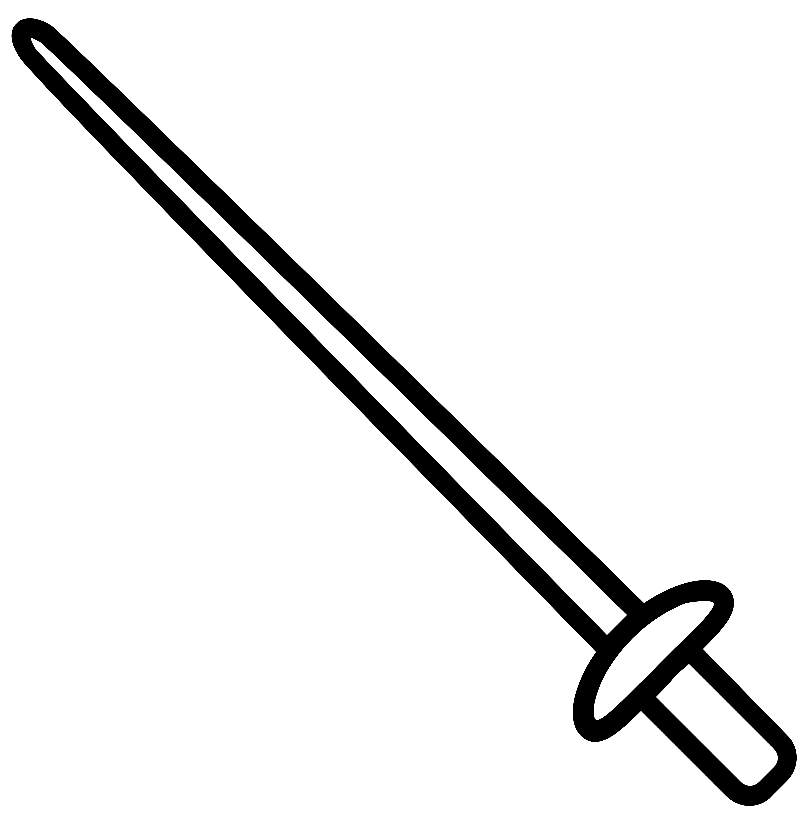
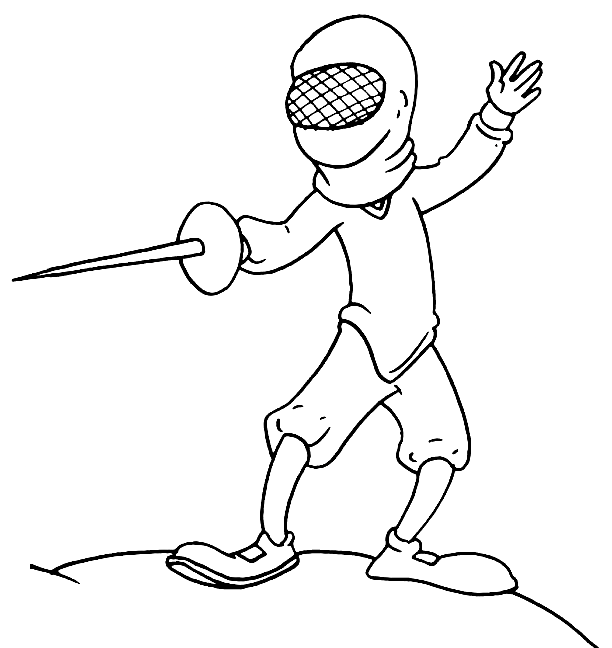
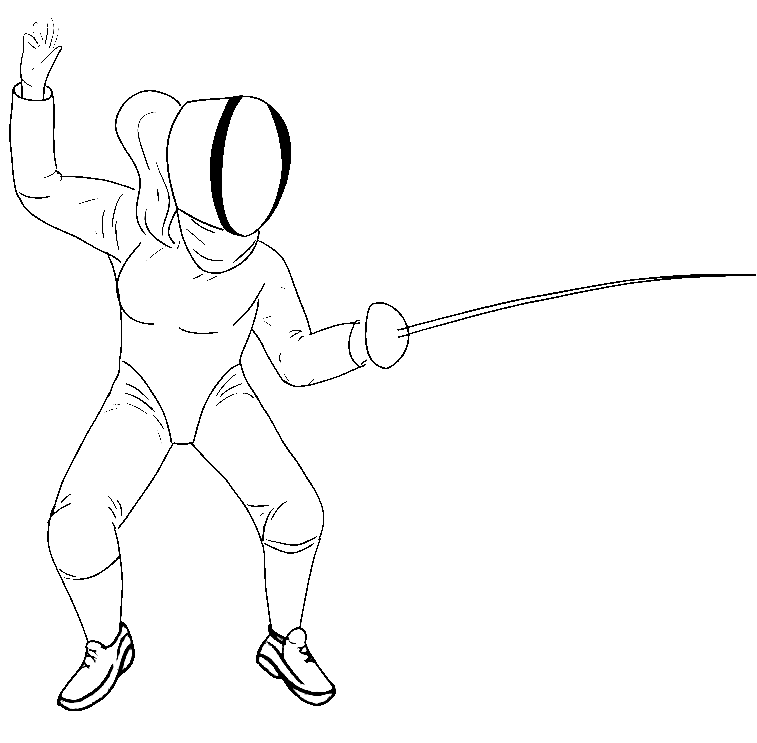
The largest group in the set is single-fencer portraits: a fencer standing in the en garde position, a fencer mid-lunge, and a close-up of the sword itself as a standalone object.
Coloring solo fencer pages: keep the uniform white or a very light off-white rather than leaving it blank paper, since a faint gray shadow along the folds gives the jacket shape without breaking the sport’s real color rule. The blade stays thin, straight, and silver on all three weapons, foil, epee, and saber; the visual differences between them show up mostly in the guard, the curved or bell-shaped piece protecting the hand, rather than in the blade itself.
Two-Fencer Duels and Action
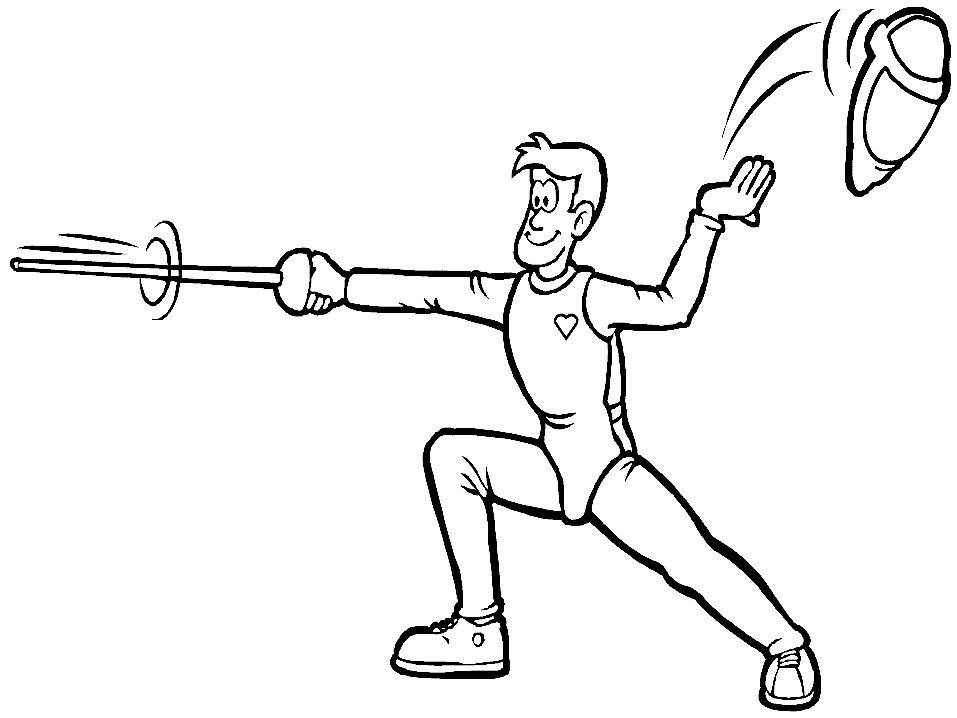
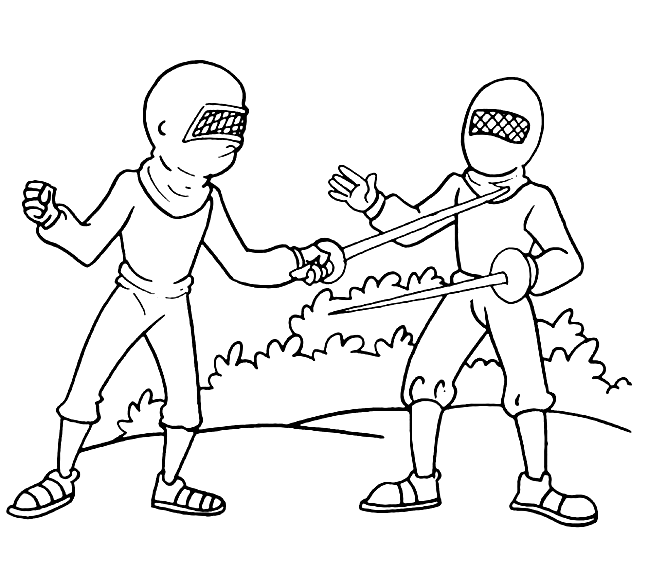
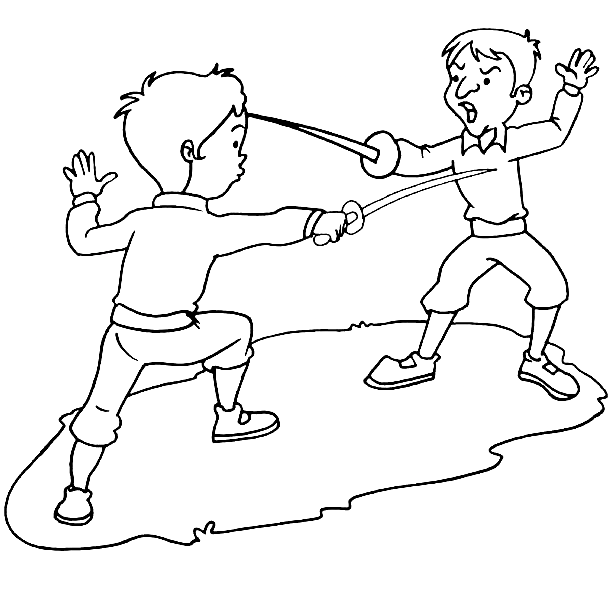
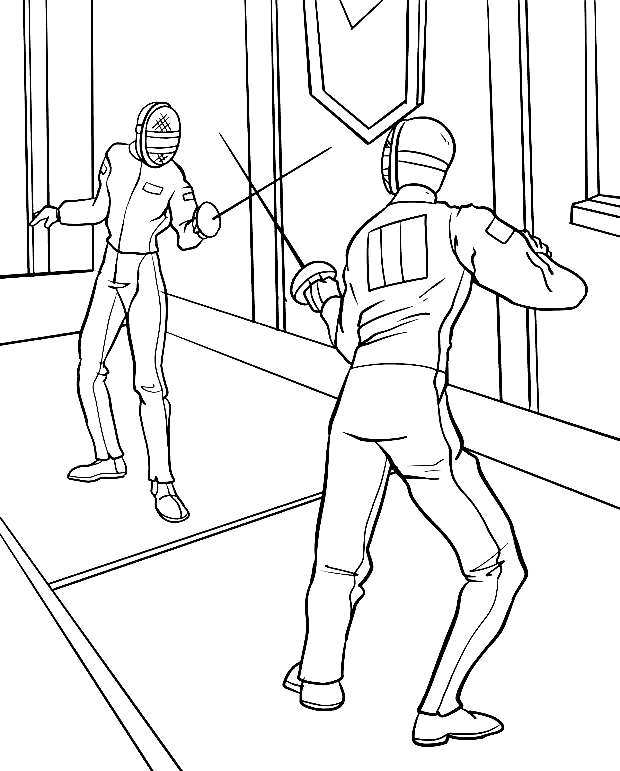
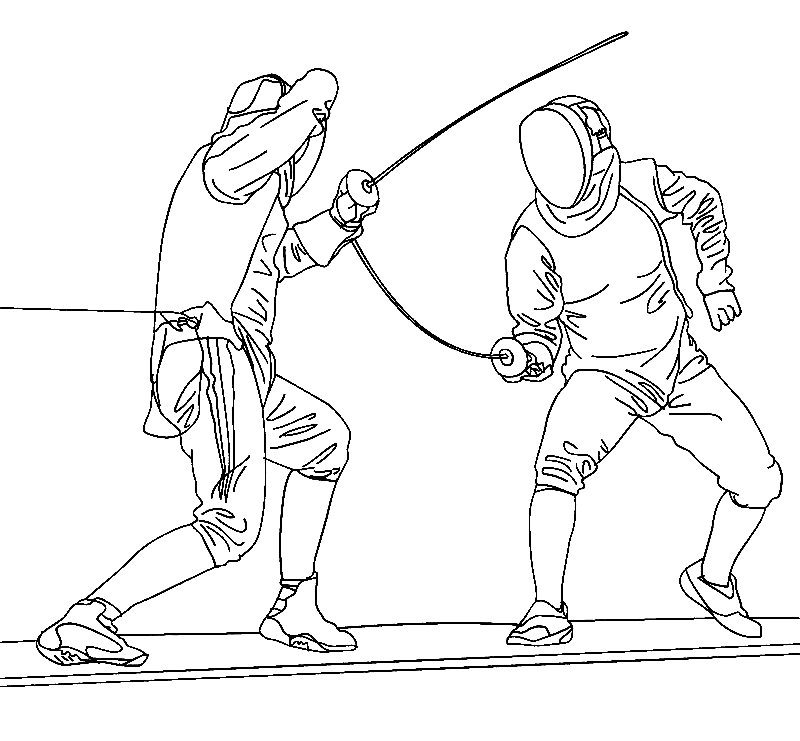
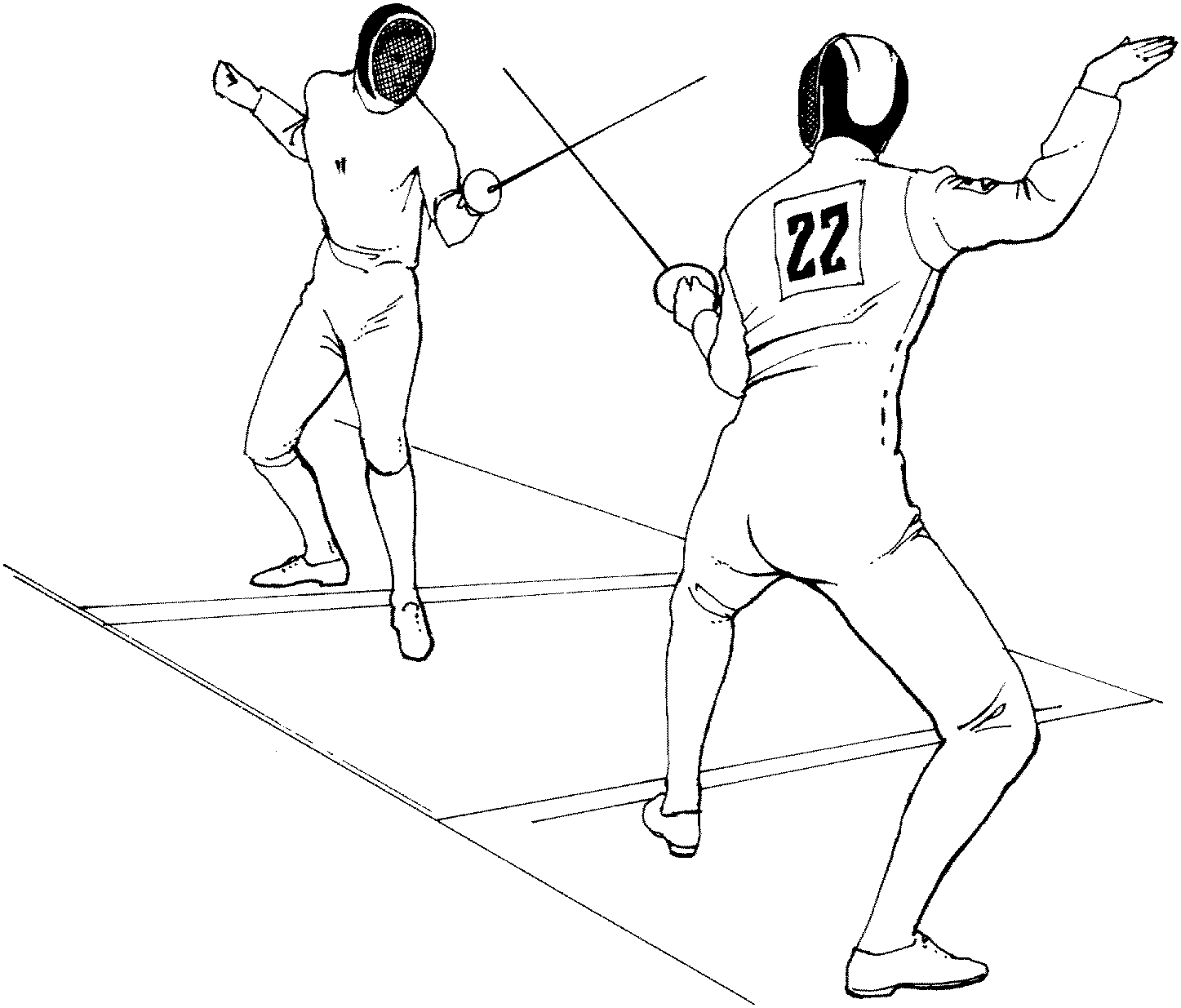
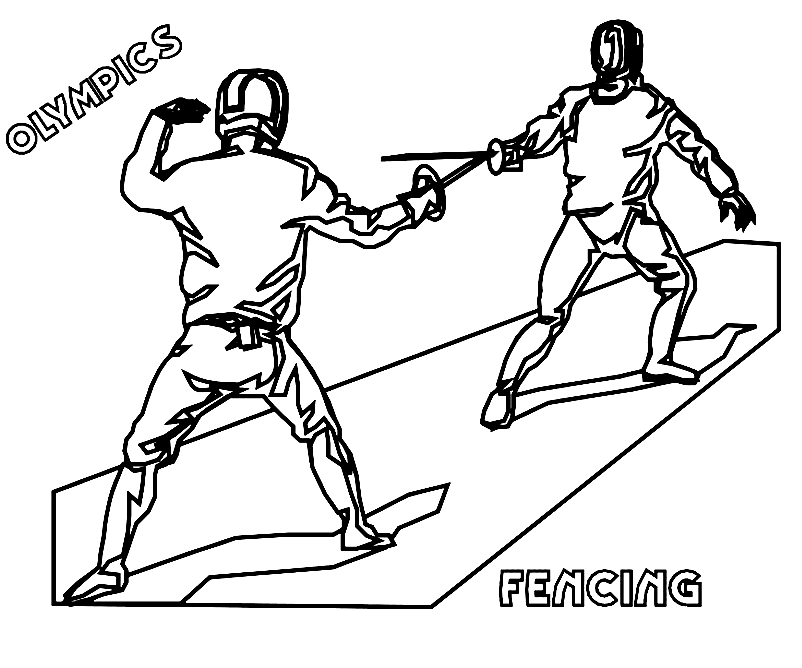
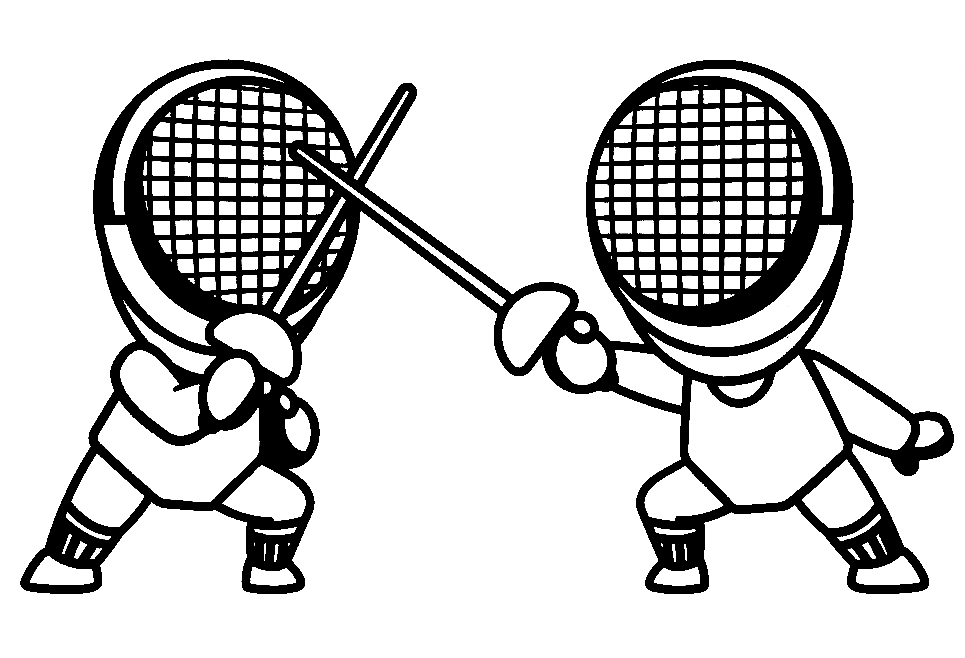
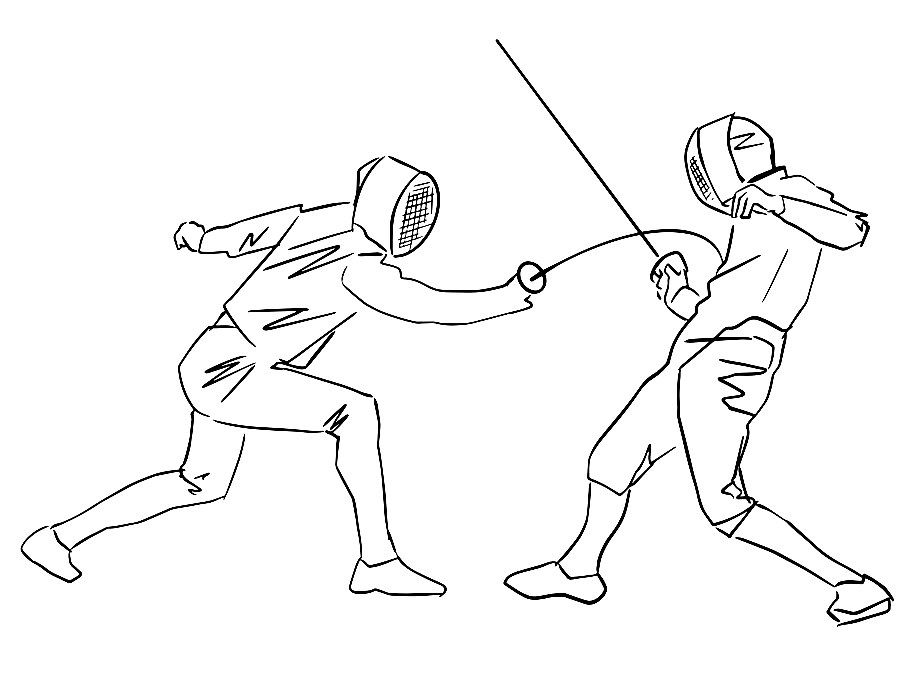
This group covers the sport in motion: two fencers facing off mid-bout, one fencer lunging at full extension, and a full action scene of an exchange.
Coloring duel pages: since both fencers wear the same white uniform, the easiest way to tell them apart on the page is through small accent colors, a different mask trim, glove, or shoe color for each side. A red light on one side and a green light on the other, matching how the real electric scoring system marks a touch, is a small detail that makes a duel page feel accurate.
Olympic Fencing Pages
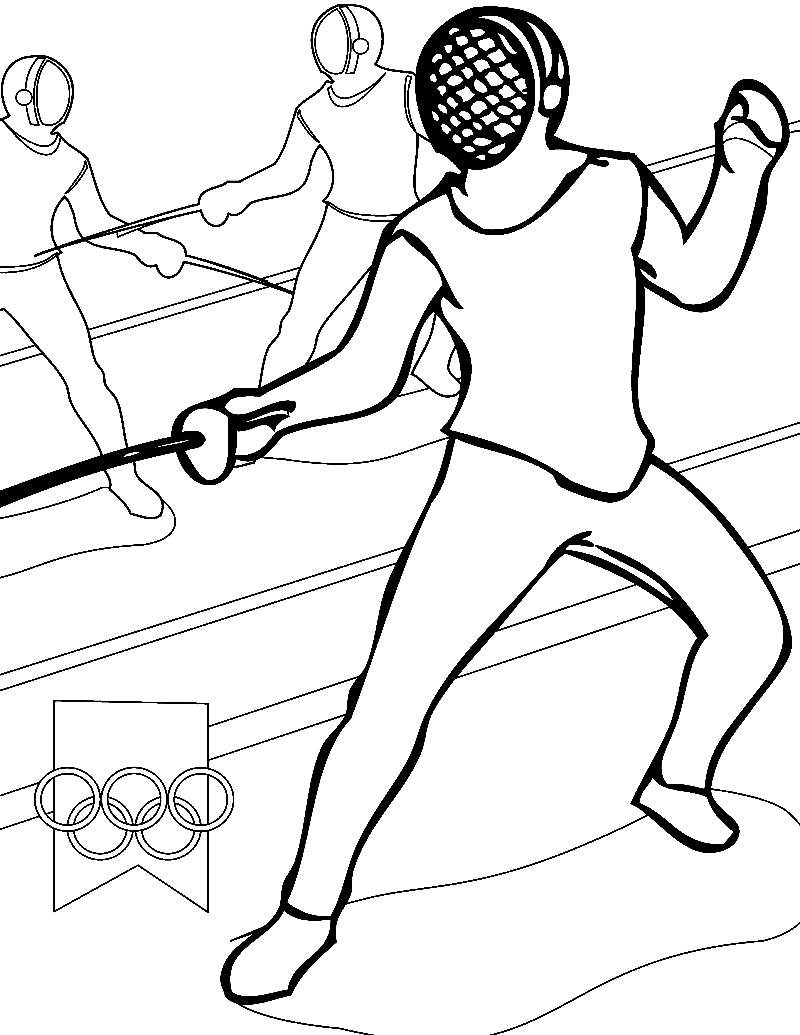
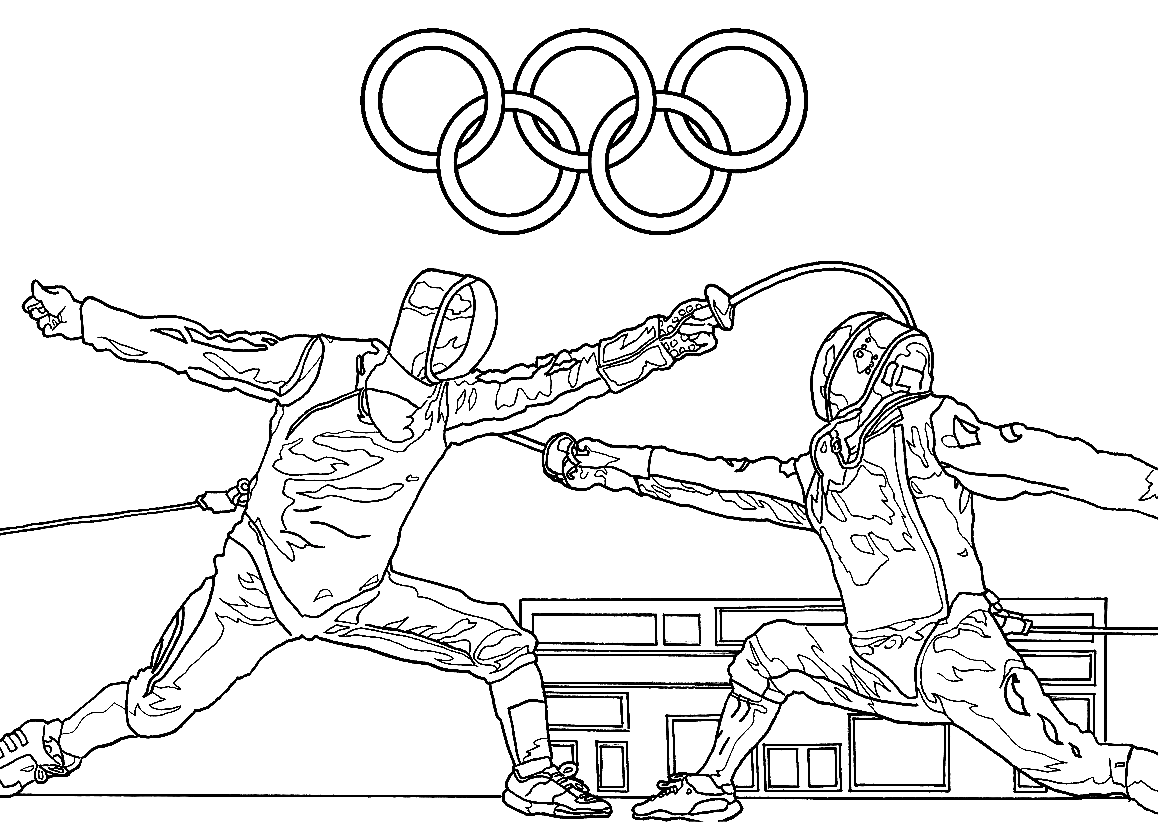
A dedicated group of pages ties the sport directly to its Olympic identity, with Olympic-branded fencer portraits and scenes.
Coloring Olympic fencing pages: let the Olympic rings or a background flag carry any bright color, and keep the uniform itself white as usual. The contrast between a plain white fencer and a colorful Olympic background is what makes these pages read as a specific event rather than a generic match.
Animal and Character Fencing Crossovers
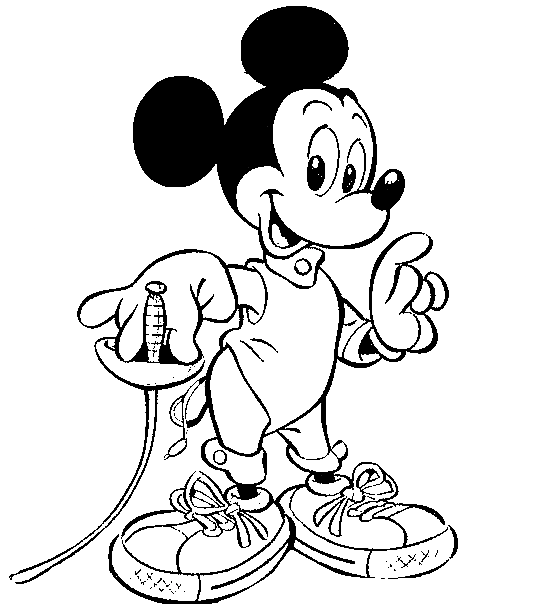
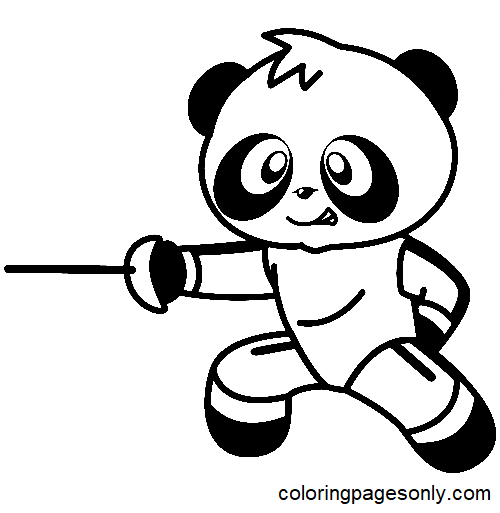
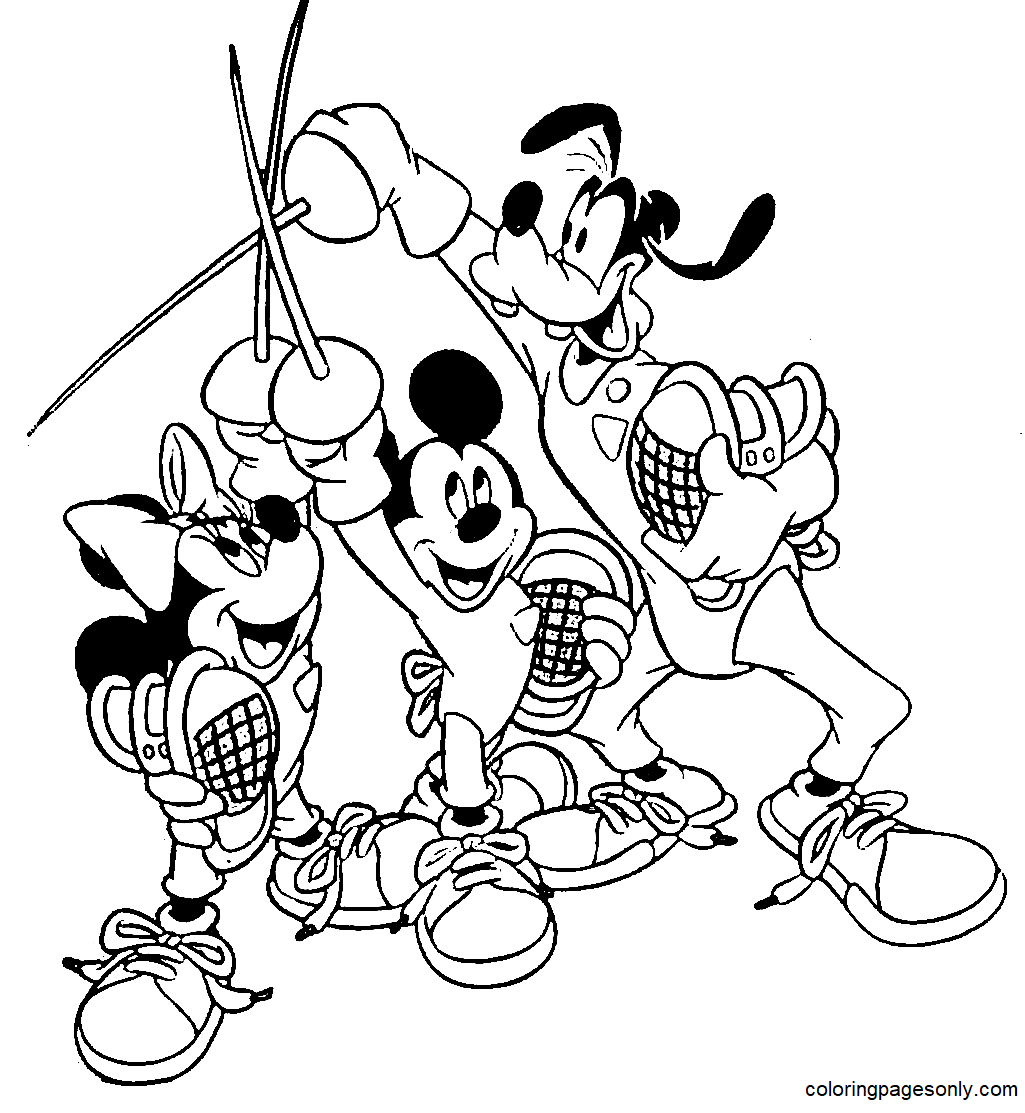
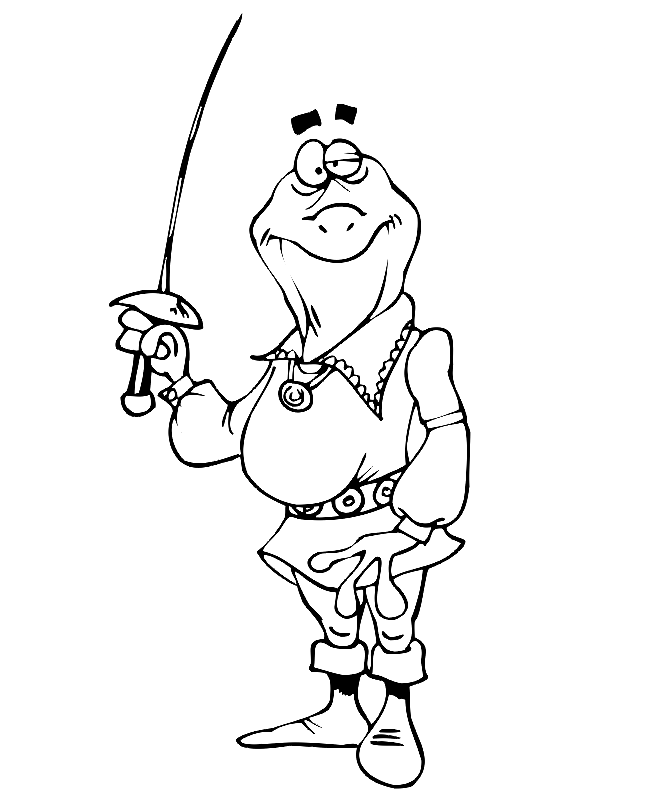
The set’s most playful pages put the sport on unexpected characters: a turtle, a panda, and a frog all take up the sword, alongside a few well-known character crossovers.
Coloring crossover pages: this is the one place in the set where the white-uniform rule can bend. A turtle or panda in fencing gear is already a fantasy image, so bold, characterful colors on the mask, jacket trim, or background work better here than the restraint that suits the realistic pages.
What These Pages Do
Fencing’s own history does some of the storytelling here. It is one of the few sports that has never missed a single modern Olympics since 1896, which gives even a simple coloring page a genuine link to more than a century of continuous competition, longer than most sports on the site can claim.
The set also builds a specific kind of fine motor patience. The American Academy of Pediatrics has pointed to structured coloring as a genuine contributor to fine motor development in children roughly between the ages of two and seven. The fencing mask is an unusually good vehicle for that practice: its wire mesh grille is a small, repeating grid that rewards the same slow, even hand control needed to keep real coloring lines from wandering.
There is a quieter benefit tied to the sport itself. Fencing is built on the en garde stance, a moment of complete stillness and focus that comes right before a fast, decisive action, and art therapy practitioners have noted that coloring can build a similar kind of patient, focused attention. Coloring a fencer holding that stance is, in a small way, practicing the same stillness the sport asks of its athletes.
The pages also carry real vocabulary. A child who colors a lunge, an en garde stance, or one of the three weapons by name is picking up the actual language of the sport, foil, epee, saber, touch, alongside the coloring practice itself.
How to Color Fencing Coloring Pages
Keep the uniform white, not blank. A pure white jacket left completely uncolored reads as an unfinished page. A faint, cool gray along the folds and seams gives it shape while keeping the color true to the real uniform.
Draw the mask grille as a careful, even grid. The wire mesh over a fencer’s face is the most detailed part of any portrait page. Small, evenly spaced lines in a light gray or silver, rather than one solid black patch, keep the mask looking like mesh instead of a blank visor.
Let the blade stay thin, straight, and silver. Across foil, epee, and saber, the blade itself is a long, narrow, unbroken line. A single thin highlight down its length in white or pale gray is enough to suggest metal without needing shading.
Save bold color for the few details that actually carry it. The scoring light, a mask’s trim, a glove, or a flag are the only places a fencing page is meant to be colorful. Spreading bright color across the whole uniform undercuts the one detail that makes these pages look accurate.
5 Creative Craft Ideas with Fencing Coloring Pages
Olympic Fencing Tribute Set
Color the Olympic-branded fencing pages together and display them as a small tribute to the sport’s history at the Games.
A short, focused set that ties directly to fencing’s status as one of the few sports at every modern Olympics. Takes about fifteen minutes.
Duel Achievement Card
Color a two-fencer duel page, fold a piece of card in half, and glue the page to the front to mark a tournament win, a first bout, or the end of a fencing season.
A card built around an actual competitive milestone rather than a generic occasion. Takes about ten minutes.
Animal Fencing Gallery
Color the turtle, panda, and frog fencing pages and arrange them together with a playful title like “Who’s the Best Swordsman?”
A lighthearted gallery that lets the sport’s more serious portraits share a wall with something purely for fun. Takes about twenty minutes.
Club Colors Reference Board
Color three or four solo fencer portraits, giving each one a different mask trim and glove color, and use the set as a simple color-matching reference for a fencing club or team.
A practical board that turns the coloring pages into a small design tool. Takes about twenty minutes.
Mirror Match
Color the two-fencer duel page, giving both fencers identical accent colors, so they read as practice partners from the same club rather than opponents.
A small color choice that changes the entire story the page tells. Takes about fifteen minutes.
FAQ About Fencing Coloring Pages
Are these fencing coloring pages free, and can I color them online?
Yes. Every page is free, with no account, email, or payment required. Download the PDF to print at home, or open it in the online coloring tool to color on screen.
What age group are these fencing coloring pages best suited for?
The solo fencer portraits work well from age 3. The two-fencer duel and action pages, with more overlapping linework, suit ages 5 and up. The animal and character crossover pages work for any age, including adults looking for something lighter.
Why is the fencing uniform almost entirely white in these pages?
Competitive fencing uniforms have traditionally been white, partly for visibility and partly by long-standing convention, so pages that keep the jacket and breeches white rather than brightly colored are staying true to how the sport actually looks.
Has fencing always been part of the Olympics?
Yes. Fencing was contested at the first modern Olympics in Athens in 1896 and is one of only five sports, alongside athletics, swimming, cycling, and gymnastics, that have appeared at every Summer Olympics since.
What’s the difference between foil, epee, and saber?
Foil uses a flexible blade with point-only touches to the torso. Epee uses a heavier blade with point-only touches anywhere on the body. Saber allows touches with both the point and the edge of the blade, targeting the waist up, including the arms and head.
Are these pages based on a specific fencer or fencing federation?
No. The fencers, uniforms, and scenes are generic and inspired by the sport broadly, including its real uniform and scoring conventions. Still, they are not licensed by or affiliated with any specific athlete, club, or federation.
Can I use these pages for a fencing club, school PE unit, or birthday party?
Yes. Fencing clubs use the solo portraits and duel pages for youth recruitment and beginner lessons, PE teachers use them to introduce the en garde stance and basic vocabulary, and the animal crossover pages work well as a party activity for younger kids.
How often are new fencing coloring pages added?
New pages are added periodically as the collection grows, so it is worth checking back for new poses, Olympic scenes, and character crossovers.
Start Coloring
Download any page by clicking the design. No account, email, or payment is required. Pages print directly from the browser at full resolution or open in the online coloring tool for screen use. Share finished pages on Facebook or Pinterest using the share buttons at the top of each design page.