Rainbow Coloring Pages
 By:
Jennifer Thoa - Content Editor & Designer
Updated:
By:
Jennifer Thoa - Content Editor & Designer
Updated:
Free Rainbow Coloring Pages: 67 printable PDF designs featuring rainbows paired with unicorns, clouds, flowers, and outdoor scenes. Each page can be downloaded as a PDF to print or colored online in the browser.
A rainbow forms when sunlight passing through raindrops is refracted, reflected off the inside of each droplet, and refracted again as it exits, splitting white light into a spread of visible color. Rainbows appear in the sky opposite the sun, which is why they show up during a sun shower or shortly after rain when the sun is low. The familiar seven-color sequence, red, orange, yellow, green, blue, indigo, and violet, is a traditional simplification of what is actually a continuous spectrum with no hard edges between colors. This collection reflects that natural subject in a wide range of styles, from a simple standalone arc to detailed scenes pairing a rainbow with animals, weather, and fantasy elements like unicorns.
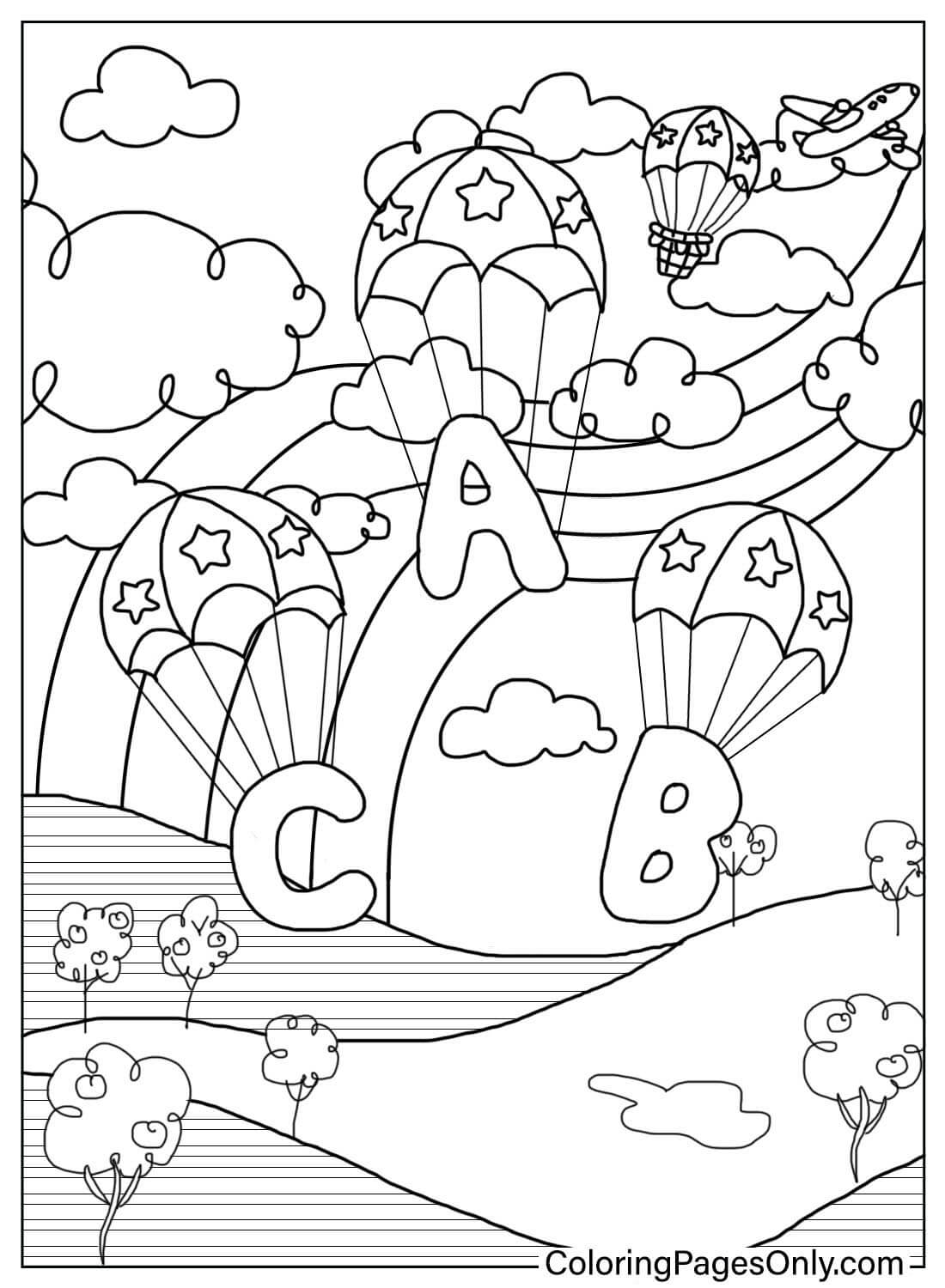
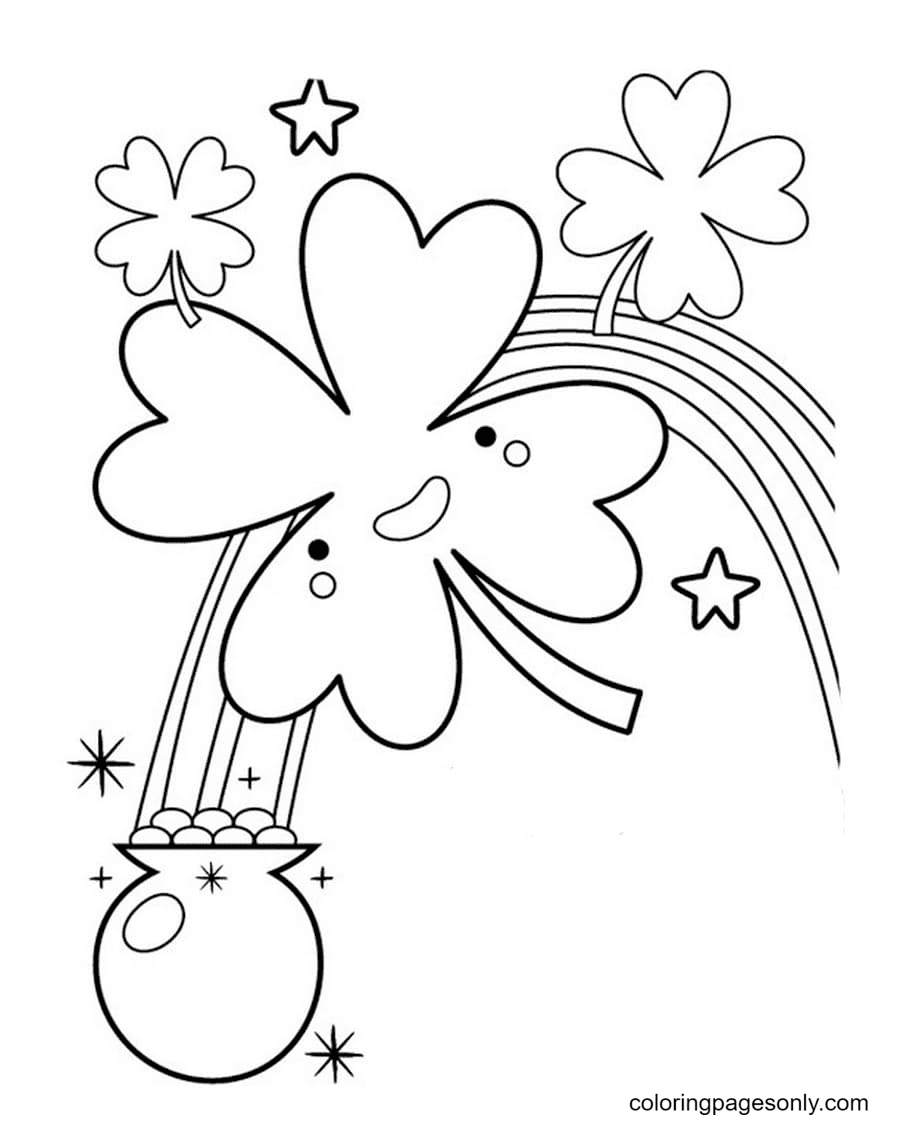
The set spans 67 pages, ranging from plain, simple rainbow outlines to detailed multi-element scenes and a mandala-style design for more advanced colorers.
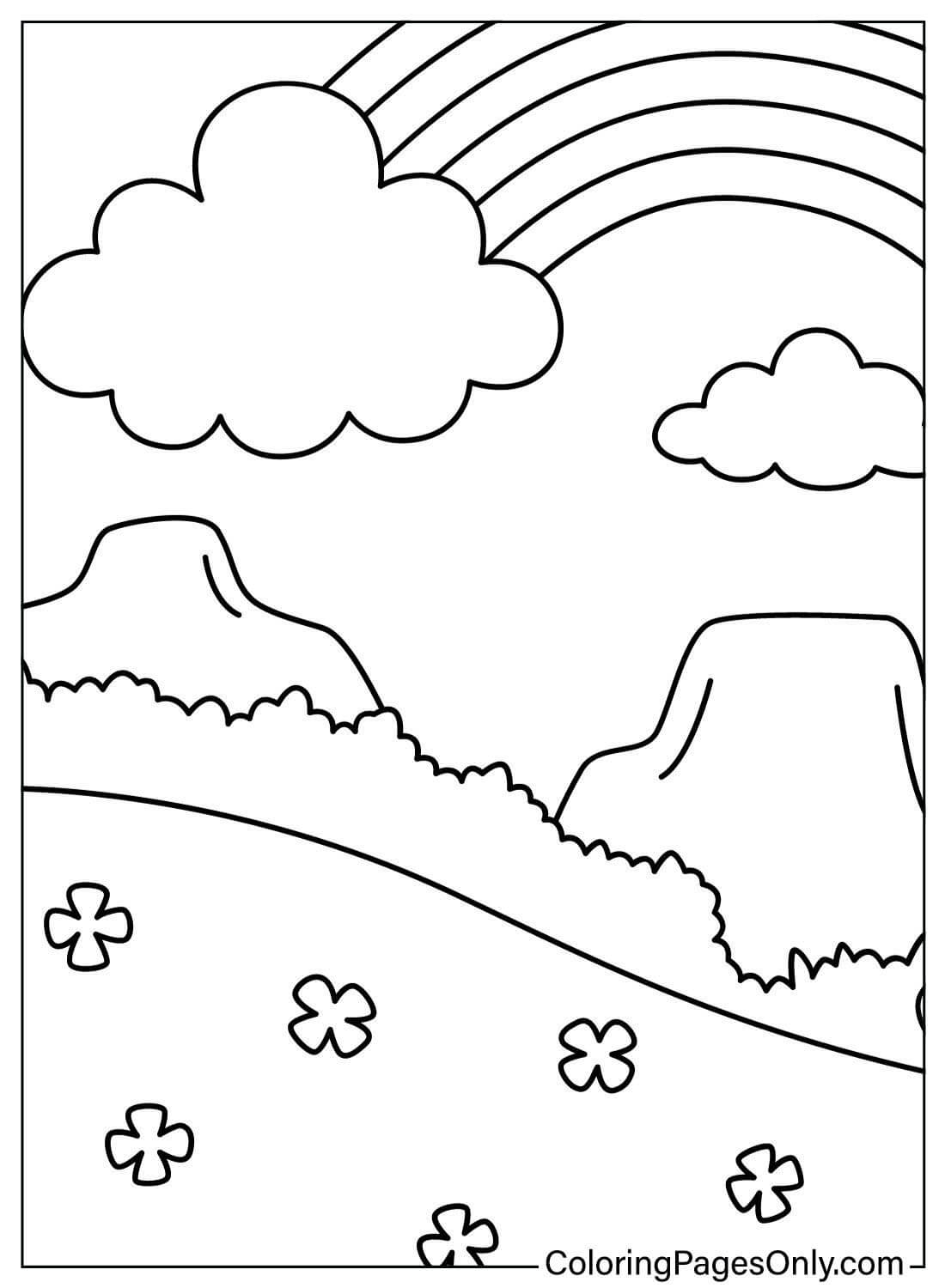
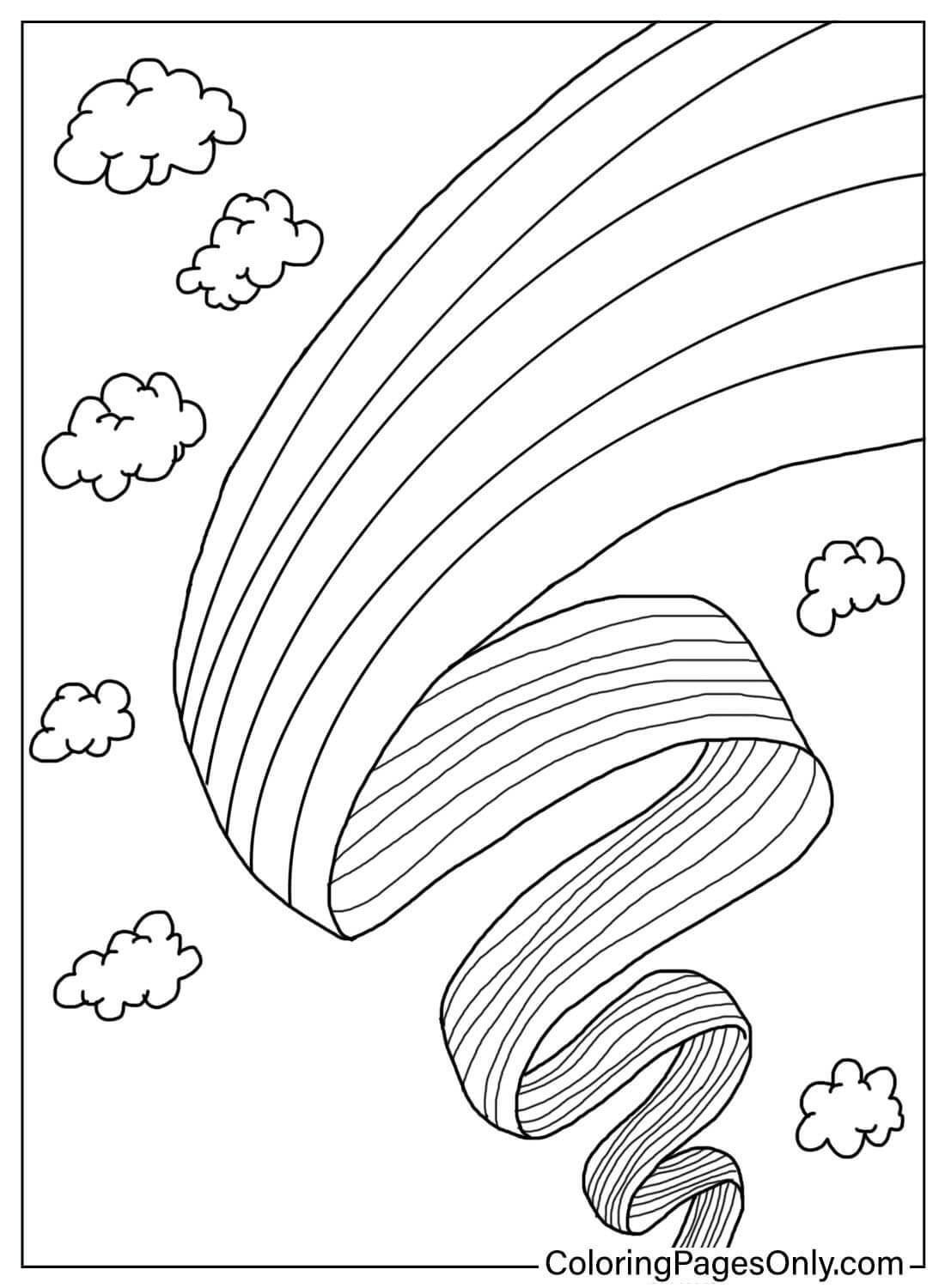
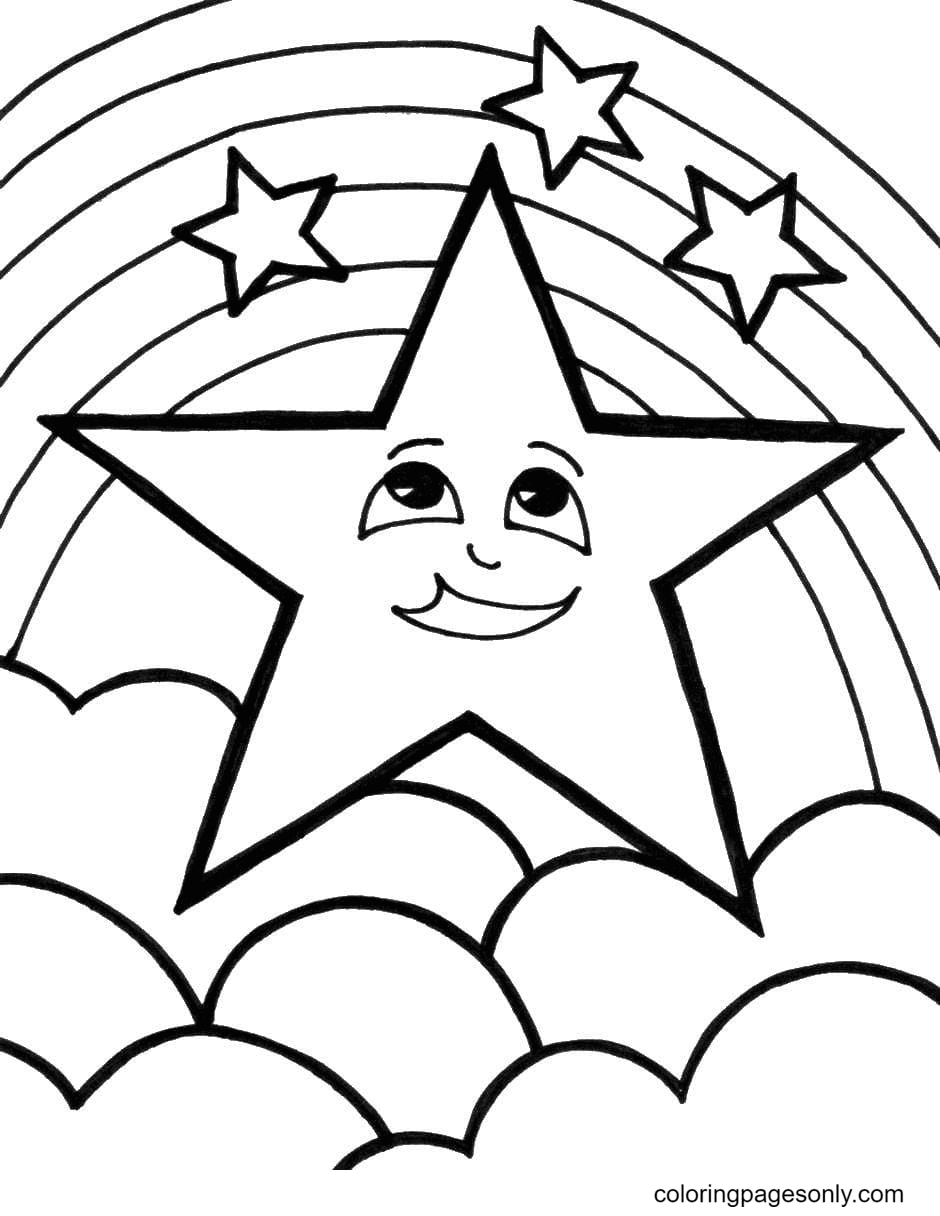
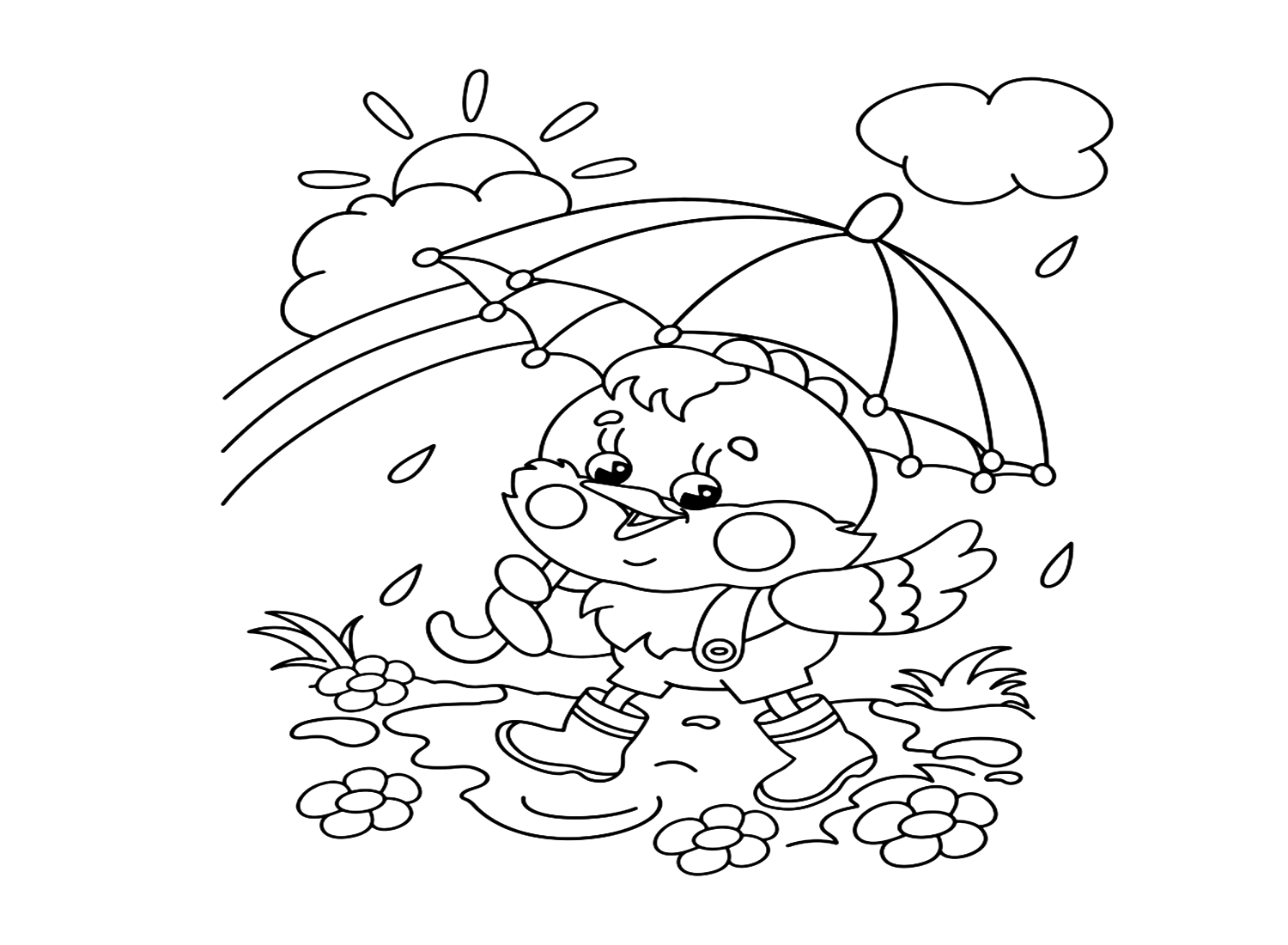









What’s Inside This Collection
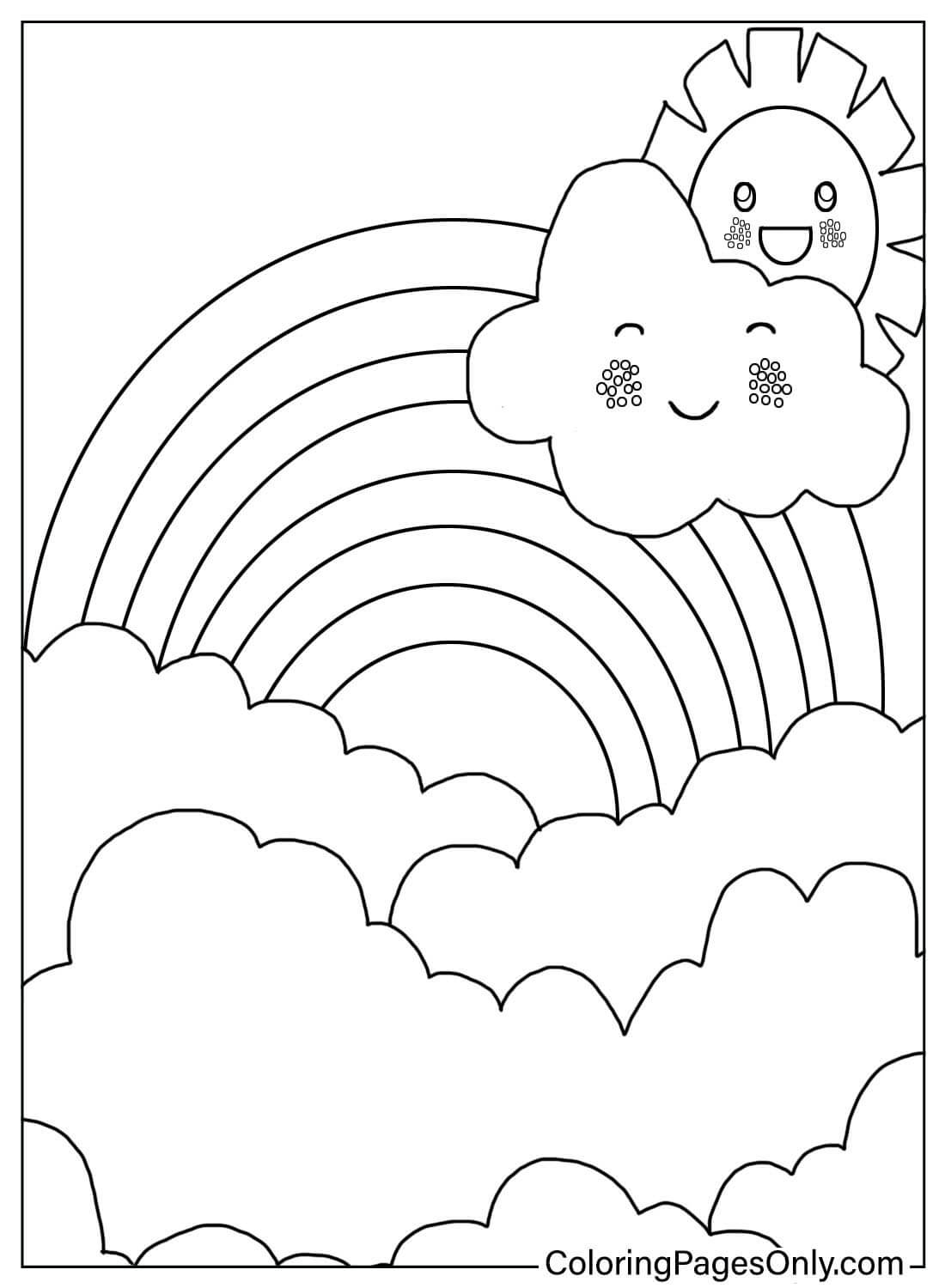
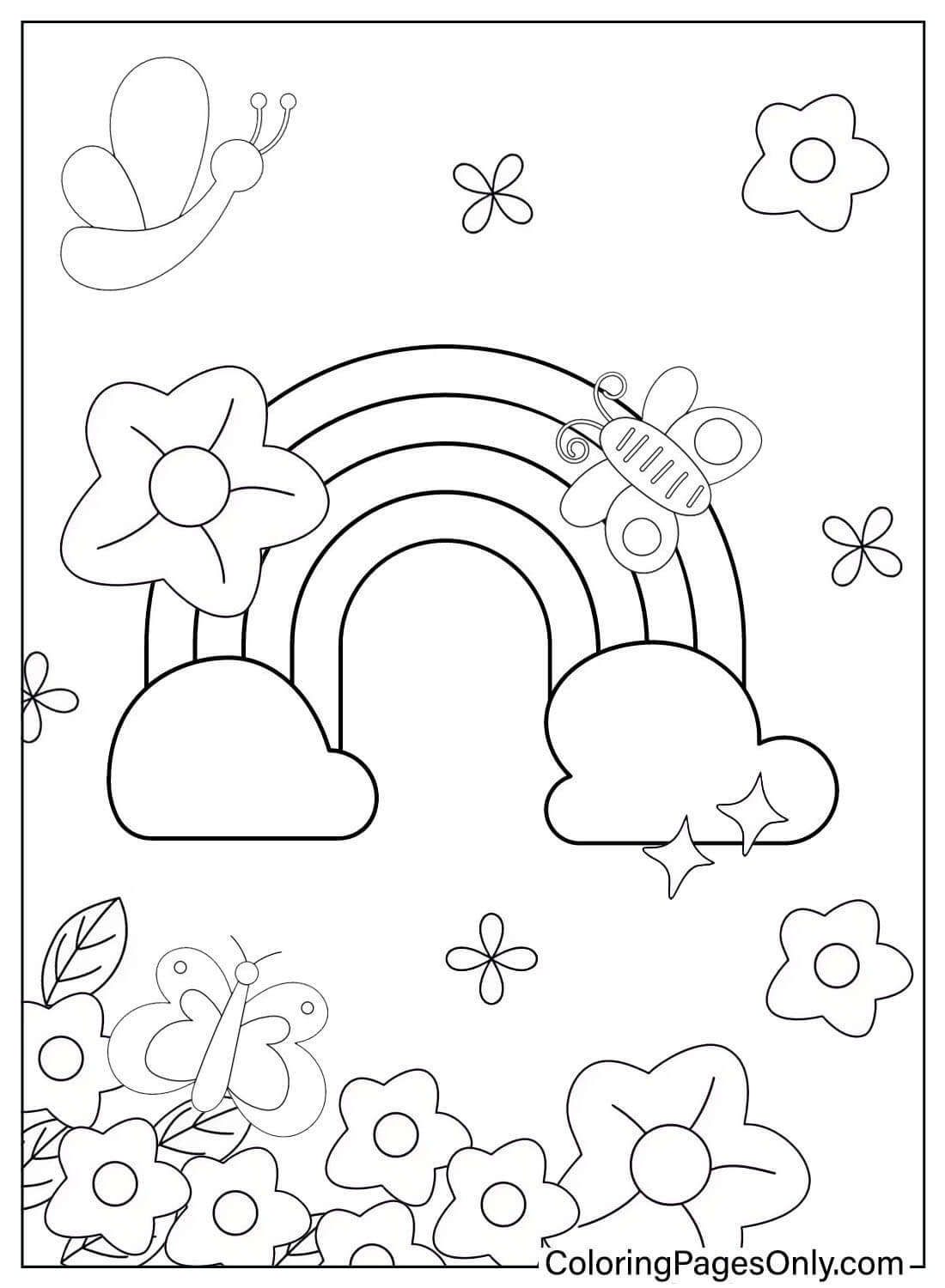
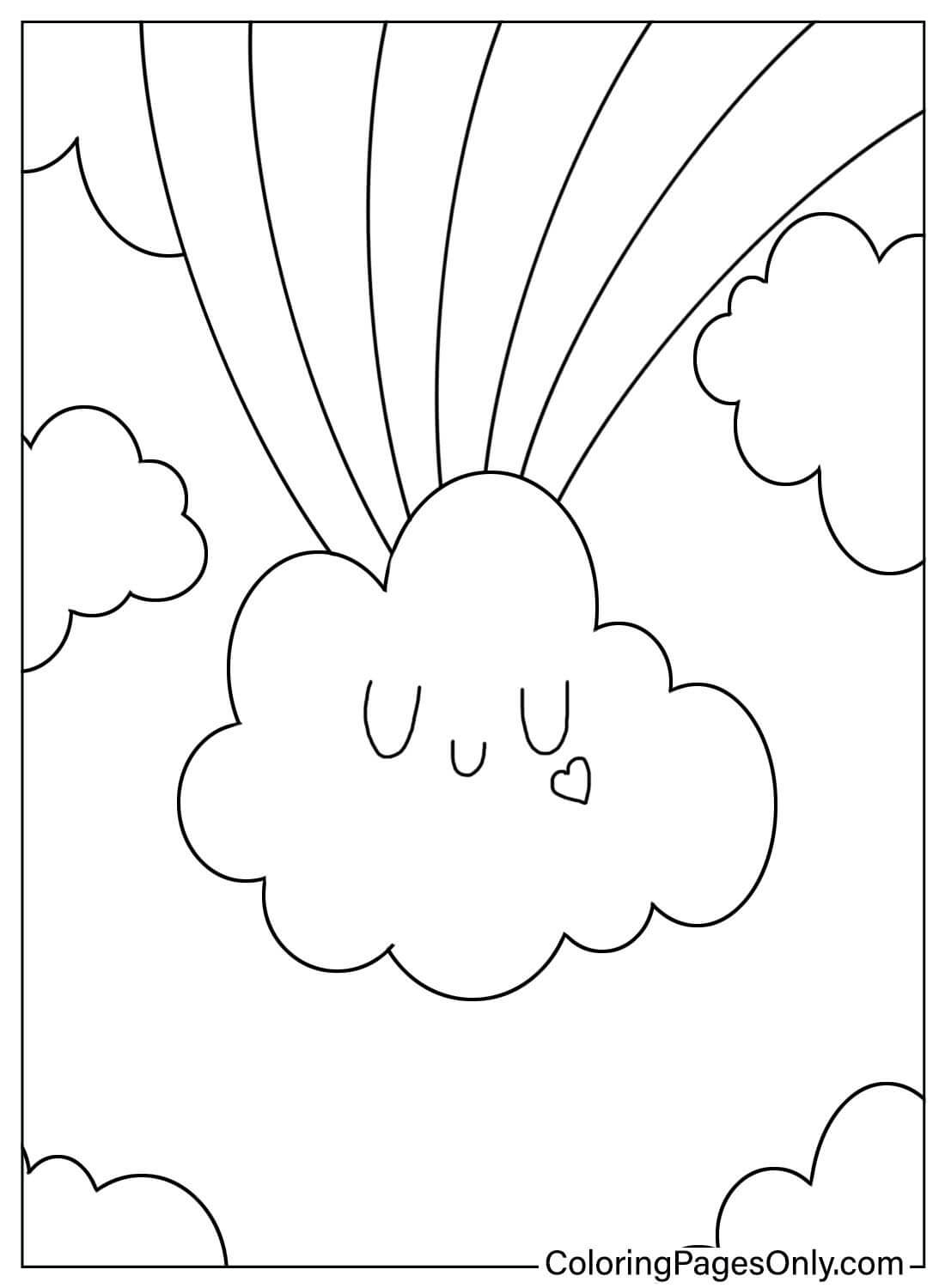
The 67 designs group into a few recurring types, from simple arcs to detailed fantasy scenes.
Simple Rainbow Outlines
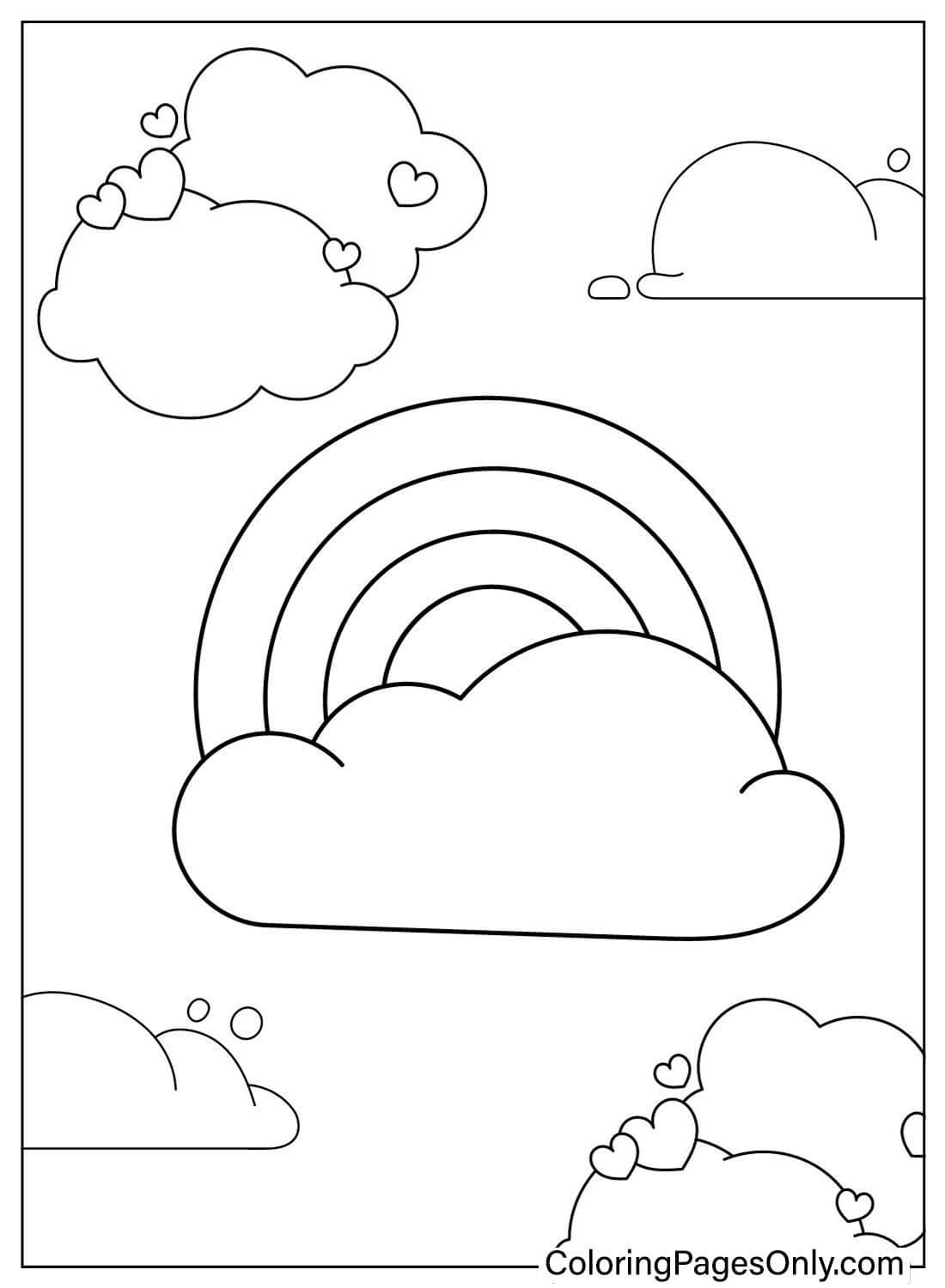
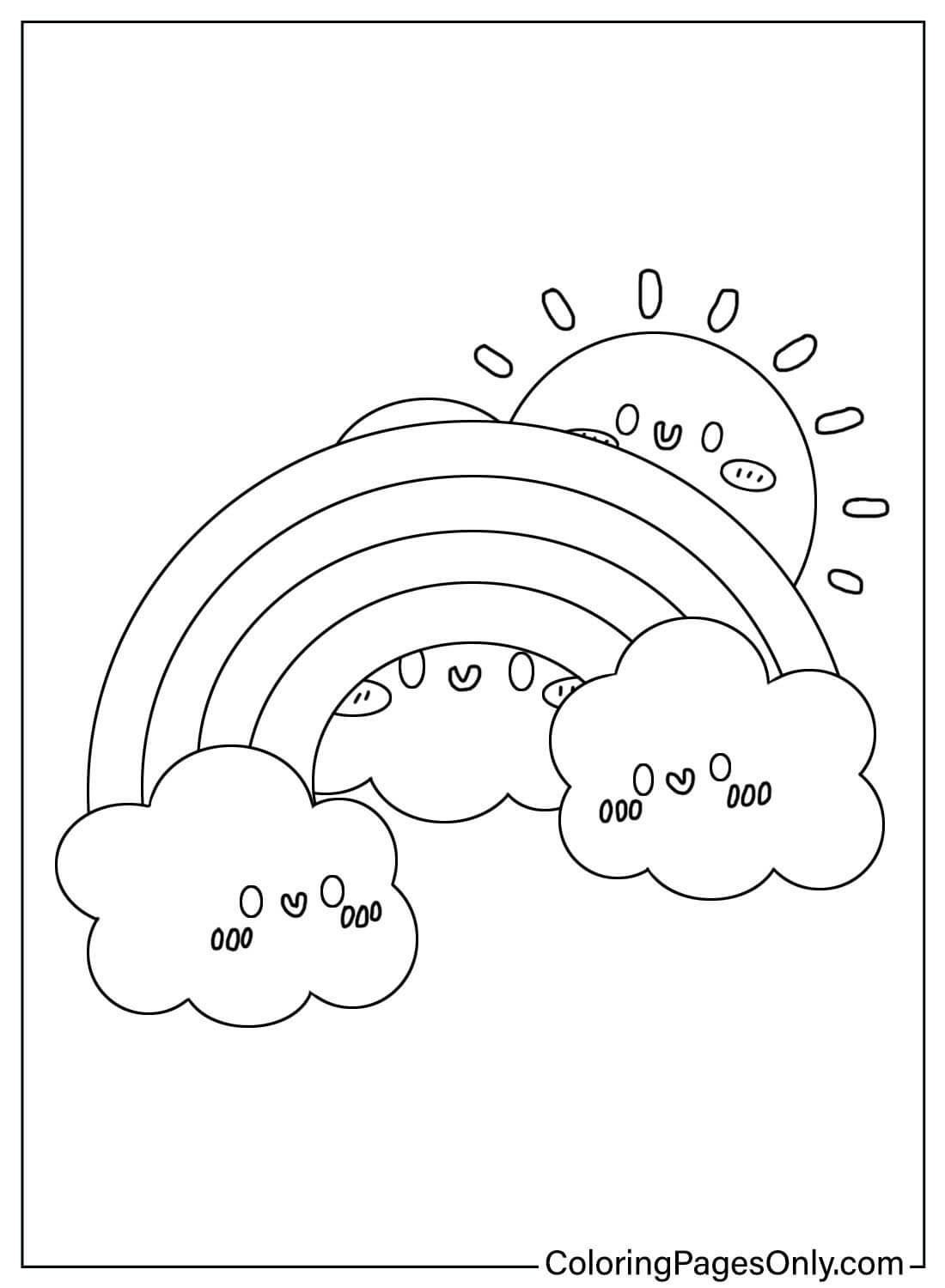
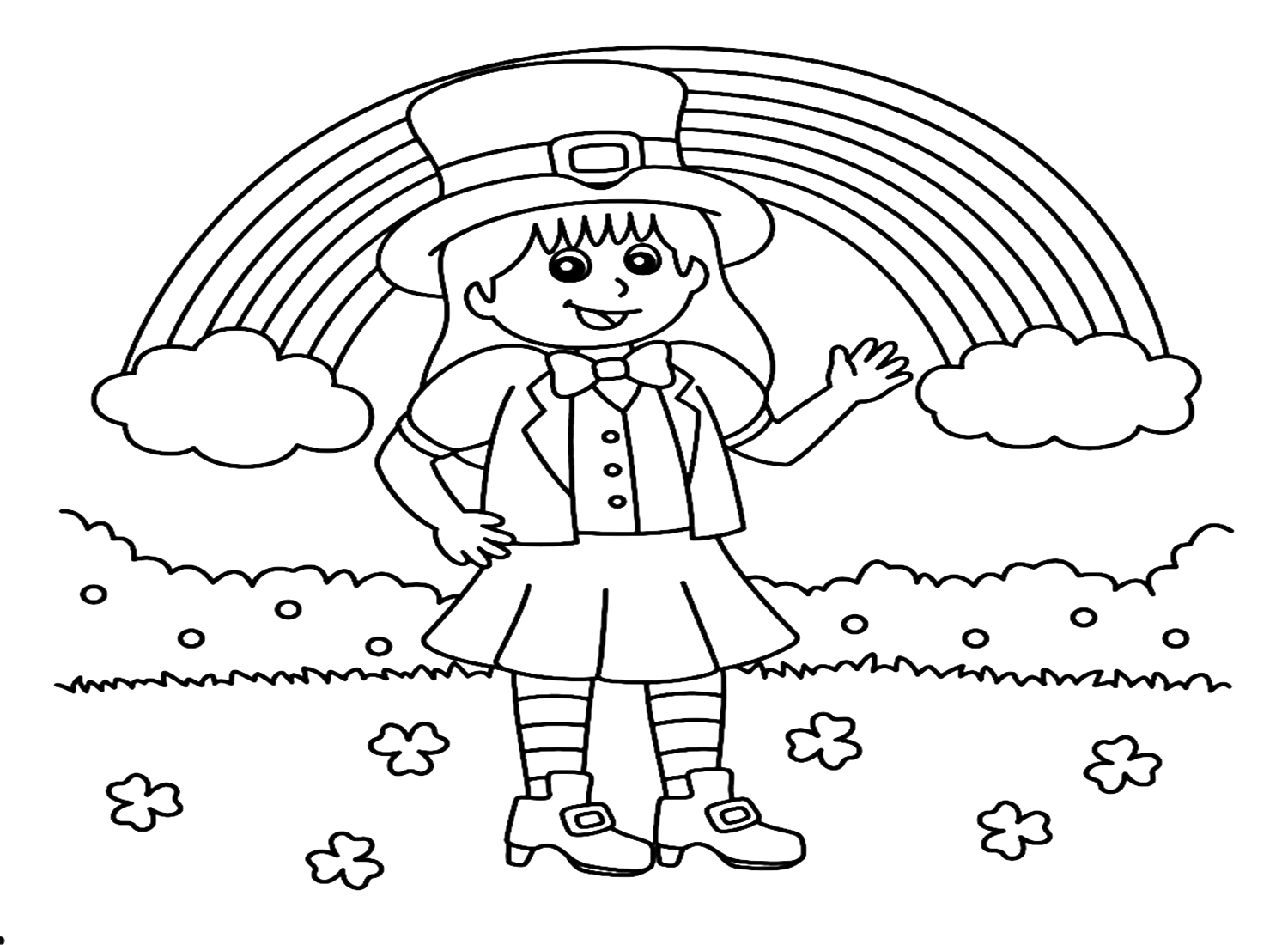
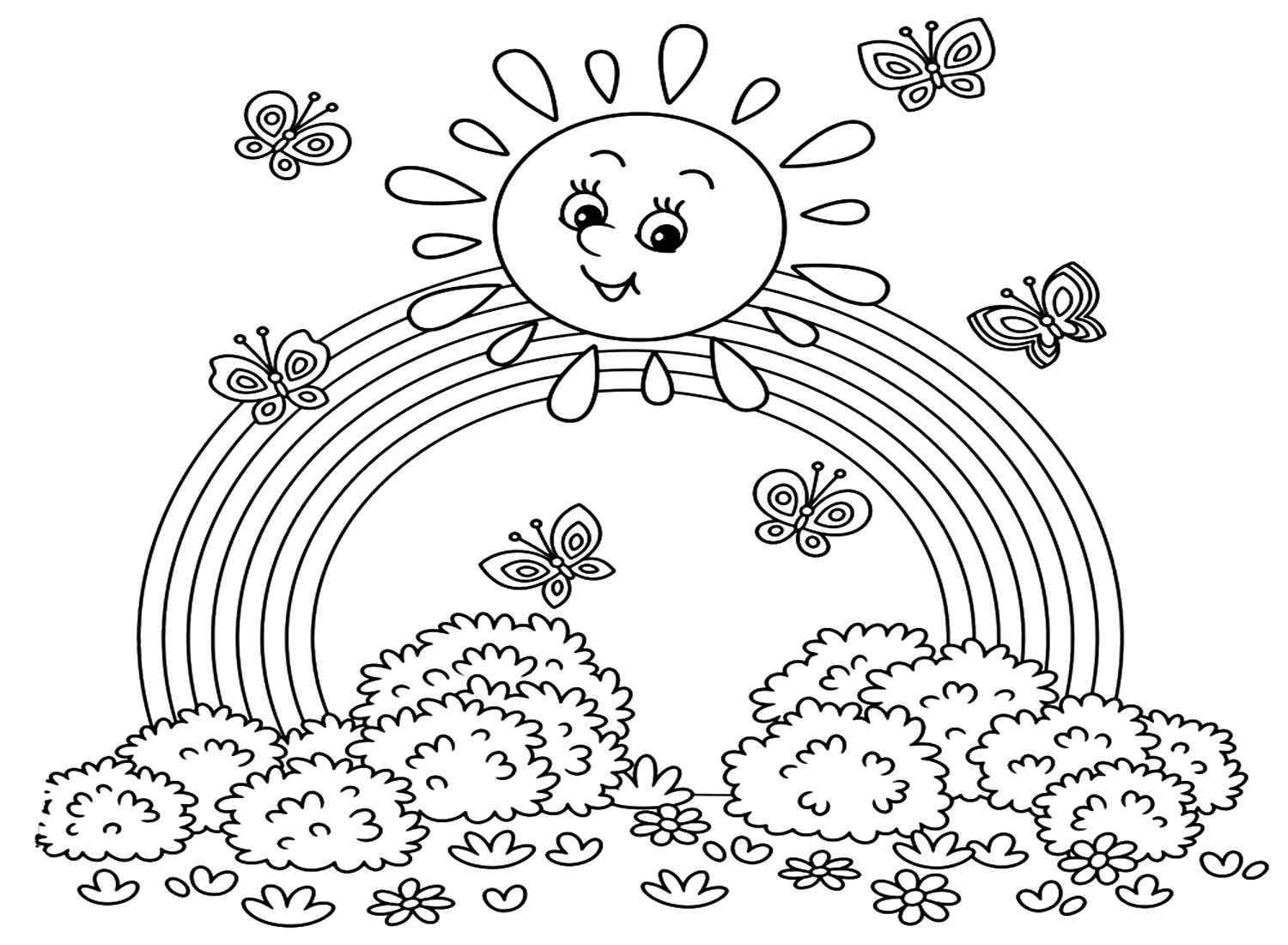
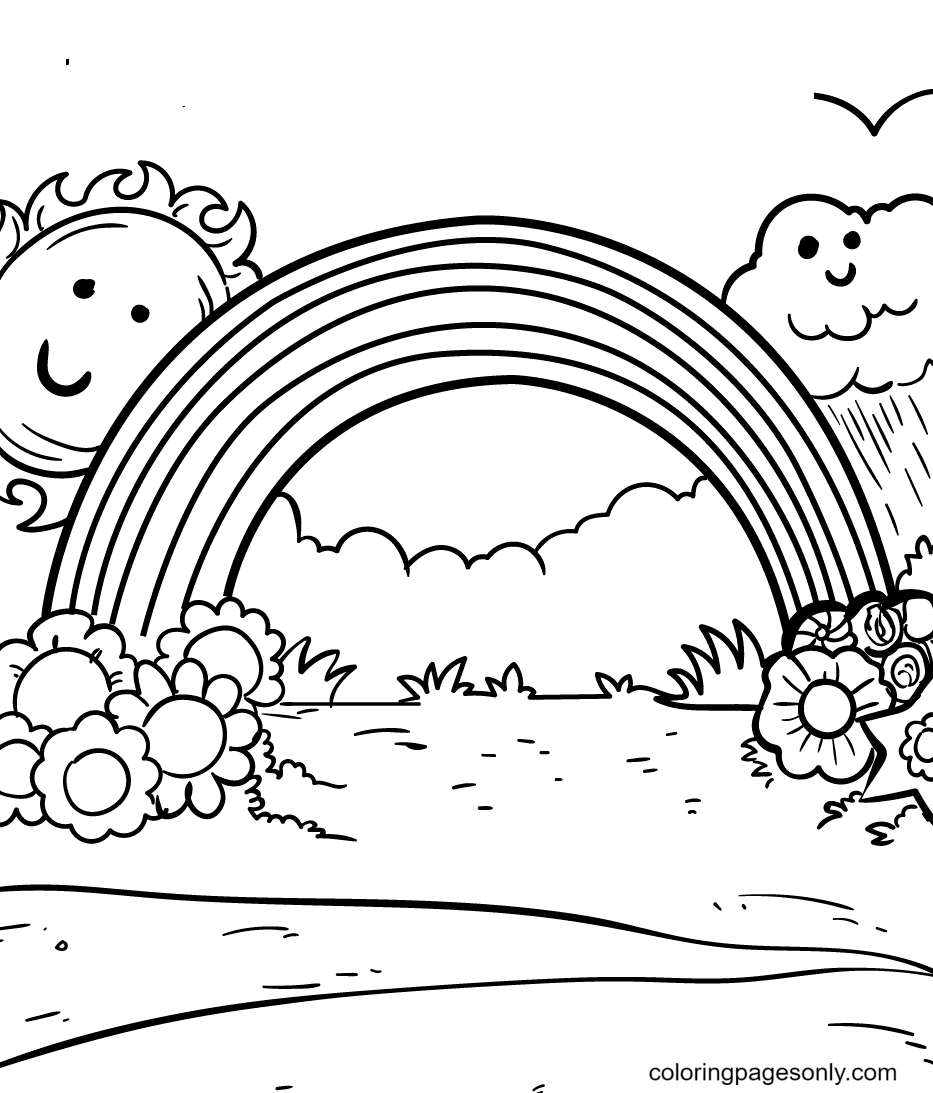
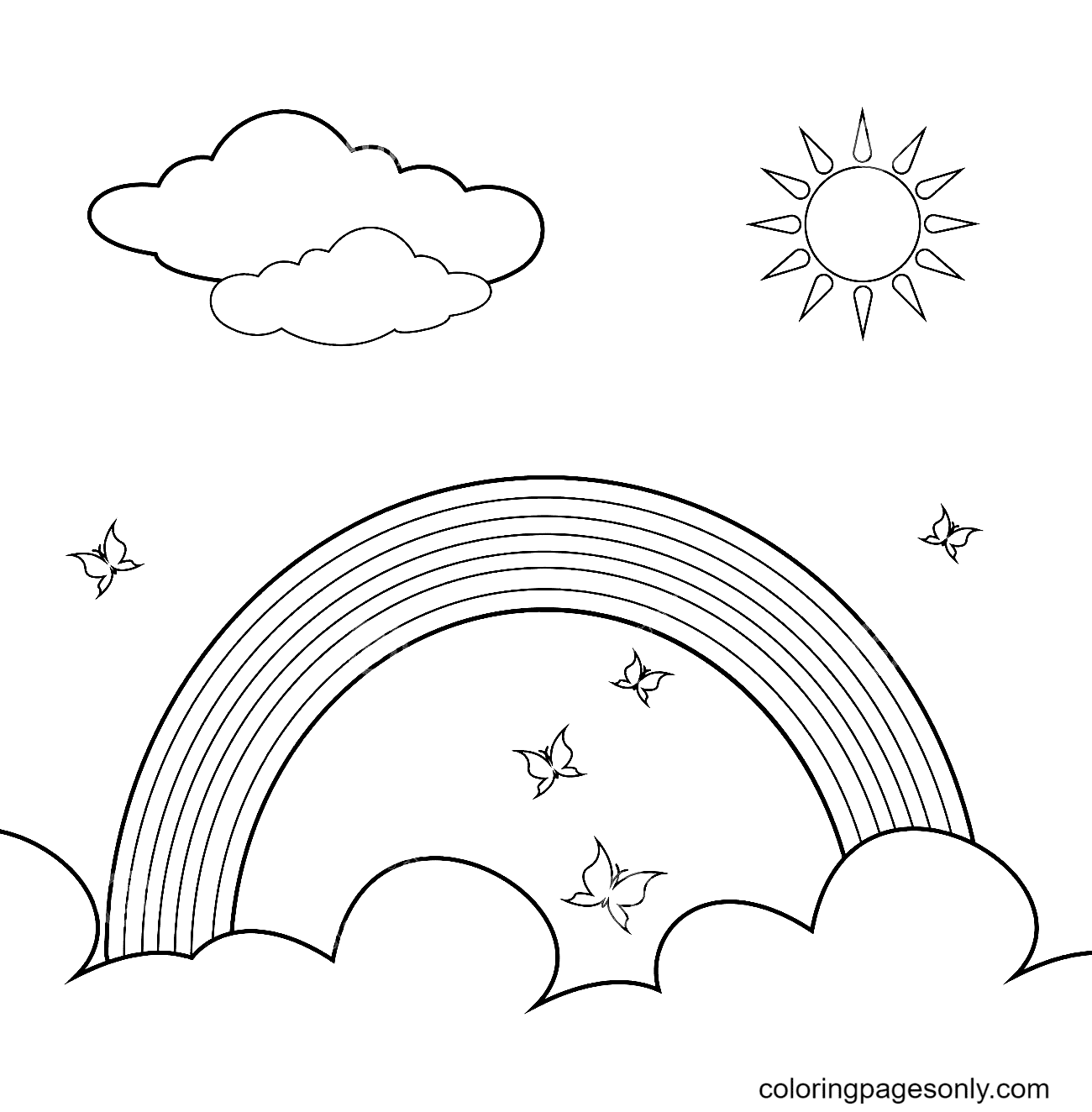
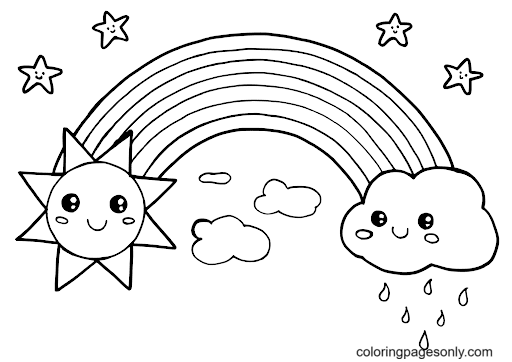
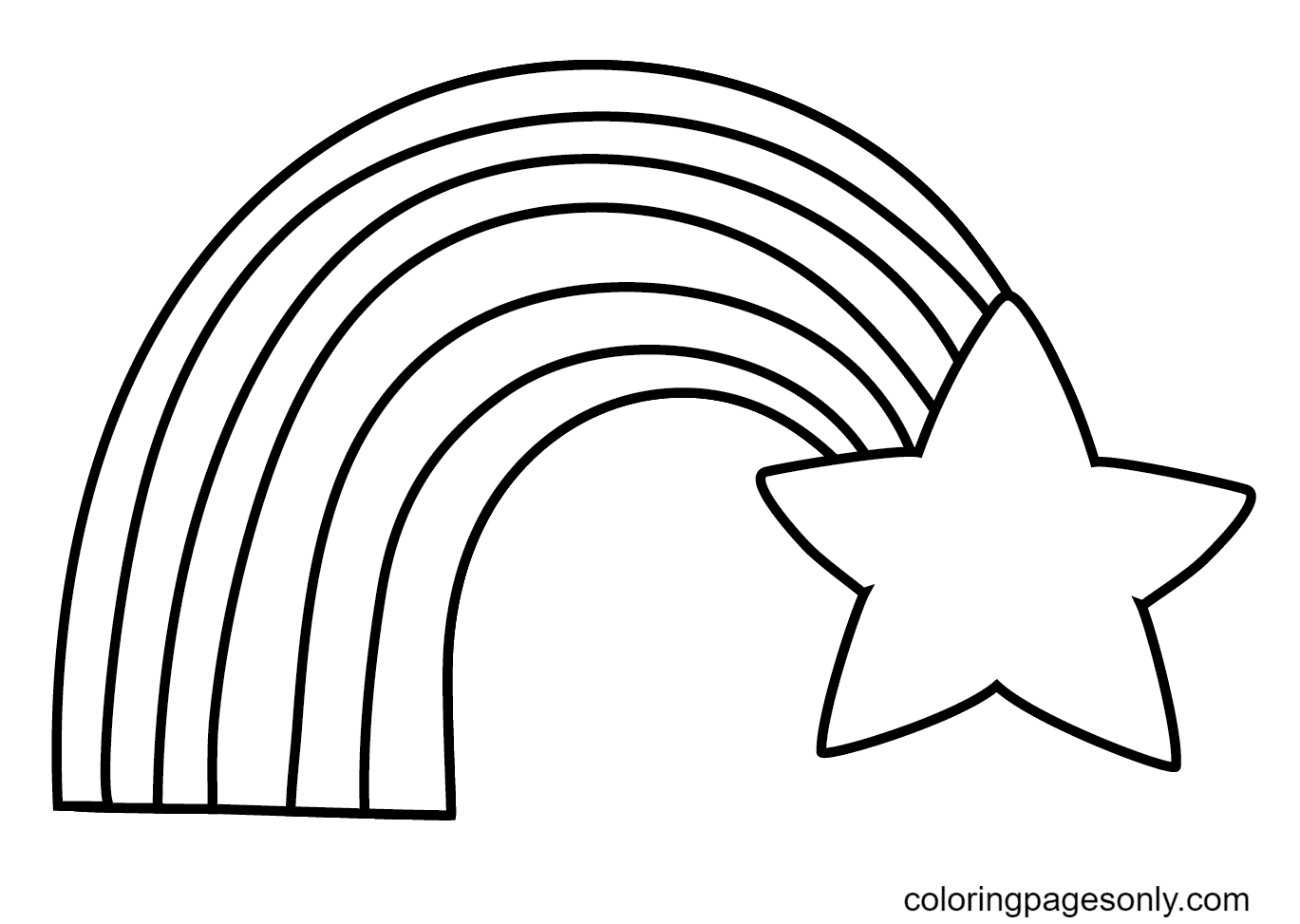
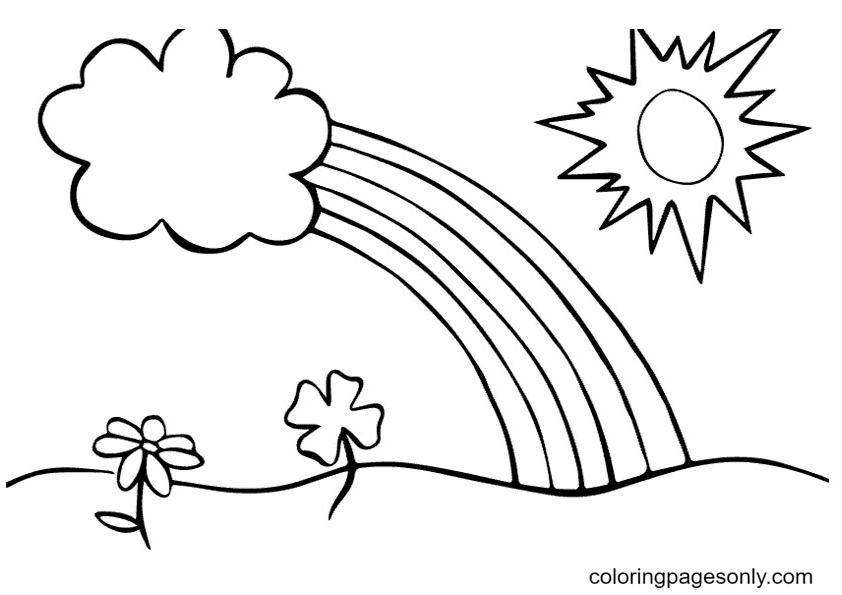
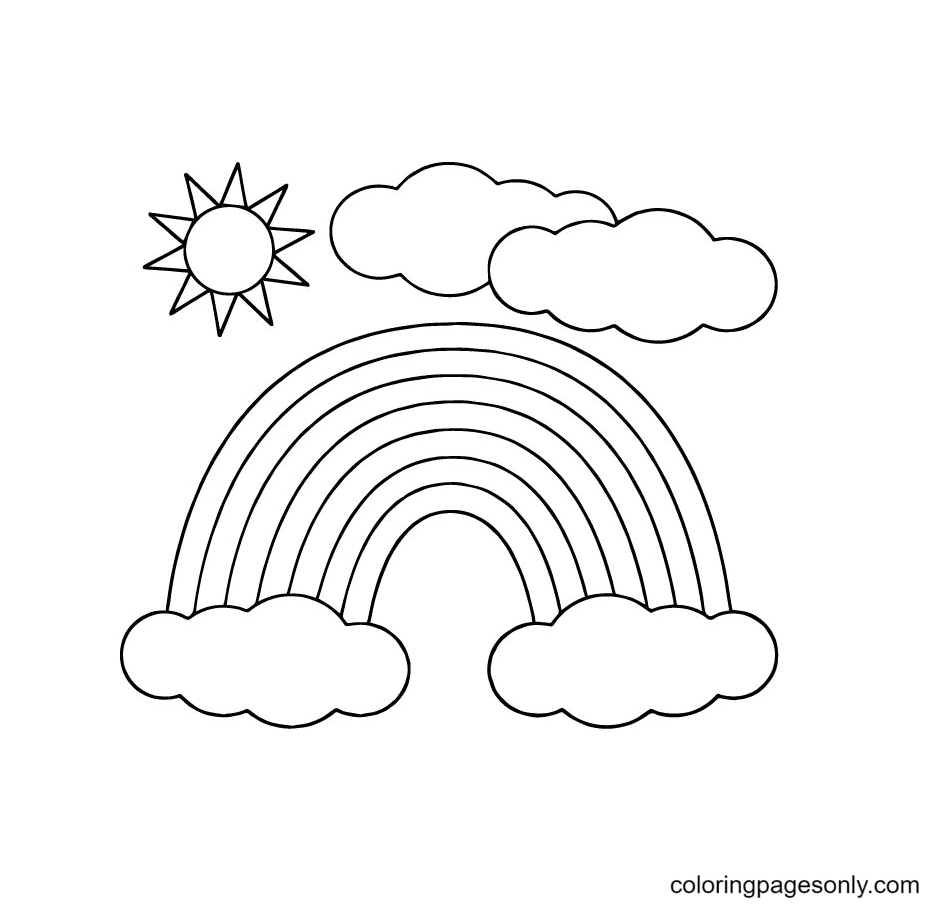
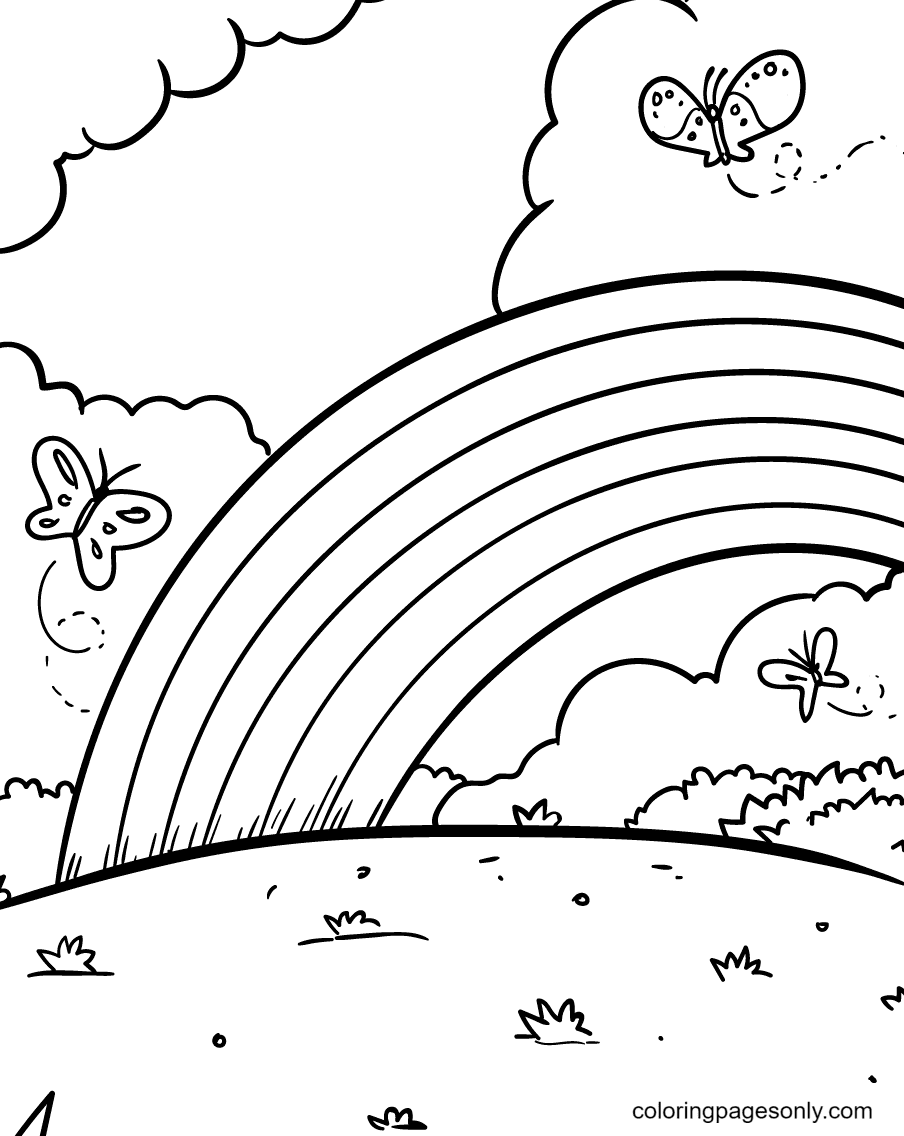
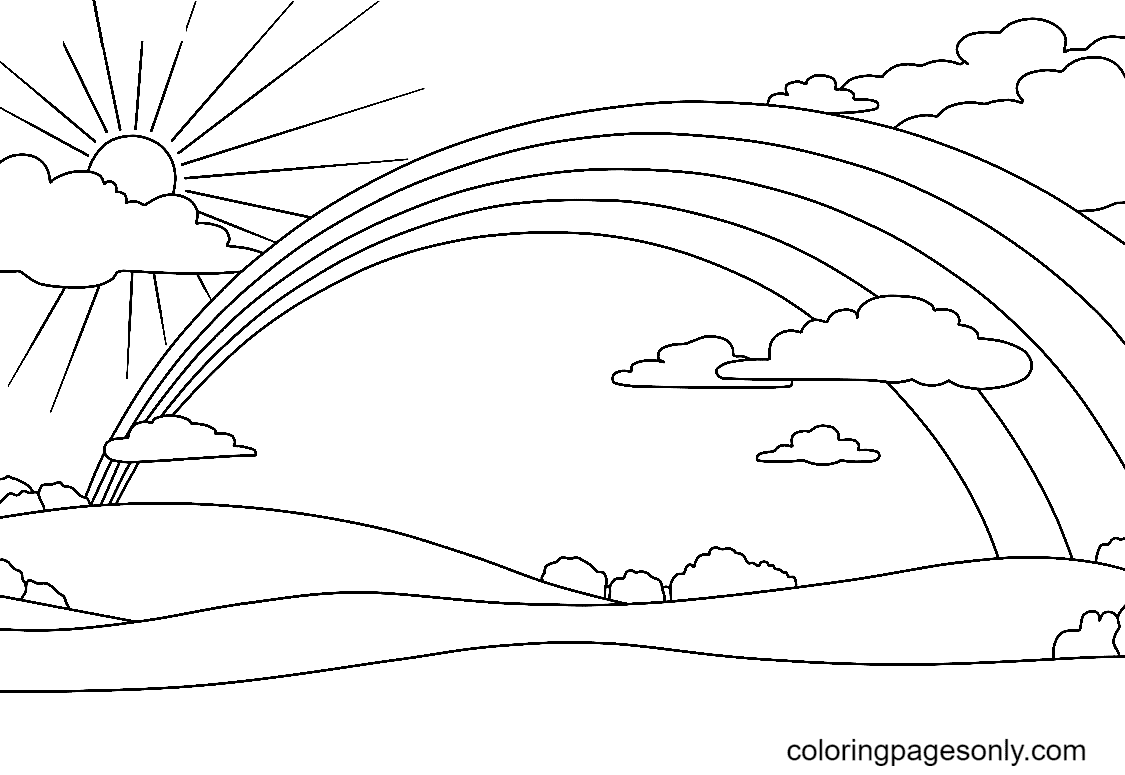
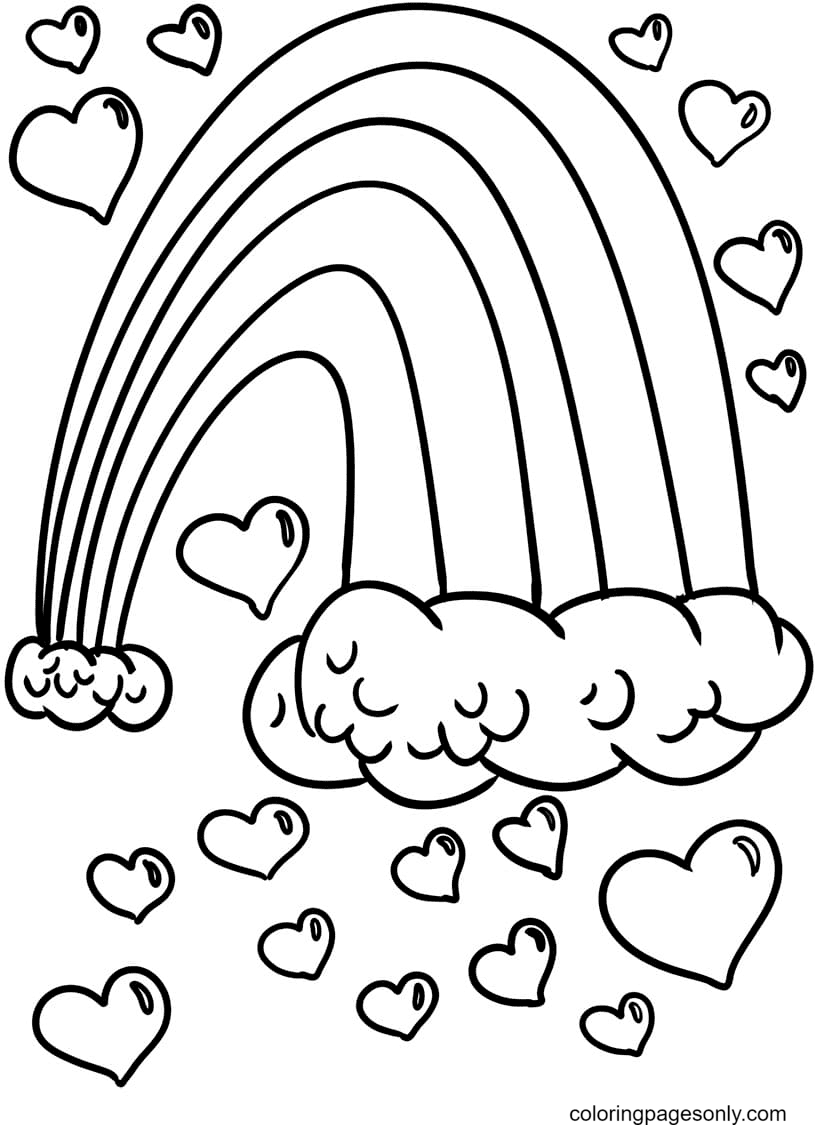
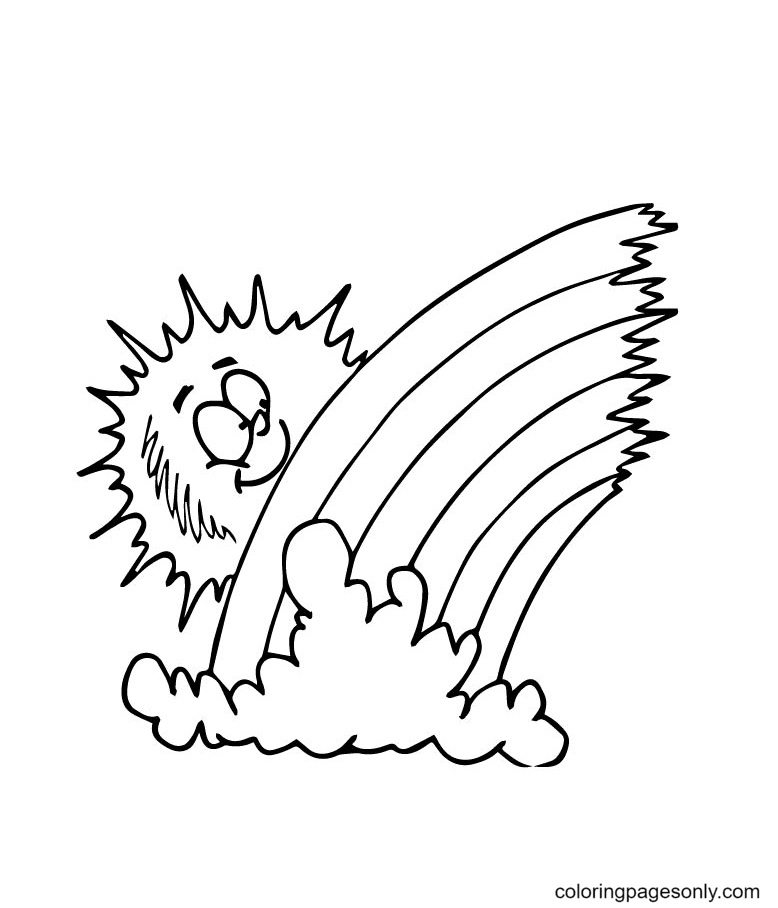
A large group of pages presents a plain rainbow arc, often with a sun or a few clouds, sized for a quick single-session print and suited to younger colorers just learning the color sequence.
Rainbows With Weather and Sky Elements
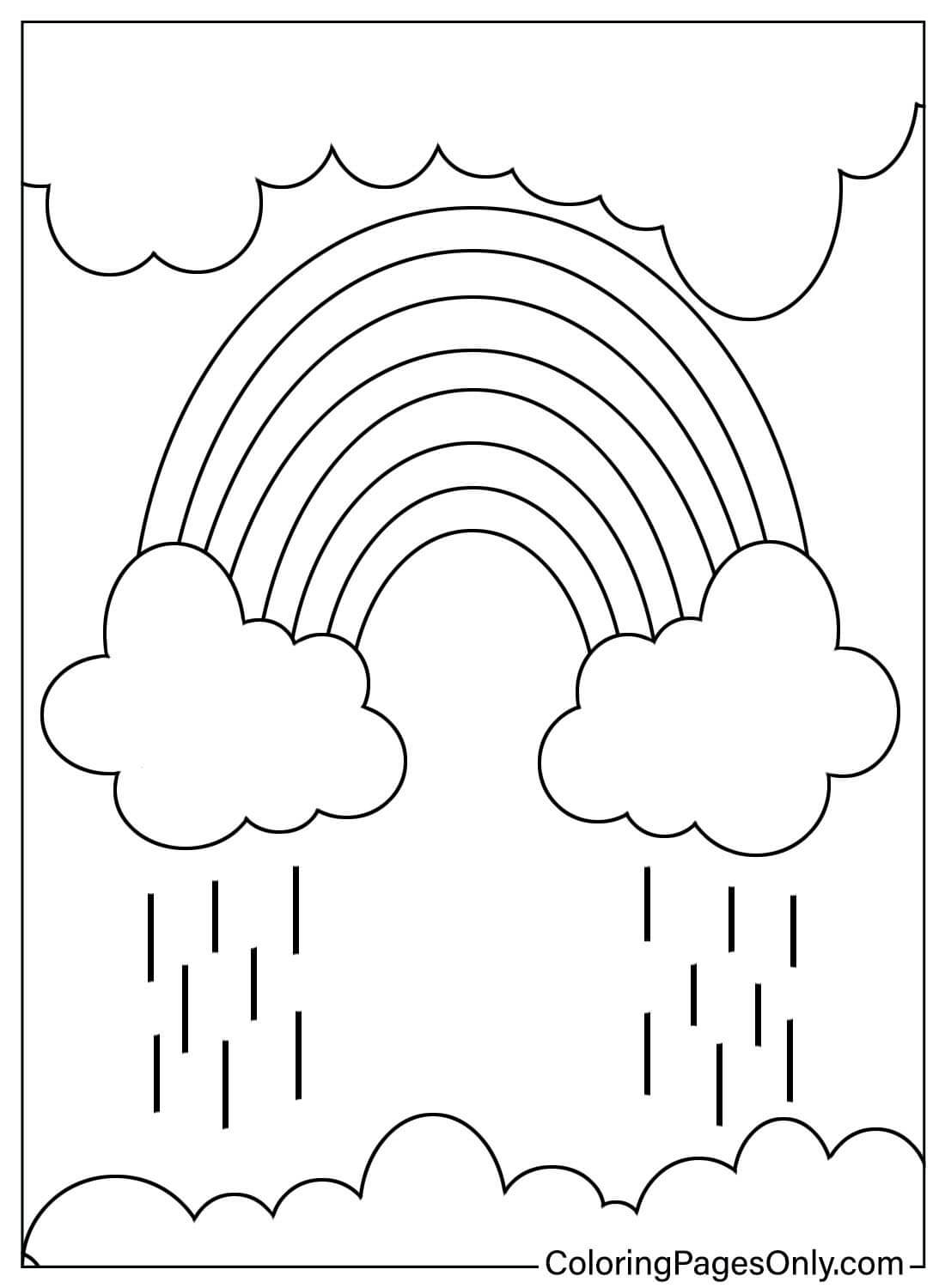
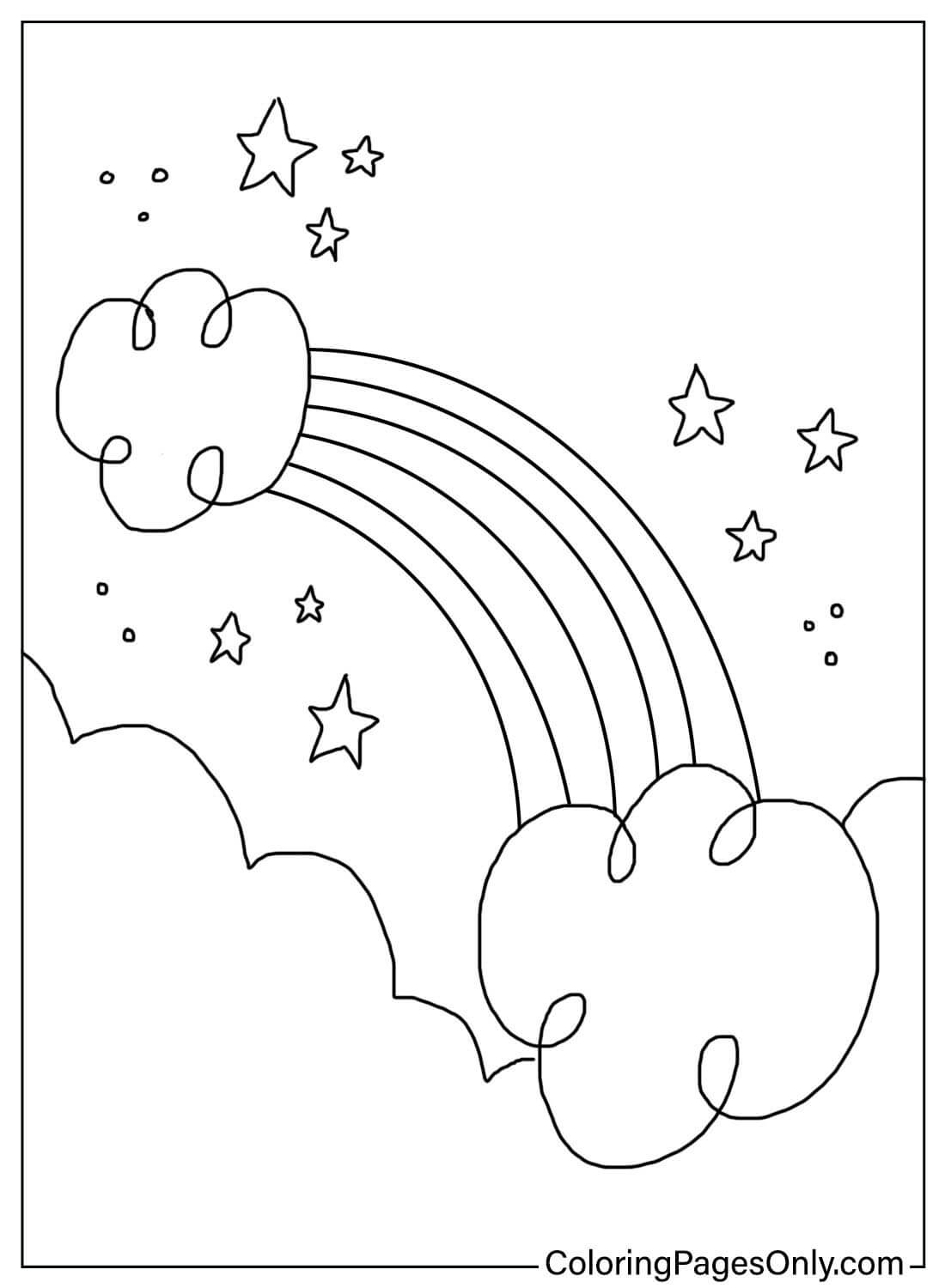
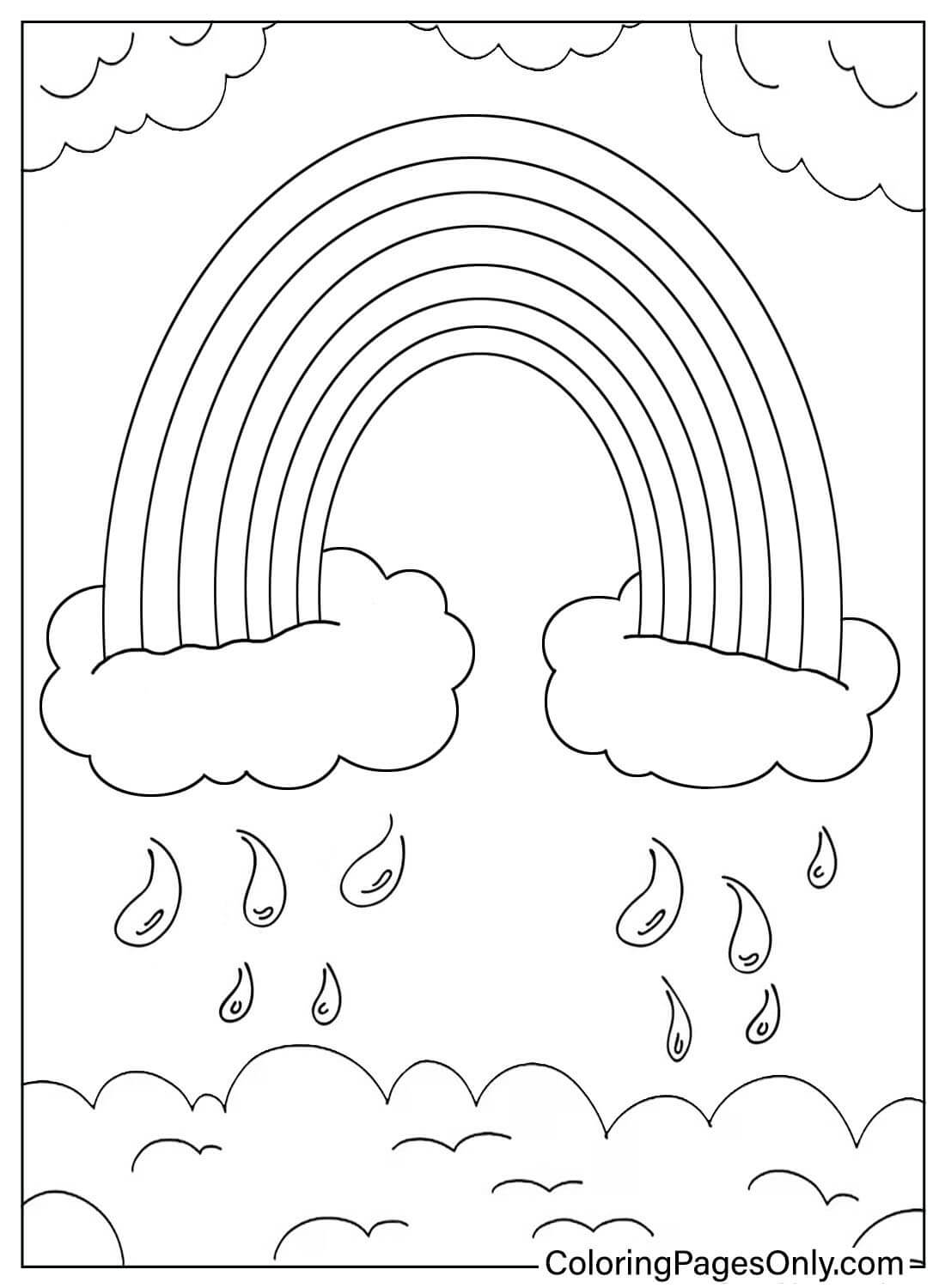
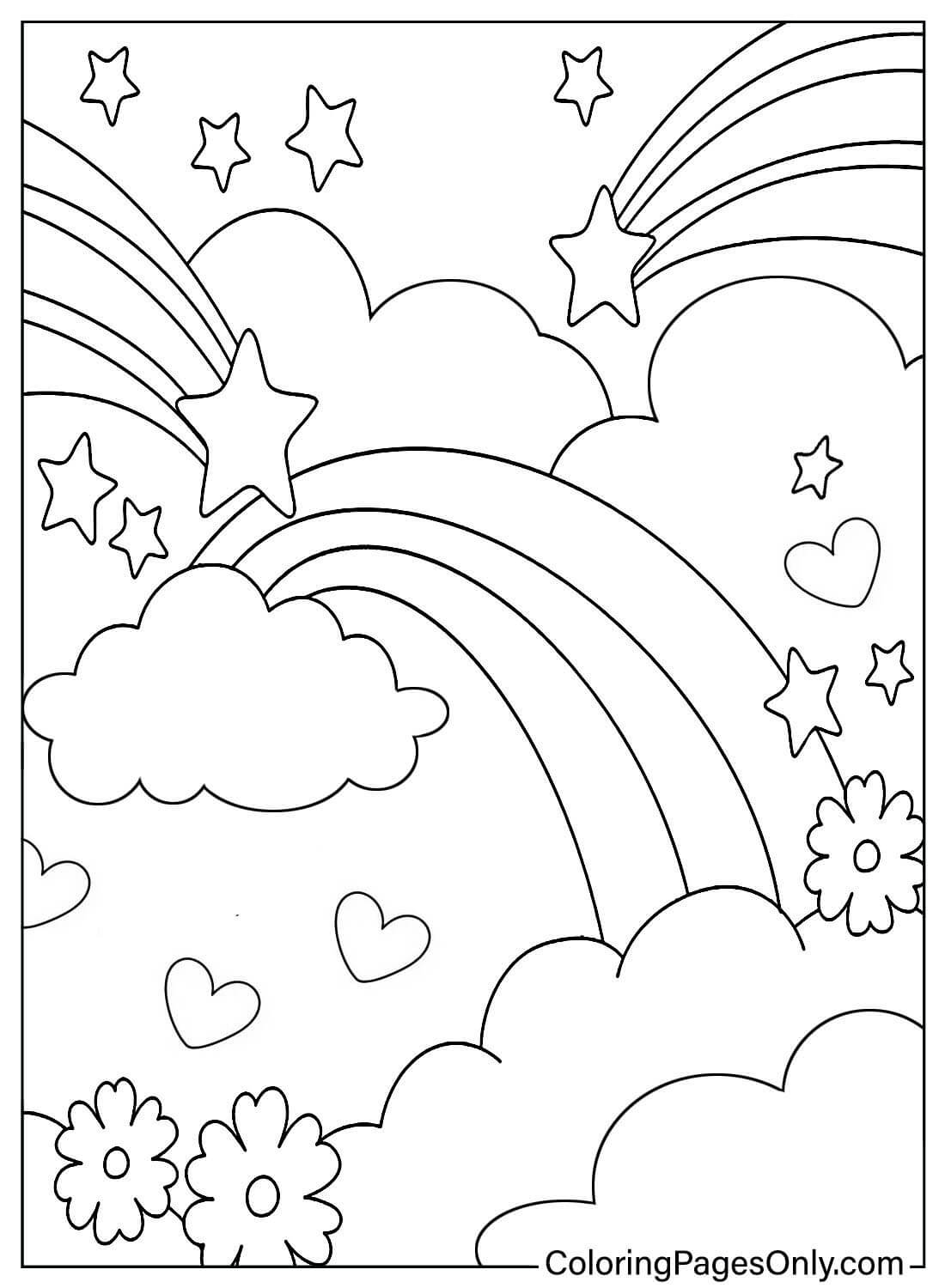
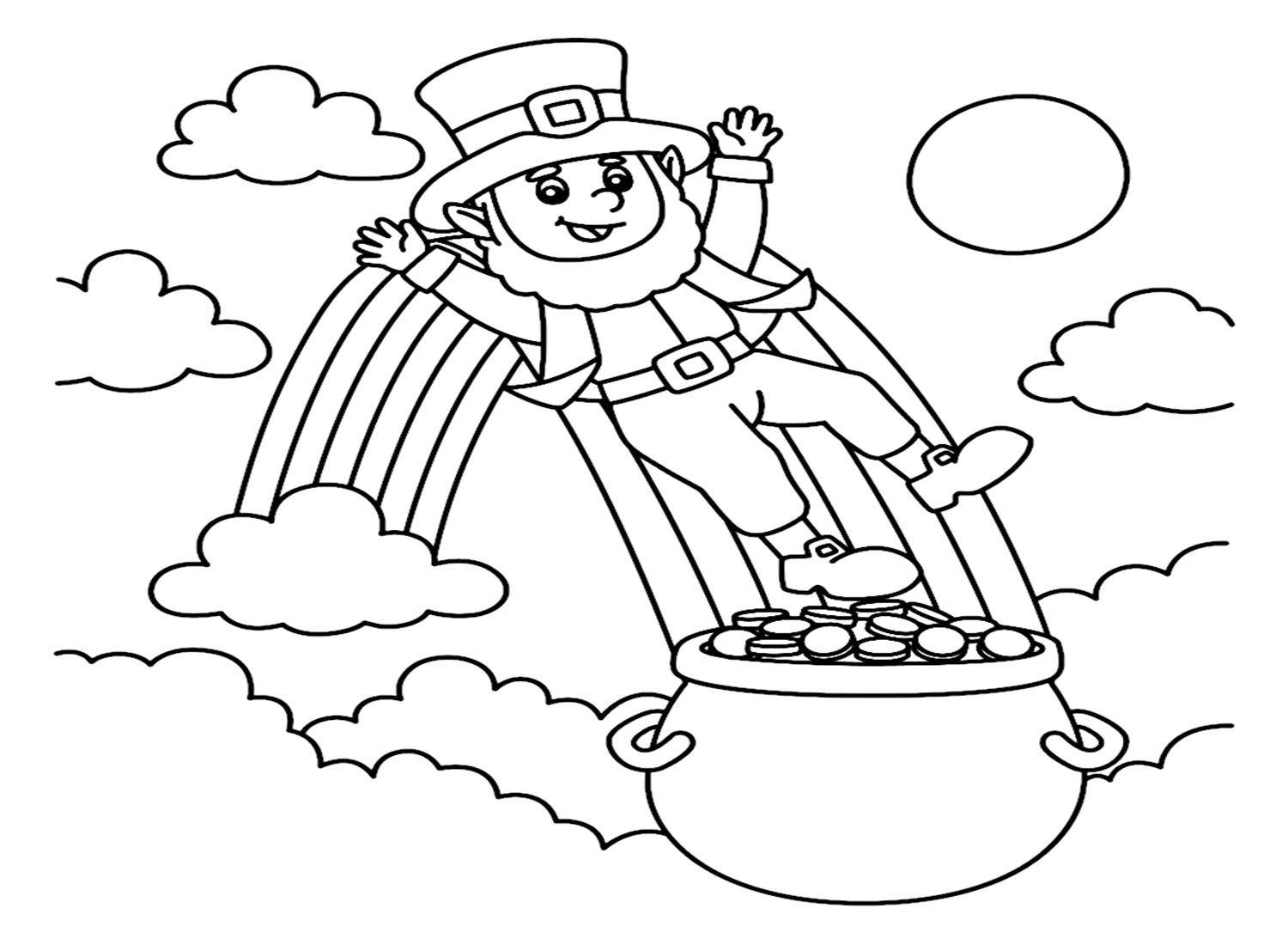
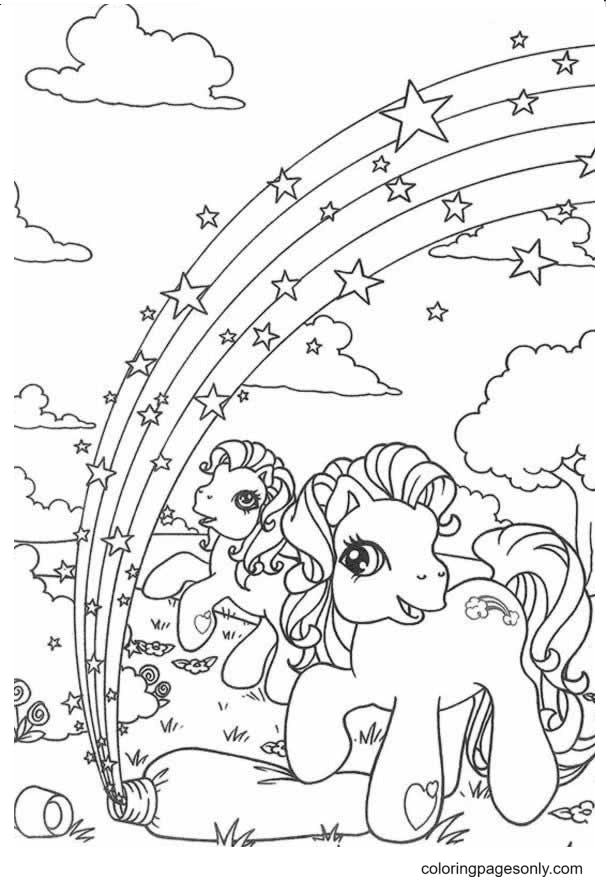
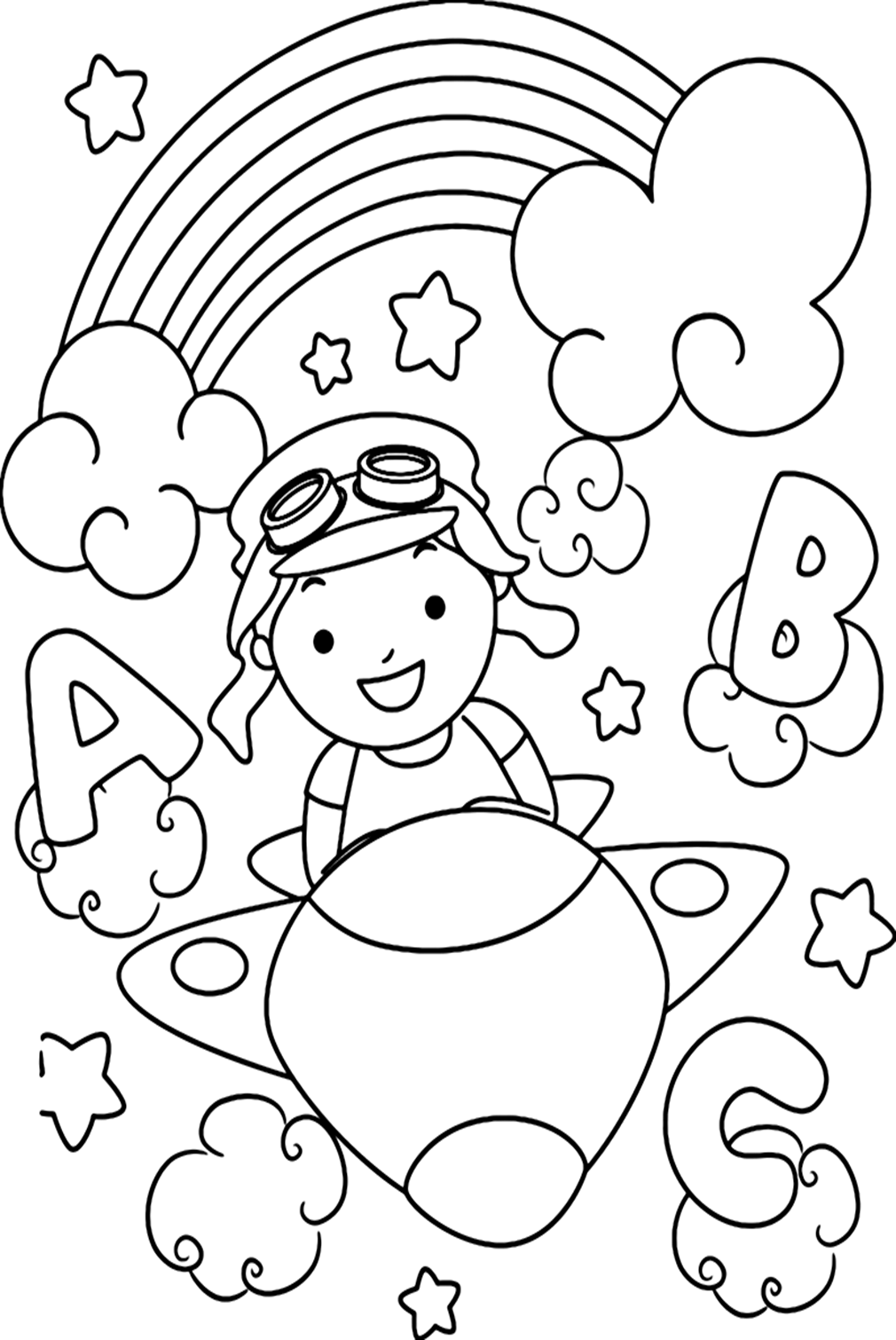
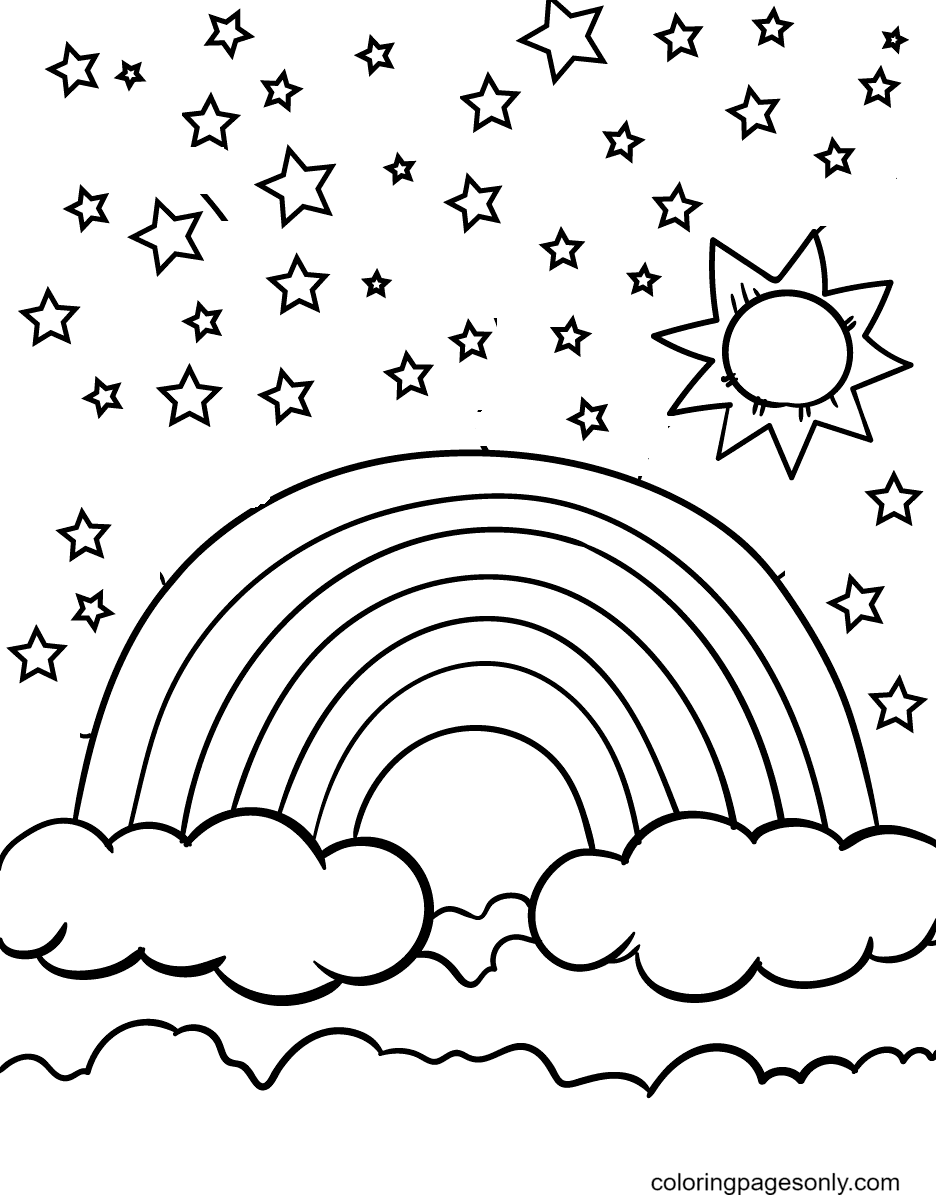
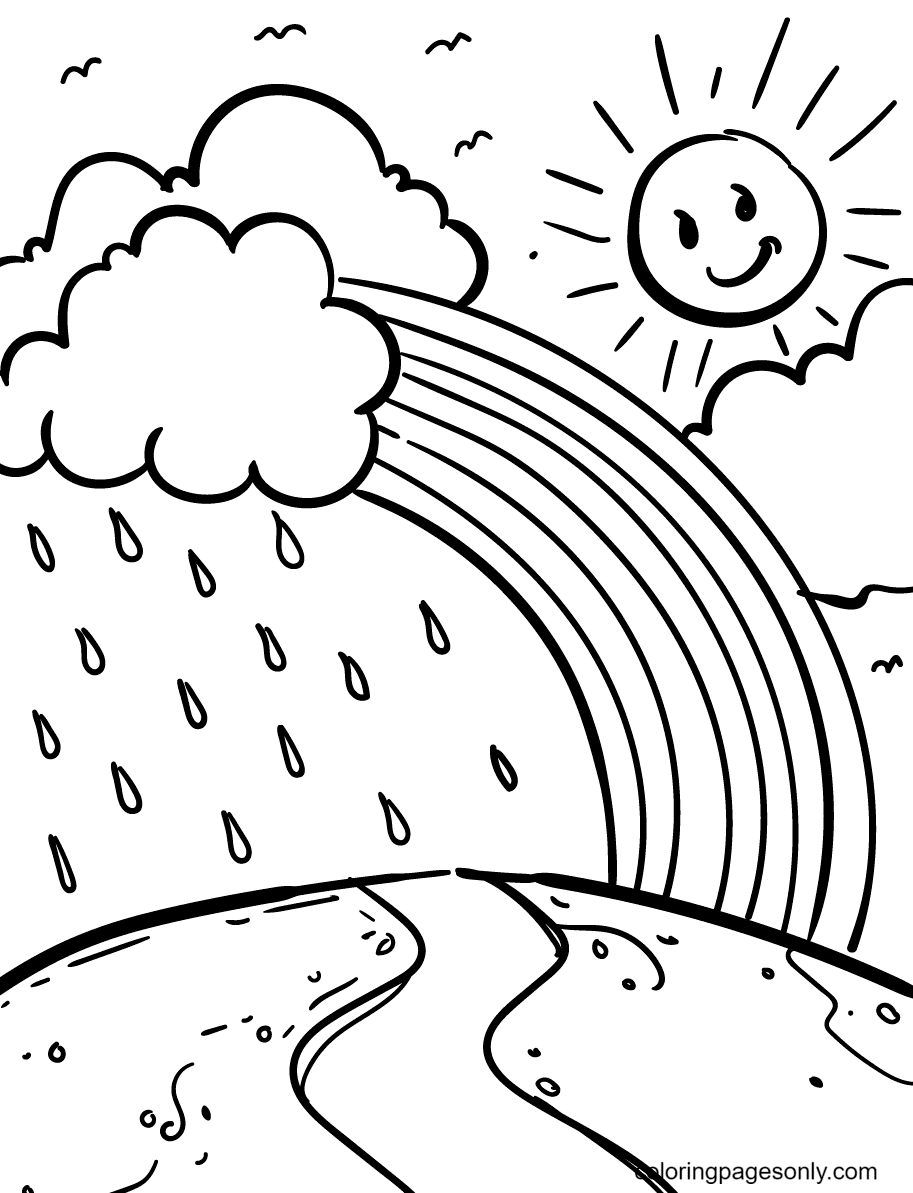
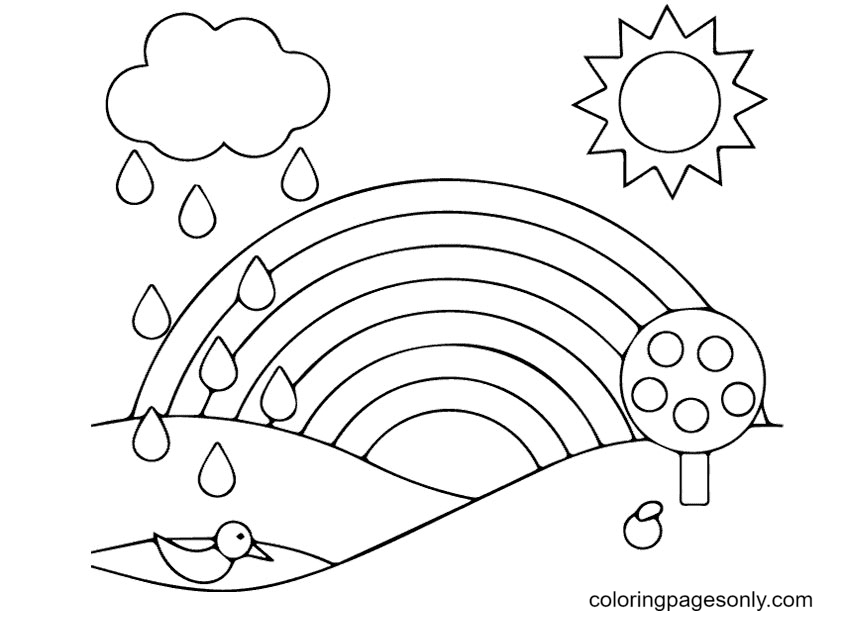
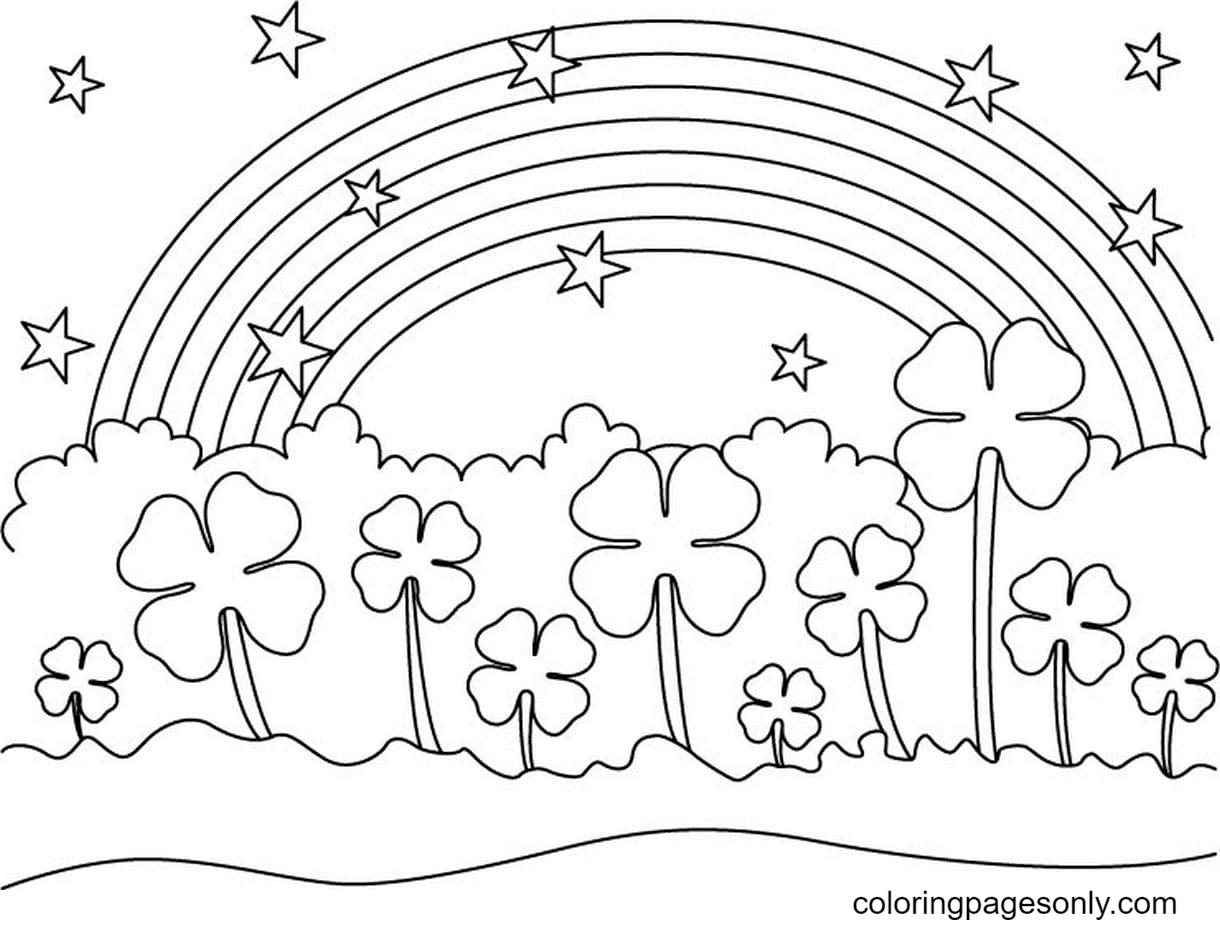
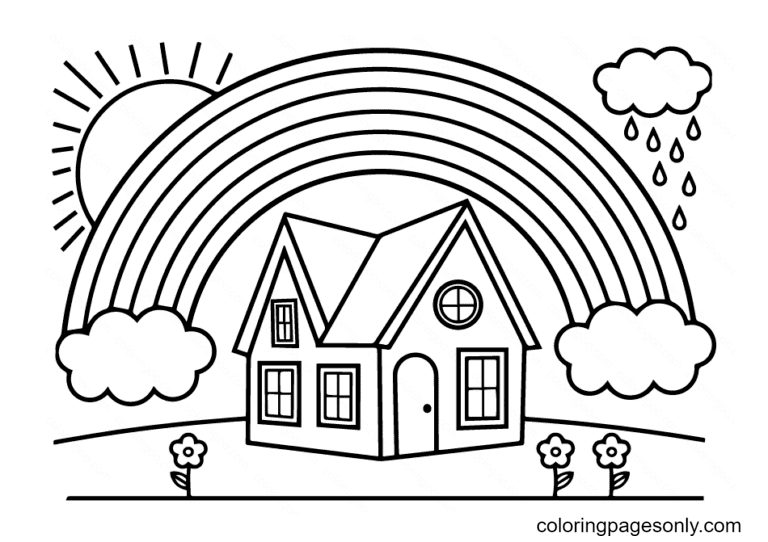
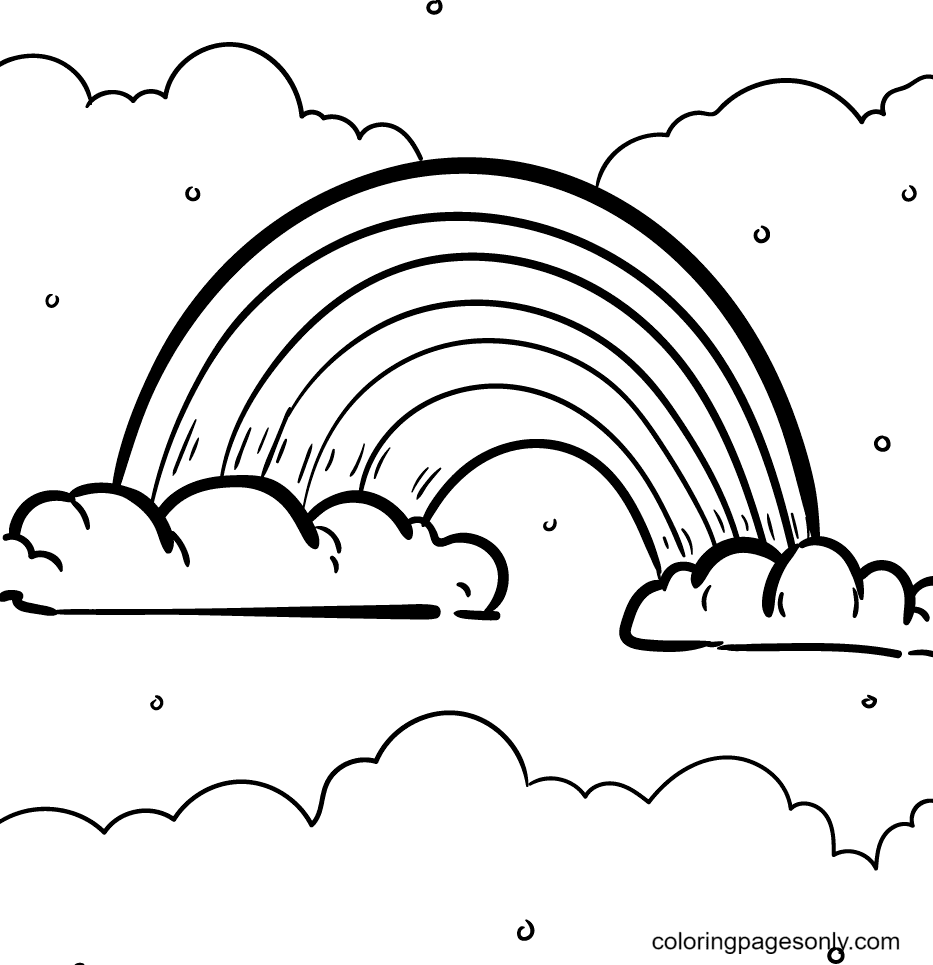
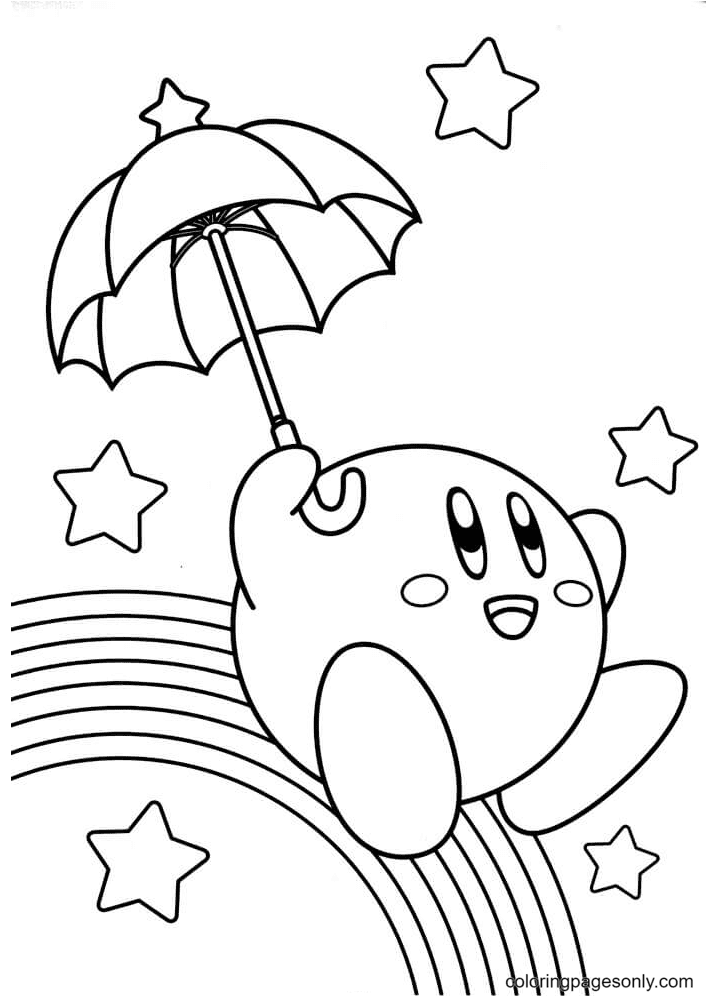
Several pages pair the rainbow with related sky elements, including clouds, rain, stars, and the sun, some showing a rainbow appearing right after a rain shower.
Rainbows With Animals and Fantasy Elements
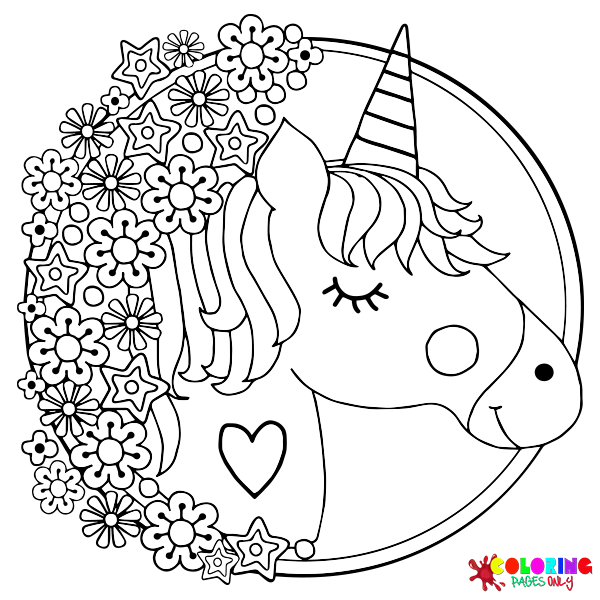
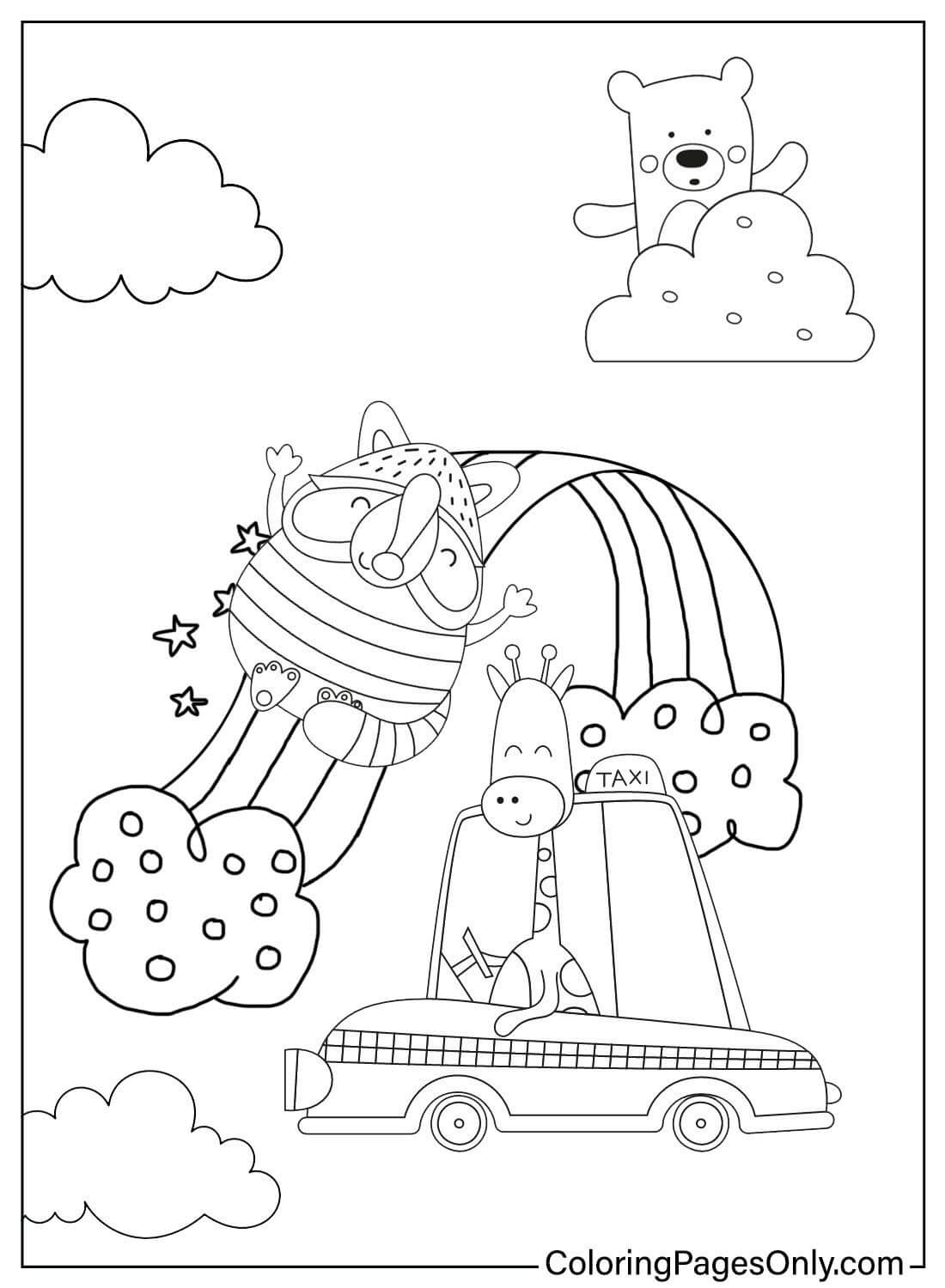
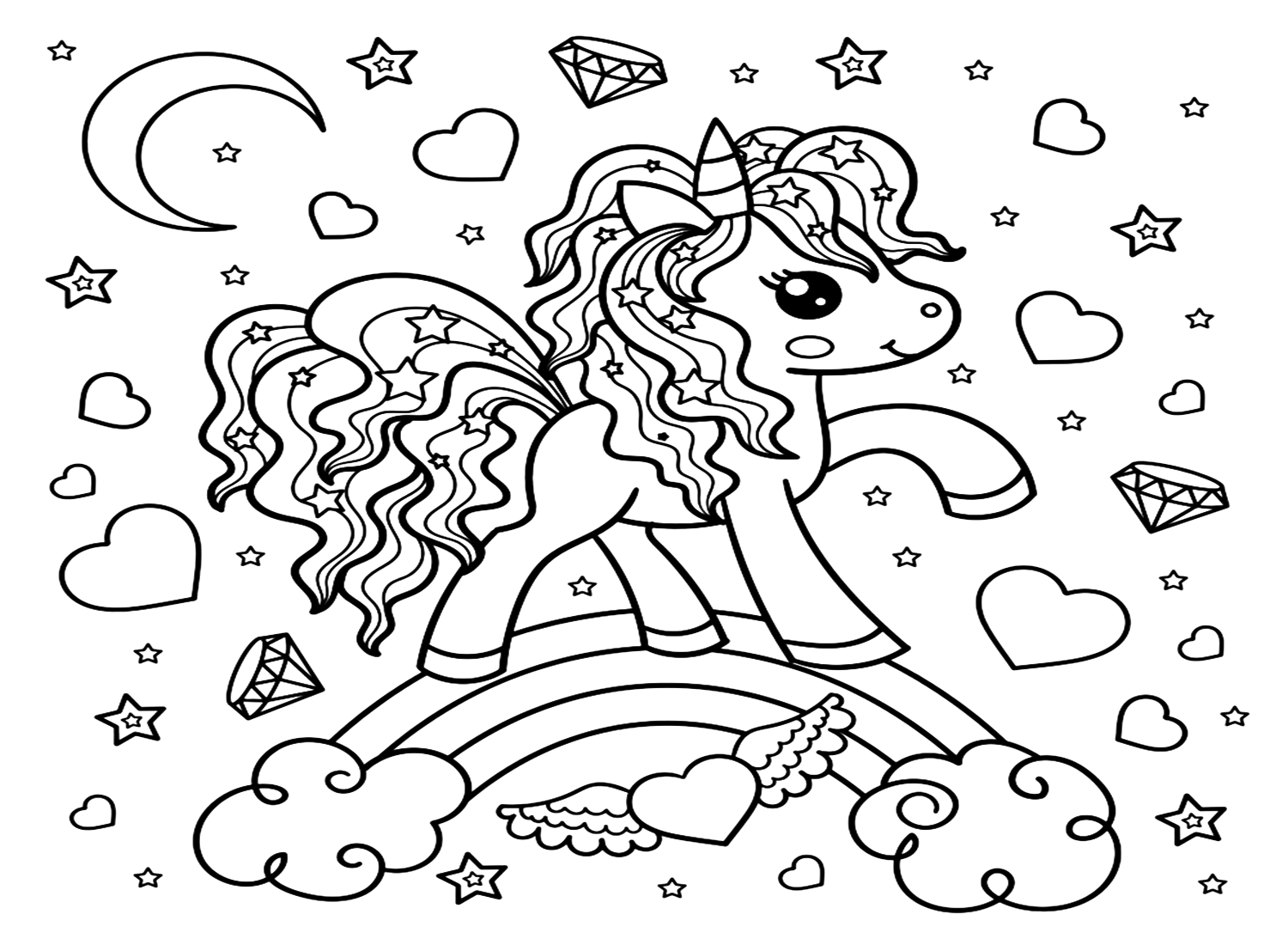
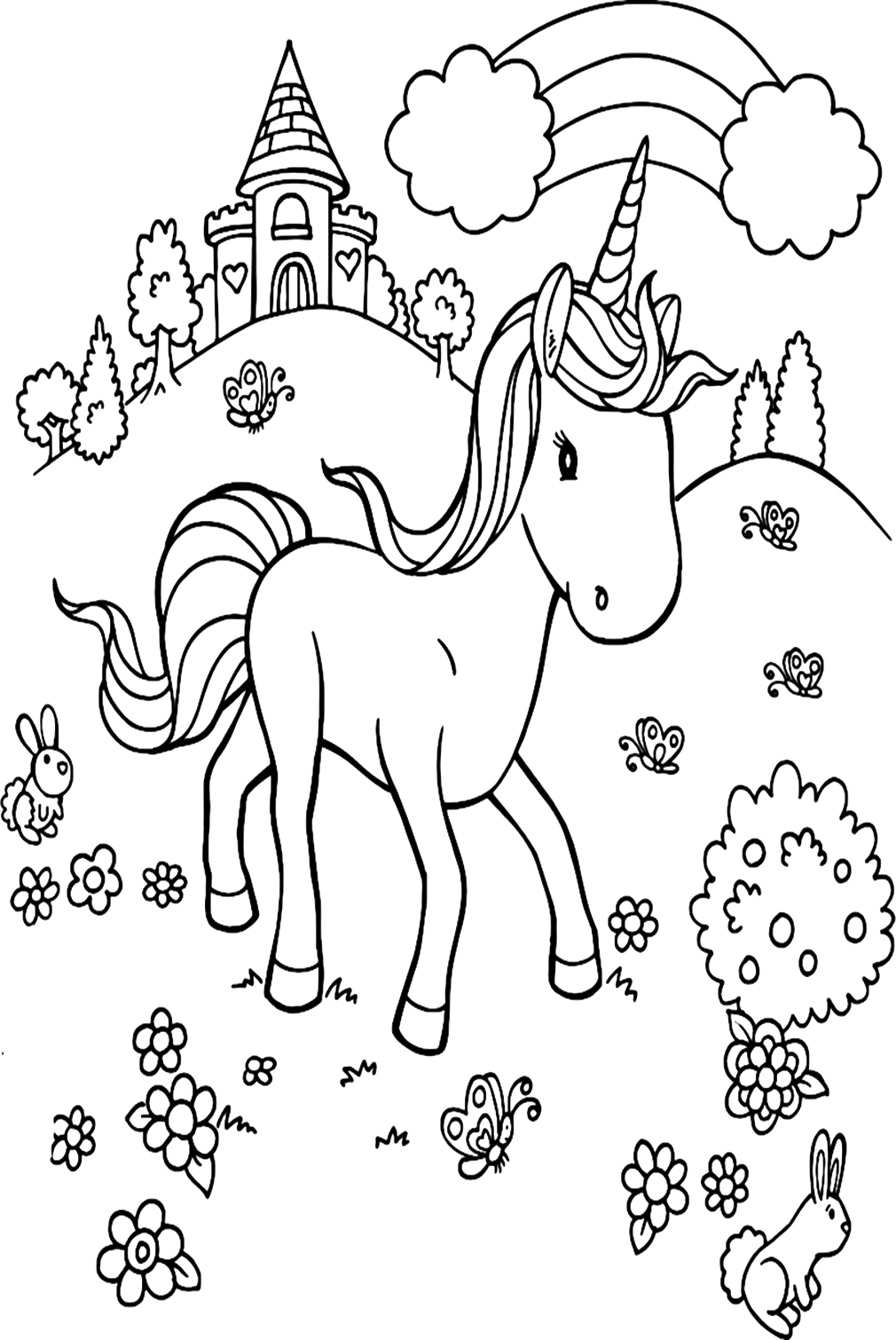
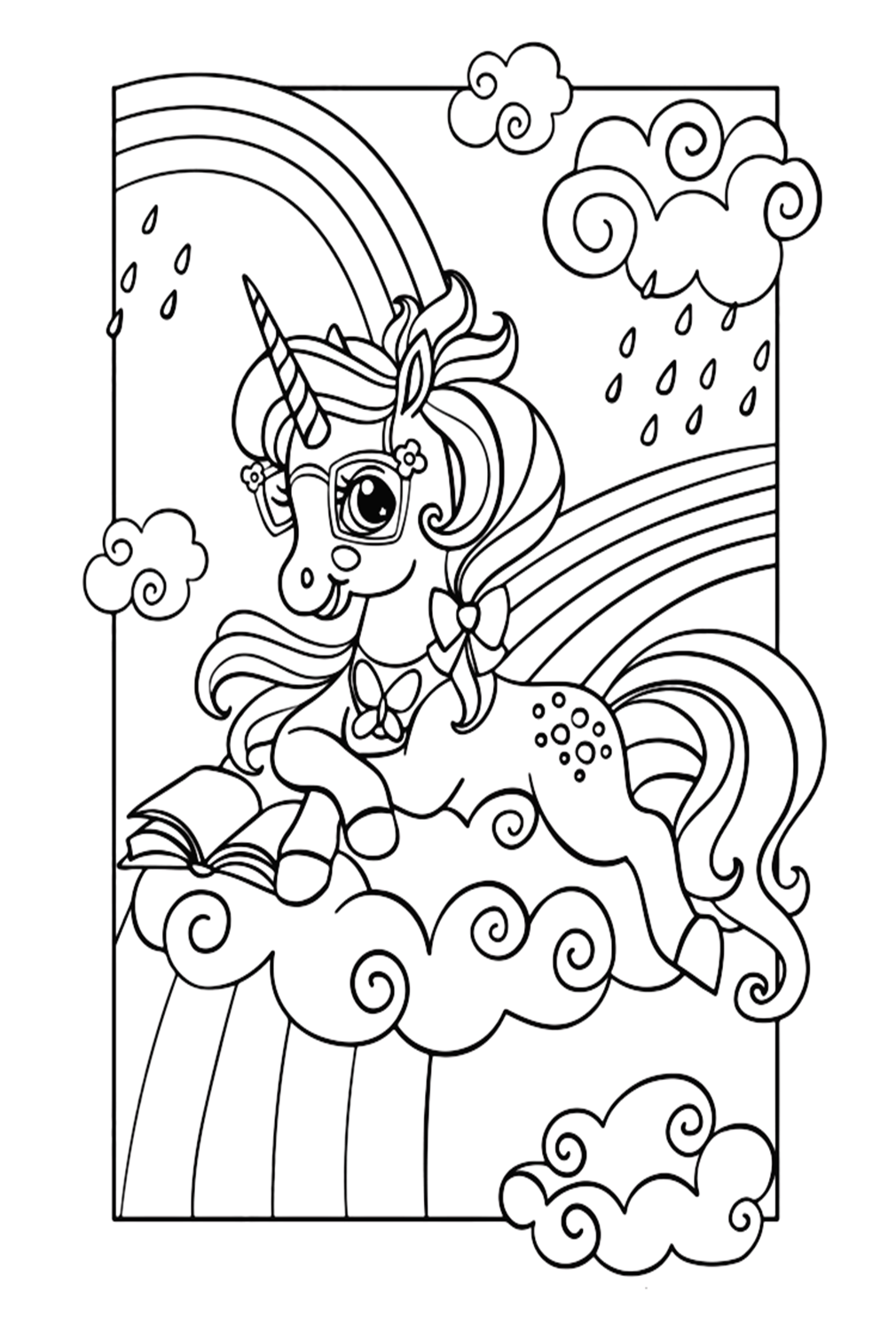
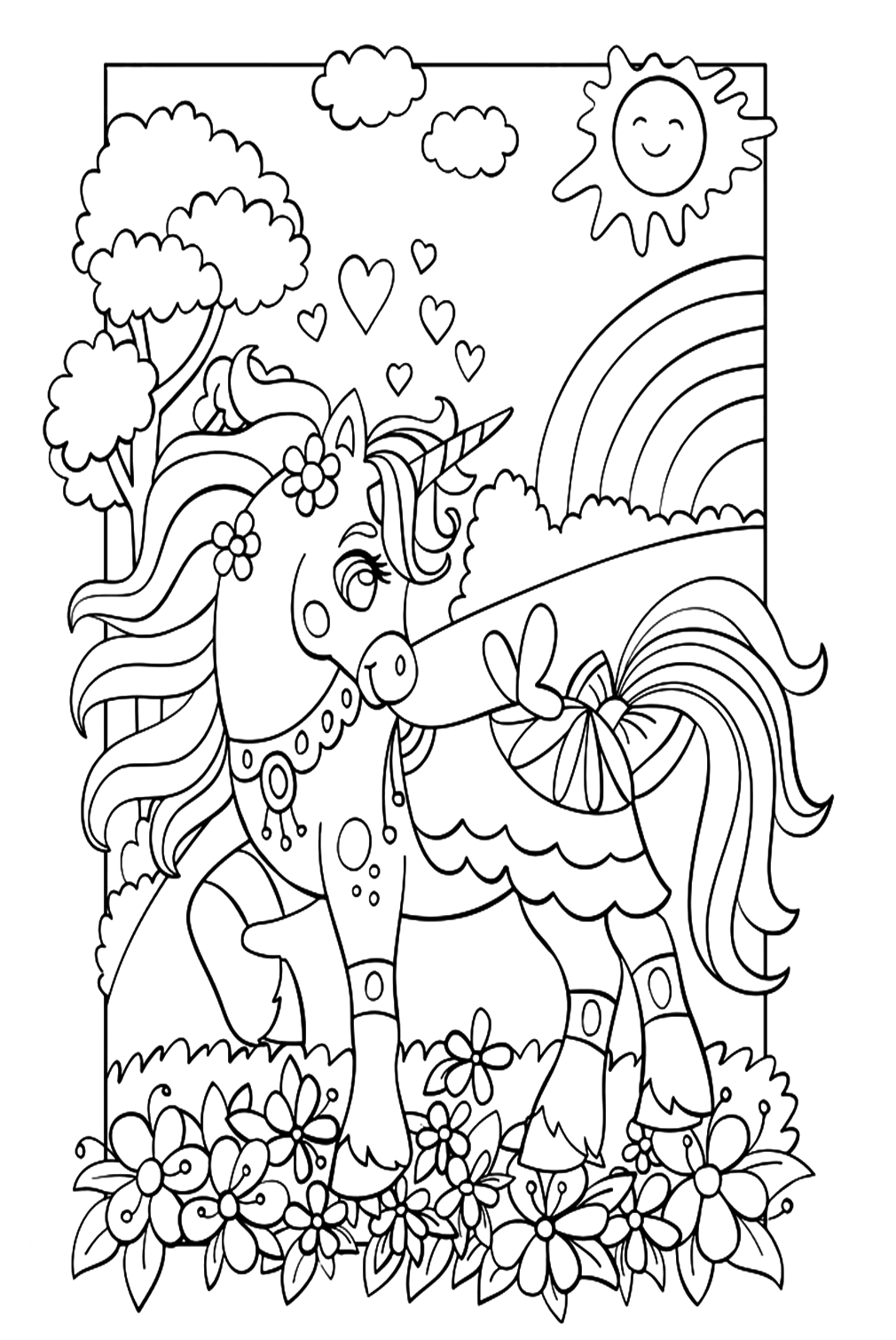
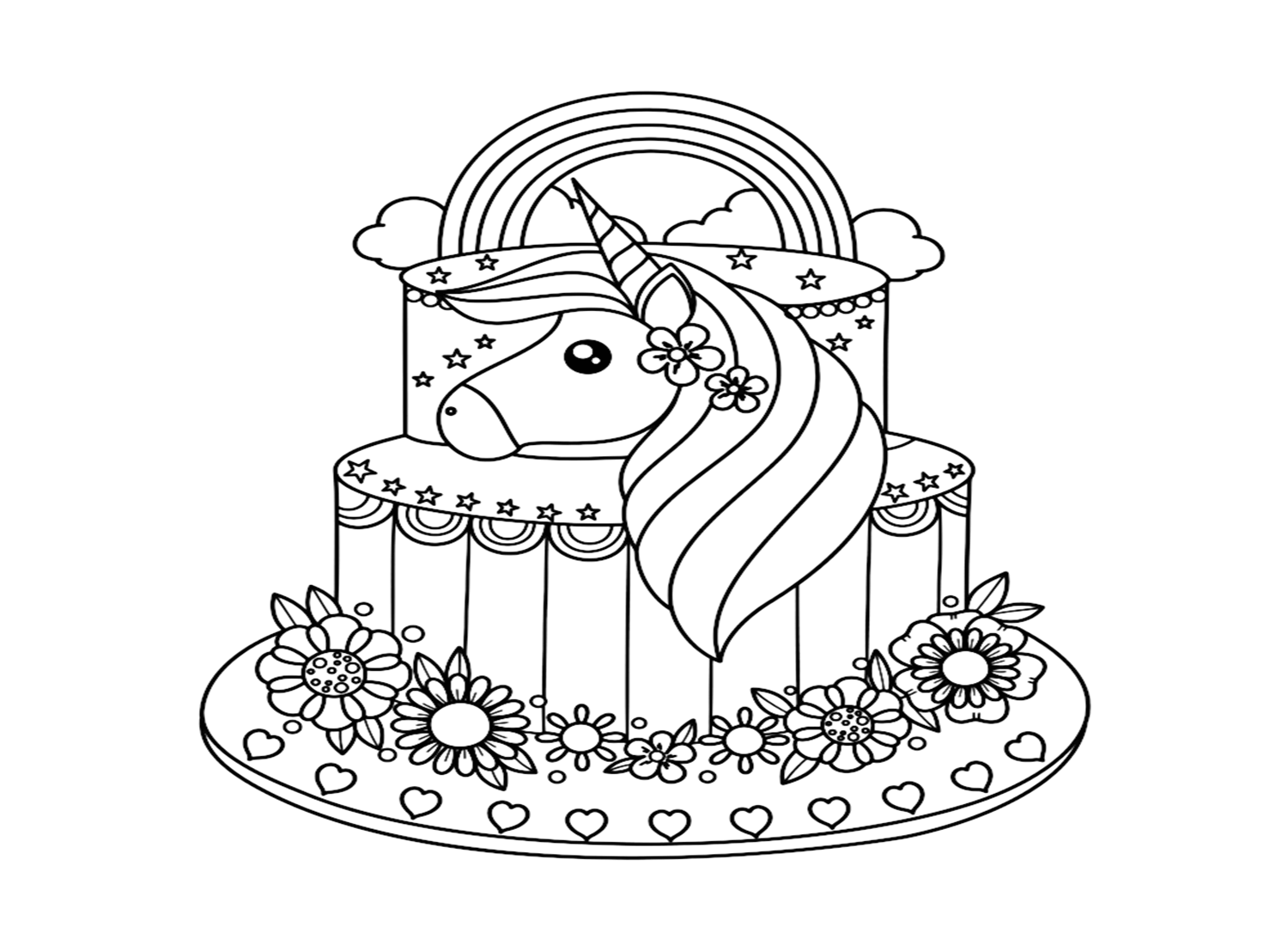
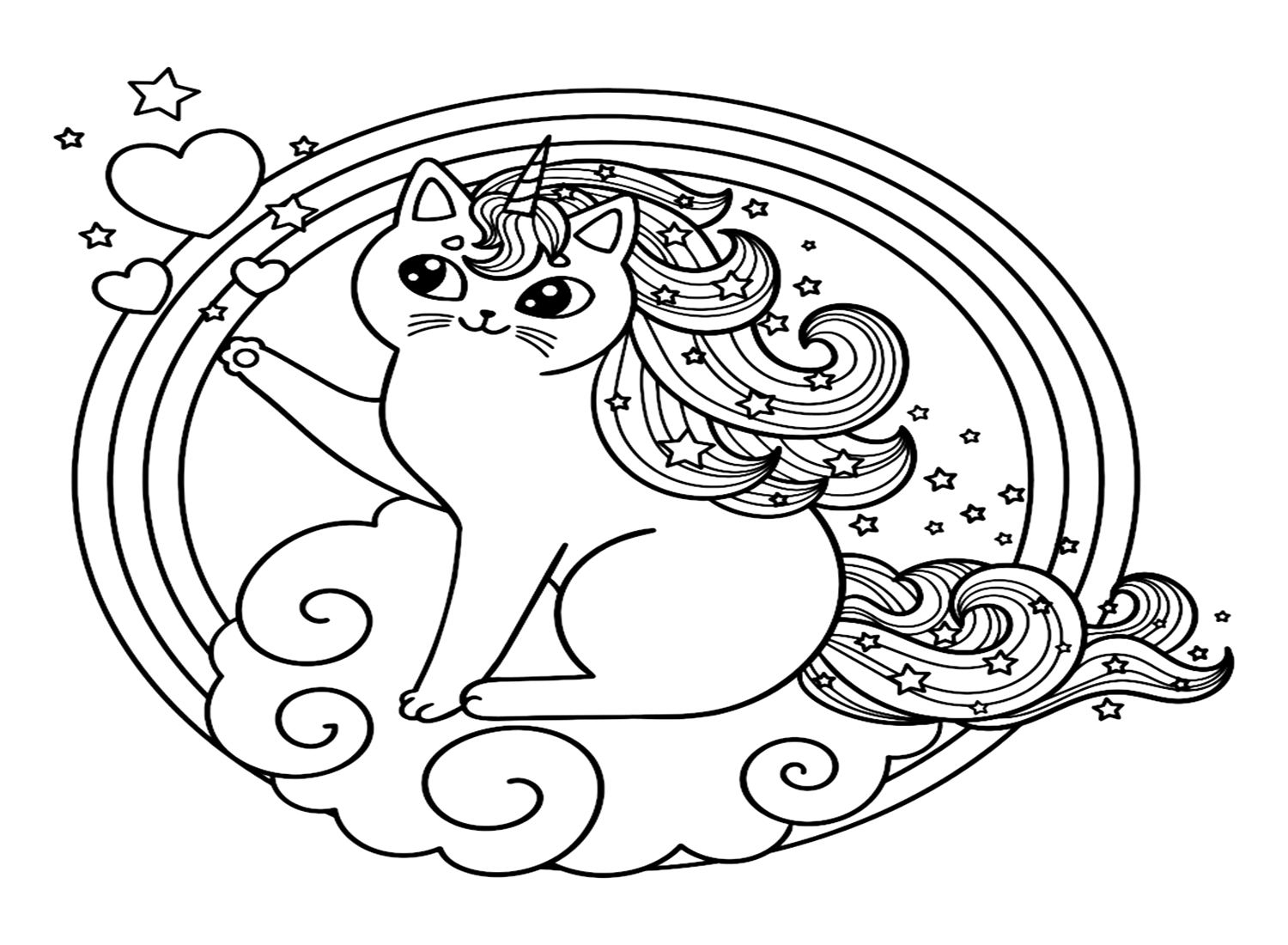
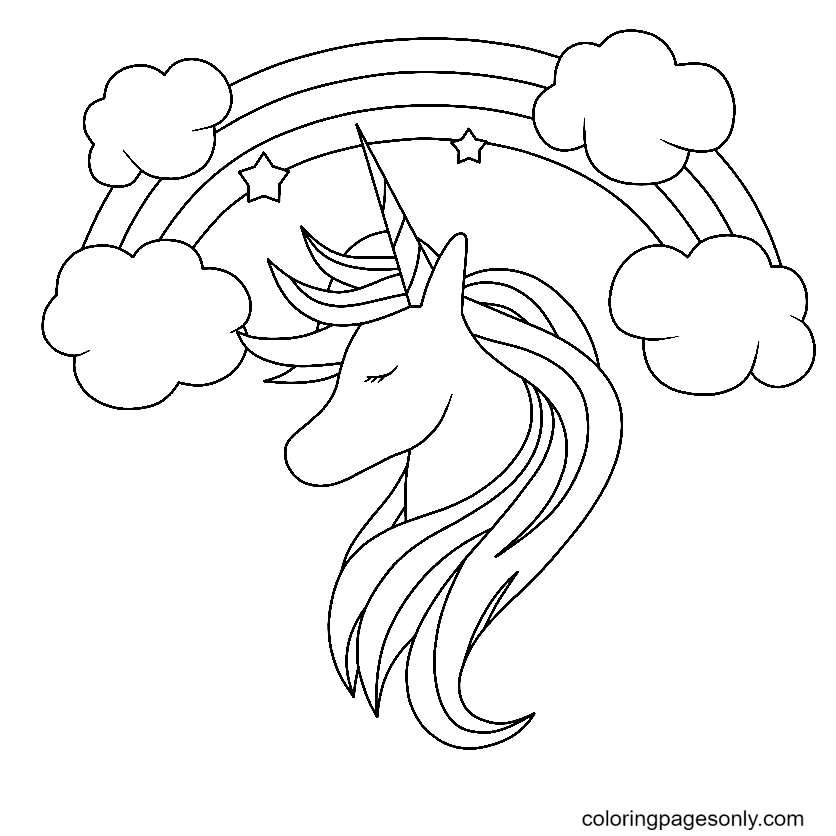
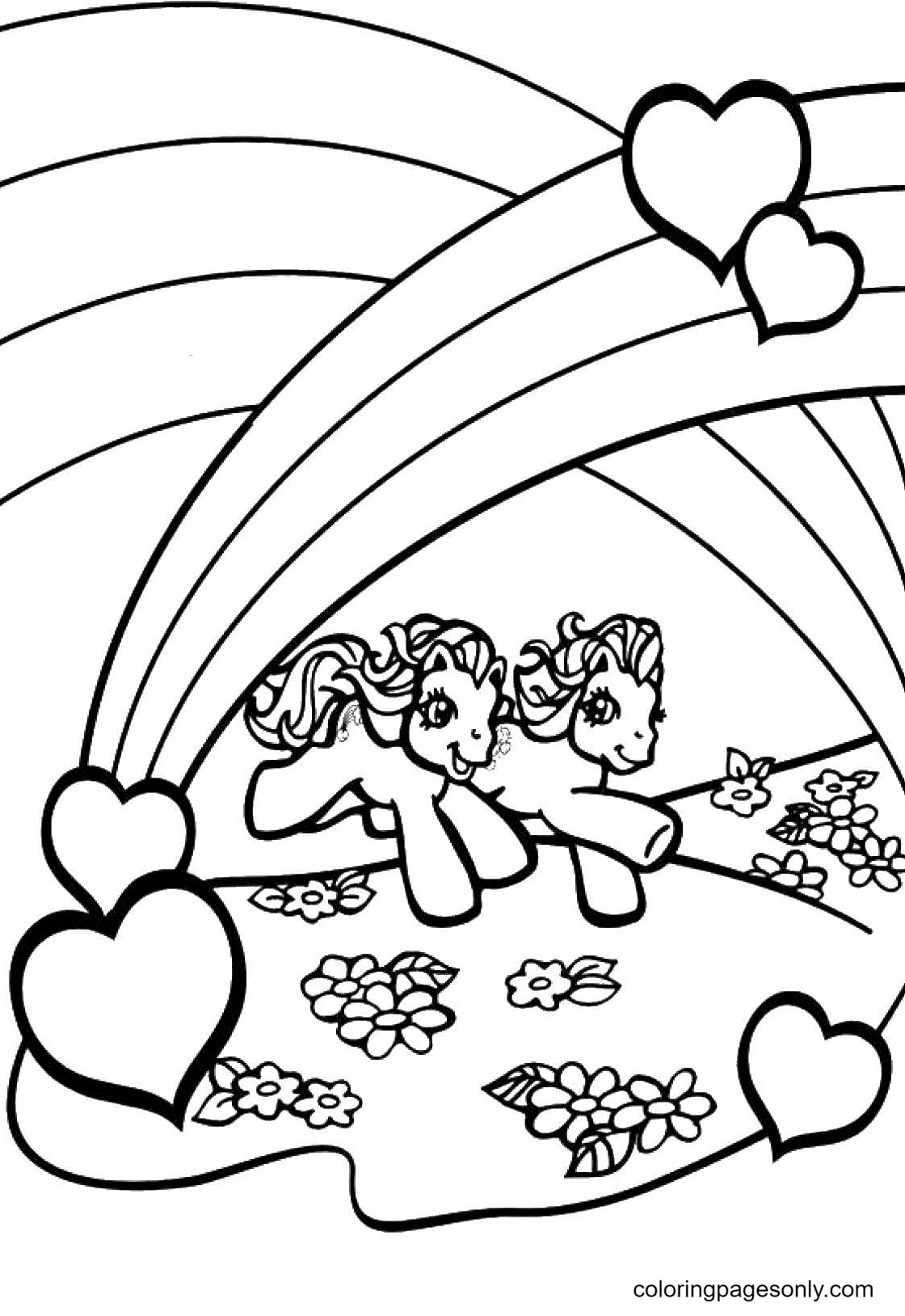
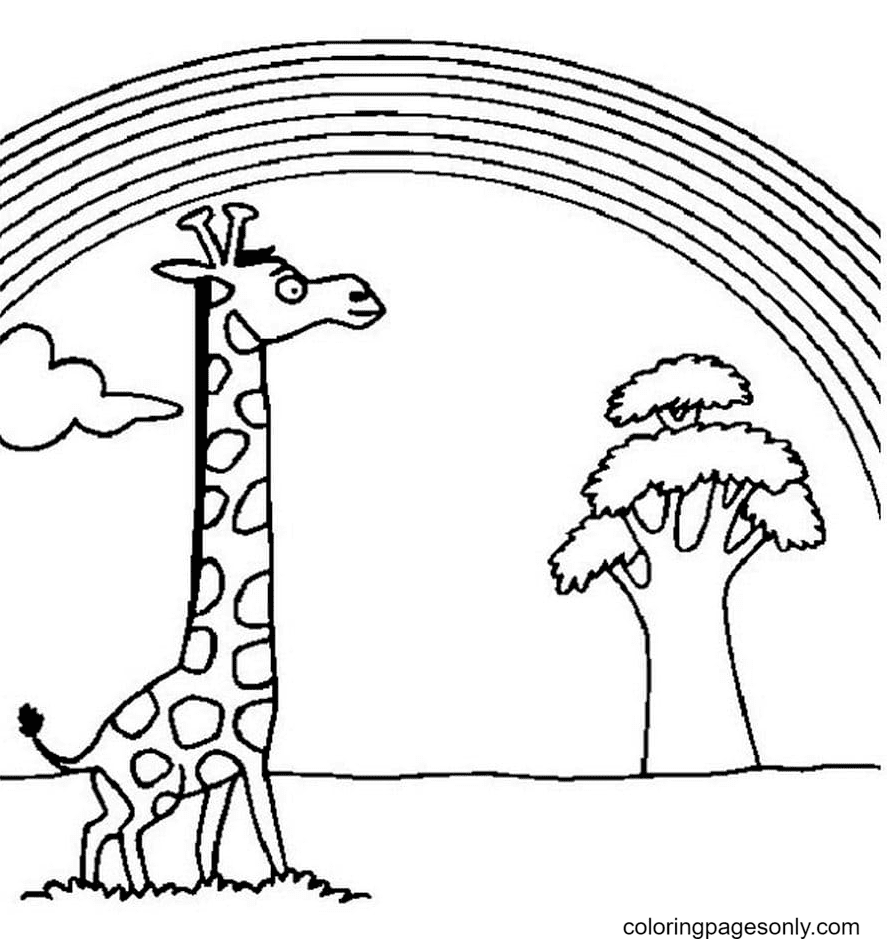
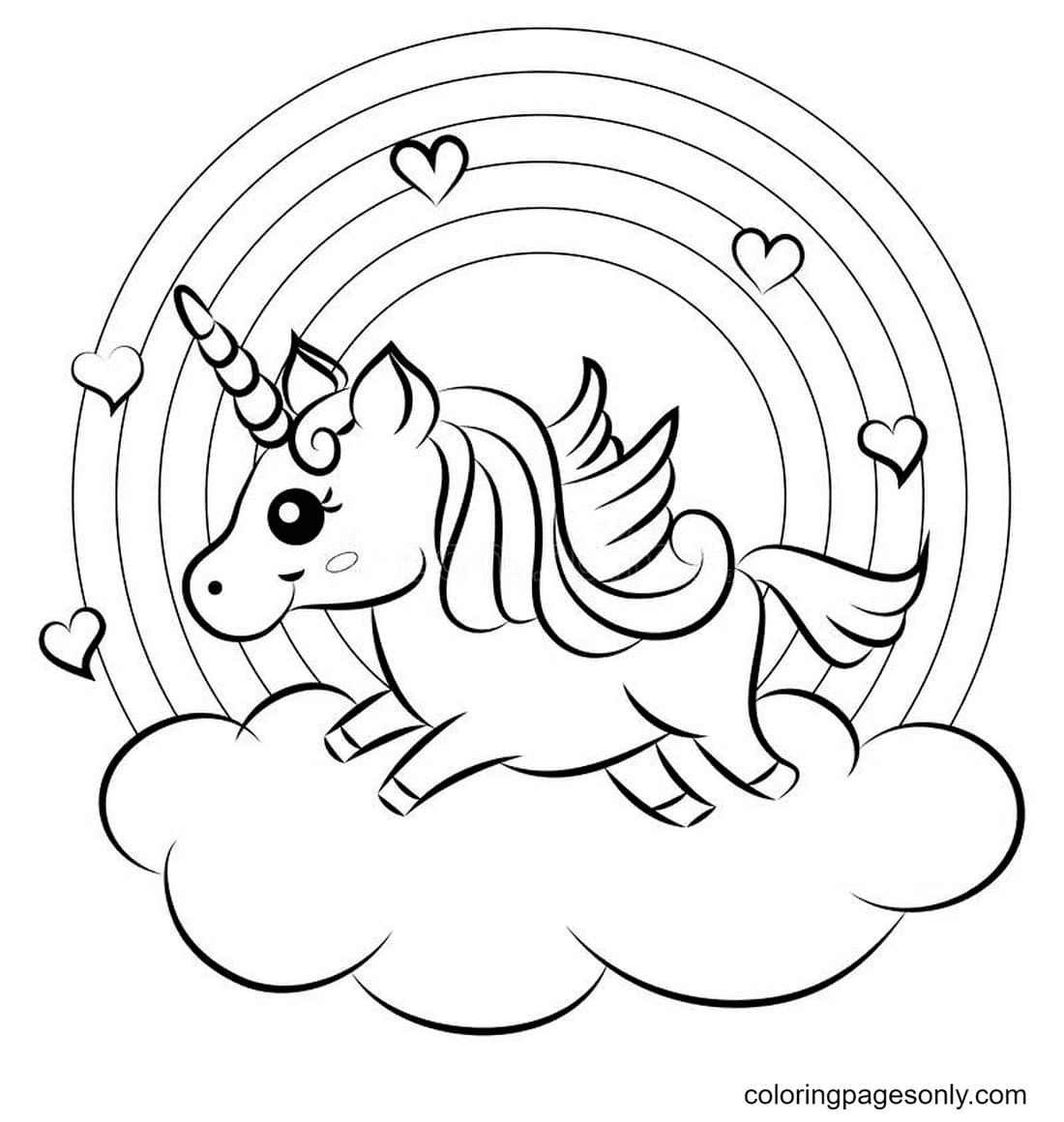
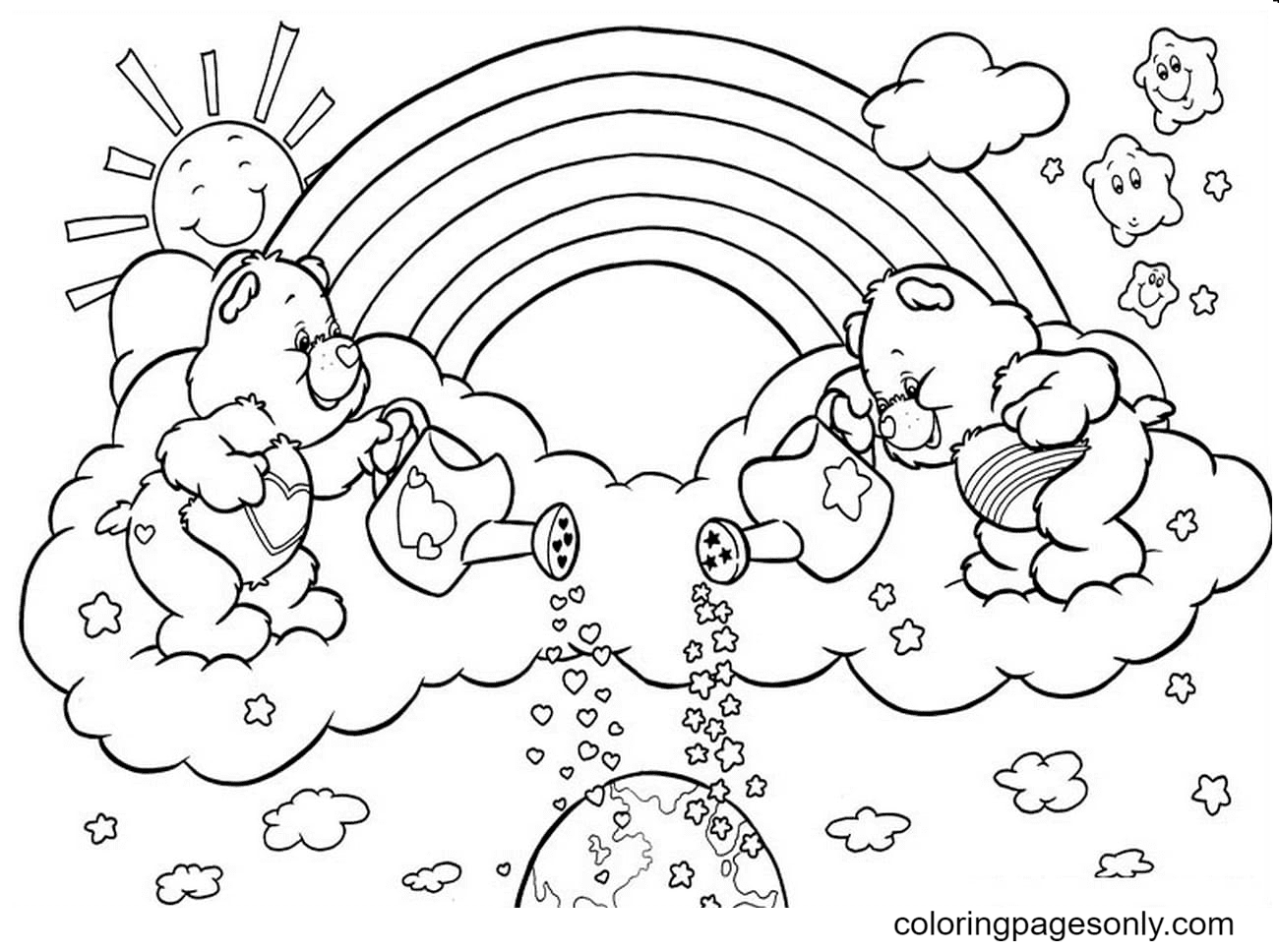
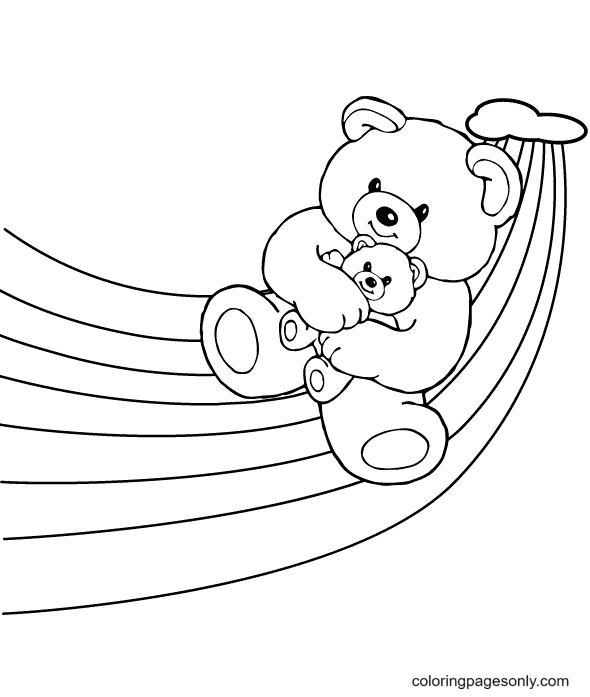
A number of pages set the rainbow alongside animals such as bears and a giraffe, or fantasy elements like unicorns and a girl riding a horse across a rainbow.
Detailed and Pattern Designs
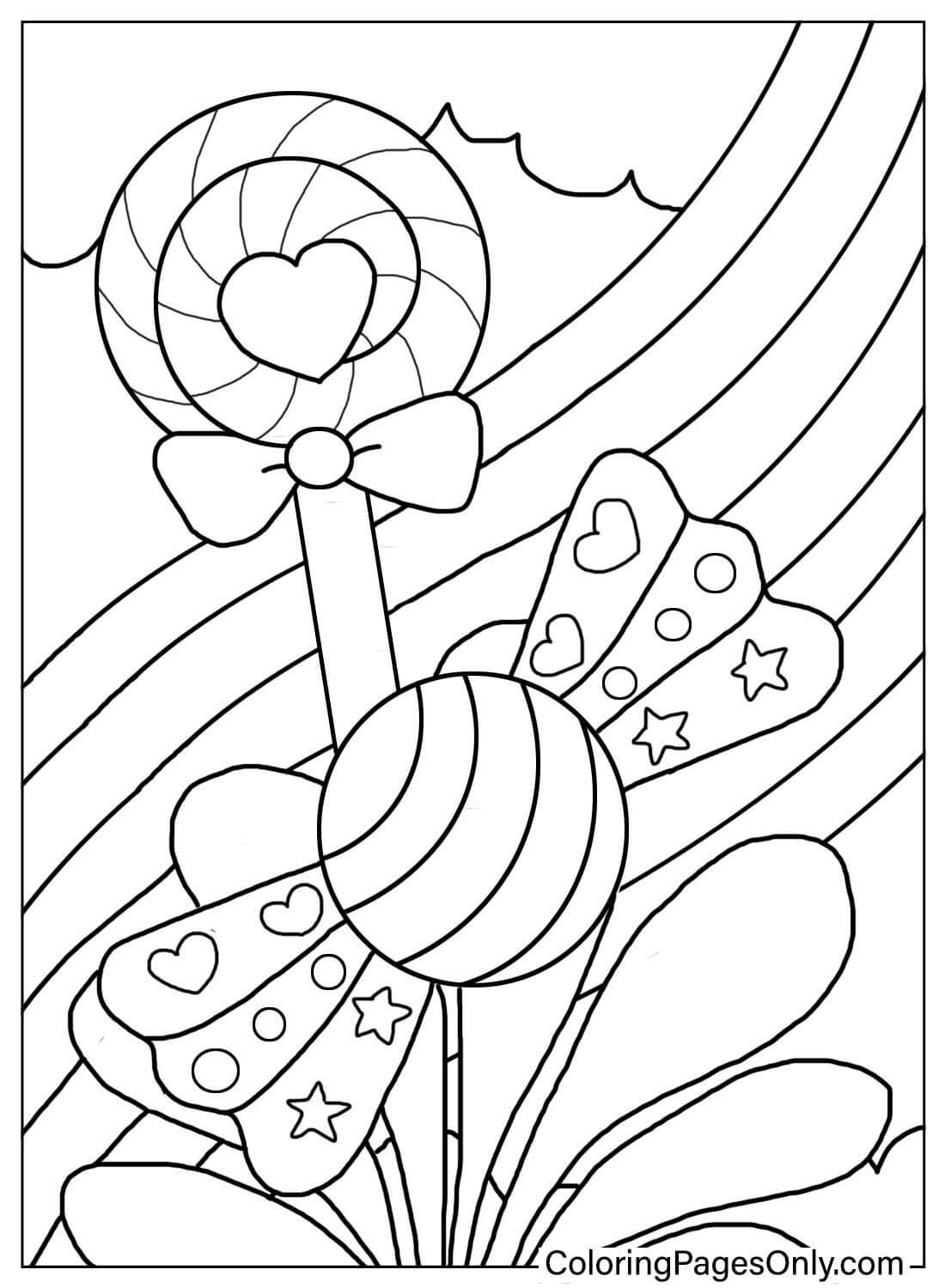
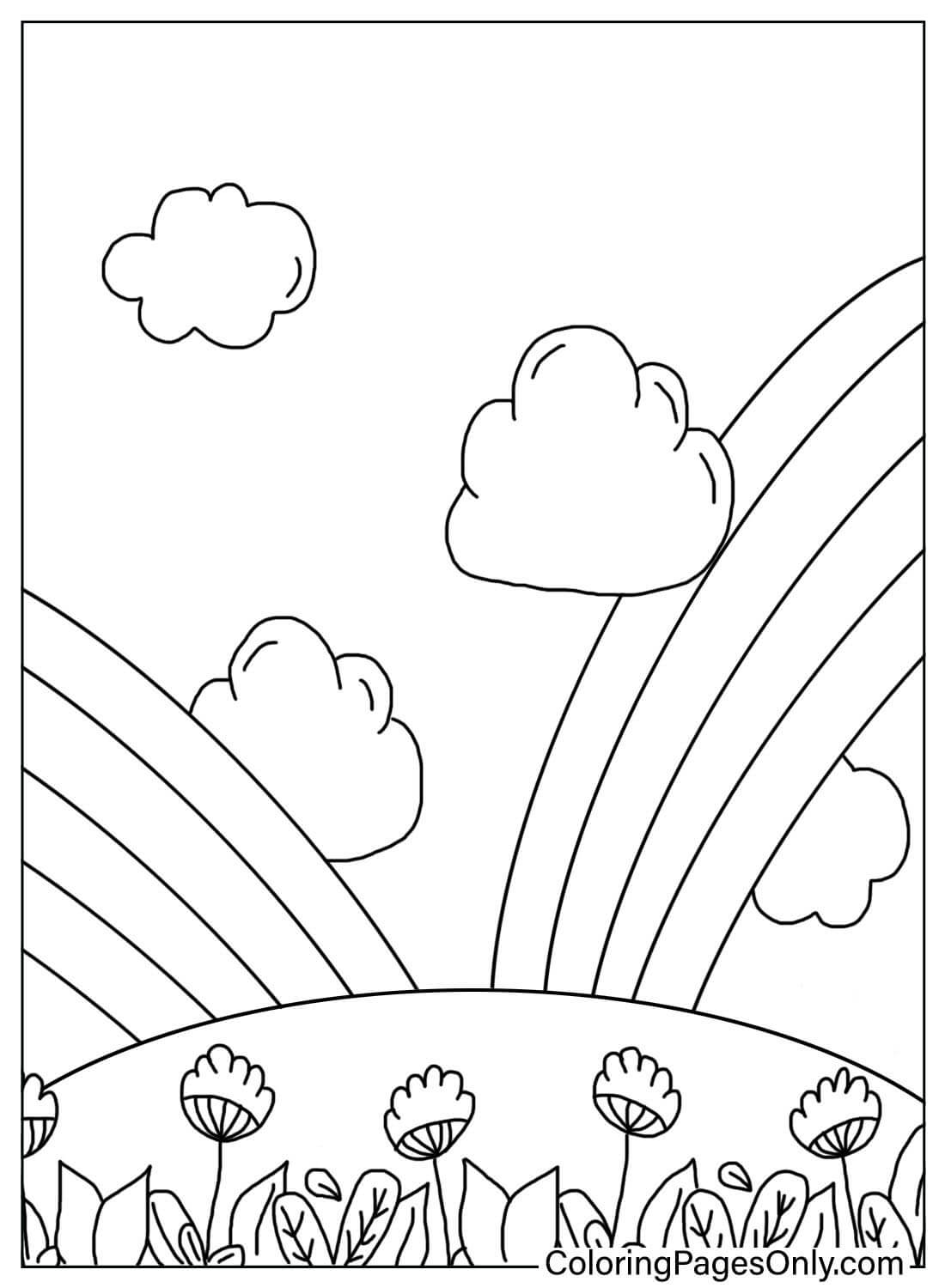
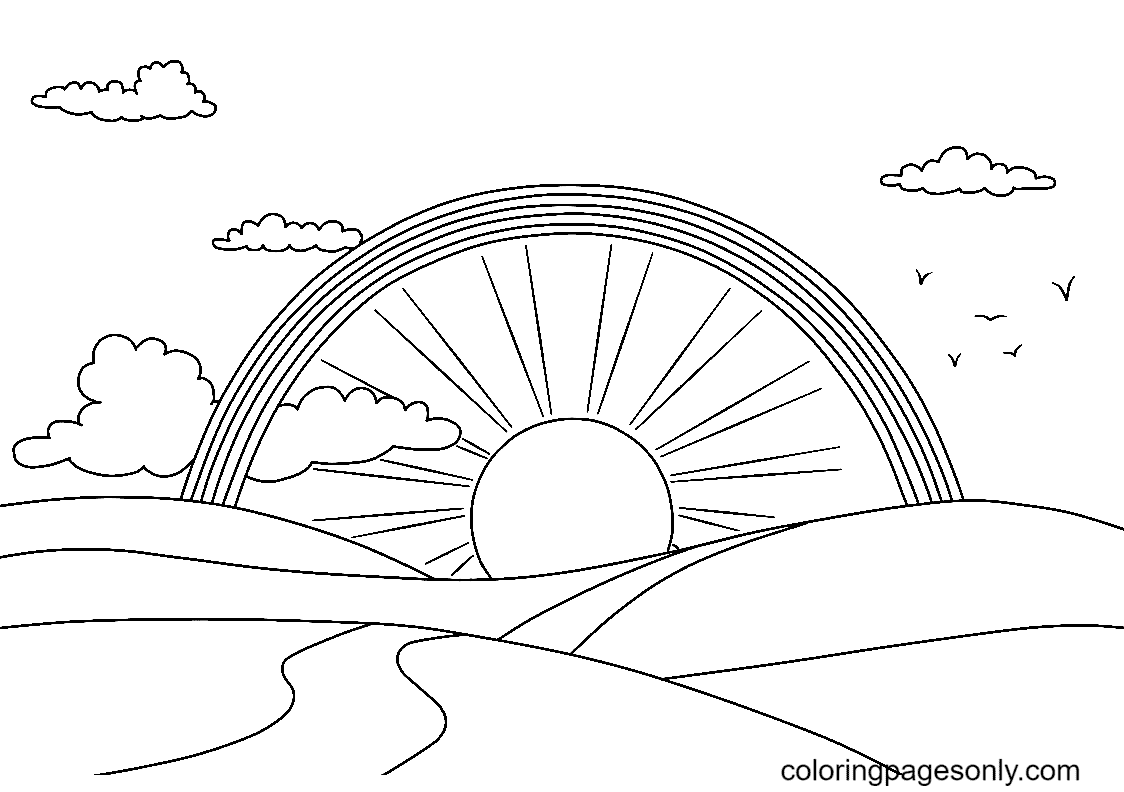
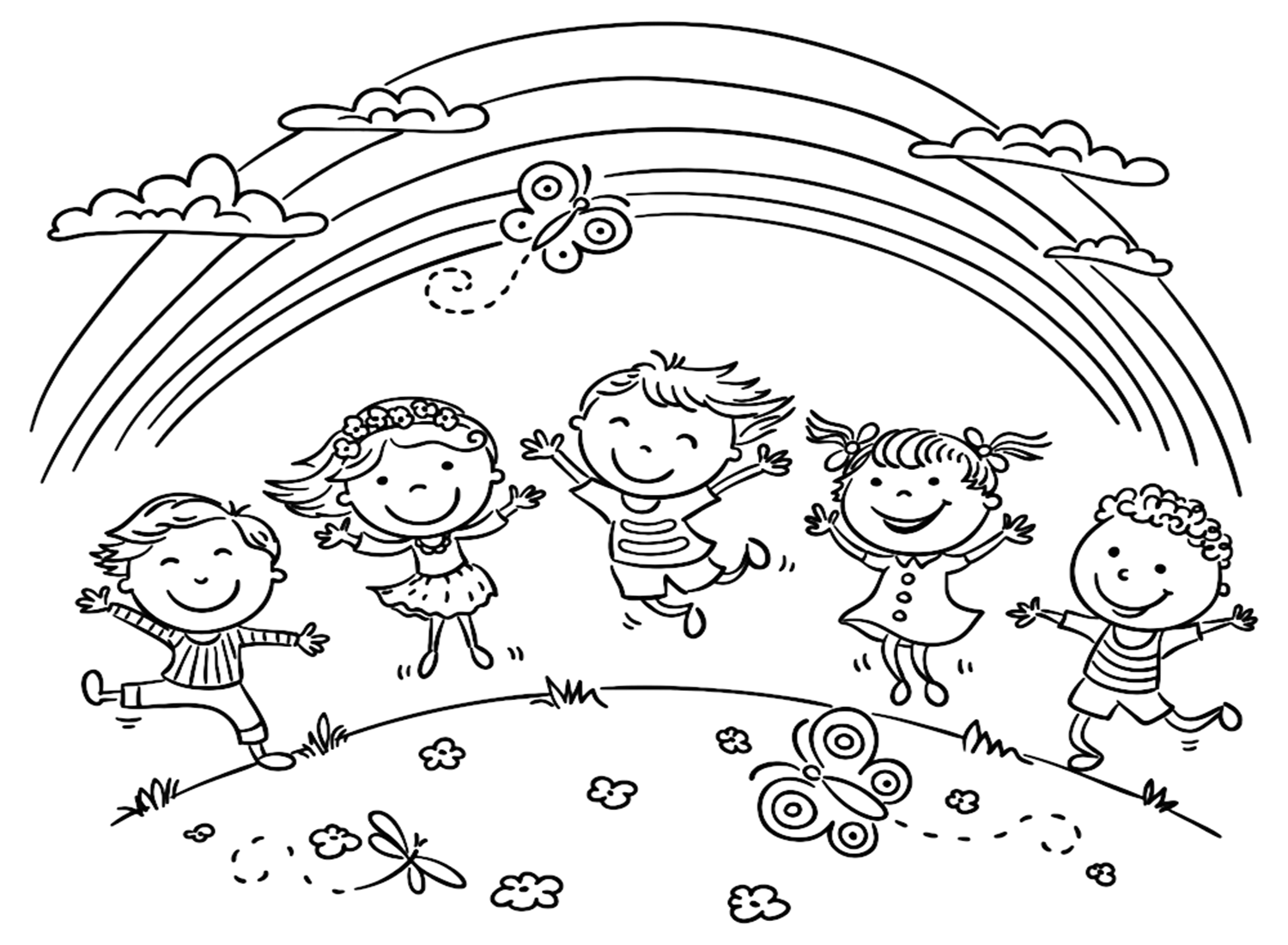
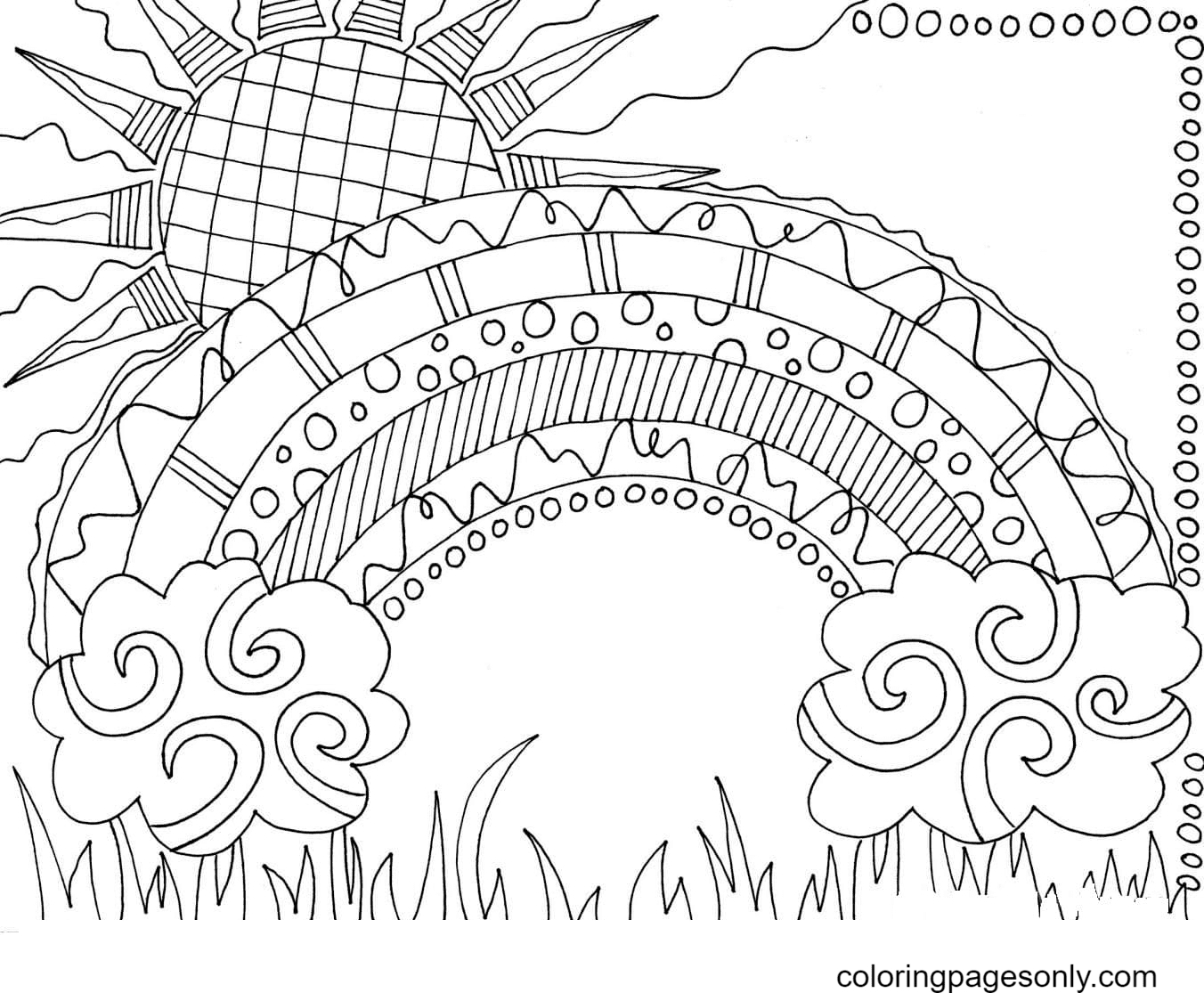
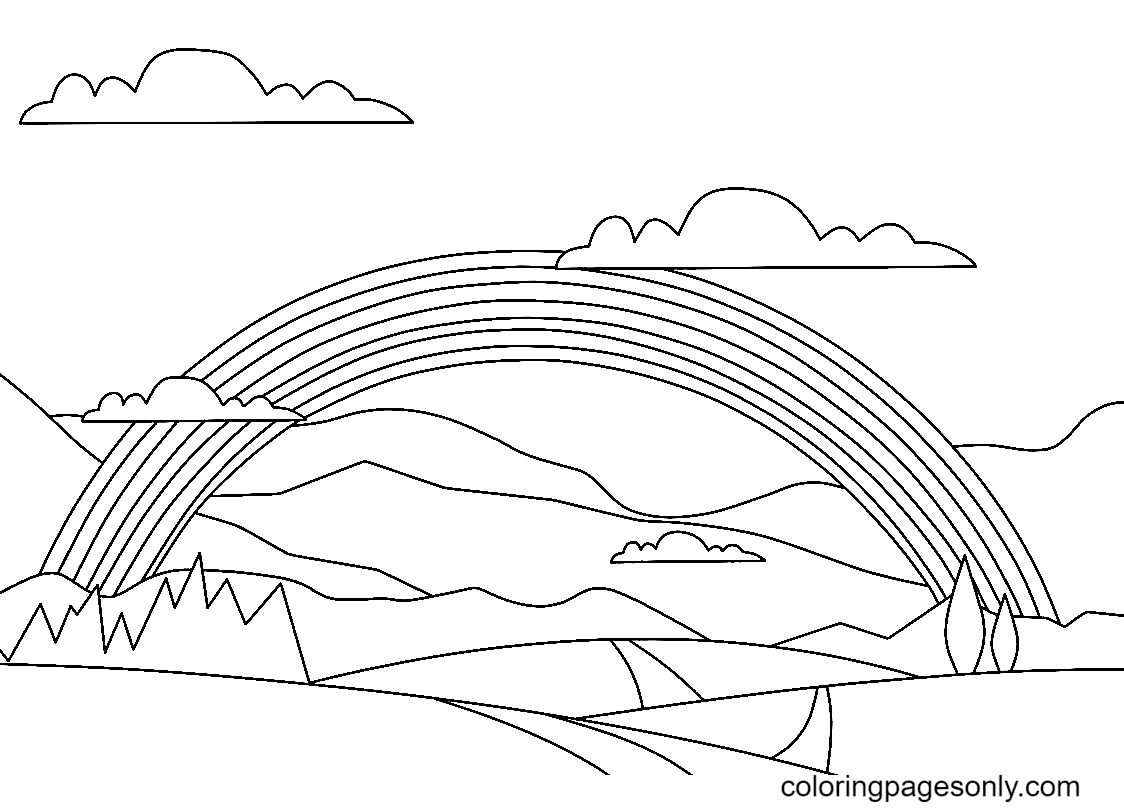
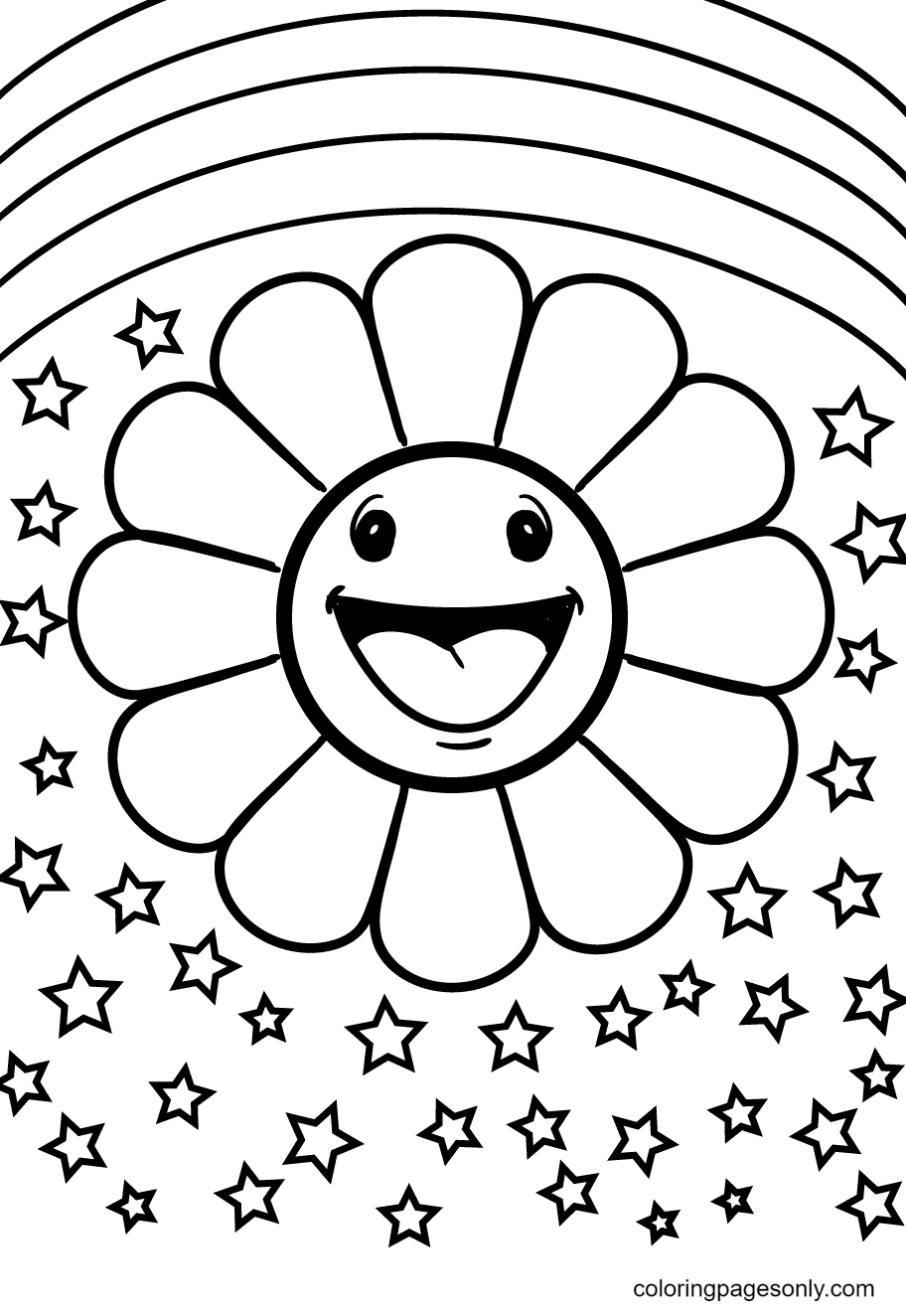
A smaller group of pages includes a patterned rainbow design and a more detailed landscape scene, suited to older children and adults looking for a longer coloring session.
What Rainbow Coloring Pages Do
Fine motor development. The American Academy of Pediatrics identifies fine motor skill development as a core benefit of structured coloring for children ages 2 through 7. The curved bands of a rainbow arc give young colorers practice with smooth, continuous strokes.
Early color-order recognition. Coloring a rainbow in its traditional band order gives kids repeated, hands-on practice with a specific color sequence, which can reinforce color names and their relative order.
Anxiety reduction through focus. A 2005 study in the Art Therapy Journal documented measurable reductions in anxiety following structured coloring sessions. The simple, repetitive band structure of a rainbow page makes it a quick, low-pressure option for that kind of focused coloring break.
A gentle science connection. Because a rainbow is a real, explainable weather phenomenon, these pages give parents and teachers an easy opening to talk about how light and rain combine to create one.
How to Color Rainbow Pages Well
- Band order: Working from the outer edge in, use Crayola Red, Orange, Yellow, Green, Blue, and Violet to match the traditional rainbow sequence.
- Band separation: Leave a thin sliver of white paper between each color band, or trace a light pencil line first, so the bands stay crisp rather than blending together.
- Clouds: Light Gray shading along the underside of an otherwise white cloud gives it a soft, three-dimensional look without overpowering the rainbow.
- Sun: A warm Yellow center with Orange rays helps the sun read clearly against a Sky Blue background.
- Unicorns and fantasy elements: Pastel colors such as Lavender, Sky Blue, and Pink suit unicorn manes and tails, echoing the soft color range of the rainbow itself.
- Backgrounds: Keep sky backgrounds simple with Sky Blue or soft Gray so the rainbow’s color bands stay the clear focus of the page.
5 Creative Craft Ideas With Rainbow Coloring Pages
1. Color-Mixing Practice Sheet
Color a simple rainbow outline using only red, yellow, and blue, then blend pairs of bands at their edges to show how the in-between colors are created.
2. Rainbow Wall Mural
Color several rainbow pages and arrange them together on a wall or bulletin board to build a colorful classroom or bedroom display.
3. Handmade Greeting Card
Fold a finished rainbow page in half to make a card with a blank inside for a birthday, get-well, or thank-you message.
4. Rainbow Bookmark
Cut a finished simple rainbow page into a bookmark strip and cover it with clear tape for a durable, reusable bookmark.
5. Weather Journal Page
Color a rainbow scene on a day one is spotted outside, then note the date and weather conditions next to it as the start of a simple weather journal.
Frequently Asked Questions
What are rainbow coloring pages?
Rainbow coloring pages are printable line-art designs built around the rainbow, ranging from simple arcs to detailed scenes with unicorns, animals, and weather elements. This collection includes 67 pages.
How does a rainbow form?
A rainbow forms when sunlight passing through raindrops is refracted, reflected inside the droplet, and refracted again as it exits, splitting white light into a spread of visible color. Rainbows appear opposite the sun, which is why they are common during or right after a rain shower.
Why does a rainbow have seven colors?
The traditional seven-color sequence, red, orange, yellow, green, blue, indigo, and violet, is a simplified way of describing what is actually a continuous spectrum of color with no hard boundaries between one shade and the next.
What kinds of scenes appear in this collection?
The collection includes simple, standalone rainbow arcs, rainbows paired with clouds, rain, and stars, rainbows with animals like bears and a giraffe, and fantasy scenes featuring unicorns.
What is the mandala-style page in the collection?
A patterned rainbow design gives colorers a more detailed, repeating structure to work through, suited to older children and adults who want a longer coloring session than the simpler arc pages.
Can these pages help teach color order?
Yes. Coloring a rainbow in its traditional band sequence gives kids repeated, hands-on practice with a specific color order, which can reinforce both color names and the sequence they typically appear in.
Are rainbow coloring pages suitable for young children?
Yes. The simple arc outlines in this collection work well for children ages 2 through 7, the age range the American Academy of Pediatrics associates with active fine motor skill development through coloring. The detailed scenes and patterned designs suit older children and adults.
Can these pages be used for a science lesson?
Yes. A rainbow page gives teachers a simple visual for introducing how light and rain combine to create a rainbow, and can pair well with a short discussion about weather and light.
Start Coloring
Download any page by clicking the design. No account, email, or payment is required. Pages print directly from the browser at full resolution or open in the online coloring tool for screen use. Share finished pages on Facebook or Pinterest with the share buttons at the top of each design page.