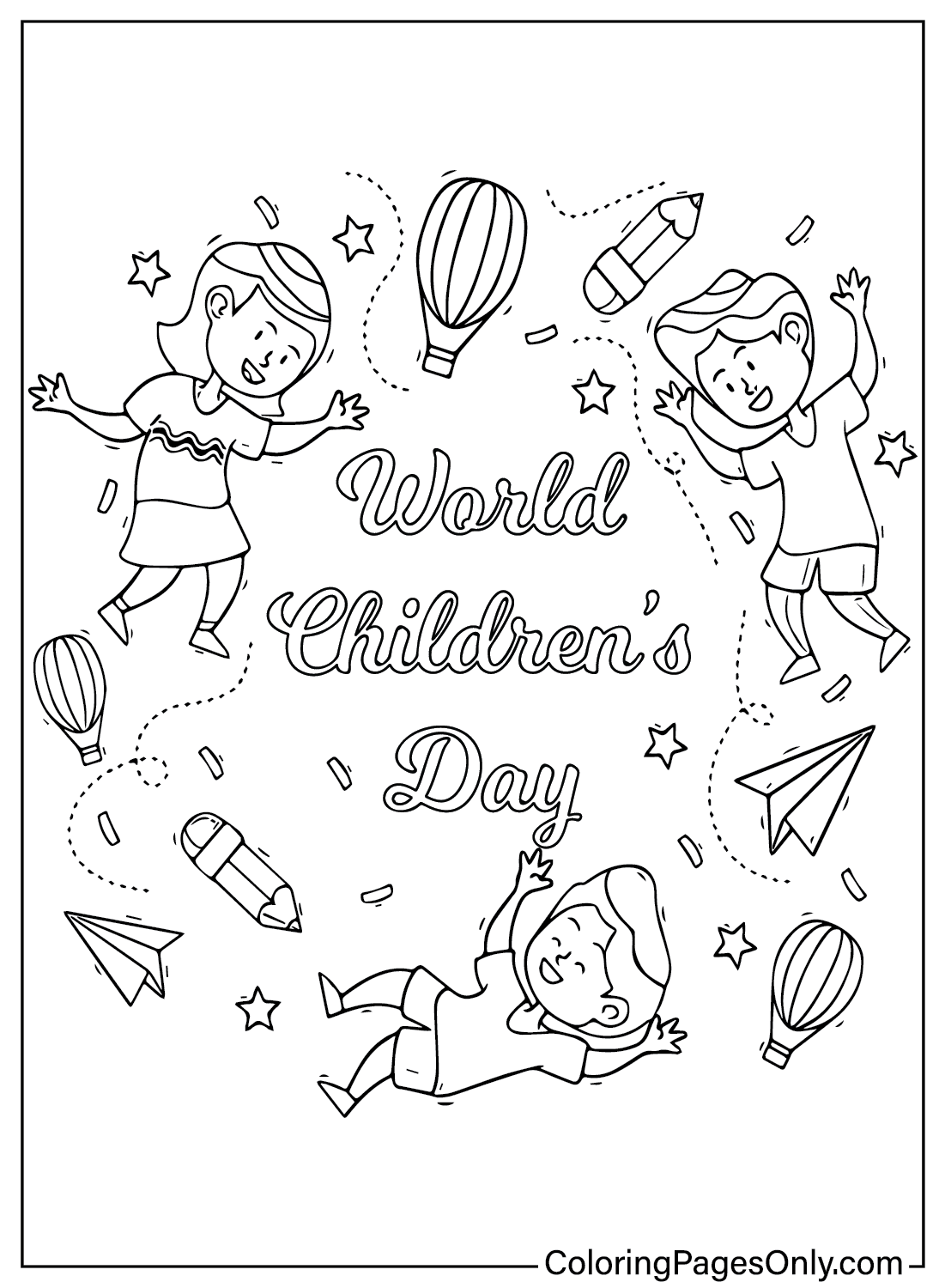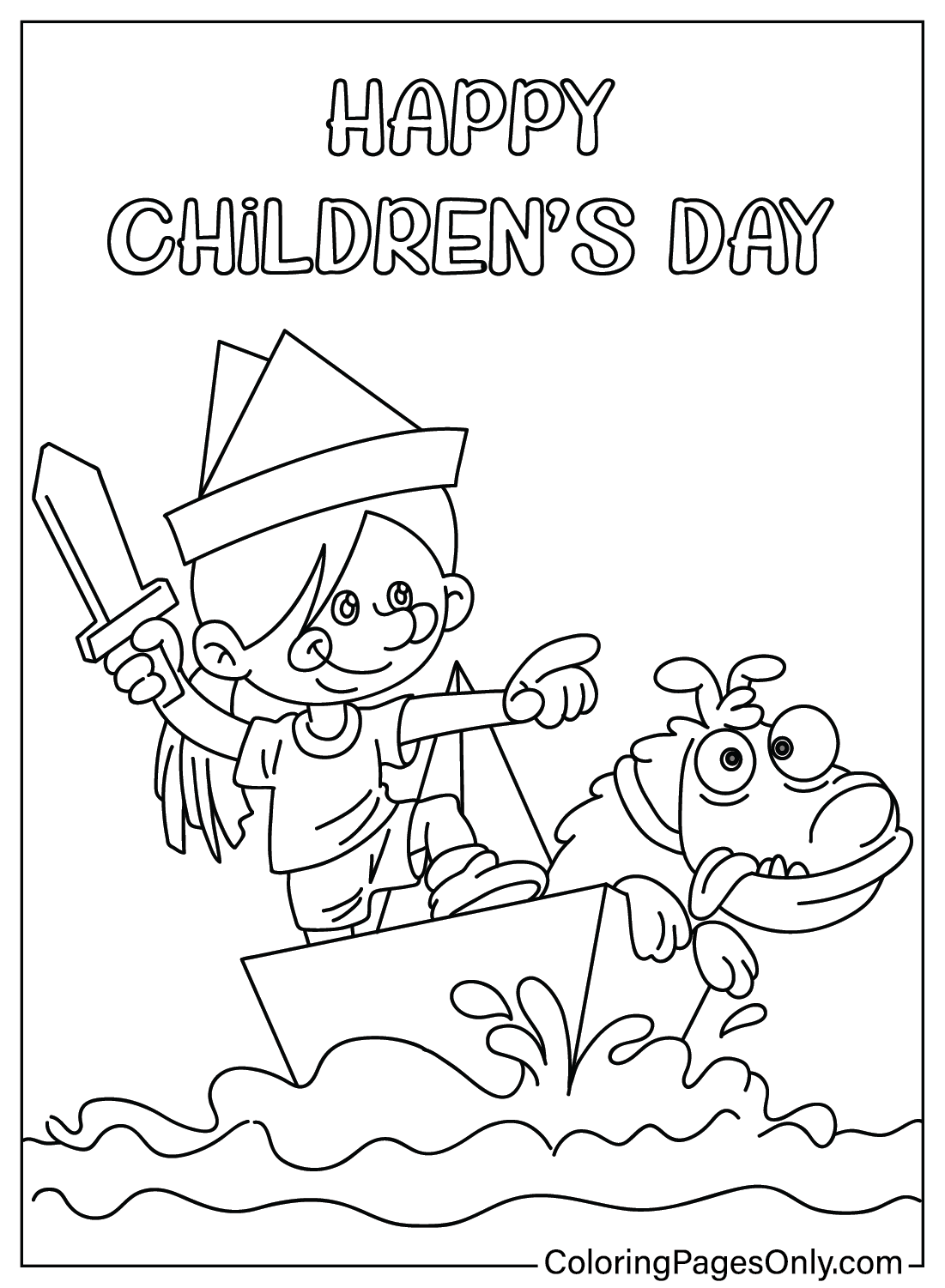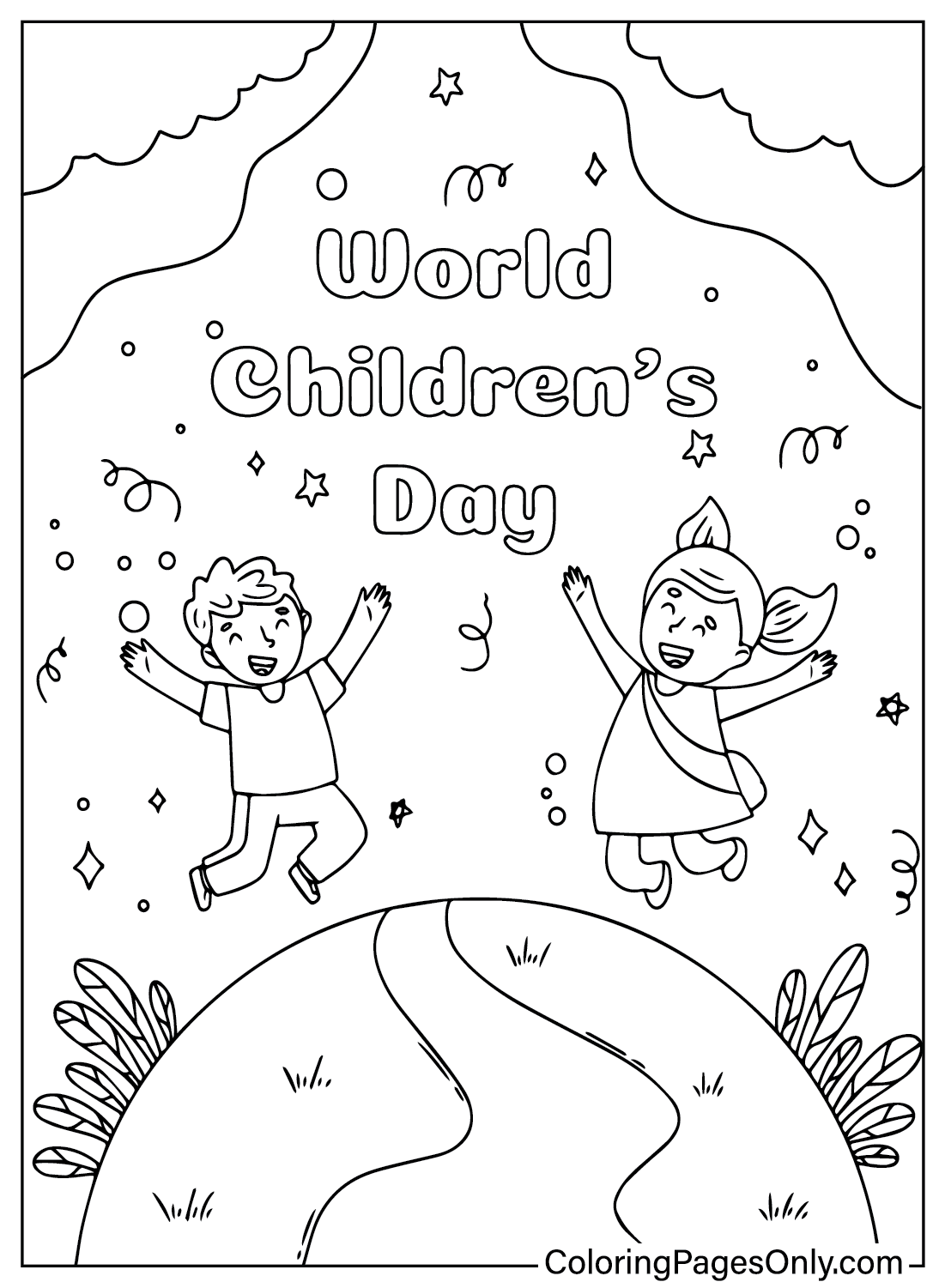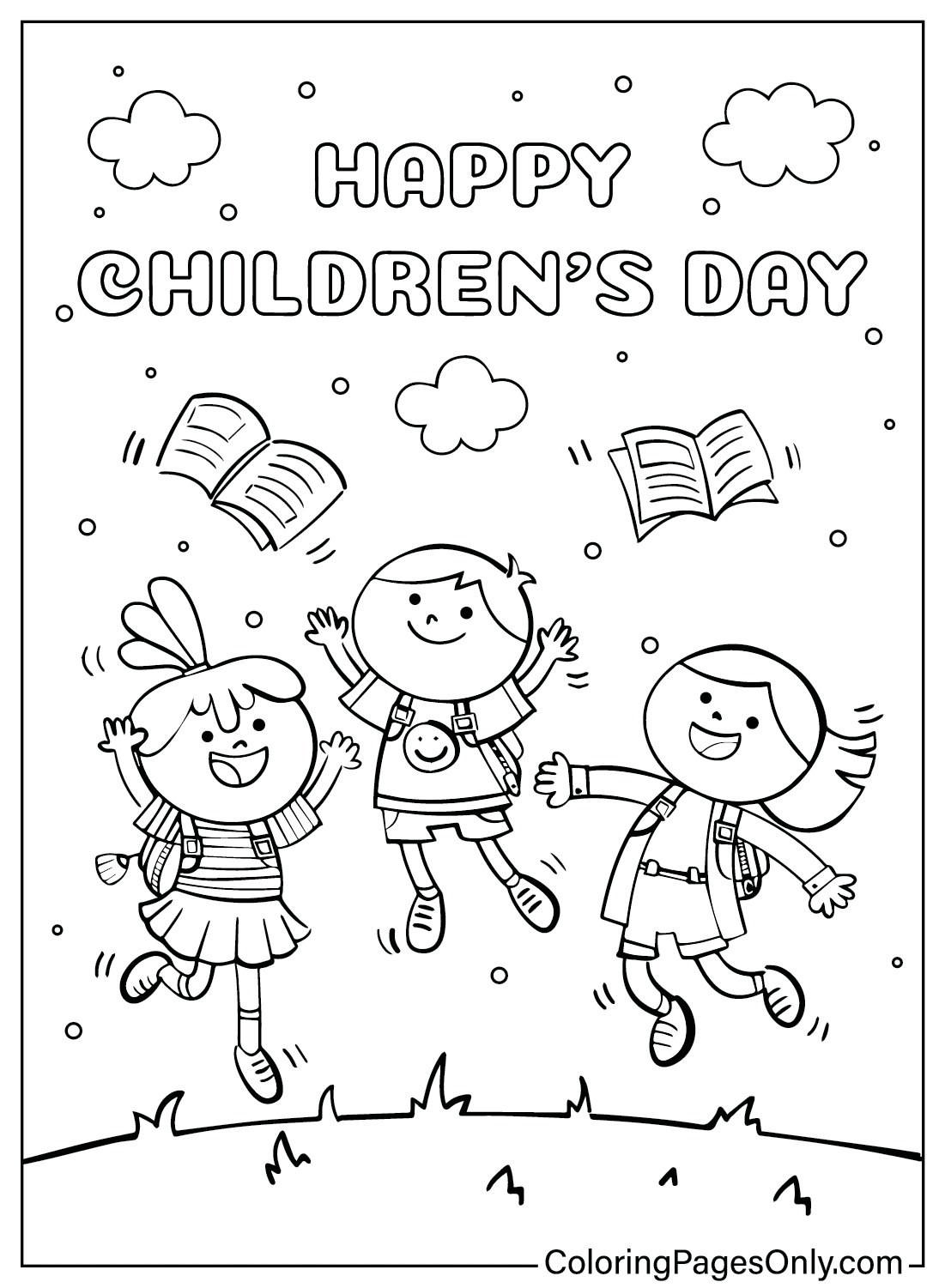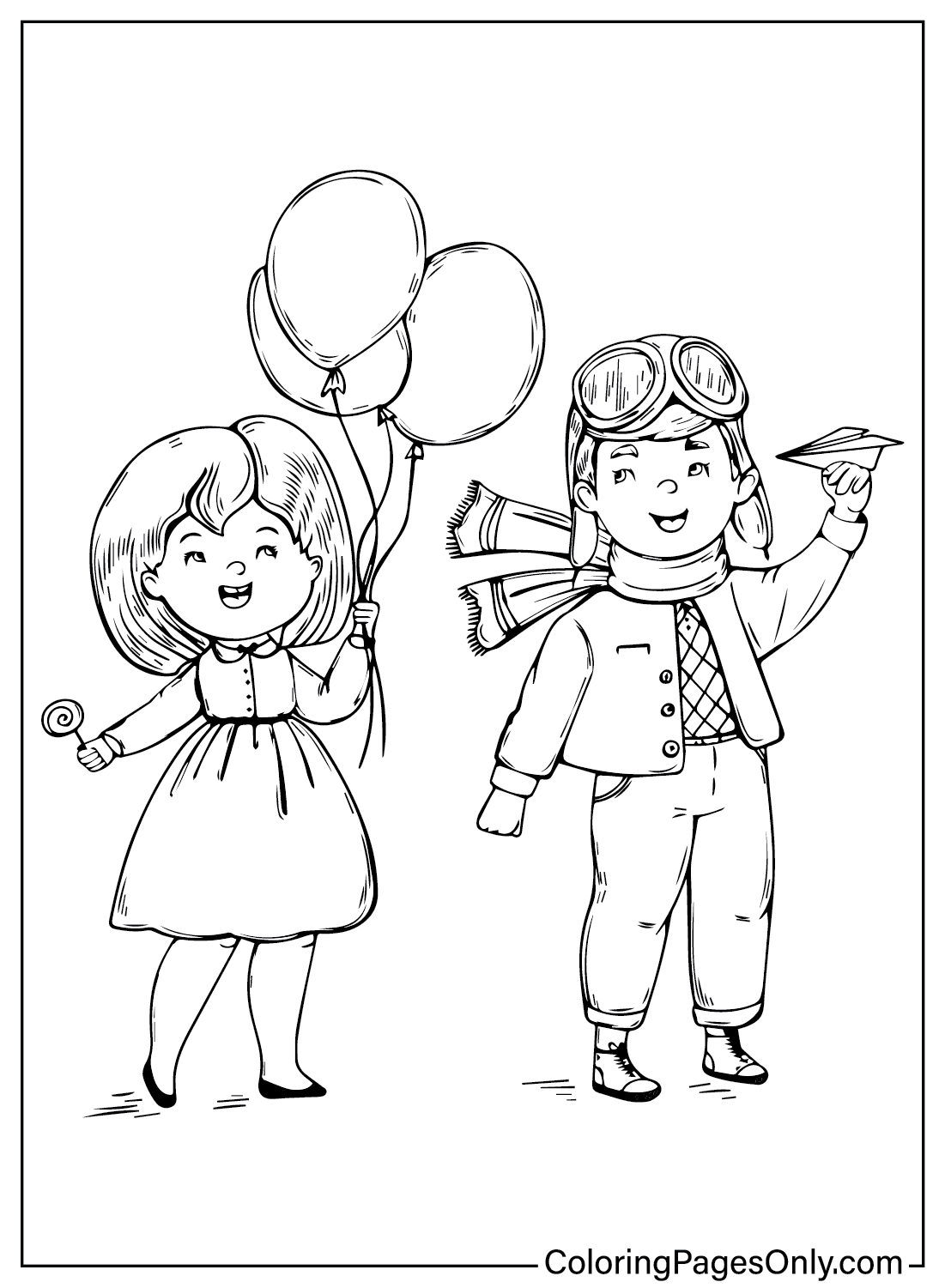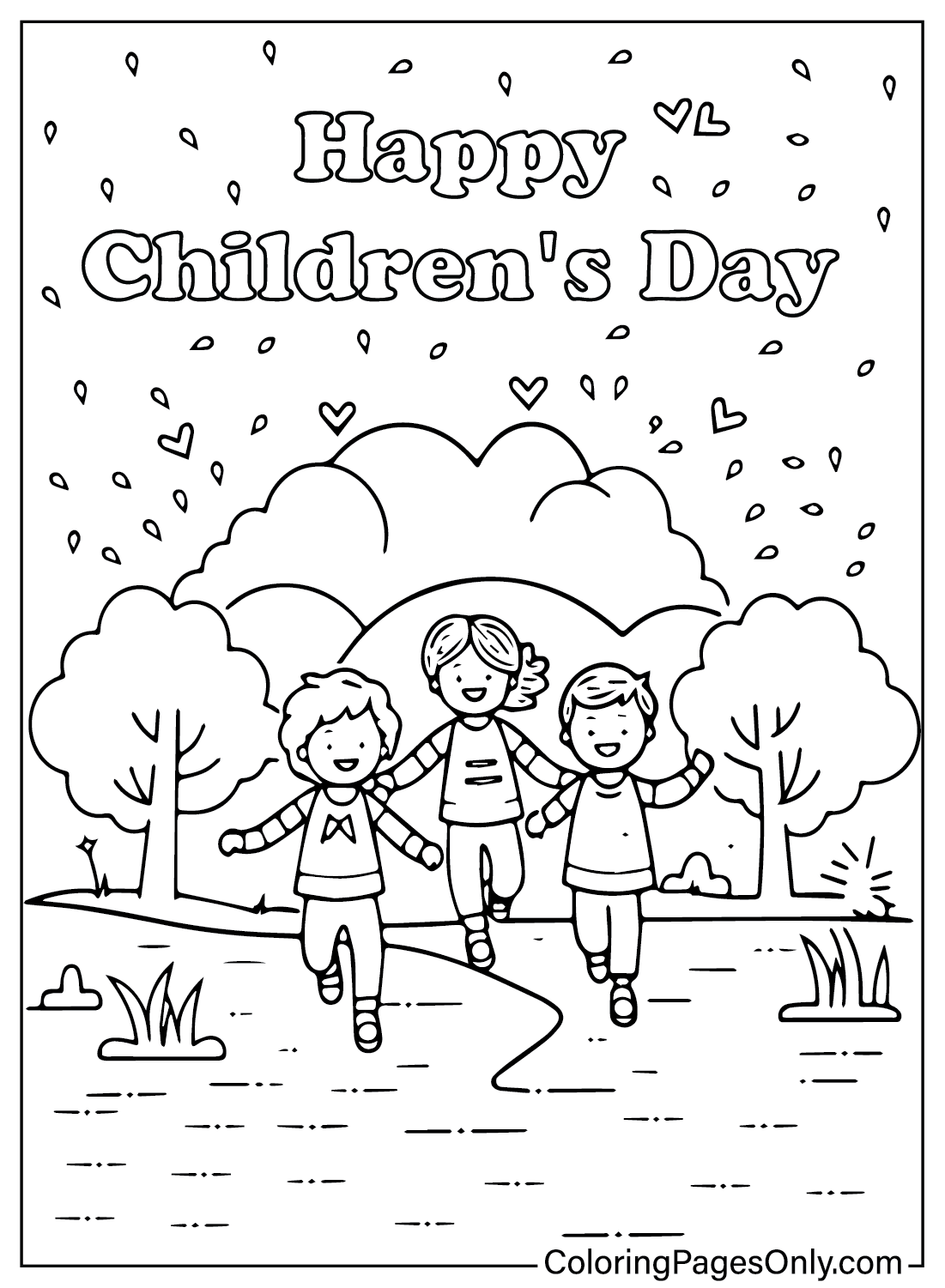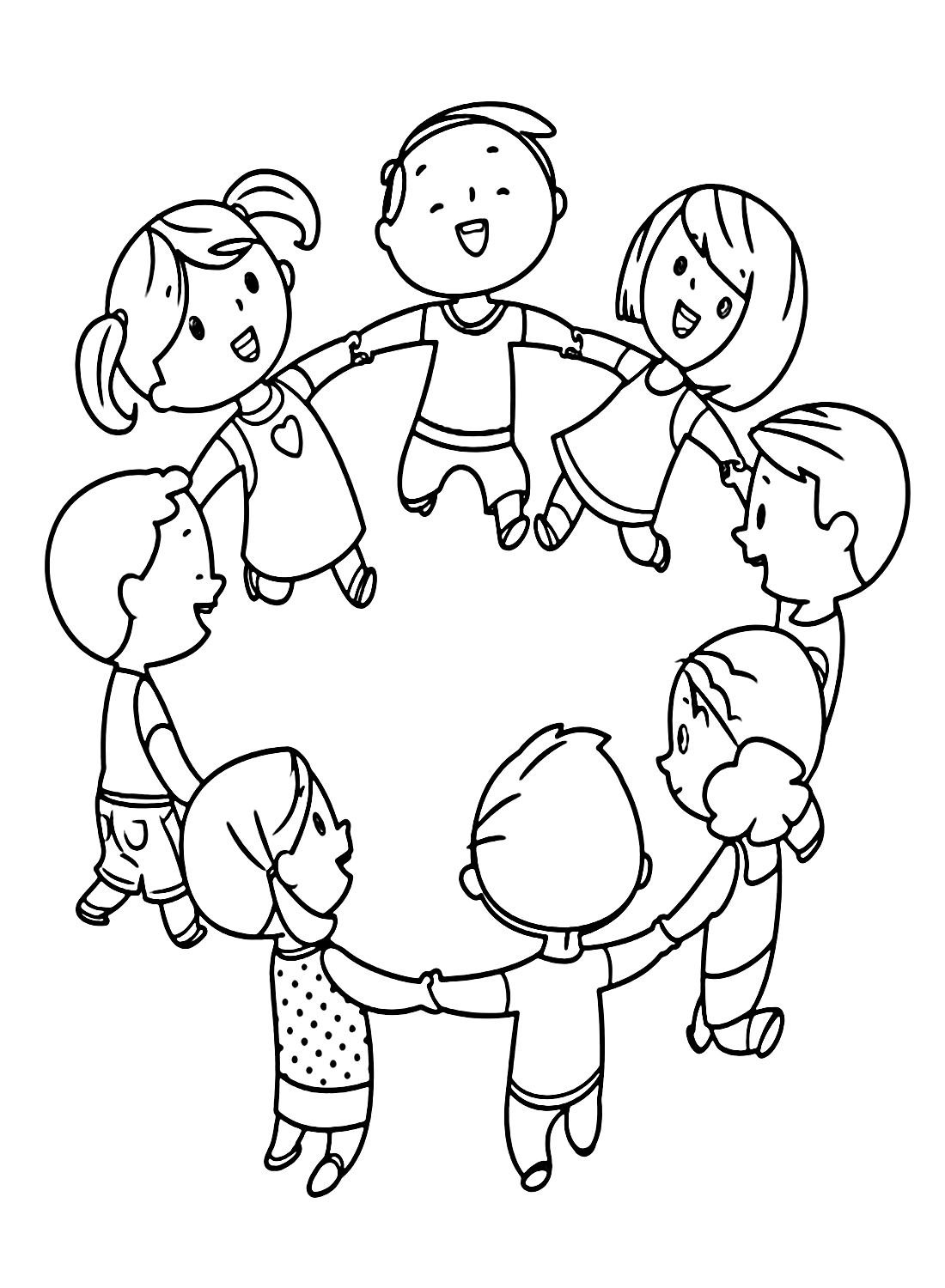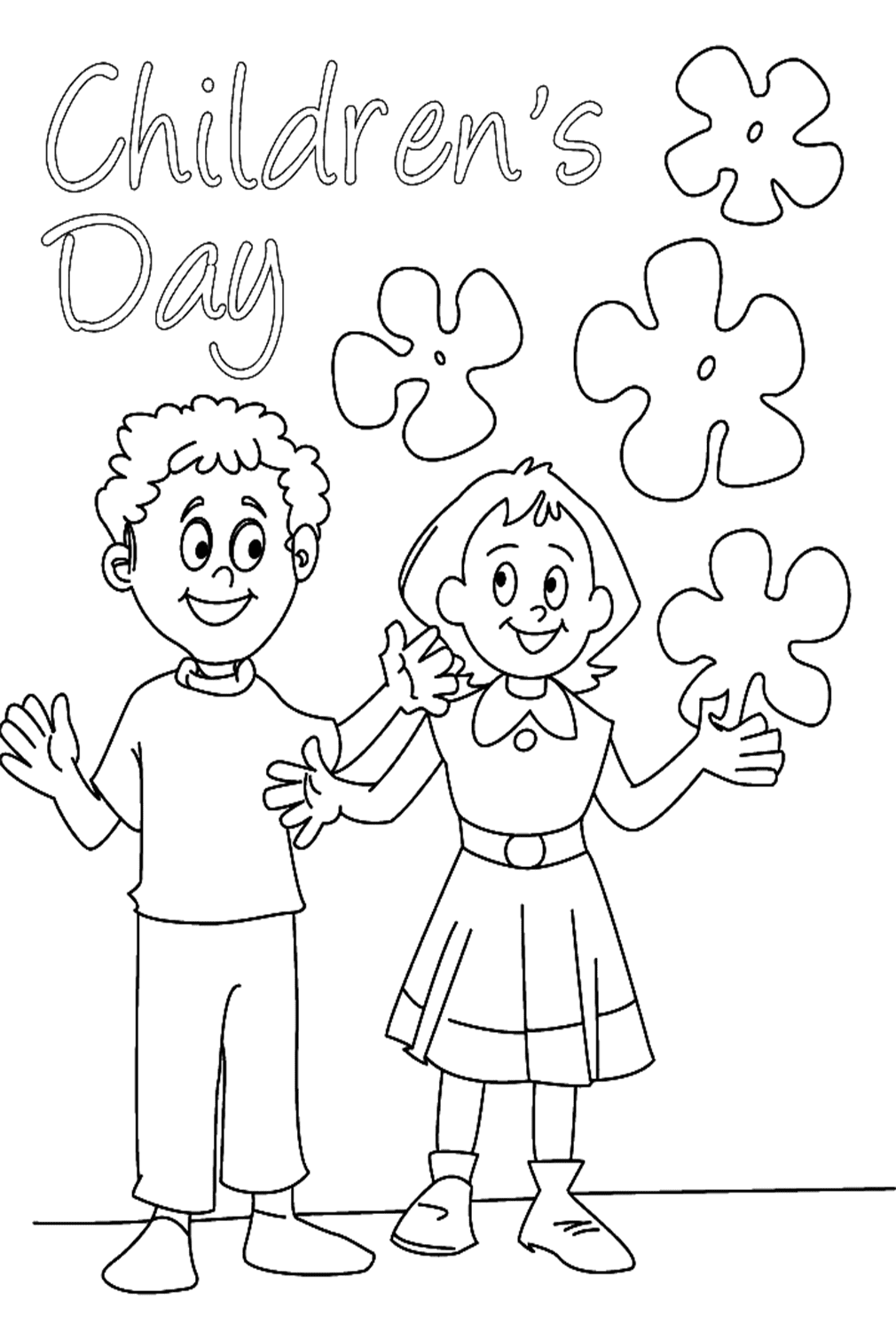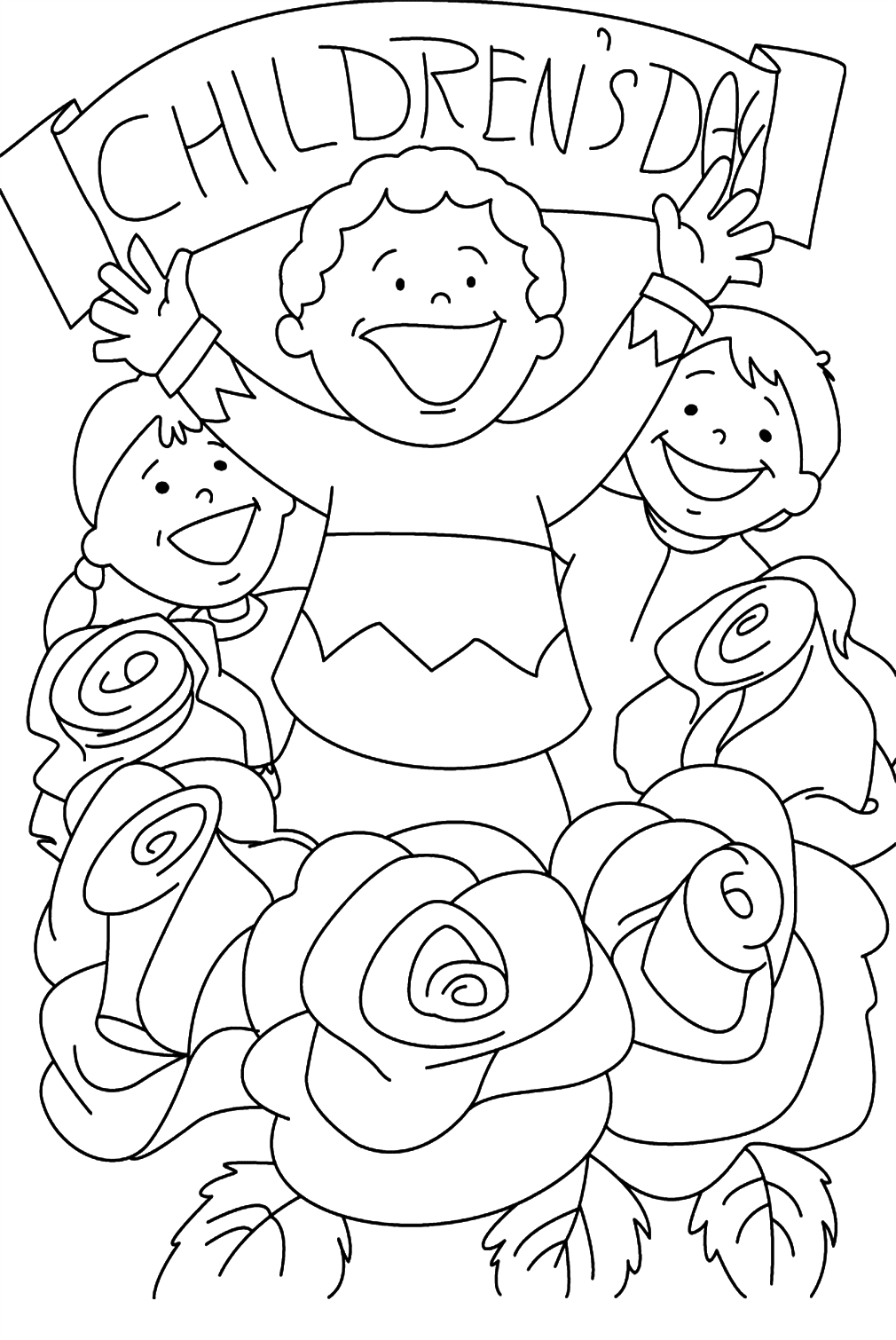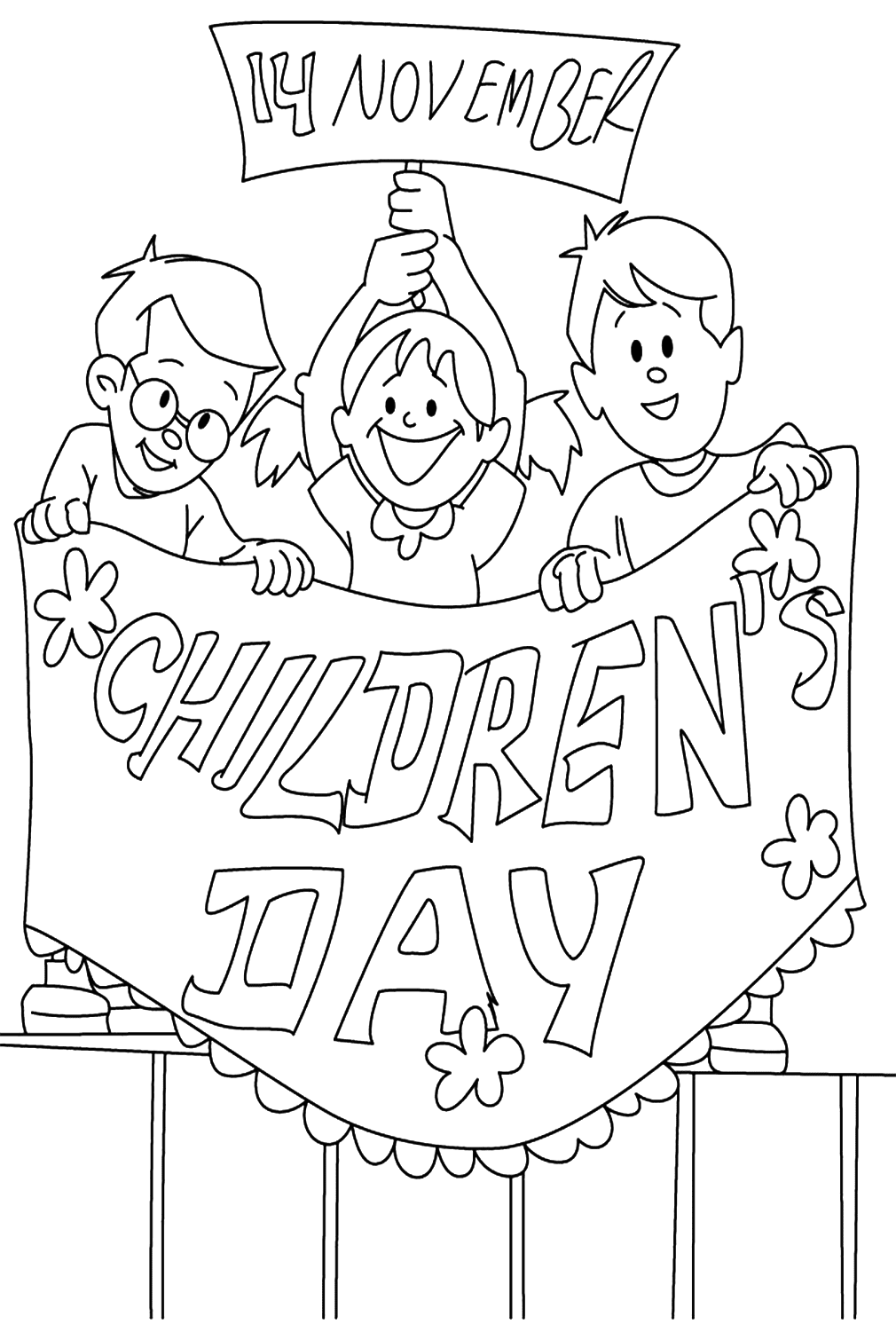
Free Children’s Day coloring pages – 57 pages featuring children playing, holding hands across cultures, hot air balloons, flowers, doves of peace, globe imagery, activity scenes, a mandala, and the Indian Children’s Day connection to Jawaharlal Nehru – free printable PDF and online coloring for families, teachers, and schools worldwide.
Children’s Day is not one holiday with one date. It is the same idea expressed in dozens of different ways across more than 50 countries, each choosing a date and form of celebration that reflects its own history and relationship with childhood. World Children’s Day – established by the United Nations on November 20, 1954, the date the UN General Assembly adopted the Declaration of the Rights of the Child – is observed internationally. June 1 is International Children’s Day, observed in many countries, including Vietnam, China, and several Eastern European nations. India celebrates Children’s Day on November 14, the birthday of Jawaharlal Nehru, independent India’s first Prime Minister, who was known for his deep affection for children and was called Chacha Nehru – “Uncle Nehru” – by them.
What all these dates have in common is the same intention: that children deserve a day set aside specifically to recognize their dignity, celebrate their joy, and affirm the rights that belong to them simply by being alive.
These 57 free pages at ColoringPagesOnly.com celebrate all of it. All free, PDF or PNG, print or color online.
What’s Inside
Children Playing Together – The Heart of the Collection
The largest and most joyful section of the collection depicts children in the specific physical language of play and friendship that Children’s Day is built around.
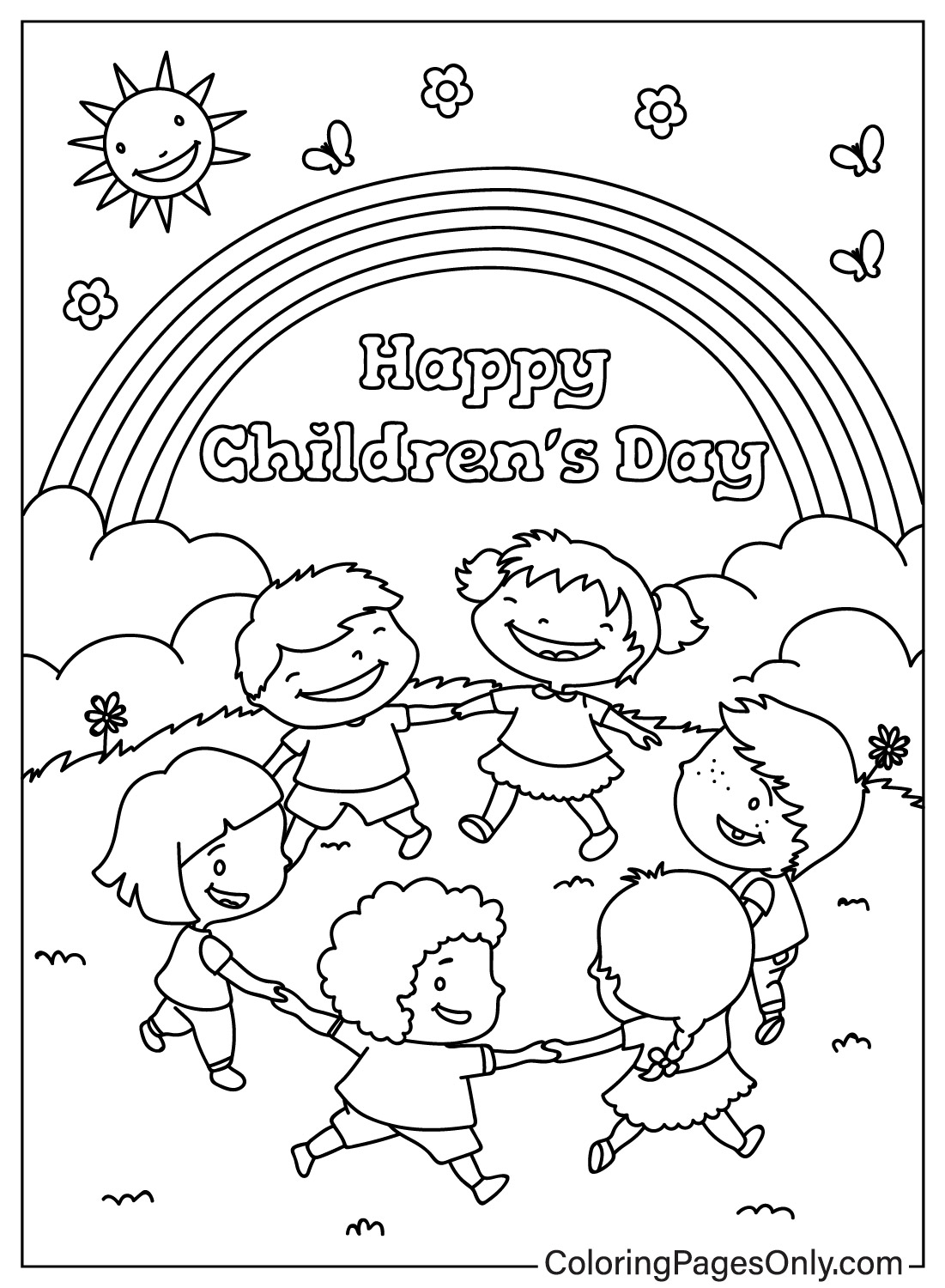
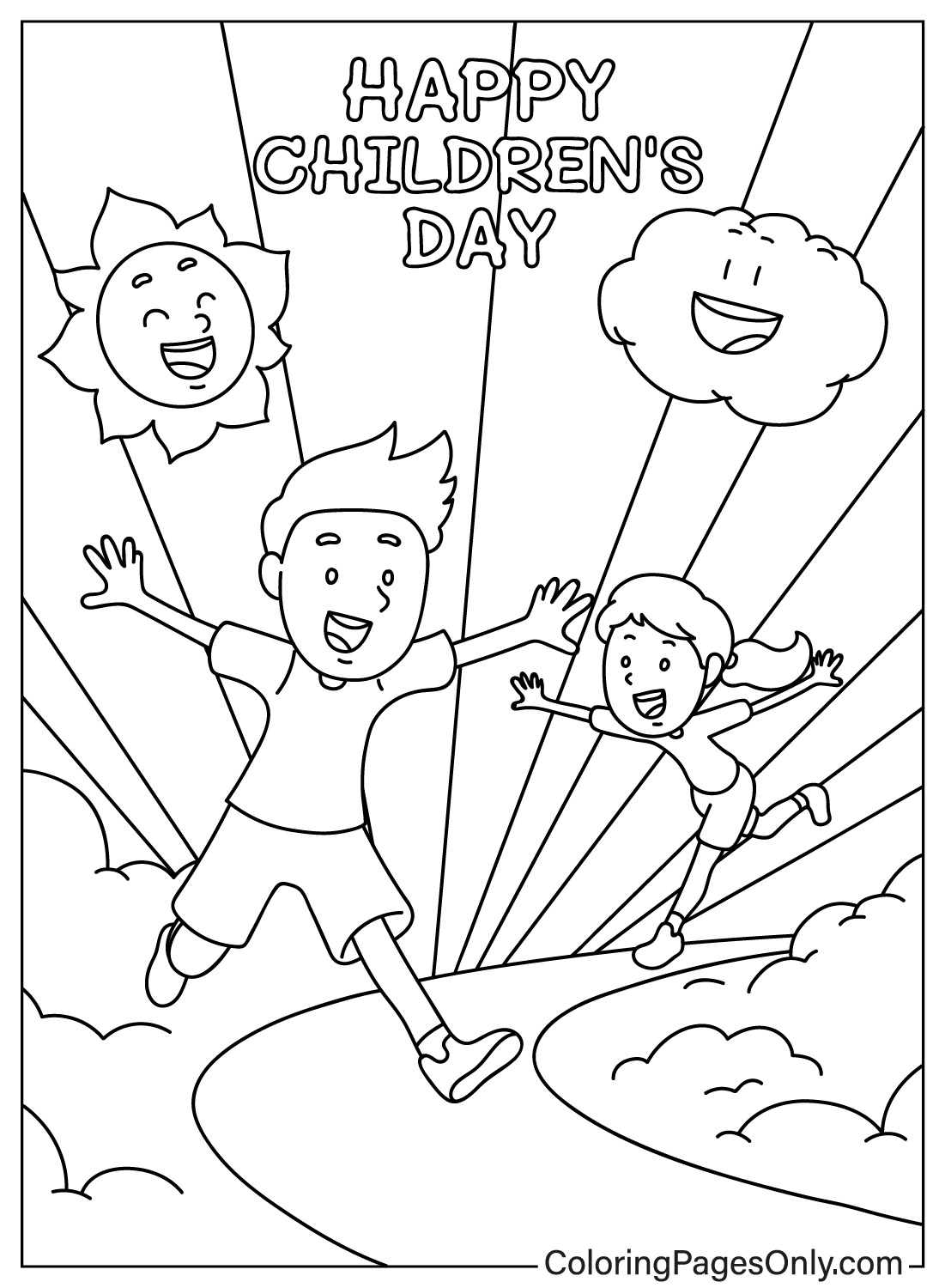
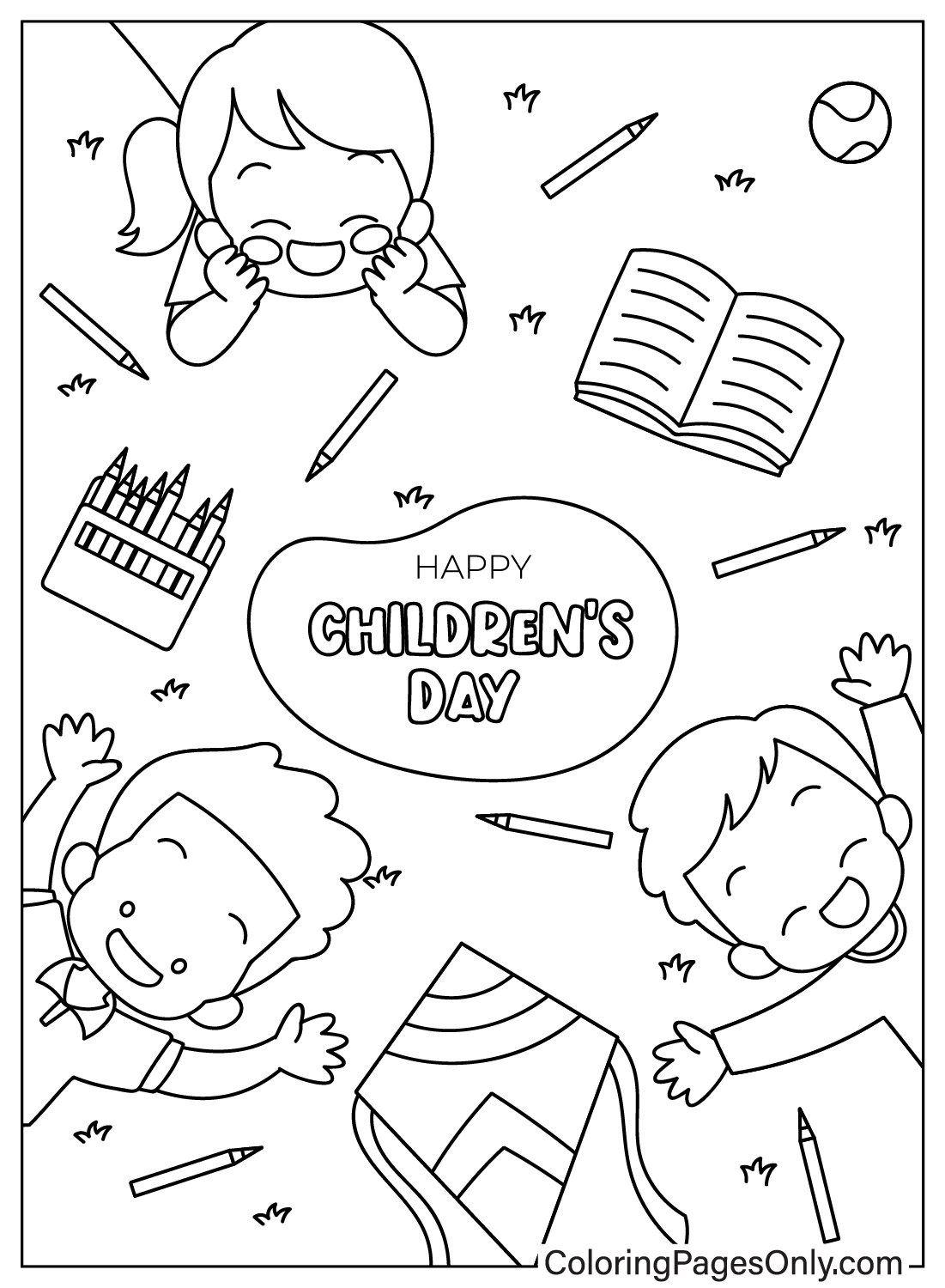
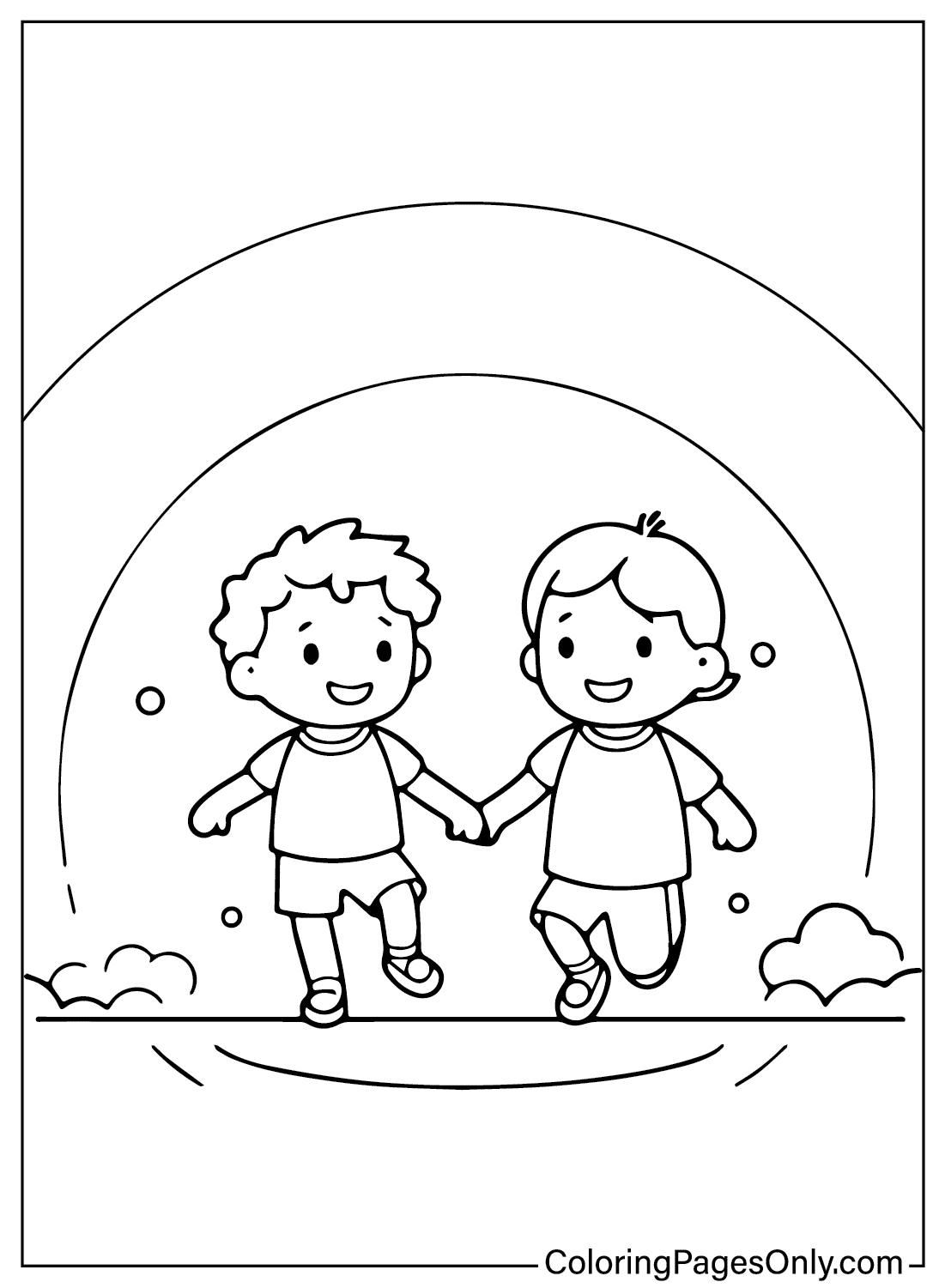
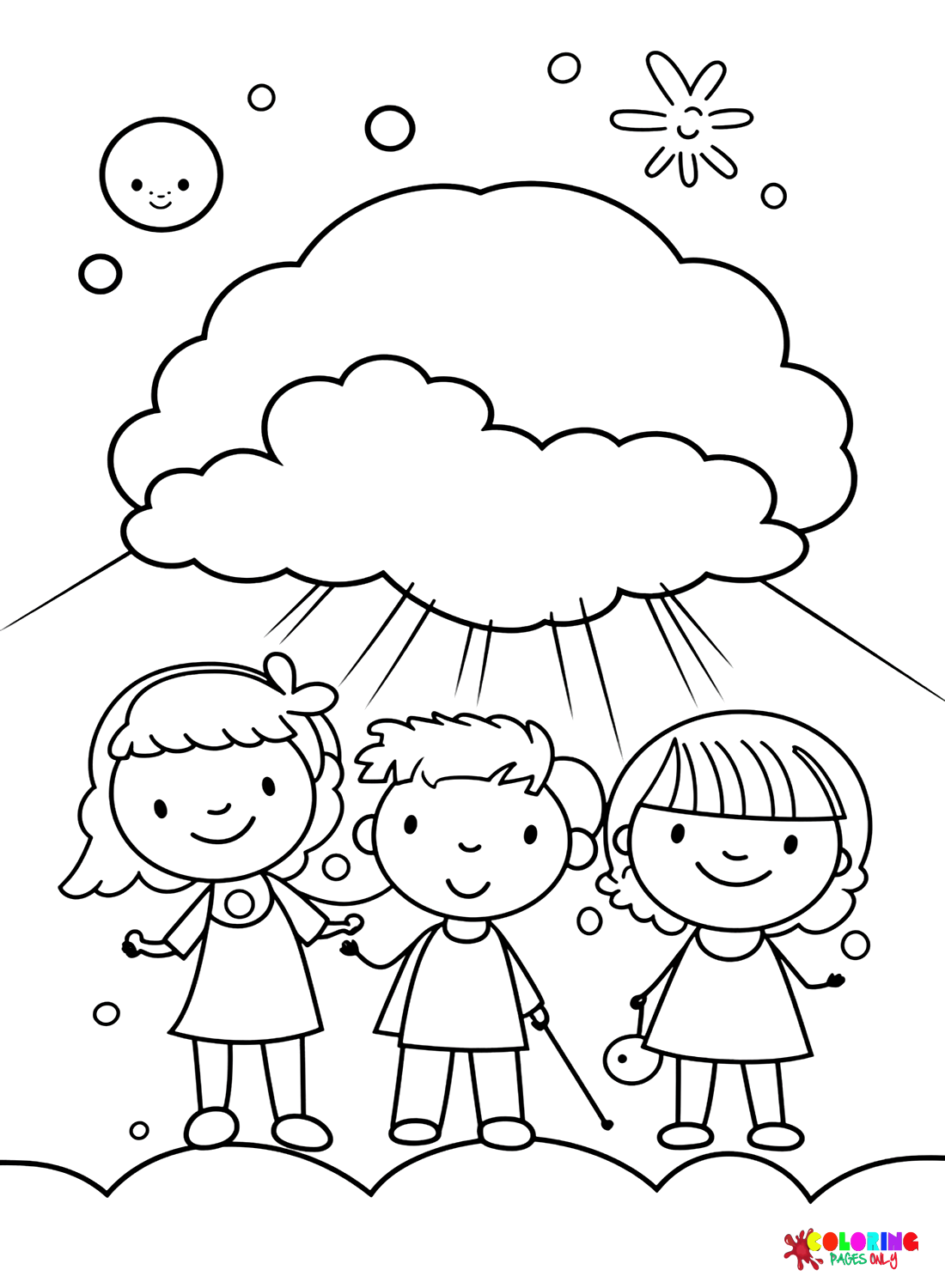
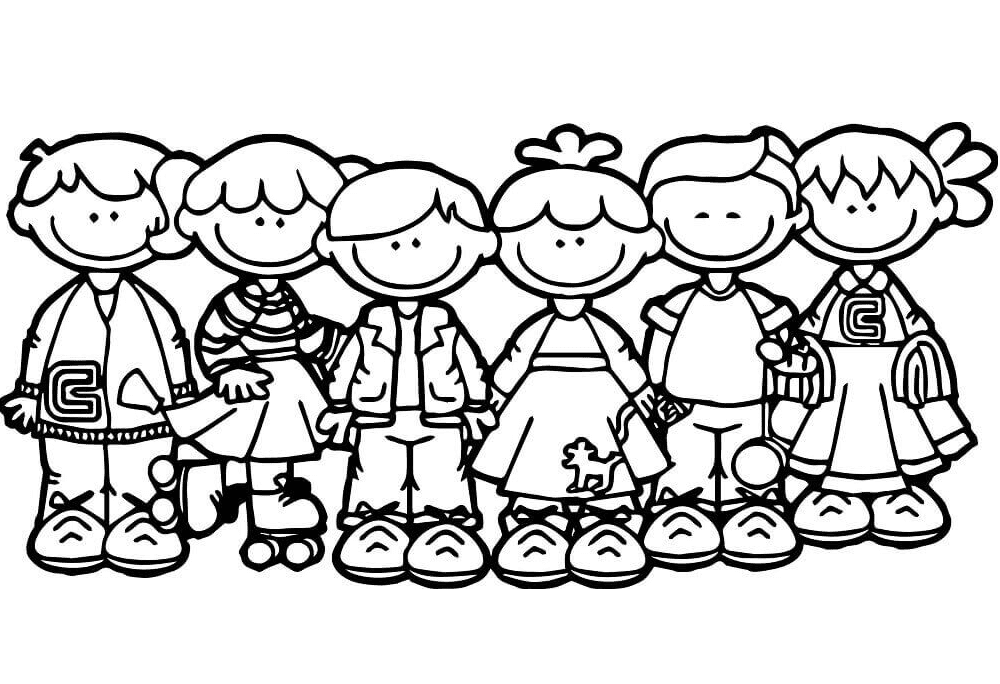
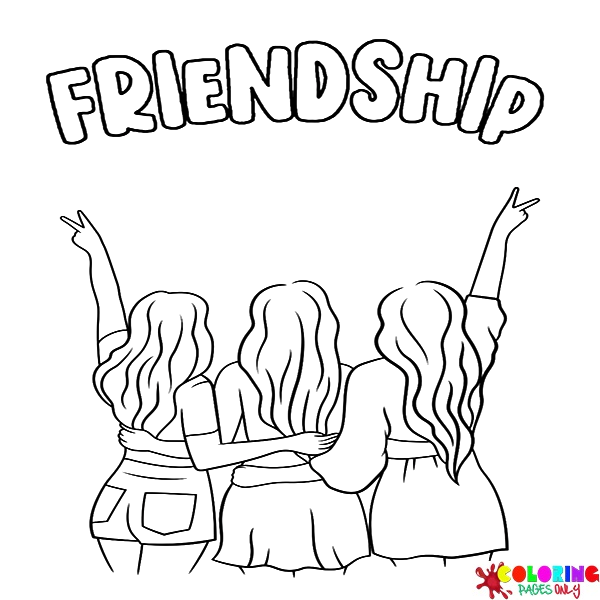
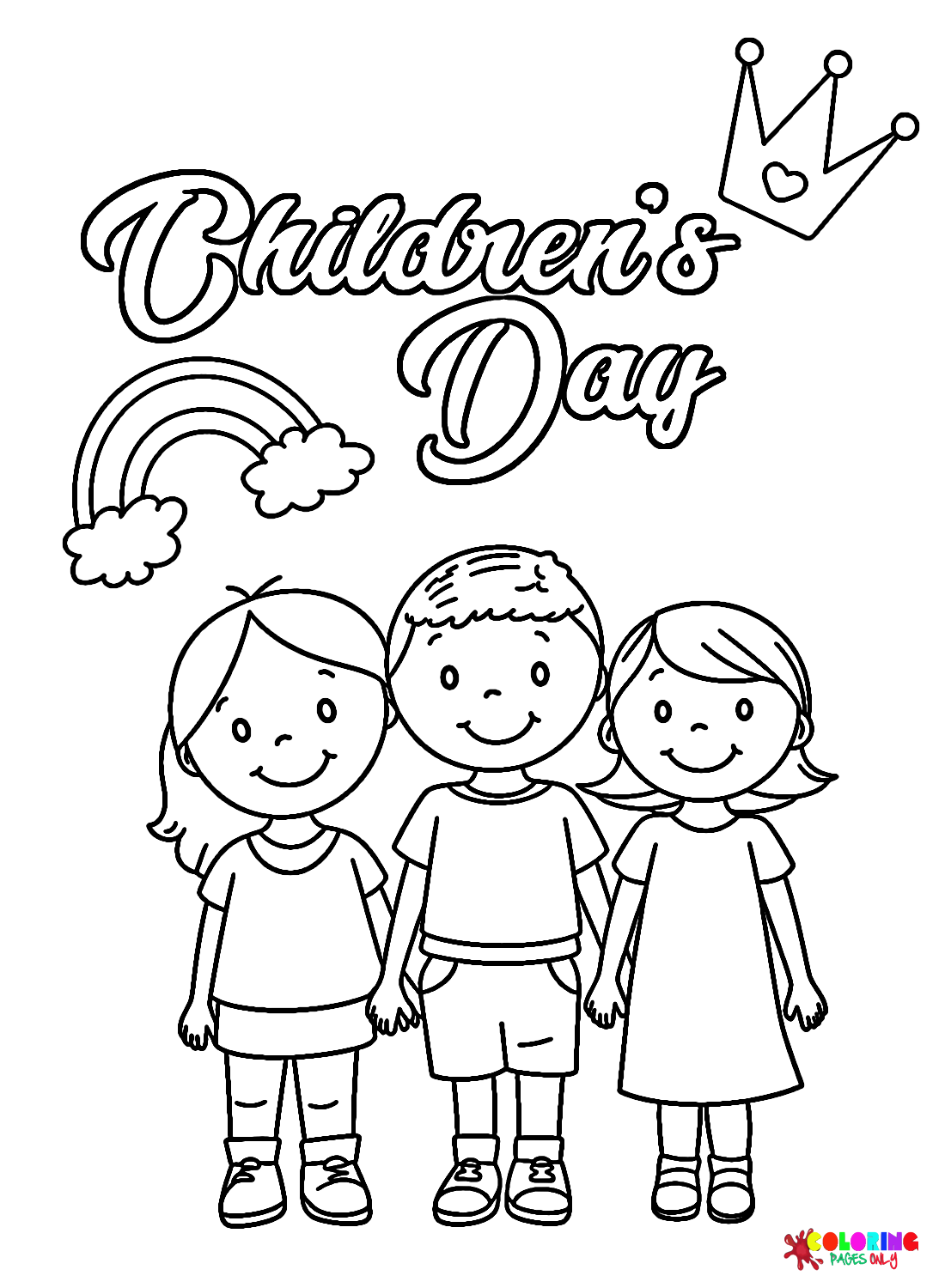
Children Play Together captures a group of children in active shared play – the unselfconscious, full-body engagement that children bring to play when they are genuinely absorbed in it. Children Lying And Playing Together on the Grass offers a slower, more relaxed register – children on the grass, in proximity, in the comfortable, easy companionship of people who have been playing together long enough to take a breath. Boy and Girl Chasing Each Other With Sun and Clouds has the kinetic energy of outdoor pursuit – the specific joy of running with someone, or away from someone, with bright weather overhead.
Children on Flowers is the collection’s most imaginative compositional choice – children inhabiting the world of flowers at a scale that makes the flowers enormous, suggesting a child ‘s-eye experience of the natural world where ordinary things become extraordinary through the quality of attention brought to them.
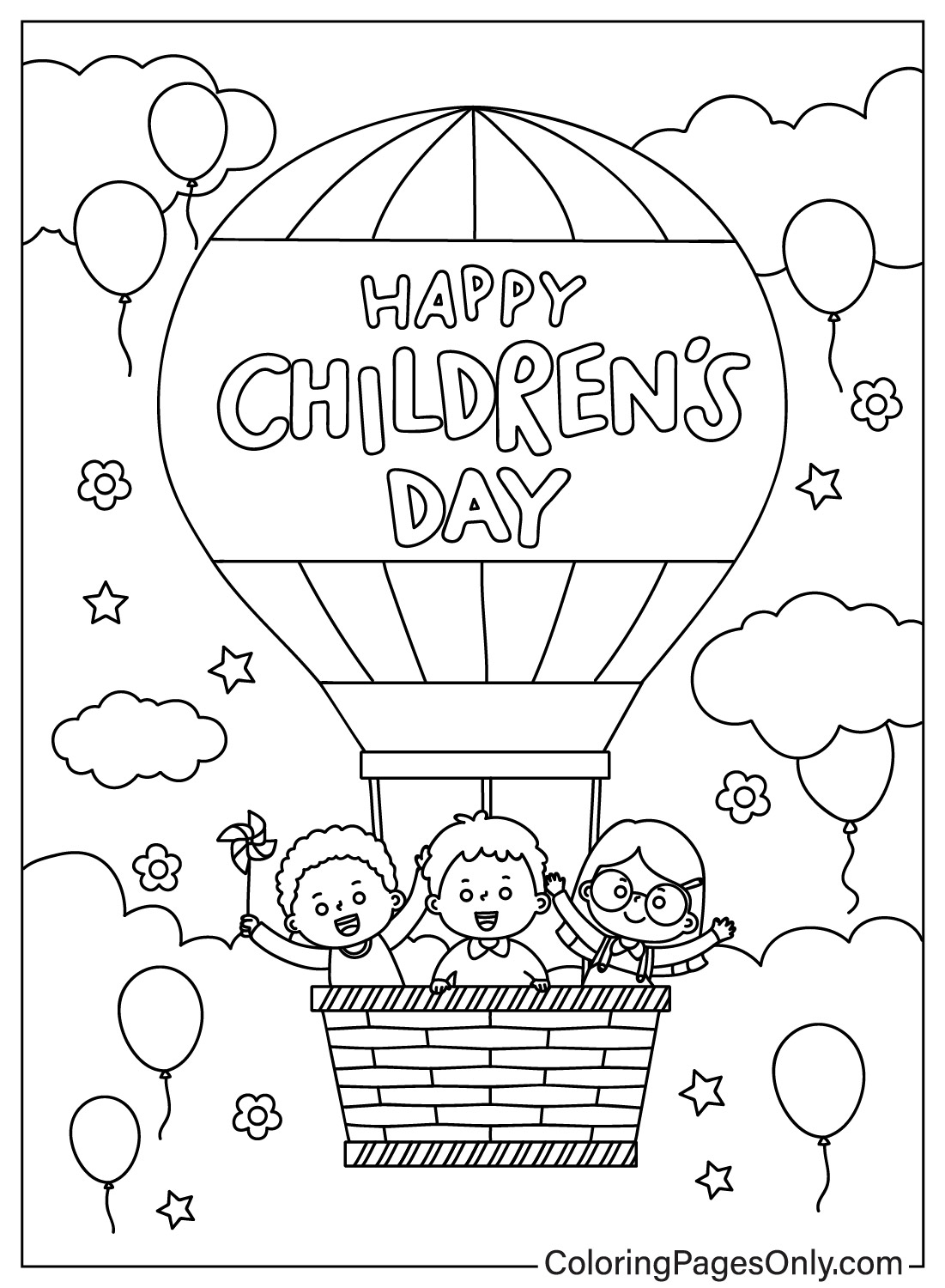
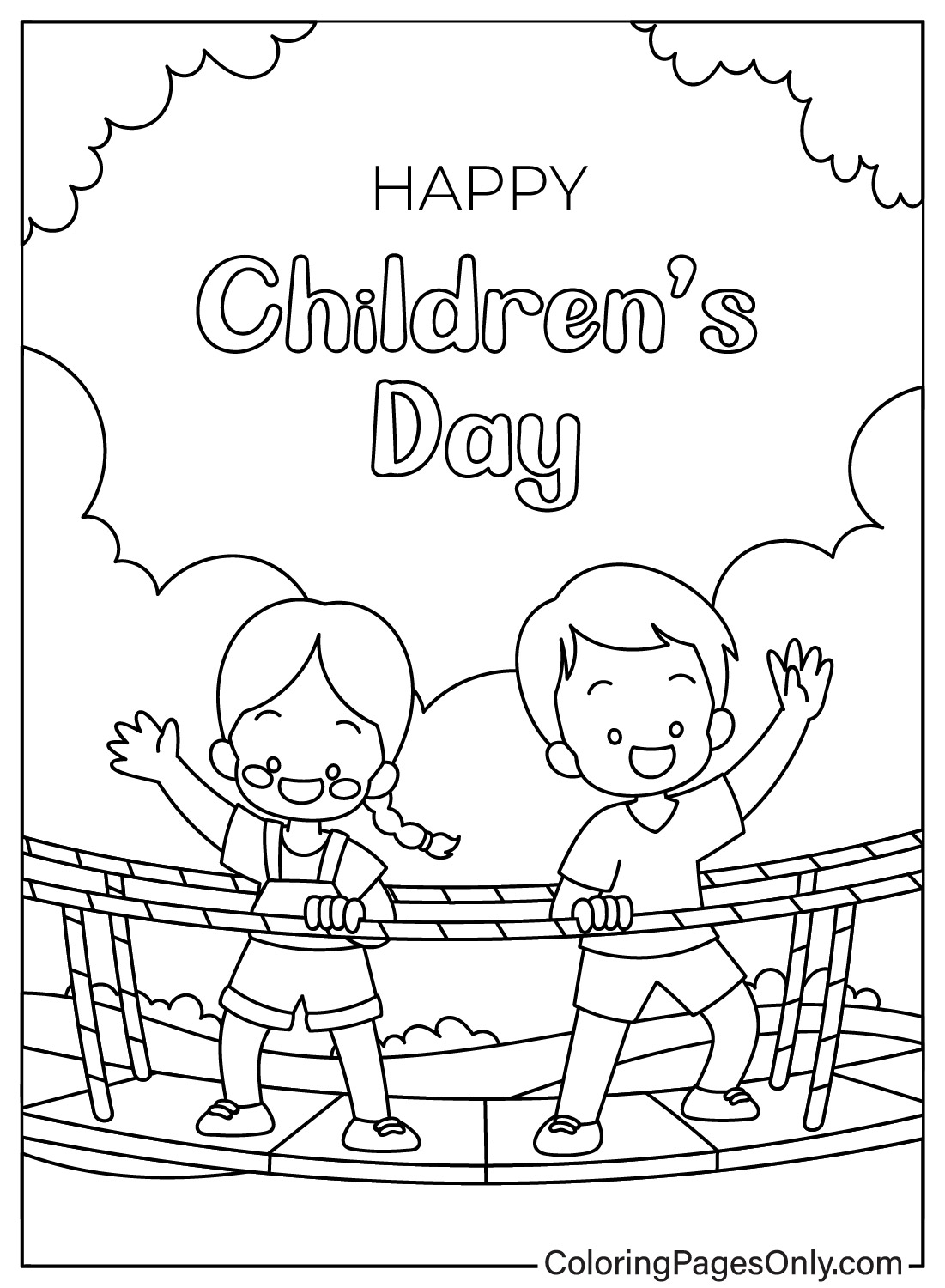
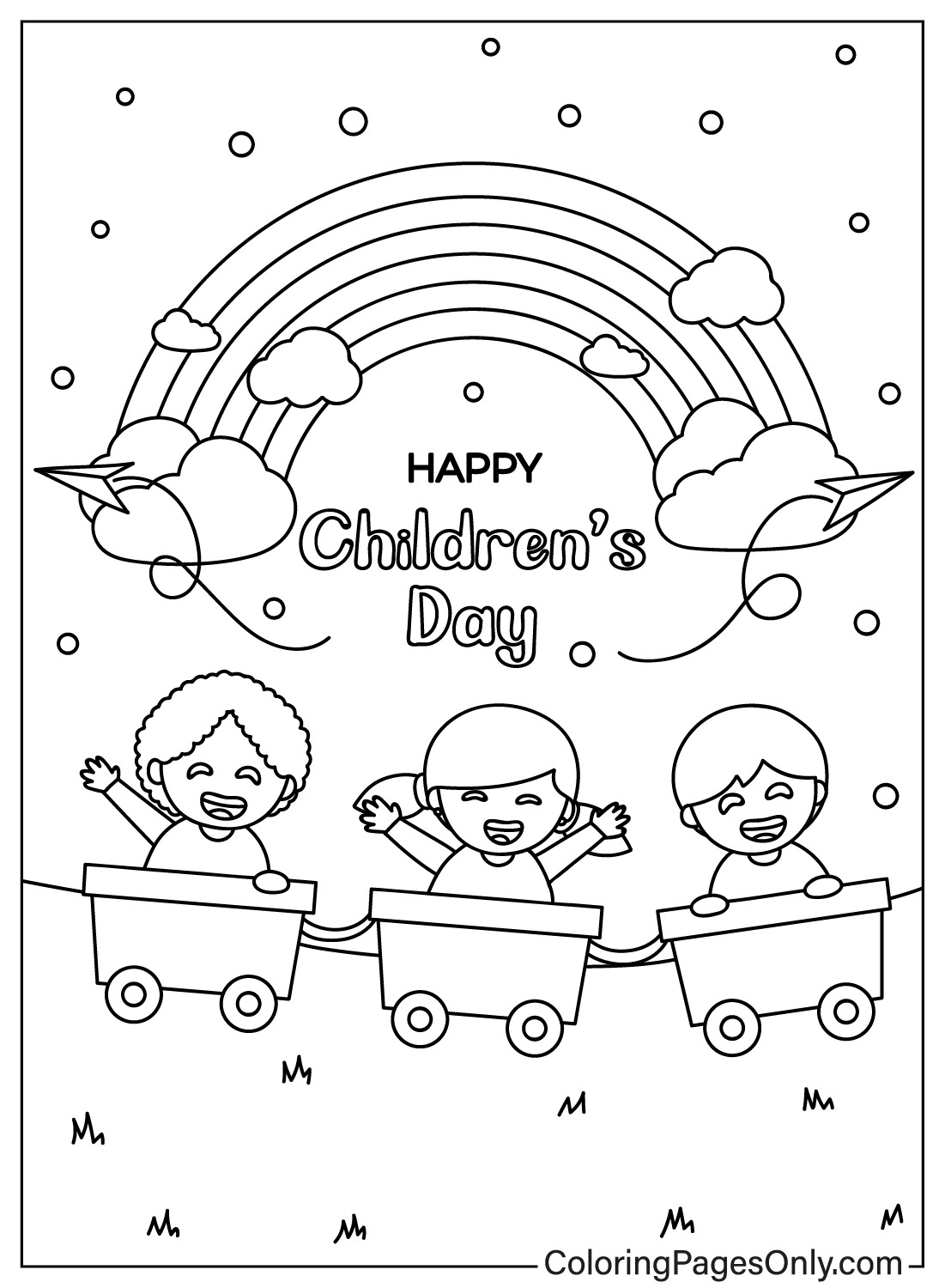
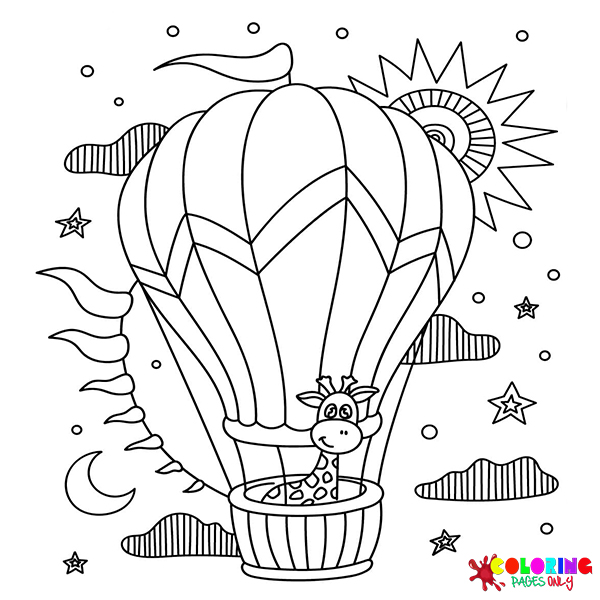
Two Children on the Bridge, Three Children in a Hot Air Balloon, Three Happy Children Sitting in a Rickshaw, and Boy Carrying Girl on Plane move through a range of shared-adventure scenarios that place children in motion – on structures, in vehicles, in the air. The hot air balloon page is one of the collection’s most visually generous: three children in a basket together, with all the sky available above them, which is as accurate a representation of what Children’s Day aspires to as any formal declaration.
Symbols of Peace and Global Unity
Several pages in the collection carry the specific visual vocabulary of global Children’s Day observances – imagery drawn from the UN’s framework for children’s rights and the international peace movement.
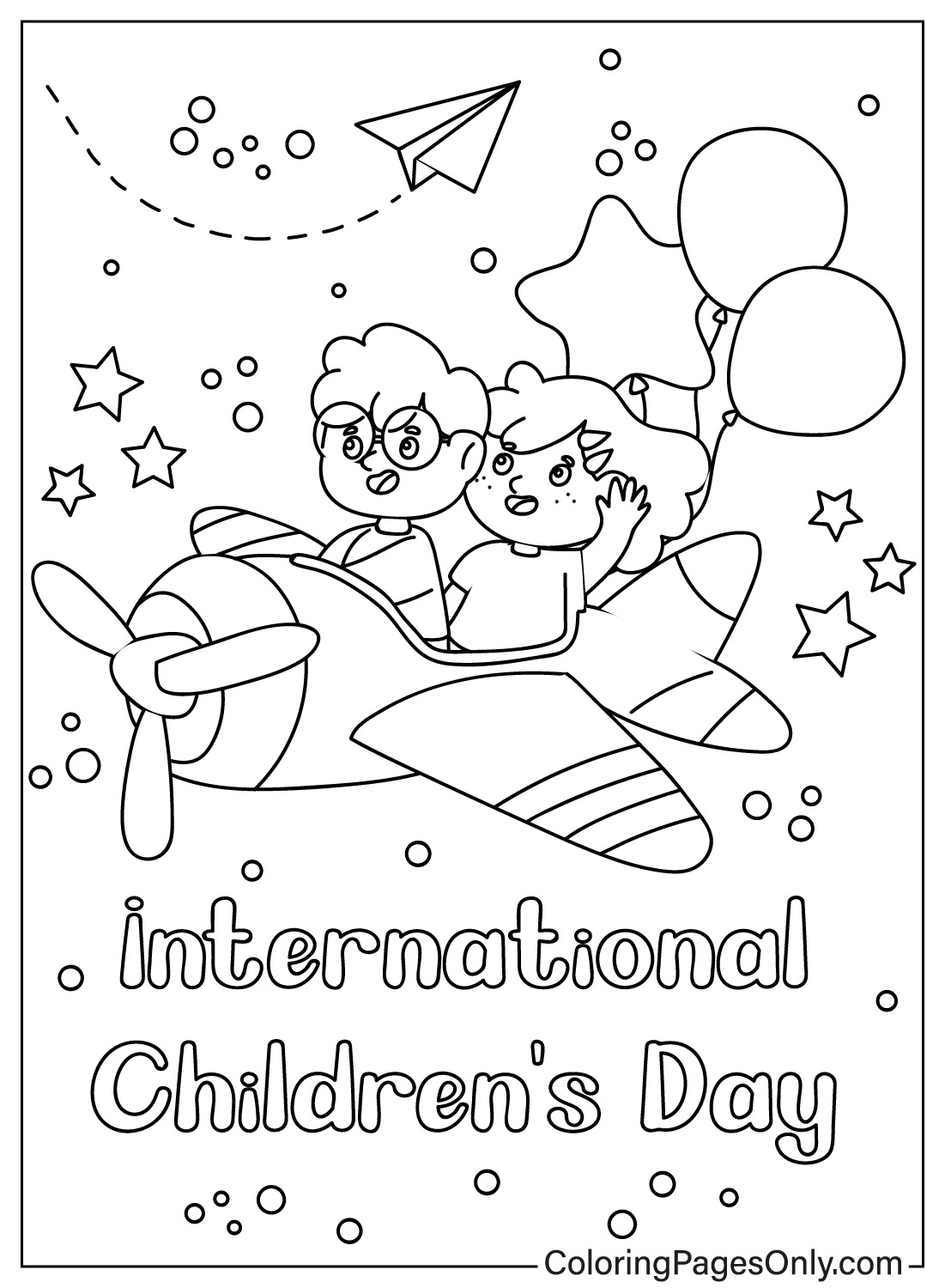
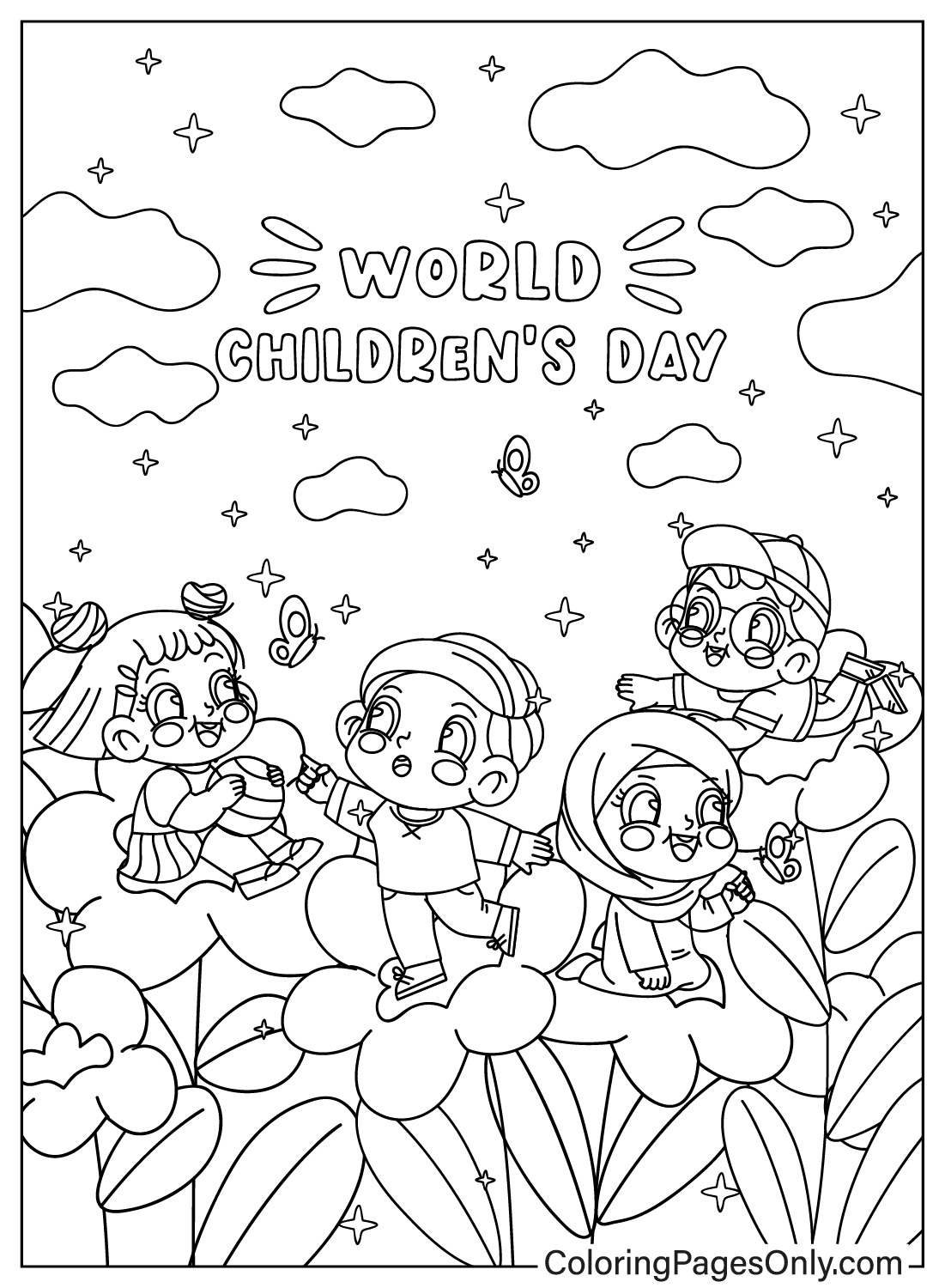
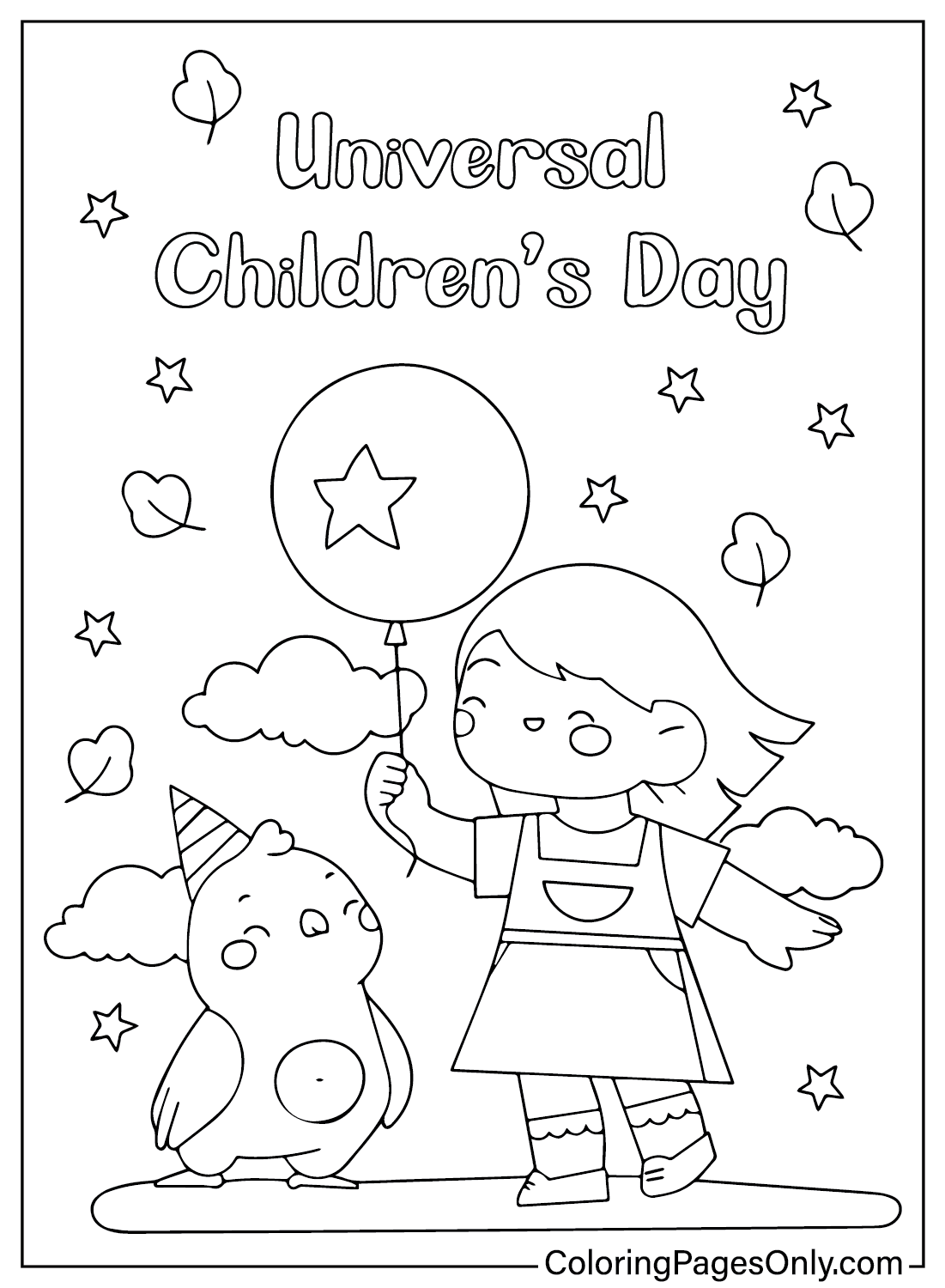
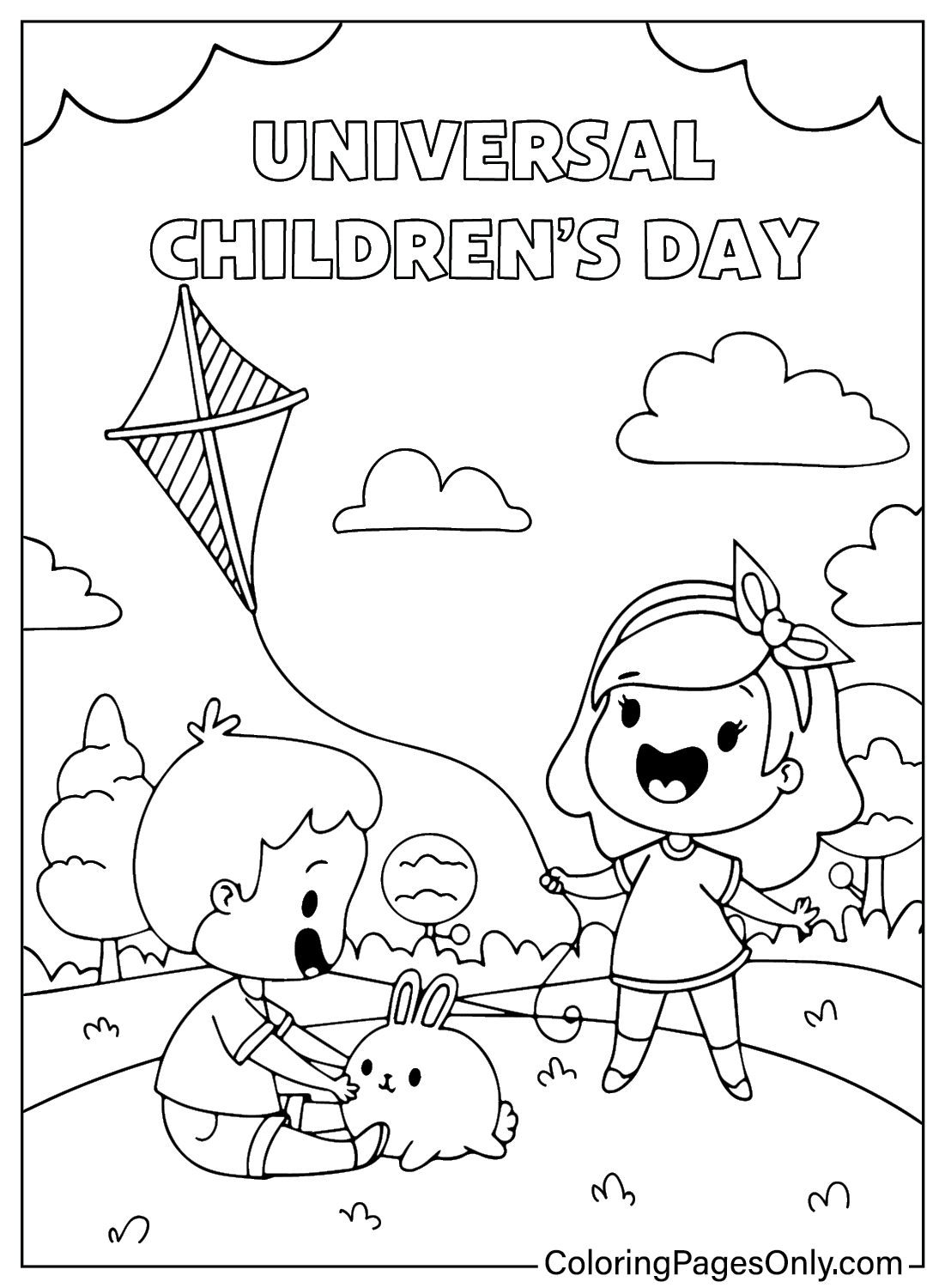
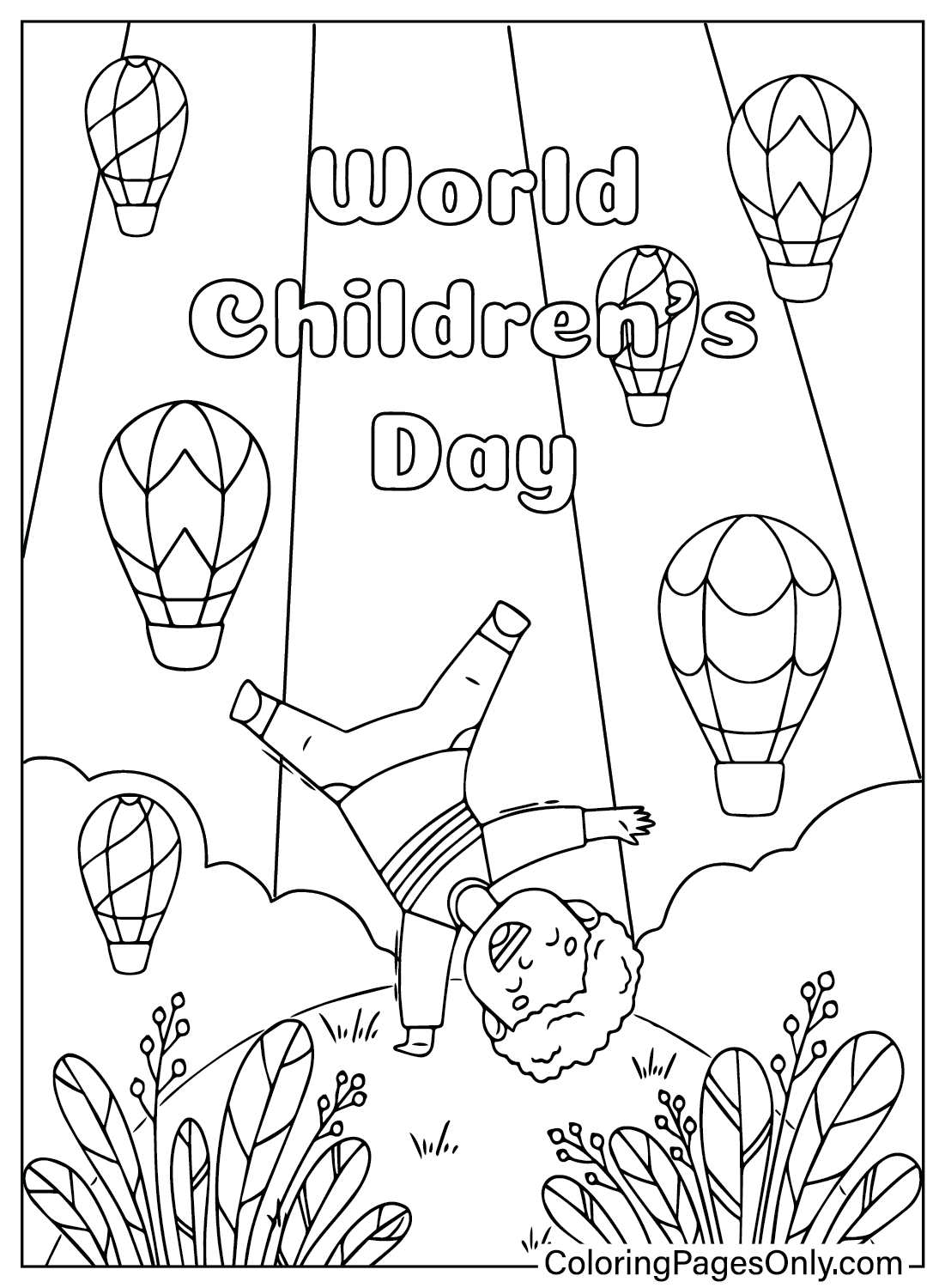
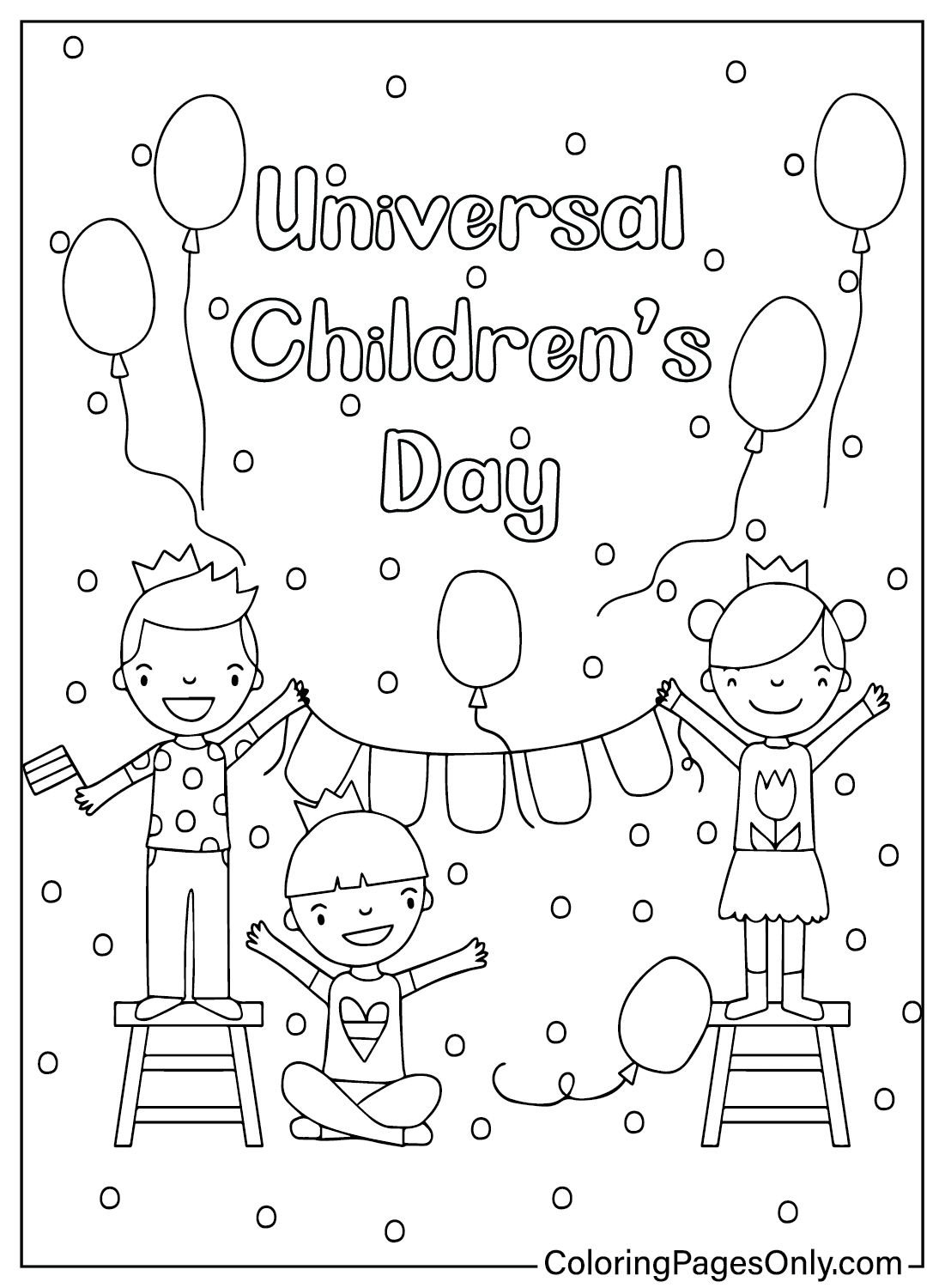
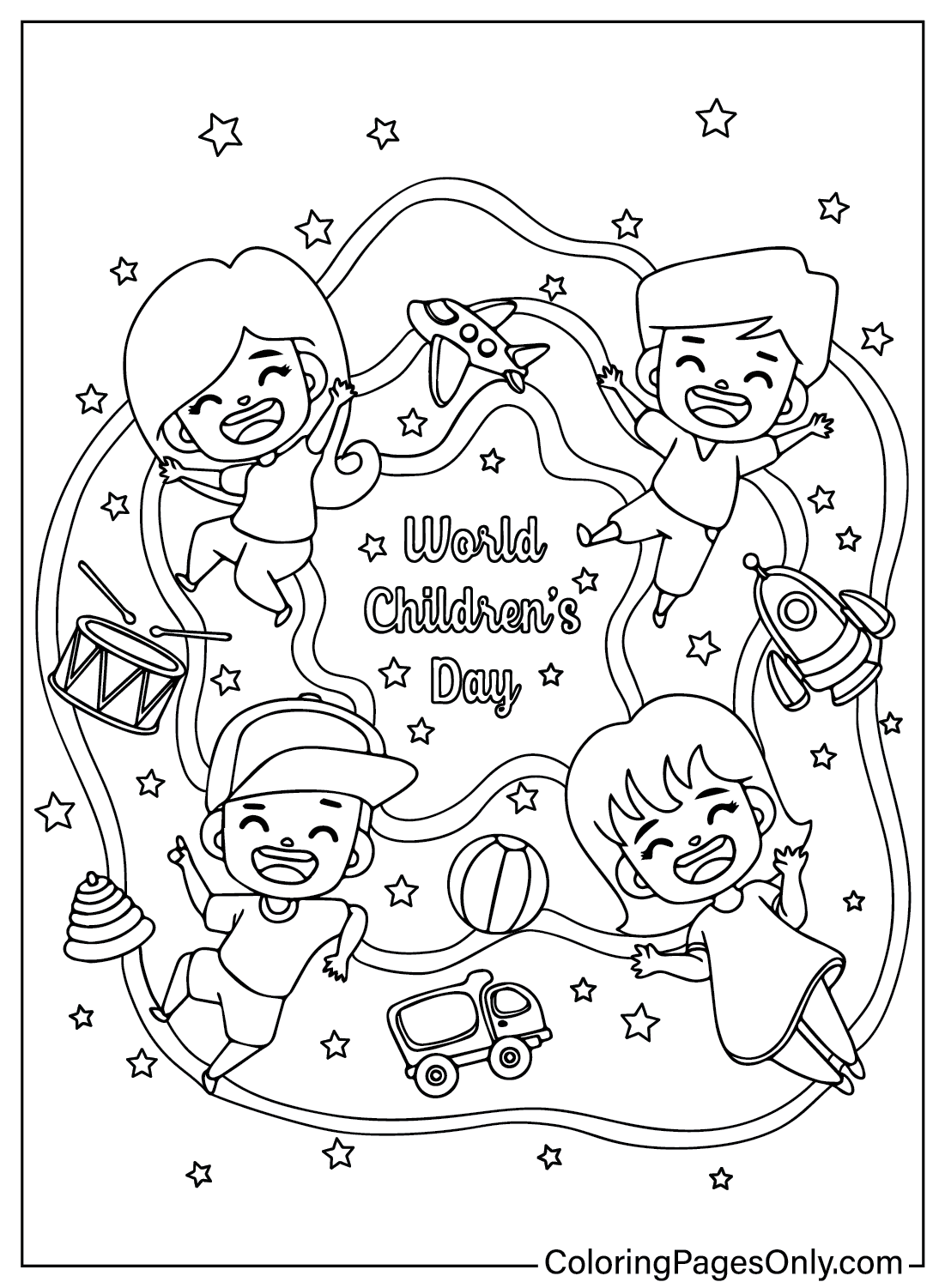
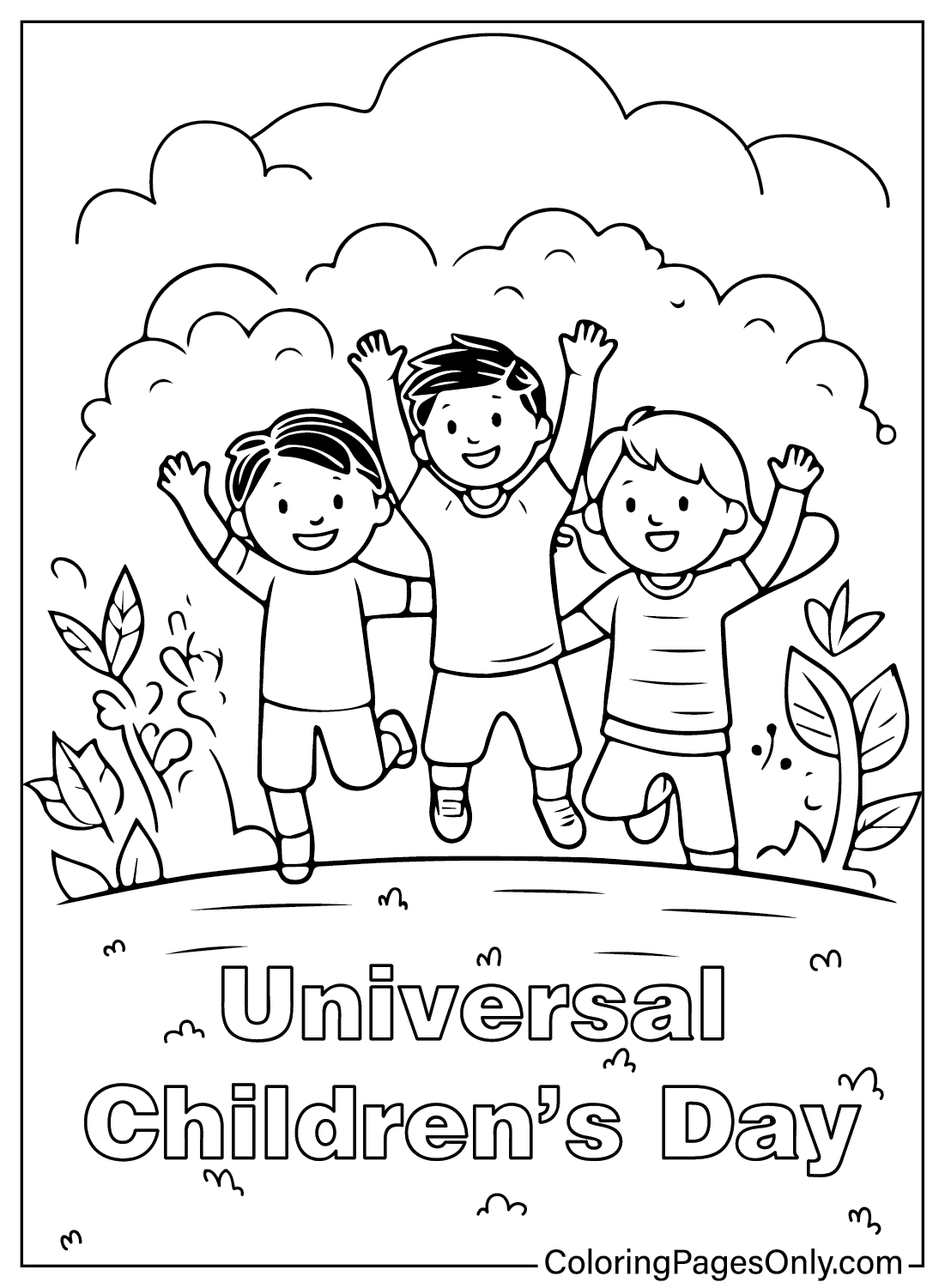
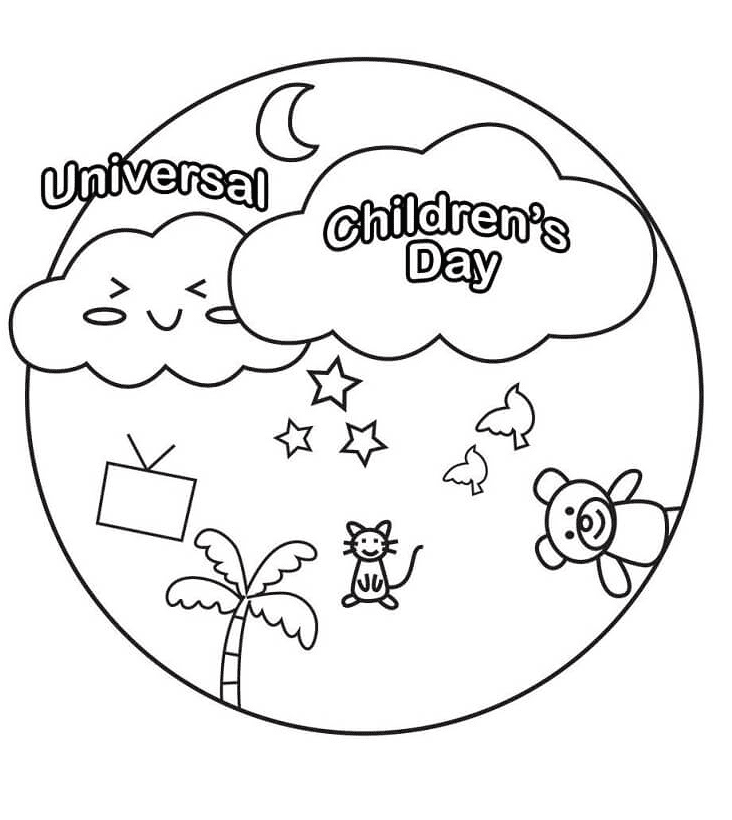
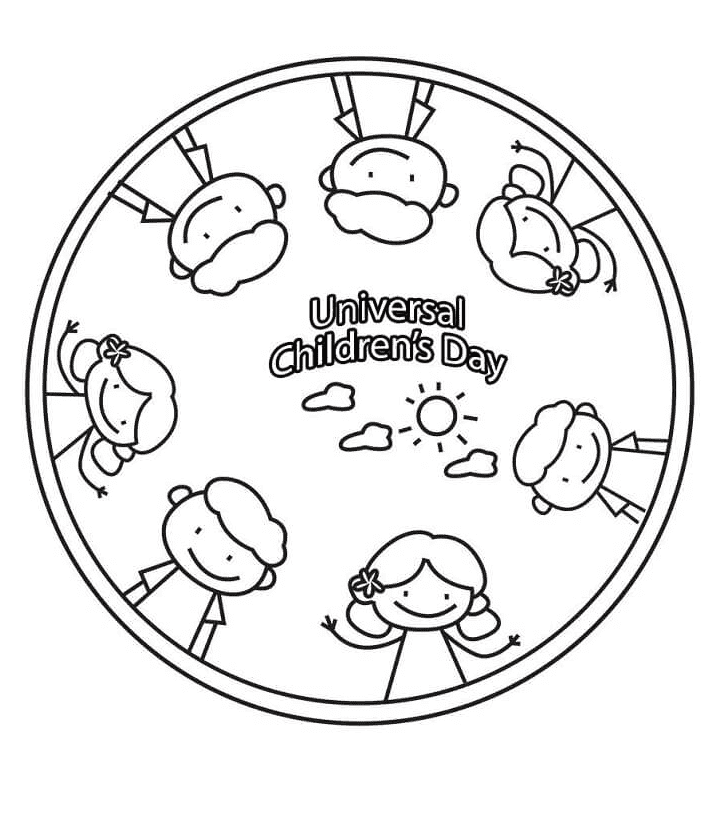
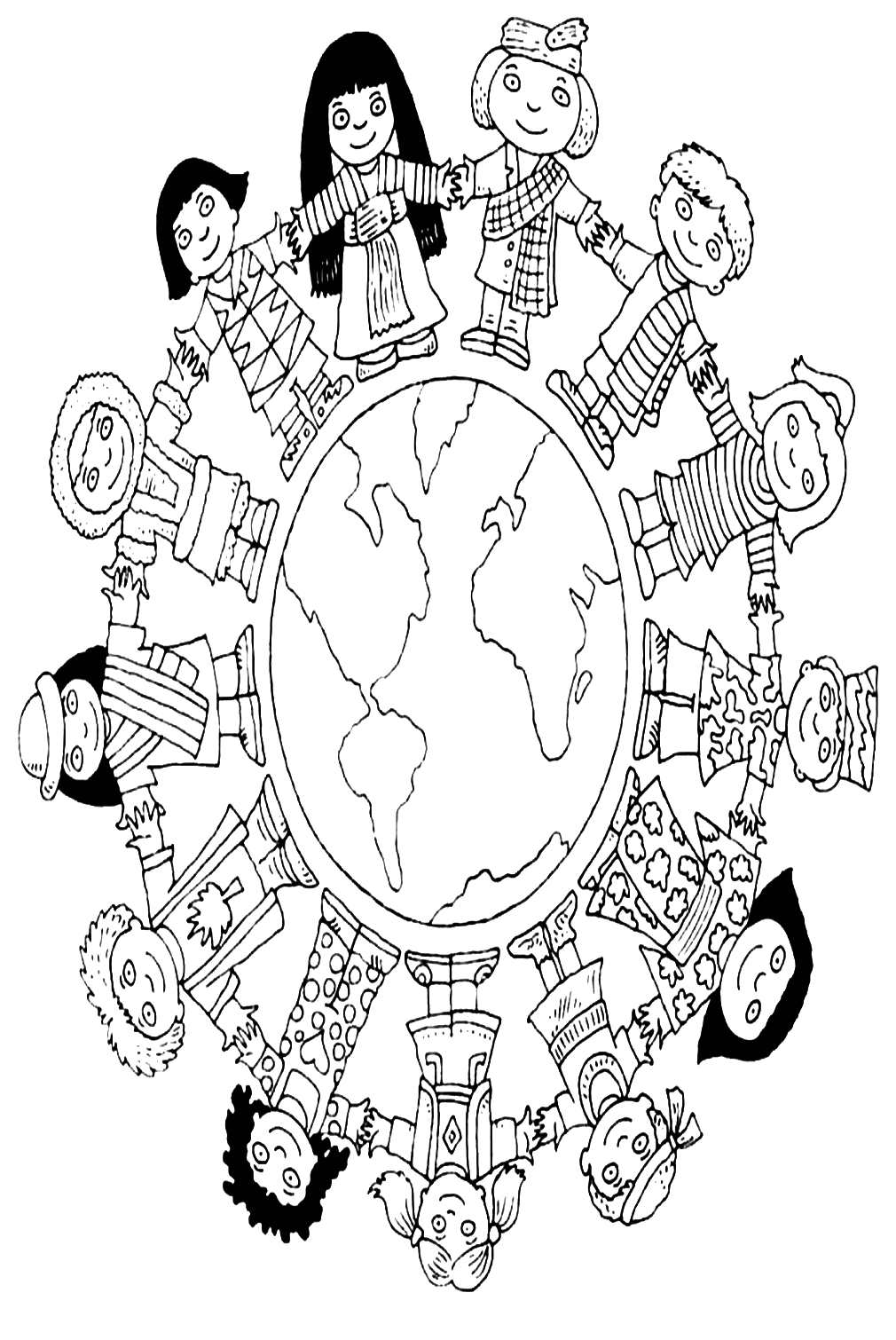
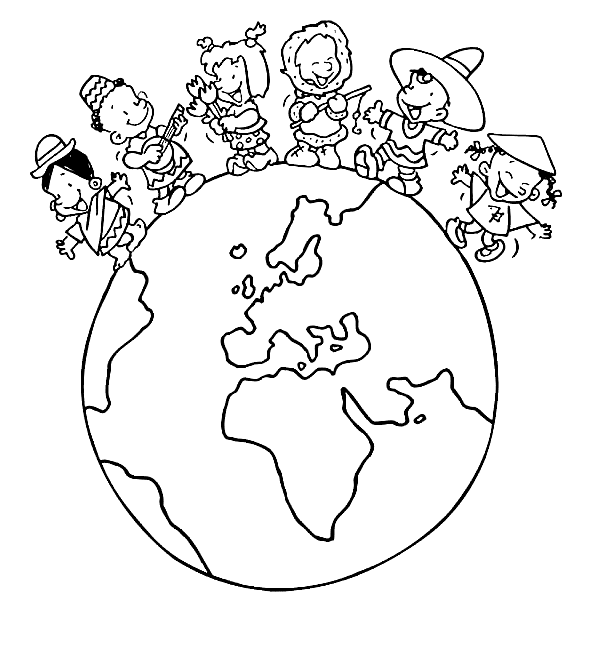
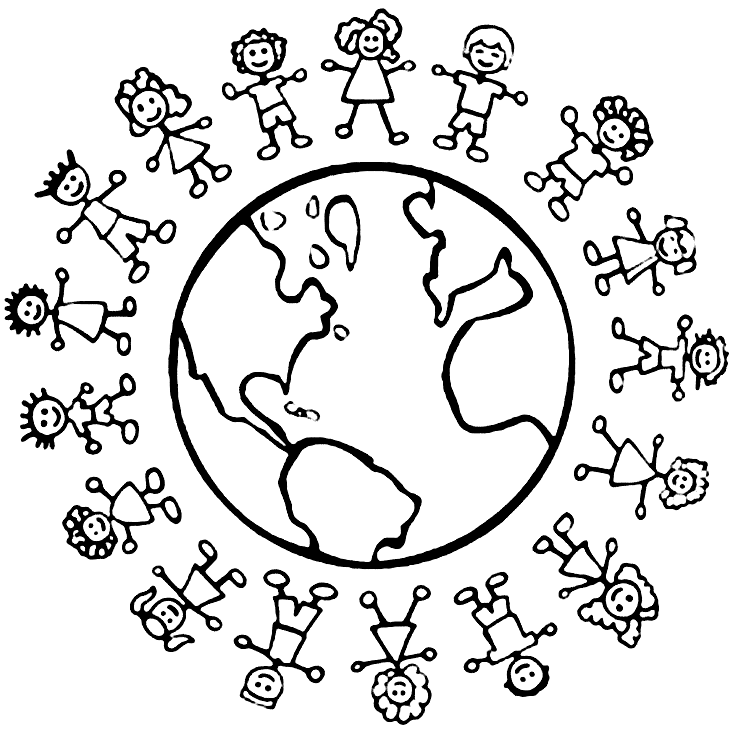
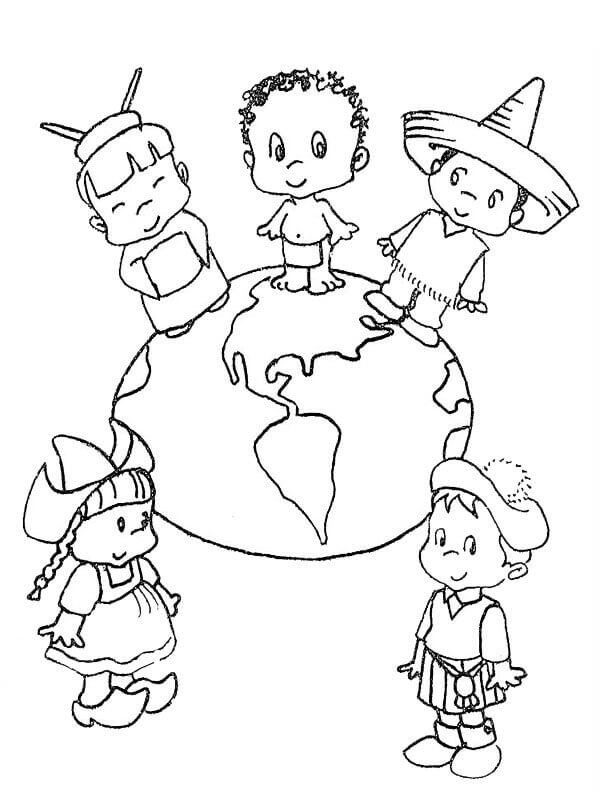
International Children’s Day Coloring Page, World Children’s Day Coloring Page, Universal Children’s Day Coloring Page, and Universal Children’s Day Coloring Page depict the images that have characterized international Children’s Day celebrations since the 1950s: the globe, the dove, and children of visually distinct cultural backgrounds holding hands or standing together. These images are deliberately aspirational – they depict the world as it is intended to be rather than as it always is.
The dove on these pages is worth a word: white doves as symbols of peace have a cross-cultural history that extends from ancient Mesopotamia through the biblical flood narrative, Greek and Roman antiquity, and the 20th-century peace movement, where Pablo Picasso’s 1949 lithograph of a dove became the symbol of the World Congress of Peace Fighters and permanently attached the image to international peace advocacy. Its presence on Children’s Day pages connects the celebration of children to the broader aspiration for a world in which childhood is protected globally, not just locally.
The India Connection – Jawaharlal Nehru Pages
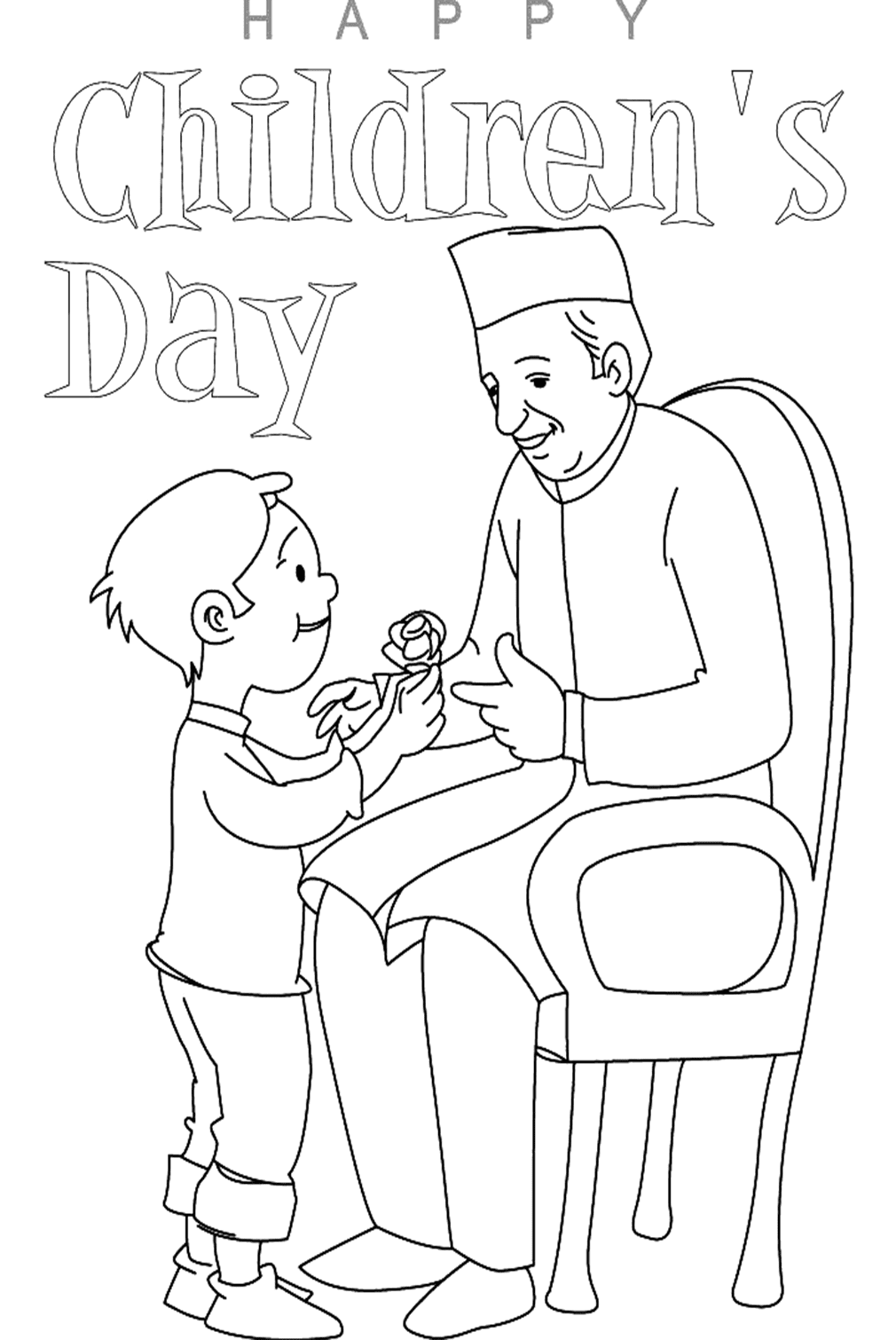
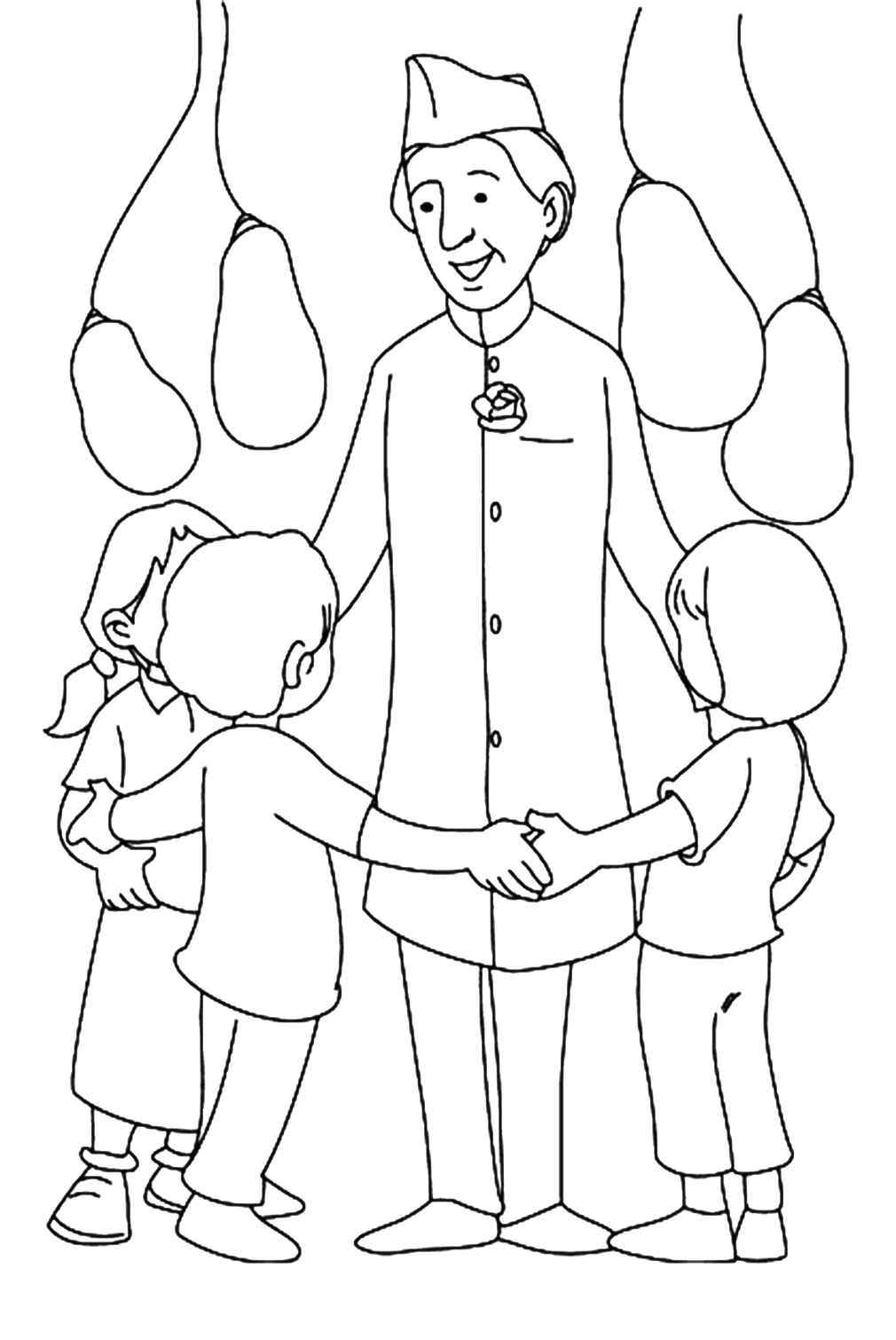
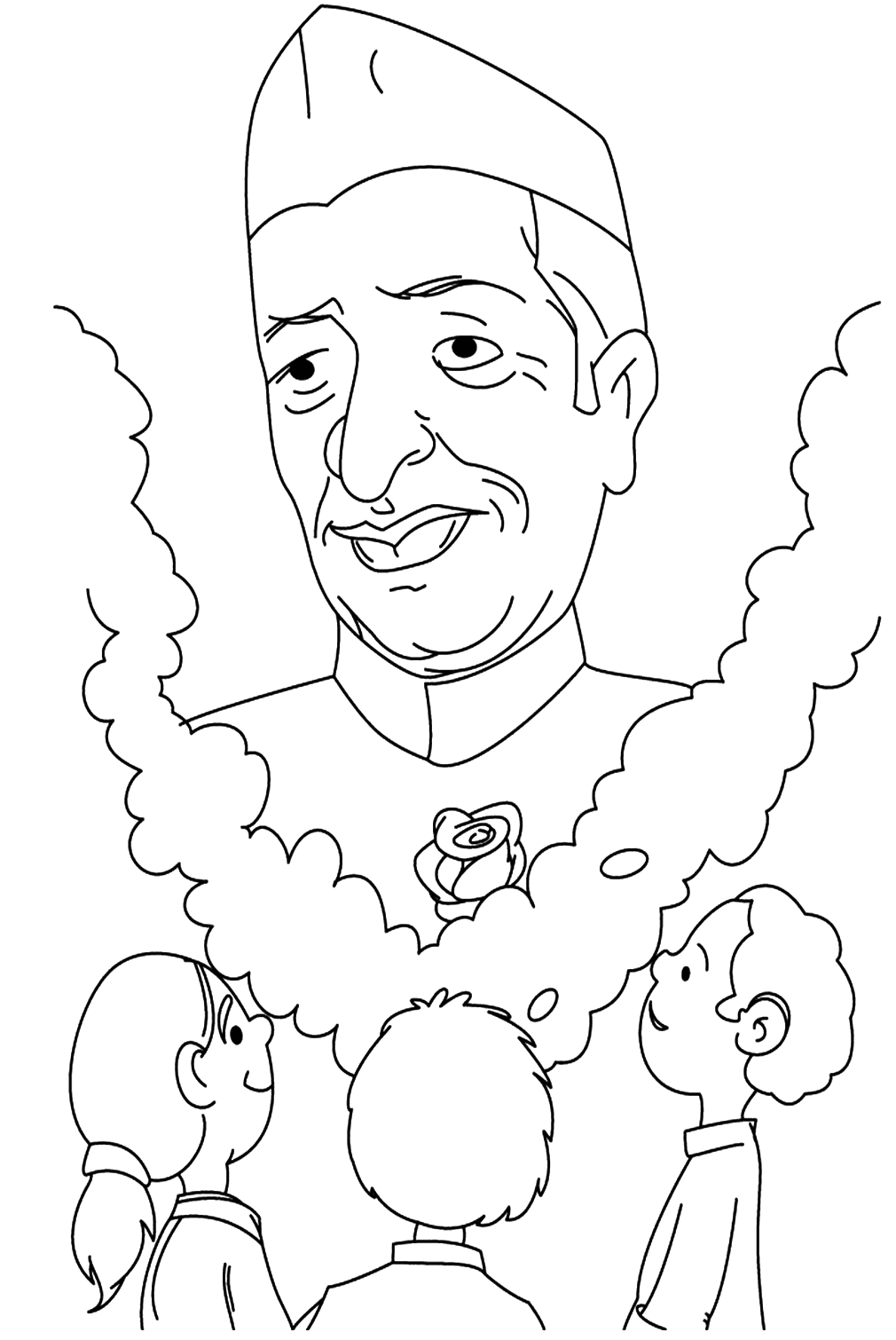
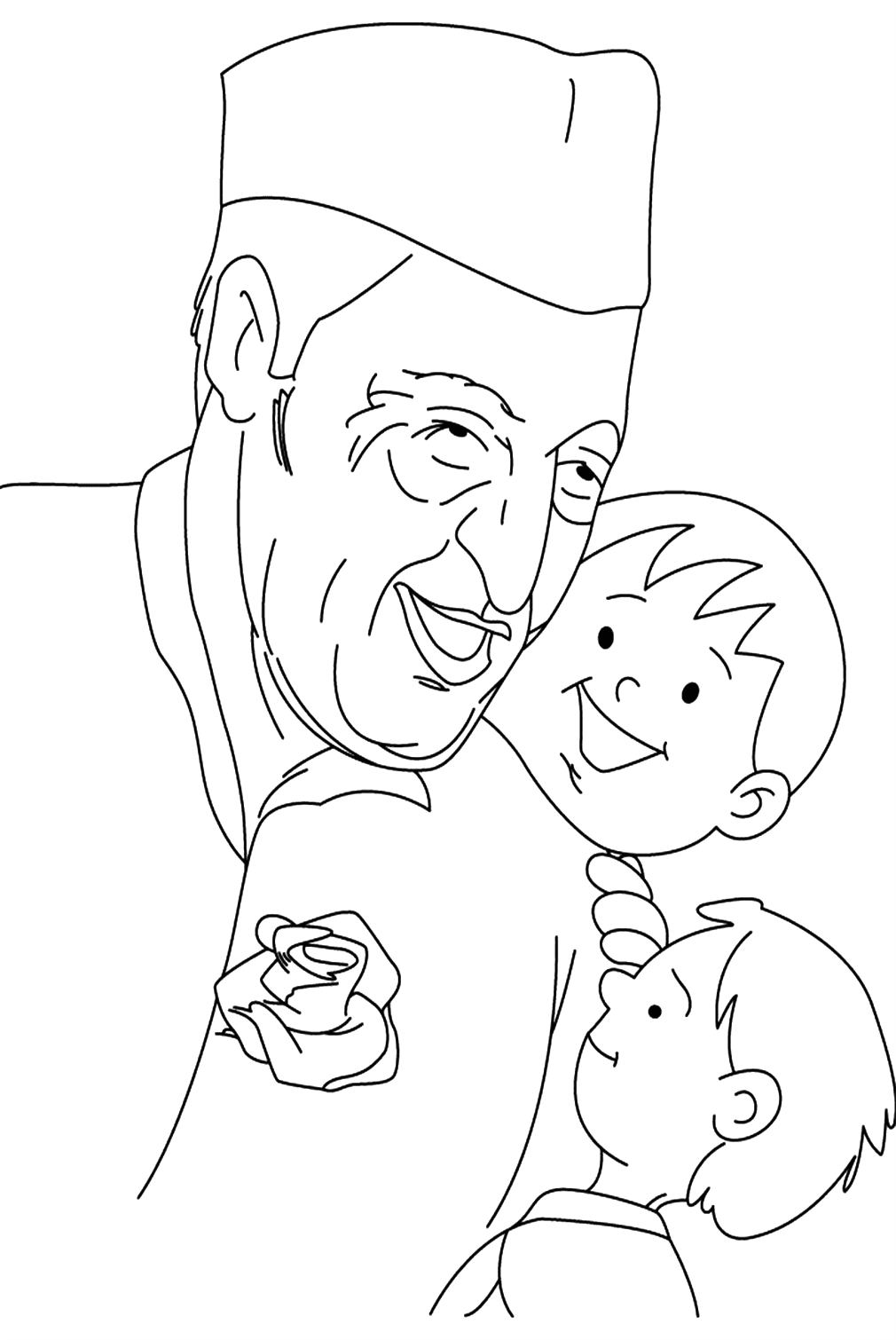
Kids-Paying-Homage-To-Nehru, Jawaharlal-Nehru-Playing-With-Kids, Chacha-Nehru, and Chacha-Jawahar-Nehru are the collection’s most historically specific pages and the ones most meaningful to the 1.4 billion people in India for whom November 14 is Children’s Day.
Jawaharlal Nehru (November 14, 1889 – May 27, 1964) was India’s first Prime Minister following independence in 1947, serving until his death in 1964. He was a central figure in the Indian independence movement alongside Mahatma Gandhi and became the architect of independent India’s early political and educational institutions. His relationship with children was genuine and well-documented: he made it a point throughout his public life to spend time with children, to speak with them directly rather than over their heads, and to articulate his belief that children were India’s future in terms that went beyond rhetoric.
After his death, the Indian government designated his birthday as Children’s Day – a decision that honored both his legacy and his affection for children. The holiday is observed in India with school programs, speeches about Nehru’s life, and activities celebrating childhood. The pages depicting Nehru with children are significant for Indian families and educators who want to connect the creative activity of coloring to the historical and civic meaning of the holiday.
Coloring Nehru’s pages: His canonical appearance includes the sherwani – a long, formal coat-like garment traditionally in cream or white – and the Gandhi cap, a white folding cap associated with leaders of the Indian independence movement. When coloring these pages for Indian Children’s Day use, these elements deserve accurate rendering: cream or white for the sherwani, white for the cap.
Activity and Outdoor Scene Pages
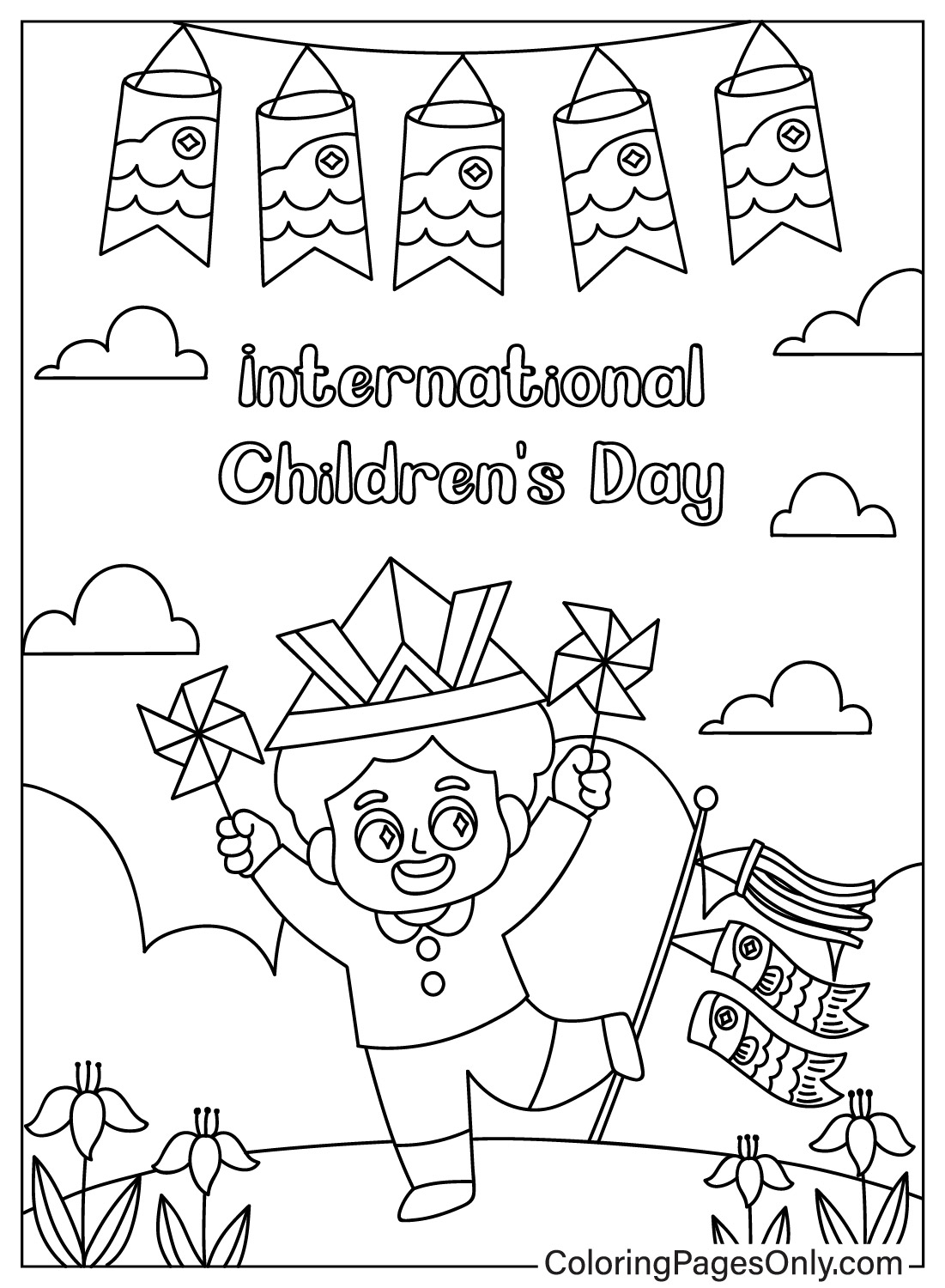
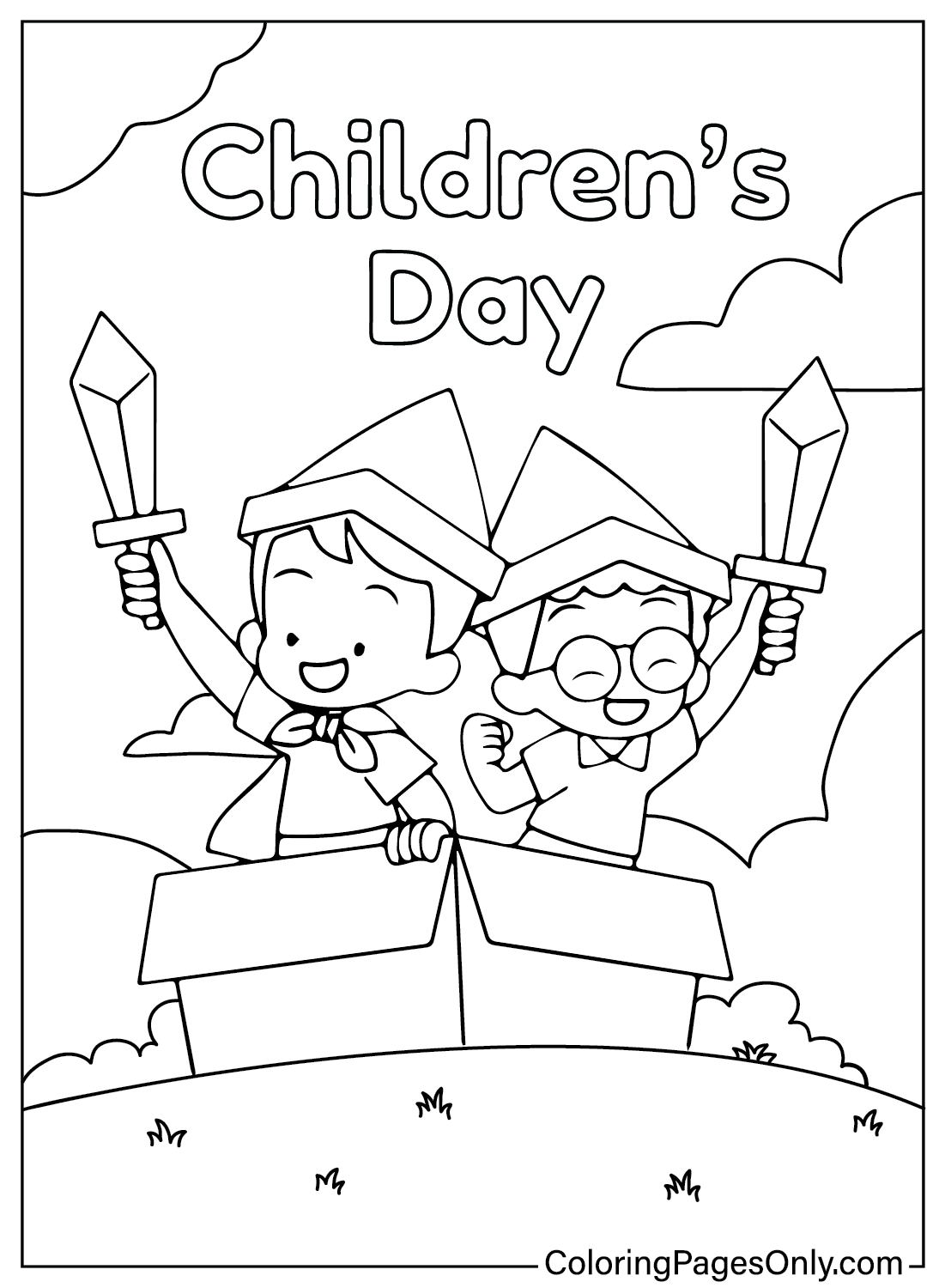
Cute Boy with Pinwheel on Children’s Day captures one of the holiday’s most universal simple pleasures – a pinwheel, which requires only a child and a breath of wind to become a celebration. Children’s Days Out places children in outdoor public space – the kind of day-out context that Children’s Day celebrations in many countries involve, with parks, games, and the freedom of a day that belongs specifically to them.
Mandala and Decorative Pages
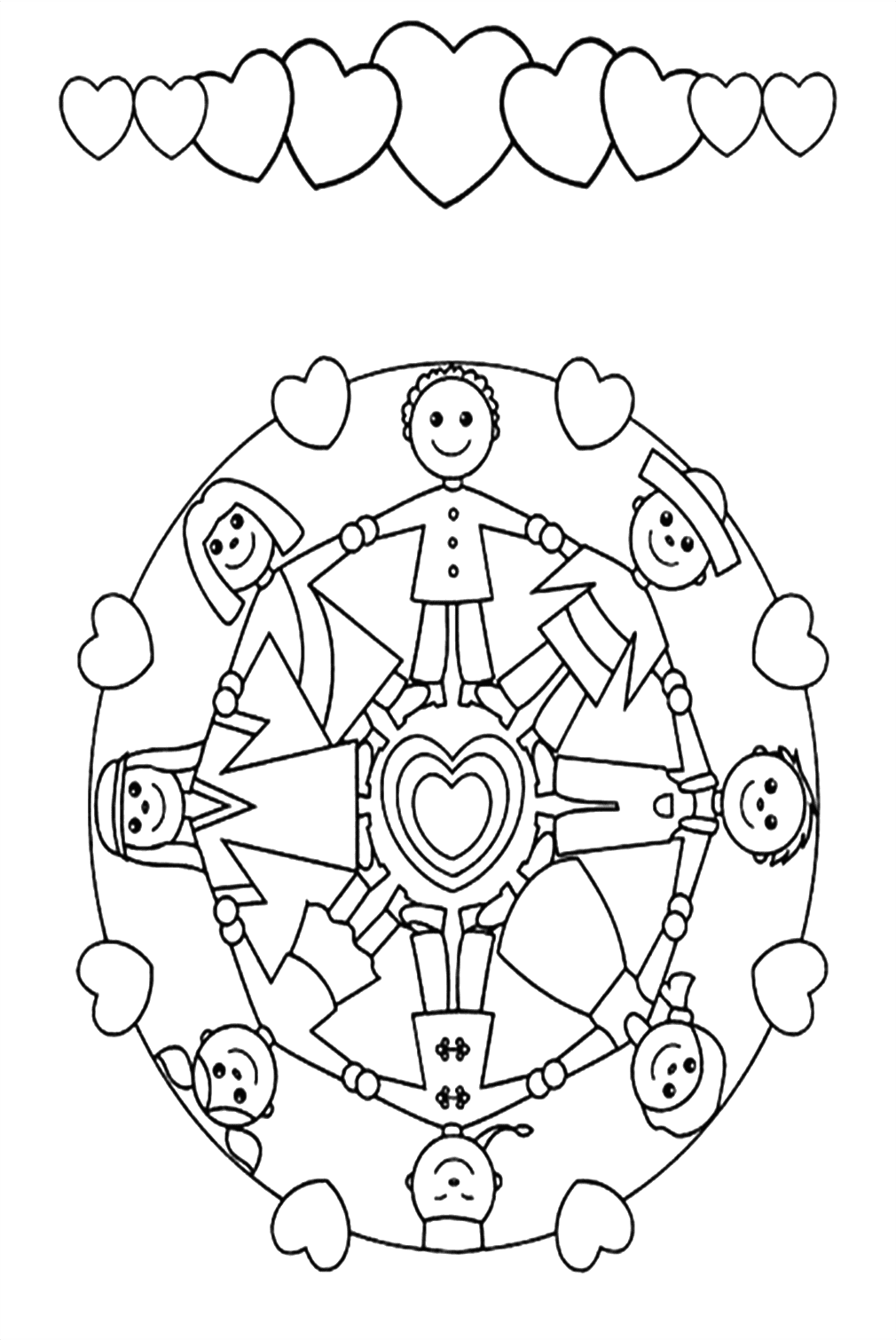
Childrens-Day-Mandala is the collection’s most contemplative page – a mandala pattern in the Children’s Day context. Mandala coloring for children and adults has been studied as a specific application of the Art Therapy Journal’s 2005 finding on structured coloring and anxiety reduction: the circular, symmetrical patterns of mandala designs produce a particular quality of focused attention that is distinctively calming. For a day that celebrates childhood as a state of being rather than an achievement, a mandala page offers a genuinely meditative coloring experience.
What These Pages Do
They make an abstract idea tangible. Children’s rights – the right to education, to play, to safety, to be heard – are ideas that can be difficult to communicate to young children in declarative form. Images of children playing together, holding hands across visible cultural differences, flying in a hot air balloon above the world, build the emotional intuition that underlies those rights before the conceptual framework can be articulated. Research in moral development consistently shows that emotional resonance precedes and sustains moral reasoning – feeling that something matters comes before understanding why it does.
The India-specific pages connect a holiday to its history. For Indian families and schools, the Nehru pages do something that the generic celebration pages cannot: they anchor Children’s Day in a specific story, a specific person, a specific moment in a country’s history. A child who colors a page showing Nehru playing with children and learns that this man – India’s first Prime Minister – is specifically the reason they have a holiday on November 14 has received a history lesson inside a coloring activity.
Global imagery builds cultural awareness. The pages depicting children from visually distinct cultural backgrounds – different clothing, different features, holding hands or standing together – place a child’s own experience within a larger human context. Research in multicultural education consistently shows that children who are regularly exposed to positive representations of human diversity develop more inclusive attitudes and greater capacity for perspective-taking than children whose media environment reflects only their own cultural group.
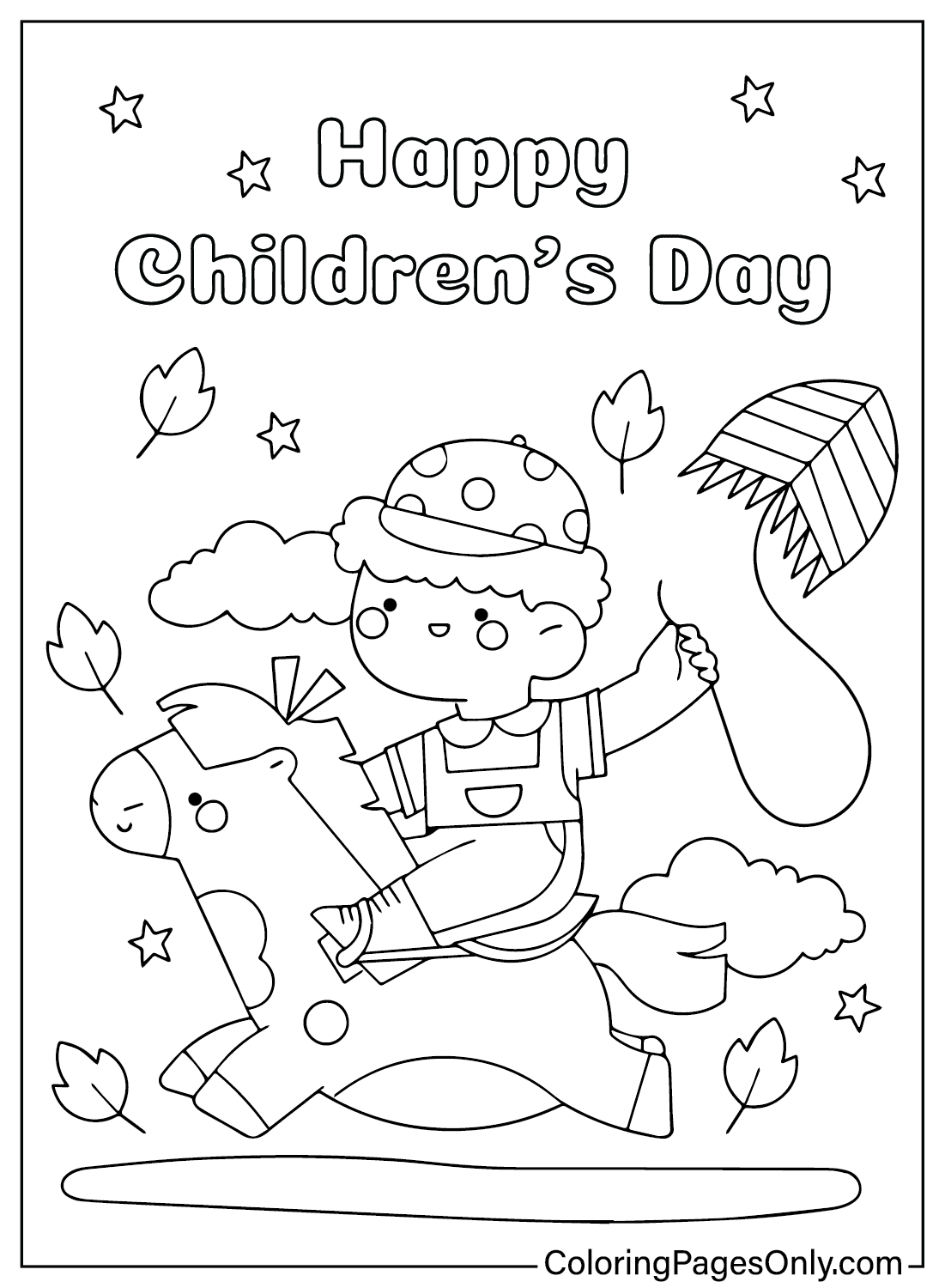
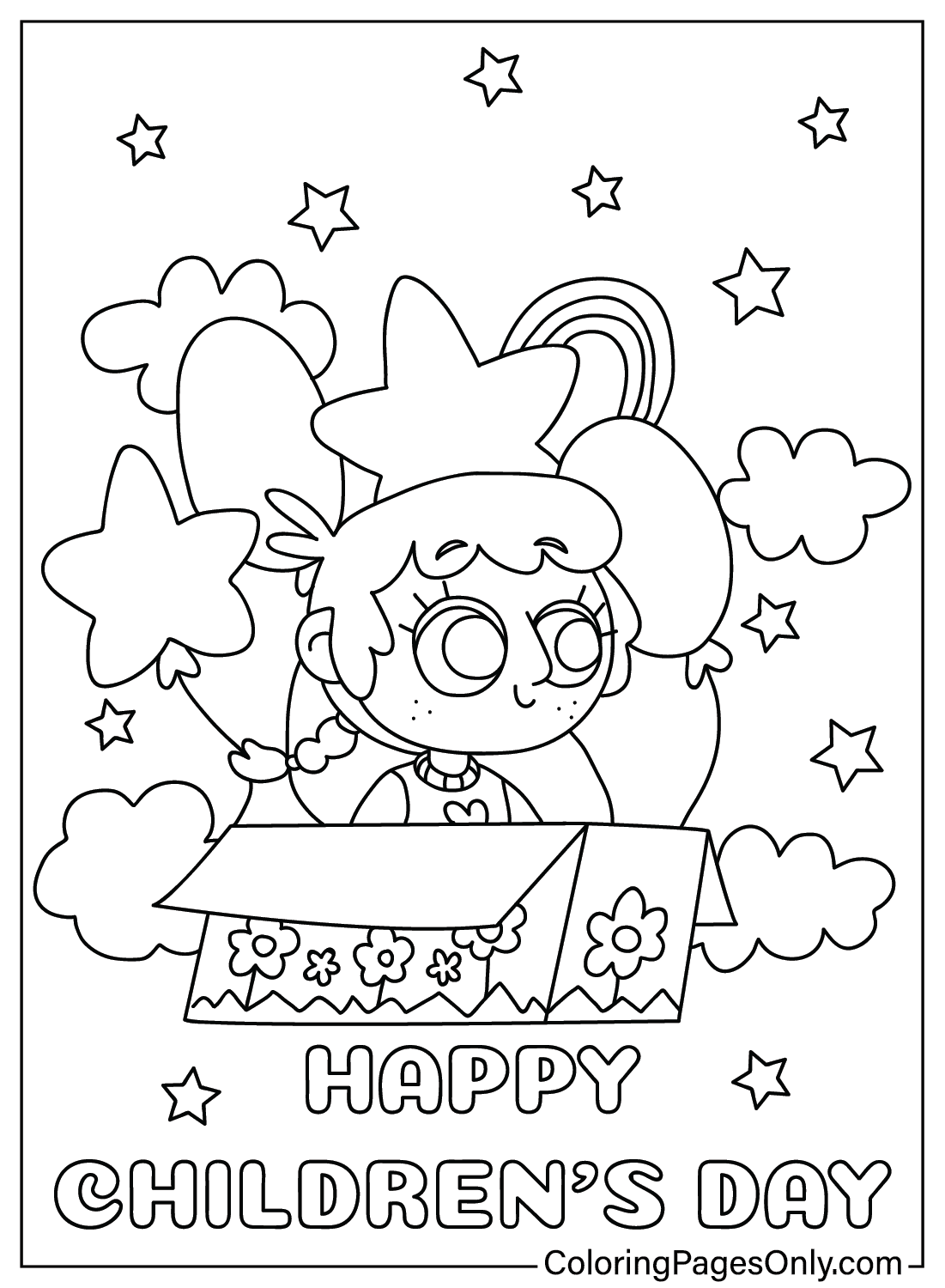
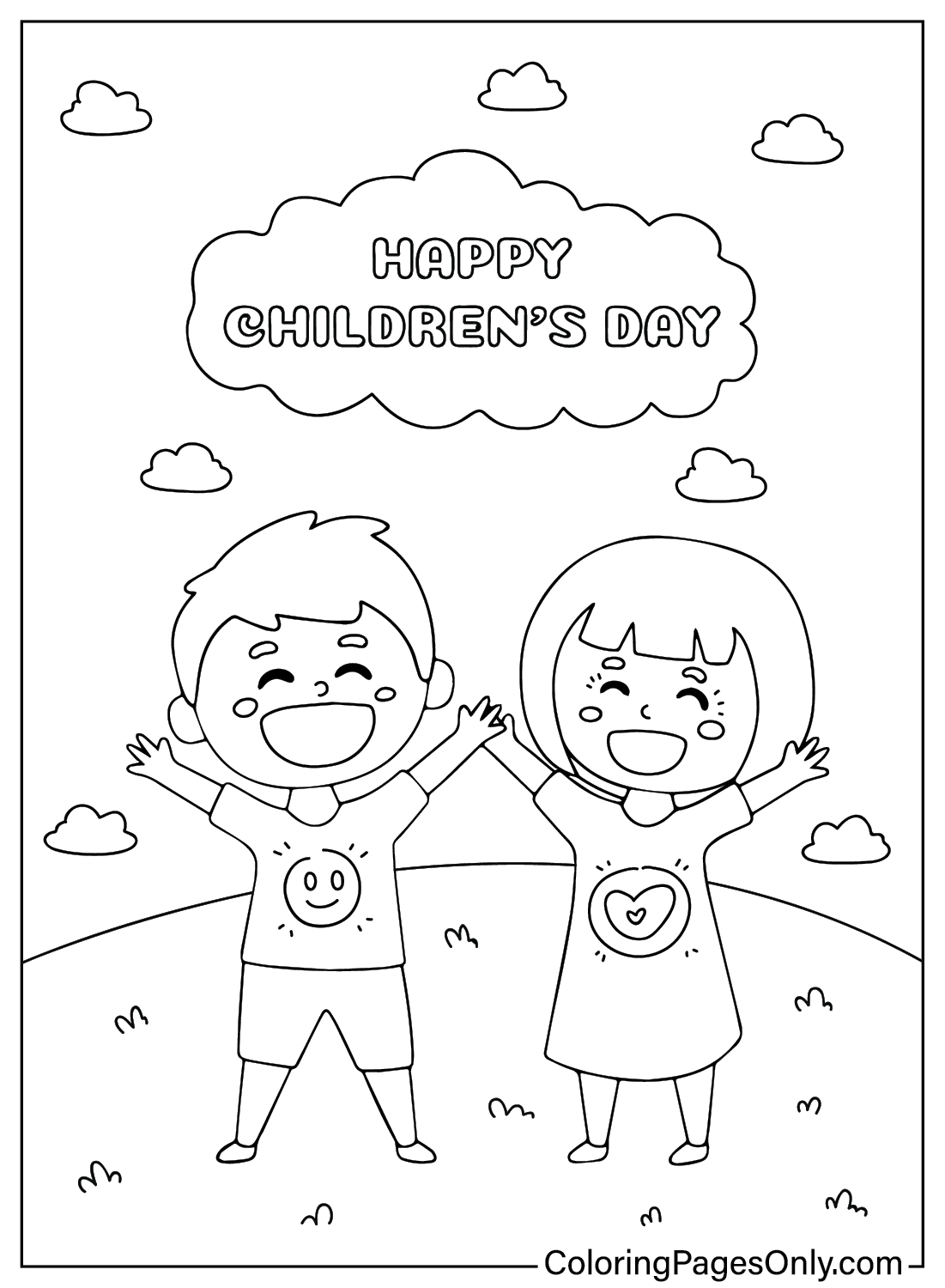
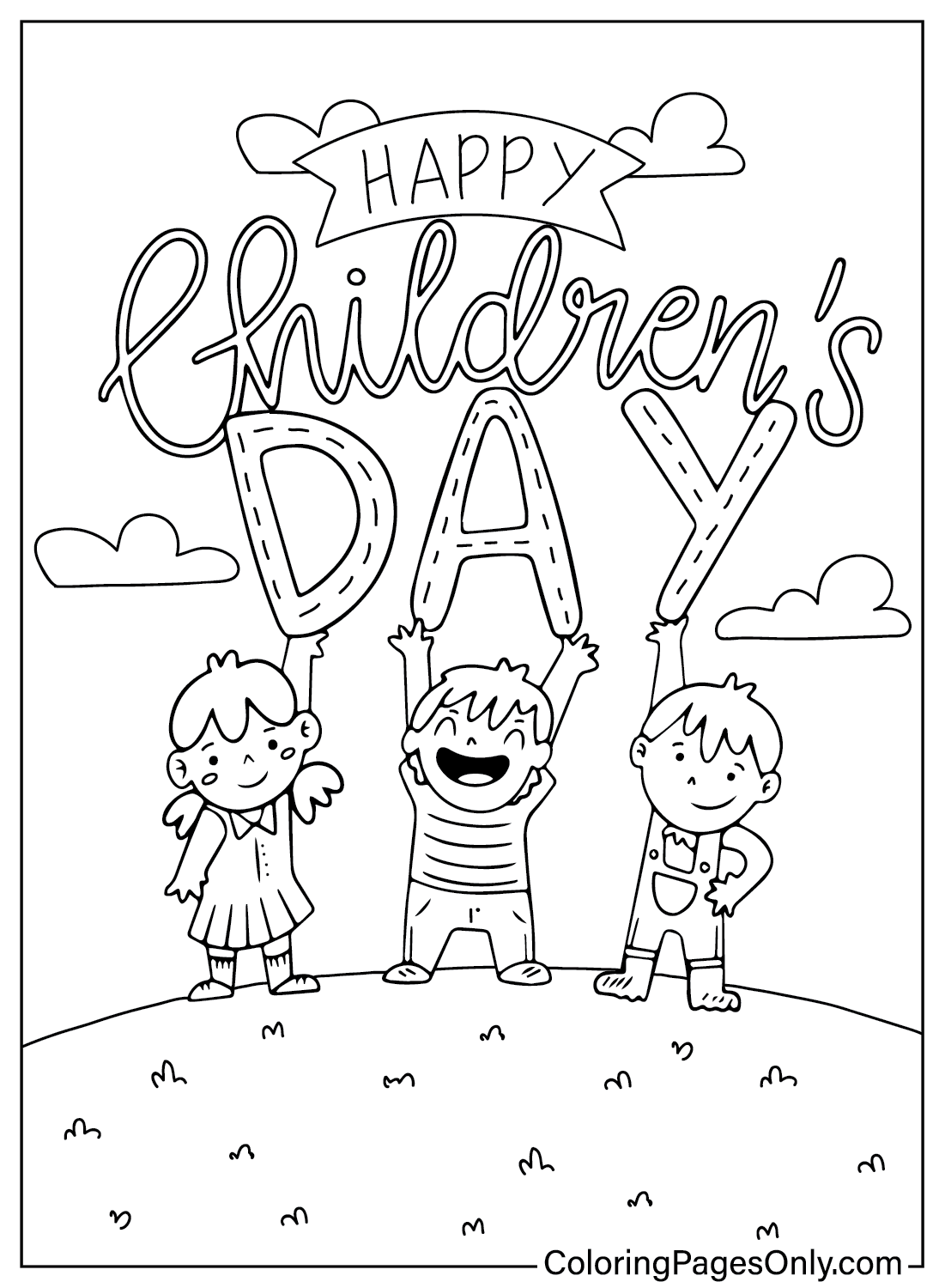
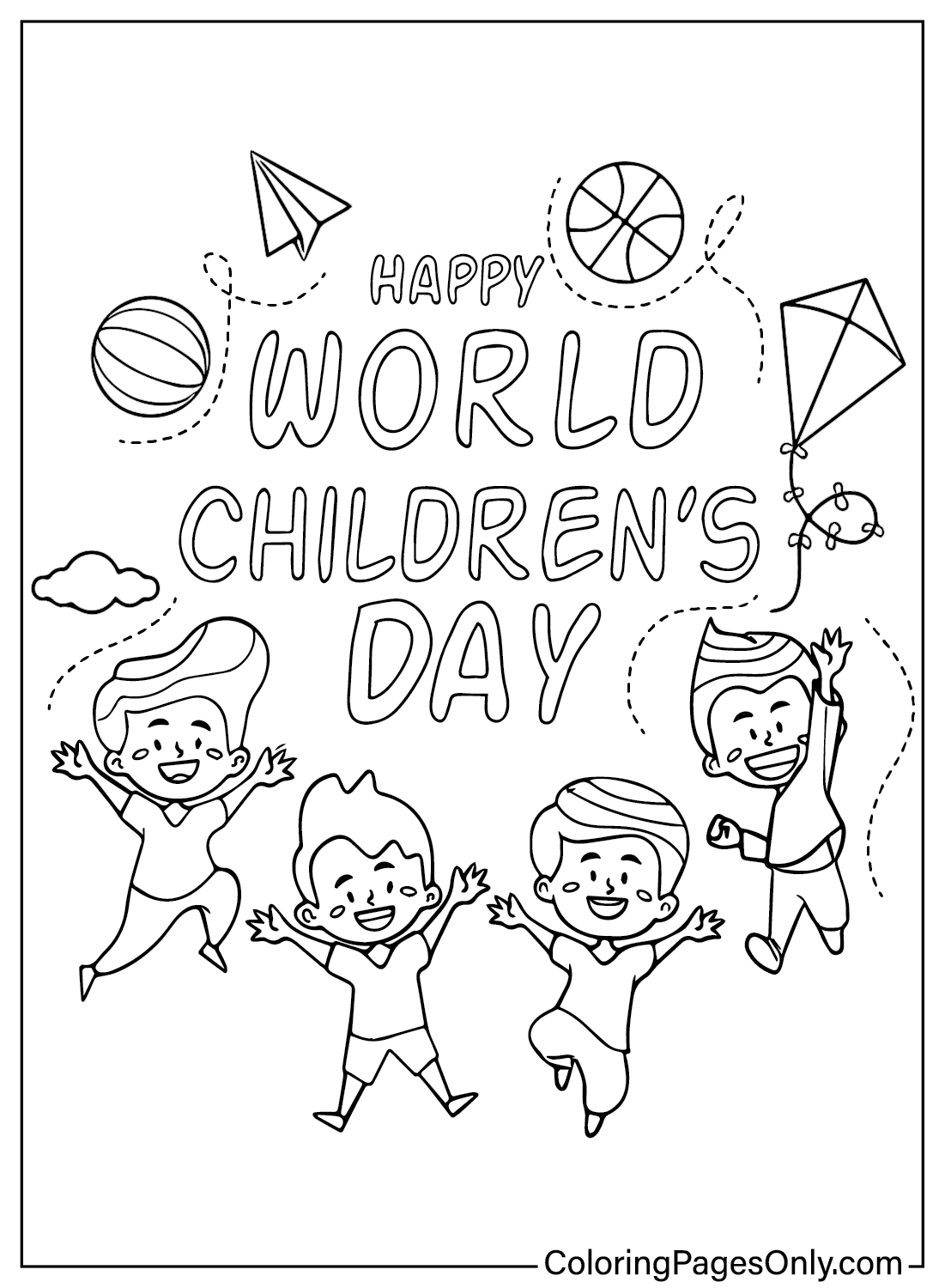
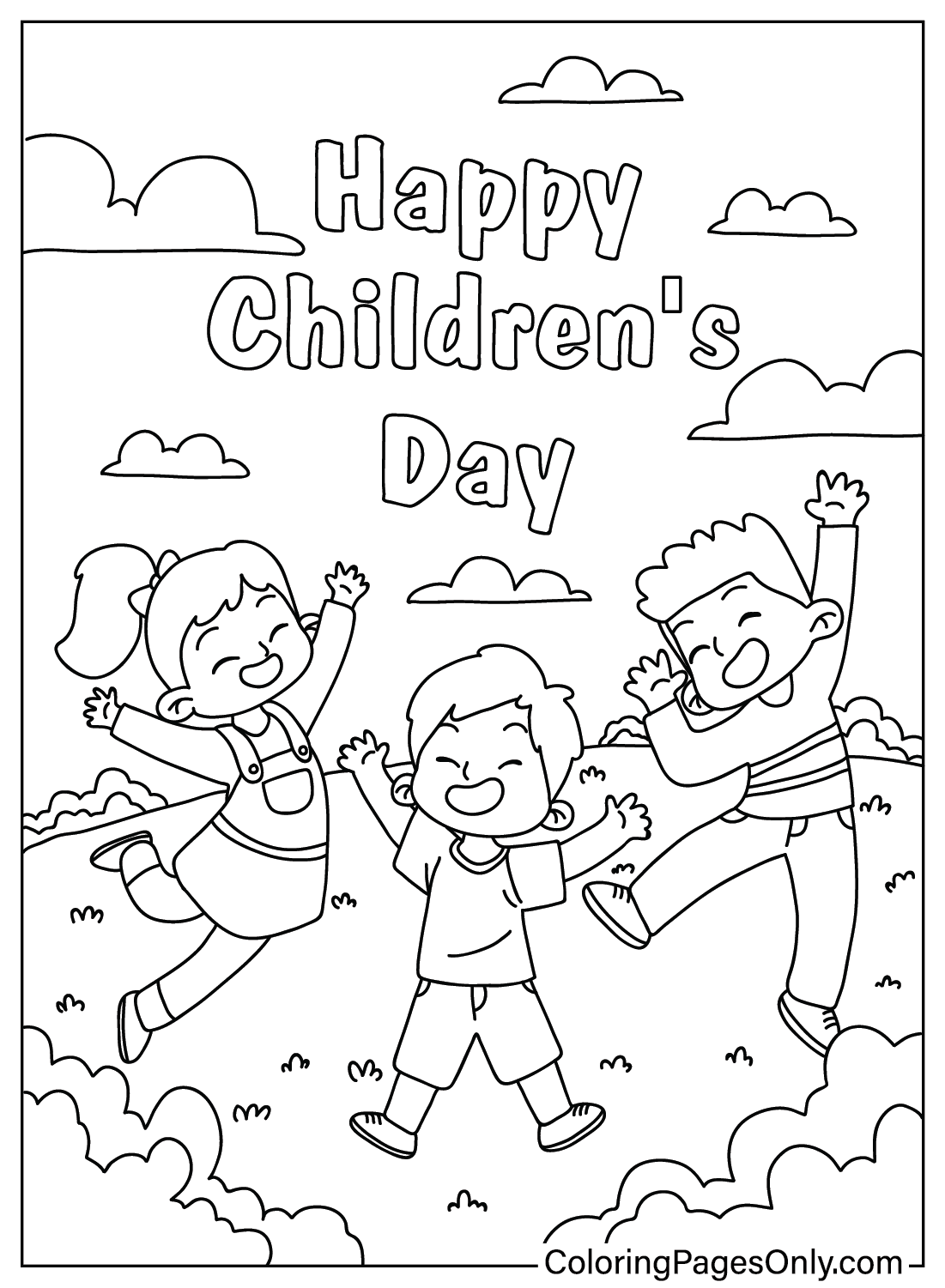
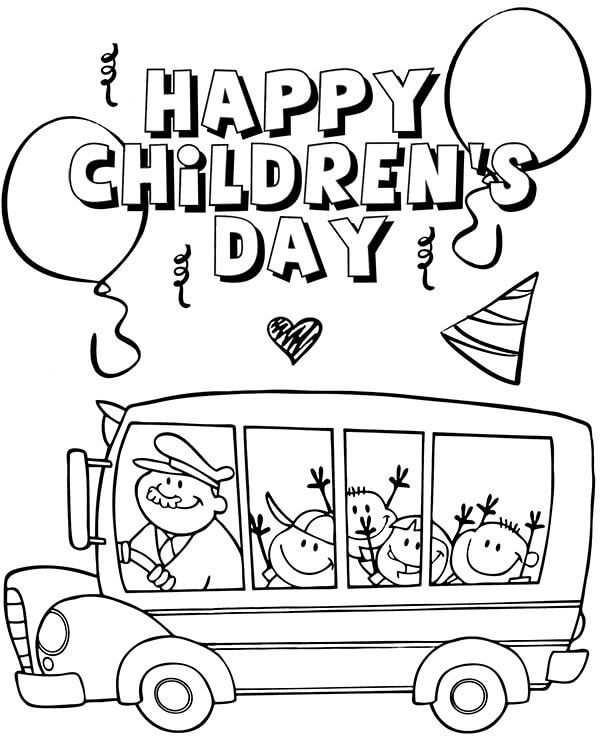
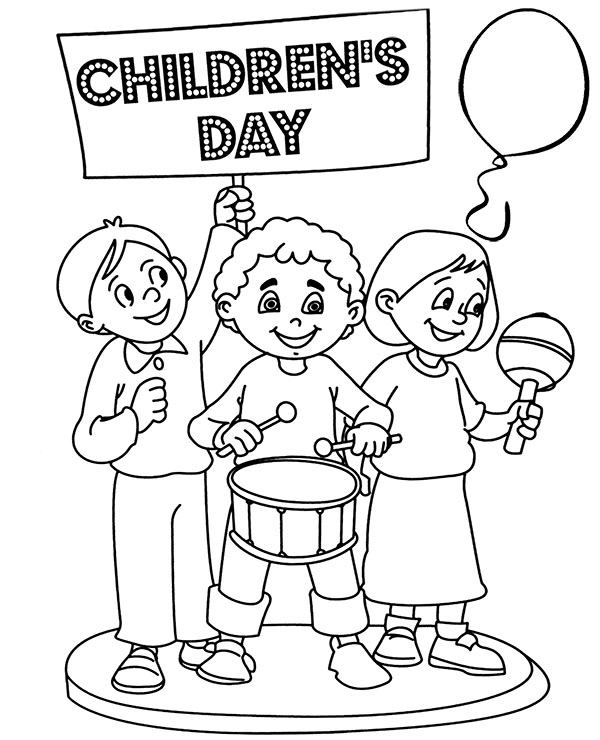
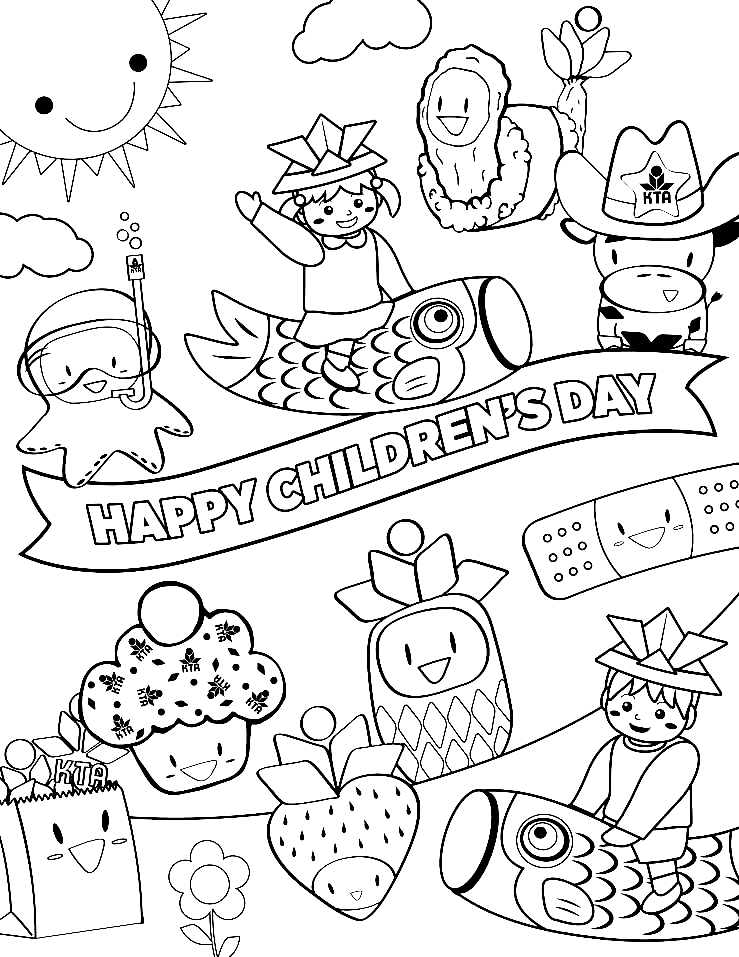
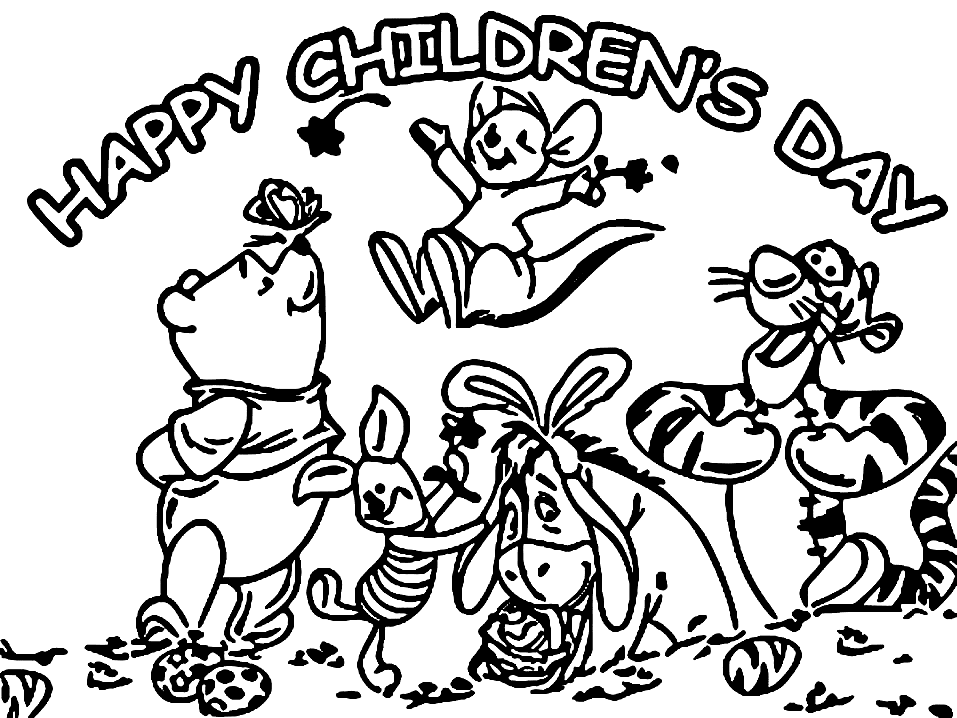
Fine motor development. The American Academy of Pediatrics identifies fine motor skill development as a key milestone throughout early childhood. The Children’s Day pages include a range of complexity: the simple, open compositions of the Happy Children’s Day celebration pages suit younger children developing basic pencil control, while the Childrens-Day-Mandala and the more detailed group scene pages reward the finer control that develops from around ages 6–7.
The 2005 Art Therapy Journal study. Structured coloring reduces anxiety. Children’s Day is designed to be a joyful occasion, and coloring pages that depict joy – children playing, children together, children in flight – create a positive, calm, creative experience that reinforces the emotional register of the holiday itself.
How to Color These Pages Well
The globe pages want accurate geography. The pages featuring a globe as a central element reward a specific coloring approach: the ocean areas should be blue (a medium, slightly warm blue that reads as water rather than sky), the land masses in a contrasting warm green, tan, or brown. If the child knows where their country is on the globe, encouraging them to find it and color it in a special accent color is a natural geography exercise embedded in the coloring activity.
Children’s clothing on the cultural diversity pages. The pages depicting children from different cultural backgrounds – different traditional clothing, different features – benefit from research before coloring: looking up the traditional dress of countries you recognize or want to learn about, then applying those colors accurately. This turns the coloring activity into a cultural research project and makes the finished page a genuine piece of international knowledge.
For the Nehru pages, warm tones for a warm man. Nehru’s sherwani and cap are white or cream. The children in the pages with him – photographed or illustrated in the specific context of a man known for warmth toward children – should be colored in the warm, vivid tones of children at play, providing contrast with his more formal, lighter palette. The emotional dynamic of the image (the affectionate, respectful relationship between a leader and children) should be reinforced by color temperature: warm tones for the children, cooler, more formal tones for Nehru.
The dove pages: white doves read white. A dove on a page can be left nearly white – with only the most subtle warm cream or pale grey in the shadow areas – against a sky background that provides the contrast. A fully colored, saturated dove is less immediately readable as a peace symbol than a near-white one.
The mandala: work from the center outward, consistently. Mandala coloring produces its most satisfying results when a color system is established at the center and expanded outward consistently. Choose two to four colors, decide on their arrangement in the innermost ring, then replicate that arrangement as each ring expands. Consistency of system – not perfection of execution – is what makes a mandala feel unified and intentional rather than random.
5 Creative Craft Ideas
World Children’s Day Card
Print one of the globe and dove pages and color it carefully – blue ocean, green land, white dove. Fold a piece of A5 cardstock for the card base. Cut out the colored globe and dove and mount them on the front with a strip of the page’s text reading “Happy Children’s Day” or hand-letter the greeting yourself.
Inside, write a personal message about what you wish for the children in your life – what you hope their world will look like, what you want them to know about their own importance. The finished card is more than a greeting; it is a small statement of intention from one generation to the next.

Decorating the Children’s Notebook
Print three or four pages from the collection – the play pages, the hot air balloon, the flowers – and color each one in bright, vivid, child-appropriate tones. Cut the central figures out and arrange them on the cover of a plain exercise notebook or composition book, gluing each in place with a glue stick.
Apply a sheet of clear contact paper over the entire cover surface after the figures are glued, pressing firmly from the center outward to eliminate air bubbles. The contact paper protects the colored paper from wear and gives the cover a finished, laminated quality.
The decorated notebook becomes a personalized item that reflects the child’s own creative work – more meaningful than a purchased notebook, more durable than an unprotected one, and a daily reminder that the holiday was marked and celebrated with intention.

Creating a Praise Point Board
Select five or six pages from the collection – the play scenes, the happy children, the globe – and color each one. Mount each page on a slightly larger piece of colored cardstock for a border effect. On a large sheet of poster board or a piece of whiteboard, arrange the colored pages in a grid or scattered display and attach them with adhesive strips or pins.
Between the pages, add handwritten encouraging phrases: “You showed kindness today,” “You tried something new,” “You helped someone,” “You were a good friend.” Leave space beneath each mounted image where a child’s name can be written on a removable sticky note when they earn the recognition.
The finished board serves as a positive reinforcement tool for home or classroom use – each Children’s Day image anchoring a specific value that the holiday itself celebrates.

Creating Birthday Decoration Accessories
Print the most celebratory pages from the collection – the Happy Children’s Day pages, the hot air balloon, the children in flowers – and color them with the most vivid, festive tones available. Cut each colored image into a shape – square, circle, pennant, triangle – and string them on ribbon or twine to create a Children’s Day banner.
For birthday application: the banner works as general childhood celebration decor for any birthday party, with the Children’s Day imagery read as a celebration of the specific child whose birthday it is. Print the birthday child’s name or age on a separate piece of cardstock and insert it into the banner’s center.
The finished decoration is handmade, specific, and meaningfully connected to the idea that childhood itself is worth celebrating, which makes it appropriate both for the international holiday and for any individual child’s birthday.

Creating a Memory Book
Print one page per significant memory from the child’s year – not specific to the pages’ images, but using the pages as visual anchors for handwritten memories. Color each page and write at the bottom, in the child’s own words (or dictated to a parent for younger children): one thing they learned this year, one friend they made, one place they went, one moment they felt happy.
Bind the pages in chronological order with a staple along the left edge or thread with ribbon through punched holes. Add a hand-lettered cover page: the child’s name, their age, and the year.
The finished memory book is a personal document of a year in childhood – illustrated with colored pages, written in the child’s own voice, assembled by their own hands. It is the kind of object that a child finds in a box twenty years later and understands immediately what it was and why it was kept.

Frequently Asked Questions
When is Children’s Day, and why are there different dates in different countries? Children’s Day is observed on multiple dates globally because different countries established their observances independently, often for reasons specific to their own history and context. World Children’s Day – established by the United Nations – is observed on November 20, the date the UN General Assembly adopted the Declaration of the Rights of the Child in 1959 and later the Convention on the Rights of the Child in 1989. International Children’s Day is observed on June 1 in many countries, including Vietnam, China, and several Eastern European nations. India observes Children’s Day on November 14 – the birthday of Jawaharlal Nehru, the country’s first Prime Minister, who was known for his love of children. Japan observes Kodomo no Hi (Children’s Day) on May 5, one of Japan’s five traditional seasonal festivals.
What is World Children’s Day, and who established it? World Children’s Day was established by the United Nations in 1954 and is observed annually on November 20. The date commemorates two landmark UN documents: the Declaration of the Rights of the Child, adopted by the UN General Assembly on November 20, 1959, and the Convention on the Rights of the Child, adopted on November 20, 1989. The Convention on the Rights of the Child is the most widely ratified international human rights treaty in history, with 196 state parties. It establishes children’s rights to education, healthcare, protection from exploitation, participation in decisions that affect them, and cultural and recreational activities.
Who was Jawaharlal Nehru, and why is Children’s Day in India on his birthday? Jawaharlal Nehru (November 14, 1889 – May 27, 1964) was India’s first Prime Minister following independence in 1947, serving until his death in 1964. He was a central leader of the Indian independence movement alongside Mahatma Gandhi and became the primary architect of India’s early democratic institutions, educational system, and industrialization program. He was known throughout his life for his genuine affection for children, making time during his years as Prime Minister to meet with children, speaking directly to them, and publicly articulating his belief in their central importance to India’s future. He was called Chacha Nehru – “Uncle Nehru” – by children throughout the country. After his death in 1964, the Indian government designated November 14 as Bal Diwas (Children’s Day) in his honor.
What are the articles of the UN Convention on the Rights of the Child? The UN Convention on the Rights of the Child, adopted in 1989 and ratified by 196 countries, establishes 54 articles covering children’s fundamental rights. The four core principles are: non-discrimination (all rights apply to all children without exception); the best interests of the child (all decisions affecting children must consider their best interests first); the right to life, survival, and development; and respect for the views of the child (children have the right to express their views on matters that affect them). Specific articles cover the right to education (Article 28), the right to play and rest (Article 31), the right to protection from exploitation and abuse (Articles 32–36), and the right to healthcare (Article 24).
What is the significance of doves and globes in Children’s Day images? The white dove as a peace symbol has a cross-cultural history extending from ancient Mesopotamia through the biblical Noah narrative, Greek antiquity, and the 20th-century peace movement. Pablo Picasso’s 1949 lithograph of a dove, created for the World Congress of Peace Fighters in Paris, became the definitive modern association between doves and international peace advocacy. The globe represents global connection and the universality of children’s rights across all nations. Together on Children’s Day imagery, they communicate the aspiration that the holiday embodies: that peace and solidarity are the conditions in which children everywhere can live, learn, and play as children deserve to.
How is Children’s Day celebrated in different countries? Celebrations vary significantly by country and cultural context. In India, schools hold special programs featuring speeches about Nehru’s life, performances, and activities celebrating children. In Japan, Kodomo no Hi on May 5 involves displaying koinobori (carp-shaped wind socks) symbolizing strength and perseverance, and traditional foods. In Vietnam, June 1 is marked with performances, gift-giving, and organized activities in schools and public spaces. In many countries, observing June 1 or November 20, the day involves reduced or eliminated school homework, special meals, gifts, and organized outdoor activities. The UNICEF World Children’s Day campaign uses November 20 to raise funds and awareness for children’s rights globally, often through organized public events and social media campaigns.
Are these pages suitable for classroom use on Children’s Day? Yes, and they are specifically well-suited for this purpose. The pages depicting children from multiple cultural backgrounds – holding hands, playing together, represented alongside the globe – directly support multicultural education objectives that are standard across elementary school curricula in many countries. The Jawaharlal Nehru pages are specifically valuable for Indian schools observing Children’s Day on November 14. The dove and globe imagery opens natural conversations about children’s rights, global connection, and the meaning of peace. The activity and play pages serve as simpler coloring activities for younger children. All pages are completely free for classroom use without restriction.
Browse the full collection at ColoringPagesOnly.com. All 57 pages free, no sign-up, PDF or PNG, print at home or color online directly in your browser.
Children’s Day exists because the world needed to be reminded, formally and repeatedly, that children are not simply small adults waiting to become full people – they are full people now, with rights that exist now, with a claim on the world’s attention and care that does not depend on what they will become. The United Nations made this formal in 1954. India made it personal in 1964. Dozens of countries have made their own version of the same statement on their own chosen date. The pages in this collection are that statement in coloring form.
Color the dove white. Color the world blue and green. Color the children in every color available.
Share your work on Facebook and Pinterest and tag #Coloringpagesonly. We especially want to see the memory books and the decorated notebooks.
Color the dove. Celebrate the child. Happy Children’s Day.