Primal Coloring Pages
 By:
Jennifer Thoa - Content Editor & Designer
Updated:
By:
Jennifer Thoa - Content Editor & Designer
Updated:
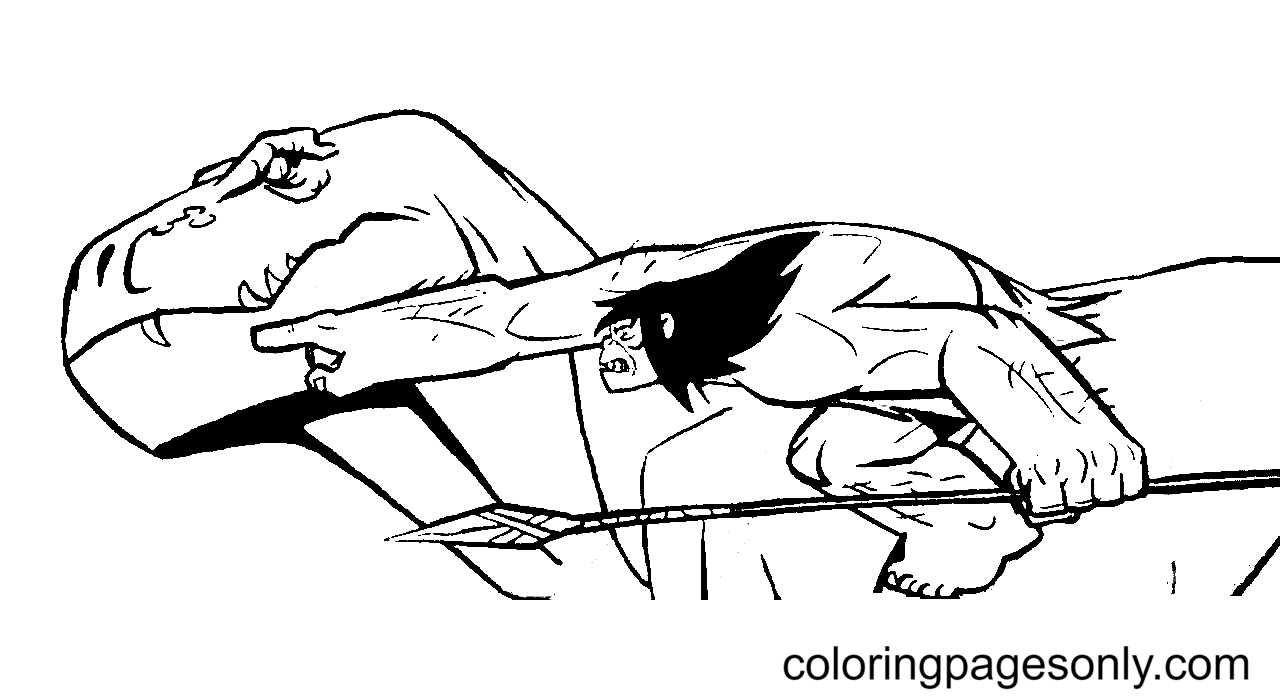
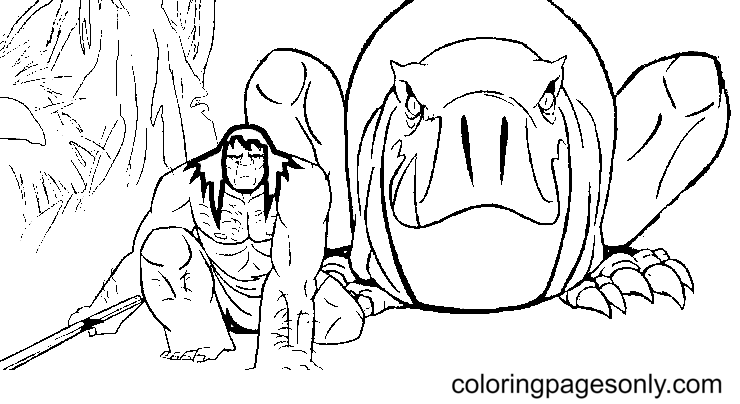
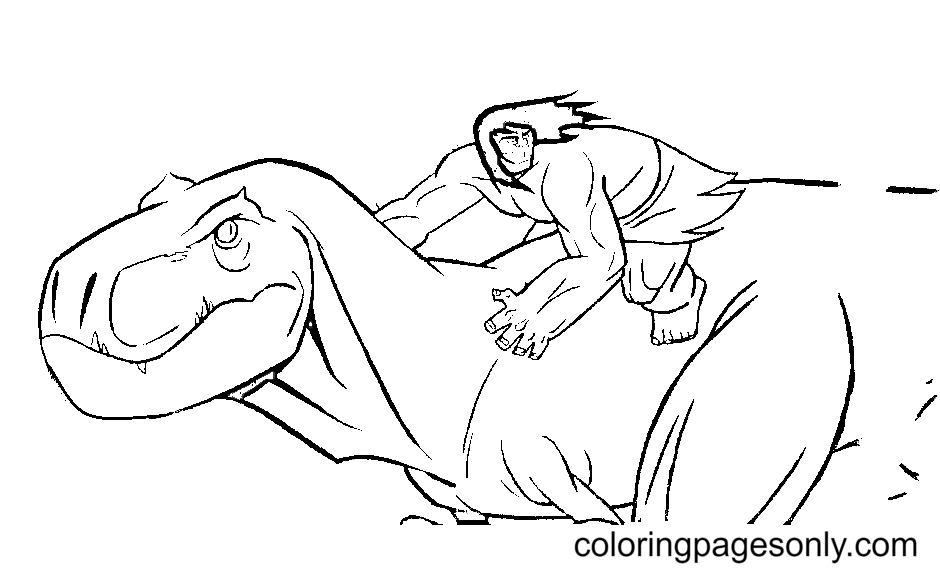
Free Primal Coloring Pages: 18 printable PDF designs featuring Spear the caveman and Fang the dinosaur, side by side, alone, and in their wild prehistoric world. Download each sheet as a PDF or shade it on screen with the online coloring tool.
Primal is an animated series created by Genndy Tartakovsky, the artist behind Dexter’s Laboratory and Samurai Jack, and it premiered on Adult Swim in 2019. The show follows Spear, a lone caveman, and Fang, a powerful female dinosaur, who form an unlikely partnership in a harsh, imagined prehistoric world. Almost every episode plays out without spoken dialogue, so the story is told through bold images, color, and music. The series won the Primetime Emmy for Outstanding Animated Program in 2021, and because it carries a TV-MA rating for intense violence, it is aimed at older teens and adults.
The pages lean on Tartakovsky’s striking, blocky character shapes, which suit fans who enjoy shading muscle, scales, and stormy prehistoric skies.
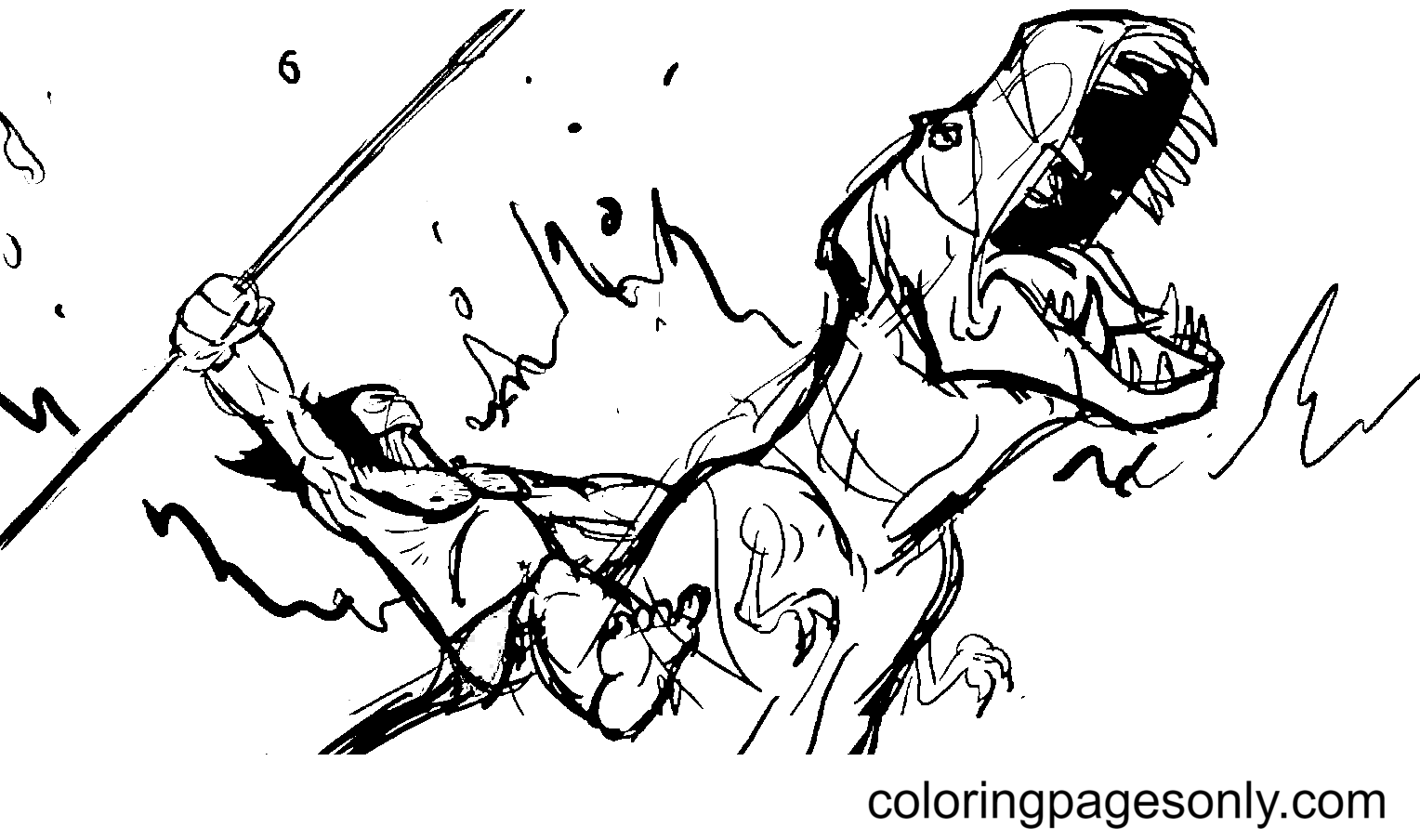
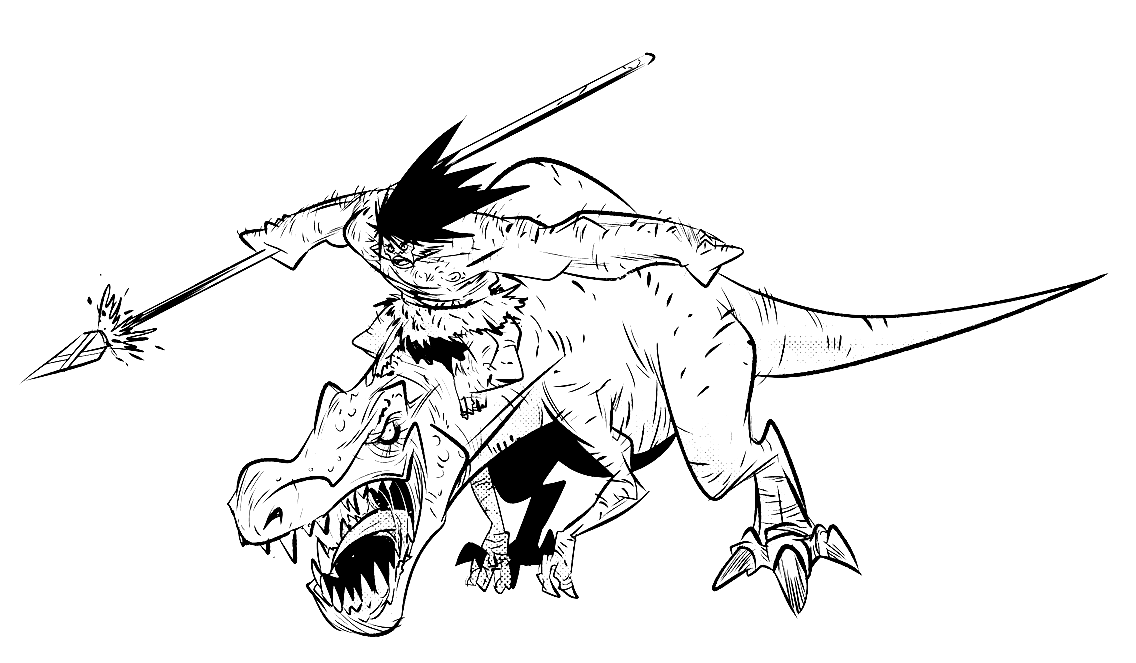
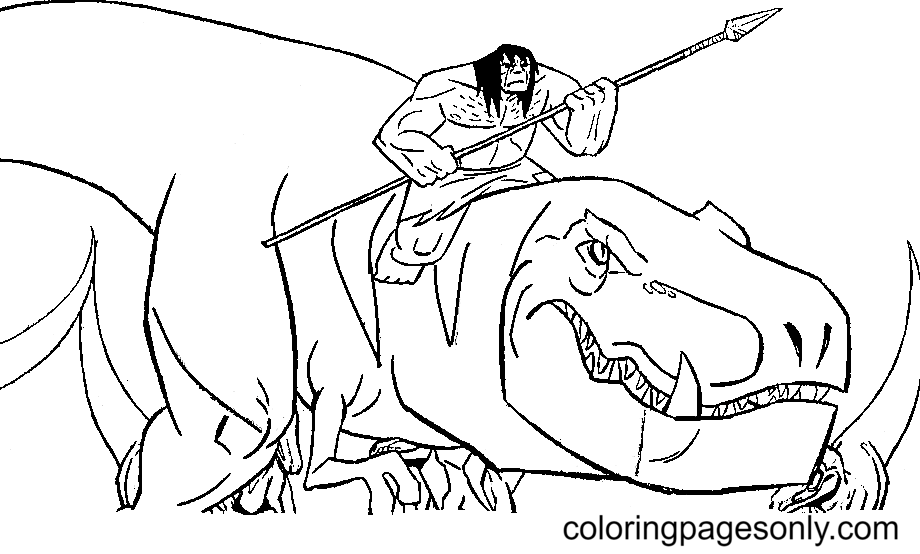
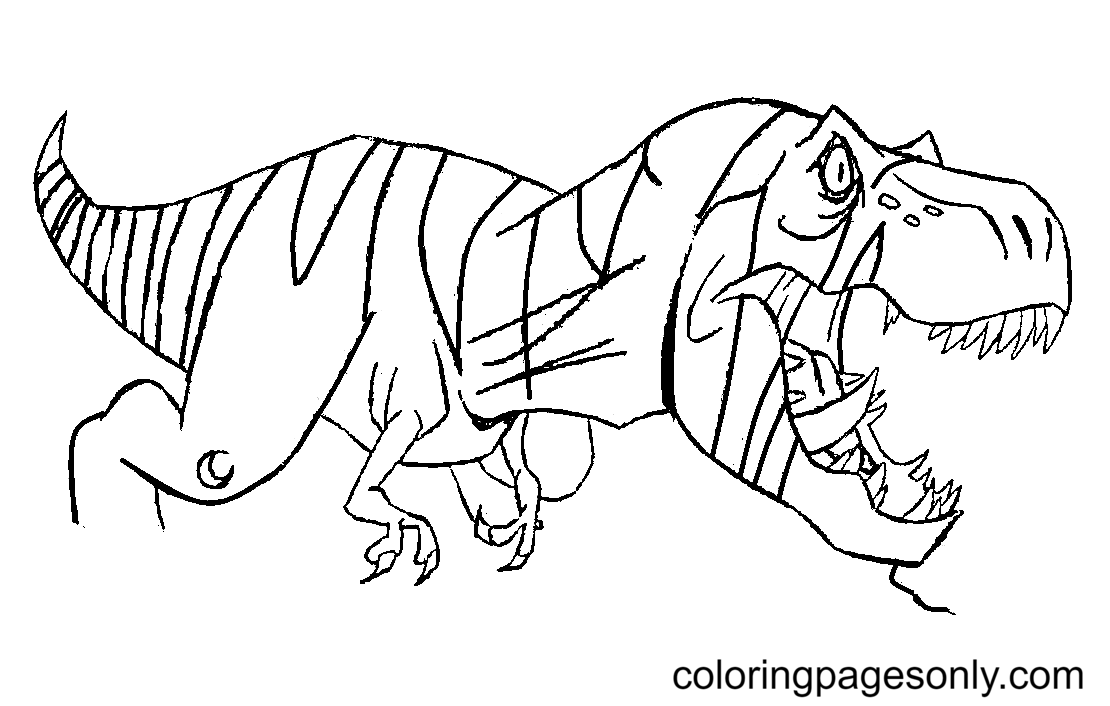
What’s Inside This Collection
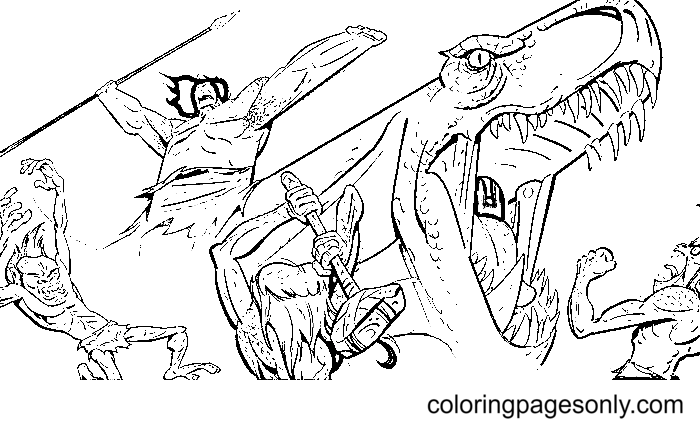
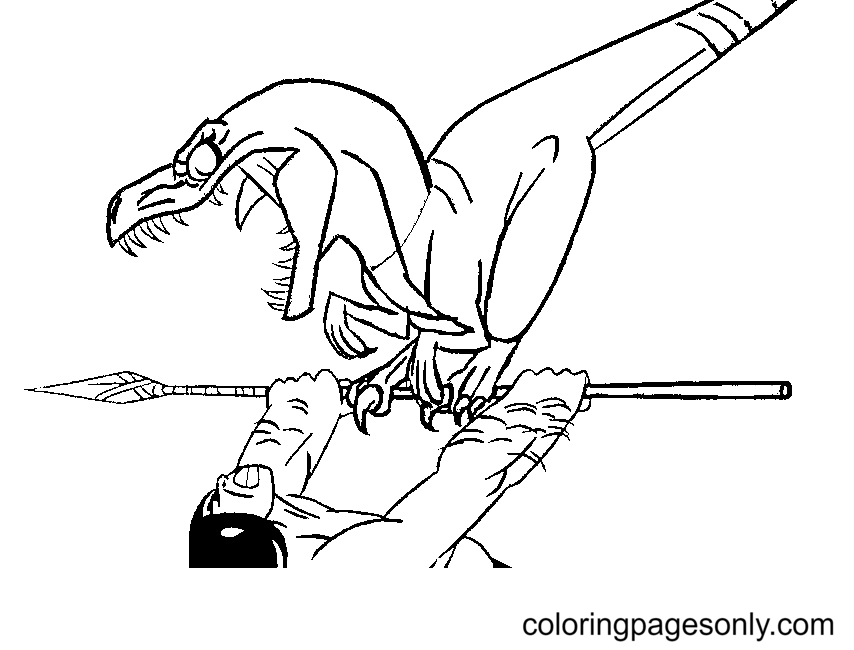
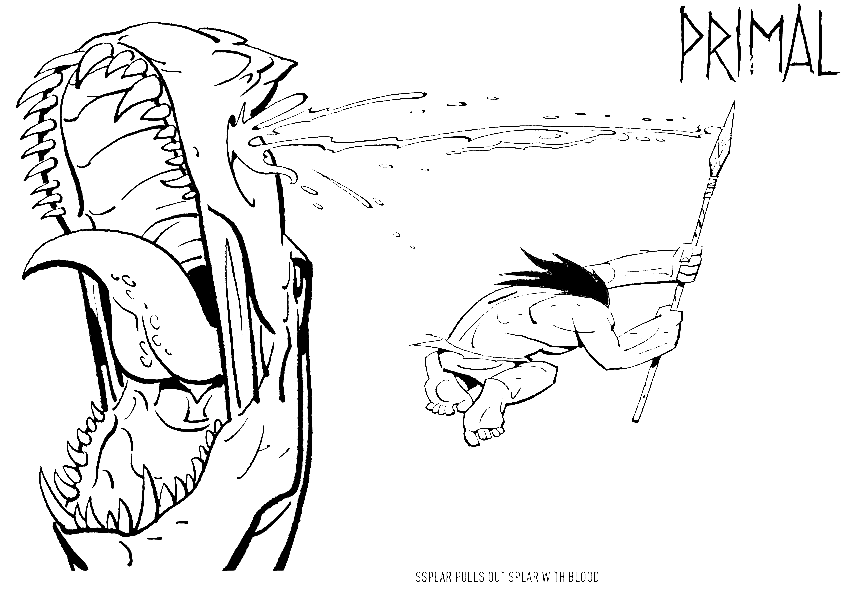
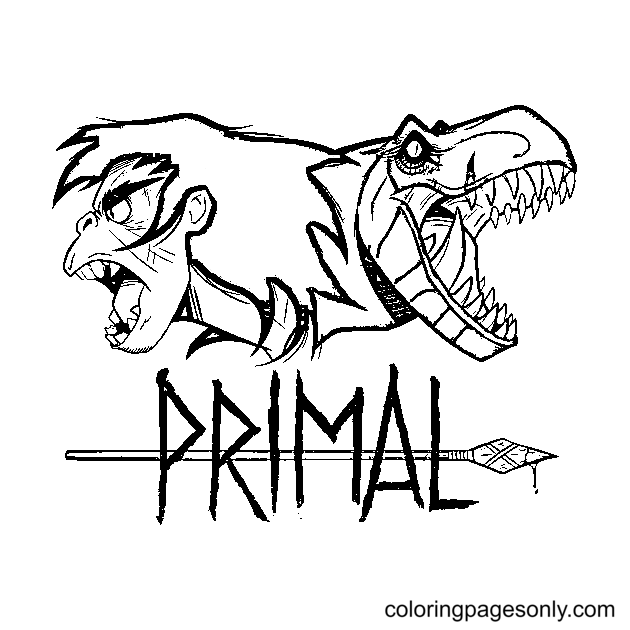
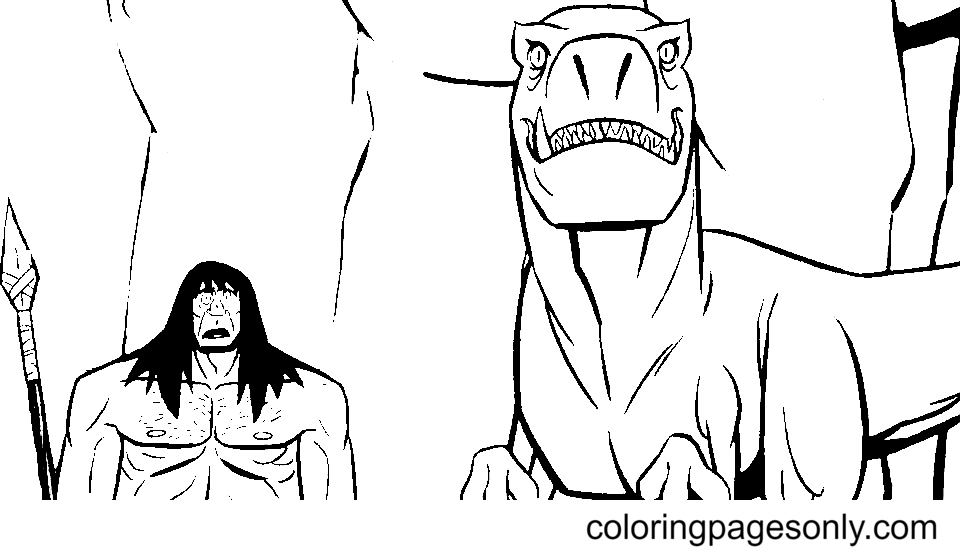
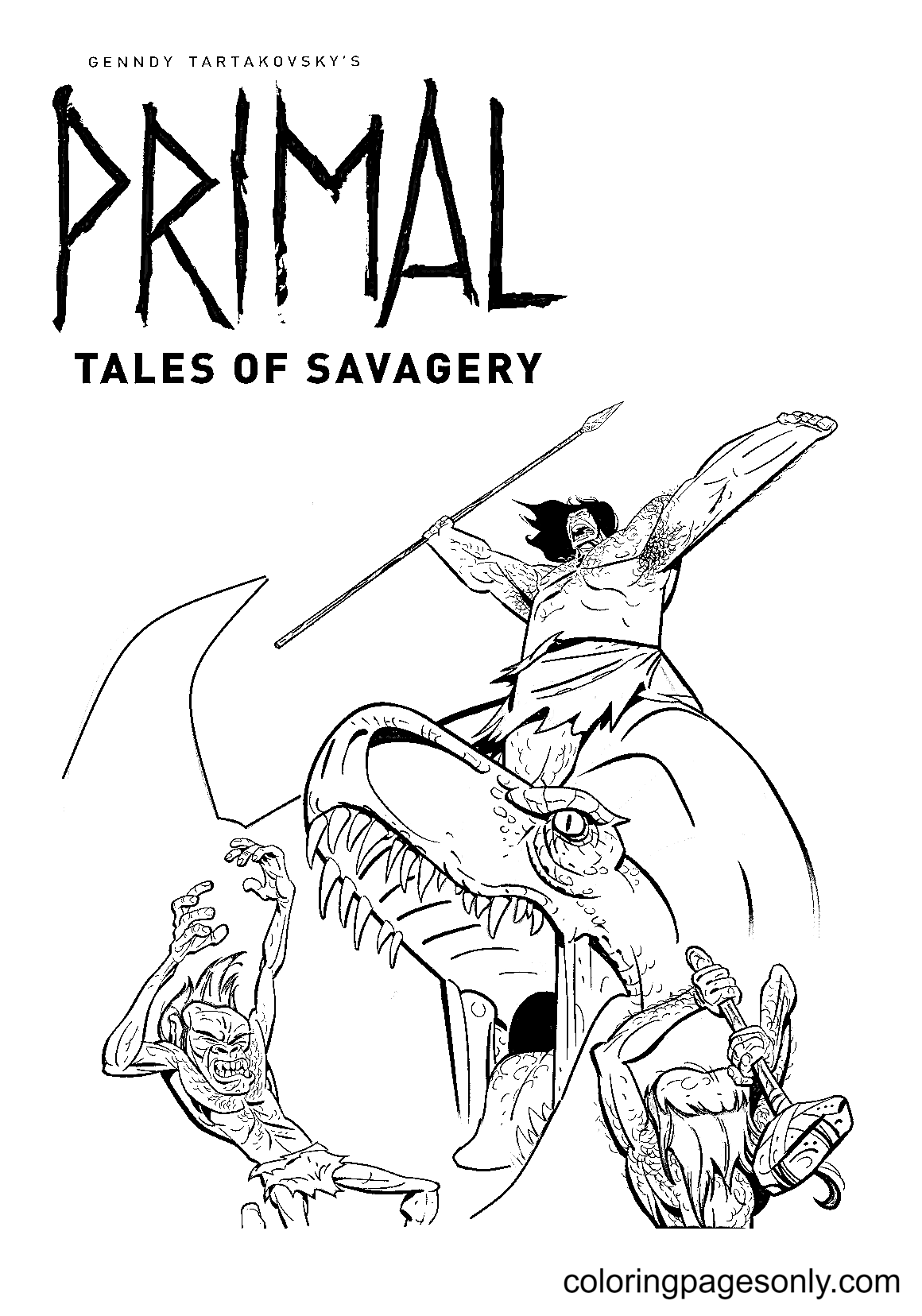
Spear and Fang together, Spear on his own, Fang on her own, and creator-themed pages make up the 18 sheets.
Spear and Fang Together
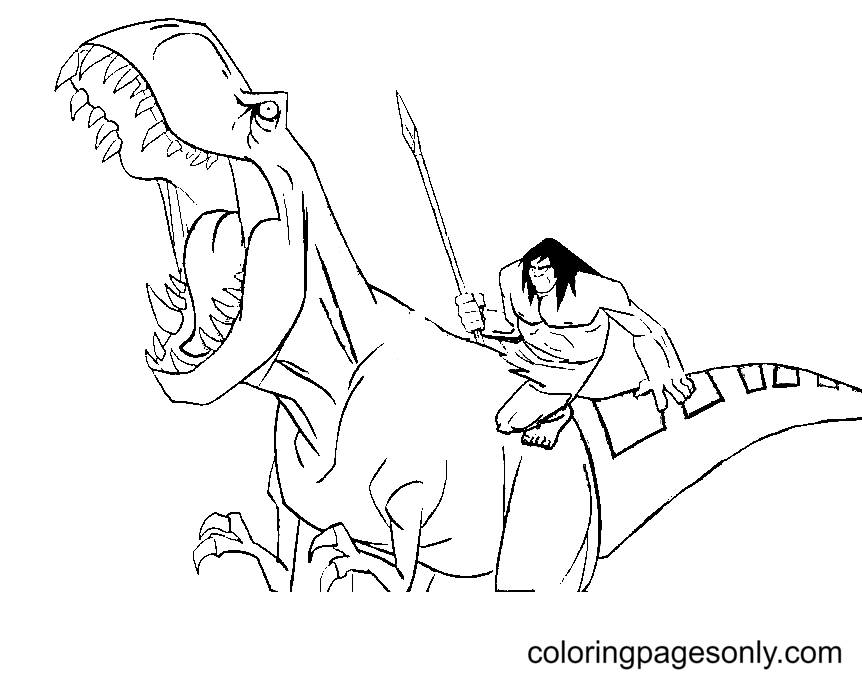
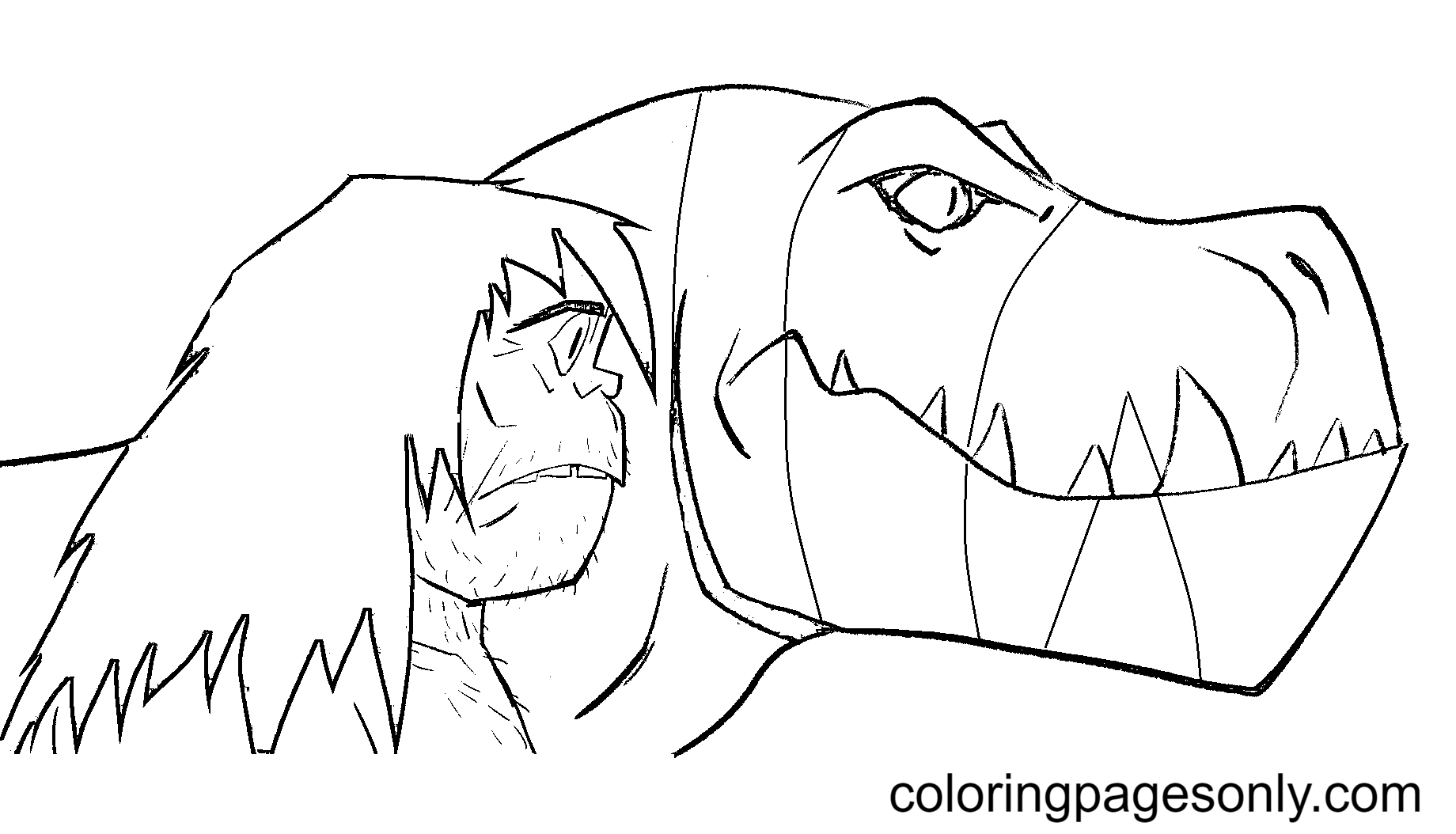
Most of the collection pairs the two companions, standing back to back or ready for whatever comes next. Keep Spear in warm earth tones and Fang in deep greens so the caveman and the dinosaur stay easy to tell apart.
Spear on His Own
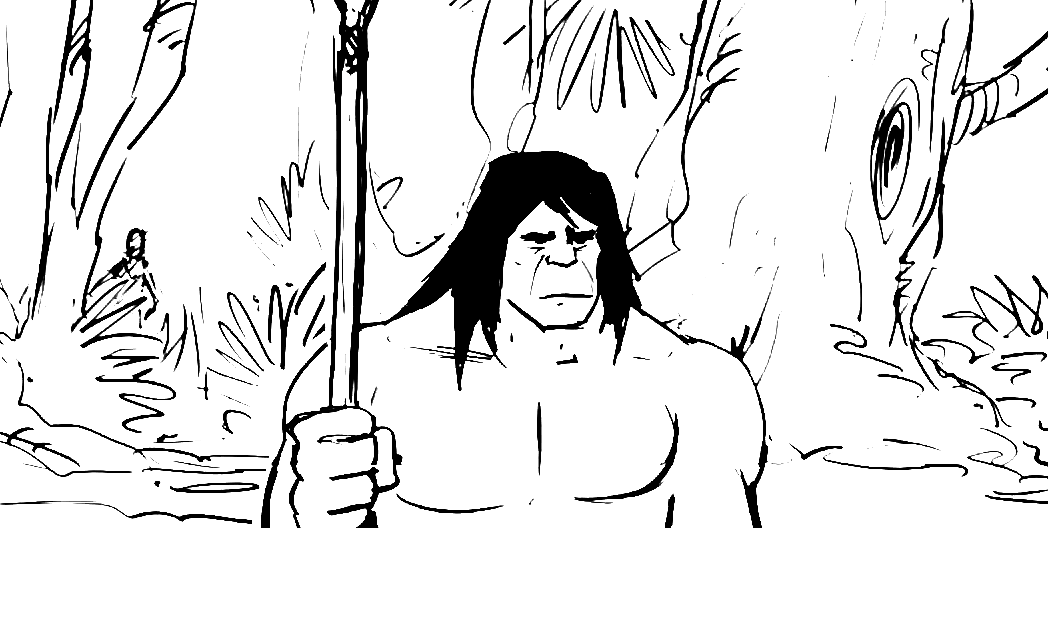
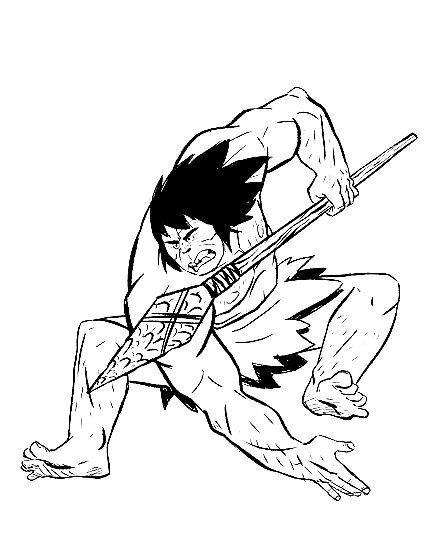
A couple of sheets focus on the caveman alone, showing his heavy brow, wild hair, and muscular build. Color his skin a warm Tan with Burnt Sienna shadows, and his hair a solid Black.
Fang on Her Own
Pages that spotlight Fang let her large head, rows of teeth, and thick tail fill the frame. Build her scales with Pine Green and Olive Green, and add a lighter Yellow Green along her belly.
Action and Creator Pages
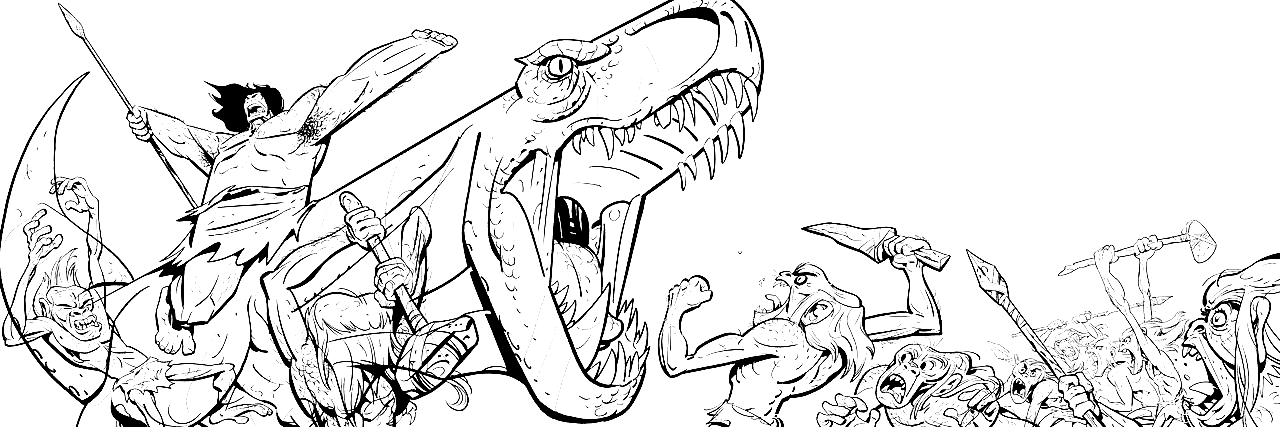
One sheet shows the pair in a fight scene, and another pays tribute to the show’s creator. Use dramatic contrasts, such as a dark Navy sky behind a Burnt Orange sunset, to match the series’ bold visual style.
What Primal Coloring Pages Do
Telling a story without words. Because Primal has almost no dialogue, color and composition carry all of the emotion. Coloring these pages encourages teen and adult fans to think like the show’s artists, using warm or cold palettes to make a scene feel hopeful, tense, or quiet.
Sharpening control with bold shapes. Tartakovsky’s designs rely on thick outlines and big, angular forms that are satisfying to fill neatly. The American Academy of Pediatrics notes that coloring builds fine motor coordination in young children, and older colorists continue refining that control when they shade the hard edges and muscle lines of these characters.
Taking a calm break from an intense show. The series itself is fierce and dramatic, but sitting down to color it is the opposite. A 2005 study in the Art Therapy Journal reported measurable reductions in anxiety after structured coloring, so slowly filling Fang’s scales or a sunset sky can be a relaxing wind-down for adult fans.
Studying an influential animation style. Primal is widely praised for its painterly backgrounds and limited, purposeful color choices. Art students and animation fans can use the pages to practice building a mood with just three or four colors, the same way the show’s background painters do.
How to Color Primal Pages Well
- Spear’s skin and hair: Start with a Tan base, then add Burnt Sienna along his arms, jaw, and brow to show muscle. Fill his hair with Black and leave a few slim gaps for highlights.
- Fang’s scales: Lay down Olive Green, then layer Pine Green in small overlapping patches across her back. A lighter yellow-green belly gives her body depth.
- Teeth and claws: Keep teeth and claws. Ivory or very pale Cream instead of pure white. A thin Gray line along one edge makes them look sharp and solid.
- Limited palettes: Choose three or four colors for each page and stick to them. Primal’s own artwork often uses small, bold palettes, which keep every scene readable.
- Dramatic skies: Blend Burnt Orange and Red near the horizon, then fade to Purple and Navy at the top. This sunset gradient matches the moody look of the series.
- Prehistoric ground: Use Raw Umber and Brown for rocks and soil, adding a few Olive Green patches for plants. Keep the ground darker than the characters so they stand out.
5 Creative Craft Ideas With Primal Coloring Pages
1. Wordless Comic Strip
Color three or four Spear and Fang pages, trim them into panels, and glue them in a row on a long strip of paper. Arrange them to tell a short story without adding any words, just like the show.
2. Limited Palette Study
Print the same page twice and color one with only warm tones and the other with only cool tones. Mount them side by side to see how color alone changes the mood.
3. Prehistoric Shadow Box
Line the inside of a shoebox with a painted sunset, then stand a cut-out Spear and Fang on folded paper tabs in front. Add twigs and small stones for a three-dimensional prehistoric scene.
4. Animation Fan Poster
Arrange several finished pages in a grid on a large poster board with a hand-lettered title across the top. Hang it in a studio space or bedroom as a tribute to the series’ art direction.
5. Character Design Sketchbook
Tape a colored Fang page on the left side of a sketchbook spread. On the right, practice drawing an original creature using the same thick outlines and blocky shapes.
Frequently Asked Questions
What are Primal coloring pages?
There are 18 free printable sheets of Spear and Fang from the animated series Primal, including duo scenes, solo portraits, and an action page. Each one can be printed as a PDF or colored in the browser.
Who created Primal?
Genndy Tartakovsky created the series, which premiered on Adult Swim in 2019. He is also known for Dexter’s Laboratory, Samurai Jack, and directing the Hotel Transylvania films.
Who are Spear and Fang?
Spear is a caveman, and Fang is a female dinosaur, and both have lost their families before meeting. They become partners who rely on each other to survive in a dangerous prehistoric world.
Why does Primal have no dialogue?
Tartakovsky chose to tell the story almost entirely through visuals, sound effects, and music. This approach lets the animation, color, and character expressions carry the emotion of every scene.
Has Primal won any awards?
Yes. The series won the Primetime Emmy for Outstanding Animated Program in 2021, and its artists also earned juried Emmy awards for individual achievement in animation.
Is Primal historically accurate?
No. The show mixes troglodytes, dinosaurs, and fantasy creatures that never lived at the same time, since dinosaurs died out tens of millions of years before humans appeared. It is a fictional world inspired by pulp adventure stories.
Are Primal coloring pages suitable for young children?
No. The series is rated TV-MA for intense violence, so these pages are meant for older teens and adult fans of the show. Families looking for kid-friendly prehistoric pages may prefer simpler dinosaur designs.
Where can people watch Primal?
The series airs on Adult Swim and streams on HBO Max in the United States. Viewers should check the TV-MA rating before watching.
Start Coloring
Choose Spear and Fang together, a solo dinosaur portrait, or the action scene, then print it or color it in the browser with no account needed. Fans of the series can share their finished artwork on Facebook or Pinterest.