Digimon Coloring Pages
 By:
Jennifer Thoa - Content Editor & Designer
Updated:
By:
Jennifer Thoa - Content Editor & Designer
Updated:
Free Digimon coloring pages: 104 printable PDF pages featuring Agumon, Gabumon, Gomamon, Palmon, Patamon, and other partner Digimon in rookie forms, digivolved forms, action poses, and portrait scenes. Each page can be downloaded as a PDF to print or colored online in the browser.
Digimon, short for “Digital Monsters,” began in 1997 as a virtual pet device made by Bandai. It grew into an anime series, films, video games, and a trading card game. The creatures live in a digital world and form bonds with human partners, and many of them change appearance as they digivolve, which gives each character several distinct forms to color.
This variety is what makes Digimon strong for coloring. A rookie-form Digimon like Agumon has a simple, rounded shape that suits younger children. A digivolved form has more spikes, armor, wings, and detail that older children and teens can spend longer on. Coloring the same character in two forms is a way to compare a simple page with a detailed one.
What’s in This Collection
The collection is organized around the partner Digimon and their forms. Each character below links to its own page of designs.
Agumon
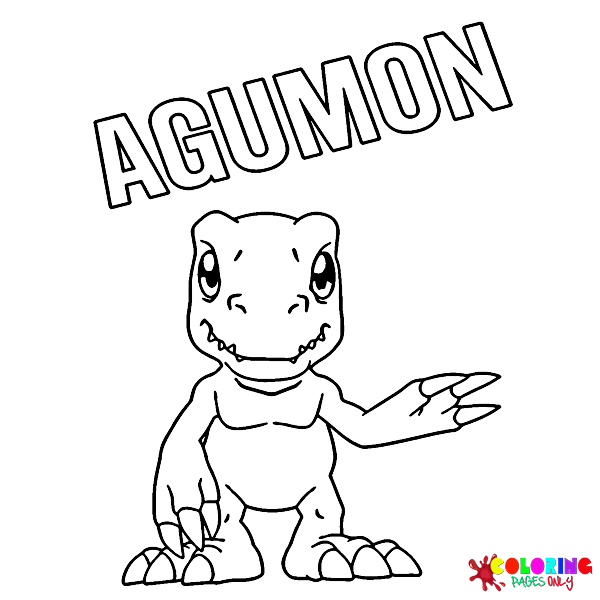
Agumon is a small orange reptile Digimon and one of the most recognizable characters in the series. Its rookie form has large, simple shapes that work well for younger children. Color the body in warm orange with Crayola “Orange” and add lighter “Yellow Orange” on the belly for contrast.
Gabumon
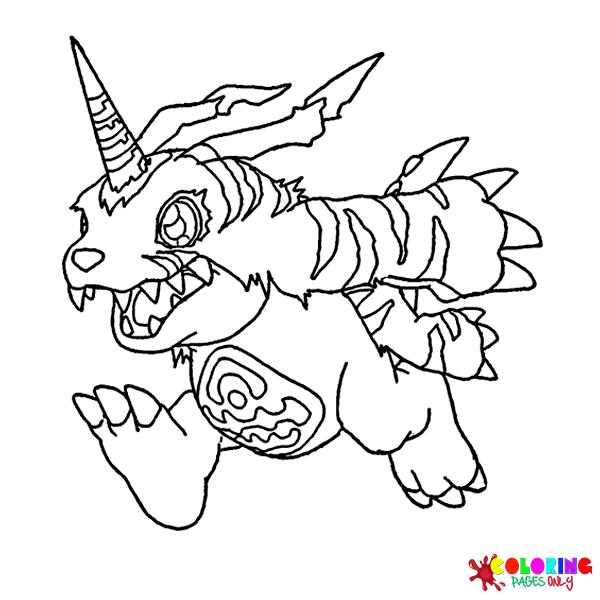
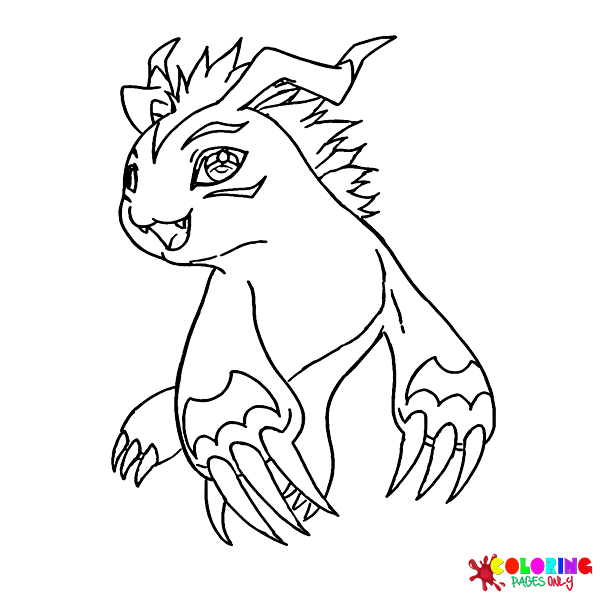
Gabumon wears a blue-and-white fur pelt with a horn on its head. The two-tone pelt makes it a good page for practicing clean edges between colors. Use a medium blue for the striped fur and leave the pale sections near-white with a light gray shadow.
Gomamon
Gomamon is a white seal-like Digimon with purple markings and red fins. The contrast between the white body and bright markings gives children a clear, satisfying color scheme. Keep the body white or very light gray, then use purple for the back markings and red-orange for the fins.
Palmon
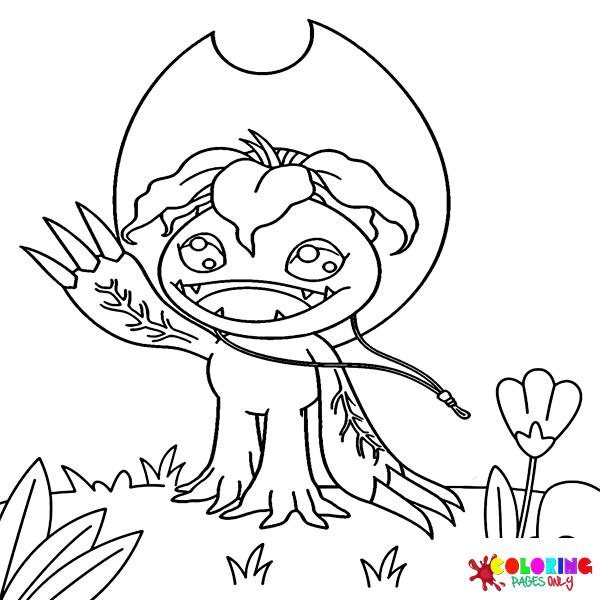
Palmon is a plant Digimon with a green body and a pink flower on its head. This page is good for practicing two greens – a base green for the body and a darker shade for the leaf-like fingers. The pink flower adds a bright focal point.
Patamon
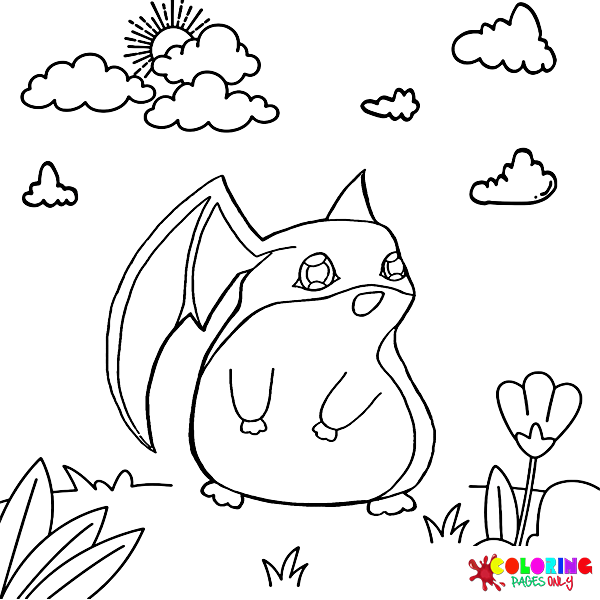
Patamon is a small orange Digimon with large wing-like ears. Its round, simple shape and few details make it one of the easiest pages in the collection, suitable for very young children. A flat orange filled with a cream belly works well.
What’s Not Yet in This Collection
This collection currently covers 5 of the original 8 partner Digimon from the first anime series. Biyomon, Tentomon, and Gatomon do not yet have dedicated pages, and none of the characters’ higher digivolution stages (such as Greymon or Angemon) are represented separately from their rookie forms.
What Digimon Coloring Pages Do
Fine motor development. The American Academy of Pediatrics identifies fine motor skill development as a core benefit of structured coloring for children ages 2 through 7. The range of Digimon forms supports this directly: a young child fills the simple shapes of a rookie Digimon, while an older child manages the spikes, armor, and fine detail of a digivolved form.
Color recognition and planning. Many Digimon have a fixed, recognizable color scheme – Agumon’s orange, Gomamon’s white and purple. Coloring these characters gives children a chance to match remembered colors, while the digivolved forms invite them to plan a more complex palette across a detailed design.
Anxiety reduction through focus. A 2005 study in the Art Therapy Journal documented measurable reductions in anxiety following structured coloring sessions. The detailed line work of digivolved Digimon forms provides the kind of focused, absorbing task associated with the study’s calming findings, making the more complex pages a relaxing activity for older fans.
Imaginative storytelling. Because each Digimon has multiple forms and a partner bond in the series, coloring connects to storytelling. A child can color a character’s rookie and digivolved forms and invent the story of the change, extending the activity beyond the page.
How to Color Digimon Pages Well
- Keep signature colors consistent: Many Digimon have a known color scheme. Coloring Agumon orange or Palmon green keeps the character recognizable. For invented or rare Digimon, any palette works.
- Layer for digivolved forms: Detailed forms with armor or scales look best with two shades of one color – a base fill plus a darker tone in the recesses to show depth.
- Use contrast on two-tone characters: For Gabumon’s pelt or Gomamon’s markings, keep the light areas very light and the marked areas saturated, so the two-tone design stays crisp.
- Warm versus cool: Fire-type Digimon suit warm reds and oranges; water and ice types suit blues and whites. Matching color temperature to the character type makes the page feel intentional.
- Add a simple background: A light digital grid or sky background sets the scene without competing with the character. Keep it pale so the Digimon stays the focus.
- Metallic accents: For armored digivolved forms, a silver or gold gel pen on the armor edges gives a finished, polished look.
5 Creative Craft Ideas With Digimon Coloring Pages
1. Digivolution Chart. Color a character’s rookie and digivolved forms, then arrange them on paper with an arrow between to show the change.
2. Partner Team Poster. Color several partner Digimon and arrange them as a team lineup on one poster.
3. Color-Your-Own Digimon. Print a simple rookie-form page and invent a brand-new color scheme to design an original-looking Digimon.
4. Digimon Bookmarks. Color a character, cut it into a tall strip, and laminate it as a bookmark.
5. Trading Card Set. Color several characters on card-sized paper and add a name and form label to each, making a homemade card set.
Frequently Asked Questions
What is Digimon?
Digimon, short for “Digital Monsters,” is a Japanese media franchise that began in 1997 as a virtual pet device made by Bandai. It later expanded into an anime series, films, video games, and a trading card game. Digimon are creatures that live in a digital world and form bonds with human partners.
Who created Digimon, and when?
Digimon was created by Bandai and released in Japan in 1997 as a virtual pet toy credited to “Akiyoshi Hongo,” a collective pen name for the small team behind the project rather than one person. The anime series followed in 1999. The franchise has continued for more than two decades across many formats.
Which Digimon coloring pages are included?
The collection features partner Digimon, including Agumon, Gabumon, Gomamon, Palmon, and Patamon, shown in rookie forms, digivolved forms, action poses, and portraits. Each character links to its own page of designs.
What does “digivolve” mean for coloring?
Digivolving is when a Digimon changes into a more powerful form with a different appearance. For coloring, this means many characters have two or more forms – a simple rookie form and a more detailed digivolved form – so the same character offers both easy and complex pages.
Are Digimon coloring pages suitable for young children?
Yes. Rookie forms such as Agumon and Patamon have large, simple shapes that suit children ages 3 and up. Digivolved forms with armor and fine detail suit older children and teens who enjoy more complex pages.
What colors should I use for popular Digimon?
Many Digimon have a known color scheme: Agumon is orange, Palmon is green with a pink flower, Gomamon is white with purple markings, and Gabumon has a blue-and-white pelt. Keeping these signature colors makes each character recognizable, though any palette works for creative versions.
Are these Digimon coloring pages free to print?
All pages are free to download as a PDF and print, or to color online in the browser. No account, email, or payment is required. Pages can be printed at home on standard paper for personal use.
What are the benefits of coloring for children?
Coloring builds fine motor skills, which the American Academy of Pediatrics identifies as a core benefit for children ages 2 through 7. It also supports color recognition and focus. The multiple forms of each Digimon make the collection good for both simple and detailed coloring practice.
Start Coloring
Download any page by clicking the design – no account, email, or payment required. Pages print directly from the browser at full resolution or open in the online coloring tool for screen use. Share finished pages on Facebook or Pinterest with the share buttons at the top of each design page.