Kiwi Fruit Coloring Pages
 By:
Jennifer Thoa - Content Editor & Designer
Updated:
By:
Jennifer Thoa - Content Editor & Designer
Updated:
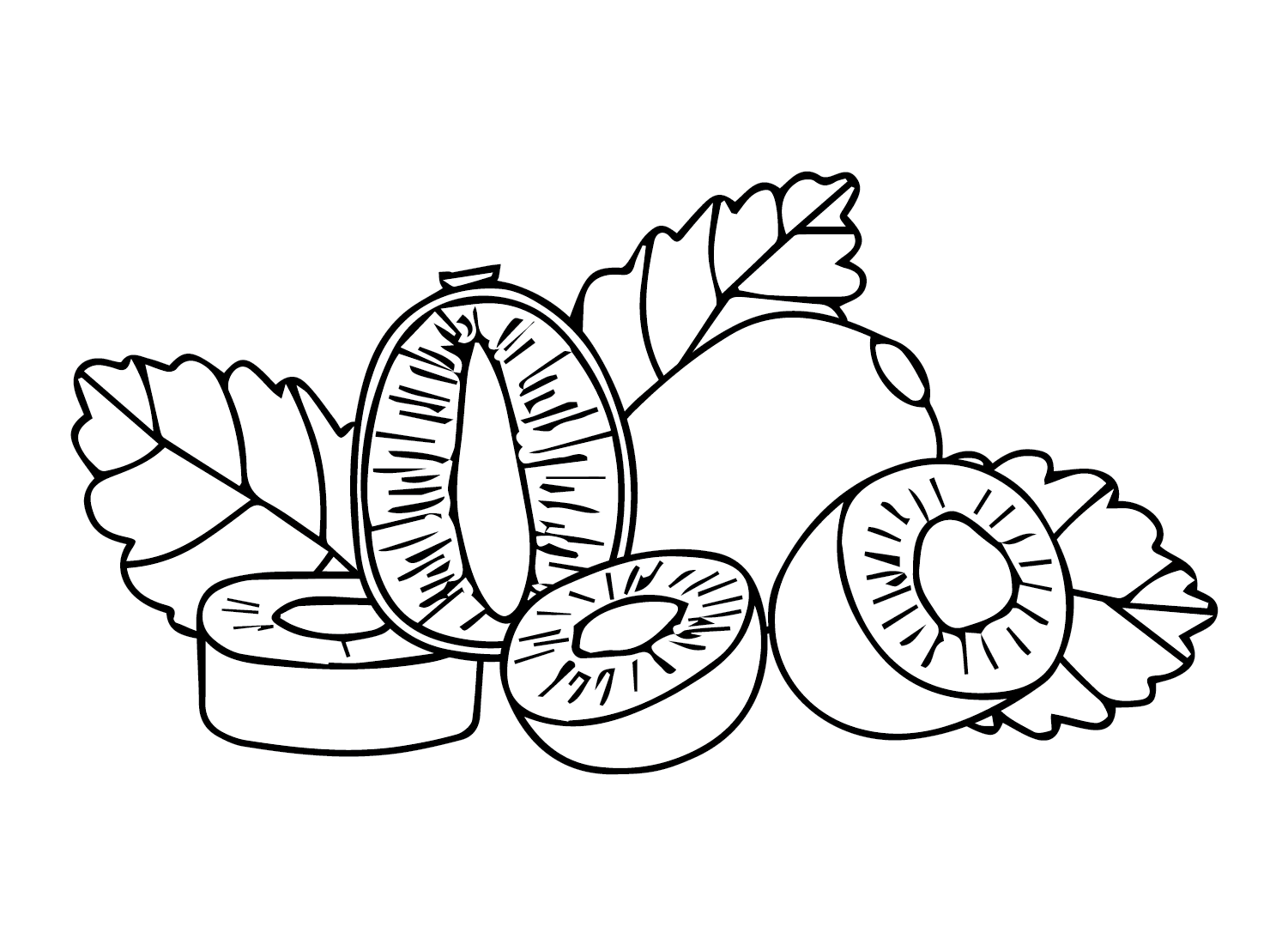
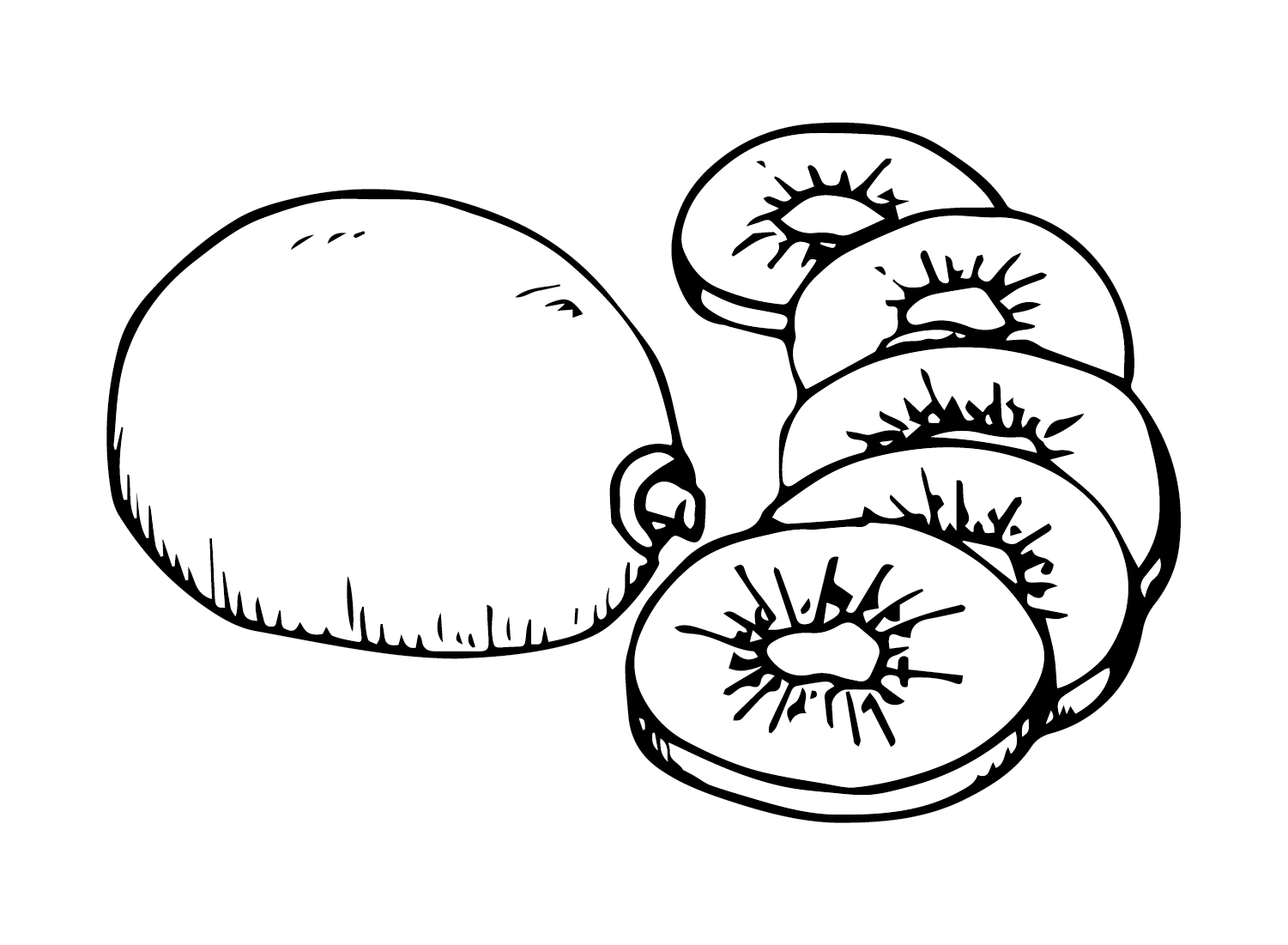
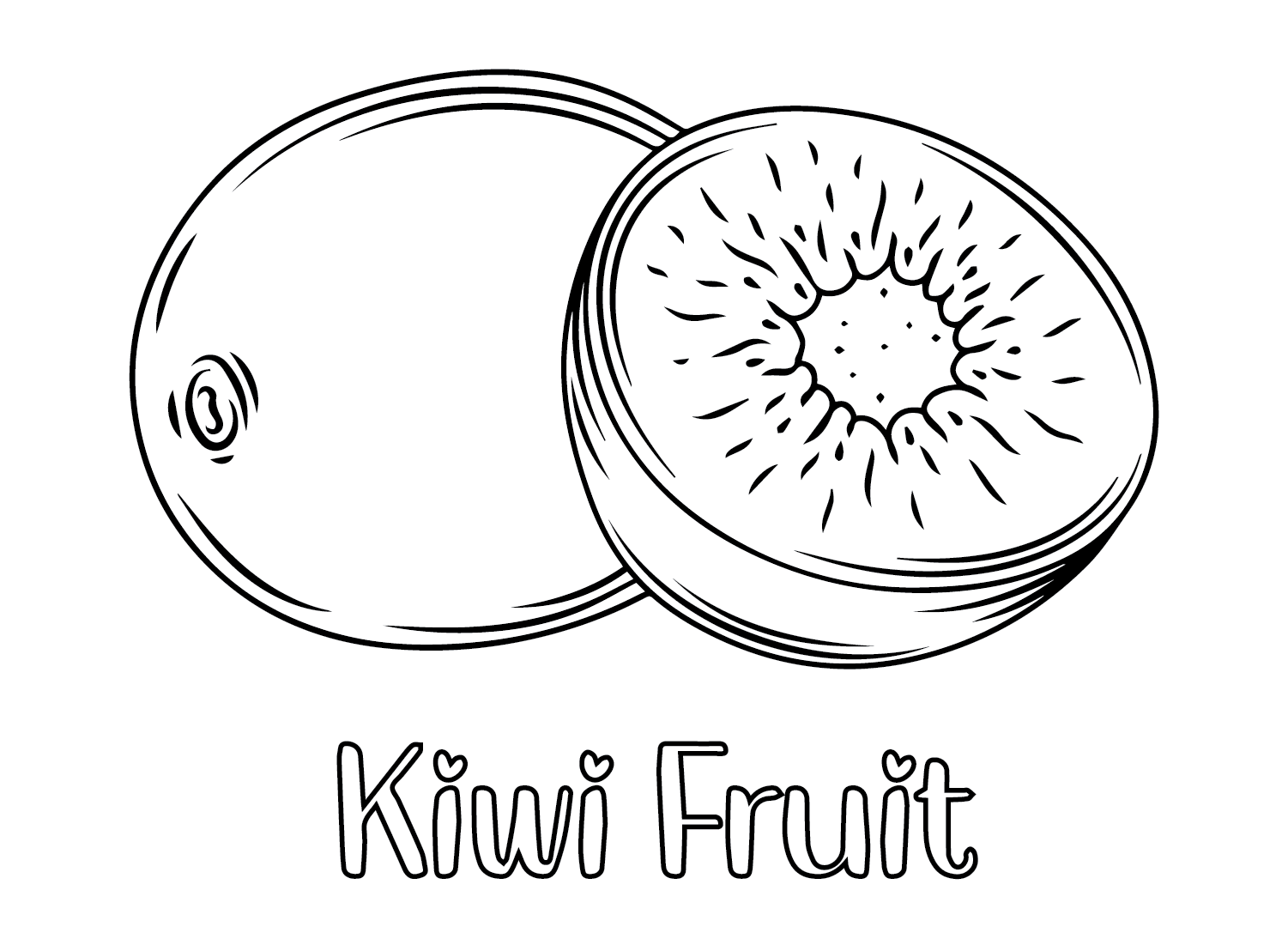
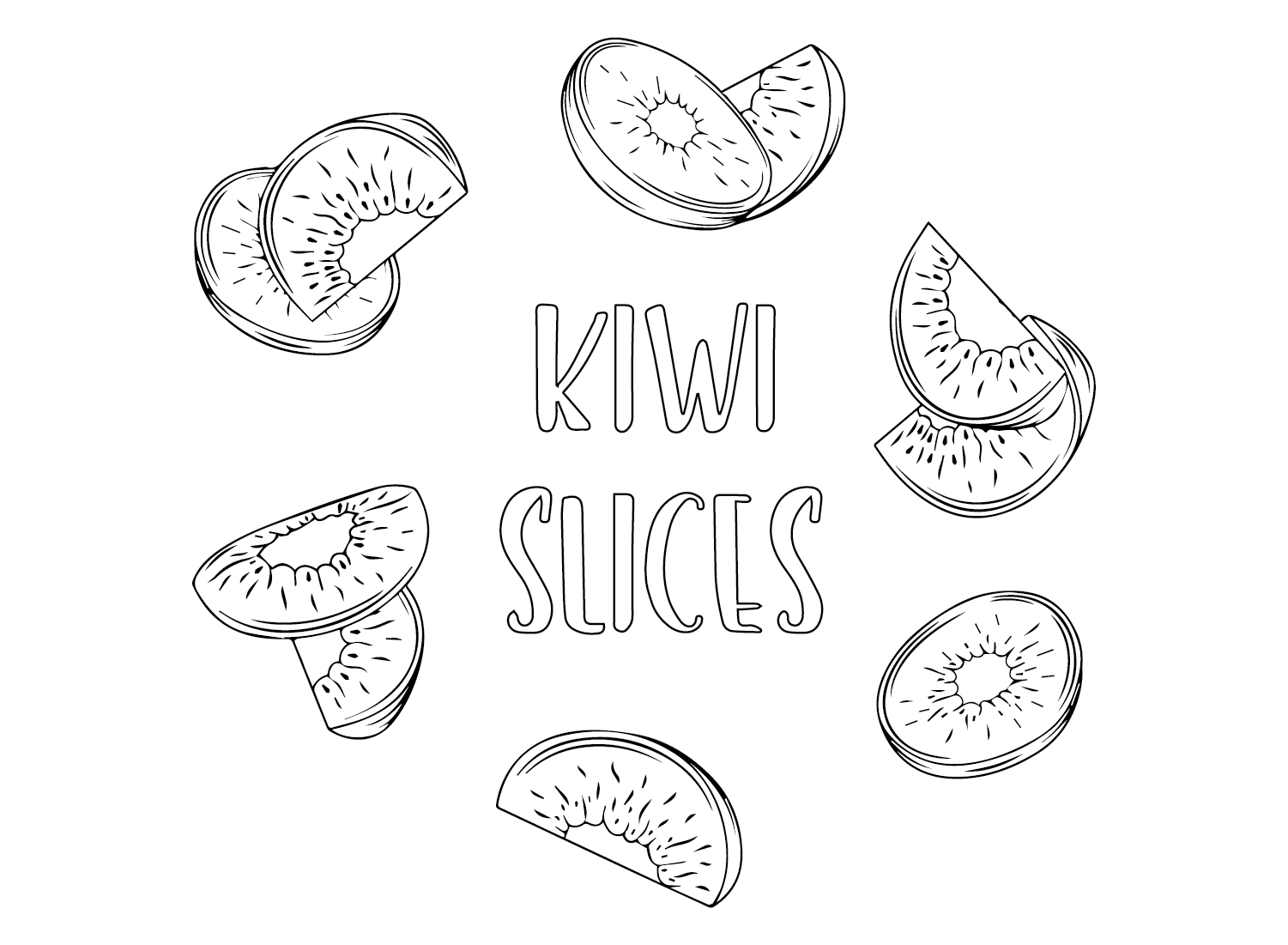
Free Kiwi Fruit Coloring Pages: 31 printable PDF designs featuring realistic whole fruit, sliced cross-sections, cartoon and kid-friendly characters, sketch-style line art, and a simple beginner sheet. Each page can be downloaded as a PDF to print or colored online in the browser.
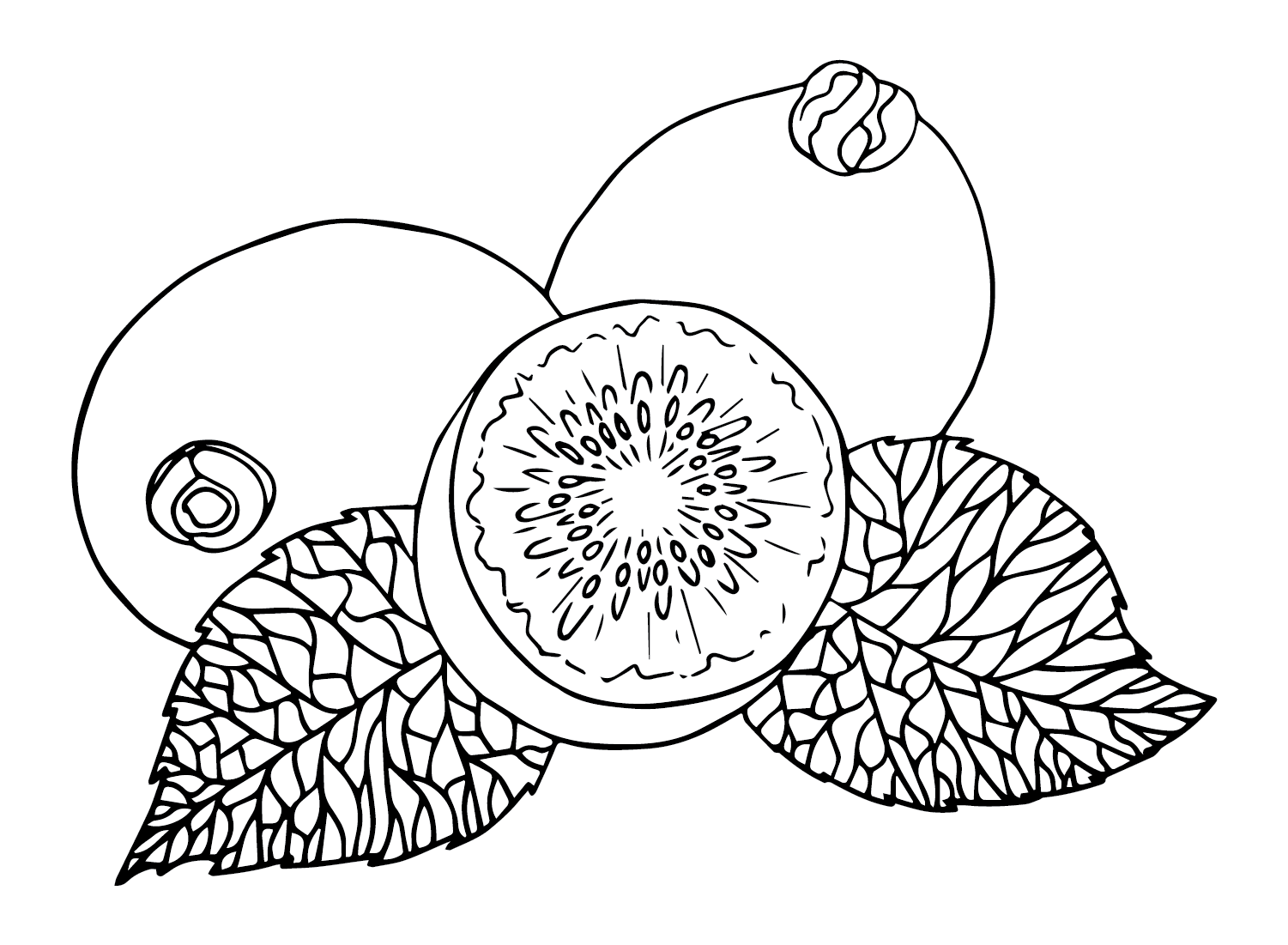
Kiwi fruit (Actinidia deliciosa) is native to China, where it grew wild along the Yangtze River Valley and was originally known as the Chinese gooseberry. New Zealand growers renamed it “kiwi fruit” in 1959 after the country’s fuzzy, brown national bird, and the name stuck as the fruit spread commercially around the world. Today, California grows about 98 percent of the kiwi fruit produced in the United States. Sliced open, a kiwi reveals bright green flesh, a pale white core, and a ring of tiny black seeds arranged around the center, one of the fruit’s most recognizable and colorful features.
This collection groups its 31 pages by style, from true-to-life kiwi fruit to cartoon characters with faces, so kids and adults can pick a version that matches their skill level. Each page is available as a downloadable PDF or as an online coloring tool that works directly in the browser.

What Is Inside This Collection
The 31 pages are split into five groups based on style and complexity, ranging from detailed, realistic fruit to simple cartoon shapes.
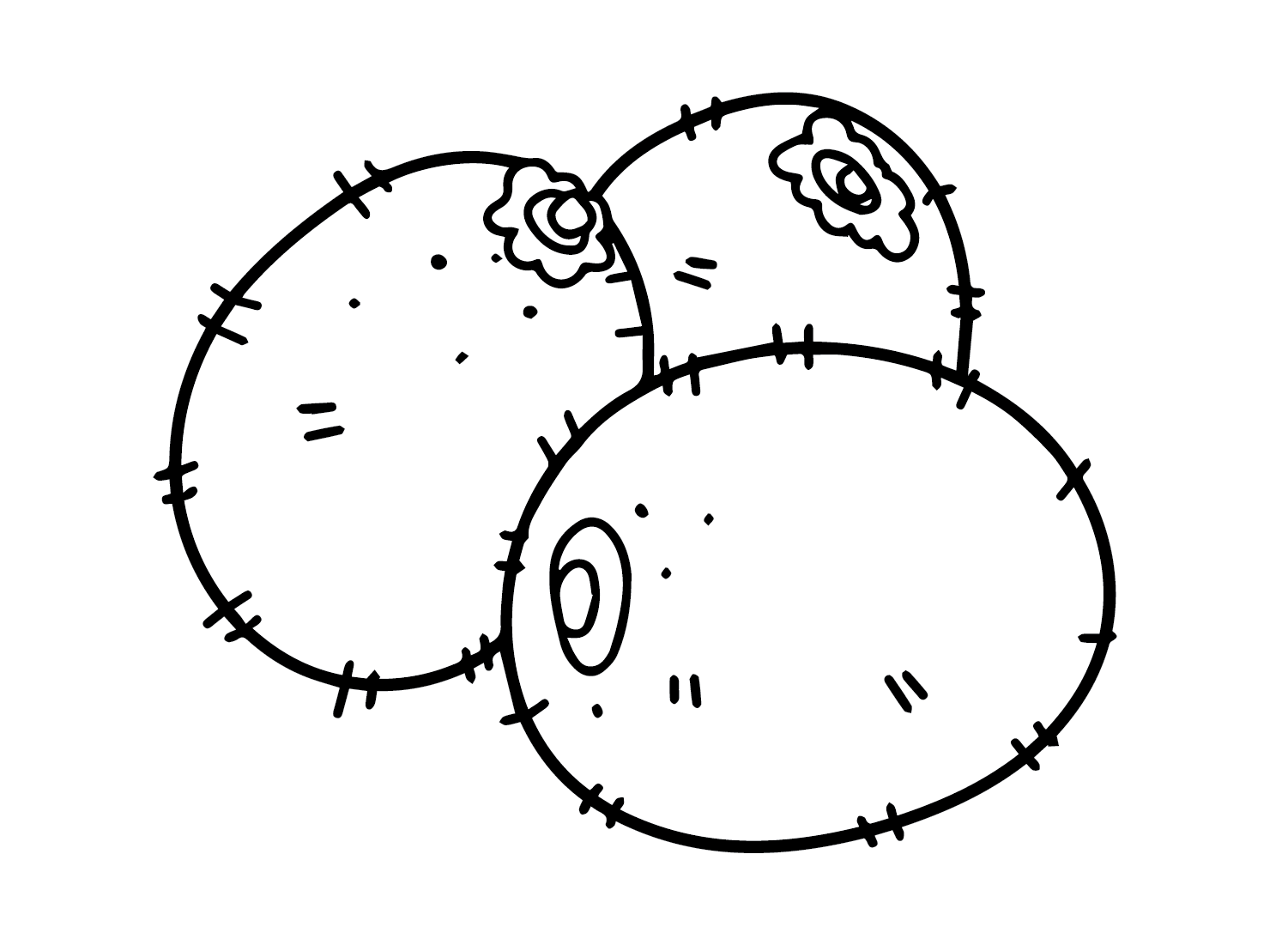
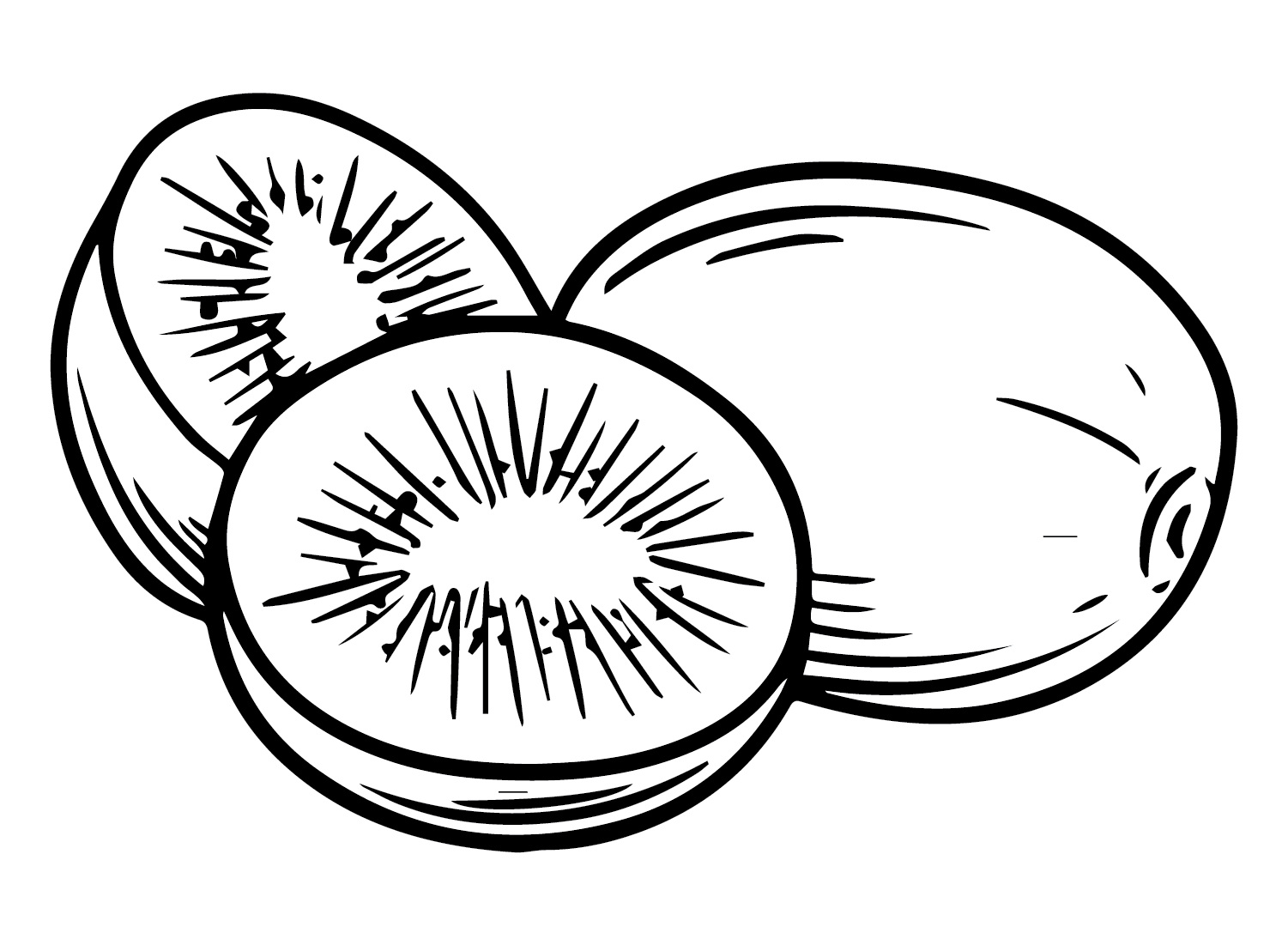
Realistic Whole Kiwi Fruit Designs
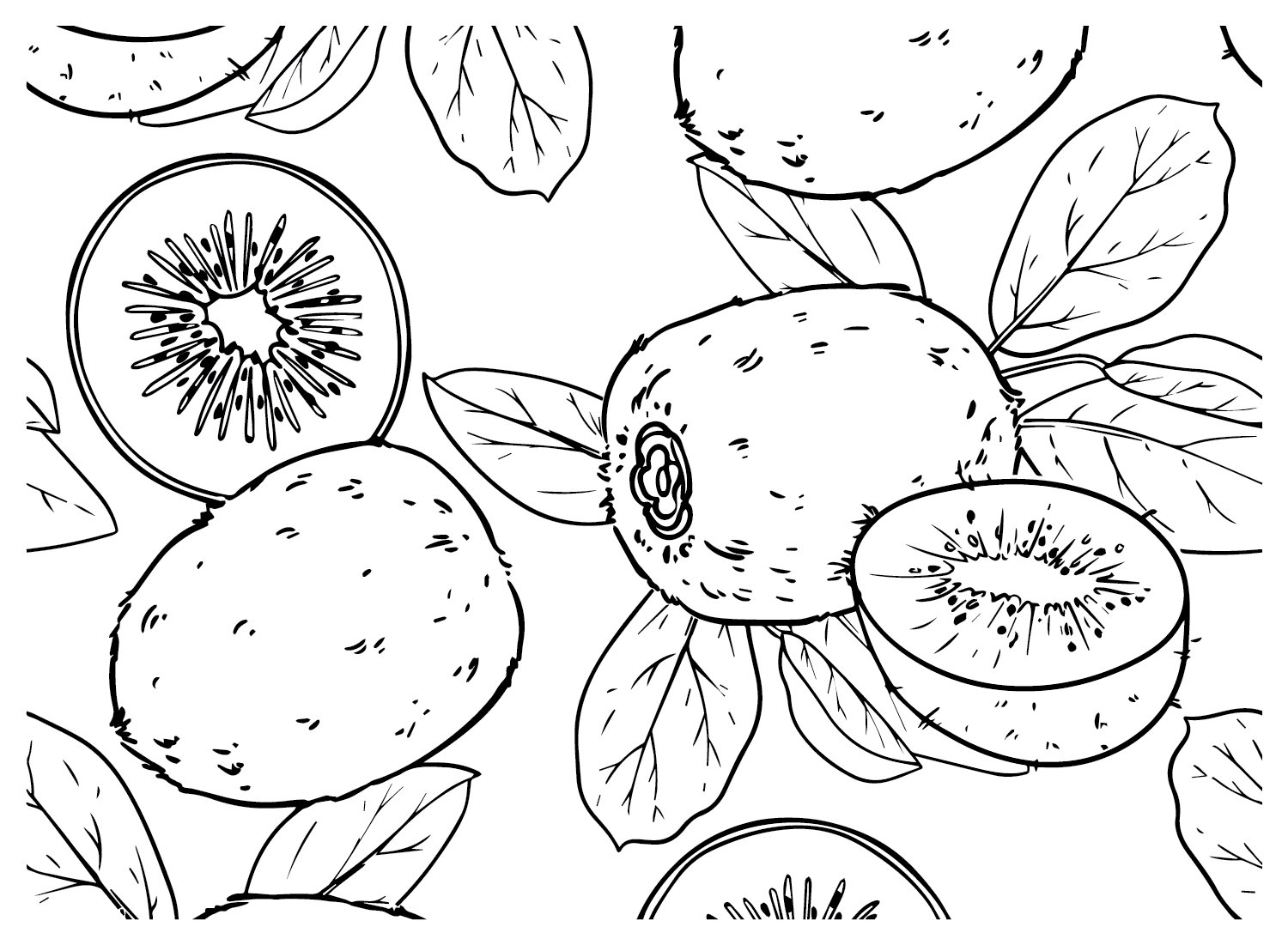
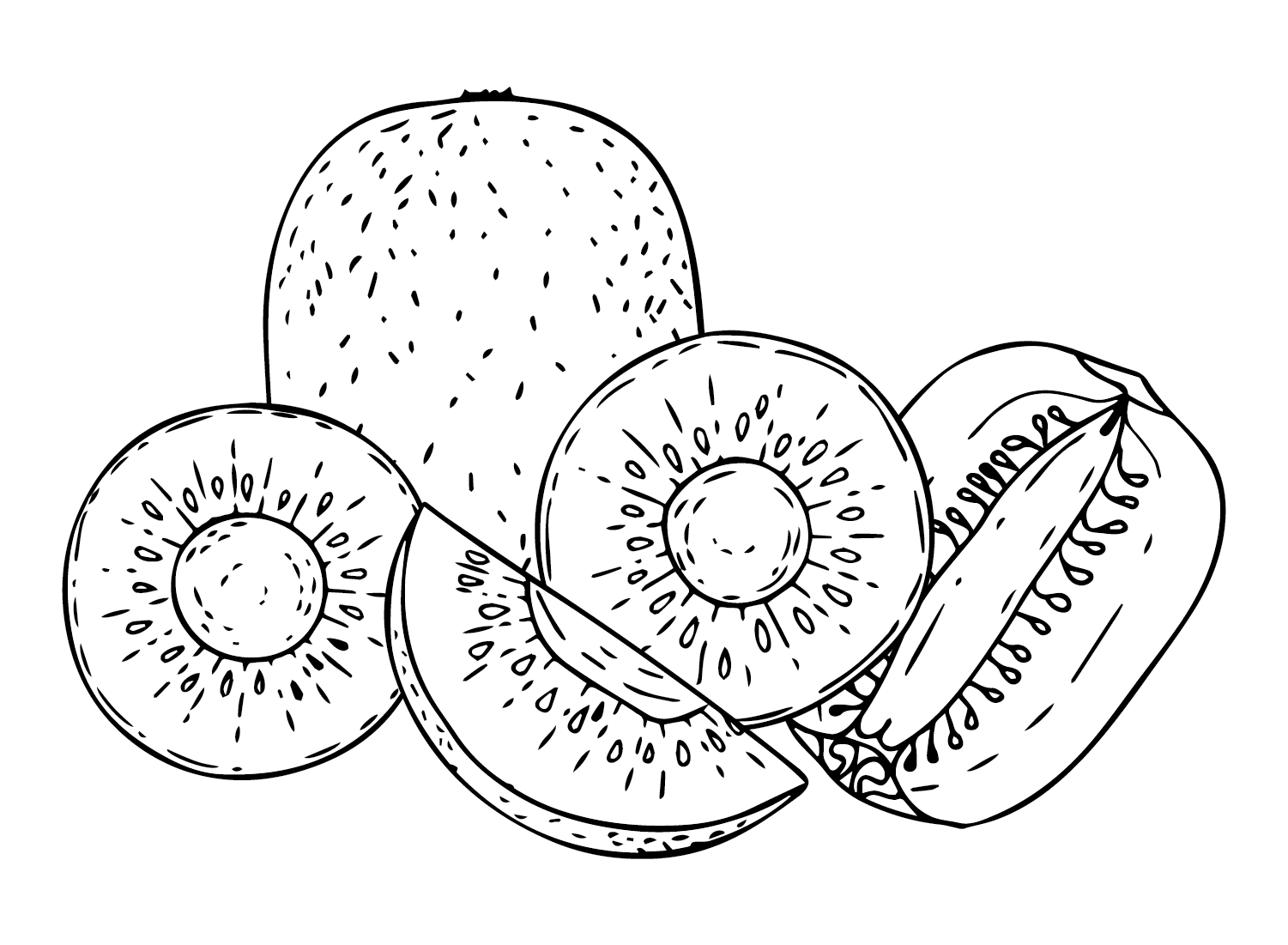
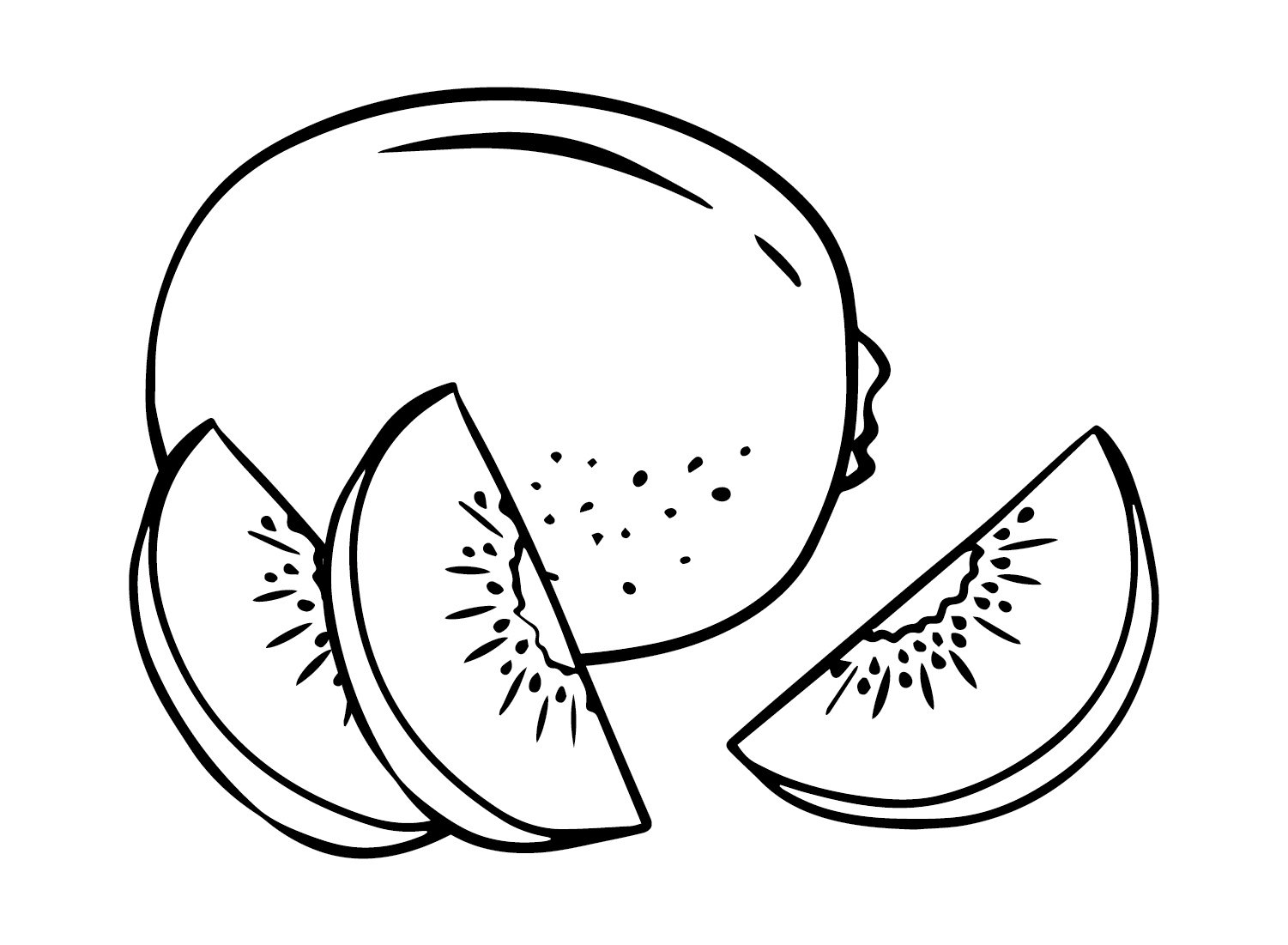
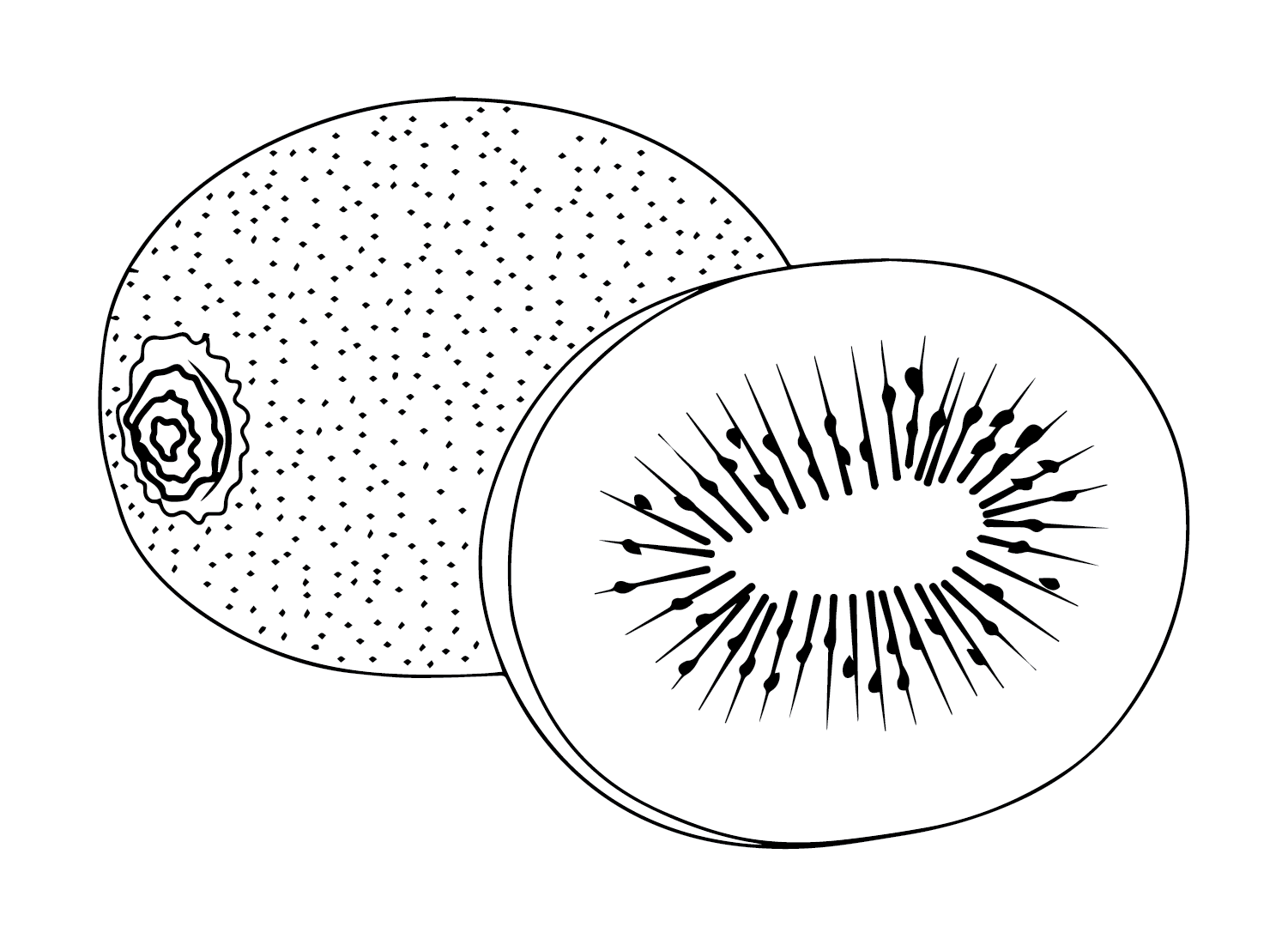
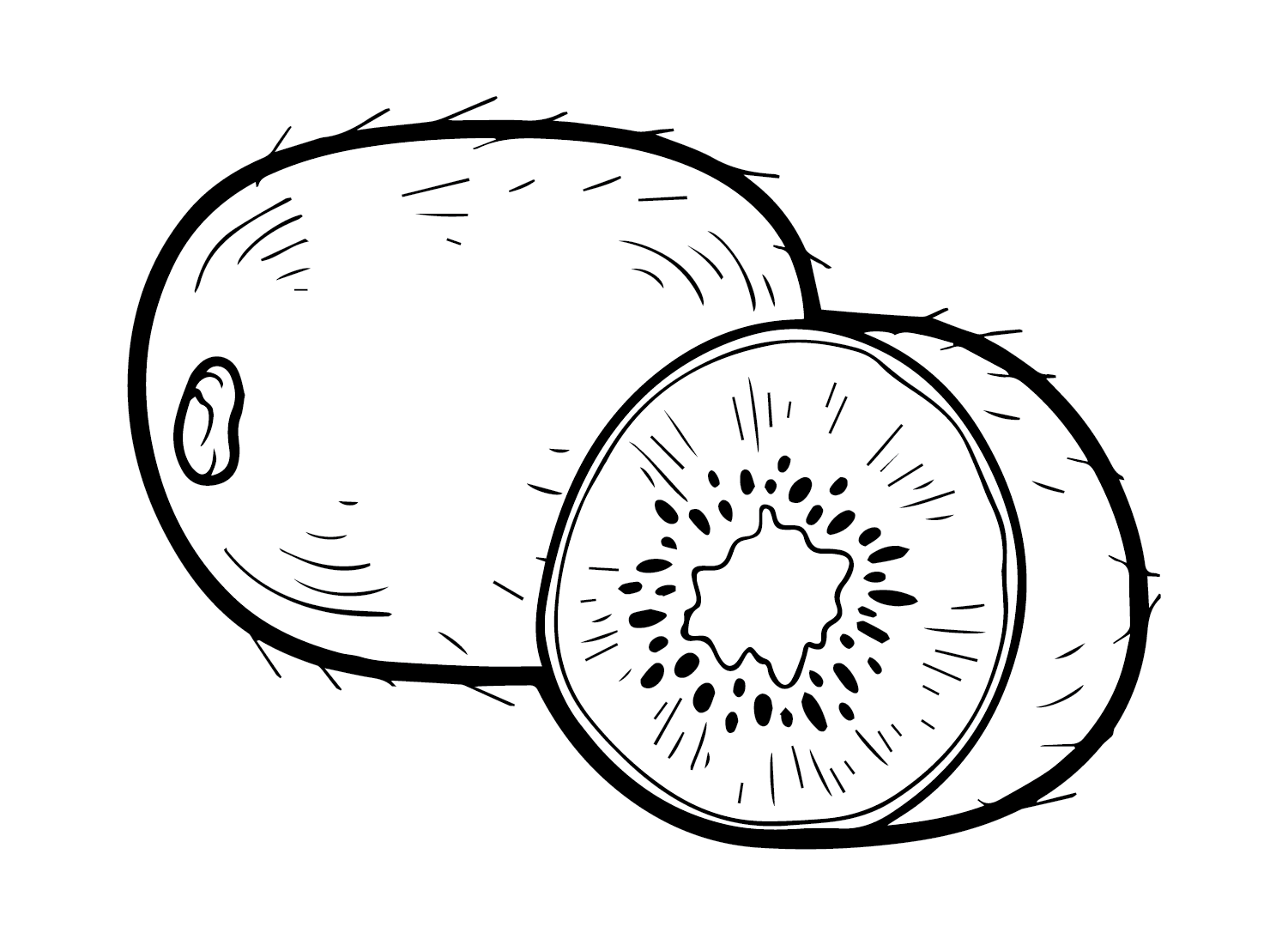
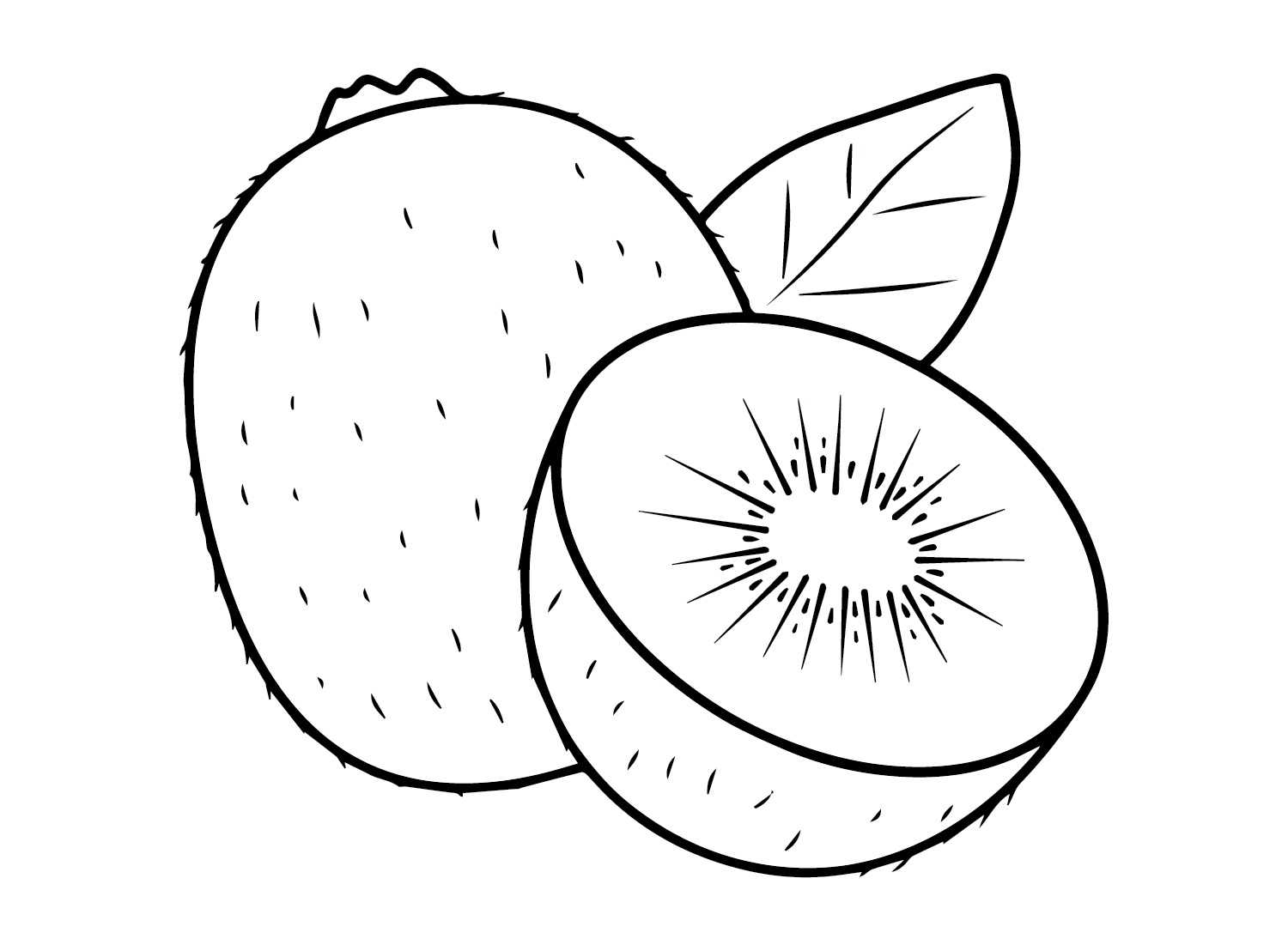
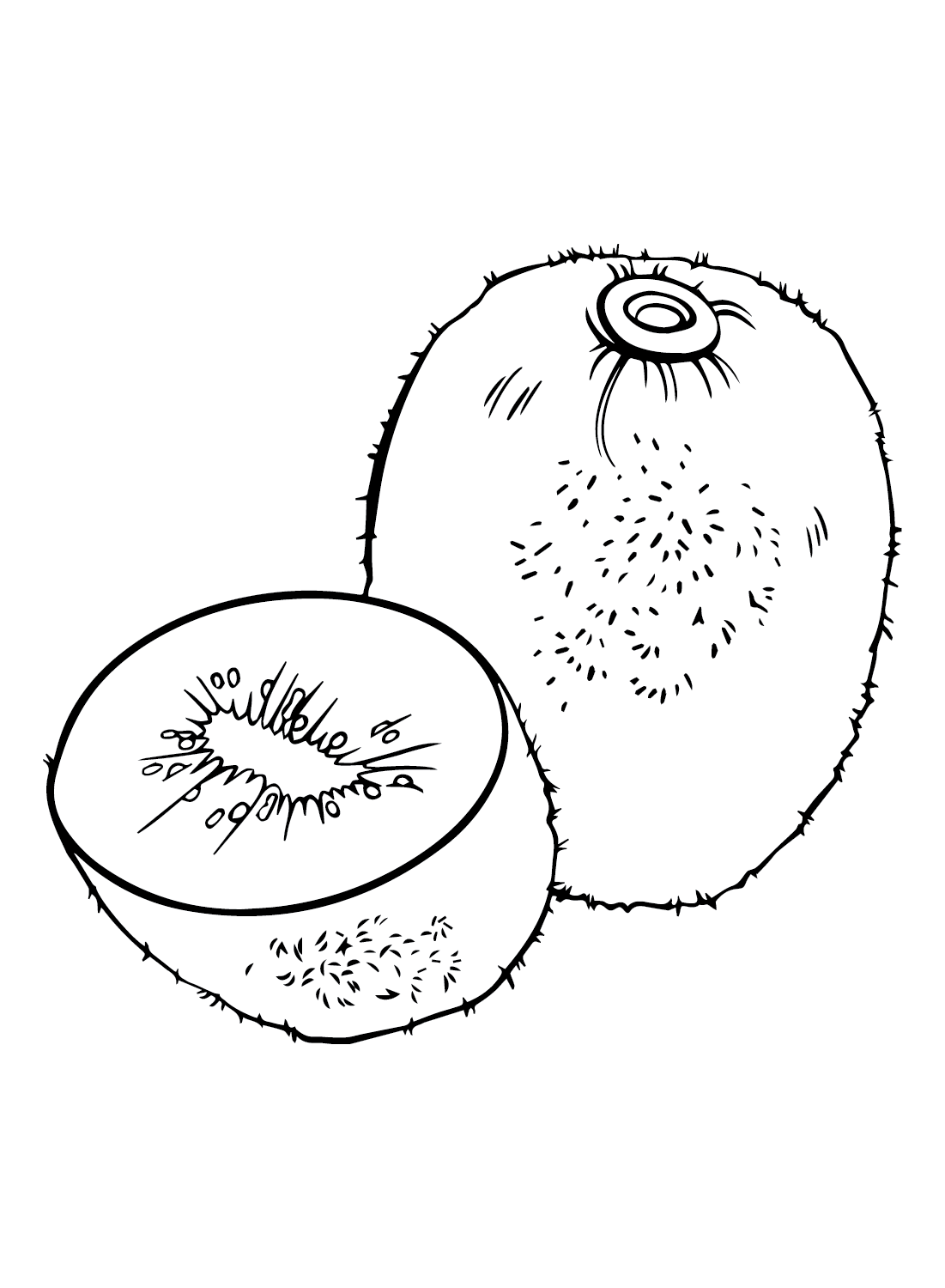
The largest group shows a whole kiwi fruit set against a plain background, with fuzzy brown skin covering the outside. Use Sepia or Brown as a base for the fuzzy skin, keeping the texture slightly uneven rather than perfectly smooth to suggest the fruit’s real surface.
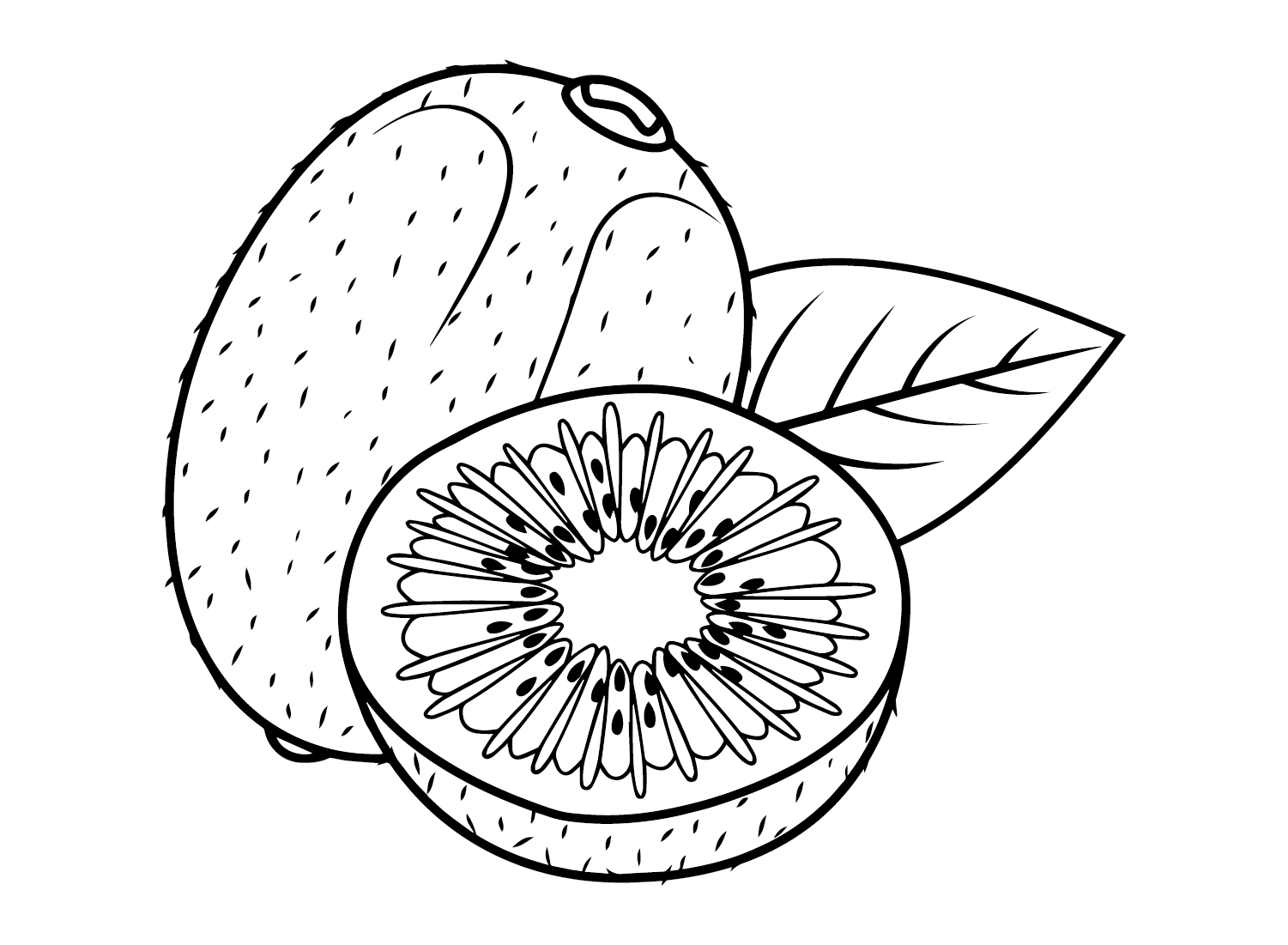
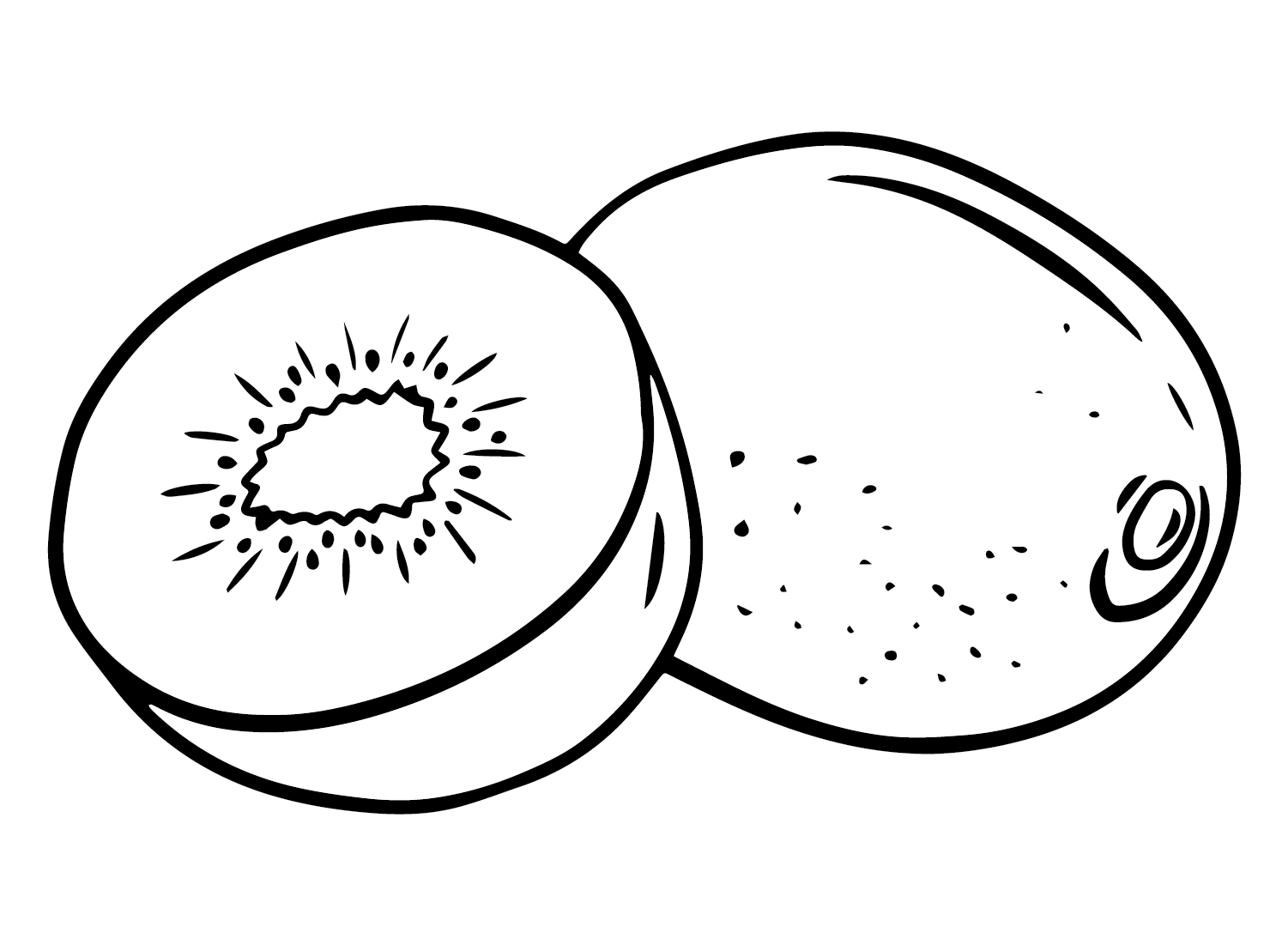
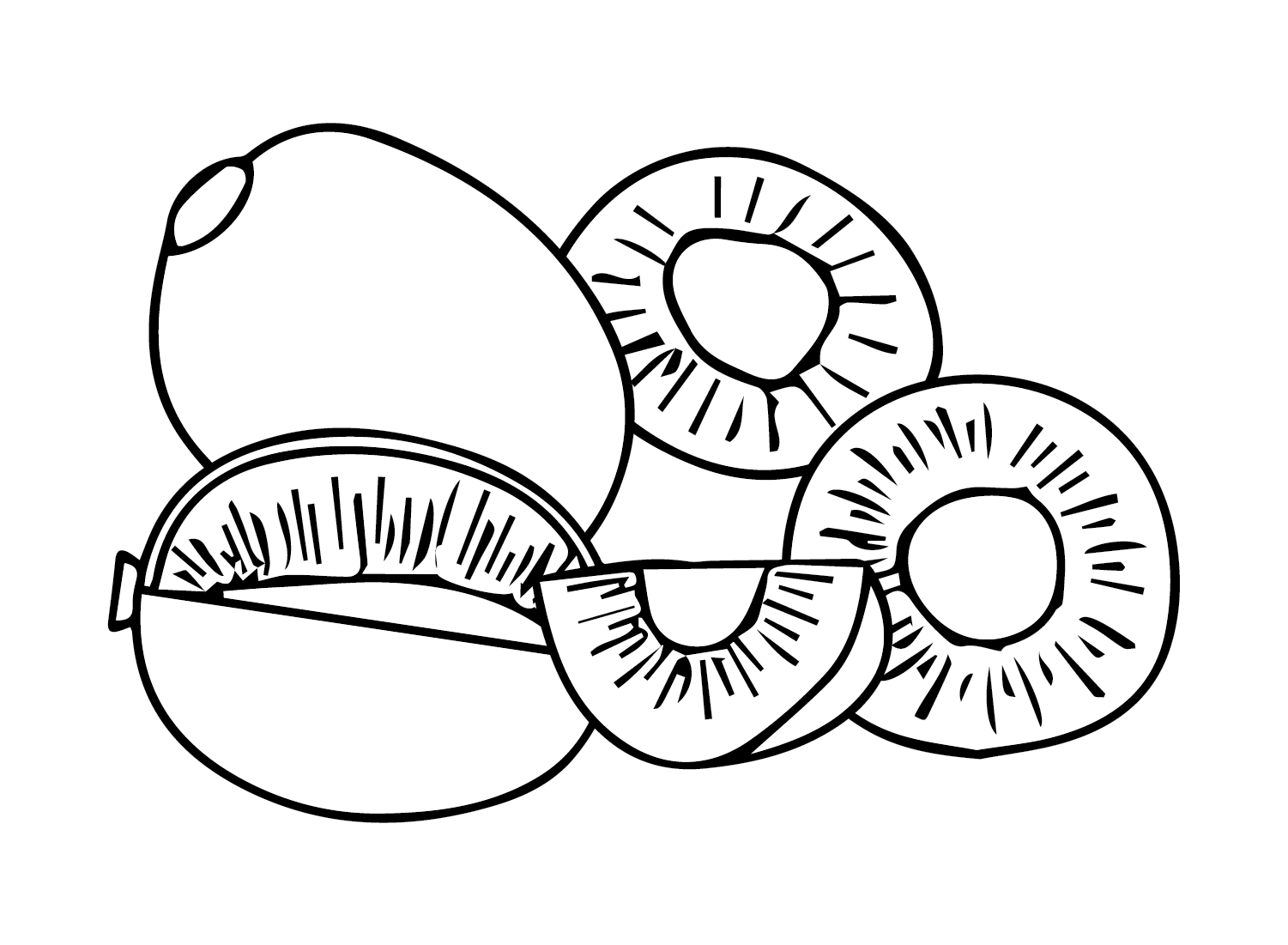
Sliced Kiwi Cross-Section Designs
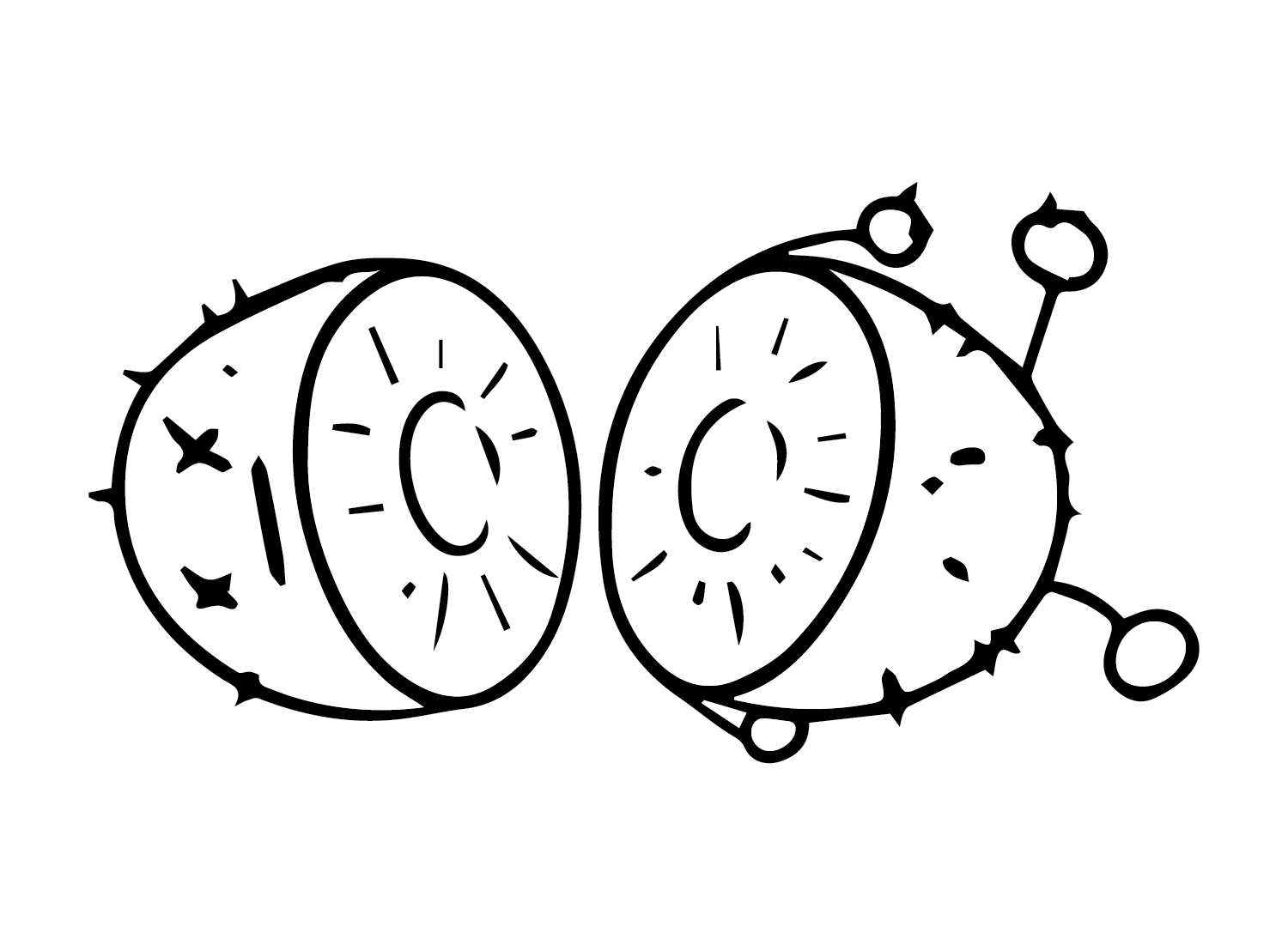
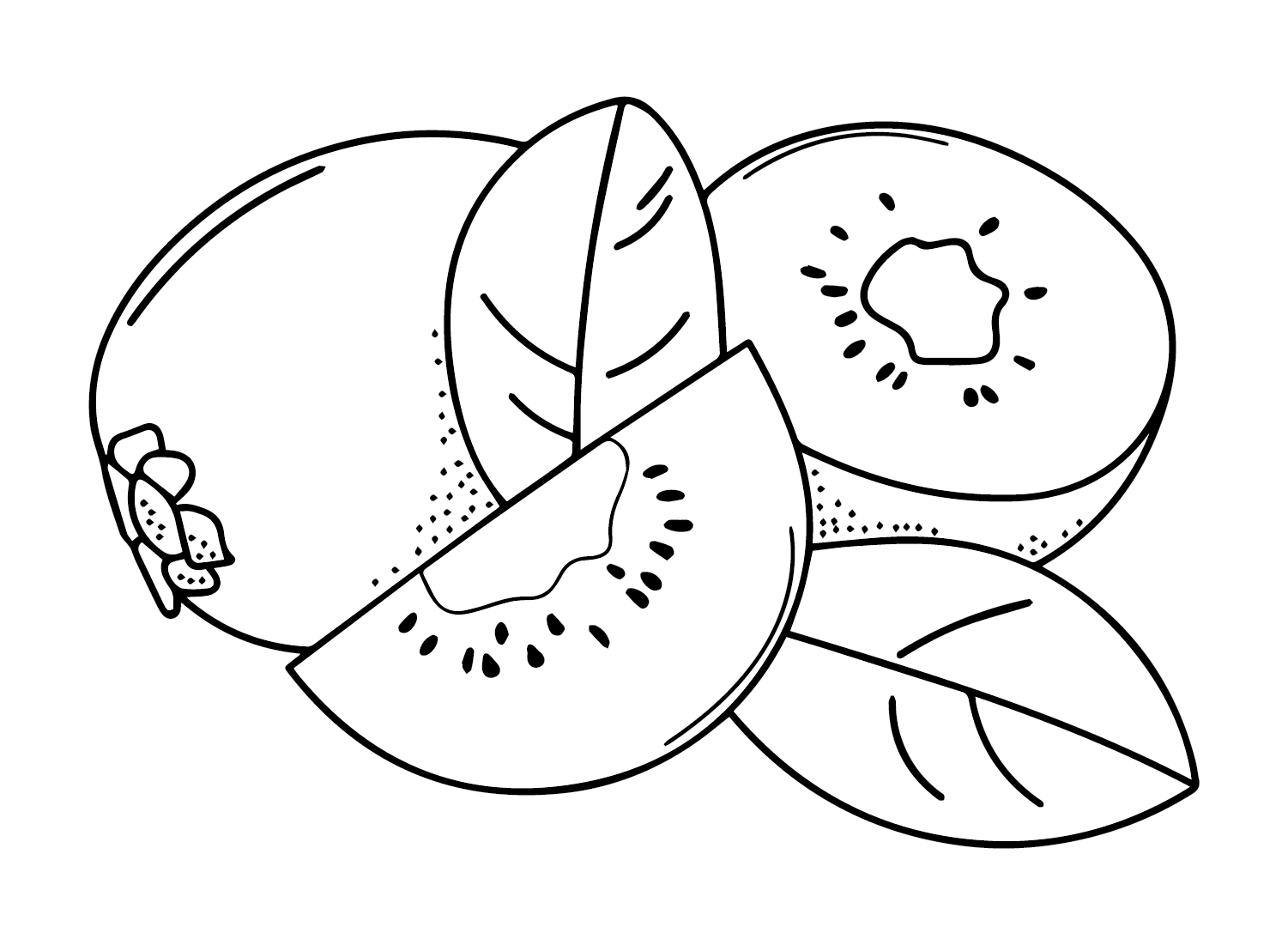
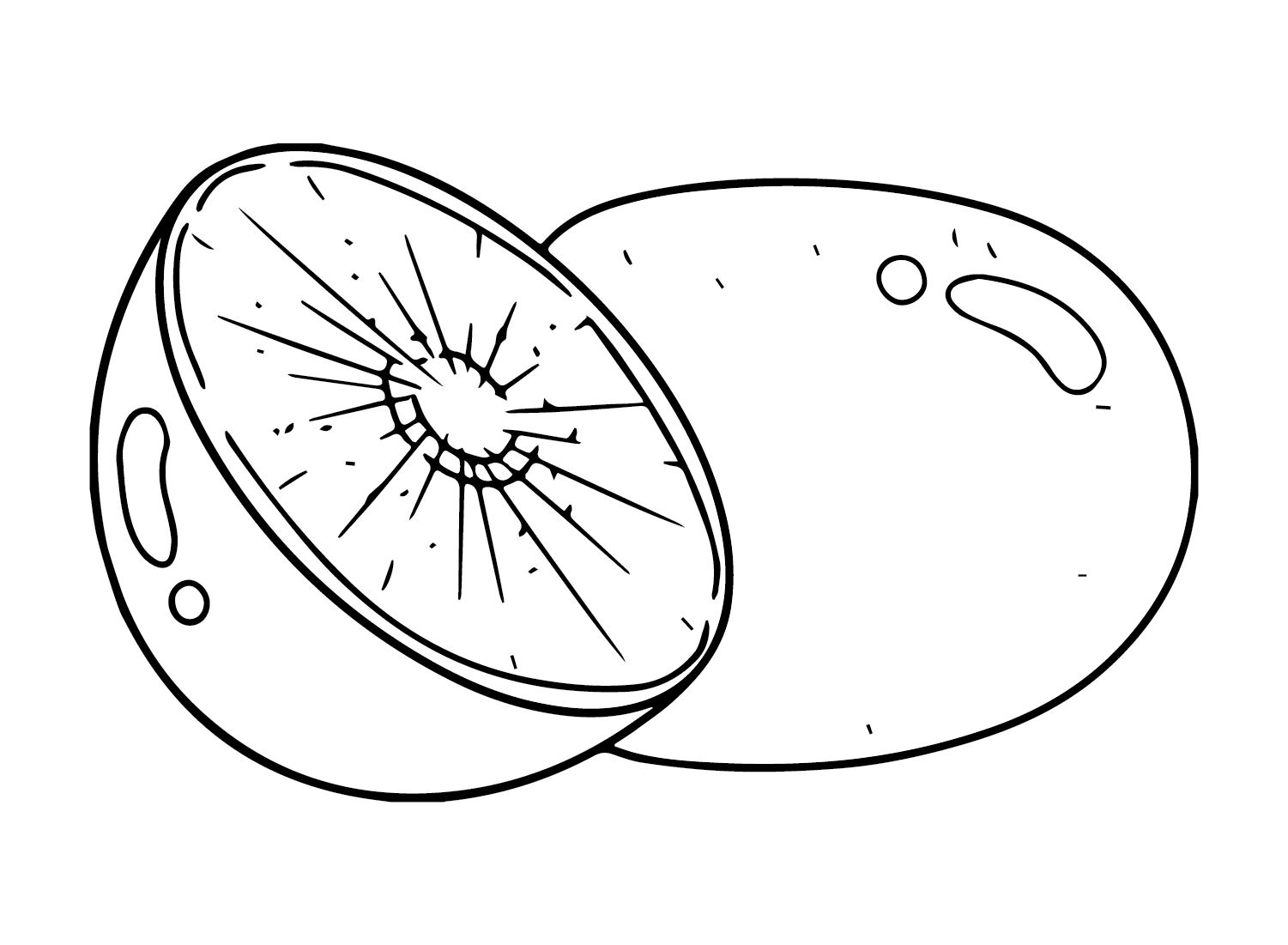
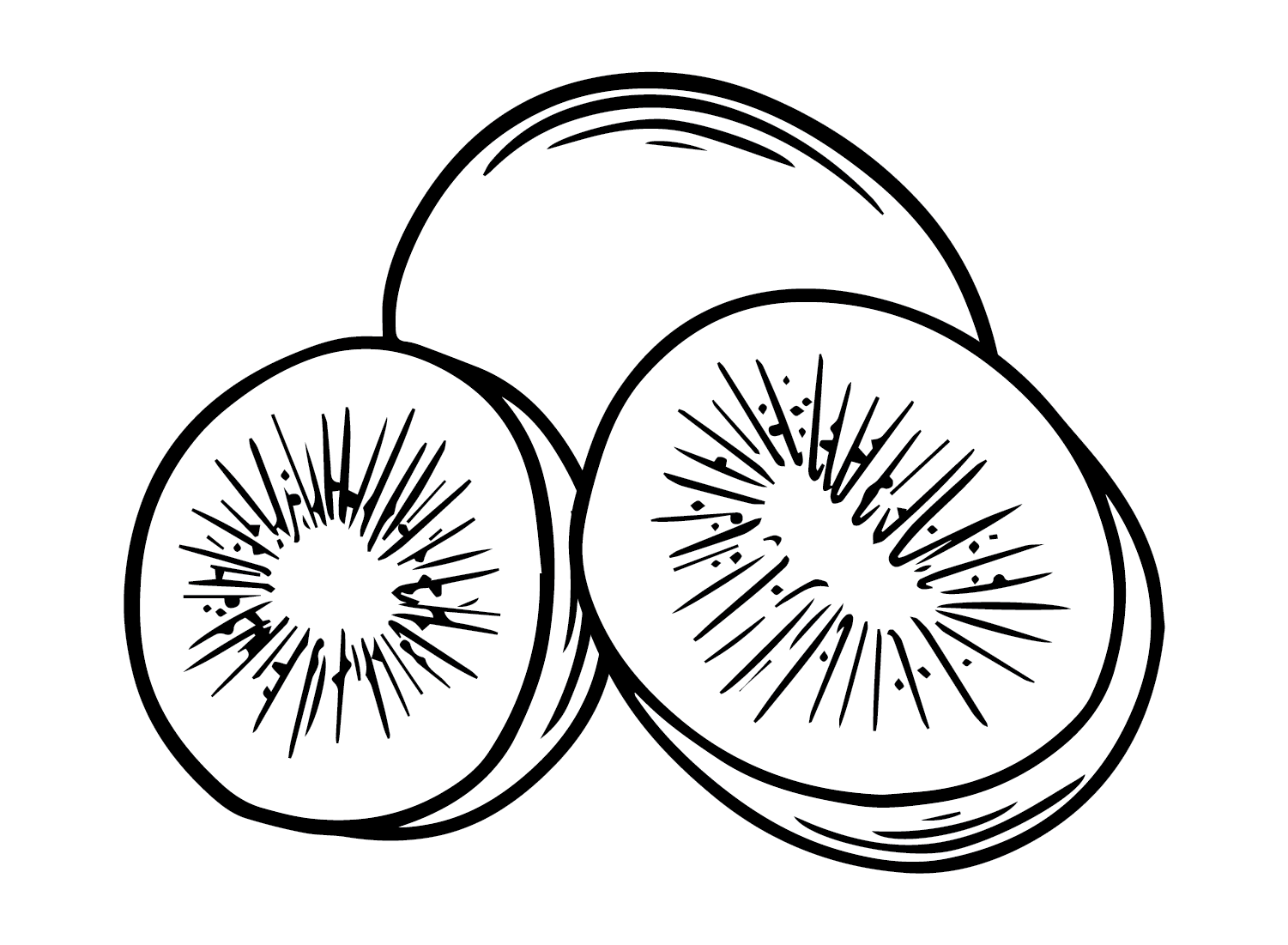
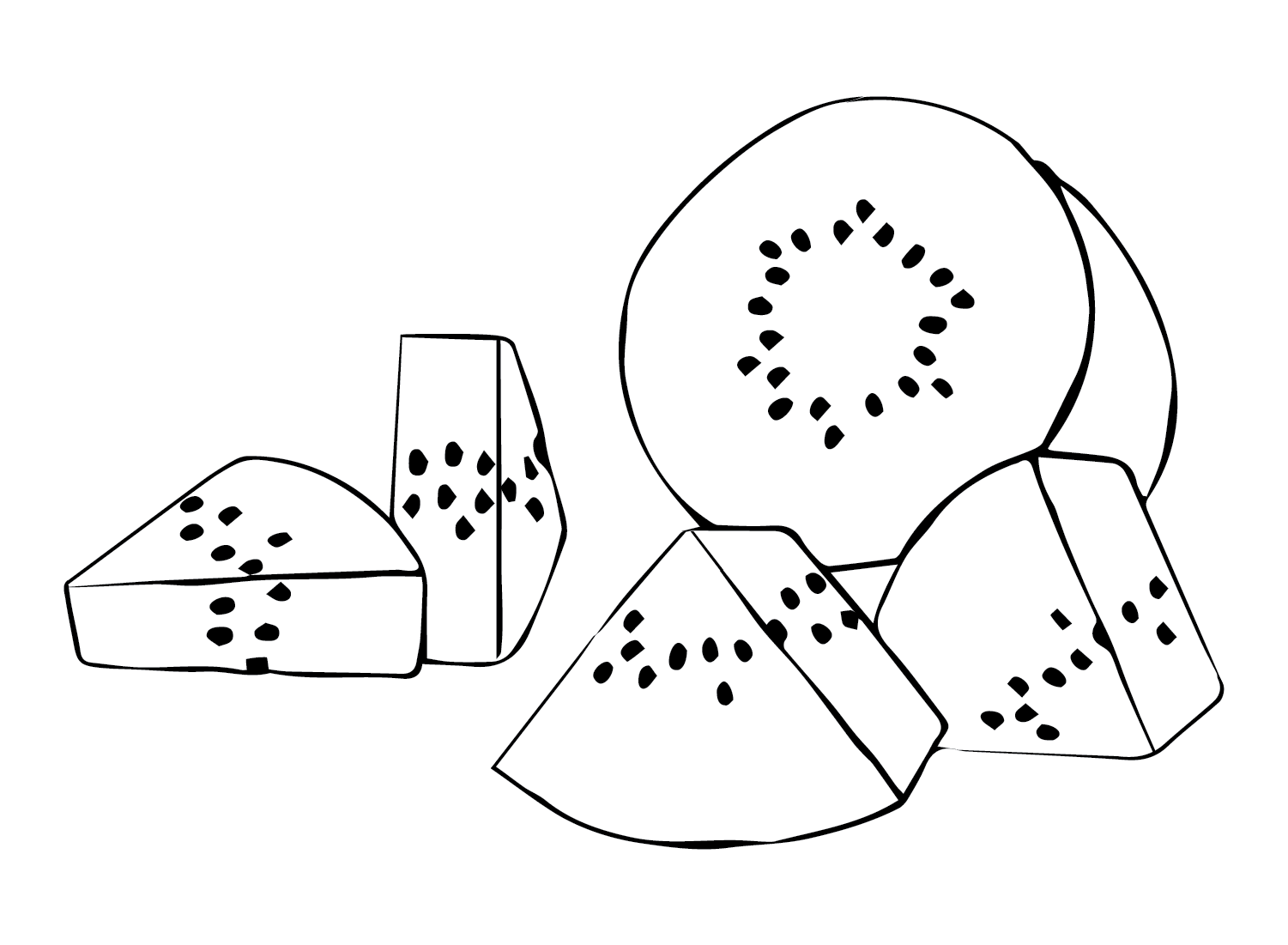
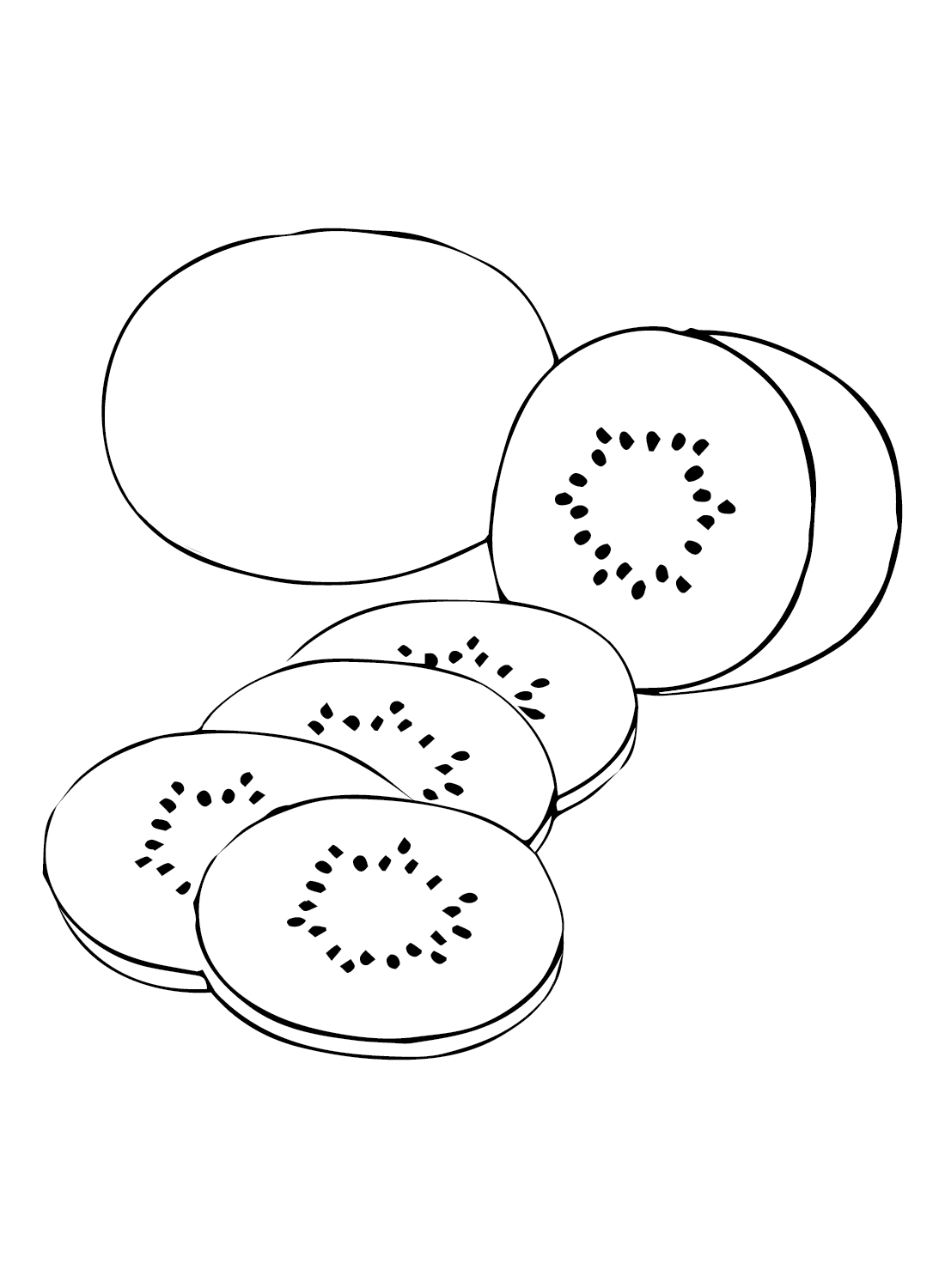
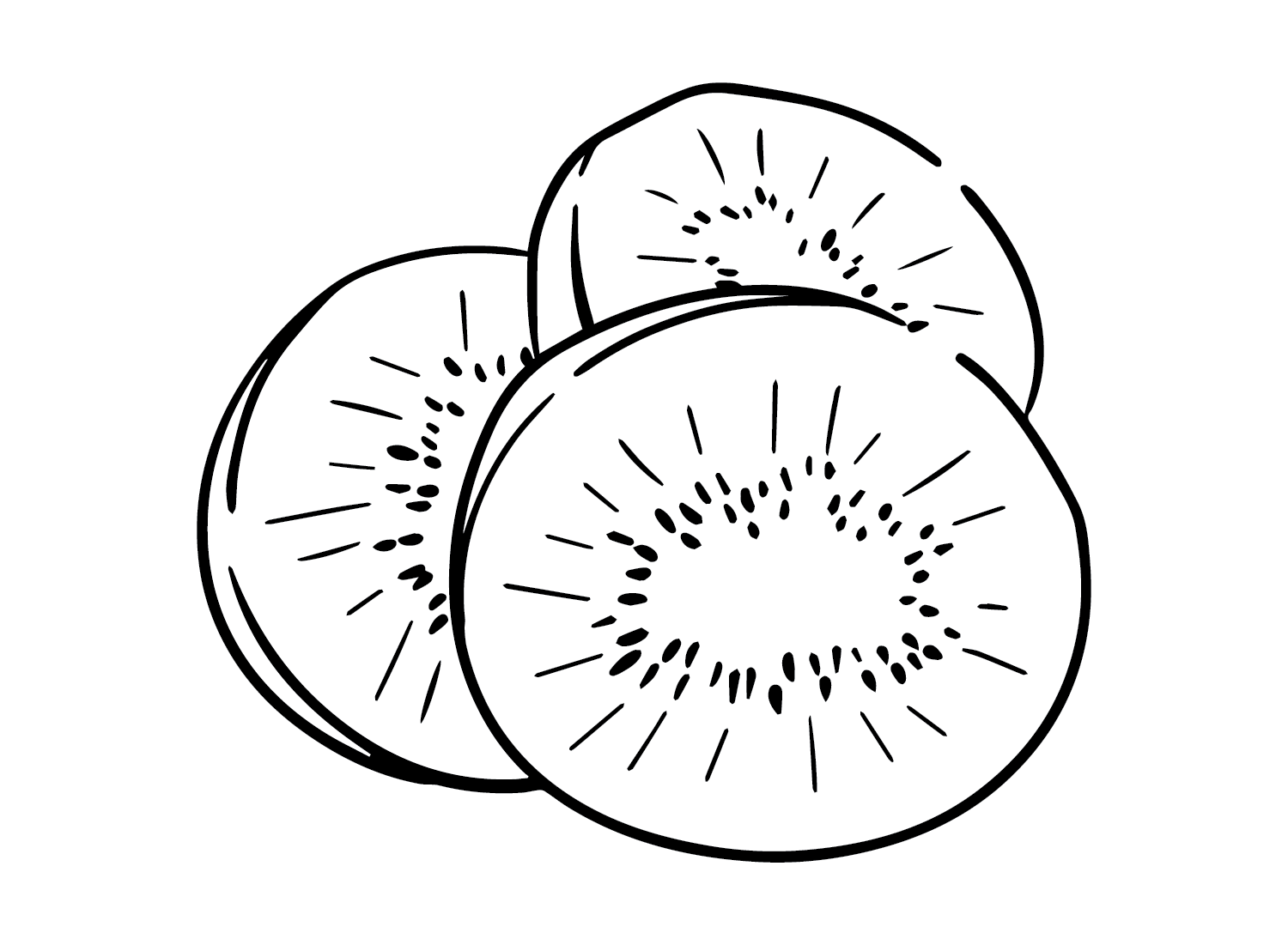
Two pages show the fruit cut open to reveal its bright green flesh, pale core, and ring of small black seeds. Color the flesh Green or yellow-green, the central core a soft White or Cream, and dot each seed Black so the ring pattern stays clearly visible.
Cartoon and Kid-Friendly Kiwi
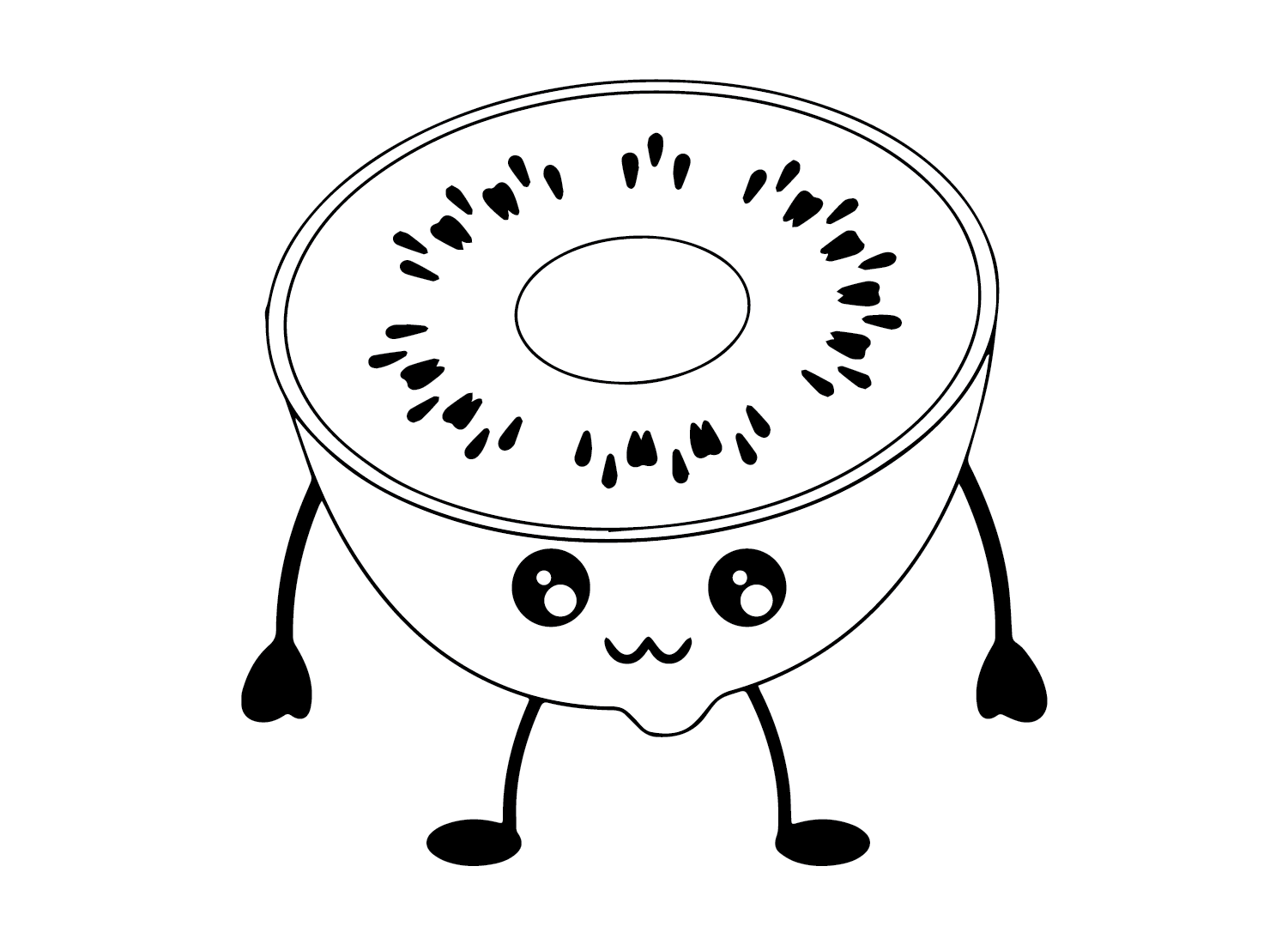
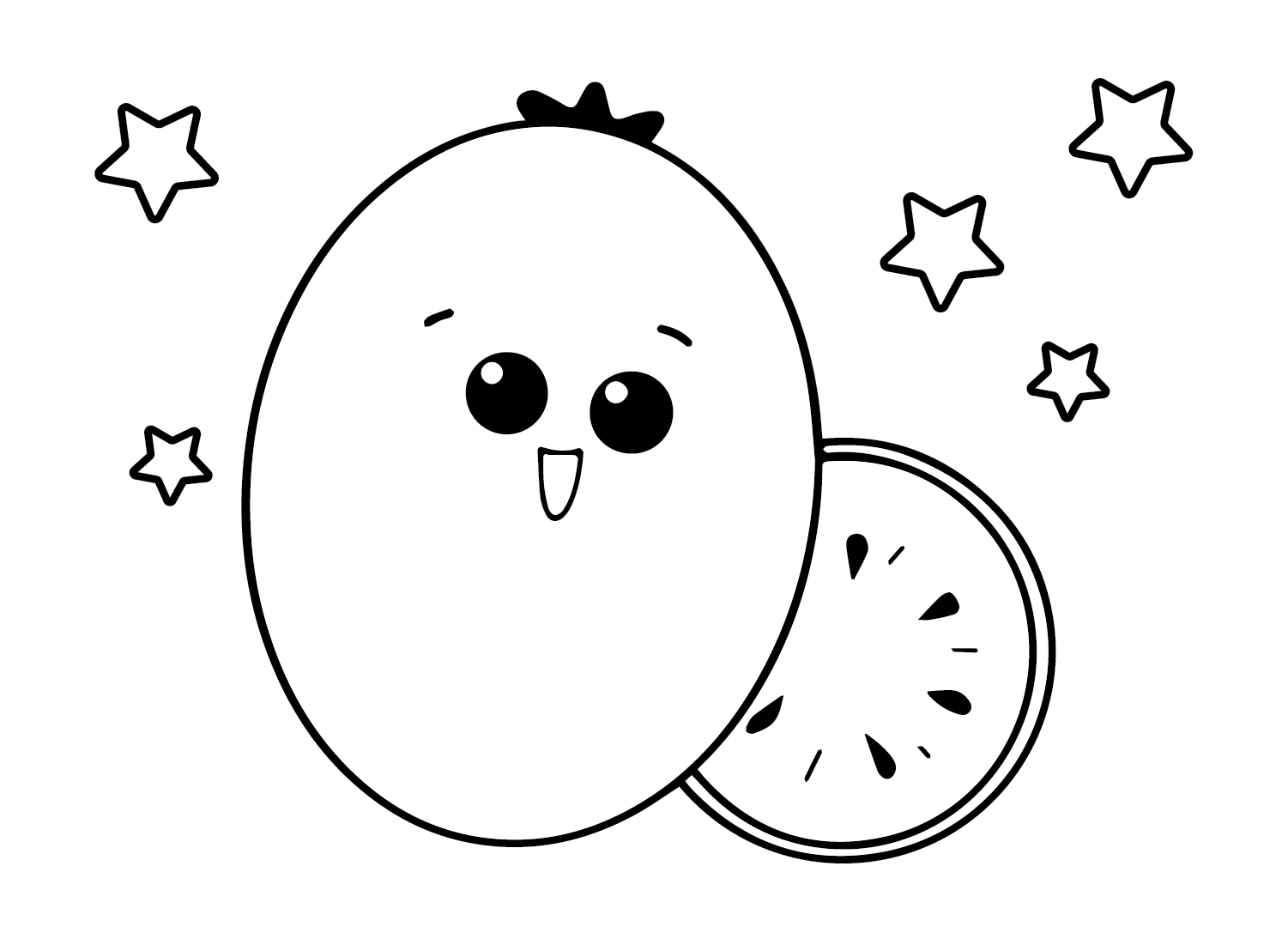
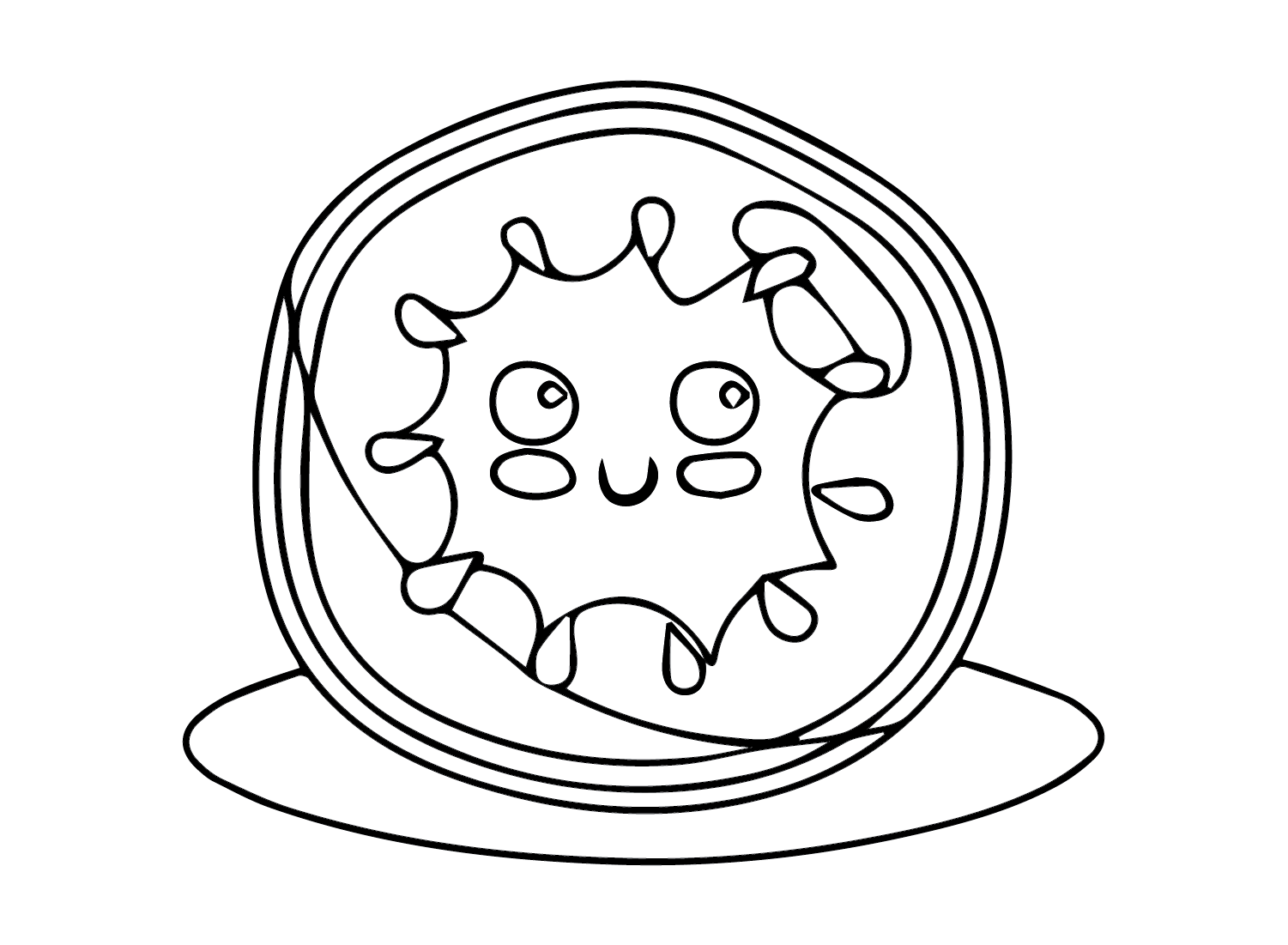
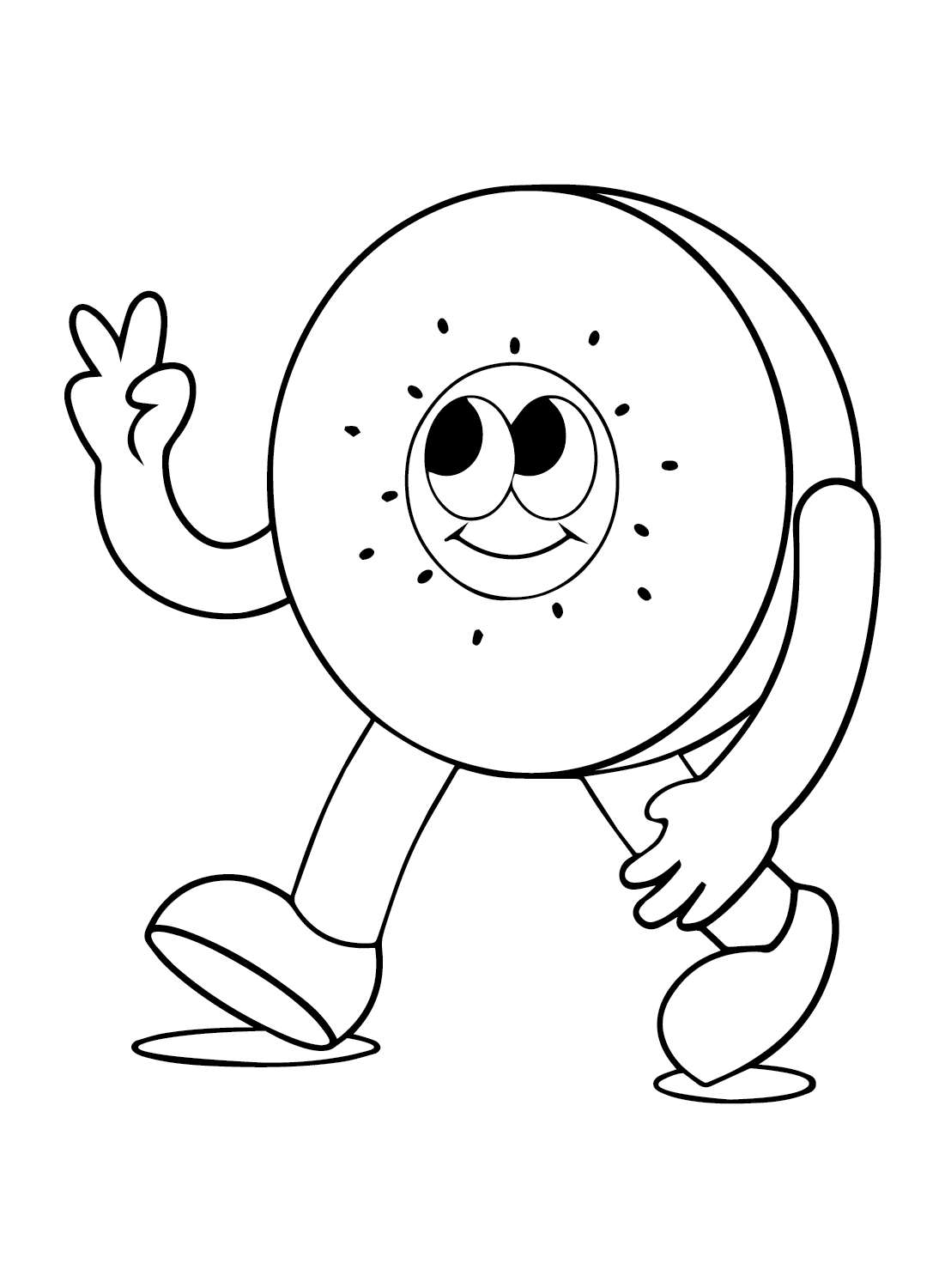
Eight pages give the fruit a face or a softer, rounder shape, including several kawaii-style designs. Keep these flat and bright with a Green body, a Brown fuzzy-textured edge, and simple Black facial features.
Sketch and Line-Art Style
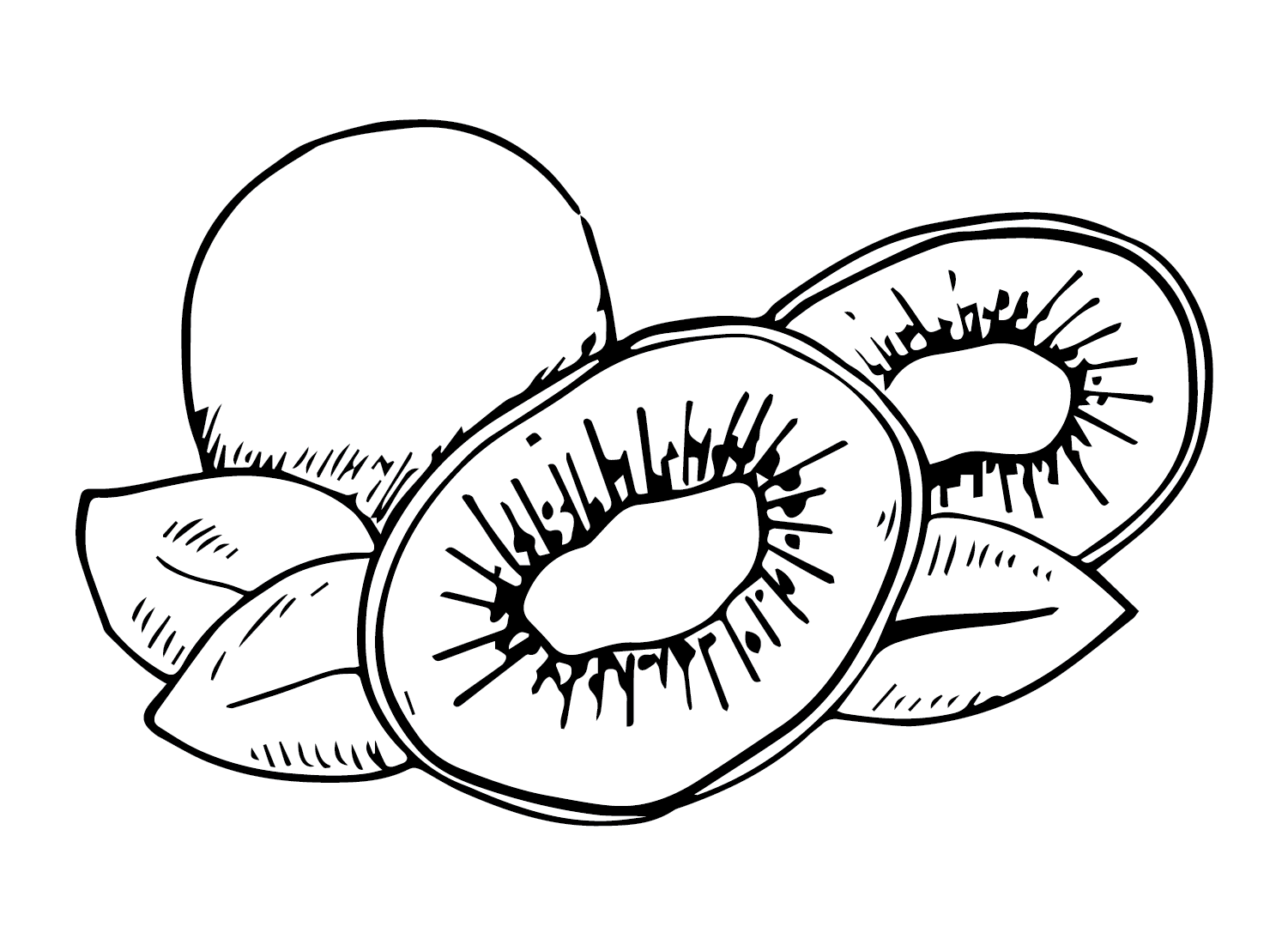
Three pages use a looser, hand-drawn outline instead of a clean cartoon line. Colored pencil suits this style better than marker, starting with a light Tan base and adding Sepia shading only in small dabs to suggest the fruit’s fuzzy skin texture.
Simple Beginner Sheet
One page uses a large, bold kiwi outline with very few small details, making it a good starting point for toddlers and preschoolers. A single flat Green or Brown fill is enough to complete this design well.
What Kiwi Fruit Coloring Pages Do
Fine motor development. A sliced kiwi page shows a ring of small black seeds surrounding the pale core, and dotting each seed takes far more precise control than filling in one smooth shape. The American Academy of Pediatrics identifies fine motor skill development as a core benefit of structured coloring for children ages 2 through 7, and the kiwi’s seed ring gives that practice a genuinely detailed dotting challenge.
A name with a story. Kiwi fruit was originally called the Chinese gooseberry before New Zealand growers renamed it after the country’s fuzzy, brown national bird in 1959. That gives parents and teachers a natural opening to talk about how a fruit’s common name can change over time, which often surprises kids who assume every fruit name has always stayed the same.
Anxiety reduction through focus. A 2005 study in the Art Therapy Journal documented measurable reductions in anxiety following structured coloring sessions. The small, repeated seed dots on a sliced kiwi page offer exactly the kind of steady, low-stakes detail work that suits an unhurried coloring session.
Color variation practice. Kiwi fruit comes in green-fleshed, gold-fleshed, and even red-fleshed varieties, giving colorists more than one accurate way to color the inside of the fruit. That range makes it easy to practice shading beyond a single expected shade of green.
How to Color Kiwi Fruit Pages Well
- Fuzzy outer skin: Use Crayola Sepia or Brown as a base, applying it in small, slightly uneven strokes rather than one flat layer to suggest the fruit’s real fuzzy texture.
- Sliced flesh: Color the inner flesh Green or yellow-green for a classic kiwi, or try Goldenrod for a gold-fleshed variety.
- Core and seed ring: Color the central core a soft White or Cream, then dot each small seed around it in Black so the ring pattern reads clearly.
- Cartoon and kid-friendly characters: Keep the body a flat, even Green, add a Brown fuzzy-textured edge, and finish with simple Black facial features.
- Multiple varieties: On grouped or repeated pages, alternate between Green, Goldenrod, and a touch of Red Orange to represent the different real kiwi varieties.
- Sketch-style line art: Layer colored pencil starting with a light Tan base, then add Sepia shading in small dabs only, since fuzzy texture reads better as scattered marks than smooth shading.
5 Creative Craft Ideas With Kiwi Fruit Coloring Pages
1. Kiwi Seed-Ring Dot Painting
Color a sliced kiwi page, then use a cotton swab dipped in black paint to dot in the ring of seeds around the core for extra texture.
2. Kiwi Vine Diorama
Color several whole-fruit pages, cut them out, and hang them from green paper vines taped inside a shoebox to build a small orchard scene.
3. Kiwi Fact Poster
Color a large kiwi page and add hand-written facts around it, such as where the name “kiwi” came from, for a simple classroom science poster.
4. Kiwi Bookmark
Color one of the smaller kiwi designs, trim it to a bookmark shape, and add a ribbon or paper tassel through a hole punched at the top.
5. Kiwi Garland
Color multiple kiwi pages, cut around each one, and string them together with twine for a kitchen or classroom garland.
Frequently Asked Questions
What are kiwi fruit coloring pages?
Kiwi fruit coloring pages are printable designs that show the fruit in different styles, including realistic whole fruit, sliced cross-sections, cartoon characters, sketch art, and a simple beginner sheet. This collection includes 31 pages, each downloadable as a PDF or available to color online.
Where does the kiwi fruit come from?
Kiwi fruit is native to China, where it grew wild along the Yangtze River Valley. It was later commercialized in New Zealand, and today, California grows about 98 percent of the kiwi fruit produced in the United States.
Why is it called kiwi fruit?
The fruit was originally known as the Chinese gooseberry. New Zealand growers renamed it “kiwi fruit” in 1959 after the country’s fuzzy, brown national bird, and the new name became standard as the fruit spread commercially worldwide.
What colors does a kiwi fruit come in?
Kiwi fruit is most commonly green-fleshed, but gold-fleshed and red-fleshed varieties also exist, each with its own slightly different flavor and skin texture.
What is the ring pattern inside a sliced kiwi?
A sliced kiwi shows a pale core at the center surrounded by a ring of small black seeds, set within bright green or gold flesh. This pattern is one of the fruit’s most recognizable features.
How many kiwi fruit coloring pages are in this collection?
This collection includes 31 kiwi fruit coloring pages, split across realistic whole fruit, sliced cross-sections, cartoon and kid-friendly designs, sketch-style line art, and one simple beginner sheet.
Are kiwi fruit coloring pages suitable for young children?
Yes. The simple beginner sheet and cartoon designs use bold, easy shapes that suit toddlers and preschoolers. The sliced and sketch-style pages, with their detailed seed ring and fuzzy texture, suit older children and adults who want more shading practice.
Can you eat kiwi skin?
Yes. The fuzzy brown skin of a kiwi is edible and contains extra fiber, folate, and vitamin E compared to the flesh alone, though many people still prefer to peel it because of its texture.
Start Coloring
Download any page by clicking the design. No account, email, or payment is required. Pages print directly from the browser at full resolution or open in the online coloring tool for screen use. Share finished pages on Facebook or Pinterest with the share buttons at the top of each design page.