
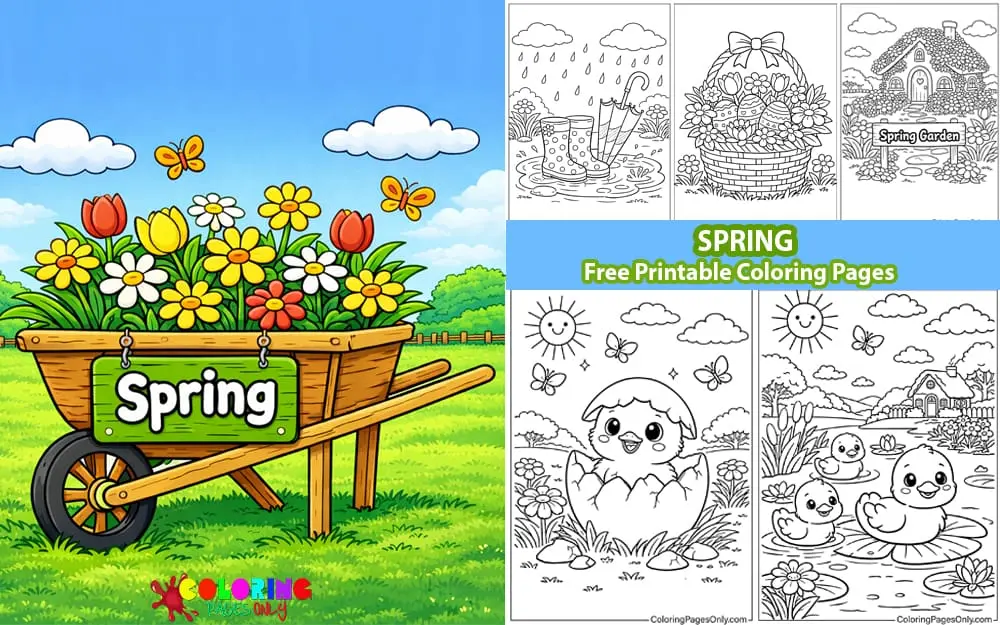
Free Spring Coloring Pages: 49 printable PDF designs featuring garden scenes, baby animals, butterflies, and rainy-day moments. Each page can be downloaded as a PDF to print or colored online in the browser.
Spring begins astronomically at the vernal equinox, which falls around March 20 in the Northern Hemisphere, though meteorologists mark the season as running from March through May for climate-tracking purposes. The season is defined by new plant growth, warmer temperatures, and the return of many young animals, all themes reflected throughout this collection. Garden scenes range from a single flowering stem to full cottage-garden compositions with an arch, a wheelbarrow of blooms, and a greenhouse, while animal pages focus on the young creatures most associated with the season, including a hatching chick and a caterpillar making its way along a leaf.
The set spans 49 pages, ranging from simple single-subject designs to detailed garden scenes and a spring mandala for more advanced colorers.
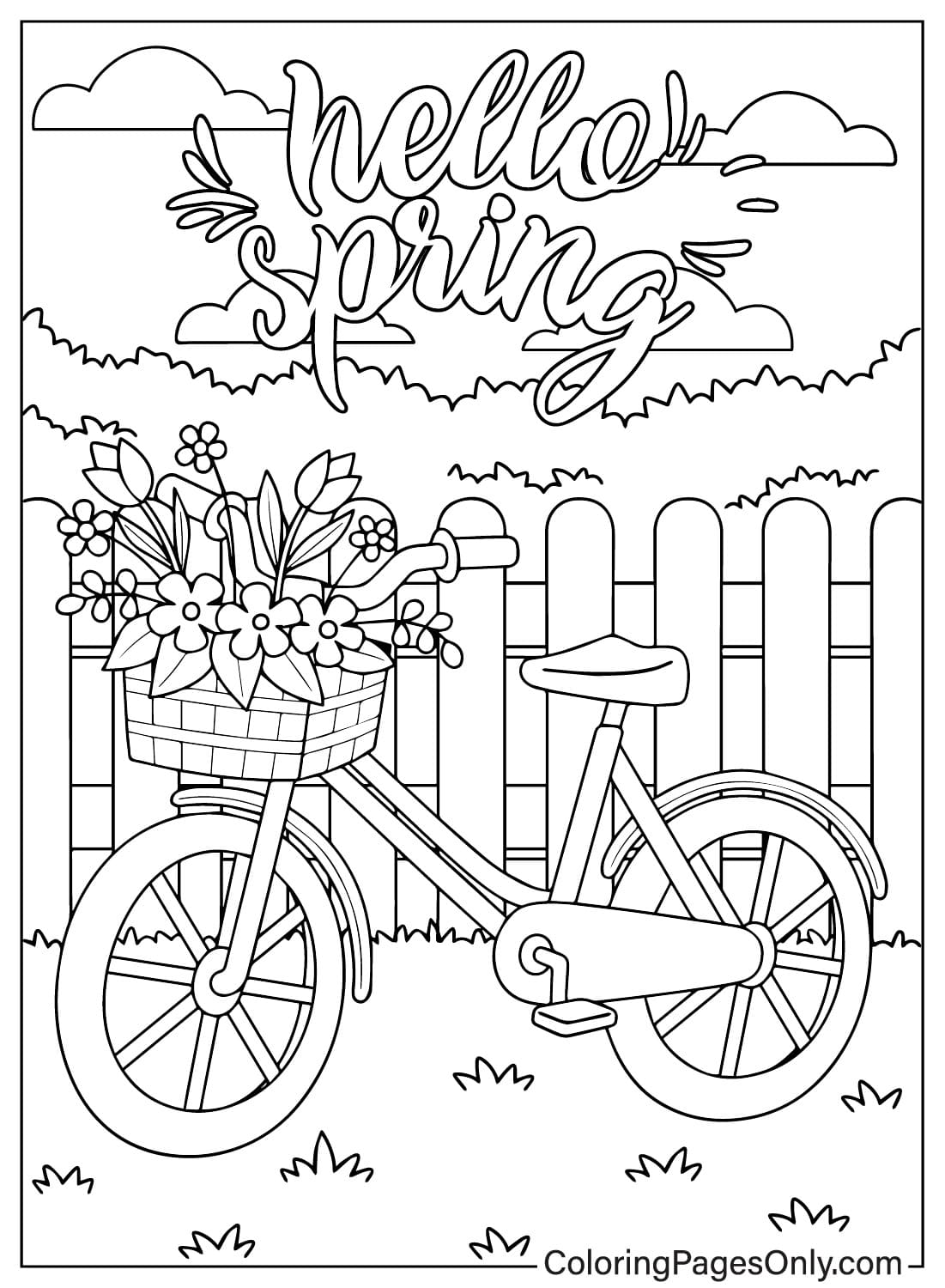
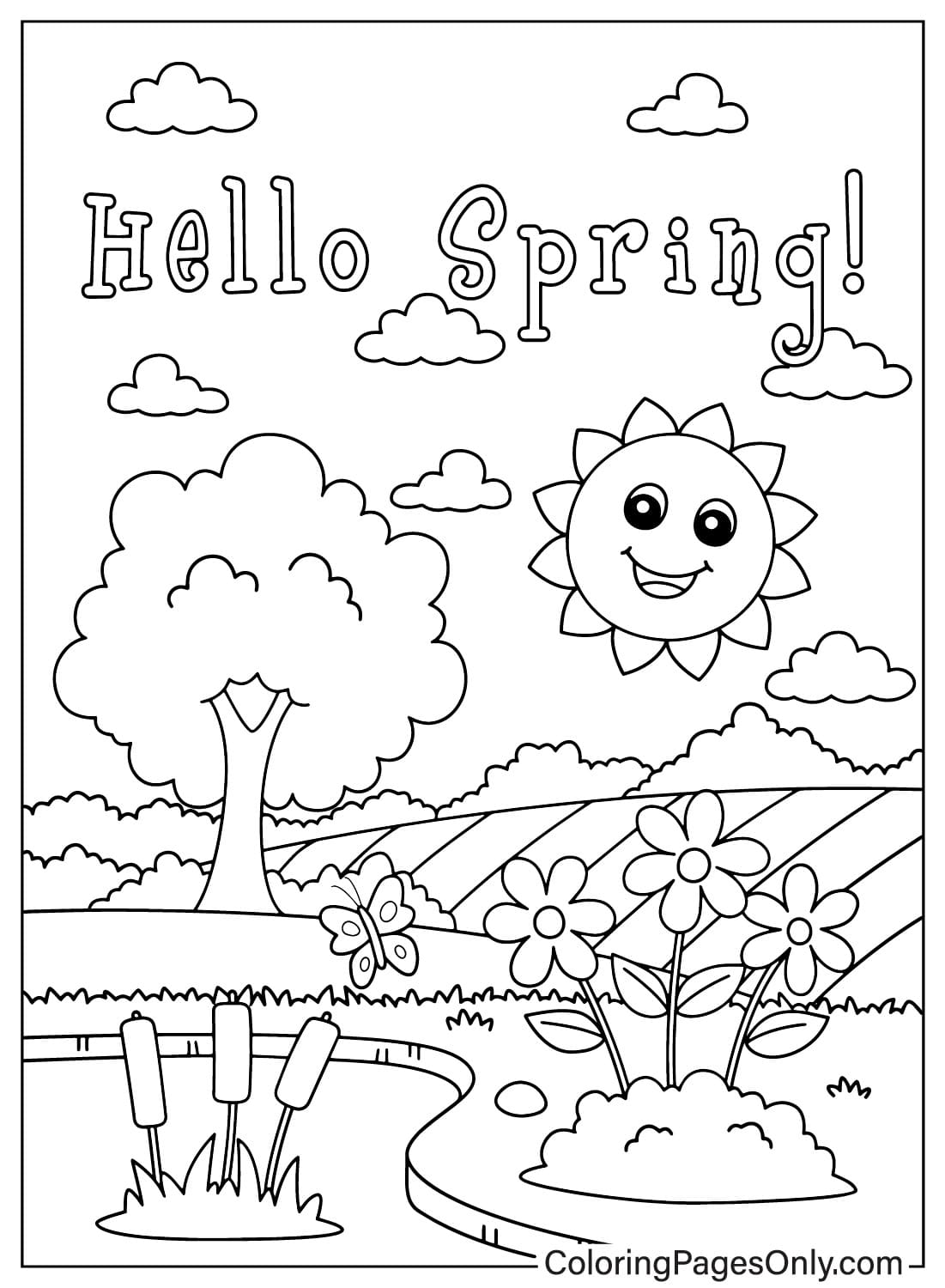
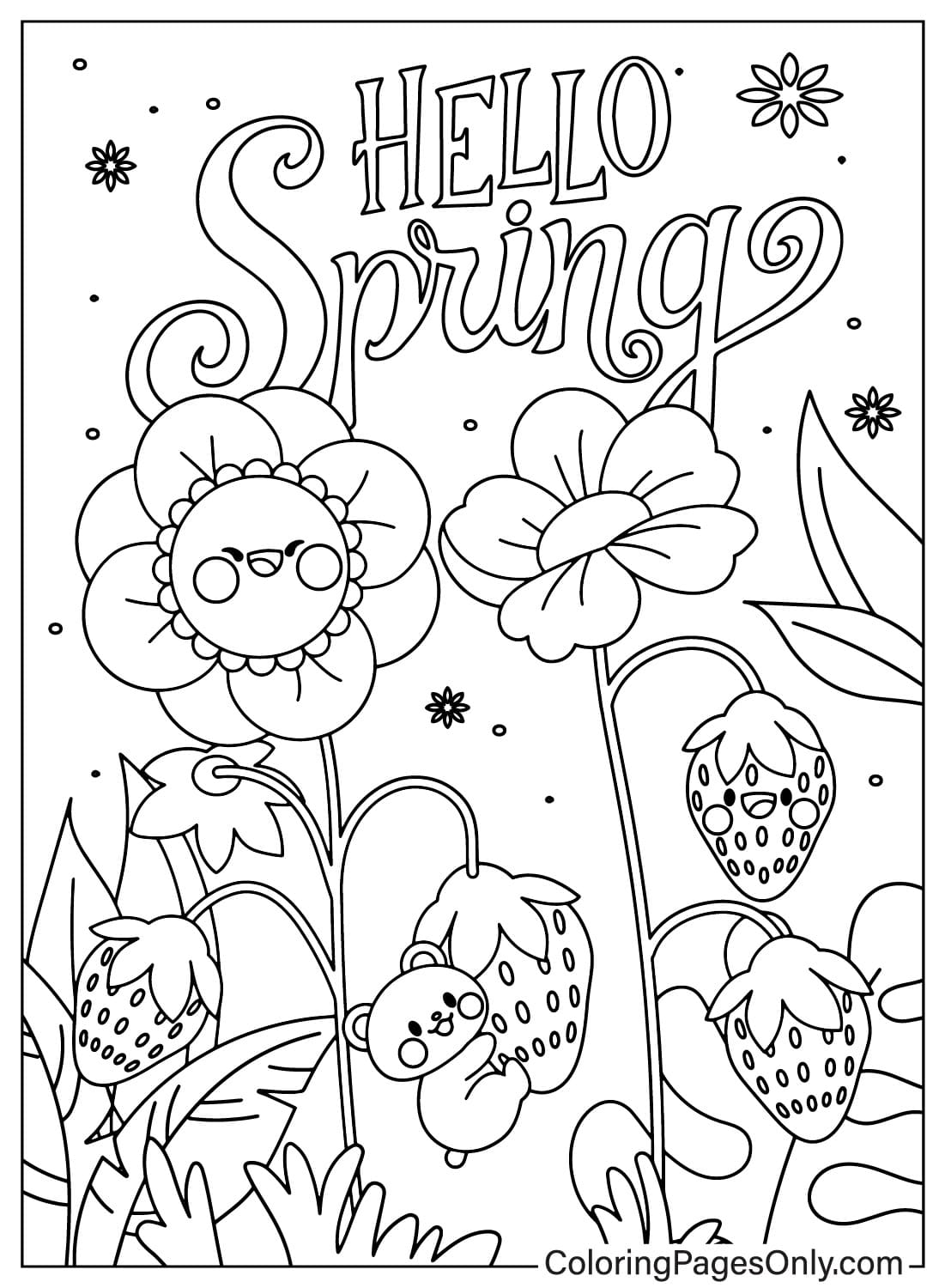
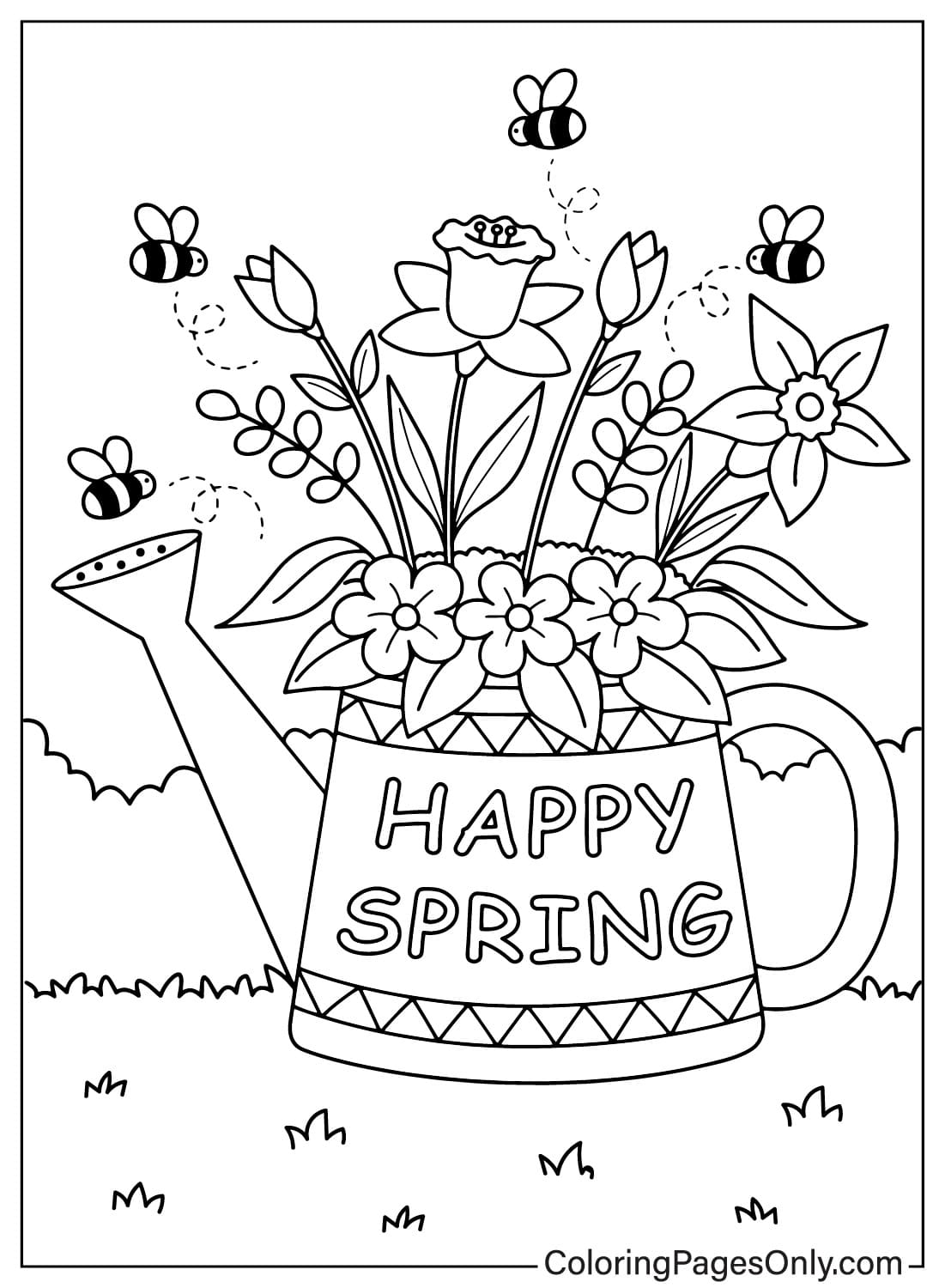

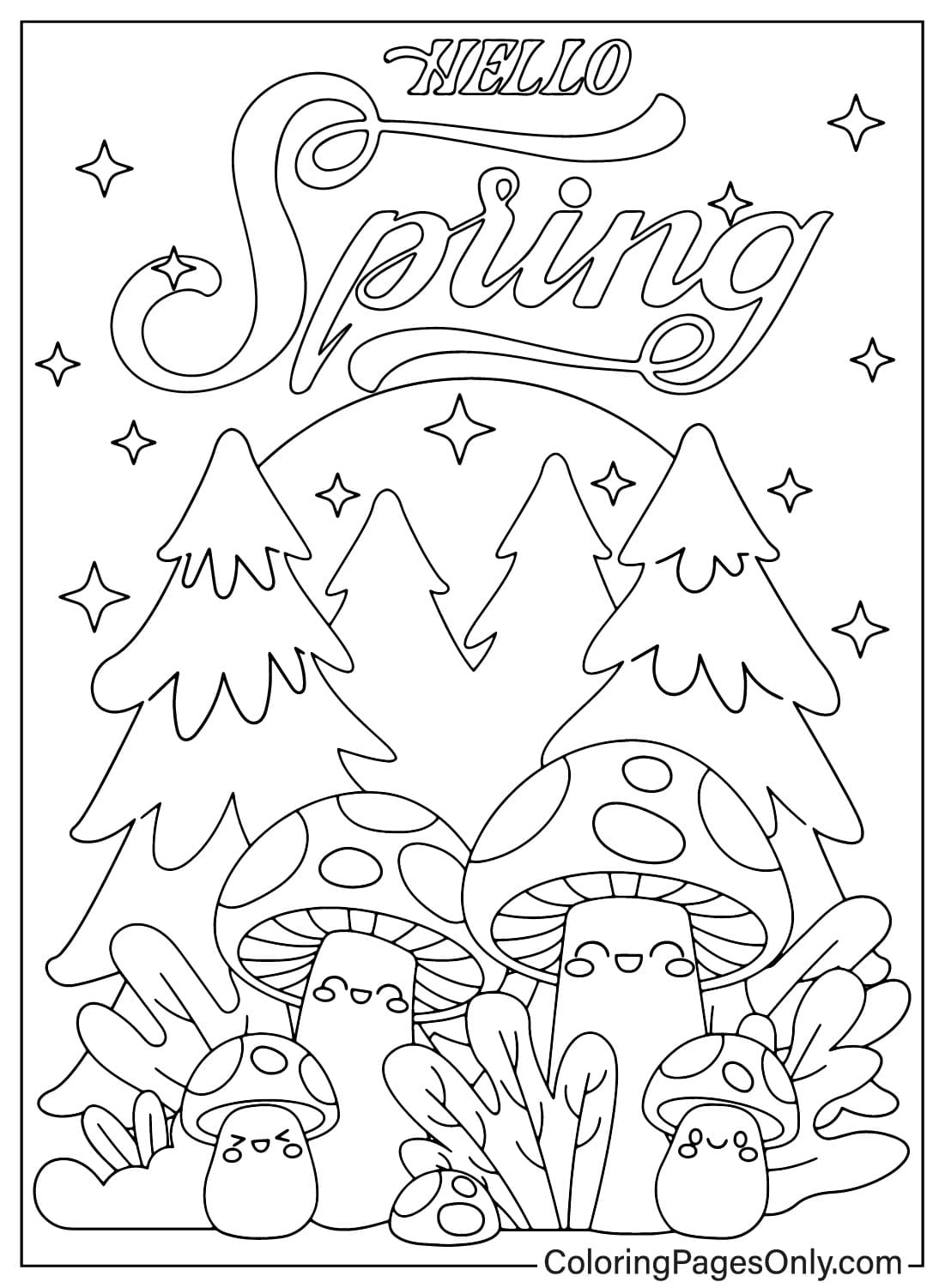
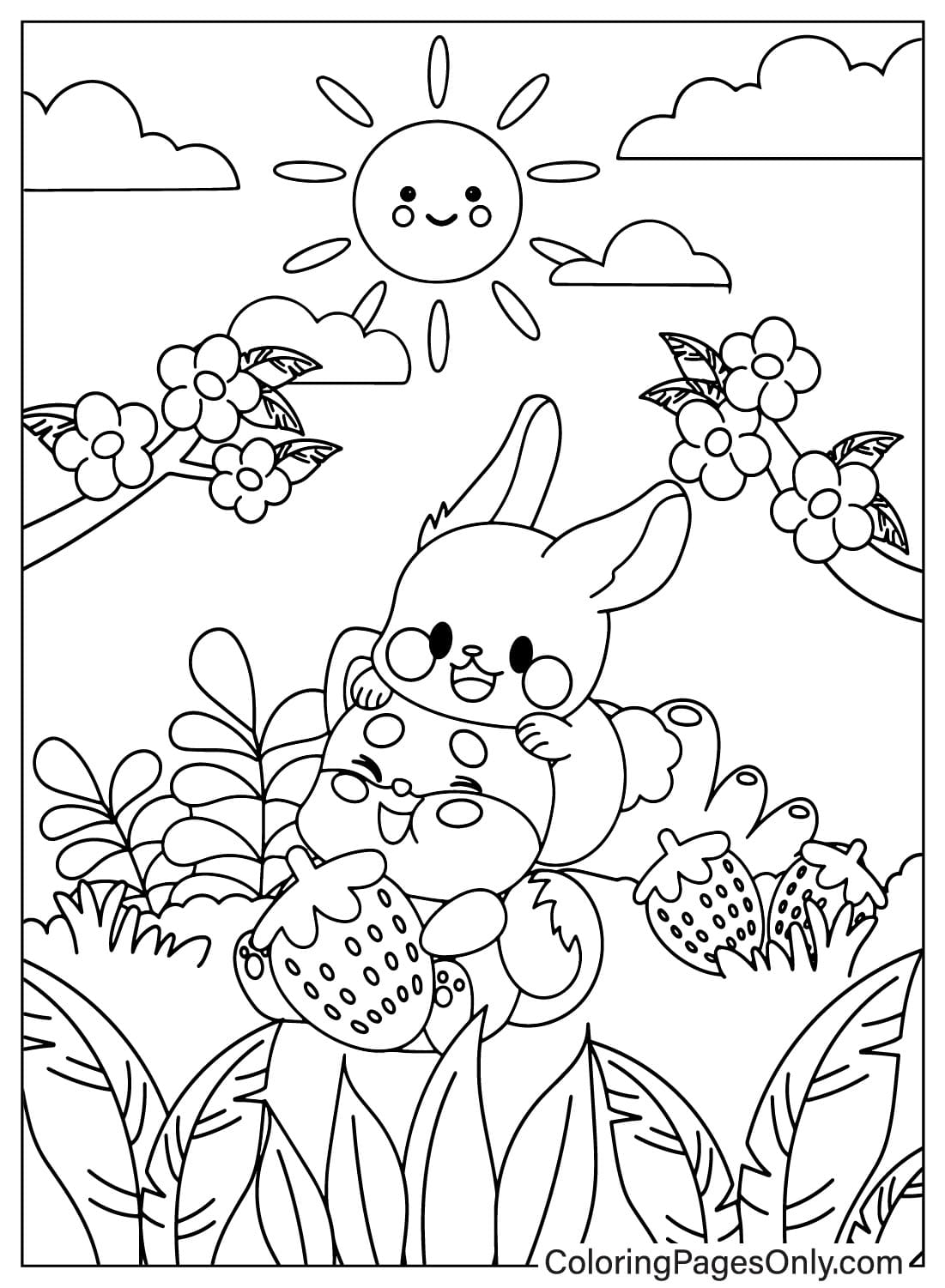
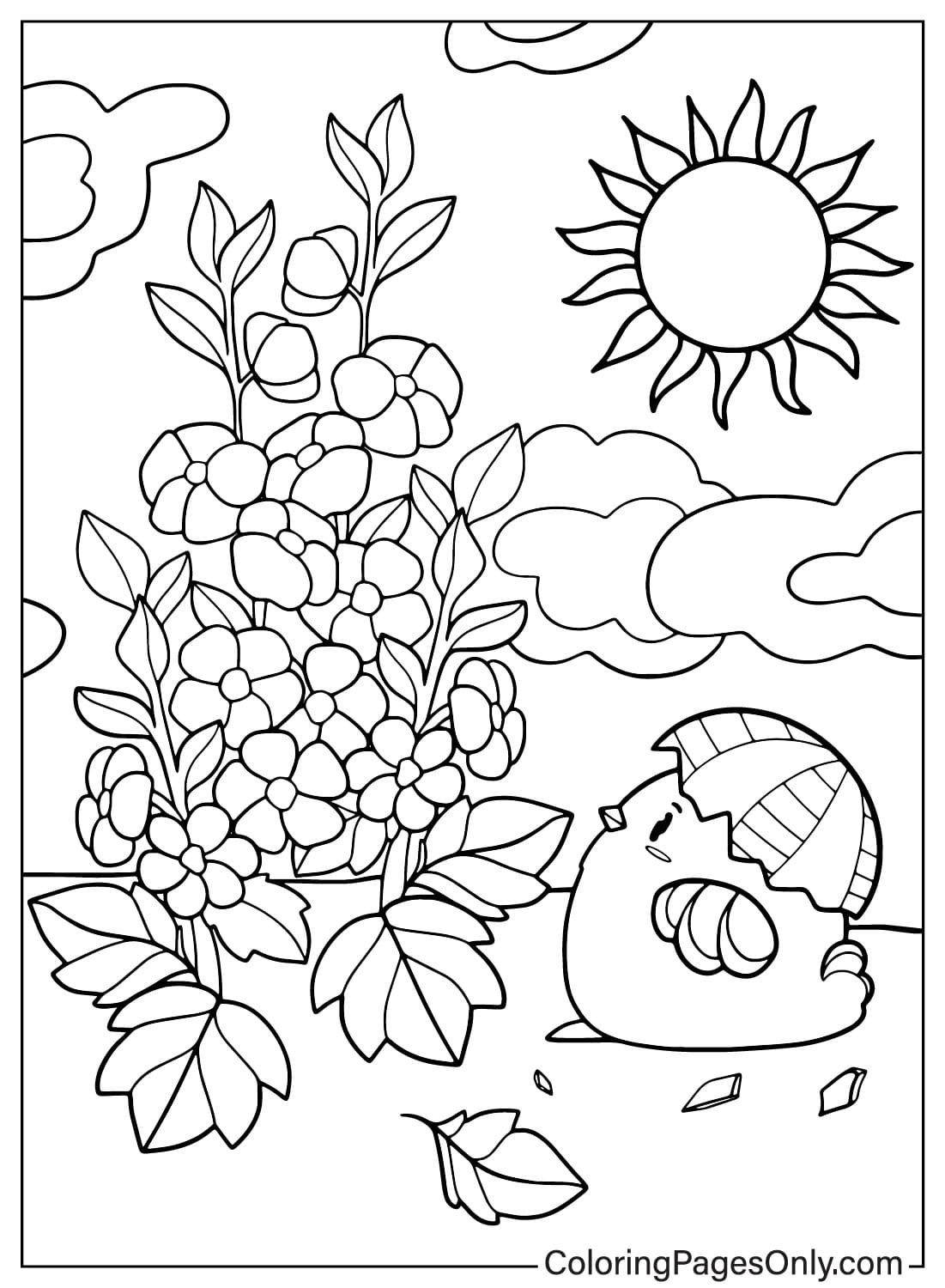
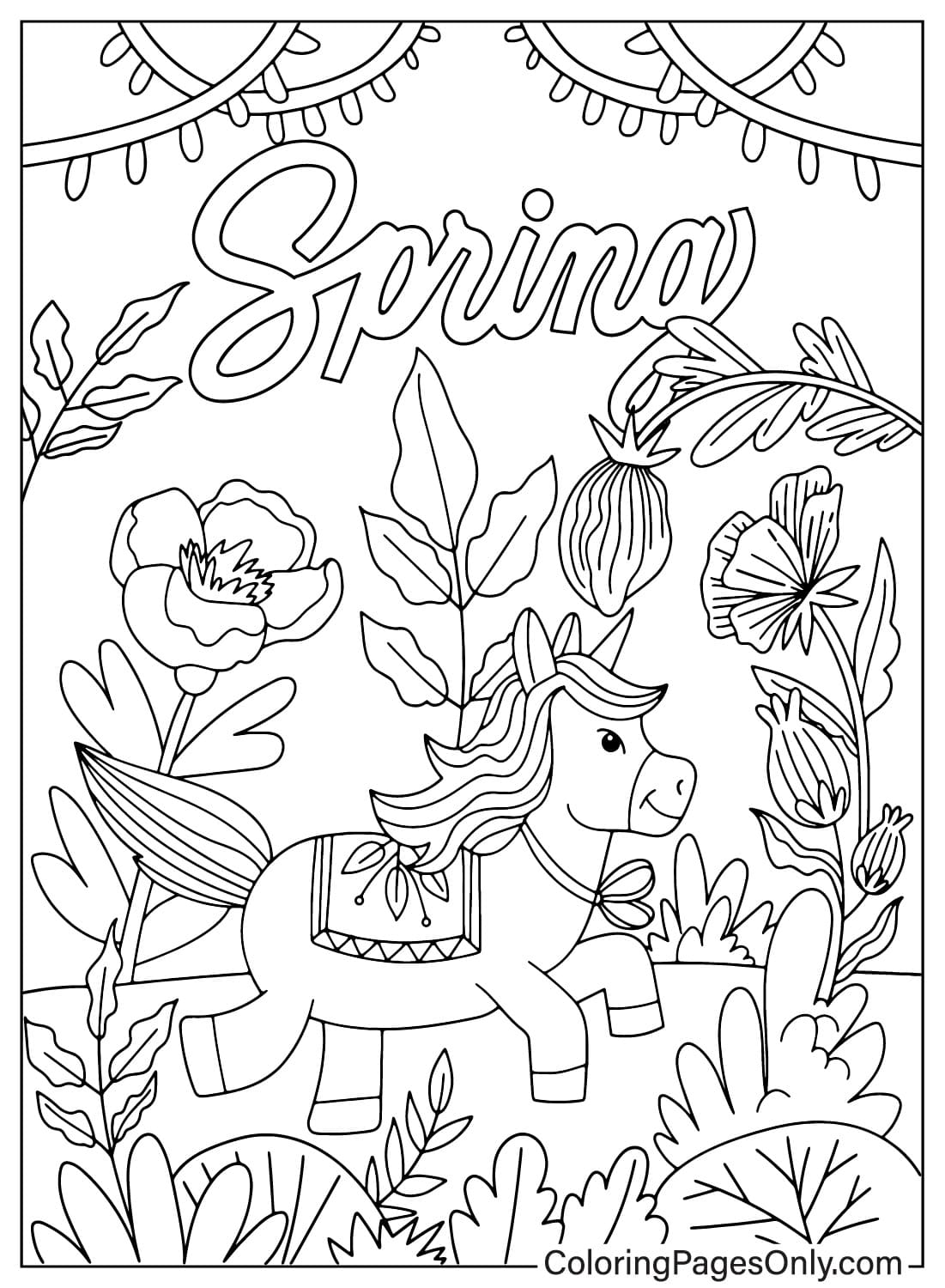
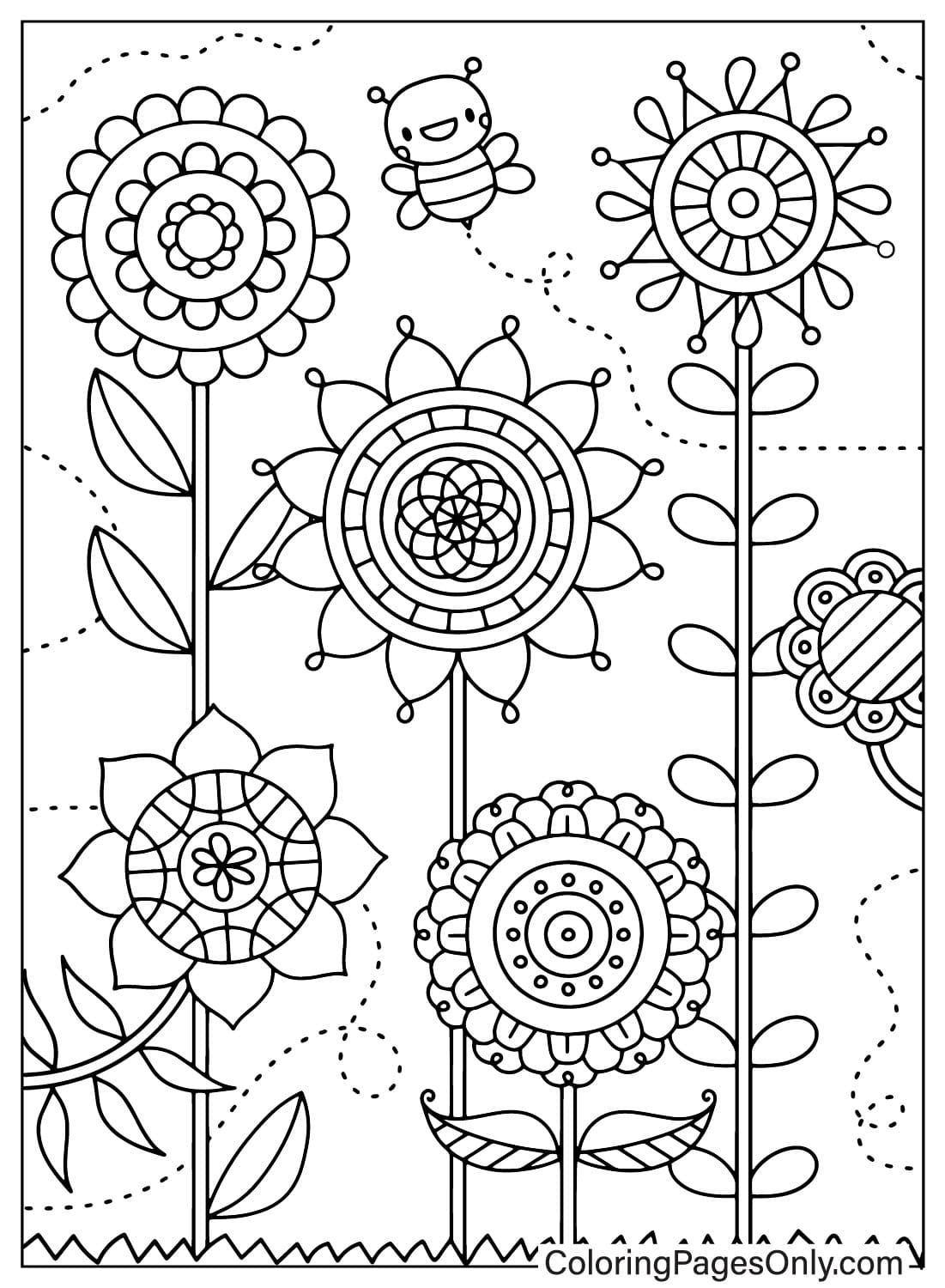

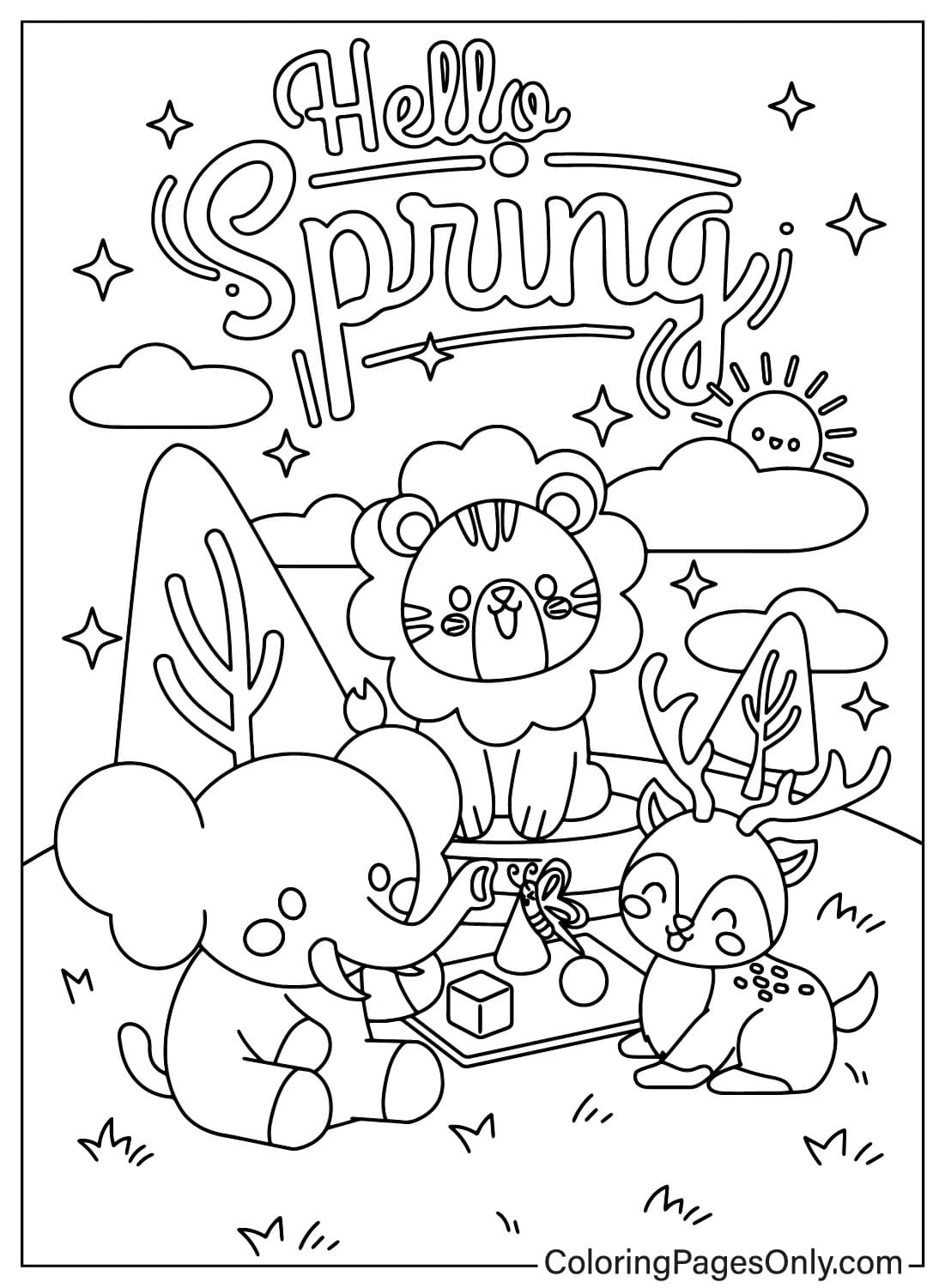
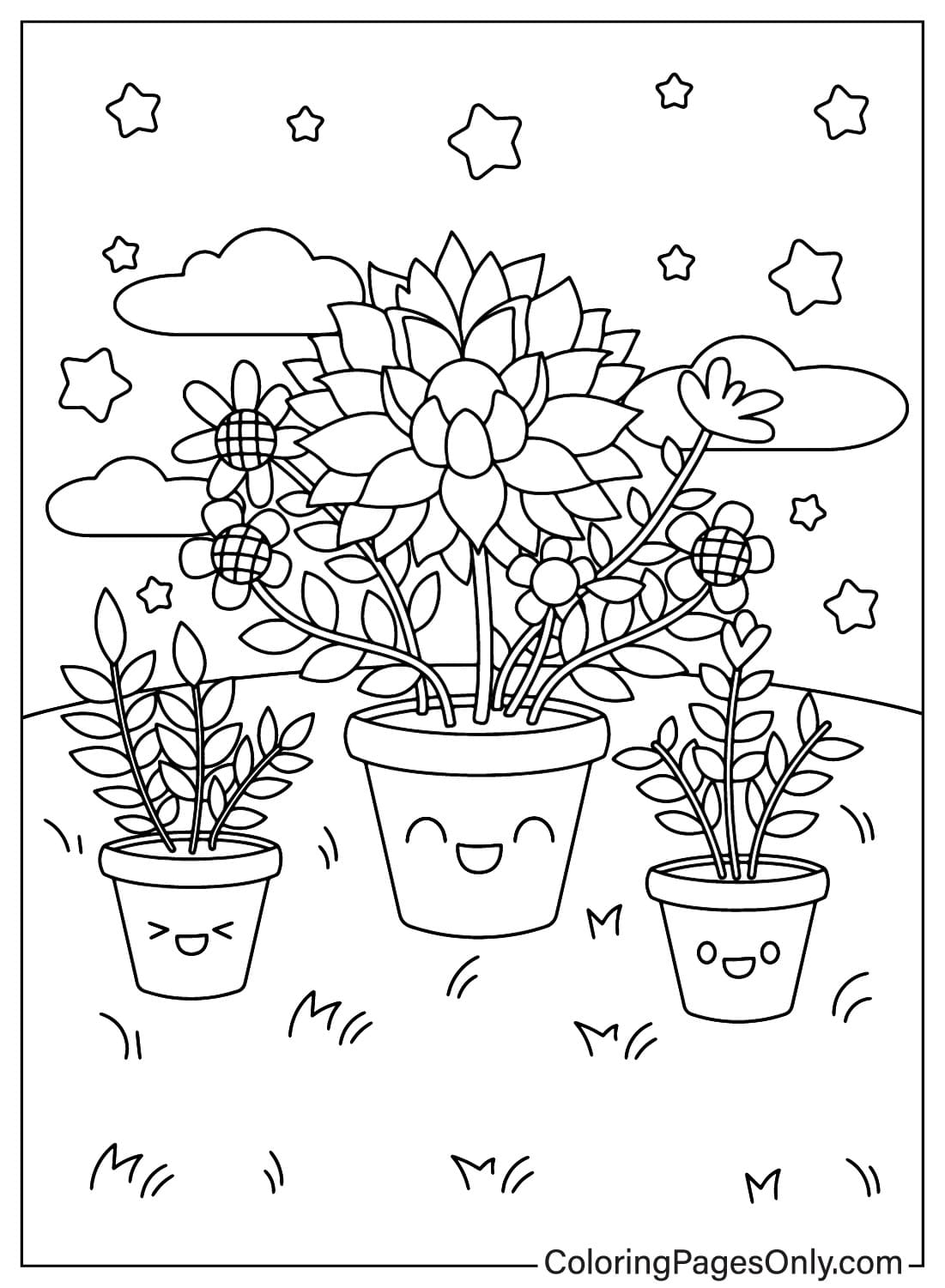
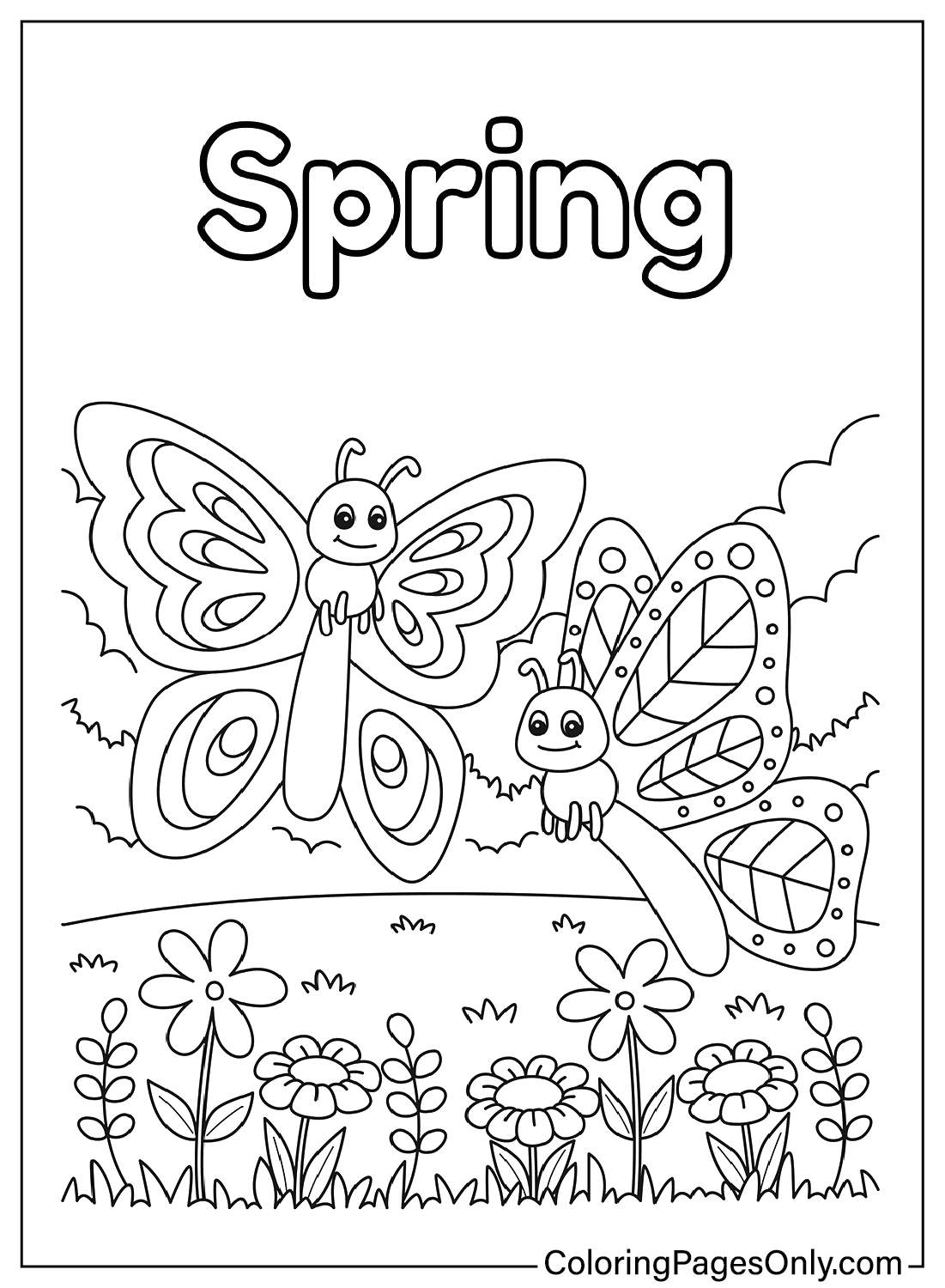
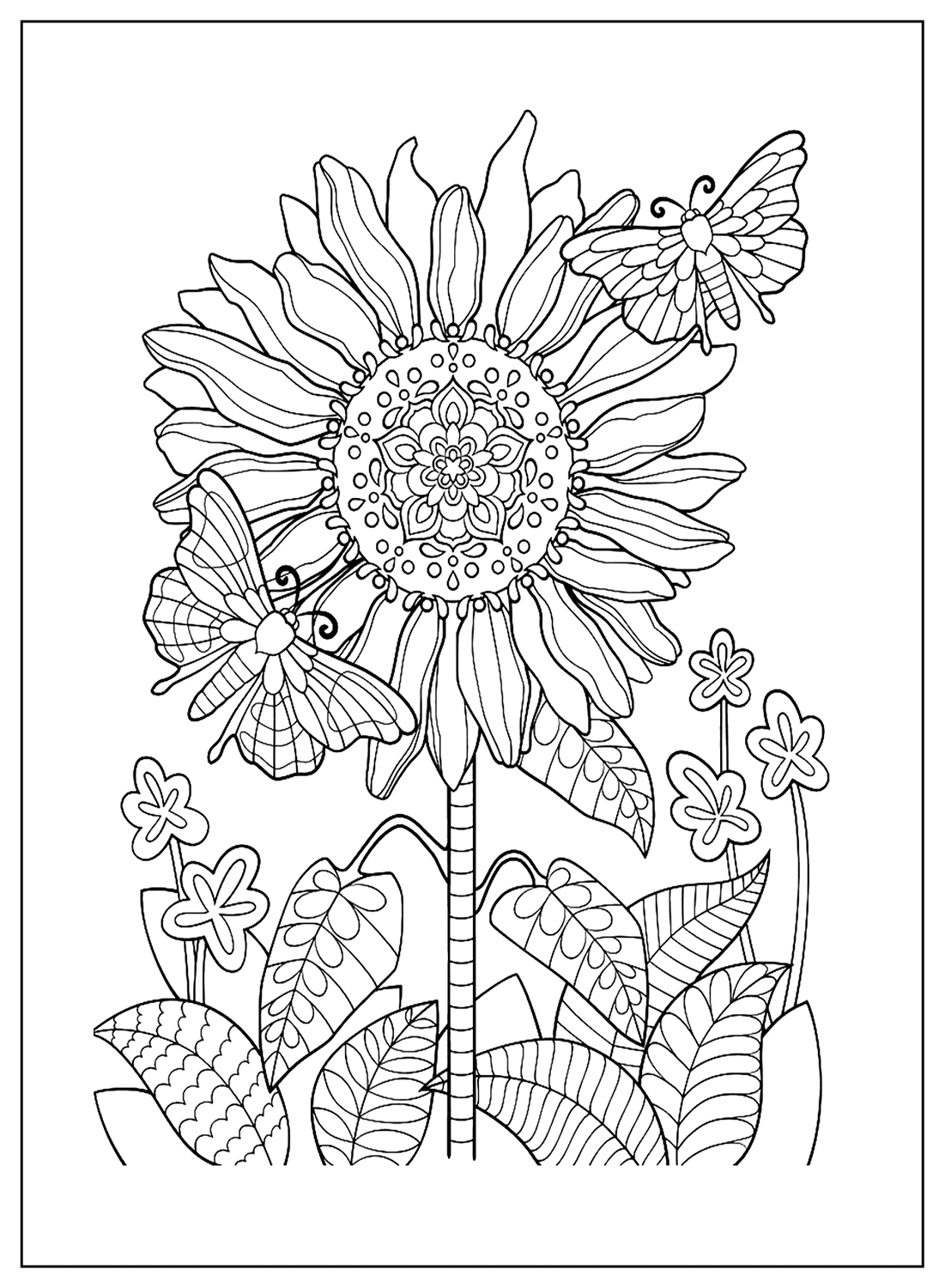
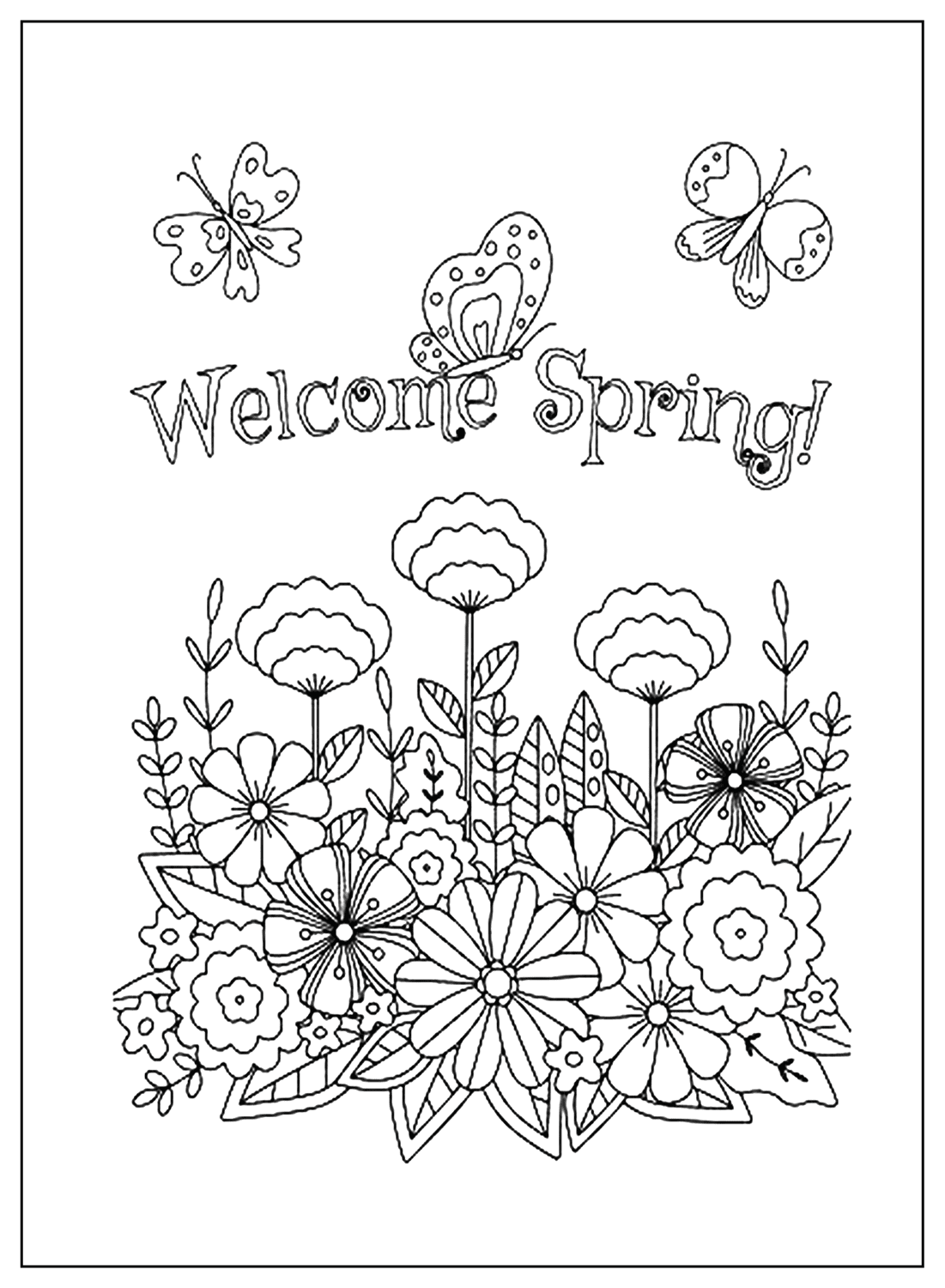
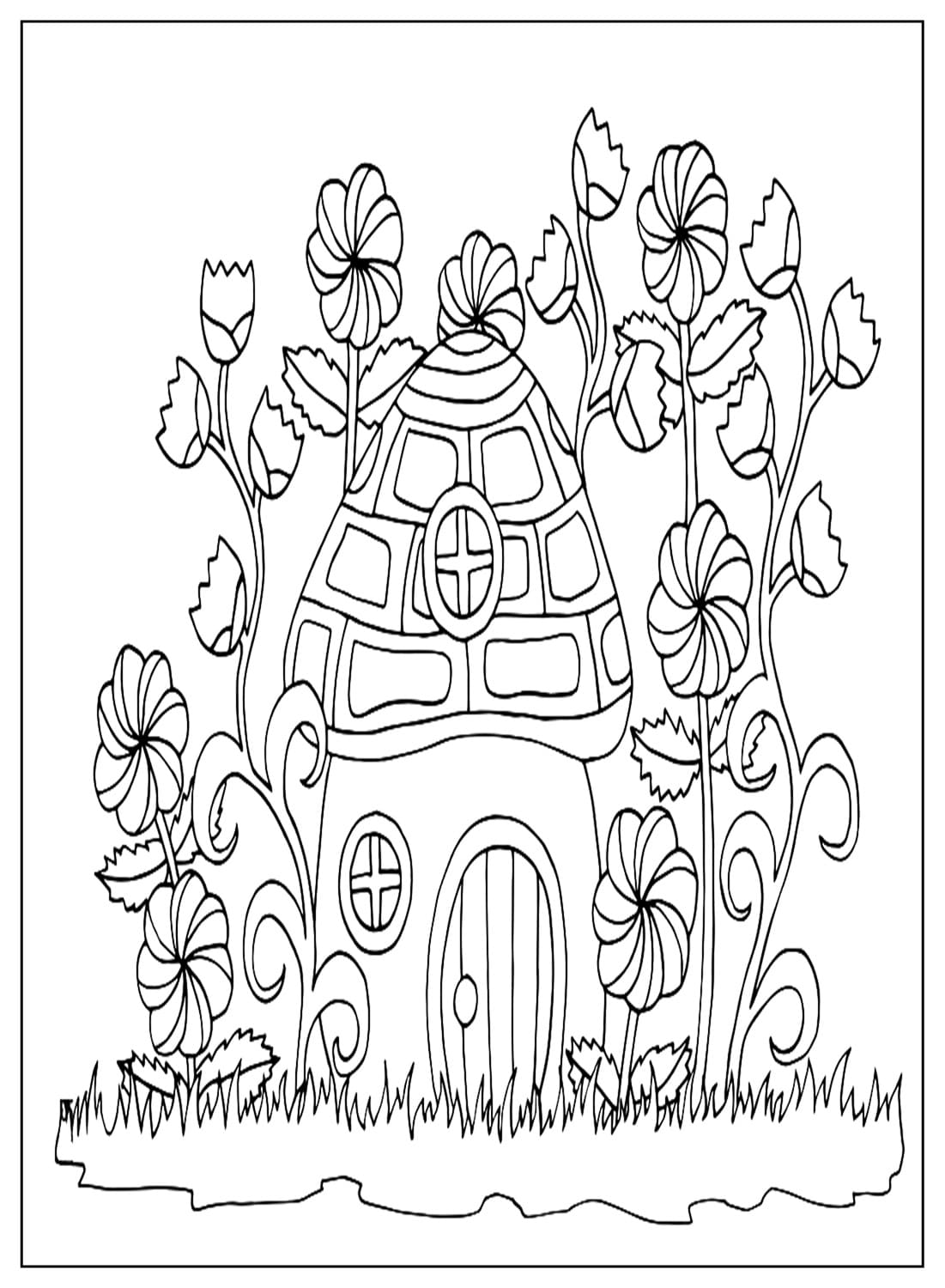
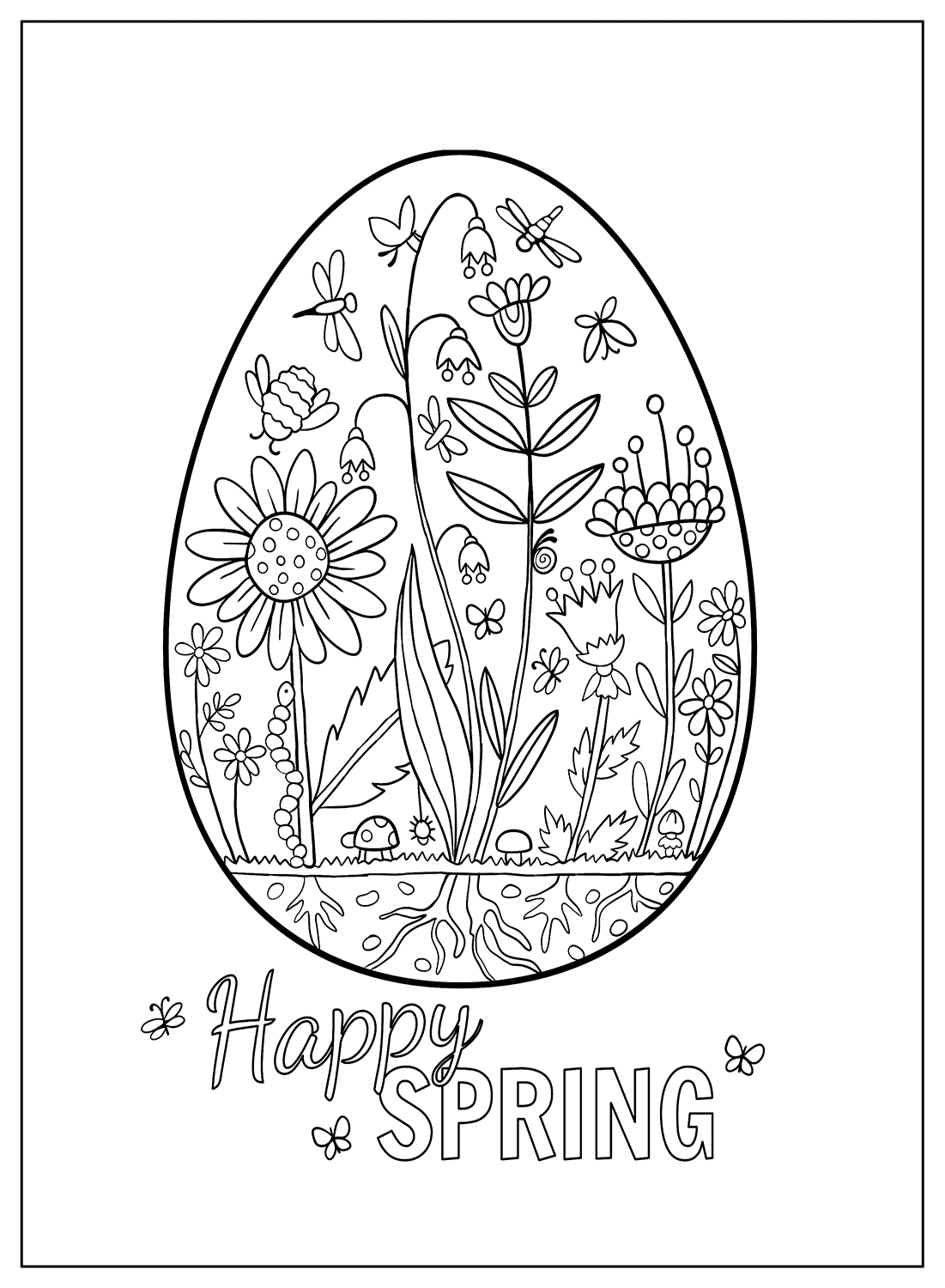
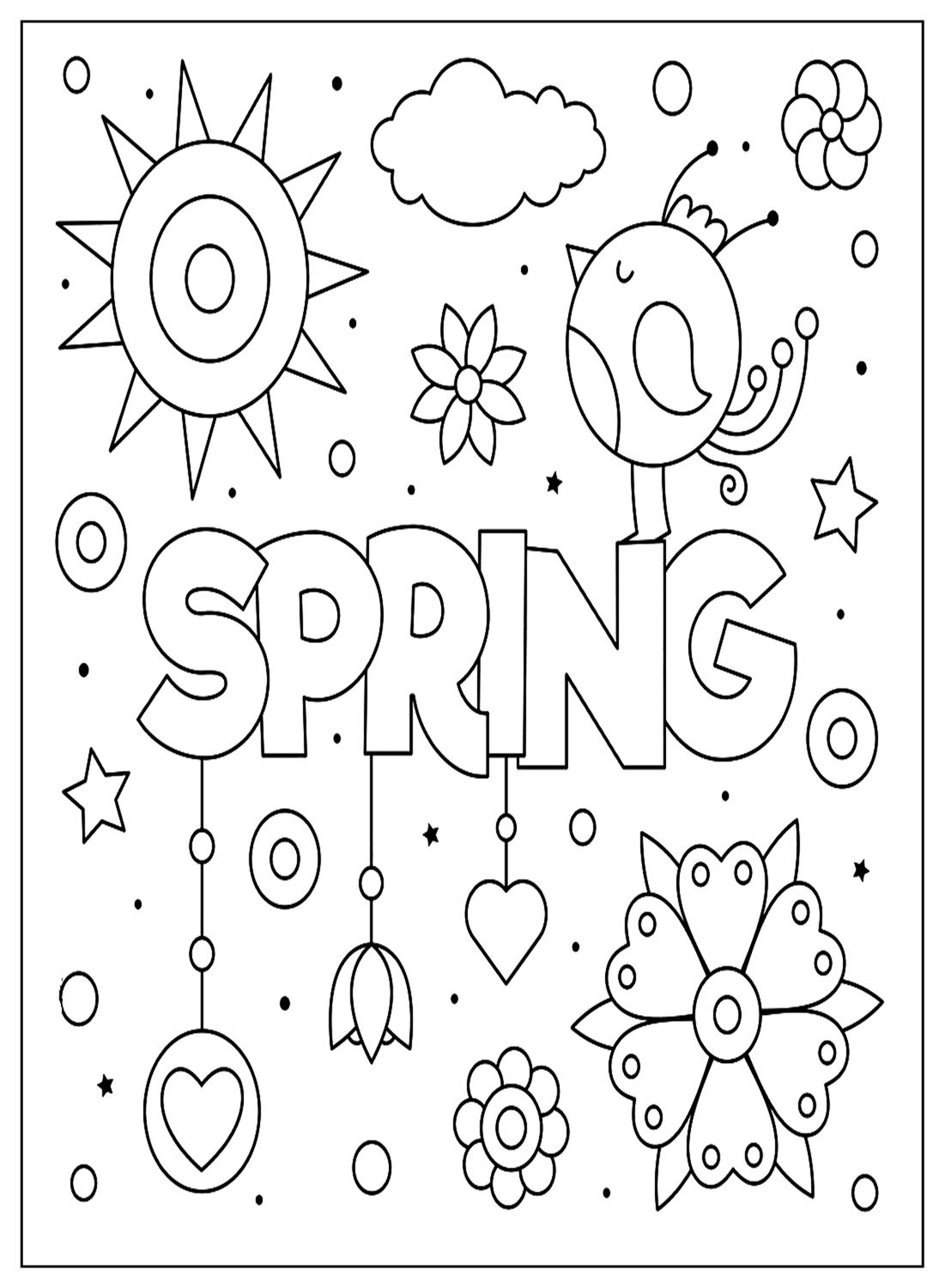
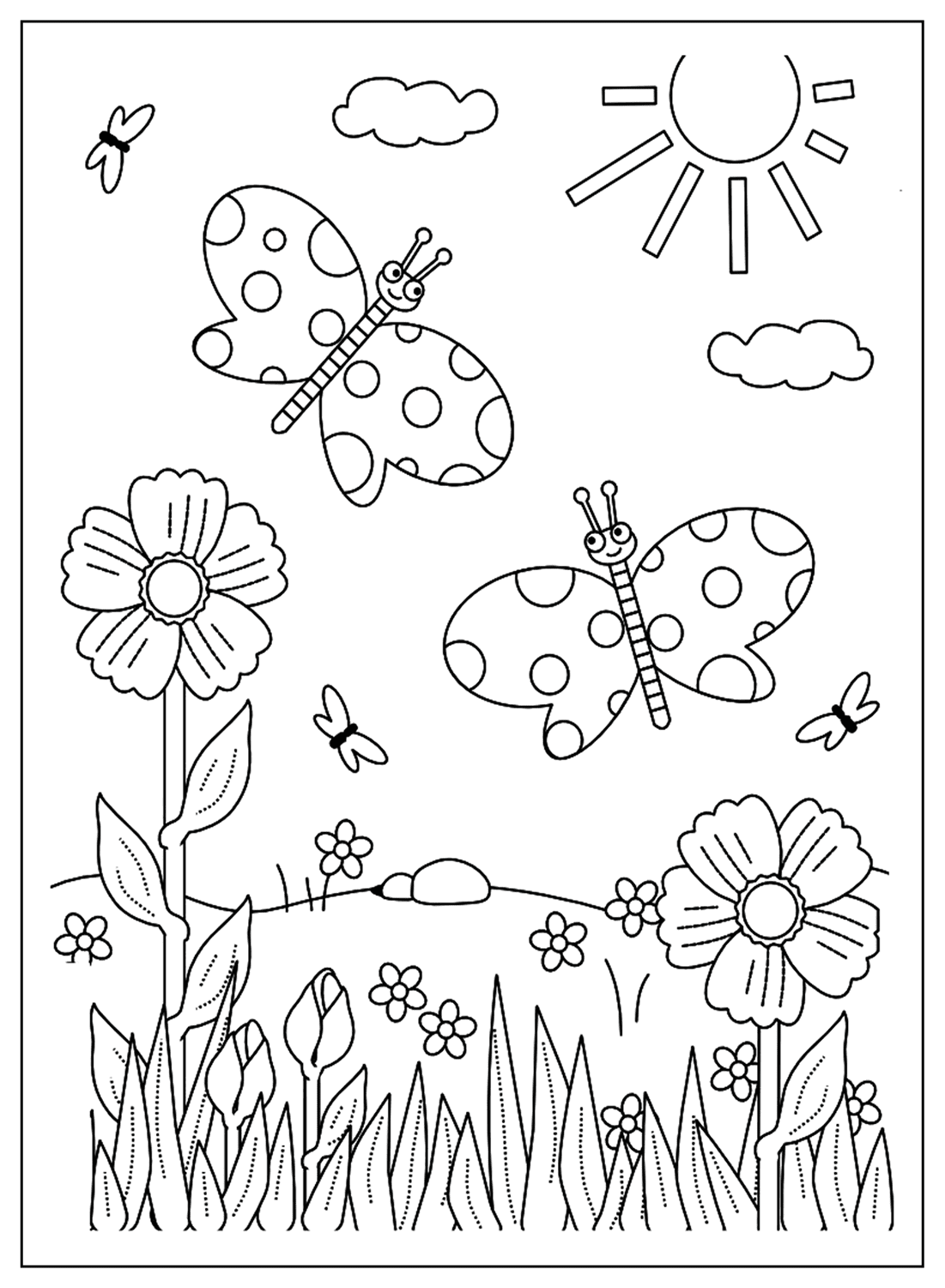
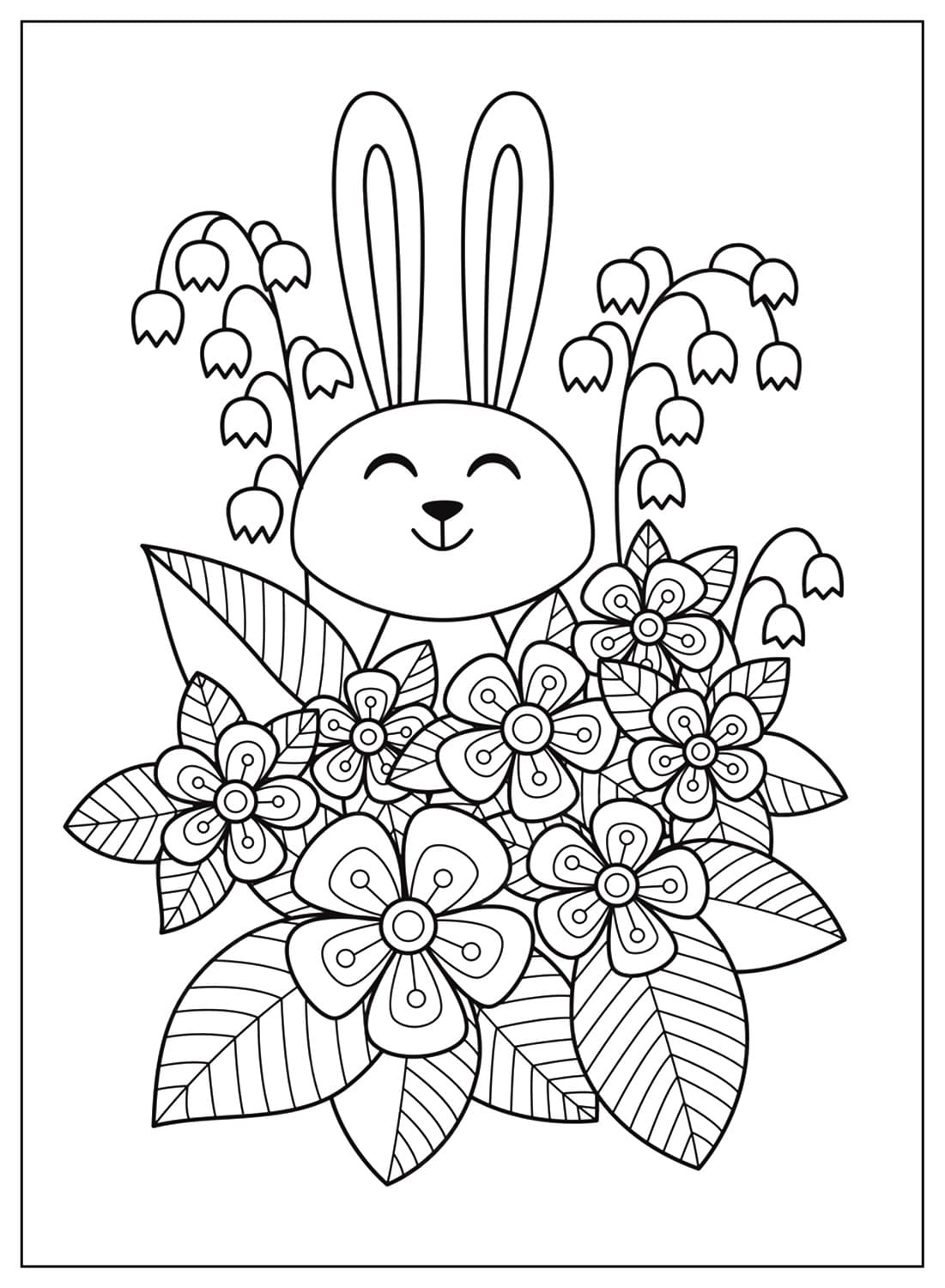
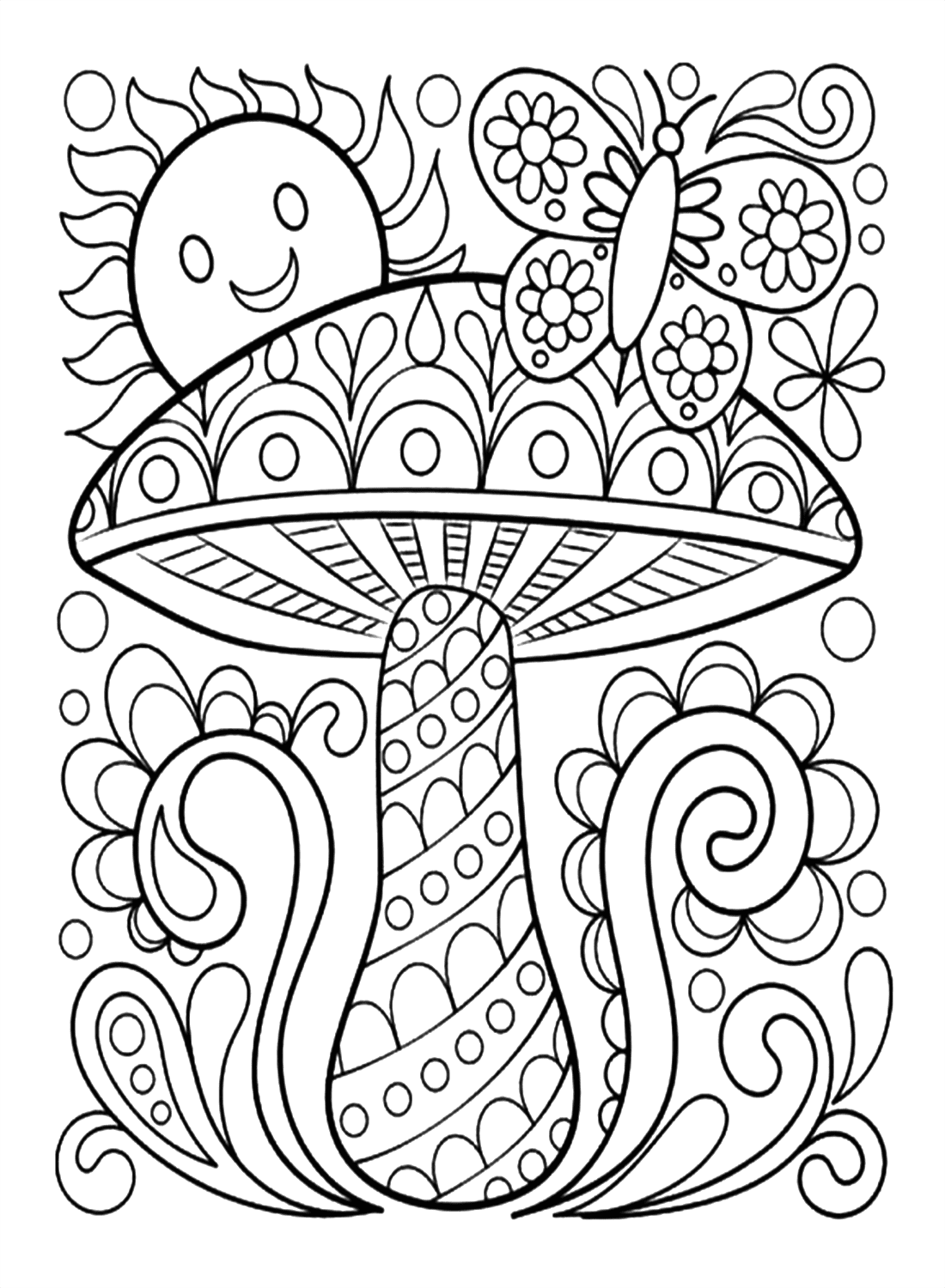

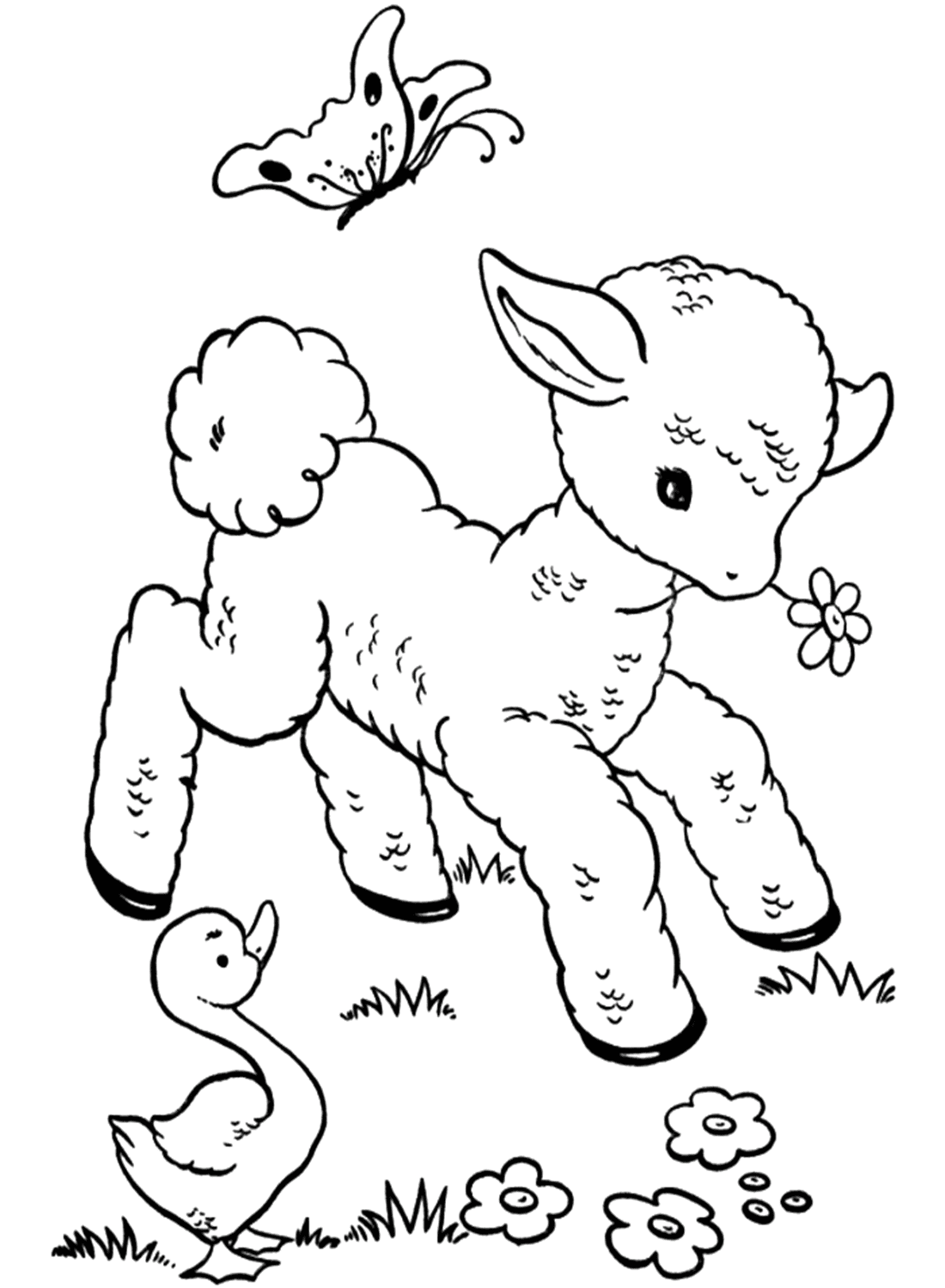
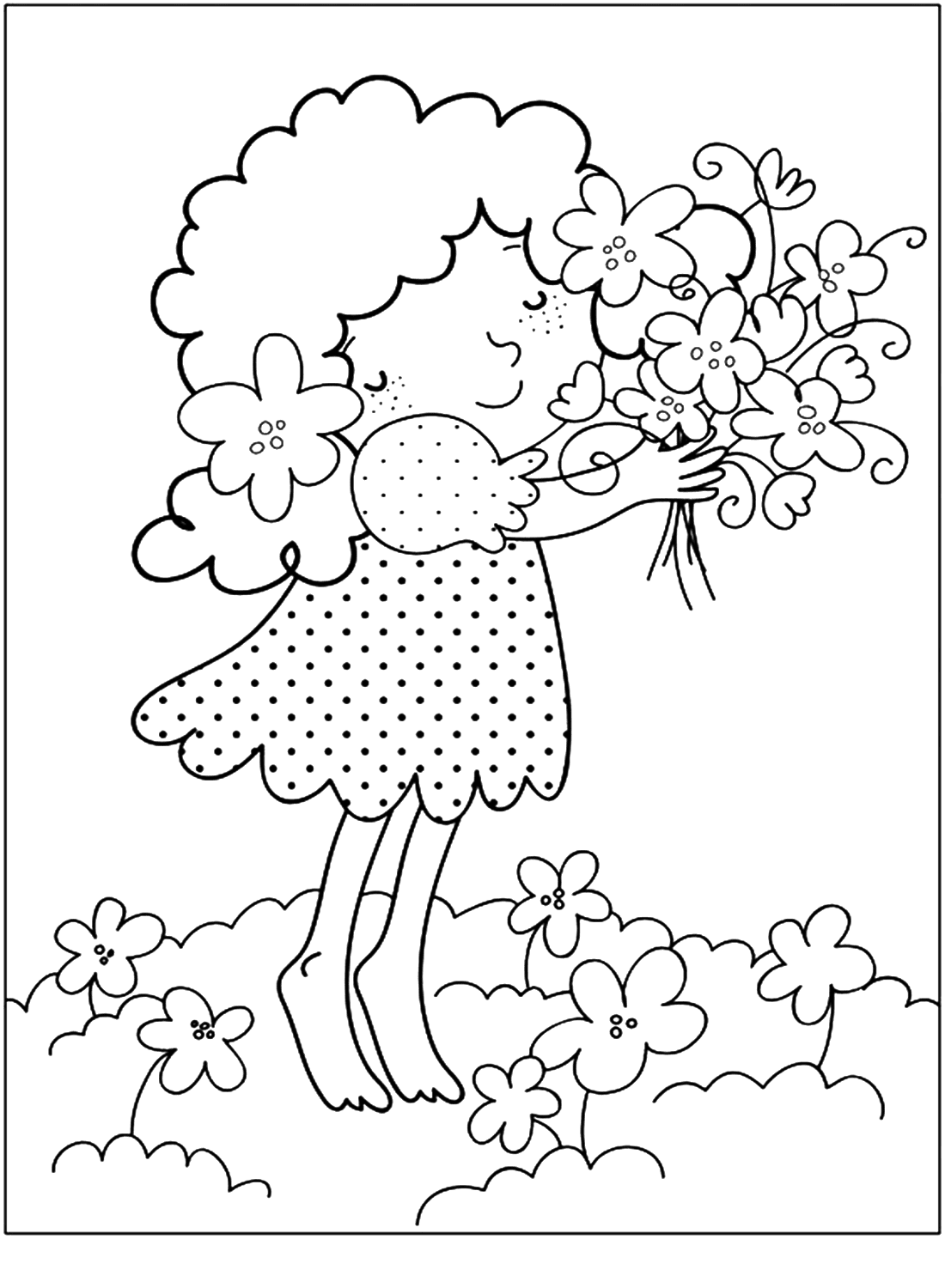
What Is Inside This Collection
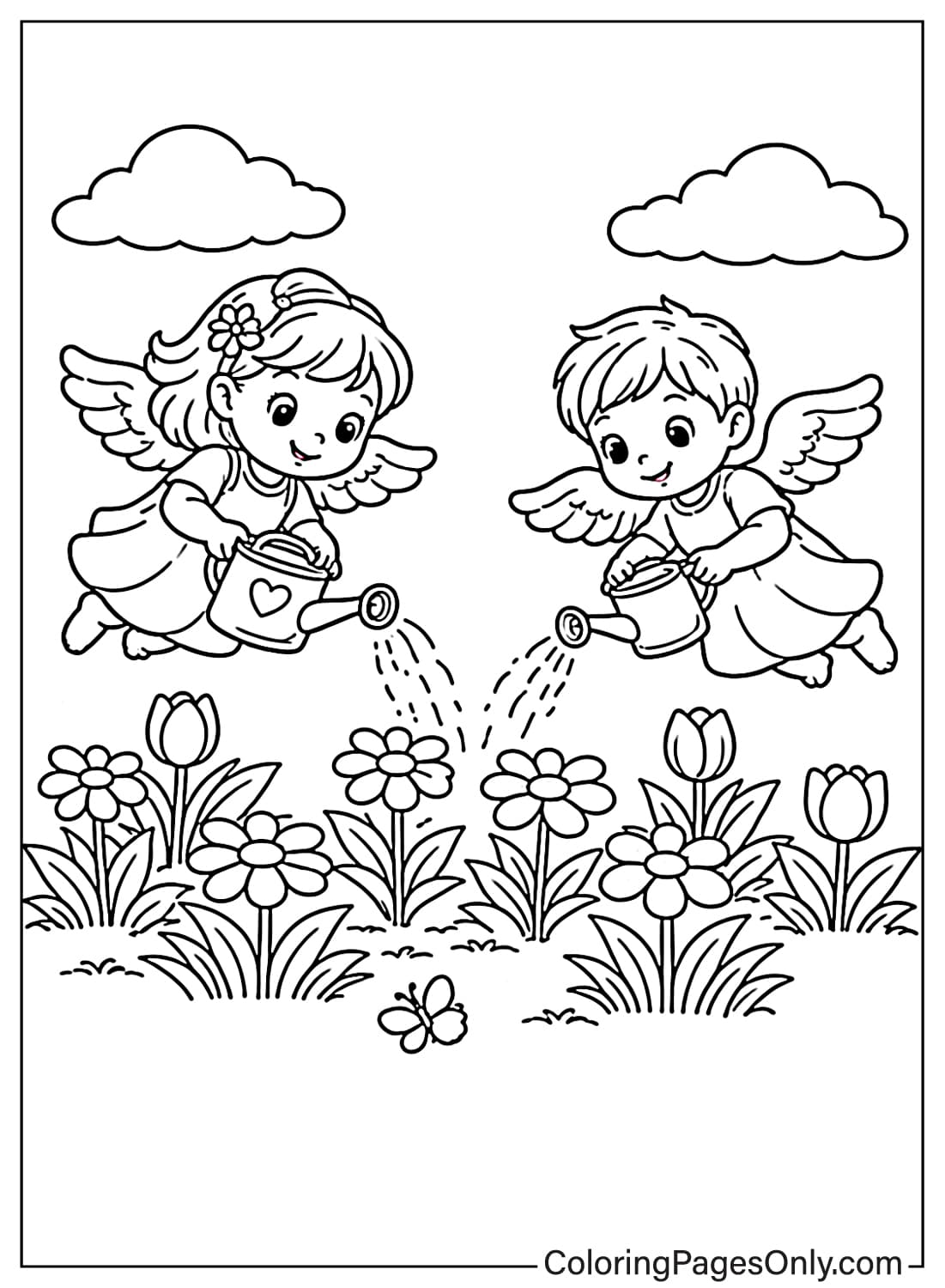
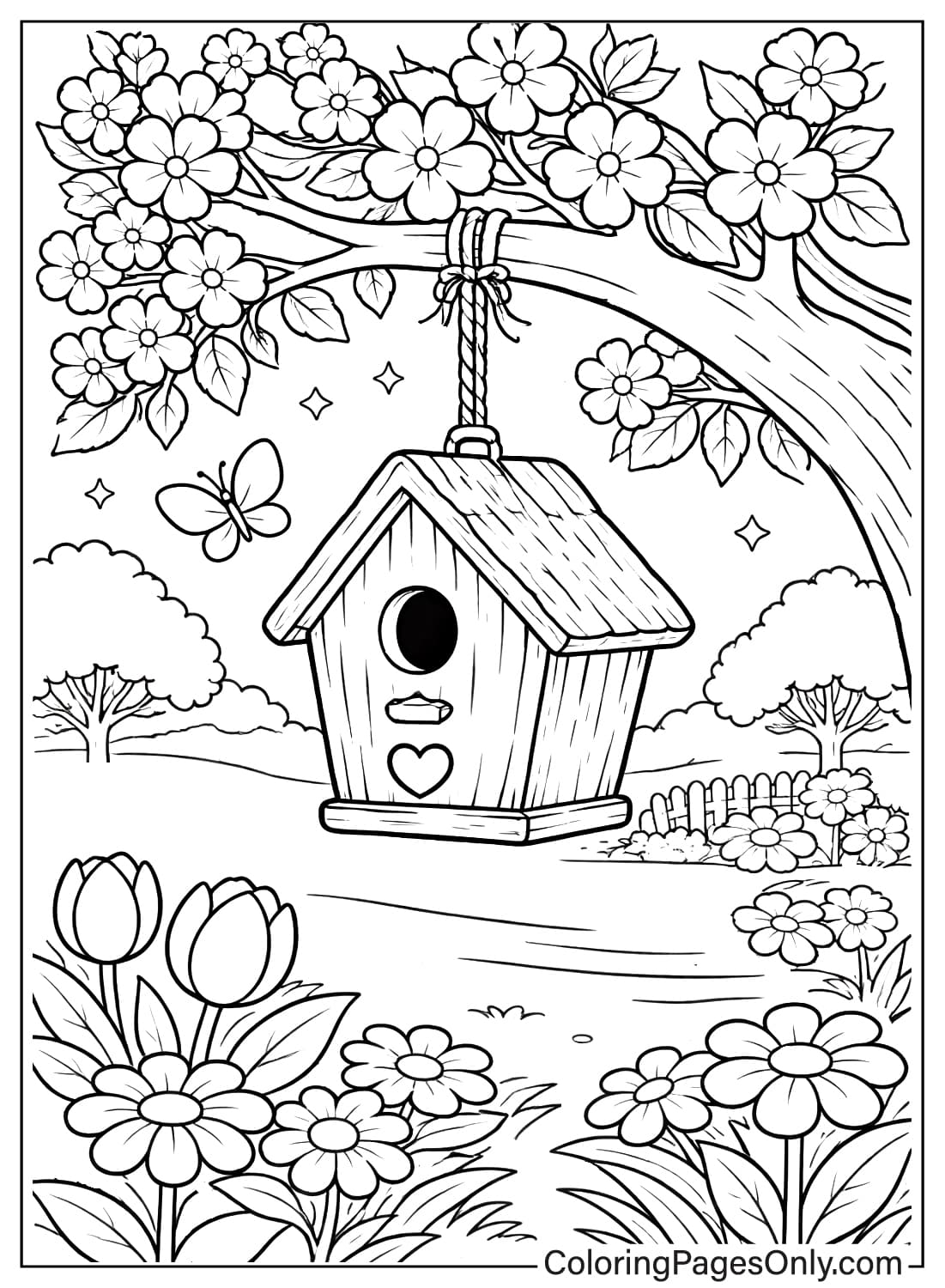
The 49 designs group into a few recurring types, from garden scenes to rainy-day moments.
Garden and Flower Scenes
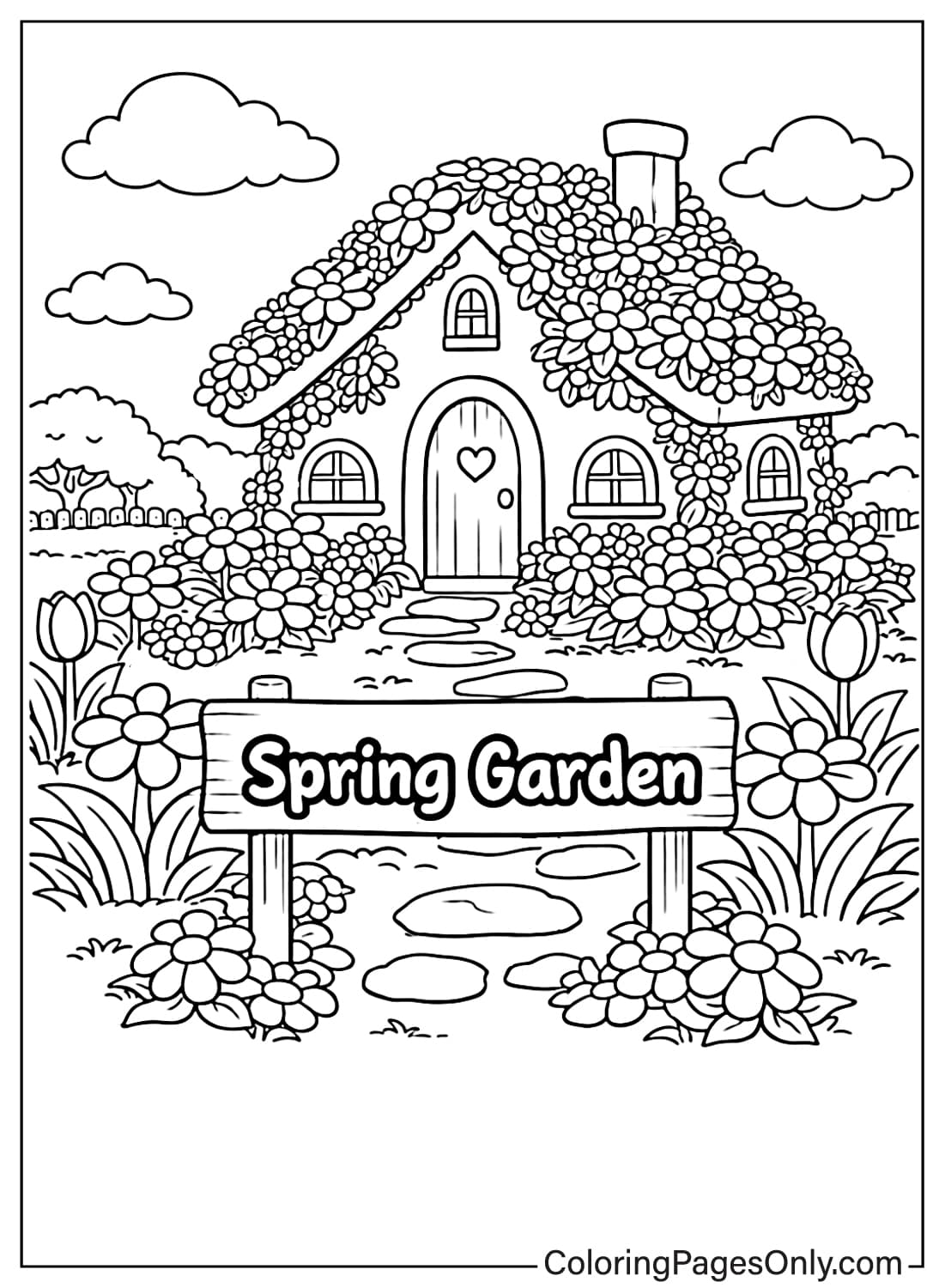
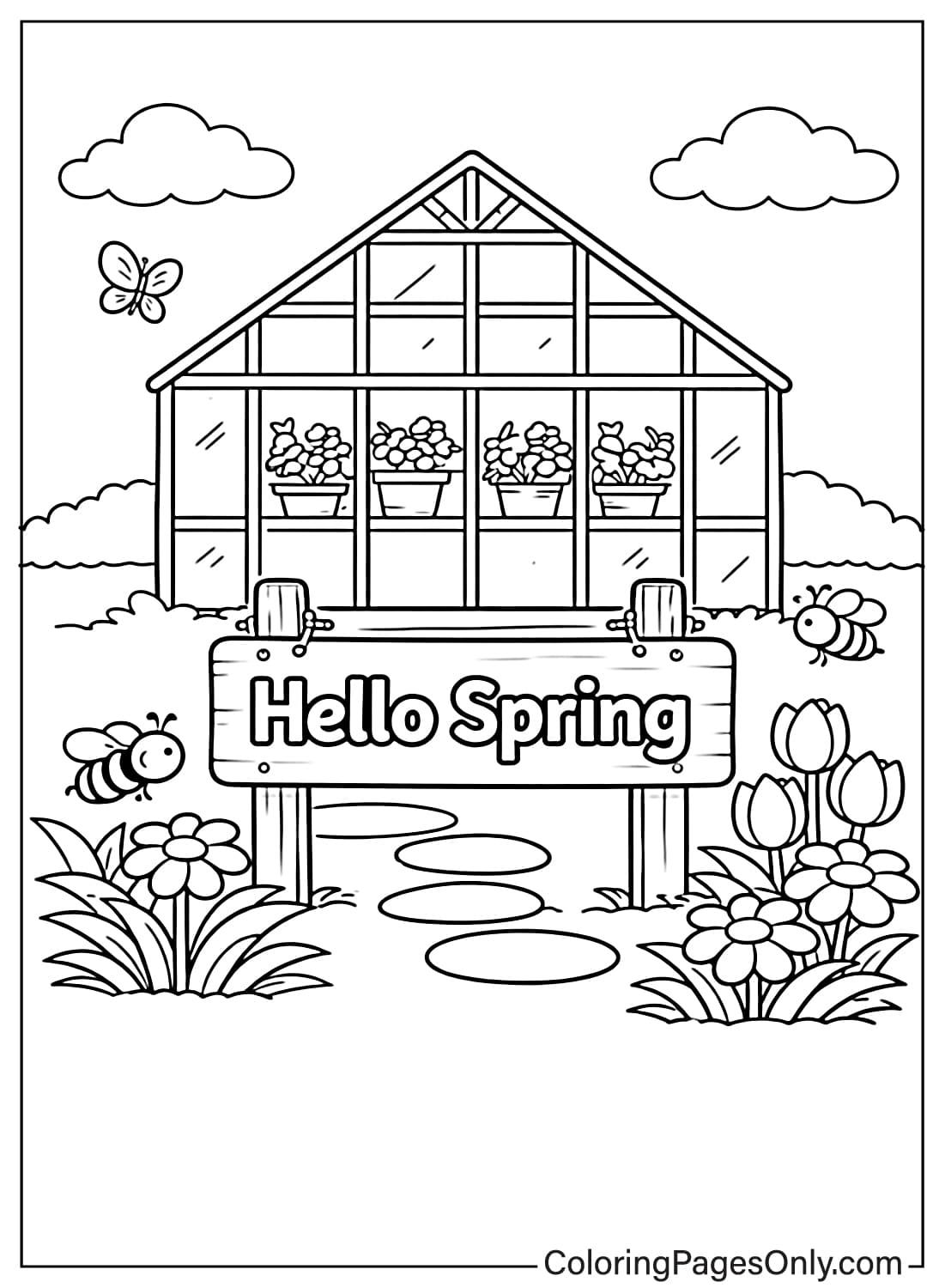
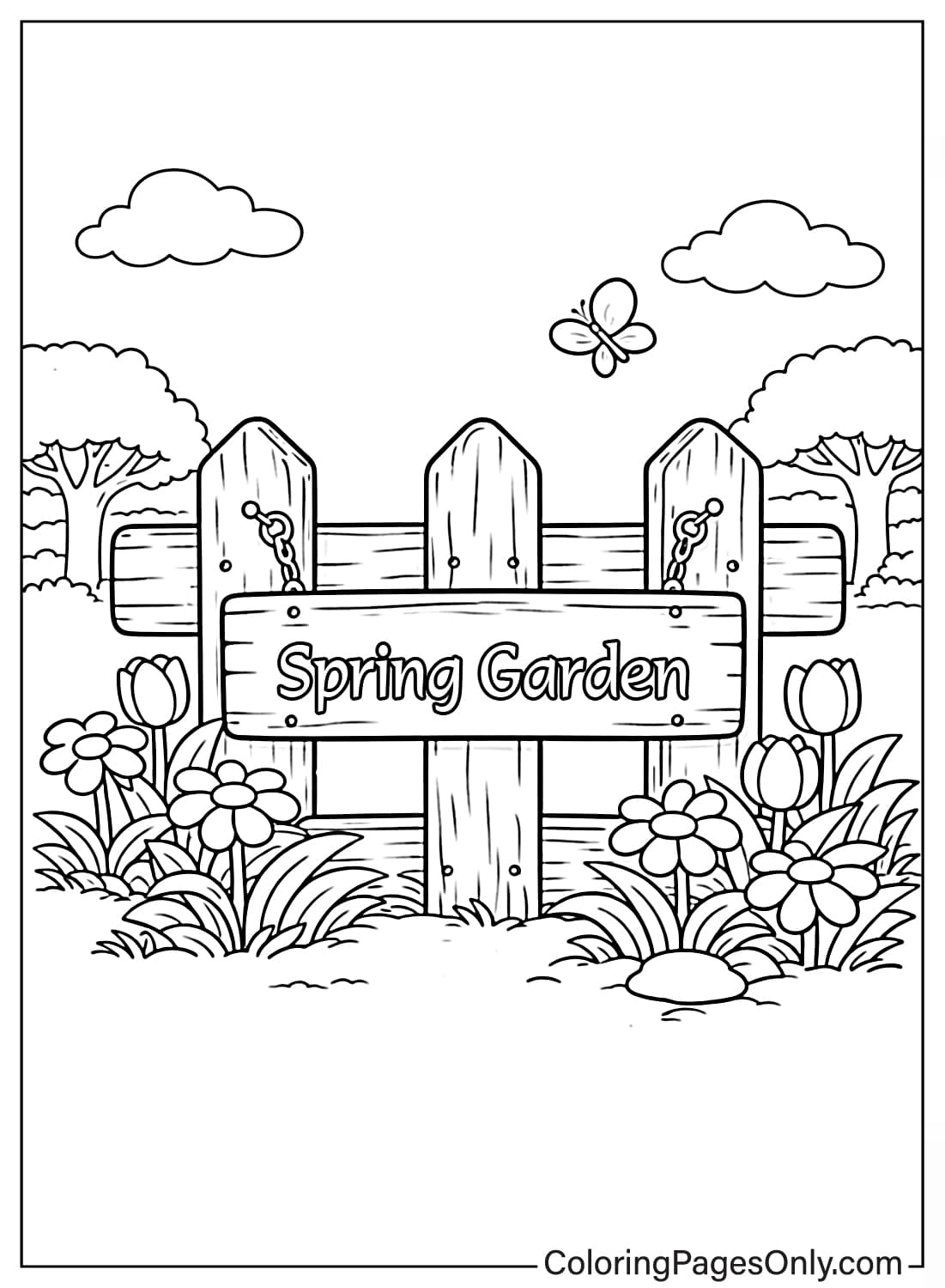
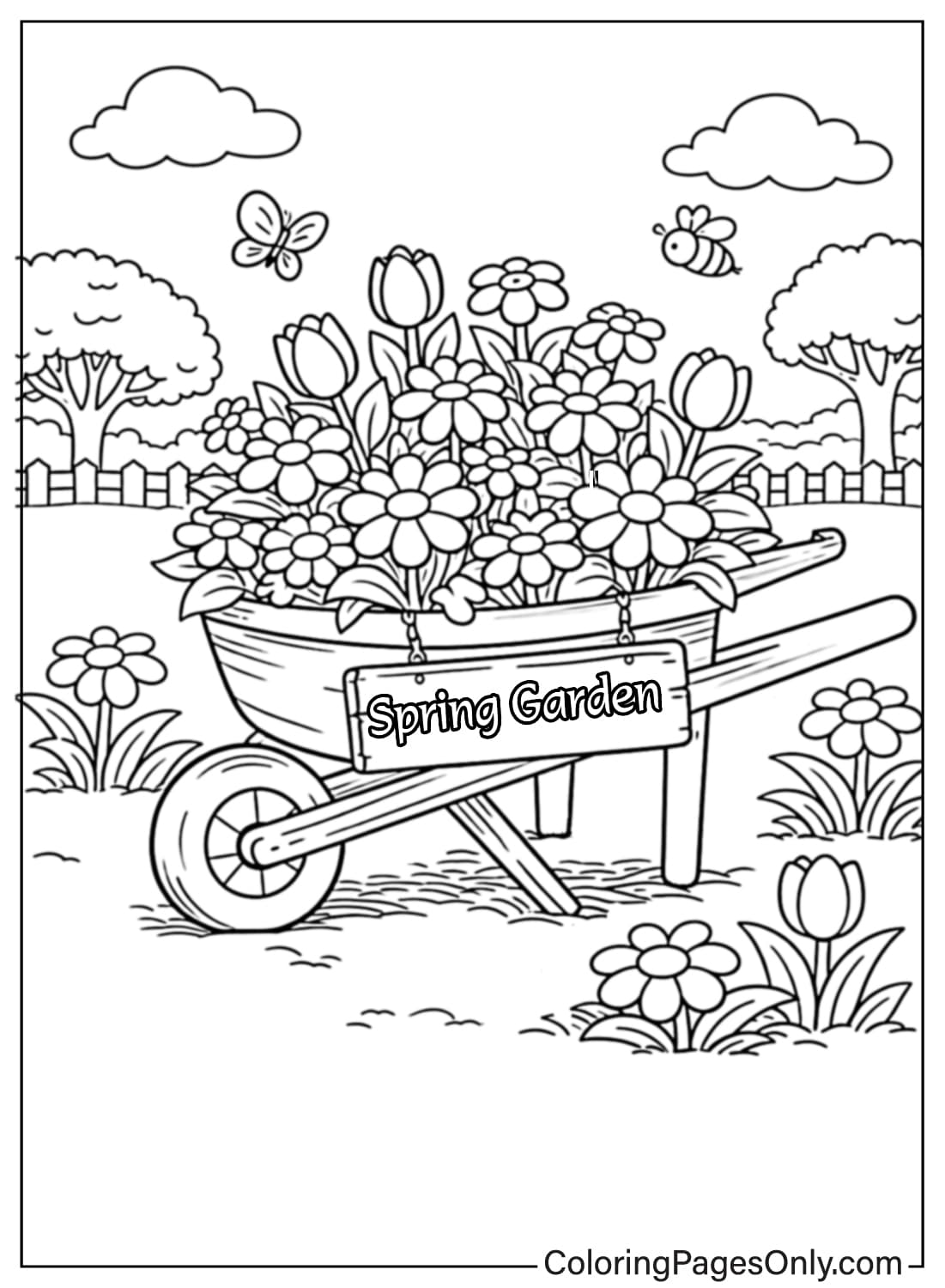
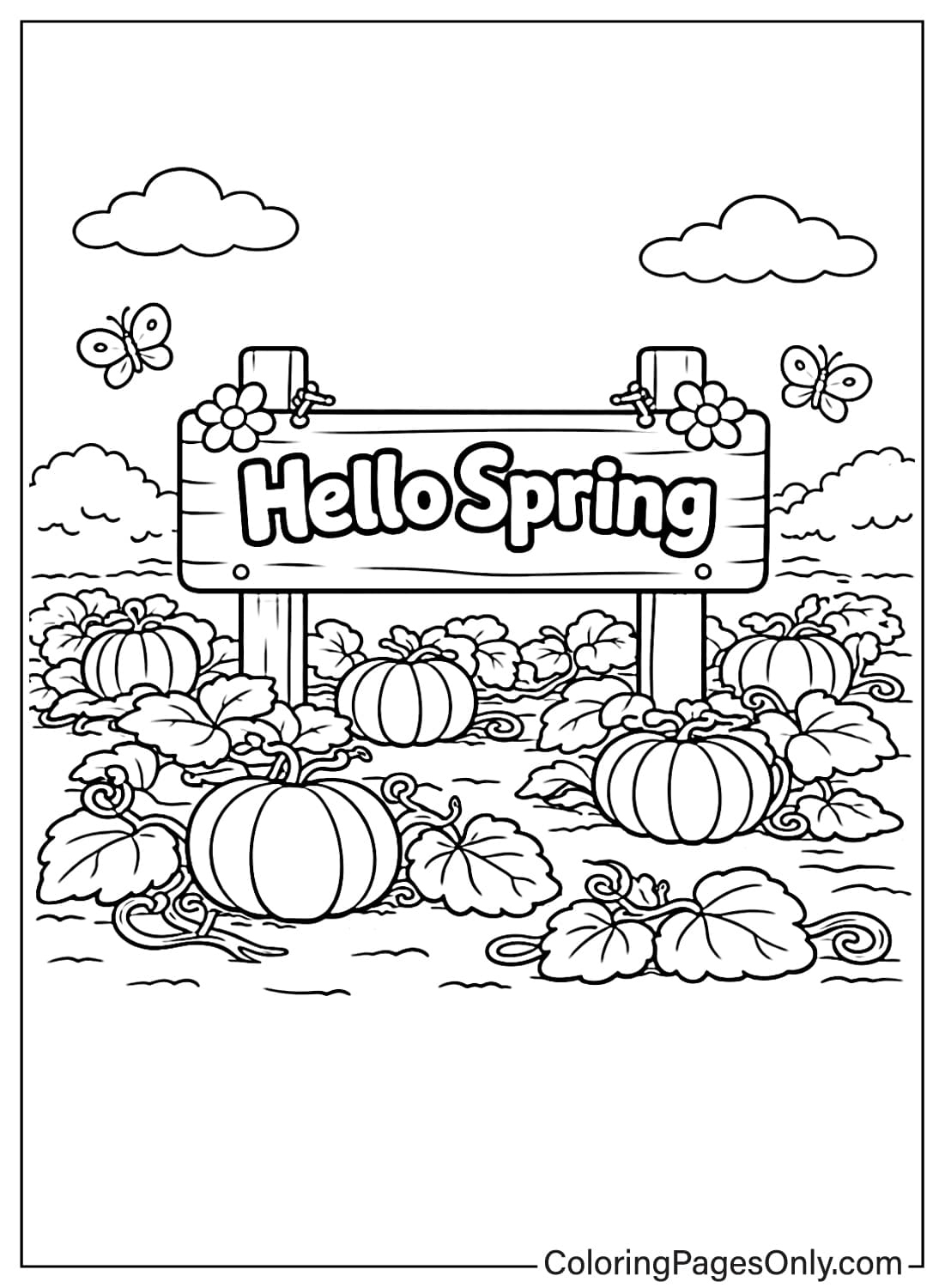
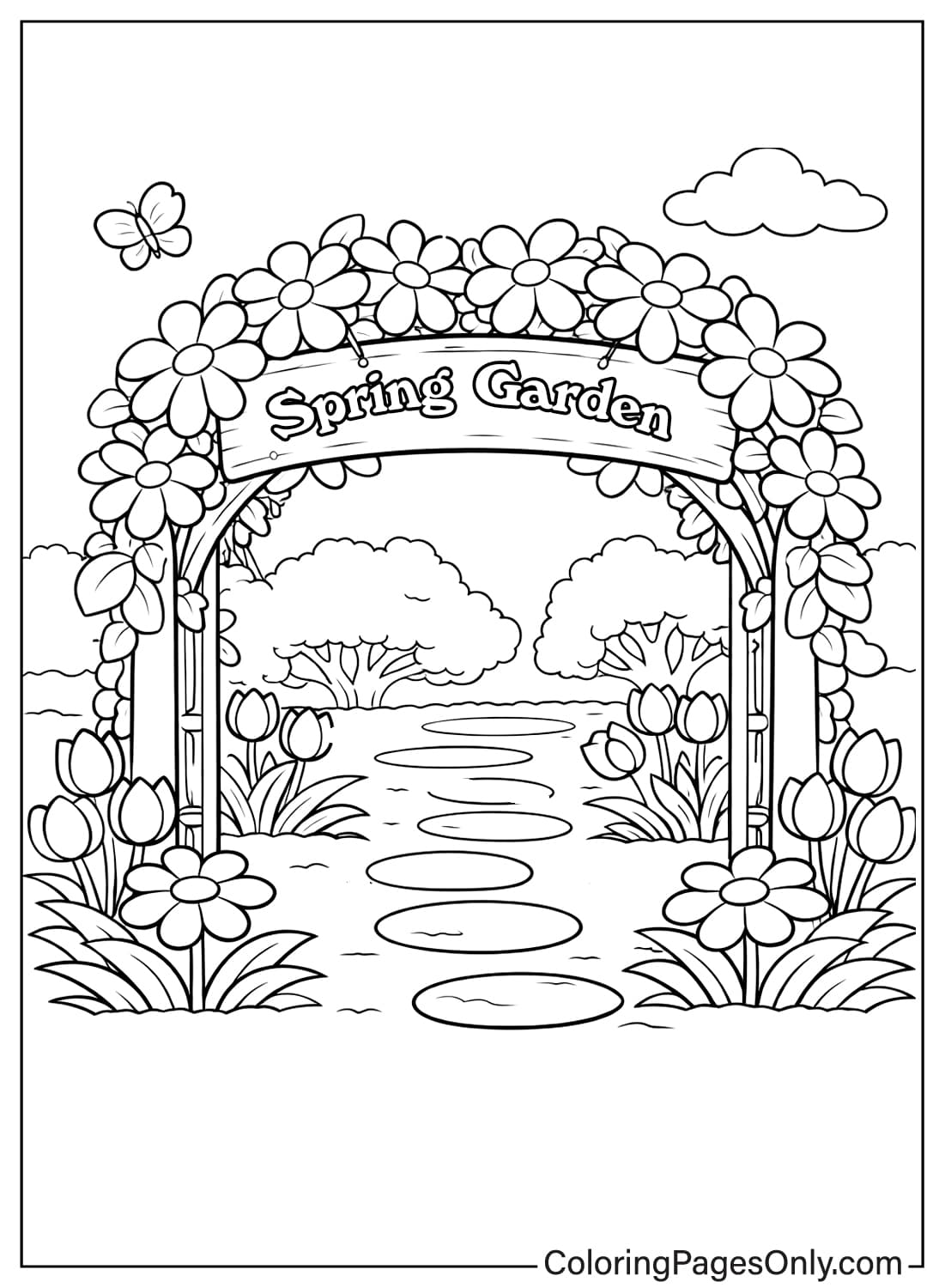
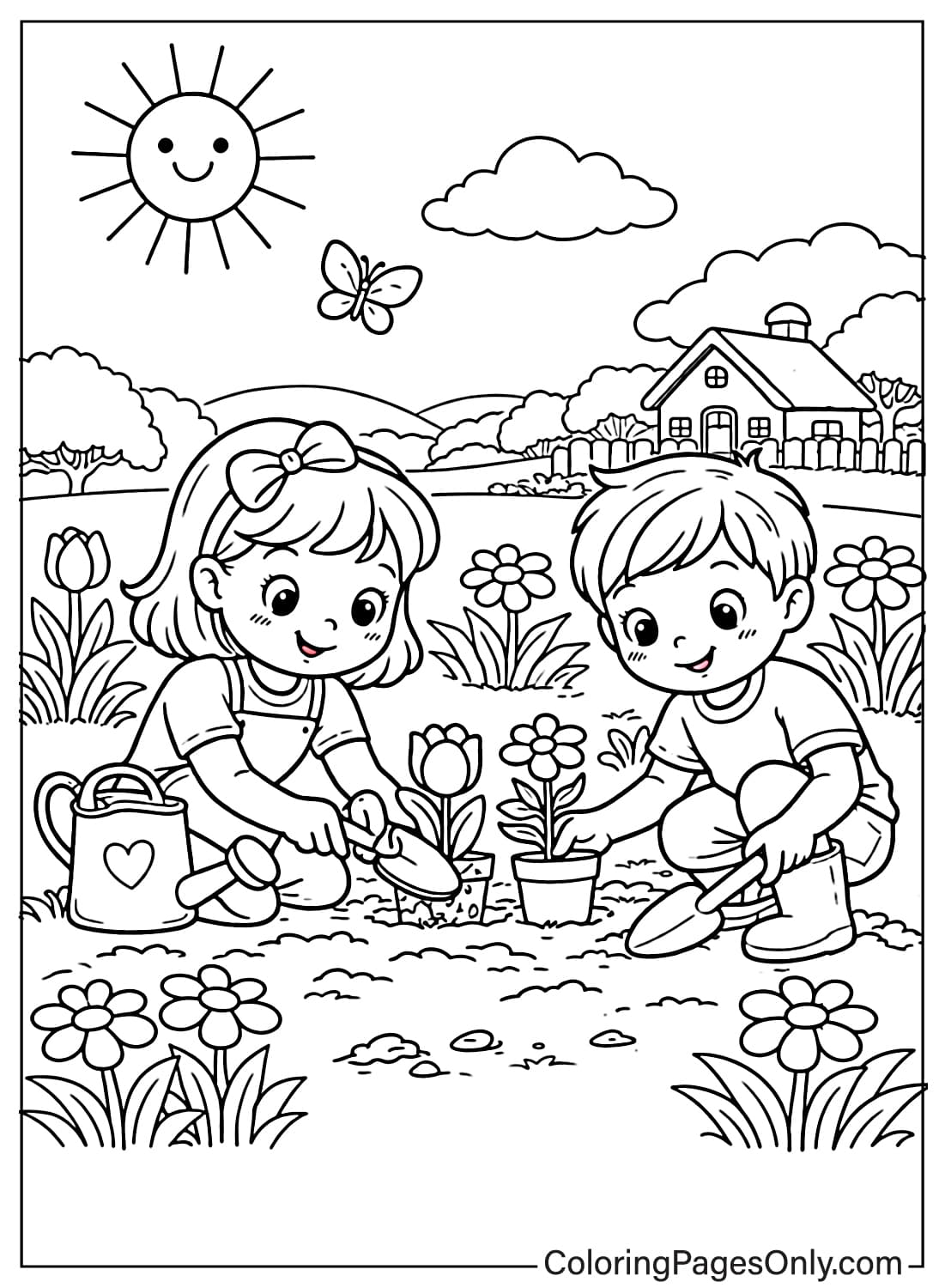
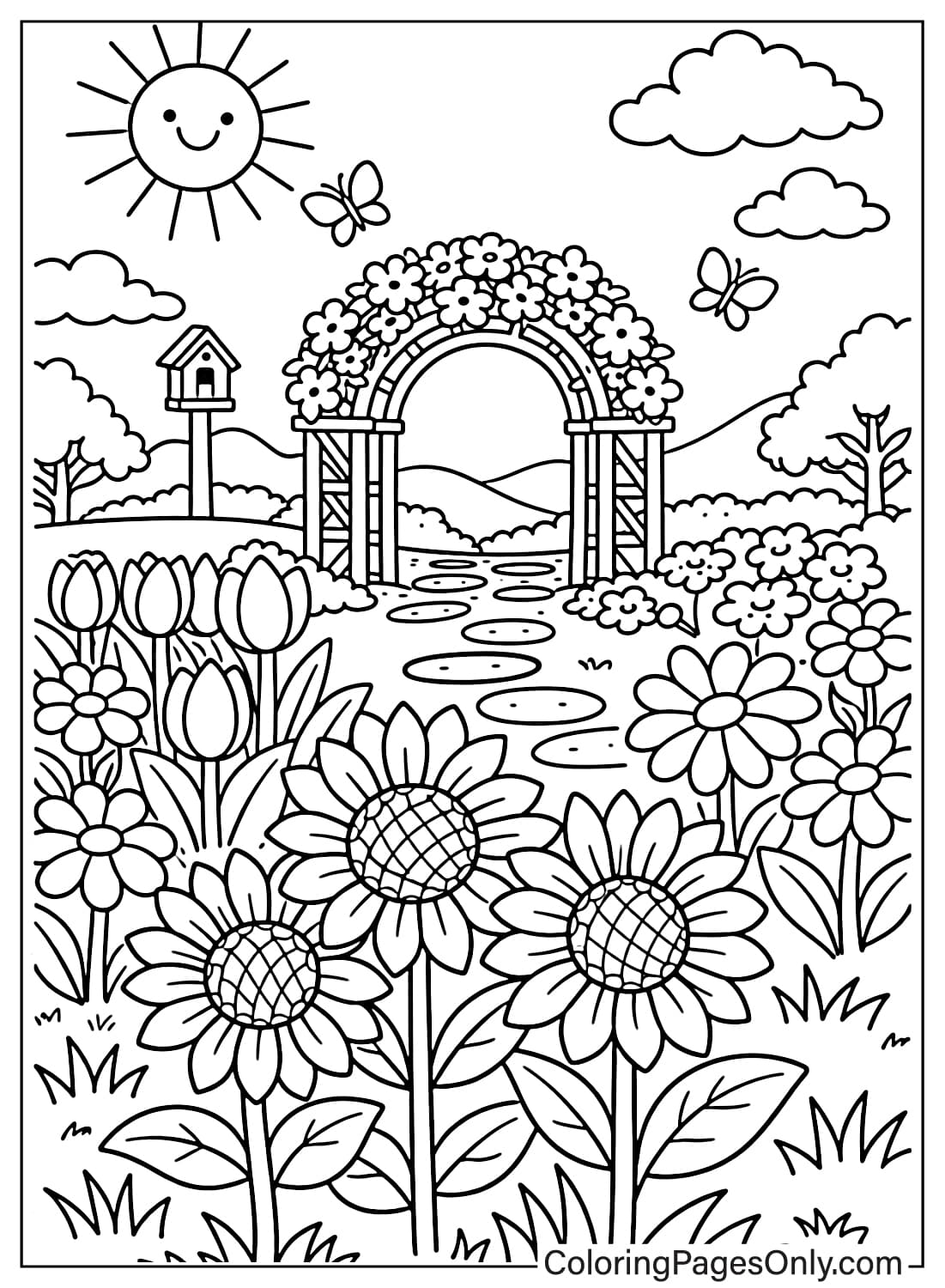
Several pages build full garden compositions, including a flower arch over a path, a wheelbarrow overflowing with blooms, a greenhouse with a “Hello Spring” sign, and a sunflower path lined with stepping stones.
Baby Animals and Insects
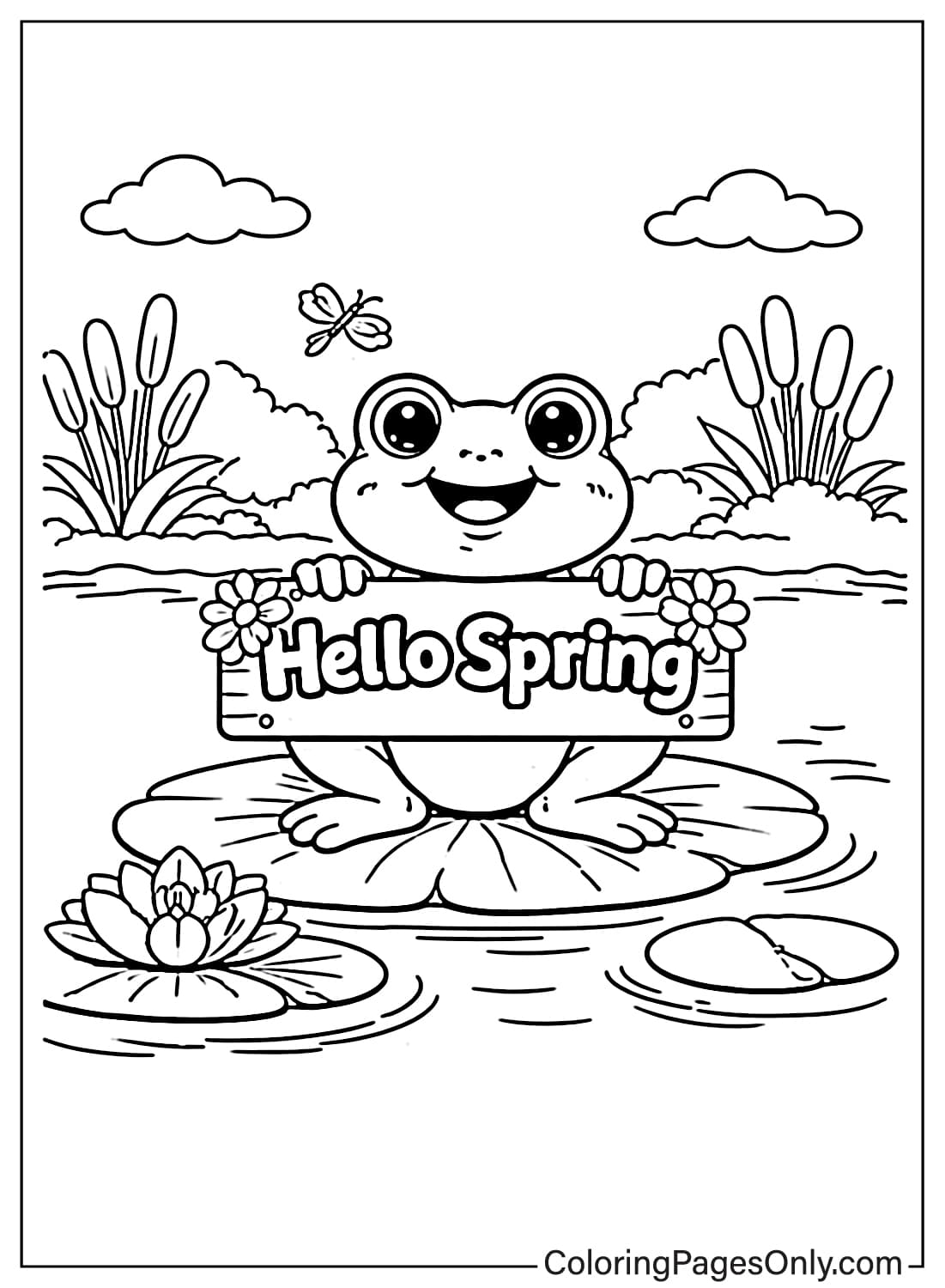
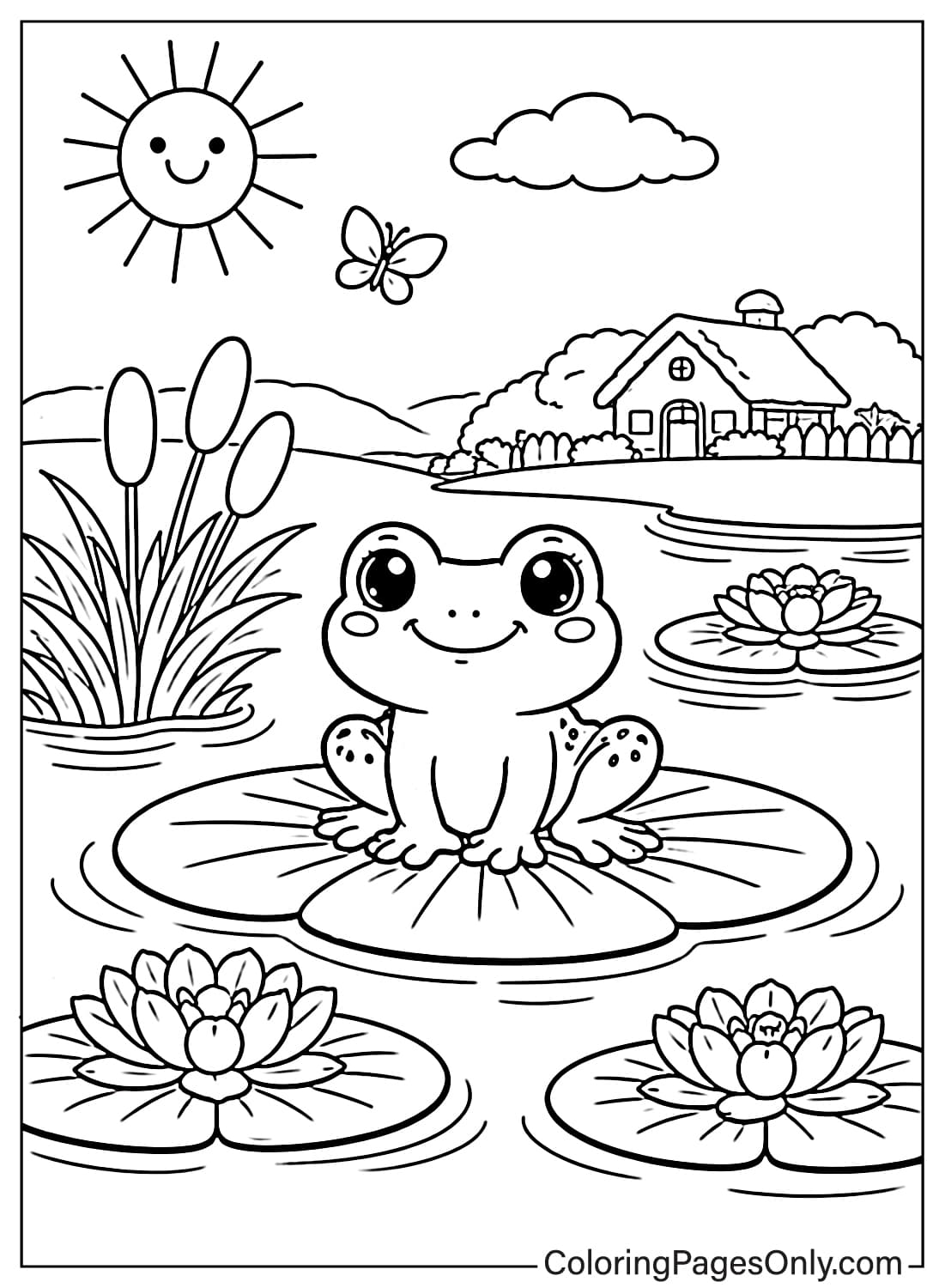
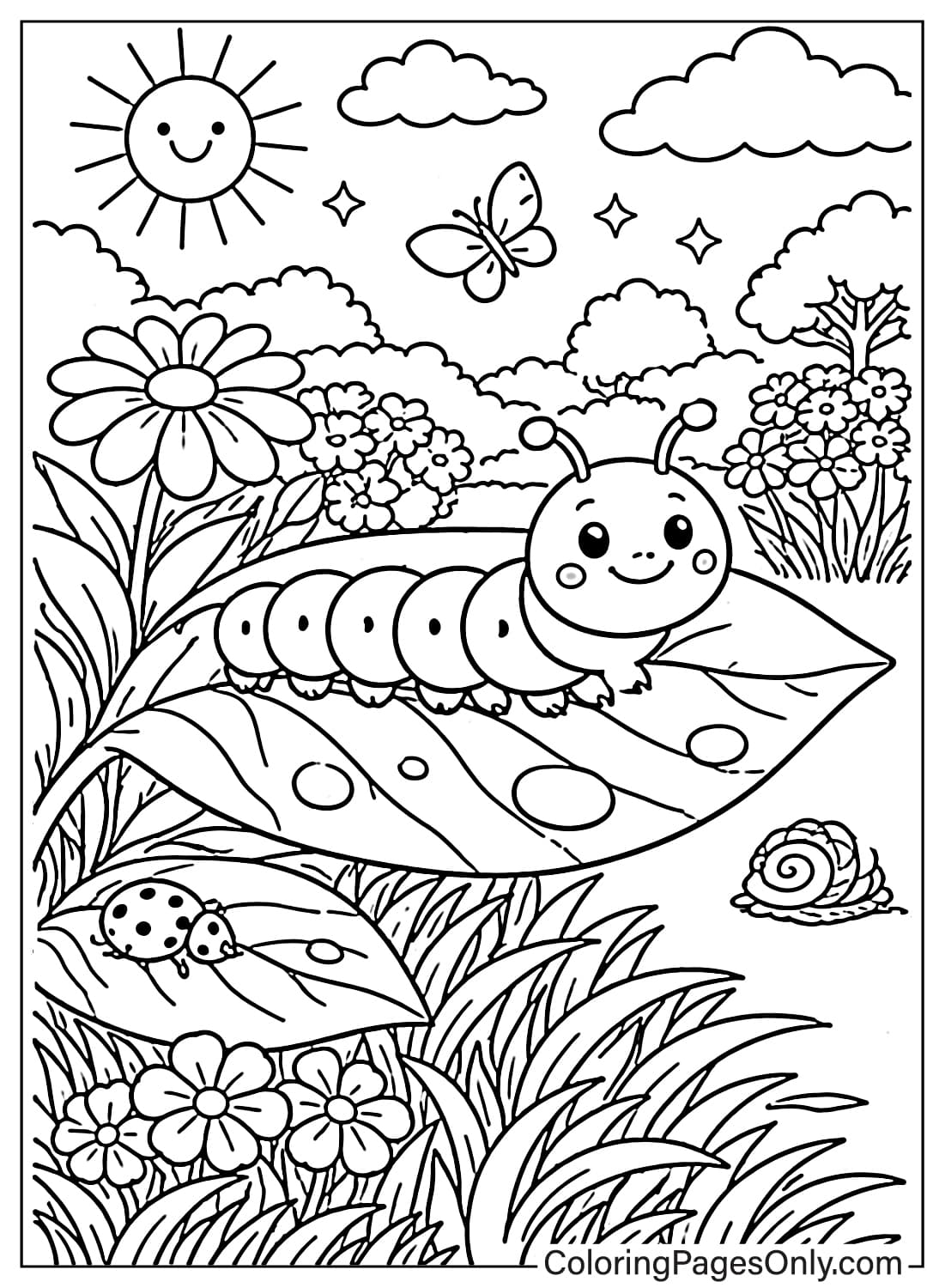
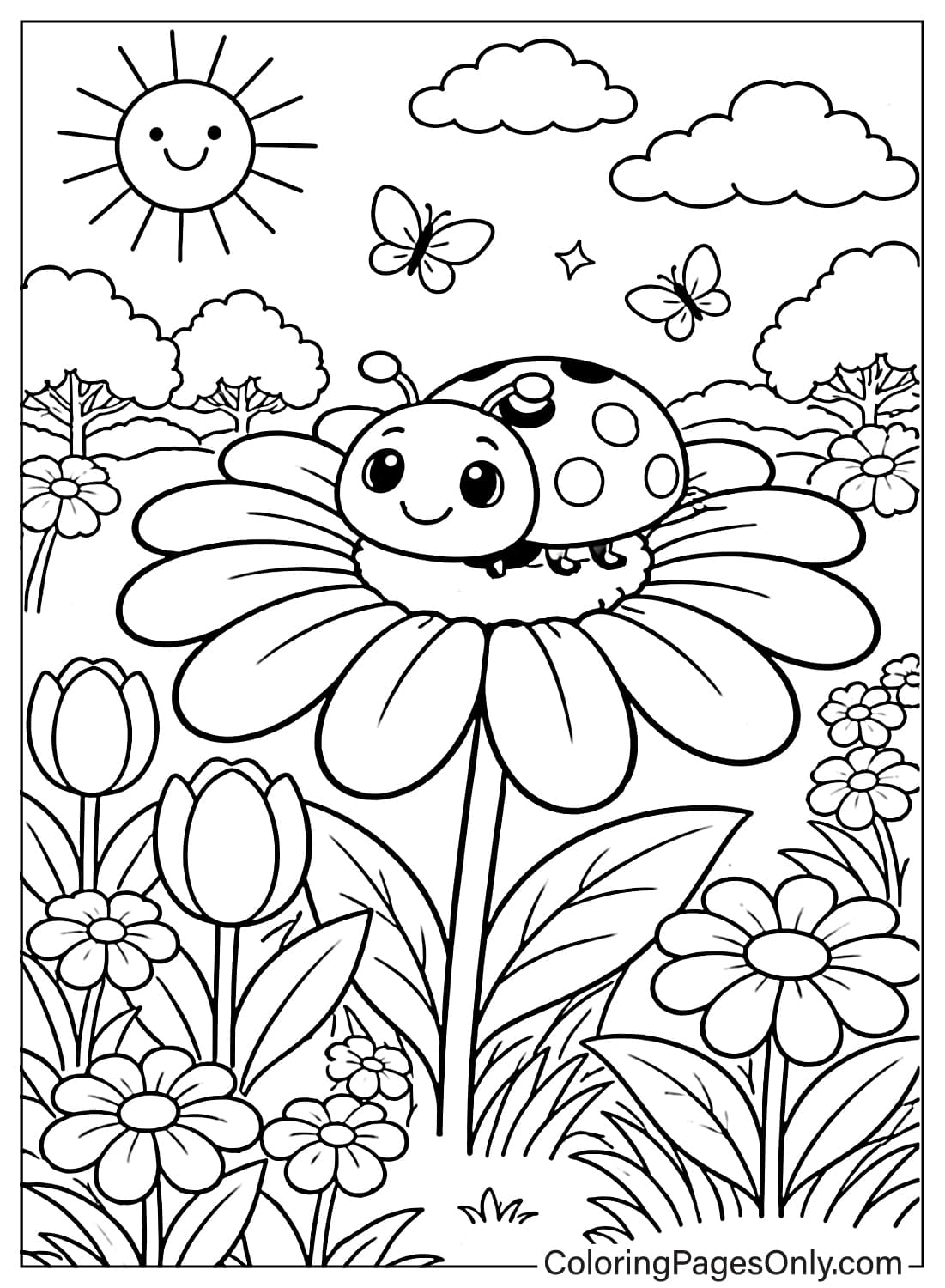
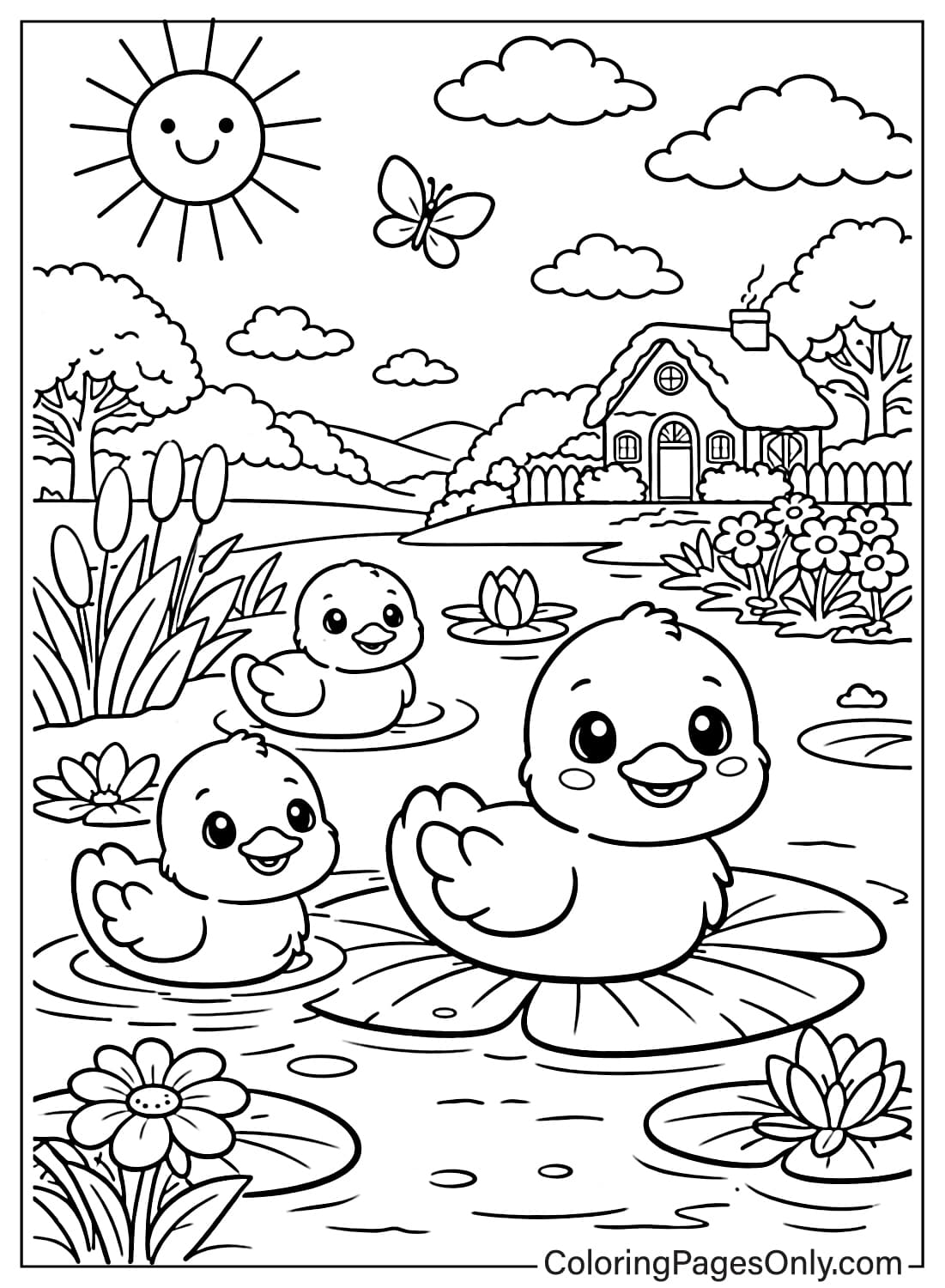
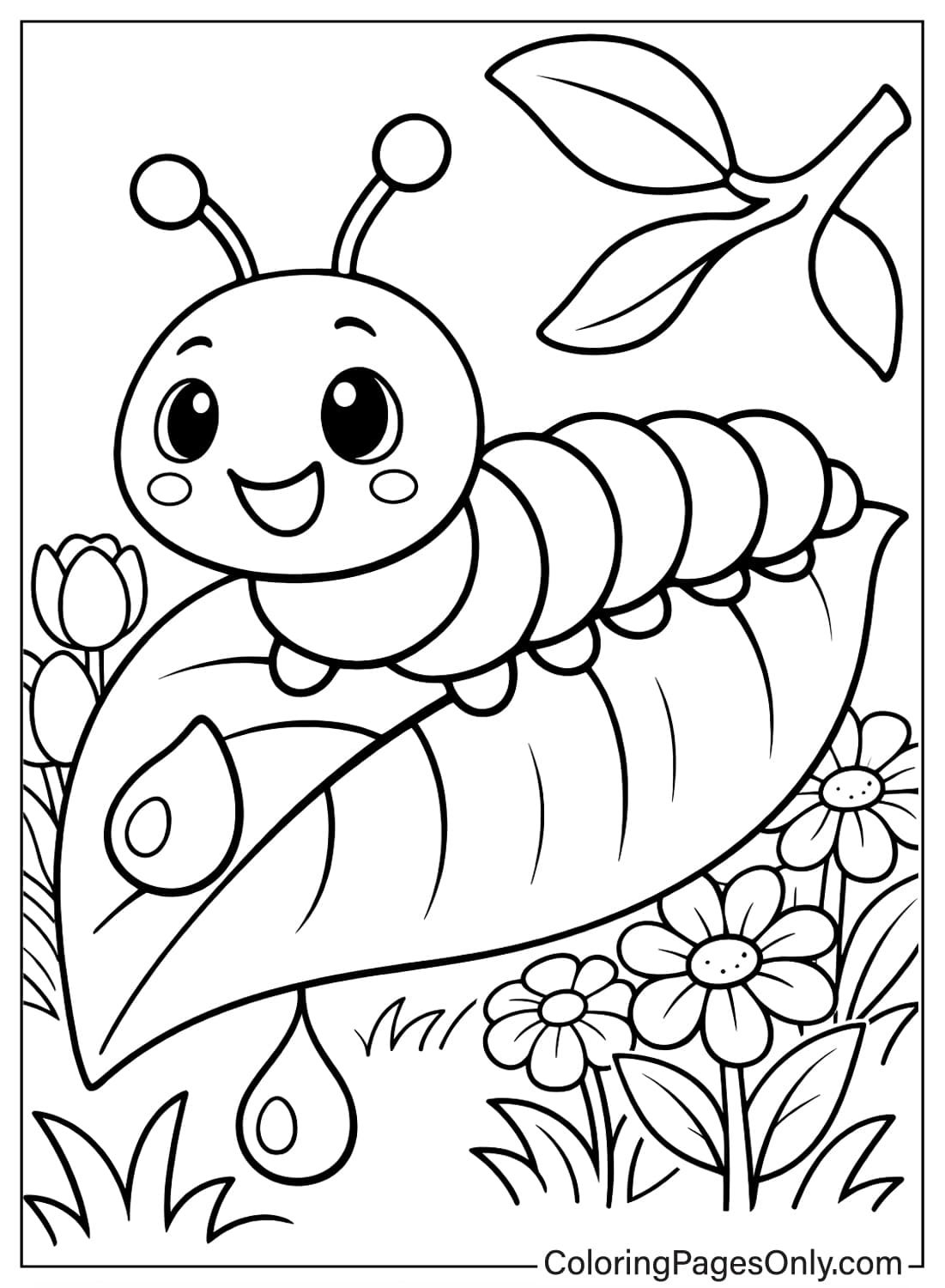
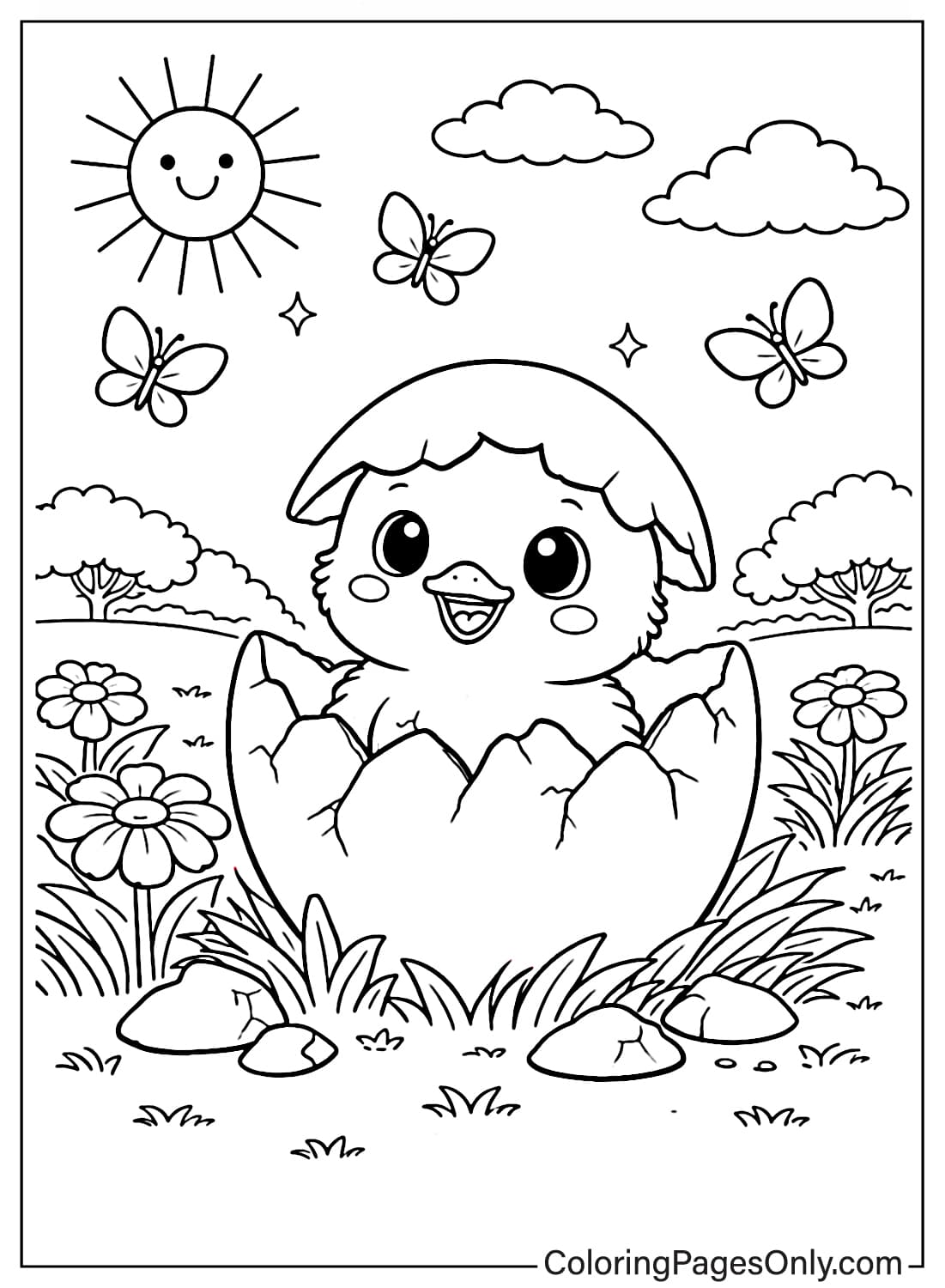
A number of pages focus on young animals and small garden creatures, including a chick hatching from its egg, ducklings swimming in a pond, a caterpillar on a leaf, a frog on a lily pad, and a ladybug resting on a flower.
Rainy Day Scenes
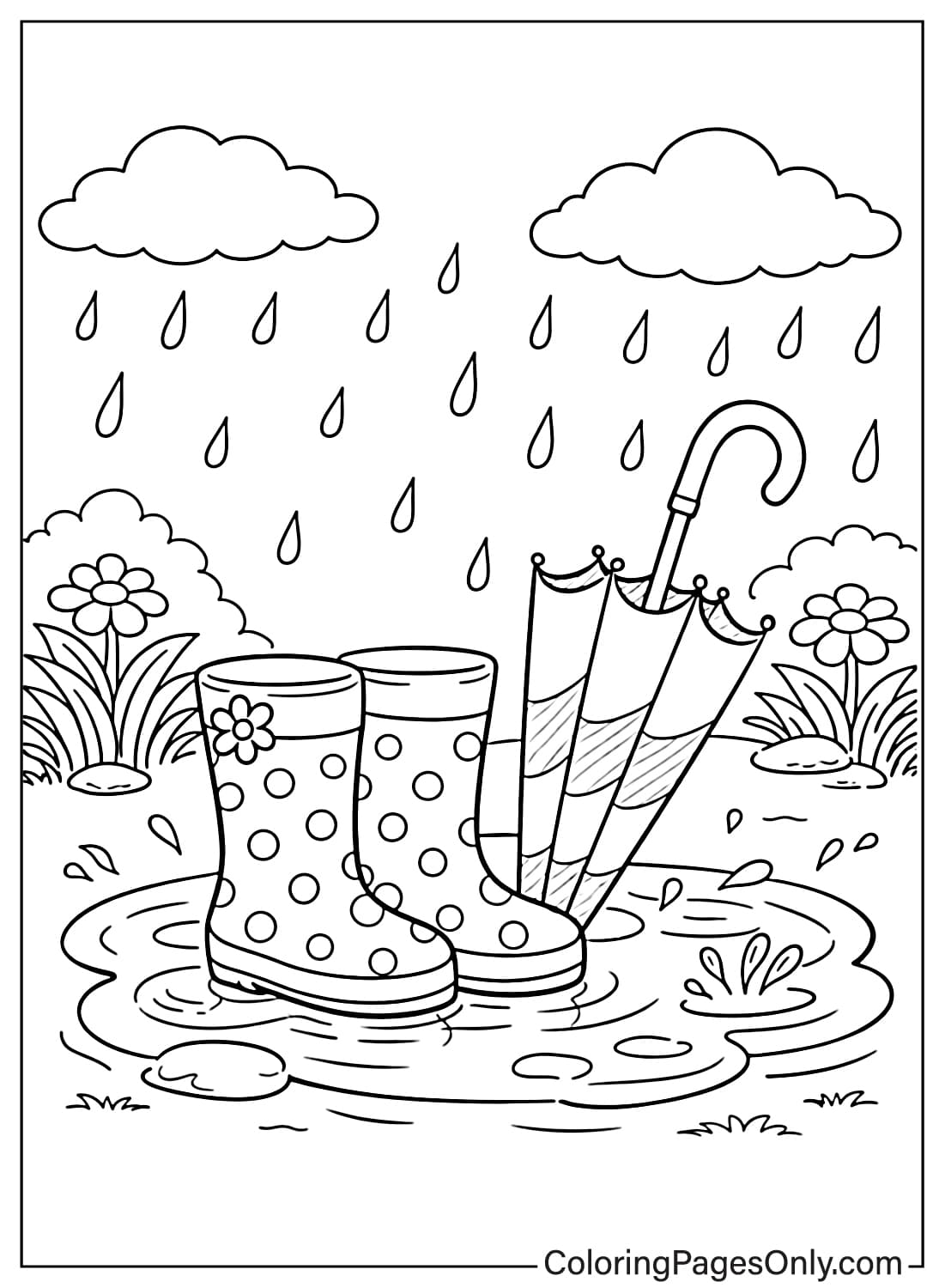
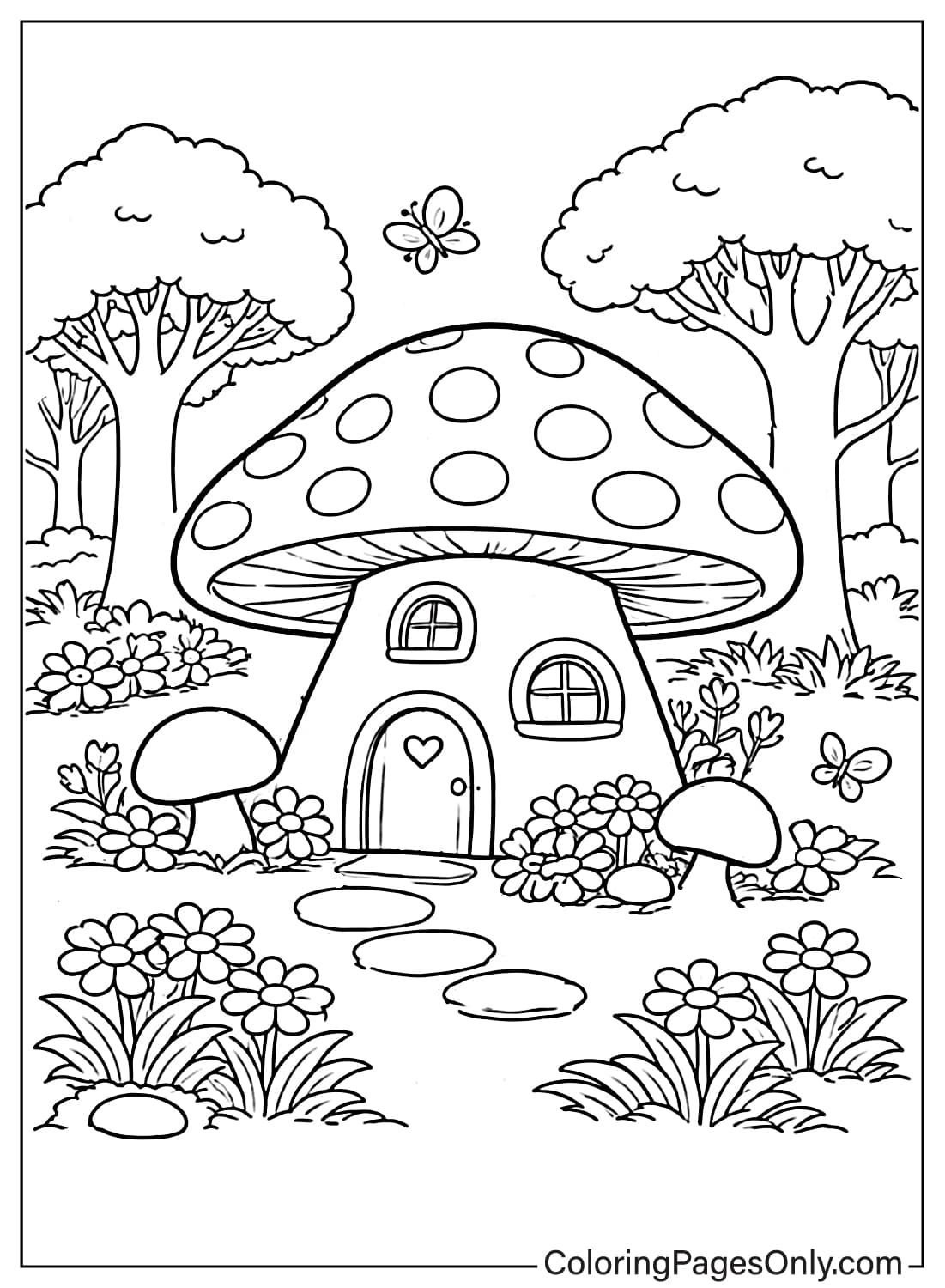
A smaller group of pages reflects the wetter side of the season, showing rain boots by a puddle, a garden umbrella, and a mushroom fairy house tucked into a mossy corner.
Simple and Classic Designs
A large group of shorter, single-image pages cover general spring themes, sized for a quick single-session print, alongside a more detailed spring mandala for older colorers.
What Spring Coloring Pages Do
Fine motor development. The American Academy of Pediatrics identifies fine motor skill development as a core benefit of structured coloring for children ages 2 through 7. The mix of simple single-flower pages and more detailed garden scenes gives colorers of different skill levels a matching level of detail to work with.
A way to notice seasonal change. Coloring a hatching chick, a budding flower, or a returning butterfly gives kids a reason to talk about what is actually changing outside as winter turns to spring.
Anxiety reduction through focus. A 2005 study in the Art Therapy Journal documented measurable reductions in anxiety following structured coloring sessions. A rainy spring afternoon, when outdoor play is not an option, is a natural fit for that same steady, focused activity.
Practice with color variation. Because spring scenes rely on several different greens and soft blossom tones rather than one flat color, these pages give colorers practice mixing shades within a single scene rather than filling every leaf the same color.
How to Color Spring Pages Well
- Leaves and greenery: Layer Crayola Yellow-Green for new growth with a deeper Fern or Forest Green for older leaves so the page reads with more depth than a single flat green.
- Blossoms: Use White or a very pale Pink rather than a bright hot pink for spring blossoms, closer to the soft tones of real cherry or apple blossom.
- Sky backgrounds: A light Yellow-cream base under Sky Blue gives a garden scene a warm, sunlit feel before any flowers or leaves are added.
- Rainy day scenes: Blue-Gray and soft Lavender work well for rain and overcast sky, keeping the mood calm rather than cold, with a bright Yellow rain boot or umbrella for contrast.
- Baby animals: Keep young animals in soft, light versions of their natural colors, such as pale Yellow for a chick or light Brown for a duckling, to match their young, downy appearance.
- Butterflies: Since butterfly color combinations do not need to be realistic, bold pairings like Turquoise and Orange or Violet and Yellow work well and give colorers room to experiment.
5 Creative Craft Ideas With Spring Coloring Pages
1. Spring Gallery Wall
Tape several finished pages in a row along a wall or hallway to build a rotating spring gallery display.
2. Handmade Spring Card
Fold a finished page in half to make a card with a blank inside for a spring birthday, Mother’s Day, or thank-you message.
3. Window Display
Tape colored pages to a classroom or home window so light shines through the design for a stained-glass effect.
4. Two-Version Color Study
Print the same page twice and color it with a completely different palette each time to compare how much color choice changes the mood of a scene.
5. Classroom Morning Starter
Set a spring page on each desk as students arrive for a quiet, self-directed activity to start the day.
Frequently Asked Questions
What are spring coloring pages?
Spring coloring pages are printable line-art designs built around the season, showing garden scenes, baby animals, butterflies, and rainy-day moments. This collection includes 49 pages, ranging from simple single-subject designs to detailed garden scenes.
When does spring start?
Spring begins astronomically at the vernal equinox, around March 20 in the Northern Hemisphere, though meteorologists define the season as running from March through May for climate-tracking purposes.
Do spring coloring pages include Easter?
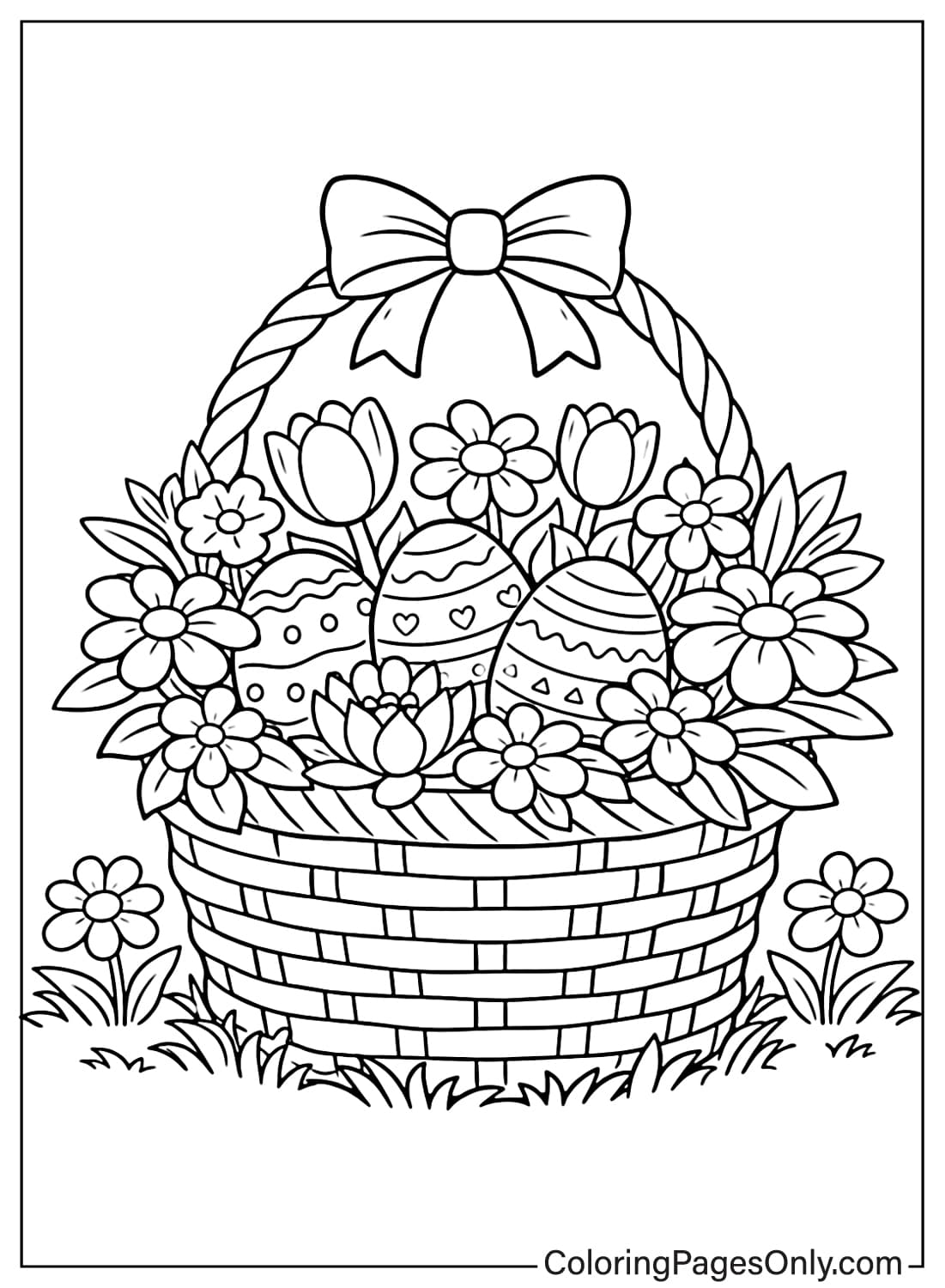
Spring and Easter overlap in timing but are not the same theme. This collection focuses mainly on general spring subjects like flowers, gardens, and baby animals, with one Easter basket page included since it falls within the season.
What baby animals appear in the collection?
The collection includes a chick hatching from its egg, ducklings swimming in a pond, a caterpillar, a frog on a lily pad, and a ladybug, reflecting the young animals and small creatures most associated with spring.
What is the spring mandala page?
The spring mandala is a detailed, symmetrical patterned design built around spring motifs, suited to older children and adults who want a more involved coloring session than the simpler single-subject pages.
What colors work best for spring flowers?
Soft, pale tones work best for realistic spring blossoms, such as white or pale pink rather than bright hot pink, though the collection also includes butterflies and decorative flowers where bold, non-realistic color choices work just as well.
Are spring coloring pages suitable for young children?
Yes. The simple single-subject pages in this collection work well for children ages 2 through 7, the age range the American Academy of Pediatrics associates with active fine motor skill development through coloring. The detailed garden scenes and mandala suit older children and adults.
Can these pages be used for a classroom spring activity?
Yes. The pages work well as a morning starter, an early-finisher activity, or seasonal bulletin board material during a spring classroom unit.
Start Coloring
Download any page by clicking the design. No account, email, or payment is required. Pages print directly from the browser at full resolution or open in the online coloring tool for screen use. Share finished pages on Facebook or Pinterest with the share buttons at the top of each design page.