
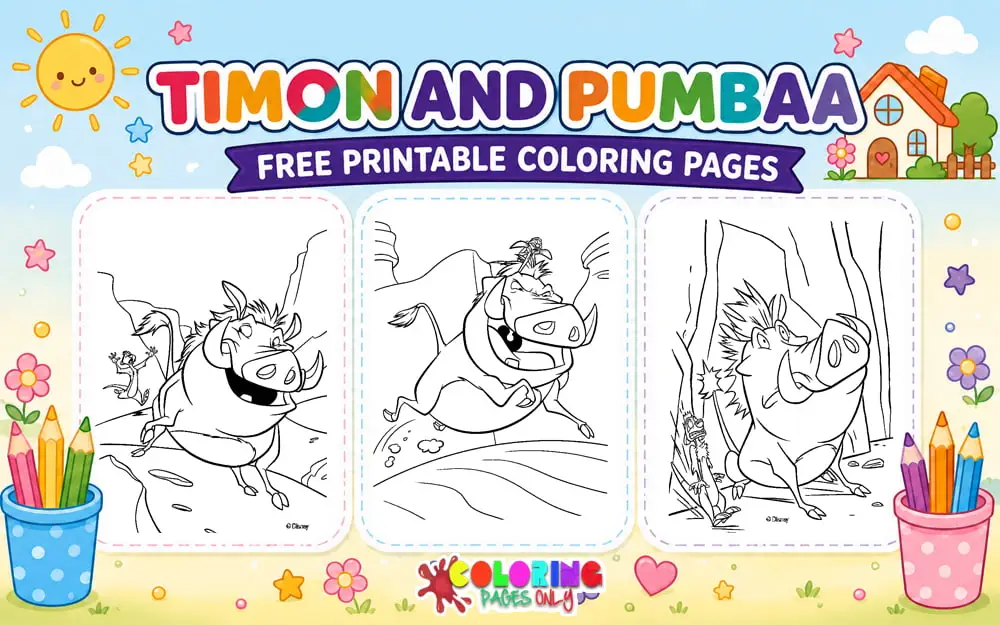
Timon and Pumbaa coloring pages: 30+ free printable PDF designs covering Timon and Pumbaa together, solo mood portraits, scenes with friends and family, and activities and holidays. Every page is available as a printable PDF or to color in the browser, with no account required.
Both of these characters carry real Swahili words in their story. “Hakuna matata” genuinely means “no worries” in Swahili, which is why the phrase works so well as their whole outlook on life. Fewer people know that “Pumbaa” is a real Swahili word too, one that roughly means lazy or careless, quietly built right into the character’s name from the start. The song “Hakuna Matata” itself, written by Elton John and Tim Rice, was even nominated for the Academy Award for Best Original Song, going up against another song from the very same film.
There’s a fun bit of behind-the-scenes trivia worth knowing, too: in real life, a warthog would actually eat a meerkat. The animators who created Timon and Pumbaa have talked openly about taking real liberties with nature to make these two believable best friends, which makes their friendship something the story chose on purpose rather than anything remotely realistic.
These pages suit longtime Lion King fans, kids who love a mismatched best-friend duo, and anyone who wants a coloring set built around genuine, deliberate friendship rather than a likely one.

Quick Answer
Timon and Pumbaa coloring pages are a free set of 30+ printable PDFs and browser-based coloring sheets covering Timon and Pumbaa together, solo mood portraits, scenes with friends and family, and activities and holidays.
Best for: children aged 3 and up, longtime Lion King fans, and anyone who enjoys a genuinely mismatched best-friend duo
Formats: printable PDF and online coloring
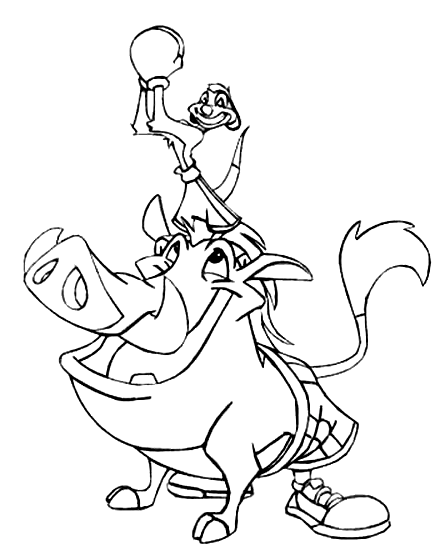
Popular pages: Timon and Pumbaa together, Timon riding on Pumbaa’s head, the holiday pages, and the scenes with Zazu
Creative uses: a “no worries” feelings card, a Timon-on-Pumbaa pose study, a friends and family gallery, and a holiday display
What’s Inside Timon and Pumbaa Coloring Pages
Timon and Pumbaa Together
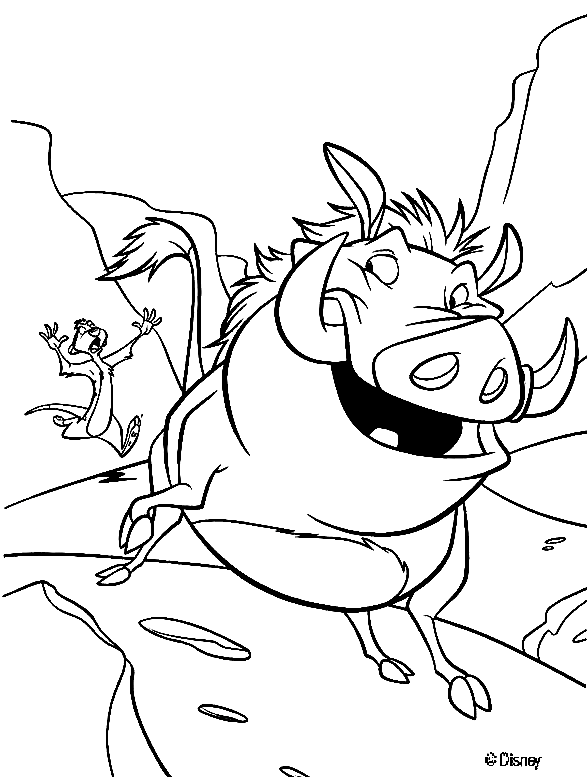
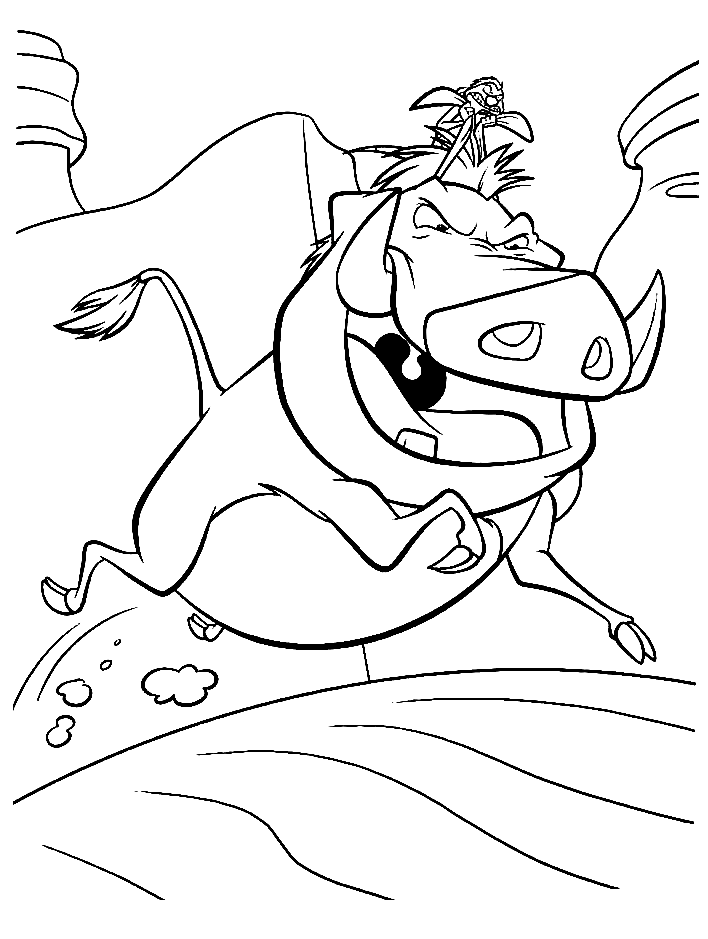
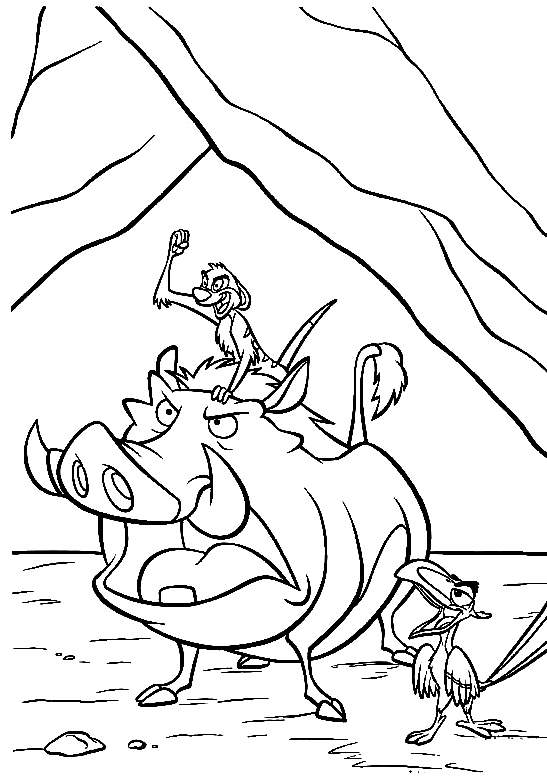
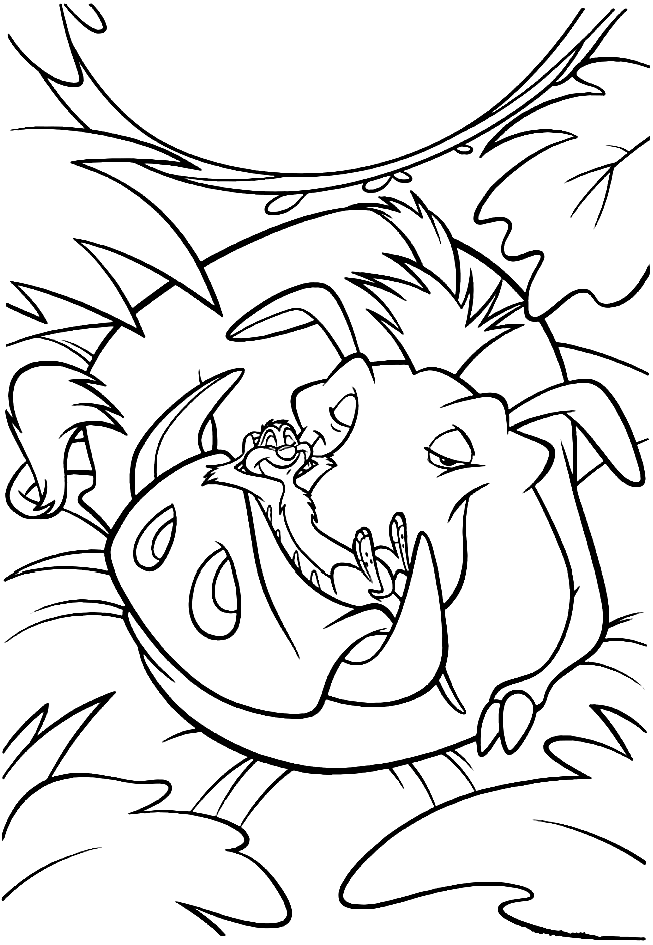
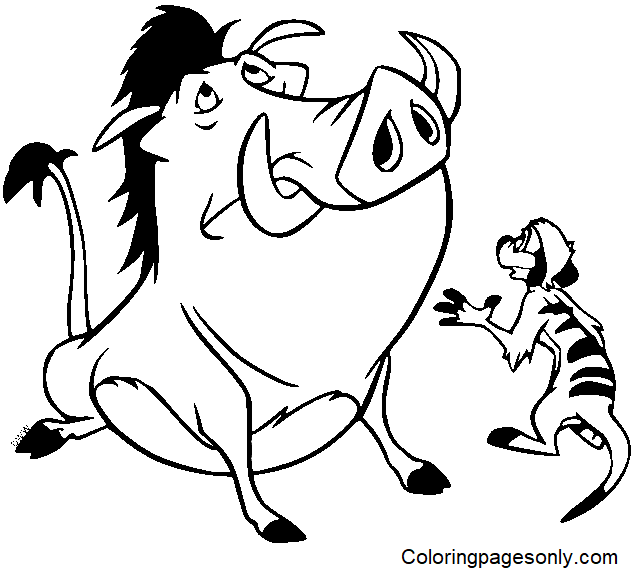
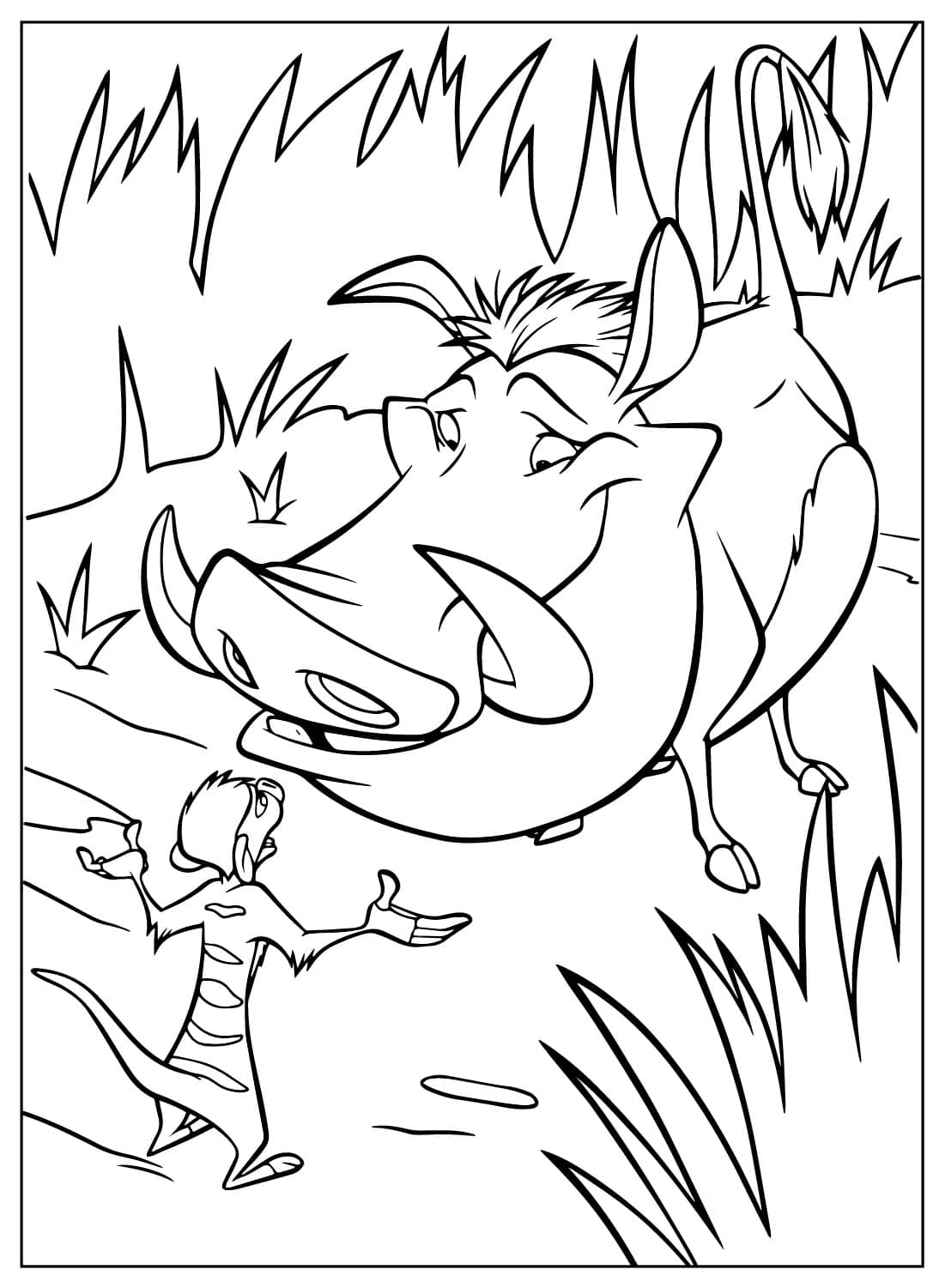
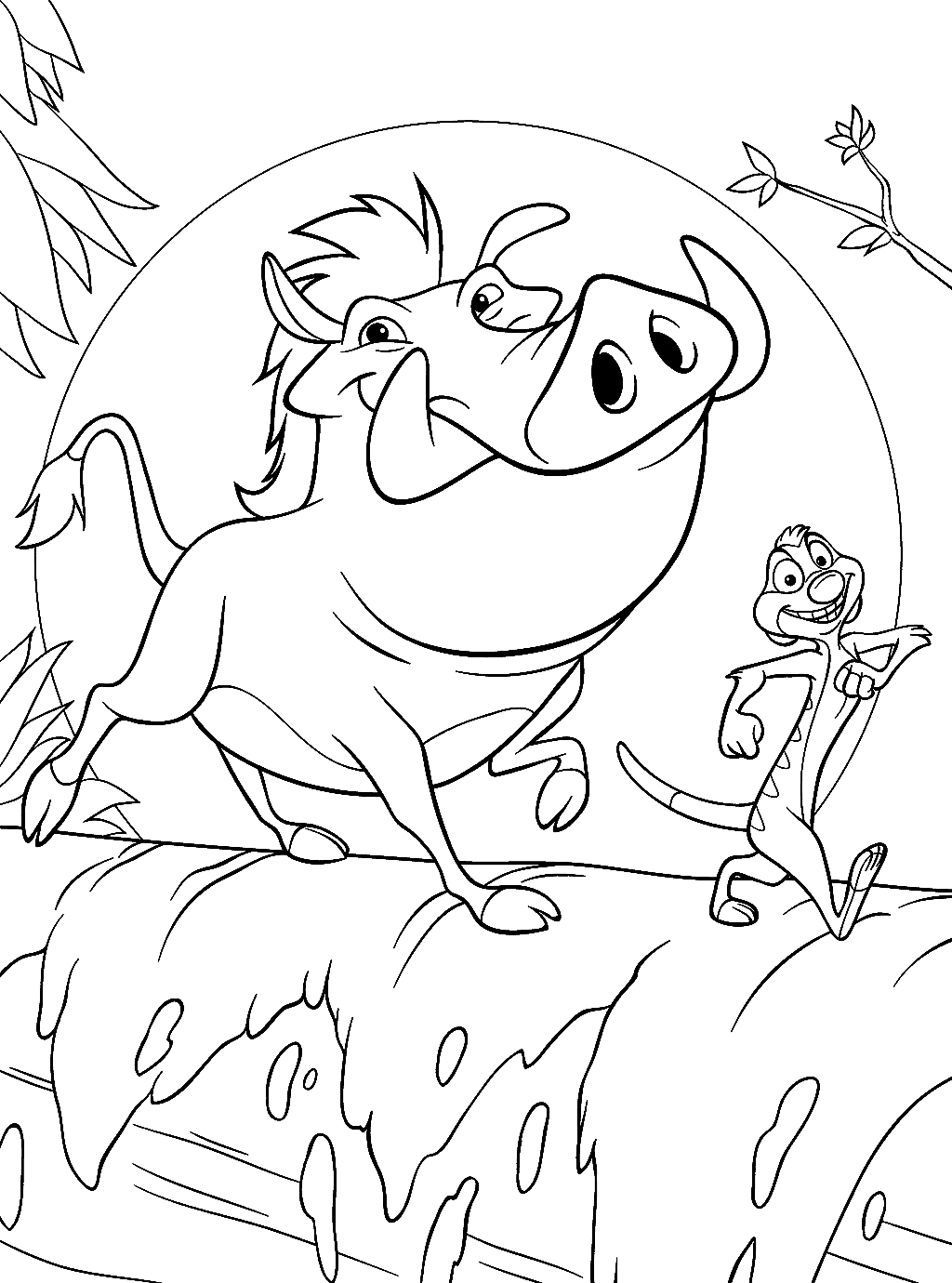
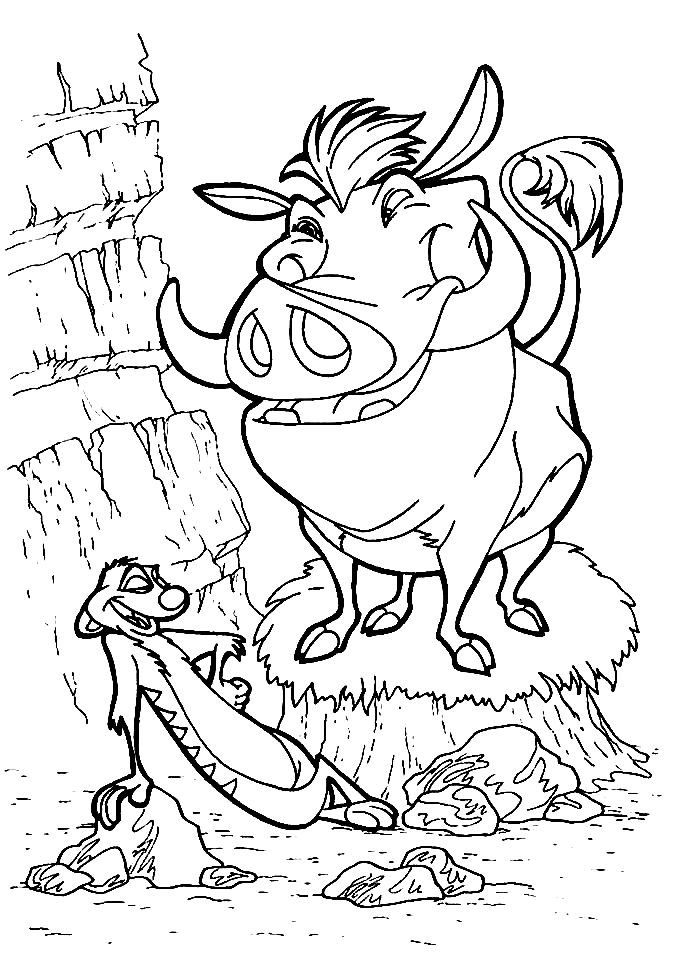
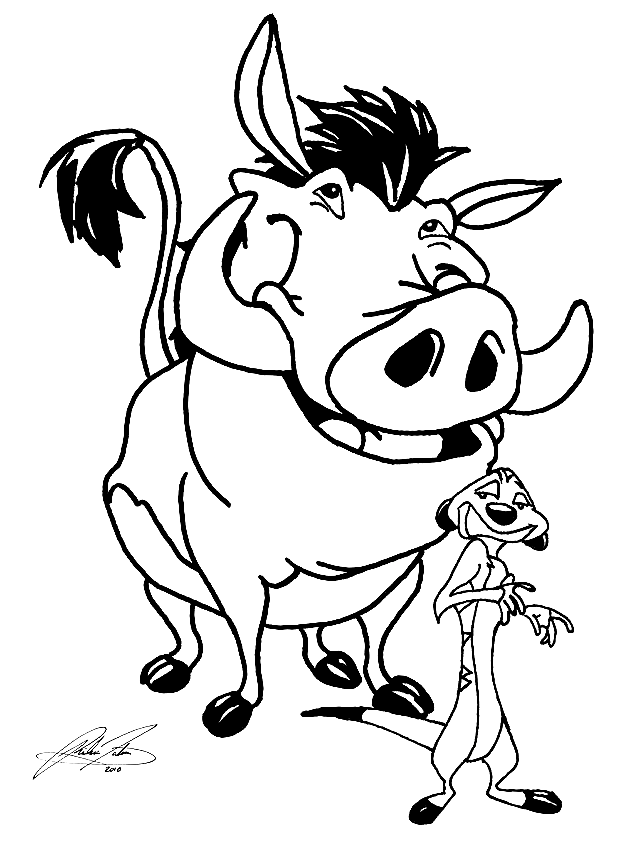
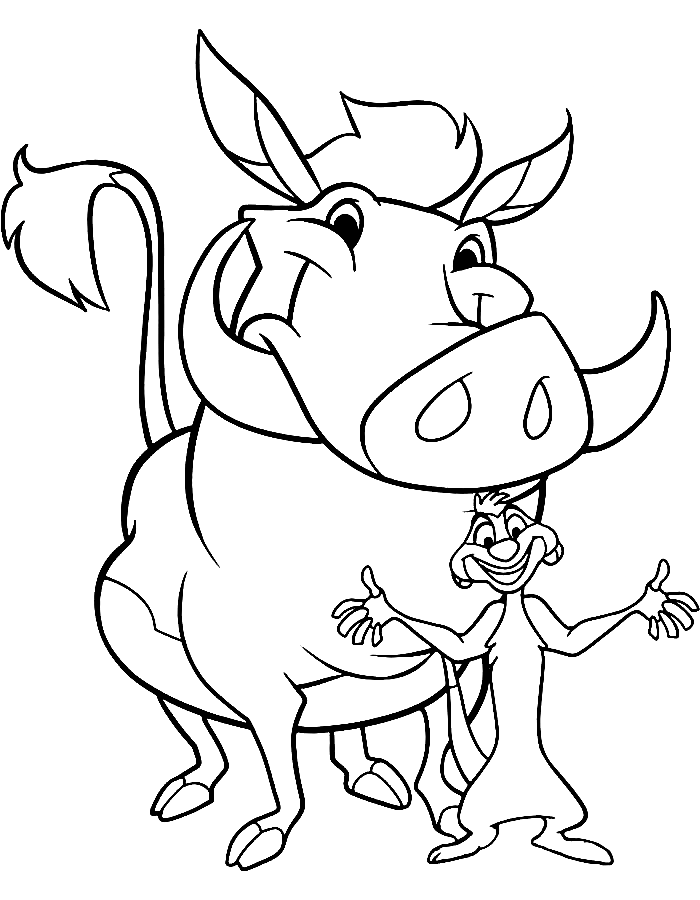
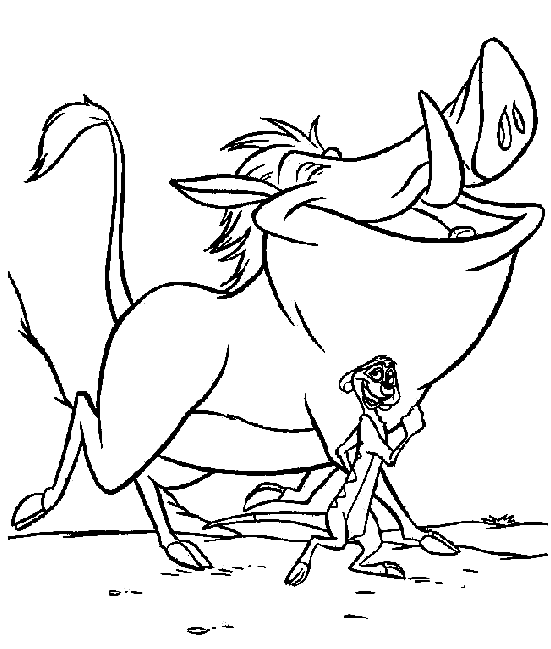
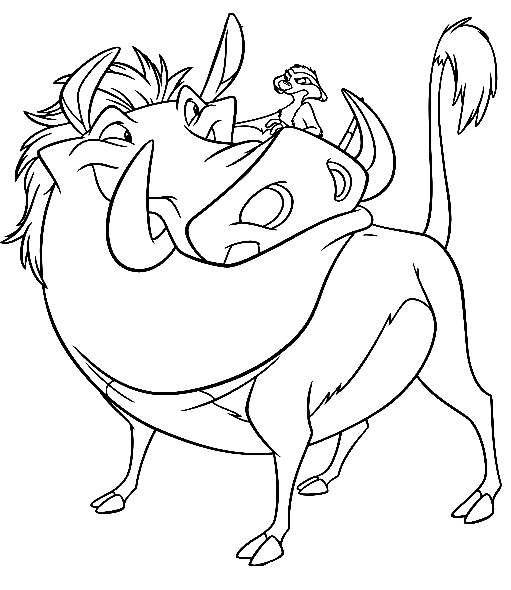
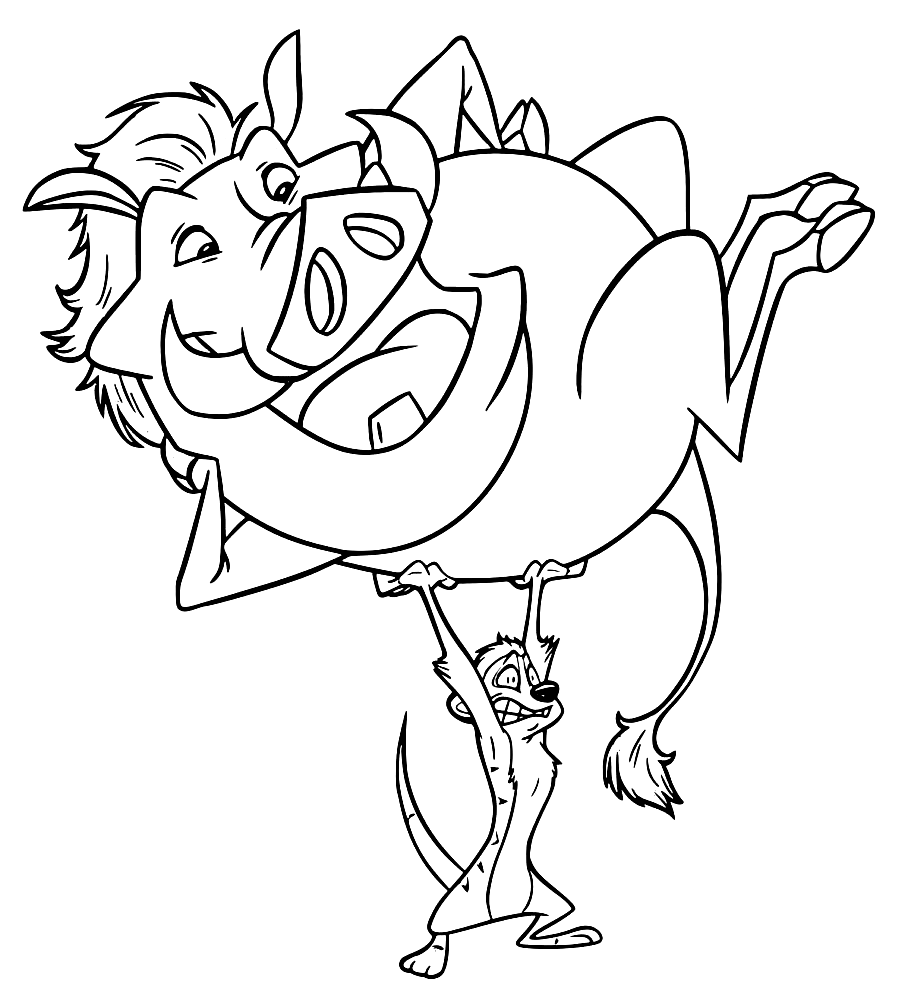
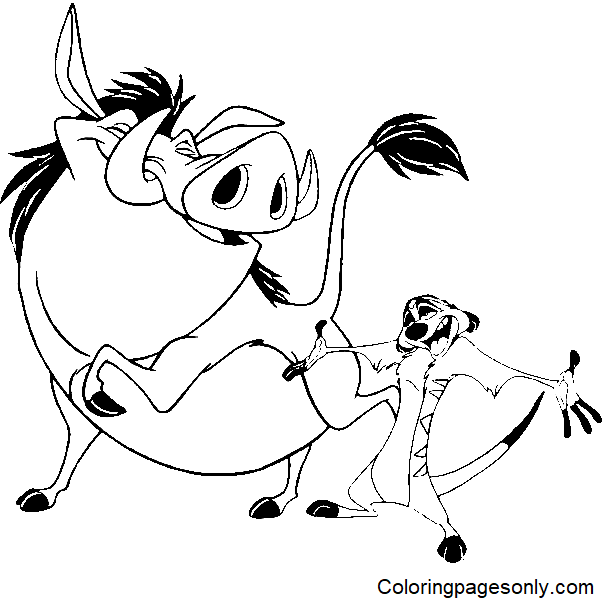
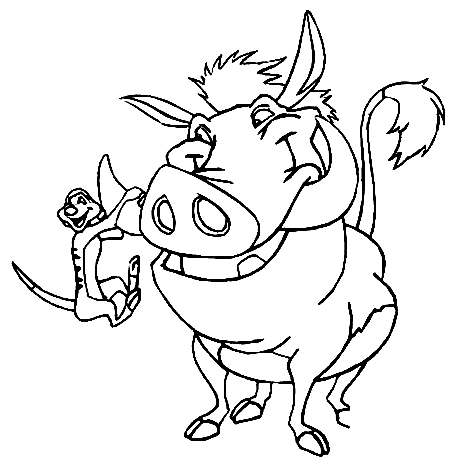
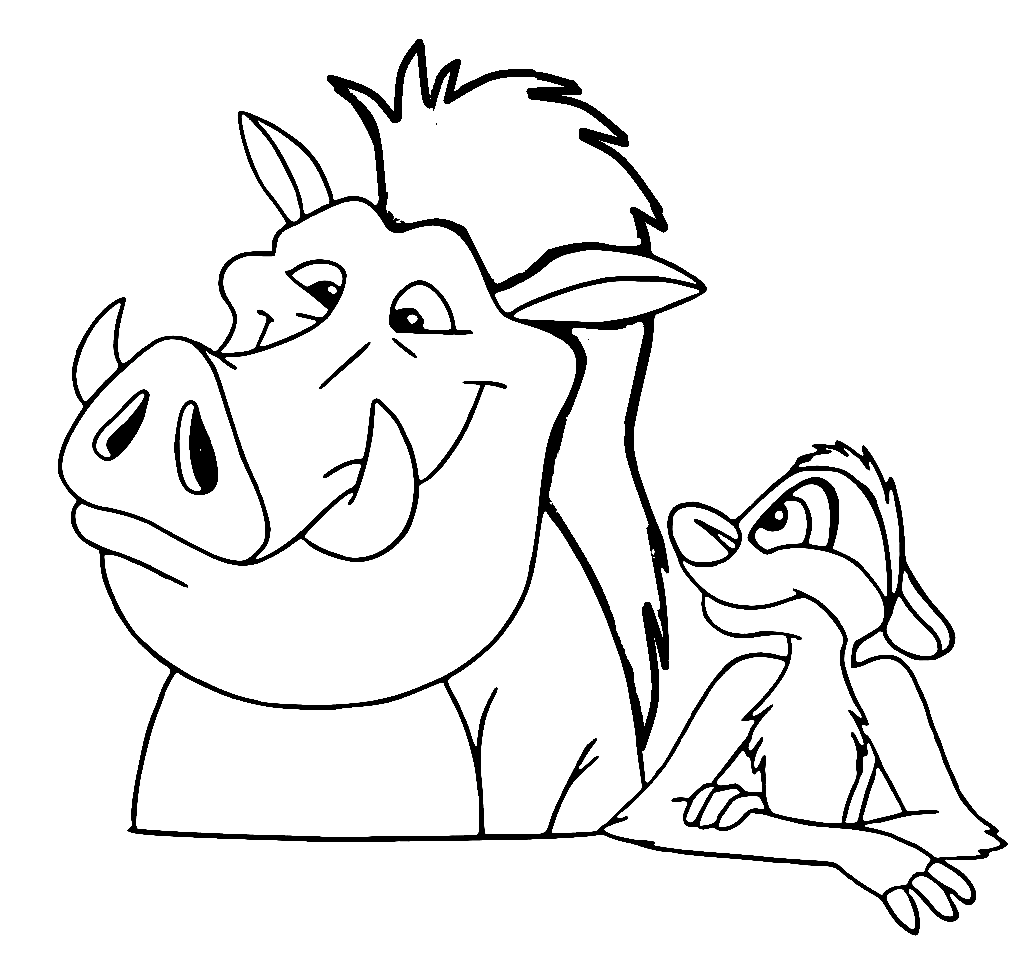
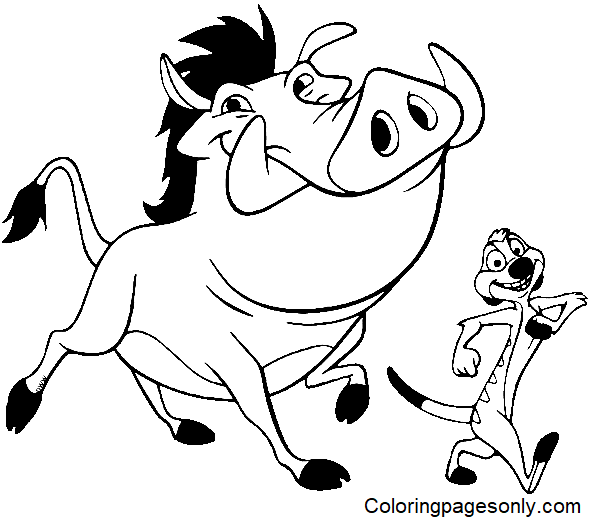
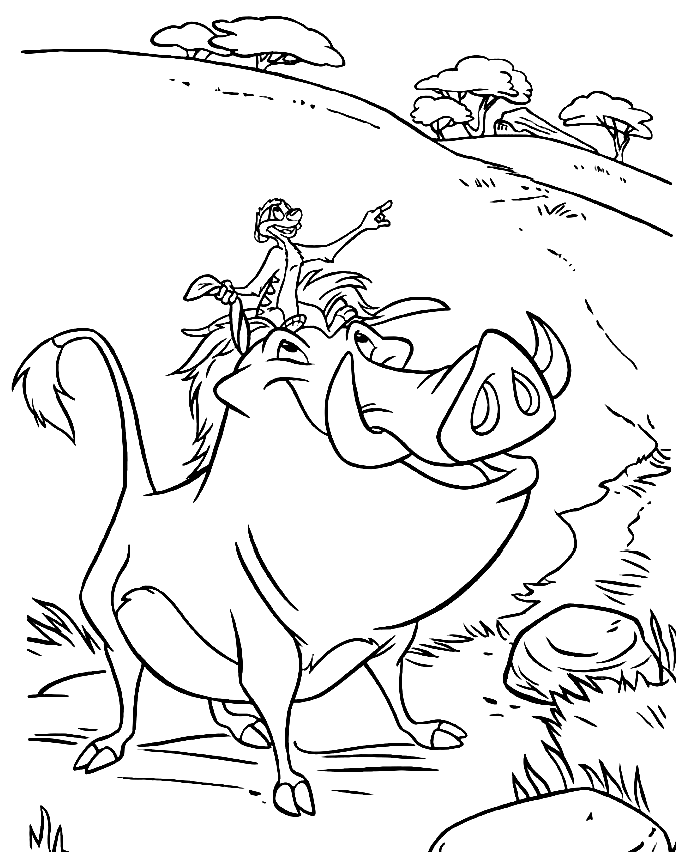
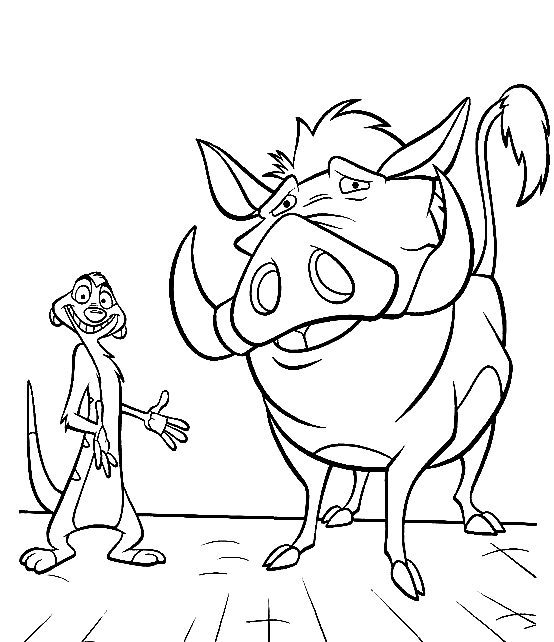
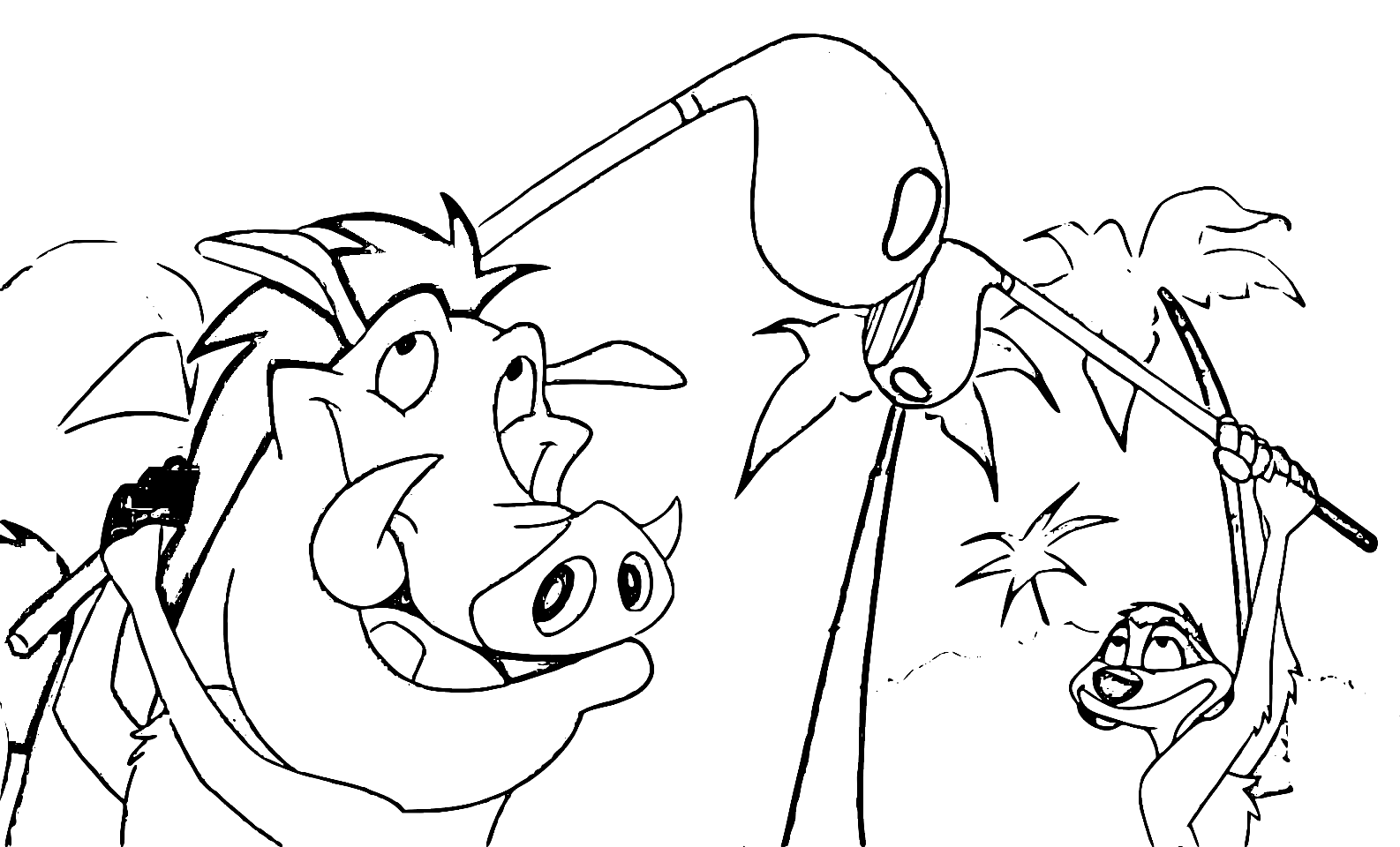
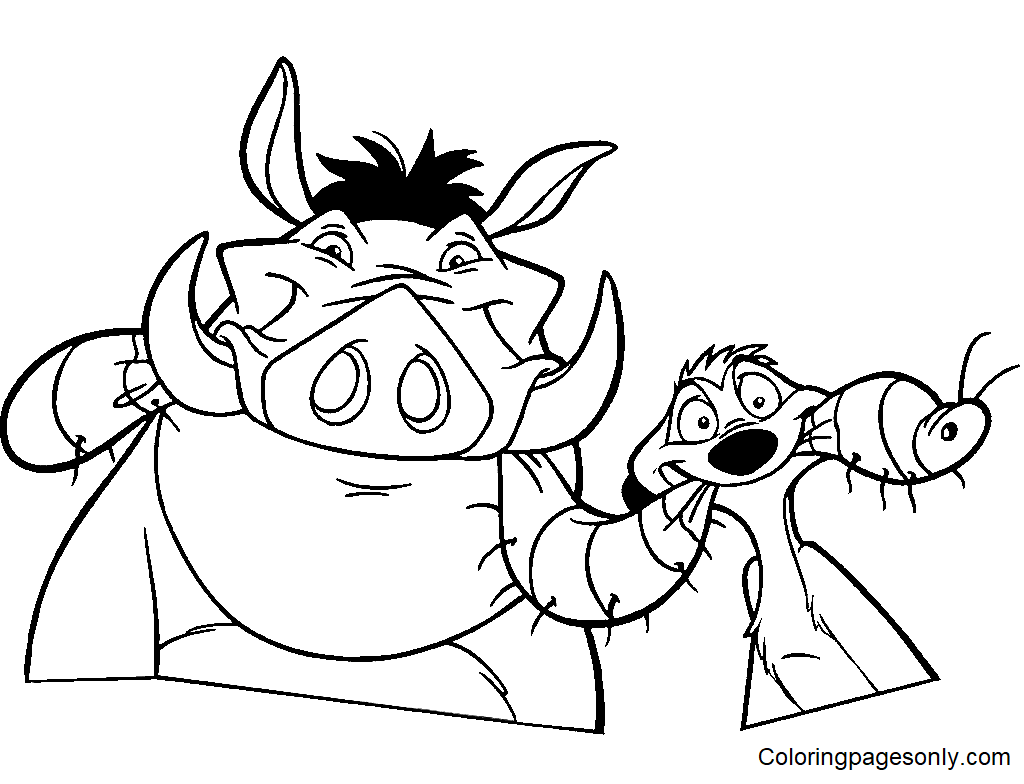
The largest group in the set shows the two in constant physical interaction: Timon riding on Pumbaa’s head, hanging from his tusks, chasing him, or simply standing together.
This physical closeness isn’t random; the real animators behind the characters have described Pumbaa as almost a moving stage for Timon, who spends most scenes on Pumbaa’s head, nose, or back. Keeping Timon in some physical contact with Pumbaa, rather than standing apart from him, is what makes these pages feel true to the actual characters.
Solo Mood Portraits
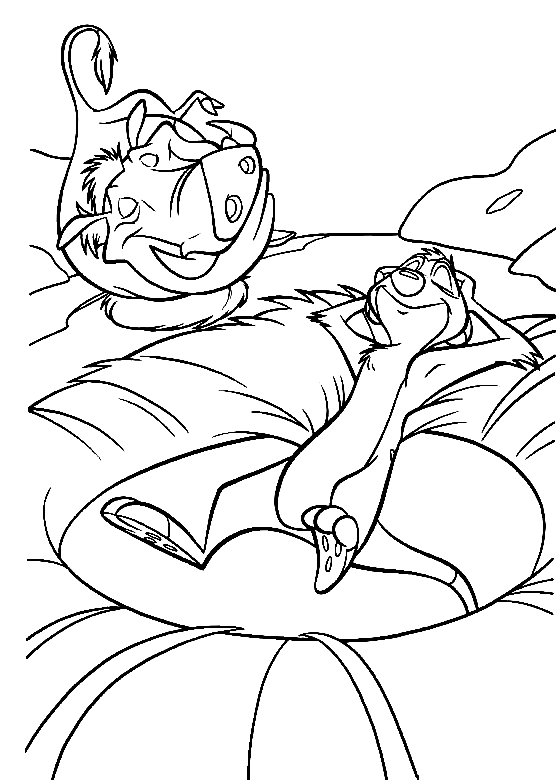
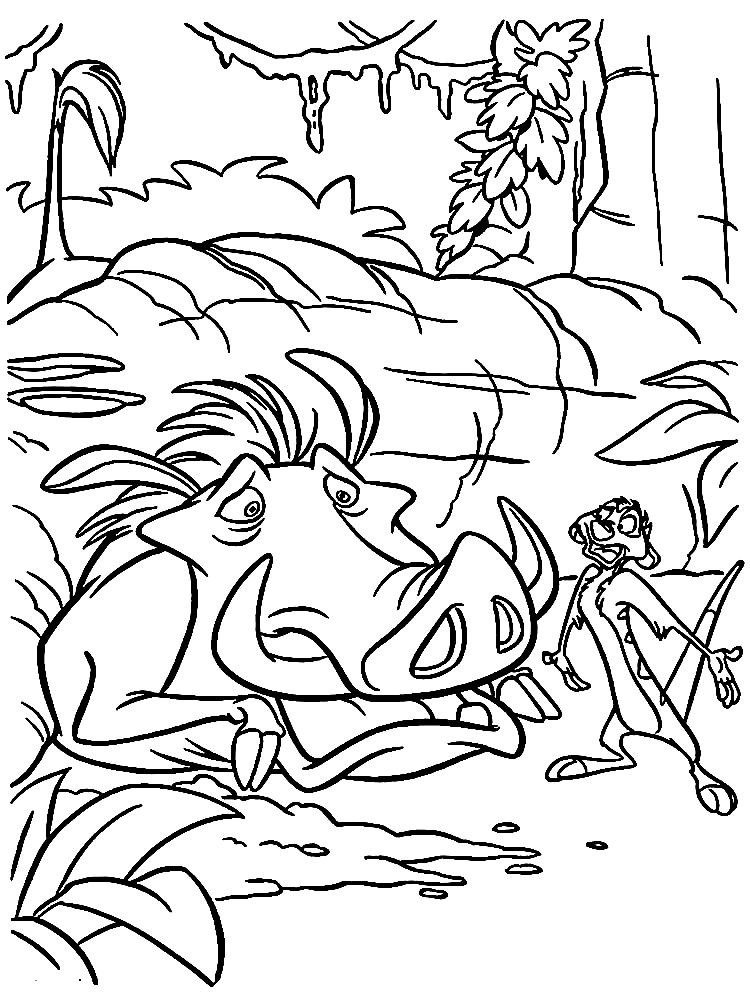
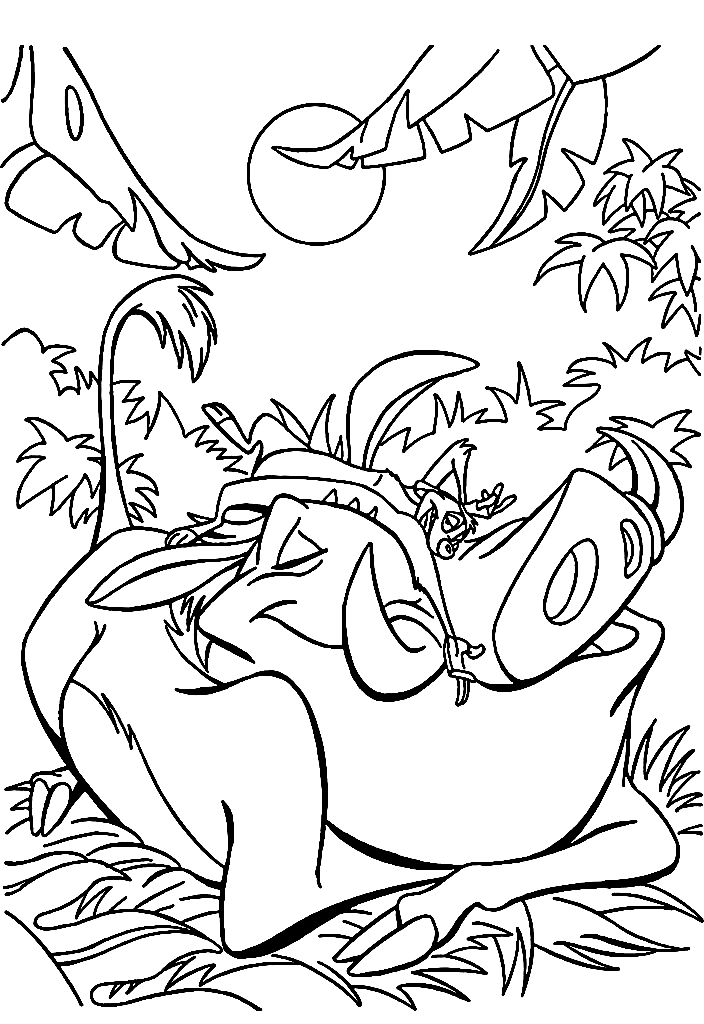
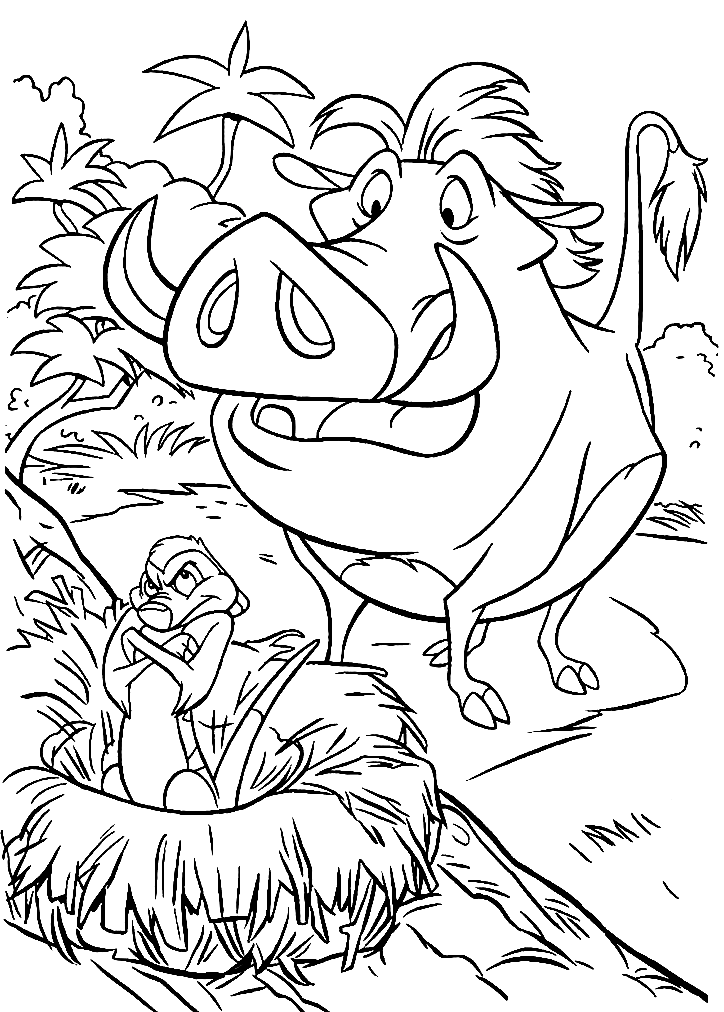
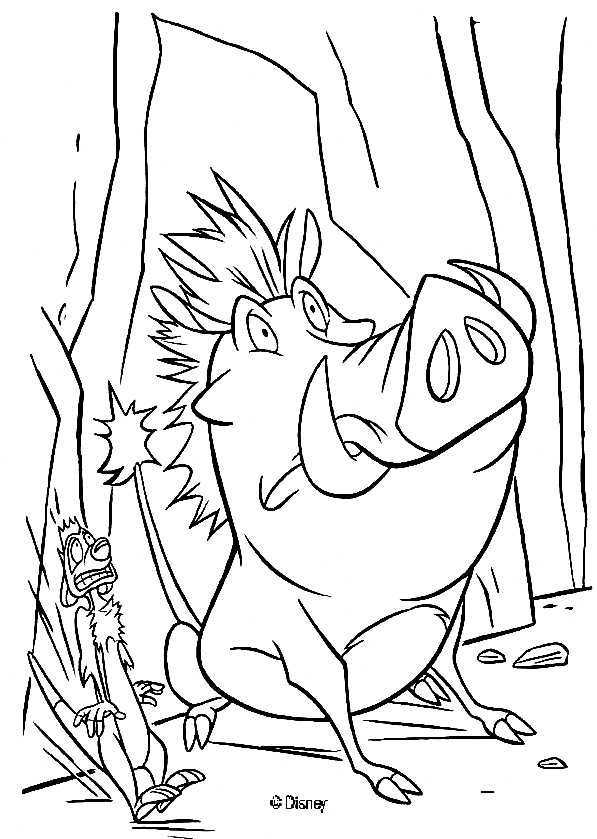
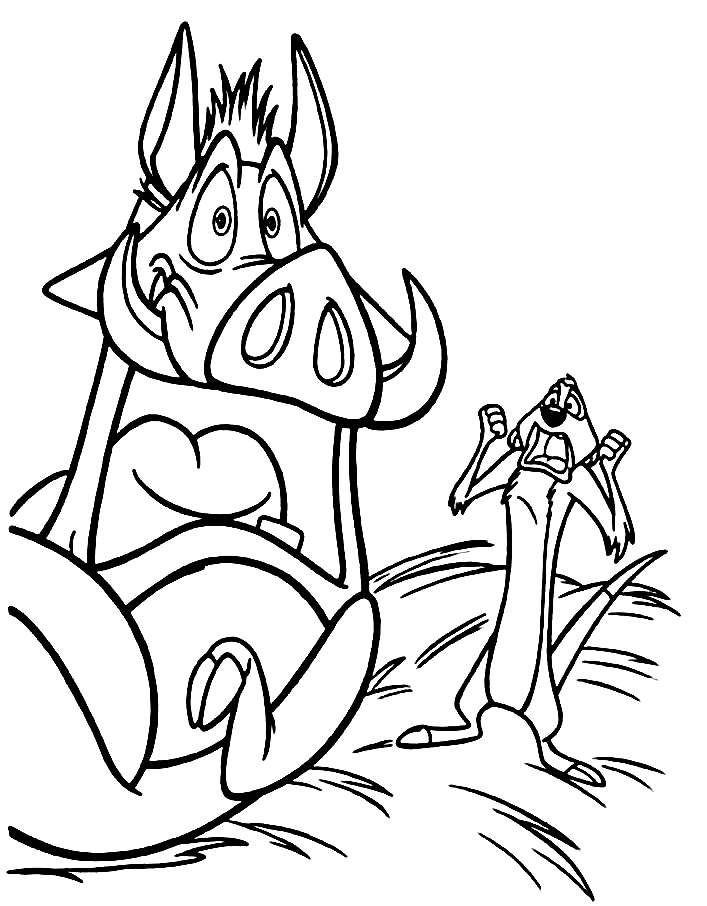
A dedicated group covers the pair across a range of emotions: happy, funny, cute, angry, terrified, proud, and sleeping.
Since Timon and Pumbaa have such different body types, a small, quick meerkat and a larger, sturdier warthog, exaggerating that size contrast even further on the more dramatic mood pages, like terrified or angry, tends to look more accurate than keeping their proportions understated.
With Friends and Family
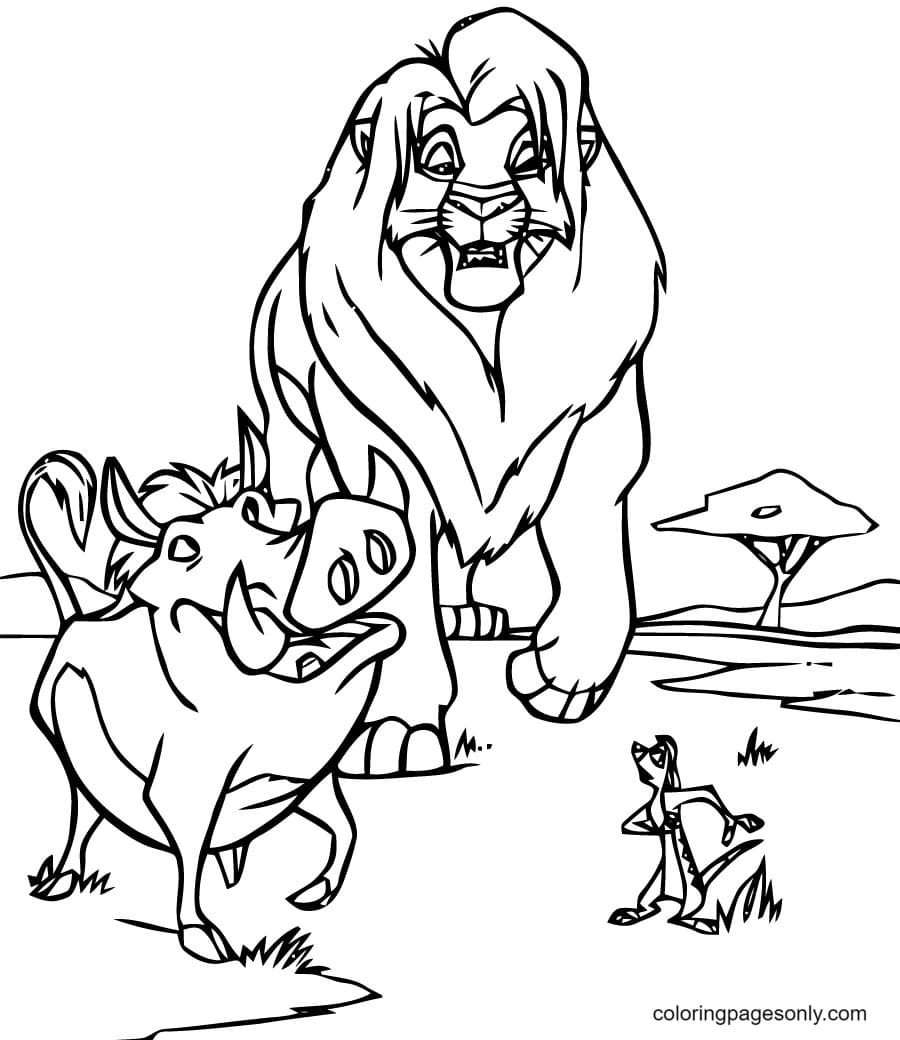
This group shows the duo alongside other Lion King characters, including scenes with Zazu the hornbill and a page connecting them back to Mufasa.
Since these are established Disney characters with their own well-known color schemes, keeping Zazu’s blue and Mufasa’s warm golden tones intact is worth more attention than any new color choice.
Activities and Holidays
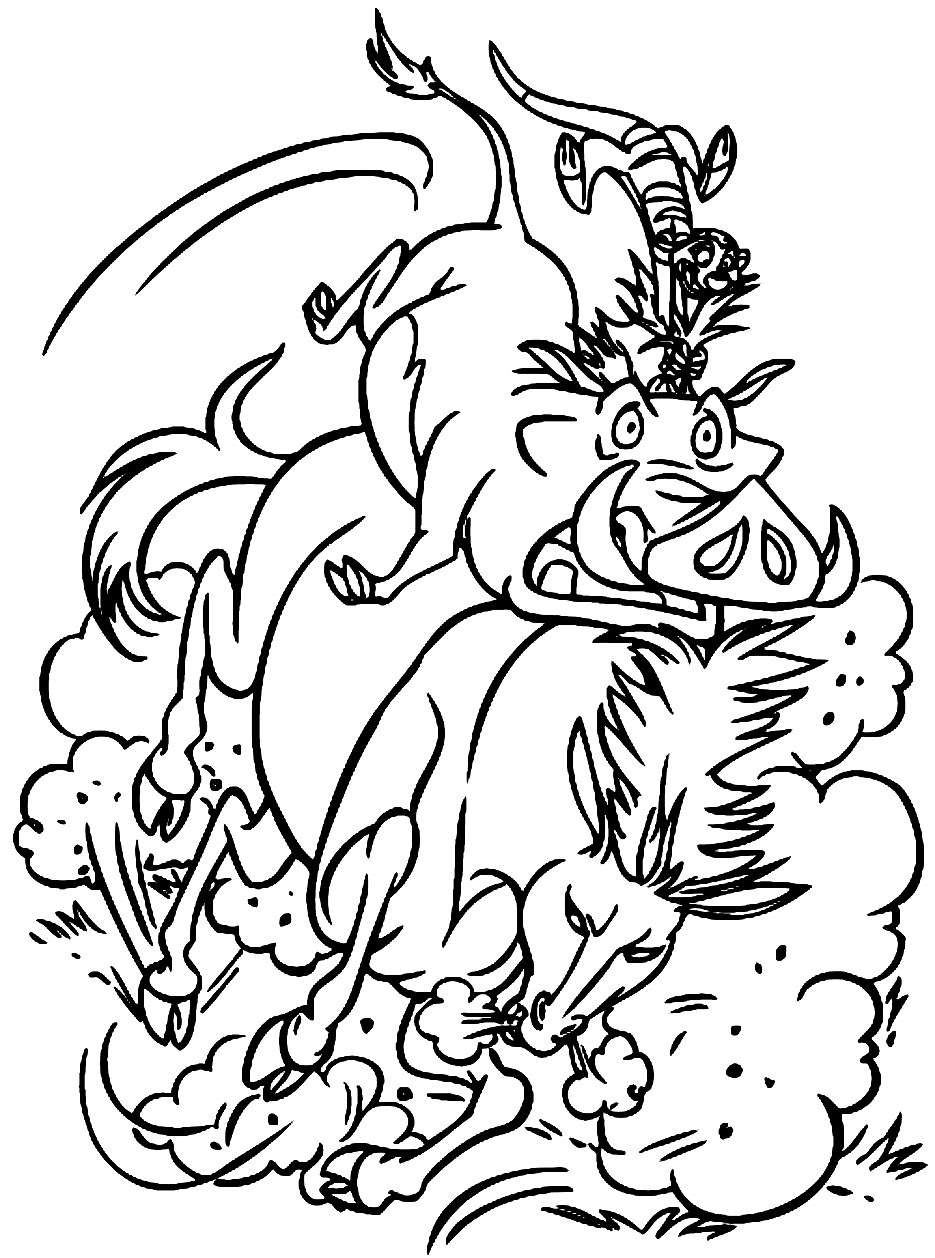
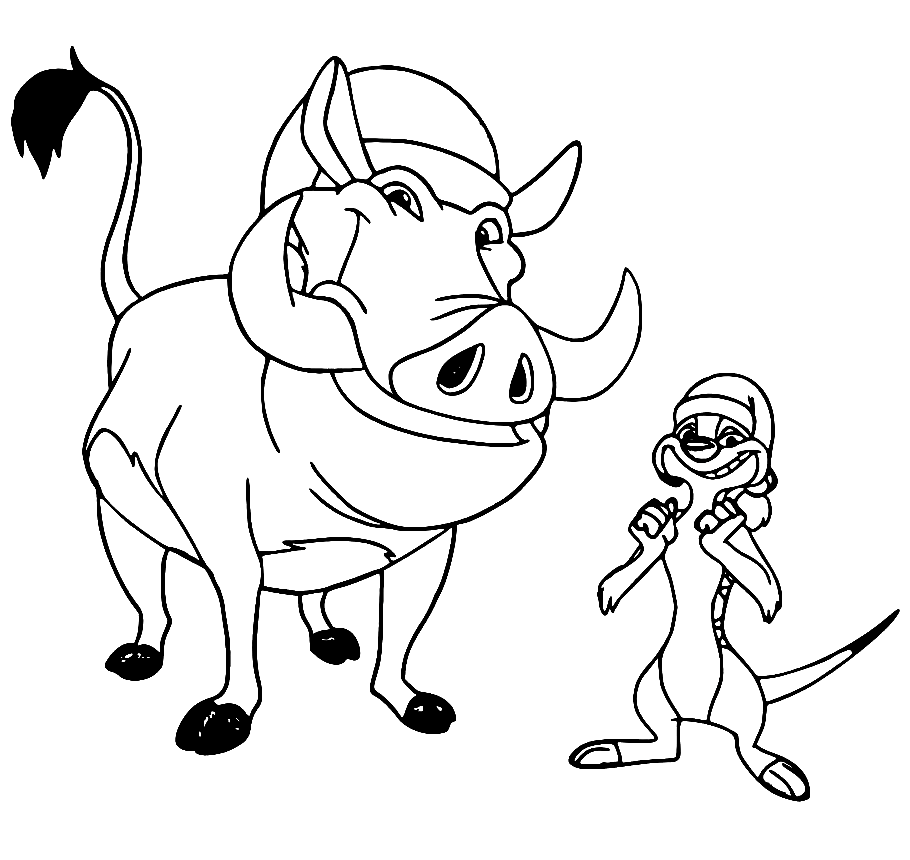
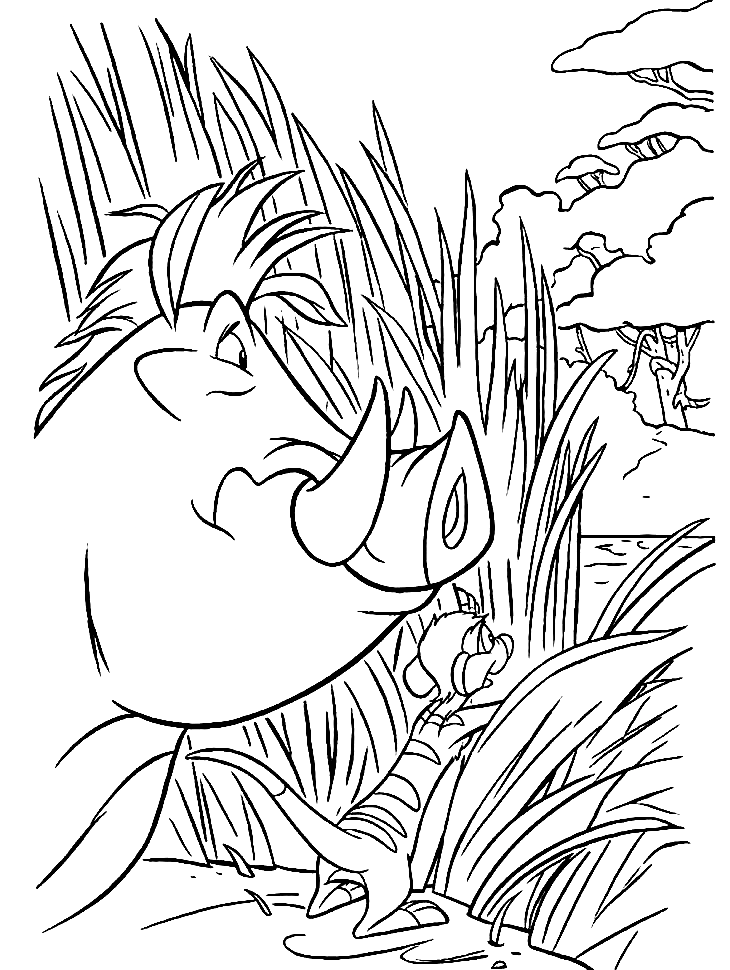
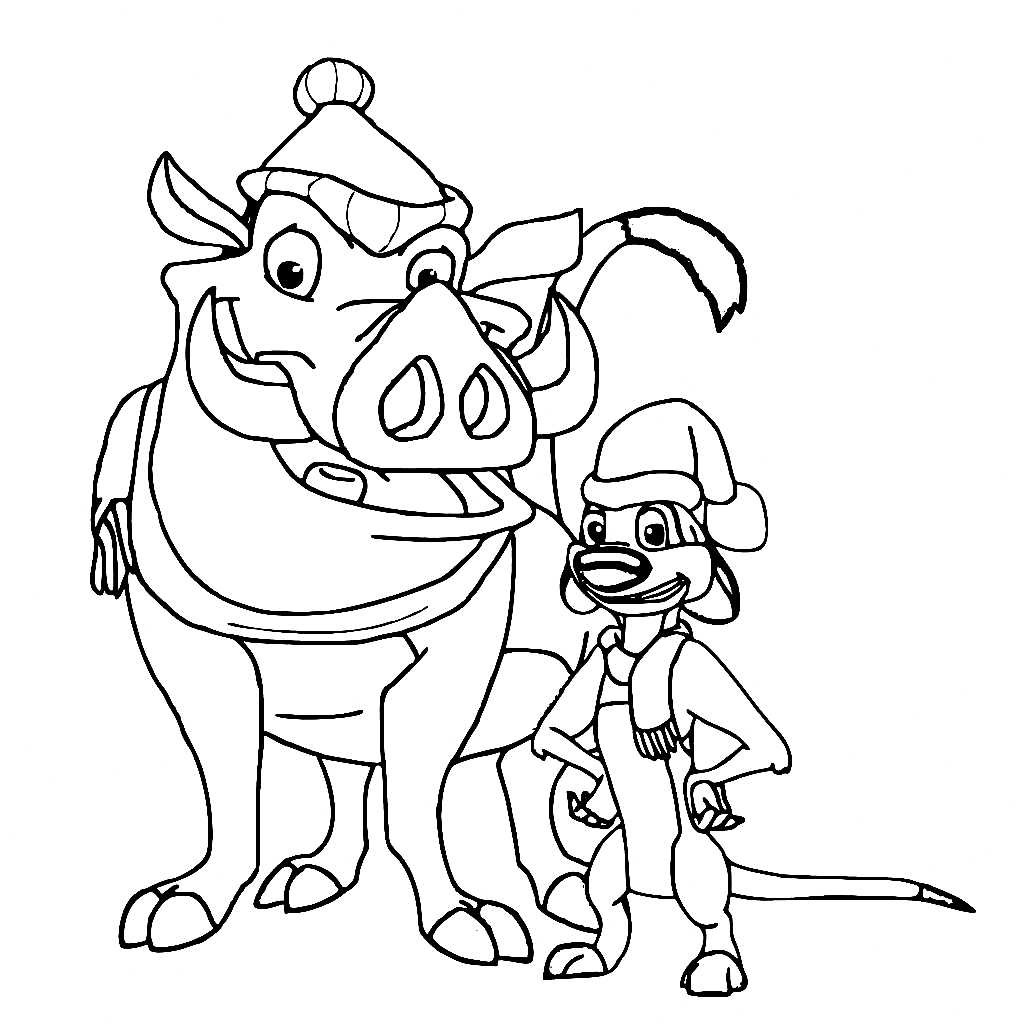
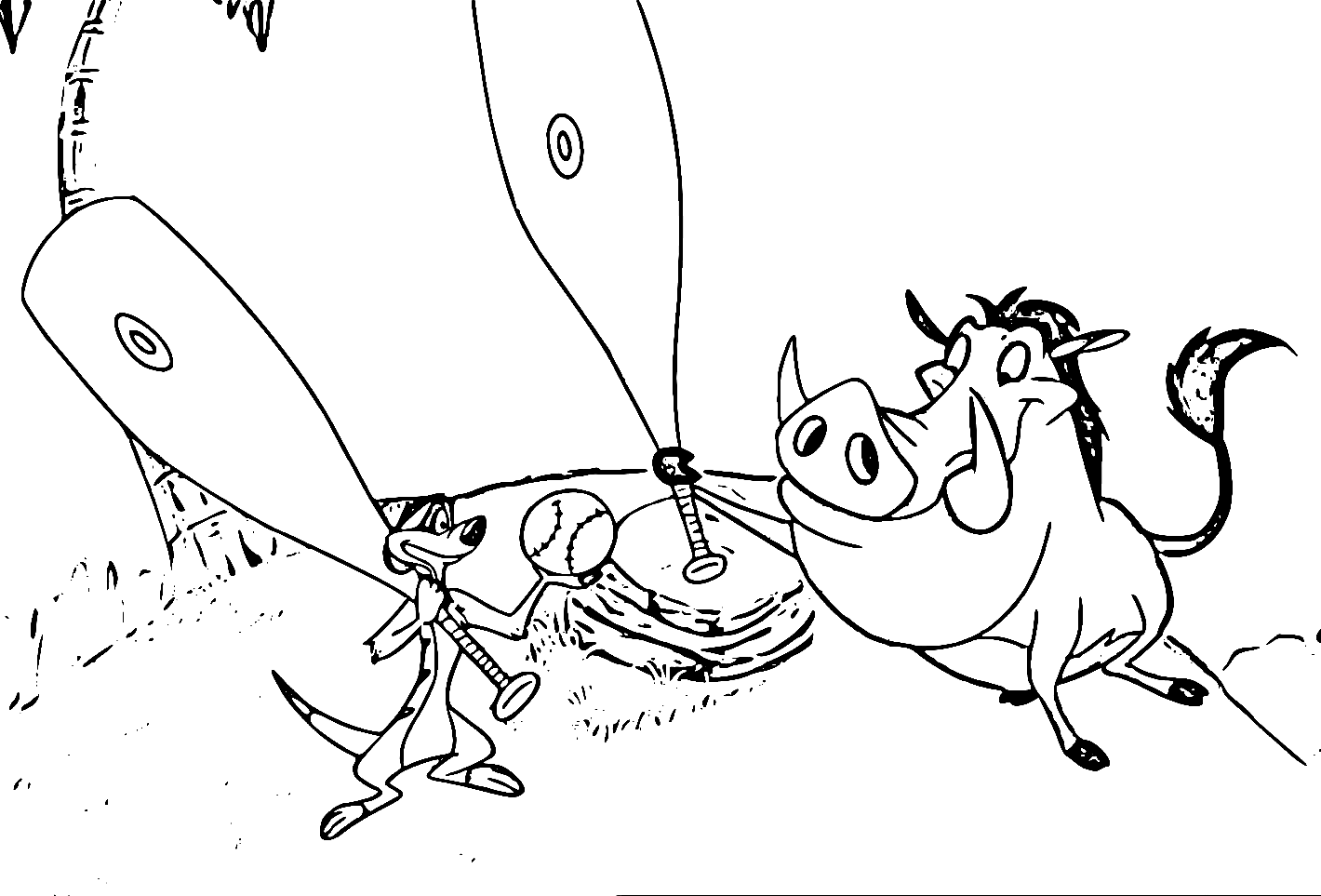
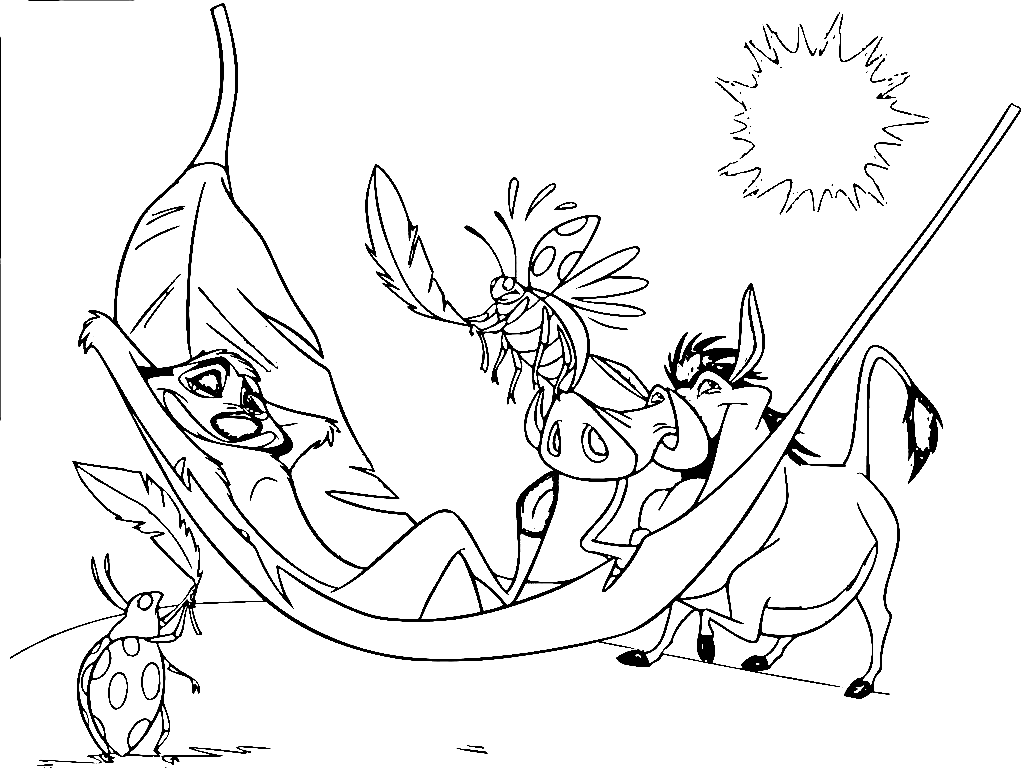
The rest of the set covers specific moments: playing baseball, boxing, riding a horse, relaxing in the forest, and a couple of Christmas-themed pages.
These pages are a good choice for a specific occasion or season rather than an ordinary afternoon of coloring, since each one is tied to a particular activity or holiday rather than the everyday jungle setting.
What These Pages Do
The real meaning behind these characters’ names is worth knowing before any crayon touches the page. “Hakuna matata” is genuine Swahili for “no worries,” and “Pumbaa” is a real Swahili word too, generally translated as lazy or careless. Two real words from a real language sit quietly inside characters most people know only as cartoon best friends.
Fine motor development gets a specific, physical workout tied to how these two are actually drawn together. The American Academy of Pediatrics has pointed to structured coloring as a genuine contributor to fine motor development in children roughly between the ages of two and seven, and keeping a small, agile Timon correctly positioned on or around a much larger Pumbaa, rather than floating separately in the frame, asks for a kind of spatial care that a single-character page doesn’t.
There’s a genuine emotional idea worth sitting with in the phrase these two are built around. Art Therapy Practitioners have noted that a real, simple philosophy like “no worries,” used deliberately rather than as an empty phrase, can give a child actual language for setting down anxiety in the moment, which is exactly what Hakuna Matata is meant to do in the story itself.
This set also carries a specific lesson about friendship worth naming directly: nothing about nature says a meerkat and a warthog belong together, and the story makes a point of it. Coloring these two side by side is a small, genuine reminder that some of the best friendships are the ones that don’t obviously make sense on paper; they’re just chosen anyway.
How to Color Timon and Pumbaa Coloring Pages
Keep Timon in physical contact with Pumbaa whenever possible. On his head, his nose, or his back, that closeness is a real part of how these two are actually drawn together, not just an artistic choice on this site.
Lean into the size contrast on dramatic pages. A small, quick Timon against a larger, sturdier Pumbaa reads more accurately when that difference is exaggerated slightly rather than softened.
Keep Zazu and Mufasa in their established colors. Blue for Zazu, warm gold tones for Mufasa; these are well-known Disney color schemes worth preserving rather than redesigning.
Save bold, festive colors for the holiday and activity pages. These are the most open parts of the set for playful choices, since they’re tied to a specific occasion rather than the everyday jungle setting.
5 Creative Craft Ideas with Timon and Pumbaa Coloring Pages
“No Worries” Feelings Card
Color one of the calmer solo portraits and write down something you’re choosing to let go of, using “hakuna matata” as the opening line – ten minutes, built around the phrase’s real, genuine meaning.
Timon-on-Pumbaa Pose Study
Color three or four of the pages showing Timon in physical contact with Pumbaa, paying attention to how differently he’s positioned in each one. Fifteen minutes for a small study in a very real animation habit.
Friends and Family Gallery
Color the pages with Zazu and the connection to Mufasa, and display them together with the main Timon and Pumbaa portraits as a small Lion King cast gallery. Twenty minutes for a colorful group display.
Unlikely Friendship Card
Color a page of Timon and Pumbaa together and write a short note about a real friendship in your own life that doesn’t obviously “make sense” but works anyway – ten minutes, built around a genuinely personal idea.
Holiday Display
Color the Christmas-themed pages together and set them out as a small, recurring holiday display each year. Fifteen minutes for both pages combined.
FAQ About Timon and Pumbaa Coloring Pages
Are these Timon and Pumbaa coloring pages free, and can I color them online?
Yes. Every page is free, with no account, email, or payment required. Download the PDF to print at home, or open it in the online coloring tool to color on screen.
What age group are these Timon and Pumbaa coloring pages best suited for?
The solo portraits and Timon-and-Pumbaa pages work well from age 3. The group scenes with friends and family, with more figures to track, suit slightly older kids.
What does “hakuna matata” actually mean?
It’s a real Swahili phrase meaning “no worries.” It was written into the film’s most famous song, composed by Elton John with lyrics by Tim Rice, which was nominated for the Academy Award for Best Original Song.
Does “Pumbaa” mean anything?
Yes. It’s a real Swahili word generally translated as lazy or careless, built directly into the character’s name.
Would a real warthog and a real meerkat actually be friends?
No, and the animators who created these characters have said so themselves, a warthog would naturally eat a meerkat in the wild. Their friendship exists because the story chose it, not because it reflects how these animals actually interact.
When did Timon and Pumbaa first appear, and did they get their own show?
They debuted in Disney’s The Lion King in 1994, voiced by Nathan Lane and Ernie Sabella, and later starred in their own spin-off series, Timon & Pumbaa, which ran from 1995 to 1999.
Are these pages official Disney products?
No. These are fan-style coloring pages inspired by the characters and are not official merchandise. They are not licensed by or affiliated with Disney or any other rights holder connected to The Lion King.
Can I use these pages for a Lion King-themed party or classroom activity?
Yes. The character portraits work well as party favors for a Lion King-themed event, and the real meaning behind “hakuna matata” makes a genuine, simple starting point for a classroom conversation about language and coping with worry.
Start Coloring
Download any page by clicking the design. No account, email, or payment is required. Pages print directly from the browser at full resolution or open in the online coloring tool for screen use. Share finished pages on Facebook or Pinterest using the share buttons at the top of each design page.