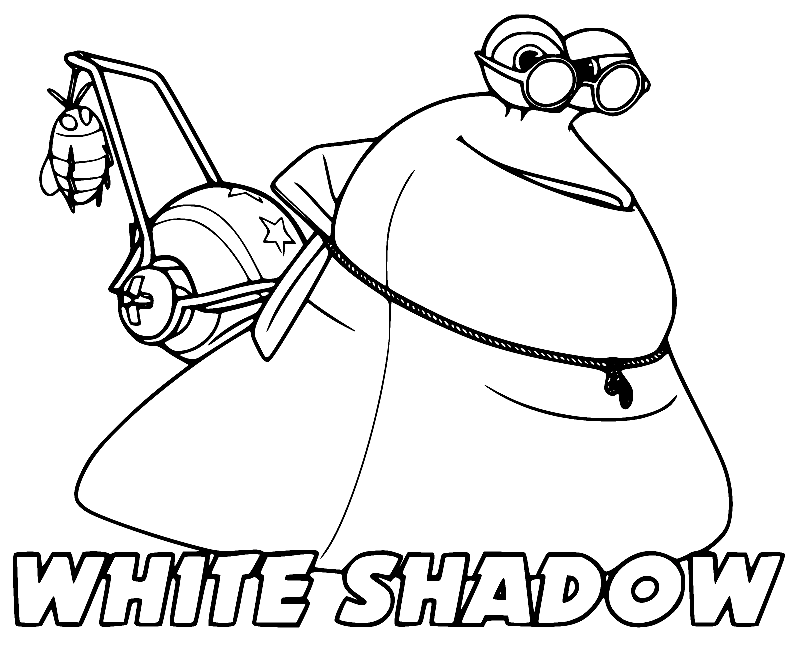
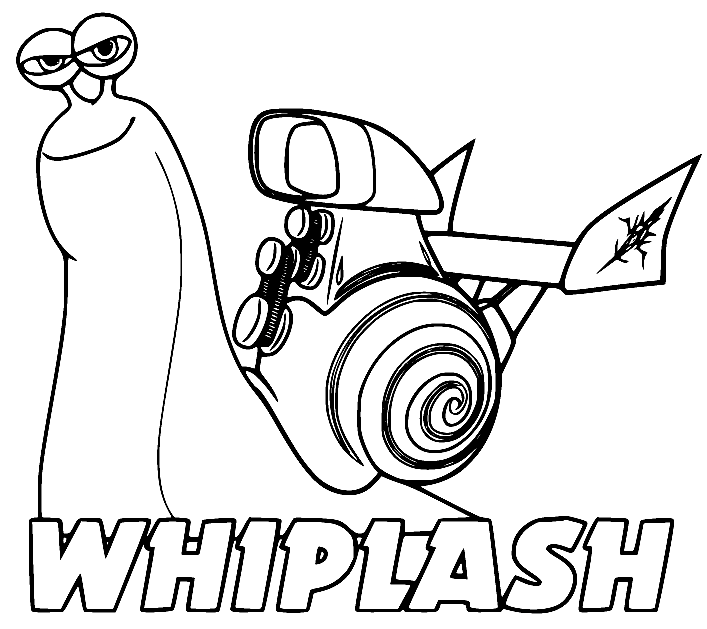
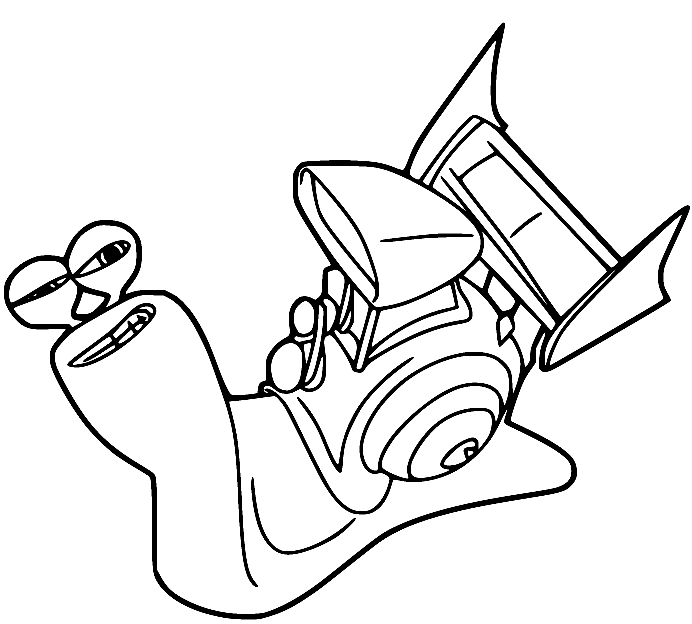
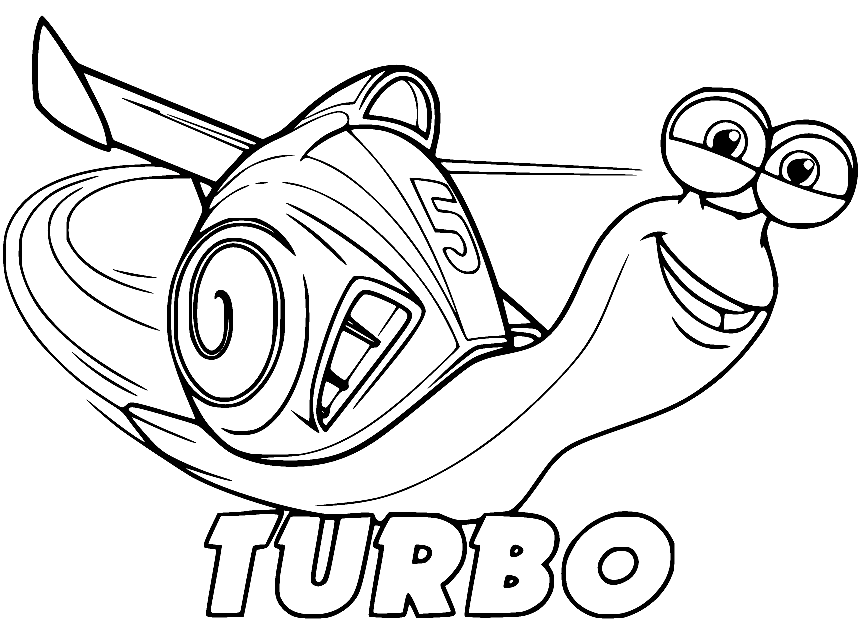
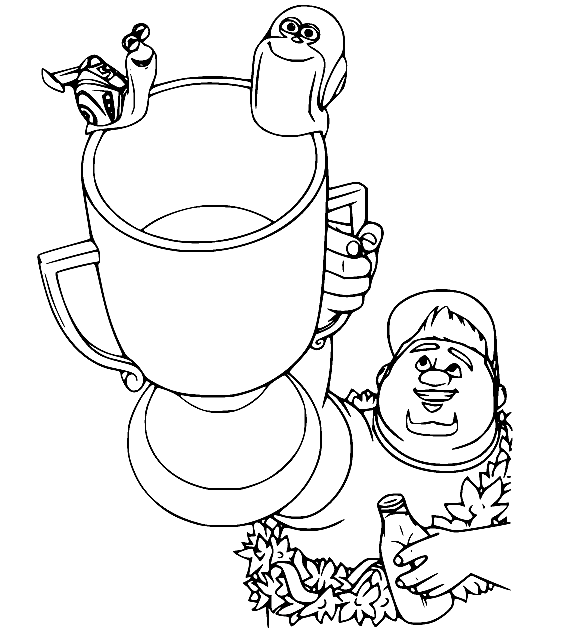
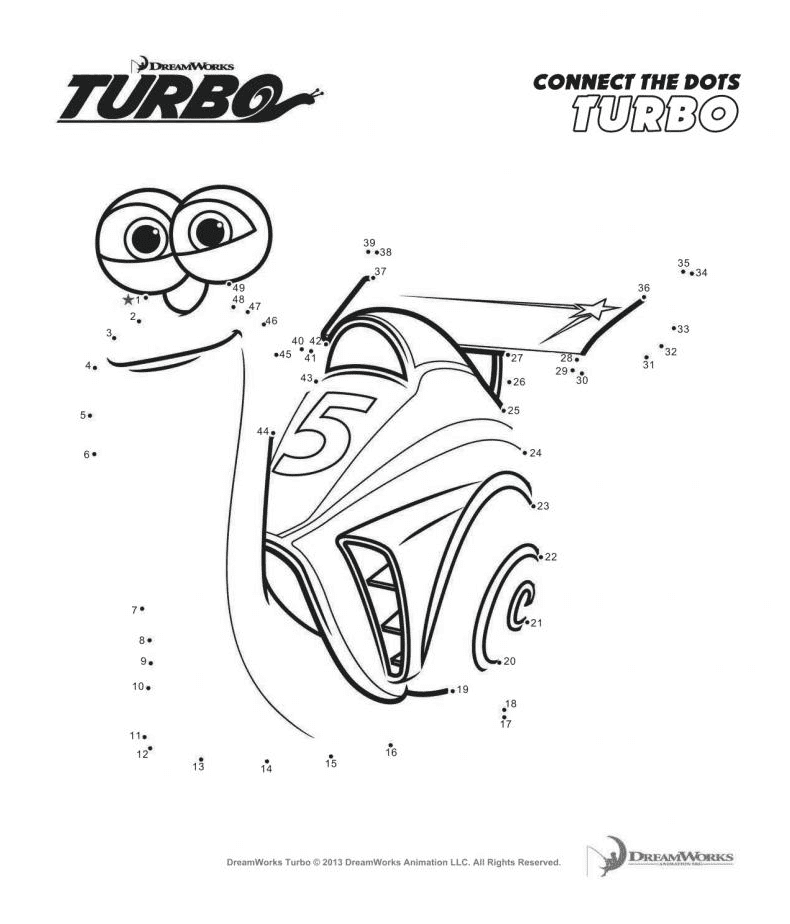
Free Turbo coloring pages: 30+ pages featuring Theo the garden snail in his blue racing shell, the full snail racing crew including Whiplash, Burn, Smoove Move, and Skidmark, high-speed action scenes on the Indianapolis Motor Speedway track, portrait pages showing Turbo’s LED headlight eyes and glowing shell details, scenes with Tito and the strip mall crew, and the animated visual vocabulary of DreamWorks Animation’s 2013 film. All free, printable PDFs and online coloring for fans of the film.
Turbo was produced by DreamWorks Animation and released on July 17, 2013, directed by David Soren in his feature directorial debut. The film was produced with a budget of approximately $135 million and earned $282.6 million worldwide. The voice cast includes Ryan Reynolds as Turbo (whose full name is Theo), Paul Giamatti as his older brother Chet, Michael Peña as Tito, Bill Hader as antagonist Guy Gagné, Richard Jenkins as Whiplash, Maya Rudolph as Burn, and Snoop Dogg as Smoove Move.
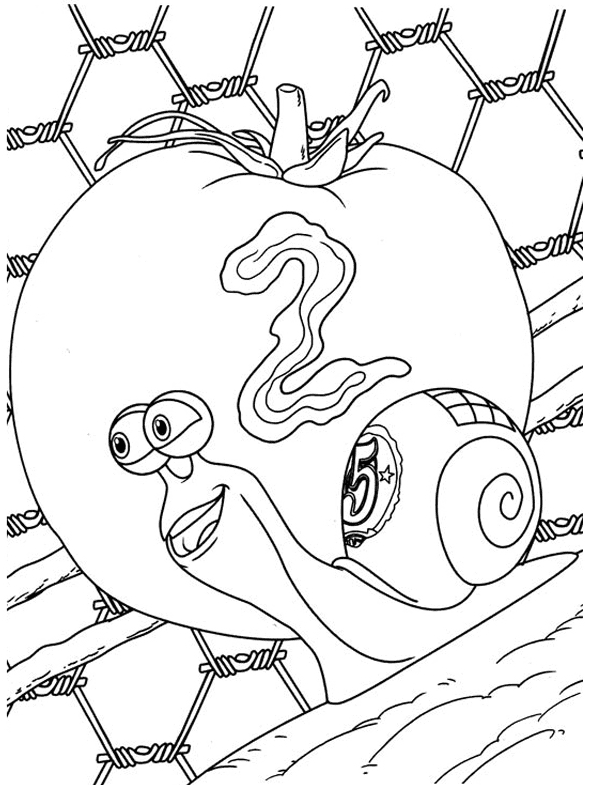
The story follows Theo, a garden snail living in a tomato garden in suburban California, who dreams of racing in the Indianapolis 500. After a freakish accident involving nitrous oxide from a drag racing car, he absorbs the nitrous into his biology. He develops the ability to travel at speeds exceeding 200 miles per hour (320 kilometers per hour). He also develops features directly borrowed from racing cars: headlights in his eyes, turn signals, a built-in sound system, and glowing blue energy traces along his shell at full speed. A real garden snail, by comparison, travels at approximately 0.03 miles per hour (0.05 kilometers per hour).
These 30+ free pages at ColoringPagesOnly.com cover the full cast and key scenes. All free, PDF or PNG, print or color online.
What’s Inside
Turbo (Theo): Portrait and Speed Pages
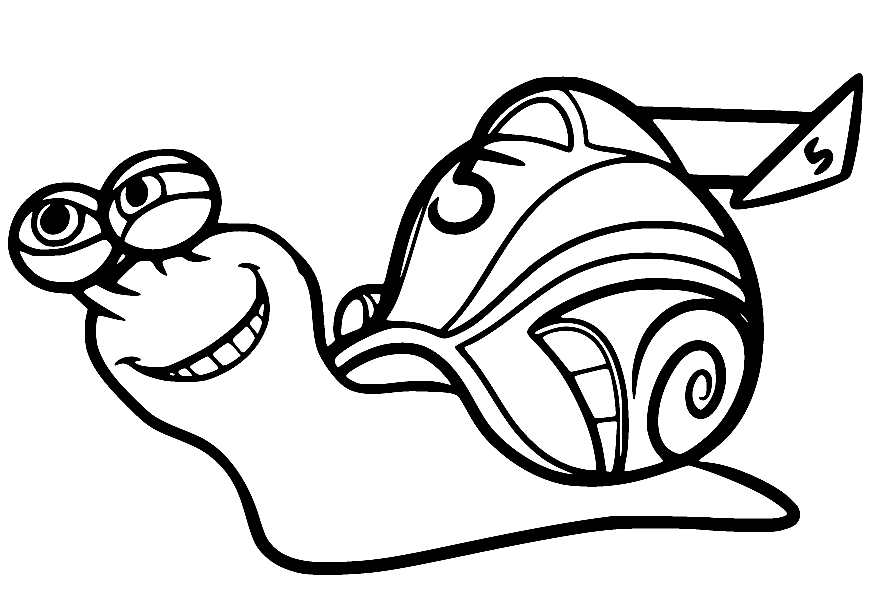
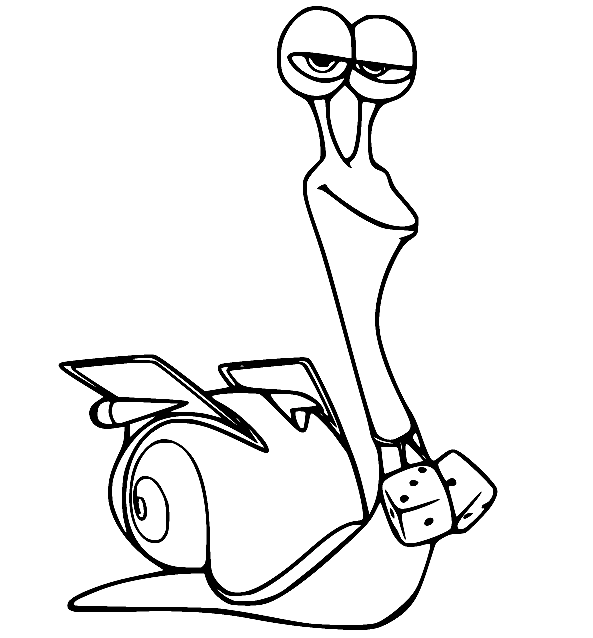
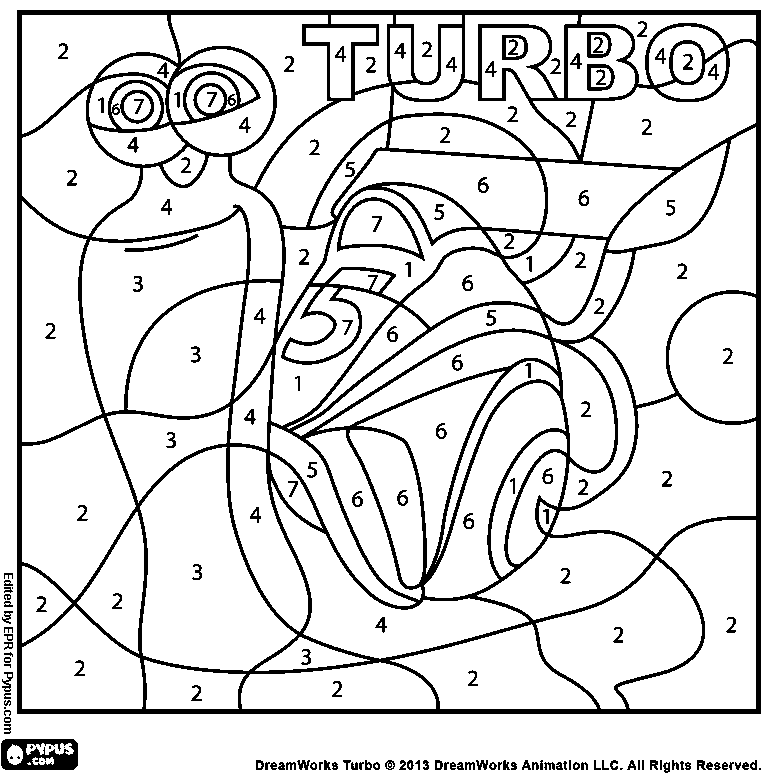
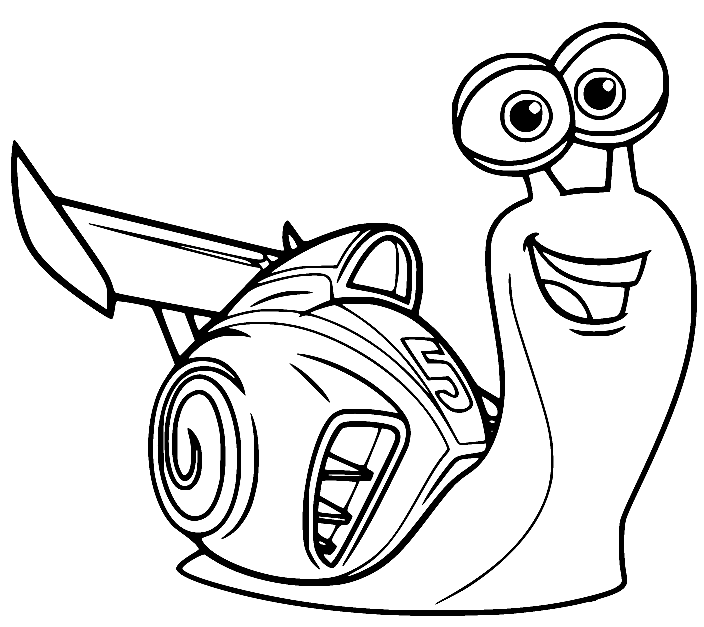
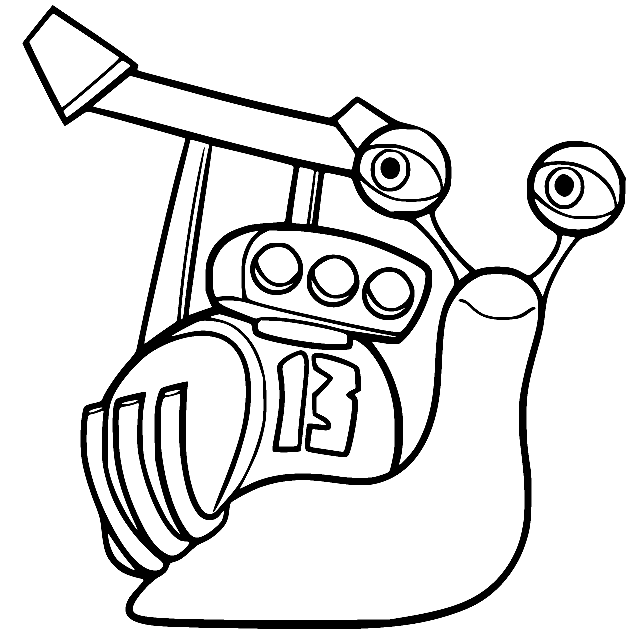
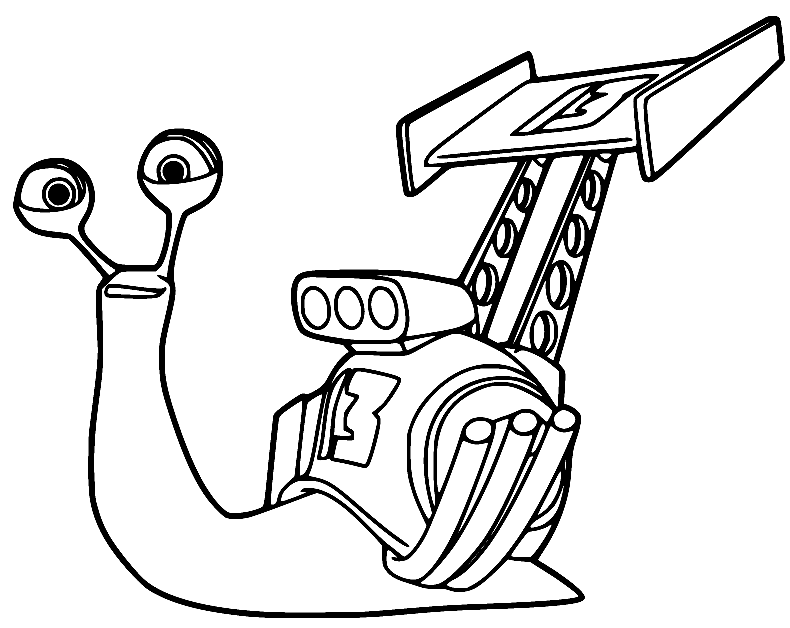
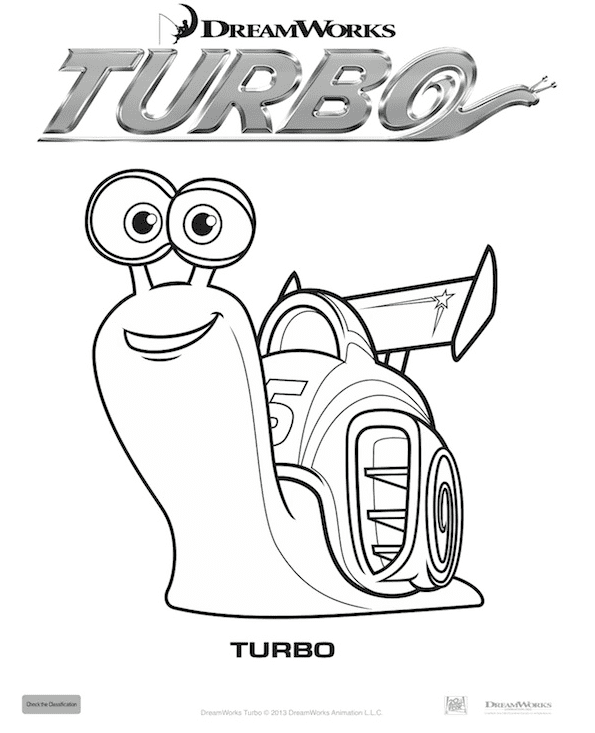
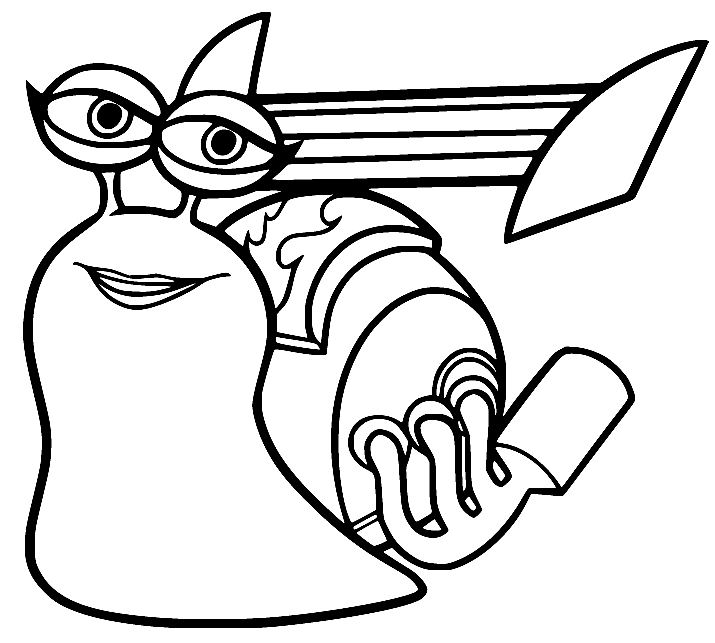
Turbo is the collection’s central subject and the most visually specific character to color accurately. His design combines the anatomical form of a real garden snail (the muscular foot, the eyestalks, the shell) with a racing car paint scheme applied to the shell and a set of mechanical features embedded in his body. This combination of the biological and the mechanical is the character’s defining visual quality.
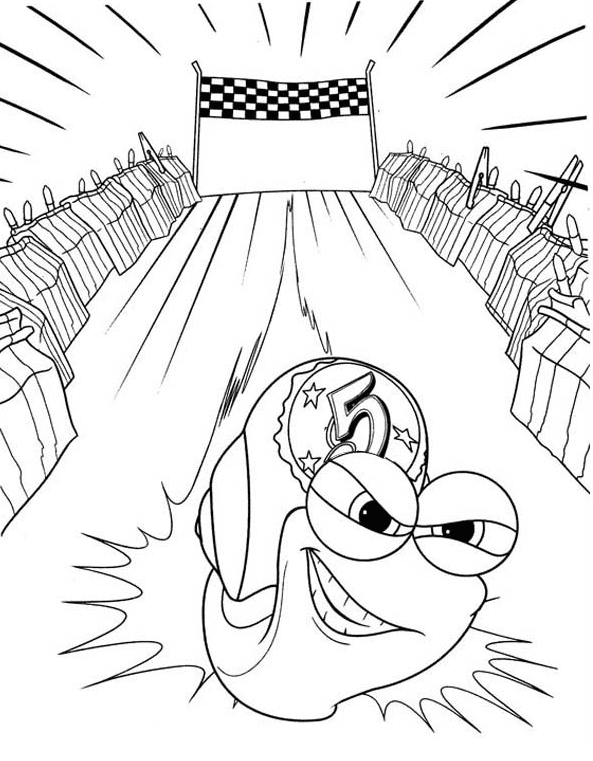
His shell is the most important coloring element: a deep, vivid blue as the primary color, with white racing stripes running longitudinally along the shell’s surface. The number on his shell references the racing car tradition of competitor numbering. When Turbo is shown at speed or using his nitrous ability, glowing blue energy traces appear along the shell’s surface, radiating from a central point outward along the shell’s spiral.
His eyes are the character’s most expressive feature: large and round in the standard animated animal tradition, they also function as headlights, emitting a bright white or pale yellow glow in scenes of low light or high drama. The eyestalks are the standard garden snail anatomical feature, giving Turbo the ability to swivel his eyes independently and creating the wide-eyed expression that defines his personality register.
Coloring Turbo portraits: Start with his body: the snail’s foot and visible flesh are a warm, olive-tan tone, the specific warm grey-tan of a garden snail’s body. The shell receives the deep, vivid blue as its primary color, applied at full saturation across the entire shell surface. Then add white racing stripes in thin parallel lines running along the shell’s longitudinal axis. The glowing energy effects on speed pages are rendered as vivid blue-white, lighter and more luminous than the shell’s primary blue, applied in thin radiating lines from the shell’s center outward. His eyes receive a bright white highlight at the pupil center on pages that show the headlight effect.
Whiplash: The Crew Leader
Whiplash is the leader of the snail racing crew that Turbo joins in the Starlight Plaza strip mall. Voiced by Richard Jenkins, Whiplash is the experienced veteran of competitive snail racing, distinguished by his red shell and the specific authority his posture and expression communicate. He is the character who recognizes Turbo’s ability and assembles the crew for the Indianapolis 500 attempt.
His red shell is the collection’s warmest primary color, a fully saturated racing red that positions him as the crew’s dominant visual presence. His design reflects his character: the shell is worn and experienced-looking, its surface suggesting a history of racing rather than the pristine condition of a newcomer.
Coloring Whiplash: The shell is racing red at full saturation, applied with the same care given to Turbo’s blue. The shell’s surface details, any markings or patterns in its design, should be applied in a slightly darker red or dark crimson, providing contrast within the red palette. His body flesh tone matches Turbo’s warm olive-tan. His eyes, while not equipped with the same racing modifications as Turbo’s, should show the wisdom and authority his character communicates.
Burn: The Crew’s Fastest Female Member
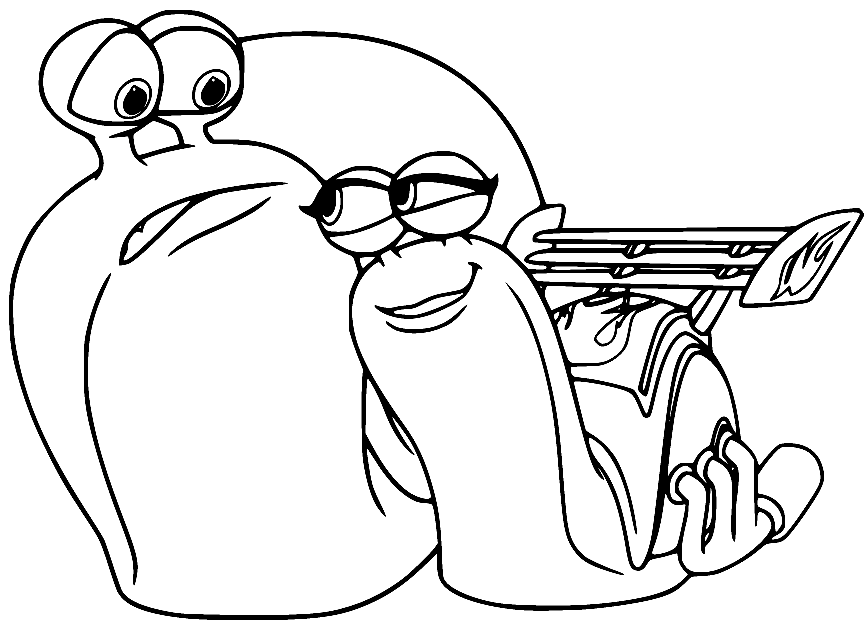
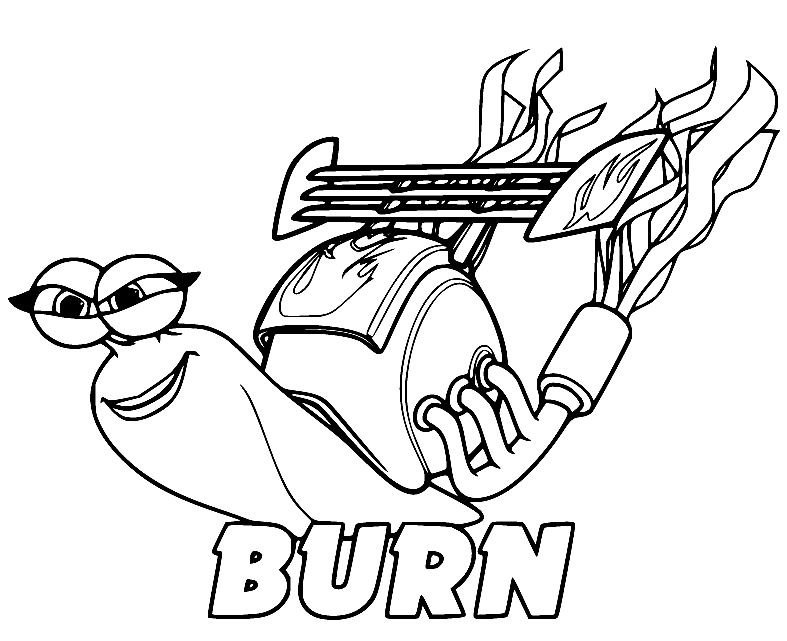
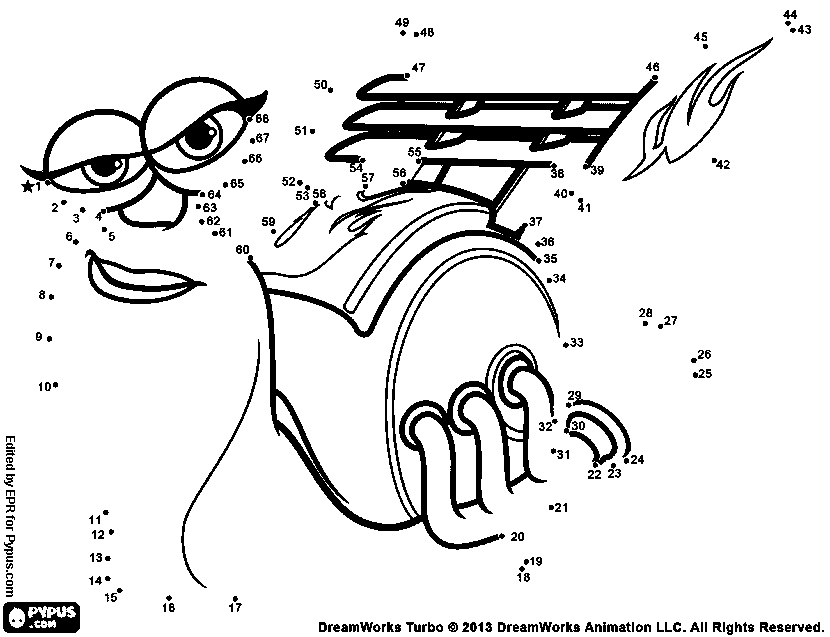
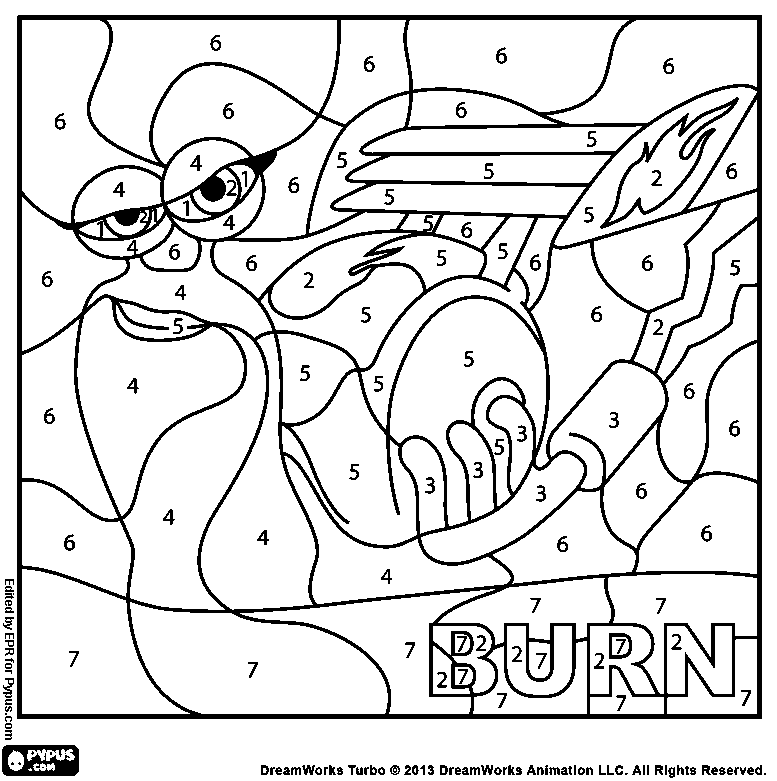
Burn, voiced by Maya Rudolph, is the only female member of the snail racing crew and one of its most energetic personalities. Her shell design uses flame-inspired styling, with an orange base color and flame graphic elements that establish her personality before she speaks. She is the crew’s most vocal and enthusiastic member after Turbo himself.
Coloring Burn: Her shell uses vivid orange as the primary base color, applied at full saturation. Flame graphic elements, if present in the page design, should be rendered in progressively lighter tones toward their tips: deep orange at the base, transitioning through yellow-orange to pale yellow-white at the very tip. This gradient technique gives the flame effect the luminous quality of actual fire rather than the flat appearance of a painted flame.
Smoove Move and Skidmark
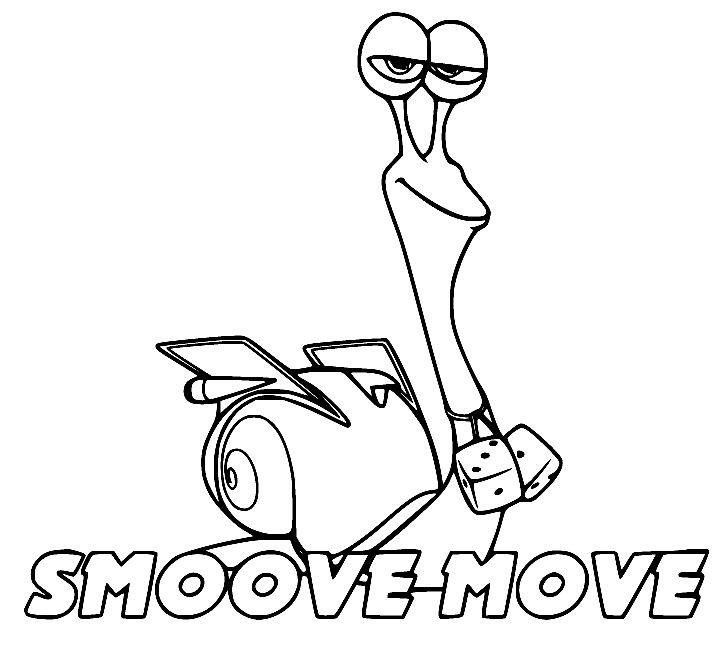
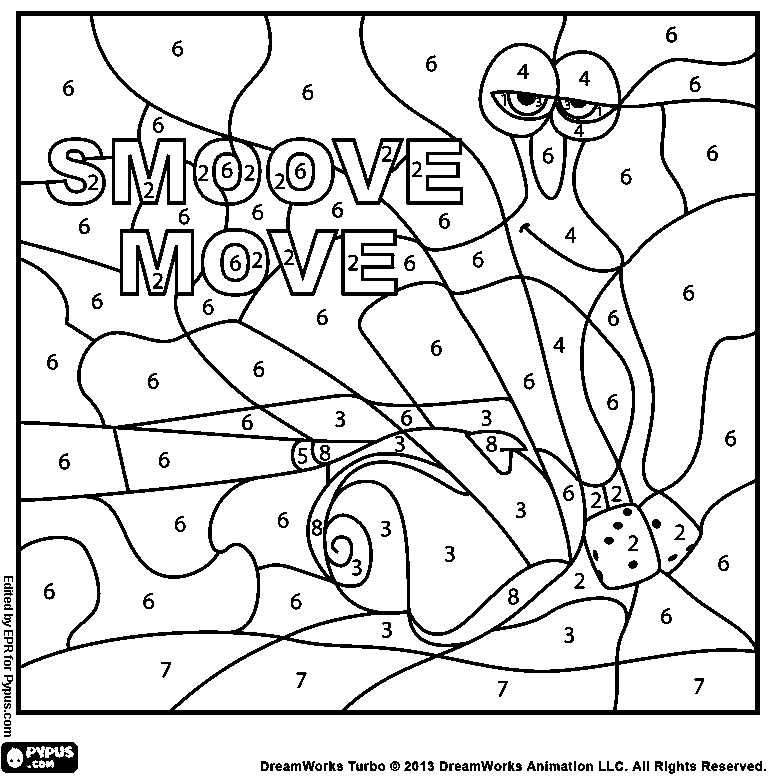
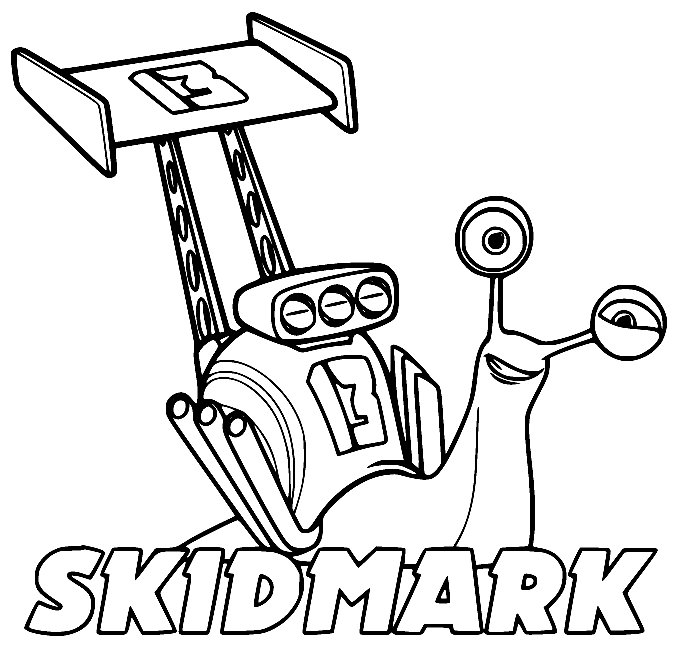
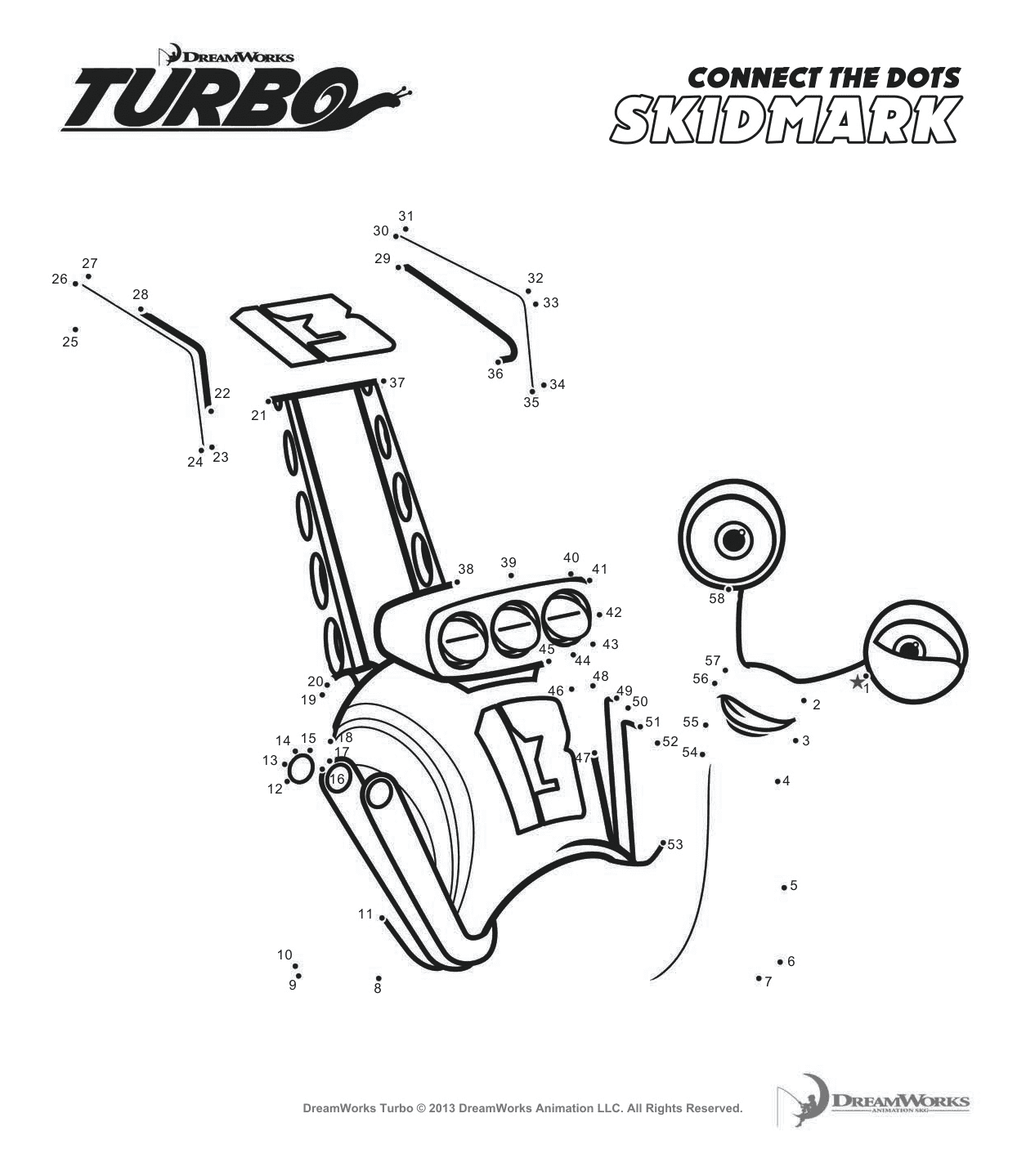
Smoove Move, voiced by Snoop Dogg, has the crew’s most visually distinctive aesthetic: a black shell with gold accent elements, reflecting the character’s relaxed, style-conscious personality. Skidmark, voiced by Ben Schwartz, is the crew’s most excitable member, with a yellow shell and a high-energy visual design that matches his personality.
Coloring Smoove Move: Black or very dark grey for the primary shell surface. Gold metallic accents should be warm, vivid gold rather than yellow: a deep, rich gold that reads as metallic rather than as a pale yellow. The contrast between the near-black shell and the vivid gold accent is the character’s most visually striking element and should be maintained at maximum contrast.
Coloring Skidmark: Vivid yellow as the primary shell color, the specific saturated yellow that reads as energetic and bright. Any additional design elements on his shell should use contrasting darker tones (dark brown or black detailing) to remain visible against the bright yellow base.
Racing Track and Indianapolis 500 Scenes
The Indianapolis Motor Speedway is the world’s largest sports venue by seating capacity, with approximately 257,000 permanent seats and additional infield capacity. The track’s 2.5-mile (4.023 kilometer) oval layout, first used for racing on May 30, 1911, is depicted in several of the collection’s most action-oriented pages, providing a compositional setting for Turbo’s racing sequences.
Track pages feature the specific visual vocabulary of oval racing: banked turns, the pit lane, grandstand seating, and the specific color palette of a major racing event (the green-grey asphalt, the white track markings, the vivid sponsor colors of the pit lane and grandstands).
Coloring track pages: The asphalt track surface is medium grey with a slight warm undertone. Track markings are white. The pit lane structures and grandstands use a warm grey-white for the concrete. The crowd in the grandstands is best rendered as a field of varied small color dots rather than uniform coverage, suggesting the visual texture of a packed racing audience. Any racing cars on the track should receive their full, vivid sponsor color schemes.
Guy Gagné: The Antagonist
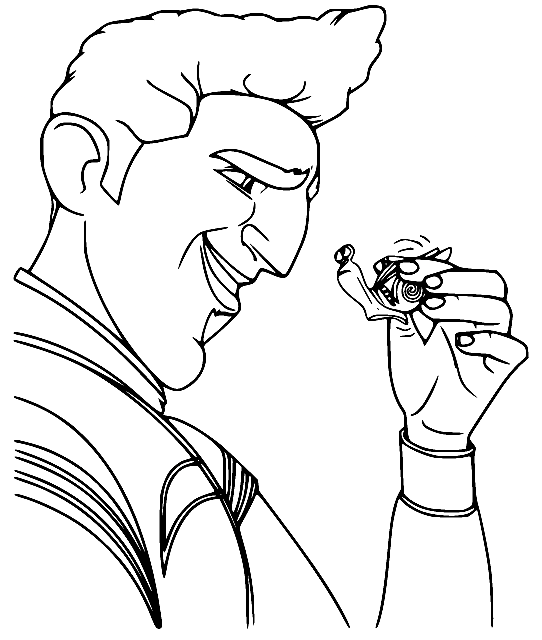
Guy Gagné, voiced by Bill Hader, is the film’s primary antagonist: a five-time Indianapolis 500 champion who is initially presented as Turbo’s hero and inspiration before his true unsportsmanlike character is revealed. His visual design reflects his role: polished, handsome, and professional in appearance, with the specific visual language of a celebrated racing champion. His racing suit and helmet are the most technically detailed human costume elements in the collection.
Coloring Guy Gagné: His racing suit uses a vivid primary color scheme reflecting his team’s sponsor branding. The helmet’s visor is reflective, best rendered as a dark mirror surface with a single curved white highlight along its upper edge. The professional racing suit has multiple color panel sections separated by sponsor branding elements, each requiring a different color application.
What These Pages Do
The film’s central premise asks the audience to take seriously an ambition that every observable fact argues against. A garden snail wanting to race in the Indianapolis 500 is not merely unlikely: the gap between a snail’s actual speed and the speed required to compete in Indy car racing is so large as to make the aspiration appear definitionally impossible. The film’s argument, delivered through Turbo’s story, is that the scale of the gap between current reality and a dream does not determine whether the dream is worth holding. This is a clear and consistent message across the full 96 minutes, and it is one that children who watch the film receive directly.
The Indianapolis 500, referenced throughout the film as Turbo’s ultimate goal, is a real event with a documented history beginning on May 30, 1911. Using a real motorsport venue and a real race gives the film’s fantasy premise a factual anchor that makes the resolution feel earned. Turbo does not win a fictional race at a fictional venue: he competes in one of the most specifically documented sporting events in American history.
The American Academy of Pediatrics identifies fine motor skill development as a key childhood milestone throughout early childhood. Turbo’s racing shell detail, the glowing energy lines at speed, the crew members’ distinct shell designs, and the racing track environment all provide motivated fine motor practice across the collection’s full age range. The 2005 Art Therapy Journal study on structured coloring and anxiety reduction applies throughout.
The snail crew’s visual diversity, with each member having a distinct shell color and personality expressed through design, gives the collection’s group pages particular educational value for younger children: each snail’s color is consistently associated with their personality, providing color identification reinforcement through character recognition.
How to Color These Pages Well
Turbo’s blue shell is the collection’s most important color decision, and it must be vivid. A muted or pale blue on Turbo’s shell communicates a different character than the film’s design intends. Apply the deepest, most saturated blue available across the entire shell surface, working in sections to ensure even, full coverage. The shell is the first element to color on any Turbo page because every other color decision is made in relation to it.
The glowing energy effects require a lighter version of the same blue applied over the base. On speed pages showing Turbo’s nitrous ability, the radiating energy lines on his shell should be lighter and more vivid than the base shell blue, not a different color. Use the same blue family but apply it at lighter pressure or with a lighter pencil, creating the luminous quality of something emitting light. A white-blue or pale blue-white at the center of each energy line, graduating to the base shell blue at its edges, gives the effect its glow quality.
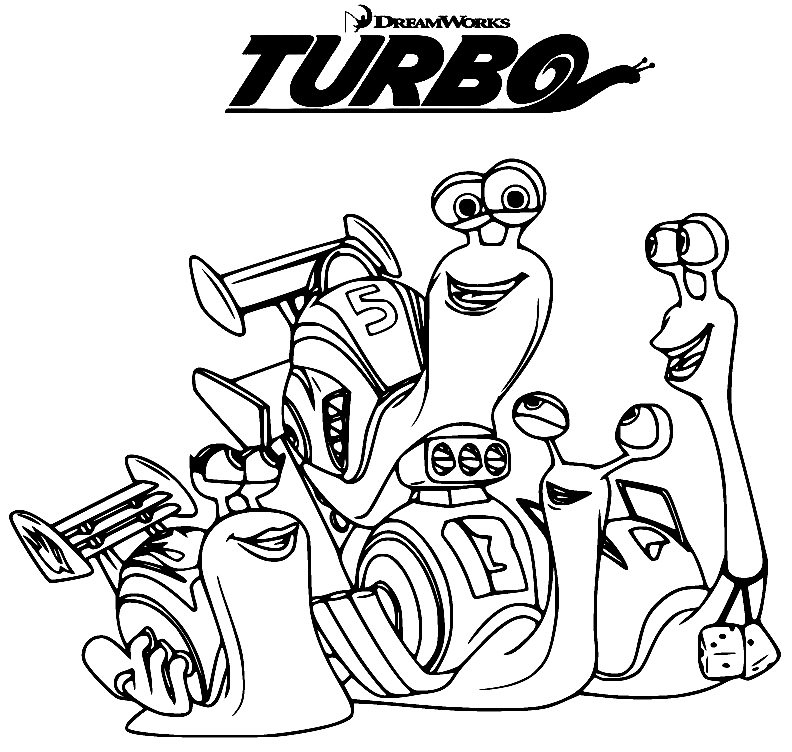
Each snail crew member’s shell color must be fully saturated and clearly distinct from every other crew member. Whiplash red, Burn orange, Smoove Move black-and-gold, Skidmark yellow, and Turbo blue should form a clear visual spectrum when all characters appear in the same composition. If any two shell colors read as similar in value, separate them by adjusting the saturation or adding a distinguishing detail element.
Racing car environments use a specific grey for asphalt that is warmer than standard grey. Track surfaces are rendered as warm medium grey rather than the cooler grey of a wall or a building. The warmth in asphalt grey comes from the tar content of the material. Add a very subtle warm brown undertone to the track’s grey to achieve this quality.
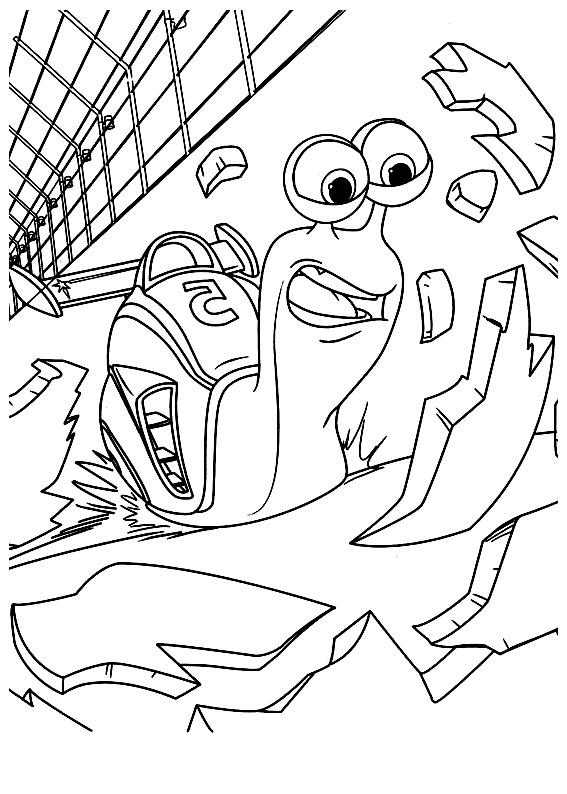
Speed lines require consistent directionality. Pages showing Turbo in motion typically include speed lines radiating from a central point behind him or running parallel in the direction of travel. Apply all speed lines with the same directional angle, using the lightest available pressure, so they read as motion effects rather than as solid shapes. The density of speed lines should increase toward the trailing edge of the composition and decrease toward the leading edge.
5 Creative Craft Ideas
The 0.03 vs. 200: Speed Comparison Display
A real garden snail travels at approximately 0.03 miles per hour. Turbo travels at speeds exceeding 200 miles per hour after his nitrous accident. The ratio between these two speeds is approximately 6,667 to 1.
Print one Turbo portrait page and color it in full racing blue. On a long horizontal backing sheet, place the Turbo portrait at the right end. At the left end, place a drawing or printout of a real garden snail in its actual grey-brown coloring. Between them, draw a long arrow spanning the width of the sheet.
Label the real snail: “Cornu aspersum. Garden snail. Maximum speed: 0.03 mph.” Label Turbo: “Theo. Racing snail. Maximum speed: 200 mph. After a nitrous oxide accident.” Label the arrow: “The gap that the film says does not determine the value of the dream.”
The Crew Color Wheel
Print one portrait page for each of the five core snail crew members: Turbo (blue), Whiplash (red), Burn (orange), Smoove Move (black and gold), and Skidmark (yellow). Color all five in their canonical shell colors at full saturation.
Mount all five in a circular arrangement on a backing sheet, shell colors facing inward toward the center. In the center of the circle, write: “Starlight Plaza Racing Crew. Turbo (2013). DreamWorks Animation.” Draw lines connecting adjacent crew members whose shell colors are adjacent on the color wheel.
The display functions as both a character reference and a practical color theory exercise, showing warm colors (red, orange, yellow), neutrals (black, gold), and cool colors (blue) in one organized composition.
The Indianapolis Motor Speedway Facts Page
Print the most detailed racing track scene in the collection. Color the track in warm grey asphalt, the grandstands in light grey-white, and the crowd in varied vivid dots suggesting a full house.
On a small card attached to the page, write documented facts about the Indianapolis Motor Speedway: “First race: May 30, 1911. Track length: 2.5 miles (4.023 km). Race distance: 500 miles (200 laps). Permanent seating capacity: approximately 257,000. Surface: asphalt since 1961 (originally crushed stone, then brick). The track earned the nickname ‘The Brickyard’ from its brick surface, of which one strip remains at the start/finish line.”
Shell Design Your Own
The snail crew’s shells each reflect their owner’s personality through color and graphic design. Print a blank or lightly outlined snail page showing a snail with an undecorated shell.
Design a completely original shell, choosing: a primary color that represents a personal quality, a graphic element (stripes, flames, stars, geometric patterns) that communicates something about the snail’s racing style, and a racing number between 1 and 99.
Name the snail character and write their name and number on the backing card. Describe what they are fastest at: a straight line? Turns? Wet conditions? The finished page is an original character in the film’s universe.
The Nitrous Oxide Page
Turbo’s speed comes from absorbing nitrous oxide from a drag racing car’s exhaust system during a freak accident. Nitrous oxide (N2O) is a real chemical compound used in both medical and motorsport contexts: in medicine as a mild anesthetic known as laughing gas, and in performance racing as a power additive that allows engines to burn more fuel per combustion cycle, increasing power output.
Print a Turbo speed page showing the glowing energy effects. Color it with maximum blue saturation on the shell and the most vivid blue-white achievable for the energy lines.
On the backing card, write: “Nitrous oxide (N2O). In motorsport, it is injected into an engine with additional fuel, allowing more oxygen in each combustion cycle, increasing power. In medicine, it has been used as an anesthetic since 1844 (Horace Wells, Hartford, Connecticut). In Turbo (2013): absorbed by one garden snail during one drag racing incident, with fictional consequences.”
Frequently Asked Questions
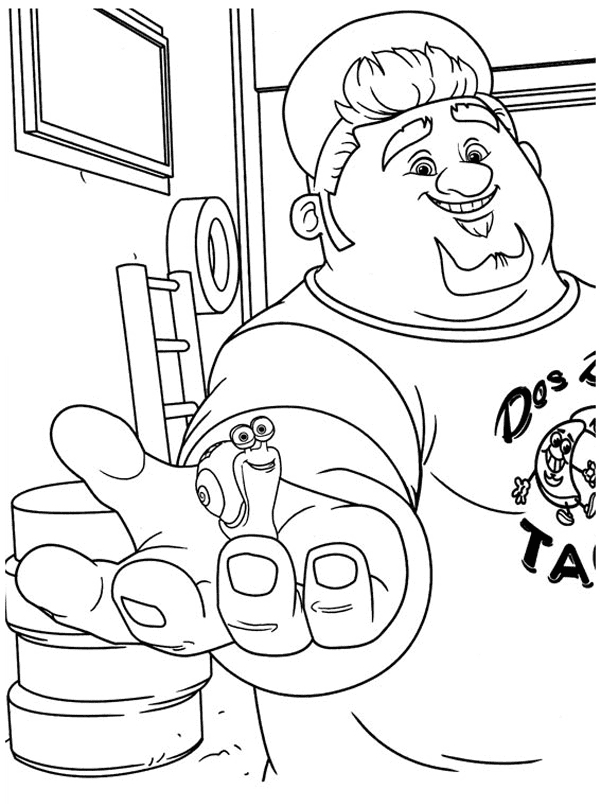
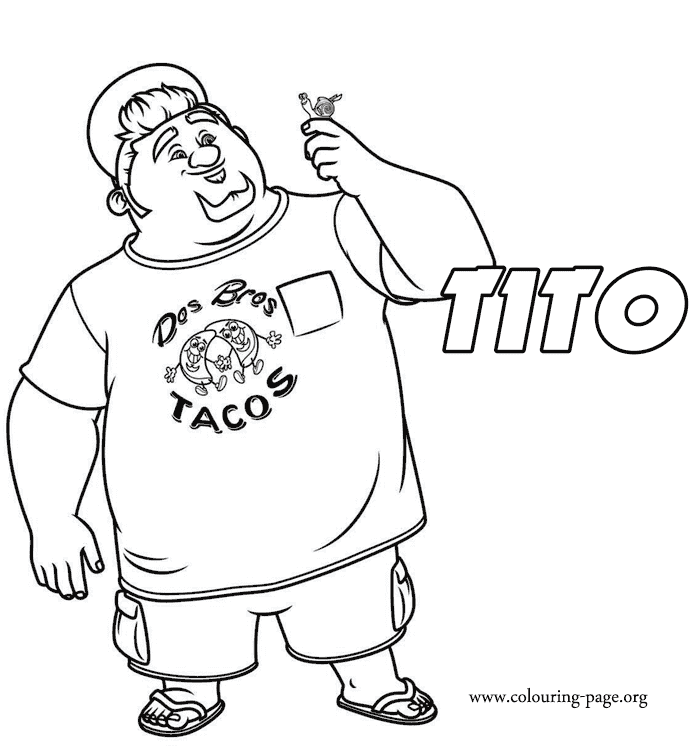
What is Turbo and what is the film about? Turbo is a 2013 DreamWorks Animation film directed by David Soren and released on July 17, 2013. The film follows Theo, a garden snail living in a tomato garden in suburban California, who dreams of competing in the Indianapolis 500, the oldest major closed-course racing event in the United States. After absorbing nitrous oxide from a drag racing car’s exhaust system during a freak accident, Theo gains the ability to travel at speeds exceeding 200 miles per hour, along with additional features borrowed from racing cars: functioning headlights in his eyes, turn signals, and a built-in sound system. He takes the name Turbo and, with the help of a taco truck operator named Tito and a crew of street racing snails, eventually competes in the Indianapolis 500.
Who voices Turbo and the main characters? The voice cast of Turbo (2013) includes Ryan Reynolds as Turbo (Theo), Paul Giamatti as Chet (Turbo’s cautious older brother), Michael Peña as Tito (the taco truck operator who believes in Turbo), Bill Hader as Guy Gagné (the five-time Indianapolis 500 champion who becomes the film’s antagonist), Richard Jenkins as Whiplash (leader of the snail racing crew), Maya Rudolph as Burn, Snoop Dogg as Smoove Move, Ben Schwartz as Skidmark, Ken Jeong as Kim-Ly, Michelle Rodriguez as Paz, and Luis Guzmán as Angelo (Tito’s brother).
Who are the snail crew members,s and what do they look like? The snail racing crew assembled in Turbo (2013) consists of five members with distinct visual identities. Whiplash, the crew’s leader, voiced by Richard Jenkins, has a red shell. Burn, voiced by Maya Rudolph, has an orange shell with flame-inspired styling. Smoove Move, voiced by Snoop Dogg, has a black shell with gold accent elements. Skidmark, voiced by Ben Schwartz, has a yellow shell. Turbo himself has a vivid blue shell with white racing stripes and glowing blue energy effects when he uses his nitrous ability. Each shell color directly reflects the character’s personality: Whiplash’s red suggests authority, Burn’s orange and flame styling suggests her energy, Smoove Move’s black and gold suggests his cool, style-conscious character.
Is the Indianapolis 500 a real event? Yes. The Indianapolis 500 is a genuine motorsport event held annually at the Indianapolis Motor Speedway in Speedway, Indiana. The first race was held on May 30, 1911. The track is a 2.5-mile (4.023 kilometer) oval, and the race covers 500 miles over 200 laps. The Indianapolis Motor Speedway has approximately 257,000 permanent seats, making it the largest sporting venue in the world by permanent seating capacity. The track was originally surfaced with crushed stone, and then brick (earning the nickname “The Brickyard”), and a single strip of the original brick surface remains at the start/finish line. The track surface was changed to asphalt in 1961.
How fast can a real garden snail move? A real garden snail (Cornu aspersum, previously classified as Helix aspersa) travels at a maximum speed of approximately 0.03 miles per hour (0.05 kilometers per hour). At this speed, crossing a single meter of distance takes approximately 72 seconds. The fictional Turbo’s speed of 200 miles per hour represents an approximately 6,667-to-1 ratio over the actual garden snail’s maximum pace. Garden snails are most active in damp conditions and during periods of high humidity, when their mucus trail is most easily produced. They can retract fully into their shells for protection and enter a dormant state called estivation during periods of heat and drought.
Is there a Turbo animated series? Yes. Turbo Fast, an animated Netflix original series serving as a spin-off and sequel to the 2013 film, was released on December 27, 2013, just months after the theatrical release. The series follows Turbo and the snail racing crew in new adventures following the events of the film. It ran for three seasons on Netflix. The series maintained the voice cast and character designs from the film, expanding the story world beyond the Starlight Plaza and Indianapolis settings of the original.
What age group are these pages best suited for? Turbo coloring pages are most accessible from ages three and four for the simplest portrait pages, where the snail’s family,r rounded form, and large eyes are immediately engaging for young children. The more detailed racing action pages, with their speed lines, track environments, and multi-character compositions, are most rewarding from ages five to nine, where developing fine motor control allows for the more precise application these pages require. The factual content accompanying the collection, including the Indianapolis 500’s history and basic information about snail biology, is most engaging for ages six and up. The film itself is rated PG and is designed for family audiences across a wide age range.
Browse the full collection at ColoringPagesOnly.com. All 30+ pages free, no sign-up, PDF or PNG, print or color online.
David Soren directed his first feature film in 2013. The subject was a garden snail who wanted to race in the Indianapolis 500. The garden snail travels at 0.03 miles per hour. The Indianapolis 500 requires sustained speeds above 200 miles per hour. The film earned $282.6 million worldwide.
The message was simple enough for a child to carry home from the cinema and specific enough for an adult to think about on the drive back: the size of the gap between where you are and where you want to be is not the right measure of whether the wanting is worth something.
Pick up your deepest blue. The shell goes first at full saturation. The racing stripes come second in white. The glowing energy lines come last, lighter than the shell and brighter than anything else on the page.
Share your finished pages on Facebook and Pinterest and tag #Coloringpagesonly. The crew color wheel displays and the speed comparison pages are particularly worth sharing.
Color the shell. Apply the stripes. No dream is too big, no dreamer too small.
More from our DreamWorks and animated film collections: