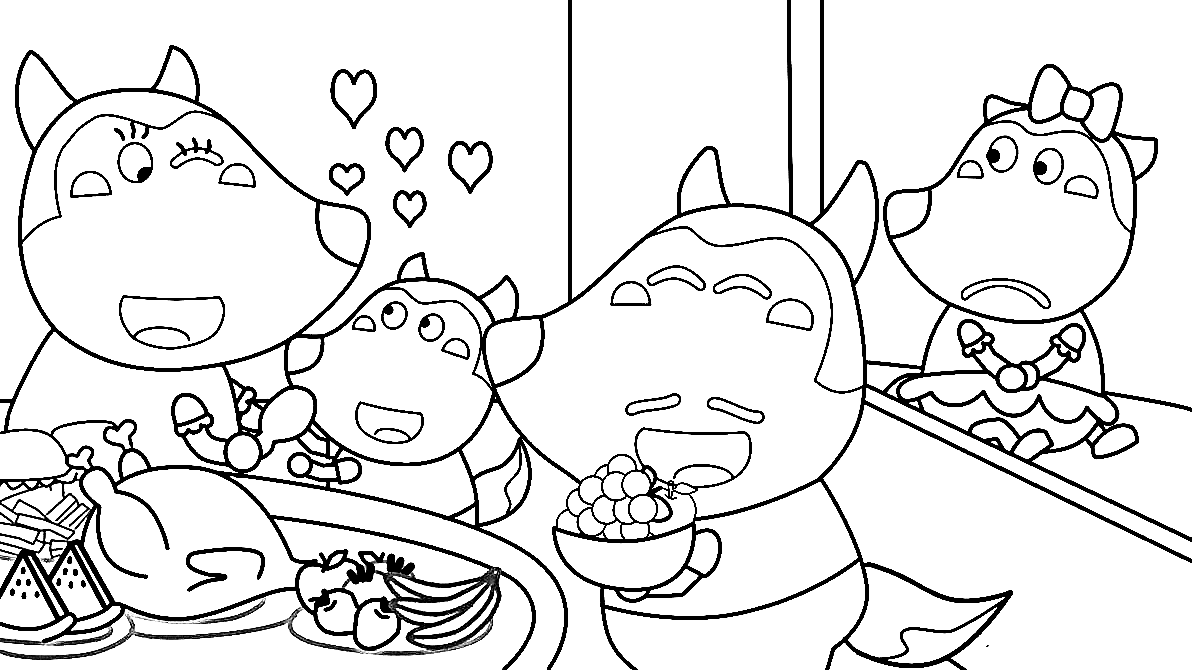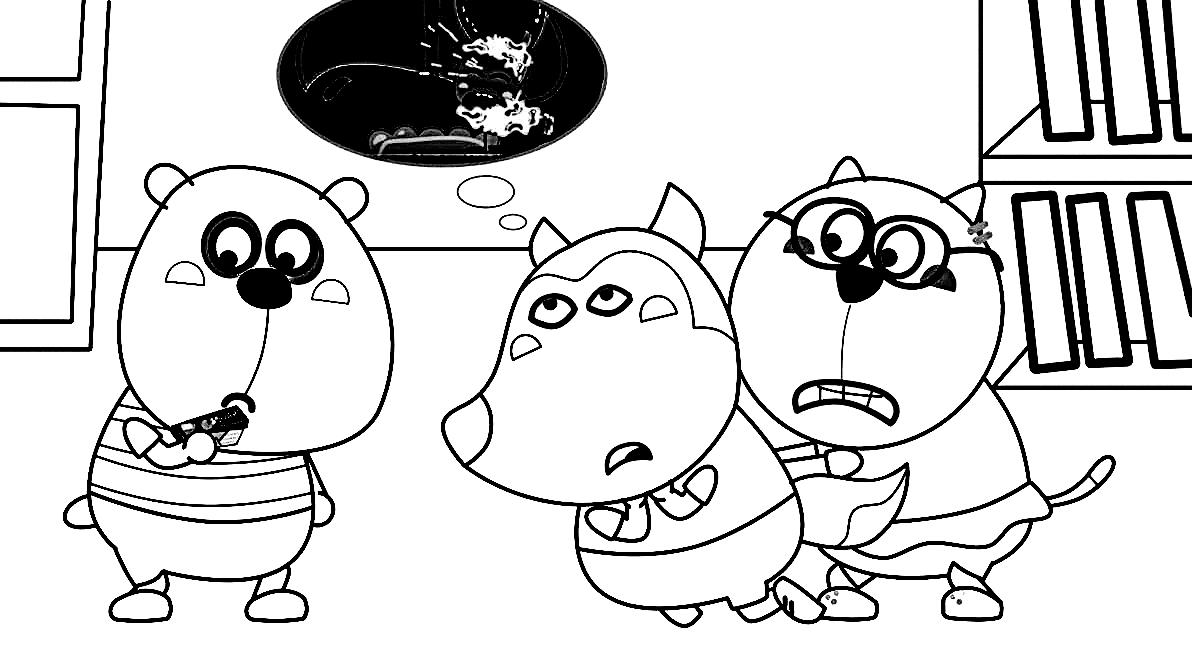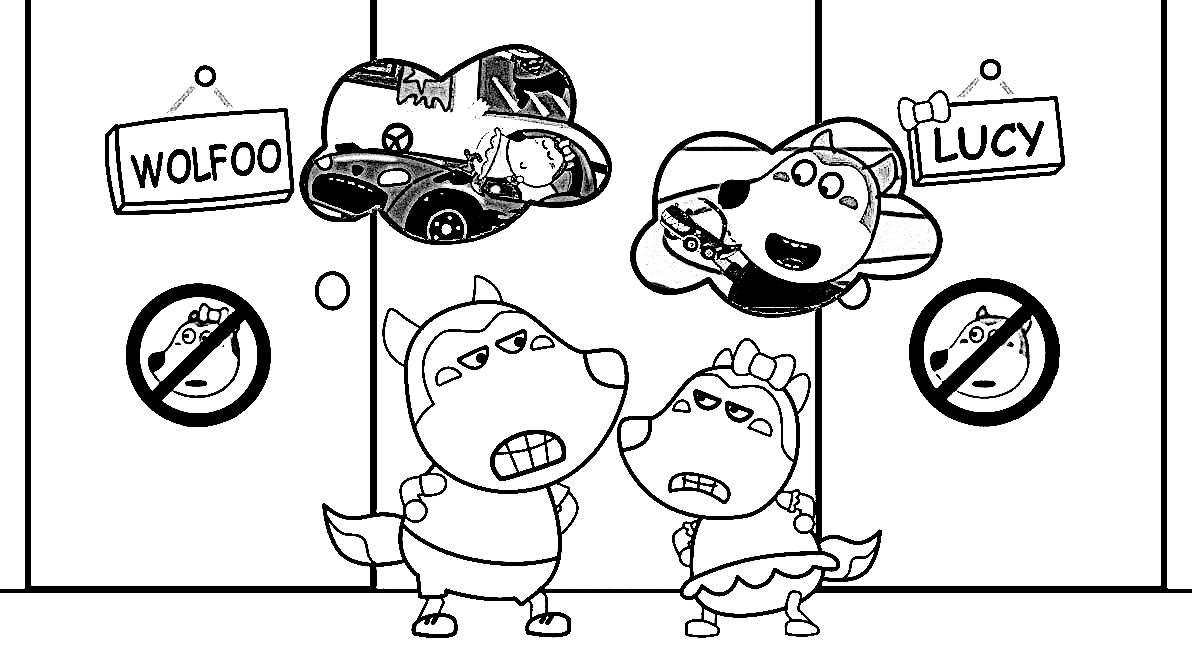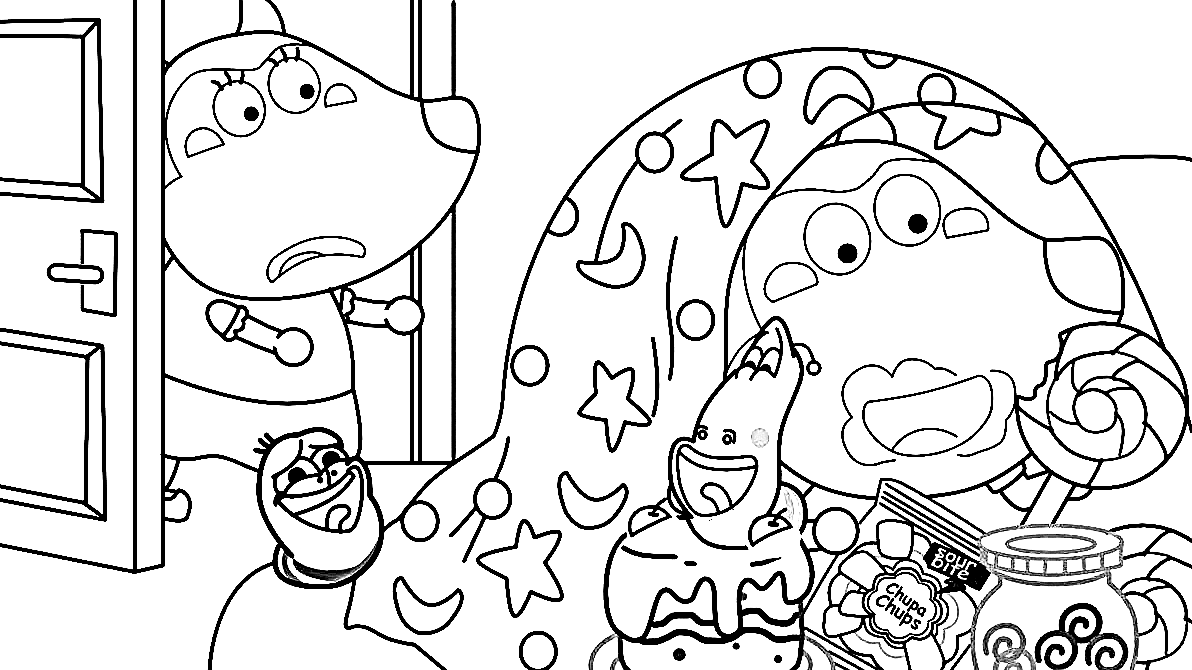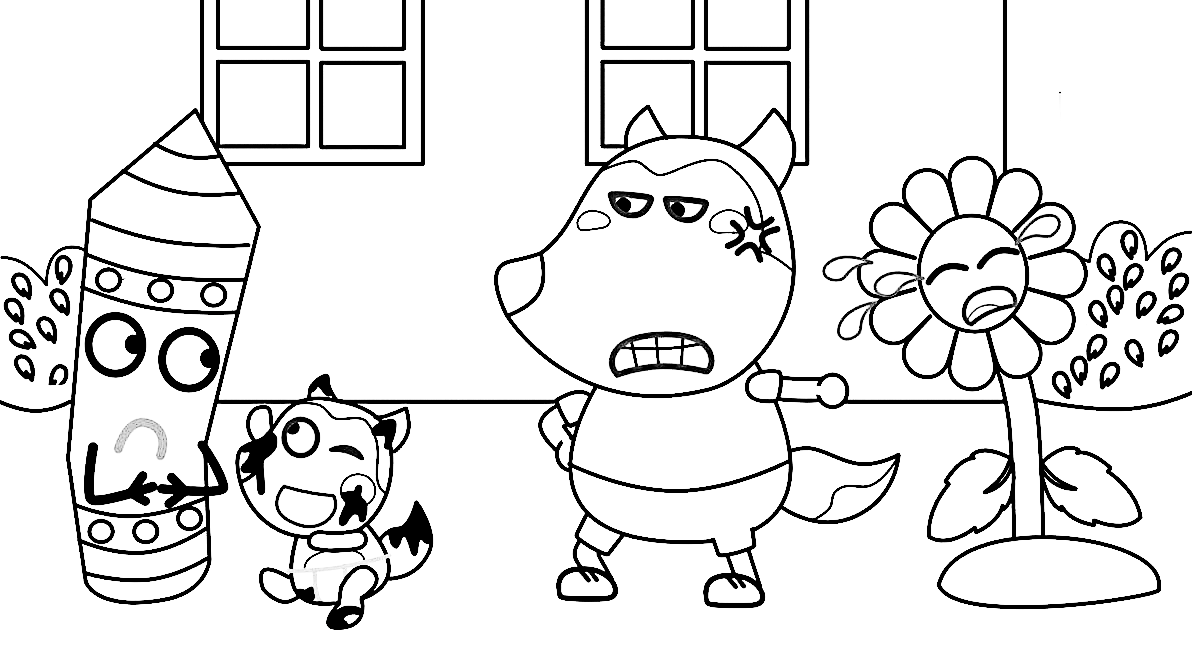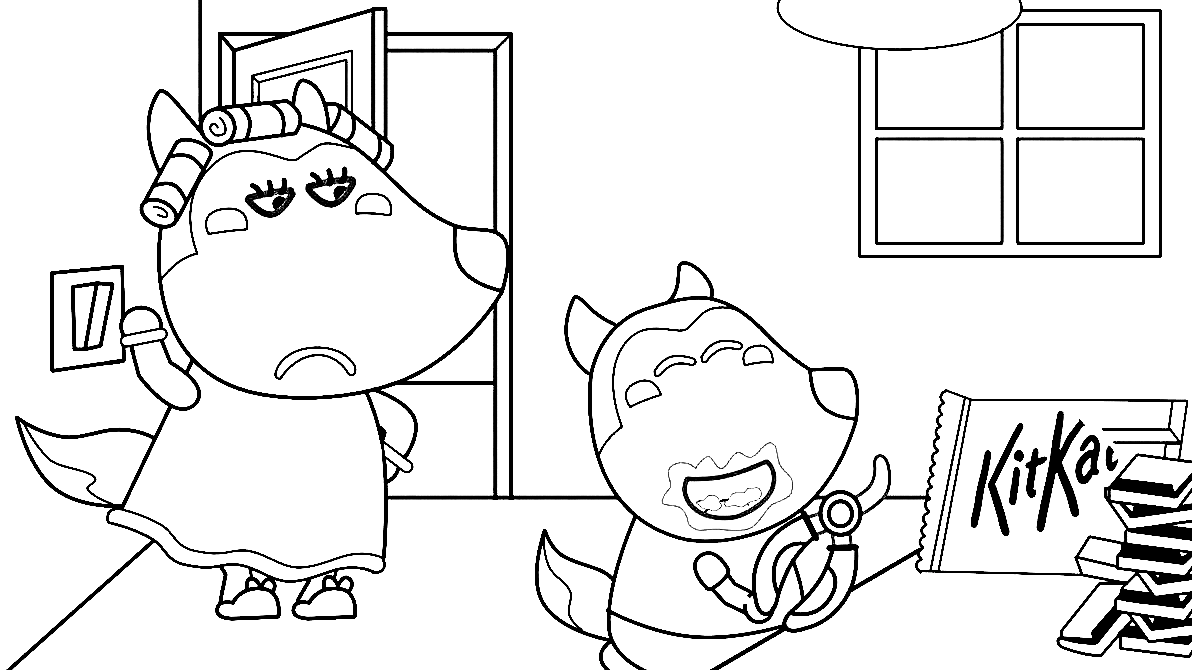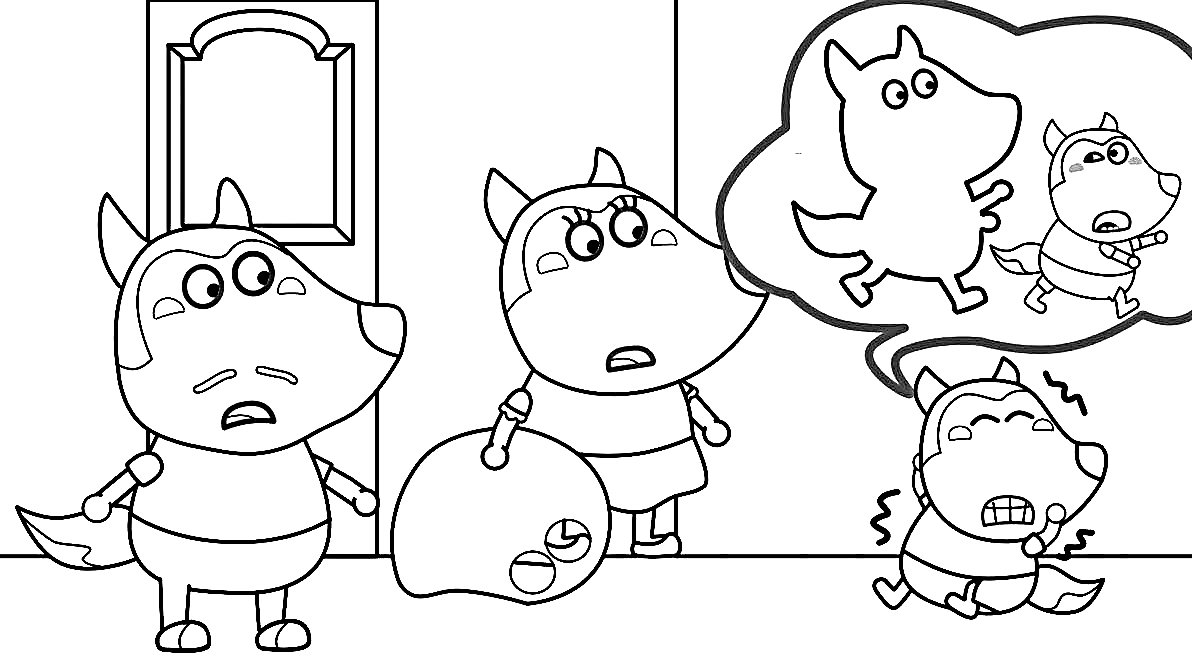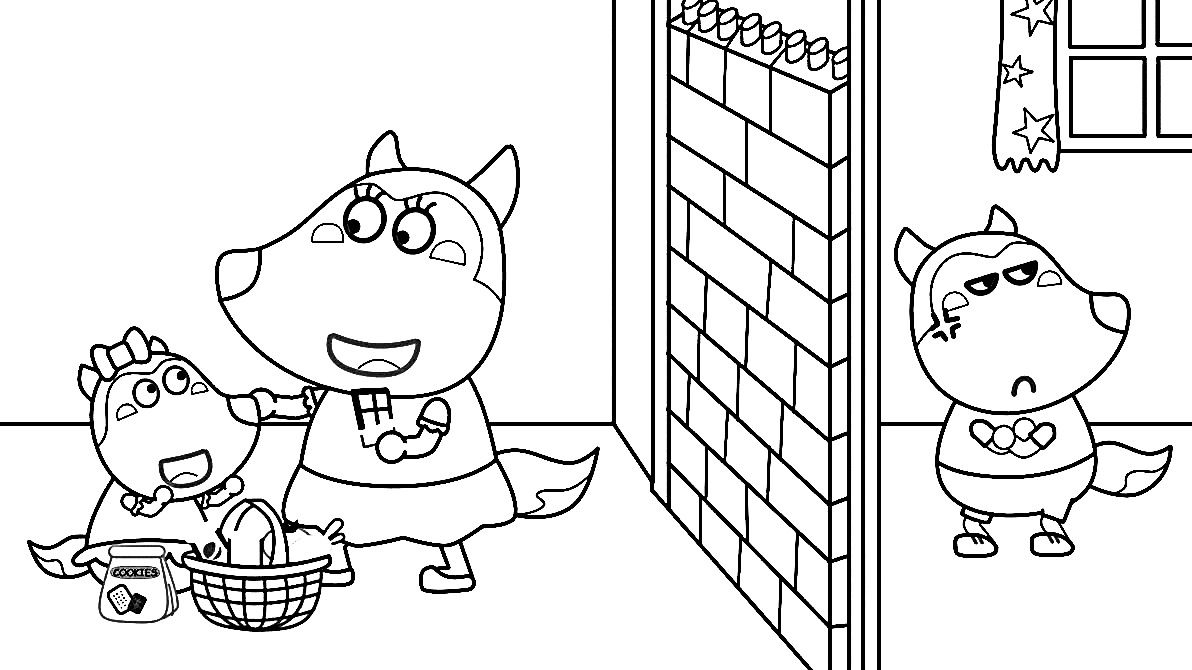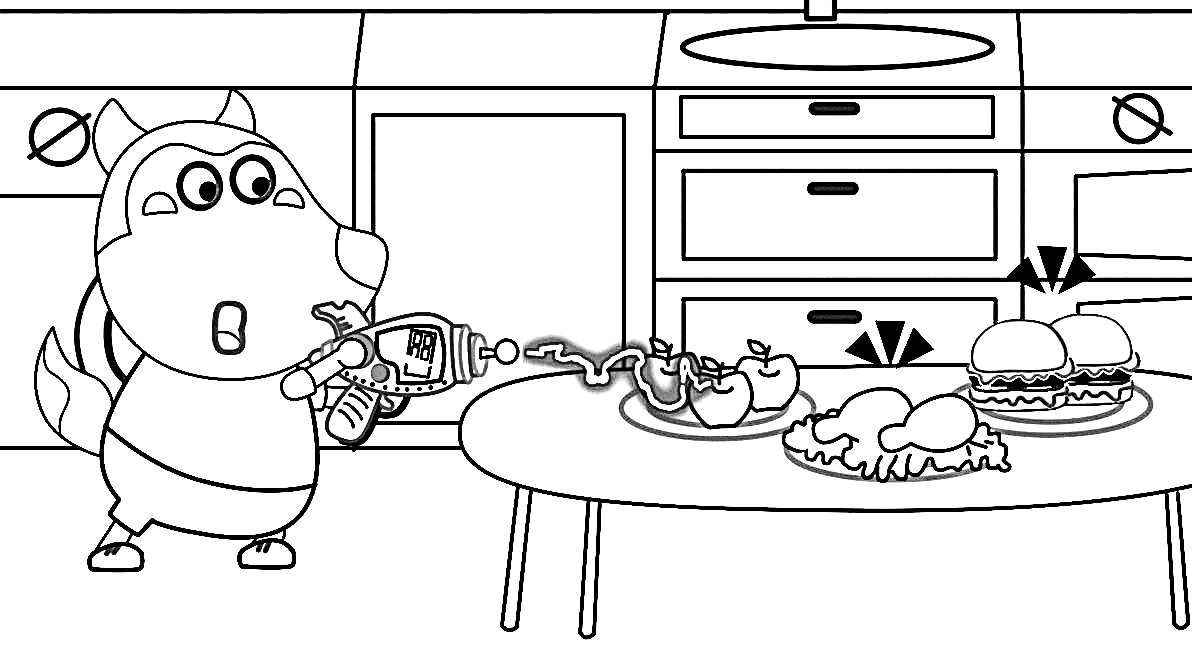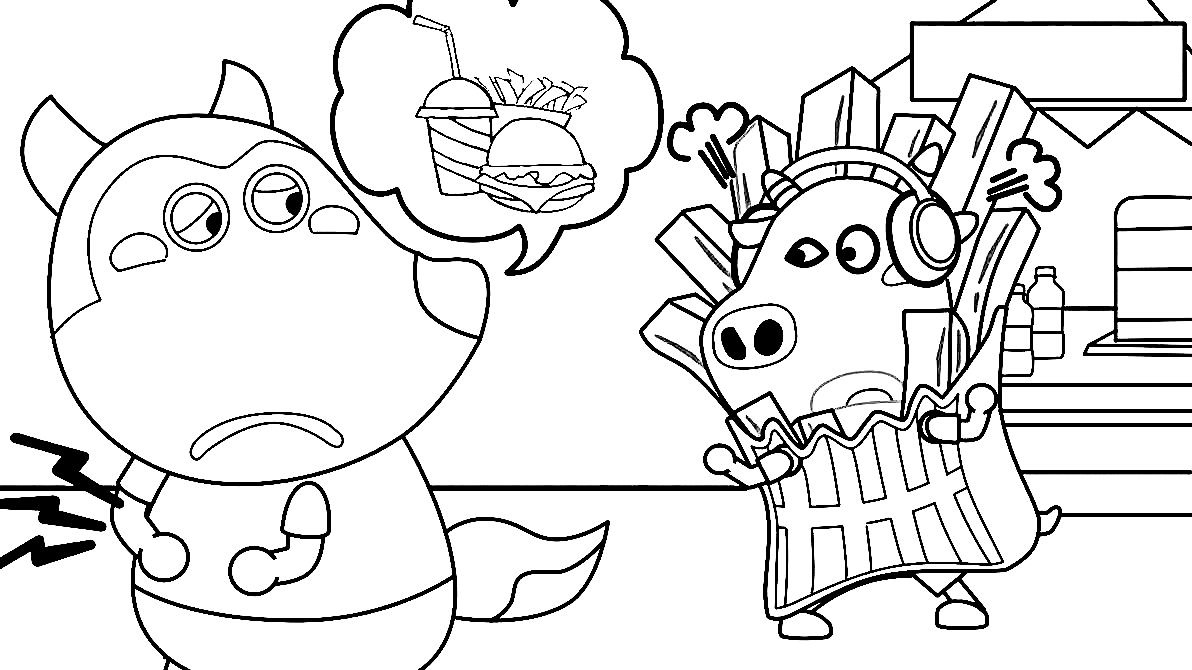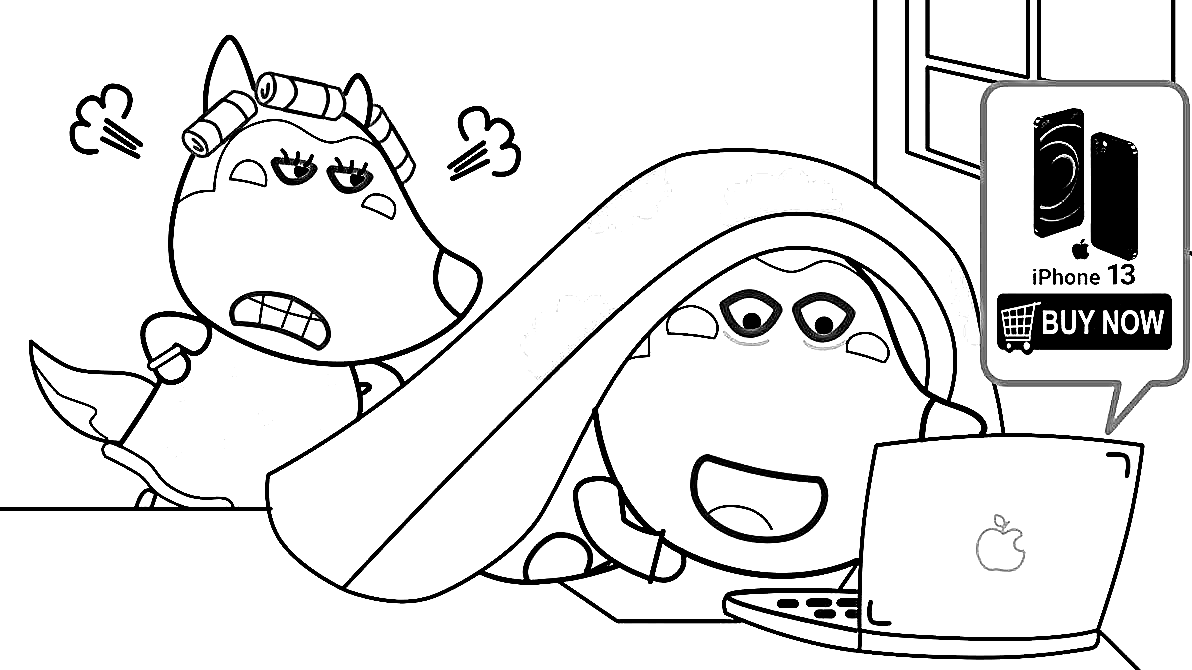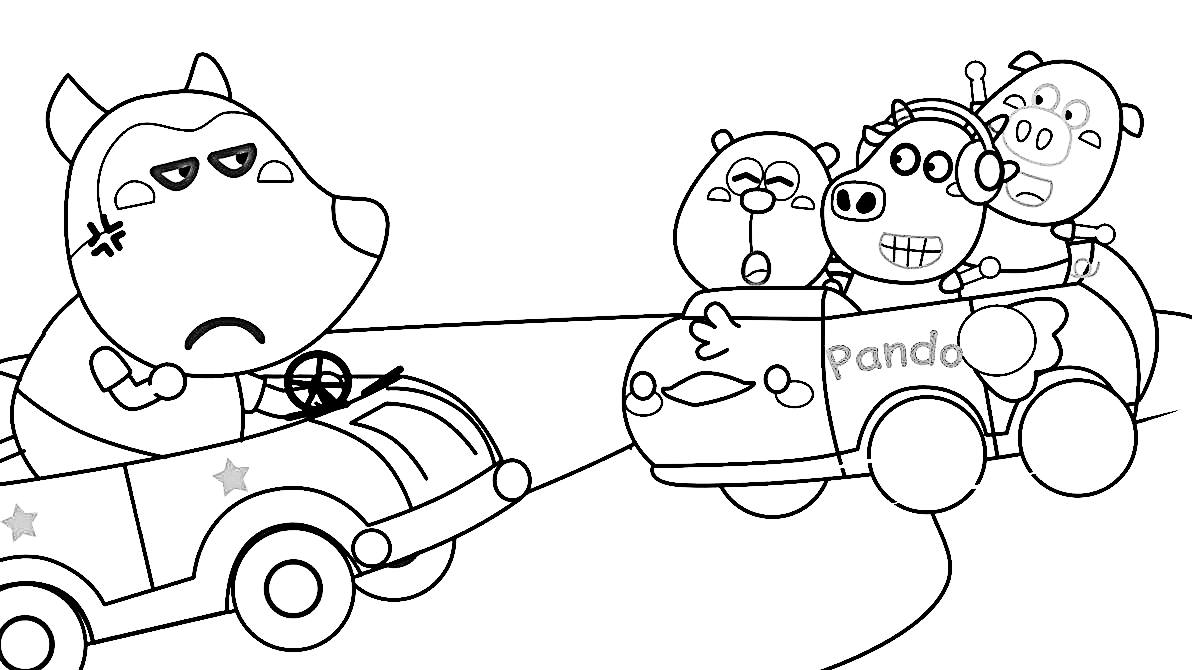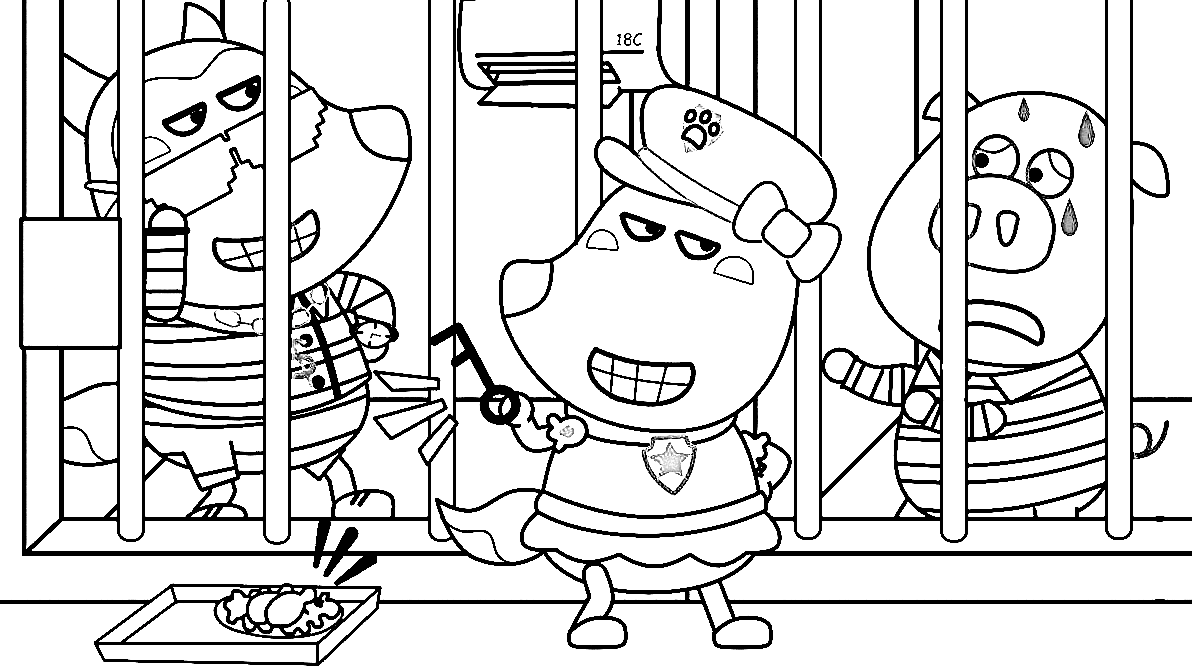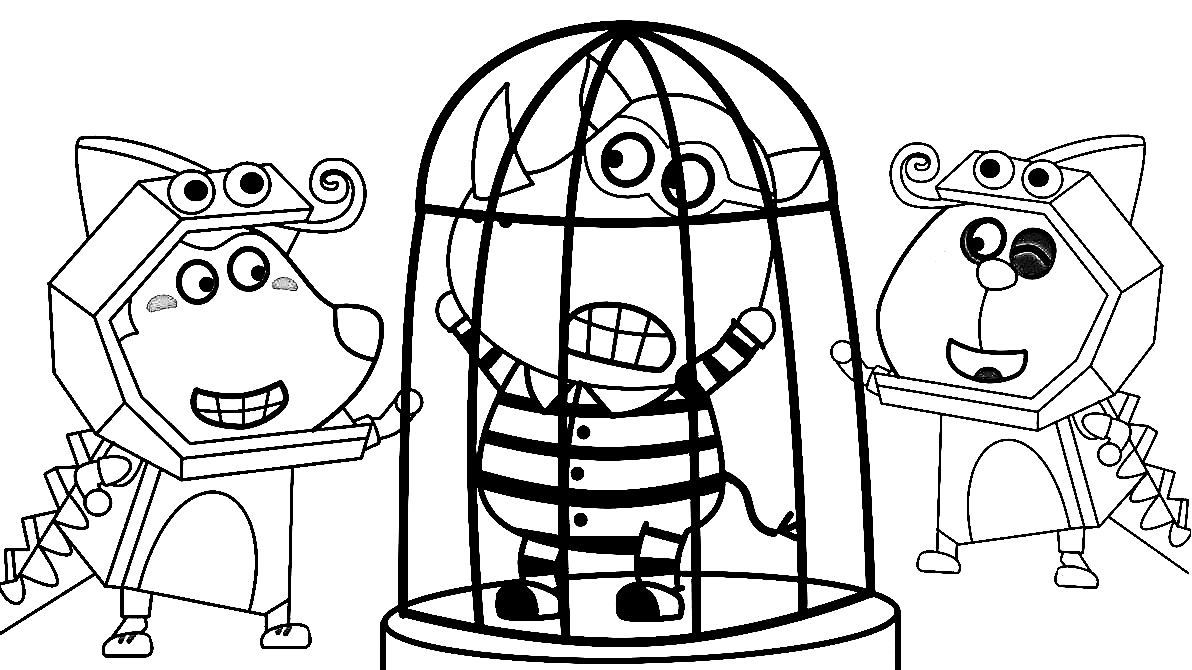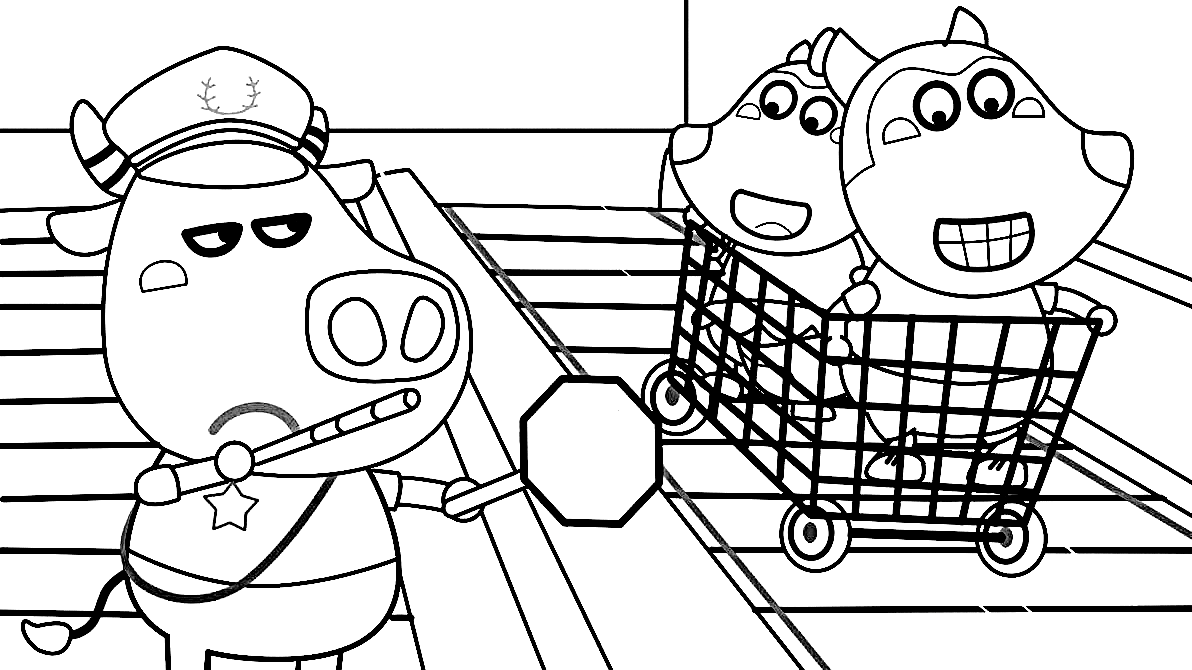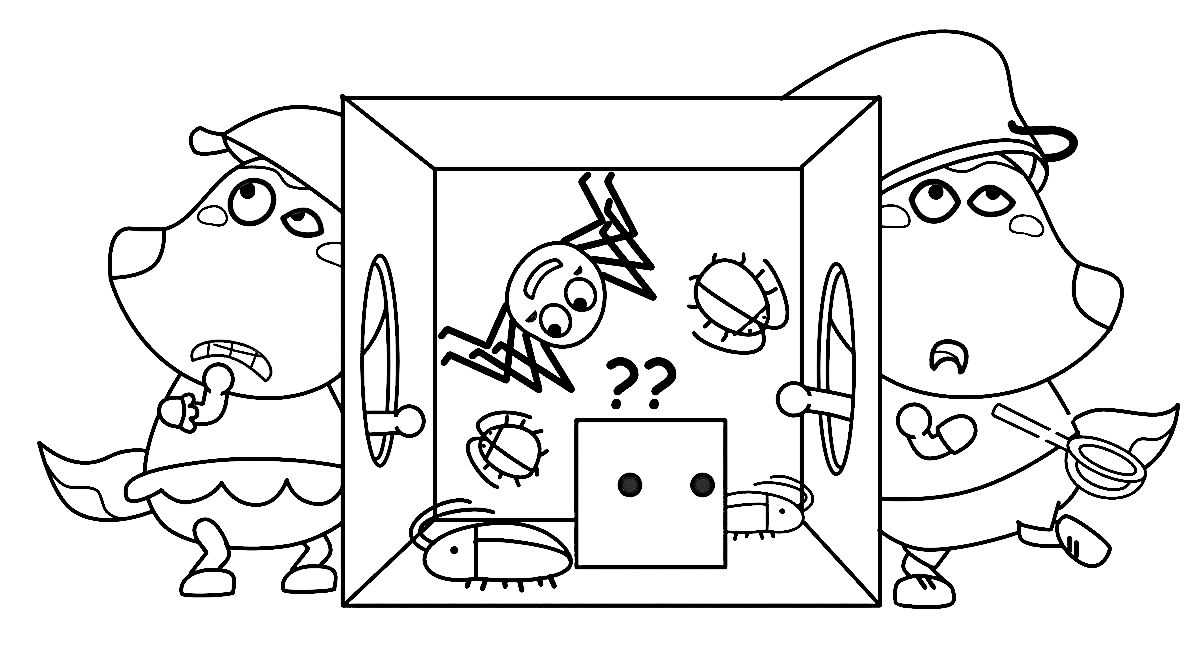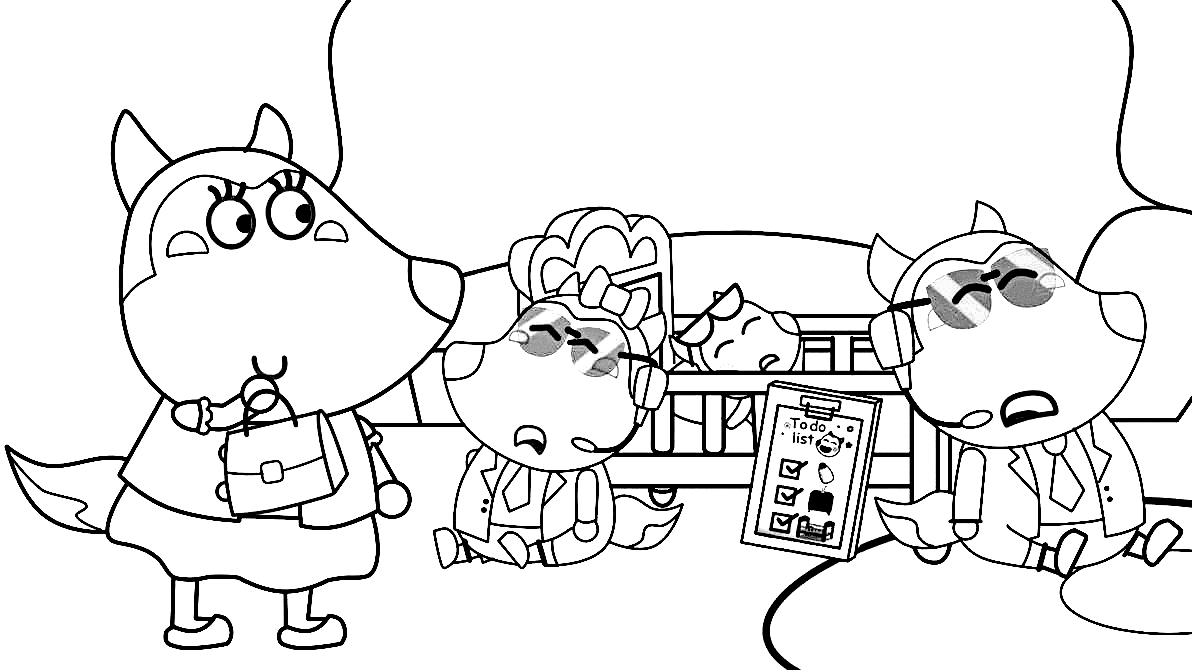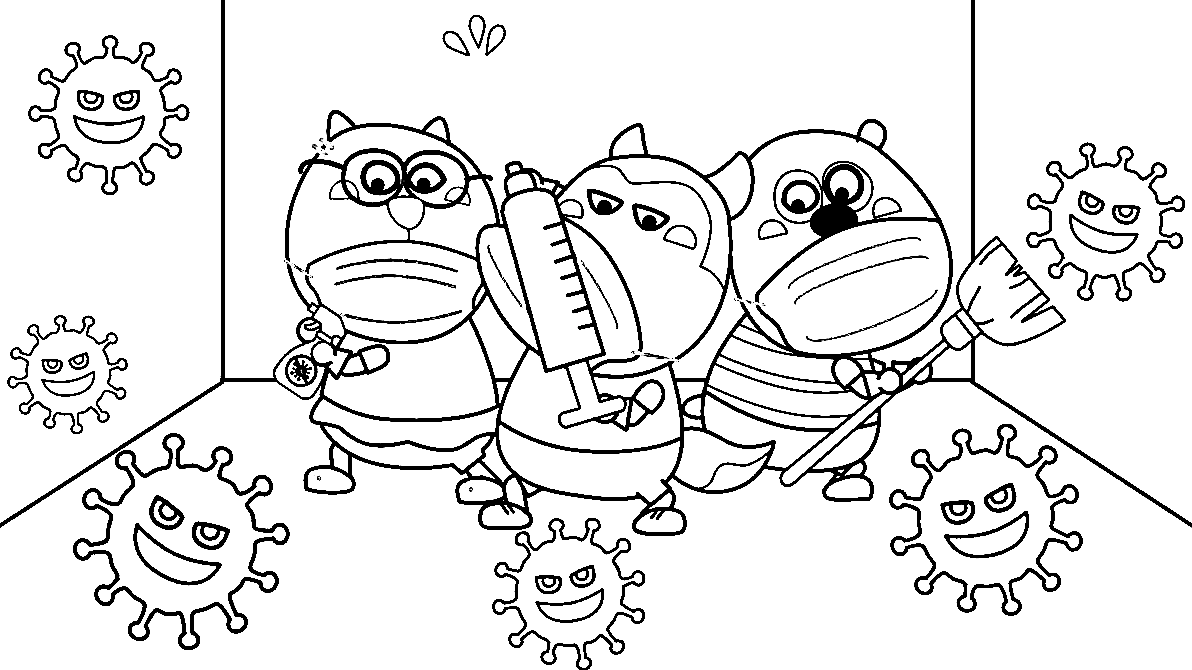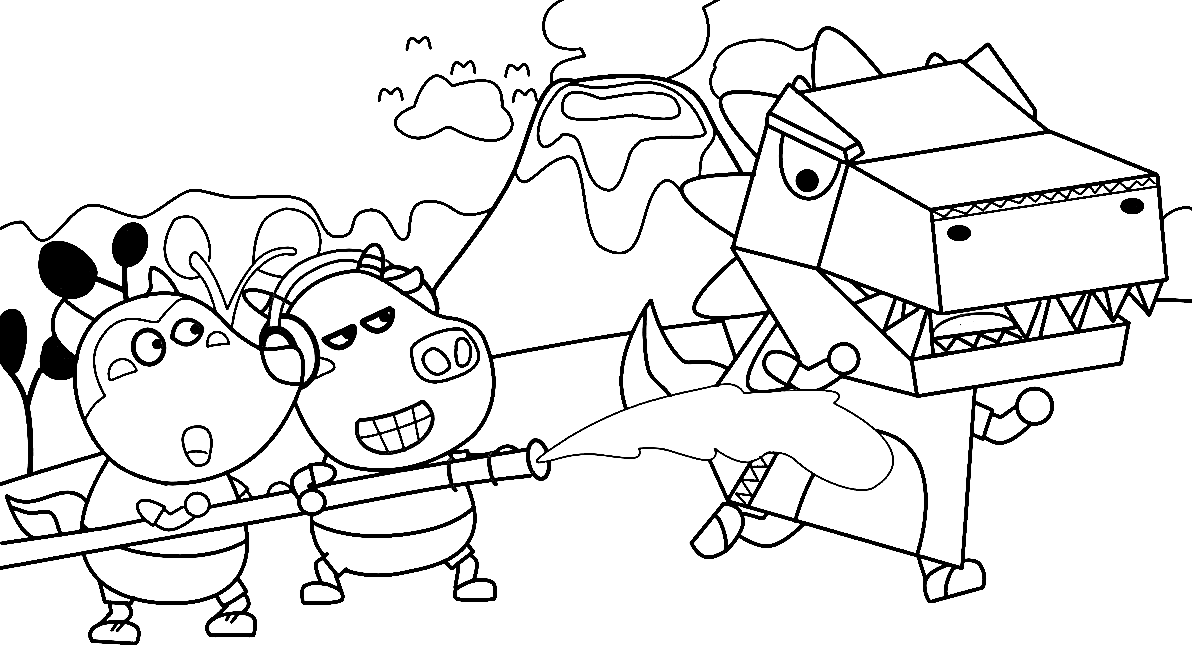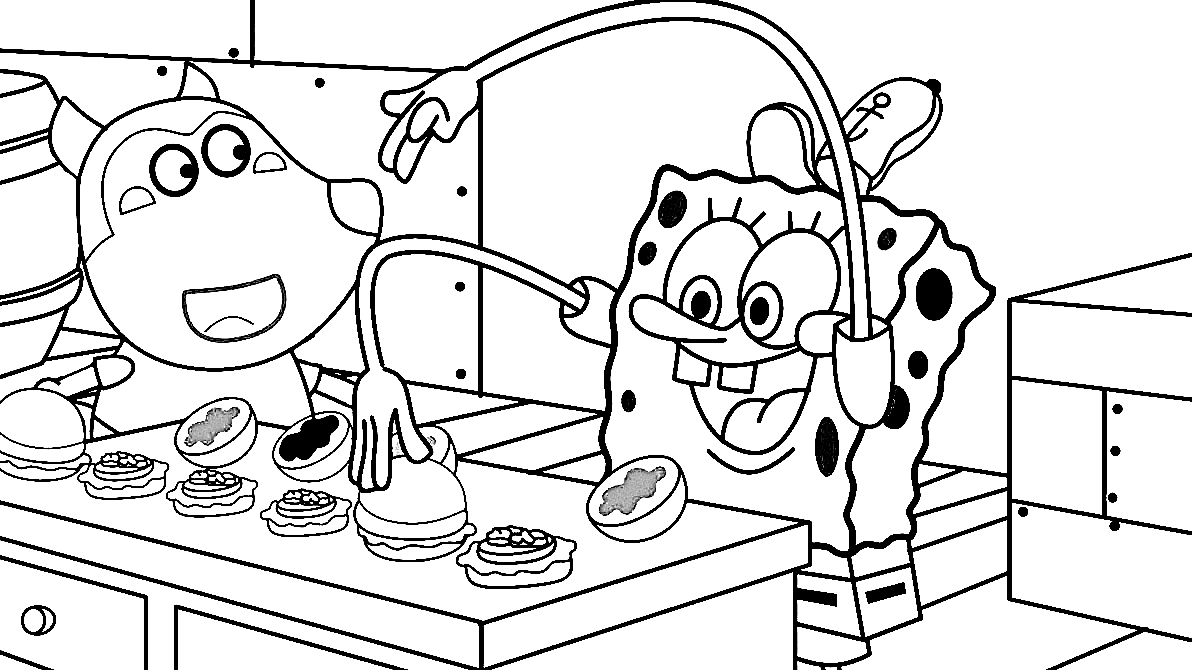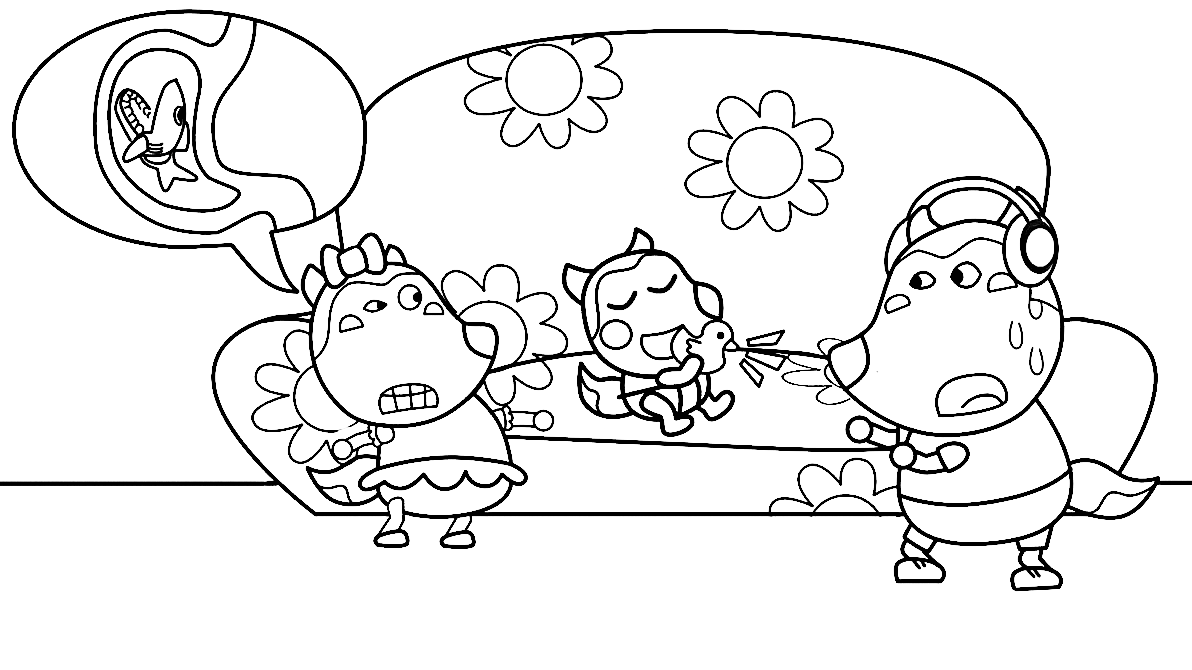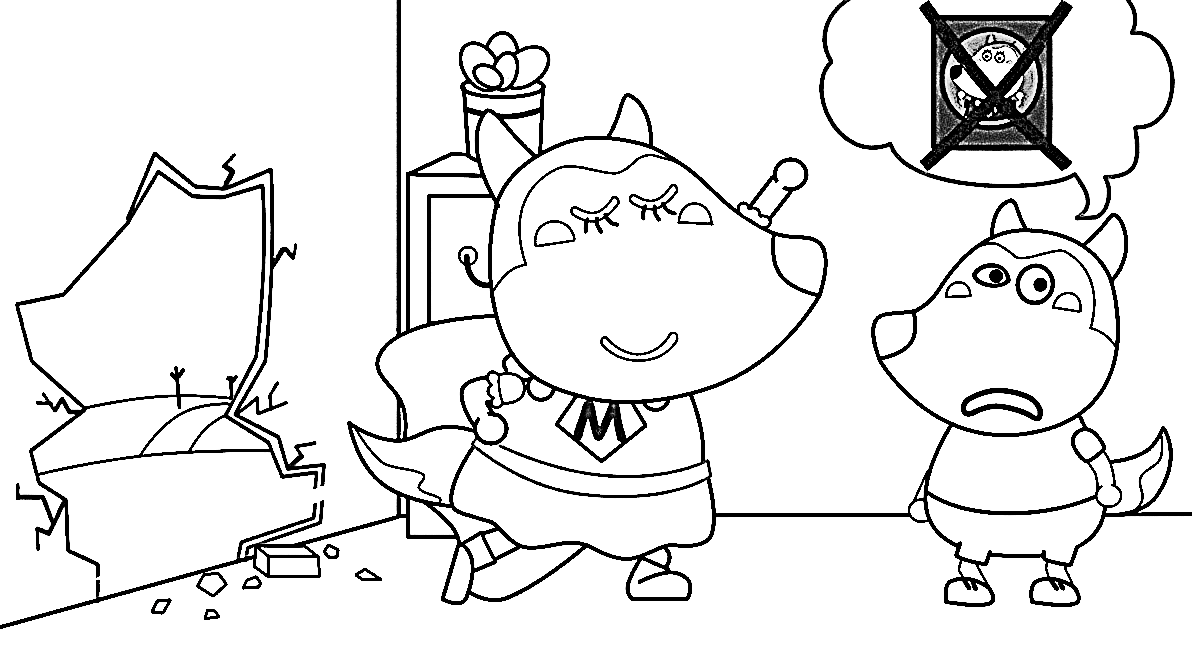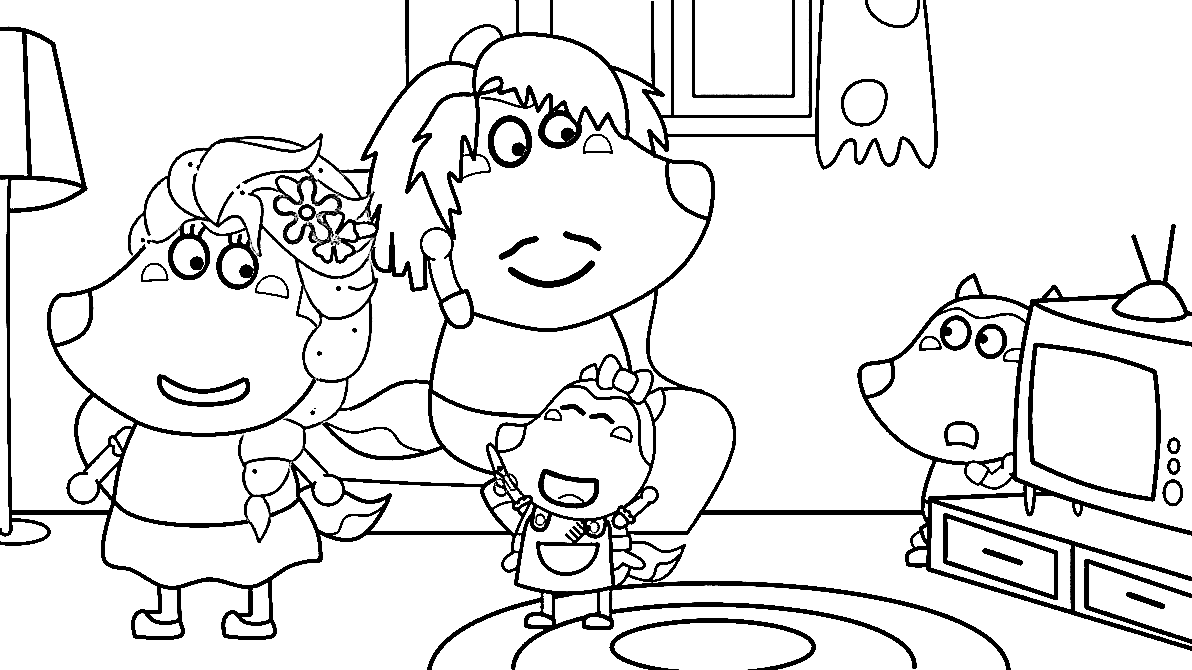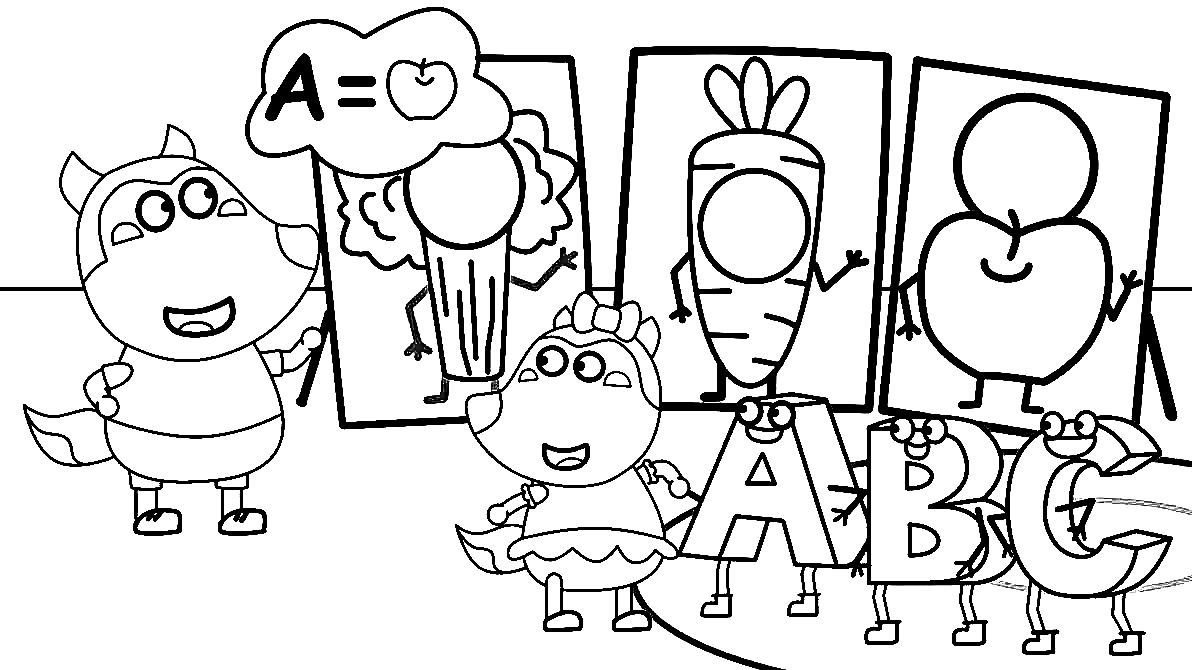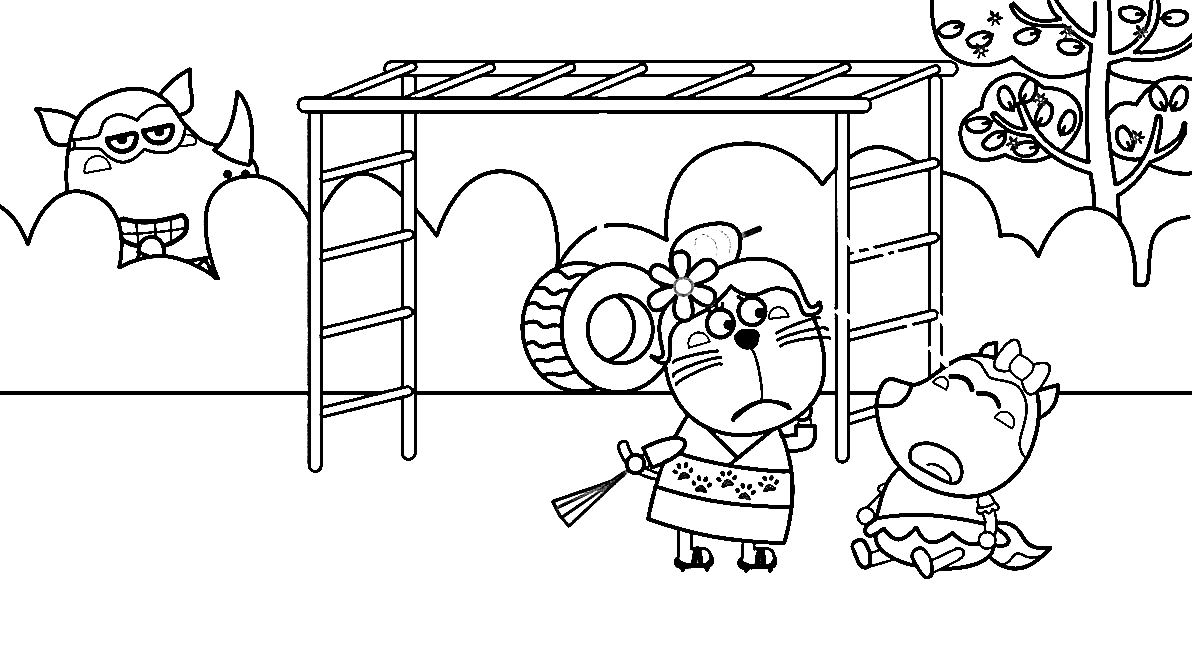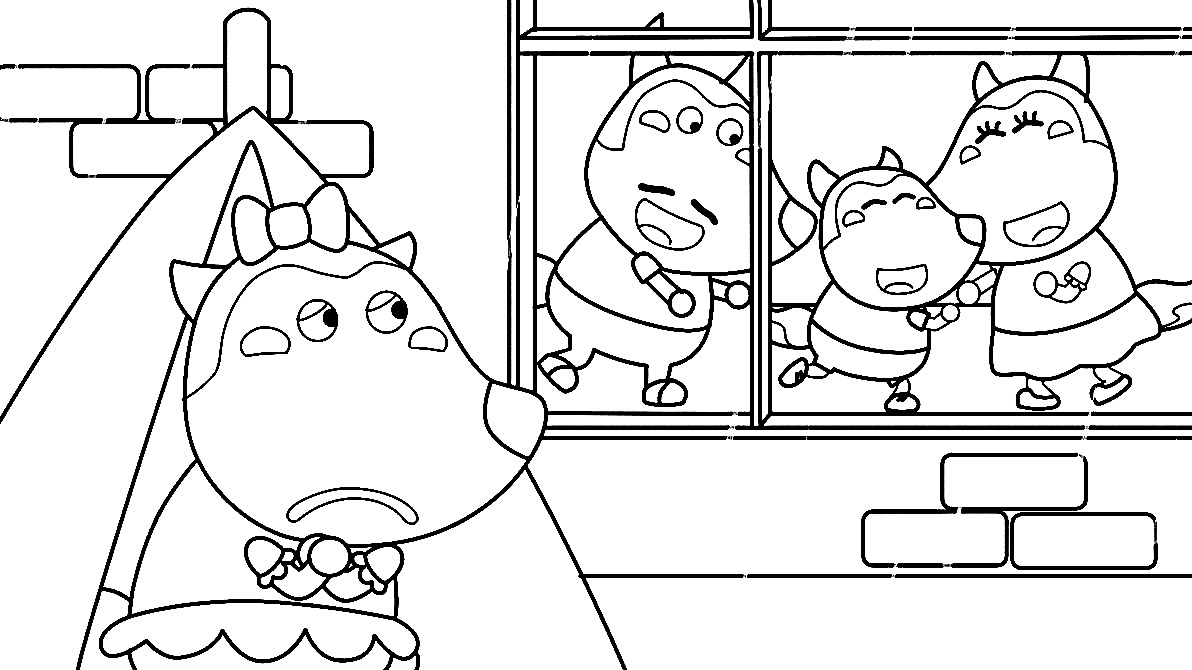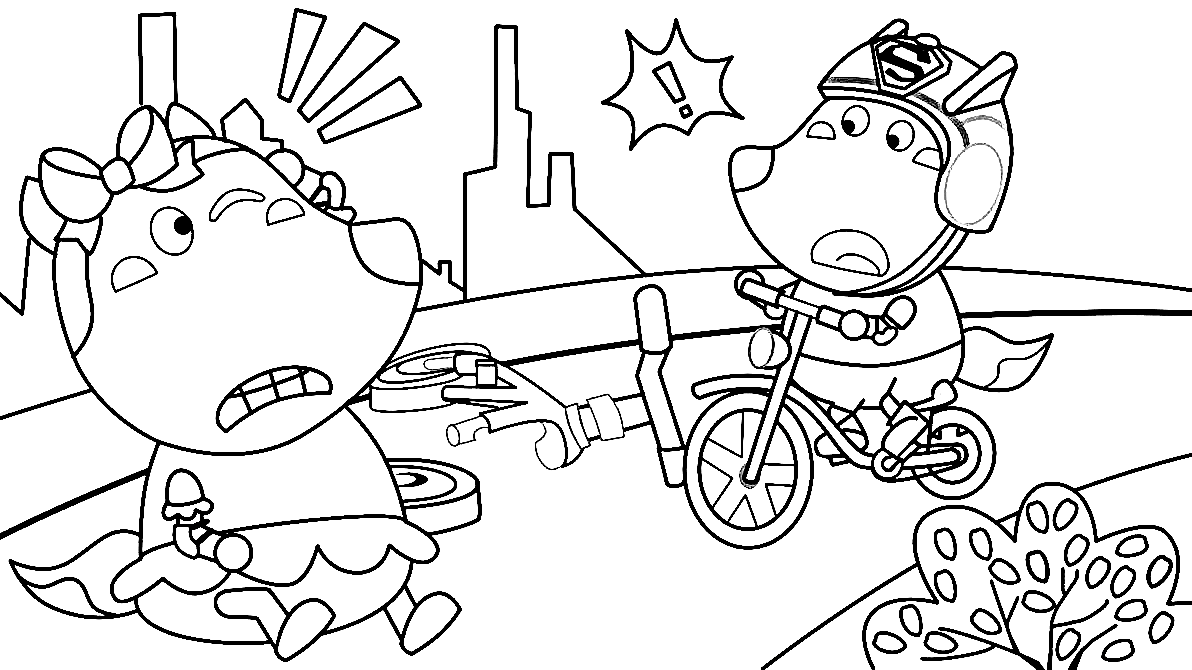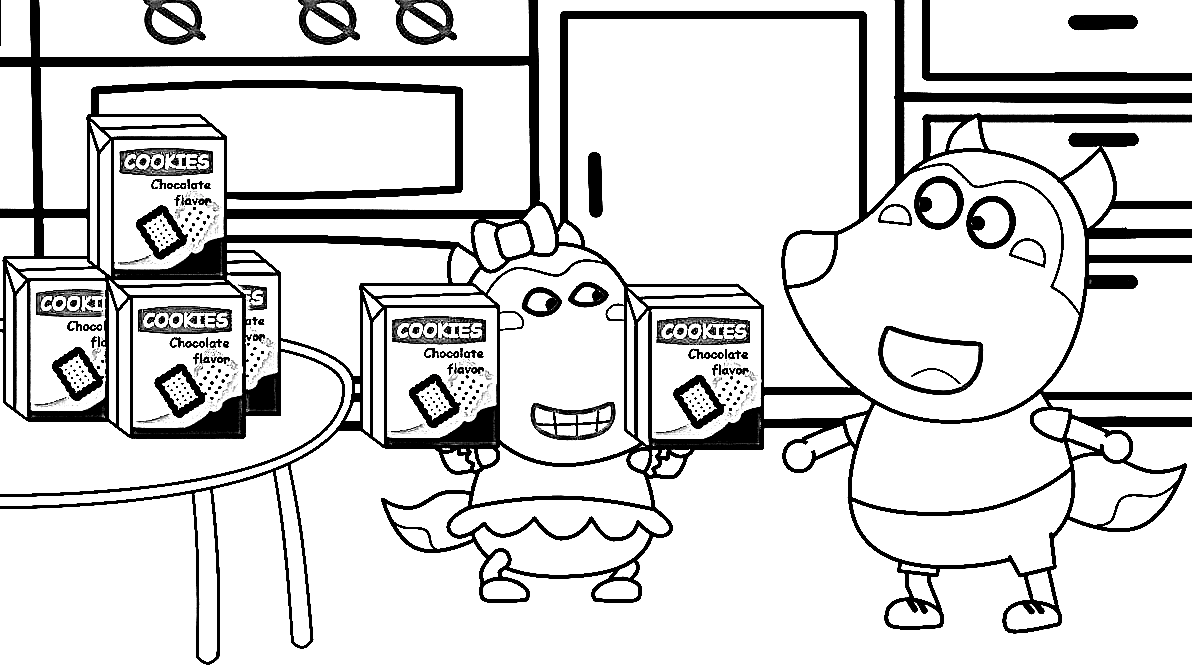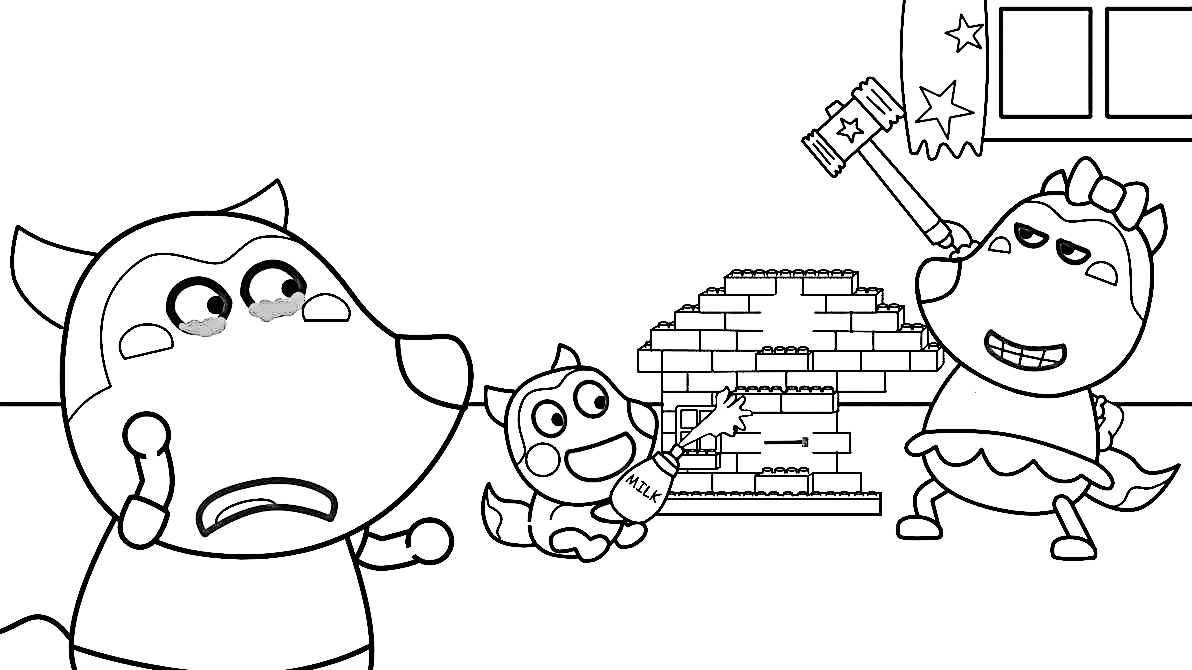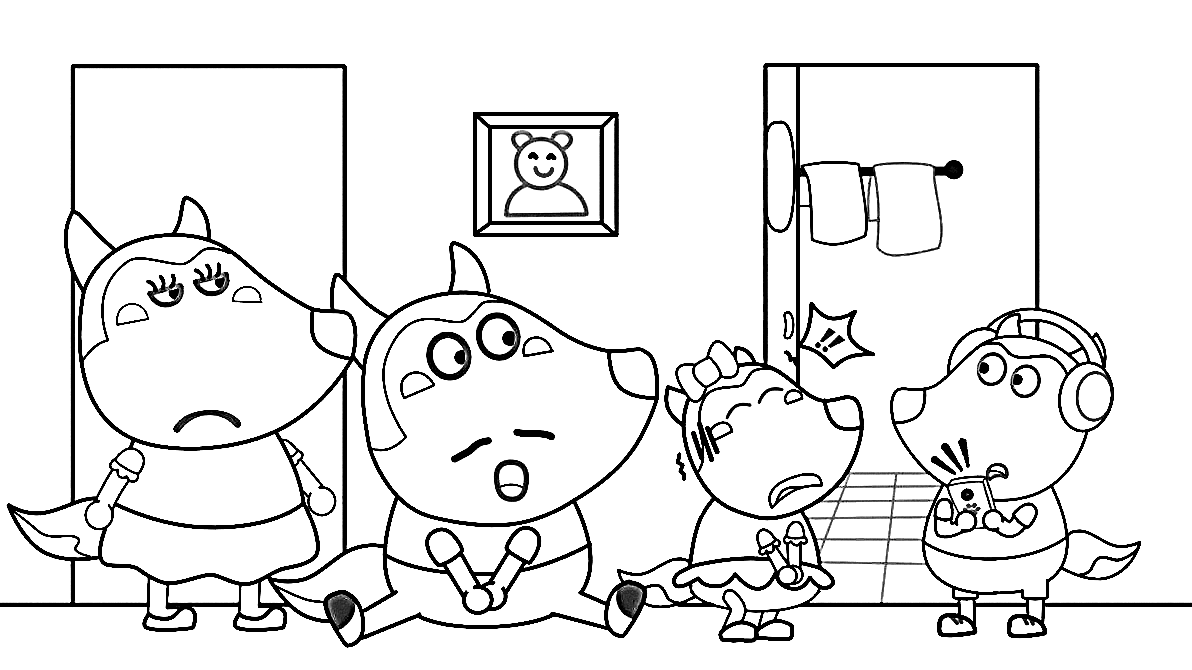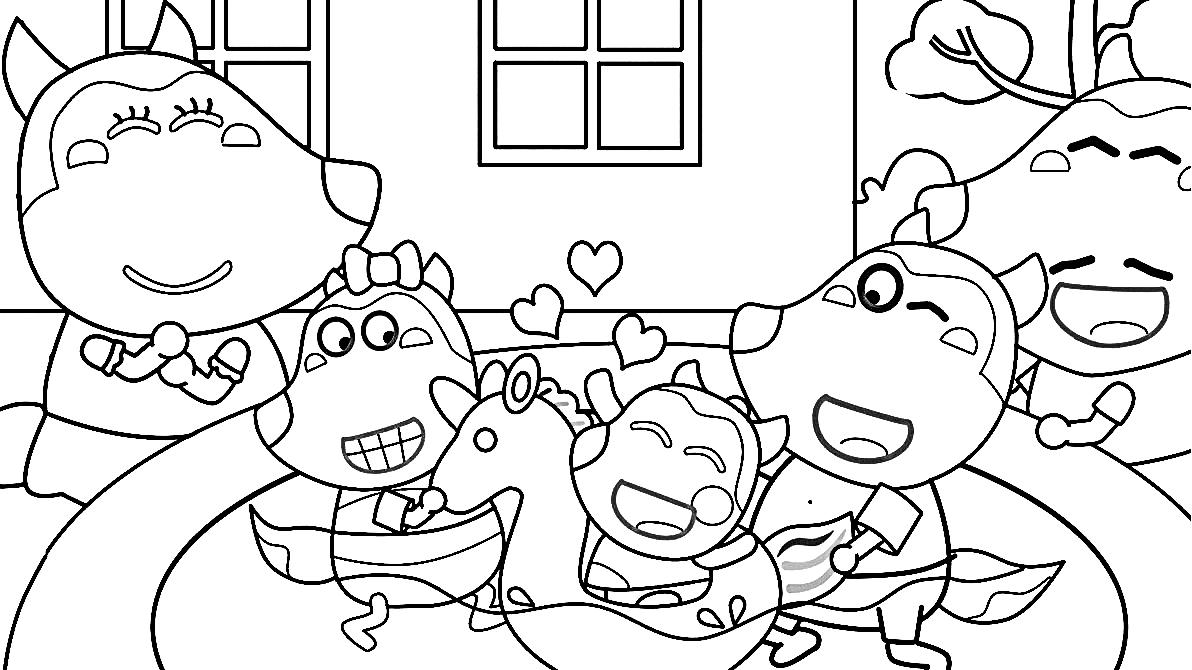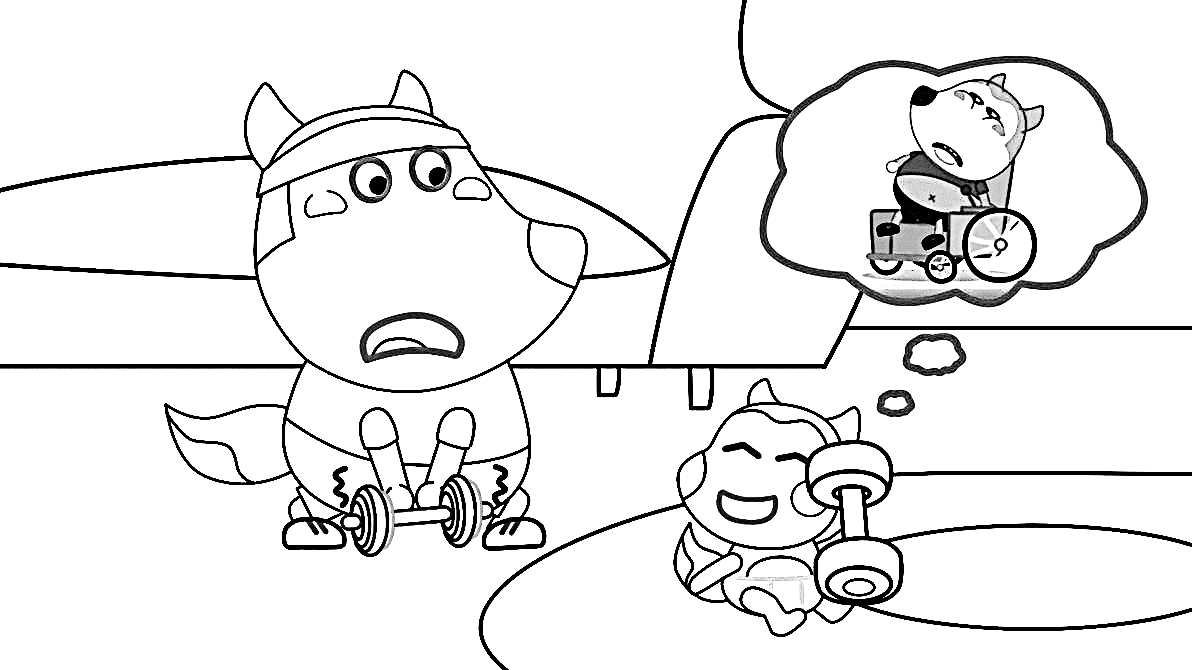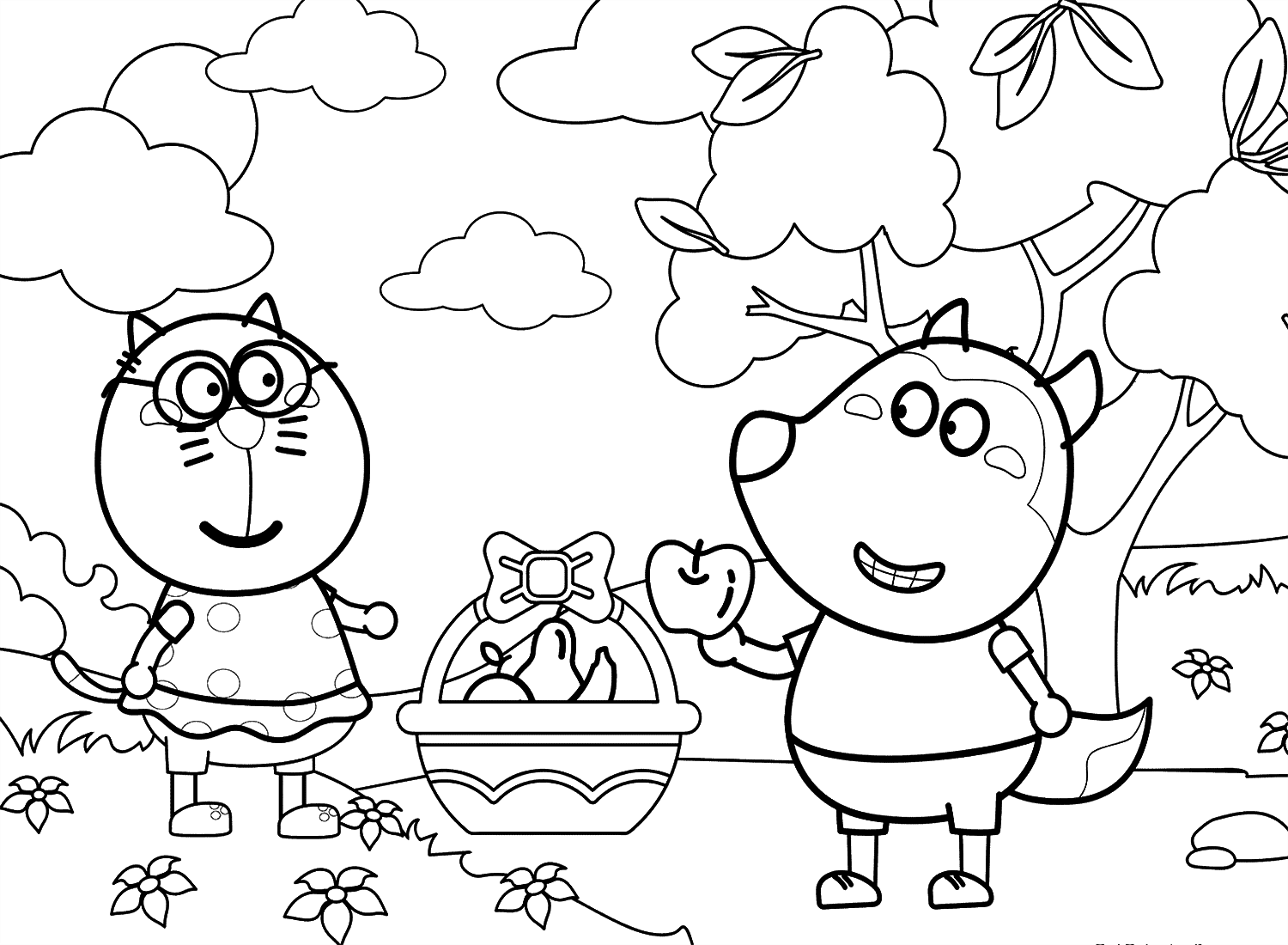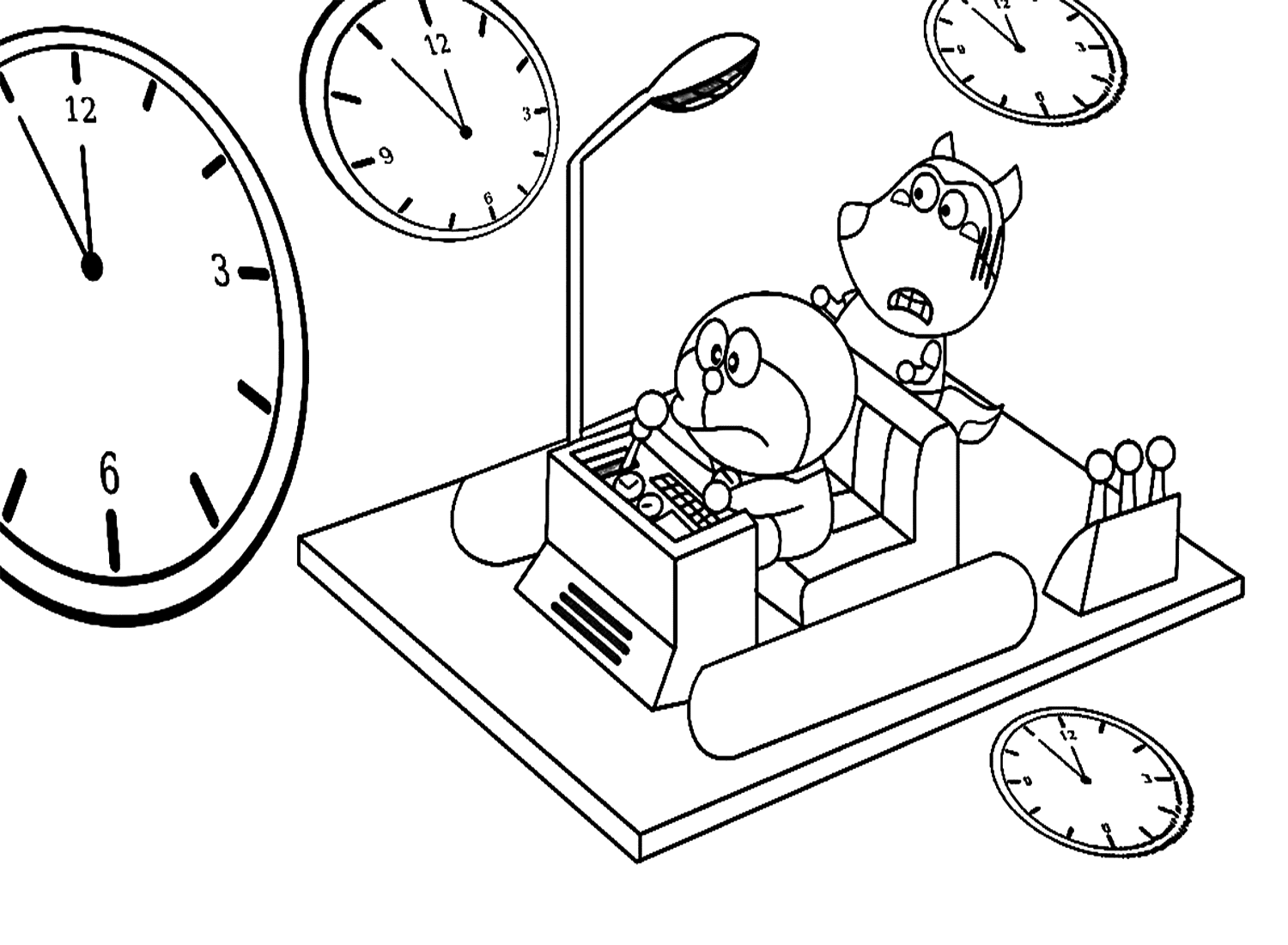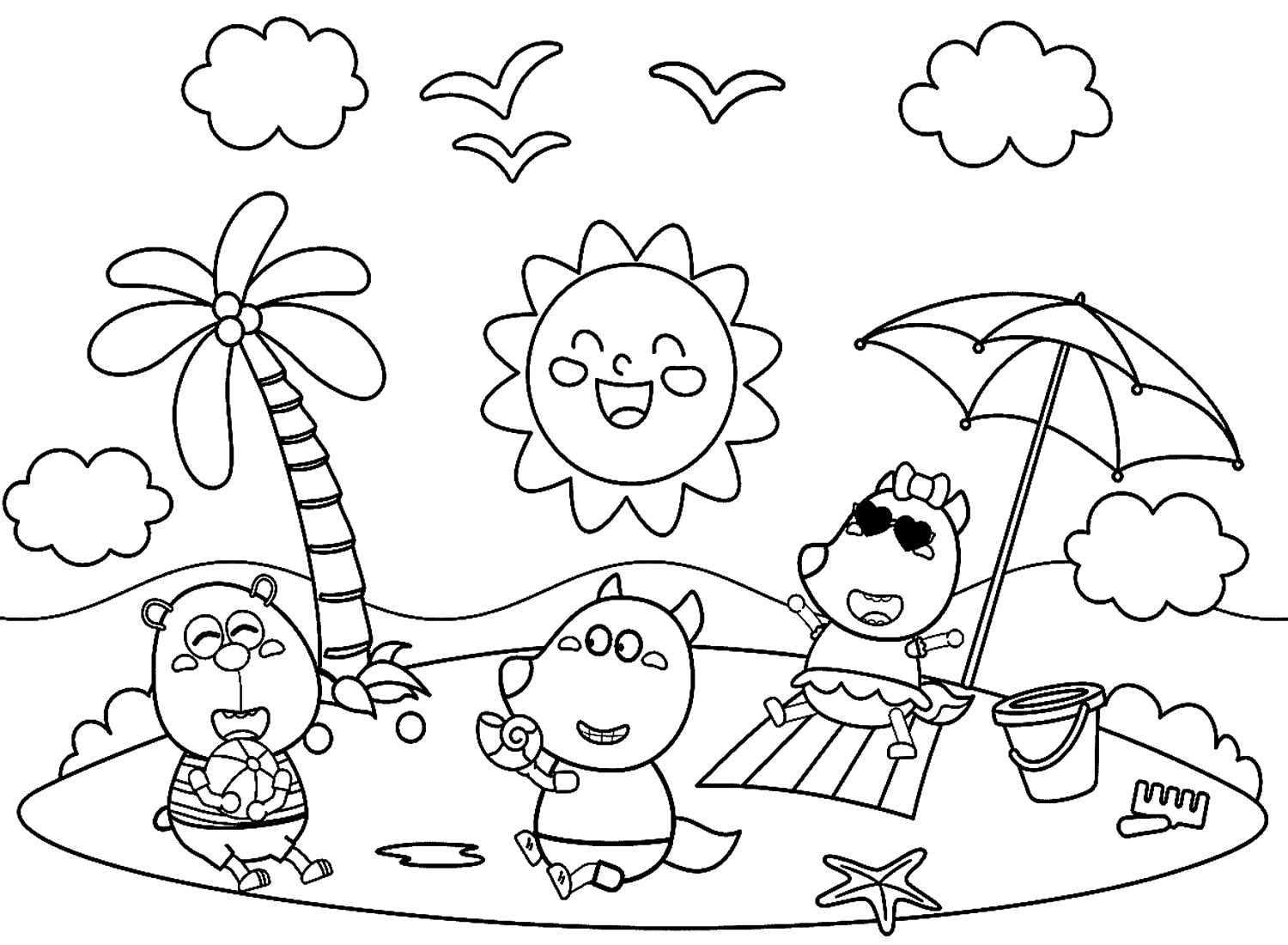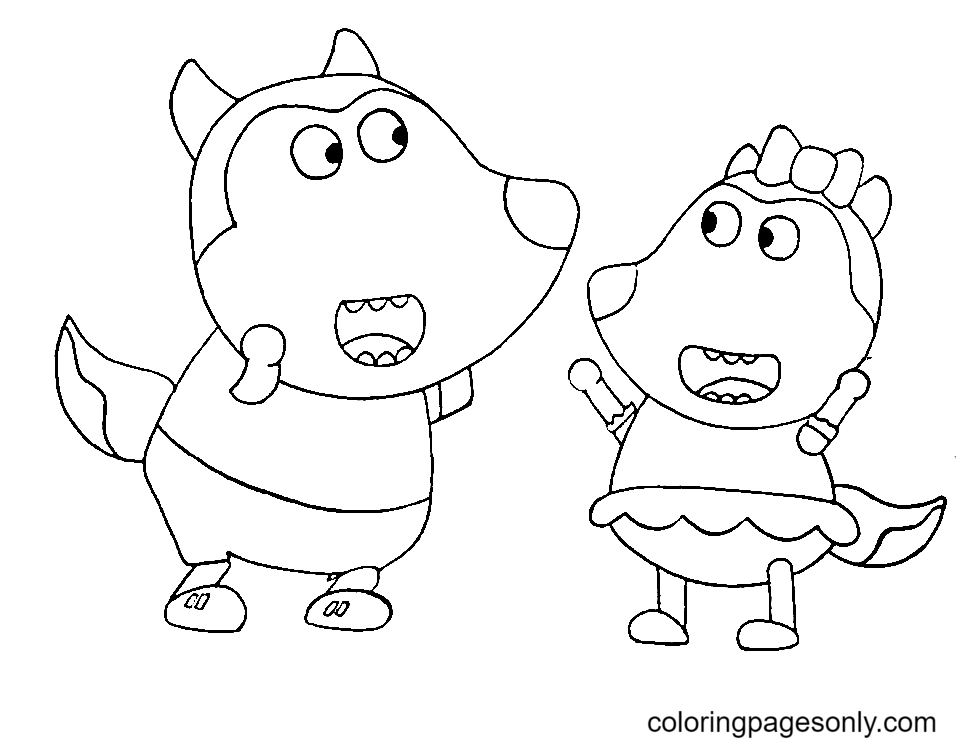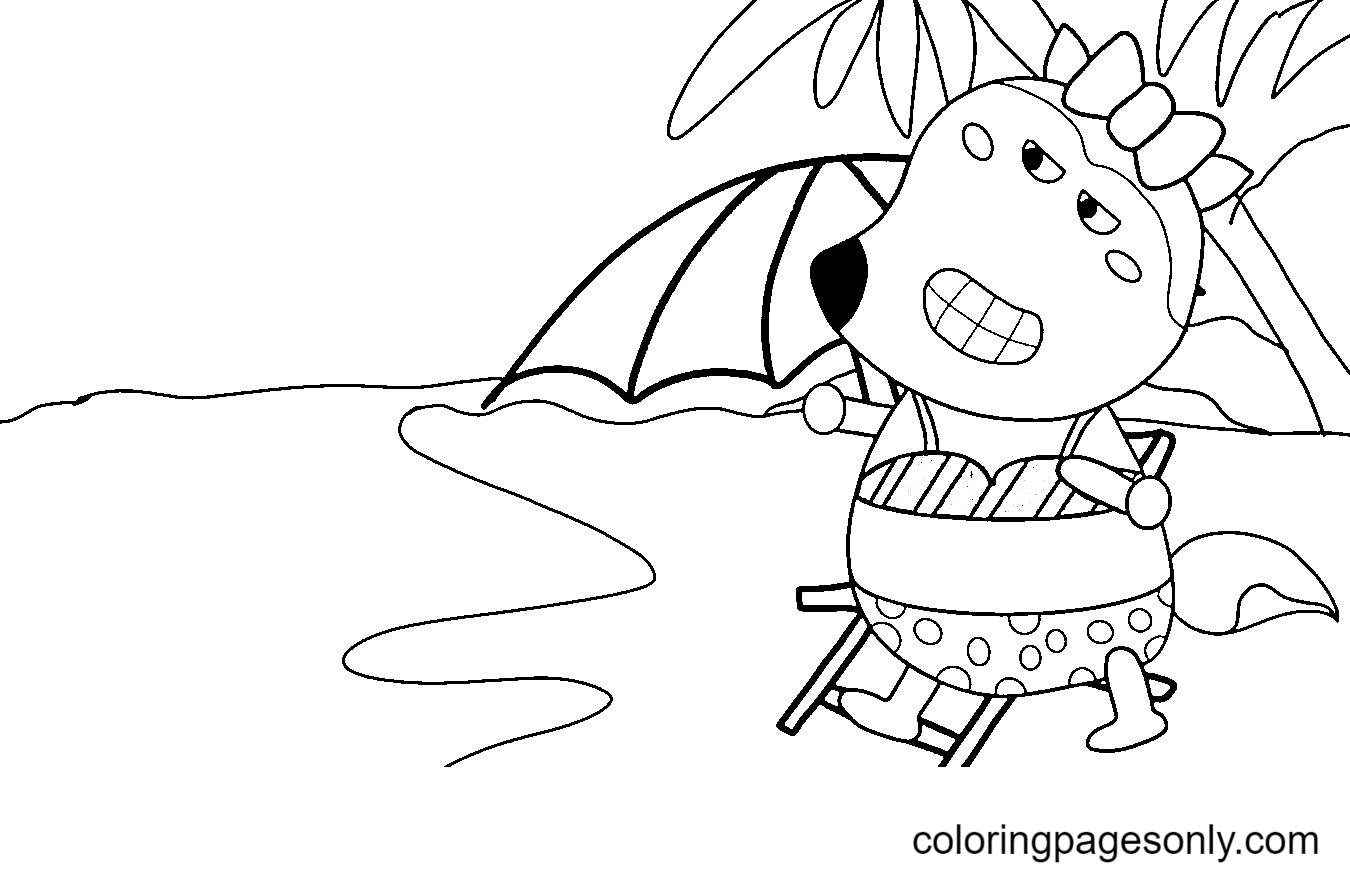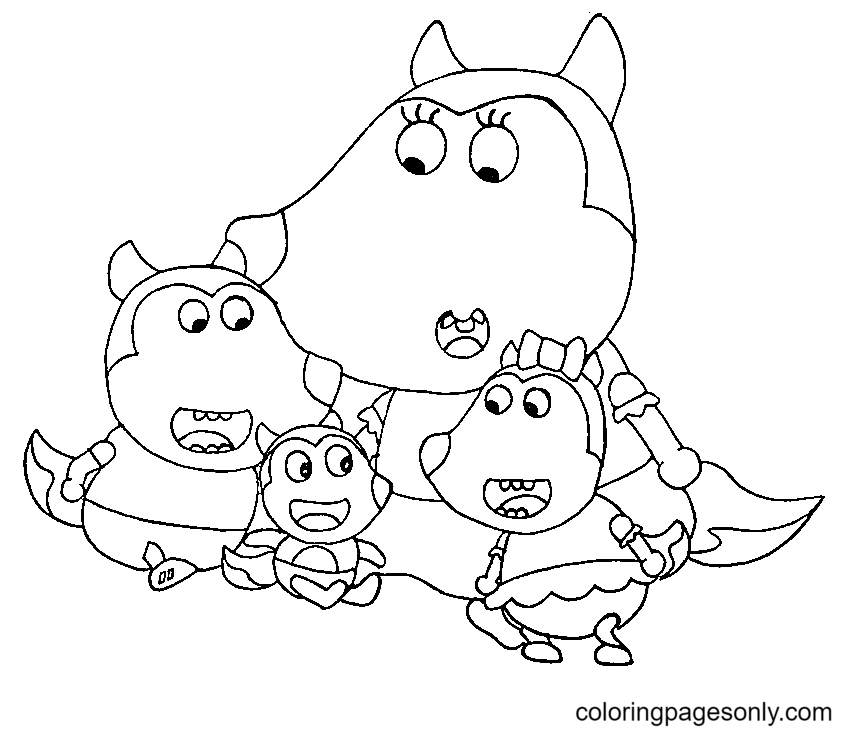
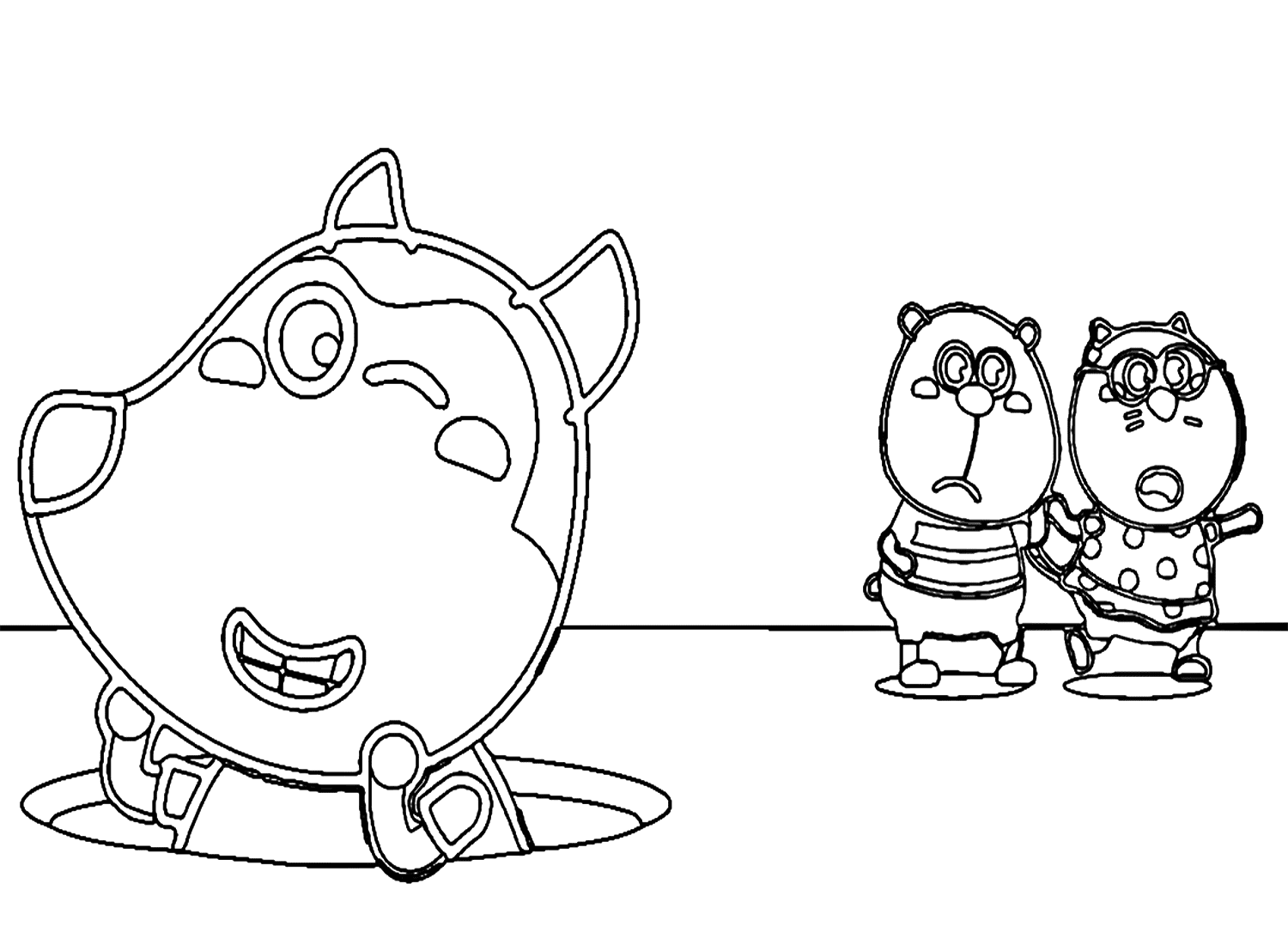
On this page, you’ll find 40+ free Wolfoo coloring pages – all free to download as PDFs or color online! This collection covers the full world of Wolfoo and his family: Wolfoo himself in solo adventures, family scenes with Mom and Dad, sibling moments with Lucy, and episodes with his best friends Pando, Kat, and Bufo. You’ll find the show’s most popular episode themes here – Wolfoo scared of a ghost, jealous of Lucy, learning not to swallow gum, eating too much chocolate, coloring with crayons – all the relatable little-kid moments that have made this show a global hit!
These pages are perfect for Wolfoo fans ages 2–7, and a great quiet-time activity that brings your child’s favorite wolf adventures off the screen and onto paper. Once colored, use them as wall decorations, fridge art, or little gifts for friends who love Wolfoo too!
While you’re here, grab these related pages! Cartoon Coloring Pages · Bluey Coloring Pages · Peppa Pig Coloring Pages · Coloring Pages for Kids
What Is Wolfoo? The Vietnamese Animated Series Taking the World by Storm
Wolfoo is a preschool animated web series created and produced by SConnect – a Vietnamese digital content company founded in 2015 by Ta Manh Hoang in Hanoi. The company’s original focus was on YouTube content production and video editing before expanding into original animation with a clear goal: to create a high-quality children’s series that could compete on the global stage and demonstrate that Vietnamese animation could reach international audiences.
The first episode of Wolfoo – titled “Hide and Seek” – was published on August 23, 2018. The early growth was slow: the Wolfoo team later acknowledged that there were periods when the channel received as few as 2,000 views per month. Rather than give up, the SConnect team continued refining their designs, scripts, and content approach, gradually building an audience through consistent episode releases and a clear educational focus.
The results eventually became extraordinary. By the early 2020s, Wolfoo had achieved the YouTube Diamond Play Button (awarded to channels that surpass 10 million subscribers), generated more than 2 billion monthly views, and appeared multiple times in YouTube’s Top 50 most-viewed channels globally. The series expanded to nearly 2,700 episodes, became available on 40 video-on-demand platforms in China through a partnership with the Chinese market partner Leadjoy, and was dubbed into 17 languages, including Spanish, Chinese, Japanese, Russian, French, Indonesian, and Tagalog. Each episode runs approximately three minutes – short enough to hold a preschooler’s attention, structured enough to deliver a complete narrative with a beginning, a middle, and a clear lesson.
From a single Vietnamese animation studio’s experiment in 2018, Wolfoo had become a genuinely global children’s brand – expanding into merchandise (plush toys, action figures, clothing, books), the Wolfoo City amusement center in Vietnam, the Wolfoo Games app, feature-length YouTube films including Wolfoo the Adventurer and Wolfoo and the Mysterious Island (which premiered in Vietnamese cinemas in October 2023), and a spin-off series called Bearee (launched April 16, 2022).
The Characters – Who Lives in Wolfoo’s Village?
The world of Wolfoo is populated by a small, closely knit cast of animal characters who live in an American-style village on a hill. Understanding who everyone is makes the coloring pages in this collection significantly richer – especially for parents who want to talk with their children about the episodes and scenes depicted.
Wolfoo is the series’s five-year-old wolf protagonist – curious, kind, energetic, and genuinely well-meaning, even when his adventures go sideways. His canonical design is immediately recognizable: light grey fur with cream-colored hands and face, rosy pink cheeks, and a cream-colored tail. He wears a red T-shirt, blue trousers, and black shoes with red laces. Superman is Wolfoo’s declared favorite character – a detail that occasionally surfaces in his imaginative play. His signature moment at the end of each episode is his catchphrase howl: “Awooo!” Wolfoo’s character arc across episodes is consistently about learning from mistakes and growing – he makes errors, faces consequences, and (usually) understands what went wrong.
Lucy is Wolfoo’s younger sister – a wolf pup with tan/light brown fur that immediately distinguishes her from Wolfoo’s grey, while her overall design mirrors his in build and proportion. Lucy shares Wolfoo’s “Awooo!” catchphrase and appears in some of the collection’s most relatable sibling dynamics: the “Wolfoo is jealous of Lucy” page captures the specific, universal feeling of an older sibling watching a younger one receive attention that once belonged to them. Lucy is described as shy, kind, and curious – qualities that create a gentler personality contrast with Wolfoo’s more exuberant energy.
Jenny is the family’s baby sister – the smallest and youngest Wolf family member, whose presence provides the household’s most tender moments.
Mr. Wolf (Daddy Wolf) is Wolfoo and Lucy’s father – an architect by profession, warm and engaged with his family despite sometimes being busy with work. His design follows the same wolf aesthetic as Wolfoo but with adult proportions and more formal coloring.
Mrs. Wolf (Mommy Wolf) is the children’s mother – a florist and housewife whose warmth and patience anchor the family’s domestic scenes. She appears in several collection pages, including “Wolfoo, Mom, and Daddy are happy but no Lucy” – a scene that immediately suggests the specific family dynamic of a sibling’s absence changing the household’s emotional temperature.
Pando is Wolfoo’s best friend – a panda with a large, round panda design (black-and-white markings in the classic panda pattern) and an enormous obsession with apples. Pando is playful and somewhat clumsy, providing much of the show’s physical comedy through his enthusiastic but chaotic participation in whatever adventure Wolfoo proposes. His apple obsession is both a running joke and a recurring plot device – Pando has, on various occasions, gotten himself into trouble by prioritizing apple acquisition over almost anything else.
Kat is the trio’s intellectual – a cat character distinguished by being the most book-smart and academically oriented of the friend group. She likes reading, tends to approach problems analytically, and occasionally serves as the voice of reason when Wolfoo and Pando’s plans are heading toward disaster. She has a brother named Kasper.
Bufo is a toad character who comes from a wealthy family and initially appears as a bully to Wolfoo and his friends – but the show consistently gives Bufo redemption arcs in which he learns his lesson and apologizes. This “bully who grows” character type is one of the show’s recurring moral frameworks: the idea that unkind behavior is a problem to be outgrown, not a permanent identity. Bufo’s best friend and sidekick is Piggy, who similarly participates in bullying and similarly learns from consequences.
What Wolfoo Teaches – The Educational Heart of Every Episode
The Wolfoo team at SConnect has consistently described the show’s educational mission as its central purpose – not entertainment as a byproduct of education, but education embedded within genuinely entertaining short-form stories.
Each approximately three-minute episode is structured around a single situation that a preschool child would recognize from their own life: eating too much of something they like, being scared of something in the dark, feeling jealous of a sibling’s attention, making a mistake and hiding it, or being tempted to do something they know they shouldn’t (like swallowing gum). The episode then follows Wolfoo – and often his family or friends – through the situation, its natural consequences, and a resolution that models one of the following qualities: courage (facing fears rather than running from them), gratitude (recognizing and expressing appreciation), kindness (choosing generosity over selfishness), compassion (understanding how others feel), creativity (finding new solutions to problems), teamwork (working together rather than competitively), emotional self-control (managing big feelings), and communication (expressing needs and feelings honestly).
The coloring pages in this collection are direct reflections of this educational structure. “Wolfoo, Don’t Swallow Gum” – one of the collection’s most recognized tiles – depicts a scene from an episode about the specific, very common childhood impulse to swallow chewing gum, and the consequences of doing so. “Wolfoo Ate Too Much Chocolate” reflects a food-overindulgence episode. “Wolfoo Is Scared Of Scary Ghost” shows Wolfoo managing fear. “Wolfoo is jealous of Lucy” directly addresses sibling jealousy. Each page, in other words, is not just a coloring activity but a visual anchor for a specific behavioral lesson the show has already delivered through narrative.
This design – episode topic embedded in tile name – makes the Wolfoo coloring collection unusually useful for parents. A parent who prints “Wolfoo is jealous of Lucy” for a child who is experiencing their own sibling jealousy is not choosing the page at random; they are selecting a page that connects to a specific emotional situation their child is navigating, and that can open a conversation about that situation through the shared language of Wolfoo’s story.
The Collection’s Pages – A Complete Scene Guide
Family scenes – “Wolfoo, Mom, and Daddy are happy but no Lucy,” “Wolfoo with Lucy,” “Princess Peach, Mario, and Luigi” – position the Wolf family members in their characteristic domestic warmth. The family pages are the collection’s most emotionally resonant for very young children who identify with Wolfoo’s household as similar to their own.
Educational episode pages – “Wolfoo, Don’t Swallow Gum,” “Wolfoo Ate Too Much Chocolate,” “Wolfoo Is Scared Of Scary Ghost,” “Wolfoo is jealous of Lucy” – are directly tied to specific show episodes and specific lessons. These pages work particularly well as activity pages before or after watching the corresponding episode, as conversation starters about the episode’s topic, or as reinforcement of a lesson a child has recently encountered in real life.
Friend group pages – “Wolfoo with Bufo,” “Wolfoo with Larva” – depict Wolfoo in the context of his social world, including characters from outside his immediate family. The “Wolfoo with Larva” tile is a crossover nod – Larva is a separate SConnect animated series featuring two larva characters (Red and Yellow), and Wolfoo’s appearance alongside Larva characters reflects the expanded SConnect animated universe.
Creative activity pages – “Wolfoo with Crayons” – show Wolfoo engaging in the very activity the coloring page itself invites: creative drawing and coloring. This meta-quality – a picture of a character using crayons, meant to be colored using crayons – is one of the collection’s most charming conceptual moments and is a natural choice for the first page to color with a young child.
Wolfoo’s Canonical Colors – The Complete Coloring Reference
Wolfoo’s design is specific and consistent across thousands of episodes. Getting the canonical colors right makes any finished page immediately recognizable as the character rather than a generic wolf.
Wolfoo himself. Light grey body fur – a warm, slightly yellowish-grey rather than a cold blue-grey. Cream-colored face and hands – a warm off-white distinct from the grey body, clearly lighter but maintaining the warmth of the overall palette. Rosy cheeks – a gentle, circular, warm pink blush on each cheek, present even when Wolfoo is in neutral emotional states. Red T-shirt – a vivid, medium-saturation red, the primary color accent of his design. Blue trousers – a clear, medium royal blue. Black shoes with red laces – the shoes should be rendered in a clean dark tone, with the red laces as tiny accent details that connect back to the shirt’s color.
Lucy. Tan/brown fur – distinctly warmer and darker than Wolfoo’s grey, immediately differentiating the siblings at a glance. Lucy’s tan reads as a warm mid-brown, neither too light nor too dark. Her design is otherwise structurally similar to Wolfoo’s – the same overall proportions and face structure – which reinforces their sibling relationship, while the fur color creates a clear visual distinction.
Pando. Classic panda coloring: pure white body with solid black patches around the eyes, on the ears, and on the arms/legs. The black should be a true, consistent black (not grey) while the body white is a clean, slightly warm off-white. Pando is one of the collection’s most satisfying characters to color because his black-and-white pattern is both clear and satisfying to render.
Wolfoo’s clothing variations. While the red shirt and blue trousers are canonical, some coloring pages may depict Wolfoo in different outfits for specific episode scenarios (a superhero costume, swimming trunks, pajamas). In these cases, the face, fur, and cheek colors remain constant – these are the elements that identify Wolfoo across any outfit.
Coloring Tips for Wolfoo Pages
Grey fur – never cold, always warm. Wolfoo’s light grey should be rendered with a slightly warm undertone – achieve this by mixing or layering a very light warm beige with a light grey, rather than using pure cool grey. Pure blue-grey makes Wolfoo look cold and unfriendly; warm grey makes him look approachable and soft, which matches his character perfectly.
The red-and-blue outfit – warm and cool balance. Wolfoo’s red shirt and blue trousers are classic primary colors placed in direct adjacency – the warmth of the red meets the coolness of the blue at the waistline. To prevent these two strong colors from visually competing in an unpleasant way, render the shirt in a slightly more saturated red and the trousers in a slightly more muted, medium blue. This minor value differential makes the shirt the “hotter” element and the trousers the “cooler” support, which matches the visual hierarchy of the design (shirt more prominent, trousers more grounded).
Rosy cheeks – light touch, circular. Wolfoo’s cheek blush is one of his most important facial features – it communicates friendliness and warmth at every moment. Apply it as a circular, soft-edged blush in a warm pink, centered on the upper cheek area. The key is lightness of touch: the cheek color should be clearly visible but not dominant, overlaying the cream face color with a translucent blush effect rather than a solid pink circle. Crayon applied very lightly in circular strokes, or marker applied and immediately softened with a dry finger, both achieve this effect.
Pando’s apple – the brightest element on any Pando page. Wherever Pando appears in this collection, he is almost certainly holding, near, or thinking about an apple. The apple should be rendered in the most vivid red available – slightly brighter and more saturated than Wolfoo’s shirt red – with a tiny green stem and, if depicted, a small green leaf. On pages where Pando and Wolfoo appear together, the apple becomes a third red element alongside Wolfoo’s shirt; to prevent the two reds from merging visually, render Wolfoo’s shirt in a slightly cooler, darker red and Pando’s apple in the warmer, brighter red.
The ghost page – white on white challenge. “Wolfoo Is Scared Of Scary Ghost” likely depicts a white ghost character against a light background. Coloring white characters on white paper requires the same three-tone approach used for Stormtrooper pages: a warm off-white main tone, very light warm grey shadow areas, and leaving the absolute lightest points at the true paper white. The ghost’s transparent quality can be suggested by keeping all tones very light and slightly cool, in contrast to the warmer tones of Wolfoo’s fur and clothing.
5 Activities
The episode lesson artwork. Choose any page from the collection that depicts a specific behavioral situation – “Wolfoo, Don’t Swallow Gum,” “Wolfoo Ate Too Much Chocolate,” “Wolfoo Is Scared Of Scary Ghost,” or “Wolfoo is jealous of Lucy.” Color the page together, then use it as the starting point for a three-part story: what happened before the moment in the picture? (Wolfoo saw the gum / ate the chocolate / heard a noise / saw Lucy get attention.) What happened in the moment in the picture? (He made the mistake / felt scared / felt jealous.) What did Wolfoo do next to fix it or feel better? Write or draw these three moments on the back of the colored page. This story structure – before, during, after – is exactly the narrative structure of each Wolfoo episode, and working through it manually deepens a child’s understanding of the episode’s moral without any additional instruction from the parent.
The friend group coloring party. Print one page for each child in a small group (or one page per family member), assigning each person a different Wolfoo character to color. Give everyone five minutes to color only their character page, using the canonical colors described above. Then compare: how did each person’s coloring choices differ? Did anyone use non-canonical colors? What does each character’s design communicate about their personality? After comparing the individual pages, assemble them together as a group portrait of the Wolfoo friend group. This activity develops both color accuracy (working within a character’s established palette) and social discussion (comparing approaches and making observations).
The “what happened next?” story extension. “Wolfoo, Mom, and Daddy are happy, but no Lucy” has a built-in narrative puzzle in its title – where is Lucy? What happened to make Mom and Dad happy without their younger daughter present? Color the page, then create a short illustrated story (three to five drawings with simple captions) that answers the question: Where is Lucy? Why are Wolfoo and his parents happy? Is Lucy coming back? The story can be funny, adventurous, or heartwarming – the constraint is that it must account for Lucy’s absence in a way that makes sense for her character. This activity develops narrative thinking, character knowledge, and the creative skill of generating a plausible story from a single visual prompt.
The “before and after” character comparison. Wolfoo’s show consistently demonstrates that characters – especially Bufo – can change their behavior through experience. After coloring “Wolfoo with Bufo,” draw two simple portraits on blank paper: Bufo at the beginning of a typical episode (when he is bullying or being unkind) and Bufo at the end (when he has learned his lesson and apologized). What does his face look like in each portrait? What colors feel right for the “before” Bufo versus the “after” Bufo? (Many children instinctively choose warmer, brighter colors for the changed Bufo and cooler, darker colors for the unkind version.) This activity engages both character analysis and the powerful concept – central to Wolfoo’s educational mission – that people’s behavior is not fixed and that change is possible and valued.
The Wolfoo cityscape design. Wolfoo’s show is set in a small American-style village on a hill, with distinct houses for each family. On a large piece of paper, design the Wolfoo village: draw the Wolf family house on its hill, Pando’s house (his family runs a restaurant – so perhaps a house near a kitchen garden?), Kat’s house (her mother is a teacher – perhaps near a school?), and Bufo’s house (from a wealthy family – perhaps larger and more ornate). After drawing the village layout, color each element using the character colors associated with its inhabitants. Wolfoo’s house might feature accents of his red-and-blue palette; Pando’s might have apple-tree references; Bufo’s might be in richer, more formal colors. This creative cartography activity develops both world-building imagination and the ability to translate character personality into visual and spatial design.