
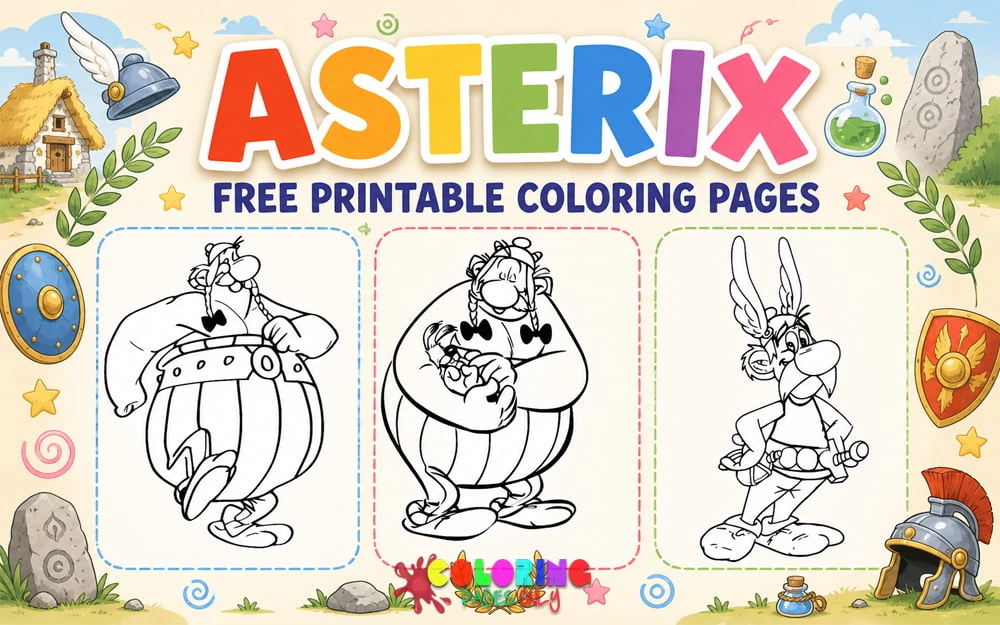
Asterix coloring pages: 40+ free printable PDF designs featuring Asterix, Obelix, Dogmatix, Vitalstatistix, Julius Caesar, Fulliautomatix, Getafix, and the full cast of the Gaulish village from the Franco-Belgian comic series. Every page is available to download as a PDF or color directly in the browser, with no account or payment required.
Asterix is a comic series created by writer René Goscinny and illustrator Albert Uderzo, first published on October 29, 1959. Set in 50 BC, it follows a small Gaulish village in Roman-occupied Gaul that resists conquest through wit, camaraderie, and a magic potion brewed by their druid, Getafix.
These pages suit fans of the comics and animated films, children discovering Asterix for the first time, and adults who grew up reading the books.
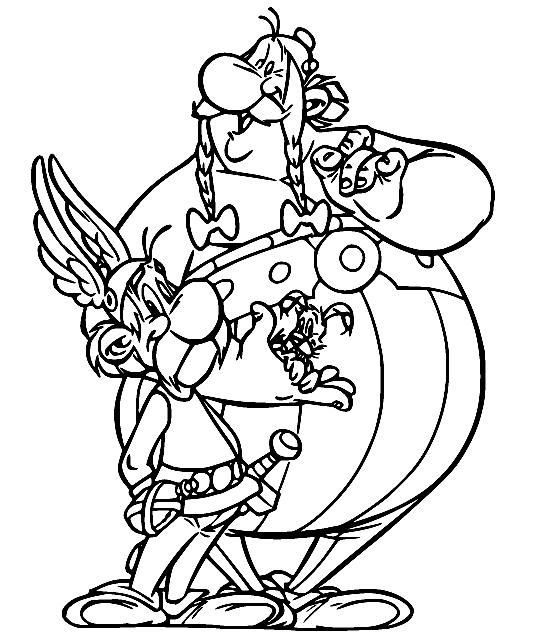
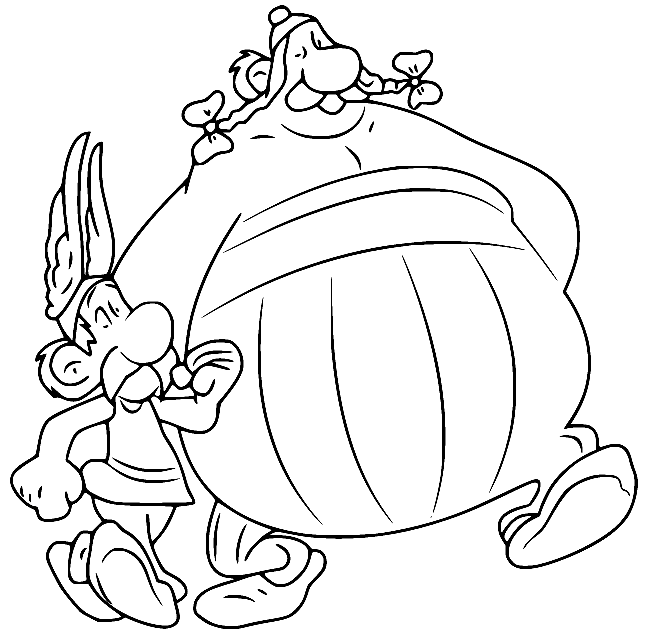
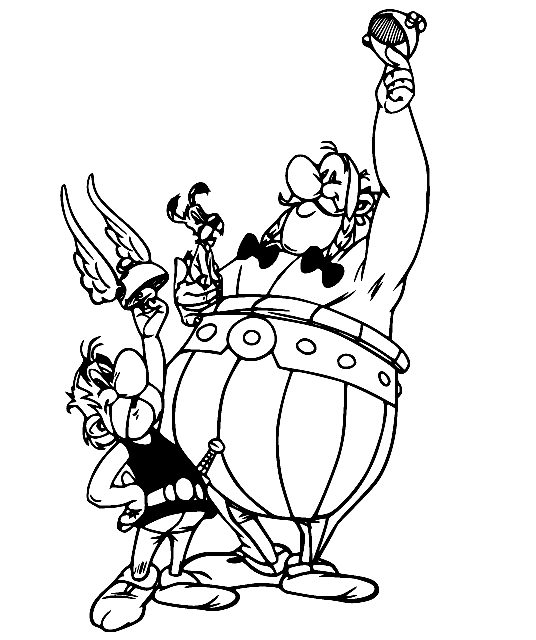
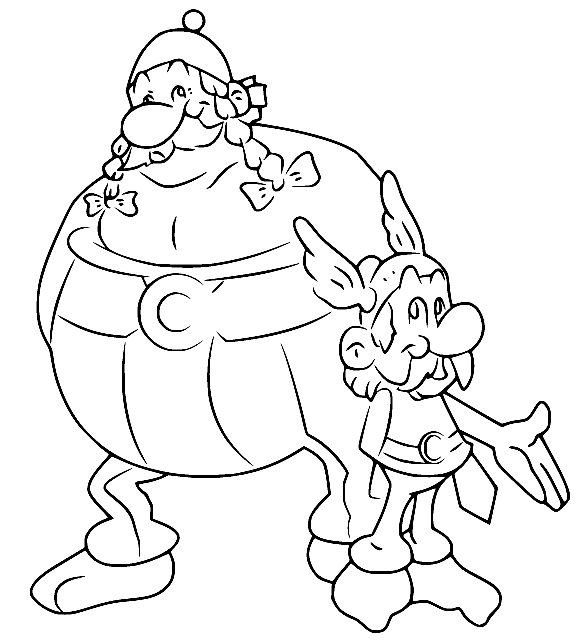
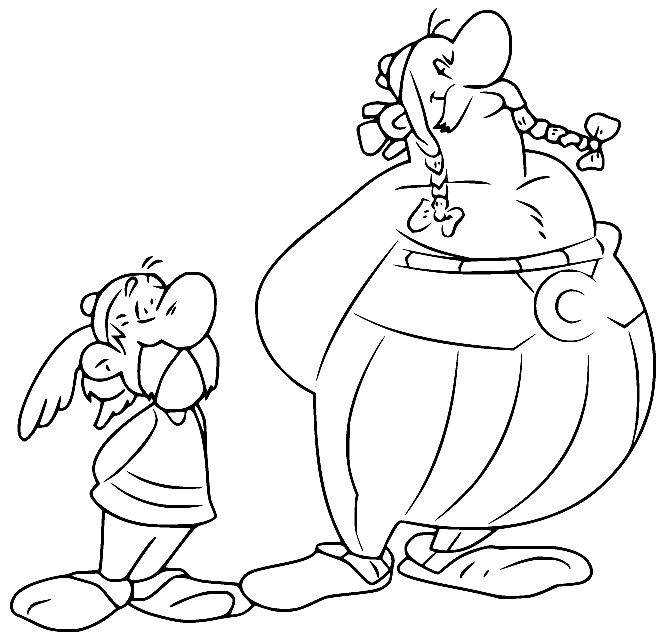
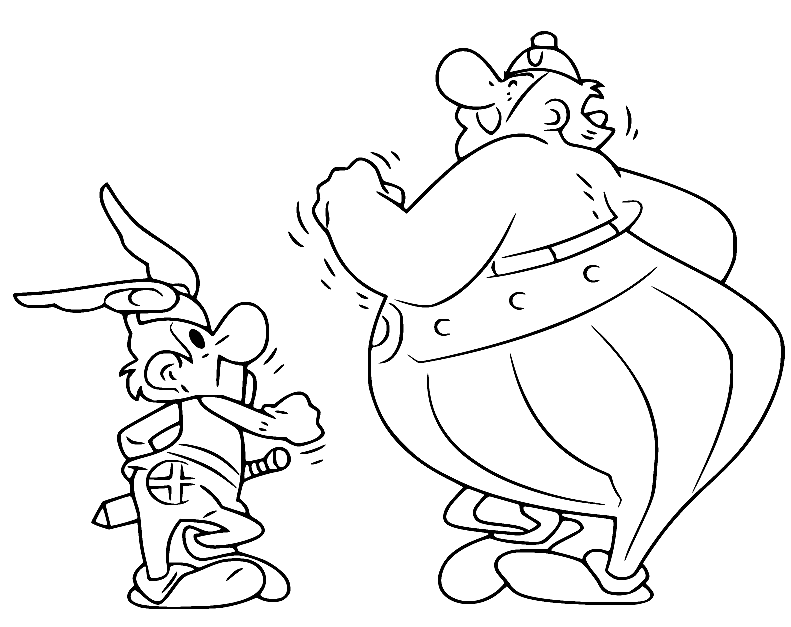
The defining coloring challenge of this set is Asterix and Obelix together. Asterix is small, one of the smallest protagonists in classic comics. Obelix is enormous. When both appear on the same page, the size gap between them is the most important thing to get right, because it is the visual foundation of everything the series is built on.

Quick Answer
Asterix coloring pages are a free set of 40+ printable PDFs and browser-based coloring sheets from the beloved Franco-Belgian comic series, covering Asterix, Obelix, Dogmatix, the village cast, and Julius Caesar.
Best for: comic fans of all ages, children aged 5 and up, and families with connections to European comics and animation
Formats: printable PDF and online coloring
Popular pages: Asterix and Obelix together, Obelix with Dogmatix, and the action and running scenes
Creative uses: a side-by-side size study of Asterix and Obelix, a cast portrait gallery, a Caesar vs. Asterix villain display, and an Obelix boar-carrying craft
What’s Inside Asterix Coloring Pages
The set covers the full main cast of the series across solo portraits, paired scenes, action pages, and group compositions.
Asterix
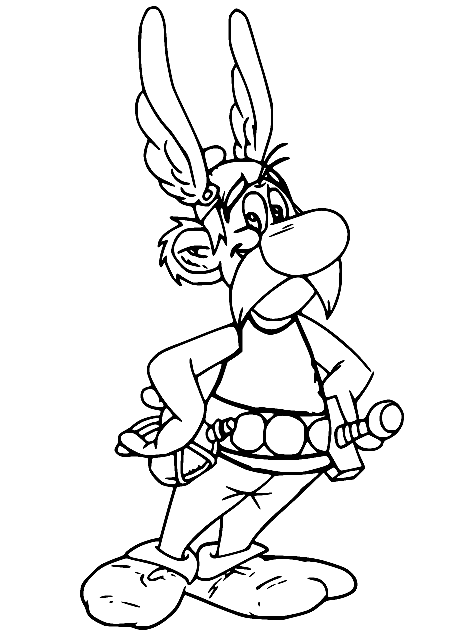
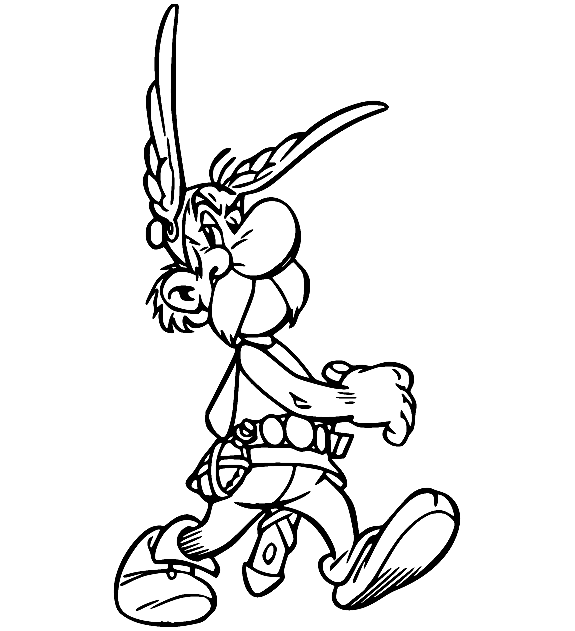
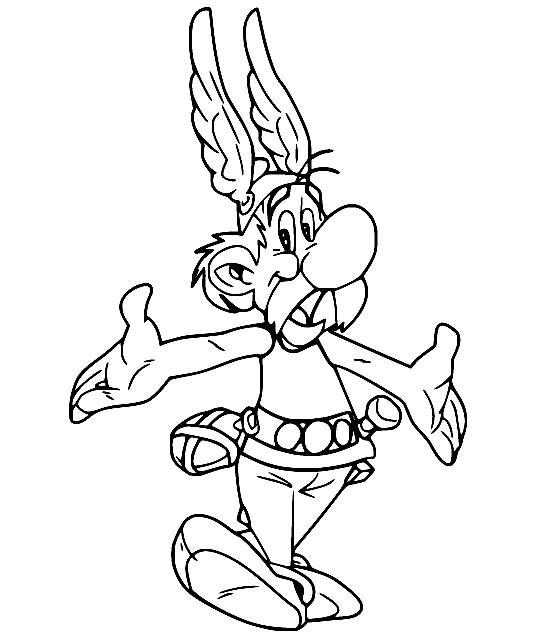
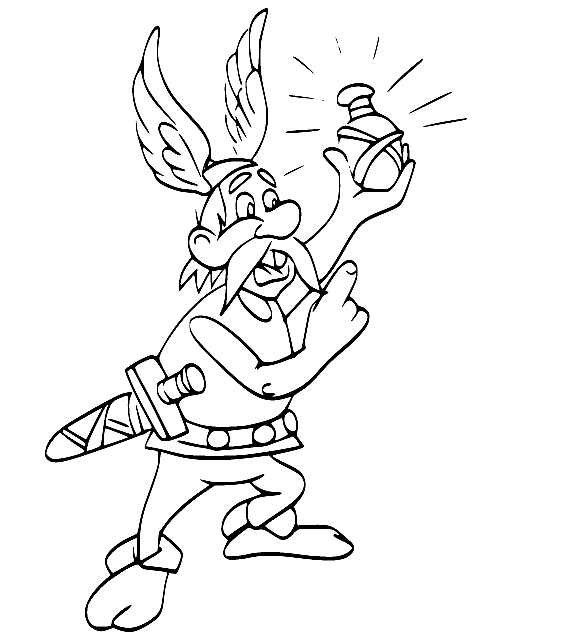
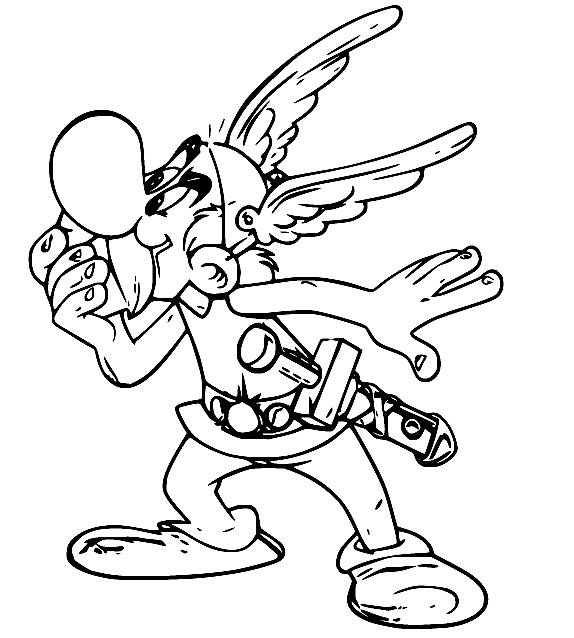
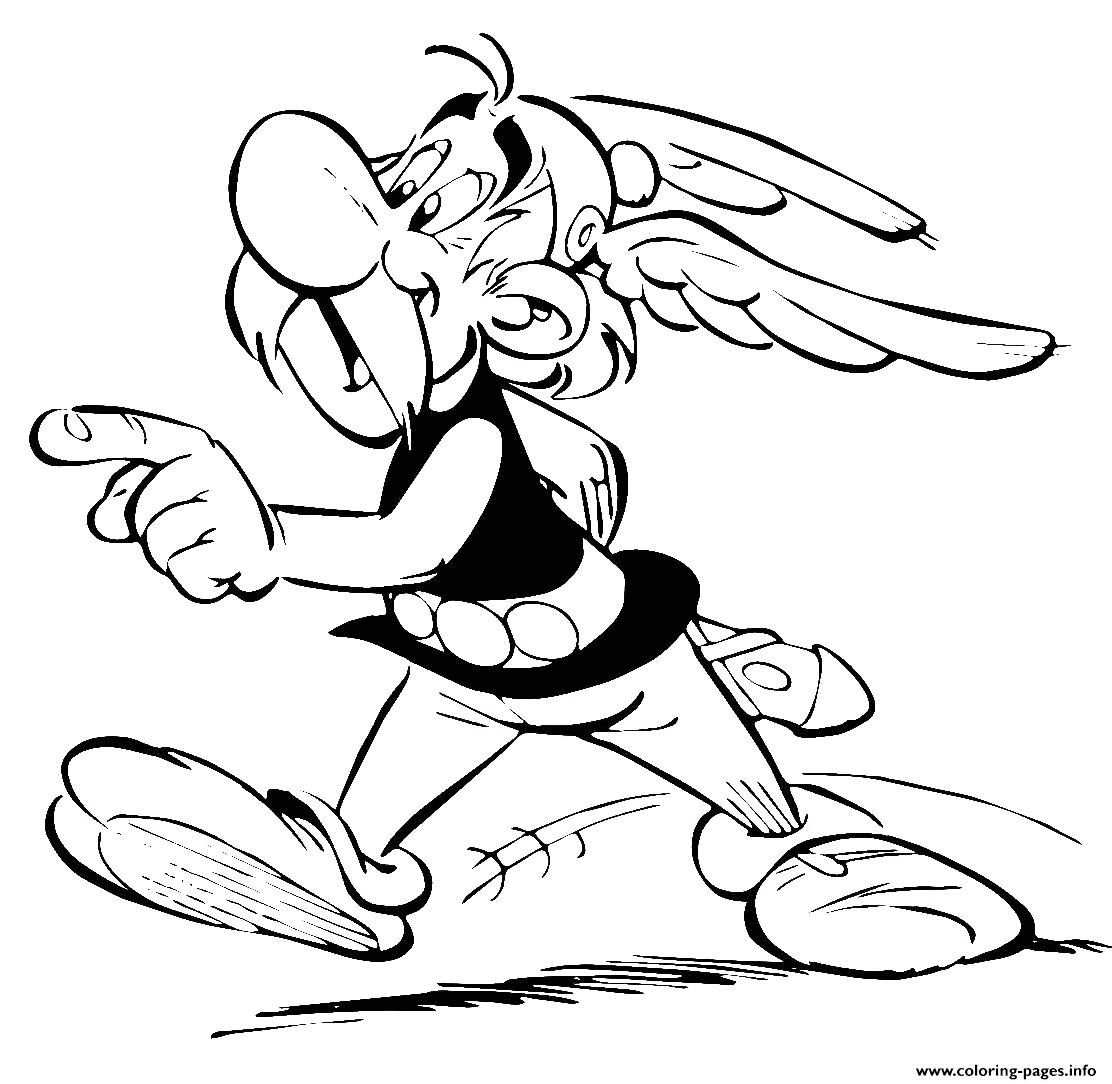
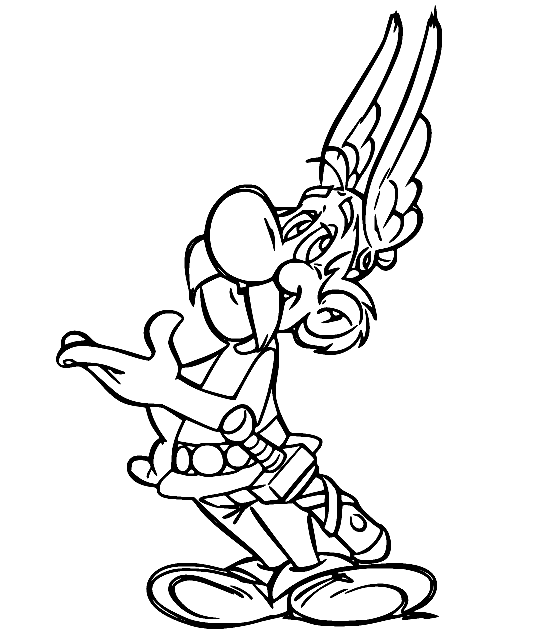
Asterix appears in the largest share of the set, across solo portraits, walking and running pages, a page with his sword, a page throwing something, a shrugging pose, and multiple paired scenes with Obelix. His expressions range from confident and purposeful to surprised and emotional.
Coloring Asterix: Asterix wears a winged helmet with gold wings, a white short-sleeved tunic, brown or tan trousers, and brown sandals. His mustache is the same warm golden-brown as his hair. The wings on his helmet are a bright, warm yellow-gold. His skin tone is warm and tanned. The contrast between his small, compact form and the bright gold of his helmet wings is what makes him visually distinctive: the wings are disproportionately large for his head, which was Uderzo’s deliberate design choice to make him look heroic despite his small stature.
Obelix
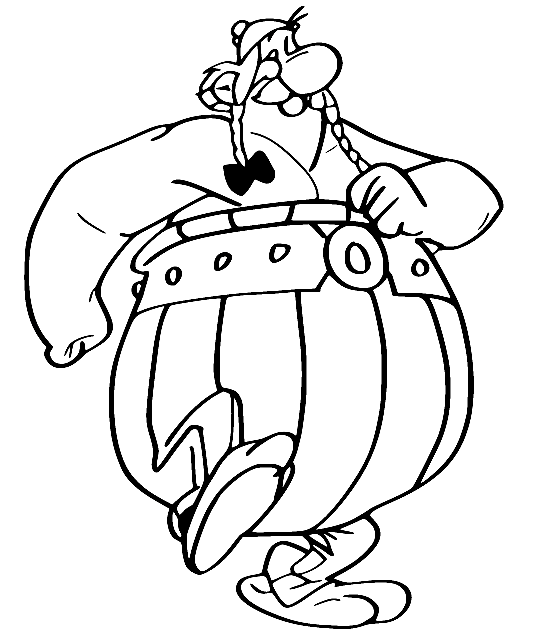
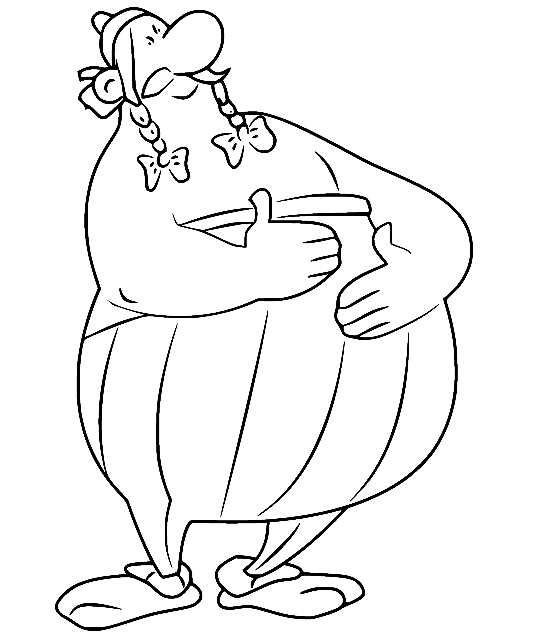
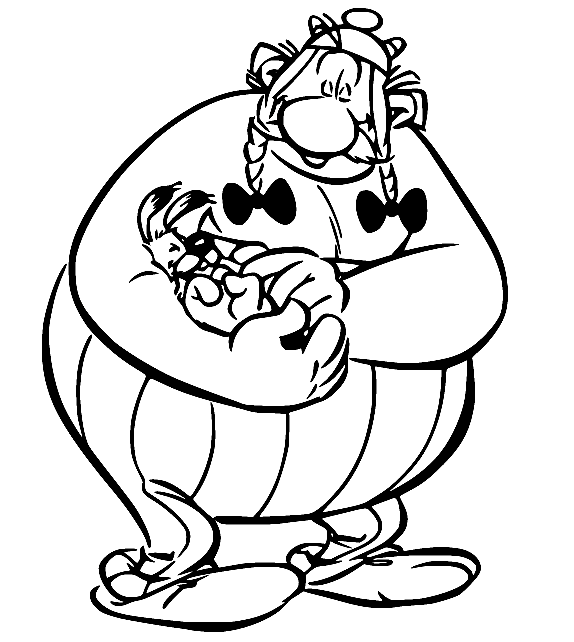
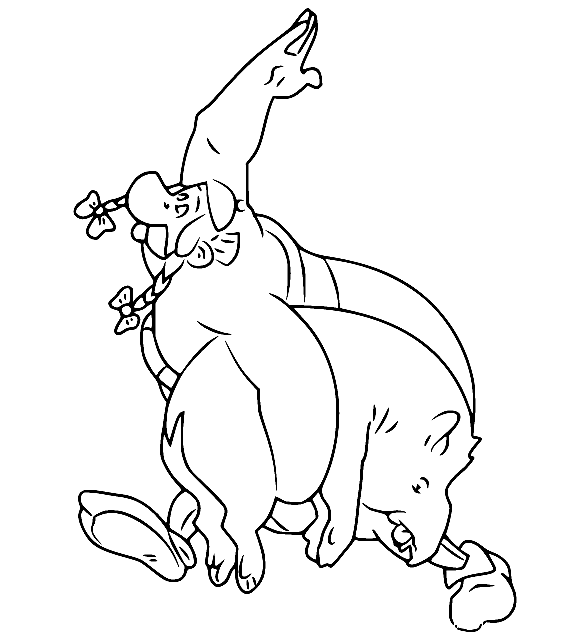
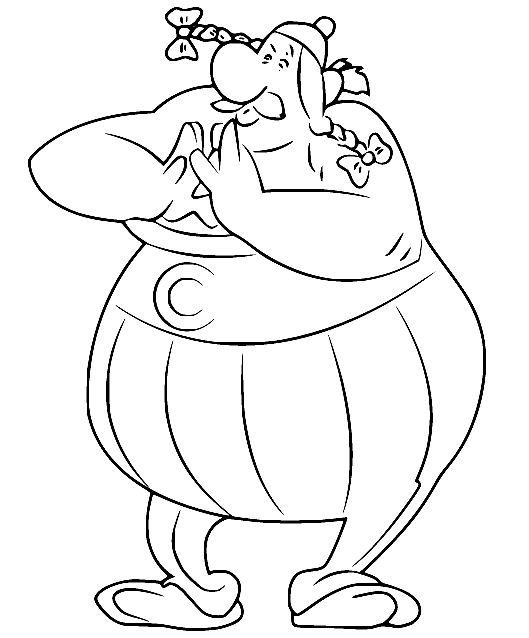
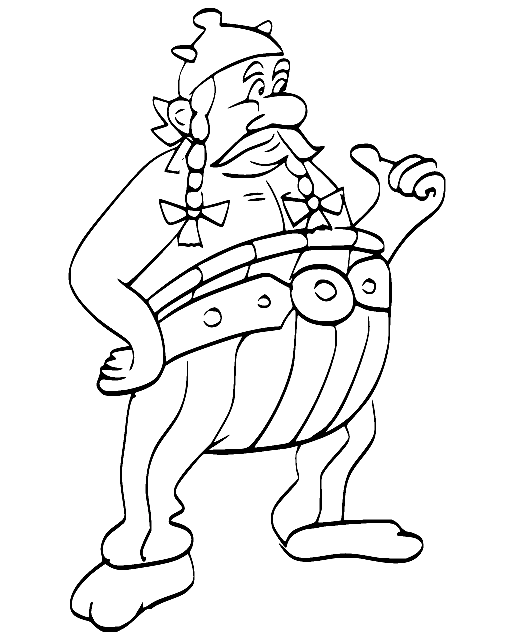
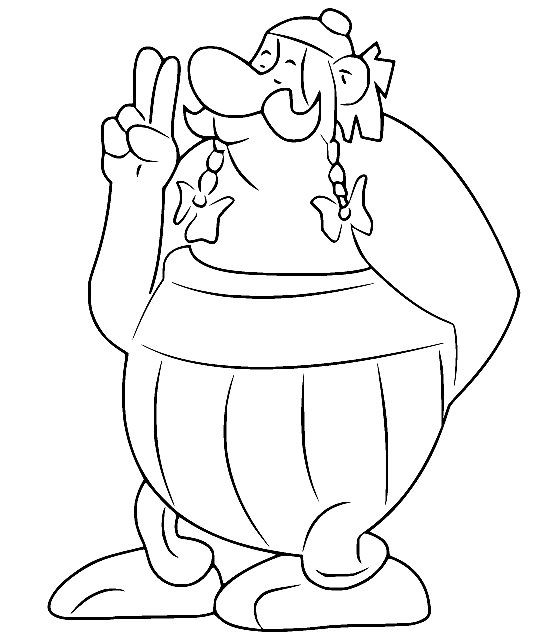
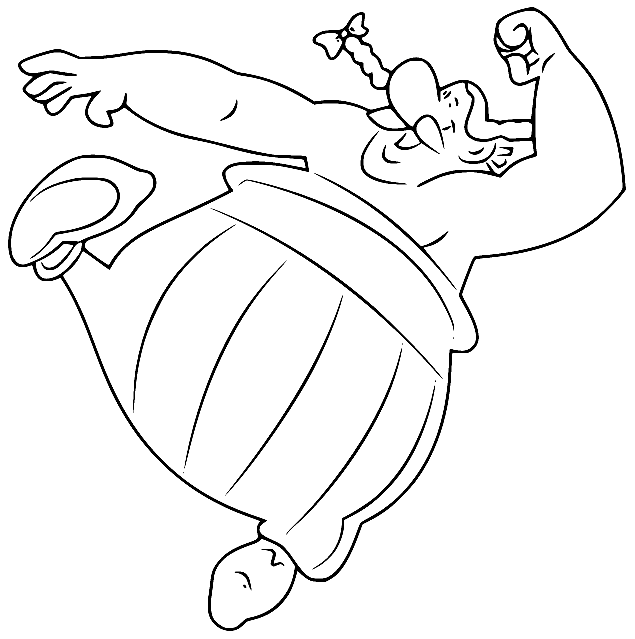
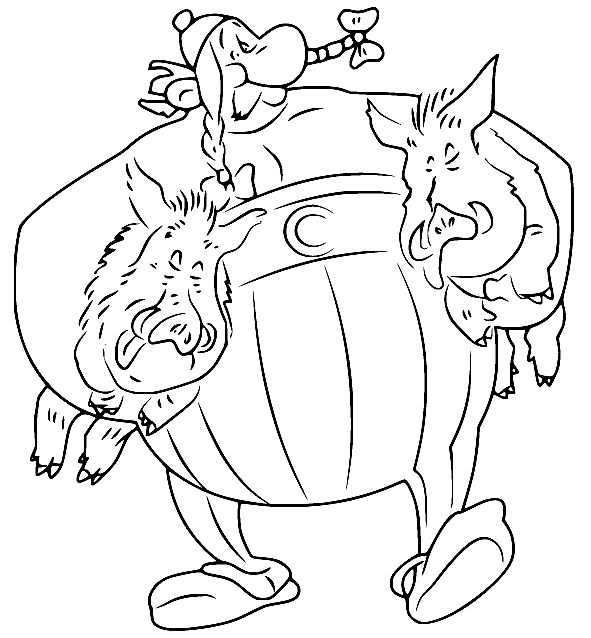
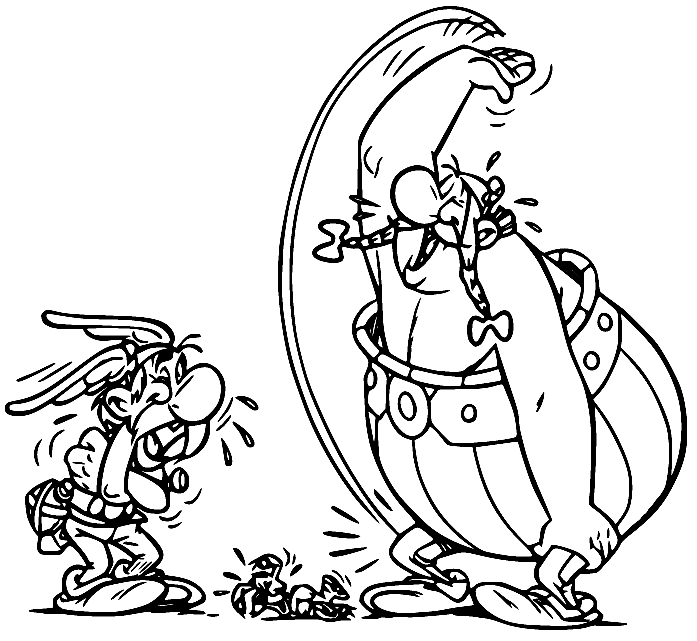
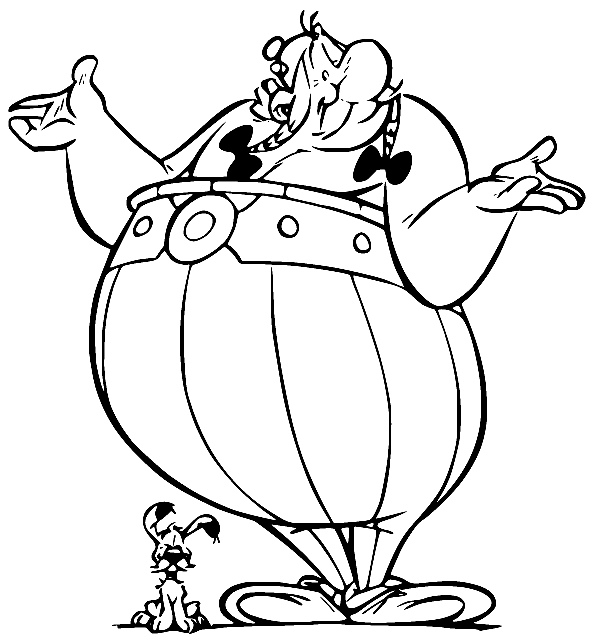
Obelix appears across a wide range of pages: solo portraits, action poses, holding menhirs and boars, and Dogmatix, walking and running with Asterix, applauding, making victory gestures, and in an emotional crying scene with Asterix.
Coloring Obelix: Obelix wears a bright sky-blue and white vertically striped tunic that is one of the most recognizable costume patterns in European comics. His hair and mustache are a bright reddish-orange. His skin is pale and round. The blue-and-white stripe pattern of his tunic requires careful, even work; inconsistent stripe width breaks the visual consistency that makes Obelix immediately recognizable. He is always bare-legged with simple sandals. On pages where he carries objects (boars, menhirs, Dogmatix), his casual strength is communicated through relaxed posture rather than strain.
Asterix and Obelix Together
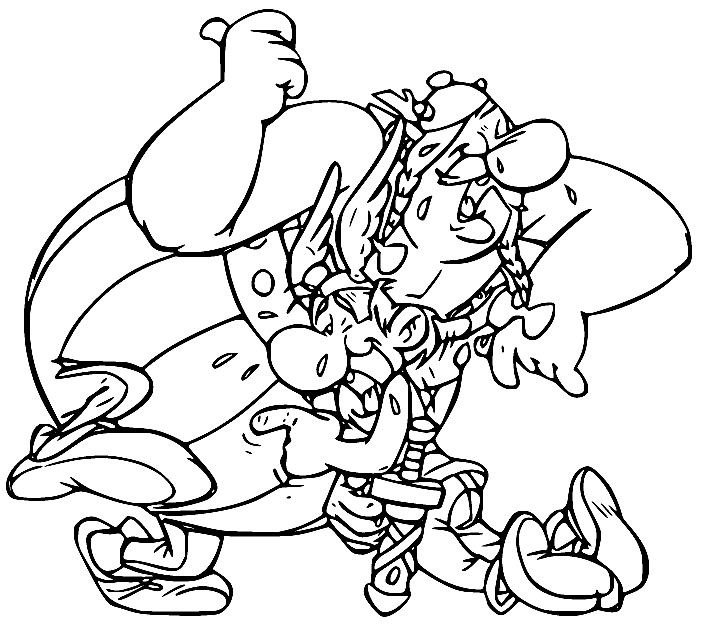
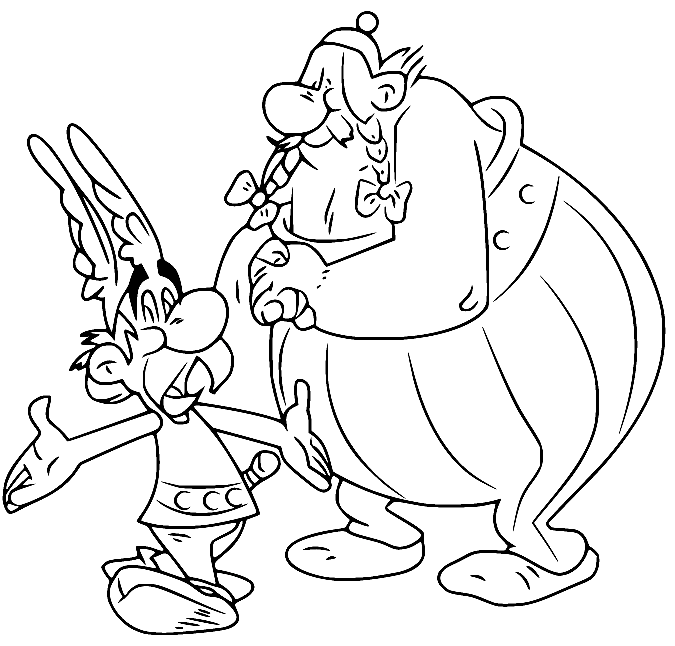
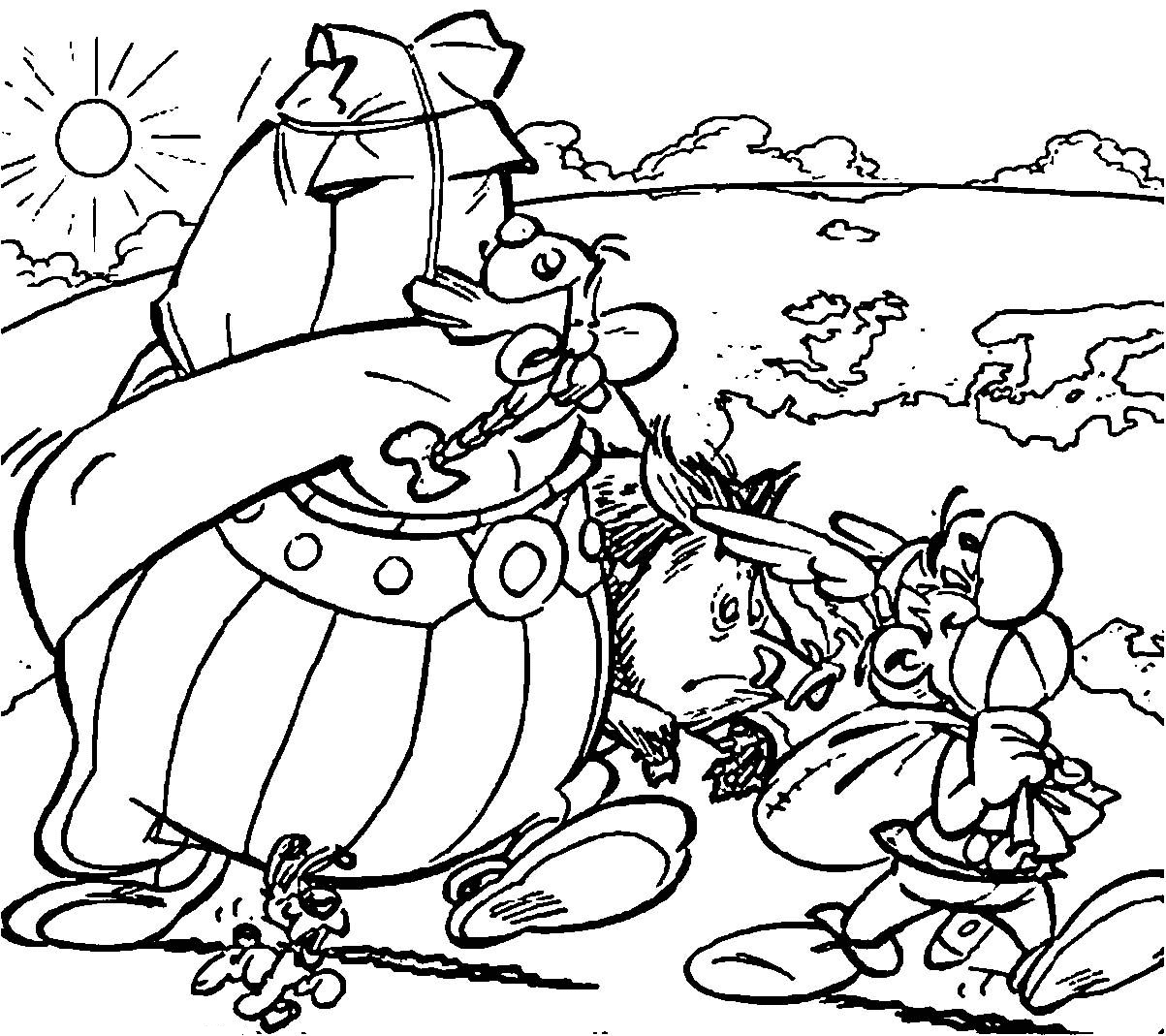
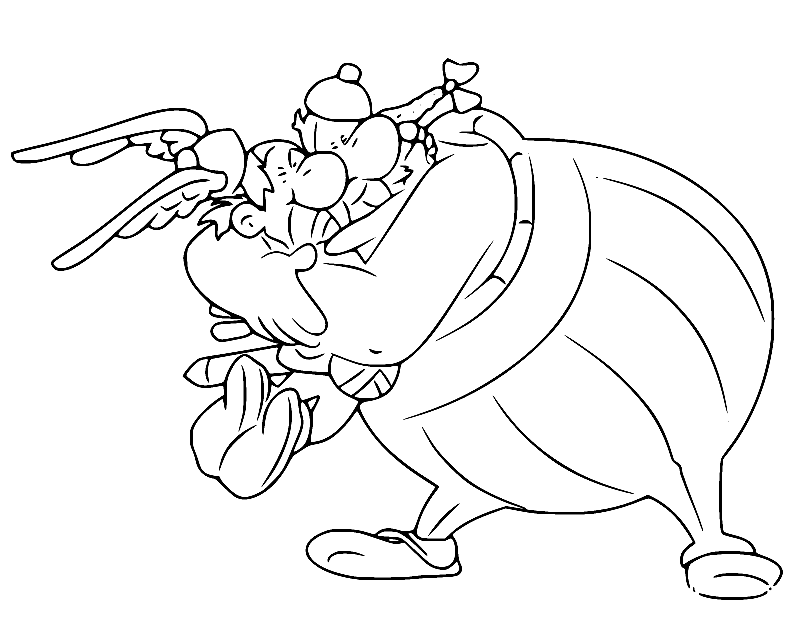
More than half the pages in the set feature both characters, in scenes ranging from walking and running to crying, talking, and celebrating. These are the most important pages in the set compositionally.
Coloring paired pages: the key decision on any page with both characters is keeping the size difference clear. Asterix should always read as significantly smaller. His gold-winged helmet and Obelix’s bright blue-white stripes are the two dominant visual elements in any paired scene, and keeping both vivid ensures the characters read clearly against each other without either washing out. On crying or emotional pages, the dynamic of two very different characters sharing the same emotion is the most charming aspect of the series, captured in a single image.
Dogmatix
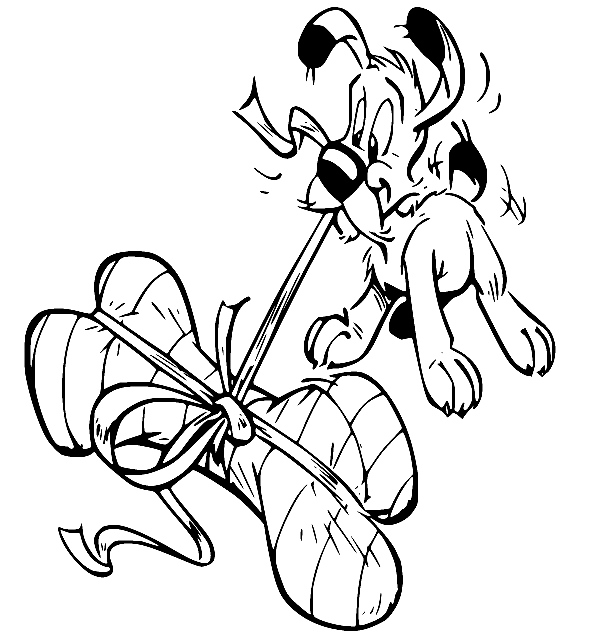
Dogmatix, Obelix’s small white dog, appears in several pages: solo with a large bone, held by Obelix, and in a group scene with Asterix and Obelix.
Coloring Dogmatix: Dogmatix is a small, round, white dog with a black nose, small dark eyes, and a curled tail. He is the simplest character in the set to color, but his small size against Obelix makes the size-contrast theme of the series work at a third scale. On solo pages, his large bone provides the only strong contrasting color: a warm off-white or pale yellow bone against his bright white fur.
Julius Caesar
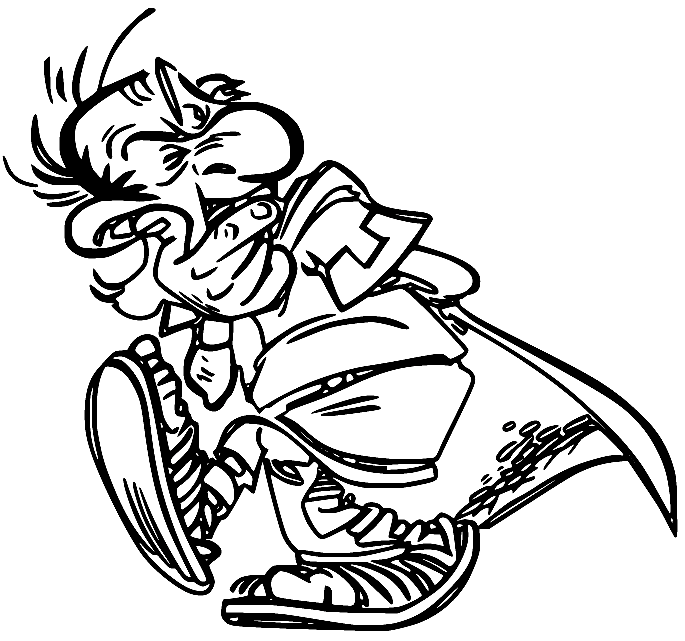
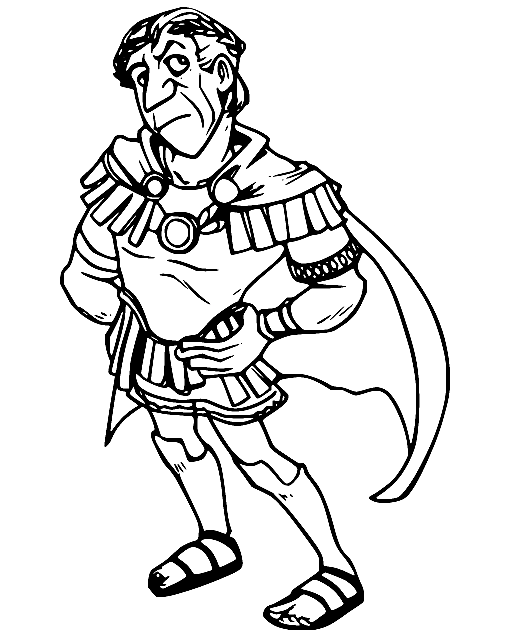
Julius Caesar appears in one solo page and is the most formally dressed character in the set, representing the Roman authority that the village resists.
Coloring Caesar: Caesar wears a deep purple and red Roman general’s attire with a gold laurel wreath, gold-trimmed armor, and a red cape. His face is angular and serious, with short dark hair. The purple and gold combination of his costume is the most formal and richest color scheme in the set, and the most historically grounded in terms of Roman imperial color conventions.
Village Cast: Vitalstatistix, Fulliautomatix, and Minor Characters
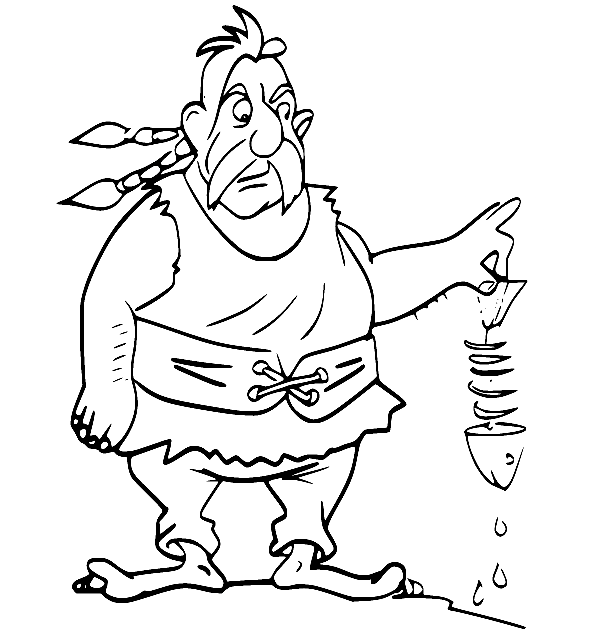
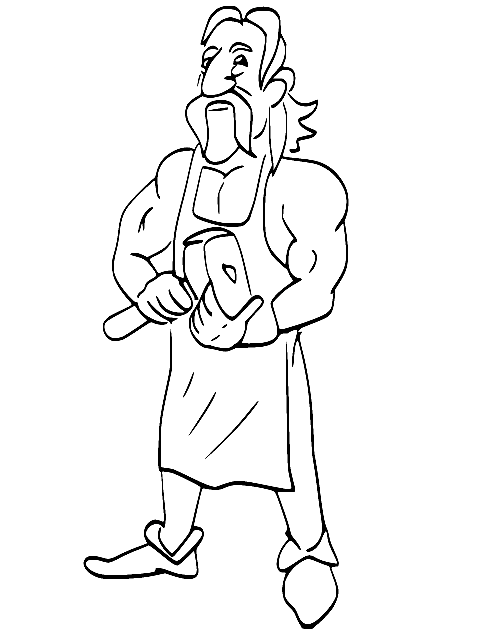
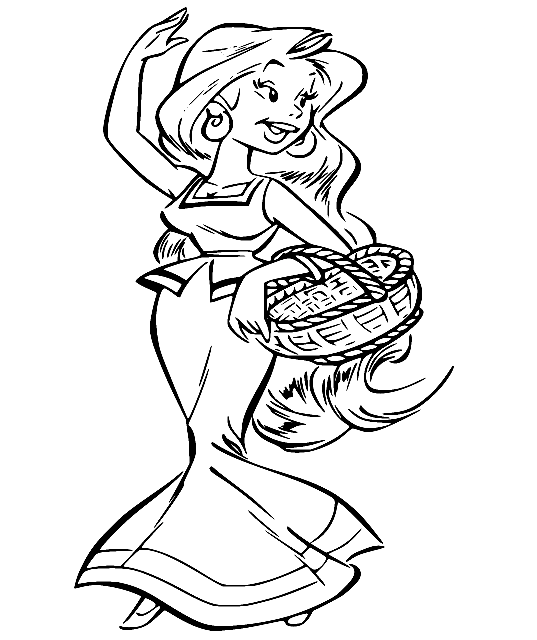
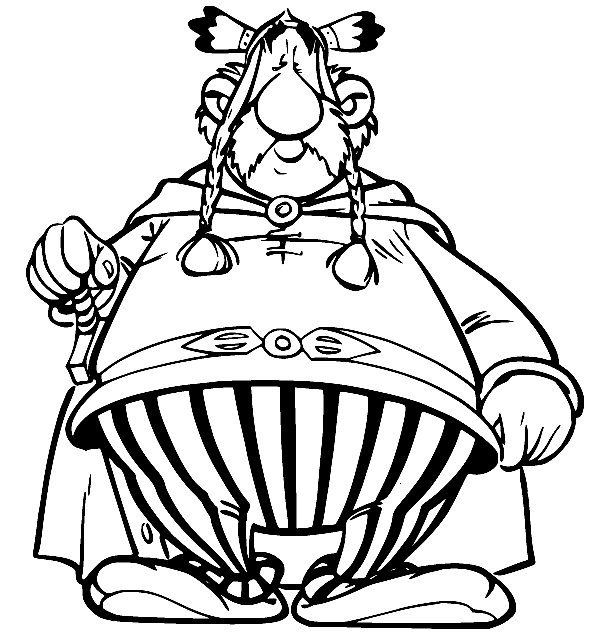
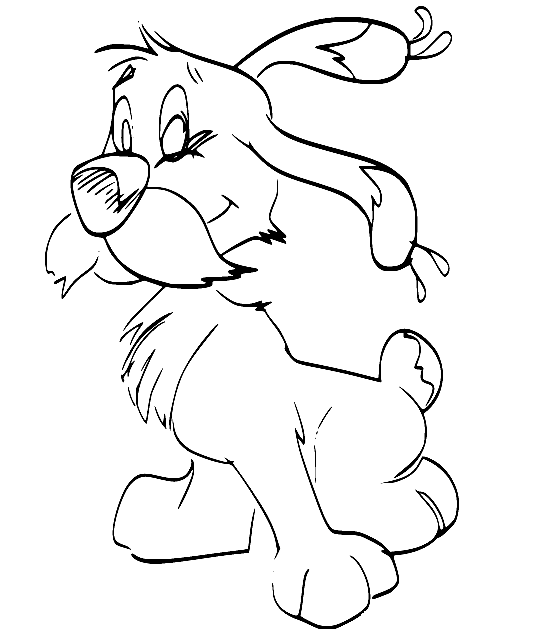
Vitalstatistix, the village chief, carried on a shield; Fulliautomatix, the blacksmith; and several background village characters, including a rabbit and a bird, appear in dedicated pages.
Coloring Vitalstatistix: Vitalstatistix has red hair, a large mustache, and a round, self-important bearing. He wears the chief’s blue and gold attire. His red hair and golden accessories give him a warm, golden-red palette that reads as authority within the village context.
Coloring Fulliautomatix: the blacksmith wears a leather apron and has dark hair. His palette is darker and earthier than the main characters’, with brown leather and grey metal accents.
Printable PDF and Online Asterix Coloring Pages
All pages are available as printable PDFs or in the online coloring tool. The paired Asterix and Obelix scenes and the Caesar solo page reward careful printing for detailed work on the stripe patterns and costume elements.
What These Pages Do
Coloring Asterix and Obelix side by side teaches size contrast more directly than almost any other coloring set. Asterix is small; Obelix is enormous. Goscinny and Uderzo designed them as deliberate opposites: Asterix clever and agile, Obelix powerful and impulsive. Neither size communicates superiority: the small character is the hero, and the large one needs him. Children absorb that visual argument by simply working to keep the scale difference correct across multiple pages.
The set also has the widest historical palette of any series on this site: Roman gold and purple, Gaulish earth tones, bold blue-and-white stripes, gold helmet wings, and Caesar’s imperial red. Navigating all of those across 40 pages is a real color management exercise.
The AAP notes that activities presenting characters in clear, consistent size hierarchies help children develop spatial reasoning and scale awareness, skills that carry into both drawing and reading visual information like maps and diagrams.
Art therapy practitioners note that characters as visually mismatched as Asterix and Obelix naturally draw children into thinking about the relationship between size and personality, which is more nuanced visual thinking than most coloring sets ask for.
How to Color Asterix Coloring Pages
Obelix’s blue-and-white stripes need even spacing. The vertical stripes of his tunic are his most recognizable feature. If the stripes vary in width or the alternation is irregular, the costume reads as wrong even to someone who cannot say exactly why. Work the stripes top-to-bottom and count them to keep them consistent.
Asterix’s helmet wings are disproportionately large by design. Do not scale them down to look more realistic. The oversized gold wings on a small head are exactly right: Uderzo designed them that way. Vivid golden-yellow wings on a small figure is the visual statement Uderzo intended.
On paired pages, establish Obelix’s blue before filling anything else. His tunic is the most dominant and saturated color in any shared scene. Setting that tone first lets every other color decision respond to it, rather than competing with it unexpectedly.
Caesar’s purple and gold are the only colors in the set with historical precedent. Tyrian purple and gold were reserved for Roman imperial and generals’ dress. Using a rich, slightly warm purple rather than a cool or pinkish purple keeps the historical feeling intact.
5 Creative Craft Ideas with Asterix Coloring Pages
Size Study Display
Color a solo Asterix page and a solo Obelix page at the same time. When finished, cut them out and mount them side by side on a piece of card, positioned so their heights are to scale.
A display that makes the size contrast visible as a deliberate visual argument. Takes about twenty-five minutes.
Full Cast Portrait Gallery
Color one page each of Asterix, Obelix, Dogmatix, Vitalstatistix, Fulliautomatix, and Caesar. Arrange them in two rows (village characters above, Caesar below) on a large piece of card with names underneath.
The village vs. the empire, laid out as a portrait gallery. Takes about forty minutes.
Boar and Menhir Double Feature
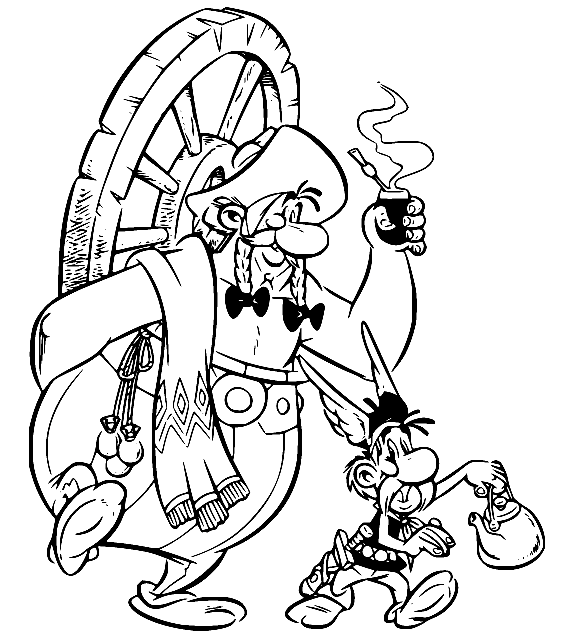
Color the Obelix Holds Two Boars page and the Obelix Carrying the Wheel page with a matching palette.
Obelix’s two defining activities (eating and carrying heavy things) are displayed as a pair. Takes about twenty minutes.
Caesar vs. Asterix Confrontation
Color a Caesar page and an Asterix action page, then mount them facing each other on black card. Label them: “The Roman General” and “The Indomitable Gaul.”
The series’s central conflict is in two portraits. Takes about fifteen minutes.
Asterix and Obelix Crying Scene
Color the Obelix and Asterix Crying page, which shows both characters sharing a moment of real emotion. Use warm, slightly softened tones compared to the action pages.
The most unexpectedly tender image in a set dominated by action and comedy. Takes about fifteen minutes.
FAQ About Asterix Coloring Pages
Are these Asterix coloring pages free, and can I color them online?
Yes. Every page is free, with no account, email, or payment required. Download the PDF to print at home, or open it in the online coloring tool to color on screen.
What is Asterix?
Asterix is a French comic series created by writer René Goscinny and illustrator Albert Uderzo, first published on October 29, 1959, in the Franco-Belgian magazine Pilote. Set in 50 BC in a small Gaulish village that resists Roman occupation through a magic strength potion, the series has published 41 albums as of 2025 and sold over 400 million copies in more than 100 languages, making it one of the most widely read comic series ever published.
Who are Asterix and Obelix?
Asterix is a small, clever Gaulish warrior who is the main hero of the series. Obelix is his large, perpetually hungry best friend and menhir deliveryman, who has permanent superhuman strength from falling into the magic potion cauldron as a child. Their contrasting sizes and personalities are the foundation of the series’ humor and storytelling.
Why is Obelix not allowed to drink the magic potion?
Obelix fell into Getafix’s cauldron of magic potion when he was a baby, giving him permanent superhuman strength. Because of this, Getafix refuses to let him drink any more potion, as an additional dose could have dangerous and unpredictable effects on someone already permanently strengthened. This is a recurring source of frustration for Obelix throughout the series.
Who is Dogmatix?
Dogmatix is Obelix’s small white dog, first introduced in the album Asterix and the Banquet in 1965. Despite his tiny size, he is fiercely loyal to Obelix and is one of the most popular characters in the series. His name in French is Idéfix, a pun on the phrase idée fixe, meaning a fixed idea or obsession.
What does the name Asterix mean?
Asterix takes its name from the asterisk, the small star-shaped typographic symbol. The choice reflects the character’s small stature but central importance to every story. All Gaulish character names in the series end in -ix, a reference to the -rix suffix common in ancient Gaulish names, meaning king or chief.
Are these official Asterix coloring pages?
No. These are fan-made coloring sheets for personal use and are not affiliated with, licensed by, or endorsed by Les Editions Albert René, Hachette Livre, or any other rights holder of the Asterix series.
What age group are these pages best suited for?
The solo character pages work well from age four. Pages with complex patterns, such as Obelix’s striped tunic or Caesar’s detailed armor, are better suited to ages six and up. The series is written to appeal to both children and adults, and the coloring pages reflect that range.
Start Coloring
Download any page by clicking the design. No account, email, or payment is required. Pages print directly from the browser at full resolution or open in the online coloring tool for screen use. Share finished pages on Facebook or Pinterest using the share buttons at the top of each design page.