Elderberry Coloring Pages
 By:
Jennifer Thoa - Content Editor & Designer
Updated:
By:
Jennifer Thoa - Content Editor & Designer
Updated:
Free Elderberry Coloring Pages: 19 printable PDF designs featuring botanical branch and scene artwork, classic portraits, and printable sheets. Each page can be downloaded as a PDF to print or colored online in the browser.
Elderberry comes from the elder shrub, most commonly Sambucus nigra or Sambucus canadensis. This fast-growing plant produces two very different, separately harvested parts: large, flat clusters of small white flowers in late spring known as elderflower, and clusters of small dark purple-black berries that ripen by late summer. An important safety note worth knowing alongside the coloring pages: raw, unripe elderberries, along with the plant’s leaves, stems, bark, and roots, contain natural compounds called cyanogenic glycosides that can cause nausea and stomach upset if eaten. Cooking the ripe berries thoroughly breaks these compounds down, which is why elderberries are traditionally used in cooked syrups, jams, and jellies rather than eaten straight off the branch. Cooked elderberries are a good source of antioxidants and vitamin C.
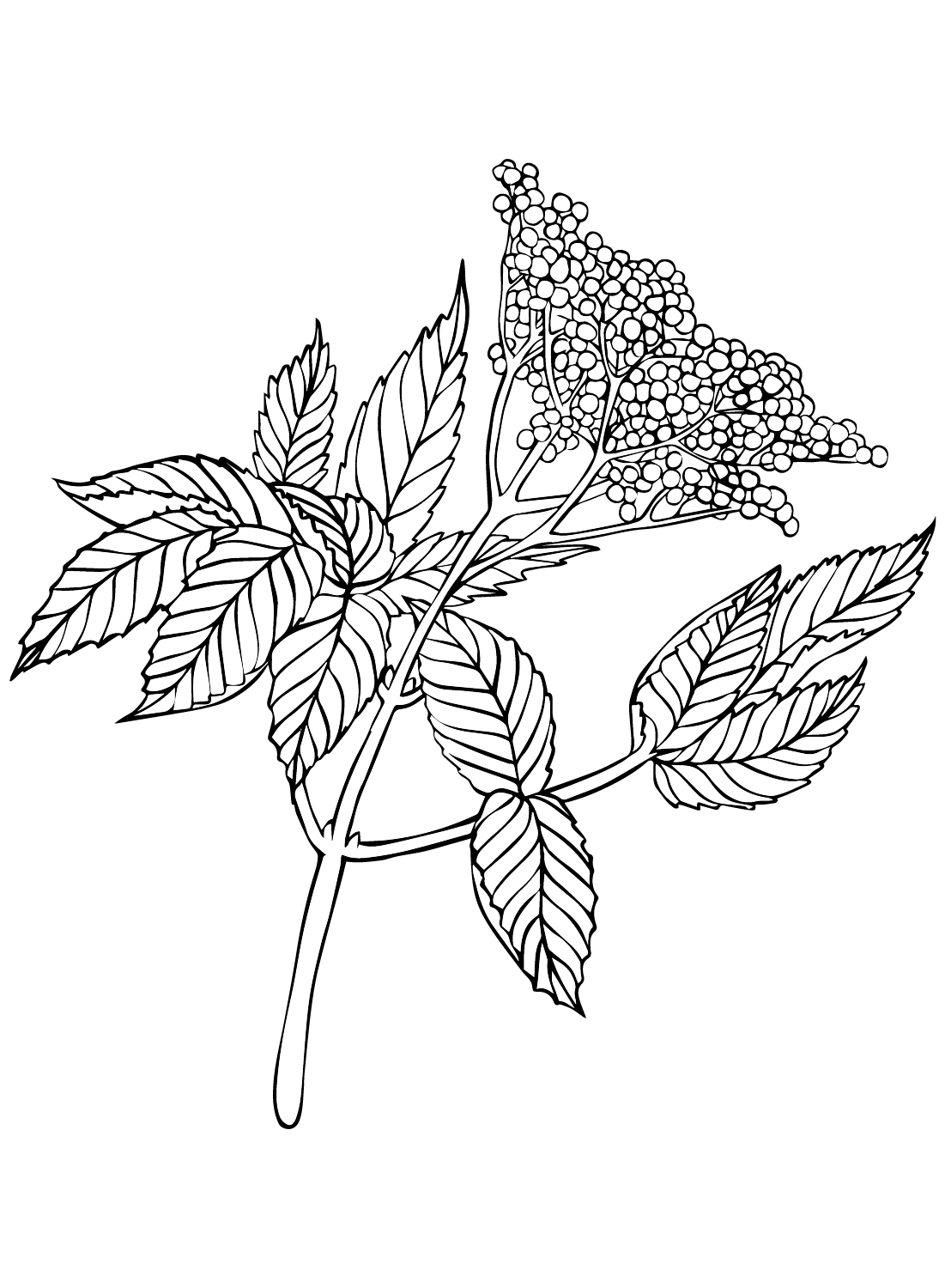
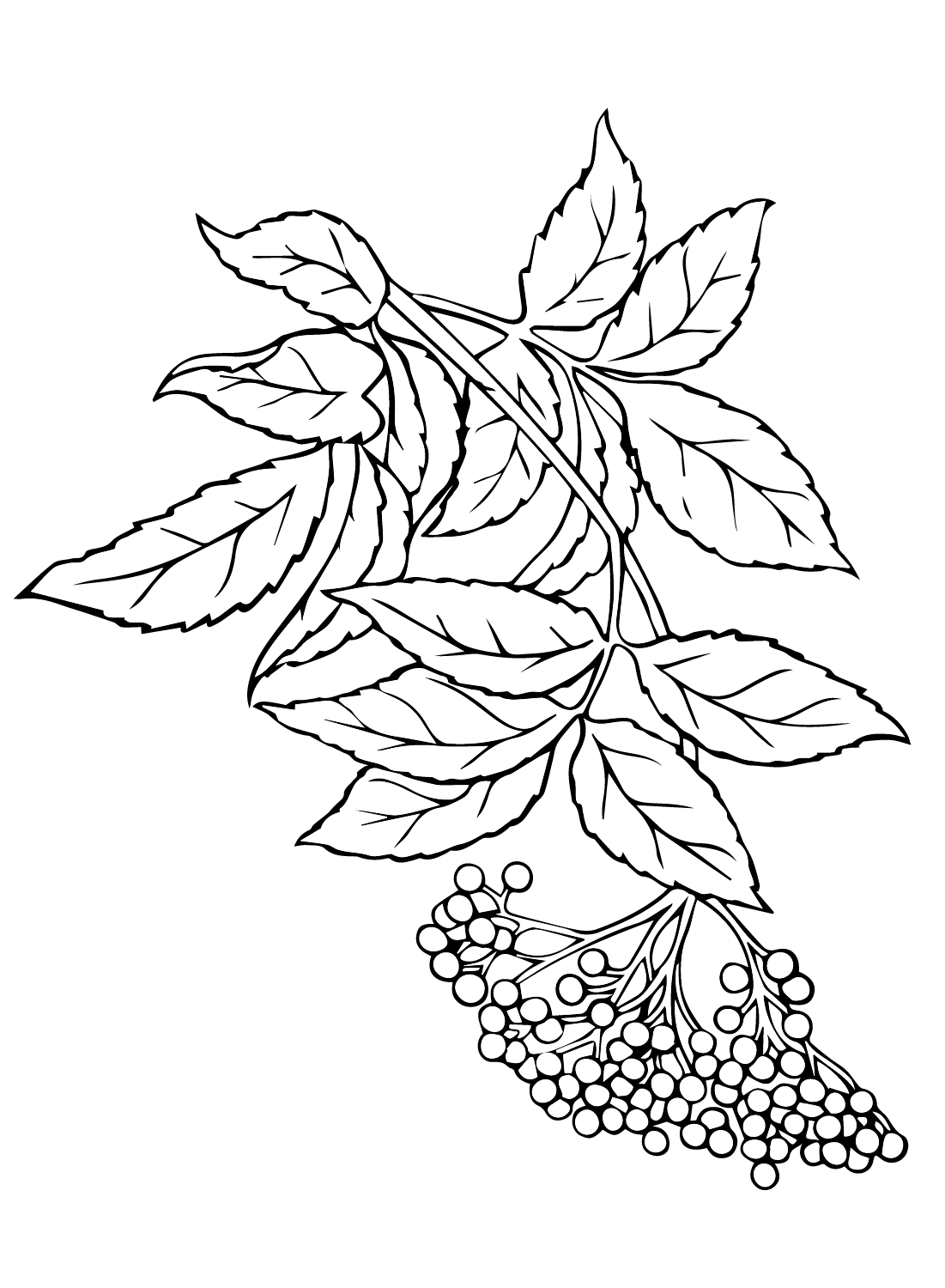
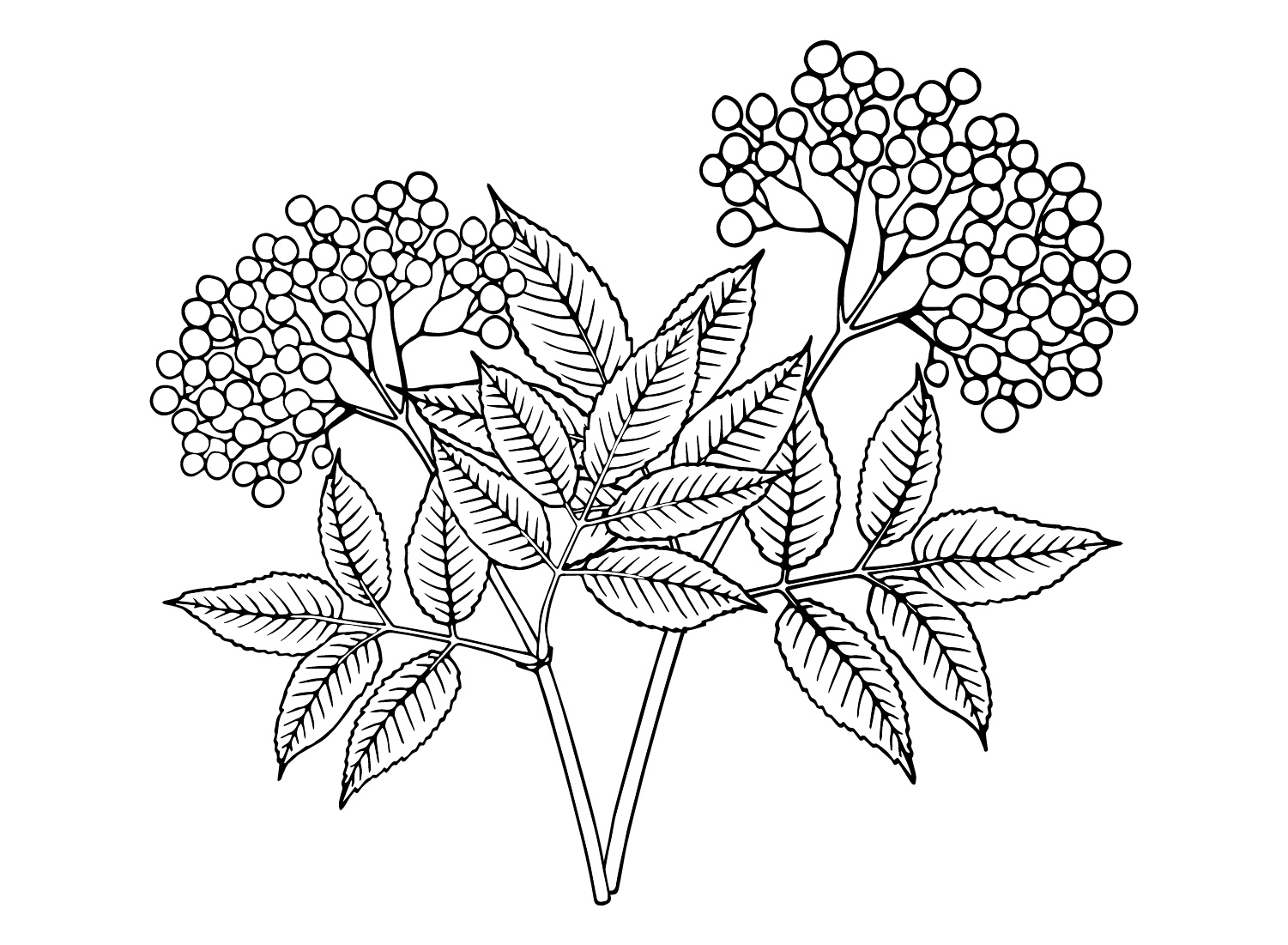
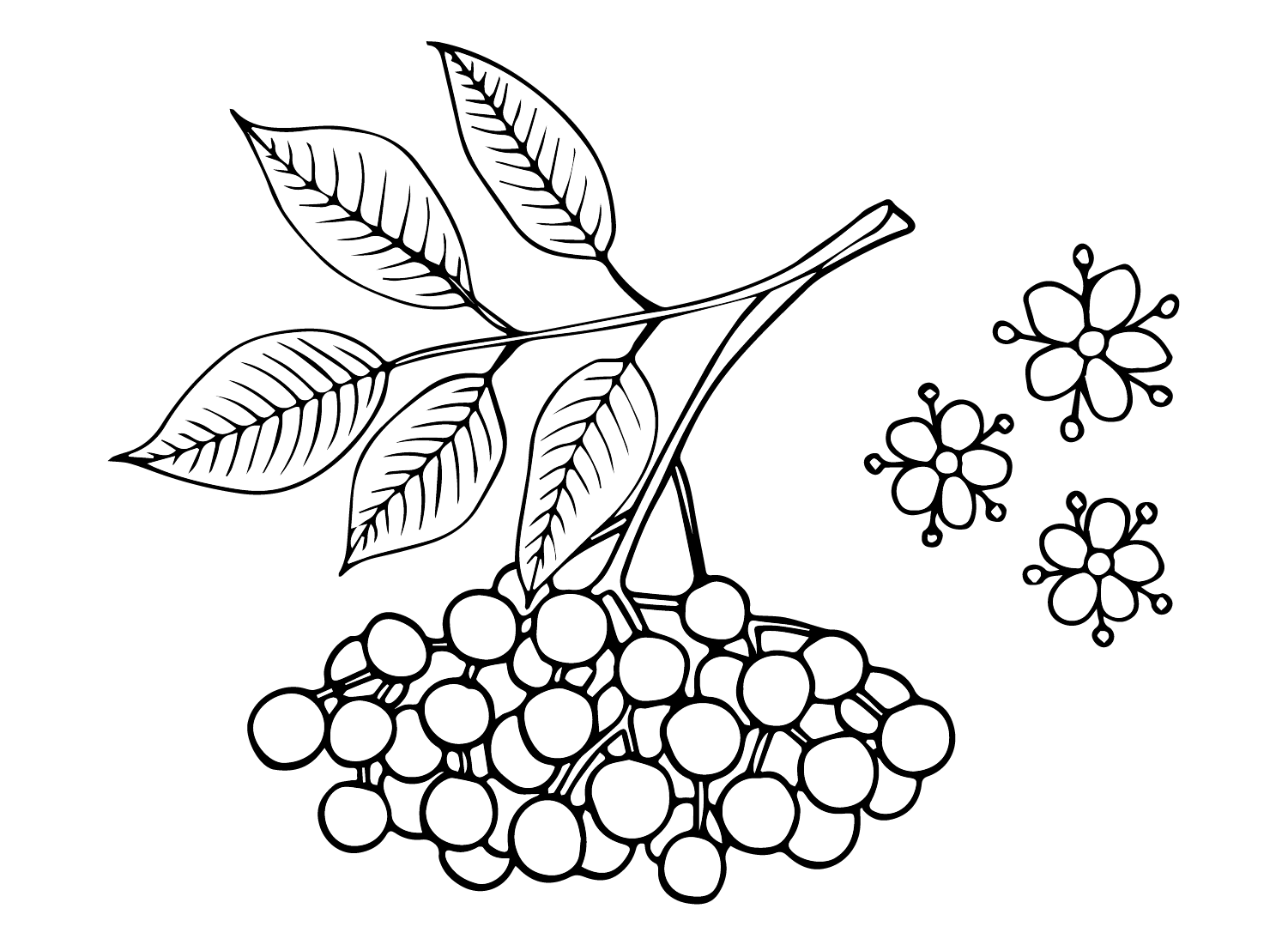
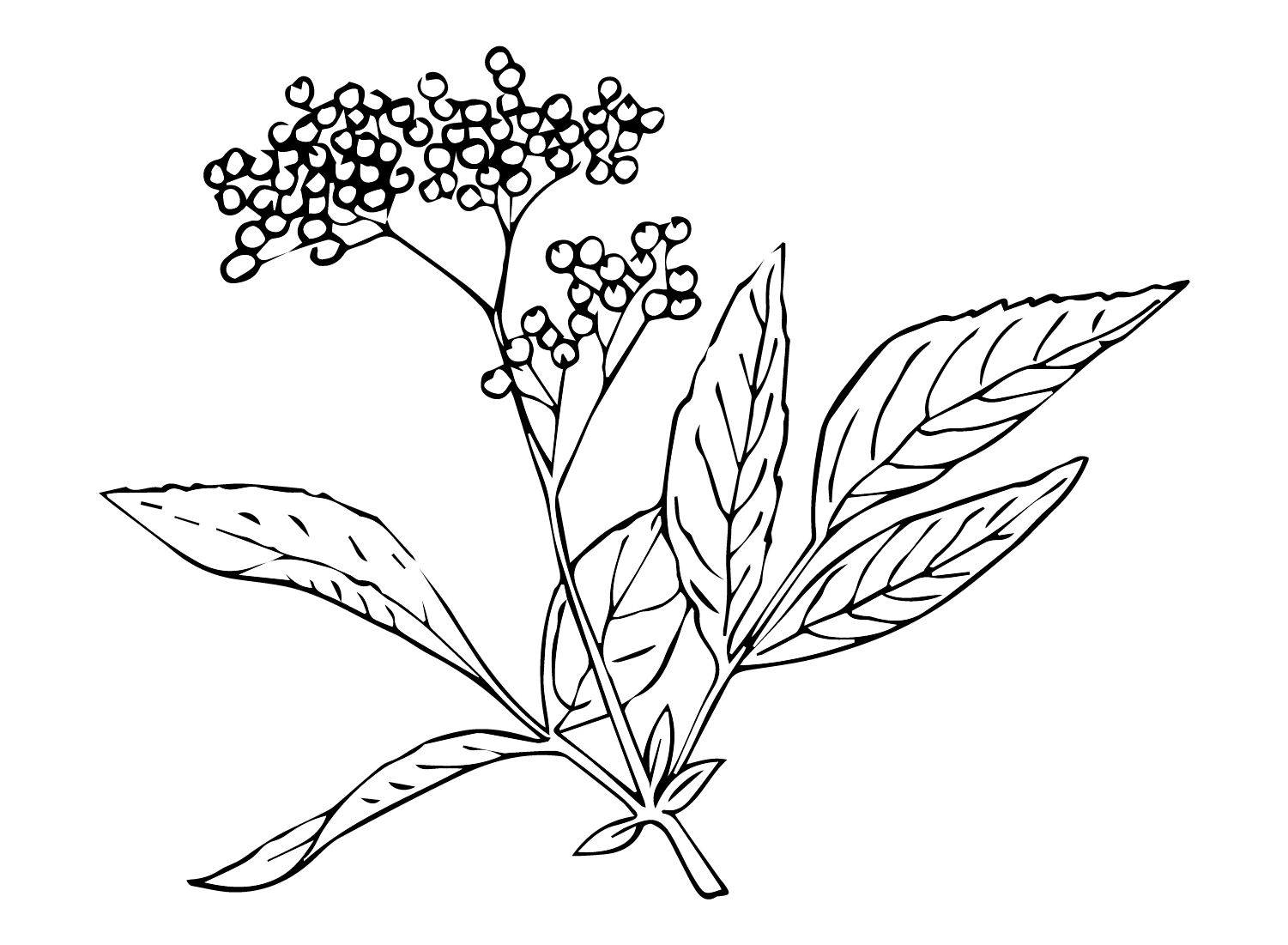
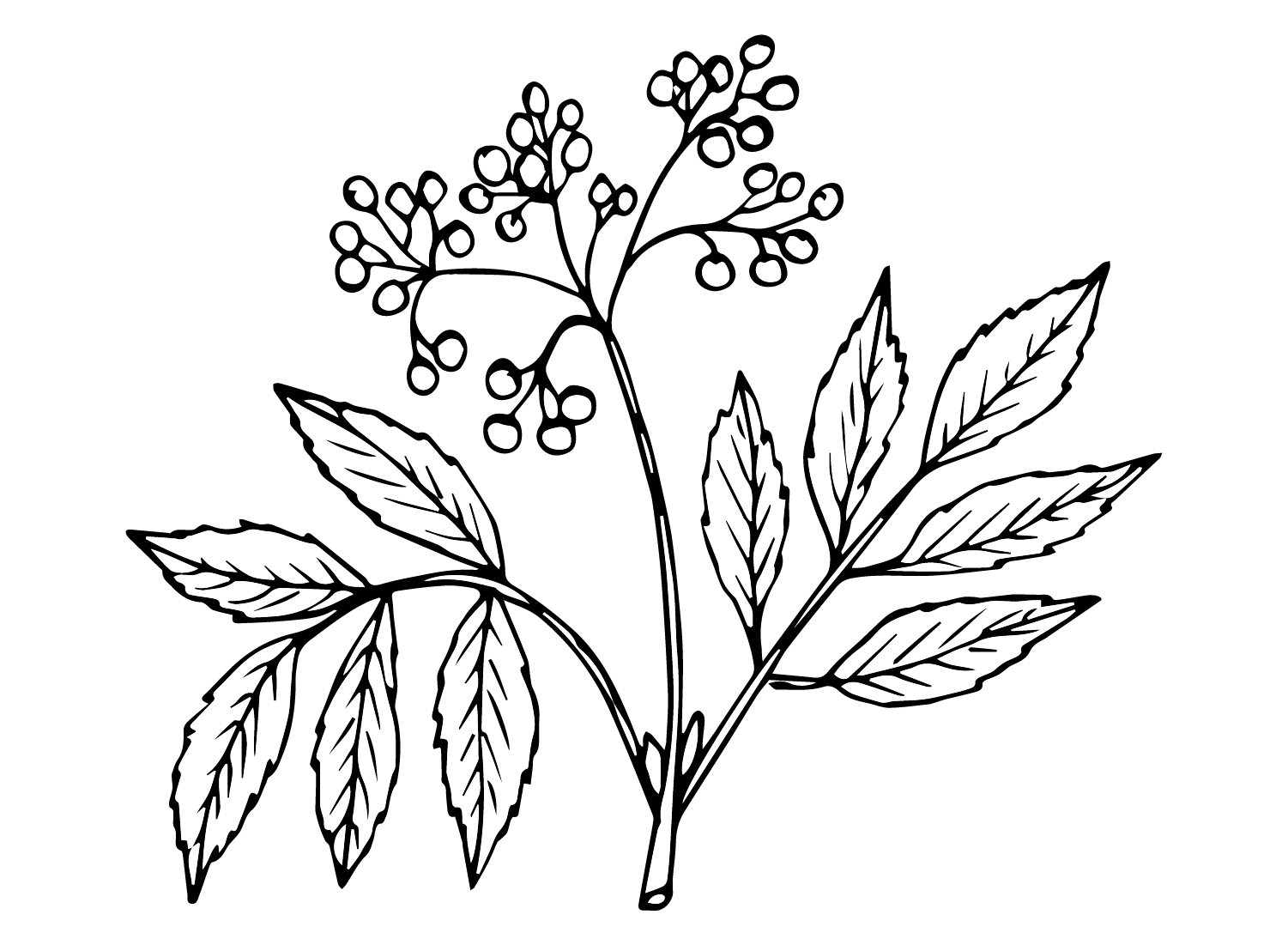
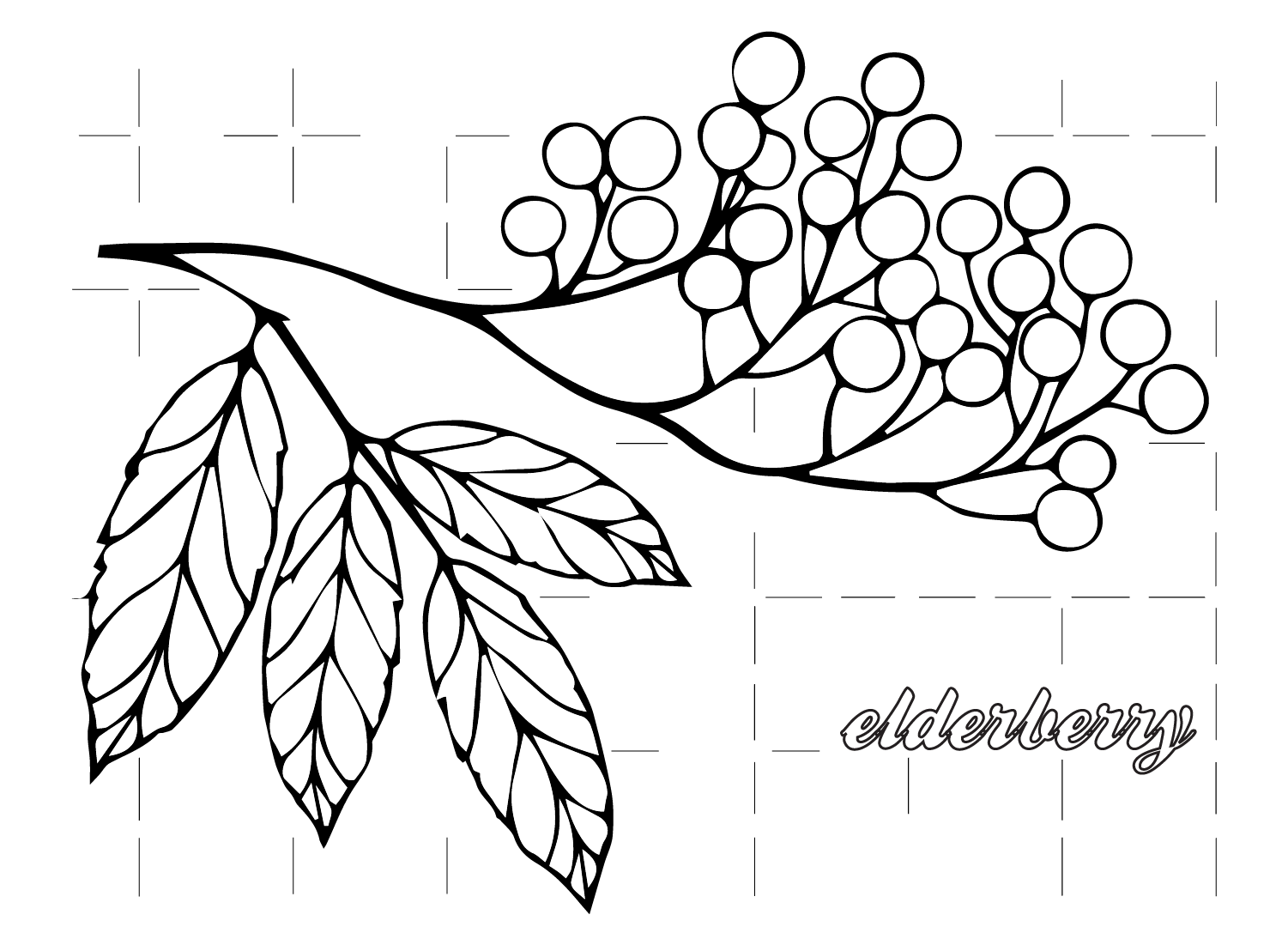
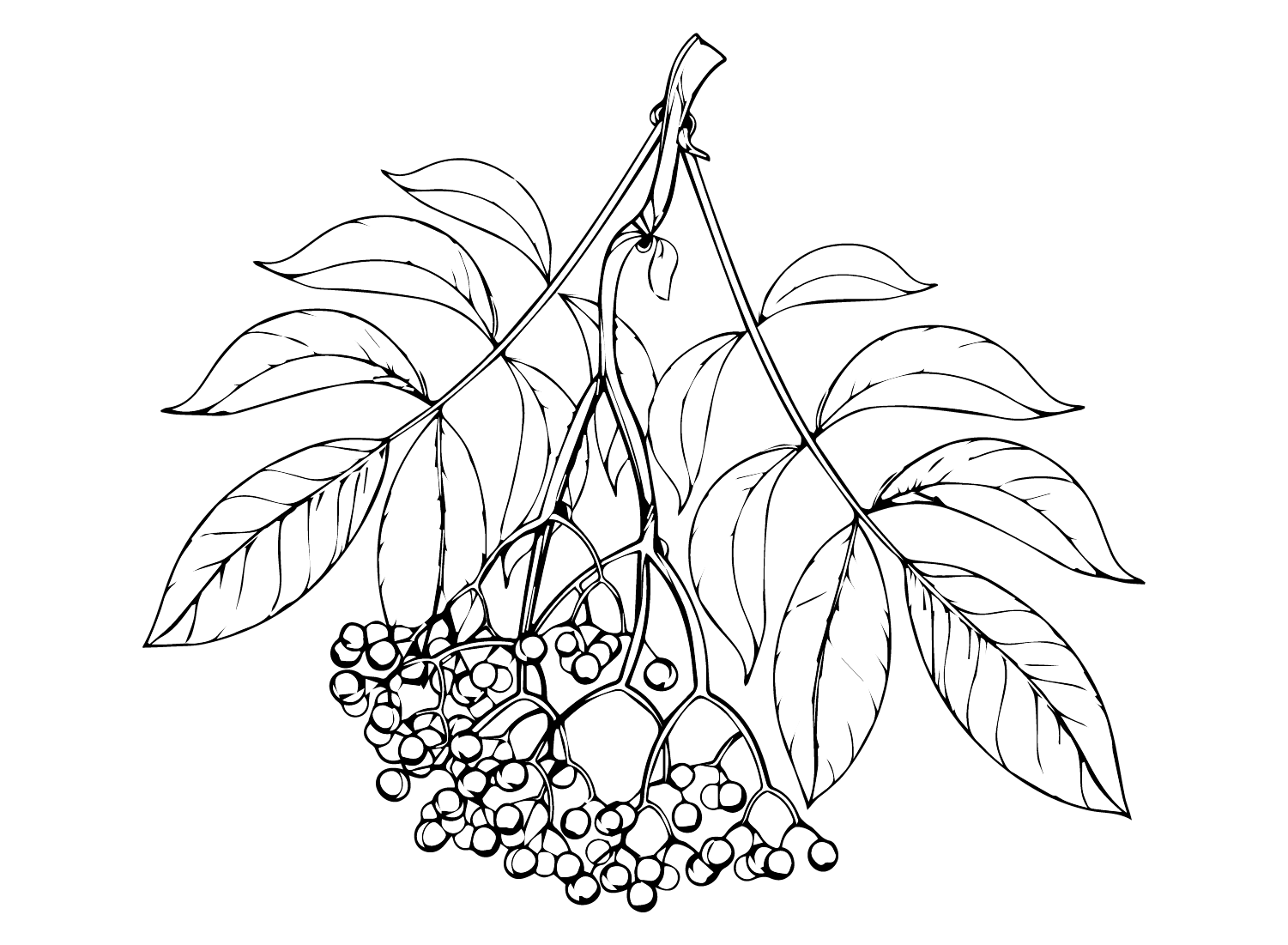
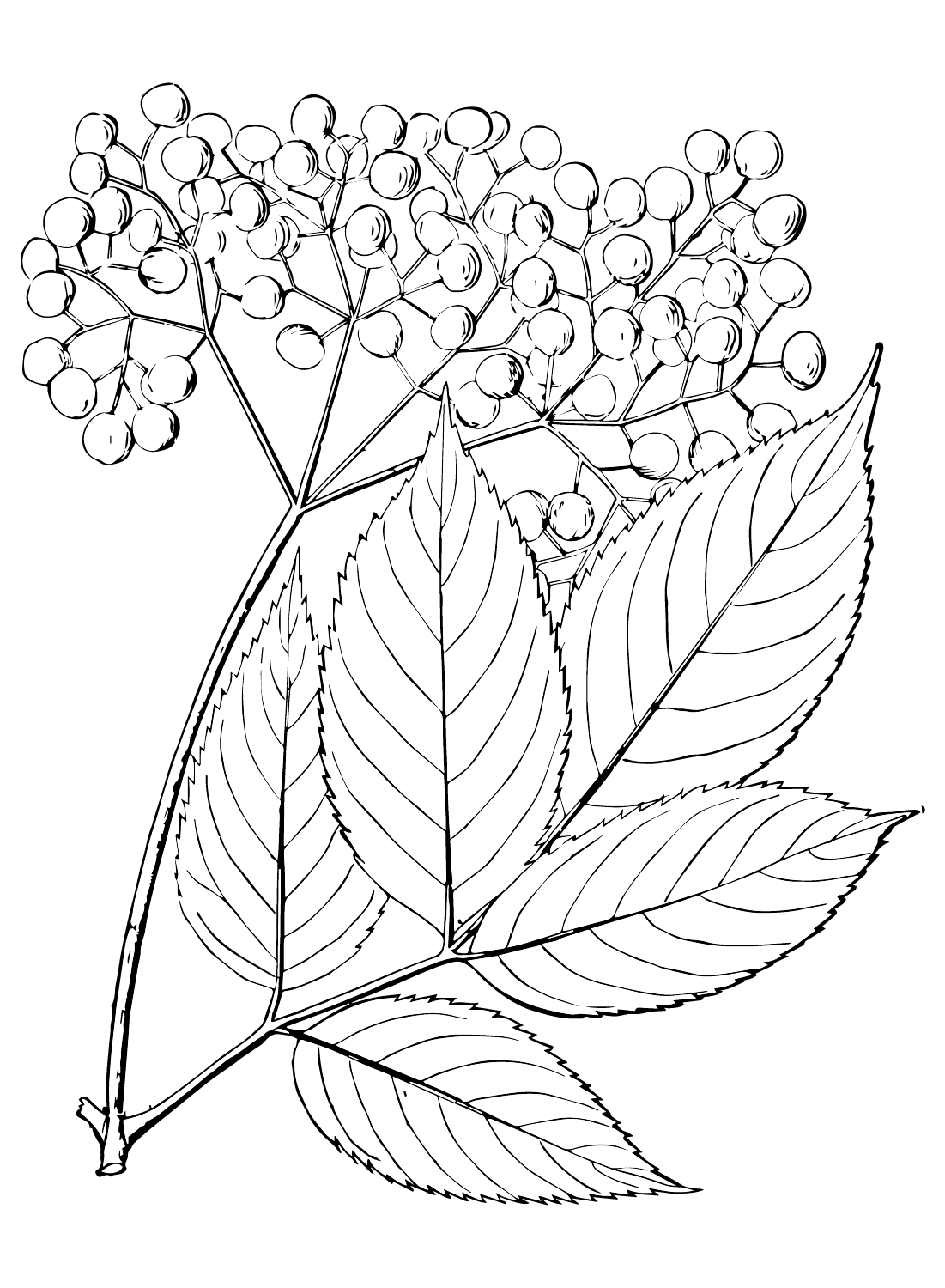
This collection spans 19 pages, grouped into botanical scene designs, classic portraits, specialty artwork, and printable sheets. The coloring angle ranges from simple, standalone branches to fuller flower-and-fruit compositions.
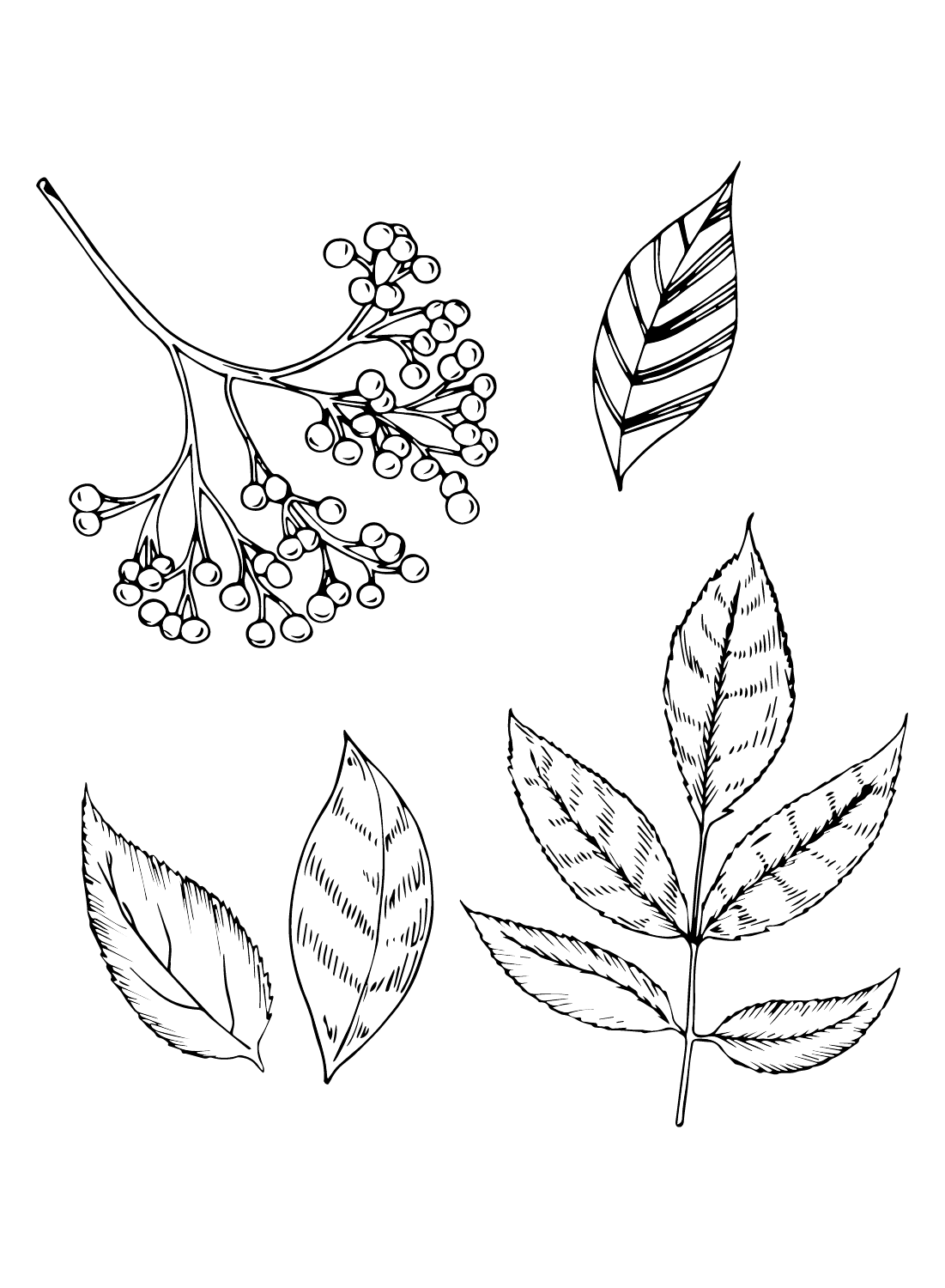
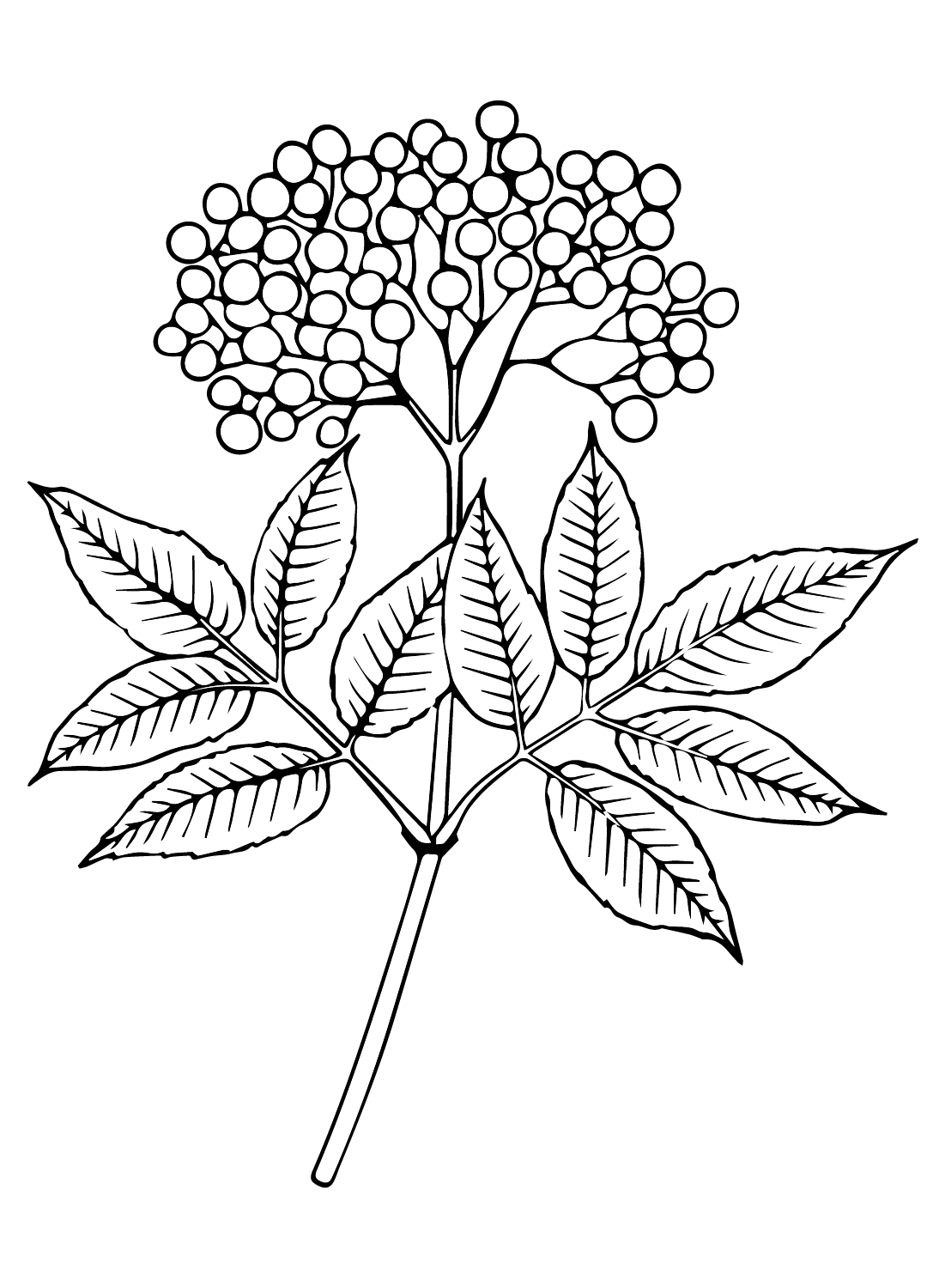
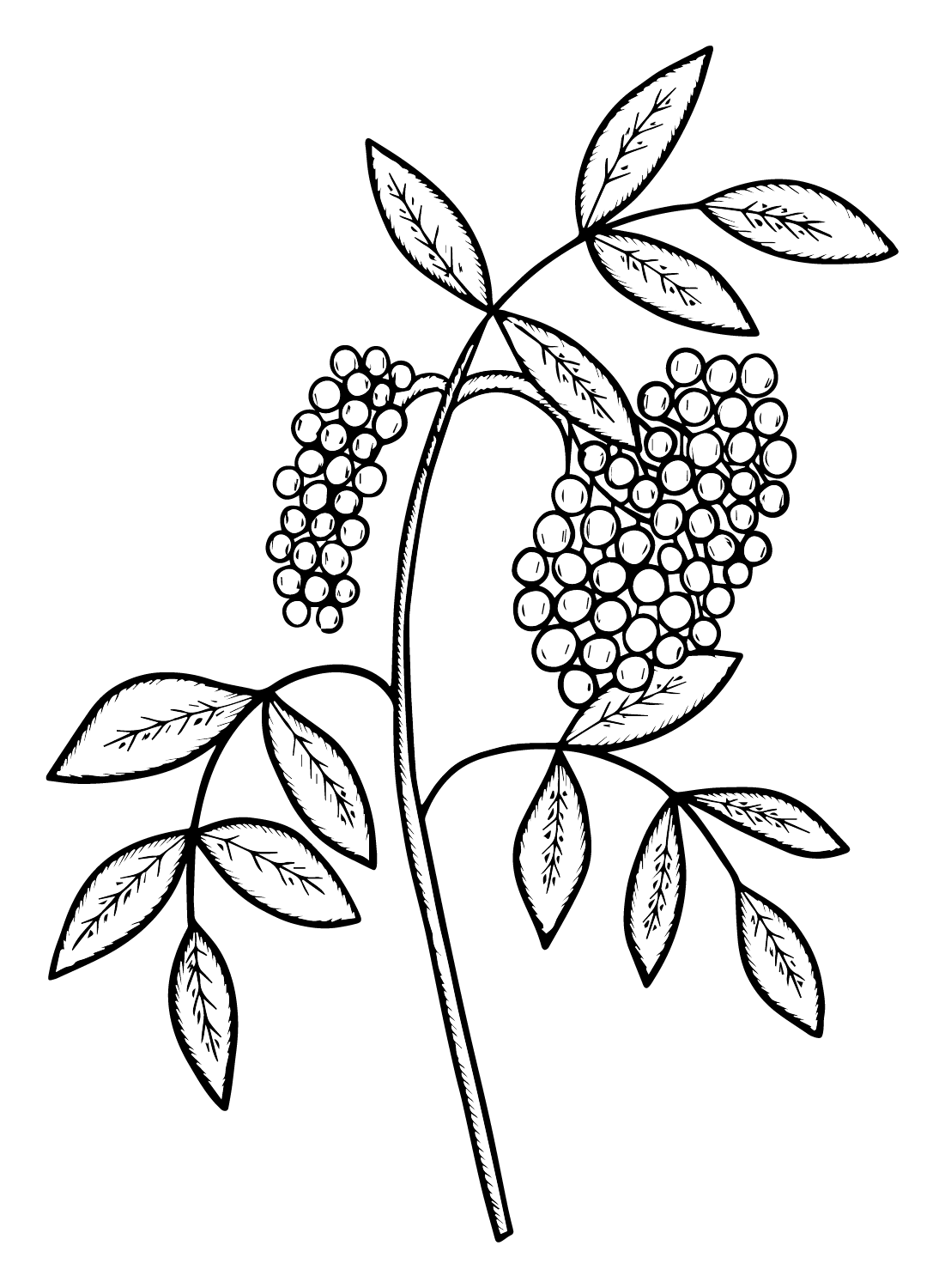
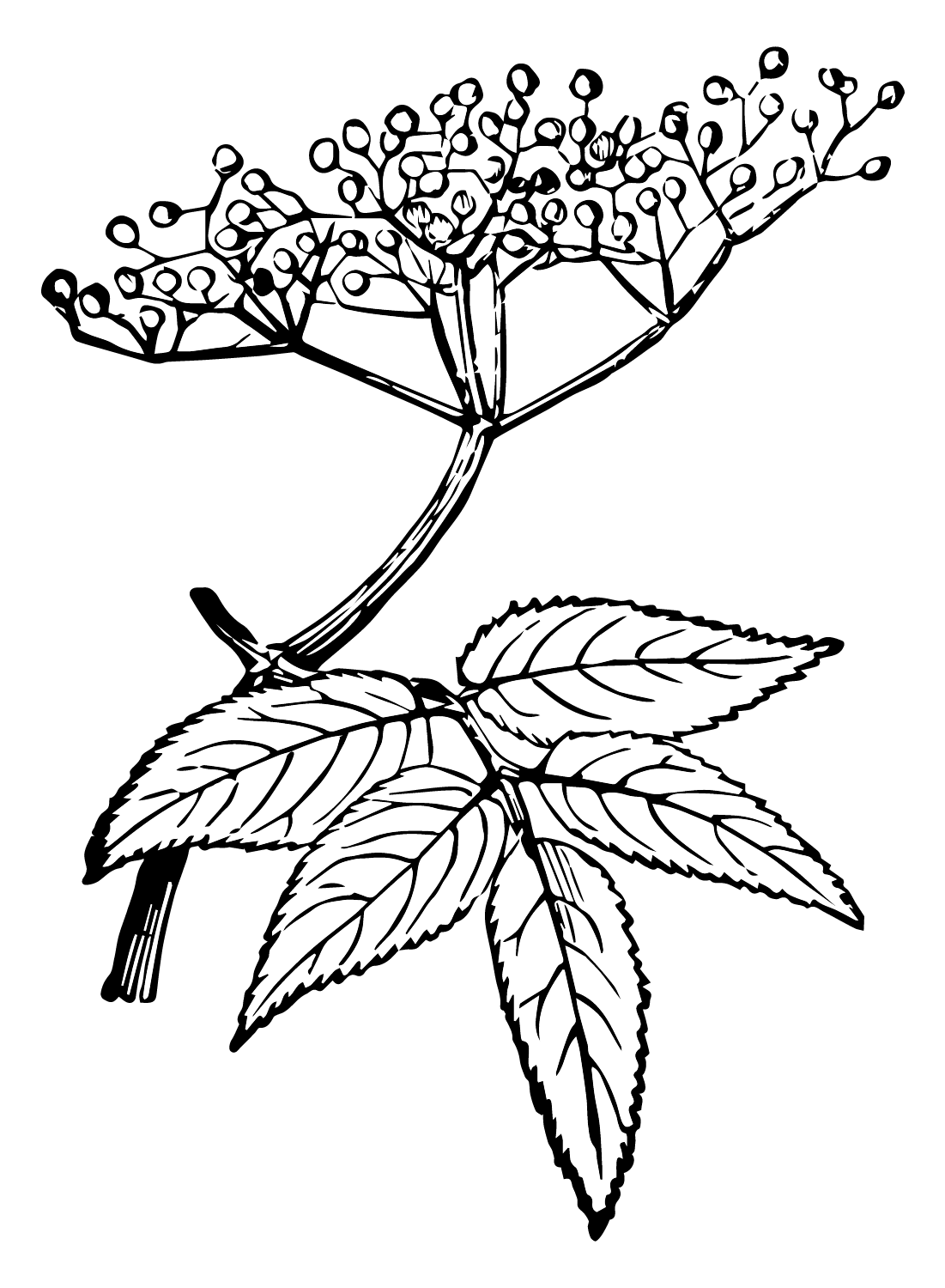
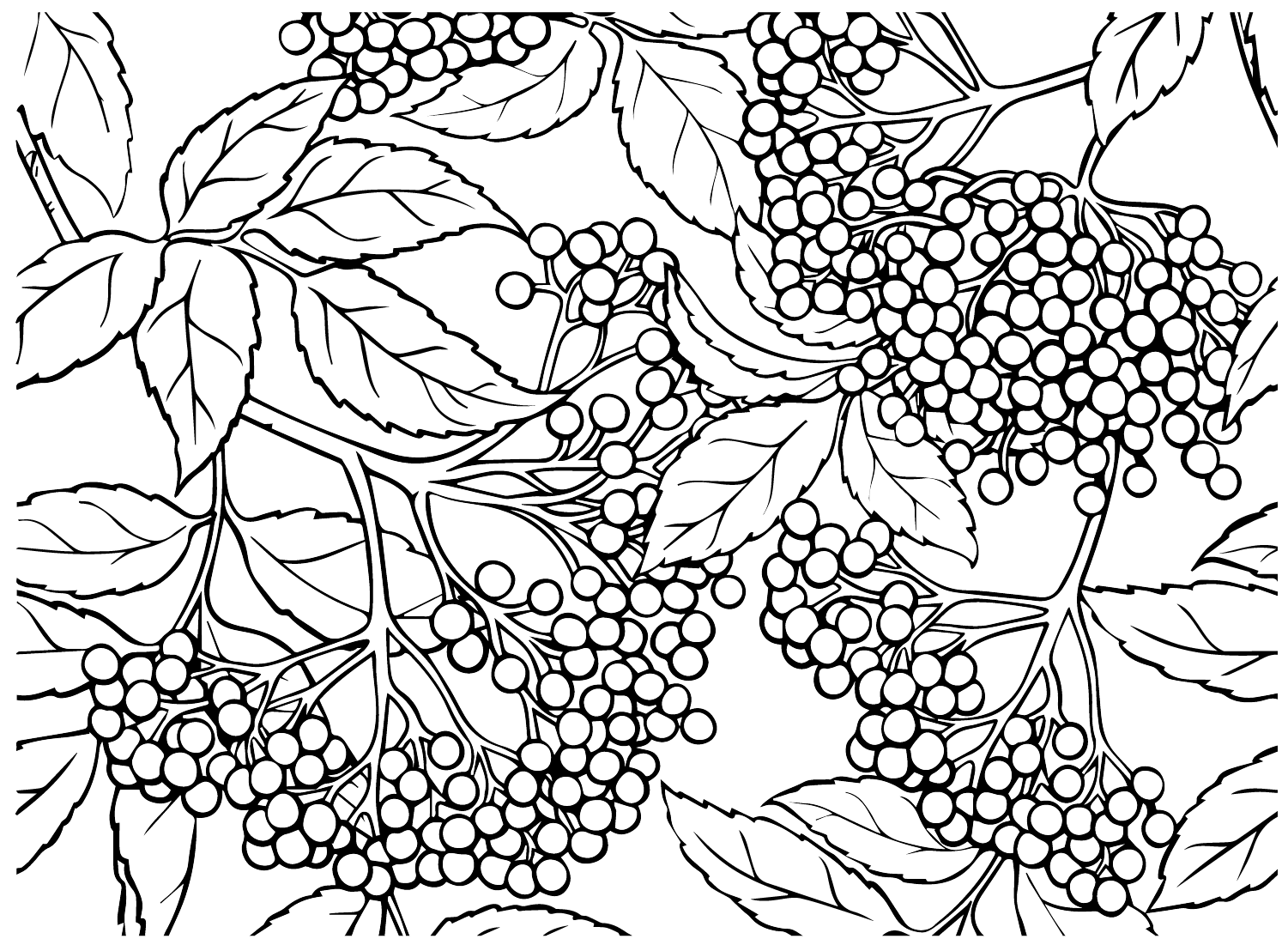
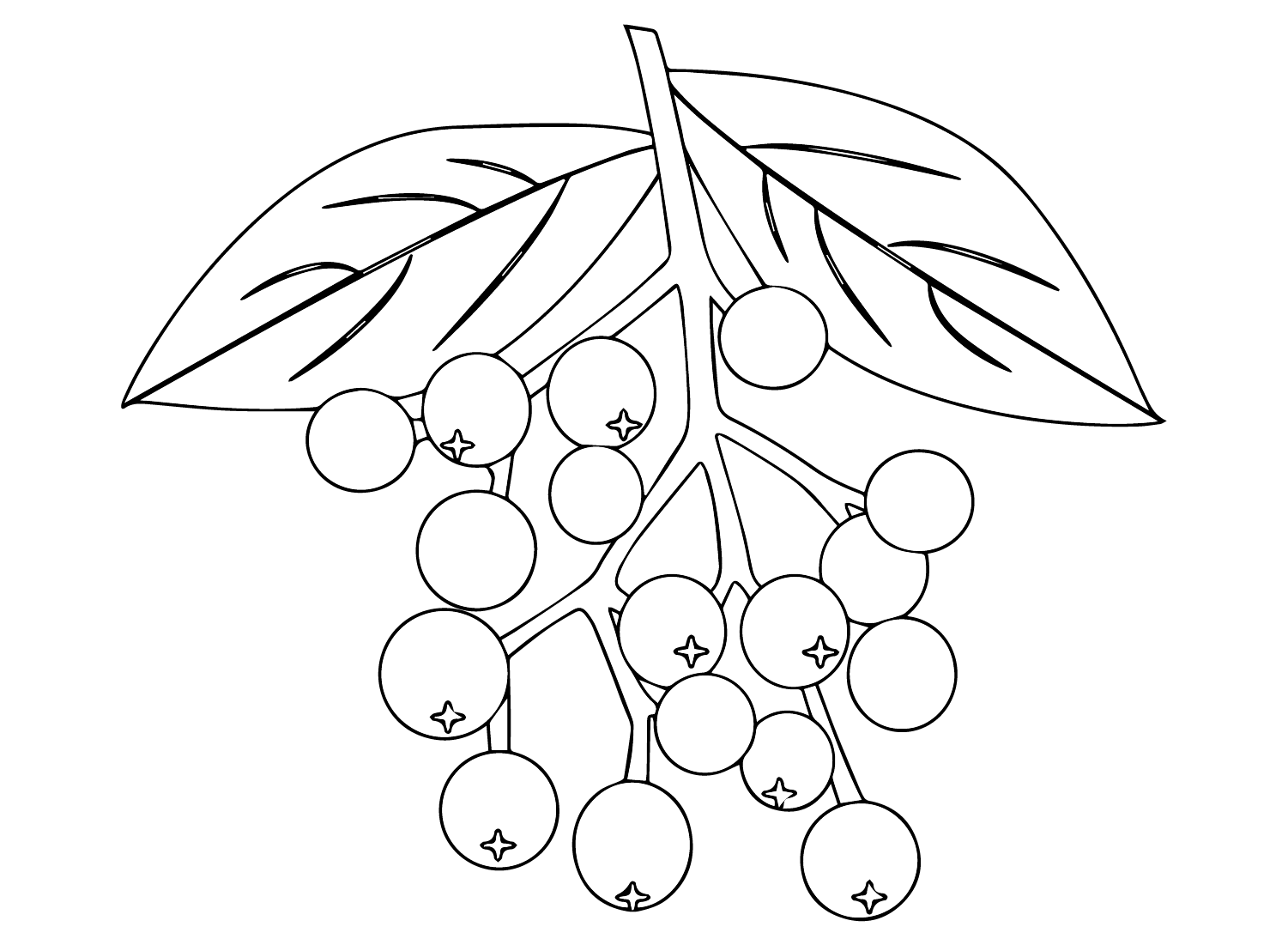
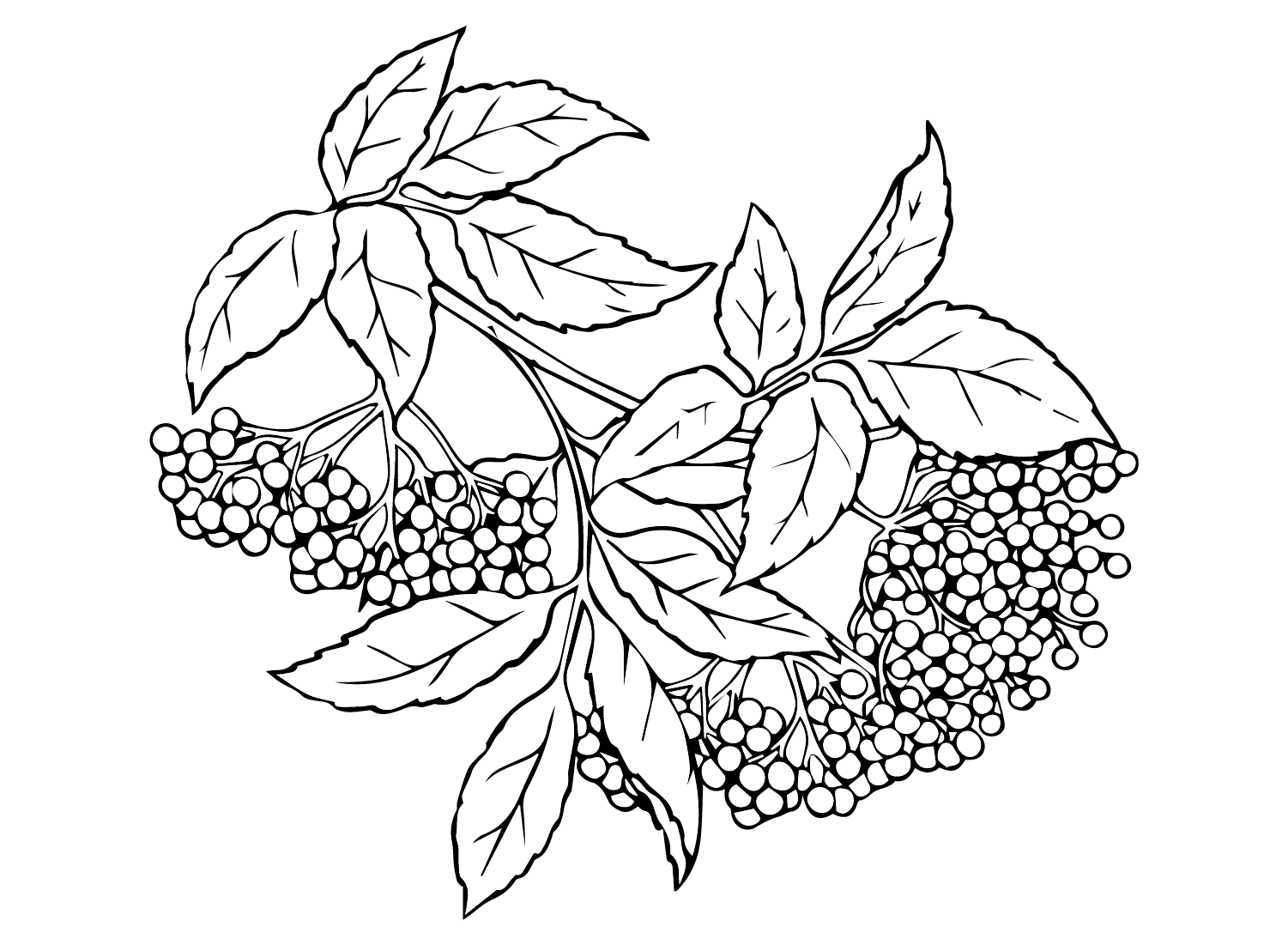
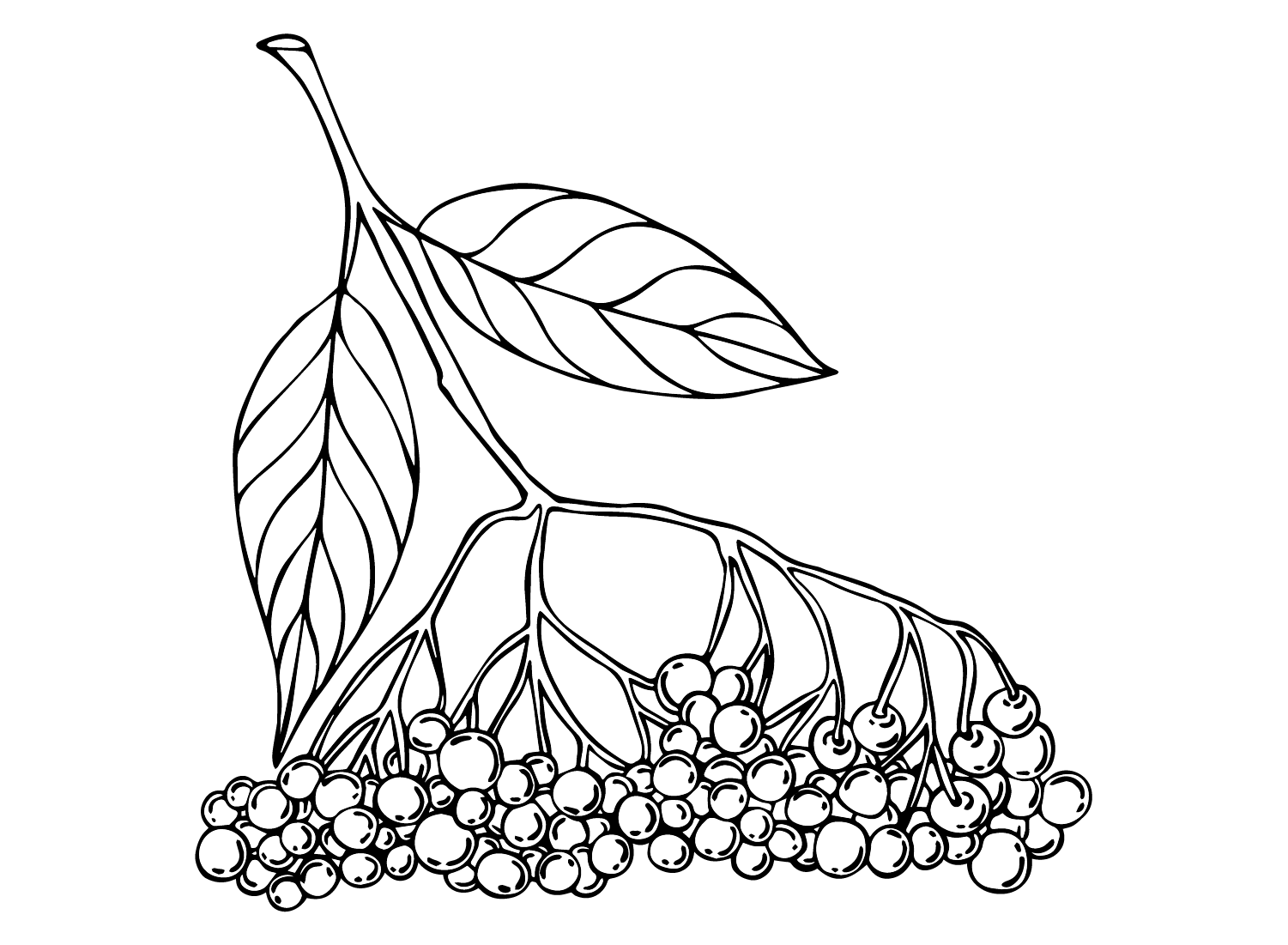
What Is Inside This Collection
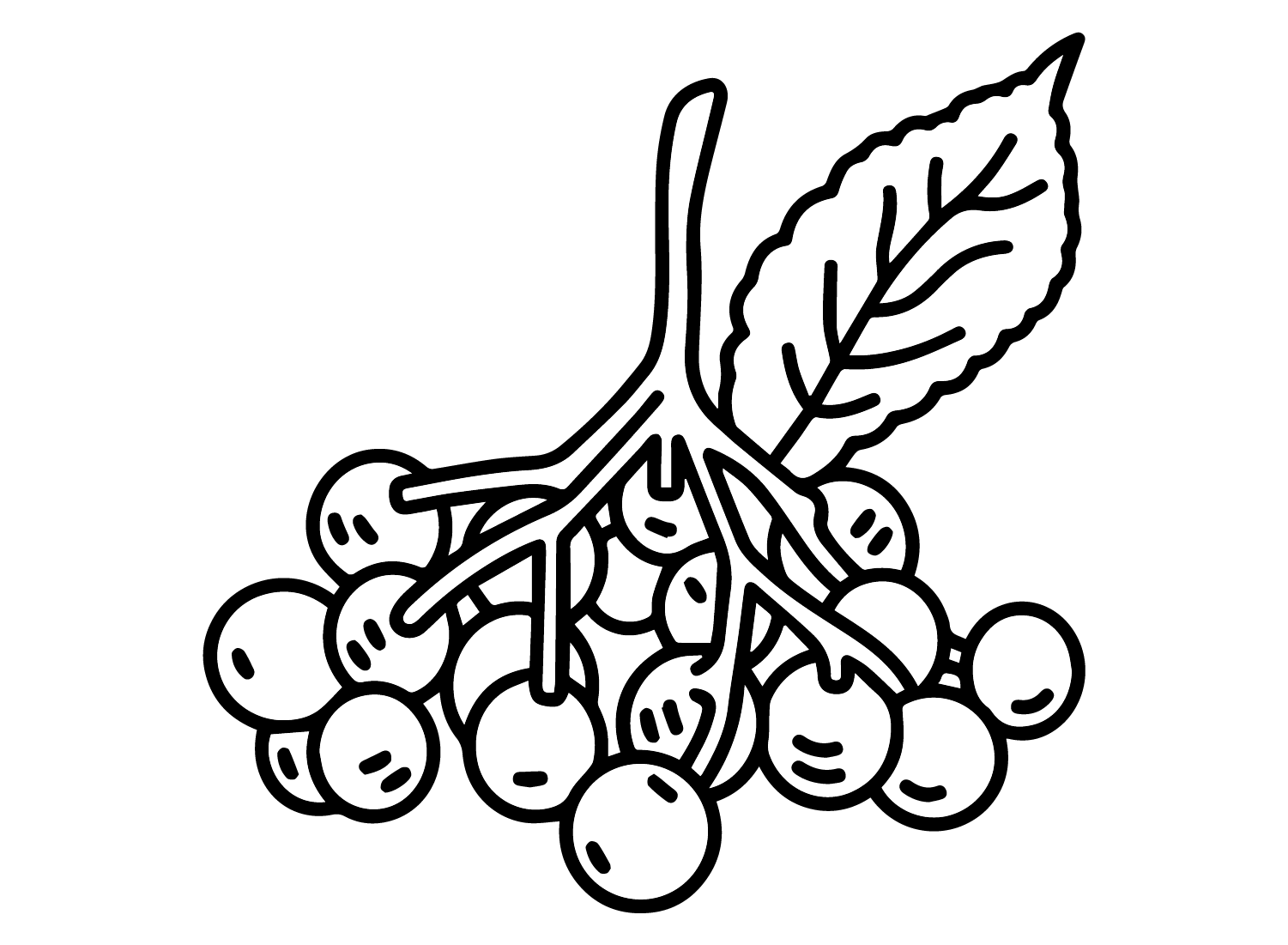
The 19 designs group into three categories, from botanical scenes to printable sheets.
Botanical Scene Designs
Three pages show elderberry in a fuller natural composition, including a branch and combinations of fruit paired with flowers or leaves.
Classic Portraits and Specialty Artwork
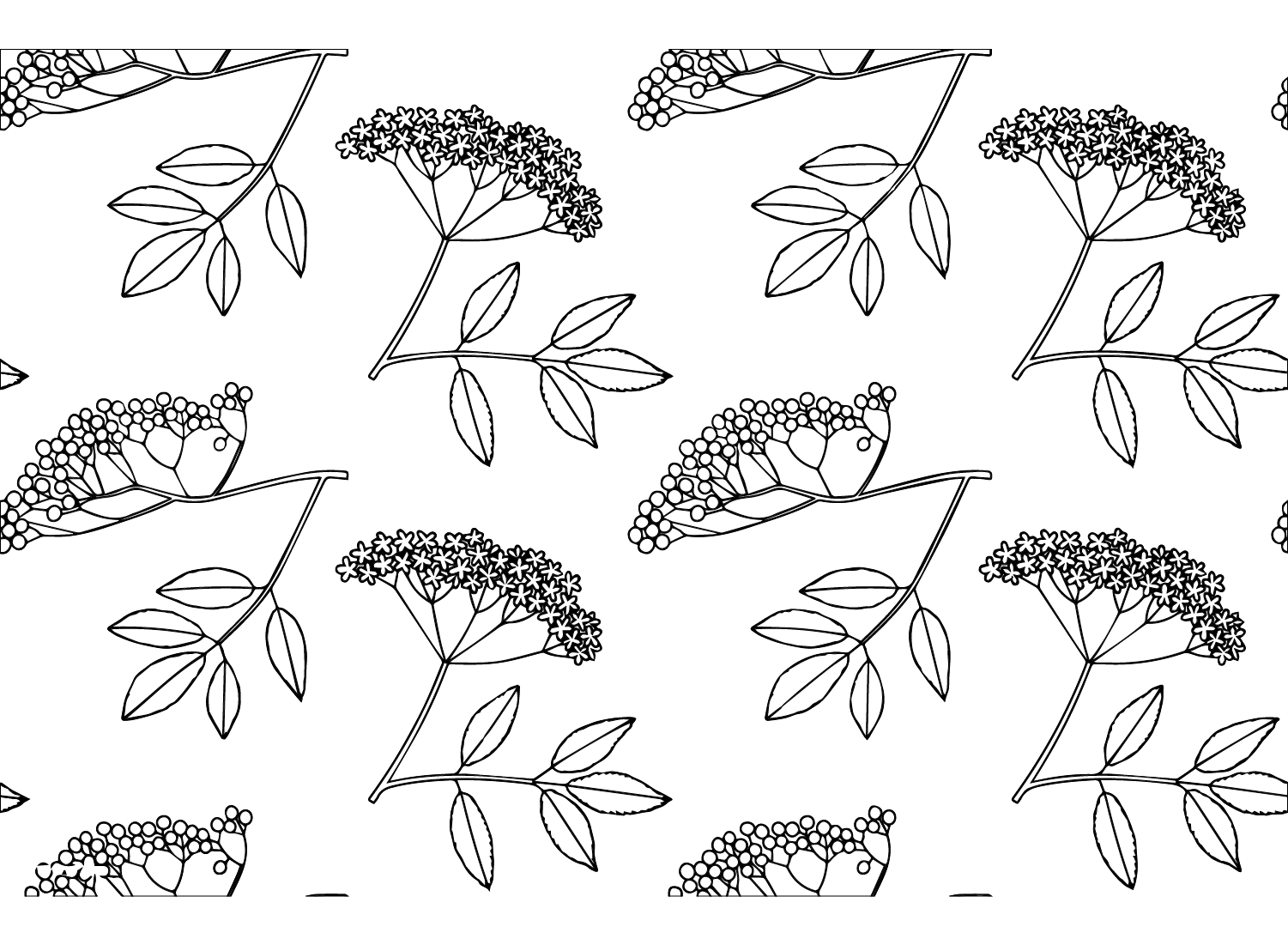
Four pages take a more focused approach, including kid-friendly renderings, a sketch-style drawing, and background or wallpaper-style designs.
Printable and Free Sheets
Twelve pages are formatted as general printable sheets, making up the largest share of the collection and useful for a quick, single-session print at home or in the classroom.
What Elderberry Coloring Pages Do
Dozens of tiny berries in a flat cluster. Elderberries grow in dense, flat-topped clusters made up of many small individual berries, and coloring each one without letting the shapes merge into a single blob takes more careful, repetitive dot-work than a single larger fruit would. The American Academy of Pediatrics ties that kind of small-scale, repetitive coloring work to fine motor skill development in children ages 2 through 7.
One plant, two completely different looks. Because the elder shrub produces both white flower clusters in spring and dark purple-black berry clusters in fall, this collection gives colorists a genuine reason to switch between two very different palettes, soft cream and white for elderflower designs, deep Purple for berry designs, while coloring the same plant.
A calming activity paired with a real nature lesson. A 2005 study in the Art Therapy Journal found that structured coloring sessions produced measurable reductions in anxiety, and elderberry offers a fitting, low-pressure opening to talk about a genuinely useful bit of nature safety. Some wild plants look inviting but need proper preparation before they’re safe to eat.
A branch structure that rewards a steady hand. The branch and fruit-and-leaf scene designs combine woody stems, layered leaves, and clustered berries in one composition, giving colorists practice in managing several different textures within a single page.
How to Color Elderberry Pages Well
- Ripe berries: Use deep Purple or near-Black as the base, adding a small lighter highlight dot near the top of each berry to suggest its smooth, glossy skin.
- Elderflower clusters: Use soft Cream or White for the small individual flowers, with a tiny Yellow center dot on each one.
- Stems within the cluster: Use light Green or reddish-Brown for the thin stems connecting each berry or flower to the main branch, keeping the lines delicate.
- Leaves: Use a rich, medium Green for the leaves, which typically grow in clusters of several pointed leaflets along the stem.
- Branch and bark: Use warm Brown for the main woody branch, keeping the tone simple so the flower or berry cluster remains the page’s clear focus.
- Background and wallpaper-style designs: Keep backgrounds soft and repetitive, using a muted Green or Cream tone so any pattern stays gentle rather than overwhelming.
5 Creative Craft Ideas With Elderberry Coloring Pages
1. Nature Journal Page
Color an elderberry branch design and glue it into a nature journal alongside notes about plants observed on a walk.
2. Elderberry Bookmark
Color a small elderberry design, cut it into a bookmark shape, and use it to mark a place in a favorite book.
3. Greeting Card
Fold cardstock in half, glue on a colored elderberry design, and write a message inside for a friend who enjoys gardening or nature.
4. Classroom Plant Life Cycle Poster
Color both a flower-stage and a berry-stage elderberry page, then arrange them side by side on a poster board for a classroom lesson about how a single plant changes through the seasons.
5. Paper Garland
Cut out three or four colored elderberry designs, punch a hole in each, and string them together with twine for a simple botanical-themed garland.
Frequently Asked Questions
What are Elderberry coloring pages?
Elderberry coloring pages are printable line-art designs featuring this flowering shrub in botanical scenes, classic portraits, and specialty artwork. This collection includes 19 free designs available as PDFs or online coloring.
What is an elderberry?
Elderberry is the fruit of the elder shrub, most commonly Sambucus nigra or Sambucus canadensis, which produces clusters of small dark purple-black berries in late summer.
Are elderberries safe to eat raw?
No. Raw, unripe elderberries and other parts of the plant, including the leaves, stems, bark, and roots, contain natural compounds that can cause nausea and stomach upset. Ripe berries must be thoroughly cooked before eating.
What is elderflower, and how is it related to elderberry?
Elderflower is the cluster of small white flowers that the same elder shrub produces in late spring, before the plant later develops the dark berries known as elderberries.
What nutrients do cooked elderberries contain?
Once properly cooked, elderberries are a good source of antioxidants and vitamin C.
Where do elderberry plants grow?
Elderberry shrubs grow across parts of Europe and North America, often found along woodland edges, riverbanks, and hedgerows.
Are Elderberry coloring pages suitable for young children?
Yes. The simple portrait and printable designs in this collection use bold, uncluttered outlines suited to preschool and early elementary colorists. At the same time, the botanical scene pages offer more detail for older kids.
What parts of the elderberry plant should never be eaten?
The leaves, stems, bark, and roots of the elderberry plant should never be eaten, and even the berries must be fully ripe and properly cooked before consumption.
Start Coloring
Download any page by clicking the design. No account, email, or payment is required. Pages print directly from the browser at full resolution or open in the online coloring tool for screen use. Share finished pages on Facebook or Pinterest with the share buttons at the top of each design page.