
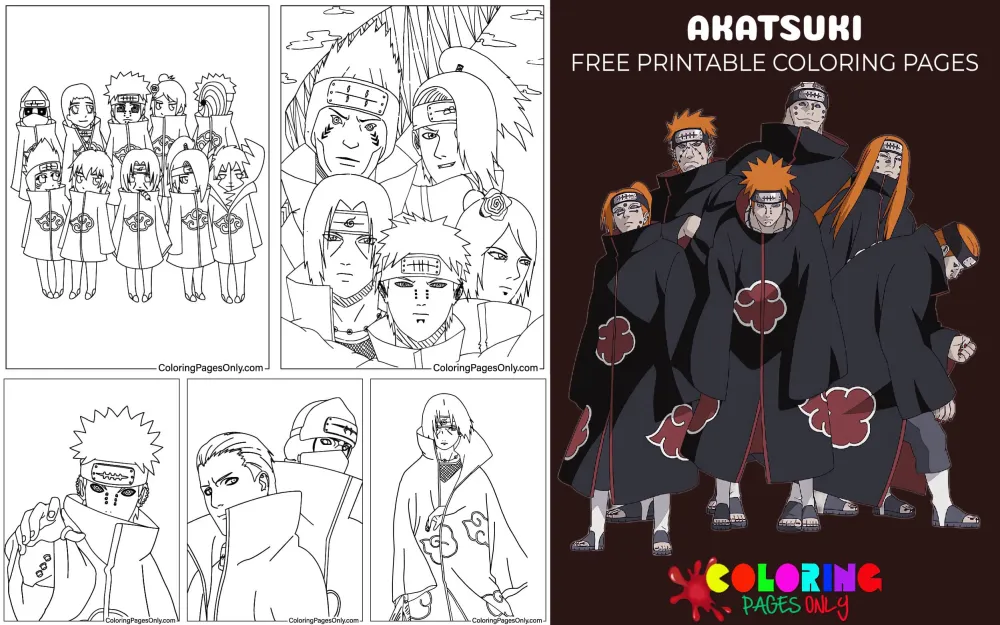
Akatsuki coloring pages: 33 free printable PDF designs featuring the black-cloaked criminal organization from Masashi Kishimoto’s Naruto, including solo portraits of Pain, Itachi Uchiha, Deidara, Sasori, Hidan, Kakuzu, Konan, Obito, and Zetsu, plus paired battle-partner scenes. Every page can be downloaded as a PDF to print or colored online in the browser, with no account required.
Akatsuki first appeared in Kishimoto’s manga in 2003, partway through the original Naruto series, before becoming central to the Naruto Shippuden story arc. In the story, the group was founded in the Hidden Rain Village by Yahiko, Nagato, and Konan, and later grew into a ten-member organization built around fixed two-person partnerships, such as Sasori and Deidara or Hidan and Kakuzu. The shared design that ties the whole roster together is the black cloak with a red cloud pattern and a high collar, worn over each member’s individual outfit and hairstyle.
With 33 pages covering nine named members across solo portraits, partner duos, and a few crossover and chibi-style extras, the set works as both a character study and a coloring challenge, since cloak folds, ring details, and each member’s distinct color palette give every page a different level of difficulty.
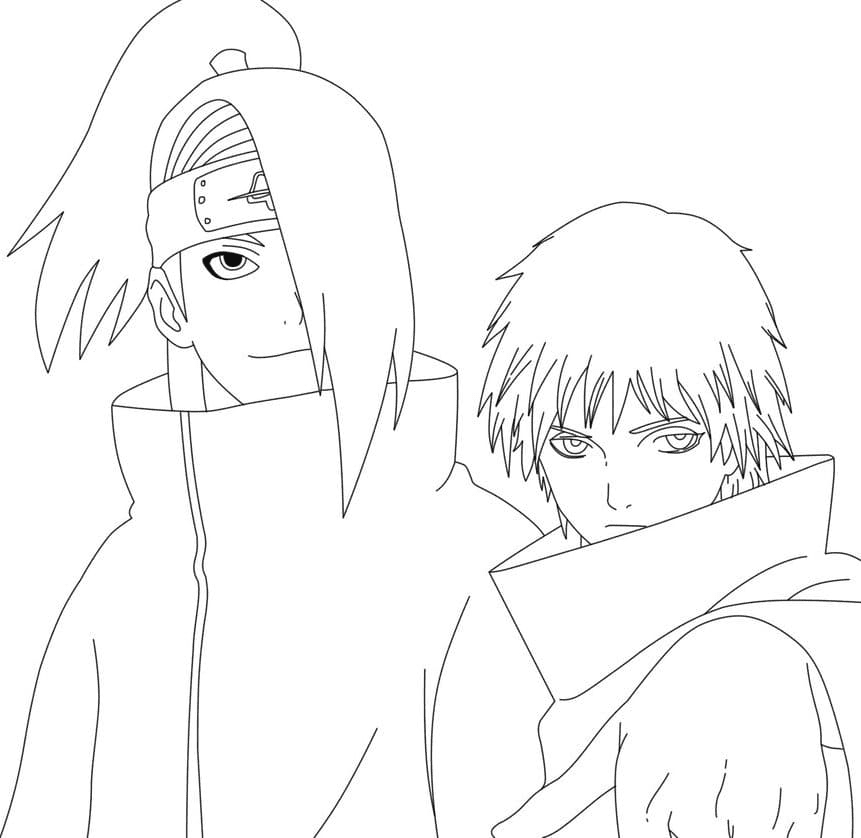
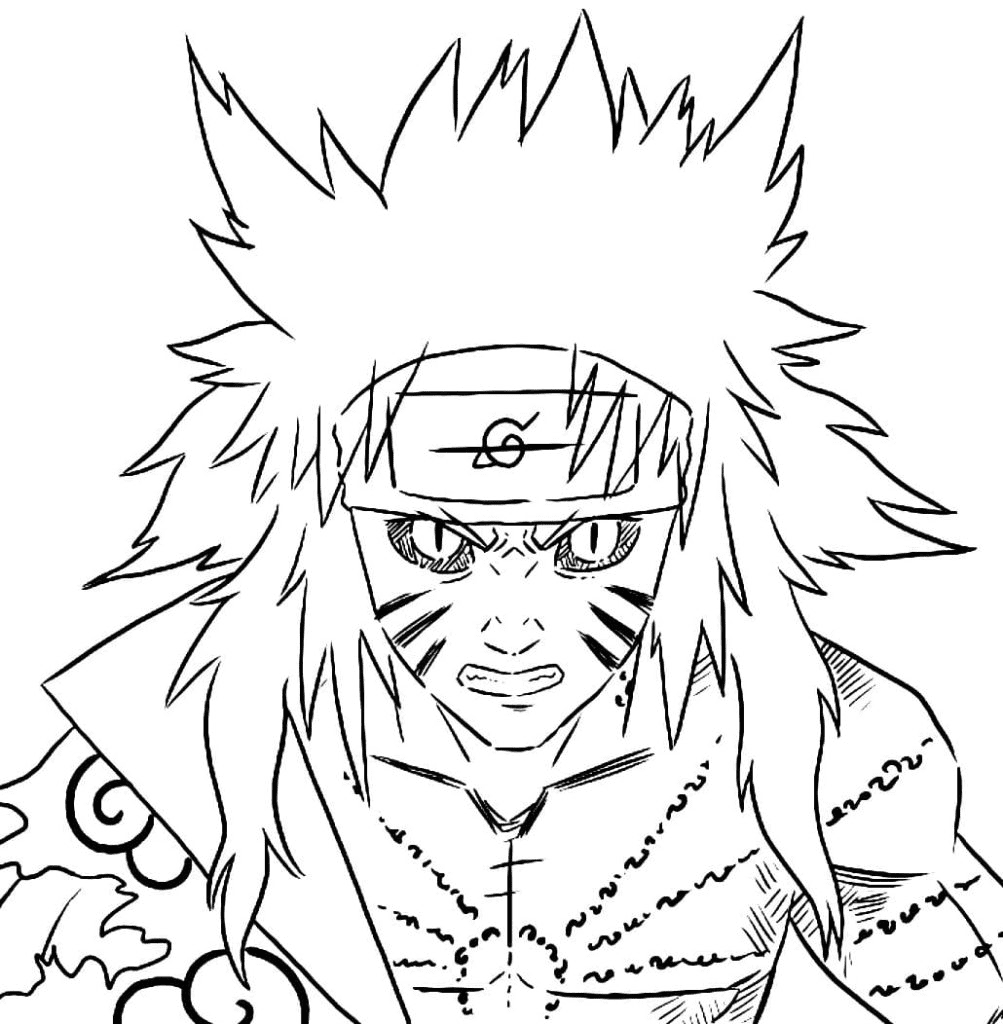
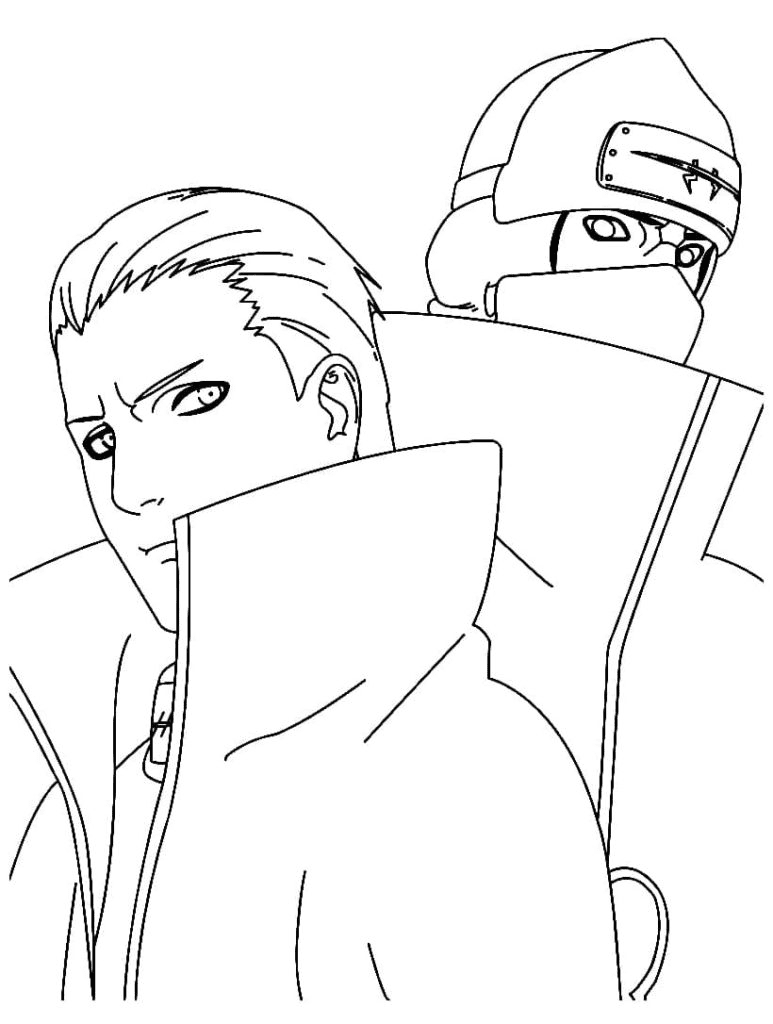
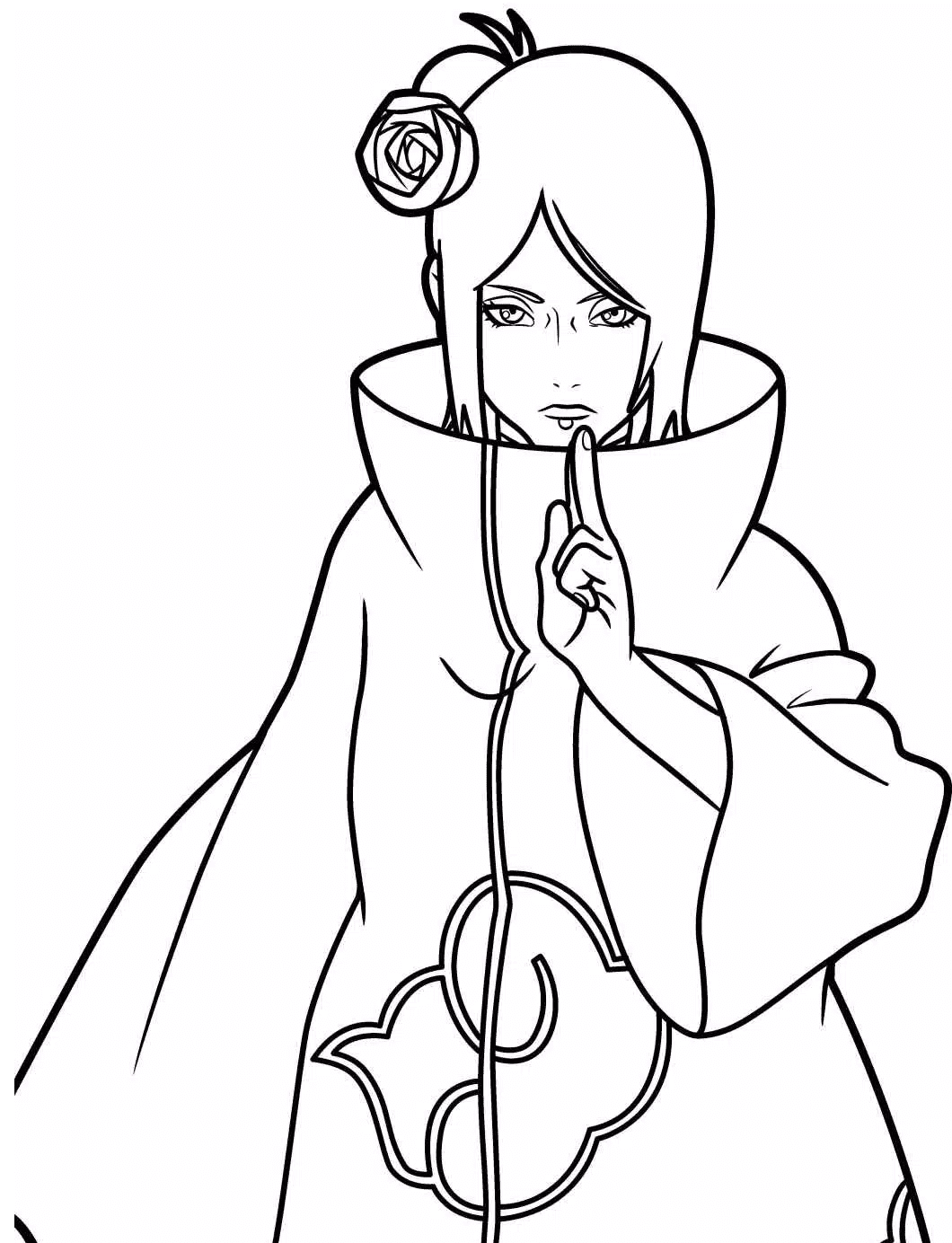

What Is Inside This Collection
The 33 pages group naturally by member and by partnership, since Akatsuki operates as fixed two-person teams rather than a loose crowd of characters.
Pain and Konan, the Founding Leadership
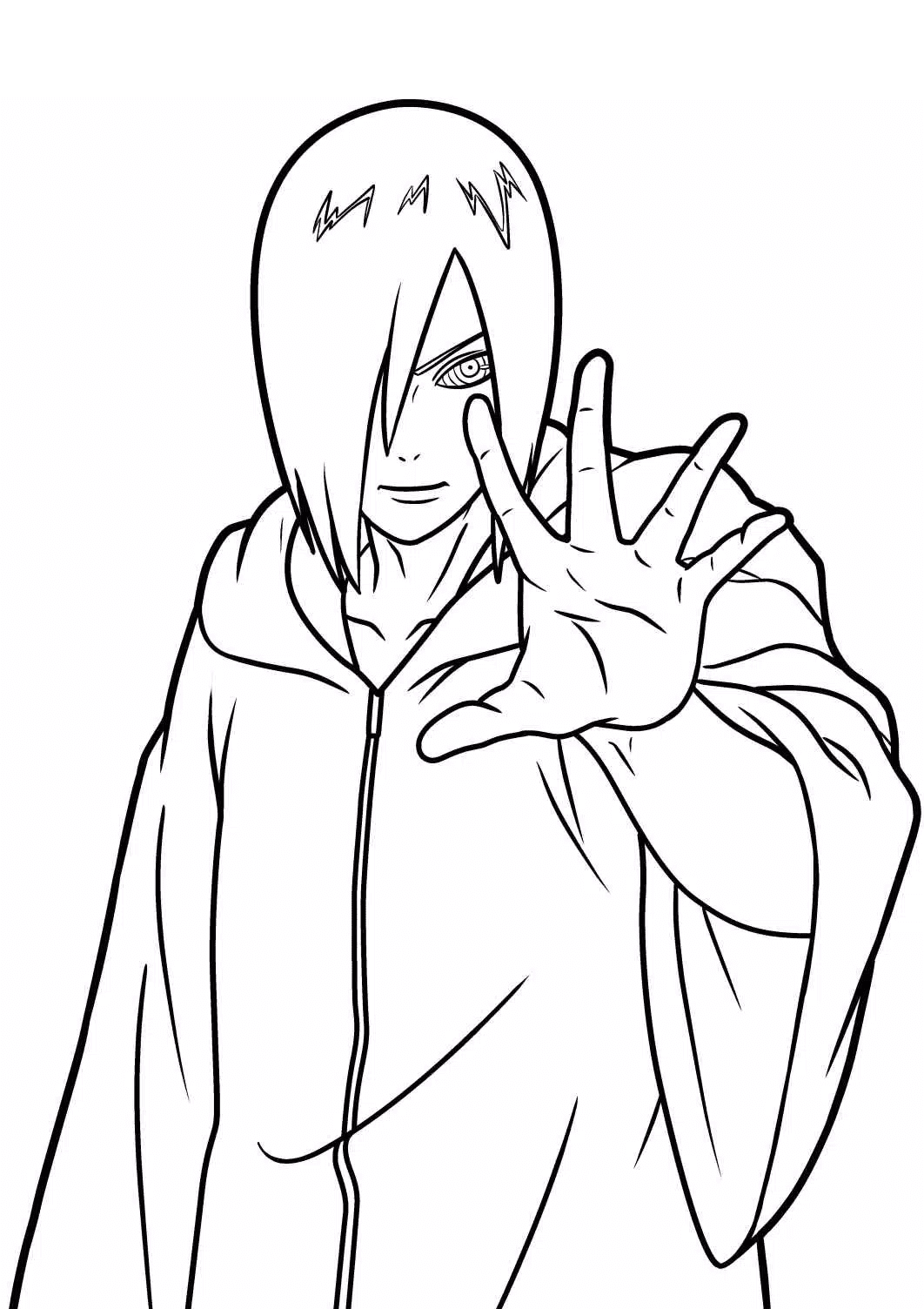
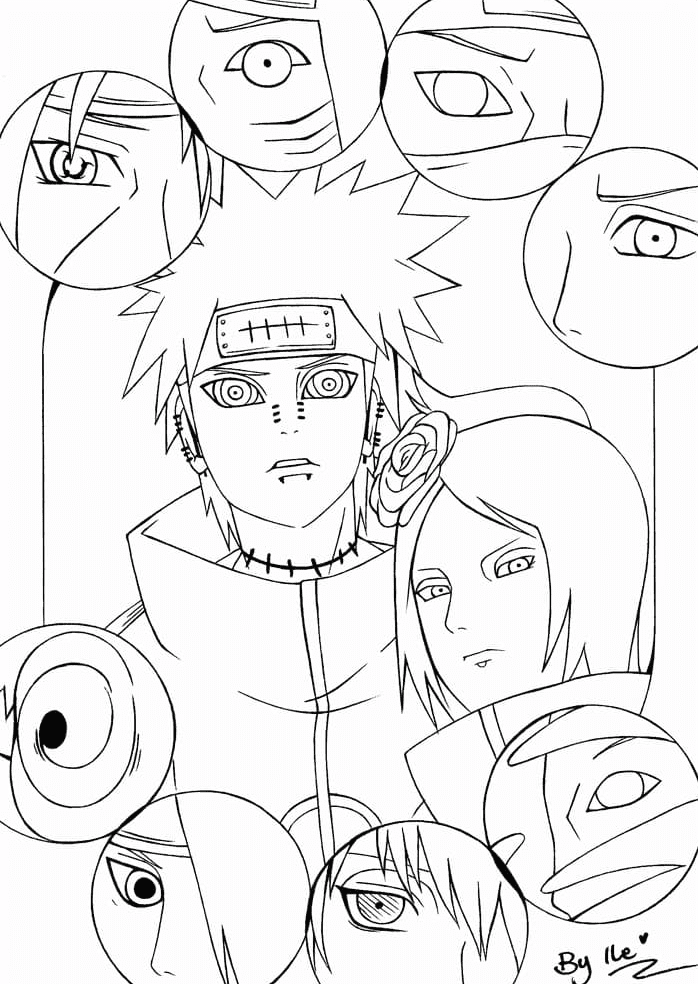
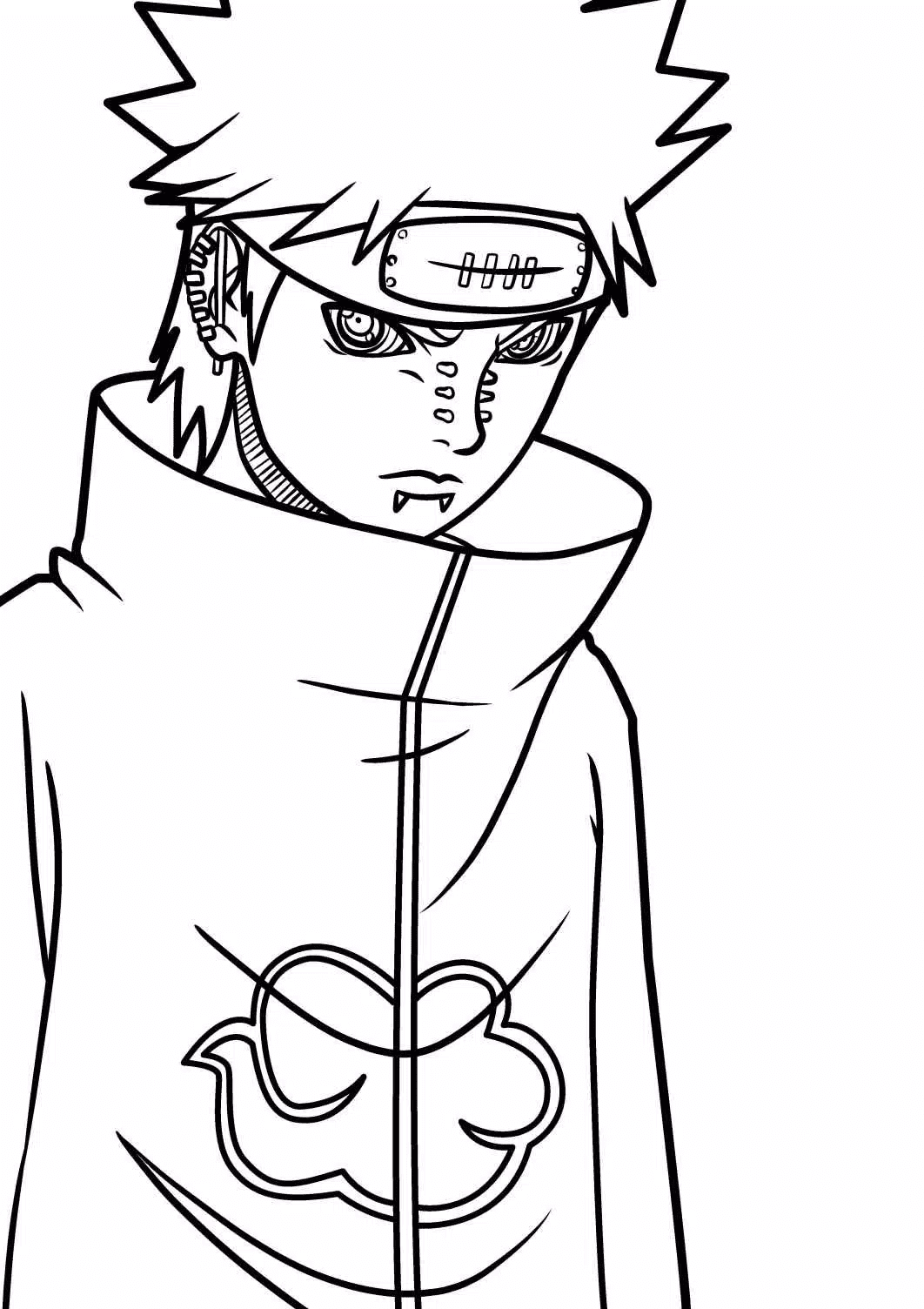
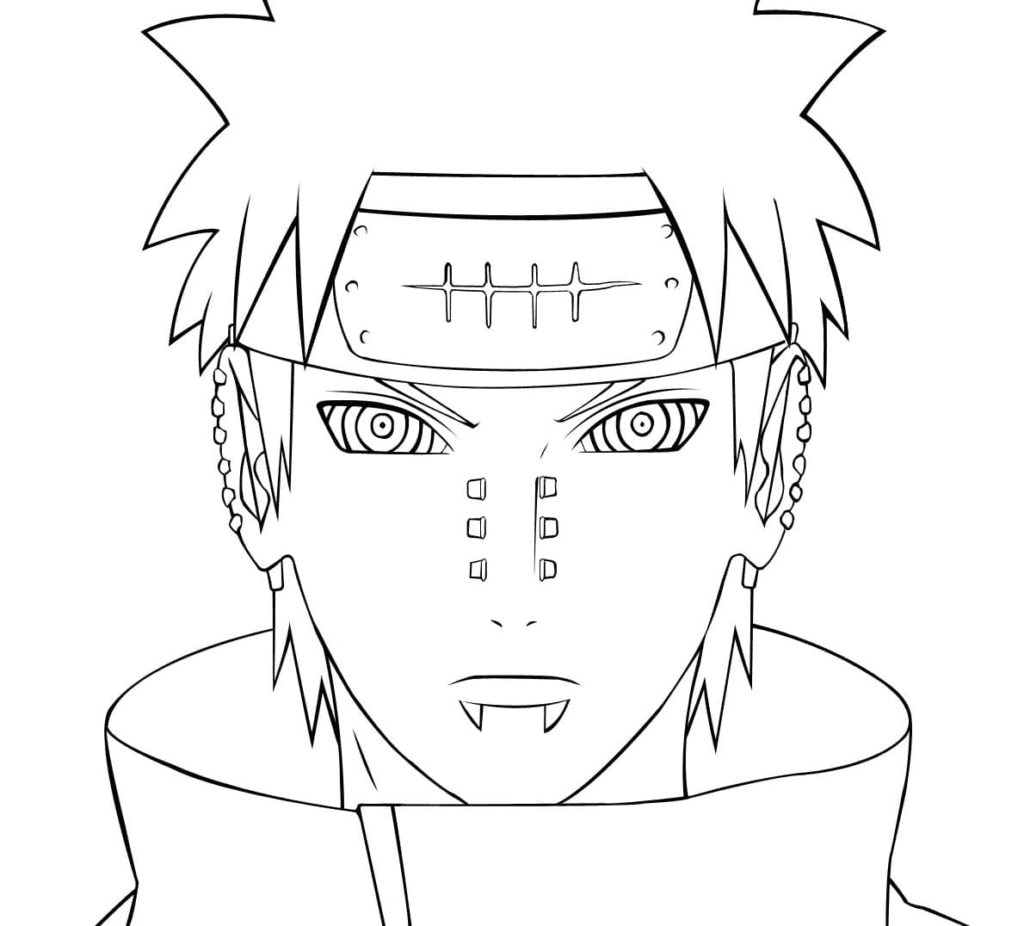
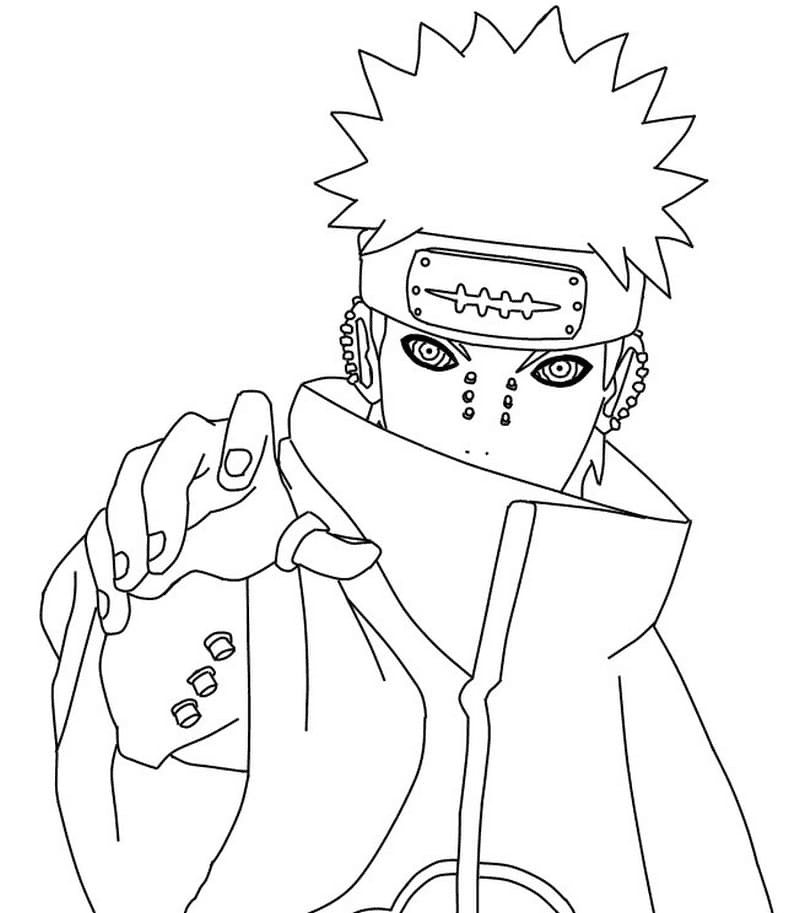
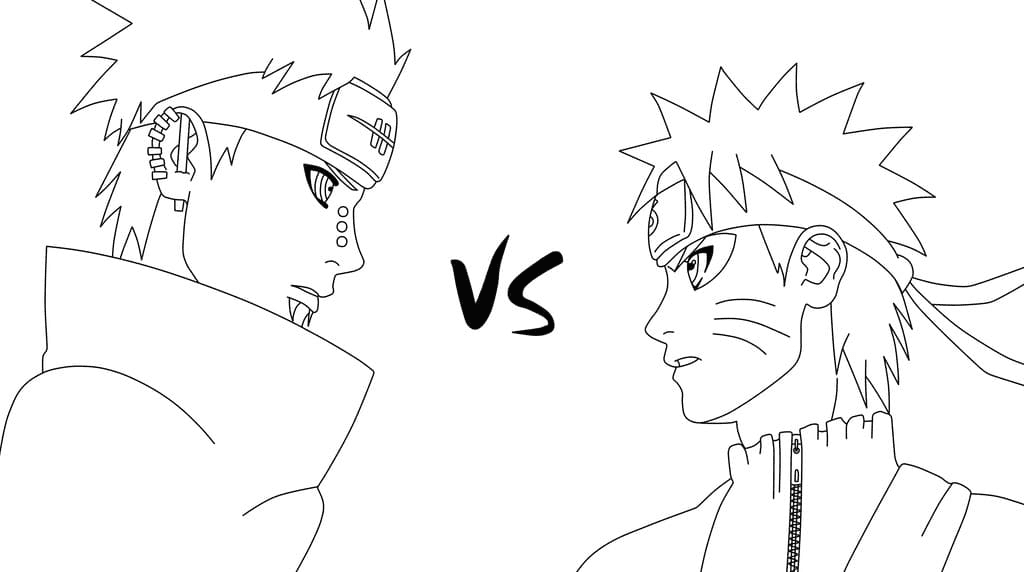
Eight pages center on Pain (Nagato) and Konan, including solo portraits, a page of Pain with Konan together, a Naruto-versus-Pain confrontation scene, and a Konan-and-Madara pairing. Color Pain’s hair a flat, matte orange, since the character’s design uses no shading or highlights in that hair, and give his Rinnegan eyes a pale violet-grey with the concentric ripple pattern radiating from the pupil.
Sasori and Deidara, the Art-Focused Duo
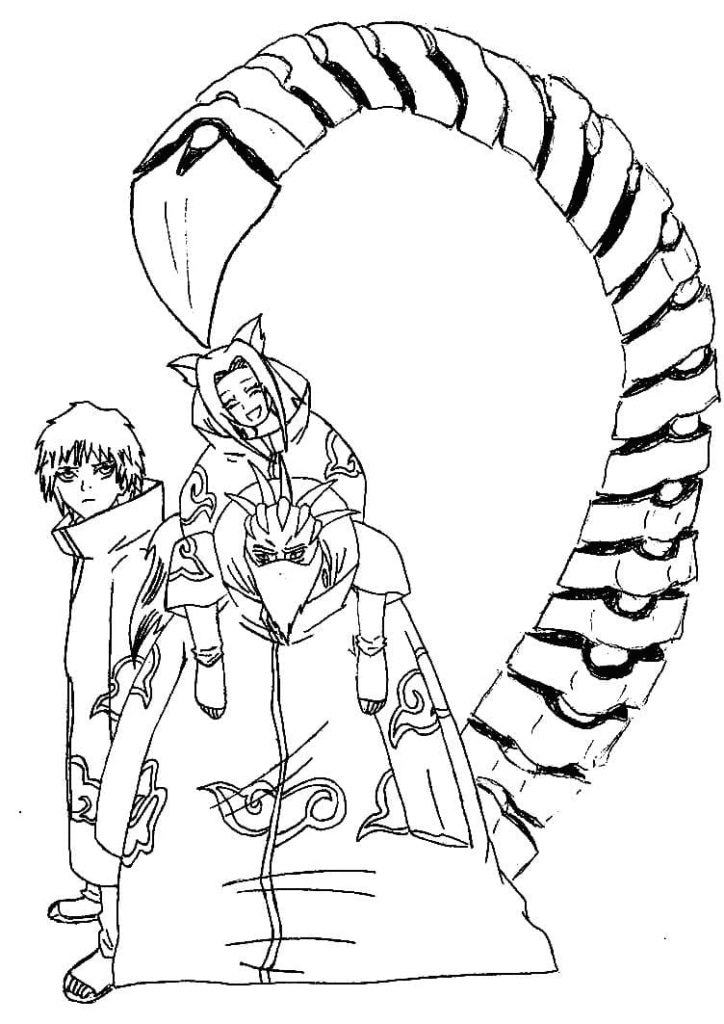
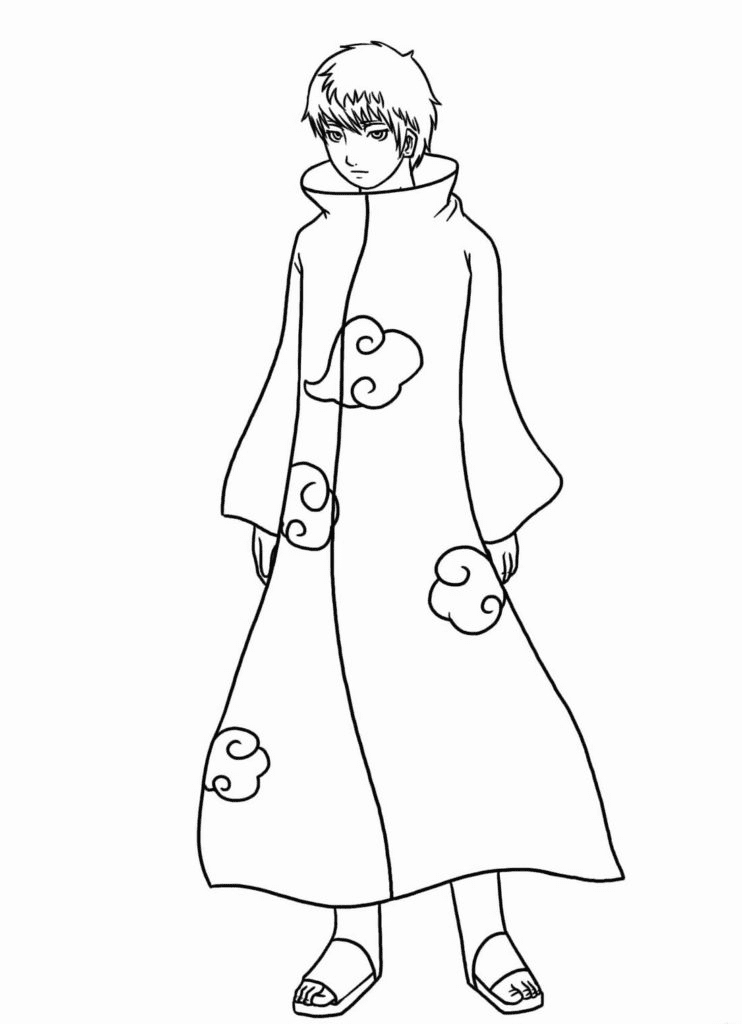
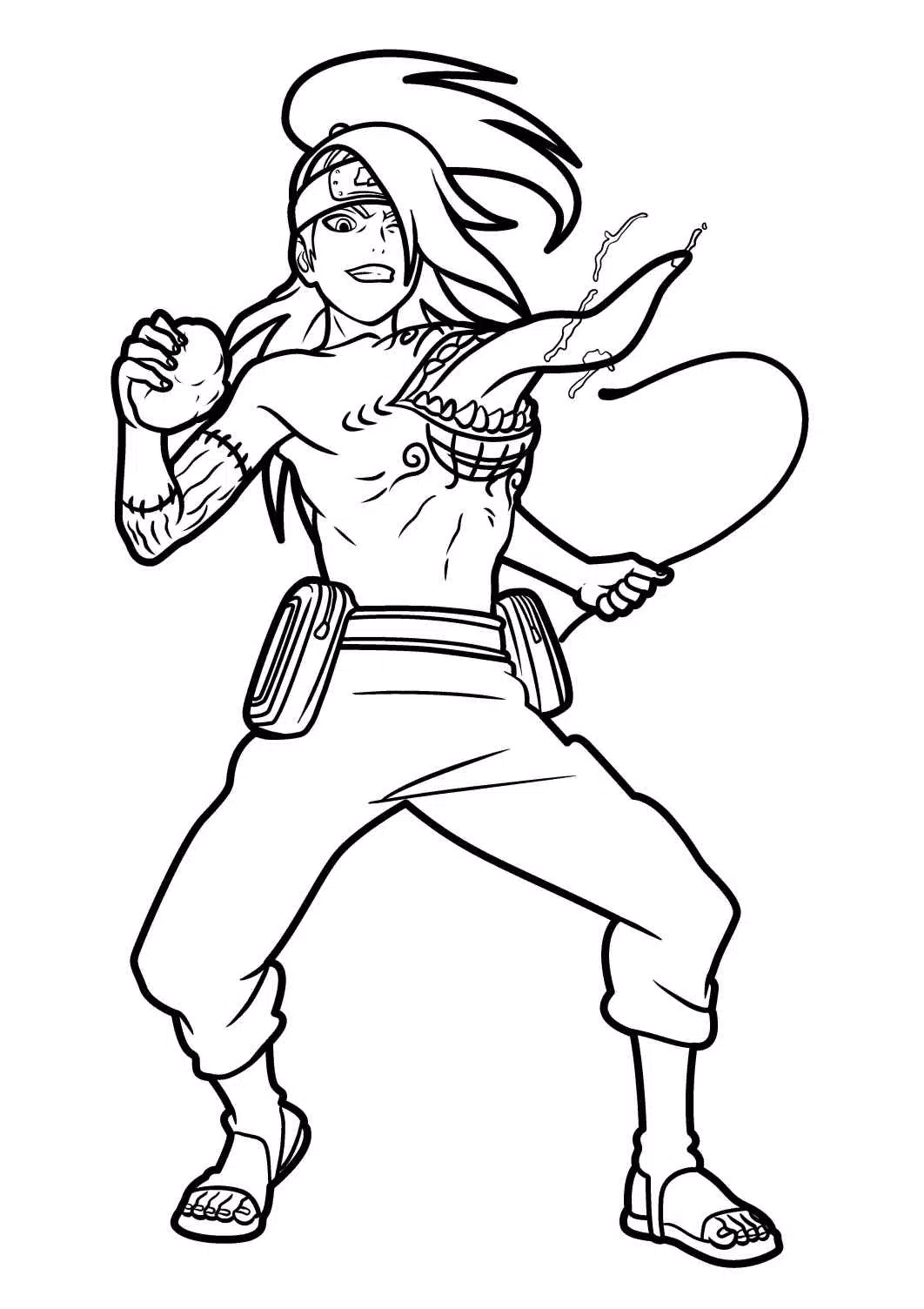
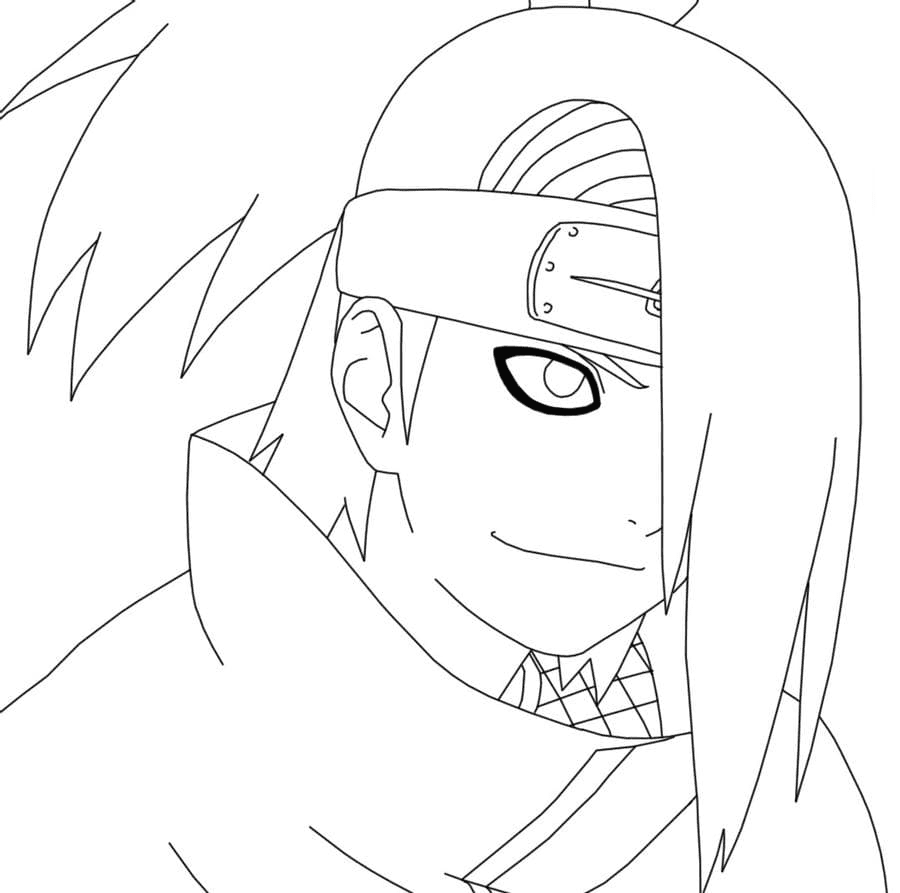
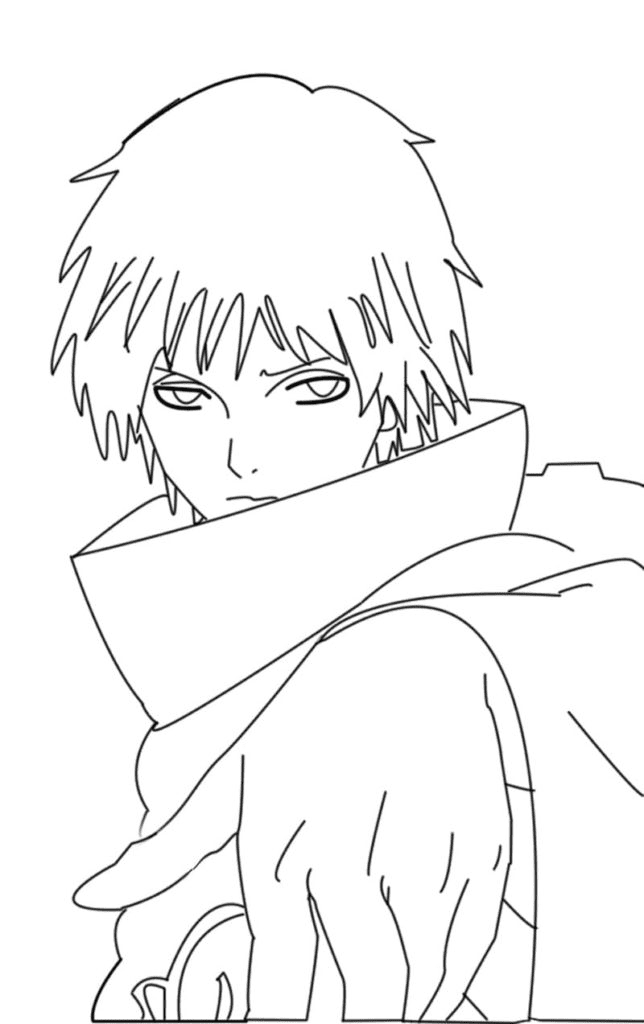
Seven pages cover this partnership, including a scene with Sasori, Sakura, and the puppet Hiruko. Sasori’s human-form skin should stay a warm, natural tan since only his puppet body is pale, and Deidara’s long hair reads best in a bright golden yellow with his forehead scope shaded in cool grey.
Hidan and Kakuzu, the Bounty Partnership
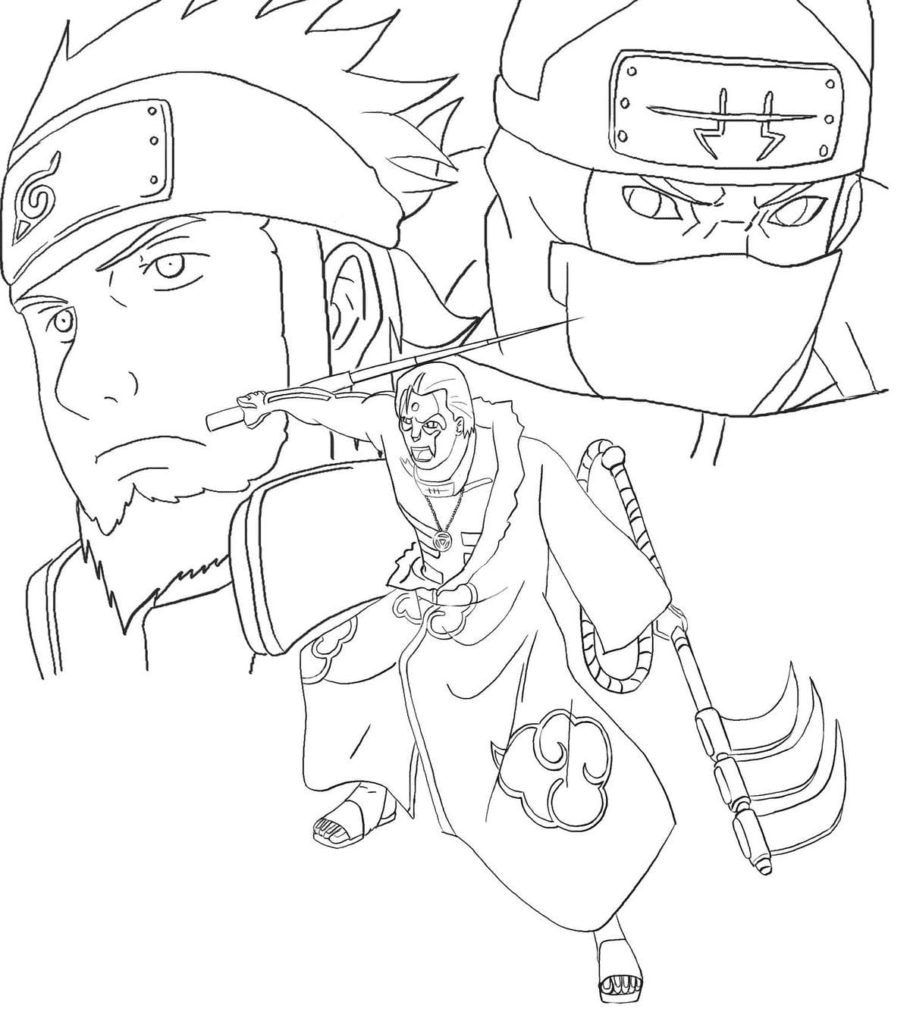
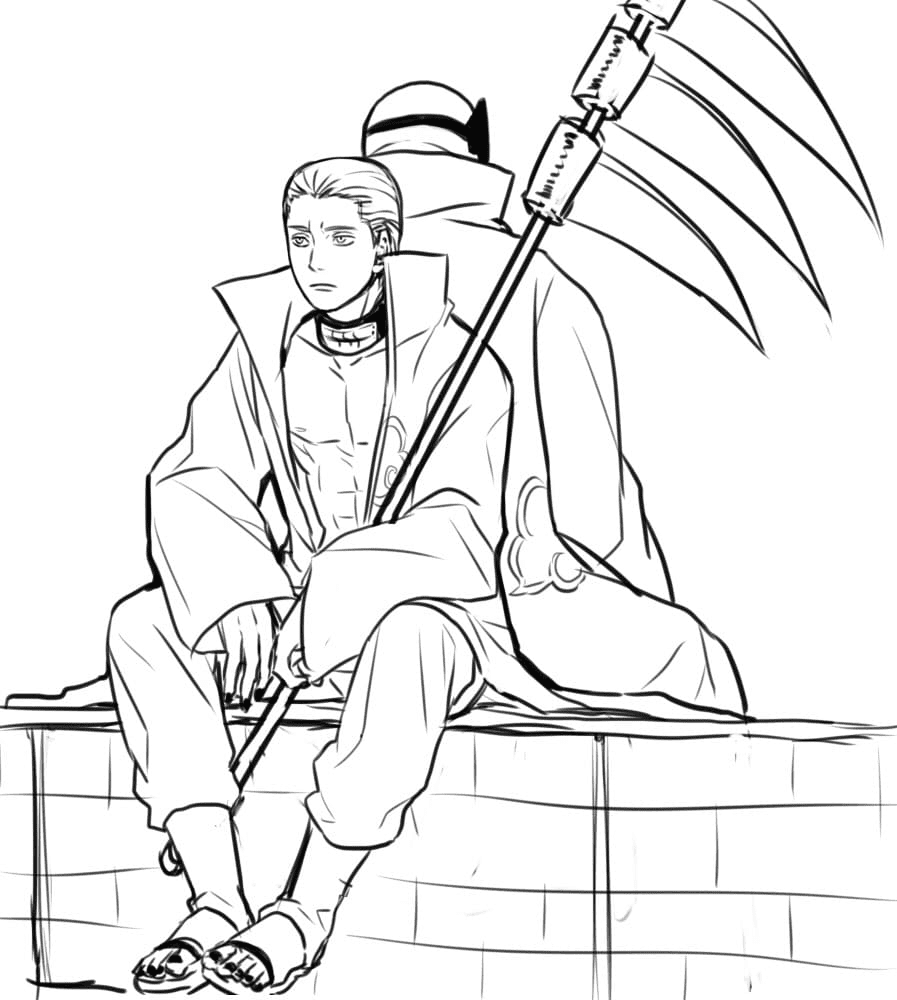
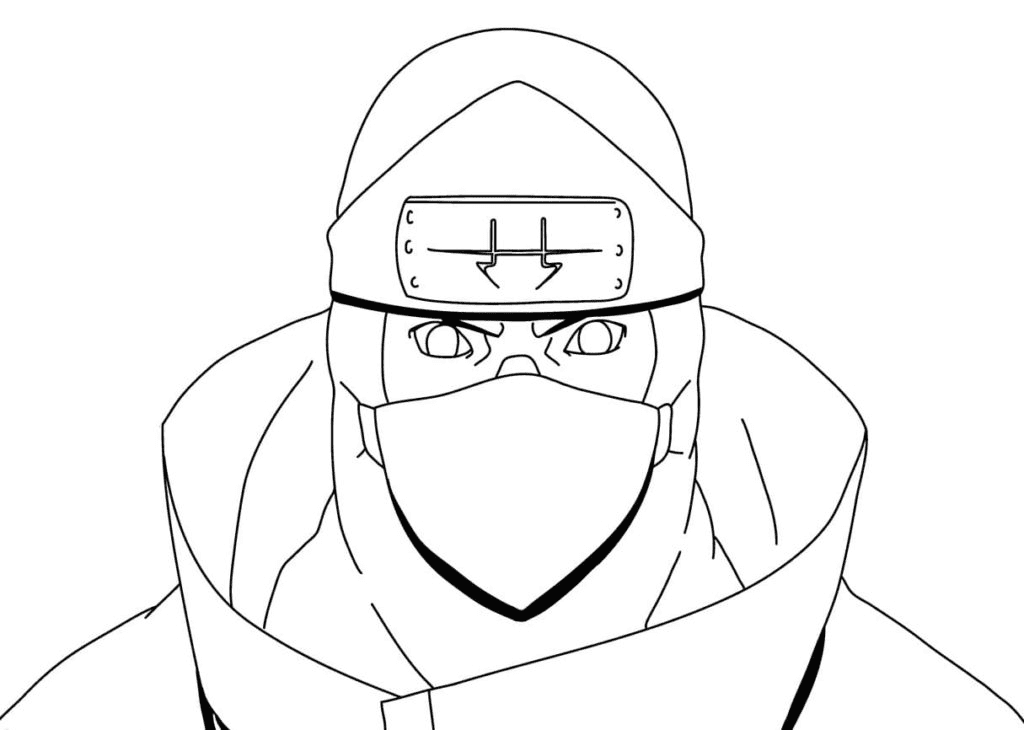
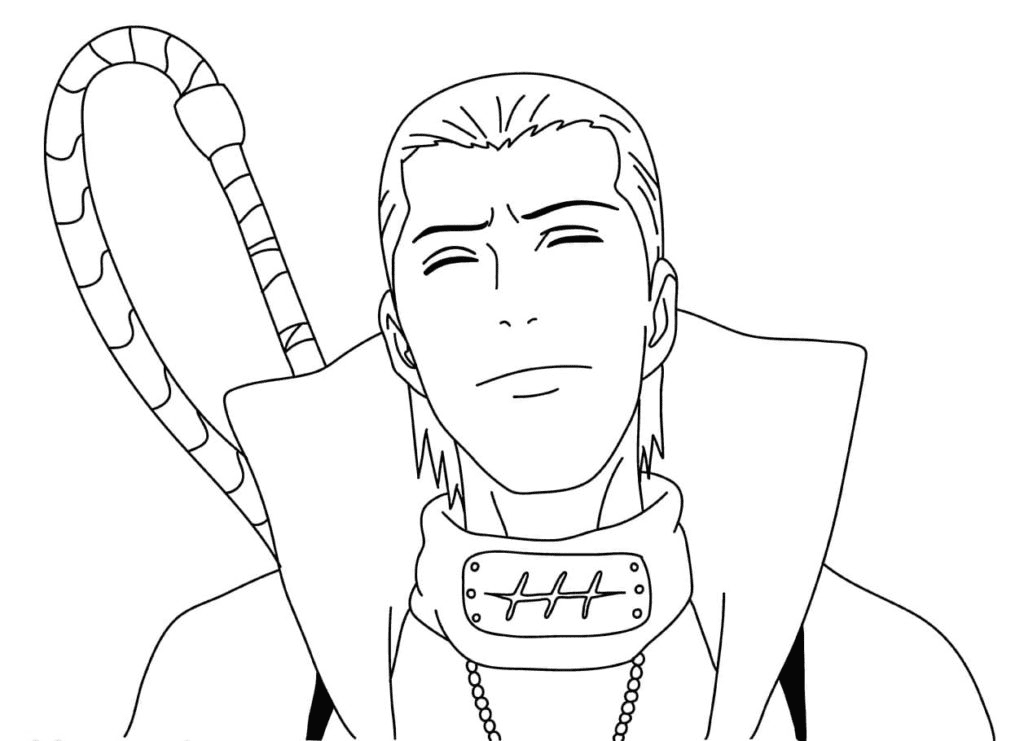
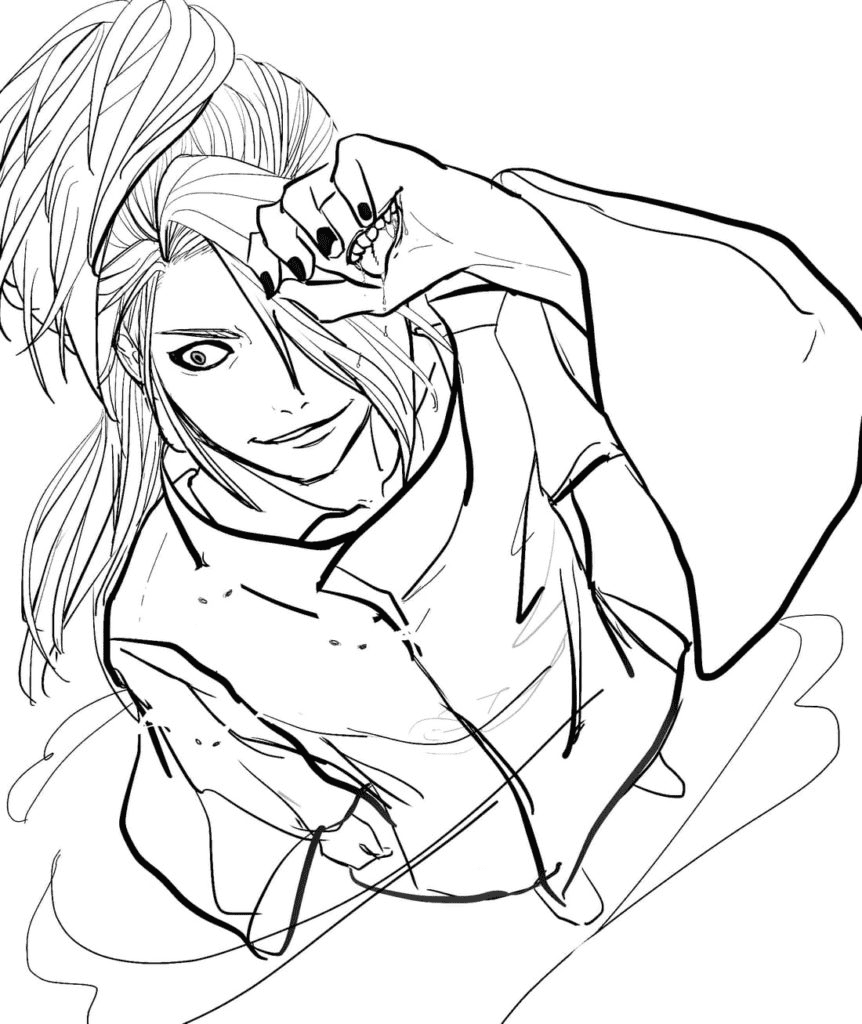
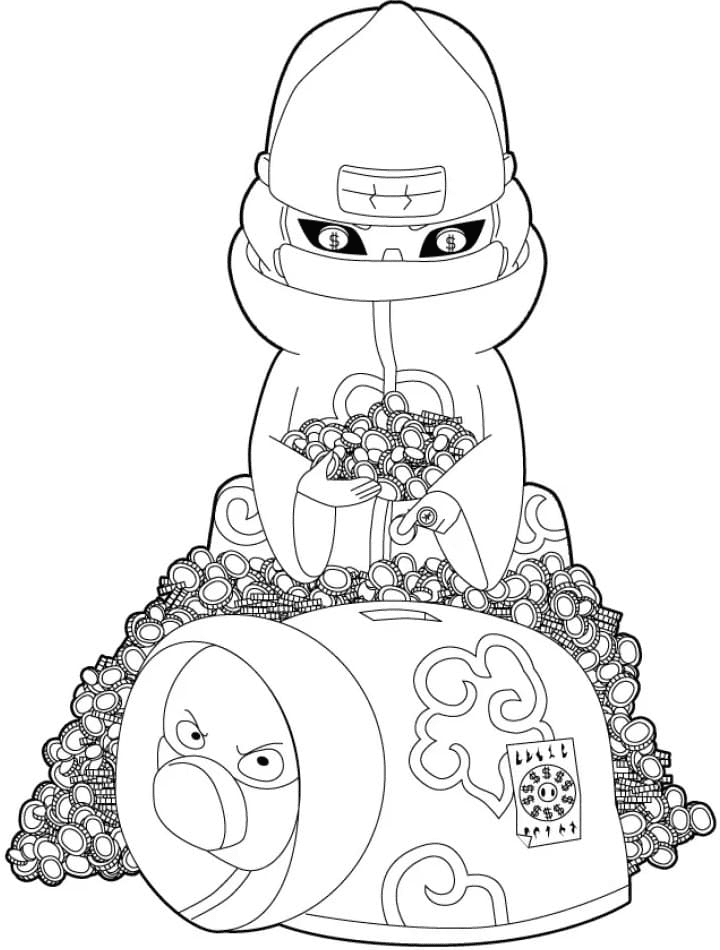
Six pages follow this pairing, including a chibi-style Kakuzu page. Kakuzu’s stitched skin calls for a muted olive-green base with darker green thread lines at the seams, and Hidan’s slicked-back hair works best in a pale silver-grey rather than pure white.
Itachi, Obito, Madara, and Zetsu
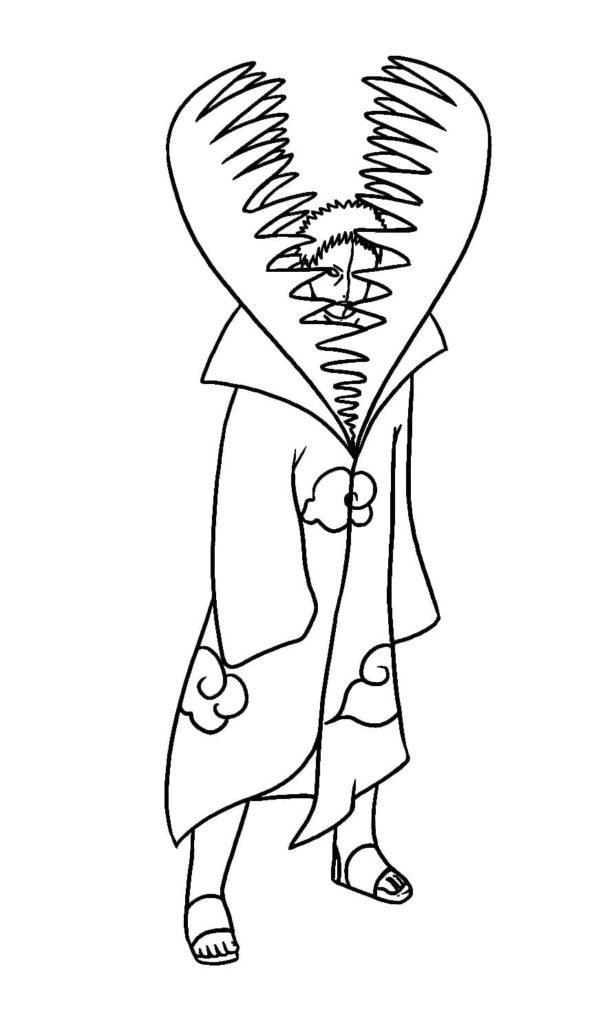
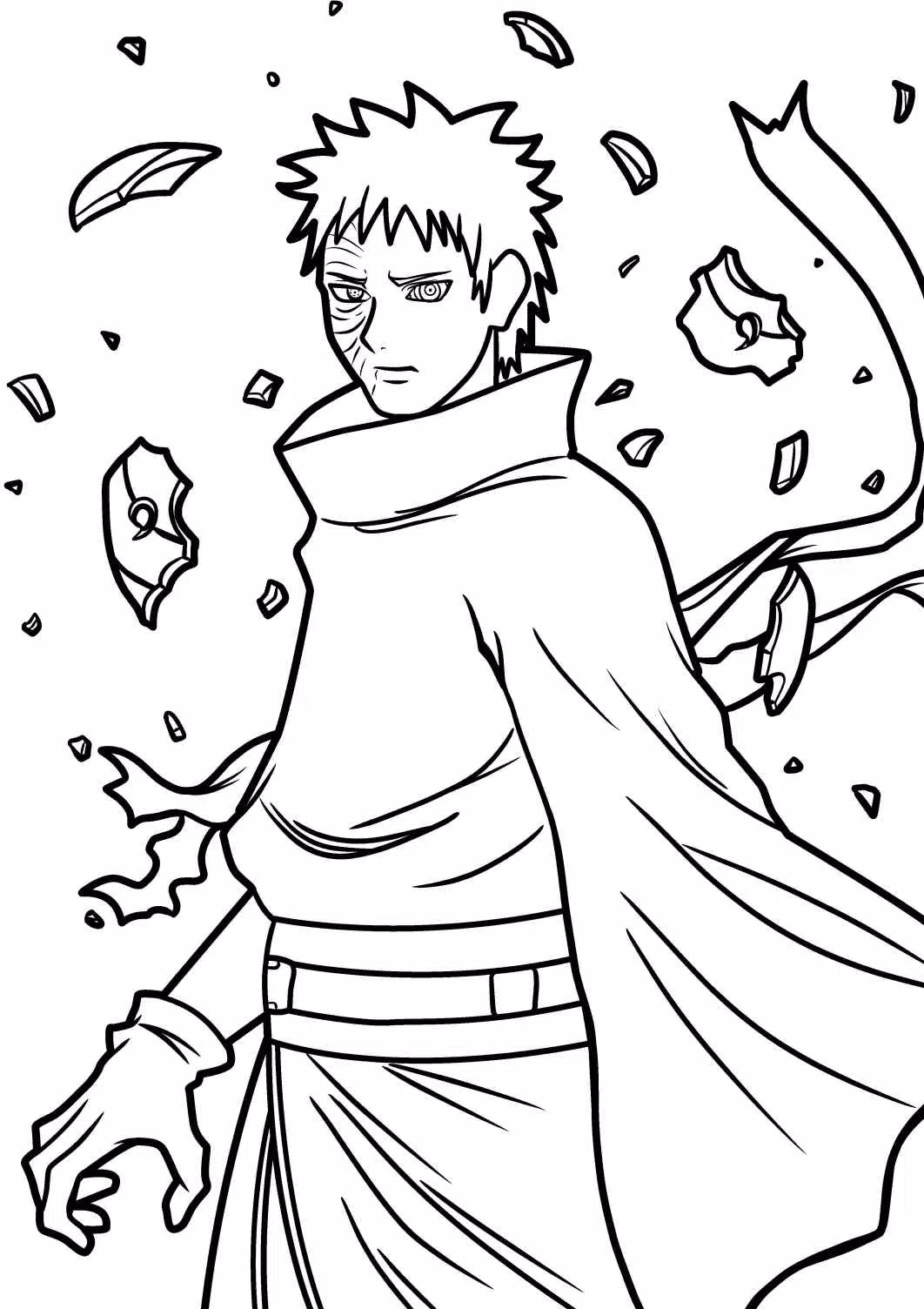
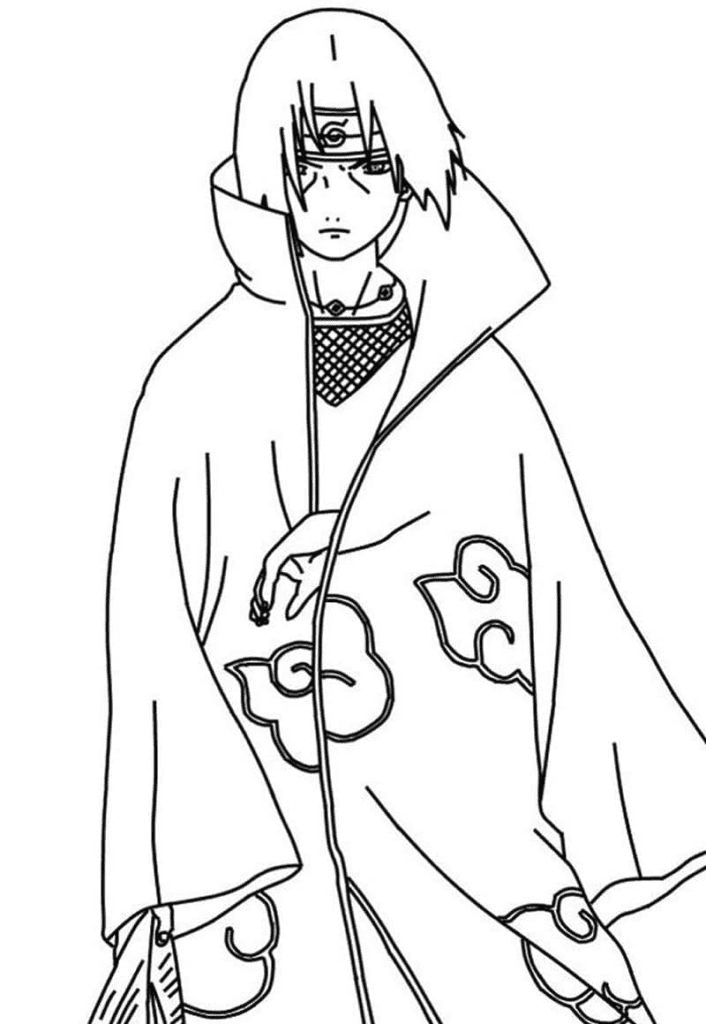
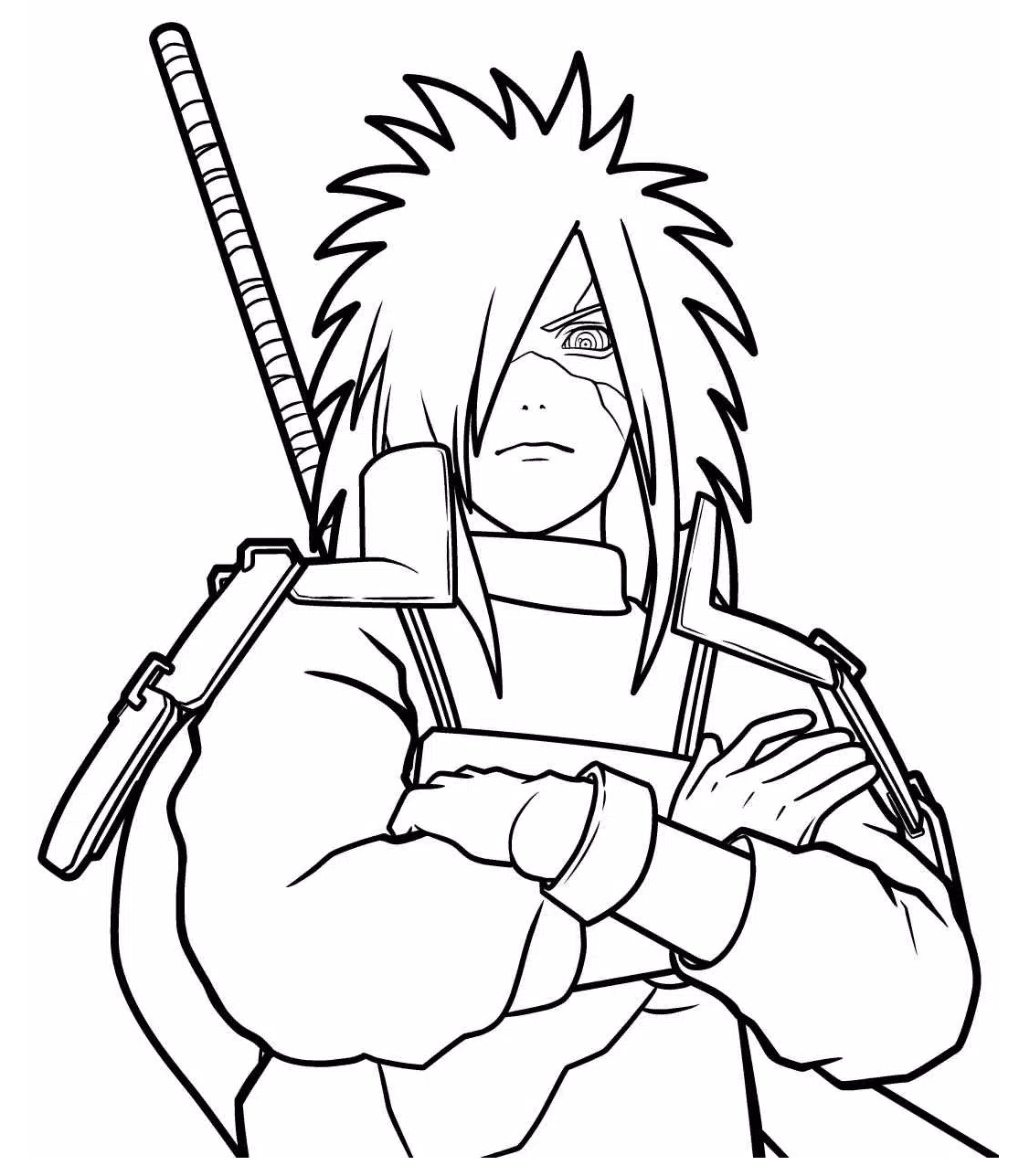
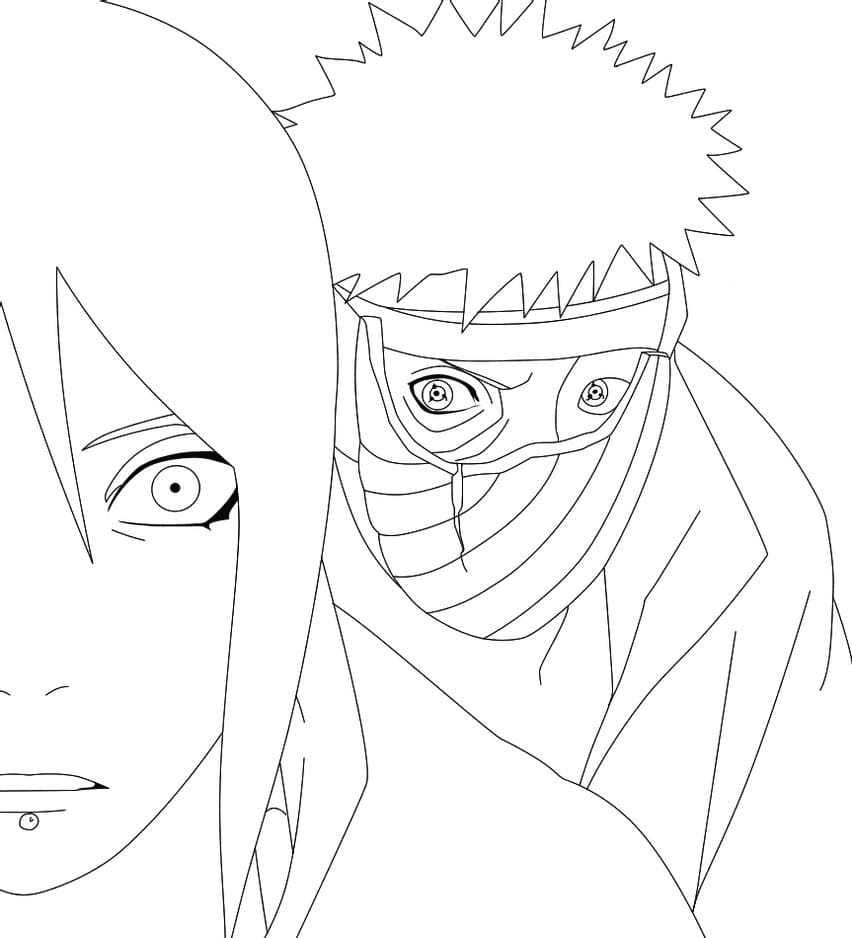
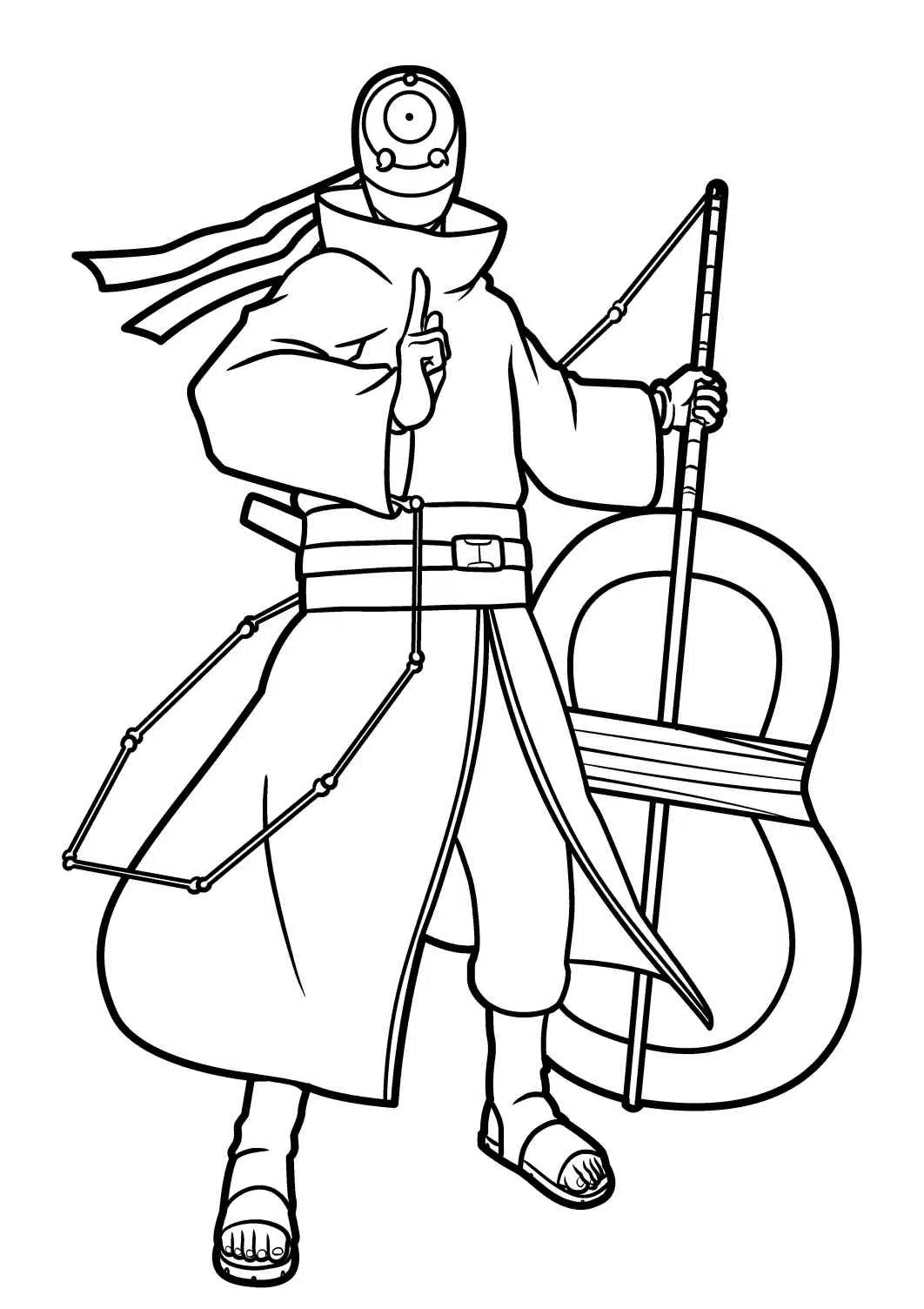
Five pages feature this group, including two Obito pages under his Akatsuki alias. Itachi and Obito are the two members in this set who carry the Sharingan, so their eyes should be colored a deep crimson red with the small black tomoe marks kept distinct rather than blended into the iris. Zetsu’s split coloring, half pale white and half a mottled dark green, is one of the most visually distinct pages in the whole set.
Group Scenes, Chibi Style, and Crossover Pages
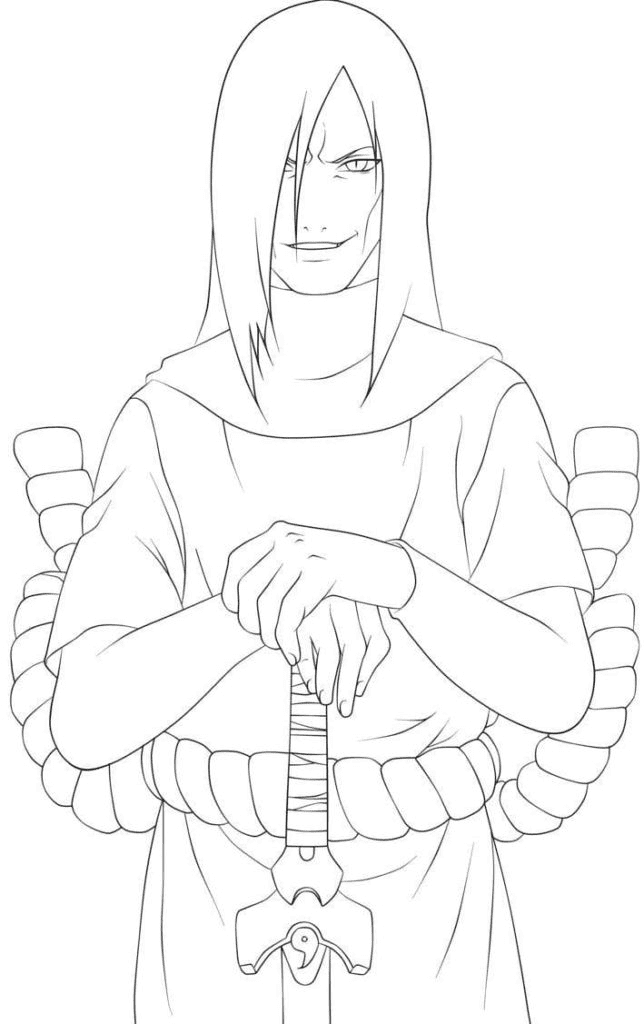
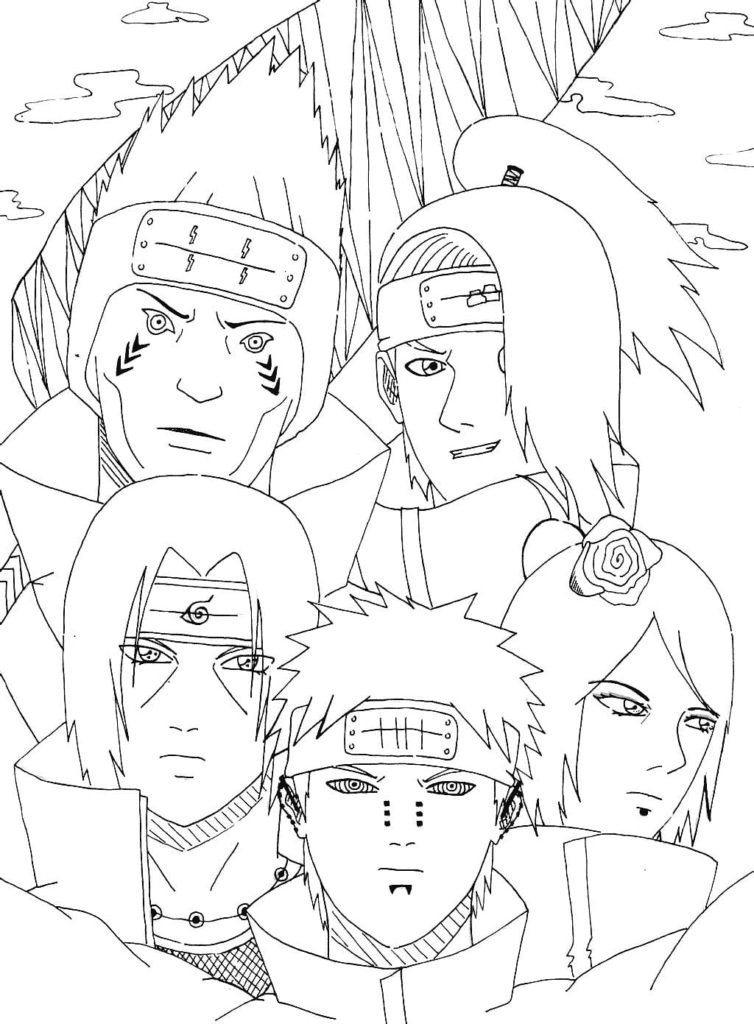
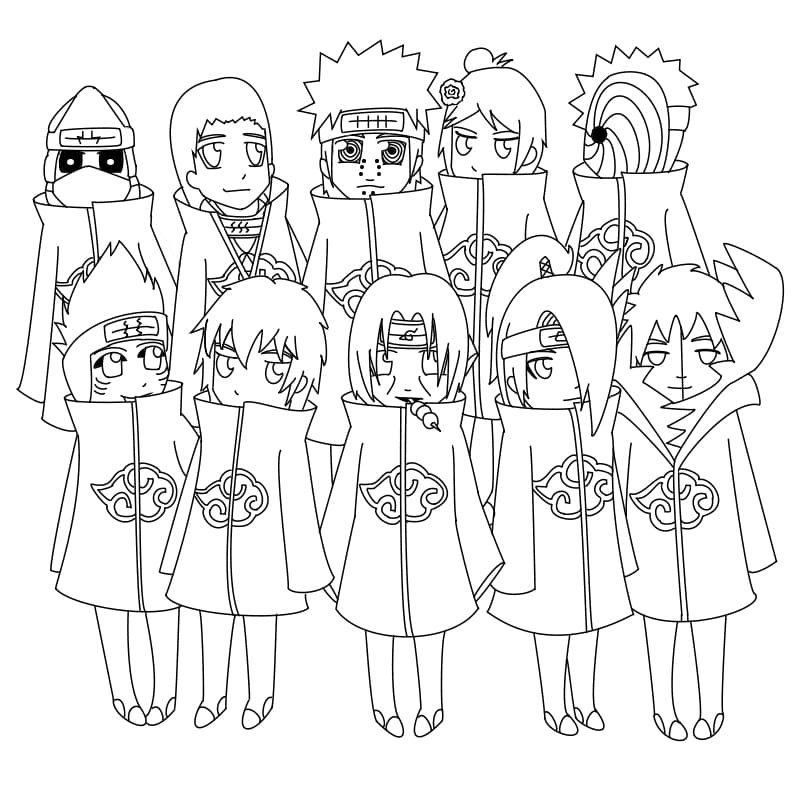
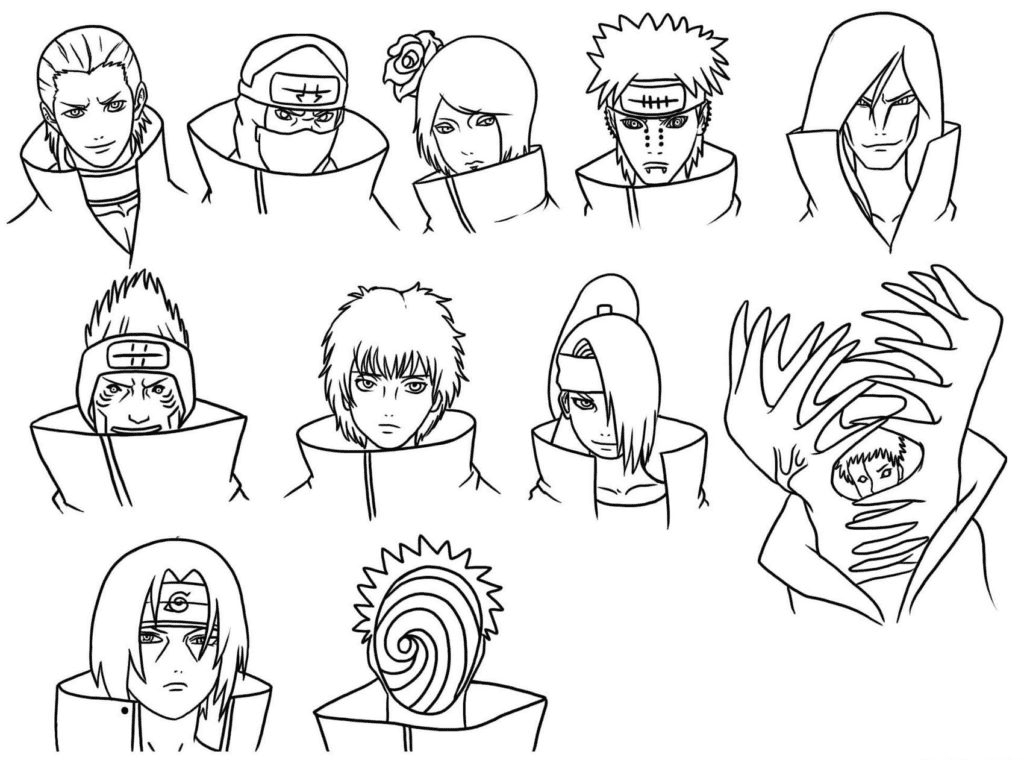
The remaining seven pages include a full group face lineup, a chibi-style rendering, a crossover design referencing the game Among Us, and a page of Orochimaru, who briefly held a spot in the organization’s early roster before defecting. These pages work well as a lighter, faster set for a first attempt at the collection before moving into the more detailed solo portraits.
What Akatsuki Coloring Pages Do
Fine motor development. The American Academy of Pediatrics identifies fine motor skill development as a core benefit of structured coloring for children ages 2 through 7. The cloak’s cloud pattern and each character’s hairstyle require the kind of small, controlled strokes that build the same hand control used in early handwriting.
Character recognition and detail tracking. Because every page shares the same black cloak, the coloring decisions that actually distinguish one member from another, such as hair color, eye type, and ring color, ask a colorist to look closely and remember detail rather than color on autopilot.
Anxiety reduction through focus. A 2005 study in the Art Therapy Journal documented measurable reductions in anxiety following structured coloring sessions. The repeated cloak pattern across all 33 pages gives colorists a steady, low-stakes shape to return to between the more demanding sections of each character’s face and hair.
Bridges casual fans and close readers of the series. A younger or more casual Naruto fan can color the pages purely for the character designs. At the same time, a reader who has followed the full story can use the partnership groupings above to think through how the organization was structured, without the page requiring any prior knowledge to enjoy.
How to Color Akatsuki Pages Well
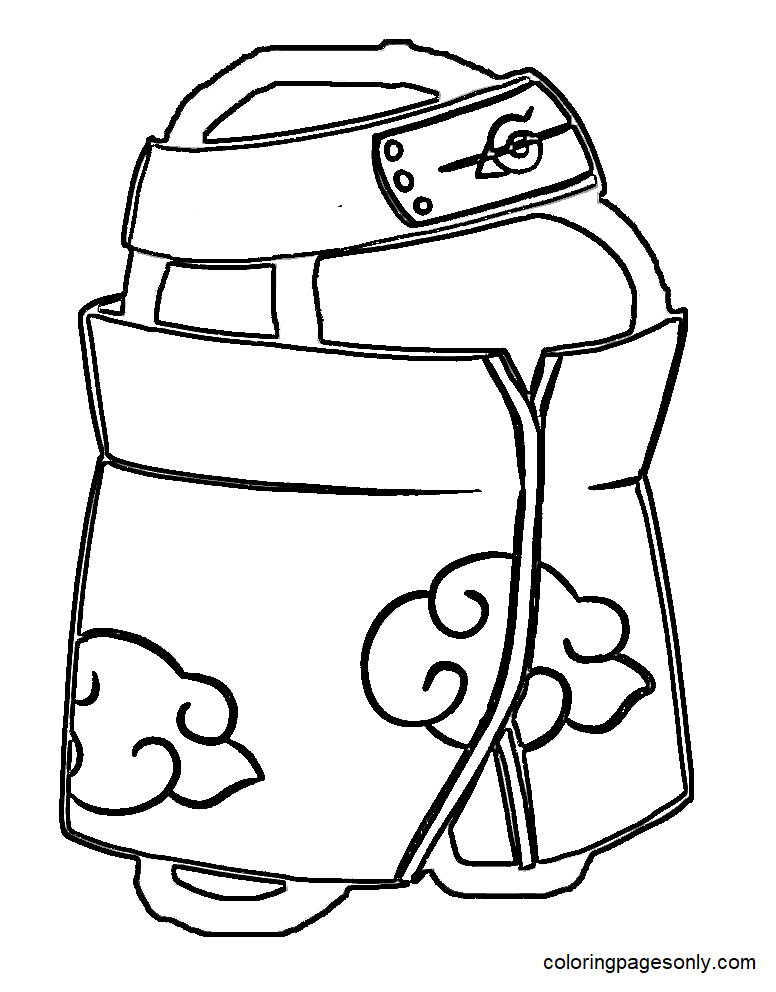
- The cloak: Use Crayola Black for the base and Crayola Scarlet or Red for the cloud shapes, leaving a thin uncolored or grey outline around each cloud so the pattern reads clearly against the black.
- Pain’s hair and eyes: Crayola Orange (flat, no shading) for the hair, and a pale Crayola Wisteria or Lavender for the Rinnegan, with a fine black pen line for the ripple rings if working with markers.
- Itachi and Obito’s Sharingan: Crayola Red for the iris with three small black tomoe marks kept crisp and separate, never blended, since the tomoe are what make the eye recognizable at a glance.
- Deidara’s hair and scope: Crayola Dandelion or Goldenrod for the long hair, and Crayola Silver or grey for the metal forehead scope, keeping the scope’s lens a slightly darker tone than the frame.
- Kakuzu’s skin and stitching: a muted Crayola Olive Green base with Crayola Black or dark green fine lines for the visible stitches, avoiding bright green, which reads as too cartoonish for the character’s design.
- Zetsu’s split coloring: leave one half of the face and body Crayola White or uncolored, and use Crayola Forest Green with darker green mottling for the other half, treating the two sides as separate coloring zones rather than blending them.
5 Creative Craft Ideas With Akatsuki Coloring Pages
1. Partner Duo Standees
Color a partnered pair, such as Sasori and Deidara or Hidan and Kakuzu, mount each on cardstock, and fold a small tab at the base so both figures stand upright side by side. This turns the collection’s built-in partnership structure into a small, freestanding display.
2. Ring-Color Bookmark Set
Color three or four solo portraits, trim them to a tall, narrow bookmark shape, and laminate or cover with clear tape. Grouping bookmarks by a shared trait, such as characters with visible eye powers, gives the set an organizing theme.
3. Cloak Pattern Matching Cards
Color two copies of a smaller face-focused page, cut both into a grid of matching squares, and use them for a memory-matching game. The repeated cloak pattern across the set makes plain image-matching easy, so this version asks players to match by hairstyle or eye detail instead.
4. Organization Fact Poster
Color four or five portraits, arrange them on a poster board, and label each with the character’s name and their partner. This works as a simple visual reference for the group’s structure without narrating any of the story’s darker plot points.
5. Group Lineup Garland
Color a run of solo portraits, punch a hole in the top corner of each, and string them along ribbon or twine in a horizontal line. Hung above a desk, the garland reads as a full character lineup at a glance.
Frequently Asked Questions
What are Akatsuki coloring pages?
Akatsuki coloring pages are free, fan-made, printable, and online designs featuring the black-cloaked ninja organization from the Naruto manga and anime series. This collection is not affiliated with, licensed by, or endorsed by Masashi Kishimoto, Shueisha, or Studio Pierrot, and is intended for personal, non-commercial coloring only.
Who created Akatsuki, and when did the group first appear?
Akatsuki was created by manga artist Masashi Kishimoto as part of the Naruto series, first appearing in the manga in 2003 and later becoming a central antagonist group during the Naruto Shippuden story arc. Kishimoto used the group to raise the stakes of the series ahead of its extended time-skip storyline.
How many members does Akatsuki have?
The organization is generally described as capping out at ten primary members working in fixed two-person partnerships, though its roster changed over the course of the story as members died or defected. This collection features nine named members: Pain, Konan, Itachi, Obito, Madara, Sasori, Deidara, Hidan, and Kakuzu, plus Zetsu and a page of Orochimaru from his brief early membership.
What do the Akatsuki cloaks look like?
Every member wears the same long, black cloak printed with red cloud shapes and finished with a high, chin-length collar. The cloak is worn over each character’s own clothing and hairstyle, which is why the cloak color stays constant across every page in this set, while everything else, hair, eyes, and skin tone, changes from character to character.
Why do Itachi and Obito have red eyes on these pages?
Itachi and Obito are the two members in this collection who carry the Sharingan, a red eye ability marked by small black tomoe shapes around the pupil. Pain’s eyes use a different design, the pale, rippled Rinnegan, which is why his coloring page calls for violet or grey rather than red.
Is Orochimaru actually part of Akatsuki?
Orochimaru held an early spot in the organization’s roster before defecting to pursue his own goals, which is why his page appears in this collection alongside the group’s later, more consistent lineup. His departure is also why Deidara was recruited as Sasori’s new partner.
Are Akatsuki coloring pages suitable for young children?
The simpler solo portraits and the chibi-style pages work well for children around ages 6 and up who are already familiar with the characters, while the more detailed group and partner scenes suit older kids, teens, and adult fans of the series. The pages focus on character design rather than depicting violence, making them appropriate as a coloring activity even for readers who have not seen the more intense parts of the story.
Can Akatsuki coloring pages be colored online, or only printed?
Both options are available for every page in the set. Each design can be downloaded as a PDF for printing at home or opened directly in the online coloring tool for coloring on a phone, tablet, or computer screen without printing anything.
Start Coloring
Download any page by clicking the design. No account, email, or payment is required. Pages print directly from the browser at full resolution or open in the online coloring tool for screen use. Share finished pages on Facebook or Pinterest with the share buttons at the top of each design page.