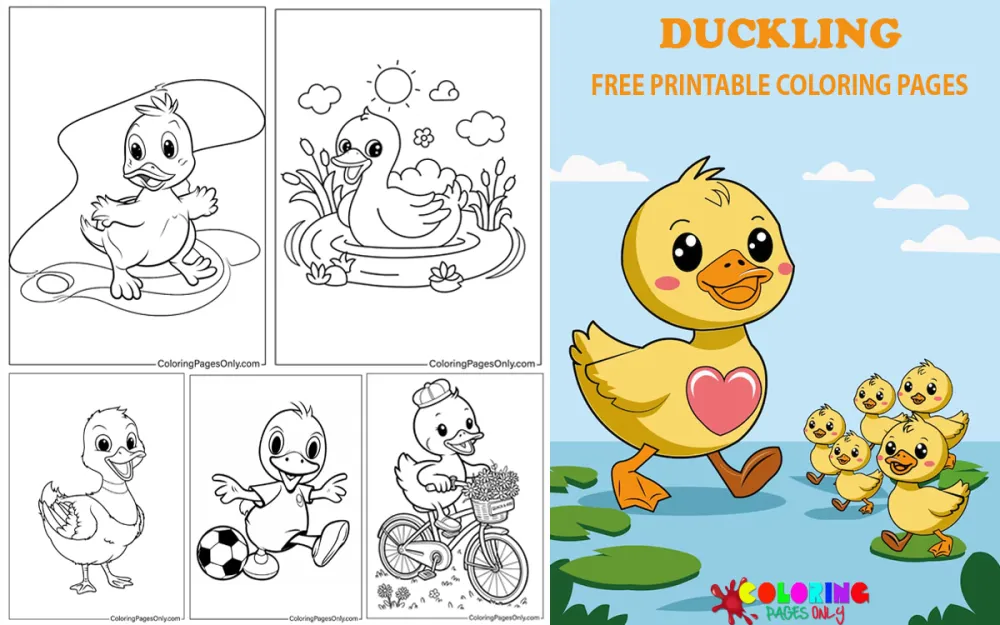
Free Duckling Coloring Pages: 52 printable PDF designs of baby ducks playing, swimming, and spending time with their mothers. Printing a page is free, and so is coloring it online, with no account required for either.
Ducklings are famous in science for imprinting, the instinct to follow the first moving thing they see after hatching, usually their mother. Austrian zoologist Konrad Lorenz documented this behavior in the 1930s and later won a Nobel Prize for the research; in his experiments, goslings and ducklings followed him around just as readily as they would a birth parent. That instinct is part of why images of a duckling trailing behind its mother feel so recognizable.
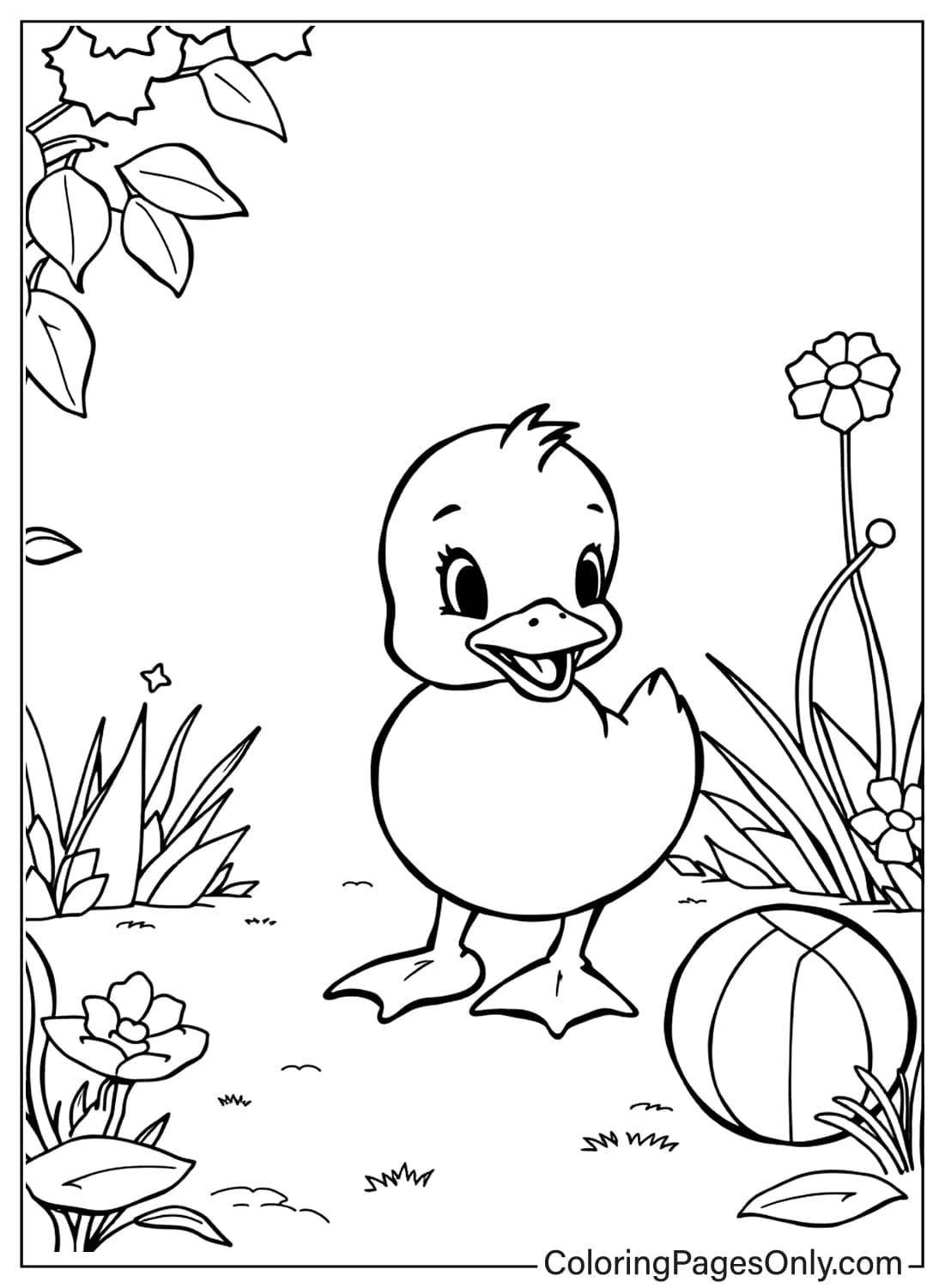
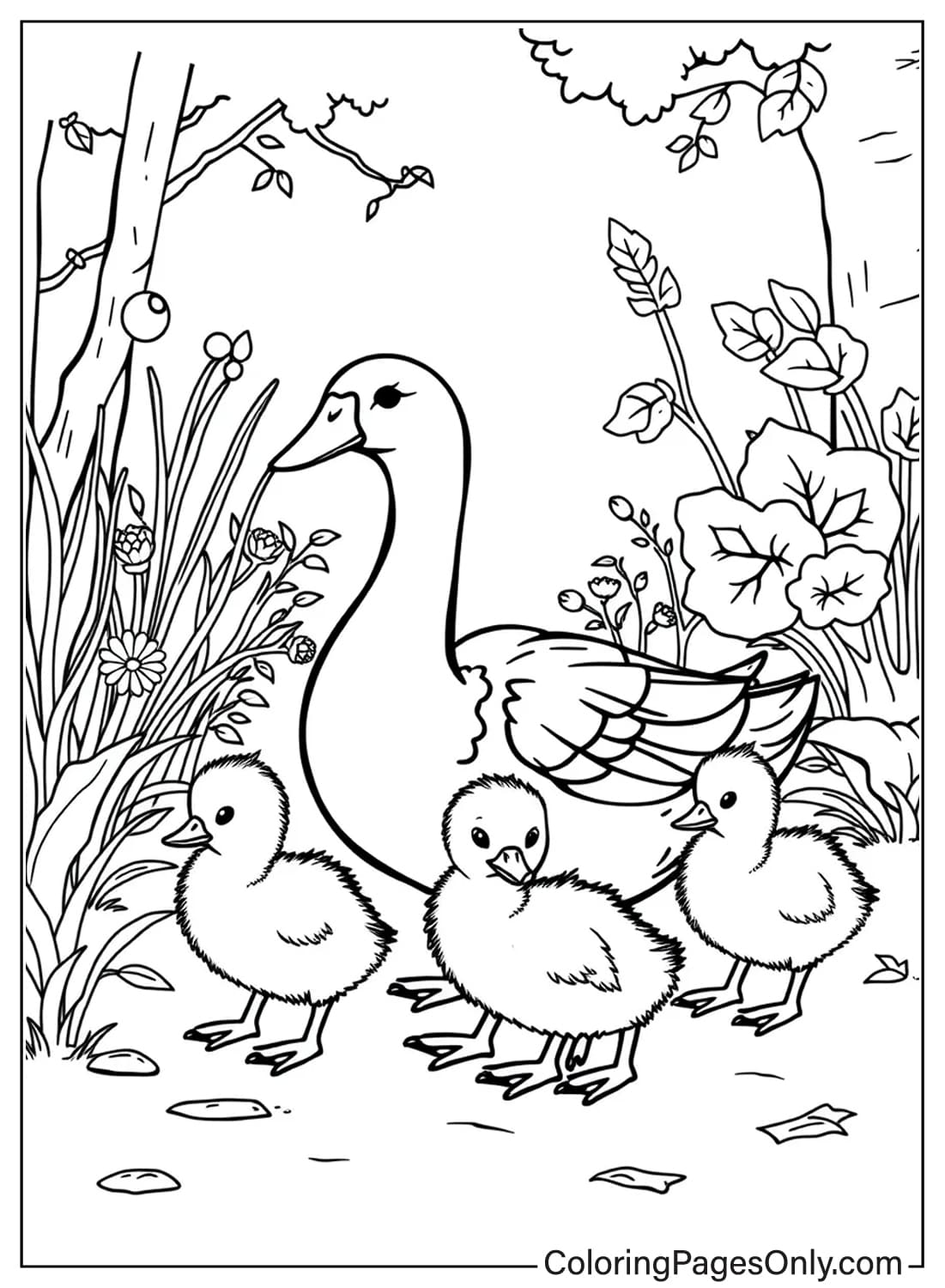
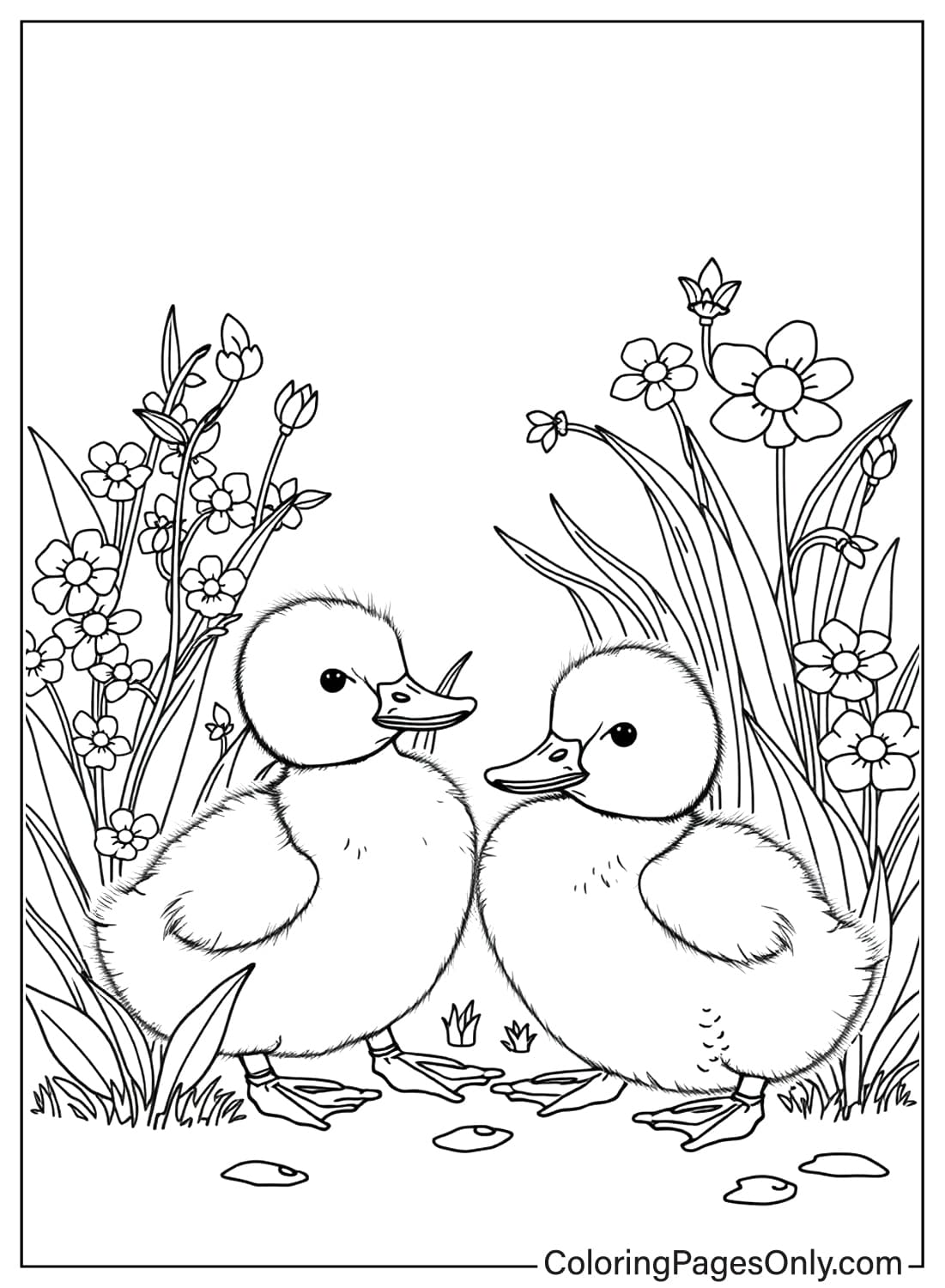
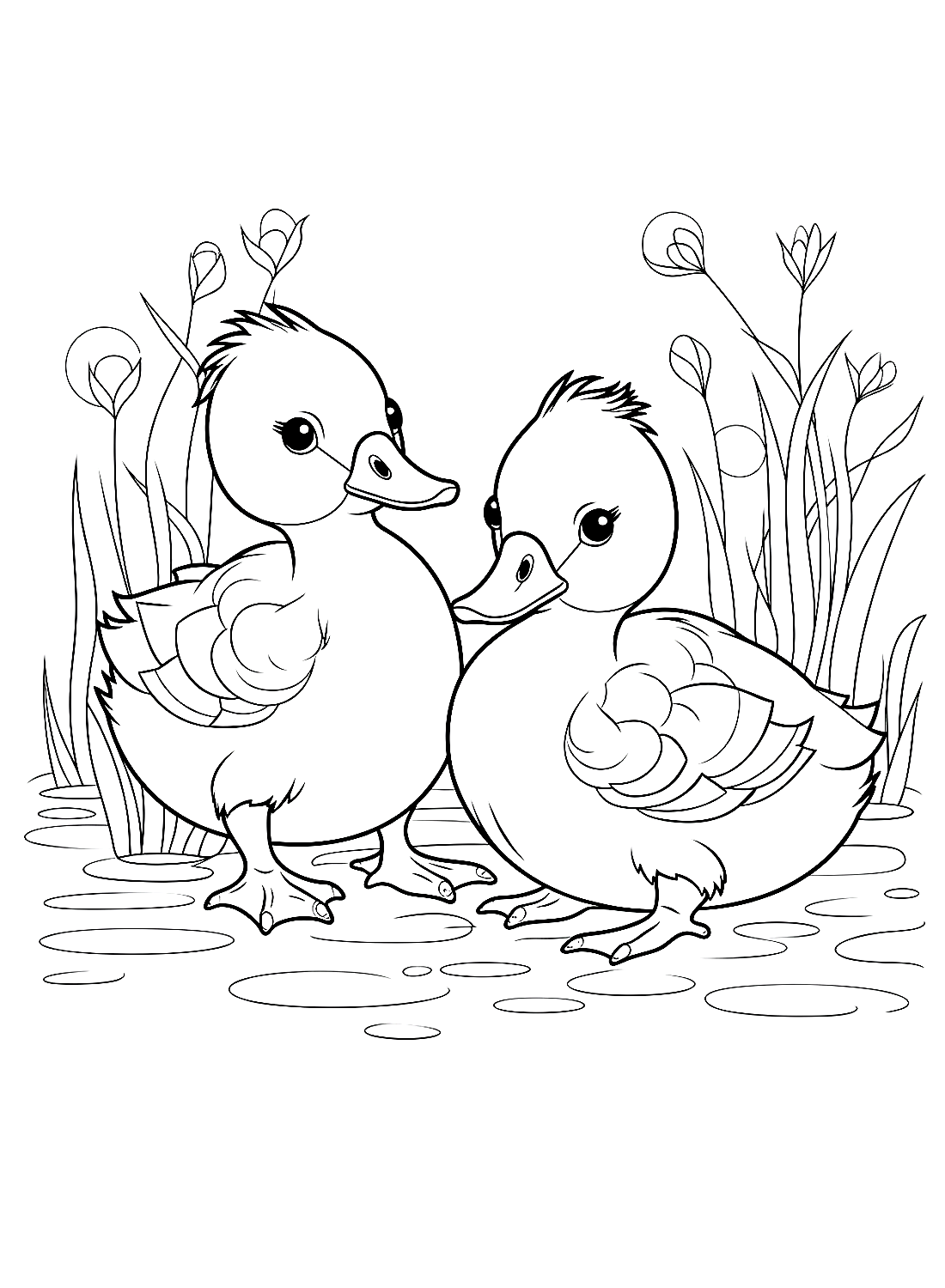
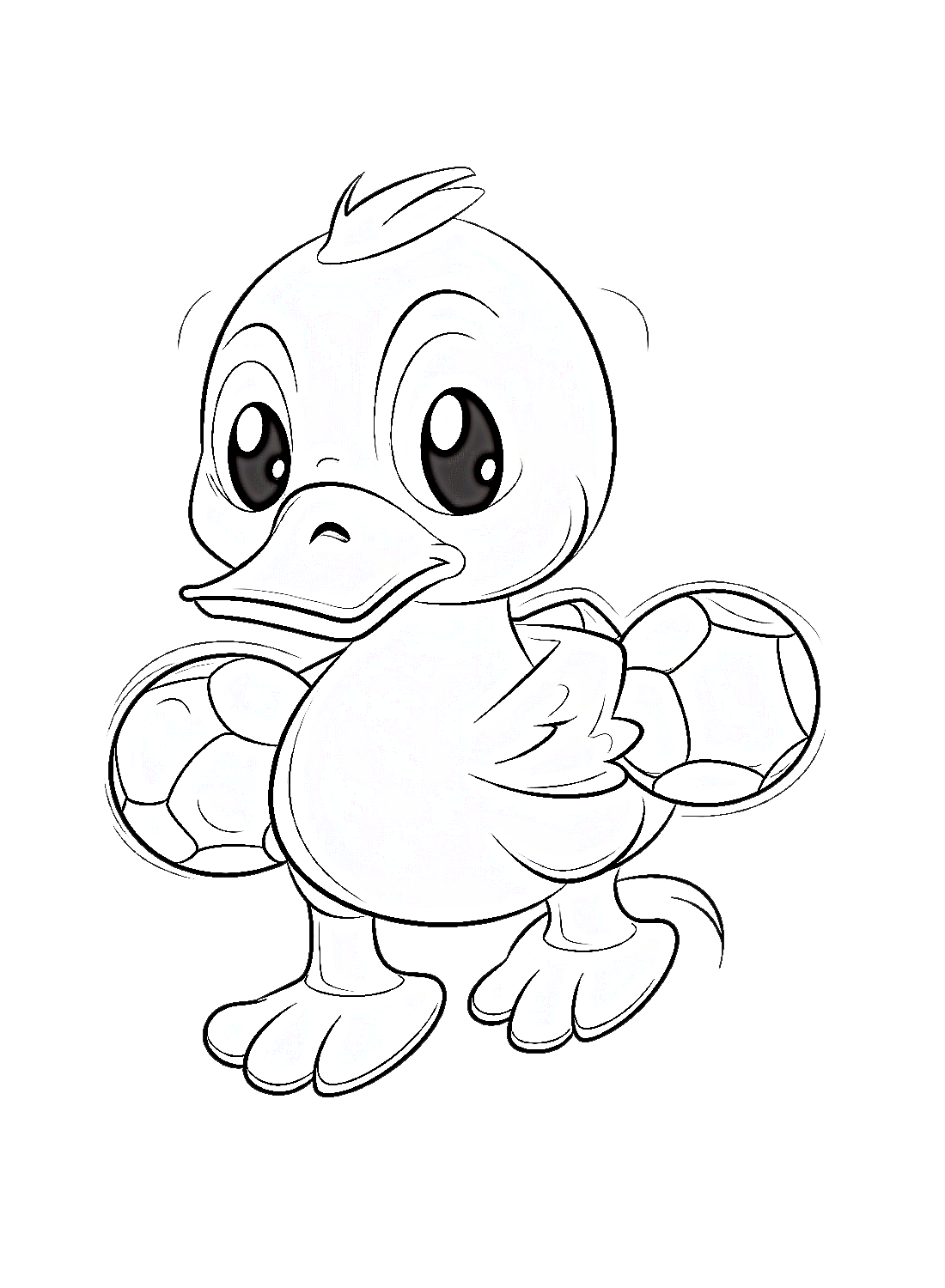
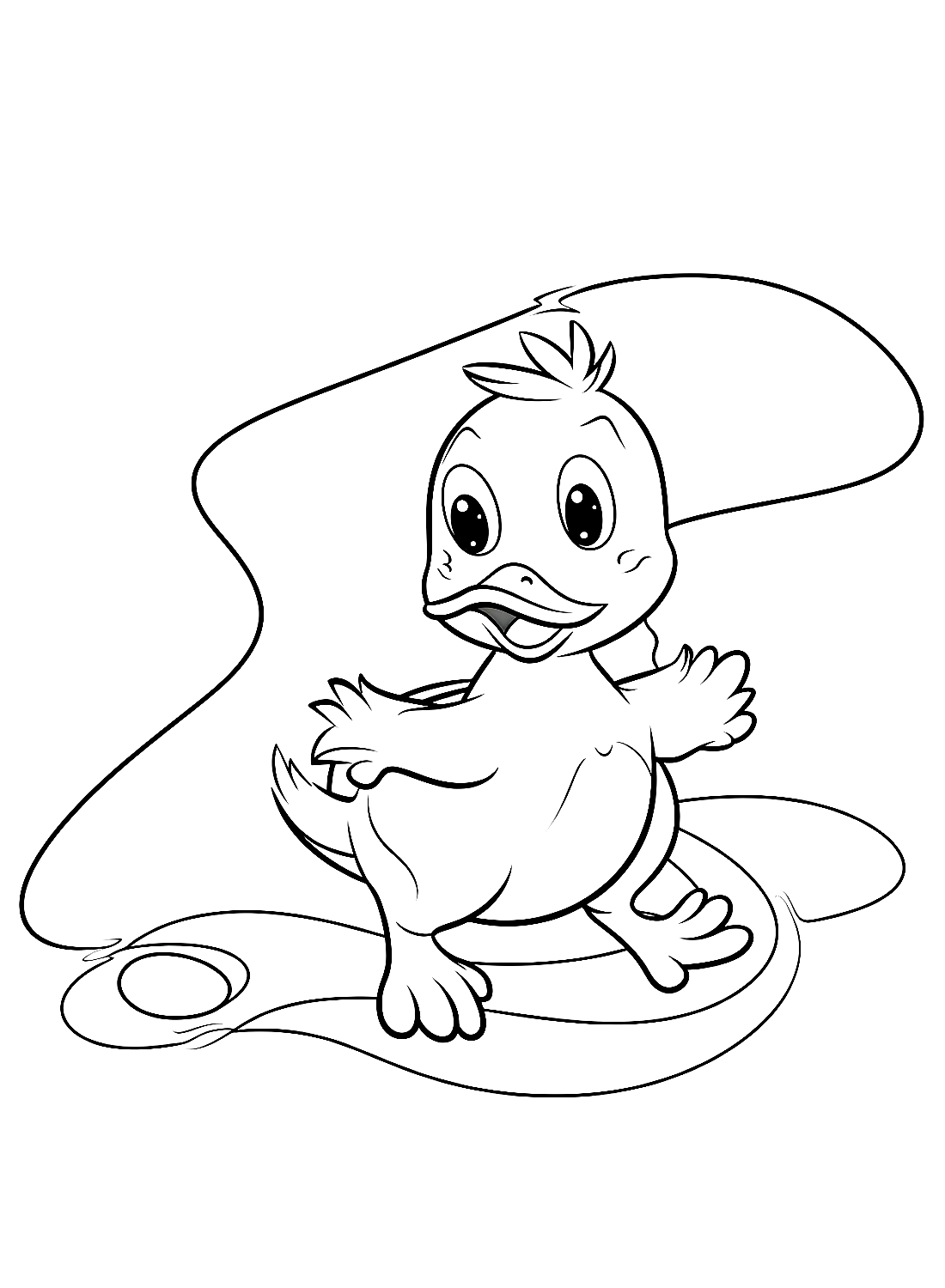
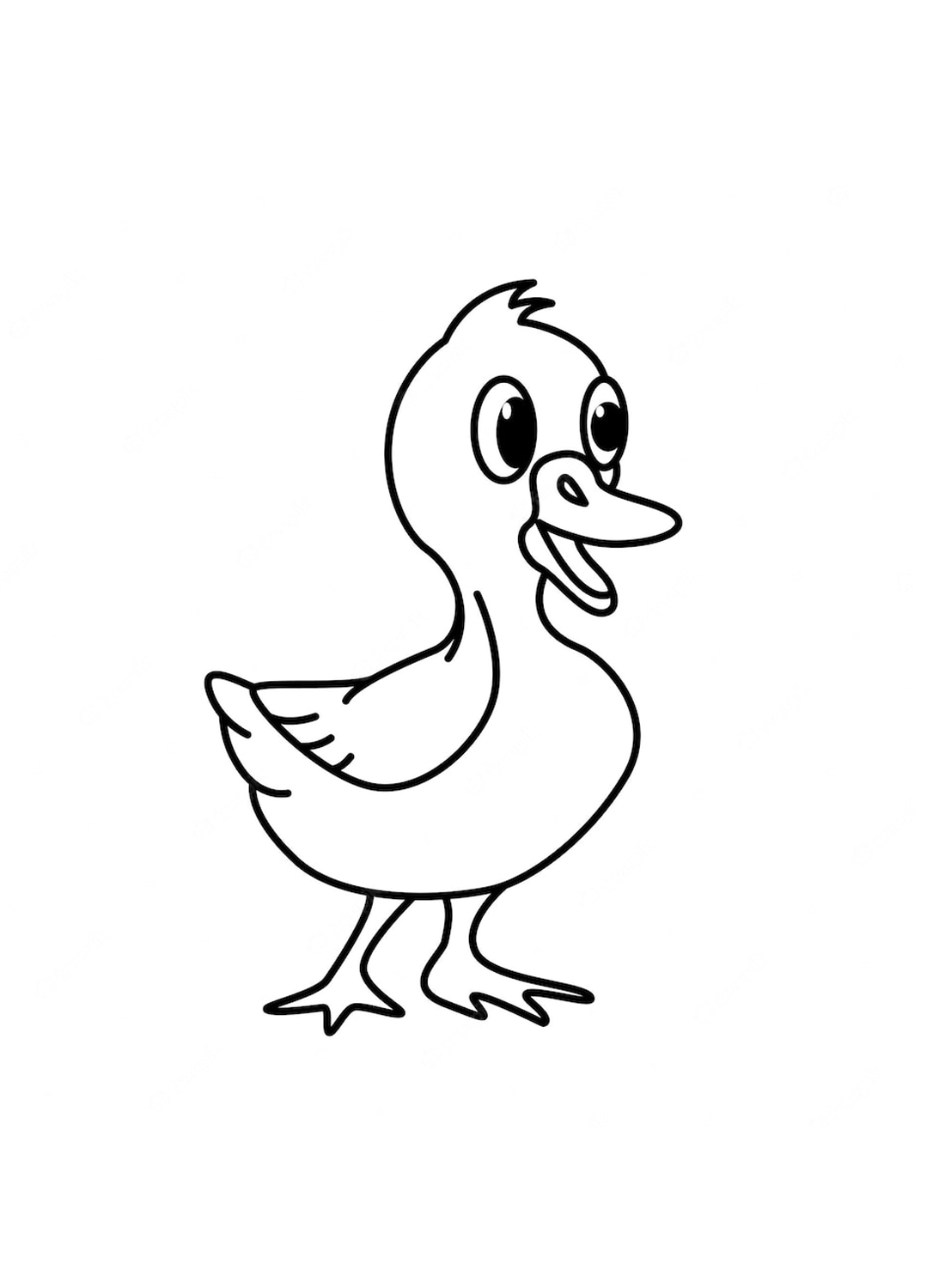
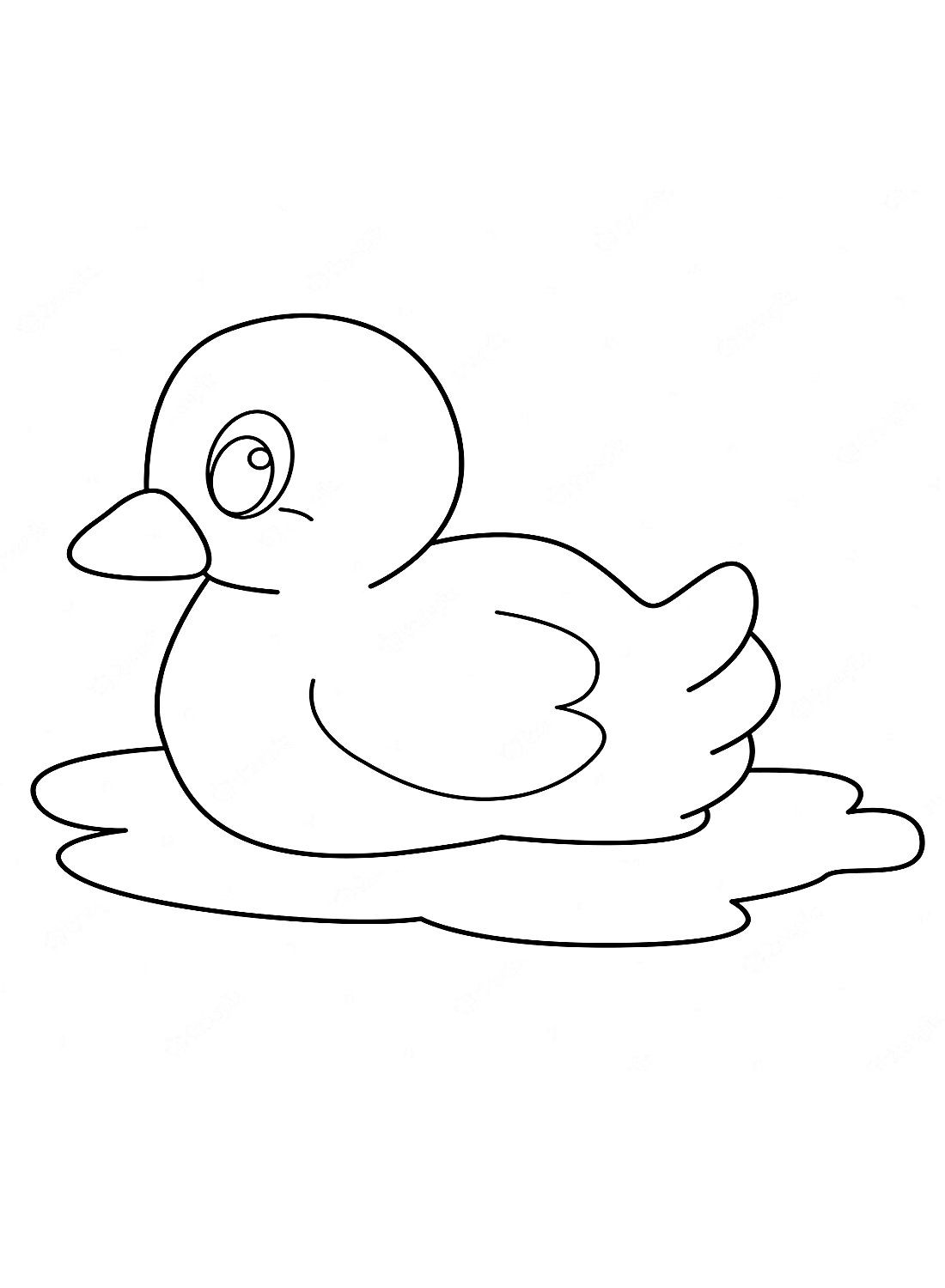
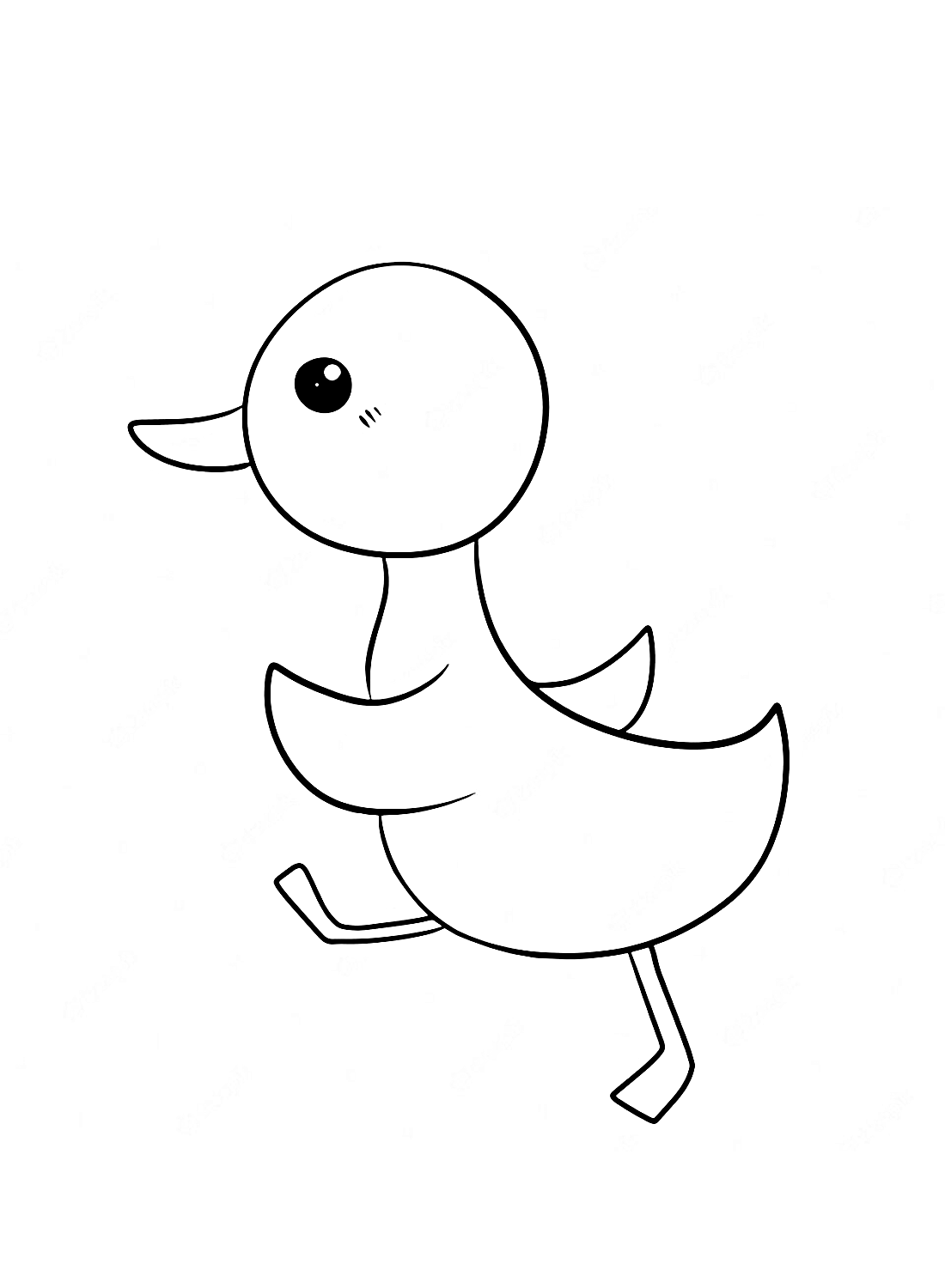
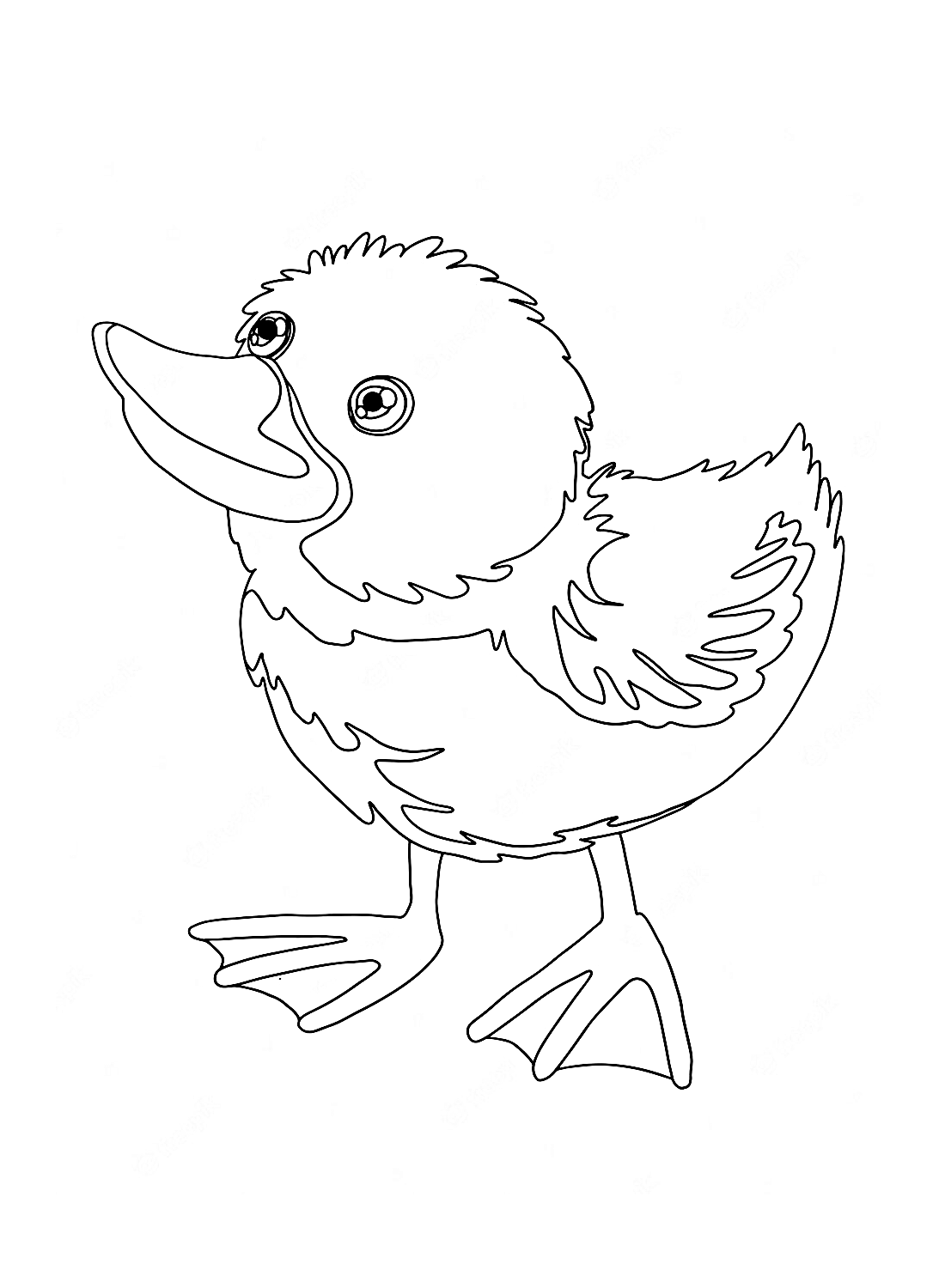
The 52 pages are split into five groups: simple solo portraits, ducklings at play, nature and water settings, mother-and-baby scenes, and costume, seasonal, or fantasy pages. With a collection this large, coloring choices range from a single plain duckling to a busier multi-duckling family scene.
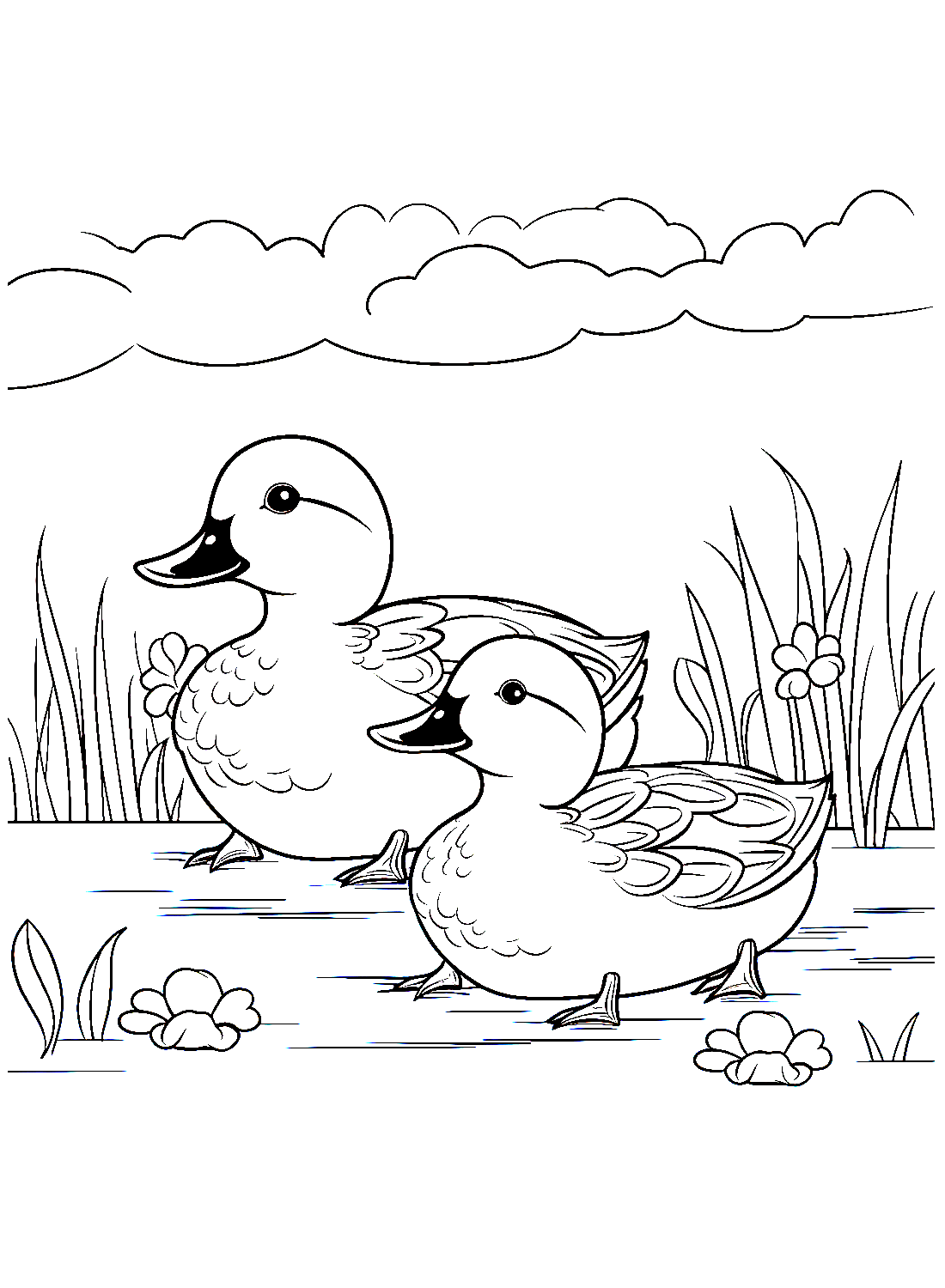
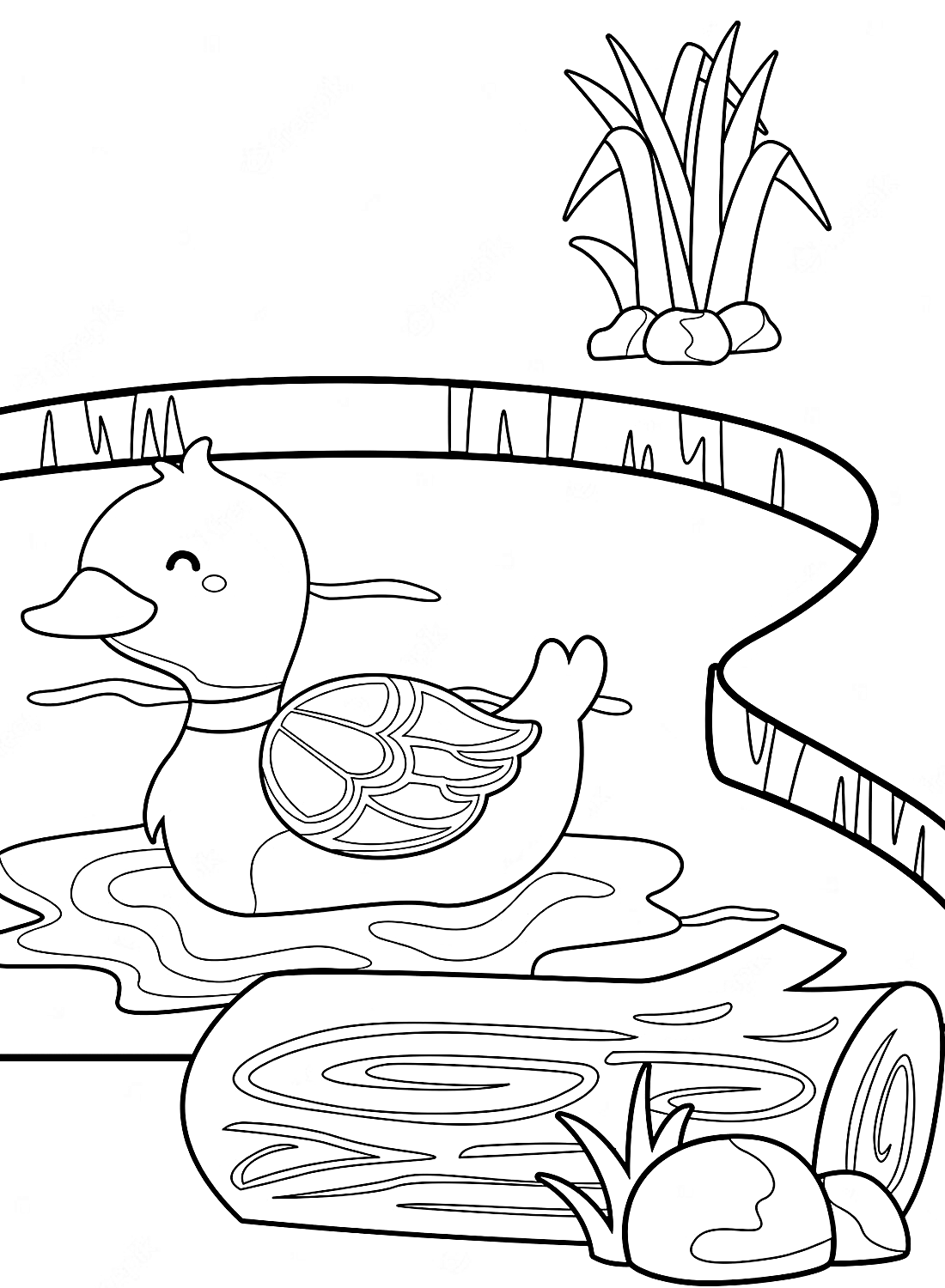
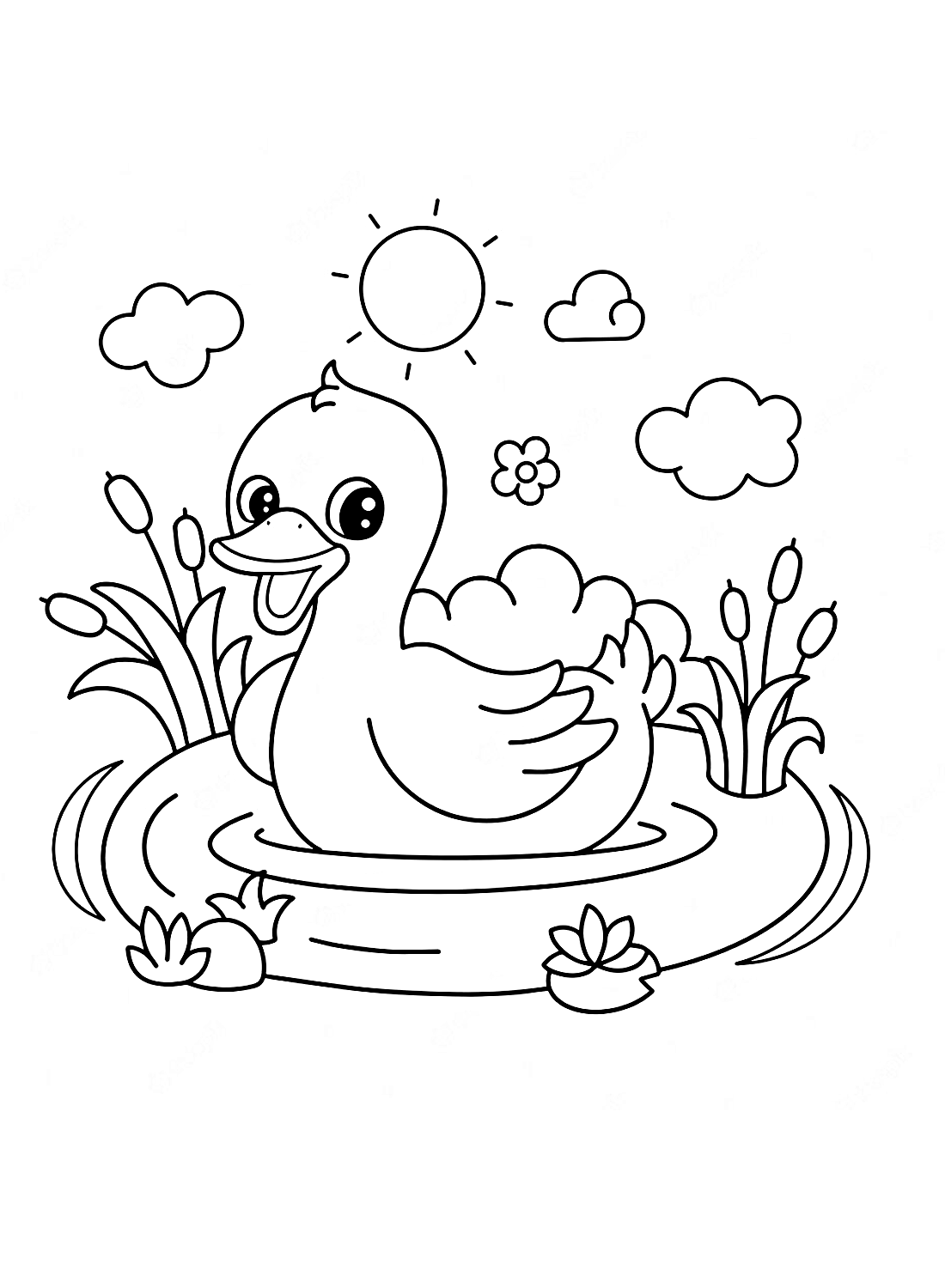

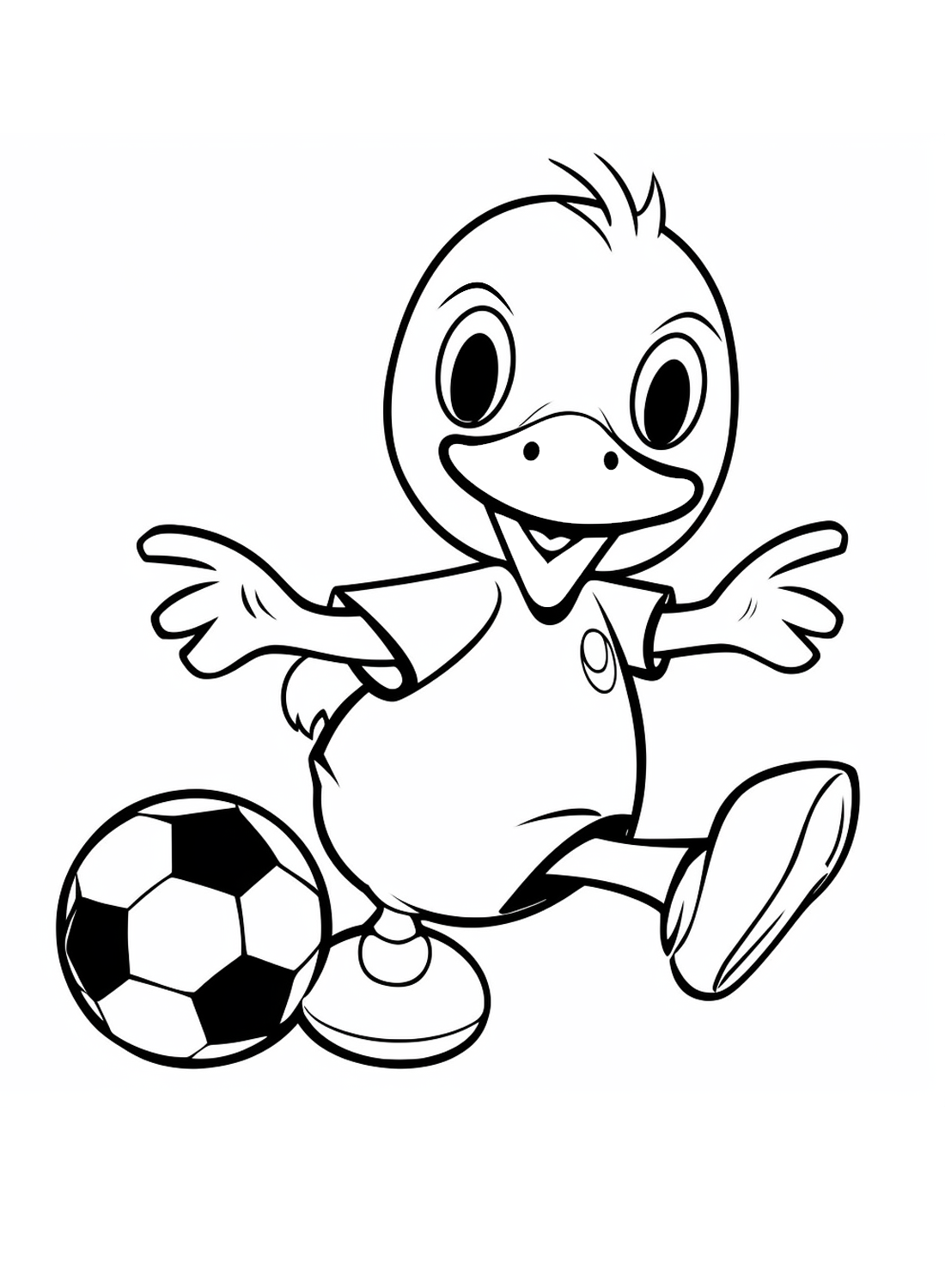
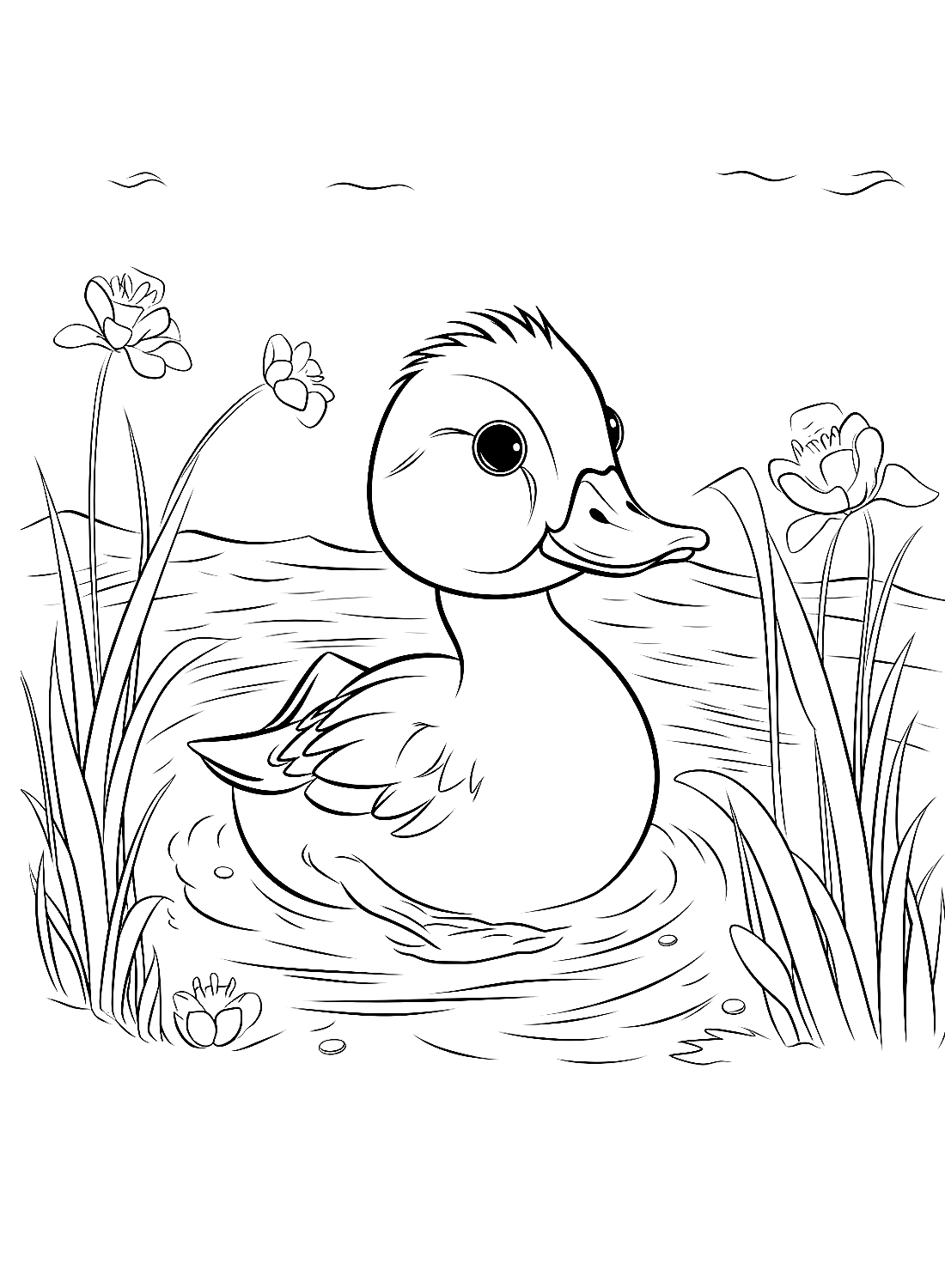
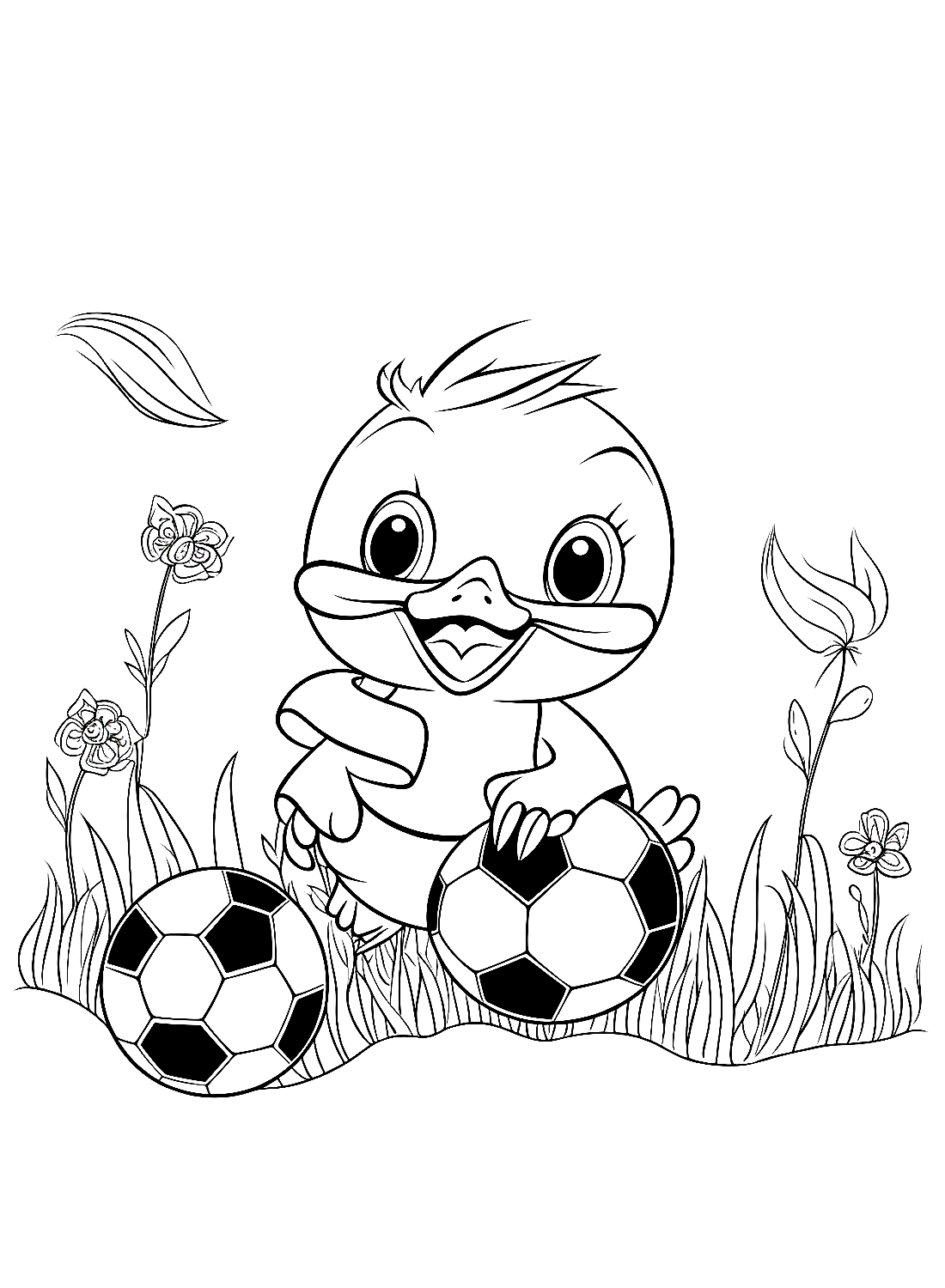
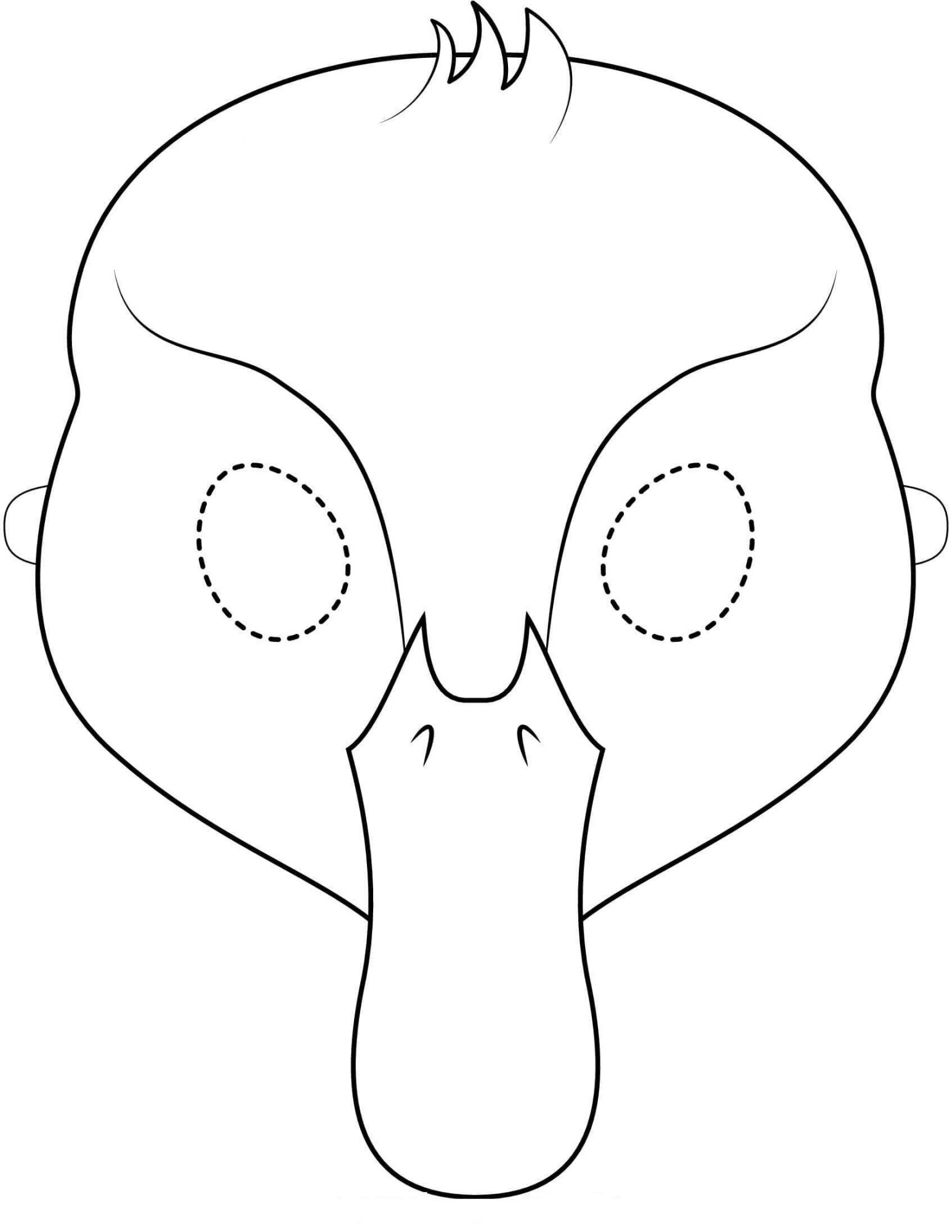
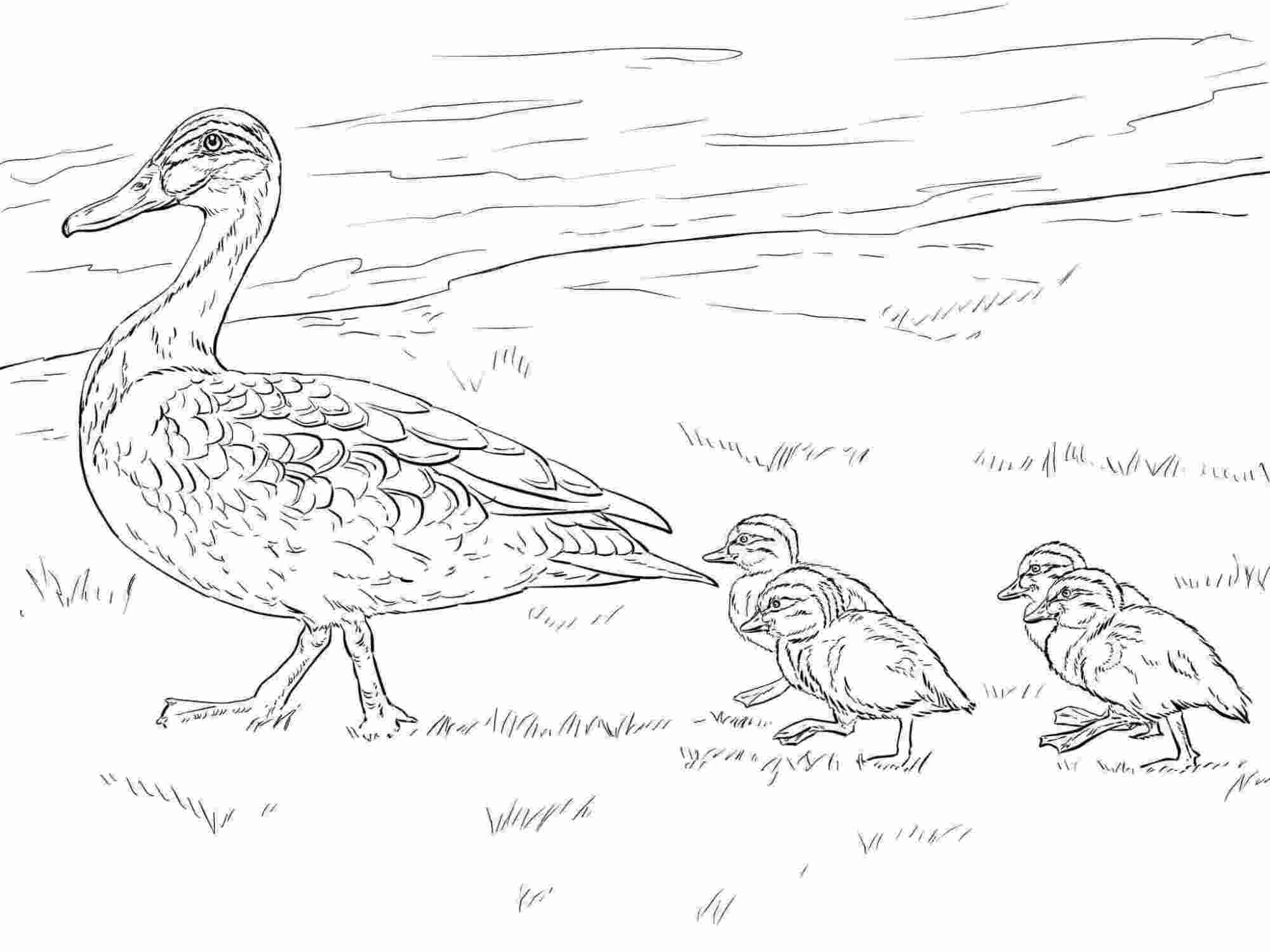
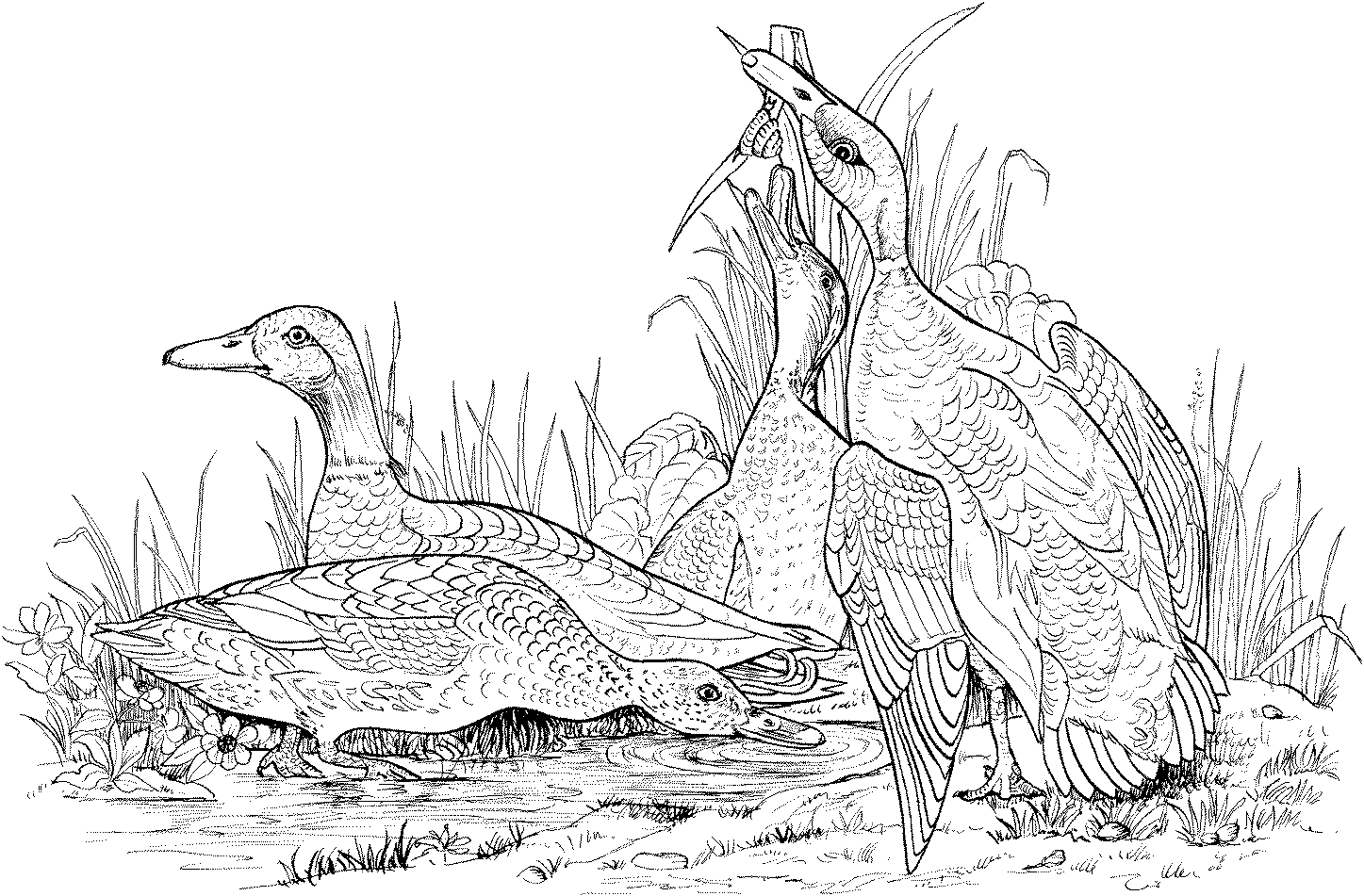
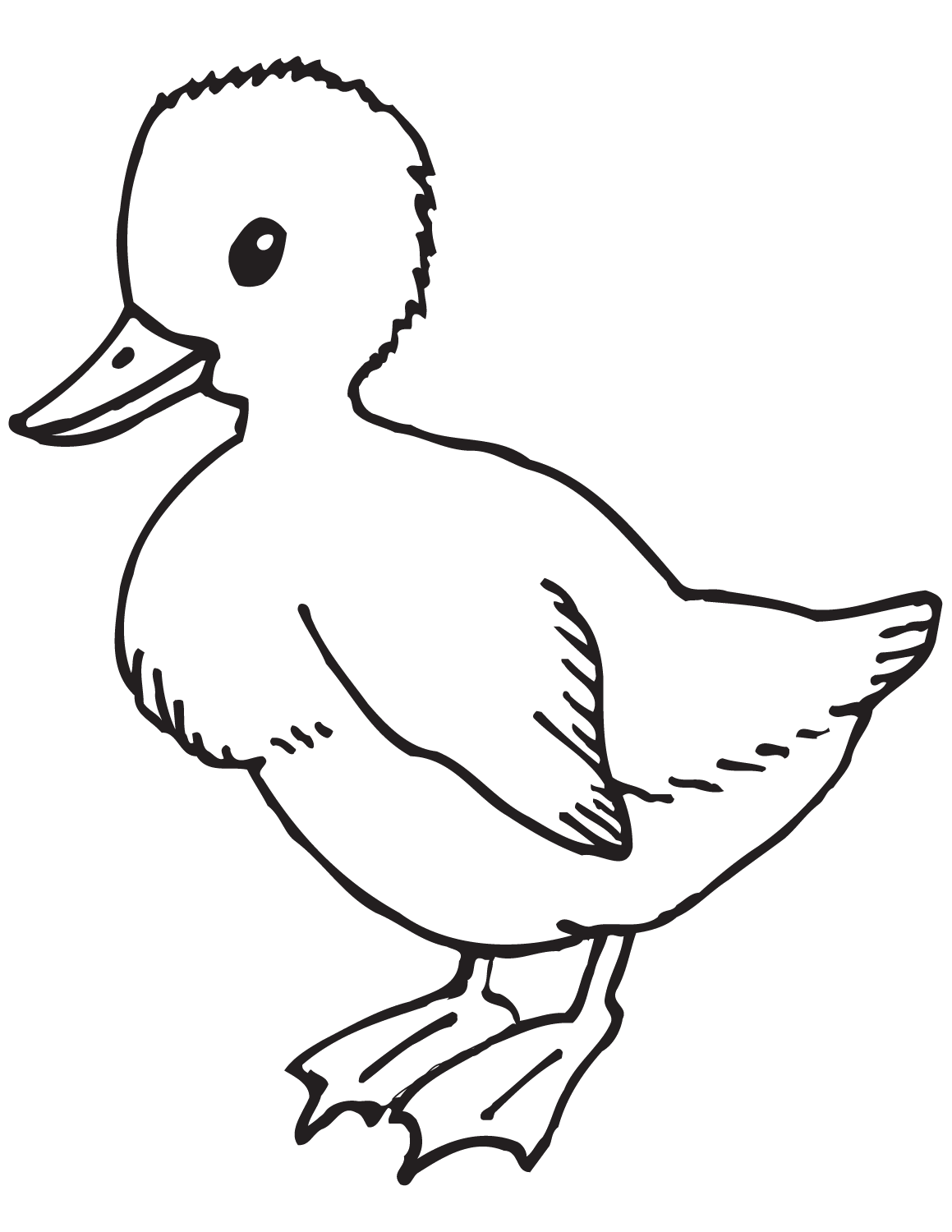
What Is Inside This Collection
Five groups organize the 52 pages, and while a large share is a simple solo duckling, the collection also includes genuine variety in setting and activity.
Simple Solo Portraits
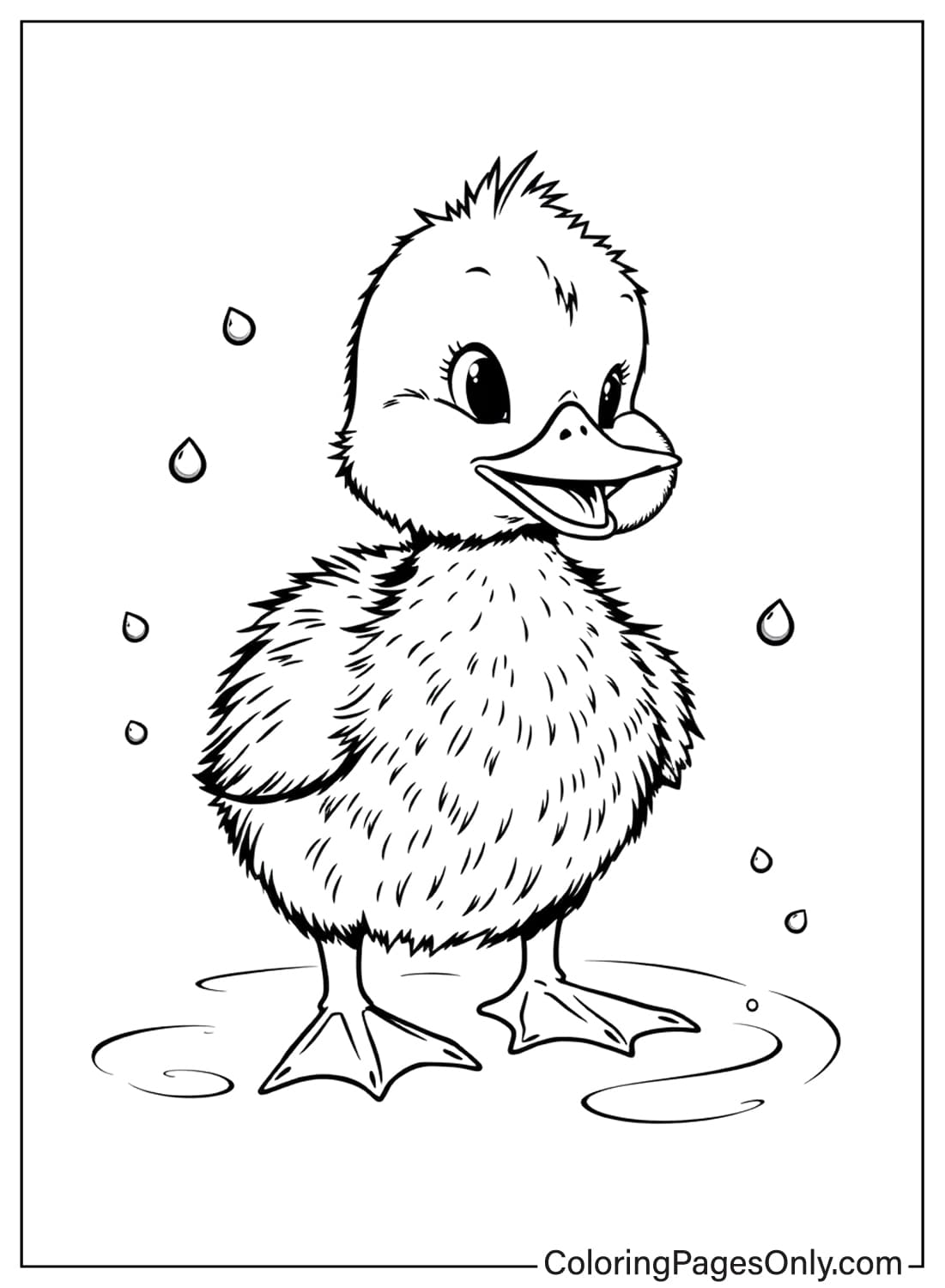
The largest group shows one duckling alone, distinguished mostly by file name rather than by any real difference in pose. Coloring suggestion: Use this repetition to practice smooth yellow gradients and a consistent orange beak and feet across every page, rather than treating each portrait as a separate design decision.
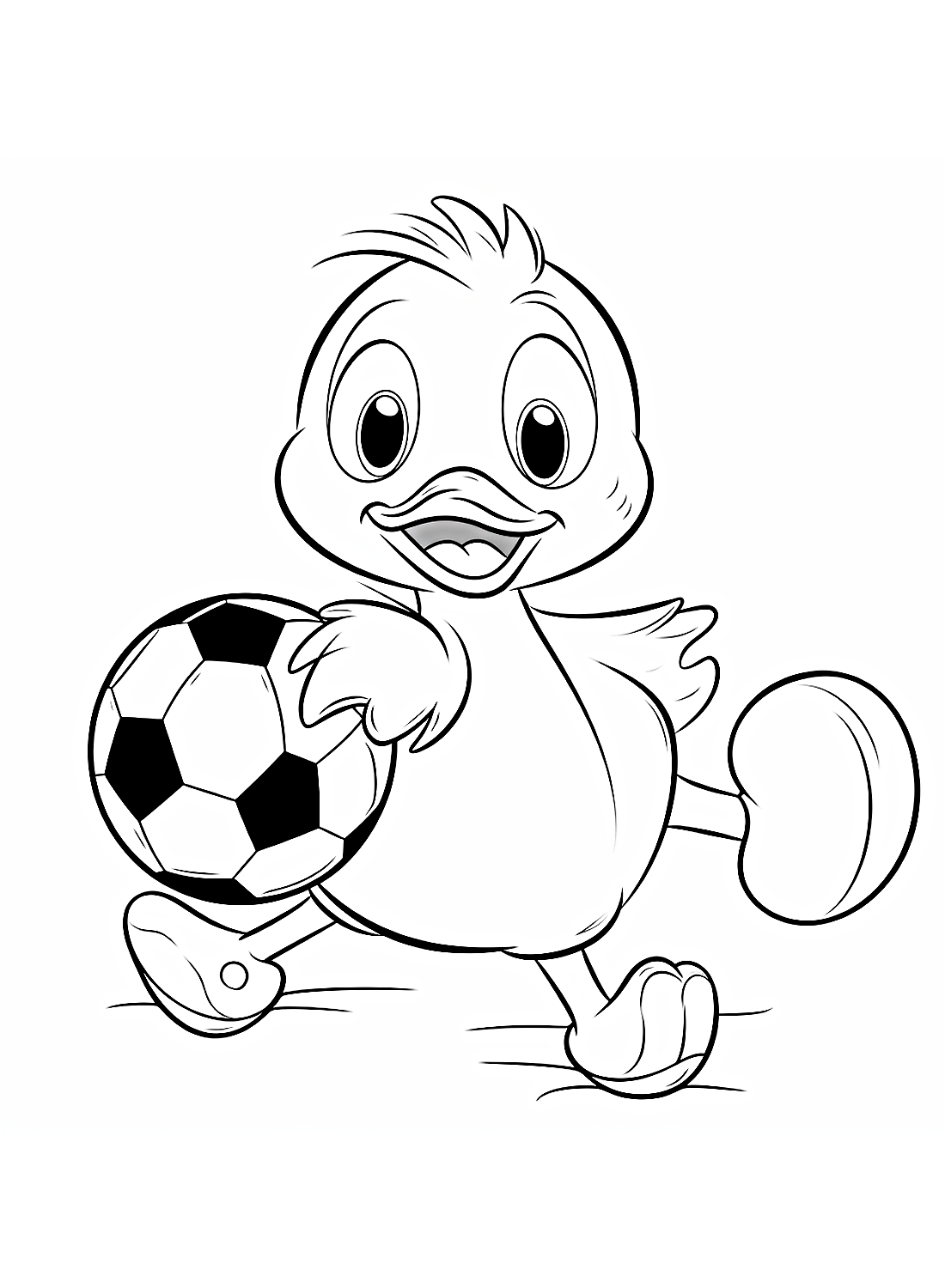
Ducklings at Play
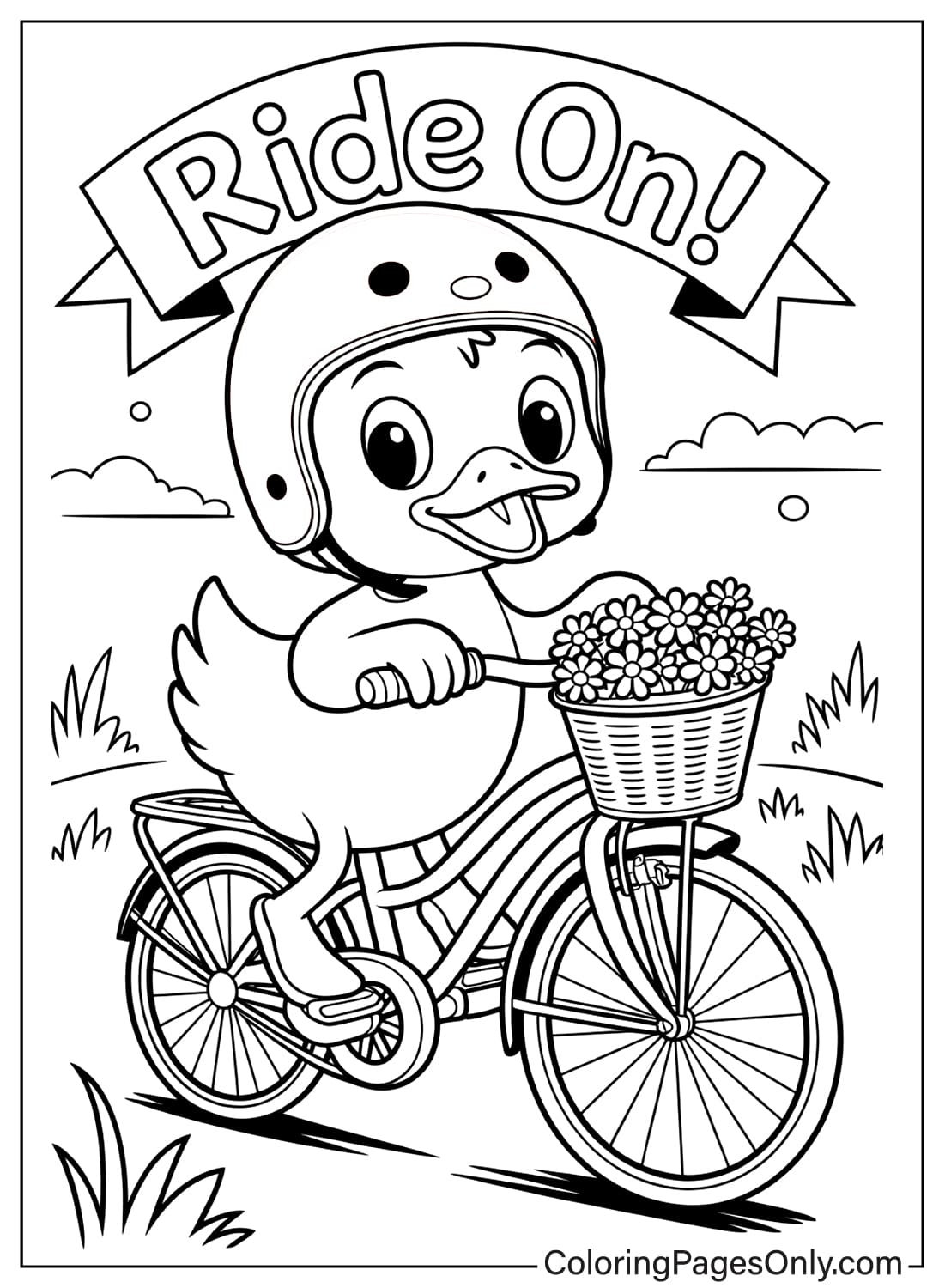
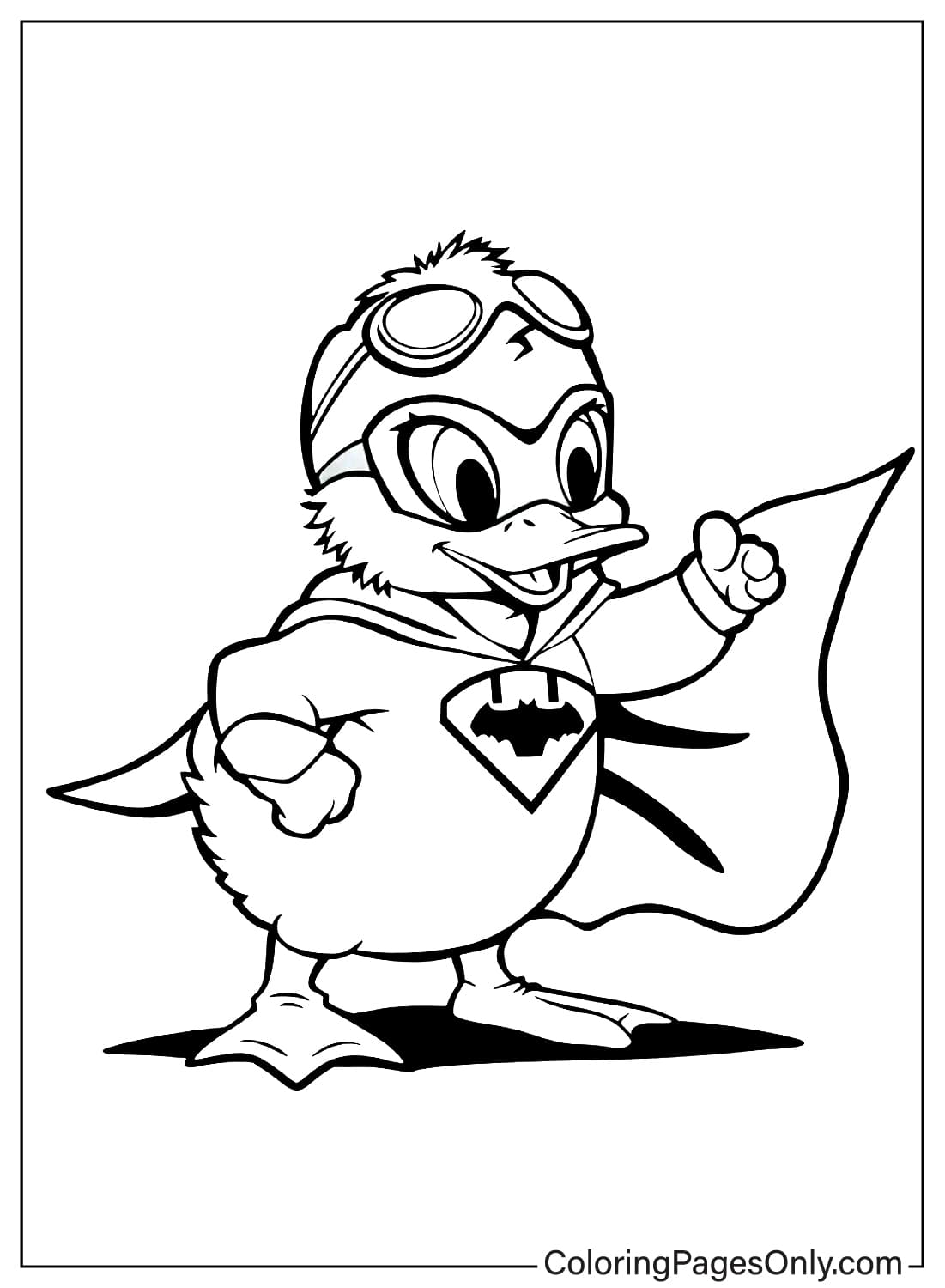
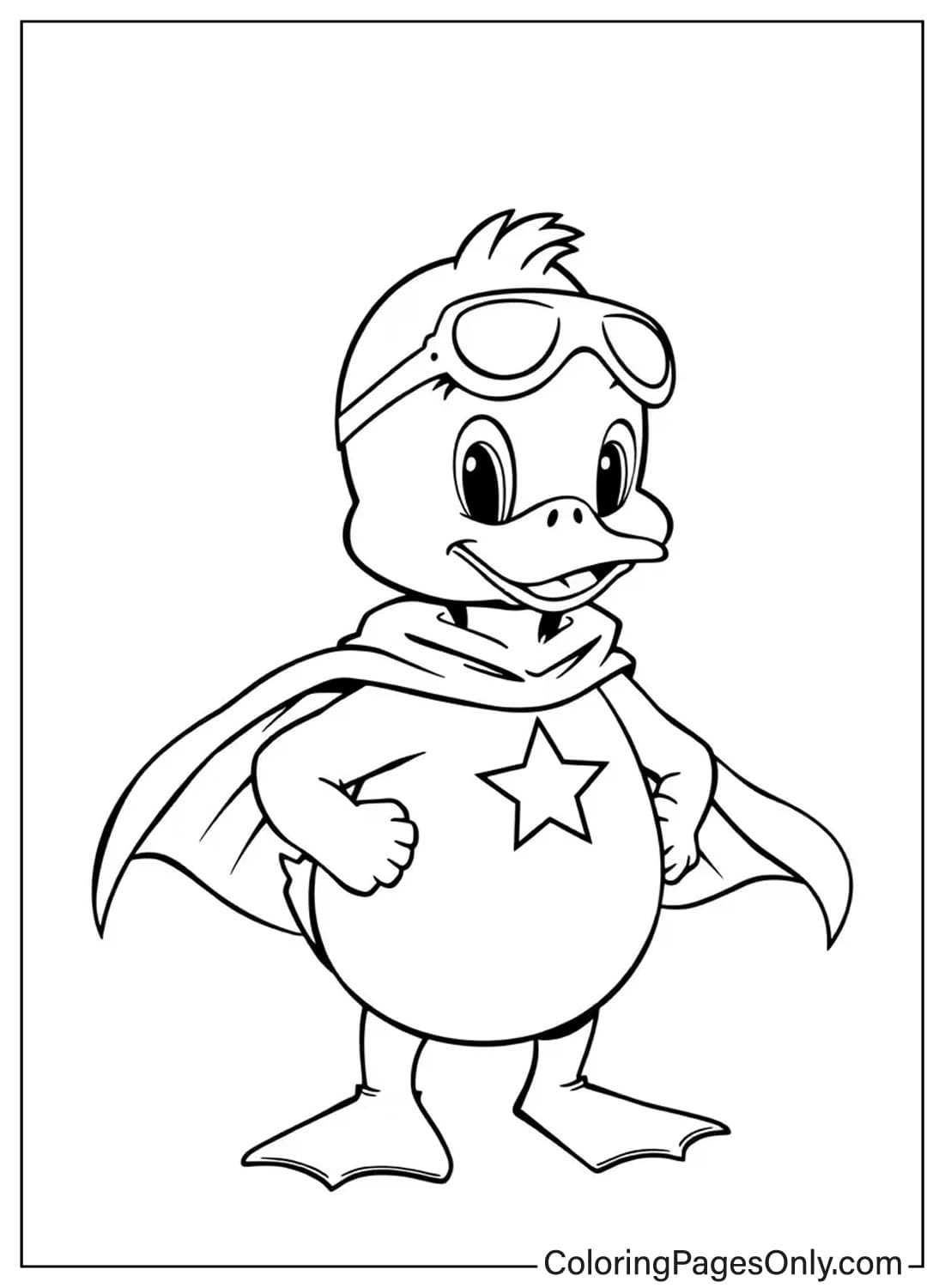
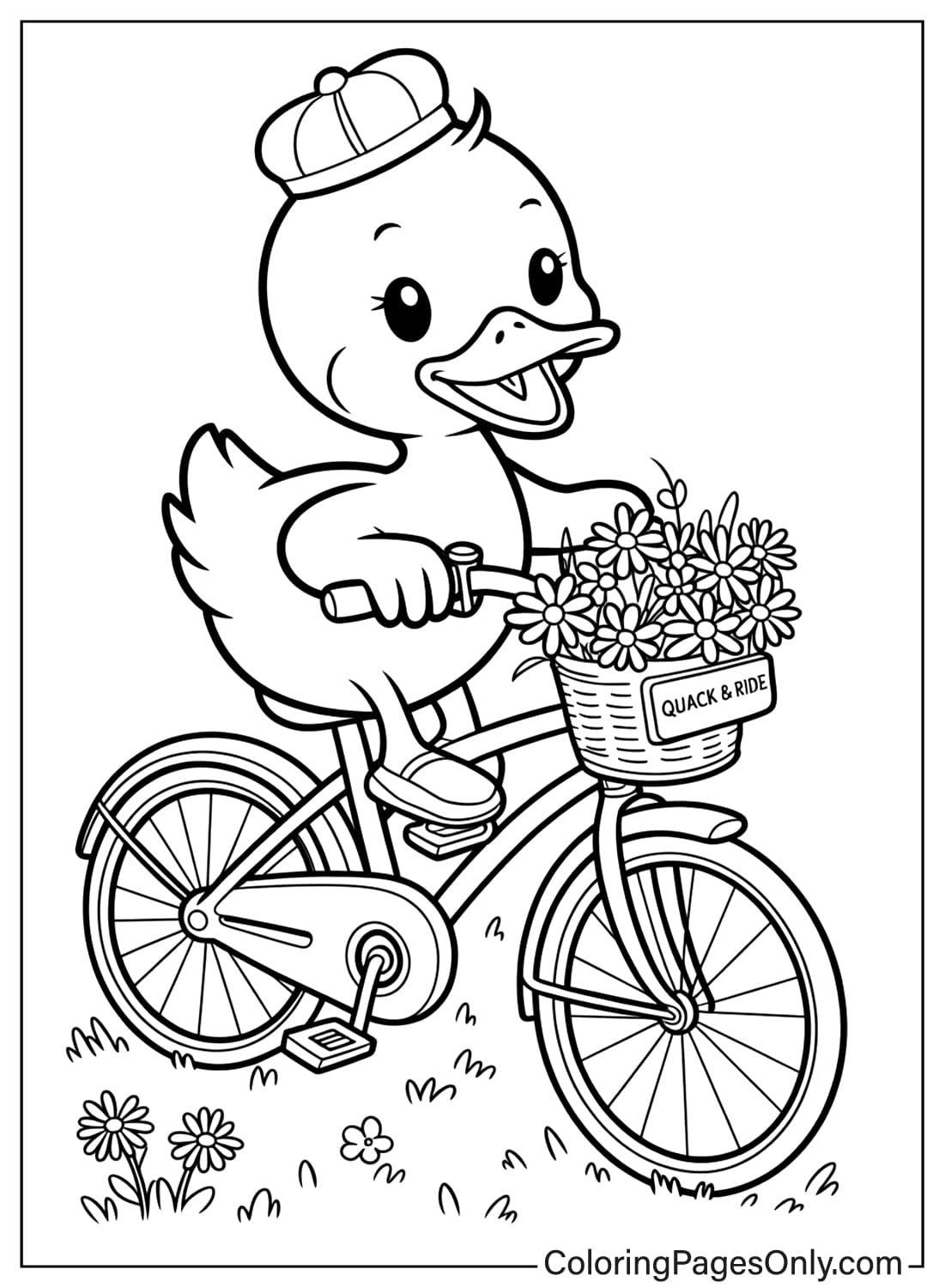
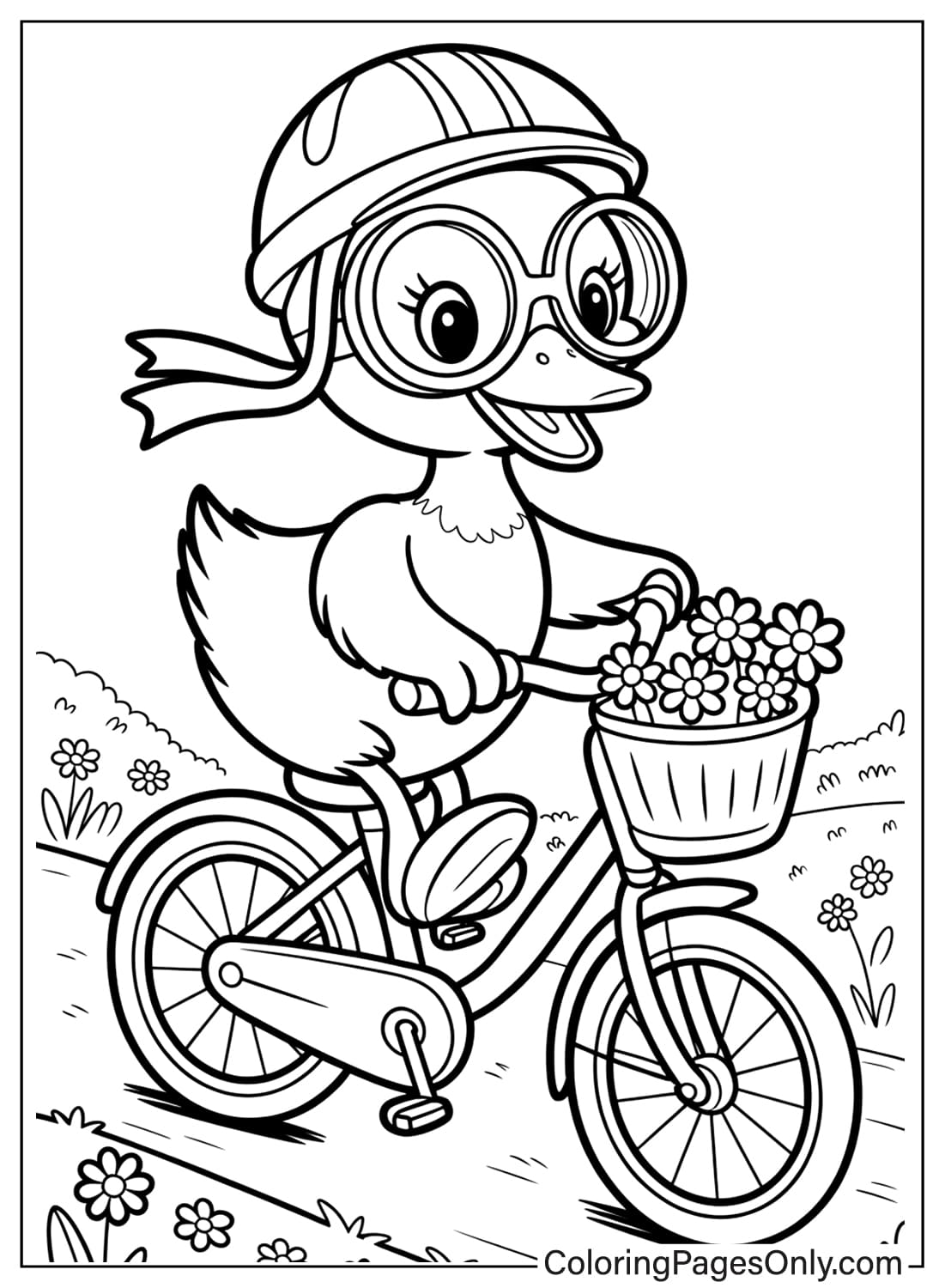
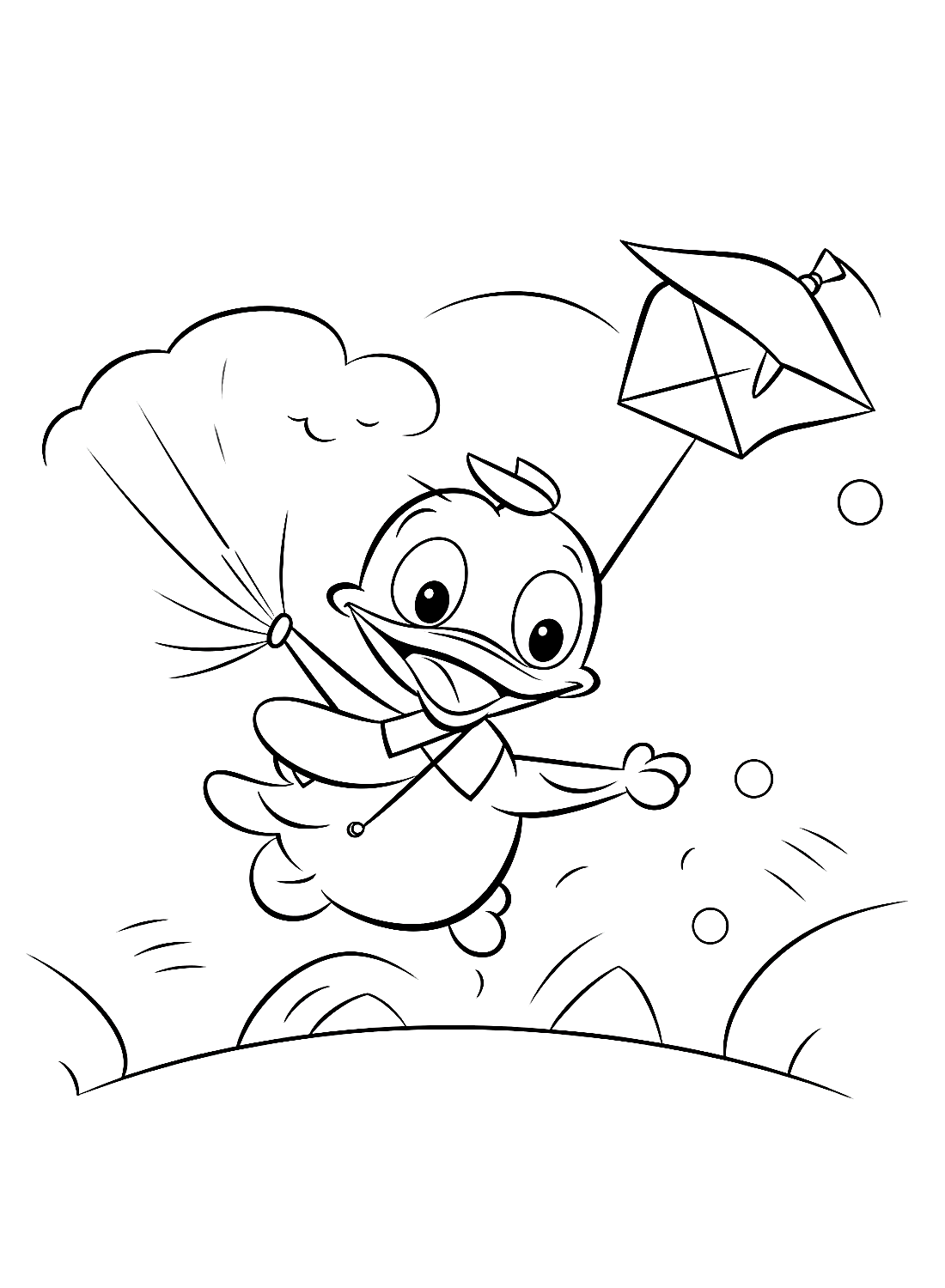
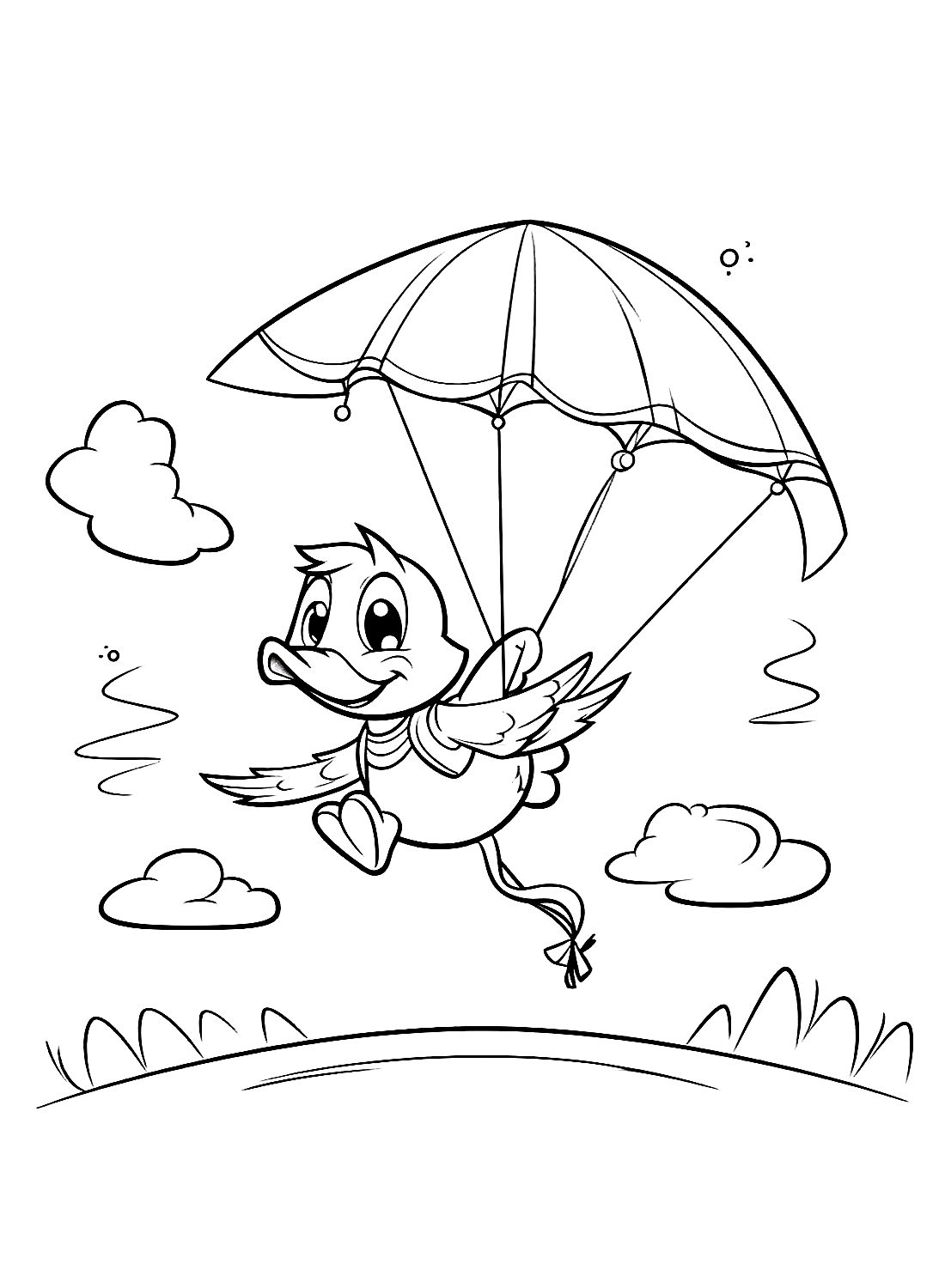
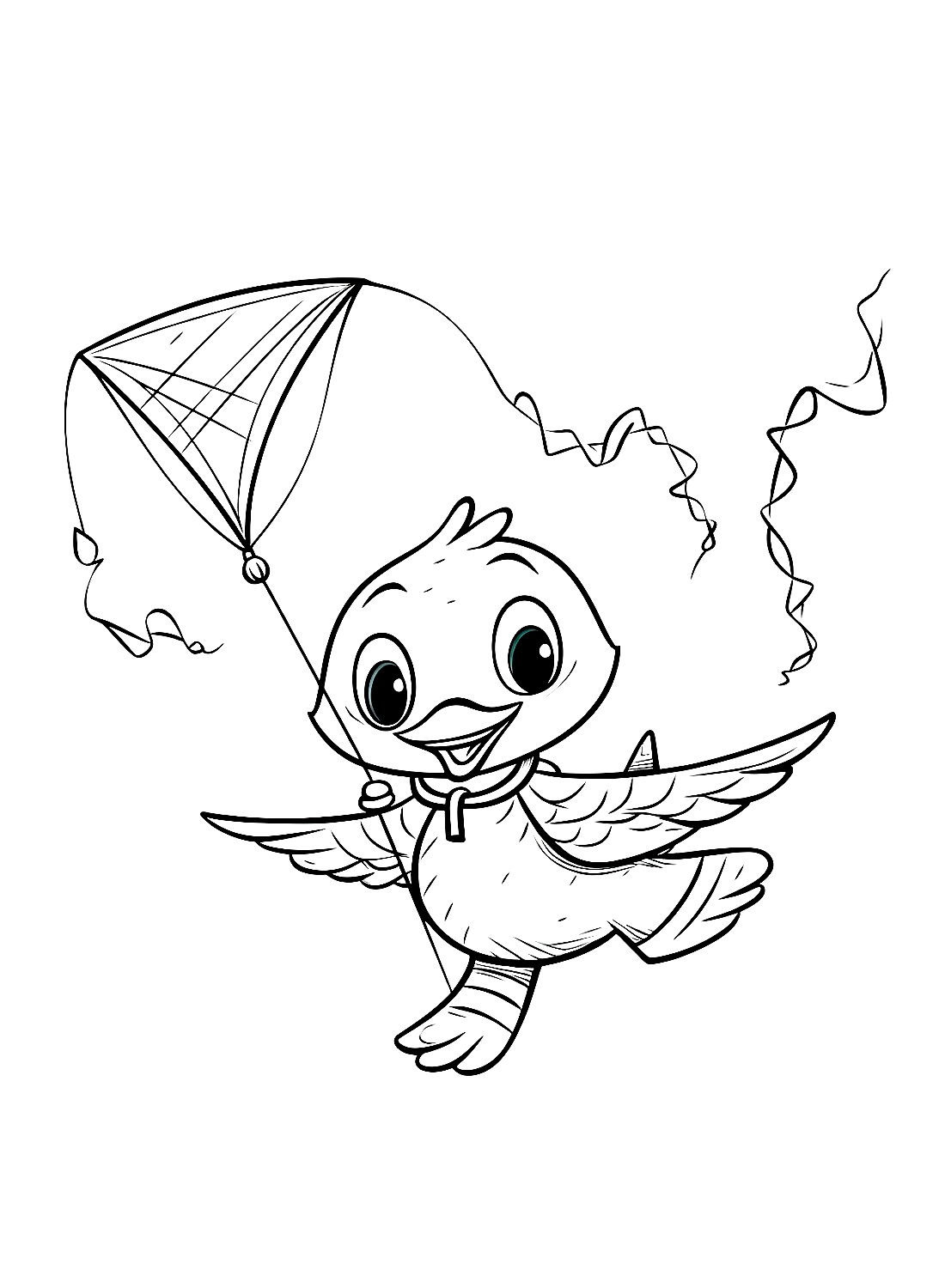
This group shows ducklings engaged in an activity: playing ball, flying a kite, riding a bike, or dressed as a superhero. Coloring suggestion: keep the duckling’s own yellow consistent across this group, and let the prop or costume, a red ball, a colorful kite, carry the page’s boldest color.
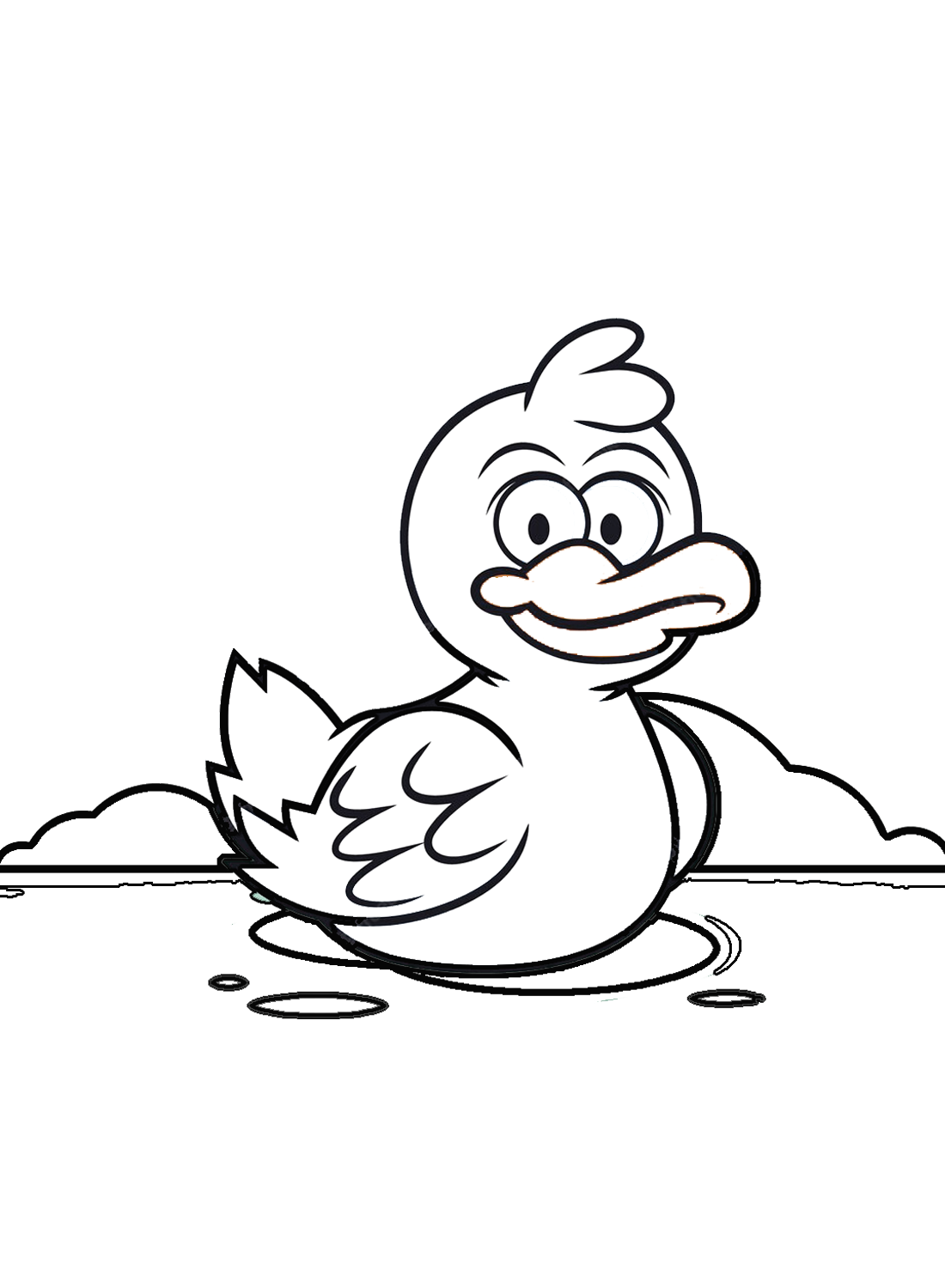
Nature and Water Settings
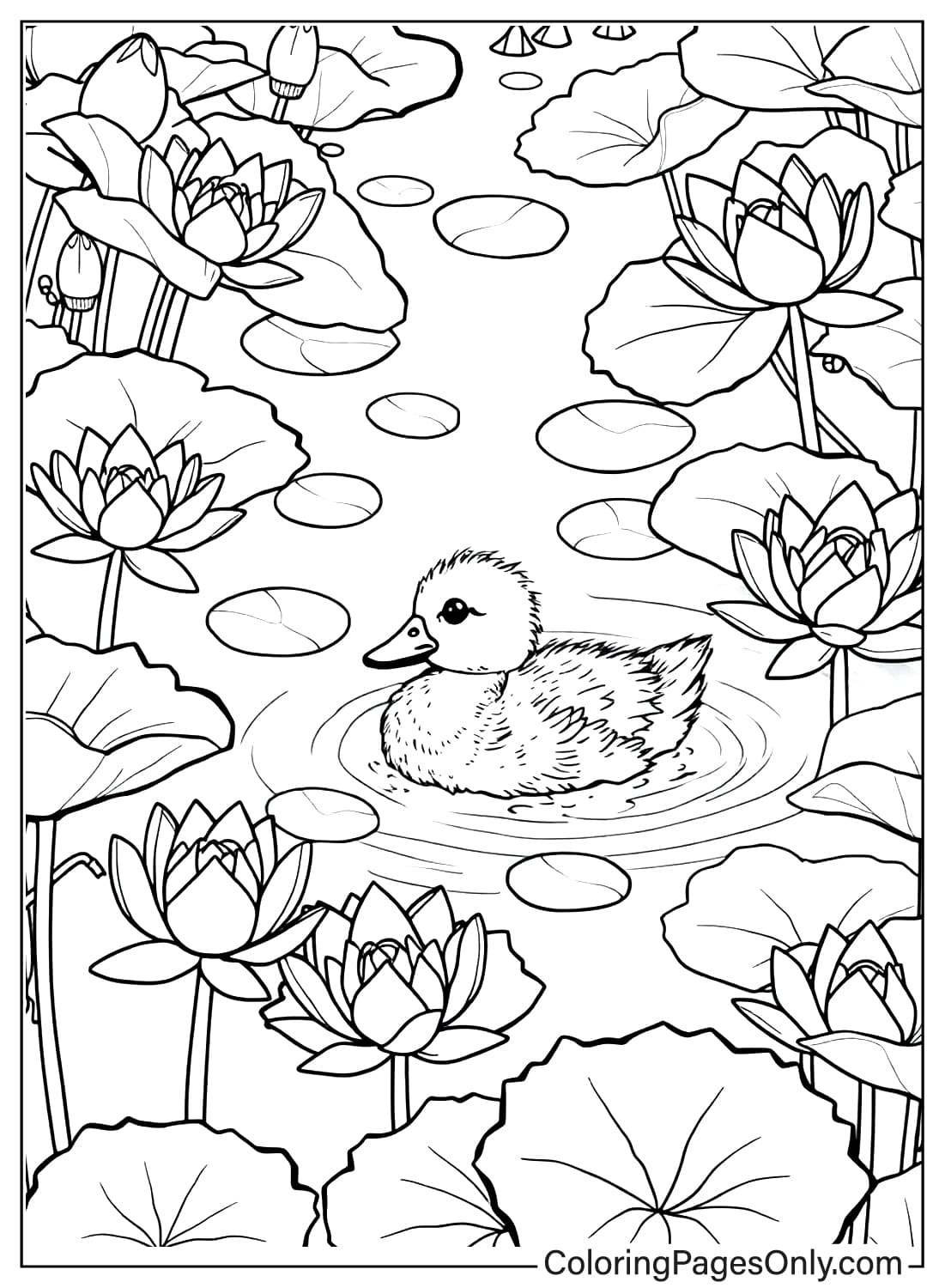
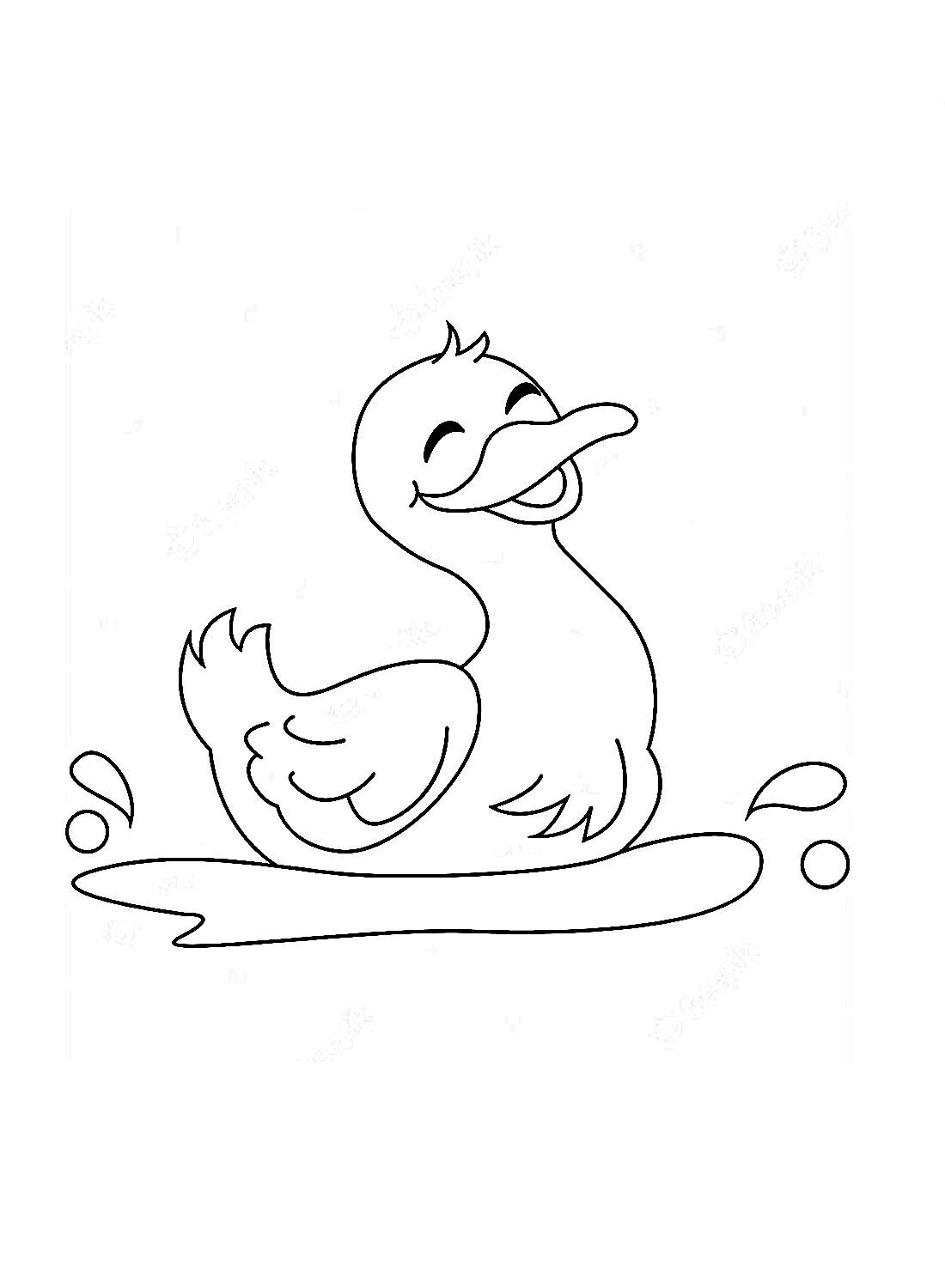
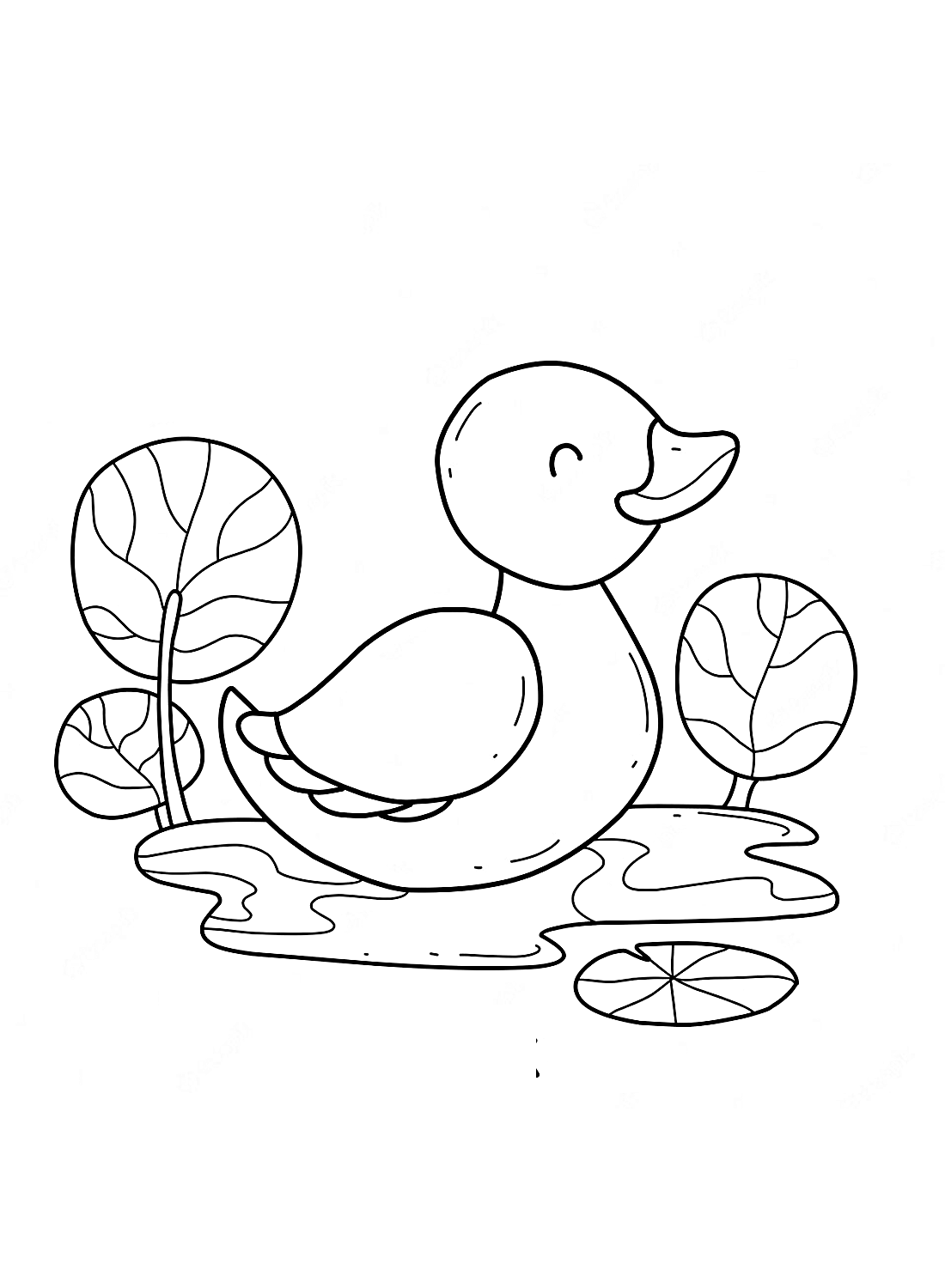
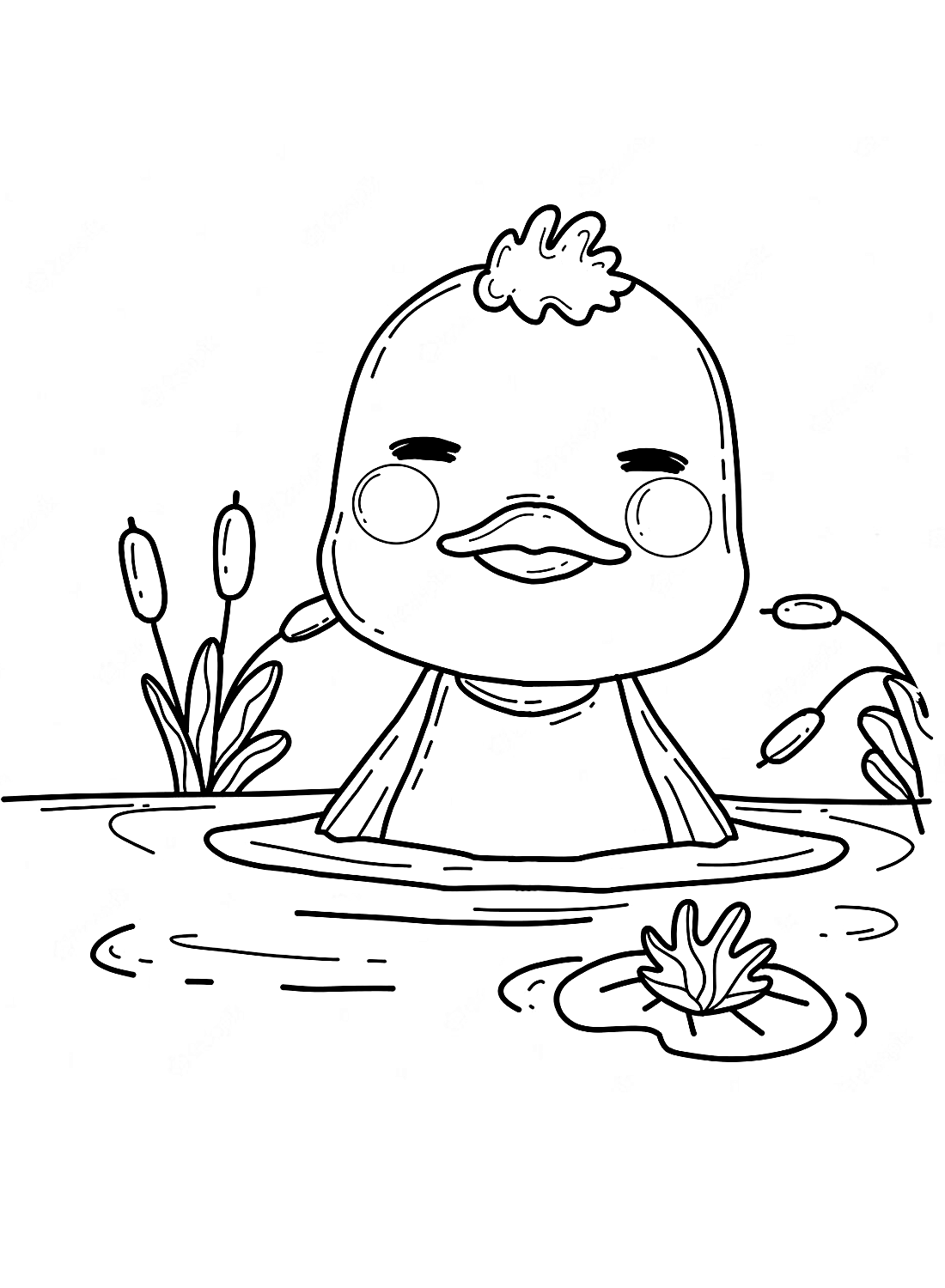
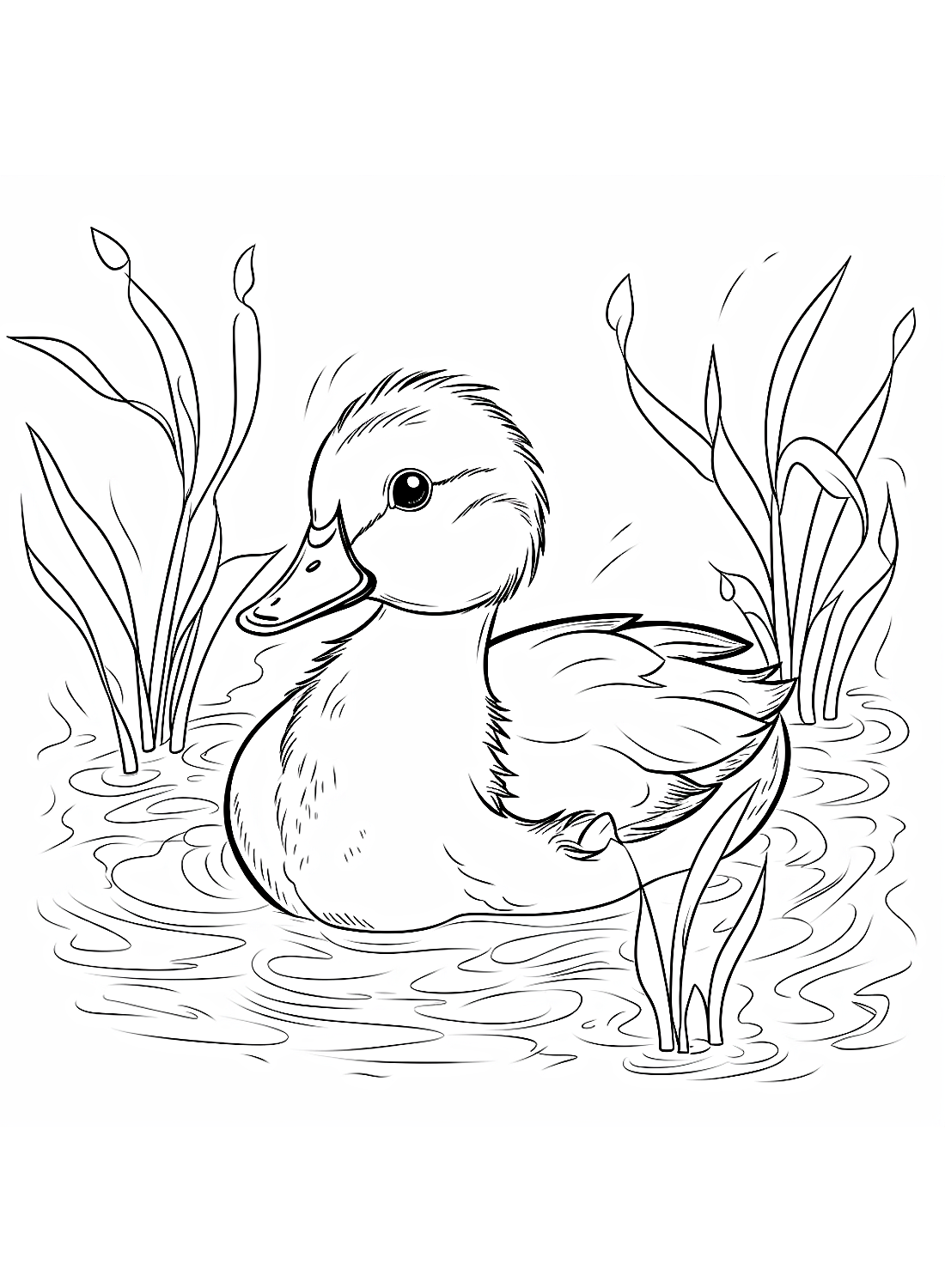
These pages place a duckling in its natural environment: a lake, a garden, or an open field. Coloring suggestion: use blue and green tones for water and grass, keeping them slightly muted so the duckling’s yellow still reads as the brightest element on the page.
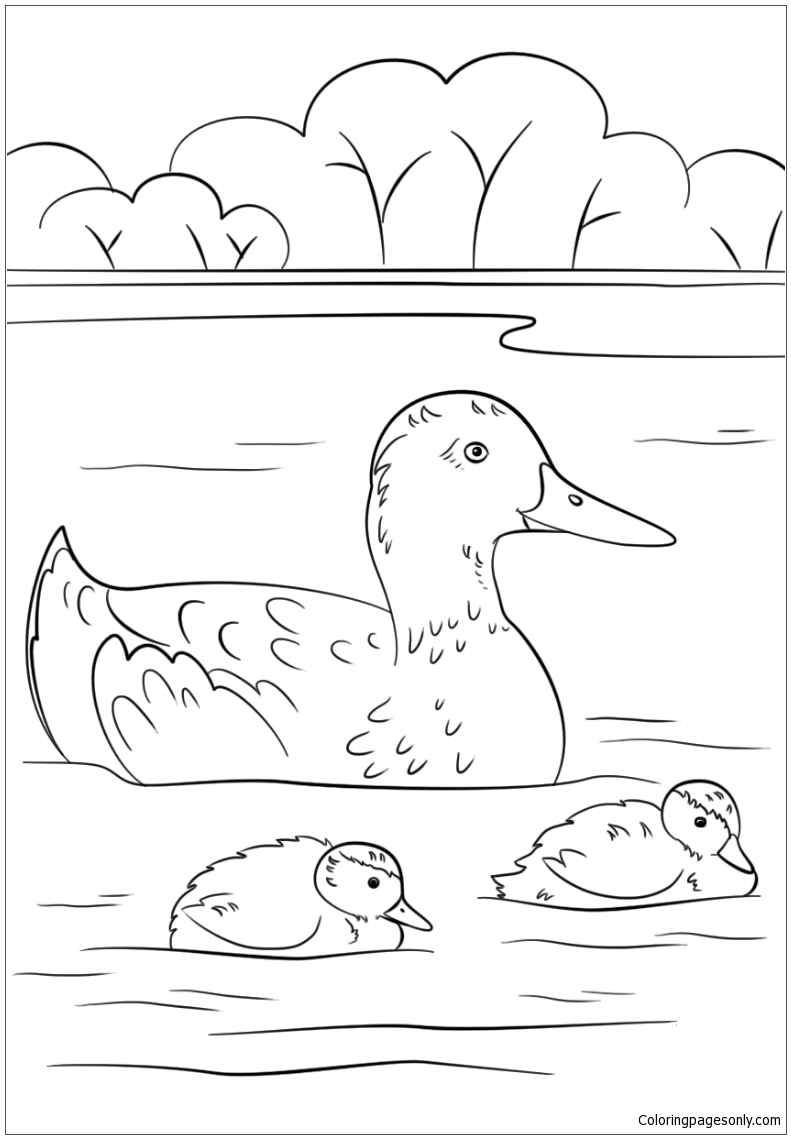
Mother and Baby Scenes
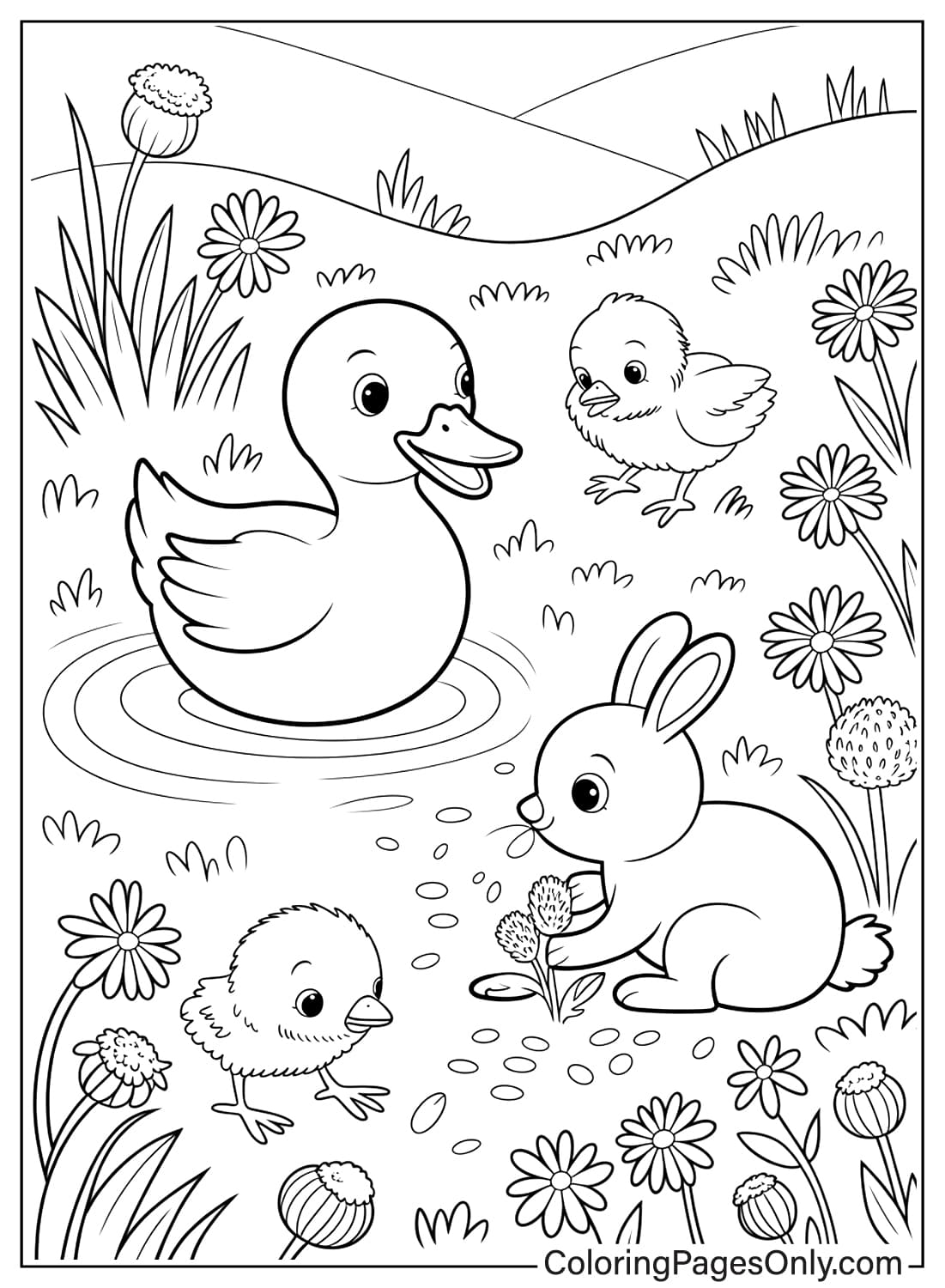
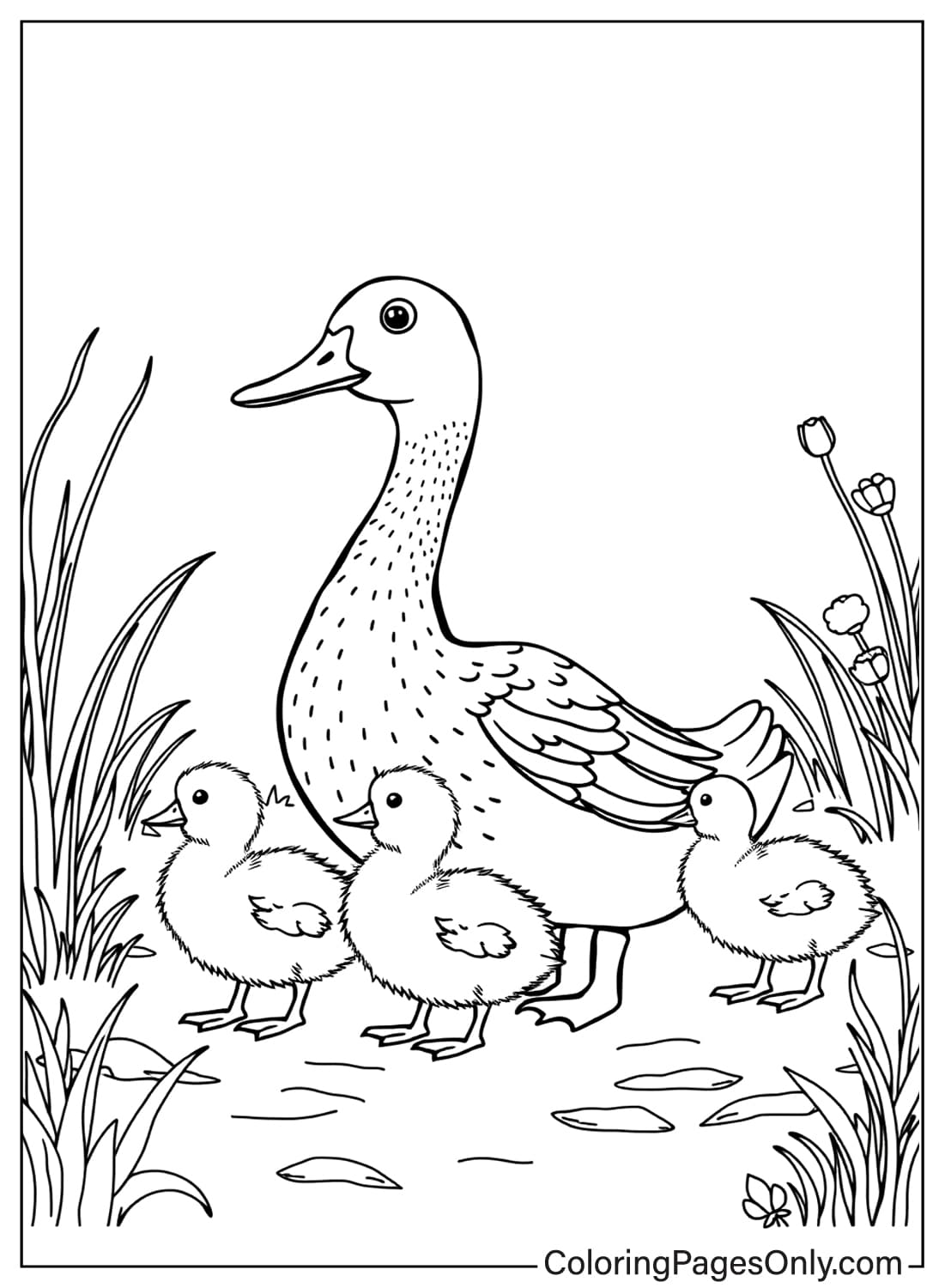
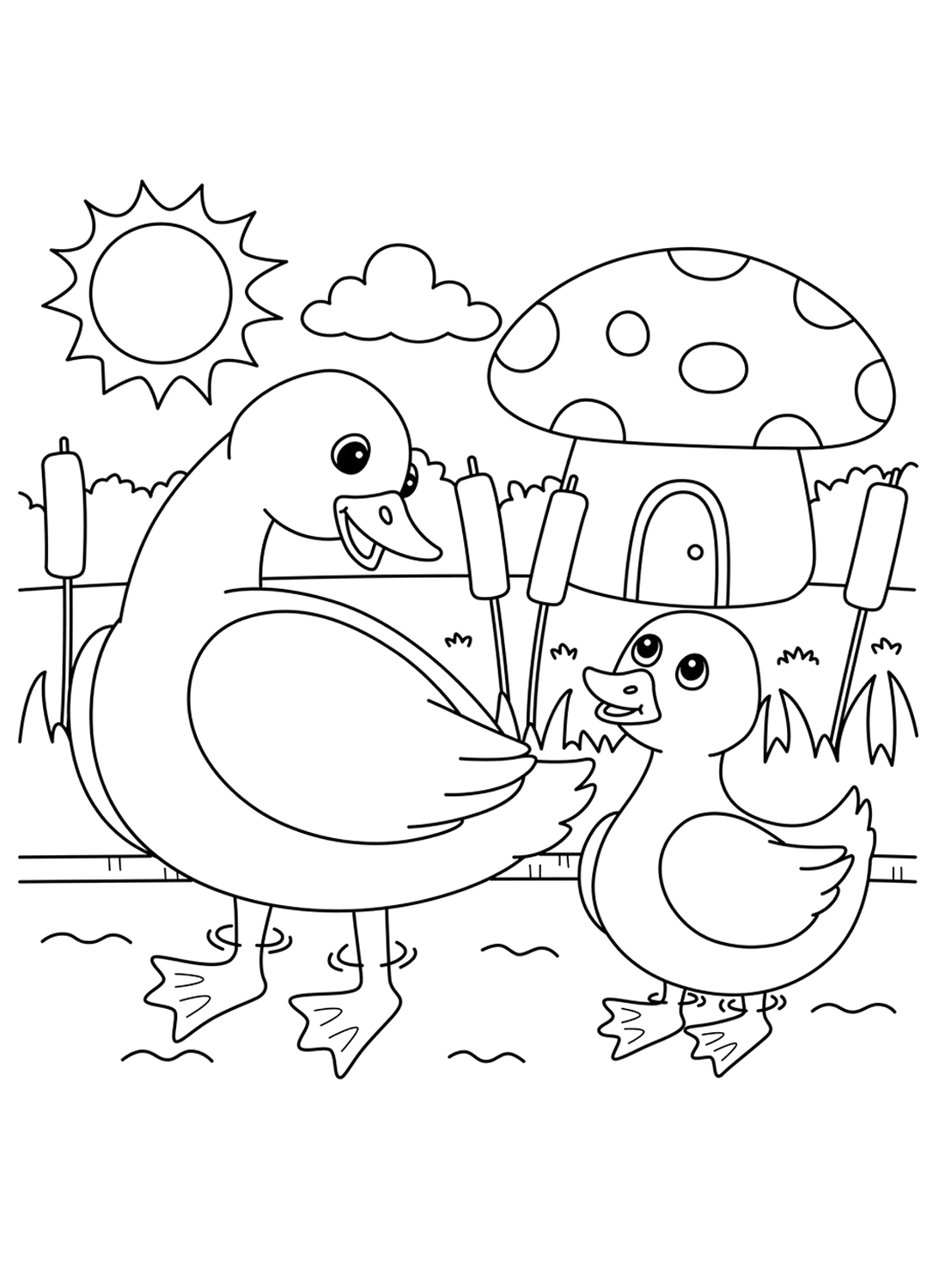
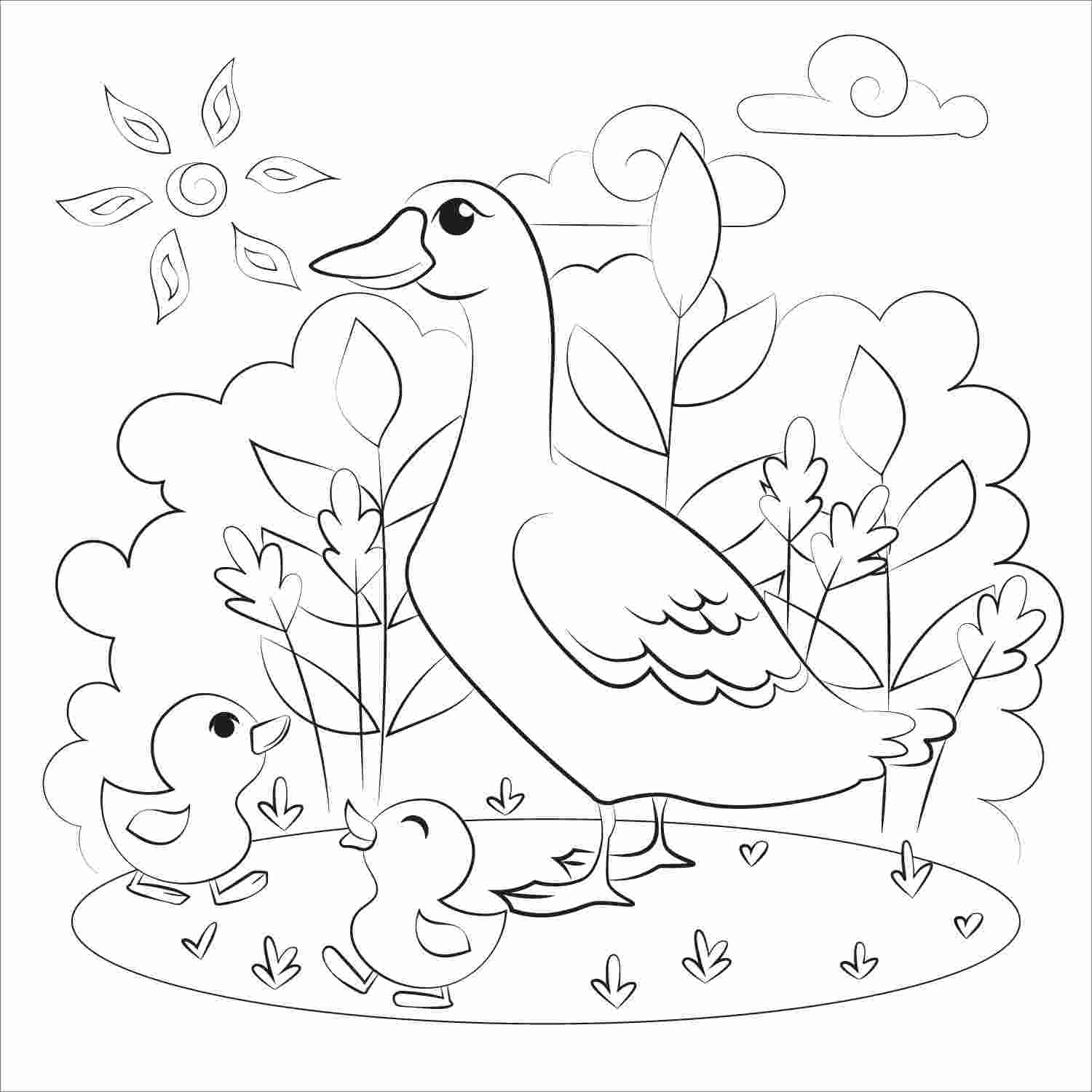
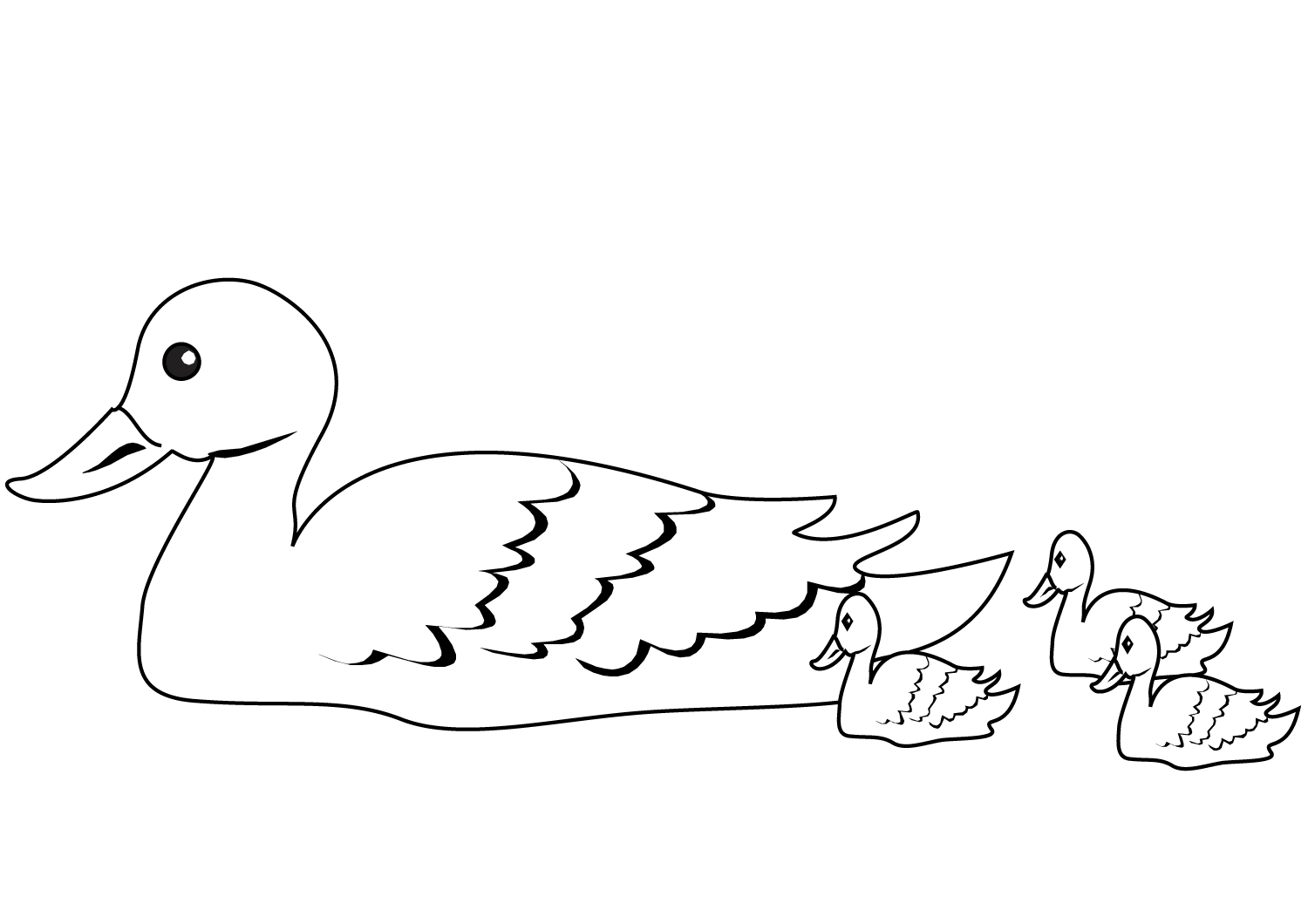
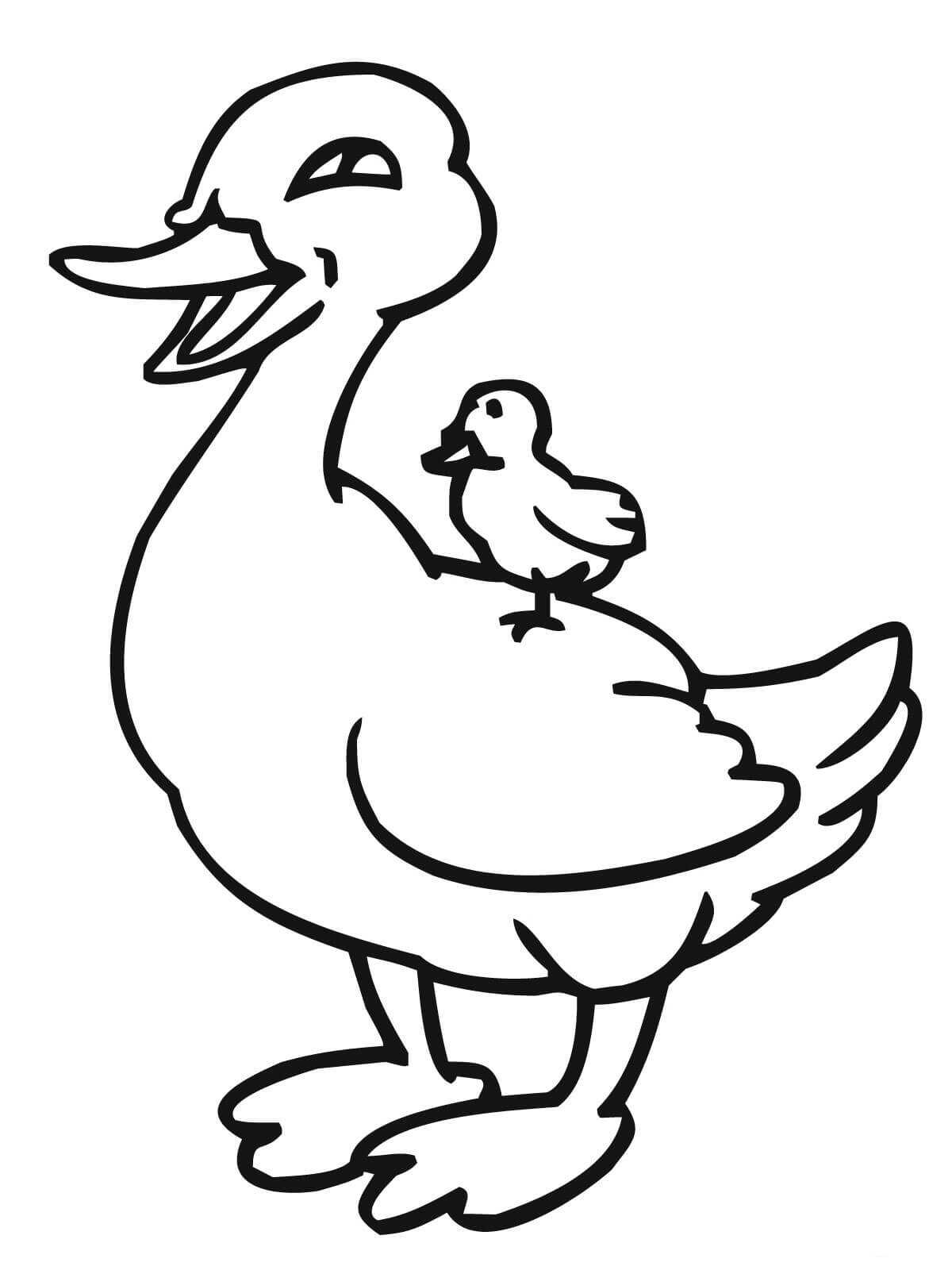
A substantial group shows a mother duck with one or more ducklings, walking, swimming, or feeding together. Coloring suggestion: give the mother duck slightly deeper, more muted tones than her ducklings’ brighter yellow, since real adult ducks are typically less vividly colored than their fluffy young.
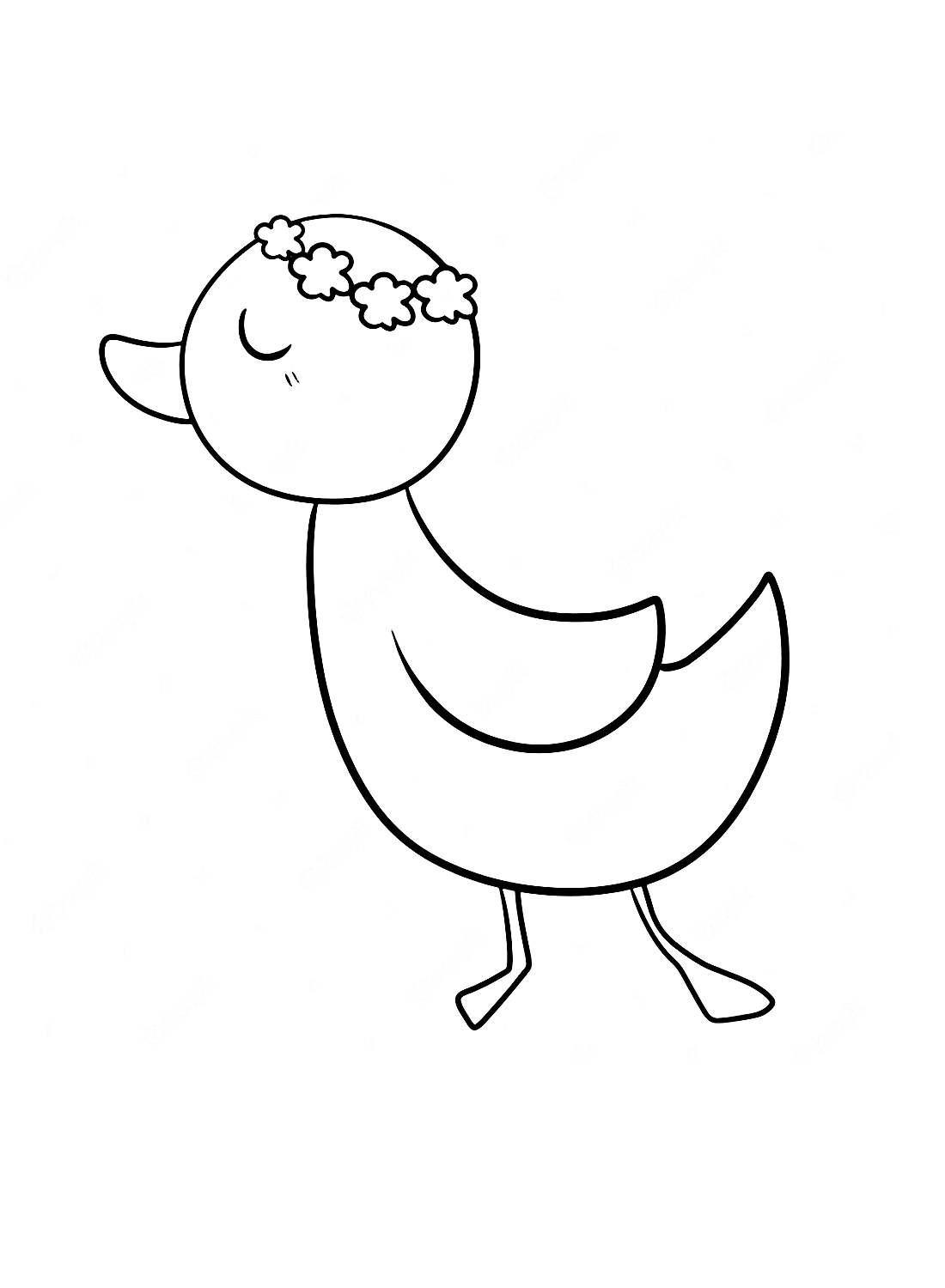
Costume, Seasonal, and Fantasy
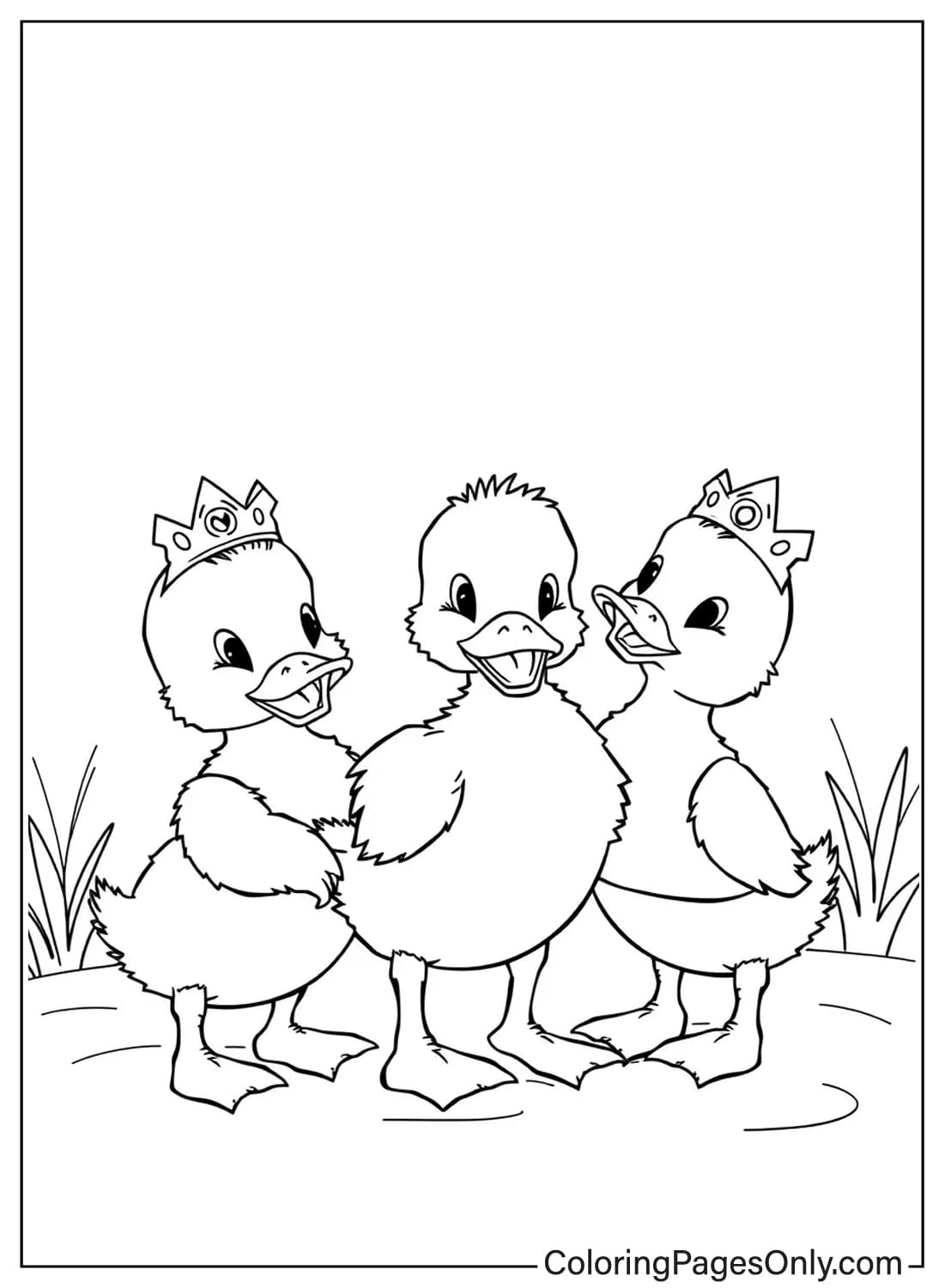
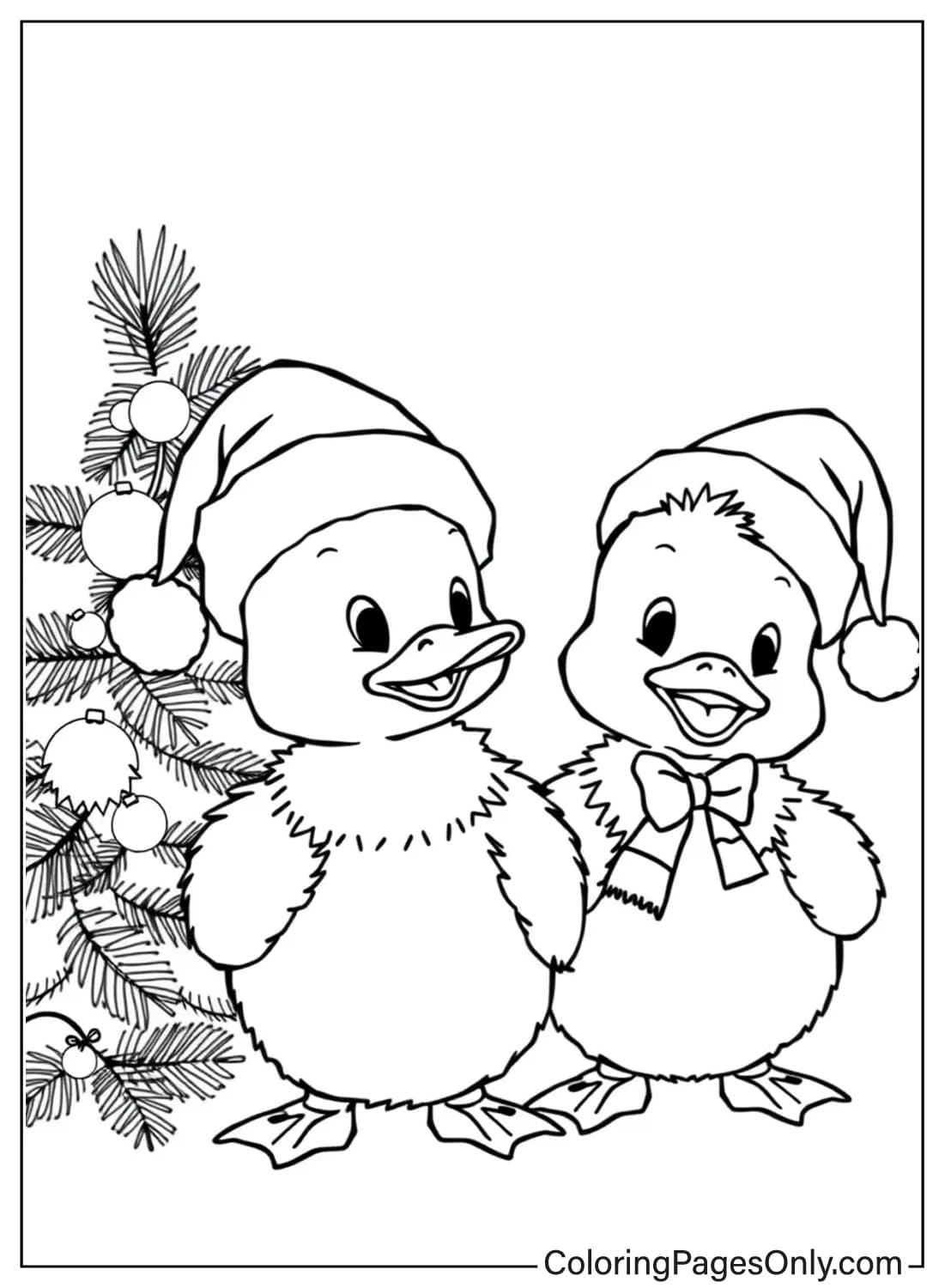
A smaller group dresses a duckling as a princess, ties it to a specific season like spring or Christmas, or references the classic ugly duckling story. Coloring suggestion: this is the best group for a fully imaginative palette, since these pages are built for whimsy rather than realistic accuracy.
What Duckling Coloring Pages Do
Short, layered strokes for down. A duckling’s downy, slightly ruffled feathers ask for short, layered strokes rather than one smooth fill, a texture-building technique the American Academy of Pediatrics counts among the fine motor benefits of structured coloring in children ages two through seven.
A behavior that won a Nobel Prize. The instinct behind a duckling following its mother, known as imprinting, was significant enough a scientific discovery that Konrad Lorenz won a Nobel Prize for documenting it, turning a familiar, everyday image into something with real scientific weight behind it.
Focused attention, briefly sustained. Imprinting depends on a duckling giving its full visual attention to one thing during a short window of time, and a coloring session asks for a similar kind of sustained, singular focus, the same structured attention that a 2005 Art Therapy Journal study linked to reduced anxiety after coloring.
A large collection with a real range. At 52 pages, this is one of the larger single-animal sets on the site, and unlike many collections that size, it backs up its volume with genuine variety, solo portraits, play scenes, nature settings, and family moments, rather than one repeated image under dozens of file names.
How to Color Duckling Pages Well
- Body: Use a warm Crayola Yellow or Dandelion for the fluffy down, layering a slightly deeper yellow-orange in shadowed areas like under the wings.
- Beak and feet: color both a bright Crayola Orange, keeping this consistent across every page so the duckling reads the same way throughout the collection.
- Mother ducks: use a more muted, realistic palette, browns, grays, or soft tan, since adult ducks are typically less brightly colored than their fluffy ducklings.
- Water and nature scenes: use a muted blue-green for ponds and lakes, keeping the water calmer in tone than the duckling itself so the animal stays the clear focal point.
- Play and prop pages: let the ball, kite, or costume carry the boldest color on the page, since the duckling’s own yellow is already a strong color on its own.
- Costume and fantasy pages: feel free to use non-realistic colors here, specifically, since this group is built for imagination rather than accuracy.
5 Creative Craft Ideas With Duckling Coloring Pages
1. Duckling Family Garland
Color several mother-and-baby pages, cut them out, and string them together as a simple nursery or classroom garland.
2. Imprinting Story Card
Color a duckling page and write a short explanation of imprinting on the back as a simple science fact card.
3. Pond Scene Diorama
Color a nature or water-setting page, cut it out, and stand it up inside a shoebox with blue paper for a simple pond diorama.
4. Five Little Ducks Sing-Along
Color a few ducklings while singing “Five Little Ducks,” pausing to color one more duckling with each verse.
5. Duckling Bookmark
Color a simple solo portrait, cut it into a bookmark shape, and cover it with clear tape for a durable reading marker.
Frequently Asked Questions
What are Duckling coloring pages?
A free set of 52 printable designs of baby ducks, covering solo portraits, play scenes, nature settings, and mother-and-baby moments. Every page downloads as a PDF or opens in the online coloring tool without an account.
What is duckling imprinting?
Imprinting is the instinct that leads a duckling to follow the first moving thing it sees after hatching, usually its mother. Austrian zoologist Konrad Lorenz documented the behavior in the 1930s and later won a Nobel Prize for the research.
How long does the imprinting period last?
Research has found the strongest window for imprinting is roughly 12 to 17 hours after hatching, though it can occur up to about 32 hours afterward.
Why do some pages show a duckling in a costume or fantasy setting?
A smaller group leans into imagination, a princess duckling, a seasonal scene, a nod to the classic ugly duckling story, giving the collection some whimsical variety alongside its more realistic pages.
Is every page in this set just one duckling by itself?
No. A meaningful share of the collection shows a mother duck with one or more ducklings, along with scenes of ducklings playing or exploring outdoor settings.
Can these pages be colored without printing them?
Yes. Every page in the set opens directly in the site’s browser-based coloring tool, so a page can be finished on screen before deciding whether to print it.
Are Duckling coloring pages suitable for young children?
Most of the collection uses one simple, large shape and suits young children well. The busier mother-and-baby and multi-duckling scenes work better for a child with a bit more coloring experience.
Why are ducklings typically shown as yellow when adult ducks often aren’t?
Many duckling species do hatch with soft yellow down regardless of what color they’ll grow into as adults, which is part of why a bright yellow duckling paired with a more muted-colored mother, as shown on several pages here, is actually realistic rather than an artistic choice.
Start Coloring
From one plain duckling to a whole family by the pond, the choice is above: download the PDF or color it online, free and without an account. Share the finished piece through the Facebook or Pinterest buttons at the top of the design.