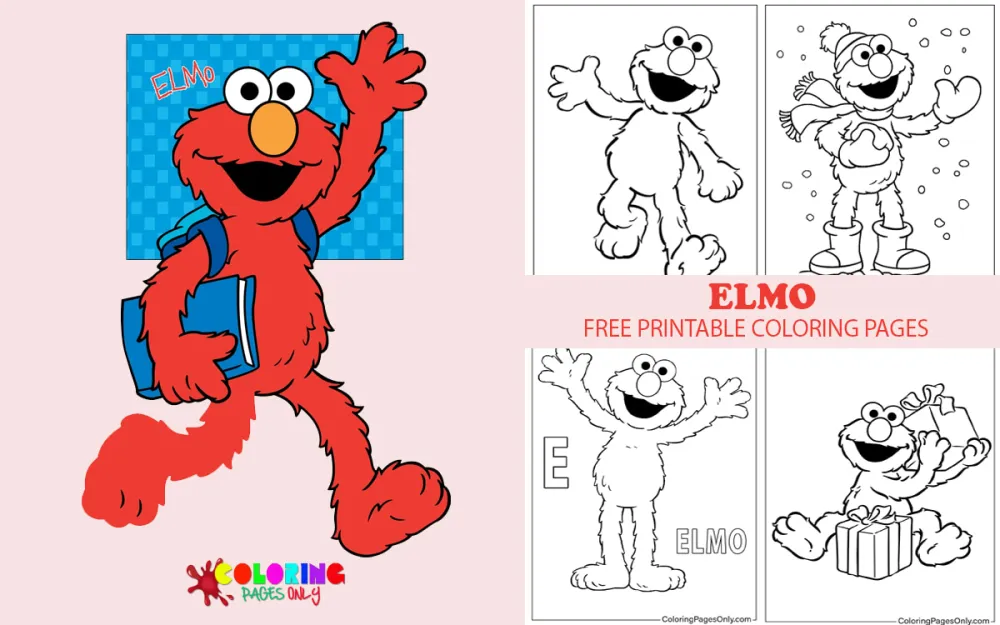
Free Elmo coloring pages: 52 printable PDF designs featuring simple Elmo portraits, everyday activities, seasonal and holiday scenes, and Elmo alongside his Sesame Street friends. Each page can be downloaded as a PDF to print or colored online in the browser.
Elmo is a red Muppet character on Sesame Street, officially described by Sesame Workshop as three and a half years old, with a birthday of February 3. He began as an unnamed background puppet in 1980 before puppeteer Kevin Clash developed his now-familiar high-pitched voice and personality starting in 1985; Ryan Dillon has performed the character since 2013. In 1996, the Tickle Me Elmo doll became one of the most sought-after holiday toys in American retail history. In 2010, Elmo became the only nonhuman to testify before the United States Congress, appearing to support music education funding. This set works for a toddler who already recognizes Elmo by name, a classroom marking a Sesame Street theme day, and a family looking for a simple, familiar character to color together.
Since Elmo’s whole visual identity comes down to a handful of details, red fur, an orange nose, and eyes set on top of his head, getting those two accent colors distinct from the red is what makes a page look like Elmo rather than a generic red shape.
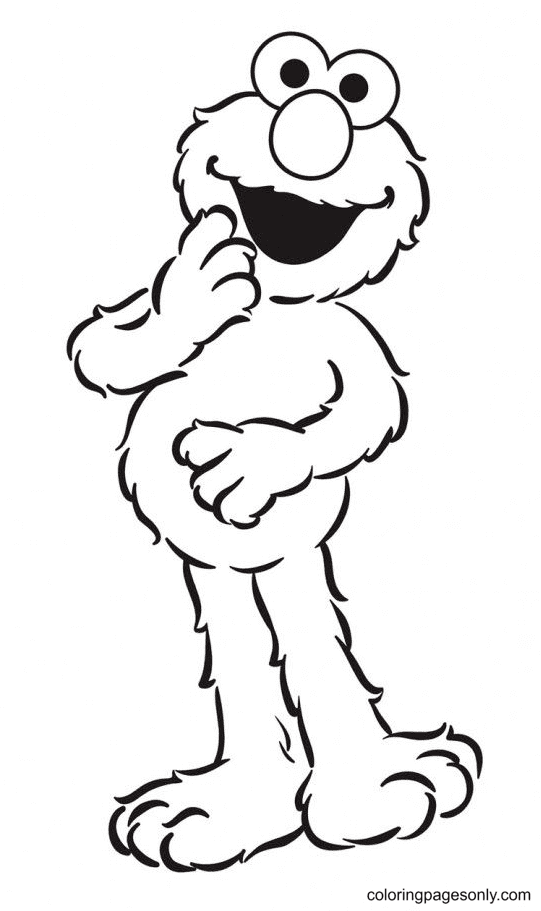
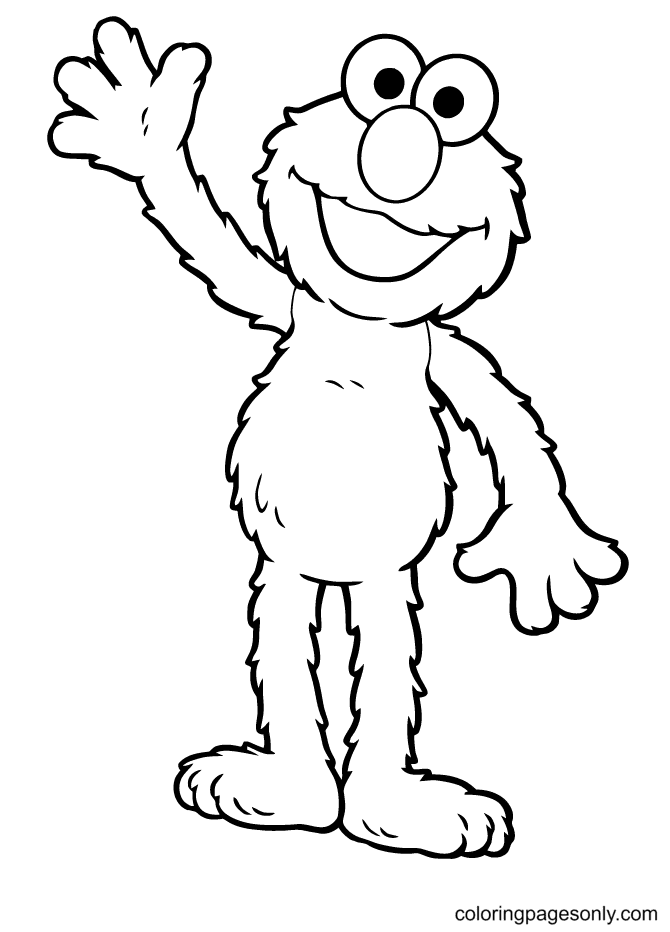
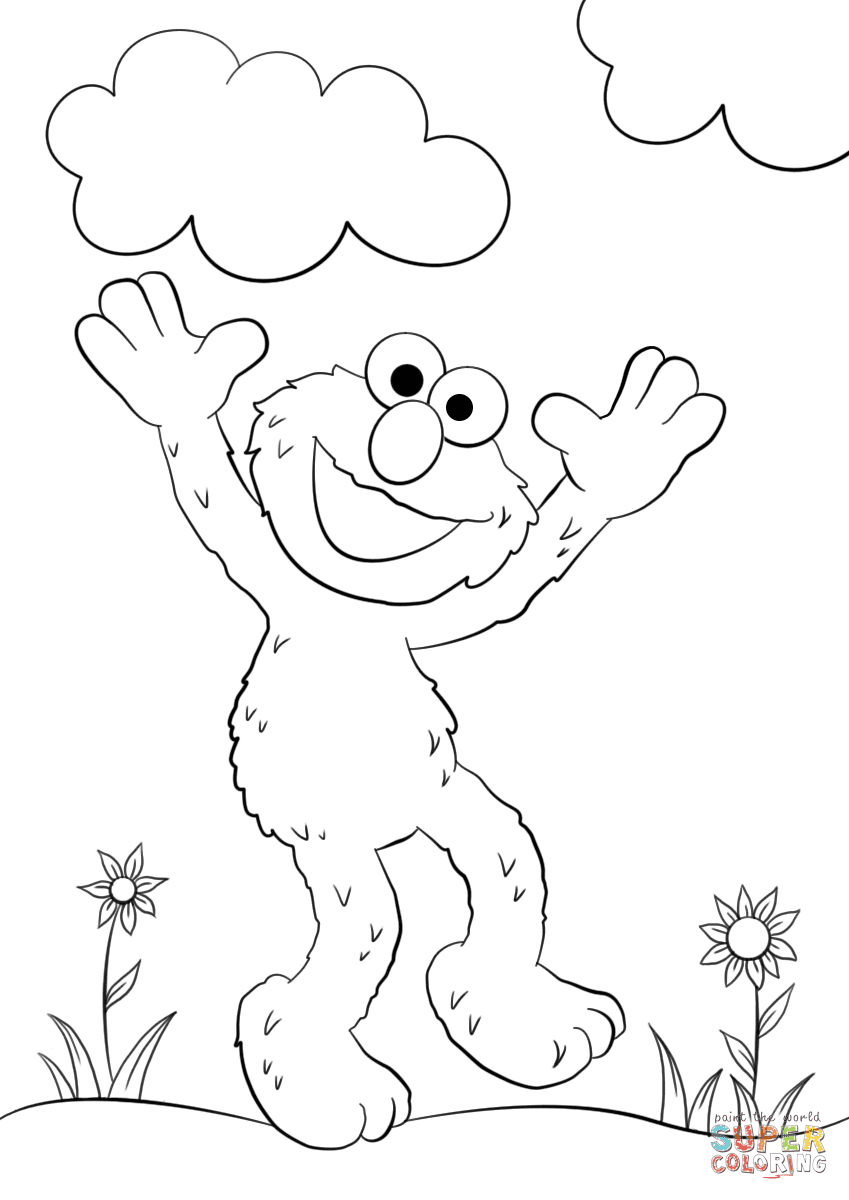

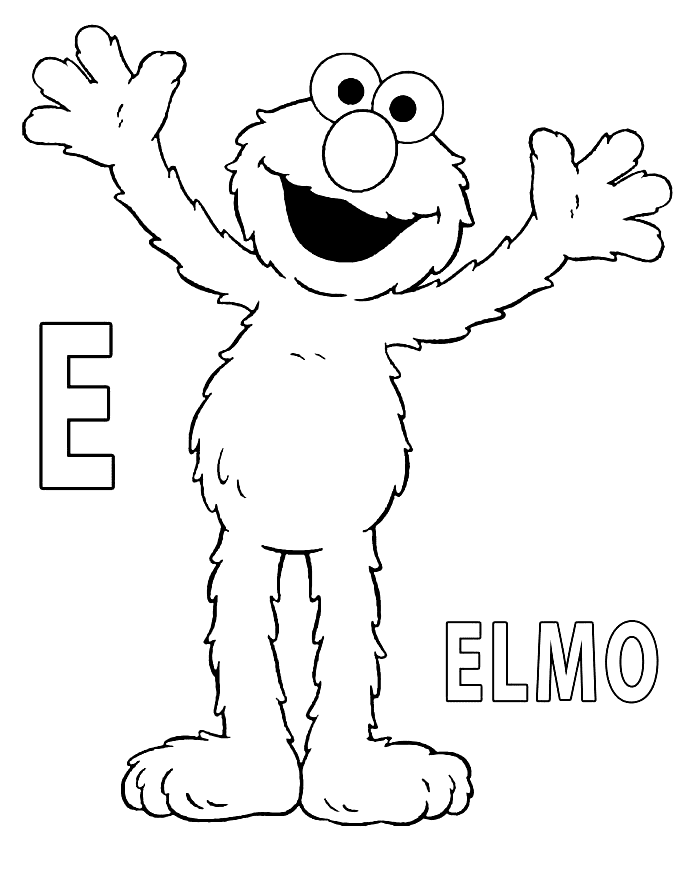
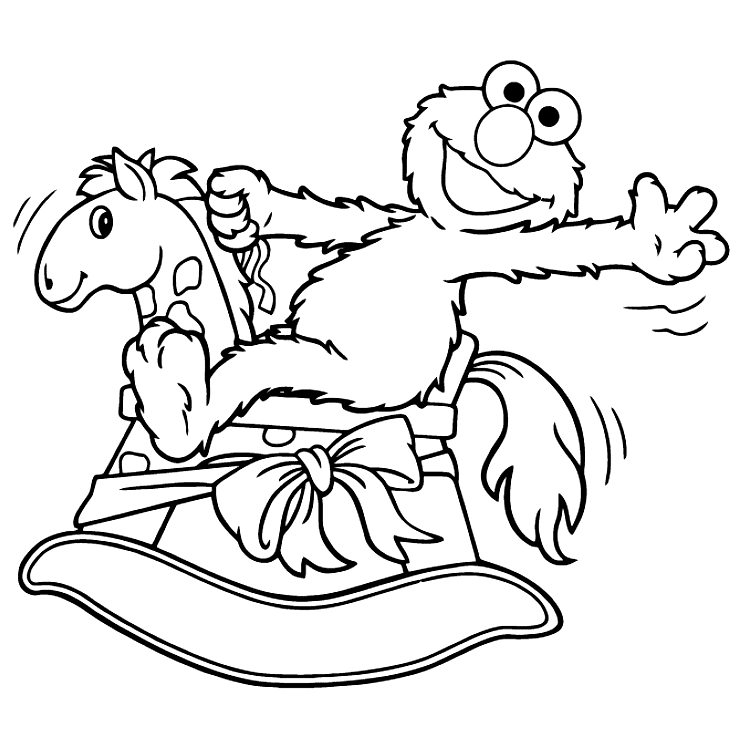

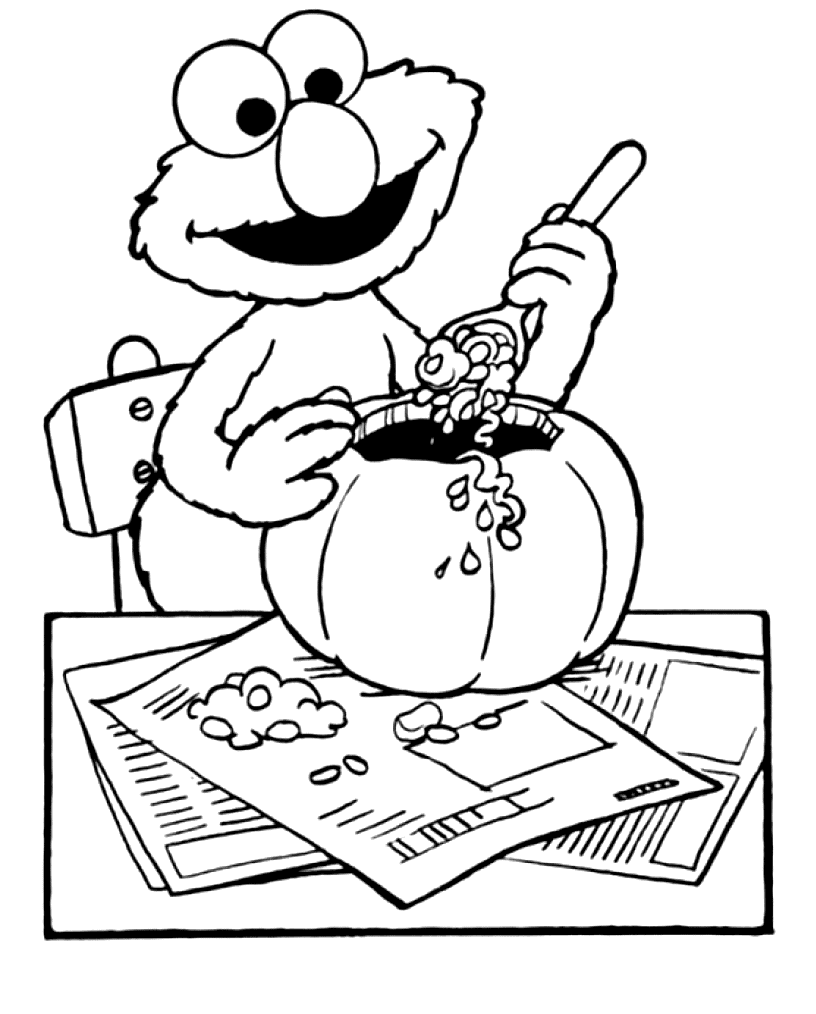
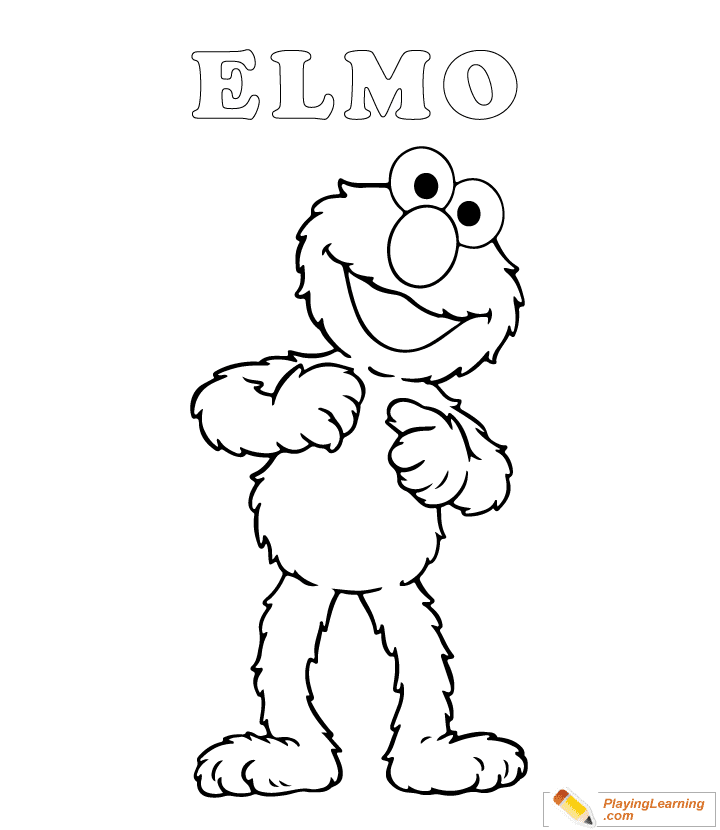

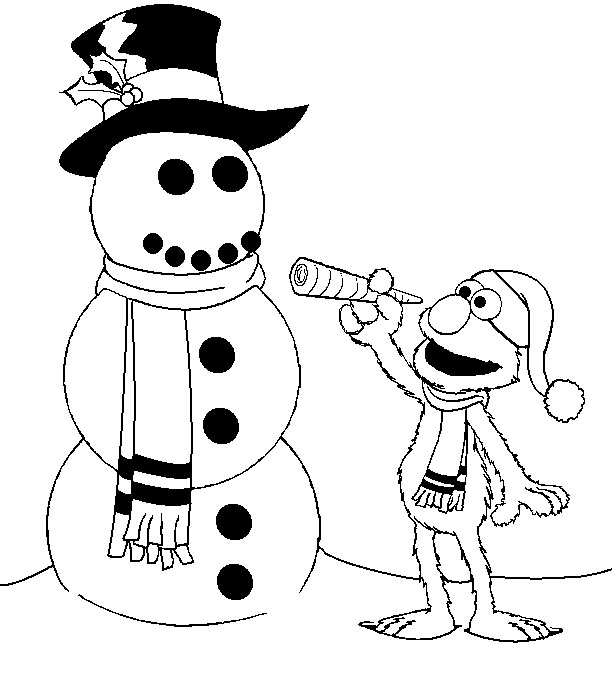
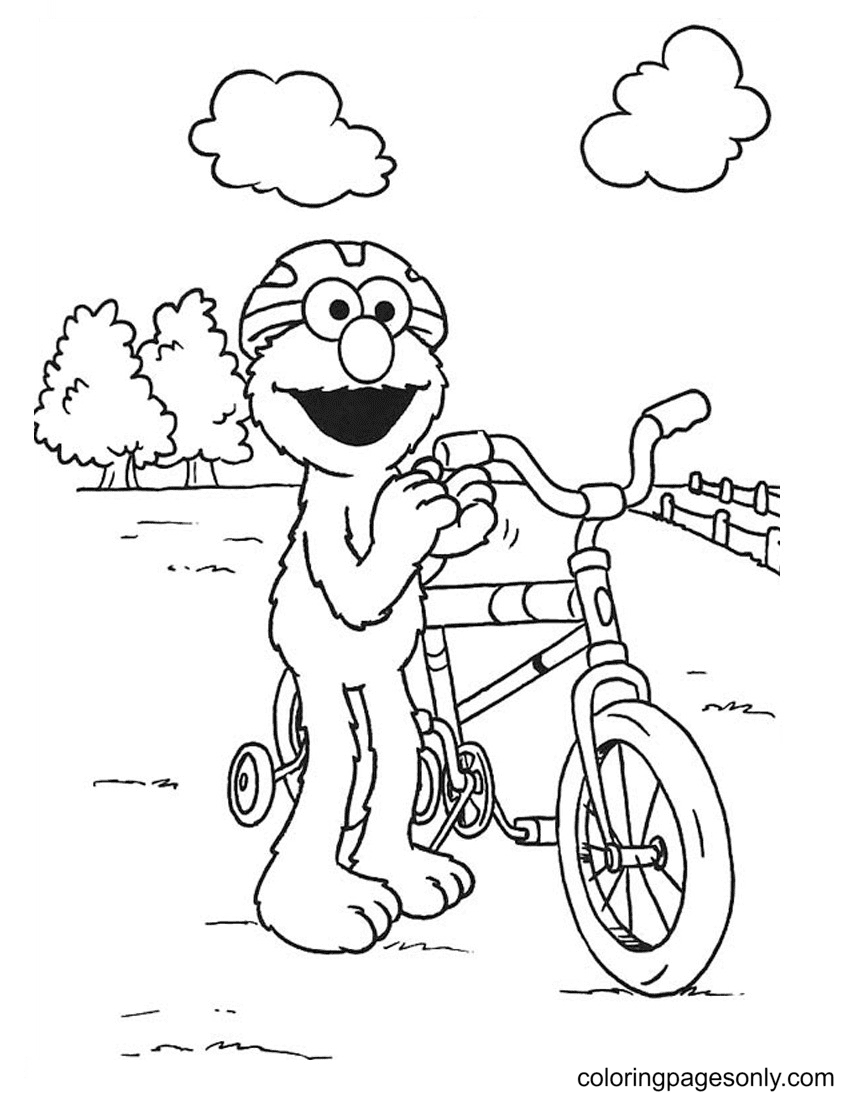
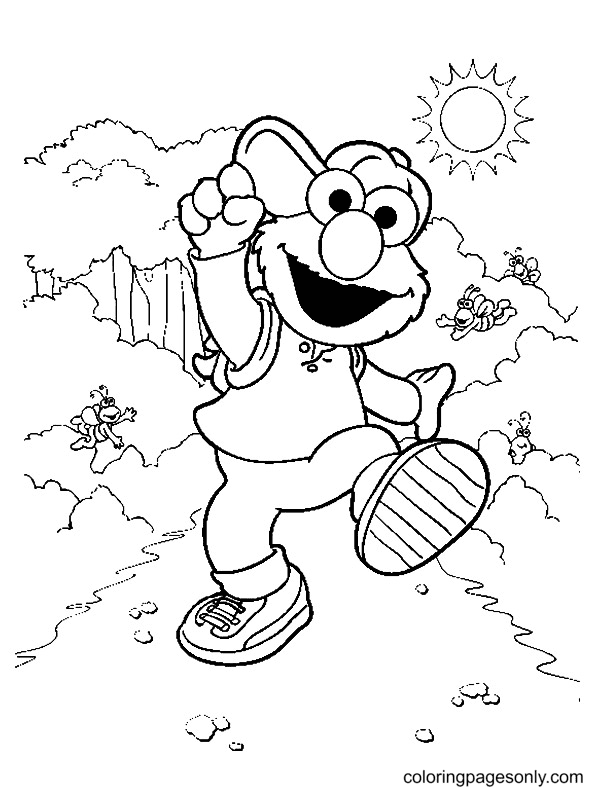
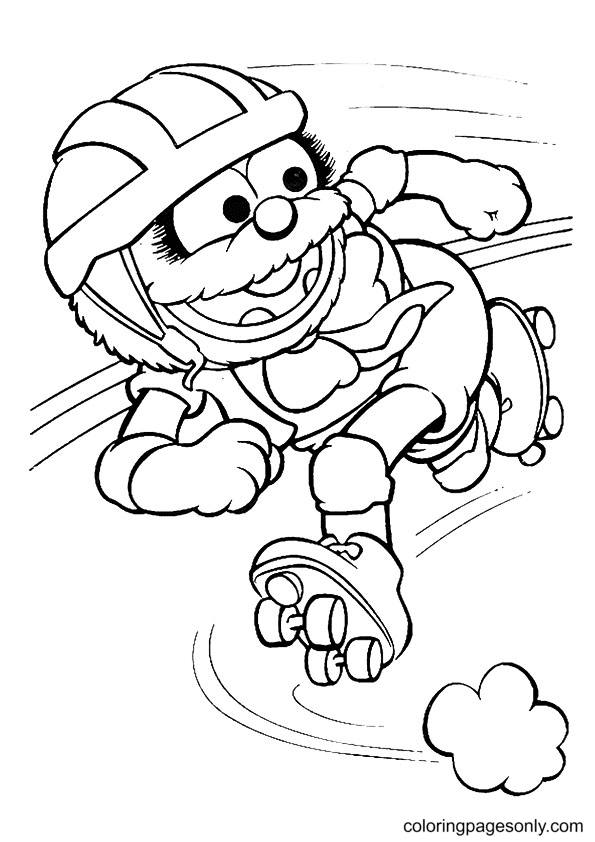
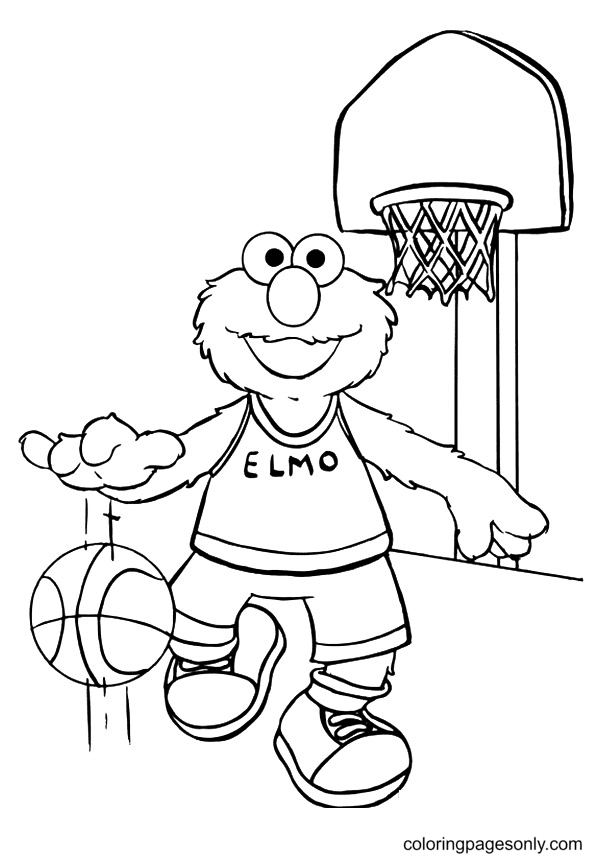




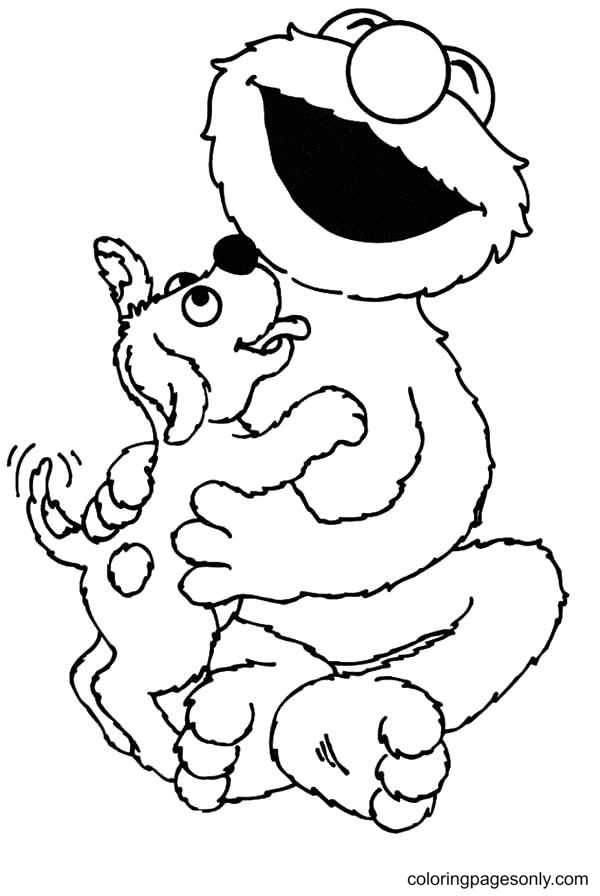
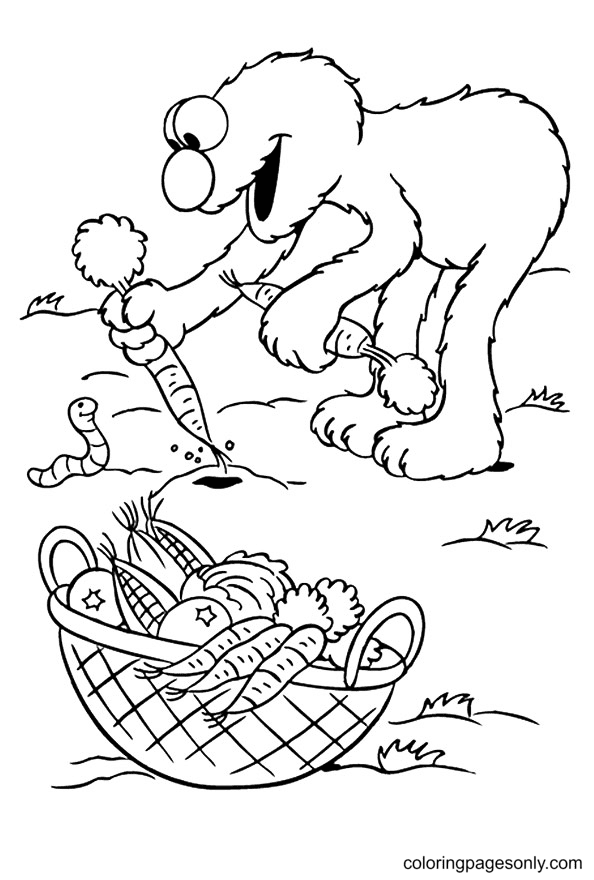
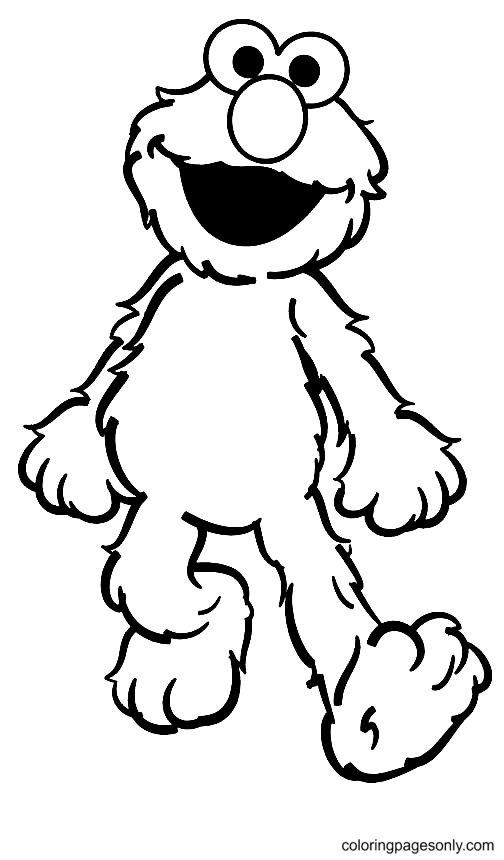
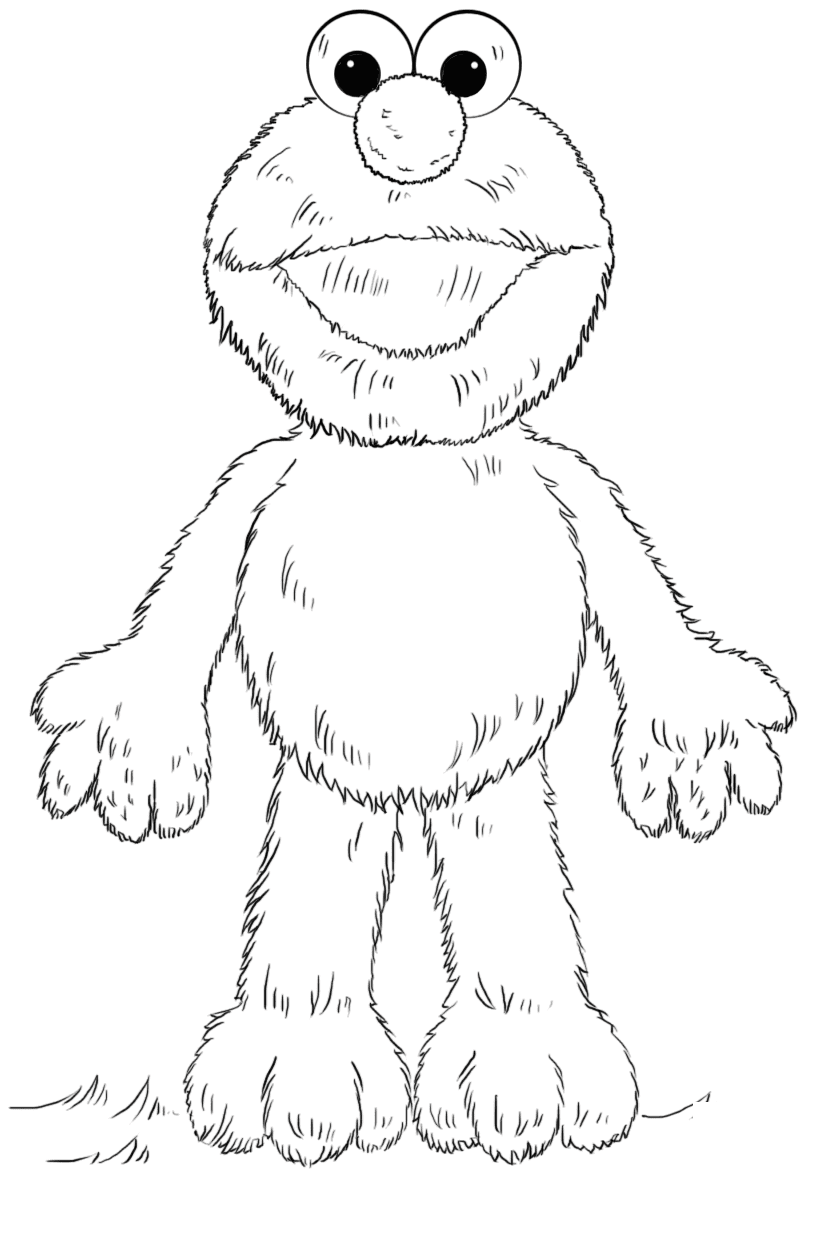
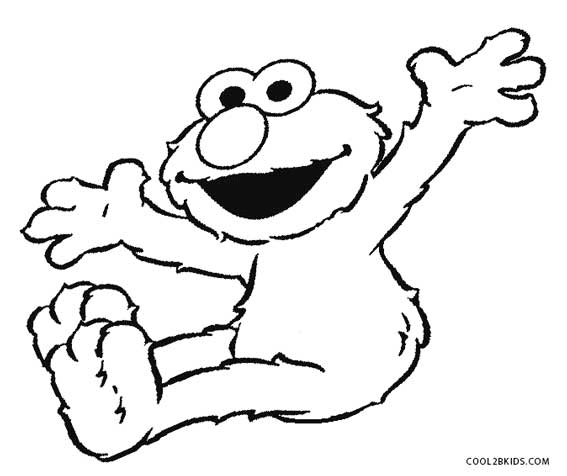
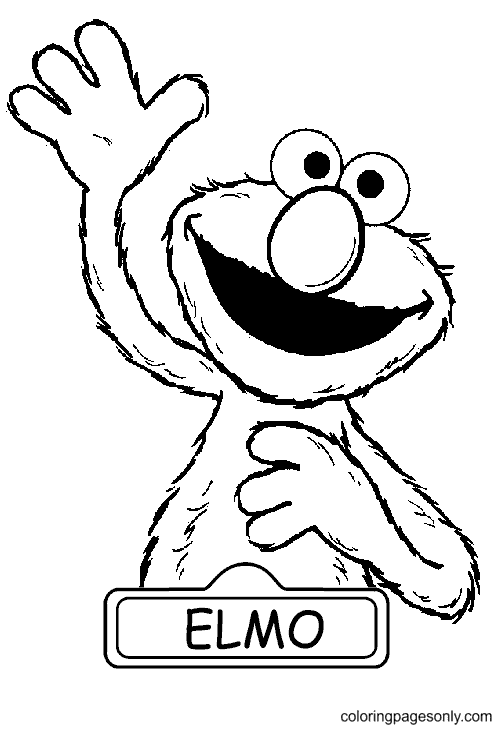
What Is Inside This Collection
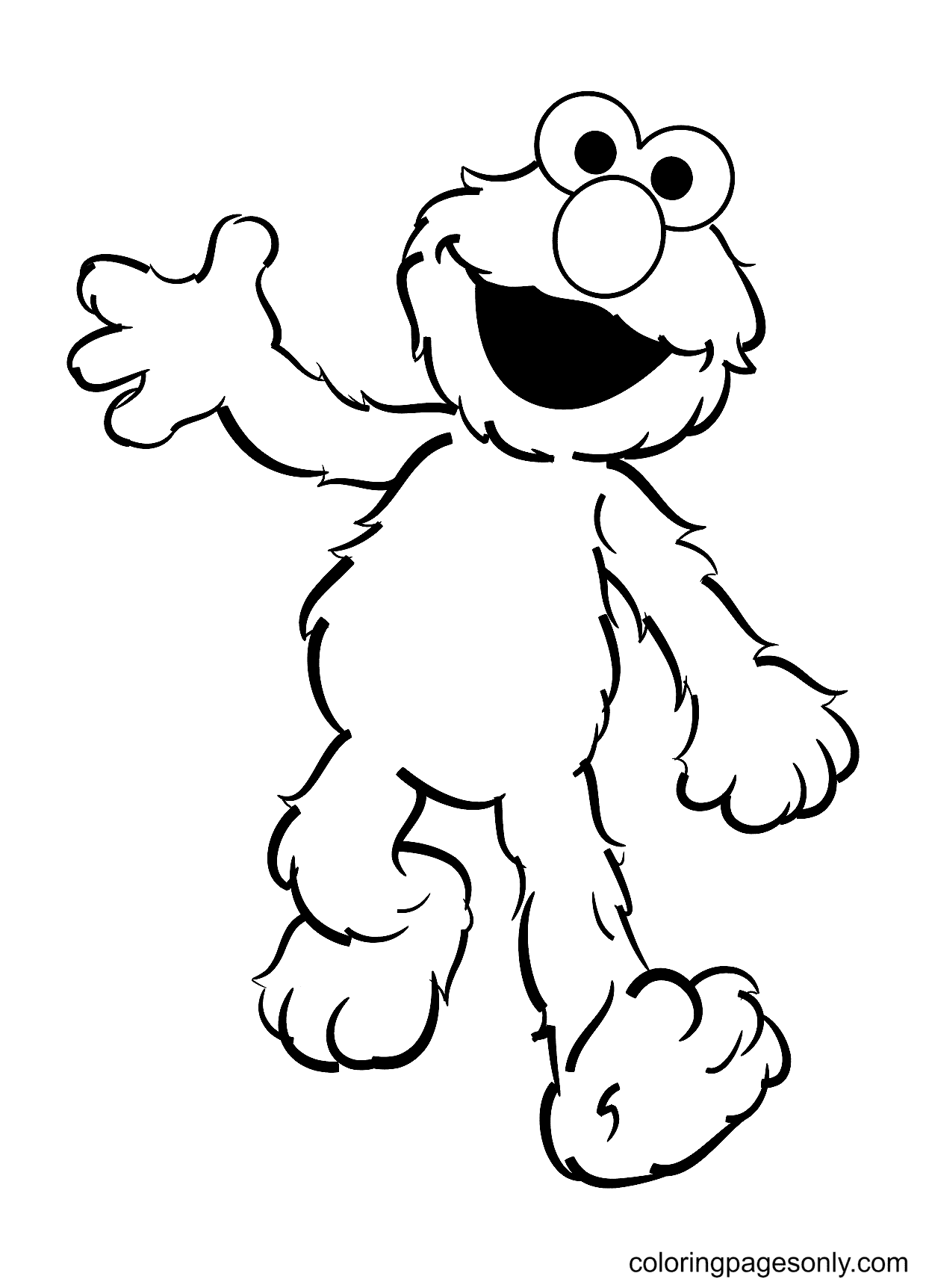
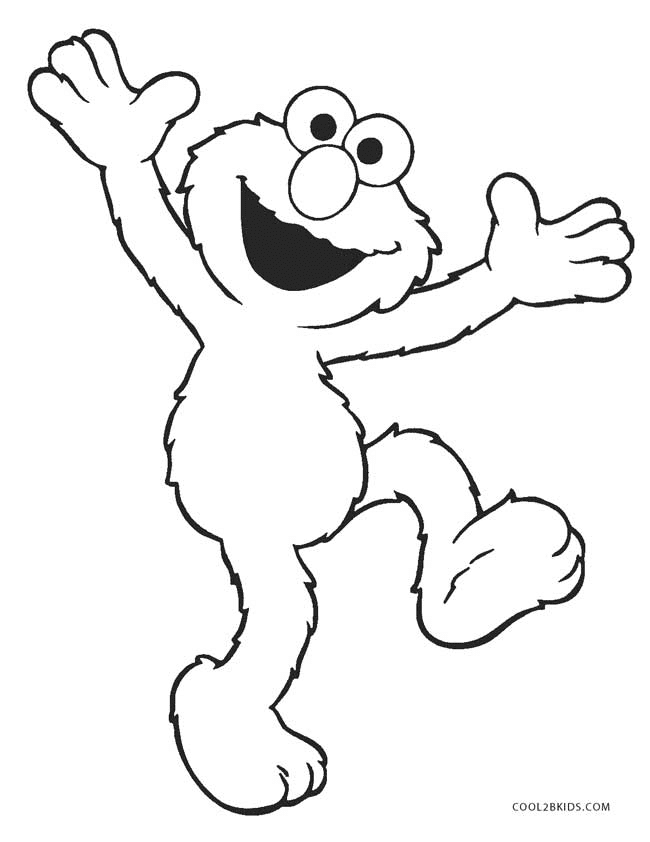
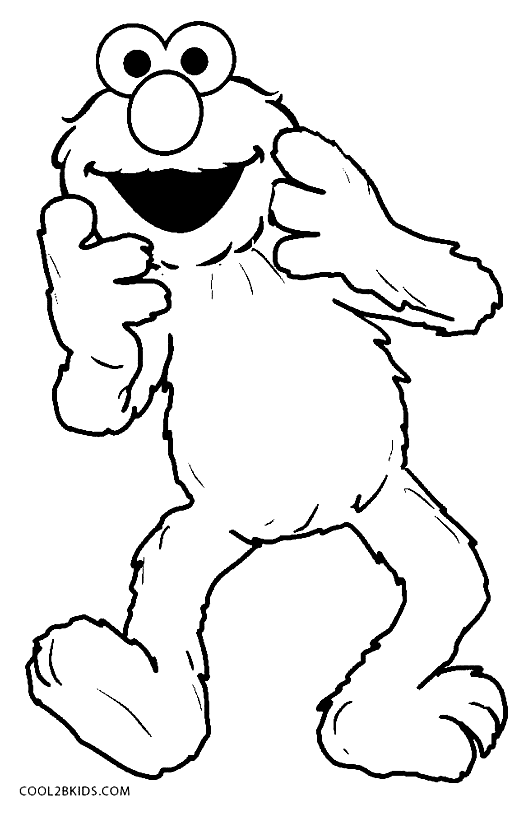
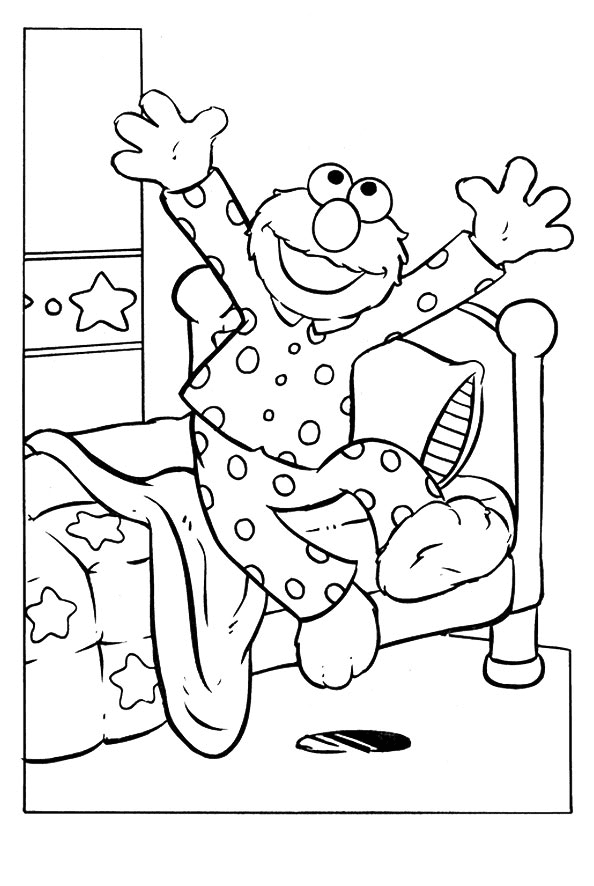
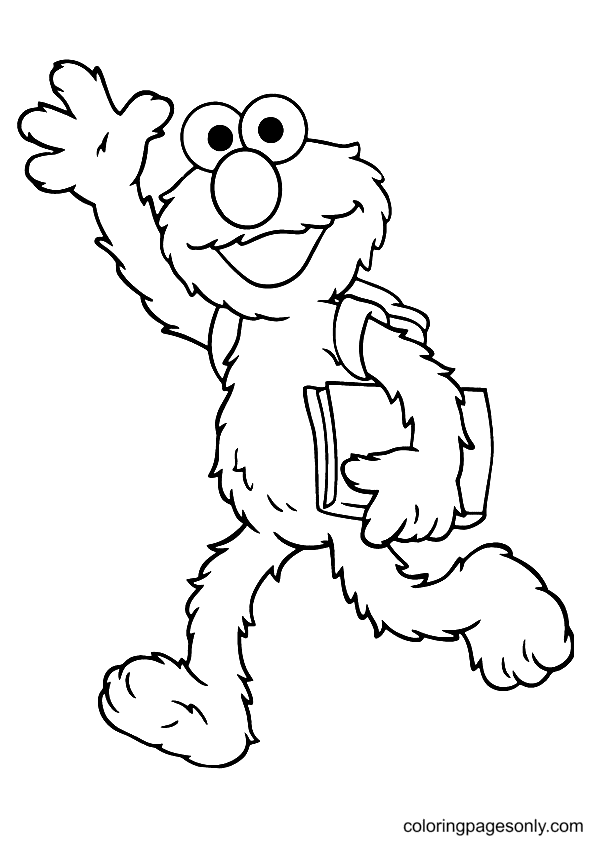
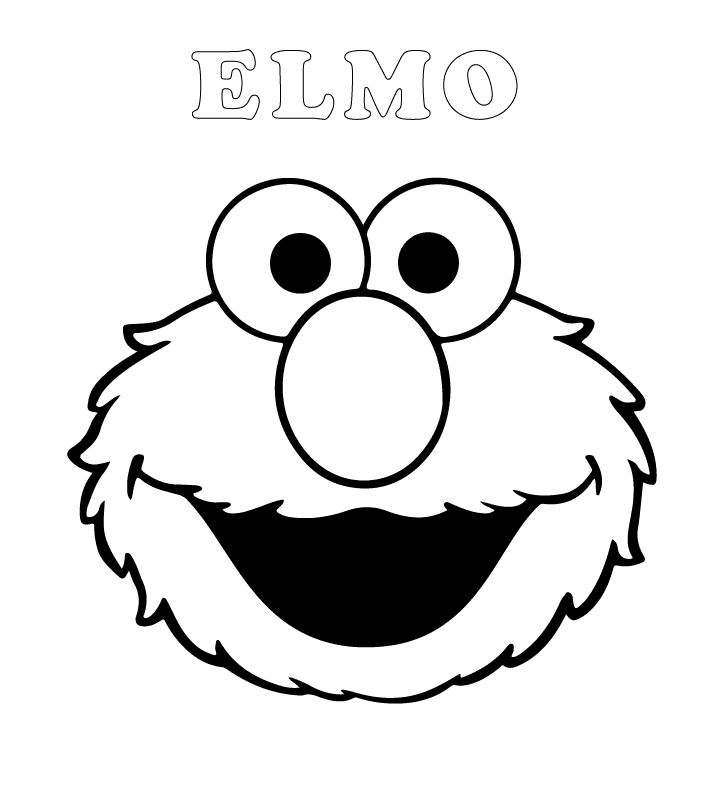
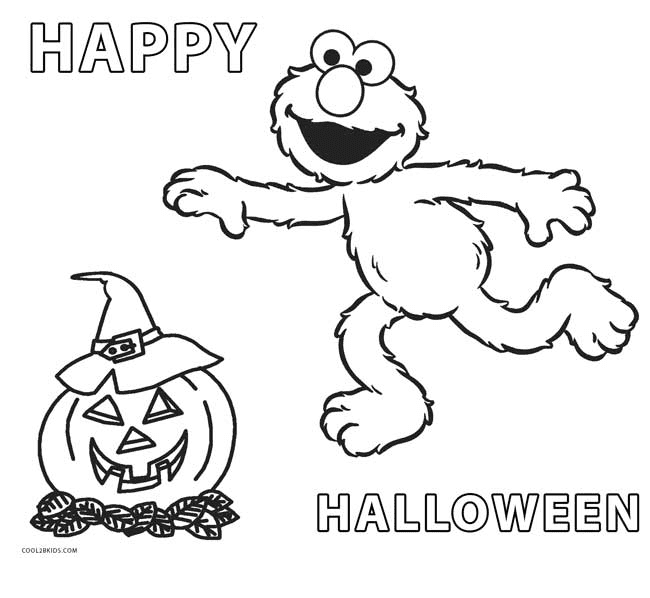
The 52 pages fall into a few clear groups, built around simple portraits, everyday activities, seasonal and holiday scenes, and Elmo with friends.
Simple Elmo Portraits
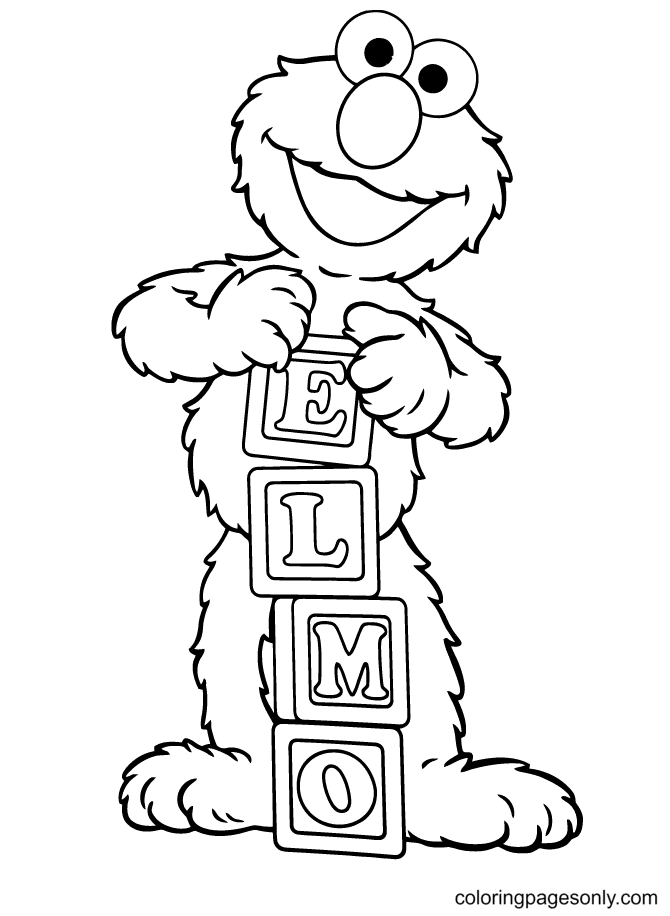
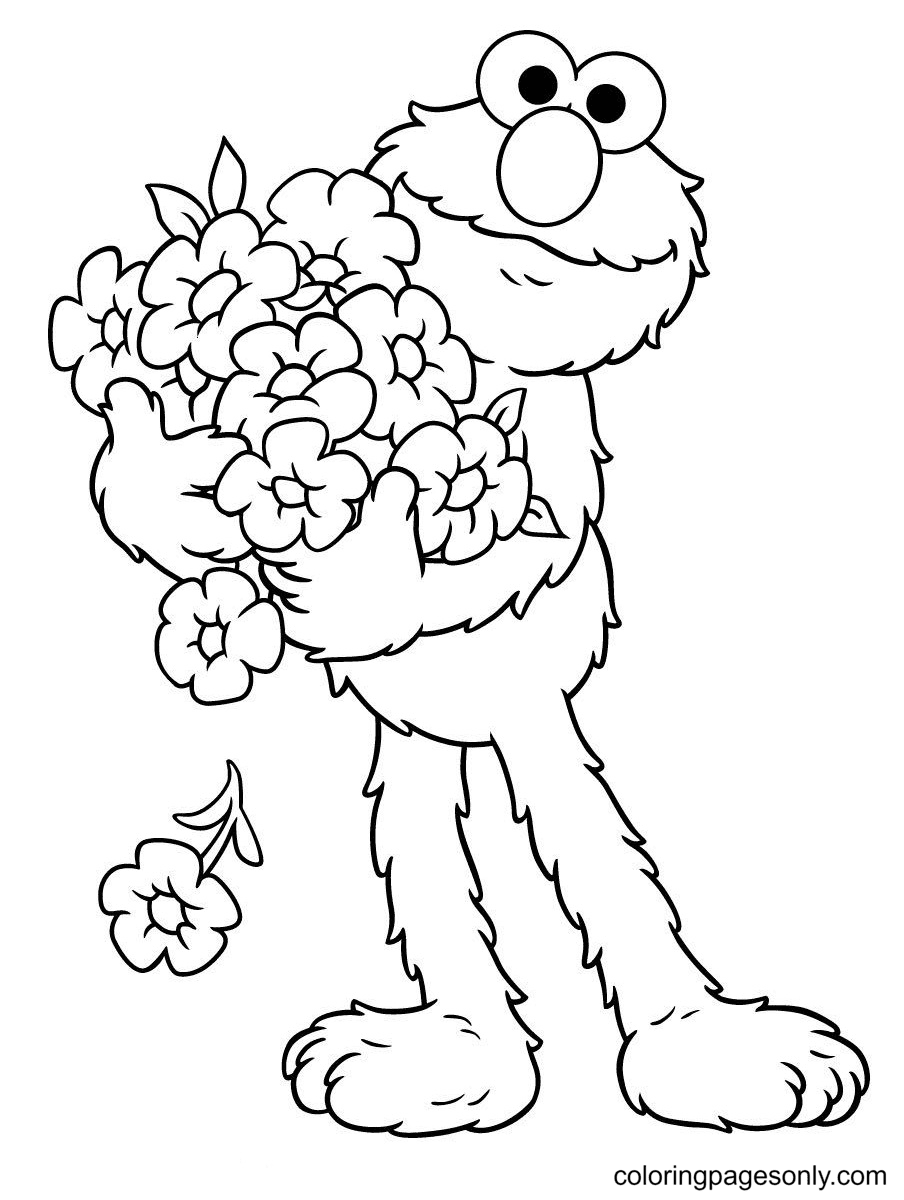
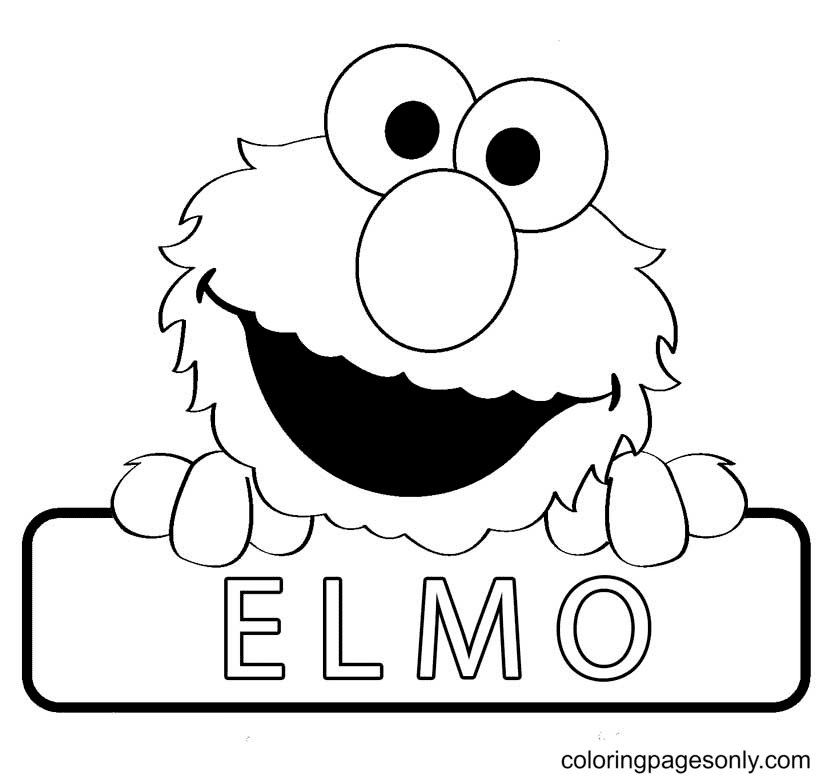
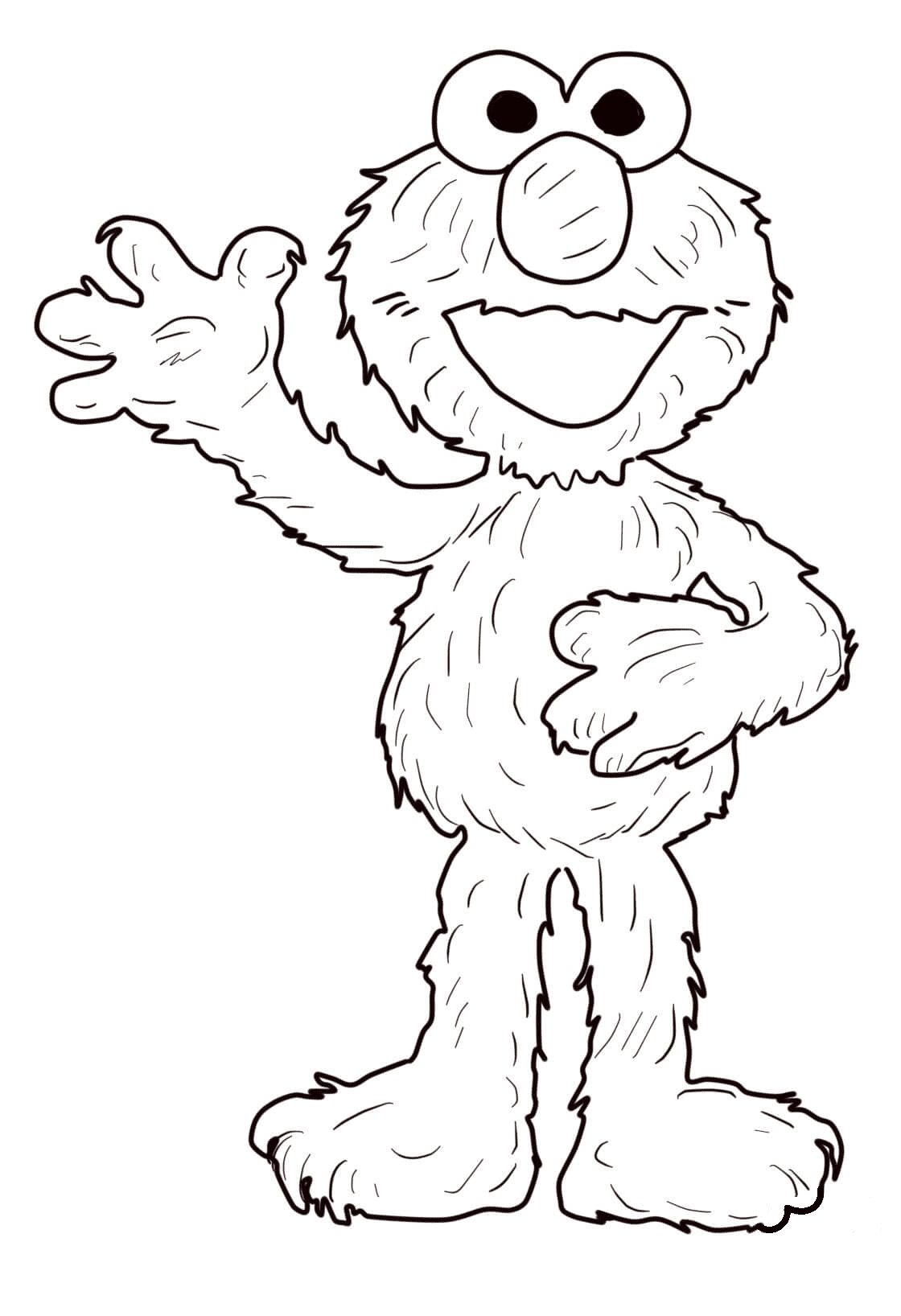
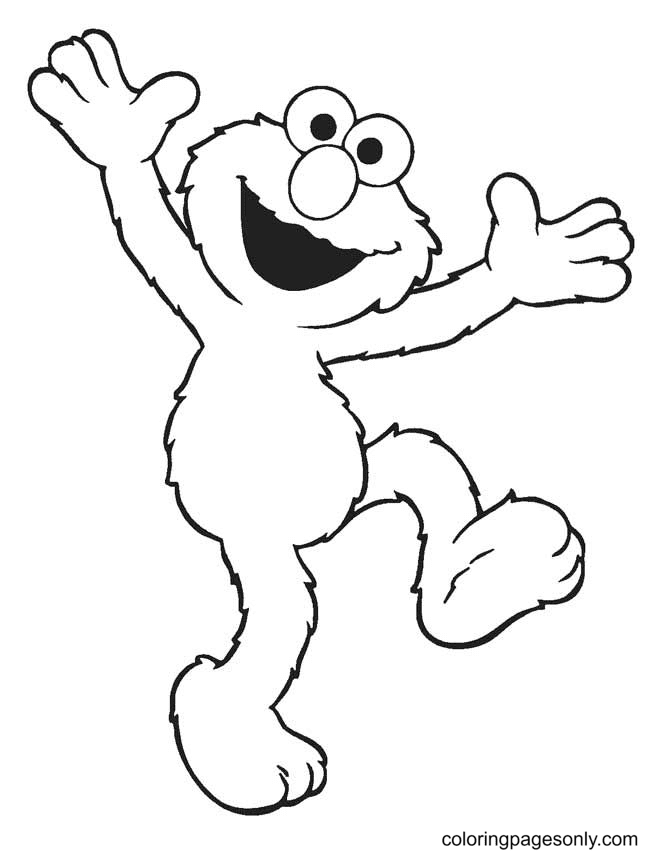
Twenty-one pages are plain, single-figure Elmo designs without a specific activity or scene. These work well as a fast handout or a first attempt at the character, and reward getting the red fur, orange nose, and top-set eyes right.
Everyday Activities
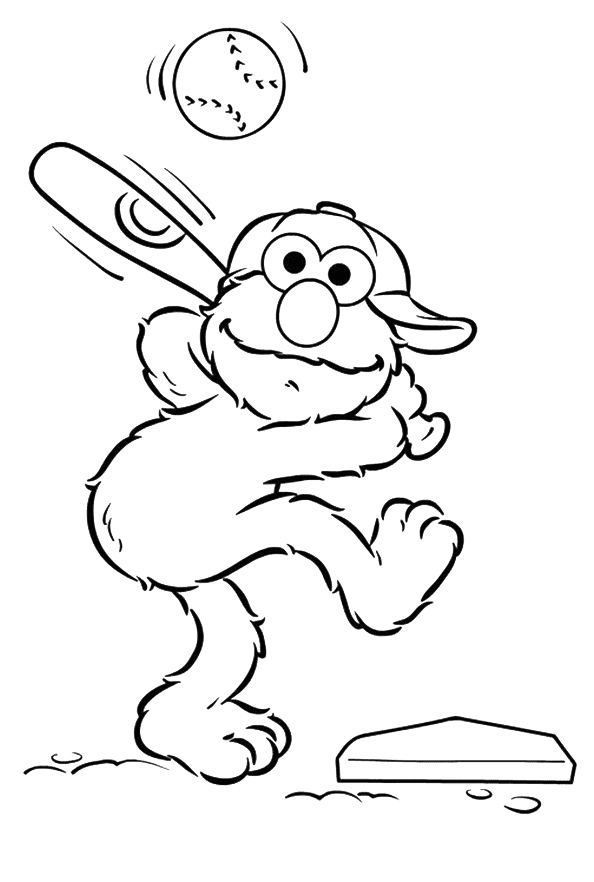
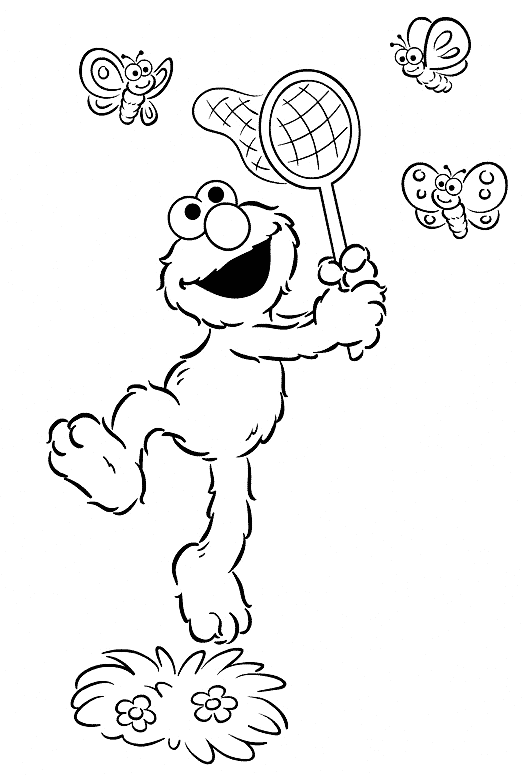
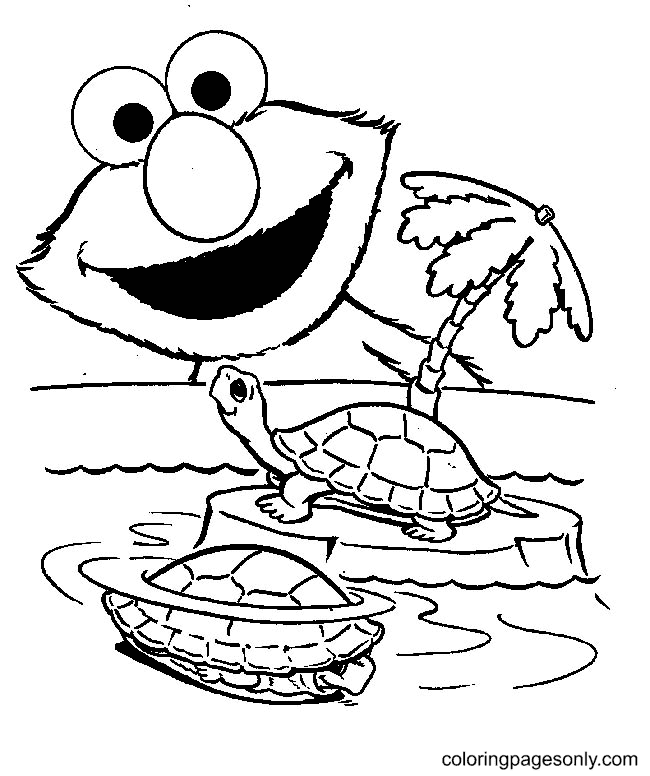
Seventeen pages show Elmo doing something specific: reading, playing basketball, riding roller skates, picking vegetables, or getting ready for school. These pages ask for an extra color decision beyond Elmo himself, since the activity’s props need their own accurate colors.
Seasonal and Holiday Scenes
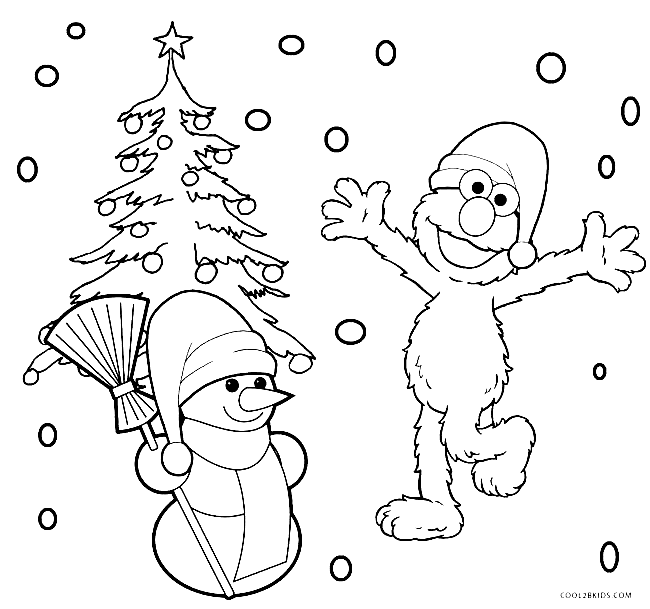
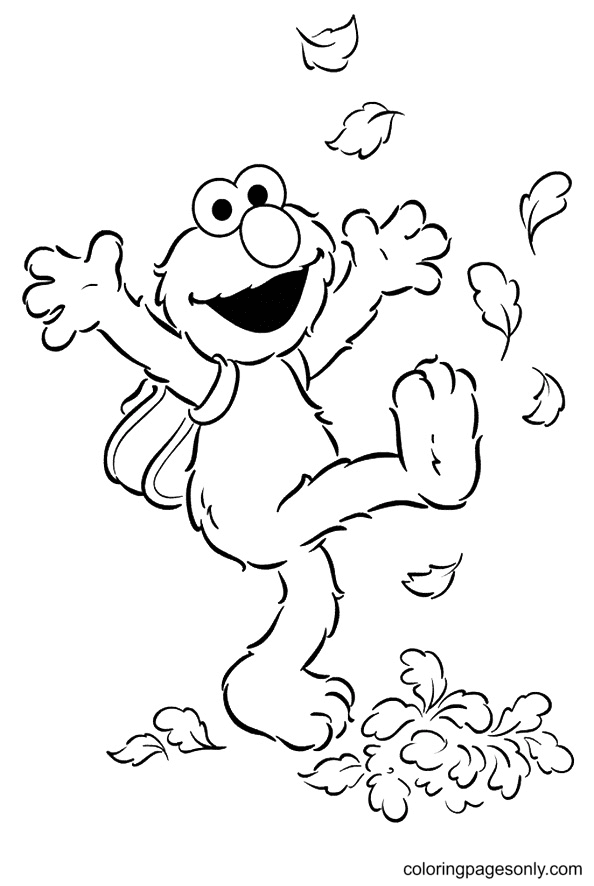
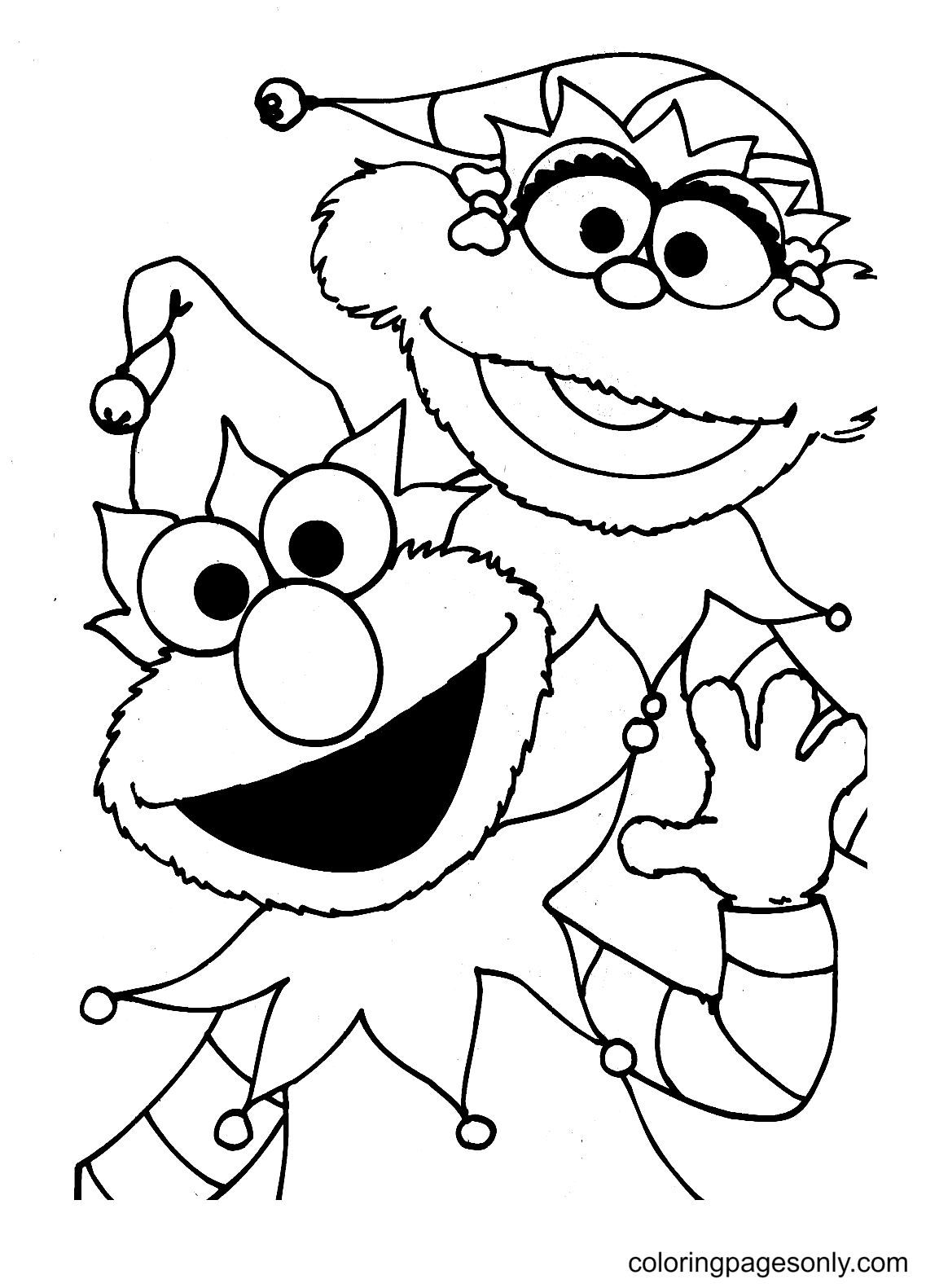
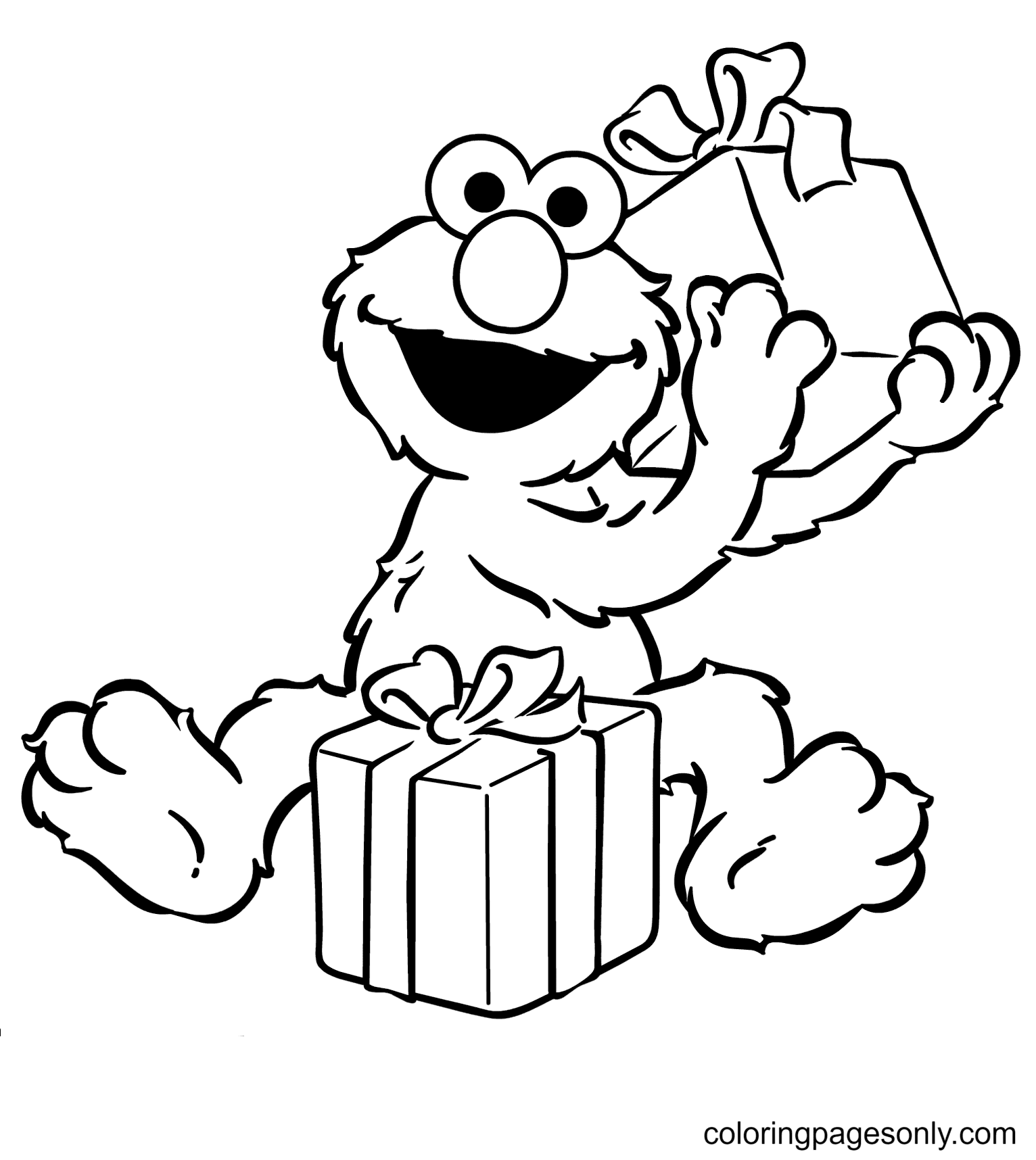
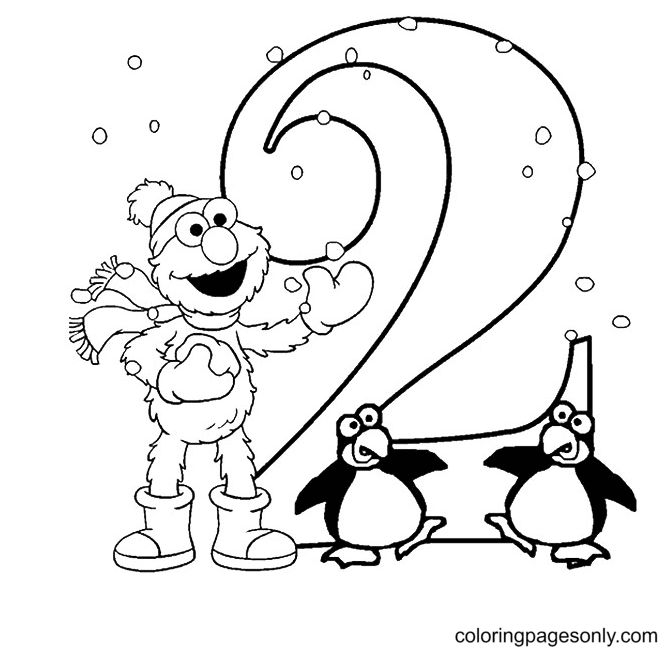
Seven pages tie Elmo to a specific season or occasion: a snowman, fall leaves, Halloween, Christmas, and a birthday celebration. These pages carry the most background detail in the set.
Elmo with Friends and Letter Pages
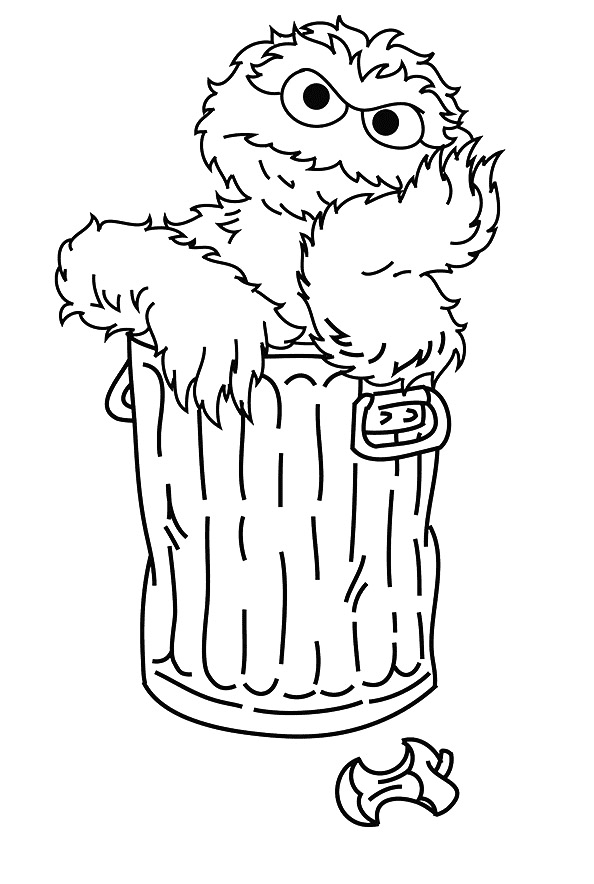
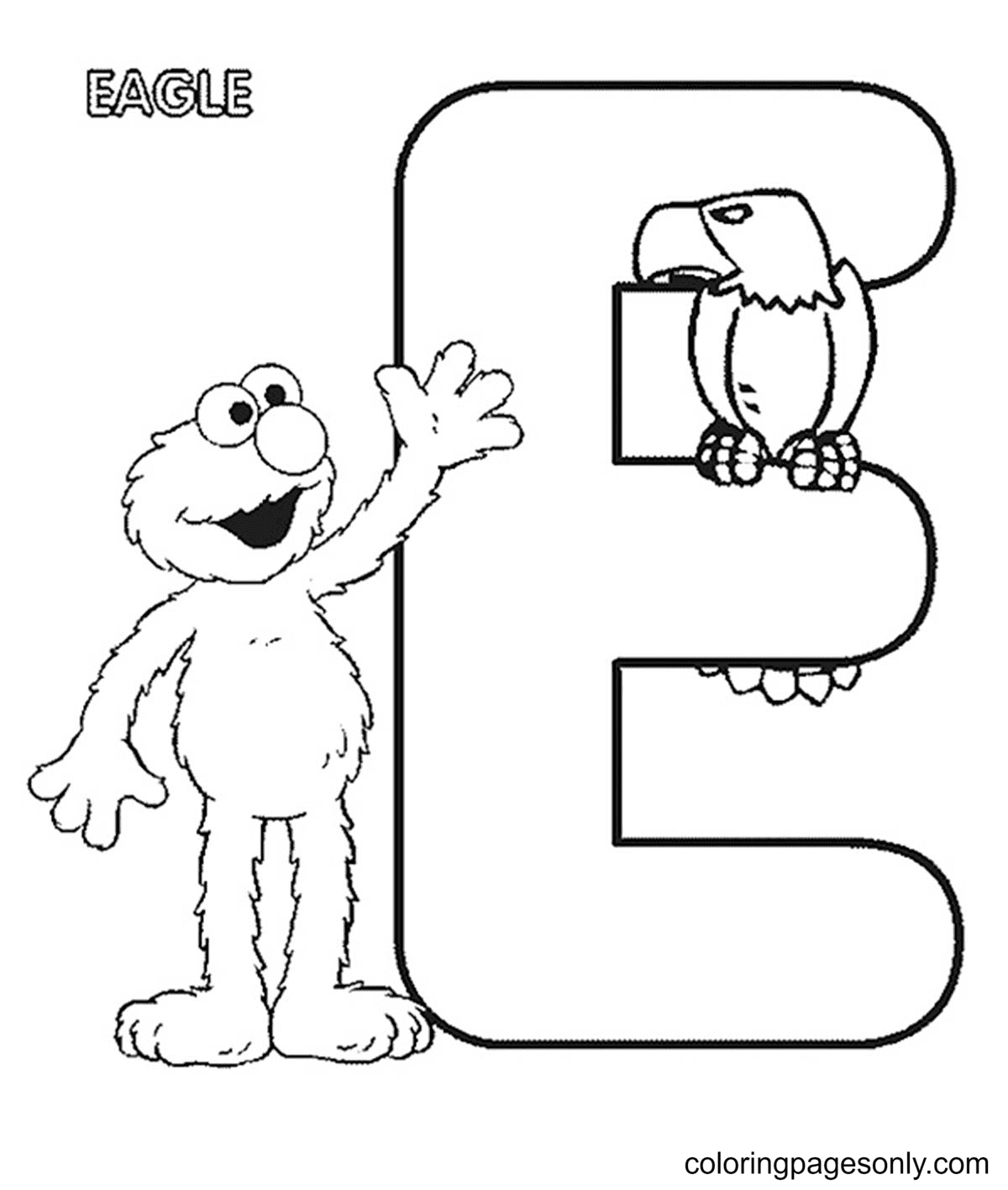
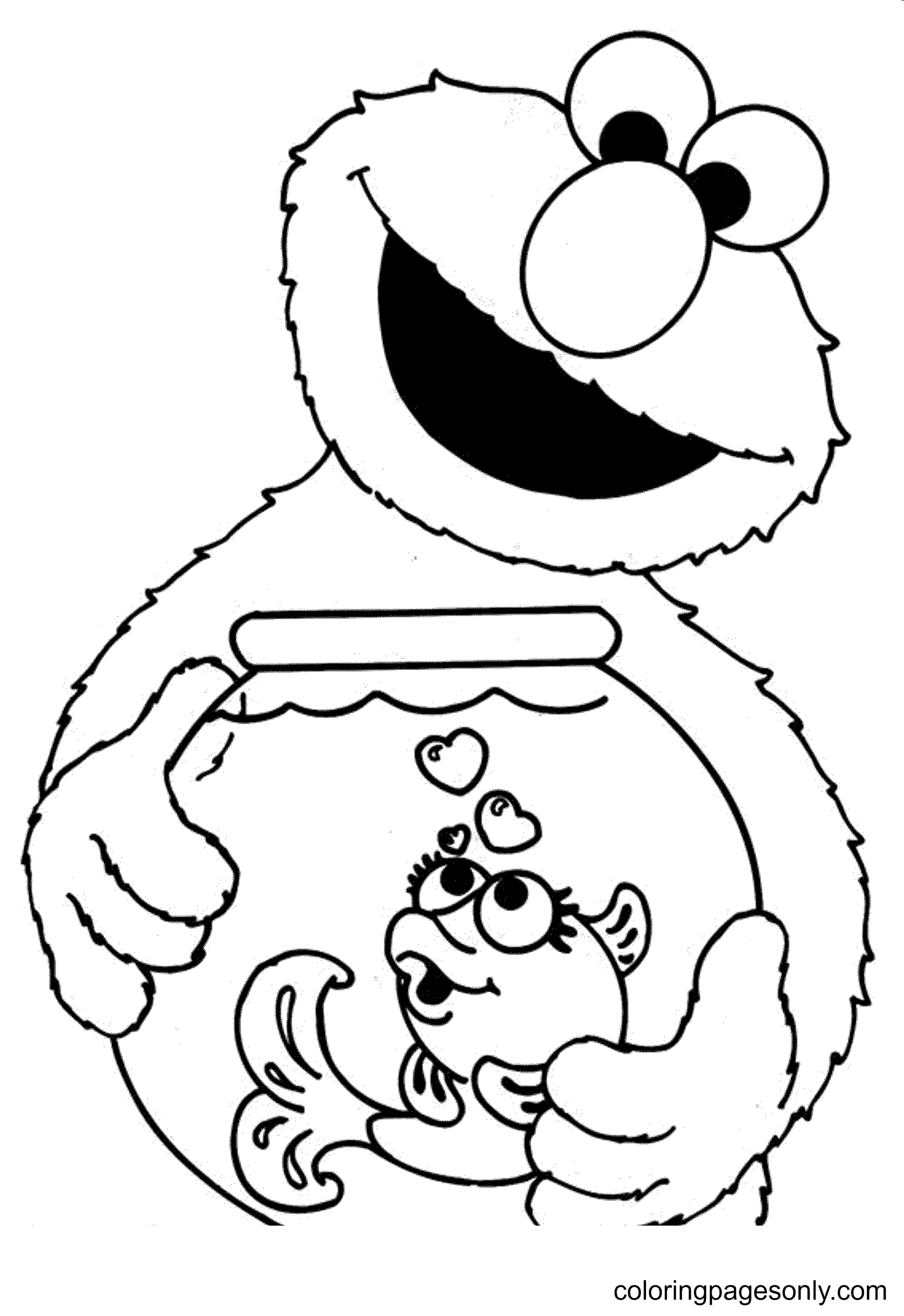
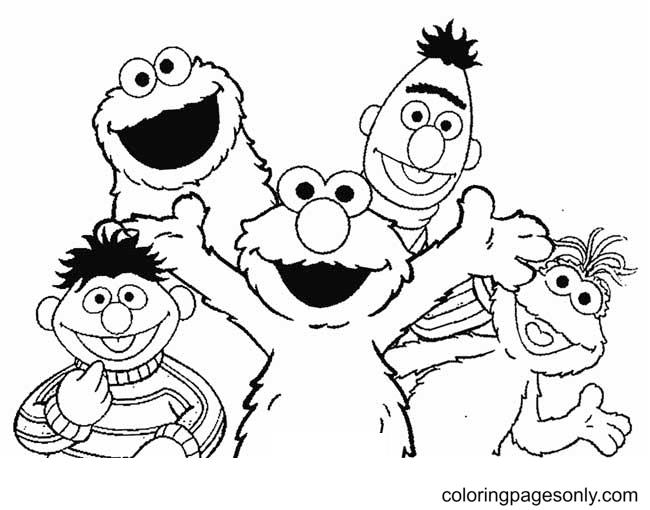
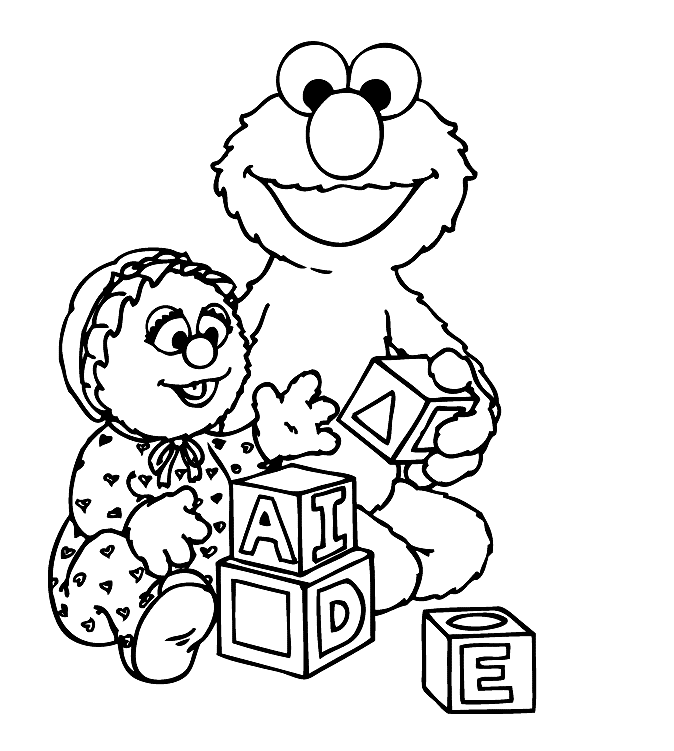
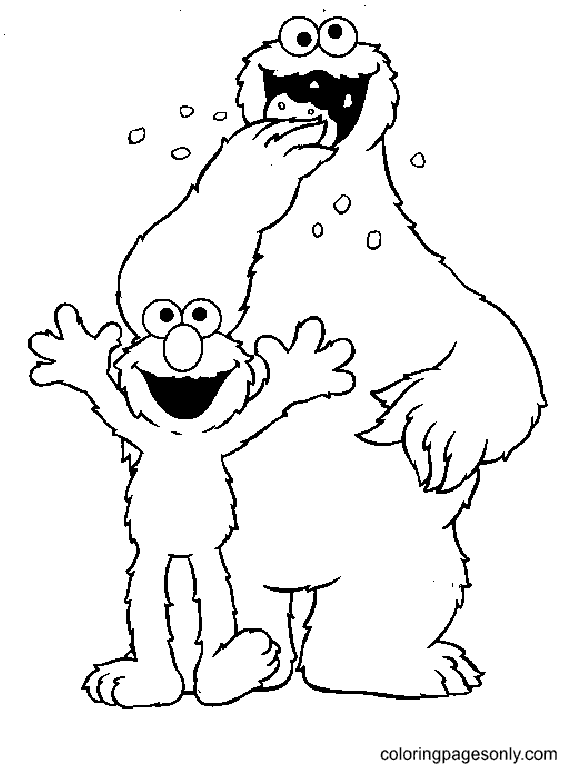
Seven pages show Elmo alongside other Sesame Street characters, including Cookie Monster, Abby, and his pet goldfish Dorothy, plus a letter-recognition page pairing Elmo with the letter E. These pages ask for each character’s own signature color to stay distinct from Elmo’s red.
What Elmo Coloring Pages Do
Two small accents carry the whole identity. Since Elmo’s entire look comes down to red fur plus an orange nose and white-and-black eyes, a colorist has to keep those two accent colors clearly separate from the surrounding red, a more precise task than it looks at first glance.
Small, contained shapes build hand control. Keeping color inside the narrow nose shape and the round eye outlines without letting it bleed into the red fur is the kind of careful, small-scale work that lines up with what pediatric development research, including guidance from the American Academy of Pediatrics, describes as useful for building hand strength in children around two to seven years old.
A character with a real, traceable history. Elmo did not start as a planned character. He was an unnamed background puppet for several years before gaining a name and personality in the mid-1980s, a detail that gives a coloring session a genuine bit of behind-the-scenes television history to talk about.
Familiar shapes offer a steady, calming activity. A 2005 Art Therapy Journal study found that coloring within defined shapes was linked to lower measured anxiety than free drawing, and a simple, familiar character like Elmo gives a young colorist that same structured, low-stakes activity without any unfamiliar shapes to figure out.
How to Color Elmo Pages Well
- Use the most saturated red available: Elmo’s fur is a bright, fully saturated red rather than a muted or brick tone, so choose the boldest, most vivid red in your set for every fur area.
- Keep the nose a distinct, lighter orange: Color the round nose a clear orange, slightly lighter in value than the surrounding red fur, so it stays visible instead of blending into the face.
- Make the eyes the brightest white on the page: Keep the whites of Elmo’s eyes clean and bright, with true black pupils, since the top-set eyes are the main way his expression reads.
- Match friends to their own signature colors: Keep Cookie Monster a darker blue and Abby her own established palette, distinct from Elmo’s red, so multi-character pages stay easy to read.
- Color Dorothy as a simple orange goldfish: On the page featuring Elmo’s pet goldfish, use orange with white accents for Dorothy’s body, kept visually separate from Elmo’s own coloring.
- Match holiday backgrounds to their season: Use cool blues and whites for the winter and snowman pages, and warm oranges and browns for the fall leaves page, so the background temperature supports rather than competes with Elmo’s red.
5 Creative Craft Ideas With Elmo Coloring Pages
1. Elmo Birthday Card. Materials: a colored Elmo page, folded cardstock, scissors, and glue. Trim the colored page to fit the card front, glue it in place, and write a birthday message inside.
2. Elmo Bookmark Set. Materials: two or three colored pages, scissors, clear contact paper, and a hole punch. Cut each colored page into a bookmark-sized strip, cover both sides with contact paper, and punch a hole for a ribbon.
3. Letter Recognition Poster. Materials: the colored Letter E page and a few other colored Elmo pages, a poster board, and glue. Glue the colored pages onto the poster board around the large letter E to build a simple letter-recognition display.
4. Sesame Street Friends Fact Poster. Materials: several colored pages showing Elmo with different friends, a poster board, glue, and a marker. Glue the colored pages onto the poster board, then write each character’s name underneath.
5. Seasonal Elmo Display. Materials: the colored fall leaves, snowman, and Halloween pages, scissors, and tape or poster putty. Display the three colored seasonal pages together on a wall, rotating which one is in front as the seasons change.
Frequently Asked Questions
What are Elmo coloring pages?
Elmo coloring pages are printable designs featuring simple Elmo portraits, everyday activities, seasonal and holiday scenes, and Elmo alongside his Sesame Street friends. This collection includes 52 free designs available as printable PDFs or online coloring pages.
Who is Elmo?
Elmo is a red Muppet character on Sesame Street, officially described as three and a half years old, with a birthday of February 3.
Who has performed Elmo over the years?
Kevin Clash developed Elmo’s familiar personality and voice starting in 1985 and performed the character until 2012, when Ryan Dillon took over the role, a role he continues to perform today.
What was the Tickle Me Elmo craze?
In 1996, the Tickle Me Elmo plush toy became one of the most sought-after holiday gifts in the United States, with stores selling out nationwide during the holiday season.
Did Elmo really testify before Congress?
Yes. In 2010, Elmo appeared before a United States congressional subcommittee to advocate for music education funding, making him the only nonhuman to testify before Congress.
Why does Elmo speak in the third person?
Elmo saying phrases like “Elmo wants this” instead of “I want this” mirrors how many real preschoolers speak at that developmental stage, a detail Sesame Workshop has confirmed is an intentional character trait.
Are Elmo coloring pages suitable for young children?
Yes. The simple portrait pages suit ages 2 and up, matching Sesame Street’s own preschool-focused audience: the busier activity and multi-character pages suit ages 4 and up.
Can these pages be downloaded or printed without an account?
Yes. Every page can be downloaded or printed directly with no account, email, or payment required.
Start Coloring
Download any page by clicking the design. No account, email, or payment is required. Pages print directly from the browser at full resolution or open in the online coloring tool for screen use. Share finished pages on Facebook or Pinterest with the share buttons at the top of each design page.