Invisible Woman Coloring Pages
 By:
Jennifer Thoa - Content Editor & Designer
Updated:
By:
Jennifer Thoa - Content Editor & Designer
Updated:
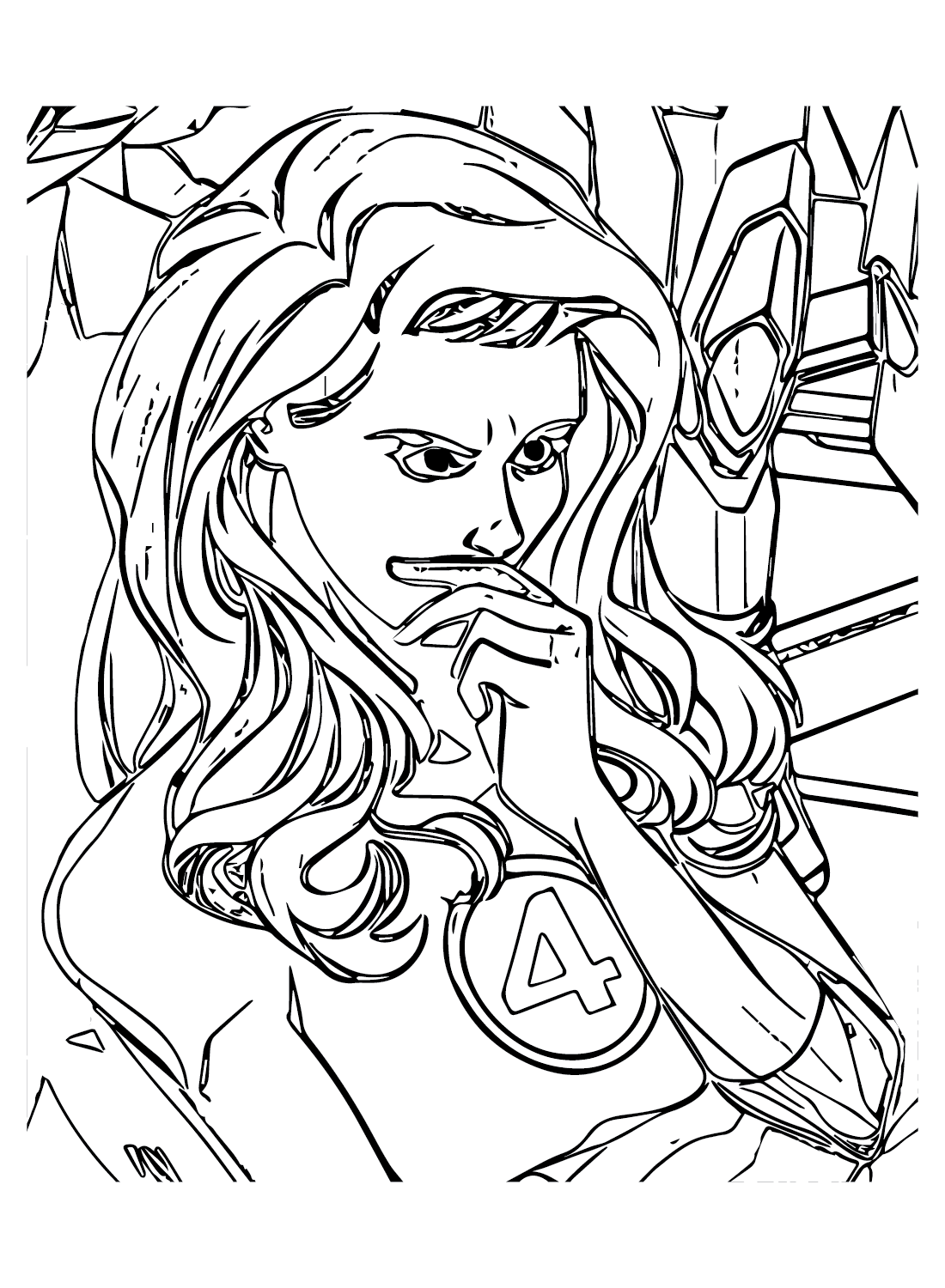
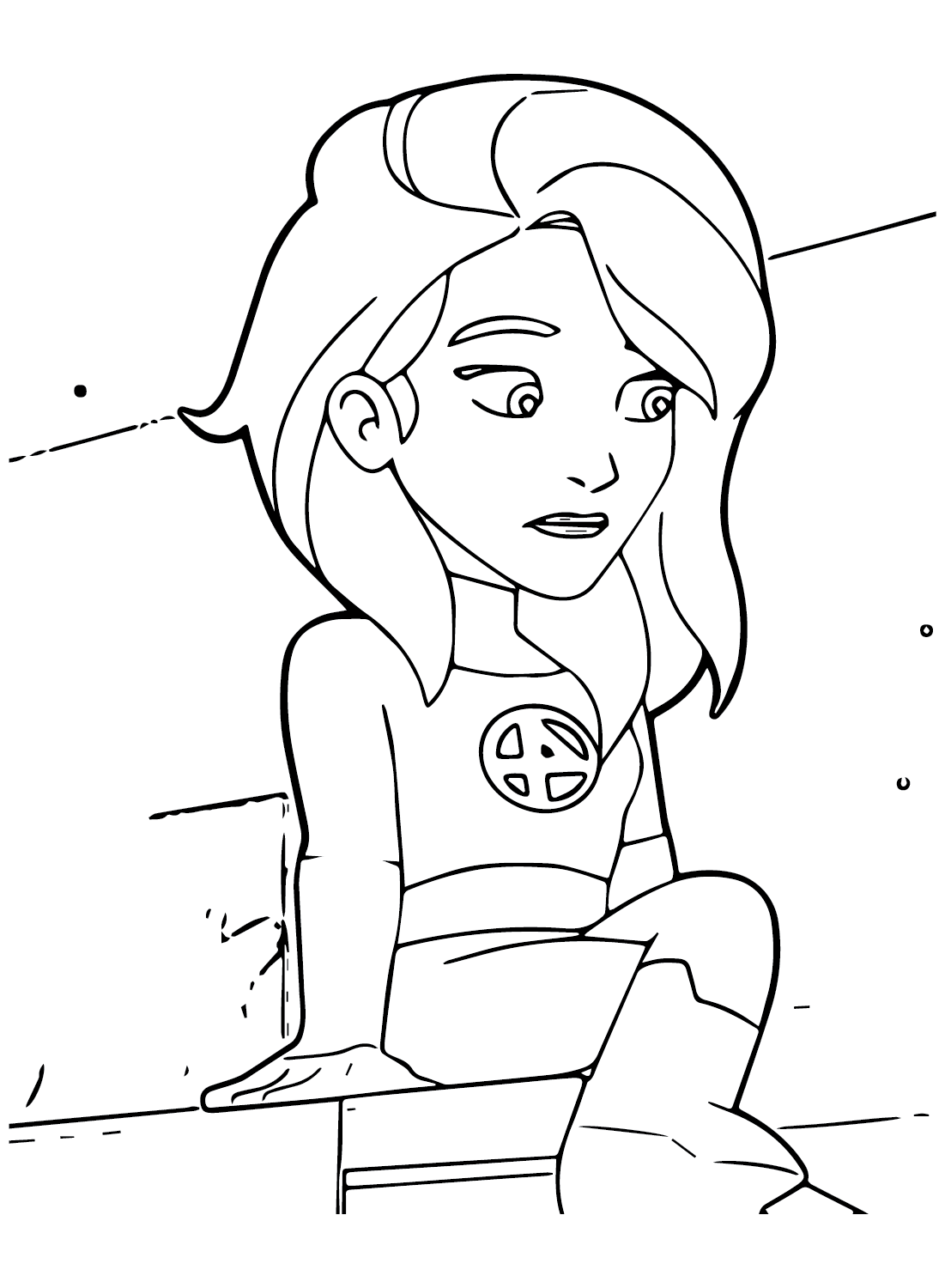
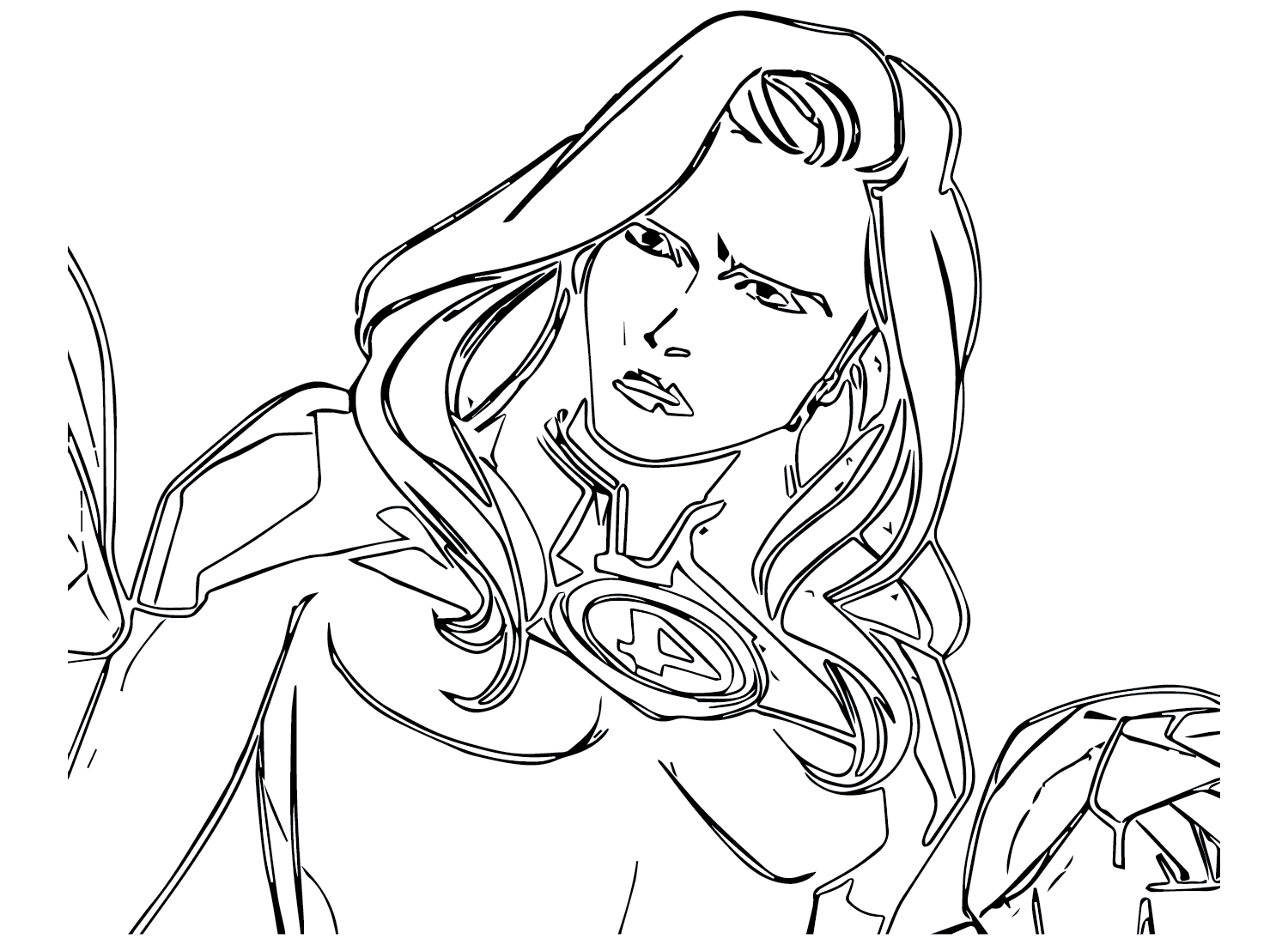
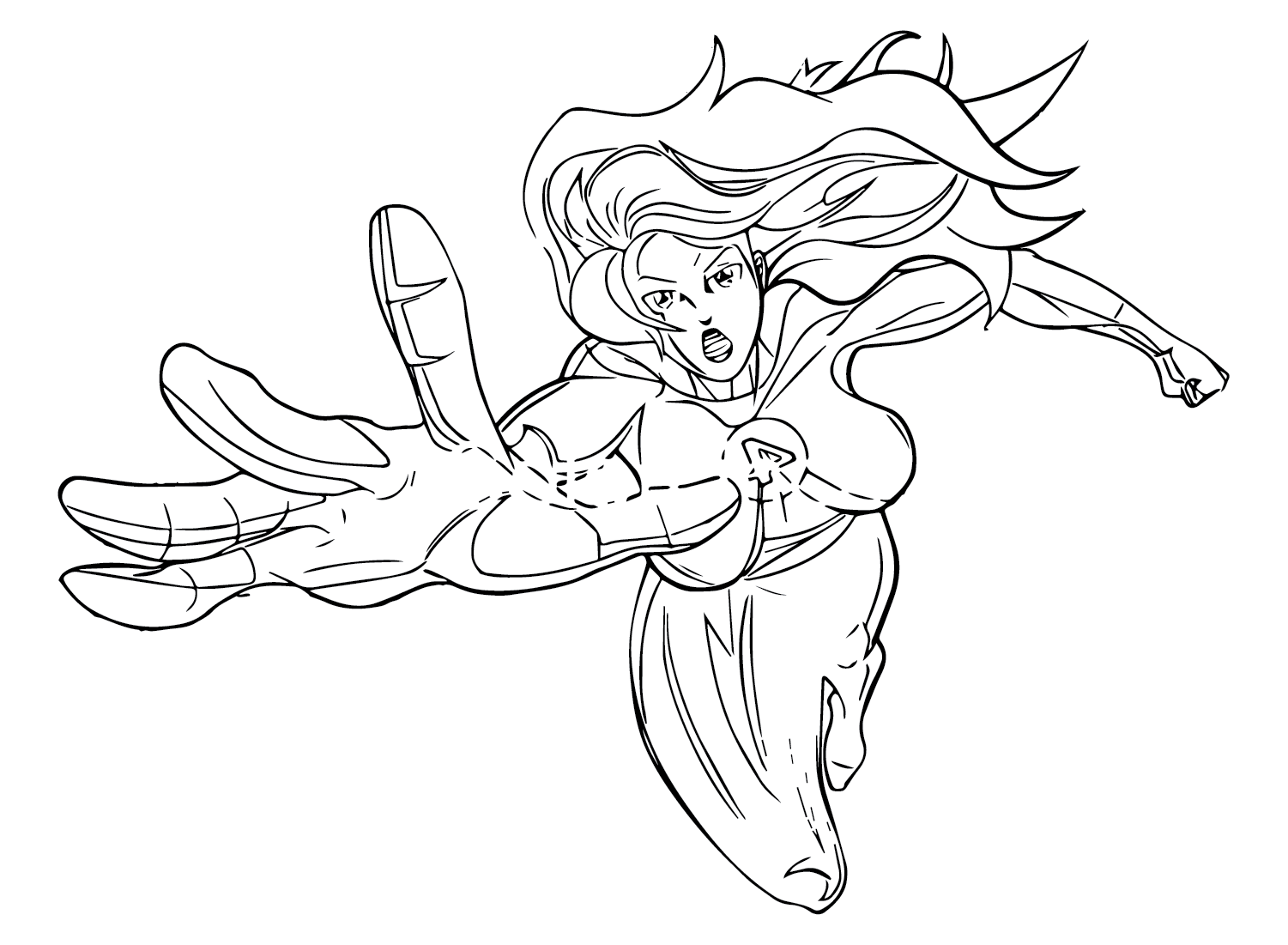
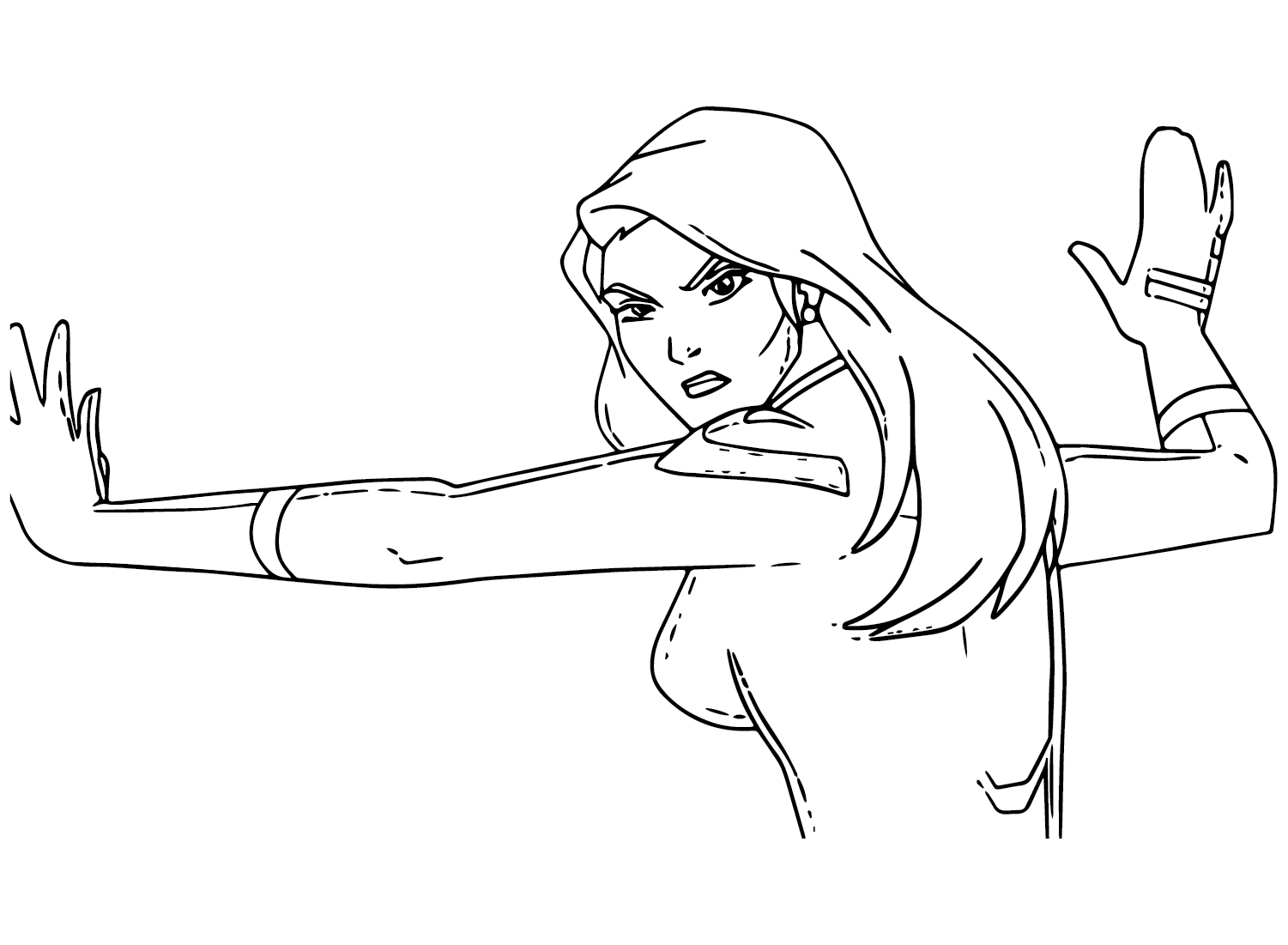
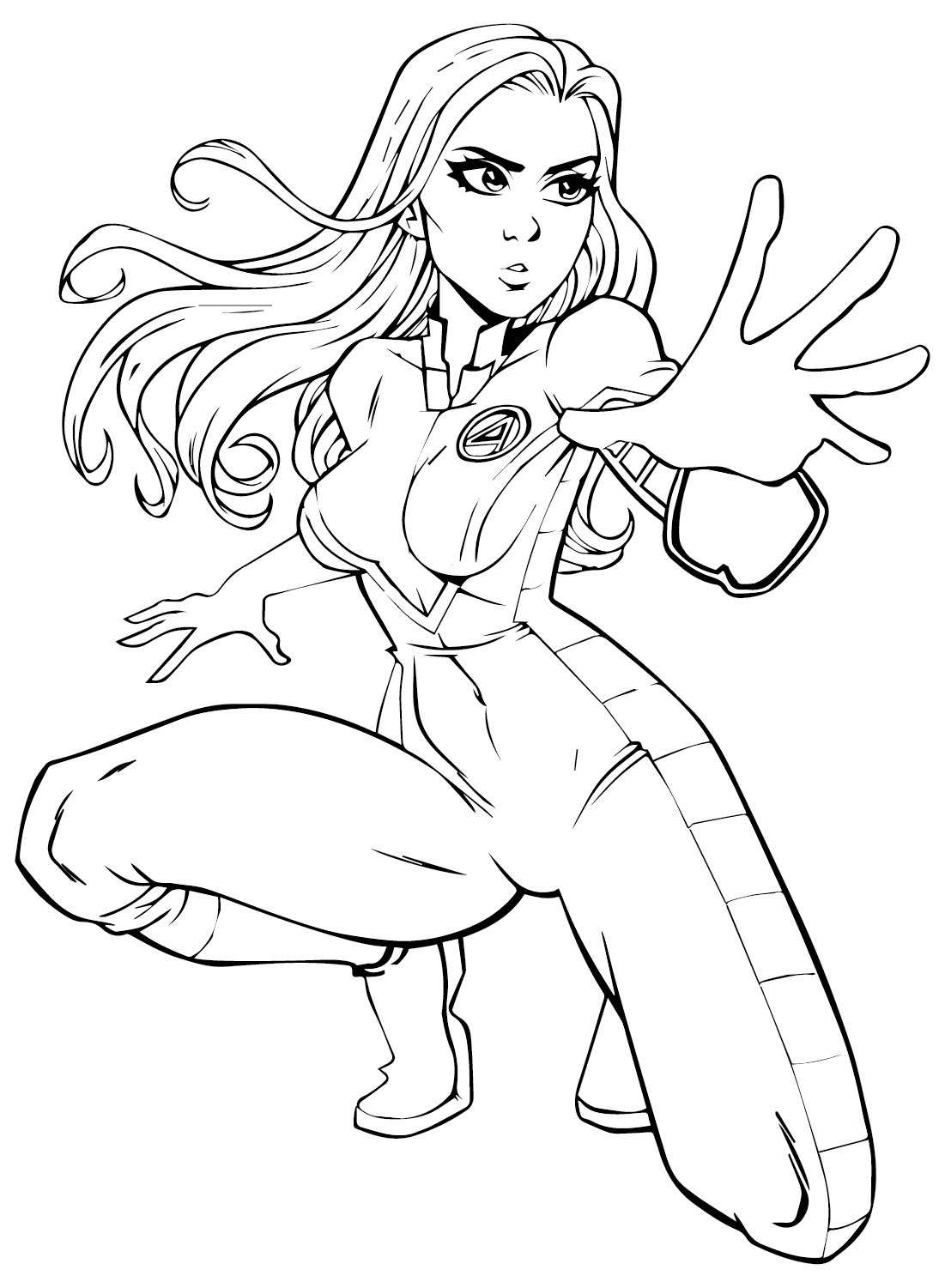
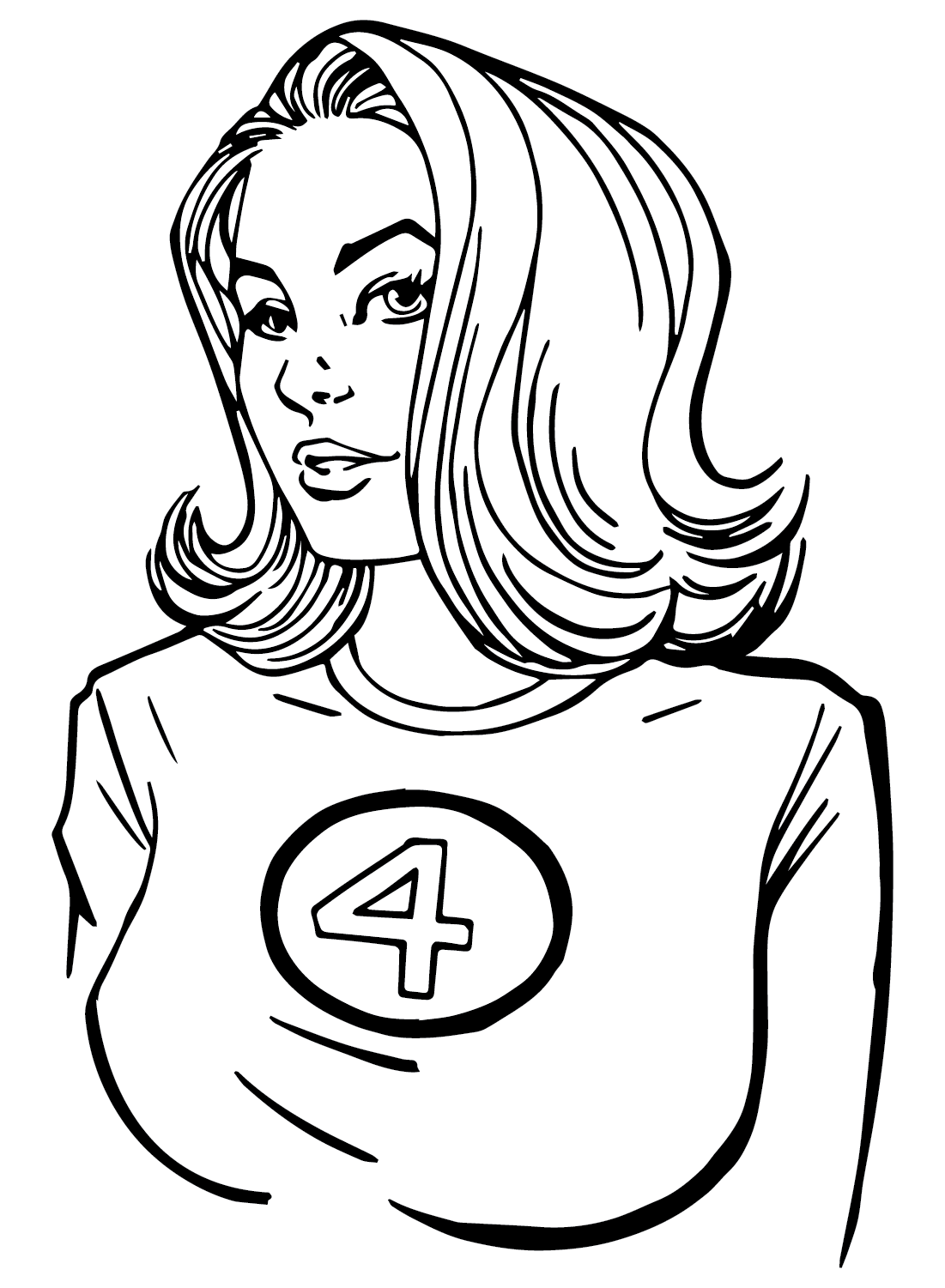
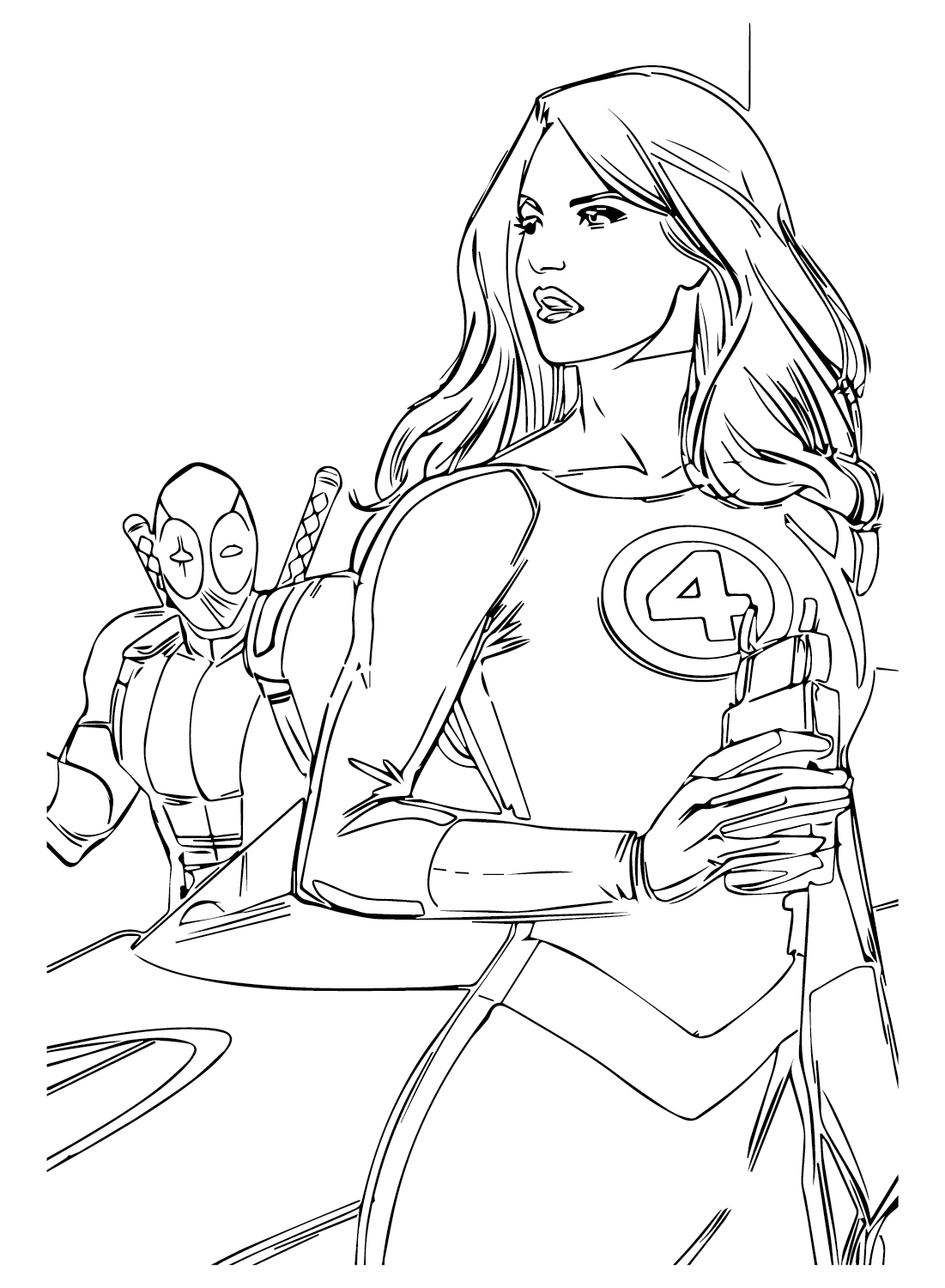
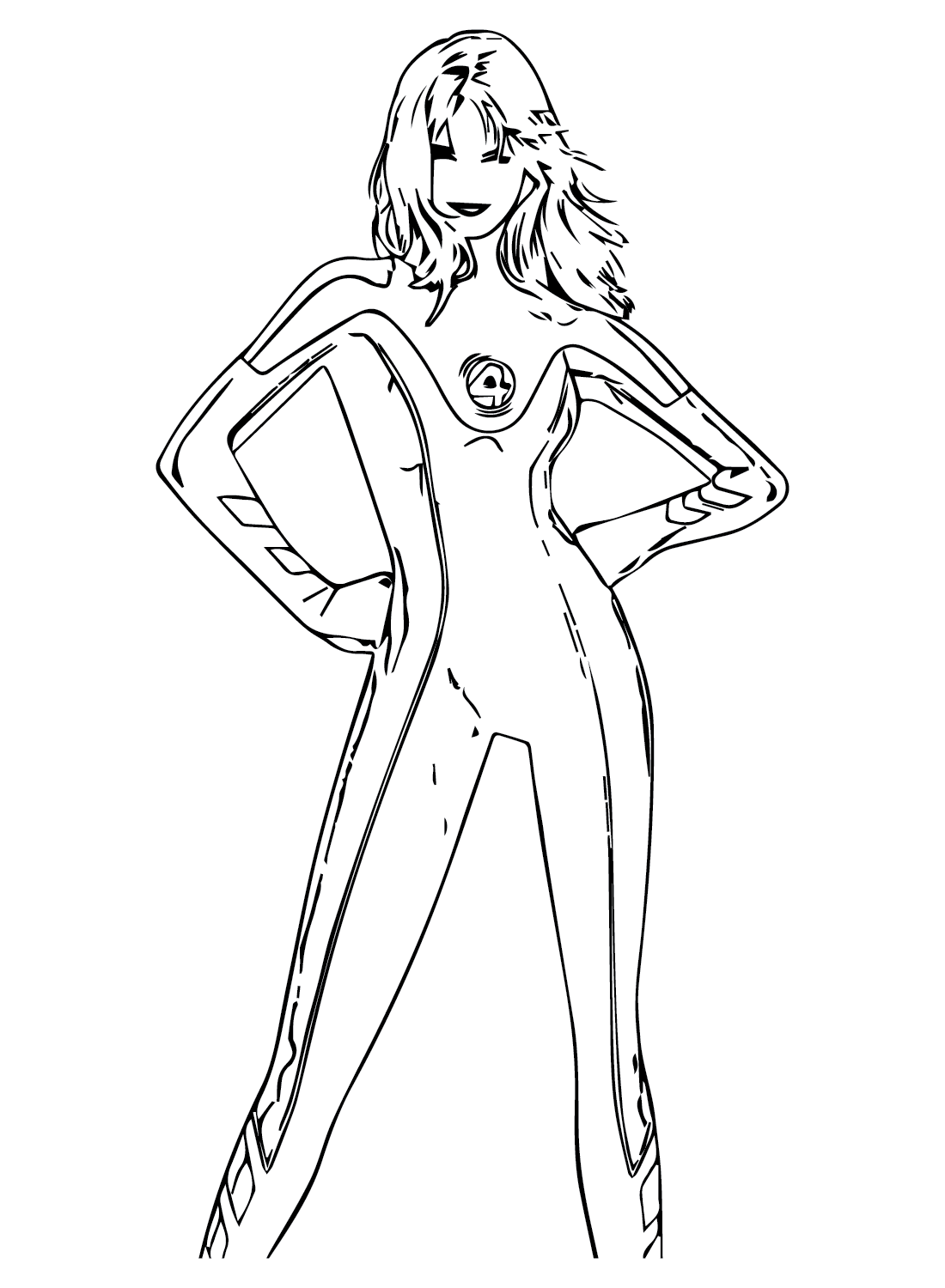
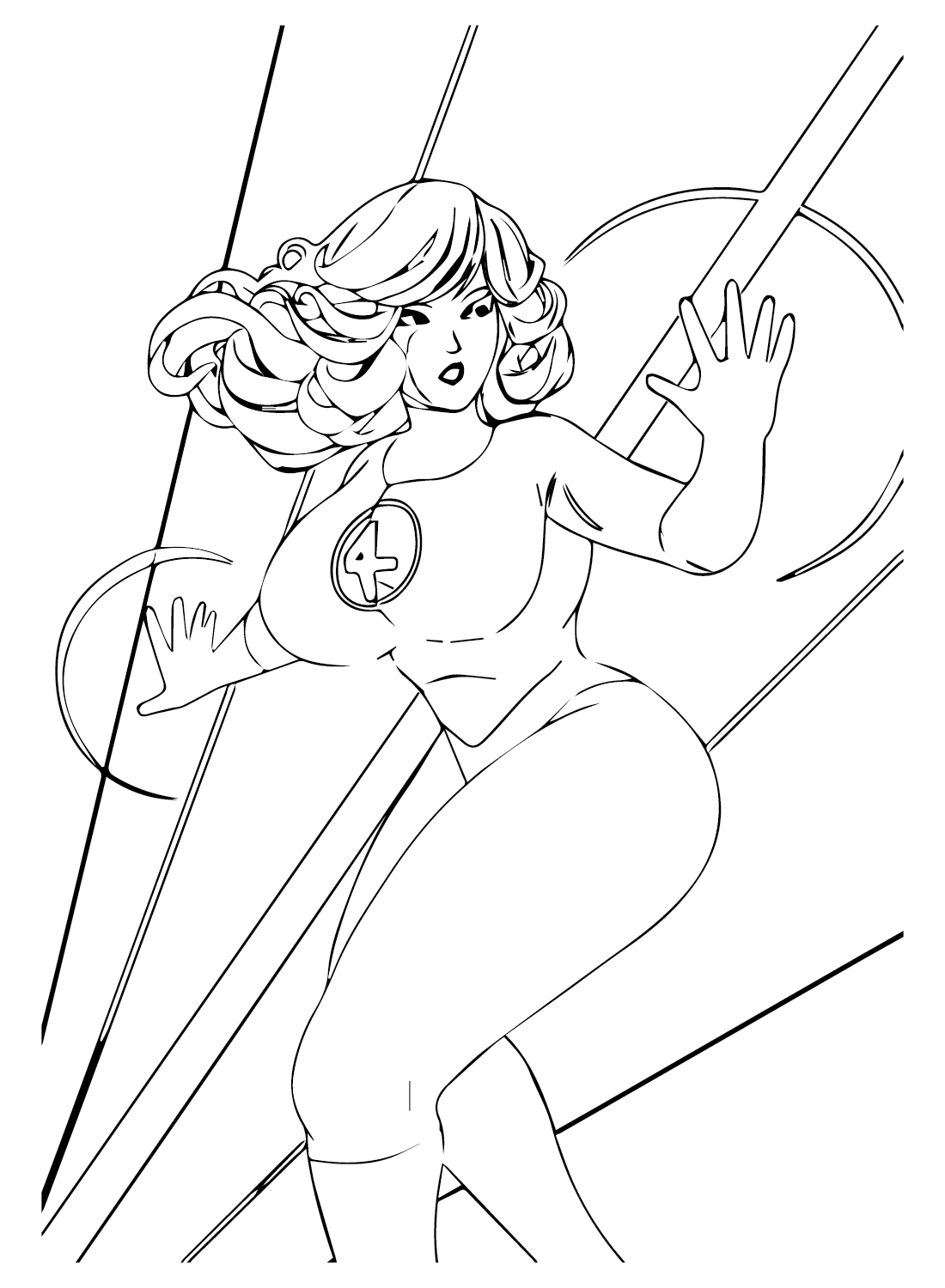
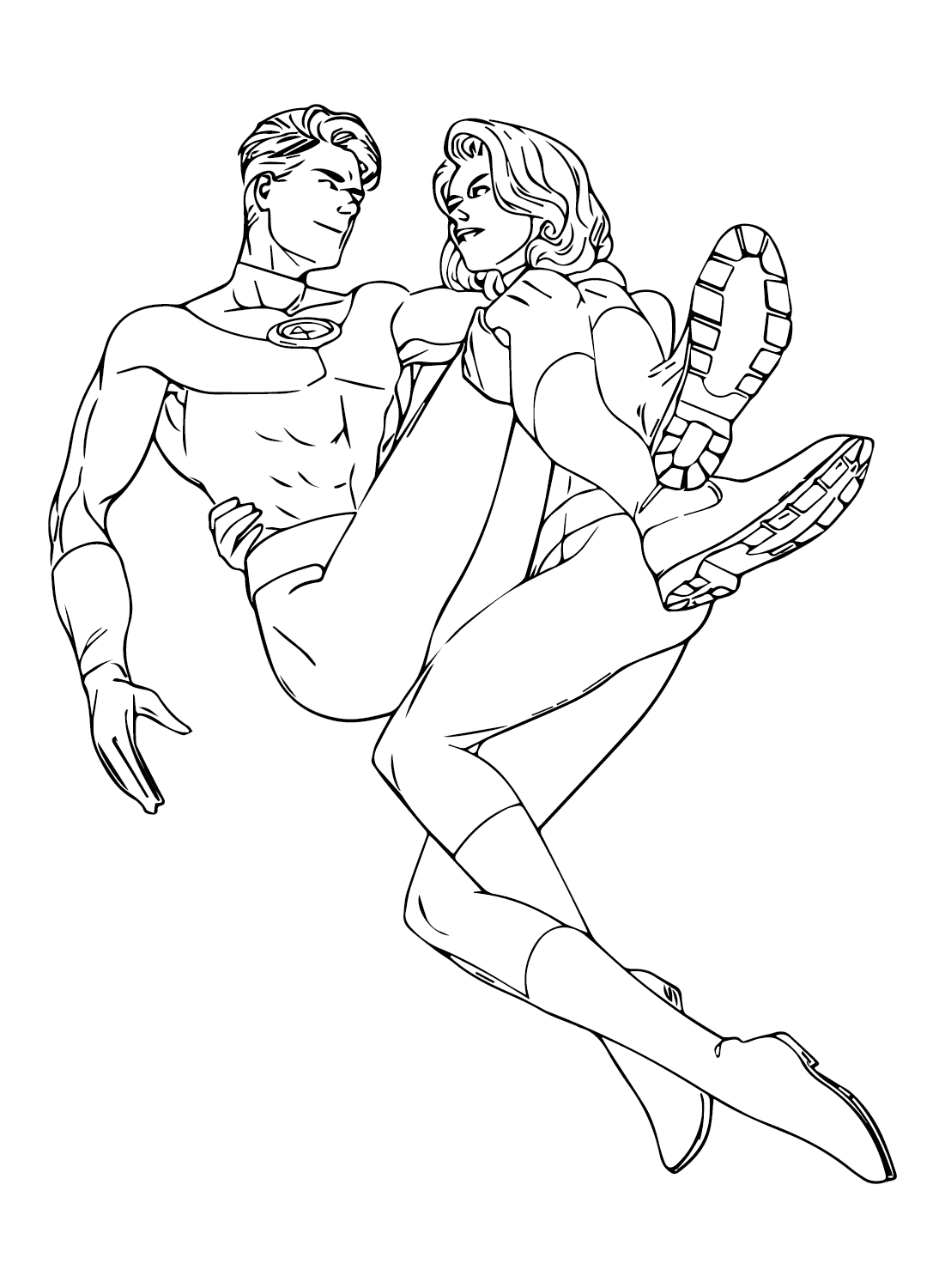
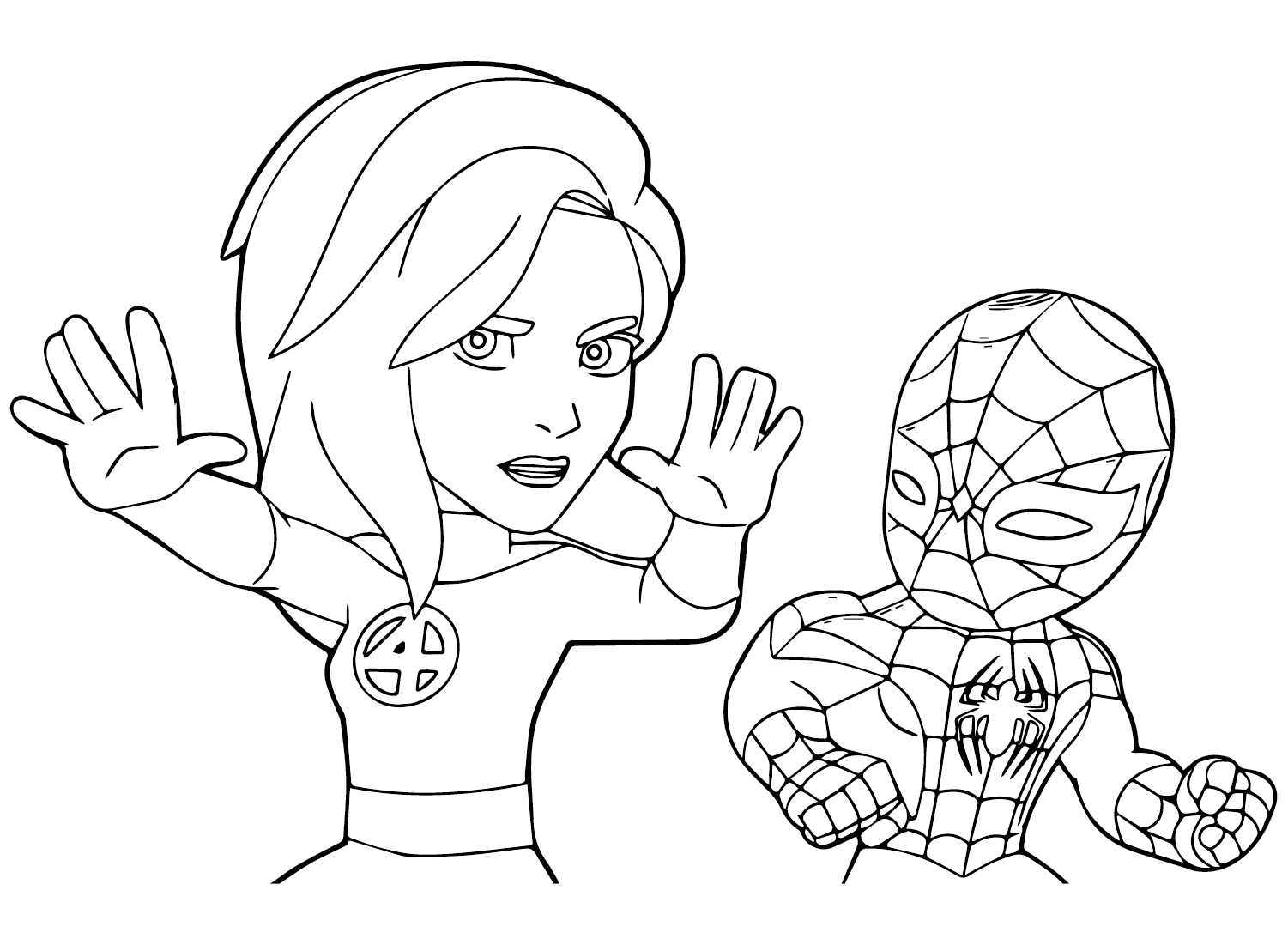
Free Invisible Woman coloring pages: 20+ pages featuring Susan Storm Richards in her iconic blue Fantastic Four uniform, force field projection poses showing the character’s primary offensive power, invisibility effect scenes with partial transparency rendering, full-body action stances demonstrating the character’s combat capabilities, Sue Storm with Mister Fantastic and the broader Fantastic Four team, the “4” insignia design pages, close-up portrait studies, pages referencing her role as mother to Franklin and Valeria Richards, and the full visual vocabulary of Marvel Comics’ most powerful female founding character across sixty-plus years of publication. All free, printable PDF and online coloring for Marvel fans of all ages.
Susan Storm Richards, the Invisible Woman, first appeared in The Fantastic Four #1, published in August 1961 with a cover date of November 1961. The comic was written by Stan Lee and illustrated by Jack Kirby for Marvel Comics. The Fantastic Four #1 is the first Silver Age Marvel superhero team title, created in response to the commercial success of DC’s Justice League of America (which debuted in 1960), and its publication marked the beginning of Marvel’s superhero renaissance that would define American comics throughout the 1960s.
Sue Storm, her future husband Reed Richards (Mister Fantastic), her brother Johnny Storm (the Human Torch), and their friend Ben Grimm (the Thing) gained their powers from cosmic radiation exposure during a test spaceflight in which Reed had diverted standard radiation shielding to save weight. Sue gained the ability to render herself and objects invisible. She was initially designated “Invisible Girl” on the team, a name reflecting the era’s common practice of applying diminutive epithets to female heroes. The name change to “Invisible Woman” occurred in Fantastic Four #284 in November 1985, a deliberate editorial decision that reflected both her development as a character across more than two decades of publication and evolving standards for how female heroes were identified in comics.
She and Reed Richards married in Fantastic Four Annual #3 in 1965, one of the most significant fictional weddings in Marvel Comics history.
These 20+ free pages at ColoringPagesOnly.com cover the Invisible Woman’s full visual history. All free, PDF or PNG, print or color online.

What’s Inside
Sue Storm in the Fantastic Four Uniform
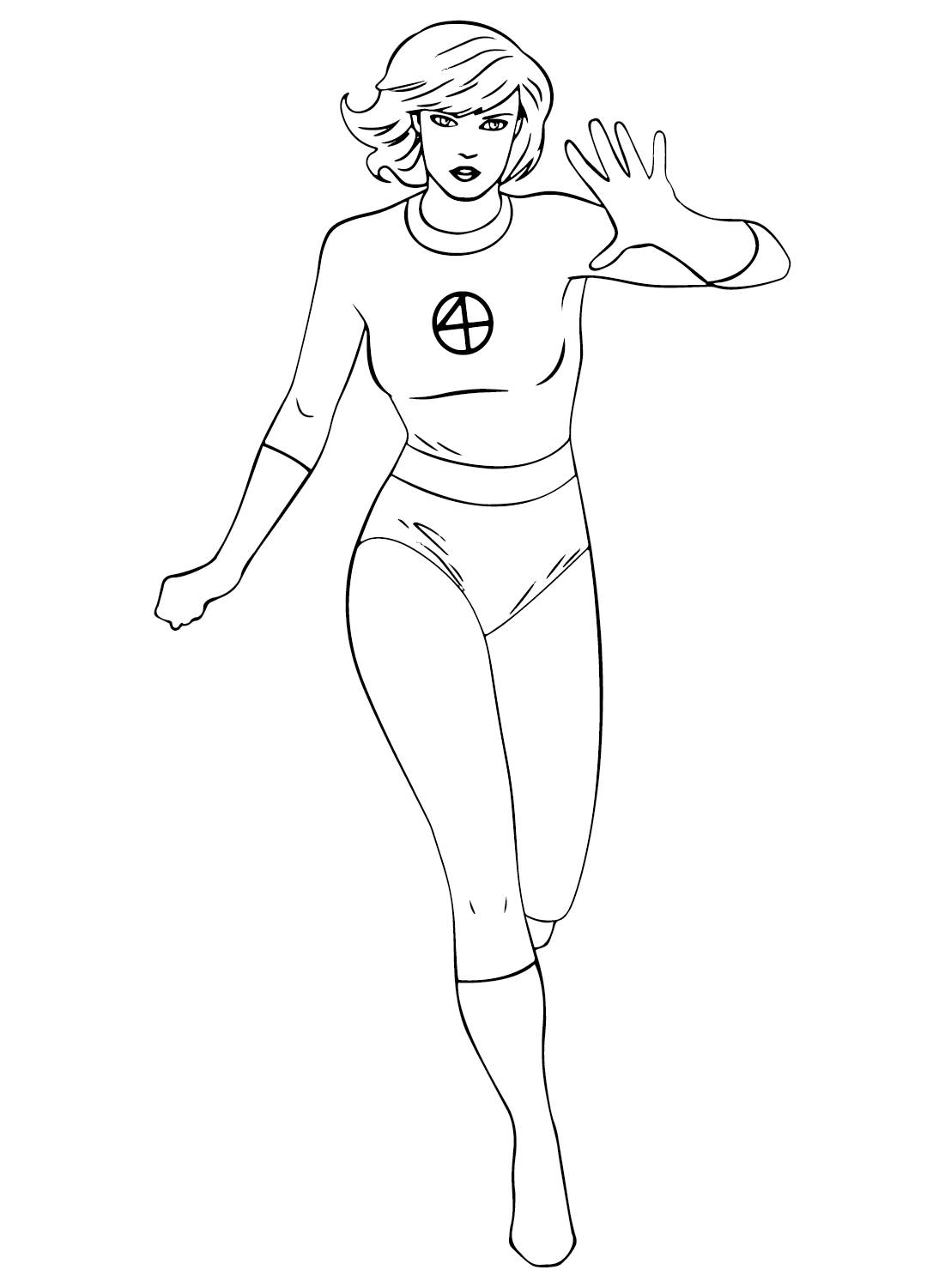
The Fantastic Four’s blue uniform is one of Marvel Comics’ most enduring and most consistent costume designs: a clean, solid blue suit with the number “4” in a circle as the primary insignia, worn identically across all four team members as a deliberate statement that this is a team defined by unity rather than by individual heroic branding. The choice of matching uniforms (unusual among superhero teams, whose members typically wear individual costumes) communicates the Fantastic Four’s founding concept: they are a family and a scientific expedition team as much as a superhero team, and the uniform reflects that shared identity.
The suit is made of what Reed Richards calls “unstable molecules,” a fictional material specifically developed to interact with the wearer’s powers. For Sue, this means the suit turns invisible with her. For Johnny, it resists fire. For Reed, it stretches with him. For Ben, it accommodates his rocky form. The unstable molecule concept is one of the Fantastic Four’s most specific and most practical pieces of in-universe science: it solves the logistical problem of how a team with radically different powers could share a costume.
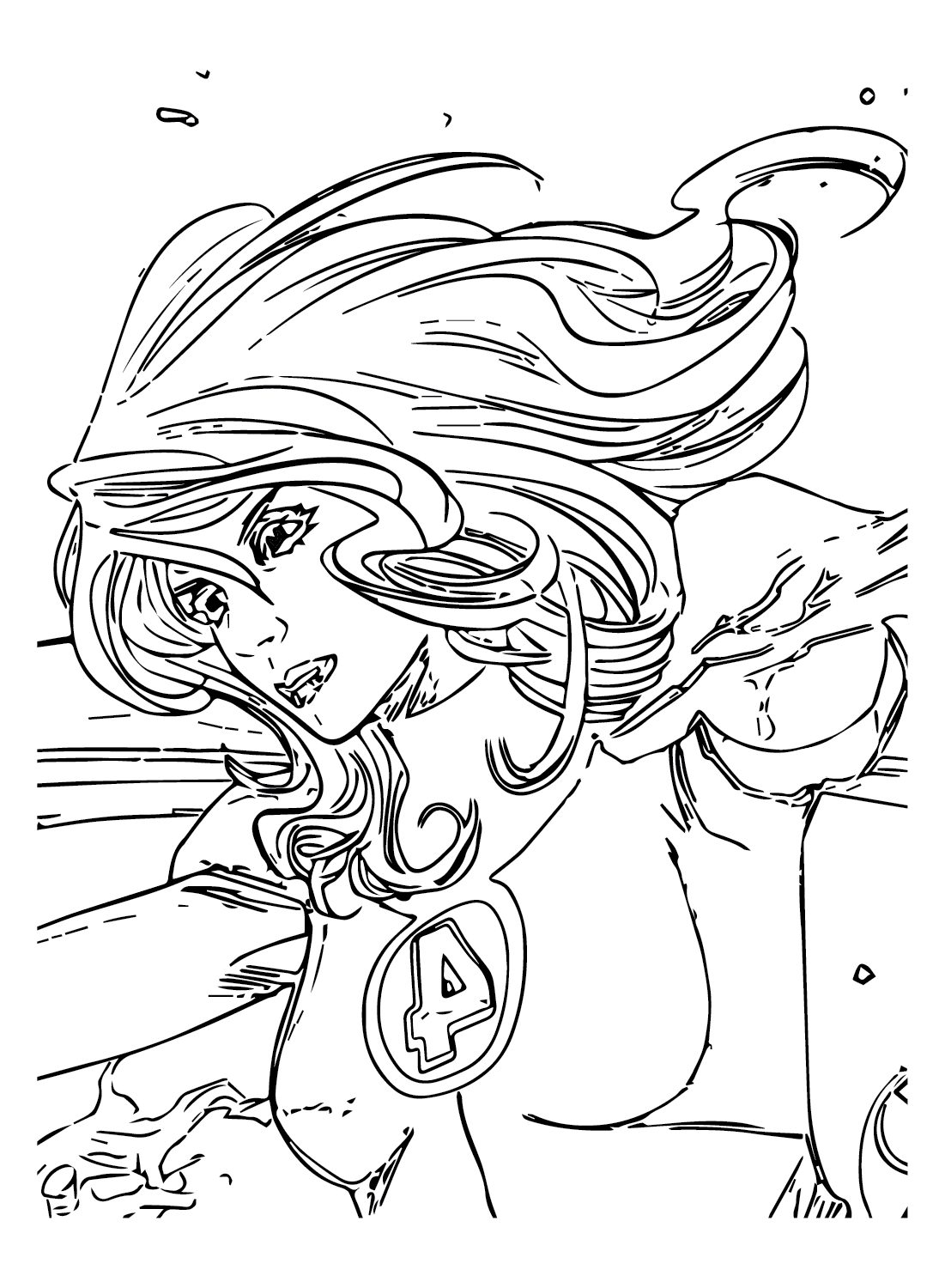
Sue Storm’s visual in the uniform has been updated across sixty years of publication and artistic interpretations. Still, the essential elements remain consistent: the blue of the uniform, the “4” insignia, and whatever hairstyle the current artist uses for her blonde hair. In the Silver Age, her hair was typically styled conservatively. In later decades, the styling became more dynamic and varied across artists’ interpretations.
Coloring the FF uniform on Sue Storm pages: The uniform is vivid, slightly royal blue applied at full coverage across all suit surfaces. The “4” insignia on the chest is white or pale cream within a blue circle of slightly deeper blue. The neck, glove-line, and boot-line treatment varies by era and artist: some versions show a lighter blue collar, others show darker blue at the extremities. Her hair is typically blonde, warm golden-yellow, in whatever style the specific page depicts.
Force Field Power Pages
The development of Sue Storm’s force field abilities from a secondary power to her primary offensive and defensive tool is one of Marvel Comics’ most significant single-character power evolutions across its publication history. In the earliest Fantastic Four issues, Sue was primarily depicted using invisibility, with the force fields appearing as a secondary capability. Through the work of writers including John Byrne (who wrote and drew the Fantastic Four from 1981 to 1986) and subsequent creative teams, the force fields’ full potential was progressively articulated and expanded.
In modern Marvel Comics, Sue Storm’s force fields are among the most powerful weapons available to any hero in the Marvel Universe. She can:
Project force fields of any shape (spheres, walls, platforms, spears, and any other configuration she can conceive). Create force field blasts that function as concussive strikes. Form force field bubbles inside an opponent’s body (a rarely used but dramatically effective combat technique). Generate platforms beneath herself to achieve flight. Maintain multiple simultaneous force fields at different locations. Sustain force fields indefinitely once created.
The specific capability of creating a force field inside an opponent’s body and expanding it is one of the most discussed examples of a superhero power that is disproportionately threatening relative to its public perception: Invisible Woman, whose primary name suggests a passive, evasive ability, is arguably the most offensively capable of the Fantastic Four’s four members when her full force field toolkit is applied.
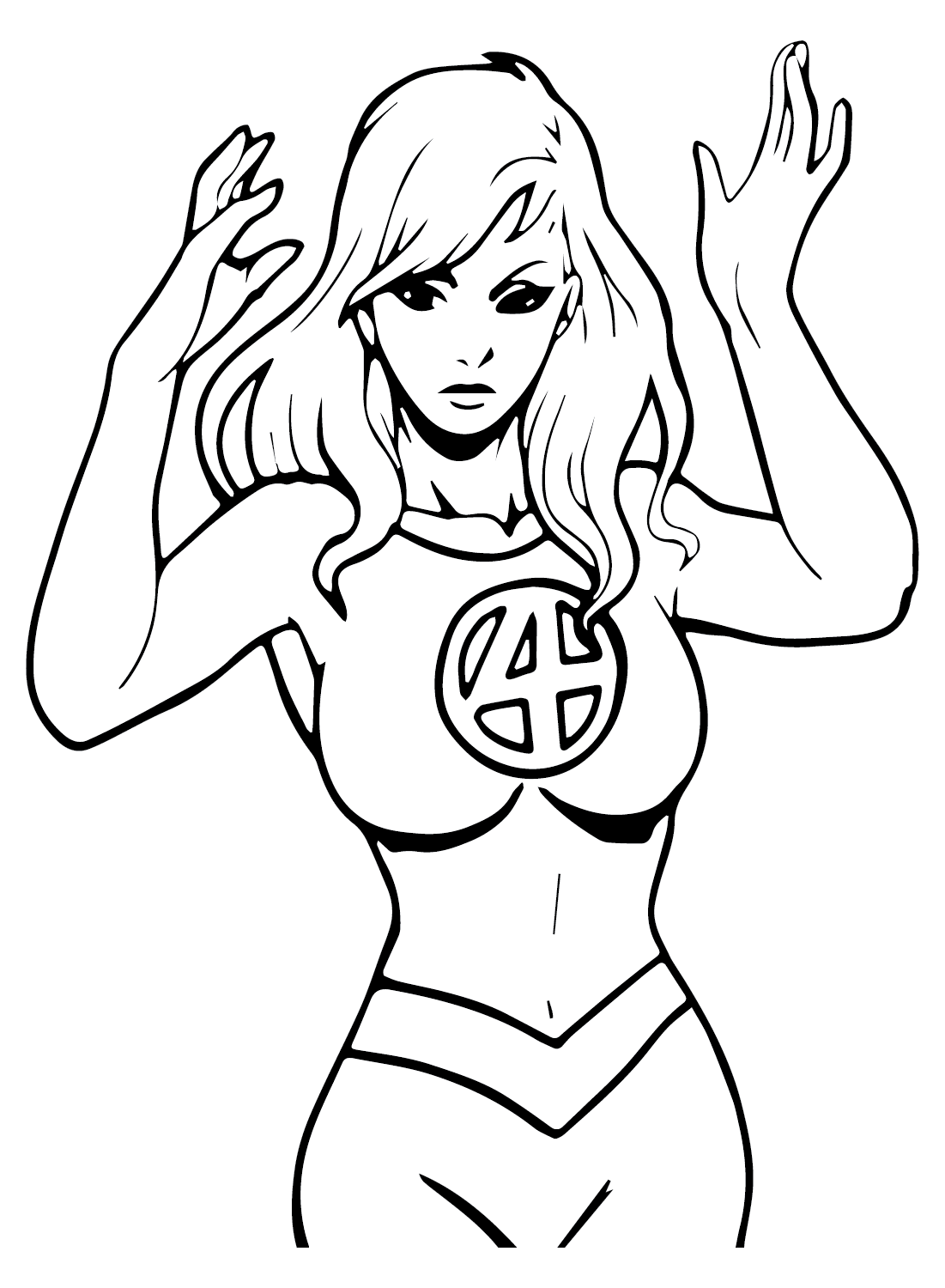
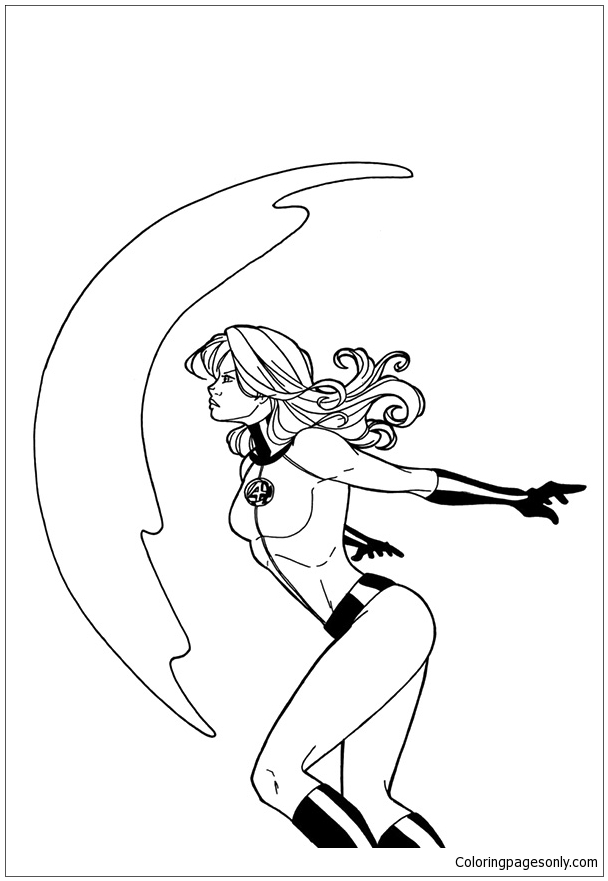
Force field pages show the visual language for this power: circles or spheres of pale blue or clear-white energy surrounding her body or projecting outward from her hands, with the specific visual of force fields in the Marvel art tradition (translucent energy surfaces with slightly visible internal structure, often shown as pale blue or clear with a light reflection effect).
Coloring force field pages: Force field energy uses pale, cool blue-white applied at translucent effect: vivid enough to be clearly visible as an active power manifestation, but light enough to suggest the translucency of the invisible force. Apply vivid light blue at the force field’s outer surface boundary (the most visible edge of the field) and lighter, more diffuse pale blue-white in the field’s interior. Any concussive blast effects use slightly more vivid blue at the point of projection.
Invisibility Effect Pages
The visual representation of invisibility in comics and illustration is a fundamentally paradoxical challenge: the character who is not visible must be made visible in order to be depicted. The standard artistic solution is a partial rendering: the character is shown in outline form only, or in outline with very light internal detail, or with parts of the body rendered in full opacity while other parts fade to transparency.
Pages showing Sue Storm using her invisibility power typically use one of several approaches visible across the collection: a fully rendered character with portions of her body shown as simply missing (with the background visible through the absent sections), a character rendered in pale outline only against a more opaque background, or a character shown in a gradient from full opacity at one end to transparency at the other, suggesting the process of becoming invisible or becoming visible again.
The partial invisibility technique, where some parts of the character remain fully visible while others have disappeared, is particularly effective for coloring purposes: it creates a clear challenge for the colorist to differentiate the visible and invisible sections while maintaining the character’s readable form.
Coloring invisibility pages: The fully visible sections use the standard blue uniform and blonde hair colors at full opacity. The fading or partially invisible sections use progressively lighter application of the same colors: less and less pressure applied as the character becomes more transparent, eventually reaching just the paper’s natural white, where the character has become fully invisible. The transition from fully opaque to fully transparent should be gradual and smooth rather than abrupt.
Sue Storm in the Fantastic Four Team
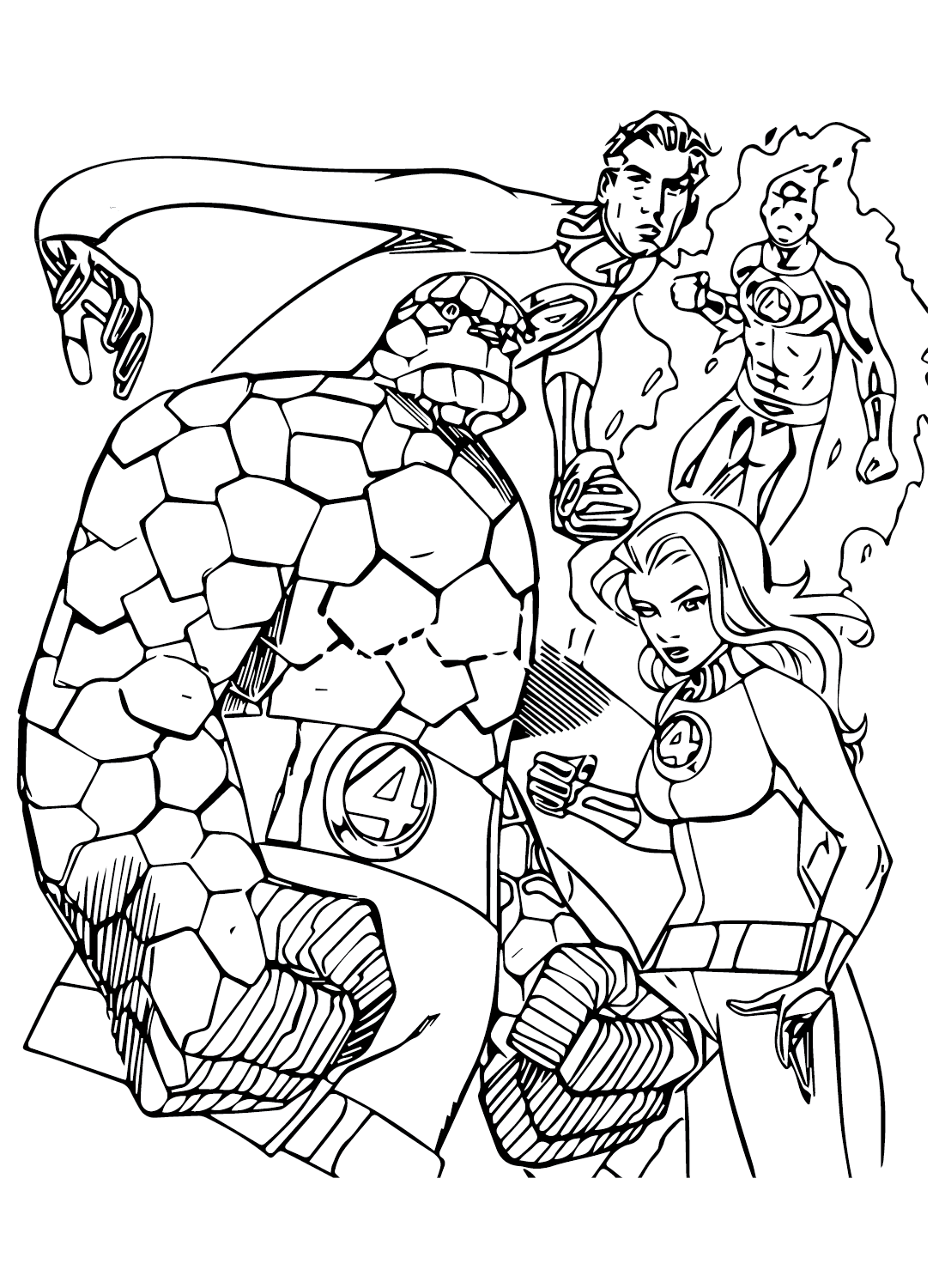
Group pages showing all four Fantastic Four members together present the most color-diverse compositions in the collection: Sue in blue, Reed in blue, Johnny typically shown with fire effects in orange and yellow, and Ben Grimm’s rocky orange-brown form create a palette that balances the team’s uniform blue with the specific visual signatures of the other three members.
The Fantastic Four’s visual ensemble is distinctive among Marvel superhero teams. Unlike the Avengers, whose members maintain individual visual identities, the Fantastic Four’s matching uniforms create a strong group identity that makes the team immediately recognizable as a unit even when individual members vary significantly in appearance.
Reed Richards’ visual involves the same blue uniform but frequently shows his stretching abilities: his body elongated, his arms extended beyond human proportion, his face stretched to impossible expressions. Johnny Storm is typically shown either in the blue uniform or in his Human Torch form (surrounded by fire, glowing orange-yellow). Ben Grimm is in rocky orange-brown form with the torn remains of a blue uniform or a specially constructed blue suit.
Coloring Fantastic Four group pages: Sue’s blue uniform maintains a consistent, vivid blue. Reed’s blue stretches with his body: the uniform’s blue should remain consistent in color even as it extends to unusual proportions. Johnny’s fire form uses the full warm flame gradient. Ben’s rocky skin uses warm orange-brown at full coverage, with darker brown in the deep crevices between rock sections.
Portrait and Expression Pages
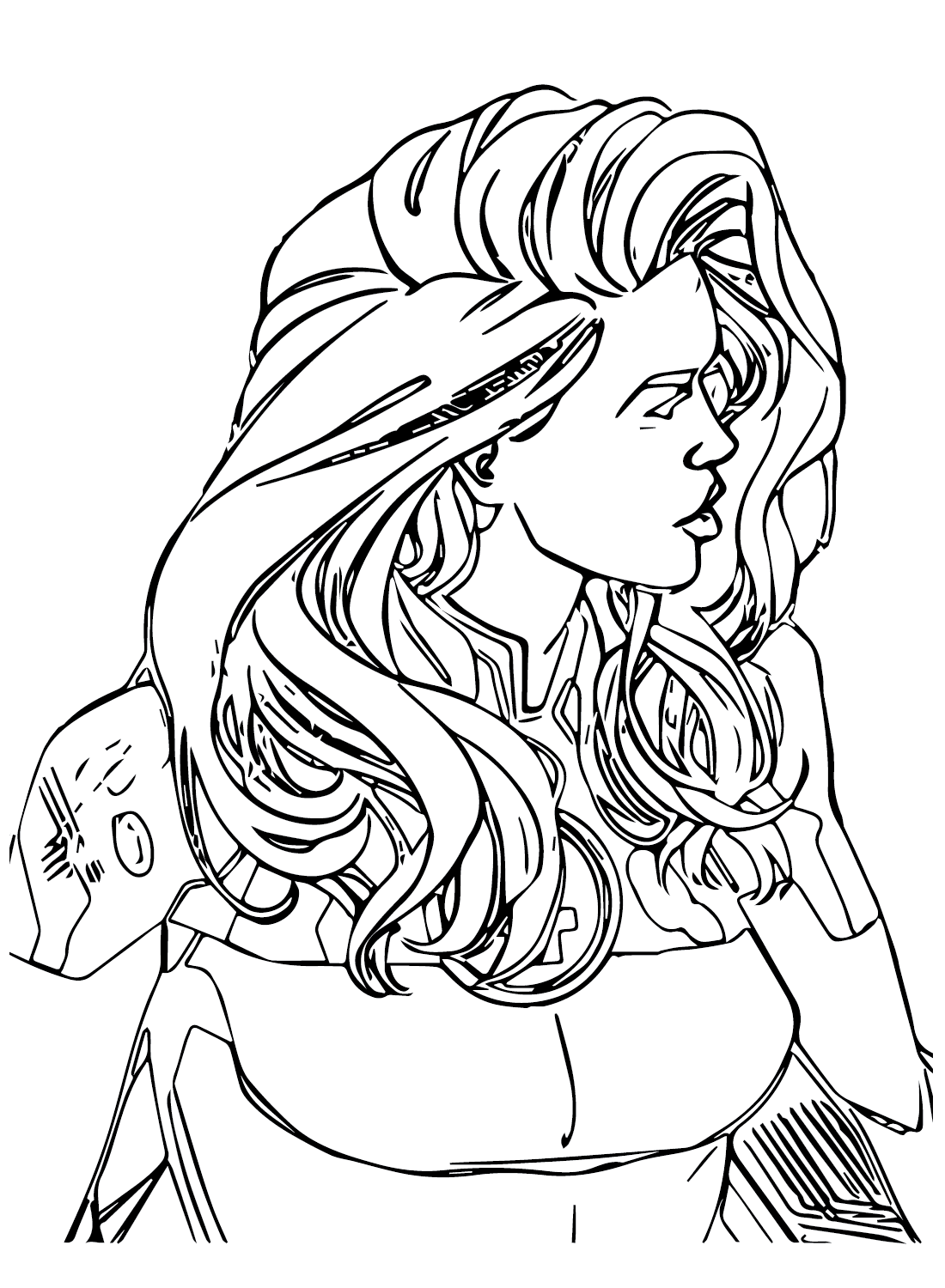
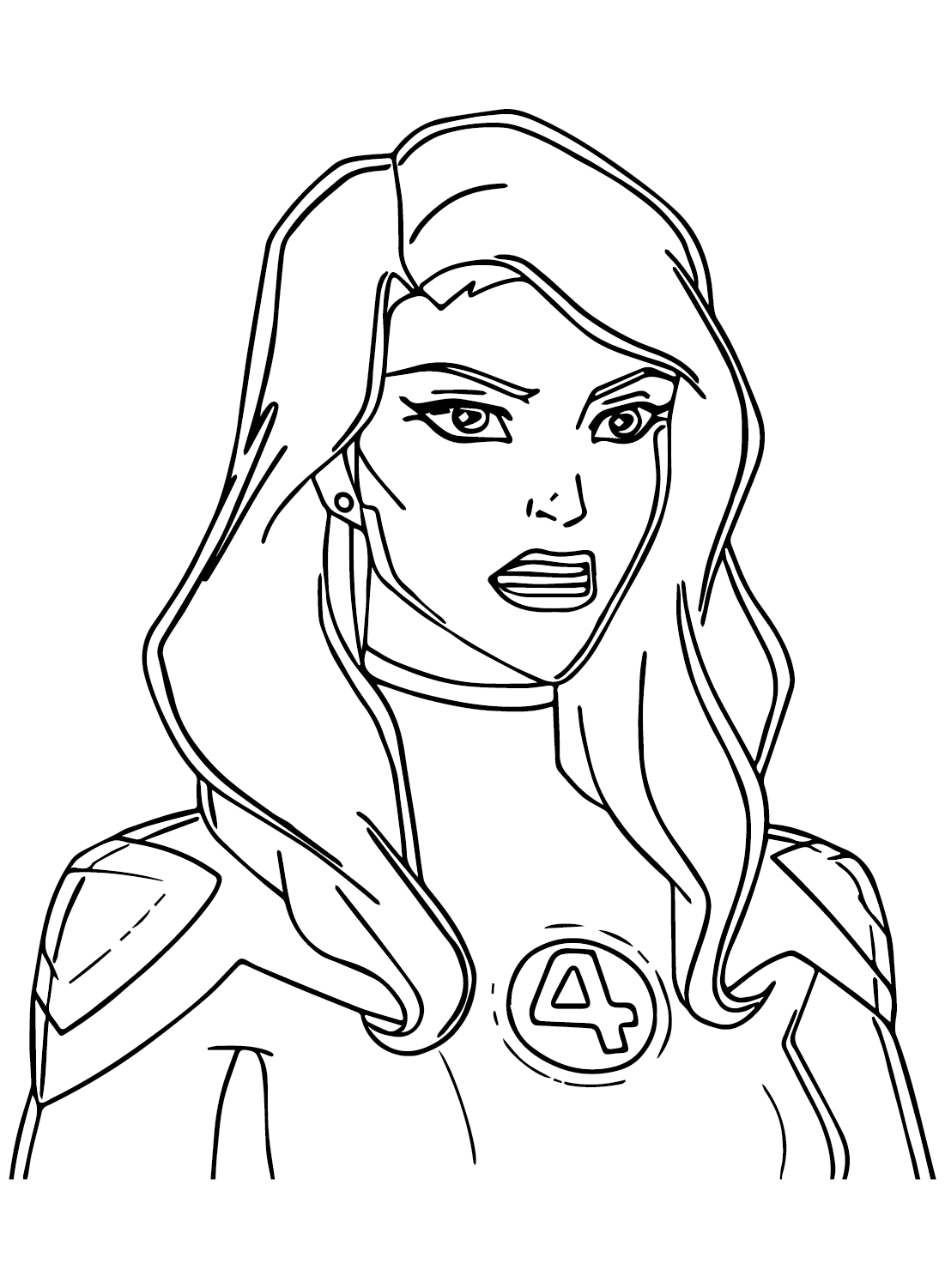
Close-up portrait pages showing Sue Storm’s face and expression outside of action contexts are the collection’s most character-communicative: they show the intelligence, determination, warmth, and occasional steeliness that distinguish her personality from the simple damsel-in-distress role she was initially given in 1961 and that she progressively shed through decades of character development.
Modern portrayals of Sue Storm emphasize her leadership qualities within the team, her emotional intelligence (she is frequently the team member whose interpersonal understanding exceeds Reed’s technical genius in practical application), and the specific quality of someone who has grown from a secondary romantic interest into the team’s most capable member in many situations.
Her blonde hair is the most immediately recognizable element in close-up portrait pages, the visual anchor that identifies her across all artistic interpretations of the character from 1961 to the present.
Coloring portrait pages: Her hair uses warm golden-blonde, slightly more vivid than natural blonde, but not as vivid as cartoon-style yellow. Apply warm golden-yellow across the hair mass with slightly darker warm amber in the shadow areas. Her eyes are typically blue or blue-grey, which creates a visual kinship with the blue of her uniform. Her skin is a warm light tone. The “4” insignia on her collar or chest requires careful, small-scale work.
What These Pages Do
The Invisible Woman is one of the specific examples used by comics historians in analyzing the evolution of female superhero characterization across the Silver Age to the modern era: she began as a character who was frequently captured, frequently needed rescue, and whose powers were more passive than aggressive (disappearing rather than fighting), and who was identified by the diminutive “Girl” rather than “Woman” for her first twenty-four years of publication.
The name change in 1985, and the concurrent expansion of her force field powers to offensive capability under John Byrne’s creative tenure, represented a deliberate redirection of the character that comic scholar Bradford Wright and others have noted as significant in the context of 1980s feminist critique of superhero comics. The character who had originally appeared because Stan Lee thought a female hero would appeal to female readers was, by the mid-1980s, developing into one of the most powerful offensive heroes in the Marvel Universe.
The Fantastic Four’s broader significance to Marvel Comics history is documented extensively: The Fantastic Four #1 in 1961 was the first issue in the creative partnership between Stan Lee and Jack Kirby that produced dozens of Marvel’s most important characters through the 1960s, including the X-Men, Thor, Iron Man, and the Avengers. The Fantastic Four introduced the concept of heroes with real human problems: Reed and Sue argue, Ben struggles with his transformed appearance, and Johnny is a teenager dealing with the specific problems of being a teenager. This human dimension, unusual in the largely wish-fulfillment genre of superhero comics, became the template for Marvel’s approach to character development.
The American Academy of Pediatrics identifies fine motor skill development as a key childhood milestone throughout early childhood. The force field energy rendering, the invisibility gradient work, the FF insignia’s precise circular design, the group composition color management across the team’s palette, and the portrait detail work all provide sustained fine motor challenge across the collection’s age range. The 2005 Art Therapy Journal study on structured coloring and anxiety reduction applies throughout.
How to Color These Pages Well
The Fantastic Four blue is a specific, vivid royal blue that must remain consistent across all uniform surfaces. The team’s matching uniform is the most visually unifying element of any group composition and must read as the same shade on every team member. Apply a single consistent vivid royal blue (neither too dark navy nor too light sky blue) at full coverage across all uniform surfaces. The “4” insignia on any team member’s uniform should appear at the same blue family with slightly more intense contrast between the circle and the number.
Force field pages require the translucency gradient applied outward from the visible force field boundary. The force field’s outer surface (the visible edge of the energy) is the most vivid, most defined element: apply the pale vivid blue most intensely at this outer boundary. The interior of the force field, if visible, graduates to lighter and more diffuse pale blue-white toward the center. Any background visible through the force field should show through at slightly reduced visibility compared to the background outside the force field.
The invisibility gradient requires systematic planning before any color is applied. Identify which portions of the character are fully visible, which are transitioning, and which are fully invisible. Apply the fully visible sections first at full opacity. Then apply the transitioning sections with progressively reduced pressure, working from the most visible end toward the most invisible end. The transition should be smooth: a gradual fade rather than an abrupt cutoff.
In the group Fantastic Four pages, Ben Grimm’s orange-brown rocky form requires the most specific color management to avoid conflicting with the uniform blue. Ben’s rocky skin uses warm orange-brown (the specific color of sandstone or warm terracotta) across the entire rocky surface, with darker brown or near-black in the deepest crevices between rocky sections. The transition between Ben’s rocky skin and any remaining blue uniform elements (sometimes a belt or torn sections) requires clean boundaries.
Sue Storm’s blonde hair benefits from a subtle warm-gold highlight technique. Apply the base warm golden-blonde across the full hair mass. Then identify the most directly lit surfaces of the hair (the top of the head, prominent locks that catch direct light) and apply slightly lighter warm yellow-gold at minimum pressure over those areas. Finally, add slightly darker warm amber in the shadow areas where locks overlap each other. These three tones give the hair a three-dimensional quality without complex multi-step rendering.
5 Creative Craft Ideas
The “Girl” to “Woman” Name Change Study
The Invisible Woman was identified as “Invisible Girl” in every Marvel Comics publication from The Fantastic Four #1 (1961) through Fantastic Four #283 (1985). Beginning with Fantastic Four #284 (November 1985), written and drawn by John Byrne, she was identified as the “Invisible Woman.” The name change was deliberate and has been discussed by Byrne in interviews as a response to the incongruity of calling an adult woman, a wife and mother, by the diminutive “girl.”
Print a Sue Storm portrait page. Color in her blue uniform with full care for the “4” insignia.
On the backing card: “Susan Storm Richards. ‘Invisible Girl’: first appearance, Fantastic Four #1, August 1961. Duration: 24 years. ‘Invisible Woman’: first used, Fantastic Four #284, November 1985. Writer/artist: John Byrne. The change: deliberate. The reason: she had been a wife since 1965 (Fantastic Four Annual #3) and a mother since the birth of Franklin Richards. The argument that a woman who is also a wife and mother should still be called ‘girl’: not sustained. 24 years. Then: corrected.”
The Force Field as Primary Weapon Study
The critical reassessment of Invisible Woman’s power level, which accelerated in the 1980s and continued into the 2000s, has produced a consistent argument in comics analysis: when Sue Storm applies her force field abilities offensively rather than defensively, she is arguably the most dangerous offensive combatant on the Fantastic Four.
Print a force field action page. Color the force field energy in vivid pale blue-white against a contrasting background.
On the backing card: “Susan Storm Richards: force field capabilities. Passive use: personal invisibility. Active defensive use: spherical force field around herself or others. Active offensive use: force field platforms for flight; force field spears for long-range attack; concussive force field blasts; force field barriers to contain opponents; force fields created inside an opponent’s body. The often-cited assessment: when using force fields offensively rather than defensively, potentially the most powerful member of the Fantastic Four. The character called ‘Invisible Girl’ for 24 years: capable of creating force fields inside a person’s body. Both things were always true simultaneously.”
The Founding Issue Connection
The Fantastic Four #1 (1961) launched the Marvel Universe as it exists today. The team created in that issue (Reed Richards, Susan Storm, Johnny Storm, Ben Grimm) has been continuously published for more than sixty years. Stan Lee later described the concept as arising from a conversation with Jack Kirby in which Kirby suggested a team of heroes with powers unlike the existing DC heroes. The first issue was written hurriedly, after Martin Goodman (Marvel’s owner) told Lee to create a team to compete with DC’s Justice League.
Print the most classically styled Sue Storm page in the collection. Color in the original blue-and-4 uniform.
On the backing card: “Fantastic Four #1. Published: August 1961 (cover date: November 1961). Publisher: Marvel Comics (then Timely/Atlas). Writer: Stan Lee. Artist: Jack Kirby. Origin: Martin Goodman asked Stan Lee to create a team to compete with DC’s Justice League of America. The result: the beginning of the Marvel Universe. Characters introduced: Reed Richards (Mr. Fantastic), Susan Storm (Invisible Girl), Johnny Storm (Human Torch), Ben Grimm (The Thing). Characters introduced later in the same creative period by the same team: Spider-Man, X-Men, Thor, Iron Man, Hulk, and Avengers. The first issue: the starting point for all of it.”
The Unstable Molecules Design
Reed Richards’ “unstable molecules” concept is one of Marvel Comics’ most practically useful pieces of fictional science: a material that interacts with the wearers’ specific powers, allowing a shared uniform to function correctly for four people with radically different abilities. Sue’s uniform turns invisible with her. Johnny resists fire. Reed stretches with him. Ben accommodates his rocky form.
Print a Fantastic Four group page. Color all four members in their specific power states: Sue partially transparent, Reed with arm extended, Johnny in flame mode, Ben in full Rocky form.
On the backing card: “Unstable molecules. Developed by: Reed Richards. Application: Fantastic Four uniforms. Function: the material interacts with the specific powers of each wearer. For Susan Storm, the uniform becomes invisible when she does. For Johnny Storm, it resists fire. For Reed Richards, it stretches. For Ben Grimm, it accommodates his altered physical form. The practical problem solved: a shared uniform for four people with incompatible powers. The fictional material does what no real material does. Marvel Comics since 1961: acting as though this is an obvious solution requiring no further explanation. It is a good solution.”
The Family Portrait Study
The Fantastic Four’s family structure is unusual among superhero teams: Reed Richards and Sue Storm are a married couple. Johnny Storm is Sue’s younger brother. Ben Grimm is Reed’s college friend. The team is therefore simultaneously a superhero team, a family unit, and a found family. Sue and Reed have two children: Franklin Richards (born in Fantastic Four #94, January 1970), one of the most powerful mutants in the Marvel Universe with reality-warping abilities; and Valeria Richards, an infant with genius-level intellect.
Print a full-body Invisible Woman page. Color Sue in her blue uniform.
On the backing card: “The Richards family within the Fantastic Four. Susan Storm Richards: wife, mother, Invisible Woman. Reed Richards: husband, father, Mr. Fantastic. Johnny Storm: Sue’s younger brother, Human Torch. Ben Grimm: Reed’s college friend, the Thing. Franklin Richards: son of Sue and Reed. First appearance: Fantastic Four #94 (January 1970). Power: reality manipulation at a cosmic scale, one of the most powerful mutants in the Marvel Universe. Valeria Richards: daughter of Sue and Reed. Introduced: Fantastic Four vol. 3 #15. Displayed: genius-level intellect as an infant. The team: structured as a family. Sue Storm: at the center of that structure.”
Frequently Asked Questions
Who is the Invisible Woman, and when was she created? The Invisible Woman, whose real name is Susan Storm Richards, is a fictional character created by Stan Lee (writer) and Jack Kirby (artist), first appearing in The Fantastic Four #1, published in August 1961 with a cover date of November 1961 by Marvel Comics. She is one of the four founding members of the Fantastic Four, gaining her powers from cosmic radiation exposure during a test spaceflight. She was initially named “Invisible Girl,” a designation she kept for twenty-four years of publication until Fantastic Four #284 in November 1985, when writer and artist John Byrne changed her designation to “Invisible Woman” to reflect her status as an adult woman, wife, and mother. She married Reed Richards (Mr. Fantastic) in Fantastic Four Annual #3 in 1965 and has two children: Franklin Richards and Valeria Richards.
What are the Invisible Woman’s powers? The Invisible Woman’s power set has two primary components that have evolved significantly across her publication history. First: she can render herself and any objects she concentrates on invisible by mentally bending light waves around them. Second, and increasingly emphasized as her primary capability: she can project invisible force fields of virtually any shape, which she uses both defensively (surrounding herself and others in protective barriers) and offensively (projecting concussive force field blasts, creating platforms for flight, generating force field spears, or creating force fields inside an opponent’s body). Modern Marvel Comics characterize her force fields as among the most powerful offensive weapons available to any hero in the Marvel Universe, with many writers and analysts arguing that when using her powers offensively, she is the most powerful member of the Fantastic Four.
Why was she called “Invisible Girl” for so long, and when did that change? Sue Storm was called “Invisible Girl” from her first appearance in 1961 through Fantastic Four #283 (1985), a period of twenty-four years during which she had married Reed Richards (1965) and given birth to Franklin Richards (1970). The name “Invisible Girl” reflected the common practice of the early 1960s of applying diminutive “girl” or “lass” designations to female heroes rather than the parallel “man” or “woman” designations given to male heroes. The change to “Invisible Woman” beginning with Fantastic Four #284 (November 1985) was made by writer and artist John Byrne, who has described it in interviews as a deliberate correction to the incongruity of calling an adult woman with a family by a child’s designation. The name change has been discussed by comics historians as significant in the broader context of evolving representations of female superheroes in the 1980s.
What is the Fantastic Four, and why is it significant in Marvel history? The Fantastic Four is Marvel Comics’ first Silver Age superhero team, introduced in The Fantastic Four #1 (1961), created by Stan Lee and Jack Kirby in response to the commercial success of DC Comics’ Justice League of America (which debuted in 1960). The team’s creation marked the beginning of Marvel’s superhero renaissance: the same Lee-Kirby creative partnership that produced the Fantastic Four went on to create the X-Men, Thor, and the Hulk, while Lee’s collaborations with Steve Ditko produced Spider-Man, Doctor Strange, and other characters. The Fantastic Four’s specific innovation was introducing superhero characters with genuine human problems: Reed and Sue argue and have relationship difficulties, Ben Grimm struggles with depression over his transformed appearance, and Johnny Storm is a teenager dealing with adolescence. This human dimension became the template for Marvel’s entire approach to character development.
What is the Fantastic Four’s blue uniform, and why do all members wear matching suits? The Fantastic Four’s blue uniforms, each bearing the “4” in a circle insignia, are one of comics’ most recognizable and most specifically meaningful costume designs: the team wears identical uniforms to visually communicate that they function as a unit and a family rather than as individual heroes who have teamed up. The uniforms are made of “unstable molecules,” a fictional material developed by Reed Richards that interacts with each wearer’s specific powers: Sue’s uniform becomes invisible when she does, Johnny’s resists fire, Reed’s stretches with his body, and Ben Grimm’s accommodates his rocky form. The matching uniform concept is unusual among Marvel’s major teams (the Avengers wear individual costumes) and reflects the Fantastic Four’s founding identity as a scientific team and found family as much as a superhero team.
What Fantastic Four films have been made? Several non-MCU Fantastic Four films were produced before the characters entered the Marvel Cinematic Universe. The 1994 Roger Corman-produced film was made primarily to maintain film rights and was never officially released. Fantastic Four (2005), distributed by 20th Century Fox, starred Jessica Alba as Sue Storm and earned approximately $330 million worldwide. Its sequel, Fantastic Four: Rise of the Silver Surfer (2007), earned approximately $289 million worldwide. A 2015 reboot with Kate Mara as Sue Storm was considered a critical and commercial failure. Disney’s 2019 acquisition of 20th Century Fox brought the Fantastic Four rights to the MCU. The Fantastic Four: First Steps, directed by Matt Shakman and featuring Vanessa Kirby as Sue Storm/Invisible Woman, Pedro Pascal as Reed Richards, Joseph Quinn as Johnny Storm, and Ebon Moss-Bachrach as Ben Grimm, was released in 2025 as the first MCU Fantastic Four film.
What age group are these pages best suited for? Invisible Woman coloring pages serve Marvel fans across a wide age range. The simplest portrait and uniform pages with large, clearly defined blue areas and the “4” insignia are accessible from ages four and five, where character recognition and the bold, solid blue of the uniform provide achievable coloring targets. The force field energy rendering pages, with their gradient translucency work, are most rewarding for ages six to ten. The invisibility gradient pages, which require systematic planning of opacity levels across the character’s form, are most engaging for ages eight and up. The team group composition pages requiring management of four distinct character designs simultaneously are most appropriate for ages eight through twelve. Adult Marvel Comics fans who have followed the character across decades of publication find the most detailed portrait pages and the historical context craft projects most personally meaningful.
Browse the full collection at ColoringPagesOnly.com. All 20+ pages free, no sign-up, PDF or PNG, print or color online.
Stan Lee and Jack Kirby published The Fantastic Four #1 in August 1961. They called the female member “Invisible Girl.” She was already a woman. She remained “Invisible Girl” for 24 years. John Byrne changed the name in November 1985. She had been a wife for 20 of those years. She had been a mother for 15 years.
Her force fields can create a barrier inside a person’s body. This capability was established in the same character who spent 24 years being called “Invisible Girl.” Both things were simultaneously true.
The unstable molecules in her uniform turn invisible with her. Reed developed them so the whole team could share a uniform. The uniform says: we are one team. The powers say: each of us is different. Both are true.
Pick up your vivid royal blue. The uniform goes first at full coverage. The “4” insignia requires the finest available tool. Pick up your pale, vivid, blue-white for the force field. Apply at the outer boundary first and graduate inward to lighter and more diffuse.
Share your work on Facebook and Pinterest and tag #Coloringpagesonly. The name change study and the force field as primary weapon pages are particularly worth sharing.
Color the blue uniform consistently. Apply the force field gradient at the boundary first. She was called “Invisible Girl” for 24 years. The force fields were always there.