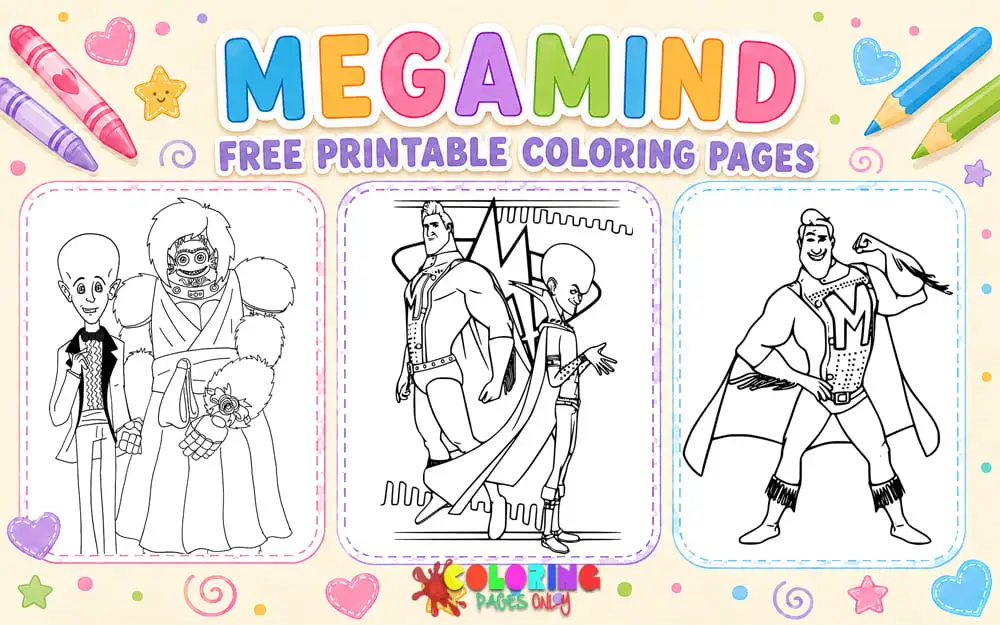
Free Megamind Coloring Pages: 21 printable PDF designs of the big-brained blue genius from DreamWorks Animation, joined by his fish sidekick Minion, the dashing hero Metro Man, reporter Roxanne Ritchi, and cameraman Hal Stewart, plus a chibi trio, a logo page, and plenty of mischievous solo poses. Every sheet downloads for paper and crayons, and the same art can be filled in digitally with a mouse or stylus.
Megamind opened in 2010 under director Tom McGrath, with Will Ferrell voicing the title character, Brad Pitt as Metro Man, Tina Fey as Roxanne, and Jonah Hill as Hal. After Megamind seems to defeat Metro Man for good, he finds that a city without a hero is surprisingly dull, and he slowly discovers he may be better suited to protecting Metro City than menacing it.
That villain-to-hero journey makes the set fun for kids who love superhero stories with a twist. Megamind’s oversized blue head, spiky collar, and dramatic cape give every page a bold silhouette, while the supporting cast adds very different looks to compare.
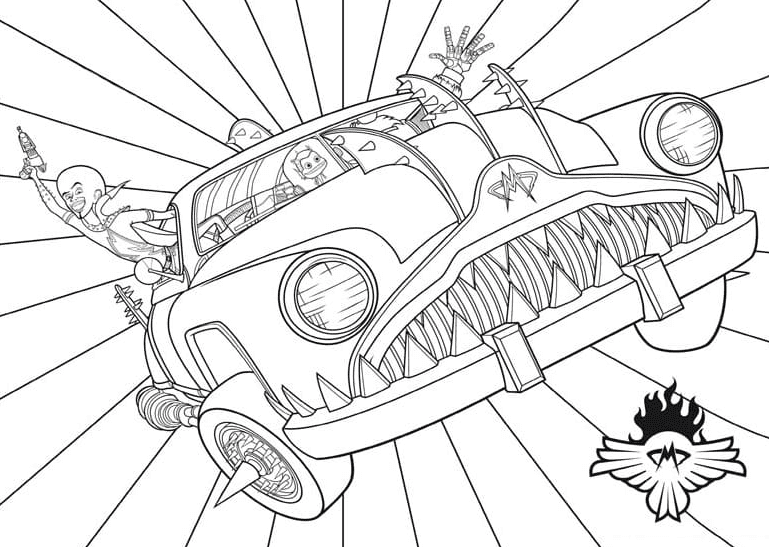
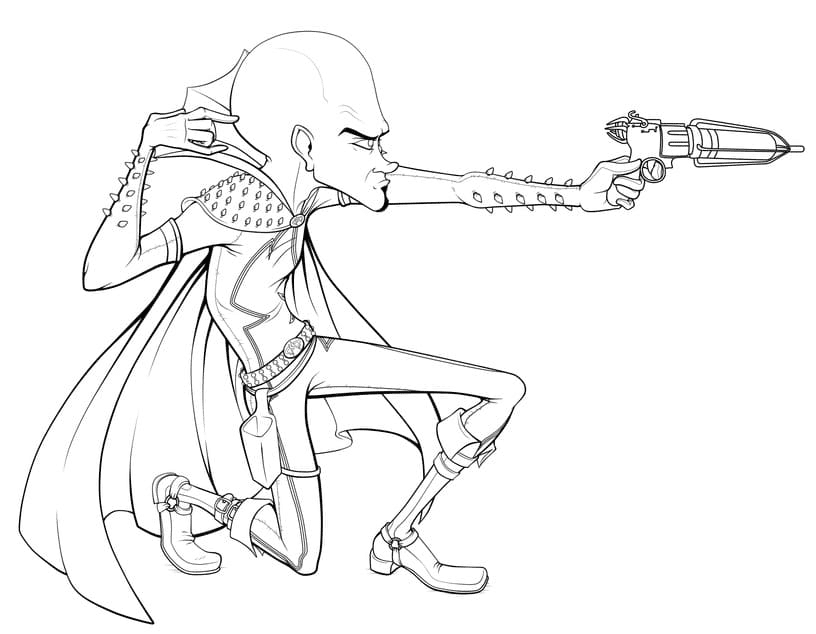
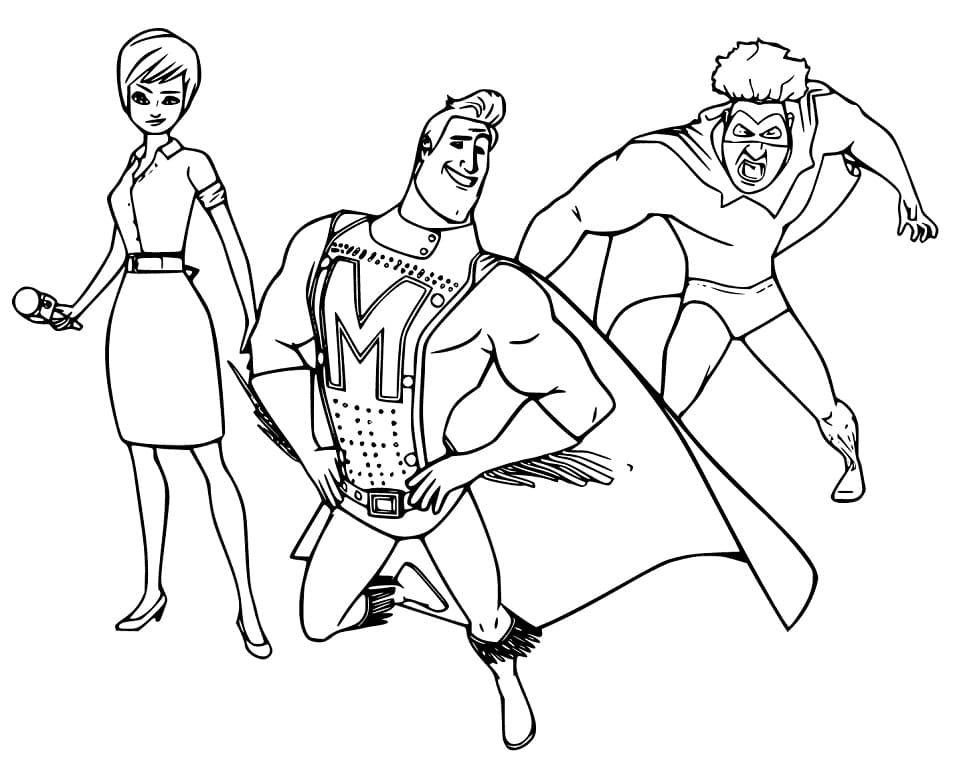
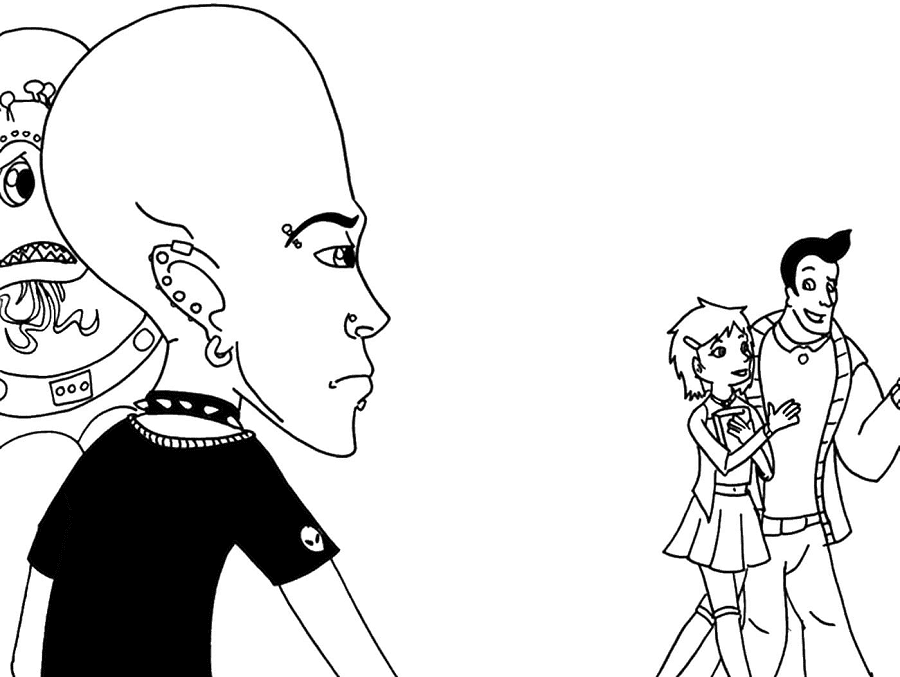
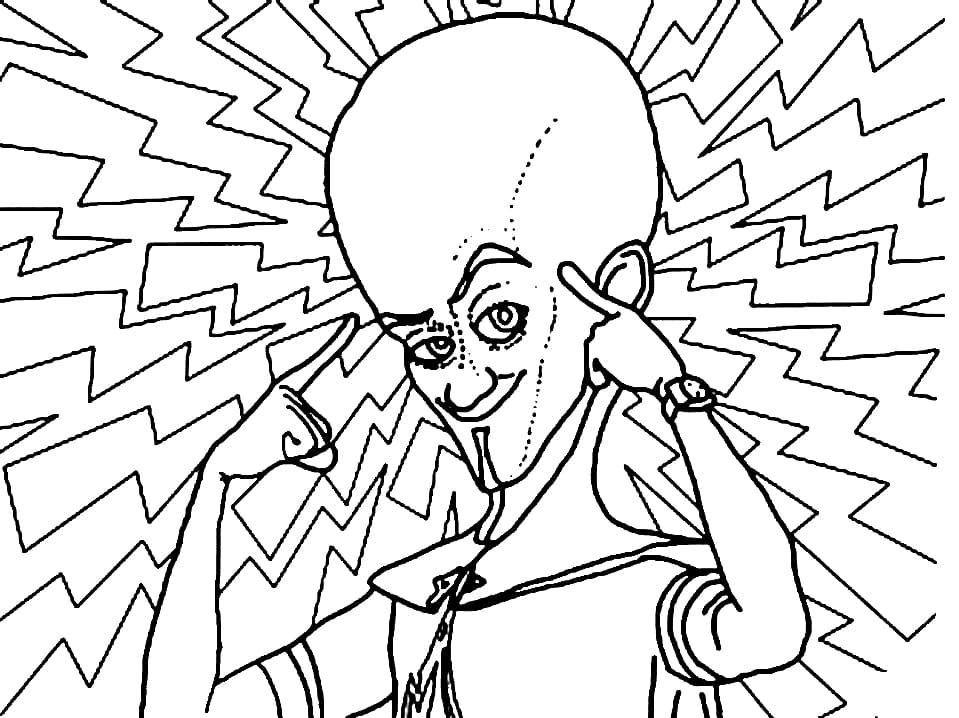
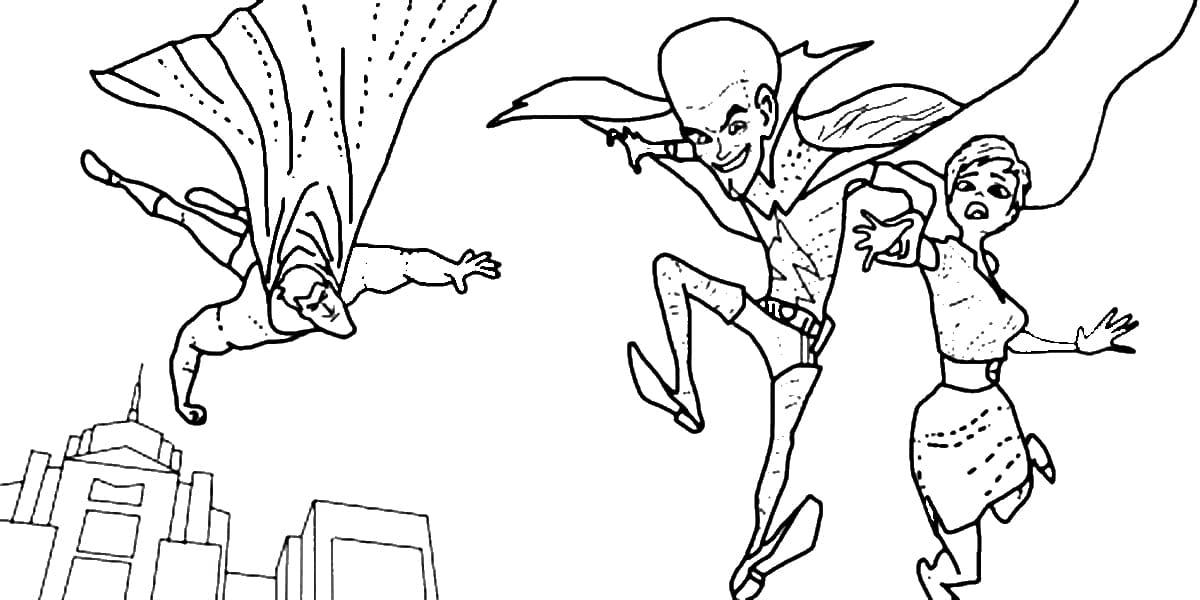
What’s Inside This Collection
Megamind leads most of the pages, with his friends and rivals sharing several scenes.
Megamind Solo Poses
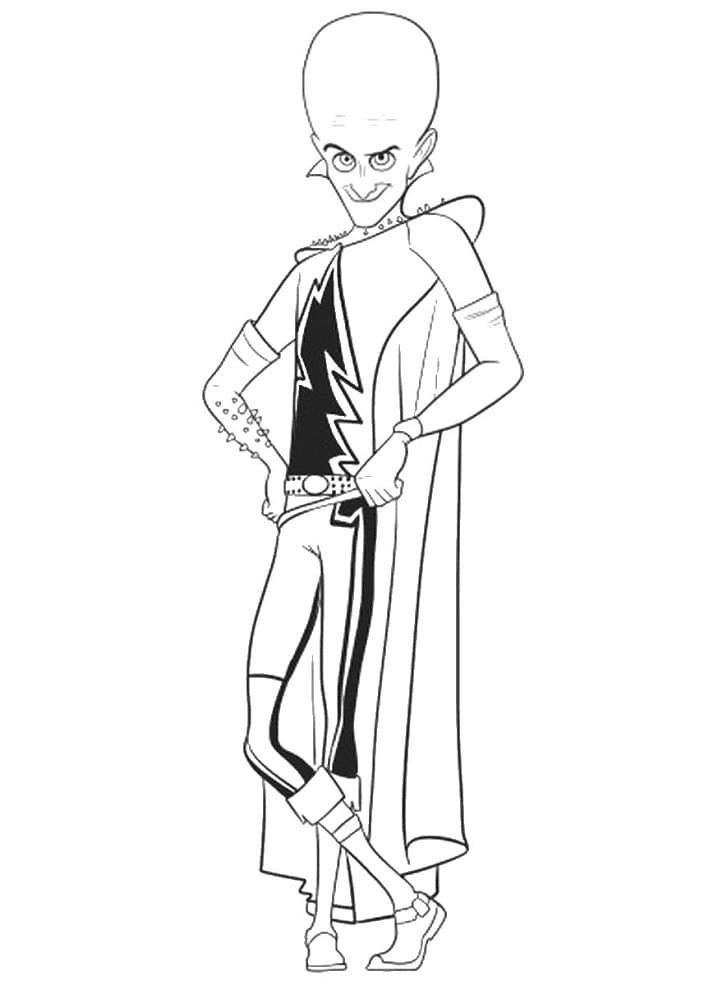
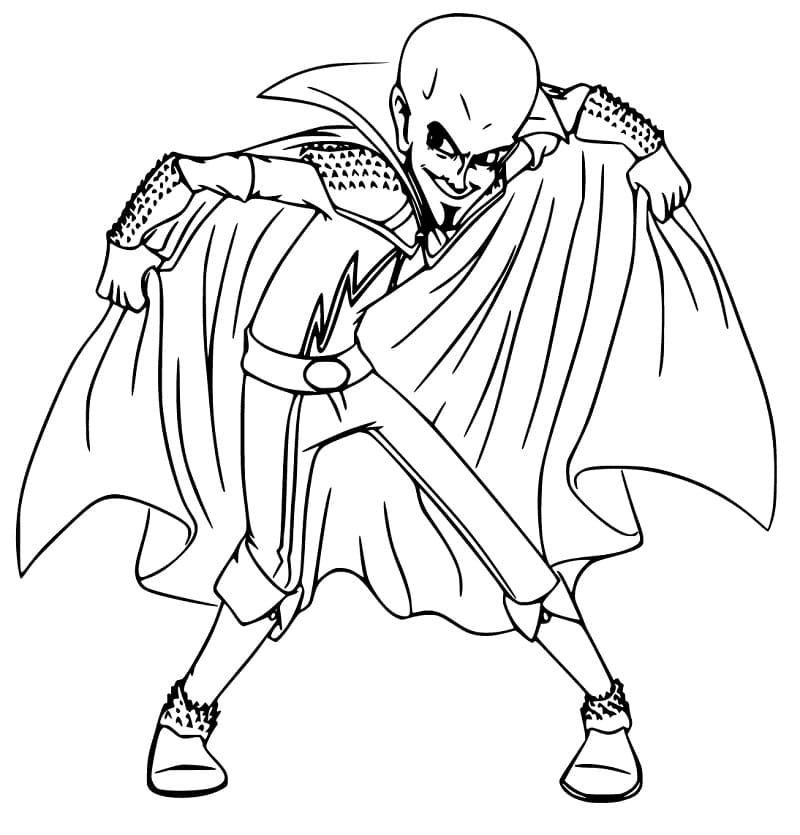
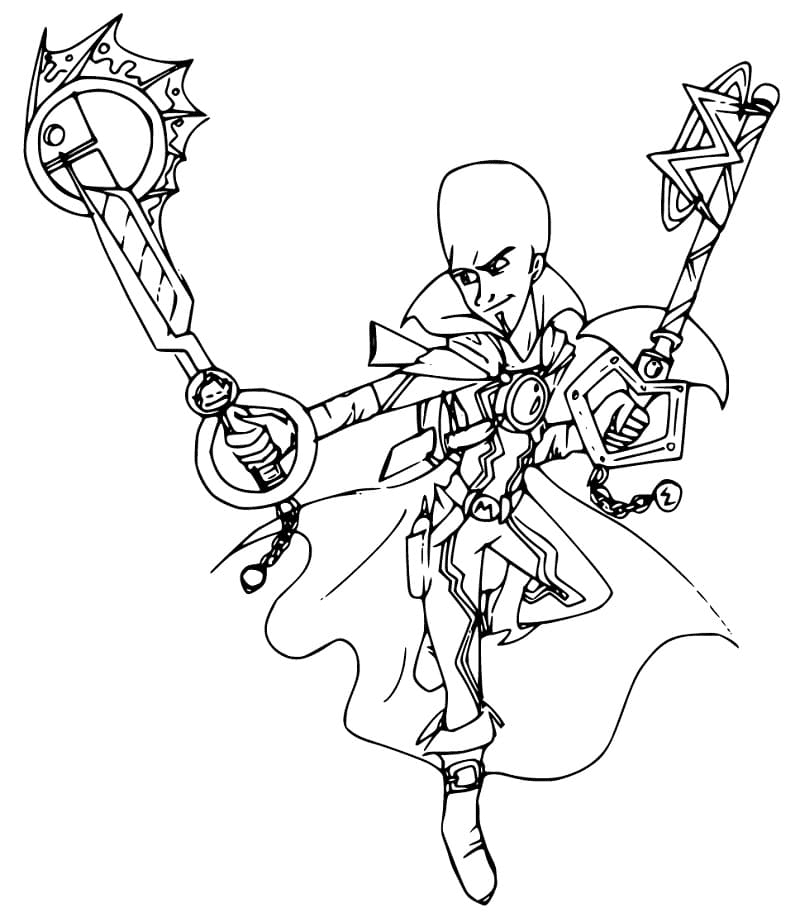
Pages like Evil Megamind, Funny Megamind, and Megamind Holds the Swords show the genius in his many moods. Color his huge head a light Cerulean or Sky Blue, his suit Black, and his tall collar and cape with deep shadows so the shape stays dramatic.
Megamind and Minion
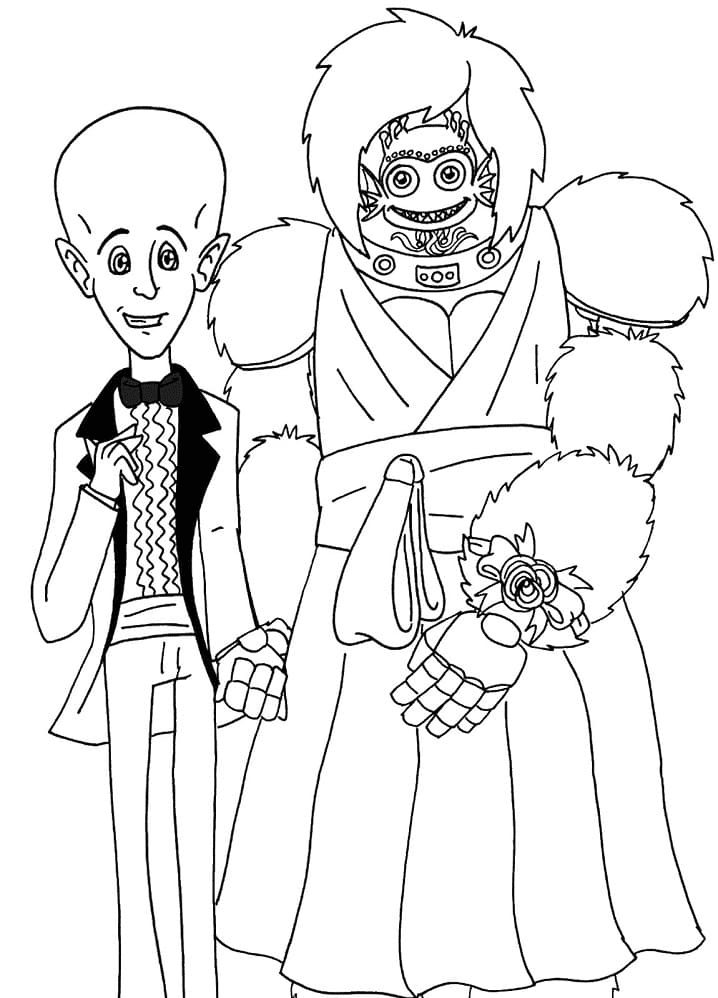
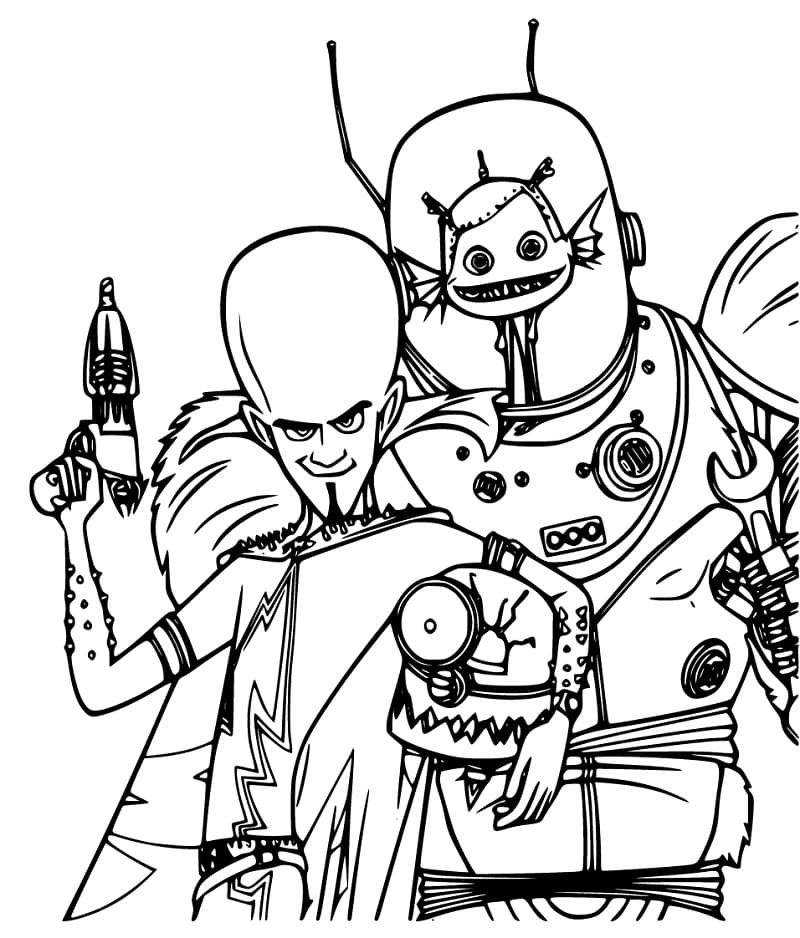
Minion, a small fish living inside a water-filled dome on top of a robot gorilla body, is Megamind’s loyal best friend. Tint the dome with pale Sky Blue, shade the robot body in Gray and Silver, and pick a soft color for the fish so it shows through the glass.
Metro Man
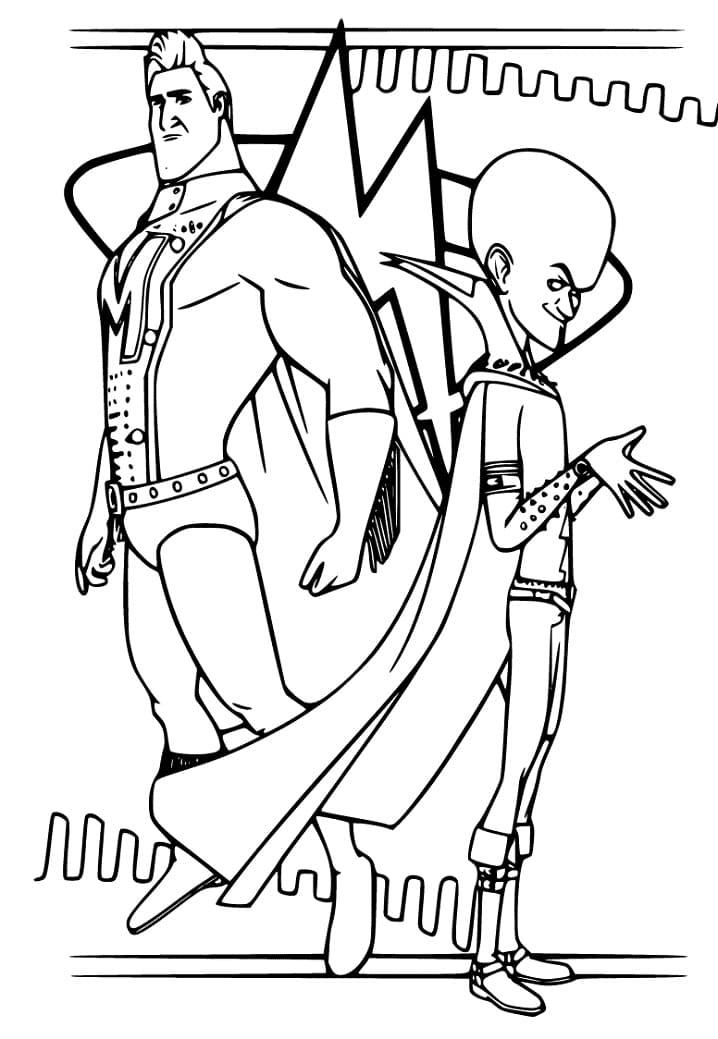
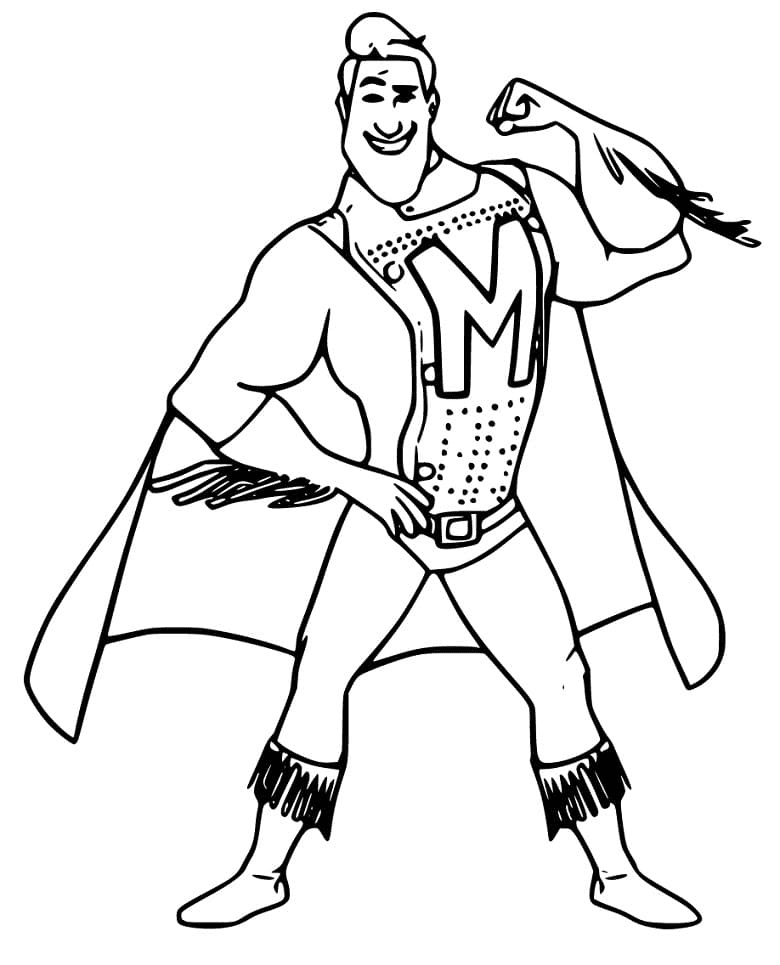
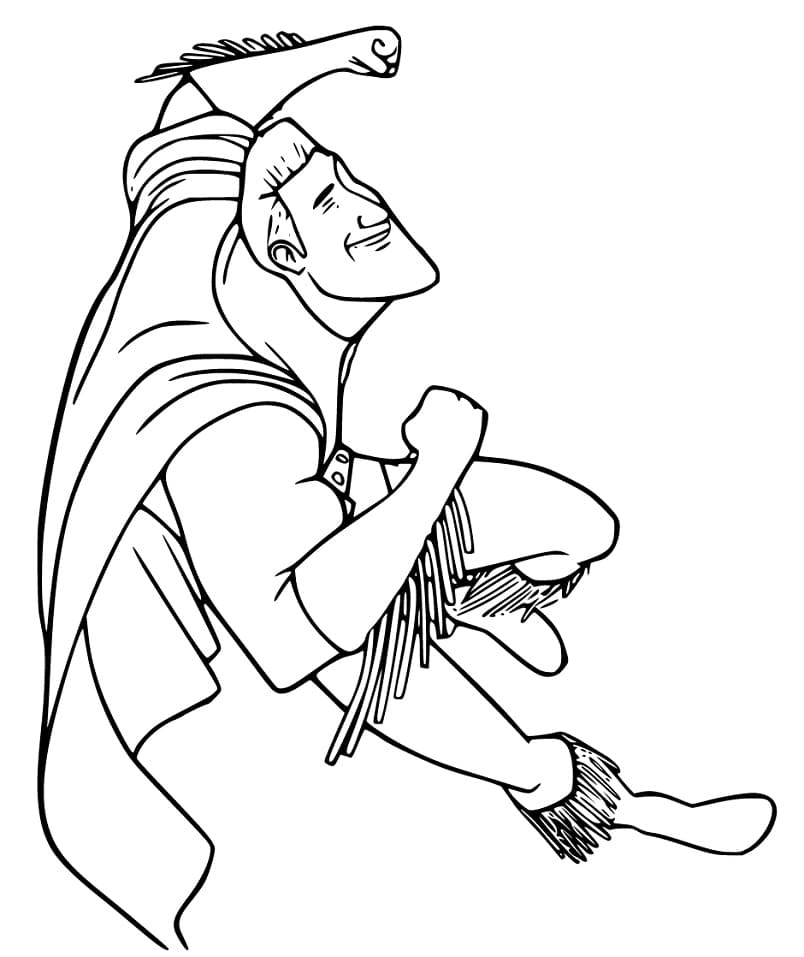
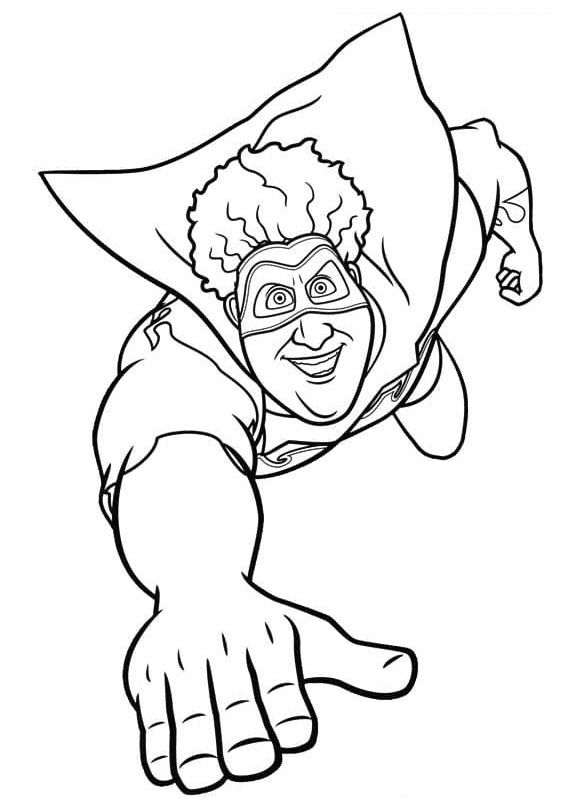
Metro Man appears on his own, flying, and side by side with his old rival. Keep his suit a clean White with Blue accents, and give him sleek Black hair so he looks like the picture-perfect classic hero.
Roxanne and Hal
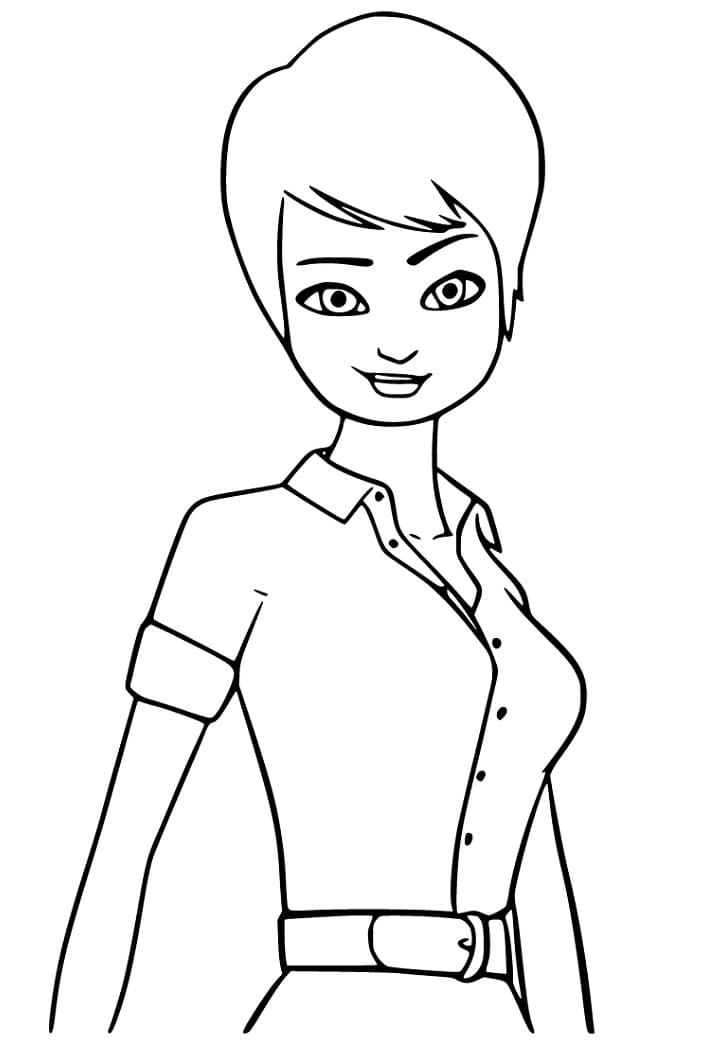
Roxanne Ritchi, the fearless news reporter, and Hal Stewart, her cameraman who later gains powers, each get their own pages. Use natural skin tones and everyday clothes in muted colors, so they look grounded next to the superpowered cast.
Group Scenes, Chibi, and Logo
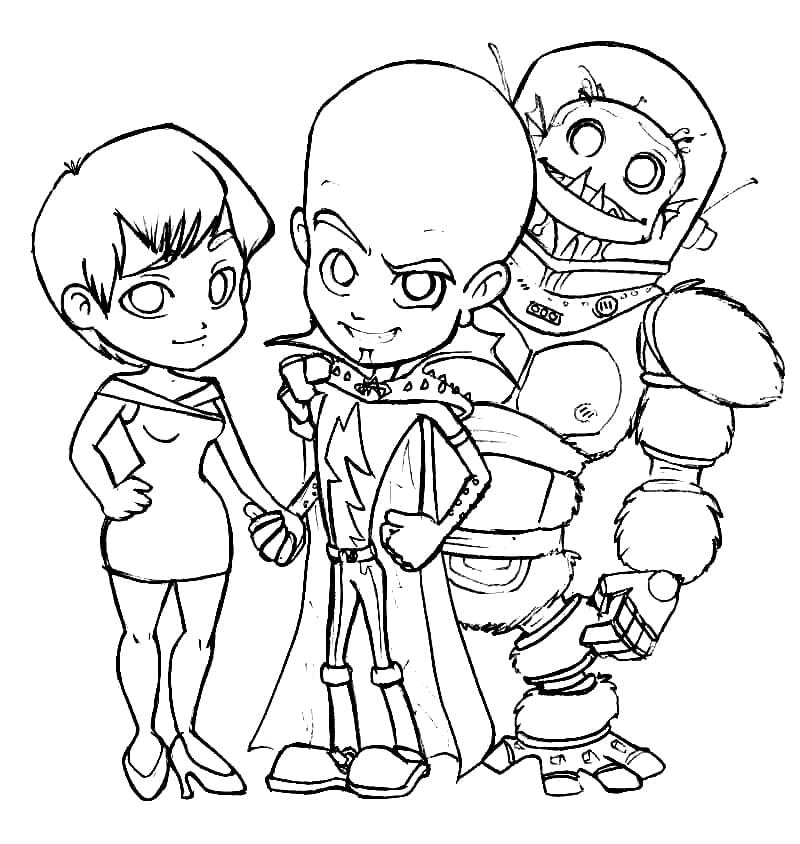
A chibi page with Roxanne, Megamind, and Minion, a group shot with Metro Man, and the movie logo round out the set. Younger fans usually find the chibi trio the friendliest page to begin with.
What Megamind Coloring Pages Do
Second chances are made easy to grasp. Megamind starts as the city’s villain but chooses to change when it matters most. His story opens friendly conversations about mistakes, growth, and how anyone can choose to do the right thing.
Hand control for bold shapes and tiny details. Pediatric experts with the American Academy of Pediatrics connect structured coloring to fine motor progress in children between 2 and 7. Megamind’s large head is easy to fill, while his spiky collar and Minion’s robot hands give older kids finer details to practice on.
Laughing while unwinding. Structured coloring was tied to calmer, less anxious moods in findings published in the Art Therapy Journal in 2005. Silly faces and comic poses make these pages a lighthearted way to unwind.
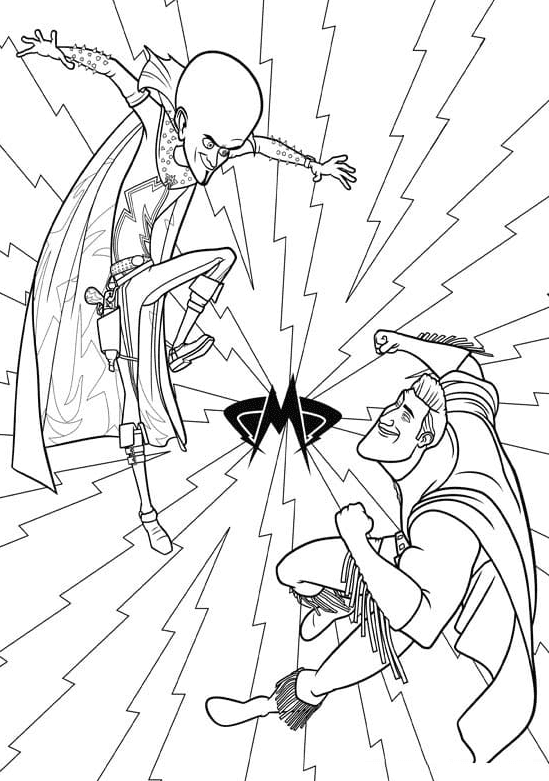
Comparing hero and villain styles. Megamind’s dark, spiky outfit and Metro Man’s bright, smooth suit follow opposite design rules. Coloring them side by side shows kids how artists use shape and color to signal who is good and who is not.
How to Color Megamind Pages Well
- Blue head: Use a light, even Cerulean or Sky Blue for Megamind’s skin, pressing slightly harder around the edges of his head. The extra shading at the edges makes his giant forehead look round.
- Villain suit: Fill his suit with Black and leave thin gray highlights along the collar spikes. Small highlights keep the dark costume from turning into a flat shape.
- Minion’s dome: Color the fish first, then lay a very light Sky Blue over the dome area. Keeping the dome pale makes it look like glass and water.
- Robot body: Use Gray and Silver for Minion’s mechanical arms and legs, with darker Gray in the joints. Metal shading separates him from Megamind’s black suit.
- Metro Man’s suit: Leave most of the suit White and add Blue accents with careful, clean edges. Bright white sets him apart instantly from the darker villain.
- Backgrounds: Add a simple city skyline in light Gray and Lavender behind action scenes. A soft background keeps the colorful characters in focus.
5 Creative Craft Ideas with Megamind Coloring Pages
1. Fixed Palette Before-and-After Strip
Color an Evil Megamind page and a Cool or heroic Megamind page, keeping his blue-and-black-and-red palette completely identical on both.
Cut both pages into matching strips and tape them side by side to demonstrate visually that nothing about his color scheme changed despite his moral transformation. Takes about fifteen minutes.
2. Hero Genre Lineup Cards
Color one page each representing Megamind’s villain aesthetic, Metro Man’s classic hero look, and Minion’s robotic design, then cut each character out along its outline.
Mount the three cutouts on separate small cards labeled with their genre role, villain, hero, sidekick, to create a simple visual breakdown of superhero-genre archetypes. Takes about twenty-five minutes.
3. Minion Dome Spinner
Color the Minion page, then cut his dome out as a clean circle along its outline.
Attach the circle to a backing sheet with a paper fastener through the center so the dome can spin freely, suggesting the floating, mechanical quality of his design. Takes about fifteen minutes.
4. Megamind and Metro Man Contrast Bookmark
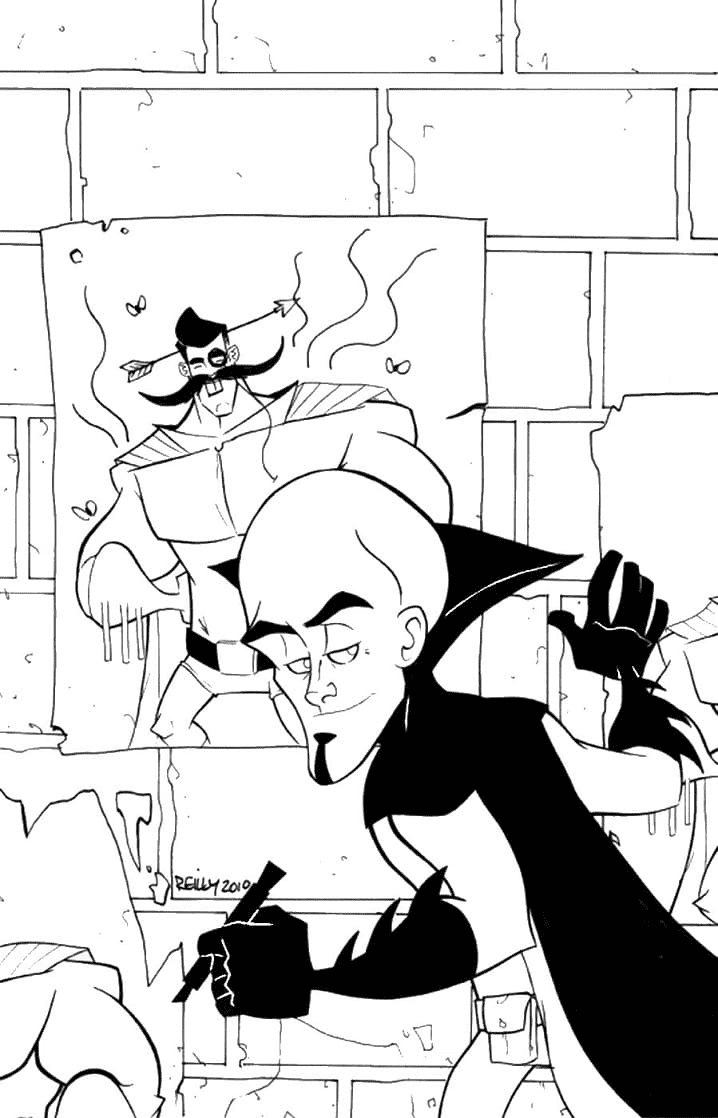
Color the Megamind with Metro Man duo page, then trim it into a narrow bookmark shape.
Punch a small hole at the top and thread a short ribbon through it to turn the page into a usable bookmark celebrating the show’s central hero-villain contrast. Takes about fifteen minutes.
5. Hal to Tighten Transformation Card
Color a Hal Stewart page on one half of a folded card and leave space on the other half for a quick sketch or note about his transformed identity as Tighten.
Fold the card so the ordinary Hal Stewart design is visible first, with the transformation noted inside, mirroring the character’s own sudden shift in the story. Takes about twenty minutes.
FAQ About Megamind Coloring Pages
Are these Megamind coloring pages free, and can I color them online?
Yes. Every page is free, with no sign-in or payment required. Download the PDF to print at home, or color directly on screen in the browser.
Does the set include Hal Stewart and Tighten, or mainly Megamind and Metro Man?
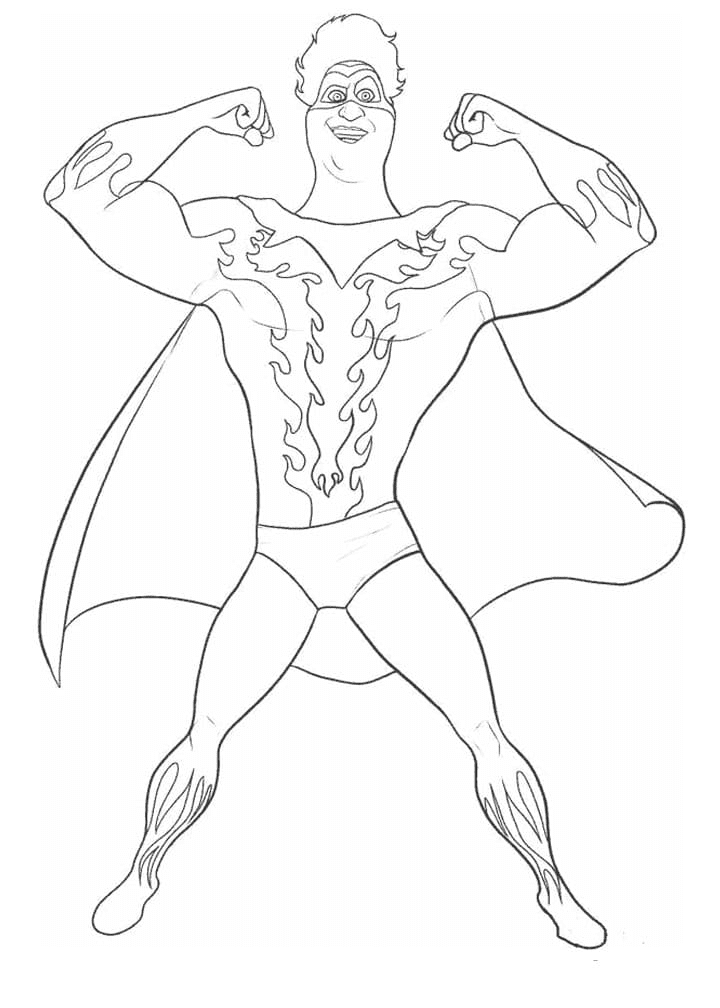
The set is built mainly around Megamind, with substantial coverage of Metro Man, Minion, and Roxanne as well. Hal Stewart appears in two dedicated pages representing his identity before his transformation into the villain Tighten.
What is Megamind?
Megamind is a 2010 animated film produced by DreamWorks Animation. It follows a supervillain who, after accidentally killing the city’s only superhero, finds himself without a rival and must reconsider his role in the world, eventually becoming the city’s reluctant protector. The film is known for its genre-aware humor and its unusual choice to keep its central villain’s design unchanged even as his role shifts toward heroism. You can read more about Megamind on Wikipedia.
Why does Megamind keep his villain-style design even after becoming the hero?
The film deliberately avoids the usual visual shorthand where a reformed villain starts looking more conventionally heroic. Megamind’s blue skin, oversized head, and black-and-red costume stay completely consistent throughout, which means his genuine moral change has to be communicated through his actions and expressions rather than through any shift in his appearance.
What colors should I use for Megamind?
Cool blue skin, a bald, proportionally oversized head, and a black costume with red accents and a cape, classic supervillain design language. Keep this exact palette consistent across every page, regardless of whether he’s behaving as the villain or the hero of the story.
What colors should I use for Metro Man?
Sleek black hair and a primarily white costume with blue accents, deliberately brighter and cleaner than Megamind’s dark palette. That visual contrast between the two characters reinforces their opposing roles in the city’s superhero mythology.
Are these official Megamind coloring pages?
No. They are fan-made coloring sheets for personal use and are not affiliated with, licensed by, or endorsed by DreamWorks Animation or any rights holder of Megamind.
What is the difference between Hal Stewart and Tighten?
Hal Stewart is an ordinary, somewhat awkward cameraman before gaining superpowers. Tighten is the villain identity he adopts after his transformation, drawing on a more dramatic, power-driven design distinct from both Megamind’s classic villain look and Metro Man’s classic hero look, representing a different and more chaotic relationship to sudden power within the same story.
Start Coloring
Choose a Megamind design, tap it, and then choose a printable PDF or the digital coloring option. No payment or registration is needed for any page. A finished supervillain, or reformed hero, can be posted using the Facebook and Pinterest icons attached to every design.