
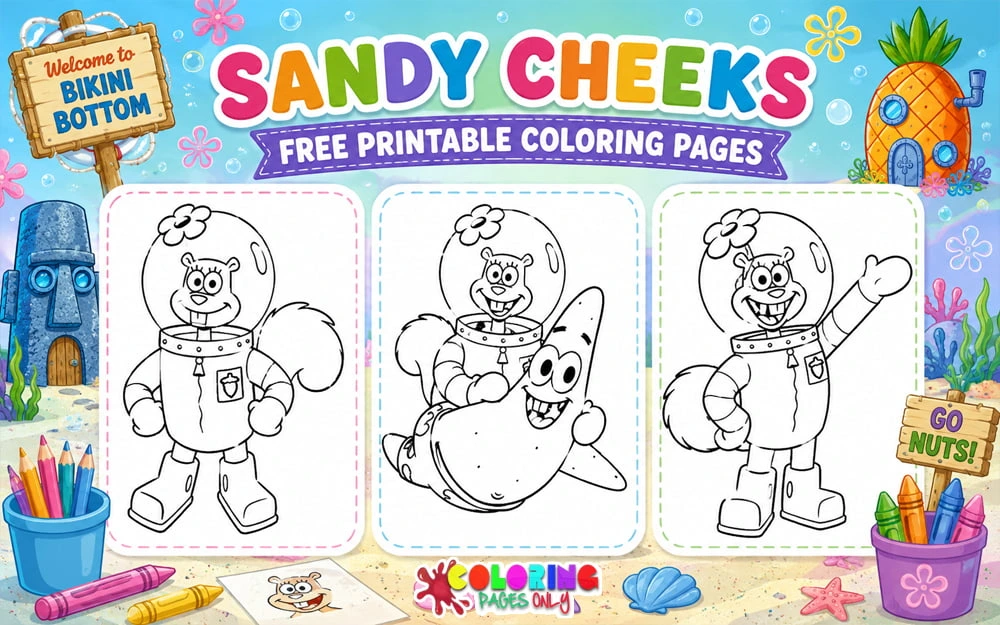
Free Sandy Cheeks Coloring Pages: 33 printable PDF designs featuring the Texas squirrel from SpongeBob SquarePants in cute portraits, silly moods, sporty poses, and beach days with SpongeBob and Patrick. Print a stack for a rainy afternoon, or color any design straight from the website.
Sandy Cheeks is a squirrel from Texas who moved to the bottom of the sea to study science, making her the only land mammal living in Bikini Bottom. She lives inside an air-filled glass treedome built around an oak tree, and whenever she steps outside, she wears a diving suit and a round helmet topped with a little flower. Smart, sporty, and proud of her home state, Sandy invents gadgets, practices karate with SpongeBob, and never backs down from a challenge. Carolyn Lawrence has voiced her since her first appearance in 1999.
Simple smiling portraits suit young beginners, while action poses and scenes with her underwater friends give older kids more to fill.
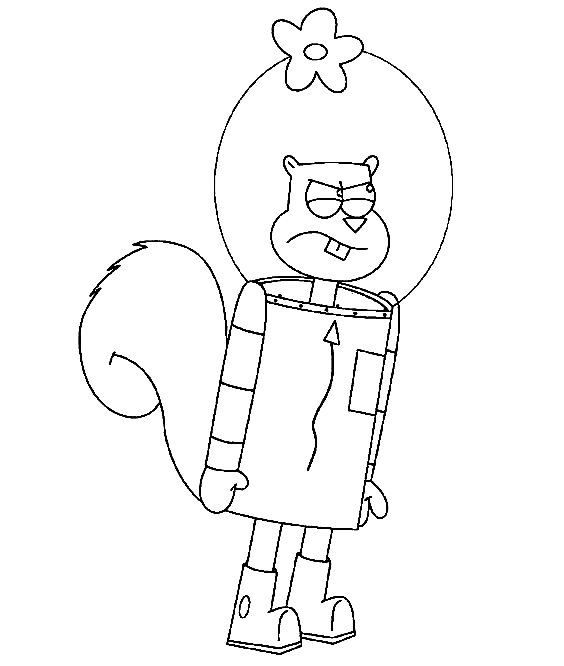


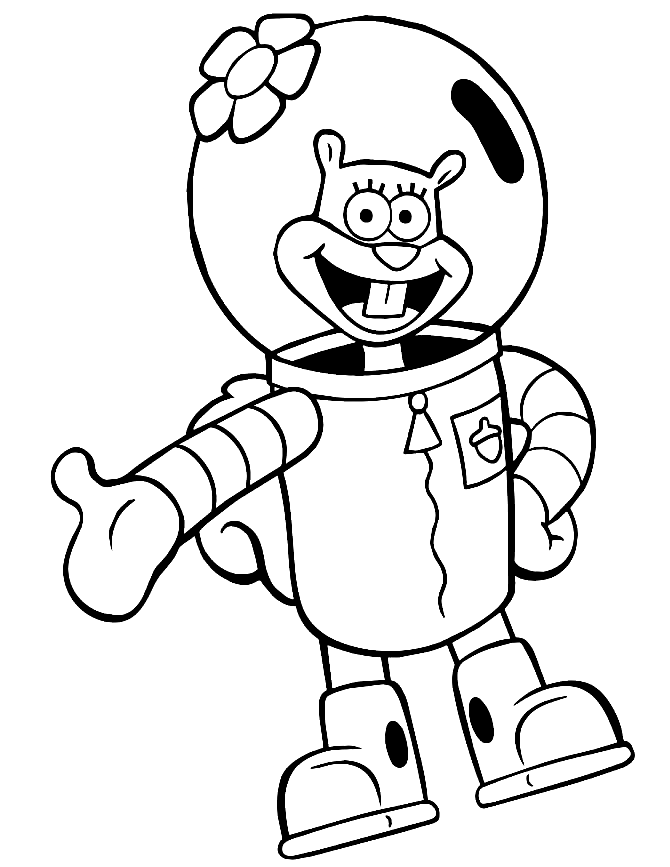

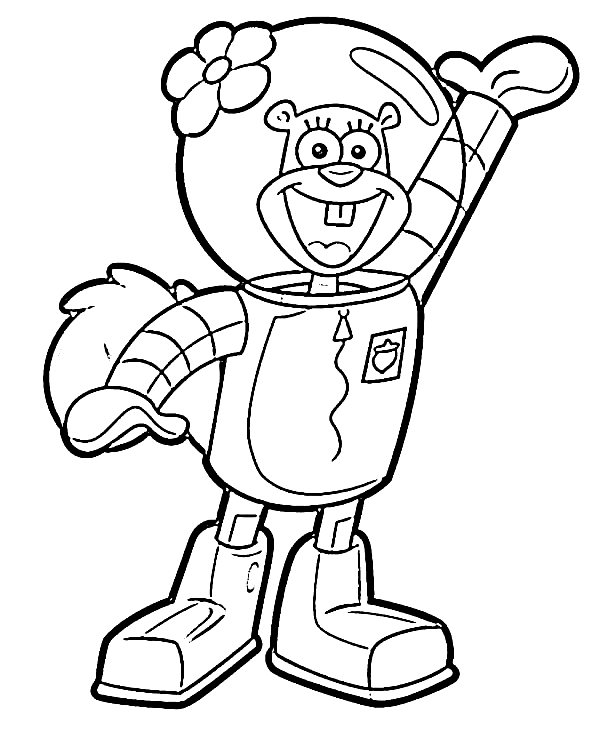



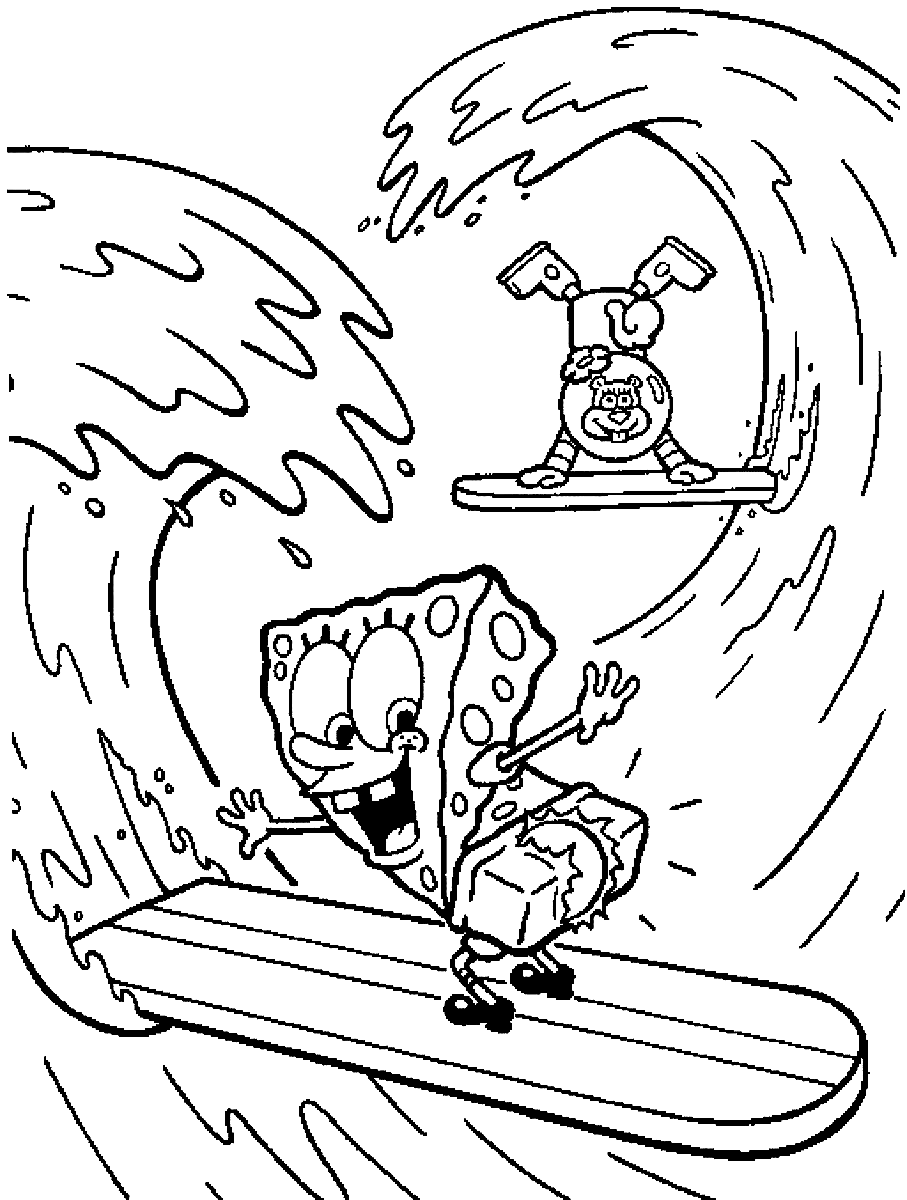



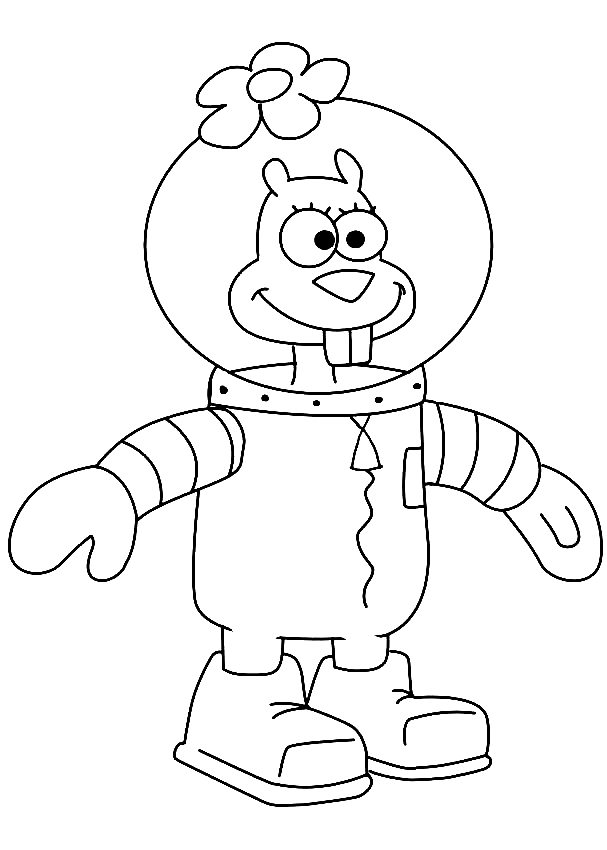

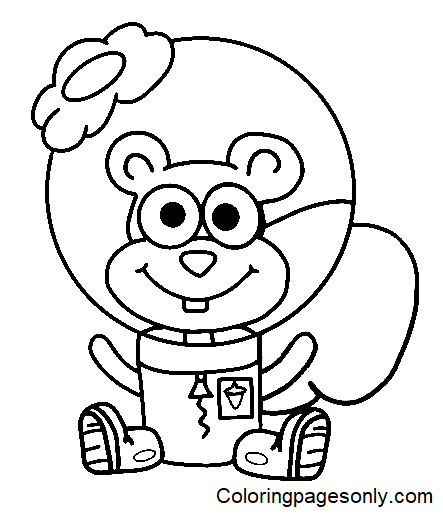







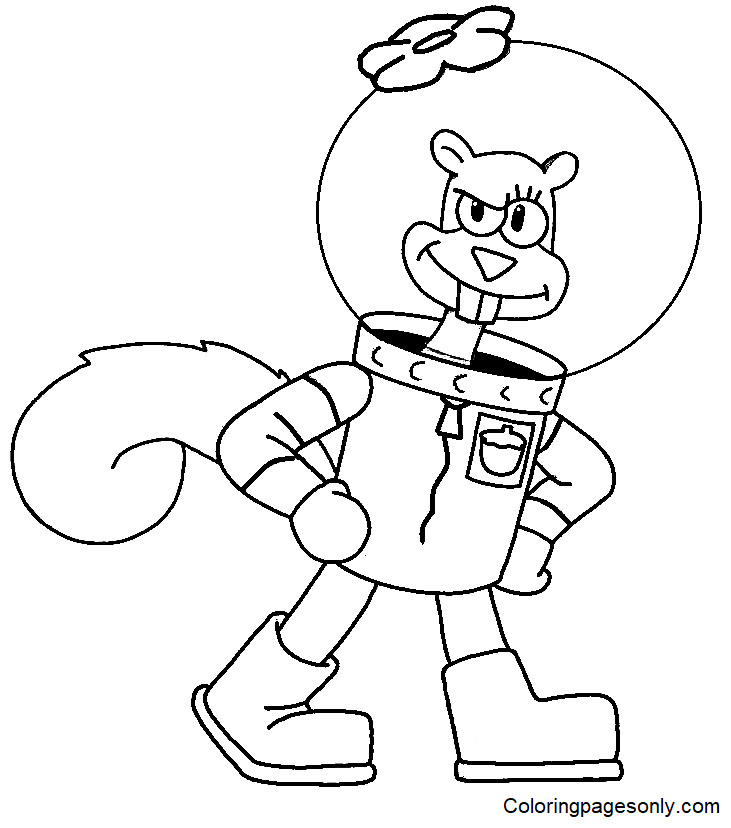
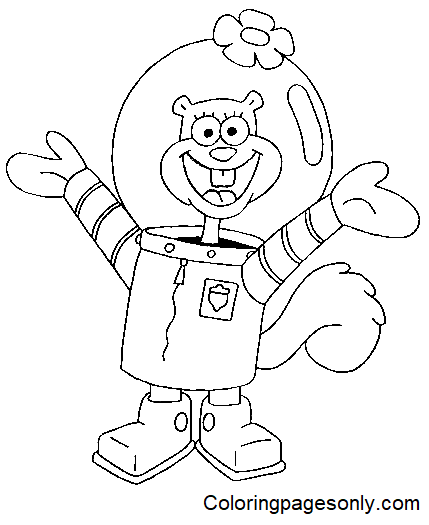
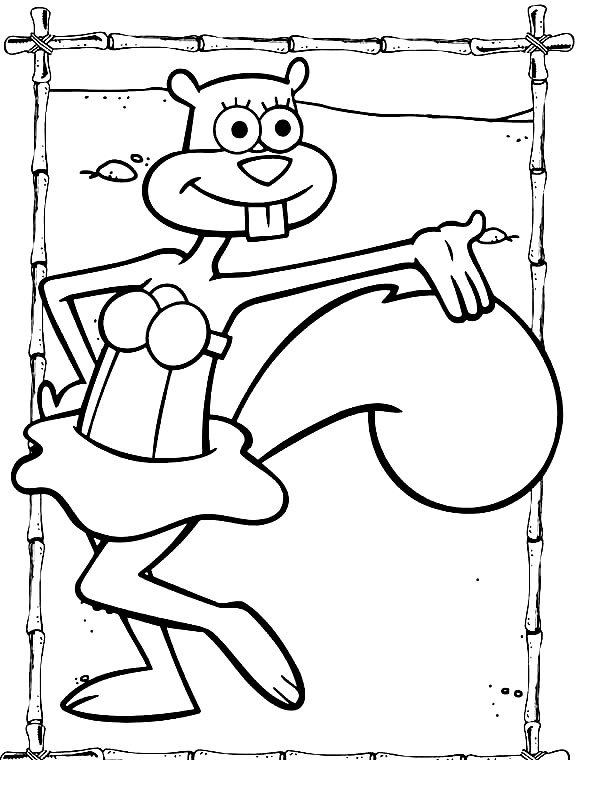
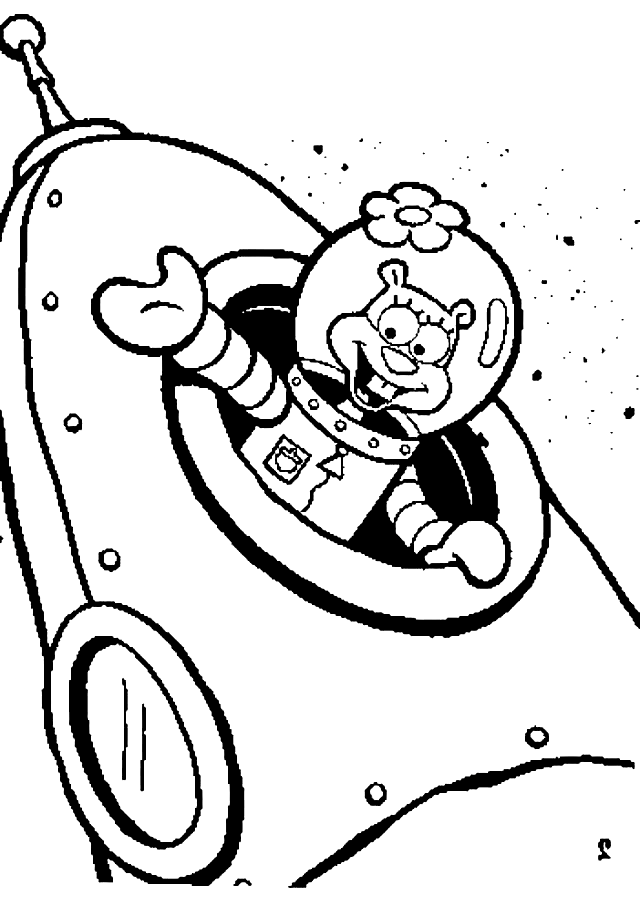
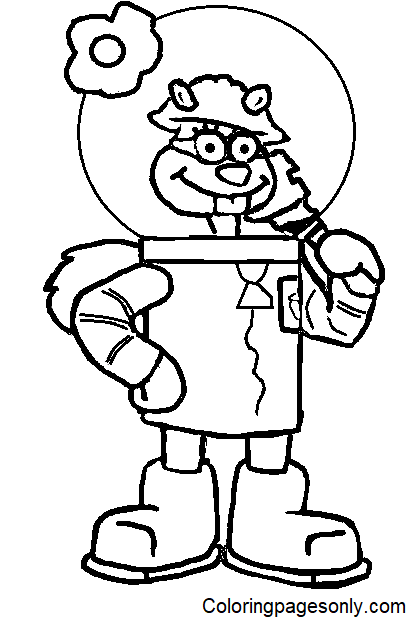
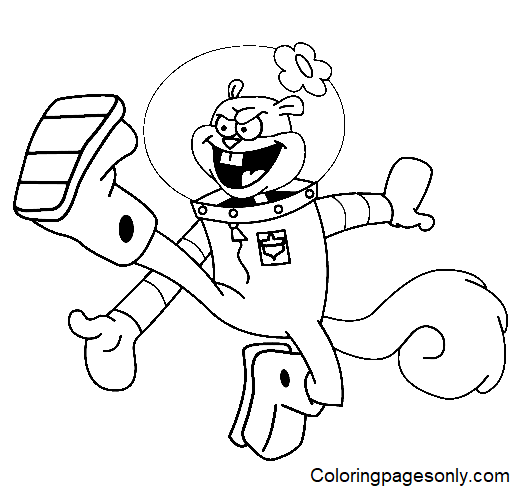
What’s Inside This Collection
Everyday portraits, mood pages, sports and hobbies, and friendship scenes make up the 33 sheets.
Everyday Sandy
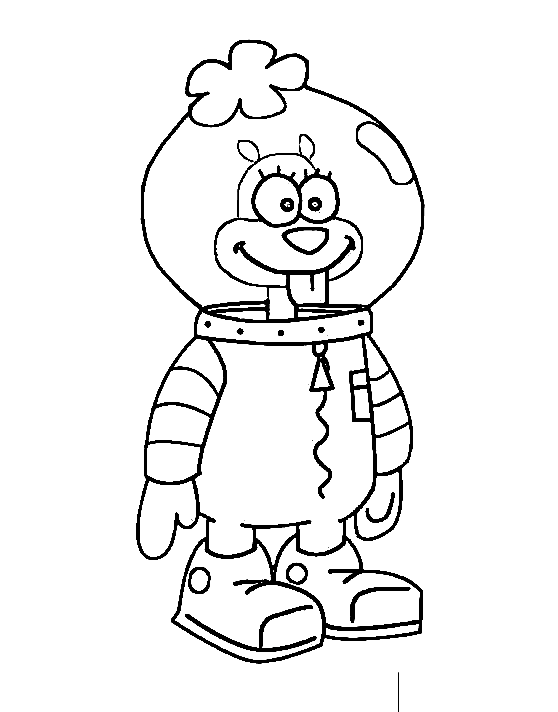
Sandy smiles, waves, and poses in cute, friendly, and baby-style versions, many in her famous air helmet. Color her fur a warm Chestnut Brown with a Cream muzzle and belly, and keep the helmet glass a pale Sky Blue.
Moods and Silly Versions
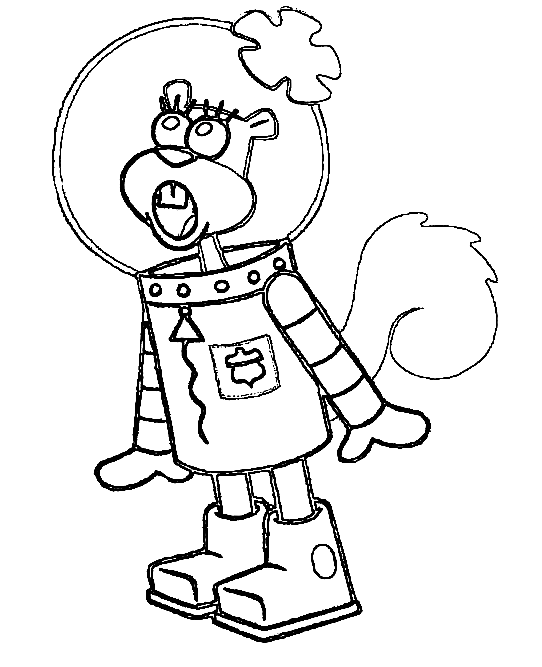
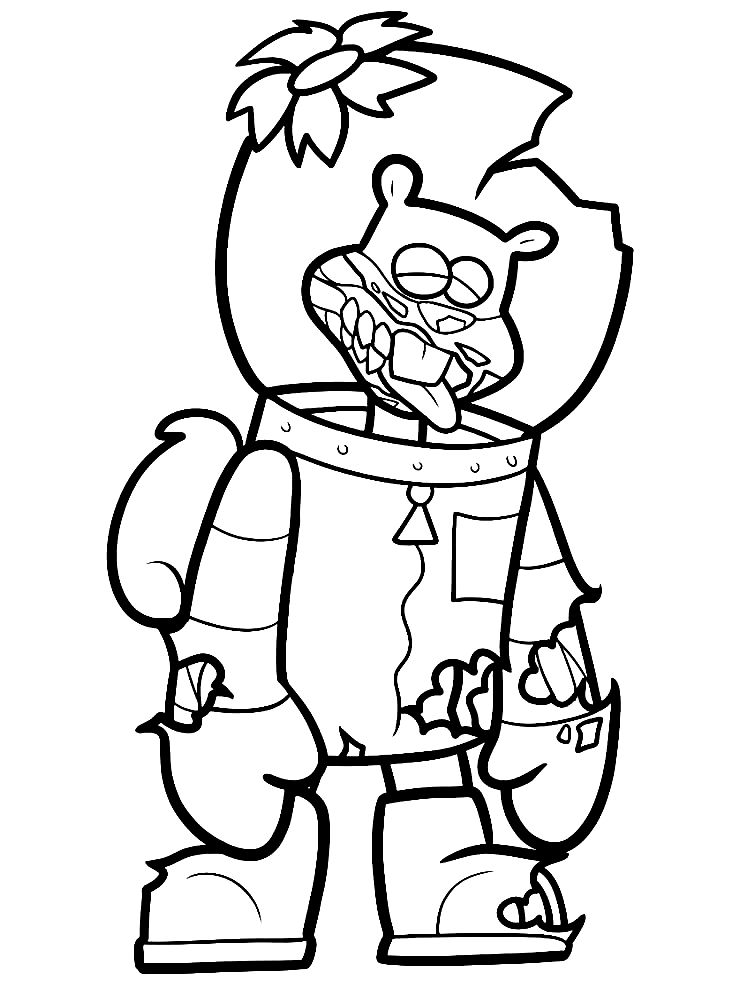
Angry, surprised, funny, evil, and even zombie take show how expressive the character can be. Bold color swaps, such as Lime Green fur for the zombie or deep Red cheeks for the angry pose, make these pages playful.
Sports, Karate, and Hobbies
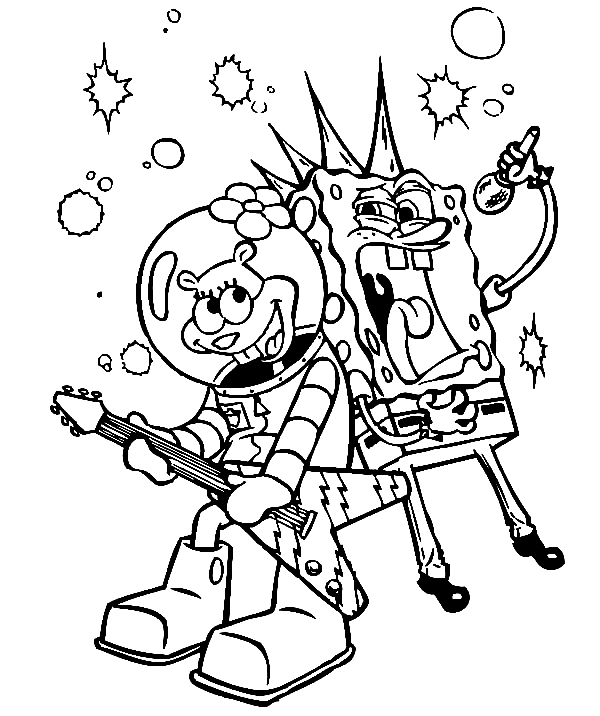
Sandy kicks a soccer ball, sprints, strums a guitar, cheers with pom-poms, and strikes a martial arts pose. Give her karate gear, a Black belt, and keep sports uniforms in two bright colors like Orange and Royal Blue.
Sandy With SpongeBob and Patrick
She surfs and hangs out with her best friends from Bikini Bottom. Stick to SpongeBob’s Lemon Yellow and Patrick’s Pink so the trio looks just like the show.
What Sandy Cheeks Coloring Pages Do
Celebrating curiosity and science. Sandy is a scientist and inventor who moved under the sea to learn new things, which makes her a great role model for curious kids. After coloring, families can talk about simple experiments to try at home or list questions children wonder about the ocean.
Practicing control around rounded shapes. The bubble helmet, fluffy tail, and round acorn details call for smooth, curved strokes. Pediatric guidance from the American Academy of Pediatrics lists coloring among the everyday ways children ages 2 through 7 build the fine motor skills later used for writing, and Sandy’s mix of circles and outlines offers steady practice.
Unwinding after an active day. Sports-loving kids often need help slowing down, and a quiet coloring session can do just that. The Art Therapy Journal published research in 2005 showing measurable reductions in anxiety after structured coloring, so a calm Sandy portrait works nicely as a bedtime or rainy-day activity.
Showing that girls can do it all. Sandy is a karate expert, an athlete, and a brilliant inventor all at once. Her pages give parents an easy way to remind children that anyone can enjoy science, sports, and music without choosing just one.
How to Color Sandy Cheeks Pages Well
- Fur and face: Color her fur Chestnut Brown and leave her muzzle and belly a soft Cream. Add Pink inside her ears and a touch of Rose on her cheeks for warmth.
- Air helmet: Shade the helmet very lightly with Sky Blue, keeping a curved streak of white paper across the top. The streak makes the glass look shiny and clear.
- Helmet flower: Fill the little flower on her helmet with Pink or Purple and a Yellow center. This small detail is one of the easiest ways to recognize her.
- Diving suit: Keep the suit White with Light Gray shadows in the folds. Adding a few Gray seams at the arms and legs makes it look like real gear.
- Bushy tail: Use short, flicking strokes of Brown and Tan along the tail. Layering two shades gives it a fluffy, squirrel-like texture.
- Ocean backgrounds: Add Teal water, a few White bubbles, and Coral Pink sea flowers behind her. A simple underwater scene places her right in Bikini Bottom.
5 Creative Craft Ideas With Sandy Cheeks Coloring Pages
1. Treedome Paper Plate Craft
Color a Sandy portrait and glue it to the center of a paper plate. Cover the front with a clear plastic lid or plastic wrap to make her famous glass treedome.
2. Mini Science Lab Poster
Glue a finished Sandy page at the top of a poster board and draw beakers and gadgets around her. Underneath, write one simple experiment kids would like to try.
3. Karate Belt Bookmark
Color the martial arts page, trim Sandy into a narrow strip, and glue it to cardstock. Tie a short piece of black yarn at the top to look like a karate belt.
4. Bikini Bottom Friends Garland
Color Sandy, SpongeBob, and Patrick pages, cut out each character, and clip them to a string with clothespins. Hang the garland across a bedroom wall or party table.
5. Acorn Thank-You Card
Fold a piece of brown cardstock in half and glue a colored Sandy on the front. Draw small acorns around her and write a thank-you note inside for a friend or teacher.
Frequently Asked Questions
What are Sandy Cheeks coloring pages?
There are 33 free printable sheets of Sandy Cheeks from SpongeBob SquarePants, showing her in portraits, silly moods, sports poses, and scenes with SpongeBob and Patrick. Print the PDFs at home or color them on screen without an account.
Who created Sandy Cheeks?
Marine biologist and animator Stephen Hillenburg created Sandy as part of SpongeBob SquarePants, which premiered on Nickelodeon in 1999. She first appeared in the episode Tea at the Treedome, where SpongeBob visits her home.
What kind of animal is Sandy Cheeks?
Sandy is a squirrel, which makes her one of the few land animals living in Bikini Bottom. She needs her air helmet or her treedome to breathe underwater.
Where does Sandy live?
She lives in a treedome, an air-filled glass dome built around an oak tree on the ocean floor. Inside, she has grass, a tree, and fresh air, just like back home in Texas.
Who voices Sandy Cheeks?
Carolyn Lawrence has voiced Sandy since the show began in 1999. She also voices the character in the movies and spin-off series.
Does Sandy have her own movie?
Yes. Saving Bikini Bottom: The Sandy Cheeks Movie premiered on Netflix in 2024, with Sandy and SpongeBob traveling to Texas to save their underwater town.
What age are Sandy Cheeks coloring pages for?
Preschoolers around 3 can manage the smiling portraits, and kids up to about 10 enjoy the action and friendship scenes. SpongeBob fans of any age often enjoy them too.
Why is Sandy so good at karate?
Sandy loves physical challenges and practices karate as one of her favorite hobbies. She often spars with SpongeBob, and the two use special gloves and helmets for their friendly matches.
Start Coloring
Pick a smiling Sandy, the soccer page, or a beach day with SpongeBob, then print it or color it in the browser with no sign-up needed. Bikini Bottom fans can share their finished squirrel on Facebook or Pinterest.