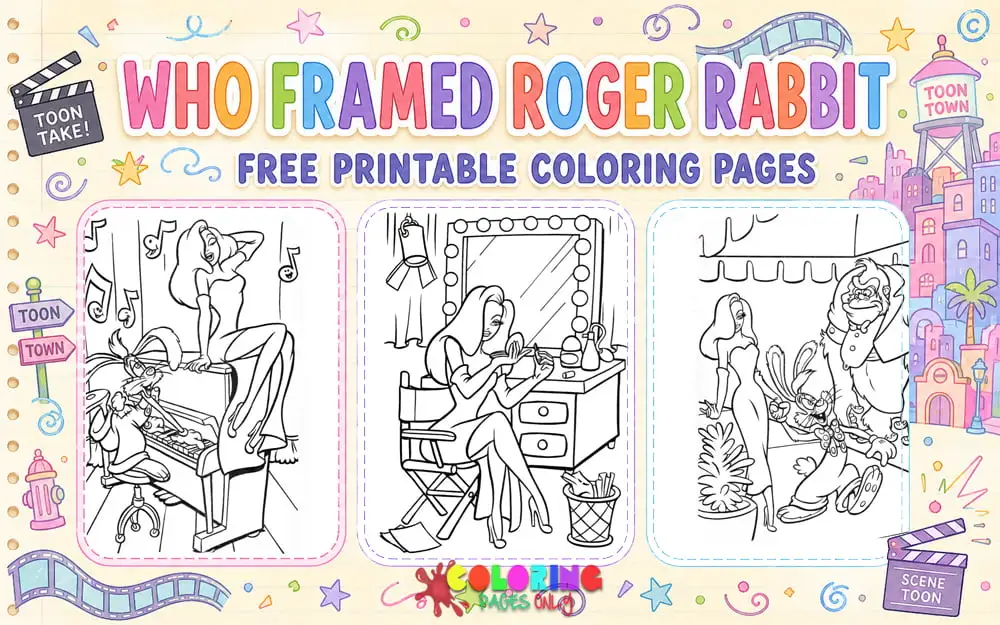
Free Who Framed Roger Rabbit Coloring Pages: 20+ printable PDF pages spanning the toon cast of a 1940s detective world, where cartoon characters live impossibly vivid lives next to a muted reality. All free, download PDF to print, or color online.
Roger Rabbit and his fellow toons are deliberately, theatrically too vivid for their world. The film jokes that cartoon characters are saturated, primary-colored, and impossibly bright next to the muted real world they inhabit, so Roger’s white fur and red patches, and Jessica’s vivid red dress, need to stay at full cartoon intensity rather than softened toward anything naturalistic. Betty Boop’s cameo complicates that logic further: she comes from an even older animation era, and her black-and-white or sepia coloring should stand apart even within this colorful toon world, layering one piece of animation history inside another.
The pages are divided into two types. Solo character pages for Roger, Jessica, Benny the Cab, and Baby Herman reward leaning fully into each character’s specific saturated palette rather than naturalizing it. Duo and group pages ask you to hold several fully saturated toon palettes in the same frame without letting them blend into a muddier middle ground. The simpler solo portraits suit younger fans; the detailed Jessica and ensemble pages give older fans more to work through.
These pages work well at home or as fan art. These are fan-made coloring pages and are not official, licensed, or endorsed by Touchstone Pictures, Disney, Amblin Entertainment, or any rights holder of Who Framed Roger Rabbit. The Betty Boop page is fan-made and is not affiliated with Fleischer Studios, King Features Syndicate, or any rights holder of Betty Boop.
Quick Answer
Who Framed Roger Rabbit coloring pages are a free set of 20+ printable PDFs and online coloring sheets featuring Roger Rabbit, Jessica Rabbit, Benny the Cab, Baby Herman, and a Betty Boop cameo page. The film’s premise, cartoon characters living in a real 1940s world, means every toon should be colored at theatrical full saturation, the visual joke that makes them obviously too vivid to belong in the muted reality around them.
Best for: Who Framed Roger Rabbit fans, classic Disney and Golden Age animation fans, older children and teens, and anyone who enjoys film noir aesthetics paired with cartoon excess
Formats: printable PDF and online coloring
Popular pages: Jessica Rabbit, Roger Rabbit, Jessica and Roger, Benny the Cab, Betty Boop
Creative uses: fan art practice, toon-vividness color study, Roger and Jessica duo, Betty Boop era contrast, and detective-noir toon ensemble display
What’s Inside Who Framed Roger Rabbit Coloring Pages
Roger Rabbit Pages
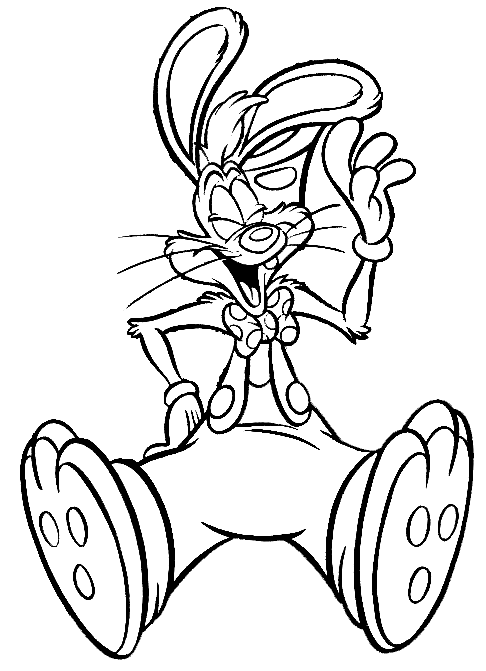
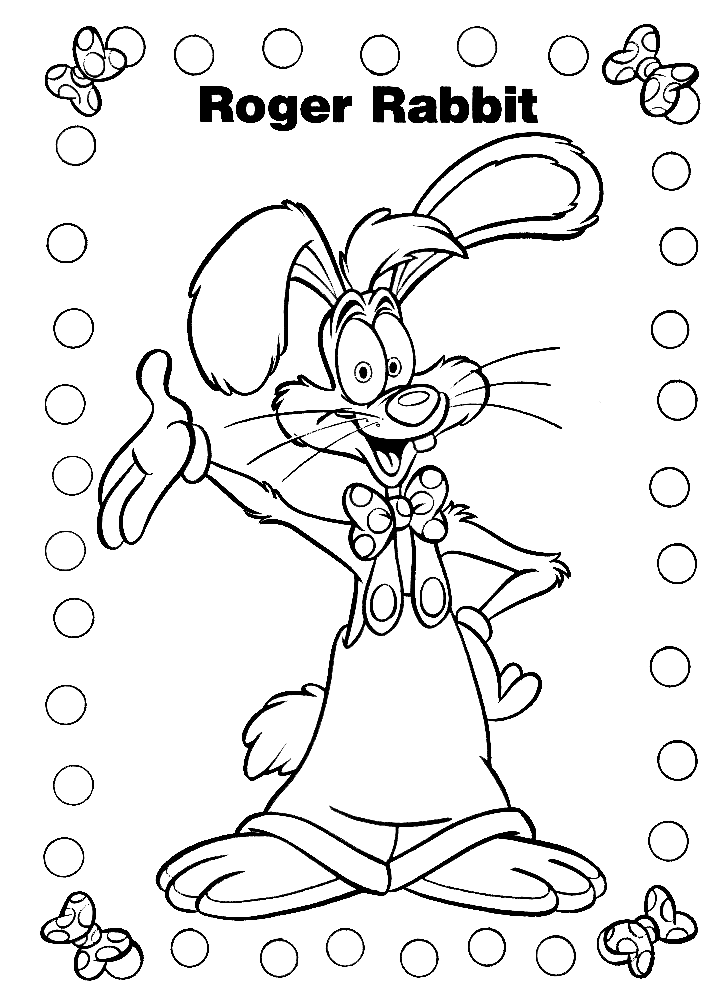
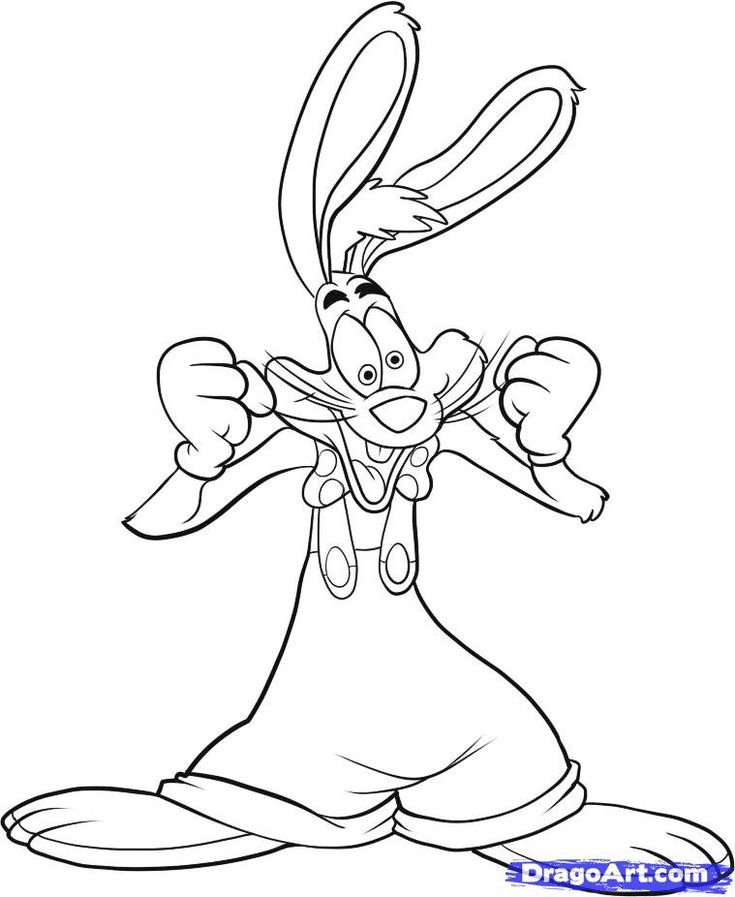
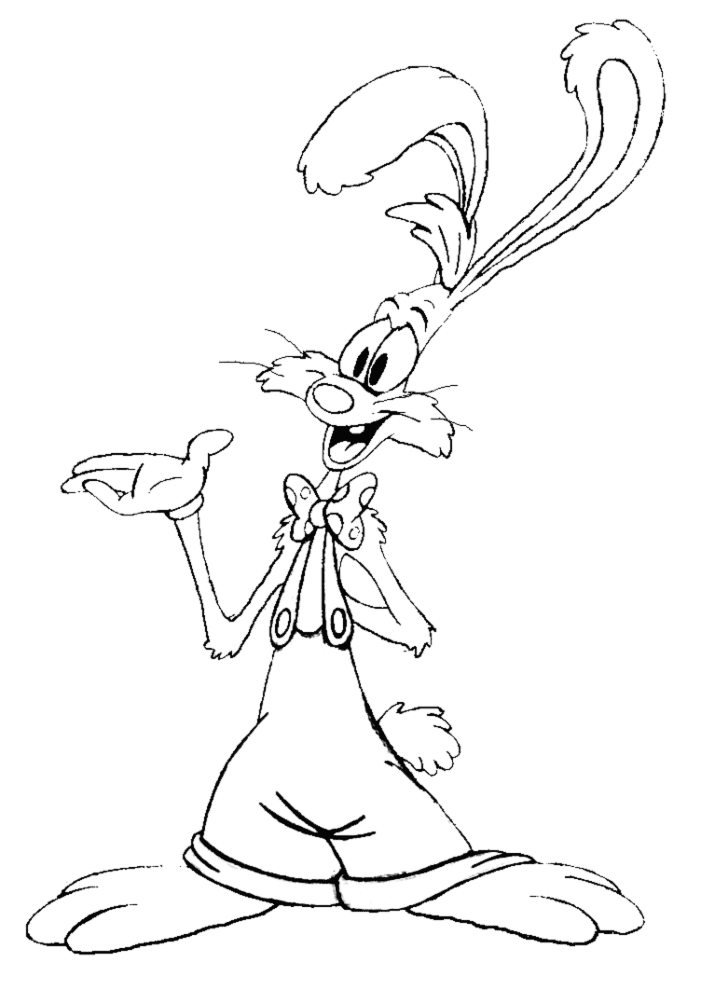
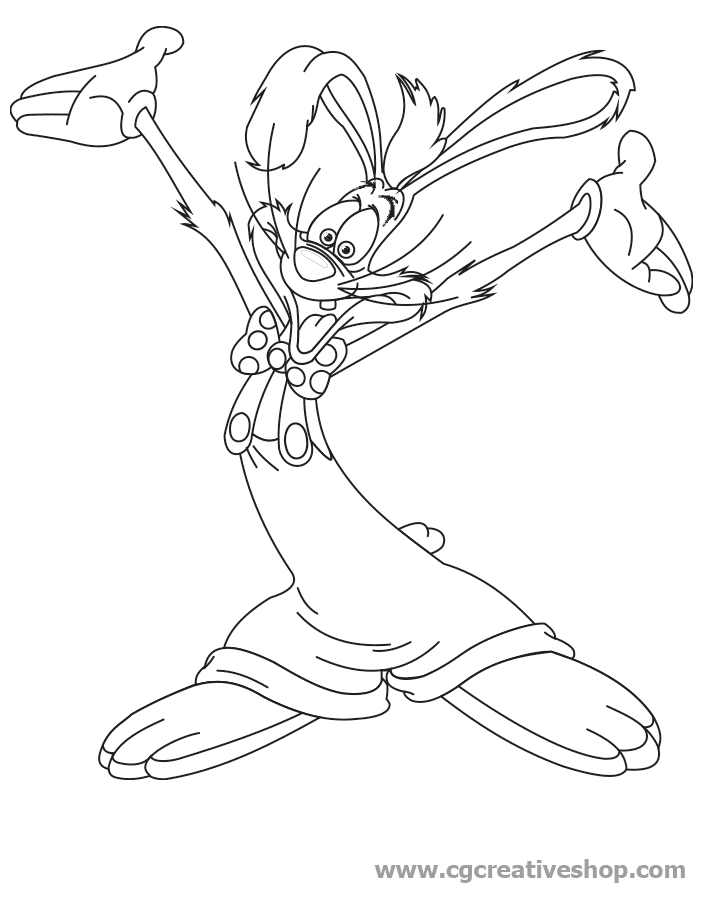
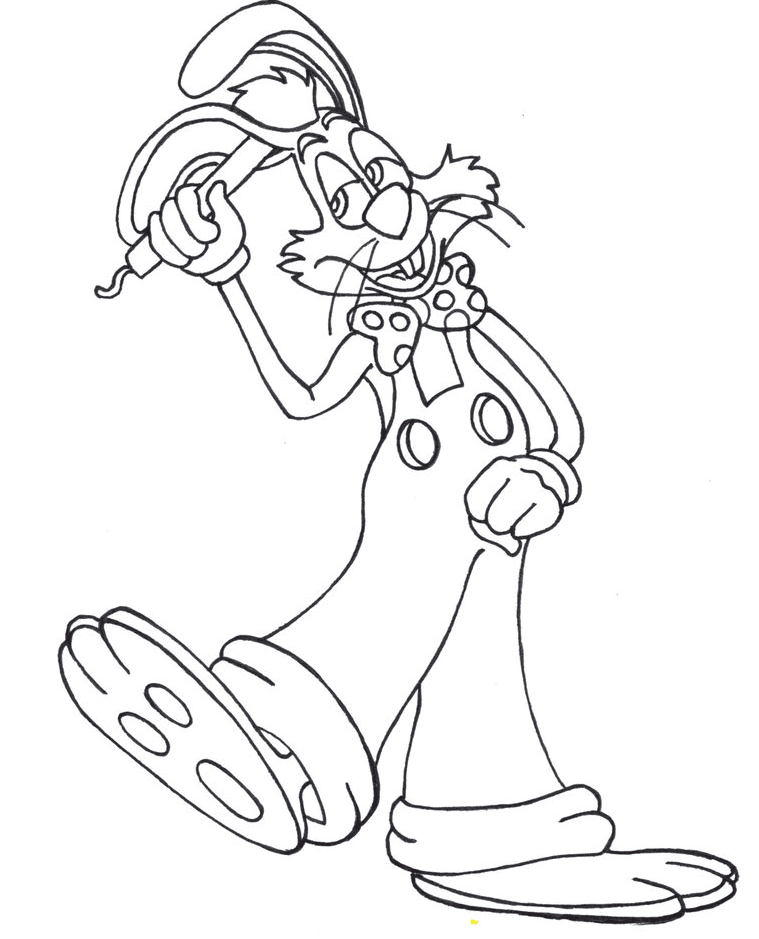
Roger appears across multiple solo pages, including Happy and Funny expression variants, and in compositions with Benny the Cab.
Coloring Roger: Roger’s design uses the bright, primary palette of classic Golden Age cartoon rabbits: white fur, vivid red-orange patches on his ears and cheeks, red overalls, and a yellow bow tie. None of these colors should be muted or naturalized. The white needs to stay genuinely white rather than cream, and the red patches should be warm and saturated enough to read as obviously cartoonish, since that visual excess is the entire point of his character existing in a realistic detective-story world. His wide, expressive features carry slapstick energy that the vivid palette reinforces rather than undercuts.
Jessica Rabbit Pages
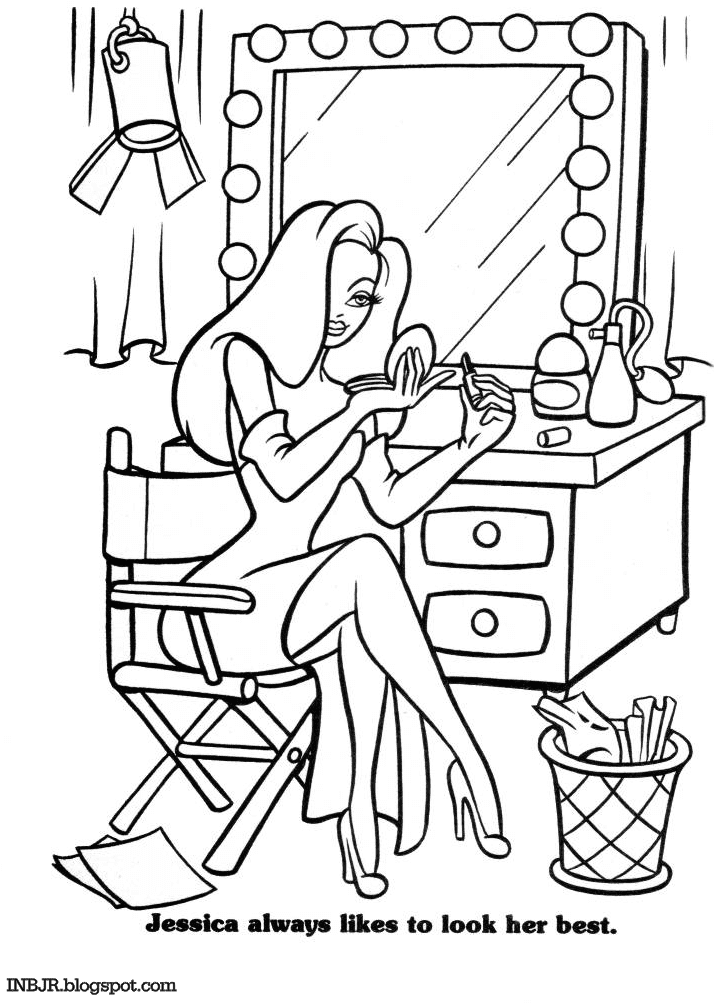
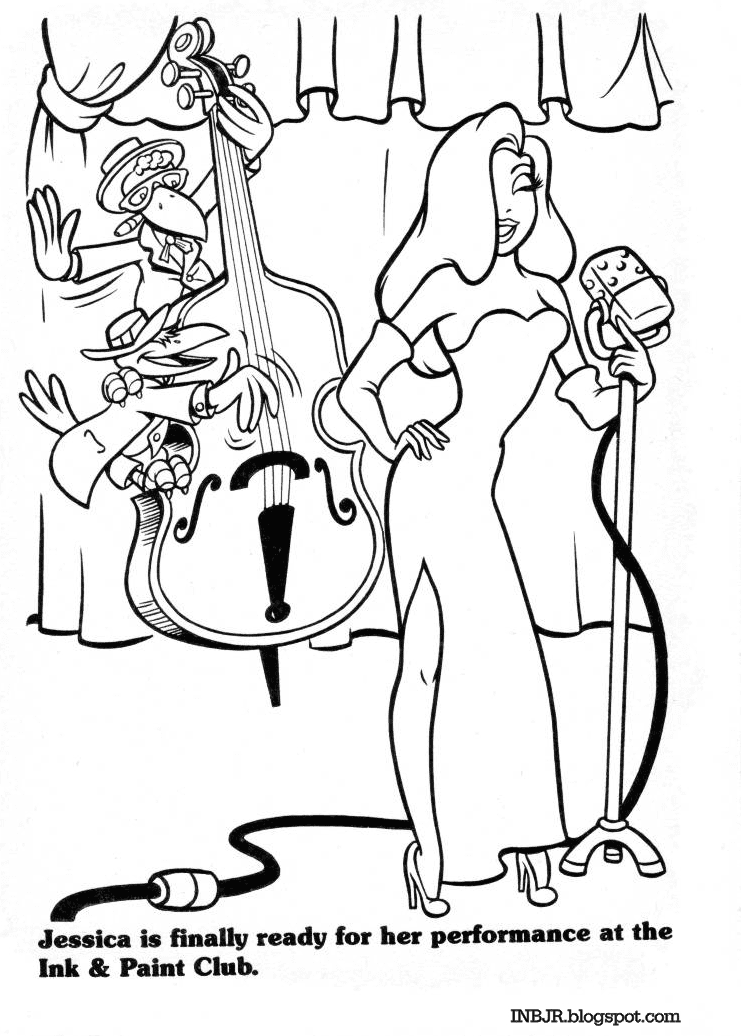
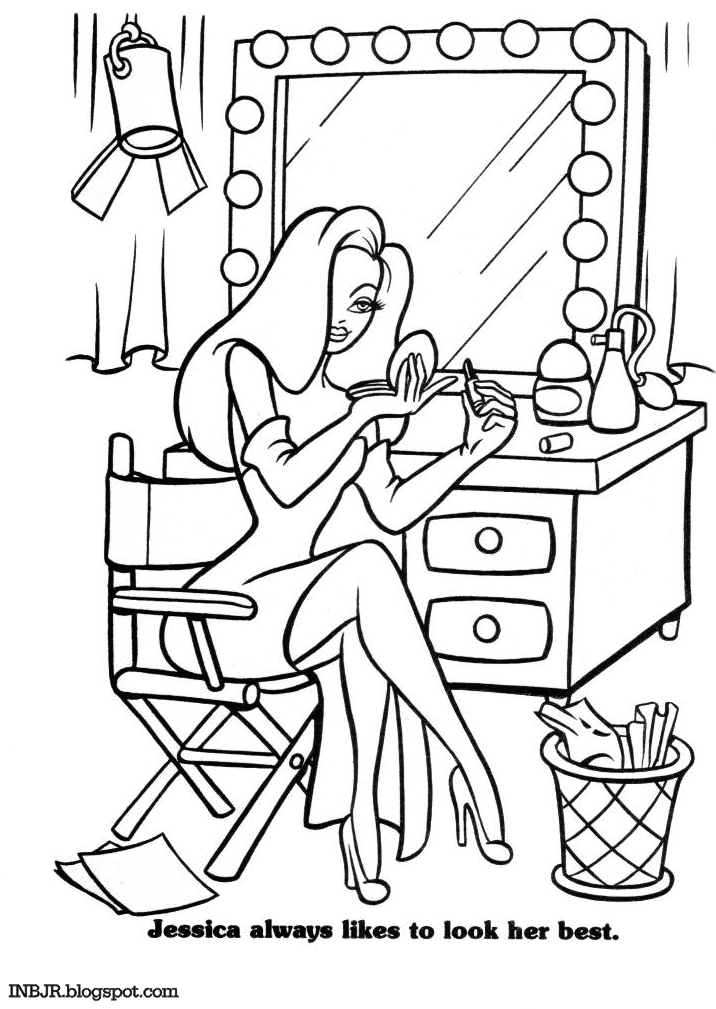
Jessica appears across the most pages of any character in the set, including a page at the Ink and Paint Club where she performs.
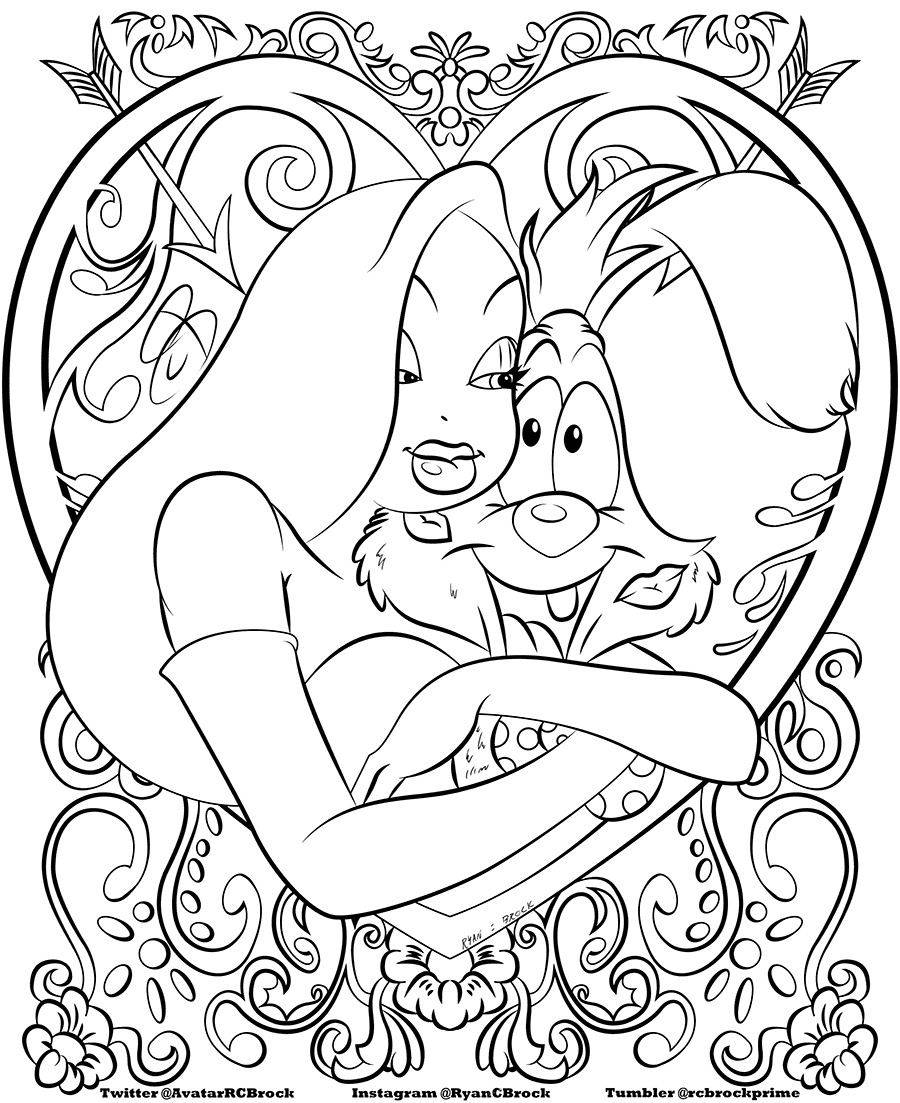
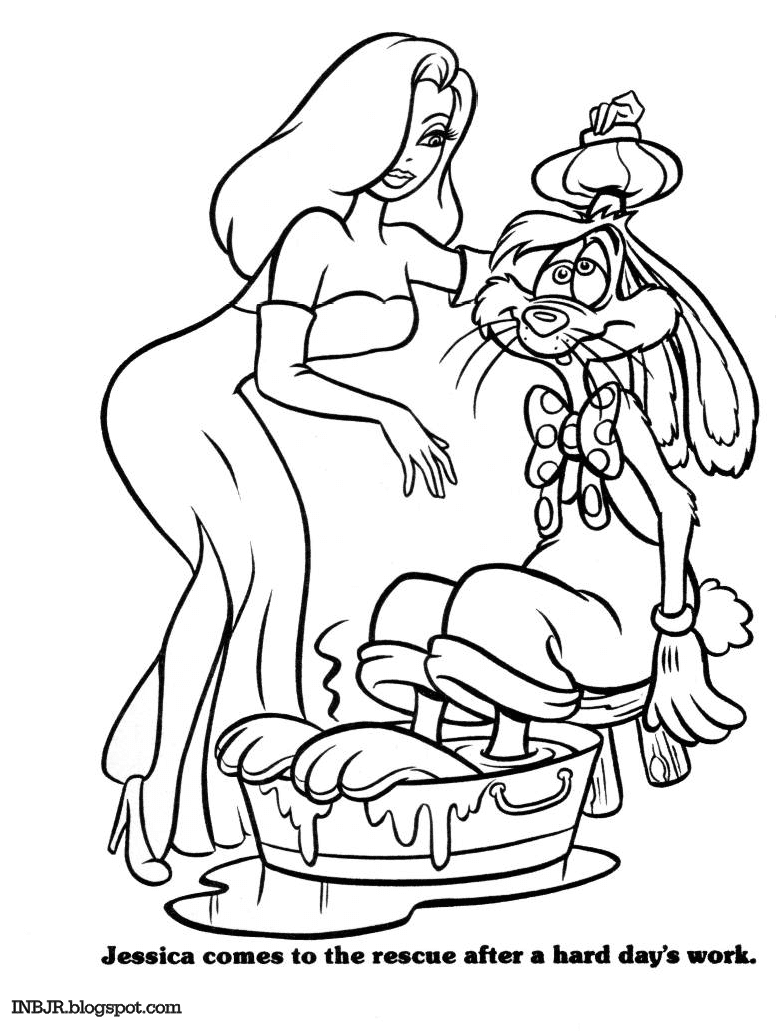
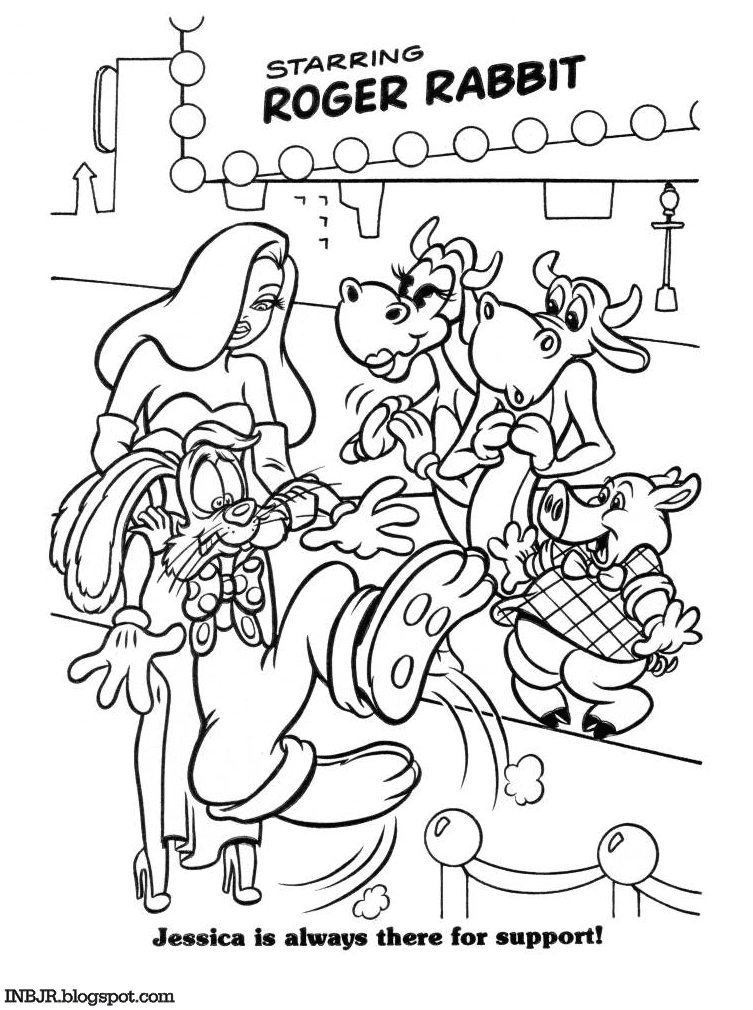
Coloring Jessica: Jessica’s design is built on extreme contrast: porcelain-pale skin against a long, vivid red sequined dress and equally vivid red hair. The red of her dress and hair should match or nearly match, creating a single dominant color statement that defines her silhouette from a distance. Her skin should stay distinctly pale rather than warming toward a naturalistic tone, since the porcelain quality is as deliberate a design choice as the saturated red. On duo pages with Roger, her sophisticated red-and-white palette contrasts with his more playful primary-color scheme, even though both characters share the same underlying commitment to full toon saturation.
Benny the Cab and Baby Herman Pages
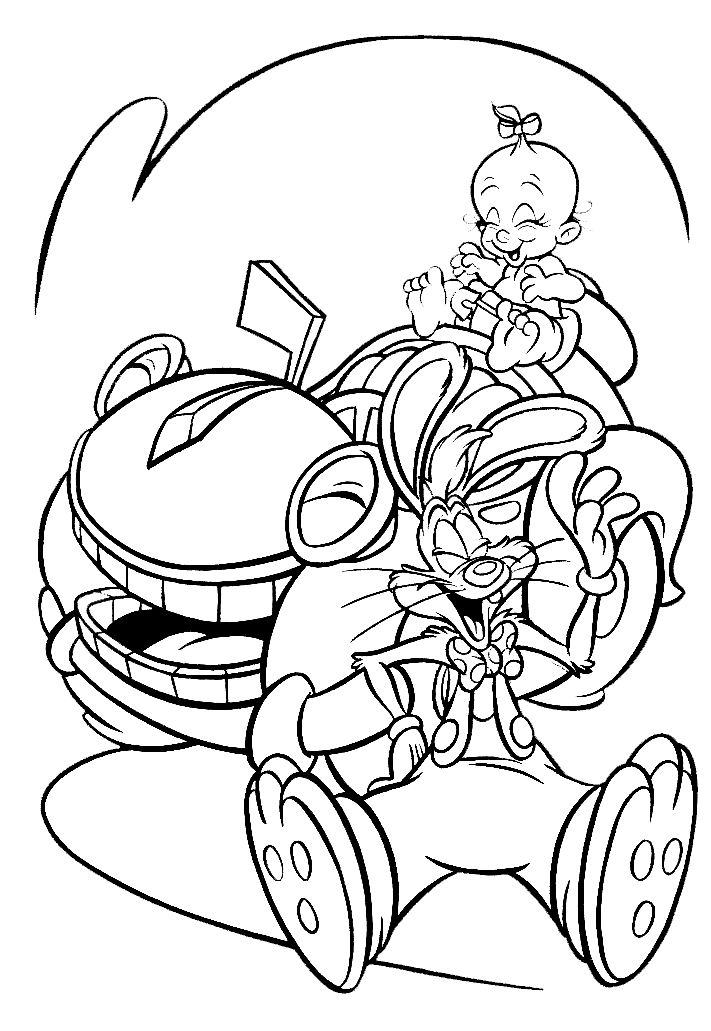
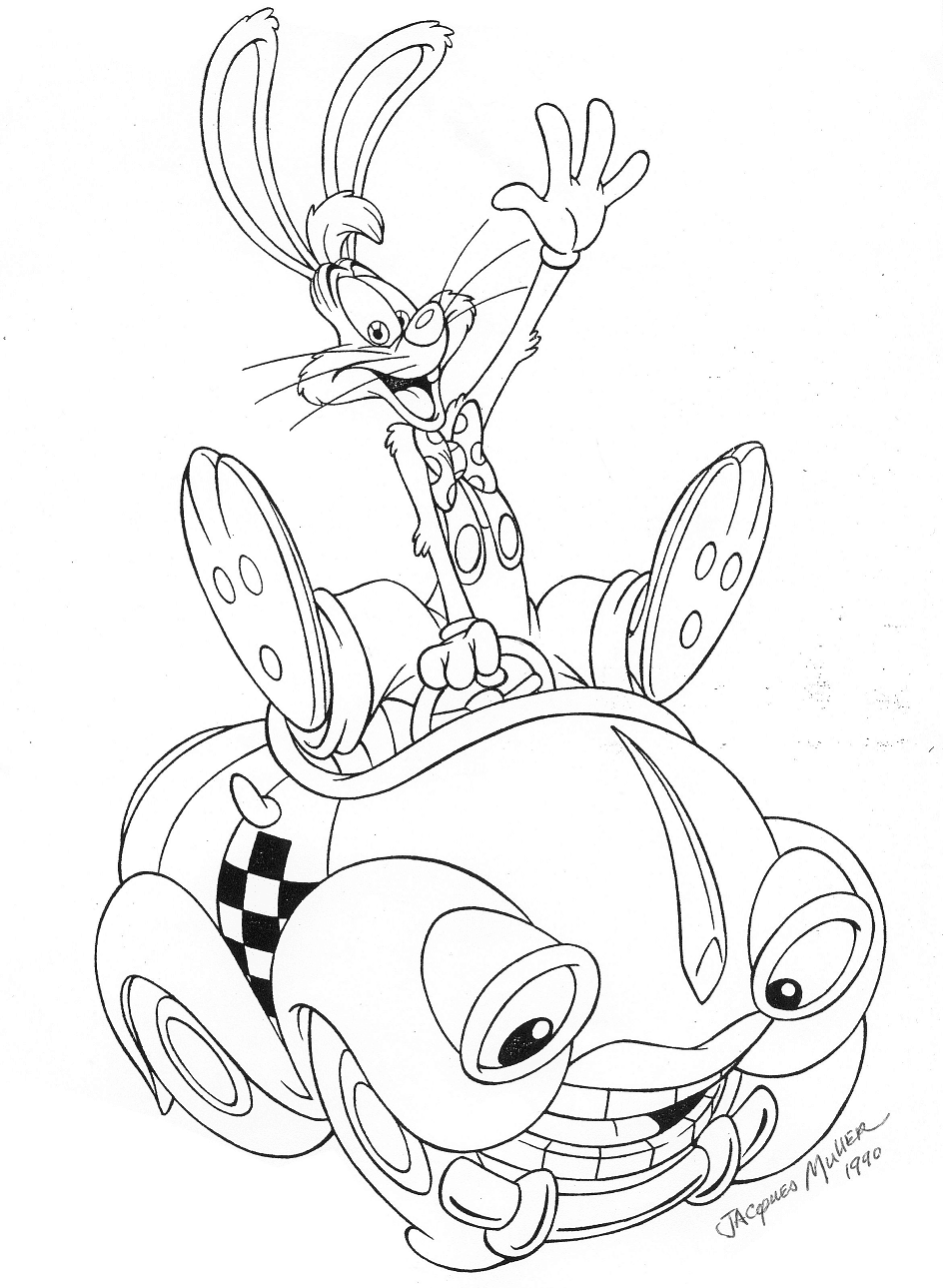
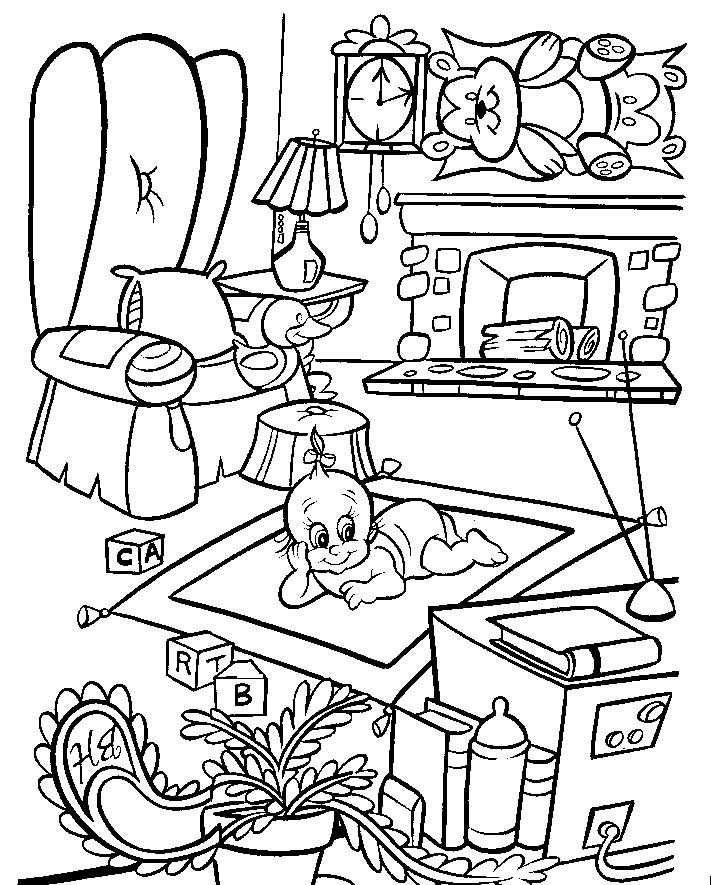
Benny the Cab appears in solo pages and in a composition with Roger and Baby Herman. Baby Herman appears in his own solo page.
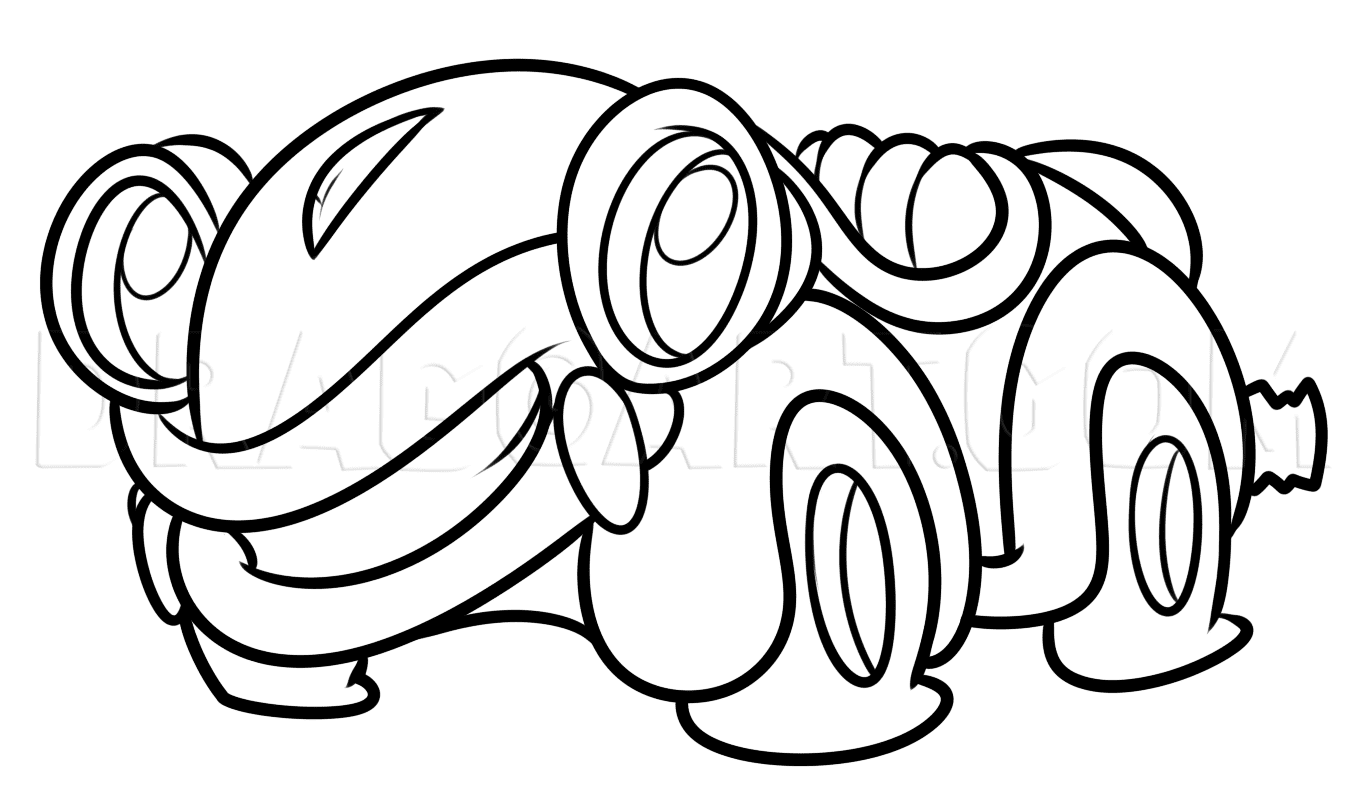
Coloring Benny and Baby Herman: Benny is a sentient taxi, and his bright yellow body should match the saturated, classic taxi yellow rather than a muted mustard tone, with his expressive eyes and mouth rendered directly onto the vehicle’s surface as a living character rather than a decorative addition. Baby Herman’s design follows standard toon-baby conventions: pink warm skin, simple round proportions, and his signature cigar as the one incongruous adult detail against his infant appearance. Keeping both characters in fully saturated, uncomplicated color blocks matches the visual language established by Roger and Jessica.
Betty Boop Cameo Pages
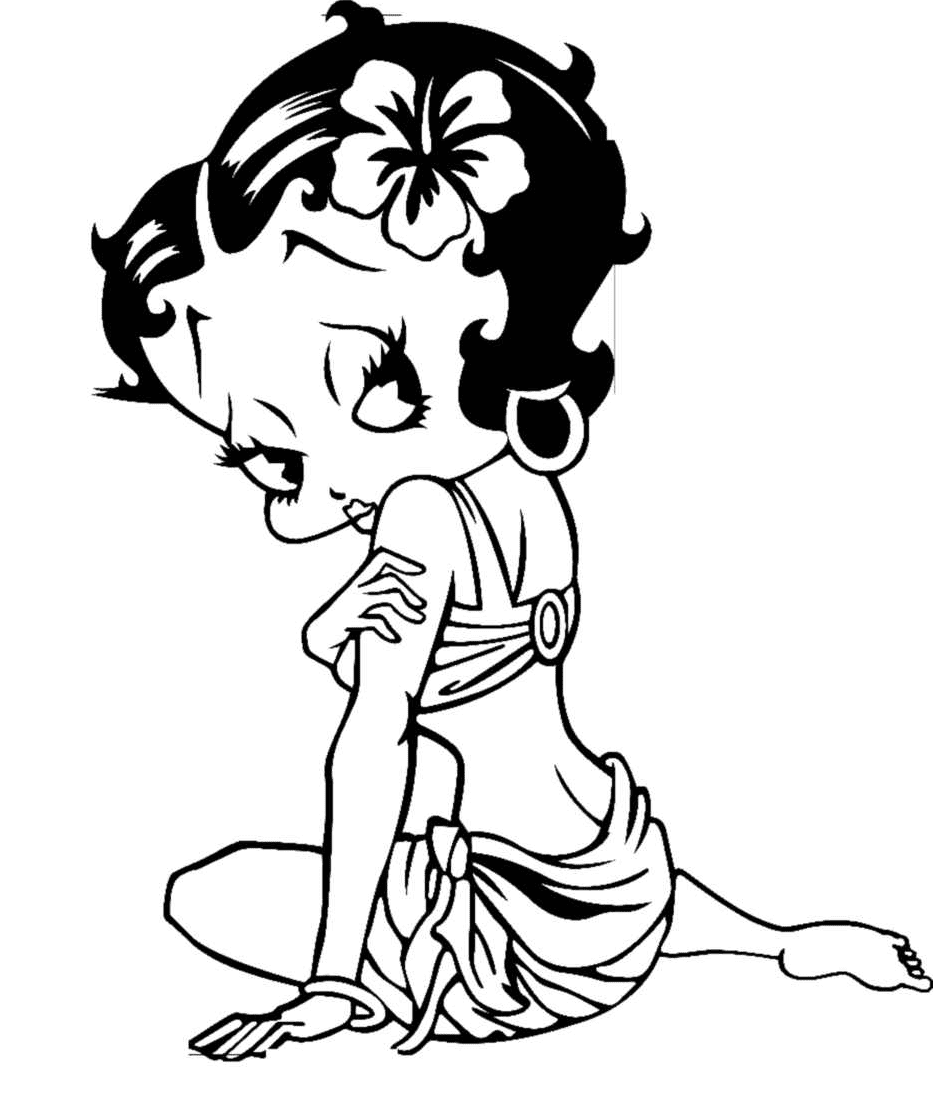
Two pages feature Betty Boop, a cameo character from an entirely different and much older animation tradition than the rest of the cast.
Coloring Betty Boop: Betty Boop originates from black-and-white animated shorts of the early 1930s, an entire animation generation before Roger Rabbit’s own toon world. Her pages work best when colored in a black-and-white or warm sepia register rather than full color, which preserves the historical layering the film builds into her cameo: even within a world of fully saturated cartoon characters, Betty represents an older, monochrome era of animation. Coloring her in bright modern toon colors flattens that specific piece of animation history into the rest of the cast.
Group and Ensemble Pages
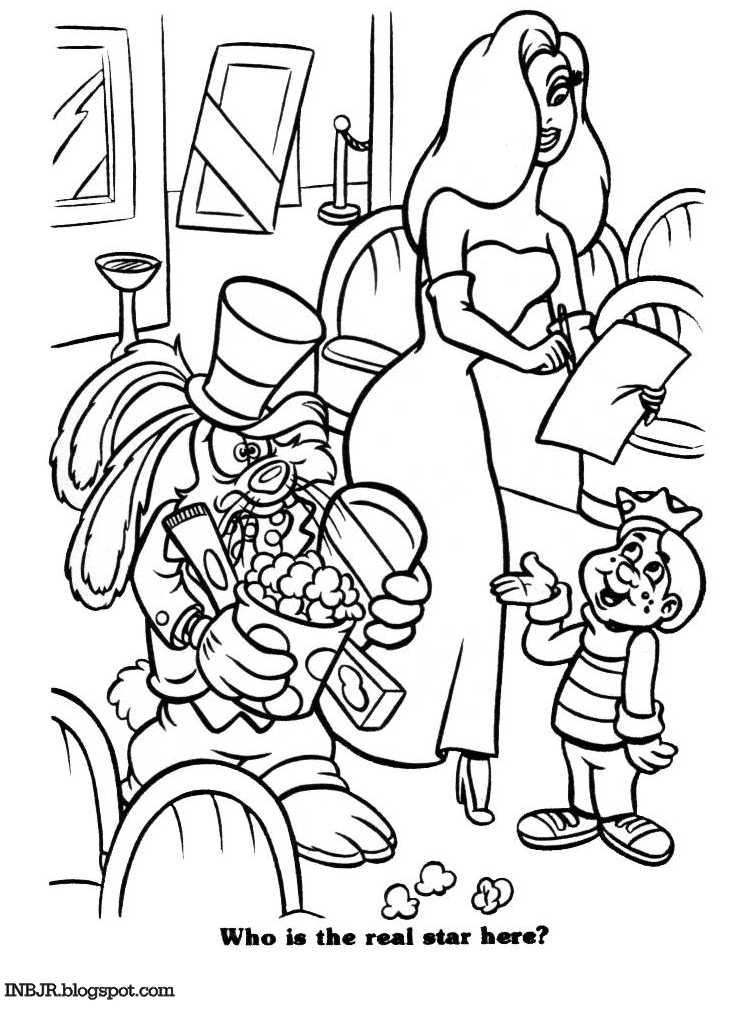
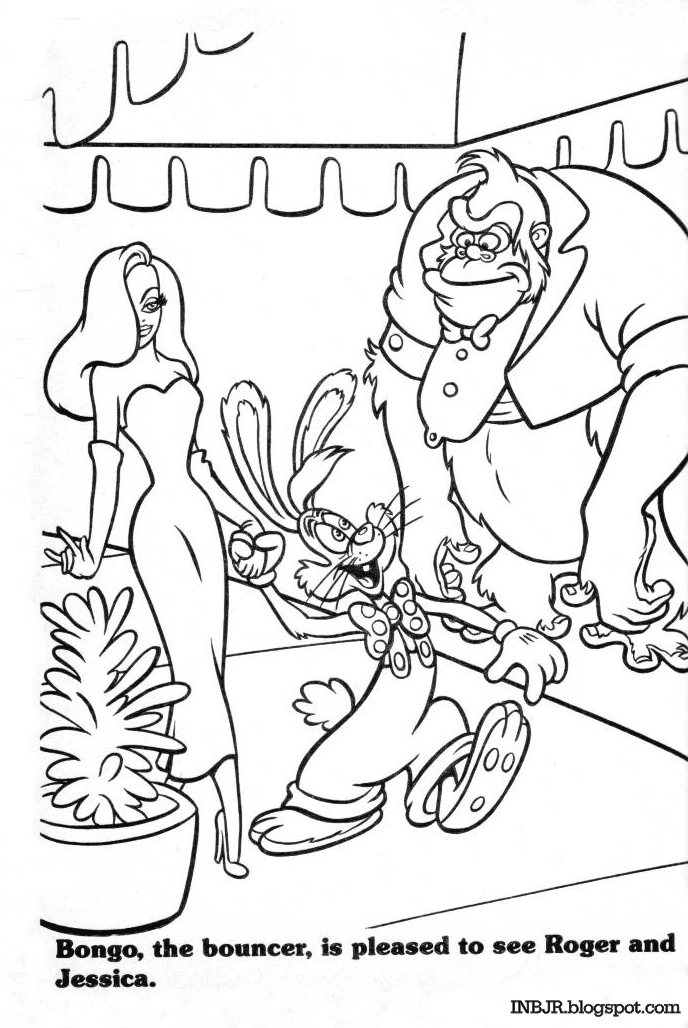
One page shows Bongo, Roger, and Jessica together in a single composition.
Coloring the ensemble pages: with multiple fully saturated toon characters sharing a frame, the goal is holding each character’s individual color commitment, Roger’s red-and-white, Jessica’s red-and-porcelain, without letting them blend into a single visual mass. Treating each figure as its own complete color statement, rather than trying to harmonize them into a single palette, matches the film’s own visual logic of toons as individually excessive, vividly drawn characters who happen to share scenes.
Printable PDF and Online Who Framed Roger Rabbit Coloring Pages
Every design comes in two ways: a printable PDF for paper, or the same artwork colored on screen.
Using both formats: print the PDF when you want a clean sheet for markers or colored pencils suited to bold, saturated fills, and use the on-screen version when there is no printer nearby. The PDF holds the film’s classic cartoon linework cleanly on standard letter or A4 paper.
What These Pages Do
Who Framed Roger Rabbit builds its entire premise on a visual joke: cartoon characters are too vivid and too primary-colored to exist in a realistic world plausibly. Working through these pages builds toon-vividness as world-building: full color saturation is the actual mechanism explaining why these characters don’t belong in their surroundings, not mere decoration. Betty Boop’s cameo adds a second layer: her black-and-white coloring represents an even older animation era nested inside the toon world, so color choice becomes a way of representing animation history within a single set of pages. That skill, using saturation as a storytelling device rather than purely aesthetic, applies to any illustration where color intensity must communicate something about a character’s nature or era. From here, cartoon coloring pages are the parent hub, and Disney coloring pages and rabbit coloring pages offer the closest character and species parallels.
The American Art Therapy Association recognizes that creative engagement with nostalgic, era-specific visual material offers a particular kind of pleasure rooted in recognizing and honoring a known historical style rather than inventing something new. Who Framed Roger Rabbit’s deliberate homage to Golden Age cartoon palettes, paired with Betty Boop’s even older black-and-white tradition, gives coloring pages a layered historical dimension that rewards attentive, knowledgeable color choices. The American Academy of Pediatrics recognizes that creative engagement with classic American film and animation history can support cultural literacy in older children and teens, and the film’s blend of detective-noir plotting and slapstick toon humor makes it a particularly rich entry point for that kind of nostalgia-driven creative work.
How to Color Who Framed Roger Rabbit Coloring Pages
These steps work for any page in the set, from a solo Roger portrait to the full ensemble compositions.
Push every tonal color toward maximum saturation rather than softening it. The entire visual joke of this franchise depends on cartoon characters looking obviously, theatrically too vivid for their surroundings. Roger’s red patches, Jessica’s red dress, and Benny’s taxi yellow should all sit at their most saturated, confident values rather than any muted or naturalistic alternative.
Keep Jessica’s skin distinctly pale rather than warming it toward a natural skin tone. Her porcelain quality is as deliberate a design choice as her vivid red dress and hair. Warming her skin tone toward something more realistic undercuts the stylized contrast that defines her entire visual identity.
Color Betty Boop in black-and-white or sepia rather than full color. Her cameo represents an older animation era nested within the toon world. Giving her the same bright saturated palette as Roger or Jessica erases the historical layering that makes her appearance in this specific franchise meaningful.
On ensemble pages, treat each character as a complete, separate color statement. Rather than trying to harmonize Roger, Jessica, and any other toon sharing a frame into a single coordinated palette, let each character’s individual saturated commitment stand on its own. The film’s visual comedy depends on these characters feeling individually excessive rather than designed as a matched set.
On the Benny the Cab pages, render his face directly onto the vehicle surface. His eyes and expression sit on what would otherwise be an ordinary taxi’s hood and windshield area. That surface should stay in the same bright, saturated yellow as the rest of his body, so the face reads as part of a living character rather than a decoration on an inanimate object.
5 Creative Craft Ideas with Who Framed Roger Rabbit Coloring Pages
Toon-Vividness Color Study
Color a solo Roger Rabbit page, pushing the red patches and overalls to their most saturated possible value, with the white fur kept genuinely bright rather than cream.
Mount on a muted grey card to show how a fully saturated toon character reads as obviously too vivid for a realistic background. Takes about fifteen minutes.
Roger and Jessica Duo
Color the Jessica and Roger page, keeping Jessica’s red dress and hair at full saturation against her pale porcelain skin, and Roger in his classic red-and-white palette.
Mount on a card as a contrast duo display that takes about twenty-five minutes.
Betty Boop Era Contrast
Color the Betty Boop page in black-and-white or warm sepia, then place it beside a solo Roger or Jessica page colored in full saturation.
Mount the two side by side on a card to show two different animation eras existing within the same franchise. Takes about twenty minutes.
Benny the Cab Character Study
Color the Benny the Cab page, keeping his entire taxi body in saturated classic yellow with his facial features rendered directly onto that surface.
Mount on a card as a study in how color and expression can bring an inanimate object to life. Takes about fifteen minutes.
Detective-Noir Toon Ensemble Display
Color the Bongo, Roger, and Jessica group page, holding each character’s individual saturated palette distinct rather than blending them toward a shared tone.
Mount on dark card to evoke the film’s noir setting behind the vivid toon cast. Takes about twenty-five minutes.
FAQ About Who Framed Roger Rabbit Coloring Pages
Are these Who Framed Roger Rabbit coloring pages free, and can I color them online?
Yes. Every page is free, with no sign-in or payment required. Download the PDF to print at home, or color directly on screen in the browser.
Does the set include the Betty Boop cameo, and how should she be colored differently from the other toons?
Yes, two pages feature Betty Boop. Unlike the rest of the fully saturated toon cast, she should be colored in black-and-white or warm sepia, reflecting her origin in an older, monochrome animation tradition from the early 1930s. Giving her the same bright modern palette as Roger or Jessica removes the historical layering her cameo is meant to represent.
What is Who Framed Roger Rabbit?
Who Framed Roger Rabbit is a 1988 film combining live action and animation, produced by Touchstone Pictures and Amblin Entertainment. It follows a private detective investigating a murder in 1940s Hollywood, where cartoon characters, known as toons, exist alongside humans. The film is celebrated for its groundbreaking blend of live-action and animation and its homage to Golden Age cartoon styles. You can read more about the film on Wikipedia.
Why should cartoon characters look more vivid than other animated characters?
The film’s central visual joke is that cartoon characters are obviously, theatrically too saturated and too colorful to exist in a realistic world plausibly. That excess of color is what marks them as toons within the story itself. Softening Roger’s red patches or Jessica’s red dress toward something more naturalistic undercuts the exact visual logic that makes the franchise work.
What colors should I use for Roger Rabbit?
Roger has white fur, vivid red-orange patches on his ears and cheeks, red overalls, and a yellow bow tie. Keep the white genuinely bright rather than cream, and the red patches warm and fully saturated. None of his colors should be muted, since his theatrical brightness is central to his character.
What makes Jessica Rabbit’s design so visually striking?
Jessica’s design pairs porcelain-pale skin with a long, vivid red sequined dress and matching red hair, creating one dominant color statement that defines her silhouette. The extreme contrast between her pale skin and saturated red is a deliberate stylistic choice that should be preserved rather than softened toward a more naturalistic skin tone.
Are these official Who Framed Roger Rabbit coloring pages?
No. They are fan-made coloring sheets for personal use. They are not affiliated with, licensed by, or endorsed by Touchstone Pictures, Disney, Amblin Entertainment, or any rights holder of Who Framed Roger Rabbit. The Betty Boop page is similarly not affiliated with Fleischer Studios or King Features Syndicate.
What is Benny the Cab, and what color should he be?
Benny the Cab is a sentient taxi character who assists Roger throughout the film. He should be colored in saturated, classic taxi yellow, with his facial features, eyes, and expression rendered directly onto the vehicle’s surface. Hence, he reads as a living character rather than a decorated object.
More Cartoons and Disney Coloring Pages
Browse the full set at ColoringPagesOnly.com, then open any design to print it or color it on screen.
These pages are made for personal fan use. They are fan-made coloring designs and are not official products of the Who Framed Roger Rabbit franchise. The Betty Boop page is not affiliated with Fleischer Studios or King Features Syndicate.
For the final pass: push every toon color toward maximum saturation rather than softening it, keep Jessica’s skin distinctly pale against her vivid red dress, and color Betty Boop in black-and-white or sepia to preserve her historical animation layer. Those three habits cover the most important coloring decisions across all 21 pages.
Share your work on Facebook and Pinterest and tag #ColoringPagesOnly. We would love to see your toon-vividness studies, era contrasts, and noir ensemble displays.