
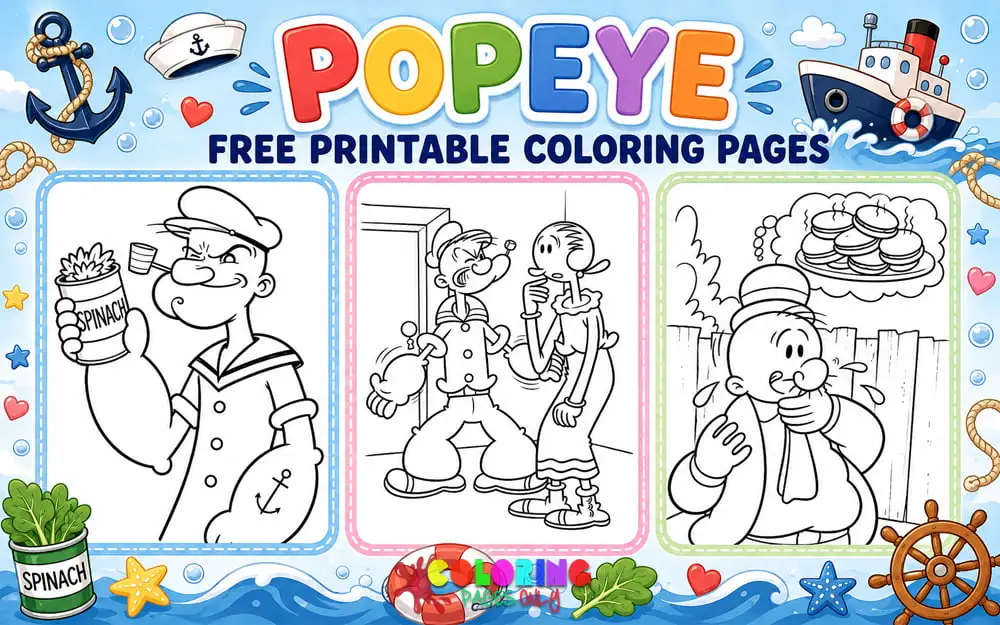
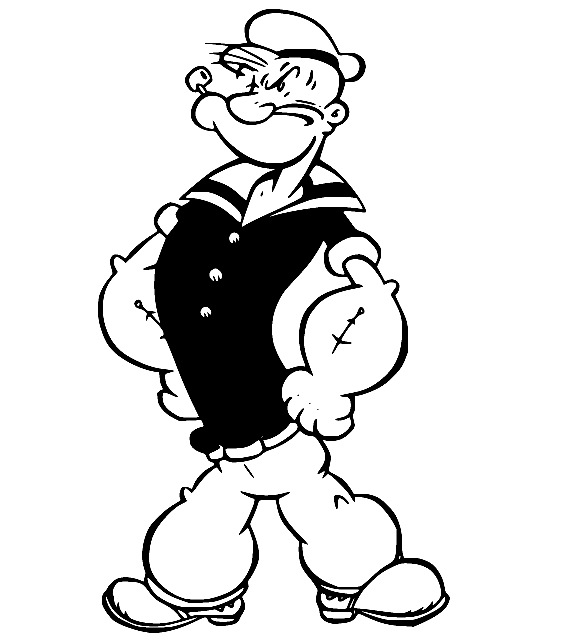
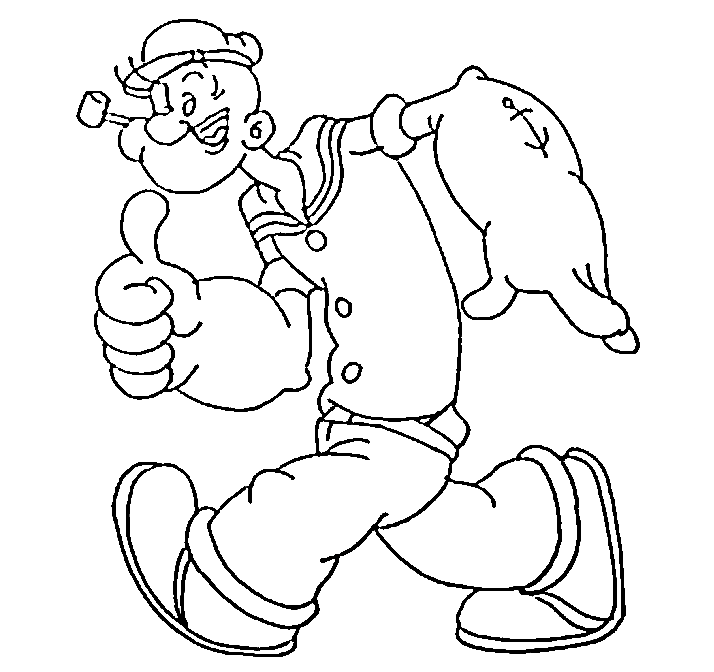
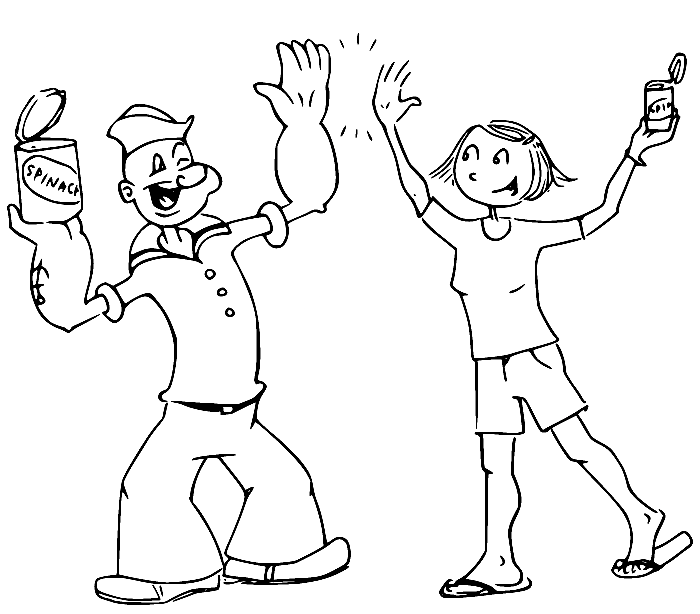
Free Popeye Coloring Pages: 48 printable PDF designs of the spinach-powered sailor and his classic cast, with Popeye flexing, running, jumping, sleeping, singing, golfing, and squaring off against the bully Bluto, along with his sweetheart Olive Oyl, the hamburger-loving J. Wellington Wimpy, the baby Swee’Pea, and even a mermaid. Spinach cans, punches, and laughs appear throughout the set. Home printers handle the PDF version of each design, and kids can also color directly on a screen.
Popeye was created by cartoonist Elzie Crisler Segar and first appeared on January 17, 1929, in the newspaper comic strip Thimble Theatre. Olive Oyl had already starred in the strip for ten years, but the gruff, one-eyed sailor quickly took over. In 1933, Fleischer Studios brought him to animation, and his short cartoons became some of the most popular of the 1930s.
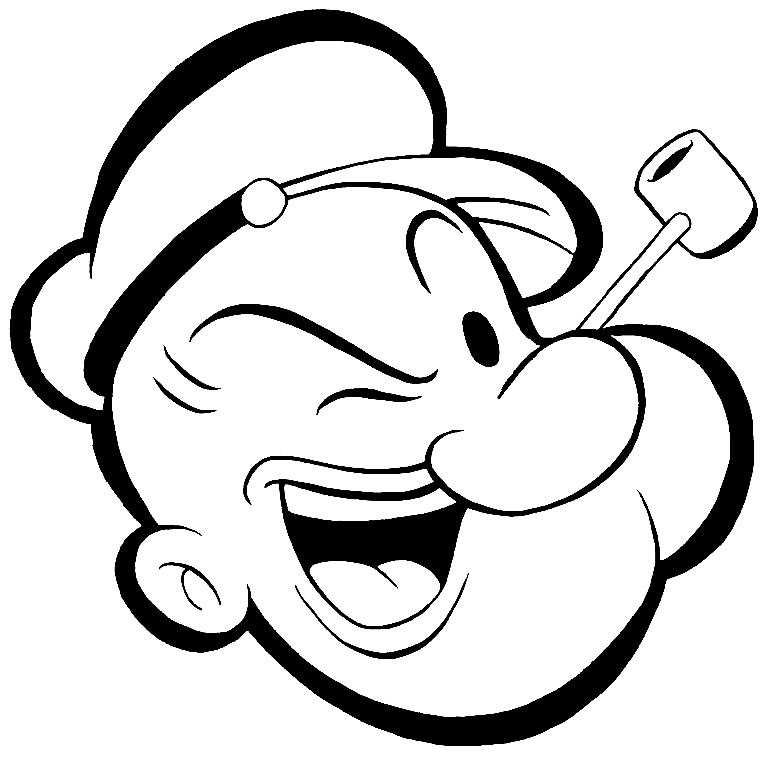
His squinting eye, corncob pipe, anchor tattoos, and huge forearms have kept him instantly familiar for almost a hundred years. The original 1929 version of Popeye entered the public domain in the United States in 2025, nearly a century after his debut.
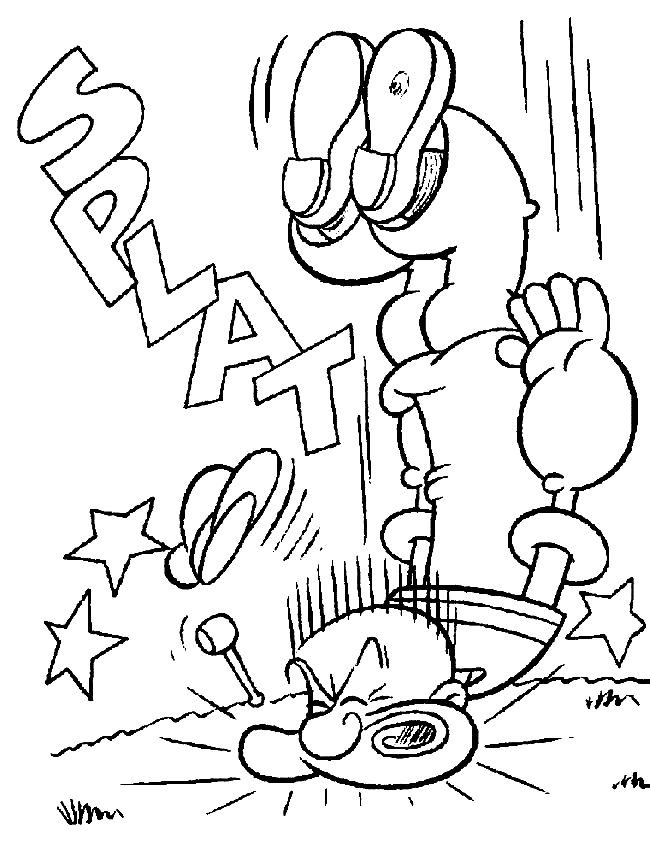
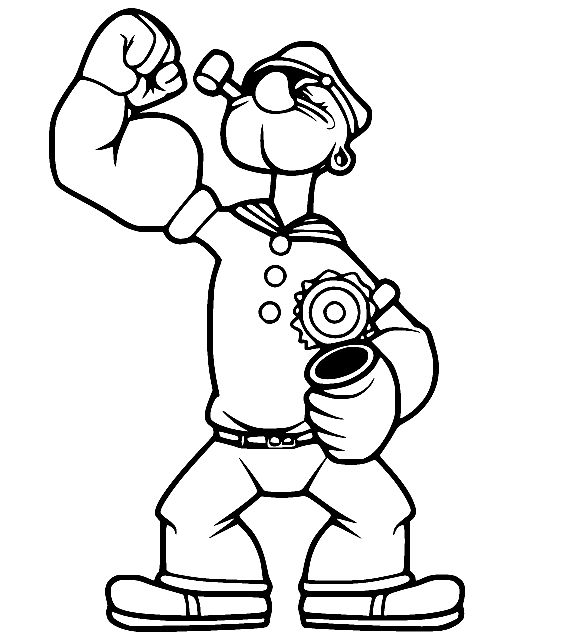
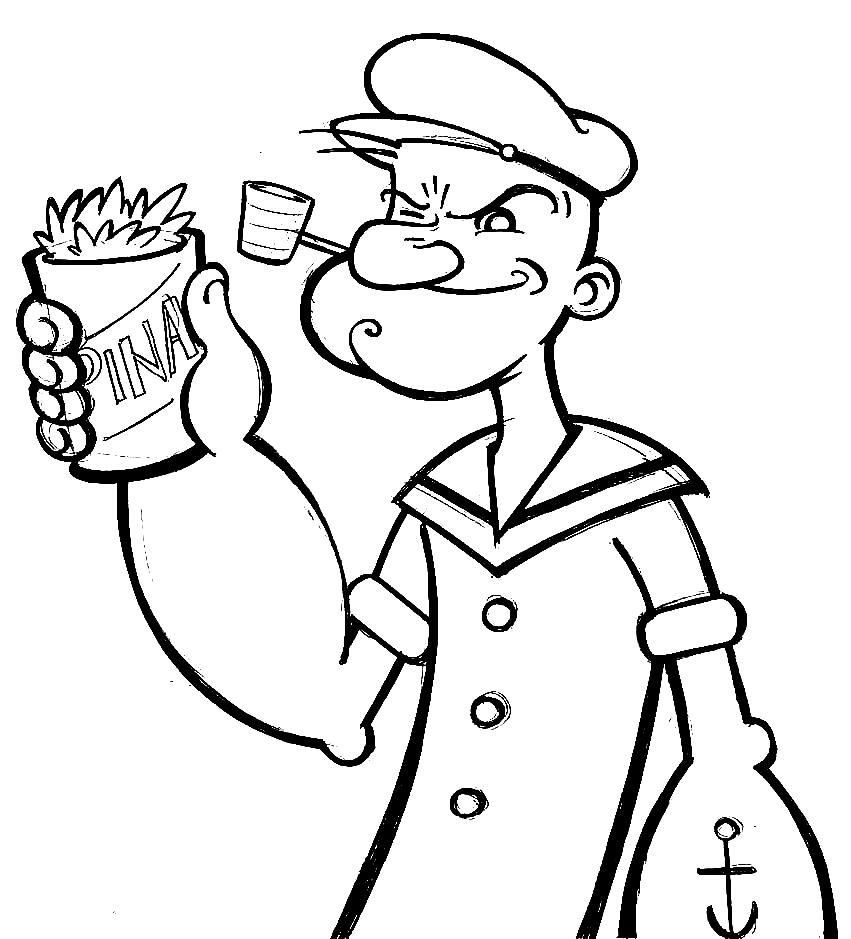
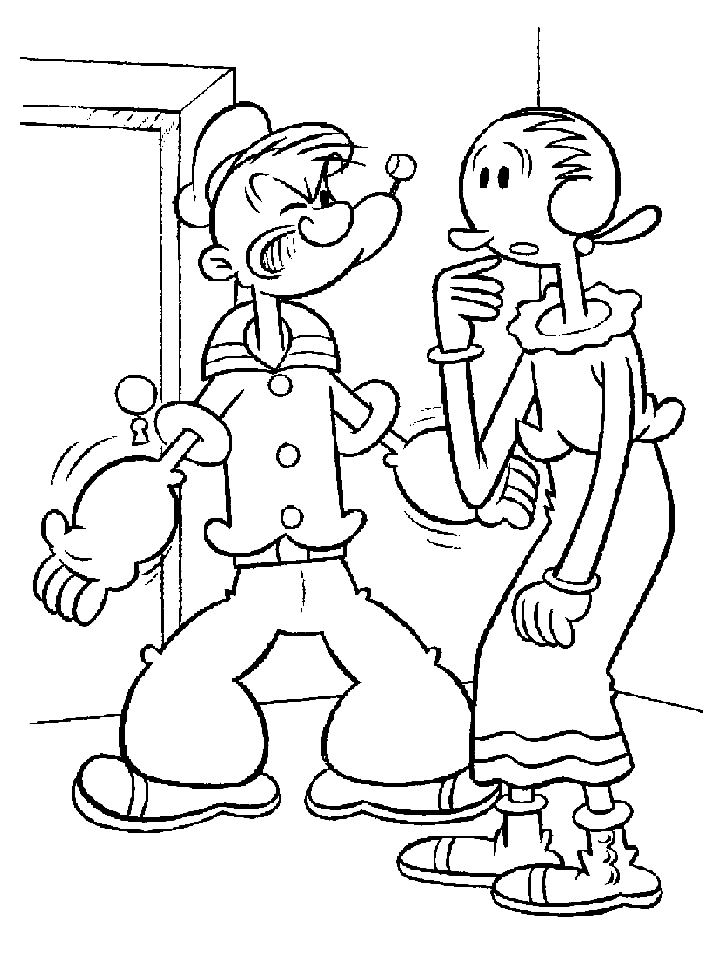

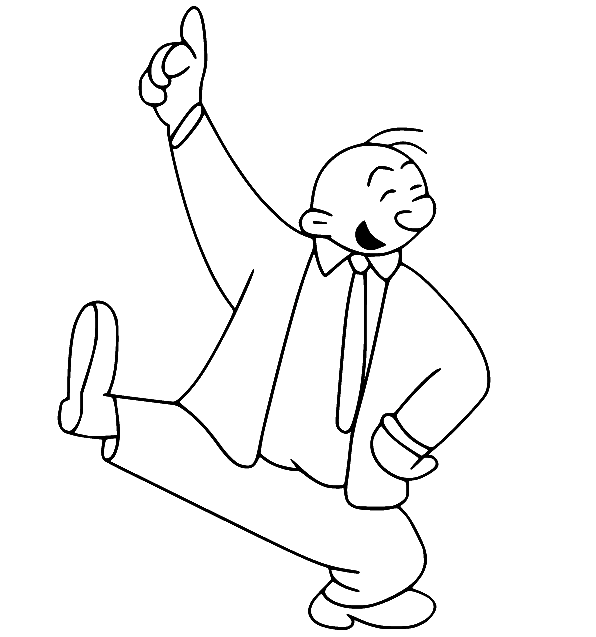
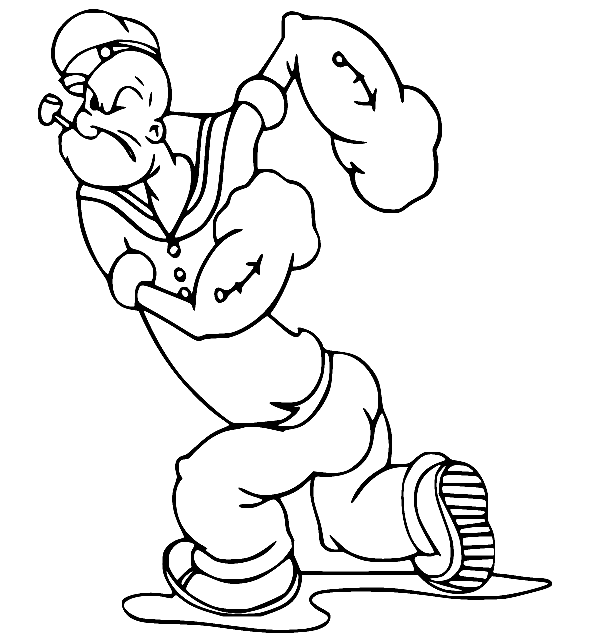
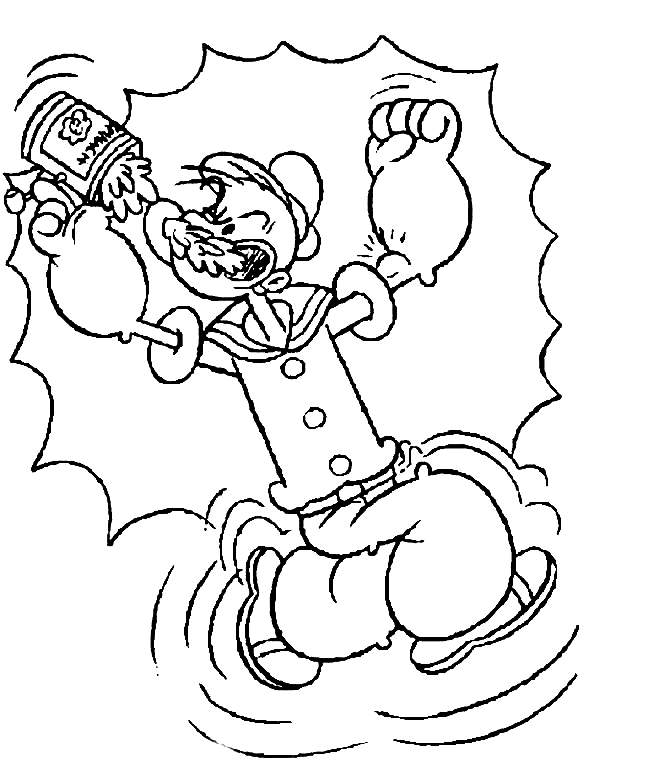
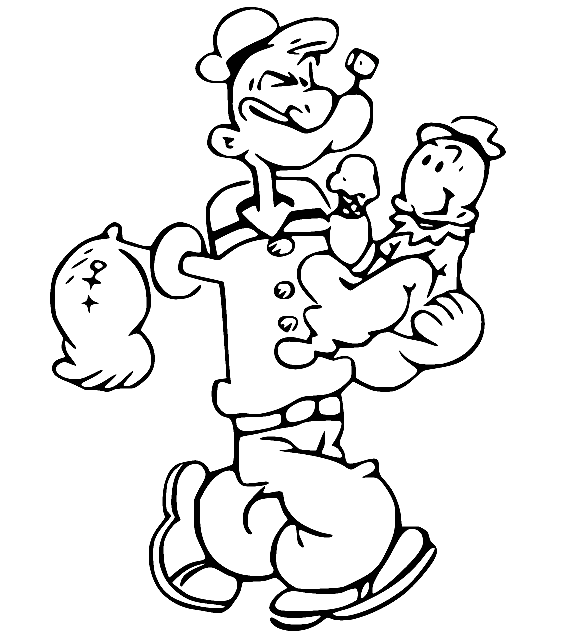


What’s Inside This Collection
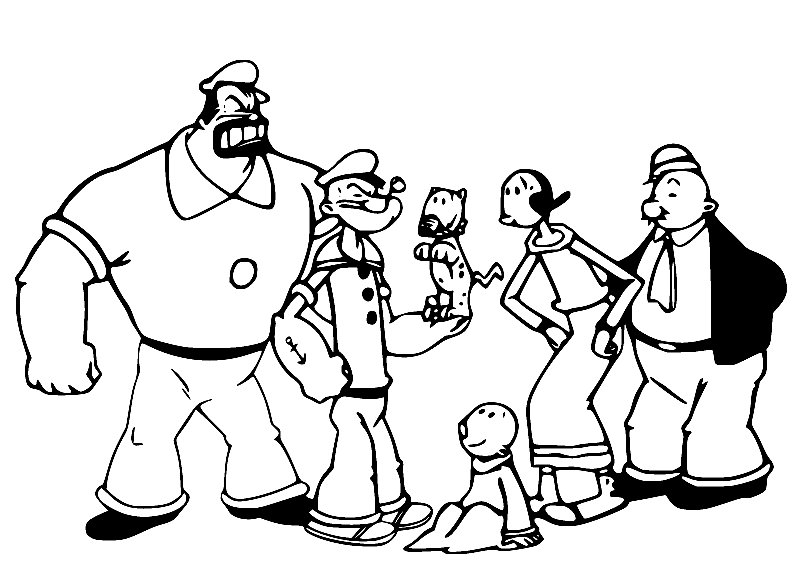
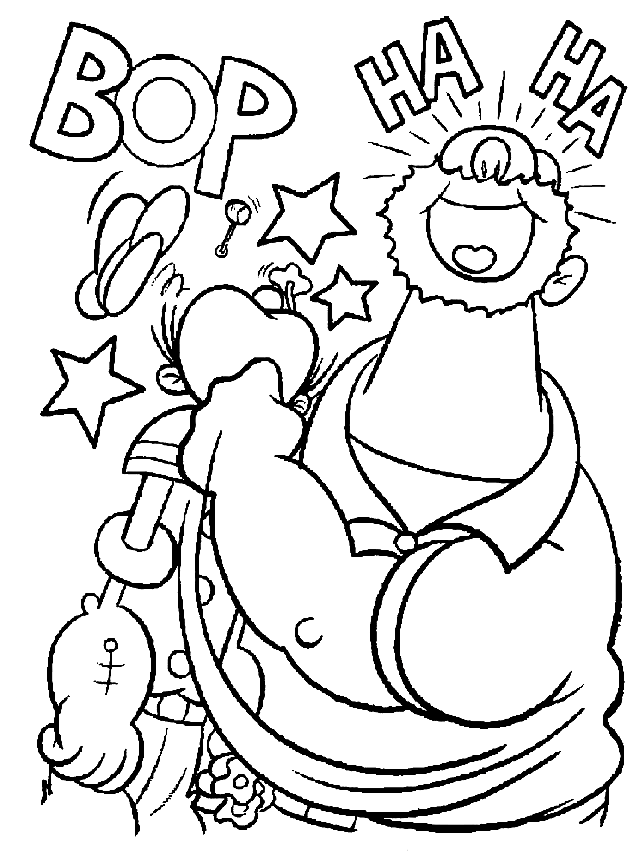
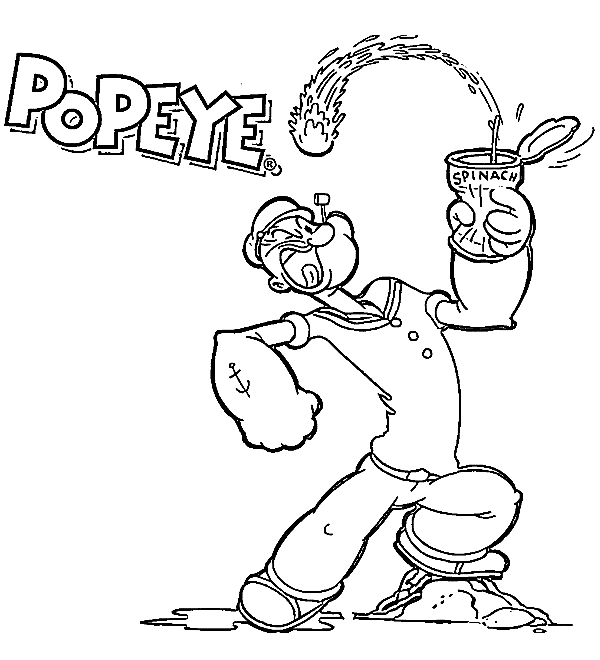
The sailor himself headlines most of the 48 designs, and Olive Oyl, Bluto, Wimpy, and Swee’Pea fill the rest.
Popeye the Sailor
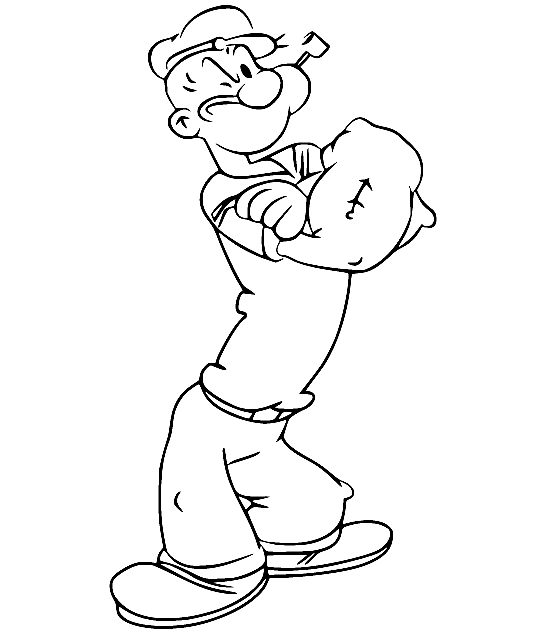
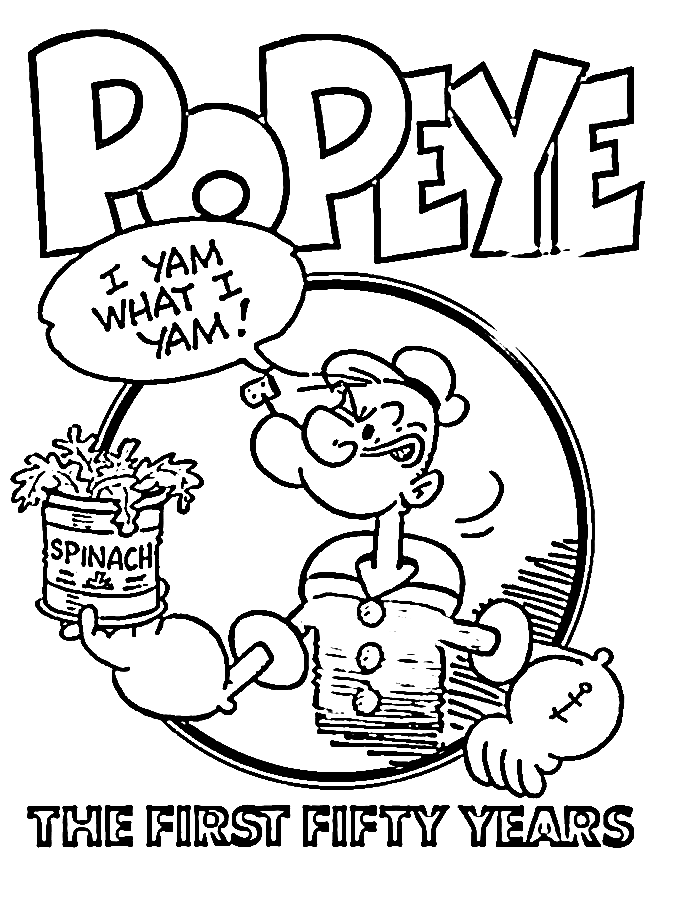
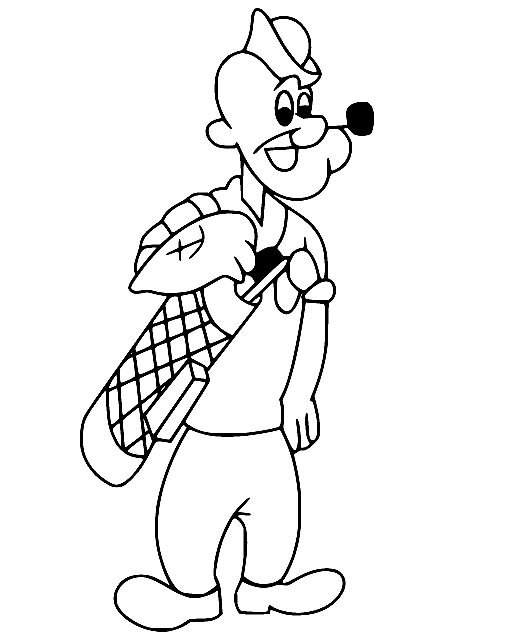
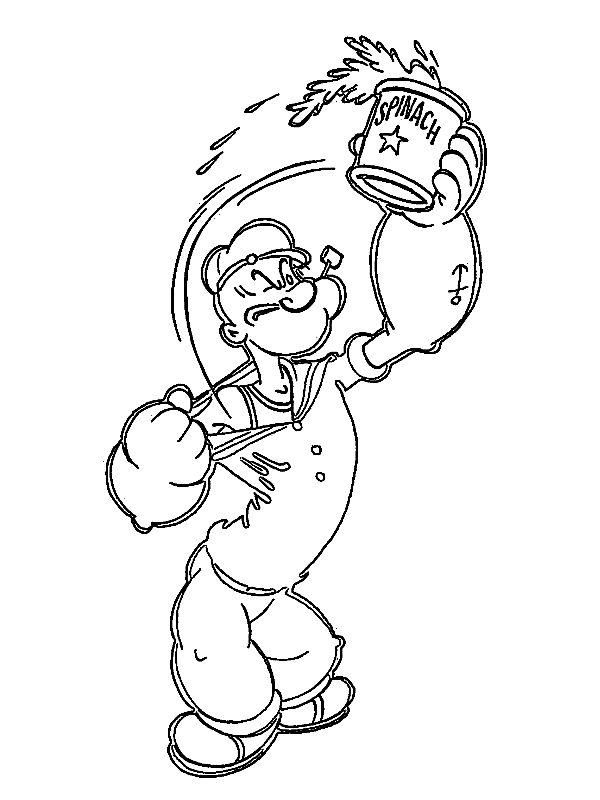
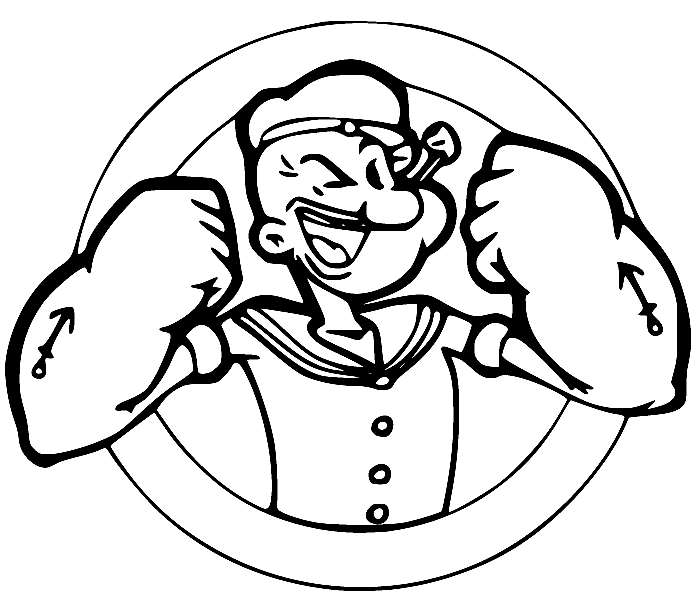
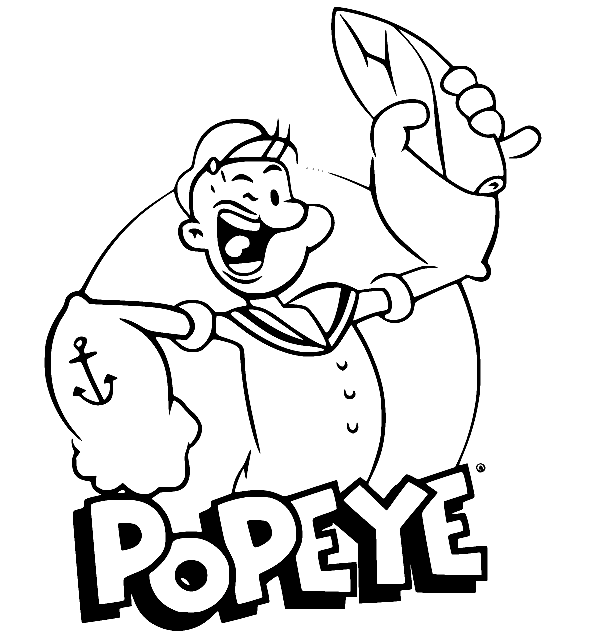
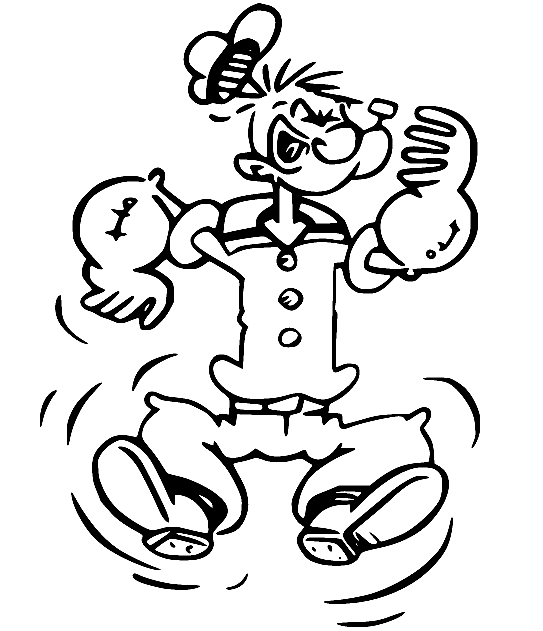
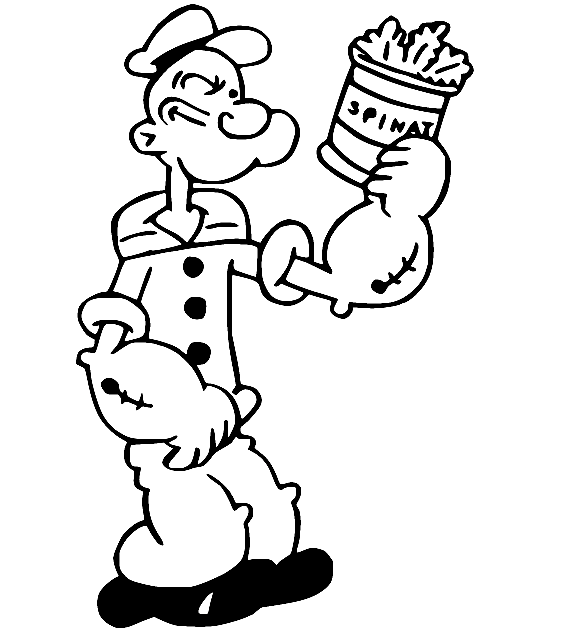
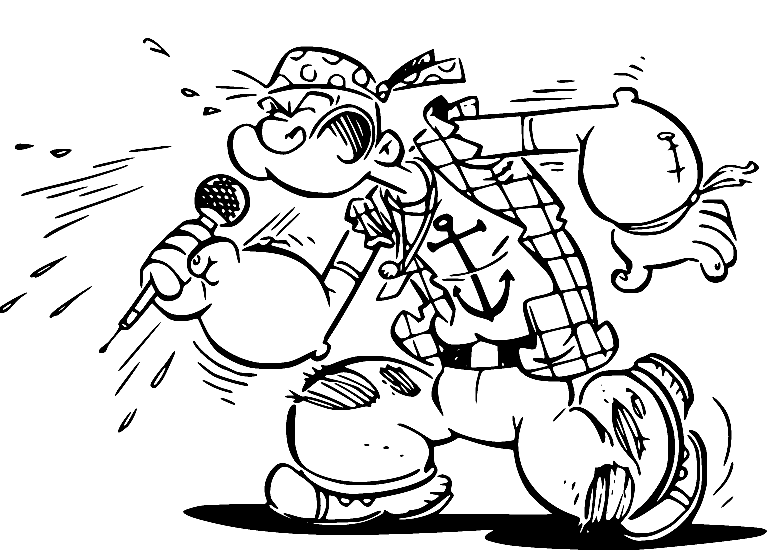
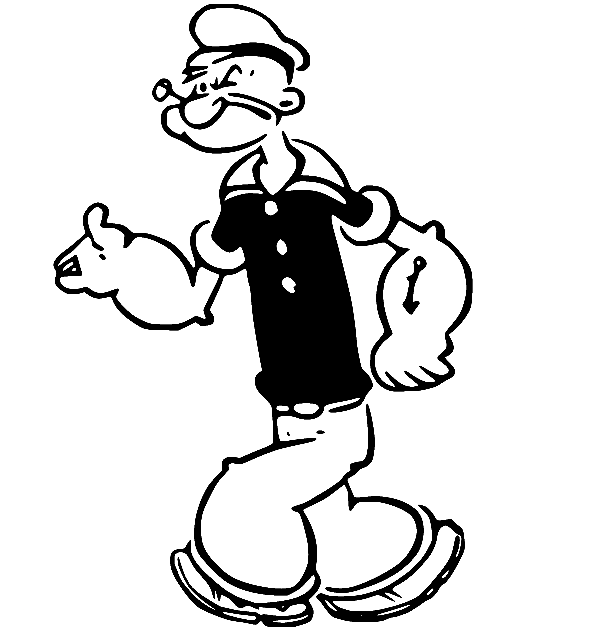
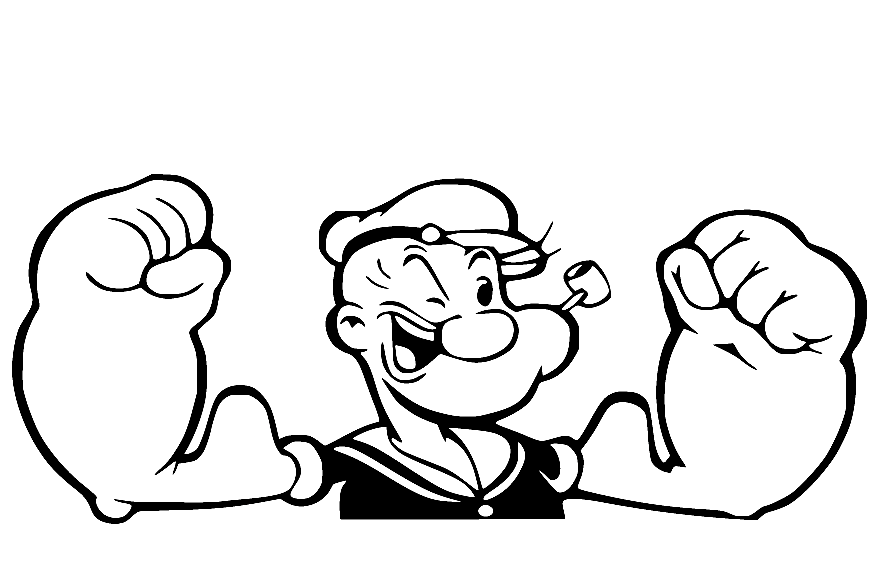
Popeye flexes, laughs, runs, jumps, sleeps, sings, plays golf, and eats spinach. Color his sailor shirt Black with a Red collar, his pants Blue, and his skin a warm Peach, adding Blue anchor tattoos on his forearms and a Brown corncob pipe.
Olive Oyl
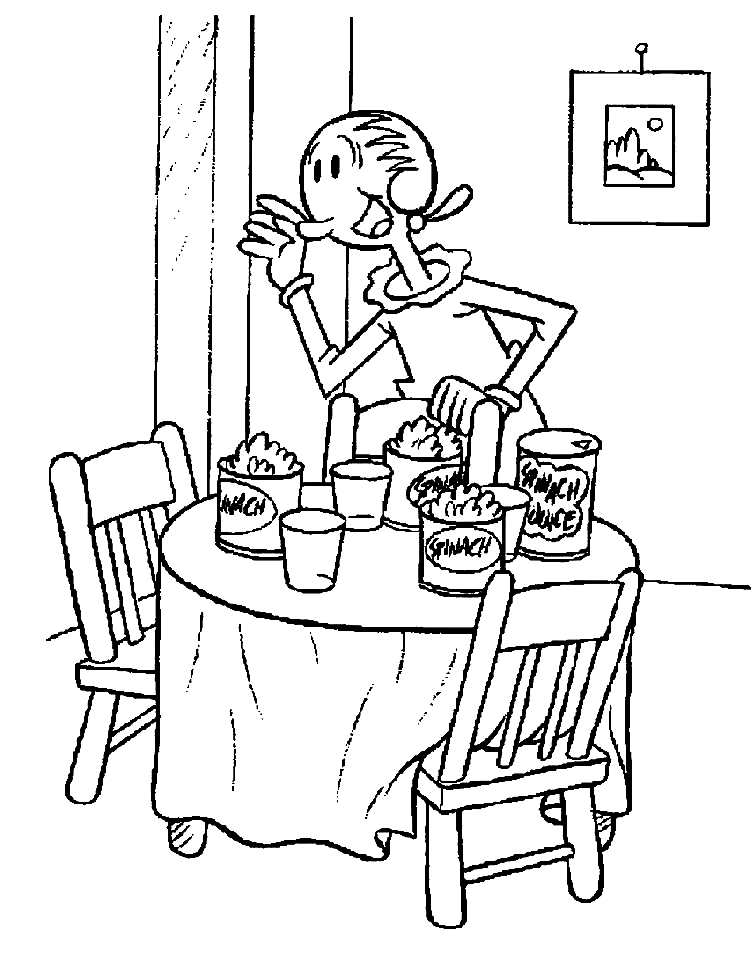
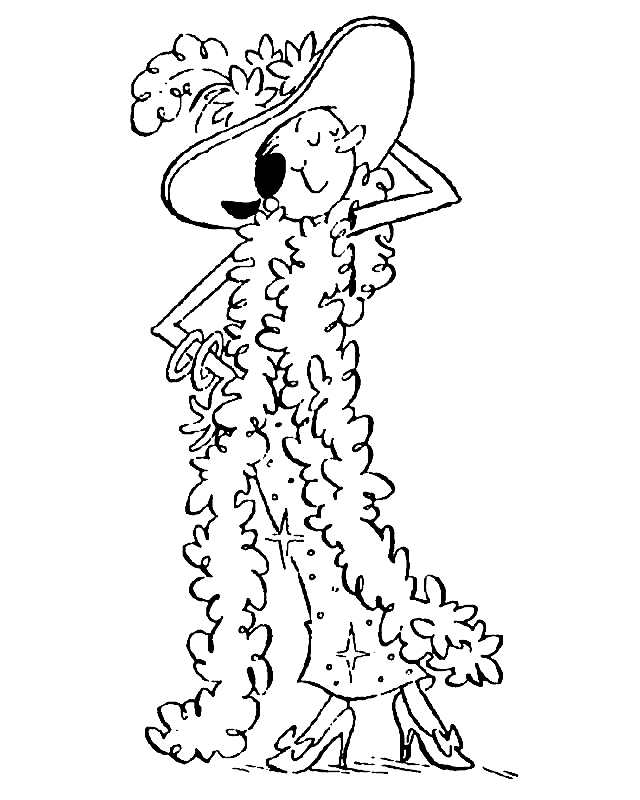
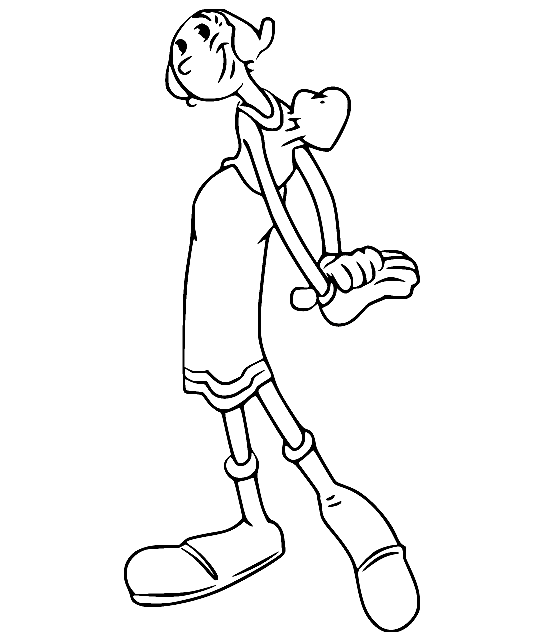
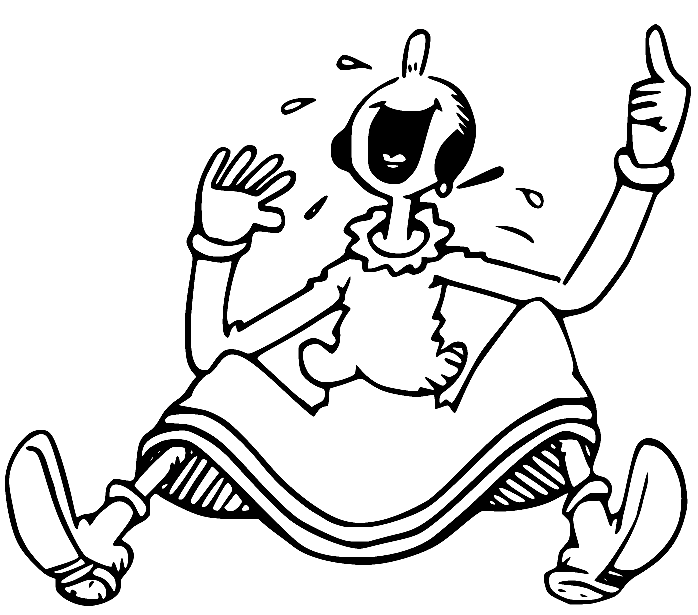
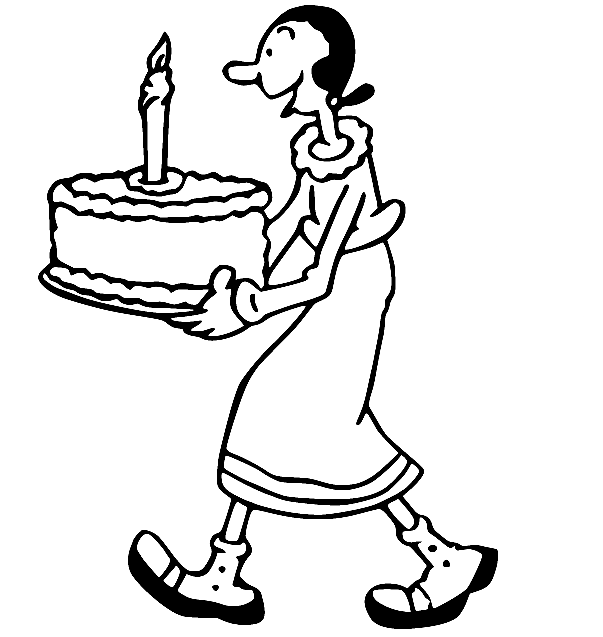
Olive Oyl laughs, holds spinach, celebrates with a birthday cake, and poses beside Popeye. Give her a Red top, a long Black skirt, and Black hair in her signature bun, with big Brown shoes.
Bluto
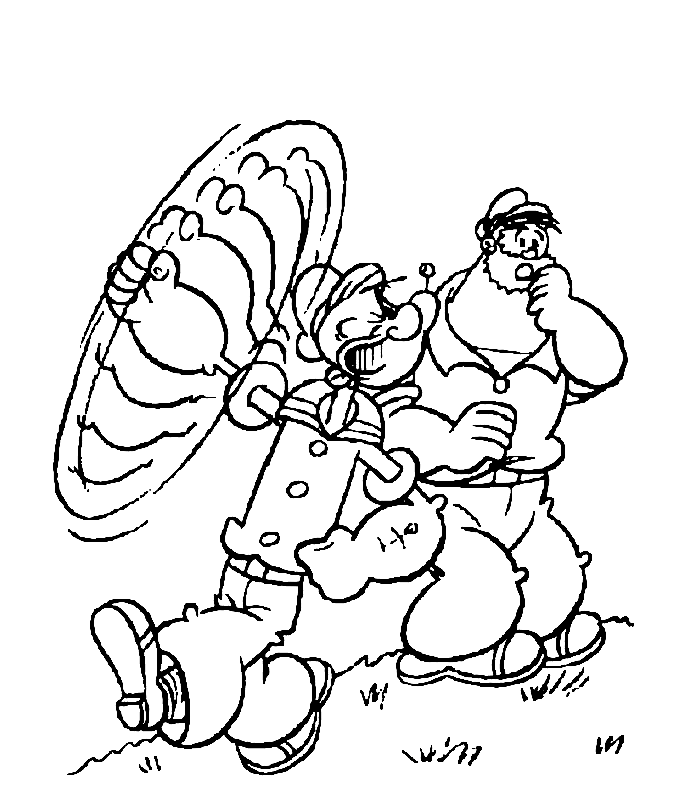
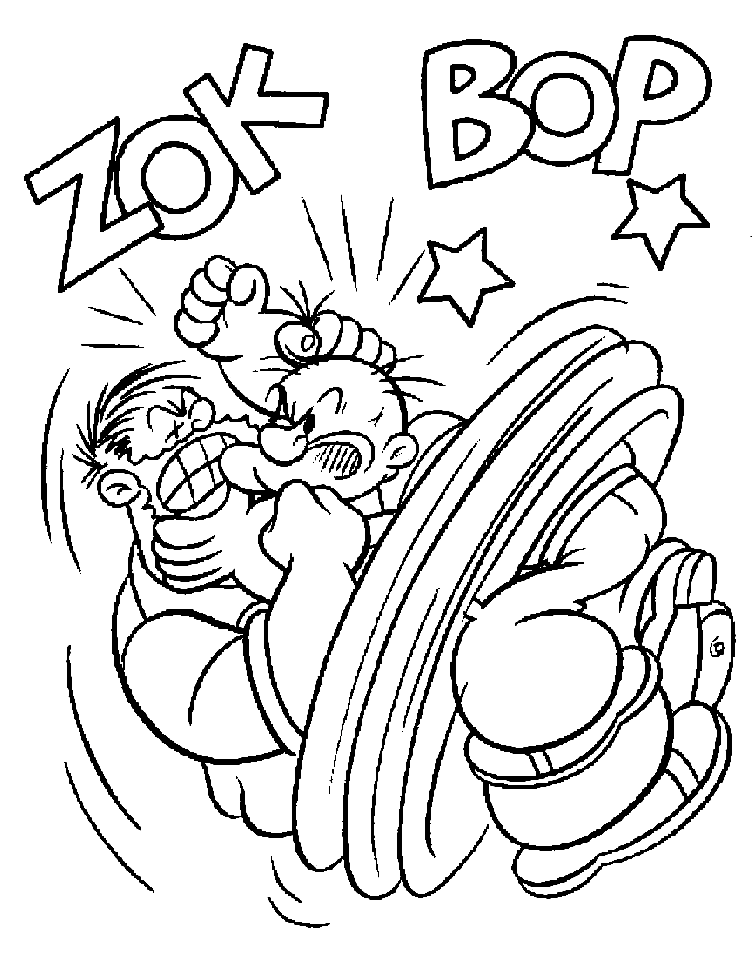
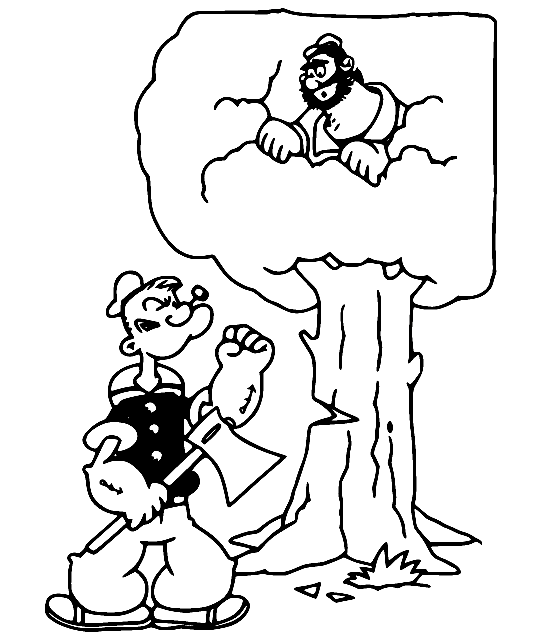
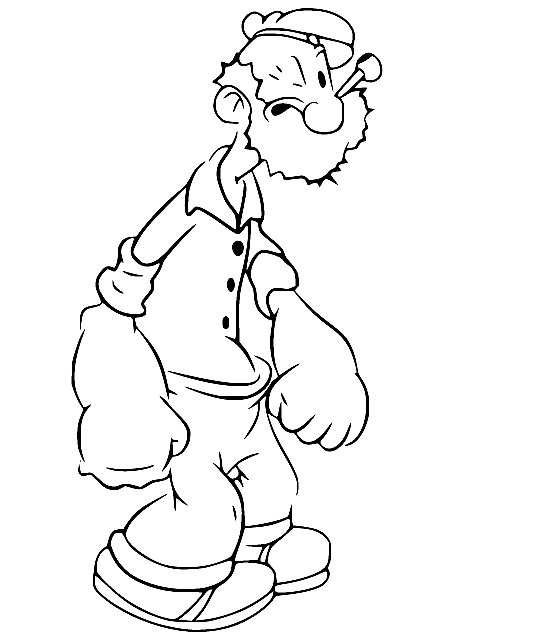
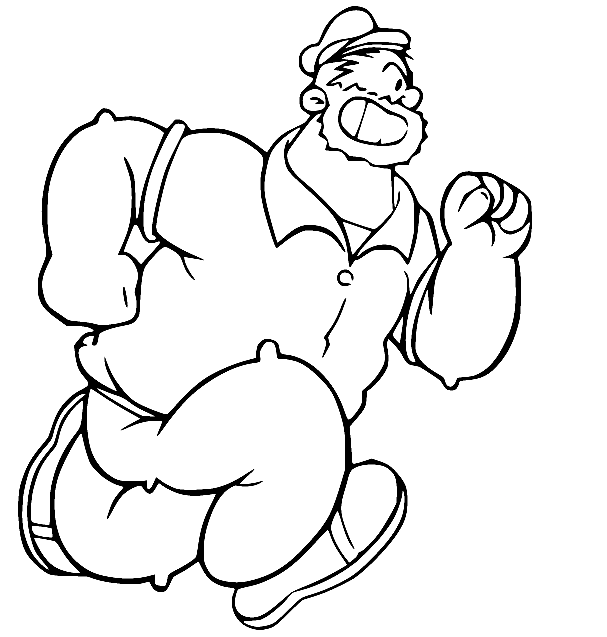
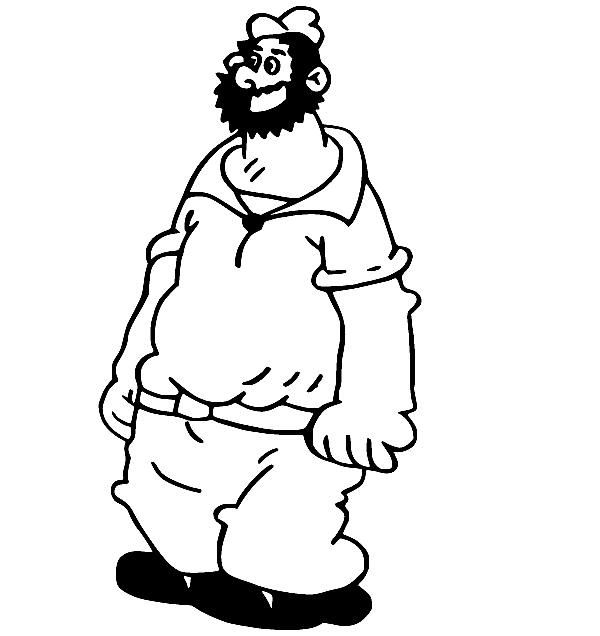
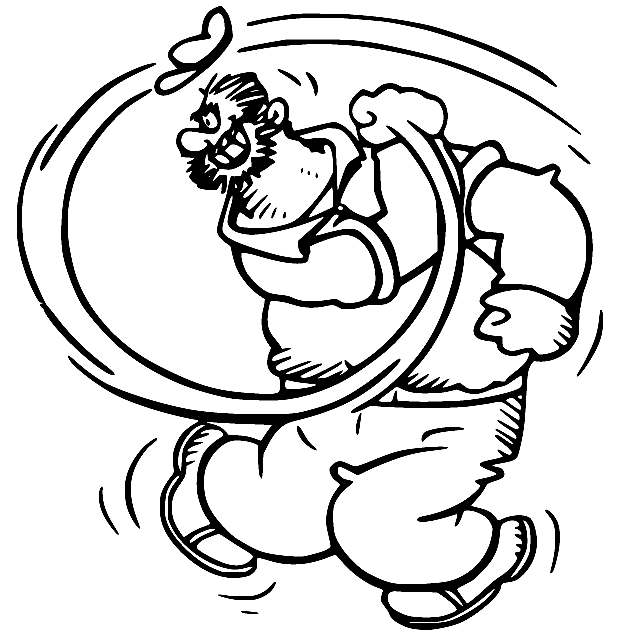
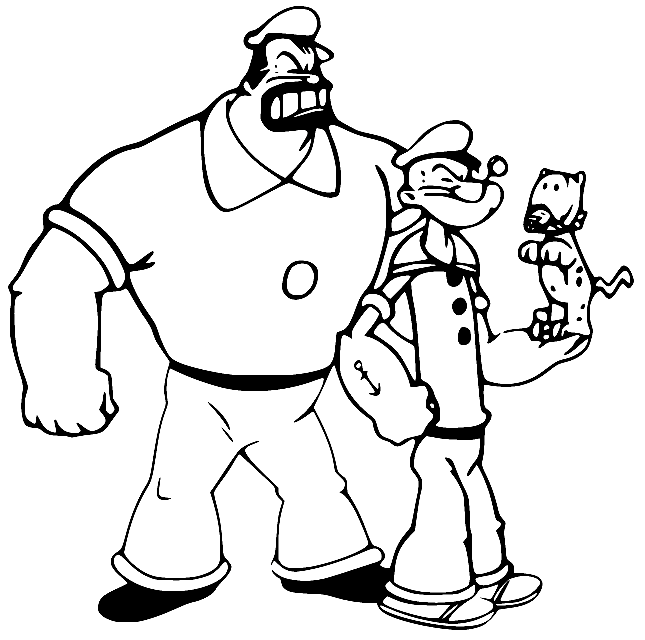
Bluto runs, laughs, punches, and fights Popeye in several action pages. Color his thick beard Black, his shirt Blue or White, and his pants Brown to make him look bulky and tough.
J. Wellington Wimpy
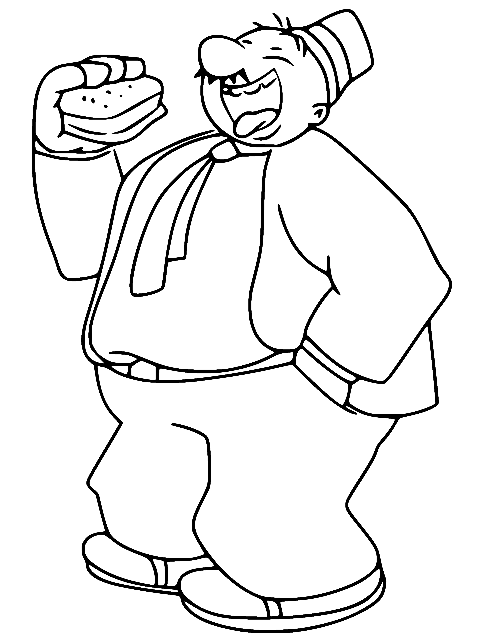
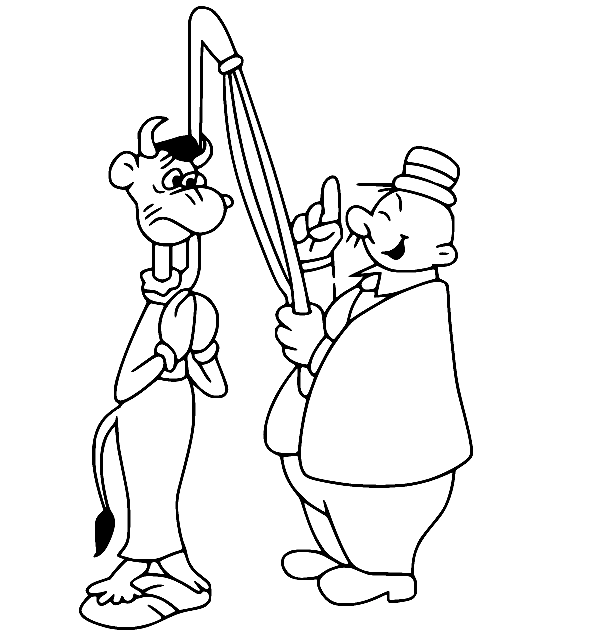
Wimpy appears hungry and next to a cow. Try a dark hat, a muted Gray or Brown coat, and a small tie in any color, then add a stack of hamburgers in Tan and Brown nearby.
Swee’Pea and Group Pages
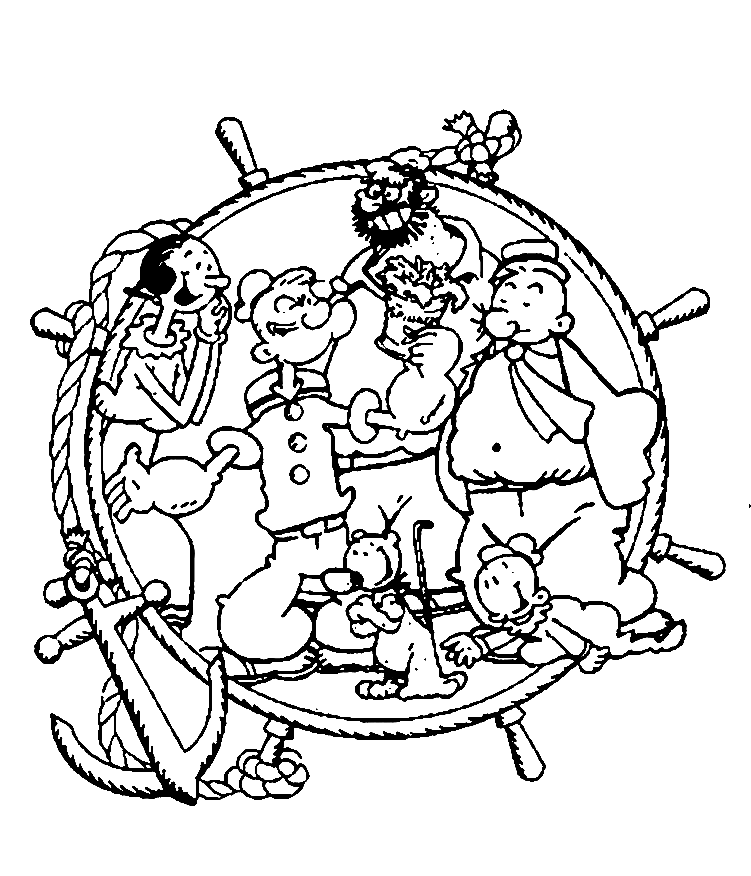
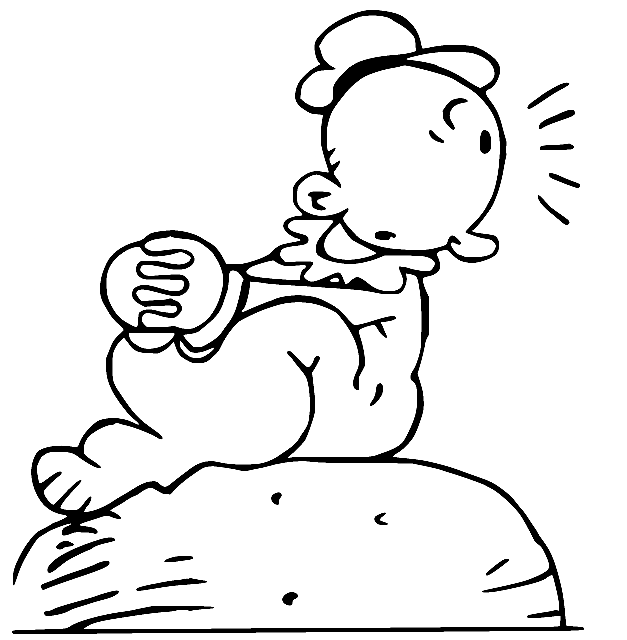
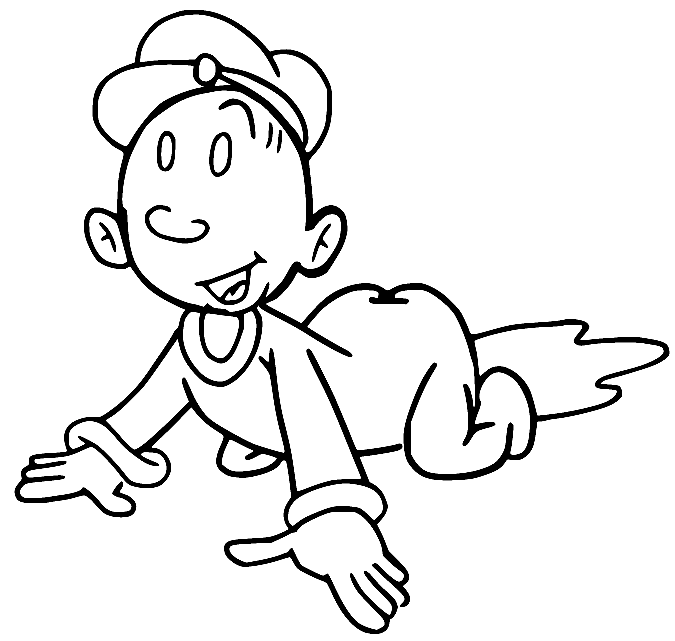
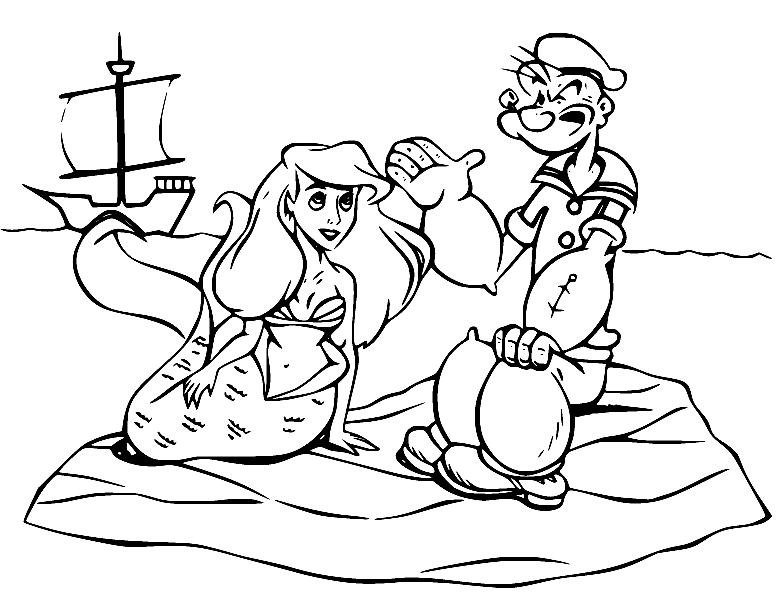
Swee’Pea sits on a rock and joins Popeye in several pages, and group scenes plus a mermaid page complete the collection. Color Swee’Pea’s long nightgown and cap a soft Light Blue or White.
What Popeye Coloring Pages Do
Encouraging healthy eating. Popeye famously gains super strength from spinach, and the cartoon is often credited with boosting spinach sales in the United States during the 1930s. Coloring spinach pages gives parents a fun way to introduce green vegetables and talk about how healthy food helps the body grow strong. Some families pair the pages with a spinach snack.
Fine motor practice with classic shapes. For kids 2 to 7, coloring trains small hand muscles, an early writing foundation that the American Academy of Pediatrics parenting advice keeps returning to. Popeye’s big forearms, Olive’s thin limbs, and Bluto’s beard offer a wide mix of shapes and textures. Simple portraits suit young kids, while fight scenes challenge older artists.
Lighthearted, calming coloring. Structured coloring produced measurably lower anxiety for adults, according to a 2005 Art Therapy Journal result. Popeye’s slapstick humor and bold, clear outlines make coloring feel relaxed and fun. Many grandparents remember these cartoons and enjoy coloring them with their grandchildren.
Learning about standing up for others. Popeye always protects Olive Oyl and Swee’Pea from Bluto’s bullying. These scenes can open conversations about kindness, courage, and standing up for people who need help. Kids can also discuss safer ways to handle conflict than fighting.
How to Color Popeye Pages Well
- Mighty forearms: Shade the outer edge of Popeye’s big forearms with a slightly darker Peach to show their round shape.
- Anchor tattoos: Draw each anchor with a crisp Blue line so it reads clearly against the skin tone.
- Spinach cans: Color the can Gray or Silver with a Green label, and fill the spilling spinach with Dark Green.
- Olive’s outfit: Keep her colors bold and simple, using Red and Black for a classic cartoon look.
- Bluto’s beard: Use solid Black with tiny white gaps for texture.
- Ocean scenes: Add Blue water, a Light Blue sky, and a small Brown boat to give the pages a seafaring feel.
5 Creative Craft Ideas With Popeye Coloring Pages
1. Spinach Power Poster
Color Popeye eating spinach and draw a chart of healthy foods around him for a kitchen poster.
2. Before and After Spinach Pair
Color one page of Popeye looking tired and another of him flexing after spinach, and display them side by side.
3. Popeye vs. Bluto Fight Card
Color a fighting scene and turn it into a vintage-style boxing poster with bold lettering.
4. Wimpy’s Hamburger Menu
Color Wimpy and design a funny hamburger menu with his famous line, “I’ll gladly pay you Tuesday for a hamburger today.”
5. Anchor Bookmark
Color a small Popeye portrait, mount it on a narrow cardstock band, and hang a paper anchor from the bottom.
Frequently Asked Questions
What are Popeye Coloring Pages?
Popeye Coloring Pages bundle 48 free designs of Popeye, Olive Oyl, Bluto, J. Wellington Wimpy, and Swee’Pea, plus spinach, action, and funny scenes, ready for a printer or a touchscreen.
Who created Popeye?
Elzie Crisler Segar created Popeye for the Thimble Theatre comic strip, where he first appeared on January 17, 1929. Fleischer Studios began making Popeye cartoons in 1933.
Why does Popeye eat spinach?
In the cartoons, eating spinach gives Popeye super strength whenever he needs to save the day. That spinach gag is still one of animation’s best-known running jokes.
Who is Olive Oyl?
Olive Oyl is Popeye’s girlfriend, known for her tall, thin frame and black hair bun. She appeared in Thimble Theatre for ten years before Popeye joined the strip.
Who is Bluto?
Bluto is Popeye’s big, bearded rival who often tries to win Olive Oyl’s attention and picks fights with Popeye. He is sometimes called Brutus in later cartoons.
Who is J. Wellington Wimpy?
Wimpy is a polite but lazy character who loves hamburgers. He is famous for saying, “I’ll gladly pay you Tuesday for a hamburger today.”
What age are Popeye coloring pages for?
Single-character pages are easy for children around 4, and the busier fight and group scenes suit kids 7 and older. Adults who grew up with Popeye also enjoy coloring these classic designs.
Is Popeye in the public domain?
The original 1929 comic strip version of Popeye entered the public domain in the United States on January 1, 2025. Later versions and designs may still be protected by copyright and trademark.
Start Coloring
Open a can of spinach and pick any of the 48 Popeye designs, printing the free PDF or coloring digitally with no account. A finished sailor can sail over to Facebook or Pinterest from his page.