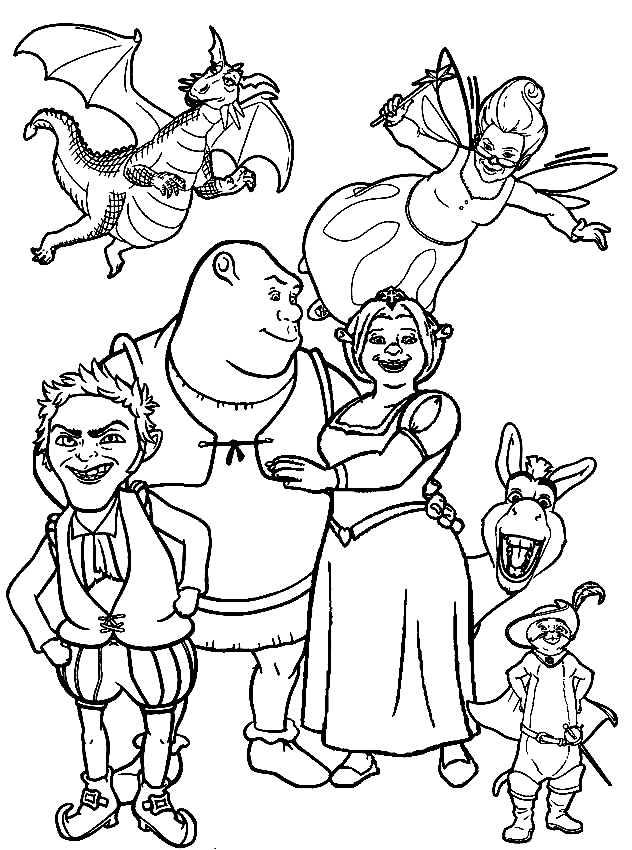
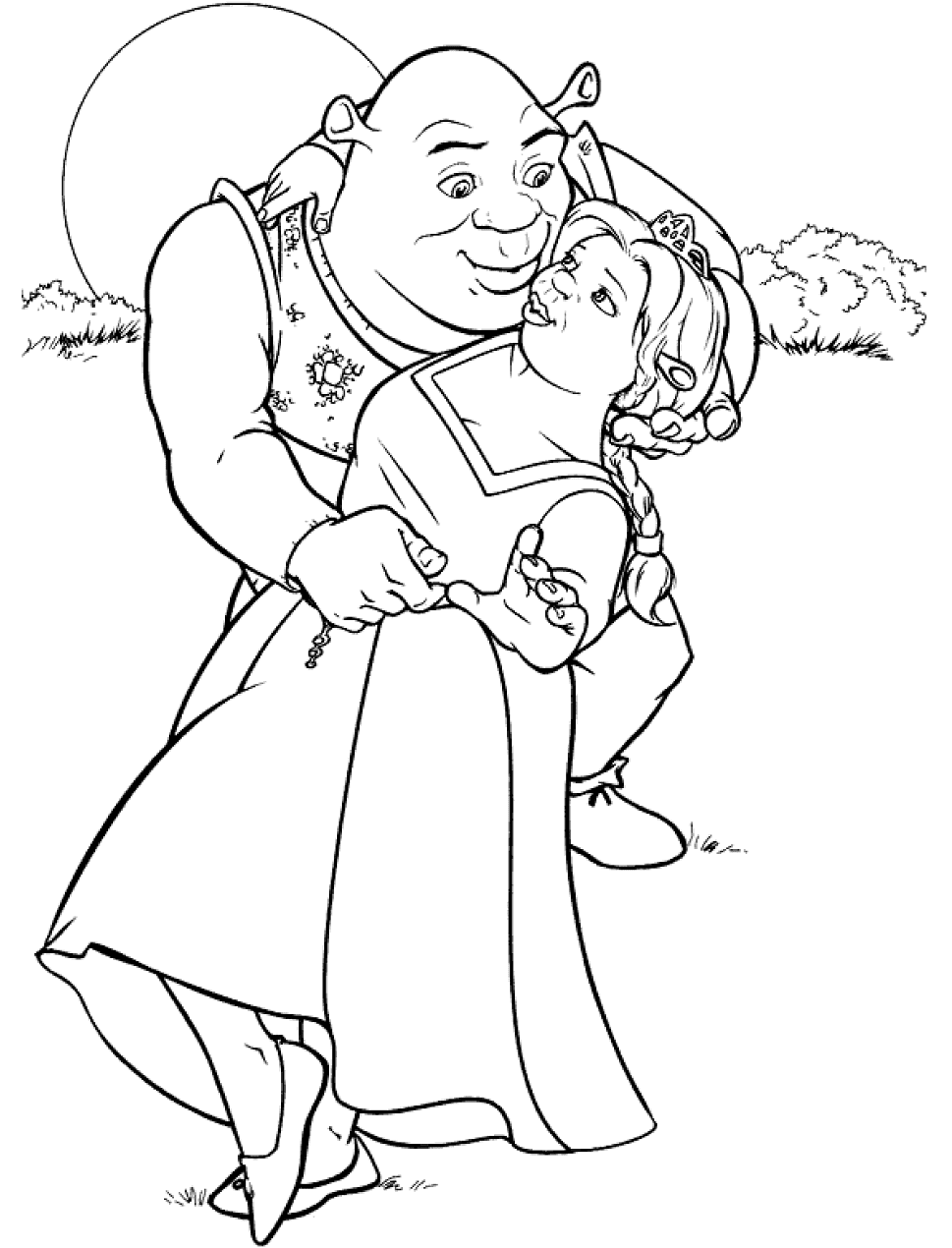
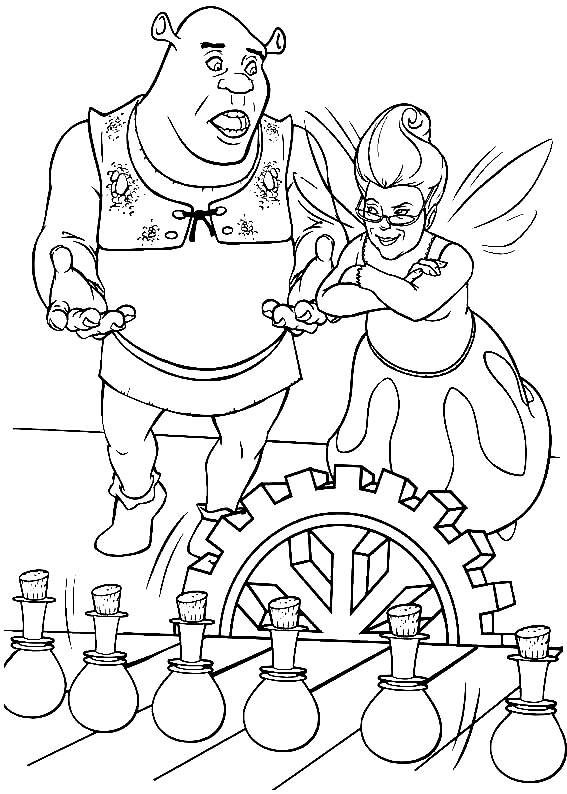
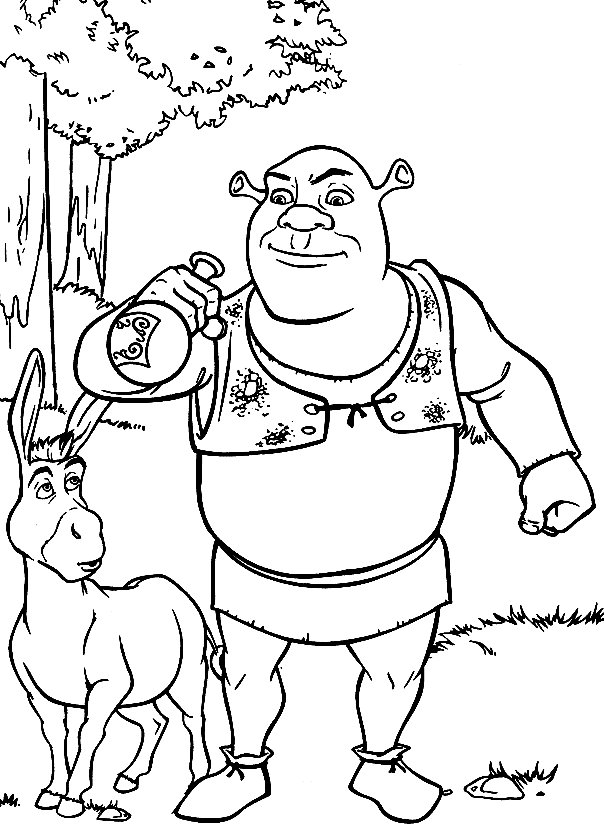
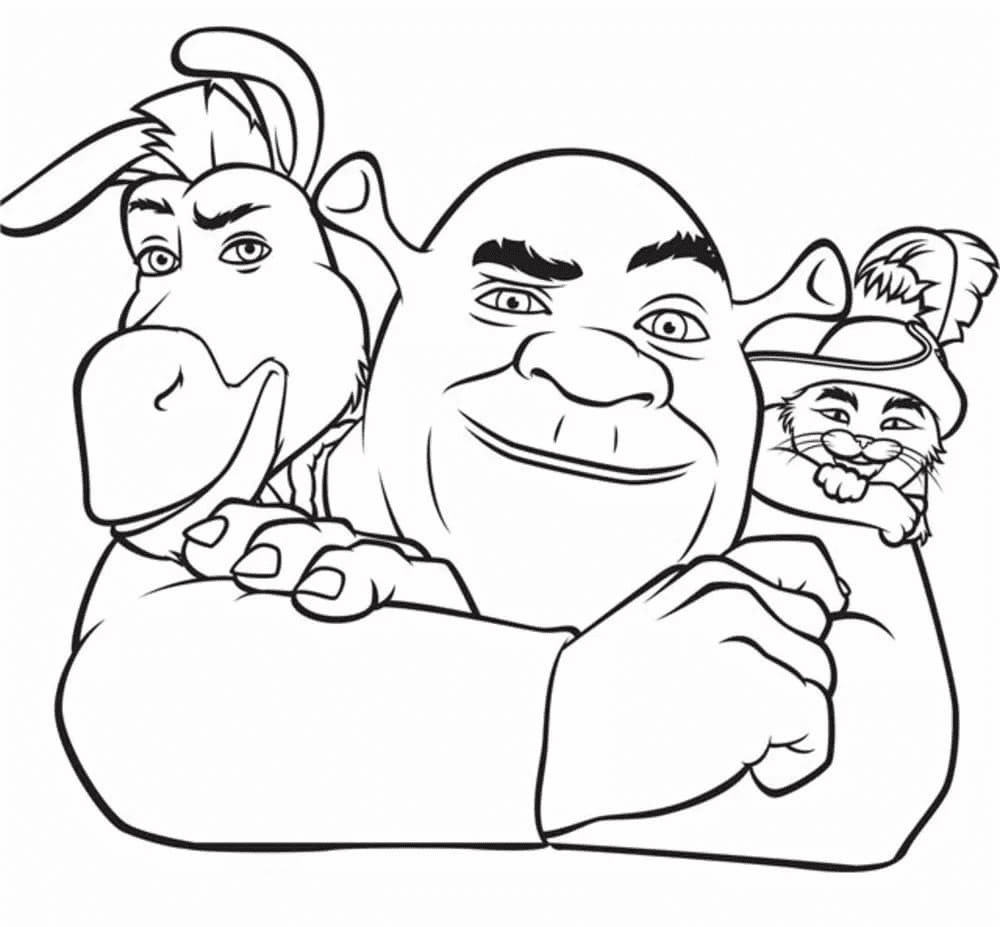
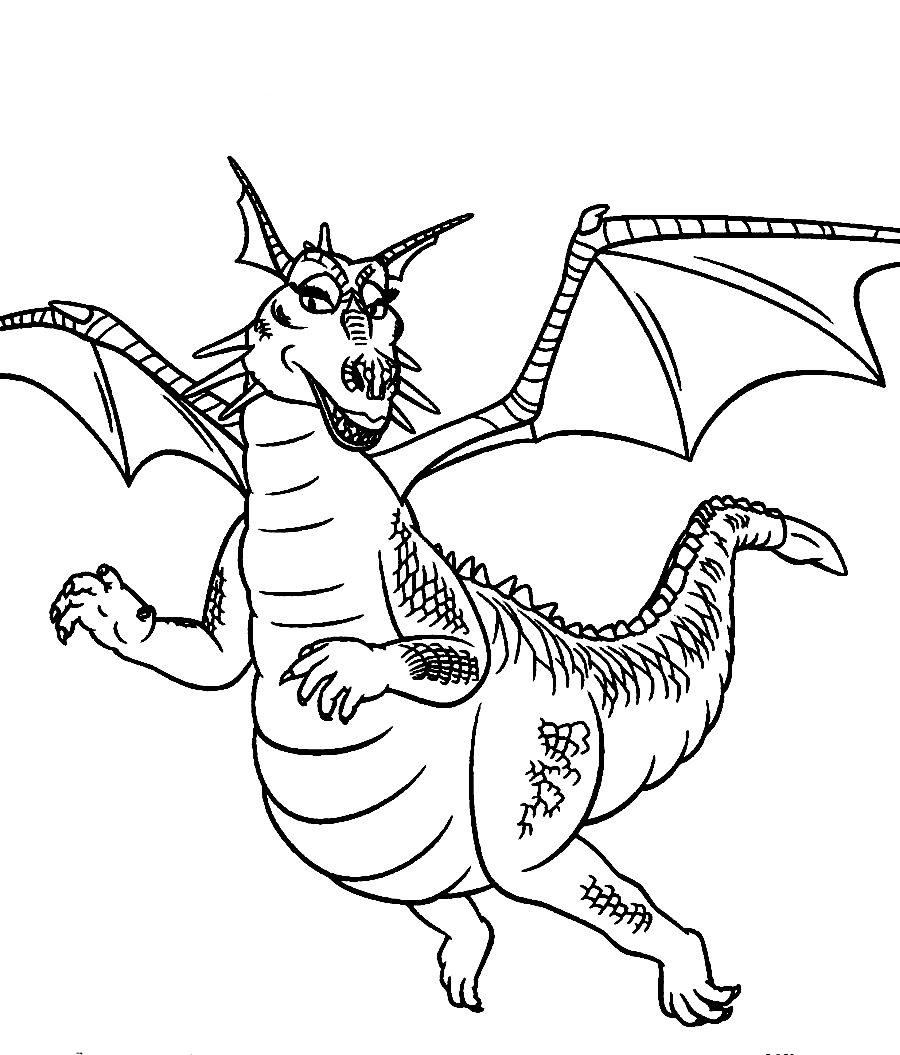
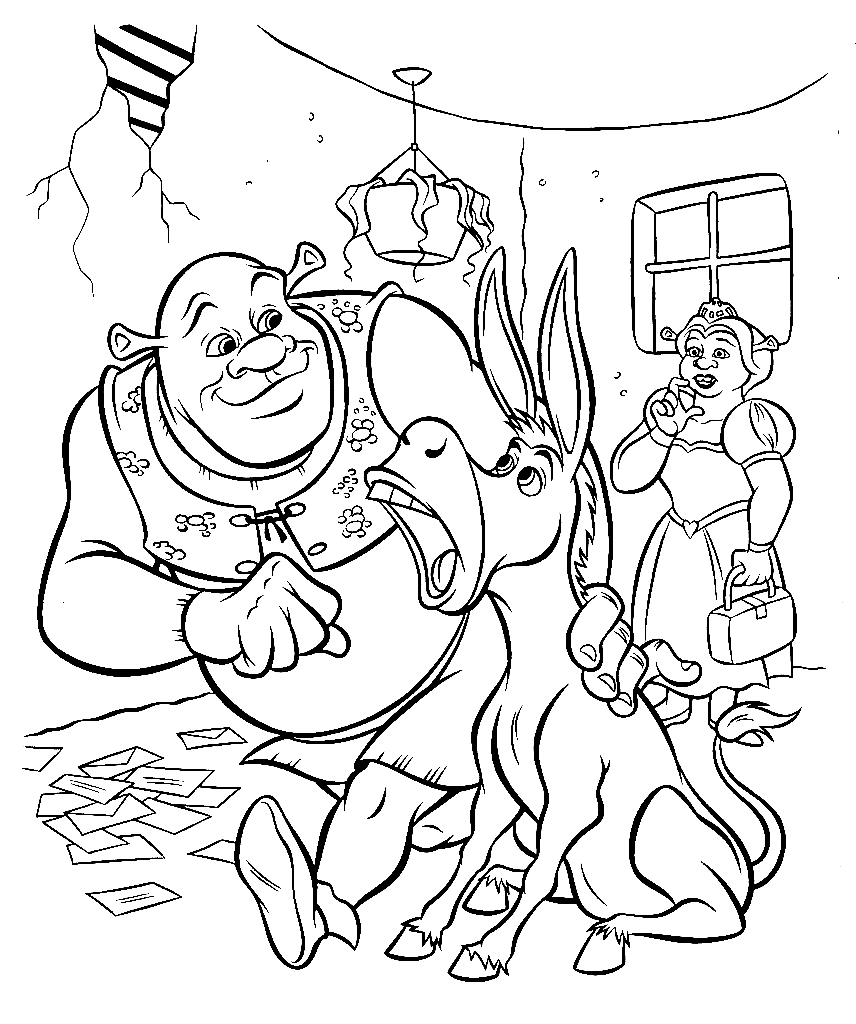
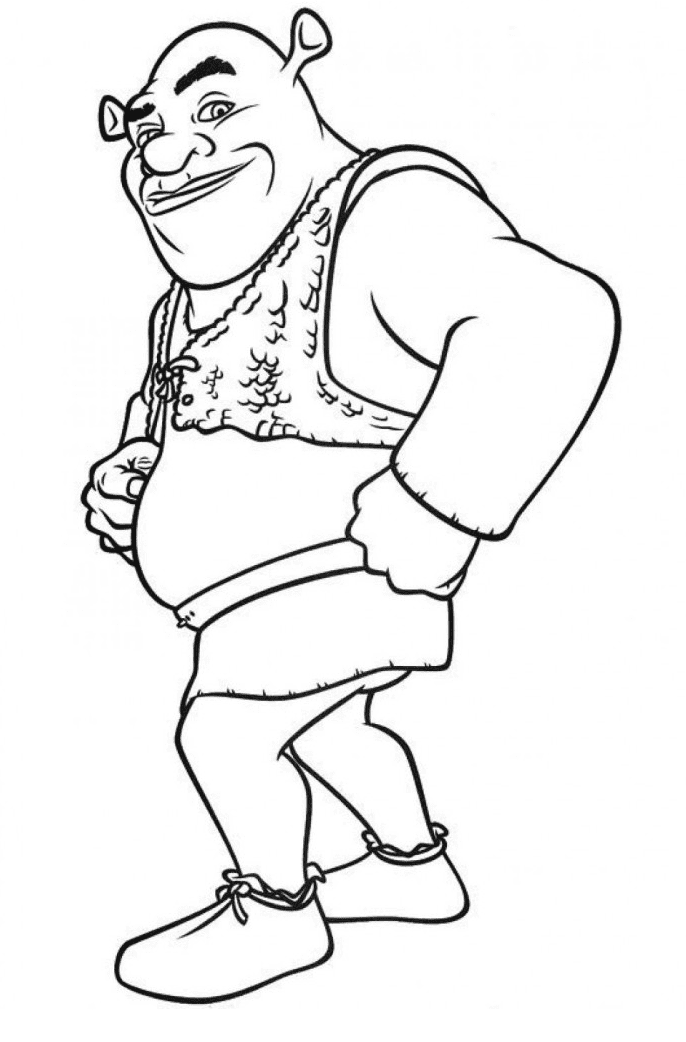
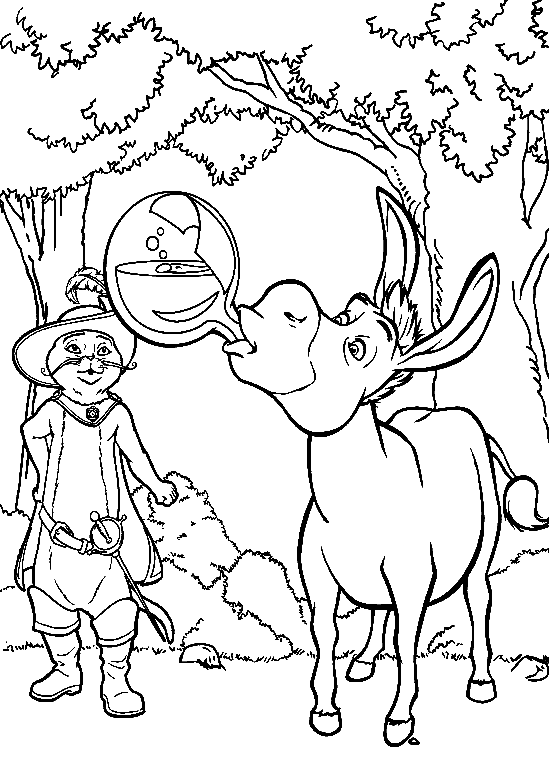
Free Shrek coloring pages – 50+ pages featuring Shrek in his Scottish swamp and Far Far Away adventures, Donkey, Princess Fiona in human and ogre form, Puss in Boots with his signature wide-brimmed hat, Gingy the Gingerbread Man, Lord Farquaad, Dragon, and the full cast of fairy tale characters from DreamWorks Animation’s landmark franchise – free printable PDF and online coloring for fans of all ages.

Shrek is a DreamWorks Animation franchise based on William Steig’s 1990 children’s picture book Shrek! – a deliberately unglamorous take on fairy tale conventions by a man who had drawn cartoons for The New Yorker for over four decades. Steig was born on November 14, 1907, in Brooklyn, New York, and did not begin writing children’s books until he was approximately sixty years old. He published Shrek! at eighty-three. He died on October 3, 2003, at ninety-five – two years after the film based on his book won the first Academy Award for Best Animated Feature ever given.

The film Shrek, directed by Andrew Adamson and Vicky Jenson, was released on May 18, 2001. It earned $484.4 million worldwide and won the inaugural Academy Award for Best Animated Feature at the 74th Academy Awards on March 24, 2002. Mike Myers voices Shrek with a Scottish accent – the original voice performance was in Mike Myers’s natural voice, but after hearing an early cut, he requested the accent change to something more specific and unexpected. Eddie Murphy voices Donkey. Cameron Diaz voices Princess Fiona. John Lithgow voices Lord Farquaad.

Shrek 2 (2004) introduced Puss in Boots, voiced by Antonio Banderas, and earned $919.8 million worldwide, making it one of the highest-grossing animated films in history at the time of its release. Puss in Boots: The Last Wish (2022) was critically acclaimed, with 96% on Rotten Tomatoes. Shrek 5 has been announced for production.

These 50+ free pages at ColoringPagesOnly.com cover the full Far Far Away world. All free, PDF or PNG, print or color online.

What’s Inside

Shrek – The Ogre of the Swamp

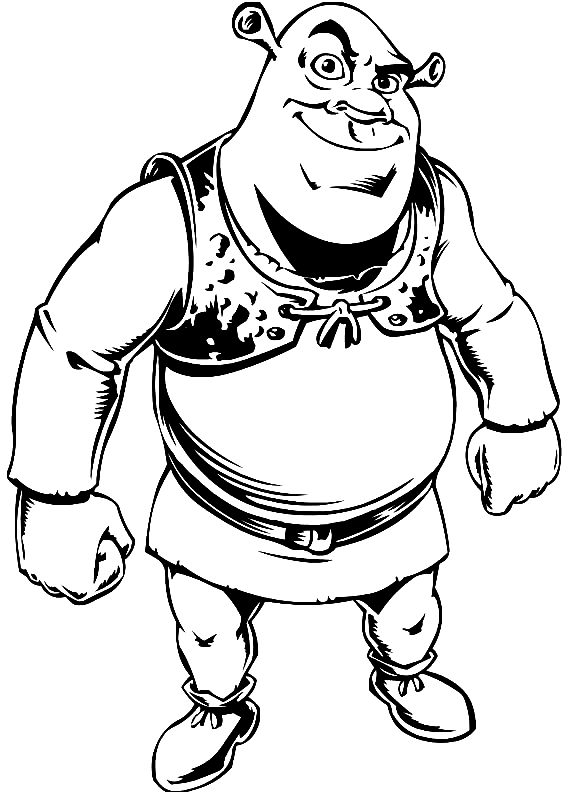
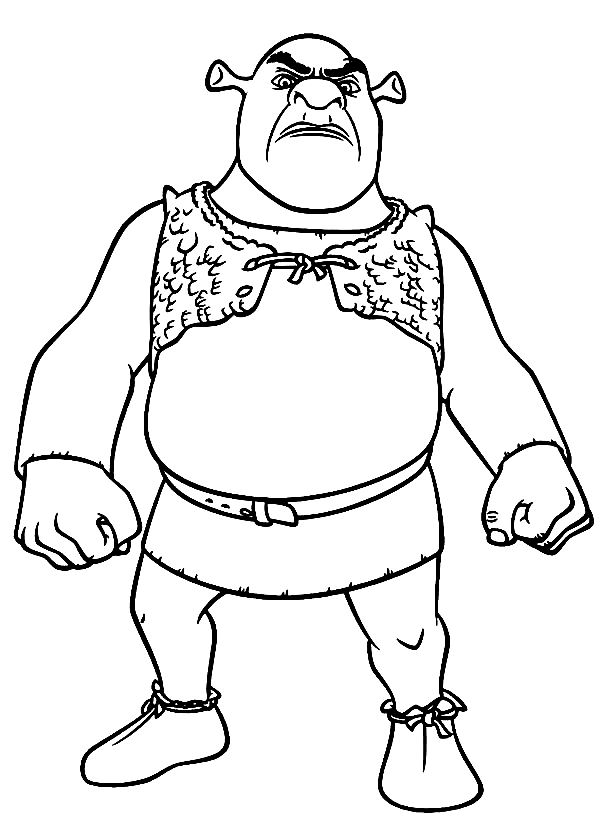
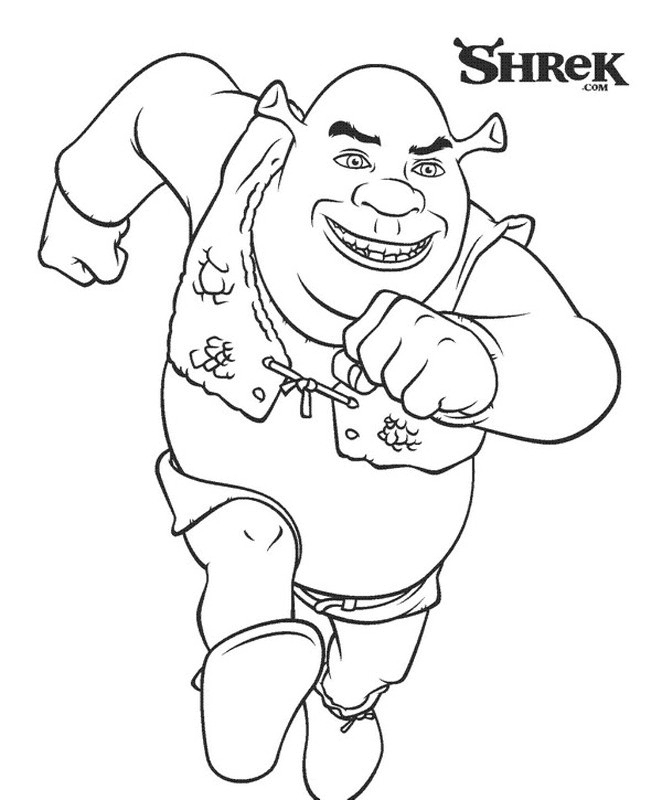
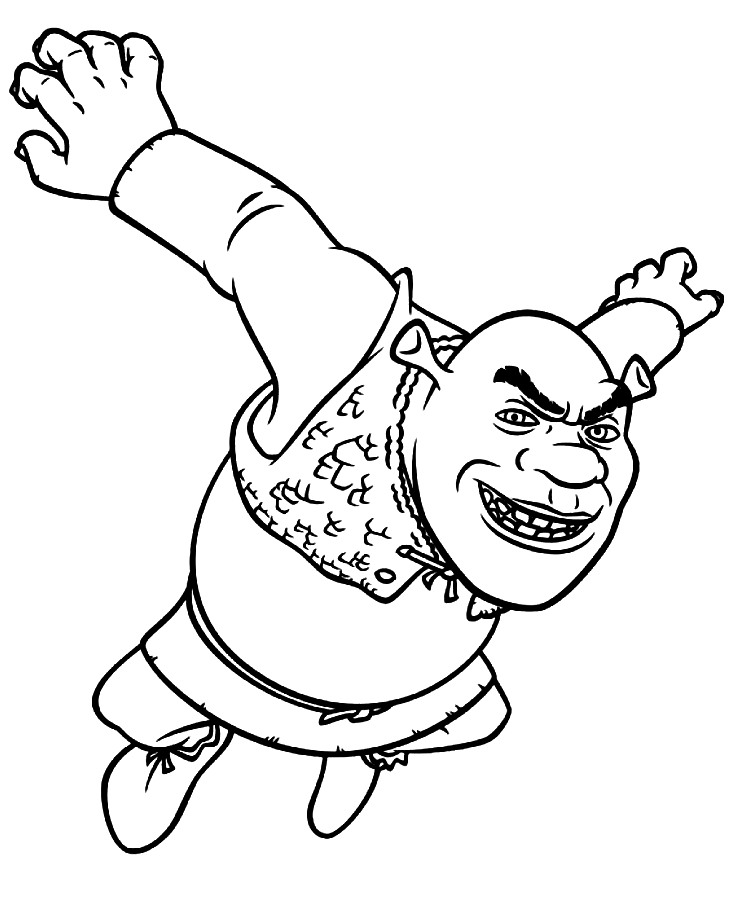
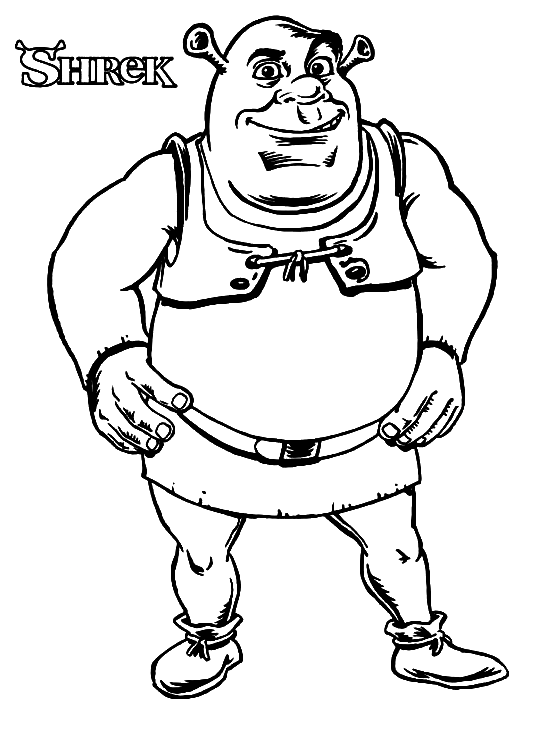
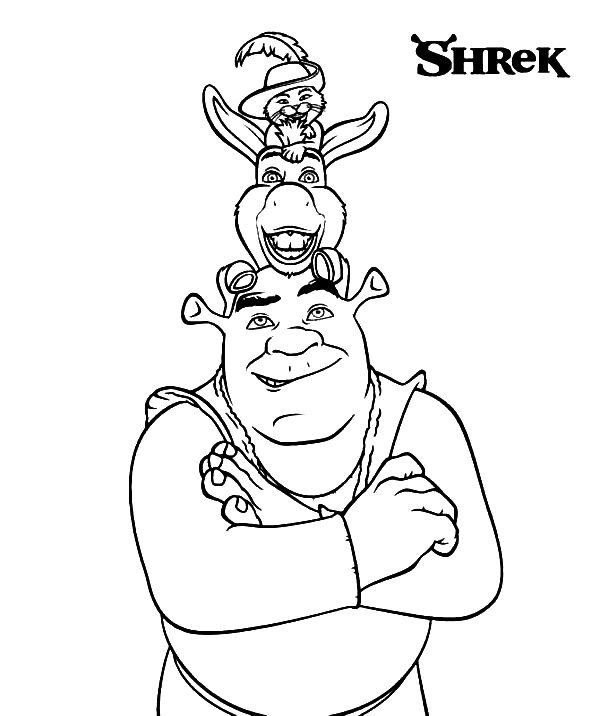
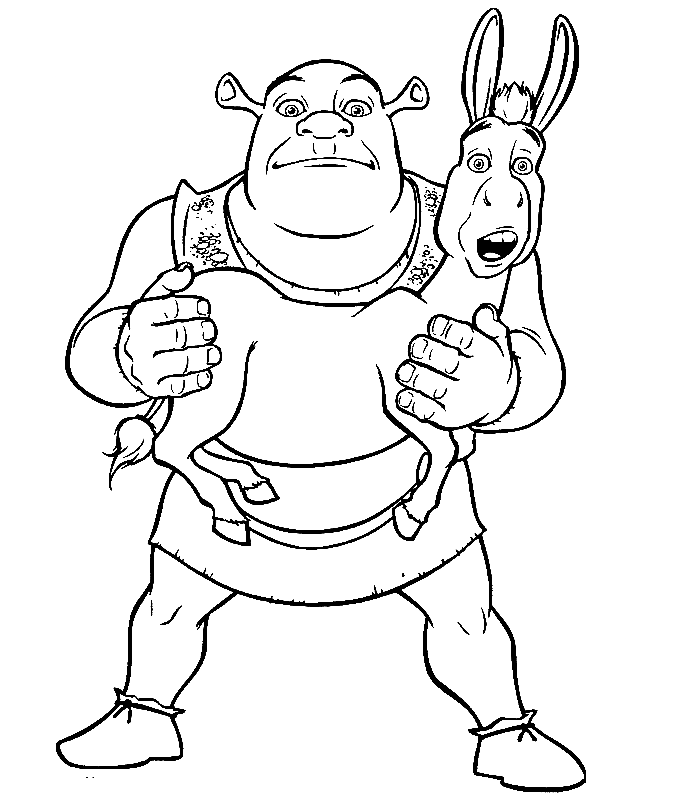
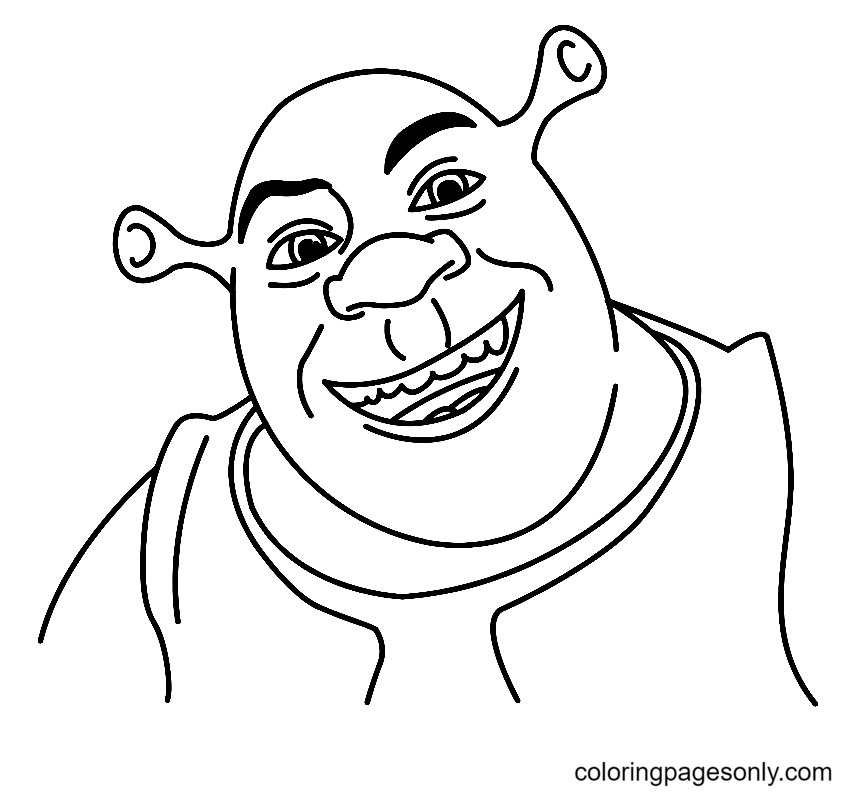
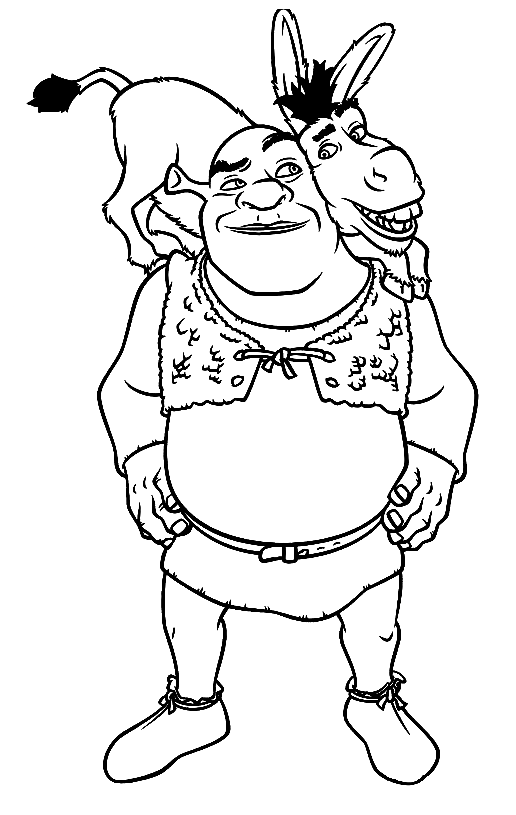
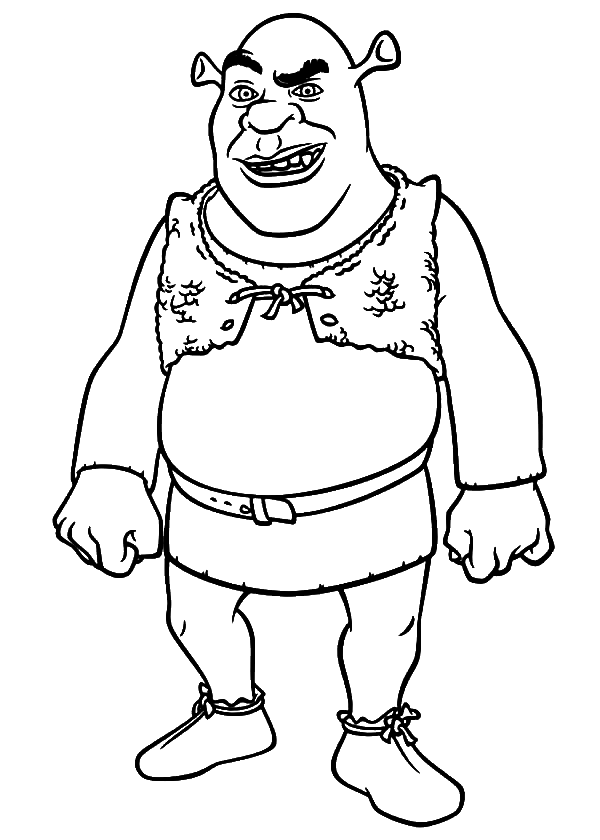
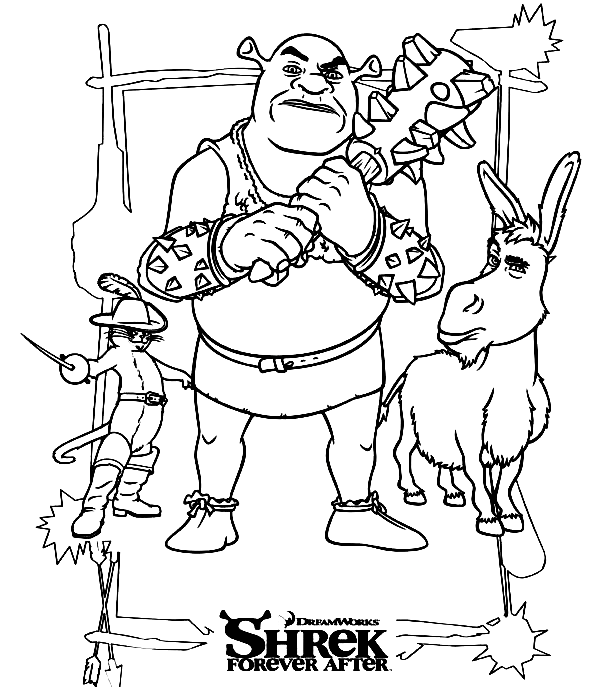
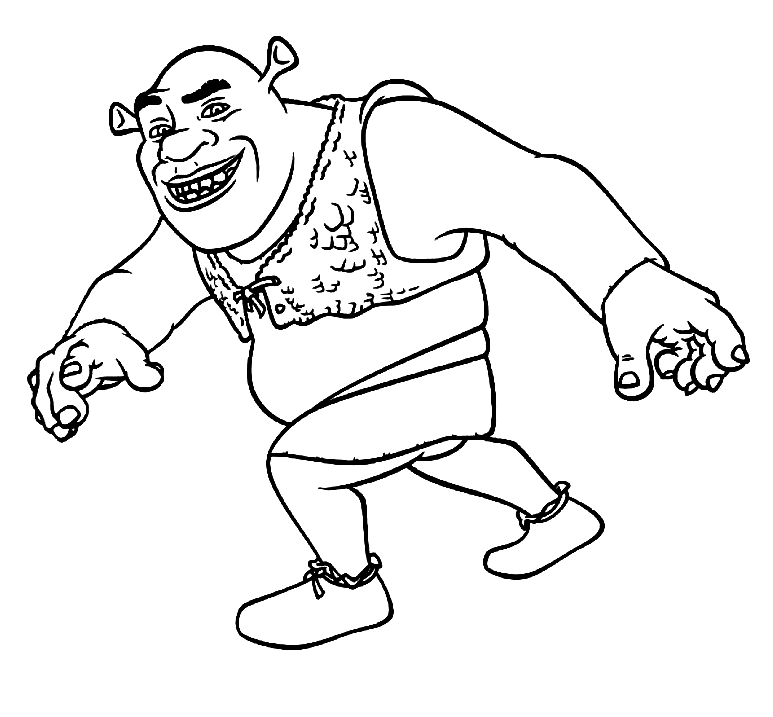
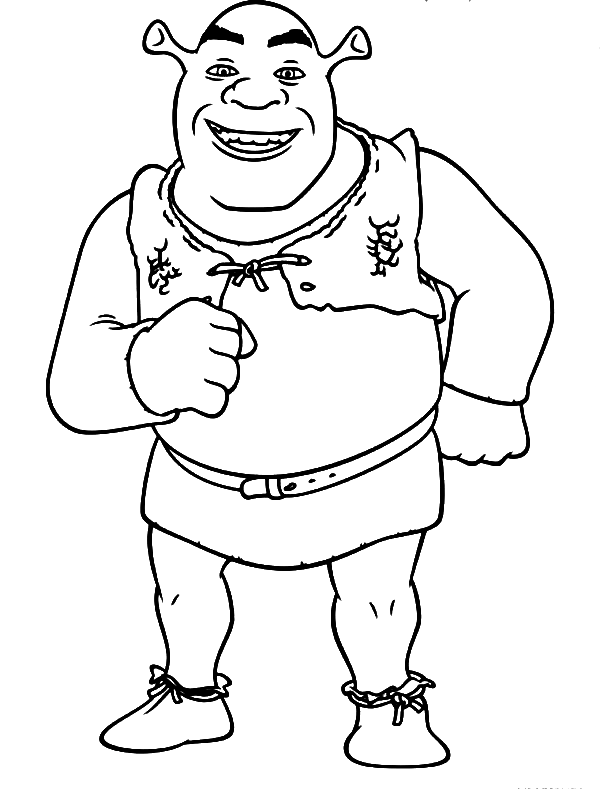
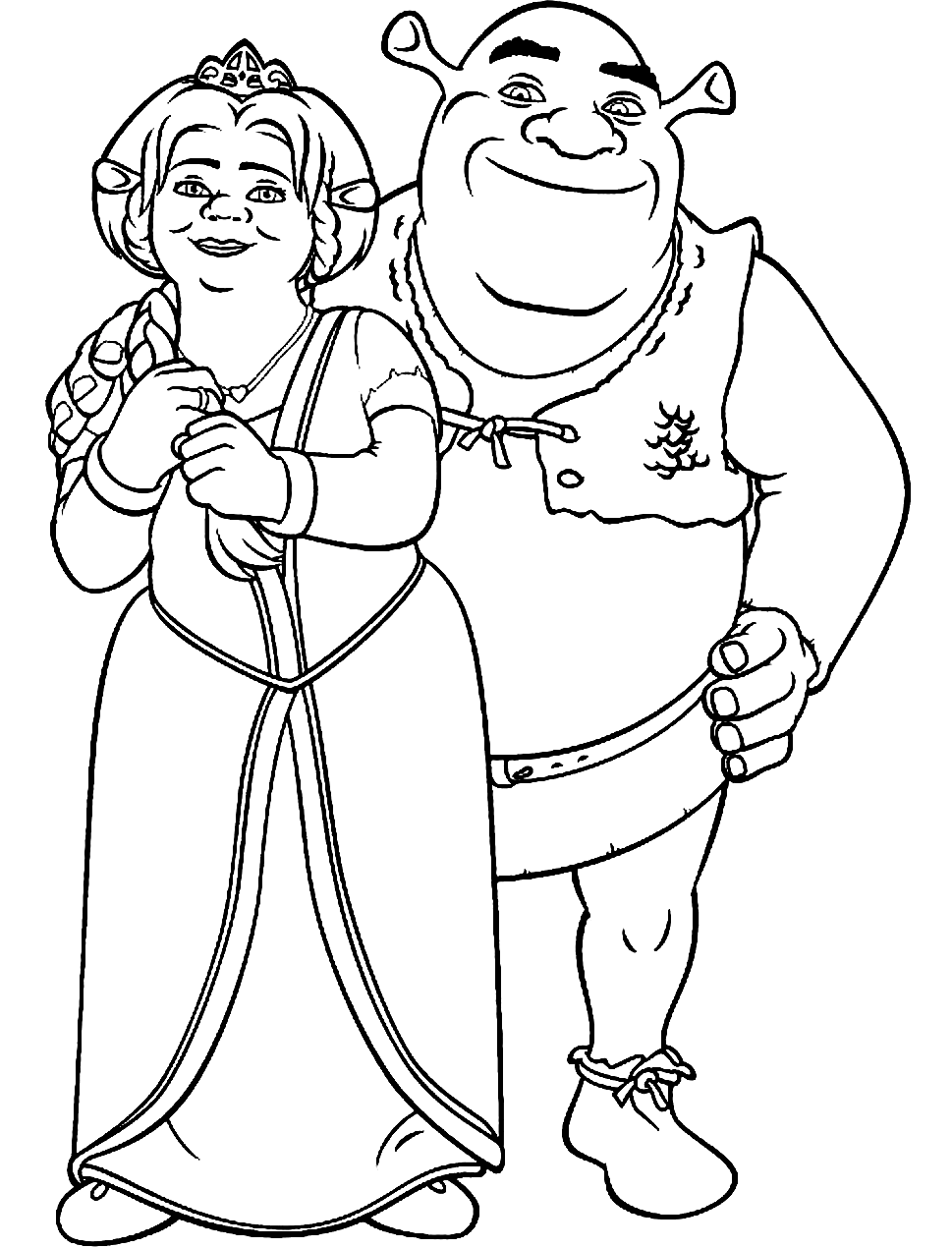
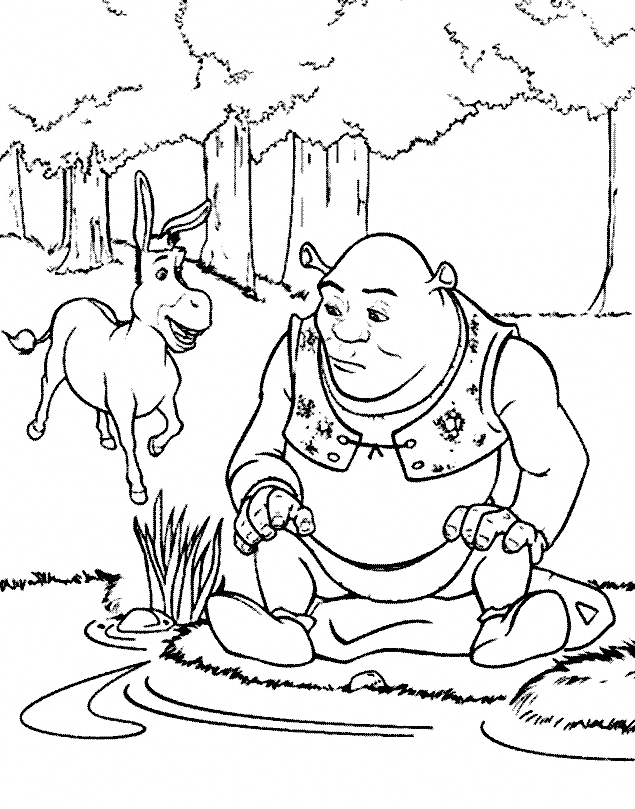
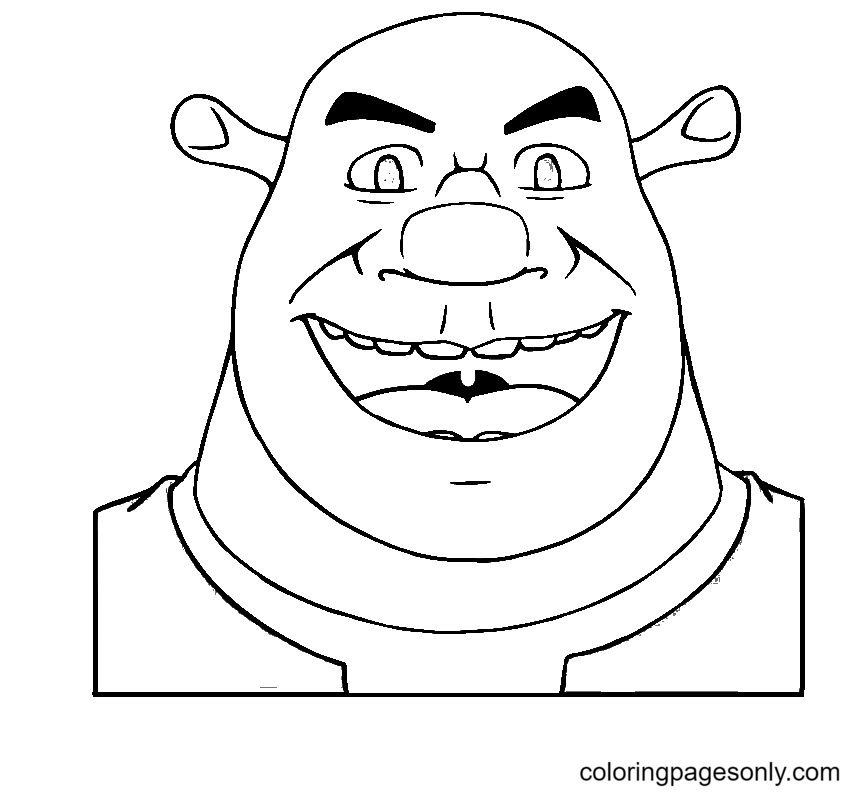
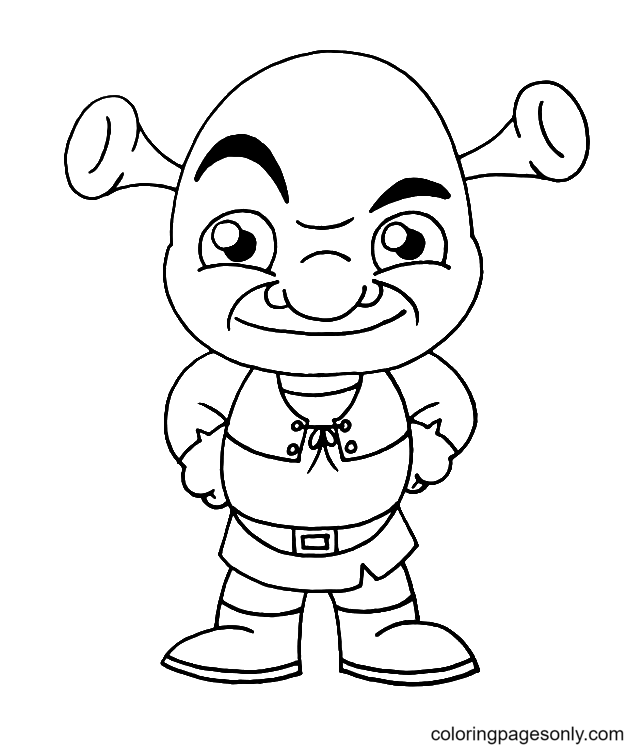
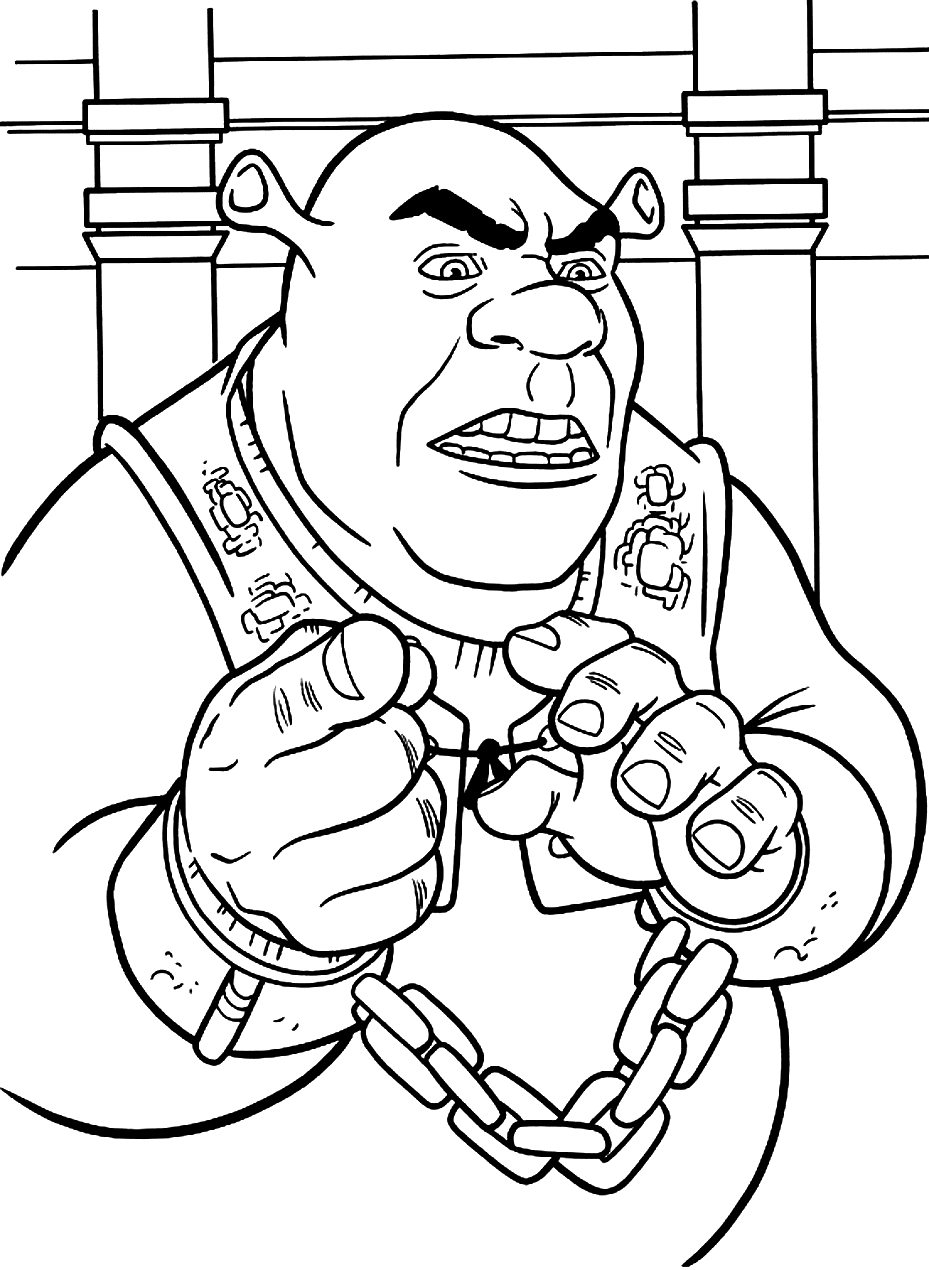
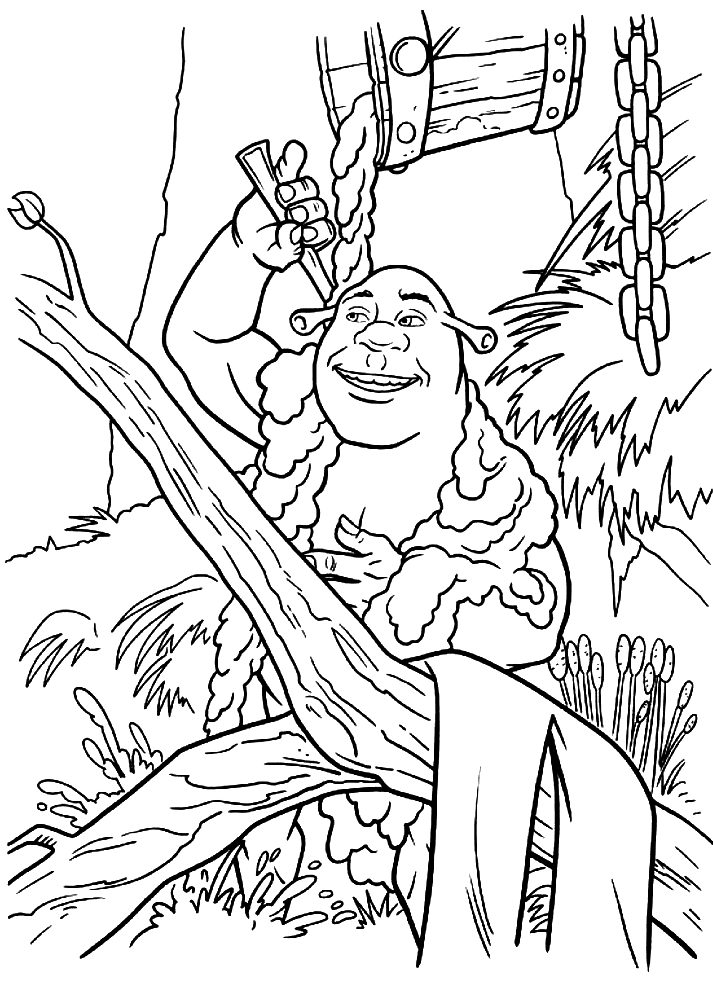
Shrek is a large, green Scottish ogre who lives alone in a swamp – a home he has chosen and values specifically because it is his, because it keeps him separate from a world that categorically fears and avoids ogres, and because it is exactly as comfortable and exactly as smelly as he wants it to be. His visual design communicates this preference directly: the green skin that is not threatening in any conventional monster-movie way but simply specific and natural to him, the two small rounded ear-flap protrusions on his head that look simultaneously like tiny horns and like features a creature grows while living undisturbed in swamp mud, the stocky broad build of someone who does physical work and eats substantial food and has never particularly cared what anyone else thought about any of it.

His clothing is brown – a brown tunic, lighter brown trousers, worn with the ease of clothes that fit well and have been worn every day. He has no fashion agenda. He has a very specific home agenda.

Mike Myers’s Scottish accent – added to the film after a complete re-recording of all dialogue – gives Shrek a vocal quality specific enough to be immediately placeable but unexpected enough to avoid any specific fairy tale association. Scotland is not the conventional territory of a fairy tale. Shrek’s swamp is also not conventional fairy tale territory. Both the voice and the setting are chosen for the same reason: to make the ogre’s home register as genuinely his rather than as a setting placed in his proximity.

Coloring Shrek: His green is the most important and most specific color in the collection – the particular medium, earthy, slightly warm green that has become one of animated film’s most recognizable character colors. It is not lime green (too vivid), not forest green (too dark), and not olive (too yellow-shifted). It is Shrek green – a medium, warm, fully realized green applied across every surface of his skin. His brown clothing is a warm medium brown, worn and lived-in. His eyes are blue-grey – the pale eyes of a Scottish character, carrying more expressiveness than his face might initially suggest.

Donkey

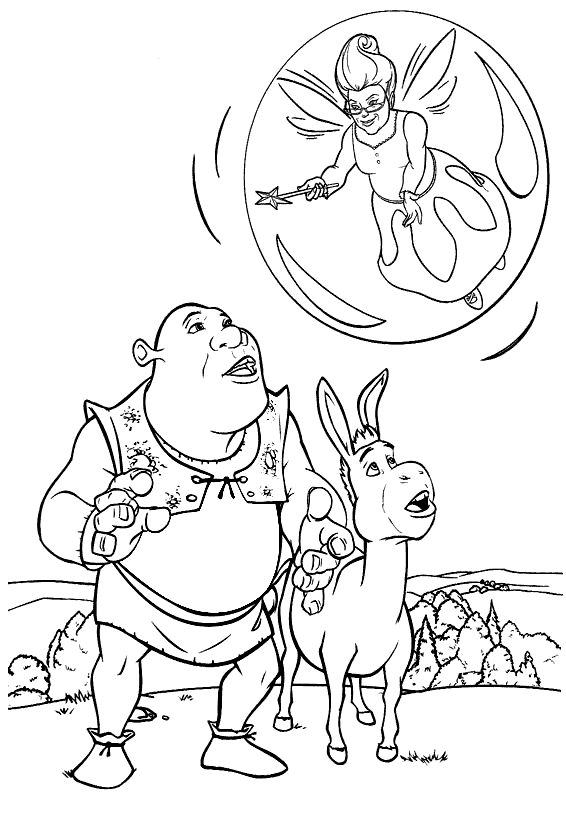
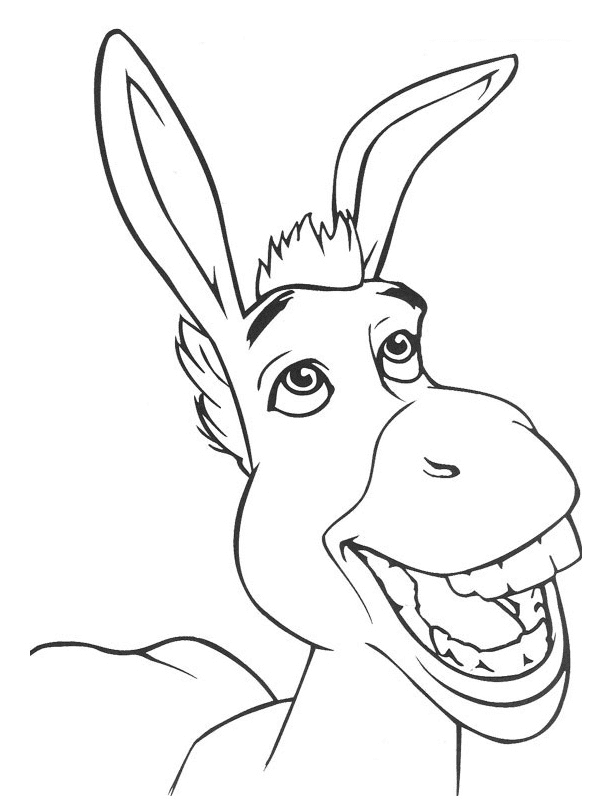
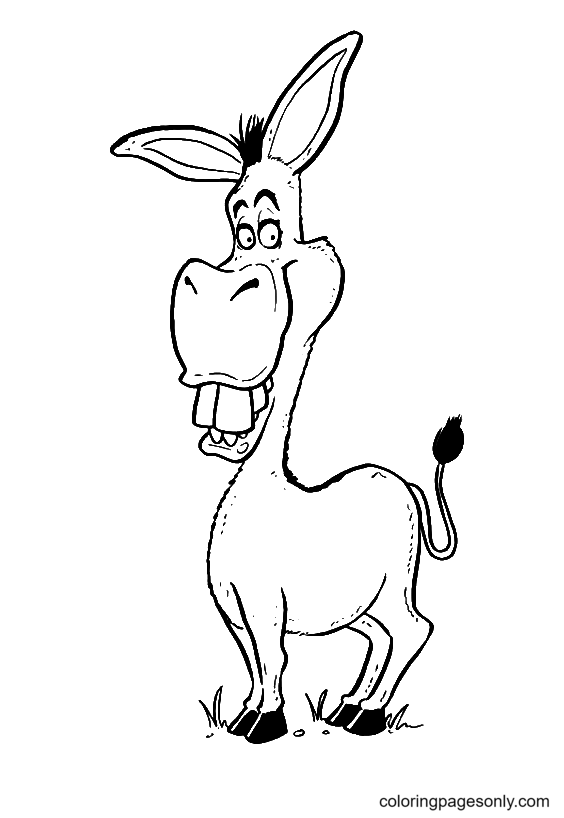
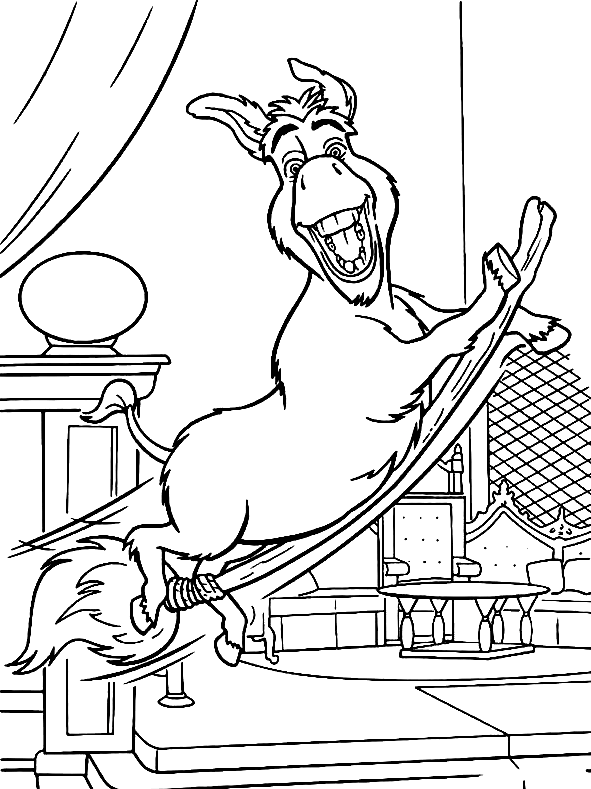
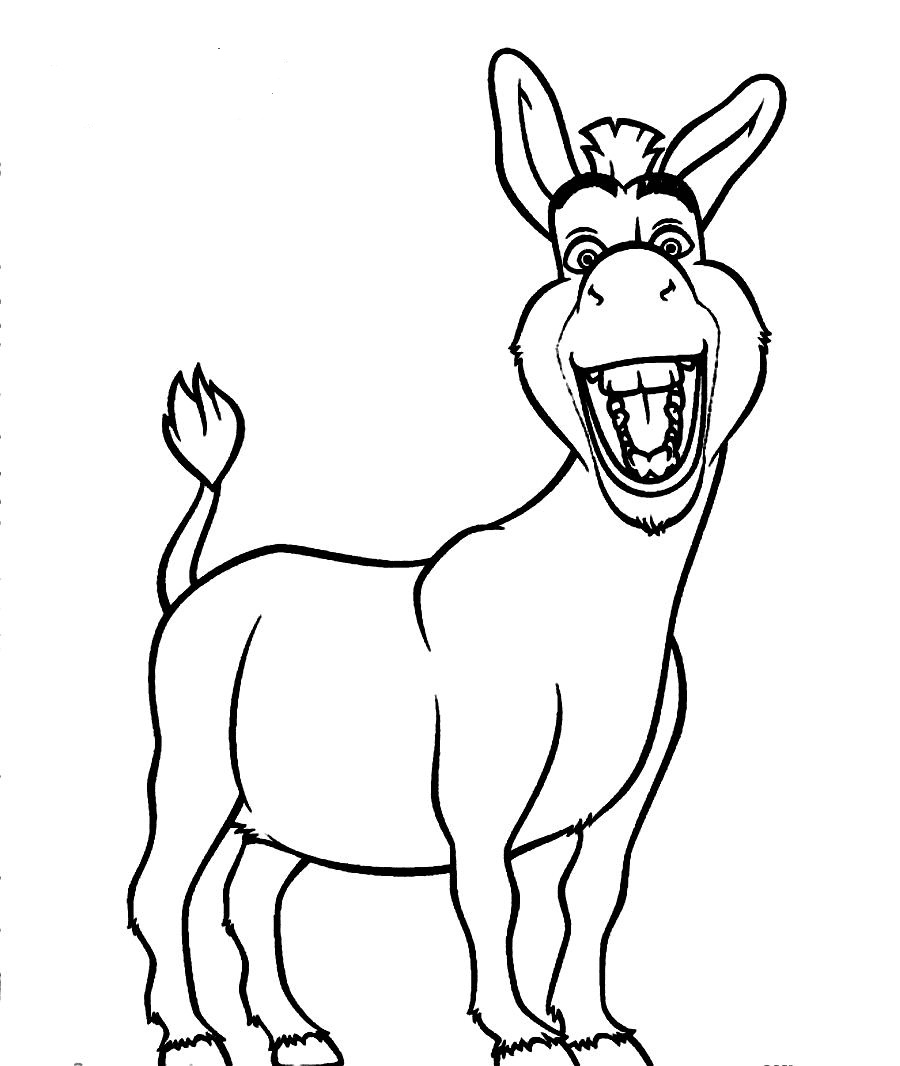
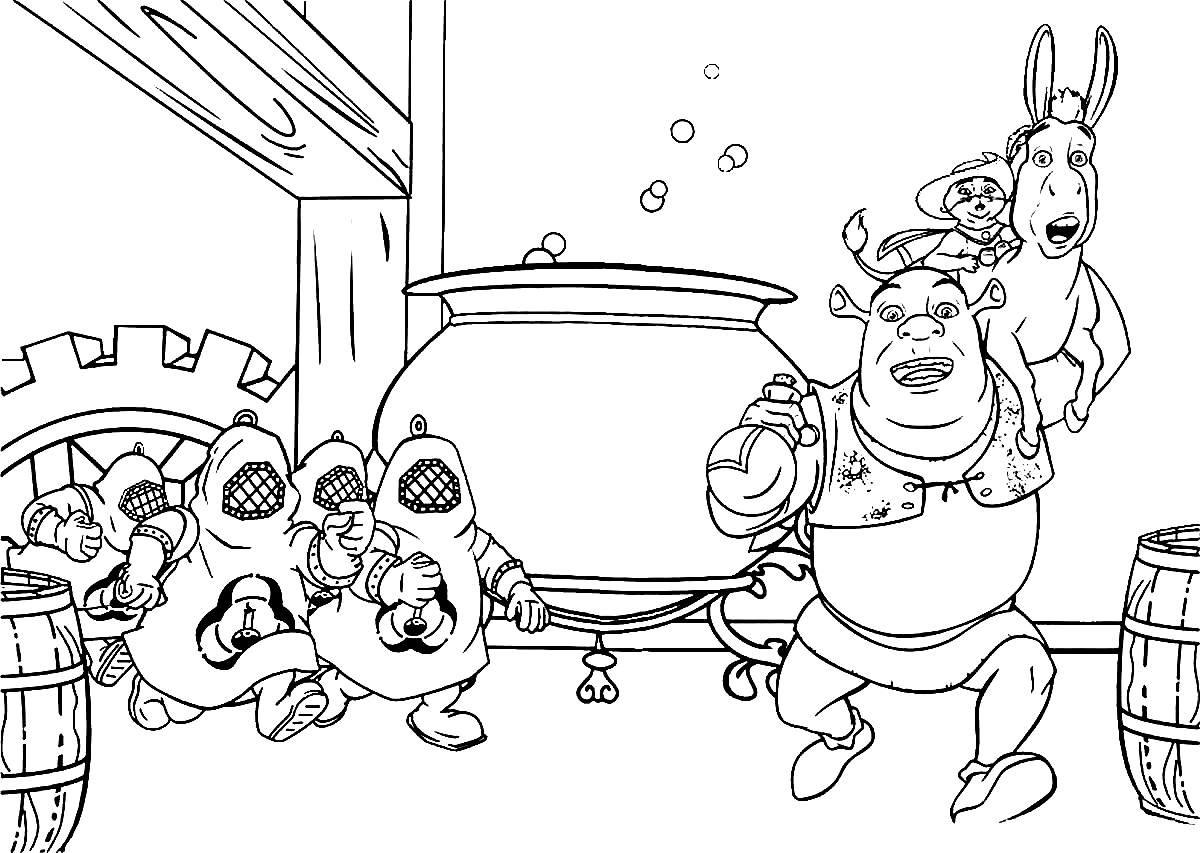
Donkey is one of animated film’s most sustained comic performances – Eddie Murphy in an extended riff that maintains consistent energy across four films and two decades. He talks constantly, notices everything, forms opinions about everything, does not take silence for an answer, and is, beneath the constant commentary, the most direct source of emotional warmth in the franchise.

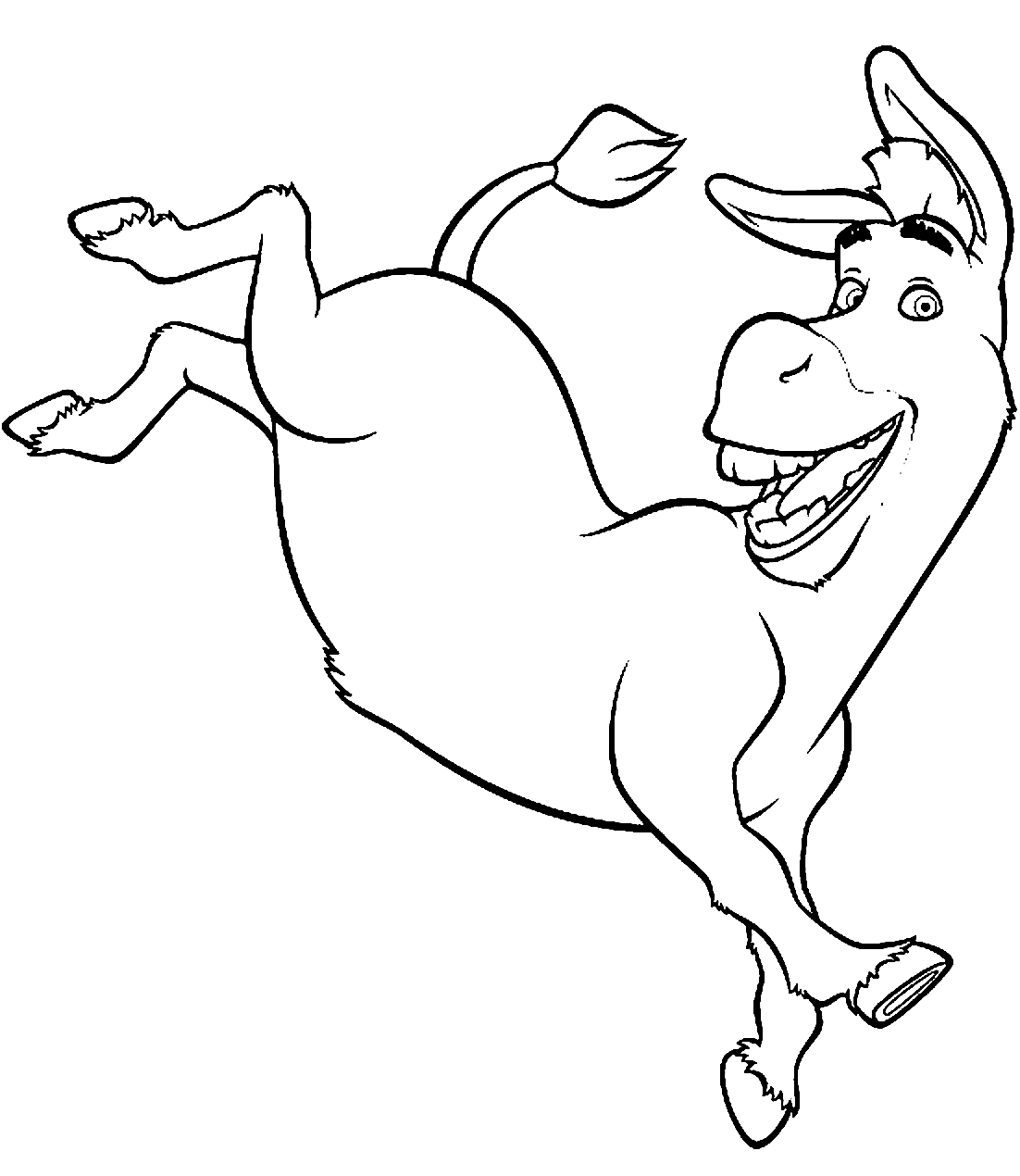
His design is thoroughly a donkey: grey-brown fur, long ears, and the compact build of a working donkey. The specific quality of Donkey’s design is how thoroughly ordinary it is alongside Shrek’s specific Shrek-ness – Donkey is a visually unremarkable donkey in design terms, and the entire character is produced by Murphy’s voice performance and the writing rather than by any visual distinction. His face carries his expressions through the standard large eyes of an animated character, and his ears are the design’s most physically expressive element – they indicate his emotional state through their position and movement.

Coloring Donkey: Grey-brown as the primary fur color – the warm grey-brown of a real donkey, not cool grey and not brown, but the specific warm grey-brown that sits between them. His muzzle (the lighter fur around his nose and mouth) is a lighter warm cream-tan. His hooves are dark – near-black. The lighter fur on his belly is a slightly warmer, paler version of the main body color.

Princess Fiona – Two Forms

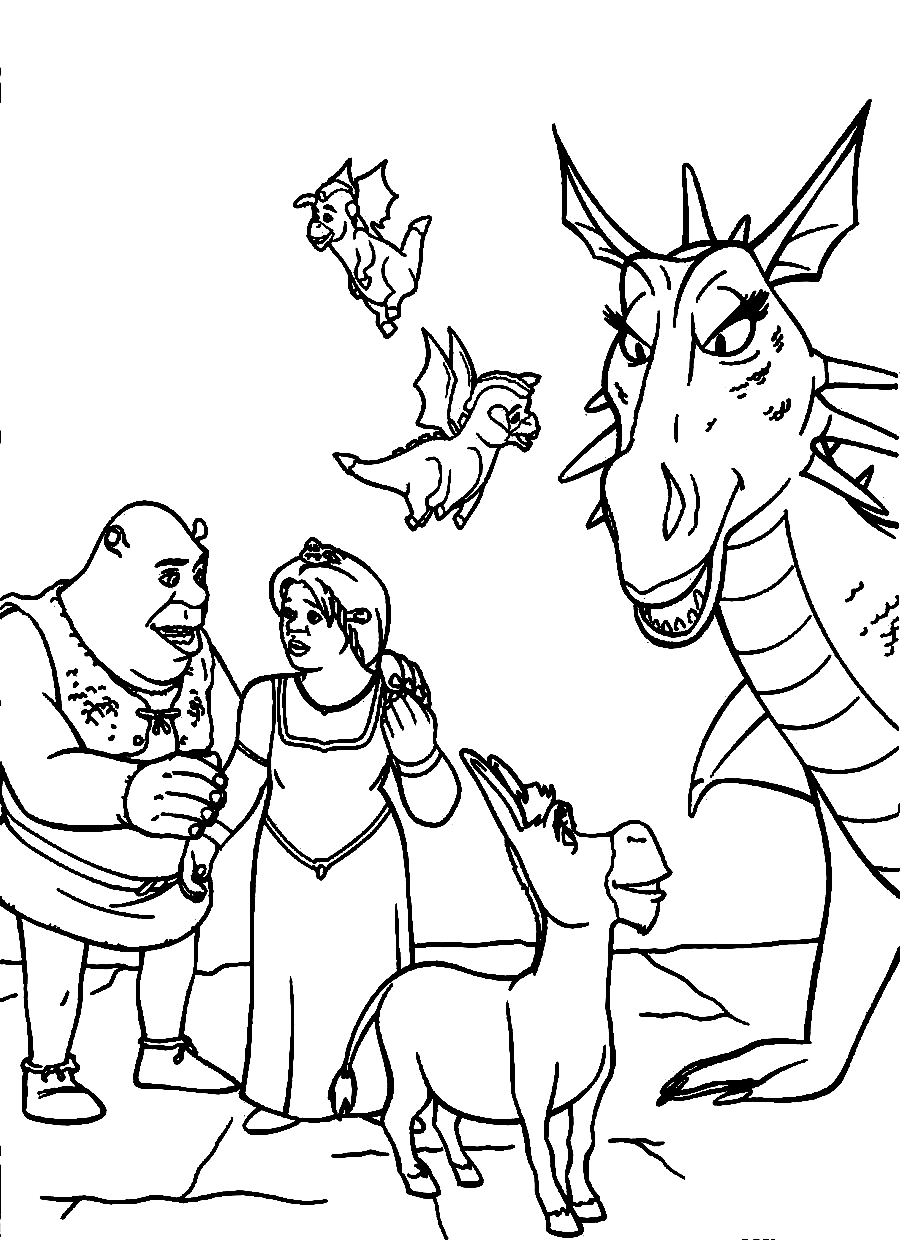
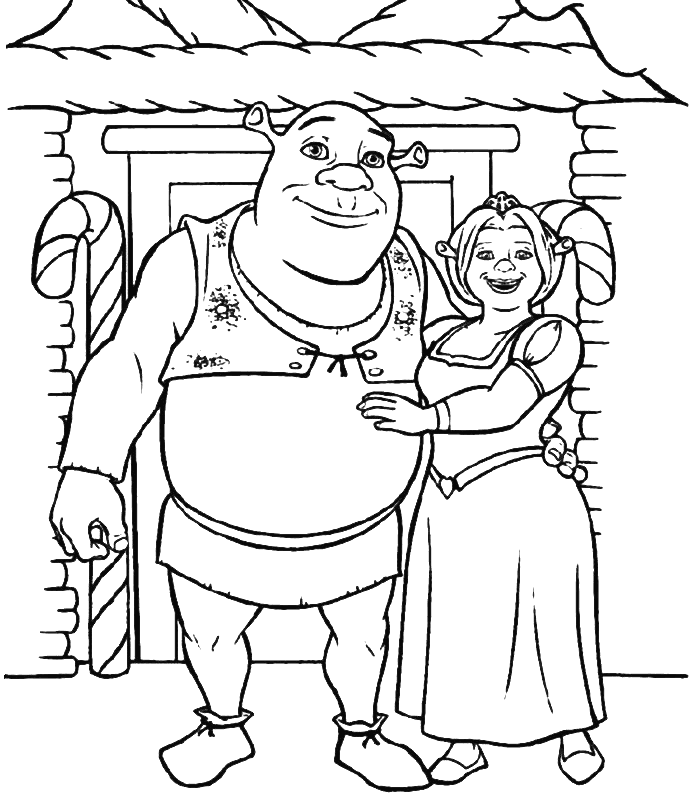
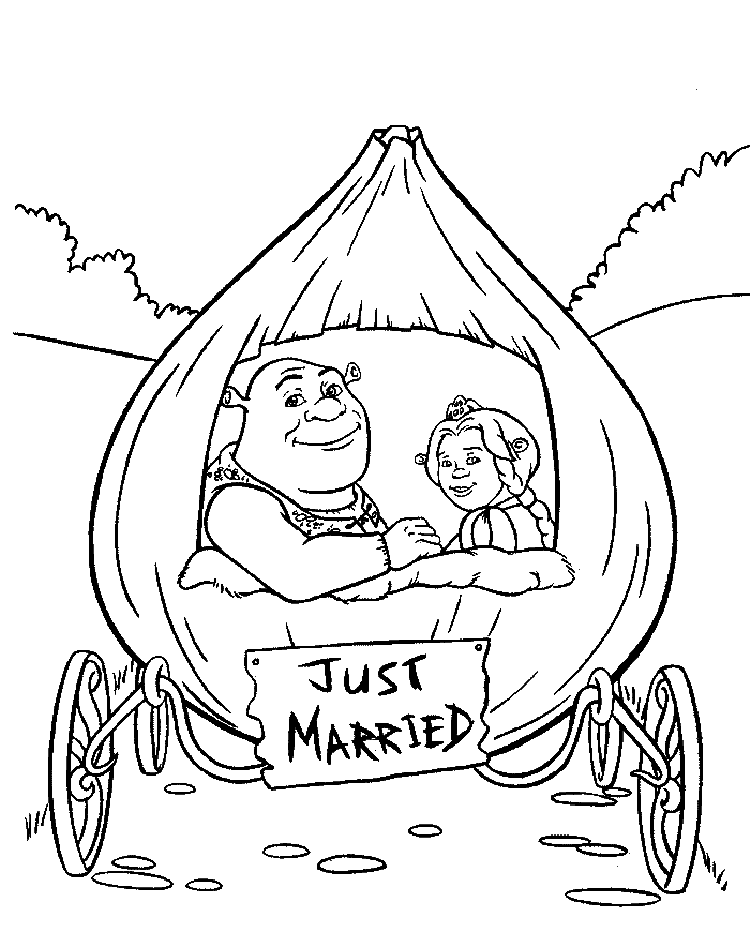
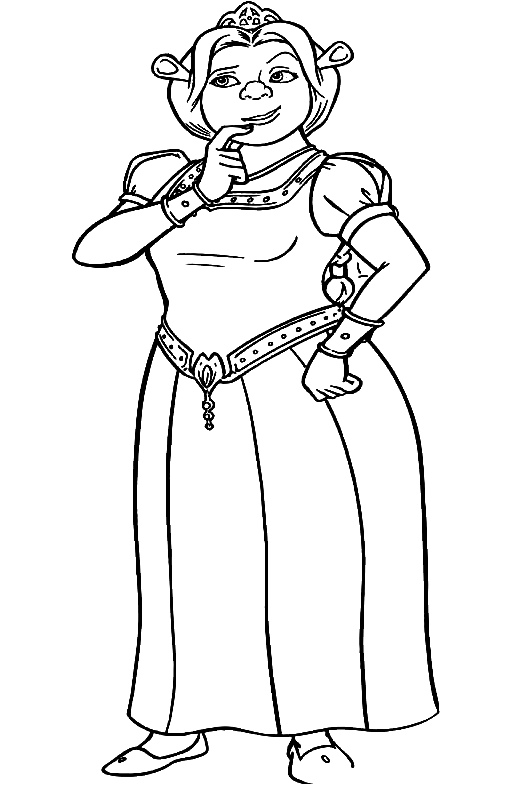
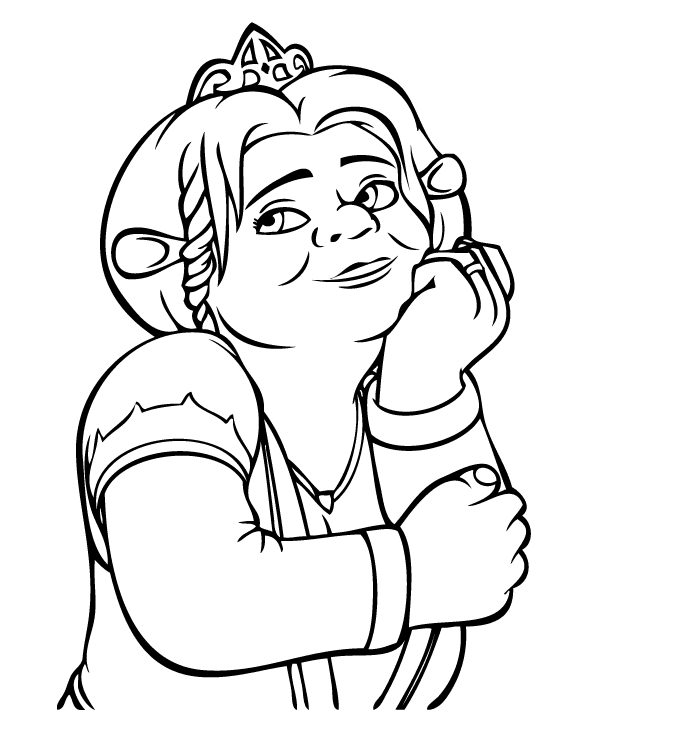
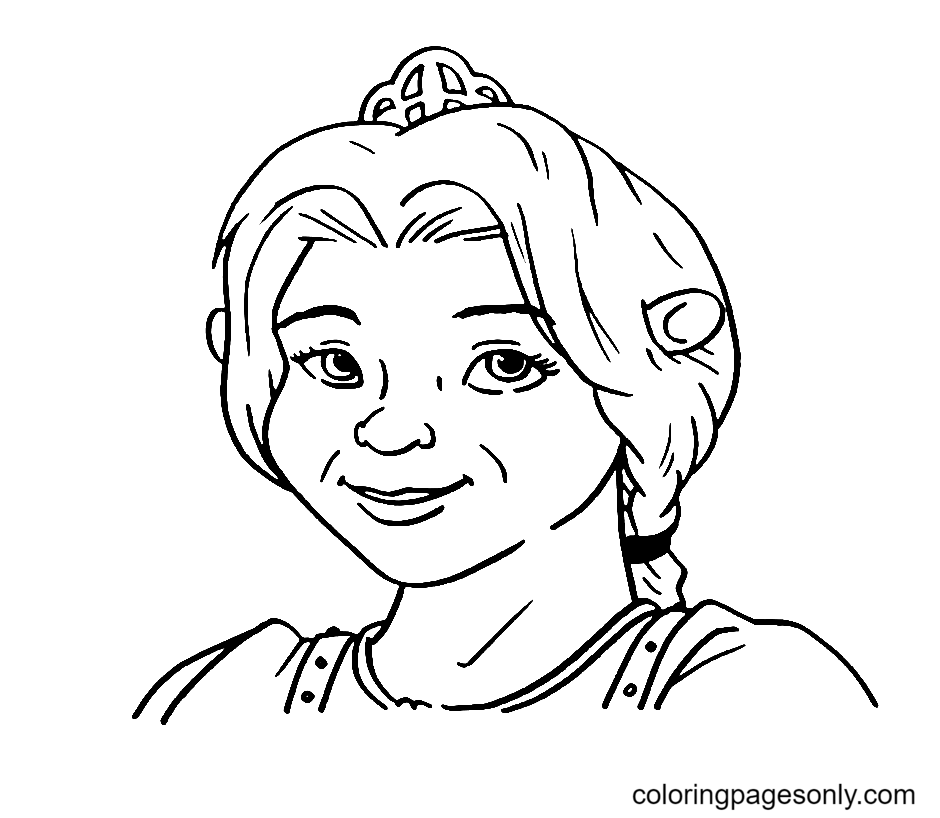
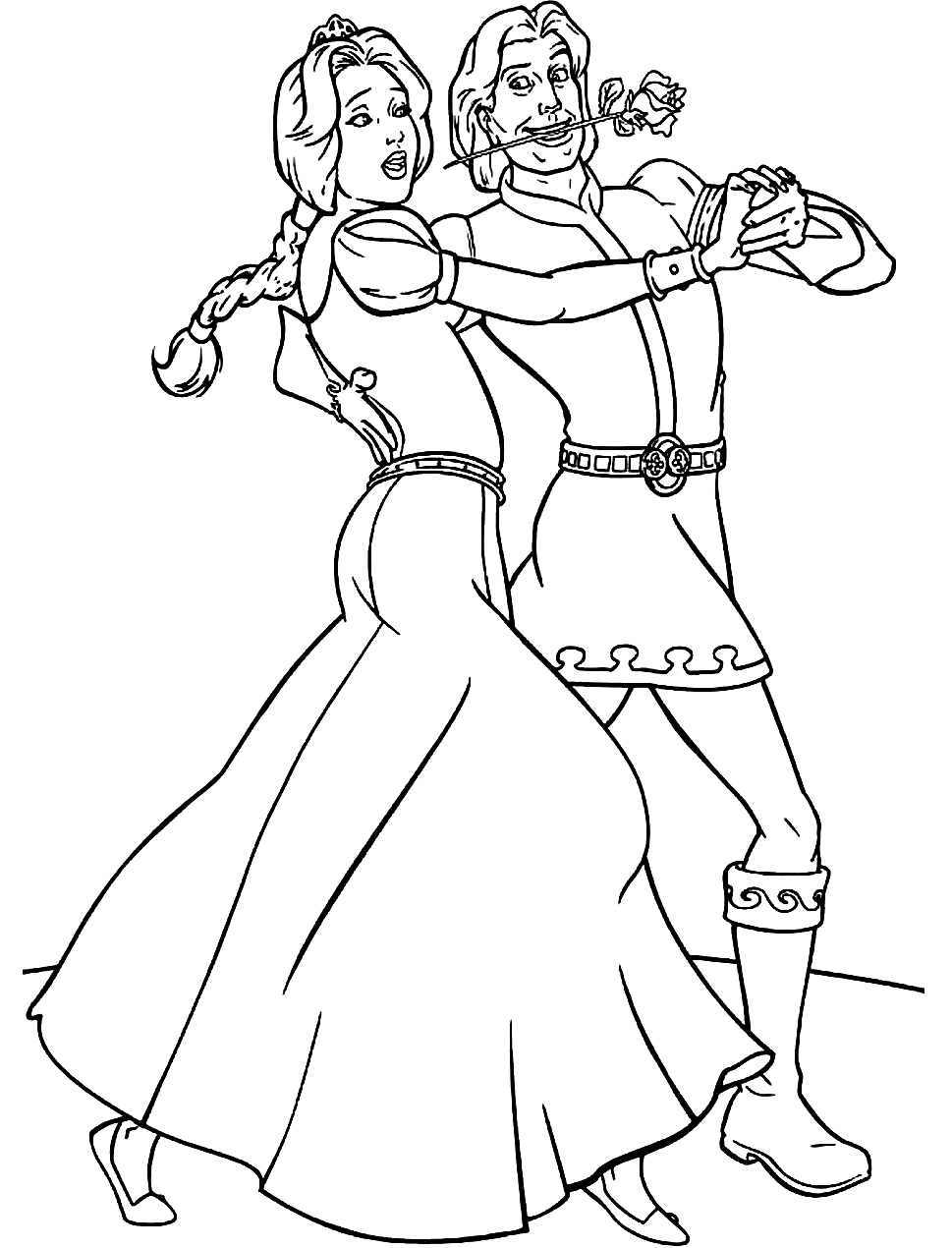
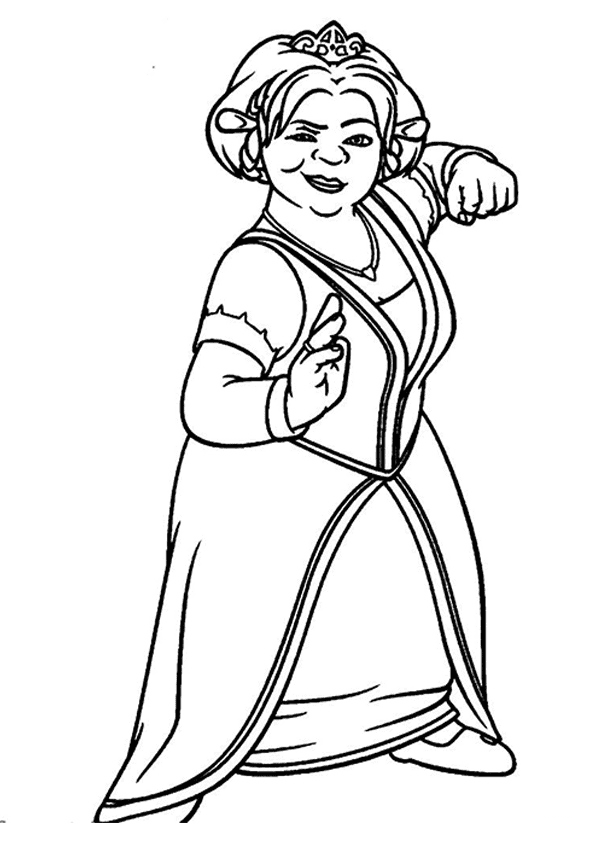
Fiona is the collection’s most chromatic character – because she exists in two completely distinct visual registers that the pages may show independently or in transition. Her human form is the conventional fairy tale princess: auburn/red hair, a green medieval dress, the proportions and appearance of a young woman in a fairy tale illustration. Her ogre form – the permanent form she holds after the curse’s resolution – is green-skinned, red-haired, and built on the same broad scale as Shrek, her face and proportions a feminine version of the ogre design vocabulary.

The film’s central subversion is embedded in these two forms: the expected narrative resolution is that love’s kiss transforms the ogre into a human princess. The actual resolution is that love’s kiss reveals the curse’s true resolution – Fiona’s “love’s true form” is her ogre self, not her human self. The green skin is the resolution, not the problem.

Coloring human Fiona: Auburn-red hair – a warm, vivid red-brown that reads as the specific red of the fair-tale princess. Her medieval dress is green – a vivid, medium green. Her skin is pale – the cool-light complexion of a fairy tale character whose setting is a European castle. Coloring of Fiona: The same specific Shrek green applied to her skin, but at a slightly warmer, slightly lighter tone than Shrek’s. Her red hair is the same auburn in ogre form as in human form. Her dress becomes the ogre-form version – still in the green palette of her established design.

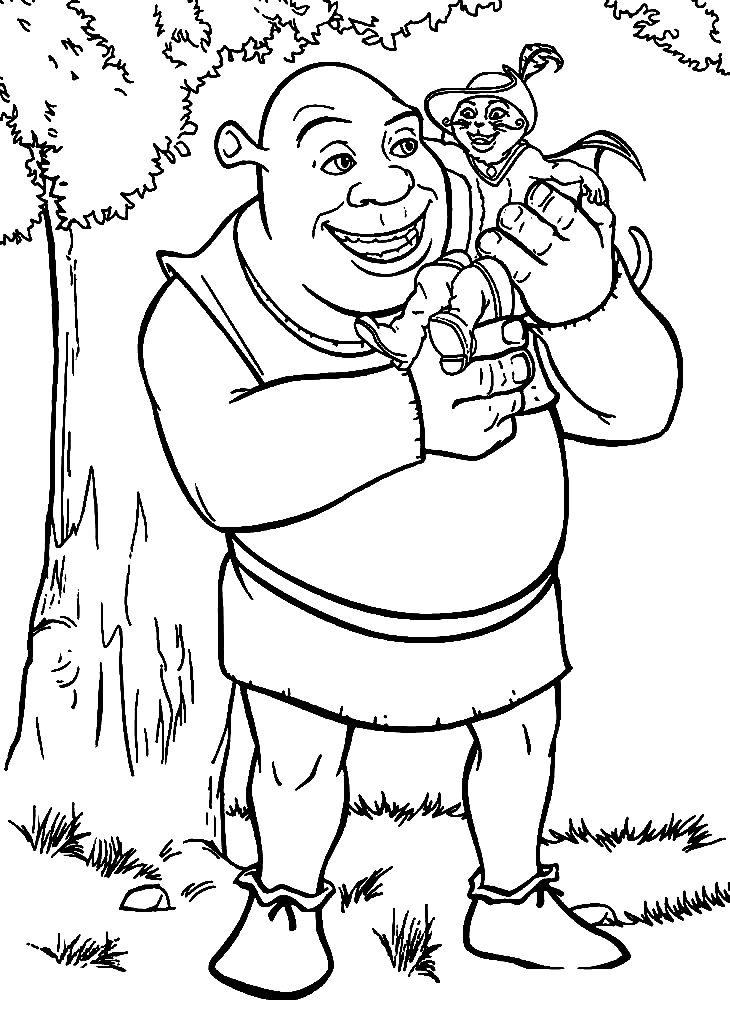
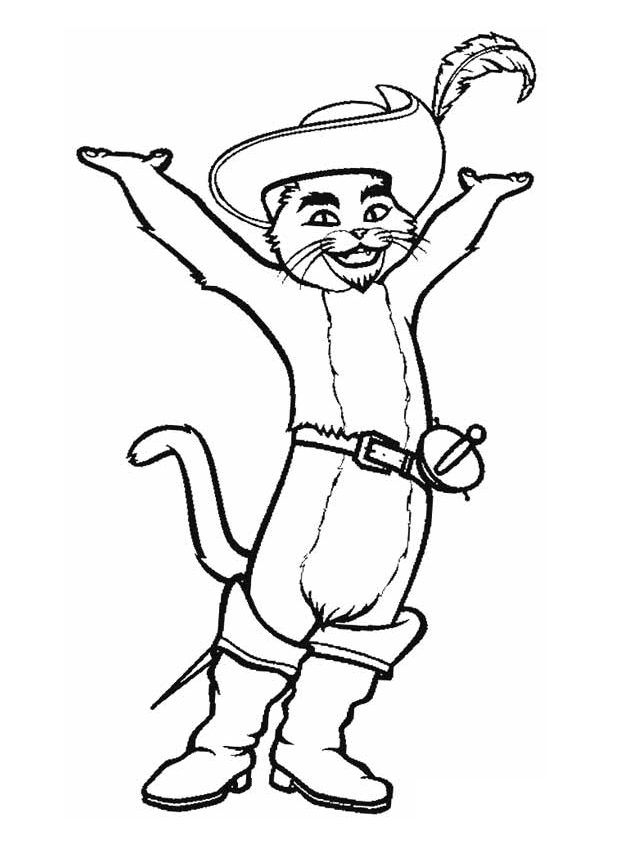
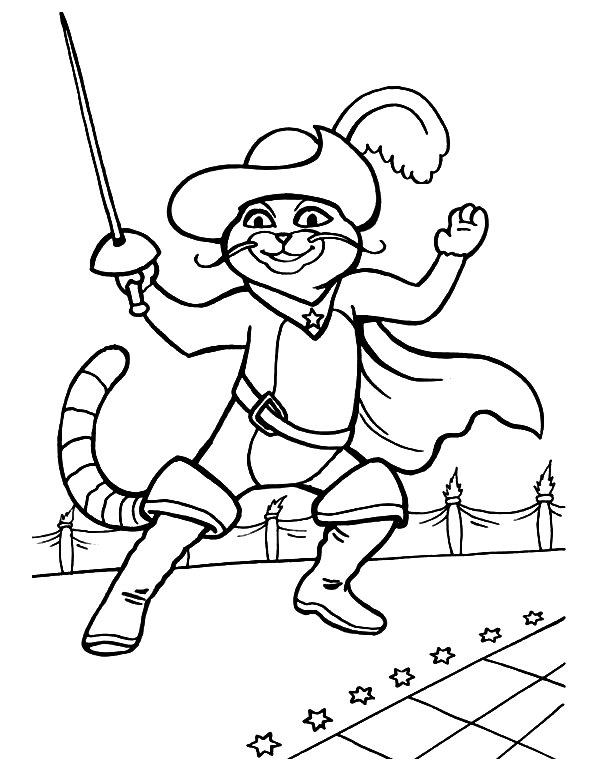
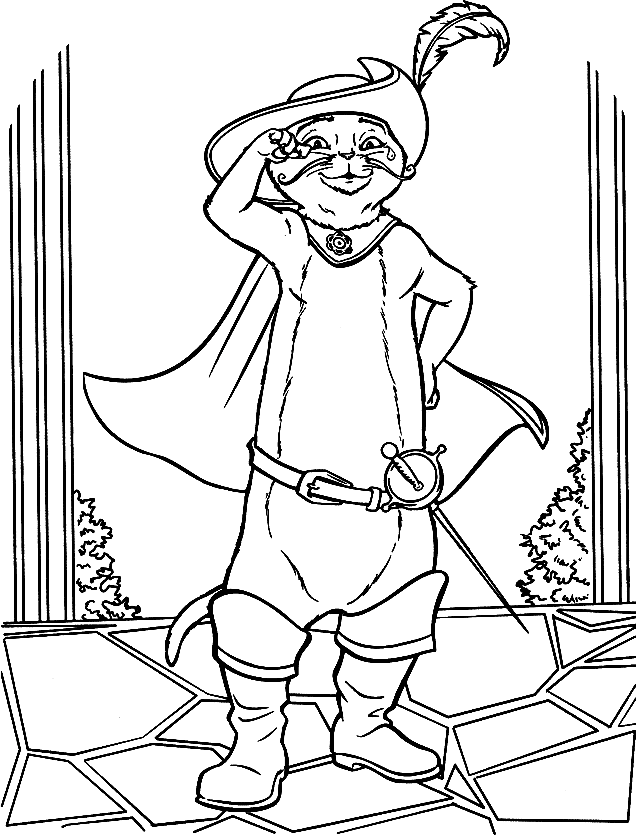
Puss in Boots

Puss in Boots arrived in Shrek 2 in 2004 and became the franchise’s most independently successful spin-off character – the basis for two standalone films (Puss in Boots in 2011 and Puss in Boots: The Last Wish in 2022, the latter receiving 96% on Rotten Tomatoes and multiple award nominations, including a Golden Globe win for Best Animated Feature Film).

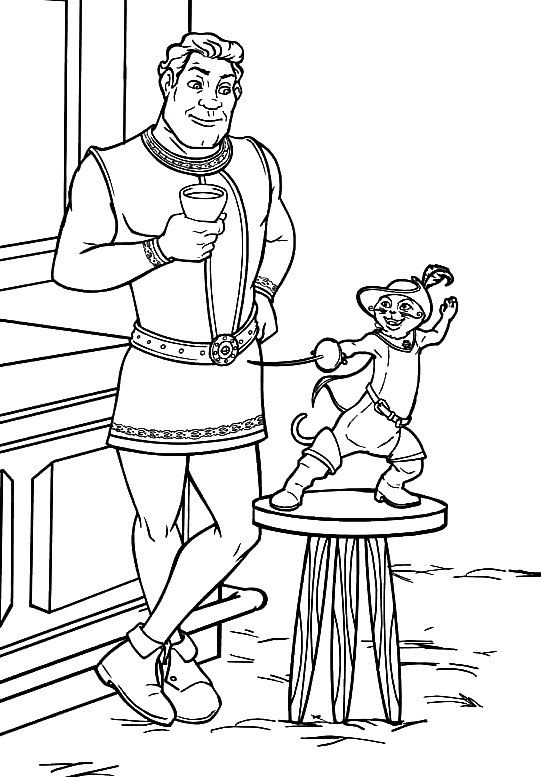
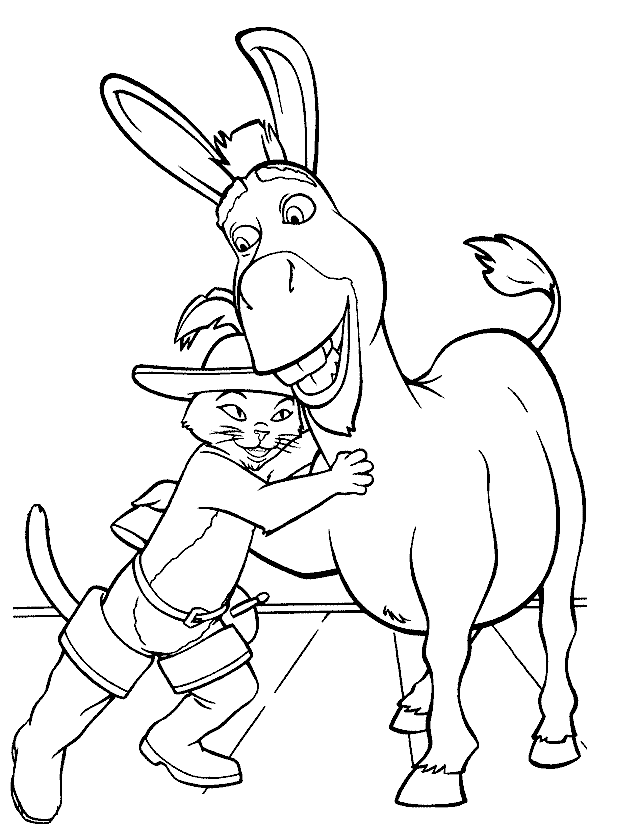
His design is a specific combination: the visual language of Zorro (the wide-brimmed hat, the cape, the sword) applied to a small orange tabby cat, voiced by Antonio Banderas in a register that plays directly off Banderas’s The Mask of Zorro persona. His most discussed single design feature is the “big eyes” – the ability to expand his eyes to an extremely large, round, appealing configuration that makes him irresistible to anyone watching him. This is depicted in the films as a deliberate technique rather than an involuntary response, giving him a weapon more effective than his sword in many situations.
Coloring Puss in Boots: Orange tabby fur across his body – a warm, vivid orange with darker orange-brown tabby markings. His wide-brimmed hat is black or dark brown – the Zorro-reference hat in the darkest available tone. His cape is similarly dark. His boots are dark brown leather. His sword, where visible, is metallic silver-grey. The “big eyes” in pages that show this expression should be rendered with the largest, roundest iris available – vivid amber-gold, with the pupil shrunk to a small vertical slit against the vivid iris. The eyes in normal mode are more naturally cat-shaped.
Lord Farquaad

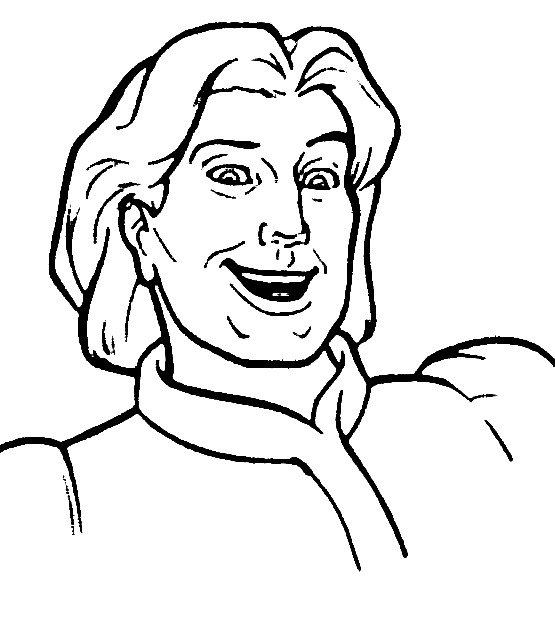
Lord Farquaad is the first film’s villain – the disproportionately short ruler of Duloc who wants to marry a princess to be declared kin,g but is unwilling to rescue her himself. His design is the film’s clearest fairy tale parody: the extremely long black hair, the velvet red outfit, and the most specific design choice – his legs occupy approximately 30% of his height. The short-but-imperious quality of his design is the visual extension of the character’s entire dramatic irony: a small man who wants maximum power and is unwilling to earn it.

He is eaten by a dragon at the end of the first film during their wedding, which is presented as a resolution that the audience is meant to find satisfying.

Coloring Lord Farquaad: Deep velvet red as his primary clothing color – a rich, warm red that reads as the red of authoritarian luxury rather than of heroism. His hair is jet black – the very dark near-black of the specific villain hair length he wears. His skin is pale – the pallor of someone who stays inside his fortress.

Gingy – The Gingerbread Man

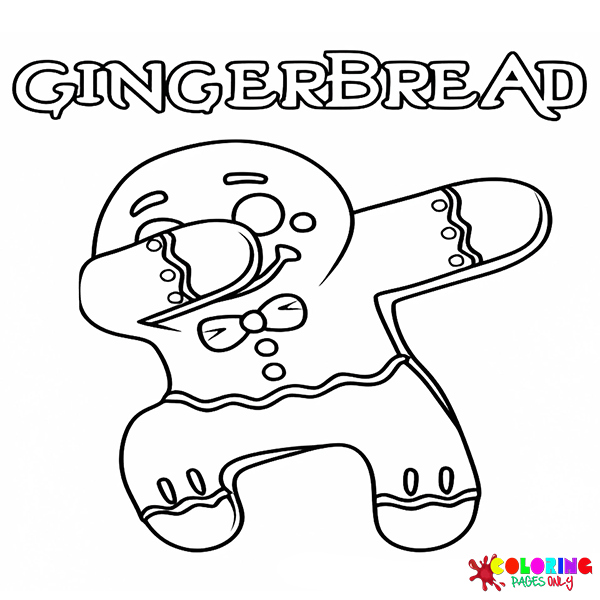
The Gingerbread Man – called Gingy – is the franchise’s most distinctive minor character: a small, vocal cookie with the proportions of an actual gingerbread man decoration, frosting details on his body, and the specific quality of being both completely harmless in scale and completely formidable in attitude. His most iconic scene involves Lord Farquaad’s interrogation: “Do you know the Muffin Man? The Muffin Man?” – a line that has persisted in cultural memory long past the specific film it comes from.

Coloring Gingy: Warm golden-brown as the primary cookie color – the specific warm brown of baked gingerbread, evenly applied across the entire body. The white frosting details – the outline of the body, the button decorations, the small features – should be rendered in clean, bright white, as a second layer on top of the brown base. These frosting elements are the most detail-specific coloring challenge on any Gingy page.

What These Pages Do

Shrek won the Academy Award for Best Animated Feature in the first year the category existed. The Academy Award for Best Animated Feature was created in 2002 for the 74th Academy Awards, and Shrek won it over Monsters, Inc. and Jimmy Neutron: Boy Genius. This historical fact gives the franchise a specific place in animation history that every subsequent DreamWorks animated film has existed in the shadow of.

The film’s fairy tale parody approach created a template that animated films have followed for two decades. The decision to tell a fairy tale story that is aware of fairy tale conventions and deliberately inverts them – the princess whose curse’s resolution is green skin, the villain who is shorter than anyone would expect, the hero who lives in a swamp by preference – established a register of knowing, layered animated film comedy that required the audience to be in on the joke while the jokes were also accessible to children who were not.

Puss in Boots: The Last Wish (2022) is one of the most discussed recent examples of an animated film achieving adult emotional depth. The film’s treatment of mortality – Puss has used up eight of his nine lives and must grapple with the fact of death – was widely praised as substantive adult storytelling within a children’s animation format. The coloring pages of Puss exist in the context of a character who has had his most critically significant story told in 2022.

Fine motor development. The American Academy of Pediatrics identifies fine motor skill development as a key childhood milestone throughout early childhood. The Gingy frosting detail, Fiona’s hair in both forms, Puss in Boots’s tabby markings, and the Far Far Away castle environments all provide motivated, sustained fine motor practice. The 2005 Art Therapy Journal study on structured coloring and anxiety reduction applies throughout.

How to Color These Pages Well

Shrek’s green is the most specific single color in the collection – learn it before starting. Shrek’s green is neither lime nor forest nor olive. It occupies the specific medium, slightly warm green, that has no other association because it has been wholly captured by this character. The nearest description: imagine a slightly warm, medium green – the green of a field in late summer, less yellow than fresh spring growth, less cool than forest shadow, and fully saturated. Test your green before applying. If it reads as any other thing besides “Shrek,” adjust.

Fiona’s two forms are identified by skin tone only – render the distinction clearly. On any page that shows both forms or where the form needs to be identifiable, human Fiona has pale, cool-light skin with the standard warm undertones of a fair-skinned character. Ogre Fiona has the same Shrek green across all skin surfaces. The color is the entire information – the same red hair and the same green dress appear in both forms. Readers identify the form from skin tone alone, which means the skin tone must be applied with confidence in both directions.

Puss’s “big eyes” are a specific configuration, not simply large eyes. The adorable eyes of Puss in Boots in their fully deployed configuration are: a very large, round iris occupying approximately 60% of the visible eye area (much larger than normal), a very small vertical slit pupil (the cat’s vertical pupil shrank to near-disappearance), and white visible around most of the iris. The extreme size and the small pupil against the vivid iris are both required. Large irises alone or small pupils alone do not produce the effect; both together do.

Gingy’s frosting must contrast with the ginger base. If the gingerbread base is too dark, the white frosting disappears against it. If the base is too pale, the cookie loses its specific quality. The gingerbread base should be a warm, distinctly golden-brown – dark enough that white frosting clearly contrasts with it, but warm and golden rather than dark brown or chocolate-brown. Apply the base, let it establish fully, then apply the white frosting as a clearly visible second layer.

Far Far Away environments use the fairy tale color palette. Castle walls are the warm grey of stone – a slightly warm grey rather than a cold grey. Grass is vivid, storybook green. The sky is a saturated fairy-tale blue. Swamp environments use much darker, cooler values: muddy green-brown for the swamp water, dark green for the surrounding vegetation, and the specific dingy but lived-in quality of Shrek’s home.

5 Creative Craft Ideas

Layers of an Ogre

Shrek’s most famous line – “Ogres are like onions. Onions have layers. Ogres have layers,” – offers the collection’s best visual craft opportunity. Print four copies of a simple Shrek portrait. Color the outermost one in the least saturated, most exterior version of Shrek’s green. Color each subsequent page in a slightly warmer, more vivid green. Cut each page down so it is slightly smaller than the previous. Stack all four – the smallest, most vivid on top – and bind them at the left edge.

The finished booklet shows Shrek’s “layers” as a literal stacked book – each layer more vivid than the one outside it. Add the quote below: “Ogres are like onions.”

The First Kiss – Before and After

The franchise’s central narrative pivot is the resolution of Fiona’s curse at the end of the first film. Print one human Fiona page and one ogre Fiona page. Color human Fiona in pale skin and auburn hair. Color ogre Fiona in Shrek green and the same auburn hair.

Mount both side by side. Between them, draw a simple golden light or heart symbol indicating the transformation moment. Add: “Love’s first kiss revealed love’s true form.” No further explanation.

Fairy Tale Exiles – The Swamp Residents

Farquaad exiles all fairy tale creatures to Shrek’s swamp. The collection may include multiple fairy tale character pages – the Three Little Pigs, Pinocchio, Gingy, and the Fairy Godmother’s creatures. Print one page for each fairy tale character available. Color each in its canonical colors.

Mount all on a dark green backing sheet (the swamp). Add a title: “Lord Farquaad’s Declaration: All fairy tale creatures are hereby banned to the swamp.” Below each character, add their fairy tale name. The finished display is a census of Shrek’s unwanted swamp visitors.

Puss in Boots – The Eyes

Print three copies of the same Puss in Boots portrait page. Color all three in identical orange tabby fur, dark hat and cape, dark boots. Leave the eyes as the only variable:

Version 1: Normal cat eyes – amber-gold iris, narrow vertical pupil, naturally cat-shaped. Version 2: The big eyes – very large, round iris, extremely small pupil, more circular eye shape. Version 3: Fierce fighting eyes – narrowed, determined, the specific expression of Puss in combat mode.

Mount all three side by side: “Normal,” “Adorable,” “Dangerous.” The display demonstrates how the eyes alone carry Puss’s entire emotional range.

The Academy Award – Film 1 Tribute

The first Academy Award for Best Animated Feature was awarded at the 74th Academy Awards, held on March 24, 2002, and given to Shrek. Print the most iconic Shrek and Donkey portrait page available. Color it carefully in canonical colors.

On a backing sheet, add: “74th Academy Awards – March 24, 2002.” “Best Animated Feature.” “For the first time ever, the Academy presented this award.” “The first winner: Shrek (2001), DreamWorks Animation.” Add a hand-drawn Oscar statuette shape below the text.

Frequently Asked Questions

What is Shrek based on? Shrek is based on the 1990 children’s picture book Shrek! written and illustrated by William Steig. Steig was born on November 14, 1907, in Brooklyn, New York, and was primarily known as a cartoonist for The New Yorker, for which he drew over 2,600 cartoons and 117 covers across his career. He did not begin writing children’s books until he was approximately sixty years old. Shrek! was published when he was eighty-three. Other notable children’s books by Steig include Sylvester and the Magic Pebble (1969), which won the Caldecott Medal, and Dr. De Soto (1982). Steig died on October 3, 2003, at age ninety-five, two years after the film based on his book won the first Academy Award for Best Animated Feature.

Who voices the main characters in Shrek? Shrek is voiced by Mike Myers with a Scottish accent – Myers originally recorded the role in his natural voice and then requested the accent change after hearing an early cut of the film, believing a more distinctive accent would better serve the character. Princess Fiona is voiced by Cameron Diaz. Donkey is voiced by Eddie Murphy, whose improvisation during recording sessions contributed significantly to the character’s feel. Lord Farquaad is voiced by John Lithgow. In Shrek 2, Puss in Boots is voiced by Antonio Banderas. Fiona’s parents, King Harold and Queen Lillian, are voiced by John Cleese and Julie Andrews, respectively, in Shrek 2.

What is Princess Fiona’s curse? Princess Fiona was placed under a curse as a child that causes her to transform into an ogre at sunset each day, reverting to human form at sunrise. She was kept in a tower guarded by a dragon while awaiting rescue and love’s first kiss, which the curse promised would reveal her in “love’s true form.” The expected narrative resolution – that love’s kiss would transform her permanently into a human – is subverted in the film’s climax: the kiss instead makes her curse’s resolution permanent, and her “love’s true form” is revealed as her ogre self rather than her human self. This inversion of the fairy tale convention is central to the first film’s thematic argument about the nature of beauty and belonging.

What is Puss in Boots’s most famous ability? Puss in Boots’s most discussed ability is the “adorable eyes” – his capacity to enlarge his eyes to an irresistibly appealing configuration, transforming from a swashbuckling swordsman into something that appears as helpless and appealing as a kitten. In the films, this is presented as a deliberate technique he uses strategically rather than an involuntary expression, making it simultaneously endearing and a weapon. The technique has been widely reproduced in internet culture as a shorthand for attempting to look appealingly innocent. His sword-fighting skills are his primary combat ability, but his eyes are his most discussed single feature.

What happened in Puss in Boots: The Last Wish? Puss in Boots: The Last Wish, released on December 21, 2022, follows Puss as he discovers he has used eight of his nine lives and must protect his remaining life while searching for a Wishing Star that could restore his lost lives. The film received 96% on Rotten Tomatoes and is widely regarded as one of the best animated films of the 2020s. It won the Golden Globe for Best Animated Feature Film and received an Academy Award nomination for Best Animated Feature. The film is praised for its mature treatment of mortality – Puss’s genuine fear of death and his confrontation with what remains most important – within an action-comedy framework.

What award did the first Shrek film win? Shrek (2001) won the Academy Award for Best Animated Feature at the 74th Academy Awards, held on March 24, 2002 – the first year the Academy of Motion Picture Arts and Sciences presented this award. The Best Animated Feature category was created specifically in recognition of the increasing prominence and quality of feature-length animated films. Shrek won over Monsters, Inc. and Jimmy Neutron: Boy Genius, both of which were also nominated in the inaugural year of the category.

What age group are these pages best suited for? The simplest Shrek character portrait pages – Shrek or Donkey in straightforward standing poses with large, clear color areas – are accessible and engaging from ages three and four for children who know the characters from the films. The pages involving multiple characters, detailed environments like Far Far Away, and character interaction scenes are most rewarding for ages five to nine. The more technically detailed pages – Puss in Boots’s tabby markings and costume, Gingy’s frosting detail, Fiona’s two-form comparison pages – are most rewarding from ages seven and up and for adult fans of the franchise. The Shrek franchise’s layered humor – which functions differently for children and adults watching the same film – gives the coloring collection genuine appeal across the full family age range.

Browse the full collection at ColoringPagesOnly.com. All 50+ pages free, no sign-up, PDF or PNG, print or color online.

William Steig published a children’s book called Shrek! in 1990. He was eighty-three years old. He had been drawing cartoons for The New Yorker for over fifty years. He did not write his first children’s book until he was sixty.

DreamWorks Animation turned his book into a film and won the first Academy Award for Best Animated Feature ever given. Mike Myers asked to re-record the entire film with a Scottish accent. Eddie Murphy improvised so much that the character feels like a single, sustained performance. The princess’s “love’s true form” turned out to be green skin.

The swamp is Shrek’s home. He likes it there. He had layers before anyone asked him to.

Pick up your Shrek green. Apply it at full pressure. Nothing else looks quite like it.

Share your work on Facebook and Pinterest and tag #Coloringpagesonly. We especially want to see the Layers of an Ogre booklets and the Puss in Boots eyes studies.

Color the ogre. Find the swamp. Ogres have layers – and so does the coloring.

These related coloring collections will help you explore the wonderful world of colors. Let’s choose, be creative, and show us your great pictures!

Jennifer Thoa – Content Editor & Designer

Jennifer Thoa is Content Editor and Designer at ColoringPagesOnly.com. Degree in Journalism and Creative Writing, University of Kansas. She writes and edits long-form educational articles on anime, film, animals, world cultures, and automotive history - verified against named primary sources before publication.