Halibut Coloring Pages
 By:
Jennifer Thoa - Content Editor & Designer
Updated:
By:
Jennifer Thoa - Content Editor & Designer
Updated:
Free Halibut coloring pages: 24 printable PDF designs featuring one of the ocean’s largest flatfish in portrait, ready-to-print, and ocean-scene styles. Each page can be downloaded as a PDF to print or colored online in the browser.
Halibut are the largest of all flatfish, with true halibut, the Atlantic and Pacific species, capable of growing to 8 or 9 feet long and weighing several hundred pounds. What makes halibut genuinely remarkable is not just their size but how dramatically they change shape as they grow. A newborn halibut larva starts life looking like an ordinary, symmetrical fish, swimming upright with one eye on each side of its head, just like most other fish. Once the larva reaches about an inch long, its left eye actually migrates, moving over the top of its skull until it settles beside the right eye, while the skin on the left side fades to white. At that point, the young halibut tips onto its now-pale left side and spends the rest of its life lying flat on the seafloor, with both eyes facing upward on its dark, mottled top side, which is why halibut are classified as “right-eye” flatfish. This unusual biology helps halibut blend seamlessly into the sandy or muddy ocean floor, and combined with a slow-growing, long-lived nature, some halibut live more than 50 years and take 7 to 12 years to reach maturity.
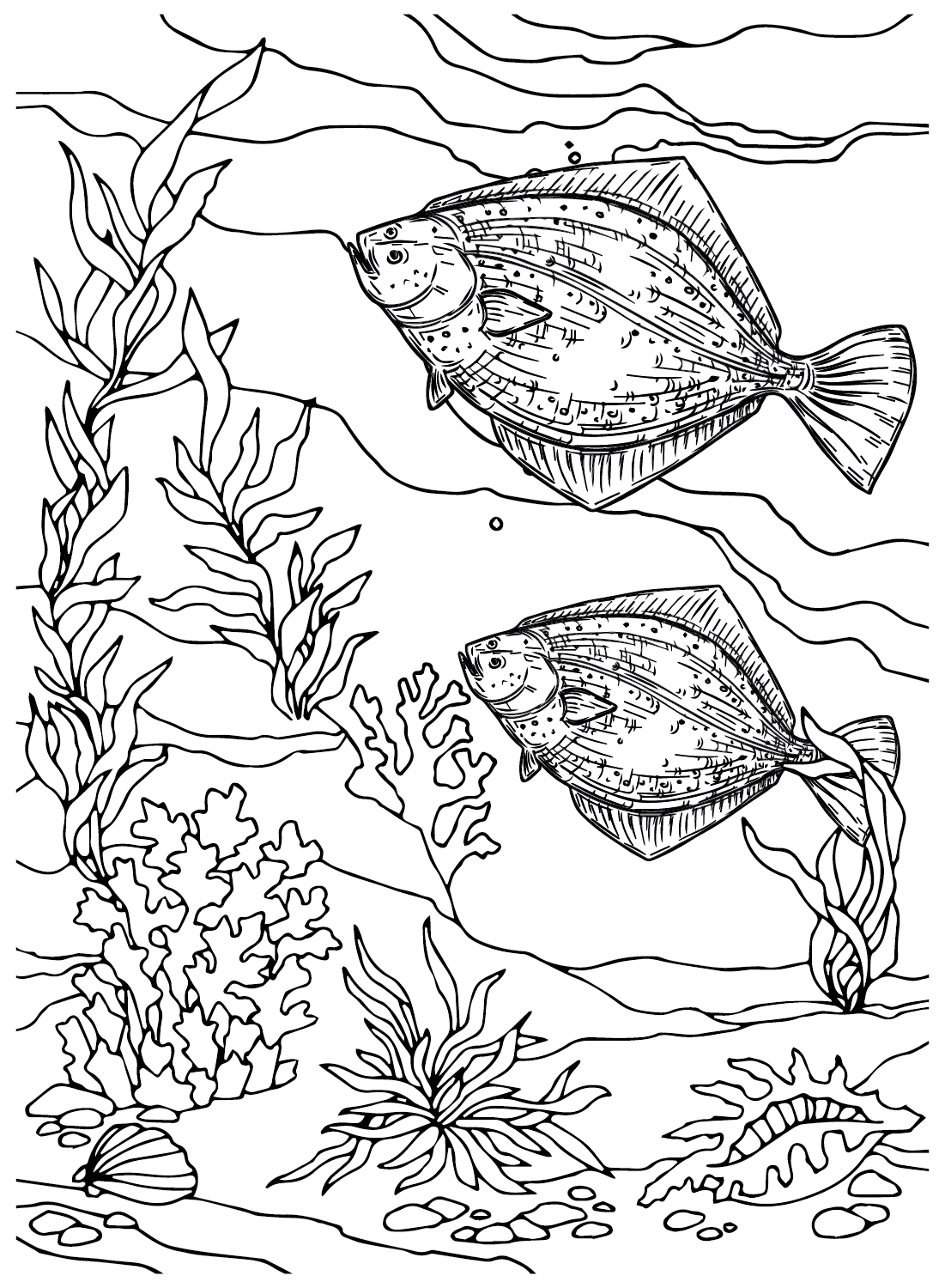
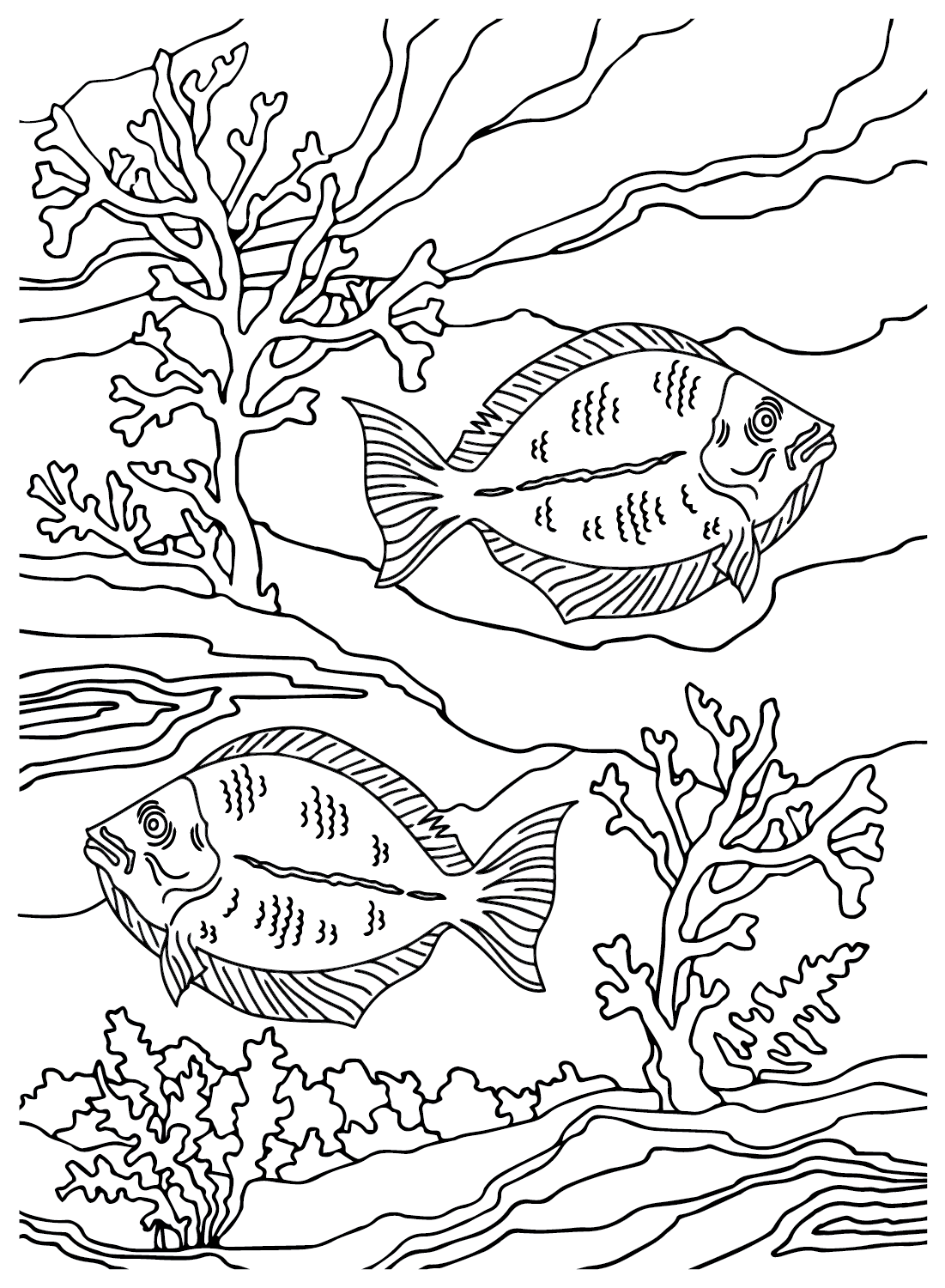
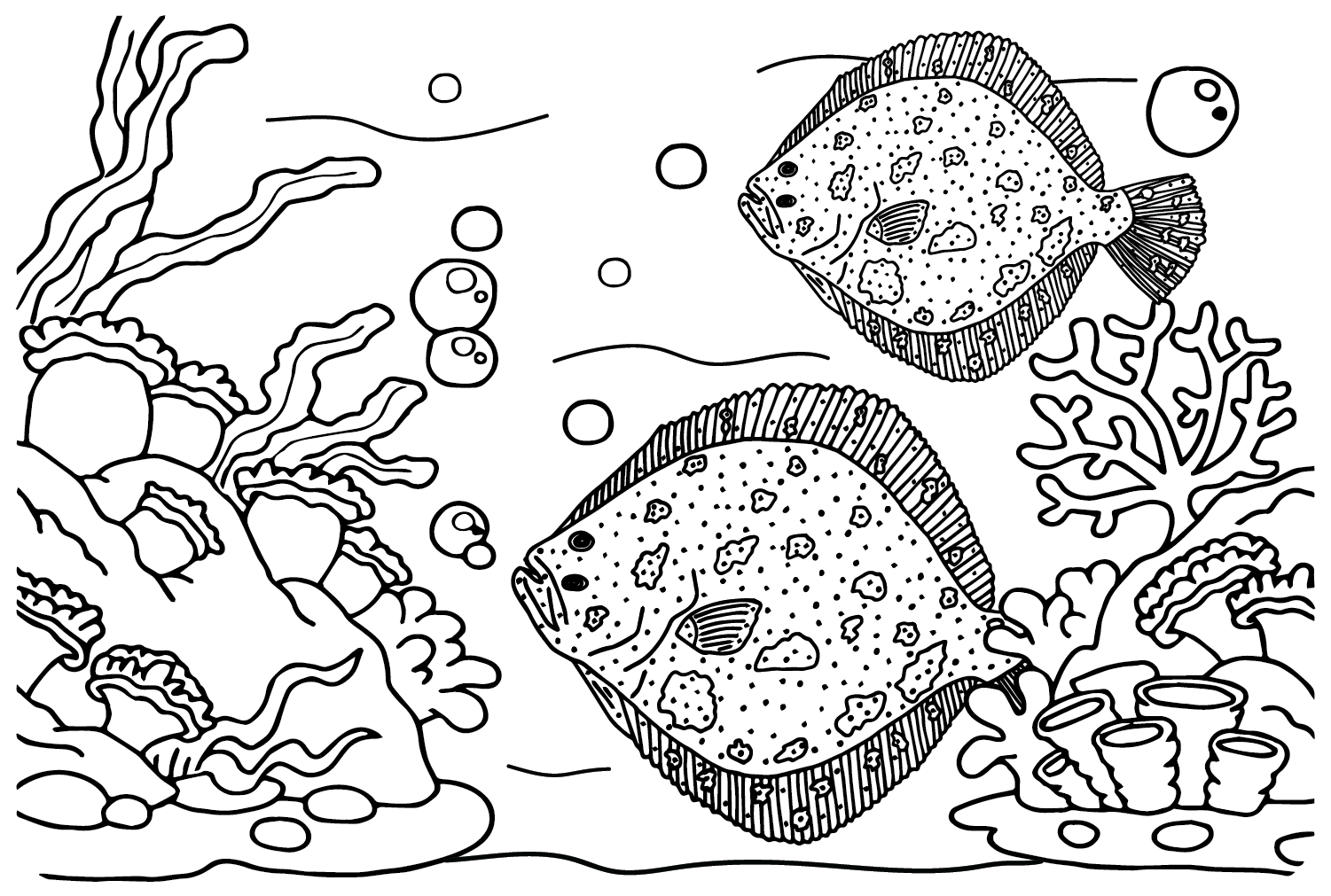
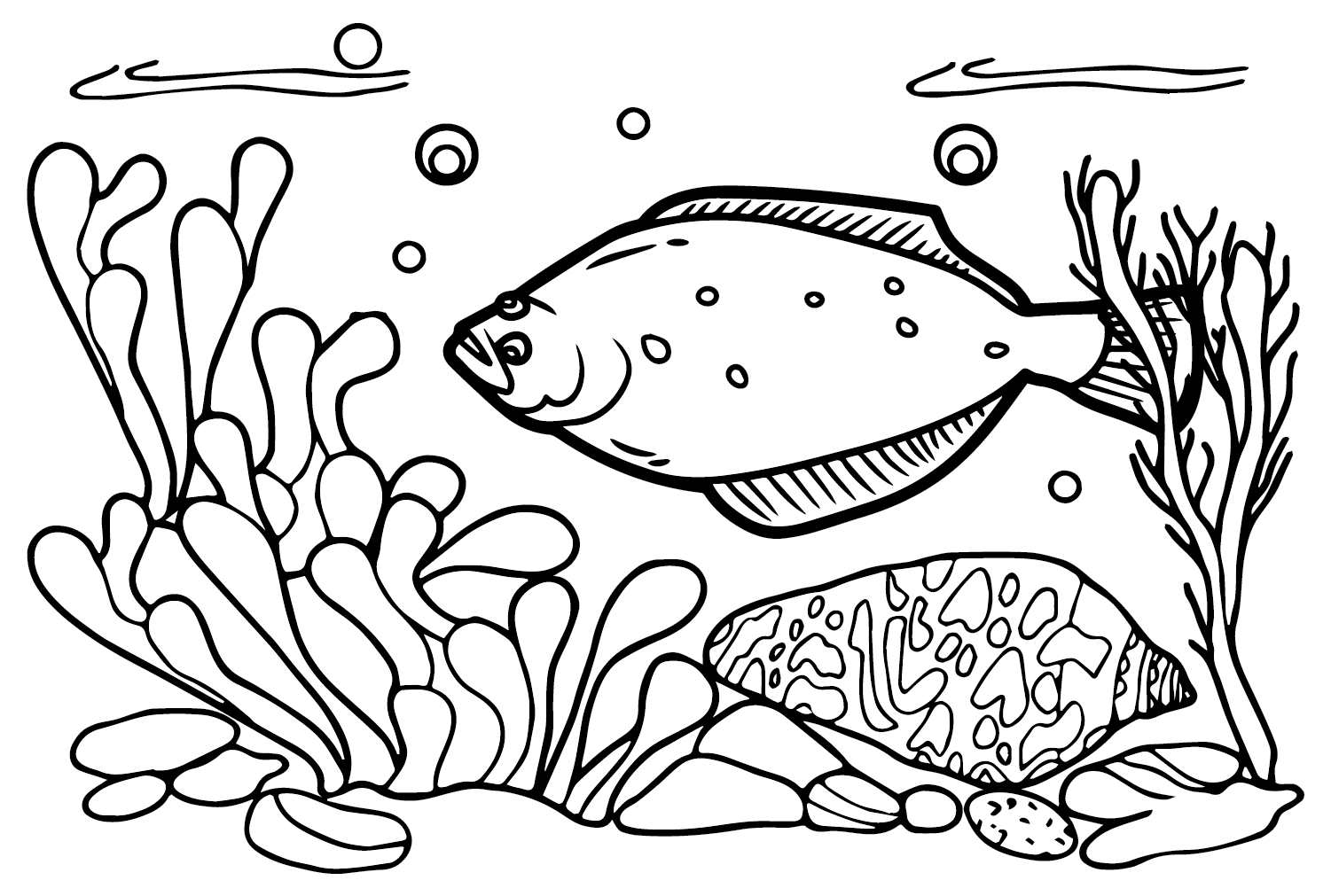
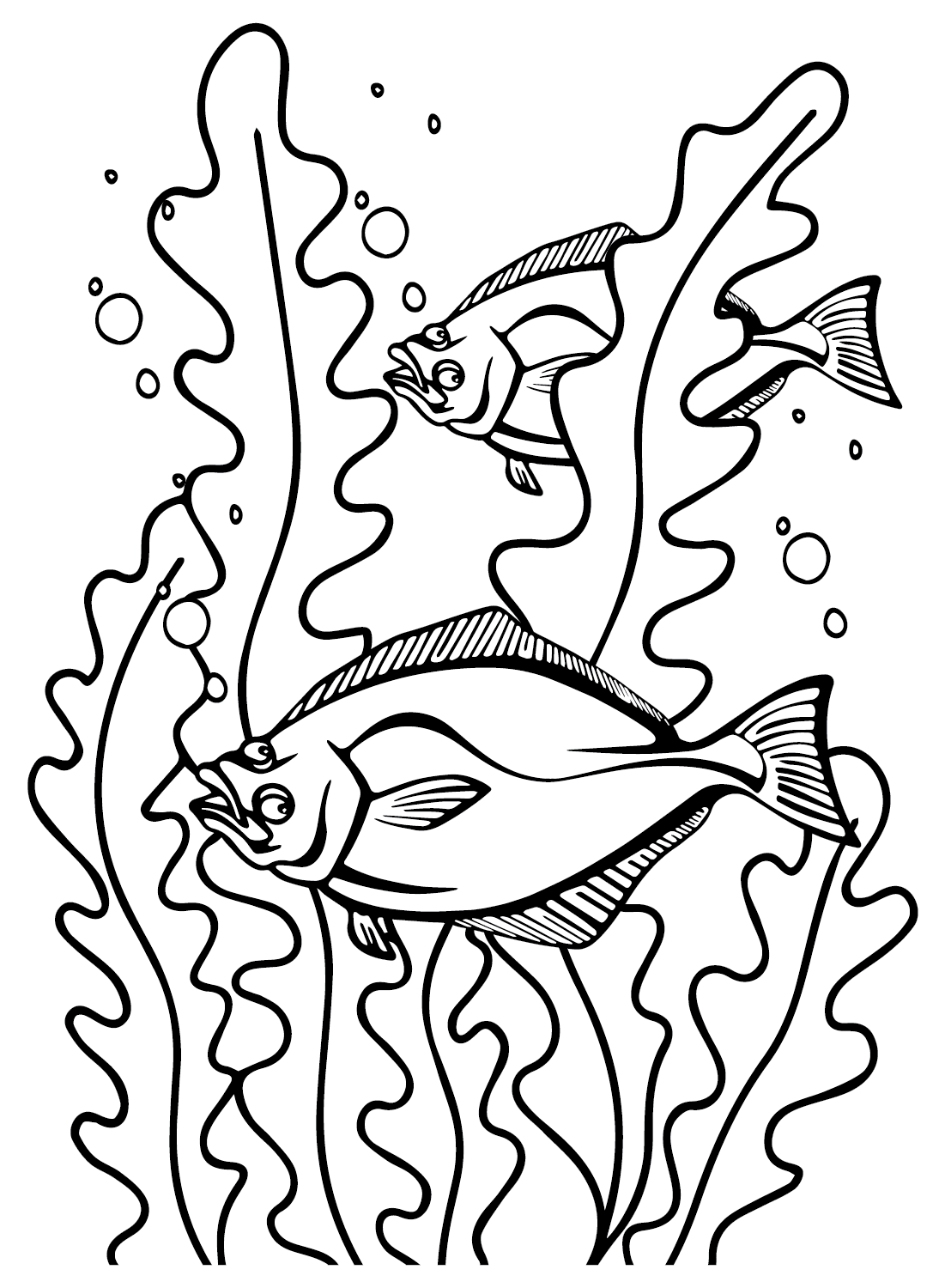
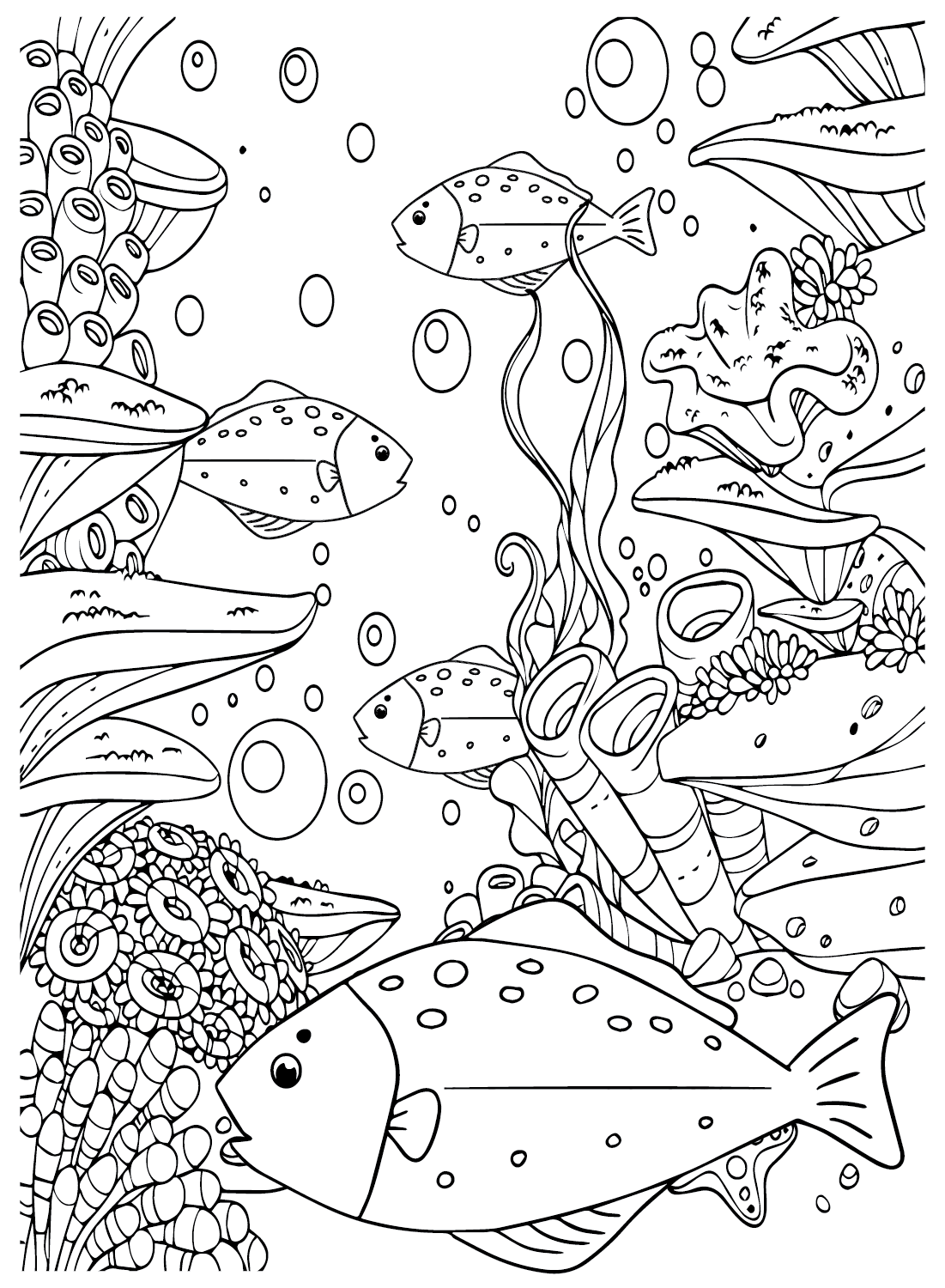
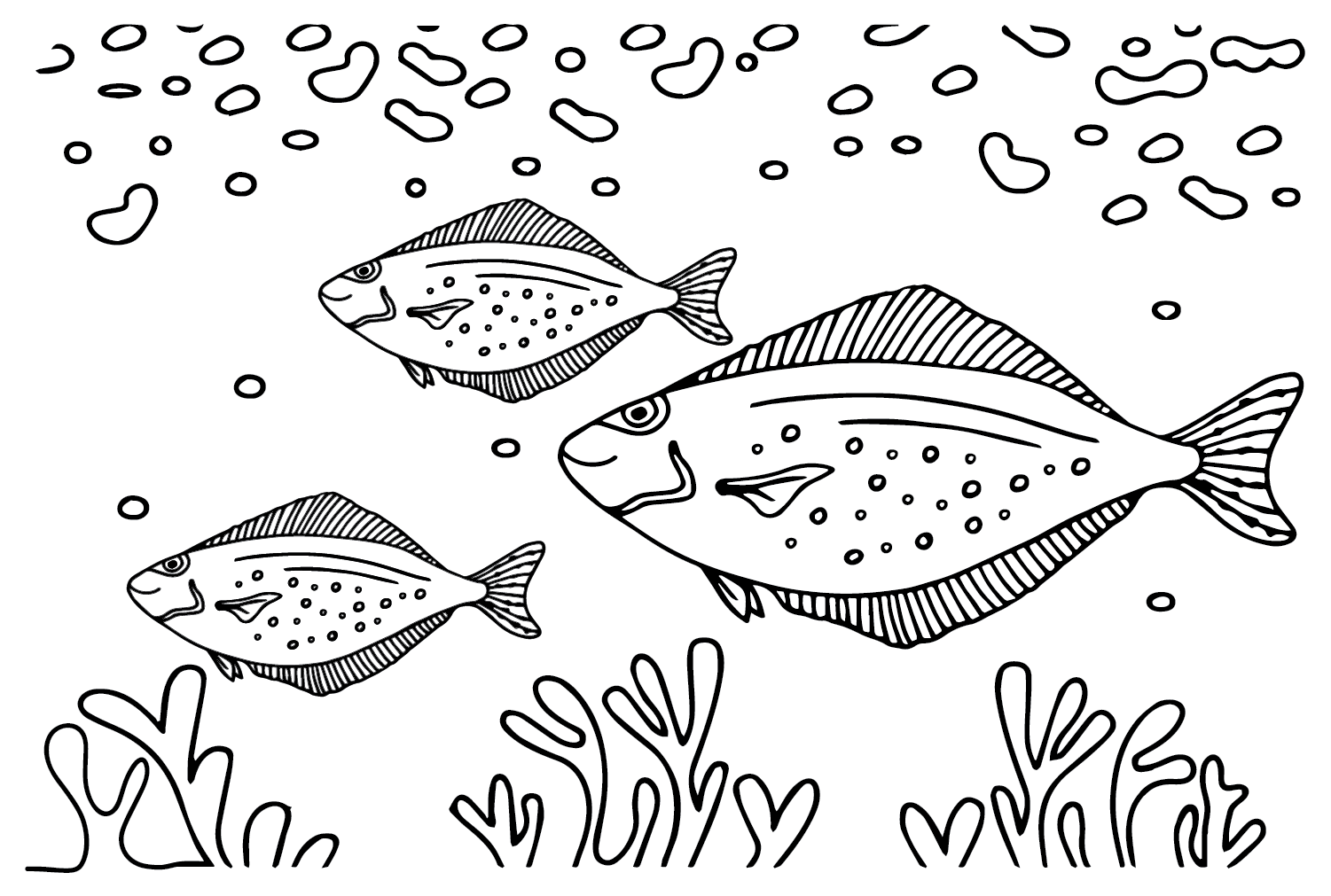
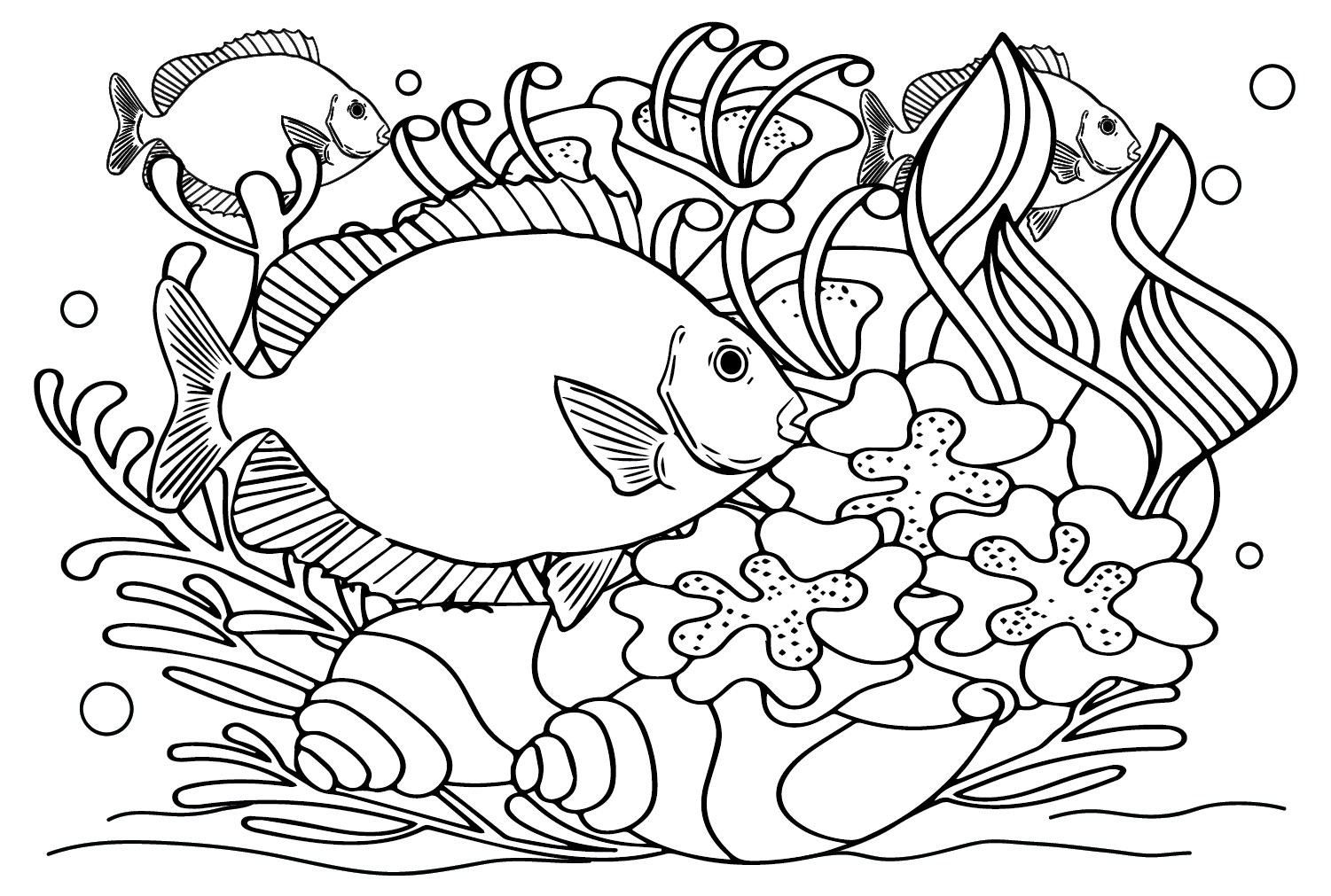
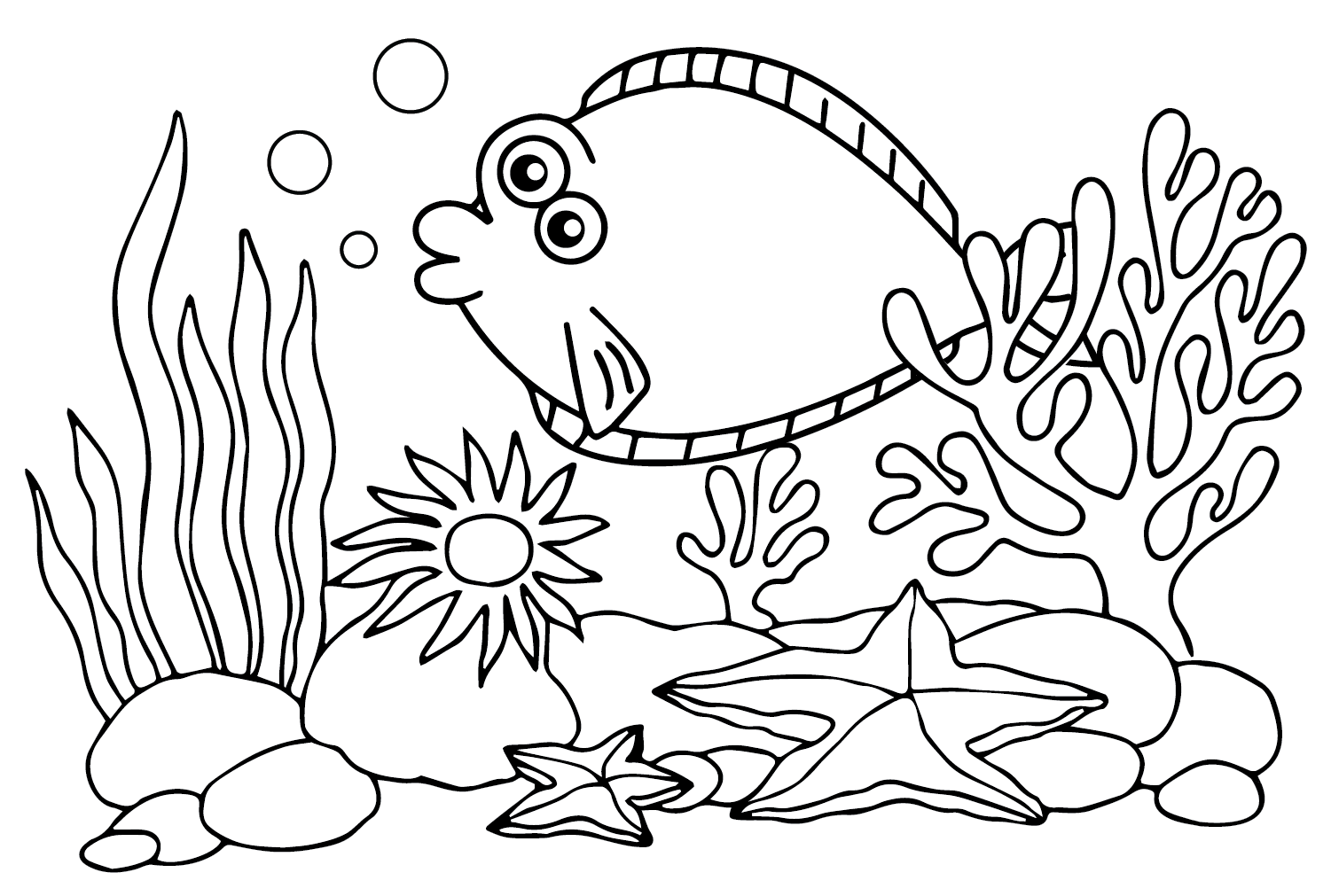
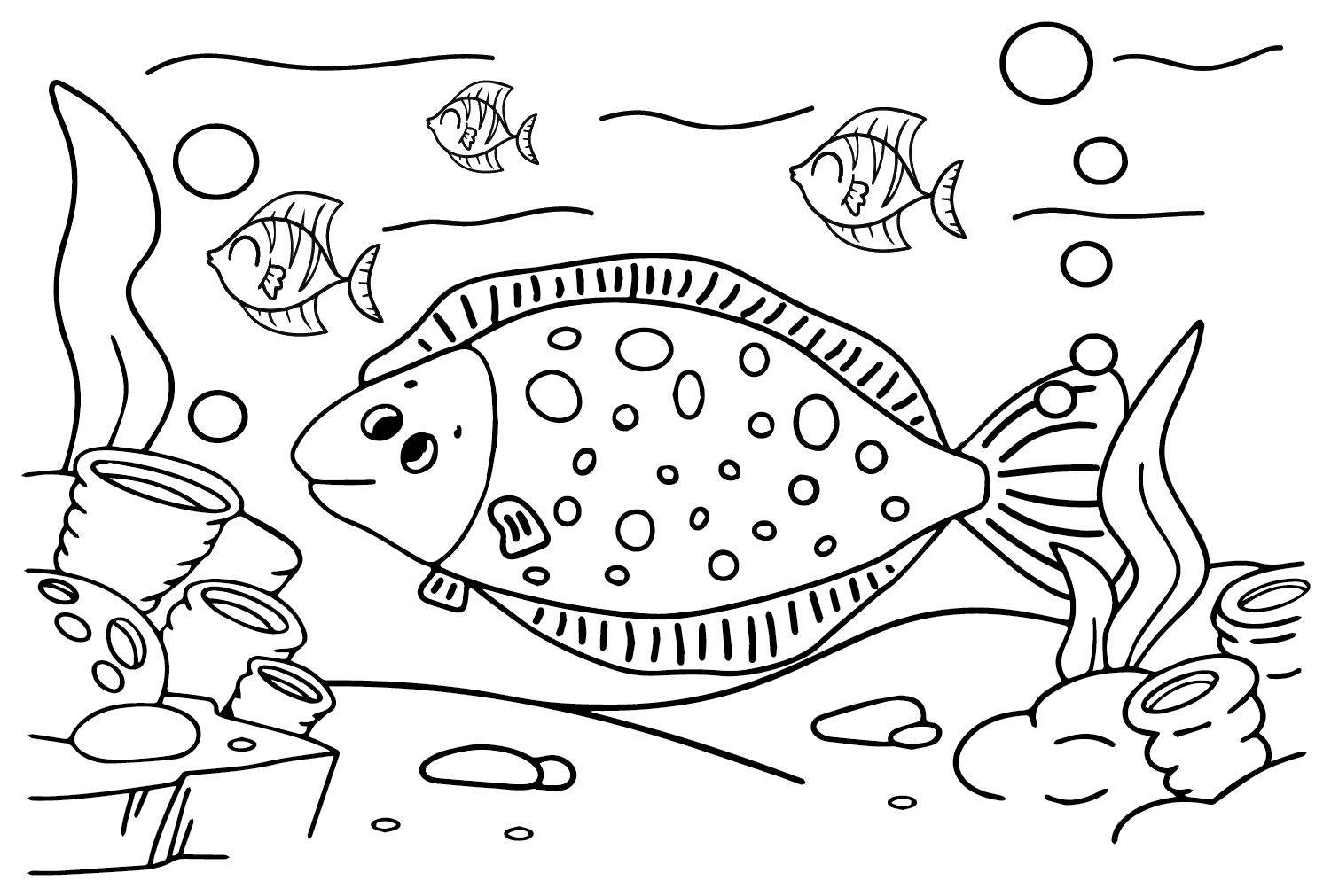
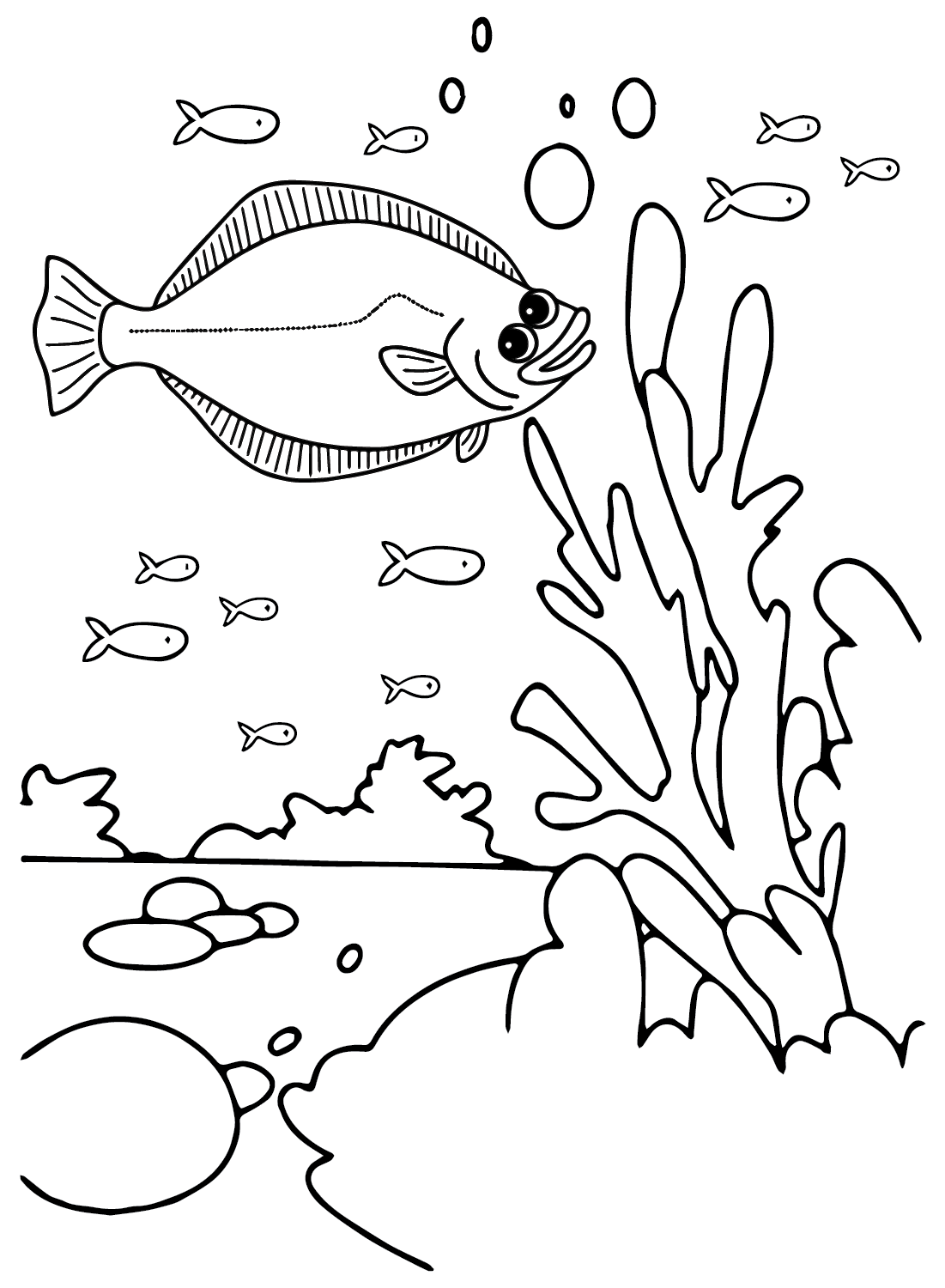
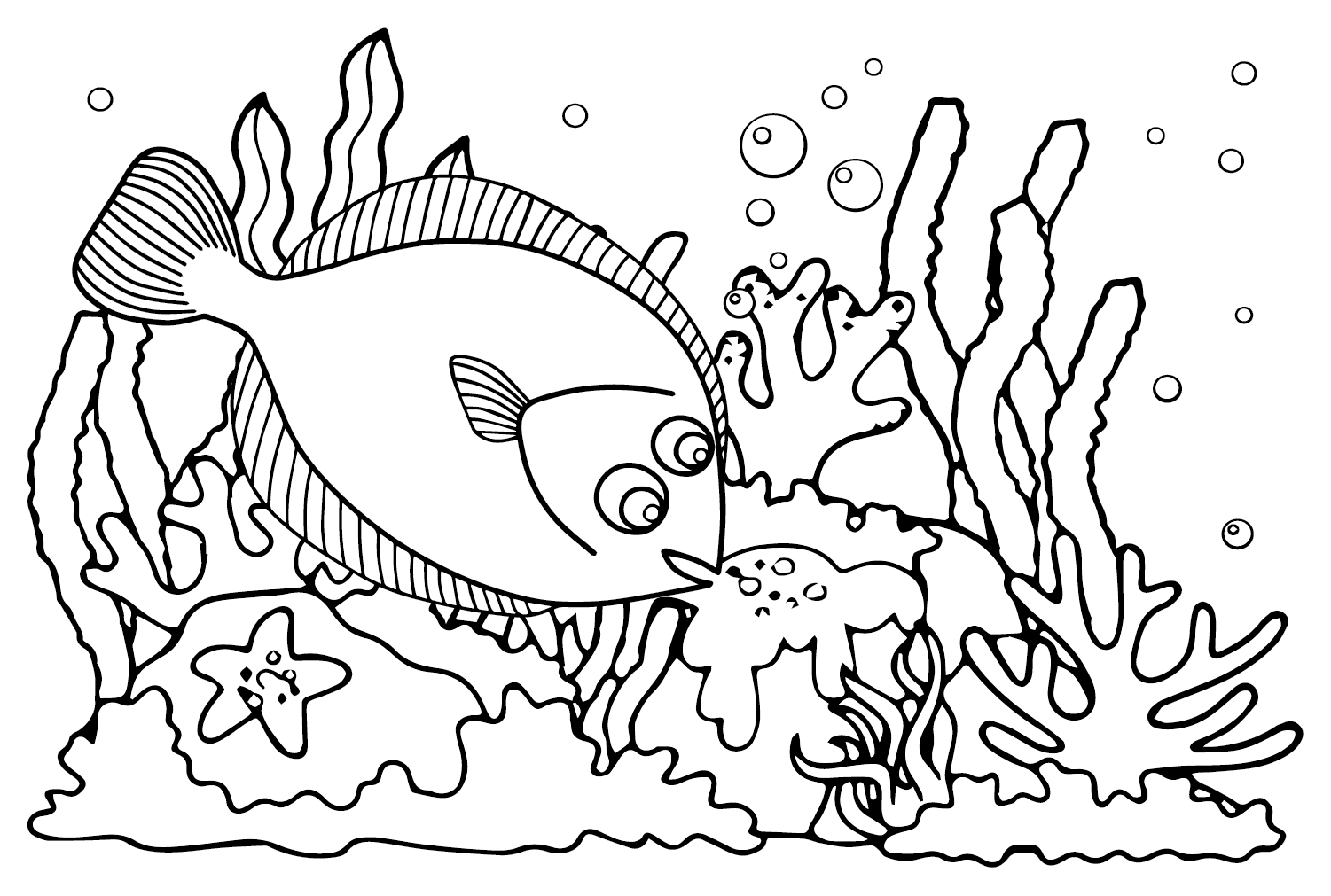
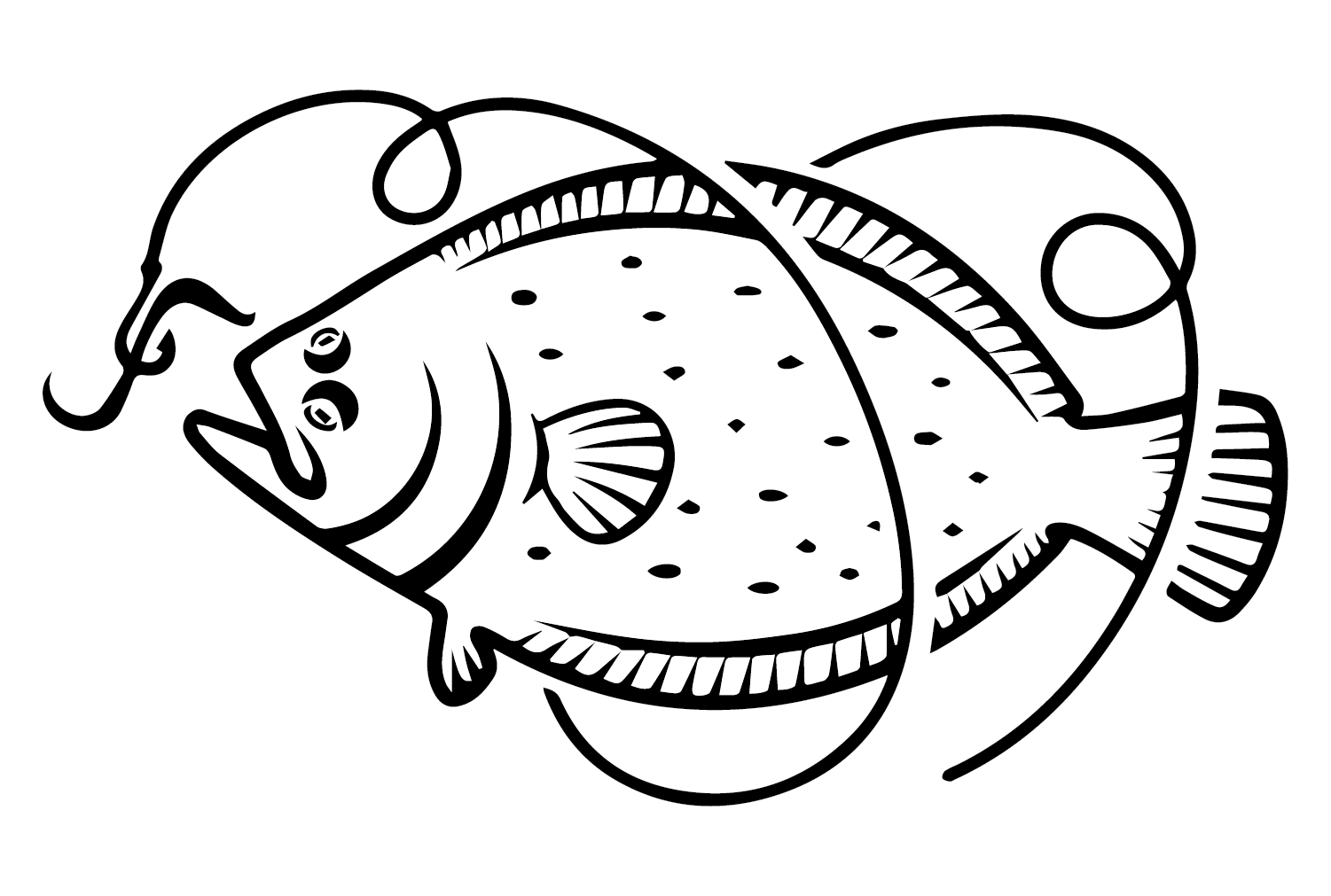
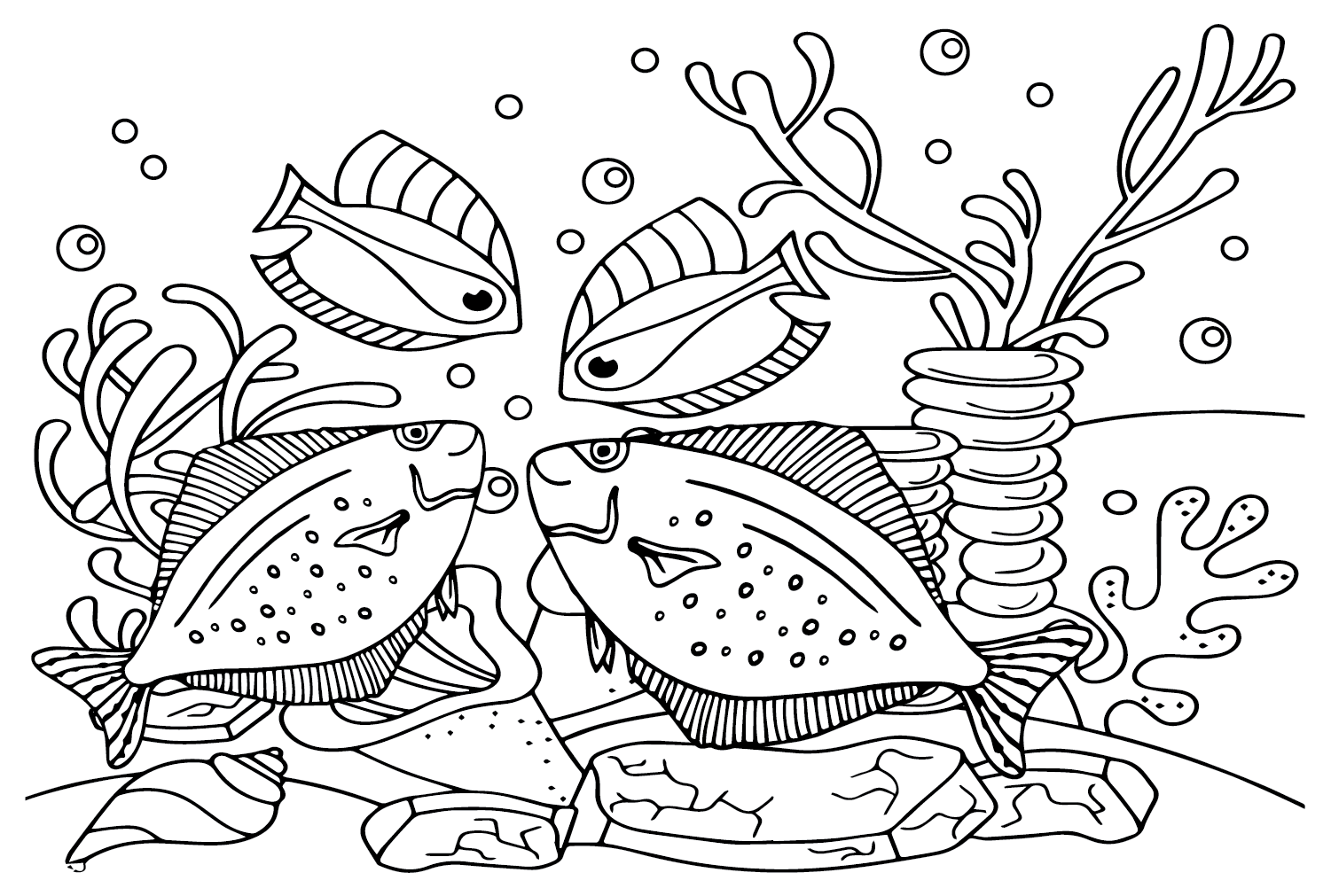
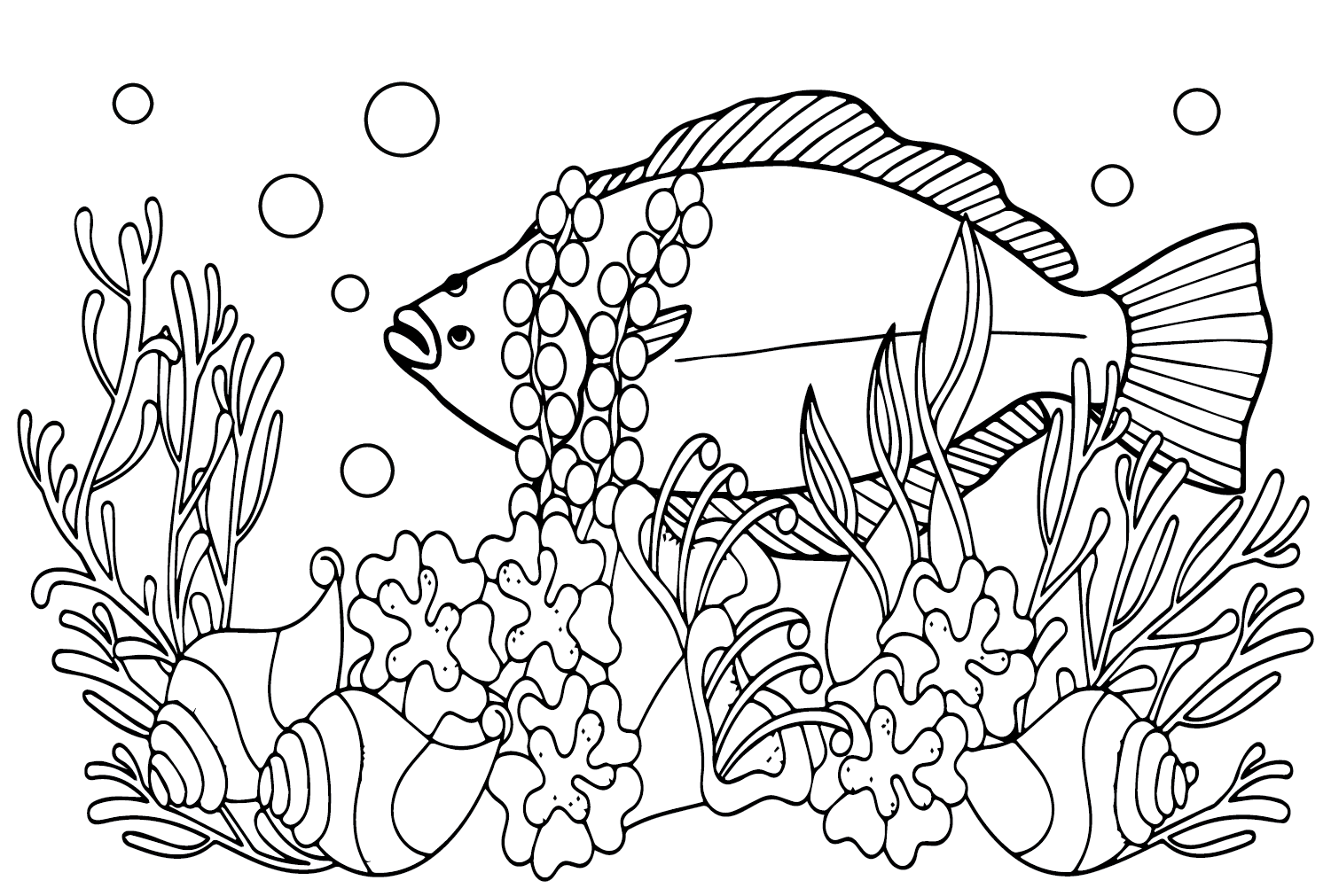
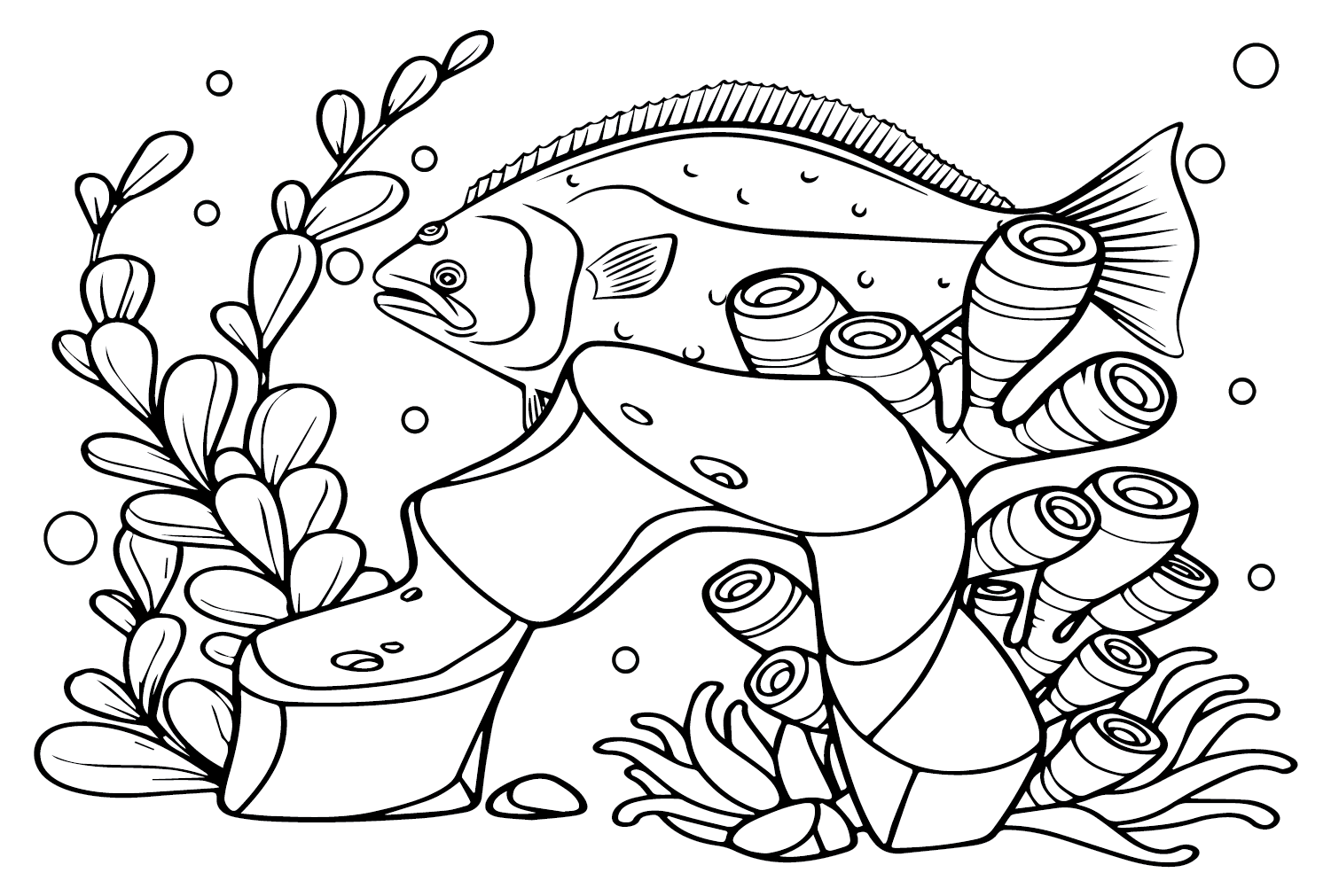
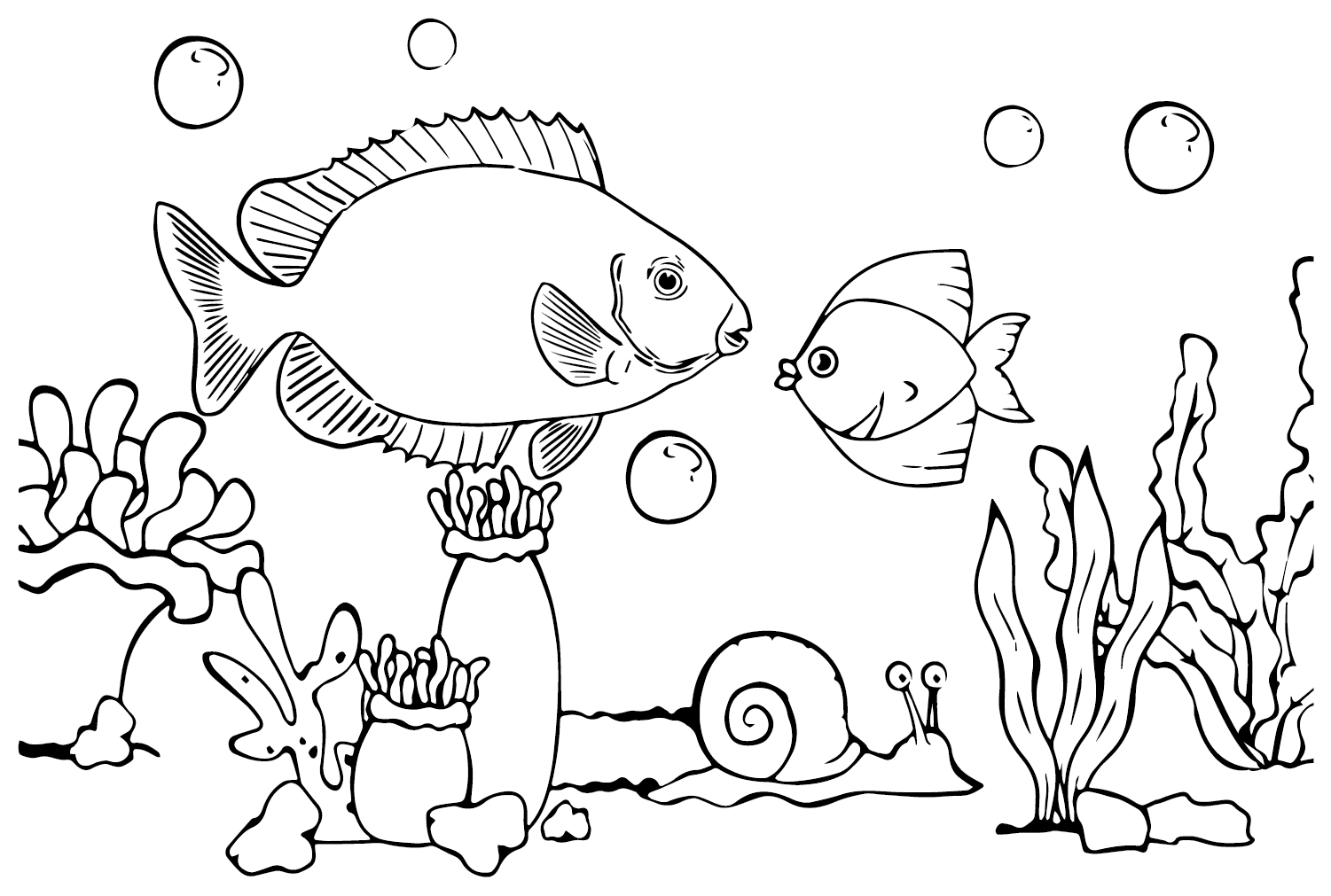
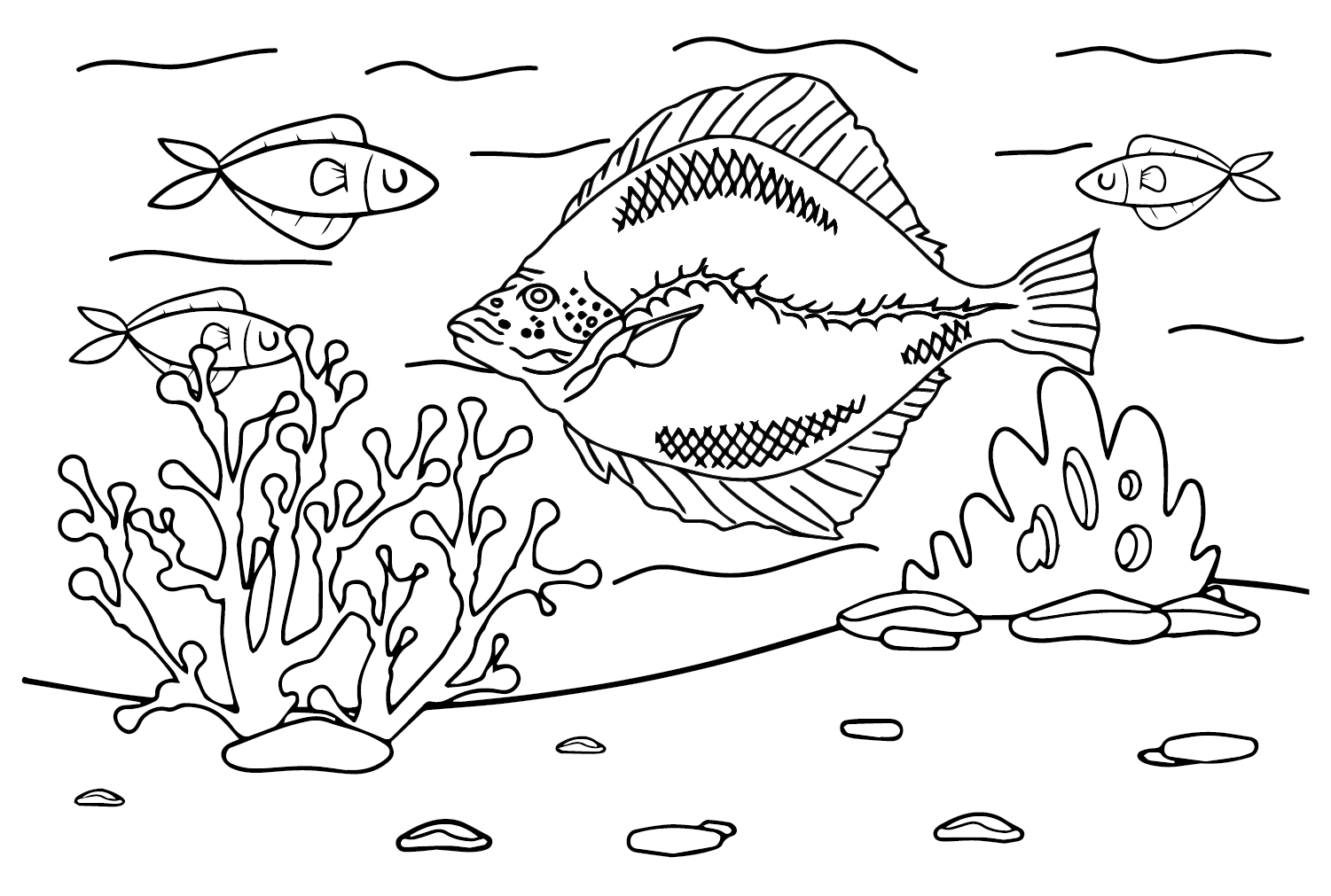
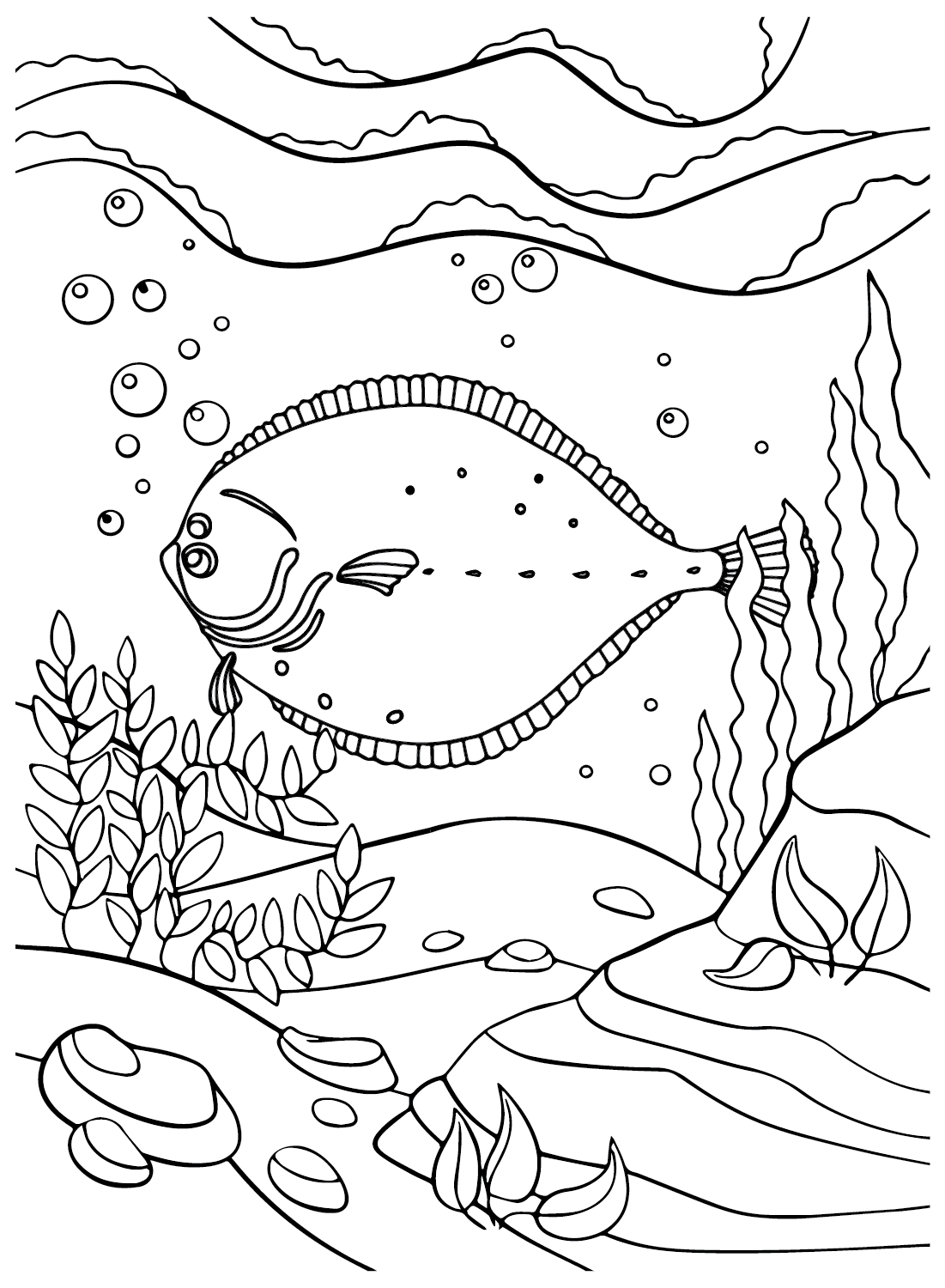
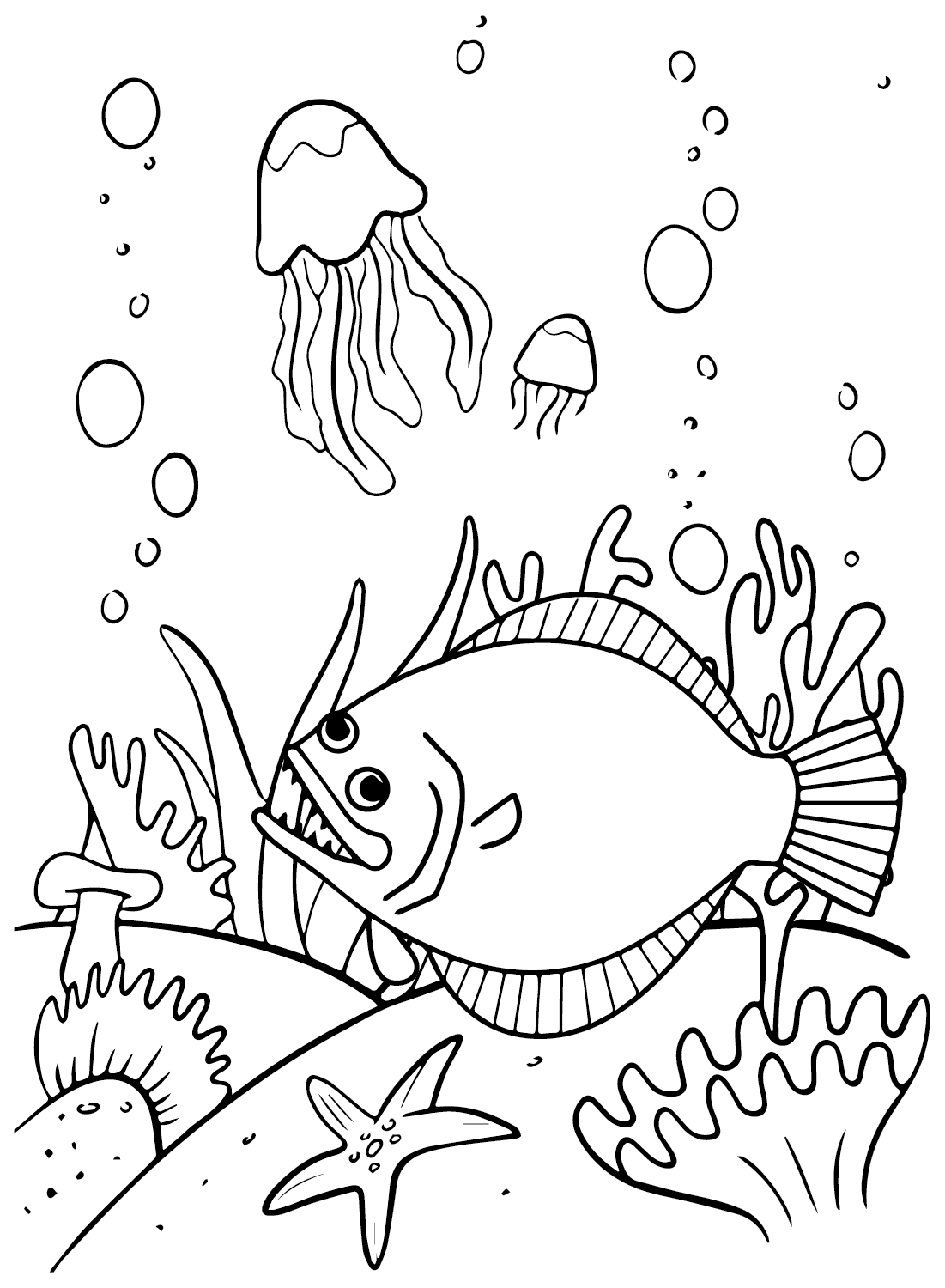
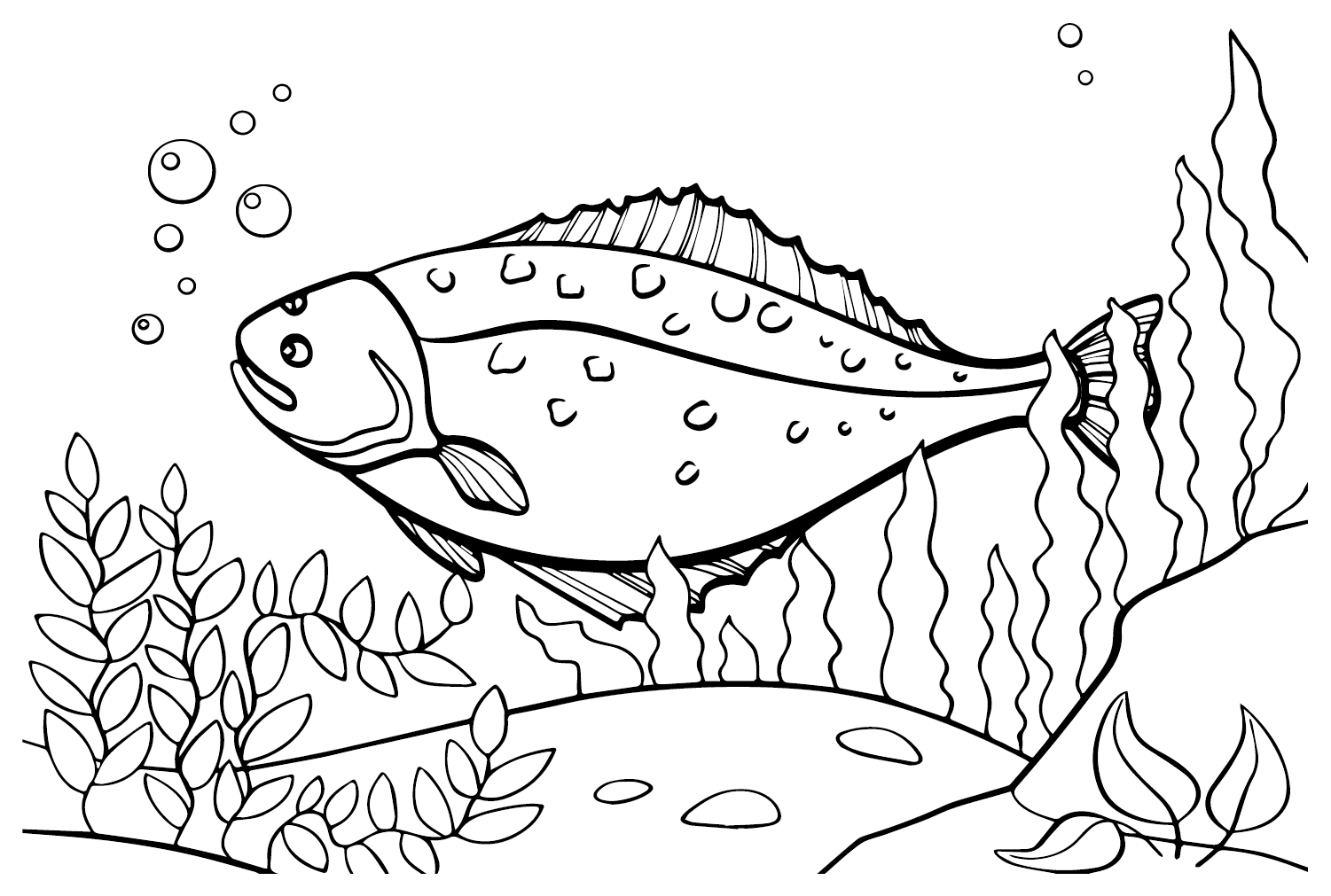
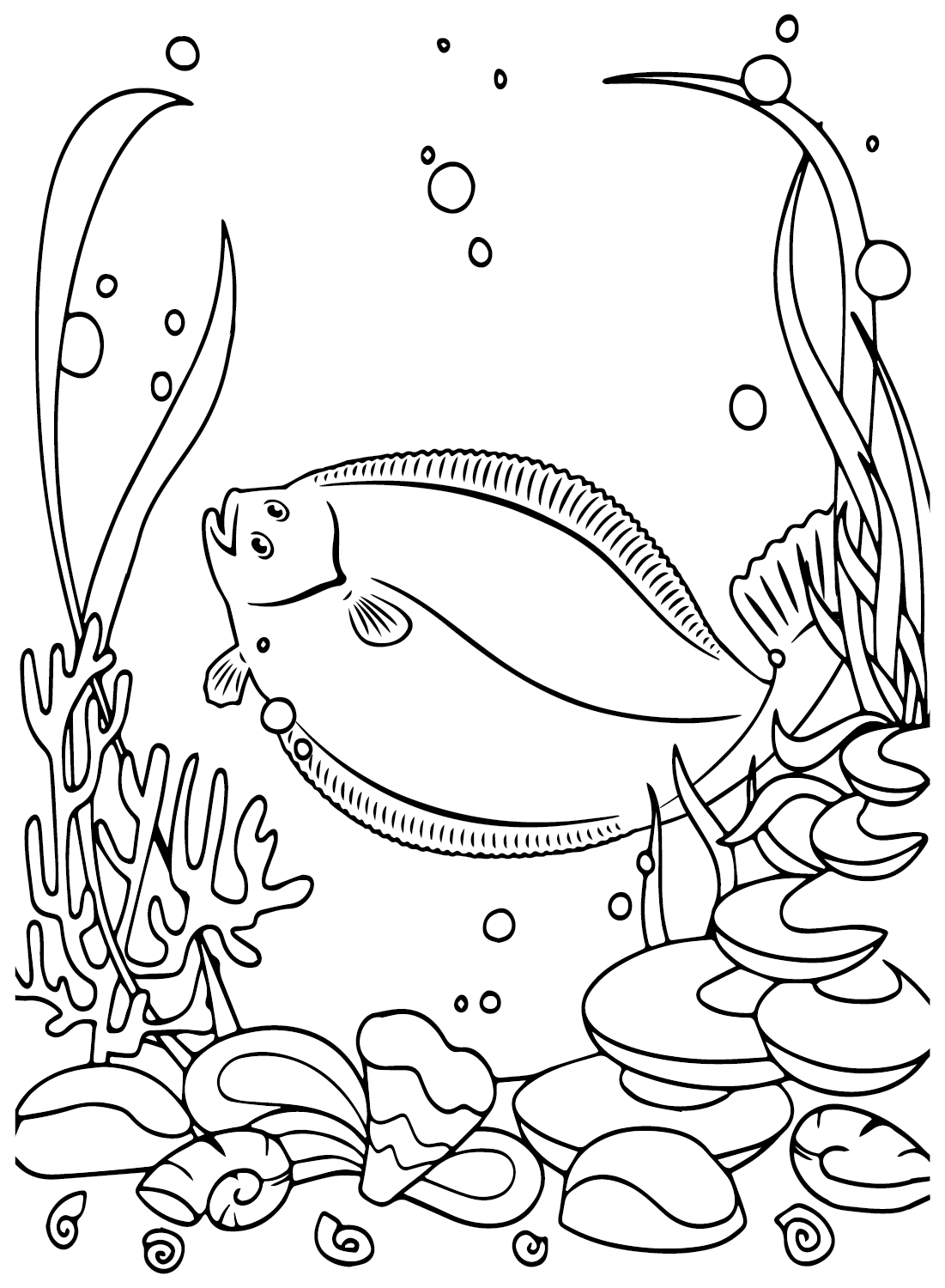
This collection groups its 24 designs into classic portraits, ready-to-print and art pages, and halibut in the ocean and fishing scenes, giving colorists several ways to bring this remarkable flatfish to life.
What Is Inside This Collection
The 24 Halibut pages are split into three natural groups based on style and setting.
Classic Portraits
This is the largest group, covering straightforward standing poses, a page dedicated to the Atlantic halibut specifically, and a playful cartoon-style design. A mottled brown or olive base for the top side pairs well with a pale white underside, matching the real color contrast between a halibut’s two sides.
Ready-to-Print and Art Pages
This is the collection’s biggest set, covering simplified, larger-outline designs built for quick printing alongside a step-by-step drawing page and a looser, more expressive art-style page. Bigger body shapes and fewer fine details make most of this group especially suited to younger colorists.
Halibut in the Ocean and Fishing Scenes
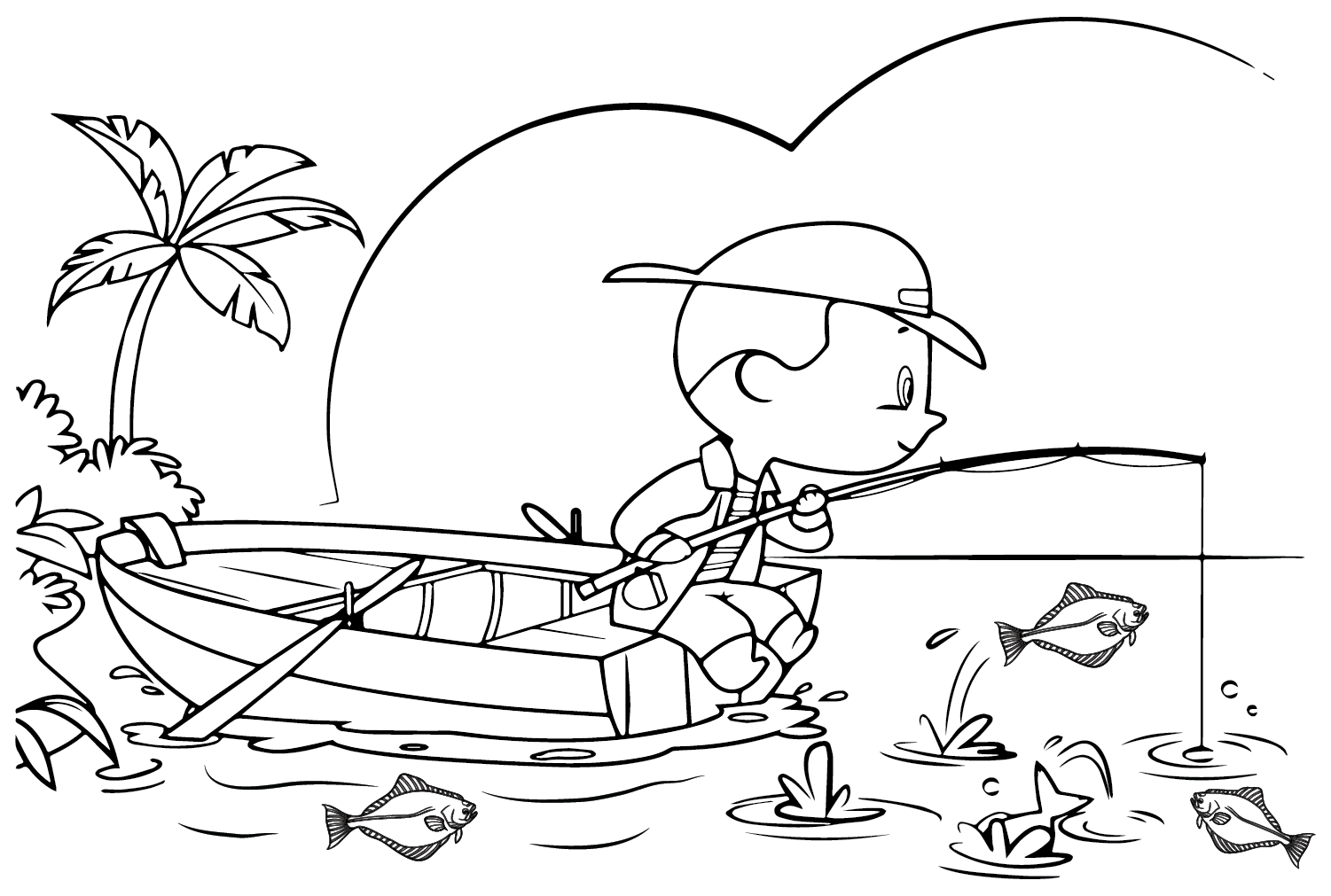
This group shows halibut swimming in open water or resting on the seafloor, along with pages featuring a boy fishing for halibut, tying into the fish’s real popularity as both a bottom-dweller and a prized game fish.
What Halibut Coloring Pages Do
A genuinely astonishing natural transformation. Few animals change shape as dramatically as a halibut, starting life with an eye on each side like a typical fish, then having one eye physically migrate across its skull as it grows. Coloring a halibut page gives a parent or teacher a natural, memorable way to introduce this real and rarely known example of animal metamorphosis.
Practicing detail on an asymmetrical body. The American Academy of Pediatrics identifies fine motor skill development as a core benefit of structured coloring for children ages 2 through 7, and a halibut’s mottled, textured top side next to its plain, pale underside gives children practice with two distinctly different coloring techniques on a single figure, rather than one uniform pattern.
Understanding a slow, patient life cycle. Halibut grow slowly and can live for decades, taking many years to reach adulthood. That detail offers children a concrete, real-world example of patience and gradual growth, tied to an animal with a genuinely unusual life story.
A steady, textured focus. A 2005 study in the Art Therapy Journal documented measurable reductions in anxiety following structured coloring sessions. Working through the mottled, camouflage-like pattern on a halibut’s top side offers a naturally repetitive, textured coloring task well suited to that calming benefit.
How to Color Halibut Pages Well
- Top side: Base the top side in a mottled Brown or Olive, layering in small darker patches to mimic the real camouflage pattern halibut use to blend with the seafloor.
- Underside: On pages showing the halibut from below or at an angle, keep the underside a pale White or cream, since real halibut lose pigment on this side during development.
- Eyes: Place both eyes close together on the upper side of the head, matching the real asymmetrical result of a halibut’s eye migration, rather than spacing them evenly apart.
- Fins: Color the long dorsal and anal fins running along the body’s edges a shade darker than the main body, keeping their outline smooth and continuous.
- Body shape: Keep the overall body flat, broad, and diamond or oval-shaped, since this laterally compressed build is central to a halibut’s real anatomy.
- Ocean-scene pages: On pages set underwater or on the seafloor, use sandy tans and soft blues for the background so the halibut’s mottled top side can still stand out through natural camouflage.
5 Creative Craft Ideas With Halibut Coloring Pages
1. Eye-migration fact card
Pair a colored halibut page with a simple fact about how its left eye actually moves across its skull as it grows, turning a strange-sounding detail into a fun science fact.
2. Before-and-after drawing
Draw a simple symmetrical baby halibut with an eye on each side, then compare it to a colored adult halibut page to illustrate the real transformation.
3. Camouflage matching game
Pair a colored halibut page with a picture of a sandy seafloor, and talk about how the fish’s mottled top side helps it blend in and stay hidden from predators.
4. Growth timeline poster
Pair a colored halibut page with a simple timeline noting that halibut can take 7 to 12 years to mature and may live for 50 years or more.
5. Nature journal bookmark
Cut out a colored classic portrait page, glue it to cardstock, and trim close to the outline for a durable bookmark.
Frequently Asked Questions
What are Halibut coloring pages?
Halibut coloring pages are free printable and online designs featuring this large flatfish in different poses and settings, including classic portraits, ready-to-print and art pages, and ocean and fishing scenes. This collection includes 24 designs that can be downloaded as PDFs or colored directly in the browser.
Why do halibut have both eyes on one side of their head?
Halibut are born with one eye on each side of their head, just like most fish. As they grow to about an inch long, the left eye migrates over the top of the skull to join the right eye, and the fish then settles onto its now-pale left side, leaving both eyes facing upward.
How big do halibut get?
True halibuts, the Atlantic and Pacific species, are the largest of all flatfish and can grow to 8 or 9 feet long, with some individuals weighing several hundred pounds.
How long do halibut live?
Halibut are slow-growing and long-lived, with some individuals living more than 50 years, and they typically take 7 to 12 years to reach full maturity.
Why is a halibut’s underside a different color than its top side?
During a halibut’s early development, the side of its body that ends up facing the seafloor, typically the left side, loses its pigment and fades to white. In contrast, the upward-facing side stays dark and mottled for camouflage.
Is “halibut” the name of one specific fish?
Only the Atlantic halibut and Pacific halibut are considered true halibuts, both in the genus Hippoglossus. Other fish that include “halibut” in their common name, like Greenland halibut, belong to different genera and have some differences in body shape and eye placement.
Are Halibut coloring pages suitable for young children?
Yes. The simplified, ready-to-print pages and cartoon-style design work well for toddlers and young children, while the classic portraits and fishing scenes give older kids and fish enthusiasts more detailed options to color as well.
How many Halibut coloring pages are available to download?
This collection includes 24 designs, covering classic portraits, ready-to-print and art pages, and ocean and fishing scenes. Every page can be downloaded as a free PDF or colored online.
Start Coloring
Download any page by clicking the design. No account, email, or payment is required. Pages print directly from the browser at full resolution or open in the online coloring tool for screen use. Share finished pages on Facebook or Pinterest with the share buttons at the top of each design page.