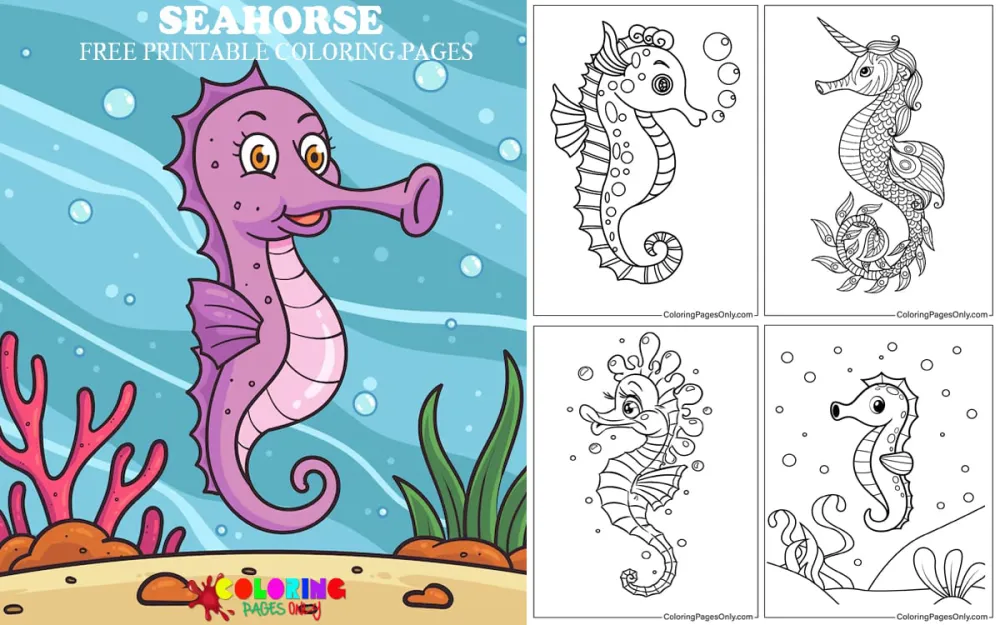
Seahorse coloring pages: 59 printable PDF designs spanning real named species, artistic pattern styles, seahorses in a scene, and plenty of simple, cute, and baby seahorse portraits. Each page can be downloaded as a PDF to print or colored online in the browser.
Seahorses are one of the very few animals where the male, not the female, carries the pregnancy. During mating, the female deposits her eggs into a pouch on the male’s body, he fertilizes them internally, and he carries and nourishes the developing embryos until they’re ready to be born, sometimes numbering in the hundreds at once. That’s not the only thing that sets a seahorse apart from a typical fish: it has no stomach and no teeth, so food passes through its body quickly and it needs to eat almost constantly, and it’s a surprisingly poor swimmer, propelled only by a small fin on its back, which is why it spends most of its time anchored to seagrass or coral with its curled, prehensile tail rather than swimming freely through open water. A handful of pages in this collection are named for real species, including the big belly seahorse, the largest in the genus, while most of the rest lean into a friendlier, more playful cartoon style.
With 59 pages split between real species, artistic styles, scenes, simple portraits, and cute cartoon designs, the set works as a quick single-page project and as a deeper look at one of the ocean’s strangest animals.

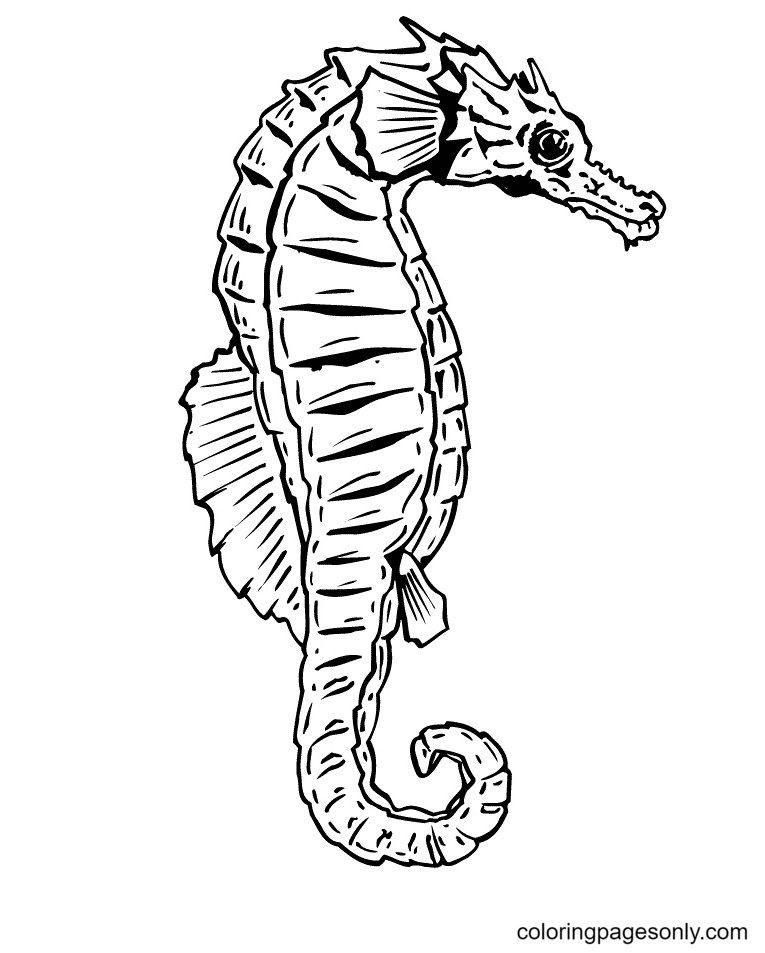
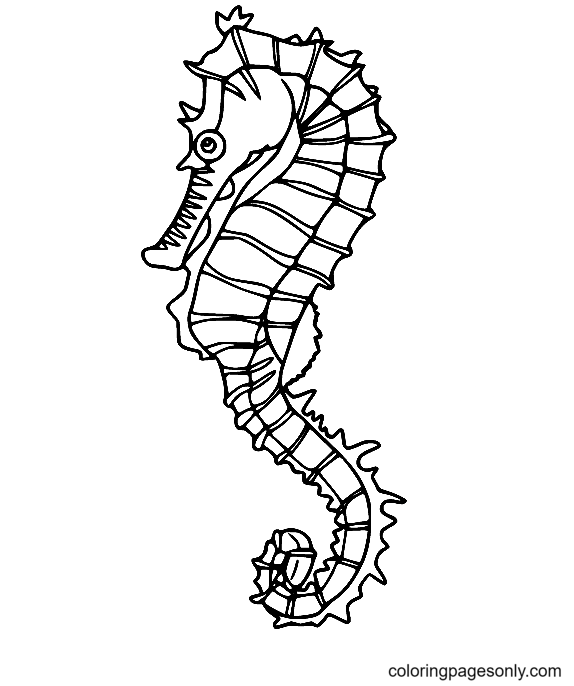
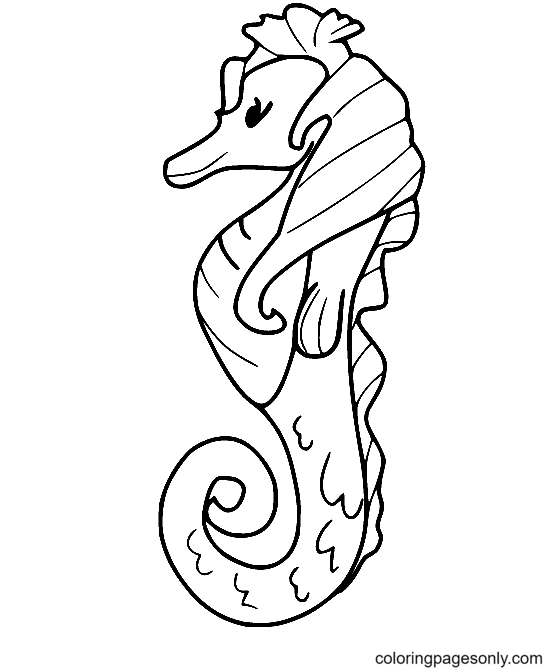
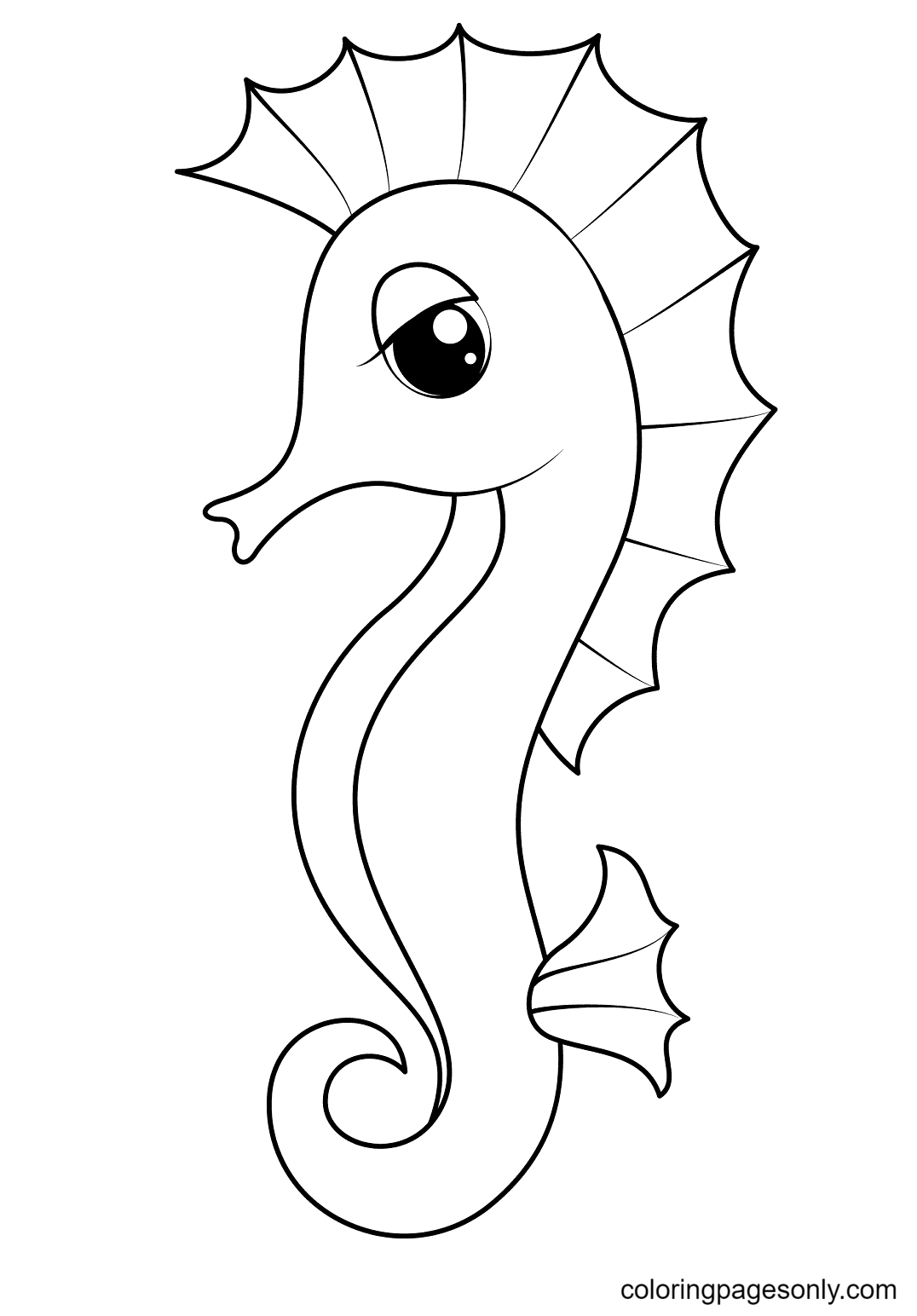
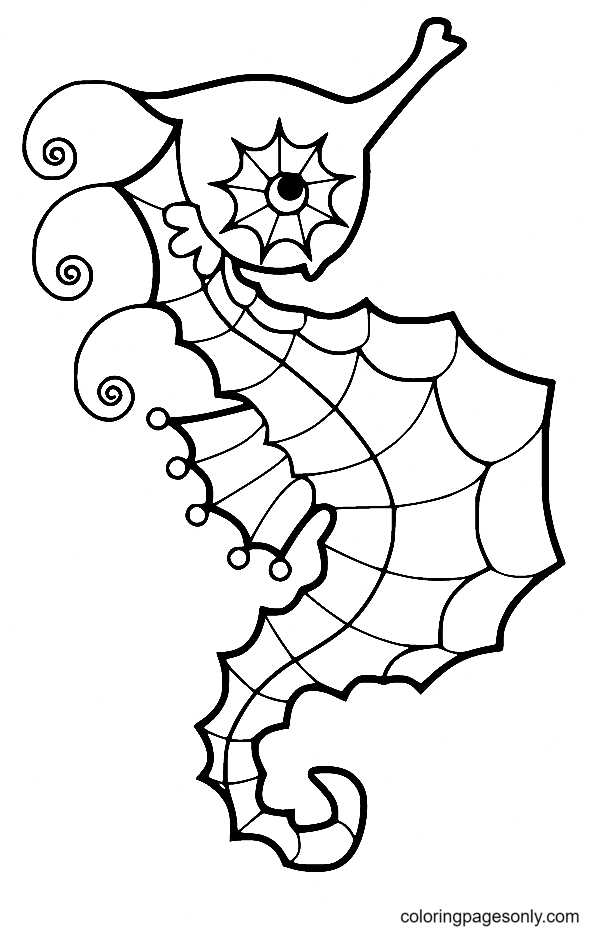
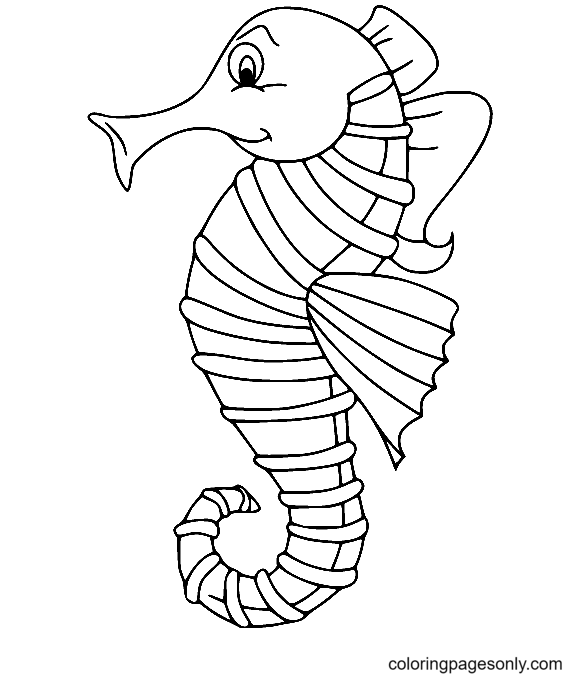
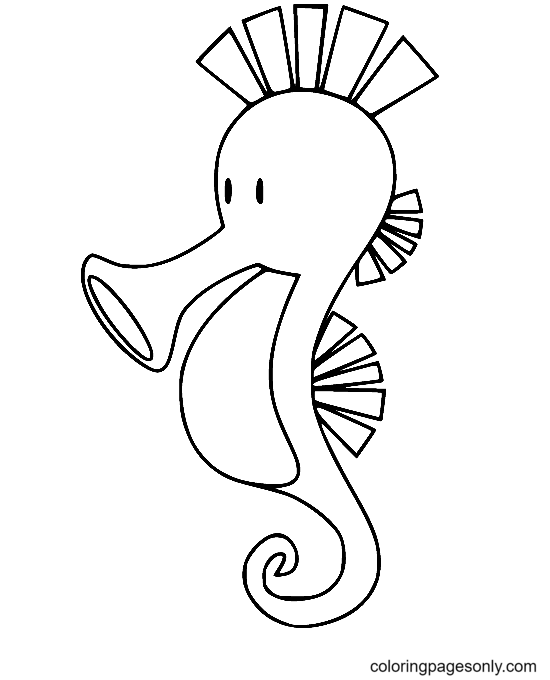
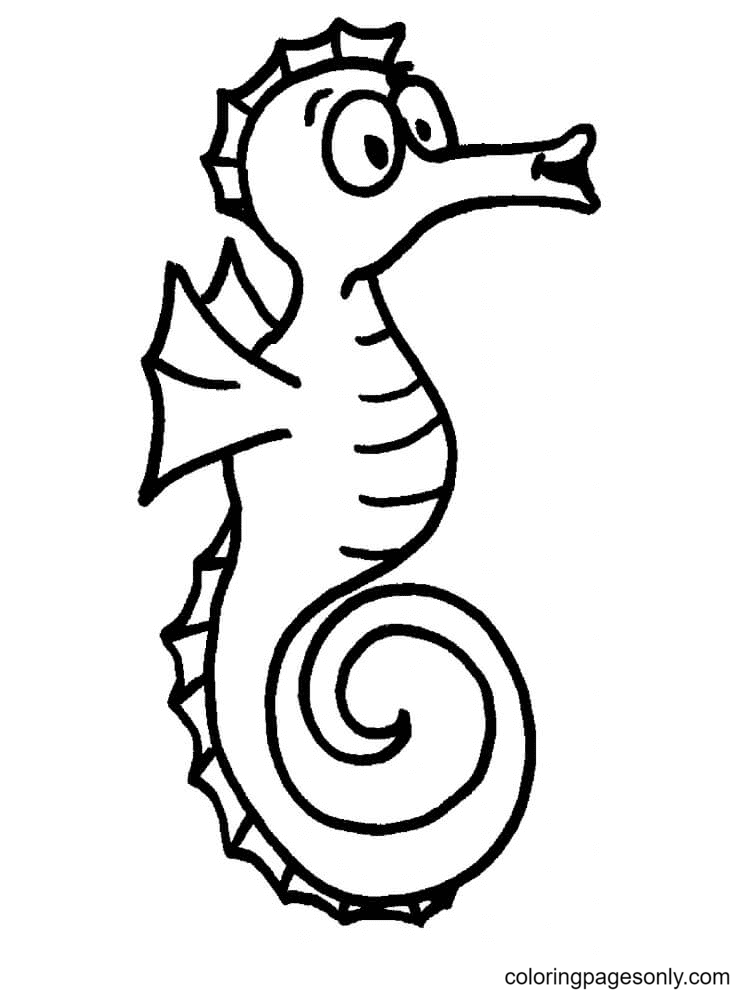
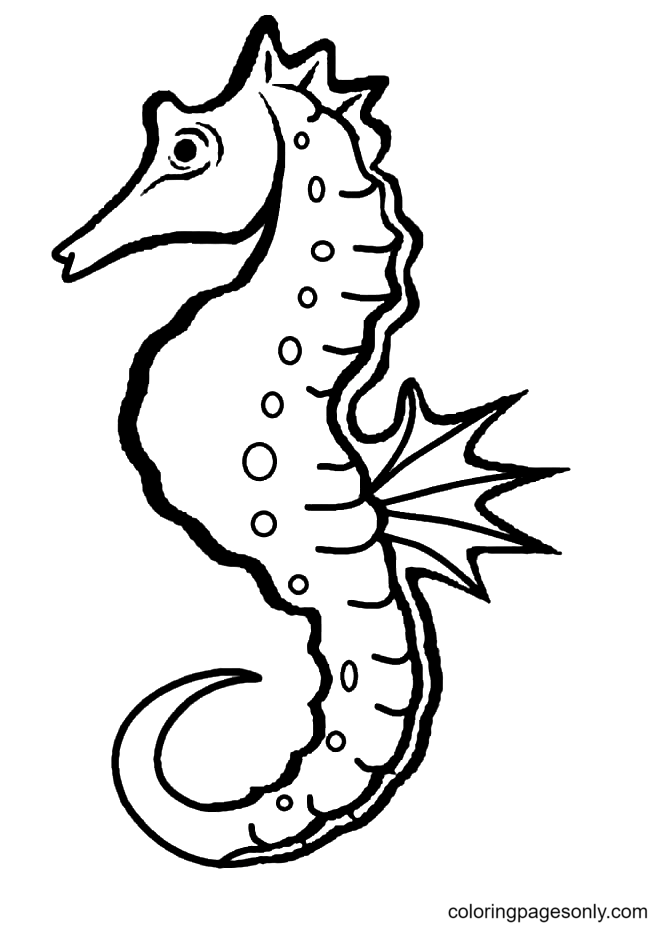
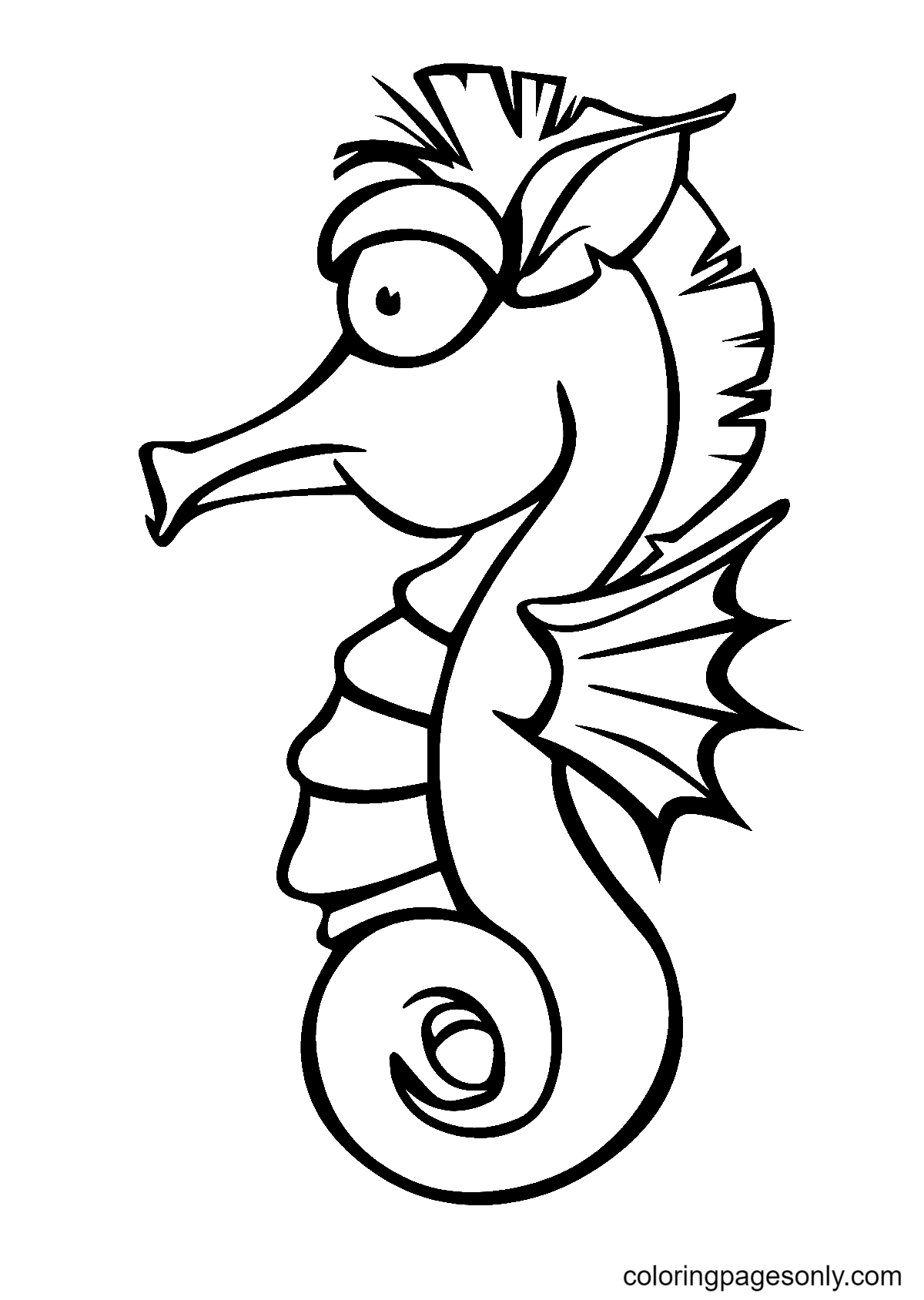
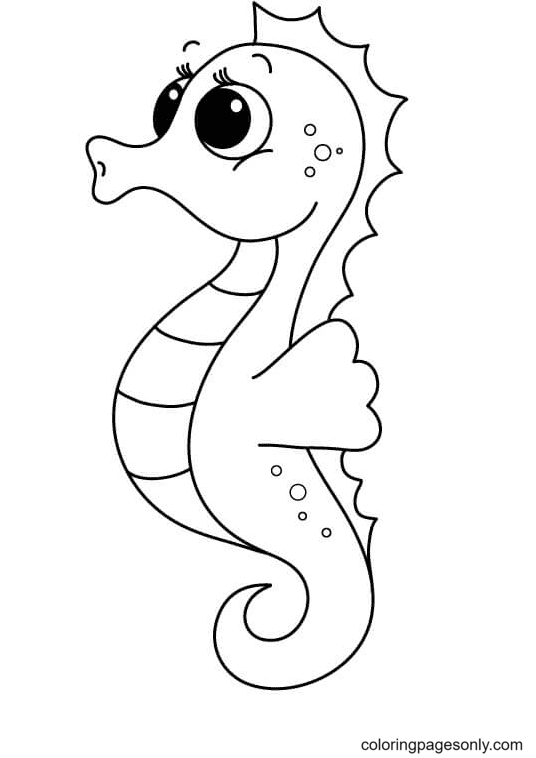
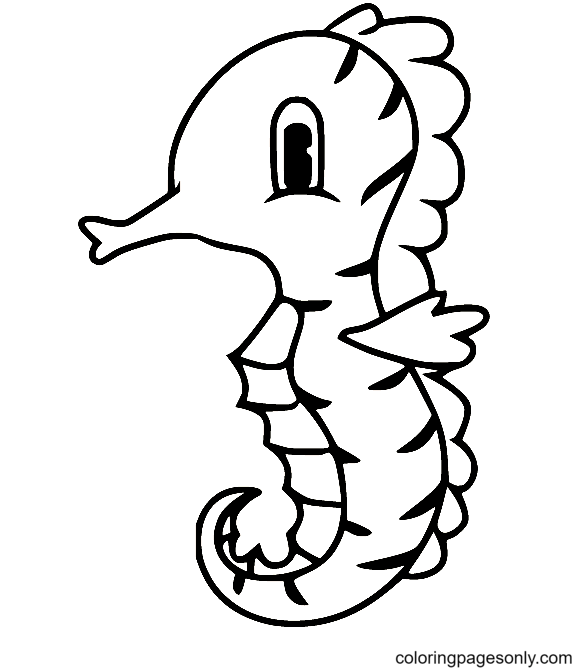
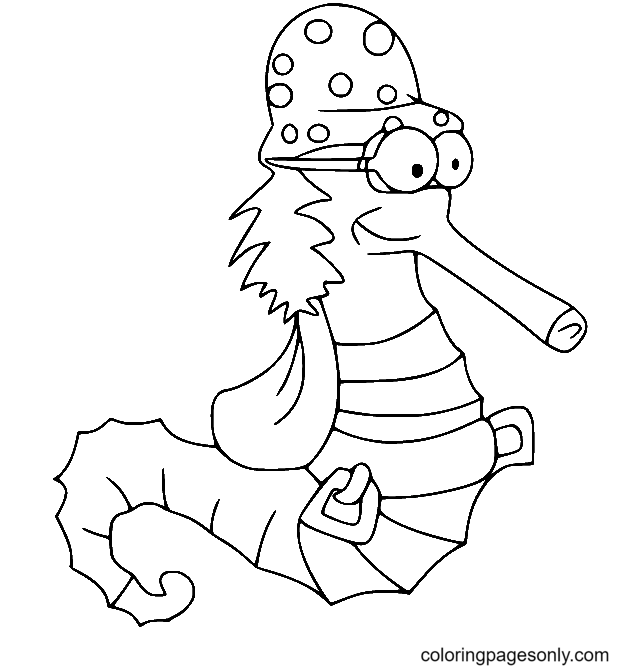
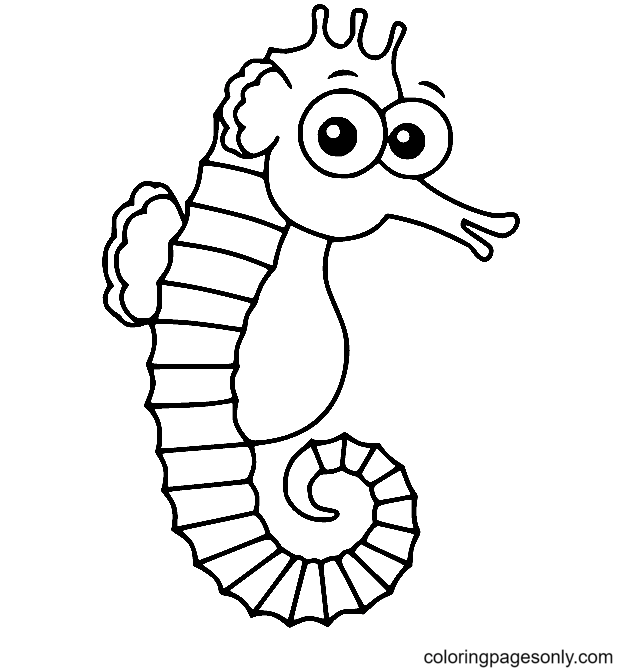
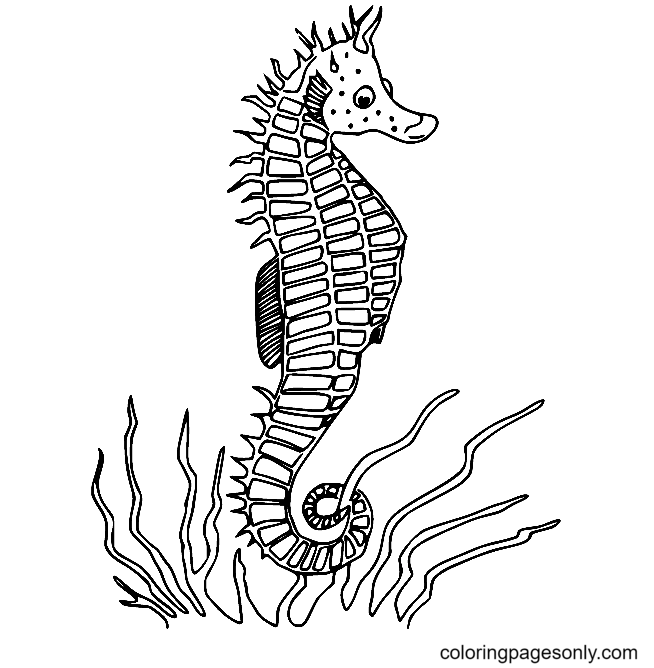


What Is Inside This Collection
This collection groups its 59 pages by realism and style, since a real named species, an artistic pattern, and a cute cartoon seahorse each call for a different coloring approach.
Real Named Seahorse Species
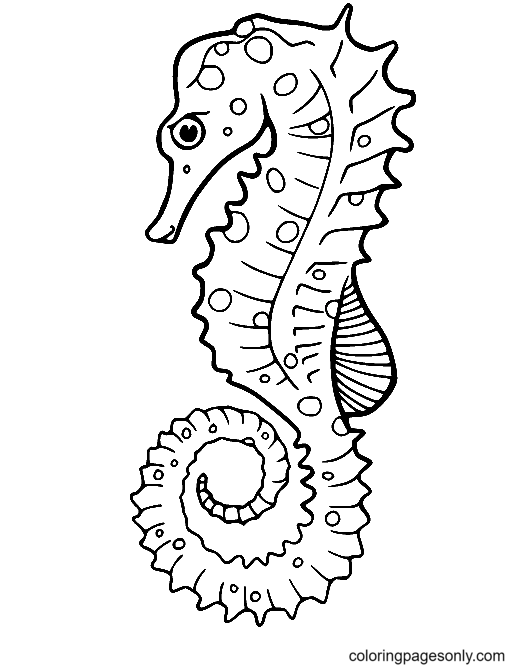
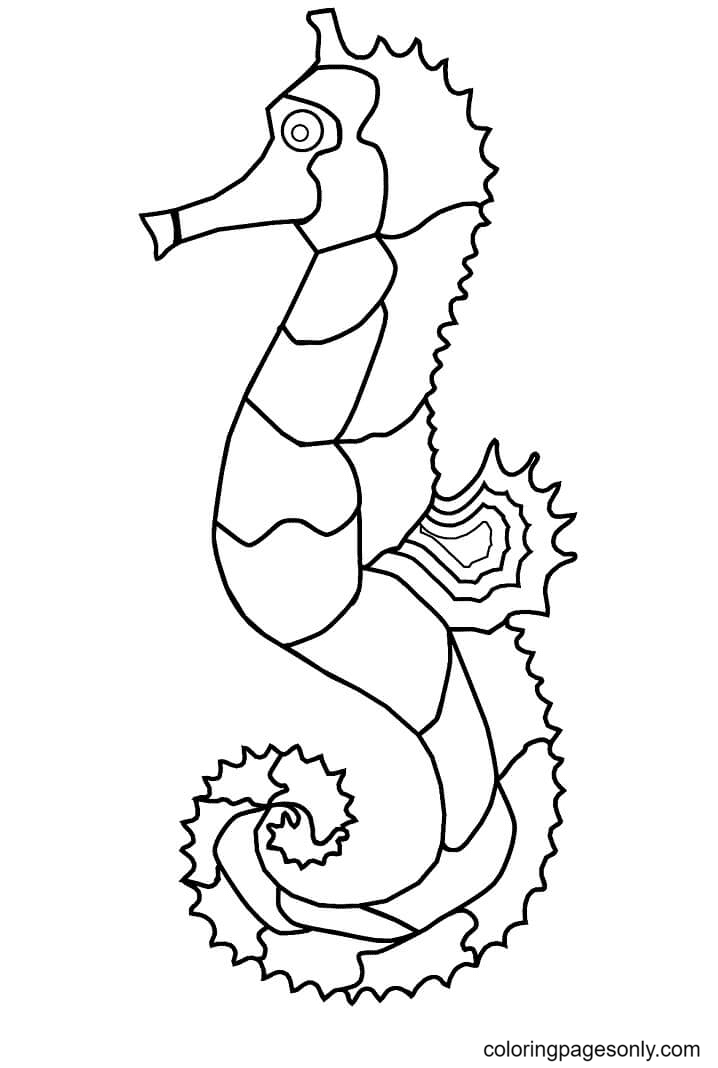
Four pages are named for real seahorse species: the thorny seahorse, with its spiny body projections; the Pacific seahorse, found off the western coast of the Americas; the common seahorse, a widespread Indo-Pacific species also called the yellow seahorse; and the big belly seahorse, the largest species in the genus, native to the waters around Australia and New Zealand. Since each of these species has a genuinely different look in the wild, a quick reference photo helps get the proportions and texture right before choosing colors.
Artistic and Pattern-Style Seahorses
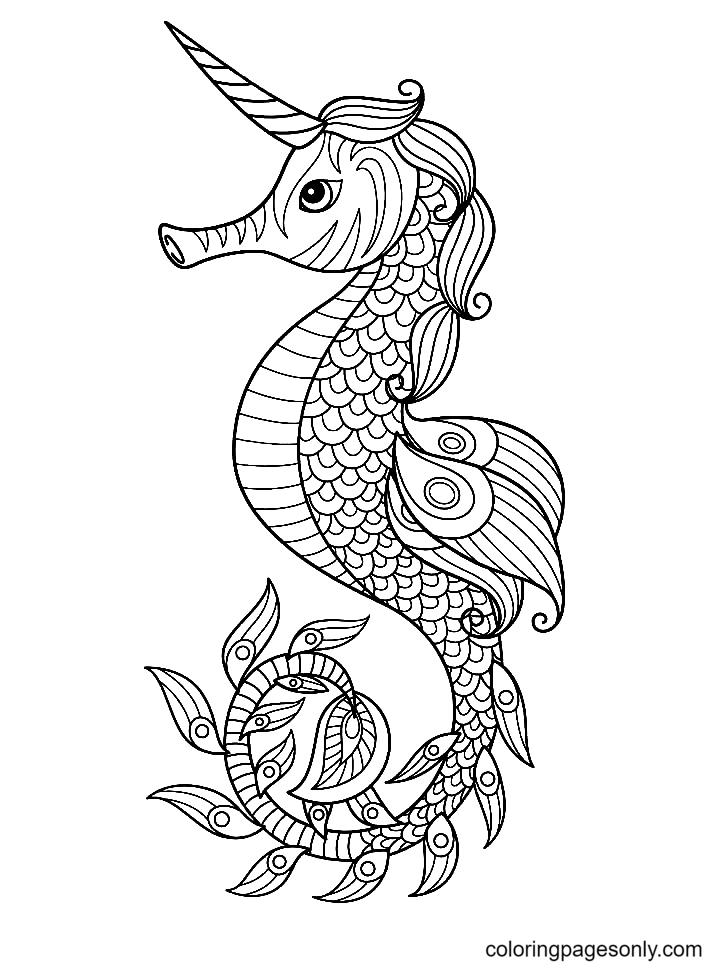
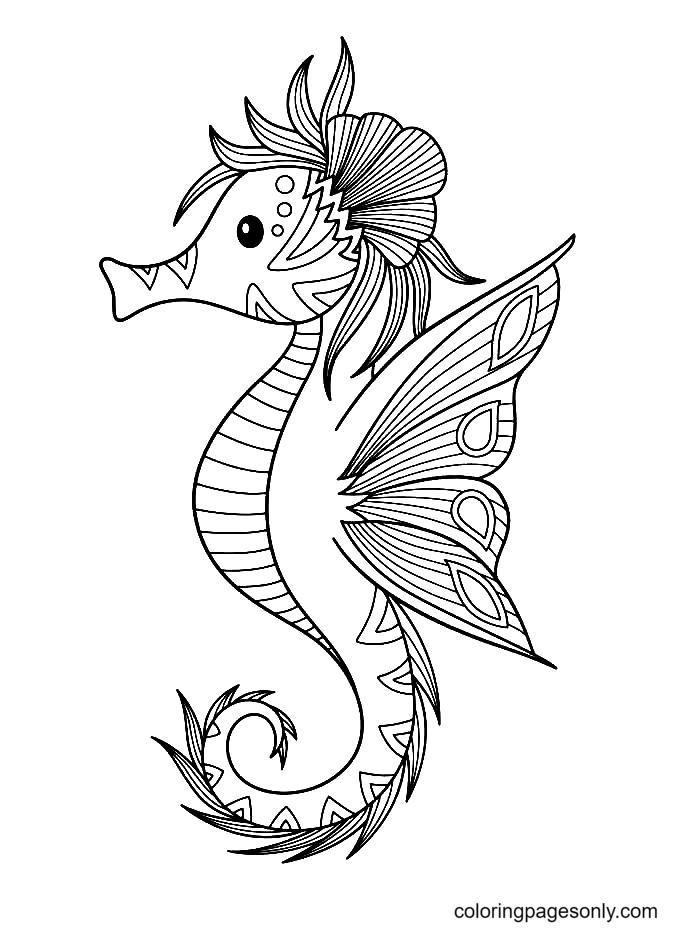
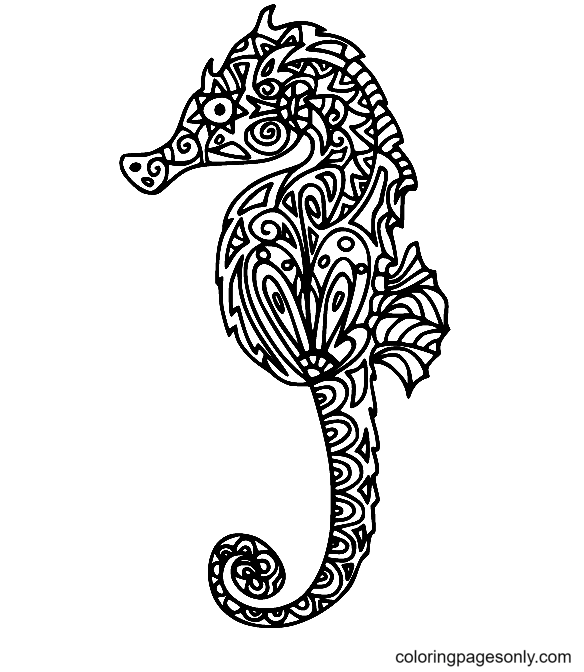
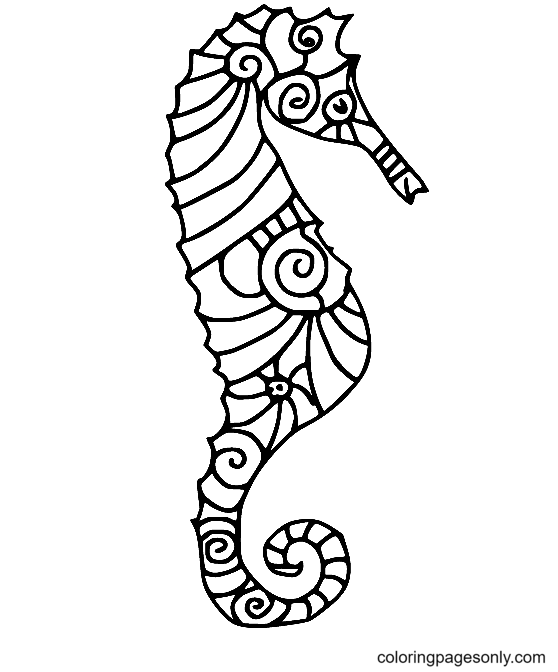
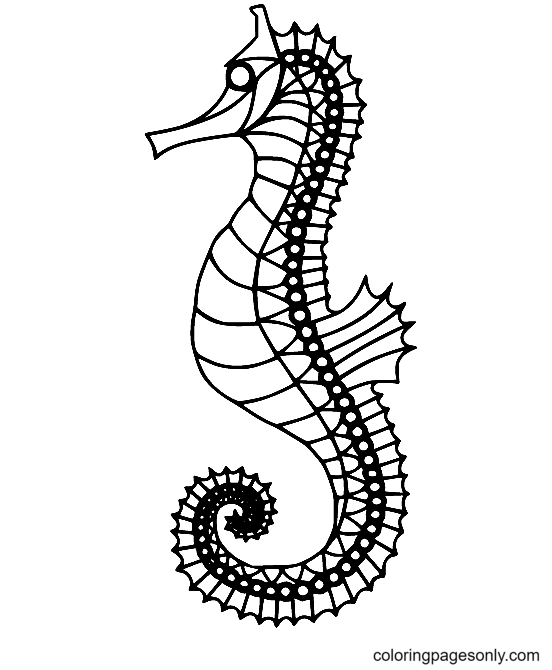
Six pages turn a seahorse into a design exercise: zentangle patterns, geometric shapes, an abstract version, and a page built around the seahorse’s horn-like coronet. These pages work well with a limited, coordinated palette, two or three colors used consistently across the repeating shapes, rather than a different color in every section.
Seahorses in a Scene
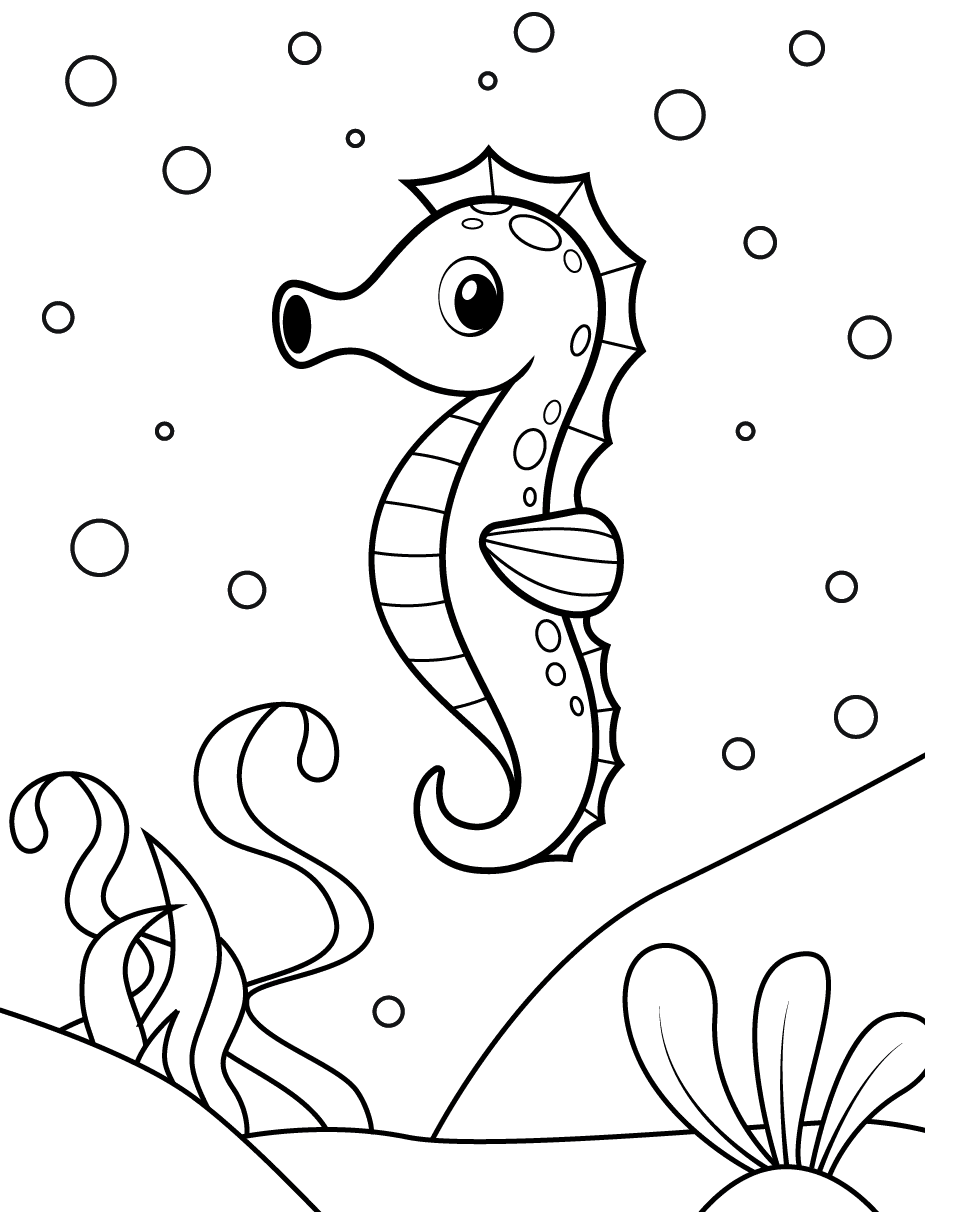
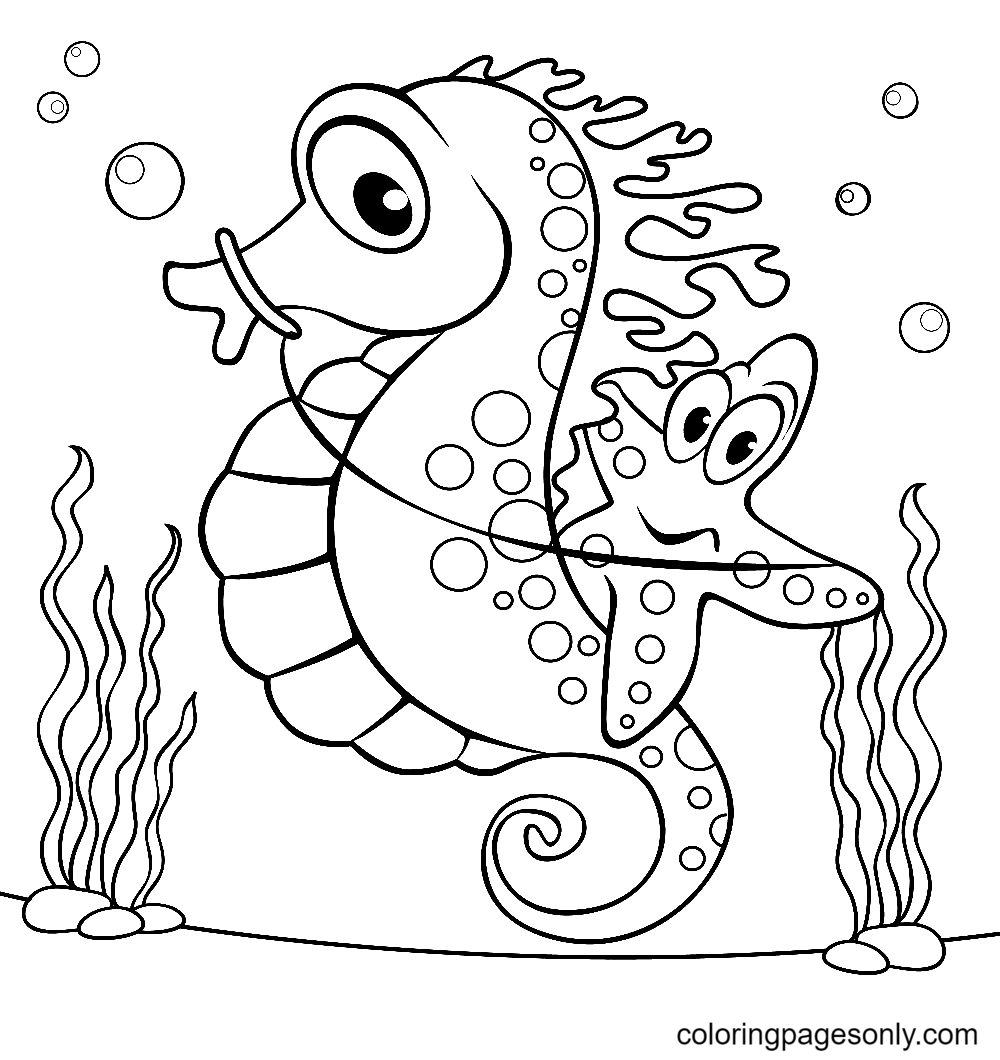
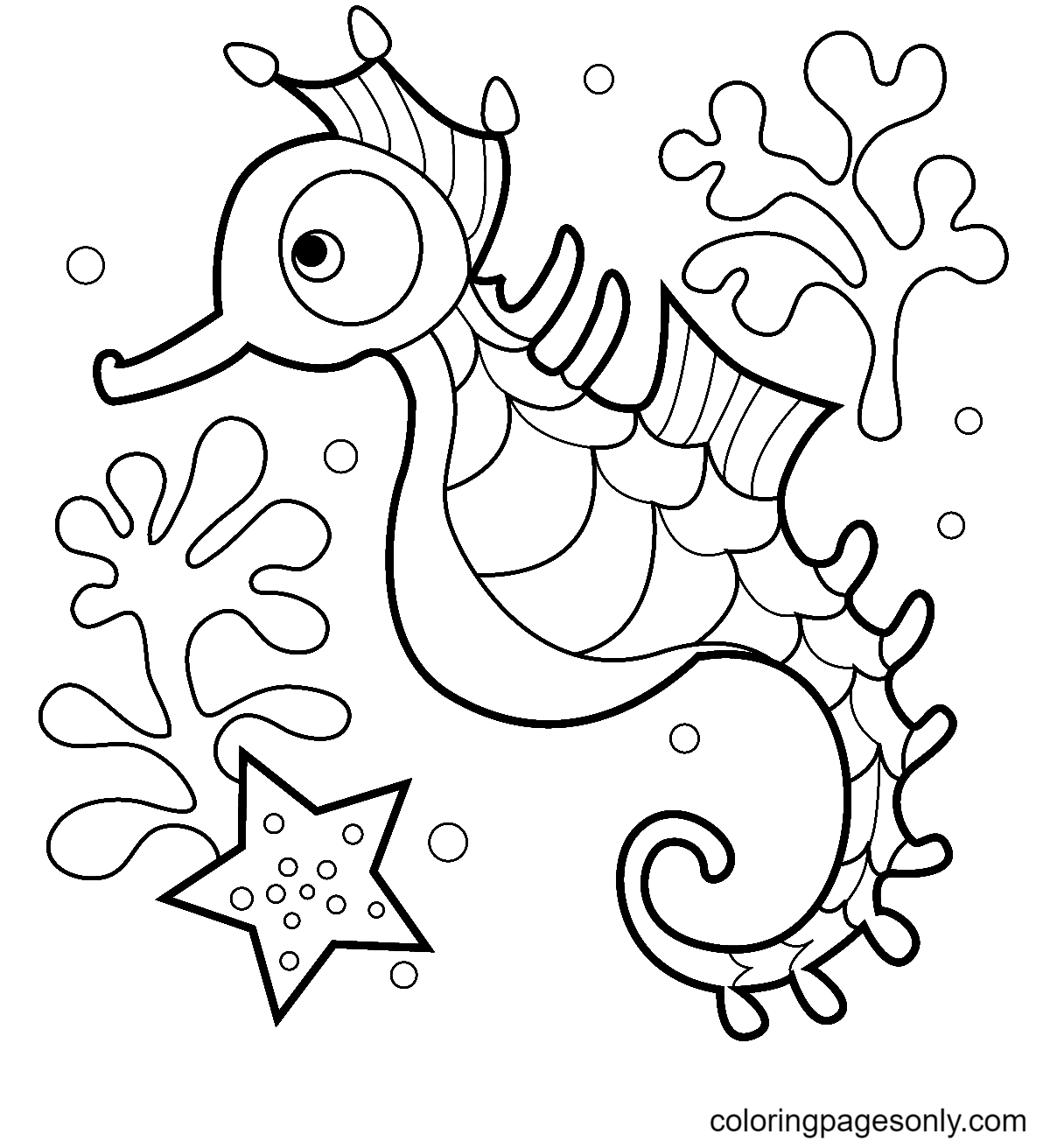
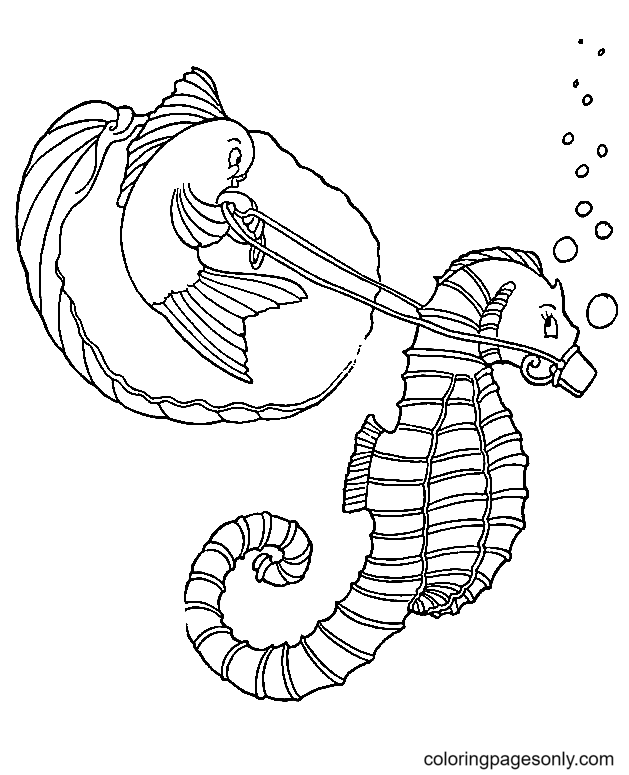
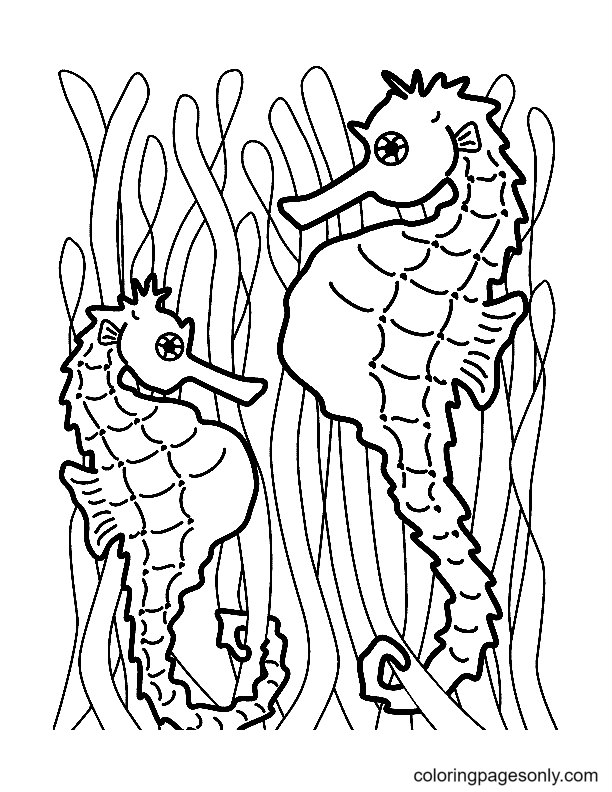
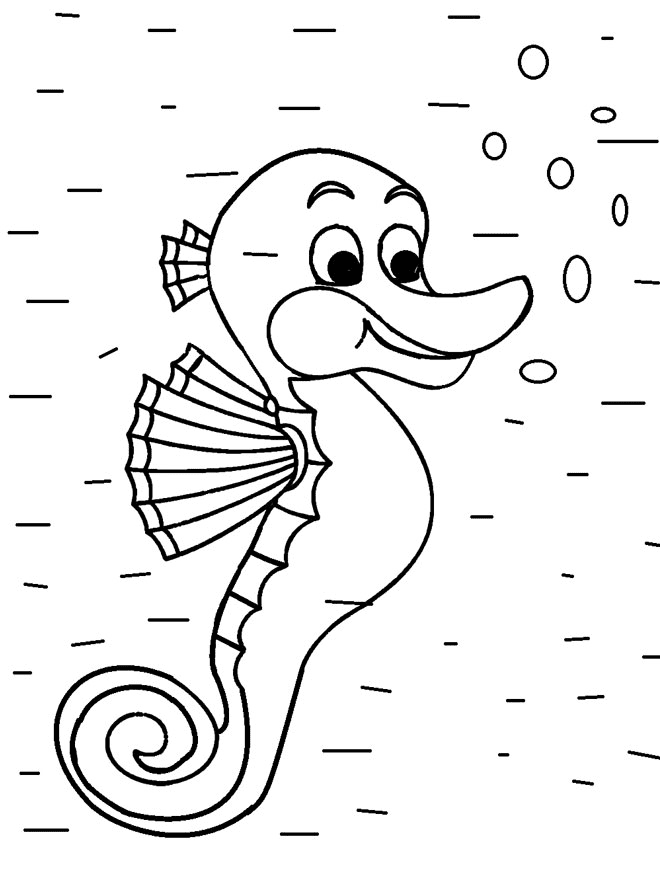
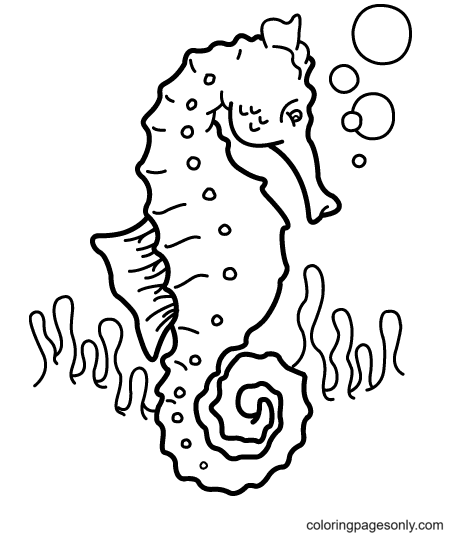
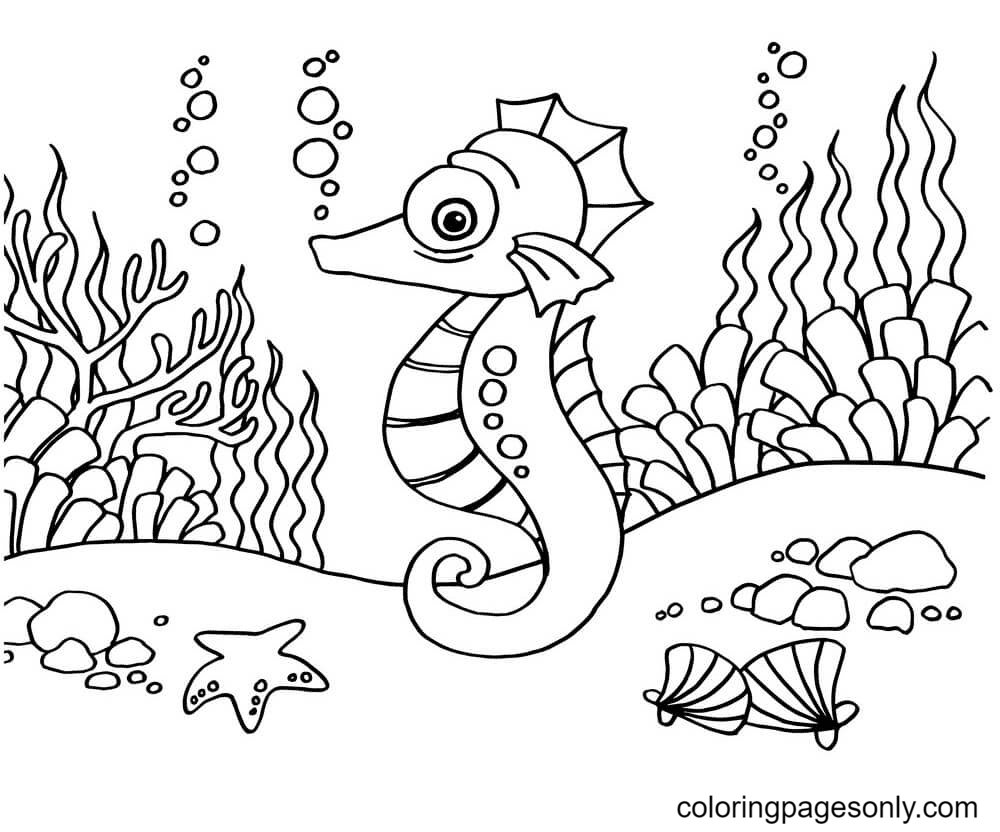
Six pages place a seahorse in a wider moment: swimming, resting on the ocean floor, surrounded by bubbles, or in a playful scene with a starfish or a fish. A real seahorse anchors itself to seagrass or coral with its tail rather than swimming freely, since it’s a genuinely weak swimmer, so a scene with the tail wrapped around a plant or coral branch is closer to real seahorse behavior than one showing it swimming in open water.
Simple and Solo Portraits
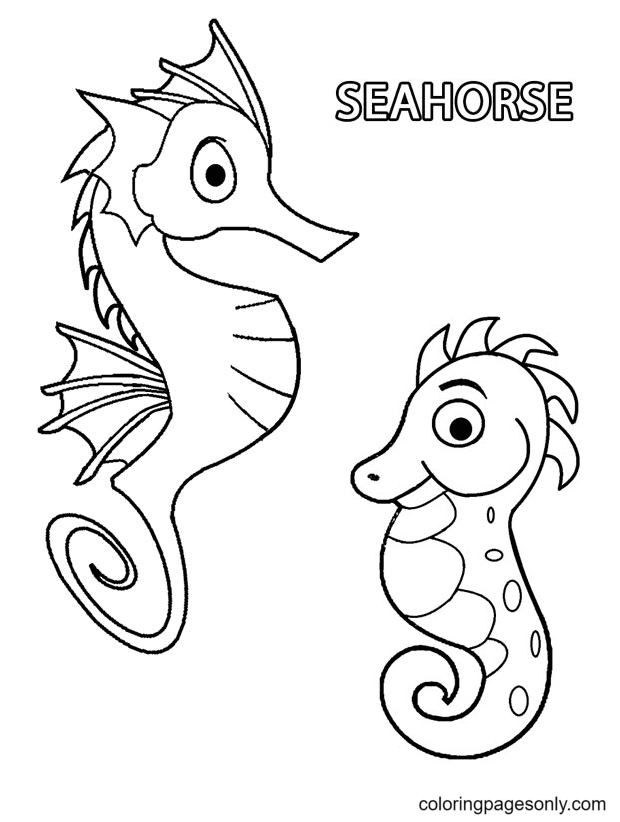
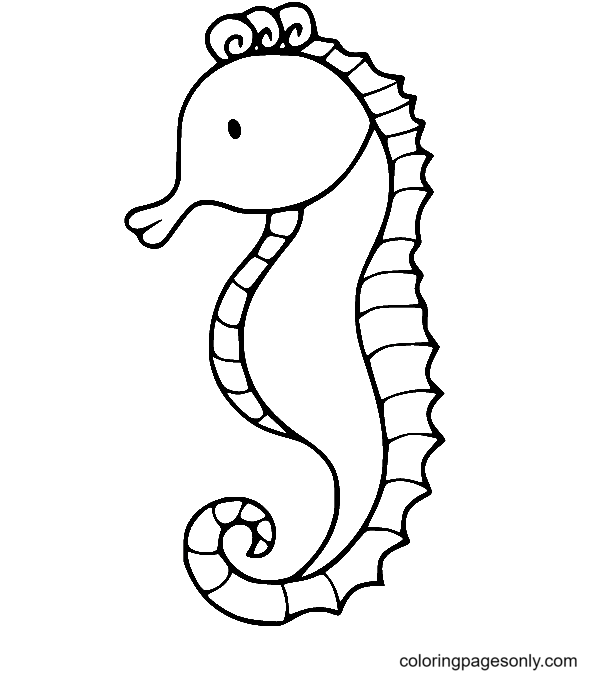
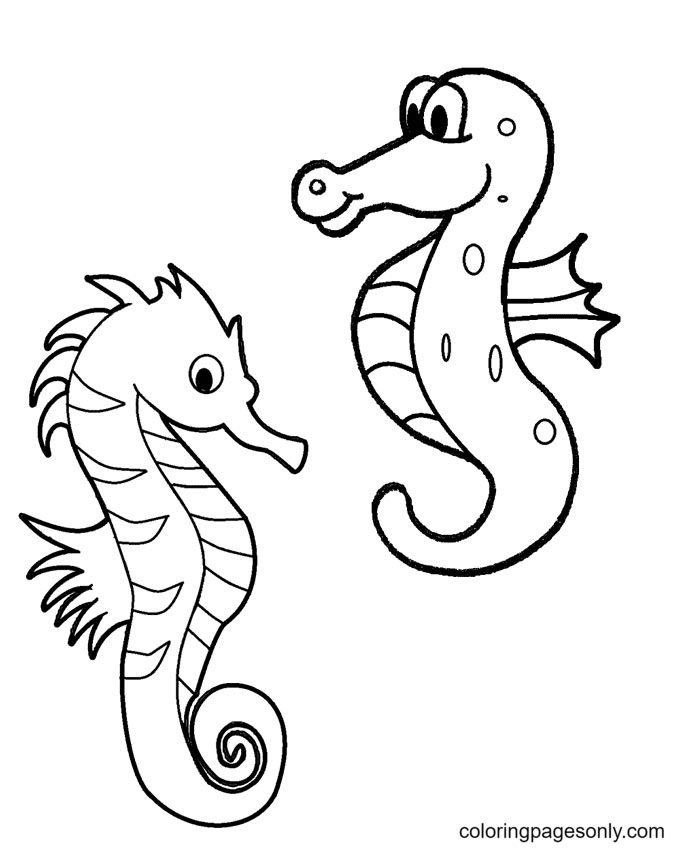
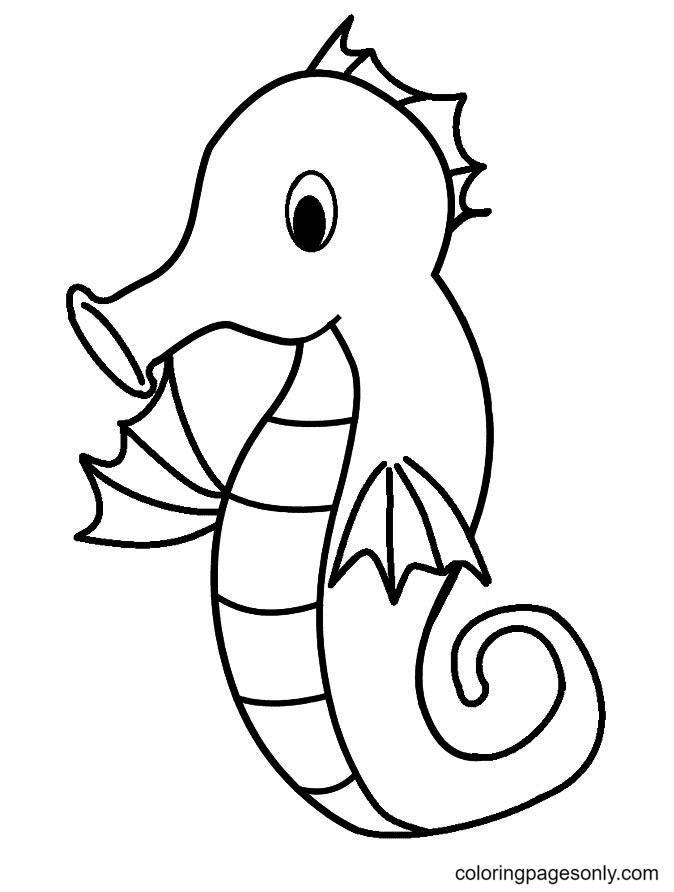
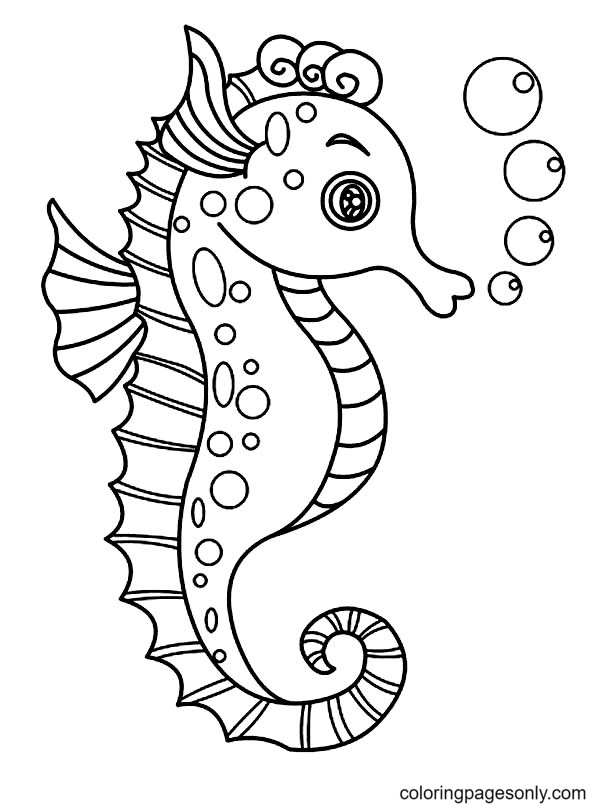
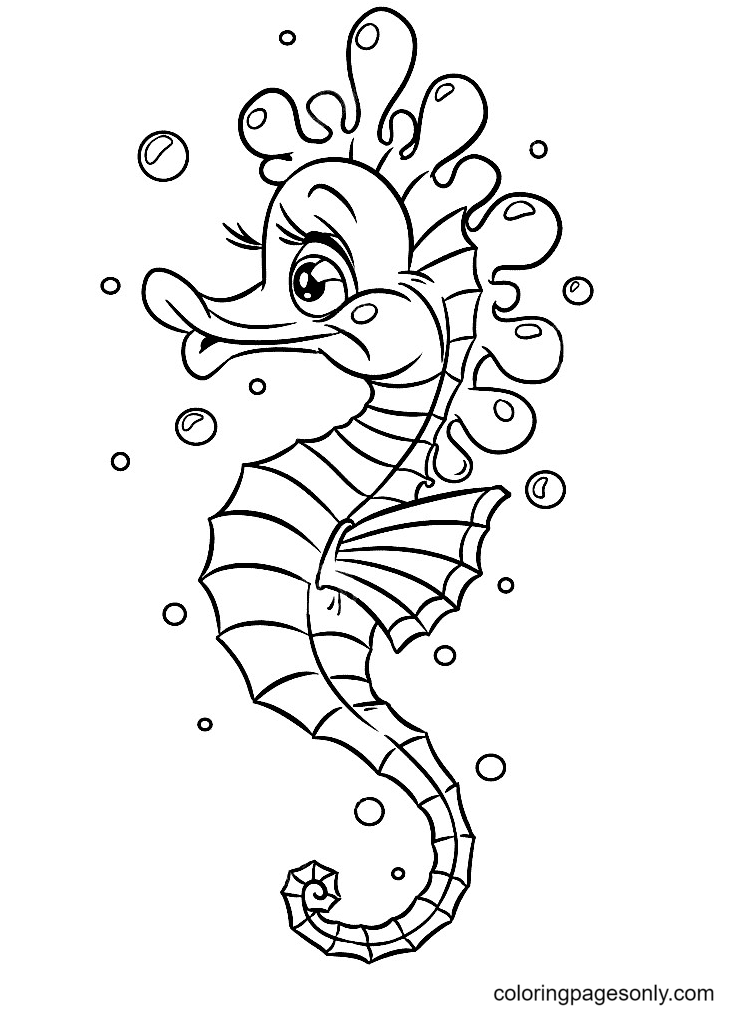
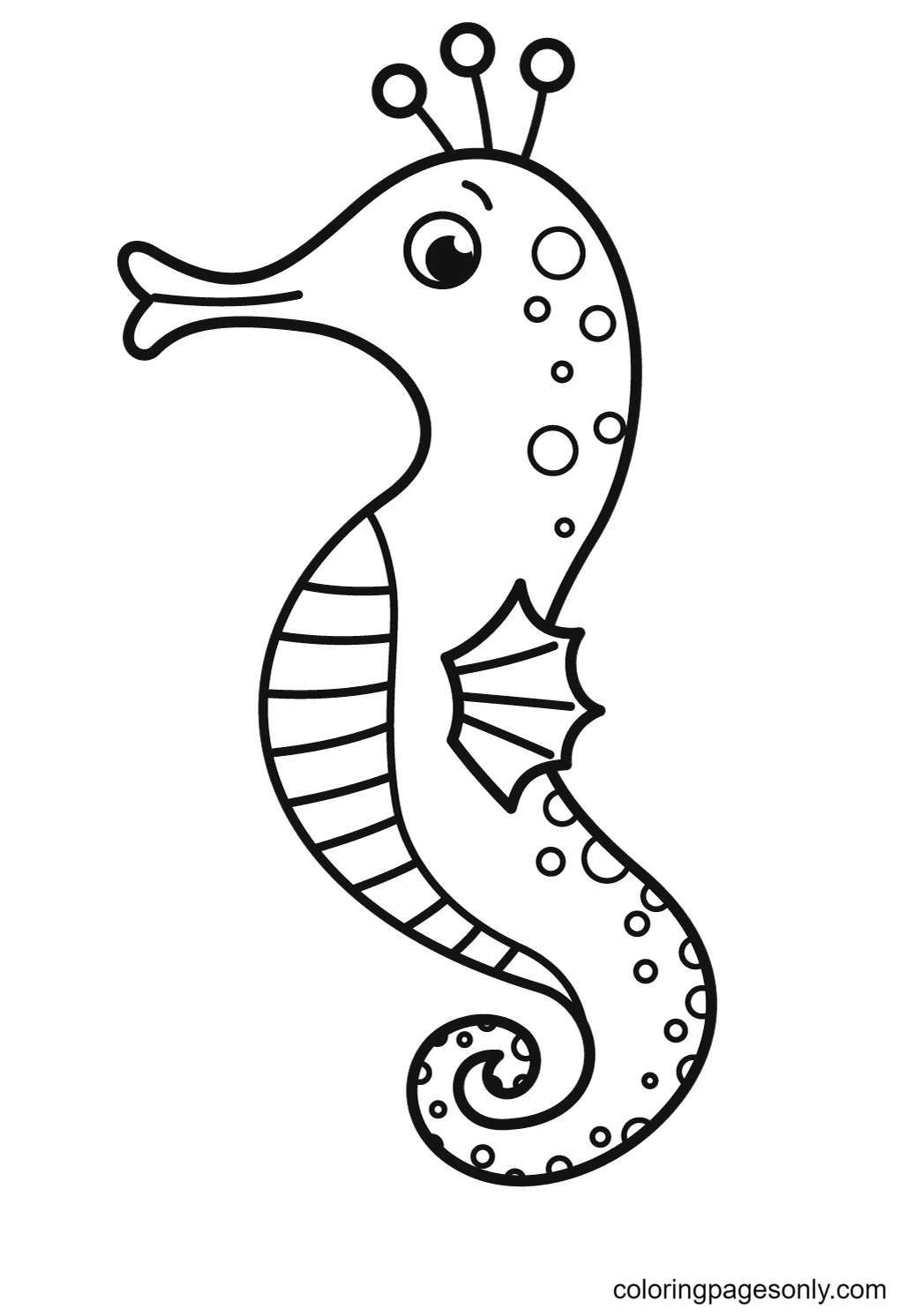
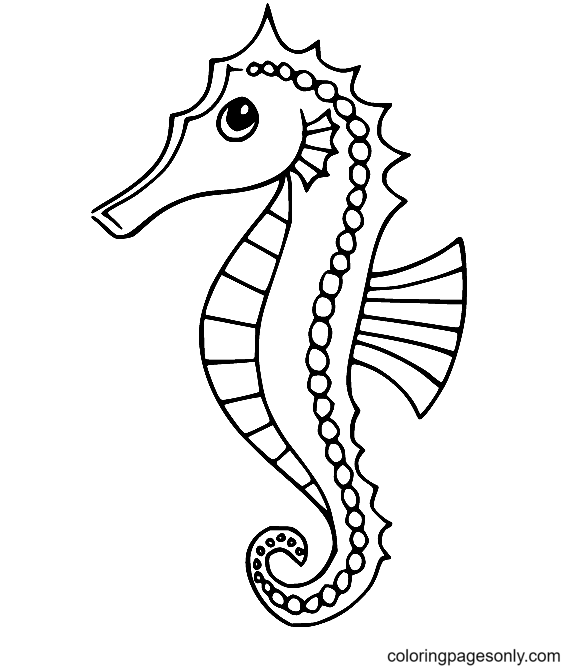
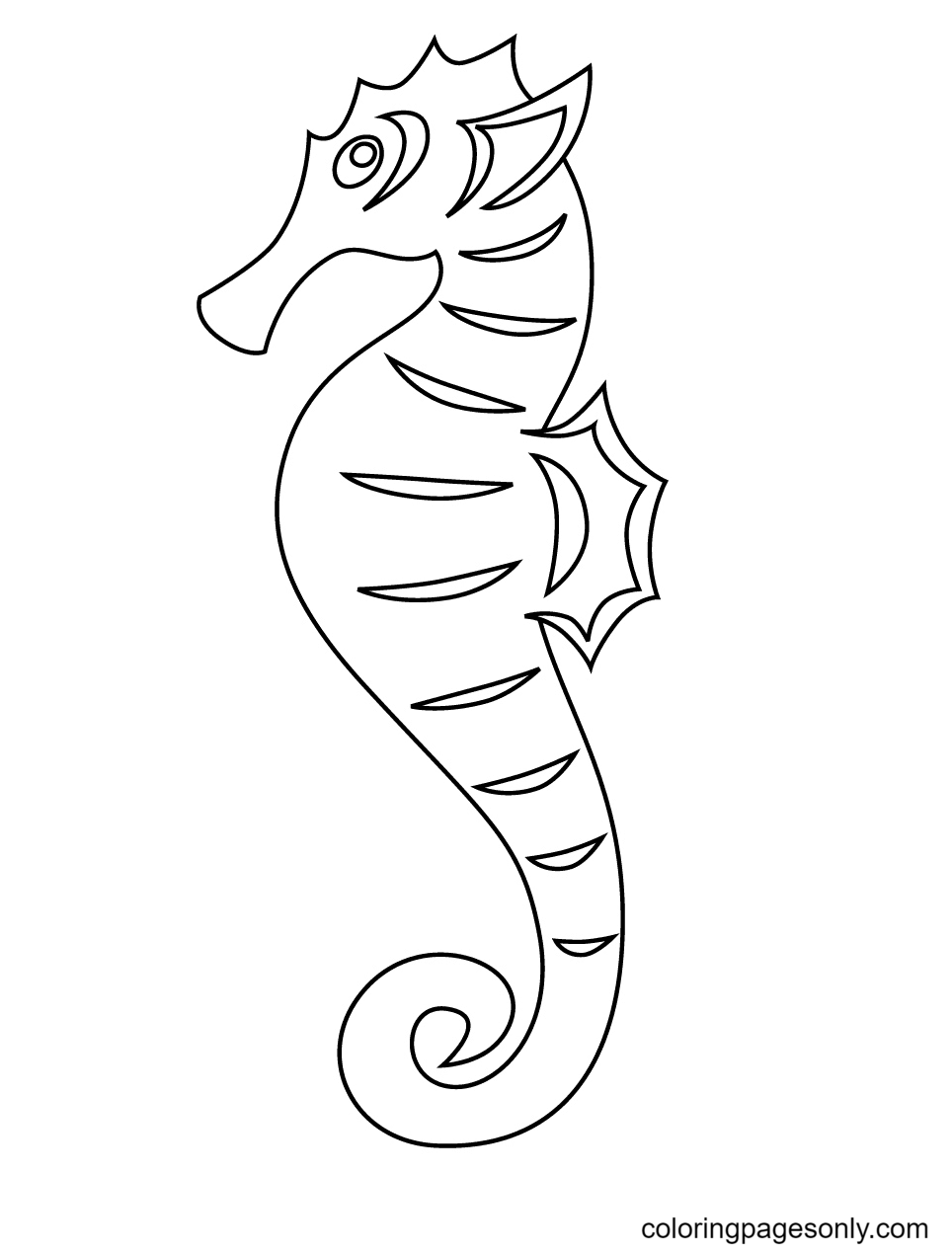
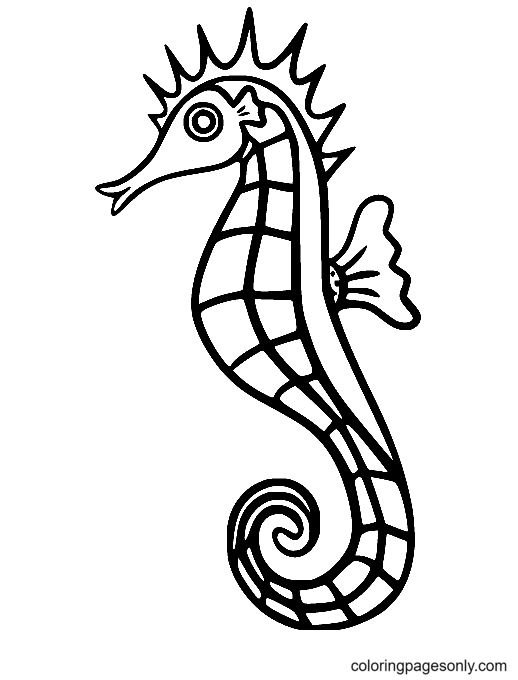
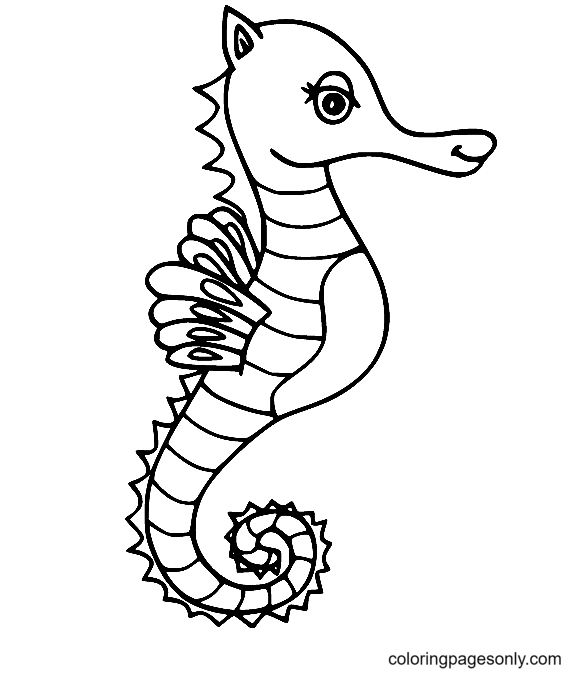
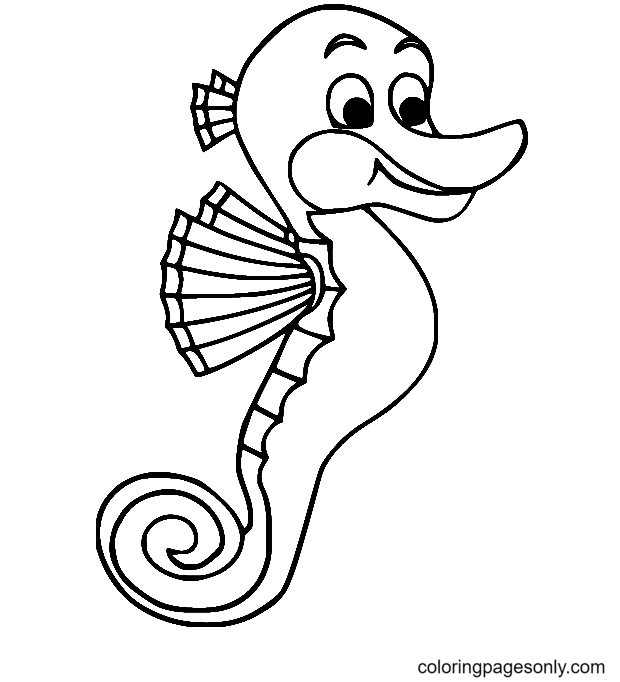
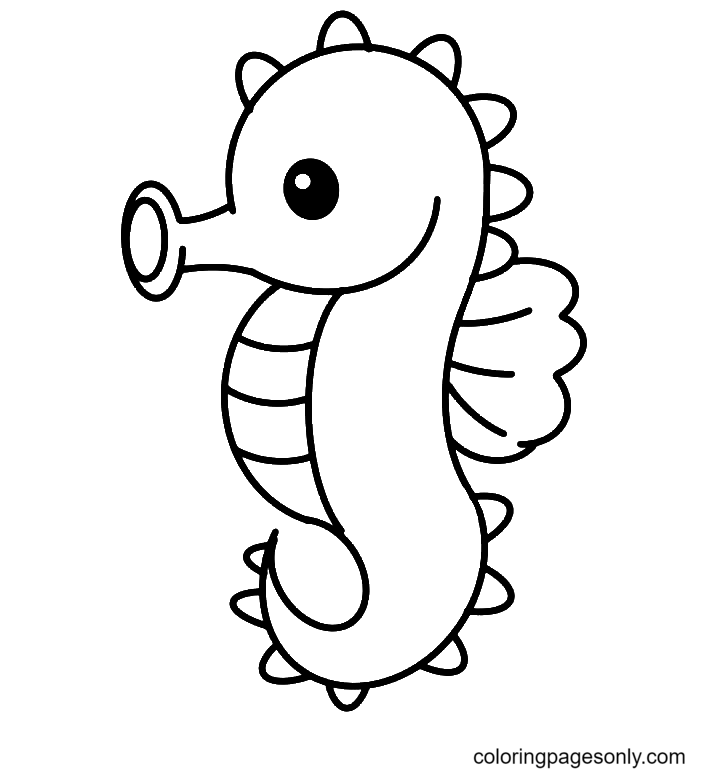
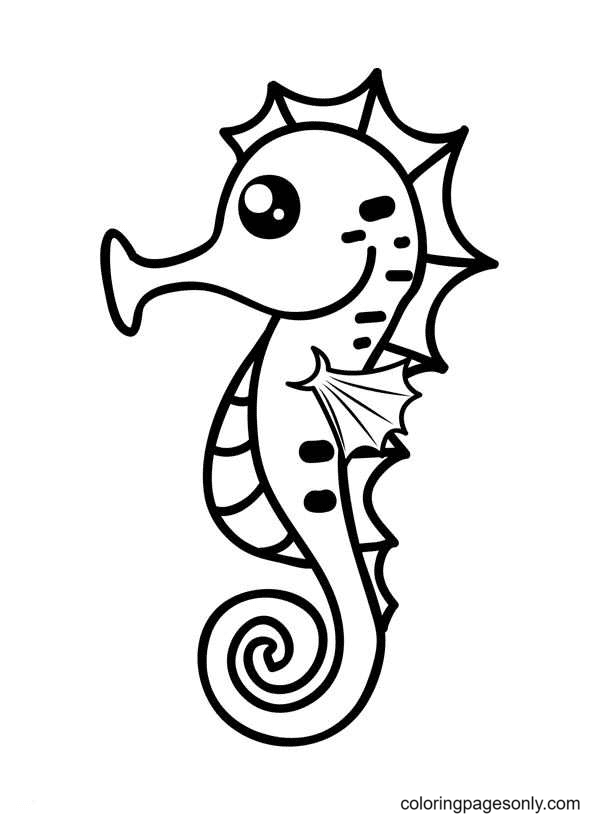
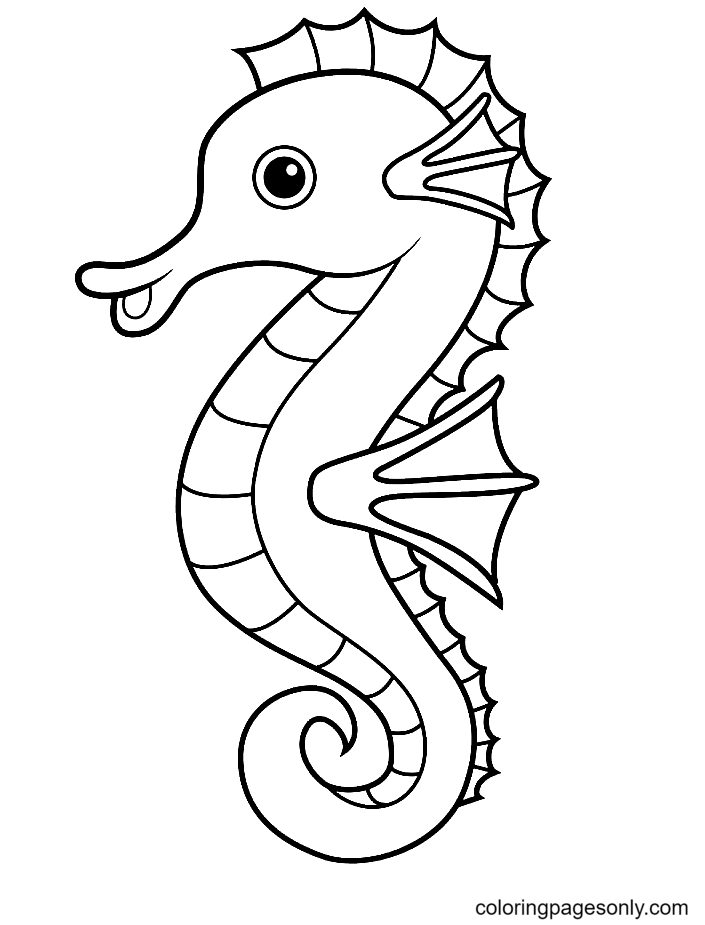
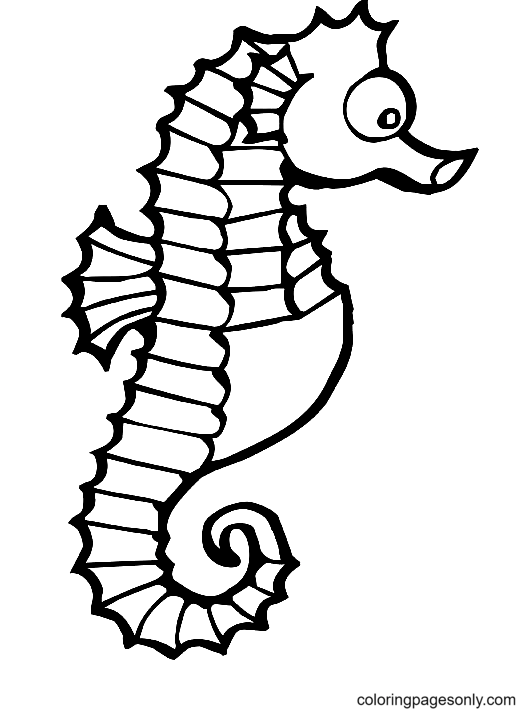
Twenty-three pages keep to a plain, solo seahorse without a scene or specific style attached, ranging from very simple outlines to more detailed, realistic versions. These are the best pages for practicing a seahorse’s actual body structure: a horse-like head, a curved neck, a ridged body, and a curled, prehensile tail rather than a straight one.
Cute, Cartoon, and Baby Seahorses
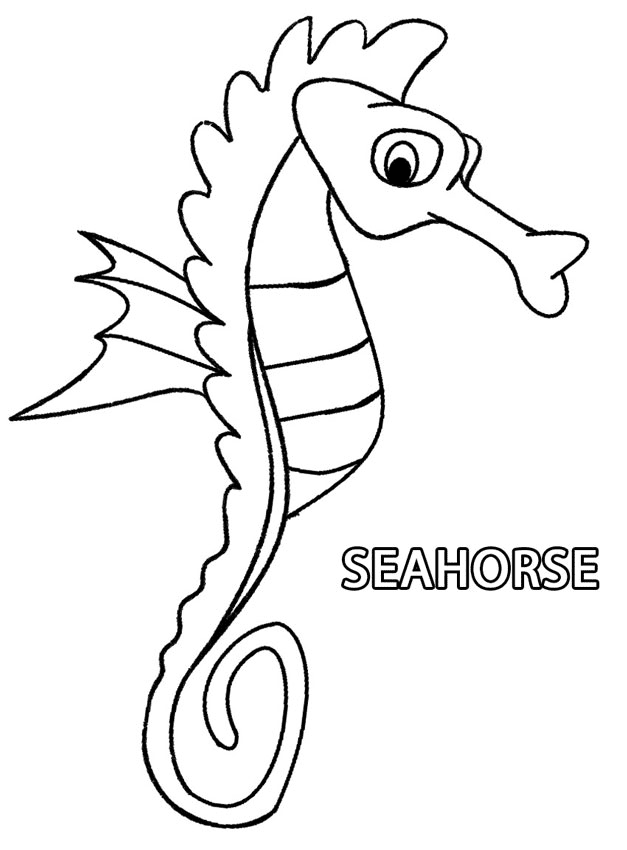
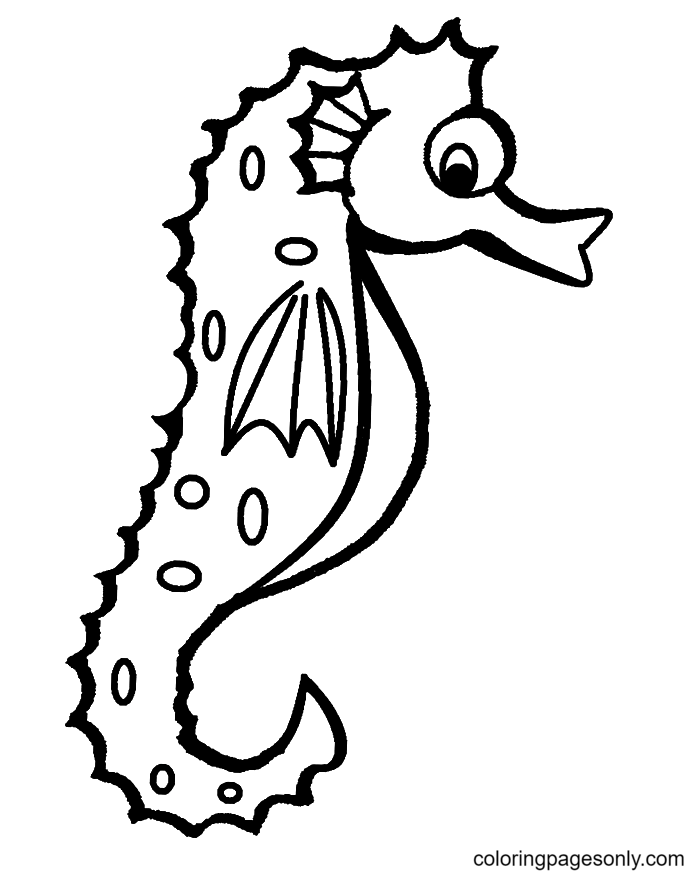
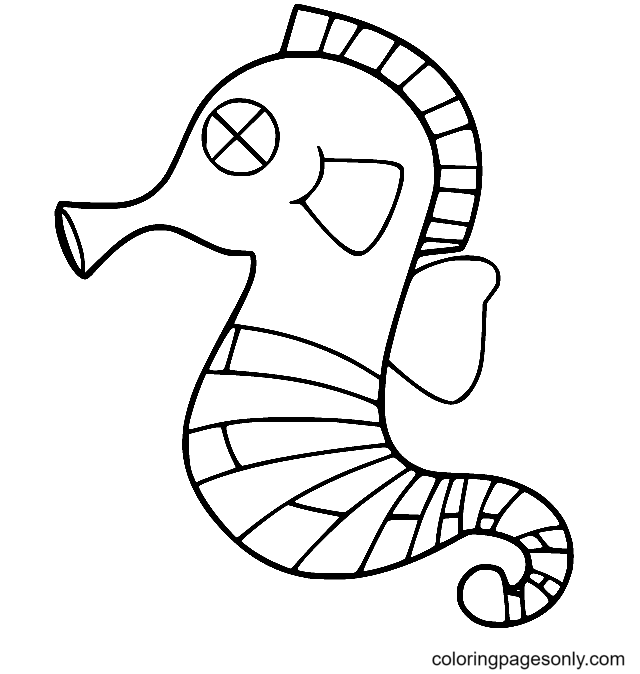
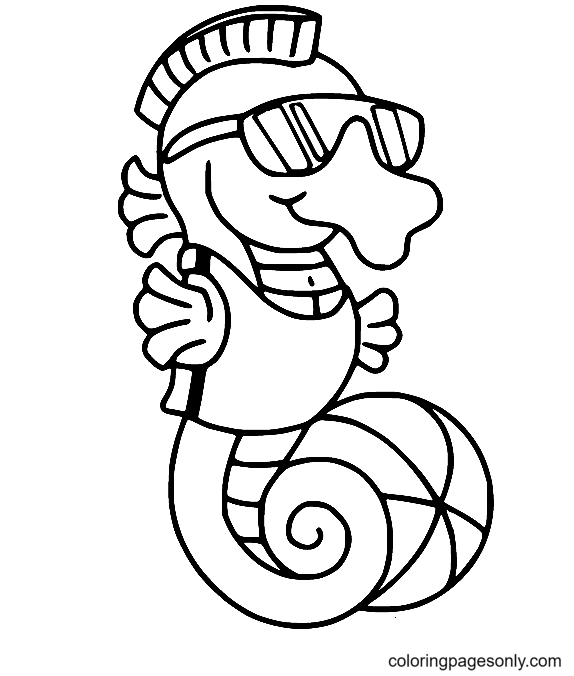
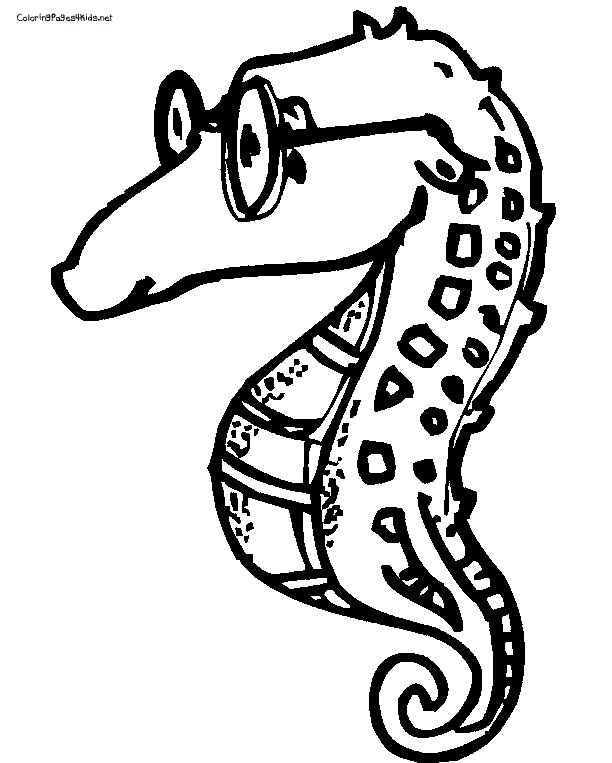
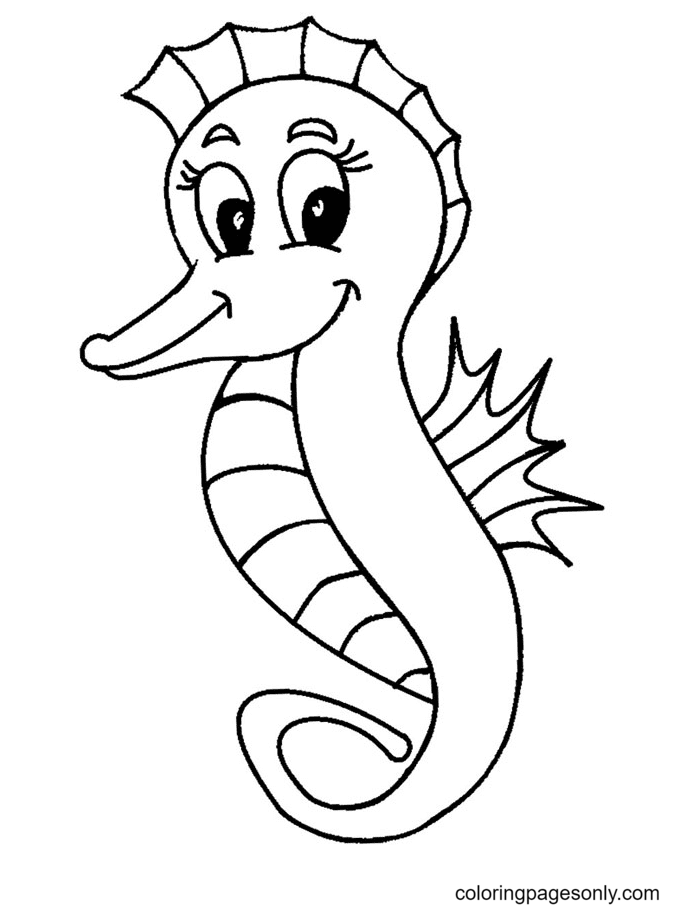
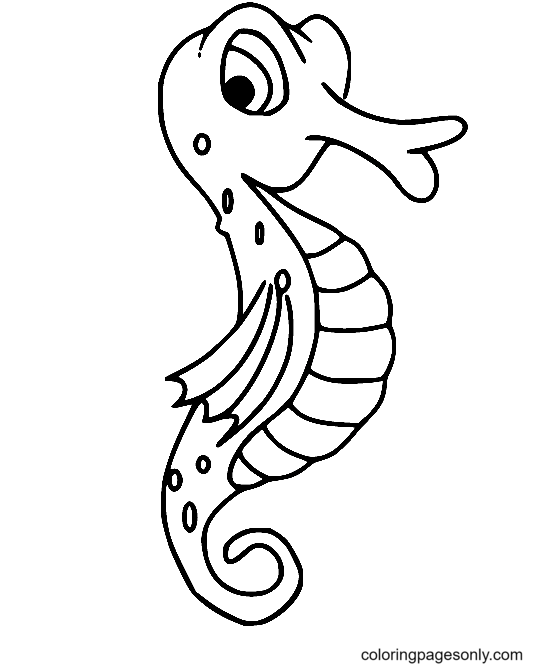
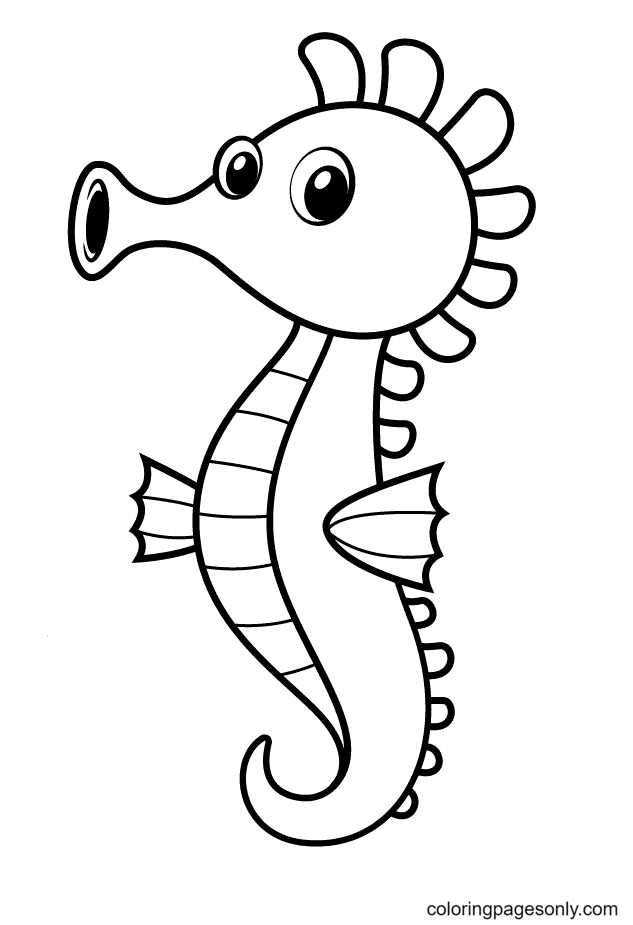
Twenty pages take a softer, more playful approach: cartoon expressions, a seahorse wearing glasses or a hat, and several baby seahorse designs. These pages can take brighter, less realistic colors than the named-species portraits, since the goal here is personality and charm rather than biological accuracy.
What Seahorse Coloring Pages Do
A curled tail rewards a careful hand. A seahorse’s ridged body and tightly curled, prehensile tail ask for steadier, more deliberate lines than a straight-bodied fish would, and the American Academy of Pediatrics names exactly this kind of structured coloring, done between ages 2 and 7, as a clear path to fine motor skill development. The simpler solo portraits offer an easier version of that same practice before a more detailed named-species page.
An animal that breaks the usual rules. Since seahorses reverse the typical pattern of pregnancy, lack a stomach, and swim poorly compared to almost every other fish, coloring one is a small opening to talk about how “normal” for one animal can look completely different from “normal” for another.
Calm through repetition. A 2005 Art Therapy Journal study found a measurable drop in anxiety after coloring sessions built around a defined structure. The ridged body segments and curled tail on a detailed seahorse page are about as structured as a coloring page gets.
Real names, not just a shape. Coloring the thorny, Pacific, common, and big-belly seahorse pages side by side is a concrete reminder that “seahorse” isn’t one single animal; it’s a genus of dozens of species, each shaped a little differently for the water it actually lives in.
How to Color Seahorse Coloring Pages Well
- General seahorse body: Use Sunglow or Goldenrod for a classic yellow look, or Sea Green and Turquoise Blue for a more ocean-toned version.
- Thorny seahorse: Keep the spiny projections along the body a slightly darker shade than the base color to make the texture read clearly.
- Big belly seahorse: Use a rounder, fuller body shape colored in Tan or Burnt Sienna, since this species is notably larger and stockier than most others.
- Tail: Color the tail the same base color as the body, but curl it tightly, since a real seahorse’s tail is always curled or wrapped around something, never straight.
- Coronet (head crest): Use a slightly contrasting color or metallic-style highlight, since this crown-like structure is one of the features used to tell species apart.
- Scene pages: Use Sea Green or Turquoise Blue for coral and seagrass, keeping the seahorse itself in a warmer or brighter tone so it stands out against the background.
5 Creative Craft Ideas With Seahorse Coloring Pages
1. Species Fact Cards. Color the named-species pages, then write one real fact, like the big belly seahorse’s size, on the back of each card. A small stack makes a simple, reusable set for a marine biology lesson.
2. Anchor-and-Anchor Scene. Color a seahorse with its tail wrapped around a plant, then glue it onto a piece of paper decorated with paper seagrass. It’s a hands-on way to show how a real seahorse actually holds itself in place.
3. Seahorse Pair Display. Color two seahorses in a matching style and display them side by side. Some seahorse species form long-term pair bonds, so it’s a fitting way to show off a “pair.”
4. Zentangle Practice Page. Color one of the zentangle or geometric seahorses, then try drawing a small pattern of your own on a blank seahorse outline. It’s a simple way to move from coloring to original pattern design.
5. Seahorse Bookmark Set. Color a few small seahorse portraits, cut them into narrow bookmark strips, and cover each with clear contact paper. A set featuring a few different styles makes a fun ocean-themed gift.
Frequently Asked Questions
What are Seahorse coloring pages?
Seahorse coloring pages are free printable and browser-colorable seahorse designs, from real named species to artistic patterns, scenes, and cute cartoon versions. This collection has 59 pages, available as PDF downloads or through the online coloring tool.
Is it true that male seahorses get pregnant?
Yes. The female deposits her eggs into a pouch on the male’s body, he fertilizes them internally, and he carries and nourishes the developing embryos until they’re born, making seahorses one of the few animals where the male carries the pregnancy.
Are seahorses good swimmers?
No, seahorses are actually poor swimmers. They’re propelled only by a small fin on their back and lack a functional tail fin, so they spend most of their time anchored to seagrass or coral with their prehensile tail rather than swimming through open water.
Do seahorses have teeth or a stomach?
No to both. Seahorses have no stomach and no teeth, so food passes through their digestive system quickly, and they need to eat almost constantly to get enough nutrition.
What is the biggest seahorse species?
The big belly seahorse, also called the pot-bellied seahorse, is the largest species in the genus, native to the waters around Australia and New Zealand.
How many seahorse species are there?
There are dozens of recognized seahorse species in the genus Hippocampus, ranging from tiny pygmy seahorses just over an inch long to the much larger big belly seahorse.
Are Seahorse coloring pages suitable for young children?
Yes, with the right page. The simple portraits and cute cartoon pages suit younger children, while the named-species and pattern-style pages suit older kids and adults who want more of a challenge.
What is the crown-like structure on a seahorse’s head called?
The crown-like structure on top of a seahorse’s head is called a coronet. Its shape varies between species and is one of the features used to help identify which seahorse is which.
Start Coloring
Download any design by clicking it. No account, email, or payment is required to color or print. Every page opens in the online coloring tool for on-screen use or downloads as a full-resolution PDF for printing. Share a finished seahorse page using the Facebook or Pinterest buttons at the top of the page.