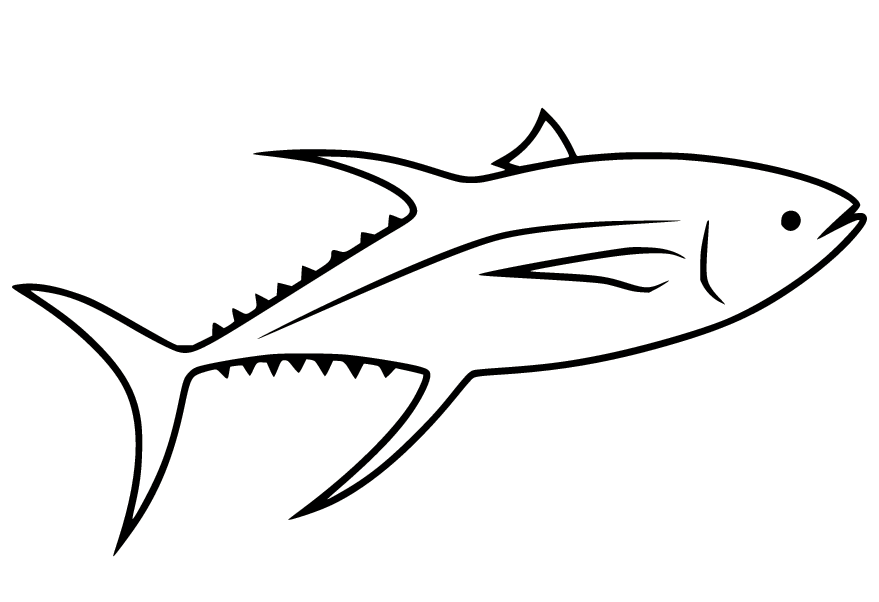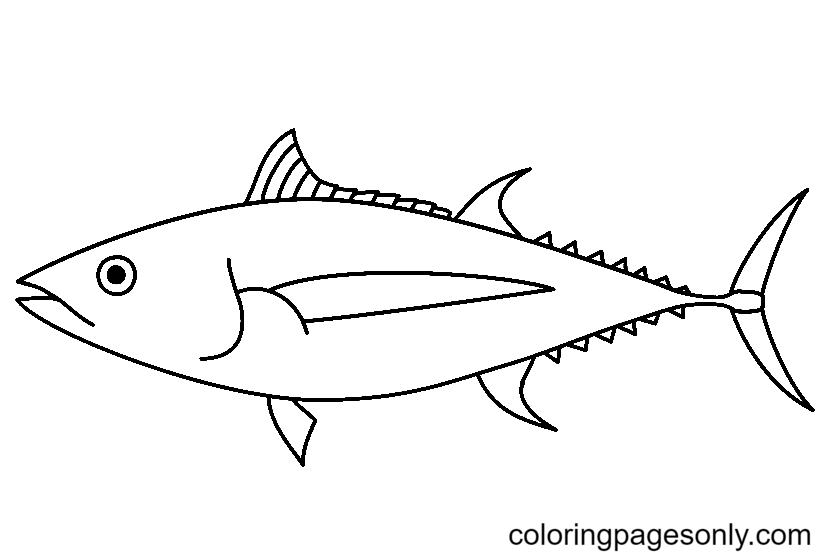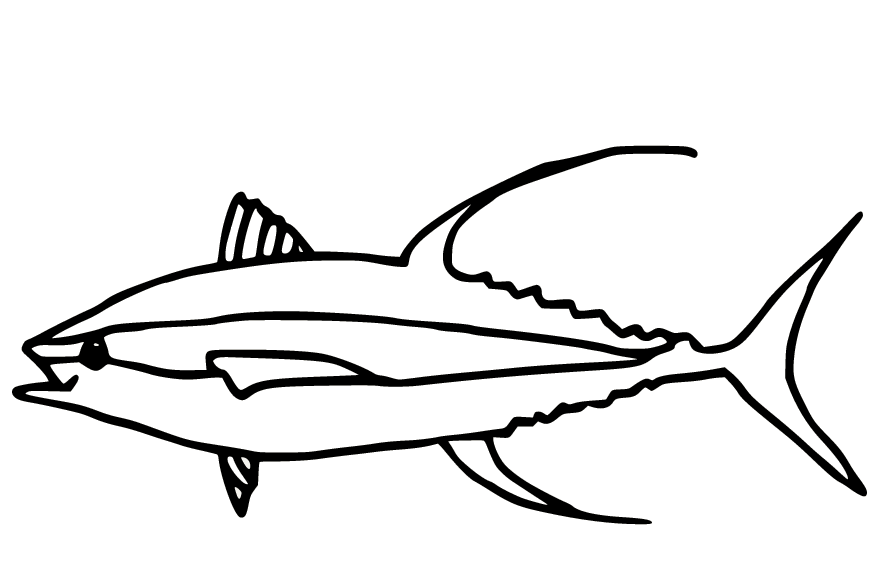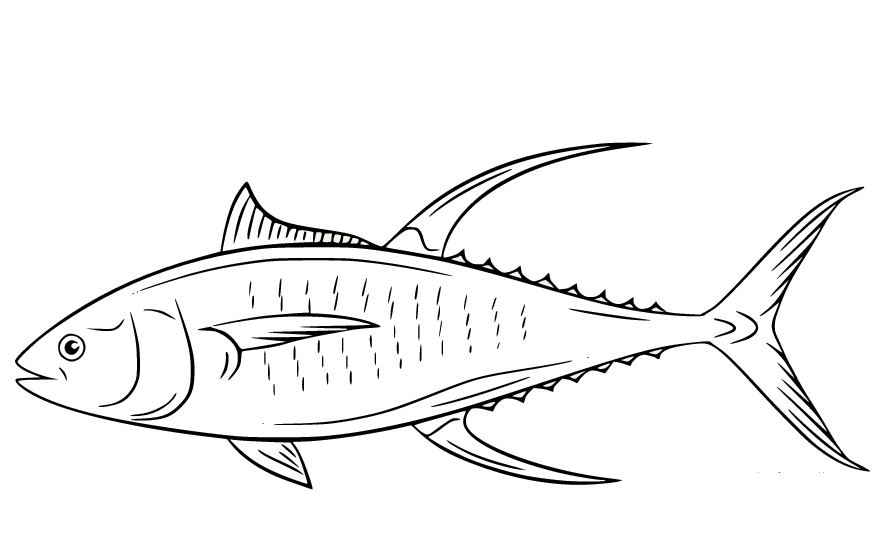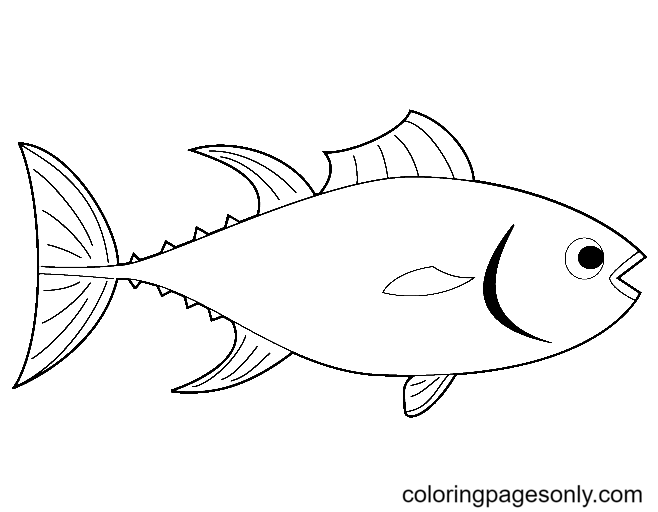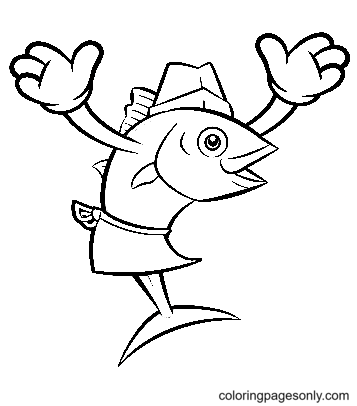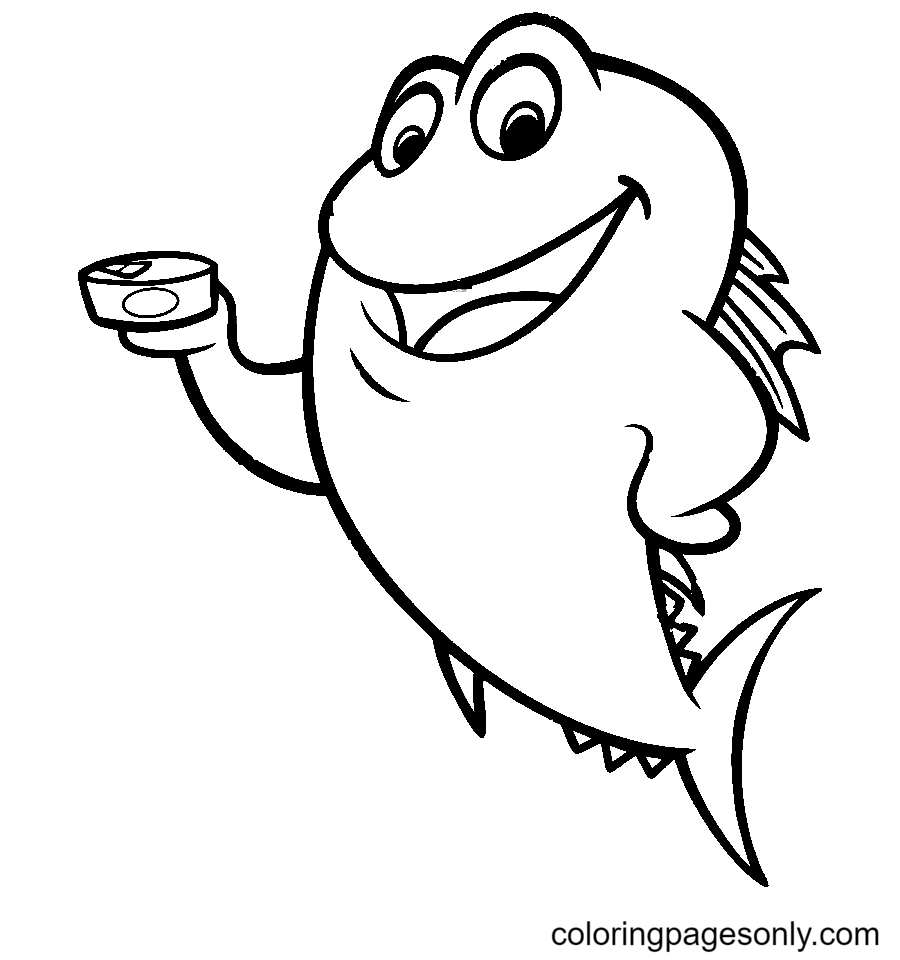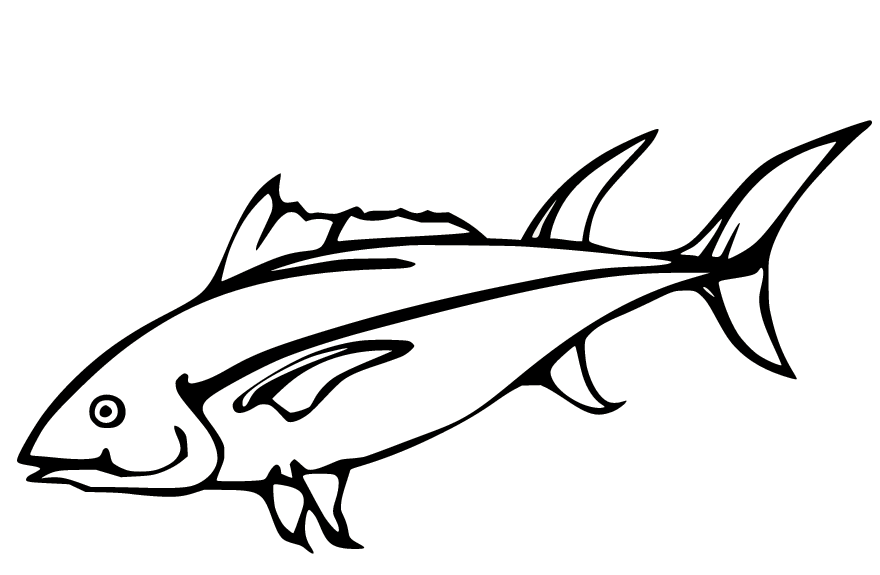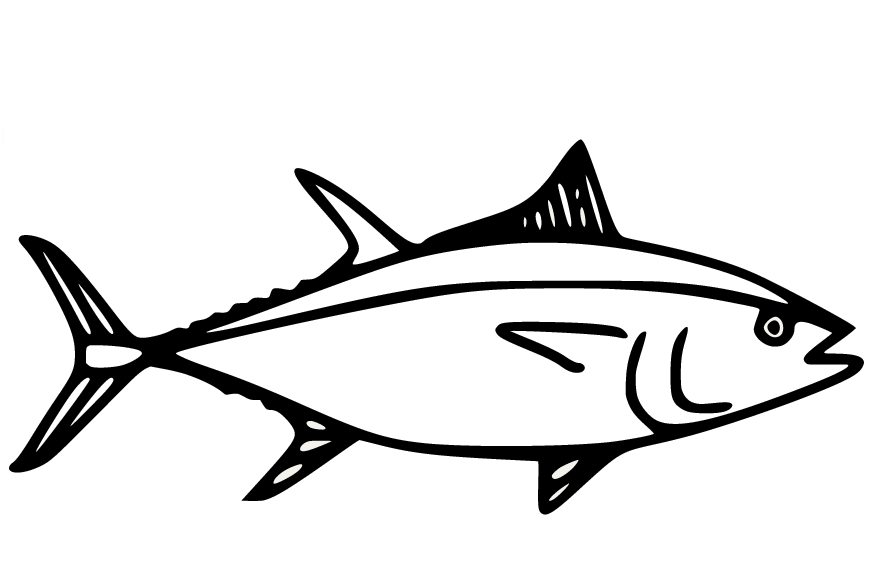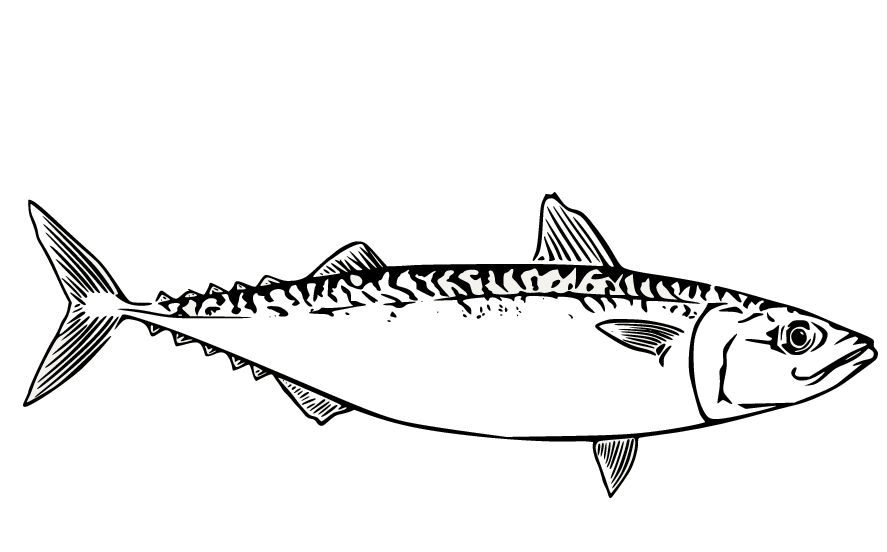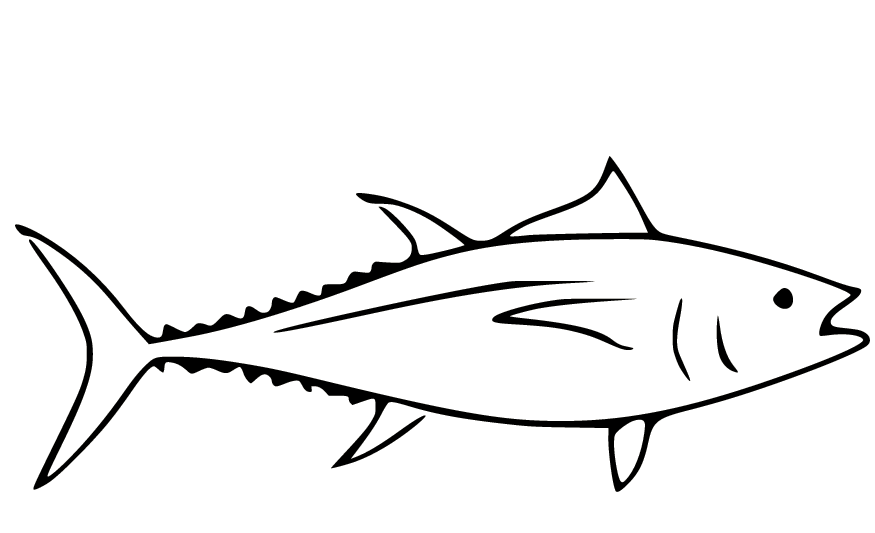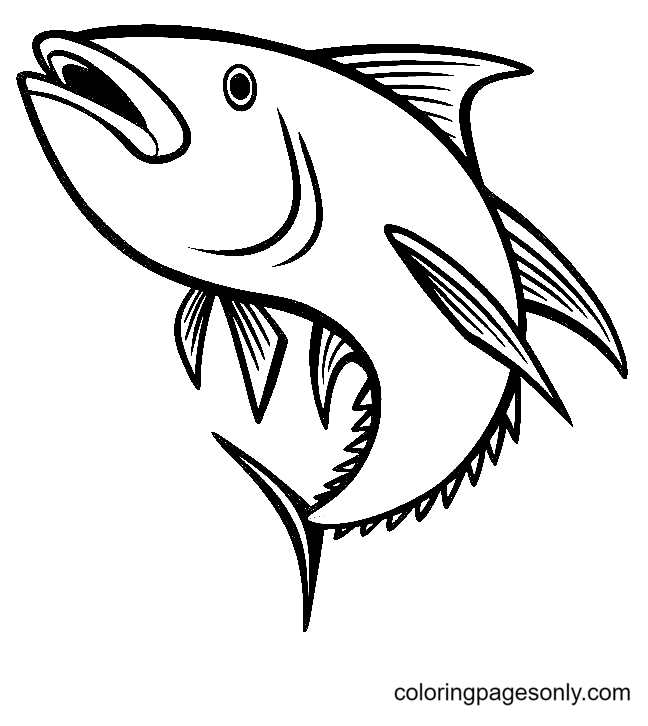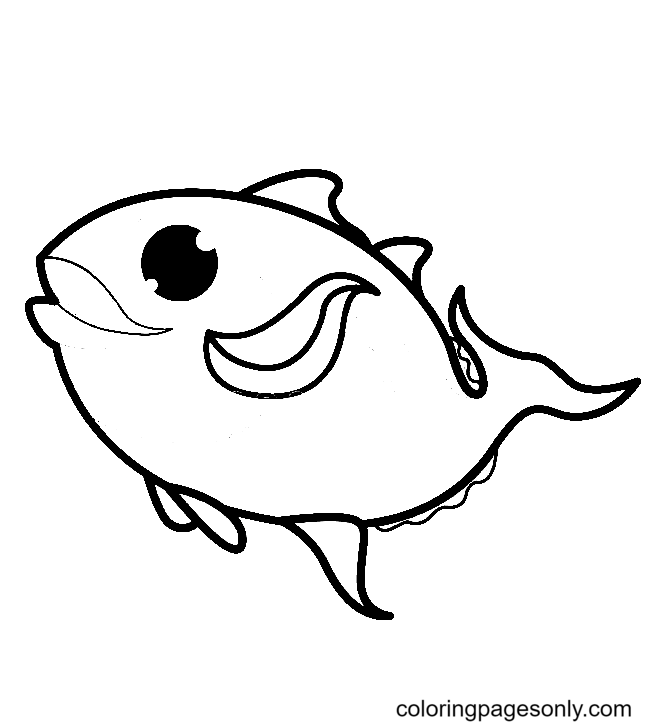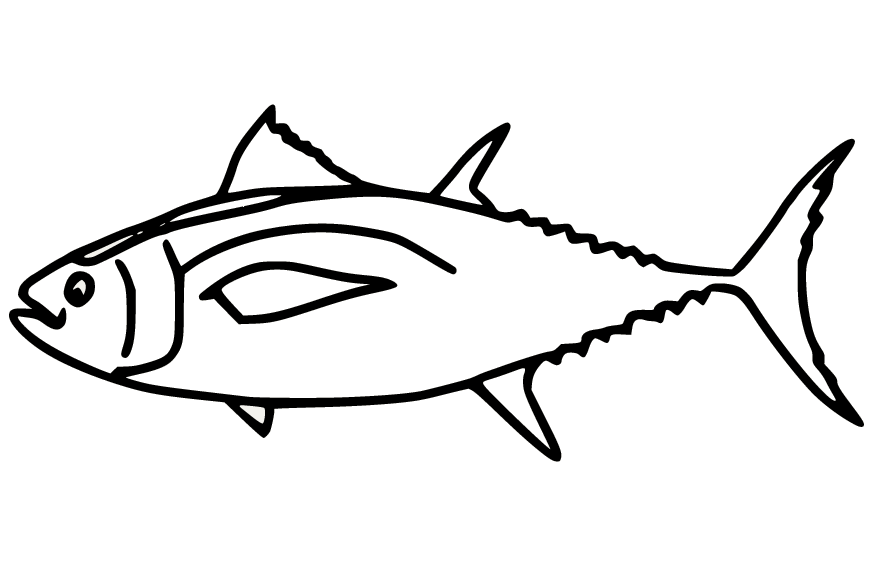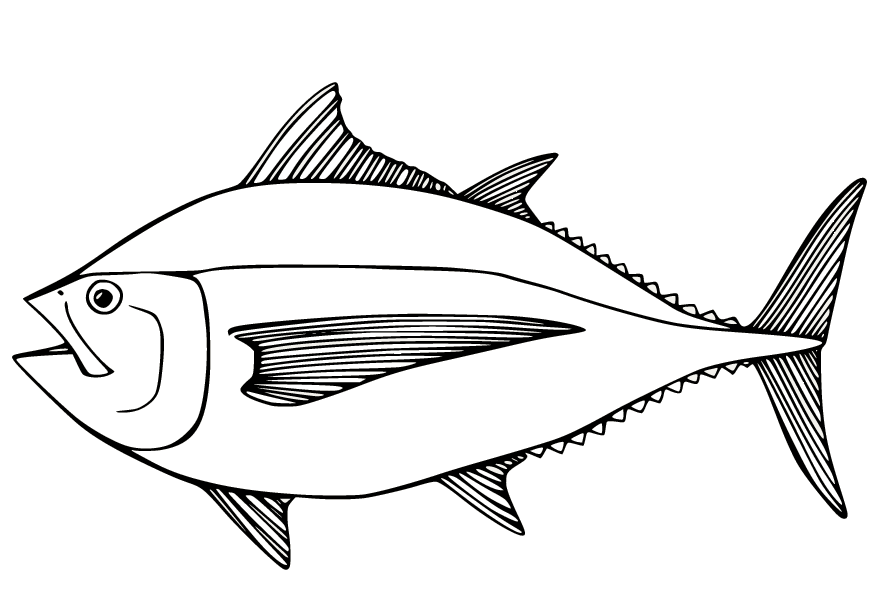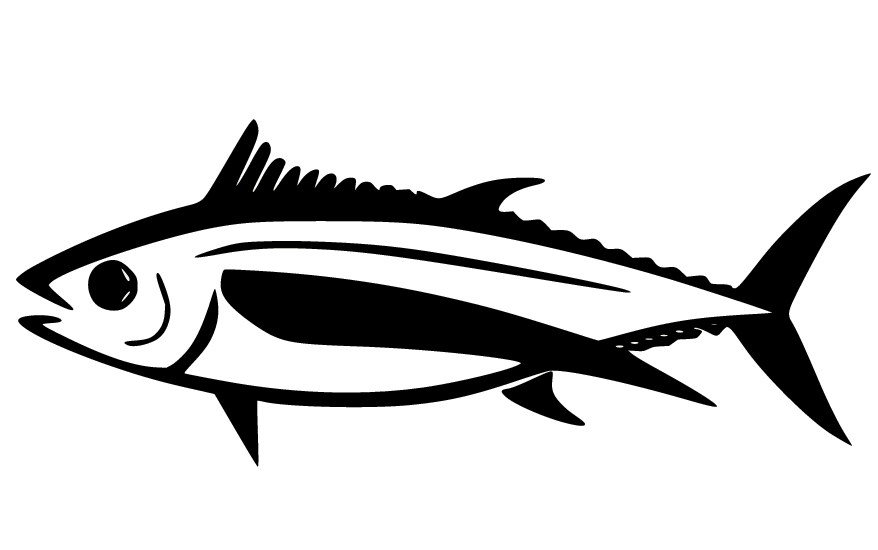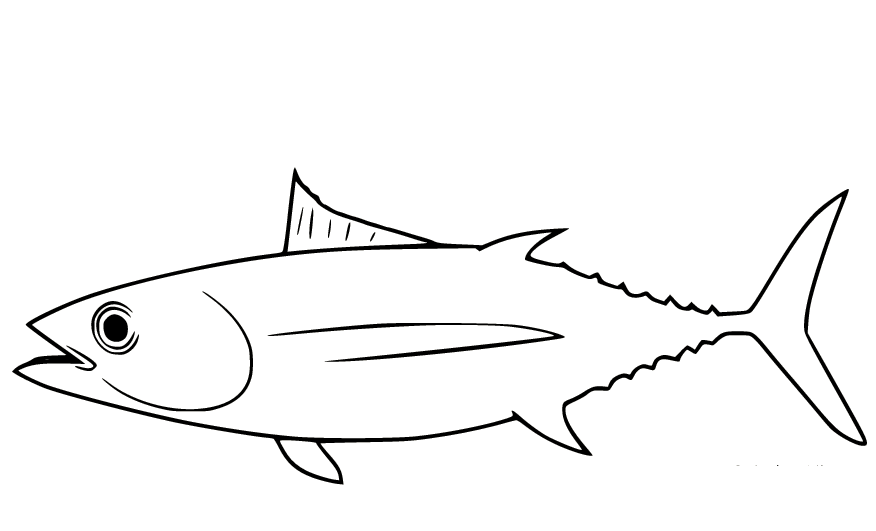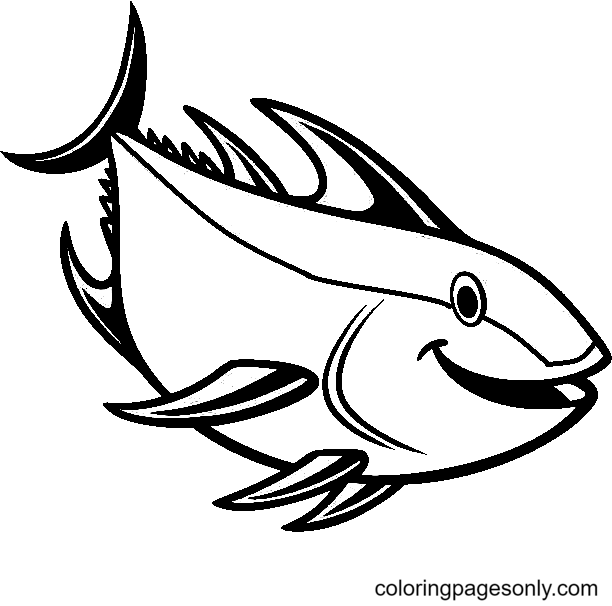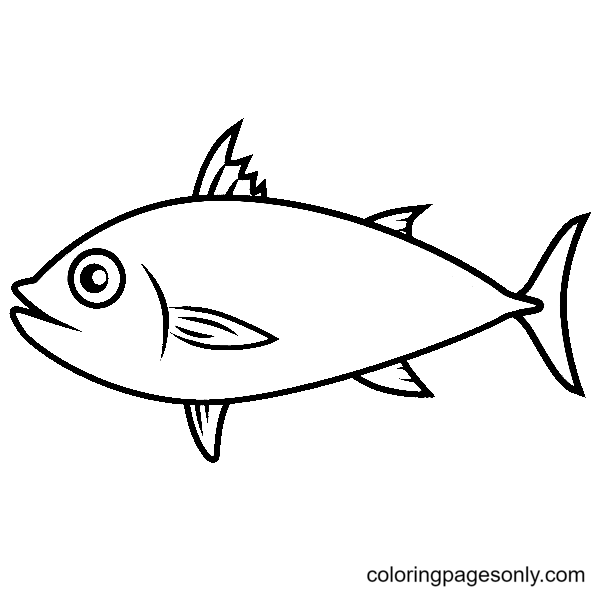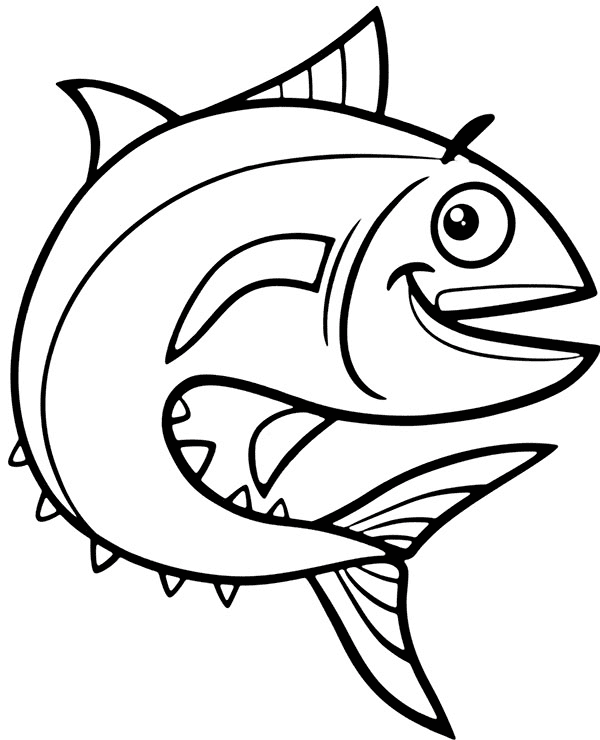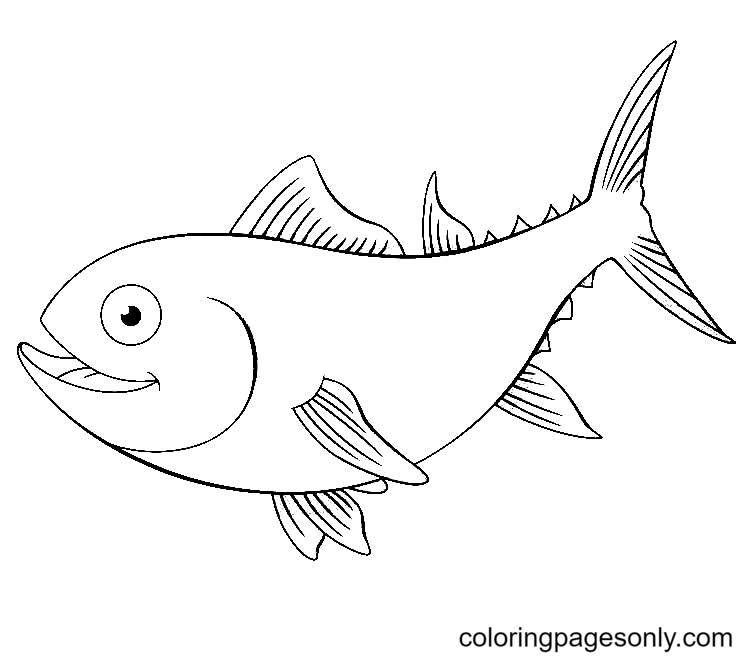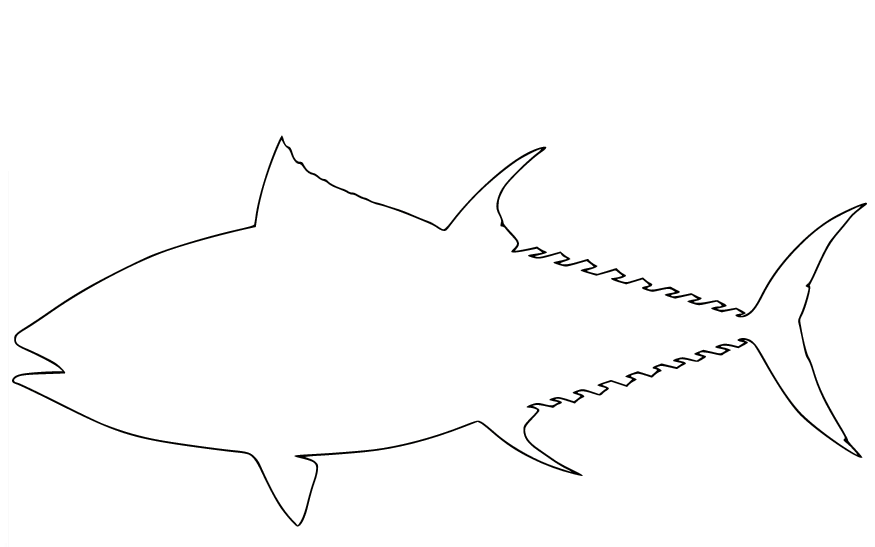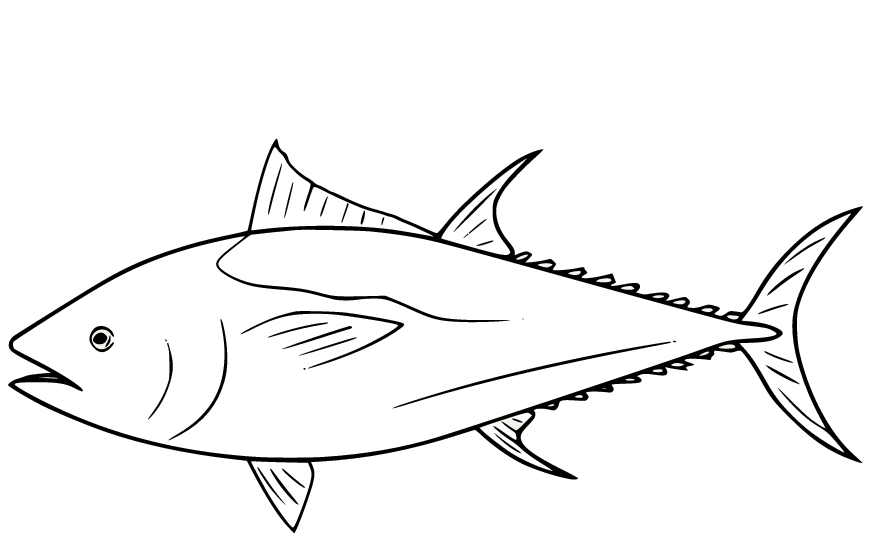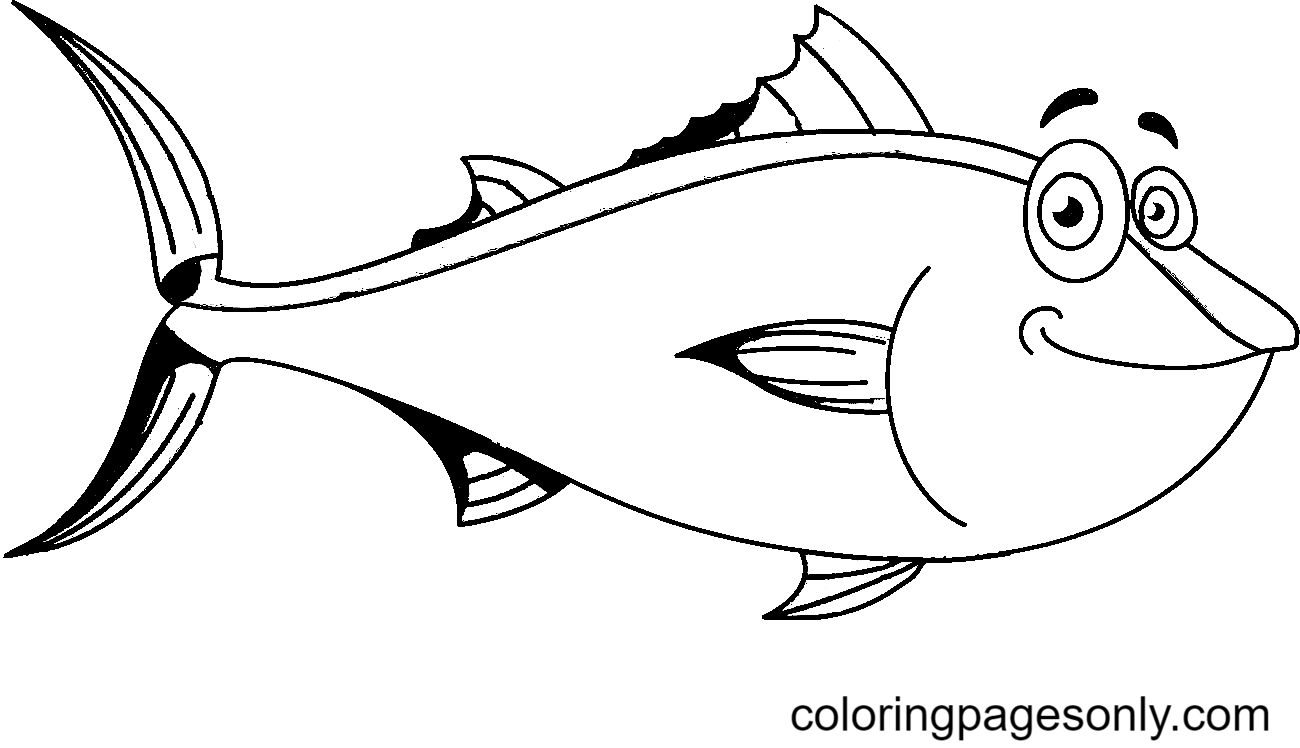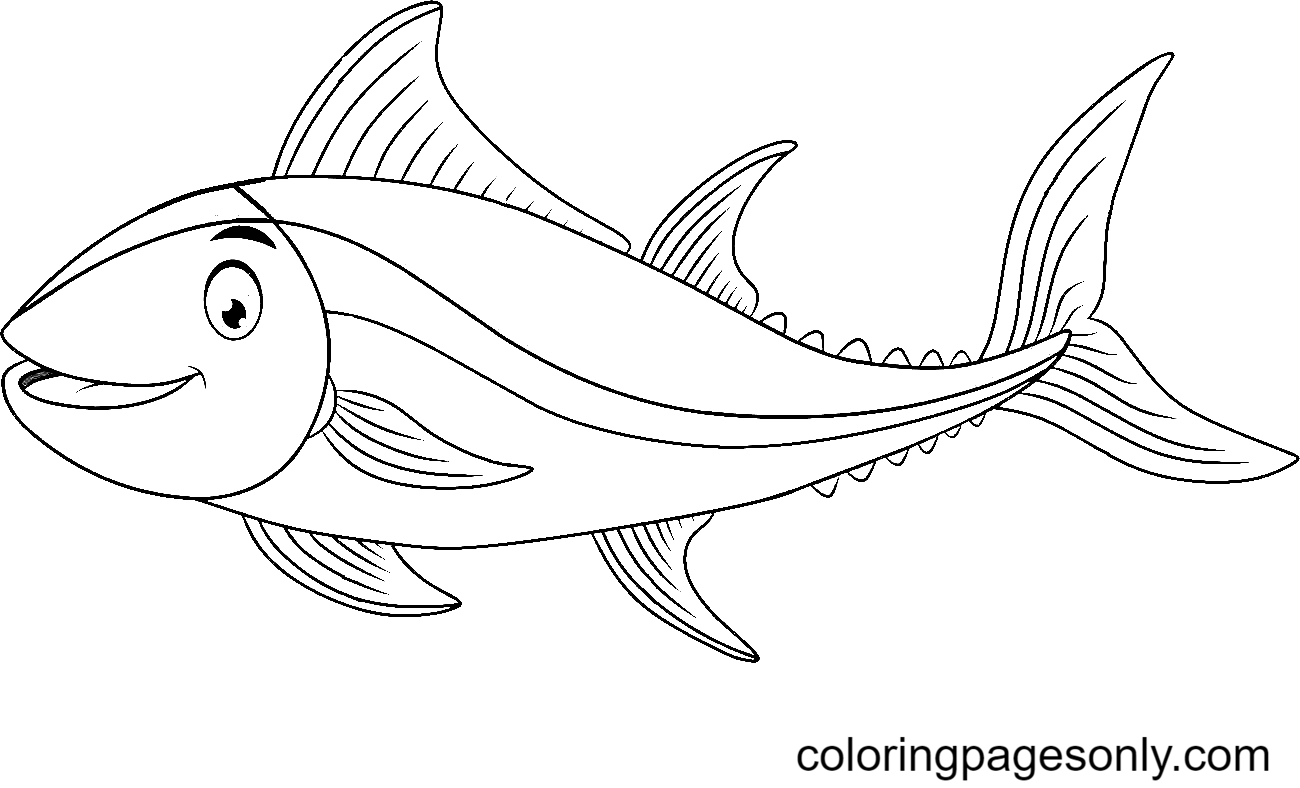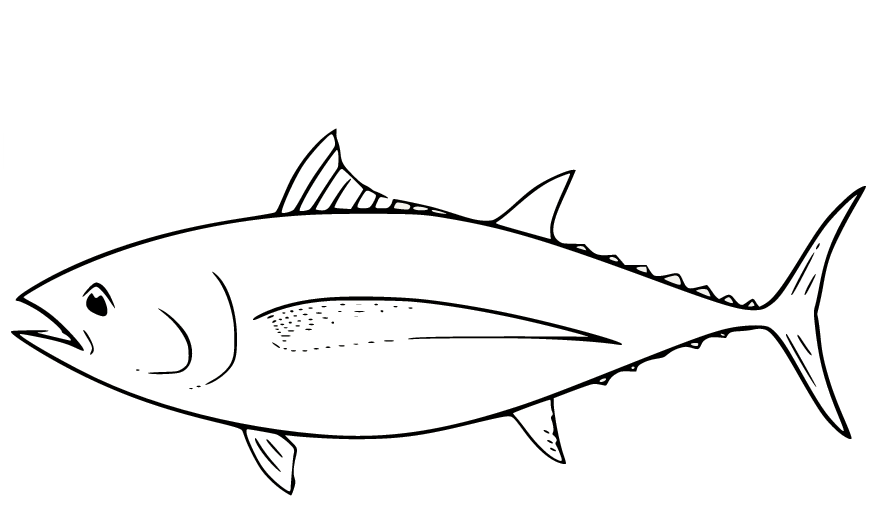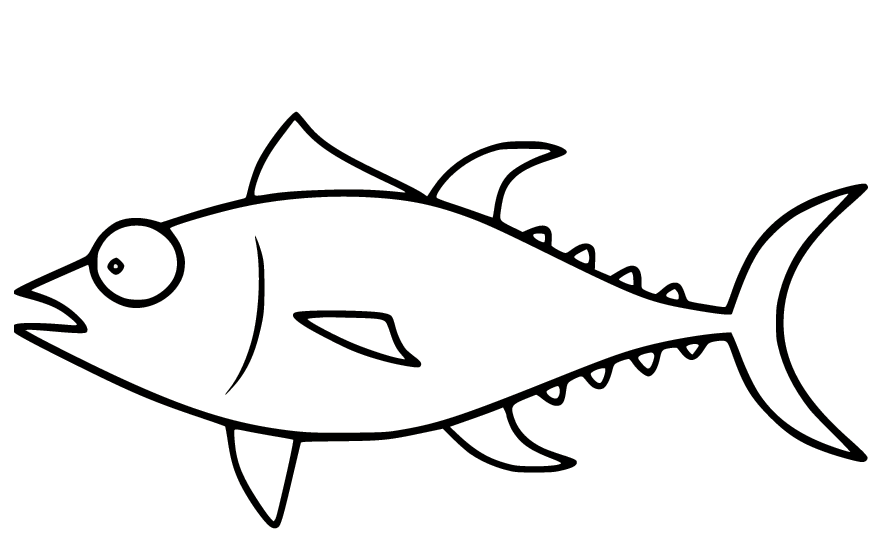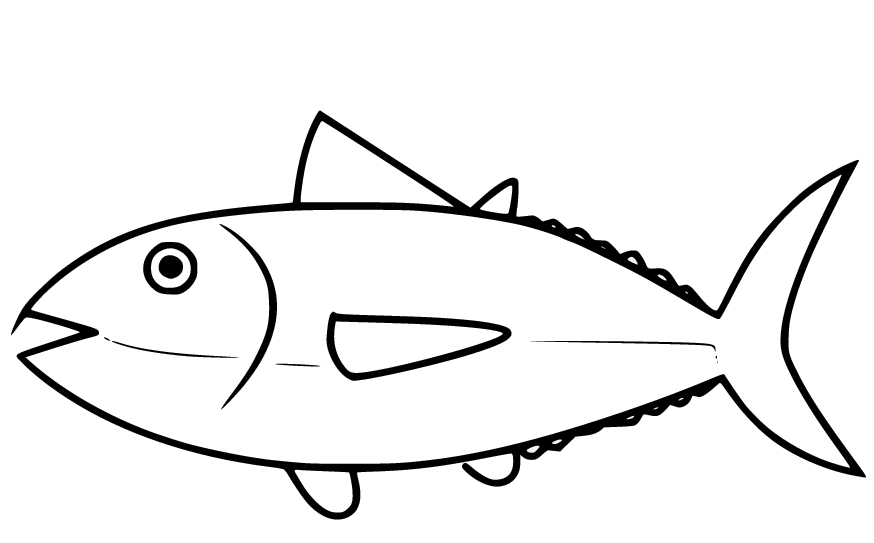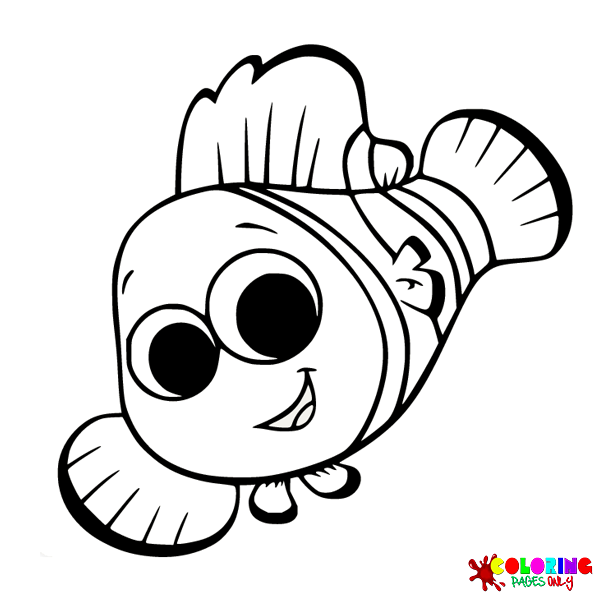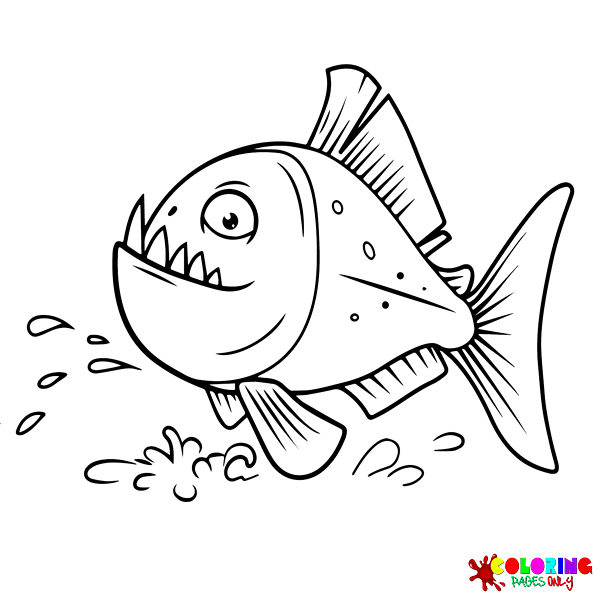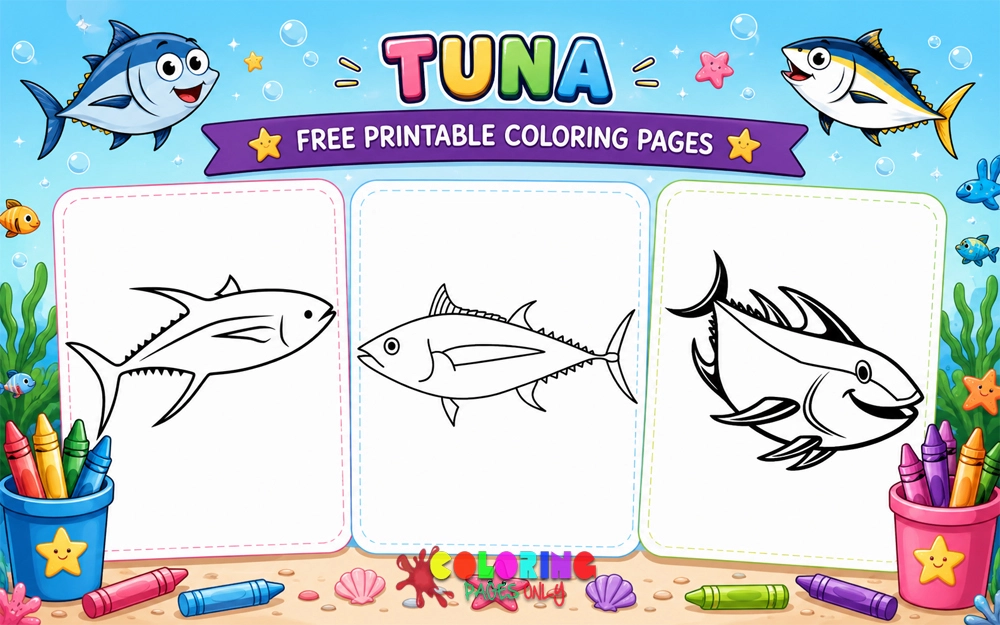
Free Tuna Coloring Pages: 40+ printable PDF pages featuring Atlantic bluefin, Pacific bluefin, yellowfin, albacore, bigeye, skipjack, bonito, tonggol, mackerel tuna, and cartoon versions including funny, happy, and tuna holding a knife or a can. All free, download PDF to print, or color online.

One of the things that makes this set more interesting than a single-species fish page is the sheer variety of species on offer. A bluefin and a yellowfin look meaningfully different from each other, and getting those differences onto the page, the deep navy back of the bluefin versus the bright yellow dorsal fin of the yellowfin, turns a coloring session into a small act of ocean observation.

Each species in this set has its own look, and that visual difference is what makes the coloring interesting. The bluefin’s palette is all cool navy and silver. The yellowfin announces itself with a vivid yellow dorsal fin. The albacore is lighter and more muted, with unusually long pectoral fins. The skipjack has a pattern of dark belly stripes that no other tuna in the set shares. Simpler cartoon pages suit younger children and anyone who wants a quick, cheerful session, while the labeled, realistic species pages give older children and adults a proper observation challenge.

These pages work well at home, in the classroom, or as part of a marine life or ocean science activity. Because tuna are real animals rather than characters or brands, no licensing disclaimer is needed here.

Quick Answer

Tuna coloring pages are a free set of 40+ printable PDFs and online coloring sheets covering nine real tuna species (bluefin, yellowfin, albacore, bigeye, skipjack, bonito, mackerel tuna, tonggol, and longtail) alongside fun cartoon, funny, and themed designs. The species variety makes this set a useful companion for a marine science lesson as well as a satisfying coloring challenge.

Best for: kids, older learners, ocean and nature fans, teachers, and anyone interested in marine science.

Formats: printable PDF and online coloring.

Popular styles: Atlantic bluefin, yellowfin, albacore, skipjack, and cartoon tuna designs.

Creative uses: ocean science activities, species identification study, marine life displays, STEM coloring projects, and sushi or seafood-themed art

What’s Inside Tuna Coloring Pages

Bluefin Tuna Coloring Pages

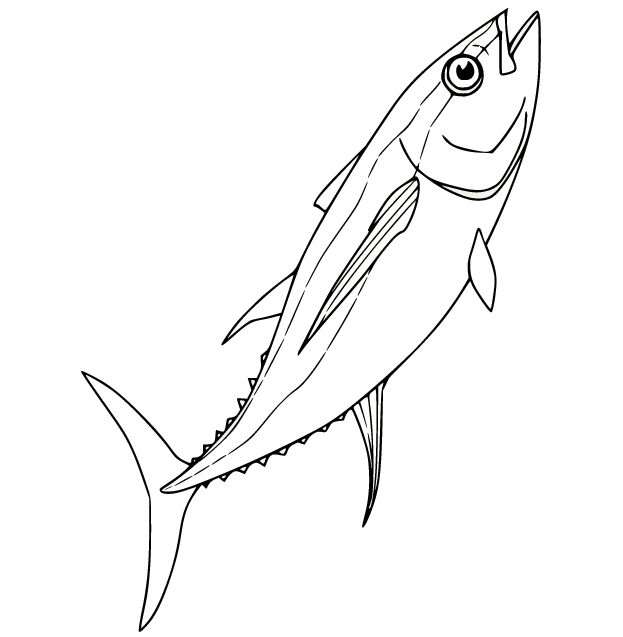
The largest and most commercially prized tuna species, the bluefin group is represented by Atlantic, Pacific, Northern, and Southern varieties, along with a cute bluefin and a Pacific bluefin shoal page.

Coloring bluefin tuna: the bluefin’s back is a deep, dark navy or metallic blue-black that fades to a silver-white belly. The tail fin is the same dark tone as the back, and the finlets along the upper tail edge show a slight yellow. A gradient from deep navy at the dorsal surface through steel blue to white-silver at the belly is what makes a bluefin look like the real thing.

Yellowfin Tuna Pages

Three sheets cover the yellowfin, including a standard version, a version for kids, and a cute yellowfin: the species is named for its distinctive bright yellow dorsal and anal fins.

Coloring yellowfin tuna: the body follows the same dark-above, pale-below pattern as the bluefin, but the defining feature is the second dorsal fin and the anal fin, which are a vivid, unmistakable yellow. There is also a yellow stripe running along the side below the lateral line. Getting that yellow right, bright and saturated rather than pale or golden, is what makes a yellowfin immediately recognizable.

Albacore Tuna Pages

Three albacore sheets appear in the set, including a jumping albacore and a large albacore version. The albacore is sometimes called “the chicken of the sea” and appears in cans labeled white tuna.

Coloring albacore tuna: albacore are lighter and more muted than the other species, with a blue-grey back that is noticeably less dark than bluefin. Their pectoral fins are unusually long, extending well past the rear dorsal fin, which is their most recognizable anatomical feature. A cool blue-grey on the back, fading to warm white on the belly, suits the albacore well.

Bigeye and Skipjack Pages

The bigeye tuna and skipjack tuna each appear in their own sheets. The bigeye is notable for its large eyes and is often used as a substitute for bluefin in sushi; the skipjack is the most-fished tuna species in the world, accounting for 50 to 60 percent of the global catch.

Coloring bigeye and skipjack: the bigeye follows the same countershaded pattern as the other species, but its eyes are noticeably large relative to its head. The skipjack has a distinctive pattern of dark horizontal stripes on its lower belly, which sets it apart from every other tuna in this set and is worth capturing in the coloring.

Bonito, Mackerel Tuna, Tonggol, and Longtail Pages

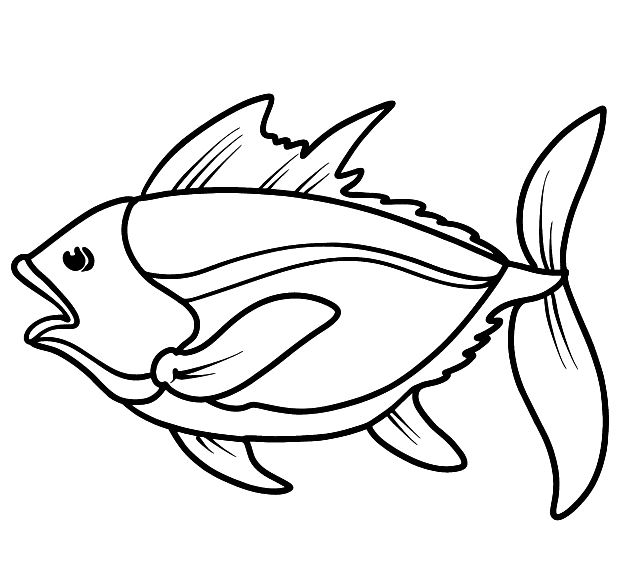
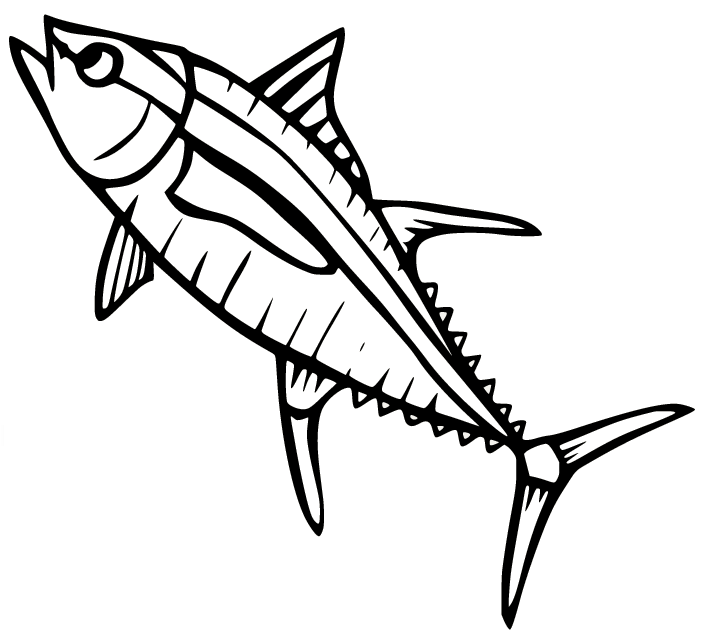
Other realistic pages cover bonito, mackerel tuna, tonggol (longtail tuna), and longtail tuna, rounding out the variety of the Thunnini group.

Coloring the smaller species: bonito and mackerel tuna are slimmer and smaller than the big commercial species, with more pronounced striping. Tonggol and longtail tuna have a similar torpedo body to the bluefin, but in a slightly lighter, warmer tone. Using the stripe patterns where they appear is what separates these pages from a generic fish outline.

Cartoon, Funny, and Themed Tuna Pages

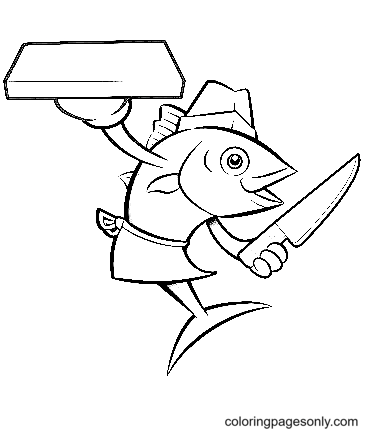
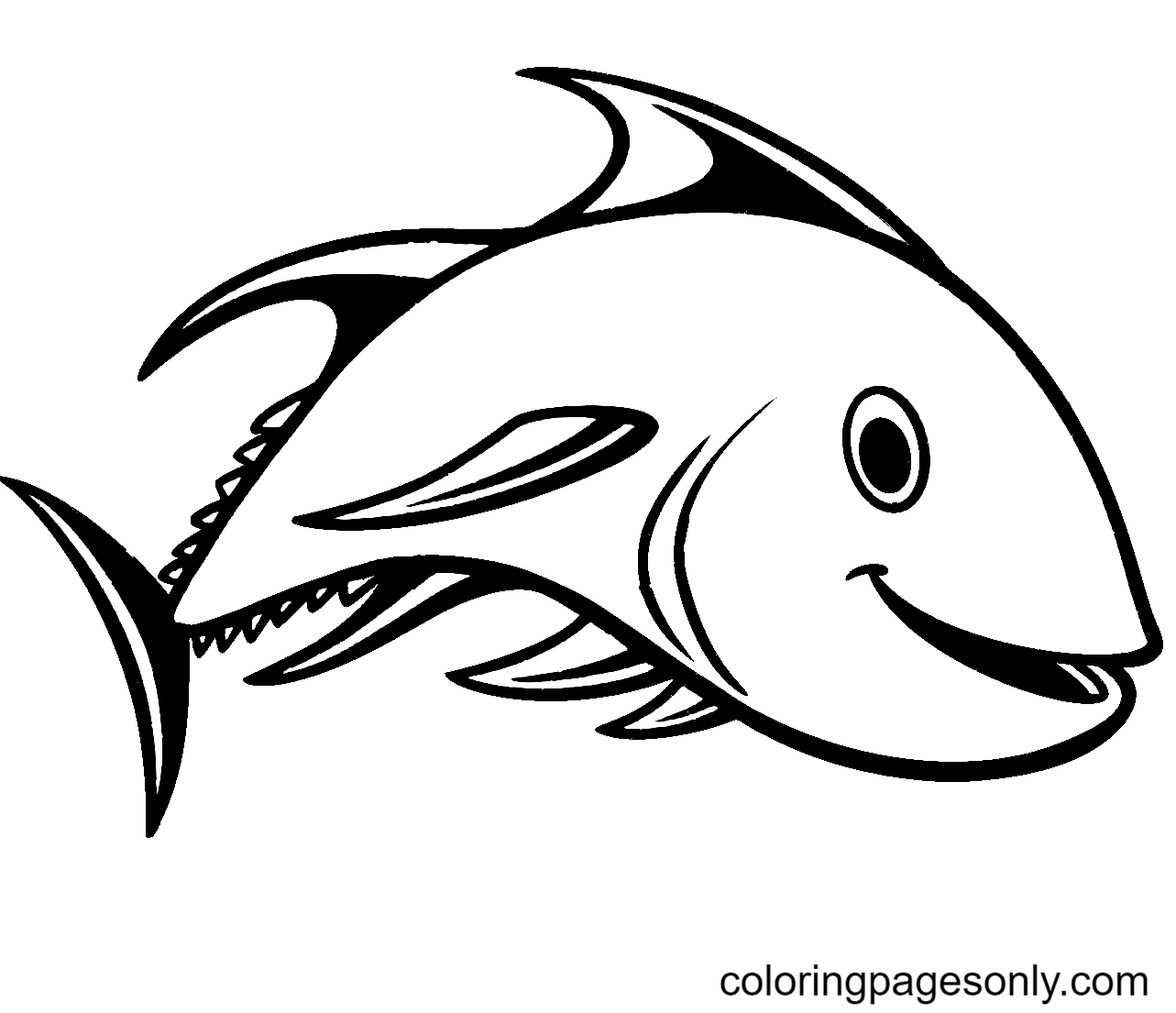
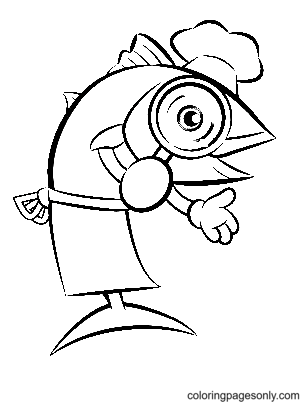
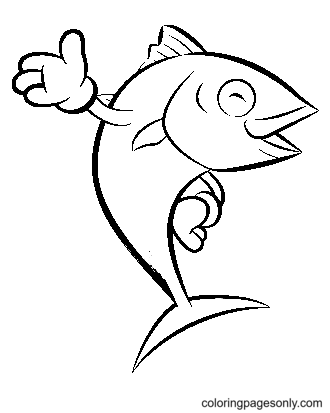
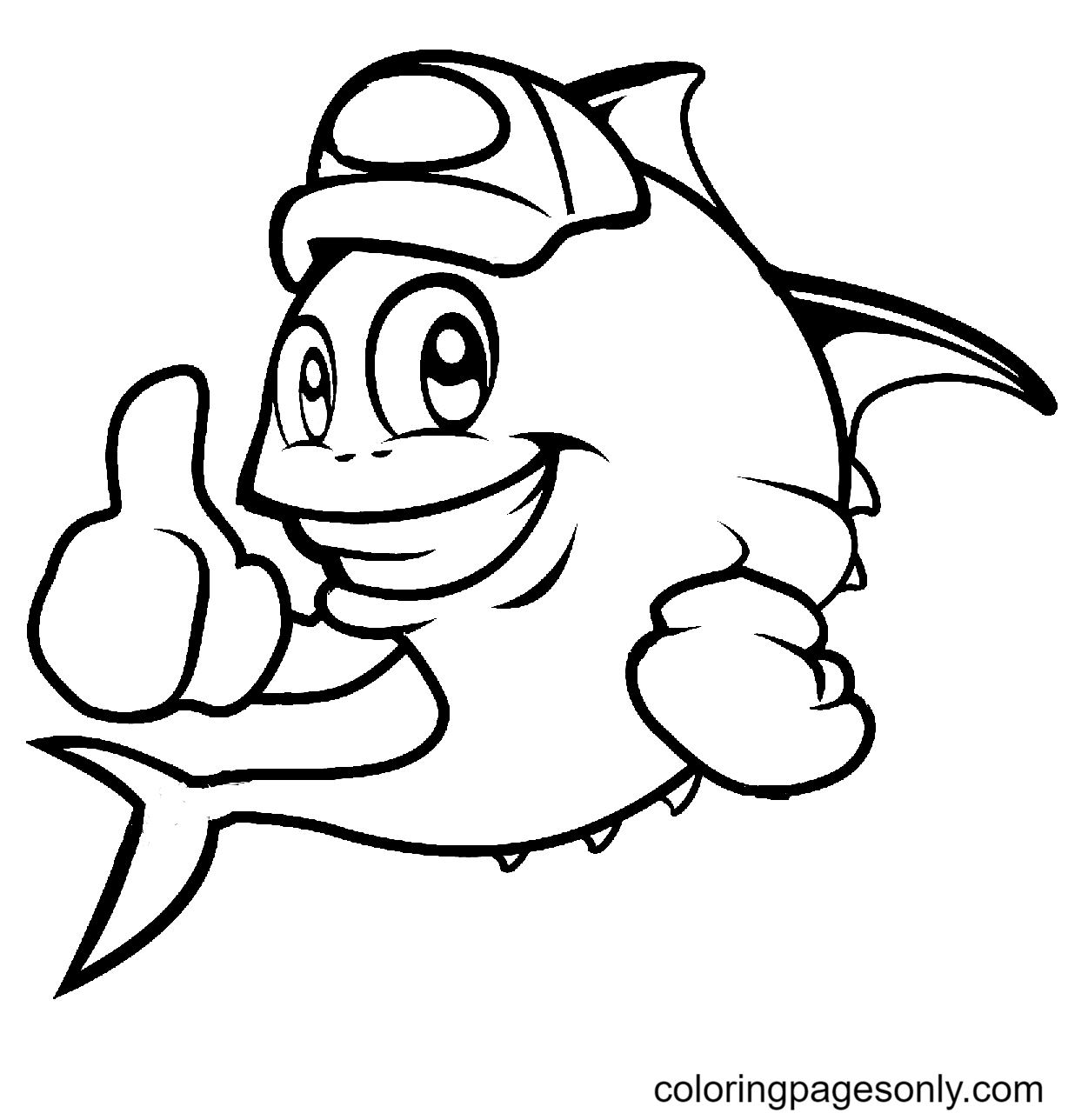
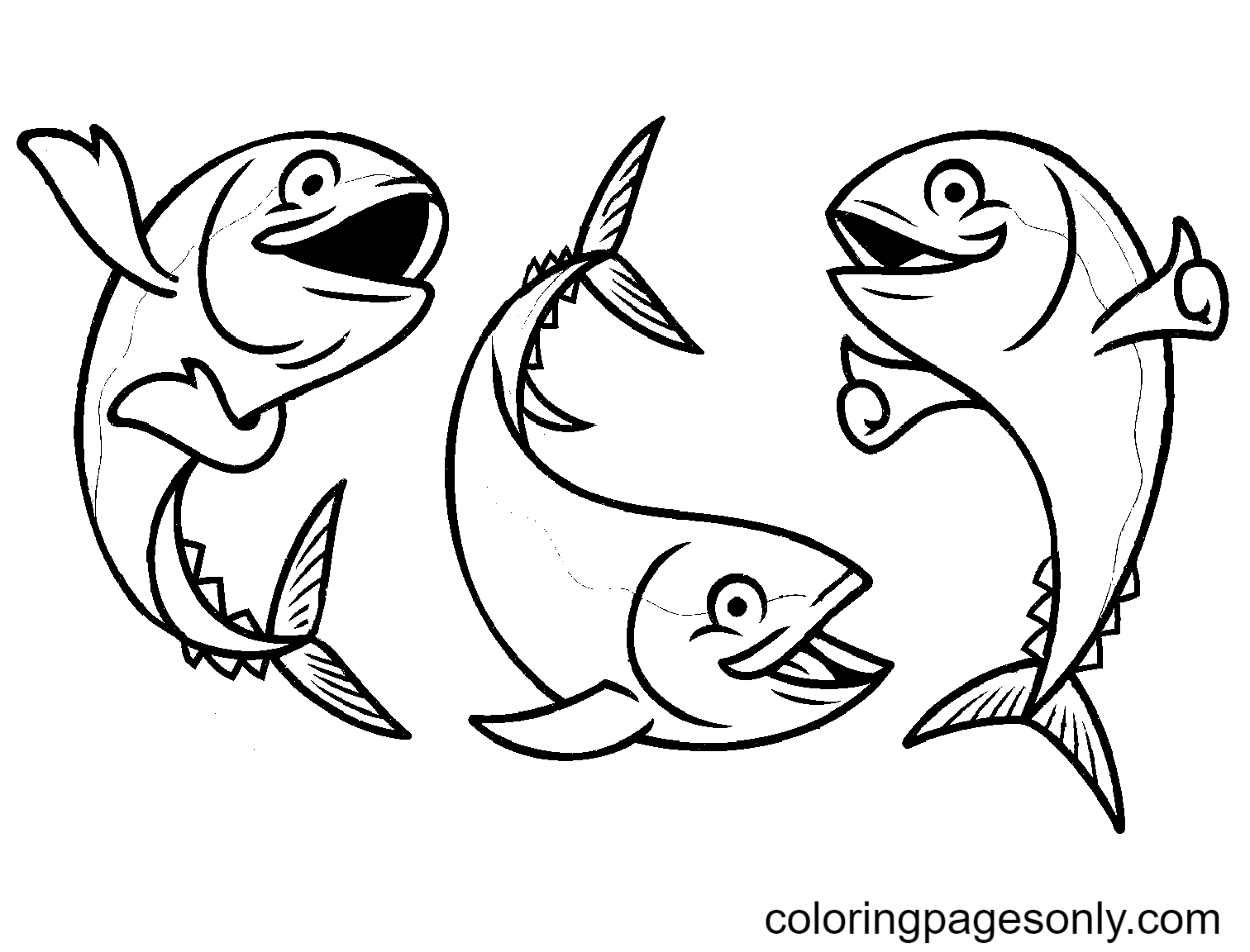
Several pages step back from realism entirely: a happy version, a funny one, a cute cartoon tuna fish, a blue cartoon, a tuna holding a knife, one holding a can, a tuna fish pointing with both fins, and one eating toilet paper and scaring others.

Coloring the cartoon pages: these suit any palette. The tuna holding a knife or a can is a slapstick food-chain joke that works well with bright, bold colors and a white or light background that lets the expression do the work. The happy and funny pages are best kept cheerful: bright turquoise, sky blue, or a warm coral for the body instead of the realistic navy.

Printable PDF and Online Tuna Coloring Pages

Every design comes in two ways: a printable PDF for paper, or the same artwork colored on screen.

Using both formats: print the PDF when you want a clean sheet for pencils, markers, or crayons, and use the on-screen version when there is no printer nearby. The PDF holds the fin detail and body gradient lines cleanly on standard letter or A4 paper.

What These Pages Do

Most fish pages are a single generic fish outline. This set is different because the species are real, named, and visually distinct from each other. Getting the yellowfin’s bright dorsal fin right, or picking up the skipjack’s dark belly stripes, requires close looking rather than just filling a shape. That close looking is the beginning of species identification, which is a genuine scientific skill. The distinction between bluefin, yellowfin, and albacore matters enormously in the real world: bluefin commands thousands of dollars per fish at Tokyo’s Toyosu market. At the same time, skipjack becomes canned tuna sold for a few dollars. Noticing why they look different is exactly where that understanding starts. Fish coloring pages is the parent hub for more of the same, and shark coloring pages and dolphin coloring pages extend the marine science thread to other large ocean species.

The American Art Therapy Association is clear that everyday coloring is recreation and self-care rather than clinical therapy. For a child working through the cartoon and funny tuna pages, this is exactly that: lighthearted, screen-free creative time with an animal they find amusing. The American Academy of Pediatrics points to hands-on, observational activities as a recognized part of healthy development in children, and coloring a labeled tuna species page while comparing it to a real photograph is a natural bridge between art and the kind of attentive, curious observation that supports early science learning.

How to Color Tuna Coloring Pages

These steps work for any tuna page in the set, from the simplest cartoon to the most detailed, realistic portrait.

Identify the species before you pick up a color, a bluefin and a yellowfin start with completely different base tones. Checking which species you are coloring before you start saves corrections and makes the finished page more satisfying.

Build the body gradient from dark back to pale belly. All realistic species share this pattern: deep color on the dorsal surface, lightening through the flanks, and a clean, pale tone on the lower belly. Work from the top down in smooth, even layers.

Put the defining feature of each species first. The yellowfin’s yellow fins, the skipjack’s belly stripes, the albacore’s long pectoral fins, the bigeye’s large eyes: these are the details that tell species apart. Get each one right, and the page reads as a real fish rather than just a fish outline.

Use the tail to anchor the movement. Tuna have a deeply forked, crescent-shaped tail that looks best when it matches the darkest tone of the dorsal surface. Keeping the tail dark and sharp gives the fish a sense of power and speed even on a flat page.

Keep cartoon pages bold and simple. For the funny and happy tuna, the expression is the whole point. A clean, bright background and a simple two-tone body (one bright color for the back, white for the belly) keep the cartoon readable and cheerful without overcomplicating it.

5 Creative Craft Ideas with Tuna Coloring Pages

Tuna Species Identification Chart

Color one page from each of the five main species, then arrange them in a row and label each with the species name and one key fact.

Pin them together as a reference chart for a marine science lesson or a classroom ocean display.

Dark Back, Pale Belly Science Study

Color the same basic tuna outline twice: once in realistic ocean colors (dark navy back, pale silver belly) and once in a completely invented palette.

Compare the two versions and note which one looks like a real fish and why, as a simple lesson in countershading and natural camouflage.

Sushi and Seafood Menu Art

Color an albacore, a yellowfin, and a bluefin page side by side with labels noting which type of tuna each becomes in canned form (white tuna, light tuna) or at a sushi bar (ahi, hon-maguro).

Display as a food-chain art piece or a creative companion to a cooking lesson.

Cartoon Tuna Story Card

Color the tuna-holding-a-can or tuna-holding-a-knife page and write a short, funny story below it from the tuna’s point of view.

The joke of a tuna holding a can of tuna translates well into a one-paragraph creative writing activity.

Ocean Food Chain Display

Color a tuna page alongside shark, dolphin, and octopus coloring pages to build a food-chain wall display.

Place them in the middle of the chain, with their prey (smaller fish, squid) on one side and their predators (sharks, dolphins, large whales) on the other.

FAQ About Tuna Coloring Pages

Are these tuna coloring pages free, and can I color them online? 

Yes. Every page is free, with no account, email, or payment required. Download the PDF to print at home, or color the design on screen in the browser.

Which tuna species are included in the set? 

The set covers the bluefin group (Atlantic, Pacific, Northern, and Southern varieties), yellowfin, albacore, bigeye, skipjack, bonito, mackerel tuna, tonggol, and longtail, plus cartoon and fun designs.

Are tuna warm-blooded? 

Yes. Bluefin and several related species are endothermic, meaning they can regulate their body temperature above the surrounding water. According to NOAA Fisheries, this is extremely rare among fish and allows them to hunt in cold, deep water where most species cannot survive.

How fast can tuna swim? 

Albacore can swim faster than 50 miles per hour, according to NOAA Fisheries. Bluefin reach speeds of around 40 miles per hour. Their torpedo-shaped bodies, retractable fins, and powerful crescent-shaped tails are all adaptations for high-speed swimming.

What colors should I use for a realistic bluefin tuna? 

A bluefin tuna has a deep navy or metallic blue-black back, steel blue flanks, and a pale silver-white belly. The tail and upper finlets are dark, with a faint yellow tinge on the small finlets. Avoid warm tones: the bluefin palette is all cool and metallic.

What makes the yellowfin tuna different in color? 

The yellowfin’s second dorsal fin and anal fin are a vivid, bright yellow, and a yellow stripe runs along the side below the lateral line. The body uses the standard countershaded pattern of most tuna, but those yellow fins make it the most colorful, realistic page in the set.

Are these pages good for a classroom science lesson? 

Yes. The labeled species pages work well alongside a lesson on ocean ecosystems, fish anatomy, or marine biodiversity. The species identification craft activity is a natural fit for a STEM or earth science class.

What is the difference between canned white tuna and light tuna? 

Canned white tuna is albacore, which has light-colored flesh. Canned light tuna is typically skipjack or yellowfin. The bluefin tuna, by contrast, is rarely canned and instead commands high prices at sushi restaurants and fish auctions.

Are there cartoon tuna pages in the set? 

Yes. The set includes a happy version, a funny one, a cute cartoon tuna, a blue cartoon, a tuna holding a knife, one holding a can, and a tuna fish pointing with both fins.

What crafts can I make with tuna coloring pages? 

Popular options include a species identification chart, a countershading science study, a sushi and seafood menu display, a cartoon tuna story card, and an ocean food chain wall display.

More Fish and Ocean Coloring Pages

Browse the full set at ColoringPagesOnly.com, then open any design to print it or color it on screen.

These pages suit home use, the classroom, and marine science activities for all ages. They are original coloring designs free to use for personal and educational purposes.
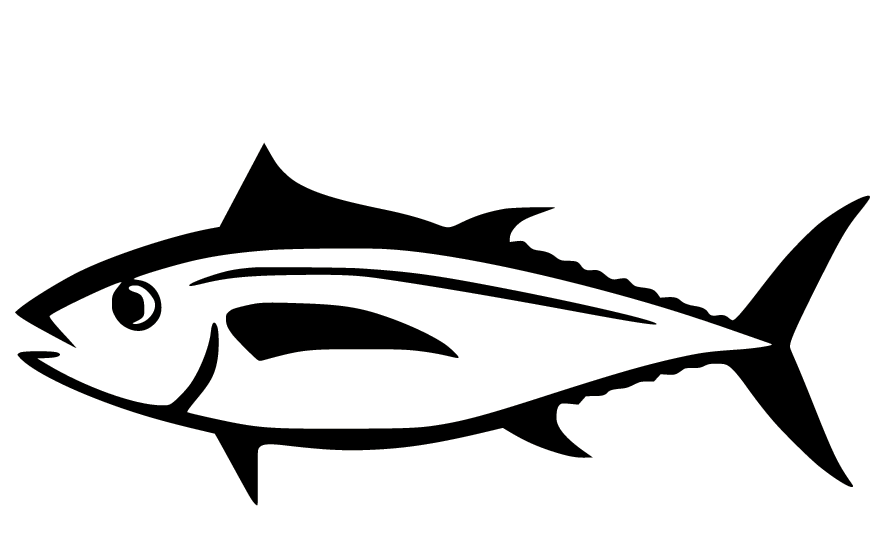
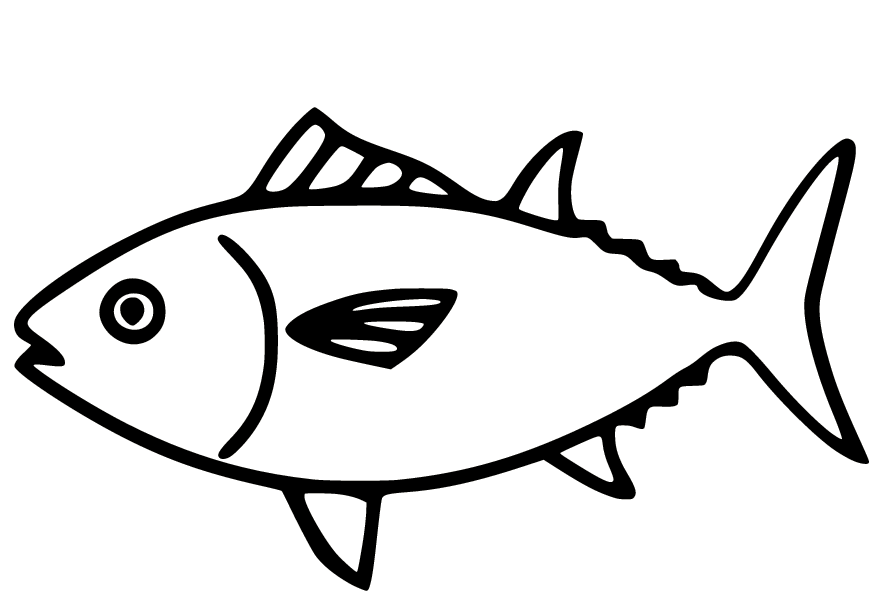
For the final pass, identify the species, work the gradient from dark dorsal to pale underside, and make the defining feature (yellow fins, belly stripes, long pectoral fins) the clearest thing on the page. Those three steps work on every realistic tuna in the set.

Share your work on Facebook and Pinterest and tag #ColoringPagesOnly. We would love to see your species charts, countershading studies, and ocean food chain displays.
Jennifer Thoa – Content Editor & Designer

Jennifer Thoa is Content Editor and Designer at ColoringPagesOnly.com. Degree in Journalism and Creative Writing, University of Kansas. She writes and edits long-form educational articles on anime, film, animals, world cultures, and automotive history - verified against named primary sources before publication.