Nautilus Coloring Pages
 By:
Jennifer Thoa - Content Editor & Designer
Updated:
By:
Jennifer Thoa - Content Editor & Designer
Updated:
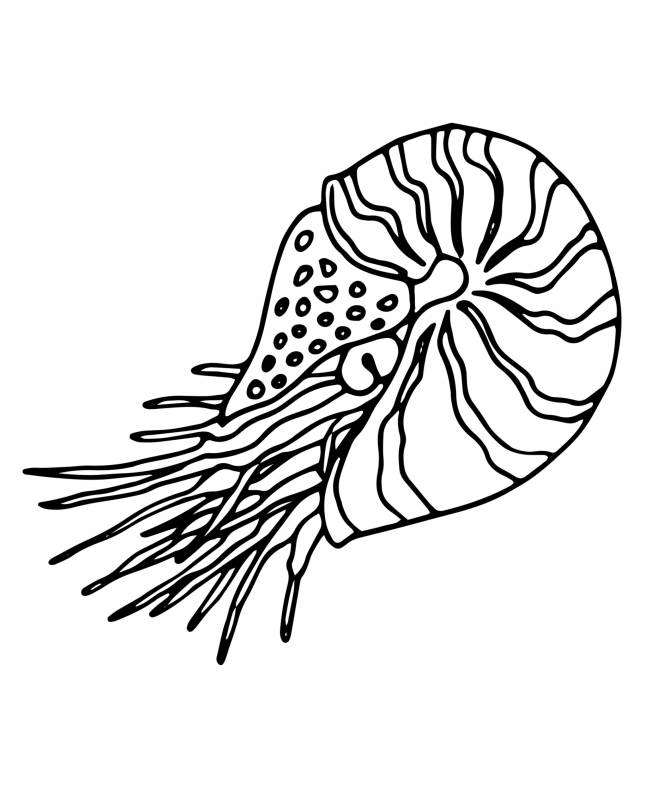
Free Nautilus Coloring Pages: 17 printable PDF designs featuring realistic nautilus illustrations, shell cross-sections and patterns, and simple kid-friendly sheets. Each page can be downloaded as a PDF to print or colored online in the browser.
The nautilus is a marine cephalopod often called a “living fossil,” since animals very similar to it have existed for roughly 500 million years, long before the first dinosaurs. Its most recognizable feature is a coiled shell divided into as many as 30 separate chambers, connected by a thin tube called the siphuncle that the animal uses to move fluid and gas in and out, controlling its buoyancy the way a submarine adjusts its ballast tanks. A nautilus lives only in the outermost, largest chamber, sealing off each smaller one behind it as it grows. Unlike its cephalopod relatives, the octopus and squid, a nautilus has 60 to 90 thin tentacles with no suckers, simple eyes without a lens, and no ink sac at all.
This collection groups its 17 pages by style, from true-to-life nautilus illustrations to shell cross-sections and simple sheets, so kids and adults can pick a page that matches their skill level. Each page is available as a downloadable PDF or as an online coloring tool that works directly in the browser.
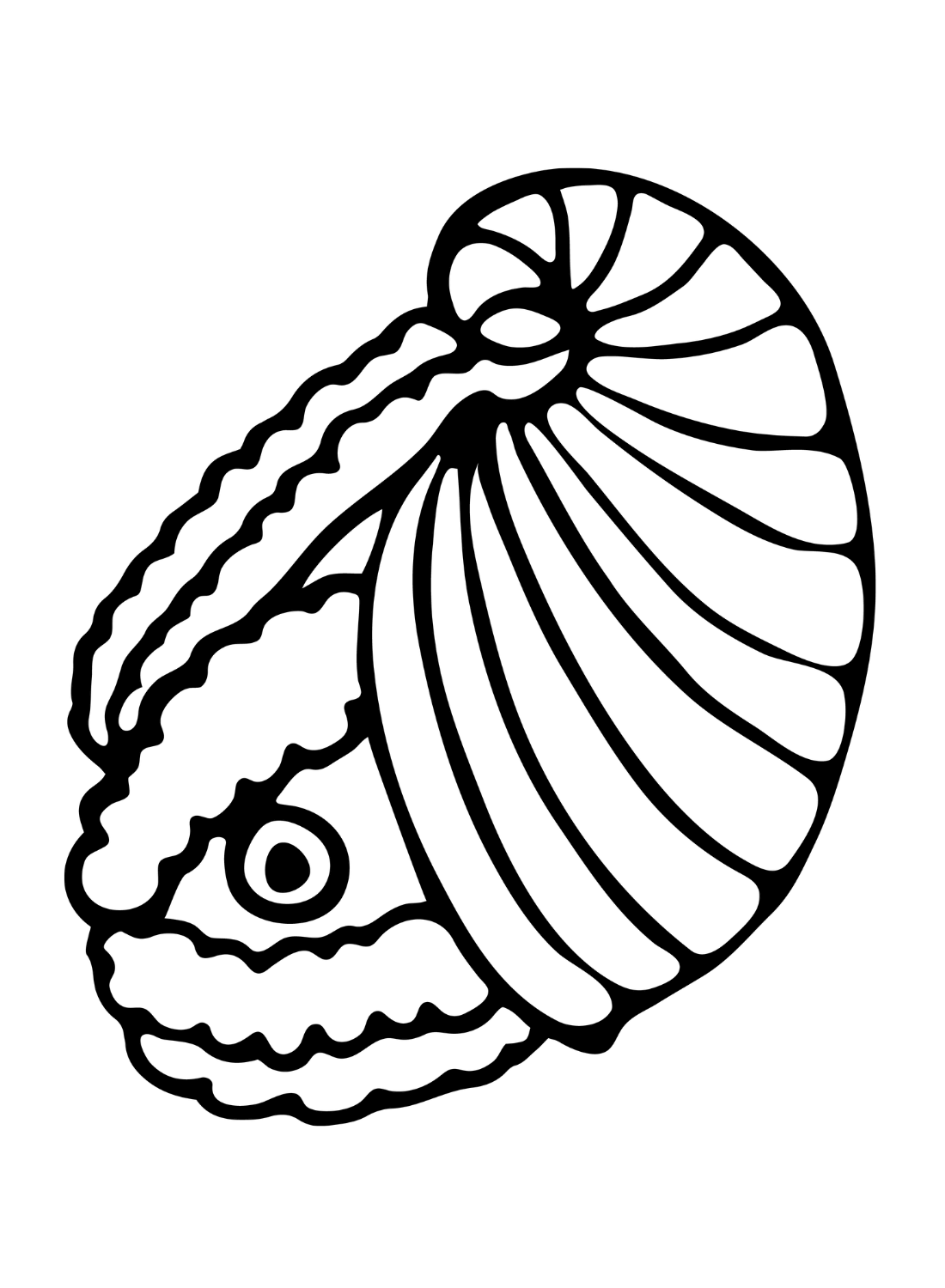
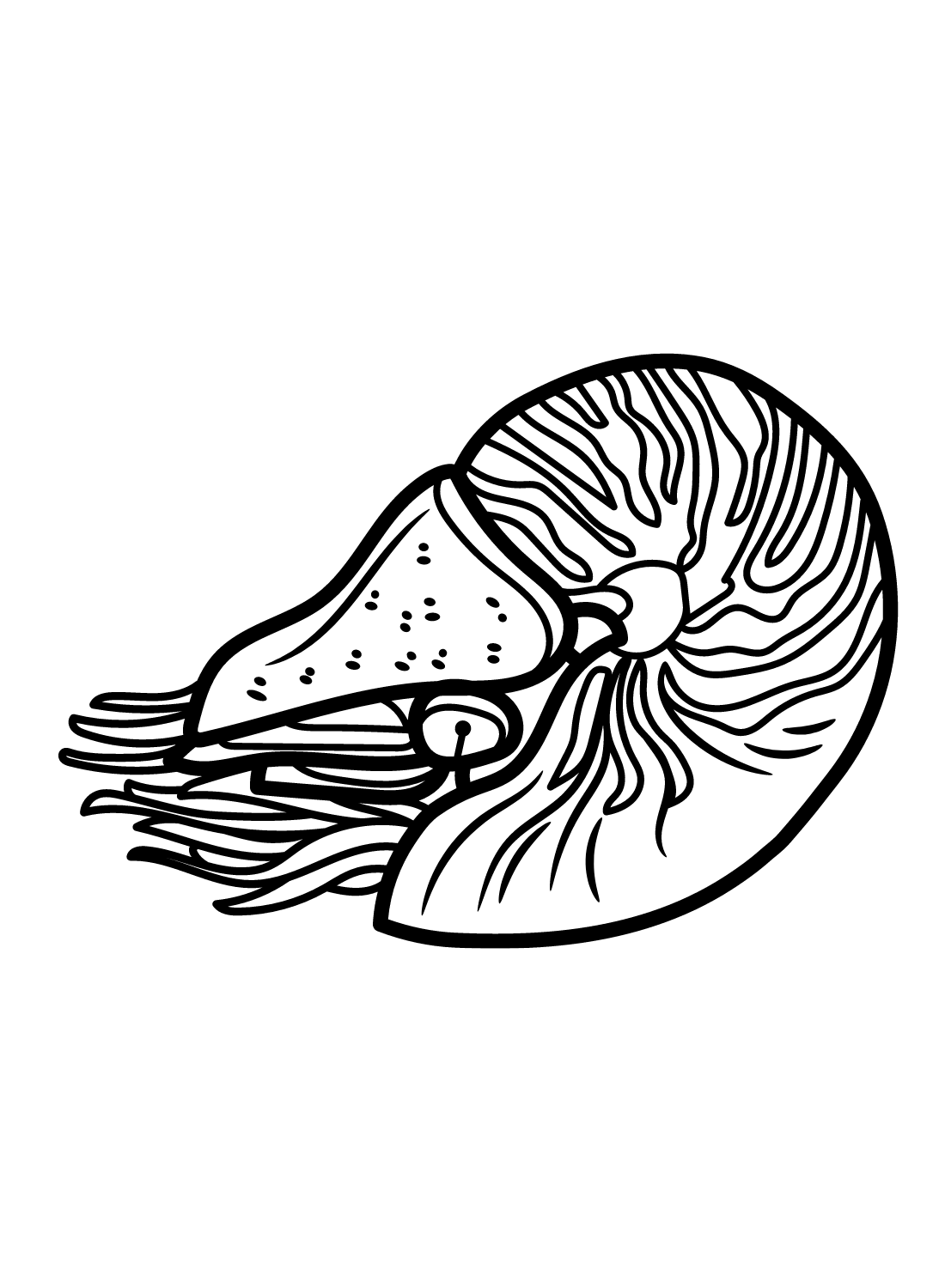
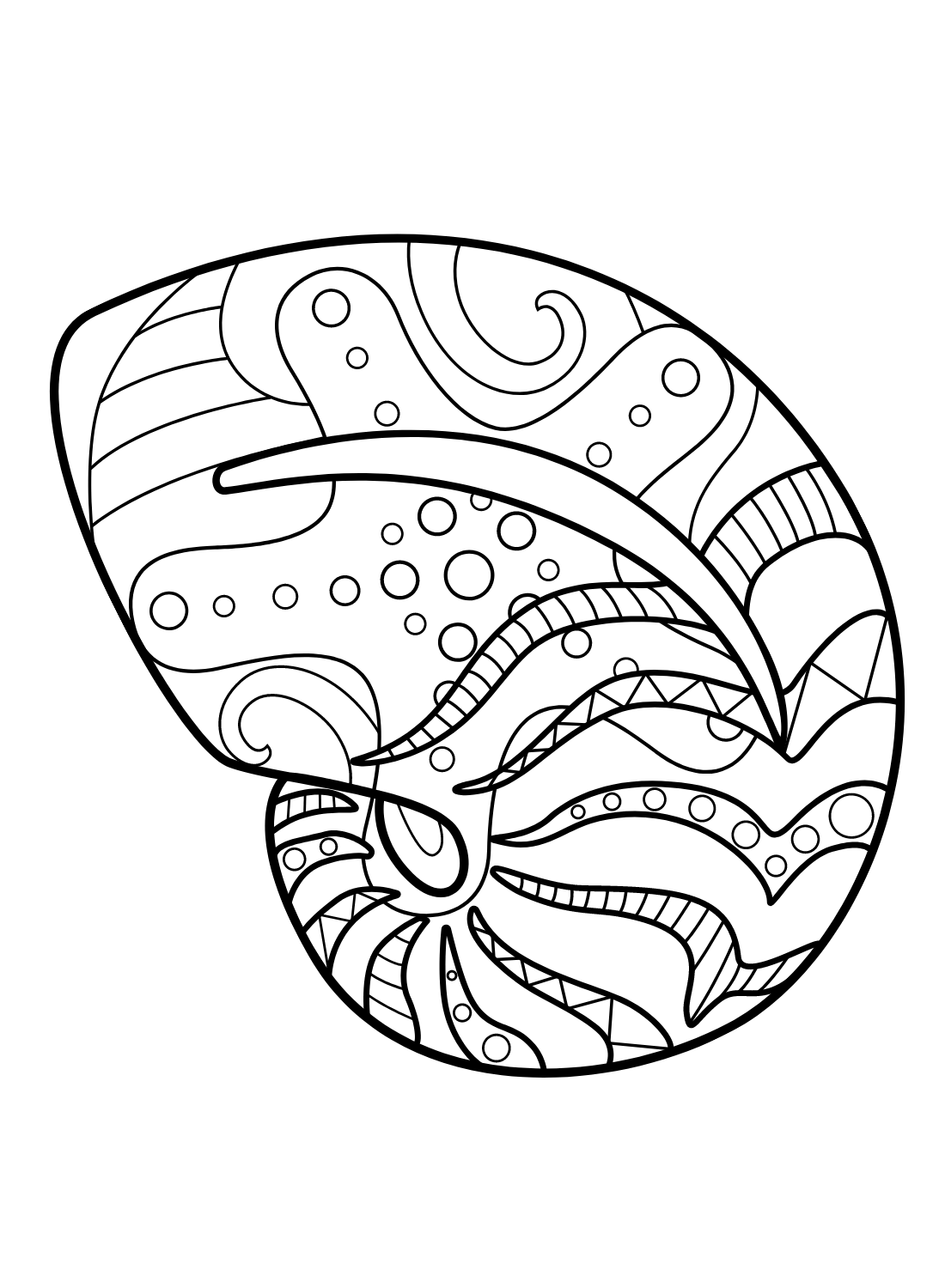

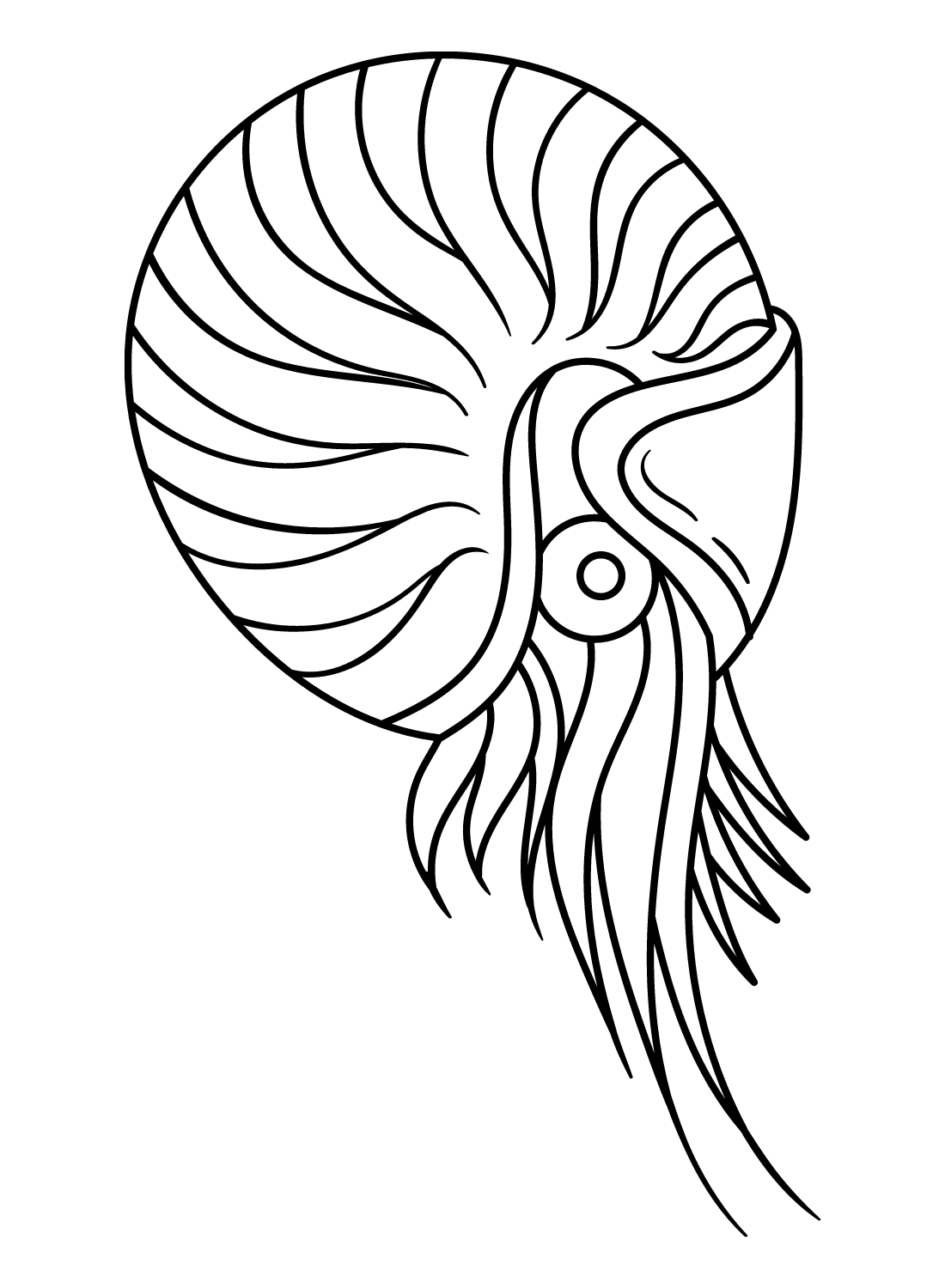
What Is Inside This Collection
The 17 pages are split into three groups based on style and detail level.
Realistic Nautilus Designs
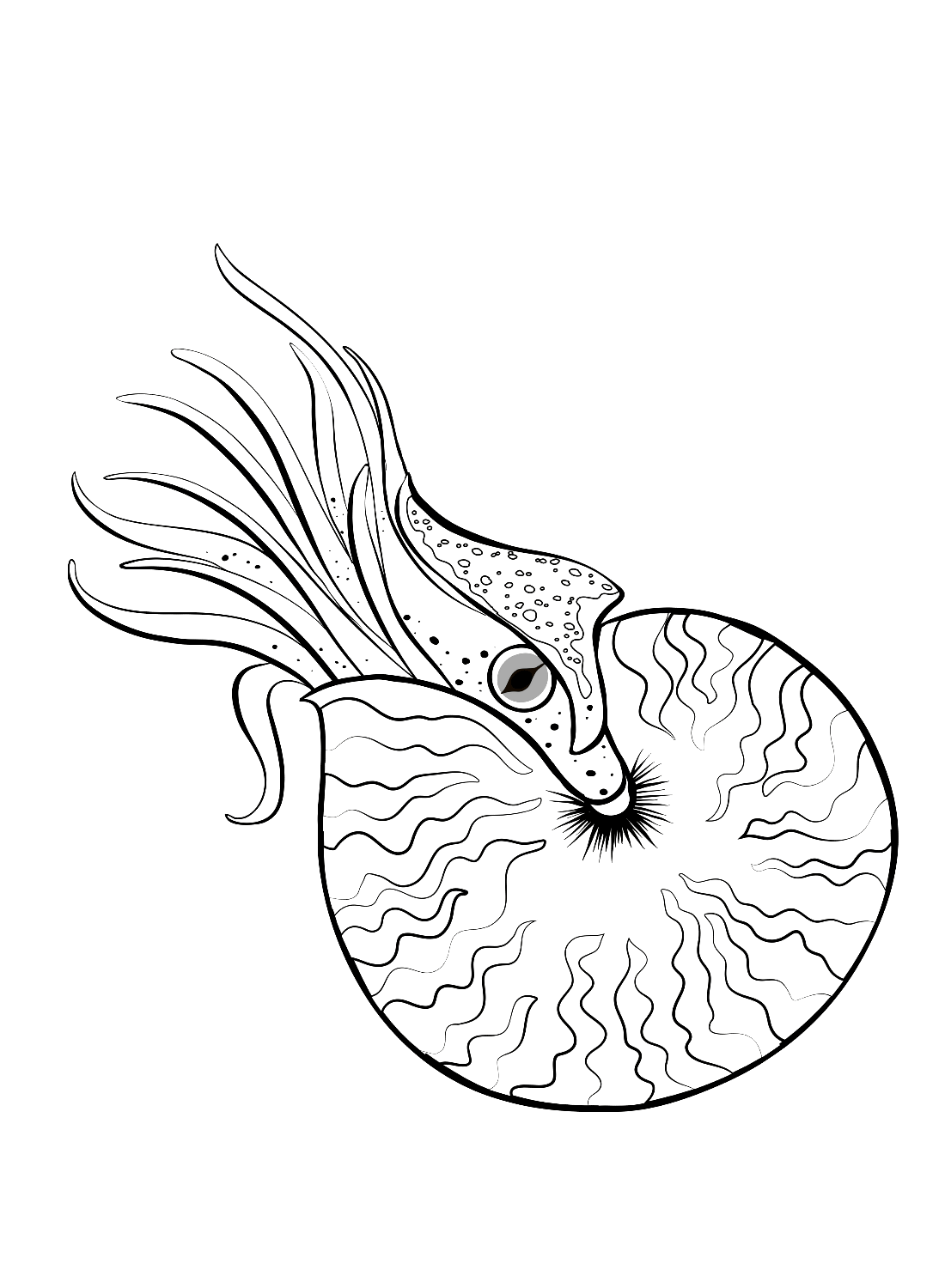
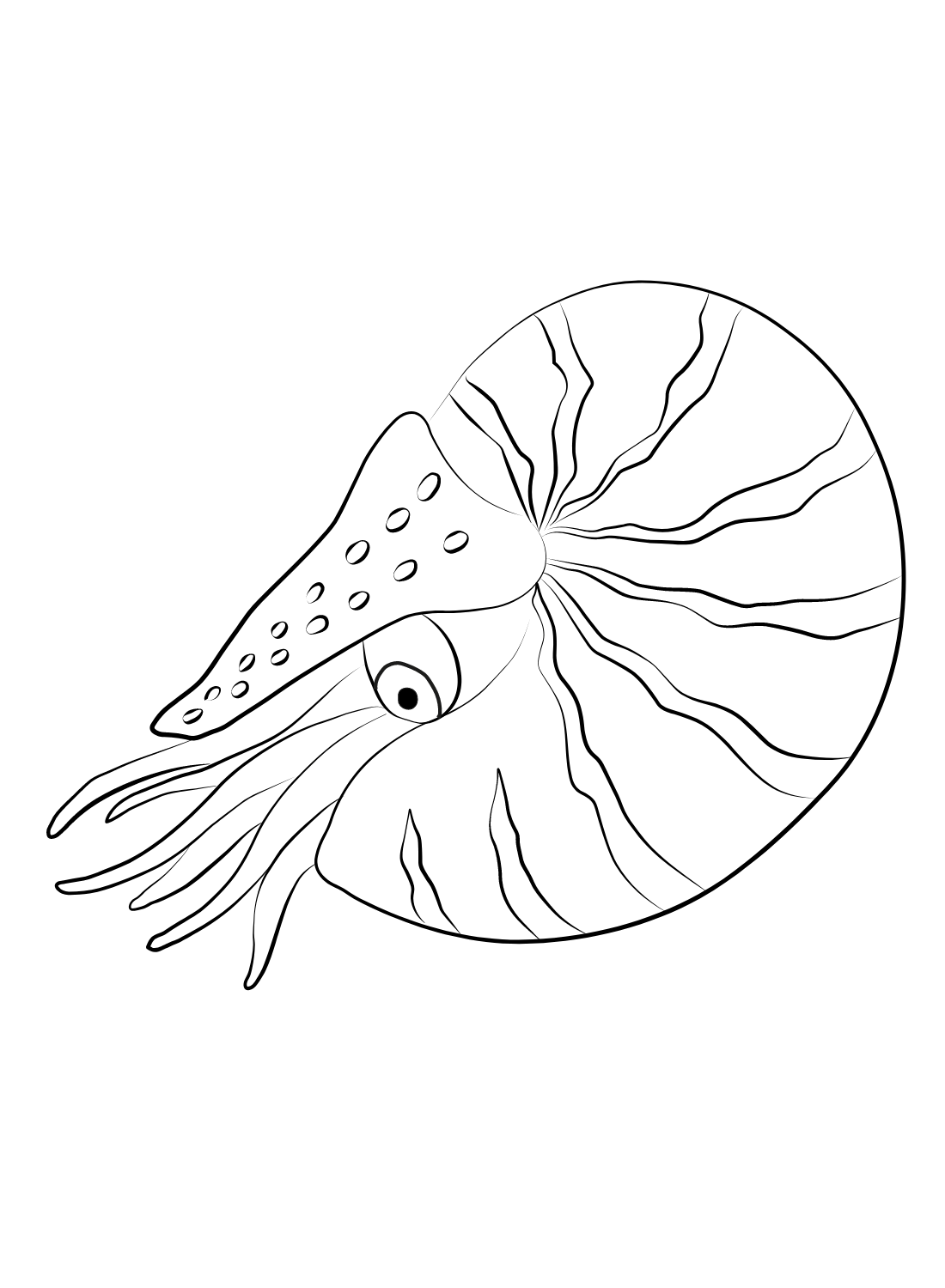
The largest group shows the whole animal, shell and tentacles included, set against a plain background. Use a matte White or Cream base for the shell, add reddish-brown stripes running across the top and sides, and color the tentacles a soft Tan.
Nautilus Shell Cross-Sections and Patterns
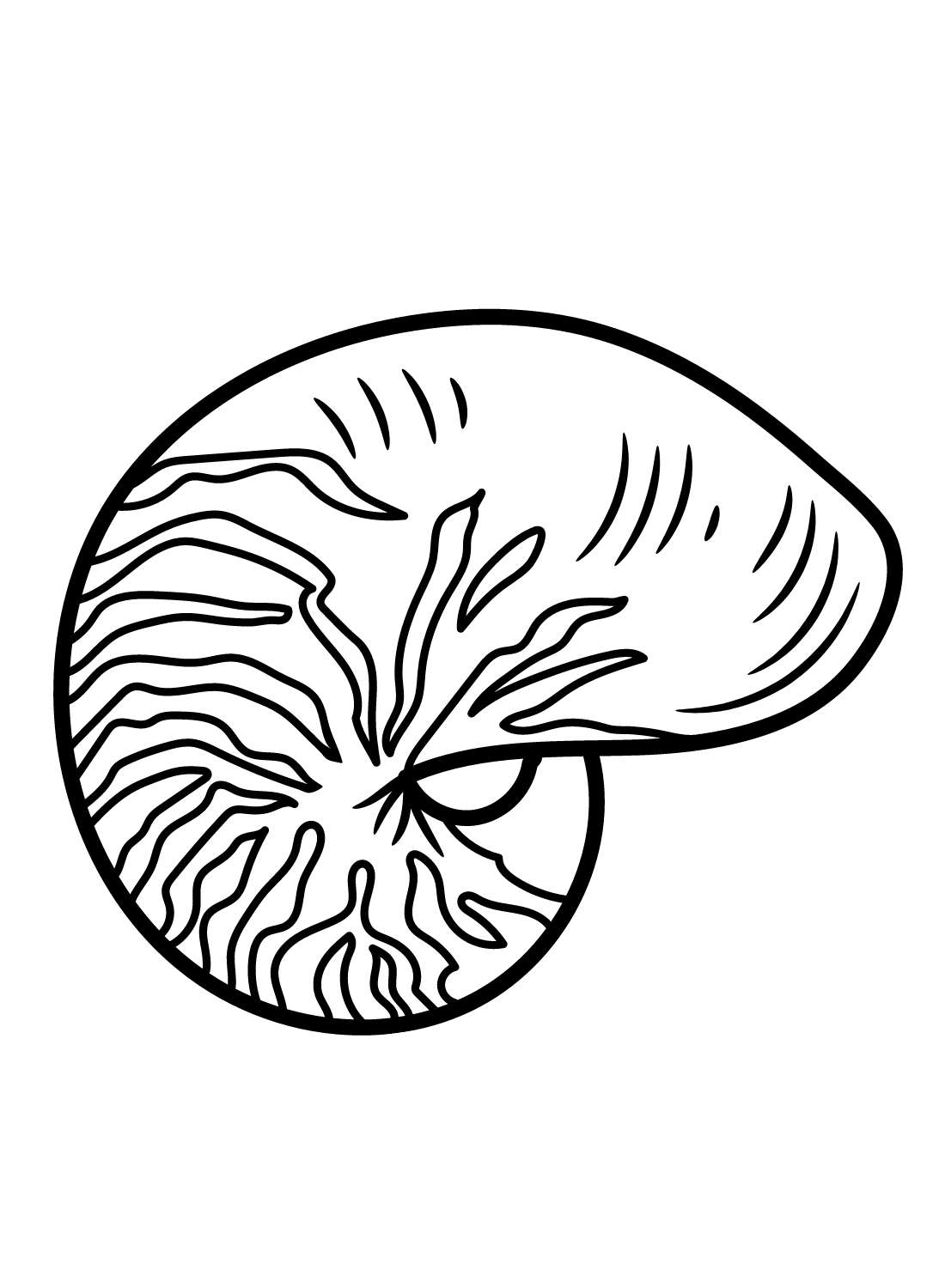
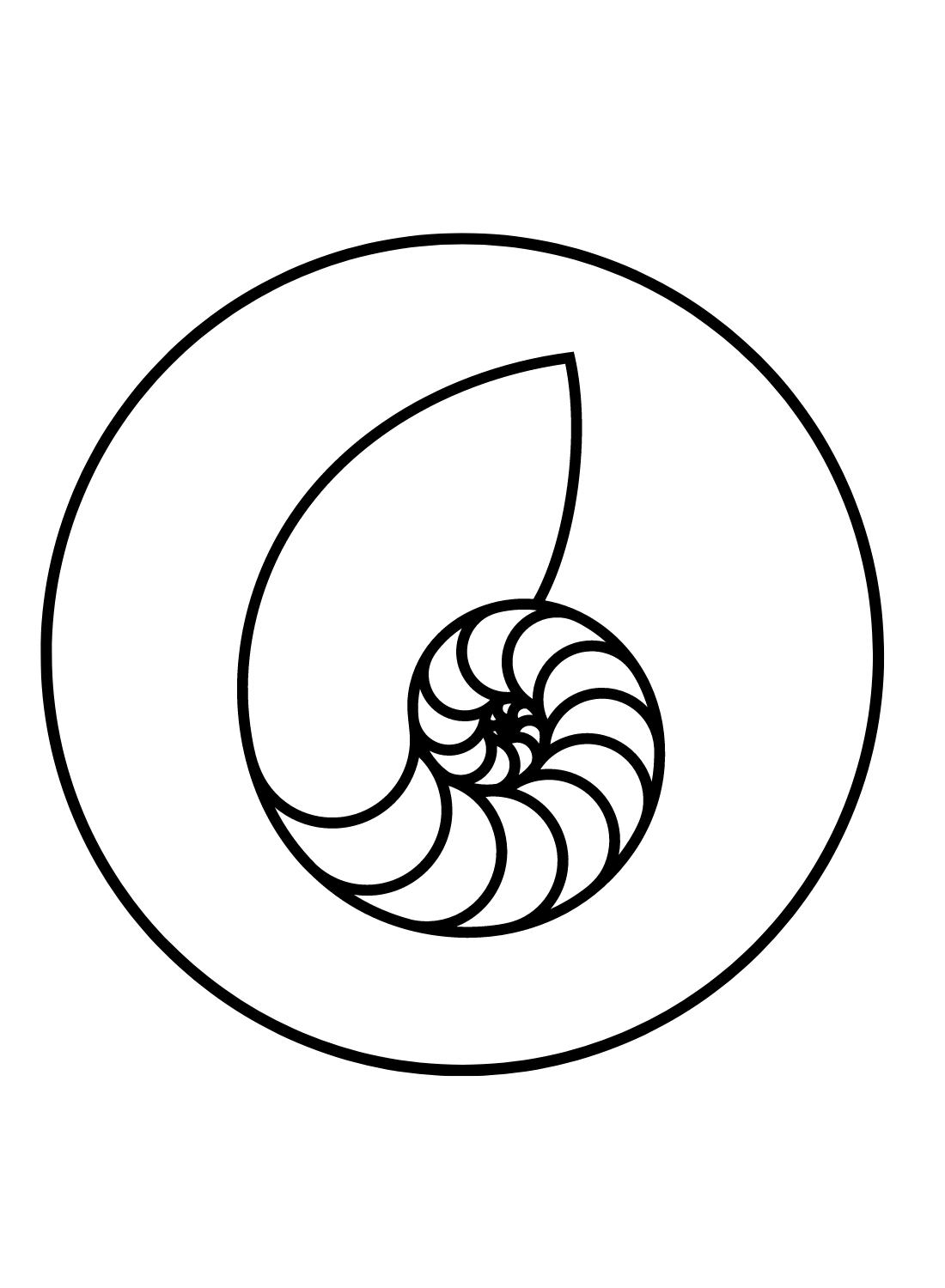
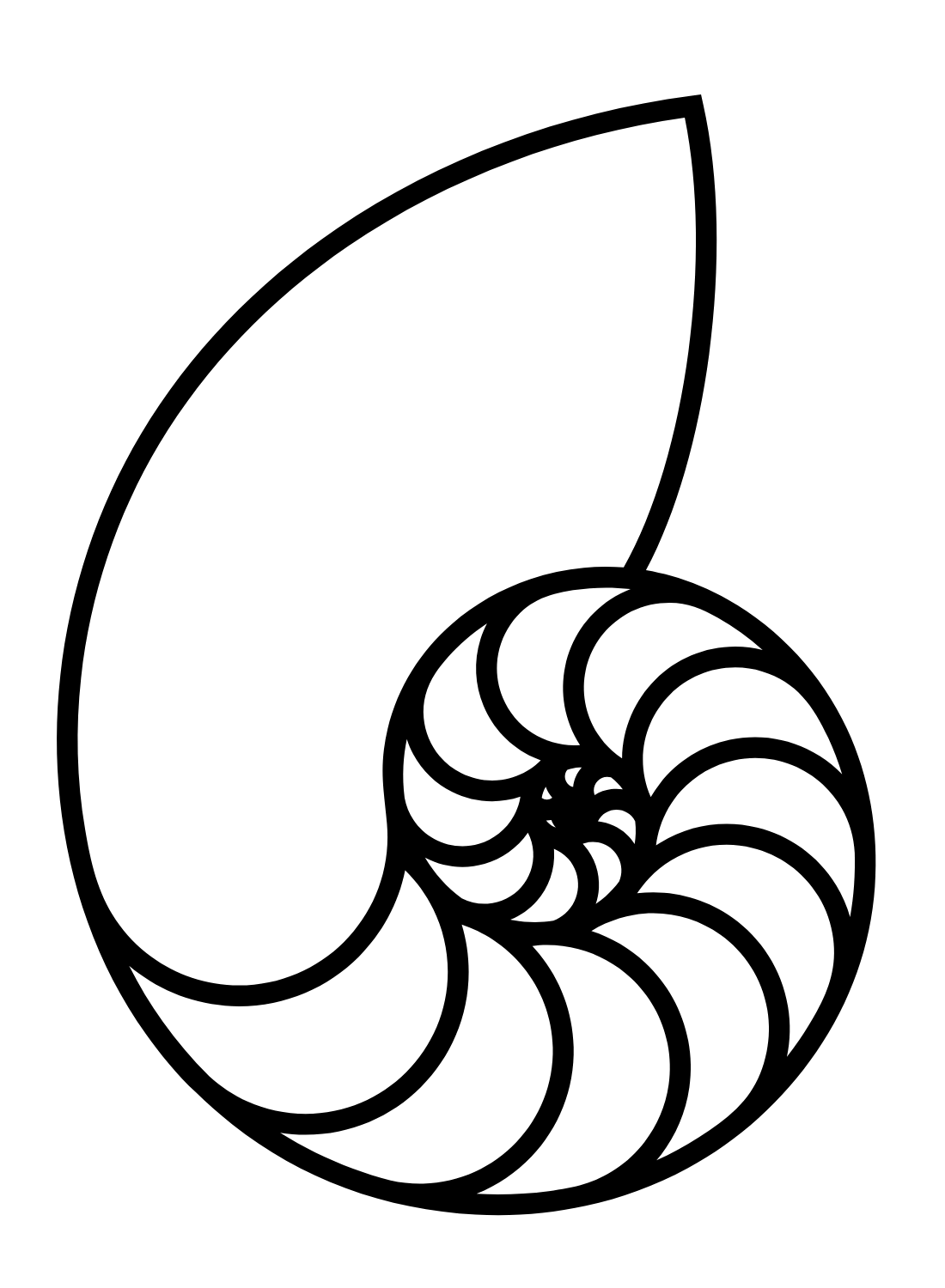
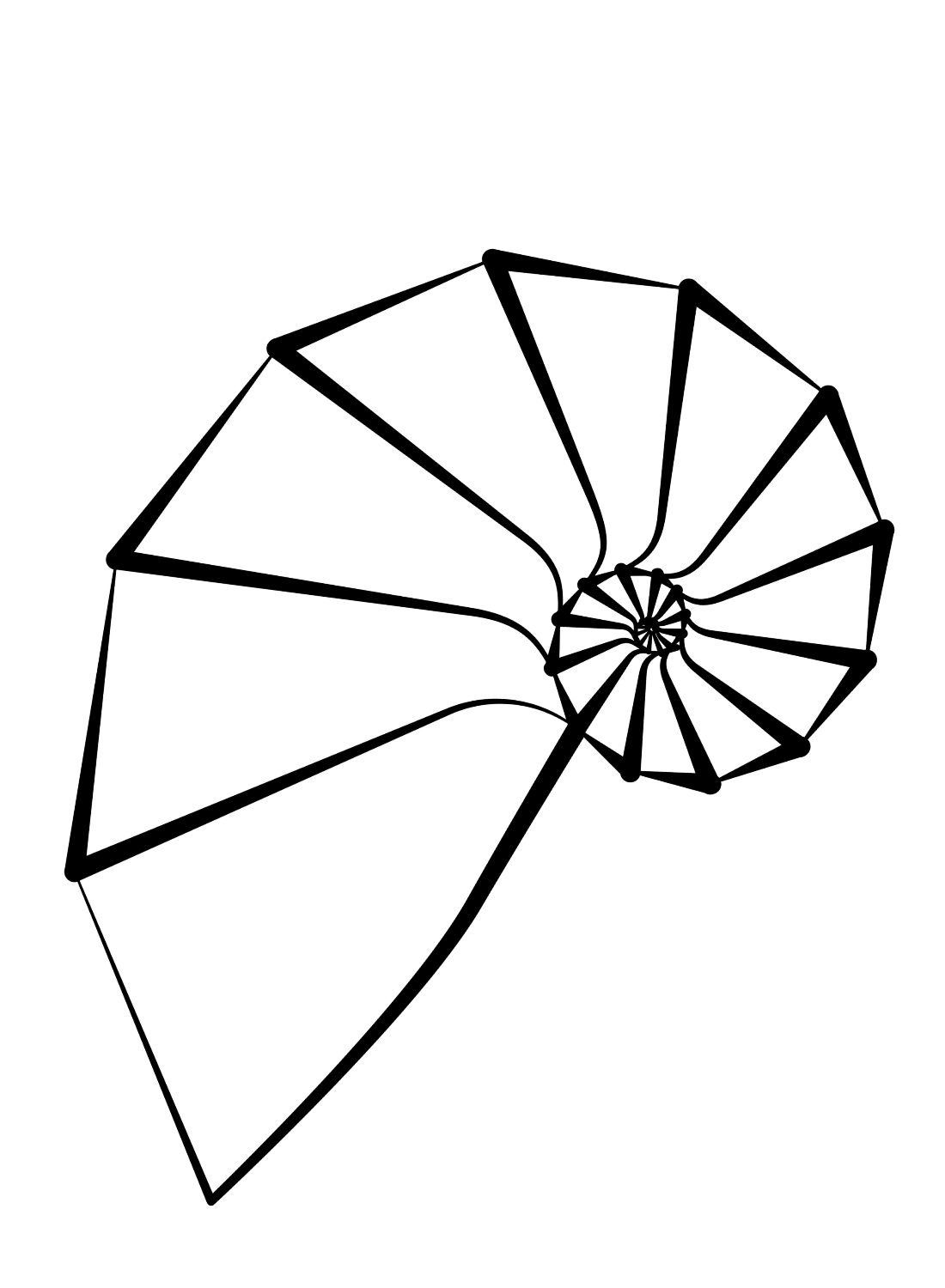
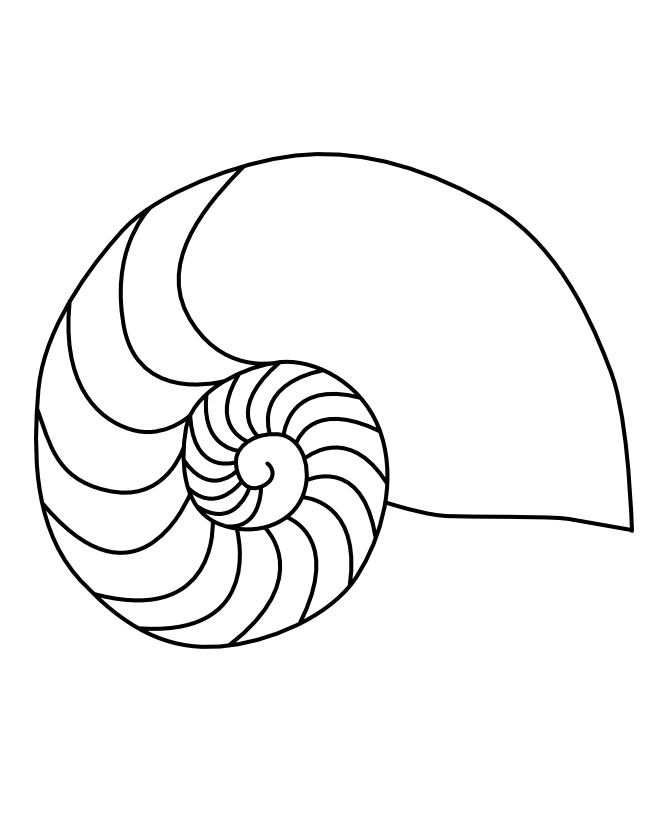
Three pages focus on the shell itself, either sliced open to reveal the spiral of internal chambers or shown with a bold decorative pattern. For the cross-section pages, shade each chamber a slightly different value of White, Cream, or pale Blue to suggest the shell’s iridescent mother-of-pearl interior.
Simple and Kid-Friendly Sheets
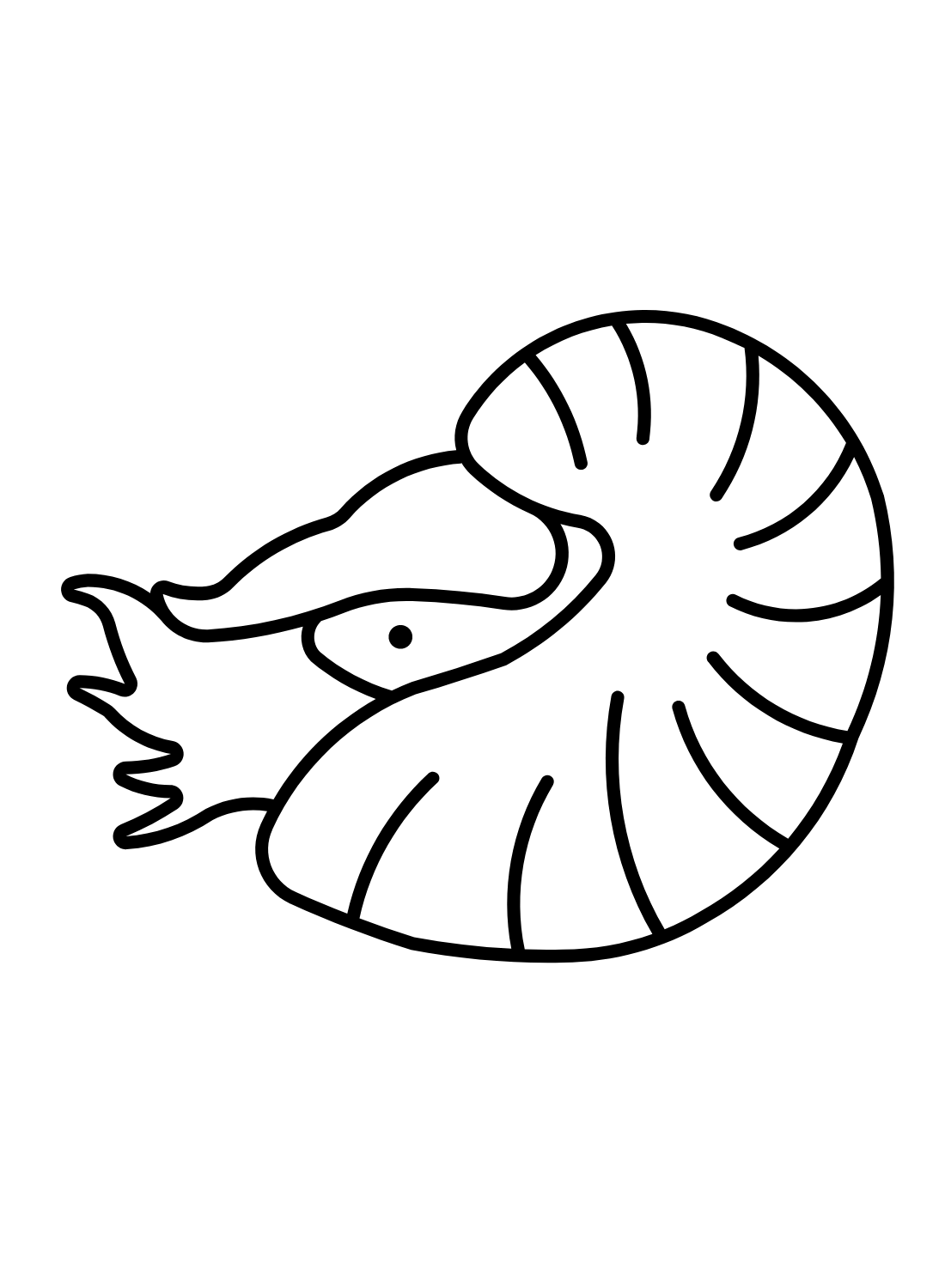
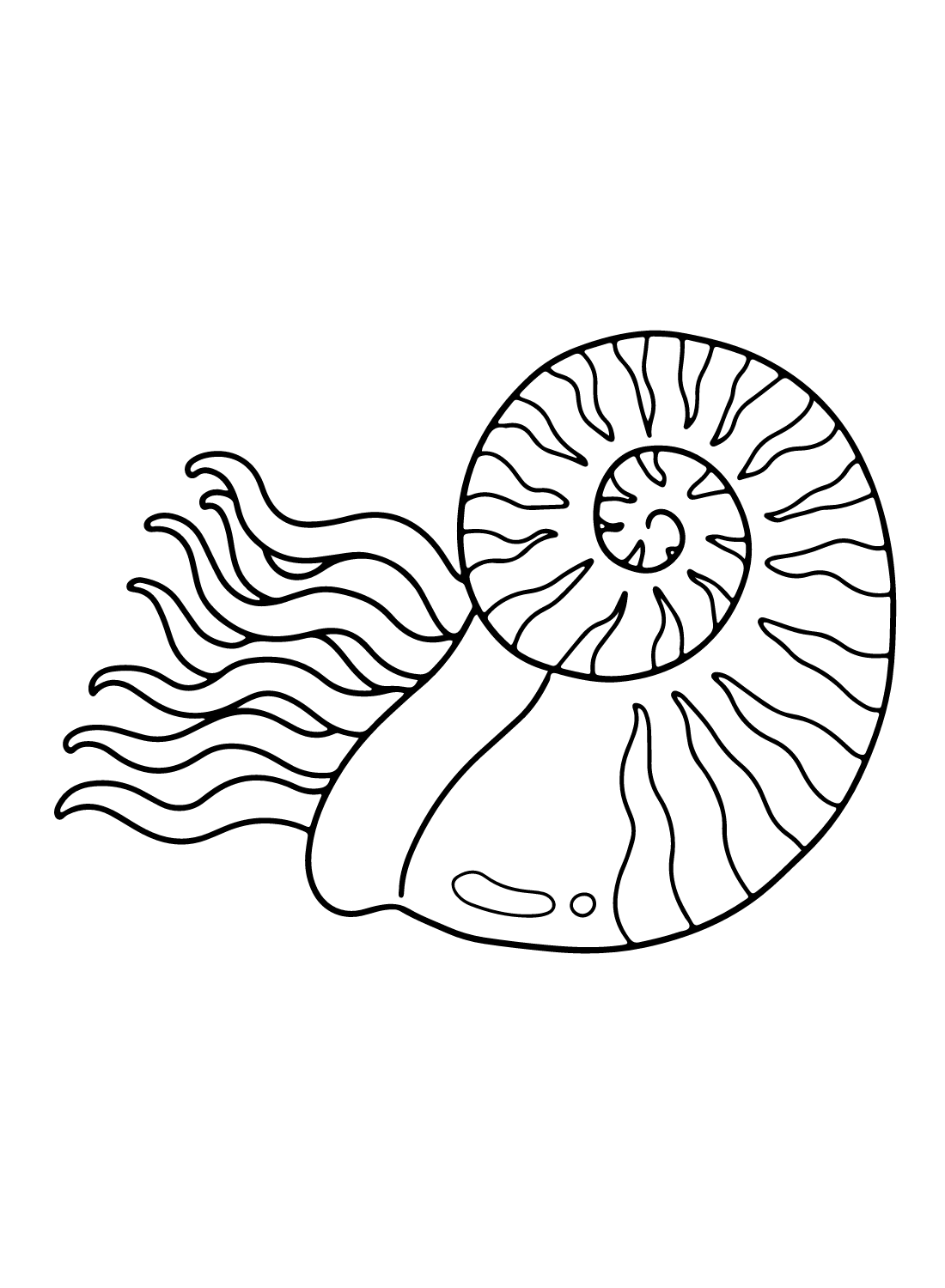
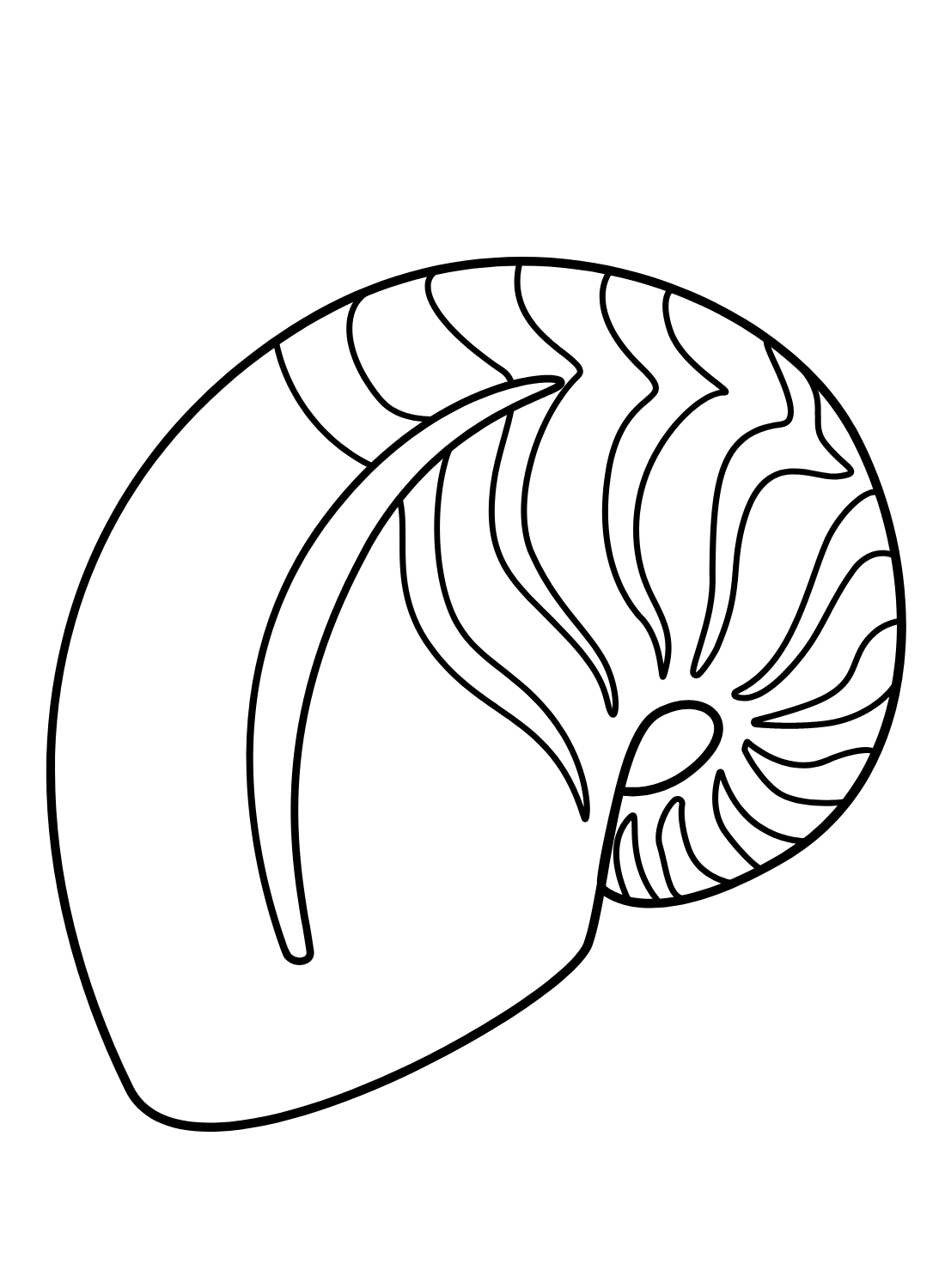
Three pages use a large, bold outline with very few small details, making them a good starting point for toddlers and preschoolers. A single flat Tan or White fill, without extra shading, is enough to complete these designs well.
What Nautilus Coloring Pages Do
Fine motor development. A nautilus shell’s cross-section reveals up to 30 individual chambers spiraling inward, and shading each one as a distinct section without letting the colors bleed together takes closer hand control than filling in a single curved shape. The American Academy of Pediatrics identifies fine motor skill development as a core benefit of structured coloring for children ages 2 through 7, and the chambered shell gives that practice a genuinely mathematical, multi-part challenge.
A shell that isn’t quite the golden ratio. The nautilus shell is often described as a perfect example of the golden spiral, but its actual growth ratio averages closer to 1.33 to 1, compared to the golden ratio’s 1.618 to 1. It is a true logarithmic spiral, not the exact one most popular science claims suggest. That gives parents and teachers a natural opening to talk about how a widely repeated fact can still be slightly off once you check the real numbers.
Anxiety reduction through focus. A 2005 study in the Art Therapy Journal documented measurable reductions in anxiety following structured coloring sessions. The steadily repeating chamber pattern inside a nautilus shell offers exactly the kind of structured, meditative shape that suits an unhurried coloring session well.
Banded and iridescent color practice. A nautilus shell combines two very different coloring challenges on one object: bold reddish-brown stripes on the outside and a soft, pearly iridescence on the inside, giving colorists practice with both graphic pattern work and subtle color blending in a single page.
How to Color Nautilus Pages Well
- Shell exterior: Use Crayola White or Cream as the base, then add reddish-brown stripes or bands running from the shell’s opening toward its center.
- Countershading: Keep the top of the shell a slightly darker tone than the underside, matching the natural countershading real nautiluses use for camouflage.
- Shell interior and chambers: On cross-section pages, shade each chamber a slightly different value of White, pale Blue, or Cream to suggest iridescent mother-of-pearl rather than filling every chamber with the same flat color.
- Tentacles: Color the many thin tentacles a soft Tan or light Brown, keeping the lines light since real nautilus tentacles are slender and lack the thick suckers seen on an octopus.
- Eyes: Use a simple Black dot for the eyes, since a nautilus’s eyes are small and relatively simple compared to other cephalopods.
- Simple kid-friendly sheets: A single flat Tan or White fill, applied evenly without shading, is enough to complete these designs well.
5 Creative Craft Ideas With Nautilus Coloring Pages
1. Chambered Shell Model
Color a shell cross-section page, then glue a spiral of small paper rectangles onto it to build a raised, three-dimensional version of the internal chambers.
2. Nautilus Mobile
Color several nautilus pages, cut them out, and attach them at different lengths to a wire hanger or wooden hoop to build a simple hanging mobile.
3. Nautilus Fact Poster
Color a large nautilus page and add hand-written facts around it, such as how long the species has existed, for a simple classroom science poster.
4. Nautilus Bookmark
Color one of the smaller nautilus designs, trim it to a bookmark shape, and add a ribbon or paper tassel through a hole punched at the top.
5. Nautilus Window Cling
Color a nautilus page on translucent paper or a page protector, then tape it to a sunny window so the shell’s pattern and colors show through.
Frequently Asked Questions
What are nautilus coloring pages?
Nautilus coloring pages are printable designs that show the animal in different styles, including realistic illustrations, shell cross-sections and patterns, and simple beginner sheets. This collection includes 17 pages, each downloadable as a PDF or available to color online.
Why is the nautilus called a “living fossil”?
Animals very similar to today’s nautilus have existed for roughly 500 million years with little change, making it one of the oldest surviving cephalopod lineages, predating the dinosaurs by a wide margin.
What is inside a nautilus shell?
A nautilus shell is divided into as many as 30 separate chambers, connected by a thin tube called the siphuncle that moves fluid and gas to control the animal’s buoyancy. The nautilus itself lives only in the outermost, largest chamber.
Is the nautilus shell really shaped like the golden ratio?
Not exactly. The shell forms a true logarithmic spiral, but its actual growth ratio averages around 1.33 to 1, noticeably different from the golden ratio’s 1.618 to 1, despite the shell often being used as a popular example of it.
How many tentacles does a nautilus have?
A nautilus has between 60 and 90 thin tentacles, depending on the species, and unlike an octopus or squid, none of them have suckers.
How many nautilus coloring pages are in this collection?
This collection includes 17 nautilus coloring pages, split across realistic illustrations, shell cross-sections, patterns, and simple kid-friendly sheets.
Are nautilus coloring pages suitable for young children?
Yes. The simple sheets use bold, easy shapes that suit toddlers and preschoolers. The realistic and cross-section pages, with their many small chambers and tentacles, suit older children and adults who want more detailed shading practice.
Is the nautilus related to the octopus and squid?
Yes, all three are cephalopods, but the nautilus is quite different from its relatives. It keeps an external shell, has no ink sac, and relies on simple, lensless eyes, while octopuses and squid have internal or no shells, ink sacs for defense, and much more advanced eyes.
Start Coloring
Download any page by clicking the design. No account, email, or payment is required. Pages print directly from the browser at full resolution or open in the online coloring tool for screen use. Share finished pages on Facebook or Pinterest with the share buttons at the top of each design page.