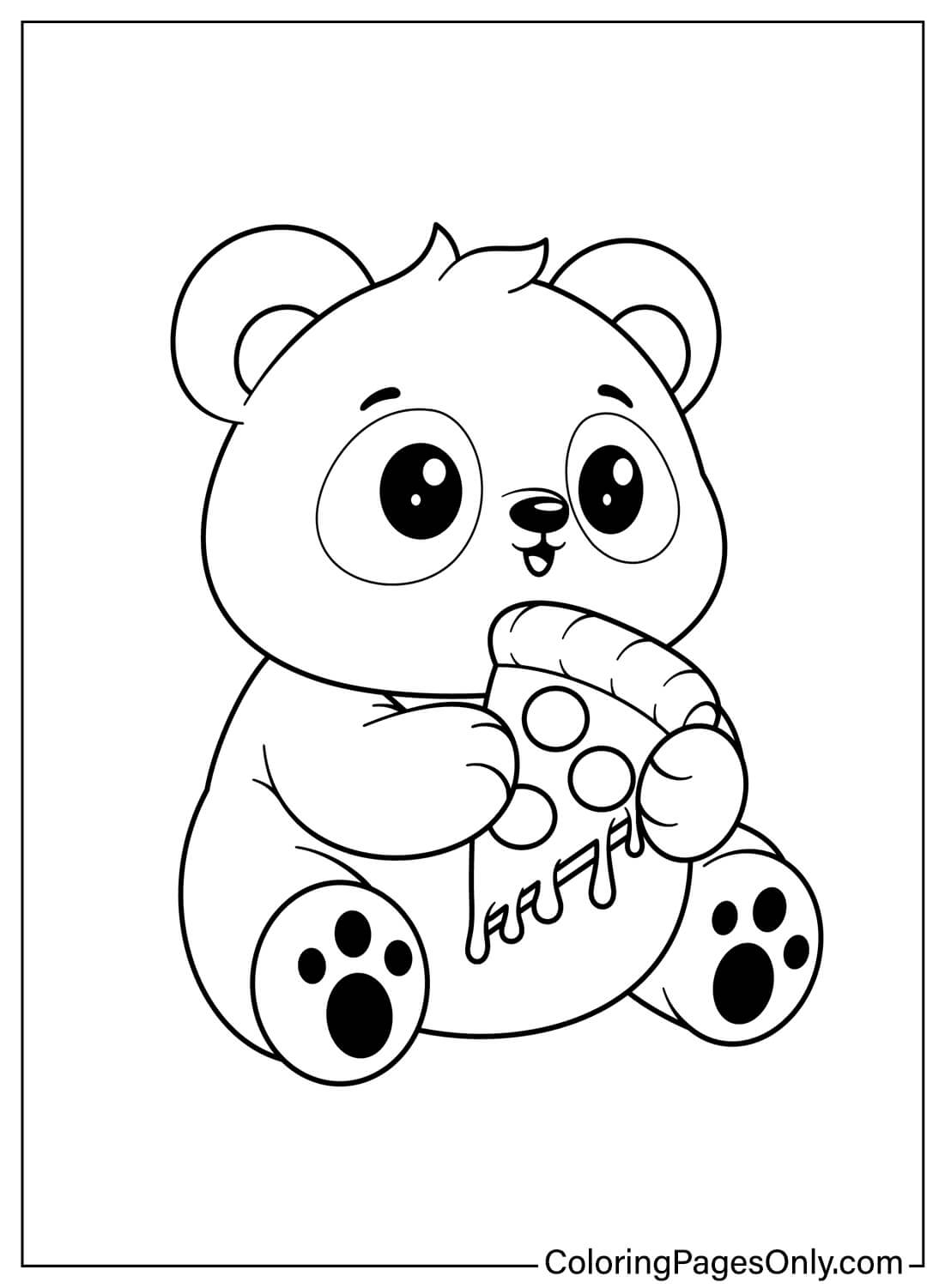
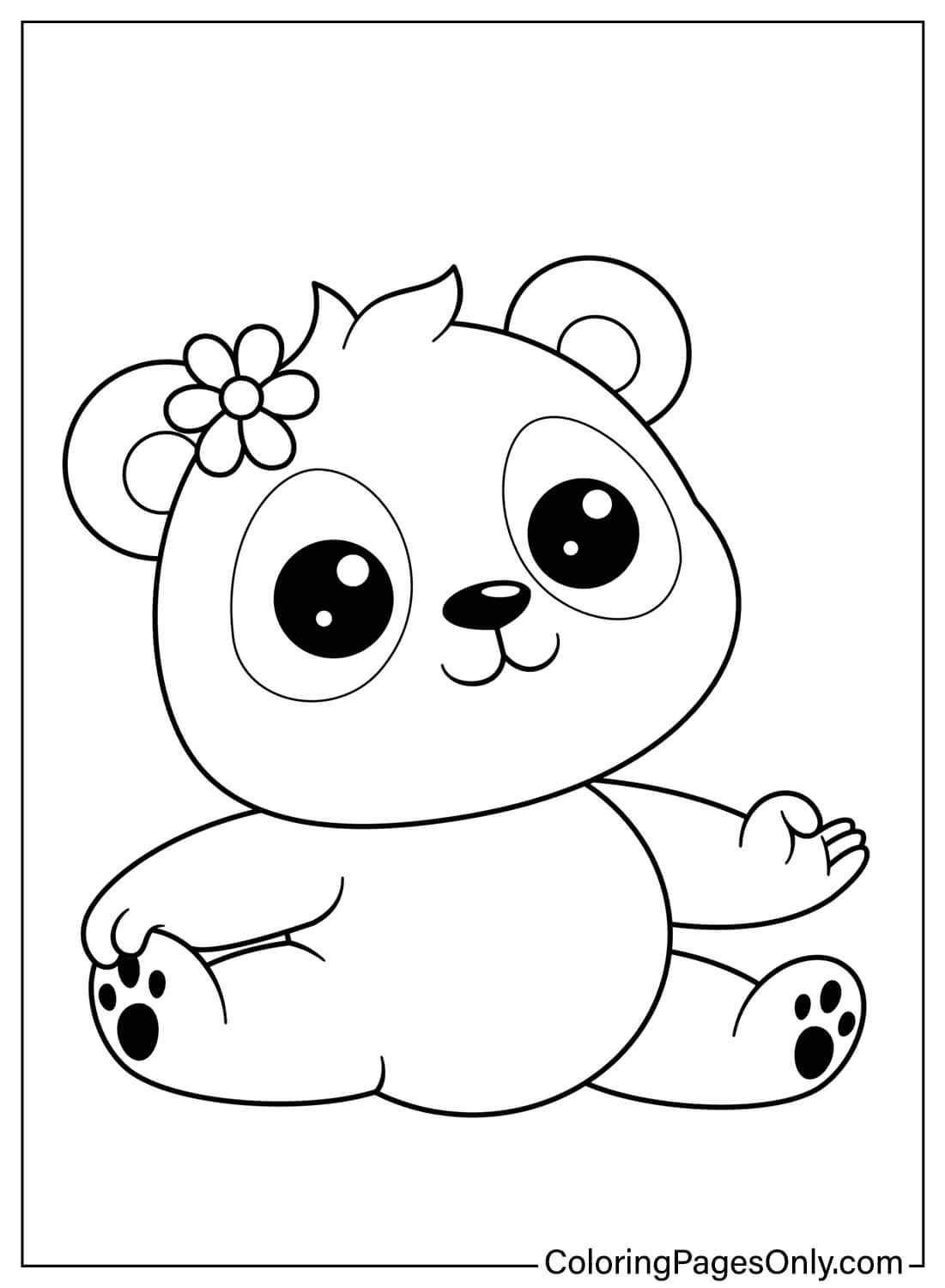
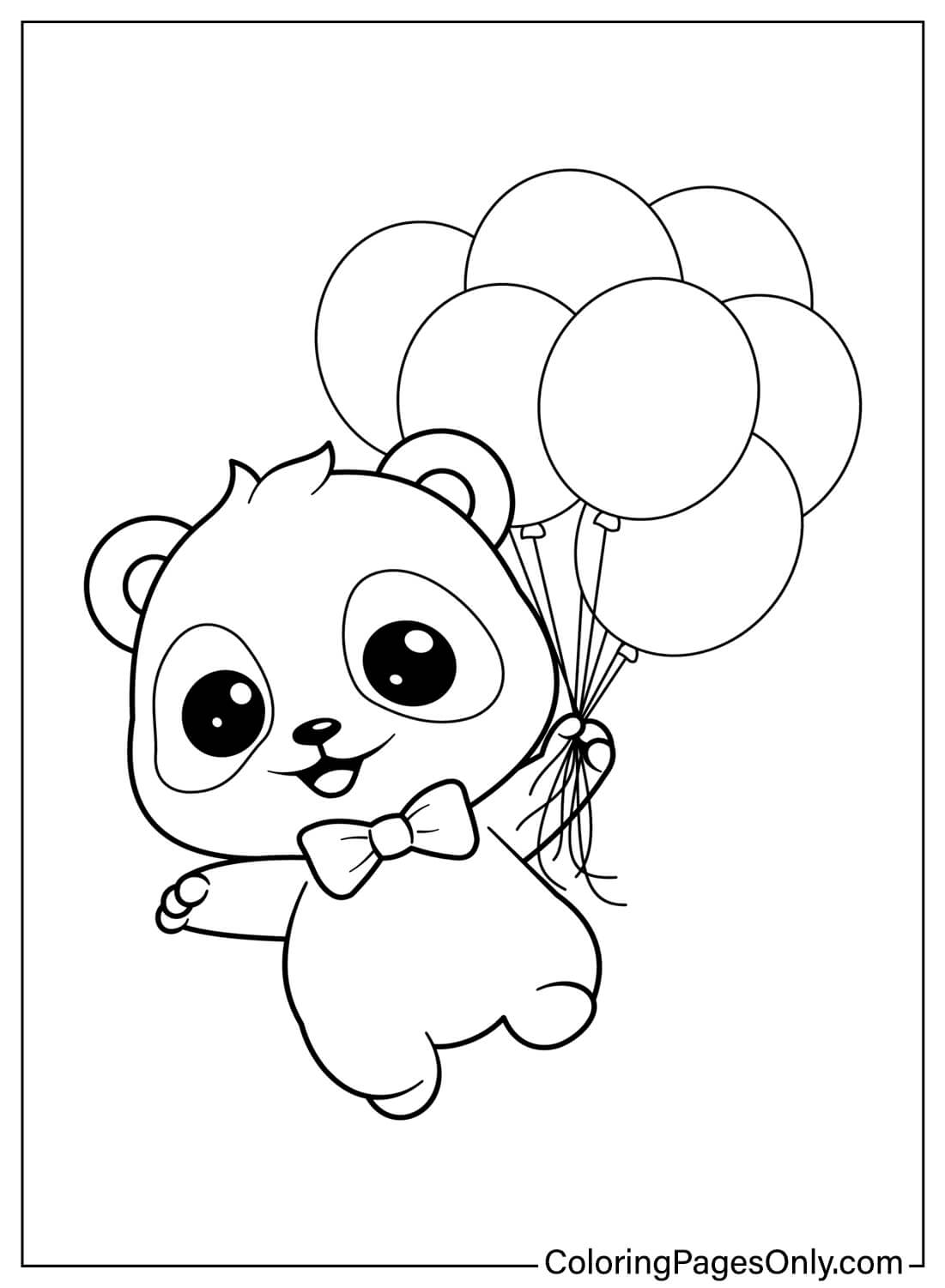
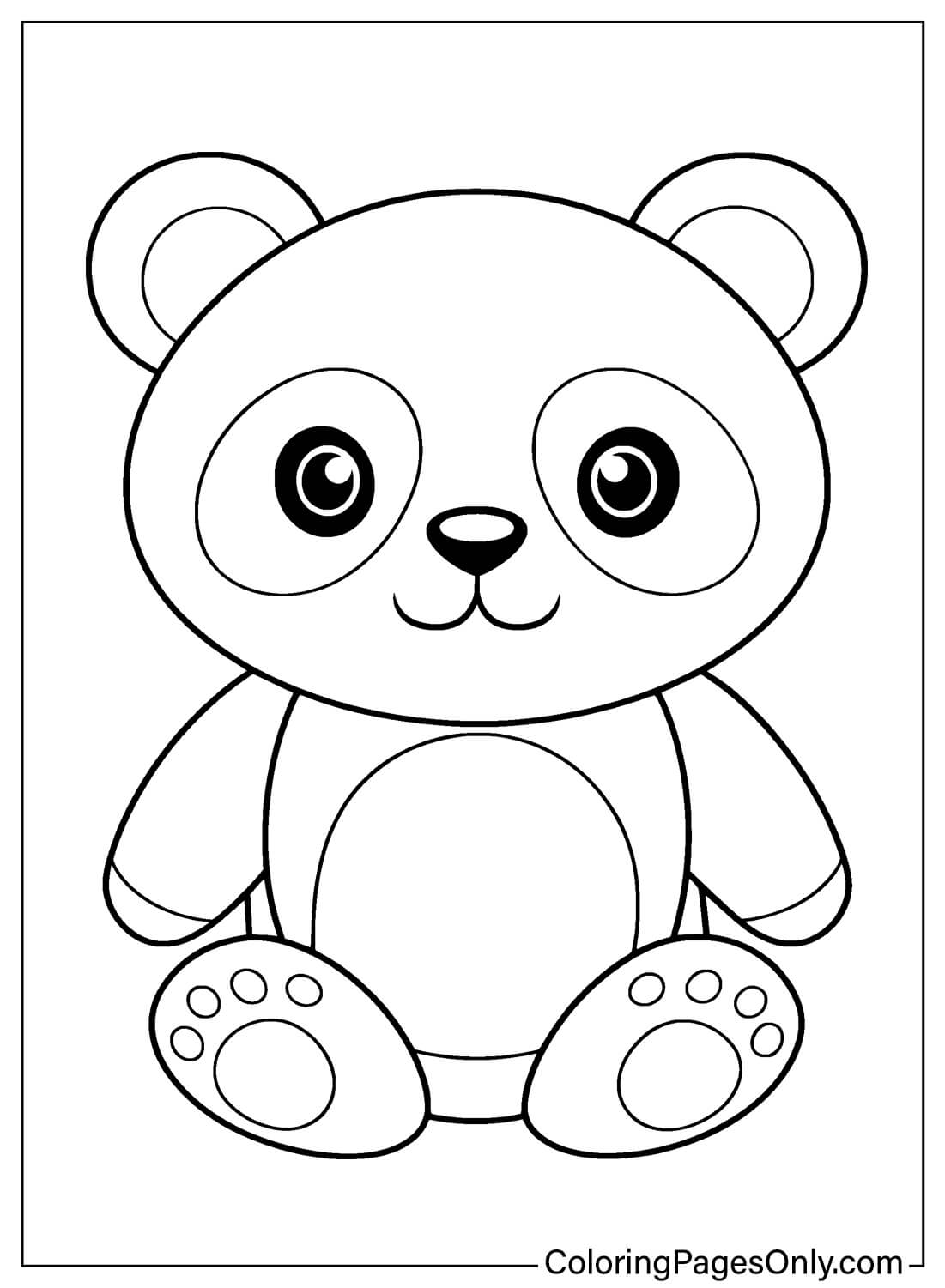
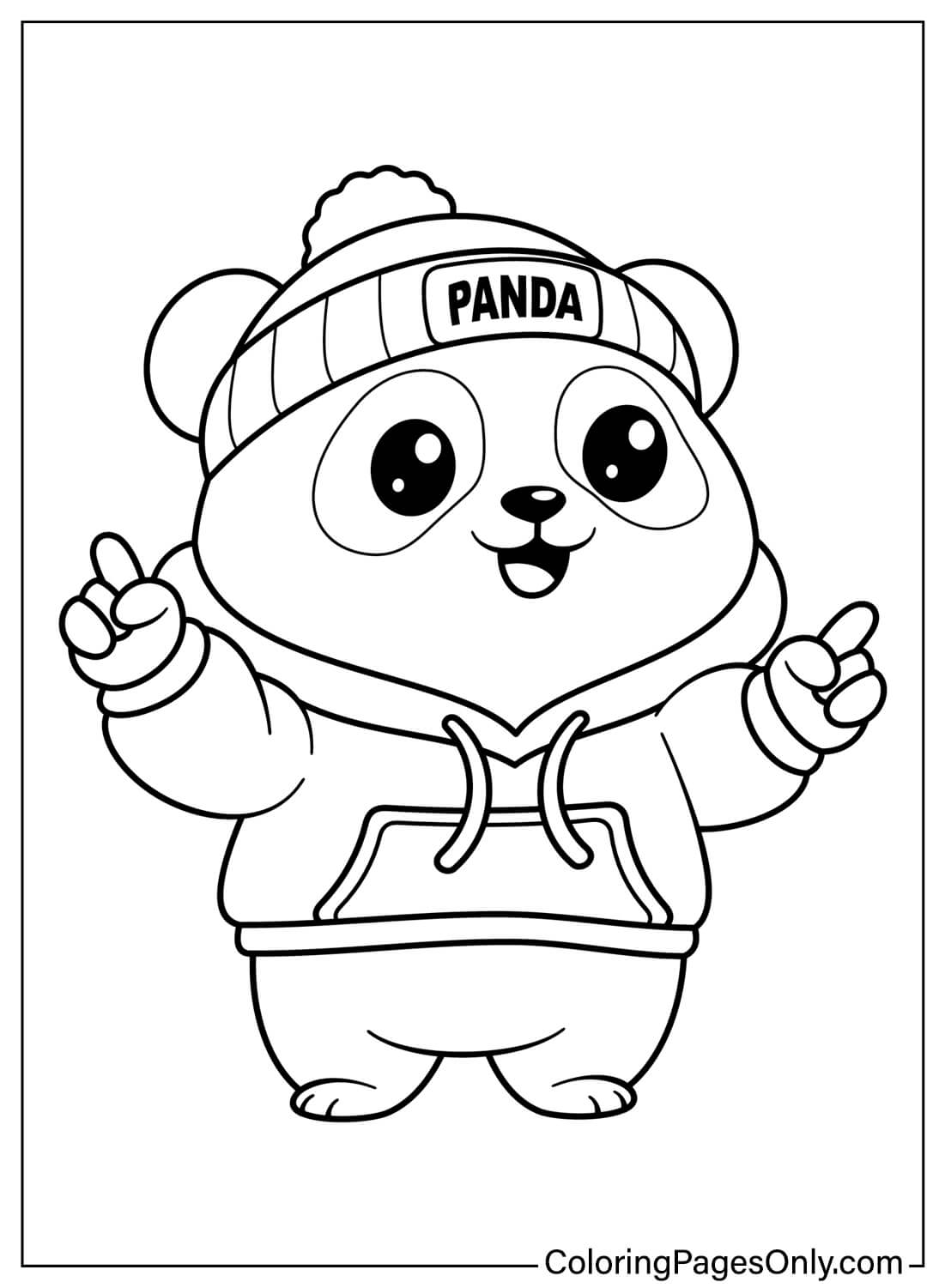
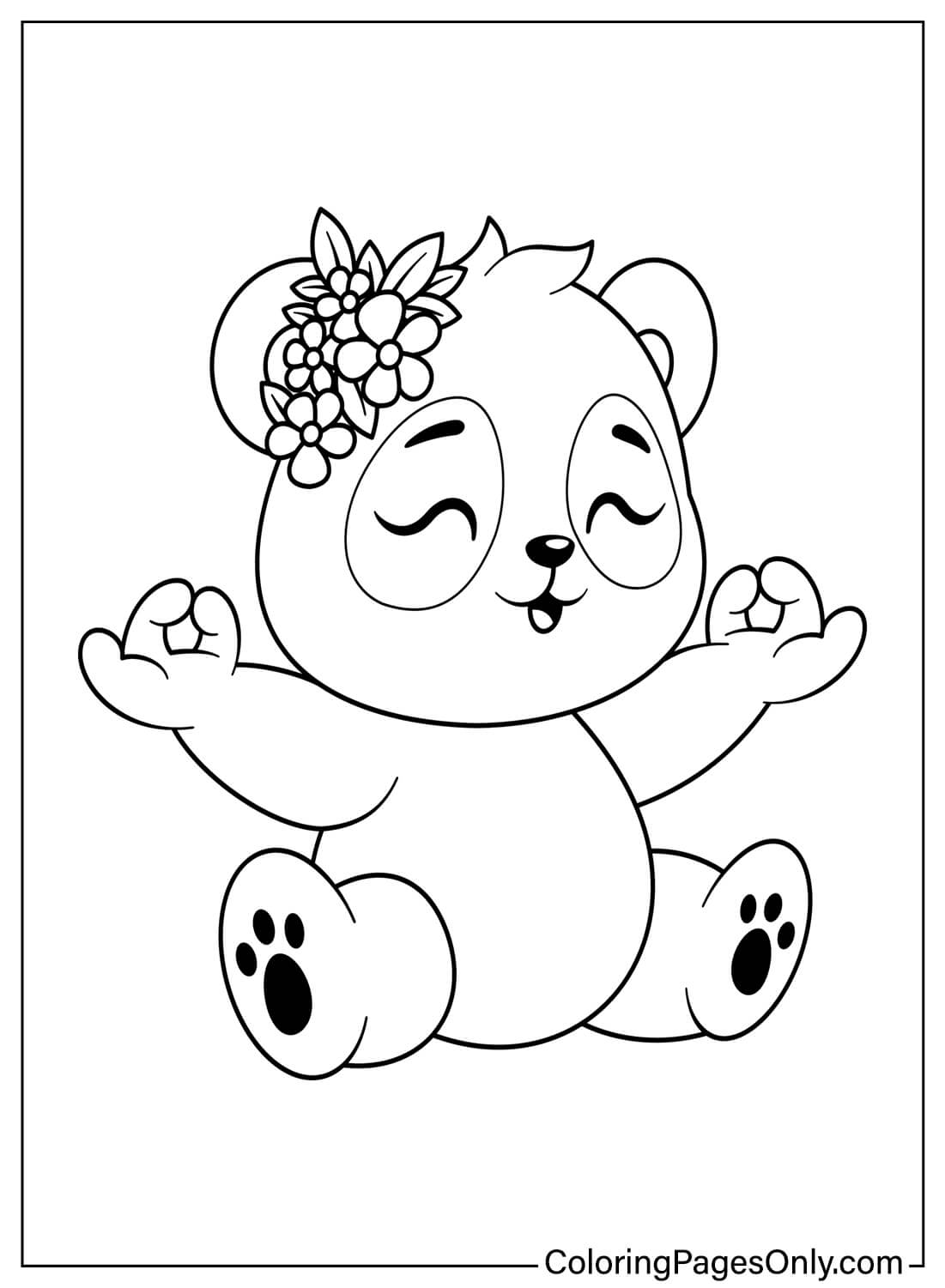
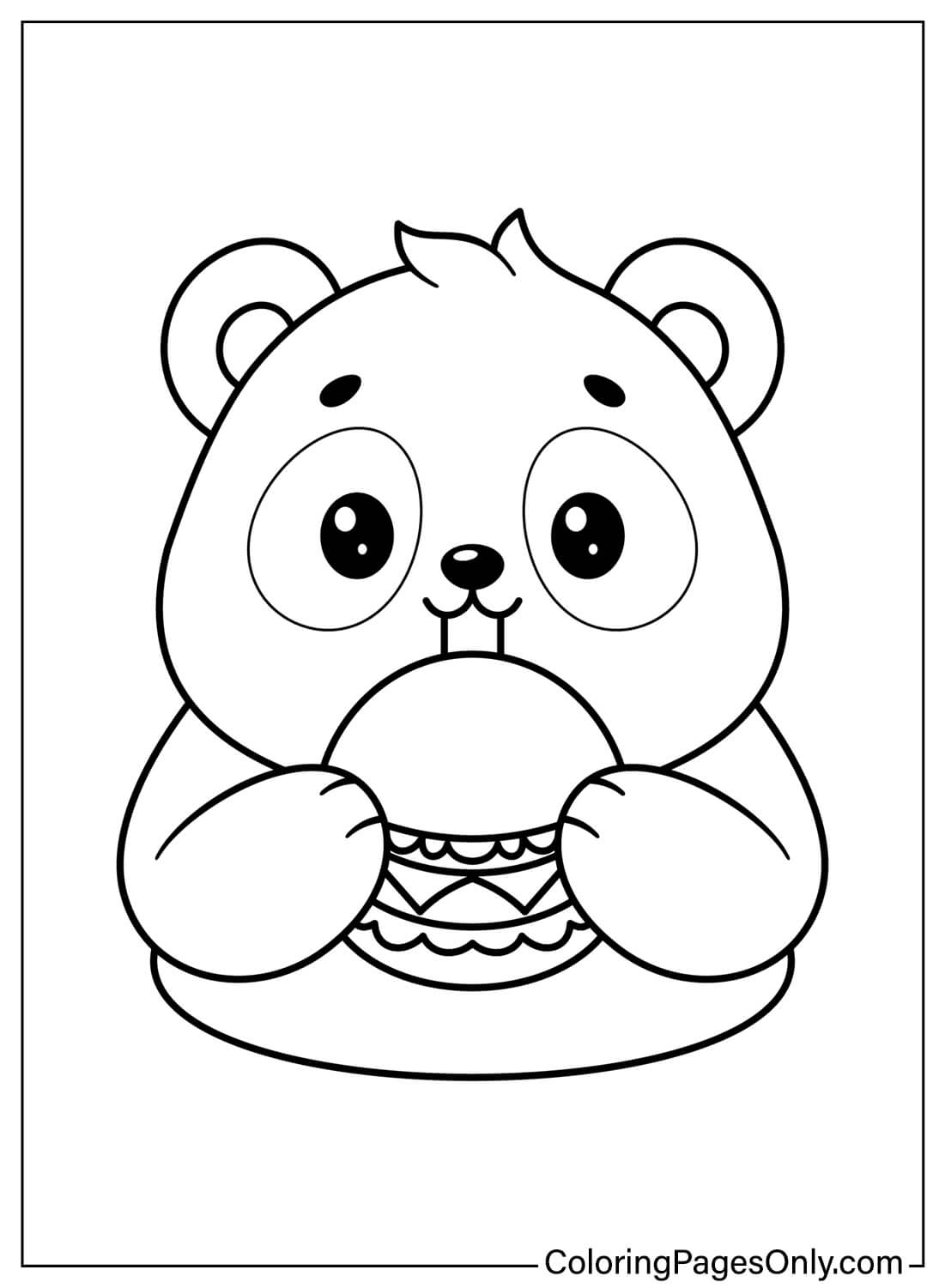
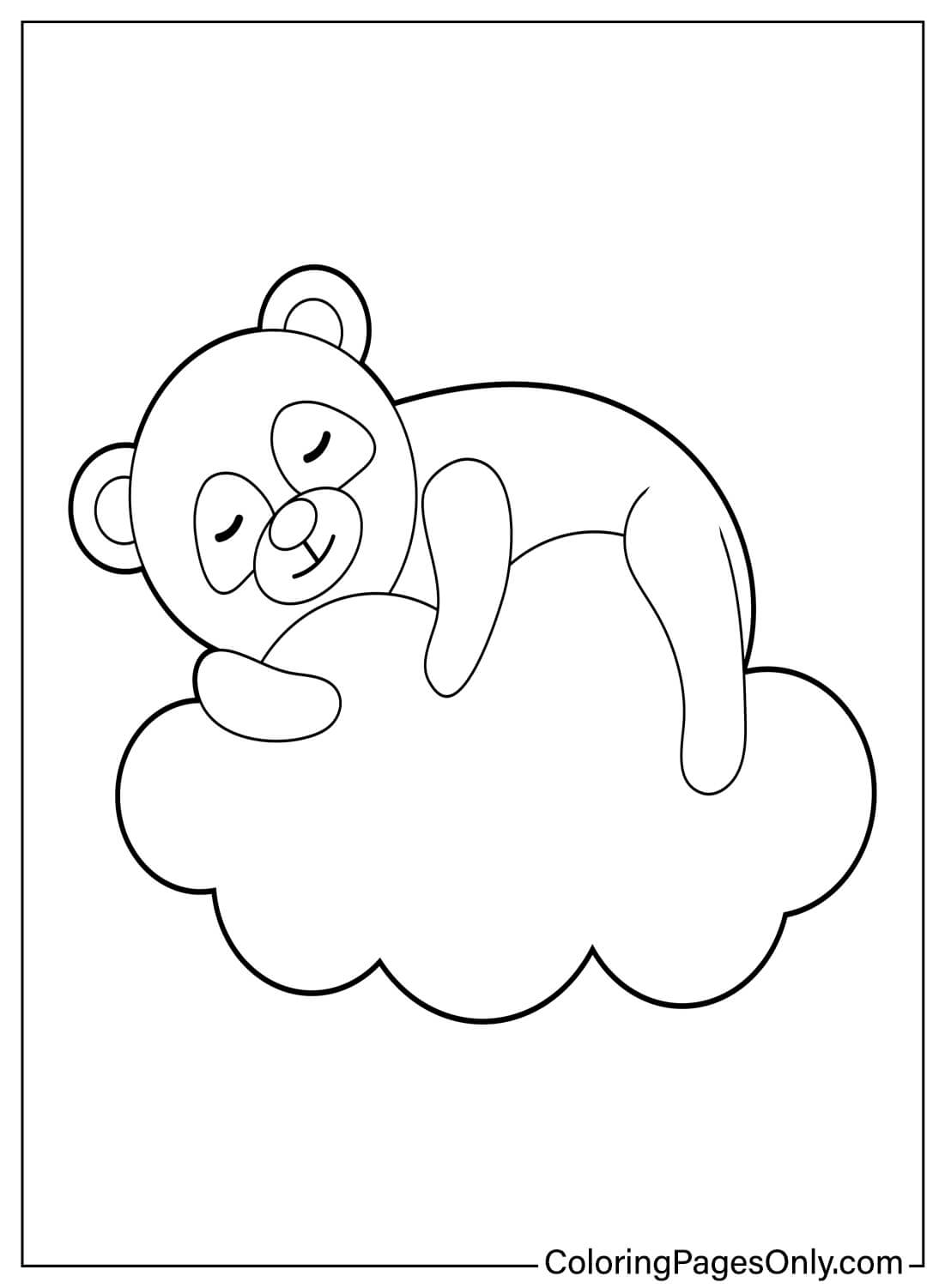
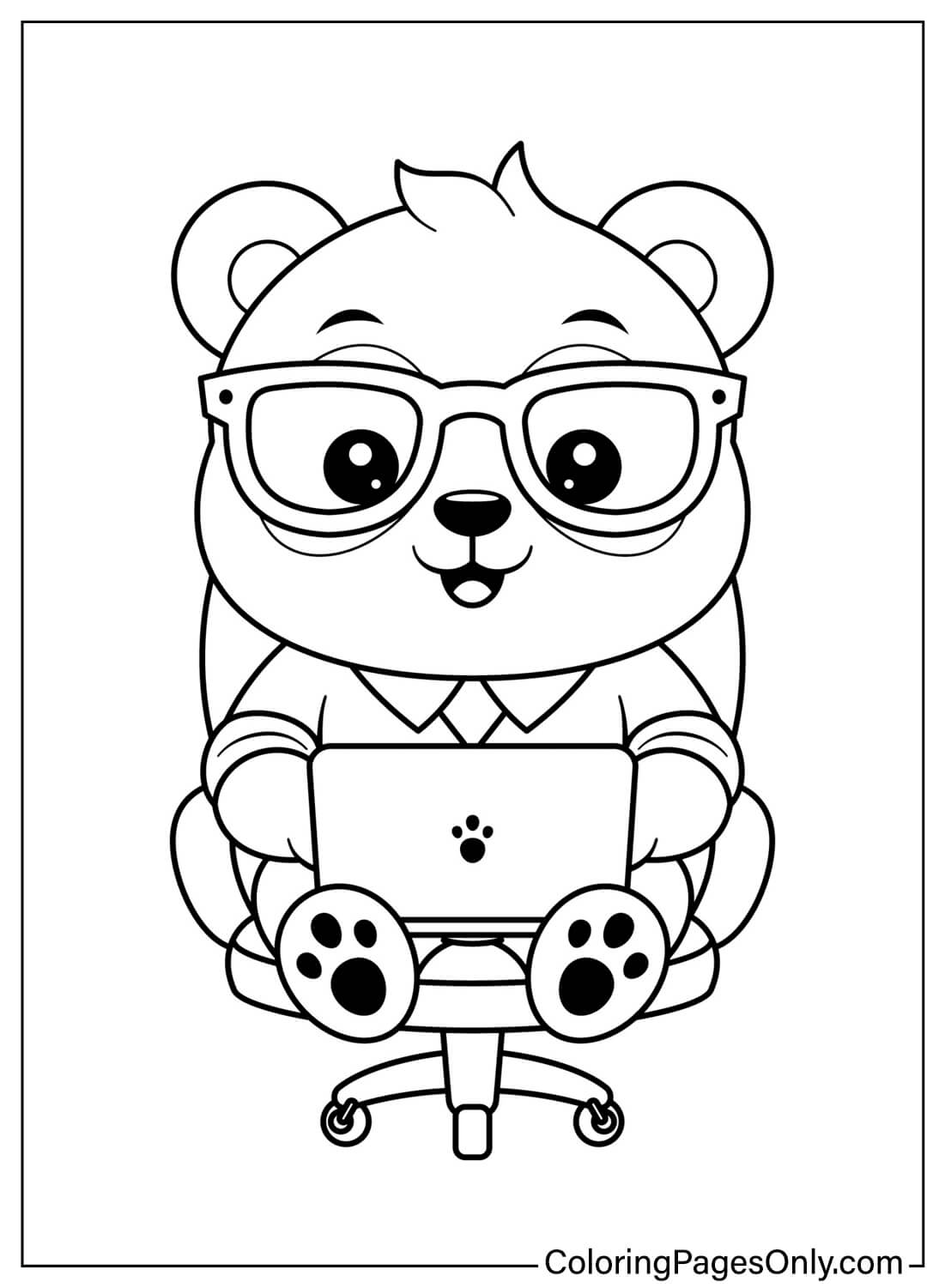
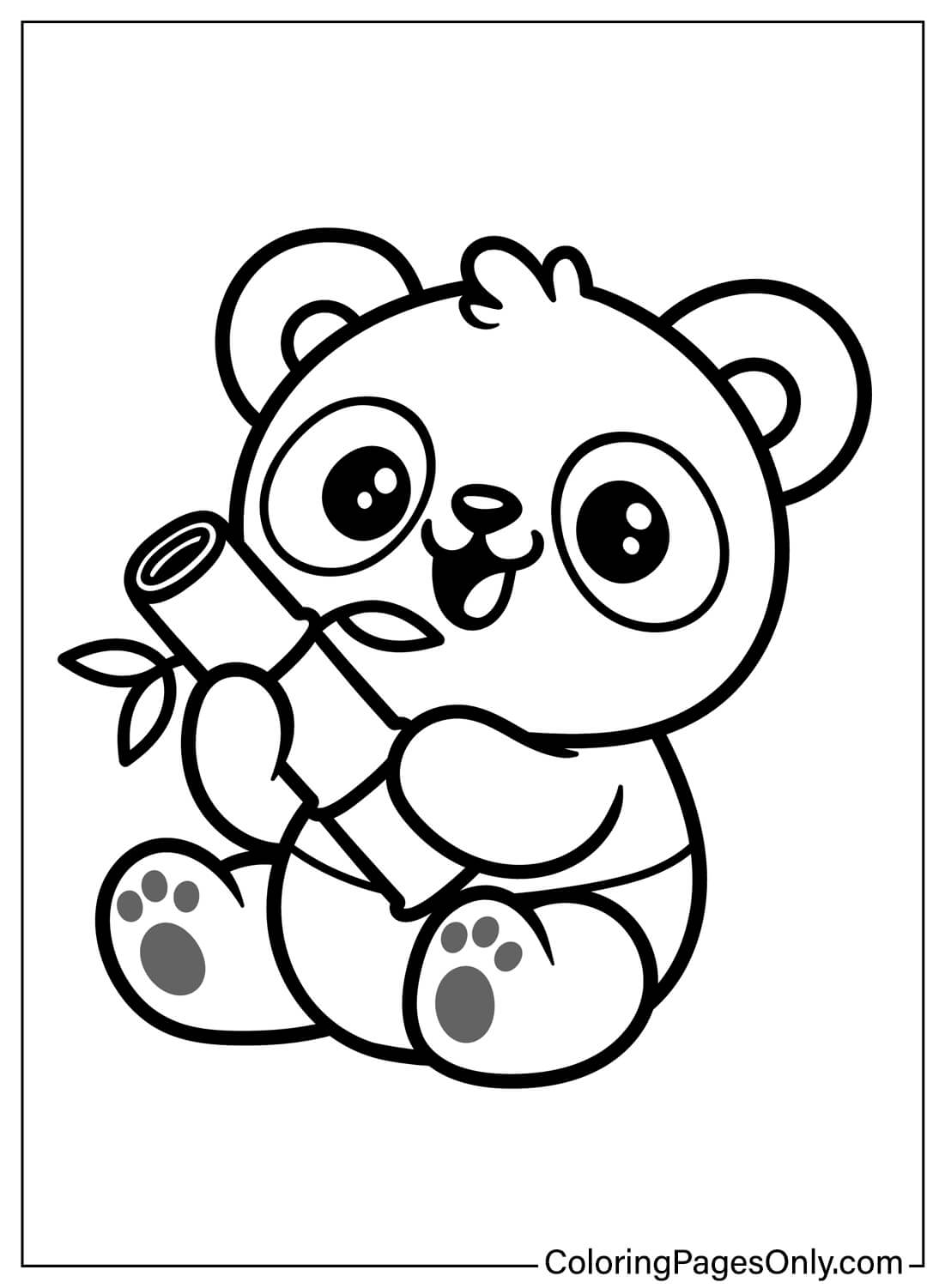
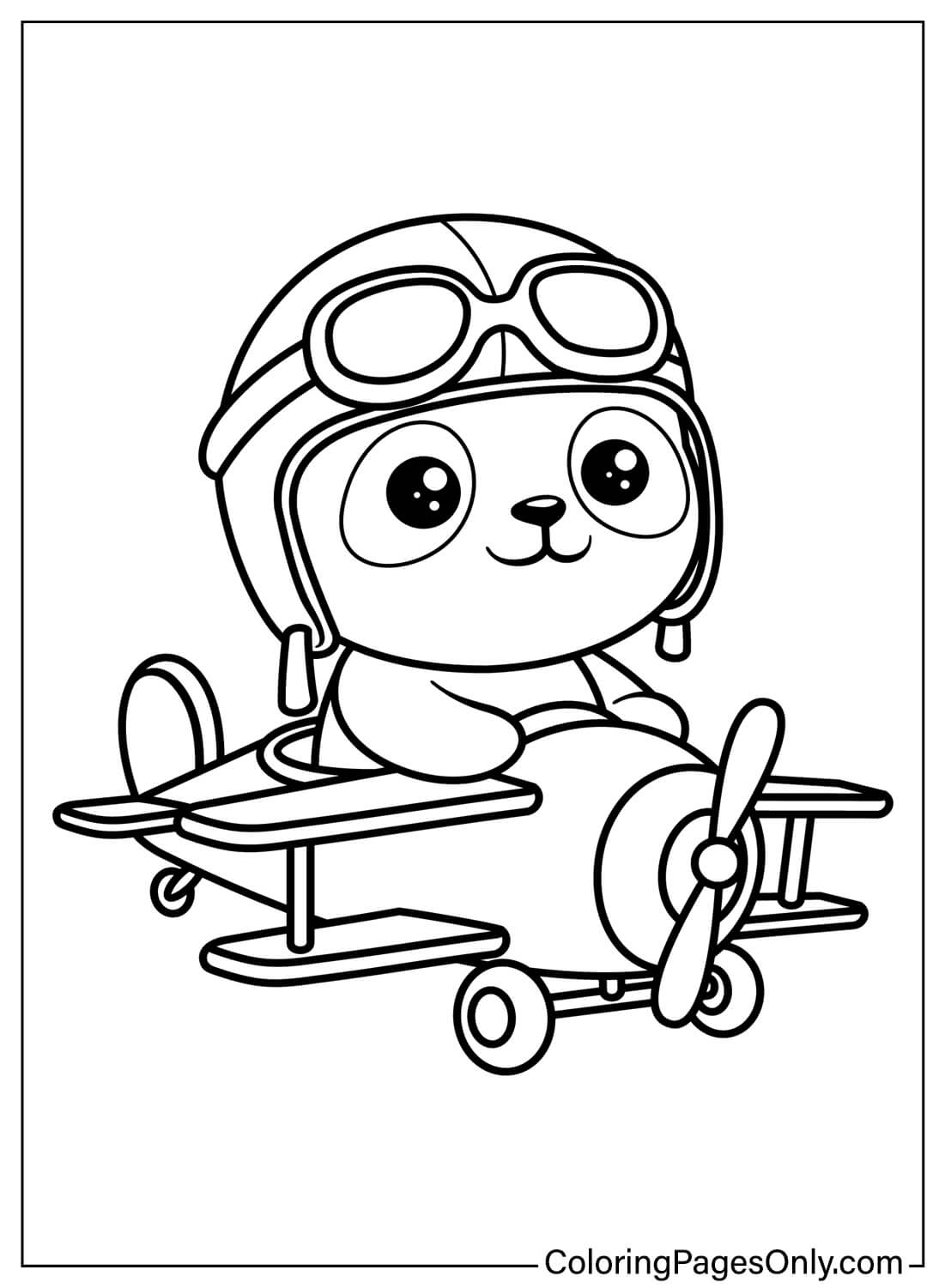
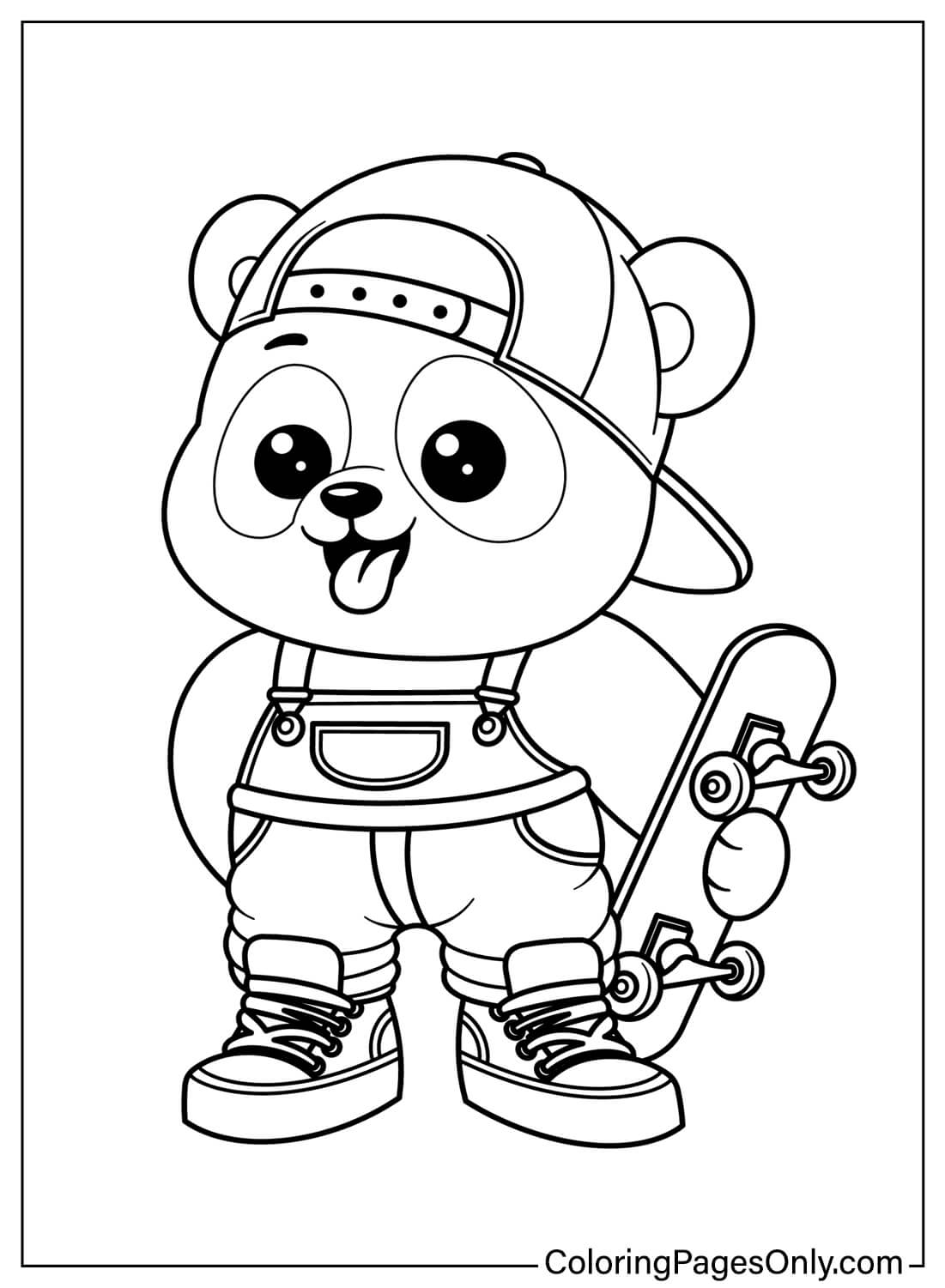
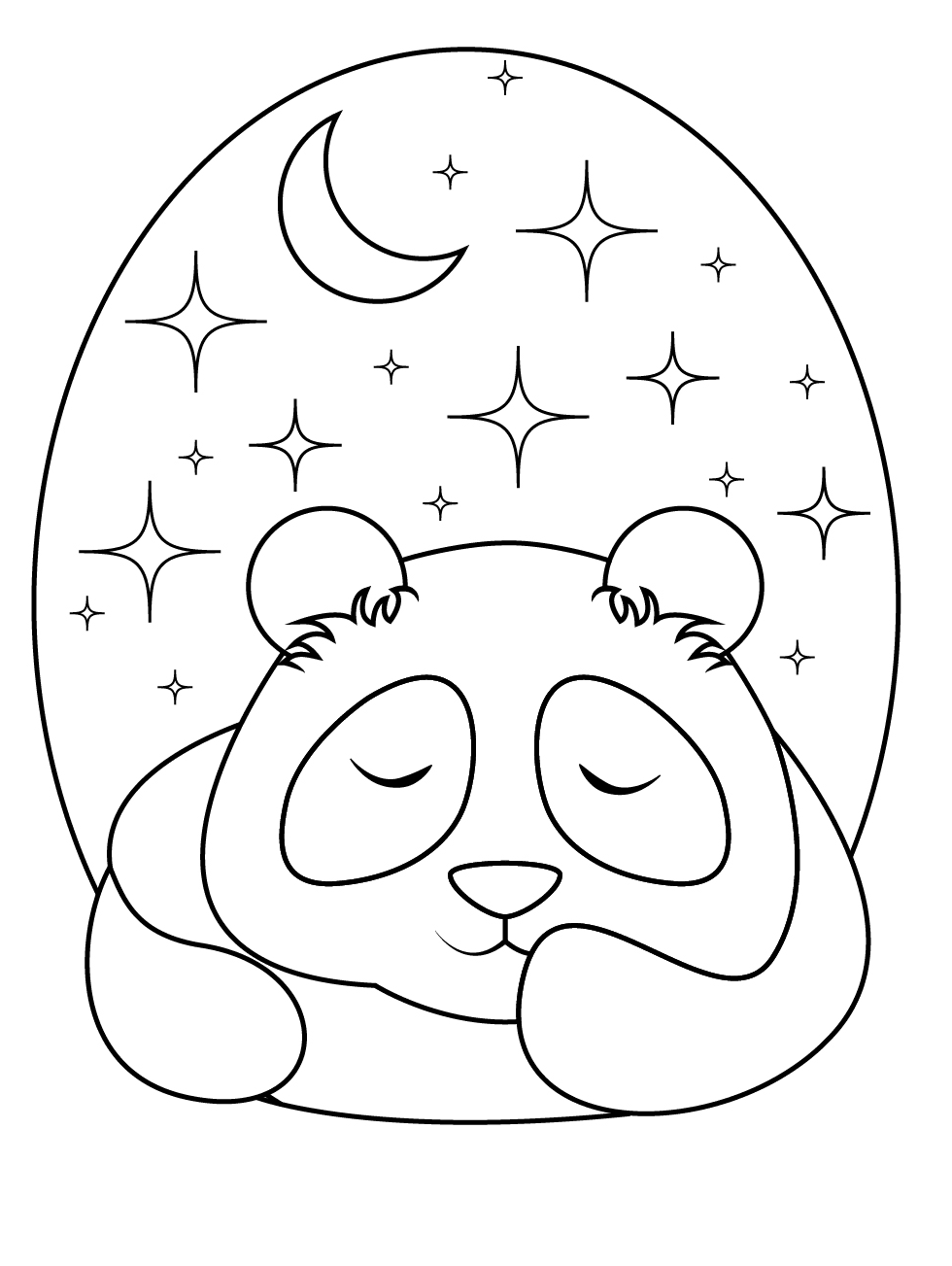
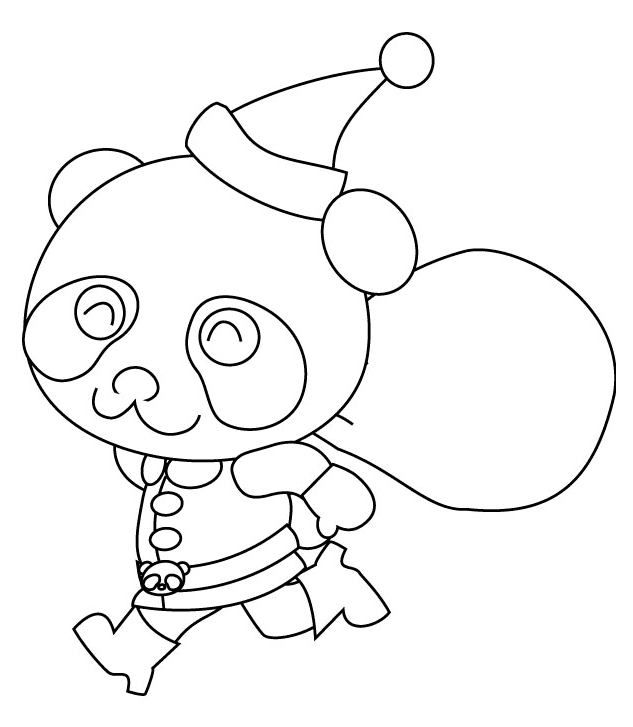
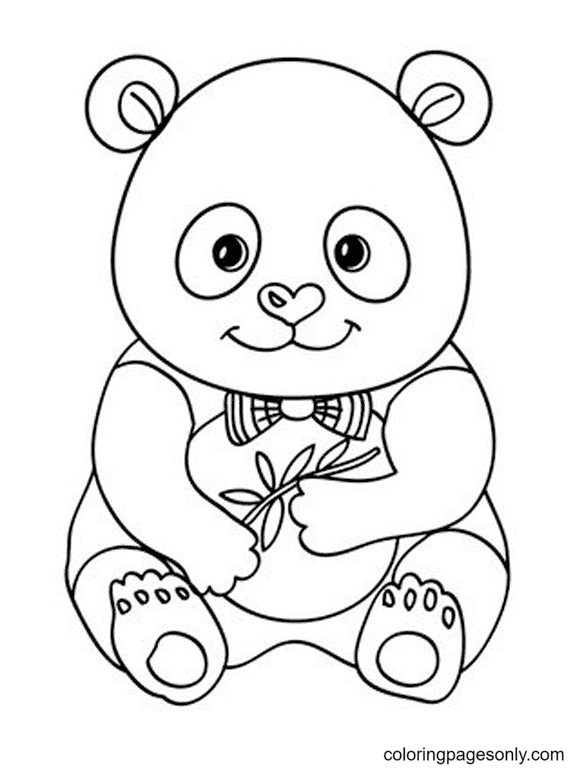
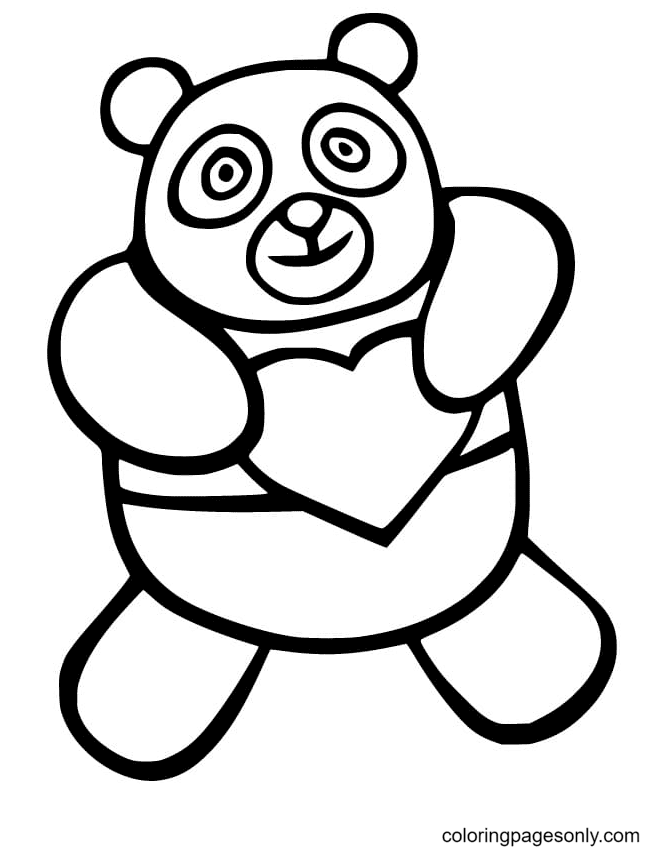
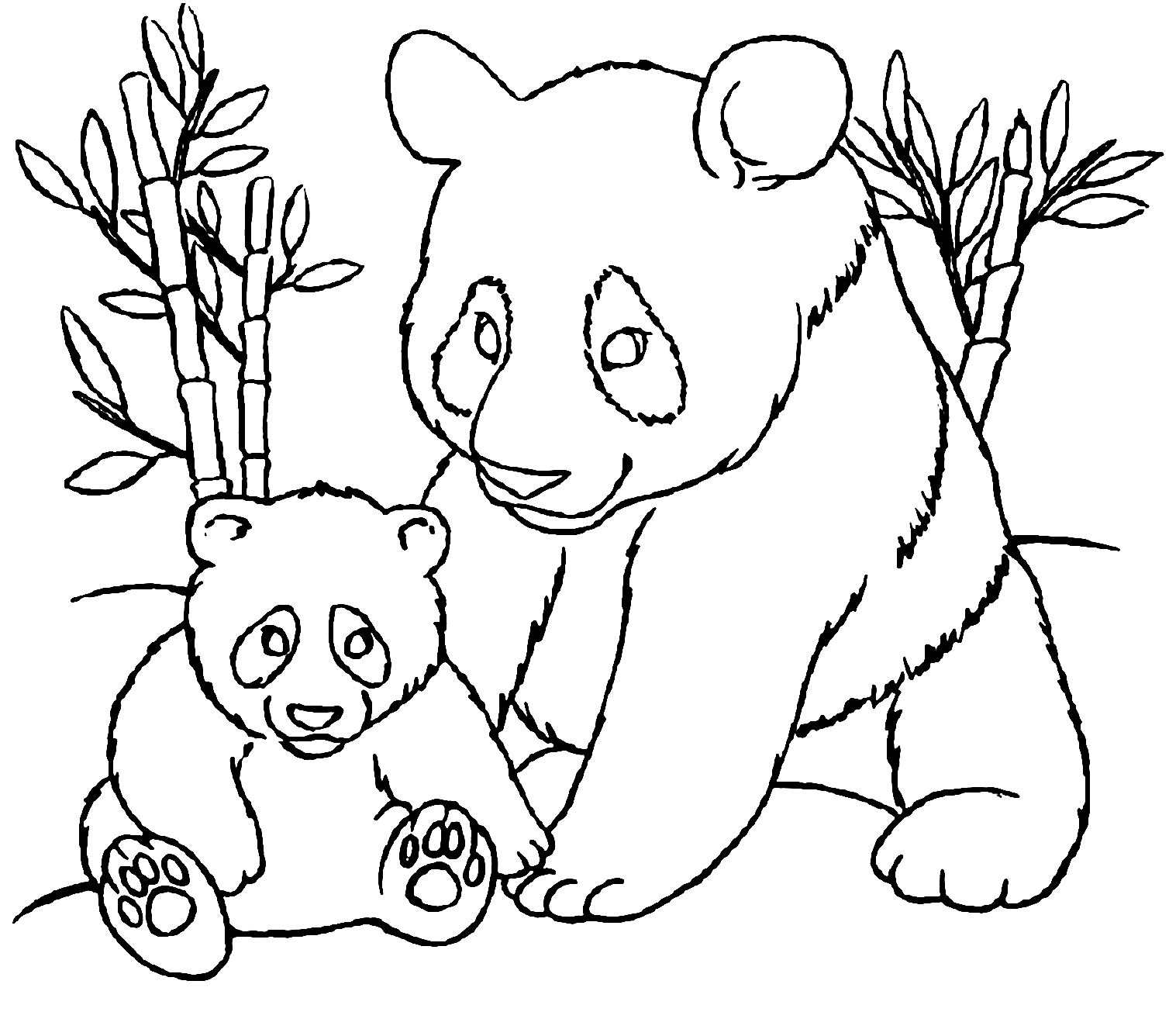
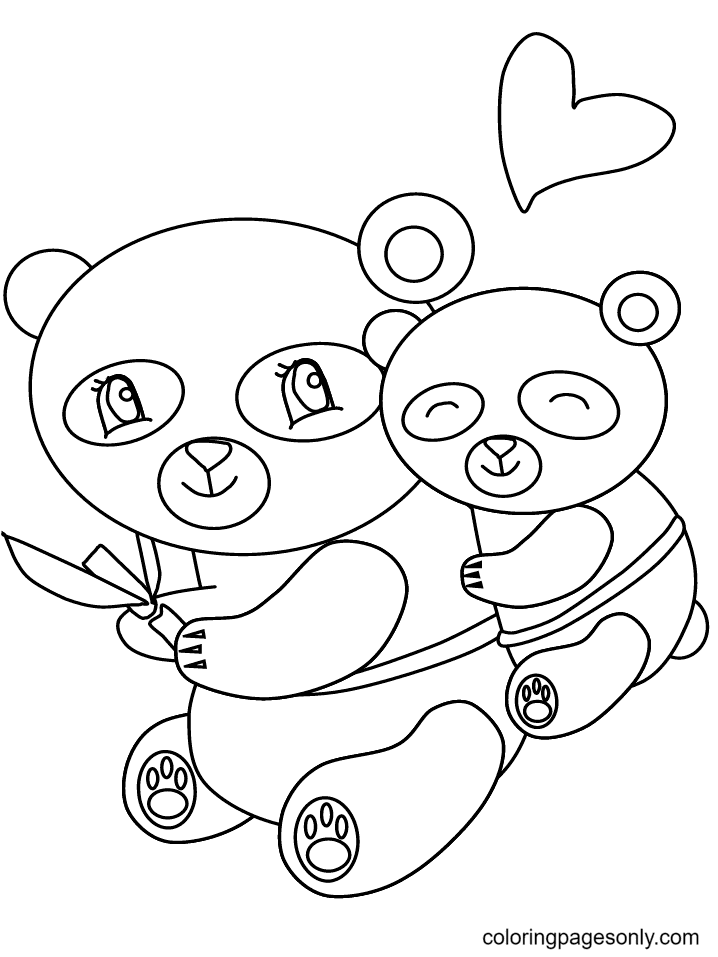
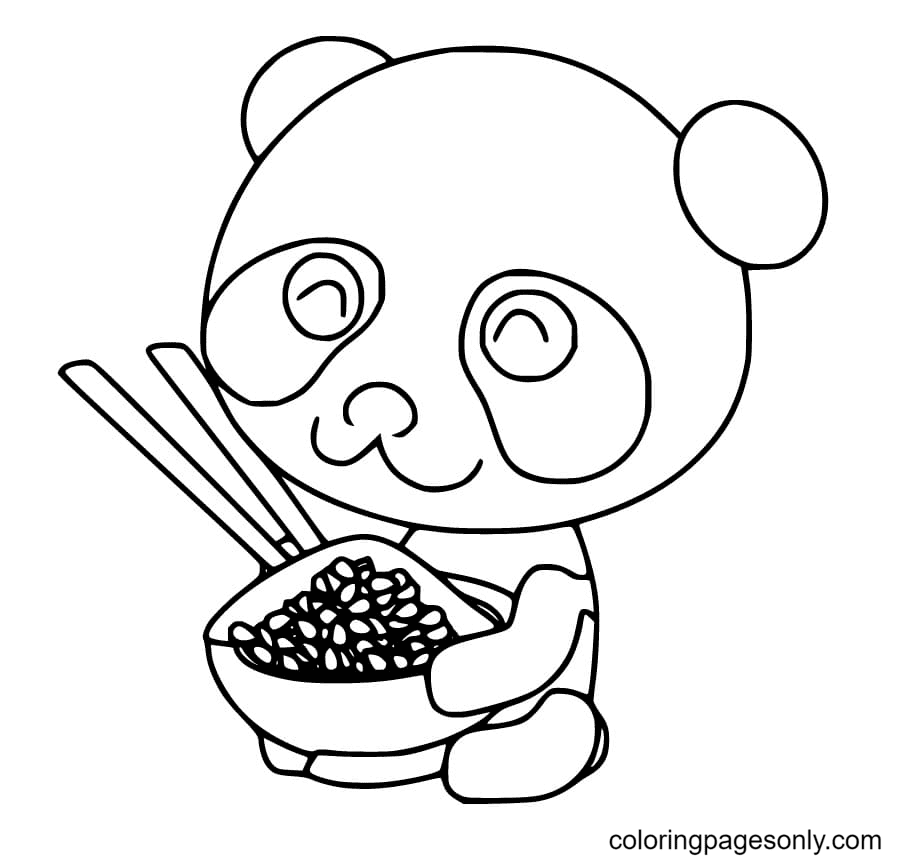
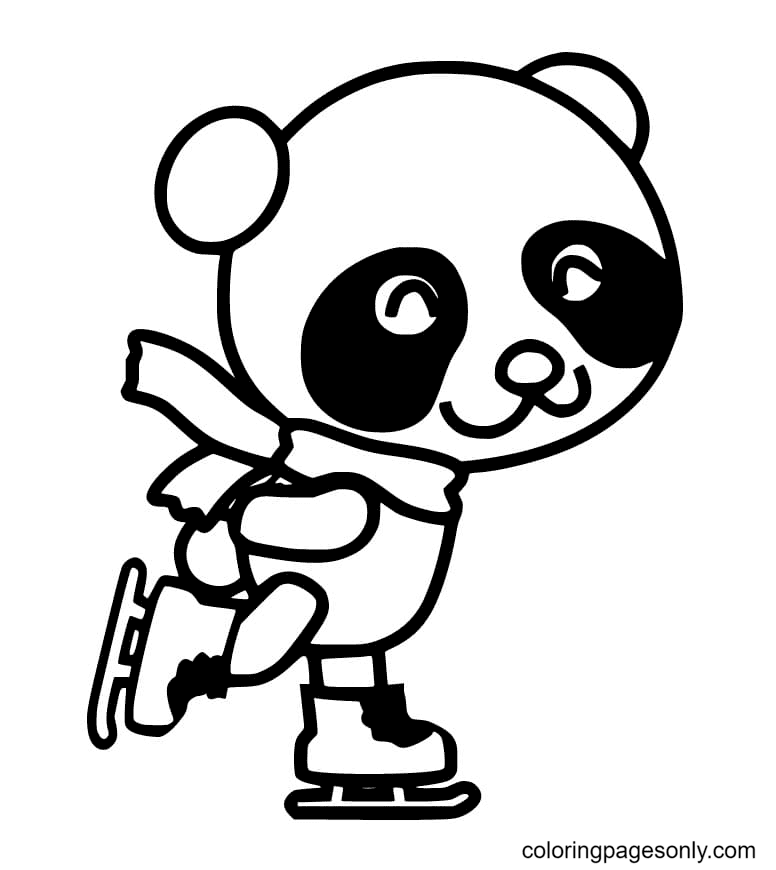
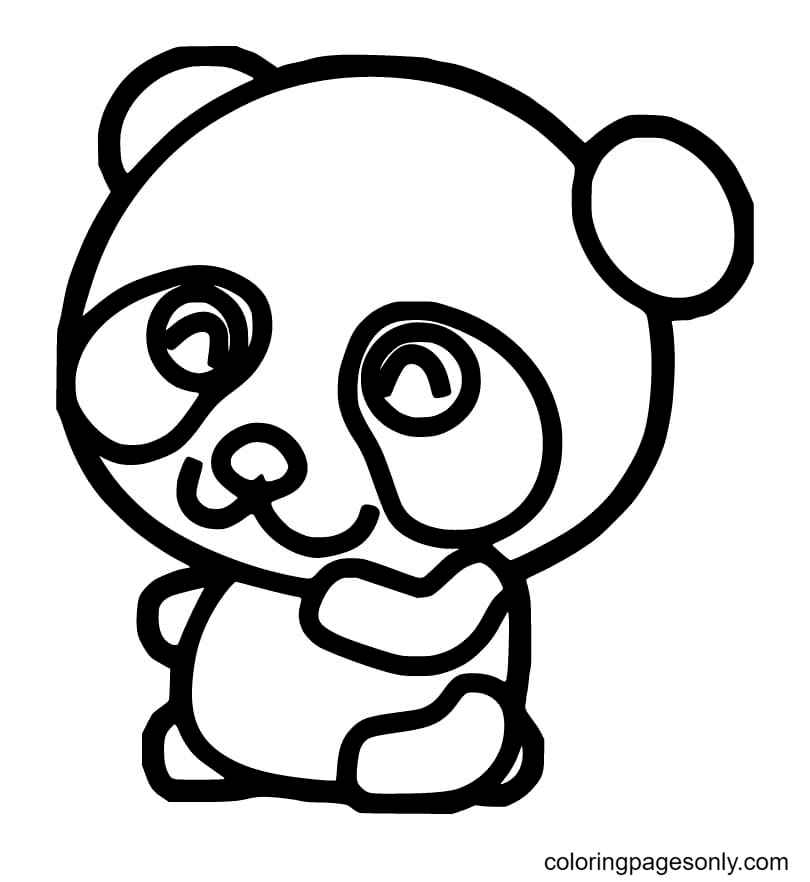
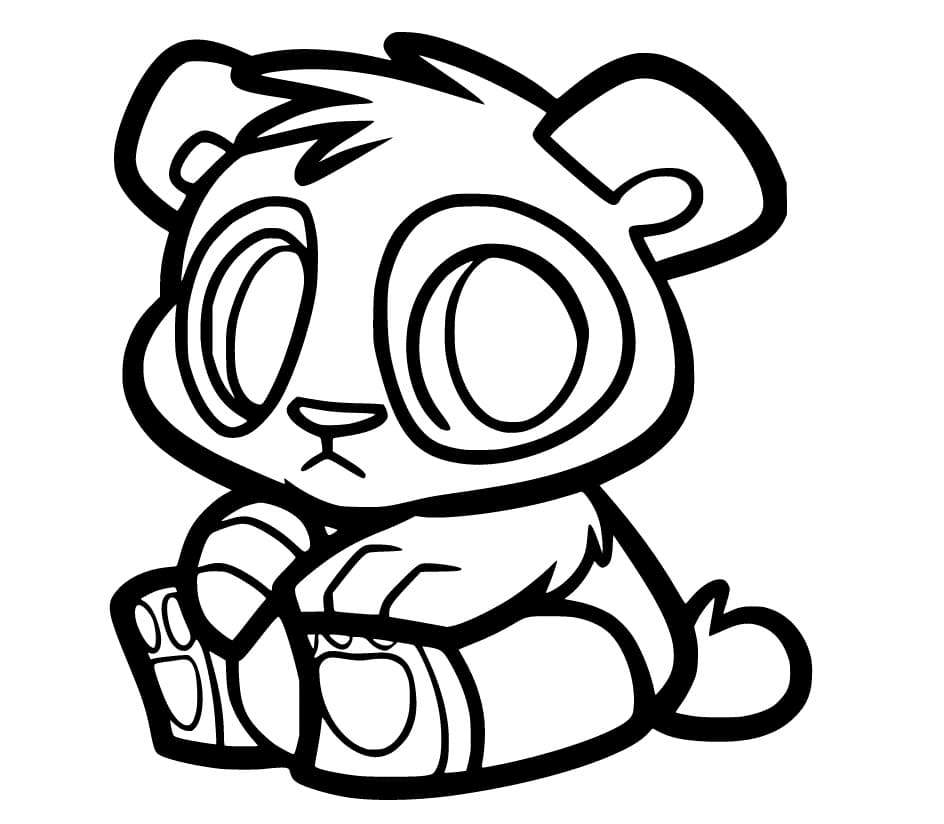
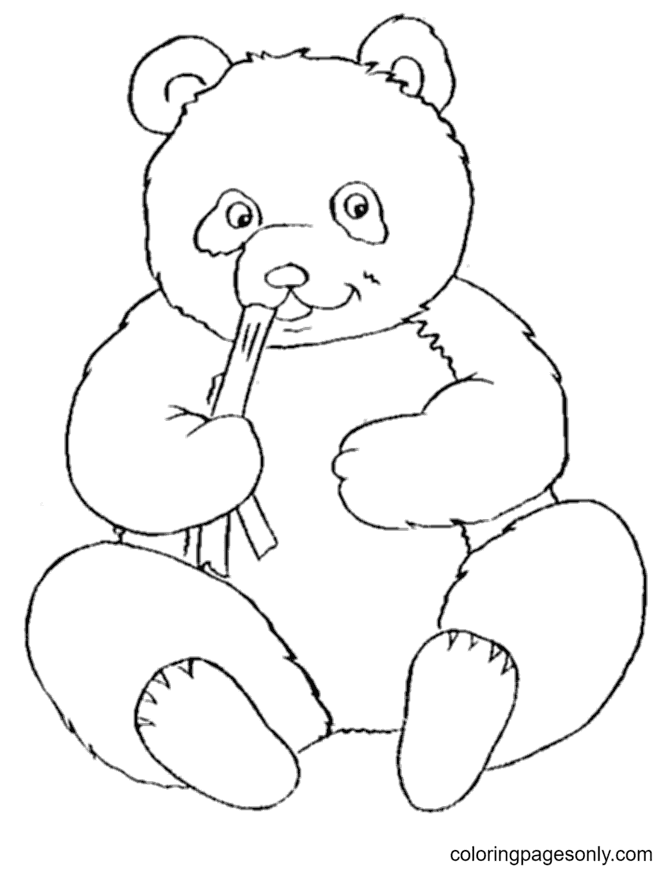
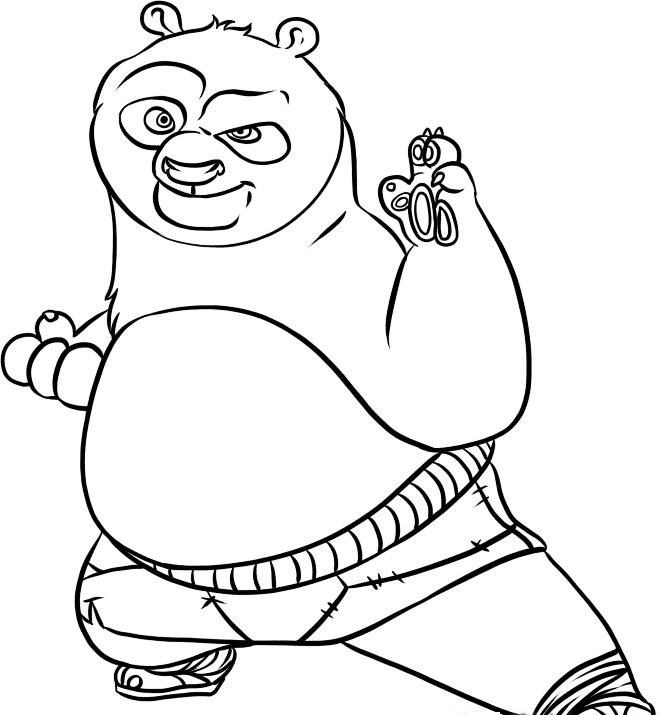
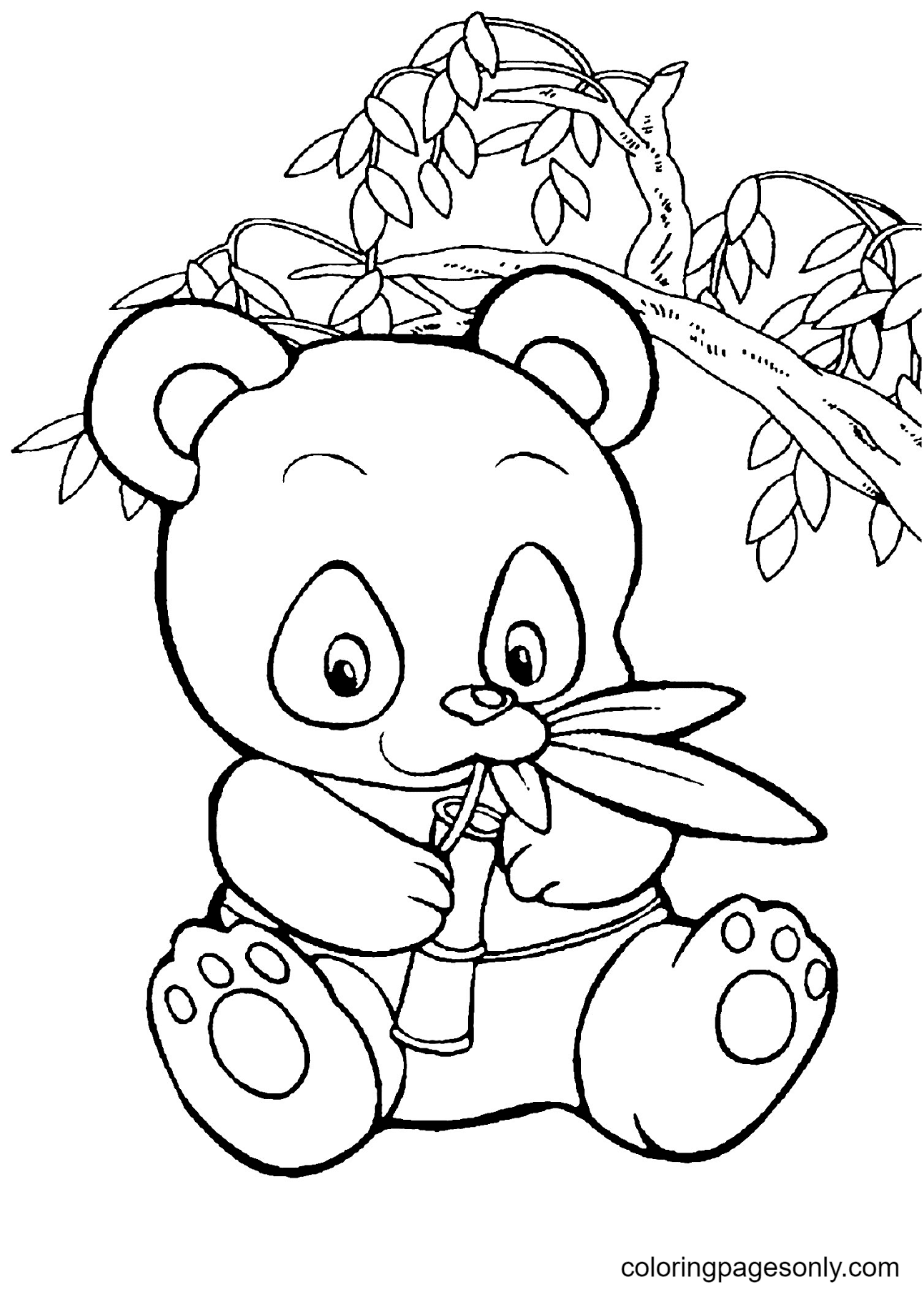
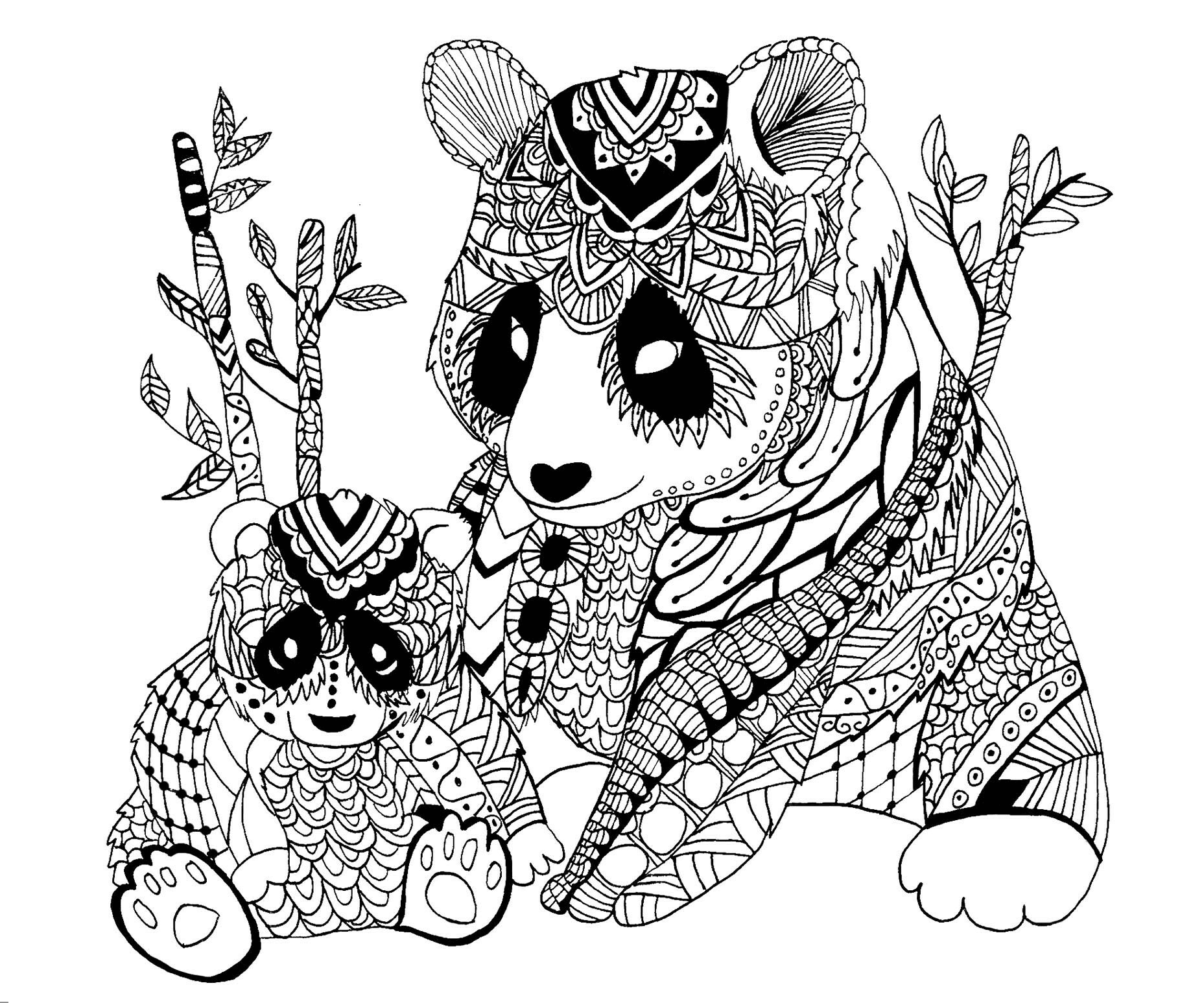
Free panda coloring pages – 50+ pages featuring giant pandas eating bamboo, panda cubs, adult portraits, pandas resting in bamboo forests, cartoon panda characters, mother-and-cub scenes, red panda pages, detailed realistic panda illustrations, and the full visual range of one of conservation biology’s most recognized success stories – free printable PDF and online coloring for animal lovers of all ages.
The giant panda (Ailuropoda melanoleuca) – “black-and-white cat-foot” in Greek – was first described to Western science in 1869 by French missionary Père Armand David, who acquired skins and bones from a Chinese hunter in Sichuan Province and sent them to the Natural History Museum in Paris. The scientific debate that followed lasted over a century: was the giant panda a bear, a raccoon, or something else entirely? Genetic analysis in the late twentieth century confirmed what the anatomy had suggested – the giant panda is a bear, family Ursidae, its closest living relative the spectacled bear of South America.
The panda’s biology contains several genuine scientific curiosities. Despite being biologically classified as a carnivore – with a carnivore’s digestive system – it eats almost exclusively bamboo, consuming 12 to 38 kilograms of it daily across 12 to 16 hours of continuous eating. It can only digest approximately 17 to 30 percent of what it eats, which is why it must eat so much. Its apparent “sixth finger” – the enlarged radial sesamoid wrist bone that functions as an opposable digit for gripping bamboo stalks – is one of the most cited examples in biology of evolution repurposing existing structures for new functions. The evolutionary biologist Stephen Jay Gould wrote a famous 1978 essay titled “The Panda’s Thumb” specifically about this adaptation.
Wild giant panda populations, estimated at approximately 1,114 individuals in the 1980s, have recovered to approximately 1,800 to 2,000 through concerted conservation efforts. In 2016, the International Union for Conservation of Nature downlisted the giant panda from Endangered to Vulnerable – one of conservation biology’s most documented successes.
These 50+ free pages at ColoringPagesOnly.com capture the panda in its full visual range. All free, PDF or PNG, print or color online.
What’s Inside
Adult Panda Portrait Pages
The adult giant panda is the collection’s most visually specific subject – an animal whose black-and-white color pattern is among the most immediately recognized of any species on Earth. The pattern is not uniform: specific areas of the body carry the black patches while others are white, and the arrangement of these patches is the same across all giant pandas.
The black patches cover both eyes (the distinctive dark rings that function as one of nature’s most recognizable facial markings), both ears, the shoulders, all four limbs, and a band across the upper back. The white areas cover the face (except the eye patches), the neck, the chest, the belly, and most of the back. This specific arrangement gives the panda’s face its uniquely expressive quality – the dark eye patches on a white face create a cartoon-like expressiveness that the panda’s actual face does not anatomically require but that evolution has produced anyway.
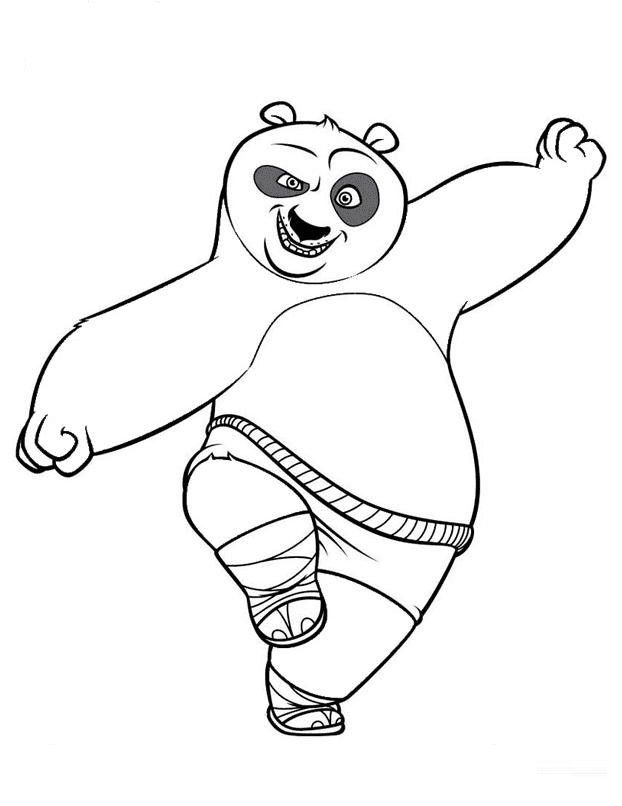
The behavioral study of what the giant panda’s eye patches actually do – whether they serve as camouflage, as social signals to other pandas, or as some combination – has been the subject of scientific research. A 2017 study published in Behavioral Ecology by researchers at the University of California, Davis and California State University, Fullerton concluded that the coloring primarily provides camouflage in the panda’s snowy and shaded forest environment, with the dark eye patches specifically functioning in interspecific communication.
Coloring adult panda portraits: The black is near-black – the very dark near-black of natural bear fur. Apply it at maximum pressure across the eye patches, ears, shoulders, arms, and legs. The white areas should be the warmest possible off-white – panda fur is not paper-white but carries a very slight warm cream quality. Apply a barely visible warm cream tone to the main white areas. The black-and-white boundary should be crisp rather than gradual – the patches transition sharply at their edges.
Panda Cubs
Giant panda cubs are among the most extreme examples of neonatal smallness relative to maternal body size of any placental mammal. A newborn panda cub weighs approximately 90 to 130 grams – roughly the size of a stick of butter – while its mother weighs 70 to 100 kilograms. The newborn is pink, hairless, and blind. The black patches develop at approximately three to four weeks, and the eyes open around six to eight weeks.
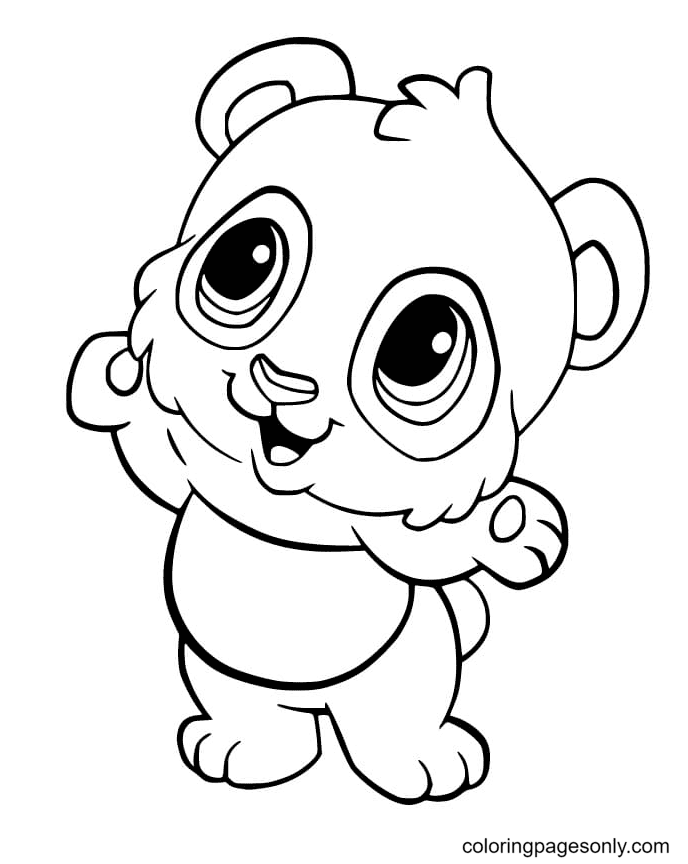
Older cubs – at several months – have the full adult coloring in a round, dense, fluffy form that drives the specific quality of child-directed adorableness. The round face, round body, short limbs, and large head-to-body ratio of a panda cub are the same proportions that developmental psychology identifies as the “cute response” triggers. This baby schema produces the caregiving impulse in humans.
The most famous panda cub video in internet history is a 2006 viral clip of a baby panda sneezing in its enclosure at China’s Wolong Nature Reserve, startling its mother while she eats bamboo. The video had been viewed hundreds of millions of times by the time internet viewing statistics began to be tracked, making it one of the earliest viral animal videos.
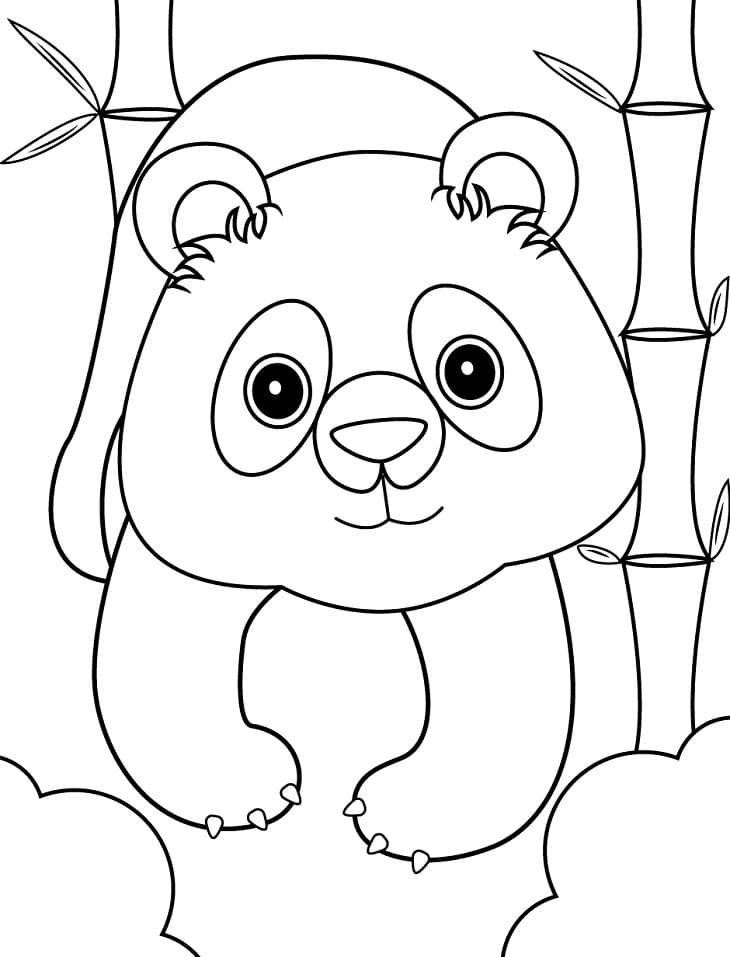
Coloring panda cub pages: The cub’s proportions are round – the body is rounder and more compact relative to the limbs than an adult’s. The fur is denser and fluffier in appearance, which can be suggested by applying color with lighter, shorter strokes that suggest individual fur tufts rather than the flat application that suits adult fur. The eye patches are proportionally larger relative to the face than in adults, and the eyes themselves are proportionally larger, giving cubs their specific baby-face quality.
Pandas Eating Bamboo
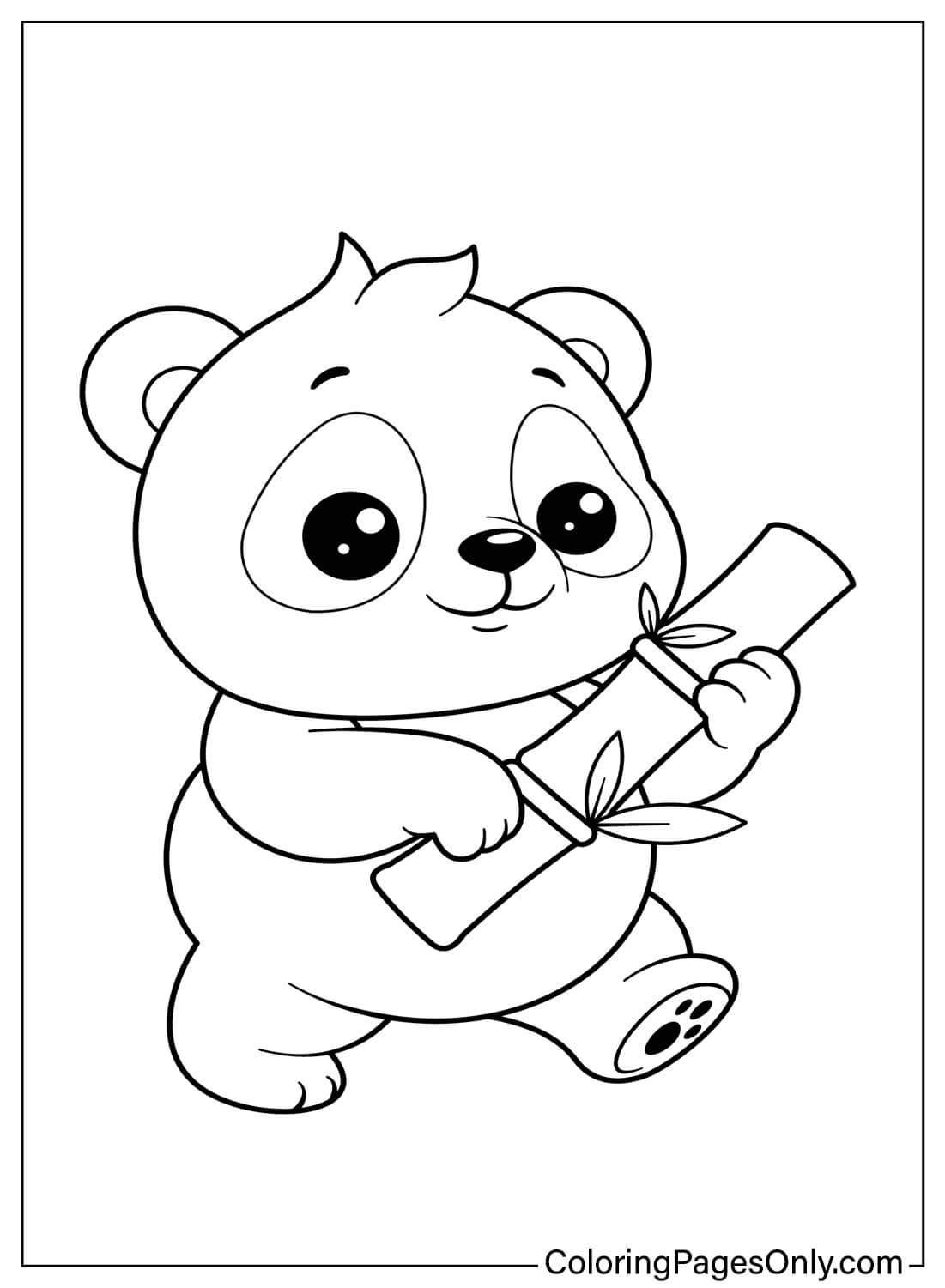
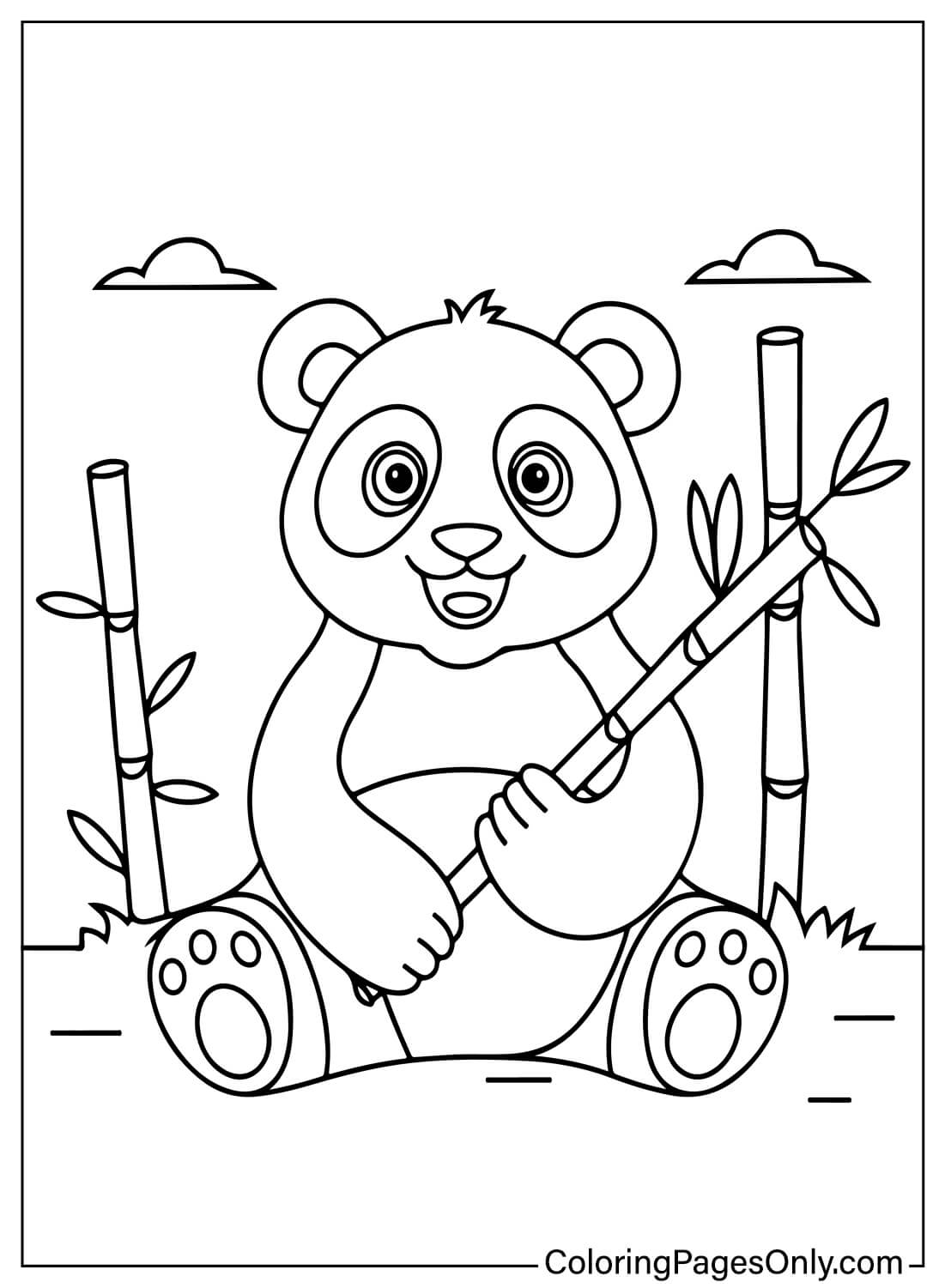
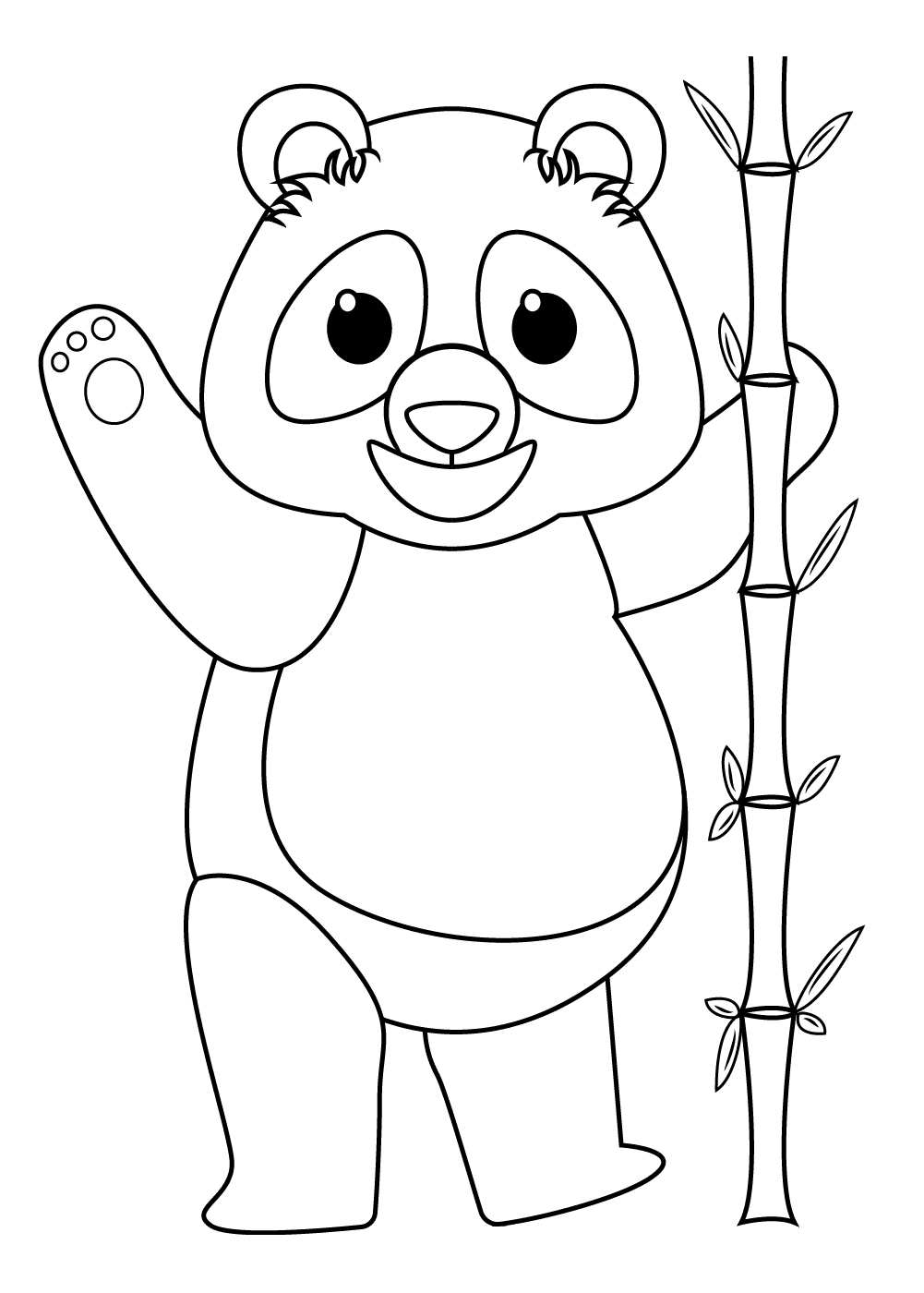
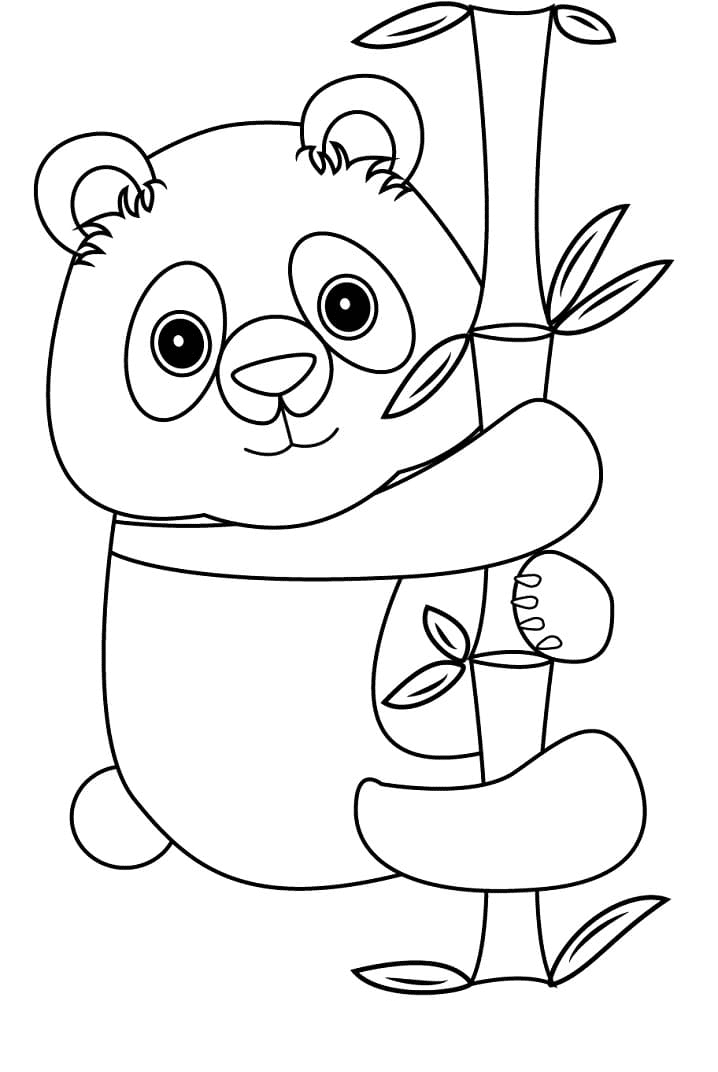
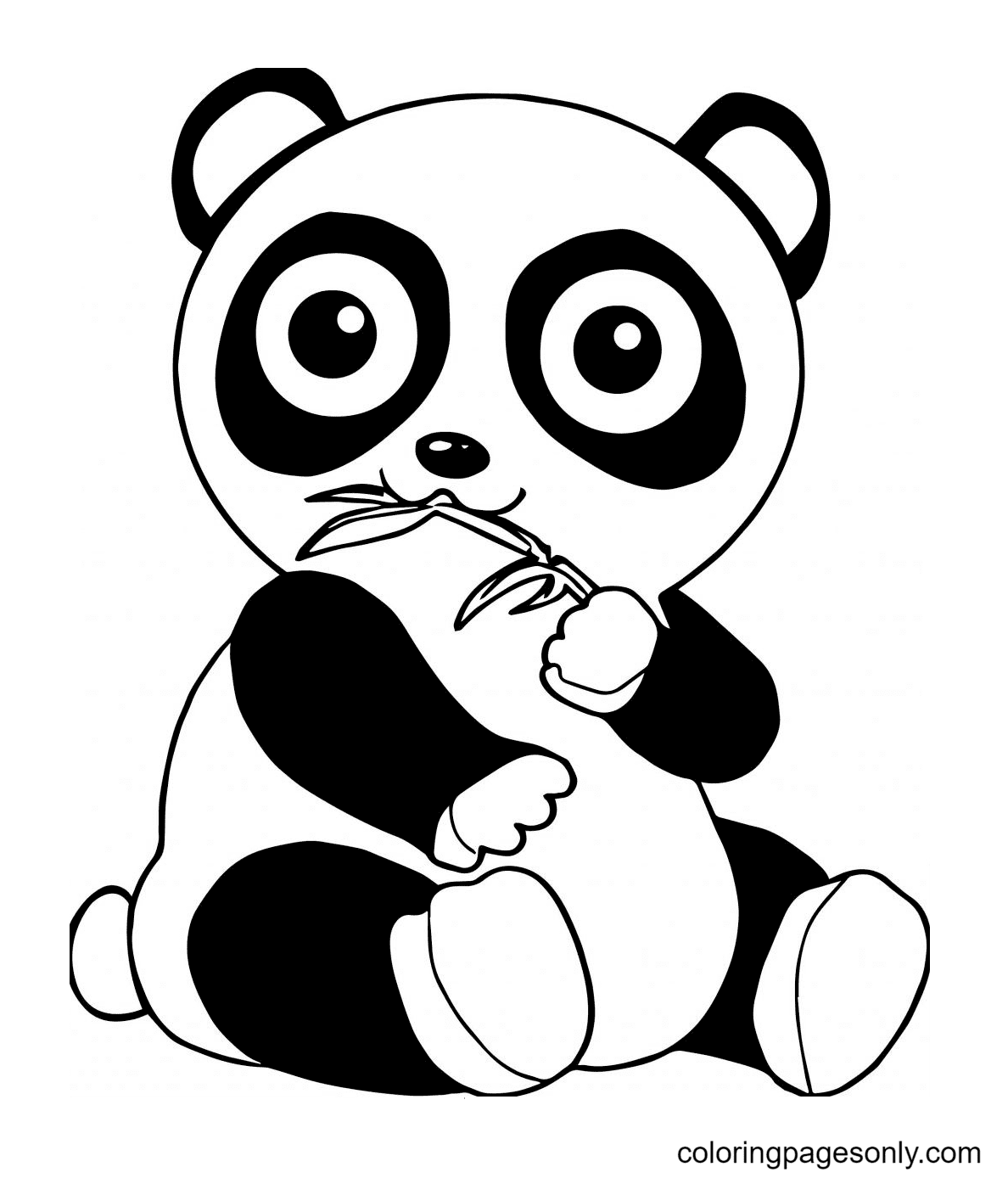
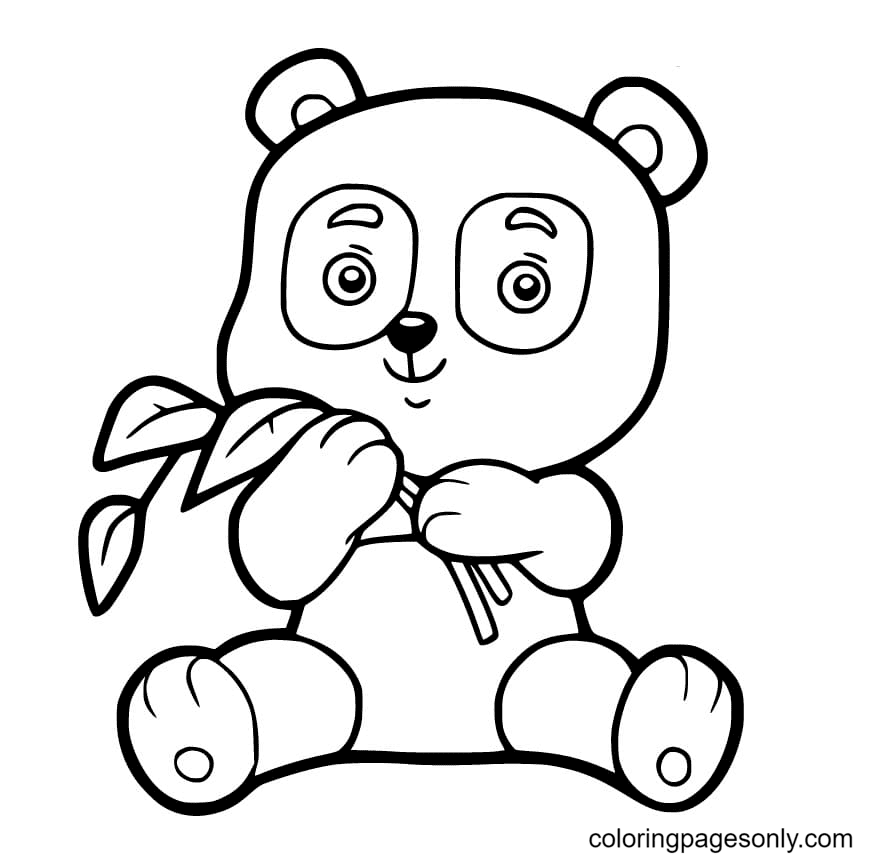
Eating-bamboo pages are the collection’s most behaviorally specific – the panda in the activity that defines its daily existence. A panda eating bamboo sits in a characteristic semi-upright posture, using its forepaws (including the pseudo-thumb) to grip the bamboo stalk and pull it toward its mouth. The bamboo stalk extends in one direction, the panda’s body in the other, and the entire posture communicates a combination of deliberate, unhurried consumption and complete contentment.
The bamboo itself is a specific visual subject: cylindrical segmented stalks in vivid green, with the distinctive nodes (joints) at regular intervals along the length, leaves extending from the upper nodes in characteristic elongated leaf shapes.
Coloring bamboo: The bamboo stalk is vivid, medium green – the specific bright green of living bamboo, applied at full saturation. The nodes are slightly darker green – add a thin, slightly darker ring at each node position to indicate the joint. The internodal sections between nodes are the lightest part of the stalk – a slightly lighter, more yellow-green color where the smooth stalk surface faces the light most directly. Leaves are a more elongated, pointed shape than most broadleaf plant leaves – vivid green, lighter at the tips, with a central vein visible.
Mother and Cub Scenes
Pages showing a mother panda with her cub are the collection’s most emotionally resonant – the dramatic size contrast between the enormous mother and the tiny cub, combined with the specific quality of a large animal in its most careful, attentive behavioral mode.
A mother panda holds her cub with a gentleness that the cub’s extreme smallness requires – the cub rests against the mother’s chest or in the crook of her foreleg, and the mother’s large body creates the environment in which the small body exists. The size contrast – adult female at 70-100 kilograms, newborn at 90-130 grams – is the most extreme mother-cub size ratio of any placental mammal, and the visual reads as such even in the simplified form of a coloring page.
Coloring mother-cub pages: Apply identical black-and-white coloring conventions to both figures, but render the cub’s fur with the shorter, denser, softer quality of young animal fur rather than the longer, slightly coarser texture of adult fur. The mother’s expression – typically rendered with the eye patches closed or half-closed in relaxed attentiveness – should contrast with the cub’s wider, more open eye expression.
Red Panda Pages
The red panda (Ailurus fulgens) – whose family name Ailuridae actually predates the giant panda’s popular use of the “panda” name – is a completely different animal from the giant panda: smaller, cat-sized, with rust-red fur, a striped tail, and a masked face with lighter ear tips. It belongs to the family Ailuridae, related to raccoons, weasels, and skunks rather than to bears. It also eats bamboo primarily, despite being a different species from a different family.
The red panda’s visual quality is distinct from the giant panda’s: the rusty-red fur, the ringed striped tail, the dark brown-to-black belly, and the white-edged ears create a warmer, more complex color palette than the giant panda’s stark black-and-white.
Coloring red panda pages: Rust-red across the back, head, and outer limbs – a warm, vivid red-orange-brown that reads as rust or fox-red rather than as any cooler red. The belly and inner legs are dark – near-black or very dark brown. The face has a white-cream mask area around the eyes and along the snout. The ears have white or cream tips. The tail is banded in alternating red and dark brown rings – render each ring separately, alternating red and near-black in equal-width bands.
Cartoon and Decorative Panda Pages
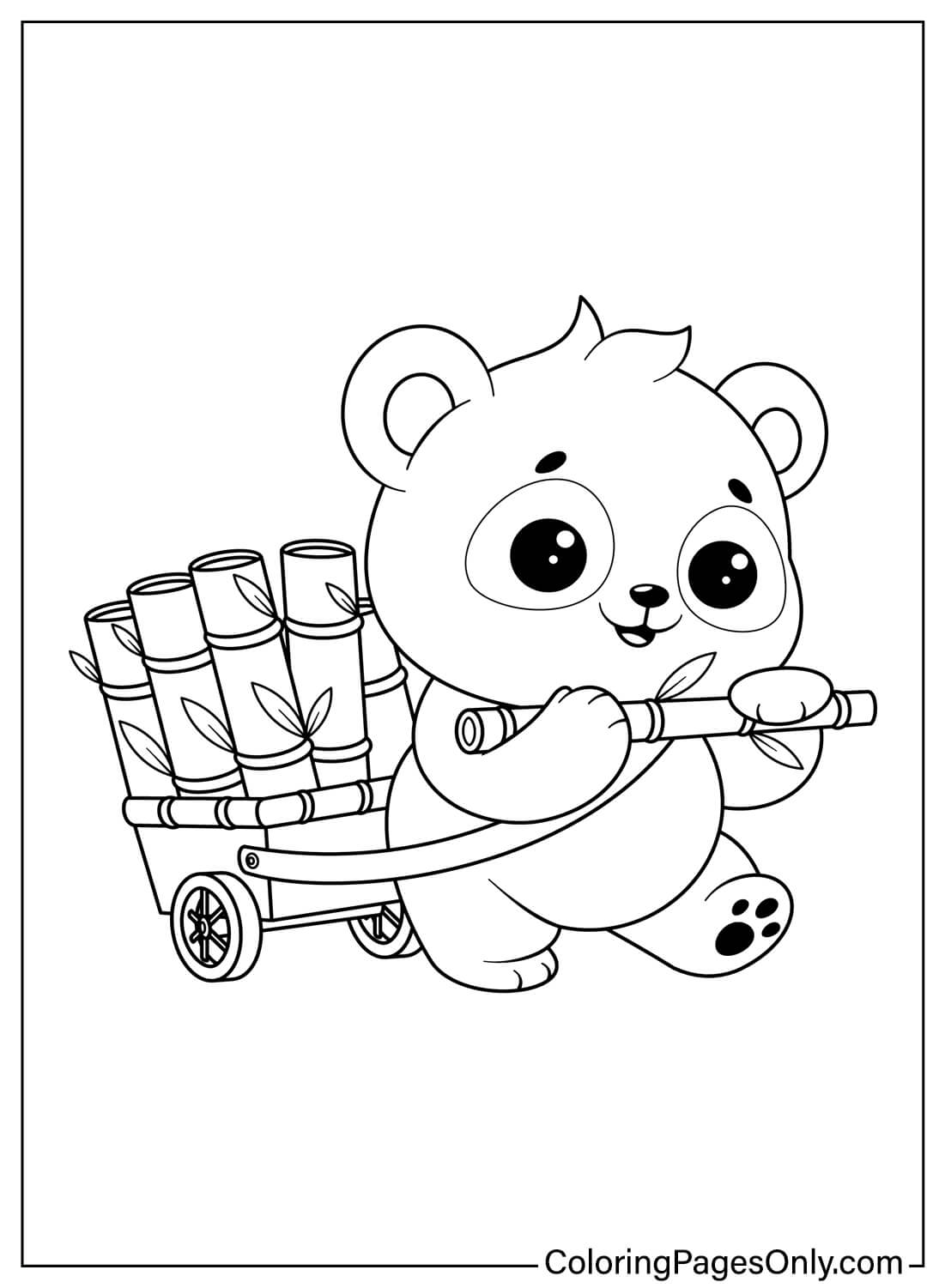
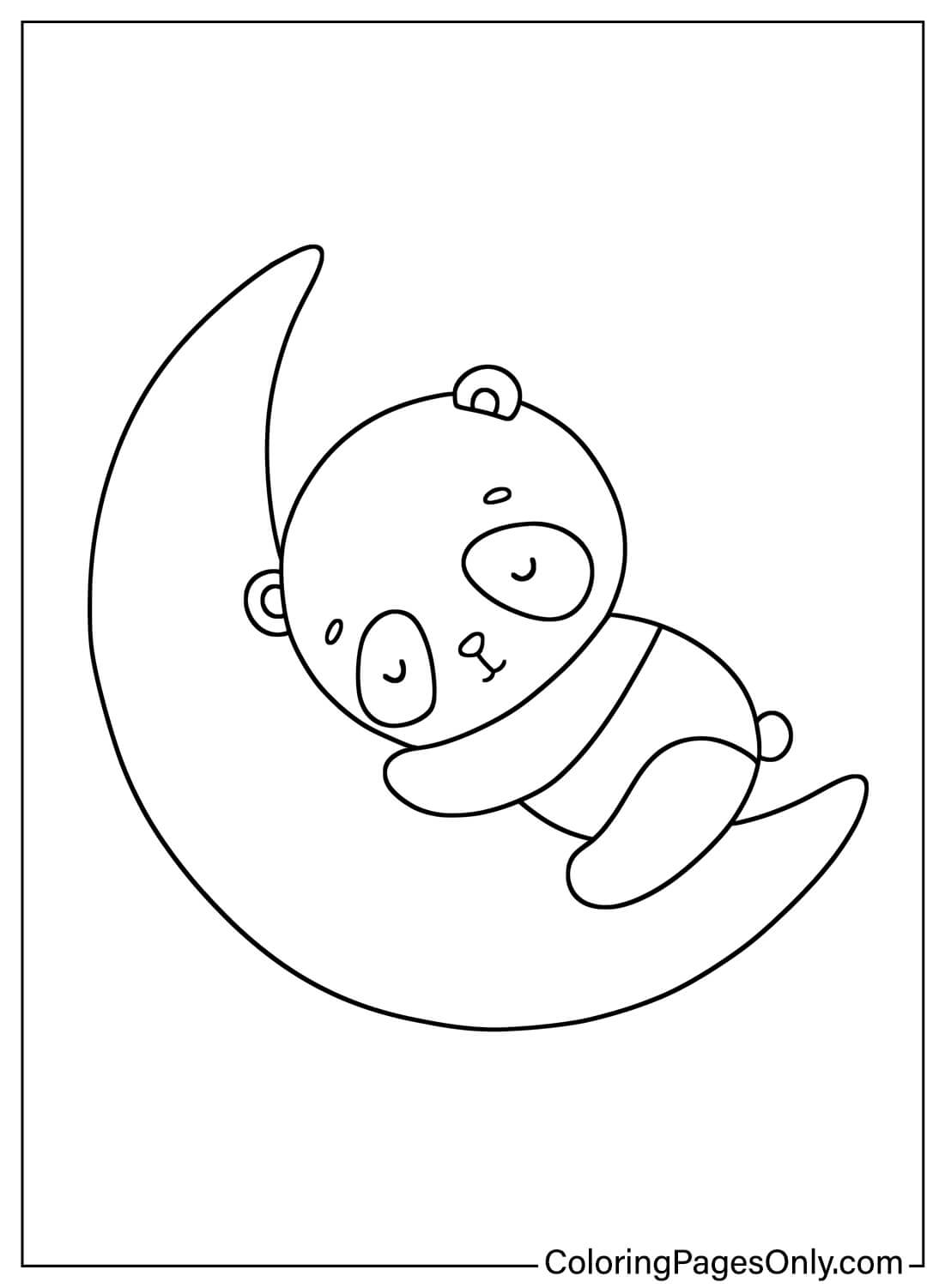
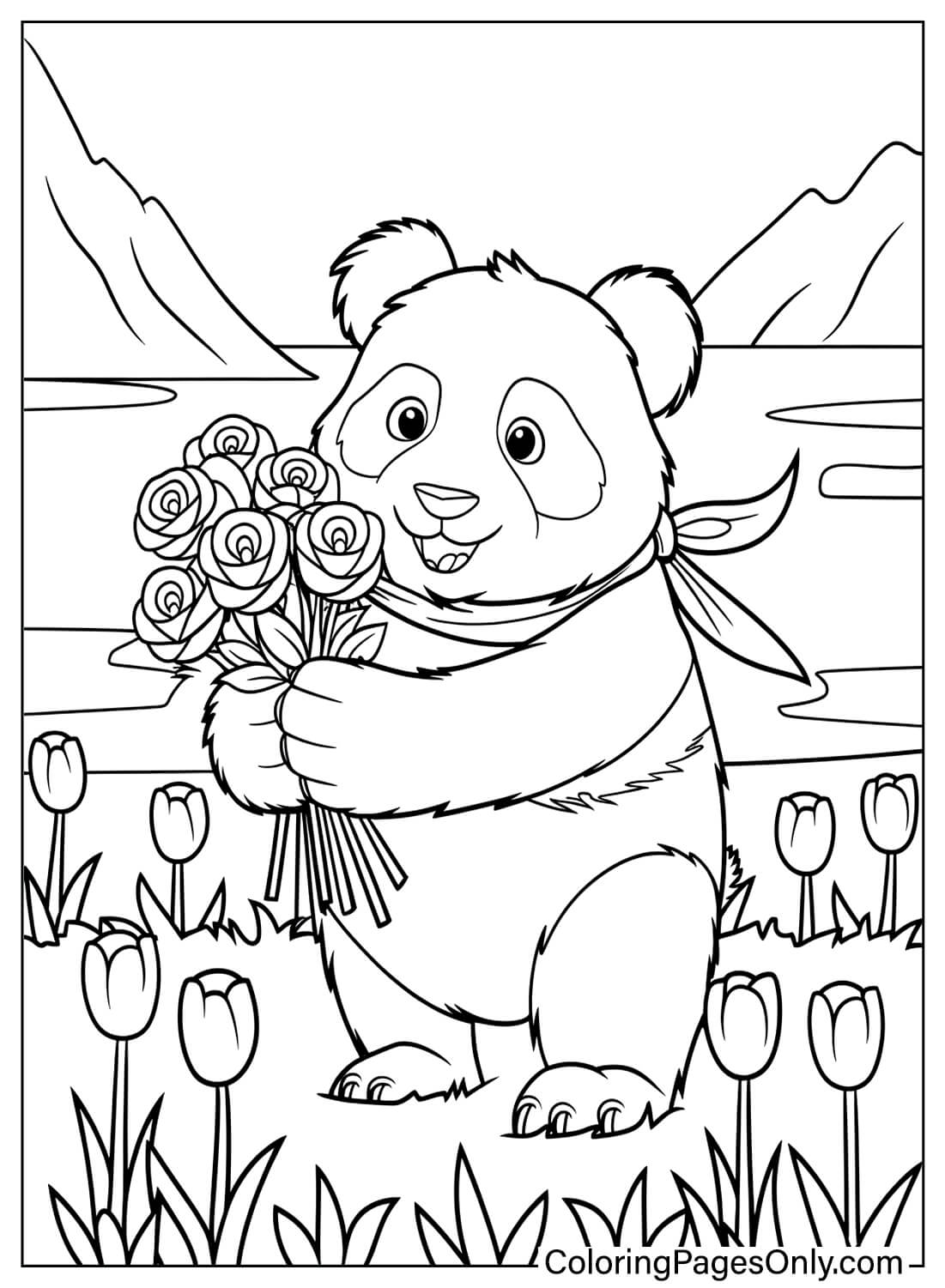
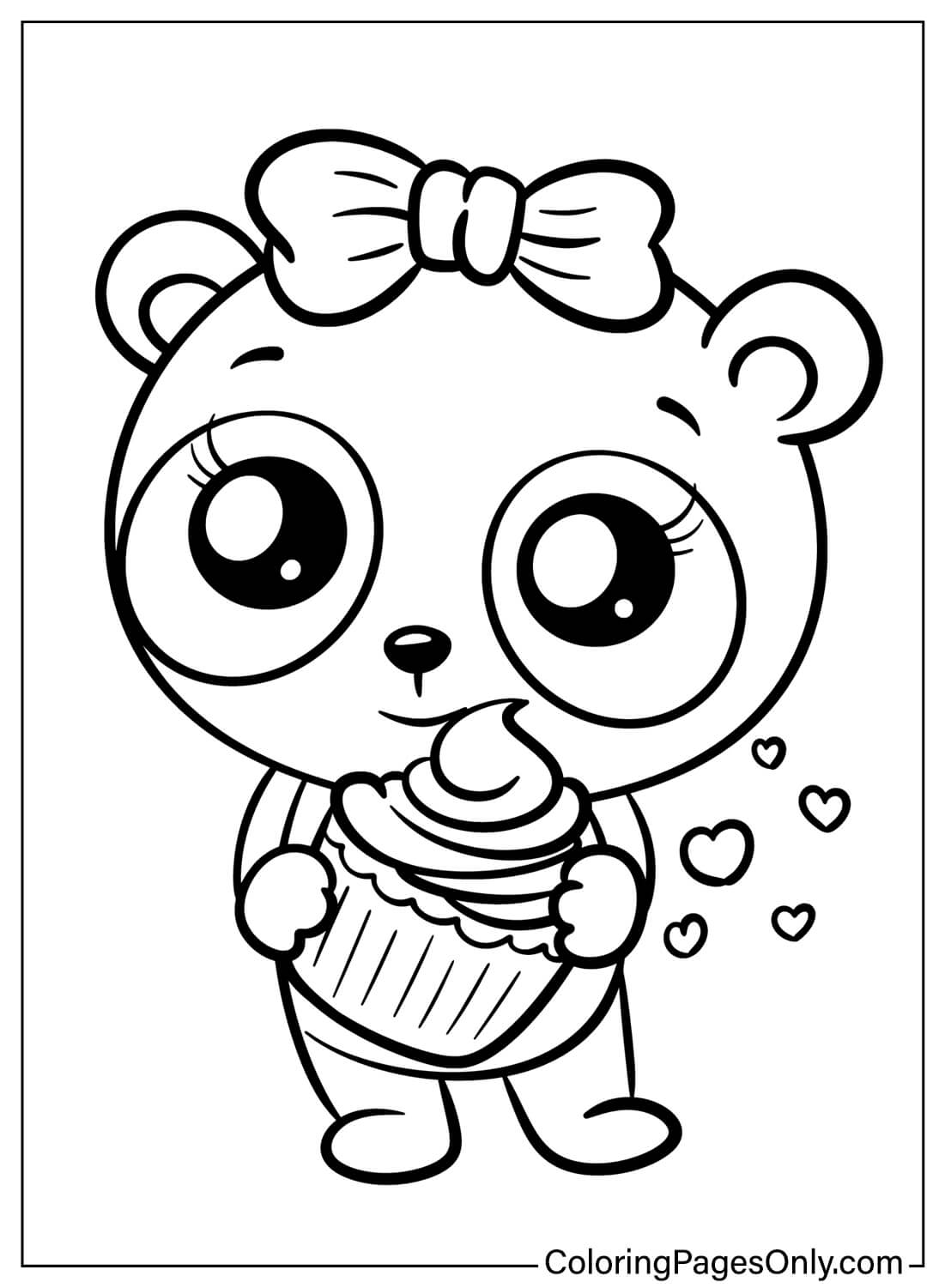
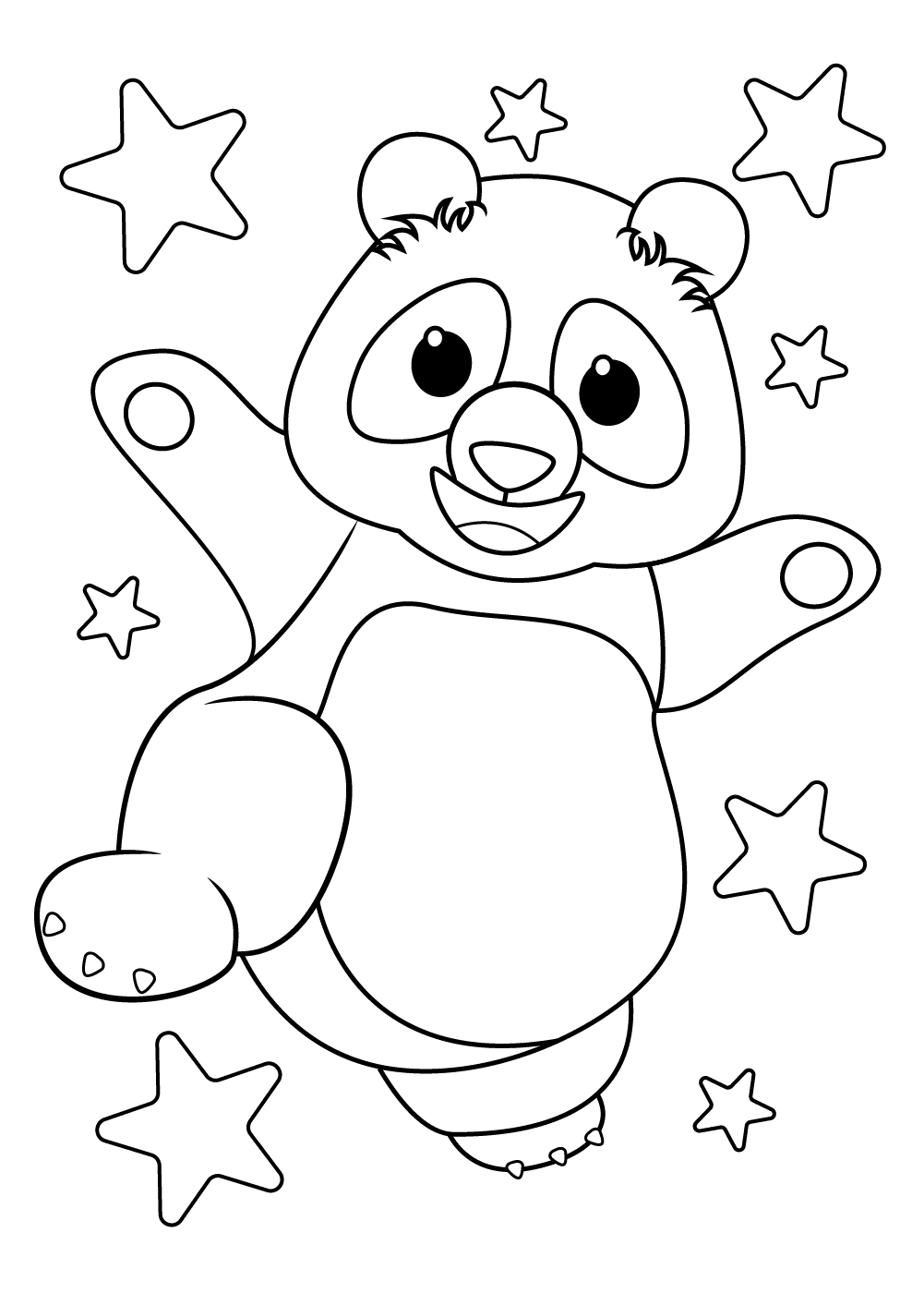
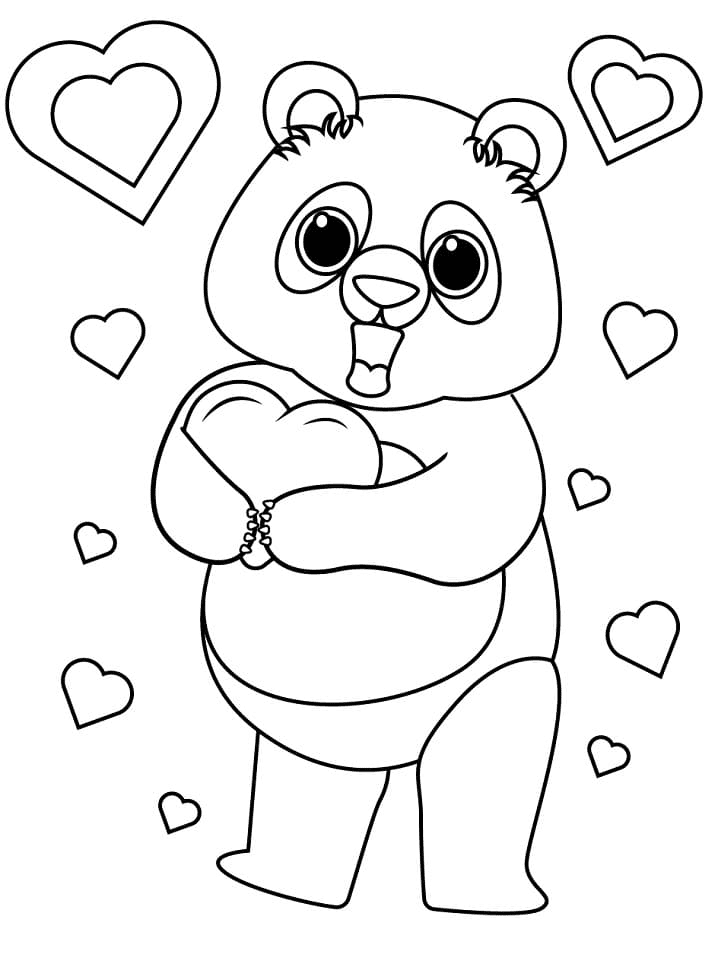
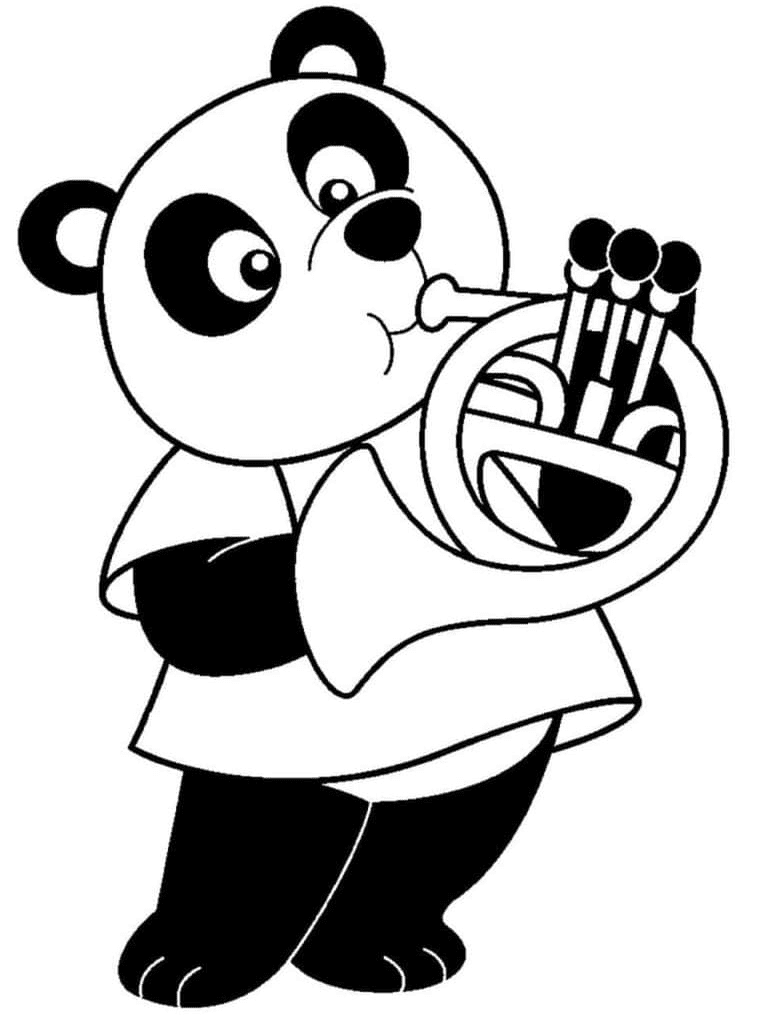
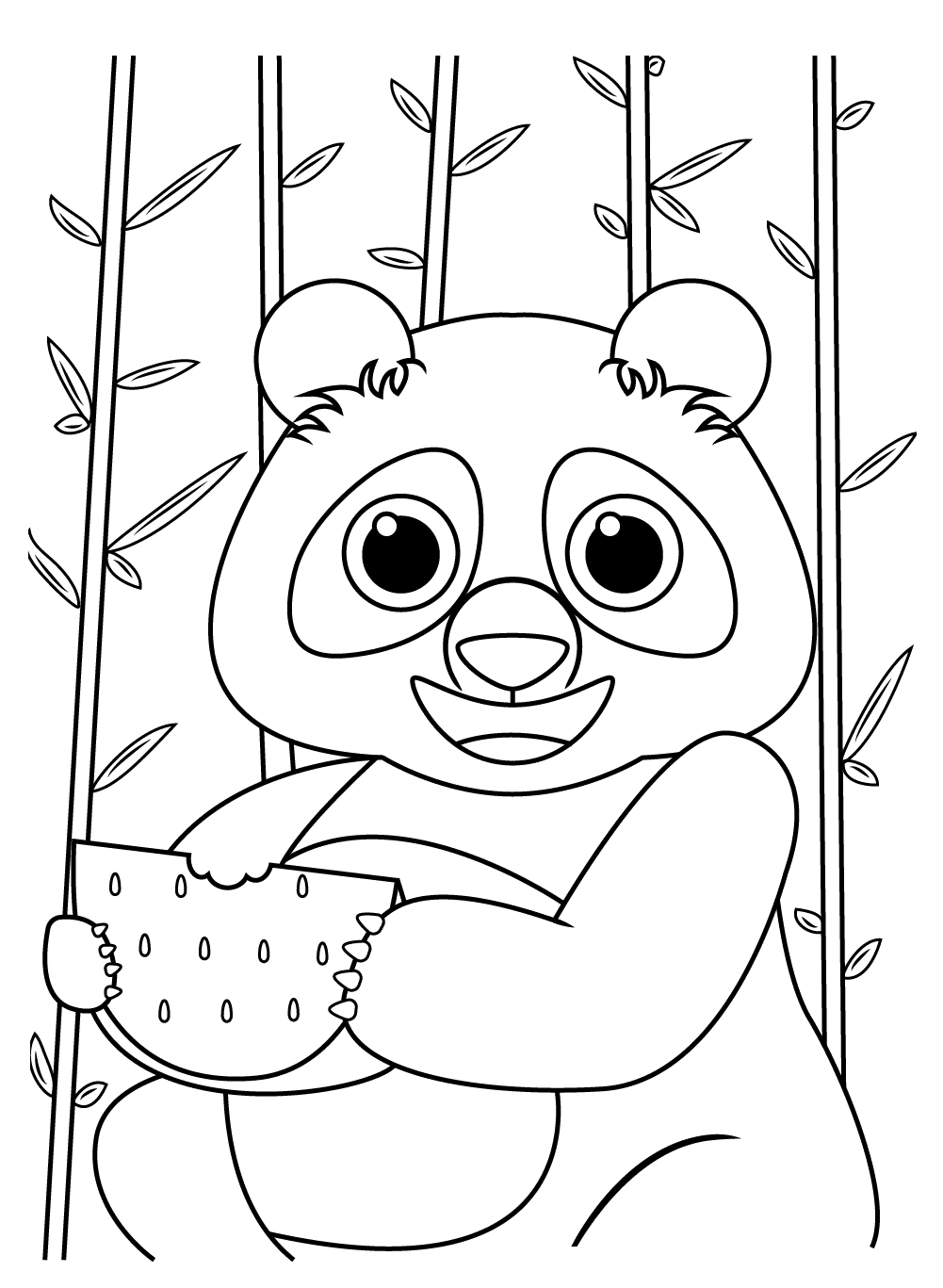
Cartoon panda pages present the animal in the simplified, expressive register of children’s illustration – exaggerated eye patches, rounder proportions, and the specific charm of an already cute animal rendered cuter through cartoon simplification. These pages are the most accessible for the youngest colorists and the most tonally playful.
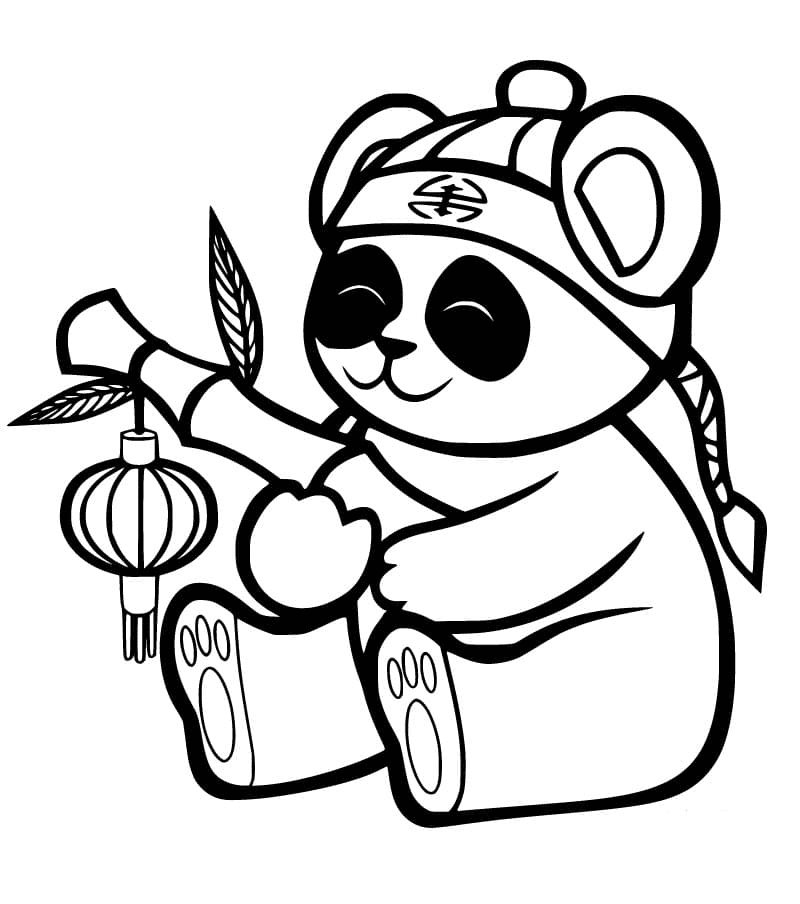
Decorative panda pages – pandas surrounded by bamboo patterns, floral designs, or mandala-style geometric arrangements – provide the most complex sustained coloring challenges in the collection, rewarding patience and pre-planned color organization.
What These Pages Do
The giant panda’s conservation recovery is one of wildlife biology’s most documented successes. Wild population growth from an estimated 1,114 in the 1980s to approximately 1,800 to 2,000 today – through habitat protection, bamboo forest restoration, and anti-poaching enforcement – is the result of specific, measurable conservation actions that produced specific, measurable outcomes. The 2016 IUCN downlisting from Endangered to Vulnerable is the formal scientific acknowledgment of this recovery. Coloring panda pages while understanding this context is engaging with one of environmentalism’s most concrete success stories.
The WWF’s panda logo is the most recognized conservation symbol in the world. The World Wide Fund for Nature (WWF), founded in 1961, has used a stylized panda as its logo since its founding, based on Chi Chi, a giant panda resident at the London Zoo at the time. The logo is one of the most reproduced environmental symbols globally. The panda’s visual identity is inseparable from the broader conservation movement in a way that no other animal’s is.
The panda’s biology contains multiple genuine scientific curiosities. A carnivore eating almost exclusively plants, a mammal newborn 1/900th of its mother’s weight, a wrist bone that evolved into a functional thumb – these are not cultural facts but biological realities that give the panda coloring activity an educational depth beyond simple animal recognition. The 2005 Art Therapy Journal study on structured coloring and anxiety reduction applies throughout, while the biological content of these pages gives motivated, sustained fine motor practice a specific knowledge context.
Fine motor development. The American Academy of Pediatrics identifies fine motor skill development as a key childhood milestone throughout early childhood. The eye patch boundary precision, the bamboo node detail, the mother-cub proportional contrast, and the red panda’s banded tail all provide the sustained, focused fine motor practice that is most developmentally effective when paired with an animal that the child is genuinely motivated to render correctly.
How to Color These Pages Well
The eye patch boundary is the most important edge in the collection. The black eye patches are what make a panda portrait read as a panda. The boundary between the dark eye patch and the white face surrounding it must be a clean, clear edge – apply the near-black of the eye patches up to but not past this boundary. Any blurring of the boundary blurs the most recognizable feature of the species. Apply the near-black first, working from the center of each patch outward to the boundary.
Two-tone is not binary – the black needs shadow, the white needs warmth. The mistake most often made on panda pages is rendering the black as pure flat black and the white as pure flat white – producing a graphic design rather than a bear. The black patches contain their own shadow-to-highlight range: slightly lighter dark grey on the surfaces facing the light (the tops of the arms, the visible surface of the shoulder patches), deepest near-black in the shadow areas (the underside of the patches, the recesses between fur clusters). The white areas similarly have very subtle warm cream in the shade zones.
Bamboo directionality matters for the stalk’s cylindrical quality. A bamboo stalk is cylindrical – it catches light at the surface facing the light source and falls into shadow on the opposite side. Apply the bamboo green at full saturation across the whole stalk, then add a slightly lighter line running along the length of the stalk on the lit side and a slightly darker green along the shadow side. This minimal gradient makes the flat stalk read as a cylinder. The nodes (joints) should be rendered in a slightly darker tone than the internode sections.
The red panda’s tail requires patient alternating ring application. The red panda’s distinctive banded tail has alternating rings of rust-red and dark brown-black, each ring of roughly equal width. Before coloring the tail, count the rings visible in the page’s line drawing and plan the alternation – which ring is red, which is dark. Apply the red rings first across the tail, leaving the dark ring spaces white paper. Then apply the dark brown-black across those spaces. Clean, consistent ring width and clear boundaries between rings are what make the tail read as a characteristic red panda tail.
Cartoon panda pages want a bold, confident application. The simplest cartoon panda pages – rounded forms, large areas, simplified features – reward the most direct, confident application of the two colors. Commit completely to the black-and-white pattern: the black patches at full pressure, the warmest cream in the white areas, the eye area rendered with large, round, expressive eyes. The cartoonness reads correctly only when the coloring is as bold and committed as the drawing.
5 Creative Craft Ideas
Conservation Timeline Card
Print the most majestic adult panda portrait page. Color it carefully in the canonical black-and-white with the subtle warm cream in the white areas.
Mount on cardstock. On the back, hand-letter the conservation timeline: “1980s – Wild panda population: approximately 1,114. Status: Endangered.” “2016 – IUCN downlists giant panda from Endangered to Vulnerable.” “Today – Wild population: approximately 1,800-2,000. 60+ panda reserves in China. Bamboo forest restoration is ongoing.”
Add: “The giant panda is one of conservation’s most documented success stories. The work is not finished. The direction has changed.”
Baby Panda Growth Chart
Giant panda cubs are born at 90-130 grams and grow into 70-125 kg adults. Print three panda pages at different scales: a very small (cub-sized) panda page, a medium panda page, and a full-page adult. Color all three in canonical black-and-white.
Cut each to represent the size at a specific age: “Birth: 100 grams – 6 cm long” (very small), “3 months: 5 kg” (small), “Adult: 80-100 kg” (full-size). Mount all three on a backing sheet with the age and weight below each. The finished display makes the panda’s dramatic growth from its extraordinary smallness at birth visible as a physical comparison.
Giant Panda vs. Red Panda – Same Name, Different Animals
Print one giant panda page and one red panda page (if the collection includes both). Color the giant panda in its canonical black-and-white. Color the red panda in its canonical rust-red, dark belly, and banded tail.
Mount side by side on a backing sheet. Add: “Giant Panda – Family Ursidae (bears). Scientific name: Ailuropoda melanoleuca. China. 80-125 kg.” “Red Panda – Family Ailuridae (related to raccoons). Scientific name: Ailurus fulgens. Himalayan and Chinese forests. 3-6 kg.” Below both: “Both are called ‘pandas.’ They are not closely related. The red panda was named first.”
WWF Panda Logo Tribute
The WWF logo – a simplified black-and-white panda graphic – is one of the world’s most recognized environmental symbols. Print the simplest panda page available – the most graphic, simplified design. Color it in the most restrained possible black-and-white: pure black patches, minimal detail, the design as graphic and bold as possible.
On the backing sheet below, add: “Chi Chi – Giant panda at the London Zoo, 1961. The World Wildlife Fund was founded the same year. The logo was based on Chi Chi. Over sixty years later, the panda remains the most recognized symbol of conservation globally.”
The Panda’s Thumb – Science Page
Stephen Jay Gould’s 1978 essay “The Panda’s Thumb” used the giant panda’s modified wrist bone – its pseudo-thumb – as an example of evolution working with existing structures rather than designing from scratch. Print an eating-bamboo panda page where the forepaw is visible, gripping a stalk. Color it completely.
On the backing sheet, draw a simplified diagram of the panda’s front paw, labeling: the five true fingers, the sesamoid “pseudo-thumb,” and the bamboo stalk being gripped between them. Add: “The panda’s ‘sixth finger’ is not a true finger. It is an enlarged wrist bone that acts like one. Evolution repurposes what exists rather than inventing what is needed. Stephen Jay Gould called it evidence of nature’s imperfect but successful engineering.”
Frequently Asked Questions
What is the giant panda, and where does it live? The giant panda (Ailuropoda melanoleuca) is a bear – family Ursidae – native to the bamboo forests of six mountain ranges in the provinces of Sichuan, Shaanxi, and Gansu in central and southwestern China. Despite being biologically classified as a carnivore, it eats almost exclusively bamboo, consuming 12 to 38 kilograms per day over 12 to 16 hours of daily eating. Wild adults weigh 70 to 125 kilograms and measure 1.2 to 1.9 meters in length. The species was first described to Western science in 1869 by French missionary Père Armand David. The current wild population is estimated at approximately 1,800 to 2,000 individuals, up from an estimated 1,114 in the 1980s.
Why does the giant panda have its distinctive black-and-white pattern? The functional purpose of the giant panda’s black-and-white coloration has been debated and studied. A 2017 study published in Behavioral Ecology by researchers at the University of California, Davis, and California State University, Fullerton analyzed the coloring across bear species. It concluded that the panda’s white body areas provide camouflage in snowy, winter environments, while the black shoulders and arms provide camouflage in shaded forest conditions. The black eye patches were found most likely to serve a communicative function – helping pandas recognize each other or signal aggression. The study suggested the unusual bicolor pattern evolved because pandas live in environments requiring both types of camouflage without the ability to change coat color seasonally (because they eat year-round and cannot build enough fat reserves to hibernate).
Is the giant panda still endangered? In 2016, the International Union for Conservation of Nature (IUCN) downlisted the giant panda from Endangered to Vulnerable on the Red List of Threatened Species – reflecting a genuine documented recovery in wild populations. The Chinese government maintains its own classification of the species as endangered. Wild populations have grown from an estimated 1,114 individuals in the 1980s to approximately 1,800 to 2,000 today, a result of habitat protection, the establishment of over 60 panda nature reserves by the Chinese government, bamboo forest restoration, anti-poaching enforcement, and successful captive breeding programs. While this represents significant progress, the species remains at risk from habitat loss, low reproductive rates, and periodic bamboo die-offs.
What is the giant panda’s relationship with bamboo? Giant pandas eat bamboo almost exclusively – approximately 99% of their diet by weight. Despite being biologically carnivores (family Ursidae), their digestive systems are poorly adapted to plant matter – they can only digest approximately 17 to 30 percent of the bamboo they consume, which is why they must eat such large quantities. An adult giant panda eats 12 to 38 kilograms of bamboo daily, spending 12 to 16 hours eating. They eat bamboo shoots, leaves, and stems depending on the season and species available. The panda’s ability to grip bamboo is aided by a modified wrist bone – the radial sesamoid – that functions as a sixth digit, acting as an opposable pseudo-thumb for gripping bamboo stalks.
How small are giant panda cubs at birth? Giant panda cubs are extraordinarily small at birth relative to their mother’s size – among the smallest neonates of any placental mammal relative to maternal body weight. A newborn panda cub weighs approximately 90 to 130 grams (about 3 to 5 ounces) while its mother weighs 70 to 100 kilograms – the cub’s birth weight is approximately 1/900th of the mother’s weight. Newborns are pink, hairless, and blind. The black patches develop at approximately three to four weeks of age. Eyes open around six to eight weeks. Cubs stay with their mothers for 1.5 to 3 years before becoming independent.
What is panda diplomacy? Panda diplomacy is China’s practice of giving or loaning giant pandas to other countries as diplomatic gestures. China has practiced panda diplomacy since at least the Tang Dynasty (618-907 AD), when a Chinese empress sent pandas to Japan. In the modern era, China gave pairs of giant pandas to several countries beginning in the 1940s, accelerating in the 1960s and 1970s. The most historically significant panda gift was the 1972 donation of Ling-Ling and Hsing-Hsing to the United States National Zoo in Washington DC, following President Nixon’s historic visit to China and the establishment of US-China diplomatic relations. Since 1984, China shifted from giving pandas as permanent gifts to loaning them for 10-year periods, with host countries paying approximately $1 million USD annually for each pair and all cubs born during the loan remaining Chinese property.
What age group are these pages best suited for? Panda coloring pages serve a genuinely wide age range. The simplest cartoon panda pages – rounded forms, expressive faces, large simple color areas – are accessible and engaging from ages two and three, where the two-tone black-and-white pattern provides clear color identification practice. Portrait pages with more detailed fur texture and bamboo environments are most rewarding from ages five to eight. The scientifically detailed pages – accurate anatomical rendering of eye patches, the pseudo-thumb, bamboo-eating postures – are most engaging from ages eight and up, and for adult nature and art fans. The conservation-themed craft projects that connect the coloring activity to real-world wildlife issues are most meaningful for ages seven and up.
Browse the full collection at ColoringPagesOnly.com. All 50+ pages free, no sign-up, PDF or PNG, print or color online.
Père Armand David sent bones and skins from Sichuan to Paris in 186,9 and Western science learned that the giant panda existed. In 1961, the newly founded World Wildlife Fund used Chi Chi – a panda at the London Zoo – as the basis for its logo. In the 1980s, approximately 1,114 wild giant pandas remained.
In 2016, the IUCN downlisted the giant panda from Endangered to Vulnerable. The wild population had grown to approximately 1,800. Sixty reserves now protect their habitat. Bamboo forests have been restored.
The panda eats twelve to thirty-eight kilograms of bamboo per day. It spends twelve to sixteen hours eating. It does this with a wrist bone that evolved, over millions of years, into something that grips exactly what the panda needs to grip.
Pick up your near-black. The eye patches come first. The boundary between the black patch and the white face is the most important edge on the page.
Share your work on Facebook and Pinterest and tag #Coloringpagesonly. We especially want to see the conservation timeline cards and the giant panda vs. red panda comparison displays.
Color the eye patches. Render the bamboo green. The recovery is documented and ongoing.