Coloring is not only a children’s activity. For adults, it offers a structured, screen-free way to unwind, focus attention, and reconnect with a simple creative practice. A 2005 study in the Art Therapy Journal documented measurable reductions in anxiety following structured coloring sessions, which is part of why adult coloring books have become a sustained category rather than a passing trend.
The difference between a frustrating coloring session and a satisfying one usually comes down to technique and materials rather than artistic talent. The five tips below cover the choices that have the largest effect on the result: selecting the right tools and paper, layering color gradually, blending for smooth transitions, approaching the activity mindfully, and developing a personal style. None require prior experience, and each applies whether coloring a detailed mandala or a simple botanical page.
1. Choose the Right Tools and Paper
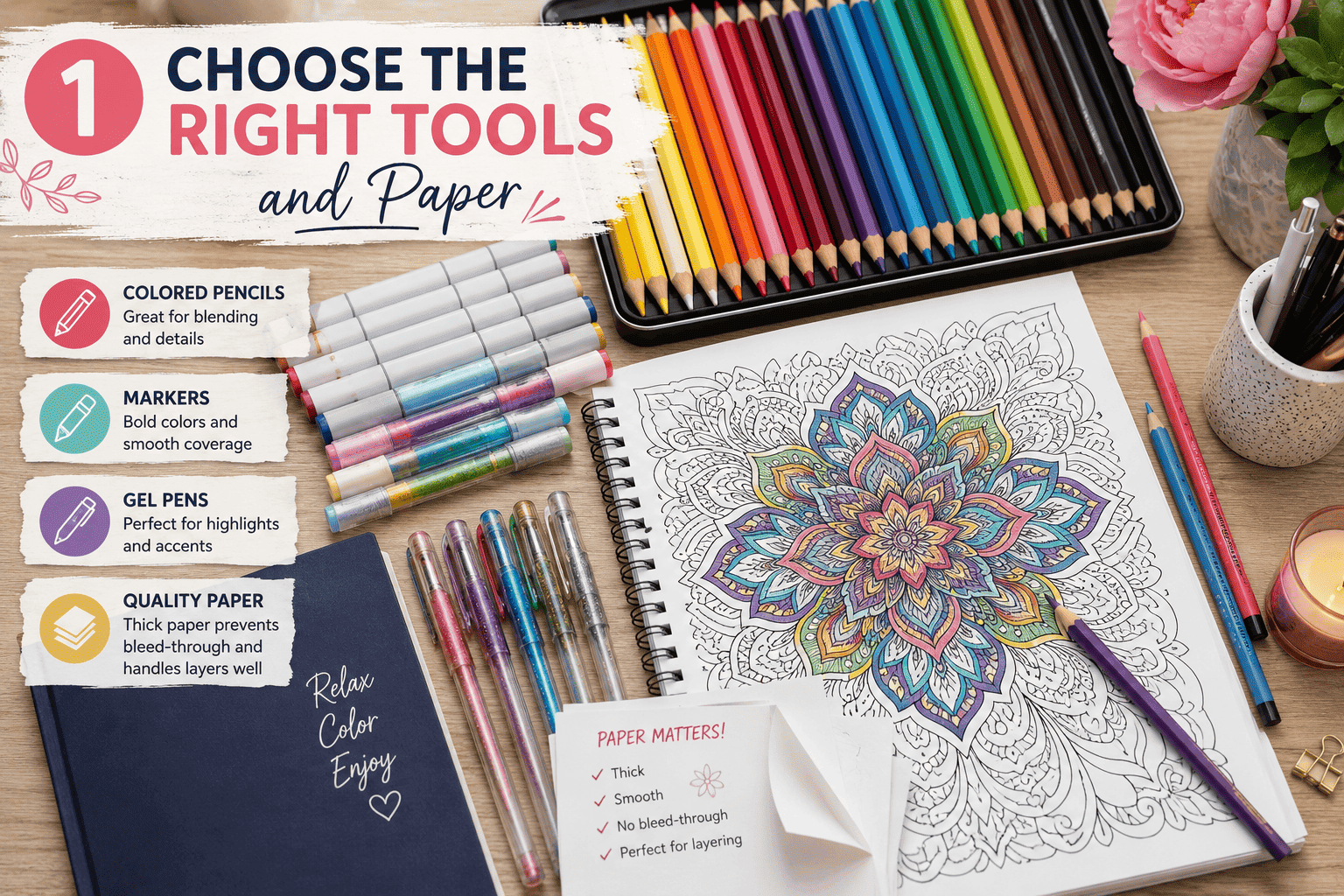
Good results start with materials suited to the technique. Quality colored pencils, alcohol-based markers, or gel pens blend and layer far better than basic school-grade supplies, and the difference is visible immediately. Colored pencils give the most control for beginners and allow gradual layering; alcohol-based markers produce bold, smooth coverage; gel pens add fine highlights and detail.
Paper weight matters as much as the coloring tool. Use paper of at least 120gsm for colored pencils to prevent indentation and tearing, and at least 160gsm for alcohol-based markers to prevent bleed-through to the page behind. Paper texture also affects the result: smooth paper suits markers and fine detail, while lightly textured paper holds more colored pencil pigment and supports heavier layering. For digital coloring on a tablet, explore the built-in brush and blending tools, which replicate many of the same techniques without paper constraints.
2. Start Light, Then Layer Your Colors
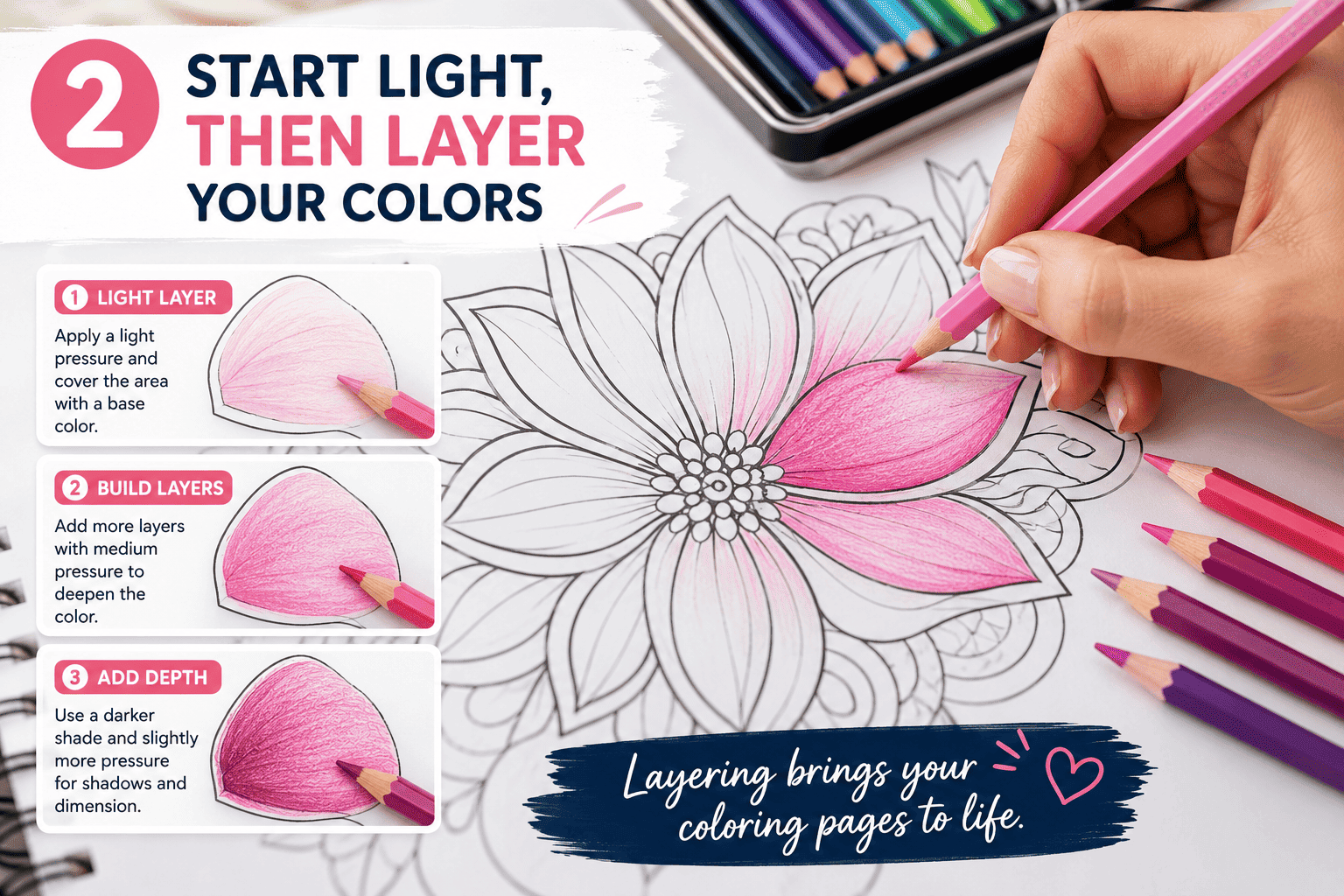
The most common beginner mistake is pressing too hard on the first stroke. Heavy initial pressure flattens the paper’s texture, makes mistakes permanent, and prevents smooth blending. Begin with light, soft layers and gradually build depth by adding more color on top. This approach keeps control over the final intensity and allows smooth gradients.
A practical method is to work with three tones of the same color: light, medium, and dark. Apply the light tone across the whole area first, then add the medium tone where shadows fall, and reserve the dark tone for the deepest recesses and edges. This three-tone layering creates dimension and shadow that flat single-color fills cannot achieve, and it works with colored pencils, markers, and digital brushes alike.
3. Experiment with Blending Techniques
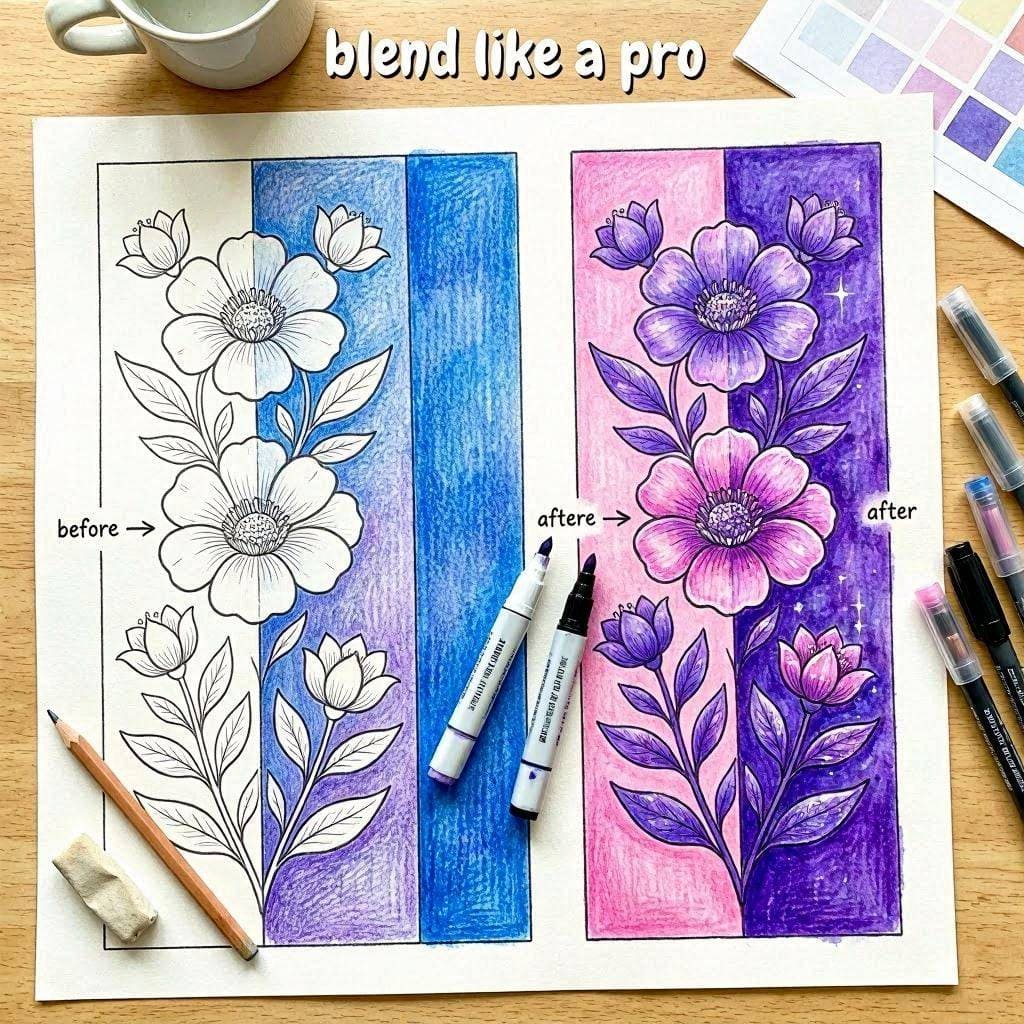
Blending is what turns flat color into work with depth and dimension. Several methods suit different tools. For colored pencils, overlap colors gently using small circular motions, then press firmly with a colorless blender pencil to merge the layers into a smooth surface. For alcohol-based markers, work color into color while the ink is still wet, or use a clear blender marker to soften transitions between shades.
A third method uses a cotton swab with a small amount of blending medium or baby oil dabbed over a colored pencil to produce a soft, watercolor-like effect. Each technique rewards practice on a scrap page before applying it to a finished piece. Blending is the single technique that most distinguishes practiced coloring from beginner work, and it is also one of the most absorbing parts of the process.
4. Focus on Mindfulness, Not Perfection
One of the documented benefits of adult coloring is its calming, meditative quality, and that benefit depends on approaching the activity as a process rather than a performance. Staying perfectly inside the lines is not the goal. The repetitive, focused motion of coloring is what produces the calming effect, and that effect disappears under pressure to produce a flawless result.
A few small adjustments support a mindful session. Playing quiet music, taking several slow breaths before starting, and letting attention settle on the movement from one color to the next all reinforce the meditative quality. The 2005 Art Therapy Journal findings on anxiety reduction were tied to this kind of focused, low-pressure engagement. Coloring serves its purpose best when it brings calm rather than adding another task to evaluate.
5. Add Personal Touches and Try New Styles
Once the basic techniques feel comfortable, personalization is what makes coloring a sustained creative practice rather than a repetitive task. Add original doodles or patterns in background spaces. Use metallic or glitter gel pens for highlights on a finished piece. Combine media by layering colored pencil over a light watercolor wash, or adding ink details over marker. Reinterpret a familiar page with an unexpected color theme rather than realistic colors.
There is no incorrect way to approach a coloring page, and experimentation is where personal style develops. Trying a technique that does not work is as useful as one that does, because it builds an understanding of how the materials behave. Each finished page becomes a record of that developing skill and a reflection of individual choices.
Bonus Tip: Build a Coloring Routine
Consistency turns coloring from an occasional activity into a reliable part of a self-care routine. A short daily session — 10 to 15 minutes in the morning or before bed — provides the focused, meditative benefit without requiring a large block of time. Setting up a dedicated space with coloring supplies, comfortable light, and perhaps a warm drink makes the activity easy to return to and signals a transition into calm, focused time.
Frequently Asked Questions
What supplies do I need to start adult coloring?
A basic set of quality colored pencils or alcohol-based markers and a coloring book or printed pages on paper of at least 120gsm is enough to start. A colorless blender pencil and a few gel pens can be added later for blending and highlights. Expensive equipment is not necessary for a satisfying result.
What paper weight is best for markers?
For alcohol-based markers, use paper of at least 160gsm to prevent bleed-through to the page behind. For colored pencils, 120gsm is sufficient. This is why most dedicated adult coloring books use heavier paper than standard printer paper, which is typically 75 to 90gsm.
How do I blend colored pencils smoothly?
Apply colors in light layers using small circular motions, then press firmly with a colorless blender pencil to merge the layers. Building three tones of the same color — light, medium, and dark — creates smooth gradients and shadow. Blending works best on lightly textured paper that holds multiple layers of pigment.
Is adult coloring effective for stress?
A 2005 study in the Art Therapy Journal documented measurable reductions in anxiety following structured coloring sessions. The defined structure of a coloring page provides a low-pressure, focused task associated with calming effects, which is why coloring is commonly used as a wind-down activity.
How long should an adult coloring session last?
There is no required length. Even 10 to 15 minutes provides the focused, meditative benefit. Many adults color in short daily sessions as part of a self-care routine rather than in long single sittings. Ending while still engaged makes returning to the activity easier.
Explore More Adult Coloring Resources
ColoringPagesOnly.com offers hundreds of printable and digital pages designed for adults:
Each collection is free to download as a PDF or color online — no account required.
Why Coloring Works for Adults
Coloring engages both creativity and focused attention, two elements associated with emotional well-being. A 2005 study in the Art Therapy Journal documented measurable reductions in anxiety following structured coloring sessions. The defined structure of a coloring page provides a low-pressure creative task that calms the mind, reduces screen time, and supports focus in a gentle, accessible way.