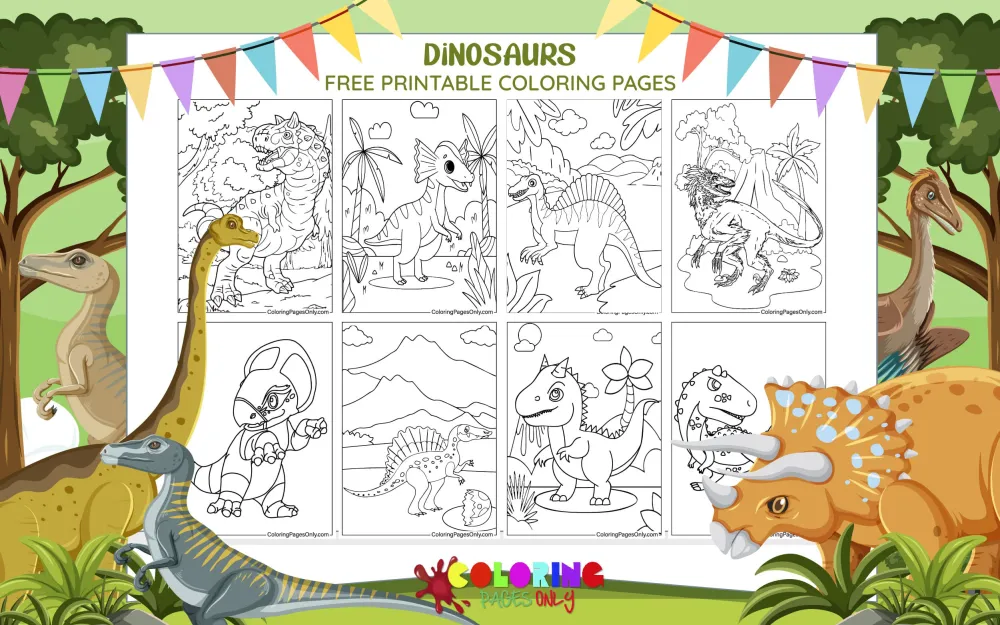
Explore 962 free dinosaur coloring pages featuring T. rex, Velociraptor, Triceratops, Brachiosaurus, Spinosaurus, and dozens more species, available as free printable PDF and interactive online coloring for kids, students, and adults.
Few things in the natural world capture the imagination quite like dinosaurs. These animals ruled the Earth for approximately 165 million years – a span of time so vast it is almost impossible to comprehend – and left behind a fossil record rich enough to reconstruct their bones, their behaviors, their diets, and in some cases even the color patterns in their feathers. They were real. They were extraordinary. And the more science learns about them, the more extraordinary they become.
Coloring a dinosaur – really sitting with it, choosing its colors, following the lines of its spine or the curve of its jaw – is one of the most natural ways to pay close attention to an animal. This collection of 962 free dinosaur coloring pages spans every major group, from the iconic giants of the Cretaceous to the feathered theropods that connect prehistoric life to the birds outside your window right now. Every page is free to download as PDF, JPG, or PNG, and available to color online directly in your browser.
Whether you are a child who fell in love with dinosaurs watching Jurassic Park, a teacher building a paleontology unit, or an adult who never quite stopped being fascinated, this collection is for you.
What’s Inside This Dinosaur Coloring Pages Collection?
This library is organized around the real taxonomic and ecological groups that paleontologists use – giving colorists an accurate, scientifically grounded picture of dinosaur diversity across the Triassic, Jurassic, and Cretaceous periods.
Theropod Coloring Pages – The Great Predators
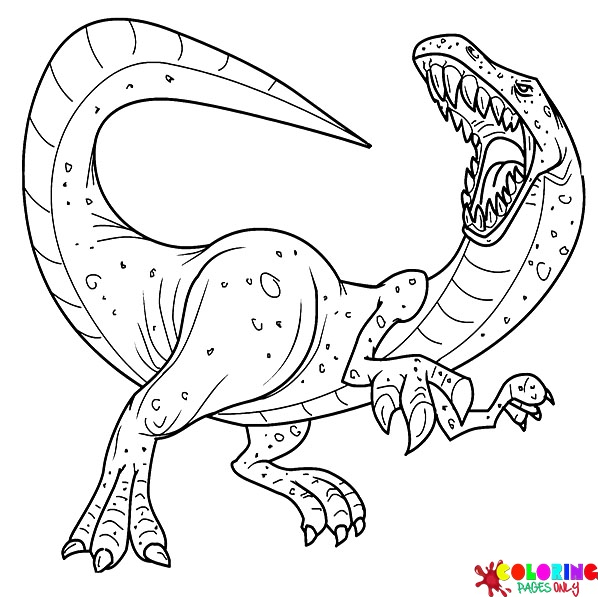
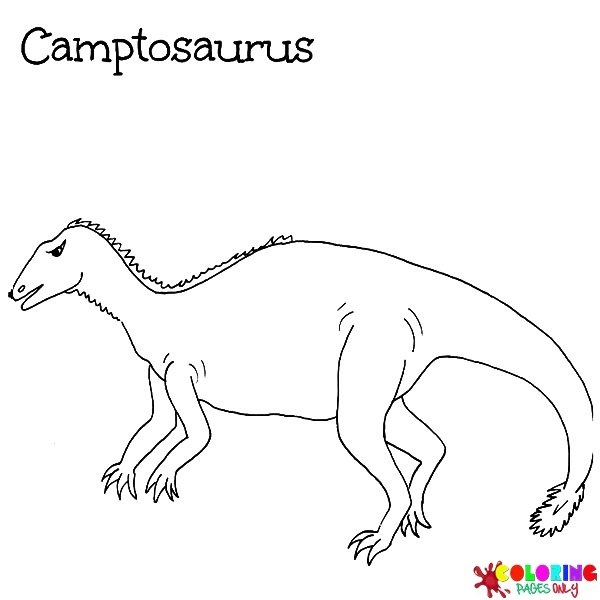
Theropods were the dominant land predators of the Mesozoic Era, walking on two powerful hind legs and ranging in size from the turkey-sized Microraptor to the largest carnivores ever to walk the Earth. The theropod pages are among the most popular in the entire collection.
The Tyrannosaurus Rex coloring pages need no introduction. T. rex reached up to 12 meters in length, weighed as much as 8 metric tons, and possessed forward-facing eyes that gave it binocular vision comparable to a modern hawk – making it one of the most visually acute predators of its time. The T. rex pages range from roaring naturalistic portraits to friendly cartoon versions beloved by young children.
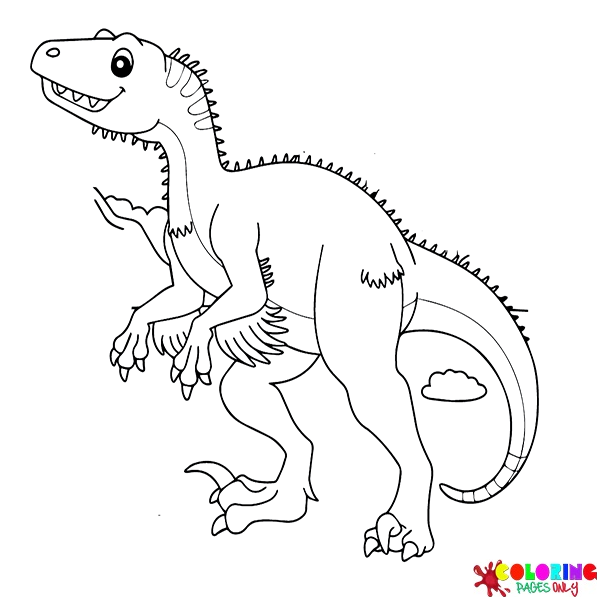
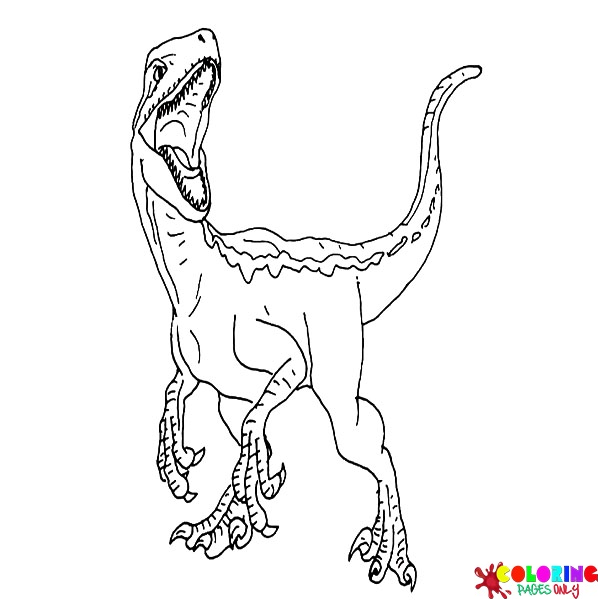
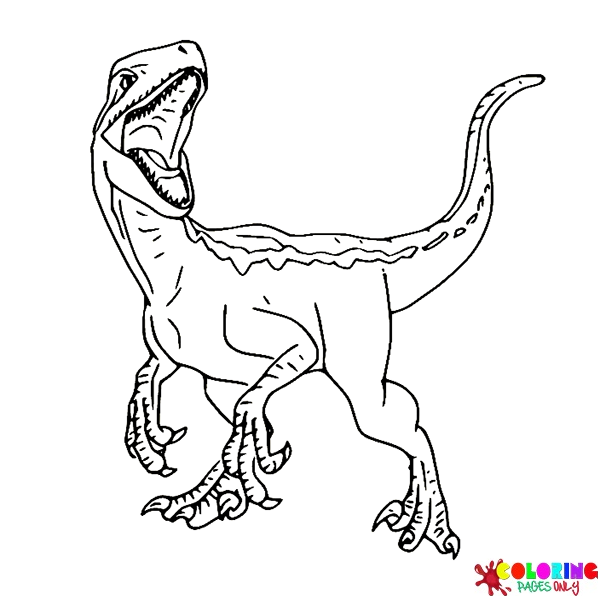
The Velociraptor coloring pages offer a chance to correct one of popular culture’s most famous misconceptions: the real Velociraptor mongoliensis was roughly the size of a turkey, stood about 50 centimeters tall at the hip, and was almost certainly covered in feathers. The large, scaly raptors of Jurassic Park were actually based on Deinonychus, a much larger North American relative. Both are extraordinary animals, and both appear in this collection.
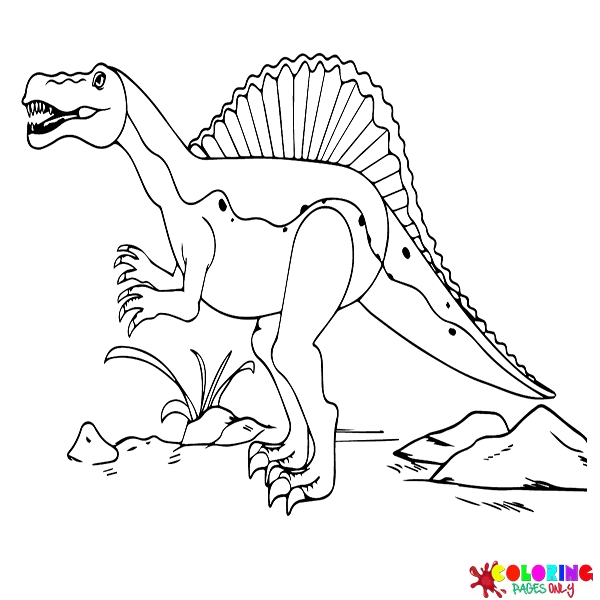
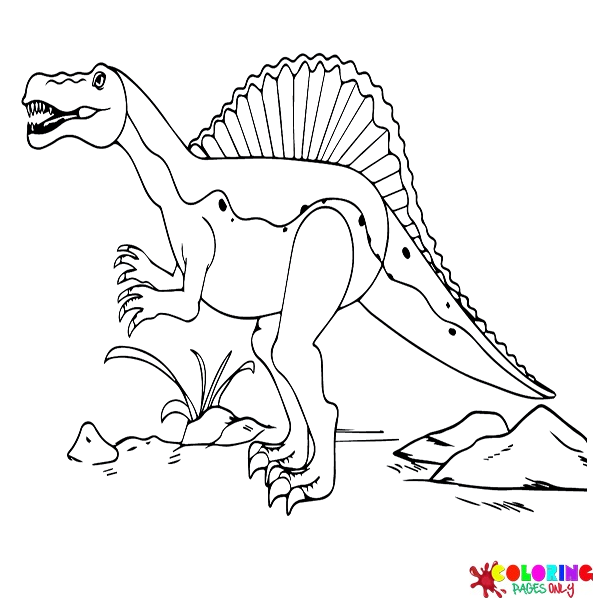
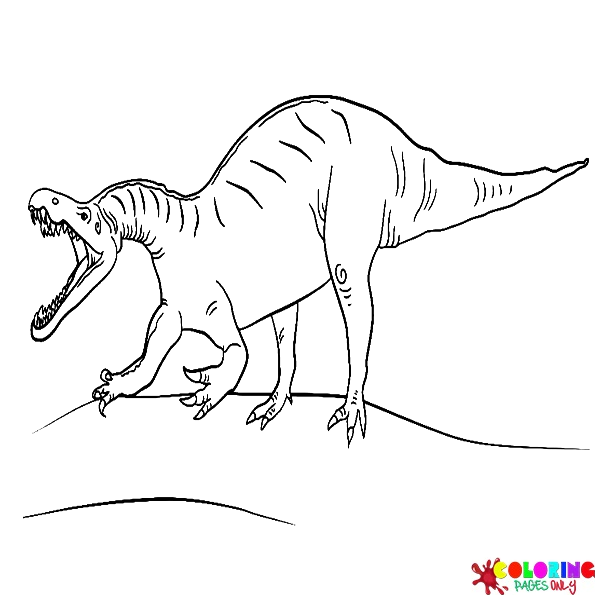
Spinosaurus coloring pages bring one of paleontology’s most dramatic recent revisions to life. Spinosaurus aegyptiacus is now understood to have been semi-aquatic – with short hind legs, dense bones for buoyancy control, and a long, paddle-like tail adapted for swimming. It was longer than T. rex but built for rivers and shallow waterways rather than open pursuit. These pages capture a dinosaur that science is still actively discovering.
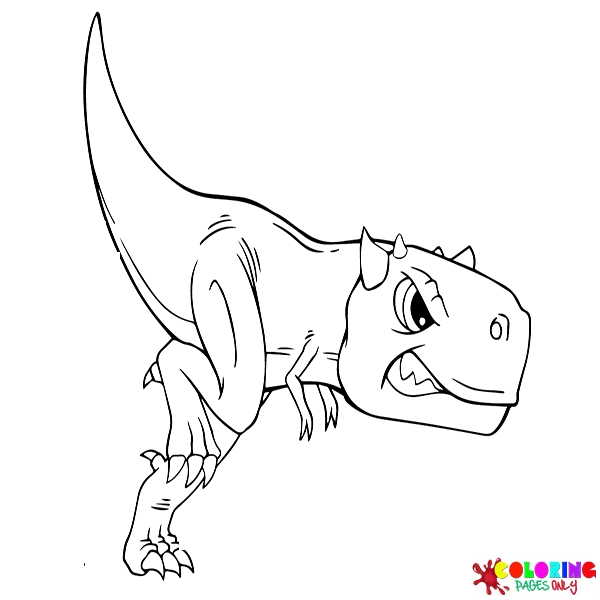
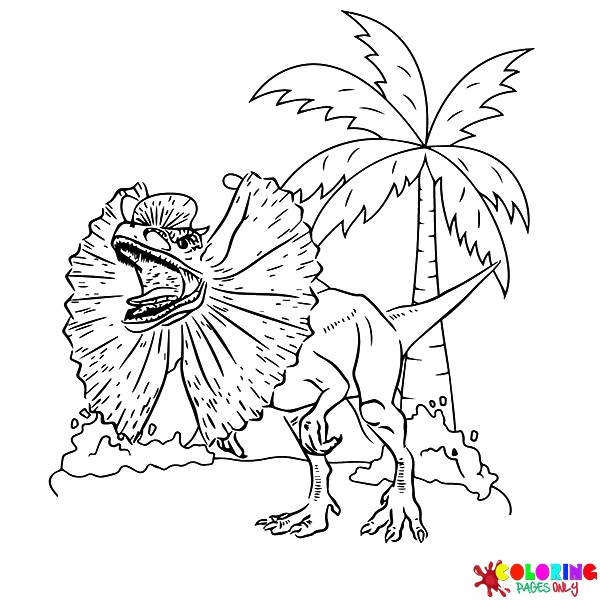
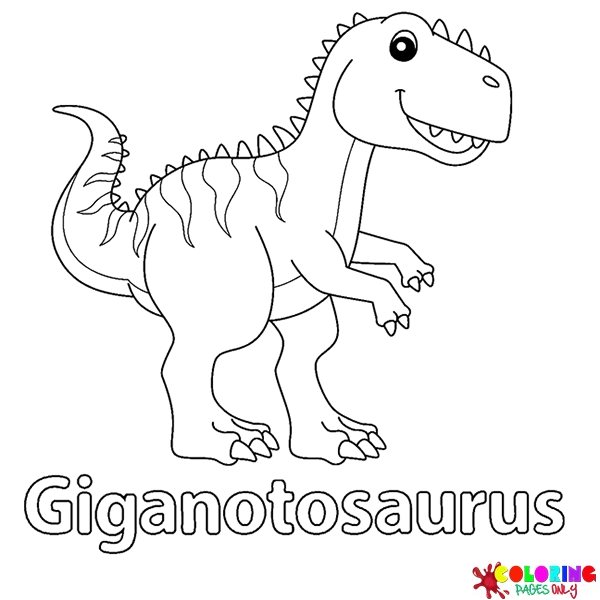
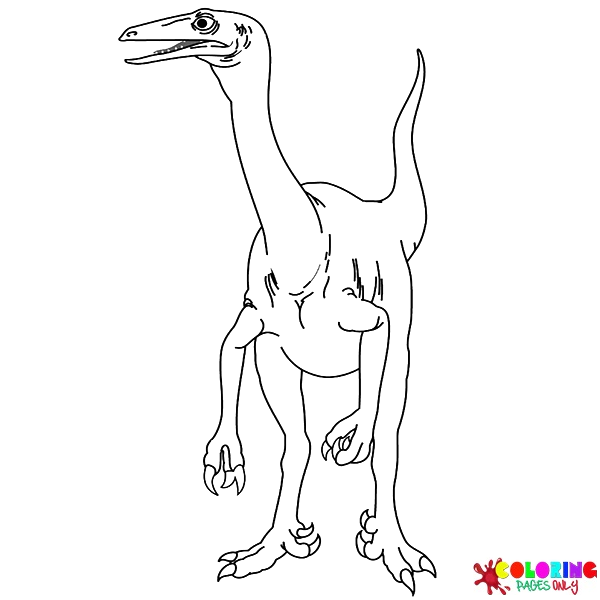
Also part of the theropod collection: Allosaurus, the apex predator of the Late Jurassic; Carnotaurus with its distinctive bull-like horns; Dilophosaurus with its elegant twin crests; and Giganotosaurus, the South American giant that rivals T. rex in size.
Sauropod Coloring Pages – The Long-Necked Giants
Sauropods were the largest land animals that have ever existed, and their coloring pages are among the most visually striking in the collection. These long-necked, four-legged herbivores achieved sizes that still seem improbable: the largest species may have exceeded 30 meters in length and 70 metric tons in body weight.
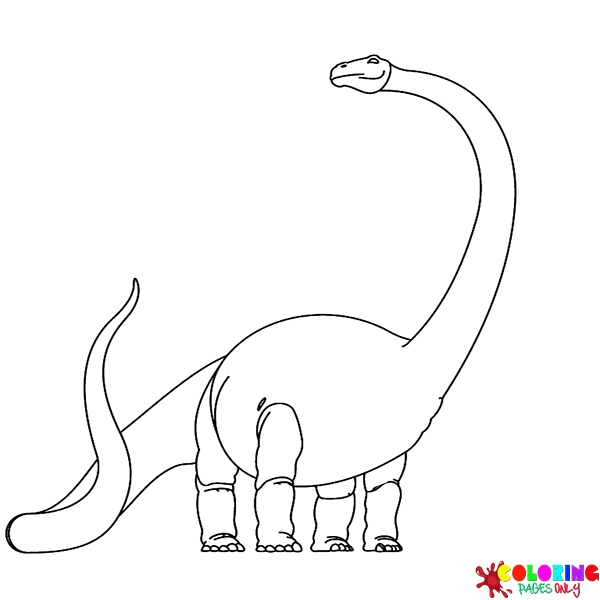
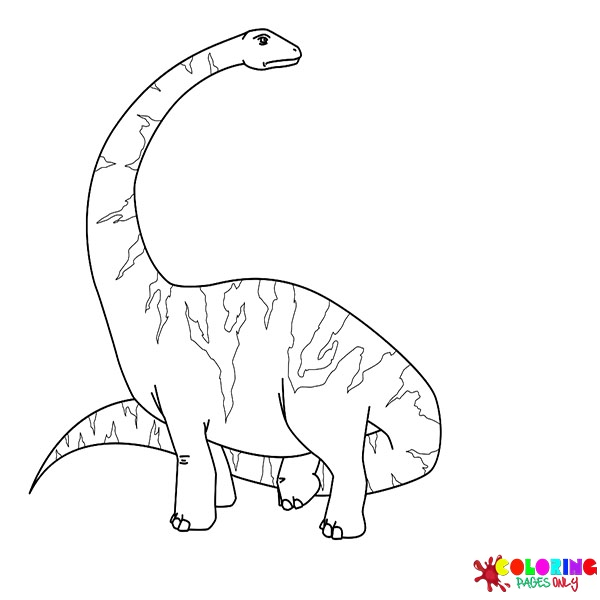
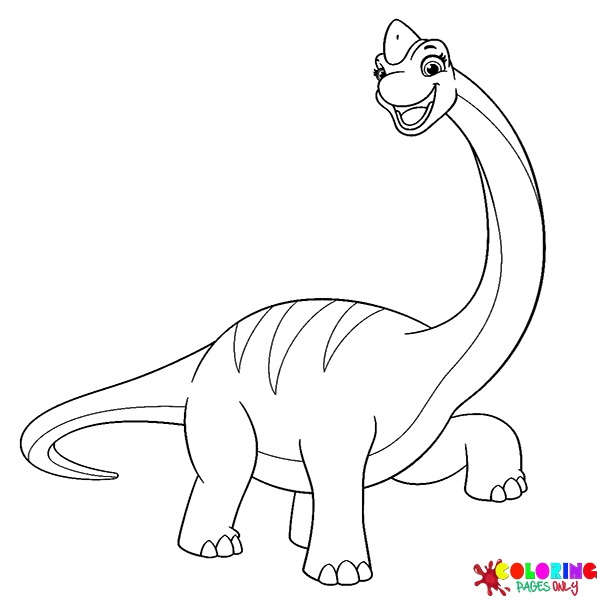
Brachiosaurus coloring pages feature the iconic front-heavy silhouette with forelegs longer than hind legs – an adaptation that allowed Brachiosaurus to reach vegetation high in the tree canopy, much like an enormously scaled-up giraffe. Diplodocus coloring pages show the long, whip-like tail that could generate a sonic crack when swung at speed. Apatosaurus coloring pages – once known as Brontosaurus before decades of taxonomic debate – offer the classic sauropod form that children recognize immediately and love to color in earthy, monumental tones.
Ceratopsian Coloring Pages – Horns, Frills, and Display
Ceratopsians were the rhinoceroses of the Cretaceous, heavily built plant-eaters with elaborate bony frills and horns used for species recognition, display, and defense. These pages are popular with children who love bold, symmetrical designs.
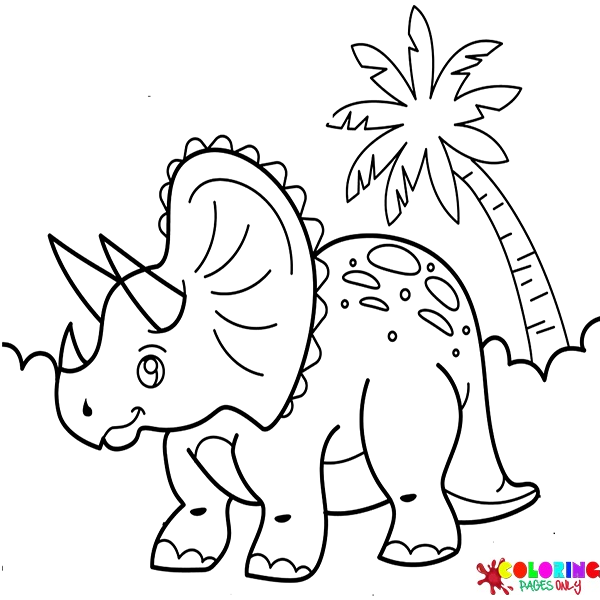
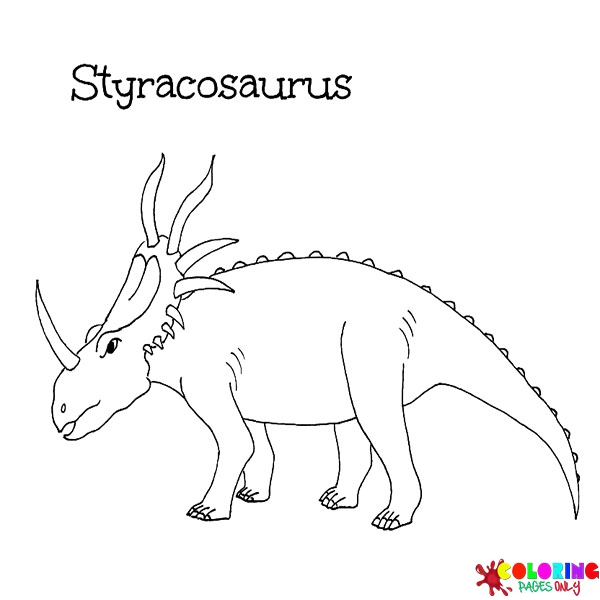
Triceratops coloring pages are among the most popular pages of any species in the collection. Triceratops horridus was one of the last non-avian dinosaurs, living right up to the mass extinction event 66 million years ago. Its three facial horns and large neck frill were likely used for both intraspecific display – communicating with other Triceratops – and defense against T. rex, with which it shared its habitat. Styracosaurus coloring pages feature the spectacular spike-ringed frill that makes this species one of the most visually dramatic dinosaurs ever discovered. Protoceratops coloring pages show the smaller, hornless ancestor that helps tell the evolutionary story of this remarkable group.
Armored Dinosaur Coloring Pages – Nature’s Living Fortresses
Two groups of dinosaurs evolved remarkable passive defensive armor, and both are represented with pages that reward careful, detailed coloring work.
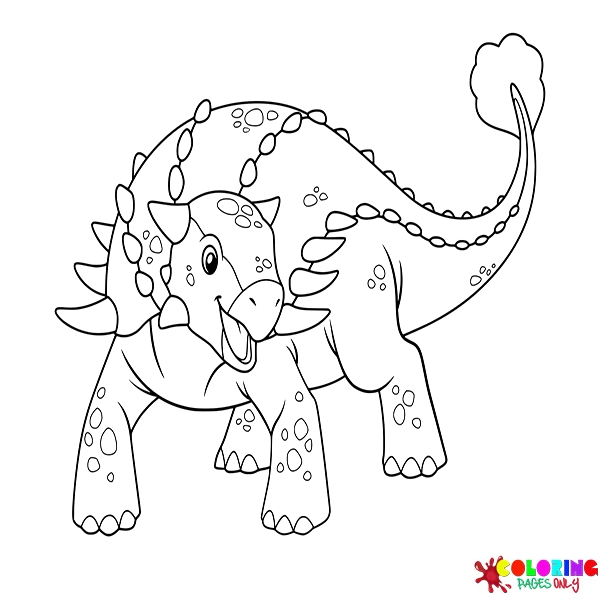
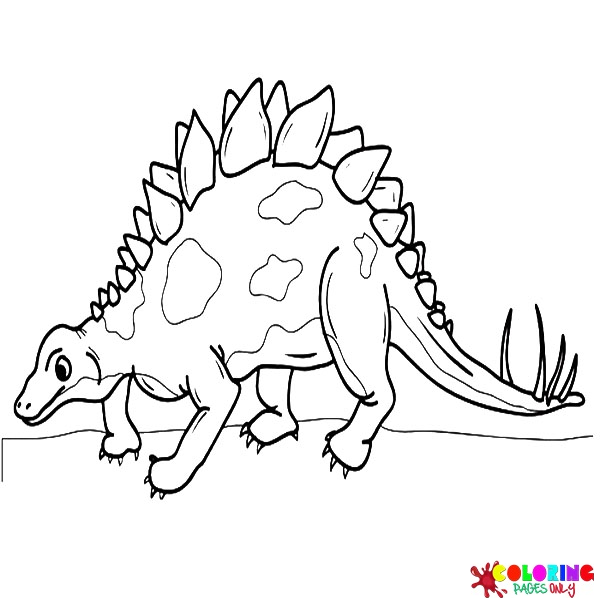
Ankylosaurus coloring pages feature one of the most heavily armored animals ever to live on land. Ankylosaurus magniventris was covered from snout to tail in thick bony plates called osteoderms, and its tail ended in a massive bony club capable of breaking the leg bones of an attacking T. rex. Stegosaurus coloring pages present one of paleontology’s most enduring mysteries: the function of those distinctive back plates. Current evidence suggests they were primarily used for thermoregulation and species display – potentially flushing with color when blood flow increased – which makes them one of the most exciting coloring challenges in the entire dinosaur world.
Hadrosaur & Ornithopod Coloring Pages – The Social Herbivores
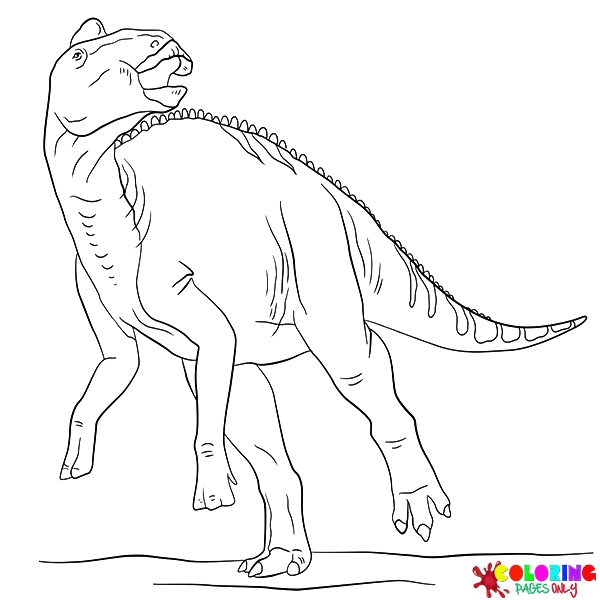
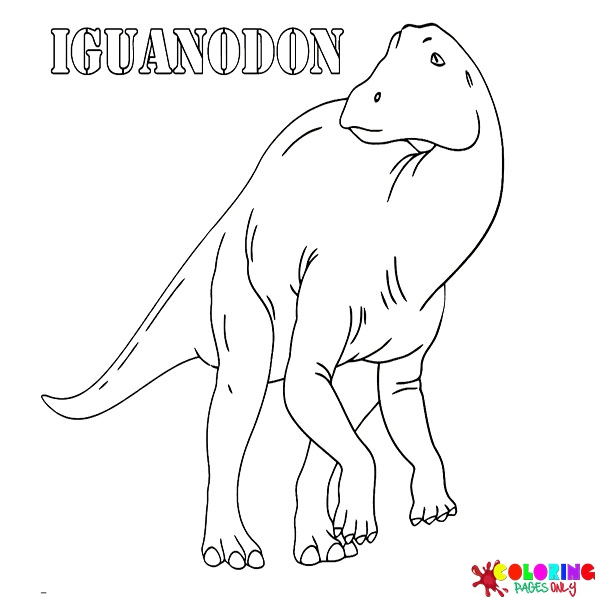
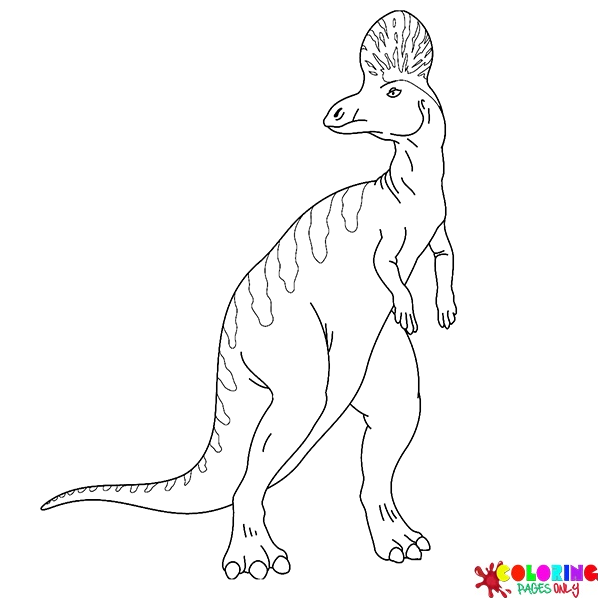
Hadrosaurus coloring pages and Iguanodon coloring pages represent the “duck-billed” dinosaurs – highly successful plant-eaters that lived in large herds and communicated through elaborate nasal crests and calls. Iguanodon holds a special place in paleontological history: it was one of the three dinosaurs that inspired Richard Owen to coin the term “Dinosauria” in 1842. These pages are excellent for children interested in social animal behavior and the science of how paleontologists reconstruct dinosaur communication.
Flying Reptile Coloring Pages – Rulers of the Mesozoic Sky
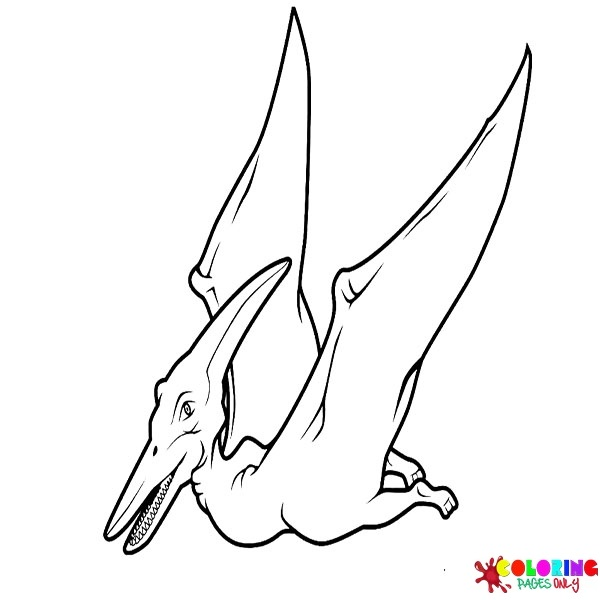
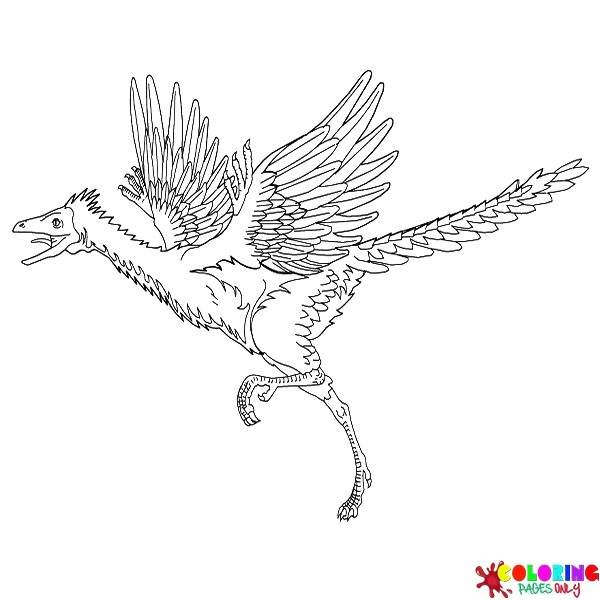
An important scientific note that makes these pages especially valuable for learning: pterosaurs were NOT dinosaurs. Pterodactyl coloring pages and Pteranodon coloring pages feature animals that were close relatives of dinosaurs – both groups belong to the larger clade Archosauria – but pterosaurs evolved flight independently and represent a separate evolutionary lineage. Pteranodon had a wingspan reaching 7 meters and soared over shallow inland seas. Archaeopteryx coloring pages tell a different story entirely: Archaeopteryx lithographica IS a true dinosaur – a feathered theropod from the Late Jurassic that represents one of the most celebrated transitional fossils in the history of science, documenting the evolutionary link between non-avian dinosaurs and modern birds.
Marine Reptile Coloring Pages – Monsters of the Mesozoic Sea
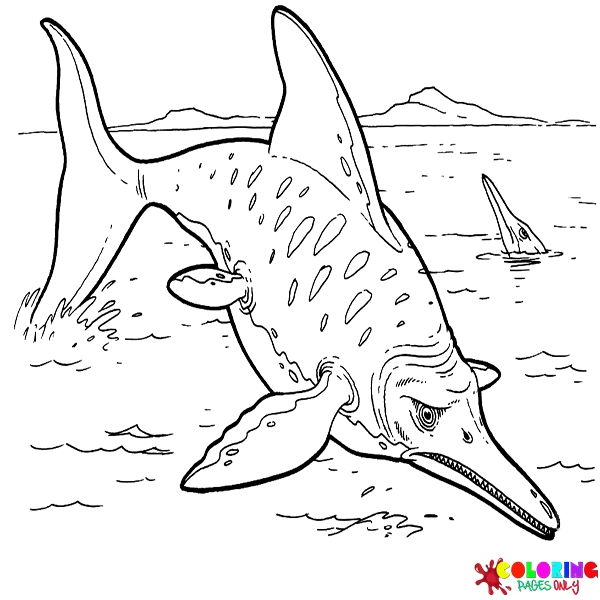
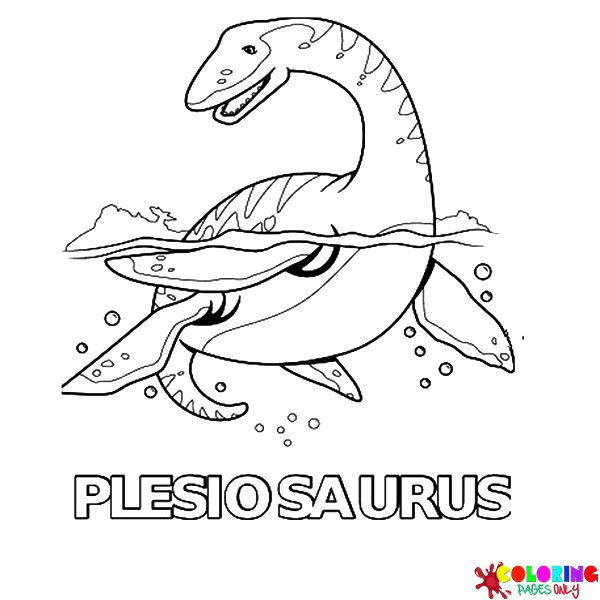
Like pterosaurs, the great marine reptiles of the Mesozoic were not true dinosaurs, but they shared the world with them and remain among the most dramatic animals ever discovered. Mosasaurs were apex marine predators of the Late Cretaceous, enormous, fast-moving lizard relatives that could reach 17 meters in length. The collection does not yet have a dedicated Mosasaur sub-category, but Plesiosaurus coloring pages and Ichthyosaur coloring pages complete a picture of a world where the seas were as dangerous and spectacular as the land above them.
Jurassic World & Pop Culture Dinosaur Pages
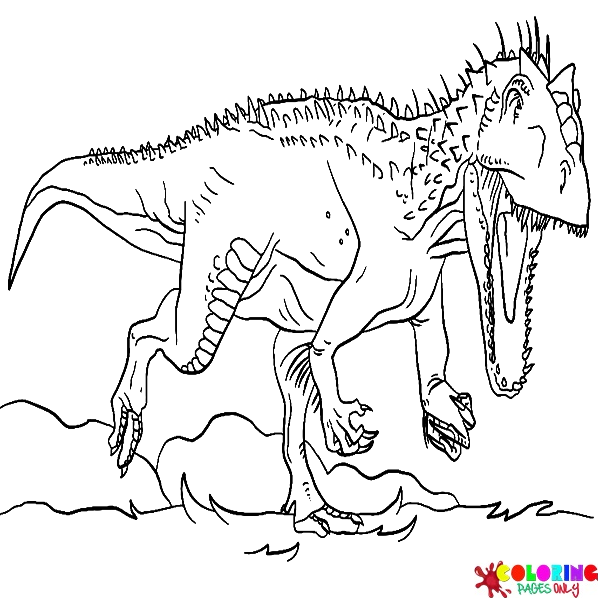
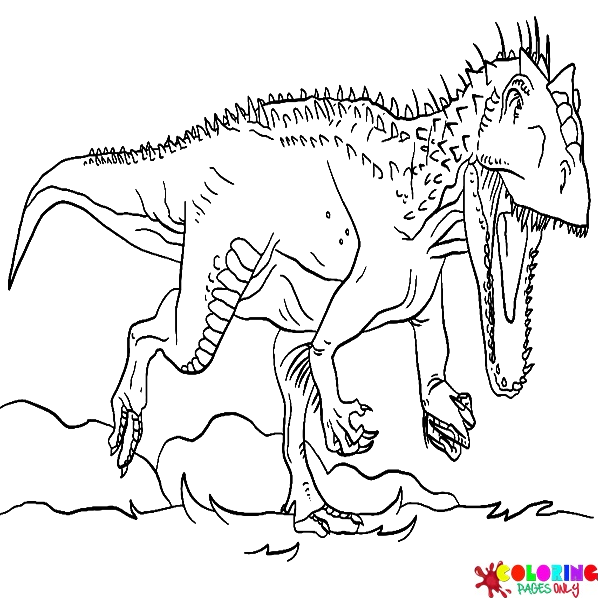
For fans of the franchise that introduced a new generation to dinosaurs, the Jurassic World coloring pages and Indominus coloring pages bring the excitement of the films to life. These pages sit alongside the Dinosaur Train coloring pages – the beloved educational series that has introduced millions of young children to real paleontological concepts through storytelling and adventure.
What’s Not Yet in This Collection
The FAQ below discusses Patagotitan and Argentinosaurus as strong contenders for the largest dinosaur ever discovered, but neither currently has a dedicated sub-category, the way smaller, better-known sauropods like Apatosaurus and Diplodocus do. A Titanosaur-focused sub-category would be a natural addition given how often “biggest dinosaur” is searched.
Why This Dinosaur Coloring Collection Stands Out
962 designs and growing. This dinosaur collection is one of the largest and most taxonomically diverse free printable libraries available online. From the most famous species to remarkable lesser-known genera like Coelophysis, Hadrosaurus, and Utahraptor, there is always a new discovery waiting.
100% Free, always. Every page downloads as PDF, JPG, or PNG at no cost – no subscription, no sign-up, no restrictions for personal or educational use. PDF delivers the sharpest print quality. JPG is ideal for quick single-page sessions. PNG supports digital coloring and transparent-background creative projects.
Color online or print at home. The built-in online coloring tool works directly in any browser – perfect for tablets and classroom devices. Or print on standard A4 paper at home for a classic hands-on session. Both options are always available, always free.
Scientifically grounded, genuinely educational. Every species in this collection is either a real prehistoric animal or a documented fictional creation from an identified franchise. These descriptions reflect current paleontological understanding – including updates that may surprise even dedicated fans, such as the feathered Velociraptor and the semi-aquatic Spinosaurus.
Designed for every age and skill level. Simple bold cartoon outlines are perfect for toddlers and early childhood classrooms. Detailed naturalistic portraits of species like Spinosaurus aegyptiacus and Archaeopteryx challenge and reward older children and adult colorists. Every page in the collection has a clear, intended audience.
Incredible Benefits of Dinosaur Coloring Pages
Coloring dinosaur pages combines the documented benefits of creative art activity with the depth of paleontological science – a combination that delivers real value far beyond a single afternoon of entertainment:
Ignites Scientific Curiosity That Lasts
Dinosaurs have a documented track record of drawing children into science. Research in science education consistently shows that high-interest topics – and few topics generate higher sustained interest in children than dinosaurs – significantly increase engagement with broader scientific concepts, including geology, biology, evolution, and ecology. A child who colors a Triceratops and asks why it has three horns is already thinking like a scientist. That curiosity, once sparked, tends not to extinguish easily.
Develops Fine Motor Skills and Artistic Control
Coloring within detailed outlines, managing pressure across different tools, navigating the complex bony textures of an Ankylosaurus or the sweeping curves of a sauropod neck – all of these activities build the fine motor control and hand-eye coordination that children use for writing, drawing, cutting, and precision tasks. The greater the detail in the illustration, the more demanding and rewarding the fine motor workout.
Supports Deep Cross-Curricular Learning
A single dinosaur coloring page can anchor lesson content across multiple subjects simultaneously: science (classification, adaptation, evolution, extinction), geography (mapping fossil discovery sites across continents), geology (geological time periods – Triassic, Jurassic, Cretaceous), mathematics (scale, size comparisons, timeline calculations), and language arts (descriptive writing, research reports, creative narrative). Few single-page activities offer this breadth of curricular connection.
Teaches Critical Thinking Through Science Revision
Dinosaur science is one of the most actively revised fields in all of natural history, which makes it an outstanding tool for teaching children that science is a living process, not a fixed set of facts. Brontosaurus was once considered invalid, then reinstated. Velociraptors turned out to have feathers. Spinosaurus turned out to be semi-aquatic. These revisions are not failures of science – they are science working exactly as it should, and coloring pages that acknowledge them give children a genuine lesson in intellectual honesty and the nature of evidence.
Promotes Focused Calm and Mindfulness
The absorbed, rhythmic focus of coloring is well recognized as a mindfulness-adjacent activity. A 2005 study published in Art Therapy: Journal of the American Art Therapy Association found that structured coloring activities significantly reduced self-reported anxiety in adult participants. For children, the same focused engagement provides a calming, screen-free reset – particularly valuable when the subject matter (dinosaurs) is intrinsically exciting enough to hold attention without external stimulation.
Celebrates the Wonder of Deep Time
Non-avian dinosaurs went extinct approximately 66 million years ago when an asteroid approximately 10 kilometers in diameter struck what is now the Yucatán Peninsula, triggering the Cretaceous-Paleogene mass extinction event. Coloring a T. rex or a Brachiosaurus is, in a very real sense, an act of imaginative time travel – a way of paying attention to animals that actually existed and shaped the modern world. That sense of deep time and genuine wonder is one of the most valuable things these pages offer.
Expert Coloring Tips for Dinosaur Pages
These techniques move from beginner to advanced – find your level and challenge yourself to try the next one:
Embrace earth tones as a foundation – then break free. The honest scientific answer to “what color were dinosaurs?” is: this is not fully known for most species. Melanosomes (microscopic pigment structures) have been recovered from some feathered dinosaur fossils, revealing that species like Anchiornis had complex plumage patterns in black, white, and russet – but for large-bodied species like T. rex and Brachiosaurus, color remains genuinely unknown. This means earth tones of brown, green, grey, and tan are scientifically defensible starting points – but so is a vivid orange Triceratops or a deep blue Spinosaurus. Artistic freedom is not just permitted here; it is scientifically honest.
Use scale texture to elevate theropod pages. For T. rex, Carnotaurus, and similar large theropods, lay down a mid-tone base color across the body, then use a fine-tipped colored pencil or marker to add rows of small oval or circular shapes across the skin to suggest scale texture. Vary the size of the scales – larger on the back, smaller on the face and feet. This technique, even roughly executed, transforms a flat silhouette into a three-dimensional, tactile-looking animal.
Add feather detail to smaller theropods. Velociraptor, Utahraptor, Dilophosaurus, and Archaeopteryx are now understood to have been feathered to varying degrees. After laying down a base body color, use long, flowing strokes of a slightly darker shade on the arms, tail, and back to suggest feather structure. Reference modern bird plumage – particularly hawks and eagles – for the overlapping, layered quality that makes feathers look convincing.
Use atmospheric perspective for prehistoric scene backgrounds. When coloring pages that include landscape backgrounds, apply the principle of atmospheric perspective: foreground elements (the ground beneath the dinosaur, nearby plants) in deeper, more saturated colors; middle-ground elements in slightly lighter, less saturated tones; distant mountains, trees, or sky in pale, cool, desaturated hues. This single technique makes any background look dramatically more spacious and three-dimensional.
Make frill and crest patterns deliberate. The frills of ceratopsians and the crests of hadrosaurs were almost certainly used for visual display and species recognition, which means they were probably colorful and patterned in ways that conveyed information to other members of the same species. Use this as license to be bold: geometric patterns, high-contrast color combinations, and striking markings on frills and crests are not just artistically exciting – they are biologically plausible.
Create depth with complementary shadow colors. Rather than using black or dark grey for shadows, mix in the complementary color (opposite on the color wheel) to create rich, luminous shadows. For a green Brachiosaurus, use deep violet-brown in the shadow areas under the neck, belly, and legs. For an orange Carnotaurus, use dark blue-green in the deepest shadows. This technique, used by professional illustrators and fine art painters, makes colors appear to glow with inner light.
5 Classroom & Home Activity Ideas
Personal Dinosaur Field Guide
Build a hand-assembled field guide to the dinosaurs of a specific geological period – the Jurassic, for example, or the Late Cretaceous – by selecting six to ten species that actually co-existed in that time and place. Color each illustration as accurately as current paleontological evidence permits, using reference photographs of fossil reconstructions and museum models for scale and posture.
Below each completed illustration, write a species card including: the animal’s full scientific name in italics, the geological period and specific formation where its fossils were found, its estimated body length and weight, its diet and primary adaptations, and one fact from recent research that would have surprised scientists twenty years ago. Bind the finished pages with binder rings or a long-arm stapler under a craft-paper cover titled “Field Guide to Late Cretaceous North America” – or whichever time period you chose – signed and dated in your own hand.
This project combines paleontological research, observational art, scientific writing, and geographic thinking into a single deeply satisfying keepsake. It makes an outstanding school project, a museum-style classroom display, or a genuinely impressive personal achievement for a dinosaur-obsessed child.
Geological Timeline Wall Display
Create a large-format visual timeline of dinosaur evolution by selecting coloring pages that represent the three major periods of the Mesozoic Era – the Triassic (252–201 million years ago), the Jurassic (201–145 million years ago), and the Cretaceous (145–66 million years ago) – and arranging them chronologically across a long strip of craft paper or a classroom wall.
Select two or three representative species per period: Triassic (Coelophysis, early sauropodomorphs); Jurassic (Allosaurus, Stegosaurus, Brachiosaurus, Archaeopteryx); Cretaceous (T. rex, Triceratops, Ankylosaurus, Velociraptor, Spinosaurus). Color each illustration, cut it out, and mount it in its correct position on the timeline. Add a thin horizontal line across the display with period labels and approximate dates marked at key points. Include a small notation at the far right marking the K-Pg extinction event 66 million years ago – and a tiny modern bird to represent the avian dinosaurs that survived it.
This display is visually striking, deeply educational, and develops an intuitive sense of geological deep time that no textbook diagram quite manages to convey. It works equally well as a bedroom wall display, a classroom science corner installation, or a homeschool curriculum centerpiece.
Dinosaur vs. Modern Animal Size Comparison Poster
One of the most powerful ways to make dinosaurs feel real – rather than mythological – is to compare them in scale to animals that children already know. Create a size comparison poster by selecting four or five of the largest dinosaur coloring pages and pairing each one with a modern animal drawn at the same scale for comparison.
Color a Brachiosaurus page and place it alongside a drawn or printed giraffe at a relative scale – the Brachiosaurus was roughly four times taller. Pair T. rex with an African elephant (similar body mass, very different proportions). Pair Velociraptor with a turkey (roughly the same size, once you account for the popular culture inflation). Pair Pteranodon with a California condor, showing the wingspan difference. Mount everything on a poster board with a clear scale bar marked in meters.
Add a bold headline – “Dinosaurs Were Real: Here’s How Big They Actually Were” – and a brief written explanation under each pairing. Include a footnote distinguishing true dinosaurs from the pterosaurs and marine reptiles that shared their world. This poster corrects common misconceptions, builds genuine scientific literacy about scale and proportion, and creates one of the most conversation-generating wall displays you can make from a coloring page collection.
DIY Dinosaur Clock
Create a desk clock with dinosaur designs! After coloring, attach the picture to sturdy cardboard, add clock hands, and you’ve got a unique clock to decorate your room and keep track of time!
Making a 3D Dinosaur Map
Once you’ve colored the dinosaurs, make a 3D map showing where different dinosaurs lived. Use cardboard to create terrain and place the colored dinosaurs on the map for a cool educational project!
Frequently Asked Questions About Dinosaur Coloring Pages
Were dinosaurs really the color shown in most illustrations? For most large-bodied species, this is not fully known. Melanosomes – microscopic pigment structures – have been recovered from the fossilized feathers of some smaller feathered dinosaurs, revealing actual color patterns in species like Sinosauropteryx (ginger-banded tail) and Anchiornis (black, white, and russet plumage). For large non-feathered species like T. rex and Brachiosaurus, color remains scientifically unknown. Earth tones are a reasonable default based on modern large reptile analogs, but vivid colors cannot be ruled out.
Were dinosaurs warm-blooded or cold-blooded? Current paleontological consensus strongly supports that most, if not all, dinosaurs were endothermic (warm-blooded) to varying degrees – much closer to modern birds and mammals than to modern reptiles. Evidence comes from bone growth rates, isotopic analysis of fossil bones, and the existence of feathers in many lineages. This is one of the most significant revisions in dinosaur science of the past thirty years.
Did dinosaurs have feathers? Many did – particularly theropod dinosaurs, the group that includes T. rex, Velociraptor, and Spinosaurus. Direct evidence of feathers has been found in over 30 genera of theropods. Whether large-bodied species like adult T. rex retained significant feather cover remains debated; many paleontologists believe adults may have had largely naked skin (similar to modern large mammals) with feathers reduced or absent for thermoregulation reasons. Smaller species were almost certainly fully feathered.
Were pterosaurs and mosasaurs dinosaurs? No. Pterosaurs (Pterodactyl, Pteranodon) were flying reptiles closely related to dinosaurs but belonging to a separate lineage – both groups are archosaurs, but pterosaurs are not dinosaurs. Mosasaurs, plesiosaurs, and ichthyosaurs were marine reptiles from entirely different lineages. This is one of the most common misconceptions in popular dinosaur science, and it is worth discussing directly when using these coloring pages in educational settings.
Are birds really dinosaurs? Yes – in the most technically precise sense, birds ARE dinosaurs. Specifically, they are avian theropod dinosaurs descended from ancestors closely related to Velociraptor and Deinonychus. When the non-avian dinosaurs went extinct 66 million years ago, the avian lineage survived and eventually gave rise to the approximately 10,000 species of birds alive today. The next time a child sees a sparrow, they are looking at a living dinosaur.
What is the largest dinosaur ever discovered? The title of the largest dinosaur is genuinely contested and changes periodically as new fossils are discovered. Current candidates for the largest known dinosaur include Patagotitan mayorum and Argentinosaurus, both titanosaur sauropods from South America, with estimated body lengths of 30–40 meters and masses potentially exceeding 70 metric tons. These animals make even Brachiosaurus look modest by comparison.
What age group are these pages best suited for? The collection spans all ages. Simple cartoon outlines are ideal for ages 3–6. Detailed anatomical illustrations of specific species work best for ages 7 and up. Highly detailed naturalistic portraits of species like Spinosaurus aegyptiacus, Archaeopteryx, and Giganotosaurus provide a genuine artistic challenge for older children and adults. A good starting point is T. rex or Triceratops cartoon pages for younger beginners, progressing toward the more detailed naturalistic species pages as skill and confidence grow.
Can I use these pages in a school classroom? Absolutely. All pages are free for personal and classroom educational use. Print as many copies as needed. The species comparison pages, the geological period groupings, and the transitional fossil pages (Archaeopteryx) are particularly well-suited to science curriculum units on evolution, adaptation, and Earth history. The collection aligns naturally with elementary and middle school life and earth science standards across most regional curricula.
Getting started is simple: browse the full collection right here at ColoringPagesOnly.com, choose your species, and download in your preferred format – completely free. Print at home on standard A4 paper, or use the online coloring tool directly in your browser. Come back regularly; new species and designs are added to the collection on an ongoing basis.
Dinosaurs ruled the Earth for 165 million years. They are not gone – their descendants fill every sky on the planet. And they deserve to be known, studied, and yes, colored with all the care and attention that the greatest animals in the history of life on Earth have earned.
Pick up your pencils. Choose your species. And bring the Mesozoic back to life – one page at a time.
Share finished work on Facebook or Pinterest with the share buttons on each page.
Color the ancient. Discover the real. Bring deep time to life.